SB 707: Medi-Cal: Denti-Cal Advisory Group.
- Session Year: 2017-2018
- House: Senate
- Latest Version Date: 2018-09-07
Existing law establishes the Medi-Cal program, administered by the State Department of Health Care Services, under which basic health care services are provided to qualified low-income persons. The Medi-Cal program is, in part, governed and funded by federal Medicaid program provisions. Existing law provides coverage for certain dental services, as specified, to Medi-Cal beneficiaries through either the Medi-Cal fee-for-service delivery system, which is also referred to as Denti-Cal, or the Medi-Cal dental managed care delivery system. Existing law requires the department to report to the Legislature, by October 1, 2017, on progress towards the goal of raising the Denti-Cal utilization rate among eligible child beneficiaries to 60% or greater and identify a date by which the department projects this utilization goal will be met.
This bill, until January 1, 2023, would establish the Medi-Cal Dental Advisory Group in the department, as specified, for the purpose of studying the structure, policies, and priorities of the Medi-Cal dental fee-for-service program and the Medi-Cal dental managed care program with the goal of increasing dental utilization rates among eligible beneficiaries, as specified, and improving the oral health of the Medi-Cal eligible population, providing assistance and advice to the department, the Legislature, and the Governor to ensure that the Denti-Cal program is based on sound clinical evidence and scientific evidence, and studying and evaluating how the Medi-Cal dental fee-for-service and the Medi-Cal dental managed care program policies align with and support the implementation of the state oral health plan. The bill would prohibit the advisory group from taking a position on legislation. The bill would require the advisory group to report any of its findings to the Legislature, at least annually, and would require the department to post those findings on its Internet Web site. The bill would make related legislative findings and declarations.
Existing law establishes the Medi-Cal program, administered by the State Department of Health Care Services, under which basic health care services are provided to qualified low-income persons. The Medi-Cal program is, in part, governed and funded by federal Medicaid program provisions. Existing law provides coverage for certain dental services, as specified, to Medi-Cal beneficiaries 17 years of age and under through the Denti-Cal program. beneficiaries through either the Medi-Cal fee-for-service delivery system, which is also referred to as Denti-Cal, or the Medi-Cal dental managed care delivery system. Existing law requires the department to report to the Legislature, by October 1, 2017, on progress towards the goal of raising the Denti-Cal utilization rate among eligible child beneficiaries to 60% or greater and identify a date by which the department projects this utilization goal will be met.
This bill, until January 1, 2023, would establish the Denti-Cal Medi-Cal Dental Advisory Group in the department, as specified, for the purpose of studying the structure, policies, and priorities of Denti-Cal the Medi-Cal dental fee-for-service program and the Medi-Cal dental managed care program with the goal of raising the Denti-Cal increasing dental utilization rate among eligible child beneficiaries to 60% or greater rates among eligible beneficiaries, as specified, and improving the oral health of the Medi-Cal eligible population, providing assistance and advice to the department, the Legislature, and the Governor to ensure that the Denti-Cal program is based on the best available sound clinical evidence and scientific evidence, and studying and evaluating how Denti-Cal the Medi-Cal dental fee-for-service and the Medi-Cal dental managed care program policies align with and support the implementation of the state oral health plan. The bill would prohibit the advisory group from taking a position on legislation. The bill would require the advisory group to report any of its findings to the Legislature, at least annually, and would require the department to post those findings on its Internet Web site. The bill would make related legislative findings and declarations.
Existing law establishes the Medi-Cal program, administered by the State Department of Health Care Services, under which basic health care services are provided to qualified low-income persons. The Medi-Cal program is, in part, governed and funded by federal Medicaid program provisions. Existing law provides coverage for certain dental services, as specified, to Medi-Cal beneficiaries 17 years of age and under through the Denti-Cal program. Existing law requires the department to report to the Legislature, by October 1, 2017, on progress towards the goal of raising the Denti-Cal utilization rate among eligible child beneficiaries to 60% or greater and identify a date by which the department projects this utilization goal will be met.
This bill, until January 1, 2023, would establish the Denti-Cal Advisory Group in the department, as specified, for the purpose of studying the policies structure, policies, and priorities of Denti-Cal with the goal of raising the Denti-Cal utilization rate among eligible child beneficiaries to 60% or greater, greater and improving the oral health of the Medi-Cal eligible population, providing assistance and advice to the department, the Legislature, and the Governor to ensure that proposed decisions relating to the Denti-Cal program are is based on the best available evidence, and studying and evaluating how Denti-Cal program policies align with and support the implementation of the state oral health plan. The bill would prohibit the advisory group from taking a position on legislation. The bill would require the advisory group to report any of its findings to the Legislature, at least annually, and would require the department to post those findings on its Internet Web site. The bill would make related legislative findings and declarations.
Existing law establishes the Medi-Cal program, administered by the State Department of Health Care Services, under which basic health care services are provided to qualified low-income persons. The Medi-Cal program is, in part, governed and funded by federal Medicaid provisions. Existing law provides coverage for certain dental services, as specified, to Medi-Cal beneficiaries 17 years of age and under through the Denti-Cal program. Existing law requires the department to report to the Legislature, by October 1, 2017, on progress towards the goal of raising the Denti-Cal utilization rate among eligible child beneficiaries to 60% or greater and identify a date by which the department projects this utilization goal will be met.
This bill, until January 1, 2023, would establish the Denti-Cal Advisory Group in the department, as specified, for the purpose of studying the policies and priorities of Denti-Cal with the goal of raising the Denti-Cal utilization rate among eligible child beneficiaries to 60% or greater, providing assistance and advice to the department, the Legislature, and the Governor to ensure that proposed decisions relating to the Denti-Cal program are based on the best available evidence, and studying and evaluating how Denti-Cal program policies align with and support the implementation of the state oral health plan. The bill would prohibit the advisory group from taking a position on legislation. The bill would make related legislative findings and declarations.
(a)The Legislature finds and declares all of the following:
(1)Denti-Cal is the Medi-Cal dental fee-for-service health care component program that was established soon after the 1966 creation of the Medi-Cal program. Medi-Cal dental managed care is a delivery model that also provides medically necessary dental services to eligible Medi-Cal beneficiaries.
(2)According to an audit conducted by the California State Auditor in 2014, only 43.9 percent of children enrolled in the Denti-Cal program had seen a dentist in the previous yeara utilization rate that was the 12th worst among states that submitted data to the federal Centers for Medicare and Medicaid Services. Eleven California counties had no Denti-Cal providers or no providers willing to accept new child patients covered by Denti-Cal.
(3)Thirteen million or more Medi-Cal beneficiaries need the State Department of Health Care Services and dental care fee-for-service providers and dental managed care contractors to improve their relationships.
(4)In any sector, public or private, good relationships are built on a foundation of good customer service.
(b)Therefore, the Legislature establishes pursuant to this act an evidence-based advisory group to guide Medi-Cal dental program priorities, to study policy decisions, and to increase annual dental utilization rates among children in the state to 60 percent or greater, as is the case in approximately 20 percent of states.
SEC. 2.Section 14005.274 is added to the Welfare and Institutions Code, to read:14005.274.(a)There is hereby established in the department the Medi-Cal Dental Advisory Group. The duties of the advisory group shall include all of the following:
(1)Studying the structure, policies, and priorities of the state Medi-Cal dental fee-for-service program and the Medi-Cal dental managed care program with the goal of increasing the dental utilization rate among eligible child beneficiaries to 60 percent or greater, increasing the dental utilization rate among eligible adult beneficiaries, and improving the oral health of the Medi-Cal eligible population.
(2)Providing assistance and advice to the department, the Legislature, and the Governor regarding the Medi-Cal dental programs to ensure that the programs are based on sound clinical evidence and scientific evidence, and not merely on cost principles.
(3)Studying and evaluating how the Medi-Cal dental fee-for-service program and the Medi-Cal dental managed care program policies align with and support the implementation of the state oral health plan.
(b)The advisory group shall have knowledge and expertise in evidence-based dental practice and the scientific literature, and shall consist of the following members:
(1)The state dental director.
(2)Eight members appointed by the Governor that shall include the following:
(A)A representative from the California Dental Association.
(B)A representative from the California Dental Hygienists Association.
(C)A representative of a philanthropic health care foundation.
(D)A representative of the California Society of Pediatric Dentistry.
(E)Two dental school educators who possess expertise in clinical dentistry, dental practice management, or the dental services field.
(F)A representative of a Medi-Cal dental managed care health plan organization.
(G)A representative of a community clinic or health center where dental services are provided.
(3)A maternal and child health advocate, appointed by the Senate Committee on Rules, with experience in the link between a mothers access to oral health care during pregnancy and postpartum and the childs improved access to oral health care.
(4)A consumer advocate, appointed by the Speaker of the Assembly, with experience in adult dental health.
(c)Before entering upon the discharge of his or her official duties, each member of the advisory group appointed pursuant to this section shall take and file an oath pursuant to Sections 1360 and 1363 of the Government Code.
(d)A member of the advisory group shall serve for a term of three years. There shall be no limit on the number of terms a member may serve. The terms of members may be staggered so that the terms of all members will not expire at the same time.
(e)A member of the advisory group shall not be compensated for his or her services, except that he or she shall be paid reasonable per diem and reimbursement of reasonable expenses for attending meetings and discharging other official responsibilities as authorized by the department and this section.
(f)The advisory group shall not take a position on legislation.
(g)(1)The advisory group shall report any of its findings to the Legislature, at least annually, and the department shall post those findings on its Internet Web site.
(2)A report submitted to the Legislature pursuant to paragraph (1) shall be submitted in compliance with Section 9795 of the Government Code.
(h)This section shall remain in effect only until January 1, 2023, and as of that date is repealed, unless a later enacted statute that is enacted before January 1, 2023, deletes or extends that date.
(a)The Legislature finds and declares all of the following:
(1)Denti-Cal is the Medi-Cal dental fee-for-service health care component program that was established soon after the 1966 creation of the Medi-Cal program. Medi-Cal dental managed care is a delivery model that also provides medically necessary dental services to eligible Medi-Cal beneficiaries.
(2)According to an audit conducted by the California State Auditor in 2014, only 43.9 percent of children enrolled in the Denti-Cal program had seen a dentist in the previous yeara utilization rate that was the 12th worst among states that submitted data to the federal Centers for Medicare and Medicaid Services. Eleven California counties had no Denti-Cal providers or no providers willing to accept new child patients covered by Denti-Cal.
(3)Denti-Cals 13 Thirteen million or more Medi-Cal beneficiaries need the State Department of Health Care Services and dental care fee-for-service providers and dental managed care contractors to improve their relationships.
(4)In any sector, public or private, good relationships are built on a foundation of good customer service.
(b)Therefore, the Legislature establishes pursuant to this act an evidence-based advisory group to guide Denti-Cal Medi-Cal dental program priorities, to study policy decisions, and to increase annual Denti-Cal dental utilization rates among children in the state to 60 percent or greater, as is the case in approximately 20 percent of states.
SEC. 2.Section 14005.274 is added to the Welfare and Institutions Code, to read:14005.274.(a)There is hereby established in the department the Denti-Cal Medi-Cal Dental Advisory Group. The duties of the advisory group shall include all of the following:
(1)Studying the structure, policies, and priorities of Denti-Cal, the state Medi-Cal dental services program, fee-for-service program and the Medi-Cal dental managed care program with the goal of raising increasing the Denti-Cal dental utilization rate among eligible child beneficiaries to 60 percent or greater greater, increasing the dental utilization rate among eligible adult beneficiaries, and improving the oral health of the Medi-Cal eligible population.
(2)Providing assistance and advice to the department, the Legislature, and the Governor regarding the Denti-Cal program Medi-Cal dental programs to ensure that the program is programs are based on the best available evidence. sound clinical evidence and scientific evidence, and not merely on cost principles.
(3)Studying and evaluating how Denti-Cal the Medi-Cal dental fee-for-service program and the Medi-Cal dental managed care program policies align with and support the implementation of the state oral health plan.
(b)The advisory group shall have knowledge and expertise in evidence-based dental practice and the scientific literature, and shall consist of the following members:
(1)The state dental director.
(2)Eight members appointed by the Governor that shall include the following:
(A)A representative from the California Dental Association.
(B)A representative from the California Dental Hygienists Association.
(C)A representative of a philanthropic health care foundation.
(D)A representative of the California Society of Pediatric Dentistry.
(E)Two university professors or dental school educators who are experts who possess expertise in clinical dentistry, dental practice management, or the dental services field.
(F)A representative of a Medi-Cal dental managed care health plan organization.
(G)A representative of a community clinic or health center where dental services are provided.
(3)A maternal and child health advocate, appointed by the Senate Committee on Rules, with experience in the link between a mothers access to oral health care during pregnancy and postpartum and the childs improved access to oral health care.
(4)A consumer advocate, appointed by the Speaker of the Assembly, with experience in adult dental health.
(c)Before entering upon the discharge of his or her official duties, each member of the advisory group appointed pursuant to this section shall take and file an oath pursuant to Sections 1360 and 1363 of the Government Code.
(d)A member of the advisory group shall serve for a term of three years. There shall be no limit on the number of terms a member may serve. The terms of members may be staggered so that the terms of all members will not expire at the same time.
(e)A member of the advisory group shall not be compensated for his or her services, except that he or she shall be paid reasonable per diem and reimbursement of reasonable expenses for attending meetings and discharging other official responsibilities as authorized by the department and this section.
(f)The advisory group shall not take a position on legislation.
(g)(1)The advisory group shall report any of its findings to the Legislature, at least annually, and the department shall post those findings on its Internet Web site.
(2)A report submitted to the Legislature pursuant to paragraph (1) shall be submitted in compliance with Section 9795 of the Government Code.
(h)This section shall remain in effect only until January 1, 2023, and as of that date is repealed, unless a later enacted statute that is enacted before January 1, 2023, deletes or extends that date.
(a)The Legislature finds and declares all of the following:
(1)Denti-Cal is the Medi-Cal dental health care component program that was established soon after the 1966 creation of the Medi-Cal program.
(2)According to an audit conducted by the California State Auditor in 2014, only 43.9 percent of children enrolled in the Denti-Cal program had seen a dentist in the previous yeara utilization rate that was the 12th worst among states that submitted data to the federal Centers for Medicare and Medicaid Services. Eleven California counties had no Denti-Cal providers or no providers willing to accept new child patients covered by Denti-Cal.
(3)Denti-Cals 13 million or more beneficiaries need the State Department of Health Care Services and dental care providers to improve their relationships.
(4)In any sector, public or private, good relationships are built on a foundation of good customer service.
(b)Therefore, the Legislature establishes pursuant to this act an evidence-based advisory group to guide Denti-Cal priorities, to study policy decisions, and to increase annual Denti-Cal utilization rates among children in the state to 60 percent or greater, as is the case in approximately 20 percent of states.
SEC. 2.Section 14005.274 is added to the Welfare and Institutions Code, to read:14005.274.(a)There is hereby established in the department the Denti-Cal Advisory Group. The duties of the advisory group shall include all of the following:
(1)Studying the policies structure, policies, and priorities of Denti-Cal, the state Medi-Cal dental services program, with the goal of raising the Denti-Cal utilization rate among eligible child beneficiaries to 60 percent or greater. greater and improving the oral health of the Medi-Cal eligible population.
(2)Providing assistance and advice to the department, the Legislature, and the Governor regarding proposed decisions relating to the Denti-Cal program to ensure that those decisions are the program is based on the best available evidence.
(3)Studying and evaluating how Denti-Cal program policies align with and support the implementation of the state oral health plan.
(b)The advisory group shall have knowledge and expertise in evidence-based dental practice and the scientific literature, and shall consist of the following members:
(1)The state dental director.
(2)Eight members appointed by the Governor that shall include the following:
(A)A representative from the California Dental Association.
(B)A representative from the California Dental Hygienists Association.
(C)A representative of a philanthropic health care foundation.
(D)A representative of the California Society of Pediatric Dentistry.
(E)Two university professors or educators who are experts in dental practice or the dental services field.
(F)A representative of a Medi-Cal dental managed care health plan organization.
(G)A representative of a community clinic or health center where dental services are provided.
(3)A maternal and child health advocate, appointed by the Senate Committee on Rules, with experience in the link between a mothers access to oral health care during pregnancy and postpartum and the childs improved access to oral health care.
(4)A consumer advocate, appointed by the Speaker of the Assembly, with experience in adult dental health.
(c)Before entering upon the discharge of his or her official duties, each member of the advisory group appointed pursuant to this section shall take and file an oath pursuant to Sections 1360 and 1363 of the Government Code.
(d)A member of the advisory group shall serve for a term of three years. There shall be no limit on the number of terms a member may serve. The terms of members may be staggered so that the terms of all members will not expire at the same time.
(e)A member of the advisory group shall not be compensated for his or her services, except that he or she shall be paid reasonable per diem and reimbursement of reasonable expenses for attending meetings and discharging other official responsibilities as authorized by the department and this section.
(f)The advisory group shall not take a position on legislation.
(g)(1)The advisory group may shall report any of its findings to the Legislature. Legislature, at least annually, and the department shall post those findings on its Internet Web site.
(2)A report submitted to the Legislature pursuant to paragraph (1) shall be submitted in compliance with Section 9795 of the Government Code.
(h)This section shall remain in effect only until January 1, 2023, and as of that date is repealed, unless a later enacted statute that is enacted before January 1, 2023, deletes or extends that date.
(a)The Legislature finds and declares all of the following:
(1)Denti-Cal is the Medi-Cal dental health care component program that was established soon after the 1966 creation of the Medi-Cal program.
(2)According to an audit conducted by the California State Auditor in 2014, only 43.9 percent of children enrolled in the Denti-Cal program had seen a dentist in the previous yeara utilization rate that was the 12th worst among states that submitted data to the federal Centers for Medicare and Medicaid Services. Eleven California counties had no Denti-Cal providers or no providers willing to accept new child patients covered by Denti-Cal.
(3)Denti-Cals 13 million or more beneficiaries need the State Department of Health Care Services and dental care providers to improve their relationships.
(4)In any sector, public or private, good relationships are built on a foundation of good customer service.
(b)Therefore, the Legislature establishes pursuant to this act an evidence-based advisory group to guide Denti-Cal priorities, to study policy decisions, and to increase annual Denti-Cal utilization rates among children in the state to 60 percent or greater, as is the case in approximately 20 percent of states.
SEC. 2.Section 14005.274 is added to the Welfare and Institutions Code, to read:14005.274.(a)There is hereby established in the department the Denti-Cal Advisory Group. The duties of the advisory group shall include all of the following:
(1)Studying the policies and priorities of Denti-Cal, the state Medi-Cal dental services program, with the goal of raising the Denti-Cal utilization rate among eligible child beneficiaries to 60 percent or greater.
(2)Providing assistance and advice to the department, the Legislature, and the Governor regarding proposed decisions relating to the Denti-Cal program to ensure that those decisions are based on the best available evidence.
(3)Studying and evaluating how Denti-Cal program policies align with and support the implementation of the state oral health plan.
(b)The advisory group shall consist of the following members:
(1)The state dental director.
(2)Eight members appointed by the Governor that shall include the following:
(A)A representative from the California Dental Association.
(B)A representative from the California Dental Hygienists Association.
(C)A representative of a philanthropic health care foundation.
(D)A representative of the California Society of Pediatric Dentistry.
(E)Two university professors or educators who are experts in dental practice or the dental services field.
(F)A representative of a Medi-Cal dental managed care health plan organization.
(G)A representative of a community clinic or health center where dental services are provided.
(3)A maternal and child health advocate, appointed by the Senate Committee on Rules, with experience in the link between a mothers access to oral health care during pregnancy and postpartum and the childs improved access to oral health care.
(4)A consumer advocate, appointed by the Speaker of the Assembly, with experience in adult dental health.
(c)Before entering upon the discharge of his or her official duties, each member of the advisory group appointed pursuant to this section shall take and file an oath pursuant to Sections 1360 and 1363 of the Government Code.
(d)A member of the advisory group shall serve for a term of three years. There shall be no limit on the number of terms a member may serve. The terms of members may be staggered so that the terms of all members will not expire at the same time.
(e)A member of the advisory group shall not be compensated for his or her services, except that he or she shall be paid reasonable per diem and reimbursement of reasonable expenses for attending meetings and discharging other official responsibilities as authorized by the department and this section.
(f)The advisory group shall not take a position on legislation.
(g)The advisory group may report any of its findings to the Legislature.
(h)This section shall remain in effect only until January 1, 2023, and as of that date is repealed, unless a later enacted statute that is enacted before January 1, 2023, deletes or extends that date.
|
Date
|
Status
|
|---|---|
| Sep 26, 2018 | In Senate. Consideration of Governor's veto pending. |
| Sep 26, 2018 | Vetoed by the Governor. |
| Sep 12, 2018 | Enrolled and presented to the Governor at 5 p.m. |
| Aug 31, 2018 | Assembly amendments concurred in. (Ayes 38. Noes 0.) Ordered to engrossing and enrolling. |
| Aug 31, 2018 | Ordered to special consent calendar. |
| Aug 31, 2018 | In Senate. Concurrence in Assembly amendments pending. |
| Aug 31, 2018 | Read third time. Passed. Ordered to the Senate. |
| Aug 20, 2018 | Read second time. Ordered to third reading. |
| Aug 16, 2018 | From committee: Do pass. (Ayes 17. Noes 0.) (August 16). |
| Aug 8, 2018 | August 8 set for first hearing. Placed on suspense file. |
| Jun 21, 2018 | Read second time and amended. Re-referred to Com. on APPR. |
| Jun 20, 2018 | From committee: Do pass as amended and re-refer to Com. on APPR. (Ayes 15. Noes 0.) (June 19). |
| Apr 16, 2018 | Referred to Com. on HEALTH. |
| Jan 30, 2018 | In Assembly. Read first time. Held at Desk. |
| Jan 29, 2018 | Read third time. Passed. (Ayes 39. Noes 0.) Ordered to the Assembly. |
| Jan 22, 2018 | Read second time and amended. Ordered to third reading. |
| Jan 18, 2018 | From committee: Do pass as amended. (Ayes 7. Noes 0.) (January 18). |
| Jan 17, 2018 | Set for hearing January 18. |
| Jan 16, 2018 | January 16 hearing: Placed on APPR. suspense file. |
| Jan 12, 2018 | Set for hearing January 16. |
| Jan 10, 2018 | From committee: Do pass and re-refer to Com. on APPR. (Ayes 7. Noes 0.) (January 10). Re-referred to Com. on APPR. |
| Jan 4, 2018 | Set for hearing January 10. |
| Mar 9, 2017 | Referred to Com. on HEALTH. |
| Feb 21, 2017 | From printer. May be acted upon on or after March 23. |
| Feb 17, 2017 | Introduced. Read first time. To Com. on RLS. for assignment. To print. |
|
Date
|
Description
|
Location
|
Votes
|
|
|---|---|---|---|---|
| Aug 31, 2018 | Unfinished Business SB707 Cannella et al. Concurrence | Senate Floor |
Passed |
|
| Aug 31, 2018 | SB 707 Cannella Senate Third Reading By MAYES | Assembly Floor |
Passed |
|
| Aug 16, 2018 | Do pass. | Assembly Standing Committee on Appropriations |
Passed |
|
| Jun 19, 2018 | Do pass as amended and be re-referred to the Committee on [Appropriations] | Assembly Standing Committee on Health |
Passed |
|
| Jan 29, 2018 | Senate 3rd Reading SB707 Cannella et al. | Senate Floor |
Passed |
|
| Jan 18, 2018 | Do pass as amended | Senate Standing Committee on Appropriations |
Passed |
|
| Jan 16, 2018 | Placed on suspense file | Senate Standing Committee on Appropriations |
Passed |
|
| Jan 10, 2018 | Do pass, but first be re-referred to the Committee on [Appropriations] | Senate Standing Committee on Health |
Passed |
This list shows positions taken on this bill by organizations on the date displayed, which is linked to the original source.
Positions by individuals are not included.
Office of Senate Floor Analyses (916) 651-1520 Fax: (916) 327-4478 | SB |
VETO
Bill No: SB 707
:
SENATE HEALTH COMMITTEE: 7-0, 1/10/18
AYES: Nguyen, Mitchell, Monning, Newman, Nielsen, Pan, Roth
NO VOTE RECORDED: Hernandez, Leyva
SENATE APPROPRIATIONS COMMITTEE: 7-0, 1/18/18
AYES: Lara, Bates, Beall, Bradford, Hill, Nielsen, Wiener
SENATE FLOOR: 39-0, 1/29/18
AYES: Allen, Anderson, Atkins, Bates, Beall, Berryhill, Bradford, Cannella, De León, Dodd, Fuller, Gaines, Galgiani, Glazer, Hernandez, Hertzberg, Hill, Hueso, Jackson, Lara, Leyva, McGuire, Mitchell, Monning, Moorlach, Morrell, Newman, Nguyen, Nielsen, Pan, Portantino, Roth, Skinner, Stern, Stone, Vidak, Wieckowski, Wiener, Wilk
NO VOTE RECORDED: Mendoza
SENATE FLOOR: 39-0, 8/31/18
AYES: Allen, Anderson, Atkins, Bates, Beall, Bradford, Cannella, Chang, De León, Delgado, Dodd, Fuller, Gaines, Galgiani, Glazer, Hernandez, Hertzberg, Hill, Hueso, Jackson, Lara, Leyva, McGuire, Mitchell, Monning, Moorlach, Morrell, Nguyen, Nielsen, Pan, Portantino, Roth, Skinner, Stern, Stone, Vidak, Wieckowski, Wiener, Wilk
NO VOTE RECORDED: Berryhill
ASSEMBLY FLOOR: 79-0, 8/31/18 - See last page for vote
DIGEST:
This bill establishes the Medi-Cal Dental Advisory Group in the Department of Health Care Services, establishes the duties of the advisory group, requires it to consist of specified members, and permits it to report its findings to the Legislature. Sunsets the provisions of this bill on January 1, 2023.
Existing law:
- Establishes the Medi-Cal program, which is administered by the Department of Health Care Services (DHCS), under which qualified low-income individuals receive health care services, including certain dental services, as specified.
- Requires DHCS, by October 1, 2017, to report to the Legislature on progress towards the goal of raising the Denti-Cal utilization rate among eligible child beneficiaries to 60% or greater, and to identify a date by which DHCS projects this utilization goal will be met.
- Requires the Department of Public Health (DPH) to maintain a dental program that includes, but is not limited to, the following:
- Development of comprehensive dental health plans within the framework of the State Plan for Health to maximize utilization of all resources;
- Provision of the consultation necessary to coordinate federal, state, county, and city agency programs concerned with dental health;
- Encouragement, support, and augmentation of the efforts of city and county health departments in the implementation of a dental health component in their program plans;
- Provision of an evaluation of these programs in terms of preventive services; and,
- Provision of consultation and program information to the health professions, health professional educational institutions, and volunteer agencies.
- Requires the director of DPH to appoint a California-licensed dentist to administer the dental program in 3) above.
This bill:
- Establishes in DHCS the Medi-Cal Dental Advisory Group. Requires the duties of the advisory group to include all of the following:
- Studying the structure, policies, and priorities of the state Medi-Cal dental fee-for-service and the Medi-Cal dental managed care program with the goal of increasing the dental utilization rate among eligible child beneficiaries to 60% or greater, increasing the dental utilization rate among eligible adult beneficiaries, and improving the oral health of the Medi-Cal eligible population;
- Providing assistance and advice to DHCS, the Legislature, and the Governor regarding the Medi-Cal dental programs to ensure that the programs are based on sound clinical evidence and scientific evidence and not merely on cost principles; and,
- Studying and evaluating how the Medi-Cal dental FFS program and the Medi-Cal dental managed care program policies align with and support the implementation of the state oral health plan.
- Requires the advisory group to consist of the state dental director, 8 members appointed by the Governor and two legislative appointments. Requires the advisory group members to have knowledge and expertise in evidence-based dental practice and the scientific literature, as follows:
Gubernatorial appointments
- A representative from the California Dental Association;
- A representative from the California Dental Hygienists’ Association;
- A representative of a philanthropic health care foundation;
- A representative of the California Society of Pediatric Dentistry;
- Two dental school educators who possess expertise in clinical dentistry, dental practice management, or the dental services field;
- A representative of a Medi-Cal dental managed care health plan organization;
- A representative of a community clinic or health center where dental services are provided;
Legislative appointments
- A maternal and child health advocate, appointed by the Senate Rules Committee, with experience in the link between a mother’s access to oral health care during pregnancy and postpartum and the child’s improved access to oral health care; and,
- A consumer advocate, appointed by the Assembly Speaker, with experience in adult dental health.
- Requires each advisory group member, before entering upon the discharge of his or her official duties, to take and file a required oath of office.
- Requires a member of the advisory group to serve for a term of three years, and prohibits a limit on the number of terms a member may serve. Permits the terms of members to be staggered so that the terms of all members will not expire at the same time.
- Prohibits a member of the advisory group from being compensated for his or her services, except requires members to be paid reasonable per diem and reimbursement of reasonable expenses for attending meetings and discharging other official responsibilities, as authorized by DHCS and this bill.
- Prohibits the advisory group from taking a position on legislation.
- Requires the advisory group to report any of its findings to the Legislature at least annually, and requires DHCS to post those findings on its Internet Web site.
- Sunsets the provisions of this bill on January 1, 2023, and as of that date is repealed, unless a later enacted statute that is enacted before January 1, 2023, deletes or extends that date.
Comments
- Author’s statement. According to the author, SB 1098 (Canella, Chapter 630, Statutes of 2016) required that DHCS report to the Legislature by October 1, 2017 on its progress towards the goal of raising the Denti-Cal utilization rate among eligible child beneficiaries to 60% or greater, and to identify a date by which DHCS projects this utilization goal will be met. The deadline to release the report was not met. That bill was inspired by a 2014 state audit of the Denti-Cal program, where the auditor concluded that “the department’s ineffective action is putting children at higher risk of dental disease.” In a report entitled “Fixing Denti-Cal” released in April 2016, the Little Hoover Commission recommends that the Legislature create an evidence-based advisory group to study and oversee Denti-Cal policies and priorities to increase oversight and make sure that Denti-Cal priorities and proposed policies are based on best available evidence, to the benefit of its most vulnerable beneficiaries. SB 707 creates such an advisory group, with the specific purpose of studying and guiding Denti-Cal policies and priorities to raise annual Denti-Cal utilization rates among children to the 60% range.
- History. The Medi-Cal Program is administered by DHCS and covers dental services for children and adults. Adult dental coverage was eliminated in 2009 under AB 5 (Committee on Budget, Chapter 20, Statutes of 2009) which also eliminated other optional benefits for adults that had been covered under Medi-Cal. A more limited adult dental benefit was restored in AB 82 (Budget Committee, Chapter 23, Statutes of 2013) the 2013-14 budget health trailer bill. SB 97 (Senate Budget and Fiscal Review Committee, Chapter 52, Statutes of 2017) the 2017-18 health budget trailer bill, fully restored adult Denti-Cal benefits on January 1, 2018.
- Denti-Cal delivery models. Denti-Cal uses two different models for delivering dental services: fee for service (FFS) and dental managed care. In contrast to Medi-Cal managed care (where nearly 80% of beneficiaries are enrolled in a Medi-Cal managed care plan), Denti-Cal managed care is only mandatorily implemented in two counties and covers less than 7% of total Medi-Cal enrollment despite broad statutory authority from 1994 enabling DHCS to implement dental managed care. The two Denti-Cal models are as follows:
- FFS. In the FFS dental model, beneficiaries may receive dental services from any provider who accepts Medi-Cal payments and agrees to see them. Dental providers receive a payment for each service provided to the Medi-Cal beneficiary.
- Denti-Cal managed care. In the dental managed care model, Medi-Cal pays dental plans a set amount per member per month (known as a capitation payment) to provide dental care to beneficiaries enrolled in the plan. Generally, enrollees may only receive services from providers that are within the plan’s provider network.
Only two counties have Denti-Cal managed care. In Sacramento, almost all children and adults are mandatorily enrolled in a dental plan. If a beneficiary does not choose a dental plan, the beneficiary will be automatically assigned to one. In Los Angeles County, beneficiaries may voluntarily enroll in a dental plan. If a beneficiary in Los Angeles County does not choose to enroll in a dental plan, they are automatically enrolled in FFS.
- Denti-Cal utilization. In 2017, DHCS provided data on Denti-Cal utilization that compares FFS to the managed care models in Sacramento and Los Angeles. The data was for full-scope Medi-Cal beneficiaries with no share-of-cost with 11 of 12 months of eligibility who had at least one dental visit in the measurement year. Utilization in FFS was higher across all age and county categories, as shown in the chart below:
Utilization by Delivery System Among Medi-Cal Beneficiaries:
Annual Dental Visit (ADV) in 2016*
Year* | Age Group | FFS(1) | GMC(2) | PHP(3) |
2016 | Age 0-20 | 50.9% | 40.2% | 40.8% |
Age 21-64 | 24.3% | 16.9% | 13.7% | |
Age 65+ | 23.7% | 15.5% | 12.3% | |
*12 month period ending in September of indicated year (1) Fee-for-Service Dental Delivery System (2) Dental Managed Care in Sacramento County is known as Geographic Managed Care (GMC) (3) Dental Managed Care in Los Angeles County is known as Prepaid Health Plan (PHP) | ||||
- Little Hoover Commission report on Denti-Cal. In April 2016, the Little Hoover Commission released a report entitled “Fixing Denti-Cal” that stated that DHCS essentially runs a program that is unable to attract enough dentists, unable to provide most beneficiaries access to care and seemingly, unable to change its ways. The report contains 11 recommendations. Relevant to this bill are the following recommendations:
- The Legislature should set a target of 66% of children with Denti-Cal coverage making annual dental visits. Additionally, the Legislature should conduct oversight hearings to assess progress or lack of movement on all initiatives designed to reach this target, and particularly on implementation of the five-year $740 million Denti-Cal targeted incentive plan to increase children’s preventative dental visits, and ensure the state dental director has adequate authority to see that the Denti-Cal targeted incentive program aligns with the 2016 oral health plan; and,
- The Legislature and the Governor should enact and sign legislation to create an evidence-based advisory group for the Denti-Cal program. DHCS has much work to do to retool its Denti-Cal program to win over more providers and provide greater access to dental care statewide. Denti-Cal should be guided by an evidence-based advisory group, which consists of the state dental director and expert specialists who can weigh in on proposed decisions and make sure they are based on the best evidence and science and not merely on cost. This would be especially helpful to minimize the continual strife, confusion and even alleged harm to beneficiaries, including special needs populations that the Commission heard about repeatedly in public comment during its two hearings.
- The Legislature should set a target of 66% of children with Denti-Cal coverage making annual dental visits. Additionally, the Legislature should conduct oversight hearings to assess progress or lack of movement on all initiatives designed to reach this target, and particularly on implementation of the five-year $740 million Denti-Cal targeted incentive plan to increase children’s preventative dental visits, and ensure the state dental director has adequate authority to see that the Denti-Cal targeted incentive program aligns with the 2016 oral health plan; and,
FISCAL EFFECT: Appropriation: Fiscal Com.: Local:
According to the Assembly Appropriations Committee:
- Costs in the range of $50,000 - $150,000 (GF/federal) ongoing annually to DHCS, including costs to staff the advisory group, contract costs to provide consultant and meeting facilitative services, and other miscellaneous and travel costs.
- To the extent this bill results in additional utilization of dental services, unknown, potentially significant cost pressure to the Denti-Cal program, as well as potential cost avoidance through prevention of more severe dental problems by improving access to dental preventive care (GF/federal). The net effect is unknown.
California Dental Hygienists' Association
The Little Hoover Commission
Western Center on Law and Poverty
OPPOSITION: (Verified 9/27/18)
Department of Finance
Department of Health Care Services
ARGUMENTS IN SUPPORT: The California Dental Hygienists’ Association (CDHA) writes in support that reviews by the Little Hoover Commission and the State Auditor have brought to light concerns with the Denti-Cal program. CDHA writes this bill would help address fundamental issues faced by the Denti-Cal program regarding low provider participation due to excessive administrative burdens, low reimbursement rates, poor communication with providers and DHCS’ lack of understanding how Denti-Cal policy decisions impact providers and patients. CDHA concludes that the advisory group created by this bill will go a long way to restoring DHCS’ relationship with providers and create sound policies for this vital program.
ARGUMENTS IN OPPOSITION: The Department of Finance writes in opposition that advisory groups with similar objectives already exist, including DHCS’ Stakeholder Advisory Committee, the Medi-Cal Dental Advisory
Committee in Sacramento County, the Los Angeles Dental Stakeholder Meetings in Los Angeles County, and the Medi-Cal Children's Health Advisory Panel.
In all of these meetings, DHCS seeks input, advice, and recommendations from participants, particularly as it relates to barriers to access to care and how to increase utilization of dental services.
DHCS writes this advisory group is duplicative of existing advisory committees where dental policy matters are discussed, and in which DHCS participates. In all of these forums, DHCS states it seeks input, feedback, advice, and recommendations from participants, particularly as it relates to barriers to access to care and how to increase utilization of dental services
GOVERNOR'S VETO MESSAGE:
I am returning the following bills without my signature.
AB 180
SB 275
SB 707
Each of these bills requires the Department of Health Care Services to establish a stakeholder process to deliberate and advise the department on an issue with Medi-Cal.
Not every problem with Medi-Cal needs or deserves a public stakeholder process. The department regularly collaborates with stakeholders including interested organizations, experts, partners and colleagues. I am confident it will continue to do so.
ASSEMBLY FLOOR: 79-0, 8/31/18
AYES: Acosta, Aguiar-Curry, Travis Allen, Arambula, Baker, Berman, Bigelow, Bloom, Bonta, Brough, Burke, Caballero, Calderon, Carrillo, Cervantes, Chau, Chávez, Chen, Chiu, Choi, Chu, Cooley, Cooper, Cunningham, Dahle, Daly, Eggman, Flora, Fong, Frazier, Friedman, Gabriel, Gallagher, Cristina Garcia, Eduardo Garcia, Gipson, Gloria, Gonzalez Fletcher, Gray, Grayson, Harper, Holden, Irwin, Jones-Sawyer, Kalra, Kamlager-Dove, Kiley, Lackey, Levine, Limón, Low, Maienschein, Mathis, Mayes, McCarty, Melendez, Mullin, Muratsuchi, Nazarian, Obernolte, O'Donnell, Patterson, Quirk, Quirk-Silva, Reyes, Rivas, Rodriguez, Rubio, Salas, Santiago, Steinorth, Mark Stone, Thurmond, Ting, Voepel, Waldron, Weber, Wood, Rendon
NO VOTE RECORDED: Medina
10/9/18 10:57:28
**** END ****
Office of Senate Floor Analyses (916) 651-1520 Fax: (916) 327-4478 | SB |
UNFINISHED BUSINESS
Bill No: SB 707
:
SENATE HEALTH COMMITTEE: 7-0, 1/10/18
AYES: Nguyen, Mitchell, Monning, Newman, Nielsen, Pan, Roth
NO VOTE RECORDED: Hernandez, Leyva
SENATE APPROPRIATIONS COMMITTEE: 7-0, 1/18/18
AYES: Lara, Bates, Beall, Bradford, Hill, Nielsen, Wiener
SENATE FLOOR: 39-0, 1/29/18
AYES: Allen, Anderson, Atkins, Bates, Beall, Berryhill, Bradford, Cannella, De León, Dodd, Fuller, Gaines, Galgiani, Glazer, Hernandez, Hertzberg, Hill, Hueso, Jackson, Lara, Leyva, McGuire, Mitchell, Monning, Moorlach, Morrell, Newman, Nguyen, Nielsen, Pan, Portantino, Roth, Skinner, Stern, Stone, Vidak, Wieckowski, Wiener, Wilk
NO VOTE RECORDED: Mendoza
ASSEMBLY FLOOR: Not available
DIGEST:
This bill establishes the Medi-Cal Dental Advisory Group in the Department of Health Care Services, establishes the duties of the advisory group, requires it to consist of specified members, and permits it to report its findings to the Legislature. Sunsets the provisions of this bill on January 1, 2023.
Assembly Amendments rename and modify the purpose of the advisory group, clarify the advisory group is to study both Denti-Cal fee-for-service and managed care, and replace as members of the advisory group two university professors with two dental school educators.
Existing law:
- Establishes the Medi-Cal program, which is administered by the Department of Health Care Services (DHCS), under which qualified low-income individuals receive health care services, including certain dental services, as specified.
- Requires DHCS, by October 1, 2017, to report to the Legislature on progress towards the goal of raising the Denti-Cal utilization rate among eligible child beneficiaries to 60% or greater, and to identify a date by which DHCS projects this utilization goal will be met.
- Requires the Department of Public Health (DPH) to maintain a dental program that includes, but is not limited to, the following:
- Development of comprehensive dental health plans within the framework of the State Plan for Health to maximize utilization of all resources;
- Provision of the consultation necessary to coordinate federal, state, county, and city agency programs concerned with dental health;
- Encouragement, support, and augmentation of the efforts of city and county health departments in the implementation of a dental health component in their program plans;
- Provision of an evaluation of these programs in terms of preventive services; and,
- Provision of consultation and program information to the health professions, health professional educational institutions, and volunteer agencies.
- Requires the director of DPH to appoint a California-licensed dentist to administer the dental program in 3) above.
This bill:
- Establishes in DHCS the Medi-Cal Dental Advisory Group. Requires the duties of the advisory group to include all of the following:
- Studying the structure, policies, and priorities of the state Medi-Cal dental fee-for-service and the Medi-Cal dental managed care program with the goal of increasing the dental utilization rate among eligible child beneficiaries to 60% or greater, increasing the dental utilization rate among eligible adult beneficiaries, and improving the oral health of the Medi-Cal eligible population;
- Providing assistance and advice to DHCS, the Legislature, and the Governor regarding the Medi-Cal dental programs to ensure that the programs are based on sound clinical evidence and scientific evidence and not merely on cost principles; and,
- Studying and evaluating how the Medi-Cal dental FFS program and the Medi-Cal dental managed care program policies align with and support the implementation of the state oral health plan.
- Requires the advisory group to consist of the state dental director, 8 members appointed by the Governor and two legislative appointments. Requires the advisory group members to have knowledge and expertise in evidence-based dental practice and the scientific literature, as follows:
Gubernatorial appointments
- A representative from the California Dental Association;
- A representative from the California Dental Hygienists’ Association;
- A representative of a philanthropic health care foundation;
- A representative of the California Society of Pediatric Dentistry;
- Two dental school educators who possess expertise in clinical dentistry, dental practice management, or the dental services field;
- A representative of a Medi-Cal dental managed care health plan organization;
- A representative of a community clinic or health center where dental services are provided;
Legislative appointments
- A maternal and child health advocate, appointed by the Senate Rules Committee, with experience in the link between a mother’s access to oral health care during pregnancy and postpartum and the child’s improved access to oral health care; and,
- A consumer advocate, appointed by the Assembly Speaker, with experience in adult dental health.
- Requires each advisory group member, before entering upon the discharge of his or her official duties, to take and file a required oath of office.
- Requires a member of the advisory group to serve for a term of three years, and prohibits a limit on the number of terms a member may serve. Permits the terms of members to be staggered so that the terms of all members will not expire at the same time.
- Prohibits a member of the advisory group from being compensated for his or her services, except requires members to be paid reasonable per diem and reimbursement of reasonable expenses for attending meetings and discharging other official responsibilities, as authorized by DHCS and this bill.
- Prohibits the advisory group from taking a position on legislation.
- Requires the advisory group to report any of its findings to the Legislature at least annually, and requires DHCS to post those findings on its Internet Web site.
- Sunsets the provisions of this bill on January 1, 2023, and as of that date is repealed, unless a later enacted statute that is enacted before January 1, 2023, deletes or extends that date.
Comments
- Author’s statement. According to the author, SB 1098 (Canella, Chapter 630, Statutes of 2016) required that DHCS report to the Legislature by October 1, 2017 on its progress towards the goal of raising the Denti-Cal utilization rate among eligible child beneficiaries to 60% or greater, and to identify a date by which DHCS projects this utilization goal will be met. The deadline to release the report was not met. That bill was inspired by a 2014 state audit of the Denti-Cal program, where the auditor concluded that “the department’s ineffective action is putting children at higher risk of dental disease.” In a report entitled “Fixing Denti-Cal” released in April 2016, the Little Hoover Commission recommends that the Legislature create an evidence-based advisory group to study and oversee Denti-Cal policies and priorities to increase oversight and make sure that Denti-Cal priorities and proposed policies are based on best available evidence, to the benefit of its most vulnerable beneficiaries. SB 707 creates such an advisory group, with the specific purpose of studying and guiding Denti-Cal policies and priorities to raise annual Denti-Cal utilization rates among children to the 60% range.
- History. The Medi-Cal Program is administered by DHCS and covers dental services for children and adults. Adult dental coverage was eliminated in 2009 under AB 5 (Committee on Budget, Chapter 20, Statutes of 2009) which also eliminated other optional benefits for adults that had been covered under Medi-Cal. A more limited adult dental benefit was restored in AB 82 (Budget Committee, Chapter 23, Statutes of 2013) the 2013-14 budget health trailer bill. SB 97 (Senate Budget and Fiscal Review Committee, Chapter 52, Statutes of 2017) the 2017-18 health budget trailer bill, fully restored adult Denti-Cal benefits on January 1, 2018.
- Denti-Cal delivery models. Denti-Cal uses two different models for delivering dental services: fee for service (FFS) and dental managed care. In contrast to Medi-Cal managed care (where nearly 80% of beneficiaries are enrolled in a Medi-Cal managed care plan), Denti-Cal managed care is only mandatorily implemented in two counties and covers less than 7% of total Medi-Cal enrollment despite broad statutory authority from 1994 enabling DHCS to implement dental managed care. The two Denti-Cal models are as follows:
- FFS. In the FFS dental model, beneficiaries may receive dental services from any provider who accepts Medi-Cal payments and agrees to see them. Dental providers receive a payment for each service provided to the Medi-Cal beneficiary.
- Denti-Cal managed care. In the dental managed care model, Medi-Cal pays dental plans a set amount per member per month (known as a capitation payment) to provide dental care to beneficiaries enrolled in the plan. Generally, enrollees may only receive services from providers that are within the plan’s provider network.
Only two counties have Denti-Cal managed care. In Sacramento, almost all children and adults are mandatorily enrolled in a dental plan. If a beneficiary does not choose a dental plan, the beneficiary will be automatically assigned to one. In Los Angeles County, beneficiaries may voluntarily enroll in a dental plan. If a beneficiary in Los Angeles County does not choose to enroll in a dental plan, they are automatically enrolled in FFS.
- Denti-Cal utilization. In 2017, DHCS provided data on Denti-Cal utilization that compares FFS to the managed care models in Sacramento and Los Angeles. The data was for full-scope Medi-Cal beneficiaries with no share-of-cost with 11 of 12 months of eligibility who had at least one dental visit in the measurement year. Utilization in FFS was higher across all age and county categories, as shown in the chart below:
Utilization by Delivery System Among Medi-Cal Beneficiaries:
Annual Dental Visit (ADV) in 2016*
Year* | Age Group | FFS(1) | GMC(2) | PHP(3) |
2016 | Age 0-20 | 50.9% | 40.2% | 40.8% |
Age 21-64 | 24.3% | 16.9% | 13.7% | |
Age 65+ | 23.7% | 15.5% | 12.3% | |
*12 month period ending in September of indicated year (1) Fee-for-Service Dental Delivery System (2) Dental Managed Care in Sacramento County is known as Geographic Managed Care (GMC) (3) Dental Managed Care in Los Angeles County is known as Prepaid Health Plan (PHP) | ||||
- Little Hoover Commission report on Denti-Cal. In April 2016, the Little Hoover Commission released a report entitled “Fixing Denti-Cal” that stated that DHCS essentially runs a program that is unable to attract enough dentists, unable to provide most beneficiaries access to care and seemingly, unable to change its ways. The report contains 11 recommendations. Relevant to this bill are the following recommendations:
- The Legislature should set a target of 66% of children with Denti-Cal coverage making annual dental visits. Additionally, the Legislature should conduct oversight hearings to assess progress or lack of movement on all initiatives designed to reach this target, and particularly on implementation of the five-year $740 million Denti-Cal targeted incentive plan to increase children’s preventative dental visits, and ensure the state dental director has adequate authority to see that the Denti-Cal targeted incentive program aligns with the 2016 oral health plan; and,
- The Legislature and the Governor should enact and sign legislation to create an evidence-based advisory group for the Denti-Cal program. DHCS has much work to do to retool its Denti-Cal program to win over more providers and provide greater access to dental care statewide. Denti-Cal should be guided by an evidence-based advisory group, which consists of the state dental director and expert specialists who can weigh in on proposed decisions and make sure they are based on the best evidence and science and not merely on cost. This would be especially helpful to minimize the continual strife, confusion and even alleged harm to beneficiaries, including special needs populations that the Commission heard about repeatedly in public comment during its two hearings.
- The Legislature should set a target of 66% of children with Denti-Cal coverage making annual dental visits. Additionally, the Legislature should conduct oversight hearings to assess progress or lack of movement on all initiatives designed to reach this target, and particularly on implementation of the five-year $740 million Denti-Cal targeted incentive plan to increase children’s preventative dental visits, and ensure the state dental director has adequate authority to see that the Denti-Cal targeted incentive program aligns with the 2016 oral health plan; and,
FISCAL EFFECT: Appropriation: Fiscal Com.: Local:
According to the Assembly Appropriations Committee:
- Costs in the range of $50,000 - $150,000 (GF/federal) ongoing annually to DHCS, including costs to staff the advisory group, contract costs to provide consultant and meeting facilitative services, and other miscellaneous and travel costs.
- To the extent this bill results in additional utilization of dental services, unknown, potentially significant cost pressure to the Denti-Cal program, as well as potential cost avoidance through prevention of more severe dental problems by improving access to dental preventive care (GF/federal). The net effect is unknown.
California Dental Hygienists' Association
The Little Hoover Commission
Western Center on Law and Poverty
OPPOSITION: (Verified 8/31/18)
Department of Finance
Department of Health Care Services
ARGUMENTS IN SUPPORT: The California Dental Hygienists’ Association (CDHA) writes in support that reviews by the Little Hoover Commission and the State Auditor have brought to light concerns with the Denti-Cal program. CDHA writes this bill would help address fundamental issues faced by the Denti-Cal program regarding low provider participation due to excessive administrative burdens, low reimbursement rates, poor communication with providers and DHCS’ lack of understanding how Denti-Cal policy decisions impact providers and patients. CDHA concludes that the advisory group created by this bill will go a long way to restoring DHCS’ relationship with providers and create sound policies for this vital program.
ARGUMENTS IN OPPOSITION: The Department of Finance writes in opposition that advisory groups with similar objectives already exist, including DHCS’ Stakeholder Advisory Committee, the Medi-Cal Dental Advisory
Committee in Sacramento County, the Los Angeles Dental Stakeholder Meetings in Los Angeles County, and the Medi-Cal Children's Health Advisory Panel.
In all of these meetings, DHCS seeks input, advice, and recommendations from participants, particularly as it relates to barriers to access to care and how to increase utilization of dental services.
DHCS writes this advisory group is duplicative of existing advisory committees where dental policy matters are discussed, and in which DHCS participates. In all of these forums, DHCS states it seeks input, feedback, advice, and recommendations from participants, particularly as it relates to barriers to access to care and how to increase utilization of dental services
8/31/18 17:47:17
**** END ****
SENATE THIRD READING
STR Bill Id:SB 707
Author:(Cannella)
As Amended Ver:June 21, 2018
Majority vote
SENATE VOTE: 39-0
Committee | Votes | Ayes | Noes |
Health | 15-0 | Wood, Mayes, Aguiar-Curry, Bigelow, Bonta, Burke, Carrillo, Flora, Limón, McCarty, Nazarian, Rodriguez, Santiago, Thurmond, Waldron | |
Appropriations | 17-0 | Gonzalez Fletcher, Bigelow, Bloom, Bonta, Brough, Calderon, Carrillo, Chau, Eggman, Fong, Friedman, Gallagher, Eduardo Garcia, Nazarian, Obernolte, Quirk, Reyes |
|
SUMMARY: Establishes within the Department of Health Care Services (DHCS) the Medi-Cal Dental Advisory Group (advisory group), establishes the duties of the advisory group, specifies its members, and requires an annual report to the Legislature. Specifically, this bill:
- Establishes within DHCS an advisory group whose duties include all of the following:
- Studying the structure, policies, and priorities of the state Medi-Cal dental fee-for-service (FFS) program and the Medi-Cal dental (Denti-Cal) managed care program with the goal of increasing the dental utilization rate among eligible child beneficiaries to 60% or greater, increasing the dental utilization rate among eligible adult beneficiaries, and improving the oral health of the Medi-Cal eligible population;
- Providing assistance and advice to DHCS, the Legislature, and the Governor regarding the Denti-Cal programs to ensure that the programs are based on sound clinical evidence and scientific evidence, and not merely on cost principles; and,
- Studying and evaluating how the Denti-Cal FFS program and the Denti-Cal managed care program policies align with and support the implementation of the state oral health plan.
- Requires the members of the advisory group to have knowledge and expertise in evidence-based dental practice and the scientific literature.
- Requires the advisory group to consist of the following members:
- The state Dental Director;
- Eight members appointed by the Governor to include all of the following:
- A representative from the California Dental Association, a representative from the California Dental Hygienists' Association, and a representative from the California Society of Pediatric Dentistry;
- A representative of a philanthropic health care foundation;
- Two dental school educators who possess expertise in clinical dentistry, dental practice management, or the dental services field;
- A representative of a Denti-Cal managed care health plan organization; and,
- A representative of a community clinic or health center where dental services are provided.
- A maternal and child health advocate with experience in the link between a mother's access to oral health care during pregnancy and postpartum and the child's improved access to oral health care to be appointed by the Senate Committee on Rules; and,
- A consumer advocate with experience in adult dental health, to be appointed by the Speaker of the Assembly.
- Requires the advisory group to report its findings to the Legislature at least annually and requires DHCS to post those findings on its Internet Website.
- Sunsets the provisions of this bill on January 1, 2023, and as of that date is repealed, unless a later enacted statute that is enacted before January 1, 2023, deletes or extends that date.
FISCAL EFFECT: According to the Assembly Appropriations Committee:
- Costs in the range of $50,000 - $150,000 (General Fund (GF)/federal funds) ongoing annually to DHCS, including costs to staff the advisory group, contract costs to provide consultant and meeting facilitative services, and other miscellaneous and travel costs.
- To the extent this bill results in additional utilization of dental services, unknown, potentially significant cost pressure to the Denti-Cal program, as well as potential cost avoidance through prevention of more severe dental problems by improving access to dental preventive care (GF/federal funds). The net effect is unknown.
COMMENTS: According to the author, SB 1098 (Cannella), Chapter 630, Statutes of 2016, required DHCS to report to the Legislature, by October 1, 2017, on progress toward the goal of raising the Denti-Cal utilization rate among eligible child beneficiaries to 60% or greater and to identify a date by which DHCS projects this utilization goal will be met. The deadline to release the report was not met. It should be noted that the report was released on January 2018. SB 1098 was inspired by a 2014 state audit of the Denti-Cal program, where the auditor concluded that "the department's ineffective actions are putting children at higher risk of dental disease." In a report titled, "Fixing Denti-Cal," released in April 2016, the Little Hoover Commission (LHC) recommended that the Legislature create an evidence-based advisory group to study and oversee Denti-Cal policies and priorities to increase oversight and make sure that Denti-Cal priorities and proposed policies are based on best available evidence, to the benefit of its most vulnerable beneficiaries. The author concludes that this bill creates such an advisory group, with the specific purpose of studying and guiding Denti-Cal policies and priorities to raise annual Denti-Cal utilization rates among children to the 60% range.
The LHC states in support that in its 2016 report, "Fixing Denti-Cal," the LHC found the Denti-Cal program lacks any sort of evidence-based advisory group that could support and guide DHCS. A common complaint the LHC heard about Denti-Cal was DHCS' unilateral decision-making, where rule changes were often announced without fully seeking an understanding of the consequences for providers or patients. The LHC concluded that the creation of an advisory group would be the best way to assist DHCS in its decision-making process.
DHCS opposes this bill stating it is duplicative of existing advisory committees where dental policy matters are discussed, and in which DHCS participates. In all of these forums, DHCS seeks input, feedback, advice, and recommendations from participants, particularly as it relates to barriers to access to care and how to increase utilization of dental services. The participants in these groups are inclusive of clinicians, advocacy groups, legislative and congressional staff members, beneficiaries, and other state agency staff with the knowledge and expertise in evidence-based dental practice and scientific literature.
Analysis Prepared by: Judith Babcock / HEALTH / (916) 319-2097 FN: 0004190
Date of Hearing: August 8, 2018
ASSEMBLY COMMITTEE ON APPROPRIATIONS
Lorena Gonzalez Fletcher, Chair
SBPCA Bill Id:SB 707
Author:(Cannella) – As Amended Ver:June 21, 2018
Policy Committee: | Health | Vote: | 15 - 0 |
Urgency: No State Mandated Local Program: No Reimbursable: No
SUMMARY:
This bill establishes, until 2023, a Medi-Cal dental advisory group to advise and assist the Department of Health Care Services (DHCS) to address specified priorities and issues, including alignment of dental services with the state oral health plan, ensuring the program is based on clinical and scientific evidence, and increasing utilization of services.
FISCAL EFFECT:
- Costs in the range of $50,000 - $150,000 (GF/federal) ongoing annually to DHCS, including costs to staff the advisory group, contract costs to provide consultant and meeting facilitative services, and other miscellaneous and travel costs.
- To the extent this bill results in additional utilization of dental services, unknown, potentially significant cost pressure to the Denti-Cal program, as well as potential cost avoidance through prevention of more severe dental problems by improving access to dental preventive care (GF/federal). The net effect is unknown.
COMMENTS:
- Purpose. This bill implements a recommendation made by the Little Hoover Commission (LHC) to improve care in the Denti-Cal program.
- Background. Low provider participation and low utilization among eligible children have consistently plagued the Denti-Cal program, the dental services component of the Medi-Cal program. Recent reports have highlighted the program's underperformance. Specifically, a 2014 State Auditor's Report noted low utilization and poor program monitoring. A 2016 LHC report noted the program's dysfunction, inability to meet demand for services, underfunding, and outdated bureaucratic processes that have alienated dental professionals. The LHC report called for a more coordinated, comprehensive system of preventive care.
The most significant DHCS response to the criticism of Denti-Cal was the prioritization of Denti-Cal improvements through a recently approved federal waiver. The waiver includes $740 million in funding over five years for the "Dental Transformation Initiative," which seeks to increase the use of preventive dental services for children, prevent and treat more early childhood caries, and increase continuity of care for children. The administration has also released a 10-year State Oral Health Plan under the auspices of the recently filled position of State Dental Director within the California Department of Public Health.
- Support. The Little Hoover Commission, the California Dental Hygienists Association, and the California Pan-Ethnic Health Network support this bill, citing the need for evidence-based recommendations to improve the program.
- Opposition. Department of Finance and DHCS oppose this bill, noting improvements to Denti-Cal are underway and the intended goals of this legislation are being addressed through other venues that allow for public and expert input.
Analysis Prepared by: Lisa Murawski / APPR. / (916) 319-2081
Date of Hearing: June 19, 2018
ASSEMBLY COMMITTEE ON HEALTH
Jim Wood, Chair
SBPCA Bill Id:SB 707
Author:(Cannella) – As Amended Ver:January 22, 2018
SENATE VOTE: 39-0
SUBJECT: Medi-Cal: Denti-Cal Advisory Group.
SUMMARY: Establishes within the Department of Health Care Services (DHCS) the Denti-Cal Advisory Group (advisory group), establishes the duties of the advisory group, specifies its members, and requires an annual report to the Legislature. Specifically, this bill:
- Establishes within DHCS an advisory group whose duties include all of the following:
- Studying the structure, policies, and priorities of Denti-Cal, with the goal of raising the Denti-Cal utilization rate among eligible child beneficiaries to 60% or greater and improving the oral health of the Medi-Cal eligible population;
- Providing assistance and advice to DHCS, the Legislature, and the Governor regarding the Denti-Cal program to ensure that the program is based on the best available evidence; and,
- Studying and evaluating how Denti-Cal program policies align with and support the implementation of the state oral health plan.
- Requires the members of the advisory group to have knowledge and expertise in evidence-based dental practice and the scientific literature.
- Requires the advisory group to consist of the following members:
- The state Dental Director;
- Eight members appointed by the Governor to include all of the following:
- A representative from the California Dental Association, a representative from the California Dental Hygienists’ Association, and a representative from the California Society of Pediatric Dentistry;
- A representative of a philanthropic health care foundation;
- Two university professors or educators who are experts in dental practice or the dental services field; and,
- A representative of a Medi-Cal dental managed care health plan organization and a representative of a community clinic or health center where dental services are provided.
- A maternal and child health advocate with experience in the link between a mother’s access to oral health care during pregnancy and postpartum and the child’s improved access to oral health care to be appointed by the Senate Committee on Rules; and,
- A consumer advocate with experience in adult dental health, to be appointed by the Speaker of the Assembly.
- Requires each member of the advisory group to take and file an oath of office prior to entering upon the discharge of their official duties.
- Requires members of the advisory group to serve for a term of three years with no limit on the number of terms a member may serve. Permits the terms of members to be staggered so that the terms of all members will not expire at the same time.
- Prohibits compensation for a member of the advisory group for their services, except to be paid reasonable per diem and reimbursement of reasonable expenses for attending meetings and discharging other official responsibilities as authorized by this bill and DHCS.
- Prohibits the advisory group from taking a position on legislation.
- Requires the advisory group to report its findings to the Legislature at least annually and requires DHCS to post those findings on its Internet Website.
- Sunsets the provisions of this bill on January 1, 2023, and as of that date is repealed, unless a later enacted statute that is enacted before January 1, 2023, deletes or extends that date.
EXISTING LAW:
1) Establishes the Medi-Cal program, which is administered by the DHCS under which qualified low-income individuals receive health care services, including certain dental services as specified.
2) Requires DHCS to establish a list of performance measures to ensure the dental fee-for-service (FFS) program meets quality and access criteria required by DHCS in order to evaluate utilization, access, availability, and effectiveness of preventive care and treatment.
3) Requires DHCS to establish a list of performance measures to ensure dental health plans meet quality criteria required by the department.
4) Requires that on or before January 31, for each preceding fiscal year, the list of performance measures established by DHCS along with the data of the dental FFS program to be posted on the DHCS Internet Website.
5) Requires DHCS to annually prepare a summary report of the nature and types of complaints and grievances regarding access to, and quality of, dental services, including the outcome. Requires that by January 31, of each year the report for the preceding year will be posted on the DHCS Internet Website.
6) Requires DHCS to publish annually utilization data from the preceding calendar and post this data to the DHCS Internet Website.
7) Requires DHCS to annually review the reimbursement levels for physician and dental services under Medi-Cal, and to revise periodically the rates of reimbursement to physicians and dentists to ensure the reasonable access of Medi-Cal beneficiaries to physician and dental services
8) Requires the Department of Public Health (DPH) to maintain a dental program that includes but is not limited to, the following:
a) Development of a comprehensive dental health plans within the framework of the State Plan for Health to maximize utilization of all resources;
b) Provision of the consultation necessary to coordinate federal, state, county, and city agency programs concerned with dental health;
c) Encouragement, support, and augmentation of the efforts of city and county health departments in the implementation of a dental health component in their program plans;
d) Provision of an evaluation of these programs in terms of preventive services; and,
e) Provision of consultation and program information to the health professions, health professional educational institutions, and volunteer agencies.
9) Requires the Director of DPH to appoint a California-licensed dentist to administer the dental program in 8) above.
FISCAL EFFECT: According to Senate Appropriations Committee:
- Ongoing costs, likely between $50,000 and $150,000 per year to provide staff support to the advisory group (General Fund (GF) and federal funds). It is likely the advisory group will need staff support from the DHCS to assist it with gathering information, interpreting data and program requirements, and formulating recommendations.
- Unknown additional costs to provide Denti-Cal benefits to children, to the extent the advisory group is successful in improving the utilization of Denti-Cal services (GF and federal funds). Currently, the state spends about $1.4 billion per year on Denti-Cal for adults and children. Estimates of the utilization rate for children vary, but are all well below the goal set in the bill of 60% annual utilization. On its own, the advisory group would not have the authority to raise reimbursement rates or streamline program requirements. However, to the extent the advisory group is able to work with DHCS to take actions that improve access to services, there will be increased utilization costs. For every 5% increase in annual utilization by children, the cost would be about $40 million per year.
- Unknown potential cost-savings due to increased use of preventative dental services (GF and federal funds). Regular dental care for children is likely to prevent dental conditions such as decay, from becoming more serious health problem that require more costly intervention later. To the extent that the bill results in increased utilization of preventative dental services by children in Medi-Cal, there are likely to be reduced costs for more serious dental services. Whether those avoided costs are greater than the cost of providing greater access to preventive services is unknown.
COMMENTS:
- PURPOSE OF THIS BILL. According to the author, SB 1098 (Cannella), Chapter 630, Statutes of 2016, required DHCS to report to the Legislature, by October 1, 2017, on progress toward the goal of raising the Denti-Cal utilization rate among eligible child beneficiaries to 60% or greater and to identify a date by which DHCS projects this utilization goal will be met. The deadline to release the report was not met. It should be noted that the report was released on January 2018. SB 1098 was inspired by a 2014 state audit of the Denti-Cal program, where the auditor concluded that “the department’s ineffective actions are putting children at higher risk of dental disease.” In a report titled, “Fixing Denti-Cal,” released in April 2016, the Little Hoover Commission (LHC) recommended that the Legislature create an evidence-based advisory group to study and oversee Denti-Cal policies and priorities to increase oversight and make sure that Denti-Cal priorities and proposed policies are based on best available evidence, to the benefit of its most vulnerable beneficiaries. The author concludes that this bill creates such an advisory group, with the specific purpose of studying and guiding Denti-Cal policies and priorities to raise annual Denti-Cal utilization rates among children to the 60% range.
- BACKGROUND. The Medi-Cal Program is administered by DHCS and covers dental services for children and adults. Adult dental coverage was eliminated in 2009 under AB 5 (Committee on Budget), Chapter 20, Statutes of 2009, which also eliminated other optional benefits for adults that had been covered under Medi-Cal. A more limited adult dental benefit was restored by AB 82 (Budget Committee), Chapter 23, Statutes of 2013, the 2013-14 health budget trailer bill. SB 97 (Budget and Fiscal Review Committee), Chapter 52, Statutes of 2017, the 2017-18 health budget trailer bill, fully restored adult Denti-Cal benefits on January 1, 2018
In addition to the adult dental benefit restoration, the 2018 Budget Act provided funding for supplemental payments for Denti-Cal in both the FFS and dental managed care. Providers who are eligible to provide and bill for one of a specified list of codes will receive an associated supplemental payment equal to 40% of the Denti-Cal FFS rate, in addition to whatever other payment they receive from DHCS in FFS or from the dental health plan as a network provider in managed care. DHCS estimates that the supplemental payments made for services in 2017-18 under this proposal will total approximately $350.6 million total funds ($140 million from Proposition 56).- Denti-Cal delivery models. Denti-Cal uses two different models for delivering dental services: FFS and dental managed care. In contrast to Medi-Cal managed care (where nearly 80% of beneficiaries are enrolled in a Medi-Cal managed care plan), Denti-Cal managed care is only mandatorily implemented in two counties and covers less than 7% of total Medi-Cal enrollment despite broad statutory authority enabling DHCS to implement dental managed care. The two Denti-Cal models are as follows:
- FFS. In the FFS dental model, beneficiaries may receive dental services from any provider who accepts Medi-Cal payments and agrees to see them. Dental providers receive a payment for each service provided to the Medi-Cal beneficiary. FFS Denti-Cal expenditures are projected to be $1.2 billion total funds ($357.6 million GF) in 2017-18.
- Denti-Cal managed care. In the dental managed care model, Medi-Cal pays dental plans a set amount per member per month (known as a capitation payment) to provide dental care to beneficiaries enrolled in the plan. Generally, enrollees may only receive services from providers that are within the plan’s provider network.
Only two counties have Denti-Cal managed care. In Sacramento County, almost all children and adults are mandatorily enrolled in a dental plan. If a beneficiary does not choose a dental plan, the beneficiary will be automatically assigned to one. In Los Angeles County, beneficiaries may voluntarily enroll in a dental plan. If a beneficiary in Los Angeles County does not choose to enroll in a dental plan, they are automatically enrolled in FFS. DHCS contracts with three plans in each county: Access Dental Plan, Health Net Dental Plan and LIBERTY Dental Plan. Plans are paid a monthly capitation rate that varies by county, population group and age, with payments ranging from $9.37 to $14.39 per person per month. Denti-Cal managed care expenditures are projected to be $133.1 million total funds ($46.9 million GF) in 2017-18. A May 2016 report to the Legislature on Denti-Cal from DHCS indicates approximately 420,000 beneficiaries were enrolled in dental plans in Sacramento County and 512,000 in Los Angeles County.
- Denti-Cal utilization. DHCS has reported utilization data that compares FFS to the managed care models in Sacramento and Los Angeles Counties. The data reflects utilization in FFS was higher across all age and county categories. Utilization for children (0-20 years of age) in FFS year by year from 2013 to 2016 was 54.6%, 54.3%, 52.0% and 50.9% respectively. This represents a downward trend in utilization over the past four years. Utilization for adults (ages 21-64) for the same years were 13%, 25%, 26.6% and 24.3%. In all instances, utilization rates for those enrolled in managed care plans were lower than their FFS counterparts.
- LHC report on Denti-Cal. In April 2016, the LHC released a report entitled “Fixing Denti-Cal” that stated that DHCS essentially runs a program that is unable to attract enough dentists, unable to provide most beneficiaries access to care and seemingly, unable to change its ways. The report contains 11 recommendations. The recommendations relevant to this bill are as follows:
- The Legislature should set a target of 66% of children with Denti-Cal coverage making annual dental visits. Additionally, the Legislature should conduct oversight hearings to assess progress or lack of movement on all initiatives designed to reach this target, and particularly on implementation of the five-year $740 million Denti-Cal targeted incentive plan (1115 Waiver) to increase children’s preventative dental visits, and ensure the state Dental Director has adequate authority to see that the Denti-Cal targeted incentive program aligns with the 2016 oral health plan; and,
- The Legislature and the Governor should enact and sign legislation to create an evidence-based advisory group for the Denti-Cal program. DHCS has much work to do to retool the Denti-Cal program to win over more providers and provide greater access to dental care statewide. Denti-Cal should be guided by an evidence-based advisory group, which consists of the state Dental Director and expert specialists who can weigh in on proposed decisions and make sure they are based on the best evidence and science and not merely on cost. This would be especially helpful to minimize the continual strife, confusion and even alleged harm to beneficiaries, including special needs populations that the LHC heard about repeatedly in public comment during its two hearings.
- DHCS Advisory Groups. The DHCS Medi-Cal Dental Services Division, oversees the Denti-Cal programs. Dental services are provided as a benefit for both children and adult Medi-Cal beneficiaries. DHCS convenes a number of stakeholder meetings to discuss DHCS’s plans as they pertain to enhancing the delivery of oral health care to Medi-Cal beneficiaries.
- DHCS Stakeholder Advisory Committee (SAC). The purpose of the SAC is to provide DHCS with valuable input on ongoing implementation efforts for the DHCS’s current 1115 Waiver, entitled Medi-Cal 2020. (Medi-Cal 2020 allows DHCS over the next five years to entertain new initiatives, including dental initiatives, in an attempt to transform and improve the quality of care, access, and efficiency of health care services for Medi-Cal members.) Membership of the SAC includes over 30 individuals representing numerous stakeholders;
- DHCS Medi-Cal Dental Advisory Committee – Sacramento County (MCDAC). The MCDAC provides oversight and guidance to improve Denti-Cal utilization rates, the delivery of dental care services, including prevention and education services through the geographic managed care plan in Sacramento County. The MCDAC meets six times a year and is comprised of 20 plus individuals representing numerous stakeholders;
- DHCS Medi-Cal Dental Los Angeles Stakeholders (LAS). Similar to MCDAC, the LAS is comprised of various stakeholders who provide input on how DHCS can best perform oversight and guidance for its dental program to improve dental utilization rates and the delivery of oral health and dental care within both the FFS and managed care programs in Los Angeles County; and,
- Medi-Cal Children’s Health Advisory Panel (MCHAP). The MCHAP’s purpose is to advise DHCS on policy and operational issues that affect children in Medi-Cal, including dental care. This panel is comprised of 15 members, meets five times a year and represents numerous stakeholders.
- Denti-Cal delivery models. Denti-Cal uses two different models for delivering dental services: FFS and dental managed care. In contrast to Medi-Cal managed care (where nearly 80% of beneficiaries are enrolled in a Medi-Cal managed care plan), Denti-Cal managed care is only mandatorily implemented in two counties and covers less than 7% of total Medi-Cal enrollment despite broad statutory authority enabling DHCS to implement dental managed care. The two Denti-Cal models are as follows:
- SUPPORT. The LHC states in support that in its 2016 report, “Fixing Denti-Cal,” the LHC found the Denti-Cal program lacks any sort of evidence-based advisory group that could support and guide DHCS. A common complaint the LHC heard about Denti-Cal was DHCS’ unilateral decision-making, where rule changes were often announced without fully seeking an understanding of the consequences for providers or patients. The LHC concluded that the creation of an advisory group would be the best way to assist DHCS in its decision-making process. The Denti-Cal program should be guided by an advisory group, which consists of the state Dental Director and expert specialists who can weigh in on proposed decisions and make sure they are based on the best evidence and science and not merely on cost. The Western Center on Law & Poverty states in support of this bill that while the utilization rates for children raises serious access concerns, the utilization rates for adults are even worse. Based on recent data from DHCS, only 15% of adults 21 and over enrolled in Denti-Cal received an oral health exam in 2016-17. Therefore, we also recommend adding language to broaden the goal of raising Denti-Cal utilization rates to adults and establishing Denti-Cal utilization benchmarks for populations beyond children.
- SUPPORT IF AMENDED. The California Dental Association (CDA) supports this bill if it is amended to address both adult and child beneficiaries. CDA believes that with the full restoration in 2018 of adult dental benefits, it is appropriate for the adult program to be reviewed as well. Further, CDA believes that an in-depth, evidence-based, clinical advisory group would be most helpful for providing useful feedback for the department, legislature and stakeholders. CDA further states that rather than a large policy focused advisory group, a small group of clinical experts should be convened and tasked with studying the structure and policies of the Denti-Cal Program and reviewing the benefit package, reimbursement rates, and utilization criteria in order to make recommendations on prioritizing program changes to align with current best practices.
- OPPOSITION. DHCS states in opposition that SB 707 is duplicative of existing advisory committees where dental policy matters are discussed, and in which DHCS participates. In all of these forums, DHCS seeks input, feedback, advice, and recommendations from participants, particularly as it relates to barriers to access to care and how to increase utilization of dental services. The participants in these groups are inclusive of clinicians, advocacy groups, legislative and congressional staff members, beneficiaries, and other state agency staff with the knowledge and expertise in evidence-based dental practice and scientific literature.
- RELATED LEGISLATION.
- AB 15 (Maienschein) requires DHCS, for the 2017-18 fiscal year, to double Denti-Cal provider reimbursement rates for the 15 most common prevention, treatment, and oral evaluation services based on the average rates per service established in the 2015-16 fiscal year. AB 15 was held in the Assembly Appropriations Committee.
- SB 1148 (Pan) establishes silver diamine fluoride as a reimbursable Denti-Cal procedure for treatment of dental caries when billed by a provider consistent with Code D1354 of the American Dental Association’s Current Dental Terminology and when specified conditions are met. SB 1148 is pending in the Assembly Health Committee.
- SB 1474 (Weiner) of 2018, requires DHCS to develop a mechanism to identify and designate individuals with chronic medical, physical, mental, behavioral, or developmental conditions or other disabilities that complicate their dental care or require the dental provider to provide additional expertise, actions and resources. Requires DHCS to establish Medi-Cal aid codes that identify individuals meeting these criteria as enrollees with special dental service needs, and would require, for enrollees with special dental service needs, DHCS to include in its Denti-Cal services three additional codes. SB 1464 is pending in the Assembly Health Committee.
- PREVIOUS LEGISLATION.
- SB 1098 required DHCS, by October 1, 2017, to report to the Legislature on progress towards the goal of raising the Denti-Cal utilization rate among eligible child beneficiaries to 60% or greater and identify a date by which DHCS projects this utilization goal will be met. SB 1098 authorized DHCS to include in the report any recommendations for legislative consideration that would assist DHCS in meeting the goal by the specified date, and, if applicable, required DHCS to engage relevant stakeholders in the development of those recommendations.
- AB 2077 (Wood), Chapter 613, Statutes of 2016, requires DHCS to expedite the Denti-Cal provider enrollment process, including establishing an alternative automatic enrollment process for a provider already commercially enrolled, subject to federal approval. Requires automatic deactivation of a dental provider who has not submitted a claim over a continuous 12-month period, (after appropriate notice to the provider). AB 2077 also requires DHCS to monitor access and utilization of Denti-Cal services to assess opportunities to improve access and utilization; expands and aligns Denti-Cal FFS and Denti-Cal managed care annual reporting requirements; requires quarterly data reporting requirements; and, codifies the data reporting and evaluation requirements for the Dental Transformation Initiative in the state’s “Medi-Cal 2020” Section 1115 waiver.
- AB 82 (Committee on Budget), Chapter 23, Statutes of 2013, restored partial adult optional dental benefits, including full mouth dentures, effective May 1, 2014.
- SB 75 (Committee on Budget and Fiscal Review), Chapter 18, Statutes of 2015, the health budget trailer bill of 2015, exempted FFS and dental managed care dental services and applicable ancillary services for dates of service on or after July 1, 2015, or the effective date of any necessary federal approvals, whichever is later from the 10% Denti-Cal rate reduction.
- SB 694 (Padilla) of 2011 would have established the Statewide Office of Oral Health (Office) within DPH and would have authorized the Office to conduct a study to assess the safety, quality, cost-effectiveness, and patient satisfaction of expanded dental procedures performed by specified dental health care providers. SB 694 was held on the Assembly Appropriations Committee suspense file.
- COMMITTEE AMENDMENTS.
- To address concerns that this bill addresses not only the low utilization rate for eligible children beneficiaries but also the utilization rates of adult beneficiaries, the Committee proposes to add language to clarify that the duties of the advisory group also includes the goal of raising the Denti-Cal utilization rate among adult beneficiaries.
- To address concerns that this bill is redundant given the other stakeholders groups and to ensure the this bill maintains the focus of the LHC’s recommendations (which serve as the basis for this bill) for an evidence-based advisory group consisting of the state Dental Director and expert specialists who will weigh in on proposed decisions to ensure they are based on sound clinical evidence and science and not merely on cost, the Committee recommends strengthening the language of the advisory group’s duties in Section 14005.274 (a)(2) to read:
“Providing assistance and advice to DHCS, the Legislature, and the Governor regarding the Denti-Cal program to ensure that the program is based on sound clinical evidence and science and not merely on costthe best available evidence; and,…” - To address concerns that the composition of the advisory group includes the expert specialists intended for an evidence-based review of the Denti-Cal program, the Committee recommends amending the membership of the advisory group by deleting the two university professors or educators and replacing them with “two dental school educators with expertise in clinical dentistry, dental practice management or the dental services field”.
REGISTERED SUPPORT / OPPOSITION:
Support
California Dental Hygienist Association
Little Hoover Commission
Western Center on Law & Poverty
Opposition
Department of Finance
Department of Health Care Services
Analysis Prepared by: Judith Babcock / HEALTH / (916) 319-2097
Office of Senate Floor Analyses (916) 651-1520 Fax: (916) 327-4478 | SB |
THIRD READING
Bill No: SB 707
: 1/22/18
SENATE HEALTH COMMITTEE: 7-0, 1/10/18
AYES: Nguyen, Mitchell, Monning, Newman, Nielsen, Pan, Roth
NO VOTE RECORDED: Hernandez, Leyva
SENATE APPROPRIATIONS COMMITTEE: 7-0, 1/18/18
AYES: Lara, Bates, Beall, Bradford, Hill, Nielsen, Wiener
DIGEST:
This bill establishes the Denti-Cal Advisory Group in the Department of Health Care Services, establishes the duties of the advisory group, requires it to consist of specified members, and permits it to report its findings to the Legislature. Sunsets the provisions of this bill on January 1, 2023.
Existing law:
- Establishes the Medi-Cal program, which is administered by the Department of Health Care Services (DHCS), under which qualified low-income individuals receive health care services, including certain dental services, as specified.
- Requires DHCS, by October 1, 2017, to report to the Legislature on progress towards the goal of raising the Denti-Cal utilization rate among eligible child beneficiaries to 60% or greater, and to identify a date by which DHCS projects this utilization goal will be met.
- Requires the Department of Public Health (DPH) to maintain a dental program that includes, but is not limited to, the following:
- Development of comprehensive dental health plans within the framework of the State Plan for Health to maximize utilization of all resources;
- Provision of the consultation necessary to coordinate federal, state, county, and city agency programs concerned with dental health;
- Encouragement, support, and augmentation of the efforts of city and county health departments in the implementation of a dental health component in their program plans;
- Provision of an evaluation of these programs in terms of preventive services; and,
- Provision of consultation and program information to the health professions, health professional educational institutions, and volunteer agencies.
- Requires the director of DPH to appoint a California-licensed dentist to administer the dental program in 3) above.
This bill:
- Establishes in DHCS the Denti-Cal Advisory Group. Requires the duties of the advisory group to include all of the following:
- Studying the structure, policies, and priorities of Denti-Cal with the goal of raising the Denti-Cal utilization rate among eligible child beneficiaries to 60% or greater, and improving the oral health of the Medi-Cal eligible population;
- Providing assistance and advice to DHCS, the Legislature, and the Governor regarding the Denti-Cal program to ensure that the program based on the best available evidence; and,
- Studying and evaluating how Denti-Cal program policies align with and support the implementation of the state oral health plan.
- Requires the advisory group to consist of the state dental director, 8 members appointed by the Governor and two legislative appointments. Requires the advisory group members to have knowledge and expertise in evidence-based dental practice and the scientific literature, as follows:
Gubernatorial appointments
- A representative from the California Dental Association;
- A representative from the California Dental Hygienists’ Association;
- A representative of a philanthropic health care foundation;
- A representative of the California Society of Pediatric Dentistry;
- Two university professors or educators who are experts in dental practice or the dental services field;
- A representative of a Medi-Cal dental managed care health plan organization;
- A representative of a community clinic or health center where dental services are provided;
Legislative appointments
- A maternal and child health advocate, appointed by the Senate Rules Committee, with experience in the link between a mother’s access to oral health care during pregnancy and postpartum and the child’s improved access to oral health care; and,
- A consumer advocate, appointed by the Assembly Speaker, with experience in adult dental health.
- Requires each advisory group member, before entering upon the discharge of his or her official duties, to take and file a required oath of office.
- Requires a member of the advisory group to serve for a term of three years, and prohibits a limit on the number of terms a member may serve. Permits the terms of members to be staggered so that the terms of all members will not expire at the same time.
- Prohibits a member of the advisory group from being compensated for his or her services, except requires members to be paid reasonable per diem and reimbursement of reasonable expenses for attending meetings and discharging other official responsibilities, as authorized by DHCS and this bill.
- Prohibits the advisory group from taking a position on legislation.
- Requires the advisory group to report any of its findings to the Legislature at least annually, and requires DHCS to post those findings on its Internet Web site.
- Sunsets the provisions of this bill on January 1, 2023, and as of that date is repealed, unless a later enacted statute that is enacted before January 1, 2023, deletes or extends that date.
Comments
- Author’s statement. According to the author, SB 1098 (Canella, Chapter 630, Statutes of 2016) required that DHCS report to the Legislature by October 1, 2017 on its progress towards the goal of raising the Denti-Cal utilization rate among eligible child beneficiaries to 60% or greater, and to identify a date by which DHCS projects this utilization goal will be met. The deadline to release the report was not met. That bill was inspired by a 2014 state audit of the Denti-Cal program, where the auditor concluded that “the department’s ineffective action is putting children at higher risk of dental disease.” In a report entitled “Fixing Denti-Cal” released in April 2016, the Little Hoover Commission recommends that the Legislature create an evidence-based advisory group to study and oversee Denti-Cal policies and priorities to increase oversight and make sure that Denti-Cal priorities and proposed policies are based on best available evidence, to the benefit of its most vulnerable beneficiaries. SB 707 creates such an advisory group, with the specific purpose of studying and guiding Denti-Cal policies and priorities to raise annual Denti-Cal utilization rates among children to the 60% range.
- History. The Medi-Cal Program is administered by DHCS and covers dental services for children and adults. Adult dental coverage was eliminated in 2009 under AB 5 (Committee on Budget, Chapter 20, Statutes of 2009) which also eliminated other optional benefits for adults that had been covered under Medi-Cal. A more limited adult dental benefit was restored in AB 82 (Budget Committee, Chapter 23, Statutes of 2013) the 2013-14 budget health trailer bill. SB 97 (Senate Budget and Fiscal Review Committee, Chapter 52, Statutes of 2017) the 2017-18 health budget trailer bill, fully restored adult Denti-Cal benefits on January 1, 2018.
- Denti-Cal delivery models. Denti-Cal uses two different models for delivering dental services: fee for service (FFS) and dental managed care. In contrast to Medi-Cal managed care (where nearly 80% of beneficiaries are enrolled in a Medi-Cal managed care plan), Denti-Cal managed care is only mandatorily implemented in two counties and covers less than 7% of total Medi-Cal enrollment despite broad statutory authority from 1994 enabling DHCS to implement dental managed care. The two Denti-Cal models are as follows:
- FFS. In the FFS dental model, beneficiaries may receive dental services from any provider who accepts Medi-Cal payments and agrees to see them. Dental providers receive a payment for each service provided to the Medi-Cal beneficiary.
- Denti-Cal managed care. In the dental managed care model, Medi-Cal pays dental plans a set amount per member per month (known as a capitation payment) to provide dental care to beneficiaries enrolled in the plan. Generally, enrollees may only receive services from providers that are within the plan’s provider network.
Only two counties have Denti-Cal managed care. In Sacramento, almost all children and adults are mandatorily enrolled in a dental plan. If a beneficiary does not choose a dental plan, the beneficiary will be automatically assigned to one. In Los Angeles County, beneficiaries may voluntarily enroll in a dental plan. If a beneficiary in Los Angeles County does not choose to enroll in a dental plan, they are automatically enrolled in FFS.
- Denti-Cal utilization. In 2017, DHCS provided data on Denti-Cal utilization that compares FFS to the managed care models in Sacramento and Los Angeles. The data was for full-scope Medi-Cal beneficiaries with no share-of-cost with 11 of 12 months of eligibility who had at least one dental visit in the measurement year. Utilization in FFS was higher across all age and county categories, as shown in the chart below:
Utilization by Delivery System Among Medi-Cal Beneficiaries:
Annual Dental Visit (ADV) in 2016*
Year* | Age Group | FFS(1) | GMC(2) | PHP(3) |
2016 | Age 0-20 | 50.9% | 40.2% | 40.8% |
Age 21-64 | 24.3% | 16.9% | 13.7% | |
Age 65+ | 23.7% | 15.5% | 12.3% | |
*12 month period ending in September of indicated year (1) Fee-for-Service Dental Delivery System (2) Dental Managed Care in Sacramento County is known as Geographic Managed Care (GMC) (3) Dental Managed Care in Los Angeles County is known as Prepaid Health Plan (PHP) | ||||
- Little Hoover Commission report on Denti-Cal. In April 2016, the Little Hoover Commission released a report entitled “Fixing Denti-Cal” that stated that DHCS essentially runs a program that is unable to attract enough dentists, unable to provide most beneficiaries access to care and seemingly, unable to change its ways. The report contains 11 recommendations. Relevant to this bill are the following recommendations:
- The Legislature should set a target of 66% of children with Denti-Cal coverage making annual dental visits. Additionally, the Legislature should conduct oversight hearings to assess progress or lack of movement on all initiatives designed to reach this target, and particularly on implementation of the five-year $740 million Denti-Cal targeted incentive plan to increase children’s preventative dental visits, and ensure the state dental director has adequate authority to see that the Denti-Cal targeted incentive program aligns with the 2016 oral health plan; and,
- The Legislature and the Governor should enact and sign legislation to create an evidence-based advisory group for the Denti-Cal program. DHCS has much work to do to retool its Denti-Cal program to win over more providers and provide greater access to dental care statewide. Denti-Cal should be guided by an evidence-based advisory group, which consists of the state dental director and expert specialists who can weigh in on proposed decisions and make sure they are based on the best evidence and science and not merely on cost. This would be especially helpful to minimize the continual strife, confusion and even alleged harm to beneficiaries, including special needs populations that the Commission heard about repeatedly in public comment during its two hearings.
FISCAL EFFECT: Appropriation: Fiscal Com.: Local:
According to the Senate Appropriations Committee:
- Ongoing costs, likely between $50,000 and $150,000 per year to provide staff support to the Advisory Group (General Fund and federal funds). It is likely that the Advisory Group will need staff support from the Department to assist it with gathering information, interpreting data and program requirements, and formulating recommendations.
- Unknown additional costs to provide Denti-Cal benefits to children, to the extent that the Advisory Group is successful in improving the utilization of Denti-Cal services (General Fund and federal funds). Currently, the state spends about $1.4 billion per year on Denti-Cal for adults and children. Estimates of the utilization rate for children vary, but are all well below the goal set in the bill of 60% annual utilization. On its own, the Advisory Group would not have the authority to raise reimbursement rates or streamline program requirements. However, to the extent that the Advisory Group is able to work with the Department to take actions that improve access to services, there will be increased utilization costs. For every 5% increase in annual utilization by children, the cost would be about $40 million per year.
- Unknown potential cost-savings due to increased use of preventative dental services (General Fund and federal funds). Regular dental care for children is likely to prevent dental conditions, such as cavities, from becoming more serious health problems that require more costly interventions later. To the extent that the bill results in increased utilization of preventative dental services by children in Medi-Cal, there are likely to be reduced costs for more serious dental services. Whether those avoided costs are greater than the cost of providing greater access to preventative services is unknown.
California Dental Hygienists' Association
The Little Hoover Commission
OPPOSITION: (Verified 1/18/18)
None received
ARGUMENTS IN SUPPORT: The California Dental Hygienists’ Association (CDHA) writes in support that reviews by the Little Hoover Commission and the State Auditor have brought to light concerns with the Denti-Cal program. CDHA writes this bill would help address fundamental issues faced by the Denti-Cal program regarding low provider participation due to excessive administrative burdens, low reimbursement rates, poor communication with providers and DHCS’ lack of understanding how Denti-Cal policy decisions impact providers and patients. CDHA concludes that the advisory group created by this bill will go a long way to restoring DHCS’ relationship with providers and create sound policies for this vital program.
1/24/18 15:33:30
**** END ****
SENATE COMMITTEE ON APPROPRIATIONS
Senator Ricardo Lara, Chair
2017 - 2018 Regular Session
SB 707 (Cannella) - Medi-Cal: Denti-Cal Advisory Group
Version: February 17, 2017 | Policy Vote: HEALTH 7 - 0 |
Urgency: No | Mandate: No |
Hearing Date: January 18, 2018 | Consultant: Brendan McCarthy |
*********** ANALYSIS ADDENDUM – SUSPENSE FILE ***********
The following information is revised to reflect amendments
adopted by the committee on January 18, 2018
Bill Summary:
SB 707 would establish a Denti-Cal Advisory Group within the Department of Health Care Services to study and oversee the policies and priorities of the Denti-Cal program and to provide assistance and advice to the Department, the Legislature, and the Governor.
Fiscal Impact:
- Ongoing costs, likely between $50,000 and $150,000 per year to provide staff support to the Advisory Group (General Fund and federal funds). It is likely that the Advisory Group will need staff support from the Department to assist it with gathering information, interpreting data and program requirements, and formulating recommendations.
- Unknown additional costs to provide Denti-Cal benefits to children, to the extent that the Advisory Group is successful in improving the utilization of Denti-Cal services (General Fund and federal funds). Currently, the state spends about $1.4 billion per year on Denti-Cal for adults and children. Estimates of the utilization rate for children vary, but are all well below the goal set in the bill of 60% annual utilization. On its own, the Advisory Group would not have the authority to raise reimbursement rates or streamline program requirements. However, to the extent that the Advisory Group is able to work with the Department to take actions that improve access to services, there will be increased utilization costs. For every 5% increase in annual utilization by children, the cost would be about $40 million per year.
- Unknown potential cost-savings due to increased use of preventative dental services (General Fund and federal funds). Regular dental care for children is likely to prevent dental conditions, such as cavities, from becoming more serious health problems that require more costly interventions later. To the extent that the bill results in increased utilization of preventative dental services by children in Medi-Cal, there are likely to be reduced costs for more serious dental services. Whether those avoided costs are greater than the cost of providing greater access to preventative services is unknown.
Author Amendments:
Clarify the responsibilities of the Advisory Group. (These amendments were agreed to in Senate Health Committee.)
-- END --
SENATE COMMITTEE ON APPROPRIATIONS
Senator Ricardo Lara, Chair
2017 - 2018 Regular Session
SB 707 (Cannella) - Medi-Cal: Denti-Cal Advisory Group
Version: February 17, 2017 | Policy Vote: HEALTH 7 - 0 |
Urgency: No | Mandate: No |
Hearing Date: January 16, 2018 | Consultant: Brendan McCarthy |
This bill meets the criteria for referral to the Suspense File.
Bill Summary:
SB 707 would establish a Denti-Cal Advisory Group within the Department of Health Care Services to study and oversee the policies and priorities of the Denti-Cal program and to provide assistance and advice to the Department, the Legislature, and the Governor.
Fiscal Impact:
- Ongoing costs, likely between $50,000 and $150,000 per year to provide staff support to the Advisory Group (General Fund and federal funds). It is likely that the Advisory Group will need staff support from the Department to assist it with gathering information, interpreting data and program requirements, and formulating recommendations.
- Unknown additional costs to provide Denti-Cal benefits to children, to the extent that the Advisory Group is successful in improving the utilization of Denti-Cal services (General Fund and federal funds). Currently, the state spends about $1.4 billion per year on Denti-Cal for adults and children. Estimates of the utilization rate for children vary, but are all well below the goal set in the bill of 60% annual utilization. On its own, the Advisory Group would not have the authority to raise reimbursement rates or streamline program requirements. However, to the extent that the Advisory Group is able to work with the Department to take actions that improve access to services, there will be increased utilization costs. For every 5% increase in annual utilization by children, the cost would be about $40 million per year.
- Unknown potential cost-savings due to increased use of preventative dental services (General Fund and federal funds). Regular dental care for children is likely to prevent dental conditions, such as cavities, from becoming more serious health problems that require more costly interventions later. To the extent that the bill results in increased utilization of preventative dental services by children in Medi-Cal, there are likely to be reduced costs for more serious dental services. Whether those avoided costs are greater than the cost of providing greater access to preventative services is unknown.
Background:
Under state and federal law, the Department of Health Care Services operates the Medi-Cal program, which provides health care coverage to low income individuals, families, and children. Medi-Cal provides coverage to childless adults and parents with household incomes up to 138% of the federal poverty level and to children with household incomes up to 266% of the federal poverty level. The federal government provides matching funds that vary from 50% to 90% of expenditures depending on the category of beneficiary. Medi-Cal coverage includes full dental coverage for children adults. (Adult coverage had been eliminated from the program in 2009 but was partially restored in 2013, and fully restored in January 2018.) Dental services in Medi-Cal, referred to as Denti-Cal, are provided through the fee-for-service system in most of the state. Denti-Cal services are provided through dental managed care in Sacramento and Los Angeles Counties (enrollment in dental managed care is mandatory in Sacramento but not in Los Angeles).
Recent analyses of the Denti-Cal program by the Bureau of State Audits and the Little Hoover Commission have found low levels of utilization (particularly by children), low provider reimbursement rates, and a complicated system for providers to navigate. Estimates of the annual usage vary. According to the Little Hoover Commission, in 2014 only 26% of eligible adults saw a dentist. According to the Department, in 52% of eligible children saw a dentist in 2015. According to the federal government, 38% of eligible children saw a dentist in 2014.
Proposed Law:
SB 707 would establish a Denti-Cal Advisory Group within the Department of Health Care Services to study and oversee the policies and priorities of the Denti-Cal program and to provide assistance and advice to the Department, the Legislature and the Governor.
Specific provisions of the bill would:
- Establish a Denti-Cal Advisory Group within the Department;
- Establish the duties of the Advisory Group to include studying and overseeing the policies and priorities of Denti-Cal with the goal of raising the utilization rate for eligible children to 60% or greater and to provide assistance and advice to the Department, the Legislature, and the Governor regarding the program;
- Establish the membership of the Advisory Group;
- Prohibit compensation to the members of the Advisory Group, except for per diems and reimbursement for expenses;
- Sunset the provisions of the bill on January 1, 2023.
Related Legislation:
SB 1098 (Canella, Statutes of 2016) was substantially similar to this bill when it was heard in this committee. That bill was subsequently amended to require the Department of Health Care Services to report on the Denti-Cal program. (That report was due in October 2017 and has not been provided to the Legislature.)
Staff Comments:
There have been several actions taken recently to improve the provision of dental services in Medi-Cal. In 2015, the state eliminated the 10% rate reduction for dental services that was enacted in 2009 (at a cost of $60 million per year). In addition, the recently approved Medi-Cal 2020 waiver includes $750 million over five years for incentive payments to increase Denti-Cal utilization and improve outcomes for children. Finally, the 2017 Budget Act provided for supplemental payments of 40% of the current fee-for-service rate to dentists for specified procedures provided to Denti-Cal beneficiaries (in both fee-for-service and dental managed care). The projected cost of those payment increases in the current year is $350 million.
-- END --
SENATE COMMITTEE ON HEALTH
Senator Ed Hernandez, O.D., Chair
BILL NO: SB 707
AUTHOR: | Cannella | ||
VERSION: | February 17, 2017 | ||
HEARING DATE: | January 10, 2018 | ||
CONSULTANT: | Scott Bain | ||
SUBJECT: Medi-Cal: Denti-Cal Advisory Group
SUMMARY:
Establishes the Denti-Cal Advisory Group in the Department of Health Care Services, establishes the duties of the advisory group, requires it to consist of specified members, and permits it to report its findings to the Legislature. Sunsets the provisions of this bill on January 1, 2023.
Existing law:
- Establishes the Medi-Cal program, which is administered by the Department of Health Care Services (DHCS), under which qualified low-income individuals receive health care services, including certain dental services, as specified.
- Requires DHCS, by October 1, 2017, to report to the Legislature on progress towards the goal of raising the Denti-Cal utilization rate among eligible child beneficiaries to 60% or greater, and to identify a date by which DHCS projects this utilization goal will be met.
- Requires the Department of Public Health (DPH) to maintain a dental program that includes, but is not limited to, the following:
- Development of comprehensive dental health plans within the framework of the State Plan for Health to maximize utilization of all resources;
- Provision of the consultation necessary to coordinate federal, state, county, and city agency programs concerned with dental health;
- Encouragement, support, and augmentation of the efforts of city and county health departments in the implementation of a dental health component in their program plans;
- Provision of an evaluation of these programs in terms of preventive services; and,
- Provision of consultation and program information to the health professions, health
professional educational institutions, and volunteer agencies.
- Requires the director of DPH to appoint a California-licensed dentist to administer the dental program in 3) above.
This bill:
- Establishes in DHCS the Denti-Cal Advisory Group. Requires the duties of the advisory group to include all of the following:
- Studying the policies and priorities of Denti-Cal with the goal of raising the Denti-Cal utilization rate among eligible child beneficiaries to 60% or greater;
- Providing assistance and advice to DHCS, the Legislature, and the Governor regarding proposed decisions relating to the Denti-Cal program to ensure that those decisions are based on the best available evidence; and,
- Studying and evaluating how Denti-Cal program policies align with and support the implementation of the state oral health plan.
- Requires the advisory group to consist of the state dental director, 8 members appointed by the Governor and two legislative appointments, as follows:
Gubernatorial appointments: - A representative from the California Dental Association;
- A representative from the California Dental Hygienists’ Association;
- A representative of a philanthropic health care foundation;
- A representative of the California Society of Pediatric Dentistry;
- Two university professors or educators who are experts in dental practice or the dental services field;
- A representative of a Medi-Cal dental managed care health plan organization;
- A representative of a community clinic or health center where dental services are provided;
Legislative appointments:
- A maternal and child health advocate, appointed by the Senate Rules Committee, with experience in the link between a mother’s access to oral health care during pregnancy and postpartum and the child’s improved access to oral health care; and,
- A consumer advocate, appointed by the Assembly Speaker, with experience in adult dental health.
- Requires each advisory group member, before entering upon the discharge of his or her official duties, to take and file a required oath of office.
- Requires a member of the advisory group to serve for a term of three years, and prohibits a limit on the number of terms a member may serve. Permits the terms of members to be staggered so that the terms of all members will not expire at the same time.
- Prohibits a member of the advisory group from being compensated for his or her services, except requires members to be paid reasonable per diem and reimbursement of reasonable expenses for attending meetings and discharging other official responsibilities, as authorized by DHCS and this bill.
- Prohibits the advisory group from taking a position on legislation.
- Permits the advisory group to report any of its findings to the Legislature.
- Sunsets the provisions of this bill on January 1, 2023, and as of that date is repealed, unless a later enacted statute that is enacted before January 1, 2023, deletes or extends that date.
FISCAL EFFECT:
This bill has not been analyzed by a fiscal committee.
COMMENTS:
- Author’s statement. According to the author, SB 1098 (Canella, Chapter 630, Statutes of 2016) required that DHCS report to the Legislature by October 1, 2017 on its progress towards the goal of raising the Denti-Cal utilization rate among eligible child beneficiaries to 60% or greater, and to identify a date by which DHCS projects this utilization goal will be met. The deadline to release the report was not met. That bill was inspired by a 2014 state audit of the Denti-Cal program, where the auditor concluded that “the department’s ineffective action is putting children at higher risk of dental disease.” In a report entitled “Fixing Denti-Cal” released in April 2016, the Little Hoover Commission recommends that the Legislature create an evidence-based advisory group to study and oversee Denti-Cal policies and priorities to increase oversight and make sure that Denti-Cal priorities and proposed policies are based on best available evidence, to the benefit of its most vulnerable beneficiaries. SB 707 creates such an advisory group, with the specific purpose of studying and guiding Denti-Cal policies and priorities to raise annual Denti-Cal utilization rates among children to the 60% range.
- Background. The Medi-Cal Program is administered by DHCS and covers dental services for children and adults. Adult dental coverage was eliminated in 2009 under AB 5 (Committee on Budget, Chapter 20, Statutes of 2009) which also eliminated other optional benefits for adults that had been covered under Medi-Cal. A more limited adult dental benefit was restored in AB 82 (Budget Committee, Chapter 23, Statutes of 2013) the 2013-14 budget health trailer bill. SB 97 (Senate Budget and Fiscal Review Committee, Chapter 52, Statutes of 2017) the 2017-18 health budget trailer bill, fully restored adult Denti-Cal benefits on January 1, 2018.
In addition to the adult dental benefit restoration, the 2018 Budget Act provided funding for supplemental payments for Denti-Cal in both the FFS and dental managed care. Providers who are eligible to provide and bill for one of a specified list of codes will receive an associated supplemental payment equal to 40% of the Denti-Cal fee-for-service rate, in addition to whatever other payment they receive from DHCS in FFS or from the dental health plan as a network provider in managed care. DHCS estimates that the supplemental payments made for services in 2017-18 under this proposal will total approximately $350.6 million total funds ($140 million from Proposition 56). - Denti-Cal delivery models. Denti-Cal uses two different models for delivering dental services: fee for service (FFS) and dental managed care. In contrast to Medi-Cal managed care (where nearly 80% of beneficiaries are enrolled in a Medi-Cal managed care plan), Denti-Cal managed care is only mandatorily implemented in two counties and covers less than 7% of total Medi-Cal enrollment despite broad statutory authority from 1994 enabling DHCS to implement dental managed care. The two Denti-Cal models are as follows:
- FFS. In the FFS dental model, beneficiaries may receive dental services from any provider who accepts Medi-Cal payments and agrees to see them. Dental providers receive a payment for each service provided to the Medi-Cal beneficiary. FFS Denti-Cal expenditures are projected to be $1.2 billion total funds ($357.6 million general fund [GF]) in 2017-18.
- Denti-Cal managed care. In the dental managed care model, Medi-Cal pays dental plans a set amount per member per month (known as a capitation payment) to provide dental care to beneficiaries enrolled in the plan. Generally, enrollees may only receive services from providers that are within the plan’s provider network.
Only two counties have Denti-Cal managed care. In Sacramento, almost all children and adults are mandatorily enrolled in a dental plan. If a beneficiary does not choose a dental plan, the beneficiary will be automatically assigned to one. In Los Angeles County, beneficiaries may voluntarily enroll in a dental plan. If a beneficiary in Los Angeles County does not choose to enroll in a dental plan, they are automatically enrolled in FFS. DHCS contracts with three plans in each county: Access Dental Plan, Health Net Dental Plan and LIBERTY Dental Plan. Plans are paid a monthly capitation rate that varies by county, population group and age, with payments ranging from $9.37 to $14.39 per person per month (this includes the amount for the managed care organization tax). Denti-Cal managed care expenditures are projected to be $133.1 million total funds ($46.9 million GF) in 2017-18. A May 2016 report to the Legislature on Denti-Cal from DHCS indicates approximately 420,000 beneficiaries were enrolled in dental plans in Sacramento County and 512,000 in Los Angeles County. - Denti-Cal utilization. In 2017, DHCS provided data on Denti-Cal utilization that compares FFS to the managed care models in Sacramento and Los Angeles. The data was for full-scope Medi-Cal beneficiaries with no share-of-cost with 11 of 12 months of eligibility who had at least one dental visit in the measurement year. Utilization in FFS was higher across all age and county categories, as shown in the chart below:
Utilization by Delivery System Among Medi-Cal Beneficiaries:
Annual Dental Visit (ADV)*
Year* | Age Group | FFS(1) | GMC(2) | PHP(3) |
2013 | Age 0-20 | 54.6% | 42.1% | 41.6% |
Age 21-64 | 13.0% | 10.9% | 8.5% | |
Age 65+ | 9.2% | 7.6% | 5.2% | |
2014 | Age 0-20 | 54.3% | 42.2% | 41.9% |
Age 21-64 | 25.0% | 19.6% | 19.3% | |
Age 65+ | 19.2% | 15.4% | 14.5% | |
2015 | Age 0-20 | 52.0% | 41.3% | 42.1% |
Age 21-64 | 26.6% | 22.3% | 23.2% | |
Age 65+ | 25.6% | 20.6% | 18.6% | |
2016 | Age 0-20 | 50.9% | 40.2% | 40.8% |
Age 21-64 | 24.3% | 16.9% | 13.7% | |
Age 65+ | 23.7% | 15.5% | 12.3% | |
*12 month period ending in September of indicated year (1) Fee-for-Service Dental Delivery System (2) Dental Managed Care in Sacramento County is known as Geographic Managed Care (GMC) (3) Dental Managed Care in Los Angeles County is known as Prepaid Health Plan (PHP) | ||||
- Little Hoover Commission report on Denti-Cal. In April 2016, the Little Hoover Commission released a report entitled “Fixing Denti-Cal” that stated that DHCS essentially runs a program that is unable to attract enough dentists, unable to provide most beneficiaries access to care and seemingly, unable to change its ways. The report contains 11 recommendations. Relevant to this bill are the following recommendations:
- The Legislature should set a target of 66% of children with Denti-Cal coverage making annual dental visits. Additionally, the Legislature should conduct oversight hearings to assess progress or lack of movement on all initiatives designed to reach this target, and particularly on implementation of the five-year $740 million Denti-Cal targeted incentive plan to increase children’s preventative dental visits, and ensure the state dental director has adequate authority to see that the Denti-Cal targeted incentive program aligns with the 2016 oral health plan; and,
- The Legislature and the Governor should enact and sign legislation to create an evidence-based advisory group for the Denti-Cal program. DHCS has much work to do to retool its Denti-Cal program to win over more providers and provide greater access to dental care statewide. Denti-Cal should be guided by an evidence-based advisory group, which consists of the state dental director and expert specialists who can weigh in on proposed decisions and make sure they are based on the best evidence and science and not merely on cost. This would be especially helpful to minimize the continual strife, confusion and even alleged harm to beneficiaries, including special needs populations that the Commission heard about repeatedly in public comment during its two hearings.
- Prior legislation. SB 1098 (Canella, Chapter 30, Statutes of 2016) required DHCS, by October 1, 2017, to report to the Legislature on progress towards the goal of raising the Denti-Cal utilization rate among eligible child beneficiaries to 60% or greater and identify a date by which DHCS projects this utilization goal will be met. SB 1098 authorized DHCS to include in the report any recommendations for legislative consideration that would assist DHCS in meeting the goal by the specified date, and, if applicable, required DHCS to engage relevant stakeholders in the development of those recommendations. DHCS indicates this report is in final review.
AB 2077 (Wood, Chapter 613, Statutes of 2016) requires DHCS to expedite the Denti-Cal provider enrollment process, including an alternative automatic enrollment process for a provider already commercially enrolled, subject to federal approval. Requires automatic deactivation of a dental provider who has not submitted a claim over a continuous 12-month period, after notice to the provider. Requires DHCS to monitor access and utilization of Denti-Cal services to assess opportunities to improve access and utilization. Expands and aligns Denti-Cal fee-for-service and Denti-Cal managed care annual reporting requirements, and requires quarterly data reporting requirements. Codifies the data reporting and evaluation requirements for the Dental Transformation Initiative in the state’s “Medi-Cal 2020” Section 1115 waiver.
SB 694 (Padilla of 2011-12) would have established the Statewide Office of Oral Health (Office) within DPH and authorized the Office to conduct a study to assess the safety, quality, cost-effectiveness, and patient satisfaction of expanded dental procedures performed by specified dental health care providers. SB 694 was held on the Assembly Appropriations Committee suspense file.
AB 82 (Committee on Budget, Chapter 23, Statutes of 2013) restored partial adult optional dental benefits, including full mouth dentures, effective May 1, 2014.
SB 75 (Committee on Budget and Fiscal Review, Chapter 18, Statutes of 2015) the health budget trailer bill of 2015, exempted FFS and dental managed care dental services and applicable ancillary services for dates of service on or after July 1, 2015, or the effective date of any necessary federal approvals, whichever is later from the 10% Denti-Cal rate reduction.
- Support. The California Dental Hygienists’ Association (CDHA) writes in support that reviews by the Little Hoover Commission and the State Auditor have brought to light concerns with the Denti-Cal program. CDHA writes this bill would help address fundamental issues faced by the Denti-Cal program regarding low provider participation due to excessive administrative burdens, low reimbursement rates, poor communication with providers and DHCS’ lack of understanding how Denti-Cal policy decisions impact providers and patients. CDHA concludes that the advisory group created by this bill will go a long way to restoring DHCS’ relationship with providers and create sound policies for this vital program.
- Policy issues. The Little Hoover Commission report recommendation, which serves as the basis for this bill, was for an evidence-based advisory group for the Denti-Cal program, with the goal that Denti-Cal would be guided by this group (consisting of the state dental director and expert specialists) who can weigh in on proposed decisions and ensure they are based on the best evidence and science, and not merely on cost. This advisory group membership in this bill consists of traditional dental and Denti-Cal stakeholders, and while some of its members may have expertise in dental practice and best evidence and science, others would likely not. In addition, it is unclear why the advisory group is only authorized (as opposed to being required) to provide its findings to the Legislature, and why the reporting of those findings would be limited to reporting to the Legislature (versus the public generally).
SUPPORT AND OPPOSITION:
Support: California Dental Hygienists' Association
Oppose: None received
-- END --
Discussed in Hearing
 3MIN
Assembly Floor
 1H
Assembly Standing Committee on Appropriations
 7MIN
Assembly Standing Committee on Health
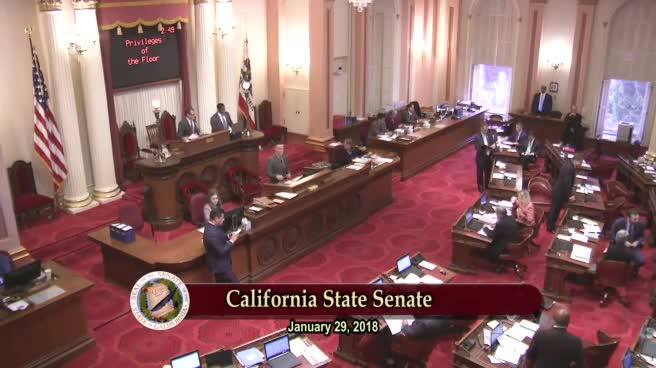 3MIN
Senate Floor
 12MIN
Senate Standing Committee on Appropriations
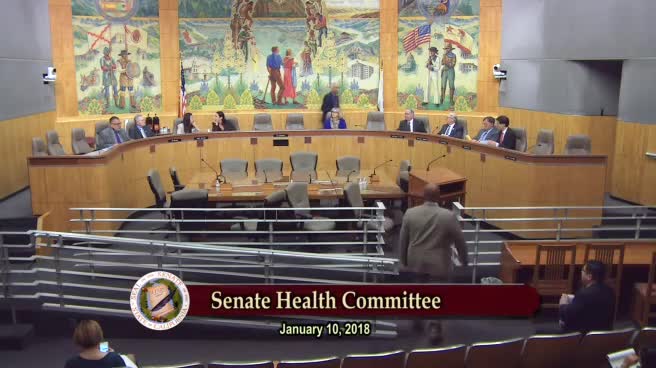 5MIN
Senate Standing Committee on Health
Bill Author
Bill Co-Author(s):