SB 712: Vehicles: license plate covers.
- Session Year: 2017-2018
- House: Senate
- Latest Version Date: 2017-05-01
Existing law generally prohibits the use of a covering on vehicle license plates, except as specified. Existing law excepts from this prohibition the installation of a cover over a lawfully parked vehicle to protect it from the weather and the elements, and authorizes a peace officer or other regularly salaried employee of a public agency designated to enforce laws, including local ordinances, relating to the parking of vehicles to temporarily remove so much of the cover as is necessary to inspect any license plate, tab, or indicia of registration on a vehicle. Existing law generally makes a violation of the Vehicle Code an infraction.
This bill would make a similar exception from the above prohibition for the installation of a partial cover. cover over the license plate of a lawfully parked vehicle.
Existing law generally prohibits the use of a covering on vehicle license plates, except as specified. Existing law excepts from this prohibition the installation of a cover over a lawfully parked vehicle to protect it from the weather and the elements, and authorizes a peace officer or other regularly salaried employee of a public agency designated to enforce laws, including local ordinances, relating to the parking of vehicles to temporarily remove so much of the cover as is necessary to inspect any license plate, tab, or indicia of registration on a vehicle. Existing law generally makes a violation of the Vehicle Code an infraction.
This bill would make a similar exception from the above prohibition for the installation of a partial cover.
(a)License plates shall at all times be securely fastened to the vehicle for which they are issued so as to prevent the plates from swinging, shall be mounted in a position so as to be clearly visible, and so that the characters are upright and display from left to right, and shall be maintained in a condition so as to be clearly legible. The rear license plate shall be mounted not less than 12 inches nor more than 60 inches from the ground, and the front license plate shall be mounted not more than 60 inches from the ground, except as follows:
(1)The rear license plate on a tow truck or repossessors tow vehicle may be mounted on the left-hand side of the mast assembly at the rear of the cab of the vehicle, not less than 12 inches nor more than 90 inches from the ground.
(2)The rear license plate on a tank vehicle hauling hazardous waste, as defined in Section 25117 of the Health and Safety Code, or asphalt material may be mounted not less than 12 inches nor more than 90 inches from the ground.
(3)The rear license plate on a truck tractor may be mounted at the rear of the cab of the vehicle, but not less than 12 inches nor more than 90 inches from the ground.
(4)The rear license plate of a vehicle designed by the manufacturer for the collection and transportation of garbage, rubbish, or refuse that is used regularly for the collection and transportation of that material by a person or governmental entity employed to collect, transport, and dispose of garbage, rubbish, or refuse may be mounted not less than 12 inches nor more than 90 inches from the ground.
(5)The rear license plate on a two-axle livestock trailer may be mounted 12 inches or more, but not more than 90 inches, from the ground.
(6)(A)The rear license plate on a dump bed motortruck equipped with a trailing, load bearing swing axle shall be mounted more than 12 inches, but not more than 107 inches, from the ground.
(B)As used in this section, a trailing, load bearing swing axle is an axle which can be moved from a raised position to a position behind the vehicle that allows for the transfer of a portion of the weight of the vehicle and load to the trailing axle.
(b)A covering shall not be used on license plates except as follows:
(1)The installation of a cover over a lawfully parked vehicle to protect it from the weather and the elements, or the installation of a partial cover, cover over the license plate of a lawfully parked vehicle, does not constitute a violation of this subdivision. A peace officer or other regularly salaried employee of a public agency designated to enforce laws, including local ordinances, relating to the parking of vehicles may temporarily remove so much of the cover as is necessary to inspect any license plate, tab, or indicia of registration on a vehicle.
(2)The installation of a license plate security cover is not a violation of this subdivision if the device does not obstruct or impair the recognition of the license plate information, including, but not limited to, the issuing state, license plate number, and registration tabs, and the cover is limited to the area directly over the top of the registration tabs. No portion of a license plate security cover shall rest over the license plate number.
(c)A casing, shield, frame, border, product, or other device that obstructs or impairs the reading or recognition of a license plate by an electronic device operated by state or local law enforcement, an electronic device operated in connection with a toll road, high-occupancy toll lane, toll bridge, or other toll facility, or a remote emission sensing device, as specified in Sections 44081 and 44081.6 of the Health and Safety Code, shall not be installed on, or affixed to, a vehicle.
(d)(1)It is the intent of the Legislature that an accommodation be made to persons with disabilities and to those persons who regularly transport persons with disabilities, to allow the removal and relocation of wheelchair lifts and wheelchair carriers without the necessity of removing and reattaching the vehicles rear license plate. Therefore, it is not a violation of this section if the reading or recognition of a rear license plate is obstructed or impaired by a wheelchair lift or wheelchair carrier and all of the following requirements are met:
(A)The owner of the vehicle has been issued a special identification license plate pursuant to Section 5007, or the person using the wheelchair that is carried on the vehicle has been issued a distinguishing placard under Section 22511.55.
(B)(i)The operator of the vehicle displays a decal, designed and issued by the department, that contains the license plate number assigned to the vehicle transporting the wheelchair.
(ii)The decal is displayed on the rear window of the vehicle, in a location determined by the department, in consultation with the Department of the California Highway Patrol, so as to be clearly visible to law enforcement.
(2)Notwithstanding any other law, if a decal is displayed pursuant to this subdivision, the requirements of this code that require the illumination of the license plate and the license plate number do not apply.
(3)The department shall adopt regulations governing the procedures for accepting and approving applications for decals, and issuing decals, authorized by this subdivision.
(4)This subdivision does not apply to a front license plate.
(e)This section shall remain in effect only until January 1, 2019, and as of that date is repealed, unless a later enacted statute, that is enacted before January 1, 2019, deletes or extends that date.
SEC. 2.Section 5201 of the Vehicle Code, as added by Section 16 of Chapter 90 of the Statutes of 2016, is amended to read:5201.(a)License plates, including temporary license plates, shall at all times be securely fastened to the vehicle for which they are issued so as to prevent the plates from swinging, shall be mounted in a position so as to be clearly visible, and so that the characters are upright and display from left to right, and shall be maintained in a condition so as to be clearly legible. The rear license plate shall be mounted not less than 12 inches nor more than 60 inches from the ground, and the front license plate shall be mounted not more than 60 inches from the ground, except as follows:
(1)The rear license plate on a tow truck or repossessors tow vehicle may be mounted on the left-hand side of the mast assembly at the rear of the cab of the vehicle, not less than 12 inches nor more than 90 inches from the ground.
(2)The rear license plate on a tank vehicle hauling hazardous waste, as defined in Section 25117 of the Health and Safety Code, or asphalt material may be mounted not less than 12 inches nor more than 90 inches from the ground.
(3)The rear license plate on a truck tractor may be mounted at the rear of the cab of the vehicle, but not less than 12 inches nor more than 90 inches from the ground.
(4)The rear license plate of a vehicle designed by the manufacturer for the collection and transportation of garbage, rubbish, or refuse that is used regularly for the collection and transportation of that material by a person or governmental entity employed to collect, transport, and dispose of garbage, rubbish, or refuse may be mounted not less than 12 inches nor more than 90 inches from the ground.
(5)The rear license plate on a two-axle livestock trailer may be mounted 12 inches or more, but not more than 90 inches, from the ground.
(6)(A)The rear license plate on a dump bed motortruck equipped with a trailing, load bearing swing axle shall be mounted more than 12 inches, but not more than 107 inches, from the ground.
(B)As used in this section, a trailing, load bearing swing axle is an axle which can be moved from a raised position to a position behind the vehicle that allows for the transfer of a portion of the weight of the vehicle and load to the trailing axle.
(b)Temporary license plates shall be replaced with permanent license plates upon receipt of the permanent license plates, and the temporary license plates shall be destroyed at that time.
(c)A covering shall not be used on license plates except as follows:
(1)The installation of a cover over a lawfully parked vehicle to protect it from the weather and the elements, or the installation of a partial cover, cover over the license plate of a lawfully parked vehicle, does not constitute a violation of this subdivision. A peace officer or other regularly salaried employee of a public agency designated to enforce laws, including local ordinances, relating to the parking of vehicles may temporarily remove so much of the cover as is necessary to inspect any license plate, tab, or indicia of registration on a vehicle.
(2)The installation of a license plate security cover is not a violation of this subdivision if the device does not obstruct or impair the recognition of the license plate information, including, but not limited to, the issuing state, license plate number, and registration tabs, and the cover is limited to the area directly over the top of the registration tabs. No portion of a license plate security cover shall rest over the license plate number.
(d)A casing, shield, frame, border, product, or other device that obstructs or impairs the reading or recognition of a license plate by an electronic device operated by state or local law enforcement, an electronic device operated in connection with a toll road, high-occupancy toll lane, toll bridge, or other toll facility, or a remote emission sensing device, as specified in Sections 44081 and 44081.6 of the Health and Safety Code, shall not be installed on, or affixed to, a vehicle.
(e)(1)It is the intent of the Legislature that an accommodation be made to persons with disabilities and to those persons who regularly transport persons with disabilities, to allow the removal and relocation of wheelchair lifts and wheelchair carriers without the necessity of removing and reattaching the vehicles rear license plate. Therefore, it is not a violation of this section if the reading or recognition of a rear license plate is obstructed or impaired by a wheelchair lift or wheelchair carrier and all of the following requirements are met:
(A)The owner of the vehicle has been issued a special identification license plate pursuant to Section 5007, or the person using the wheelchair that is carried on the vehicle has been issued a distinguishing placard under Section 22511.55.
(B)(i)The operator of the vehicle displays a decal, designed and issued by the department, that contains the license plate number assigned to the vehicle transporting the wheelchair.
(ii)The decal is displayed on the rear window of the vehicle, in a location determined by the department, in consultation with the Department of the California Highway Patrol, so as to be clearly visible to law enforcement.
(2)Notwithstanding any other law, if a decal is displayed pursuant to this subdivision, the requirements of this code that require the illumination of the license plate and the license plate number do not apply.
(3)The department shall adopt regulations governing the procedures for accepting and approving applications for decals, and issuing decals, authorized by this subdivision.
(4)This subdivision does not apply to a front license plate.
(f)This section shall become operative January 1, 2019.
(a)License plates shall at all times be securely fastened to the vehicle for which they are issued so as to prevent the plates from swinging, shall be mounted in a position so as to be clearly visible, and so that the characters are upright and display from left to right, and shall be maintained in a condition so as to be clearly legible. The rear license plate shall be mounted not less than 12 inches nor more than 60 inches from the ground, and the front license plate shall be mounted not more than 60 inches from the ground, except as follows:
(1)The rear license plate on a tow truck or repossessors tow vehicle may be mounted on the left-hand side of the mast assembly at the rear of the cab of the vehicle, not less than 12 inches nor more than 90 inches from the ground.
(2)The rear license plate on a tank vehicle hauling hazardous waste, as defined in Section 25117 of the Health and Safety Code, or asphalt material may be mounted not less than 12 inches nor more than 90 inches from the ground.
(3)The rear license plate on a truck tractor may be mounted at the rear of the cab of the vehicle, but not less than 12 inches nor more than 90 inches from the ground.
(4)The rear license plate of a vehicle designed by the manufacturer for the collection and transportation of garbage, rubbish, or refuse that is used regularly for the collection and transportation of that material by a person or governmental entity employed to collect, transport, and dispose of garbage, rubbish, or refuse may be mounted not less than 12 inches nor more than 90 inches from the ground.
(5)The rear license plate on a two-axle livestock trailer may be mounted 12 inches or more, but not more than 90 inches, from the ground.
(6)(A)The rear license plate on a dump bed motortruck equipped with a trailing, load bearing swing axle shall be mounted more than 12 inches, but not more than 107 inches, from the ground.
(B)As used in this section, a trailing, load bearing swing axle is an axle which can be moved from a raised position to a position behind the vehicle that allows for the transfer of a portion of the weight of the vehicle and load to the trailing axle.
(b)A covering shall not be used on license plates except as follows:
(1)The installation of a cover over a lawfully parked vehicle to protect it from the weather and the elements elements, or the installation of a partial cover, does not constitute a violation of this subdivision. A peace officer or other regularly salaried employee of a public agency designated to enforce laws, including local ordinances, relating to the parking of vehicles may temporarily remove so much of the cover as is necessary to inspect any license plate, tab, or indicia of registration on a vehicle.
(2)The installation of a license plate security cover is not a violation of this subdivision if the device does not obstruct or impair the recognition of the license plate information, including, but not limited to, the issuing state, license plate number, and registration tabs, and the cover is limited to the area directly over the top of the registration tabs. No portion of a license plate security cover shall rest over the license plate number.
(c)A casing, shield, frame, border, product, or other device that obstructs or impairs the reading or recognition of a license plate by an electronic device operated by state or local law enforcement, an electronic device operated in connection with a toll road, high-occupancy toll lane, toll bridge, or other toll facility, or a remote emission sensing device, as specified in Sections 44081 and 44081.6 of the Health and Safety Code, shall not be installed on, or affixed to, a vehicle.
(d)(1)It is the intent of the Legislature that an accommodation be made to persons with disabilities and to those persons who regularly transport persons with disabilities, to allow the removal and relocation of wheelchair lifts and wheelchair carriers without the necessity of removing and reattaching the vehicles rear license plate. Therefore, it is not a violation of this section if the reading or recognition of a rear license plate is obstructed or impaired by a wheelchair lift or wheelchair carrier and all of the following requirements are met:
(A)The owner of the vehicle has been issued a special identification license plate pursuant to Section 5007, or the person using the wheelchair that is carried on the vehicle has been issued a distinguishing placard under Section 22511.55.
(B)(i)The operator of the vehicle displays a decal, designed and issued by the department, that contains the license plate number assigned to the vehicle transporting the wheelchair.
(ii)The decal is displayed on the rear window of the vehicle, in a location determined by the department, in consultation with the Department of the California Highway Patrol, so as to be clearly visible to law enforcement.
(2)Notwithstanding any other law, if a decal is displayed pursuant to this subdivision, the requirements of this code that require the illumination of the license plate and the license plate number do not apply.
(3)The department shall adopt regulations governing the procedures for accepting and approving applications for decals, and issuing decals, authorized by this subdivision.
(4)This subdivision does not apply to a front license plate.
(e)This section shall remain in effect only until January 1, 2019, and as of that date is repealed, unless a later enacted statute, that is enacted before January 1, 2019, deletes or extends that date.
SEC. 2.Section 5201 of the Vehicle Code, as added by Section 16 of Chapter 90 of the Statutes of 2016, is amended to read:5201.(a)License plates, including temporary license plates, shall at all times be securely fastened to the vehicle for which they are issued so as to prevent the plates from swinging, shall be mounted in a position so as to be clearly visible, and so that the characters are upright and display from left to right, and shall be maintained in a condition so as to be clearly legible. The rear license plate shall be mounted not less than 12 inches nor more than 60 inches from the ground, and the front license plate shall be mounted not more than 60 inches from the ground, except as follows:
(1)The rear license plate on a tow truck or repossessors tow vehicle may be mounted on the left-hand side of the mast assembly at the rear of the cab of the vehicle, not less than 12 inches nor more than 90 inches from the ground.
(2)The rear license plate on a tank vehicle hauling hazardous waste, as defined in Section 25117 of the Health and Safety Code, or asphalt material may be mounted not less than 12 inches nor more than 90 inches from the ground.
(3)The rear license plate on a truck tractor may be mounted at the rear of the cab of the vehicle, but not less than 12 inches nor more than 90 inches from the ground.
(4)The rear license plate of a vehicle designed by the manufacturer for the collection and transportation of garbage, rubbish, or refuse that is used regularly for the collection and transportation of that material by a person or governmental entity employed to collect, transport, and dispose of garbage, rubbish, or refuse may be mounted not less than 12 inches nor more than 90 inches from the ground.
(5)The rear license plate on a two-axle livestock trailer may be mounted 12 inches or more, but not more than 90 inches, from the ground.
(6)(A)The rear license plate on a dump bed motortruck equipped with a trailing, load bearing swing axle shall be mounted more than 12 inches, but not more than 107 inches, from the ground.
(B)As used in this section, a trailing, load bearing swing axle is an axle which can be moved from a raised position to a position behind the vehicle that allows for the transfer of a portion of the weight of the vehicle and load to the trailing axle.
(b)Temporary license plates shall be replaced with permanent license plates upon receipt of the permanent license plates, and the temporary license plates shall be destroyed at that time.
(c)A covering shall not be used on license plates except as follows:
(1)The installation of a cover over a lawfully parked vehicle to protect it from the weather and the elements elements, or the installation of a partial cover, does not constitute a violation of this subdivision. A peace officer or other regularly salaried employee of a public agency designated to enforce laws, including local ordinances, relating to the parking of vehicles may temporarily remove so much of the cover as is necessary to inspect any license plate, tab, or indicia of registration on a vehicle.
(2)The installation of a license plate security cover is not a violation of this subdivision if the device does not obstruct or impair the recognition of the license plate information, including, but not limited to, the issuing state, license plate number, and registration tabs, and the cover is limited to the area directly over the top of the registration tabs. No portion of a license plate security cover shall rest over the license plate number.
(d)A casing, shield, frame, border, product, or other device that obstructs or impairs the reading or recognition of a license plate by an electronic device operated by state or local law enforcement, an electronic device operated in connection with a toll road, high-occupancy toll lane, toll bridge, or other toll facility, or a remote emission sensing device, as specified in Sections 44081 and 44081.6 of the Health and Safety Code, shall not be installed on, or affixed to, a vehicle.
(e)(1)It is the intent of the Legislature that an accommodation be made to persons with disabilities and to those persons who regularly transport persons with disabilities, to allow the removal and relocation of wheelchair lifts and wheelchair carriers without the necessity of removing and reattaching the vehicles rear license plate. Therefore, it is not a violation of this section if the reading or recognition of a rear license plate is obstructed or impaired by a wheelchair lift or wheelchair carrier and all of the following requirements are met:
(A)The owner of the vehicle has been issued a special identification license plate pursuant to Section 5007, or the person using the wheelchair that is carried on the vehicle has been issued a distinguishing placard under Section 22511.55.
(B)(i)The operator of the vehicle displays a decal, designed and issued by the department, that contains the license plate number assigned to the vehicle transporting the wheelchair.
(ii)The decal is displayed on the rear window of the vehicle, in a location determined by the department, in consultation with the Department of the California Highway Patrol, so as to be clearly visible to law enforcement.
(2)Notwithstanding any other law, if a decal is displayed pursuant to this subdivision, the requirements of this code that require the illumination of the license plate and the license plate number do not apply.
(3)The department shall adopt regulations governing the procedures for accepting and approving applications for decals, and issuing decals, authorized by this subdivision.
(4)This subdivision does not apply to a front license plate.
(f)This section shall become operative January 1, 2019.
|
Date
|
Status
|
|---|---|
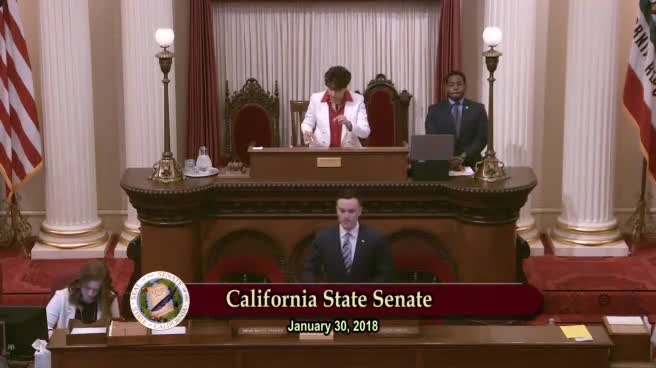
| Jan 30, 2018 | Read third time. Refused passage. (Ayes 12. Noes 18.) |
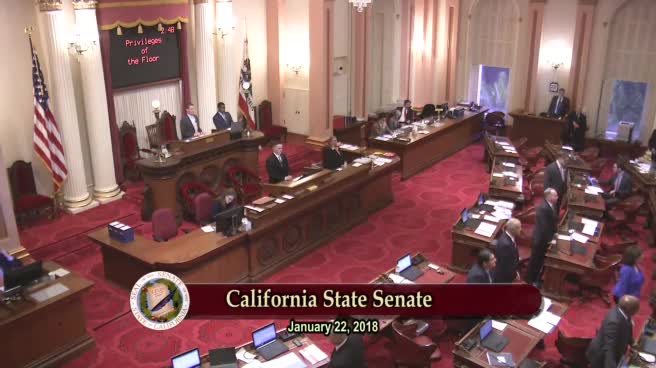
| Jan 22, 2018 | Read third time. Refused passage. (Ayes 16. Noes 16.) |
| Jan 10, 2018 | Read second time. Ordered to third reading. |
| Jan 9, 2018 | From committee: Do pass. (Ayes 8. Noes 2.) (January 9). |
| Jan 4, 2018 | Set for hearing January 9. |
| Dec 21, 2017 | Set for hearing January 9. |
| Jun 6, 2017 | June 6 hearing: Reconsideration granted. |
| Jun 1, 2017 | Set for hearing June 6. |
| May 10, 2017 | May 9 set for first hearing. Failed passage in committee. (Ayes 5. Noes 6. Page 1021.) |
| May 2, 2017 | Set for hearing May 9. |
| May 1, 2017 | From committee with author's amendments. Read second time and amended. Re-referred to Com. on T. & H. |
| Mar 9, 2017 | Referred to Com. on T. & H. |
| Feb 21, 2017 | From printer. May be acted upon on or after March 23. |
| Feb 17, 2017 | Introduced. Read first time. To Com. on RLS. for assignment. To print. |
|
Date
|
Description
|
Location
|
Votes
|
|
|---|---|---|---|---|
| Jan 30, 2018 | Senate 3rd Reading SB712 Anderson et al. | Senate Floor |
Failed |
|
| Jan 22, 2018 | Senate 3rd Reading SB712 Anderson et al. Reconsider | Senate Floor |
Passed |
|
| Jan 22, 2018 | Senate 3rd Reading SB712 Anderson et al. | Senate Floor |
Passed |
|
| Jan 9, 2018 | Do pass | Senate Standing Committee on Transportation and Housing |
Passed |
|
| Jun 6, 2017 | [06-06-2017] hearing: Motion to Reconsider. [Reconsideration Granted.] | Senate Standing Committee on Transportation and Housing |
Passed |
|
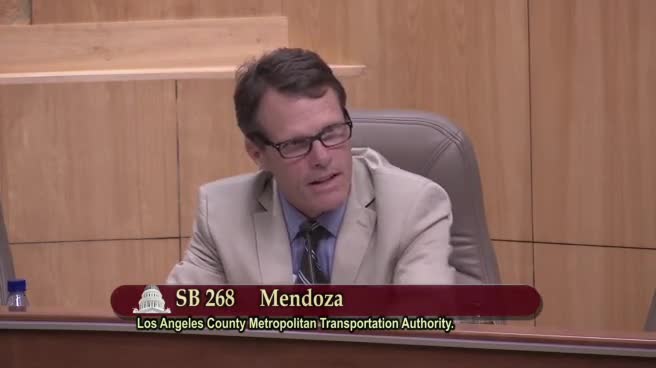
| May 9, 2017 | Do pass | Senate Standing Committee on Transportation and Housing |
Failed |
This list shows positions taken on this bill by organizations on the date displayed, which is linked to the original source.
Positions by individuals are not included.
Office of Senate Floor Analyses (916) 651-1520 Fax: (916) 327-4478 | SB |
THIRD READING
Bill No: SB 712
:
SENATE TRANS. & HOUSING COMMITTEE: 5-6, 5/9/17 (FAIL)
AYES: Cannella, Gaines, Morrell, Skinner, Wiener
NOES: Beall, Allen, Atkins, McGuire, Roth, Wieckowski
NO VOTE RECORDED: Bates, Mendoza
SENATE TRANS. & HOUSING COMMITTEE: 8-2, 1/9/18
AYES: Beall, Gaines, McGuire, Morrell, Roth, Skinner, Vidak, Wiener
NOES: Dodd, Wieckowski
NO VOTE RECORDED: Cannella, Allen, Mendoza
SENATE FLOOR: 16-16, 1/22/18 (FAIL)
AYES: Anderson, Bates, Beall, Berryhill, Cannella, Fuller, Gaines, Hill, Mitchell, Moorlach, Nguyen, Roth, Skinner, Vidak, Wiener, Wilk
NOES: Allen, De León, Dodd, Galgiani, Glazer, Hernandez, Jackson, Leyva, McGuire, Monning, Newman, Nielsen, Pan, Portantino, Stern, Wieckowski
NO VOTE RECORDED: Atkins, Bradford, Hertzberg, Hueso, Lara, Mendoza, Morrell, Stone
SOURCE: Electronic Frontier Foundation
DIGEST:
This bill allows the use of license plate covers on parked vehicles.
Existing law:
- Requires license plates to be mounted so as to be clearly visible and legible, as specified.
- Prohibits the use of license plate coverings except:
- Vehicle covers for use on a lawfully parked vehicle to protect it from weather and the elements.
- Security license plate covers that do not obstruct recognition of the plate information, including, but not limited to, the issuing state, number, and registration tab.
- Prohibits the installation of a casing, shield, frame, border, product, or other device that obstructs reading of the plate by law enforcement or an electronic device.
- Prohibits the sale of a product intended to visually obscure the reading or recognition of a license plate, subject to a fine of $250 per item sold.
- Allows the California Highway Patrol (CHP) to retain data from license plate readers (LPRs) for no longer than 60 days, except as specified.
- Requires data collected through the use or operation of an automated license plate reader (ALPR) system to be treated as personal information for purposes of existing data breach notification laws.
- Requires ALPR operators and end-users to maintain reasonable security procedures and practices and to implement a usage and privacy policy that includes the purpose of, process for, and restrictions on selling or sharing the ALPR information.
This bill allows the use of license plate covers on lawfully parked vehicles.
Background
- Purpose. According to the author, private collection of license plate data through ALPRs poses a grave threat to privacy. Currently, the only thing keeping this information from going public is the companies themselves. Unlike law enforcement ALPRs, these companies maintain the data indefinitely with no public accountability. If a company decides to make the data available to the general public, or suffers a serious data breach, many people – including law enforcement officers, their families, their sources, victims, and witnesses, as well as judges and prosecutors – could be put at risk. The massive amount of ALPR data that currently exists could potentially reveal sensitive information, such as where you live, your travel routine, where you worship, where you go for medical treatment, and where you drop your kids off at school. The data can also predict where you might be on a certain day and identify known associates (such as family) based on vehicles regularly in the same vicinity. In addition, some companies running private ALPRs may be engaged in unfair debt collection and insurance programs by making this data available to financial and insurance companies.
- ALPR systems. ALPR systems automatically scan any license plate within range. Some ALPR systems can scan more than 1,000 plates per minute. When used by law enforcement, each scanned license plate is checked against crime databases. If a “hit” occurs — for example, a stolen vehicle, AMBER alert, or an arrest warrant — the ALPR technology alerts the law enforcement officer. While some suggest this technology is useful for modern policing, others raise concerns over invasion of individuals’ civil liberties. The American Civil Liberties Union (ACLU) reports a number of cities with hit rates of less than 1%, where the other 99% of data has no relation to criminal activity. In 2012, Washington, DC’s police department scanned over 204 million license plates with 22,465 resulting in hits — a hit rate of 0.01%. A six-month pilot study in 2015-16 by the Bay Area Urban Areas Security Initiative in Larkspur, California, scanned nearly four million plates, with 985 hits — a hit rate of just 0.02%. Some argue that this information has the potential to be involved in large-scale security breach issues. The use of ALPR technology is growing. According to a 2011 survey by the Police Executive Research Forum, 75% of law enforcement at that time was using ALPRs, with 85% planning to expand ALPR use. The Police Forum estimated that within five years of the survey, at least 25% of all police vehicles would be equipped with ALPR technology.
- Privacy concerns. The collection of a license plate number, location, and time stamp over multiple time points can identify not only a person’s exact whereabouts but also their pattern of movement. This data can be collected not only by public entities but also by commercial, private companies that make their datasets available to law enforcement. One such company told The Atlantic it had more than four billion scans as of April 2016, collecting over 120 million per month. Unlike other types of personal information that are covered by existing law, civilians are not always aware when their ALPR data is being collected. One does not even need to be driving to be subject to ALPR technology; a car parked on the side of the road can be scanned by an ALPR system.
- Are license plates personal information? A 2016 Virginia court case concerning storage of ALPR data (Harrison Neal vs. Fairfax County Police Department, et. al.) determined that a license plate number is not personal information. The case cites a number of supporting court cases as recent as 2007, including the U.S. vs. Walraven decision (10th Circuit, 1989) where the judge determined that a license plate has no privacy interest because a license plate is in plain sight. SB 34 (Hill, Chapter 532, Statutes of 2015) established that data collected through the use or operation of an ALPR system must be treated as personal information for purposes of existing data breach notification laws. These laws apply to agencies, persons, or businesses in California that conduct business in the state and own or license computerized data including personal information.
- ALPR technology as an enforcement tool. ALPRs eliminate the need for officers to manually enter license plate information by taking photographs of license plates and converting them into text. ALPRs can be found on patrol units, parking enforcement vehicles, and street sweepers, or fixed at common intersections, bridges, airports, and in parking lots. They are used to track stolen vehicles, locate wanted suspects, and enforce parking laws and toll road requirements. This bill only applies to parked vehicles, meaning it would not hamper efforts to track vehicles in motion. However, it would likely make it more difficult for officers to scan plates in residential and business districts with high concentrations of parked cars. Therefore, it could have a significant impact on parking enforcement officers, who would potentially have to exit their vehicle to reveal and scan a covered plate. It could also impede police officers who are searching for a car with stolen plates, where the make and model of the car is unknown.
- Expanding the car cover exemption. Existing law allows a license plate to be covered only if a complete car cover is being used on a lawfully parked vehicle to protect it from the elements. Some vehicle covers, though not required by law, contain license plate windows to allow both weather protection and easy identification of the vehicle by law enforcement. This bill expands the car cover exemption by allowing drivers to cover only the license plate on a lawfully parked vehicle. However, if a driver forgot to remove the cover before driving the vehicle, he or she would unintentionally be breaking the law.
- Regulating ALPRs. AB 115 (Committee on Budget, Chapter 38, Statutes of 2011) set a 60-day time limit for CHP to store captured plate data, unless the plate is involved in an active investigation. Such time limits are intended to ensure that the data collected that is not connected with a crime or infraction is destroyed to prevent data leaks or privacy breaches. However, in California no such time limits exist for private companies that collect data. SB 34 (Hill, Chapter 532, Statutes of 2015) established regulations on the privacy and usage of ALPR data and expanded the meaning of “personal information” to include information or data collected through the use or operation of an ALPR system.
California is not alone in regulating ALPRs. According to the National Conference of State Legislatures, at least 14 states have enacted statutes relating to the use of ALPRs or the retention of data collected by ALPRs. For example, Arkansas prohibits companies or individuals from using ALPRs, limiting use to law enforcement and parking enforcement, and limits data storage to 150 days. Similarly, Maine limits ALPR use to public safety purposes and limits data storage to 21 days. Regulating ALPR technology may be a more effective approach to dealing with the stated problem than regulating license plate visibility.
- Does this bill address the stated problem? The sponsor of this bill, the Electronic Frontier Foundation, states that through the use of ALPR systems, “law enforcement is subsidizing companies that turn our privacy into a commodity to be sold to some of the most abusive and discriminatory industries.” But this bill does not prohibit law enforcement from working with these companies, nor does it prohibit these companies from using ALPR data. Further, this bill allows individuals to cover their license plates only when their cars are parked — ALPR systems could still be used on moving cars. The sponsor states that this bill would enable an individual, when visiting a location they would like to keep confidential, to cover their license plate while parked at that location. However, this bill would not stop anyone from using ALPR technology on the vehicle as it drives in or out of the parking lot or garage.
Related/Prior Legislation
SB 34 (Hill, Chapter 532, Statutes of 2015) established regulations on the privacy and usage of ALPR data and expanded the meaning of “personal information” to include information or data collected through the use or operation of an ALPR system.
AB 115 (Committee on Budget, Chapter 38, Statutes of 2011) authorized the CHP to retain data from LPR for no more than 60 days, except as specified.
FISCAL EFFECT: Appropriation: Fiscal Com.: Local:
Electronic Frontier Foundation (source)
American Civil Liberties Union of California
OPPOSITION: (Verified 1/17/18)
Association for Los Angeles Deputy Sheriffs
California Police Chiefs Association
California Public Parking Association
League of California Cities
Los Angeles Police Protective League
Riverside Sheriffs’ Association
ARGUMENTS IN SUPPORT: The Electronic Frontier Foundation, sponsor of this bill, states that through the use of ALPR systems, “law enforcement is subsidizing companies that turn our privacy into a commodity to be sold to some of the most abusive and discriminatory industries.” This bill will enable an individual, when visiting a location they would like to keep confidential, to cover their license plate while parked at that location.
ARGUMENTS IN OPPOSITION: The California Police Chiefs Association states that this bill “would allow individuals with expired registration, stolen registration tabs, stolen license plates, or stolen vehicles to park in plain sight, undetected by law enforcement.”
1/23/18 9:32:21
**** END ****
SENATE COMMITTEE ON TRANSPORTATION AND HOUSING
Senator Jim Beall, Chair
2017 - 2018 Regular
Bill No: SB 712 Hearing Date: 1/9/18
Author: | Anderson | ||
Version: | 5/1/2017 | ||
Urgency: | No | Fiscal: | No |
Consultant: | Erin Riches | ||
SUBJECT: Vehicles: license plate covers
DIGEST: This bill allows the use of license plate covers on parked vehicles.
ANALYSIS:
Existing law:
- Requires license plates to be mounted so as to be clearly visible and legible, as specified.
- Prohibits the use of license plate coverings except:
- Vehicle covers for use on a lawfully parked vehicle to protect it from weather and the elements.
- Security license plate covers that do not obstruct recognition of the plate information, including but not limited to the issuing state, number, and registration tab.
- Prohibits the installation of a casing, shield, frame, border, product, or other device that obstructs reading of the plate by law enforcement or an electronic device.
- Prohibits the sale of a product intended to visually obscure the reading or recognition of a license plate, subject to a fine of $250 per item sold.
- Allows the California Highway Patrol (CHP) to retain data from license plate readers (LPRs) for no longer than 60 days, except as specified.
- Requires data collected through the use or operation of an automated license plate reader (ALPR) system to be treated as personal information for purposes of existing data breach notification laws.
- Requires ALPR operators and end-users to maintain reasonable security procedures and practices and to implement a usage and privacy policy that includes the purpose of, process for, and restrictions on selling or sharing the ALPR information.
This bill allows the use of license plate covers on lawfully parked vehicles.
COMMENTS:
- Purpose. According to the author, private collection of license plate data through ALPRs poses a grave threat to privacy. Currently, the only thing keeping this information from going public is the companies themselves. Unlike law enforcement ALPRs, these companies maintain the data indefinitely with no public accountability. If a company decides to make the data available to the general public, or suffers a serious data breach, many people – including law enforcement officers, their families, their sources, victims, and witnesses, as well as judges and prosecutors – could be put at risk. The massive amount of ALPR data that currently exists could potentially reveal sensitive information, such as where you live, your travel routine, where you worship, where you go for medical treatment, and where you drop your kids off at school. The data can also predict where you might be on a certain day and identify known associates (such as family) based on vehicles regularly in the same vicinity. In addition, some companies running private ALPRs may be engaged in unfair debt collection and insurance programs by making this data available to financial and insurance companies.
- Background. ALPR systems automatically scan any license plate within range. Some ALPR systems can scan more than 1,000 plates per minute. When used by law enforcement, each scanned license plate is checked against crime databases. If a “hit” occurs — for example, a stolen vehicle, AMBER alert, or an arrest warrant — the ALPR technology alerts the law enforcement officer. While some suggest this technology is useful for modern policing, others raise concerns over invasion of individuals’ civil liberties. The American Civil Liberties Union (ACLU) reports a number of cities with hit rates of less than 1%, where the other 99% of data has no relation to criminal activity. In 2012, Washington, DC’s police department scanned over 204 million license plates with 22,465 resulting in hits — a hit rate of 0.01%. A six-month pilot study in 2015-16 by the Bay Area Urban Areas Security Initiative in Larkspur, CA scanned nearly four million plates, with 985 hits — a hit rate of just 0.02%. Some argue that this information has the potential to be involved in large-scale security breach issues. The use of ALPR technology is growing. According to a 2011 survey by the Police Executive Research Forum, 75% of law enforcement at that time was using ALPRs, with 85% planning to expand ALPR use. The Police Forum estimated that within five years of the survey, at least 25% of all police vehicles would be equipped with ALPR technology.
- Privacy concerns. The collection of a license plate number, location, and time stamp over multiple time points can identify not only a person’s exact whereabouts but also their pattern of movement. This data can be collected not only by public entities but also by commercial, private companies that make their datasets available to law enforcement. One such company told The Atlantic it had more than four billion scans as of April 2016, collecting over 120 million per month. Unlike other types of personal information that are covered by existing law, civilians are not always aware when their ALPR data is being collected. One does not even need to be driving to be subject to ALPR technology; a car parked on the side of the road can be scanned by an ALPR system.
- Are license plates personal information? A 2016 Virginia court case concerning storage of ALPR data (Harrison Neal vs. Fairfax County Police Department, et. al.) determined that a license plate number is not personal information. The case cites a number of supporting court cases as recent as 2007, including the U.S. vs. Walraven decision (10th Circuit, 1989) where the judge determined that a license plate has no privacy interest because a license plate is in plain sight. SB 34 (Chapter 532, Statutes of 2015) established that data collected through the use or operation of an ALPR system must be treated as personal information for purposes of existing data breach notification laws. These laws apply to agencies, persons, or businesses in California that conduct business in the state and own or license computerized data including personal information.
- ALPR technology as an enforcement tool. ALPRs eliminate the need for officers to manually enter license plate information by taking photographs of license plates and converting them into text. ALPRs can be found on patrol units, parking enforcement vehicles, and street sweepers, or fixed at common intersections, bridges, airports, and in parking lots. They are used to track stolen vehicles, locate wanted suspects, and enforce parking laws and toll road requirements. This bill only applies to parked vehicles, meaning it would not hamper efforts to track vehicles in motion. However, it would likely make it more difficult for officers to scan plates in residential and business districts with high concentrations of parked cars. Therefore, it could have a significant impact on parking enforcement officers, who would potentially have to exit their vehicle to reveal and scan a covered plate. It could also impede police officers who are searching for a car with stolen plates, where the make/model of the car is unknown.
- Expanding the car cover exemption. Existing law allows a license plate to be covered only if a complete car cover is being used on a lawfully parked vehicle to protect it from the elements. Some vehicle covers, though not required by law, contain license plate windows to allow both weather protection and easy identification of the vehicle by law enforcement. This bill would expand the exemption by allowing drivers to cover only the license plate on a lawfully parked vehicle. However, if a driver forgot to remove the cover before driving the vehicle, he or she would unintentionally be breaking the law.
- Regulating ALPRs. AB 115 (Committee on Budget, Chapter 38, Statutes of 2011) set a 60-day time limit for CHP to store captured plate data, unless the plate is involved in an active investigation. Such time limits are intended to ensure that the data collected that is not connected with a crime or infraction is destroyed to prevent data leaks or privacy breaches. However, in California no such time limits exist for private companies that collect data. SB 34 (Hill, Chapter 532, Statutes of 2015) established regulations on the privacy and usage of ALPR data and expanded the meaning of “personal information” to include information or data collected through the use or operation of an ALPR system.
California is not alone in regulating ALPRs. According to the National Conference of State Legislatures (NCSL), at least 14 states have enacted statutes relating to the use of ALPRs or the retention of data collected by ALPRs. For example, Arkansas prohibits companies or individuals from using ALPRs, limiting use to law enforcement and parking enforcement, and limits data storage to 150 days. Similarly, Maine limits ALPR use to public safety purposes and limits data storage to 21 days. The author may wish to consider whether regulating ALPR technology is a more effective approach than regulating license plate visibility.
- Does this bill address the stated problem? The sponsor of this bill, the Electronic Frontier Foundation, states that through the use of ALPR systems, “law enforcement is subsidizing companies that turn our privacy into a commodity to be sold to some of the most abusive and discriminatory industries.” But this bill does not prohibit law enforcement from working with these companies, nor does it prohibit these companies from using ALPR data. Further, this bill allows individuals to cover their license plates only when their cars are parked — ALPR systems could still be used on moving cars. As noted above, the author may wish to consider regulating ALPR technology as a more effective approach than regulating license plate visibility.
- Opposition. The California Police Chiefs Association states that this bill “would allow individuals with expired registration, stolen registration tabs, stolen license plates, or stolen vehicles to park in plain sight, undetected by law enforcement.” The California Public Parking Association states that
“Allowing for the legal concealing of a plate will required a tailored — manual — approach to parking enforcement for a subset of vehicles that choose to cover the plate.” - Reconsideration. This bill was heard in this committee on May 9, 2017 and failed on a 5-6 vote. It was subsequently granted reconsideration, but has not been amended. Therefore, the committee will not hold another full hearing on this bill, but instead will simply vote on it.
Related Legislation:
SB 34 (Hill, Chapter 532, Statutes of 2015) — Established regulations on the privacy and usage of ALPR data and expanded the meaning of “personal information” to include information or data collected through the use or operation of an ALPR system.
AB 115 (Committee on Budget, Chapter 38, Statutes of 2011) — Authorized CHP to retain data from LPR for no more than 60 days, except as specified.
FISCAL EFFECT: Appropriation: Fiscal Com.: Local:
POSITIONS: (Communicated to the committee before noon on Wednesday,
January 3, 2018.)
SUPPORT:
Electronic Frontier Foundation (sponsor)
American Civil Liberties Union of California
OPPOSITION:
Association for Los Angeles Deputy Sheriffs
California Police Chiefs Association
California Public Parking Association
League of California Cities
Los Angeles Police Protective League
-- END --
SENATE COMMITTEE ON TRANSPORTATION AND HOUSING
Senator Jim Beall, Chair
2017 - 2018 Regular
Bill No: Hearing Date: 5/09/2017
Author: | Anderson | ||
Version: | 5/1/2017 | ||
Urgency: | No | Fiscal: | No |
Consultant: | Mikel Shybut | ||
SUBJECT: .
DIGEST: This bill allows the use of license plate covers on lawfully parked vehicles.
ANALYSIS:
Existing law:
- Requires license plates to be mounted such that they are clearly visible and legible, as specified.
- Prohibits the use of license plate coverings except:
- Vehicle covers for use on a lawfully parked vehicle to protect it from weather and the elements
- Security license plate covers that do not obstruct recognition of the plate information, including, but not limited to, the issuing state, number, and registration tab
- Prohibits the installation of a casing, shield, frame, border, product or other device that obstructs reading of the plate by law enforcement or an electronic device.
- Prohibits the sale of a product meant to visually obscure the reading or recognition of a license plate with a fine of $250 per item sold.
- Allows the California Highway Patrol (CHP) to retain data from license plate readers (LPRs) for no longer than 60 days, except as specified.
- Requires that data collected through the use or operation of an automated license plate reader (ALPR) system must be treated as personal information for purposes of existing data breach notification laws.
- Requires ALPR operators and end-users to maintain reasonable security procedures and practices and to implement a usage and privacy policy, which includes the purpose of, process for, and restrictions on selling or sharing the ALPR information.
This bill allows the use of license plate covers on lawfully parked vehicles.
COMMENTS:
- Purpose. According to the author, private collection of license plate data through ALPRs poses a grave threat to privacy. Currently, the only thing keeping this information from going public is the companies themselves. Unlike law enforcement ALPR, these companies maintain the data indefinitely with no public accountability. In the event a company decides to make this data available to the general public, or a company suffers a serious data breach, many people will be put at risk. Among those most at risk are law enforcement officers, their family, their sources, victims, and witnesses, as well as judges and prosecutors. The massive amount of ALPR data out there can potentially reveal sensitive information, such as where you live, your travel routine, where you worship, where you go for medical treatment, where you drop your kids off at school. The data can also predict where you might be on a certain day and identify known associates (such as your family) based on vehicles regularly in the same vicinity. In addition, some companies running private ALPR may be engaged in unfair debt collection and insurance programs by making this available to the financial and insurance companies.
- Background. ALPR systems automatically scan any license plate within range. Some ALPR systems can scan over 1,000 plates in a minute. When used by law enforcement, each scanned license plate is checked against crime databases. If a “hit” occurs — for example, a stolen vehicle, AMBER alert, or an arrest warrant — the ALPR technology alerts the law enforcement officer. While some suggest this technology is useful for modern policing, others raise concerns over an invasion of peoples’ civil liberties. The ACLU reports a number of cities with hit rates of less than 1%, where the other 99% of data has no relation to criminal activity. In 2012, Washington, DC’s police department scanned over 204 million license plates with 22,655 resulting in hits – a hit rate of 0.01%. A six month pilot study in 2015-16 by the Bay Area Urban Areas Security Initiative in Larkspur, CA scanned nearly 4 million plates with 985 hits – a hit rate of just 0.02%. Some argue that this information has the potential to be involved in large-scale security breach issues. The use of ALPR technology is growing. According to a 2011 survey by the Police Executive Research Forum, 75% of law enforcement then used ALPRs with 85% planning to expand their use. The Police Forum estimated that within five years of the survey at least 25% of all police vehicles would be equipped with ALPR technology.
- Privacy concerns. The collection of a license plate number, location, and time stamp over multiple time points can identify not only a person’s exact whereabouts but also their pattern of movement. This data can be collected not only by public entities but also by commercial, private companies that make their datasets available to law enforcement. One such company told The Atlantic it had over 4 billion scans as of April 2016, collecting over 120 million per month. Unlike other types of personal information that are covered by existing law, civilians are not always aware when their ALPR data is being collected. One does not even need to be driving to be subject to ALPR technology: a car parked on the side of the road can be scanned by an ALPR system. This bill allows the use of license plate covers on parked cars to prevent ALPR detection.
- Weather or not. License plates, by law, must be clearly displayed and the use or sale of any product that would obscure a plate is illegal. Currently the only exemption that allows for a license plate to be covered is with the use of a complete car cover on a lawfully parked vehicle to protect it from weather and the elements. Given that vehicles can cost tens of thousands of dollars, a vehicle cover can be an important way for owners without a garage space to protect their investment. An officer is allowed to remove as much of the cover as necessary to inspect the license plate and registration of the vehicle. Some vehicle covers, though not required by law, contain license plate windows to allow both weather protection and easy identification of the vehicle by enforcement officers. This bill allows drivers to cover only their license plates while parked to prevent ALPR recognition of their plate.
- ALPRs as an enforcement tool. ALPRs eliminate the need for officers to manually enter plate information, taking photographs of license plates and converting them to text. They can be found on patrol units, parking enforcement vehicles or street sweepers, fixed at common intersections or bridges, at airports, or in parking lots. They’re used to track stolen vehicles, find wanted suspects, and to enforce parking laws and toll roads. This bill only applies to parked vehicles, meaning it wouldn’t hamper efforts to track vehicles in motion: on the highway, crossing bridges or entering airports, or passing through ALPR intersections. However, it would likely make it more difficult for officers to scan plates in residential and business districts with high concentrations of parked cars. Therefore, it may have the greatest impact on parking enforcement officers, who would have to potentially exit their vehicle to reveal and scan a covered plate. It could also impede police officers who are searching for a car with stolen plates, where the make/model of the car is not known.
- Regulating ALPRs. Prior legislation has addressed ALPRs by regulating use of the technology itself and putting restrictions on the length of time that captured data may be stored. AB 115 (Committee on Budget, Chapter 38 of 2011) set a 60 day time limit for CHP to store captured plate data, unless the plate was involved in an active investigation. Such time limits are meant to ensure that the upwards of 99% of data collected that is not connected with a crime or infraction is destroyed to prevent data leaks or privacy breaches. However, in California no such time limits are in place for private companies who collect ALPR data. SB 34 (Hill, Chapter 532 of 2015) established regulations on the privacy and usage of ALPR data and expanded the meaning of “personal information” to include information or data collected through the use or operation of an ALPR system. California is not alone in regulating ALPRs. According to the National Conference of State Legislatures (NCSL), at least 13 states have laws regulating the use or data retention of ALPRs. According to NCSL, Arkansas prohibits companies or individuals from using ALPRs, limiting use to law enforcement and parking enforcement and limits data storage to 150 days. Similarly, Maine limits ALPR use to public safety purposes and limits data storage to 21 days. The author may wish to consider whether regulating the ALPR technology is a more effective approach than regulating license plate visibility.
- Are license plates personal? A 2016 Virginia court case concerning storage of ALPR data (Harrison Neal vs. Fairfax County Police Department, et al.) determined that a license plate number is not personal information. The case cites a number of supporting court cases as recent as 2007, including the U.S. v. Walraven decision (10th Circuit, 1989) where the judge determined that a license plate has no privacy interest because a license plate is in plain sight. In California, SB 34 (Hill, 2015) established that data collected through the use or operation of an ALPR system must be treated as personal information for purposes of existing data breach notification laws. These laws apply to agencies, persons, or businesses that conduct business in California and own or license computerized data including personal information.
- Forgotten covers. This bill only allows license plates to be covered while parked. However, there would likely be a number of drivers who forget to remove the covers before driving the vehicle. In such a scenario, the driver would unintentionally be breaking the law.
- Opposition. The California Police Chiefs Association expressed concerns regarding law enforcement evasion:
“At a minimum, SB 712 would allow individuals with expired registration, stolen registration tabs, stolen license plates, or stolen vehicles to park in plain-sight, undetected by law enforcement. License plate information of parked vehicles has been used to locate wanted persons, including suspected kidnappers and fugitives. SB 712 would hinder these law enforcement investigations and provide individuals avoiding detection with an additional tool to remain undetected by law enforcement authorities.”
The California Public Parking Association expressed concerns about the effects on parking enforcement:
“License Plate Recognition (LPR) is one of the most efficient and accurate ways to enforce parking today. LPR cameras capture plate characters with a time stamp and GPS coordinates. This not only increases enforcement accuracy, but also compliance amongst customers as well. Allowing for the legal concealing of a license plate will require a tailored--manual--approach to parking enforcement for a subset of vehicles that choose to cover the plate.”
Related Legislation:
SB 34 (Hill, Chapter 532 of 2015) — established regulations on the privacy and usage of ALPR data and expanded the meaning of “personal information” to include information or data collected through the use or operation of an ALPR system
AB 115 (Committee on Budget, Chapter 38 of 2011) — authorized CHP to retain data from LPR for no more than 60 days, except as specified
FISCAL EFFECT: Appropriation: No Fiscal Com.: No Local: No
POSITIONS: (Communicated to the committee before noon on Wednesday,
May 3, 2017.)
SUPPORT:
Electronic Frontier Foundation (sponsor)
OPPOSITION:
California Police Chiefs Association
California Public Parking Association
League of California Cities
Los Angeles Deputy Sheriffs
Los Angeles Police Protective League
-- END --
Discussed in Hearing
 13MIN
Senate Floor
 13MIN
Senate Floor
 1MIN
Senate Standing Committee on Transportation and Housing
 22MIN
Senate Standing Committee on Transportation and Housing
Bill Author

Bill Co-Author(s):