SB 727: Public postsecondary education: instructional materials: innovative pricing.
- Session Year: 2017-2018
- House: Senate
- Latest Version Date: 2017-08-21
Existing law, known as the Donahoe Higher Education Act, sets forth the missions and functions of the segments of postsecondary education in this state. The California State University, under the administration of the Trustees of the California State University, the California Community Colleges, under the administration of the Board of Governors of the California Community Colleges, and the University of California, under the administration of the Regents of the University of California, constitute the 3 segments of public postsecondary education in this state. Provisions of the Donahoe Higher Education Act apply to the University of California only to the extent that the regents act, by appropriate resolution, to make those provisions applicable.
An existing provision of the Donahoe Higher Education Act requires the trustees and the board of governors, and requests the regents, to work with the academic senates of each respective segment to encourage faculty to give consideration to the least costly practices in assigning textbooks, and to work with publishers and college and university bookstores in creating bundles and packages if they are economically sound and deliver cost savings to students, as specified.
This bill would add to the Donahoe Higher Education Act a provision authorizing public postsecondary educational institutions to adopt policies that allow for the use of innovative pricing techniques and payment options for textbooks and other instructional materials, as specified. The bill would also authorize public postsecondary educational institutions to consult with students, faculty, financial aid officers, counselors, campus bookstores, or other appropriate campus interests with respect to these policies.
The bill would require that innovative pricing techniques and payment options adopted pursuant to the bill be adopted only if there is documented evidence that the proposed options, if they are adopted, would actually reduce the cost of the textbooks or other instructional materials for students taking a course. The bill would provide that nothing in its provisions, nor any policy adopted by a public postsecondary educational institution pursuant to this bill, shall violate, or be inconsistent with, the academic freedom of faculty as it relates to the assignment and use of instructional materials. The bill would provide that its provisions shall not be construed to require a student to purchase course materials through an innovative pricing technique or payment option adopted by a public postsecondary educational institution.
Existing law, known as the Donahoe Higher Education Act, sets forth the missions and functions of the segments of postsecondary education in this state. The California State University, under the administration of the Trustees of the California State University, the California Community Colleges, under the administration of the Board of Governors of the California Community Colleges, and the University of California, under the administration of the Regents of the University of California, constitute the 3 segments of public postsecondary education in this state. Provisions of the Donahoe Higher Education Act apply to the University of California only to the extent that the regents act, by appropriate resolution, to make those provisions applicable.
An existing provision of the Donahoe Higher Education Act requires the trustees and the board of governors, and requests the regents, to work with the academic senates of each respective segment to encourage faculty to give consideration to the least costly practices in assigning textbooks, and to work with publishers and college and university bookstores in creating bundles and packages if they are economically sound and deliver cost savings to students, as specified.
This bill would add to the Donahoe Higher Education Act a provision authorizing public postsecondary educational institutions to adopt policies that allow for the use of innovative pricing techniques and payment options for textbooks and other instructional materials, as specified. The bill would require also authorize public postsecondary educational institutions to consult with students, faculty, financial aid officers, counselors, campus bookstores, or other appropriate campus interests with respect to these policies.
The bill would require that innovative pricing techniques and payment options adopted pursuant to the bill include an opt-out provision for students, and further would require that they be adopted only if there is documented evidence that the proposed options, if they are adopted, would actually reduce the cost of the textbooks or other instructional materials for students taking a course. The bill would provide that nothing in its provisions, nor any policy adopted by a public postsecondary educational institution pursuant to this bill, shall violate, or be inconsistent with, the academic freedom of faculty as it relates to the assignment and use of instructional materials.
Existing law, known as the Donahoe Higher Education Act, sets forth the missions and functions of the segments of postsecondary education in this state. The California State University, under the administration of the Trustees of the California State University, the California Community Colleges, under the administration of the Board of Governors of the California Community Colleges, and the University of California, under the administration of the Regents of the University of California, constitute the 3 segments of public postsecondary education in this state. Provisions of the Donahoe Higher Education Act apply to the University of California only to the extent that the regents act, by appropriate resolution, to make those provisions applicable.
An existing provision of the Donahoe Higher Education Act requires the trustees and the board of governors, and requests the regents, to work with the academic senates of each respective segment to encourage faculty to give consideration to the least costly practices in assigning textbooks, and to work with publishers and college and university bookstores in creating bundles and packages if they are economically sound and deliver cost savings to students, as specified.
This bill would add to the Donahoe Higher Education Act a provision authorizing public postsecondary educational institutions to adopt policies, consistent with a designated federal regulation as it exists on January 1, 2017, policies that allow for the use of innovative pricing techniques and payment options for textbooks and other instructional materials, as specified. The bill would require that innovative pricing techniques and payment options adopted pursuant to the bill include an opt-out provision for students, and further would require that they be adopted only if there is documented evidence that the proposed options, if they are adopted, would actually reduce the cost of the textbooks or other instructional materials for students taking a course. The bill would provide that nothing in its provisions, nor any policy adopted by a public postsecondary educational institution pursuant to this bill, shall violate, or be construed to be inconsistent with, the academic freedom of faculty as it relates to the assignment and use of instructional materials.
Existing law, known as the Donahoe Higher Education Act, sets forth the missions and functions of the segments of postsecondary education in this state. The California State University, under the administration of the Trustees of the California State University, the California Community Colleges, under the administration of the Board of Governors of the California Community Colleges, and the University of California, under the administration of the Regents of the University of California, constitute the 3 segments of public postsecondary education in this state. Provisions of the Donahoe Higher Education Act apply to the University of California only to the extent that the regents act, by appropriate resolution, to make those provisions applicable.
An existing provision of the Donahoe Higher Education Act requires the trustees and the board of governors, and requests the regents, to work with the academic senates of each respective segment to encourage faculty to give consideration to the least costly practices in assigning textbooks, and to work with publishers and college and university bookstores in creating bundles and packages if they are economically sound and deliver cost savings to students, as specified.
This bill would add to the Donahoe Higher Education Act a provison provision authorizing public postsecondary educational institutions to adopt policies, consistent with a designated federal regulation as it exists on January 1, 2017, that allow for the use of innovative pricing techniques and payment options for textbooks and other instructional materials, as specified. The bill would require that innovative pricing techniques and payment options adopted pursuant to the bill include an opt-out provision for students, and further would require that they be adopted only if there is documented evidence that the proposed options, if they are adopted, would actually reduce the cost of the textbooks or other instructional materials for students taking a course. The bill would provide that nothing in its provisions, nor any policy adopted by a public postsecondary educational institution pursuant to this bill, shall violate, or be construed to be inconsistent with, the academic freedom of faculty as it relates to the assignment and use of instructional materials.
Existing law, known as the Donahoe Higher Education Act, sets forth the missions and functions of the segments of postsecondary education in this state. The California State University, under the administration of the Trustees of the California State University, the California Community Colleges, under the administration of the Board of Governors of the California Community Colleges, and the University of California, under the administration of the Regents of the University of California, constitute the 3 segments of public postsecondary education in this state. Provisions of the Donahoe Higher Education Act apply to the University of California only to the extent that the regents act, by appropriate resolution, to make those provisions applicable.
An existing provision of the Donahoe Higher Education Act requires the trustees and the board of governors, and requests the regents, to work with the academic senates of each respective segment to encourage faculty to give consideration to the least costly practices in assigning textbooks, and to work with publishers and college and university bookstores in creating bundles and packages if they are economically sound and deliver cost savings to students, as specified.
This bill would add to the Donahoe Higher Education Act a provison authorizing public postsecondary educational institutions to adopt policies, consistent with a designated federal regulation as it exists on January 1, 2017, that allow for the use of innovative pricing techniques and payment options for textbooks and other instructional materials, as specified. The bill would require that innovative pricing techniques and payment options adopted pursuant to the bill include an opt-out provision for students, and further would require that they be adopted only if there is documented evidence that the proposed options, if they are adopted, would actually reduce the cost of the textbooks or other instructional materials for students taking a course.
(a)Each public postsecondary educational institution may adopt policies that allow for the use of innovative pricing techniques and payment options for textbooks and other instructional materials. Each public postsecondary educational institution may consult with students, faculty, financial aid officers, counselors, campus bookstores, or other appropriate campus interests with respect to these policies.
(b)Policies adopted pursuant to subdivision (a) may include, but are not necessarily limited to, bulk pricing arrangements that enable students to purchase course materials or texts that are delivered by any of the following methods:
(1)Delivered digitally.
(2)Delivered through a technology that is, or the license of which is, required to only be used within a course. technology.
(3)Delivered in a print format.
(c)Innovative pricing techniques and payment options adopted pursuant to this section shall be adopted only if there is documented evidence that the proposed options, if they are adopted, would actually reduce the cost of the textbooks or other instructional materials for students taking a course.
(d)Nothing in this section, nor any policy adopted by a public postsecondary educational institution pursuant to this section, shall violate, or be inconsistent with, the academic freedom of faculty as it relates to the assignment and use of instructional materials.
(e)Nothing in this section shall be construed to require a student to purchase course materials through an innovative pricing technique or payment option adopted by a public postsecondary educational institution pursuant to this section.
(a)Each public postsecondary educational institution may adopt policies that allow for the use of innovative pricing techniques and payment options for textbooks and other instructional materials. Each public postsecondary educational institution may consult with students, faculty, financial aid officers, counselors, campus bookstores, or other appropriate campus interests with respect to these policies.
(b)Policies adopted pursuant to subdivision (a) may include, but are not necessarily limited to, bulk pricing arrangements that enable students to purchase course materials or texts that are delivered by any of the following methods:
(1)Delivered digitally.
(2)Delivered through a technology that is, or the license of which is, required to only be used within a course.
(3)Delivered in a print format.
(c)Innovative pricing techniques and payment options adopted pursuant to this section shall include an opt-out provision for students, and may be adopted only if there is documented evidence that the proposed options, if they are adopted, would actually reduce the cost of the textbooks or other instructional materials for students taking a course.
(d)Nothing in this section, nor any policy adopted by a public postsecondary educational institution pursuant to this section, shall violate, or be inconsistent with, the academic freedom of faculty as it relates to the assignment and use of instructional materials.
(a)Each public postsecondary educational institution may adopt policies, consistent with Section 668.164(c)(2) of Title 34 of the Code of Federal Regulations, as it exists on January 1, 2017, policies that allow for the use of innovative pricing techniques and payment options for textbooks and other instructional materials.
(b)Policies adopted pursuant to subdivision (a) may include, but are not necessarily limited to, bulk pricing arrangements that enable students to purchase course materials or texts that are delivered by any of the following methods:
(1)Delivered digitally.
(2)Delivered through a technology that is, or the license of which is, required to only be used within a course.
(3)Delivered in a print format.
(c)Innovative pricing techniques and payment options adopted pursuant to this section shall include an opt-out provision for students, and may be adopted only if there is documented evidence that the proposed options, if they are adopted, would actually reduce the cost of the textbooks or other instructional materials for students taking a course.
(d)Nothing in this section, nor any policy adopted by a public postsecondary educational institution pursuant to this section, shall violate, or be construed to be inconsistent with, the academic freedom of faculty as it relates to the assignment and use of instructional materials.
(a)Each public postsecondary educational institution may adopt policies, consistent with Section 668.164(c)(2) of Title 34 of the Code of Federal Regulations, as it exists on January 1, 2017, that allow for the use of innovative pricing techniques and payment options for textbooks and other instructional materials.
(b)Policies adopted pursuant to subdivision (a) may include, but are not necessarily limited to, bulk pricing arrangements that enable students to purchase course materials or texts that are delivered by any of the following methods:
(1)Delivered digitally.
(2)Delivered through a technology that is, or the license of which is, required to only be used within a course.
(3)Delivered in a print format.
(c)Innovative pricing techniques and payment options adopted pursuant to this section shall include an opt-out provision for students, and may be adopted only if there is documented evidence that the proposed options, if they are adopted, would actually reduce the cost of the textbooks or other instructional materials for students taking a course.
|
Date
|
Status
|
|---|---|
| Aug 29, 2018 | Ordered to inactive file on request of Senator Galgiani. |
| May 29, 2018 | From inactive file on motion of Senator Galgiani. |
| Sep 13, 2017 | Ordered to inactive file on request of Senator Galgiani. |
| Sep 5, 2017 | From special consent calendar on motion of Senator Galgiani. |
| Sep 1, 2017 | Ordered to special consent calendar. |
| Aug 31, 2017 | In Senate. Concurrence in Assembly amendments pending. |
| Aug 31, 2017 | Read third time. Passed. Ordered to the Senate. |
| Aug 24, 2017 | Read second time. Ordered to consent calendar. |
| Aug 23, 2017 | From committee: Do pass. Ordered to consent calendar. (Ayes 15. Noes 0.) (August 23). |
| Aug 21, 2017 | From committee with author's amendments. Read second time and amended. Re-referred to Com. on APPR. |
| Jul 13, 2017 | Read second time and amended. Re-referred to Com. on APPR. |
| Jul 12, 2017 | From committee: Do pass as amended and re-refer to Com. on APPR. (Ayes 13. Noes 0.) (July 11). |
| Jun 12, 2017 | Referred to Com. on HIGHER ED. |
| May 31, 2017 | In Assembly. Read first time. Held at Desk. |
| May 30, 2017 | Read third time. Passed. (Ayes 40. Noes 0. Page 1258.) Ordered to the Assembly. |
| May 22, 2017 | Read second time. Ordered to third reading. |
| May 18, 2017 | Read third time and amended. |
| May 2, 2017 | Read second time. Ordered to third reading. |
| May 1, 2017 | From committee: Be ordered to second reading pursuant to Senate Rule 28.8. |
| Apr 21, 2017 | Set for hearing May 1. |
| Apr 18, 2017 | Read second time and amended. Re-referred to Com. on APPR. |
| Apr 17, 2017 | From committee: Do pass as amended and re-refer to Com. on APPR. (Ayes 7. Noes 0. Page 620.) (April 5). |
| Mar 21, 2017 | Set for hearing April 5. |
| Mar 9, 2017 | Referred to Com. on ED. |
| Feb 21, 2017 | From printer. May be acted upon on or after March 23. |
| Feb 17, 2017 | Introduced. Read first time. To Com. on RLS. for assignment. To print. |
|
Date
|
Description
|
Location
|
Votes
|
|
|---|---|---|---|---|
| Aug 31, 2017 | SB 727 Galgiani Consent Calendar Second Day Regular Session | Assembly Floor |
Passed |
|
| Aug 23, 2017 | Do pass. To Consent Calendar. | Assembly Standing Committee on Appropriations |
Passed |
|
| Jul 11, 2017 | Do pass as amended and be re-referred to the Committee on [Appropriations] | Assembly Standing Committee on Higher Education |
Passed |
|
| May 30, 2017 | Senate 3rd Reading SB727 Galgiani | Senate Floor |
Passed |
|
| Apr 5, 2017 | Do pass as amended, but first amend, and re-refer to the Committee on [Appropriations] | Senate Standing Committee on Education |
Passed |
This list shows positions taken on this bill by organizations on the date displayed, which is linked to the original source.
Positions by individuals are not included.
Office of Senate Floor Analyses (916) 651-1520 Fax: (916) 327-4478 | SB |
UNFINISHED BUSINESS
Bill No: SB 727
:
SENATE EDUCATION COMMITTEE: 7-0, 4/5/17
AYES: Allen, Wilk, Galgiani, Leyva, Mendoza, Pan, Vidak
SENATE APPROPRIATIONS COMMITTEE: Senate Rule 28.8
SENATE FLOOR: 40-0, 5/30/17
AYES: Allen, Anderson, Atkins, Bates, Beall, Berryhill, Bradford, Cannella, De León, Dodd, Fuller, Gaines, Galgiani, Glazer, Hernandez, Hertzberg, Hill, Hueso, Jackson, Lara, Leyva, McGuire, Mendoza, Mitchell, Monning, Moorlach, Morrell, Newman, Nguyen, Nielsen, Pan, Portantino, Roth, Skinner, Stern, Stone, Vidak, Wieckowski, Wiener, Wilk
ASSEMBLY FLOOR: 73-0, 8/31/17 (Consent) - See last page for vote
DIGEST:
This bill authorizes a public postsecondary educational institution to adopt policies that allow for the use of innovative pricing techniques and payment options for textbooks and other instructional materials.
Assembly Amendments
authorize public postsecondary educational institutions to consult with specified stakeholders with respect to these policies, strike the requirement to include an opt-out provision, and specify that students are not required to purchase course materials through an innovative pricing technique or payment option adopted pursuant to this bill.
Existing federal regulation:
- Authorizes an institution of higher education to include the costs of books and supplies as part of tuition and fees if the institution does one of the following:
- The institution does all of the following:
- Has an arrangement with a book publisher or other entity that enables it to make those books or supplies available to students below competitive market rates.
- Provides a way for a student to obtain those books and supplies by the seventh day of a payment period.
- Has a policy under which the student may opt-out of the way the institution provides for the student to obtain books and supplies.
- Documents on a current basis that the books or supplies, including digital or electronic course materials, are not available elsewhere or accessible by students enrolled in that program from sources other than those provided or authorized by the institution.
- The institution demonstrates there is a compelling health or safety reason. (Code of Federal Regulations, Title 34 § 668.164)
- The institution does all of the following:
- Authorizes an institution to credit a student’s ledger account with federal financial aid funds to pay for allowable charges associated with the current payment period. Allowable charges are:
- The amount of tuition, fees, and institutionally provided room and board assessed the student for the payment period, or the prorated amount of those
charges if the institution debits the student’s ledger account for more than the charges associated with the payment period. - The amount incurred by the student for the payment period for purchasing books, supplies, and other educationally related goods and services provided by the institution for which the institution obtains the student’s or parent’s authorization. (34 CFR § 668.164)
- The amount of tuition, fees, and institutionally provided room and board assessed the student for the payment period, or the prorated amount of those
This bill:
- Authorizes each public postsecondary educational institution to adopt policies that allow for the use of innovative pricing techniques and payment options for textbooks and other instructional materials.
- Authorizes each public postsecondary educational institution to consult with students, faculty, financial aid officers, counselors, campus bookstores, or other appropriate campus interests with respect to these policies.
- Authorizes policies to include but are not limited to, bulk pricing arrangements that enable students to purchase course materials or texts that are delivered by any of the following methods:
- Delivered digitally.
- Delivered through technology.
- Delivered in a print format.
- Authorizes the innovative pricing techniques and payment options to be adopted only if there is documented evidence that the proposed options, if they are adopted, would actually reduce the cost of textbooks or other instructional materials for students taking a course.
- Prohibits any policy adopted pursuant to this bill from violating, or being inconsistent with, the academic freedom of faculty as it relates to the assignment and use of instructional materials.
- Specifies that nothing in this bill is to be construed to require a student to purchase course materials through an innovative pricing technique or payment option adopted by a public postsecondary educational institution pursuant to this bill.
Comments
How does this delivery model work? Federal regulations authorize postsecondary educational institutions to include the costs of instructional materials and supplies as part of tuition and fees if the institution has an arrangement with a book publisher or other entity that enables it to make those books or supplies available to students below competitive market rates, or if the materials are not available elsewhere or accessible by students. Through this model, students can purchase instructional materials at the time of enrollment in courses. The price of those materials is included in their tuition or fees; students would not be required to pay additional costs for instructional materials, wait to make a trip to the bookstore, wait for materials to be available, or wait to be able to afford materials.
According to information provided by the author, several California institutions are currently implementing a digital discount/immediate access/inclusive program, including four campuses of the University of California, three campuses of the California State University, and four campuses of the California Community Colleges. One may question the need for this bill if campuses are currently implementing such models of delivering instructional materials. According to the author, specific statutory authority is needed to ensure institutions are clearly authorized to have policies regarding a digital discount/immediate access/inclusive program, and to describe the components that should be included in policies to ensure proper implementation.
FISCAL EFFECT: Appropriation: Fiscal Com.: Local:
According to the Assembly Appropriations Committee:
- Negligible cost to public postsecondary educational institutions.
- Unknown savings for students. This bill requires innovative pricing to only be adopted if evidence shows that it will reduce the cost of textbooks and instructional materials.
California Association of College Stores
OPPOSITION: (Verified 5/30/18)
None received
ASSEMBLY FLOOR: 73-0, 8/31/17
AYES: Acosta, Aguiar-Curry, Travis Allen, Arambula, Baker, Berman, Bigelow, Bocanegra, Bonta, Brough, Caballero, Calderon, Cervantes, Chau, Chávez, Chen, Chiu, Choi, Chu, Cooley, Cooper, Cunningham, Dababneh, Dahle, Daly, Eggman, Flora, Fong, Frazier, Friedman, Gallagher, Gipson, Gloria, Gonzalez Fletcher, Gray, Grayson, Harper, Holden, Irwin, Jones-Sawyer, Kalra, Kiley, Lackey, Levine, Limón, Low, Maienschein, Mathis, Mayes, McCarty, Medina, Melendez, Mullin, Muratsuchi, Nazarian, Obernolte, O'Donnell, Patterson, Quirk, Reyes, Rodriguez, Rubio, Salas, Santiago, Steinorth, Mark Stone, Thurmond, Ting, Voepel, Waldron, Weber, Wood, Rendon
NO VOTE RECORDED: Bloom, Burke, Cristina Garcia, Eduardo Garcia, Quirk-Silva, Ridley-Thomas
5/30/18 9:54:19
**** END ****
Date of Hearing: August 23, 2017
ASSEMBLY COMMITTEE ON APPROPRIATIONS
Lorena Gonzalez Fletcher, Chair
SBPCA Bill Id:SB 727
Author:(Galgiani) – As Amended Ver:August 21, 2017
Policy Committee: | Higher Education | Vote: | 13 - 0 |
|
| ||
|
|
Urgency: No State Mandated Local Program: No Reimbursable: No
SUMMARY:
This bill authorizes a public postsecondary educational institution to adopt policies that allow for the use of innovative pricing techniques and payment options for textbooks and other instructional materials.
FISCAL EFFECT:
- Negligible cost to public postsecondary educational institutions.
- Unknown savings for students. This bill requires innovative pricing to only be adopted if evidence shows that it will reduce the cost of textbooks and instructional materials.
COMMENTS
Purpose and Background. According to the author, "This bill helps to address the crisis of increasing college costs and mounting student debt." Existing law establishes the College Textbook Transparency Act, which requires, as of January 1, 2020, any person, firm or corporation that publishes textbooks offered for sale at a public or a private college or university, to make the textbooks available for sale in electronic format. California Community Colleges (CCC), California State University (CSU) and University of California (UC) campuses must work with their respective academic senates to encourage faculty to give consideration to the least costly practices in assigning textbooks and to work with publishers and college bookstores. College bookstores are required to work with the academic senates of each campus to review the process and timelines involved in ordering and stocking textbooks and to create bundles and packages of instructional materials that are economically sound.
Federal law authorizes an institution of higher education to include the costs of books and supplies as a part of tuition and fees, if the institution follows one of three provisions: (1) the institution had an arrangement with a book publisher or other entity that enables it to make those books or supplies available to students below competitive market rates, provides a way for a student to obtain those books and supplies by the seventh day of a payment period, and, has a policy under which the student may opt-out; (2) documents on a current basis that the books or supplies are not available elsewhere or accessible by students enrolled in that program from sources other than those provided or authorized by the institution; or (3) the institution demonstrates there is a compelling health or safety reason.
Analysis Prepared by: Daisy Gonzales / APPR. / (916) 319-2081
Date of Hearing: July 11, 2017
ASSEMBLY COMMITTEE ON HIGHER EDUCATION
Jose Medina, Chair
SBPCA Bill Id:SB 727
Author:(Galgiani) – As Amended Ver:May 18, 2017
SENATE VOTE: 40-0
SUBJECT: Public postsecondary education: instructional materials: innovative pricing.
SUMMARY: Authorizes a public postsecondary educational institution to adopt policies that allow for the use of innovative pricing techniques and payment options for textbooks and other instructional materials. Specifically, this bill:
- Authorizes the University of California (UC), California State University (CSU), and California Community Colleges (CCC), to adopt policies that allow for the use of innovative pricing techniques and payment options for textbooks and other instructional materials.
- Specifies that polices adopted may include, but are not necessarily limited to:
- Bulk pricing arrangements that enable students to purchase course materials or texts that are delivered by any of the following methods:
- Digitally;
- Through a technology that is, or the license of which is, required to only be used within a course; and,
- Delivered in print format.
- Bulk pricing arrangements that enable students to purchase course materials or texts that are delivered by any of the following methods:
- Requires that adopted innovative pricing techniques and payment options include an opt-out provision for students, and may be adopted only if there is documented evidence that the proposed options, if adopted, would actually reduce the cost of the textbooks or other instructional materials for students taking a course.
- Prohibits any policy adopted pursuant to this bill from violating, or being inconsistent with, the academic freedom of faculty as it relates to the assignment and use of instructional materials.
EXISTING LAW:
State law.
- Establishes the Donahoe Higher Education Act, setting forth the mission of the UC, CSU, and CCC (Education Code (EC) Section 66010, et seq.).
- Requires, in part, the CSU and CCC, and encourages UC, to work with their respective academic senates to encourage faculty to give consideration to the least costly practices in assigning textbooks and to work with publishers and college bookstores; and, college bookstores to work with the academic senates of each campus to review the process and timelines involved in ordering and stocking textbooks and to create bundles and packages of instructional materials that are economically sound (EC Section 66406).
- Establishes the College Textbook Transparency Act, which, in part:
- Defines "textbook" as a book that contains printed material and is intended for use as a source of study material for a class or group of students, a copy of which is expected to be available for the use of each of the students in that class or group, specifying that "textbook" does not include a novel;
- Defines "adopter" as any faculty member or academic department or other adopting entity at an institution of higher education responsible for considering and choosing course materials to be used in connection with the accredited courses taught at that institution;
- Encourages adopters to consider cost in the adoption of textbooks; and,
- Requires each campus bookstore at any public postsecondary educational institution to post in its store or on its Internet Web site a disclosure of its retail pricing policy on new and used textbooks (EC Section 66406.7).
- Requires, as of January 1, 2020, any person, firm or corporation that publishes textbooks offered for sale at the UC, CSU, CCC, or a private college or university, to make the textbooks available for sale in electronic format (EC Section 66410).
- Establishes the College Textbook Affordability Act, which, in part:
- Encourages faculty to accelerate the adoption of lower cost, high-quality, open educational resources in order to reduce costs for college students;
- Establishes the Open Educational Resources Adoption Incentive Program ; and,
- Defines "open educational resources" as high-quality teaching, learning, and research resources that reside in the public domain or have been released under an intellectual property license, such as a Creative Commons license, that permits their free use and repurposing by others, and may include other resources that are legally available and free of cost to students (EC 67421, et seq.).
Federal law. Authorizes an institution of higher education to include the costs of books and supplies as part of tuition and fees if the institution does one of the following:
- The institution does all of the following:
- Has an arrangement with a book publisher or other entity that enables it to make those books or supplies available to students below competitive market rates;
- Provides a way for a student to obtain those books and supplies by the seventh day of a payment period; and,
- Has a policy under which the student may opt-out of the way the institution provides for the student to obtain books and supplies.
- Documents on a current basis that the books or supplies, including digital or electronic course materials, are not available elsewhere or accessible by students enrolled in that program from sources other than those provided or authorized by the institution; and,
- The institution demonstrates there is a compelling health or safety reason (Code of Federal Regulations, Title 34 Section 668.164).
- The institution does all of the following:
FISCAL EFFECT: According to the Senate Appropriations Committee, pursuant to Senate Rule 28.8, negligible state costs.
COMMENTS: Cost of instructional materials. According to the February 2015 Student Public Interest Research Groups (Student PIRGs) report, entitled, "Open Textbooks: The Billion-Dollar Solution," the cost of a college degree has increased significantly over the past decade. The report finds that, as of 2013, seven in 10 seniors at public and private nonprofit colleges, graduated with student loan debt; and, that as a nation, Americans hold over $1 trillion in student loan debt. Additionally, the report finds that, during the same time that the cost of obtaining a college degree increased, college textbook costs have skyrocketed. Though textbooks do not represent the majority of costs in pursuing a college degree, they are one of the largest out-of-pocket expenses that students face each year. The report states that, "Since 1978, college textbook costs have increased 812 percent. To put that in context, it means that textbook prices have increased at 3.2 times the rate of inflation."
Citing data from the College Board, the report finds that, the average undergraduate student should budget between $1,200 and $1,300 for textbooks and supplies each year; which averages to be as much as 40 percent of tuition at a two-year community college, and 13percent at a four-year public institution.
A 2014 Student PIRG study found that 65 percent of students skipped buying or renting a textbook because it was too expensive, and 94 percent of those students felt that in so doing, their grade would suffer in a course. Additionally, almost half of the students said the cost of textbooks impacted how many courses they were able to take.
Purpose of the measure. According to the author, "This bill helps to address the crisis of increasing college costs and mounting student debt."
This measure authorizes the UC, CSU, and CCC to adopt policies that allow for the use of innovative pricing techniques and payment options for textbooks and other instructional materials.
Innovation in textbook prices. According to the Association of American Publishers, currently, just over 20 postsecondary educational institutions, comprised of UCs, CSUs, CCCs, and independent non-profit colleges, participate in an immediate access model pilot that aligns to the requirements as set forth in this measure.
Committee comments and amendments. This measure is silent as to whom postsecondary educational institutions should consult with when developing its policies.
Committee Staff recommends, and the author has agreed to accept, the following amendment:
66406.6. (a) Each public postsecondary educational institution may adopt policies that allow for the use of innovative pricing techniques and payment options for textbooks and other instructional materials. Each public postsecondary educational institution may consult with students, faculty, financial aid officers, counselors, campus bookstores, or other appropriate campus interests.
Additionally, should students be required to opt-out of rather than opt-in to the provisions set forth in this measure? In order to provide campuses the flexibility in choosing an appropriate model, Committee Staff recommends, and the author has agreed to accept, the following amendment:
(c) Innovative pricing techniques and payment options adopted pursuant to this section shall include an opt-out provision for students, and may be adopted only if there is documented evidence that the proposed options, if they are adopted, would actually reduce the cost of the textbooks or other instructional materials for students taking a course.
REGISTERED SUPPORT / OPPOSITION:
Support
None on file
Opposition
None on file
Analysis Prepared by: Jeanice Warden / HIGHER ED. / (916) 319-3960
Office of Senate Floor Analyses (916) 651-1520 Fax: (916) 327-4478 | SB |
THIRD READING
Bill No: SB 727
Amended: 5/18/17
SENATE EDUCATION COMMITTEE: 7-0, 4/5/17
AYES: Allen, Wilk, Galgiani, Leyva, Mendoza, Pan, Vidak
SENATE APPROPRIATIONS COMMITTEE: Senate Rule 28.8
DIGEST:
This bill authorizes a public postsecondary educational institution to adopt policies that allow for the use of innovative pricing techniques and payment options for textbooks and other instructional materials.
Senate Floor Amendments of 5/18/17 strike reference to Section 668.164(c)(2) of Title 34 of the Code of Federal Regulations, thereby deleting the requirement that policies be consistent with that specific federal regulation. The amendments also strike the phrase “be construed to” to clarify that any policy adopted pursuant to this bill shall not be inconsistent with the academic freedom of faculty, rather than being inconsistent or being construed as being inconsistent.
Existing federal regulation:
- Authorizes an institution of higher education to include the costs of books and supplies as part of tuition and fees if the institution does one of the following:
- The institution does all of the following:
- Has an arrangement with a book publisher or other entity that enables it to make those books or supplies available to students below competitive market rates.
- Provides a way for a student to obtain those books and supplies by the seventh day of a payment period.
- Has a policy under which the student may opt-out of the way the institution provides for the student to obtain books and supplies.
- Documents on a current basis that the books or supplies, including digital or electronic course materials, are not available elsewhere or accessible by students enrolled in that program from sources other than those provided or authorized by the institution.
- The institution demonstrates there is a compelling health or safety reason. (Code of Federal Regulations, Title 34 § 668.164)
- The institution does all of the following:
- Authorizes an institution to credit a student’s ledger account with federal financial aid funds to pay for allowable charges associated with the current payment period. Allowable charges are:
- The amount of tuition, fees, and institutionally provided room and board assessed the student for the payment period, or the prorated amount of those
charges if the institution debits the student’s ledger account for more than the charges associated with the payment period. - The amount incurred by the student for the payment period for purchasing books, supplies, and other educationally related goods and services provided by the institution for which the institution obtains the student’s or parent’s authorization. (34 CFR § 668.164)
- The amount of tuition, fees, and institutionally provided room and board assessed the student for the payment period, or the prorated amount of those
This bill:
- Authorizes each public postsecondary educational institution to adopt policies that allow for the use of innovative pricing techniques and payment options for textbooks and other instructional materials.
- Authorizes policies to include but are not limited to, bulk pricing arrangements that enable students to purchase course materials or texts that are delivered by any of the following methods:
- Delivered digitally.
- Delivered through a technology that is, or the license of which is, required to only be used within a course.
- Delivered in a print format.
- Authorizes the innovative pricing techniques and payment options to be adopted only if there is documented evidence that the proposed options, if they are adopted, would actually reduce the cost of textbooks or other instructional materials for students taking a course.
- Requires innovative pricing techniques and payment options to include an opt-out provision for students.
- Prohibits any policy adopted pursuant to this bill from violating, or being inconsistent with, the academic freedom of faculty as it relates to the assignment and use of instructional materials.
Comments
- Need for the bill. According to the author, “This bill helps address the crisis of increasing college costs and mounting student debt. Learning materials pose a significant cost to students. Many students cannot afford the cost of textbooks, resulting in students not purchasing the necessary course materials needed to succeed. The Immediate Access model has been a successful pilot on campuses throughout California. This model allows digital textbook materials to be sold in bulk to students at a discount. This bill includes protections for students, including an opt-out provision as well as requiring that an institution adopting this sort of approach to demonstrate that there is documented evidence that the proposed program would actually reduce the cost of the textbooks or other instructional materials for the students taking the course.”
- How does this delivery model work? Federal regulations authorize postsecondary educational institutions to include the costs of instructional materials and supplies as part of tuition and fees if the institution has an arrangement with a book publisher or other entity that enables it to make those books or supplies available to students below competitive market rates, or if the materials are not available elsewhere or accessible by students. Through this model, students can purchase instructional materials at the time of enrollment in courses. The price of those materials is included in their tuition or fees; students would not be required to pay additional costs for instructional materials, wait to make a trip to the bookstore, wait for materials to be available, or wait to be able to afford materials.
According to information provided by the author, several California institutions are currently implementing a digital discount/immediate access/inclusive program, including four campuses of the University of California, three campuses of the California State University, and four campuses of the California Community Colleges. One may question the need for this bill if campuses are currently implementing such models of delivering instructional materials. According to the author, specific statutory authority is needed to ensure institutions are clearly authorized to have policies regarding a digital discount/immediate access/inclusive program, and to describe the components that should be included in policies to ensure proper implementation.
FISCAL EFFECT: Appropriation: Fiscal Com.: Local:
None received
OPPOSITION: (Verified 5/18/17)
None received
5/23/17 12:06:49
**** END ****
Office of Senate Floor Analyses (916) 651-1520 Fax: (916) 327-4478 | SB |
THIRD READING
Bill No: SB 727
:
SENATE EDUCATION COMMITTEE: 7-0, 4/5/17
AYES: Allen, Wilk, Galgiani, Leyva, Mendoza, Pan, Vidak
SENATE APPROPRIATIONS COMMITTEE: Senate Rule 28.8
DIGEST:
This bill authorizes a public postsecondary educational institution to adopt policies that allow for the use of innovative pricing techniques and payment options for textbooks and other instructional materials.
Existing federal regulation:
- Authorizes an institution of higher education to include the costs of books and supplies as part of tuition and fees if the institution does one of the following:
- The institution does all of the following:
- Has an arrangement with a book publisher or other entity that enables it to make those books or supplies available to students below competitive market rates.
- Provides a way for a student to obtain those books and supplies by the seventh day of a payment period.
- Has a policy under which the student may opt-out of the way the institution provides for the student to obtain books and supplies.
- Documents on a current basis that the books or supplies, including digital or electronic course materials, are not available elsewhere or accessible by students enrolled in that program from sources other than those provided or authorized by the institution.
- The institution demonstrates there is a compelling health or safety reason. (Code of Federal Regulations, Title 34 § 668.164)
- The institution does all of the following:
- Authorizes an institution to credit a student’s ledger account with federal financial aid funds to pay for allowable charges associated with the current payment period. Allowable charges are:
- The amount of tuition, fees, and institutionally provided room and board assessed the student for the payment period, or the prorated amount of those
charges if the institution debits the student’s ledger account for more than the charges associated with the payment period. - The amount incurred by the student for the payment period for purchasing books, supplies, and other educationally related goods and services provided by the institution for which the institution obtains the student’s or parent’s authorization. (34 CFR § 668.164)
- The amount of tuition, fees, and institutionally provided room and board assessed the student for the payment period, or the prorated amount of those
This bill:
- Authorizes each public postsecondary educational institution to adopt policies, consistent with federal regulations, that allow for the use of innovative pricing techniques and payment options for textbooks and other instructional materials.
- Authorizes policies to include but are not limited to, bulk pricing arrangements that enable students to purchase course materials or texts that are delivered by any of the following methods:
- Delivered digitally.
- Delivered through a technology that is, or the license of which is, required to only be used within a course.
- Delivered in a print format.
- Authorizes the innovative pricing techniques and payment options to be adopted only if there is documented evidence that the proposed options, if they are adopted, would actually reduce the cost of textbooks or other instructional materials for students taking a course.
- Requires innovative pricing techniques and payment options to include an opt-out provision for students.
Comments
- Need for the bill. According to the author, “This bill helps address the crisis of increasing college costs and mounting student debt. Learning materials pose a significant cost to students. Many students cannot afford the cost of textbooks, resulting in students not purchasing the necessary course materials needed to succeed. The Immediate Access model has been a successful pilot on campuses throughout California. This model allows digital textbook materials to be sold in bulk to students at a discount. This bill includes protections for students, including an opt-out provision as well as requiring that an institution adopting this sort of approach to demonstrate that there is documented evidence that the proposed program would actually reduce the cost of the textbooks or other instructional materials for the students taking the course.”
- How does this delivery model work? Federal regulations authorize postsecondary educational institutions to include the costs of instructional materials and supplies as part of tuition and fees if the institution has an arrangement with a book publisher or other entity that enables it to make those books or supplies available to students below competitive market rates, or if the materials are not available elsewhere or accessible by students. Through this model, students can purchase instructional materials at the time of enrollment in courses. The price of those materials is included in their tuition or fees; students would not be required to pay additional costs for instructional materials, wait to make a trip to the bookstore, wait for materials to be available, or wait to be able to afford materials.
According to information provided by the author, several California institutions are currently implementing a digital discount/immediate access/inclusive program, including four campuses of the University of California, three campuses of the California State University, and four campuses of the California Community Colleges. One may question the need for this bill if campuses are currently implementing such models of delivering instructional materials. According to the author, specific statutory authority is needed to ensure institutions are clearly authorized to have policies regarding a digital discount/immediate access/inclusive program, and to describe the components that should be included in policies to ensure proper implementation.
FISCAL EFFECT: Appropriation: Fiscal Com.: Local:
None received
None received
5/5/17 10:47:18
**** END ****
SENATE COMMITTEE ON EDUCATION
Senator Benjamin Allen, Chair
2017 - 2018 Regular
Bill No: SB 727 Hearing Date: April 5, 2017
Author: | |||
Version: | February 17, 2017 | ||
Urgency: | No | Fiscal: | Yes |
Consultant: | Lynn Lorber | ||
Subject: Public postsecondary education: instructional materials: innovative pricing
SUMMARY
This bill authorizes a public postsecondary educational institution to adopt policies that allow for the use of innovative pricing techniques and payment options for textbooks and other instructional materials.
BACKGROUND
Existing federal regulations authorize an institution of higher education to include the costs of books and supplies as part of tuition and fees if the institution does one of the following:
- The institution does all of the following:
- Has an arrangement with a book publisher or other entity that enables it to make those books or supplies available to students below competitive market rates.
- Provides a way for a student to obtain those books and supplies by the seventh day of a payment period.
- Has a policy under which the student may opt-out of the way the institution provides for the student to obtain books and supplies.
- Has an arrangement with a book publisher or other entity that enables it to make those books or supplies available to students below competitive market rates.
- Documents on a current basis that the books or supplies, including digital or electronic course materials, are not available elsewhere or accessible by students enrolled in that program from sources other than those provided or authorized by the institution.
- The institution demonstrates there is a compelling health or safety reason. (Code of Federal Regulations, Title 34 § 668.164)
Existing federal regulations also authorize an institution to credit a student’s ledger account with federal financial aid funds to pay for allowable charges associated with the current payment period. Allowable charges are:
- The amount of tuition, fees, and institutionally provided room and board assessed the student for the payment period, or the prorated amount of those
charges if the institution debits the student’s ledger account for more than the charges associated with the payment period. - The amount incurred by the student for the payment period for purchasing books, supplies, and other educationally related goods and services provided by the institution for which the institution obtains the student’s or parent’s authorization. (34 CFR § 668.164)
ANALYSIS
This bill authorizes a public postsecondary educational institution to adopt policies that allow for the use of innovative pricing techniques and payment options for textbooks and other instructional materials. Specifically, this bill:
- Authorizes each public postsecondary educational institution to adopt policies, consistent with federal regulations, that allow for the use of innovative pricing techniques and payment options for textbooks and other instructional materials.
- Authorizes policies to include but are not limited to, bulk pricing arrangements that enable students to purchase course materials or texts that are delivered by any of the following methods:
- Delivered digitally.
- Delivered through a technology that is, or the license of which is, required to only be used within a course.
- Delivered in a print format.
- Delivered digitally.
- Authorizes the innovative pricing techniques and payment options to be adopted only if there is documented evidence that the proposed options, if they are adopted, would actually reduce the cost of textbooks or other instructional materials for students taking a course.
- Requires innovative pricing techniques and payment options to include an opt-out provision for students.
STAFF COMMENTS
- Need for the bill. According to the author, “This bill helps address the crisis of increasing college costs and mounting student debt. Learning materials pose a significant cost to students. Many students cannot afford the cost of textbooks, resulting in students not purchasing the necessary course materials needed to succeed. The Immediate Access model has been a successful pilot on campuses throughout California. This model allows digital textbook materials to be sold in bulk to students at a discount. This bill includes protections for students, including an opt-out provision as well as requiring that an institution adopting this sort of approach to demonstrate that there is documented evidence
that the proposed program would actually reduce the cost of the textbooks or other instructional materials for the students taking the course.” - How does this delivery model work? Federal regulations authorize postsecondary educational institutions to include the costs of instructional materials and supplies as part of tuition and fees if the institution has an arrangement with a book publisher or other entity that enables it to make those books or supplies available to students below competitive market rates, or if the materials are not available elsewhere or accessible by students. Through this model, students can purchase instructional materials at the time of enrollment in courses. The price of those materials is included in their tuition or fees; students would not be required to pay additional costs for instructional materials, wait to make a trip to the bookstore, wait for materials to be available, or wait to be able to afford materials.
According to information provided by the author, several California institutions are currently implementing a digital discount/immediate access/inclusive program, including four campuses of the University of California, three campuses of the California State University, and four campuses of the California Community Colleges. One may question the need for this bill if campuses are currently implementing such models of delivering instructional materials. According to the author, specific statutory authority is needed to ensure institutions are clearly authorized to have policies regarding a digital discount/immediate access/inclusive program, and to describe the components that should be included in policies to ensure proper implementation. - Academic freedom. Faculty plays a key role in determining which instructional materials are required for each course. Staff recommends an amendment to state that nothing in this bill, or policies that may be adopted by institutions, is to violate or be inconsistent with the academic freedom of faculty as it relates to instructional materials.
- Other stakeholders. This bill authorizes a public postsecondary educational institution to adopt policies related to instructional materials delivery models. Should college bookstores, faculty, academic senates, and students be consulted as colleges and universities develop their policies?
- Opt out vs opt in. Federal regulations require an opt-out for students who do not wish to participate. Similar legislation was adopted in Florida and requires students to opt-in, rather than opt-out. The rationale for the opt-in is to ensure students are fully informed when granting consent. As noted by the author’s office, students cannot opt-in to a program they are unaware exists. Should students be required to opt-in rather than opt-out? See next comment.
- Federal regulations. This bill references one provision of federal regulations related to the inclusion of the costs of instructional materials in tuition and fees. An additional provision of federal regulations allows institutions to credit a student’s ledger account with federal financial aid funds to pay for allowable charges such as instructional materials, which does not require the costs of materials to be included in tuition or fees. Should a cross-reference to this provision be included in this bill to allow for an additional method of charging for instructional materials? This option would require students to opt-in to specifically grant permission for their accounts to be credited, while this bill only provides for students to opt-out.
SUPPORT
None received
OPPOSITION
None received
-- END --
Discussed in Hearing
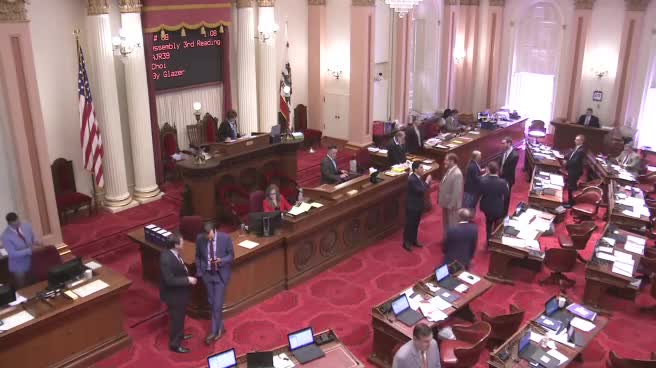 2SEC
Senate Floor
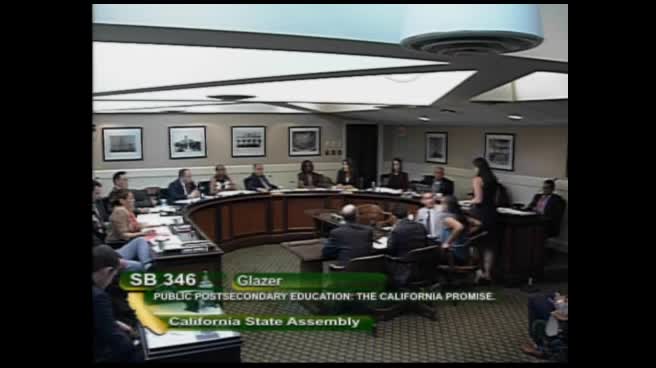 3MIN
Assembly Standing Committee on Higher Education
 1MIN
Senate Floor
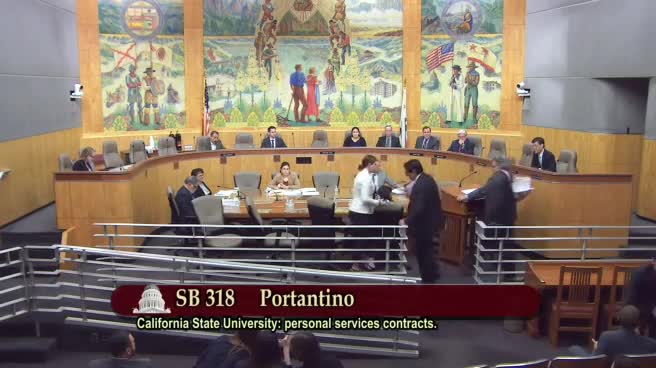 -1798SEC
Senate Standing Committee on Education
Bill Author

Bill Co-Author(s):