SB 785: Evidence: immigration status.
- Session Year: 2017-2018
- House: Senate
- Latest Version Date: 2018-05-17
Existing law provides that all relevant evidence is admissible in an action before the court, including evidence relevant to the credibility of a witness or hearsay declaring, subject to specified exceptions. Existing law also provides that, in civil actions for personal injury or wrongful death, evidence of a persons immigration status is not admissible and discovery of a persons immigration status is not permitted.
In civil actions other than those specified above, this bill would prohibit the disclosure of a persons immigration status in open court by a party unless that party requests an in camera hearing and the presiding judge determines that the evidence is admissible. This bill would apply this prohibition to criminal actions. The provisions of the bill would be repealed on January 1, 2022.
The California Constitution provides for the Right to Truth-in-Evidence, which requires a 2/3 vote of the Legislature to exclude any relevant evidence from any criminal proceeding, as specified.
Because this bill may exclude from a criminal action information about a persons immigration status that would otherwise be admissible, it requires a 2/3 vote of the Legislature.
This bill would declare that it is to take effect immediately as an urgency statute.
Existing law provides that all relevant evidence is admissible in an action before the court, including evidence relevant to the credibility of a witness or hearsay declaring, subject to specified exceptions. Existing law also provides that, in civil actions for personal injury or wrongful death, evidence of a persons immigration status is not admissible and discovery of a persons immigration status is not permitted.
In civil actions other than those specified above, this bill would prohibit the disclosure of a persons immigration status in open court by a party unless that party requests an in camera hearing and the presiding judge determines that the evidence is admissible. This bill would apply this prohibition to criminal actions, but would also include a prohibition on the inclusion of a persons immigration status in public court records. The provisions of the bill would be repealed on January 1, 2022.
The California Constitution provides for the Right to Truth-in-Evidence, which requires a 2/3 vote of the Legislature to exclude any relevant evidence from any criminal proceeding, as specified.
Because this bill may exclude from a criminal action information about a persons immigration status that would otherwise be admissible, it requires a 2/3 vote of the Legislature.
This bill would declare that it is to take effect immediately as an urgency statute.
Existing law provides that all relevant evidence is admissible in an action before the court, including evidence relevant to the credibility of a witness or hearsay declaring, subject to specified exceptions. Existing law also provides that, in civil actions for personal injury or wrongful death, evidence of a persons immigration status is not admissible and discovery of a persons immigration status is not permitted.
In civil actions other than those specified above, this bill would prohibit the disclosure of a persons immigration status in open court by a party unless the that party seeking the disclosure first requests a confidential an in camera hearing and the presiding judge determines that the evidence is relevant and admissible. This bill would apply this prohibition to criminal actions, but would also include a prohibition on the inclusion of a persons immigration status in public court records. The provisions of the bill would be repealed on January 1, 2022.
The California Constitution provides for the Right to Truth-in-Evidence, which requires a 2/3 vote of the Legislature to exclude any relevant evidence from any criminal proceeding, as specified.
Because this bill may exclude from a criminal action information about a persons immigration status that would otherwise be admissible, it requires a 2/3 vote of the Legislature.
This bill would declare that it is to take effect immediately as an urgency statute.
Existing law provides that all relevant evidence is admissible in an action before the court, including evidence relevant to the credibility of a witness or hearsay declaring, subject to specified exceptions. Existing law also provides that, in civil actions for personal injury or wrongful death, evidence of a persons immigration status is not admissible and discovery of a persons immigration status is not permitted.
In civil actions other than those specified above, this bill would prohibit the disclosure of a persons immigration status in open court by a party unless the party seeking the disclosure first requests a confidential in camera hearing and the presiding judge determines that the evidence is relevant and not otherwise inadmissible because its probative value is outweighed by other considerations. admissible. This bill would also apply the same this prohibition to criminal actions. actions, but would also include a prohibition on the inclusion of a persons immigration status in public court records. The provisions of the bill would be repealed on January 1, 2022.
The California Constitution provides for the Right to Truth in Evidence, Truth-in-Evidence, which requires a 2/3 vote of the Legislature to exclude any relevant evidence from any criminal proceeding, as specified.
Because this bill may exclude from a criminal action information about a persons immigration status that would otherwise be admissible, it requires a 2/3 vote of the Legislature.
This bill would declare that it is to take effect immediately as an urgency statute.
Existing law provides that all relevant evidence is admissible in an action before the court, including evidence relevant to the credibility of a witness or hearsay declaring, subject to specified exceptions. Existing law also provides that, in civil actions for personal injury or wrongful death, evidence of a persons immigration status is not admissible and discovery of a persons immigration status is not permitted.
This In civil actions other than those specified above, this bill would prohibit the inclusion of evidence disclosure of a persons immigration status in a public open court record unless the party seeking its inclusion seeks and obtains a ruling by the presiding judge at an the disclosure first requests a confidential in camera hearing and the presiding judge determines that the evidence is relevant and not otherwise inadmissible because its probative value is outweighed by other considerations. This bill would also apply the same prohibition to criminal actions.The California Constitution provides for the Right to Truth in Evidence, which requires a 2/3 vote of the Legislature to exclude any relevant evidence from any criminal proceeding, as specified.
Because this bill may exclude from an action, including a criminal proceeding, action information about a persons immigration status that would otherwise be admissible, it requires a 2/3 vote of the Legislature.
This bill would declare that it is to take effect immediately as an urgency statute.
Existing law provides that all relevant evidence is admissible in an action before the court, including evidence relevant to the credibility of a witness or hearsay declaring, subject to specified exceptions. Existing law also provides that, in civil actions for personal injury or wrongful death, evidence of a persons immigration status is not admissible and discovery of a persons immigration status is not permitted.
This bill would prohibit the inclusion of evidence of a persons immigration status in a public court record unless the party seeking its inclusion seeks and obtains a ruling by the presiding judge at an in camera hearing that the evidence is relevant. relevant and not otherwise inadmissible because its probative value is outweighed by other considerations.
The California Constitution provides for the Right to Truth in Evidence, which requires a 2/3 vote of the Legislature to exclude any relevant evidence from any criminal proceeding, as specified.
Because this bill may exclude from an action, including a criminal proceeding, information about a persons immigration status that would otherwise be admissible, it requires a 2/3 vote of the Legislature.
This bill would declare that it is to take effect immediately as an urgency statute.
Existing law provides that all relevant evidence is admissible in an action before the court, including evidence relevant to the credibility of a witness or hearsay declaring, subject to specified exceptions. Existing law also provides that, in civil actions for personal injury or wrongful death, evidence of a persons immigration status is not admissible and discovery of a persons immigration status is not permitted.
This bill would prohibit the inclusion of evidence of a persons immigration status in a public court record unless the party seeking its inclusion seeks and obtains a ruling by the presiding judge at an in camera hearing that the evidence is relevant.
The California Constitution provides for the Right to Truth in Evidence, which requires a 2/3 vote of the Legislature to exclude any relevant evidence from any criminal proceeding, as specified.
Because this bill may exclude from an action, including a criminal proceeding, information about a persons immigration status that would otherwise be admissible, it requires a 2/3 vote of the Legislature.
This bill would declare that it is to take effect immediately as an urgency statute.
Existing law, the Consumer Legal Remedies Act (act), prohibits certain enumerated unfair methods of competition and unfair or deceptive acts or practices undertaken by any person in a transaction intended to result, or which results in, the sale or lease of goods or services to any consumer. The act provides for relief through actions for damages, injunctive relief, and restitution, among other remedies.This bill would state that the act applies to firearms and ammunition, and provide that a violation of the act regarding firearms or ammunition is actionable under the act.Existing law, the Consumer Legal Remedies Act (act), prohibits certain enumerated unfair methods of competition and unfair or deceptive acts or practices undertaken by any person in a transaction intended to result, or which results in, the sale or lease of goods or services to any consumer. The act provides for relief through actions for damages, injunctive relief, and restitution, among other remedies.
This bill would state that the act applies to firearms and ammunition, and provide that a violation of the act regarding firearms or ammunition is actionable under the act.
(a)In a civil action not governed by Section 351.2, evidence of a persons immigration status shall not be disclosed in open court by a party or his or her attorney unless the judge presiding over the matter first determines that the evidence is admissible in an in camera hearing requested by the party seeking disclosure of the persons immigration status.
(b)This section does not do any of the following:
(1)Apply to cases in which a persons immigration status is necessary to prove an element of a claim or an affirmative defense.
(2)Impact otherwise applicable laws governing the relevance of immigration status to liability or the standards applicable to inquiries regarding immigration status in discovery or proceedings in a civil action, including Section 3339 of the Civil Code, Section 7285 of the Government Code, Section 24000 of the Health and Safety Code, and Section 1171.5 of the Labor Code.
(3)Prohibit a person or his or her attorney from voluntarily revealing his or her immigration status to the court.
(c)This section shall remain in effect only until January 1, 2022, and as of that date is repealed.
SEC. 2.Section 351.4 is added to the Evidence Code, to read:351.4.(a)In a criminal action, evidence of a persons immigration status shall not be disclosed in open court by a party or his or her attorney unless the judge presiding over the matter first determines that the evidence is admissible in an in camera hearing requested by the party seeking disclosure of the persons immigration status.
(b)This section does not do any of the following:
(1)Apply to cases in which a persons immigration status is necessary to prove an element of an offense or an affirmative defense.
(2)Limit discovery in a criminal action.
(3)Prohibit a person or his or her attorney from voluntarily revealing his or her immigration status to the court.
(c)This section shall remain in effect only until January 1, 2022, and as of that date is repealed.
SEC. 3.This act is an urgency statute necessary for the immediate preservation of the public peace, health, or safety within the meaning of Article IV of the California Constitution and shall go into immediate effect. The facts constituting the necessity are:
In order to immediately help protect undocumented residents of California and their ability to participate in the California justice system, it is necessary that this act take effect immediately.
SEC. 4.This act does not alter a prosecutors existing obligation to disclose exculpatory evidence.
(a)In a civil action not governed by Section 351.2, evidence of a persons immigration status shall not be disclosed in open court by a party or his or her attorney unless the judge presiding over the matter first determines that the evidence is admissible in an in camera hearing requested by the party seeking disclosure of the persons immigration status.
(b)This section does not do any of the following:
(1)Apply to cases in which a persons immigration status is necessary to prove an element of a claim or an affirmative defense.
(2)Impact otherwise applicable laws governing discovery in the relevance of immigration status to liability or the standards applicable to inquiries regarding immigration status in discovery or proceedings in a civil action. action, including Section 3339 of the Civil Code, Section 7285 of the Government Code, Section 24000 of the Health and Safety Code, and Section 1171.5 of the Labor Code.
(3)Prohibit a person or his or her attorney from voluntarily revealing his or her immigration status to the court.
(c)This section shall remain in effect only until January 1, 2022, and as of that date is repealed.
SEC. 2.Section 351.4 is added to the Evidence Code, to read:351.4.(a)In a criminal action, evidence of a persons immigration status shall not be disclosed in open court by a party or his or her attorney unless the judge presiding over the matter first determines that the evidence is admissible in an in camera hearing requested by the party seeking disclosure of the persons immigration status.
(b)This section does not do any of the following:
(1)Apply to cases in which a persons immigration status is necessary to prove an element of an offense or an affirmative defense.
(2)Limit discovery in a criminal action.
(3)Prohibit a person or his or her attorney from voluntarily revealing his or her immigration status to the court.
(c)This section shall remain in effect only until January 1, 2022, and as of that date is repealed.
SEC. 3.This act is an urgency statute necessary for the immediate preservation of the public peace, health, or safety within the meaning of Article IV of the California Constitution and shall go into immediate effect. The facts constituting the necessity are:
In order to immediately help protect undocumented residents of California and their ability to participate in the California justice system, it is necessary that this act take effect immediately.
SEC. 4.This act does not alter a prosecutors existing obligation to disclose exculpatory evidence.
(a)(1)In a civil action not governed by Section 351.2, evidence of a persons immigration status shall not be disclosed in open court by a party except as first authorized by a courts ruling pursuant to paragraph (2). unless the judge presiding over the matter first determines that the evidence is admissible in an in camera hearing requested by the party seeking disclosure of the persons immigration status.
(2)(A)A party seeking the disclosure of a persons immigration status under this section shall request a confidential in camera hearing at which the judge presiding over the matter shall determine if the evidence is relevant and admissible.(B)If the judge decides at the hearing described in subparagraph (A) that the evidence is relevant and admissible, the evidence may be disclosed in open court.(C)If the judge decides at the hearing described in subparagraph (A) that the evidence is irrelevant or inadmissible, the moving party may object to the ruling and may preserve the objection in camera on the record, with the record to be kept confidential pursuant to subdivision (b) of Section 2.585 of the California Rules of Court.(b)This section does not prohibit an individual do any of the following:
(1)Apply to cases in which a persons immigration status is necessary to prove an element of a claim or an affirmative defense.
(2)Impact otherwise applicable laws governing discovery in a civil action.
(3)Prohibit a person or his or her attorney from voluntarily revealing his or her immigration status to the court.
(c)This section shall remain in effect only until January 1, 2022, and as of that date is repealed.
SEC. 2.Section 351.4 is added to the Evidence Code, to read:351.4.(a)(1)In a criminal action, evidence of a persons immigration status shall not be disclosed in open court or included in public court records by a party except as first authorized by a courts ruling pursuant to paragraph (2). unless the judge presiding over the matter first determines that the evidence is admissible in an in camera hearing requested by the party seeking disclosure of the persons immigration status.
(2)(A)A party seeking the disclosure of a persons immigration status under this section shall request a confidential in camera hearing at which the judge presiding over the matter shall determine if the evidence is relevant and admissible.(B)If the judge decides at the hearing described in subparagraph (A) that the evidence is relevant and admissible, the evidence may be disclosed in open court and in public court records.(C)If the judge decides at the hearing described in subparagraph (A) that the evidence is irrelevant or inadmissible, the moving party may object to the ruling and may preserve the objection in camera on the record, with the record to be kept confidential pursuant to subdivision (b) of Section 2.585 of the California Rules of Court.(b)This section does not do any of the following:
(1)Apply to cases in which a persons immigration status is necessary to prove an element of an offense or an affirmative defense.
(2)Limit discovery in a criminal action.
(3)Affect obligations imposed by Section 1054 of the Penal Code.(4)Affect the standards of relevance, admissibility, or discovery.(5)(3)Prohibit an individual a person or his or her attorney from voluntarily revealing his or her immigration status to the court.
(c)This section shall remain in effect only until January 1, 2022, and as of that date is repealed.
SEC. 3.This act is an urgency statute necessary for the immediate preservation of the public peace, health, or safety within the meaning of Article IV of the California Constitution and shall go into immediate effect. The facts constituting the necessity are:
In order to immediately help protect undocumented residents of California and their ability to participate in the California justice system, it is necessary that this act take effect immediately.
(a)(1)In a civil action not governed by Section 351.2, evidence of a persons immigration status shall not be disclosed in open court by a party except as first authorized by a courts ruling pursuant to paragraph (2).
(2)(A)A party seeking the disclosure of a persons immigration status under this section shall request a confidential in camera hearing at which the judge presiding over the matter shall determine if the evidence is relevant and admissible.
(B)If the judge decides at the hearing described in subparagraph (A) that the evidence is relevant and admissible, the evidence may be disclosed in open court.
(C)If the judge decides at the hearing described in subparagraph (A) that the evidence is irrelevant or inadmissible, the moving party may object to the ruling and may preserve the objection in camera on the record, with the record to be kept confidential pursuant to subdivision (b) of Section 2.585 of the California Rules of Court.
(b)This section does not prohibit an individual or his or her attorney from voluntarily revealing his or her immigration status to the court.
(c)This section shall remain in effect only until January 1, 2022, and as of that date is repealed.
SEC. 2.Section 351.3 351.4 is added to the ElectionsEvidence Code, to read:351.3.351.4.(a)(1)In a criminal action, evidence of a persons immigration status shall not be disclosed in open court unless the party seeking the disclosure requests a confidential in camera hearing and the judge presiding over the matter determines that the evidence is relevant and is not inadmissible pursuant to Section 352. or included in public court records by a party except as first authorized by a courts ruling pursuant to paragraph (2).
(2)(A)A party seeking the disclosure of a persons immigration status under this section shall request a confidential in camera hearing at which the judge presiding over the matter shall determine if the evidence is relevant and admissible.
(B)If the judge decides at the hearing described in subparagraph (A) that the evidence is relevant and admissible, the evidence may be disclosed in open court and in public court records.
(C)If the judge decides at the hearing described in subparagraph (A) that the evidence is irrelevant or inadmissible, the moving party may object to the ruling and may preserve the objection in camera on the record, with the record to be kept confidential pursuant to subdivision (b) of Section 2.585 of the California Rules of Court.
(b)This section does not do any of the following:
(1)Apply to cases in which a persons immigration status is necessary to prove an element of an offense or an affirmative defense.
(2)Apply to bail hearings in which a persons immigration status is relevant to determining his or her flight risk.(3)(2)Limit discovery in a criminal action.
(4)(3)Affect obligations imposed by Section 1054 of the Penal Code.
(5)(4)Affect the standards of relevance, admissibility, or discovery.
(6)(5)Prohibit an individual or his or her attorney from voluntarily revealing his or her immigration status to the court.
(c)This section shall remain in effect only until January 1, 2022, and as of that date is repealed.
SEC. 3.This act is an urgency statute necessary for the immediate preservation of the public peace, health, or safety within the meaning of Article IV of the California Constitution and shall go into immediate effect. The facts constituting the necessity are:
In order to immediately help protect undocumented residents of California and their ability to participate in the California justice system, it is necessary that this act take effect immediately.
(a)(1)In a civil action for personal injury or wrongful death, evidence of a persons immigration status shall not be admitted into evidence, nor shall discovery into a persons immigration status be permitted.
(2)This subdivision does not affect the standards of relevance, admissibility, or discovery prescribed by Section 3339 of the Civil Code, Section 7285 of the Government Code, Section 24000 of the Health and Safety Code, and Section 1171.5 of the Labor Code.
(b)(1)In all actions a civil action not governed by subdivision (a) or any other provision of law, (a), evidence of a persons immigration status shall not be included in a public court record disclosed in open court unless the party seeking to have the evidence admitted the disclosure first seeks and obtains a ruling by the judge presiding over the case at an requests a confidential in camera hearing that the evidence is and the judge presiding over the matter determines that the evidence is relevant and is not inadmissible pursuant to Section 352.
(2)If a judge determines that evidence of a persons immigration status is relevant and not inadmissible pursuant to Section 352, he or she shall make an order stating that the evidence may be admitted and for what purpose.(3)If a judge determines that evidence of a persons immigration status is not relevant or is inadmissible pursuant to Section 352, he or she shall order that the evidence not be admitted and may seal records of the proceedings regarding the request to admit the evidence pursuant to the California Rules of Court, as applicable. Records that have been sealed shall remain sealed unless a party raises an issue on appeal that relates to the sealed records.(2)This subdivision does not do either of the following:
(4)This subdivision does not limit discovery into a persons immigration status.(A)Limit discovery in a civil action.
(c)(B)This section does not prohibit Prohibit an individual or his or her attorney from voluntarily revealing his or her immigration status to the court.
SEC. 2.Section 351.3 is added to the Elections Code, to read:351.3.(a)In a criminal action, evidence of a persons immigration status shall not be disclosed in open court unless the party seeking the disclosure requests a confidential in camera hearing and the judge presiding over the matter determines that the evidence is relevant and is not inadmissible pursuant to Section 352.
(b)This section does not do any of the following:
(1)Apply to cases in which a persons immigration status is necessary to prove an element of an offense or an affirmative defense.
(2)Apply to bail hearings in which a persons immigration status is relevant to determining his or her flight risk.
(3)Limit discovery in a criminal action.
(4)Affect obligations imposed by Section 1054 of the Penal Code.
(5)Affect the standards of relevance, admissibility, or discovery.
(6)Prohibit an individual or his or her attorney from voluntarily revealing his or her immigration status to the court.
SEC. 2.SEC. 3.This act is an urgency statute necessary for the immediate preservation of the public peace, health, or safety within the meaning of Article IV of the California Constitution and shall go into immediate effect. The facts constituting the necessity are:
Californias Chief Supreme Court Justice Cantil-Sakauye has said, Our courthouses serve as a vital forum for ensuring access to justice and protecting public safety. Courthouses should not be used as bait in the necessary enforcement of our countrys immigration laws. By publicly airing the immigration status of individuals in our courthouses even when it is irrelevant to the trier of fact, some officers of the court are chilling participation by undocumented immigrant victims and witnesses by conveying to them that participation may lead to their deportation. Therefore, in In order to immediately help protect undocumented residents of California and their ability to participate in the California justice system, it is necessary that this act take effect immediately.
(a)(1)In a civil action for personal injury or wrongful death, evidence of a persons immigration status shall not be admitted into evidence, nor shall discovery into a persons immigration status be permitted.
(2)This subdivision does not affect the standards of relevance, admissibility, or discovery prescribed by Section 3339 of the Civil Code, Section 7285 of the Government Code, Section 24000 of the Health and Safety Code, and Section 1171.5 of the Labor Code.
(b)(1)In all actions not governed by subdivision (a) or any other provisions provision of law, evidence of a persons immigration status shall not be included in a public court record unless the party seeking its inclusion to have the evidence admitted first seeks and obtains a ruling by the presiding judge presiding over the case at an in camera hearing that the evidence is relevant. hearing that the evidence is relevant and is not inadmissible pursuant to Section 352.
(2)If a judge determines that evidence of a persons immigration status is relevant and not inadmissible pursuant to Section 352, he or she shall make an order stating that the evidence may be admitted and for what purpose.
(3)If a judge determines that evidence of a persons immigration status is not relevant or is inadmissible pursuant to Section 352, he or she shall order that the evidence not be admitted and may seal records of the proceedings regarding the request to admit the evidence pursuant to the California Rules of Court, as applicable. Records that have been sealed shall remain sealed unless a party raises an issue on appeal that relates to the sealed records.
(4)This subdivision does not limit discovery into a persons immigration status.
(c)This section does not prohibit an individual from voluntarily revealing his or her immigration status to the court.
SEC. 2.This act is an urgency statute necessary for the immediate preservation of the public peace, health, or safety within the meaning of Article IV of the California Constitution and shall go into immediate effect. The facts constituting the necessity are:
Californias Chief Supreme Court Justice Cantil-Sakauye has said, Our courthouses serve as a vital forum for ensuring access to justice and protecting public safety. Courthouses should not be used as bait in the necessary enforcement of our countrys immigration laws. By publicly airing the immigration status of individuals in our courthouses even when it is irrelevant to the trier of fact, some officers of the court are chilling participation by undocumented immigrant victims and witnesses by conveying to them that participation may lead to their deportation. Therefore, in order to immediately help protect undocumented residents of California and their ability to participate in the California justice system, it is necessary that this act take effect immediately.
(a)(1)In a civil action for personal injury or wrongful death, evidence of a persons immigration status shall not be admitted into evidence, nor shall discovery into a persons immigration status be permitted.
(b)(2)This section subdivision does not affect the standards of relevance, admissibility, or discovery prescribed by Section 3339 of the Civil Code, Section 7285 of the Government Code, Section 24000 of the Health and Safety Code, and Section 1171.5 of the Labor Code.
(b)In all actions not governed by subdivision (a) or any other provisions of law, evidence of a persons immigration status shall not be included in a public court record unless the party seeking its inclusion first seeks and obtains a ruling by the presiding judge at an in camera hearing that the evidence is relevant.
(c)This section does not prohibit an individual from voluntarily revealing his or her immigration status to the court.
SEC. 2.This act is an urgency statute necessary for the immediate preservation of the public peace, health, or safety within the meaning of Article IV of the California Constitution and shall go into immediate effect. The facts constituting the necessity are:
Californias Chief Supreme Court Justice Cantil-Sakauye has said, Our courthouses serve as a vital forum for ensuring access to justice and protecting public safety. Courthouses should not be used as bait in the necessary enforcement of our countrys immigration laws. By publicly airing the immigration status of individuals in our courthouses even when it is irrelevant to the trier of fact, some officers of the court are chilling participation by undocumented immigrant victims and witnesses by conveying to them that participation may lead to their deportation. Therefore, in order to immediately help protect undocumented residents of California and their ability to participate in the California justice system, it is necessary that this act take effect immediately.
SECTION 1.Section 1760.1 is added to the Civil Code, to read:1760.1.Except as otherwise provided, this title applies to all consumer transactions, including any transaction in which the subject of the transaction is a firearm or ammunition. This provision is declaratory of existing law. SEC. 2.Section 1760.2 is added to the Civil Code, to read:1760.2.A person who violates this title, or engages in conduct proscribed by this title, in connection with a consumer transaction involving a firearm or ammunition, is in violation of a statute specifically applicable to the sale or marketing of firearms or ammunition, and the violation is actionable pursuant to this title.Except as otherwise provided, this title applies to all consumer transactions, including any transaction in which the subject of the transaction is a firearm or ammunition. This provision is declaratory of existing law.
SEC. 2.Section 1760.2 is added to the Civil Code, to read:1760.2.A person who violates this title, or engages in conduct proscribed by this title, in connection with a consumer transaction involving a firearm or ammunition, is in violation of a statute specifically applicable to the sale or marketing of firearms or ammunition, and the violation is actionable pursuant to this title.
|
Date
|
Status
|
|---|---|
| May 17, 2018 | Chaptered by Secretary of State. Chapter 12, Statutes of 2018. |
| May 17, 2018 | Approved by the Governor. |
| May 15, 2018 | Enrolled and presented to the Governor at 1 p.m. |
| May 10, 2018 | Assembly amendments concurred in. (Ayes 31. Noes 6.) Ordered to engrossing and enrolling. |
| Apr 30, 2018 | In Senate. Concurrence in Assembly amendments pending. |
| Apr 30, 2018 | Read third time. Urgency clause adopted. Passed. Ordered to the Senate. |
| Apr 24, 2018 | Read second time. Ordered to third reading. |
| Apr 23, 2018 | Read second time and amended. Ordered to second reading. |
| Apr 19, 2018 | From committee: Do pass as amended. (Ayes 10. Noes 0.) (April 17). |
| Apr 2, 2018 | April 3 set for first hearing canceled at the request of author. |
| Mar 21, 2018 | From committee: Do pass and re-refer to Com. on JUD. (Ayes 7. Noes 0.) (March 20). Re-referred to Com. on JUD. |
| Mar 12, 2018 | From committee with author's amendments. Read second time and amended. Re-referred to Com. on PUB. S. |
| Mar 6, 2018 | March 6 hearing postponed by committee. |
| Sep 5, 2017 | Referred to Coms. on PUB. S. and JUD. |
| Aug 28, 2017 | In Assembly. Read first time. Held at Desk. |
| Aug 28, 2017 | Read third time. Urgency clause adopted. Passed. (Ayes 32. Noes 7.) Ordered to the Assembly. |
| Aug 22, 2017 | Read second time and amended. Ordered to third reading. |
| Aug 21, 2017 | From committee: Do pass as amended. (Ayes 5. Noes 1.) (July 18). |
| Jul 10, 2017 | From committee with author's amendments. Read second time and amended. Re-referred to Com. on JUD. |
| Jun 29, 2017 | Set for hearing July 18. |
| May 23, 2017 | Read second time and amended. Re-referred to Com. on JUD. |
| May 22, 2017 | From committee: Do pass as amended and re-refer to Com. on JUD. (Ayes 5. Noes 2. Page 1093.) (May 16). |
| May 11, 2017 | Set for hearing May 16. |
| May 10, 2017 | Re-referred to Coms. on PUB. S. and JUD. |
| May 8, 2017 | Withdrawn from committee. |
| May 4, 2017 | From committee with author's amendments. Read second time and amended. Re-referred to Com. on JUD. |
| Mar 9, 2017 | Referred to Coms. on JUD. and APPR. |
| Feb 21, 2017 | From printer. May be acted upon on or after March 23. |
| Feb 17, 2017 | Introduced. Read first time. To Com. on RLS. for assignment. To print. |
|
Date
|
Description
|
Location
|
Votes
|
|
|---|---|---|---|---|
| May 10, 2018 | Unfinished Business SB785 Wiener et al. Urgency Clause Concurrence | Senate Floor |
Passed |
|
| Apr 30, 2018 | SB 785 Wiener Third Reading Urgency By GONZALEZ FLETCHER | Assembly Floor |
Passed |
|
| Apr 17, 2018 | Do pass as amended. | Assembly Standing Committee on Judiciary |
Passed |
|
| Mar 20, 2018 | Do pass and be re-referred to the Committee on [Judiciary] | Assembly Standing Committee on Public Safety |
Passed |
|
| Aug 28, 2017 | Senate 3rd Reading SB785 Wiener et al. Urgency Clause | Senate Floor |
Passed |
|
| Jul 18, 2017 | Do pass as amended | Senate Standing Committee on Judiciary |
Passed |
|
| May 16, 2017 | Do pass as amended, but first amend, and re-refer to the Committee on [Judiciary] | Senate Standing Committee on Public Safety |
Passed |
This list shows positions taken on this bill by organizations on the date displayed, which is linked to the original source.
Positions by individuals are not included.
Office of Senate Floor Analyses (916) 651-1520 Fax: (916) 327-4478 | SB |
UNFINISHED BUSINESS
Bill No: SB 785
:
SENATE PUBLIC SAFETY COMMITTEE: 5-2, 5/16/17
AYES: Skinner, Bradford, Jackson, Mitchell, Wiener
NOES: Anderson, Stone
SENATE JUDICIARY COMMITTEE: 5-1, 7/18/17
AYES: Jackson, Hertzberg, Monning, Stern, Wieckowski
NOES: Anderson
NO VOTE RECORDED: Moorlach
SENATE FLOOR: 32-7, 8/28/17
AYES: Allen, Atkins, Beall, Bradford, Cannella, De León, Dodd, Galgiani, Glazer, Hernandez, Hertzberg, Hill, Hueso, Jackson, Lara, Leyva, McGuire, Mendoza, Mitchell, Monning, Moorlach, Newman, Nguyen, Pan, Portantino, Roth, Skinner, Stern, Vidak, Wieckowski, Wiener, Wilk
NOES: Bates, Berryhill, Fuller, Gaines, Morrell, Nielsen, Stone
NO VOTE RECORDED: Anderson
ASSEMBLY FLOOR: 69-1, 4/30/18 - See last page for vote
SOURCE: San Francisco District Attorney’s Office
DIGEST:
This bill prohibits the disclosure of a person’s immigration status in open court unless the judge presiding over the matter first determines that the evidence is admissible in an in camera hearing, as provided.
Assembly Amendments
delete the provisions that describe the court process by which a party may seek disclosure of a person’s immigration status and make other technical changes.
Existing law:
- States that only relevant evidence is admissible, and except as otherwise provided by statute, all relevant evidence is admissible. (Evid. Code, §§ 350, 351.)
- Provides that relevant evidence shall not be excluded in any criminal proceeding, including pretrial and post-conviction motions and hearings, or in any trial or hearing of a juvenile for a criminal offense, whether heard in juvenile or adult court, subject to the existing statutory role of evidence relating to privilege or hearsay, or inadmissibility. (Cal. Const., art. I, § 28, as adopted June 8, 1982.)
- Defines “relevant evidence” means evidence, including evidence relevant to the credibility of a witness or hearsay declarant, having any tendency in reason to prove or disprove any disputed fact that is of consequence to the determination of the action. (Evid. Code, § 210.)
- Authorizes a court in its discretion to exclude evidence if its probative value is substantially outweighed by the probability that its admission will (a) necessitate undue consumption of time or (b) create substantial danger of undue prejudice, of confusing the issues, or of misleading the jury. (Evid. Code, § 352.)
- Allows the credibility of a witness to be attacked or supported by any party including the party calling him. (Evid. Code, § 785.)
- Provides for the following procedure if evidence of sexual conduct of the complaining witness is offered to attack the credibility of the complaining witness in specified sex offense cases:
- A written motion shall be made by the defendant to the court and prosecutor stating that the defense has an offer of proof of the relevancy of evidence of the sexual conduct of the complaining witness proposed to be presented and its relevancy in attacking the credibility of the complaining witness.
- The written motion shall be accompanied by an affidavit in which the offer of proof shall be stated. The affidavit shall be filed under seal and only unsealed by the court to determine if the offer of proof is sufficient to order a hearing as provided below. After that determination, the affidavit shall be resealed by the court.
- If the court finds that the offer of proof is sufficient, the court shall order a hearing out of the presence of the jury, if any, and at the hearing allow the questioning of the complaining witness regarding the offer of proof made by the defendant.
- At the conclusion of the hearing, if the court finds that evidence proposed to be offered by the defendant regarding the sexual conduct of the complaining witness is relevant, and is not inadmissible, the court may make an order stating what evidence may be introduced by the defendant, and the nature of the questions to be permitted. The defendant may then offer evidence pursuant to the court order.
- An affidavit resealed by the court shall remain sealed, unless the defendant raises an issue on appeal or collateral review relating to the offer of proof in the sealed document, as provided. (Evid. Code, § 782, subd. (a).)
- States that in a civil action for personal injury or wrongful death, evidence of a person’s immigration status shall not be admitted into evidence, nor shall discovery into a person’s immigration status be permitted. (Evid. Code, § 351.2, subd. (a).)
This bill:
- Provides that in a criminal case, evidence of a person’s immigration status shall not be disclosed in open court by a party or his or her attorney unless the judge presiding over the matter first determines that the evidence is admissible in an in camera hearing requested by the party seeking the disclosure.
- Provides that in criminal matters, the provisions of this bill do not do any of the following:
- Apply to cases in which a person’s immigration status is necessary to prove an element of a claim or an affirmative defense;
- Limit discovery in a criminal action; or,
- Prohibit a person or his or her attorney from voluntarily revealing his or her immigration status to the court.
- States that in a civil case, except for in cases of personal injury or wrongful death, evidence of a person’s immigration status shall not be disclosed in open court by a party or his or her attorney unless the judge presiding over the matter first determines that the evidence is admissible in an in camera hearing requested by the party seeking disclosure.
- States that the provisions of this bill related to civil actions do not do any of the following:
- Apply to cases in which a person’s immigration status is necessary to prove an element of an offense or an affirmative defense;
- Impact otherwise applicable laws governing the relevance of immigration status to liability or the standards applicable to inquiries regarding immigration status in discovery or proceedings in a civil action; or,
- Prohibit a person or his or her attorney from voluntarily revealing his or her immigration status to the court.
- Provides that the provisions of this bill do not alter a prosecutor’s existing obligation to disclose exculpatory evidence.
- Sunsets its provisions on January 1, 2022.
- Contains an urgency clause.
FISCAL EFFECT: Appropriation: Fiscal Com.: Local:
San Francisco District Attorney’s Office (source)
Alameda County District Attorney’s Office
California Partnership to End Domestic Violence
Californians for Safety and Justice
City and County of San Francisco
City and County of San Francisco – Department on the Status of Women
Coalition for Humane Immigrant Rights
Equal Justice Society
Immigrant Defenders Law Center
Mixteco Indigena Community Organizing Project
Oakland Privacy
Office of the District Attorney of San Diego County
PICO California
Public Law Center
San Diego La Raza Lawyers Association
San Francisco Domestic Violence Consortium
Tahirih Justice Center
YMCA Glendale
California News Publishers Association
ASSEMBLY FLOOR: 69-1, 4/30/18
AYES: Acosta, Aguiar-Curry, Arambula, Baker, Berman, Bloom, Bonta, Brough, Burke, Caballero, Calderon, Carrillo, Cervantes, Chau, Chen, Chiu, Chu, Cooley, Cooper, Cunningham, Daly, Eggman, Flora, Fong, Frazier, Friedman, Gallagher, Eduardo Garcia, Gipson, Gloria, Gonzalez Fletcher, Gray, Grayson, Harper, Holden, Irwin, Jones-Sawyer, Kalra, Kamlager-Dove, Kiley, Lackey, Levine, Limón, Low, Maienschein, Mathis, McCarty, Medina, Mullin, Muratsuchi, Nazarian, O'Donnell, Patterson, Quirk, Quirk-Silva, Reyes, Rodriguez, Rubio, Salas, Santiago, Steinorth, Mark Stone, Thurmond, Ting, Voepel, Waldron, Weber, Wood, Rendon
NOES: Travis Allen
NO VOTE RECORDED: Bigelow, Chávez, Choi, Dahle, Cristina Garcia, Mayes, Melendez, Obernolte
5/2/18 14:27:17
**** END ****
SENATE THIRD READING
STR Bill Id:SB 785
Author:(Wiener)
As Amended Ver:April 23, 2018
2/3 vote. Urgency
SENATE VOTE: 32-7
Committee | Votes | Ayes | Noes |
Public Safety | 7-0 | Jones-Sawyer, Lackey, Carrillo, Gonzalez Fletcher, Kiley, Quirk, Santiago | |
Judiciary | 10-0 | Mark Stone, Cunningham, Chau, Chiu, Gonzalez Fletcher, Holden, Kalra, Kiley, Maienschein, Reyes |
|
SUMMARY: Requires attorneys to seek permission from the judge before mentioning a person's immigration status in open court. Specifically, this bill:
- Precludes, in civil actions other than personal injury and wrongful death claims, the disclosure of a person's immigration status in open court, unless there is prior authorization from the judge, as follows:
- Requires a party seeking the disclosure of a person's immigration status to request an in camera hearing at which the judge presiding over the matter shall determine if the evidence is admissible;
- Allows disclosure of the evidence in open court if the judge decides at the hearing that the evidence is admissible; and,
- Does not apply to cases in which a person's immigration status is necessary to prove an element of a claim or an affirmative defense, does not impact other impact laws governing the relevance of immigration status to liability or discovery proceedings, included specified code sections, and does not prohibit an individual or his or her attorney from voluntarily disclosing their immigration status.
- Precludes, in criminal actions, the disclosure of a person's immigration status in open court unless there is prior authorization from the judge, as follows:
- Requires a party seeking the disclosure of a person's immigration status to request an in camera hearing at which the judge presiding over the matter shall determine if the evidence is admissible;
- Allows disclosure of the evidence in open court if the judge decides at the hearing that the evidence is admissible; and,
- Does not apply to cases in which a person's immigration status is necessary to prove an element of an offense or an affirmative defense, does not limit discovery in a criminal action, and does not prohibit an individual or his or her attorney from voluntarily revealing their immigration status to the court.
- Declares that it the intent of the Legislature that nothing in this bill alters the prosecution's existing obligation to disclose exculpatory evidence.
- Sunsets these provisions on January 1, 2022.
- Contains an urgency clause.
EXISTING LAW:
- States that only relevant evidence is admissible, and except as otherwise provided by statute, all relevant evidence is admissible.
- Provides that relevant evidence shall not be excluded in any criminal proceeding, including pretrial and post-conviction motions and hearings, or in any trial or hearing of a juvenile for a criminal offense, whether heard in juvenile or adult court, subject to the existing statutory role of evidence relating to privilege or hearsay, or inadmissibility.
- Defines ''relevant evidence'' as ''evidence, including evidence relevant to the credibility of a witness or hearsay declarant, having any tendency in reason to prove or disprove any disputed fact that is of consequence to the determination of the action.''
- Authorizes a court in its discretion to exclude otherwise admissible evidence if its probative value is substantially outweighed by the probability that its admission will a) necessitate undue consumption of time or b) create substantial danger of undue prejudice, of confusing the issues, or of misleading the jury.
- Allows the credibility of a witness to be attacked or supported by any party including the party calling him.
- States that except as otherwise provided by statute, the court or jury may consider in determining the credibility of a witness any matter that has any tendency in reason to prove or disprove the truthfulness of his or her testimony at the hearing, including but not limited to any of the following:
- His or her demeanor while testifying and the manner in which he or she testifies;
- The character of his or her testimony;
- The extent of his or her capacity to perceive any matter about which he or she testifies;
- His or her character for honesty or veracity or their opposites;
- The existence or nonexistence of a bias, interest, or other motive;
- A statement previously made by him or her that is consistent with his or her testimony at the hearing;
- A statement made by him or her that is inconsistent with any part of his or her testimony at the hearing;
- The existence or nonexistence of any fact testified to by him or her;
- His or her attitude toward the action in which he or she testifies or toward the giving of testimony; or
- His or her admission of untruthfulness.
- Provides that in a civil action for personal injury or wrongful death, evidence of a person's immigration status shall not be admitted into evidence, nor shall discovery into a person's immigration status be permitted.
- Provides that attorneys who engage in willful violations of court orders may be subject to discipline by the California State Bar.
FISCAL EFFECT: Unknown. The bill is keyed non-fiscal by the Legislative Counsel.
COMMENTS: Author's Statement: According to the author, "SB 785 will make a procedural change to the code of civil procedure to prevent irrelevant information about a person's immigration status from being included in a public court record. In order to include evidence of a person's immigration status in a court proceeding, the party seeking its inclusion would need to obtain a ruling by the presiding judge at an in camera hearing that the evidence is relevant. This bill does prohibit an individual from voluntarily revealing his or her own immigration status in court, and SB 785 would apply to both civil and criminal cases.
''In March 2017, Supreme Court Justice Tani Cantil-Sakauye sent a letter to U.S. Attorney General Jeff Sessions and Homeland Security Secretary John Kelly expressing concern over reports of immigration agents stalking undocumented immigrants in California courthouses. Chief Justice Cantil-Sakauye said, 'Our courthouses serve as a vital forum for ensuring access to justice and protecting public safety. Courthouses should not be used as bait in the necessary enforcement of our country's immigration laws.'
''When an individual's immigration status is publicly aired in our courthouses, some officers of the courts are chilling the participation by undocumented immigrants by conveying to them that their participation in our courts may lead to their deportation. All Californians need to have safe access to our courts. When our residents feel apprehension or fear when participating in our system of justice, our collective public safety is undermined. This is a complicated issue, but we have been speaking to the defense side, district attorneys, judges, judicial counsel, and immigrant rights advocates to gather feedback and create a policy that works for everyone.''
Please see the policy committee analysis for a full discussion of this bill.
Analysis Prepared by: Matthew Fleming / PUB. S. / (916) 319-3744 FN: 0002728
Date of Hearing: April 17, 2018
ASSEMBLY COMMITTEE ON JUDICIARY
Mark Stone, Chair
SBPCA Bill Id:SB 785
Author:(Wiener) – As Amended Ver:March 12, 2018
As Proposed to be Amended
SENATE VOTE: 32-7
SUBJECT: EVIDENCE: IMMIGRATION STATUS
KEY ISSUE: should evidence of a person's immigration status be protected from disclosure in open court in most criminal and civil actions, unless a judge has first determined it to be admissible in an in camera hearing?
SYNOPSIS
According to the author, studies show that undocumented immigrants are less likely to report crime and cooperate with law enforcement if they believe working with police and prosecutors will lead to deportation. In addition, unnecessary disclosure of a person's immigration status in the courtroom potentially puts that person at increased risk of imminent detention by ICE, particularly in light of anecdotal reports of immigration enforcement activity in and around California courthouses. The bill is strongly supported by district attorneys and immigrant advocates, and follows in the footsteps of other recent bills similarly attempting to help Californians feel more secure in participating in the courts by limiting the relevance and/or discoverability of evidence of immigration status in various civil matters.
This bill, sponsored by the San Francisco District Attorney, would put an extra procedural safeguard in place, discussed below, and aspires to help all Californians feel more secure participating in the legal system, regardless of their immigration status. Rather than permitting parties to begin questioning or discussing the immigration status of any other party or witness in open court, this bill would prohibit the disclosure of evidence of a person’s immigration status in open court by parties or their attorneys, unless the judge presiding over the matter first determines that the evidence is admissible in an in camera hearing requested by the party seeking disclosure of the person’s immigration status. The bill establishes this rule in separate sections of the Evidence Code, one applying in civil actions and the other in criminal actions. Proposed author's amendments harmonize unintended drafting discrepancies between the two sections, and clarify that nothing in the bill impacts otherwise applicable laws governing the relevance of immigration status to liability or the standards applicable to inquiries regarding immigration status in discovery or proceedings in a civil action. Additional author's amendments clarify that nothing in the bill alters the prosecution’s existing obligation to disclose exculpatory evidence (pursuant to Brady v. Maryland), which has now caused the California Public Defenders Association to remove their opposition. The bill is still opposed by the California News Publishers Association, who believes that the bill oversteps in ensuring all courtroom proceedings are open to the public. This bill previously passed the Assembly Public Safety Committee by a 7-0 vote.
SUMMARY: Prohibits, in criminal actions and certain civil actions, evidence of a person's immigration status from being disclosed in open court by a party or the party's attorney unless the evidence has first been deemed admissible by the judge in an in camera hearing. Specifically, this bill:
- Prohibits, in a civil action other than a personal injury or wrongful death claim, evidence of a person’s immigration status from being disclosed in open court by a party or his or her attorney, unless the judge presiding over the matter first determines that the evidence is admissible in an in camera hearing requested by the party seeking disclosure of the person’s immigration status.
- Clarifies that the prohibition in 1), above, does not do any of the following:
- Apply to cases in which a person’s immigration status is necessary to prove an element of a claim or an affirmative defense.
- Impact otherwise applicable laws governing the relevance of immigration status to liability or the standards applicable to inquiries regarding immigration status in discovery or proceedings in a civil action, including but not limited to Section 3339 of the Civil Code, Section 7285 of the Government Code, Section 24000 of the Health & Safety Code, and Section 1171.5 of the Labor Code.
- Prohibit a person or the person's attorney from voluntarily revealing his or her immigration status to the court.
- Prohibits, in a criminal action, evidence of person’s immigration status from being disclosed in open court by a party or the party's attorney unless the judge presiding over the matter first determines that the evidence is admissible in an in camera hearing requested by the party seeking disclosure of the person’s immigration status.
- Clarifies that the prohibition in 3), above, does not do any of the following:
- Apply to cases in which a person's immigration status is necessary to prove an element of an offense or an affirmative defense.
- Limit discovery in a criminal action.
- Prohibit a person or person's attorney from voluntarily revealing his or her immigration status to the court.
- Declares that it the intent of the Legislature that nothing in this bill alters the prosecution’s existing obligation to disclose exculpatory evidence.
- Sunsets all of the above provisions on January 1, 2022.
- Contains an urgency clause, citing the need to immediately help protect undocumented residents of California and their ability to participate in the California justice system.
EXISTING LAW:
- Defines “relevant evidence” as “evidence, including evidence relevant to the credibility of a witness or hearsay declarant, having any tendency in reason to prove or disprove any disputed fact that is of consequence to the determination of the action.” (Evidence Code Section 210. All further references are to this code unless otherwise stated.)
- States that only relevant evidence is admissible, and except as otherwise provided by statute, all relevant evidence is admissible. (Sections 350 and 351.)
- Authorizes a court in its discretion to exclude otherwise admissible evidence if its probative value is substantially outweighed by the probability that its admission will: (a) necessitate undue consumption of time; or (b) create substantial danger of undue prejudice, of confusing the issues, or of misleading the jury. (Section 352.)
- Provides that relevant evidence shall not be excluded in any criminal proceeding, including pretrial and post-conviction motions and hearings, or in any trial or hearing of a juvenile for a criminal offense, whether heard in juvenile or adult court, subject to the existing statutory role of evidence relating to privilege or hearsay, or inadmissibility. (Cal. Const., art. I, sec. 28, as adopted June 8, 1982.)
- Allows the credibility of a witness to be attacked or supported by any party including the party calling him. (Section 785.)
- States that except as otherwise provided by statute, the court or jury may consider in determining the credibility of a witness any matter that has any tendency in reason to prove or disprove the truthfulness of his or her testimony at the hearing, including, among other things, the existence or nonexistence of a bias, interest, or other motive. (Section 780.)
- Provides that in a civil action for personal injury or wrongful death, evidence of a person's immigration status shall not be admitted into evidence, nor shall discovery into a person's immigration status be permitted. (Section 351.2.)
- Declares that for purposes of enforcing state labor, employment, civil rights, consumer protection, and housing laws, a person’s immigration status is irrelevant to the issue of liability, and in proceedings or discovery undertaken to enforce those state laws no inquiry shall be permitted into a person’s immigration status unless the person seeking to make this inquiry has shown by clear and convincing evidence that this inquiry is necessary in order to comply with federal immigration law. (Civil Code Section 3339 (b); also Labor Code Section 1171.5 (b), Govt. Code Section 7285 (b), and Health & Safety Code Section 24000 (b).)
FISCAL EFFECT: As currently in print this bill is keyed non-fiscal.
COMMENTS: This bill, sponsored by the San Francisco District Attorney, seeks to address the reported problem of defense attorneys exposing the immigration status of multiple witnesses and victims of crimes in California courts. This is especially problematic, the author contends, in the current political climate where federal immigration agents are aggressively detaining undocumented persons in public places in California—including, reportedly, in and around courthouse facilities in this state.
Background on reported immigration enforcement in courthouses. According to the author, various published news articles provide anecdotal evidence that federal Immigration and Customs Enforcement (ICE) officials on occasion have been targeting California courthouses and detaining witnesses or other persons for possible deportation. For example:
In the past few weeks, attorneys and prosecutors in California, Arizona, Texas and Colorado have all reported teams of ICE agents — some in uniform, some not — sweeping into courtrooms or lurking outside court complexes, waiting to arrest immigrants who are in the country illegally. ICE officials have defended the tactic, saying they make arrests in courthouses only when all other options have been exhausted. But activists, attorneys and prosecutors fear ICE's increased presence in courthouses could deter other immigrants without legal status from appearing in court to testify as witnesses or answer warrants, which ultimately could endanger prosecutions.
San Francisco Dist. Atty. George Gascon called ICE's forays into courthouses "very shortsighted" because some immigrants here illegally will simply avoid court for fear of being arrested. "The chilling impact that has on an entire community is devastating," he said. (James Queally, ICE Agents Make Arrests at Courthouses, Sparking Backlash from Many Attorneys and State Supreme Court, Los Angeles Times (March 16, 2017) Accessed at: http://www.latimes.com/ local/lanow/la-me-ln-ice-courthouse-arrests-20170315-story.html.)
In March 2017, California Chief Supreme Court Justice Tani Cantil-Sakauye sent a letter to U.S. Attorney General Jeff Sessions and Homeland Security Secretary John Kelly, expressing concern over reports of immigration agents stalking undocumented immigrants in California courthouses. Chief Justice Cantil-Sakauye said, “Our courthouses serve as a vital forum for ensuring access to justice and protecting public safety. Courthouses should not be used as bait in the necessary enforcement of our country’s immigration laws.”
On January 10, 2018, ICE published a directive regarding courthouse arrests. (U.S. Immigration and Customs Enforcement, Civil Immigration Enforcement Actions Inside Courthouses, Jan. 10, 2018, Directive No. 11072. Accessed at: https://www.ice.gov/sites/default/ files/documents/ Document/ 2018/ciEnforcementActionsCourthouses.pdf). According to the directive:
ICE civil immigration enforcement actions inside courthouses include actions against specific, targeted aliens with criminal convictions, gang members, national security or public safety threats, aliens who have been ordered removed from the United States but have failed to depart, and aliens who have re-entered the country illegally after being removed, when ICE officers or agents have information that leads them to believe the targeted aliens are present at that specific location.
Aliens encountered during a civil immigration enforcement action inside a courthouse, such as family members or friends accompanying the target alien to court appearances or serving as a witness in a proceeding, will not be subject to civil immigration enforcement action, absent special circumstances, such as where the individual poses a threat to public safety or interferes with ICE’s enforcement actions.
ICE officers and agents should generally avoid enforcement actions in courthouses, or areas within courthouses that are dedicated to non-criminal (e.g., family court, small claims court) proceedings. In those instances in which an enforcement action in the above situations is operationally necessary, the approval of the respective Field Office Director (FOD), Special Agent in Charge (SAC), or his or her designee is required. (Id.)
According to U.S. Attorney General Sessions, ICE does not make a practice of surreptitiously waiting in courtrooms for a witness to announce their undocumented status here in the United States in order to make an arrest. Instead, the Attorney General contends that ICE substantially investigates and targets individuals already known to them, and merely attempts to encounter them at a time and location where they are likely to be.
Stated need for the bill. Whether ICE is actively engaged in California courthouses or not, the fact remains that unnecessary disclosure of a person's immigration status in the courtroom not only potentially puts that witness or other person at increased risk of imminent detention by ICE, but just as importantly, it also may significantly discourage cooperation with local law enforcement efforts. According to the author, the bill is needed because:
Numerous studies show that undocumented immigrants are less likely to report crime and cooperate with law enforcement if they believe working with police and prosecutors will lead to deportation. Unnecessarily making public the immigration status of victims and witnesses in an open courtroom results in less cooperation with law enforcement, lower defendant accountability, and ultimately more crime.
An individual's country of origin has no bearing on whether they are suitable to take the stand. This legislation ensures individuals from all backgrounds in our community can comfortably come forward and play an integral role in our justice system.
Recent legislative action disfavoring relevancy of and discovery into immigration status in civil matters. Existing state law generally establishes that a person's immigration status is irrelevant to issues of civil liability, with few exceptions. For example, Civil Code Section 3339, states that a person’s immigration status is irrelevant to the issue of liability in civil actions to enforce certain public protection laws—specifically actions to enforce the state’s labor, employment, civil rights, employee housing, and consumer protection laws—and prohibits inquiry into immigration status in court proceedings and discovery about these cases. The California Labor Code, Health and Safety Code, and Government Codes also include language that is identical to Civil Code Section 3339. Furthermore, in proceedings or discovery undertaken to enforce this broad range of state laws, Civil Code Section 3339 (and parallel provisions in the other codes) prohibits inquiry into a person’s immigration status, except where the inquiry has been shown by clear and convincing evidence to be necessary in order to comply with federal immigration law. The expansion of these rules to apply to California's consumer protection laws occurred just last year by enactment of AB 1690 (Ch. 160, Stats. 2017), authored by this Committee.
As state laws have continued to evolve in this area, some courts have furthered this public policy by issuing opinions confirming the principle that immigration status is irrelevant to liability issues. (See, e.g., Hernández v. Paicius (2003) 109 Cal.App.4th 452, 460, holding that, in a medical malpractice action, trial court erred in not granting plaintiff's motion to exclude reference to his immigration status because evidence of such status was entirely irrelevant to liability, particularly where plaintiff was not claiming loss of future earnings.)
In order to provide fair and just compensation for undocumented immigrants who are injured through no fault of their own, AB 2159 (Gonzalez, Ch. 132, Stats. 2016) was enacted in 2016 to provide that in civil actions for personal injury or wrongful death, evidence of a person’s immigration status is not admissible and discovery of a person’s immigration status is not permitted. AB 2159 earned overwhelming support and was signed into law, underscoring that discovery and evidence relating to immigration status in civil actions is against state public policy. Similarly, AB 560 (Gomez, Ch. 151, Stats. 2015) was enacted in 2015 to prohibit inquiry into the immigration status of a minor child who is seeking recovery under any applicable law, and the bill also made evidence of immigration status irrelevant to the issues of liability or remedy, except for employment-related prospective injunctive relief that would directly violate federal law. (Civil Code Section 3339.5.)
These numerous examples illustrate the ways in which the Legislature in recent years has sought to prevent the introduction of evidence of immigration status in civil cases for questionable or unnecessary purposes. In some circumstances, however, the immigration status of a witness or party to a legal matter may be appropriate and necessary for the court to consider. As with all other evidence, when one party to a case seeks to introduce evidence about immigration status and the other party objects, it is up to a judge to determine whether or not to permit the evidence. With respect to evidence of a person's immigration status, however, the author contends that any discussion in open court of whether or not the evidence should be considered can serve to intimidate the witness or party in question, since the hearing and the resulting record by their nature are public. The prospect of intimidated witnesses or parties is especially heightened if federal authorities are engaging in immigration enforcement activities in and around California courtrooms, as has been reported in media accounts.
This bill establishes an extra procedural safeguard against disclosure of immigration status in court in a civil action. To help all Californians feel more secure participating in the legal system, regardless of their immigration status, this bill would put an extra procedural safeguard in place. Rather than permitting parties to begin questioning or discussing the immigration status of any other party or witness in open court, this bill, in a civil action, would prohibit the disclosure of evidence of a person’s immigration status in open court by a party or the party's attorney, unless the judge presiding over the matter first determines that the evidence is admissible in an in camera hearing requested by the party seeking disclosure of the person’s immigration status.
It should be noted, of course, that no legislation could fully guarantee that a party or the party's attorney will never contravene these procedural safeguards and discuss or inquire about a person's immigration status in open court. In the case where an attorney does not seek permission from the judge and instead launches into a line of questioning without prior approval, then the harm that this bill seeks to avoid will be done, because once that inquiry is made in open court, the proverbial bell cannot be unrung and the damage may be done. Even unintentional violations of the rule potentially "ring the bell," so to speak, and create consequences for the undocumented person.
Proposed author's amendments to the bill seek to reinforce existing protections related to relevance and discoverability last changed by AB 1690 (Committee on Judiciary) one year ago. As currently in print, the bill clarifies that nothing in the bill "impacts otherwise applicable laws governing discovery in a civil action." Some advocates have expressed concern that this language may not sufficiently hinder unscrupulous civil litigants or their attorneys from bullying undocumented litigants about immigration status in depositions and interrogatories during the discovery process, where in-court protections can't help them.
As proposed to be amended, the bill rewrites Section 351.3 (b)(2) to clarify that nothing in this bill "impacts otherwise applicable laws governing the relevance of immigration status to liability or the standards applicable to inquiries regarding immigration status in discovery or proceedings in a civil action, including but not limited to Section 3339 of the Civil Code, Section 7285 of the Government Code, Section 24000 of the Health & Safety Code, and Section 1171.5 of the Labor Code."
Proposed clarifying amendments to harmonize provisions. This bill also enacts a similar procedural safeguard in criminal actions, by barring disclosure of evidence of a person's immigration status in open court by a party or the party's attorney, unless the judge presiding over the matter first determines that the evidence is admissible in an in camera hearing requested by the party seeking disclosure of the person’s immigration status. Proposed author's amendments eliminate unintended distinctions between the rule for criminal actions and the rule for civil actions, by clarifying that in both kinds of proceedings, it is a "party or his or her attorney" who is prohibited from disclosure of evidence of a person's immigration status.
Background on U-visas and Brady evidence. There are a number of instances in which a person’s immigration status may be relevant to his or her credibility on the witness stand, or other issues. For example, there are at least three visa types (the S-visa, T-visa, and U-visa) that may be granted to individuals who are otherwise unlawfully present in the United States, provided that they cooperate with law enforcement and law enforcement certifies their cooperation. The U-visa provides a legal right to live and work in the United States for someone who may otherwise have no such right, and those benefits can extend to the family members of the person being granted the visa. According to United States Customs and Immigration Services, one of the requirements to obtain a U-visa is that persons seeking the visa “were helpful, are helpful, or are likely to be helpful in the investigation or prosecution of a crime.” (https://www.uscis.gov/humanitarian/victims-human-trafficking-other-crimes/victims-criminal-activity-u-nonimmigrant-status/victims-criminal-activity-u-nonimmigrant-status.)
Because the U-Visa provides the substantial benefit of granting the visa holder the legal right to live and work in the United States, there exists the incentive for a witness to fabricate or exaggerate their testimony in order to curry favor with law enforcement and increase their chance of obtaining a U-visa. In certain cases, it may be entirely appropriate for a criminal defense attorney to engage in a line of questioning regarding a person’s immigration status, and to question whether the prosecutor or law enforcement officials have made any promises regarding certifying the witness's cooperation on an application for a U-visa.
Proposed author's amendment clarifying prosecution's obligations to disclose exculpatory evidence. Under Brady v. Maryland (1963) 373 U.S. 83, in a criminal case the prosecution must turn over to the defense all evidence that might exonerate the defendant ("exculpatory evidence") or that would enable the defense to more effectively impeach the credibility of government witnesses. Amendments taken to the bill in the Assembly Public Safety Committee were not successful in removing the opposition of the California Public Defenders Association (CPDA). CPDA, writing about the version of the bill in print, states:
CPDA is fearful that the enactment of SB 785 will result in an increase in Brady violations across the state. In criminal actions where a complaining or percipient witness cooperates with the prosecution, and the witness’ documented cooperation is required as part of an application for an immigration benefit, such as a U-visa, both discovery and evidentiary issues arise. The initial inquiry is whether the immigration application along with all supporting documentation including the certification from either the prosecutor or investigating law enforcement agency is discoverable. The secondary inquiry is whether that evidence is both relevant and admissible in a contested criminal proceeding, such as a felony preliminary hearing, motion to suppress evidence, or a trial.
The existence of a witness’ U-visa application or steps taken towards an application (phone calls to law enforcement, discussions with law enforcement about the certification process, the initiation of an application for certification, etc.) will always be Brady material if the prosecution intends to use the witness’ testimony. When a piece of evidence relates to credibility of a material witness, such evidence is substantial material evidence that is favorable to criminal defendants, and is clearly Brady evidence. (People v. Ruthford (1975) 14 Cal.3d 399, 405-406; Brady v. Maryland (1963) 373 U.S. 83.) The issue of whether the evidence is discoverable is wholly independent of whether it is ultimately relevant or admissible.
Currently, many judges, prosecutors, and even defense counsel conflate these two legally distinct issues of evidence being discoverable and being admissible. But once section 351.4 is added to the Evidence Code, creating a default or presumption that the proffered evidence is neither relevant nor admissible in the absence of a court ruling to the contrary, a Constitutionally defective burden will be placed upon defense counsel to have to ask for an in camera hearing because the prosecution is refusing to turn over this discoverable Brady evidence without the court’s ruling, with the predictable result that more judges and prosecutors will blur these issues and will refuse to turn over this Brady material and will argue that the in camera hearing will determine whether defense counsel even gets this evidence, much less uses it in the hearing at issue.
Therefore, based on our experience in the courtroom and coming up against this confusion time and time again, CPDA is requesting that you include language that makes it clear that the new Evidence Code Section 351.4 does not alter the prosecution’s Brady obligations and that written or oral requests by a witness for, or steps taken towards, a certification of victim cooperation as defined in Pen. Code, § 679.11 are all Brady material. This request does not expand or create new Brady obligations; the language we want is merely to clarify and to avoid confusion across the state.
In response to CPDA's concerns, the author now proposes to amend the bill to declare that "nothing in this bill alters the prosecution’s existing obligation to disclose exculpatory evidence." Because of this amendment, CPDA has now removed its opposition to the bill.
ARGUMENTS IN SUPPORT: The bill is supported by district attorneys and immigrant advocates, among others. The Alameda County District Attorney writes in support:
We encourage individuals who are victims of crime to come forward and testify. When an individual's immigration status is publicly aired in our courthouses, we will see a decrease in participation by undocumented immigrants because they will fear their participation may lead to deportation. All Californians need to have safe access to our courts. When our victims feel apprehension or fear by participating in our system of justice, our collective public safety is undermined. SB 785 ensures individuals who are victims or witnesses to crime from all backgrounds can comfortably come forward and play an integral role in our justice system. We want all victims to seek justice even though they may be here without documentation.
ARGUMENTS IN OPPOSITION: The bill continues to be opposed by the California News Publishers Association, who writes:
While the goal of the bill is laudable, SB 785 violates long standing Constitutional principles and undermines the integrity of the judicial system and which protect the public’s ability to monitor courts and the judicial system.
Numerous reasons support open judicial proceedings. Foremost is that openness assures the public that the judicial system is operated in conformity with the law and is fairly administered by guarding against prosecutorial misconduct and perjury. Open trials give assurance that the proceedings are conducted fairly to all concerned, and they discourage the misconduct of participants, and decisions based on secret bias or partiality. Toward this end, courts have recognized a presumptive right of access to criminal and civil court proceedings in the nation as well as in California, which may be limited by court order only in unusual circumstances. When a court is asked to close a criminal proceeding to the public, it must follow specific procedures before doing so.
By automatically moving all discussions of the immigration status of parties and witnesses to a judges’ chambers, SB 785 establishes a per se ban on the public’s right to attend this aspect of criminal and civil proceedings which the Supreme Court found to be unconstitutional. Even assuming that this closure passed constitutional scrutiny, SB 785 follows none of the (applicable) law to balance the interests required for the closure. On the contrary, the bill would reverse the presumption of access for any discussion of the relevancy and admissibility of the immigration status of a person (whether a criminal defendant, a key prosecutorial witness or the parties or witnesses in a civil action) and would require that discussion to take place in secret.
Proponents of the bill contest CNPA's apparent premise that the in-camera hearing facilitated by this bill amounts to a "per se ban on the public's right to attend" the criminal proceedings. They contend there is no obvious way to present a motion to introduce evidence about immigration status without the motion itself revealing the basic information that the process is intended to keep out of the public eye. Instead, proponents contend that the bill simply treats the motion seeking introduction of the evidence about immigration status, as well as the evidence itself, confidentially, revealing it only if the judge determines that the evidence is relevant and admissible. As with other confidential evidence, the record of the evidence offered, the motion seeking its introduction, the judge’s ruling, and any objections would be available to the parties to the suit in the event of an appeal. It would not, however, be available to the public.
REGISTERED SUPPORT / OPPOSITION:
Support
San Francisco District Attorney’s Office (sponsor)
Alameda County District Attorney, Nancy O’Malley
California Association of Human Relations Organizations
Californians for Safety and Justice
City and County of San Francisco, Department on the Status of Women
Coalition for Humane Immigrant Rights
Equal Justice Society
Mixteco/Indigena Community Organizing Project
Oakland Privacy
PICO California
Public Law Center
San Diego County District Attorney, Summer Stephan
San Diego La Raza Lawyers Association
San Francisco Domestic Violence Consortium
San Francisco Public Defender, Jeff Adachi
Tahirih Justice Center
The Center for the Study of Hate & Extremism at California State University, San Bernardino
YWCA – Glendale
Opposition
California News Publishers Association
Analysis Prepared by: Anthony Lew / JUD. / (916) 319-2334
Date of Hearing: March 20, 2018
Counsel: Matthew Fleming
ASSEMBLY COMMITTEE ON PUBLIC SAFETY
Reginald Byron Jones-Sawyer, Sr., Chair
SBPCA Bill Id:SB 785
Author:(Wiener) – As Amended Ver:March 12, 2018
SUMMARY: Requires attorneys to seek permission from the judge before mentioning a person’s immigration status in open court. Specifically, this bill:
- Precludes, in civil actions other than personal injury and wrongful death claims, the disclosure of a person’s immigration status in open court, unless there is prior authorization from the judge, as follows:
- Requires a party seeking the disclosure of a person's immigration status to request an in camera hearing at which the judge presiding over the matter shall determine if the evidence is admissible;
- Allows disclosure of the evidence in open court if the judge decides at the hearing that the evidence is admissible; and,
- Does not apply to cases in which a person’s immigration status is necessary to prove an element of a claim or an affirmative defense, does not impact other laws governing discovery, and does not prohibit an individual or his or her attorney from voluntarily disclosing their immigration status.
- Requires a party seeking the disclosure of a person's immigration status to request an in camera hearing at which the judge presiding over the matter shall determine if the evidence is admissible;
- Precludes, in criminal actions, the disclosure of a person’s immigration status in open court unless there is prior authorization from the judge, as follows:
- Requires a party seeking the disclosure of a person's immigration status to request an in camera hearing at which the judge presiding over the matter shall determine if the evidence is admissible;
- Allows disclosure of the evidence in open court if the judge decides at the hearing that the evidence is admissible; and,
- Does not apply to cases in which a person's immigration status is necessary to prove an element of an offense or an affirmative defense, does not limit discovery in a criminal action, and does not prohibit an individual or his or her attorney from voluntarily revealing their immigration status to the court.
- Requires a party seeking the disclosure of a person's immigration status to request an in camera hearing at which the judge presiding over the matter shall determine if the evidence is admissible;
- Sunsets these provisions on January 1, 2022.
- Contains an urgency clause.
EXISTING LAW:
- States that only relevant evidence is admissible, and except as otherwise provided by statute, all relevant evidence is admissible. (Evid. Code, §§ 350, 351.)
- Provides that relevant evidence shall not be excluded in any criminal proceeding, including pretrial and post-conviction motions and hearings, or in any trial or hearing of a juvenile for a criminal offense, whether heard in juvenile or adult court, subject to the existing statutory role of evidence relating to privilege or hearsay, or inadmissibility. (Cal. Const., art. I, § 28, as adopted June 8, 1982.)
- Defines “relevant evidence” as “evidence, including evidence relevant to the credibility of a witness or hearsay declarant, having any tendency in reason to prove or disprove any disputed fact that is of consequence to the determination of the action.” (Evid. Code, § 210.)
- Authorizes a court in its discretion to exclude otherwise admissible evidence if its probative value is substantially outweighed by the probability that its admission will (a) necessitate undue consumption of time or (b) create substantial danger of undue prejudice, of confusing the issues, or of misleading the jury. (Evid. Code, § 352.)
- Allows the credibility of a witness to be attacked or supported by any party including the party calling him. (Evid. Code, § 785.)
- States that except as otherwise provided by statute, the court or jury may consider in determining the credibility of a witness any matter that has any tendency in reason to prove or disprove the truthfulness of his or her testimony at the hearing, including but not limited to any of the following:
- His or her demeanor while testifying and the manner in which he or she testifies;
- The character of his or her testimony;
- The extent of his or her capacity to perceive any matter about which he or she testifies;
- His or her character for honesty or veracity or their opposites;
- The existence or nonexistence of a bias, interest, or other motive;
- A statement previously made by him or her that is consistent with his or her testimony at the hearing;
- A statement made by him or her that is inconsistent with any part of his or her testimony at the hearing;
- The existence or nonexistence of any fact testified to by him or her;
- His or her attitude toward the action in which he or she testifies or toward the giving of testimony; or
- His or her admission of untruthfulness. (Evid. Code; § 780.)
- His or her demeanor while testifying and the manner in which he or she testifies;
- Provides that in a civil action for personal injury or wrongful death, evidence of a person's immigration status shall not be admitted into evidence, nor shall discovery into a person's immigration status be permitted. (Evid. Code, § 351.2.)
- Provides that attorneys who engage in willful violations of court orders may be subject to discipline by the California State Bar. (Bus. & Prof. Code § 6103).
FISCAL EFFECT: Unknown.
COMMENTS:
- Author's Statement: According to the author, "SB 785 will make a procedural change to the code of civil procedure to prevent irrelevant information about a person’s immigration status from being included in a public court record. In order to include evidence of a person’s immigration status in a court proceeding, the party seeking its inclusion would need to obtain a ruling by the presiding judge at an in camera hearing that the evidence is relevant. This bill does prohibit an individual from voluntarily revealing his or her own immigration status in court, and SB 785 would apply to both civil and criminal cases.
“In March 2017, Supreme Court Justice Tani Cantil-Sakauye sent a letter to U.S. Attorney General Jeff Sessions and Homeland Security Secretary John Kelly expressing concern over reports of immigration agents stalking undocumented immigrants in California courthouses. Chief Justice Cantil-Sakauye said, ‘Our courthouses serve as a vital forum for ensuring access to justice and protecting public safety. Courthouses should not be used as bait in the necessary enforcement of our country’s immigration laws.’
“When an individual’s immigration status is publicly aired in our courthouses, some officers of the courts are chilling the participation by undocumented immigrants by conveying to them that their participation in our courts may lead to their deportation. All Californians need to have safe access to our courts. When our residents feel apprehension or fear when participating in our system of justice, our collective public safety is undermined. This is a complicated issue, but we have been speaking to the defense side, district attorneys, judges, judicial counsel, and immigrant rights advocates to gather feedback and create a policy that works for everyone.”
- ICE Arrests in California Courthouses and Ensuing Policy Directive: This bill appears to be a result of Immigration and Customs Enforcement’s (ICE) practice of making arrests of undocumented persons in California state courthouses. (See e.g. Knight, SF Courts Anything but Safe for Some immigrants in Sanctuary City, San Francisco Chronicle, Apr. 2, 2017 <http://www.sfchronicle.com/news/ article/SF-courts-anything-but-safe-for-some-immigrants-11045155.php>; Queally, ICE Agents Make Arrests at Courthouses, Sparking Backlash from Many Attorneys and State Supreme Court, Los Angeles Times, March 16, 2017 < http://www.latimes.com/local/lanow/la-me-ln-ice-courthouse-arrests-20170315-story.html> [as of March 8, 2018].) This bill addresses the potential “chilling effect” that ICE’s actions may have on the willingness of undocumented California residents to come to court and testify.
On March 16, 2018, California’s Chief Justice Tani G. Cantil-Sakauye wrote a letter to Attorney General Jeff Sessions and then-Secretary of the Department of Homeland Security (DHS) John Kelly, asking them to refrain from conducting immigration enforcement in California courtrooms. (Chief Justice Cantil-Sakauye, letter to Attorney General Jeff Sessions, March 16, 2017, available at: <https://newsroom.courts.ca.gov/internal_redirect/ cms.ipressroom.com.s3.amazonaws.com/262/files/20172/Chief%20Justice%20Cantil-Sakauye%20Letter_AG%20Sessions-Secretary%20Kelly_3-16-17.pdf> [as of March 8, 2018].) Attorney General Sessions responded by indicating that ICE would continue its courthouse enforcement, explaining that “arrests of individuals by ICE officers and agents is predicated on investigation and targeting of specific persons who have been identified by ICE and other law enforcement agencies as subject to arrest for violations of federal law.” (Attorney General Sessions, letter to Chief Justice Cantil-Sakauye, March 29, 2017, available at <https://www.politico.com/f/?id=0000015b-23c8-d874-addf-33e83a8c0001> [as of March 8, 2018].) The Attorney General further stated that ICE “does not engage in ‘sweeps’ or other indiscriminate arrest practices.” (Id.)
On January 10, 2018, ICE published a directive regarding courthouse arrests. (U.S. Immigration and Customs Enforcement, Civil Immigration Enforcement Actions Inside Courthouses, Jan. 10, 2018, Directive No. 11072.1 < https://www.ice.gov/sites/default/ files/documents/Document/2018/ciEnforcementActionsCourthouses.pdf> [as of March 8, 2018].) According to the directive, “courthouse arrests are often necessitated by the unwillingness of jurisdictions to cooperate with ICE in the transfer of custody of aliens from their prisons and jails.” (Id. at 1, ¶ 2.) The directive explains the policy of ICE as follows:
ICE civil immigration enforcement actions inside courthouses include actions against specific, targeted aliens with criminal convictions, gang members, national security or public safety threats, aliens who have been ordered removed from the United States but have failed to depart, and aliens who have re-entered the country illegally after being removed, when ICE officers or agents have information that leads them to believe the targeted aliens are present at that specific location.
Aliens encountered during a civil immigration enforcement action inside a courthouse, such as family members or friends accompanying the target alien to court appearances or serving as a witness in a proceeding, will not be subject to civil immigration enforcement action, absent special circumstances, such as where the individual poses a threat to public safety or interferes with ICE’s enforcement actions.
ICE officers and agents should generally avoid enforcement actions in courthouses, or areas within courthouses that are dedicated to non-criminal (e.g., family court, small claims court) proceedings. In those instances in which an enforcement action in the above situations is operationally necessary, the approval of the respective Field Office Director (FOD), Special Agent in Charge (SAC), or his or her designee is required. (Id.)
According to the United States Attorney General, ICE does not make a practice of surreptitiously waiting in courtrooms for a witness to announce their undocumented status here in the United States in order to make an arrest. Instead, the agency substantially investigates and targets individuals already known to them and attempts to encounter them at a time and location where they are likely to be. This includes locations such as California courthouses. It appears that the courthouse arrests undertaken to date comply with the ICE policy directive. (See Knight and Queally, supra).
- Potential Relevance of Immigration Status in Court Proceedings: There are a number of instances in which a person’s immigration status may well be relevant to credibility or other issues. For example, there are at least three visas that may be granted to individuals who are otherwise unlawfully present in the United States, provided that they cooperate with law enforcement, and law enforcement approves of their cooperation. The S-visa, the T-visa, and the U-visa, all require some form of law-enforcement cooperation.[1]
The U-visa, in particular, provides a legal right to live and work in the United States for someone who may otherwise have no such right; and those benefits can extend to the family members of the person being granted the visa. According to United States Customs and Immigration Services, one of the requirements to obtain a U-visa is that persons seeking the visa “were helpful, are helpful, or are likely to be helpful in the investigation or prosecution of a crime.” (<https://www.uscis.gov/humanitarian/victims-human-trafficking-other-crimes/victims-criminal-activity-u-nonimmigrant-status/victims-criminal-activity-u-nonimmigrant-status>.) Because having lawful permission to live, work, and in some cases obtain state and federal benefits is a substantial privilege, it is not unreasonable to believe that a witness may fabricate or exaggerate their testimony in order to curry favor with law enforcement and increase their chance of obtaining a U-visa. Therefore, in certain cases, it may be entirely appropriate for a criminal defense attorney to engage in a line of questioning regarding a person’s immigration status and whether the investigating or prosecuting authorities have made any promises or implications regarding a visa. Furthermore, this sort of information should be provided to the defense prior to the witness’s testimony. (See Giglio v. United States (1972) 405 U.S. 150, 153 (holding that material evidence affecting the credibility of a government witness is relevant and must be disclosed to the defense).)
On the other hand, there may be instances in which the immigration status of a witness has no relevance in the case and attorneys nonetheless ask these sorts of questions. Whether intentional or not, this kind of questioning may intimidate a witness and discourage others from wanting to participate in California’s legal process. For example, in the article from the San Francisco Chronicle cited above, the following took place:
In a case against a man, who in 2015 was sentenced to 65 years to life for posing as a police officer to sexually assault recent Central American immigrants, the public defender’s office asked a victim about his U visa knowledge. When the victim said he only learned of the U visa on television long after reporting the crime, the defense attorney asked him what channel, what program, what time and whether it was in the morning or night. (See Knight, supra.)
The provisions of this bill would serve to address the example from the San Francisco Chronicle because prior to the questioning regarding the witness’s immigration status, the judge would have already learned that the man only heard of the U Visa program years after he reported the crime and therefore at the time he made the report, the possibility of obtaining the visa could have no effect on his bias or credibility. Provided that his testimony remained consistent from the time of the report until the time he testified, it’s extremely unlikely that the U visa program could have influenced his testimony and evidence of the witness’s status should not be put to the jury. On the other hand, should a witness’s story change in between the time of witnessing the crime and learning about the possibility of the U Visa, that fact may well bear on the witness’s credibility. In such cases a judge should strongly consider allowing the evidence to be disclosed in open court so that it the jury can decide whether the witness may have been influenced by the possibility of gaining lawful permission to reside in the United States. (See CALCRIM No. 226 (2017) (explaining that the jury and not the judge must determine the credibility or believability of a witness.)
- Practical Considerations: As a general matter, prudent attorneys will seek the permission of the judge prior to openly discussing any sort of sensitive or inflammatory information in front of a jury, including a witness’s immigration status. In addition, attorneys who intend to call witnesses who do not have lawful permission to be in the United States should prepare them, in appropriate cases, for the line of questioning that raises this sensitive topic.
In the case where an attorney does not seek permission from the judge and instead launches into a line of questioning without prior approval, then the harm that this bill seeks to avoid will be done. Once the information is put to the jury, “the bell cannot be unrung” and word may spread that undocumented witnesses are being put at risk by irrelevant lines of questioning in open court. Thus, it is important for attorneys on both sides to either seek prior permission from the judge, or require their counterparts to do so by making the appropriate motion. In the case of repeated, intentional violations resort to the Business and Professions Code § 6103 may be appropriate. (Attorneys’ willful violations of court orders may result in suspension or disbarment).
This bill has received opposition in that it may lead to an increase of Brady violations. (Brady v. Maryland (1963) 373 U.S. 83.) The current language of the proposed bill, however, specifically explains that it is not intended to limit discovery in a criminal case. Prosecutors have an obligation to provide exculpatory evidence including evidence which may cast doubt on the credibility of its witnesses. (See Giglio, supra.) Prudent prosecutors will err on the side of disclosing too much information rather than too little, and in appropriate cases that should include evidence that a witness learned about the U visa program prior to testifying in court.
- Argument in Support: According to the sponsor of the bill, the San Francisco District Attorney’s Office: “Numerous studies show that undocumented immigrants are less likely to report crime and cooperate with law enforcement if they believe working with police and prosecutors will lead to deportation. In addition, research has also shown that a community’s failure to report crime leads to more crime. Unnecessarily making the immigration status of victims and witnesses public information in an open courtroom results in less cooperation with law enforcement, lower defendant accountability, and ultimately more crime.
“An individual’s country of origin has no bearing on whether they are suitable to take the stand. This proposed legislation ensures individuals from all backgrounds in our community can comfortably come forward and play an integral role in our justice system. With renewed confidence, California will continue to ensure that crimes are reported that the criminal justice system promotes equal access and participation, and the fair administration of justice.” - Argument in Opposition: According to the California Public Defender’s Association:
“CPDA’s position is that, without our amendment, the enactment of SB 785 will result in an increase in Brady violations. It has been the experience of criminal defense practitioners in California and across our nation that in criminal actions where a complaining or percipient witness cooperates with the prosecution, and the witness’ documented cooperation is required as part of an application for an immigration benefit, such as a U-visa, both discovery and evidentiary issues regularly arise. These situations create an initial Constitutional obligation on a criminal defense attorney - to make inquiries as to whether the immigration application along with all supporting documentation including the certification from either the prosecutor or investigating law enforcement agency is available for disclosure. This obligation often also requires criminal defense practitioners to establish why that evidence is both relevant and admissible in a contested criminal proceeding where the credibility of a witness is an issue.
“CPDA’s position is that the existence of a witness’ U-visa application or any steps taken towards an application (e.g. phone calls to law enforcement, discussions with law enforcement about the certification process, the initiation of an application for certification, etc.) will always be Brady material if the prosecution intends to use the witness’ testimony. And when a piece of evidence relates to credibility of a material witness, such evidence is substantial material evidence that is favorable to criminal defendants and is clearly Brady evidence. (Kyles v. Whitley (1995) 514 U.S. 419; People v. Ruthford (1975) 14 Cal.3d 399, 405-406; Brady v. Maryland (1963) 373 U.S. 83.) The issue of whether the evidence is discoverable is wholly independent of whether it is ultimately relevant or admissible.”
- Related Legislation: SB 183 (Lara), would prohibit federal immigration enforcement officers from entering state-owned buildings and public school campuses without a valid warrant. SB 183 was passed in the Senate and ordered to the Assembly.
- Prior Legislation: AB 2159 (Gonzalez), Chapter 132, Statutes of 2016. Provides that in a civil action for personal injury or wrongful death, evidence of a person’s immigration status shall not be admitted into evidence, nor shall discovery into a person’s immigration status be permitted, except as specified.
REGISTERED SUPPORT / OPPOSITION:
Support
San Francisco District Attorney’s Office (Sponsor)
Alameda County District Attorney’s Office
Center for the Study of Hate and Extremism at CSU San Bernardino
California Association of Human Relations Organizations
Californians for Safety and Justice
Coalition for Humane Immigrant Rights
Equal Justice Society
La Raza of San Diego
Mixteco/Indígena Community Organizing Project
Oakland Privacy
PICO California
Public Law Center
San Francisco City and County
San Francisco Department on the Status of Women
San Francisco Domestic Violence Consortium
San Francisco Public Defender’s Office
Tahirih Justice Center
YWCA Glendale
Opposition
California News Publisher’s Association
California Public Defender’s Association
Analysis Prepared by: Matthew Fleming / PUB. S. / (916) 319-3744
Details about what is required to obtain these visas can be found at the United States Immigration and Customs Enforcement website, www.uscis.gov. ↑
Office of Senate Floor Analyses (916) 651-1520 Fax: (916) 327-4478 | SB |
THIRD READING
Bill No: SB 785
:
SENATE PUBLIC SAFETY COMMITTEE: 5-2, 5/16/17
AYES: Skinner, Bradford, Jackson, Mitchell, Wiener
NOES: Anderson, Stone
SENATE JUDICIARY COMMITTEE: 5-1, 7/18/17
AYES: Jackson, Hertzberg, Monning, Stern, Wieckowski
NOES: Anderson
NO VOTE RECORDED: Moorlach
SUBJECT: Evidence: immigration status
SOURCE: San Francisco District Attorney’s Office
DIGEST:
This bill prohibits the inclusion of a person’s immigration status in a public court record or included in public court records by a party except as first authorized by a court’s ruling, as provided.
Existing law:
- States that only relevant evidence is admissible, and except as otherwise provided by statute, all relevant evidence is admissible. (Evid. Code, §§ 350, 351.)
- Provides that relevant evidence shall not be excluded in any criminal proceeding, including pretrial and post-conviction motions and hearings, or in any trial or hearing of a juvenile for a criminal offense, whether heard in juvenile or adult court, subject to the existing statutory role of evidence relating to privilege or hearsay, or inadmissibility. (Cal. Const., art. I, § 28, as adopted June 8, 1982.)
- Defines “relevant evidence” means evidence, including evidence relevant to the credibility of a witness or hearsay declarant, having any tendency in reason to prove or disprove any disputed fact that is of consequence to the determination of the action. (Evid. Code, § 210.)
- Authorizes a court in its discretion to exclude evidence if its probative value is substantially outweighed by the probability that its admission will (a) necessitate undue consumption of time or (b) create substantial danger of undue prejudice, of confusing the issues, or of misleading the jury. (Evid. Code, § 352.)
- Allows the credibility of a witness to be attacked or supported by any party including the party calling him. (Evid. Code, § 785.)
- Provides for the following procedure if evidence of sexual conduct of the complaining witness is offered to attack the credibility of the complaining witness in specified sex offense cases:
- A written motion shall be made by the defendant to the court and prosecutor stating that the defense has an offer of proof of the relevancy of evidence of the sexual conduct of the complaining witness proposed to be presented and its relevancy in attacking the credibility of the complaining witness.
- The written motion shall be accompanied by an affidavit in which the offer of proof shall be stated. The affidavit shall be filed under seal and only unsealed by the court to determine if the offer of proof is sufficient to order a hearing as provided below. After that determination, the affidavit shall be resealed by the court.
- If the court finds that the offer of proof is sufficient, the court shall order a hearing out of the presence of the jury, if any, and at the hearing allow the questioning of the complaining witness regarding the offer of proof made by the defendant.
- At the conclusion of the hearing, if the court finds that evidence proposed to be offered by the defendant regarding the sexual conduct of the complaining witness is relevant, and is not inadmissible, the court may make an order stating what evidence may be introduced by the defendant, and the nature of the questions to be permitted. The defendant may then offer evidence pursuant to the court order.
- An affidavit resealed by the court shall remain sealed, unless the defendant raises an issue on appeal or collateral review relating to the offer of proof in the sealed document, as provided. (Evid. Code, § 782, subd. (a).)
This bill:
- Provides that in a criminal case, evidence of a person’s immigration status shall not be disclosed in open court or included in public court records by a party except as first authorized by a court’s ruling as specified below:
- A party seeking the disclosure of a person’s immigration status shall request a confidential in camera hearing at which the judge presiding over the matter shall determine if the evidence is relevant and admissible.
- If the judge decides at the hearing that the evidence is relevant and admissible, the evidence may be disclosed in open court and in public court records.
- If the judge decides at the hearing that the evidence is irrelevant or inadmissible, the moving party may object to the ruling and may preserve the objection in camera on the record, with the record to be kept confidential pursuant to the California Rules of Court.
- Specifies that the provisions in this bill related to criminal actions do not:
- Apply to cases in which a person’s immigration status is necessary to prove an element of an offense or an affirmative defense;
- Limit discovery in a criminal action;
- Affect obligations imposed by existing law specifying the purposes of discovery;
- Prohibit an individual from voluntarily revealing his or her immigration status to the court;
- Affect the standards of relevance, admissibility, or discovery; or,
- Prohibit an individual or his or her attorney from voluntarily revealing his or her immigration status to the court.
- States that in a civil case, except for in cases of personal injury or wrongful death, evidence of a person’s immigration status shall not be disclosed in open court by a party except as first authorized by a court’s ruling as provided below:
- A party seeking the disclosure of a person’s immigration status under this section shall request a confidential in camera hearing at which the judge presiding over the matter shall determine if the evidence is relevant and admissible.
- If the judge decides at the hearing that the evidence is relevant and admissible, the evidence may be disclosed in open court.
- If the judge decides at the hearing that the evidence is irrelevant or inadmissible, the moving party may object to the ruling and may preserve the objection in camera on the record, with the record to be kept confidential pursuant to the California Rules of Court.
- States that the provisions of this bill related to civil actions do not prohibit an individual or his or her attorney from voluntarily revealing his or her immigration status to the court.
- Sunsets its provisions on January 1, 2022.
- Contains an urgency clause.
FISCAL EFFECT: Appropriation: Fiscal Com.: Local:
San Francisco District Attorney’s Office (source)
Californians for Safety and Justice
City and County of San Francisco Department on the Status of Women
Coalition for Humane Immigrant Rights
Equal Justice Society
Mixteco-Indigena Community Organizing Project
PICO California
Public Law Center
San Diego La Raza Lawyers Association
San Francisco Domestic Violence Consortium
Tahirih Justice Center
YWCA Glendale
OPPOSITION: (Verified 8/23/17)
None received
8/23/17 16:19:17
**** END ****
Senator Hannah-Beth Jackson, Chair
2017-2018 Regular Session
Bill No: SB 785 (Author:Wiener)
Version: July 10, 2017
Hearing Date: July 18, 2017
Fiscal: No
Urgency: Yes
Consultant: TSG
SUBJECT
Evidence: immigration status
DESCRIPTION
This bill would prohibit the disclosure of evidence relating to immigration status in open court until after a confidential, in camera hearing and judicial ruling that the evidence is relevant and not inadmissible.
BACKGROUND
The fair and effective administration of justice requires that all participants in the process feel free and secure to present their case or provide their testimony before the court. For years, however, many undocumented immigrants have been hesitant to take part in the formal legal system for fear that doing so would expose their legal status publicly and result in detention or deportation.
Recent shifts in federal immigration enforcement policies have greatly exacerbated the problem. Whereas, previously, federal immigration officers had focused on detaining serious criminals, the new policies cast a much broader, less discerning net. [1] To make matters worse, in spite of pleas from California’s Chief Justice, Tani Cantil-Sakauye, for them to stop, federal immigration officials have made it clear that they will continue to conduct immigration enforcement actions at California courthouses.[2] As a result, undocumented immigrants are even less likely than ever to participate in the state’s legal system.
California has reacted to this dynamic by imposing restrictions on the use of evidence regarding people’s immigration status. Last year, for example, the Legislature passed AB 2159 (Gonzalez, Ch. 132, Stats. 2016), which prohibits the use of immigration status evidence in personal injury and wrongful death lawsuits. During this session, the Legislature is considering other measures, such as AB 291 (Chiu, 2017) and AB 1690 (Assembly Committee on the Judiciary, 2017), for instance, that clamp down on the use of immigration status evidence as a method for intimidating people from exercising their legal rights.
In these ways, California has tried to prevent the introduction of immigration status evidence for nefarious or unnecessary purposes. In some circumstances, however, the immigration status of a witness or party to a legal matter may be appropriate and necessary for the court to consider. As with all other evidence, when one party to a case seeks to introduce evidence about immigration status and the other party objects, it is up to a judge to determine whether or not to permit the evidence. The problem, however, is that in the case of evidence about immigration status, the very discussion of whether or not the evidence should be considered can serve to intimidate the witness or party in question, since the hearing and the resulting record are public.
To help all Californians feel more secure participating in the legal system, regardless of their immigration status, this bill would put an extra procedural safeguard in place. Rather than permitting parties to begin questioning or discussing the immigration status of any other party or witness in open court, SB 785 would require the party seeking to introduce the evidence to request a confidential, in camera hearing, during which the judge would make a determination as to whether or not the evidence is relevant and admissible. If the judge rules the immigration status evidence to be relevant and admissible, the case would proceed accordingly. If the judge rules that the immigration status evidence is not relevant, both the evidence itself, and the discussion of whether to admit it would remain confidential.
This bill passed out of the Senate Committee on Public Safety by a 5 to 2 vote.
CHANGES TO EXISTING LAW
Existing law states that only relevant evidence is admissible, and except as otherwise provided by statute, all relevant evidence is admissible. (Evid. Code Secs. 350, 351.)
Existing law provides that relevant evidence shall not be excluded in any criminal proceeding, including pretrial and post-conviction motions and hearings, or in any trial or hearing of a juvenile for a criminal offense, whether heard in juvenile or adult court, subject to the existing statutory role of evidence relating to privilege or hearsay, or inadmissibility. (Cal. Const., art. I, Sec. 28.)
Existing law defines “relevant evidence” as evidence, including evidence relevant to the credibility of a witness or hearsay declarant, having any tendency in reason to prove or disprove any disputed fact that is of consequence to the determination of the action. (Evid. Code Sec. 210.)
Existing law authorizes a court in its discretion to exclude evidence if its probative value is substantially outweighed by the probability that its admission will (a) necessitate undue consumption of time or (b) create substantial danger of undue prejudice, of confusing the issues, or of misleading the jury. (Evid. Code Sec. 352.)
Existing law allows the credibility of a witness to be attacked or supported by any party including the party calling the witness. (Evid. Code Sec. 785.)
Existing law establishes that in determining the credibility of a witness and except as otherwise provided by law, the court or jury may consider any matter that has any tendency to prove or disprove the truthfulness of the witness’ testimony, including but not limited to:
• the witness’ demeanor while testifying and the manner in which the witness testifies;
• the character of the witness’ testimony;
• the extent of the witness’ capacity to perceive, to recollect, or to communicate any matter about which he or she testifies;
• the extent of the witness’ opportunity to perceive any matter about which the witness testifies;
• the witness’ character for honesty or veracity or their opposites;
• the existence or nonexistence of a bias, interest, or other motive;
• any statement previously made by the witness that is consistent with the witness’ testimony at the hearing;
• any statement made by the witness that is inconsistent with any part of the witness’ testimony at the hearing;
• the existence or nonexistence of any fact testified to by the witness;
• the witness’ attitude toward the action in which the witness testifies or toward the giving of testimony; or
• the witness’ admission of untruthfulness. (Evid. Code Sec. 780.)
Existing law provides that in a civil action for personal injury or wrongful death, evidence of a person’s immigration status shall not be admitted into evidence, nor shall discovery into a person’s immigration status be permitted. (Evid. Code Sec. 351.2.)
Existing law provides that for purposes of enforcing state labor, employment, civil rights, and employee housing laws, a person’s immigration status is irrelevant to the issue of liability, and in proceedings or discovery undertaken to enforce those state laws no inquiry shall be permitted into a person’s immigration status except where the person seeking to make this inquiry has shown by clear and convincing evidence that this inquiry is necessary in order to comply with federal immigration law. (Civil Code Section 3339(b); Government Code Section 7285(b); Health & Safety Code Section 24000(b); Labor Code Section 1171.5(b).)
This bill would prohibit parties to a civil or criminal action from disclosing evidence regarding the immigration status of any other party or witness in open court, unless the party first requests a confidential, in camera hearing and ruling as to whether the evidence is relevant and not inadmissible.
This bill would not restrict individuals or parties from voluntarily revealing their immigration status to the court.
This bill would not alter existing laws regarding the relevance and admissibility of evidence regarding immigration status.
This bill would not alter existing laws regarding discovery in either the civil or criminal contexts.
This bill would not apply to a case in which a person’s immigration status is necessary to prove an element of an offense or an affirmative defense.
This bill would not apply to bail hearings in which a person’s immigration status is relevant to determining the person’s flight risk.
This bill would take effect immediately upon enactment, as an urgency measure.
COMMENT
1. Stated need for the bill
According to the author:
SB 785 will make a procedural change to the code of civil procedure to prevent irrelevant information about a person’s immigration status from being included in a public court record. In order to include evidence of a person’s immigration status in a court proceeding, the party seeking its inclusion would need to obtain a ruling by the presiding judge at an in camera hearing that the evidence is relevant. This bill does not prohibit an individual from voluntarily revealing his or her own immigration status in court, and SB 785 would apply to both civil and criminal cases.
In March 2017, Supreme Court Justice Tani Cantil-Sakauye sent a letter to U.S. Attorney General Jeff Sessions and Homeland Security Secretary John Kelly expressing concern over reports of immigration agents stalking undocumented immigrants in California courthouses. Chief Justice Cantil-Sakauye said, “Our courthouses serve as a vital forum for ensuring access to justice and protecting public safety. Courthouses should not be used as bait in the necessary enforcement of our country’s immigration laws.”
When an individual’s immigration status is publicly aired in our courthouses, some officers of the courts are chilling the participation by undocumented immigrants by conveying to them that their participation in our courts may lead to their deportation. All Californians need to have safe access to our courts. When our residents feel apprehension or fear when participating in our system of justice, our collective public safety is undermined. This is a complicated issue, but we have been speaking to the defense side, district attorneys, judges, judicial counsel, and immigrant rights advocates to gather feedback and create a policy that works for everyone.
In support, the Equal Justice Society writes:
70 percent of undocumented immigrants are already less likely to contact law enforcement authorities if they were victims of a crime. The fact that immigration status may be publicly broadcasted in a courtroom prior to a preliminary determination of relevance further dissuades victims and witnesses from coming forward and seeking justice. An individual’s country of origin has no bearing on whether they are suitable to take the stand. This proposed legislation ensures individuals from all backgrounds in our community can comfortably come forward and play an integral role in our justice system. It also ensures that where relevant,
evidence pertaining to an individual’s immigration status will be admitted.
2. Examples of the problem that the bill purports to address
Although this bill’s procedural safeguards around the disclosure of evidence of immigration status would apply to civil proceedings as well, the immediate impetus for the bill springs from criminal matters. Specifically, the bill responds to tactics employed by the San Francisco Public Defender’s Office, and perhaps in other jurisdictions as well, in which defense counsel introduces evidence about a victim or witness’ immigration status in order to raise doubts about the victim or witness’ credibility. It is not the victim or witnesses’ immigration status as such that forms the basis for attack on credibility, but rather the fact that, in certain circumstances, an undocumented victim or witness may receive some form of immigration relief, usually in the form of a U or T visa, as a result of cooperating with law enforcement in the prosecution of the case. Law enforcement must provide certification of this cooperation. From defense counsel’s point of view, that dynamic could raise a reasonable inference that the victim or witness has a motive to make false allegations or to testify in ways that will please the prosecution.
In an April 2017 article entitled “SF Courts Anything But Safe for Some Immigrants in Sanctuary City,” the San Francisco Chronicle reported on several specific cases in which this dynamic unfolded:
- In a case against a man, who in 2015 was sentenced to 65 years to life for posing as a police officer to sexually assault recent Central American immigrants, the public defender’s office asked a victim about his U visa knowledge. When the victim said he only learned of the U visa on television long after reporting the crime, the defense attorney asked him what channel, what program, what time and whether it was in the morning or night.
- In an ongoing case against a man accused of multiple accounts of sexual assault against an underage girl living here without documents, the public defender’s office has subpoenaed the district attorney for any records related to U visa applications, including any conversations between victim’s advocates and the girl.
- And in a case this year that ended in a hung jury, a man was accused of misdemeanor battery against a woman who entered the country without prior legal authorization. The district attorney persuaded the judge to disallow a reference to her immigration status and the U visa program, which she hadn’t applied for, because it “can only be used, intentionally or unintentionally, to intimidate and dissuade her and to jeopardize her safety,” according to court records.[3]
The San Francisco Public Defender, which has invested resources into immigration defense programs, defends the use of these tactics as not only appropriate, but part of its ethical duty to provide competent and zealous defense of its clients who are facing criminal charges. In the San Francisco Chronicle article, the Executive Director of the National Association of Public Defenders is quoted as saying that investigating witnesses’ biases and motivations for fabricating a story is “a bedrock and fundamental” part of the public defender’s role. “To do less would be to provide ineffective assistance of counsel.”
The proponents of this bill do not dispute that defense counsel has a duty to investigate and raise any possible doubts about the credibility of a witness. They agree that, once a judge has determined it is relevant and not inadmissible, then the introduction of evidence about a witnesses’ immigration status must be permitted. They view this bill as a simple procedural safeguard that would ensure that evidence about a witnesses’ immigration status is not disclosed publicly until the determination as to relevance and admissibility has been made.
3. Considering possible impacts beyond the procedural
If the bill merely imposes a procedural safeguard, it is arguably difficult to see how it is objectionable. It would simply prevent irrelevant or otherwise inadmissible evidence from being disclosed publicly and thereby chilling the participation of undocumented parties and witnesses in court. There would be some minimal additional administrative burden on the court system, since the bill does impose a new procedural step for the introduction of certain types of evidence, but handling confidential, in camera proceedings is neither novel nor unprecedented for the courts.
Viewed more skeptically, however, the procedural safeguard could be seen as having a substantive impact. If judges interpreted the bill and the extra procedures, consciously or subconsciously, as an indication that they should be less inclined to find evidence of immigration status relevant and admissible, the bill might shift those substantive determinations in favor of exclusion of the evidence. From a skeptical point of view, the same dynamic could also influence what prosecutor’s turn over to defense counsel by way of discovery.
To guard against both of these possibilities, provisions in the bill explicitly highlight that it does not affect discovery obligations and does not alter the standards of relevance, admissibility, and discovery.
4. Removing an evidentiary decision from the public eye
The bill establishes a structure whereby a decision regarding what evidence gets introduced at trial is made confidentially. If the judge determines that evidence of a party or witness’ immigration status is not relevant or is otherwise inadmissible, both the evidence itself as well as the deliberation and ruling on the matter will remain confidential.
Arguably, this conflicts with the general rule that courtroom proceedings are open to the public. (Richmond Newspapers, Inc. v. Virginia (1980) 448 U.S. 555, 580.) There are, however, other contexts in which the Legislature has determined that important overriding privacy and policy considerations justify making confidential a judge’s deliberation about whether or not to permit the introduction of certain evidence. (See, e.g., Evid. Code Sec. 782, subd. (a) (motion to introduce evidence of past sexual conduct against a victim of sexual assault); Evid. Code Sec. 1060 et seq. (motion regarding the introduction of evidence that may constitute a trade secret).)
While the potential chilling effect from the introduction of evidence of immigration status arguably presents similarly overriding interests, the unique nature of immigration status makes it difficult to pattern this bill after those exact procedures. The problem, specifically, is that while one can make a motion regarding introduction of trade secret evidence or sexually related conduct without revealing the underlying secret or conduct, there is no obvious way to present a motion to introduce evidence about immigration status without the motion itself revealing the basic information that the process is intended to keep out of the public eye.
Instead, this bill would simply treat the motion seeking introduction of the evidence about immigration status as well as the evidence itself confidentially, revealing it only if the judge determines that the evidence is relevant and admissible. As with other confidential evidence, the record of the evidence offered, the motion seeking its introduction, the judge’s ruling, and any objections would be available to the parties to the suit in the event of an appeal. It just would not be available to the public.
5. ICE tactics in courthouses
While this bill arguably creates an important procedural safeguard, it is important to note that it does not address the broader problem articulated by the Chief Justice. There is no evidence that ICE agents sit in the back of courtrooms waiting for witnesses to admit to being undocumented on the witness stand. Rather, ICE officials’ comments and ICE tactics suggest that ICE comes to the courthouses to apprehend specific individuals, targeted in advance, for reasons of convenience and security.
ICE may not know where a person they are seeking lives or works. If ICE does know this information, they may not know when they can find the person at that location. Furthermore, people have constitutional rights in their homes and workplaces that make it more difficult, absent a warrant, for ICE to reach the person they are seeking. Finally, ICE cannot be certain that a person apprehended at home or at work will not be armed with weapons of some sort. In contrast, courthouse dockets are public, online, and typically searchable. With a few clicks of a mouse, ICE can know exactly where and when to locate the person. The location is public, so no warrant will be required to enter. The person will have to pass through security to enter the courthouse, so it is unlikely that the person will be armed. Finally, the person is likely to respond to roll call or questions from the bench in the courtroom, thus providing ICE with the identity of the person without even having to ask. All of these factors make courthouses very attractive places for ICE.
This bill does not impact the primary things that make courthouses so attractive to ICE, so ICE will almost certainly remain active and present there even if the bill is enacted. This is not a criticism of the bill, but simply a note that more will need to be done if the Legislature hopes to respond fully to the Chief Justice’s point and wants to find a solution to ICE’s ongoing use of California courthouses as “bait.”
6. Amendments
In order to reduce potential confusion, improve logistical functionality, increase consistency in the bill’s applicability, and ensure legislative review of the bill’s impact before its terms apply indefinitely, the author may wish to consider the following amendments to the bill, to be taken in Committee. Those amendments would:
- recast the bill’s provisions as two new evidence code sections, one addressing civil cases and the other addressing criminal cases;
- make the motion, in camera hearing, and judicial determination a confidential part of the case record, rather than placing them under seal;
- eliminate the exception for bail hearings; and
- place a five year sunset provision on the bill.
The specific amendments are:
Amendment 1
In the title, in line 1, strike out “amend Section 351.2 of, and to add Section 351.3 to,” and insert:
add Sections 351.3 and 351.4 to
Amendment 2
On page 2, strike out lines 1 to 19, inclusive, on page 3, strike out lines 4 to 11, inclusive, and insert:
SECTION 1. Section 351.3 is added to the Evidence Code, to read:
351.3. (a) (1) In a civil action not governed by Section 351.2, evidence of a person’s immigration status shall not be disclosed in open court by a party except as first authorized by a court’s ruling pursuant to paragraph (2).
(2) (A) A party seeking the disclosure of a person’s immigration status under this section shall request a confidential in camera hearing at which the judge presiding over the matter shall determine if the evidence is relevant and admissible.
(B) If the judge decides at the hearing described in subparagraph (A) that the evidence is relevant and admissible, the evidence may be disclosed in open court.
(C) If the judge decides at the hearing described in subparagraph (A) that the evidence is irrelevant or inadmissible, the moving party may object to the ruling and may preserve the objection in camera on the record, with the record to be kept confidential pursuant to subdivision (b) of Section 2.585 of the California Rules of Court.
(b) This section does not prohibit an individual or his or her attorney from voluntarily revealing his or her immigration status to the court.
(c) This section is repealed as of January 1, 2022.
Amendment 3
On page 3, in line 12, strike out “351.3” and insert:
351.4
Amendment 4
On page 3, in line 12, strike out “Elections” and insert:
Evidence
Amendment 5
On page 3, in line 13, strike out “351.3.” and insert:
351.4.
Amendment 6
On page 3, in line 13, after “(a)” insert:
(1)
Amendment 7
On page 3, in line 14, strike out “unless the”, strike out lines 15 to 18, inclusive, and insert:
or included in public court records by a party except as first authorized by a court’s ruling pursuant to paragraph (2).
(2) (A) A party seeking the disclosure of a person’s immigration status under this section shall request a confidential in camera hearing at which the judge presiding over the matter shall determine if the evidence is relevant and admissible.
(B) If the judge decides at the hearing described in subparagraph (A) that the evidence is relevant and admissible, the evidence may be disclosed in open court and in public court records.
(C) If the judge decides at the hearing described in subparagraph (A) that the evidence is irrelevant or inadmissible, the moving party may object to the ruling and may preserve the objection in camera on the record, with the record to be kept confidential pursuant to subdivision (b) of Section 2.585 of the California Rules of Court.
Amendment 8
On page 3, strike out lines 23 and 24, in line 25, strike out “(3)” and insert:
(2)
Amendment 9
On page 3, in line 26, strike out “(4)” and insert:
(3)
Amendment 10
On page 3, in line 28, strike out “(5)” and insert:
(4)
Amendment 11
On page 3, in line 29, strike out “(6)” and insert:
(5)
Amendment 12
On page 3, after line 31, insert:
(c) This section is repealed as of January 1, 2022.
Support: Bay Area Legal Aid; Californians for Safety and Justice; City and County of San Francisco Department on the Status of Women; Coalition for Humane Immigrant Rights; Equal Justice Society; Mixteco-Indigena Community Organizing Project; PICO California; San Diego La Raza Lawyers Association; the San Francisco Domestic Violence Consortium; Tahirih Justice Center; YWCA Glendale
Opposition: None known
HISTORY
Source: San Francisco District Attorney George Gascón
Related Pending Legislation:
AB 1690 (Assembly Committee on the Judiciary, 2017) would codify case law indicating that evidence of immigration status is irrelevant for the purposes of establishing liability when enforcing consumer protection state labor, employment, civil rights, consumer protection, and housing laws, and that no inquiry shall be permitted into a person’s immigration status, unless it is necessary in order to comply with federal immigration laws. AB 1690 is currently pending a concurrence vote on the Assembly Floor.
AB 291 (Chiu, 2017) would, among other things, prohibit a landlord or a landlord’s attorney from seeking to introduce evidence of a tenant’s immigration status against them in a residential housing legal dispute.
Prior Legislation:
AB 2159 (Gonzalez, Chapter 132, Statutes of 2016) established that, in civil actions for personal injury or wrongful death, evidence of a person’s immigration status is not admissible and discovery of a person’s immigration status is not permitted.
AB 560 (Gomez, Chapter 151, Statutes of 2015) provided that the immigration status of a minor child seeking recovery under any applicable law is irrelevant to the issues of liability or remedy and prohibited discovery or other inquiry in a civil action or proceeding into a minor child’s immigration status.
Prior Vote:
Senate Public Safety Committee (Ayes 5, Noes 2)
**************
Compare Johnson, Policies for the Apprehension, Detention and Removal of Undocumented Immigrants (Nov. 20, 2014) U.S. Department of Homeland Security <https://www.dhs.gov/sites/default/files/
publications/14_1120_memo_prosecutorial_discretion.pdf> (as of June 18, 2017), with Kelly, Enforcement of the Immigration Laws to Serve the National Interest (Feb. 20, 2017) U.S. Department of Homeland Security p.2 < https://www.dhs.gov/sites/default/files/publications/17_0220_S1_Enforcement-of-the-Immigration-Laws-to-Serve-the-National-Interest.pdf> (as of June 18, 2017). ↑
Kopan, Trump Administration Says ICE Courthouse Arrests Will Continue (Mar. 31, 2017) CNN <http://www.cnn.com/2017/03/31/politics/ice-arrests-courthouses-sessions-kelly/> (as of July 15, 2017). ↑
Knight, SF Courts Anything But Safe for Some Immigrants in Sanctuary City (April 2, 2017) San Francisco Chronicle <http://www.sfchronicle.com/news/article/SF-courts-anything-but-safe-for-some-immigrants-11045155.php> (as of July 15, 2017). ↑
SENATE COMMITTEE ON PUBLIC SAFETY
Senator Nancy Skinner, Chair
2017 - 2018 Regular
Bill No: SB 785 Hearing Date: May 16, 2017
Author: | Wiener | ||
Version: | May 4, 2017 | ||
Urgency: | Yes | Fiscal: | No |
Consultant: | SC | ||
Subject: Evidence: Immigration Status
HISTORY
Source: San Francisco District Attorney’s Office
Prior Legislation: SB 54 (De León), pending referral in the Assembly
AB 291 (Chiu), currently in the Assembly
AB 2159 (Gonzalez), Ch. 132, Stats. 2016
SB 674 (De León), Ch. 721, Stats. 2015
AB 560 (Gomez), Ch. 151, Stats. 2015
Support: Coalition for Humane Immigrant Rights
Opposition: None known
PURPOSE
This bill prohibits the inclusion of a person’s immigration status in a public court record unless the party seeking its inclusion first seeks and obtains a ruling by the judge presiding over the case that the evidence is relevant.
Existing law states that only relevant evidence is admissible, and except as otherwise provided by statute, all relevant evidence is admissible. (Evid. Code, §§ 350, 351.)
Existing law provides that relevant evidence shall not be excluded in any criminal proceeding, including pretrial and post-conviction motions and hearings, or in any trial or hearing of a juvenile for a criminal offense, whether heard in juvenile or adult court, subject to the existing statutory role of evidence relating to privilege or hearsay, or inadmissibility. (Cal. Const., art. I, § 28, as adopted June 8, 1982.)
Existing law defines “relevant evidence” means evidence, including evidence relevant to the credibility of a witness or hearsay declarant, having any tendency in reason to prove or disprove any disputed fact that is of consequence to the determination of the action. (Evid. Code, § 210.)
Existing law authorizes a court in its discretion to exclude evidence if its probative value is substantially outweighed by the probability that its admission will (a) necessitate undue consumption of time or (b) create substantial danger of undue prejudice, of confusing the issues, or of misleading the jury. (Evid. Code, § 352.)
Existing law allows the credibility of a witness to be attacked or supported by any party including the party calling him. (Evid. Code, § 785.)
Existing law states that except as otherwise provided by statute, the court or jury may consider in determining the credibility of a witness any matter that has any tendency in reason to prove or disprove the truthfulness of his testimony at the hearing, including but not limited to any of the following:
- His or her demeanor while testifying and the manner in which he testifies;
- The character of his or her testimony;
- The extent of his or her capacity to perceive, to recollect, or to communicate any matter about which he or she testifies;
- The extent of his or her opportunity to perceive any matter about which he or she testifies.
- His or her character for honesty or veracity or their opposites;
- The existence or nonexistence of a bias, interest, or other motive;
- A statement previously made by him or her that is consistent with his or her testimony at the hearing;
- A statement made by him or her that is inconsistent with any part of his or her testimony at the hearing;
- The existence or nonexistence of any fact testified to by him or her;
- His or her attitude toward the action in which he or she testifies or toward the giving of testimony; or
- His or her admission of untruthfulness. (Evid. Code, § 780.)
Existing law provides for the following procedure if evidence of sexual conduct of the complaining witness is offered to attack the credibility of the complaining witness in specified sex offense cases:
- A written motion shall be made by the defendant to the court and prosecutor stating that the defense has an offer of proof of the relevancy of evidence of the sexual conduct of the complaining witness proposed to be presented and its relevancy in attacking the credibility of the complaining witness.
- The written motion shall be accompanied by an affidavit in which the offer of proof shall be stated. The affidavit shall be filed under seal and only unsealed by the court to determine if the offer of proof is sufficient to order a hearing as provided below. After that determination, the affidavit shall be resealed by the court.
- If the court finds that the offer of proof is sufficient, the court shall order a hearing out of the presence of the jury, if any, and at the hearing allow the questioning of the complaining witness regarding the offer of proof made by the defendant.
- At the conclusion of the hearing, if the court finds that evidence proposed to be offered by the defendant regarding the sexual conduct of the complaining witness is relevant, and is not inadmissible, the court may make an order stating what evidence may be introduced by the defendant, and the nature of the questions to be permitted. The defendant may then offer evidence pursuant to the court order.
- An affidavit resealed by the court shall remain sealed, unless the defendant raises an issue on appeal or collateral review relating to the offer of proof in the sealed document, as provided. (Evid. Code, § 782, subd. (a).)
Existing law provides that in a civil action for personal injury or wrongful death, evidence of a person's immigration status shall not be admitted into evidence, nor shall discovery into a person's immigration status be permitted. (Evid. Code, § 351.2.)
This bill provides, in cases not governed by Evidence Code section 351.2, that evidence of a person’s immigration status shall not be included in a public court record unless the party seeking its inclusion first seeks and obtains a ruling by the presiding judge at an in-camera hearing that the evidence is relevant.
This bill specifies that the provisions in this bill do not prohibit an individual from voluntarily revealing his or her immigration status to the court.
This bill contains an urgency clause.
COMMENTS
1. Need for This Bill
According to the author:
In March 2017, California Chief Supreme Court Justice Tani Cantil-Sakauye sent a letter to U.S. Attorney General Jeff Sessions and Homeland Security Secretary John Kelly expressing concern over reports of immigration agents stalking undocumented immigrants in California courthouses. Chief Justice Cantil-Sakauye said, “Our courthouses serve as a vital forum for ensuring access to justice and protecting public safety. Courthouses should not be used as bait in the necessary enforcement of our country’s immigration laws.”
According to news accounts there have been numerous documented examples of defense attorneys exposing the immigration status of multiple witnesses and victims of crimes in California courthouses. In addition there have been reports of immigration agents throughout the country monitoring and detaining individuals at courthouses.
By publicly airing the immigration status of individuals in our courthouses even when it is irrelevant to the trier of fact, some officers of the courts are chilling participation by undocumented immigrants by conveying to them that participation may lead to their deportation.
2. Incidents of ICE Agents Arresting Immigrants in State Courts
The purpose of this bill is to provide protection to immigrants in court rooms who may be targeted by Immigration and Customs Enforcement (ICE) agents for deportation. Recent reports of ICE agents arresting immigrants in state courthouses has raised concerns by local jurisdictions that the practice has a chilling effect on immigrants’ participation in prosecuting criminals as witnesses and reporting victims. In response to states’ concerns over these arrests, the Departments of Justice and Homeland Security defended the practice and stated that immigration agents will continue to make arrests at courthouses and encouraged cities to revoke their sanctuary policies if they object. (Kopan, Trump Administration Says ICE Courthouse Arrests Will Continue, CNN, Mar. 31, 2017 <http://www.cnn.com/2017/03/31/politics/ice-arrests-courthouses-sessions-kelly/> [as of May 10, 2017].)
As discussed below, Congress has long-recognized the importance of undocumented immigrants’ ability to fully participate in the investigation and prosecution of crimes without fear of deportation. As such, Congress passed laws to provide temporary protection from deportation for immigrant victims of crime in order to facilitate reporting of crimes by immigrants and to improve their relationships with law enforcement agencies.
3. U-Visas Generally
The U-visa was created under the Violence Against Women Act (VAWA) of 2000 for immigrant victims of crime. If approved for a U-visa, the crime victim and qualifying family members are given temporary legal status in the United States as well as temporary work authorization. The victim may also apply for permanent legal status after a few years.
In creating the U-visa, the intent of Congress was to strengthen the ability of law enforcement agencies to investigate and prosecute certain crimes against immigrants and to offer protection to victims who fear cooperating with law enforcement due to their immigration status. Congress recognized that a victim’s cooperation and assistance are essential to the effective detection, investigation and prosecution of crimes. However, where a victim fears deportation, the victim will be unlikely to come forward to cooperate and assist in the investigation of these crimes.
To meet the four statutory eligibility requirements for the U-visa, the applicant must: (1) have suffered substantial physical or mental abuse as a result of having been a victim of certain criminal activity; (2) possess information concerning such criminal activity; (3) have been helpful, is being helpful, or is likely to be helpful in the investigation or prosecution of a crime; and (4) have been the victim of a criminal activity that occurred in the United States or violated the laws of the United States. (INA § 101, subd. (a)(15)(U).)
Because the U-visa provides protection from deportation to noncitizens, it is possible that someone could have a motive to claim he or she was a crime victim in order to obtain a visa, and as such the information could be relevant in a criminal case where a witness’s credibility is subject to examination. As reported in a recent article, “Court records from several cases tried in San Francisco over the past few years show Adachi’s attorneys regularly quizzed immigrants living here illegally about a special visa available to crime victims, apparently to cast doubt on their credibility. The attorneys have pressed their questioning about the visas, regardless of whether the alleged victim had applied for the visa and even if the victim testified he or she didn’t know about the visa when reporting the crime.” A deputy public defender in San Francisco states in the article that “the U visa is sometimes the only way an immigrant without documentation can obtain legal status. ‘I’m sure 9 times out of 10, it’s used in a completely proper way,’ he said. “But like anything, there is always the possibility of someone exaggerating and embellishing in order to get a tremendously important benefit. It’s our job to ask about any potential benefit.”’ (Knight, SF Courts Anything but Safe for Some immigrants in Sanctuary City, San Francisco Chronicle, Apr. 2, 2017 <http://www.sfchronicle.com/news/article/SF-courts-anything-but-safe-for-some-immigrants-11045155.php> [as of May 9, 2017].)
4. Amendments to be Adopted in Committee
The author intends to amend this bill to clarify the hearing is to be conducted by the judge presiding over the case, rather than the “presiding judge.” The amendments will also specify that if information about the person’s immigration status is relevant, the judge must make a further determination that the information is not inadmissible under Evidence Code section 352 which gives a judge discretion to exclude evidence if its probative value is substantially outweighed by the probability that its admission will either necessitate undue consumption of time or create substantial danger of undue prejudice, of confusing the issues, or of misleading the jury. The amendments will also authorize sealing of the record if the judge determines that the information is not relevant or inadmissible. The amendments will clarify that the provisions of this bill do not limit discovery.
5. Arguments in Support
The Coalition for Humane Immigrant Rights (CHIRLA) writes in support of this bill:
In March 2017, California Chief Supreme Court Justice Tani Cantil-Sakauye sent a letter to U.S. Attorney General Jeff Sessions and Homeland Security John Kelly expressing concern over reports of Immigration Customs and Enforcement (ICE) agents stalking undocumented immigrants in California courthouses. These incidents are not isolated as there have been reports in Texas and in Colorado where ICE agents have been present to apprehend a victim of domestic violence. According to news accounts there have been numerous documented examples of defense attorneys in our state exposing the immigration status of multiple witnesses and victims of crimes in California courthouses.
By publicly airing the immigration status of individuals in our courthouses even when it is irrelevant to the trier of fact, some officers of the court are chilling participation by undocumented immigrants by conveying to them that participation may lead to their deportation.
-- END –
Discussed in Hearing
 4MIN
Senate Floor
 7MIN
Assembly Floor
 21MIN
Assembly Standing Committee on Public Safety
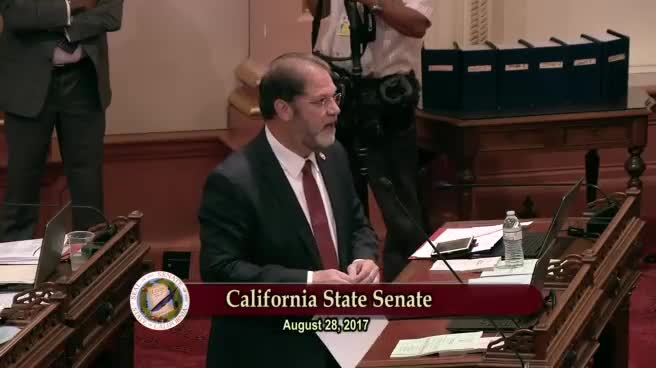 5MIN
Senate Floor
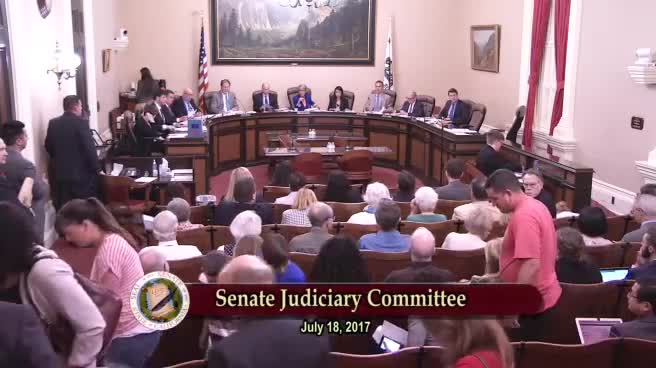 24MIN
Senate Standing Committee on Judiciary
 36MIN
Senate Standing Committee on Public Safety
Bill Author


