SB 79: Sales and use taxes: exemption: used electric vehicles.
- Session Year: 2017-2018
- House: Senate
- Latest Version Date: 2017-03-09
Existing state sales and use tax laws impose a tax on retailers measured by the gross receipts from the sale of tangible personal property sold at retail in this state, or on the storage, use, or other consumption in this state of tangible personal property purchased from a retailer for storage, use, or other consumption in this state. The Sales and Use Tax Law provides various exemptions from those taxes.
This bill, on and after July 1, 2018, and before January 1, 2025, would exempt from those taxes the gross receipts from the sale in this state of, and the storage, use, or other consumption in this state of, a qualified motor vehicle purchased by a qualified buyer, as defined. The bill would require the State Air Resources Board to undertake a cost-benefit analysis of this tax exemption and the greenhouse gas emission reduction from the vehicles traded in and submit a report to the Legislature.
The Bradley-Burns Uniform Local Sales and Use Tax Law authorizes cities and counties to impose local sales and use taxes in conformity with the Sales and Use Tax Law, and existing laws authorize districts, as specified, to impose transactions and use taxes in accordance with the Transactions and Use Tax Law. Amendments to the Sales and Use Tax Law are automatically incorporated into the local tax laws.
This bill would specify that this exemption shall not apply to local sales and use taxes or transactions and use taxes.
This bill would take effect immediately as a tax levy.
Existing law requires the Secretary of Government Operations, in consultation with the Department of General Services and other specified state agencies, to develop, implement, and submit to the Legislature and the Governor a plan to improve the overall state vehicle fleets use of alternative fuels, synthetic lubricants, and fuel-efficient vehicles by reducing or displacing the consumption of petroleum products by the state fleet when compared to the 2003 consumption level, based on a specified schedule. Existing law requires the Department of General Services to prepare an annual progress report on meeting the goals set by the schedule.Existing law also requires the Department of General Services and the Department of Transportation to develop and implement advanced technology vehicle parking incentive programs in specified parking facilities to provide incentives for the purchase and use of alternatively fueled vehicles in the state.This bill would require the progress report prepared by the Department of General Services relative to fleet vehicles to also include a progress report on developing and implementing the advanced technology vehicle parking incentive programs.Existing law requires the Secretary of Government Operations, in consultation with the Department of General Services and other specified state agencies, to develop, implement, and submit to the Legislature and the Governor a plan to improve the overall state vehicle fleets use of alternative fuels, synthetic lubricants, and fuel-efficient vehicles by reducing or displacing the consumption of petroleum products by the state fleet when compared to the 2003 consumption level, based on a specified schedule. Existing law requires the Department of General Services to prepare an annual progress report on meeting the goals set by the schedule.
Existing law also requires the Department of General Services and the Department of Transportation to develop and implement advanced technology vehicle parking incentive programs in specified parking facilities to provide incentives for the purchase and use of alternatively fueled vehicles in the state.
This bill would require the progress report prepared by the Department of General Services relative to fleet vehicles to also include a progress report on developing and implementing the advanced technology vehicle parking incentive programs.
The Legislature finds and declares all of the following:
(a)The Governor of California has a goal of 1.5 million zero-emission vehicles on the road by 2025.
(b)As of December 2016, California had approximately 250,000 of those zero-emission vehicles on the road, indicating a growing consumer demand for those clean vehicles.
(c)A tax exemption for the secondhand purchase of an electric vehicle would result in a purchase incentive for low-income residents in California and can increase the adoption of these vehicles in disadvantaged communities.
SEC. 2.Section 6368.4 is added to the Revenue and Taxation Code, to read:6368.4.(a)On and after July 1, 2018, and before January 1, 2025, there are exempted from the taxes imposed by this part the gross receipts from the sale in this state of, and the storage, use, or other consumption in this state of, a qualified motor vehicle purchased by a qualified buyer.
(b)For purposes of this section, the following definitions shall apply:
(1)Qualified motor vehicle means a secondhand motor vehicle that meets the definition in Section 30D of the Internal Revenue Code of the term new qualified plug-in electric drive motor vehicle except the original use of that vehicle shall not commence with the taxpayer.
(2)Qualified buyer means an individual trading in a motor vehicle of model year 2009 or older if that individual has been the owner of the vehicle for the 12-month period immediately preceding the trade in and purchase of another vehicle.
(c)The State Air Resources Board shall undertake a cost-benefit analysis of the sales and use tax exemption and the greenhouse gas emission reduction from the vehicles traded in pursuant to this section for the period July 1, 2018 to July 1, 2020, and provide the analysis to the Legislature on or before July 1, 2021.
(d)(1)The requirement for submitting a report imposed under subdivision (c) is inoperative on July 1, 2025, pursuant to Section 10231.5 of the Government Code.
(2)A report to be submitted pursuant to subdivision (c) shall be submitted in compliance with Section 9795 of the Government Code.
(e)Notwithstanding any provision of the Bradley-Burns Uniform Local Sales and Use Tax Law (Part 1.5 (commencing with Section 7200)) or the Transactions and Use Tax Law (Part 1.6 (commencing with Section 7251)), the exemption established by this section shall not apply with respect to any tax levied by a county, city, or district pursuant to, or in accordance with, either of those laws.
SEC. 3.This act provides for a tax levy within the meaning of Article IV of the California Constitution and shall go into immediate effect.
SECTION 1.Section 25722.8 of the Public Resources Code is amended to read:25722.8.(a)The Secretary of Government Operations, in consultation with the Department of General Services and other appropriate state agencies that maintain or purchase vehicles for the state fleet, including the campuses of the California State University, shall develop, implement, and submit to the Legislature and the Governor a plan to improve the overall state fleets use of alternative fuels, synthetic lubricants, and fuel-efficient vehicles by reducing or displacing the consumption of petroleum products by the state fleet when compared to the 2003 consumption level based on the following schedule:(1)By January 1, 2012, a 10-percent reduction or displacement.(2)By January 1, 2020, a 20-percent reduction or displacement.(b)Annually, by April 1, the Department of General Services shall prepare a progress report on meeting the goals specified in subdivision (a) and on developing and implementing the advanced technology vehicle parking incentive programs required pursuant to Section 25722.9. The Department of General Services shall post the progress report on its Internet Web site.(c)(1)The Department of General Services shall encourage, to the extent feasible, the operation of state alternatively fueled vehicles on the alternative fuel for which the vehicle is designed and the development of commercial infrastructure for alternative fuel pumps and charging stations at or near state vehicle fueling or parking sites.(2)The Department of General Services shall work with other public agencies to provide incentives to and promote, to the extent feasible, the state employee operation of alternatively fueled vehicles through preferential or reduced-cost parking, access to charging, or other means.(3)For purposes of this subdivision, alternatively fueled vehicles means light-, medium-, and heavy-duty vehicles that reduce petroleum usage and related emissions by using advanced technologies and fuels, including, but not limited to, hybrid, plug-in hybrid, battery electric, natural gas, or fuel cell vehicles and including those vehicles described in Section 5205.5 of the Vehicle Code.(a)On or before July 1, 2009, the The Secretary of the Government Operations Agency, Operations, in consultation with the Department of General Services and other appropriate state agencies that maintain or purchase vehicles for the state fleet, including the campuses of the California State University, shall develop and develop, implement, and submit to the Legislature and the Governor, Governor a plan to improve the overall state fleets use of alternative fuels, synthetic lubricants, and fuel-efficient vehicles by reducing or displacing the consumption of petroleum products by the state fleet when compared to the 2003 consumption level based on the following schedule:
(1)By January 1, 2012, a 10-percent reduction or displacement.
(2)By January 1, 2020, a 20-percent reduction or displacement.
(b)Beginning April 1, 2010, and annually thereafter, Annually, by April 1, the Department of General Services shall prepare a progress report on meeting the goals specified in subdivision (a) and on developing and implementing the advanced technology vehicle parking incentive programs required pursuant to Section 25722.9. The Department of General Services shall post the progress report on its Internet Web site.
(c)(1)The Department of General Services shall encourage, to the extent feasible, the operation of state alternatively fueled vehicles on the alternative fuel for which the vehicle is designed and the development of commercial infrastructure for alternative fuel pumps and charging stations at or near state vehicle fueling or parking sites.
(2)The Department of General Services shall work with other public agencies to incentivize provide incentives to and promote, to the extent feasible, the state employee operation of alternatively fueled vehicles through preferential or reduced-cost parking, access to charging, or other means.
(3)For purposes of this subdivision, alternatively fueled vehicles means light-, medium-, and heavy-duty vehicles that reduce petroleum usage and related emissions by using advanced technologies and fuels, including, but not limited to, hybrid, plug-in hybrid, battery electric, natural gas, or fuel cell vehicles and including those vehicles described in Section 5205.5 of the Vehicle Code.
|
Date
|
Status
|
|---|---|
| Feb 1, 2018 | Returned to Secretary of Senate pursuant to Joint Rule 56. |
| May 25, 2017 | May 25 hearing: Held in committee and under submission. |
| May 19, 2017 | Set for hearing May 25. |
| May 1, 2017 | May 1 hearing: Placed on APPR. suspense file. |
| Apr 21, 2017 | Set for hearing May 1. |
| Apr 20, 2017 | From committee: Do pass and re-refer to Com. on APPR. (Ayes 7. Noes 0. Page 783.) (April 19). Re-referred to Com. on APPR. |
| Apr 7, 2017 | Set for hearing April 19. |
| Apr 5, 2017 | From committee: Do pass and re-refer to Com. on EQ. (Ayes 6. Noes 0. Page 622.) (April 5). Re-referred to Com. on EQ. |
| Mar 17, 2017 | Set for hearing April 5. |
| Mar 16, 2017 | Re-referred to Coms. on GOV. & F. and EQ. |
| Mar 13, 2017 | Withdrawn from committee. |
| Mar 9, 2017 | From committee with author's amendments. Read second time and amended. Re-referred to Com. on G.O. |
| Jan 19, 2017 | Referred to Com. on G.O. |
| Jan 12, 2017 | From printer. May be acted upon on or after February 11. |
| Jan 11, 2017 | Introduced. Read first time. To Com. on RLS. for assignment. To print. |
|
Date
|
Description
|
Location
|
Votes
|
|
|---|---|---|---|---|
| May 1, 2017 | Placed on suspense file | Senate Standing Committee on Appropriations |
Passed |
|
| Apr 19, 2017 | Do pass, but first be re-referred to the Committee on [Appropriations] | Senate Standing Committee on Environmental Quality |
Passed |
|
| Apr 5, 2017 | Do pass, but first be re-referred to the Committee on [Environmental Quality] | Senate Standing Committee on Governance and Finance |
Passed |
This list shows positions taken on this bill by organizations on the date displayed, which is linked to the original source.
Positions by individuals are not included.
SENATE COMMITTEE ON
Senator Ricardo Lara, Chair
2017 - 2018 Regular Session
SB 79 (Allen) - Sales and use taxes: exemption: used electric vehicles
Version: | Policy Vote: |
Urgency: | Mandate: |
Hearing Date: | Consultant: |
This bill meets the criteria for referral to the Suspense File.
Bill Summary:
SB 79 would exempt from the state share of the sales and use tax (SUT) purchases of used low or zero emission vehicles when the purchaser trades in an older vehicle.
Fiscal Impact:
The Board of Equalization (BOE) indicates that this bill would result in an annual revenue loss of $1.3 million, about $800,000 of which would be from the General Fund (See Staff Comments). BOE it would incur increased administrative costs to reprogram IT systems for the partial SUT exemption, revise regulations and publications, and answer public inquiries. BOE has yet to quantify the magnitude of these increased costs.
Additionally, the California Air Resources Board (ARB) indicates that it would incur costs of $15,000 in 2019-20, and $60,000 in 2020-21 (special funds) to perform the cost-benefit analysis required by the bill.
Background:
Except where a specific exemption or exclusion is provided, current law imposes the SUT on all retailers for the privilege of selling tangible personal property (TPP) at retail in California, or on the storage, use, or other consumption in this state of TPP purchased from a retailer.
After BOE collects SUT revenue ($51 billion in 2014-15), it allocates the money to various state and local funds. Roughly half—collected from an approximately 3.9 percent rate—goes to the General Fund and can be spent on any state program, such as education, health care, and criminal justice. Another 1.25 percent, known as the Bradley-Burns rate, goes to cities and counties for general purposes. Three sales tax funds have uniform state rates and support specified programs—an approximately 1.1 percent rate for 2011 realignment (county-administered criminal justice, mental health, and social service programs); a 0.5 percent rate for 1991 realignment (county-administered health and social services programs); and a 0.5 percent rate for city and county public safety programs pursuant to Proposition 172 (1993). Additionally, some local governments levy optional local rates—known as Transactions and Use Taxes (TUTs)—and a small portion of these funds are used for general purposes. As of January 1, 2017, the average statewide SUT rate was 8.21 percent.
State law fully exempts many items from SUT (such as prescription drugs, food, electricity, and poultry litter), while other items are exempted from the state portion of the SUT, but not the local share, such as farm equipment and machinery, diesel fuel used for farming and food processing, teleproduction and postproduction equipment, timber harvesting equipment and machinery, and racehorse breeding stock. Partial SUT exemptions are difficult for both retailers and BOE, and complicate return preparation and processing. Moreover, errors attributable to these partial exemptions occur frequently, resulting in additional return processing workload (and expense) for BOE.
BOE’s Regulation 1654, Barter, Exchange, and “Trade-Ins,” explains the application of tax to sales and purchases involving “trade-ins.” The regulation provides that the value of a used vehicle trade-in or any other item of TPP cannot be subtracted from the computation of sales tax. Thus, if a dealer sells a new vehicle for $20,000 and accepts a trade-in with a value at $4,000 as partial payment, sales tax is still based on the $20,000 selling price. This treatment applies even where no money must be paid by the purchaser in the trade.
Currently, the only federal or state tax incentive to subsidize the purchase of low or zero emissions vehicles (ZEV) is a federal income tax incentive of up to $7,500 for taxpayers purchasing electric and plug-in hybrid electric vehicles. The amount of the tax credit is determined by the capacity of the battery used to power the vehicle, and begins to phase out for a manufacturer’s vehicles when at least 200,000 qualifying vehicles have been sold for use in the United States after December 31, 2009. To qualify, the original use of the vehicle must commence with the taxpayer, and the vehicle must: (1) be acquired for use or lease by the taxpayer and not for resale, (2) be made by a manufacturer, (3) be treated as a motor vehicle for purposes of title II of the Clean Air Act, (4) have a gross vehicle weight rating of less than 14,000 pounds, and (5) be propelled to a significant extent by an electric motor which draws electricity from a battery which has a capacity of not less than 4 kilowatt hours, and is capable of being recharged from an external source of electricity.
State law assigns ARB with primary responsibility for control of mobile-source air pollution, including adoption of rules for reducing vehicle emissions, the specification of vehicular fuel composition, emissions control devices, and engine standards. The Legislature created ARB’s Air Quality Improvement Program (AQIP) to provide mobile source incentives to reduce greenhouse gas (GHG) emissions, criteria pollutants, and air toxics through the development of advanced technology and clean transportation. AQIP includes the Clean Vehicle Rebate Project (CVRP), which deploys $72.5 million in 2016-17 from a variety of sources to fund rebates of up to $7,000 for the purchase or lease of new, eligible ZEVs, including electric, plug-in hybrid electric and fuel cell vehicles. CVRP has provided rebates for about 147,000 vehicles totaling over $325 million since the project’s launch in 2010. Vehicle manufacturers must apply to ARB for CVRP and meet a number of program requirements. Currently, the base CVRP rebate amounts are $5,000 for fuel cell electric vehicles, $2,500 for battery electric vehicles, $1,500 for plug-in hybrid vehicles, and $900 for zero-emission motorcycles and neighborhood electric vehicles. In November, 2016, rebate amounts increased for lower-income consumers (with household incomes of less than or equal to 300 percent of the federal poverty level) by $2,000 for each classification of vehicle. Recently, the Legislature imposed an income cap to exclude higher-income consumers (SB 1275, De Leon, 2016), which excludes individuals with gross annual incomes greater than $150,000, head-of-household filers with gross incomes greater than $204,000, and joint filers with gross incomes greater than $300,000. ARB selects some applicants seeking the increased income-based incentive for income verification, which requires the applicant to supply a document indicating participation in one of several public assistance programs, or complete a household summary form and a request to IRS for a tax return transcript.
Proposed Law:
This bill would do the following:
- Between July 1, 2018 and January 1, 2025, exempt from the state share of the SUT the sale of a secondhand motor vehicle that meets the definition of “qualified motor vehicle” in federal law for the credit, except for the requirement that use begin with the taxpayer, so long as the taxpayer also trades in a vehicle of model year 2009 or earlier that has been owned for at least a year.
- Direct ARB to conduct a cost-benefit analysis of the exemption and the GRG emission reduction from vehicles traded in pursuant to the bill between July 1, 2018 and July 1, 2020. ARB must submit the analysis to the Legislature on or before July 1, 2021.
Related Legislation: SB 1006 (Leonard, Chapter 990, Statutes of 1989) enacted a SUT exemption for the incremental costs of the sale or use of new low-emission vehicles as identified by ARB, which sunset on January 1, 1995.
Staff Comments:
This bill would exempt purchases of used plug-in electric vehicles from the SUT when accompanied by a trade-in of an older car. BOE’s revenue estimate for the bill first apportions 2016 national used car sales to California; specifically, BOE assumes that about 840,000 used cars were sold in the State in 2016, of which one percent (or 8,400) were electric vehicles. Assuming 2.8 percent annual growth, BOE then grew this figure to 8,877 in 2018-19. Additional key assumptions employed by BOE are: (1) about 24 percent of all used cars purchased at dealerships are accompanied by a trade-in, (2) EVs hold approximately 31 percent of their purchase price, (3) the average new EV purchase price is $32,464, and (4) 100 percent of trade-ins involve vehicles with model years older than 2009.
From all this information, BOE estimates that the total value of qualifying EVs sold in 2017-18 would be $20.9 million, and $21.4 million in 2018-19. Since the bill exempts six percentage points of the SUT from qualifying purchases, the resulting revenue losses are $1.2 million in 2017-18, and $1.3 million in 2018-19.
As noted previously, California’s SUT includes many distinct pieces. As the number of those pieces has grown over the decades, the laws governing the allocation of SUT revenue have grown more complex. In setting the exemption rate at 6 percent, qualifying vehicle purchases would still be subject to the 1.25 percent Bradley-Burns local SUT, and any applicable local district taxes under this bill. However, local governments would nevertheless still experience some revenue loss. This is because the state rate of 6 percent includes funds that are collected by the State, but then are allocated to local governments. Specifically, 2.06 percentage points of the SUT that the State collects is then passed back to local governments (the two realignment rates and the Proposition 172-approved Local Public Safety Fund). Thus, only about $800,000 of BOE’s estimated annual revenue loss would impact the General Fund. The remainder (about $500,000 annually) would have flowed to local governments.
ARB would require a total of $75,000 over two fiscal years to conduct the specified cost benefit analysis. Specific duties include acquiring and formatting data, performing macroeconomic modeling, and data analysis.
-- END --
SENATE COMMITTEE ON ENVIRONMENTAL QUALITY
Senator Wieckowski, Chair
2017 - 2018 Regular
Bill No: SB 79
Author: | Allen | ||
Version: | 3/9/2017 | Hearing Date: | 4/19/2017 |
Urgency: | No | Fiscal: | Yes |
Consultant: | David Ernest García | ||
SUBJECT: Sales and use taxes: exemption: used electric vehicles
ANALYSIS:
Existing law:
- Establishes the Air Resources Board (ARB) as the air pollution control agency in California and requires the ARB, among other things, to control emissions from a wide array of mobile sources and toxic air contaminant emissions from stationary sources. (Health and Safety Code (HSC) §39500 et seq.)
- Requires the ARB to promulgate and enforce rules and regulations necessary for the proper execution of its statutory mandates. (HSC §39601 et seq.)
- Imposes the sales tax on every retailer engaged in business in this state that sells tangible personal property, and requires them to collect the appropriate tax from the purchase and remit the amount to the Board of Equalization (BOE). (Revenue and Taxation Code §6001 et seq.)
This bill:
- Makes findings and declarations.
- Exempts used low- and zero-emission vehicles from state portion of sales tax when the purchaser of the vehicle also trades in a vehicle that he or she has owned for at least a year that is of model year 2009 or earlier. This exemption applies only for sales after July 1, 2018 and before January 1, 2025.
- Requires ARB, by July 1, 2021, to perform a cost-benefit analysis of this sales tax exemption and the greenhouse gas (GHG) emissions reductions it achieves for the time period between July 1, 2018 and July 1, 2020.
- Provides for a tax levy within the meaning of Article IV of the California Constitution and would thus go into effect immediately upon being signed by the Governor.
Background
- Health Impacts of Air Pollution.
When not adequately controlled, air pollution has dire consequences on the health and safety of both people and the environment. Poor air quality causes the lungs to constrict, resulting in wheezing, shortness of breath and chest tightness, especially during exercise or physical activity.
It is well known that air pollution causes asthma. According to the Centers for Disease Control and Prevention, nationwide 7.4% of adults and 8.6% of children have been diagnosed with asthma. In California, the numbers are significantly higher: 13.1% of adults and 12.5% of children have been diagnosed with asthma. Lower income and minority groups are disproportionately affected by asthma due to their increased exposure to air pollution.
Depending on exposure, air pollution alone can cause an increased risk of cardiovascular and respiratory illness, lung disease, cancerous tumors, birth defects, premature births, developmental disorders, central nervous system damage, intellectual disability, persistent memory impairments, epilepsy, dementia, and premature death. - Vehicles and Air Pollution.
Vehicles are one of the primary sources of air pollution nationally. As such, the Federal Clean Air Act (FCAA) authorizes the United States Environmental Protection Agency (US EPA) to establish and regulate emissions standards for mobile sources.
California, due to its preexisting vehicle-emission standards and severe motor vehicle air pollution problems, is authorized under the FCAA to implement separate mobile emission standards from the federal government. Other states may choose to follow either the national standard or the stricter California standards.
State law assigns the ARB with primary responsibility for control of mobile-source air pollution, including adoption of rules for reducing vehicle emissions, the specification of vehicular fuel composition, emissions control devices, and engine standards. - Zero Emission Vehicle (ZEV) Regulation.
The Zero Emission Vehicle (ZEV) Regulation requires large volume and intermediate volume vehicle manufacturers that sell cars in California to produce ZEVs (such as battery electric and fuel cell vehicles), clean plug-in hybrids, clean hybrids and clean gasoline vehicles with near-zero tail pipe emissions. In general, the ZEV regulation requires that 15% of new car sales be ZEVs by 2025. This target is intended to achieve 1.5 million ZEVs on the road by 2025 as directed under Governor Brown’s Executive Order B-16-2012.
Under the FCCA, other states may choose to adopt California’s air quality standards. Currently, 10 states (including California) follow California’s rules, which include the ZEV regulation. - California’s 2016 ZEV Action Plan Update.
According to the 2016 update to California’s ZEV Action Plan, California is one of the world’s largest markets for light-duty ZEVs, with Plug-In Electric Vehicle (PEV) ownership in the state exceeding 230,000 vehicles. As of last year, Californians drive 47% of all ZEVs on the road in the United States; the United States as a whole accounts for approximately one-third of the world ZEV market. Battery Electric Vehicles (BEV) and Plug-in Hybrid Electric Vehicles (PHEV) comprise the majority of ZEVs on California’s roads today.
The metropolitan regions of Los Angeles, San Diego and the San Francisco Bay Area lead the state in PEV sales. ZEV adoption has been greatest in Los Angeles County and Santa Clara County, followed by Alameda, Orange, and San Diego Counties. Statewide, nearly 60% of issued rebates have been for BEVs, while 40% have been for PHEVs. - Other ARB Initiatives.
- Clean Vehicle Rebate Project (CVRP). The CVRP is funded by ARB and administered by the Center for Sustainable Energy, in order to promote the production and use of zero-emission vehicles, including electric, plug-in hybrid electric and fuel cell vehicles. CVRP enables the purchaser or lessee of an eligible vehicle to receive a rebate. A consumer can apply for a rebate within 18 months of purchasing or leasing an eligible vehicle. The consumer must retain ownership of the vehicle in California for at least 30 consecutive months after the purchase or lease date or reimburse ARB for part of or the entire rebate amount. Rebates are distributed on a first-come, first-served basis and issued within 90 days of application approval.
CVRP provides a rebate of up to $5,000 for purchasing or leasing a new zero-emission vehicle or plug-in hybrid electric vehicle. Specifically, a consumer may obtain a $5,000 rebate for a hydrogen fuel-cell vehicle; a $2,500 rebate for a zero-emission, battery electric vehicle; a $1,500 voucher for a plug-in hybrid electric vehicle; or, a $900 rebate for a neighborhood electric vehicle or a zero-emission motorcycle. There is no cap on the number of rebates that may be issued, but rebates are subject to funding availability and the program has more than once been forced to stop issuing rebates and create a waiting list due to funds running out. - Enhanced Fleet Modernization Program (EFMP). The EFMP enables a vehicle owner to retire a high-polluting passenger vehicle or light- or medium-duty truck. A vehicle need not have failed a smog test to qualify for EFMP, but it must meet ARB’s definition of high polluting. Under the statewide component of EFMP, ARB administers a program, in consultation with the California Bureau of Automotive Repair, to scrap high-polluting vehicles. Under this program, EFMP offers a $1,500 voucher to low-income vehicle owners (household income at or below 225% of federal poverty level), or a $1,000 voucher to all other vehicle owners, to retire a high-polluting vehicle. EFMP does not place technology restrictions on the kind of vehicle that a consumer may purchase, only that the vehicle meets certain emission standards.
- EFMP Plus-Up. EFMP also has a vehicle replacement component, known as EFMP Plus-Up. Under EFMP Plus-Up, a low-income owner living in one of these districts can get a $2,500 “replacement” voucher in addition to the $1,500 base EFMP “retirement” voucher. The owner may use the funds to either purchase a car that is less than eight years old or to obtain a public transit voucher. If a low-income owner lives in a disadvantaged community in one of these air districts, and wants to purchase a hybrid, plug-in hybrid, or battery electric vehicle, he or she can “stack” additional incentives on top of these two vouchers. Depending on the owner’s income and the type of replacement vehicle, the owner can receive up to $12,000 toward the purchase of a new car. The ARB is currently working with local air districts to expand EFMP Plus-Up to disadvantaged communities in Sacramento, San Diego, and the bay area.
- Clean Vehicle Rebate Project (CVRP). The CVRP is funded by ARB and administered by the Center for Sustainable Energy, in order to promote the production and use of zero-emission vehicles, including electric, plug-in hybrid electric and fuel cell vehicles. CVRP enables the purchaser or lessee of an eligible vehicle to receive a rebate. A consumer can apply for a rebate within 18 months of purchasing or leasing an eligible vehicle. The consumer must retain ownership of the vehicle in California for at least 30 consecutive months after the purchase or lease date or reimburse ARB for part of or the entire rebate amount. Rebates are distributed on a first-come, first-served basis and issued within 90 days of application approval.
- Sales and Use Tax.
The current state sales and use tax rate is 7.25%. Cities and counties may increase the sales and use tax rate up to 2% for either specific or general purposes pursuant to the California Constitution’s vote requirements, however, a portion of the amount of the tax collected by the state is directed to local governments for transportation, general operations, and other purposes.
Comments
- Purpose of Bill.
According to the author, “Passenger cars and trucks emit nearly 2 million pounds, or almost 20 percent, of smog-forming pollution across the state every day. Neighborhoods situated close to multiple freeways are often low-income and suffer disproportionate impacts from air and other environmental pollutants. For more than 40 years, California has been the national leader on efforts to reduce emissions from cars and trucks. We have established strong policies such as the Zero Emission Vehicle Regulation and the Clean Vehicle Rebate Project that have accelerated the shift to cleaner, more efficient vehicles. These clean car policies have helped cut total automobile air pollution by more than 85 percent since 1975, despite rapid growth in population and vehicle travel. But clearly, more needs to be done.
“California has the goal of putting 1.5 million zero-emission vehicles (ZEVs) on the road by 2025. This would mean that by 2025 one out of every seven vehicles sold in California would be electric, hybrid or powered by fuel cells. However, only 275,000 PEVs have been sold to date, and adoption of these cleaner vehicles in California’s poorest communities has been very low. According to an analysis done by the Air Resources Board, through 2015, only about six percent of rebates for plug-in electric vehicles went to drivers in Disadvantaged Communities despite a goal of ten percent. Disadvantaged communities represent about one quarter of the state’s population, but only about one sixth of the new car market, and only 1/14th of the ZEV market.
“The quickest, most effective way to incentivize the purchase of these vehicles is to reduce the cost to buy them by eliminating the state sales tax. SB 79 would create a sales tax exemption, at the point of purchase, for buyers of second-hand plug-in electric vehicles who are also trading in older vehicles.” - Impact Factor.
According to BOE, this measure would result in revenue losses of $1.2 million in 2017-18 and $1.3 million in 2018-19. As noted in the background, ARB has a wide variety of programs to incentivize the purchase of low- and zero-emission vehicles that are funded at a cost to the state that is much higher than the proposed incentive in this bill.
It is unknown whether this incentive will spur an uptick in consumer adoption of cleaner vehicles. Concerns about range and the ability to recharge/refuel will remain. Despite the variety of incentive programs at the ARB designed to increase the adoption of low- and zero-emission vehicles (see background #5), according to the California New Car Dealers Association purchases in California have plateaued at approximately 3.5%, demonstrating that the existing incentive programs are not sufficient to influence consumer behavior as significantly as policymakers desire. Perhaps a change in approach is needed?
This measure does address these concerns by requiring ARB to conduct a cost-benefit analysis of this sales tax exemption and the GHG emissions reductions it achieves for the time period between July 1, 2018 and July 1, 2020.
Furthermore, this measure sunsets before January 1, 2025, allowing meaningful legislative oversight of the effectiveness of this policy.
Related/Prior Legislation
SB 1006 (Leonard, Chapter 990, Statutes of 1989) enacted a sales and use tax exemption for the incremental costs of the sale or use of new low-emission vehicles as identified by the ARB, which sunset on January 1, 1995.
DOUBLE REFERRAL:
This measure was heard in Senate Governance and Finance Committee on April 5, 2017, and passed out of committee with a vote of 6-0.
SOURCE:
Plug In American
SUPPORT:
None received
OPPOSITION:
None received
-- END --
SENATE COMMITTEE ON GOVERNANCE AND FINANCE
Senator Mike McGuire, Chair
2017 - 2018 Regular
Bill No: | SB 79 | Hearing Date: | 4/5/17 |
Author: | Allen | Tax Levy: | Yes |
Version: | 3/9/17 | Fiscal: | Yes |
Consultant: | Grinnell | ||
Sales and use taxes: exemption: used electric vehicles
Exempts from the state share of the sales and use tax purchases of used low or zero emission vehicles when the purchaser trades in an older vehicle.
Background
Sales and Use Tax. State law imposes the sales tax on every retailer engaged in business in this state that sells tangible personal property, and requires them to collect the appropriate tax from the purchase and remit the amount to the Board of Equalization (BOE). Sales tax applies whenever a retail sale is made, which is basically any sale other than one for resale in the regular course of business. Unless the person pays the sales tax to the retailer, he or she is liable for the use tax, which is imposed on any person consuming tangible personal property in the state. The use tax rate is the same rate as the sales tax rate, and must be remitted on or before the last day of the month following the quarterly period in which the person made the purchase. The current rate is 7.25% as shown in the table below. Additionally, cities and counties may increase the sales and use tax rate up to 2% for either specific or general purposes pursuant to the California Constitution’s vote requirements.
Rate | Jurisdiction | Purpose/Authority | |
|---|---|---|---|
3.9375% | State (General Fund) | State general purposes | |
1.0625% |
| Realignment of local public safety services | |
0.50% | State (Local Revenue Fund) | Local governments to fund health and welfare programs | |
0.50% | State (Local Public Safety Fund) | Local governments to fund public safety services | |
1.25% | Local (City/County) 1.00% City and County | City and county general operations. Dedicated to county transportation purposes | |
7.25% | Total Statewide Rate |
Many items are fully exempted from the sales and use tax in this state, such as prescription drugs, food, communion wafers, and poultry litter, while others are exempted from the state sales tax, but not the local share, such as farm equipment and machinery, diesel fuel used for farming and food processing, teleproduction and postproduction equipment, timber harvesting equipment and machinery, and racehorse breeding stock. In 1989, California enacted a sales and use tax exemption for the incremental costs of the sale or use of new low-emission vehicles as identified by the California Air Resources Board (ARB), which sunset on January 1, 1995 (SB 1006, Leonard). For items not exempt, retailers calculate the sales and use tax due by multiplying the applicable rate by the total amount of the sale or lease or rental price, which includes all of the following:
- Any services that are a part of the sale.
- All receipts, cash, credits and property of any kind.
- Any amount for which credit is allowed by the seller to the purchaser.
BOE’s regulation 1654, Barter, Exchange, and “Trade-Ins,” explains the application of tax to sales and purchases involving “trade-ins.” The regulation provides that the value of a trade-in of a used vehicle or any other item of tangible personal property cannot be subtracted from the computation of sales tax. For example, if a dealer sells a new vehicle for $20,000 and accepts a trade-in with a value at $4,000 as partial payment, sales tax is still based on the $20,000 selling price. This treatment applies even where no further money must be paid by the purchaser in the trade. For example, if a person brings a diamond ring to a jeweler and makes an even exchange for a different ring, the jeweler would collect and remit sales tax on the fair retail market value of the different ring.
Currently, the only federal or state tax incentive to subsidize the purchase of low or zero emissions vehicles (ZEV) is a federal income tax incentive of up to $7,500 for taxpayers purchasing electric and plug-in hybrid electric vehicles. The credit amount varies based on the capacity of the battery used to fuel the vehicle, and begins to phase out for a manufacturer’s vehicles when at least 200,000 qualifying vehicles have been sold for use in the United States after December 31, 2009. To qualify, the original use of the vehicle must commence with the taxpayer, and the vehicle must:
- Be acquired for use or lease by the taxpayer and not for resale,
- Be made by a manufacturer,
- Be treated as a motor vehicle for purposes of title II of the Clean Air Act,
- Have a gross vehicle weight rating of less than 14,000 pounds, and
- Be propelled to a significant extent by an electric motor which draws electricity from a battery which has a capacity of not less than 4 kilowatt hours, and is capable of being recharged from an external source of electricity.
Clean Vehicle Rebate Programs. The Legislature created the ARB’s Air Quality Improvement Program (AQIP), to provide mobile source incentives to reduce greenhouse gas (GHG) emissions, criteria pollutants, and air toxics through the development of advanced technology and clean transportation (AB 118, Nunez). AQIP includes the Clean Vehicle Rebate Project (CVRP), which deploys $72.5 million in 2016-17 from a variety of sources to fund rebates of up to $7,000 for the purchase or lease of new, eligible ZEVs, including electric, plug-in hybrid electric and fuel cell vehicles. Administered by the California Center for Sustainable Energy, CVRP has provided rebates for about 147,000 vehicles totaling over $325 million since the project’s launch in 2010. Vehicle manufacturers must apply to ARB for CVRP and meet a number of program requirements. Currently, the base CVRP rebate amounts are $5,000 for fuel cell electric vehicles, $2,500 for battery electric vehicles, $1,500 for plug-in hybrid vehicles, and $900 for zero-emission motorcycles and neighborhood electric vehicles. In November, 2016, rebate amounts increased for lower-income consumers (with household incomes of less than or equal to 300 percent of the federal poverty level) by $2,000 for each classification of vehicle. Recently, the Legislature imposed an income cap to exclude higher-income consumers (SB 1275, De Leon, 2016), which excludes individuals with gross annual incomes greater than $150,000, head-of-household filers with gross incomes greater than $204,000, and joint filers with gross incomes greater than $300,000. ARB selects some applicants seeking the increased income-based incentive for income verification, which requires the applicant to supply a document indicating participation in one of several public assistance programs, or complete a household summary form and a request to IRS for a tax return transcript.
ARB also deploys $30 annually to fund the Enhanced Fleet Modernization Program (EFMP), which directs the Bureau of Automotive Repair to provide anyone in the state up to $1,000 per vehicle ($1,500 for low-income) to retire qualified high-polluting vehicles. Additionally, lower-income vehicle owners living in disadvantaged communities, selected by the California Environmental Protection Agency based on geographic, socioeconomic, public health, and environmental hazard criteria, in the Greater Los Angeles area and San Joaquin Valley can add an EFMP voucher. These vouchers are worth $2,000 ($2,500 for low-income Californians) to purchase a cleaner vehicle up to eight model years old, plus a EFMP Plus-Up incentive of $2,500 for a replacement vehicle that meets specified fuel economy targets, or $5,000 for a plug-in hybrid or ZEV. An eligible low-income person residing in a disadvantaged community within the two air districts could stack these incentives with CVRP for a total subsidy of $12,000.
Seeking a tax incentive to spur more purchases of used low or ZEVs, advocates for plug-in hybrids or ZEVs want to exempt purchases of used plug-in electric vehicles from the sales and use tax when accompanied by a trade-in of an older car.
Proposed Law
Senate Bill 79 exempts from the state share of the sales and use tax the sale of a secondhand motor vehicle that meets the definition of “qualified motor vehicle” in federal law for the credit, except for the requirement that use begin with the taxpayer, so long as the taxpayer also trades in a vehicle that he or she has owned for at least a year of model year 2009 or earlier. The bill applies to sales on or after July 1, 2018, and ends before January 1, 2025. The measure directs the ARB to conduct a cost-benefit analysis of the exemption and the greenhouse gas emission reduction from vehicles traded in pursuant to the bill between July 1, 2018 and July 1, 2020. ARB must submit the analysis to CARB on or before July 1, 2021.
As the bill only exempts the state share of the sales tax, purchasers would still pay the local share. The measure contains legislative findings and declarations supporting its purposes.
State Revenue Impact
According to BOE, SB 79 would result in revenue losses of $1.2 million I 2017-18, and $1.3 million in 2018-19.
Comments
1. Purpose of the bill. According to the author, “Despite major progress since the mid-1970s, California is home to some of the worst air pollution in the United States. Toxic air pollution is linked to lung cancer, worsening asthma attacks, heart attacks, strokes, and early death, and may cause asthma in otherwise healthy children. The state has established strong that such as the Zero Emission Vehicle Regulation and the Clean Vehicle Rebate Project have accelerated the shift to cleaner, more efficient vehicles. However, to date only 275,000 plug-in electric vehicles (PEVs) have been sold, and adoption of these cleaner vehicles in California’s poorest communities has been very low. The quickest, most effective way to incentivize the purchase of these vehicles is to reduce the cost to buy them by eliminating the state sales tax. SB 79 would create a sales tax exemption, at the point of purchase, for qualified buyers of second-hand PEVs. This proposed legislation will benefit California in several ways. First, by eliminating sales tax, the bill allows for money to be put immediately back in the pockets of low-income consumers. Second, the definition of ‘qualified buyer’ in the bill ensures this sales tax exemption targets those Californians that need this financial assistance. Also, by limiting the program to only those customers trading in a vehicle of model year 2009 or older, the bill ensures a 1:1 removal of dirty, less efficient vehicles from the road with a clean PEV, helping California meet its climate and clean air goals.”
2. Tax expenditures. California law allows various income tax credits, deductions, and sales and use tax exemptions for taxpayers that incur certain expenses, such as child adoption, or to influence behavior, including business practices and decisions. The Legislature typically enacts such tax incentives to encourage taxpayers to do something that but for the tax incentive, they would otherwise not do. The Department of Finance is required to annually publish a list of tax expenditures, currently totaling around $57 billion in 2016-17. SB 79 would create a new tax incentive for individuals to purchase partial or zero emission vehicles, which will assist the state’s clean air efforts; however, the bill’s sales tax exemption will provide a windfall benefit for taxpayers who will trade in older vehicles and purchase used plug-in hybrids or ZEVs anyway. As a result, the state will either have to reduce spending or increase taxes to match the amount of foregone revenue resulting from the measure. Additionally, SB 79’s tax benefit applies to a specific transaction, and is not based on either the buyer’s income or the car’s price, meaning that the measure’s benefits could be enjoyed by higher-income Californians. Given current rebate programs tailored to low-income persons in the state’s dirtiest air basins, the Committee may wish to consider whether SB 79’s clean air benefits are worth the foregone revenue.
3. Tradeoffs. Sales tax exemptions such as SB 79 reduce the immediate costs to the taxpayer at the cash register, thereby providing an instant benefit, as opposed to an income tax credit which must be claimed on a tax return. Sales tax exemptions are usually fairly simple to administer – the retailer must simply ensure that cash register software doesn’t apply tax on exempt items, such as cold food bought at a grocery store, but applies it to taxable items, such as hot food or alcohol. SB 79 requires car dealers to verify that the purchaser owned the traded-in vehicle for the past year, and that the vehicle sold meets the definition for qualified motor vehicle in the Internal Revenue Code. ARB will also need to know the sales tax not paid, as well as information about the vehicles traded in, from transactions (or a sample thereof) to complete the bill’s cost benefit analysis. Additionally, to the extent that the measure is limited to income-eligible individuals, then both the state and car dealers would have increased administrative costs to collect and verify income levels. The California Center for Sustainable Energy verifies the income of many CVRP rebates; however, they do so only after the purchaser buys the vehicle and files a refund application.
4. Are more subsidies necessary? The market for electrical vehicles is flourishing, as consumers seek to save on gasoline costs and minimize the effects of their driving on the environment. The market’s development gives rise to questions regarding the necessity and desirability of current or new subsidies. According to ARB’s proposed AQIP funding plan for 2016-17, “policy makers continue to inquire about the cost-effectiveness, equity, financial sustainability, and structure of these (air quality) incentive programs. Specifically, the Legislature and ARB have expressed interest in understanding when a self-sustaining ZEV market is expected and what steps can be taken to ensure incentives are phased out appropriately. The assessment shows that vehicle technology costs are declining quicker than originally expected in most cases.” While SB 79’s tax benefit is tailored to purchasers of used hybrid vehicles trading in older vehicles, the Committee may wish to consider the current state of the market, and whether more subsidies, tax or otherwise, are necessary to achieve its goals.
5. Section 41. In 2014, the Legislature enacted SB 1335 (Leno), which required introduced legislative bills enacting tax credits to contain:
- Specific goals, purposes, and objectives that the tax credit will achieve.
- Detailed performance indicators for the Legislature to use when measuring whether the tax credit met its specific goals, purposes, and objectives.
- Data collection requirements to enable the Legislature to determine whether the tax credit is meeting, failing to meet, or exceeding its goals, purposes, and objectives. The requirements shall include specific data and baseline data to be collected and remitted in each year the credit is effective, and the specific taxpayers, state agencies, or other entities required to collect and remit data.
While SB 79 is a sales tax exemption, and not a tax credit subject to Section 41, SB 79 makes a notable effort to achieve its goals by requiring the California Air Resources Board to conduct a cost-benefit analysis of the exemption and the greenhouse gas emission reduction from vehicles traded in pursuant to the bill between July 1, 2018 and July 1, 2020. Additionally, the measure sunsets before January 1, 2025.
6. Double referred. The Senate Rules Committee referred SB 79 to both the Committees on Governance and Finance, which considers bills affecting the Personal Income and Corporation Tax, and Environmental Quality.
Support and Opposition
(3/30/17)
Support: Plug In America, California New Car Dealers Association.
Opposition: California State Association of Counties.
-- END --
Discussed in Hearing
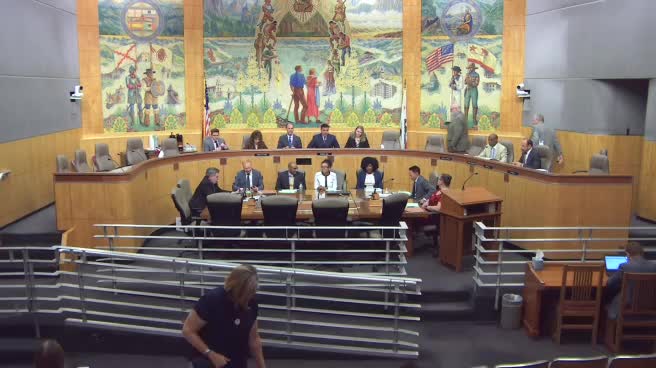 48MIN
Senate Standing Committee on Appropriations
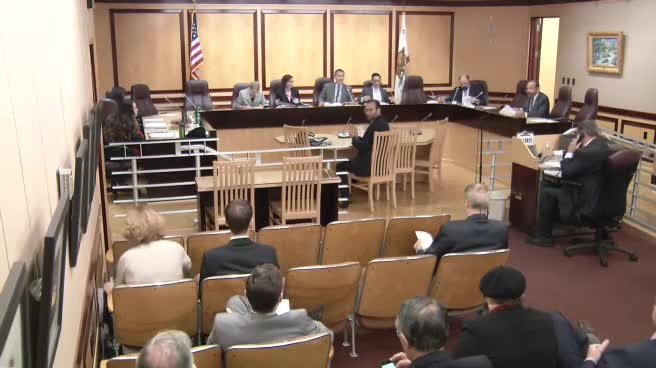 8MIN
Senate Standing Committee on Environmental Quality
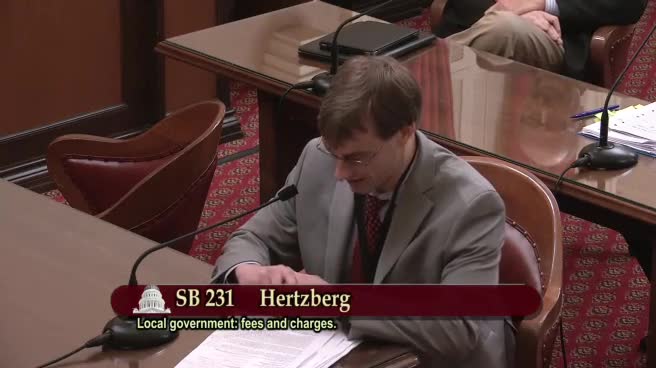 19MIN
Senate Standing Committee on Governance and Finance
Bill Author
Bill Co-Author(s):