SB 797: Peninsula Corridor Joint Powers Board: transactions and use tax.
- Session Year: 2017-2018
- House: Senate
- Latest Version Date: 2017-10-10
Existing law authorizes various local governmental entities, subject to certain limitations and approval requirements, to levy transactions and use taxes for general purposes in accordance with the procedures and requirements set forth in the Transactions and Use Tax Law, including a requirement that the combined rate of all taxes that may be imposed in accordance with that law in the county not exceed 2%.
This bill would authorize the Peninsula Corridor Joint Powers Board, by a resolution approved by 2/3 of the board and with the approval of specified entities, to levy a tax pursuant to the Transactions and Use Tax Law at a rate not to exceed 0.125%, with net revenues from the tax to be used by the board for operating and capital purposes of the Caltrain rail service, subject to 2/3 voter approval of a regional measure submitted by the board to voters of the Counties of San Francisco, San Mateo, and Santa Clara. The bill would authorize the board to exceed the 2% limit described above to impose the retail transactions and use tax.
This bill would make legislative findings and declarations as to the necessity of a special statute for the Counties of San Francisco, San Mateo, and Santa Clara.
(1)Existing law establishes the Board of Vocational Nursing and Psychiatric Technicians of the State of California within the Department of Consumer Affairs and sets forth its powers and duties relating to the licensure and regulation of vocational nurses. Existing law requires the board to, among other things, select an executive officer. Existing law requires the board to discipline a licensee whose default has been entered or who has been heard by the board and found guilty by, among other methods, revoking his or her license.This bill would require the board to delegate to the executive officer the authority to adopt a decision entered by default and a stipulation for surrender of a license.(2)Existing law establishes the Vocational Nursing and Psychiatric Technicians Fund in the State Treasury, and requires all money in that fund be used to carry out the Vocational Nursing Practice Act, including promoting nursing education, the Psychiatric Technicians Law, and for the refund of license fees or other moneys paid into the Vocational Nursing and Psychiatric Technicians Fund.This bill would specify that moneys in the Vocational Nursing and Psychiatric Technicians Fund shall be used upon appropriation of the Legislature.(1)Existing law establishes the Board of Vocational Nursing and Psychiatric Technicians of the State of California within the Department of Consumer Affairs and sets forth its powers and duties relating to the licensure and regulation of vocational nurses. Existing law requires the board to, among other things, select an executive officer. Existing law requires the board to discipline a licensee whose default has been entered or who has been heard by the board and found guilty by, among other methods, revoking his or her license.
This bill would require the board to delegate to the executive officer the authority to adopt a decision entered by default and a stipulation for surrender of a license.
(2)Existing law establishes the Vocational Nursing and Psychiatric Technicians Fund in the State Treasury, and requires all money in that fund be used to carry out the Vocational Nursing Practice Act, including promoting nursing education, the Psychiatric Technicians Law, and for the refund of license fees or other moneys paid into the Vocational Nursing and Psychiatric Technicians Fund.
This bill would specify that moneys in the Vocational Nursing and Psychiatric Technicians Fund shall be used upon appropriation of the Legislature.
Existing law establishes the Board of Vocational Nursing and Psychiatric Technicians of the State of California within the Department of Consumer Affairs and sets forth its powers and duties relating to the licensure and regulation of vocational nurses and psychiatric technicians. nurses. Existing law requires the board to, among other things, select an executive officer. Existing law requires the board to discipline a licensee whose default has been entered or who has been heard by the board and found guilty by, among other methods, revoking his or her license.
Existing law repeals, on January 1, 2018, those provisions establishing the board and authorizing appointment of the executive officer.This bill would extend the repeal date of those provisions to January 1, 2022, and would make conforming changes. require the board to delegate to the executive officer the authority to adopt a decision entered by default and a stipulation for surrender of a license.
Existing law establishes the Board of Vocational Nursing and Psychiatric Technicians of the State of California within the Department of Consumer Affairs and sets forth its powers and duties relating to the licensure and regulation of vocational nurses and psychiatric technicians. Existing law requires the board to, among other things, select an executive officer.
Existing law repeals, on January 1, 2018, those provisions establishing the board and authorizing appointment of the executive officer.
This bill would extend the repeal date of those provisions to January 1, 2022, and would make conforming changes.
(a)Upon the affirmative vote of two-thirds of the directors of the Peninsula Corridor Joint Powers Board, a joint powers authority formed pursuant to the Joint Exercise of Powers Act (Chapter 5 (commencing with Section 6500) of Division 7 of Title 1 of the Government Code), the board may, by resolution and consistent with subdivision (b), submit to the voters of the Counties of San Francisco, San Mateo, and Santa Clara a regional measure proposing only a retail transactions and use tax, at a rate not to exceed 0.125 percent and in accordance with the Transactions and Use Tax Law (Part 1.6 (commencing with Section 7251) of this code) and Article XIII C of the California Constitution, with net revenues from the tax to be used by the board for the operating and capital purposes of the Caltrain rail service.
(b)The measure shall only be submitted to the voters upon approval by the boards of supervisors of the Counties of San Francisco, San Mateo, and Santa Clara, consistent with each countys applicable procedures, and approval by the San Francisco Municipal Transportation Agency, the San Mateo County Transit District, and the Santa Clara Valley Transportation Authority by a majority vote of each transportation entitys governing board.
(c)The measure shall be approved if two-thirds of all of the voters voting on the measure approve it.
(d)The board may impose a retail transactions and use tax pursuant to subdivision (a) that, in combination with all taxes imposed in accordance with the Transactions and Use Tax Law (Part 1.6 (commencing with Section 7251)), exceeds the limit established in Section 7251.1.
SEC. 2.The Legislature finds and declares that a special statute is necessary and that a general statute cannot be made applicable within the meaning of Section 16 of Article IV of the California Constitution because of the need to provide a dedicated local funding source for the Caltrain rail service.
(a)Upon the affirmative vote of two-thirds of the directors of the Peninsula Corridor Joint Powers Board, a joint powers authority formed pursuant to the Joint Exercise of Powers Act (Chapter 5 (commencing with Section 6500) of Division 7 of Title 1 of the Government Code), the board may, by resolution and consistent with subdivision (b), submit to the voters of the Counties of San Francisco, San Mateo, and Santa Clara a regional measure proposing only a retail transactions and use tax, at a rate not to exceed 0.125 percent and in accordance with the Transactions and Use Tax Law (Part 1.6 (commencing with Section 7251) of this code) and Article XIII C of the California Constitution, with net revenues from the tax to be used by the board for the operating and capital purposes of the Caltrain rail service.
(b)The measure shall only be submitted to the voters upon approval by the boards of supervisors of the Counties of San Francisco, San Mateo, and Santa Clara, consistent with each countys applicable procedures, and approval by the San Francisco County Transportation Authority, Municipal Transportation Agency, the San Mateo County Transit District, and the Santa Clara Valley Transportation Authority by a majority vote of each transportation entitys governing board.
(c)The measure shall be approved if two-thirds of all of the voters voting on the measure approve it.
(d)The board may impose a retail transactions and use tax pursuant to subdivision (a) that, in combination with all taxes imposed in accordance with the Transactions and Use Tax Law (Part 1.6 (commencing with Section 7251)), exceeds the limit established in Section 7251.1.
SEC. 2.The Legislature finds and declares that a special statute is necessary and that a general statute cannot be made applicable within the meaning of Section 16 of Article IV of the California Constitution because of the need to provide a dedicated local funding source for the Caltrain rail service.
(a)Upon the affirmative vote of two-thirds of the directors of the Peninsula Corridor Joint Powers Board, a joint powers authority formed pursuant to the Joint Exercise of Powers Act (Chapter 5 (commencing with Section 6500) of Division 7 of Title 1 of the Government Code), the board may, by resolution and consistent with subdivision (b), submit to the voters of the Counties of San Francisco, San Mateo, and Santa Clara a regional measure proposing only a retail transactions and use tax, at a rate not to exceed 0.125 percent and in accordance with Part the Transactions and Use Tax Law (Part 1.6 (commencing with Section 7251) of this code code) and Article XIII C of the California Constitution, with net revenues from the tax to be used by the board for the operating and capital purposes of the Caltrain rail service.
(b)The measure shall only be submitted to the voters upon approval by the boards of supervisors of the Counties of San Francisco, San Mateo, and Santa Clara, consistent with each countys applicable procedures, and approval by the San Francisco County Transportation Authority, the San Mateo County Transit District, and the Santa Clara Valley Transportation Authority by a majority vote of each transportation entitys governing board.
(c)The measure shall be approved if two-thirds of all of the voters voting on the measure approve it.
(d)The board may impose a retail transactions and use tax pursuant to subdivision (a) that, in combination with all taxes imposed in accordance with Part the Transactions and Use Tax Law (Part 1.6 (commencing with Section 7251), 7251)), exceeds the limit established in Section 7251.1.
SEC. 2.The Legislature finds and declares that a special statute is necessary and that a general statute cannot be made applicable within the meaning of Section 16 of Article IV of the California Constitution because of the need to provide a dedicated local funding source for the Caltrain rail service.
(a)Upon the affirmative vote of two-thirds of the directors of the Peninsula Corridor Joint Powers Board, a joint powers authority formed pursuant to the Joint Exercise of Powers Act (Chapter 5 (commencing with Section 6500) of Division 7 of Title 1 of the Government Code), the board may, by resolution and consistent with subdivision (b), submit to the voters of the Counties of San Francisco, San Mateo, and Santa Clara a regional measure proposing only a retail transactions and use tax, at a rate not to exceed 0.125 percent and in accordance with Part 1.6 (commencing with Section 7251) of this code and Article XIII C of the California Constitution, with net revenues from the tax to be used by the board for the operating and capital purposes of the Caltrain rail service.
(b)The measure shall only be submitted to the voters upon approval by the boards of supervisors of the Counties of San Francisco, San Mateo, and Santa Clara, consistent with each countys applicable procedures, and approval by the San Francisco County Transportation Authority, the San Mateo County Transit District, and the Santa Clara Valley Transportation Authority by a majority vote of each transportation entitys governing board.
(c)The measure shall be approved if two-thirds of all of the voters voting on the measure approve it.
(d)The board may impose a retail transactions and use tax pursuant to subdivision (a) that, in combination with all taxes imposed in accordance with Part 1.6 (commencing with Section 7251), exceeds the limit established in Section 7251.1.
SEC. 2.The Legislature finds and declares that a special statute is necessary and that a general statute cannot be made applicable within the meaning of Section 16 of Article IV of the California Constitution because of the need to provide a dedicated local funding source for the Caltrain rail service.
SECTION 1.Section 2876 of the Business and Professions Code is amended to read:2876.(a)The board shall discipline the holder of any license, whose default has been entered or who has been heard by the board and found guilty, by any of the following methods:(1)Suspending judgment.(2)Placing him or her upon probation.(3)Suspending his or her right to practice vocational nursing for a period not exceeding one year.(4)Revoking his or her license.(5)Taking such other action in relation to disciplining him or her as the board in its discretion may deem proper.(b)The board shall delegate to its executive officer the authority to adopt a decision entered by default and a stipulation for surrender of a license.SEC. 2.Section 2894 of the Business and Professions Code is amended to read:2894.(a)All money in the Vocational Nursing and Psychiatric Technicians Fund shall be used, upon appropriation by the Legislature, to carry out this chapter, including the promotion of nursing education in this state, and Chapter 10 (commencing with Section 4500), and for the refund, in accordance with law, of license fees or other moneys paid into the Vocational Nursing and Psychiatric Technicians Fund under the provisions of this chapter and Chapter 10 (commencing with Section 4500).(b)Claims against the Vocational Nursing and Psychiatric Technicians Fund shall be audited by the Controller, and shall be paid by the Treasurer upon warrants drawn by the Controller.(a)The board shall discipline the holder of any license, whose default has been entered or who has been heard by the board and found guilty, by any of the following methods:
(1)Suspending judgment.
(2)Placing him or her upon probation.
(3)Suspending his or her right to practice vocational nursing for a period not exceeding one year.
(4)Revoking his or her license.
(5)Taking such other action in relation to disciplining him or her as the board in its discretion may deem proper.
(b)The board shall delegate to its executive officer the authority to adopt a decision entered by default and a stipulation for surrender of a license.
SEC. 2.Section 2894 of the Business and Professions Code is amended to read:2894.(a)All money in the Vocational Nursing and Psychiatric Technicians Fund shall be used used, upon appropriation by the Legislature, to carry out this chapter, including the promotion of nursing education in this state, and Chapter 10 (commencing with Section 4500), and for the refund, in accordance with law, of license fees or other moneys paid into the Vocational Nursing and Psychiatric Technicians Fund under the provisions of this chapter and Chapter 10 (commencing with Section 4500).
(b)Claims against the Vocational Nursing and Psychiatric Technicians Fund shall be audited by the Controller, and shall be paid by the Treasurer upon warrants drawn by the Controller.
(c)This section shall become operative on July 1, 2016.(a)The board shall discipline the holder of any license, whose default has been entered or who has been heard by the board and found guilty, by any of the following methods:
(a)(1)Suspending judgment.
(b)(2)Placing him or her upon probation.
(c)(3)Suspending his or her right to practice vocational nursing for a period not exceeding one year.
(d)(4)Revoking his or her license.
(e)(5)Taking such other action in relation to disciplining him or her as the board in its discretion may deem proper.
(b)The board shall delegate to its executive officer the authority to adopt a decision entered by default and a stipulation for surrender of a license.
SECTION 1.Section 2841 of the Business and Professions Code is amended to read:2841.(a)There is in the Department of Consumer Affairs a Board of Vocational Nursing and Psychiatric Technicians of the State of California, consisting of 11 members.(b)Within the meaning of this chapter, board, or the board, refers to the Board of Vocational Nursing and Psychiatric Technicians of the State of California.(c)This section shall remain in effect only until January 1, 2022, and as of that date is repealed. Notwithstanding any other law, the repeal of this section renders the board subject to review by the appropriate policy committees of the Legislature.SEC. 2.Section 2847.1 of the Business and Professions Code is amended to read:2847.1.(a)The board shall select an executive officer who shall perform duties as are delegated by the board and who shall be responsible to it for the accomplishment of those duties. The executive officer shall not be a member of the board.(b)With the approval of the Director of Finance, the board shall fix the salary of the executive officer.(c)The executive officer shall be entitled to traveling and other necessary expenses in the performance of his or her duties. He or she shall make a statement, certified before a duly authorized person, that the expenses have been actually incurred.(d)This section shall remain in effect only until January 1, 2022, and as of that date is repealed.SEC. 3.Section 4501 of the Business and Professions Code is amended to read:4501.(a)Board, as used in this chapter, means the Board of Vocational Nursing and Psychiatric Technicians of the State of California.(b)This section shall remain in effect only until January 1, 2022, and as of that date is repealed.SEC. 4.Section 4503 of the Business and Professions Code is amended to read:4503.(a)The board shall administer and enforce this chapter.(b)This section shall remain in effect only until January 1, 2022, and as of that date is repealed.(a)There is in the Department of Consumer Affairs a Board of Vocational Nursing and Psychiatric Technicians of the State of California, consisting of 11 members.
(b)Within the meaning of this chapter, board, or the board, refers to the Board of Vocational Nursing and Psychiatric Technicians of the State of California.
(c)This section shall remain in effect only until January 1, 2018, 2022, and as of that date is repealed. Notwithstanding any other law, the repeal of this section renders the board subject to review by the appropriate policy committees of the Legislature.
SEC. 2.Section 2847.1 of the Business and Professions Code is amended to read:2847.1.(a)The board shall select an executive officer who shall perform duties as are delegated by the board and who shall be responsible to it for the accomplishment of those duties. The executive officer shall not be a member of the board.
(b)With the approval of the Director of Finance, the board shall fix the salary of the executive officer.
(c)The executive officer shall be entitled to traveling and other necessary expenses in the performance of his or her duties. He or she shall make a statement, certified before a duly authorized person, that the expenses have been actually incurred.
(d)This section shall remain in effect only until January 1, 2018, 2022, and as of that date is repealed.
SEC. 3.Section 4501 of the Business and Professions Code is amended to read:4501.(a)Board, as used in this chapter, means the Board of Vocational Nursing and Psychiatric Technicians of the State of California.
(b)This section shall remain in effect only until January 1, 2018, 2022, and as of that date is repealed.
SEC. 4.Section 4503 of the Business and Professions Code is amended to read:4503.(a)The board shall administer and enforce this chapter.
(b)This section shall remain in effect only until January 1, 2018, 2022, and as of that date is repealed.
|
Date
|
Status
|
|---|---|
| Oct 10, 2017 | Chaptered by Secretary of State. Chapter 653, Statutes of 2017. |
| Oct 10, 2017 | Approved by the Governor. |
| Sep 15, 2017 | Enrolled and presented to the Governor at 3:30 p.m. |
| Sep 11, 2017 | Assembly amendments concurred in. (Ayes 26. Noes 12.) Ordered to engrossing and enrolling. |
| Sep 7, 2017 | From committee: That the Assembly amendments be concurred in. (Ayes 9. Noes 1.) |
| Sep 5, 2017 | From committee: Be re-referred to Com. on T. & H. pursuant to Senate Rule 29.10(d). (Ayes 5. Noes 0.) Re-referred to Com. on T. & H. |
| Sep 5, 2017 | Re-referred to Com. on RLS. pursuant to Senate Rule 29.10(d). |
| Sep 1, 2017 | In Senate. Concurrence in Assembly amendments pending. |
| Sep 1, 2017 | Read third time. Passed. Ordered to the Senate. |
| Aug 24, 2017 | Read third time and amended. |
| Jul 17, 2017 | Read second time. Ordered to third reading. |
| Jul 13, 2017 | From committee: Do pass. (Ayes 6. Noes 3.) (July 12). |
| Jun 28, 2017 | From committee with author's amendments. Read second time and amended. Re-referred to Com. on L. GOV. |
| Jun 26, 2017 | From committee: Be re-referred to Com. on L. GOV. (Ayes 9. Noes 0.) (June 26). Re-referred to Com. on L. GOV. |
| Jun 22, 2017 | Re-referred to Com. on RLS. pursuant to Assembly Rule 96. |
| Jun 21, 2017 | From committee with author's amendments. Read second time and amended. Re-referred to Com. on B. & P. |
| Jun 15, 2017 | Referred to Com. on B. & P. |
| Jun 1, 2017 | In Assembly. Read first time. Held at Desk. |
| May 31, 2017 | Read third time. Passed. (Ayes 40. Noes 0. Page 1337.) Ordered to the Assembly. |
| May 26, 2017 | Read second time and amended. Ordered to third reading. |
| May 25, 2017 | From committee: Do pass as amended. (Ayes 7. Noes 0. Page 1190.) (May 25). |
| May 19, 2017 | Set for hearing May 25. |
| May 15, 2017 | May 15 hearing: Placed on APPR. suspense file. |
| May 4, 2017 | Set for hearing May 15. |
| May 3, 2017 | May 8 hearing postponed by committee. |
| May 1, 2017 | Set for hearing May 8. |
| Apr 25, 2017 | From committee: Do pass and re-refer to Com. on APPR. (Ayes 8. Noes 0. Page 825.) (April 24). Re-referred to Com. on APPR. |
| Apr 17, 2017 | From committee with author's amendments. Read second time and amended. Re-referred to Com. on B., P. & E.D. |
| Mar 31, 2017 | Set for hearing April 24. |
| Mar 9, 2017 | Referred to Com. on B., P. & E.D. |
| Feb 21, 2017 | From printer. May be acted upon on or after March 23. |
| Feb 17, 2017 | Introduced. Read first time. To Com. on RLS. for assignment. To print. |
|
Date
|
Description
|
Location
|
Votes
|
|
|---|---|---|---|---|
| Sep 11, 2017 | Unfinished Business SB797 Hill et al. Concurrence | Senate Floor |
Passed |
|
| Sep 7, 2017 | That the Assembly amendments be concurred in | Senate Standing Committee on Transportation and Housing |
Passed |
|
| Sep 1, 2017 | SB 797 Hill Senate Third Reading By BERMAN | Assembly Floor |
Passed |
|
| Jul 12, 2017 | Do pass. | Assembly Standing Committee on Local Government |
Passed |
|
| Jun 26, 2017 | Be re-referred to the Committee on [Local Government] | Assembly Standing Committee on Rules |
Passed |
|
| May 31, 2017 | Senate 3rd Reading SB797 Hill | Senate Floor |
Passed |
|
| May 25, 2017 | Do pass as amended | Senate Standing Committee on Appropriations |
Passed |
|
| May 15, 2017 | Placed on suspense file | Senate Standing Committee on Appropriations |
Passed |
|
| Apr 24, 2017 | Do pass, but first be re-referred to the Committee on [Appropriations] | Senate Standing Committee on Business, Professions and Economic Development |
Passed |
This list shows positions taken on this bill by organizations on the date displayed, which is linked to the original source.
Positions by individuals are not included.
Office of Senate Floor Analyses (916) 651-1520 Fax: (916) 327-4478 | SB |
UNFINISHED BUSINESS
Bill No: SB 797
:
PRIOR SENATE VOTES NOT RELEVANT
SENATE TRANS. & HOUSING COMMITTEE: 9-1, 9/7/17 (Pursuant to Senate Rule 29.10)
AYES: Beall, Cannella, Allen, Atkins, McGuire, Mendoza, Skinner, Wieckowski, Wiener
NOES: Vidak
NO VOTE RECORDED: Gaines, Morrell, Roth
ASSEMBLY FLOOR: 48-27, 9/1/17 - See last page for vote
DIGEST:
This bill authorizes the Peninsula Corridor Joint Powers Board (Board) to impose retail transactions and use tax at a rate not to exceed 0.125%, subject to voter approval.
Assembly Amendments delete the Senate version of the bill, which dealt with the healing arts, and instead add the current language.
Existing law:
- Authorizes cities and counties to impose local sales and use tax.
- Prohibits, in any county, the combined rate of all taxes imposed in accordance with the state Transactions and Use Tax Law from exceeding 2%.
- Authorizes, pursuant to the Joint Exercise of Powers Act, two or more public agencies to enter an agreement to jointly exercise any power held in common by the parties to the agreement. Specifies that local agencies may jointly exercise the authority to levy a fee, assessment, or tax.
This bill:
- Authorizes the Board to submit to the voters of the Counties of San Francisco, San Mateo, and Santa Clara, a regional measure proposing a retail transactions and use tax, at a rate not to exceed 0.125%, with net revenues to be used by the Board for operating and capital purposes of the Caltrain rail service, provided that all of the following occur:
- A two-thirds vote of approval by the directors of the Board.
- A two-thirds vote of approval by each of the boards of supervisors of the Counties of San Francisco, San Mateo, and Santa Clara.
- A majority vote of each governing board of the San Francisco Municipal Transportation Agency, San Mateo County Transit District, and Santa Clara Valley Transportation Authority.
- Provides that the measure must be approved by two-thirds of all voters voting on the measure.
- Authorizes the Board to impose a retail transactions and use tax that, in combination with all other taxes imposed under the Transactions and Use Tax Law, exceeds the 2% cap established in existing state law.
Comments
- Purpose. The author states that Caltrain is the only passenger rail service in the country that relies on voluntary annual contributions from its three funding partners in order to cover its annual operations budget. This unorthodox funding structure presents a significant challenge for Caltrain when conducting budget forecasting, near-term and long-term service planning, and funding estimates for capital improvements. An ongoing 1/8-cent sales tax across the three Caltrain counties will generate approximately $100 million per year. This revenue will not only cover the annual contributions from the three counties, it will also provide roughly $60 — $70 million per year to fund the aging system’s ongoing maintenance needs, as well as funding construction of new infrastructure to greatly increase the capacity and efficiency of Caltrain service.
- Transactions and Use Taxes. Transactions and use taxes may be levied as general taxes (majority vote required), which are unrestricted, or as special taxes (two-thirds vote required), which are restricted for a specified use — such as transportation. Existing law authorizes cities and counties to impose transactions and use taxes in 0.125% increments in addition to the state’s 7.5% sales tax, provided that the combined rate in the county does not exceed 2%. Currently, 24 counties within California have transactions and use taxes targeted to transportation.
The Legislature has approved several exemptions to the 2% cap; for example, SB 705 (Hill, Chapter 579, Statutes of 2015) authorizes San Mateo County to enact a transactions and use tax increase that exceeds the 2% cap by 0.5%, subject to voter approval. AB 1613 (Mullin, 2017), currently on the Governor’s desk, provides the San Mateo County Transit District the same authority, as long as the county does not exercise it. This bill would allow an additional 0.125% over the cap, meaning that if voters approved a tax increase pursuant to SB 705 or AB 1613, and approved another tax increase pursuant to this bill, San Mateo County could potentially exceed the 2% cap by a combined 0.63%.
- Caltrain. The Board is the governing body for the Caltrain Peninsula commuter rail transit service between San Francisco, San Jose, and Gilroy. The board is a joint powers authority comprised of representatives from the San Francisco Municipal Transit Agency, the Santa Clara Valley Transportation Authority, and the San Mateo County Transit District. The contribution from each entity is determined by a formula based on ridership. The Caltrain corridor closely parallels Highway 101 between San Francisco and San Jose. Highway 101 is one of the most congested highway corridors in the country. During commute periods, many trains are currently operating at more than 125% of capacity.
- Where will the money go? Caltrain has developed a modernization program that outlines improvements including electrification of the corridor, addition of high performance electric trains, installation of an advanced signal system, and station upgrades to accommodate increased service and more riders. Funding has been secured to complete the first phase of the program, which includes corridor electrification and conversion of 75% of Caltrain’s fleet to electric trains. Additional funding — such as that provided in this bill — is needed to fully convert the fleet, operate longer trains, lengthen station platforms, and upgrade stations.
- Senate Rule 29.10(D) referral. This bill initially pertained to the Board of Vocational Nursing and Psychiatric Technicians. It was amended in the Assembly to instead relate to the Peninsula Corridor Joint Powers Board. Pursuant to Senate Rule 29.10 (D), the Senate Rules Committee referred the amended bill to the Transportation and Housing Committee to consider the Assembly amendments. The committee met on September 7th and recommended that the amendments be concurred in.
Related/Prior Legislation
SB 595 (Beall, 2017) directs a third regional measure (RM3) to be placed on the ballot in the San Francisco Bay Area that, if approved by a majority of the voters, would increase tolls on the seven state-owned toll bridges by up to $3. This bill is on the Assembly Floor.
SB 703 (Skinner, 2017) authorizes Alameda County and the City of Santa Fe Springs to adopt an ordinance proposing the imposition of a transactions and use tax that exceeds the 2% statutory limitation. This bill is on the Assembly Floor.
AB 467 (Mullin, 2017) makes changes to certain requirements to voter information guides relative to regional sales tax measures for transportation projects, as specified. This bill is awaiting Concurrence in the Senate.
AB 1189 (E. Garcia, 2017) increases the maximum transactions and use tax rate that the Riverside County Transportation Commission (RCTC) may impose, subject to voter approval, from 0.5% to 1%. This bill is awaiting Concurrence in the Assembly.
AB 1613 (Mullin, 2017) authorizes the San Mateo County Transit District (SamTrans), subject to voter approval, to exceed the 2% transactions and use tax (TUT) limit at a rate of no more than 0.5%. This bill is pending on the Governor’s Desk.
SB 705 (Hill, Chapter 579, Statutes of 2015) authorized San Mateo County to exceed the 2% cap to impose a transactions and use tax for transportation purposes by 0.5%, subject to voter approval.
AB 464 (Mullin, 2015) would have increased the maximum combined rate of all transactions and use taxes that may be levied by authorized entities within a county from 2% to 3%. This bill was vetoed by the Governor.
AB 2170 (Mullin, Chapter 386, Statutes of 2014) specified that the common powers that public agencies may jointly exercise pursuant to a joint powers agreement include the authority to levy a fee, assessment, or tax.
FISCAL EFFECT: Appropriation: Fiscal Com.: Local:
Northern California Carpenters Regional Council
Peninsula Corridor Joint Powers Board
San Mateo County Transit District
San Mateo County Transportation Authority
Silicon Valley Leadership Group
SPUR
California Tax Payers Association
Howard Jarvis Taxpayers Association
ARGUMENTS IN SUPPORT: The Peninsula Corridor Joint Powers Board states that Caltrain is the only passenger rail service in the country without a dedicated permanent source of funding. With ridership demand expected to continue to rise, it is essential that the agency be equipped with the resources to maintain and increase service throughout the Peninsula.
ARGUMENTS IN OPPOSITION: Cal Tax states that this bill undermines the local sales tax rate limit, increases the cost of doing business, and imposes a regressive tax on disadvantaged communities.
ASSEMBLY FLOOR: 48-27, 9/1/17
AYES: Aguiar-Curry, Berman, Bloom, Bocanegra, Bonta, Burke, Caballero, Calderon, Chau, Chiu, Chu, Cooley, Cooper, Dababneh, Daly, Eggman, Frazier, Friedman, Cristina Garcia, Eduardo Garcia, Gipson, Gloria, Gonzalez Fletcher, Grayson, Holden, Jones-Sawyer, Kalra, Levine, Limón, Low, McCarty, Medina, Mullin, Nazarian, O'Donnell, Quirk, Reyes, Ridley-Thomas, Rodriguez, Rubio, Salas, Santiago, Mark Stone, Thurmond, Ting, Weber, Wood, Rendon
NOES: Acosta, Travis Allen, Baker, Bigelow, Brough, Cervantes, Chávez, Chen, Choi, Cunningham, Dahle, Flora, Fong, Gallagher, Harper, Irwin, Kiley, Lackey, Maienschein, Mathis, Mayes, Melendez, Obernolte, Patterson, Steinorth, Voepel, Waldron
NO VOTE RECORDED: Arambula, Gray, Muratsuchi, Quirk-Silva
9/8/17 20:38:33
**** END ****
SENATE COMMITTEE ON TRANSPORTATION AND HOUSING
Senator Jim Beall, Chair
2017 - 2018 Regular
Bill No: Hearing Date: 9/7/17
Author: | Hill | ||
Version: | 8/24/2017 | ||
Urgency: | No | Fiscal: | No |
Consultant: | Erin Riches | ||
SUBJECT:
DIGEST: This bill authorizes the Peninsula Corridor Joint Powers Board (Board) to impose a retail transactions and use tax at a rate not to exceed 0.125%, subject to voter approval.
ANALYSIS:
Existing law:
- Authorizes cities and counties to impose a local sales and use tax.
- Prohibits, in any county, the combined rate of all taxes imposed in accordance with the state Transactions and Use Tax Law from exceeding 2%.
- Authorizes, pursuant to the Joint Exercise of Powers Act, two or more public agencies to enter an agreement to jointly exercise any power held in common by the parties to the agreement. Specifies that local agencies may jointly exercise the authority to levy a fee, assessment, or tax.
This bill:
- Authorizes the Board to submit to the voters of the Counties of San Francisco, San Mateo, and Santa Clara, a regional measure proposing a retail transactions and use tax, at a rate not to exceed 0.125%, with net revenues to be used by the Board for operating and capital purposes of the Caltrain rail service, provided that all of the following occur:
- A two-thirds vote of approval by the directors of the Board.
- A two-thirds vote of approval by each of the boards of supervisors of the Counties of San Francisco, San Mateo, and Santa Clara.
- A majority vote of each governing board of the San Francisco Municipal Transportation Agency, San Mateo County Transit District, and Santa Clara Valley Transportation Authority.
- Provides that the measure must be approved by two-thirds of all voters voting on the measure.
- Authorizes the Board to impose a retail transactions and use tax that, in combination with all other taxes imposed under the Transactions and Use Tax Law, exceeds the 2% cap established in existing state law.
COMMENTS:
- Purpose. The author states that Caltrain is the only passenger rail service in the country that relies on voluntary annual contributions from its three funding partners in order to cover its annual operations budget. This unorthodox funding structure presents a significant challenge for Caltrain when conducting budget forecasting, near-term and long-term service planning, and funding estimates for capital improvements. An ongoing 1/8-cent sales tax across the three Caltrain counties will generate approximately $100 million per year. This revenue will not only cover the annual contributions from the three counties, it will also provide roughly $60 — $70 million per year to fund the aging system’s ongoing maintenance needs, as well as funding construction of new infrastructure to greatly increase the capacity and efficiency of Caltrain service.
- Transactions and Use Taxes. Transactions and use taxes may be levied as general taxes (majority vote required), which are unrestricted, or as special taxes (two-thirds vote required), which are restricted for a specified use — such as transportation. Existing law authorizes cities and counties to impose transactions and use taxes in 0.125% increments in addition to the state’s 7.5% sales tax, provided that the combined rate in the county does not exceed 2%. Currently, 24 counties within California have transactions and use taxes targeted to transportation.
The Legislature has approved several exemptions to the 2% cap; for example, SB 705 (Hill, Chapter 579, Statutes of 2015) authorizes San Mateo County to enact a transactions and use tax increase that exceeds the 2% cap by 0.5%, subject to voter approval. AB 1613 (Mullin), currently on the Governor’s desk, provides the San Mateo County Transit District the same authority, as long as the county does not exercise it. This bill would allow an additional 0.125% over the cap, meaning that if voters approved a tax increase pursuant to SB 705 or AB 1613, and approved another tax increase pursuant to this bill, San Mateo County could potentially exceed the 2% cap by a combined 0.63%.
- Background: Caltrain. The Board is the governing body for the Caltrain Peninsula commuter rail transit service between San Francisco, San Jose, and Gilroy. The board is a joint powers authority comprised of representatives from the San Francisco Municipal Transit Agency, the Santa Clara Valley Transportation Authority, and the San Mateo County Transit District. The contribution from each entity is determined by a formula based on ridership. The Caltrain corridor closely parallels Highway 101 between San Francisco and San Jose. Highway 101 is one of the most congested highway corridors in the country. During commute periods, many trains are currently operating at more than 125% of capacity.
- Where will the money go? Caltrain has developed a modernization program that outlines improvements including electrification of the corridor, addition of high performance electric trains, installation of an advanced signal system, and station upgrades to accommodate increased service and more riders. Funding has been secured to complete the first phase of the program, which includes corridor electrification and conversion of 75% of Caltrain’s fleet to electric trains. Additional funding — such as that provided in this bill — is needed to fully convert the fleet, operate longer trains, lengthen station platforms, and upgrade stations.
- Senate Rule 29.10(D) referral. This bill initially pertained to the Board of Vocational Nursing and Psychiatric Technicians. It was amended in the Assembly to instead relate to the Peninsula Corridor Joint Powers Board. Pursuant to Senate Rule 29.10 (D), the Senate Rules Committee referred the amended bill to the Transportation and Housing Committee to consider the Assembly amendments.
Related and Prior Legislation
SB 595 (Beall, 2017) — Directs a third regional measure (RM3) to be placed on the ballot in the San Francisco Bay Area that, if approved by a majority of the voters, would increase tolls on the seven state-owned toll bridges by up to $3. This bill is on the Assembly Floor.
SB 703 (Skinner, 2017) — Authorizes Alameda County and the City of Santa Fe Springs to adopt an ordinance proposing the imposition of a transactions and use tax that exceeds the 2% statutory limitation. This bill is on the Assembly Floor.
AB 467 (Mullin, 2017) — Makes changes to certain requirements to voter information guides relative to regional sales tax measures for transportation projects, as specified. This bill is awaiting Concurrence in the Senate.
AB 1189 (E. Garcia, 2017) — Increases the maximum transactions and use tax rate that the Riverside County Transportation Commission (RCTC) may impose, subject to voter approval, from 0.5% to 1%. This bill is awaiting Concurrence in the Assembly.
AB 1613 (Mullin, 2017) — Authorizes the San Mateo County Transit District (SamTrans), subject to voter approval, to exceed the 2% transactions and use tax (TUT) limit at a rate of no more than 0.5%. This bill is pending on the Governor’s Desk.
SB 705 (Hill, Chapter 579, Statutes of 2015) — authorizes San Mateo County to exceed the 2% cap to impose a transactions and use tax for transportation purposes by 0.5%, subject to voter approval.
AB 464 (Mullin, 2015) — would have increased the maximum combined rate of all transactions and use taxes that may be levied by authorized entities within a county from 2% to 3%. This bill was vetoed by the Governor.
AB 2170 (Mullin, Chapter 386, 2014) — Specifies that the common powers that public agencies may jointly exercise pursuant to a joint powers agreement include the authority to levy a fee, assessment, or tax.
FISCAL EFFECT: Appropriation: No Fiscal Com.: No Local: No
POSITIONS: (Communicated to the committee before noon on Wednesday, September 6, 2017.)
SUPPORT:
Northern California Carpenters Regional Council
Peninsula Corridor Joint Powers Board
San Mateo County Transit District
San Mateo County Transportation Authority
Silicon Valley Leadership Group
SPUR
OPPOSITION:
None received.
-- END --
SENATE COMMITTEE ON TRANSPORTATION AND HOUSING
Senator Jim Beall, Chair
2017 - 2018 Regular
Bill No: SB 797 Hearing Date: 9/7/17
Author: | Hill | ||
Version: | 8/24/2017 | ||
Urgency: | No | Fiscal: | No |
Consultant: | Erin Riches | ||
SUBJECT: Peninsula Corridor Joint Powers Board: transactions and use tax
DIGEST: This bill authorizes the Peninsula Corridor Joint Powers Board (Board) to impose a retail transactions and use tax at a rate not to exceed 0.125%, subject to voter approval.
ANALYSIS:
Existing law:
- Authorizes cities and counties to impose a local sales and use tax.
- Prohibits, in any county, the combined rate of all taxes imposed in accordance with the state Transactions and Use Tax Law from exceeding 2%.
- Authorizes, pursuant to the Joint Exercise of Powers Act, two or more public agencies to enter an agreement to jointly exercise any power held in common by the parties to the agreement. Specifies that local agencies may jointly exercise the authority to levy a fee, assessment, or tax.
This bill:
- Authorizes the Board to submit to the voters of the Counties of San Francisco, San Mateo, and Santa Clara, a regional measure proposing a retail transactions and use tax, at a rate not to exceed 0.125%, with net revenues to be used by the Board for operating and capital purposes of the Caltrain rail service, provided that all of the following occur:
- A two-thirds vote of approval by the directors of the Board.
- A two-thirds vote of approval by each of the boards of supervisors of the Counties of San Francisco, San Mateo, and Santa Clara.
- A majority vote of each governing board of the San Francisco Municipal Transportation Agency, San Mateo County Transit District, and Santa Clara Valley Transportation Authority.
- Provides that the measure must be approved by two-thirds of all voters voting on the measure.
- Authorizes the Board to impose a retail transactions and use tax that, in combination with all other taxes imposed under the Transactions and Use Tax Law, exceeds the 2% cap established in existing state law.
COMMENTS:
- Purpose. The author states that Caltrain is the only passenger rail service in the country that relies on voluntary annual contributions from its three funding partners in order to cover its annual operations budget. This unorthodox funding structure presents a significant challenge for Caltrain when conducting budget forecasting, near-term and long-term service planning, and funding estimates for capital improvements. An ongoing 1/8-cent sales tax across the three Caltrain counties will generate approximately $100 million per year. This revenue will not only cover the annual contributions from the three counties, it will also provide roughly $60 — $70 million per year to fund the aging system’s ongoing maintenance needs, as well as funding construction of new infrastructure to greatly increase the capacity and efficiency of Caltrain service.
- Transactions and Use Taxes. Transactions and use taxes may be levied as general taxes (majority vote required), which are unrestricted, or as special taxes (two-thirds vote required), which are restricted for a specified use — such as transportation. Existing law authorizes cities and counties to impose transactions and use taxes in 0.125% increments in addition to the state’s 7.5% sales tax, provided that the combined rate in the county does not exceed 2%. Currently, 24 counties within California have transactions and use taxes targeted to transportation.
The Legislature has approved several exemptions to the 2% cap; for example, SB 705 (Hill, Chapter 579, Statutes of 2015) authorizes San Mateo County to enact a transactions and use tax increase that exceeds the 2% cap by 0.5%, subject to voter approval. AB 1613 (Mullin), currently on the Governor’s desk, provides the San Mateo County Transit District the same authority, as long as the county does not exercise it. This bill would allow an additional 0.125% over the cap, meaning that if voters approved a tax increase pursuant to SB 705 or AB 1613, and approved another tax increase pursuant to this bill, San Mateo County could potentially exceed the 2% cap by a combined 0.63%.
- Background: Caltrain. The Board is the governing body for the Caltrain Peninsula commuter rail transit service between San Francisco, San Jose, and Gilroy. The board is a joint powers authority comprised of representatives from the San Francisco Municipal Transit Agency, the Santa Clara Valley Transportation Authority, and the San Mateo County Transit District. The contribution from each entity is determined by a formula based on ridership. The Caltrain corridor closely parallels Highway 101 between San Francisco and San Jose. Highway 101 is one of the most congested highway corridors in the country. During commute periods, many trains are currently operating at more than 125% of capacity.
- Where will the money go? Caltrain has developed a modernization program that outlines improvements including electrification of the corridor, addition of high performance electric trains, installation of an advanced signal system, and station upgrades to accommodate increased service and more riders. Funding has been secured to complete the first phase of the program, which includes corridor electrification and conversion of 75% of Caltrain’s fleet to electric trains. Additional funding — such as that provided in this bill — is needed to fully convert the fleet, operate longer trains, lengthen station platforms, and upgrade stations.
- Senate Rule 29.10(D) referral. This bill initially pertained to the Board of Vocational Nursing and Psychiatric Technicians. It was amended in the Assembly to instead relate to the Peninsula Corridor Joint Powers Board. Pursuant to Senate Rule 29.10 (D), the Senate Rules Committee referred the amended bill to the Transportation and Housing Committee to consider the Assembly amendments.
Related and Prior Legislation
SB 595 (Beall, 2017) — Directs a third regional measure (RM3) to be placed on the ballot in the San Francisco Bay Area that, if approved by a majority of the voters, would increase tolls on the seven state-owned toll bridges by up to $3. This bill is on the Assembly Floor.
SB 703 (Skinner, 2017) — Authorizes Alameda County and the City of Santa Fe Springs to adopt an ordinance proposing the imposition of a transactions and use tax that exceeds the 2% statutory limitation. This bill is on the Assembly Floor.
AB 467 (Mullin, 2017) — Makes changes to certain requirements to voter information guides relative to regional sales tax measures for transportation projects, as specified. This bill is awaiting Concurrence in the Senate.
AB 1189 (E. Garcia, 2017) — Increases the maximum transactions and use tax rate that the Riverside County Transportation Commission (RCTC) may impose, subject to voter approval, from 0.5% to 1%. This bill is awaiting Concurrence in the Assembly.
AB 1613 (Mullin, 2017) — Authorizes the San Mateo County Transit District (SamTrans), subject to voter approval, to exceed the 2% transactions and use tax (TUT) limit at a rate of no more than 0.5%. This bill is pending on the Governor’s Desk.
SB 705 (Hill, Chapter 579, Statutes of 2015) — authorizes San Mateo County to exceed the 2% cap to impose a transactions and use tax for transportation purposes by 0.5%, subject to voter approval.
AB 464 (Mullin, 2015) — would have increased the maximum combined rate of all transactions and use taxes that may be levied by authorized entities within a county from 2% to 3%. This bill was vetoed by the Governor.
AB 2170 (Mullin, Chapter 386, 2014) — Specifies that the common powers that public agencies may jointly exercise pursuant to a joint powers agreement include the authority to levy a fee, assessment, or tax.
FISCAL EFFECT: Appropriation: Fiscal Com.: Local:
POSITIONS: (Communicated to the committee before noon on Wednesday, September 6, 2017.)
SUPPORT:
Northern California Carpenters Regional Council
Peninsula Corridor Joint Powers Board
San Mateo County Transit District
San Mateo County Transportation Authority
Silicon Valley Leadership Group
SPUR
OPPOSITION:
California Tax Payers Association
Howard Jarvis Taxpayers Association
-- END --
SENATE THIRD READING
STR Bill Id:SB 797
Author:(Hill, et al.)
As Amended Ver:August 24, 2017
Majority vote
SENATE VOTE: 40-0
Committee | Votes | Ayes | Noes |
Rules | 9-0 | Cooley, Cunningham, Cervantes, Chen, Friedman, Grayson, Levine, Nazarian, Salas |
|
Local Government | 6-3 | Aguiar-Curry, Bloom, Caballero, Gonzalez Fletcher, Grayson, Ridley-Thomas | Waldron, Lackey, Voepel |
SUMMARY: Allows the Peninsula Corridor Joint Powers Board, in specified conditions, to impose a retail transactions and use tax at a rate not to exceed 0.125%, subject to voter approval. Specifically, this bill:
- Allows, upon the affirmative vote of two-thirds of the directors of the Peninsula Corridor Joint Powers Board (Board), a joint powers authority (JPA) formed pursuant to the Joint Exercise of Powers Act, the Board to, by resolution and consistent with 2), below, submit to the voters of the counties of San Francisco, San Mateo, and Santa Clara, a regional measure proposing only a retail transactions and use tax, at a rate not to exceed 0.125% and in accordance with Transactions and Use Tax Law and the California Constitution Article XIII C, with net revenues from the tax to be used by the Board for the operating and capital purposes of the Caltrain rail service.
- Specifies that the measure shall only be submitted to the voters upon approval by the boards of supervisors of the Counties of San Francisco, San Mateo, and Santa Clara, consistent with each county's applicable procedures, and approval by the San Francisco Municipal Transportation Authority, the San Mateo County Transit District, and the Santa Clara Valley Transportation Authority by a majority vote of each transportation entity's governing board.
- Requires the measure to be approved if two-thirds of all of the voters voting on the measure approve it.
- Allows the Board to impose a retail transactions and use tax pursuant to 1), above, that, in combination with all taxes imposed in accordance with the Transactions and Use Tax Law, exceeds the 2% cap established in existing law.
- Finds and declares that a special statute is necessary and that a general statute cannot be made applicable within the meaning of the California Constitution Section 16 of Article IV because of the need to provide a dedicated local funding source for the Caltrain rail service.
EXISTING LAW:
- Allows, pursuant to the Joint Exercise of Powers Act, two or more public agencies to enter an agreement to jointly exercise any power held in common by the parties to the agreement. Each public agency must independently possess the authority to perform the activity that is to be performed jointly pursuant to a joint powers agreement. The courts have found that the Act grants no new powers to public agencies, but merely sets up a new procedure for the exercise of existing powers.
- Specifies that local agencies may jointly exercise the authority to levy a fee, assessment, or tax.
FISCAL EFFECT: None
COMMENTS:
- Background. Caltrain is a commuter railroad operating between San Francisco and San Jose, with limited service to Gilroy. Caltrain is owned and operated by the Peninsula Corridor Joint Powers Board, which is made up of representatives from the City and County of San Francisco, the San Mateo County Transit District and the Santa Clara Valley Transportation Authority. The Transit District is the managing agency, providing administrative services and overseeing the operating contract.
According to Caltrain, "The Fiscal Year 2017 Operating Budget is fully balanced and requires no cuts in service and no fare increases. The budget depends on one-time-only funds to achieve balance, as has been the case for the last several years. The most significant source of one-time-only funds is a result of the historic growth in ridership, which has led to record-setting farebox revenues. Such growth cannot be relied upon however, as sustainable, dependable source of revenue year after year. Caltrain still must address a structural deficit that leaves the agency vulnerable in years of ridership decline or economic downturn. To help address that situation, Caltrain has teamed up with Bay Area employers and other local organizations to form the Caltrain Commuter Coalition, a group focused on the improvement of commuter rail services."
- Bill Summary. This bill would authorize the Peninsula Corridor Joint Powers Board, by a resolution approved by two-thirds of the board and with the approval of specified entities, to levy a tax pursuant to the Transactions and Use Tax Law at a rate not to exceed 0.125%, with net revenues from the tax to be used by the board for operating and capital purposes of the Caltrain rail service, subject to two-thirds voter approval of a regional measure submitted by the board to voters of the Counties of San Francisco, San Mateo, and Santa Clara. The bill would authorize the board to exceed the 2% limit described above to impose the retail transactions and use tax. This bill is sponsored by the author.
- Author's Statement. According to the author, "This bill gives local agencies and ultimately local voters in the counties of San Francisco, San Mateo and Santa Clara the ability to place on the ballot and vote on a 1/8 cent sales tax increase to expand Caltrain service and reduce traffic.
"Highway 101 is one of the most congested highway corridors in the country and it's also home to 1.6 million jobs, produces 20% of the sales tax revenue generated in the state, produces 13% of our State's Gross Domestic Product, and produces 53% of all the patents filed from California.
"SB 797 authorizes a regional approach to reduce gridlock on Peninsula highways while finally providing Caltrain with a stable funding stream for operations and capital improvements since it's the only passenger rail service in the country that relies on voluntary annual contributions from its three funding partners to cover its yearly operations costs."
- Prior Legislation:
- AB 2170 (Mullin), Chapter 386, Statutes of 2014, specified that the common powers that public agencies may jointly exercise pursuant to a joint powers agreement include the authority to levy a fee, assessment, or a tax.
- AB 418 (Mullin), of 2014, would have authorized the City/County Association of Governments (C/CAG) of San Mateo County to impose a special tax, in compliance with the California Constitution Article XIII C, or to impose a property related fee, in compliance with the California Constitution Article XIII D, to implement stormwater management programs consistent with the joint powers agreement of C/CAG's member agencies. The bill was held at the Senate desk.
- Arguments in Support. Supporters argue that the bill is necessary to address the crippling congestion in the Highway 101/Caltrain Corridor, and that the bill recognizes the importance of bringing stakeholders together in order to enact any transportation ballot measure.
- Arguments in Opposition. CalTax argues that businesses face a significant sales and use tax burden in California and that this bill imposes a regressive tax on disadvantaged communities.
Analysis Prepared by: Debbie Michel / L. GOV. / (916) 319-3958 FN: 0001320
SENATE THIRD READING
STR Bill Id:SB 797
Author:(Hill, et al.)
As Amended Ver:June 28, 2017
Majority vote
SENATE VOTE: Vote Not Relevant
Committee | Votes | Ayes | Noes |
Rules | 9-0 | Cooley, Cunningham, Cervantes, Chen, Friedman, Grayson, Levine, Nazarian, Salas | |
Local Government | 6-3 | Aguiar-Curry, Bloom, Caballero, Gonzalez Fletcher, Grayson, Ridley-Thomas | Waldron, Lackey, Voepel |
SUMMARY: Allows the Peninsula Corridor Joint Powers Board, in specified conditions, to impose a retail transactions and use tax at a rate not to exceed 0.125%, subject to voter approval. Specifically, this bill:
- Allows, upon the affirmative vote of two-thirds of the directors of the Peninsula Corridor Joint Powers Board (Board), a joint powers authority (JPA) formed pursuant to the Joint Exercise of Powers Act, the Board to, by resolution and consistent with 2), below, submit to the voters of the counties of San Francisco, San Mateo, and Santa Clara, a regional measure proposing only a retail transactions and use tax, at a rate not to exceed 0.125% and in accordance with Transactions and Use Tax Law and California Constitution Article XIII C, with net revenues from the tax to be used by the Board for the operating and capital purposes of the Caltrain rail service.
- Specifies that the measure shall only be submitted to the voters upon approval by the boards of supervisors of the Counties of San Francisco, San Mateo, and Santa Clara, consistent with each county's applicable procedures, and approval by the San Francisco County Transportation Authority, the San Mateo County Transit District, and the Santa Clara Valley Transportation Authority by a majority vote of each transportation entity's governing board.
- Requires the measure to be approved if two-thirds of all of the voters voting on the measure approve it.
- Allows the Board to impose a retail transactions and use tax pursuant to 1), above, that, in combination with all taxes imposed in accordance with the Transactions and Use Tax Law, exceeds the 2% cap established in existing law.
- Finds and declares that a special statute is necessary and that a general statute cannot be made applicable within the meaning of the California Constitution Section 16 of Article IV because of the need to provide a dedicated local funding source for the Caltrain rail service.
EXISTING LAW:
- Allows, pursuant to the Joint Exercise of Powers Act, two or more public agencies to enter an agreement to jointly exercise any power held in common by the parties to the agreement. Each public agency must independently possess the authority to perform the activity that is to be performed jointly pursuant to a joint powers agreement. The courts have found that the Act grants no new powers to public agencies, but merely sets up a new procedure for the exercise of existing powers.
- Specifies that local agencies may jointly exercise the authority to levy a fee, assessment, or tax.
FISCAL EFFECT: None
COMMENTS:
- Background. Caltrain is a commuter railroad operating between San Francisco and San Jose, with limited service to Gilroy. Caltrain is owned and operated by the Peninsula Corridor Joint Powers Board, which is made up of representatives from the City and County of San Francisco, the San Mateo County Transit District and the Santa Clara Valley Transportation Authority. The Transit District is the managing agency, providing administrative services and overseeing the operating contract.
According to Caltrain, "The Fiscal Year 2017 Operating Budget is fully balanced and requires no cuts in service and no fare increases. The budget depends on one-time-only funds to achieve balance, as has been the case for the last several years. The most significant source of one-time-only funds is a result of the historic growth in ridership, which has led to record-setting farebox revenues. Such growth cannot be relied upon however, as sustainable, dependable source of revenue year after year. Caltrain still must address a structural deficit that leaves the agency vulnerable in years of ridership decline or economic downturn. To help address that situation, Caltrain has teamed up with Bay Area employers and other local organizations to form the Caltrain Commuter Coalition, a group focused on the improvement of commuter rail services."
- Bill Summary. This bill would authorize the Peninsula Corridor Joint Powers Board, by a resolution approved by two-thirds of the board and with the approval of specified entities, to levy a tax pursuant to the Transactions and Use Tax Law at a rate not to exceed 0.125%, with net revenues from the tax to be used by the board for operating and capital purposes of the Caltrain rail service, subject to two-thirds voter approval of a regional measure submitted by the board to voters of the Counties of San Francisco, San Mateo, and Santa Clara. The bill would authorize the board to exceed the 2% limit described above to impose the retail transactions and use tax. This bill is sponsored by the author.
- Author's Statement. According to the author, "This bill gives local agencies and ultimately local voters in the counties of San Francisco, San Mateo and Santa Clara the ability to place on the ballot and vote on a 1/8 cent sales tax increase to expand Caltrain service and reduce traffic.
"Highway 101 is one of the most congested highway corridors in the country and it's also home to 1.6 million jobs, produces 20% of the sales tax revenue generated in the state, produces 13% of our State's Gross Domestic Product, and produces 53% of all the patents filed from California.
"SB 797 authorizes a regional approach to reduce gridlock on Peninsula highways while finally providing Caltrain with a stable funding stream for operations and capital improvements since it's the only passenger rail service in the country that relies on voluntary annual contributions from its three funding partners to cover its yearly operations costs."
- Prior Legislation:
- AB 2170 (Mullin), Chapter 386, Statutes of 2014, specified that the common powers that public agencies may jointly exercise pursuant to a joint powers agreement include the authority to levy a fee, assessment, or a tax.
- AB 418 (Mullin), of 2014, would have authorized the City/County Association of Governments (C/CAG) of San Mateo County to impose a special tax, in compliance with California Constitution Article XIII C, or to impose a property related fee, in compliance with California Constitution Article XIII D, to implement stormwater management programs consistent with the joint powers agreement of C/CAG's member agencies. The bill was held at the Senate desk.
- Arguments in Support. Supporters argue that the bill is necessary to address the crippling congestion in the Highway 101/Caltrain Corridor, and that the bill recognizes the importance of bringing stakeholders together in order to enact any transportation ballot measure.
- Arguments in Opposition. CalTax argues that businesses face a significant sales and use tax burden in California and that this bill imposes a regressive tax on disadvantaged communities.
Analysis Prepared by: Debbie Michel / L. GOV. / (916) 319-3958 FN: 0001171
Date of Hearing: July 12, 2017
ASSEMBLY COMMITTEE ON LOCAL GOVERNMENT
Cecilia Aguiar-Curry, Chair
SBPCA Bill Id:SB 797
Author:(Hill et al.) – As Amended Ver:June 28, 2017
SENATE VOTE: Vote not relevant
SUBJECT: Peninsula Corridor Joint Powers Board: transactions and use tax.
SUMMARY: Allows the Peninsula Corridor Joint Powers Board, in specified conditions, to impose a retail transactions and use tax at a rate not to exceed 0.125%, subject to voter approval. Specifically, this bill:
- Allows, upon the affirmative vote of two-thirds of the directors of the Peninsula Corridor Joint Powers Board (Board), a joint powers authority (JPA) formed pursuant to the Joint Exercise of Powers Act, the Board to, by resolution and consistent with 2), below, submit to the voters of the counties of San Francisco, San Mateo, and Santa Clara, a regional measure proposing only a retail transactions and use tax, at a rate not to exceed 0.125% and in accordance with Transactions and Use Tax Law and Article XIII C of the California Constitution, with net revenues from the tax to be used by the Board for the operating and capital purposes of the Caltrain rail service.
- Specifies that the measure shall only be submitted to the voters upon approval by the boards of supervisors of the Counties of San Francisco, San Mateo, and Santa Clara, consistent with each county’s applicable procedures, and approval by the San Francisco County Transportation Authority, the San Mateo County Transit District, and the Santa Clara Valley Transportation Authority by a majority vote of each transportation entity’s governing board.
- Requires the measure to be approved if two-thirds of all of the voters voting on the measure approve it.
- Allows the Board to impose a retail transactions and use tax pursuant to 1), above, that, in combination with all taxes imposed in accordance with the Transactions and Use Tax Law, exceeds the 2% cap established in existing law.
- Finds and declares that a special statute is necessary and that a general statute cannot be made applicable within the meaning of Section 16 of Article IV of the California Constitution because of the need to provide a dedicated local funding source for the Caltrain rail service.
EXISTING LAW:
- Allows, pursuant to the Joint Exercise of Powers Act, two or more public agencies to enter an agreement to jointly exercise any power held in common by the parties to the agreement. Each public agency must independently possess the authority to perform the activity that is to be performed jointly pursuant to a joint powers agreement. The courts have found that the Act grants no new powers to public agencies, but merely sets up a new procedure for the exercise of existing powers.
- Specifies that local agencies may jointly exercise the authority to levy a fee, assessment, or tax.
FISCAL EFFECT: None
COMMENTS:
- Background. Caltrain is a commuter railroad operating between San Francisco and San Jose, with limited service to Gilroy. Caltrain is owned and operated by the Peninsula Corridor Joint Powers Board, which is made up of representatives from the City and County of San Francisco, the San Mateo County Transit District and the Santa Clara Valley Transportation Authority. The Transit District is the managing agency, providing administrative services and overseeing the operating contract.
According to Caltrain, “The Fiscal Year 2017 Operating Budget is fully balanced and requires no cuts in service and no fare increases. The budget depends on one-time-only funds to achieve balance, as has been the case for the last several years. The most significant source of one-time-only funds is a result of the historic growth in ridership, which has led to record-setting farebox revenues. Such growth cannot be relied upon however, as sustainable, dependable source of revenue year after year. Caltrain still must address a structural deficit that leaves the agency vulnerable in years of ridership decline or economic downturn. To help address that situation, Caltrain has teamed up with Bay Area employers and other local organizations to form the Caltrain Commuter Coalition, a group focused on the improvement of commuter rail services.”
- Bill Summary. This bill would authorize the Peninsula Corridor Joint Powers Board, by a resolution approved by two-thirds of the board and with the approval of specified entities, to levy a tax pursuant to the Transactions and Use Tax Law at a rate not to exceed 0.125%, with net revenues from the tax to be used by the board for operating and capital purposes of the Caltrain rail service, subject to two-thirds voter approval of a regional measure submitted by the board to voters of the Counties of San Francisco, San Mateo, and Santa Clara. The bill would authorize the board to exceed the 2% limit described above to impose the retail transactions and use tax. This bill is sponsored by the author.
- Author’s Statement. According to the author, “This bill gives local agencies and ultimately local voters in the counties of San Francisco, San Mateo and Santa Clara the ability to place on the ballot and vote on a 1/8 cent sales tax increase to expand Caltrain service and reduce traffic.
“Highway 101 is one of the most congested highway corridors in the country and it’s also home to 1.6 million jobs, produces 20 percent of the sales tax revenue generated in the state, produces 13 percent of our State's Gross Domestic Product, and produces 53 percent of all the patents filed from California.
“SB 797 authorizes a regional approach to reduce gridlock on Peninsula highways while finally providing Caltrain with a stable funding stream for operations and capital improvements since it’s the only passenger rail service in the country that relies on voluntary annual contributions from its three funding partners to cover its yearly operations costs.”
- Prior Legislation:
- AB 2170 (Mullin), Chapter 386, Statutes of 2014, specified that the common powers that public agencies may jointly exercise pursuant to a joint powers agreement include the authority to levy a fee, assessment, or a tax.
- AB 418 (Mullin), of 2014, would have authorized the City/County Association of Governments (C/CAG) of San Mateo County to impose a special tax, in compliance with Article XIII C of the California Constitution, or to impose a property related fee, in compliance with Article XIII D of the California Constitution, to implement stormwater management programs consistent with the joint powers agreement of C/CAG's member agencies. The bill was held at the Senate desk.
- Arguments in Support. Supporters argue that the bill is necessary to address the crippling congestion in the Highway 101/Caltrain Corridor, and that the bill recognizes the importance of bringing stakeholders together in order to enact any transportation ballot measure.
- Arguments in Opposition. CalTax argues that businesses face a significant sales and use tax burden in California and that this bill imposes a regressive tax on disadvantaged communities.
REGISTERED SUPPORT / OPPOSITION:
Support
Northern California Carpenters Regional Council
San Mateo County Economic Development Association
Silicon Valley Leadership Group
SPUR
Opposition
CalTax
Analysis Prepared by: Debbie Michel / L. GOV. / (916) 319-3958
Office of Senate Floor Analyses (916) 651-1520 Fax: (916) 327-4478 | SB |
THIRD READING
Bill No: SB 797
:
SENATE BUS., PROF. & ECON. DEV. COMMITTEE: 8-0, 4/24/17
AYES: Hill, Fuller, Galgiani, Glazer, Hernandez, Newman, Pan, Wilk
NO VOTE RECORDED: Dodd
SENATE APPROPRIATIONS COMMITTEE: 7-0, 5/25/17
AYES: Lara, Bates, Beall, Bradford, Hill, Nielsen, Wiener
DIGEST:
This bill permits the Board of Vocational Nursing and Psychiatric Technicians (BVNPT or Board) to delegate to its executive officer the authority to adopt a decision entered by default and a stipulation for surrender of a license and makes the Vocational Nursing and Psychiatric Technicians Fund subject to the appropriation by the Legislature.
Existing law:
- Provides for the licensure and regulation of vocational nurses and psychiatric technicians by the BVNPT and extends the operation of the BVNPT until January 1, 2018. (Business and Professions Code (BPC) §§ 2840-2895.5)
- Requires the protection of the public be the highest priority for the BVNPT in exercising its licensing, regulatory, and disciplinary functions. Whenever the protection of the public is inconsistent with other interests sought to be promoted, the protection of the public shall be paramount. (BPC § 2841.1)
- Requires the BVNPT to select an executive officer who shall peform the duties as are delegated by the BVNPT and who shall be responsible to it for the accomplishment of those duties and repeals this provision as of January 1, 2018. (BPC § 2847.1)
- Requires the BVNPT to discipline a licensee whose default has been entered or who has been heard by the board and found guilty by, among other methods, revoking her or her license. (BPC § 2876)
- Provides that all money in the Vocational Nursing and Psychiatric Technicians Fund shall be used to carry out the provisions of the Vocation Nursing and Psychiatric Technicians Act.
This bill:
- Requires the BVNPT to delegate to its executive officer the authority to adopt a decision entered by default and a stipulation for surrender of a license.
- Specifies that moneys in the Vocational Nursing and Psychiatric Technicians Fund shall be used upon appropriation of the Legislature.
Background
This bill is sponsored by the author. This bill is one of four "sunset bills" the author is sponsoring this session. According to the author, this bill is necessary to extend sunset dates for the BVNPT and make one change to the disciplinary process of the Board. However, at this time there is no extension of the BVNPT’s sunset dates. As indicated by the Author, there are a number of issues and problems with the BVNPT and, until there is resolution to the concerns of the Senate Business, Professions & Economic Development Committee and the Assembly Business and Professions Committee, an extension of their sunset dates would be inappropriate.
Oversight Hearings and Sunset Review of Licensing Boards and Programs. Beginning in 2017, the Senate Business and Professions Committee and the Assembly Business and Professions Committee (Committees) conducted joint oversight hearings to review 14 regulatory entities: Department of Consumer Affairs (DCA), Chiropractic Board, Physical Therapy Board, Optometry and Registered Dispensing Optician’s Board, Medical Board of California, Osteopathic Medical Board of California, Board of Guide Dogs for the Blind, Naturopathic Committee, Respiratory Care Board, Board of Registered Nurses, Speech Language, Audiology & Hearing Aid Dispensers Board, Occupational Therapy Board, Board of Vocational Nurses and Psychiatric Technicians, and the California Council for Interior Design Certification.
The Committees conducted three hearings in March. This bill and the accompanying sunset bills are intended to implement legislative changes as recommended by staff of the Committees and which are reflected in the background papers prepared by Committee staff for each agency and program reviewed this year.
Overview of BVNPT. The BVNPT is responsible for administering the laws related to the education, practice and discipline of Licensed Vocational Nurses (LVNs) and Psychiatric Technicians (PTs). The LVN program was established in 1951 and the PT program was established in 1959. The PT Certification Program was placed under the BVNPT’s jurisdiction due to the unique mental health and nursing care functions performed by PTs.
The Board oversees two distinct licensure programs, each with separate statutes, regulations, curriculum requirements and examinations. Today, the Board regulates the practice of approximately 120,041 LVNs and 11,840 PTs, the largest groups of LVNs and PTs in the nation. As of August 1, 2016, a total of 172 programs are approved by the Board to offer educational programs leading to a LVN and PT license in California.
The Board has eleven members, with a public member majority (six public members and five professional members). Nine members are appointed by the Governor, one by the Speaker of the Assembly and one by the Senate Committee on Rules.
The Board’s Executive Officer is appointed by the Board. The current Executive Officer was selected in March 2016. The Board has a staff of 67.9 authorized positions, with 34.4 staff dedicated to enforcement and 21.5 to licensing.
Prior Sunset Review of BVNPT in 2015. In March of 2015, and the Committees conducted joint oversight hearings to review 10 regulatory boards and other entities within the DCA. Since the inception of the Sunset Review Oversight process, there have been occasions when the operations of a licensing entity are called into question and require additional scrutiny. This is typically in response to information that is presented to the Legislature that warrants further investigation. The Committee staff believed at that time that this was the case with the BVNPT.
The Committees had received evidence that enforcement cases were being mishandled by the Board and in March 2015, immediately requested that the DCA’s Department of Investigation initiate an investigation into any improper or inappropriate activities by Board staff.
AB 179 (Bonilla, Chapter 510, Statutes of 2015) was also introduced that requested the DCA’s Internal Audit Office review the Board’s financial needs, fee structure, budget, and expenditures, including the estimated costs of meeting staffing needs, and other requirements necessary to implement the Vocational Nursing Practice Act and the Psychiatric Technicians Law. The bill required the DCA to provide a copy of the review no later than October 1, 2016.
AB 179 also required the Director of DCA to appoint an administrative and enforcement program monitor (Monitor) no later than March 1, 2016, and specified that the Monitor should monitor and evaluate the Board’s administrative processes, with specific concentration on the management of staff, assistance of board members, and the working relationship with the Legislature, as well as a number of specific areas to be evaluated. The Monitor was also directed to review and evaluate the Board’s disciplinary system and procedures, with specific concentration on improving the overall efficiency and consistency of the enforcement program.
Sunset Review of the BVNPT in 2017and Continued Regulation of VNs and PTs by the BVNPT. The BVNPT is tasked with regulating individuals who provide services and care to some of the most vulnerable patient populations, in a wide range of settings. VNs work in skilled nursing facilities, in community care facilities for the elderly, in schools and in hospitals. PT clients have mental and developmental health needs and interact with PTs in state hospitals and residential care facilities. These are key allied healthcare providers interacting with California patients on a daily basis. When the BVNPT struggles in its oversight responsibilities and is challenged in effectively managing its programs, patients, health care consumers and the public are harmed. Licensees striving to positively impact the lives of the individuals they work with are harmed. Millions of people in the state, including the hundreds of thousands of Board licensees are directly impacted by the many shortcomings of this Board.
As pointed out in the Committees’ Background Papers, there are numerous problems with the ongoing operation and function of this Board. It appears as if a majority of the BVNPT members are turning a blind eye to the issues that have been raised by the Monitor and others, and continue to ignore ongoing mismanagement of this Board.
The Board does not appear to be focusing on the tasks at hand and in addressing issues and problems that need immediate attention. It appeared as if the Board was moving in the right direction beginning in April of 2015 and was on track to make some important improvements but somehow got derailed in its efforts to make strides toward meaningful change. As the Monitor indicated in his Report to the Legislature, at this point, the turnaround for this Board appears to have stalled. The Board continues to show deficiencies and discrepancies in the management of its programs and especially that of its staff. The outstanding issues identified in the Committee’s Background Papers reveal that the Board continues to experience significant problems that are impacting its overall functioning, the oversight of licensees and the protection of the public. Due to the immediate need to at least address staffing concerns and their well-being, as well as potential issues concerning the management and operations of the Board, it appears as if this Board requires immediate oversight and direction from the Legislature and the Governor.
FISCAL EFFECT: Appropriation: Fiscal Com.: Yes Local: No
According to the Senate Appropriations Committee, this bill has ongoing costs of $15.7 million per year for the ongoing operation of the Board (Vocational Nursing and Psychiatric Technicians Fund). Minor costs savings are anticipated from allowing the Executive Officer of the Board to adopt certain decisions, reducing workload for Board meetings (Vocational Nursing and Psychiatric Technicians Fund).
None received
OPPOSITION: (Verified 5/26/17)
None received
5/27/17 15:46:44
SENATE COMMITTEE ON
Senator Ricardo Lara, Chair
2017 - 2018 Regular Session
SB 797 (Hill) - The Board of Vocational Nursing and Psychiatric Technicians: vocational nursing: discipline
Version: | Policy Vote: |
Urgency: | Mandate: |
Hearing Date: | Consultant: |
*********** ANALYSIS ADDENDUM – SUSPENSE FILE ***********
The following information is revised to reflect amendments
adopted by the committee on May 25, 2017
Bill Summary:
SB 797 permits the Board of Vocational Nursing and Psychiatric Technicians to delegate the authority to adopt certain decisions and stipulations.
Fiscal Impact:
- Ongoing costs of $15.7 million per year for the ongoing operation of the Board of Vocational Nursing and Psychiatric Technicians (Vocational Nursing and Psychiatric Technicians Fund).
- Minor costs savings are anticipated from allowing the Executive Officer of the Board to adopt certain decisions, reducing workload for Board meetings (Vocational Nursing and Psychiatric Technicians Fund).
Committee Amendments:
Make the Vocational Nursing and Psychiatric Technicians Fund subject to appropriation by the Legislature.
-- END --
SENATE COMMITTEE ON APPROPRIATIONS
Senator Ricardo Lara, Chair
2017 - 2018 Regular Session
SB 797 (Hill) - The Board of Vocational Nursing and Psychiatric Technicians: vocational nursing: discipline
Version: April 17, 2017 | Policy Vote: B., P. & E.D. 8 - 0 |
Urgency: No | Mandate: No |
Hearing Date: May 15, 2017 | Consultant: Brendan McCarthy |
This bill meets the criteria for referral to the Suspense File.
Bill Summary:
SB 797 permits the Board of Vocational Nursing and Psychiatric Technicians to delegate the authority to adopt certain decisions and stipulations.
Fiscal Impact:
- Ongoing costs of $15.7 million per year for the ongoing operation of the Board of Vocational Nursing and Psychiatric Technicians (Vocational Nursing and Psychiatric Technicians Fund). See staff comments below.
- Minor costs savings are anticipated from allowing the Executive Officer of the Board to adopt certain decisions, reducing workload for Board meetings (Vocational Nursing and Psychiatric Technicians Fund).
Background:
Under current law the Board of Vocational Nursing and Psychiatric Technicians licenses and regulates those professions in the state. The Board currently licenses 120,000 licensed vocational nurses and 12,000 psychiatric technicians.
Under current law, the statutory authority for the operation of the Board itself and the Board’s authority to appoint an executive officer sunset on January 1, 2018.
Under the “sunset review” process conducted by the Senate and Assembly Business and Professions Committees, serious issues have been raised about the operation of the Board. The Committees have found serious deficiencies in the Board’s willingness to make changes to improve the operations of the Board recommended by an appointed enforcement monitor. (The requirement for the appointment of an enforcement monitor was included in the last sunset extension bill for this Board, in 2015.)
Because there are concerns about the management by the Board, the author of this bill has not included an extension of the Board’s statutory sunset at this time.
Proposed Law:
SB 797 permits the Board of Vocational Nursing and Psychiatric Technicians to delegate the authority to adopt certain decisions and stipulations. The ultimate purpose of this bill will be to extend the statutory sunset for the Board.
Related Legislation:
AB 179 (Bonilla, Statutes of 2015) extended the sunset of the Board of Vocational Nursing and Psychiatric Technicians, required the appointment of an enforcement monitor, and required the Department of Consumer Affairs to complete a review of the Board.
Staff Comments:
As noted above, this bill does not extend the sunset for the Board. However, the author has indicated that his intent is to extend the Board’s operation using this bill. Therefore, this analysis assumes that the operation of the Board will continue.
-- END --
SENATE COMMITTEE ON
BUSINESS, PROFESSIONS AND ECONOMIC DEVELOPMENT
Senator Jerry Hill, Chair
2017 - 2018 Regular
Bill No: Hearing Date: April 24, 2017
Author: | |||
Version: | April 17, 2017 | ||
Urgency: | No | Fiscal: | Yes |
Consultant: | Bill Gage | ||
Subject:
SUMMARY:
Permits the Board of Vocational Nursing and Psychiatric Technicians (BVNPT or Board) to delegate to its executive officer the authority to adopt a decision entered by default and a stipulation for surrender of a license.
Existing law:
- Provides for the licensure and regulation of vocational nurses and psychiatric technicians by the BVNPT and extends the operation of the BVNPT until January 1, 2018. (Business and Professions Code (BPC) §§ 2840-2895.5)
- Requires the protection of the public be the highest priority for the BVNPT in exercising its licensing, regulatory, and disciplinary functions. Whenever the protection of the public is inconsistent with other interests sought to be promoted, the protection of the public shall be paramount. (BPC § 2841.1)
- Requires the BVNPT to select an executive officer who shall peform the duties as are delegated by the BVNPT and who shall be responsible to it for the accomplishment of those duties and repeals this provision as of January 1, 2018. (BPC § 2847.1)
- Requires the BVNPT to discipline a licensee whose default has been entered or who has been heard by the board and found guilty by, among other methods, revoking her or her license. (BPC § 2876)
This bill: Requires the BVNPT to delegate to its executive officer the authority to adopt a decision entered by default and a stipulation for surrender of a license.
FISCAL EFFECT:
Unknown. This measure had been keyed “fiscal” by Legislative Counsel.
COMMENTS:
- Purpose. This bill is sponsored by the Author. This bill is one of four "sunset bills" the Author is sponsoring this session. According to the Author, this bill is necessary to extend sunset dates for the BVNPT and make one change to the disciplinary process of the Board. However, at this time there is no extension of the BVNPT’s sunset dates. As this analysis explains, there are a number of issues and problems with the BVNPT and, until there is resolution to the concerns of this Committee, an extension of their sunset dates would be inappropriate.
- Oversight Hearings and Sunset Review of Licensing Boards and Programs. Beginning in 2017, the Senate Business and Professions Committee and the Assembly Business and Professions Committee (Committees) conducted joint oversight hearings to review 14 regulatory entities: Department of Consumer Affairs (DCA), Chiropractic Board, Physical Therapy Board, Optometry and Registered Dispensing Optician’s Board, Medical Board of California, Osteopathic Medical Board of California, Board of Guide Dogs for the Blind, Naturopathic Committee, Respiratory Care Board, Board of Registered Nurses, Speech Language, Audiology & Hearing Aid Dispensers Board, Occupational Therapy Board, Board of Vocational Nurses and Psychiatric Technicians, and the California Council for Interior Design Certification.
The Committees conducted three hearings in March. This bill and the accompanying sunset bills are intended to implement legislative changes as recommended by staff of the Committees and which are reflected in the background papers prepared by Committee staff for each agency and program reviewed this year.
- Background. The BVNPT is responsible for administering the laws related to the education, practice and discipline of Licensed Vocational Nurses (LVNs) and Psychiatric Technicians (PTs). The LVN program was established in 1951 and the PT program was established in 1959. The PT Certification Program was placed under the BVNPT’s jurisdiction due to the unique mental health and nursing care functions performed by PTs.
The Board oversees two distinct licensure programs, each with separate statutes, regulations, curriculum requirements and examinations. Today, the Board regulates the practice of approximately 120,041 LVNs and 11,840 PTs, the largest groups of LVNs and PTs in the nation. As of August 1, 2016, a total of 172 programs are approved by the Board to offer educational programs leading to a LVN and PT license in California.
The Board has eleven members, with a public member majority (six public members and five professional members). Nine members are appointed by the Governor, one by the Speaker of the Assembly and one by the Senate Committee on Rules.
The Board’s Executive Officer is appointed by the Board. The current Executive Officer was selected in March 2016. The Board has a staff of 67.9 authorized positions, with 34.4 staff dedicated to enforcement and 21.5 to licensing. - Prior Sunset Review of BVNPT in 2015. In March of 2015, and the Senate Business, Professions and Economic Development Committee and the Assembly Business and Professions Committee (Committees) conducted joint oversight hearings to review 10 regulatory boards and other entities within the DCA. Since the inception of the Sunset Review Oversight process, there have been occasions when the operations of a licensing entity are called into question and require additional scrutiny. This is typically in response to information that is presented to the Legislature that warrants further investigation. The Committee staff believed at that time that this was the case with the BVNPT.
The Committees had received evidence that enforcement cases were being mishandled by the Board and in March 2015, immediately requested that the DCA’s Department of Investigation initiate an investigation into any improper or inappropriate activities by Board staff.
AB 179 (Bonilla, Chapter 510, Statutes of 2015) was also introduced that requested the DCA’s Internal Audit Office review the Board’s financial needs, fee structure, budget, and expenditures, including the estimated costs of meeting staffing needs, and other requirements necessary to implement the Vocational Nursing Practice Act and the Psychiatric Technicians Law. The bill required the DCA to provide a copy of the review no later than October 1, 2016.
This measure also required the Director of DCA to appoint an administrative and enforcement program monitor (Monitor) no later than March 1, 2016, and specified that the Monitor should monitor and evaluate the Board’s administrative processes, with specific concentration on the management of staff, assistance of board members, and the working relationship with the Legislature, as well as a number of specific areas to be evaluated. The Monitor was also directed to review and evaluate the Board’s disciplinary system and procedures, with specific concentration on improving the overall efficiency and consistency of the enforcement program.
The Monitor was required to provide an initial report of his or her findings and conclusions to the DCA, the Board and the Legislature no later than July 1, 2016, and subsequent written reports no later than November 1, 2016, and February 1, 2017. The Monitor was also required to be available to make oral reports to each entity if requested to do so and to provide additional information to either the DCA or the Legislature at his or her discretion, or upon request of the DCA or Legislature. The Board was to be provided with the opportunity to reply to any facts, findings, issues, conclusions or recommendations included in the reports with which the Board may disagree. - Sunset Review of the BVNPT in 2017: Issues Identified and Recommended Changes. The following are some of the major issues pertaining to the BRN along with background information concerning the particular issue. Recommendations were made by Committee staff regarding the particular issue areas which need to be addressed.
- Issue: Enforcement Improvements
Background: The BVNPT put together an Enforcement Task Force in 2014 and the Task Force recommended that the BVNPT should seek legislative authority to delegate adoption of default decisions to the Board’s Executive Officer (EO). The BVNPT indicated that delegating final approval for default and stipulated decisions to the EO would give the Board an opportunity to better optimize staff resources in this area, and would also result in potentially significant reductions in enforcement days due to these straightforward cases not having to go through formal Board approval. The Monitor indicated that if the authority to approve default decisions was delegated to the EO, it could significantly reduce the number of decisions that require approval by the full Board by 30 to 40 percent. The BVNPT did have concerns about the delegation of all stipulated settlements but the Monitor recommended that the EO could be given this authority similar to that provided to the EO of the Medical Board which includes adoption of stipulations for surrender of a license.
Recommendation and Proposed Statutory Change: Provide similar to Section 2224 (b) of the Business and Professions Code (for the Medical Board) to provide the BVNPT with the authority to delegate to the EO approval of default decisions and stipulations for surrender of a license. - Issue: Continued Regulation of VNs and PTs by the BVNPT
Background: The BVNPT is tasked with regulating individuals who provide services and care to some of the most vulnerable patient populations, in a wide range of settings. VNs work in skilled nursing facilities, in community care facilities for the elderly, in schools and in hospitals. PT clients have mental and developmental health needs and interact with PTs in state hospitals and residential care facilities. These are key allied healthcare providers interacting with California patients on a daily basis. When the BVNPT struggles in its oversight responsibilities and is challenged in effectively managing its programs, patients, health care consumers and the public are harmed. Licensees striving to positively impact the lives of the individuals they work with are harmed. Millions of people in the state, including the hundreds of thousands of Board licensees are directly impacted by the many shortcomings of this Board.
- Issue: Enforcement Improvements
It appears as if a majority of the BVNPT members are turning a blind eye to the issues that have been raised by the Monitor and others, and continue to ignore ongoing mismanagement of this Board. As pointed out in the Committees’ Background Papers, there are numerous problems with the ongoing operation and function of this Board. The following are illustrative of the concerns raised by the Committees:
- The BVNPT is suffering from a high vacancy rate and loss of key personnel – especially as it concerns its executive staff. It appears as if it may be related to the treatment of staff and poor Board management. The BVNPT appears to be inattentive to, and not acting on or dealing with these staffing issues.
- There has been a strained relationship with the Monitor and a resistance to implementing recommendations of the Monitor, namely diverting attention away from critical issues involving its Enforcement Program.
- Inadequate utilization of the BVNPT’s committee structure.
- Delays in adopting important performance measurements for its Enforcement Program.
- Lack of updating desk procedures, policies and procedures.
- Delays in providing the public BVNPT meeting minutes.
- Delays in approving Vocational Nurses and Psychiatric Technicians programs, including a moratorium on approving school applications for almost two years because of a backlog in approving applications.
- Extensive audit of compliance with continuing education requirements that significantly increases the workload of the BVNPT’s staff without any consideration of when an audit of 58,000 of its licensees (almost 50 percent of its licensee population) can be completed.
- Insufficient justification for attempting to change education requirements that could negatively impact those seeking licensure.
- As indicated by the Monitor, the turnaround of the BVNPT’s Enforcement Program has been stalled. Only four of the Monitor’s recommendations for improvement to the BVNPT’s Enforcement Program have been implemented and only eight others have been partially implemented. As of December 2016, the Board has not begun implementing the remaining 17 recommendations for improvements.
- From the information provided from the Board on its Enforcement Program, it does not appear as if any major changes or progress is being made with its complaint handling, investigation of cases or completion of disciplinary action. There has been even more concern recently about cases being improperly handled and not sufficiently investigated as a means of giving the appearance that the Board is moving through cases rapidly and that there is no backlog of pending cases.
- The BVNPT is suffering from a high vacancy rate and loss of key personnel – especially as it concerns its executive staff. It appears as if it may be related to the treatment of staff and poor Board management. The BVNPT appears to be inattentive to, and not acting on or dealing with these staffing issues.
The Board does not appear to be focusing on the tasks at hand and in addressing issues and problems that need immediate attention. It appeared as if the Board was moving in the right direction beginning in April of 2015 and was on track to make some important improvements but somehow got derailed in its efforts to make strides toward meaningful change. As the Monitor indicated in his Third Report, at this point, the turnaround for this Board appears to have stalled. The Board continues to show deficiencies and discrepancies in the management of its programs and especially that of its staff. The outstanding issues identified in the Committee’s Background Paper reveal that the Board continues to experience significant problems that are impacting its overall functioning, the oversight of licensees and the protection of the public. Due to the immediate need to at least address staffing concerns and their well-being, as well as potential issues concerning the management and operations of the Board, it appears as if this Board requires immediate oversight and direction from the Legislature and the Governor.
Recommendation and Proposed Statutory Change: At this time there is no extension of the BVNPT’s sunset dates. As indicated by staff in the this Committee’s Background Paper, unless this Committee has confidence that this Board will be able to deal with both the staffing issues and other issues as identified in the Background Paper, as identified by the Monitor and as identified by the DCA, this Committee may wish to consider recommending to the Governor and Legislative leaders that the current Board members be removed and replaced with new appointees, and that the newly reconstituted Board immediately move to have both the Executive Officer and Assistant Executive Officer positions filled. In addition, the responsibilities of the current Administrative and Enforcement Monitors should be expanded to review and evaluate both the licensing and educational responsibilities of the Board. If the Board is not immediately reconstituted, and the Committees do not believe that the Board is adequately addressing the issues and problems that have been identified, then the Committees should consider removing the extension of the sunset date for the Board and allowing it to become a bureau for a period of one year so that the DCA can deal with the problems and issues as identified by the Committees, and to allow sufficient time for appointments to be made to a newly reconstituted Board which would become operational on January 1, 2019.
- Related Legislation. SB 796 (Hill) extends the sunset date for the Naturopathic Medicine Committee and Respiratory Care Board of California to January 1, 2022 and makes statutory changes to improve the effectiveness of these regulatory entities. (Status: This bill is currently set to be heard in front of this policy committee on April 24, 2017.)
SB 798 (Hill, 2016) extends the operation of the Medical Board of California (MBC) and Medical Practice Act (MBC Act) until 2022 and subjects the Osteopathic Medical Board of California (OMBC) and Osteopathic Act (OMBC Act) to review by the appropriate policy committees of the Legislature to be performed as if the OMBC Act were scheduled to be repealed as of 2022 and makes various changes to the MBC Act and OMBC Act intended to improve oversight of physicians and surgeons and osteopathic physicians and surgeons. (Status: This bill is currently set to be heard in front of this policy committee on April 24, 2017.)
SB 799 (Hill, 2016) extends the sunset date on the Board of Registered Nursing (BRN) and makes statutory changes to improve the effectiveness of these regulatory entities. (Status: This bill is currently set to be heard in front of this policy committee on April 24, 2017.)
- Prior Related Legislation. AB 179 (Bonilla, Chapter 510, Statutes of 2015) extends the operation of the BVNPT until January 1, 2018, requires the appointment of an enforcement monitor to oversee the BVNPT's disciplinary system, and requires the internal audit unit of the Department of Consumer Affairs to review the BVNPT, as specified.
SUPPORT AND OPPOSITION:
Support: None on file as of April 18, 2017.
Opposition: None on file as of April 18, 2017.
-- END --
Discussed in Hearing
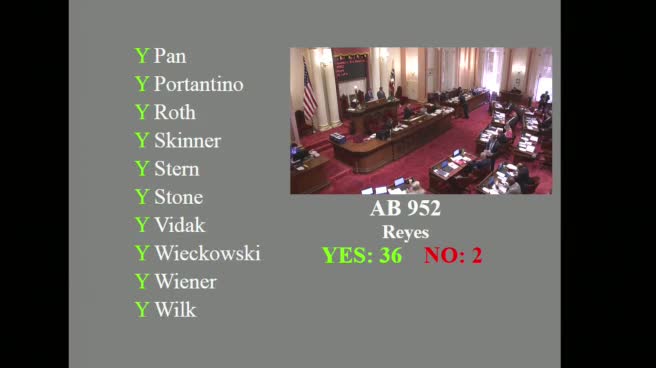 2MIN
Senate Floor
 7MIN
Senate Standing Committee on Transportation and Housing
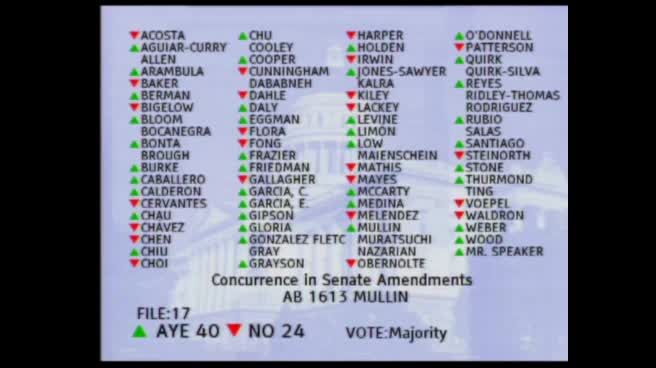 2MIN
Assembly Floor
 1MIN
Assembly Floor
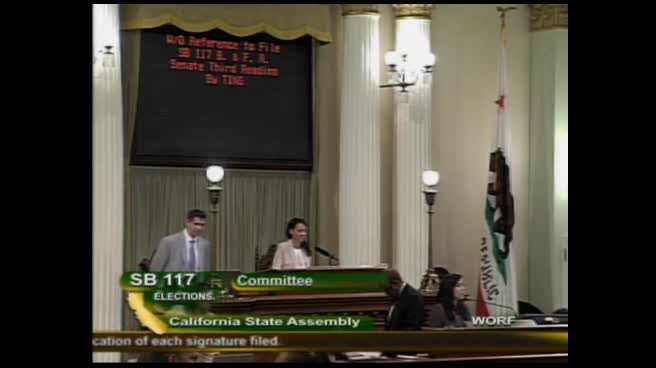 50SEC
Assembly Floor
 4MIN
Assembly Standing Committee on Local Government
 1MIN
Senate Floor
 48MIN








