AB 1093: Public safety: supervised population workforce training: grant program.
- Session Year: 2015-2016
- House: Assembly
- Latest Version Date: 2015-08-17
Existing law establishes the California Workforce Investment Board (State WIB) to assist the Governor in the development, oversight, and improvement of the state workforce investment system and the alignment of the education and workforce systems, as specified. Existing law also establishes local workforce investment boards to assist in the planning, oversight, and evaluation of local workforce investment.
Existing law establishes the Supervised Population Workforce Training Grant Program to be administered by the State WIB. The program awards grants on a competitive basis to counties that propose a project that provides, at a minimum, an education and training assessment for persons who are on probation, mandatory supervision, or postrelease community supervision and are supervised by, or under the jurisdiction of, a county. Existing law establishes criteria for the grant program, including that the education and training needs of both individuals who have some postsecondary education, and those who require basic education and training, are addressed. Existing law requires each project proposed in the application for a grant to include a provision for an education and training assessment for each individual of the supervised population who participates in the project, and provides that a prior assessment of an individual may be used if, in the determination of the State WIB, its results are accurate. Existing law requires grant recipients to report to the State WIB, at least annually and upon completion of the grant period, regarding their use of the funds and workforce training program outcomes. Existing law requires, by January 1, 2018, the State WIB to submit a report to the Legislature using the reports from the grant recipients, and requires the report to contain specified information.
This bill would revise the criteria for the grant program by authorizing a grant applicant to address the education and training needs of individuals who have some postsecondary education, or individuals who require basic education and training, or individuals in both categories. The bill would authorize the State WIB to delegate the responsibility for determining the sufficiency of a prior assessment to one or more local workforce investment boards. The bill would also require the report to the Legislature to include a discussion of the education and workforce readiness of the supervised population at the time individual participants entered the program and how this impacted the types of services needed and offered, and whether the metrics used to evaluate the individual grants were sufficiently aligned with the objectives of the program. The bill would also include a statement of legislative findings and declarations.
This bill would declare that it is to take effect immediately as an urgency statute.
Existing law establishes the California Workforce Investment Board (State WIB) to assist the Governor in the development, oversight, and improvement of the state workforce investment system and the alignment of the education and workforce systems, as specified. Existing law also establishes local workforce investment boards to assist in the planning, oversight, and evaluation of local workforce investment.
Existing law establishes the Supervised Population Workforce Training Grant Program to be administered by the California Workforce Investment Board. The program awards grants on a competitive basis to counties that propose a project that provides, at a minimum, an education and training assessment for persons who are on probation, mandatory supervision, or postrelease community supervision and are supervised by, or under the jurisdiction of, a county. Existing law establishes criteria for the grant program, including that the education and training needs of both individuals who have some postsecondary education, and those who require basic education and training, are addressed. Existing law requires each project proposed in the application for a grant to include a provision for an education and training assessment for each individual of the supervised population who participates in the project, and provides that a prior assessment of an individual may be used if, in the determination of the State WIB, its results are accurate. Existing law requires grant recipients to report to the State WIB, at least annually and upon completion of the grant period, regarding their use of the funds and workforce training program outcomes. Existing law requires, by January 1, 2018, the State WIB to submit a report to the Legislature using the reports from the grant recipients, and requires the report to contain specified information.
This bill would revise the criteria for the grant program by authorizing a grant applicant to address the education and training needs of individuals who have some postsecondary education, or individuals who require basic education and training, or individuals in both categories. The bill would authorize the State WIB to delegate the responsibility for determining the sufficiency of a prior assessment to one or more local workforce investment boards. The bill would also require the report to the Legislature to include a discussion of the education and workforce readiness of the supervised population at the time individual participants entered the program and how this impacted the types of services needed and offered, and whether the metrics used to evaluate the individual grants were sufficiently aligned with the objectives of the program. The bill would also include a statement of legislative findings and declarations.
This bill would declare that it is to take effect immediately as an urgency statute.
The Legislature finds and declares all of the following:
(a)Whereas, on May 23, 2011, the United States Supreme Court ordered California to reduce its prison population to 137.5 percent of design capacity within two years from the date of its ruling.
(b)As of December 10, 2014, the prison population was at 140 percent of design capacity, exceeding the final February 2016 population cap by approximately 2,104 inmates.
(c)The 2011 Public Safety Realignment, addressing public safety and, in an effort to reduce Californias prison population, shifted to counties the responsibility for monitoring, tracking, and incarcerating lower level offenders previously sent to state prison. By mid-2013, more than 100,000 offenders had been diverted to county supervision instead of going to state prisons.
(d)On November 4, 2014, the voters of California passed Proposition 47, which requires misdemeanor rather than felony sentencing for certain property and drug crimes and permits inmates previously sentenced for these reclassified crimes to petition for resentencing. As of December 4, 2014, 132 inmates had been resentenced and released from prison. Under this proposition, it is estimated that the 201516 institution average daily population will be reduced by approximately 1,900 inmates as a result of resentencing and the reduction in new admissions.
(e)Research shows that formerly incarcerated individuals do better and remain out of prison longer when they have training and a job with advancement opportunities. Obtaining quality jobs, however, is not realistic for many incarcerated individuals without additional training education. Workforce training opportunities to men and women reentering our communities ensures that they gain training and education, job readiness skills, and job placement assistance required for securing necessary employment after being released from prison. This would lower repeat offenses, and ultimately, the number of people incarcerated, as a number of studies have proven that people are less likely to offend or recidivate if they are gainfully employed.
(f)Investing in services and supports for the reentry population is also consistent with statewide workforce goals. Californias Strategic Workforce Development Plan 20132017 includes the goal of providing access to quality employment services for formally incarcerated individuals as an overarching priority for the State Workforce Investment Board.
SEC. 2.Section 1234.2 of the Penal Code is amended to read:1234.2.The State WIB shall administer the grant program as follows:
(a)Develop criteria for the selection of grant recipients through a public application process, including, but not limited to, the rating and ranking of applications that meet the threshold criteria set forth in this section.
(b)Design the grant program application process to ensure all of the following occurs:
(1)Outreach and technical assistance is made available to eligible applicants, especially to small population and rural counties.
(2)Grants are awarded on a competitive basis.
(3)Small and rural counties are competitive in applying for funds.
(4)Applicants are encouraged to develop evidence-based, best practices for serving the workforce training and education needs of the supervised population.
(5)The education and training needs of one or both of the following are addressed:
(A)Individuals with some postsecondary education who can enter into programs and benefit from services that result in certifications, and placement on a middle skill career ladder.
(B)Individuals who require basic education as well as training in order to obtain entry level jobs where there are opportunities for career advancement.
SEC. 3.Section 1234.3 of the Penal Code is amended to read:1234.3.(a)The grant program shall be competitively awarded through at least two rounds of funding, with the first phase of funding being awarded on or before May 1, 2015.
(b)Each county is eligible to apply, and a single application may include multiple counties applying jointly. Each application shall include a partnership agreement between the county or counties and one or more local workforce investment boards that outline the actions each party agrees to undertake as part of the project proposed in the application.
(c)At a minimum, each project proposed in the application shall include a provision for an education and training assessment for each individual of the supervised population who participates in the project. The assessment may be undertaken by the applicant or by another entity. A prior assessment of an individual may be used if, in the determination of the State WIB, its results are accurate. The State WIB may delegate the responsibility for determining the sufficiency of a prior assessment to one or more local workforce investment boards.
(d)Eligible uses of grant funds include, but are not limited to, vocational training, stipends for trainees, and apprenticeship opportunities for the supervised population. Supportive services and job readiness activities shall serve as bridge activities that lead to enrollment in long-term training programs.
(e)Preference shall be awarded to applications for the following:
(1)An application that proposes matching funds, including, but not limited to, moneys committed by local workforce investment boards, local governments, and private foundation funds.
(2)An application submitted by a county that currently administers or participates in a workforce training program for the supervised population.
(3)An application that proposes participation by one or more nonprofit community-based organizations that serve the supervised population.
(f)An application shall meet the following requirements:
(1)Set a specific purpose for the use of the grant funds, as well as provide the baseline criteria and metrics by which the overall success of the grant project can be evaluated.
(2)Define the specific subset of the supervised population, among the eligible supervised population that the grant money will serve.
(3)Define the industry sector or sectors in which the targeted supervised population will be trained, including the current and projected workforce within the region for those jobs, the range of wage rates, and the training and education requirements within those industry sectors.
(4)Define the general methodology and training methods proposed to be used and explain the manner in which the progress of the targeted supervised population will be monitored during the grant period.
(g)As a condition of receiving funds, a grant recipient shall agree to provide information to the State WIB in sufficient detail to allow the State WIB to meet the reporting requirements in Section 1234.4.
SEC. 4.Section 1234.4 of the Penal Code is amended to read:1234.4.(a)On at least an annual basis, and upon completion of the grant period, grant recipients shall report to the State WIB regarding their use of the funds and workforce training program outcomes.
(b)By January 1, 2018, the State WIB shall submit a report to the Legislature using the reports from the grant recipients. The report shall contain all the following information:
(1)The overall success of the grant program, based on the goals and metrics set in the awarded grants.
(2)An evaluation of the effectiveness of the grant program based on the goals and metrics set in the awarded grants.
(3)A recommendation on the long-term viability of local workforce investment board and county collaborations on workforce training programs for the supervised population.
(4)A recommendation on the long-term viability of county workforce training programs for the supervised population.
(5)In considering the overall success and effectiveness of the grant program, the report shall include a discussion of all of the following:
(A)The education and workforce readiness of the supervised population at the time individual participants entered the program and how this impacted the types of services needed and offered.
(B)Whether the programs aligned with the workforce needs of high-demand sectors of the state and regional economies.
(C)Whether there was an active job market for the skills being developed where the member of the supervised population was likely to be released.
(D)Whether the program increased the number of members of the supervised population that obtained a marketable and industry or apprenticeship board-recognized certification, credential, or degree.
(E)Whether the program increased the numbers of the supervised population that successfully complete a job readiness basic skill bridge program and enroll in a long-term training program.
(F)Whether there were formal or informal networks in the field that support finding employment upon release from custody.
(G)Whether the program led to employment in occupations with a livable wage.
(H)Whether the metrics used to evaluate the individual grants were sufficiently aligned with the objectives of the program.
(c)(1)The requirement for submitting a report imposed under subdivision (b) is inoperative on January 1, 2021, pursuant to Section 10231.5 of the Government Code.
(2)A report to be submitted pursuant to subdivision (b) shall be submitted in compliance with Section 9795 of the Government Code.
SEC. 5.This act is an urgency statute necessary for the immediate preservation of the public peace, health, or safety within the meaning of Article IV of the Constitution and shall go into immediate effect. The facts constituting the necessity are:
In order to provide cost savings to the state by making the grant program operate more efficiently as soon as possible, it is necessary that this act take effect immediately.
The Legislature finds and declares all of the following:
(a)Whereas, on May 23, 2011, the United States Supreme Court ordered California to reduce its prison population to 137.5 percent of design capacity within two years from the date of its ruling.
(b)As of December 10, 2014, the prison population was at 140 percent of design capacity, exceeding the final February 2016 population cap by approximately 2,104 inmates.
(c)The 2011 Public Safety Realignment, addressing public safety and, in an effort to reduce Californias prison population, shifted to counties the responsibility for monitoring, tracking, and incarcerating lower level offenders previously sent to state prison. By mid-2013, more than 100,000 offenders had been diverted to county supervision instead of going to state prisons.
(d)On November 4, 2014, the voters of California passed Proposition 47, which requires misdemeanor rather than felony sentencing for certain property and drug crimes and permits inmates previously sentenced for these reclassified crimes to petition for resentencing. As of December 4, 2014, 132 inmates had been resentenced and released from prison. Under this proposition, it is estimated that the 201516 institution average daily population will be reduced by approximately 1,900 inmates as a result of resentencing and the reduction in new admissions.
(e)Research shows that formerly incarcerated individuals do better and remain out of prison longer when they have training and a job with advancement opportunities. Obtaining quality jobs, however, is not realistic for many incarcerated individuals without additional training education. Workforce training opportunities to men and women reentering our communities ensures that they gain training and education, job readiness skills, and job placement assistance required for securing necessary employment after being released from prison. This would lower repeat offenses, and ultimately, the number of people incarcerated, as a number of studies have proven that people are less likely to offend or recidivate if they are gainfully employed.
(f)Investing in services and supports for the reentry population is also consistent with statewide workforce goals. Californias Strategic Workforce Development Plan 20132017 includes the goal of providing access to quality employment services for formally incarcerated individuals as an overarching priority for the State Workforce Investment Board.
SEC. 2.Section 1234.2 of the Penal Code is amended to read:1234.2.The State WIB shall administer the grant program as follows:
(a)Develop criteria for the selection of grant recipients through a public application process, including, but not limited to, the rating and ranking of applications that meet the threshold criteria set forth in this section.
(b)Design the grant program application process to ensure all of the following occurs:
(1)Outreach and technical assistance is made available to eligible applicants, especially to small population and rural counties.
(2)Grants are awarded on a competitive basis.
(3)Small and rural counties are competitive in applying for funds.
(4)Applicants are encouraged to develop evidence-based, best practices for serving the workforce training and education needs of the supervised population.
(5)The education and training needs of one or both of the following are addressed:
(A)Individuals with some postsecondary education who can enter into programs and benefit from services that result in certifications, and placement on a middle skill career ladder.
(B)Individuals who require basic education as well as training in order to obtain entry level jobs where there are opportunities for career advancement.
SEC. 3.Section 1234.3 of the Penal Code is amended to read:1234.3.(a)The grant program shall be competitively awarded through at least two rounds of funding, with the first phase of funding being awarded on or before May 1, 2015.
(b)Each county is eligible to apply, and a single application may include multiple counties applying jointly. Each application shall include a partnership agreement between the county or counties and one or more local workforce investment boards that outline the actions each party agrees to undertake as part of the project proposed in the application.
(c)At a minimum, each project proposed in the application shall include a provision for an education and training assessment for each individual of the supervised population who participates in the project. The assessment may be undertaken by the applicant or by another entity. A prior assessment of an individual may be used if, in the determination of the State WIB, its results are accurate. The State WIB may delegate the responsibility for determining the sufficiency of a prior assessment to one or more local workforce investment boards.
(d)Eligible uses of grant funds include, but are not limited to, vocational training, stipends for trainees, and apprenticeship opportunities for the supervised population. Supportive services and job readiness activities shall serve as bridge activities that lead to enrollment in long-term training programs.
(e)Preference shall be awarded to applications for the following:
(1)An application that proposes matching funds, including, but not limited to, moneys committed by local workforce investment boards, local governments, and private foundation funds.
(2)An application submitted by a county that currently administers or participates in a workforce training program for the supervised population.
(3)An application that proposes participation by one or more nonprofit community-based organizations that serve the supervised population.
(f)An application shall meet the following requirements:
(1)Set a specific purpose for the use of the grant funds, as well as provide the baseline criteria and metrics by which the overall success of the grant project can be evaluated.
(2)Define the specific subset of the supervised population, among the eligible supervised population that the grant money will serve.
(3)Define the industry sector or sectors in which the targeted supervised population will be trained, including the current and projected workforce within the region for those jobs, the range of wage rates, and the training and education requirements within those industry sectors.
(4)Define the general methodology and training methods proposed to be used and explain the manner in which the progress of the targeted supervised population will be monitored during the grant period.
(g)As a condition of receiving funds, a grant recipient shall agree to provide information to the State WIB in sufficient detail to allow the State WIB to meet the reporting requirements in Section 1234.4.
SEC. 4.Section 1234.4 of the Penal Code is amended to read:1234.4.(a)On at least an annual basis, and upon completion of the grant period, grant recipients shall report to the State WIB regarding their use of the funds and workforce training program outcomes.
(b)By January 1, 2018, the State WIB shall submit a report to the Legislature using the reports from the grant recipients. The report shall contain all the following information:
(1)The overall success of the grant program, based on the goals and metrics set in the awarded grants.
(2)An evaluation of the effectiveness of the grant program based on the goals and metrics set in the awarded grants.
(3)A recommendation on the long-term viability of local workforce investment board and county collaborations on workforce training programs for the supervised population.
(4)A recommendation on the long-term viability of county workforce training programs for the supervised population.
(5)In considering the overall success and effectiveness of the grant program, the report shall include a discussion of all of the following:
(A)The education and workforce readiness of the supervised population at the time individual participants entered the program and how this impacted the types of services needed and offered.
(A)
(B)Whether the programs aligned with the workforce needs of high-demand sectors of the state and regional economies.
(B)
(C)Whether there was an active job market for the skills being developed where the member of the supervised population was likely to be released.
(C)
(D)Whether the program increased the number of members of the supervised population that obtained a marketable and industry or apprenticeship board-recognized certification, credential, or degree.
(D)
(E)Whether the program increased the numbers of the supervised population that successfully complete a job readiness basic skill bridge program and enroll in a long-term training program.
(E)
(F)Whether there were formal or informal networks in the field that support finding employment upon release from custody.
(F)
(G)Whether the program led to employment in occupations with a livable wage.
(H)Whether the metrics used to evaluate the individual grants were sufficiently aligned with the objectives of the program.
(c)(1)The requirement for submitting a report imposed under subdivision (b) is inoperative on January 1, 2021, pursuant to Section 10231.5 of the Government Code.
(2)A report to be submitted pursuant to subdivision (b) shall be submitted in compliance with Section 9795 of the Government Code.
SEC. 5.This act is an urgency statute necessary for the immediate preservation of the public peace, health, or safety within the meaning of Article IV of the Constitution and shall go into immediate effect. The facts constituting the necessity are:
In order to provide cost savings to the state by making the grant program operate more efficiently as soon as possible, it is necessary that this act take effect immediately.
|
Date
|
Status
|
|---|---|
| Aug 17, 2015 | Chaptered by Secretary of State - Chapter 220, Statutes of 2015. |
| Aug 17, 2015 | Approved by the Governor. |
| Aug 3, 2015 | Enrolled and presented to the Governor at 3 p.m. |
| Jul 6, 2015 | Read third time. Urgency clause adopted. Passed. Ordered to the Assembly. (Ayes 39. Noes 0. Page 1788.). |
| Jul 6, 2015 | In Assembly. Ordered to Engrossing and Enrolling. |
| Jul 6, 2015 | Read third time. Urgency clause adopted. Passed. Ordered to the Assembly. |
| Jun 30, 2015 | Read second time. Ordered to third reading. |
| Jun 29, 2015 | From committee: Be placed on second reading file pursuant to Senate Rule 28.8. |
| Jun 16, 2015 | From committee: Do pass and re-refer to Com. on APPR. (Ayes 7. Noes 0.) (June 16). Re-referred to Com. on APPR. |
| May 21, 2015 | Referred to Com. on PUB. S. |
| May 7, 2015 | In Senate. Read first time. To Com. on RLS. for assignment. |
| May 7, 2015 | Read third time. Urgency clause adopted. Passed. Ordered to the Senate. (Ayes 77. Noes 0. Page 1349.). |
| May 7, 2015 | Read third time. Urgency clause adopted. Passed. Ordered to the Senate. |
| Apr 30, 2015 | Read second time. Ordered to Consent Calendar. |
| Apr 29, 2015 | From committee: Do pass. To Consent Calendar. (Ayes 17. Noes 0.) (April 29). |
| Apr 21, 2015 | From committee: Do pass and re-refer to Com. on APPR. with recommendation: To Consent Calendar. (Ayes 9. Noes 0.) (April 21). Re-referred to Com. on APPR. |
| Apr 15, 2015 | From committee: Do pass and re-refer to Com. on J., E.D., & E. with recommendation: To Consent Calendar. (Ayes 7. Noes 0.) (April 14). Re-referred to Com. on J., E.D., & E. |
| Mar 19, 2015 | Referred to Coms. on PUB. S. and J., E.D., & E. |
| Mar 2, 2015 | Read first time. |
| Mar 1, 2015 | From printer. May be heard in committee March 31. |
| Feb 27, 2015 | Introduced. To print. |
|
Date
|
Description
|
Location
|
Votes
|
|
|---|---|---|---|---|
| Jul 6, 2015 | Assembly 3rd Reading AB1093 Eduardo Garcia By Monning Urgency Clause | Senate Floor |
Passed |
|
| Jun 16, 2015 | Do pass, but first be re-referred to the Committee on [Appropriations] | Senate Standing Committee on Public Safety |
Passed |
|
| May 7, 2015 | AB 1093 GARCIA, E. Consent Calendar Second Day Regular Session | Assembly Floor |
Passed |
|
| Apr 29, 2015 | Do pass. To Consent Calendar. | Assembly Standing Committee on Appropriations |
Passed |
|
| Apr 21, 2015 | Do pass and be re-referred to the Committee on [Appropriations] with recommendation: To Consent Calendar | Assembly Standing Committee on Jobs, Economic Development, and the Economy |
Passed |
|
| Apr 14, 2015 | Do pass and be re-referred to the Committee on [Jobs, Economic Development, and the Economy] with recommendation: To Consent Calendar | Assembly Standing Committee on Public Safety |
Passed |
This list shows positions taken on this bill by organizations on the date displayed, which is linked to the original source.
Positions by individuals are not included.
AB 1093
Page 5
|
Office of Senate Floor Analyses (916) 651-1520 Fax: (916) 327-4478 |
THIRD READING
Bill No: AB 1093
Introduced: 2/27/15
SENATE PUBLIC SAFETY COMMITTEE: 7-0, 6/16/15
AYES: Hancock, Anderson, Glazer, Leno, Liu, Monning, Stone
SENATE APPROPRIATIONS COMMITTEE: Senate Rule 28.8
ASSEMBLY FLOOR: 77-0, 5/7/15 (Consent) - See last page for vote
SUBJECT: Public safety: supervised population workforce training: grant program
SOURCE: California Workforce Association
Communities United for Restorative Youth Justice
PolicyLink
DIGEST: This bill makes minor modifications to the criteria for the Supervised Population Workforce Training Grant Program administered by the Workforce Investment Board, as specified.
Existing law:
States that California Workforce Investment Board (“WIB”) is the body responsible for assisting the Governor in the development, oversight, and continuous improvement of California’s workforce investment system and the alignment of the education and workforce investment systems to the needs of the 21st century economy and workforce. (Unemp. Ins. Code, § 14010.)
Establishes the Supervised Population Workforce Training Grant Program to be administered by the WIB. (Pen. Code, § 1234.1.)
Requires the WIB to administer the grant program as follows:
Develop criteria for the selection of grant recipients through a public application process, including the rating and ranking of applications that meet threshold criteria; and
Design the grant program application process to ensure all of the following occurs:
Outreach and technical assistance is made available to eligible counties;
There is fairness and competitiveness for all counties, including for smaller and rural counties;
It encourages applicants to develop evidence-based, best practices to serve the target population; and,
It addresses the education and training needs of both individuals with some postsecondary education who can benefit from services that result in certifications, and placement on a middle skill career ladder, and individuals who require basic education and training to obtain entry level jobs. (Pen. Code § 1234.2.)
Requires the grant program to be competitively awarded through at least two rounds of funding, as specified, and provides that each county is eligible to apply but that a single application may include multiple counties applying jointly. Requires each application to include a partnership agreement between the county, or counties, and one or more local workforce investment boards that outline the actions each party agrees to undertake as part of the project proposed in the application. (Pen. Code § 1234.3.)
Requires, at a minimum, each project proposed in the application to include a provision for an education and training assessment for each individual of the supervised population who participates in the project. (Pen. Code, § 1234.3, subd. (c).)
Provides that eligible uses of grant funds include, but are not limited to, vocational training, stipends for trainees, and apprenticeship opportunities for the supervised population. Current law further states that supportive services and job readiness activities are to serve as bridge activities that lead to enrollment in long-term training programs. (Pen. Code, § 1234.3, subd. (d).)
Requires the WIB to report to the Legislature the outcomes from the grant program, as specified. (Pen. Code, § 1234.4.)
This bill:
Revises the criteria described above to allow applicants to address either the education and training needs of individuals with some postsecondary education, or individuals who require basic education and training to obtain entry level jobs, instead of requiring the applicants to serve both education needs.
Authorizes the WIB to delegate the responsibility for determining the sufficiency of a prior assessment to one or more local workforce investment boards.
Expands the content of the report to be given to the Legislature evaluating the Supervised Population Workforce Training Grant Program to include the following:
The education and workforce readiness of the supervised population at the time individual participants entered the program and how this impacted the types of services needed and offered; and
Whether the metrics used to evaluate the individual grants were sufficiently aligned with the objectives of the program.
Includes uncodified legislative findings and declarations concerning the importance of job training for formerly incarcerated persons, as specified.
Background
The WIB is the body responsible for assisting the Governor in the development, oversight, and continuous improvement of California’s workforce investment system and the alignment of the education and workforce investment systems to the needs of the 21st century economy and workforce. The WIB administers the Supervised Population Workforce Training Grant Program, a program to award grant funding for vocational training and apprenticeship opportunities for offenders under county jurisdiction who are on probation, mandatory community supervision, or post-release community supervision. This bill makes various minor technical changes to the Supervised Population Workforce Training Grant Program in the WIB.
FISCAL EFFECT: Appropriation: No Fiscal Com.: Yes Local: No
California Workforce Association (co-source)
Communities United for Restorative Youth Justice (co-source)
PolicyLink (co-source)
California Edge Coalition
California Public Defenders Association
National Center for Youth Law
Office of the Riverside County Superintendent of Schools
REDF
Root & Rebound
OPPOSITION: (Verified 6/30/15)
None received
ARGUMENTS IN SUPPORT:
The author states:
With orders from the U.S. Supreme Court to reduce its prison population, the state needs smart, effective policies to help local jurisdictions achieve realignment goals and reduce recidivism. Workforce development for the re-entry population is a practical strategy for improving access to a stable job. It helps improve offender outcomes, reduce the likelihood of recidivism, and promote community safety and stability. AB 1093 makes key program changes to the 2014 bill [AB 2060 (V. Manuel Perez)].
ASSEMBLY FLOOR: 77-0, 5/7/15
AYES: Achadjian, Alejo, Travis Allen, Baker, Bigelow, Bloom, Bonilla, Bonta, Brough, Brown, Burke, Calderon, Chang, Chau, Chávez, Chiu, Chu, Cooley, Cooper, Dababneh, Dahle, Daly, Dodd, Eggman, Frazier, Beth Gaines, Gallagher, Cristina Garcia, Eduardo Garcia, Gatto, Gipson, Gomez, Gonzalez, Gordon, Gray, Grove, Hadley, Harper, Holden, Irwin, Jones, Jones-Sawyer, Kim, Lackey, Levine, Linder, Lopez, Low, Maienschein, Mathis, Mayes, McCarty, Medina, Melendez, Mullin, Nazarian, Obernolte, O'Donnell, Olsen, Patterson, Perea, Quirk, Rendon, Ridley-Thomas, Rodriguez, Salas, Santiago, Mark Stone, Thurmond, Ting, Wagner, Waldron, Weber, Wilk, Williams, Wood, Atkins
NO VOTE RECORDED: Campos, Roger Hernández, Steinorth
Prepared by: Alison Anderson / PUB. S. /
7/2/15 8:48:09
**** END ****
AB 1093 (Eduardo Garcia ) Page 4 of 4
SENATE COMMITTEE ON PUBLIC SAFETY
Senator Loni Hancock, Chair
2015 - 2016 Regular
Bill No: AB 1093 Hearing Date: June 16, 2015
Author: |
Eduardo Garcia |
||
Version: |
February 27, 2015 |
||
Urgency: |
Yes |
Fiscal: |
Yes |
Consultant: |
AA |
||
Subject: Public Safety: Supervised Population Workforce Training: Grant Program
HISTORY
Source: California Workforce Association (co-source)
Communities United for Restorative Youth Justice (co-source)
PolicyLink (co-source)
Prior Legislation: AB 2060 (V.M. Perez), Chapter 383, Statutes of 2014
Support: California Edge Coalition; California Public Defenders Association; National Center for Youth Law; Office of the Riverside County Superintendent of Schools;
REDF; Root & Rebound
Opposition: None Known
Assembly Floor Vote: 77 - 0
PURPOSE
The purpose of this bill is to make minor modifications to the criteria for the Supervised Population Workforce Training Grant Program administered by the Workforce Investment Board, as specified.
Current law states that California Workforce Investment Board (“WIB”) is the body responsible for assisting the Governor in the development, oversight, and continuous improvement of California’s workforce investment system and the alignment of the education and workforce investment systems to the needs of the 21st century economy and workforce. (Unemp. Ins. Code, § 14010.)
Current law establishes the Supervised Population Workforce Training Grant Program to be administered by the WIB. (Pen. Code, § 1234.1.)
Current law requires WIB to administer the grant program as follows:
Develop criteria for the selection of grant recipients through a public application process, including the rating and ranking of applications that meet threshold criteria; and
Design the grant program application process to ensure all of the following occurs:
a) Outreach and technical assistance is made available to eligible counties;
b) There is fairness and competitiveness for all counties, including for smaller and rural counties;
c) It encourages applicants to develop evidence-based, best practices to serve the target population; and,
d) It addresses the education and training needs of both individuals with some postsecondary education who can benefit from services that result in certifications, and placement on a middle skill career ladder, and individuals who require basic education and training to obtain entry level jobs. (Pen. Code § 1234.2.)
This bill would revise the criteria described above to allow applicants to address either the education and training needs of individuals with some postsecondary education, or individuals who require basic education and training to obtain entry level jobs, instead of requiring the applicants to serve both education needs.
Current law requires the grant program to be competitively awarded through at least two rounds of funding, as specified, and provides that each county is eligible to apply but that a single application may include multiple counties applying jointly. Requires each application to include a partnership agreement between the county, or counties, and one or more local workforce investment boards that outline the actions each party agrees to undertake as part of the project proposed in the application. (Pen. Code, § 1234.3.)
Current law requires, at a minimum, each project proposed in the application to include a provision for an education and training assessment for each individual of the supervised population who participates in the project. (Pen. Code, § 1234.3, subd. (c).)
This bill would authorize the WIB to delegate the responsibility for determining the sufficiency of a prior assessment to one or more local workforce investment boards.
Current law provides that eligible uses of grant funds include, but are not limited to, vocational training, stipends for trainees, and apprenticeship opportunities for the supervised population. Current law further states that supportive services and job readiness activities are to serve as bridge activities that lead to enrollment in long-term training programs. (Pen. Code, § 1234.3, subd. (d).)
Current law requires the WIB to report to the Legislature the outcomes from the grant program, as specified. (Pen. Code, § 1234.4.)
This bill would expand the content of the report to be given to the Legislature evaluating the Supervised Population Workforce Training Grant Program to include the following:
The education and workforce readiness of the supervised population at the time individual participants entered the program and how this impacted the types of services needed and offered; and
2) Whether the metrics used to evaluate the individual grants were sufficiently aligned
with the objectives of the program.
This bill includes uncodified legislative findings and declarations concerning the importance of job training for formerly incarcerated persons, as specified.
RECEIVERSHIP/OVERCROWDING CRISIS AGGRAVATION
For the past eight years, this Committee has scrutinized legislation referred to its jurisdiction for any potential impact on prison overcrowding. Mindful of the United States Supreme Court ruling and federal court orders relating to the state’s ability to provide a constitutional level of health care to its inmate population and the related issue of prison overcrowding, this Committee has applied its “ROCA” policy as a content-neutral, provisional measure necessary to ensure that the Legislature does not erode progress in reducing prison overcrowding.
On February 10, 2014, the federal court ordered California to reduce its in-state adult institution population to 137.5% of design capacity by February 28, 2016, as follows:
143% of design bed capacity by June 30, 2014;
141.5% of design bed capacity by February 28, 2015; and,
137.5% of design bed capacity by February 28, 2016.
In February of this year the administration reported that as “of February 11, 2015, 112,993 inmates were housed in the State’s 34 adult institutions, which amounts to 136.6% of design bed capacity, and 8,828 inmates were housed in out-of-state facilities. This current population is now below the court-ordered reduction to 137.5% of design bed capacity.”( Defendants’ February 2015 Status Report In Response To February 10, 2014 Order, 2:90-cv-00520 KJM DAD PC, 3-Judge Court, Coleman v. Brown, Plata v. Brown (fn. omitted).
While significant gains have been made in reducing the prison population, the state now must stabilize these advances and demonstrate to the federal court that California has in place the “durable solution” to prison overcrowding “consistently demanded” by the court. (Opinion Re: Order Granting in Part and Denying in Part Defendants’ Request For Extension of December 31, 2013 Deadline, NO. 2:90-cv-0520 LKK DAD (PC), 3-Judge Court, Coleman v. Brown, Plata v. Brown (2-10-14). The Committee’s consideration of bills that may impact the prison population therefore will be informed by the following questions:
Whether a proposal erodes a measure which has contributed to reducing the prison population;
Whether a proposal addresses a major area of public safety or criminal activity for which there is no other reasonable, appropriate remedy;
Whether a proposal addresses a crime which is directly dangerous to the physical safety of others for which there is no other reasonably appropriate sanction;
Whether a proposal corrects a constitutional problem or legislative drafting error; and
Whether a proposal proposes penalties which are proportionate, and cannot be achieved through any other reasonably appropriate remedy.
COMMENTS
Stated Need for This Bill
The author states:
With orders from the U.S. Supreme Court to reduce its prison population, the state needs smart, effective policies to help local jurisdictions achieve realignment goals and reduce recidivism. Workforce development for the re-entry population is a practical strategy for improving access to a stable job. It helps improve offender outcomes, reduce the likelihood of recidivism, and promote community safety and stability. AB 1093 makes key program changes to the 2014 bill [AB 2060 (V. Manuel Perez)].
Supervised Population Workforce Training Grant Program
The WIB is the body responsible for assisting the Governor in the development, oversight, and continuous improvement of California’s workforce investment system and the alignment of the education and workforce investment systems to the needs of the 21st century economy and workforce. The WIB administers the Supervised Population Workforce Training Grant Program, a program to award grant funding for vocational training and apprenticeship opportunities for offenders under county jurisdiction who are on probation, mandatory community supervision, or post-release community supervision. This bill makes various minor technical changes to the Supervised Population Workforce Training Grant Program in the WIB.
-- END –
AB 1093
Page 2
Date of Hearing: April 29, 2015
ASSEMBLY COMMITTEE ON APPROPRIATIONS
Jimmy Gomez, Chair
AB 1093
(Eduardo Garcia) – As Introduced February 27, 2015
Policy Committee: |
Public
Safety |
Vote: |
7 – 0 9- 0 |
|
|
|
|
|
|
|
|
Urgency: Yes State Mandated Local Program: No Reimbursable: No
SUMMARY:
This bill makes various minor technical changes to the Supervised Population Workforce Training Grant Program, in the California Workforce Investment Board (WIB).
FISCAL EFFECT:
Minor absorbable cost to the WIB.
COMMENTS:
Purpose. According to the author, "With orders from the U.S. Supreme Court to reduce its prison population, the state needs smart, effective policies to help local jurisdictions achieve realignment goals and reduce recidivism. Workforce development for the re-entry population is a practical strategy for improving access to a stable job. It helps improve offender outcomes, reduce the likelihood of recidivism, and promote community safety and stability. This bill makes key program changes to the 2014 bill [AB 2060 (V. Manuel Pérez, Chapter 383, Statutes of 2014)]."
Background. The WIB is the body responsible for assisting the Governor in the development, oversight, and continuous improvement of California’s workforce investment system and the alignment of the education and workforce investment systems to the needs of the 21st century economy and workforce. The WIB administers the Supervised Population Workforce Training Grant Program, a program to award grant funding for vocational training and apprenticeship opportunities for offenders under county jurisdiction who are on probation, mandatory community supervision, or post-release community supervision.
Support. According to the California Workforce Association, a co-sponsor of this bill, "AB 1093 makes technical changes to a 2014 bill, AB 2060 (V.M. Perez), which established this essential program. Workforce development for the re-entry population is a practical approach that will improve offender outcomes, reduce the likelihood of recidivism, and promote community safety, and for these reasons we support this important effort."
Prior Legislation. AB 2060 (V.M. Perez), Chapter 383, Statutes of 2014, established the Supervised Population Workforce Training Grant Program.
Analysis Prepared by: Pedro Reyes / APPR. / (916) 319-2081
AB 1093
Page 8
Date of Hearing: April 21, 2015
ASSEMBLY COMMITTEE ON JOBS, ECONOMIC DEVELOPMENT, AND THE ECONOMY
Eduardo Garcia, Chair
AB 1093
(Eduardo Garcia) – As Introduced February 27, 2015
SUBJECT: Public safety: supervised population workforce training: grant program
SUMMARY: Makes modifications to the Supervised Population Workforce Training Grant Program (SPWTG Program), which is administered by the California Workforce Investment Board (CWIB), for the purpose of expediting the allocation of funds in the 2014-15 fiscal year. Specifically, the bill:
Authorizes the state to delegate the responsibility for determining the sufficiency of prior assessments to one or more local workforce investment boards.
Allows applicants to address one or both of education and training needs of the formerly incarcerated individuals. Current law requires each applicant to address both.
Expands the content of the CWIB overall assessment of the program to include:
Identification of the education and workforce readiness of supervised population entering the program and how that impacted the types of services needed and offered.
Whether the metrics used to evaluate the individual grants were sufficiently aligned with the objectives of the program.
Includes an urgency clause and takes effect immediately.
EXISTING LAW:
Establishes the CWIB, comprised of members appointed by the Governor and the appropriate presiding officer(s) of each house of the Legislature, and specifies that the executive director of the CWIB report to the Secretary of the California Labor and Workforce Development Agency. The CWIB is responsible for assisting the state in meeting the requirements of the federal Workforce Investment Act of 1998 (WIA), as well as assisting the Governor in the development, oversight, and continuous improvement of California’s workforce investment system.
Creates the SPWTG Program, administered by the CWIB, to award grant funding for vocational training and apprenticeship opportunities for offenders under county jurisdiction who are on probation, mandatory community supervision, or post-release community supervision.
Requires CWIB to administer the SPWTG Program through a public process, as specified, with preference for counties (a) with a demonstrated collaborative working relationship with local workforce investment boards; (b) with a workforce training program in place for the supervised population; and (c) that offer a funding match.
Requires SPWTG recipients to report to the CWIB regarding their use of the funds and workforce training program outcomes upon completion of the grant period and requires CWIB to assess and report on the outcomes of the program, as specified, to the Legislature by January 1, 2018.
Creates in the State Treasury the Recidivism Reduction Fund for moneys to be available, upon appropriation by the Legislature, for activities designed to reduce the state’s prison population, including, but not limited to, reducing recidivism. Funds in the Recidivism Reduction Fund are available to be transferred to the State Community Corrections Performance Incentives Fund. In 2014-15, $1 million was approved for allocation through the SPWTG Program.
FISCAL EFFECT: Unknown
POLICY ISSUE FRAME:
This bill proposes to provide greater flexibility and assessment to an existing workforce training and job placement program serving men and women who are reentering communities from incarceration, AB 2060 (V. Manuel Pérez), Chapter 383, Statutes of 2014. The need for this type of assistance has been advocated by many constituencies, including, but not limited to advocates for formerly incarcerated adults, criminal justice policy researchers, law enforcement, and business and community leaders.
While a final report on the SPWTG Program will not be available until 2018, the CWIB has indicated that the existing program is moving forward without significant challenges. The author has stated that given the short court mandated timeline it is appropriate to make changes to the program now so that it could be ready for additional state funding in 2015-16.
In deliberating the merits of the measure, Members may wish to consider the challenges formerly incarcerated individuals face in reentering society and the social and financial cost to society for the state's high recidivism rate. The Comment section of the analysis includes additional information on these issues.
COMMENTS:
Author's Purpose: According to the author, "With orders from the U.S. Supreme Court to reduce its prison population, the state needs smart, effective policies to help local jurisdictions achieve realignment goals and reduce recidivism. Workforce development for the re-entry population is a practical strategy for improving access to a stable job. It helps improve offender outcomes, reduce the likelihood of recidivism, and promote community safety and stability. AB 1093 makes key program changes to the 2014 bill [AB 2060 (V. Manuel Perez)]."
Solicitation for Proposals: The CWIB issued a Solicitation for Proposal (SFP) on March 20, 2015 for the SPWTG Program. The SFP calls for applications that expand existing, mature collaborative relationships between county-based Community Corrections Partnerships and Local Workforce Investment Boards(LWIB) in support of innovative strategies that accelerate educational attainment and re-employment for the supervised population.
Funding for the program is limited to $1 million, which will be deployed to applicants that best help the state meet these four overarching program goals:
Train up to 100 supervised population participants.
Improve labor market and skills outcomes for the supervised population through the development of strategies that fill gaps, accelerate processes, or customize services to ensure greater access to workforce services and employment opportunities.
Create new modes for service delivery and funding alignment that can be replicated across the State and tailored to regional needs.
Leverage the State’s investment with commitments from industry, labor, public, and community-based partners.
-
Key Dates - Supervised Population Workforce Training Grant Program
CWIB Releases the Solicitation for Proposal
March 20, 2015
Proposals due to the CWIB by 3:00 p.m.
April 17, 2015
Award Announcements
May 1, 2015
Source: Solicitation for Proposal, Supervised Population Workforce Training Grant Program
At the April 8, 2015, hearing of the Assembly Budget Subcommittee 5 on Transportation and Public Safety, the CWIB testified on the implementation of the program. Committee members discussed the possibility of additional funding being provided to the SPWTG Program. AB 1093 includes an urgency clause, provides for greater program flexibility, and increases the outcome evaluation criteria should additional money be appropriated to the program.
Court Actions related to Prison Overcrowding: For decades, California's prison system has faced significant challenges in meeting both its basic security and rehabilitation responsibilities. Designed to house an inmate population of 80,000, the state prison population has remained well above that mark. In 2006, the California prison population hit its peak with over 170,000 men and women being housed within the state prison system.
The resulting conditions were the subject of two federal class actions. In the first case, Coleman v. Brown (filed 1990), the District Court found that prisoners with serious mental illness did not receive minimal, adequate care and after over a decade of remediation the Special Master assigned to the case reported that the system's mental health care continued to seriously and negatively be impacted by overcrowding. In the second case a decade later, Plata v. Brown (filed 2001), the state conceded deficiencies in prison medical care violated prisoners Eighth Amendment rights and stipulated to remedial injunction. When the state failed to comply with the injunction, the plaintiffs in both cases moved to convene a federal three-judge court panel, as empowered under the Prison Litigation Reform Act of 1995, in order to command the state to reduce the prison population. The cases were ultimately consolidated and, in August 2009, the three–judge panel found that prison overcrowding was the primary reason that the state was unable to provide inmates with constitutionally adequate health care. The court ordered the state reduce its inmate population to no more than 137.5% of the design capacity in the prisons operated by the CDCR by June 2013 [Plata/Coleman v. Brown].
In 2011, the U.S. Supreme Court upheld the three-judge panel's order for the state to reduce its prison population to 137.5% of the prison design capacity or approximately 46,000 inmates at the time of the decision. Over the ensuing years, the deadlines for reaching the mandated prison population reduction have shifted. Currently, the state is required to reach the prison population reduction target by February 28, 2016. Should the state fail to meet its final reduction target or any of the interim milestones, a court-ordered Compliance Officer has been given the authority to order the early release of inmates.
Programs to Address Prison Recidivism: The state has taken a variety of actions to try to meet its prison population reduction target including infill bed expansion, contract beds, prison re-entry hubs, county probation incentive grants, and workforce development programs focused on the formerly incarcerated individuals. Most significantly were the 2009 parole reforms and the 2011 realignment of certain criminal justice responsibilities from the state to the California counties. In 2013, the Recidivism Reduction Fund was established at the state Treasury for the purpose of funding new programs and services designed to reduce recidivism of inmates and parolees. The 2014 Budget Act provided $5 million from the $91 million in the Recidivism Reduction Fund for performance-based workforce training contracts (also called social innovation financing contracts) for formerly incarcerated individuals. [AB 1837(Atkins), Chapter 838, Statues of 2014] Another million dollars was appropriated from the Recidivism Reduction Fund to implement to SPWTG Program, which is the subject of this bill.
As of December 2014, the state was at 140% design capacity. This is below the 2015 target, but still 1,204 inmates above the final February 2016 target.
For 2015-16, the Legislative Analyst reports that the average daily prison population is projected to be about 133,000 inmates, which represents a 1% reduction (1,900 inmates) from the estimated current-year level. This reduction is due to a number of factors including the impact of Proposition 36, which passed in November 2012 and revised the state's three strikes laws, and Proposition 47, which passed in November 2014 and requires misdemeanor sentencing instead of felony for specified property and drug charges.
The reductions are, however, being offset by a rise in second offenders under the state's Three Strikes law, which provides for certain individuals and crimes that the sentence in the second offence to be twice the term otherwise required by law. The Department of Corrections and Rehabilitation estimates that it will receive 12,400 second strike offenders in 2015-16, which is a 68% increase from the 2011-12 level. This new trend threatens to derail the state's progress on reducing the state's prison population, making programs that target recidivism even more important.
The Governor's 2015-16 budget proposal provides $125 million for the largest of the prison recidivism reduction programs, the Community Corrections Performance Incentive Grant. Under this program, funding is provided to county probation departments based on the ratio of felony probation returns to prison and jail.
The Governor's budget estimates that $28.8 million will be available for expenditure through the Recidivism Reduction Fund in 2015-16 and proposes to allocate $12.6 million to community-based facilities that emphasize co-occurring mental health and substance use disorders, and $15.6 million to non-reentry hub institutions that treat substance use.
State Strategy on Employment of Former Offenders: The federal Workforce Investment Act requires the Governor, through the CWIB, to submit a State Strategic Workforce Development Plan (State Plan) to the U.S. Department of Labor. This plan outlines a five-year strategy for the investment of federal workforce training and employment services funds. With respect to services to former offenders, CWIB states the following:
"The State Board has leveraged the [California Department of Corrections and Rehabilitation (CDCR)] expertise to help Local Boards obtain additional funding from “realignment” funds allocated to counties. A workshop was conducted [in 2014] by the California Workforce Association, which included CDCR and Local Board staff sharing knowledge about realignment and funding so that Local Boards might be in a better position to engage their counties in seeking funding to serve this new “realigned” population.
The State Board will continue to work closely with CDCR and LWIBs to encourage and develop innovative services for the ex-offender population. Policy Link and the National Employment Law Project (NELP), the State Board is helping convene LWIBs, to ensure formerly incarcerated individuals have access to quality employment services. The State Board also worked with the Employment Development Department and NELP to develop a directive to ensure that LWIBs comply with nondiscrimination obligations when serving individuals with criminal records. http://edd.ca.gov/Jobs_and_Training/pubs/wsd12-9.pdf ."
Summary from Survey on Training Activities: In preparation for hearing AB 2060 in 2014, the Assembly Committee on Jobs, Economic Development, and the Economy, asked the California Workforce Association to survey its membership about current and previous activities related to reentry programs that targeted the formerly incarcerated. Of the 49 LWIBs in California, 11 boards were able to respond under the tight timeframes including: Golden Sierra; Inyo and Mono Consortium; Kern County; Marin County; Merced County; Monterey County; San Bernardino County; San Diego County; Sacramento County; Sonoma County; Santa Cruz County; and the Verdugo Consortium. These 11 LWIBs reported serving 1,782 individuals who were reentering communities following incarceration in the prior year. The California Workforce Association believes this figure is much higher as the other 38 WIBs also serve the re-entry population. Below is a summary of the survey answers.
What type of re-entry programs do you have and how many people do they serve? Many local workforce investment boards receive funding from their local probation departments. Services in these programs generally include a reentry navigator/case manager who acts as an employment counselor and also ensures that appropriate wrap around services are offered to the job seekers.
The goal of these programs is to help the individual find full-time employment. Large portions of the program focus on job readiness training, on-the-job training, work experience and class room/vocational training. Support services are also a key component to the re-entry programs. Services such as GED preparation and testing, transportation vouchers, food vouchers, record expungement, counseling, housing assistance, driver license and social security compliance, etc.
Even in local workforce areas where direct funding is not received, workforce boards use their own funds to partner with the probation and juvenile justice system to offer job readiness workshops including resume preparation, interview skills, labor market opportunities, filling out applications, and "dress for success."
What is the total funding for those programs and where are the funds from? Program funding varies locally, but a majority of LWIBs reported receiving AB 109 funds from their probation department. Other funding sources include, CDCR, local juvenile departments, and non-profits such as Friends Outside and Behavioral Interventions, Inc. Individual program budgets range from $130,000 to $400,000 annually.
What is the cost per individual in these programs? The average cost reported is roughly $6,000 per individual.
Do you provide any stipends or wages from your program? The programs generally offer to pay wages or part of the wages through work experience or on-the-job training programs. Additionally, programs serving youth use stipends to support program completion.
Do women or men have an easier time finding employment? The majority of programs report that most of their participants are male. Several programs stated that males seem to have an easier time placing due to the partnerships they have with organizations offering skilled trade or labor jobs. A few areas report that women are more apt to request and receive training than men and are more likely to have a work history before entering incarceration.
In submitting the survey results, the California Workforce Association highlighted the importance of wrap around services to the reentry population including shelter, food, and having a healthy support network. Without their core survival needs being met, the formerly incarcerated face even greater difficulties in finding employment and may be tempted to resume their prior lifestyle.
WIA and the California Workforce Investment Board: Enacted in 1998, WIA provides states with federal funding for job training and employment investment activities and programs, including work incentive and employment training outreach programs. Distribution of the funds is based on a set formula which includes specified economic and demographic data and flows to the state through three primary programs: Adult, Youth, and Dislocated Workers.
California's WIA allocation from the U.S. Department of Labor has declined over the years from a high of $630 million in 2000-01 to $391 million in 2014-15. Federal law dictates that 85% of Adult and Youth formula funds, and 60% of Dislocated Worker formula funds, are distributed to local WIBs (LWIBs). Funding for the state's activities is derived from the 15% WIA discretionary funds.
California will receive approximately $390 million in Program Year 2014-15, $356 million is allocated to the LWIBs to provide services for adults, laid-off workers, and youth, and $34 million will remain at the state-level for program oversight and discretionary programs. Discretionary funding in 2015-16 is expected to increase and will be detailed in the May Revision.
California's WIA dollars are overseen by the 56-member CWIB, of which 61% of the members represent the private sector, as required by federal law. The CWIB has a staff of 17 authorized positions and is currently led by Executive Director Tim Rainey. In 2008, CWIB established the Green Collar Jobs Council to address the workforce development needs of the emerging clean and green economy.
Among its primary duties, the CWIB provides guidance to local LWIBs and is responsible for the development of a unified, strategic plan to coordinate various education, training, and employment programs that result in an integrated workforce development system that supports economic development. The plan is required to be updated at least every 5 years in order to address the state’s changing economic, demographic, and workplace needs. The most recent plan was submitted to the federal Department of Labor in April 2013 and approved after consultation and modest revisions in June 2013. California’s Strategic Workforce Development Plan 2013-2017 - “Shared Strategy for a Shared Prosperity,” prioritizes regional coordination among key partners, sector-based employment strategies, skill attainment through 'earn and learn" and other effective training models (including, but not limited to apprenticeship), and development of career pathways.
Based on the framework of the state plan, in July 2013, the LWIBs submitted local workforce investment plans for the CWIB's review. Key among the policy enhancements in the current state and local plans are strengthened performance indicators to allow for ongoing monitoring of the plan's success. There are 49 LWIBs that plan for and oversee the workforce investment system at the local level. Each LWIB also has one or more One-Stop Centers, which provide access to career information, counseling, and funding for education, training and supportive services.
Related Legislation: Legislation related to this measure includes the following:
AB 8 (V. Manuel Pérez) Renewable Energy Workforce Readiness Initiative: This bill would have required the California Workforce Investment Board, in consultation with the Green Collar Jobs Council, to establish a Renewable Energy Workforce Readiness Initiative, as specified. As part of these activities, the California Workforce Investment Board would have provided guidance to local workforce investment boards on how to establish comprehensive green collar job assessment, training, and placement programs that reflect the local and regional economies. Status: Vetoed by the Governor, 2011.
AB 1019 (Ammiano) Prison Workforce Training: This bill requires goals for career technical education to be set by the Superintendent of Correctional Education, and establishes factors that are required to be considered when establishing a career technical education program, as specified.. Status: Signed by the Governor, Chapter 789, Statutes of 2013.
AB 1837 (Atkins) Social Innovation Financing to Address Recidivism: This bill Establishes the Social Innovation Financing Program, administered by the Board of State and Community Corrections, which provided grants to three counties for the purpose of utilizing pay-for-success contracts to reduce recidivism. Status: Signed by the Governor, Chapter 802, Statutes of 2014.
AB 2060 (V. Manuel Pérez) Supervised Population Workforce Training Grant Program: This bill establishes the Supervised Population Workforce Training Grant Program. The Program is comprised of two distinct funding streams: one stream for post-secondary training that may lead to certifications and placement on a middle-skill career ladder and a second stream for individuals that are starting with low educational attainment and need help with basic academic skills. Status: Signed by the Governor, Chapter 383, Statutes of 2014.
AB 2526 (Gonzalez) Community Corrections Program: This bill would require a rank-and-file deputy sheriff or a rank-and-file police officer and a rank-and-file probation officer or a deputy probation officer, to be appointed by a local labor organization, to the membership of a Community Corrections Partnership. The bill would require the vote of the rank-and-file deputy sheriff or rank-and-file police officer and a rank-and-file probation officer or deputy probation officer on the local plan. Status: Held in the Senate Committee on Public Safety, 2014.
SB 105 (Steinberg) Recidivism Reduction Fund: This bill, among other things, created the Recidivism Reduction Fund in the State Treasury to be available for appropriation by the Legislature for activities aimed at reducing the state’s prison population, including, but not limited to, reducing recidivism. Status: Signed by the Governor, Chapter 310, Statutes of 2013.
Double Referral: The Assembly Rules Committee has referred this measure to the Assembly Committee on Public Safety (PS) and the Assembly Committee on Jobs, Economic Development and the Economy. This measure passed PS on a 7 to 0 vote.
REGISTERED SUPPORT / OPPOSITION:
Support
California Public Defenders Association
California Workforce Association
Communities United for Restorative Youth Justice
PolicyLink
Root & Rebound
Opposition
None received
Analysis Prepared by: Toni Symonds / J., E.D., & E. / (916) 319-2090
AB 1093
Page 5
Date of Hearing: April 14, 2015
Counsel: Sandra Uribe
ASSEMBLY COMMITTEE ON PUBLIC SAFETY
Bill Quirk, Chair
AB 1093
(Eduardo Garcia) – As Introduced February 27, 2015
SUMMARY:
Modifies the criteria for the Supervised Population Workforce
Training Grant Program to allow grant applicants to address the
education and training needs of people who have some postsecondary
education or individuals who require basic education, or people in
both categories. Specifically, this bill:
Contains legislative findings and declarations about the importance of workforce training for the reentry population.
Revises program criteria to allow applicants to address either the education and training needs of individuals with some postsecondary education, or individuals who require basic education and training to obtain entry level jobs, instead of requiring the applicants to serve both education needs.
Authorizes the California Workforce Investment Board (WIB) to delegate the responsibility for determining the sufficiency of a prior assessment to one or more local workforce investment boards.
Expands the content of the report to be given to the Legislature evaluating the Supervised Population Workforce Training Grant Program to include the following:
The education and workforce readiness of the supervised population at the time individual participants entered the program and how this impacted the types of services needed and offered; and,
Whether the metrics used to evaluate the individual grants were sufficiently aligned with the objectives of the program.
Contains an urgency clause requiring the provisions of the bill to take effect immediately.
EXISTING LAW:
States that WIB is the body responsible for assisting the Governor in the development, oversight, and continuous improvement of California’s workforce investment system and the alignment of the education and workforce investment systems to the needs of the 21st century economy and workforce. (Unemp. Ins. Code, § 14010.)
Establishes the Supervised Population Workforce Training Grant Program to be administered by the WIB. (Pen. Code, § 1234.1.)
Requires WIB to administer the grant program as follows:
Develop criteria for the selection of grant recipients through a public application process, including the rating and ranking of applications that meet threshold criteria; and
Design the grant program application process to ensure all of the following occurs:
Outreach and technical assistance is made available to eligible counties;
There is fairness and competitiveness for all counties, including for smaller and rural counties;
It encourages applicants to develop evidence-based, best practices to serve the target population; and,
It addresses the education and training needs of both individuals with some postsecondary education who can benefit from services that result in certifications, and placement on a middle skill career ladder, and individuals who require basic education and training to obtain entry level jobs. (Pen. Code, § 1234.2.)
Requires the grant program to be competitively awarded through at least two rounds of funding, as specified, and provides that each county is eligible to apply but that a single application may include multiple counties applying jointly. Requires each application to include a partnership agreement between the county, or counties, and one or more local workforce investment boards that outline the actions each party agrees to undertake as part of the project proposed in the application. (Pen. Code, § 1234.3.)
Requires, at a minimum, each project proposed in the application to include a provision for an education and training assessment for each individual of the supervised population who participates in the project. (Pen. Code, § 1234.3, subd. (c).)
Provides that eligible uses of grant funds include, but are not limited to, vocational training, stipends for trainees, and apprenticeship opportunities for the supervised population. States that supportive services and job readiness activities are to serve as bridge activities that lead to enrollment in long-term training programs. (Pen. Code, § 1234.3, subd. (d).)
Requires the WIB to report to the Legislature the outcomes from the grant program, as specified. (Pen. Code, § 1234.4.)
Repeals the grant program on January 1, 2021, unless a later enacted statute deletes or extends that date. (Pen. Code, § 1234.5.)
FISCAL EFFECT:
Unknown
COMMENTS:
Author's Statement: According to the author, "With orders from the U.S. Supreme Court to reduce its prison population, the state needs smart, effective policies to help local jurisdictions achieve realignment goals and reduce recidivism. Workforce development for the re-entry population is a practical strategy for improving access to a stable job. It helps improve offender outcomes, reduce the likelihood of recidivism, and promote community safety and stability. This bill makes key program changes to the 2014 bill [AB 2060 9V. Manuel Perez)]."
Supervised Population Workforce Training Grant Program: In the Solicitation for Proposals, the WIB describes the Supervised Population Workforce Training Grant Program as follows:
"The California Workforce Investment Board (State Board) and the Employment Development Department (EDD) are pleased to announce the availability of up to $825,000 in Recidivism Reduction Funds to implement and support recidivism reduction workforce training and development programs targeting the supervised population. The supervised population includes all persons who are on probation, mandatory supervision, or postrelease community supervision as defined in AB 2060 (Chapter 383, Statutes of 2014) and codified in Penal Code Section 1234(c) and are supervised by, or are under the jurisdiction of, a county. The State Board and EDD will fund proposals that will expand existing, mature collaborative relationships between county based Community Corrections Partnerships (parole, probation, courts, mental health services, community colleges, etc.) and Local Workforce Investment Boards (LWIB) in support of innovative strategies that accelerate educational attainment and reemployment for the supervised population by:
Increasing labor market and skills outcomes through the development of strategies that fill gaps, accelerate processes, or customize services to ensure greater access to workforce services and employment opportunities.
Implementing promising new modes and practices in workforce system delivery infrastructure and funding alignment that can be replicated across the State and tailored to regional needs.
Leveraging State investment with commitments from industry, labor, public, and community partners.
"In addition, the State Board will fund proposals that further advance the goals of California’s Strategic Workforce Development Plan 2013‐2017 ‐ 'Shared Strategy for a Shared Prosperity' (Strategic Plan) prioritizes regional coordination among key partners, sector-based employment strategies, skill attainment through earn and learn and other effective training models (including, but not limited to apprenticeship), and development of career pathways."
(http://www.cwib.ca.gov/res/docs/AB2060/AB%202060%20SFP%2070001%20FINAL-TR.pdf
.)
The grant applications were due to the WIB on April 3, 2015. The WIB
has informed this committee that it intends to award the first round
of funding by the statutorily mandated deadline of May 1, 2015. (See
Pen. Code, § 1234.3, subd. (a).) So, despite having an urgency
clause, the revised criteria proposed by this bill will be too late
to affect these award grants.
However, the grant
program anticipated "at least two rounds of funding."
(Pen. Code, § 1234.3, subd. (a).) Thus, the revised criteria could
be implemented for the second round of solicitation for proposals.
State Strategy on Employment of Former Offenders: The federal Workforce Investment Act requires the Governor, through WIB, to submit a State Strategic Workforce Development Plan (State Plan) to the U.S. Department of Labor. This plan outlines a five-year strategy for the investment of federal workforce training and employment services funds. With respect to services to former offenders, WIB states the following:
The State Board has leveraged the [California Department of Corrections and Rehabilitation (CDCR)] expertise to help Local Boards obtain additional funding from “realignment” funds allocated to counties. A workshop was conducted by the California Workforce Association, which included CDCR and Local Board staff sharing knowledge about realignment and funding so that Local Boards might be in a better position to engage their counties in seeking funding to serve this new “realigned” population.
The State Board will continue to work closely with CDCR and Local Boards to encourage and develop innovative services for the ex-offender population.
With
Policy Link and the National Employment Law Project (NELP), the State
Board is helping convene Local Boards, to ensure formally
incarcerated individuals have access to quality employment services.
The State Board also worked with EDD and NELP to develop a directive
to ensure that Local Boards comply with nondiscrimination obligations
when serving individuals with criminal records.
http://edd.ca.gov/Jobs_and_Training/pubs/wsd12-9.pdf.
Consistent with Adults Goal Objective 1, Action 2; the State Board will work with the Local Boards to identify in their Local Plan strategies they will utilize to identify and remove barriers hampering their investment of WIA Adult and Dislocated Worker funds in [career technical education] programs to the ex-offender population in their areas.
(Shared Strategy for a Shared Prosperity: California’s Strategic Workforce Development Plan 2013 – 2017, Services to State Target Populations, pp. 10-7 & 10-8, <http://www.cwib.ca.gov/res/docs/state_plans/Final%20Approved%20State%20Plan/12%20Chapter%20X%20Services%20to%20State%20Target%20Populations.pdf> [as of Apr. 2, 2014].)
Argument in Support: According to the California Workforce Association, a co-sponsor of this bill, "AB 1093 makes technical changes to a 2014 bill, AB 2060 (V.M. Perez), which established this essential program. Workforce development for the re-entry population is a practical approach that will improve offender outcomes, reduce the likelihood of recidivism, and promote community safety, and for these reasons we support this important effort.
"The California Workforce Association is an organization comprised of the 49 Local Workforce Investment Boards and America’s Job Centers of California that work closely with adults, dislocated workers and at-risk youth to ensure they have the skills and training required for jobs needed by businesses. Last program year, CWA’s members served 1.2 million customers and over 60,000 businesses.
"CWA is co-sponsoring AB 1093 because job training for post-release individuals is one of the most critical actions the state can take to help ensure that former offenders successfully transition into their communities. Local Workforce Investment Boards and America’s Job Centers of California specialize in working with individuals who have the biggest barriers to employment, including ex-offenders. Without the essential tools these entities provide, former offenders are more likely to return to their old ways of life and increase their odds of reoffending."
Prior Legislation: AB 2060 (V.M. Perez), Chapter 383, Statutes of 2014, established the Supervised Population Workforce Training Grant Program.
REGISTERED SUPPORT / OPPOSITION:
Support
California Workforce Association (Co-Sponsor)
Communities United
for Restorative Youth Justice (Co-Sponsor)
Policy Link
(Co-Sponsor)
California Public Defenders Association
Opposition
None
Analysis Prepared by:
Sandy Uribe / PUB. S. / (916) 319-3744
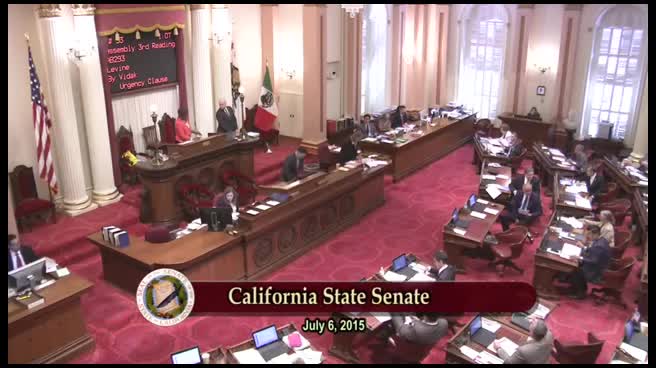
Bill Author

Bill Co-Author(s):