SB 894: Property insurance.
- Session Year: 2017-2018
- House: Senate
- Latest Version Date: 2018-09-21
Existing law requires an insurer, in the case of a total loss to the primary insured structure under a policy of residential property insurance, to offer to renew the policy at least once if the loss to the primary insured structure was caused by a disaster, as defined, and was not also due to the negligence of the insured, except as specified.
This bill would instead, under specified circumstances, require the insurer to offer to renew the policy for at least the next 2 annual renewal periods or 24 months, whichever is greater.
Existing law defines the measure of indemnity for a loss under a property insurance policy and specifies time limits under which an insured must collect the full replacement cost of the loss. Existing law prohibits a property insurance policy issued or delivered in the state from limiting or denying payment of the replacement cost of property in the event the insured decides to rebuild or replace the property at a location other than the insured premises. Existing law provides that coverage for additional living expenses incurred due to a covered loss relating to a state of emergency shall be for a period of 24 months.
This bill would require an insurer, for a policy that imposes a dollar limit on the amount of coverage provided for additional living expenses, to grant an extension of that coverage for up to 12 additional months, for a total of 36 months, if an insured acting in good faith and with reasonable diligence encounters a delay or delays in the reconstruction process that are the result of circumstances beyond the control of the insured, as specified.
This bill would require an insurer to allow an insured that has suffered a loss relating to a declared state of emergency to combine the policy limits for primary dwelling and other structures, and to use the combined amount, as specified.
The bill would make other technical, nonsubstantive changes.
This bill would incorporate additional changes to Section 675.1 of the Insurance Code proposed by SB 824 to be operative only if this bill and SB 824 are enacted and this bill is enacted last. The bill would also incorporate additional changes to Section 2051.5 of the Insurance Code proposed by AB 1772 and AB 1800 to be operative only if this bill, AB 1772, and AB 1800 are enacted and this bill is enacted last.
Existing law requires an insurer, in the case of a total loss to the primary insured structure under a policy of residential property insurance, to offer to renew the policy at least once if the loss to the primary insured structure was caused by a disaster, as defined, and was not also due to the negligence of the insured, except as specified.
This bill would instead, under specified circumstances, require the insurer to offer to renew the policy for at least the next 2 annual renewal periods or 24 months, whichever is greater.
Existing law defines the measure of indemnity for a loss under a property insurance policy and specifies time limits under which an insured must collect the full replacement cost of the loss. Existing law prohibits a property insurance policy issued or delivered in the state from limiting or denying payment of the replacement cost of property in the event the insured decides to rebuild or replace the property at a location other than the insured premises. Existing law provides that coverage for additional living expenses incurred due to a covered loss relating to a state of emergency shall be for a period of 24 months.
This bill would require an insurer, for a policy that imposes a dollar limit on the amount of coverage provided for additional living expenses, to grant an extension of that coverage for up to 12 additional months, for a total of 36 months, if an insured acting in good faith and with reasonable diligence encounters a delay or delays in the reconstruction process that are the result of circumstances beyond the control of the insured, as specified.
This bill would require an insurer to allow an insured that has suffered a loss relating to a declared state of emergency to combine the policy limits for primary dwelling and other structures, and to use the combined amount, as specified.
The bill would make other technical, nonsubstantive changes.
This bill would incorporate additional changes to Section 675.1 of the Insurance Code proposed by SB 824 to be operative only if this bill and SB 824 are enacted and this bill is enacted last. The bill would also incorporate additional changes to Section 2051.5 of the Insurance Code proposed by AB 1772 and AB 1800 to be operative only if this bill, AB 1772, and AB 1800 are enacted and this bill is enacted last.
Existing law requires an insurer, in the case of a total loss to the primary insured structure under a policy of residential property insurance, to offer to renew the policy at least once if the loss to the primary insured structure was caused by a disaster, as defined, and was not also due to the negligence of the insured, except as specified.
This bill would instead, under specified circumstances, require the insurer to offer to renew the policy for at least the next 2 annual renewal periods or 24 months, whichever is greater.
Existing law defines the measure of indemnity for a loss under a property insurance policy and specifies time limits under which an insured must collect the full replacement cost of the loss. Existing law prohibits a property insurance policy issued or delivered in the state from limiting or denying payment of the replacement cost of property in the event the insured decides to rebuild or replace the property at a location other than the insured premises. Existing law provides that coverage for additional living expenses incurred due to a covered loss relating to a state of emergency shall be for a period of 24 months.
This bill would require an insurer, for a policy that imposes a dollar limit on the amount of coverage provided for additional living expenses, to grant an extension of that coverage for up to 12 additional months, for a total of 36 months, if an insured acting in good faith and with reasonable diligence encounters a delay or delays in the reconstruction process that are the result of circumstances beyond the control of the insured, as specified.
This bill would require an insurer to allow an insured that has suffered a loss relating to a declared state of emergency to combine the policy limits for primary dwelling and other structures, and to use the combined amount, as specified.
This bill would require, for losses of a furnished residence related to a declared state of emergency, that the insurer provide an advance partial payment for contents, as specified, without requiring an itemized claim.The bill would make other technical, nonsubstantive changes.
This bill would incorporate additional changes to Section 675.1 of the Insurance Code proposed by SB 824 to be operative only if this bill and SB 824 are enacted and this bill is enacted last. The bill would also incorporate additional changes to Section 2051.5 of the Insurance Code proposed by AB 1772 and AB 1800 to be operative only if this bill, AB 1772, and AB 1800 are enacted and this bill is enacted last.
Existing law requires an insurer, in the case of a total loss to the primary insured structure under a policy of residential property insurance, to offer to renew the policy at least once if the loss to the primary insured structure was caused by a disaster, as defined, and was not also due to the negligence of the insured, except as specified.
This bill would instead, under specified circumstances, require the insurer to offer to renew the policy for at least the next 2 annual renewal periods or 24 months, whichever is greater.
Existing law defines the measure of indemnity for a loss under a property insurance policy and specifies time limits under which an insured must collect the full replacement cost of the loss. Existing law prohibits a property insurance policy issued or delivered in the state from limiting or denying payment of the replacement cost of property in the event the insured decides to rebuild or replace the property at a location other than the insured premises. Existing law provides that coverage for additional living expenses incurred due to a covered loss relating to a state of emergency shall be for a period of 24 months.
This bill would require an insurer, for a policy that imposes a dollar limit on the amount of coverage provided for additional living expenses, to grant an extension of that coverage for up to 12 additional months, for a total of 36 months, if an insured acting in good faith and with reasonable diligence encounters a delay or delays in the reconstruction process that are the result of circumstances beyond the control of the insured, as specified.
This bill would require an insurer to allow an insured that has suffered a loss relating to a declared state of emergency to combine the policy limits for primary dwelling and other structures, and contents and to use the combined amount, as specified.
This bill would require, for losses of a furnished residence related to a declared state of emergency, that the insurer provide an advance partial payment for contents, as specified, without requiring an itemized claim.
The bill would make certain provisions of the bill retroactive for policies in effect on or after January 1, 2019, with respect to any applicable claim filed on or after July 1, 2017. The bill would provide that the provisions of the bill are severable.The bill would make other technical, nonsubstantive changes.
Existing law requires an insurer, in the case of a total loss to the primary insured structure under a policy of residential property insurance, to offer to renew the policy at least once if the loss to the primary insured structure was caused by a disaster, as defined, and was not also due to the negligence of the insured, except as specified.
This bill would instead, under specified circumstances, require the insurer to offer to renew the policy for at least the next 2 annual renewal periods or 24 months, whichever is greater.
Existing law defines the measure of indemnity for a loss under a property insurance policy and specifies time limits under which an insured must collect the full replacement cost of the loss. Existing law prohibits a property insurance policy issued or delivered in the state from limiting or denying payment of the replacement cost of property in the event the insured decides to rebuild or replace the property at a location other than the insured premises. Existing law provides that coverage for additional living expenses incurred due to a covered loss relating to a state of emergency shall be for a period of 24 months.
This bill would require an insurer, for a policy that imposes a dollar limit on the amount of coverage provided for additional living expenses, to grant an extension of that coverage for up to 12 additional months, for a total of 36 months, if an insured acting in good faith and with reasonable diligence encounters a delay or delays in the reconstruction process that are the result of circumstances beyond the control of the insured, as specified.
This bill would require an insurer to allow an insured that has suffered a loss relating to a declared state of emergency to combine the policy limits for primary dwelling and other structures, and contents and to use the combined amount amount, as specified.
The bill would make certain provisions of the bill retroactive for policies in effect on or after January 1, 2019, with respect to any applicable claim filed on or after July 1, 2017. The bill would provide that the provisions of the bill are severable.
The bill would make other technical, nonsubstantive changes.
Existing law requires an insurer, in the case of a total loss to the primary insured structure under a policy of residential property insurance, to offer to renew the policy at least once if the loss to the primary insured structure was caused by a disaster, as defined, and was not also due to the negligence of the insured, except as specified.
This bill would instead, under specified circumstances, require the insurer to offer to renew the policy for at least the next 2 annual renewal periods or 24 months, whichever is greater.
Existing law defines the measure of indemnity for a loss under a property insurance policy and specifies time limits under which an insured must collect the full replacement cost of the loss. Existing law prohibits a property insurance policy issued or delivered in the state from limiting or denying payment of the replacement cost of property in the event the insured decides to rebuild or replace the property at a location other than the insured premises. Existing law provides that coverage for additional living expenses incurred due to a covered loss relating to a state of emergency shall be for a period of 24 months.
This bill would require an insurer, for a policy that imposes a dollar limit on the amount of coverage provided for additional living expenses, to grant an extension of that coverage for up to 12 additional months, for a total of 36 months, if an insured acting in good faith and with reasonable diligence encounters a delay or delays in the reconstruction process that are the result of circumstances beyond the control of the insured, as specified.
This bill would require an insurer to allow an insured that has suffered a loss relating to a declared state of emergency to combine the policy limits for primary dwelling, other structures, contents, and additional living expenses, dwelling and other structures, and contents and to use the combined amount for any of the covered purposes. as specified.
The bill would make certain provisions of the bill retroactive for policies in effect on or after January 1, 2019, with respect to any applicable claim filed on or after July 1, 2017. The bill would provide that the provisions of the bill are severable.
The bill would make other technical, nonsubstantive changes.
Existing law requires an insurer, in the case of a total loss to the primary insured structure under a policy of residential property insurance, to offer to renew the policy at least once if the loss to the primary insured structure was caused by a disaster, as defined, and was not also due to the negligence of the insured, except as specified.
This bill would instead require instead, under specified circumstances, require the insurer to offer to renew the policy for at least the next 2 annual renewal periods or 24 months, whichever is greater. The bill would require an insurer who decides not to offer to renew a policy after the expiration of that period to report the decision to not offer to renew the policy to the Insurance Commissioner. The bill would require an insurer who, within 5 years after the declaration of a disaster, decides that it will not offer, or offer to renew, any residential policies described above for coverage of loss to structures located in the declared disaster area, to report that decision to the commissioner.
Existing law defines the measure of indemnity for a loss under a property insurance policy and specifies time limits under which an insured must collect the full replacement cost of the loss. Existing law prohibits a property insurance policy issued or delivered in the state from limiting or denying payment of the replacement cost of property in the event the insured decides to rebuild or replace the property at a location other than the insured premises. Existing law provides that coverage for additional living expenses incurred due to a covered loss relating to a state of emergency shall be for a period of 24 months.
This bill would increase from 24 months to no less than 36 months, the minimum coverage for additional living expenses in the case of a loss relating to a declared state of emergency, and would allow extensions of 6 months for good cause.This bill would require an insurer, for a policy that imposes a dollar limit on the amount of coverage provided for additional living expenses, to grant an extension of that coverage for up to 12 additional months, for a total of 36 months, if an insured acting in good faith and with reasonable diligence encounters a delay or delays in the reconstruction process that are the result of circumstances beyond the control of the insured, as specified.
This bill would require an insurer to allow an insured that has suffered a loss relating to a declared state of emergency to combine the policy limits for primary dwelling, other structures, contents, and additional living expenses, and to use the combined amount for any of the covered purposes.
The bill would make certain provisions of the bill retroactive for policies in effect on or after January 1, 2019, with respect to any applicable claim filed on or after July 1, 2017. The bill would provide that the provisions of the bill are severable.
The bill would make other technical, nonsubstantive changes.
Existing law requires an insurer, in the case of a total loss to the primary insured structure under a policy of residential property insurance, to offer to renew the policy at least once if the loss to the primary insured structure was caused by a disaster, as defined, and was not also due to the negligence of the insured, except as specified.
This bill would instead require the insurer to offer to renew the policy for at least the next 2 annual renewal periods or 24 months, whichever is greater. The bill would require an insurer who decides not to offer to renew a policy after the expiration of that period to report the decision to not offer to renew the policy to the Insurance Commissioner. The bill would require an insurer who, within 5 years after the declaration of a disaster, decides that it will not offer, or offer to renew, any residential policies described above for coverage of loss to structures located in the declared disaster area, to report that decision to the commissioner.
Existing law defines the measure of indemnity for a loss under a property insurance policy and specifies time limits under which an insured must collect the full replacement cost of the loss. Existing law prohibits a property insurance policy issued or delivered in the state from limiting or denying payment of the replacement cost of property in the event the insured decides to rebuild or replace the property at a location other than the insured premises. Existing law provides that coverage for additional living expenses incurred due to a covered loss relating to a state of emergency shall be for a period of 24 months.
This bill would increase from 24 months to no less than 36 months, the minimum coverage for additional living expenses in the case of a loss relating to a declared state of emergency, and would allow extensions of 6 months for good cause.
This bill would require an insurer to allow an insured that has suffered a loss relating to a declared state of emergency to combine the policy limits for primary dwelling, other structures, contents, and additional living expenses, and to use the combined amount for any of the covered purposes.
The bill would make certain provisions of the bill retroactive to any applicable claim filed on or after July 1, 2017. The bill would provide that the provisions of the bill are severable.
The bill would make other technical, nonsubstantive changes.
Existing law requires an insurer, in the case of a total loss to the primary insured structure under a policy of residential property insurance, to offer to renew the policy at least once if the loss to the primary insured structure was caused by a disaster, as defined, and was not also due to the negligence of the insured, except as specified.
This bill would instead require the insurer to offer to renew the policy for at least the next 2 annual renewal periods or 24 months, whichever is greater. The bill would require an insurer who decides not to offer to renew a policy after the expiration of that period to report the decision to not offer to renew the policy to the Insurance Commissioner. The bill would require an insurer who, within 5 years after the declaration of a disaster, decides that it will not offer, or offer to renew, any residential policies described above for coverage of loss to structures located in the declared disaster area, to report that decision to the commissioner.
Existing law defines the measure of indemnity for a loss under a property insurance policy and specifies time limits under which an insured must collect the full replacement cost of the loss. Existing law prohibits a property insurance policy issued or delivered in the state from limiting or denying payment of the replacement cost of property in the event the insured decides to rebuild or replace the property at a location other than the insured premises. Existing law provides that coverage for additional living expenses incurred due to a covered loss relating to a state of emergency shall be for a period of 24 months.
This bill would increase from 24 months to 36 months the minimum time limit an insurer may place on an insured to collect the full replacement cost of a loss relating to a state of emergency.This bill would increase from 24 months to no less than 36 months, the minimum coverage for additional living expenses in the case of a loss relating to a declared state of emergency, and would allow extensions of 6 months for good cause.
This bill would require an insurer to allow an insured that has suffered a loss relating to a declared state of emergency to combine the policy limits for primary dwelling, other structures, contents, and additional living expenses, and to use the combined amount for any of the covered purposes.
The bill would make other technical, nonsubstantive changes.
Existing law requires an insurer, in the case of a total loss to the primary insured structure under a policy of residential property insurance, to offer to renew the policy at least once if the loss to the primary insured structure was caused by a disaster, as defined, and was not also due to the negligence of the insured, except as specified.
This bill would instead require the insurer to offer to renew the policy for at least the next 2 annual renewal periods or 24 months, whichever is greater. The bill would require an insurer who decides not to offer to renew a policy after the expiration of that period to report the decision to not offer to renew the policy to the Insurance Commissioner. The bill would require an insurer who, within 5 years after the declaration of a disaster, decides that it will not offer, or offer to renew, any residential policies described above for coverage of loss to structures located in the declared disaster area, to report that decision to the commissioner.
Existing law defines the measure of indemnity for a loss under a property insurance policy and specifies time limits under which an insured must collect the full replacement cost of the loss. Existing law prohibits a property insurance policy issued or delivered in the state from limiting or denying payment of the replacement cost of property in the event the insured decides to rebuild or replace the property at a location other than the insured premises.
This bill would increase from 24 months to 36 months the minimum time limit an insurer may place on an insured to collect the full replacement cost of a loss relating to a state of emergency.
This bill would require an insurer to allow an insured that has suffered a loss relating to a declared state of emergency to combine the policy limits for primary dwelling, other structures, contents, and additional living expenses, and to use the combined amount for any of the covered purposes.
The bill would make other technical, nonsubstantive changes.
In the case of a total loss to the primary insured structure under a residential policy subject to Section 675, the following provisions apply:
(a)If reconstruction of the primary insured structure has not been completed by the time of policy renewal, the insurer, prior to or at the time of renewal, and after consultation by the insurer or its representative with the insured as to what limits and coverages might or might not be needed, shall adjust the limits and coverages, write an additional policy, or attach an endorsement to the policy that reflects the change, if any, in the insureds exposure to loss. The insurer shall adjust the premium charged to reflect any change in coverage.
(b)The insurer shall not cancel coverage while the primary insured structure is being rebuilt, except for the reasons specified in subdivisions (a) to (e), inclusive, of Section 676. The insurer shall not use the fact that the primary insured structure is in damaged condition as a result of the total loss as the sole basis for a decision to cancel the policy pursuant to subdivision (e) of that section.
(c)Except for the reasons specified in subdivisions (a) to (e), inclusive, of Section 676, the insurer shall offer, for at least the next two annual renewal periods, but no less than 24 months of coverage from the date of the loss, to renew the policy in accordance with subdivision (a) if the total loss to the primary insured structure was caused by a disaster, as defined in subdivision (b) of Section 1689.14 of the Civil Code, the loss was not also due to the negligence of the insured, and losses have not occurred subsequent to the disaster-related total loss that relate to physical or risk changes to the insured property that result in the property becoming uninsurable.
(d)With respect to policies of residential earthquake insurance, the California Earthquake Authority, or any insurer, including a participating insurer, as defined in subdivision (i) of Section 10089.5, may defer its initial implementation of this section until no later than October 1, 2005.
(e)With respect to a residential earthquake insurance policy issued by the California Earthquake Authority, the following provisions apply:
(1)The participating insurer that issued the underlying policy of residential property insurance on the primary insured structure shall consult with the insured as to what limits and coverages might or might not be needed as required by subdivision (a).
(2)The California Earthquake Authority, in lieu of meeting the requirements of subdivision (a), shall establish procedures and practices that allow it to reasonably accommodate the needs and interests of consumers in maintaining appropriate earthquake insurance coverage, within the statutory and regulatory limitations on the types of insurance coverages and the coverage limits of the policies that the authority may issue.
SEC. 1.5.Section 675.1 of the Insurance Code is amended to read:675.1.(a)In the case of a total loss to the primary insured structure under a policy of residential property insurance subject to Section 675, the following provisions apply:
(1)If reconstruction of the primary insured structure has not been completed by the time of policy renewal, the insurer, prior to or at the time of renewal, and after consultation by the insurer or its representative with the insured as to what limits and coverages might or might not be needed, shall adjust the limits and coverages, write an additional policy, or attach an endorsement to the policy that reflects the change, if any, in the insureds exposure to loss. The insurer shall adjust the premium charged to reflect any change in coverage.
(2)The insurer shall not cancel coverage while the primary insured structure is being rebuilt, except for the reasons specified in subdivisions (a) to (e), inclusive, of Section 676. The insurer shall not use the fact that the primary insured structure is in damaged condition as a result of the total loss as the sole basis for a decision to cancel the policy pursuant to subdivision (e) of that section.
(3)Except for the reasons specified in subdivisions (a) to (e), inclusive, of Section 676, the insurer shall offer, for at least the next two annual renewal periods, but no less than 24 months of coverage from the date of the loss, to renew the policy in accordance with paragraph (1) if the total loss to the primary insured structure was caused by a disaster, as defined in subdivision (b) of Section 1689.14 of the Civil Code, the loss was not also due to the negligence of the insured, and losses have not occurred subsequent to the disaster-related total loss that relate to physical or risk changes to the insured property that result in the property becoming uninsurable.
(4)With respect to policies of residential earthquake insurance, the California Earthquake Authority, or any insurer, including a participating insurer, as defined in subdivision (i) of Section 10089.5, may defer its initial implementation of this section until no later than October 1, 2005.
(5)With respect to a residential earthquake insurance policy issued by the California Earthquake Authority, the following provisions apply:
(A)The participating insurer that issued the underlying policy of residential property insurance on the primary insured structure shall consult with the insured as to what limits and coverages might or might not be needed as required by paragraph (1).
(B)The California Earthquake Authority, in lieu of meeting the requirements of paragraph (1), shall establish procedures and practices that allow it to reasonably accommodate the needs and interests of consumers in maintaining appropriate earthquake insurance coverage, within the statutory and regulatory limitations on the types of insurance coverages and the coverage limits of the policies that the authority may issue.
(b)(1)An insurer shall not cancel or refuse to renew a policy of residential property insurance for a property located in any ZIP Code within or adjacent to the fire perimeter, for one year after the declaration of a state of emergency, as defined in Section 8558 of the Government Code, based solely on the fact that the insured structure is located in an area in which a wildfire has occurred. This prohibition applies to all policies of residential property insurance in effect at the time of the declared emergency.
(2)For the purposes of this section, the fire perimeter shall be determined by the Department of Forestry and Fire Protection in consultation with the Office of Emergency Services. The department shall provide the commissioner with data describing the fire perimeter sufficient for the commissioner to determine which ZIP Codes are within or adjacent to the fire perimeter. The commissioner shall then issue a bulletin to inform insurers which ZIP Codes are subject to this subdivision.
(c)Subdivision (b) does not apply in any of the following circumstances:
(1)If willful or grossly negligent acts or omissions by the named insured, or his or her representatives, are discovered that materially increase any of the risks insured against.
(2)If losses unrelated to the postdisaster loss condition of the property have occurred that would collectively render the risk ineligible for renewal.
(3)If there are physical or risk changes to the insured property beyond the catastrophe-damaged condition of the structures and surface landscape that result in the property becoming uninsurable.
(d)For the purposes of this section, policy of residential property insurance has the meaning described in subdivision (a) of Section 10087.
SEC. 2.Section 2051.5 of the Insurance Code is amended to read:2051.5.(a)Under an open policy that requires payment of the replacement cost for a loss, the measure of indemnity is the amount that it would cost the insured to repair, rebuild, or replace the thing lost or injured, without a deduction for physical depreciation, or the policy limit, whichever is less.
If the policy requires the insured to repair, rebuild, or replace the damaged property in order to collect the full replacement cost, the insurer shall pay the actual cash value of the damaged property, as defined in Section 2051, until the damaged property is repaired, rebuilt, or replaced. Once the property is repaired, rebuilt, or replaced, the insurer shall pay the difference between the actual cash value payment made and the full replacement cost reasonably paid to replace the damaged property, up to the limits stated in the policy.
(b)(1)Except as provided in paragraph (2), no time limit of less than 12 months from the date that the first payment toward the actual cash value is made shall be placed upon an insured in order to collect the full replacement cost of the loss, subject to the policy limit. Additional extensions of six months shall be provided to policyholders for good cause. In the event of a loss relating to a state of emergency, as defined in Section 8558 of the Government Code, no time limit of less than 24 months from the date that the first payment toward the actual cash value is made shall be placed upon the insured in order to collect the full replacement cost of the loss, subject to the policy limit. This section does not prohibit the insurer from allowing the insured additional time to collect the full replacement cost.
(2)In the event of a covered loss relating to a state of emergency, as defined in Section 8558 of the Government Code, coverage for additional living expenses shall be for a period of no less than 24 months from the inception of the loss, but shall be subject to other policy provisions. An insurer shall grant an extension of up to 12 additional months, for a total of 36 months, if an insured acting in good faith and with reasonable diligence encounters a delay or delays in the reconstruction process that are the result of circumstances beyond the control of the insured. Circumstances beyond the control of the insured include, but are not limited to, unavoidable construction permit delays, lack of necessary construction materials, and lack of available contractors to perform the necessary work. Additional extensions of six months shall be provided to policyholders for good cause.
(c)In the event of a total loss of the insured structure, no policy issued or delivered in this state may contain a provision that limits or denies payment of the replacement cost in the event the insured decides to rebuild or replace the property at a location other than the insured premises. However, the measure of indemnity shall be based upon the replacement cost of the insured property and shall not be based upon the cost to repair, rebuild, or replace at a location other than the insured premises.
(d)This section does not prohibit an insurer from restricting payment in cases of suspected fraud.
SEC. 2.3.Section 2051.5 of the Insurance Code is amended to read:2051.5.(a)(1)Under an open policy that requires payment of the replacement cost for a loss, the measure of indemnity is the amount that it would cost the insured to repair, rebuild, or replace the thing lost or injured, without a deduction for physical depreciation, or the policy limit, whichever is less.
(2)If the policy requires the insured to repair, rebuild, or replace the damaged property in order to collect the full replacement cost, the insurer shall pay the actual cash value of the damaged property, as defined in Section 2051, until the damaged property is repaired, rebuilt, or replaced. Once the property is repaired, rebuilt, or replaced, the insurer shall pay the difference between the actual cash value payment made and the full replacement cost reasonably paid to replace the damaged property, up to the limits stated in the policy.
(b)(1)(A)(i)A time limit of less than 12 months from the date that the first payment toward the actual cash value is made shall not be placed upon an insured in order to collect the full replacement cost of the loss, subject to the policy limit.
(ii)In the event of a loss relating to a state of emergency, as defined in Section 8558 of the Government Code, a time limit of less than 36 months from the date that the first payment toward the actual cash value is made shall not be placed upon the insured in order to collect the full replacement cost of the loss, subject to the policy limit.
(iii)This section does not prohibit an insurer from allowing the insured additional time to collect the full replacement cost.
(B)An insurer shall provide to a policyholder one or more additional extensions of six months for good cause pursuant to clause (i) or (ii) of subparagraph (A) if the insured, acting in good faith and with reasonable diligence, encounters a delay or delays in approval for, or reconstruction of, the home or residence that are beyond the control of the insured. Circumstances beyond the control of the insured include, but are not limited to, unavoidable construction permit delays, the lack of necessary construction materials, or the unavailability of contractors to perform the necessary work.
(2)In the event of a covered loss relating to a state of emergency, as defined in Section 8558 of the Government Code, coverage for additional living expenses shall be for a period of no less than 24 months from the inception of the loss, but shall be subject to other policy provisions. An insurer shall grant an extension of up to 12 additional months, for a total of 36 months, if an insured acting in good faith and with reasonable diligence encounters a delay or delays in the reconstruction process that are the result of circumstances beyond the control of the insured. Circumstances beyond the control of the insured include, but are not limited to, unavoidable construction permit delays, lack of necessary construction materials, and lack of available contractors to perform the necessary work. Additional extensions of six months shall be provided to policyholders for good cause.
(c)In the event of a total loss of the insured structure, a policy issued or delivered in this state shall not contain a provision that limits or denies payment of the replacement cost in the event the insured decides to rebuild or replace the property at a location other than the insured premises. However, the measure of indemnity shall be based upon the replacement cost of the insured property and shall not be based upon the cost to repair, rebuild, or replace at a location other than the insured premises.
(d)This section does not prohibit an insurer from restricting payment in cases of suspected fraud.
(e)(1)On and after July 1, 2005, and only until July 1, 2019, all policy forms used by an insurer shall be in compliance with this section, except for the changes made to this section by the act that added paragraph (2).
(2)On and after July 1, 2019, all policy forms issued by an insurer shall be in compliance with this section in its entirety, including the changes made to this section by the act that added this paragraph.
SEC. 2.5.Section 2051.5 of the Insurance Code is amended to read:2051.5.(a)(1)Under an open policy that requires payment of the replacement cost for a loss, the measure of indemnity is the amount that it would cost the insured to repair, rebuild, or replace the thing lost or injured, without a deduction for physical depreciation, or the policy limit, whichever is less.
(2)If the policy requires the insured to repair, rebuild, or replace the damaged property in order to collect the full replacement cost, the insurer shall pay the actual cash value of the damaged property, as defined in Section 2051, until the damaged property is repaired, rebuilt, or replaced. Once the property is repaired, rebuilt, or replaced, the insurer shall pay the difference between the actual cash value payment made and the full replacement cost reasonably paid to replace the damaged property, up to the limits stated in the policy.
(b)(1)Except as provided in paragraph (2), a time limit of less than 12 months from the date that the first payment toward the actual cash value is made shall not be placed upon an insured in order to collect the full replacement cost of the loss, subject to the policy limit. Additional extensions of six months shall be provided to policyholders for good cause. In the event of a loss relating to a state of emergency, as defined in Section 8558 of the Government Code, no time limit of less than 24 months from the date that the first payment toward the actual cash value is made shall be placed upon the insured in order to collect the full replacement cost of the loss, subject to the policy limit. This section does not prohibit the insurer from allowing the insured additional time to collect the full replacement cost.
(2)In the event of a covered loss relating to a state of emergency, as defined in Section 8558 of the Government Code, coverage for additional living expenses is for a period of no less than 24 months from the inception of the loss, but is subject to other policy provisions. An insurer shall grant an extension of up to 12 additional months, for a total of 36 months, if an insured acting in good faith and with reasonable diligence encounters a delay or delays in the reconstruction process that are the result of circumstances beyond the control of the insured. Circumstances beyond the control of the insured include, but are not limited to, unavoidable construction permit delays, lack of necessary construction materials, and lack of available contractors to perform the necessary work. Additional extensions of six months shall be provided to policyholders for good cause.
(c)In the event of a total loss of the insured structure, a policy issued or delivered in this state shall not contain a provision that limits or denies, on the basis that the insured has decided to rebuild at a new location or to purchase an already built home at a new location, payment of the building code upgrade cost or the replacement cost, including any extended replacement cost coverage, to the extent those costs are otherwise covered by the terms of the policy or any policy endorsement. However, the measure of indemnity shall not exceed the replacement cost, including the building code upgrade cost and any extended replacement cost coverage, if applicable, to repair, rebuild, or replace the insured structure at its original location.
(d)This section does not prohibit an insurer from restricting payment in cases of suspected fraud.
(e)On and after July 1, 2019, all policy forms issued or renewed by an insurer shall comply with this section.
SEC. 2.7.Section 2051.5 of the Insurance Code is amended to read:2051.5.(a)(1)Under an open policy that requires payment of the replacement cost for a loss, the measure of indemnity is the amount that it would cost the insured to repair, rebuild, or replace the thing lost or injured, without a deduction for physical depreciation, or the policy limit, whichever is less.
(2)If the policy requires the insured to repair, rebuild, or replace the damaged property in order to collect the full replacement cost, the insurer shall pay the actual cash value of the damaged property, as defined in Section 2051, until the damaged property is repaired, rebuilt, or replaced. Once the property is repaired, rebuilt, or replaced, the insurer shall pay the difference between the actual cash value payment made and the full replacement cost reasonably paid to replace the damaged property, up to the limits stated in the policy.
(b)(1)(A)(i)A time limit of less than 12 months from the date that the first payment toward the actual cash value is made shall not be placed upon an insured in order to collect the full replacement cost of the loss, subject to the policy limit.
(ii)In the event of a loss relating to a state of emergency, as defined in Section 8558 of the Government Code, a time limit of less than 36 months from the date that the first payment toward the actual cash value is made shall not be placed upon the insured in order to collect the full replacement cost of the loss, subject to the policy limit.
(iii)This section does not prohibit an insurer from allowing the insured additional time to collect the full replacement cost.
(B)An insurer shall provide to a policyholder one or more additional extensions of six months for good cause pursuant to clause (i) or (ii) of subparagraph (A) if the insured, acting in good faith and with reasonable diligence, encounters a delay or delays in approval for, or reconstruction of, the home or residence that are beyond the control of the insured. Circumstances beyond the control of the insured include, but are not limited to, unavoidable construction permit delays, the lack of necessary construction materials, or the unavailability of contractors to perform the necessary work.
(2)In the event of a covered loss relating to a state of emergency, as defined in Section 8558 of the Government Code, coverage for additional living expenses shall be for a period of no less than 24 months from the inception of the loss, but shall be subject to other policy provisions. An insurer shall grant an extension of up to 12 additional months, for a total of 36 months, if an insured acting in good faith and with reasonable diligence encounters a delay or delays in the reconstruction process that are the result of circumstances beyond the control of the insured. Circumstances beyond the control of the insured include, but are not limited to, unavoidable construction permit delays, lack of necessary construction materials, and lack of available contractors to perform the necessary work. Additional extensions of six months shall be provided to policyholders for good cause.
(c)In the event of a total loss of the insured structure, a policy issued or delivered in this state shall not contain a provision that limits or denies, on the basis that the insured has decided to rebuild at a new location or to purchase an already built home at a new location, payment of the building code upgrade cost or the replacement cost, including any extended replacement cost coverage, to the extent those costs are otherwise covered by the terms of the policy or any policy endorsement. However, the measure of indemnity shall not exceed the replacement cost, including the building code upgrade cost and any extended replacement cost coverage, if applicable, to repair, rebuild, or replace the insured structure at its original location.
(d)This section does not prohibit an insurer from restricting payment in cases of suspected fraud.
(e)(1)On and after July 1, 2005, and only until July 1, 2019, all policy forms used by an insurer shall be in compliance with this section, except for the changes made to this section by the act that added paragraph (2).
(2)On and after July 1, 2019, all policy forms issued by an insurer shall be in compliance with this section in its entirety, including the changes made to this section by the act that added this paragraph.
SEC. 3.Section 10103.7 is added to the Insurance Code, to read:10103.7.In the event of a covered loss relating to a state of emergency, as defined in Section 8558 of the Government Code, an insured under a residential property insurance policy shall be permitted to combine payments for claims for losses up to the policy limits for the primary dwelling and other structures, for any of the covered expenses reasonably necessary to rebuild or replace the damaged or destroyed dwelling, if the policy limits for coverage to rebuild or replace the primary dwelling are insufficient. Any claims payments for losses pursuant to this subdivision for which replacement cost coverage is applicable shall be for the full replacement value of the loss without requiring actual replacement of the other structures or contents. Claims payments for other structures in excess of the amount applied towards the necessary cost to rebuild or replace the damaged or destroyed dwelling shall be paid according to the terms of the policy.
SEC. 4.The provisions of this bill are severable. If any provision of this bill or its application is held invalid, that invalidity shall not affect other provisions or applications that can be given effect without the invalid provision or application.
SEC. 5.(a)Section 1.5 of this bill incorporates amendments to Section 675.1 of the Insurance Code proposed by both this bill and Senate Bill 824. That section of this bill shall only become operative if (1) both bills are enacted and become effective on or before January 1, 2019, (2) each bill amends Section 675.1 of the Insurance Code, and (3) this bill is enacted after Senate Bill 824, in which case Section 1 of this bill shall not become operative.
(b)Section 2.3 of this bill incorporates amendments to Section 2051.5 of the Insurance Code proposed by this bill and Assembly Bill 1772. That section of this bill shall only become operative if (1) both bills are enacted and become effective on or before January 1, 2019, (2) each bill amends Section 2051.5 of the Insurance Code, (3) Assembly Bill 1800 is not enacted or as enacted does not amend that section, and (4) this bill is enacted after Assembly Bill 1772, in which case Section 2051.5 of the Insurance Code, as amended by Assembly Bill 1772, shall remain operative only until the operative date of this bill, at which time Section 2.3 of this bill shall become operative, and Sections 2, 2.5, and 2.7 of this bill shall not become operative.
(c)Section 2.5 of this bill incorporates amendments to Section 2051.5 of the Insurance Code proposed by this bill and Assembly Bill 1800. That section of this bill shall only become operative if (1) both bills are enacted and become effective on or before January 1, 2019, (2) each bill amends Section 2051.5 of the Insurance Code, (3) Assembly Bill 1772 is not enacted or as enacted does not amend that section, and (4) this bill is enacted after Assembly Bill 1800, in which case Section 2051.5 of the Insurance Code, as amended by Assembly Bill 1800, shall remain operative only until the operative date of this bill, at which time Section 2.5 of this bill shall become operative, and Sections 2, 2.3, and 2.7 of this bill shall not become operative.
(d)Section 2.7 of this bill incorporates amendments to Section 2051.5 of the Insurance Code proposed by this bill, Assembly Bill 1772, and Assembly Bill 1800. That section of this bill shall only become operative if (1) all three bills are enacted and become effective on or before January 1, 2019, (2) all three bills amend Section 2051.5 of the Insurance Code, and (3) this bill is enacted after Assembly Bill 1772 and Assembly Bill 1800, in which case Section 2051.5 of the Insurance Code, as amended by Assembly Bill 1772 or Assembly Bill 1800, shall remain operative only until the operative date of this bill, at which time Section 2.7 of this bill shall become operative, and Sections 2, 2.3, and 2.5 of this bill shall not become operative.
In the case of a total loss to the primary insured structure under a residential policy subject to Section 675, the following provisions apply:
(a)If reconstruction of the primary insured structure has not been completed by the time of policy renewal, the insurer, prior to or at the time of renewal, and after consultation by the insurer or its representative with the insured as to what limits and coverages might or might not be needed, shall adjust the limits and coverages, write an additional policy, or attach an endorsement to the policy that reflects the change, if any, in the insureds exposure to loss. The insurer shall adjust the premium charged to reflect any change in coverage.
(b)The insurer shall not cancel coverage while the primary insured structure is being rebuilt, except for the reasons specified in subdivisions (a) to (e), inclusive, of Section 676. The insurer shall not use the fact that the primary insured structure is in damaged condition as a result of the total loss as the sole basis for a decision to cancel the policy pursuant to subdivision (e) of that section.
(c)Except for the reasons specified in subdivisions (a) to (e), inclusive, of Section 676, the insurer shall offer, for at least the next two annual renewal periods, but no less than 24 months of coverage from the date of the loss, to renew the policy in accordance with subdivision (a) if the total loss to the primary insured structure was caused by a disaster, as defined in subdivision (b) of Section 1689.14 of the Civil Code, the loss was not also due to the negligence of the insured, and losses have not occurred subsequent to the disaster-related total loss that relate to physical or risk changes to the insured property that result in the property becoming uninsurable.
(d)With respect to policies of residential earthquake insurance, the California Earthquake Authority, or any insurer, including a participating insurer, as defined in subdivision (i) of Section 10089.5, may defer its initial implementation of this section until no later than October 1, 2005.
(e)With respect to a residential earthquake insurance policy issued by the California Earthquake Authority, the following provisions apply:
(1)The participating insurer that issued the underlying policy of residential property insurance on the primary insured structure shall consult with the insured as to what limits and coverages might or might not be needed as required by subdivision (a).
(2)The California Earthquake Authority, in lieu of meeting the requirements of subdivision (a), shall establish procedures and practices that allow it to reasonably accommodate the needs and interests of consumers in maintaining appropriate earthquake insurance coverage, within the statutory and regulatory limitations on the types of insurance coverages and the coverage limits of the policies that the authority may issue.
SEC. 1.5.Section 675.1 of the Insurance Code is amended to read:675.1.(a)In the case of a total loss to the primary insured structure under a policy of residential property insurance subject to Section 675, the following provisions apply:
(1)If reconstruction of the primary insured structure has not been completed by the time of policy renewal, the insurer, prior to or at the time of renewal, and after consultation by the insurer or its representative with the insured as to what limits and coverages might or might not be needed, shall adjust the limits and coverages, write an additional policy, or attach an endorsement to the policy that reflects the change, if any, in the insureds exposure to loss. The insurer shall adjust the premium charged to reflect any change in coverage.
(2)The insurer shall not cancel coverage while the primary insured structure is being rebuilt, except for the reasons specified in subdivisions (a) to (e), inclusive, of Section 676. The insurer shall not use the fact that the primary insured structure is in damaged condition as a result of the total loss as the sole basis for a decision to cancel the policy pursuant to subdivision (e) of that section.
(3)Except for the reasons specified in subdivisions (a) to (e), inclusive, of Section 676, the insurer shall offer, for at least the next two annual renewal periods, but no less than 24 months of coverage from the date of the loss, to renew the policy in accordance with paragraph (1) if the total loss to the primary insured structure was caused by a disaster, as defined in subdivision (b) of Section 1689.14 of the Civil Code, the loss was not also due to the negligence of the insured, and losses have not occurred subsequent to the disaster-related total loss that relate to physical or risk changes to the insured property that result in the property becoming uninsurable.
(4)With respect to policies of residential earthquake insurance, the California Earthquake Authority, or any insurer, including a participating insurer, as defined in subdivision (i) of Section 10089.5, may defer its initial implementation of this section until no later than October 1, 2005.
(5)With respect to a residential earthquake insurance policy issued by the California Earthquake Authority, the following provisions apply:
(A)The participating insurer that issued the underlying policy of residential property insurance on the primary insured structure shall consult with the insured as to what limits and coverages might or might not be needed as required by paragraph (1).
(B)The California Earthquake Authority, in lieu of meeting the requirements of paragraph (1), shall establish procedures and practices that allow it to reasonably accommodate the needs and interests of consumers in maintaining appropriate earthquake insurance coverage, within the statutory and regulatory limitations on the types of insurance coverages and the coverage limits of the policies that the authority may issue.
(b)(1)An insurer shall not cancel or refuse to renew a policy of residential property insurance for a property located in any ZIP Code within or adjacent to the fire perimeter, for one year after the declaration of a state of emergency, as defined in Section 8558 of the Government Code, based solely on the fact that the insured structure is located in an area in which a wildfire has occurred. This prohibition applies to all policies of residential property insurance in effect at the time of the declared emergency.
(2)For the purposes of this section, the fire perimeter shall be determined by the Department of Forestry and Fire Protection in consultation with the Office of Emergency Services. The department shall provide the commissioner with data describing the fire perimeter sufficient for the commissioner to determine which ZIP Codes are within or adjacent to the fire perimeter. The commissioner shall then issue a bulletin to inform insurers which ZIP Codes are subject to this subdivision.
(c)Subdivision (b) does not apply in any of the following circumstances:
(1)If willful or grossly negligent acts or omissions by the named insured, or his or her representatives, are discovered that materially increase any of the risks insured against.
(2)If losses unrelated to the postdisaster loss condition of the property have occurred that would collectively render the risk ineligible for renewal.
(3)If there are physical or risk changes to the insured property beyond the catastrophe-damaged condition of the structures and surface landscape that result in the property becoming uninsurable.
(d)For the purposes of this section, policy of residential property insurance has the meaning described in subdivision (a) of Section 10087.
SEC. 2.Section 2051.5 of the Insurance Code is amended to read:2051.5.(a)Under an open policy that requires payment of the replacement cost for a loss, the measure of indemnity is the amount that it would cost the insured to repair, rebuild, or replace the thing lost or injured, without a deduction for physical depreciation, or the policy limit, whichever is less.
If the policy requires the insured to repair, rebuild, or replace the damaged property in order to collect the full replacement cost, the insurer shall pay the actual cash value of the damaged property, as defined in Section 2051, until the damaged property is repaired, rebuilt, or replaced. Once the property is repaired, rebuilt, or replaced, the insurer shall pay the difference between the actual cash value payment made and the full replacement cost reasonably paid to replace the damaged property, up to the limits stated in the policy.
(b)(1)Except as provided in paragraph (2), no time limit of less than 12 months from the date that the first payment toward the actual cash value is made shall be placed upon an insured in order to collect the full replacement cost of the loss, subject to the policy limit. Additional extensions of six months shall be provided to policyholders for good cause. In the event of a loss relating to a state of emergency, as defined in Section 8558 of the Government Code, no time limit of less than 24 months from the date that the first payment toward the actual cash value is made shall be placed upon the insured in order to collect the full replacement cost of the loss, subject to the policy limit. This section does not prohibit the insurer from allowing the insured additional time to collect the full replacement cost.
(2)In the event of a covered loss relating to a state of emergency, as defined in Section 8558 of the Government Code, coverage for additional living expenses shall be for a period of no less than 24 months from the inception of the loss, but shall be subject to other policy provisions. An insurer shall grant an extension of up to 12 additional months, for a total of 36 months, if an insured acting in good faith and with reasonable diligence encounters a delay or delays in the reconstruction process that are the result of circumstances beyond the control of the insured. Circumstances beyond the control of the insured include, but are not limited to, unavoidable construction permit delays, lack of necessary construction materials, and lack of available contractors to perform the necessary work. Additional extensions of six months shall be provided to policyholders for good cause.
(c)In the event of a total loss of the insured structure, no policy issued or delivered in this state may contain a provision that limits or denies payment of the replacement cost in the event the insured decides to rebuild or replace the property at a location other than the insured premises. However, the measure of indemnity shall be based upon the replacement cost of the insured property and shall not be based upon the cost to repair, rebuild, or replace at a location other than the insured premises.
(d)This section does not prohibit an insurer from restricting payment in cases of suspected fraud.
SEC. 2.3.Section 2051.5 of the Insurance Code is amended to read:2051.5.(a)(1)Under an open policy that requires payment of the replacement cost for a loss, the measure of indemnity is the amount that it would cost the insured to repair, rebuild, or replace the thing lost or injured, without a deduction for physical depreciation, or the policy limit, whichever is less.
(2)If the policy requires the insured to repair, rebuild, or replace the damaged property in order to collect the full replacement cost, the insurer shall pay the actual cash value of the damaged property, as defined in Section 2051, until the damaged property is repaired, rebuilt, or replaced. Once the property is repaired, rebuilt, or replaced, the insurer shall pay the difference between the actual cash value payment made and the full replacement cost reasonably paid to replace the damaged property, up to the limits stated in the policy.
(b)(1)(A)(i)A time limit of less than 12 months from the date that the first payment toward the actual cash value is made shall not be placed upon an insured in order to collect the full replacement cost of the loss, subject to the policy limit.
(ii)In the event of a loss relating to a state of emergency, as defined in Section 8558 of the Government Code, a time limit of less than 36 months from the date that the first payment toward the actual cash value is made shall not be placed upon the insured in order to collect the full replacement cost of the loss, subject to the policy limit.
(iii)This section does not prohibit an insurer from allowing the insured additional time to collect the full replacement cost.
(B)An insurer shall provide to a policyholder one or more additional extensions of six months for good cause pursuant to clause (i) or (ii) of subparagraph (A) if the insured, acting in good faith and with reasonable diligence, encounters a delay or delays in approval for, or reconstruction of, the home or residence that are beyond the control of the insured. Circumstances beyond the control of the insured include, but are not limited to, unavoidable construction permit delays, the lack of necessary construction materials, or the unavailability of contractors to perform the necessary work.
(2)In the event of a covered loss relating to a state of emergency, as defined in Section 8558 of the Government Code, coverage for additional living expenses shall be for a period of no less than 24 months from the inception of the loss, but shall be subject to other policy provisions. An insurer shall grant an extension of up to 12 additional months, for a total of 36 months, if an insured acting in good faith and with reasonable diligence encounters a delay or delays in the reconstruction process that are the result of circumstances beyond the control of the insured. Circumstances beyond the control of the insured include, but are not limited to, unavoidable construction permit delays, lack of necessary construction materials, and lack of available contractors to perform the necessary work. Additional extensions of six months shall be provided to policyholders for good cause.
(c)In the event of a total loss of the insured structure, a policy issued or delivered in this state shall not contain a provision that limits or denies payment of the replacement cost in the event the insured decides to rebuild or replace the property at a location other than the insured premises. However, the measure of indemnity shall be based upon the replacement cost of the insured property and shall not be based upon the cost to repair, rebuild, or replace at a location other than the insured premises.
(d)This section does not prohibit an insurer from restricting payment in cases of suspected fraud.
(e)(1)On and after July 1, 2005, and only until July 1, 2019, all policy forms used by an insurer shall be in compliance with this section, except for the changes made to this section by the act that added paragraph (2).
(2)On and after July 1, 2019, all policy forms issued by an insurer shall be in compliance with this section in its entirety, including the changes made to this section by the act that added this paragraph.
SEC. 2.5.Section 2051.5 of the Insurance Code is amended to read:2051.5.(a)(1)Under an open policy that requires payment of the replacement cost for a loss, the measure of indemnity is the amount that it would cost the insured to repair, rebuild, or replace the thing lost or injured, without a deduction for physical depreciation, or the policy limit, whichever is less.
(2)If the policy requires the insured to repair, rebuild, or replace the damaged property in order to collect the full replacement cost, the insurer shall pay the actual cash value of the damaged property, as defined in Section 2051, until the damaged property is repaired, rebuilt, or replaced. Once the property is repaired, rebuilt, or replaced, the insurer shall pay the difference between the actual cash value payment made and the full replacement cost reasonably paid to replace the damaged property, up to the limits stated in the policy.
(b)(1)Except as provided in paragraph (2), a time limit of less than 12 months from the date that the first payment toward the actual cash value is made shall not be placed upon an insured in order to collect the full replacement cost of the loss, subject to the policy limit. Additional extensions of six months shall be provided to policyholders for good cause. In the event of a loss relating to a state of emergency, as defined in Section 8558 of the Government Code, no time limit of less than 24 months from the date that the first payment toward the actual cash value is made shall be placed upon the insured in order to collect the full replacement cost of the loss, subject to the policy limit. This section does not prohibit the insurer from allowing the insured additional time to collect the full replacement cost.
(2)In the event of a covered loss relating to a state of emergency, as defined in Section 8558 of the Government Code, coverage for additional living expenses is for a period of no less than 24 months from the inception of the loss, but is subject to other policy provisions. An insurer shall grant an extension of up to 12 additional months, for a total of 36 months, if an insured acting in good faith and with reasonable diligence encounters a delay or delays in the reconstruction process that are the result of circumstances beyond the control of the insured. Circumstances beyond the control of the insured include, but are not limited to, unavoidable construction permit delays, lack of necessary construction materials, and lack of available contractors to perform the necessary work. Additional extensions of six months shall be provided to policyholders for good cause.
(c)In the event of a total loss of the insured structure, a policy issued or delivered in this state shall not contain a provision that limits or denies, on the basis that the insured has decided to rebuild at a new location or to purchase an already built home at a new location, payment of the building code upgrade cost or the replacement cost, including any extended replacement cost coverage, to the extent those costs are otherwise covered by the terms of the policy or any policy endorsement. However, the measure of indemnity shall not exceed the replacement cost, including the building code upgrade cost and any extended replacement cost coverage, if applicable, to repair, rebuild, or replace the insured structure at its original location.
(d)This section does not prohibit an insurer from restricting payment in cases of suspected fraud.
(e)On and after July 1, 2019, all policy forms issued or renewed by an insurer shall comply with this section.
SEC. 2.7.Section 2051.5 of the Insurance Code is amended to read:2051.5.(a)(1)Under an open policy that requires payment of the replacement cost for a loss, the measure of indemnity is the amount that it would cost the insured to repair, rebuild, or replace the thing lost or injured, without a deduction for physical depreciation, or the policy limit, whichever is less.
(2)If the policy requires the insured to repair, rebuild, or replace the damaged property in order to collect the full replacement cost, the insurer shall pay the actual cash value of the damaged property, as defined in Section 2051, until the damaged property is repaired, rebuilt, or replaced. Once the property is repaired, rebuilt, or replaced, the insurer shall pay the difference between the actual cash value payment made and the full replacement cost reasonably paid to replace the damaged property, up to the limits stated in the policy.
(b)(1)(A)(i)A time limit of less than 12 months from the date that the first payment toward the actual cash value is made shall not be placed upon an insured in order to collect the full replacement cost of the loss, subject to the policy limit.
(ii)In the event of a loss relating to a state of emergency, as defined in Section 8558 of the Government Code, a time limit of less than 36 months from the date that the first payment toward the actual cash value is made shall not be placed upon the insured in order to collect the full replacement cost of the loss, subject to the policy limit.
(iii)This section does not prohibit an insurer from allowing the insured additional time to collect the full replacement cost.
(B)An insurer shall provide to a policyholder one or more additional extensions of six months for good cause pursuant to clause (i) or (ii) of subparagraph (A) if the insured, acting in good faith and with reasonable diligence, encounters a delay or delays in approval for, or reconstruction of, the home or residence that are beyond the control of the insured. Circumstances beyond the control of the insured include, but are not limited to, unavoidable construction permit delays, the lack of necessary construction materials, or the unavailability of contractors to perform the necessary work.
(2)In the event of a covered loss relating to a state of emergency, as defined in Section 8558 of the Government Code, coverage for additional living expenses shall be for a period of no less than 24 months from the inception of the loss, but shall be subject to other policy provisions. An insurer shall grant an extension of up to 12 additional months, for a total of 36 months, if an insured acting in good faith and with reasonable diligence encounters a delay or delays in the reconstruction process that are the result of circumstances beyond the control of the insured. Circumstances beyond the control of the insured include, but are not limited to, unavoidable construction permit delays, lack of necessary construction materials, and lack of available contractors to perform the necessary work. Additional extensions of six months shall be provided to policyholders for good cause.
(c)In the event of a total loss of the insured structure, a policy issued or delivered in this state shall not contain a provision that limits or denies, on the basis that the insured has decided to rebuild at a new location or to purchase an already built home at a new location, payment of the building code upgrade cost or the replacement cost, including any extended replacement cost coverage, to the extent those costs are otherwise covered by the terms of the policy or any policy endorsement. However, the measure of indemnity shall not exceed the replacement cost, including the building code upgrade cost and any extended replacement cost coverage, if applicable, to repair, rebuild, or replace the insured structure at its original location.
(d)This section does not prohibit an insurer from restricting payment in cases of suspected fraud.
(e)(1)On and after July 1, 2005, and only until July 1, 2019, all policy forms used by an insurer shall be in compliance with this section, except for the changes made to this section by the act that added paragraph (2).
(2)On and after July 1, 2019, all policy forms issued by an insurer shall be in compliance with this section in its entirety, including the changes made to this section by the act that added this paragraph.
SEC. 3.Section 10103.7 is added to the Insurance Code, to read:10103.7.In the event of a covered loss relating to a state of emergency, as defined in Section 8558 of the Government Code, an insured under a residential property insurance policy shall be permitted to combine payments for claims for losses up to the policy limits for the primary dwelling and other structures, for any of the covered expenses reasonably necessary to rebuild or replace the damaged or destroyed dwelling, if the policy limits for coverage to rebuild or replace the primary dwelling are insufficient. Any claims payments for losses pursuant to this subdivision for which replacement cost coverage is applicable shall be for the full replacement value of the loss without requiring actual replacement of the other structures or contents. Claims payments for other structures in excess of the amount applied towards the necessary cost to rebuild or replace the damaged or destroyed dwelling shall be paid according to the terms of the policy.
SEC. 4.The provisions of this bill are severable. If any provision of this bill or its application is held invalid, that invalidity shall not affect other provisions or applications that can be given effect without the invalid provision or application.
SEC. 5.(a)Section 1.5 of this bill incorporates amendments to Section 675.1 of the Insurance Code proposed by both this bill and Senate Bill 824. That section of this bill shall only become operative if (1) both bills are enacted and become effective on or before January 1, 2019, (2) each bill amends Section 675.1 of the Insurance Code, and (3) this bill is enacted after Senate Bill 824, in which case Section 1 of this bill shall not become operative.
(b)Section 2.3 of this bill incorporates amendments to Section 2051.5 of the Insurance Code proposed by this bill and Assembly Bill 1772. That section of this bill shall only become operative if (1) both bills are enacted and become effective on or before January 1, 2019, (2) each bill amends Section 2051.5 of the Insurance Code, (3) Assembly Bill 1800 is not enacted or as enacted does not amend that section, and (4) this bill is enacted after Assembly Bill 1772, in which case Section 2051.5 of the Insurance Code, as amended by Assembly Bill 1772, shall remain operative only until the operative date of this bill, at which time Section 2.3 of this bill shall become operative, and Sections 2, 2.5, and 2.7 of this bill shall not become operative.
(c)Section 2.5 of this bill incorporates amendments to Section 2051.5 of the Insurance Code proposed by this bill and Assembly Bill 1800. That section of this bill shall only become operative if (1) both bills are enacted and become effective on or before January 1, 2019, (2) each bill amends Section 2051.5 of the Insurance Code, (3) Assembly Bill 1772 is not enacted or as enacted does not amend that section, and (4) this bill is enacted after Assembly Bill 1800, in which case Section 2051.5 of the Insurance Code, as amended by Assembly Bill 1800, shall remain operative only until the operative date of this bill, at which time Section 2.5 of this bill shall become operative, and Sections 2, 2.3, and 2.7 of this bill shall not become operative.
(d)Section 2.7 of this bill incorporates amendments to Section 2051.5 of the Insurance Code proposed by this bill, Assembly Bill 1772, and Assembly Bill 1800. That section of this bill shall only become operative if (1) all three bills are enacted and become effective on or before January 1, 2019, (2) all three bills amend Section 2051.5 of the Insurance Code, and (3) this bill is enacted after Assembly Bill 1772 and Assembly Bill 1800, in which case Section 2051.5 of the Insurance Code, as amended by Assembly Bill 1772 or Assembly Bill 1800, shall remain operative only until the operative date of this bill, at which time Section 2.7 of this bill shall become operative, and Sections 2, 2.3, and 2.5 of this bill shall not become operative.
In the case of a total loss to the primary insured structure under a residential policy subject to Section 675, the following provisions apply:
(a)If reconstruction of the primary insured structure has not been completed by the time of policy renewal, the insurer, prior to or at the time of renewal, and after consultation by the insurer or its representative with the insured as to what limits and coverages might or might not be needed, shall adjust the limits and coverages, write an additional policy, or attach an endorsement to the policy that reflects the change, if any, in the insureds exposure to loss. The insurer shall adjust the premium charged to reflect any change in coverage.
(b)The insurer shall not cancel coverage while the primary insured structure is being rebuilt, except for the reasons specified in subdivisions (a) to (e), inclusive, of Section 676. The insurer shall not use the fact that the primary insured structure is in damaged condition as a result of the total loss as the sole basis for a decision to cancel the policy pursuant to subdivision (e) of that section.
(c)Except for the reasons specified in subdivisions (a) to (e), inclusive, of Section 676, the insurer shall offer, for at least the next two annual renewal periods, but no less than 24 months of coverage from the date of the loss, to renew the policy in accordance with subdivision (a) if the total loss to the primary insured structure was caused by a disaster, as defined in subdivision (b) of Section 1689.14 of the Civil Code, the loss was not also due to the negligence of the insured, and losses have not occurred subsequent to the disaster related disaster-related total loss that relate to physical or risk changes to the insured property that result in the property becoming uninsurable.
(d)With respect to policies of residential earthquake insurance, the California Earthquake Authority, or any insurer, including a participating insurer, as defined in subdivision (i) of Section 10089.5, may defer its initial implementation of this section until no later than October 1, 2005.
(e)With respect to a residential earthquake insurance policy issued by the California Earthquake Authority, the following provisions apply:
(1)The participating insurer that issued the underlying policy of residential property insurance on the primary insured structure shall consult with the insured as to what limits and coverages might or might not be needed as required by subdivision (a).
(2)The California Earthquake Authority, in lieu of meeting the requirements of subdivision (a), shall establish procedures and practices that allow it to reasonably accommodate the needs and interests of consumers in maintaining appropriate earthquake insurance coverage, within the statutory and regulatory limitations on the types of insurance coverages and the coverage limits of the policies that the authority may issue.
SEC. 1.5.Section 675.1 of the Insurance Code is amended to read:675.1.(a)In the case of a total loss to the primary insured structure under a residential policy of residential property insurance subject to Section 675, the following provisions apply:
(a)(1)If reconstruction of the primary insured structure has not been completed by the time of policy renewal, the insurer, prior to or at the time of renewal, and after consultation by the insurer or its representative with the insured as to what limits and coverages might or might not be needed, shall adjust the limits and coverages, write an additional policy, or attach an endorsement to the policy that reflects the change, if any, in the insureds exposure to loss. The insurer shall adjust the premium charged to reflect any change in coverage.
(b)(2)The insurer shall not cancel coverage while the primary insured structure is being rebuilt, except for the reasons specified in subdivisions (a) to (e), inclusive, of Section 676. The insurer shall not use the fact that the primary insured structure is in damaged condition as a result of the total loss as the sole basis for a decision to cancel the policy pursuant to subdivision (e) of that section.
(c)(3)Except for the reasons specified in subdivisions (a) to (e), inclusive, of Section 676, the insurer shall offer to, at least once, offer, for at least the next two annual renewal periods, but no less than 24 months of coverage from the date of the loss, to renew the policy in accordance with the provisions of subdivision (a) paragraph (1) if the total loss to the primary insured structure was caused by a disaster, as defined in subdivision (b) of Section 1689.14 of the Civil Code, and the loss was not also due to the negligence of the insured. insured, and losses have not occurred subsequent to the disaster-related total loss that relate to physical or risk changes to the insured property that result in the property becoming uninsurable.
(d)(4)With respect to policies of residential earthquake insurance, the California Earthquake Authority, or any insurer, including a participating insurer, as defined in subdivision (i) of Section 10089.5, may defer its initial implementation of this section until no later than October 1, 2005.
(e)(5)With respect to a residential earthquake insurance policy issued by the California Earthquake Authority, the following provisions apply:
(1)(A)The participating insurer that issued the underlying policy of residential property insurance on the primary insured structure shall consult with the insured as to what limits and coverages might or might not be needed as required by subdivision (a). paragraph (1).
(2)(B)The California Earthquake Authority, in lieu of meeting the requirements of subdivision (a), paragraph (1), shall establish procedures and practices that allow it to reasonably accommodate the needs and interests of consumers in maintaining appropriate earthquake insurance coverage, within the statutory and regulatory limitations on the types of insurance coverages and the coverage limits of the policies that the authority may issue.
(b)(1)An insurer shall not cancel or refuse to renew a policy of residential property insurance for a property located in any ZIP Code within or adjacent to the fire perimeter, for one year after the declaration of a state of emergency, as defined in Section 8558 of the Government Code, based solely on the fact that the insured structure is located in an area in which a wildfire has occurred. This prohibition applies to all policies of residential property insurance in effect at the time of the declared emergency.
(2)For the purposes of this section, the fire perimeter shall be determined by the Department of Forestry and Fire Protection in consultation with the Office of Emergency Services. The department shall provide the commissioner with data describing the fire perimeter sufficient for the commissioner to determine which ZIP Codes are within or adjacent to the fire perimeter. The commissioner shall then issue a bulletin to inform insurers which ZIP Codes are subject to this subdivision.
(c)Subdivision (b) does not apply in any of the following circumstances:
(1)If willful or grossly negligent acts or omissions by the named insured, or his or her representatives, are discovered that materially increase any of the risks insured against.
(2)If losses unrelated to the postdisaster loss condition of the property have occurred that would collectively render the risk ineligible for renewal.
(3)If there are physical or risk changes to the insured property beyond the catastrophe-damaged condition of the structures and surface landscape that result in the property becoming uninsurable.
(d)For the purposes of this section, policy of residential property insurance has the meaning described in subdivision (a) of Section 10087.
SEC. 2.Section 2051.5 of the Insurance Code is amended to read:2051.5.(a)Under an open policy that requires payment of the replacement cost for a loss, the measure of indemnity is the amount that it would cost the insured to repair, rebuild, or replace the thing lost or injured, without a deduction for physical depreciation, or the policy limit, whichever is less.
If the policy requires the insured to repair, rebuild, or replace the damaged property in order to collect the full replacement cost, the insurer shall pay the actual cash value of the damaged property, as defined in Section 2051, until the damaged property is repaired, rebuilt, or replaced. Once the property is repaired, rebuilt, or replaced, the insurer shall pay the difference between the actual cash value payment made and the full replacement cost reasonably paid to replace the damaged property, up to the limits stated in the policy.
(b)(1)Except as provided in paragraph (2), no time limit of less than 12 months from the date that the first payment toward the actual cash value is made shall be placed upon an insured in order to collect the full replacement cost of the loss, subject to the policy limit. Additional extensions of six months shall be provided to policyholders for good cause. In the event of a loss relating to a state of emergency, as defined in Section 8558 of the Government Code, no time limit of less than 24 months from the date that the first payment toward the actual cash value is made shall be placed upon the insured in order to collect the full replacement cost of the loss, subject to the policy limit. This section does not prohibit the insurer from allowing the insured additional time to collect the full replacement cost.
(2)In the event of a covered loss relating to a state of emergency, as defined in Section 8558 of the Government Code, coverage for additional living expenses shall be for a period of no less than 24 months from the inception of the loss, but shall be subject to other policy provisions. An insurer shall grant an extension of up to 12 additional months, for a total of 36 months, if an insured acting in good faith and with reasonable diligence encounters a delay or delays in the reconstruction process that are the result of circumstances beyond the control of the insured. Circumstances beyond the control of the insured include, but are not limited to, unavoidable construction permit delays, lack of necessary construction materials, and lack of available contractors to perform the necessary work. Additional extensions of six months shall be provided to policyholders for good cause.
(c)In the event of a total loss of the insured structure, no policy issued or delivered in this state may contain a provision that limits or denies payment of the replacement cost in the event the insured decides to rebuild or replace the property at a location other than the insured premises. However, the measure of indemnity shall be based upon the replacement cost of the insured property and shall not be based upon the cost to repair, rebuild, or replace at a location other than the insured premises.
(d)This section does not prohibit an insurer from restricting payment in cases of suspected fraud.
SEC. 2.3.Section 2051.5 of the Insurance Code is amended to read:2051.5.(a)(1)Under an open policy that requires payment of the replacement cost for a loss, the measure of indemnity is the amount that it would cost the insured to repair, rebuild, or replace the thing lost or injured, without a deduction for physical depreciation, or the policy limit, whichever is less.
If(2)If the policy requires the insured to repair, rebuild, or replace the damaged property in order to collect the full replacement cost, the insurer shall pay the actual cash value of the damaged property, as defined in Section 2051, until the damaged property is repaired, rebuilt, or replaced. Once the property is repaired, rebuilt, or replaced, the insurer shall pay the difference between the actual cash value payment made and the full replacement cost reasonably paid to replace the damaged property, up to the limits stated in the policy.
(b)(1)Except as provided in paragraph (2), no time limit of less than 12 months from the date that the first payment toward the actual cash value is made shall be placed upon an insured in order to collect the full replacement cost of the loss, subject to the policy limit. Additional extensions of six months shall be provided to policyholders for good cause. In(b)(1)(A)(i)A time limit of less than 12 months from the date that the first payment toward the actual cash value is made shall not be placed upon an insured in order to collect the full replacement cost of the loss, subject to the policy limit.
(ii)In the event of a loss relating to a state of emergency, as defined in Section 8558 of the Government Code, no a time limit of less than 24 36 months from the date that the first payment toward the actual cash value is made shall not be placed upon the insured in order to collect the full replacement cost of the loss, subject to the policy limit. Nothing in this section shall prohibit the insurer from allowing the insured additional time to collect the full replacement cost.
(iii)This section does not prohibit an insurer from allowing the insured additional time to collect the full replacement cost.
(B)An insurer shall provide to a policyholder one or more additional extensions of six months for good cause pursuant to clause (i) or (ii) of subparagraph (A) if the insured, acting in good faith and with reasonable diligence, encounters a delay or delays in approval for, or reconstruction of, the home or residence that are beyond the control of the insured. Circumstances beyond the control of the insured include, but are not limited to, unavoidable construction permit delays, the lack of necessary construction materials, or the unavailability of contractors to perform the necessary work.
(2)In the event of a covered loss relating to a state of emergency, as defined in Section 8558 of the Government Code, coverage for additional living expenses shall be for a period of 24 months, but shall be subject to other policy provisions, provided that any extension of time required by this paragraph beyond the period provided in the policy shall not act to increase the additional living expense policy limit in force at the time of the loss. This paragraph shall become operative on January 1, 2007. shall be for a period of no less than 24 months from the inception of the loss, but shall be subject to other policy provisions. An insurer shall grant an extension of up to 12 additional months, for a total of 36 months, if an insured acting in good faith and with reasonable diligence encounters a delay or delays in the reconstruction process that are the result of circumstances beyond the control of the insured. Circumstances beyond the control of the insured include, but are not limited to, unavoidable construction permit delays, lack of necessary construction materials, and lack of available contractors to perform the necessary work. Additional extensions of six months shall be provided to policyholders for good cause.
(c)In the event of a total loss of the insured structure, no a policy issued or delivered in this state may shall not contain a provision that limits or denies payment of the replacement cost in the event the insured decides to rebuild or replace the property at a location other than the insured premises. However, the measure of indemnity shall be based upon the replacement cost of the insured property and shall not be based upon the cost to repair, rebuild, or replace at a location other than the insured premises.
(d)Nothing in this section shall This section does not prohibit an insurer from restricting payment in cases of suspected fraud.
(e)The changes made to this section by the act that added this subdivision shall be implemented by an insurer on and after the effective date of that act, except that an insurer shall not be required to modify policy forms to be consistent with those changes until July 1, 2005. On and after July 1, 2005, all policy forms used by an insurer shall reflect those changes.(e)(1)On and after July 1, 2005, and only until July 1, 2019, all policy forms used by an insurer shall be in compliance with this section, except for the changes made to this section by the act that added paragraph (2).
(2)On and after July 1, 2019, all policy forms issued by an insurer shall be in compliance with this section in its entirety, including the changes made to this section by the act that added this paragraph.
SEC. 2.5.Section 2051.5 of the Insurance Code is amended to read:2051.5.(a)(1)Under an open policy that requires payment of the replacement cost for a loss, the measure of indemnity is the amount that it would cost the insured to repair, rebuild, or replace the thing lost or injured, without a deduction for physical depreciation, or the policy limit, whichever is less.
If(2)If the policy requires the insured to repair, rebuild, or replace the damaged property in order to collect the full replacement cost, the insurer shall pay the actual cash value of the damaged property, as defined in Section 2051, until the damaged property is repaired, rebuilt, or replaced. Once the property is repaired, rebuilt, or replaced, the insurer shall pay the difference between the actual cash value payment made and the full replacement cost reasonably paid to replace the damaged property, up to the limits stated in the policy.
(b)(1)Except as provided in paragraph (2), no a time limit of less than 12 months from the date that the first payment toward the actual cash value is made shall not be placed upon an insured in order to collect the full replacement cost of the loss, subject to the policy limit. Additional extensions of six months shall be provided to policyholders for good cause. In the event of a loss relating to a state of emergency, as defined in Section 8558 of the Government Code, no time limit of less than 24 months from the date that the first payment toward the actual cash value is made shall be placed upon the insured in order to collect the full replacement cost of the loss, subject to the policy limit. Nothing in this section shall This section does not prohibit the insurer from allowing the insured additional time to collect the full replacement cost.
(2)In the event of a covered loss relating to a state of emergency, as defined in Section 8558 of the Government Code, coverage for additional living expenses shall be is for a period of 24 months, no less than 24 months from the inception of the loss, but shall be is subject to other policy provisions, provided that any extension of time required by this paragraph beyond the period provided in the policy shall not act to increase the additional living expense policy limit in force at the time of the loss. This paragraph shall become operative on January 1, 2007. provisions. An insurer shall grant an extension of up to 12 additional months, for a total of 36 months, if an insured acting in good faith and with reasonable diligence encounters a delay or delays in the reconstruction process that are the result of circumstances beyond the control of the insured. Circumstances beyond the control of the insured include, but are not limited to, unavoidable construction permit delays, lack of necessary construction materials, and lack of available contractors to perform the necessary work. Additional extensions of six months shall be provided to policyholders for good cause.
(c)In the event of a total loss of the insured structure, no a policy issued or delivered in this state may shall not contain a provision that limits or denies denies, on the basis that the insured has decided to rebuild at a new location or to purchase an already built home at a new location, payment of the replacement cost in the event the insured decides to rebuild or replace the property at a location other than the insured premises. building code upgrade cost or the replacement cost, including any extended replacement cost coverage, to the extent those costs are otherwise covered by the terms of the policy or any policy endorsement. However, the measure of indemnity shall be based upon not exceed the replacement cost of the insured property and shall not be based upon the cost cost, including the building code upgrade cost and any extended replacement cost coverage, if applicable, to repair, rebuild, or replace at a location other than the insured premises. the insured structure at its original location.
(d)Nothing in this section shall This section does not prohibit an insurer from restricting payment in cases of suspected fraud.
(e)The changes made to this section by the act that added this subdivision shall be implemented by an insurer on and after the effective date of that act, except that an insurer shall not be required to modify policy forms to be consistent with those changes until July 1, 2005. On and after July 1, 2005, all policy forms used by an insurer shall reflect those changes.(e)On and after July 1, 2019, all policy forms issued or renewed by an insurer shall comply with this section.
SEC. 2.7.Section 2051.5 of the Insurance Code is amended to read:2051.5.(a)(1)Under an open policy that requires payment of the replacement cost for a loss, the measure of indemnity is the amount that it would cost the insured to repair, rebuild, or replace the thing lost or injured, without a deduction for physical depreciation, or the policy limit, whichever is less.
If(2)If the policy requires the insured to repair, rebuild, or replace the damaged property in order to collect the full replacement cost, the insurer shall pay the actual cash value of the damaged property, as defined in Section 2051, until the damaged property is repaired, rebuilt, or replaced. Once the property is repaired, rebuilt, or replaced, the insurer shall pay the difference between the actual cash value payment made and the full replacement cost reasonably paid to replace the damaged property, up to the limits stated in the policy.
(b)(1)Except as provided in paragraph (2), no time limit of less than 12 months from the date that the first payment toward the actual cash value is made shall be placed upon an insured in order to collect the full replacement cost of the loss, subject to the policy limit. Additional extensions of six months shall be provided to policyholders for good cause. In(b)(1)(A)(i)A time limit of less than 12 months from the date that the first payment toward the actual cash value is made shall not be placed upon an insured in order to collect the full replacement cost of the loss, subject to the policy limit.
(ii)In the event of a loss relating to a state of emergency, as defined in Section 8558 of the Government Code, no a time limit of less than 24 36 months from the date that the first payment toward the actual cash value is made shall not be placed upon the insured in order to collect the full replacement cost of the loss, subject to the policy limit. Nothing in this section shall prohibit the insurer from allowing the insured additional time to collect the full replacement cost.
(iii)This section does not prohibit an insurer from allowing the insured additional time to collect the full replacement cost.
(B)An insurer shall provide to a policyholder one or more additional extensions of six months for good cause pursuant to clause (i) or (ii) of subparagraph (A) if the insured, acting in good faith and with reasonable diligence, encounters a delay or delays in approval for, or reconstruction of, the home or residence that are beyond the control of the insured. Circumstances beyond the control of the insured include, but are not limited to, unavoidable construction permit delays, the lack of necessary construction materials, or the unavailability of contractors to perform the necessary work.
(2)In the event of a covered loss relating to a state of emergency, as defined in Section 8558 of the Government Code, coverage for additional living expenses shall be for a period of 24 months, but shall be subject to other policy provisions, provided that any extension of time required by this paragraph beyond the period provided in the policy shall not act to increase the additional living expense policy limit in force at the time of the loss. This paragraph shall become operative on January 1, 2007. shall be for a period of no less than 24 months from the inception of the loss, but shall be subject to other policy provisions. An insurer shall grant an extension of up to 12 additional months, for a total of 36 months, if an insured acting in good faith and with reasonable diligence encounters a delay or delays in the reconstruction process that are the result of circumstances beyond the control of the insured. Circumstances beyond the control of the insured include, but are not limited to, unavoidable construction permit delays, lack of necessary construction materials, and lack of available contractors to perform the necessary work. Additional extensions of six months shall be provided to policyholders for good cause.
(c)In the event of a total loss of the insured structure, no a policy issued or delivered in this state may contain a provision that limits or denies payment of the replacement cost in the event the insured decides to rebuild or replace the property at a location other than the insured premises. However, the measure of indemnity shall be based upon the replacement cost of the insured property and shall not be based upon the cost to repair, rebuild, or replace at a location other than the insured premises. shall not contain a provision that limits or denies, on the basis that the insured has decided to rebuild at a new location or to purchase an already built home at a new location, payment of the building code upgrade cost or the replacement cost, including any extended replacement cost coverage, to the extent those costs are otherwise covered by the terms of the policy or any policy endorsement. However, the measure of indemnity shall not exceed the replacement cost, including the building code upgrade cost and any extended replacement cost coverage, if applicable, to repair, rebuild, or replace the insured structure at its original location.
(d)Nothing in this section shall This section does not prohibit an insurer from restricting payment in cases of suspected fraud.
(e)The changes made to this section by the act that added this subdivision shall be implemented by an insurer on and after the effective date of that act, except that an insurer shall not be required to modify policy forms to be consistent with those changes until July 1, 2005. On and after July 1, 2005, all policy forms used by an insurer shall reflect those changes.(e)(1)On and after July 1, 2005, and only until July 1, 2019, all policy forms used by an insurer shall be in compliance with this section, except for the changes made to this section by the act that added paragraph (2).
(2)On and after July 1, 2019, all policy forms issued by an insurer shall be in compliance with this section in its entirety, including the changes made to this section by the act that added this paragraph.
SEC. 3.Section 10103.7 is added to the Insurance Code, to read:10103.7.(a)In the event of a covered loss relating to a state of emergency, as defined in Section 8558 of the Government Code, an insured under a residential property insurance policy shall be permitted to combine payments for claims for losses up to the policy limits for the primary dwelling and other structures, for any of the covered expenses reasonably necessary to rebuild or replace the damaged or destroyed dwelling, if the policy limits for coverage to rebuild or replace the primary dwelling are insufficient. Any claims payments for losses pursuant to this subdivision for which replacement cost coverage is applicable shall be for the full replacement value of the loss without requiring actual replacement of the other structures or contents. Claims payments for other structures in excess of the amount applied towards the necessary cost to rebuild or replace the damaged or destroyed dwelling shall be paid according to the terms of the policy.
(b)(1)In the event of a covered total loss of a primary dwelling under a residential property insurance policy resulting from a state of emergency as defined in Section 8558 of the Government Code, if the residence was furnished at the time of the loss, the insurer shall offer a payment under the contents coverage in an amount no less than 30 percent of the policy limit applicable to the covered dwelling structure, up to a maximum of two hundred and fifty thousand dollars ($250,000), without requiring the insured to file an itemized claim.(2)After receiving the payment described in paragraph (1), the insured may recover additional amounts up to the policy limit for contents coverage by filing a claim pursuant to the terms of the policy for the loss of contents that exceeds the value of the payment provided pursuant to paragraph (1).(3)When an insured files a claim relating to a state of emergency as defined in Section 8558 of the Government Code, the insurer shall notify the insured of the option to receive payment for loss of contents pursuant to paragraph (1) and of the insureds option to subsequently file a full itemized claim pursuant to paragraph (2).(4)This subdivision does not affect payment under the policy for scheduled personal property.(5)This section does not prohibit an insurer from restricting payment in cases of suspected fraud.SEC. 4.The provisions of this bill are severable. If any provision of this bill or its application is held invalid, that invalidity shall not affect other provisions or applications that can be given effect without the invalid provision or application.
SEC. 5.(a)Section 1.5 of this bill incorporates amendments to Section 675.1 of the Insurance Code proposed by both this bill and Senate Bill 824. That section of this bill shall only become operative if (1) both bills are enacted and become effective on or before January 1, 2019, (2) each bill amends Section 675.1 of the Insurance Code, and (3) this bill is enacted after Senate Bill 824, in which case Section 1 of this bill shall not become operative.
(b)Section 2.3 of this bill incorporates amendments to Section 2051.5 of the Insurance Code proposed by this bill and Assembly Bill 1772. That section of this bill shall only become operative if (1) both bills are enacted and become effective on or before January 1, 2019, (2) each bill amends Section 2051.5 of the Insurance Code, (3) Assembly Bill 1800 is not enacted or as enacted does not amend that section, and (4) this bill is enacted after Assembly Bill 1772, in which case Section 2051.5 of the Insurance Code, as amended by Assembly Bill 1772, shall remain operative only until the operative date of this bill, at which time Section 2.3 of this bill shall become operative, and Sections 2, 2.5, and 2.7 of this bill shall not become operative.
(c)Section 2.5 of this bill incorporates amendments to Section 2051.5 of the Insurance Code proposed by this bill and Assembly Bill 1800. That section of this bill shall only become operative if (1) both bills are enacted and become effective on or before January 1, 2019, (2) each bill amends Section 2051.5 of the Insurance Code, (3) Assembly Bill 1772 is not enacted or as enacted does not amend that section, and (4) this bill is enacted after Assembly Bill 1800, in which case Section 2051.5 of the Insurance Code, as amended by Assembly Bill 1800, shall remain operative only until the operative date of this bill, at which time Section 2.5 of this bill shall become operative, and Sections 2, 2.3, and 2.7 of this bill shall not become operative.
(d)Section 2.7 of this bill incorporates amendments to Section 2051.5 of the Insurance Code proposed by this bill, Assembly Bill 1772, and Assembly Bill 1800. That section of this bill shall only become operative if (1) all three bills are enacted and become effective on or before January 1, 2019, (2) all three bills amend Section 2051.5 of the Insurance Code, and (3) this bill is enacted after Assembly Bill 1772 and Assembly Bill 1800, in which case Section 2051.5 of the Insurance Code, as amended by Assembly Bill 1772 or Assembly Bill 1800, shall remain operative only until the operative date of this bill, at which time Section 2.7 of this bill shall become operative, and Sections 2, 2.3, and 2.5 of this bill shall not become operative.
In the case of a total loss to the primary insured structure under a residential policy subject to Section 675, the following provisions apply:
(a)If reconstruction of the primary insured structure has not been completed by the time of policy renewal, the insurer, prior to or at the time of renewal, and after consultation by the insurer or its representative with the insured as to what limits and coverages might or might not be needed, shall adjust the limits and coverages, write an additional policy, or attach an endorsement to the policy that reflects the change, if any, in the insureds exposure to loss. The insurer shall adjust the premium charged to reflect any change in coverage.
(b)The insurer shall not cancel coverage while the primary insured structure is being rebuilt, except for the reasons specified in subdivisions (a) to (e), inclusive, of Section 676. The insurer shall not use the fact that the primary insured structure is in damaged condition as a result of the total loss as the sole basis for a decision to cancel the policy pursuant to subdivision (e) of that section.
(c)Except for the reasons specified in subdivisions (a) to (e), inclusive, of Section 676, the insurer shall offer, for at least the next two annual renewal periods, but no less than 24 months of coverage from the date of the loss, to renew the policy in accordance with subdivision (a) if the total loss to the primary insured structure was caused by a disaster, as defined in subdivision (b) of Section 1689.14 of the Civil Code, the loss was not also due to the negligence of the insured, and losses have not occurred subsequent to the disaster related total loss that relate to physical or risk changes to the insured property that result in the property becoming uninsurable.
(d)With respect to policies of residential earthquake insurance, the California Earthquake Authority, or any insurer, including a participating insurer, as defined in subdivision (i) of Section 10089.5, may defer its initial implementation of this section until no later than October 1, 2005.
(e)With respect to a residential earthquake insurance policy issued by the California Earthquake Authority, the following provisions apply:
(1)The participating insurer that issued the underlying policy of residential property insurance on the primary insured structure shall consult with the insured as to what limits and coverages might or might not be needed as required by subdivision (a).
(2)The California Earthquake Authority, in lieu of meeting the requirements of subdivision (a), shall establish procedures and practices that allow it to reasonably accommodate the needs and interests of consumers in maintaining appropriate earthquake insurance coverage, within the statutory and regulatory limitations on the types of insurance coverages and the coverage limits of the policies that the authority may issue.
(f)Subdivision (c) does not apply under either of the following circumstances:(1)If the renewal of the policy would threaten the financial solvency of the insurer.(2)If the insurer suffers the withdrawal of reinsurance covering all or part of the risk and this withdrawal will likely threaten the financial solvency of the insurer.(g)An insurer that does not renew a policy pursuant to subdivision (f) shall report that nonrenewal and the factors that threaten the financial solvency of the insurer to the commissioner.SEC. 2.Section 2051.5 of the Insurance Code is amended to read:2051.5.(a)Under an open policy that requires payment of the replacement cost for a loss, the measure of indemnity is the amount that it would cost the insured to repair, rebuild, or replace the thing lost or injured, without a deduction for physical depreciation, or the policy limit, whichever is less.
If the policy requires the insured to repair, rebuild, or replace the damaged property in order to collect the full replacement cost, the insurer shall pay the actual cash value of the damaged property, as defined in Section 2051, until the damaged property is repaired, rebuilt, or replaced. Once the property is repaired, rebuilt, or replaced, the insurer shall pay the difference between the actual cash value payment made and the full replacement cost reasonably paid to replace the damaged property, up to the limits stated in the policy.
(b)(1)Except as provided in paragraph (2), no time limit of less than 12 months from the date that the first payment toward the actual cash value is made shall be placed upon an insured in order to collect the full replacement cost of the loss, subject to the policy limit. Additional extensions of six months shall be provided to policyholders for good cause. In the event of a loss relating to a state of emergency, as defined in Section 8558 of the Government Code, no time limit of less than 24 months from the date that the first payment toward the actual cash value is made shall be placed upon the insured in order to collect the full replacement cost of the loss, subject to the policy limit. This section does not prohibit the insurer from allowing the insured additional time to collect the full replacement cost.
(2)In the event of a covered loss relating to a state of emergency, as defined in Section 8558 of the Government Code, coverage for additional living expenses shall be for a period of no less than 24 months from the inception of the loss, but shall be subject to other policy provisions. An insurer shall grant an extension of up to 12 additional months, for a total of 36 months, if an insured acting in good faith and with reasonable diligence encounters a delay or delays in the reconstruction process that are the result of circumstances beyond the control of the insured. Circumstances beyond the control of the insured include, but are not limited to, unavoidable construction permit delays, lack of necessary construction materials, and lack of available contractors to perform the necessary work. Additional extensions of six months shall be provided to policyholders for good cause.
(c)In the event of a total loss of the insured structure, no policy issued or delivered in this state may contain a provision that limits or denies payment of the replacement cost in the event the insured decides to rebuild or replace the property at a location other than the insured premises. However, the measure of indemnity shall be based upon the replacement cost of the insured property and shall not be based upon the cost to repair, rebuild, or replace at a location other than the insured premises.
(d)This section does not prohibit an insurer from restricting payment in cases of suspected fraud.
SEC. 3.Section 10103.7 is added to the Insurance Code, to read:10103.7.(a)In the event of a covered loss relating to a state of emergency, as defined in Section 8558 of the Government Code, an insured under a residential property insurance policy shall be permitted to combine payments for claims for losses up to the policy limits for the primary dwelling, dwelling and other structures, and contents for any of the covered expenses reasonably necessary to rebuild or replace the damaged or destroyed dwelling, if the policy limits for coverage to rebuild or replace the primary dwelling are insufficient. Any claims payments for losses pursuant to this section subdivision for which replacement cost coverage is applicable shall be for the full replacement value of the loss without requiring actual replacement of the other structures or contents. Claims payments for other structures and contents in excess of the amount applied towards the necessary cost to rebuild or replace the damaged or destroyed dwelling shall be paid according to the terms of the policy.
(b)(1)In the event of a covered total loss of a primary dwelling under a residential property insurance policy resulting from a state of emergency as defined in Section 8558 of the Government Code, if the residence was furnished at the time of the loss, the insurer shall offer a payment under the contents coverage in an amount no less than 30 percent of the policy limit applicable to the covered dwelling structure, up to a maximum of two hundred and fifty thousand dollars ($250,000), without requiring the insured to file an itemized claim.
(2)After receiving the payment described in paragraph (1), the insured may recover additional amounts up to the policy limit for contents coverage by filing a claim pursuant to the terms of the policy for the loss of contents that exceeds the value of the payment provided pursuant to paragraph (1).
(3)When an insured files a claim relating to a state of emergency as defined in Section 8558 of the Government Code, the insurer shall notify the insured of the option to receive payment for loss of contents pursuant to paragraph (1) and of the insureds option to subsequently file a full itemized claim pursuant to paragraph (2).
(4)This subdivision does not affect payment under the policy for scheduled personal property.
(5)This section does not prohibit an insurer from restricting payment in cases of suspected fraud.
SEC. 4.The provisions of this bill are severable. If any provision of this bill or its application is held invalid, that invalidity shall not affect other provisions or applications that can be given effect without the invalid provision or application.
SEC. 5.Subdivision (c) of Section 675.1 of the Insurance Code, as amended by this act shall be applied retroactively for policies in effect on or after January 1, 2019, with respect to any applicable claim filed on or after July 1, 2017.In the case of a total loss to the primary insured structure under a residential policy subject to Section 675, the following provisions apply:
(a)If reconstruction of the primary insured structure has not been completed by the time of policy renewal, the insurer, prior to or at the time of renewal, and after consultation by the insurer or its representative with the insured as to what limits and coverages might or might not be needed, shall adjust the limits and coverages, write an additional policy, or attach an endorsement to the policy that reflects the change, if any, in the insureds exposure to loss. The insurer shall adjust the premium charged to reflect any change in coverage.
(b)The insurer shall not cancel coverage while the primary insured structure is being rebuilt, except for the reasons specified in subdivisions (a) to (e), inclusive, of Section 676. The insurer shall not use the fact that the primary insured structure is in damaged condition as a result of the total loss as the sole basis for a decision to cancel the policy pursuant to subdivision (e) of that section.
(c)Except for the reasons specified in subdivisions (a) to (e), inclusive, of Section 676, the insurer shall offer, for at least the next two annual renewal periods, but no less than 24 months of coverage from the date of the loss, to renew the policy in accordance with subdivision (a) if the total loss to the primary insured structure was caused by a disaster, as defined in subdivision (b) of Section 1689.14 of the Civil Code, the loss was not also due to the negligence of the insured, and losses have not occurred subsequent to the disaster related total loss that relate to physical or risk changes to the insured property that result in the property becoming uninsurable.
(d)With respect to policies of residential earthquake insurance, the California Earthquake Authority, or any insurer, including a participating insurer, as defined in subdivision (i) of Section 10089.5, may defer its initial implementation of this section until no later than October 1, 2005.
(e)With respect to a residential earthquake insurance policy issued by the California Earthquake Authority, the following provisions apply:
(1)The participating insurer that issued the underlying policy of residential property insurance on the primary insured structure shall consult with the insured as to what limits and coverages might or might not be needed as required by subdivision (a).
(2)The California Earthquake Authority, in lieu of meeting the requirements of subdivision (a), shall establish procedures and practices that allow it to reasonably accommodate the needs and interests of consumers in maintaining appropriate earthquake insurance coverage, within the statutory and regulatory limitations on the types of insurance coverages and the coverage limits of the policies that the authority may issue.
(f)Subdivision (c) does not apply under either of the following circumstances:
(1)If the renewal of the policy would threaten the financial solvency of the insurer.
(2)If the insurer suffers the withdrawal of reinsurance covering all or part of the risk and this withdrawal will likely threaten the financial solvency of the insurer.
(g)An insurer that does not renew a policy pursuant to subdivision (f) shall report that nonrenewal and the factors that threaten the financial solvency of the insurer to the commissioner.
SEC. 2.Section 2051.5 of the Insurance Code is amended to read:2051.5.(a)Under an open policy that requires payment of the replacement cost for a loss, the measure of indemnity is the amount that it would cost the insured to repair, rebuild, or replace the thing lost or injured, without a deduction for physical depreciation, or the policy limit, whichever is less.
If the policy requires the insured to repair, rebuild, or replace the damaged property in order to collect the full replacement cost, the insurer shall pay the actual cash value of the damaged property, as defined in Section 2051, until the damaged property is repaired, rebuilt, or replaced. Once the property is repaired, rebuilt, or replaced, the insurer shall pay the difference between the actual cash value payment made and the full replacement cost reasonably paid to replace the damaged property, up to the limits stated in the policy.
(b)(1)Except as provided in paragraph (2), no time limit of less than 12 months from the date that the first payment toward the actual cash value is made shall be placed upon an insured in order to collect the full replacement cost of the loss, subject to the policy limit. Additional extensions of six months shall be provided to policyholders for good cause. In the event of a loss relating to a state of emergency, as defined in Section 8558 of the Government Code, no time limit of less than 24 months from the date that the first payment toward the actual cash value is made shall be placed upon the insured in order to collect the full replacement cost of the loss, subject to the policy limit. This section does not prohibit the insurer from allowing the insured additional time to collect the full replacement cost.
(2)In the event of a covered loss relating to a state of emergency, as defined in Section 8558 of the Government Code, coverage for additional living expenses shall be for a period of no less than 24 months from the inception of the loss, but shall be subject to other policy provisions. An insurer shall grant an extension of up to 12 additional months, for a total of 36 months, if an insured acting in good faith and with reasonable diligence encounters a delay or delays in the reconstruction process that are the result of circumstances beyond the control of the insured. Circumstances beyond the control of the insured include, but are not limited to, unavoidable construction permit delays, lack of necessary construction materials, and lack of available contractors to perform the necessary work. Additional extensions of six months shall be provided to policyholders for good cause.
(c)In the event of a total loss of the insured structure, no policy issued or delivered in this state may contain a provision that limits or denies payment of the replacement cost in the event the insured decides to rebuild or replace the property at a location other than the insured premises. However, the measure of indemnity shall be based upon the replacement cost of the insured property and shall not be based upon the cost to repair, rebuild, or replace at a location other than the insured premises.
(d)This section does not prohibit an insurer from restricting payment in cases of suspected fraud.
SEC. 3.Section 10103.7 is added to the Insurance Code, to read:10103.7.In the event of a covered loss relating to a state of emergency, as defined in Section 8558 of the Government Code, an insured under a residential property insurance policy shall be permitted to combine payments for claims for losses up to the policy limits for the primary dwelling, other structures, and contents for any of the covered expenses reasonably necessary to rebuild or replace the damaged or destroyed dwelling, if the policy limits for coverage to rebuild or replace the primary dwelling are insufficient. Any claims payments for losses pursuant to this section for which replacement cost coverage is applicable shall be for the full replacement value of the loss without requiring actual replacement of the other structures or contents. Claims payments for other structures and contents in excess of the amount applied towards the necessary cost to rebuild or replace the damaged or destroyed dwelling shall be paid according to the terms of the policy.
SEC. 4.The provisions of this bill are severable. If any provision of this bill or its application is held invalid, that invalidity shall not affect other provisions or applications that can be given effect without the invalid provision or application.
SEC. 5.Subdivision (c) of Section 675.1 of the Insurance Code, as amended by this act shall be applied retroactively for policies in effect on or after January 1, 2019, with respect to any applicable claim filed on or after July 1, 2017.
In the case of a total loss to the primary insured structure under a residential policy subject to Section 675, the following provisions apply:
(a)If reconstruction of the primary insured structure has not been completed by the time of policy renewal, the insurer, prior to or at the time of renewal, and after consultation by the insurer or its representative with the insured as to what limits and coverages might or might not be needed, shall adjust the limits and coverages, write an additional policy, or attach an endorsement to the policy that reflects the change, if any, in the insureds exposure to loss. The insurer shall adjust the premium charged to reflect any change in coverage.
(b)The insurer shall not cancel coverage while the primary insured structure is being rebuilt, except for the reasons specified in subdivisions (a) to (e), inclusive, of Section 676. The insurer shall not use the fact that the primary insured structure is in damaged condition as a result of the total loss as the sole basis for a decision to cancel the policy pursuant to subdivision (e) of that section.
(c)Except for the reasons specified in subdivisions (a) to (e), inclusive, of Section 676, the insurer shall offer, for at least the next two annual renewal periods, but no less than 24 months of coverage from the date of the loss, to renew the policy in accordance with subdivision (a) if the total loss to the primary insured structure was caused by a disaster, as defined in subdivision (b) of Section 1689.14 of the Civil Code, the loss was not also due to the negligence of the insured, and losses have not occurred subsequent to the disaster related total loss, and there were no loss that relate to physical or risk changes to the insured property that result in the property becoming uninsurable.
(d)With respect to policies of residential earthquake insurance, the California Earthquake Authority, or any insurer, including a participating insurer, as defined in subdivision (i) of Section 10089.5, may defer its initial implementation of this section until no later than October 1, 2005.
(e)With respect to a residential earthquake insurance policy issued by the California Earthquake Authority, the following provisions apply:
(1)The participating insurer that issued the underlying policy of residential property insurance on the primary insured structure shall consult with the insured as to what limits and coverages might or might not be needed as required by subdivision (a).
(2)The California Earthquake Authority, in lieu of meeting the requirements of subdivision (a), shall establish procedures and practices that allow it to reasonably accommodate the needs and interests of consumers in maintaining appropriate earthquake insurance coverage, within the statutory and regulatory limitations on the types of insurance coverages and the coverage limits of the policies that the authority may issue.
(f)Subdivision (c) does not apply under either of the following circumstances:
(1)If the renewal of the policy would threaten the financial solvency of the insurer.
(2)If the insurer suffers the withdrawal of reinsurance covering all or part of the risk and this withdrawal will likely threaten the financial solvency of the insurer.
(g)An insurer that does not renew a policy pursuant to subdivision (f) shall report that nonrenewal and the factors that threaten the financial solvency of the insurer to the commissioner.
SEC. 2.Section 2051.5 of the Insurance Code is amended to read:2051.5.(a)Under an open policy that requires payment of the replacement cost for a loss, the measure of indemnity is the amount that it would cost the insured to repair, rebuild, or replace the thing lost or injured, without a deduction for physical depreciation, or the policy limit, whichever is less.
If the policy requires the insured to repair, rebuild, or replace the damaged property in order to collect the full replacement cost, the insurer shall pay the actual cash value of the damaged property, as defined in Section 2051, until the damaged property is repaired, rebuilt, or replaced. Once the property is repaired, rebuilt, or replaced, the insurer shall pay the difference between the actual cash value payment made and the full replacement cost reasonably paid to replace the damaged property, up to the limits stated in the policy.
(b)(1)Except as provided in paragraph (2), no time limit of less than 12 months from the date that the first payment toward the actual cash value is made shall be placed upon an insured in order to collect the full replacement cost of the loss, subject to the policy limit. Additional extensions of six months shall be provided to policyholders for good cause. In the event of a loss relating to a state of emergency, as defined in Section 8558 of the Government Code, no time limit of less than 24 months from the date that the first payment toward the actual cash value is made shall be placed upon the insured in order to collect the full replacement cost of the loss, subject to the policy limit. This section does not prohibit the insurer from allowing the insured additional time to collect the full replacement cost.
(2)In the event of a covered loss relating to a state of emergency, as defined in Section 8558 of the Government Code, coverage for additional living expenses shall be for a period of no less than 24 months from the inception of the loss, but shall be subject to other policy provisions. For a policy that imposes a dollar limit on the amount of coverage provided for additional living expenses, an An insurer shall grant an extension of up to 12 additional months, for a total of 36 months, if an insured acting in good faith and with reasonable diligence encounters a delay or delays in the reconstruction process that are the result of circumstances beyond the control of the insured. Circumstances beyond the control of the insured include, but are not limited to, unavoidable construction permit delays, lack of necessary construction materials, and lack of available contractors to perform the necessary work. Additional extensions of six months shall be provided to policyholders for good cause.
(c)In the event of a total loss of the insured structure, no policy issued or delivered in this state may contain a provision that limits or denies payment of the replacement cost in the event the insured decides to rebuild or replace the property at a location other than the insured premises. However, the measure of indemnity shall be based upon the replacement cost of the insured property and shall not be based upon the cost to repair, rebuild, or replace at a location other than the insured premises.
(d)This section does not prohibit an insurer from restricting payment in cases of suspected fraud.
SEC. 3.Section 10103.7 is added to the Insurance Code, to read:10103.7.In the event of a covered loss relating to a state of emergency, as defined in Section 8558 of the Government Code, an insured under a residential property insurance policy shall be permitted to combine payments for claims for losses up to the policy limits for the primary dwelling, other structures, contents, and additional living expenses. If the insured chooses this option, the insured may use these combined limits and contents for any of the covered expenses reasonably necessary to rebuild or replace the damaged or destroyed dwelling, other structures, or contents, or for additional living expenses. if the policy limits for coverage to rebuild or replace the primary dwelling are insufficient. Any claims payments for losses pursuant to this section shall be for the full replacement value of the loss without requiring actual replacement of the other structures or contents.
SEC. 4.The provisions of this bill are severable. If any provision of this bill or its application is held invalid, that invalidity shall not affect other provisions or applications that can be given effect without the invalid provision or application.
SEC. 5.Subdivision (c) of Section 675.1 of the Insurance Code, as amended by this bill, and paragraph (2) of subdivision (b) of Section 2051.5 of the Insurance Code, as amended by this bill, act shall be applied retroactively for policies in effect on or after January 1, 2019, with respect to any applicable claim filed on or after July 1, 2017.
In the case of a total loss to the primary insured structure under a residential policy subject to Section 675, the following provisions apply:
(a)If reconstruction of the primary insured structure has not been completed by the time of policy renewal, the insurer, prior to or at the time of renewal, and after consultation by the insurer or its representative with the insured as to what limits and coverages might or might not be needed, shall adjust the limits and coverages, write an additional policy, or attach an endorsement to the policy that reflects the change, if any, in the insureds exposure to loss. The insurer shall adjust the premium charged to reflect any change in coverage.
(b)The insurer shall not cancel coverage while the primary insured structure is being rebuilt, except for the reasons specified in subdivisions (a) to (e), inclusive, of Section 676. The insurer shall not use the fact that the primary insured structure is in damaged condition as a result of the total loss as the sole basis for a decision to cancel the policy pursuant to subdivision (e) of that section.
(c)(1)Except for the reasons specified in subdivisions (a) to (e), inclusive, of Section 676, the insurer shall offer, for at least the next two annual renewal periods periods, but no less than 24 months of coverage from the date of the loss loss, to renew the policy in accordance with the provisions of subdivision (a) if the total loss to the primary insured structure was caused by a disaster, as defined in subdivision (b) of Section 1689.14 of the Civil Code, and the loss was not also due to the negligence of the insured. insured, losses have not occurred subsequent to the disaster related total loss, and there were no physical or risk changes to the insured property that result in the property becoming uninsurable.
(2)If an insurer does not offer to renew a policy after the expiration of the period described in paragraph (1), the insurer shall report the decision to not offer to renew the policy to the commissioner.(3)If an insurer, within five years after the declaration of a disaster, as defined in subdivision (b) of Section 1689.14 of the Civil Code, decides that it will not offer, or offer to renew, any residential policies described in this section for coverage of loss to structures located in the declared disaster area, the insurer shall report that decision to the commissioner.(d)With respect to policies of residential earthquake insurance, the California Earthquake Authority, or any insurer, including a participating insurer, as defined in subdivision (i) of Section 10089.5, may defer its initial implementation of this section until no later than October 1, 2005.
(e)With respect to a residential earthquake insurance policy issued by the California Earthquake Authority, the following provisions apply:
(1)The participating insurer that issued the underlying policy of residential property insurance on the primary insured structure shall consult with the insured as to what limits and coverages might or might not be needed as required by subdivision (a).
(2)The California Earthquake Authority, in lieu of meeting the requirements of subdivision (a), shall establish procedures and practices that allow it to reasonably accommodate the needs and interests of consumers in maintaining appropriate earthquake insurance coverage, within the statutory and regulatory limitations on the types of insurance coverages and the coverage limits of the policies that the authority may issue.
(f)Subdivision (c) does not apply under either of the following circumstances:
(1)If the renewal of the policy would threaten the financial solvency of the insurer.
(2)If the insurer suffers the withdrawal of reinsurance covering all or part of the risk and this withdrawal will likely threaten the financial solvency of the insurer.
(g)An insurer that does not renew a policy pursuant to subdivision (f) shall report that nonrenewal and the factors that threaten the financial solvency of the insurer to the commissioner.
SEC. 2.Section 2051.5 of the Insurance Code is amended to read:2051.5.(a)Under an open policy that requires payment of the replacement cost for a loss, the measure of indemnity is the amount that it would cost the insured to repair, rebuild, or replace the thing lost or injured, without a deduction for physical depreciation, or the policy limit, whichever is less.
If the policy requires the insured to repair, rebuild, or replace the damaged property in order to collect the full replacement cost, the insurer shall pay the actual cash value of the damaged property, as defined in Section 2051, until the damaged property is repaired, rebuilt, or replaced. Once the property is repaired, rebuilt, or replaced, the insurer shall pay the difference between the actual cash value payment made and the full replacement cost reasonably paid to replace the damaged property, up to the limits stated in the policy.
(b)(1)Except as provided in paragraph (2), no time limit of less than 12 months from the date that the first payment toward the actual cash value is made shall be placed upon an insured in order to collect the full replacement cost of the loss, subject to the policy limit. Additional extensions of six months shall be provided to policyholders for good cause. In the event of a loss relating to a state of emergency, as defined in Section 8558 of the Government Code, no time limit of less than 24 months from the date that the first payment toward the actual cash value is made shall be placed upon the insured in order to collect the full replacement cost of the loss, subject to the policy limit. Nothing in this section shall This section does not prohibit the insurer from allowing the insured additional time to collect the full replacement cost.
(2)In the event of a covered loss relating to a state of emergency, as defined in Section 8558 of the Government Code, coverage for additional living expenses shall be for a period of no less than 36 24 months from the inception of the loss, but shall be subject to other policy provisions. For a policy that imposes a dollar limit on the amount of coverage provided for additional living expenses, an insurer shall grant an extension of up to 12 additional months, for a total of 36 months, if an insured acting in good faith and with reasonable diligence encounters a delay or delays in the reconstruction process that are the result of circumstances beyond the control of the insured. Circumstances beyond the control of the insured include, but are not limited to, unavoidable construction permit delays, lack of necessary construction materials, and lack of available contractors to perform the necessary work. Additional extensions of six months shall be provided to policyholders for good cause.
(c)In the event of a total loss of the insured structure, no policy issued or delivered in this state may contain a provision that limits or denies payment of the replacement cost in the event the insured decides to rebuild or replace the property at a location other than the insured premises. However, the measure of indemnity shall be based upon the replacement cost of the insured property and shall not be based upon the cost to repair, rebuild, or replace at a location other than the insured premises.
(d)Nothing in this This section shall does not prohibit an insurer from restricting payment in cases of suspected fraud.
SEC. 3.Section 10103.7 is added to the Insurance Code, to read:10103.7.In the event of a covered loss relating to a state of emergency, as defined in Section 8558 of the Government Code, an insured under a residential property insurance policy shall be permitted to combine the policy limits for the primary dwelling, other structures, contents, and additional living expenses. If the insured chooses this option, the insured may use these combined limits for any of the covered expenses reasonably necessary to rebuild or replace the damaged or destroyed dwelling, other structures, or contents, or for additional living expenses.
SEC. 4.The provisions of this bill are severable. If any provision of this bill or its application is held invalid, that invalidity shall not affect other provisions or applications that can be given effect without the invalid provision or application.
SEC. 5.Paragraph (1) of subdivision Subdivision (c) of Section 675.1 of the Insurance Code, as amended by this bill, and paragraph (2) of subdivision (b) of Section 2051.5 of the Insurance Code, as amended by this bill, shall be applied retroactively for policies in effect on or after January 1, 2019, with respect to any applicable claim filed on or after July 1, 2017.
In the case of a total loss to the primary insured structure under a residential policy subject to Section 675, the following provisions apply:
(a)If reconstruction of the primary insured structure has not been completed by the time of policy renewal, the insurer, prior to or at the time of renewal, and after consultation by the insurer or its representative with the insured as to what limits and coverages might or might not be needed, shall adjust the limits and coverages, write an additional policy, or attach an endorsement to the policy that reflects the change, if any, in the insureds exposure to loss. The insurer shall adjust the premium charged to reflect any change in coverage.
(b)The insurer shall not cancel coverage while the primary insured structure is being rebuilt, except for the reasons specified in subdivisions (a) to (e), inclusive, of Section 676. The insurer shall not use the fact that the primary insured structure is in damaged condition as a result of the total loss as the sole basis for a decision to cancel the policy pursuant to subdivision (e) of that section.
(c)(1)Except for the reasons specified in subdivisions (a) to (e), inclusive, of Section 676, the insurer shall offer, for at least the next two annual renewal periods or 24 months, whichever is greater, but no less than 24 months of coverage from the date of the loss to renew the policy in accordance with the provisions of subdivision (a) if the total loss to the primary insured structure was caused by a disaster, as defined in subdivision (b) of Section 1689.14 of the Civil Code, and the loss was not also due to the negligence of the insured.
(2)If an insurer does not offer to renew a policy after the expiration of the period described in paragraph (1), the insurer shall report the decision to not offer to renew the policy to the commissioner.
(3)If an insurer, within five years after the declaration of a disaster, as defined in subdivision (b) of Section 1689.14 of the Civil Code, decides that it will not offer, or offer to renew, any residential policies described in this section for coverage of loss to structures located in the declared disaster area, the insurer shall report that decision to the commissioner.
(d)With respect to policies of residential earthquake insurance, the California Earthquake Authority, or any insurer, including a participating insurer, as defined in subdivision (i) of Section 10089.5, may defer its initial implementation of this section until no later than October 1, 2005.
(e)With respect to a residential earthquake insurance policy issued by the California Earthquake Authority, the following provisions apply:
(1)The participating insurer that issued the underlying policy of residential property insurance on the primary insured structure shall consult with the insured as to what limits and coverages might or might not be needed as required by subdivision (a).
(2)The California Earthquake Authority, in lieu of meeting the requirements of subdivision (a), shall establish procedures and practices that allow it to reasonably accommodate the needs and interests of consumers in maintaining appropriate earthquake insurance coverage, within the statutory and regulatory limitations on the types of insurance coverages and the coverage limits of the policies that the authority may issue.
SEC. 2.Section 2051.5 of the Insurance Code is amended to read:2051.5.(a)Under an open policy that requires payment of the replacement cost for a loss, the measure of indemnity is the amount that it would cost the insured to repair, rebuild, or replace the thing lost or injured, without a deduction for physical depreciation, or the policy limit, whichever is less.
If the policy requires the insured to repair, rebuild, or replace the damaged property in order to collect the full replacement cost, the insurer shall pay the actual cash value of the damaged property, as defined in Section 2051, until the damaged property is repaired, rebuilt, or replaced. Once the property is repaired, rebuilt, or replaced, the insurer shall pay the difference between the actual cash value payment made and the full replacement cost reasonably paid to replace the damaged property, up to the limits stated in the policy.
(b)(1)Except as provided in paragraph (2), no time limit of less than 12 months from the date that the first payment toward the actual cash value is made shall be placed upon an insured in order to collect the full replacement cost of the loss, subject to the policy limit. Additional extensions of six months shall be provided to policyholders for good cause. In the event of a loss relating to a state of emergency, as defined in Section 8558 of the Government Code, no time limit of less than 24 months from the date that the first payment toward the actual cash value is made shall be placed upon the insured in order to collect the full replacement cost of the loss, subject to the policy limit. Nothing in this section shall prohibit the insurer from allowing the insured additional time to collect the full replacement cost.
(2)In the event of a covered loss relating to a state of emergency, as defined in Section 8558 of the Government Code, coverage for additional living expenses shall be for a period of no less than 36 months from the inception of the loss, but shall be subject to other policy provisions. Additional extensions of six months shall be provided to policyholders for good cause.
(c)In the event of a total loss of the insured structure, no policy issued or delivered in this state may contain a provision that limits or denies payment of the replacement cost in the event the insured decides to rebuild or replace the property at a location other than the insured premises. However, the measure of indemnity shall be based upon the replacement cost of the insured property and shall not be based upon the cost to repair, rebuild, or replace at a location other than the insured premises.
(d)Nothing in this section shall prohibit an insurer from restricting payment in cases of suspected fraud.
SEC. 3.Section 10103.7 is added to the Insurance Code, to read:10103.7.In the event of a covered loss relating to a state of emergency, as defined in Section 8558 of the Government Code, an insured under a residential property insurance policy shall be permitted to combine the policy limits for the primary dwelling, other structures, contents, and additional living expenses. If the insured chooses this option, the insured may use these combined limits for any of the covered expenses reasonably necessary to rebuild or replace the damaged or destroyed dwelling, other structures, or contents, or for additional living expenses.
SEC. 4.The provisions of this bill are severable. If any provision of this bill or its application is held invalid, that invalidity shall not affect other provisions or applications that can be given effect without the invalid provision or application.
SEC. 5.Paragraph (1) of subdivision (c) of Section 675.1 of the Insurance Code, as amended by this bill, and paragraph (2) of subdivision (b) of Section 2051.5 of the Insurance Code, as amended by this bill, shall be applied retroactively to any applicable claim filed on or after July 1, 2017.
In the case of a total loss to the primary insured structure under a residential policy subject to Section 675, the following provisions apply:
(a)If reconstruction of the primary insured structure has not been completed by the time of policy renewal, the insurer, prior to or at the time of renewal, and after consultation by the insurer or its representative with the insured as to what limits and coverages might or might not be needed, shall adjust the limits and coverages, write an additional policy, or attach an endorsement to the policy that reflects the change, if any, in the insureds exposure to loss. The insurer shall adjust the premium charged to reflect any change in coverage.
(b)The insurer shall not cancel coverage while the primary insured structure is being rebuilt, except for the reasons specified in subdivisions (a) to (e), inclusive, of Section 676. The insurer shall not use the fact that the primary insured structure is in damaged condition as a result of the total loss as the sole basis for a decision to cancel the policy pursuant to subdivision (e) of that section.
(c)(1)Except for the reasons specified in subdivisions (a) to (e), inclusive, of Section 676, the insurer shall offer, for at least the next two annual renewal periods or 24 months, whichever is greater, to renew the policy in accordance with the provisions of subdivision (a) if the total loss to the primary insured structure was caused by a disaster, as defined in subdivision (b) of Section 1689.14 of the Civil Code, and the loss was not also due to the negligence of the insured.
(2)If an insurer does not offer to renew a policy after the expiration of the period described in paragraph (1), the insurer shall report the decision to not offer to renew the policy to the commissioner.
(3)If an insurer, within five years after the declaration of a disaster, as defined in subdivision (b) of Section 1689.14 of the Civil Code, decides that it will not offer, or offer to renew, any residential policies described in this section for coverage of loss to structures located in the declared disaster area, the insurer shall report that decision to the commissioner.
(d)With respect to policies of residential earthquake insurance, the California Earthquake Authority, or any insurer, including a participating insurer, as defined in subdivision (i) of Section 10089.5, may defer its initial implementation of this section until no later than October 1, 2005.
(e)With respect to a residential earthquake insurance policy issued by the California Earthquake Authority, the following provisions apply:
(1)The participating insurer that issued the underlying policy of residential property insurance on the primary insured structure shall consult with the insured as to what limits and coverages might or might not be needed as required by subdivision (a).
(2)The California Earthquake Authority, in lieu of meeting the requirements of subdivision (a), shall establish procedures and practices that allow it to reasonably accommodate the needs and interests of consumers in maintaining appropriate earthquake insurance coverage, within the statutory and regulatory limitations on the types of insurance coverages and the coverage limits of the policies that the authority may issue.
SEC. 2.Section 2051.5 of the Insurance Code is amended to read:2051.5.(a)Under an open policy that requires payment of the replacement cost for a loss, the measure of indemnity is the amount that it would cost the insured to repair, rebuild, or replace the thing lost or injured, without a deduction for physical depreciation, or the policy limit, whichever is less.
If the policy requires the insured to repair, rebuild, or replace the damaged property in order to collect the full replacement cost, the insurer shall pay the actual cash value of the damaged property, as defined in Section 2051, until the damaged property is repaired, rebuilt, or replaced. Once the property is repaired, rebuilt, or replaced, the insurer shall pay the difference between the actual cash value payment made and the full replacement cost reasonably paid to replace the damaged property, up to the limits stated in the policy.
(b)(1)Except as provided in paragraph (2), no time limit of less than 12 months from the date that the first payment toward the actual cash value is made shall be placed upon an insured in order to collect the full replacement cost of the loss, subject to the policy limit. Additional extensions of six months shall be provided to policyholders for good cause. In the event of a loss relating to a state of emergency, as defined in Section 8558 of the Government Code, no time limit of less than 36 24 months from the date that the first payment toward the actual cash value is made shall be placed upon the insured in order to collect the full replacement cost of the loss, subject to the policy limit. Nothing in this section shall prohibit the insurer from allowing the insured additional time to collect the full replacement cost.
(2)In the event of a covered loss relating to a state of emergency, as defined in Section 8558 of the Government Code, coverage for additional living expenses shall be for a period of 24 months, no less than 36 months from the inception of the loss, but shall be subject to other policy provisions, provided that any extension of time required by this paragraph beyond the period provided in the policy shall not act to increase the additional living expense policy limit in force at the time of the loss. This paragraph shall become operative on January 1, 2007. provisions. Additional extensions of six months shall be provided to policyholders for good cause.
(c)In the event of a total loss of the insured structure, no policy issued or delivered in this state may contain a provision that limits or denies payment of the replacement cost in the event the insured decides to rebuild or replace the property at a location other than the insured premises. However, the measure of indemnity shall be based upon the replacement cost of the insured property and shall not be based upon the cost to repair, rebuild, or replace at a location other than the insured premises.
(d)Nothing in this section shall prohibit an insurer from restricting payment in cases of suspected fraud.
SEC. 3.Section 10103.7 is added to the Insurance Code, to read:10103.7.In the event of a covered loss relating to a state of emergency, as defined in Section 8558 of the Government Code, an insured under a residential property insurance policy shall be permitted to combine the policy limits for the primary dwelling, other structures, contents, and additional living expenses. If the insured chooses this option, the insured may use these combined limits for any of the covered expenses reasonably necessary to rebuild or replace the damaged or destroyed dwelling, other structures, or contents, or for additional living expenses.
In the case of a total loss to the primary insured structure under a residential policy subject to Section 675, the following provisions apply:
(a)If reconstruction of the primary insured structure has not been completed by the time of policy renewal, the insurer, prior to or at the time of renewal, and after consultation by the insurer or its representative with the insured as to what limits and coverages might or might not be needed, shall adjust the limits and coverages, write an additional policy, or attach an endorsement to the policy that reflects the change, if any, in the insureds exposure to loss. The insurer shall adjust the premium charged to reflect any change in coverage.
(b)The insurer shall not cancel coverage while the primary insured structure is being rebuilt, except for the reasons specified in subdivisions (a) to (e), inclusive, of Section 676. The insurer shall not use the fact that the primary insured structure is in damaged condition as a result of the total loss as the sole basis for a decision to cancel the policy pursuant to subdivision (e) of that section.
(c)(1)Except for the reasons specified in subdivisions (a) to (e), inclusive, of Section 676, the insurer shall offer to, at least once, offer, for at least the next two annual renewal periods or 24 months, whichever is greater, to renew the policy in accordance with the provisions of subdivision (a) if the total loss to the primary insured structure was caused by a disaster, as defined in subdivision (b) of Section 1689.14 of the Civil Code, and the loss was not also due to the negligence of the insured.
(2)If an insurer does not offer to renew a policy after the expiration of the period described in paragraph (1), the insurer shall report the decision to not offer to renew the policy to the commissioner.
(3)If an insurer, within five years after the declaration of a disaster, as defined in subdivision (b) of Section 1689.14 of the Civil Code, decides that it will not offer, or offer to renew, any residential policies described in this section for coverage of loss to structures located in the declared disaster area, the insurer shall report that decision to the commissioner.
(d)With respect to policies of residential earthquake insurance, the California Earthquake Authority, or any insurer, including a participating insurer, as defined in subdivision (i) of Section 10089.5, may defer its initial implementation of this section until no later than October 1, 2005.
(e)With respect to a residential earthquake insurance policy issued by the California Earthquake Authority, the following provisions apply:
(1)The participating insurer that issued the underlying policy of residential property insurance on the primary insured structure shall consult with the insured as to what limits and coverages might or might not be needed as required by subdivision (a).
(2)The California Earthquake Authority, in lieu of meeting the requirements of subdivision (a), shall establish procedures and practices that allow it to reasonably accommodate the needs and interests of consumers in maintaining appropriate earthquake insurance coverage, within the statutory and regulatory limitations on the types of insurance coverages and the coverage limits of the policies that the authority may issue.
SEC. 2.Section 2051.5 of the Insurance Code is amended to read:2051.5.(a)Under an open policy that requires payment of the replacement cost for a loss, the measure of indemnity is the amount that it would cost the insured to repair, rebuild, or replace the thing lost or injured, without a deduction for physical depreciation, or the policy limit, whichever is less.
If the policy requires the insured to repair, rebuild, or replace the damaged property in order to collect the full replacement cost, the insurer shall pay the actual cash value of the damaged property, as defined in Section 2051, until the damaged property is repaired, rebuilt, or replaced. Once the property is repaired, rebuilt, or replaced, the insurer shall pay the difference between the actual cash value payment made and the full replacement cost reasonably paid to replace the damaged property, up to the limits stated in the policy.
(b)(1)Except as provided in paragraph (2), no time limit of less than 12 months from the date that the first payment toward the actual cash value is made shall be placed upon an insured in order to collect the full replacement cost of the loss, subject to the policy limit. Additional extensions of six months shall be provided to policyholders for good cause. In the event of a loss relating to a state of emergency, as defined in Section 8558 of the Government Code, no time limit of less than 24 36 months from the date that the first payment toward the actual cash value is made shall be placed upon the insured in order to collect the full replacement cost of the loss, subject to the policy limit. Nothing in this section shall prohibit the insurer from allowing the insured additional time to collect the full replacement cost.
(2)In the event of a covered loss relating to a state of emergency, as defined in Section 8558 of the Government Code, coverage for additional living expenses shall be for a period of 24 months, but shall be subject to other policy provisions, provided that any extension of time required by this paragraph beyond the period provided in the policy shall not act to increase the additional living expense policy limit in force at the time of the loss. This paragraph shall become operative on January 1, 2007.
(c)In the event of a total loss of the insured structure, no policy issued or delivered in this state may contain a provision that limits or denies payment of the replacement cost in the event the insured decides to rebuild or replace the property at a location other than the insured premises. However, the measure of indemnity shall be based upon the replacement cost of the insured property and shall not be based upon the cost to repair, rebuild, or replace at a location other than the insured premises.
(d)Nothing in this section shall prohibit an insurer from restricting payment in cases of suspected fraud.
(e)The changes made to this section by the act that added this subdivision shall be implemented by an insurer on and after the effective date of that act, except that an insurer shall not be required to modify policy forms to be consistent with those changes until July 1, 2005. On and after July 1, 2005, all policy forms used by an insurer shall reflect those changes.SEC. 3.Section 10103.7 is added to the Insurance Code, to read:10103.7.In the event of a covered loss relating to a state of emergency, as defined in Section 8558 of the Government Code, an insured under a residential property insurance policy shall be permitted to combine the policy limits for the primary dwelling, other structures, contents, and additional living expenses. If the insured chooses this option, the insured may use these combined limits for any of the covered expenses reasonably necessary to rebuild or replace the damaged or destroyed dwelling, other structures, or contents, or for additional living expenses.
|
Date
|
Status
|
|---|---|
| Sep 21, 2018 | Chaptered by Secretary of State. Chapter 618, Statutes of 2018. |
| Sep 21, 2018 | Approved by the Governor. |
| Sep 11, 2018 | Enrolled and presented to the Governor at 4 p.m. |
| Aug 31, 2018 | Assembly amendments concurred in. (Ayes 26. Noes 12.) Ordered to engrossing and enrolling. |
| Aug 30, 2018 | In Senate. Concurrence in Assembly amendments pending. |
| Aug 30, 2018 | Read third time. Passed. Ordered to the Senate. |
| Aug 24, 2018 | Read third time and amended. |
| Aug 6, 2018 | Read second time. Ordered to third reading. |
| Jul 5, 2018 | Read second time and amended. Ordered to second reading. |
| Jul 3, 2018 | From committee: Do pass as amended. (Ayes 9. Noes 2.) (June 27). |
| Jun 20, 2018 | June 20 hearing postponed by committee. |
| Jun 14, 2018 | From committee with author's amendments. Read second time and amended. Re-referred to Com. on INS. |
| Jun 11, 2018 | Referred to Com. on INS. |
| May 29, 2018 | In Assembly. Read first time. Held at Desk. |
| May 29, 2018 | Read third time. Passed. (Ayes 24. Noes 11.) Ordered to the Assembly. |
| May 24, 2018 | Read second time. Ordered to third reading. |
| May 23, 2018 | Read third time and amended. |
| May 2, 2018 | Read second time and amended. Ordered to third reading. |
| May 1, 2018 | From committee: Do pass as amended. (Ayes 8. Noes 0.) (April 25). |
| Mar 23, 2018 | Set for hearing April 25. |
| Mar 15, 2018 | Re-referred to Com. on INS. |
| Mar 15, 2018 | Withdrawn from committee. |
| Mar 8, 2018 | From committee with author's amendments. Read second time and amended. Re-referred to Com. on I., B. & F.I. |
| Feb 26, 2018 | From committee with author's amendments. Read second time and amended. Re-referred to Com. on I., B. & F.I. |
| Jan 24, 2018 | Referred to Com. on I., B. & F.I. |
| Jan 16, 2018 | From printer. May be acted upon on or after February 15. |
| Jan 12, 2018 | Introduced. Read first time. To Com. on RLS. for assignment. To print. |
|
Date
|
Description
|
Location
|
Votes
|
|
|---|---|---|---|---|
| Aug 31, 2018 | Unfinished Business SB894 Dodd et al. Concurrence | Senate Floor |
Passed |
|
| Aug 30, 2018 | SB 894 Dodd Senate Third Reading By LEVINE | Assembly Floor |
Passed |
|
| Jun 27, 2018 | Do pass as amended. | Assembly Standing Committee on Insurance |
Passed |
|
| May 29, 2018 | Senate 3rd Reading SB894 Dodd et al. | Senate Floor |
Passed |
|
| Apr 25, 2018 | Do pass as amended | Senate Standing Committee on Insurance |
Passed |
This list shows positions taken on this bill by organizations on the date displayed, which is linked to the original source.
Positions by individuals are not included.
Office of Senate Floor Analyses (916) 651-1520 Fax: (916) 327-4478 | SB |
UNFINISHED BUSINESS
Bill No: SB 894
:
SENATE INSURANCE COMMITTEE: 8-0, 4/25/18
AYES: Glazer, Galgiani, Hernandez, Hueso, Lara, Mitchell, Portantino, Roth
NO VOTE RECORDED: Gaines, Berryhill, Moorlach, Morrell, Newman
SENATE FLOOR: 24-11, 5/29/18
AYES: Allen, Atkins, Beall, Bradford, De León, Dodd, Galgiani, Glazer, Hernandez, Hertzberg, Hill, Jackson, Lara, Leyva, McGuire, Mitchell, Monning, Pan, Portantino, Roth, Skinner, Stern, Wieckowski, Wiener
NOES: Anderson, Bates, Gaines, Moorlach, Morrell, Newman, Nguyen, Nielsen, Stone, Vidak, Wilk
NO VOTE RECORDED: Berryhill, Cannella, Fuller, Hueso
ASSEMBLY FLOOR: 51-25, 8/30/18 - See last page for vote
SOURCE: California Department of Insurance
DIGEST:
This bill, after a total loss of a home in a declared disaster area, (1) requires an insurer to renew a residential insurance policy for at least two annual renewal periods or 24 months, whichever is greater, as specified; (2) requires an insurer to grant an additional 12-month extension for a total of 36 months for additional living expense (ALE) if an insured acting in good faith and with reasonable due diligence encounters a delay in the reconstruction process, subject to policy limits; (3) allows an insured to combine payments for actual losses up to the policy limits for the primary dwelling and other structures, limited to the amount necessary to rebuild or replace the home if the policy limits for the dwelling are insufficient; and (4) specifies that the payments for losses under this provision shall be full replacement value without requiring the replacement of the other structures.
Assembly Amendments
remove claims for contents from the payments for actual losses that may be combined to rebuild the primary dwelling, delete all retroactivity, and include double-jointing language with SB 824 (Lara), AB 1772 (Aguiar-Curry), and AB 1800 (Levine) to prevent chaptering conflicts.
Existing law:
- Specifies that an insurer may not refuse to renew a policy of insurance, other than automobile or workers’ compensation, solely on the grounds that a claim is pending under the policy.
- Specifies that in the case of a total loss, an insurer shall not cancel a residential insurance policy while the primary insured structure is being rebuilt, except for cause, including non-payment of premium, gross negligence or fraud by the insured, as specified.
- Requires an insurer to offer to renew a residential insurance policy at least once if the total loss to the structure was caused by a declared disaster, as defined and was not also due to the negligence of the insured.
- Specifies requirements of indemnity for losses under a property insurance policy, and provides the insurer will provide no less than 12 months to collect the full replacement cost under the policy beginning from the date of the first payment toward actual cash value, and requires additional extensions of six months for good cause.
- Specifies that for a loss due to a state of emergency, as defined, the insured shall have at least 24 months to collect the full replacement cost of the loss.
- Provides that in the event a covered loss is the result of a state of emergency, as defined, the insured shall be allowed at least 24 months for ALE, subject to policy limits.
- Prohibits an insurer from limiting or denying payment of full replacement cost if the insured chooses to rebuild or replace the property at a different location.
This bill:
- Requires an insurer to renew a residential insurance policy for at least two annual renewal periods or 24 months, whichever is greater, if a total loss of the home was caused by a disaster, as specified.
- Requires an insurer, in the case of a covered loss due to a state of emergency, to grant an additional 12-month extension for a total of 36 months for ALE if an insured acting in good faith and with reasonable due diligence encounters a delay in the reconstruction process, subject to policy limits, as specified.
- Allows insureds, in the event a total loss is related to a state of emergency, to combine payments for actual losses up to the policy limits for the primary dwelling and other structures, limited to the amount necessary to rebuild or replace the home if the policy limits for the dwelling are insufficient, subject to policy terms.
- Specifies that the payments for losses for this purpose shall be calculated as full replacement value without requiring the replacement of the other structures.
- Provides that the provisions of the bill are severable.
Background
In 2017 California experienced the largest and most destructive wildfire season in its history. Nearly 9,000 wildfires tore through the state, burning 1.2 million acres of land, destroying more than 10,800 structures—more than the previous nine years combined--and killing at least 46 people. In addition, mudslides following and resulting from the Thomas fire in Santa Barbara County destroyed or damaged more than 400 homes and killed at least another 21. Insured fire losses for 2017 exceed $11 billion.
The requirement that insurers offer at least one renewal after a declared disaster was enacted by AB 2962 (Pavley, Chapter 602, Statutes of 2004) after multiple fires destroyed or damaged more than 2,800 structures in San Diego, San Bernardino, Ventura, and Los Angeles Counties in 2003. The extension of the time to rebuild and for ALE benefits to 24 months relating to a state of emergency were also enacted in response to the 2003 fires by AB 2199 (Kehoe, Chapter 311, Statutes of 2004) and SB 2 (Speier, Chapter 447, Statutes of 2005).
The magnitude of the 2017 fires and record losses in urban areas like Santa Rosa at a time when the construction industry had already been struggling to keep up with construction demand suggest that reconstruction delays due to the massive need for debris removal, permitting demand and lack of contractors and materials are likely. The extended timeframes proposed in this bill will allow victims of total losses in major disasters to collect the benefits they are due if they face significant delays in rebuilding.
Homeowners’ policies generally contain four elements: primary dwelling (a), other structures (b), contents (c) and ALE (d). The coverages for (b), (c) and (d) generally flow as a percentage of (a). For example, for some insurers (c) coverage is 50% of (a) and for others it can be as high as 75%-80%. ALE benefits generally also have a dollar limit and are intended to allow the insured to maintain a comparable standard of living during the rebuilding process.
Underinsurance, particularly after major fire that results in the loss of thousands of homes, is a common problem faced by homeowners seeking to rebuild their lives, as competition for contractors and materials drives costs significantly higher. Even insureds who have purchased extended replacement coverage that provides them an additional 25%-50% of coverage may find they do not have enough to rebuild or replace their home. This bill allows an insured with a loss due to a state of emergency to utilize payments for actual losses up to the policy limits for the primary dwelling and other structures (detached garage, outbuildings, fence, pool etc.) when they find they are underinsured for the primary dwelling and do not have enough to rebuild.
The insured is entitled to recover for proven claims up to the policy limits, which are a ceiling, not a floor. The different coverages generally are not underwritten separately, but flow as a percentage of the coverage on the primary dwelling. In addition, losses may be paid differently depending if the lost item is or is not replaced.
This bill will allow an insured to prioritize rebuilding over replacing some lost structures by utilizing full replacement value payments for items they were otherwise entitled to replace. For example, if the insured had a shed in the backyard, they could choose to put that money toward rebuilding. The ability to receive replacement value for items that are not replaced would be limited to the amount necessary to rebuild or replace the home, or policy limits, whichever is lower.
As a result of amendments taken in the Assembly, the insurance industry has removed its opposition to this bill.
FISCAL EFFECT: Appropriation: Fiscal Com.: Local:
California Department of Insurance (source)
City of Santa Rosa
Consumer Attorneys of California
Napa County Board of Supervisors
United Policyholders
OPPOSITION: (Verified 8/30/18)
None received
ARGUMENTS IN SUPPORT: According to the California Department of Insurance, many survivors after a major disaster or catastrophic event, such as the 2017 wildfires, do not rebuild or replace the total loss property in the period of only one renewal. Most are not able to rebuild for a period of 24 months or longer. Furthermore, in some losses the survivor may be underinsured for the primary structure coverage, but may have unused coverage in other structures coverage. By allowing them to combine their coverages they may be able to offset the underinsured amount, which in some cases might allow them to rebuild their home
ASSEMBLY FLOOR: 51-25, 8/30/18
AYES: Aguiar-Curry, Arambula, Baker, Berman, Bloom, Bonta, Burke, Caballero, Calderon, Carrillo, Cervantes, Chau, Chiu, Chu, Cooley, Cooper, Daly, Eggman, Friedman, Gabriel, Cristina Garcia, Gipson, Gloria, Gonzalez Fletcher, Gray, Grayson, Holden, Irwin, Jones-Sawyer, Kalra, Levine, Limón, Low, Maienschein, McCarty, Medina, Mullin, Muratsuchi, Nazarian, O'Donnell, Reyes, Rivas, Rodriguez, Salas, Santiago, Mark Stone, Thurmond, Ting, Weber, Wood, Rendon
NOES: Acosta, Travis Allen, Bigelow, Brough, Chávez, Chen, Choi, Cunningham, Dahle, Frazier, Gallagher, Harper, Kamlager-Dove, Kiley, Lackey, Mathis, Mayes, Melendez, Obernolte, Patterson, Quirk, Quirk-Silva, Steinorth, Voepel, Waldron
NO VOTE RECORDED: Flora, Fong, Eduardo Garcia, Rubio
8/30/18 20:45:44
**** END ****
SENATE THIRD READING
STR Bill Id:SB 894
Author:(Dodd and McGuire)
As Amended Ver:August 24, 2018
Majority vote
SENATE VOTE: 24-11
Committee | Votes | Ayes | Noes |
Insurance | 9-2 | Daly, Caballero, Calderon, Chu, Cooley, Cooper, Frazier, Gipson, Grayson | Bigelow, Harper |
SUMMARY: Allows a homeowner to use the full replacement value of other structures in a destroyed home to rebuild the insured structure without having to actually replace the destroyed other structures, as is usually required by the policy, and authorizes a policyholder to claim an amount of contents coverage calculated as 30% of the limit of coverage for the insured dwelling without providing an inventory of the lost contents. Specifically, this bill:
- Requires an insurer to offer a homeowner who suffers a total loss two renewals of the property insurance policy covering the home, and at least 24 months of coverage after the loss, subject to exceptions.
- Provides that, in cases of a declared emergency, coverage for additional living expenses (ALE) shall be for no less than 24 months, subject to other policy provisions (such as fixed dollar limits), and shall be extended an additional 12 months for good cause, as defined. This additional 12 months applies regardless of whether the policy uses fixed dollar limits or duration limits on the additional living expense coverage.
- Authorizes policyholders who have replacement cost coverage to use the full replacement value of other structures coverage to the extent that is necessary to make up for an inadequate amount of dwelling coverage.
- Authorizes a policyholder to claim contents loss without providing an inventory in an amount equal to 30% of the coverage limit for the primary dwelling.
- Provides that the bill's provisions are severable.
- Resolves chaptering conflicts with SB 824 (Lara) of the current legislative session.
EXISTING LAW:
- Specifies that an insurer may not refuse to renew a policy of insurance, other than automobile or workers' compensation, solely on the grounds that a claim is pending under the policy.
- Specifies that in the case of a total loss, an insurer shall not cancel a residential insurance policy while the primary insured structure is being rebuilt, except for cause, including non-payment of premium, gross negligence or fraud by the insured, as specified.
- Requires an insurer to offer to renew a residential insurance policy at least once if the total loss to the structure was caused by a declared disaster, as defined and was not also due to the negligence of the insured.
- Specifies requirements of indemnity for losses under a property insurance policy, and provides the insurer will provide no less than 12 months to collect the full replacement cost under the policy beginning from the date of the first payment toward actual cash value, and requires additional extensions of six months for good cause.
- Specifies that for a loss due to a state of emergency, as defined, the insured shall have at least 24 months to collect the full replacement cost of the loss.
- Provides that in the event a covered loss is the result of a state of emergency, as defined, the insured shall be allowed at least 24 months for additional living expenses (ALE), subject to policy limits.
- Prohibits an insurer from limiting or denying payment of full replacement cost if the insured chooses to rebuild or replace the property at a different location.
FISCAL EFFECT: Undetermined. Legislative Counsel has determined that this bill is non-fiscal.
COMMENTS:
- Purpose. The bill has several provisions intended to address the unique problems faced by policyholders who suffer total losses as a result of wildfires. It is frequently the case that the standard time frames associated with rebuilding after a major disaster are simply not long enough when so many losses have occurred. The bill is intended to grant these policyholders more flexibility with respect to temporary living expenses and policy renewals. But most important, the bill is intended to grant flexibility in how policyholders are allowed to use different types of coverage. Specifically, the bill allows use of contents and "other structures" coverage for purposes of rebuilding the primary dwelling.
- Contents Coverage. "Replacement cost" as used in insurance policies is not, in many circumstances, merely a measure of the money value of the loss. Under standard replacement cost policies, the policyholder has to actually replace the item. For example, a policyholder with a replacement cost policy has a partial loss fire, and among the items burned is the extra freezer in the garage. It would cost $1000 to buy a new freezer, but the 10-year old freezer only has a cash value of $200. Most policies do not provide for a $1000 payment to be used however the policyholder desires. The policyholder can obtain the $200 without strings, but in order to get the $1000, the policyholder has to actually replace the freezer. The purpose of the bill is to allow the policyholder to obtain the replacement value, in cases of total losses related to declared emergencies, without having to actually replace the destroyed personal property.
Similarly, other structures coverage – detached garages, decks, pergolas, and similar structures – must typically be replaced in order for the policyholder to claim the replacement value. Without actual replacement, the policy terms typically provide that only a depreciated value be paid by the insurer.
- Dwelling Coverage. A replacement cost policy covers the cost it takes to replace what was destroyed, as opposed to a depreciated actual cash value of what was destroyed, but only up to the stated policy limits. For example, if the policyholder has a coverage limit for the structure of $400,000, that limit still caps the maximum payout even if it costs more than $400,000 to completely rebuild the home. There are other forms of insurance that provide coverage above the stated policy limit. Guaranteed replacement cost coverage still uses a so-called policy limit for purposes of estimating what it would cost to replace the home and determining premium, but the policy pays whatever it costs, no matter how much above the limit reconstruction costs go. Extended replacement cost coverage provides some, but not unlimited, protection above a policy limit. For example, many insurers offer a 125% extended replacement cost policy. In the example of a policy with a $400,000 coverage limit, the 125% extended coverage policy would pay 125% of $400,000 – up to $500,000, but no more than that -- if necessary to replace the home. Unfortunately, even well-insured policyholders may find that the costs of rebuilding their home after a major disaster is more than the policy provides for that purpose.
- Demand surge. Demand surge is the polite phrase. Profiteering or price gouging are the terms many wildfire victims might use. By whatever term, and particularly after the 2017 fires -- the worst by many measures in California's history – regions such as the Napa/Sonoma area experienced a magnitude of loss that far exceeds the region's ability to rebuild in a timely or efficient manner. There are simply not enough contractors, carpenters, materials suppliers, building permit and code staff, etc., to respond in normal time frames. And this high demand causes a tremendous inflation in rebuilding costs for those who can get the process started. Thus, even well-insured policyholders struggle to find ways to rebuild a home of like kind and quality to what was destroyed.
One of the ways to ease this burden is to allow policyholders, contrary to the standard policy terms, to use funds which they could claim, and which the insurer would have to pay, for other structures and contents coverage – relatively lower priority needs than rebuilding the home itself – to backfill the inflated reconstruction price of the home. This is the primary goal of the bill – to allow policyholders to use the full replacement value of coverages for losses other than the primary dwelling structure without having to spend those funds actually replacing lower priority contents or other structures such as a detached garage or a deck. The bill is limited to total losses as a result of declared emergencies – the conditions most likely to result in demand surges that generate the inflated rebuilding prices.
- Additional living expenses. ALE coverage is a standard feature of homeowners' insurance policies. It provides coverage for the expenses associated with obtaining alternative lodging while the destroyed home is being rebuilt. Limits on the amount of ALE expense that is covered by the policy typically take one of two forms: there is either a fixed dollar amount available to be used by the policyholder, often capped by a one or two-year time frame; or there is no dollar limit on the expenditure level, but a specified time frame, usually 24 months, during which the policyholder is entitled to compensation for living quarters comparable to the destroyed home, regardless of how much those comparable quarters cost. Demand surge can have a substantial impact on these costs.
Insurers that do not use fixed dollar limits complain that the bill treats them differently than insurers that use those dollar limits. Under the bill's language, the extent of coverage in fixed dollar limit policies is not increased, it merely provides the policyholder longer to use those limits. These insurers point out that the good cause extension of 12 months is actually a 50% increase in mandated coverage. Because in many circumstances the specified time frame approach provides "better" coverage to the policyholder, the insurers that offer this option argue they are being penalized by having a more favorable option for their insureds.
Analysis Prepared by: Mark Rakich / INS. / (916) 319-2086 FN: 0004760
SENATE THIRD READING
STR Bill Id:SB 894
Author:(Dodd and McGuire)
As Amended Ver:July 5, 2018
Majority vote
SENATE VOTE: 24-11
Committee | Votes | Ayes | Noes |
Insurance | 9-2 | Daly, Caballero, Calderon, Chu, Cooley, Cooper, Frazier, Gipson, Grayson | Bigelow, Harper |
SUMMARY: Allows a homeowner to use the full replacement value of other structures in a destroyed home to rebuild the insured structure without having to actually replace the destroyed other structures, as is usually required by the policy, and authorizes a policyholder to claim an amount of contents coverage calculated as 30% of the limit of coverage for the insured dwelling without providing an inventory of the lost contents. Specifically, this bill:
- Requires an insurer to offer a homeowner who suffers a total loss two renewals of the property insurance policy covering the home, and at least 24 months of coverage after the loss, subject to exceptions.
- Provides that, in cases of a declared emergency, coverage for additional living expenses (ALE) shall be for no less than 24 months, subject to other policy provisions (such as fixed dollar limits), and shall be extended an additional 12 months for good cause, as defined. This additional 12 months applies regardless of whether the policy uses fixed dollar limits or duration limits on the additional living expense coverage.
- Authorizes policyholders who have replacement cost coverage to use the full replacement value of other structures coverage to the extent that is necessary to make up for an inadequate amount of dwelling coverage.
- Authorizes a policyholder to claim contents loss without providing an invebntory in an amount equal to 30% of the coverage limit for the primary dwelling.
- Provides that the bill's provisions are severable.
EXISTING LAW:
- Specifies that an insurer may not refuse to renew a policy of insurance, other than automobile or workers' compensation, solely on the grounds that a claim is pending under the policy.
- Specifies that in the case of a total loss, an insurer shall not cancel a residential insurance policy while the primary insured structure is being rebuilt, except for cause, including non-payment of premium, gross negligence or fraud by the insured, as specified.
- Requires an insurer to offer to renew a residential insurance policy at least once if the total loss to the structure was caused by a declared disaster, as defined and was not also due to the negligence of the insured.
- Specifies requirements of indemnity for losses under a property insurance policy, and provides the insurer will provide no less than 12 months to collect the full replacement cost under the policy beginning from the date of the first payment toward actual cash value, and requires additional extensions of six months for good cause.
- Specifies that for a loss due to a state of emergency, as defined, the insured shall have at least 24 months to collect the full replacement cost of the loss.
- Provides that in the event a covered loss is the result of a state of emergency, as defined, the insured shall be allowed at least 24 months for additional living expenses (ALE), subject to policy limits.
- Prohibits an insurer from limiting or denying payment of full replacement cost if the insured chooses to rebuild or replace the property at a different location.
FISCAL EFFECT: Unknown. This bill has been keyed non-fiscal by the Legislative Counsel.
COMMENTS:
- Purpose. The bill has several provisions intended to address the unique problems faced by policyholders who suffer total losses as a result of wildfires. It is frequently the case that the standard time frames associated with rebuilding after a major disaster are simply not long enough when so many losses have occurred. The bill is intended to grant these policyholders more flexibility with respect to temporary living expenses and policy renewals. But most important, the bill is intended to grant flexibility in how policyholders are allowed to use different types of coverage. Specifically, the bill allows use of contents and "other structures" coverage for purposes of rebuilding the primary dwelling.
- Contents Coverage. "Replacement cost" as used in insurance policies is not, in many circumstances, merely a measure of the money value of the loss. Under standard replacement cost policies, the policyholder has to actually replace the item. For example, a policyholder with a replacement cost policy has a partial loss fire, and among the items burned is the extra freezer in the garage. It would cost $1000 to buy a new freezer, but the 10-year old freezer only has a cash value of $200. Most policies do not provide for a $1000 payment to be used however the policyholder desires. The policyholder can obtain the $200 without strings, but in order to get the $1000, the policyholder has to actually replace the freezer. The purpose of the bill is to allow the policyholder to obtain the replacement value, in cases of total losses related to declared emergencies, without having to actually replace the destroyed personal property.
Similarly, other structures coverage – detached garages, decks, pergolas, and similar structures – must typically be replaced in order for the policyholder to claim the replacement value. Without actual replacement, the policy terms typically provide that only a depreciated value be paid by the insurer.
- Dwelling Coverage. A replacement cost policy covers the cost it takes to replace what was destroyed, as opposed to a depreciated actual cash value of what was destroyed, but only up to the stated policy limits. For example, if the policyholder has a coverage limit for the structure of $400,000, that limit still caps the maximum payout even if it costs more than $400,000 to completely rebuild the home. There are other forms of insurance that provide coverage above the stated policy limit. Guaranteed replacement cost coverage still uses a so-called policy limit for purposes of estimating what it would cost to replace the home and determining premium, but the policy pays whatever it costs, no matter how much above the limit reconstruction costs go. Extended replacement cost coverage provides some, but not unlimited, protection above a policy limit. For example, many insurers offer a 125% extended replacement cost policy. In the example of a policy with a $400,000 coverage limit, the 125% extended coverage policy would pay 125% of $400,000 – up to $500,000, but no more than that -- if necessary to replace the home. Unfortunately, even well-insured policyholders may find that the costs of rebuilding their home after a major disaster is more than the policy provides for that purpose.
- Demand surge. Demand surge is the polite phrase. Profiteering or price gouging are the terms many wildfire victims might use. By whatever term, and particularly after the 2017 fires -- the worst by many measures in California's history – regions such as the Napa/Sonoma area experienced a magnitude of loss that far exceeds the region's ability to rebuild in a timely or efficient manner. There are simply not enough contractors, carpenters, materials suppliers, building permit and code staff, etc., to respond in normal time frames. And this high demand causes a tremendous inflation in rebuilding costs for those who can get the process started. Thus, even well-insured policyholders struggle to find ways to rebuild a home of like kind and quality to what was destroyed.
One of the ways to ease this burden is to allow policyholders, contrary to the standard policy terms, to use funds which they could claim, and which the insurer would have to pay, for other structures and contents coverage – relatively lower priority needs than rebuilding the home itself – to backfill the inflated reconstruction price of the home. This is the primary goal of the bill – to allow policyholders to use the full replacement value of coverages for losses other than the primary dwelling structure without having to spend those funds actually replacing lower priority contents or other structures such as a detached garage or a deck. The bill is limited to total losses as a result of declared emergencies – the conditions most likely to result in demand surges that generate the inflated rebuilding prices.
- Additional living expenses. ALE coverage is a standard feature of homeowners' insurance policies. It provides coverage for the expenses associated with obtaining alternative lodging while the destroyed home is being rebuilt. Limits on the amount of ALE expense that is covered by the policy typically take one of two forms: there is either a fixed dollar amount available to be used by the policyholder, often capped by a one or two-year time frame; or there is no dollar limit on the expenditure level, but a specified time frame, usually 24 months, during which the policyholder is entitled to compensation for living quarters comparable to the destroyed home, regardless of how much those comparable quarters cost. Demand surge can have a substantial impact on these costs.
Insurers that do not use fixed dollar limits complain that the bill treats them differently than insurers that use those dollar limits. Under the bill's language, the extent of coverage in fixed dollar limit policies is not increased, it merely provides the policyholder longer to use those limits. These insurers point out that the good cause extension of 12 months is actually a 50% increase in mandated coverage. Because in many circumstances the specified time frame approach provides "better" coverage to the policyholder, the insurers that offer this option argue they are being penalized by having a more favorable option for their insureds.
Analysis Prepared by: Mark Rakich / INS. / (916) 319-2086 FN: 0003818
Date of Hearing: June 27, 2018
ASSEMBLY COMMITTEE ON INSURANCE
Tom Daly, Chair
SBPCA Bill Id:SB 894
Author:(Dodd) – As Amended Ver:June 14, 2018
SENATE VOTE: 24-11
SUBJECT: Property insurance
SUMMARY: Allows a homeowner to use the full replacement value of other structures and the contents in a destroyed home to rebuild the insured structure without having to actually replace the destroyed other structures or contents, as is usually required by the policy. Specifically, this bill:
- Requires an insurer to offer a homeowner who suffers a total loss two renewals of the property insurance policy covering the home, and at least 24 months of coverage after the loss, subject to exceptions.
- Allows the insurer to avoid the renewal mandate if the renewal would threaten the solvency of the insurer, or if the insurer loses reinsurance in a manner that threatens the solvency of the insurer.
- Requires an insurer that fails to renew a policy as a result of these exceptions to report that fact and the reasons to the Insurance Commissioner (commissioner).
- Provides that, in cases of a declared emergency, coverage for additional living expenses (ALE) shall be for no less than 24 months, subject to other policy provisions (such as fixed dollar limits), and shall be extended an additional 12 months for good cause, as defined. This additional 12 months applies regardless of whether the policy uses fixed dollar limits or duration limits on the additional living expense coverage.
- Authorizes policyholders who have replacement cost coverage to use the full replacement value of other structures and contents coverage to the extent that is necessary to make up for an inadequate amount of dwelling coverage.
- Provides that the bill’s provisions are severable.
- Provides that the bill shall be applied retroactively for policies in effect on or after January 1, 2019, with respect to any applicable claim filed on or after July 1, 2017.
EXISTING LAW:
- Specifies that an insurer may not refuse to renew a policy of insurance, other than automobile or workers’ compensation, solely on the grounds that a claim is pending under the policy.
- Specifies that in the case of a total loss, an insurer shall not cancel a residential insurance policy while the primary insured structure is being rebuilt, except for cause, including non-payment of premium, gross negligence or fraud by the insured, as specified.
- Requires an insurer to offer to renew a residential insurance policy at least once if the total loss to the structure was caused by a declared disaster, as defined and was not also due to the negligence of the insured.
- Specifies requirements of indemnity for losses under a property insurance policy, and provides the insurer will provide no less than 12 months to collect the full replacement cost under the policy beginning from the date of the first payment toward actual cash value, and requires additional extensions of six months for good cause.
- Specifies that for a loss due to a state of emergency, as defined, the insured shall have at least 24 months to collect the full replacement cost of the loss.
- Provides that in the event a covered loss is the result of a state of emergency, as defined, the insured shall be allowed at least 24 months for additional living expenses (ALE), subject to policy limits.
- Prohibits an insurer from limiting or denying payment of full replacement cost if the insured chooses to rebuild or replace the property at a different location.
FISCAL EFFECT: Undetermined. Legislative Counsel has determined that this bill is non-fiscal.
COMMENTS:
- Purpose. The bill has several provisions intended to address the unique problems faced by policyholders who suffer total losses as a result of wildfires. It is frequently the case that the standard time frames associated with rebuilding after a major disaster are simply not long enough when so many losses have occurred. The bill is intended to grant these policyholders more flexibility with respect to temporary living expenses and policy renewals. But most important, the bill is intended to grant flexibility in how policyholders are allowed to use different types of coverage. Specifically, the bill allows use of contents and “other structures” coverage for purposes of rebuilding the primary dwelling.
- Contents Coverage. “Replacement cost” as used in insurance policies is not, in many circumstances, merely a measure of the money value of the loss. Under standard replacement cost policies, the policyholder has to actually replace the item. For example, a policyholder with a replacement cost policy has a partial loss fire, and among the items burned is the extra freezer in the garage. It would cost $1000 to buy a new freezer, but the 10-year old freezer only has a cash value of $200. Most policies do not provide for a $1000 payment to be used however the policyholder desires. The policyholder can obtain the $200 without strings, but in order to get the $1000, the policyholder has to actually replace the freezer. The purpose of the bill is to allow the policyholder to obtain the replacement value, in cases of total losses related to declared emergencies, without having to actually replace the destroyed personal property.
Similarly, other structures coverage – detached garages, decks, pergolas, and similar structures – must typically be replaced in order for the policyholder to claim the replacement value. Without actual replacement, the policy terms typically provide that only a depreciated value be paid by the insurer. - Dwelling Coverage. A replacement cost policy covers the cost it takes to replace what was destroyed, as opposed to a depreciated actual cash value of what was destroyed, but only up to the stated policy limits. For example, if the policyholder has a coverage limit for the structure of $400,000, that limit still caps the maximum payout even if it costs more than $400,000 to completely rebuild the home. There are other forms of insurance that provide coverage above the stated policy limit. Guaranteed replacement cost coverage still uses a so-called policy limit for purposes of estimating what it would cost to replace the home and determining premium, but the policy pays whatever it costs, no matter how much above the limit reconstruction costs go. Extended replacement cost coverage provides some, but not unlimited, protection above a policy limit. For example, many insurers offer a 125% extended replacement cost policy. In the example of a policy with a $400,000 coverage limit, the 125% extended coverage policy would pay 125% of $400,000 – up to $500,000, but no more than that -- if necessary to replace the home. Unfortunately, even well-insured policyholders may find that the costs of rebuilding their home after a major disaster is more than the policy provides for that purpose.
- Demand surge. Demand surge is the polite phrase. Profiteering or price gouging are the terms many wildfire victims might use. By whatever term, and particularly after the 2017 fires -- the worst by many measures in California’s history – regions such as the Napa/Sonoma area experienced a magnitude of loss that far exceeds the region’s ability to rebuild in a timely or efficient manner. There are simply not enough contractors, carpenters, materials suppliers, building permit and code staff, etc., to respond in normal time frames. And this high demand causes a tremendous inflation in rebuilding costs for those who can get the process started. Thus, even well-insured policyholders struggle to find ways to rebuild a home of like kind and quality to what was destroyed.
One of the ways to ease this burden is to allow policyholders, contrary to the standard policy terms, to use funds which they could claim, and which the insurer would have to pay, for other structures and contents coverage – relatively lower priority needs than rebuilding the home itself – to backfill the inflated reconstruction price of the home. This is the primary goal of the bill – to allow policyholders to use the full replacement value of coverages for losses other than the primary dwelling structure without having to spend those funds actually replacing lower priority contents or other structures such as a detached garage or a deck. The bill is limited to total losses as a result of declared emergencies – the conditions most likely to result in demand surges that generate the inflated rebuilding prices. - Additional living expenses. ALE coverage is a standard feature of homeowners’ insurance policies. It provides coverage for the expenses associated with obtaining alternative lodging while the destroyed home is being rebuilt. Limits on the amount of ALE expense that is covered by the policy typically take one of two forms: there is either a fixed dollar amount available to be used by the policyholder, often capped by a 1 or 2-year time frame; or there is no dollar limit on the expenditure level, but a specified time frame, usually 24 months, during which the policyholder is entitled to compensation for living quarters comparable to the destroyed home, regardless of how much those comparable quarters cost. Demand surge can have a substantial impact on these costs.
Insurers that do not use fixed dollar limits complain that the bill treats them differently than insurers that use those dollar limits. Under the bill’s language, the extent of coverage in fixed dollar limit policies is not increased, it merely provides the policyholder longer to use those limits. These insurers point out that the good cause extension of 12 months is actually a 50% increase in mandated coverage. Because in many circumstances the specified time frame approach provides “better” coverage to the policyholder, the insurers that offer this option argue they are being penalized by having a more favorable option for their insureds. - Combination of Coverages. The most significant provision of the bill is authorizing, contrary to the terms of most policies, use of other structure and contents coverage for purposes of funding rebuilding of the primary dwelling structure. This proposal causes insurers concerns for a number of reasons, including pricing, underwriting and potential fraud.
Insurers have proposed amendments to address some of these concerns. One proposal would add a dollar threshold ($500 or $1000 have been suggested), and any contents property less than that value would remain subject to policy terms that require actual replacement. This proposal is described as a fraud prevention mechanism. For example, if an insured claims that she has 25 pair of $400 shoes, and she actually replaces those shoes, the insurer can be fairly confident the policyholder did, in fact, lose those shoes in the fire. However, if a policyholder merely asserts, “I had 25 pair of $400 shoes, please send me a $10,000 check” then, according to insurers’ arguments, the risk of padding the claim increases, and the insurer has little opportunity to contest the claim. This, insurers argue, is why actual replacement is a requirement of the policy. On the other hand, providing the policyholder a tangible amount of money to backfill inflated dwelling reconstructions cost is the purpose of this provision of the bill. The threshold being proposed could substantially reduce the funds available for this purpose. This is especially true for low to moderate income homeowners, who may have fewer possessions valued above the threshold, whereas higher income homeowners are likely to benefit more under this proposed rule.
Insurers have also suggested a streamlined procedure that places a substantial amount of money into the policyholder’s hands. As a partial payment for contents losses, a formula based on 25% of the amount of coverage for the insured structure, subject to a cap, would be paid to the policyholder without having to inventory contents, and without strings on how to use the funds. The policyholder would retain full rights to inventory and claim any contents losses in excess of this payment under the terms of the policy. This proposal probably does not provide as much “combination of coverages” money into policyholder’s hands as the bill’s provisions propose, but it does eliminate a much-complained of process of inventorying lost contents. According to the DOI, a substantial portion of the market already provides this benefit, or better, on a voluntary basis when there is a declared disaster. - SB 897. SB 897 was held on the Senate Floor. That bill contained a number of provisions, some highly controversial. Other provisions were not as contentious, and the author of this bill has suggested that some of those less controversial provisions might be added to this bill. Stakeholders have been discussing whether, and to what extent, these additions might make sense.
REGISTERED SUPPORT / OPPOSITION:
Support
California Department of Insurance (CDI) (sponsor)
League of California Cities
Mendocino County Board of Supervisors
Napa County Board of Supervisors
Rural County Representatives of California (RCRC)
Santa Rosa City Counsel
Opposition
American Insurance Association
National Association of Mutual Insurance Companies
Personal Insurance Federation of California
Analysis Prepared by: Mark Rakich / INS. / (916) 319-2086
Office of Senate Floor Analyses (916) 651-1520 Fax: (916) 327-4478 | SB |
THIRD READING
Bill No: SB 894
:
SENATE INSURANCE COMMITTEE: 8-0, 4/25/18
AYES: Glazer, Galgiani, Hernandez, Hueso, Lara, Mitchell, Portantino, Roth
NO VOTE RECORDED: Gaines, Berryhill, Moorlach, Morrell, Newman
SOURCE: California Department of Insurance
DIGEST:
This bill, after a total loss of a home in a declared disaster area, (1) requires an insurer to renew a residential insurance policy for at least two annual renewal periods or 24 months, whichever is greater, as specified; (2) requires an insurer to grant an additional 12-month extension for a total of 36 months for additional living expense (ALE) if an insured acting in good faith and with reasonable due diligence encounters a delay in the reconstruction process, subject to policy limits; (3) allows an insured to combine payments for actual losses up to the policy limits for the primary dwelling, other structures and contents, limited to the amount necessary to rebuild or replace the home if the policy limits for the dwelling are insufficient; (4) specifies that the payments for losses under this provision shall be full replacement value without requiring the replacement of the other structures or contents; (5) provides that the requirements for policy renewals are retroactive for any claim filed after July 1, 2017, for policies in effect on January 1, 2019; and (6) specifies that the sections of this bill are severable.
Senate Floor Amendments of 5/23/18 (1) clarify that after a total loss of a home in a declared disaster an insured may combine payments for actual losses up to the policy limits for the primary dwelling, other structures and contents, limited to the amount necessary to rebuild or replace the home if the policy limits for the dwelling are insufficient; (2) specify that the losses under this provision shall be treated as full replacement value without requiring the replacement of the other structures or contents; (3) delete a requirement that additional time to collect ALE benefits applies only to policies with a dollar limit on ALE; (4) delete retroactivity for the extension of time for ALE claims; and (5) make other technical changes.
Existing law:
- Specifies that an insurer may not refuse to renew a policy of insurance, other than automobile or workers’ compensation, solely on the grounds that a claim is pending under the policy.
- Specifies that in the case of a total loss, an insurer shall not cancel a residential insurance policy while the primary insured structure is being rebuilt, except for cause, including non-payment of premium, gross negligence or fraud by the insured, as specified.
- Requires an insurer to offer to renew a residential insurance policy at least once if the total loss to the structure was caused by a declared disaster, as defined and was not also due to the negligence of the insured.
- Specifies requirements of indemnity for losses under a property insurance policy, and provides the insurer will provide no less than 12 months to collect the full replacement cost under the policy beginning from the date of the first payment toward actual cash value, and requires additional extensions of six months for good cause.
- Specifies that for a loss due to a state of emergency, as defined, the insured shall have at least 24 months to collect the full replacement cost of the loss.
- Provides that in the event a covered loss is the result of a state of emergency, as defined, the insured shall be allowed at least 24 months for ALE, subject to policy limits.
- Prohibits an insurer from limiting or denying payment of full replacement cost if the insured chooses to rebuild or replace the property at a different location.
This bill:
- Requires an insurer to renew a residential insurance policy for at least two annual renewal periods or 24 months, whichever is greater, if a total loss of the home was caused by a disaster, as specified.
- Provides that the above does not apply if the renewal would threaten the solvency of the insurer, and the insurer reports the factors affecting its solvency to the insurance commissioner.
- Requires an insurer, in the case of a covered loss due to a state of emergency, to grant an additional 12-month extension for a total of 36 months for ALE if an insured acting in good faith and with reasonable due diligence encounters a delay in the reconstruction process, subject to policy limits.
- Allows insureds, in the event a total loss is related to a state of emergency, to combine payments for actual losses up to the policy limits for the primary dwelling, other structures and contents, limited to the amount necessary to rebuild or replace the home if the policy limits for the dwelling are insufficient.
- Specifies that the payments for losses shall be calculated as full replacement value without requiring the replacement of the other structures or contents.
- Provides that the provisions of the bill are severable.
- Provides that the requirement for at least two policy renewals is retroactive to any claim filed after July 1, 2017, for any policies in effect on or after January 1, 2019.
Background
In 2017 California experienced the largest and most destructive wildfire season in its history. Nearly 9,000 wildfires tore through the state, burning 1.2 million acres of land, destroying more than 10,800 structures—more than the previous nine years combined--and killing at least 46 people. In addition, mudslides following and resulting from the Thomas fire in Santa Barbara County destroyed or damaged more than 400 homes and killed at least another 21. Insured fire losses for 2017 exceed $11 billion.
The requirement that insurers offer at least one renewal after a declared disaster was enacted by AB 2962 (Pavley, Chapter 602, Statutes of 2004) after multiple fires destroyed or damaged more than 2,800 structures in San Diego, San Bernardino, Ventura, and Los Angeles Counties in 2003. The extension of the time to rebuild and for ALE benefits to 24 months relating to a state of emergency were also enacted in response to the 2003 fires by AB 2199 (Kehoe, Chapter 311, Statutes of 2004) and SB 2 (Speier, Chapter 447, Statutes of 2005).
The magnitude of the 2017 fires and record losses in urban areas like Santa Rosa at a time when the construction industry had already been struggling to keep up with construction demand suggest that reconstruction delays due to the massive need for debris removal, permitting demand and lack of contractors and materials are likely. The extended timeframes proposed in this bill will allow victims of total losses in major disasters to collect the benefits they are due if they face significant delays in rebuilding.
Homeowners’ policies generally contain four elements: primary dwelling (a), other structures (b), contents (c) and ALE (d). The coverages for (b), (c) and (d) generally flow as a percentage of (a). For example, for some insurers (c) coverage is 50% of (a) and for others it can be as high as 75%-80%. ALE benefits generally also have a dollar limit and are intended to allow the insured to maintain a comparable standard of living during the rebuilding process.
Underinsurance, particularly after major fire that results in the loss of thousands of homes, is a common problem faced by homeowners seeking to rebuild their lives, as competition for contractors and materials drives costs significantly higher. Even insureds who have purchased extended replacement coverage that provides them an additional 25%-50% of coverage may find they do not have enough to rebuild or replace their home. This bill allows an insured with a loss due to a state of emergency to utilize payments for actual losses up to the policy limits for the primary dwelling, other structures (detached garage, outbuildings, fence, pool etc.) and contents when they find they are underinsured for the primary dwelling and do not have enough to rebuild.
The insured is entitled to recover for proven claims up to the policy limits, which are a ceiling, not a floor. The different coverages generally are not underwritten separately, but flow as a percentage of the coverage on the primary dwelling. In addition, losses may be paid differently depending if the lost item is or is not replaced. For example you may receive replacement value—full reimbursement for buying a new refrigerator even if the one it is replacing was 10 years old, or actual cash value (the depreciated value) if you choose to take cash rather than replace the item.
This bill will allow an insured to prioritize rebuilding over replacing some lost items by utilizing full replacement value payments for items they were otherwise entitled to replace. For example, if the insured had a second freezer in the garage but would rather apply the money they would have used to replace the freezer toward rebuilding, they would be allowed to do so. Similarly if they had a shed in the backyard, they could choose to put that money toward rebuilding. The ability to receive replacement value for items that are not replaced would be limited to the amount necessary to rebuild or replace the home, or policy limits, whichever is lower.
FISCAL EFFECT: Appropriation: Fiscal Com.: Local:
California Department of Insurance (source)
City of Santa Rosa
Consumer Attorneys of California
Napa County Board of Supervisors
United Policyholders
OPPOSITION: (Verified 5/24/18)
American Insurance Association
National Association of Mutual Insurance Companies
Pacific Association of Domestic Insurance Companies
Personal Insurance Federation of California
Property Casualty Insurers Association of America
ARGUMENTS IN SUPPORT: According to the California Department of Insurance, many survivors after a major disaster or catastrophic event, such as the 2017 wildfires, do not rebuild or replace the total loss property in the period of only one renewal. Most are not able to rebuild for a period of 24 months or longer. Furthermore, in some losses the survivor may be underinsured for the primary structure coverage, but may have unused coverage in other structures or contents coverage. By allowing them to combine their coverages they may be able to offset the underinsured amount, which in some cases might allow them to rebuild their home.
ARGUMENTS IN OPPOSITION: The insurance trade organizations oppose this bill unless it is amended. They posit that this bill is trying to address a problem that does not exist, that there is no insurance availability problem and the homeowners’ insurance market is working. Nonetheless, they recognize that after a disaster homeowners should feel secure in their ability to retain insurance. They oppose the provision in this bill that allows insureds to combine different policy limits that were designed to address specific consumer insurance needs because it fails to take into account the complexities of how insurance works. Combining these different coverages would require a significant change in the well-established actuarial
methodology used by insurers and could result in increased premiums for all Californians.
5/24/18 13:41:59
**** END ****
Office of Senate Floor Analyses (916) 651-1520 Fax: (916) 327-4478 | SB |
THIRD READING
Bill No: SB 894
:
SENATE INSURANCE COMMITTEE: 8-0, 4/25/18
AYES: Glazer, Galgiani, Hernandez, Hueso, Lara, Mitchell, Portantino, Roth
NO VOTE RECORDED: Gaines, Berryhill, Moorlach, Morrell, Newman
SOURCE: California Department of Insurance
DIGEST:
This bill (1) requires an insurer, after a total loss of a home in a declared disaster area, to renew a residential insurance policy for at least two annual renewal periods or 24 months, whichever is greater, as specified; (2) requires an insurer to grant an additional 12-month extension for a total of 36 months for additional living expense (ALE) if an insured acting in good faith and with reasonable due diligence encounters a delay in the reconstruction process, and the policy has a dollar limit for ALE benefits, subject to policy limits; (3) allows insureds to combine policy limits for the primary dwelling, other structures, contents and ALE, and provides that the insured may use the combined limits for any of the covered expenses reasonably necessary to rebuild or replace the dwelling, structures, contents or ALE; (4) provides that the requirements for policy renewals and the extension of ALE are retroactive to any claim filed after July 1, 2017, for policies in effect on January 1, 2019; and (5) specifies that the sections of the bill are severable.
Existing law:
- Specifies that an insurer may not refuse to renew a policy of insurance, other than automobile or workers’ compensation, solely on the grounds that a claim is pending under the policy.
- Specifies that in the case of a total loss, an insurer shall not cancel a residential insurance policy while the primary insured structure is being rebuilt, except for cause, including non-payment of premium, gross negligence or fraud by the insured, as specified.
- Requires an insurer to offer to renew a residential insurance policy at least once if the total loss to the structure was caused by a declared disaster, as defined and was not also due to the negligence of the insured.
- Specifies requirements of indemnity for losses under a property insurance policy, and provides the insurer will provide no less than 12 months to collect the full replacement cost under the policy beginning from the date of the first payment toward actual cash value, and requires additional extensions of six months for good cause.
- Specifies that for a loss due to a state of emergency, as defined, the insured shall have at least 24 months to collect the full replacement cost of the loss.
- Provides that in the event a covered loss is the result of a state of emergency, as defined, the insured shall be allowed at least 24 months for ALEs, subject to policy limits.
- Prohibits an insurer from limiting or denying payment of full replacement cost if the insured chooses to rebuild or replace the property at a different location.
This bill:
- Requires an insurer to renew a residential insurance policy for at least two annual renewal periods or 24 months, whichever is greater, if a total loss of the home was caused by a disaster, as specified.
- Provides that the above does not apply if the renewal would threaten the solvency of the insurer, and the insurer reports the factors affecting its solvency to the insurance commissioner (IC).
- Requires an insurer, in the case of a covered loss due to a state of emergency, to grant an additional 12-month extension for a total of 36 months for ALE if an insured acting in good faith and with reasonable due diligence encounters a delay in the reconstruction process, and the policy has a dollar limit for ALE benefits, subject to policy limits.
- Allows insureds, in the event a total loss is related to a state of emergency, to combine policy limits for the primary dwelling, other structures, contents and ALE, and provides that the insured may use the combined limits for any of the covered expenses reasonably necessary to rebuild or replace the dwelling, structures, contents or ALE.
- Provides that the provisions of the bill are severable.
- Provides that the requirements for at least two policy renewals and the extension of ALE to up to 36 months are retroactive to any claim filed after July 1, 2017, for any policies in effect on or after January 1, 2019.
Background
In 2017 California experienced the largest and most destructive wildfire season in its history. Nearly 9,000 wildfires tore through the state, burning 1.2 million acres of land, destroying more than 10,800 structures—more than the previous nine years combined--and killing at least 46 people. In addition, mudslides following and resulting from the Thomas fire in Santa Barbara County destroyed or damaged more than 400 homes and killed at least another 21. Insured fire losses for 2017 exceed $11 billion.
The requirement that insurers offer at least one renewal after a declared disaster was enacted by AB 2962 (Pavley, Chapter 602, Statutes of 2004) after multiple fires destroyed or damaged more than 2,800 structures in San Diego, San Bernardino, Ventura, and Los Angeles Counties in 2003. The extension of the time to rebuild and for ALE benefits to 24 months relating to a state of emergency were also enacted in response to the 2003 fires by AB 2199 (Kehoe, Chapter 311, Statutes of 2004) and SB 2 (Speier, Chapter 447, Statutes of 2005).
The magnitude of the 2017 fires and record losses in urban areas like Santa Rosa at a time when the construction industry had already been struggling to keep up with construction demand suggest that reconstruction delays due to the massive need for debris removal, permitting demand and lack of contractors and materials are likely. The extended timeframes proposed in this bill do not increase the benefits payable under existing policies, but allow the insured to collect the benefits they are due for losses incurred if they face significant delays.
Homeowners’ policies generally contain four elements: primary dwelling (a), other structures (b), contents (c) and ALE (d). The coverages for (b), (c) and (d) generally flow as a percentage of (a). For example, for some insurers (c) coverage is 50% of (a) and for others it can be as high as 75%-80%. ALE benefits generally also have a dollar limit and are intended to allow the insured to maintain a comparable standard of living during the rebuilding process. Some policies, however, do not have a dollar limit, but agree to pay ALE for the period of reconstruction or the statutory period, whichever is shorter. The extension of ALE benefits provided by this bill would only apply to those policies with a dollar limit to avoid increasing benefits payable under an existing contract
This bill allows an insured with a loss due to a state of emergency to combine the policy limits for the primary dwelling, other structures (detached garage, outbuildings, fence, pool etc.), contents and ALE and use those proceeds for any covered purpose. An insured is not automatically entitled to the full policy limits for each coverage, however, even after a total loss. The insured is entitled to recover for proven claims up to the policy limits, which are a ceiling, not a floor. The different coverages generally are not underwritten separately, but flow as a percentage of the coverage on the primary dwelling. In addition, losses may be paid differently depending if the lost item is or is not replaced. For example you may receive replacement value—full reimbursement for buying a new refrigerator even if the one it is replacing was 10 years old, or actual cash value (the depreciated value) if you choose to take cash rather than replace the item. Allowing insureds to automatically recover the full limits on all four coverages could lead to changes to the underwriting of policies and higher premiums, reductions in the benefits insurers are willing to offer, or a combination of both. In addition, ALE benefits are fundamentally different in nature than those intended to replace tangible items.
The IC, on October 14, 2017, issued a notice to insurers asking them to agree to expedited claims handling procedures for wildfire damage claims in order to help fire victims recover more quickly. Those voluntary expedited procedures included a four month advance on ALE upon request of the insured, an advance payment of at least 25% of policy limits for contents after a total loss, a 30 day grace period for billing leniency, and a less burdensome itemization of contents in wildfire total losses, including grouping of items into categories. Most of the major homeowners’ insurers in the state agreed to the expedited processing for claimants, and some agreed to offer up to 75%-80% of contents coverage without requiring an inventory.
FISCAL EFFECT: Appropriation: Fiscal Com.: Local:
California Department of Insurance (source)
City of Santa Rosa
Consumer Attorneys of California
United Policyholders
American Insurance Association
National Association of Mutual Insurance Companies
Pacific Association of Domestic Insurance Companies
Personal Insurance Federation of California
Property Casualty Insurers Association of America
ARGUMENTS IN SUPPORT: According to the California Department of Insurance, many survivors after a major disaster or catastrophic event, such as the 2017 wildfires, do not rebuild or replace the total loss property in the period of only one renewal. Most are not able to rebuild for a period of 24 months or longer. Furthermore, in some losses the survivor may be underinsured for the primary structure coverage, but may have unused coverage in other structures or contents coverage. By allowing them to combine their coverages they may be able to offset the underinsured amount, which in some cases might allow them to rebuild their home.
ARGUMENTS IN OPPOSITION: The insurance trade organizations oppose this bill unless it is amended. They posit that this bill is trying to address a problem that does not exist, that there is no insurance availability problem and the homeowners’ insurance market is working. Nonetheless, they recognize that after a disaster homeowners should feel secure in their ability to retain insurance. They oppose the provision in this bill that allows insureds to combine different policy limits that were designed to address specific consumer insurer needs because it fails to take into account the complexities of how insurance works. Combining these different coverages would require a significant change in the well-established actuarial methodology used by insurers and would result in increased premiums for all Californians. Of greater concern is that this bill combines coverage limits, not the actual amount owed to the homeowner for their actual losses. Paying more than what is actually owed is inconsistent with the purpose of insurance—to compensate a homeowner for his or her loss.
5/2/18 14:27:15
**** END ****
SENATE COMMITTEE ON INSURANCE
Senator Steven Glazer, Chair
2017 - 2018 Regular
Bill No: SB 894 Hearing Date: April 25, 2018
Author: | Dodd | ||
Version: | March 8, 2018 | ||
Urgency: | No | Fiscal: | No |
Consultant: | Erin Ryan | ||
Subject: Property insurance
SUMMARY
After a total loss of a home in a declared disaster area, requires an insurer to renew a residential insurance policy for at least two annual renewal periods or 24 months, whichever is greater; increases from 24 to no less than 36 months the minimum coverage for additional living expense (ALE); allows insureds to combine policy limits for the primary dwelling, other structures, contents and ALE, and provides that the insured may use the combined limits for any of the covered expenses reasonably necessary to rebuild or replace the dwelling, structures, contents or ALE; imposes new reporting requirements on insurers who do not renew specified policies in a disaster area; provides that the requirements for policy renewals and the extension of ALE are retroactive to any claim filed after July 1, 2017; and specifies that the sections of the bill are severable.
DIGEST
Existing law
- Specifies that an insurer may not refuse to renew a policy of insurance, other than automobile or workers’ compensation, solely on the grounds that a claim is pending under the policy.
- Specifies that in the case of a total loss, an insurer shall not cancel a residential insurance policy while the primary insured structure is being rebuilt, except for cause, including non-payment of premium, gross negligence or fraud by the insured, as specified.
- Requires an insurer to offer to renew a residential insurance policy at least once if the total loss to the structure was caused by a declared disaster, as defined and was not also due to the negligence of the insured.
- Specifies requirements of indemnity for losses under a property insurance policy, and provides the insurer will provide no less than 12 months to collect the full replacement cost under the policy beginning from the date of the first payment toward actual cash value, and requires additional extensions of six months for good cause.
- Specifies that for a loss due to a state of emergency, as defined, the insured shall have at least 24 months to collect the full replacement cost of the loss.
- Provides that in the event a covered loss is the result of a state of emergency, as defined, the insured shall be allowed at least 24 months for additional living expenses (ALE), subject to policy limits.
- Prohibits an insurer from limiting or denying payment of full replacement cost if the insured chooses to rebuild or replace the property at a different location.
This bill
- Requires an insurer to renew a residential insurance policy for at least two annual renewal periods or 24 months, whichever is greater, after a total loss of the home was caused by a disaster, as defined.
- Requires an insurer who declines to renew a policy after the two year period to report that decision to the Insurance Commissioner (IC).
- Requires an insurer who, within 5 years after the declaration of a disaster, decides it will not offer or renew any residential policies in the declared disaster area to report that decision to the IC.
- Increases from 24 to no less than 36 months the minimum coverage for ALE in the case of a loss due to a declared state of emergency, and would allow additional 6 month extensions for good cause, subject to policy limits.
- Allows insureds, in the event a loss is related to a state of emergency, to combine policy limits for the primary dwelling, other structures, contents and ALE, and provides that the insured may use the combined limits for any of the covered expenses reasonably necessary to rebuild or replace the dwelling, structures, contents or ALE.
- Provides that the provisions of the bill are severable.
- Provides that the requirements for at least two policy renewals and the extension of ALE to 36 months are retroactive to any claim filed after July 1, 2017.
COMMENTS
- Purpose of the bill To extend the time insureds have to recover under their homeowners’ insurance policies because the magnitude of the 2017 wildfires makes it likely that the rebuilding process for many policyholders will exceed 24 months, and many are likely to be underinsured.
- Background In 2017 California experienced the largest and most destructive wildfire season in its history. Nearly 9,000 wildfires tore through the state, burning 1.2 million acres of land, destroying more than 10,800 structures—more than the previous nine years combined--and killing at least 46 people. In addition, mudslides following and resulting from the Thomas fire in Santa Barbara County destroyed or damaged more than 400 homes and killed at least another 21. Insured fire losses for 2017 exceed $11 billion.
The requirement that insurers offer at least one renewal after a declared disaster was enacted by AB 2962 (Pavley, Chap. 602, Stat. of 2004) after multiple fires destroyed or damaged more than 2,800 structures in San Diego, San Bernardino, Ventura, and Los Angeles Counties in 2003. The extension of the time to rebuild and for ALE benefits to 24 months relating to a state of emergency were also enacted in response to the 2003 fires by AB 2199 (Kehoe, Chap. 311 Stat. of 2004) and SB 2 (Speier, Chap. 447 Stat. of 2005).
The magnitude of the 2017 fires and record losses in urban areas like Santa Rosa at a time when the construction industry had already been struggling to keep up with construction demand suggest that reconstruction delays due to the massive need for debris removal, permitting demand and lack of contractors and materials are likely. The extended timeframes proposed in this legislation do not increase the benefits payable under the policy, but allow the insured to collect the benefits they are due for losses incurred if they face significant delays.
In addition to requiring insurers to offer homeowners who have suffered a total loss at least two mandatory insurance renewals, this bill would require an insurer who at the end of that two year period decides to non-renew that policy to report that decision to the IC. The bill also requires an insurer to report to the IC if it decides to no longer offer or renew homeowners’ policies in a declared disaster area within five years of the disaster. There has been a great deal of discussion, and largely anecdotal evidence that many insurers are withdrawing from high fire risk areas. According to data from the California Department of Insurance (CDI), more than 10,000 homeowners in high risk counties were non-renewed by their insurer in 2016. More than 36 thousand homeowners in those counties chose not to renew their policies, however, presumably because of steep premium increases or lower coverage reasons. The data does not detail if these homeowners subsequently found insurance with other insurers, although there has been little policy growth to date in the homeowners’ insurer of last resort—the Fair Access to Insurance Requirements Plan (FAIR Plan).
Losses in homeowners insurance can swing widely from year to year, unlike relatively constant losses in auto insurance. For some of smaller companies in the homeowners’ insurance market, loss ratios can swing widely. Even large companies can experience higher losses in concentrated catastrophic events like the Tubbs fire depending on a particular insurer’s penetration of a regional market.
Given the possibility of catastrophic fires that destroy hundreds of thousands of acres and thousands of homes, some insurers not surprisingly are seeking to limit their exposure to the highest risk areas and to reduce their exposure in any areas where they might have had too high a concentration of policies, leading to non-renewals of some homeowners. There is little solid data, however, on the responses of insurers to restrict issuing or renewing policies following major fire events.
Homeowners’ policies generally contain four elements: primary dwelling (a), other structures (b), contents (c) and ALE (d). The coverages for (b), (c) and (d) generally flow as a percentage of (a). For example, for some insurers (c) coverage is 50% of (a) and for others it can be as high as 75%-80%.
The IC, on October 14, 2017 issued a notice to insurers asking them to agree to expedited claims handling procedures for wildfire damage claims in order to help fire victims recover more quickly. Those voluntary expedited procedures included a four month advance on ALE upon request of the insured, an advance payment of at least 25% of policy limits for contents after a total loss, a 30 day grace period for billing leniency, and a less burdensome itemization of contents in wildfire total losses, including grouping of items into categories. Most of the major homeowners’ insurers in the state agreed to the expedited processing for claimants, and some agreed to offer up to 75%-80% of contents coverage without requiring an inventory. On December 21, 2017, the IC sent another notice to insurers calling on them to provide up to 100% of contents coverage limits to victims of the wildfires without requiring claimants to complete a detailed inventory. This bill would codify some of the voluntary expedited claims procedures for all insurers following a declaration of a state of emergency.
- Support According to the CDI, many survivors after a major disaster or catastrophic event, such as the 2017 wildfires, do not rebuild or replace the total loss property in the period of only one renewal. Most are not able to rebuild for a period of 24 months or longer. Furthermore, in some losses the survivor may be underinsured for the primary structure coverage, but may have unused coverage in other structures or contents coverage. By allowing them to combine their coverages they may be able to offset the underinsured amount, which in some cases might allow them to rebuild their home. This bill would simply codify best practices that many insurers are already doing voluntarily.
- Opposition The insurance trade organizations oppose the bill unless it is amended. They posit that this bill is trying to address a problem that does not exist, that there is no insurance availability problem and the homeowners’ insurance market is working. Nonetheless, they recognize that after a disaster homeowners should feel secure in their ability to retain insurance. Therefore they ask for various clarifying amendments.
- Questions
- The requirement that insurers report non-renewals of existing policies and decisions to withdraw from certain high fire risk areas to the IC could provide helpful information to determine the health of the homeowners’ insurance market in declared disaster areas. The CDI is working with Senator Lara on a broad data collection and reporting provision in SB 824. Should this provision be deleted to avoid duplicative reporting requirements?
- The opposition has proposed an exception to the requirement to maintain a policy on a home under reconstruction or to renew for at least two years if such policies would threaten the insurer’s solvency, if the insurer would lose its reinsurance coverage, or if the insurer has withdrawn from offering homeowners’ insurance in the state. Are these valid concerns? How would the insurer demonstrate evidence of solvency issues, and to whom?
- Insurers have proposed to recast the time extensions for ALE from 36 months to 24 months, with an additional 12 months if the insured has acted in good faith and due diligence but has faced unavoidable delays. They argue insureds should not be able to drag out the reconstruction process unreasonably. Is this a valid concern? In addition, they note that the ALE extension should only apply to policies with a set dollar limit. If the extension of ALE is accepted, should it cover an actual change to contracted benefits under an existing policy with no dollar ALE limit? Should this provision be retroactive to July 1, 2017?
- This bill allows an insured with a loss due to a state of emergency to combine the policy limits for the primary dwelling, other structures (detached garage, outbuildings, fence, pool etc.), contents and ALE and use those proceeds for any covered purpose. An insured is not automatically entitled to the full policy limits for each coverage, however, even after a total loss. The insured is entitled to recover for proven claims up to the policy limits, which are a ceiling, not a floor. The different coverages generally are not underwritten separately, but flow as a percentage of the coverage on the primary dwelling. Allowing insureds to automatically recover the full limits on all four coverages could lead to changes to the underwriting of policies and higher premiums, reductions in the benefits insurers are willing to offer, or a combination of both. In addition, ALE benefits are fundamentally different in nature than those intended to replace tangible items. Should the ability to combine coverages for any covered purpose be limited to primary dwelling, outbuildings and contents? Should this provision be limited to actual or demonstrated claims for losses?
- This bill makes retroactive the requirement for two annual renewals of a homeowners’ insurance policy after a total loss, but no less than 24 months. The current requirement is one renewal. If successfully enacted, this bill will not take effect until January 1, 2019, more than one year after the Tubbs Fire. How would retroactivity apply to a policy that has already been renewed once pursuant to law, and has been non-renewed? Should the retroactivity on this provision be deleted, or qualified to only apply to policies in force at the time the bill becomes effective?
- This bill, AB 1772 (Aguiar-Curry) and AB 1800 (Levine) all amend different elements of Insurance Code §2051.5. If all three bills continue to move, steps to prevent chaptering out will have to be taken.
- Suggested Amendments
- The opposition has asked that the two year renewal include an exception if the covered property has experienced additional losses after the disaster related loss. On page 3, line 14 ADD: ,and no losses have occurred subsequent to the disaster-related total loss, and there was no physical or risk changes to the insured property which result in the property becoming uninsurable.
- DELETE the reporting requirements on Page 3 lines 15-24
- On page 4, line 4, ADD:
(f) Subdivision (c) does not apply
(1) Where the renewal of the policy would threaten the solvency of the insurer;
(2) If the insurer suffers the withdrawal of reinsurance covering all or part of the risk and this withdrawal will likely threaten the financial solvency of the insurers; or
(3) If the insurer has withdrawn from the State of California in accordance with Sections 1070 and 1076 inclusive.
- On page 4, line 36 change “36” to “24”. On line 37 after “other policy provisions.” ADD For a policy with a dollar limit on coverage for additional living expenses, an insurer shall grant an extension of up to 12 additional months for a total of 36 months where an insured acting in good faith and with reasonable diligence encounters a delay or delays in the reconstruction process which are a result of circumstances beyond the control of the insured. Circumstances beyond the control of the insured include, but are not limited to, unavoidable construction permit delays, lack of necessary constructions materials and contractors unavailable to perform the necessary work.
- On page 5, lines 15 and 19, DELETE “additional living expenses.” On line 14 DELETE “the policy limits” and ADD: “permitted to combine the insured’s claims for actual losses for the primary dwelling, other structures, and contents.” On line 17, DELETE “limits” and replace with “losses”.
- Limit retroactivity of policy renewal extension to only those policies in effect on January 1, 2019.
- Prior and Related Legislation
SB 824 (Lara) Prohibits an insurer from canceling, refusing to renew, or including a surcharge or an increase in the premium of a homeowners’ insurance policy for one year from the date of a declaration of a state of emergency; requires an insurer that intends to reduce, within 12 months of a declared disaster, the total number of homeowners’ policies in the disaster area by 20% or more, to submit a plan to the IC, 60 days prior to implementing that action; and directs the CDI to conduct a data call on wild fire and fire loss experience from insurers writing homeowners’ insurance.
SB 897 (McGuire) Requires ALE to provide for a comparable standard of living for the insured, requires an insurer to pay the insured 80% of contents coverage without an inventory or itemized claim, provides a 30 day grace period for paying policy premiums for homeowners in a disaster area and prohibits cancelling a policy or assessing a late fee during that period, and specifies it is retroactive to July 1, 2017.
SB 917 (Jackson) Provides that if loss or damage results from a combination of perils, one of which is a landslide, coverage shall be provided if an insured peril is the efficient proximate cause of the loss or damage.
AB 1722 (Aguiar-Curry) Extends the minimum time to rebuild or replace after a declared disaster from 24 to 36 months.
AB 1797 (Levine) Requires insurers to provide an annual estimate of replacement costs to the insured, and makes the insurer liable for any replacement cost in excess of policy value if it fails to do so.
AB 1799 (Levine) Requires an insurer to provide a full copy of an insurance policy upon request after a covered loss.
AB 1800 (Levine) Explicitly allows an insured to claim extended replacement coverage even if they rebuild at a different location.
AB 1875 (Wood) Requires a homeowners’ insurer to offer extended replacement cost coverage of at least 50% when issuing or renewing a policy, and disclose the premium for that coverage.
AB 1923 (Limon) Establishes a consolidated debris removal program following a declaration of a state of emergency, and requires insurers to participate in that program.
AB 2229 (Wood) Requires changes to the standard homeowners’ insurance form including requiring specific information on features of the insured property that may contribute to increased or decreased risk as compared to similar properties.
AB 2594 (Friedman) Revises the standard form policy and extends the period in which to bring suit from 12 to 24 months after inception of the loss if the loss was related to a state of emergency.
AB 3166 (Burke) Requires insurers who do not use brokers, upon non-renewal of a homeowners’ insurance policy, to inform the homeowners about other brokers who may be able to help them obtain insurance, surplus line brokers, and information about the FAIR Plan.
POSITIONS
Support
California Department of Insurance (sponsor)
City of Santa Rosa
Consumer Attorneys of California
United Policyholders
Oppose Unless Amended
American Insurance Association
National Association of Mutual Insurance Companies
Pacific Association of Domestic Insurance Companies
Personal Insurance Federation of California
Property Casualty Insurers Association of America
-- END --
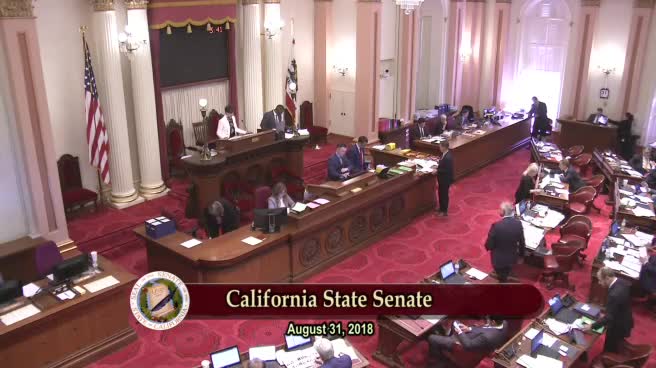



Bill Co-Author(s):