SB 895: Pupil instruction: model curricula: Vietnamese American refugee experience, the Cambodian genocide, and Hmong history and cultural studies.
- Session Year: 2017-2018
- House: Senate
- Latest Version Date: 2018-09-22
Existing law requires the adopted course of study for grades 1 to 12, inclusive, to include, among other subjects, the social sciences. Existing law encourages instruction in the area of social sciences for grades 7 to 12, inclusive, that may include instruction on the Vietnam War, including a component drawn from personal testimony of Southeast Asians who were involved in the Vietnam War and men and women who contributed to the war effort on the homefront, as specified. Existing law requires the State Board of Education, with the assistance of the Superintendent of Public Instruction, to establish a list of textbooks and other instructional materials that highlight the contributions of minorities in the development of California and the United States. Existing law establishes the Instructional Quality Commission and requires the commission to, among other things, recommend curriculum frameworks to the state board.
This bill would require the commission to develop and submit to the state board, on or before December 31, 2022, and the state board to adopt, modify, or revise, on or before March 31, 2023, a model curriculum relative to the Vietnamese American refugee experience and a model curriculum relative to the Cambodian genocide, as specified, for use in elementary schools, middle schools, and high schools. The bill would encourage a school district, charter school, or county office of education that maintains kindergarten or any of grades 1 to 12, inclusive, that does not otherwise offer a standards-based curriculum relative to the Vietnamese American refugee experience, Vietnamese boat people, and the Republic of Vietnam Armed Forces, or that does not otherwise offer a standards-based curriculum relative to the Cambodian genocide, to offer a course of study based on the respective model curriculum. The bill would require the model curricula to be developed with participation from specified entities and individuals. The bill would provide that implementation of its provisions is subject to the receipt of grants, donations, or other financial support from private or public sources for its purposes, including, but not limited to, an appropriation in the annual Budget Act or another statute.
The bill would require the commission to develop a model curriculum in Hmong history and cultural studies, as provided. The bill would require the commission, on or before December 31, 2022, to submit the model curriculum to the state board for adoption, and would require the state board to adopt, modify, or reject the model curriculum on or before March 31, 2023. The bill would require the Superintendent, following the adoption of the model curriculum, to post the model curriculum on the State Department of Educations Internet Web site for use on a voluntary basis by educators. The bill, beginning in the school year following the adoption of the model curriculum, would encourage local educational agencies, as defined, to use the model curriculum to provide instruction in kindergarten and grades 1 to 12, inclusive. The bill would provide that implementation of its provisions is subject to the receipt of grants, donations, or other financial support from private or public sources for its purposes, including, but not limited to, an appropriation in the annual Budget Act or another statute.
Existing law requires the adopted course of study for grades 1 to 12, inclusive, to include, among other subjects, the social sciences. Existing law encourages instruction in the area of social sciences for grades 7 to 12, inclusive, that may include instruction on the Vietnam War, including a component drawn from personal testimony of Southeast Asians who were involved in the Vietnam War and men and women who contributed to the war effort on the homefront, as specified. Existing law requires the State Board of Education, with the assistance of the Superintendent of Public Instruction, to establish a list of textbooks and other instructional materials that highlight the contributions of minorities in the development of California and the United States. Existing law establishes the Instructional Quality Commission and requires the commission to, among other things, recommend curriculum frameworks to the state board.
This bill would require the commission to develop and submit to the state board, on or before December 31, 2022, and the state board to adopt, modify, or revise, on or before March 31, 2023, a model curriculum relative to the Vietnamese American refugee experience and a model curriculum relative to the Cambodian genocide, as specified, for use in elementary schools, middle schools, and high schools. The bill would encourage a school district, charter school, or county office of education that maintains kindergarten or any of grades 1 to 12, inclusive, that does not otherwise offer a standards-based curriculum relative to the Vietnamese American refugee experience, Vietnamese boat people, and the Republic of Vietnam Armed Forces, or that does not otherwise offer a standards-based curriculum relative to the Cambodian genocide, to offer a course of study based on the respective model curriculum. The bill would require the model curricula to be developed with participation from specified entities and individuals. The bill would provide that implementation of its provisions is subject to the receipt of grants, donations, or other financial support from private or public sources for its purposes, including, but not limited to, an appropriation in the annual Budget Act or another statute.
The bill would require the commission to develop a model curriculum in Hmong history and cultural studies, as provided. The bill would require the commission, on or before December 31, 2022, to submit the model curriculum to the state board for adoption, and would require the state board to adopt, modify, or reject the model curriculum on or before March 31, 2023. The bill would require the Superintendent, following the adoption of the model curriculum, to post the model curriculum on the State Department of Educations Internet Web site for use on a voluntary basis by educators. The bill, beginning in the school year following the adoption of the model curriculum, would encourage local educational agencies, as defined, to use the model curriculum to provide instruction in kindergarten and grades 1 to 12, inclusive.
Existing law requires the adopted course of study for grades 7 1 to 12, inclusive, to include, among other subjects, the social sciences. Existing law encourages instruction in the area of social sciences for grades 7 to 12, inclusive, that may include instruction on the Vietnam War, including a component drawn from personal testimony of Southeast Asians who were involved in the Vietnam War and men and women who contributed to the war effort on the homefront, as specified. Existing law requires the State Board of Education, with the assistance of the Superintendent of Public Instruction, to establish a list of textbooks and other instructional materials that highlight the contributions of minorities in the development of California and the United States. Existing law establishes the Instructional Quality Commission and requires the commission to, among other things, recommend curriculum frameworks to the state board.
This bill would require the commission to develop and submit to the state board, on or before December 31, 2022, and the state board to adopt, modify, or revise, on or before March 31, 2023, a model curriculum relative to the Vietnamese American refugee experience and a model curriculum relative to the Cambodian genocide, as specified, for use in elementary schools, middle schools, and high schools. The bill would encourage a school district, charter school, or county office of education that maintains kindergarten or any of grades 1 to 12, inclusive, that does not otherwise offer a standards-based curriculum relative to the Vietnamese American refugee experience, Vietnamese boat people, and the Republic of Vietnam Armed Forces, or that does not otherwise offer a standards-based curriculum relative to the Cambodian genocide, to offer a course of study based on the respective model curriculum. The bill would require the model curriculum curricula to be developed with participation from specified entities, including, among others, Vietnamese American refugees and Vietnamese American cultural centers and community groups located in California. entities and individuals. The bill would provide that implementation of its provisions is subject to the receipt of grants, donations, or other financial support from private or public sources for its purposes, including, but not limited to, an appropriation in the annual Budget Act or another statute.
Existing law requires the adopted course of study for grades 7 to 12, inclusive, to include, among other subjects, the social sciences. Existing law encourages instruction in the area of social sciences that may include instruction on the Vietnam War, including a component drawn from personal testimony of Southeast Asians who were involved in the Vietnam War and men and women who contributed to the war effort on the homefront, as specified. Existing law requires the State Board of Education, with the assistance of the Superintendent of Public Instruction, to establish a list of textbooks and other instructional materials that highlight the contributions of minorities in the development of California and the United States. Existing law establishes the Instructional Quality Commission and requires the commission to, among other things, recommend curriculum frameworks to the state board.
This bill would require the commission to develop and submit to the state board, on or before December 31, 2022, and the state board to adopt, modify, or revise, on or before March 31, 2023, a model curriculum relative to the Vietnamese American refugee experience, experience and the Cambodian genocide, as specified, for use in elementary schools, middle schools, and high schools. The bill would encourage a school district, charter school, or county office of education that maintains any of grades 1 to 12, inclusive, that does not otherwise offer a standards-based Vietnamese American studies curriculum relative to the Vietnamese American refugee experience, Vietnamese boat people, and the Republic of Vietnam Armed Forces, or relative to the Cambodian genocide, to offer a course of study based on the model curriculum. The bill would require the model curriculum to be developed with participation from specified entities, including, among others, Vietnamese American refugees and Vietnamese American cultural centers and community groups located in California. The bill would provide that implementation of its provisions is subject to the receipt of grants, donations, or other financial support from private or public sources for its purposes, including, but not limited to, an appropriation in the annual Budget Act or another statute.
Existing law requires the adopted course of study for grades 7 to 12, inclusive, to include, among other subjects, the social sciences. Existing law encourages instruction in the area of social sciences that may include instruction on the Vietnam War, including a component drawn from personal testimony of Southeast Asians who were involved in the Vietnam War and men and women who contributed to the war effort on the homefront, as specified. Existing law requires the State Board of Education, with the assistance of the Superintendent of Public Instruction, to establish a list of textbooks and other instructional materials that highlight the contributions of minorities in the development of California and the United States. Existing law establishes the Instructional Quality Commission and requires the commission to, among other things, recommend curriculum frameworks to the state board.
This bill would require the commission to develop and submit to the state board, on or before December 31, 2020, 2022, and the state board to adopt, modify, or revise, on or before March 31, 2021, 2023, a model curriculum relative to the Vietnamese American refugee experience, as specified, for use in elementary schools, middle schools, and high schools. The bill would encourage a school district, charter school, or county office of education that maintains any of grades 1 to 12, inclusive, that does not otherwise offer a standards-based Vietnamese American studies curriculum relative to the Vietnamese American refugee experience, Vietnamese boat people, and the Republic of Vietnam Armed Forces, to offer a course of study based on the model curriculum. The bill would require the model curriculum to be developed with participation from specified entities, including, among others, Vietnamese American refugees and Vietnamese American cultural centers and community groups located in California. The bill would provide that implementation of its provisions is subject to the receipt of grants, donations, or other financial support from private or public sources for its purposes, including, but not limited to, an appropriation in the annual Budget Act or another statute.
Existing law requires the adopted course of study for grades 7 to 12, inclusive, to include, among other subjects, the social sciences. Existing law encourages instruction in the area of social sciences that may include instruction on the Vietnam War, including a component drawn from personal testimony of Southeast Asians who were involved in the Vietnam War and men and women who contributed to the war effort on the homefront, as specified. Existing law requires the State Board of Education, with the assistance of the Superintendent of Public Instruction, to establish a list of textbooks and other instructional materials that highlight the contributions of minorities in the development of California and the United States. Existing law establishes the Instructional Quality Commission and requires the commission to, among other things, recommend curriculum frameworks to the state board.
This bill would require the commission to develop and submit to the state board, on or before December 31, 2020, and the state board to adopt, modify, or revise, on or before March 31, 2021, a model curriculum relative to the Vietnamese American refugee experience, as specified, for use in elementary schools, middle schools, and high schools. The bill would encourage a school district, charter school, or county office of education that maintains any of grades 1 to 12, inclusive, that does not otherwise offer a standards-based Vietnamese American studies curriculum relative to the Vietnamese American refugee experience, Vietnamese boat people, and the Republic of Vietnam Armed Forces, to offer a course of study based on the model curriculum. The bill would require the model curriculum to be developed with participation from specified entities, including, among others, Vietnamese American refugees and Vietnamese American cultural centers and community groups located in California. The bill would provide that implementation of its provisions is subject to the receipt of grants, donations, or other financial support from private or public sources for its purposes, including, but not limited to, an appropriation in the annual Budget Act or another statute.
The Legislature finds and declares all of the following:
(a)The State of California is committed to providing excellent educational opportunities to all of its pupils.
(b)There are 92 languages other than English spoken throughout the state, with the primary languages being Arabic, Armenian, Cantonese, Korean, Russian, Spanish, Tagalog, and Vietnamese.
(c)There is a growing body of academic research that shows the importance of culturally meaningful and relevant curriculum.
(d)The states educational standards should be guided by core values of equity, inclusiveness, and universally high expectations.
(e)The state is committed to its obligation to ensure its youth are college prepared and career ready, while graduating 100 percent of its pupils.
(f)The implementation of various culturally relevant courses within Californias curriculum that are AG approved, with the objective of preparing all pupils to be global citizens with an appreciation for the contributions of multiple cultures, will close the achievement gap, reduce pupil truancy, increase pupil enrollment, reduce dropout rates, and increase graduation rates.
(g)For the past 40 years, Vietnamese American refugees have enriched the social, cultural, and economic landscape of California and have achieved success in many professional fields, including business, politics, law, science, education, literature, journalism, sports, and entertainment.
(h)The state encourages the participation of pupils, community members, and members of California Vietnamese American communities in the development of a model curriculum that recognizes the importance of survivors, rescuers, and liberators of the Vietnam War, including Vietnamese American refugees, Vietnamese boat people, and members of the Republic of Vietnam Armed Forces.
(i)The state currently encourages the incorporation of survivor, rescuer, liberator, and witness oral testimony into the teaching of human rights, the Holocaust, and genocide, including the Armenian, Cambodian, Darfur, and Rwandan genocides.
(j)Currently, the instructional resources available for use in California public schools do not include sufficient oral testimony from survivors, rescuers, and liberators of the Vietnam War, including Vietnamese American refugees, Vietnamese boat people, and members of the Republic of Vietnam Armed Forces in the United States and especially in California.
(k)The state acknowledges the need to elevate tragic personal stories like those of the Vietnamese boat people who, after the fall of Saigon in 1975, risked their lives escaping communism only to spend weeks or months at sea battling storms, diseases, starvation, and pirates.
(l)The state acknowledges the importance of the history and experience of the more than 250,000 members of the Republic of Vietnam Armed Forces who were sent to reeducation camps after the fall of Saigon, where many spent up to 17 years in captivity and more than 20,000 died before they were released.
(m)The state acknowledges that oral histories can help pupils better relate to and understand different perspectives in curriculum by providing first-person accounts from individuals who have experienced some of the most tragic times in international history, helping the subject become more than statistics on a page.
(n)The County of Orange, along with the City of San Jose, are home to the largest Vietnamese populations outside of Vietnam.
(o)It is in the best interest of all people and the future of this state to ensure that each school district, charter school, and county office of education has access to a model curriculum and culturally accurate instructional materials relative to the Vietnamese American refugee experience, including the experiences of the Vietnamese boat people and the members of the Republic of Vietnam Armed Forces.
SEC. 2.Section 33540.2 is added to the Education Code, to read:33540.2.(a)On or before December 31, 2022, the commission shall develop and submit to the state board a model curriculum relative to the Vietnamese American refugee experience that includes, but is not limited to, curriculum on the fall of Saigon in 1975. On or before March 31, 2023, the state board shall adopt, modify, or revise the model curriculum. The commission shall provide a minimum of 45 days for public comment before submitting the model curriculum to the state board.
(b)The model curriculum shall be developed with participation from Vietnamese American cultural centers and community groups located in California, survivors, rescuers, and liberators of the Vietnam War, Vietnamese American refugees, and a group of representatives of local educational agencies, a majority of which are kindergarten and grades 1 to 12, inclusive, teachers who have relevant experience or educational backgrounds in the study and teaching of Vietnamese American history.
(c)(1)The model curriculum shall include the incorporation of writings and other media that represent all perspectives of the Vietnamese refugee experience, including oral testimony by survivors, rescuers, and liberators of the Vietnam War, including Vietnamese American refugees, Vietnamese boat people, and members of the Republic of Vietnam Armed Forces, to ensure quality standards and materials for this area of study.
(2)For purposes of this subdivision, oral testimony means the firsthand accounts of significant historical events presented in a format that includes, but is not limited to, in-person testimony, video, or a multimedia option, such as a DVD or an online video.
(d)The model curriculum shall include discussion of the Vietnamese boat people and members of the Republic of Vietnam Armed Forces, the reasons behind the exodus, the hardships faced by the Vietnamese people attempting to flee who were apprehended by the communist government, and the conditions that led to the resettlement of Vietnamese people in the United States.
(e)The model curriculum shall include curriculum appropriate for use in elementary schools, middle schools, and high schools.
(f)The model curriculum shall be written as a guide to allow school districts, charter schools, and county offices of education to adapt their related courses to best meet the educational needs of their communities. The model curriculum developed for use in high schools shall include examples of courses offered by local educational agencies that have been approved as meeting the AG admissions requirements of the University of California and the California State University, including, to the extent possible, course outlines for those courses.
(g)Beginning in the school year following the adoption of the model curriculum pursuant to subdivision (a), each school district, charter school, or county office of education maintaining kindergarten or any of grades 1 to 12, inclusive, that does not otherwise offer standards-based curriculum relative to the Vietnamese American refugee experience, Vietnamese boat people, and the Republic of Vietnam Armed Forces, is encouraged to offer to pupils a course of study relative to the Vietnamese American refugee experience based on the model curriculum. A school district, charter school, or county office of education that serves pupils in any of grades 7 to 12, inclusive, that elects to offer a course of study in the Vietnamese American refugee experience pursuant to this subdivision, shall offer the course as an elective in the social sciences or world history and shall make the course available in at least one year during a pupils enrollment in grades 7 to 12, inclusive.
(h)It is the intent of the Legislature that local educational agencies that maintain high schools submit course outlines for studies relative to the Vietnamese American refugee experience for approval as AG courses.
(i)The implementation of this section is subject to the receipt of grants, donations, or other financial support from private or public sources for its purposes, including, but not limited to, an appropriation in the annual Budget Act or another statute.
SEC. 3.Section 33540.4 is added to the Education Code, to read:33540.4.(a)On or before December 31, 2022, the commission shall develop and submit to the state board a model curriculum relative to the Cambodian genocide. On or before March 31, 2023, the state board shall adopt, modify, or revise the model curriculum. The commission shall provide a minimum of 45 days for public comment before submitting the model curriculum to the state board.
(b)The model curriculum shall be developed with participation from survivors of the Cambodian genocide and a group of representatives of local educational agencies, a majority of which are kindergarten and grades 1 to 12, inclusive, teachers who have relevant experience or educational backgrounds in the study and teaching of the Cambodian genocide.
(c)(1)The model curriculum shall include the incorporation of writings or other media that represent all perspectives of the Cambodian genocide, including oral testimony by survivors, to ensure quality standards and materials for this area of study.
(2)For purposes of this subdivision, oral testimony means the firsthand accounts of significant historical events presented in a format that includes, but is not limited to, in-person testimony, video, or a multimedia option, such as a DVD or an online video.
(d)The model curriculum shall include curriculum appropriate for use in elementary schools, middle schools, and high schools.
(e)The model curriculum shall be written as a guide to allow school districts, charter schools, and county offices of education to adapt their related courses to best meet the educational needs of their communities. The model curriculum developed for use in high schools shall include examples of courses offered by local educational agencies that have been approved as meeting the AG admissions requirements of the University of California and the California State University, including, to the extent possible, course outlines for those courses.
(f)Beginning in the school year following the adoption of the model curriculum pursuant to subdivision (a), each school district, charter school, or county office of education maintaining kindergarten or any of grades 1 to 12, inclusive, that does not otherwise offer standards-based curriculum relative to the Cambodian genocide, is encouraged to offer to pupils a course of study relative to the Cambodian genocide based on the model curriculum. A school district, charter school, or county office of education that serves pupils in any of grades 7 to 12, inclusive, that elects to offer a course of study in the Cambodian genocide pursuant to this subdivision, shall offer the course as an elective in the social sciences or world history and shall make the course available in at least one year during a pupils enrollment in grades 7 to 12, inclusive.
(g)It is the intent of the Legislature that local educational agencies that maintain high schools submit course outlines for studies relative to the Cambodian genocide for approval as AG courses.
(h)The implementation of this section is subject to the receipt of grants, donations, or other financial support from private or public sources for its purposes, including, but not limited to, an appropriation in the annual Budget Act or another statute.
SEC. 4.Section 33540.6 is added to the Education Code, to read:33540.6.(a)The commission shall develop, and the state board shall adopt, modify, or reject, a model curriculum in Hmong history and cultural studies. The model curriculum shall be developed with participation from representatives of Hmong advocacy, community, social, and cultural organizations; faculty of Hmong studies programs at universities and colleges; and local educational agencies. A majority of the individuals with whom the commission consults shall be teachers of kindergarten or grades 1 to 12, inclusive, who have relevant experiences or educational backgrounds in the study and teaching of Hmong studies. The model curriculum shall identify the ways in which the model curriculum aligns with, and is supportive of, the common core academic content standards and of the goals of the curriculum framework in history-social science adopted by the state board in 2016.
(b)The model curriculum shall include examples of courses offered by local educational agencies that have been approved as meeting the AG admissions requirements of the University of California and the California State University, including, to the extent possible, course outlines for those courses.
(c)The model curriculum shall address, but shall not necessarily be limited to, all of the following:
(1)The history of the Hmong people who lived in Laos, Thailand, Vietnam, and China.
(2)The history of the Hmong migration to the United States and California, as well as other parts of the world.
(3)Cultural beliefs, practices, and traditions of the Hmong people, including, among other things, Hmong New Year celebrations, marriages, newborns, and funerals.
(4)Contributions of the Hmong people to California and the United States.
(5)The contributions and sacrifices of the Lao-Hmong and other Southeast Asians who served in the Secret Army in Laos, which was funded by the United States Central Intelligence Agency.
(d)The commission shall hold a minimum of two public hearings in order for the public to provide input on the model curriculum. The public hearings required by this subdivision shall be held pursuant to the Bagley-Keene Open Meeting Act (Article 9 (commencing with Section 11120) of Chapter 1 of Part 1 of Division 3 of Title 2 of the Government Code).
(e)The commission shall provide a minimum of 45 days for public comment before submitting the model curriculum to the state board.
(f)On or before December 31, 2022, the commission shall submit the model curriculum to the state board for adoption, and the state board shall adopt, modify, or reject the model curriculum on or before March 31, 2023.
(g)If the state board modifies the model curriculum submitted by the commission, the state board shall explain, in writing, the reasons for the modifications to the Governor and the appropriate policy and fiscal committees of the Legislature.
(h)If the state board modifies the model curriculum, the state board shall, in a meeting conducted pursuant to the Bagley-Keene Open Meeting Act (Article 9 (commencing with Section 11120) of Chapter 1 of Part 1 of Division 3 of Title 2 of the Government Code), provide written reasons for its modifications. The state board shall not adopt the model curriculum at the same meeting at which it provides its written reasons, but, instead, shall adopt these modifications at a subsequent meeting conducted no later than July 31, 2023.
(i)If the state board rejects the model curriculum, the state board shall transmit to the Superintendent, the Governor, and the appropriate policy and fiscal committees of the Legislature a specific written explanation of the reasons for the rejection of the model curriculum.
(j)Following the adoption of the model curriculum, the Superintendent shall post the model curriculum on the departments Internet Web site for use on a voluntary basis by educators.
(k)Beginning in the school year following the adoption of the model curriculum, local educational agencies are encouraged to use the model curriculum to provide instruction in kindergarten and grades 1 to 12, inclusive.
(l)Beginning in the school year following the adoption of the model curriculum, each local educational agency maintaining any of grades 9 to 12, inclusive, that does not otherwise offer a standards-based Hmong studies curriculum is encouraged to offer to all otherwise qualified pupils a course of study in Hmong studies based on the model curriculum.
(m)It is the intent of the Legislature that local educational agencies submit course outlines for Hmong studies for approval as AG courses.
(n)For purposes of this section, local educational agency means a school district, county office of education, or charter school.
(o)The implementation of this section is subject to the receipt of grants, donations, or other financial support from private or public sources for its purposes, including, but not limited to, an appropriation in the annual Budget Act or another statute.
The Legislature finds and declares all of the following:
(a)The State of California is committed to providing excellent educational opportunities to all of its pupils.
(b)There are 92 languages other than English spoken throughout the state, with the primary languages being Arabic, Armenian, Cantonese, Korean, Russian, Spanish, Tagalog, and Vietnamese.
(c)There is a growing body of academic research that shows the importance of culturally meaningful and relevant curriculum.
(d)The states educational standards should be guided by core values of equity, inclusiveness, and universally high expectations.
(e)The state is committed to its obligation to ensure its youth are college prepared and career ready, while graduating 100 percent of its pupils.
(f)The implementation of various culturally relevant courses within Californias curriculum that are AG approved, with the objective of preparing all pupils to be global citizens with an appreciation for the contributions of multiple cultures, will close the achievement gap, reduce pupil truancy, increase pupil enrollment, reduce dropout rates, and increase graduation rates.
(g)For the past 40 years, Vietnamese American refugees have enriched the social, cultural, and economic landscape of California and have achieved success in many professional fields, including business, politics, law, science, education, literature, journalism, sports, and entertainment.
(h)The state encourages the participation of pupils, community members, and members of California Vietnamese American communities in the development of a model curriculum that recognizes the importance of survivors, rescuers, and liberators of the Vietnam War, including Vietnamese American refugees, Vietnamese boat people, and members of the Republic of Vietnam Armed Forces.
(i)The state currently encourages the incorporation of survivor, rescuer, liberator, and witness oral testimony into the teaching of human rights, the Holocaust, and genocide, including the Armenian, Cambodian, Darfur, and Rwandan genocides.
(j)Currently, the instructional resources available for use in California public schools do not include sufficient oral testimony from survivors, rescuers, and liberators of the Vietnam War, including Vietnamese American refugees, Vietnamese boat people, and members of the Republic of Vietnam Armed Forces in the United States and especially in California.
(k)The state acknowledges the need to elevate tragic personal stories like those of the Vietnamese boat people who, after the fall of Saigon in 1975, risked their lives escaping communism only to spend weeks or months at sea battling storms, diseases, starvation, and pirates.
(l)The state acknowledges the importance of the history and experience of the more than 250,000 members of the Republic of Vietnam Armed Forces who were sent to reeducation camps after the fall of Saigon, where many spent up to 17 years in captivity and more than 20,000 died before they were released.
(m)The state acknowledges that oral histories can help pupils better relate to and understand different perspectives in curriculum by providing first-person accounts from individuals who have experienced some of the most tragic times in international history, helping the subject become more than statistics on a page.
(n)The County of Orange, along with the City of San Jose, are home to the largest Vietnamese populations outside of Vietnam.
(o)It is in the best interest of all people and the future of this state to ensure that each school district, charter school, and county office of education has access to a model curriculum and culturally accurate instructional materials relative to the Vietnamese American refugee experience, including the experiences of the Vietnamese boat people and the members of the Republic of Vietnam Armed Forces.
SEC. 2.Section 51207 is added to the Education Code, to read:SEC. 2.Section 33540.2 is added to the Education Code, to read:51207.33540.2.(a)On or before December 31, 2022, the Instructional Quality Commission commission shall develop and submit to the state board a model curriculum relative to the Vietnamese American refugee experience that includes, but is not limited to, curriculum on the fall of Saigon in 1975. On or before March 31, 2023, the state board shall adopt, modify, or revise the model curriculum. The Instructional Quality Commission commission shall provide a minimum of 45 days for public comment before submitting the model curriculum to the state board.
(b)The model curriculum shall be developed with participation from Vietnamese American cultural centers and community groups located in California, survivors, rescuers, and liberators of the Vietnam War, Vietnamese American refugees, and a group of representatives of local educational agencies, a majority of which are kindergarten and grades 1 to 12, inclusive, teachers who have relevant experience or educational backgrounds in the study and teaching of Vietnamese American history.
(c)(1)The model curriculum shall include the incorporation of writings and other media that represent all perspectives of the Vietnamese refugee experience, including oral testimony by survivors, rescuers, and liberators of the Vietnam War, including Vietnamese American refugees, Vietnamese boat people, and members of the Republic of Vietnam Armed Forces, to ensure quality standards and materials for this area of study.
(2)For purposes of this subdivision, oral testimony means the firsthand accounts of significant historical events presented in a format that includes, but is not limited to, in-person testimony, video, or a multimedia option, such as a DVD or an online video.
(d)The model curriculum shall include discussion of the Vietnamese boat people and members of the Republic of Vietnam Armed Forces, the reasons behind the exodus, the hardships faced by the Vietnamese people attempting to flee who were apprehended by the communist government, and the conditions that led to the resettlement of Vietnamese people in the United States.
(e)The model curriculum shall include curriculum appropriate for use in elementary schools, middle schools, and high schools.
(f)The model curriculum shall be written as a guide to allow school districts, charter schools, and county offices of education to adapt their related courses to best meet the educational needs of their communities. The model curriculum developed for use in high schools shall include examples of courses offered by local educational agencies that have been approved as meeting the AG admissions requirements of the University of California and the California State University, including, to the extent possible, course outlines for those courses.
(g)Beginning in the school year following the adoption of the model curriculum pursuant to subdivision (a), each school district, charter school, or county office of education maintaining kindergarten or any of grades 1 to 12, inclusive, that does not otherwise offer standards-based curriculum relative to the Vietnamese American refugee experience, Vietnamese boat people, and the Republic of Vietnam Armed Forces, is encouraged to offer to pupils a course of study relative to the Vietnamese American refugee experience based on the model curriculum. A school district, charter school, or county office of education that serves pupils in any of grades 7 to 12, inclusive, that elects to offer a course of study in the Vietnamese American refugee experience pursuant to this subdivision, shall offer the course as an elective in the social sciences or world history and shall make the course available in at least one year during a pupils enrollment in grades 7 to 12, inclusive.
(h)It is the intent of the Legislature that local educational agencies that maintain high schools submit course outlines for studies relative to the Vietnamese American refugee experience for approval as AG courses.
(i)The implementation of this section is subject to the receipt of grants, donations, or other financial support from private or public sources for its purposes, including, but not limited to, an appropriation in the annual Budget Act or another statute.
SEC. 3.Section 51208 is added to the Education Code, to read:SEC. 3.Section 33540.4 is added to the Education Code, to read:51208.33540.4.(a)On or before December 31, 2022, the Instructional Quality Commission commission shall develop and submit to the state board a model curriculum relative to the Cambodian genocide. On or before March 31, 2023, the state board shall adopt, modify, or revise the model curriculum. The Instructional Quality Commission commission shall provide a minimum of 45 days for public comment before submitting the model curriculum to the state board.
(b)The model curriculum shall be developed with participation from survivors of the Cambodian genocide and a group of representatives of local educational agencies, a majority of which are kindergarten and grades 1 to 12, inclusive, teachers who have relevant experience or educational backgrounds in the study and teaching of the Cambodian genocide.
(c)(1)The model curriculum shall include the incorporation of writings or other media that represent all perspectives of the Cambodian genocide, including oral testimony by survivors, to ensure quality standards and materials for this area of study.
(2)For purposes of this subdivision, oral testimony means the firsthand accounts of significant historical events presented in a format that includes, but is not limited to, in-person testimony, video, or a multimedia option, such as a DVD or an online video.
(d)The model curriculum shall include curriculum appropriate for use in elementary schools, middle schools, and high schools.
(e)The model curriculum shall be written as a guide to allow school districts, charter schools, and county offices of education to adapt their related courses to best meet the educational needs of their communities. The model curriculum developed for use in high schools shall include examples of courses offered by local educational agencies that have been approved as meeting the AG admissions requirements of the University of California and the California State University, including, to the extent possible, course outlines for those courses.
(f)Beginning in the school year following the adoption of the model curriculum pursuant to subdivision (a), each school district, charter school, or county office of education maintaining kindergarten or any of grades 1 to 12, inclusive, that does not otherwise offer standards-based curriculum relative to the Cambodian genocide, is encouraged to offer to pupils a course of study relative to the Cambodian genocide based on the model curriculum. A school district, charter school, or county office of education that serves pupils in any of grades 7 to 12, inclusive, that elects to offer a course of study in the Cambodian genocide pursuant to this subdivision, shall offer the course as an elective in the social sciences or world history and shall make the course available in at least one year during a pupils enrollment in grades 7 to 12, inclusive.
(g)It is the intent of the Legislature that local educational agencies that maintain high schools submit course outlines for studies relative to the Cambodian genocide for approval as AG courses.
(h)The implementation of this section is subject to the receipt of grants, donations, or other financial support from private or public sources for its purposes, including, but not limited to, an appropriation in the annual Budget Act or another statute.
SEC. 4.Section 33540.6 is added to the Education Code, to read:33540.6.(a)The commission shall develop, and the state board shall adopt, modify, or reject, a model curriculum in Hmong history and cultural studies. The model curriculum shall be developed with participation from representatives of Hmong advocacy, community, social, and cultural organizations; faculty of Hmong studies programs at universities and colleges; and local educational agencies. A majority of the individuals with whom the commission consults shall be teachers of kindergarten or grades 1 to 12, inclusive, who have relevant experiences or educational backgrounds in the study and teaching of Hmong studies. The model curriculum shall identify the ways in which the model curriculum aligns with, and is supportive of, the common core academic content standards and of the goals of the curriculum framework in history-social science adopted by the state board in 2016.
(b)The model curriculum shall include examples of courses offered by local educational agencies that have been approved as meeting the AG admissions requirements of the University of California and the California State University, including, to the extent possible, course outlines for those courses.
(c)The model curriculum shall address, but shall not necessarily be limited to, all of the following:
(1)The history of the Hmong people who lived in Laos, Thailand, Vietnam, and China.
(2)The history of the Hmong migration to the United States and California, as well as other parts of the world.
(3)Cultural beliefs, practices, and traditions of the Hmong people, including, among other things, Hmong New Year celebrations, marriages, newborns, and funerals.
(4)Contributions of the Hmong people to California and the United States.
(5)The contributions and sacrifices of the Lao-Hmong and other Southeast Asians who served in the Secret Army in Laos, which was funded by the United States Central Intelligence Agency.
(d)The commission shall hold a minimum of two public hearings in order for the public to provide input on the model curriculum. The public hearings required by this subdivision shall be held pursuant to the Bagley-Keene Open Meeting Act (Article 9 (commencing with Section 11120) of Chapter 1 of Part 1 of Division 3 of Title 2 of the Government Code).
(e)The commission shall provide a minimum of 45 days for public comment before submitting the model curriculum to the state board.
(f)On or before December 31, 2022, the commission shall submit the model curriculum to the state board for adoption, and the state board shall adopt, modify, or reject the model curriculum on or before March 31, 2023.
(g)If the state board modifies the model curriculum submitted by the commission, the state board shall explain, in writing, the reasons for the modifications to the Governor and the appropriate policy and fiscal committees of the Legislature.
(h)If the state board modifies the model curriculum, the state board shall, in a meeting conducted pursuant to the Bagley-Keene Open Meeting Act (Article 9 (commencing with Section 11120) of Chapter 1 of Part 1 of Division 3 of Title 2 of the Government Code), provide written reasons for its modifications. The state board shall not adopt the model curriculum at the same meeting at which it provides its written reasons, but, instead, shall adopt these modifications at a subsequent meeting conducted no later than July 31, 2023.
(i)If the state board rejects the model curriculum, the state board shall transmit to the Superintendent, the Governor, and the appropriate policy and fiscal committees of the Legislature a specific written explanation of the reasons for the rejection of the model curriculum.
(j)Following the adoption of the model curriculum, the Superintendent shall post the model curriculum on the departments Internet Web site for use on a voluntary basis by educators.
(k)Beginning in the school year following the adoption of the model curriculum, local educational agencies are encouraged to use the model curriculum to provide instruction in kindergarten and grades 1 to 12, inclusive.
(l)Beginning in the school year following the adoption of the model curriculum, each local educational agency maintaining any of grades 9 to 12, inclusive, that does not otherwise offer a standards-based Hmong studies curriculum is encouraged to offer to all otherwise qualified pupils a course of study in Hmong studies based on the model curriculum.
(m)It is the intent of the Legislature that local educational agencies submit course outlines for Hmong studies for approval as AG courses.
(n)For purposes of this section, local educational agency means a school district, county office of education, or charter school.
The Legislature finds and declares all of the following:
(a)The State of California is committed to providing excellent educational opportunities to all of its pupils.
(b)There are 92 languages other than English spoken throughout the state, with the primary languages being Arabic, Armenian, Cantonese, Korean, Russian, Spanish, Tagalog, and Vietnamese.
(c)There is a growing body of academic research that shows the importance of culturally meaningful and relevant curriculum.
(d)The states educational standards should be guided by core values of equity, inclusiveness, and universally high expectations.
(e)The state is committed to its obligation to ensure its youth are college prepared and career ready, while graduating 100 percent of its pupils.
(f)The implementation of various culturally relevant courses within Californias curriculum that are AG approved, with the objective of preparing all pupils to be global citizens with an appreciation for the contributions of multiple cultures, will close the achievement gap, reduce pupil truancy, increase pupil enrollment, reduce dropout rates, and increase graduation rates.
(g)For the past 40 years, Vietnamese American refugees have enriched the social, cultural, and economic landscape of California and have achieved success in many professional fields, including business, politics, law, science, education, literature, journalism, sports, and entertainment.
(h)The state encourages the participation of pupils, community members, and members of California Vietnamese American communities in the development of a model curriculum that recognizes the importance of survivors, rescuers, and liberators of the Vietnam War, including Vietnamese American refugees, Vietnamese boat people, and members of the Republic of Vietnam Armed Forces.
(i)The state currently encourages the incorporation of survivor, rescuer, liberator, and witness oral testimony into the teaching of human rights, the Holocaust, and genocide, including the Armenian, Cambodian, Darfur, and Rwandan genocides.
(j)Currently, the instructional resources available for use in California public schools do not include sufficient oral testimony from survivors, rescuers, and liberators of the Vietnam War, including Vietnamese American refugees, Vietnamese boat people, and members of the Republic of Vietnam Armed Forces in the United States and especially in California.
(k)The state acknowledges the need to elevate tragic personal stories like those of the Vietnamese boat people who, after the fall of Saigon in 1975, risked their lives escaping communism only to spend weeks or months at sea battling storms, diseases, starvation, and pirates.
(l)The state acknowledges the importance of the history and experience of the more than 250,000 members of the Republic of Vietnam Armed Forces who were sent to reeducation camps after the fall of Saigon, where many spent up to 17 years in captivity and more than 20,000 died before they were released.
(m)The state acknowledges that oral histories can help pupils better relate to and understand different perspectives in curriculum by providing first-person accounts from individuals who have experienced some of the most tragic times in international history, helping the subject become more than statistics on a page.
(n)The County of Orange, along with the City of San Jose, are home to the largest Vietnamese populations outside of Vietnam.
(o)It is in the best interest of all people and the future of this state to ensure that each school district, charter school, and county office of education has access to a model curriculum and culturally accurate instructional materials relative to the Vietnamese American refugee experience, including the experiences of the Vietnamese boat people and the members of the Republic of Vietnam Armed Forces.
SEC. 2.Section 51207 is added to the Education Code, to read:51207.(a)The On or before December 31, 2022, the Instructional Quality Commission shall develop, develop and submit to the state board shall adopt, modify, or revise, a model curriculum relative to the Vietnamese American refugee experience, that began with experience that includes, but is not limited to, curriculum on the fall of Saigon in 1975, and the Cambodian genocide. The model curriculum shall include, but is not limited to, oral testimony of survivors, rescuers, and liberators of the Vietnam War and the Cambodian genocide, including Vietnamese American refugees, Vietnamese boat people, and members of the Republic of Vietnam Armed Forces, to ensure quality standards and materials for these areas of study. The 1975. On or before March 31, 2023, the state board shall adopt, modify, or revise the model curriculum. The Instructional Quality Commission shall provide a minimum of 45 days for public comment before submitting the model curriculum to the state board. (b)The model curriculum shall be developed with participation from Vietnamese American cultural centers and community groups located in California, survivors, rescuers, and liberators of the Vietnam War and of the Cambodian genocide, War, Vietnamese American refugees, and a group of representatives of local educational agencies, a majority of which are kindergarten and grades 1 to 12, inclusive, teachers who have relevant experience or education educational backgrounds in the study and teaching of Vietnamese American history or the Cambodian genocide. The model curriculum developed pursuant to this subdivision shall include curriculum appropriate for use in elementary schools, middle schools, and high schools. history.(b)The model curriculum shall be written as a guide to allow school districts, charter schools, and county offices of education to adapt their related courses to best meet the educational needs of their communities. The model curriculum developed for use in high schools shall include examples of courses offered by local educational agencies that have been approved as meeting the AG admissions requirements of the University of California and the California State University, including, to the extent possible, course outlines for those courses.(c)When teaching about the Vietnam War and the postwar period, the Legislature encourages (1)The model curriculum shall include the incorporation of writings and other media that represent all perspectives of the Vietnamese refugee experience, including oral testimony by survivors, rescuers, and liberators of the Vietnam War, and including Vietnamese refugees. American refugees, Vietnamese boat people, and members of the Republic of Vietnam Armed Forces, to ensure quality standards and materials for this area of study.(2)For purposes of this subdivision, oral testimony means the firsthand accounts of significant historical events presented in a format that includes, but is not limited to, in-person testimony, video, or a multimedia option, such as a DVD or an online video.(d)The model curriculum shall include discussion of the Vietnamese boat people and members of the Republic of Vietnam Armed Forces, the reasons behind the exodus, the hardships faced by the Vietnamese people attempting to flee who were apprehended by the communist government, and the conditions that led to the resettlement of Vietnamese people in America. the United States.(e)On or before December 31, 2022, the Instructional Quality Commission shall submit the model curriculum to the state board, and the state board shall adopt, modify, or revise the model curriculum on or before March 31, 2023.(f)The Instructional Quality Commission shall provide a minimum of 45 days for public comment before submitting the model curriculum to the state board.(e)The model curriculum shall include curriculum appropriate for use in elementary schools, middle schools, and high schools.(f)The model curriculum shall be written as a guide to allow school districts, charter schools, and county offices of education to adapt their related courses to best meet the educational needs of their communities. The model curriculum developed for use in high schools shall include examples of courses offered by local educational agencies that have been approved as meeting the AG admissions requirements of the University of California and the California State University, including, to the extent possible, course outlines for those courses.(g)Beginning in the school year following the adoption of the model curriculum pursuant to subdivisions (a) and (e), subdivision (a), each school district, charter school, or county office of education maintaining kindergarten or any of grades 1 to 12, inclusive, that does not otherwise offer standards-based curriculum relative to the Vietnamese American refugee experience, Vietnamese boat people, and the Republic of Vietnam Armed Forces, or relative to the Cambodian genocide, is encouraged to offer to pupils a course of study relative to the Vietnamese American refugee experience and the Cambodian genocide based on the model curriculum. A school district, charter school, or county office of education that serves pupils in any of grades 7 to 12, inclusive, that elects to offer a course of study in the Vietnamese American refugee experience and the Cambodian genocide pursuant to this subdivision, shall offer the course as an elective in the social sciences or world history and shall make the course available in at least one year during a pupils enrollment in grades 7 to 12, inclusive.(h)It is the intent of the Legislature that local educational agencies that maintain high schools submit course outlines for studies relative to the Vietnamese American refugee experience and the Cambodian genocide for approval as AG courses.(i)For purposes of this section, oral testimony means the firsthand accounts of significant historical events presented in a format that includes, but is not limited to, in-person testimony, video, or a multimedia option, such as a DVD or an online video.(j)(i)The implementation of this section is subject to the receipt of grants, donations, or other financial support from private or public sources for its purposes, including, but not limited to, an appropriation in the annual Budget Act or another statute.SEC. 3.Section 51208 is added to the Education Code, to read:51208.(a)On or before December 31, 2022, the Instructional Quality Commission shall develop and submit to the state board a model curriculum relative to the Cambodian genocide. On or before March 31, 2023, the state board shall adopt, modify, or revise the model curriculum. The Instructional Quality Commission shall provide a minimum of 45 days for public comment before submitting the model curriculum to the state board.
(b)The model curriculum shall be developed with participation from survivors of the Cambodian genocide and a group of representatives of local educational agencies, a majority of which are kindergarten and grades 1 to 12, inclusive, teachers who have relevant experience or educational backgrounds in the study and teaching of the Cambodian genocide.
(c)(1)The model curriculum shall include the incorporation of writings or other media that represent all perspectives of the Cambodian genocide, including oral testimony by survivors, to ensure quality standards and materials for this area of study.
(2)For purposes of this subdivision, oral testimony means the firsthand accounts of significant historical events presented in a format that includes, but is not limited to, in-person testimony, video, or a multimedia option, such as a DVD or an online video.
(d)The model curriculum shall include curriculum appropriate for use in elementary schools, middle schools, and high schools.
(e)The model curriculum shall be written as a guide to allow school districts, charter schools, and county offices of education to adapt their related courses to best meet the educational needs of their communities. The model curriculum developed for use in high schools shall include examples of courses offered by local educational agencies that have been approved as meeting the AG admissions requirements of the University of California and the California State University, including, to the extent possible, course outlines for those courses.
(f)Beginning in the school year following the adoption of the model curriculum pursuant to subdivision (a), each school district, charter school, or county office of education maintaining kindergarten or any of grades 1 to 12, inclusive, that does not otherwise offer standards-based curriculum relative to the Cambodian genocide, is encouraged to offer to pupils a course of study relative to the Cambodian genocide based on the model curriculum. A school district, charter school, or county office of education that serves pupils in any of grades 7 to 12, inclusive, that elects to offer a course of study in the Cambodian genocide pursuant to this subdivision, shall offer the course as an elective in the social sciences or world history and shall make the course available in at least one year during a pupils enrollment in grades 7 to 12, inclusive.
(g)It is the intent of the Legislature that local educational agencies that maintain high schools submit course outlines for studies relative to the Cambodian genocide for approval as AG courses.
(h)The implementation of this section is subject to the receipt of grants, donations, or other financial support from private or public sources for its purposes, including, but not limited to, an appropriation in the annual Budget Act or another statute.
The Legislature finds and declares all of the following:
(a)The State of California is committed to providing excellent educational opportunities to all of its pupils.
(b)There are 92 languages other than English spoken throughout the state, with the primary languages being Arabic, Armenian, Cantonese, Korean, Russian, Spanish, Tagalog, and Vietnamese.
(c)There is a growing body of academic research that shows the importance of culturally meaningful and relevant curriculum.
(d)The states educational standards should be guided by core values of equity, inclusiveness, and universally high expectations.
(e)The state is committed to its obligation to ensure its youth are college prepared and career ready, while graduating 100 percent of its pupils.
(f)The implementation of various culturally relevant courses within Californias curriculum that are AG approved, with the objective of preparing all pupils to be global citizens with an appreciation for the contributions of multiple cultures, will close the achievement gap, reduce pupil truancy, increase pupil enrollment, reduce dropout rates, and increase graduation rates.
(g)For the past 40 years, Vietnamese American refugees have enriched the social, cultural, and economic landscape of California and have achieved success in many professional fields, including business, politics, law, science, education, literature, journalism, sports, and entertainment.
(h)The state encourages the participation of pupils, community members, and members of California Vietnamese American communities in the development of a model curriculum that recognizes the importance of survivors, rescuers, and liberators of the Vietnam War, including Vietnamese American refugees, Vietnamese boat people, and members of the Republic of Vietnam Armed Forces.
(i)The state currently encourages the incorporation of survivor, rescuer, liberator, and witness oral testimony into the teaching of human rights, the Holocaust, and genocide, including the Armenian, Cambodian, Darfur, and Rwandan genocides.
(j)Currently, the instructional resources available for use in California public schools do not include sufficient oral testimony from survivors, rescuers, and liberators of the Vietnam War, including Vietnamese American refugees, Vietnamese boat people, and members of the Republic of Vietnam Armed Forces in the United States and especially in California.
(k)The state acknowledges the need to elevate tragic personal stories like those of the Vietnamese boat people who, after the fall of Saigon in 1975, risked their lives escaping communism only to spend weeks or months at sea battling storms, diseases, starvation, and pirates.
(l)The state acknowledges the importance of the history and experience of the more than 250,000 members of the Republic of Vietnam Armed Forces who were sent to reeducation camps after the fall of Saigon, where many spent up to 17 years in captivity and more than 20,000 died before they were released.
(m)The state acknowledges that oral histories can help pupils better relate to and understand different perspectives in curriculum by providing first-person accounts from individuals who have experienced some of the most tragic times in international history, helping the subject become more than statistics on a page.
(n)The County of Orange, along with the City of San Jose, are home to the largest Vietnamese populations outside of Vietnam.
(o)It is in the best interest of all people and the future of this state to ensure that each school district, charter school, and county office of education has access to a model curriculum and culturally accurate instructional materials relative to the Vietnamese American refugee experience, including the experiences of the Vietnamese boat people and the members of the Republic of Vietnam Armed Forces.
SEC. 2.Section 51207 is added to the Education Code, to read:51207.(a)The Instructional Quality Commission shall develop, and the state board shall adopt, modify, or revise, a model curriculum relative to the Vietnamese American refugee experience, that began with the fall of Saigon in 1975, including and the Cambodian genocide. The model curriculum shall include, but is not limited to, oral testimony of survivors, rescuers, and liberators of the Vietnam War, War and the Cambodian genocide, including Vietnamese American refugees, Vietnamese boat people, and members of the Republic of Vietnam Armed Forces, to ensure quality standards and materials for this area these areas of study. The model curriculum shall be developed with participation from Vietnamese American cultural centers and community groups located in California, survivors, rescuers, and liberators of the Vietnam War, War and of the Cambodian genocide, Vietnamese American refugees, and a group of representatives of local educational agencies, a majority of which are kindergarten and grades 1 to 12, inclusive, teachers who have relevant experience or education backgrounds in the study and teaching of Vietnamese American history. history or the Cambodian genocide. The model curriculum developed pursuant to this subdivision shall include curriculum appropriate for use in elementary schools, middle schools, and high schools.
(b)The model curriculum shall be written as a guide to allow school districts, charter schools, and county offices of education to adapt their related courses to best meet the educational needs of their communities. The model curriculum developed for use in high schools shall include examples of courses offered by local educational agencies that have been approved as meeting the AG admissions requirements of the University of California and the California State University, including, to the extent possible, course outlines for those courses.
(c)When teaching about the Vietnam War and the postwar period, the Legislature encourages the incorporation of writings that represent all perspectives of the refugee experience, including oral testimony by survivors, rescuers, and liberators of the Vietnam War, and Vietnamese refugees.
(d)The model curriculum shall include discussion of the Vietnamese boat people and members of the Republic of Vietnam Armed Forces, the reasons behind the exodus, the hardships faced by the Vietnamese people attempting to flee who were apprehended by the communist government, and the conditions that led to the resettlement of Vietnamese people in America.
(e)On or before December 31, 2022, the Instructional Quality Commission shall submit the model curriculum to the state board, and the state board shall adopt, modify, or revise the model curriculum on or before March 31, 2023.
(f)The Instructional Quality Commission shall provide a minimum of 45 days for public comment before submitting the model curriculum to the state board.
(g)Beginning in the school year following the adoption of the model curriculum pursuant to subdivisions (a) and (e), each school district, charter school, or county office of education maintaining any of grades 1 to 12, inclusive, that does not otherwise offer standards-based Vietnamese American studies curriculum relative to the Vietnamese American refugee experience, Vietnamese boat people, and the Republic of Vietnam Armed Forces, or relative to the Cambodian genocide, is encouraged to offer to pupils a course of study relative to the Vietnamese American refugee experience and the Cambodian genocide based on the model curriculum. A school district, charter school, or county office of education that serves pupils in any of grades 7 to 12, inclusive, that elects to offer a course of study in the Vietnamese American refugee experience and the Cambodian genocide pursuant to this subdivision, shall offer the course as an elective in the social sciences or world history and shall make the course available in at least one year during a pupils enrollment in grades 7 to 12, inclusive.
(h)It is the intent of the Legislature that local educational agencies that maintain high schools submit course outlines for studies relative to the Vietnamese American refugee experience and the Cambodian genocide for approval as AG courses.
(i)For purposes of this section, oral testimony means the firsthand accounts of significant historical events presented in a format that includes, but is not limited to, in-person testimony, video, or a multimedia option, such as a DVD or an online video.
(j)The implementation of this section is subject to the receipt of grants, donations, or other financial support from private or public sources for its purposes, including, but not limited to, an appropriation in the annual Budget Act or another statute.
The Legislature finds and declares all of the following:
(a)The State of California is committed to providing excellent educational opportunities to all of its pupils.
(b)There are 92 languages other than English spoken throughout the state, with the primary languages being Arabic, Armenian, Cantonese, Korean, Russian, Spanish, Tagalog, and Vietnamese.
(c)There is a growing body of academic research that shows the importance of culturally meaningful and relevant curriculum.
(d)The states educational standards should be guided by core values of equity, inclusiveness, and universally high expectations.
(e)The state is committed to its obligation to ensure its youth are college prepared and career ready, while graduating 100 percent of its pupils.
(f)The implementation of various culturally relevant courses within Californias curriculum that are AG approved, with the objective of preparing all pupils to be global citizens with an appreciation for the contributions of multiple cultures, will close the achievement gap, reduce pupil truancy, increase pupil enrollment, reduce dropout rates, and increase graduation rates.
(g)For the past 40 years, Vietnamese American refugees have enriched the social, cultural, and economic landscape of California and have achieved success in many professional fields, including business, politics, law, science, education, literature, journalism, sports, and entertainment.
(h)The state encourages the participation of pupils, community members, and members of California Vietnamese American communities in the development of a model curriculum that recognizes the importance of survivors, rescuers, and liberators of the Vietnam War, including Vietnamese-American Vietnamese American refugees, Vietnamese boat people, and members of the Republic of Vietnam Armed Forces.
(i)The state currently encourages the incorporation of survivor, rescuer, liberator, and witness oral testimony into the teaching of human rights, the Holocaust, and genocide, including the Armenian, Cambodian, Darfur, and Rwandan genocides.
(j)Currently, the instructional resources available for use in California public schools do not include sufficient oral testimony from survivors, rescuers, and liberators of the Vietnam War, including Vietnamese American refugees, Vietnamese boat people, and members of the Republic of Vietnam Armed Forces in the United States and especially in California.
(k)The state acknowledges the need to elevate tragic personal stories like those of the Vietnamese boat people who, after the fall of Saigon in 1975, risked their lives escaping communism only to spend weeks or months at sea battling storms, diseases, starvation, and pirates.
(l)The state acknowledges the importance of the history and experience of the more than 250,000 members of the Republic of Vietnam Armed Forces who were sent to reeducation camps after the fall of Saigon, where many spent up to 17 years in captivity and more than 20,000 died before they were released.
(m)The state acknowledges that oral histories can help pupils better relate to and understand different perspectives in curriculum by providing first-person accounts from individuals who have experienced some of the most tragic times in international history, helping the subject become more than statistics on a page.
(n)The County of Orange, along with the City of San Jose, are home to the largest Vietnamese populations outside of Vietnam.
(o)It is in the best interest of all people and the future of this state to ensure that each school district, charter school, and county office of education has access to a model curriculum and culturally accurate instructional materials relative to the Vietnamese American refugee experience, including the experiences of the Vietnamese boat people and the members of the Republic of Vietnam Armed Forces.
SEC. 2.Section 51207 is added to the Education Code, to read:51207.(a)The Instructional Quality Commission shall develop, and the state board shall adopt, modify, or revise, a model curriculum relative to the Vietnamese American refugee experience, that began with the fall of Saigon in 1975, including oral testimony of survivors, rescuers, and liberators of the Vietnam War, including Vietnamese-American Vietnamese American refugees, Vietnamese boat people, and members of the Republic of Vietnam Armed Forces, to ensure quality standards and materials for this area of study. The model curriculum shall be developed with participation from Vietnamese American cultural centers and community groups located in California, survivors, rescuers, and liberators of the Vietnam War, Vietnamese American refugees, and a group of representatives of local educational agencies, a majority of which are kindergarten and grades 1 to 12, inclusive, and teachers who have relevant experience or education backgrounds in the study and teaching of Vietnamese American history. The model curriculum developed pursuant to this subdivision shall include curriculum appropriate for use in elementary schools, middle schools, and high schools.
(b)The model curriculum shall be written as a guide to allow school districts, charter schools, and county offices of education to adapt their related courses to best meet the educational needs of their communities. The model curriculum developed for use in high schools shall include examples of courses offered by local educational agencies that have been approved as meeting the AG admissions requirements of the University of California and the California State University, including, to the extent possible, course outlines for those courses.
(c)When teaching about the Vietnam War and the postwar period, the Legislature encourages the incorporation of writings that represent all perspectives of the refugee experience, including oral testimony by survivors, rescuers, and liberators of the Vietnam War, and Vietnamese refugees.
(d)The model curriculum shall include discussion of the Vietnamese boat people and members of the Republic of Vietnam Armed Forces, the reasons behind the exodus, the hardships faced by the Vietnamese people attempting to flee who were apprehended by the communist government, and the conditions that led to the resettlement of Vietnamese people in America.
(e)On or before December 31, 2020, 2022, the Instructional Quality Commission shall submit the model curriculum to the state board, and the state board shall adopt, modify, or revise the model curriculum on or before March 31, 2021. 2023.
(f)The Instructional Quality Commission shall provide a minimum of 45 days for public comment before submitting the model curriculum to the state board.
(g)Beginning in the school year following the adoption of the model curriculum pursuant to subdivisions (a) and (e), each school district, charter school, or county office of education maintaining any of grades 1 to 12, inclusive, that does not otherwise offer standards-based Vietnamese American studies curriculum relative to the Vietnamese American refugee experience, Vietnamese boat people, and the Republic of Vietnam Armed Forces, is encouraged to offer to pupils a course of study relative to the Vietnamese American refugee experience based on the model curriculum. A school district, charter school, or county office of education that serves pupils in any of grades 7 to 12, inclusive, that elects to offer a course of study in the Vietnamese American refugee experience pursuant to this subdivision, shall offer the course as an elective in the social sciences or world history and shall make the course available in at least one year during a pupils enrollment in grades 7 to 12, inclusive.
(h)It is the intent of the Legislature that local educational agencies that maintain high schools submit course outlines for studies relative to the Vietnamese American refugee experience for approval as A-G AG courses.
(i)For purposes of this section, oral testimony means the firsthand accounts of significant historical events presented in a format that includes, but is not limited to, in-person testimony, video, or a multimedia option, such as a DVD or an online video.
(j)The implementation of this section is subject to the receipt of grants, donations, or other financial support from private or public sources for its purposes, including, but not limited to, an appropriation in the annual Budget Act or another statute.
The Legislature finds and declares all of the following:
(a)The State of California is committed to providing excellent educational opportunities to all of its pupils.
(b)There are 92 languages other than English spoken throughout the state, with the primary languages being Arabic, Armenian, Cantonese, Korean, Russian, Spanish, Tagalog, and Vietnamese.
(c)There is a growing body of academic research that shows the importance of culturally meaningful and relevant curriculum.
(d)The states educational standards should be guided by core values of equity, inclusiveness, and universally high expectations.
(e)The state is committed to its obligation to ensure its youth are college prepared and career ready, while graduating 100 percent of its pupils.
(f)The implementation of various culturally relevant courses within Californias curriculum that are AG approved, with the objective of preparing all pupils to be global citizens with an appreciation for the contributions of multiple cultures, will close the achievement gap, reduce pupil truancy, increase pupil enrollment, reduce dropout rates, and increase graduation rates.
(g)For the past 40 years, Vietnamese American refugees have enriched the social, cultural, and economic landscape of California and have achieved success in many professional fields, including business, politics, law, science, education, literature, journalism, sports, and entertainment.
(h)The state encourages the participation of pupils, community members, and members of California Vietnamese American communities in the development of a model curriculum that recognizes the importance of survivors, rescuers, and liberators of the Vietnam War, including Vietnamese-American refugees, Vietnamese boat people, and members of the Republic of Vietnam Armed Forces.
(i)The state currently encourages the incorporation of survivor, rescuer, liberator, and witness oral testimony into the teaching of human rights, the Holocaust, and genocide, including the Armenian, Cambodian, Darfur, and Rwandan genocides.
(j)Currently, the instructional resources available for use in California public schools do not include sufficient oral testimony from survivors, rescuers, and liberators of the Vietnam War, including Vietnamese American refugees, Vietnamese boat people, and members of the Republic of Vietnam Armed Forces in the United States and especially in California.
(k)The state acknowledges the need to elevate tragic personal stories like those of the Vietnamese boat people who, after the fall of Saigon in 1975, risked their lives escaping communism only to spend weeks or months at sea battling storms, diseases, starvation, and pirates.
(l)The state acknowledges the importance of the history and experience of the more than 250,000 members of the Republic of Vietnam Armed Forces who were sent to reeducation camps after the fall of Saigon, where many spent up to 17 years in captivity and more than 20,000 died before they were released.
(m)The state acknowledges that oral histories can help pupils better relate to and understand different perspectives in curriculum by providing first-person accounts from individuals who have experienced some of the most tragic times in international history, helping the subject become more than statistics on a page.
(n)The County of Orange, along with the City of San Jose, are home to the largest Vietnamese populations outside of Vietnam.
(o)It is in the best interest of all people and the future of this state to ensure that each school district, charter school, and county office of education has access to a model curriculum and culturally accurate instructional materials relative to the Vietnamese American refugee experience, including the experiences of the Vietnamese boat people and the members of the Republic of Vietnam Armed Forces.
SEC. 2.Section 51207 is added to the Education Code, to read:51207.(a)The Instructional Quality Commission shall develop, and the state board shall adopt, modify, or revise, a model curriculum relative to the Vietnamese American refugee experience, that began with the fall of Saigon in 1975, including oral testimony of survivors, rescuers, and liberators of the Vietnam War, including Vietnamese-American refugees, Vietnamese boat people, and members of the Republic of Vietnam Armed Forces, to ensure quality standards and materials for this area of study. The model curriculum shall be developed with participation from Vietnamese American cultural centers and community groups located in California, survivors, rescuers, and liberators of the Vietnam War, Vietnamese American refugees, a group of representatives of local educational agencies, a majority of which are kindergarten and grades 1 to 12, inclusive, and teachers who have relevant experience or education backgrounds in the study and teaching of Vietnamese American history. The model curriculum developed pursuant to this subdivision shall include curriculum appropriate for use in elementary schools, middle schools, and high schools.
(b)The model curriculum shall be written as a guide to allow school districts, charter schools, and county offices of education to adapt their related courses to best meet the educational needs of their communities. The model curriculum developed for use in high schools shall include examples of courses offered by local educational agencies that have been approved as meeting the AG admissions requirements of the University of California and the California State University, including, to the extent possible, course outlines for those courses.
(c)When teaching about the Vietnam War and the postwar period, the Legislature encourages the incorporation of writings that represent all perspectives of the refugee experience, including oral testimony by survivors, rescuers, and liberators of the Vietnam War, and Vietnamese refugees.
(d)The model curriculum shall include discussion of the Vietnamese boat people and members of the Republic of Vietnam Armed Forces, the reasons behind the exodus, the hardships faced by the Vietnamese people attempting to flee who were apprehended by the communist government, and the conditions that led to the resettlement of Vietnamese people in America.
(e)On or before December 31, 2020, the Instructional Quality Commission shall submit the model curriculum to the state board, and the state board shall adopt, modify, or revise the model curriculum on or before March 31, 2021.
(f)The Instructional Quality Commission shall provide a minimum of 45 days for public comment before submitting the model curriculum to the state board.
(g)Beginning in the school year following the adoption of the model curriculum pursuant to subdivisions (a) and (e), each school district, charter school, or county office of education maintaining any of grades 1 to 12, inclusive, that does not otherwise offer standards-based Vietnamese American studies curriculum relative to the Vietnamese American refugee experience, Vietnamese boat people, and the Republic of Vietnam Armed Forces, is encouraged to offer to pupils a course of study relative to the Vietnamese American refugee experience based on the model curriculum. A school district, charter school, or county office of education that serves pupils in any of grades 7 to 12, inclusive, that elects to offer a course of study in the Vietnamese American refugee experience pursuant to this subdivision, shall offer the course as an elective in the social sciences or world history and shall make the course available in at least one year during a pupils enrollment in grades 7 to 12, inclusive.
(h)It is the intent of the Legislature that local educational agencies that maintain high schools submit course outlines for studies relative to the Vietnamese American refugee experience for approval as A-G courses.
(i)For purposes of this section, oral testimony means the firsthand accounts of significant historical events presented in a format that includes, but is not limited to, in-person testimony, video, or a multimedia option, such as a DVD or an online video.
(j)The implementation of this section is subject to the receipt of grants, donations, or other financial support from private or public sources for its purposes, including, but not limited to, an appropriation in the annual Budget Act or another statute.
|
Date
|
Status
|
|---|---|
| Sep 22, 2018 | Chaptered by Secretary of State. Chapter 686, Statutes of 2018. |
| Sep 22, 2018 | Approved by the Governor. |
| Sep 12, 2018 | Enrolled and presented to the Governor at 5 p.m. |
| Aug 31, 2018 | Assembly amendments concurred in. (Ayes 38. Noes 0.) Ordered to engrossing and enrolling. |
| Aug 31, 2018 | Ordered to special consent calendar. |
| Aug 31, 2018 | In Senate. Concurrence in Assembly amendments pending. |
| Aug 29, 2018 | Read third time. Passed. Ordered to the Senate. |
| Aug 24, 2018 | Read third time and amended. |
| Aug 22, 2018 | Read second time. Ordered to third reading. |
| Aug 21, 2018 | Read second time and amended. Ordered to second reading. |
| Aug 20, 2018 | From committee: Do pass as amended. (Ayes 12. Noes 0.) (August 16). |
| Aug 16, 2018 | Joint Rule 62(a) suspended. |
| Aug 15, 2018 | August 15 set for second hearing. Placed on suspense file. |
| Aug 8, 2018 | August 8 set for first hearing canceled at the request of author. |
| Jun 28, 2018 | From committee: Do pass and re-refer to Com. on APPR. (Ayes 7. Noes 0.) (June 27). Re-referred to Com. on APPR. |
| Jun 18, 2018 | From committee with author's amendments. Read second time and amended. Re-referred to Com. on ED. |
| Jun 4, 2018 | Referred to Com. on ED. |
| May 31, 2018 | In Assembly. Read first time. Held at Desk. |
| May 31, 2018 | Read third time. Passed. (Ayes 39. Noes 0.) Ordered to the Assembly. |
| May 29, 2018 | Read second time. Ordered to third reading. |
| May 25, 2018 | From committee: Do pass as amended. (Ayes 7. Noes 0.) (May 25). |
| May 18, 2018 | Set for hearing May 25. |
| May 14, 2018 | May 14 hearing: Placed on APPR. suspense file. |
| May 4, 2018 | Set for hearing May 14. |
| May 2, 2018 | Read second time and amended. Re-referred to Com. on APPR. |
| May 1, 2018 | From committee: Do pass as amended and re-refer to Com. on APPR. (Ayes 6. Noes 0.) (April 25). |
| Apr 11, 2018 | Set for hearing April 25. |
| Jan 24, 2018 | Referred to Com. on ED. |
| Jan 16, 2018 | From printer. May be acted upon on or after February 15. |
| Jan 12, 2018 | Introduced. Read first time. To Com. on RLS. for assignment. To print. |
|
Date
|
Description
|
Location
|
Votes
|
|
|---|---|---|---|---|
| Aug 31, 2018 | Unfinished Business SB895 Nguyen et al. Concurrence | Senate Floor |
Passed |
|
| Aug 29, 2018 | SB 895 Nguyen Senate Third Reading By KALRA | Assembly Floor |
Passed |
|
| Aug 16, 2018 | Do pass as amended. | Assembly Standing Committee on Appropriations |
Passed |
|
| Jun 27, 2018 | Do pass and be re-referred to the Committee on [Appropriations] | Assembly Standing Committee on Education |
Passed |
|
| May 31, 2018 | Senate 3rd Reading SB895 Nguyen et al. | Senate Floor |
Passed |
|
| May 25, 2018 | Do pass as amended | Senate Standing Committee on Appropriations |
Passed |
|
| May 14, 2018 | Placed on suspense file | Senate Standing Committee on Appropriations |
Passed |
|
| Apr 25, 2018 | Do pass as amended, but first amend, and re-refer to the Committee on [Appropriations] | Senate Standing Committee on Education |
Passed |
This list shows positions taken on this bill by organizations on the date displayed, which is linked to the original source.
Positions by individuals are not included.
Office of Senate Floor Analyses (916) 651-1520 Fax: (916) 327-4478 | SB |
UNFINISHED BUSINESS
Bill No: SB 895
:
SENATE EDUCATION COMMITTEE: 6-0, 4/25/18
AYES: Allen, Wilk, Galgiani, Leyva, Pan, Vidak
SENATE APPROPRIATIONS COMMITTEE: 7-0, 5/25/18
AYES: Lara, Bates, Beall, Bradford, Hill, Nielsen, Wiener
SENATE FLOOR: 39-0, 5/31/18
AYES: Allen, Anderson, Atkins, Bates, Beall, Berryhill, Bradford, Cannella, De León, Dodd, Fuller, Gaines, Galgiani, Glazer, Hernandez, Hertzberg, Hill, Hueso, Jackson, Lara, Leyva, McGuire, Mitchell, Monning, Moorlach, Morrell, Newman, Nguyen, Nielsen, Pan, Portantino, Roth, Skinner, Stern, Stone, Vidak, Wieckowski, Wiener, Wilk
ASSEMBLY FLOOR: 80-0, 8/29/18 - See last page for vote
SUBJECT: Pupil instruction: model curricula: Vietnamese American refugee experience, the Cambodian genocide, and Hmong history and cultural studies
DIGEST:
This bill requires the Instructional Quality Commission (IQC) to develop and submit to the State Board of Education (SBE), and requires the SBE to adopt, modify, or revise, the following model curricula: (1) relative to the Vietnamese American refugee experience that includes, but is not limited to, curriculum on the fall of Saigon in 1975, (2) relative to the Cambodian genocide, and (3) in Hmong history and cultural studies.
Assembly Amendments
require the IQC to also develop and submit to the SBE, and require the SBE to adopt, modify, or revise, a model curriculum in in Hmong history and cultural studies. The amendments also make technical changes.
Existing law:
- Requires the IQC to develop, and the SBE to adopt, modify, or revise, a model curriculum in ethnic studies to ensure quality courses of study in ethnic studies pursuant to the following:
- The model curriculum shall be developed with participation from faculty of ethnic studies programs at universities and colleges with ethnic studies programs and a group of representatives of local educational agencies (LEAs), a majority of whom are kindergarten to grade 12, inclusive, teachers who have relevant experience or education background in the study and teaching of ethnic studies.
- The model curriculum shall be written as a guide to allow school districts to adapt their courses to reflect the student demographics in their communities, and include examples of courses offered by LEAs that have been approved as meeting A-G admissions requirements including, to the extent possible, course outlines for those courses.
- The IQC shall submit the model curriculum to the SBE by December 31, 2019, and the SBE shall adopt the model curriculum by March 31, 2020.
- The IQC shall provide a minimum of 45 days for public comment before submitting the model curriculum to the SBE.
- A school district or charter school that elects to offer a course of study in ethnic studies pursuant to these provisions shall offer the course as an elective in the social sciences or English language arts and make the course available in at least one year during a student’s enrollment in grades 9 to 12.
- It is the intent of the Legislature that LEAs submit course outlines for ethnic studies for approval as A-G courses. (Education Code § 51226.7)
- Requires the IQC to develop, and the SBE to adopt, modify, or revise, a model curriculum in Native American studies to ensure quality courses of study in Native American studies, subject to many provisions that mirror the provisions above.
This bill requires the IQC to develop and submit to the SBE, and requires the SBE to adopt, modify, or revise, the following model curricula: (1) relative to the Vietnamese American refugee experience that includes, but is not limited to, curriculum on the fall of Saigon in 1975, (2) relative to the Cambodian genocide, and (3) in Hmong history and cultural studies. Specifically, this bill:
- Requires the IQC to provide a minimum of 45 days for public comment before submitting each model curriculum to the SBE, to submit each model curriculum to the SBE on or before December 31, 2022, and for the SBE to adopt, modify, or reject each model curriculum on or before March 31, 2023.
- Requires the model curriculum relative to the Vietnamese American refugee experience to:
- Be developed with participation from Vietnamese American cultural centers and community groups located in California, survivors, rescuers, and liberators of the Vietnam War, Vietnamese American refugees, and a group of representatives of LEAs, a majority of which are kindergarten and grades 1 to 12, inclusive, teachers who have relevant experience or educational backgrounds in the study and teaching of Vietnamese American history.
- Include oral testimony of survivors, rescuers, and liberators of the Vietnam War and the Cambodian genocide, including Vietnamese-American refugees, Vietnamese boat people, and members of the Republic of Vietnam Armed Forces, to ensure quality standards and materials for these areas of study.
- Include discussion of the Vietnamese boat people and members of the Republic of Vietnam Armed Forces, the reasons behind the exodus, the hardships faced by the Vietnamese people attempting to flee who were apprehended by the communist government, and the conditions that led to the resettlement of Vietnamese people in the United States.
- Requires the model curriculum relative to the Cambodian genocide be developed with participation from survivors of the Cambodian genocide and a group of representatives of LEAs, a majority of which are kindergarten and grades 1 to 12, inclusive, teachers who have relevant experience or educational backgrounds in the study and teaching of the Cambodian genocide.
- Provides that for the both the model curriculum relative to the Vietnamese American refugee experience and the model curriculum relative to the Cambodian genocide:
- Requires the model curricula to be written as a guide to allow school districts, charter schools, and county offices of education to adapt their related courses to best meet the educational needs of their communities.
- Requires the model curricula to include curriculum appropriate for use in elementary schools, middle schools, and high schools.
- Requires the model curricula developed for use in high schools to include examples of courses offered by LEAs that have been approved as meeting the A–G admissions requirements of the University of California and the California State University, including, to the extent possible, course outlines for those courses.
- Defines “oral testimony” to mean the firsthand accounts of significant historical events presented in a format that includes, but is not limited to, in-person testimony, video, or a multimedia option, such as a DVD or an online video.
- Beginning in the school year following the adoption of the model curricula, encourages each school district, charter school, or county office of education maintaining kindergarten or any of grades 1 to 12, inclusive, that does not otherwise offer standards-based curriculum relative to the Vietnamese American refugee experience or Cambodian genocide, to offer to pupils a course of study relative to the Vietnamese American refugee experience and the Cambodian genocide based on the model curricula.
- Requires a school district, charter school, or county office of education that serves pupils in any of grades 7 to 12, inclusive, that elects to offer a course of study in the Vietnamese American refugee experience or the Cambodian genocide pursuant to the applicable model curriculum to offer the course as an elective in the social sciences or world history and to make the course available in at least one year during a pupil’s enrollment in grades 7 to 12, inclusive.
- Requires the model curriculum in Hmong history and cultural studies to:
- Be developed with participation from representatives of Hmong advocacy, community, social, and cultural organizations; faculty of Hmong studies programs at universities and colleges; and LEAs, a majority of which are teachers of kindergarten or grades 1 to 12, inclusive, who have relevant experiences or educational backgrounds in the study and teaching of Hmong studies.
- Identify the ways in which the model curriculum aligns with, and is supportive of, the common core academic content standards and of the goals of the curriculum framework in history-social science adopted by the state board in 2016.
- Address, but not necessarily be limited to, all of the following:
- The history of the Hmong people who lived in Laos, Thailand, Vietnam, and China.
- The history of the Hmong migration to the United States and California, as well as other parts of the world.
- Cultural beliefs, practices, and traditions of the Hmong people, including, among other things, Hmong New Year celebrations, marriages, newborns, and funerals.
- Contributions of the Hmong people to California and the United States.
- The contributions and sacrifices of the Lao-Hmong and other Southeast Asians who served in the “Secret Army” in Laos, which was funded by the United States Central Intelligence Agency.
- Include examples of courses offered by LEAs that have been approved as meeting the A–G admissions requirements of the University of California and the California State University, including, to the extent possible, course outlines for those courses.
- Provides that for the model curriculum in Hmong history and cultural studies only:
- Requires the IQC to hold a minimum of two public hearings pursuant to the Bagley-Keene Open Meeting Act in order for the public to provide input on the model curriculum.
- Requires the SBE, If the SBE modifies the model curriculum and in a meeting conducted pursuant to the Bagley-Keene Open Meeting Act, to provide written reasons for its modifications; prohibits the SBE from adopting the model curriculum at the same meeting at which it provides its written reasons; and requires the SBE to adopt the modifications at a subsequent meeting conducted no later than July 31, 2023.
- Requires the SBE, if the SBE rejects the model curriculum, to transmit to the Superintendent of Public Instruction (SPI), the Governor, and the appropriate policy and fiscal committees of the Legislature a specific written explanation of the reasons for the rejection of the model curriculum.
- Requires the SPI, following the adoption of the model curriculum, to post the model curriculum on the department’s Internet Web site for use on a voluntary basis by educators.
- Beginning in the school year following the adoption of the model curriculum:
- Encourages LEAs to use the model curriculum to provide instruction in kindergarten and grades 1 to 12, inclusive.
- Encourages each LEA maintaining any of grades 9 to 12, inclusive, that does not otherwise offer a standards-based Hmong studies curriculum is encouraged to offer to all otherwise qualified pupils a course of study in Hmong studies based on the model curriculum.
- Defines LEA to mean a school district, county office of education, or charter school.
- Provides that for each of the three model curricula:
- States the intent of the Legislature that LEAs submit course outlines for approval as A-G courses.
- Specifies that implementation of each specific model curriculum is subject to the receipt of grants, donations, or other financial support from private or public sources for its purposes, including, but not limited to, an appropriation in the annual Budget Act or another statute.
Comments
- Need for the bill. According to the author, “While more than 500,000 Vietnamese Americans call California home, when teaching about the experiences of Vietnamese refugees in our schools, students are limited to insufficient curriculum material. What is often omitted are the tragic personal stories like that of the Vietnamese Boat People who, after the Fall of Saigon in 1975, risked their lives escaping Communism only to spend weeks or months at sea battling storms, disease, starvation, and pirates. Also missing are the stories of members of the Republic of Vietnam Armed Forces, who fought valiantly alongside American soldiers in the defense of freedom and democracy. Additionally, the absence of oral histories prevents students from better relating to and understanding different perspectives. First-person accounts from individuals who have experienced some of the most tragic times in recent history help topics become more than statistics on a page.”
- Timeline and other IQC projects. This bill requires the IQC to submit to the SBE a model curriculum relative to the Vietnamese American refugee experience by December 31, 2020, and the SBE to adopt, reject, or modify the submitted curriculum on or before March 31, 2021. According to the California Department of Education (CDE), the IQC needs two to three years to complete its projects. Given that this bill will not become operative until January 1, 2019, the timeline as currently drafted outpaces IQC’s typical developmental timeline. Moreover, two recently chaptered measures, AB 2016 (Alejo, Chapter 327, Statutes of 2012) and AB 738 (Limon, Chapter 614, Statutes of 2017), require the IQC to submit separate model curricula to the SBE, the first on ethnic studies by December 31, 2019, and the second on Native American studies by December 31, 2021. Additionally, the IQC is already scheduled to be at varying points in revising the mathematics, world language, and visual and performing arts curriculum frameworks between 2019 and 2021.
FISCAL EFFECT: Appropriation: Fiscal Com.: Local:
According to the Assembly Appropriations Committee:
- $829,000 one-time General Fund (GF) over three years, beginning in the 2020-21 fiscal year, to develop the Vietnamese-American refugee experience model curriculum.
- $829,000 one-time GF over three years, beginning in the 2020-21 fiscal year, to develop the Cambodian genocide model curriculum.
- $829,000 one-time GF over three years, beginning in the 2020-21 fiscal year, to develop the Hmong history and cultural studies model curriculum.
- Potential local Proposition 98 GF cost pressures at school districts that choose to provide courses on Vietnamese-American refugee experience, Cambodian genocide, and Hmong culture.
American G.I. Forum of California
American Legion-Department of California
AMVETS-Department of California
California Asian Pacific Chamber of Commerce
California Association of County Veterans Service Officers
California School Boards Association
California State Commanders Veterans Council
City of Garden Grove
City of Santa Ana
Congressman Ro Kanna
Fountain Valley School District
Military Officers Association of America-California Council of Chapters
Orange County District Attorney Tony Rackauckas
San Jose City Councilmember Tam Nguyen
Southeast Asia Resource Action Center
Vietnam Veterans of America-California State Council
Westminster School District
12,431 individuals
OPPOSITION: (Verified 8/29/18)
None received
ASSEMBLY FLOOR: 80-0, 8/29/18
AYES: Acosta, Aguiar-Curry, Travis Allen, Arambula, Baker, Berman, Bigelow, Bloom, Bonta, Brough, Burke, Caballero, Calderon, Carrillo, Cervantes, Chau, Chávez, Chen, Chiu, Choi, Chu, Cooley, Cooper, Cunningham, Dahle, Daly, Eggman, Flora, Fong, Frazier, Friedman, Gabriel, Gallagher, Cristina Garcia, Eduardo Garcia, Gipson, Gloria, Gonzalez Fletcher, Gray, Grayson, Harper, Holden, Irwin, Jones-Sawyer, Kalra, Kamlager-Dove, Kiley, Lackey, Levine, Limón, Low, Maienschein, Mathis, Mayes, McCarty, Medina, Melendez, Mullin, Muratsuchi, Nazarian, Obernolte, O'Donnell, Patterson, Quirk, Quirk-Silva, Reyes, Rivas, Rodriguez, Rubio, Salas, Santiago, Steinorth, Mark Stone, Thurmond, Ting, Voepel, Waldron, Weber, Wood, Rendon
8/31/18 9:18:36
**** END ****
SENATE THIRD READING
STR Bill Id:SB 895
Author:(Nguyen and Lara)
As Amended Ver:August 24, 2018
Majority vote
SENATE VOTE: 39-0
Committee | Votes | Ayes | Noes |
Education | 7-0 | O'Donnell, Kiley, Kalra, McCarty, Steinorth, Thurmond, Weber |
|
Appropriations | 12-0 | Gonzalez Fletcher, Bloom, Bonta, Calderon, Carrillo, Chau, Eggman, Friedman, Eduardo Garcia, Nazarian, Quirk, Reyes |
|
SUMMARY: Requires the Instructional Quality Commission (IQC) to develop a model curriculum on the Vietnamese American refugee experience, a model curriculum on the Cambodian genocide, and a model curriculum on Hmong history and culture. Specifically, this bill:
- Requires that, on or before December 31, 2022, the IQC develop and submit to the State Board of Education (SBE) a model curriculum relative to the Vietnamese American refugee experience that includes the fall of Saigon in 1975.
- Requires that, on or before March 31, 2023, the SBE adopt, modify, or revise the model curriculum on Vietnamese American refugee experience.
- Requires the IQC to provide a minimum of 45 days for public comment before submitting the model curriculum on Vietnamese American refugee experience to the SBE.
- Requires the model curriculum to be developed with participation from Vietnamese American cultural centers and community groups located in California, survivors, rescuers, and liberators of the Vietnam War, Vietnamese American refugees, and a group of representatives of local educational agencies (LEAs), a majority of whom are K-12 teachers who have relevant experience or educational backgrounds in the study and teaching of Vietnamese American history.
- Requires the model curriculum to include the incorporation of writings and other media that represent all perspectives of the Vietnamese refugee experience, including oral testimony by survivors, rescuers, and liberators of the Vietnam War, including Vietnamese American refugees, Vietnamese boat people, and members of the Republic of Vietnam Armed Forces, to ensure quality standards and materials for this area of study.
- Defines "oral testimony" means the firsthand accounts of significant historical events presented in a format that includes in-person testimony, video, or a multimedia option, such as a DVD or an online video.
- Requires the model curriculum to include discussion of the Vietnamese boat people and members of the Republic of Vietnam Armed Forces, the reasons behind the exodus, the hardships faced by the Vietnamese people attempting to flee who were apprehended by the communist government, and the conditions that led to the resettlement of Vietnamese people in the United States.
- Requires the model curriculum to include curriculum appropriate for use in elementary schools, middle schools, and high schools.
- Requires the model curriculum to be written as a guide to allow school districts, charter schools, and county offices of education to adapt their related courses to best meet the educational needs of their communities.
- Requires the model curriculum to be developed for use in high schools to include examples of courses offered by LEAs that have been approved as meeting the A–G admissions requirements of the University of California (UC) and the California State University (CSU), including, to the extent possible, course outlines for those courses.
- States that, beginning in the school year following the adoption of the model curriculum pursuant to subdivision, each school district, charter school, or county office of education that does not otherwise offer standards-based curriculum relative to the Vietnamese American refugee experience, Vietnamese boat people, and the Republic of Vietnam Armed Forces, is encouraged to offer to pupils a course of study relative to the Vietnamese American refugee experience based on the model curriculum.
- Requires a school district, charter school, or county office of education that serves pupils in any of grades 7 to 12, inclusive, that elects to offer a course of study in the Vietnamese American refugee experience pursuant to this subdivision, to offer the course as an elective in the social sciences or world history and shall make the course available in at least one year during a pupil's enrollment in grades 7 to 12, inclusive.
- States the intent of the Legislature that LEAs submit course outlines for studies relative to the Vietnamese American refugee experience for approval as A–G courses.
- Makes implementation of the section requiring the model curriculum on the Vietnamese American refugee experience subject to the receipt of grants, donations, or other financial support from private or public sources for its purposes, including an appropriation in the annual Budget Act or another statute.
- Requires, on or before December 31, 2022, the IQC to develop and submit to the SBE a model curriculum relative to the Cambodian genocide.
- Requires, on or before March 31, 2023, the SBE to adopt, modify, or revise the model curriculum on the Cambodian genocide.
- Requires the IQC to provide a minimum of 45 days for public comment before submitting the model curriculum to the SBE.
- Requires the model curriculum on the Cambodian genocide to be developed with participation from survivors of the Cambodian genocide and a group of representatives of LEAs, a majority of whom are K- 12 teachers who have relevant experience or educational backgrounds in the study and teaching of the Cambodian genocide.
- Requires the model curriculum to include the incorporation of writings or other media that represent all perspectives of the Cambodian genocide, including oral testimony by survivors, to ensure quality standards and materials for this area of study.
- Defines "oral testimony" means the firsthand accounts of significant historical events presented in a format that includes in-person testimony, video, or a multimedia option, such as a DVD or an online video.
- Requires that the model curriculum include curriculum appropriate for use in elementary schools, middle schools, and high schools.
- Requires that the model curriculum be written as a guide to allow school districts, charter schools, and county offices of education to adapt their related courses to best meet the educational needs of their communities.
- Requires the model curriculum developed for use in high schools to include examples of courses offered by LEAs that have been approved as meeting the A–G admissions requirements of the UC and CSU, including, to the extent possible, course outlines for those courses.
- Encourages, beginning in the school year following the adoption of the model curriculum, each school district, charter school, or county office of education that does not otherwise offer standards-based curriculum relative to the Cambodian genocide to offer to pupils a course of study relative to the Cambodian genocide based on the model curriculum.
- Requires a school district, charter school, or county office of education that serves pupils in any of grades 7 to 12, inclusive, that elects to offer a course of study in the Cambodian genocide pursuant to this subdivision, to offer the course as an elective in the social sciences or world history and shall make the course available in at least one year during a pupil's enrollment in grades 7 to 12, inclusive.
- States the intent of the Legislature that LEAs that maintain high schools submit course outlines for studies relative to the Cambodian genocide for approval as A–G courses.
- States that the implementation of this section is subject to the receipt of grants, donations, or other financial support from private or public sources for its purposes, including an appropriation in the annual Budget Act or another statute.
- Requires the IQC to develop, and the SBE to adopt, modify, or revise, a model curriculum in Hmong history and cultural studies in Hmong studies.
- Requires the model curriculum to be developed with participation from representatives of Hmong advocacy, community, social and cultural organizations, faculty of Hmong studies programs at universities and colleges with Hmong studies programs, and LEAs.
- Requires that a majority the individuals with whom the IQC consults be kindergarten to grade 12 teachers who have relevant experiences or education backgrounds in the study and teaching of Hmong studies.
- Requires the curriculum to identify the ways in which it aligns with, and is supportive of, the common core state standards and of the goals of the curriculum framework in history-social science adopted by the SBE in 2016.
- Requires the model curriculum to include examples of courses offered by LEAs that have been approved as meeting the A-G admissions requirements of the UC and the CSU, including, to the extent possible, course outlines for those courses.
- Requires the model curriculum to address the following topics:
- The history of the Hmong people who lived in Laos, Thailand Vietnam, and China
- The history of the Hmong migration to the United States and California as well as other parts of the world
- Cultural beliefs, practices, and traditions of the Hmong people including Hmong New Year celebration, marriages, newborns, and funerals.
- Contributions to California and the United States
- The contributions and sacrifices of the Lao-Hmong and other Southeast Asians who served in the "Secret Army" in Laos, which was funded by the United States Central Intelligence Agency.
- Requires the IQC to hold a minimum of two public hearings, pursuant to open meetings law, in order for the public to provide input on the model curriculum.
- Requires the IQC to provide a minimum of 45 days for public comment before submitting the model curriculum to the SBE.
- Requires that, on or before December 31, 2022, the IQC to submit the model curriculum to the SBE for adoption, and the SBE to adopt, modify, or revise the model curriculum on or before March 31, 2023.
- Requires the SBE, if it modifies the model curriculum, to explain, in writing, the reasons for the modifications to the Governor and the appropriate fiscal and policy committees of the Legislature.
- Requires that, if the SBE modifies the model curriculum, the SBE to, in a meeting conducted pursuant to open meetings law, provide written reasons for its revisions. States that the SBE shall not adopt the model curriculum at the same meeting at which it provides its written reasons, but, instead, shall adopt these revisions at a subsequent meeting conducted no later than July 31, 2023.
- States that if the state SBE rejects the model curriculum, the SBE must transmit to the Superintendent, the Governor, and the appropriate policy and fiscal committees of the Legislature a specific written explanation of the reasons for the rejection of the model curriculum.
- Requires that, following the adoption of the model curriculum, the Superintendent of Public Instruction (SPI) to post the curriculum on its website for use on a voluntary basis by educators.
- Encourages, beginning in the school year following the adoption of the model curriculum, LEAs and charter schools to use the curriculum to provide instruction to kindergarten through grade 12.
- Encourages, beginning in the school year following the adoption of the model curriculum, each school district or charter school maintaining any of grades 9 to 12, that does not otherwise offer a standards-based Hmong studies curriculum is encouraged to offer to all otherwise qualified pupils a course of study in Hmong studies based on the model curriculum.
- States the intent of the Legislature that LEAs submit course outlines for Hmong studies for approval as A-G courses which meet the admissions requirements of the UC and CSU.
- Defines LEA, for purposes of the section requiring a Hmong Studies model curriculum, to mean a school district, county office of education, or a charter school.
- Makes implementation of the section requiring the development of a model curriculum on Hmong history and culture subject to the receipt of grants, donations, or other financial support from private or public sources for its purposes, including an appropriation in the annual Budget Act or another statute.
FISCAL EFFECT: According to the Assembly Appropriations Committee:
- $829,000 one-time General Fund (GF) over three years, beginning in the 2020-21 fiscal year, to develop the Vietnamese-American refugee experience model curriculum.
- $829,000 one-time GF over three years, beginning in the 2020-21 fiscal year, to develop the Cambodian genocide model curriculum.
- $829,000 one-time GF over three years, beginning in the 2020-21 fiscal year, to develop the Hmong history and cultural studies model curriculum.
- Potential local Proposition 98 GF cost pressures at school districts that choose to provide courses on Vietnamese-American refugee experience, Cambodian genocide, and Hmong culture.
COMMENTS:
Need for the bill. The author's office states, "While more than 500,000 Vietnamese-Americans call California home, when teaching about the experiences of Vietnamese refugees in our schools, students are limited to insufficient curriculum material.
Similarly, California is home to more than 100,000 residents of Cambodian descent. When teaching about the experiences of Cambodian refugees in our schools, students are also limited to insufficient curriculum material.
What is often omitted are the tragic personal stories like that of the Vietnamese Boat People who, after the Fall of Saigon in 1975, risked their lives escaping Communism only to spend weeks or months at sea battling storms, disease, starvation, and pirates. Also missing are the stories of members of the Republic of Vietnam Armed Forces, who fought valiantly alongside American soldiers in the defense of freedom and democracy.
While other groups have benefitted from legislation that established new curriculum criteria highlighting the challenges and triumphs of their people, the State of California has yet to fully recognize the Vietnamese refugee experience or Cambodian Genocide history as necessary for teaching in the classroom.
These oral histories will capture the voices of people not often included in traditional historical records. Students, particularly younger Vietnamese-Americans and Cambodian-Americans need to hear personal accounts of the past so they understand the impact events have had on their own culture, and the world. First-person accounts from individuals who have experienced some of the most tragic times in recent history will help topics become more than statistics on a page."
Analysis Prepared by: Tanya Lieberman / ED. / (916) 319-2087 FN: 0004680
SENATE THIRD READING
STR Bill Id:SB 895
Author:(Nguyen and Lara)
As Amended Ver:August 21, 2018
Majority vote
SENATE VOTE: 39-0
Committee | Votes | Ayes | Noes |
Education | 7-0 | O'Donnell, Kiley, Kalra, McCarty, Steinorth, Thurmond, Weber | |
Appropriations | 12-0 | Gonzalez Fletcher, Bloom, Bonta, Calderon, Carrillo, Chau, Eggman, Friedman, Eduardo Garcia, Nazarian, Quirk, Reyes |
|
SUMMARY: Requires the Instructional Quality Commission (IQC) to develop a model curriculum on the Vietnamese American refugee experience, a model curriculum on the Cambodian genocide, and a model curriculum on Hmong history and culture. Specifically, this bill:
- Requires that, on or before December 31, 2022, the IQC develop and submit to the State Board of Education (SBE) a model curriculum relative to the Vietnamese American refugee experience that includes the fall of Saigon in 1975.
- Requires that, on or before March 31, 2023, the SBE adopt, modify, or revise the model curriculum on Vietnamese American refugee experience.
- Requires the IQC to provide a minimum of 45 days for public comment before submitting the model curriculum on Vietnamese American refugee experience to the SBE.
- Requires the model curriculum to be developed with participation from Vietnamese American cultural centers and community groups located in California, survivors, rescuers, and liberators of the Vietnam War, Vietnamese American refugees, and a group of representatives of local educational agencies (LEAs), a majority of whom are K-12 teachers who have relevant experience or educational backgrounds in the study and teaching of Vietnamese American history.
- Requires the model curriculum to include the incorporation of writings and other media that represent all perspectives of the Vietnamese refugee experience, including oral testimony by survivors, rescuers, and liberators of the Vietnam War, including Vietnamese American refugees, Vietnamese boat people, and members of the Republic of Vietnam Armed Forces, to ensure quality standards and materials for this area of study.
- Defines "oral testimony" means the firsthand accounts of significant historical events presented in a format that includes in-person testimony, video, or a multimedia option, such as a DVD or an online video.
- Requires the model curriculum to include discussion of the Vietnamese boat people and members of the Republic of Vietnam Armed Forces, the reasons behind the exodus, the hardships faced by the Vietnamese people attempting to flee who were apprehended by the communist government, and the conditions that led to the resettlement of Vietnamese people in the United States.
- Requires the model curriculum to include curriculum appropriate for use in elementary schools, middle schools, and high schools.
- Requires the model curriculum to be written as a guide to allow school districts, charter schools, and county offices of education to adapt their related courses to best meet the educational needs of their communities.
- Requires the model curriculum to be developed for use in high schools to include examples of courses offered by LEAs that have been approved as meeting the A–G admissions requirements of the University of California (UC) and the California State University (CSU), including, to the extent possible, course outlines for those courses.
- States that, beginning in the school year following the adoption of the model curriculum pursuant to subdivision, each school district, charter school, or county office of education that does not otherwise offer standards-based curriculum relative to the Vietnamese American refugee experience, Vietnamese boat people, and the Republic of Vietnam Armed Forces, is encouraged to offer to pupils a course of study relative to the Vietnamese American refugee experience based on the model curriculum.
- Requires a school district, charter school, or county office of education that serves pupils in any of grades seven to 12, inclusive, that elects to offer a course of study in the Vietnamese American refugee experience pursuant to this subdivision, to offer the course as an elective in the social sciences or world history and shall make the course available in at least one year during a pupil’s enrollment in grades seven to 12, inclusive.
- States the intent of the Legislature that LEAs submit course outlines for studies relative to the Vietnamese American refugee experience for approval as A–G courses.
- Makes implementation of the section requiring the model curriculum on the Vietnamese American refugee experience subject to the receipt of grants, donations, or other financial support from private or public sources for its purposes, including an appropriation in the annual Budget Act or another statute.
- Requires, on or before December 31, 2022, the IQC to develop and submit to the SBE a model curriculum relative to the Cambodian genocide.
- Requires, on or before March 31, 2023, the SBE to adopt, modify, or revise the model curriculum on the Cambodian genocide.
- Requires the IQC to provide a minimum of 45 days for public comment before submitting the model curriculum to the SBE.
- Requires the model curriculum on the Cambodian genocide to be developed with participation from survivors of the Cambodian genocide and a group of representatives of LEAs, a majority of whom are K- 12 teachers who have relevant experience or educational backgrounds in the study and teaching of the Cambodian genocide.
- Requires the model curriculum to include the incorporation of writings or other media that represent all perspectives of the Cambodian genocide, including oral testimony by survivors, to ensure quality standards and materials for this area of study.
- Defines "oral testimony" means the firsthand accounts of significant historical events presented in a format that includes in-person testimony, video, or a multimedia option, such as a DVD or an online video.
- Requires that the model curriculum include curriculum appropriate for use in elementary schools, middle schools, and high schools.
- Requires that the model curriculum be written as a guide to allow school districts, charter schools, and county offices of education to adapt their related courses to best meet the educational needs of their communities.
- Requires the model curriculum developed for use in high schools to include examples of courses offered by LEAs that have been approved as meeting the A–G admissions requirements of the UC and CSU, including, to the extent possible, course outlines for those courses.
- Encourages, beginning in the school year following the adoption of the model curriculum, each school district, charter school, or county office of education that does not otherwise offer standards-based curriculum relative to the Cambodian genocide to offer to pupils a course of study relative to the Cambodian genocide based on the model curriculum.
- Requires a school district, charter school, or county office of education that serves pupils in any of grades seven to 12, inclusive, that elects to offer a course of study in the Cambodian genocide pursuant to this subdivision, to offer the course as an elective in the social sciences or world history and shall make the course available in at least one year during a pupil’s enrollment in grades seven to 12, inclusive.
- States the intent of the Legislature that LEAs that maintain high schools submit course outlines for studies relative to the Cambodian genocide for approval as A–G courses.
- States that the implementation of this section is subject to the receipt of grants, donations, or other financial support from private or public sources for its purposes, including an appropriation in the annual Budget Act or another statute.
- Requires the IQC to develop, and the SBE to adopt, modify, or revise, a model curriculum in Hmong history and cultural studies in Hmong studies.
- Requires the model curriculum to be developed with participation from representatives of Hmong advocacy, community, social and cultural organizations, faculty of Hmong studies programs at universities and colleges with Hmong studies programs, and LEAs.
- Requires that a majority the individuals with whom the IQC consults be kindergarten to grade 12 teachers who have relevant experiences or education backgrounds in the study and teaching of Hmong studies.
- Requires the curriculum to identify the ways in which it aligns with, and is supportive of, the common core state standards and of the goals of the curriculum framework in history-social science adopted by the SBE in 2016.
- Requires the model curriculum to include examples of courses offered by LEAs that have been approved as meeting the A-G admissions requirements of the UC and the CSU, including, to the extent possible, course outlines for those courses.
- Requires the model curriculum to address the following topics:
- The history of the Hmong people who lived in Laos, Thailand Vietnam, and China
- The history of the Hmong migration to the United States and California as well as other parts of the world
- Cultural beliefs, practices, and traditions of the Hmong people including Hmong New Year celebration, marriages, newborns, and funerals.
- Contributions to California and the United States
- The contributions and sacrifices of the Lao-Hmong and other Southeast Asians who served in the "Secret Army" in Laos, which was funded by the United States Central Intelligence Agency.
- Requires the IQC to hold a minimum of two public hearings, pursuant to open meetings law, in order for the public to provide input on the model curriculum.
- Requires the IQC to provide a minimum of 45 days for public comment before submitting the model curriculum to the SBE.
- Requires that, on or before December 31, 2022, the IQC to submit the model curriculum to the SBE for adoption, and the SBE to adopt, modify, or revise the model curriculum on or before March 31, 2023.
- Requires the SBE, if it modifies the model curriculum, to explain, in writing, the reasons for the modifications to the Governor and the appropriate fiscal and policy committees of the Legislature.
- Requires that, if the SBE modifies the model curriculum, the SBE to, in a meeting conducted pursuant to open meetings law, provide written reasons for its revisions. States that the SBE shall not adopt the model curriculum at the same meeting at which it provides its written reasons, but, instead, shall adopt these revisions at a subsequent meeting conducted no later than July 31, 2023.
- States that if the state SBE rejects the model curriculum, the SBE must transmit to the Superintendent, the Governor, and the appropriate policy and fiscal committees of the Legislature a specific written explanation of the reasons for the rejection of the model curriculum.
- Requires that, following the adoption of the model curriculum, the Superintendent of Public Instruction (SPI) to post the curriculum on its website for use on a voluntary basis by educators.
- Encourages, beginning in the school year following the adoption of the model curriculum, LEAs and charter schools to use the curriculum to provide instruction to kindergarten through grade 12.
- Encourages, beginning in the school year following the adoption of the model curriculum, each school district or charter school maintaining any of grades 9 to 12, that does not otherwise offer a standards-based Hmong studies curriculum is encouraged to offer to all otherwise qualified pupils a course of study in Hmong studies based on the model curriculum.
- States the intent of the Legislature that LEAs submit course outlines for Hmong studies for approval as A-G courses which meet the admissions requirements of the UC and CSU.
- Defines LEA, for purposes of the section requiring a Hmong Studies model curriculum, to mean a school district, county office of education, or a charter school.
FISCAL EFFECT: According to the Assembly Appropriations Committee:
- $829,000 one-time General Fund (GF) over three years, beginning in the 2020-21 fiscal year, to develop the Vietnamese-American refugee experience model curriculum.
- $829,000 one-time GF over three years, beginning in the 2020-21 fiscal year, to develop the Cambodian genocide model curriculum.
- $829,000 one-time GF over three years, beginning in the 2020-21 fiscal year, to develop the Hmong history and cultural studies model curriculum.
- Potential local Proposition 98 GF cost pressures at school districts that choose to provide courses on Vietnamese-American refugee experience, Cambodian genocide, and Hmong culture.
COMMENTS:
Need for the bill. The author’s office states, "While more than 500,000 Vietnamese-Americans call California home, when teaching about the experiences of Vietnamese refugees in our schools, students are limited to insufficient curriculum material.
Similarly, California is home to more than 100,000 residents of Cambodian descent. When teaching about the experiences of Cambodian refugees in our schools, students are also limited to insufficient curriculum material.
What is often omitted are the tragic personal stories like that of the Vietnamese Boat People who, after the Fall of Saigon in 1975, risked their lives escaping Communism only to spend weeks or months at sea battling storms, disease, starvation, and pirates. Also missing are the stories of members of the Republic of Vietnam Armed Forces, who fought valiantly alongside American soldiers in the defense of freedom and democracy.
While other groups have benefitted from legislation that established new curriculum criteria highlighting the challenges and triumphs of their people, the State of California has yet to fully recognize the Vietnamese refugee experience or Cambodian Genocide history as necessary for teaching in the classroom.
These oral histories will capture the voices of people not often included in traditional historical records. Students, particularly younger Vietnamese-Americans and Cambodian-Americans need to hear personal accounts of the past so they understand the impact events have had on their own culture, and the world. First-person accounts from individuals who have experienced some of the most tragic times in recent history will help topics become more than statistics on a page."
Analysis Prepared by: Tanya Lieberman / ED. / (916) 319-2087 FN: 0004308
Date of Hearing: August 15, 2018
ASSEMBLY COMMITTEE ON APPROPRIATIONS
Lorena Gonzalez Fletcher, Chair
SBPCA Bill Id:SB 895
Author:(Nguyen) – As Amended Ver:June 18, 2018
Policy Committee: | Education | Vote: | 7 - 0 |
|
| ||
|
|
Urgency: No State Mandated Local Program: No Reimbursable: No
SUMMARY:
This bill requires, contingent on an appropriation or other financial support from private or public sources, the Instructional Quality Commission (IQC) to develop, and the State Board of Education (SBE) to adopt, reject, or modify, by March 31, 2023, (1) a model curriculum related to the Vietnamese-American refugee experience and (2) a model curriculum related to the Cambodian genocide. Each curriculum must be developed with participation from certain entities and individuals. It also encourages school districts to offer courses based on each model curriculum.
FISCAL EFFECT:
- $829,000 one-time General Fund (GF) over three years, beginning in the 2020-21 fiscal year, to develop the Vietnamese-American refugee experience model curriculum. These costs would support two positions at the California Department of Education (CDE), a model curriculum writer contract, and curriculum advisory committee meetings. The bill indicates that private resources may be used as a funding source to supplement the development of a model curriculum.
- $829,000 one-time GF over three years, beginning in the 2020-21 fiscal year, to develop the Cambodian genocide model curriculum. These costs would support two positions at CDE, a model curriculum writer contract, and curriculum advisory committee meetings. The bill indicates that private resources may be used as a funding source to supplement the development of a model curriculum.
- Potential local Proposition 98 GF cost pressures at school districts that choose to provide courses on Vietnamese-American refugee experience and the Cambodian genocide. School districts would likely need to purchase instructional materials and either hire teachers or provide professional development to existing teachers.
COMMENTS:
- Purpose. The author’s office states:
While more than 500,000 Vietnamese-Americans call California home, when teaching about the experiences of Vietnamese refugees in our schools, students are limited to insufficient curriculum material.
Similarly, California is home to more than 100,000 residents of Cambodian descent. When teaching about the experiences of Cambodian refugees in our schools, students are also limited to insufficient curriculum material.
- Public School Curricula. California’s public school curricula is based on content standards in various subjects, including English-language arts, mathematics, science, history-social science, physical education, career technical education, health education, world languages, and visual and performing arts. These standards are developed by the IQC through a public process and are adopted by the SBE. In addition to developing standards in the above subject areas, the SBE is sometimes directed by law to develop model curricula on different topics, such as on the life of Cesar Chavez and human rights and genocide.
- Ethnic Studies Model Curriculum. Current law requires the IQC to develop and submit a model curriculum in ethnic studies to the SBE and the SBE to adopt the curriculum by March 31, 2020. The curriculum is specifically designed to be adaptable to all ethnic groups and reflective of local demographics.
- Related Legislation. AB 2002 (Arambula) requires the IQC to develop, and the SBE to adopt, a model curriculum on Hmong history and cultural studies. The bill was held in the Assembly Appropriations Committee.
AB 2772 (Medina) requires all students to complete a one semester social studies course in ethnic studies to graduate from high school, starting in the 2023-24 school year. The bill pending a hearing in the Senate Appropriations Committee.
AB 738 (Limon), Chapter 614, Statutes of 2017, required the IQC to develop, and the SBE to adopt, a model curriculum in Native American studies, and requires school districts that elect to offer a Native American studies course to make the course available in at least one year during a student’s enrollment in grades 9-12.
AB 2016 (Alejo) Chapter 327, Statutes 2016, required the IQC to develop, and the SBE to adopt, a model curriculum in ethnic studies.
Analysis Prepared by: Natasha Collins / APPR. / (916) 319-2081
Date of Hearing: June 27, 2018
ASSEMBLY COMMITTEE ON EDUCATION
Patrick O'Donnell, Chair
SBPCA Bill Id:SB 895
Author:(Nguyen) – As Amended Ver:June 18, 2018
SENATE VOTE: 39-0
SUBJECT: Pupil instruction: Vietnamese American refugee experience and the Cambodian genocide: model curriculum
SUMMARY: Requires the Instructional Quality Commission (IQC) to develop a model curriculum on the Vietnamese American refugee experience and another model curriculum on the Cambodian genocide. Specifically, this bill:
- Requires that, on or before December 31, 2022, the IQC develop and submit to the State Board of Education (SBE) a model curriculum relative to the Vietnamese American refugee experience that includes the fall of Saigon in 1975.
- Requires that, on or before March 31, 2023, the SBE adopt, modify, or revise the model curriculum on Vietnamese American refugee experience.
- Requires the IQC to provide a minimum of 45 days for public comment before submitting the model curriculum on Vietnamese American refugee experience to the SBE.
- Requires the model curriculum to be developed with participation from Vietnamese American cultural centers and community groups located in California, survivors, rescuers, and liberators of the Vietnam War, Vietnamese American refugees, and a group of representatives of local educational agencies (LEAs), a majority of whom are K-12 teachers who have relevant experience or educational backgrounds in the study and teaching of Vietnamese American history.
- Requires the model curriculum to include the incorporation of writings and other media that represent all perspectives of the Vietnamese refugee experience, including oral testimony by survivors, rescuers, and liberators of the Vietnam War, including Vietnamese American refugees, Vietnamese boat people, and members of the Republic of Vietnam Armed Forces, to ensure quality standards and materials for this area of study.
- Defines “oral testimony” means the firsthand accounts of significant historical events presented in a format that includes in-person testimony, video, or a multimedia option, such as a DVD or an online video.
- Requires the model curriculum to include discussion of the Vietnamese boat people and members of the Republic of Vietnam Armed Forces, the reasons behind the exodus, the hardships faced by the Vietnamese people attempting to flee who were apprehended by the communist government, and the conditions that led to the resettlement of Vietnamese people in the United States.
- Requires the model curriculum to include curriculum appropriate for use in elementary schools, middle schools, and high schools.
- Requires the model curriculum to be written as a guide to allow school districts, charter schools, and county offices of education to adapt their related courses to best meet the educational needs of their communities.
- Requires the model curriculum to be developed for use in high schools to include examples of courses offered by LEAs that have been approved as meeting the A–G admissions requirements of the University of California (UC) and the California State University (CSU), including, to the extent possible, course outlines for those courses.
- States that, beginning in the school year following the adoption of the model curriculum pursuant to subdivision, each school district, charter school, or county office of education that does not otherwise offer standards-based curriculum relative to the Vietnamese American refugee experience, Vietnamese boat people, and the Republic of Vietnam Armed Forces, is encouraged to offer to pupils a course of study relative to the Vietnamese American refugee experience based on the model curriculum.
- Requires a school district, charter school, or county office of education that serves pupils in any of grades 7 to 12, inclusive, that elects to offer a course of study in the Vietnamese American refugee experience pursuant to this subdivision, to offer the course as an elective in the social sciences or world history and shall make the course available in at least one year during a pupil’s enrollment in grades 7 to 12, inclusive.
- States the intent of the Legislature that LEAs submit course outlines for studies relative to the Vietnamese American refugee experience for approval as A–G courses.
- Makes implementation of the section requiring the model curriculum on the Vietnamese American refugee experience subject to the receipt of grants, donations, or other financial support from private or public sources for its purposes, including an appropriation in the annual Budget Act or another statute.
- Requires, on or before December 31, 2022, the IQC to develop and submit to the SBE a model curriculum relative to the Cambodian genocide.
- Requires, on or before March 31, 2023, the SBE to adopt, modify, or revise the model curriculum on the Cambodian genocide.
- Requires the IQC to provide a minimum of 45 days for public comment before submitting the model curriculum to the SBE.
- Requires the model curriculum on the Cambodian genocide to be developed with participation from survivors of the Cambodian genocide and a group of representatives of LEAs, a majority of whom are K- 12 teachers who have relevant experience or educational backgrounds in the study and teaching of the Cambodian genocide.
- Requires the model curriculum to include the incorporation of writings or other media that represent all perspectives of the Cambodian genocide, including oral testimony by survivors, to ensure quality standards and materials for this area of study.
- Defines “oral testimony” means the firsthand accounts of significant historical events presented in a format that includes in-person testimony, video, or a multimedia option, such as a DVD or an online video.
- Requires that the model curriculum include curriculum appropriate for use in elementary schools, middle schools, and high schools.
- Requires that the model curriculum be written as a guide to allow school districts, charter schools, and county offices of education to adapt their related courses to best meet the educational needs of their communities.
- Requires the model curriculum developed for use in high schools to include examples of courses offered by LEAs that have been approved as meeting the A–G admissions requirements of the UC and CSU, including, to the extent possible, course outlines for those courses.
- Encourages, beginning in the school year following the adoption of the model curriculum, each school district, charter school, or county office of education that does not otherwise offer standards-based curriculum relative to the Cambodian genocide to offer to pupils a course of study relative to the Cambodian genocide based on the model curriculum.
- Requires a school district, charter school, or county office of education that serves pupils in any of grades 7 to 12, inclusive, that elects to offer a course of study in the Cambodian genocide pursuant to this subdivision, to offer the course as an elective in the social sciences or world history and shall make the course available in at least one year during a pupil’s enrollment in grades 7 to 12, inclusive.
- States the intent of the Legislature that LEAs that maintain high schools submit course outlines for studies relative to the Cambodian genocide for approval as A–G courses.
- States that the implementation of this section is subject to the receipt of grants, donations, or other financial support from private or public sources for its purposes, including an appropriation in the annual Budget Act or another statute.
EXISTING LAW:
- Encourages that instruction be provided on the Vietnam war, including the “Secret War” in Laos and the role of Southeast Asians in that war, and encourages that this instruction include a component drawn from personal testimony, especially in the form of oral or video history of Southeast Asians who were involved in the Vietnam war and those men and women who contributed to the war effort on the homefront.
- Requires that the oral histories used as a part of the instruction regarding the role of Southeast Asians in the Vietnam war and the “Secret War” in Laos exemplify the personal sacrifice and courage of the wide range of ordinary citizens who were called upon to participate and provide intelligence for the United States.
- Requires that the oral histories contain the views and comments of their subjects regarding the reasons for their participation in the war.
- Requires that the oral histories solicit comments from their subjects regarding the aftermath of the war and the immigration of Southeast Asians to the United States.
- Requires the IQC to develop, and the SBE to adopt, modify, or revise, a model curriculum in ethnic studies, and requires that the model curriculum be written as a guide to allow school districts to adapt their courses to reflect the student demographics in their communities, and include examples of courses offered by LEAs that have been approved as meeting A-G admissions requirements including, to the extent possible, course outlines for those courses. (EC 51226.7)
- Requires that, by December 31, 2019, the IQC to submit the model curriculum to the SBE for adoption, and the SBE to adopt the model curriculum by March 31, 2020.
- Requires a school district or charter school that elects to offer a course of study in ethnic studies to offer the course as an elective in the social sciences or English language arts and to make the course available in at least one year during a student’s enrollment in grades 9 to 12.
- Requires the development of a model curriculum in Native American studies, and requires school districts which elect to offer one course in Native American studies to make the course available in at least one year during a student’s enrollment in grades 9-12.
FISCAL EFFECT:
According to the Senate Appropriations Committee:
- The CDE estimates General Fund costs of about $863,000 to develop the model curriculum as prescribed by this bill. These costs would support two positions, a model curriculum writer contract, and curriculum advisory committee meetings over a three-year period. This bill specifies that implementation of its provisions is subject to the receipt of grants, donations, or other financial support from private or public sources for its purposes, including, but not limited to, an appropriation in the annual Budget Act.
- There could be local cost pressure for schools to provide courses based on the model curriculum required by this bill. To implement a new Vietnamese American refugee experience course, school districts would have to purchase instructional materials and either hire appropriate teachers or provide professional development to existing teachers. These costs would not be reimbursable by the state.
COMMENTS:
Need for the bill. The author’s office states, “While more than 500,000 Vietnamese-Americans call California home, when teaching about the experiences of Vietnamese refugees in our schools, students are limited to insufficient curriculum material.
Similarly, California is home to more than 100,000 residents of Cambodian descent. When teaching about the experiences of Cambodian refugees in our schools, students are also limited to insufficient curriculum material.
What is often omitted are the tragic personal stories like that of the Vietnamese Boat People who, after the Fall of Saigon in 1975, risked their lives escaping Communism only to spend weeks or months at sea battling storms, disease, starvation, and pirates. Also missing are the stories of members of the Republic of Vietnam Armed Forces, who fought valiantly alongside American soldiers in the defense of freedom and democracy.
While other groups have benefitted from legislation that established new curriculum criteria highlighting the challenges and triumphs of their people, the State of California has yet to fully recognize the Vietnamese refugee experience or Cambodian Genocide history as necessary for teaching in the classroom.
These oral histories will capture the voices of people not often included in traditional historical records. Students, particularly younger Vietnamese-Americans and Cambodian-Americans need to hear personal accounts of the past so they understand the impact events have had on their own culture, and the world. First-person accounts from individuals who have experienced some of the most tragic times in recent history will help topics become more than statistics on a page.”
Model curriculum in ethnic studies designed to adapt to address any ethnic group. Current law requires the IQC to develop and submit the model curriculum in ethnic studies to the SBE by December 31, 2019, and the SBE to adopt the curriculum by March 31, 2020.
The CDE held a public input webinar in January of this year, and is scheduled to bring a project timeline, advisory committee application, and guidelines to the SBE for approval in July. CDE reports that advisory committee members will be recruited from late summer and fall, and that the advisory committee will begin meeting in February of next year.
Since the timing of this measure coincides with the development of the state’s first model curriculum in ethnic studies – a curriculum which was specifically designed to be adaptable to all ethnic groups and reflective of local demographics - the Committee may wish to consider whether participating in that process would be a more effective way of influencing the state curriculum than this measure. The Committee may also wish to consider whether it is appropriate to approve a model curriculum measure for specific ethnic groups in a state as diverse as California, and when the Committee had previously approved a measure which is was designed to be adaptable to all ethnic groups.
Enrollment and course offerings in ethnic studies is increasing, but many social science ethnic studies courses are not A-G approved. This measure states the intent of the Legislature that LEAs submit course outlines for ethnic studies for approval as A-G courses meeting UC and CSU admissions requirements. In order for courses to receive approval, course outlines must be submitted to, and approved by, the UC.
Enrollment in ethnic studies courses has been growing in recent years, but a significant number are not approved as A-G courses, particularly those offered as social science courses.
In recognition of this problem, the statute authorizing the development of the model curriculum requires that it include examples of courses A-G approved courses, including course outlines for those courses, to the extent feasible. CDE data on course enrollment and offerings in ethnic studies indicates the following:
- In 2016-17, 17,354 students were enrolled in ethnic studies courses (social science and English language arts combined), up from 8,678 in 2014-15.
- The total above includes 4,662 students enrolled in ethnic studies courses in English language arts, in 210 courses in 82 schools in ethnic studies.
- In 2016-17, 943 ethnic studies courses (social science and English language arts combined) were taught in 555 schools, compared with 696 courses in 177 schools in 2014-15.
- In 2016-17, for ethnic studies courses in social science, 395 of the 777 courses (51%) were approved as meeting A-G admissions requirements.
- In 2016-17, English language arts ethnic studies courses were more likely to be approved, with 166 of 210 (80%) courses approved as meeting A-G admissions requirements.
Ethnic studies course outlined in History-Social Science framework. The History-Social Science Framework adopted by the SBE in 2017 describes high school elective courses in ethnic studies as follows:
Ethnic studies is an interdisciplinary field of study that encompasses many subject areas including history, literature, economics, sociology, and political science, among others. In this course, students focus on an in-depth comparative study of the history, politics, culture, contributions, challenges, and current status of ethnic groups in the United States. It is also important for students to learn the national origins of ethnic groups and their transnational linkages. In Ethnic Studies, students examine the process of racial and ethnic formation of ethnic minorities in a variety of contexts: political, legal, social, historical, economic, and cultural. The course concentrates, to a great extent, on the experiences of various ethnic minorities in the United States and the ways in which their experiences were impacted by the issues of race, ethnicity, class, gender, and the interaction among different ethnic groups. Students will also address how individuals within specific ethnic groups think and feel about themselves and their group as it can be represented by literature, memoirs, art, and music. To understand ethnic identity in their local communities, students can volunteer with local community organizations and centers that serve specific ethnic populations.
Related and prior legislation. AB 2002 (Arambula) of this Session would have required the IQC to develop a model curriculum on Hmong history and cultural studies. This bill was held in the Assembly Appropriations Committee.
AB 2772 (Medina) of this Session would require all students to complete a one semester social studies course in ethnic studies to graduate from high school, starting in the 2023-24 school year.
AB 738 (Limon), Chapter 614, Statutes of 2017, requires the development of a model curriculum in Native American studies, and requires school districts which elect to offer one course in Native American studies to make the course available in at least one year during a student’s enrollment in grades 9-12.
HR 29 (Weber) of this Session resolves that the state will establish an ethnic studies graduation requirement for all high school pupils.
AB 2016 (Alejo) Chapter 327, Statues of 2016 requires the development of a model curriculum in ethnic studies, and requires school districts which elect to offer one course in ethnic studies to make the course available in at least one year during a student’s enrollment in grades 9-12.
AB 101 (Alejo) of the 2015-16 Session would have required the SPI to oversee the development of a model curriculum in ethnic studies, and would have established an advisory committee on ethnic studies to make recommendations on the development of the curriculum. AB 101 was vetoed by the Governor.
AB 1750 (Alejo) of the 2013-14 Session would have required the IQC to identify a model curriculum on ethnic studies at the high school level. That bill was held in the Senate Appropriations Committee.
AB 2001 (Diaz) of the 2001-02 Session would have required the Curriculum Development and Supplemental Materials Commission (now the IQC) to identify model programs, standards, and curricula for ethnic studies at the high school level. This bill was vetoed by the Governor, who stated that existing law, teacher training, and curriculum already addressed this topic.
REGISTERED SUPPORT / OPPOSITION:
Support
American G.I. Forum of California
American Legion-Department of California
AMVETS-Department of California
California Asian Pacific Chamber of Commerce
California Association of County Veterans Service Officers
California School Boards Association
California State Commanders Veterans Council
California Teachers Association
City of Garden Grove
City of Santa Ana
Congresswoman Ro Khanna
Fountain Valley School District
Military Officers Association of American-California Council of Chapters
Orange County District Attorney, Tony Rackauckas
Southeast Asia Resource Action Center
Westminster School District
Vietnam Veterans of America-California State Council
An individual
Opposition
None on file
Analysis Prepared by: Tanya Lieberman / ED. / (916) 319-2087
Office of Senate Floor Analyses (916) 651-1520 Fax: (916) 327-4478 | SB |
THIRD READING
Bill No: SB 895
Amended: 5/25/18
SENATE EDUCATION COMMITTEE: 6-0, 4/25/18
AYES: Allen, Wilk, Galgiani, Leyva, Pan, Vidak
SENATE APPROPRIATIONS COMMITTEE: 7-0, 5/25/18
AYES: Lara, Bates, Beall, Bradford, Hill, Nielsen, Wiener
DIGEST:
This bill requires the Instructional Quality Commission (IQC) to develop, and the State Board of Education (SBE) to adopt, modify, or revise, a model curriculum relative to the Vietnamese American refugee experience and the Cambodian genocide for use in elementary schools, middle schools, and high schools.
Existing law:
- Requires the IQC to develop, and the SBE to adopt, modify, or revise, a model curriculum in ethnic studies to ensure quality courses of study in ethnic studies pursuant to the following:
- The model curriculum shall be developed with participation from faculty of ethnic studies programs at universities and colleges with ethnic studies programs and a group of representatives of local educational agencies (LEAs), a majority of whom are kindergarten to grade 12, inclusive, teachers who have relevant experience or education background in the study and teaching of ethnic studies.
- The model curriculum shall be written as a guide to allow school districts to adapt their courses to reflect the student demographics in their communities, and include examples of courses offered by LEAs that have been approved as meeting A-G admissions requirements including, to the extent possible, course outlines for those courses.
- The IQC shall submit the model curriculum to the SBE by December 31, 2019, and the SBE shall adopt the model curriculum by March 31, 2020.
- The IQC shall provide a minimum of 45 days for public comment before submitting the model curriculum to the SBE.
- A school district or charter school that elects to offer a course of study in ethnic studies pursuant to these provisions shall offer the course as an elective in the social sciences or English language arts and make the course available in at least one year during a student’s enrollment in grades 9 to 12.
- It is the intent of the Legislature that LEAs submit course outlines for ethnic studies for approval as A-G courses. (Education Code § 51226.7)
- Requires the IQC to develop, and the SBE to adopt, modify, or revise, a model curriculum in Native American studies to ensure quality courses of study in Native American studies, subject to many provisions that mirror the provisions above.
This bill requires the IQC to develop, and the SBE to adopt, modify, or revise, a model curriculum relative to the Vietnamese American refugee experience and the Cambodian genocide for use in elementary schools, middle schools, and high schools. Specifically, this bill:
- Requires the IQC to develop, and the SBE to adopt, modify, or revise, a model curriculum relative to the Vietnamese American refugee experience, that began with the fall of Saigon in 1975 and the Cambodian genocide.
- Requires the model curriculum to include oral testimony of survivors, rescuers, and liberators of the Vietnam War and the Cambodian genocide, including Vietnamese-American refugees, Vietnamese boat people, and members of the Republic of Vietnam Armed Forces, to ensure quality standards and materials for these areas of study.
- Requires the model curriculum to be developed with participation from Vietnamese American cultural centers and community groups located in California, survivors, rescuers, and liberators of the Vietnam War and of the Cambodian genocide, Vietnamese American refugees, a group of representatives of LEAs, a majority of which are kindergarten and grades 1 to 12, inclusive, and teachers who have relevant experience or education backgrounds in the study and teaching of Vietnamese American history or the Cambodian genocide.
- Requires the model curriculum to include curriculum appropriate for use in elementary schools, middle schools, and high schools, and requires the model curriculum developed for use in high schools to include examples of courses offered by LEAs that have been approved as meeting the A–G admissions requirements of the University of California and the California State University, including, to the extent possible, course outlines for those courses.
- Requires the model curriculum to be written as a guide to allow school districts, charter schools, and county offices of education to adapt their related courses to best meet the educational needs of their communities.
- Encourages, when teaching about the Vietnam War and the postwar period, the incorporation of writings that represent all perspectives of the refugee experience, including oral testimony by survivors, rescuers, and liberators of the Vietnam War, and Vietnamese refugees.
- Requires the model curriculum to include discussion of the Vietnamese boat people and members of the Republic of Vietnam Armed Forces, the reasons behind the exodus, the hardships faced by the Vietnamese people attempting to flee who were apprehended by the communist government, and the conditions that led to the resettlement of Vietnamese people in America.
- Requires the IQC to submit the model curriculum to the state board by December 31, 2022, and requires the SBE to adopt, modify, or revise the model curriculum by March 31, 2023.
- Requires the IQC to provide a minimum of 45 days for public comment before submitting the model curriculum to SBE.
- Encourages each school district, charter school, or county office of education maintaining any of grades 1 to 12, inclusive, that does not otherwise offer standards-based curriculum relative to the Vietnamese American refugee experience, Vietnamese boat people, and the Republic of Vietnam Armed Forces, or relative to the Cambodian genocide, beginning in the school year following the adoption of the model curriculum, to offer to pupils a course of study relative to the Vietnamese American refugee experience and the Cambodian genocide based on the model curriculum.
- Requires a school district, charter school, or county office of education that serves pupils in any of grades 7 to 12, inclusive, that elects to offer a course of study in the Vietnamese American refugee experience and the Cambodian genocide, to offer the course as an elective in the social sciences or world history and to make the course available in at least one year during a pupil’s enrollment in grades 7 to 12, inclusive.
- States the intent of the Legislature that LEAs that maintain high schools submit course outlines for studies relative to the Vietnamese American refugee experience and the Cambodian genocide for approval as A-G courses.
- Defines “oral testimony” to mean “firsthand accounts of significant historical events presented in a format that includes, but is not limited to, in-person testimony, video, or a multimedia option, such as a DVD or an online video.”
- Specifies that implementation of these provisions is subject to the receipt of grants, donations, or other financial support from private or public sources for its purposes, including, but not limited to, an appropriation in the annual Budget Act or another statute.
- States various legislative findings and declarations relating to these provisions.
Comments
- Need for the bill. According to the author, “While more than 500,000 Vietnamese Americans call California home, when teaching about the experiences of Vietnamese refugees in our schools, students are limited to insufficient curriculum material. What is often omitted are the tragic personal stories like that of the Vietnamese Boat People who, after the Fall of Saigon in 1975, risked their lives escaping Communism only to spend weeks or months at sea battling storms, disease, starvation, and pirates. Also missing are the stories of members of the Republic of Vietnam Armed Forces, who fought valiantly alongside American soldiers in the defense of freedom and democracy. Additionally, the absence of oral histories prevents students from better relating to and understanding different perspectives. First-person accounts from individuals who have experienced some of the most tragic times in recent history help topics become more than statistics on a page.”
- Timeline and other IQC projects. This bill requires the IQC to submit to the SBE a model curriculum relative to the Vietnamese American refugee experience by December 31, 2020, and the SBE to adopt, reject, or modify the submitted curriculum on or before March 31, 2021. According to the California Department of Education (CDE), the IQC needs two to three years to complete its projects. Given that this bill would not become operative until January 1, 2019, the timeline as currently drafted outpaces IQC’s typical developmental timeline. Moreover, two recently chaptered measures, AB 2016 (Alejo, Chapter 327, Statutes of 2012) and AB 738 (Limon, Chapter 614, Statutes of 2017), require the IQC to submit separate model curricula to the SBE, the first on ethnic studies by December 31, 2019, and the second on Native American studies by December 31, 2021. Additionally, the IQC is already scheduled to be at varying points in revising the mathematics, world language, and visual and performing arts curriculum frameworks between 2019 and 2021.
Related/Prior Legislation
SB 830 (Dodd, 2018), subject to an appropriation, requires the IQC to develop, and the SBE to adopt, modify, or revise, a model curriculum in media literacy. SB 830 is pending on the Senate Floor.
SB 135 (Dodd, 2017) was substantially similar to SB 830 (Dodd, 2018). SB 135 was held in the Assembly Appropriations Committee.
SB 583 (Stone, 2017) would have required the development of a model curriculum for an elective course in financial literacy for pupils in grades 9 to 12, inclusive. SB 583 was held in the Assembly Appropriations Committee.
AB 155 (Gomez, 2017) would have required the IQC to develop a model curriculum in media literacy, and requires the CDE to develop an online professional development module to support the model curriculum. AB 155 was held in the Assembly Appropriations Committee.
AB 838 (Levine, 2017) would have required the IQC to develop a model curriculum on the 2016 presidential election, for voluntary use in secondary government courses. AB 838 was held in the Assembly Appropriations Committee.
AB 738 (Limon, Chapter 614, Statutes of 2017) required the development of a model curriculum in Native American studies, and required school districts which elect to offer one course in Native American studies to make the course available in at least one year during a student’s enrollment in grades 9-12.
AB 2016 (Alejo, Chapter 327, Statutes of 2016) required the IQC to develop, and the SBE to adopt, a model curriculum in ethnic studies, as specified. The bill also encouraged school districts and charter schools to offer an ethnic studies course based on the model curriculum for students in grades 9-12.
FISCAL EFFECT: Appropriation: Fiscal Com.: Local:
According to the Senate Appropriations Committee:
- The CDE estimates General Fund costs of about $863,000 to develop the model curriculum as prescribed by this bill. These costs would support two positions, a model curriculum writer contract, and curriculum advisory committee meetings over a three-year period. This bill specifies that implementation of its provisions is subject to the receipt of grants, donations, or other financial support from private or public sources for its purposes, including, but not limited to, an appropriation in the annual Budget Act.
- There could be local cost pressure for schools to provide courses based on the model curriculum required by this bill. To implement a new Vietnamese American refugee experience course, school districts would have to purchase instructional materials and either hire appropriate teachers or provide professional development to existing teachers. These costs would not be reimbursable by the state.
American G.I. Forum of California
American Legion-Department of California
AMVETS-Department of California
California Asian Pacific Chamber of Commerce
California Association of County Veterans Service Officers
California School Boards Association
California State Commanders Veterans Council
City of Garden Grove
City of Santa Ana
Congressman Ro Kanna
Fountain Valley School District
Military Officers Association of America-California Council of Chapters
Orange County District Attorney Tony Rackauckas
San Jose City Councilmember Tam Nguyen
Southeast Asia Resource Action Center
Vietnam Veterans of America-California State Council
Westminster School District
12,431 individuals
OPPOSITION: (Verified 5/25/18)
None received
5/30/18 20:34:41
**** END ****
SENATE COMMITTEE ON APPROPRIATIONS
Senator Ricardo Lara, Chair
2017 - 2018 Regular Session
SB 895 (Nguyen) - Pupil instruction: Vietnamese American refugee experience: model curriculum
Version: May 2, 2018 | Policy Vote: ED. 6 - 0 |
Urgency: No | Mandate: No |
Hearing Date: May 25, 2018 | Consultant: Lenin Del Castillo |
Bill Summary:
This bill requires the Instructional Quality Commission (IQC) to develop, and the State Board of Education to adopt, modify, or revise, a model curriculum relative to the Vietnamese American refugee experience for use in grades 1 to 12, inclusive.
*********** ANALYSIS ADDENDUM – SUSPENSE FILE ***********
The following information is revised to reflect amendments
adopted by the committee on May 25, 2018
Fiscal Impact:
- The California Department of Education estimates General Fund costs of about $863,000 to develop the model curriculum as prescribed by this bill. These costs would support two positions, a model curriculum writer contract, and curriculum advisory committee meetings over a three-year period. The bill specifies that implementation of its provisions is subject to the receipt of grants, donations, or other financial support from private or public sources for its purposes, including, but not limited to, an appropriation in the annual Budget Act.
- There could be local cost pressure for schools to provide courses based on the model curriculum required by the bill. To implement a new Vietnamese American refugee experience course, school districts would have to purchase instructional materials and either hire appropriate teachers or provide professional development to existing teachers. These costs would not be reimbursable by the state.
Committee Amendments:
Add the Cambodian genocide to the curriculum development and add a joint author.
-- END --
SENATE COMMITTEE ON APPROPRIATIONS
Senator Ricardo Lara, Chair
2017 - 2018 Regular Session
SB 895 (Nguyen) - Pupil instruction: Vietnamese American refugee experience: model curriculum
Version: May 2, 2018 | Policy Vote: ED. 6 - 0 |
Urgency: No | Mandate: No |
Hearing Date: May 14, 2018 | Consultant: Lenin Del Castillo |
This bill meets the criteria for referral to the Suspense File.
Bill Summary:
This bill requires the Instructional Quality Commission (IQC) to develop, and the State Board of Education (SBE) to adopt, modify, or revise, a model curriculum relative to the Vietnamese American refugee experience for use in grades 1 to 12, inclusive.
Fiscal Impact:
- The California Department of Education (CDE) estimates General Fund costs of about $863,000 to develop the model curriculum as prescribed by this bill. These costs would support two positions, a model curriculum writer contract, and curriculum advisory committee meetings over a three-year period. The bill specifies that implementation of its provisions is subject to the receipt of grants, donations, or other financial support from private or public sources for its purposes, including, but not limited to, an appropriation in the annual Budget Act.
- There could be local cost pressure for schools to provide courses based on the model curriculum required by the bill. To implement a new Vietnamese American refugee experience course, school districts would have to purchase instructional materials and either hire appropriate teachers or provide professional development to existing teachers. These costs would not be reimbursable by the state.
Background:
Academic content standards define the knowledge, concepts, and skills that students should acquire at each grade level. Curricular frameworks are the blueprint for implementing the standards, and include criteria by which instructional materials are evaluated. The last revision to the history-social science framework was suspended in July 2009, subsequently resumed in July 2014, and has been recently adopted in July of 2016.
Existing law establishes the IQC as an advisory body to the Board on curriculum and instruction. It is responsible for recommending curriculum frameworks, developing criteria for the evaluation of instructional materials, evaluating and recommending adoption of instructional materials.
Existing law requires the IQC, before recommending a curriculum framework and evaluation criteria to the SBE, to do all of the following:
- Direct the appropriate Subject Matter Committee to consider the draft curriculum framework and evaluation criteria developed by the Curriculum Framework and Evaluation Criteria Committee, if applicable, and submit its recommendation to the IQC.
- Consider the recommendation from the Subject Matter Committee.
- Approve a draft curriculum framework and evaluation criteria and make it available for public review and comment for a minimum of 60 days. CDE is required ensure that the draft curriculum framework and evaluation criteria are posted on the CDE’s website and available at Learning Resources Display Centers during this period.
- Hold at least one publicly-noticed meeting to receive comment on the draft curriculum framework and evaluation criteria, as specified.
The adopted course of study for grades 7-12 must include, among other subjects, social sciences. This instruction is required to provide a foundation for understanding, among other topics, the history, resources, development and government of California and the United States; the relations of people to their human and natural environment; eastern and western cultures and civilizations; and human rights issues.
Existing law requires that instruction in social sciences include the early history of California and a study of the role and contributions of both men and women, Native Americans, African Americans, Mexican Americans, Asian Americans, Pacific Islanders, European Americans, lesbian, gay, bisexual, and transgender Americans, people with disabilities, and members of other ethnic and cultural groups, to the economic, political and social development of California and the United States, with particular emphasis on portraying the role of these groups in contemporary society.
Proposed Law:
This bill requires the IQC to develop, and the SBE to adopt, modify, or revise, a model curriculum relative to the Vietnamese American refugee experience, that began with the fall of Saigon in 1975, including oral testimony of survivors, rescuers, and liberators of the Vietnam War, including Vietnamese-American refugees, Vietnamese boat people, and members of the Republic of Vietnam Armed Forces, to ensure quality standards and materials for this area of study.
This bill requires the model curriculum to be developed with participation from Vietnamese American cultural centers and community groups located in California, survivors, rescuers, and liberators of the Vietnam War, Vietnamese American refugees, a group of representatives of local educational agencies (LEAs), a majority of which are kindergarten and grades 1 to 12, inclusive, and teachers who have relevant experience or education backgrounds in the study and teaching of Vietnamese American history.
Further, this bill requires the model curriculum to include curriculum appropriate for use in elementary schools, middle schools, and high schools, and requires the model curriculum developed for use in high schools to include examples of courses offered by LEAs that have been approved as meeting the A–G admissions requirements of the University of California and the California State University, including, to the extent possible, course outlines for those courses.
Other provisions of the bill would:
- Require the model curriculum to be written as a guide to allow school districts, charter schools, and county offices of education to adapt their related courses to best meet the educational needs of their communities.
- When teaching about the Vietnam War and the postwar period, encourage the incorporation of writings that represent all perspectives of the refugee experience, including oral testimony by survivors, rescuers, and liberators of the Vietnam War, and Vietnamese refugees.
- Require the model curriculum to include discussion of the Vietnamese boat people and members of the Republic of Vietnam Armed Forces, the reasons behind the exodus, the hardships faced by the Vietnamese people attempting to flee who were apprehended by the communist government, and the conditions that led to the resettlement of Vietnamese people in America.
- Require the IQC to submit the model curriculum to the State board by December 31, 2022, which would then be required to adopt, modify, or revise the model curriculum by March 31, 2023.
- Encourage each LEA maintaining any of grades 1 to 12, inclusive, that does not otherwise offer standards-based Vietnamese American studies curriculum relative to the Vietnamese American refugee experience, Vietnamese boat people, and the Republic of Vietnam Armed Forces, beginning in the school year following the adoption of the model curriculum, to offer to pupils a course of study relative to the Vietnamese American refugee experience based on the model curriculum.
- Require a school district, charter school, or county office of education that serves pupils in any of grades 7 to 12, inclusive, that elects to offer a course of study in the Vietnamese American refugee experience, to offer the course as an elective in the social sciences or world history and to make the course available in at least one year during a pupil’s enrollment in grades 7 to 12, inclusive.
- State legislative intent that LEAs with high schools submit course outlines for studies relative to the Vietnamese American refugee experience for approval as A-G courses.
Related Legislation: SB 830 (Dodd) requires the IQC to develop, and the SBE to adopt, modify, or revise, a model curriculum in media literacy for social sciences. This bill was heard by this Committee on April 16, 2018 and is currently on the suspense file.
AB 2016 (Alejo, Ch. 327, Stats. 2016) requires the IQC to develop, and the SBE to adopt, a model curriculum in ethnic studies, as specified. The bill also encourages school districts and charter schools to offer an ethnic studies course based on the model curriculum to students in grades 9-12.
-- END --
SENATE COMMITTEE ON EDUCATION
Senator Benjamin Allen, Chair
2017 - 2018 Regular
Bill No: Hearing Date: April 25, 2018
Author: | Nguyen | ||
Version: |
| ||
Urgency: | Fiscal: | ||
Consultant: | |||
Subject:
SUMMARY
This bill requires the Instructional Quality Commission (IQC) to develop, and the State Board of Education (SBE) to adopt, modify, or revise, a model curriculum relative to the Vietnamese American refugee experience for use in elementary schools, middle schools, and high schools.
BACKGROUND
Existing law:
1) Requires the IQC to develop, and the SBE to adopt, modify, or revise, a model curriculum in ethnic studies to ensure quality courses of study in ethnic studies pursuant to the following:
a) The model curriculum shall be developed with participation from faculty of ethnic studies programs at universities and colleges with ethnic studies programs and a group of representatives of local educational agencies (LEAs), a majority of whom are kindergarten to grade 12, inclusive, teachers who have relevant experience or education background in the study and teaching of ethnic studies.
b) The model curriculum shall be written as a guide to allow school districts to adapt their courses to reflect the student demographics in their communities, and include examples of courses offered by LEAs that have been approved as meeting A-G admissions requirements including, to the extent possible, course outlines for those courses.
c) The IQC shall submit the model curriculum to the SBE by December 31, 2019, and the SBE shall adopt the model curriculum by March 31, 2020.
d) The IQC shall provide a minimum of 45 days for public comment before submitting the model curriculum to the SBE.
e) A school district or charter school that elects to offer a course of study in ethnic studies pursuant to these provisions shall offer the course as an elective in the social sciences or English language arts and make the course available in at least one year during a student’s enrollment in grades 9 to 12.
f) It is the intent of the Legislature that local educational agencies (LEAs) submit course outlines for ethnic studies for approval as A-G courses. (Education Code § 51226.7)
2) Requires the Instructional Quality Commission (IQC) to develop, and the State Board of Education (SBE) to adopt, modify, or revise, a model curriculum in Native American studies to ensure quality courses of study in Native American studies, subject to the following:
a) The model curriculum shall be developed with participation from federally recognized Native American tribes located in California, California Native American tribes, faculty of Native American studies programs at universities and colleges with Native American studies programs, and a group of representatives of LEAs, a majority of whom are kindergarten to grade 12, inclusive, teachers who have relevant experiences or education backgrounds in the study and teaching of Native American studies.
b) The Governor’s Tribal Advisor, the Native American Heritage Commission, and the department shall assist the IQC in statewide tribal consultations with federally recognized Native American tribes located in California and California Native American tribes.
c) The model curriculum shall be written as a guide to allow school districts and charter schools to adapt their related courses to reflect the pupil demographics in their communities, and shall include examples of courses offered by LEAs that have been approved as meeting the A-G admissions requirements of the University of California and the California State University, including, to the extent possible, course outlines for those courses.
d) The IQC shall submit the model curriculum to the SBE by December 31, 2021, and the SBE shall adopt, modify, or revise the model curriculum by March 31, 2022.
e) The IQC shall provide a minimum of 45 days for public comment before submitting the model curriculum to the state board.
f) Beginning in the school year following the adoption of the model curriculum, each school district or charter school maintaining any of grades 9 to 12, inclusive, that does not otherwise offer a standards-based Native American studies curriculum is encouraged to offer to all otherwise qualified pupils a course of study in Native American studies based on the model curriculum.
g) A school district or charter school that elects to offer a course of study in Native American studies shall offer the course as an elective in the social sciences or English language arts and shall make the course available in at least one year during a pupil’s enrollment in grades 9 to 12, inclusive.
h) It is the intent of the Legislature that local educational agencies (LEAs) submit course outlines for Native American studies for approval as A-G courses.
i) Implementation of these provisions is subject to the receipt of grants, donations, or other financial support from private or public sources for its purposes, including, but not limited to, an appropriation in the annual Budget Act or another statute. (EC § 51226.9)
ANALYSIS
This bill requires the Instructional Quality Commission (IQC) to develop, and the State Board of Education (SBE) to adopt, modify, or revise, a model curriculum relative to the Vietnamese American refugee experience for use in elementary schools, middle schools, and high schools. Specifically, this bill:
1) Requires the IQC to develop, and the SBE to adopt, modify, or revise, a model curriculum relative to the Vietnamese American refugee experience, that began with the fall of Saigon in 1975, including oral testimony of survivors, rescuers, and liberators of the Vietnam War, including Vietnamese-American refugees, Vietnamese boat people, and members of the Republic of Vietnam Armed Forces, to ensure quality standards and materials for this area of study.
2) Requires the model curriculum to be developed with participation from Vietnamese American cultural centers and community groups located in California, survivors, rescuers, and liberators of the Vietnam War, Vietnamese American refugees, a group of representatives of LEAs, a majority of which are kindergarten and grades 1 to 12, inclusive, and teachers who have relevant experience or education backgrounds in the study and teaching of Vietnamese American history.
3) Requires the model curriculum to include curriculum appropriate for use in elementary schools, middle schools, and high schools, and requires the model curriculum developed for use in high schools to include examples of courses offered by LEAs that have been approved as meeting the A–G admissions requirements of the University of California and the California State University, including, to the extent possible, course outlines for those courses.
4) Requires the model curriculum to be written as a guide to allow school districts, charter schools, and county offices of education to adapt their related courses to best meet the educational needs of their communities.
5) When teaching about the Vietnam War and the postwar period, encourages the incorporation of writings that represent all perspectives of the refugee experience, including oral testimony by survivors, rescuers, and liberators of the Vietnam War, and Vietnamese refugees.
6) Requires the model curriculum to include discussion of the Vietnamese boat people and members of the Republic of Vietnam Armed Forces, the reasons behind the exodus, the hardships faced by the Vietnamese people attempting to flee who were apprehended by the communist government, and the conditions that led to the resettlement of Vietnamese people in America.
7) Requires the Instructional Quality Commission (IQC) to submit the model curriculum to the state board by December 31, 2020, and requires the State Board of Education (SBE) to adopt, modify, or revise the model curriculum by March 31, 2021.
8) Requires the IQC to provide a minimum of 45 days for public comment before submitting the model curriculum to the state board.
9) Encourages each school district, charter school, or county office of education maintaining any of grades 1 to 12, inclusive, that does not otherwise offer standards-based Vietnamese American studies curriculum relative to the Vietnamese American refugee experience, Vietnamese boat people, and the Republic of Vietnam Armed Forces, beginning in the school year following the adoption of the model curriculum, to offer to pupils a course of study relative to the Vietnamese American refugee experience based on the model curriculum.
10) Requires a school district, charter school, or county office of education that serves pupils in any of grades 7 to 12, inclusive, that elects to offer a course of study in the Vietnamese American refugee experience, to offer the course as an elective in the social sciences or world history and to make the course available in at least one year during a pupil’s enrollment in grades 7 to 12, inclusive.
11) States the intent of the Legislature that local educational agencies that maintain high schools submit course outlines for studies relative to the Vietnamese American refugee experience for approval as A-G courses.
a) Defines “oral testimony” to mean “firsthand accounts of significant historical events presented in a format that includes, but is not limited to, in-person testimony, video, or a multimedia option, such as a DVD or an online video.”
b) Specifies that implementation of these provisions is subject to the receipt of grants, donations, or other financial support from private or public sources for its purposes, including, but not limited to, an appropriation in the annual Budget Act or another statute.
c) States various Legislative findings and declarations relating to these provisions.
STAFF COMMENTS
- Need for the bill. According to the author, “While more than 500,000 Vietnamese Americans call California home, when teaching about the experiences of Vietnamese refugees in our schools, students are limited to insufficient curriculum material. What is often omitted are the tragic personal stories like that of the Vietnamese Boat People who, after the Fall of Saigon in 1975, risked their lives escaping Communism only to spend weeks or months at sea battling storms, disease, starvation, and pirates. Also missing are the stories of members of the Republic of Vietnam Armed Forces, who fought valiantly alongside American soldiers in the defense of freedom and democracy. Additionally, the absence of oral histories prevents students from better relating to and understanding different perspectives. First-person accounts from individuals who have experienced some of the most tragic times in recent history help topics become more than statistics on a page.”
- Timeline and other Instructional Quality Commission (IQC) projects. This bill requires the Instructional IQC to submit to the State Board of Education (SBE) a model curriculum relative to the Vietnamese American refugee experience by December 31, 2020, and the SBE to adopt, reject, or modify the submitted curriculum on or before March 31, 2021. According to the California Department of Education, the IQC needs two to three years to complete its projects. Given that this bill would not become operative until January 1, 2019, the timeline as currently drafted outpaces IQC’s typical developmental timeline. Moreover, two recently chaptered measures, AB 2016 (Alejo, Ch. 327, Stats. 2012) and AB 738 (Limon, Ch. 614, Stats. 2017), require the IQC to submit separate model curricula to the SBE, the first on ethnic studies by December 31, 2019, and the second on Native American studies by December 31, 2021. Additionally, the IQC is already scheduled to be at varying points in revising the mathematics, world language, and visual and performing arts curriculum frameworks between 2019 and 2021. Adding another model curriculum to these demands would exceed IQC’s resources. Accordingly, staff recommends that the bill be amended to push back the two deadlines in the bill to 2022 and 2023, respectively, thereby allowing the IQC to first complete its other already scheduled projects.
- Considerations for the committee. In recent years, the Education Committees in both the Senate and the Assembly have seen numerous bills attempting to require the IQC to include specific topics during framework revisions. In response, both committees passed rules discouraging that specific type of legislation. Members have responded accordingly, and we are now beginning to see additional bills relating to model curricula, such as this bill, a model curriculum in Hmong history and cultural studies, media literacy, service learning, financial literacy. The committee may wish to consider the effects of passing additional model curricula generally; for additional model curricula specific to one ethnicity, given that the ethnic studies model curriculum under development is intended to enable schools to adapt their courses to reflect the student demographics in their communities; and IQC’s capacity for additional model curricula and its existing duties.
- Technical amendment. One page 4, lines 16 to 20:
“Vietnam War, Vietnamese American refugees, and a group of
representatives of local educational agencies, a majority of which
are kindergarten and grades 1 to 12, inclusive, and teachers who
have relevant experience or education backgrounds in the study
and teaching of Vietnamese American history.”
- Related and previous legislation. SB 830 (Dodd, 2018) requires the Instructional Quality Commission (IQC) to develop, and the State Board of Education (SBE) to adopt, modify, or revise, a model curriculum in media literacy. SB 830 passed this committee on March 14, 2018, and is currently on suspense in the Senate Appropriations Committee.
SB 135 (Dodd, 2017) was substantially similar to SB 830 (Dodd, 2018). SB 135 passed this committee on April 19, 2017, and was held in the Assembly Appropriations Committee.
SB 583 (Stone, 2017) requires the development of a model curriculum for an elective course in financial literacy for pupils in grades 9 to 12, inclusive. SB 583 is on suspense in the Assembly Appropriations Committee.
AB 155 (Gomez, 2017) requires the IQC to develop a model curriculum in media literacy, and requires the California Department of Education to develop an online professional development module to support the model curriculum. AB 155 was held in the Assembly Appropriations Committee.
AB 838 (Levine, 2017) requires that the IQC develop a model curriculum on the 2016 presidential election, for voluntary use in secondary government courses. AB 838 was held in the Assembly Appropriations Committee.
AB 738 (Limon, Ch. 614, Stats. 2017) requires the development of a model curriculum in Native American studies, and requires school districts which elect to offer one course in Native American studies to make the course available in at least one year during a student’s enrollment in grades 9-12.
AB 2016 (Alejo, Ch. 327, Stats. 2016) requires the IQC to develop, and the State Board of Education to adopt, a model curriculum in ethnic studies, as specified. The bill also encourages school districts and charter schools to offer an ethnic studies course based on the model curriculum for students in grades 9-12.
SUPPORT
California School Boards Association
City of Garden Grove
City of Santa Ana
Fountain Valley School District
Orange County District Attorney Tony Rackauckas
Southeast Asia Resource Action Center
Westminster School District
OPPOSITION
None received
-- END --
Discussed in Hearing
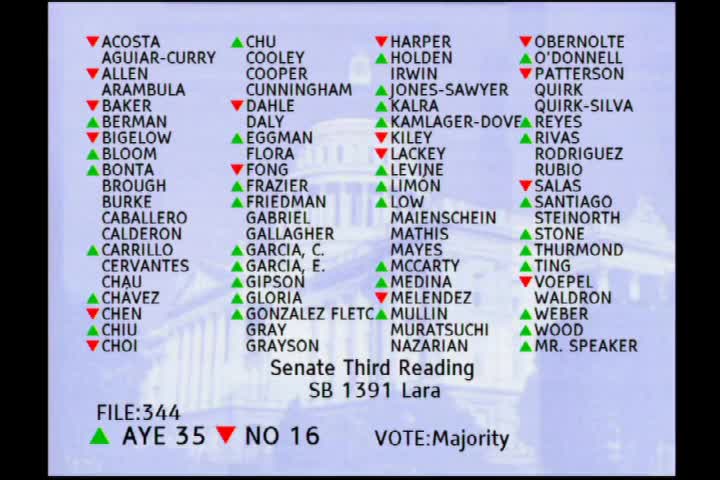 8MIN
Assembly Floor
 1H
Assembly Standing Committee on Appropriations
 55MIN
Assembly Standing Committee on Appropriations
 7MIN
Senate Floor
 1H
Senate Standing Committee on Appropriations
 49MIN