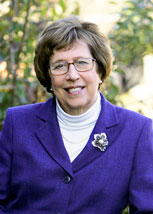
AB 1094: Energy usage: plug-in equipment.
- Session Year: 2015-2016
- House: Assembly
- Latest Version Date: 2015-05-12
Existing law requires the State Energy Resources Conservation and Development Commission (Energy Commission), on a biennial basis, to conduct assessments and forecasts of all aspects of energy industry supply, production, transportation, delivery, and distribution. Existing law requires the Energy Commission, beginning November 1, 2003, and biennially thereafter, to adopt an integrated energy policy report containing an overview of major energy trends and issues facing the state.
Under existing law, the Public Utilities Commission has regulatory jurisdiction over the public utilities, including electrical corporations.
This bill would require the Energy Commission, in collaboration with the Public Utilities Commission, to conduct an analysis of plug-in equipment electricity consumption, as specified, and set statewide, long-term energy efficiency targets for to reduce the amount of electricity consumed by plug-in equipment. The bill would require the Energy Commission, in collaboration with the Public Utilities Commission, to develop, track the progress of, revise, and update an implementation plan to achieve those targets, as specified. The bill would require the Public Utilities Commission, in collaboration with the Energy Commission, to work with stakeholders to address challenges to the achievement of those targets.
Existing law requires the State Energy Resources Conservation and Development Commission (Energy Commission), on a biennial basis, to conduct assessments and forecasts of all aspects of energy industry supply, production, transportation, delivery, and distribution. Existing law requires the Energy Commission, beginning November 1, 2003, and biennially thereafter, to adopt an integrated energy policy report containing an overview of major energy trends and issues facing the state.
Under existing law, the Public Utilities Commission has regulatory jurisdiction over the public utilities, including electrical corporations.
This bill would require the Energy Commission, in collaboration with the Public Utilities Commission, to conduct an analysis of plug-in equipment electricity consumption, as specified, and set statewide statewide, long-term energy efficiency targets for the greenhouse gases emitted by the generation of the electricity consumed by plug-in equipment. The bill would require the Energy Commission, in collaboration with the Public Utilities Commission, to develop, track the progress of, revise, and update an implementation plan to achieve those statewide targets, as specified. The bill would require the Public Utilities Commission, in collaboration with the Energy Commission, to work with stakeholders to address challenges to the achievement of those statewide targets.
Existing law requires the State Energy Resources Conservation and Development Commission (Energy Commission), on a biennial basis, to conduct assessments and forecasts of all aspects of energy industry supply, production, transportation, delivery, and distribution. Existing law requires the Energy Commission, beginning November 1, 2003, and biennially thereafter, to adopt an integrated energy policy report containing an overview of major energy trends and issues facing the state.
Under existing law, the Public Utilities Commission has regulatory jurisdiction over the public utilities, including electrical corporations.
This bill would require the Energy Commission, in collaboration with the Public Utilities Commission, to conduct an analysis of plug-in equipment electricity consumption, as specified, and set statewide targets for the greenhouse gases emitted by the generation of the electricity consumed by plug-in equipment. The bill would require the Energy Commission, in collaboration with the Public Utilities Commission, to develop, track the progress of, revise, and update an implementation plan to achieve, and work with stakeholders to address challenges to the achievement of, achieve those statewide targets, as specified. The bill would require the Public Utilities Commission, in collaboration with the Energy Commission, to work with stakeholders to address challenges to the achievement of those statewide targets.
Existing law requires the State Energy Resources Conservation and Development Commission (Energy Commission), on a biennial basis, to conduct assessments and forecasts of all aspects of energy industry supply, production, transportation, delivery, and distribution. Existing law requires the Energy Commission, beginning November 1, 2003, and biennially thereafter, to adopt an integrated energy policy report containing an overview of major energy trends and issues facing the state.
Under existing law, the Public Utilities Commission has regulatory jurisdiction over the public utilities, including electrical corporations.
This bill would require the Energy Commission, in collaboration with the Public Utilities Commission, to conduct an analysis of plug-in equipment electricity consumption, as specified, and set statewide targets for the greenhouse gases emitted by the generation of the electricity consumed by plug-in equipment. The bill would require the Energy Commission, in collaboration with the Public Utilities Commission, to develop, track the progress of, revise, and update an implementation plan to achieve, and work with stakeholders to address challenges to the achievement of, those statewide targets, as specified.
(a)The Legislature finds and declares all of the following:
(1)Residential and commercial buildings and the systems and equipment within them were responsible for 69 percent of all electricity consumption in California in 2013, the equivalent output of 70 500-megawatt powerplants. Under the 200013 historical growth trends, this is projected to increase to the equivalent of 79 powerplants by 2030. The electric power sector is the second largest source of greenhouse gas emissions in California after transportation, comprising 21 percent of the states total emissions.
(2)Plug-in equipment is responsible for two-thirds of electricity consumption in residential buildings and a significant share of electricity consumption in office buildings. This electricity consumption is increasing rapidly, indicating that current plug-in equipment efficiency policy efforts are outpaced by the growth in the number of electronic devices and their electricity consumption, jeopardizing Californias ability to meet its energy and climate goals.
(3)Cost-effective technologies such as those used in mobile electronic devices already exist to significantly reduce the electricity consumption of plug-in equipment, but are not used in the majority of plug-in electronic devices.
(4)California has set ambitious goals for renewable energy and energy efficiency in the envelope, major systems, and lighting of buildings, but does not have quantified goals for a category that now represents two-thirds of the electricity consumption in the states residential buildings and a significant share of the electricity consumption in commercial buildings.
(5)Market barriers, such as a lack of consumer awareness and information on product lifetime energy costs, and split incentives between manufacturers who make product design decisions and consumers who pay the electricity bill, give efficiency programs and standards a critical role in realizing the economic potential for energy efficiency in plug-in equipment.
(6)Challenges with the evaluation and the attribution of program savings to utilities and program implementers, as well as the focus on short-term savings, are limiting the effective use of these programs to capture energy-saving opportunities that require upfront investment to yield large future savings through market transformation.
(7)The State Energy Resources Conservation and Development Commission and the Public Utilities Commission have set a goal to achieve zero net energy for all new residential buildings by 2020 and for all new, and a substantial proportion of existing, commercial buildings by 2030.
(8)The Legislature supports the zero net energy goals of the State Energy Resources Conservation and Development Commission and the Public Utilities Commission as a key strategy to decarbonize the California economy.
(9)Plug-in equipment electricity consumption may not be fully accounted for in zero net energy models, leading to buildings designed and certified as zero net energy not necessarily achieving zero net energy in real-world operation when occupants bring in typical plug-in equipment.
(b)It is the intent of the Legislature to ensure that, in support of the states climate and energy goals, plug-in equipment energy consumption is reduced where technologically feasible and cost effective.
SEC. 2.Section 25327 is added to the Public Resources Code, to read:25327.(a)(1)For purposes of this subdivision HVAC means heating, ventilation, and air conditioning.
(2)For the purposes of this section, except as provided in paragraph (3), plug-in equipment means an electrical device that plugs into a power outlet, including, but not limited to, household appliances, electronic products, miscellaneous electrical loads, portable and other plug-in HVAC equipment, and commercial plug-in appliances.
(3)Plug-in equipment does not include the following:
(A)Non-plug-in HVAC, including split, packaged, or built-up HVAC equipment that is typically installed by an HVAC contractor.
(B)Lighting, whether built in or portable.
(C)Infrastructure loads wired directly to the building electrical system, such as ground-fault circuit interrupter (GFCI) breakers and outlets, wired smoke or carbon monoxide detectors, and lighting switches.
(D)Electric vehicles.
(4)For purposes of this subdivision, power outlets include line outlets, such as 110-volt alternating current (AC) and other emerging power delivery mechanisms, including Universal Serial Bus (USB), Power over Ethernet (PoE), and 24-volt direct current (VDC).
(b)The commission shall, in collaboration with the Public Utilities Commission, do all of the following:
(1)Conduct an analysis of plug-in equipment electricity consumption, including appliances, electronics, and miscellaneous electric loads, to assess current use and trends. The commission shall draw on existing data and already-funded studies where appropriate to limit costs and reduce the time required to complete the analysis. The analysis shall focus on the top 80 percent of plug-in equipment average annual electricity consumption.
(2)Before January 1, 2018, set statewide, long-term energy efficiency targets for to reduce the amount of electricity consumed by plug-in equipment.
(3)Develop an implementation plan, in consultation with stakeholders, including equipment manufacturers and retailers, to achieve the targets set forth in established under paragraph (2). The implementation plan shall meet all of the following requirements:
(A)Be comprised of a complementary portfolio of techniques, applications, and practices that may include, but need not be limited to: revising existing, and setting new, appliance efficiency standards; working with federal government agencies to revise existing, and implement new, federal standards; implementing incentive programs, appliance early replacement rebate programs that link purchase and disposal rebates, and upstream market transformation programs; expanding research and development; and public outreach and education efforts.
(B)Consider costs and ratepayer protections, consistent with Section 25000.1.
(C)Use an accurate cost-effectiveness methodology for assessing the long-term value of efficiency savings and ensure that benefits outweigh costs to ratepayers.
(4)Track the progress of the implementation plan in meeting the targets annually through the Electricity Supply Analysis Division of the commission and the Energy Division of the Public Utilities Commission.
(5)Revise the implementation plan and priorities in consultation with stakeholders.
(6)Update the implementation plan, as a part of the integrated energy policy report required pursuant to Section 25302, with a report on the progress toward meeting the targets through the tracking required pursuant to paragraph (4).
(c)The Public Utilities Commission shall, in collaboration with the commission, work with stakeholders, including equipment manufacturers, equipment retailers, and electric utilities, to address challenges that may limit or inhibit the achievement of the targets set forth in paragraph (2) of subdivision (b), including, but not limited to, the evaluation and attribution of energy savings and the enabling of market transformation programs.
(a)The Legislature finds and declares all of the following:
(1)Residential and commercial buildings and the systems and equipment within them were responsible for 69 percent of all electricity consumption in California in 2013, the equivalent output of 70 500-megawatt powerplants. Under the 200013 historical growth trends, this is projected to increase to the equivalent of 79 powerplants by 2030. The electric power sector is the second largest source of greenhouse gas emissions in California after transportation, comprising 21 percent of the states total emissions.
(2)Plug-in equipment is responsible for two-thirds of electricity consumption in residential buildings and a significant share of electricity consumption in office buildings. This electricity consumption is increasing rapidly, indicating that current plug-in equipment efficiency policy efforts are outpaced by the growth in the number of electronic devices and their electricity consumption, jeopardizing Californias ability to meet its energy and climate goals.
(3)Cost-effective technologies such as those used in mobile electronic devices already exist to significantly reduce the electricity consumption of plug-in equipment, but are not used in the majority of plug-in electronic devices.
(4)California has set ambitious goals for renewable energy and energy efficiency in the envelope, major systems, and lighting of buildings, but does not have quantified goals for a category that now represents two-thirds of the electricity consumption in the states residential buildings and a significant share of the electricity consumption in commercial buildings.
(5)Market barriers, such as a lack of consumer awareness and information on product lifetime energy costs, and split incentives between manufacturers who make product design decisions and consumers who pay the electricity bill, give efficiency programs and standards a critical role in realizing the economic potential for energy efficiency in plug-in equipment.
(6)Challenges with the evaluation and the attribution of program savings to utilities and program implementers, as well as the focus on short-term savings, are limiting the effective use of these programs to capture energy-saving opportunities that require upfront investment to yield large future savings through market transformation.
(7)The State Energy Resources Conservation and Development Commission and the Public Utilities Commission have set a goal to achieve zero net energy for all new residential buildings by 2020 and for all new, and a substantial proportion of existing, commercial buildings by 2030.
(8)The Legislature supports the zero net energy goals of the State Energy Resources Conservation and Development Commission and the Public Utilities Commission as a key strategy to decarbonize the California economy.
(9)Plug-in equipment electricity consumption may not be fully accounted for in zero net energy models, leading to buildings designed and certified as zero net energy not necessarily achieving zero net energy in real-world operation when occupants bring in typical plug-in equipment.
(b)It is the intent of the Legislature to ensure that, in support of the states climate and energy goals, plug-in equipment energy consumption is reduced where technologically feasible and cost effective.
SEC. 2.Section 25327 is added to the Public Resources Code, to read:25327.(a)(1)For purposes of this subdivision HVAC means heating, ventilation, and air conditioning.
(2)For the purposes of this section, except as provided in paragraph (3), plug-in equipment means an electrical device that plugs into a power outlet, including, but not limited to, household appliances, electronic products, miscellaneous electrical loads, portable and other plug-in HVAC equipment, and commercial plug-in appliances.
(3)Plug-in equipment does not include the following:
(A)Non-plug-in HVAC, including split, packaged, or built-up HVAC equipment that is typically installed by an HVAC contractor.
(B)Lighting, whether built in or portable.
(C)Infrastructure loads wired directly to the building electrical system, such as ground-fault circuit interrupter (GFCI) breakers and outlets, wired smoke or carbon monoxide detectors, and lighting switches.
(D)Electric vehicles.
(4)For purposes of this subdivision, power outlets include line outlets, such as 110-volt alternating current (AC) and other emerging power delivery mechanisms, including Universal Serial Bus (USB), Power over Ethernet (PoE), and 24-volt direct current (VDC).
(b)The commission shall, in collaboration with the Public Utilities Commission, do all of the following:
(1)Conduct an analysis of plug-in equipment electricity consumption, including appliances, electronics, and miscellaneous electric loads, to assess current use and trends. The commission shall draw on existing data and already-funded studies and data where appropriate to limit costs and reduce the time required to complete the analysis. The analysis shall focus on the top 80 percent of plug-in equipment average annual electricity consumption.
(2)Before January 1, 2018, set statewide statewide, long-term energy efficiency targets for the greenhouse gases emitted by the generation of the electricity consumed by plug-in equipment, in support of Executive Order S-3-05 to reduce greenhouse gases to 80 percent below 1990 levels by 2050. The commission may also set intermediate 2030 and 2040 targets. equipment.
(3)Develop an implementation plan, in consultation with stakeholders, including equipment manufacturers and retailers, to achieve the targets set forth in paragraph (2). The implementation plan shall meet all of the following requirements:
(A)Be comprised of a complementary portfolio of techniques, applications, and practices that may include, but need not be limited to: revising existing, and setting new, appliance efficiency standards; working with federal government agencies to revise existing, and implement new, federal standards; implementing incentive programs, appliance early replacement rebate programs that link purchase and disposal rebates, and upstream market transformation programs; expanding research and development; and public outreach and education efforts.
(B)Consider costs and ratepayer protections, consistent with Section 25000.1.
(C)Use an accurate cost-effectiveness methodology for assessing the long-term value of efficiency savings and ensure that benefits outweigh costs to ratepayers.
(4)Track the progress of the implementation plan in meeting the reduction targets annually through the Electricity Supply Analysis Division of the commission and the Energy Division of the Public Utilities Commission.
(5)Revise the implementation plan and priorities in consultation with stakeholders.
(6)Update the implementation plan, as a part of the integrated energy policy report required pursuant to Section 25302, with a report on the progress toward meeting the reduction targets through the tracking required pursuant to paragraph (4).
(c)The Public Utilities Commission shall, in collaboration with the commission, work with stakeholders, including equipment manufacturers, equipment retailers, and electric utilities, to address challenges that may limit or inhibit the achievement of the reduction targets set forth in paragraph (2) of subdivision (b), including, but not limited to, the evaluation and attribution of energy savings and the enabling of market transformation programs.
(a)The Legislature finds and declares all of the following:
(1)Residential and commercial buildings and the systems and equipment within them were responsible for 69 percent of all electricity consumption in California in 2013, the equivalent output of 70 500-megawatt powerplants. Under the 20002013 200013 historical growth trends, this is projected to increase to the equivalent of 79 powerplants by 2030. The electric power sector is the second largest source of greenhouse gas emissions in California after transportation, comprising 21 percent of the states total emissions.
(2)Plug-in equipment is responsible for the majority two-thirds of electricity consumption in residential buildings, a large portion of which is buildings and a significant share of electricity consumption in office buildings. This electricity consumption is increasing rapidly, indicating that current plug-in equipment efficiency policy efforts are outpaced by the growth in the number of electronic devices and their electricity consumption, jeopardizing Californias ability to meet its energy and climate goals.
(3)Cost-effective technologies such as those used in mobile electronic devices already exist to significantly reduce the electricity consumption of plug-in equipment, but are not used in the majority of plug-in electronic devices.
(4)California has set ambitious goals for renewable energy and energy efficiency in the envelope, major systems, and lighting of buildings, but does not have quantified goals for a category that now represents the majority two-thirds of the electricity consumption in the states residential buildings and a significant share of the electricity consumption in commercial buildings.
(5)Market barriers, such as a lack of consumer awareness and information on product lifetime energy costs, and split incentives between manufacturers who make product design decisions and consumers who pay the electricity bill, give efficiency programs and standards a critical role in realizing the economic potential for energy efficiency in plug-in equipment.
(6)Challenges with the evaluation and the attribution of program savings to utilities and program implementers, as well as the focus on short-term savings, are limiting the effective use of these programs to capture energy-saving opportunities that require upfront investment to yield large future savings through market transformation.
(7)The State Energy Resources Conservation and Development Commission and the Public Utilities Commission have set a goal to achieve zero net energy for all new residential buildings by 2020 and for all new, and a substantial proportion of existing, commercial buildings by 2030.
(8)The Legislature supports the zero net energy goals of the State Energy Resources Conservation and Development Commission and the Public Utilities Commission as a key strategy to decarbonize the California economy.
(9)Plug-in equipment electricity consumption may not be fully accounted for in zero net energy models, leading to buildings designed and certified as zero net energy not necessarily achieving zero net energy in real-world operation when occupants bring in typical plug-in equipment.
(b)It is the intent of the Legislature to ensure that, in support of the states climate and energy goals, plug-in equipment energy consumption is reduced where technologically feasible and cost effective.
SEC. 2.Section 25327 is added to the Public Resources Code, to read:25327.(a)(1)For purposes of this subdivision HVAC means heating, ventilation, and air conditioning.
(2)For the purposes of this section, except as provided in paragraph (3), plug-in equipment means an electrical device that plugs into a power outlet, including, but not limited to, household appliances, electronic products, miscellaneous electrical loads, portable and other plug-in HVAC equipment, and commercial plug-in appliances.
(3)Plug-in equipment does not include the following:
(A)Non-plug-in HVAC, including split, packaged, or built-up HVAC equipment that is typically installed by an HVAC contractor.
(B)Lighting, whether built in or portable.
(C)Infrastructure loads wired directly to the building electrical system, such as ground-fault circuit interrupter (GFCI) breakers and outlets, wired smoke or carbon monoxide detectors, and lighting switches.
(D)Electric vehicles.
(4)For purposes of this subdivision, power outlets include line outlets, such as 110-volt alternating current (AC) and other emerging power delivery mechanisms, including Universal Serial Bus (USB), Power over Ethernet (PoE), and 24-volt direct current (VDC).
(b)The commission shall, in collaboration with the Public Utilities Commission, do all of the following:
(1)Conduct an analysis of plug-in equipment electricity consumption, including appliances, electronics, and miscellaneous electric loads, to assess current use and trends. The commission shall draw on existing studies and data where appropriate to limit costs and reduce the time required to complete the analysis. The analysis shall focus on the top 80 percent of plug-in equipment average annual electricity consumption.
(2)Before January 1, 2018, set statewide targets for the greenhouse gases emitted by the generation of the electricity consumed by plug-in equipment, in support of Executive Order S-3-05 to reduce greenhouse gases to 80 percent below 1990 levels by 2050. The commission may also set intermediate 2030 and 2040 targets.
(3)Develop an implementation plan, in consultation with stakeholders, including equipment manufacturers and retailers, to achieve the targets set forth in paragraph (2). The implementation plan shall meet all of the following requirements:
(A)Be comprised of a complementary portfolio of techniques, applications, and practices that may include, but need not be limited to: revising existing, and setting new, appliance efficiency standards; working with federal government agencies to revise existing, and implement new, federal standards; implementing incentive programs, appliance early replacement rebate programs that link purchase and disposal rebates, and upstream market transformation programs; expanding research and development; and public outreach and education efforts.
(B)Consider costs and ratepayer protections, consistent with Section 25000.1.
(C)Use an accurate cost-effectiveness methodology for assessing the long-term value of efficiency savings and ensure that benefits outweigh costs to ratepayers.
(4)Work with stakeholders to address challenges that may limit or inhibit the achievement of the reduction targets set forth in paragraph (2), including, but not limited to, the evaluation and attribution of energy savings and the enabling of market transformation programs.
(5)
(4)Track the progress of the implementation plan in meeting the reduction targets annually through the Electricity Supply Analysis Division of the commission and the Energy Division of the Public Utilities Commission.
(6)
(5)Revise the implementation plan and priorities in consultation with stakeholders.
(7)
(6)Update the implementation plan, as a part of the integrated energy policy report required pursuant to Section 25302, with a report on the progress toward meeting the reduction targets through the tracking required pursuant to paragraph (5). (4).
(c)The Public Utilities Commission shall, in collaboration with the commission, work with stakeholders, including equipment manufacturers, equipment retailers, and electric utilities, to address challenges that may limit or inhibit the achievement of the reduction targets set forth in paragraph (2) of subdivision (b), including, but not limited to, the evaluation and attribution of energy savings and the enabling of market transformation programs.
(a)The Legislature finds and declares all of the following:
(1)Residential and commercial buildings and the systems and equipment within them were responsible for 69 percent of all electricity consumption in California in 2013, the equivalent output of 70 500-megawatt powerplants. Under the 20002013 historical growth trends, this is projected to increase to the equivalent of 79 powerplants by 2030. The electric power sector is the second largest source of greenhouse gas emissions in California after transportation, comprising 21 percent of the states total emissions.
(2)Plug-in equipment is responsible for the majority of electricity consumption in residential buildings, a large portion of which is in office buildings. This electricity consumption is increasing rapidly, indicating that current plug-in equipment efficiency policy efforts are outpaced by the growth in the number of electronic devices and their electricity consumption, jeopardizing Californias ability to meet its energy and climate goals.
(3)Cost-effective technologies such as those used in mobile electronic devices already exist to significantly reduce the electricity consumption of plug-in equipment, but are not used in the majority of plug-in electronic devices.
(4)California has set ambitious goals for renewable energy and energy efficiency in the envelope, major systems, and lighting of buildings, but does not have quantified goals for a category that now represents the majority of the electricity consumption in the states residential buildings and a significant share of the electricity consumption in commercial buildings.
(5)Market barriers, such as a lack of consumer awareness and information on product lifetime energy costs, and split incentives between manufacturers who make product design decisions and consumers who pay the electricity bill, give efficiency programs and standards a critical role in realizing the economic potential for energy efficiency in plug-in equipment.
(6)Challenges with the evaluation and the attribution of program savings to utilities and program implementers, as well as the focus on short-term savings, are limiting the effective use of these programs to capture energy-saving opportunities that require upfront investment to yield large future savings through market transformation.
(7)The State Energy Resources Conservation and Development Commission and the Public Utilities Commission have set a goal to achieve zero net energy for all new residential buildings by 2020 and for all new, and a substantial proportion of existing, commercial buildings by 2030.
(8)The Legislature supports the zero net energy goals of the State Energy Resources Conservation and Development Commission and the Public Utilities Commission as a key strategy to decarbonize the California economy.
(9)Plug-in equipment electricity consumption may not be fully accounted for in zero net energy models, leading to buildings designed and certified as zero net energy not necessarily achieving zero net energy in real-world operation when occupants bring in typical plug-in equipment.
(b)It is the intent of the Legislature to ensure that, in support of the states climate and energy goals, plug-in equipment energy consumption is reduced where technologically feasible and cost effective.
SEC. 2.Section 25327 is added to the Public Resources Code, to read:25327.(a)(1)For purposes of this subdivision HVAC means heating, ventilation, and air conditioning.
(2)For the purposes of this section, except as provided in paragraph (3), plug-in equipment means an electrical device that plugs into a power outlet, including, but not limited to, household appliances, electronic products, miscellaneous electrical loads, portable and other plug-in HVAC equipment, and commercial plug-in appliances.
(3)Plug-in equipment does not include the following:
(A)Non-plug-in HVAC, including split, packaged, or built-up HVAC equipment that is typically installed by an HVAC contractor.
(B)Lighting, whether built in or portable.
(C)Infrastructure loads wired directly to the building electrical system, such as ground-fault circuit interrupter (GFCI) breakers and outlets, wired smoke or carbon monoxide detectors, and lighting switches.
(D)Electric vehicles.
(4)For purposes of this subdivision, power outlets include line outlets, such as 110-volt alternating current (AC) and other emerging power delivery mechanisms, including Universal Serial Bus (USB), Power over Ethernet (PoE), and 24-volt direct current (VDC).
(b)The commission shall, in collaboration with the Public Utilities Commission, do all of the following:
(1)Conduct an analysis of plug-in equipment electricity consumption, including appliances, electronics, and miscellaneous electric loads, to assess current use and trends. The commission shall draw on existing studies and data where appropriate to limit costs and reduce the time required to complete the analysis.
(2)Before January 1, 2018, set statewide targets for the greenhouse gases emitted by the generation of the electricity consumed by plug-in equipment, in support of Executive Order S-3-05 to reduce greenhouse gases to 80 percent below 1990 levels by 2050. The commission may also set intermediate 2030 and 2040 targets.
(3)Develop an implementation plan, in consultation with stakeholders, including equipment manufacturers and retailers, to achieve the targets set forth in paragraph (2). The implementation plan shall meet all of the following requirements:
(A)Be comprised of a complementary portfolio of techniques, applications, and practices that may include, but need not be limited to: revising existing, and setting new, appliance efficiency standards; working with federal government agencies to revise existing, and implement new, federal standards; implementing incentive programs, appliance early replacement rebate programs that link purchase and disposal rebates, and upstream market transformation programs; expanding research and development; and public outreach and education efforts.
(B)Consider costs and ratepayer protections, consistent with Section 25000.1.
(C)Use an accurate cost-effectiveness methodology for assessing the long-term value of efficiency savings and ensure that benefits outweigh costs to ratepayers.
(4)Work with stakeholders to address challenges that may limit or inhibit the achievement of the reduction targets set forth in paragraph (2), including, but not limited to, the evaluation and attribution of energy savings and the enabling of market transformation programs.
(5)Track the progress of the implementation plan in meeting the reduction targets annually through the Electricity Supply Analysis Division of the commission and the Energy Division of the Public Utilities Commission.
(6)Revise the implementation plan and priorities in consultation with stakeholders.
(7)Update the implementation plan, as a part of the integrated energy policy report required pursuant to Section 25302, with a report on the progress toward meeting the reduction targets through the tracking required pursuant to paragraph (5).
|
Date
|
Status
|
|---|---|
| Feb 1, 2016 | From committee: Filed with the Chief Clerk pursuant to Joint Rule 56. |
| Jan 31, 2016 | Died pursuant to Article IV, Sec. 10(c) of the Constitution. |
| May 28, 2015 | In committee: Held under submission. |
| May 20, 2015 | In committee: Set, first hearing. Referred to APPR. suspense file. |
| May 20, 2015 | In committee: Set, first hearing. Referred to suspense file. |
| May 13, 2015 | Re-referred to Com. on APPR. |
| May 12, 2015 | From committee chair, with author's amendments: Amend, and re-refer to Com. on APPR. Read second time and amended. |
| Apr 30, 2015 | Re-referred to Com. on APPR. |
| Apr 29, 2015 | Read second time and amended. |
| Apr 28, 2015 | From committee: Amend, and do pass as amended and re-refer to Com. on APPR. (Ayes 7. Noes 2.) (April 27). |
| Apr 21, 2015 | From committee: Do pass and re-refer to Com. on NAT. RES. (Ayes 11. Noes 3.) (April 20). Re-referred to Com. on NAT. RES. |
| Apr 7, 2015 | Re-referred to Com. on U. & C. |
| Apr 6, 2015 | From committee chair, with author's amendments: Amend, and re-refer to Com. on U. & C. Read second time and amended. |
| Mar 19, 2015 | Referred to Coms. on U. & C. and NAT. RES. |
| Mar 2, 2015 | Read first time. |
| Mar 1, 2015 | From printer. May be heard in committee March 31. |
| Feb 27, 2015 | Introduced. To print. |
|
Date
|
Description
|
Location
|
Votes
|
|
|---|---|---|---|---|
| Apr 27, 2015 | Do pass as amended and be re-referred to the Committee on [Appropriations] | Assembly Standing Committee on Natural Resources |
Passed |
|
| Apr 20, 2015 | Do pass and be re-referred to the Committee on [Natural Resources] | Assembly Standing Committee on Utilities and Commerce |
Passed |
This list shows positions taken on this bill by organizations on the date displayed, which is linked to the original source.
Positions by individuals are not included.
AB 1094
Page 2
Date of Hearing: May 20, 2015
ASSEMBLY COMMITTEE ON APPROPRIATIONS
Jimmy Gomez, Chair
AB 1094
(Williams) – As Amended May 12, 2015
Policy Committee: |
Utilities and Commerce |
Vote: |
11 - 3 |
|
Natural Resources |
|
7 - 2 |
|
|
|
|
Urgency: No State Mandated Local Program: No Reimbursable: No
SUMMARY:
This bill requires the California Energy Commission (CEC), in consultation with the Public Utilities Commission (PUC), to conduct an analysis of energy consumption by plug-in equipment and develop an implementation plan to achieve specified energy efficiency targets. Specifically, this bill requires CEC in consultation with the PUC to:
Conduct an analysis of plug-in equipment electricity consumption and trends, drawing on existing data where appropriate. Requires that the analysis be focused on the top 80% of plug-in equipment electricity consumption;
By January 1, 2018, set statewide reduction targets for greenhouse gas (GHG) emitted through electricity production consumed by energy consumption for plug-in equipment.
Develop, revise and update an implementation plan to achieve statewide targets. Track and report on the progress of the implementation plan.
Additionally, this bill:
Requires the PUC, in collaboration with CEC, to work with stakeholders to address challenges to the achievement of the statewide targets.
Defines "plug-in equipment" as an electrical device that plugs into a power outlet, including, but not limited to, household appliances, electronic products, miscellaneous electrical loads, portable and other plug-in HVAC equipment, and commercial plug-in appliances.
Specifies that "plug-in equipment" does not include
non-plug-in HVAC equipment, lighting, infrastructure loads wired
directly to the building electrical system, wired smoke or carbon
monoxide detectors, lighting switches, and electric vehicles.
FISCAL EFFECT:
Increased one-time costs of up to $1 million for the CEC (GF or special fund).
Increased one-time costs of up to $5 million for the PUC (special fund).
COMMENTS:
Rationale. According to the author, plug-in equipment is responsible for nearly 60% of residential and 16% of commercial electricity consumption in California. Across both sectors, plug-in equipment consumes the equivalent annual output of 23 500-megawatt power plants. This is projected to increase to 27 power plants by 2030.
This bill addresses this large, yet often overlooked, sector of energy consumption.
Background. The CEC has been proposing and adopting appliance regulations since its inception in 1977. As new product designs, new information about products, and new information about energy usage become available, the CEC will periodically propose new regulations or update existing regulations. The CEC continuously researches, investigates, assesses, and identifies appliance and end use products which may ultimately become the subject of an appliance regulation. The CEC is preempted from adopting energy efficiency regulations on products which are already regulated for their energy usage by the Federal government.
The PUC oversees existing investor-owned utility (IOU) administered ratepayer-funded energy efficiency rebate and codes and standards programs.
Governor's Executive Order. On April 29, 2015, Governor Brown issued an executive order establishing a statewide GHG emission reduction target to reduce greenhouse gas emissions to 40% below 1990 levels by 2030, and 80% below 1990 levels by 2050
As part of the executive order, state
agencies with jurisdiction over sources of GHG emissions were ordered
to implement measures pursuant to their existing statutory authority
to achieve the required reductions. This bill is consistent with
that order.
Previous Legislation. AB 2529 (Williams, 2014) would have required CEC and PUC to perform a study of energy usage by plug-in equipment and develop an implementation plan to achieve specified reductions in energy consumption by 2030. This bill was held on suspense in this Committee.
This bill narrows the scope of AB 2529 to the top 80% of plug-in equipment, and requires CEC and PUC to draw upon existing data and already funded studies.
Analysis Prepared by: Jennifer Galehouse / APPR. / (916) 319-2081
AB 1094
Page 4
Date of Hearing: April 27, 2015
ASSEMBLY COMMITTEE ON NATURAL RESOURCES
Das Williams, Chair
AB 1094
(Williams) – As Amended April 6, 2015
SUBJECT: Energy usage: plug-in equipment
SUMMARY: Requires the California Energy Commission (CEC), in consultation with the California Public Utilities Commission (CPUC), to conduct an analysis of plug-in equipment energy consumption and develop an implementation plan to achieve specified energy efficiency targets.
EXISTING LAW:
Requires CEC to continuously carry out studies, technical assessments, research projects, and data collection directed to reducing wasteful, inefficient, unnecessary, or uneconomic uses of energy, including improved appliance efficiency.
Requires CEC to adopt cost-effective energy and water efficiency standards for appliances.
Requires CEC to adopt energy efficiency standards for battery chargers. Standards for consumer chargers went into effect on February 1, 2013, and standards for industrial chargers went into effect on January 1, 2014.
Prohibits the sale of products that do not meet efficiency standards adopted by CEC.
Authorizes CEC to issue an administrative enforcement process for violations of its appliance efficiency standards, including administrative civil penalties up to $2,500 for each violation, in compliance with existing law governing administrative hearings and adjudication.
THIS BILL:
Requires CEC, in collaboration with CPUC, to:
Conduct an analysis of plug-in equipment electricity consumption and trends, drawing on existing data where appropriate. Requires that the analysis be focused on the top 80% of plug-in equipment electricity consumption;
On or before January 21, 2018, set statewide reduction targets for greenhouse gasses (GHGs) emitted through production of electricity consumed by plug-in equipment;
Develop, revise, and update an implementation plan to achieve the statewide targets; and,
Track and report on the progress of the implementation plan to achieve the statewide targets.
Requires CPUC, in collaboration with CEC, to work with stakeholders to address challenges to the achievement of the statewide targets.
Defines "plug-in equipment" as an electrical device that plugs into a power outlet, including, but not limited to, household appliances, electronic products, miscellaneous electrical loads, portable and other plug-in HVAC equipment, and commercial plug-in appliances. Specifies that "plug-in equipment" does not include non-plug-in HVAC equipment, lighting, infrastructure loads wired directly to the building electrical system, wired smoke or carbon monoxide detectors, lighting switches, and electric vehicles.
States related legislative findings and intent.
FISCAL EFFECT: Unknown
COMMENTS:
This bill. According to the author:
Plug-in equipment is responsible for nearly 60% of residential and 16% of commercial electricity consumption in California. Across both sectors, plug-in equipment consumes the equivalent annual output of 23 500-megawatt power plants. This is projected to increase to 27 power plants by 2030.
The CEC and CPUC have an array of existing programs, including research and development, appliance standards, and efficiency programs, aimed at increasing energy efficiency statewide. There is the potential to scale up these efforts to capture a larger share of cost-effective energy savings in plug-in equipment. Quantified goals will drive state agencies to perform target-driven planning, working with stakeholders to utilize the most effective strategies available to transform the plug-in equipment market at the pace and scale required to meet California's energy and climate goals.
CEC appliance standard regulations. CEC began adopting appliance regulations at its inception in 1977. As new product designs, new information about products, and new information about energy usage become available, CEC periodically proposes new regulations and updates existing regulations. Current law requires CEC to research, investigate, assess, and identify appliances and other products that should be subject to appliance efficiency standards. CEC is preempted from adopting energy efficiency regulations on products that are already regulated for their energy usage by the federal government.
Current CEC regulations include 23 categories of appliances, including: air conditioners, heaters, and fans; battery chargers; clothes washers and dryers; cooking products and food service equipment; dishwashers; distribution transformers; electric motors; lighting products; plumbing fittings and fixtures; pool and spa equipment; external power supplies; refrigerators, refrigerator-freezers, and freezers; televisions, consumer audio and video equipment; and, water heaters. These existing regulations include plug-in equipment, including power tools, lights, electronics, cordless phones, and other plug-in devices.
CEC has developed draft regulations for the following appliances:
Faucets, toilets, and urinals, April 2014;
Air filters and dimming ballasts, April 2014;
Light emitting diode (LED) lamps and multifaceted reflector (MR) lamps, May 2014;
Pool pump motors and portable electric spas, August 2014;
Computers, monitors, and displays, November 2014;
Network equipment, February 2015;
Game consoles, February 2015; and,
Commercial clothes dryers, February 2015.
Energy efficiency opportunities. This bill is intended to expand CEC's existing efforts to improve energy efficiency in plug-in appliances. Additional energy savings is achievable by a number of means, including developing standards for other types of plug-in equipment, requiring devices to go into very low power modes when not in use, improved efficiency in large appliances, and expanding the application of ultra-low power technology currently used in mobile electronics to more types of products.
The 2013 California Energy Efficiency and Goals Study, prepared for CPUC, found that:
Lighting, whole-building, and appliance plugs have the largest energy savings potential. There are many new appliance plug measures that are coming into the market and modeled in this study. The results show that these new appliance plug measures have a significant impact on energy savings potential and make up nearly a quarter of the potential savings in 2020.
Previous legislation.
AB 2529 (Williams, 2014) would have required CEC and PUC to perform a study of energy usage by plug-in equipment and develop an implementation plan to achieve specified reductions in energy consumption by plug-in equipment by 2030. This bill was held in the Assembly Appropriations Committee.
AB 454 (Pavley), Chapter 591, Statutes of 2011 authorized CEC to adopt an administrative enforcement process, including civil penalties, for violations of its appliance efficiency standards. Requires utility energy efficiency rebates to be provided only if work complies with applicable permitting and contractor licensing requirements.
SB 332 (Corbett, 2007) would have required CEC to develop a priority list of appliances for review by the commission for test procedures and efficiency standards, and to develop testing procedures for televisions and computer monitors in the active mode. This bill was held in the Assembly Appropriations Committee.
AB 2021 (Levine), Chapter 734, Statutes of 2006 requires all electric and natural gas utilities to meet energy efficiency savings targets established by CEC and CPUC.
5) Double Referral. This bill has been double referred to the Utilities and Commerce Committee, which passed with a vote of 11 to 3. That committee passed the bill with the agreement that amendments would be adopted in this committee. The amendments strike the requirement for CEC to set GHG standards for plug in equipment.
REGISTERED SUPPORT / OPPOSITION:
Support
Association of Home Appliance Manufacturers
California Energy Efficiency Industry Council
California Building Industry Associuation
California Business Properties
California Retailers Association
California League of Conservation Voters
Coalition for Clean Air
Communities for a Better Environment
Environment California
Environmental Defense Fund
Environmental Entrepreneurs
Global Green
Natural Resources Defense Council (Sponsor)
Pacific Gas and Electric Company
Sacramento Municipal Utility District
San Diego Gas & Electric Company
Sierra Club
Southern California Edison
US Green Building Council
Union of Concerned Scientists
Opposition
California Manufacturers & Technology Association
Consumer
Electronics Association
Independent Energy Producers Association
Analysis Prepared by: Elizabeth MacMillan / NAT. RES. / (916) 319-2092
AB 1094
Page 5
Date of Hearing: April 20, 2015
ASSEMBLY COMMITTEE ON UTILITIES AND COMMERCE
Anthony Rendon, Chair
AB 1094
(Williams) – As Amended April 6, 2015
SUBJECT: Energy usage: plug-in equipment
SUMMARY: This bill requires the California Energy Commission (CEC), in collaboration with the California Public Utilities Commission (CPUC), to set greenhouse gas reduction targets for plug-in equipment based on analysis of plug-in equipment energy consumption. Specifically, this bill:
Requires the CEC, in collaboration with the CPUC, to:
Conduct an analysis of plug-in equipment electricity consumption and trends, drawing on existing data where appropriate.
Set statewide reduction targets for greenhouse gasses emitted through production of electricity consumed by plug-in equipment.
Develop, track the progress of, revise and update an implementation plan to achieve those statewide targets.
Track and report on progress of implementation plan to achieve those statewide targets.
Requires the CPUC, in collaboration with the CEC, to work with stakeholders to address challenges to the achievement of those statewide targets.
EXISTING LAW:
Requires the CEC to continuously carry out studies, technical assessments, research projects, and data collection directed to reducing wasteful, inefficient, unnecessary, or uneconomic uses of energy, including improved appliance efficiency. (Public Resources Code §25401)
Requires the CEC to adopt cost-effective energy and water efficiency standards for appliances. (Public Resources Code §25402)
Prohibits the sale of new appliances that do not meet the energy and water efficiency standards adopted by the CEC. (Public Resources Code §25402(c))
FISCAL EFFECT: Unknown.
COMMENTS:
Author’s Statement. “Plug-in equipment is responsible for more than two thirds of residential electricity consumption and produces nearly 21 percent of the state’s total greenhouse gas emissions.
The CEC and CPUC have an array of existing programs including research and development, appliance standards, and efficiency programs aimed at increasing energy efficiency statewide. However agency reports show that plug-in equipment only represents approximately 20 percent of efficiency programs and standards savings, a large gap with their share of consumption. There is the potential to scale up these efforts to capture a larger share of cost-effective energy savings in plug-in equipment. Quantified goals will drive state agencies to perform target-driven planning, working with stakeholders to utilize the most effective strategies available to transform the plug-in equipment market at the pace and scale required to meet California’s energy and climate goals.
“There are many existing goals for reducing energy usage generally. There are energy efficiencies for select appliances but none cover the spectrum of plug-in equipment.”
Need for the bill: NRDC states that greater plug-in equipment efficiency offers the potential for an upwards of approximately $2.5 million in additional avoided electricity bills by 2030. AB 1094 requires collaboration between the CEC and CPUC to address these problems and embrace the opportunity for savings. The bill encourages both Commissions to approach energy efficiency strategically and comprehensively, requiring that each embraces available tools in an effective and resourceful way.
Much already done: The CEC has been proposing and adopting appliance regulations since its inception in 1977. As new product designs, new information about products, and new information about energy usage become available, the CEC will periodically propose new regulations or update existing regulations. The CEC continuously researches, investigates, assesses, and identifies appliance and end use products which may ultimately become the subject of an appliance regulation. Current regulations cover about 23 categories of appliances, including:
Air conditioners, heaters, and fans,
Battery charger systems,
Clothes washers and dryers,
Cooking products and food service equipment,
Dishwashers,
Distribution transformers,
Electric motors,
Lighting products,
Plumbing fittings and fixtures,
Pool and spa equipment,
External power supplies,
Refrigerators, refrigerator-freezers, and freezers,
Televisions, consumer and video equipment, and
Water heaters
These regulations already include plug-in equipment, including power tools, cordless phones, and many other plug-in devices.
In last year’s analysis of the author’s AB 2529, the committee raised questions about what further requirements of the CEC could accomplish. Though similar, this year’s AB 1094 aims more generally at coordinating existing efforts rather than developing new ones.
Will the remaining sources of plug loads be significant? Technologies that are not yet on the list of regulated plug loads include set-top boxes used to access media entertainment and video game consoles. A growing trend is for internet services to replace these devices. This is known as "cloud-based streaming."
According to a recent report by the CPUC, California's average residential customer uses about 557 kilowatt-hours per month.1 The report found that household income is an important determination in electricity usage: "combined usage of households in moderate and high-areas is almost four times larger in the summer (five times larger in the winter) than the combined summer usage in very low and low-income areas."
Perhaps higher income households could afford newer, more energy efficient plug-in devices than lower income households, which would infer lower energy usage in higher income households. Perhaps higher income households have more plug-in devices than lower income households. It is possible that higher income households have larger homes than lower income households with proportionally higher heating and air conditioning demand.
It's unclear whether plug loads from set top boxes and video game consoles are a significant driver in electricity consumption or whether their use may be waning in favor of new entertainment delivery systems. Having the CEC look into this further would be worthwhile.
Greenhouse gas emission targets. AB 1094 would require the CEC to set statewide targets for the greenhouse gases emitted by the generation of the electricity consumed by plug-in equipment. Current law provides the Air Resources Board with authority to set greenhouse gas emission standards. CEC authority to set greenhouse gas emissions may unnecessarily complicate and blur the lines of authority with respect to setting GHG standards and enforcing them.
The author may wish to consider an amendment to focus on the devices that consume the highest amount of electricity, and strike the requirement for the CEC to set GHG standards for plug in equipment.
25327(b) (1) Conduct an analysis of plug-in equipment electricity
consumption, including appliances, electronics, and miscellaneous
electric loads, to assess current use and trends. The commission
shall draw on existing data and already funded studies and
data where appropriate to limit
costs and reduce the time required to complete the analysis.
The analysis shall focus on the top 80 percent of
plug-in equipment average annual electricity consumption.
(2) Before January 1, 2018, set statewide long term energy
efficiency targets for the greenhouse gases emitted by
the generation of the electricity consumed by plug-in
equipment, in support of Executive Order S-3-05 to reduce
greenhouse gases to 80 percent below 1990 levels by 2050.
The commission may also set intermediate 2030 and 2040 targets.
Related Legislation:
AB 2529 (Williams, 2014): Required the CEC and the PUC to perform a study of energy usage by plug-in equipment and develop an implementation plan to achieve specified reductions in energy consumption by plug-in equipment by 2030. Died, Assembly Appropriations Committee.
AB 454 (Pavley, Chapter 591, Statutes of 2011): Required that a party protected by a civil protective order be notified prior to a hearing to modify that order or terminate it before its expiration date.
AB 1109 (Huffman, Chapter 534, Statutes of 2007): Enacted the California Lighting Efficiency and Toxics Reduction Act.
SB 332 (Corbett, 2007): Required the commission, not later than to develop a priority list of appliances for review by the commission for test procedures and efficiency standards, and to develop testing procedures for televisions and computer monitors in the active mode. Died in Assembly Appropriations Committee.
AB 2021 (Levine, 2006, Chapter 734, Statutes of 2006): Requires all electric and natural gas utilities to meet energy efficiency savings targets established by the California Energy Commission (CEC) and the California Public Utilities Commission (PUC).
Double Referral: This bill has been double referred to the Committee on Natural Resources.
REGISTERED SUPPORT / OPPOSITION:
Support
Natural Resources Defense Council (Sponsor)
California Retailer’s Association
California Energy Efficiency Industry Council
California League of Conservation Voters
Coalition for Clean Air
Communities for a Better Environment
Environment California
Environmental Defense Fund
Environmental Entrepreneurs
Global Green
San Diego Gas and Electric
Sierra Club
US Green Building Council
Opposition
None on file.
Analysis Prepared by: Allegra Roth / U. & C. / (916) 319-2083
Discussed in Hearing
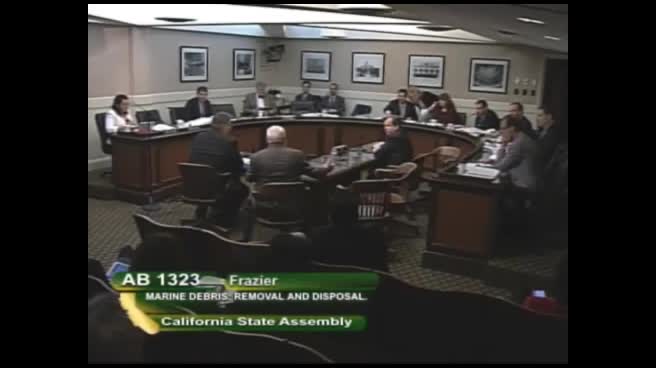 5MIN
Assembly Standing Committee on Natural Resources
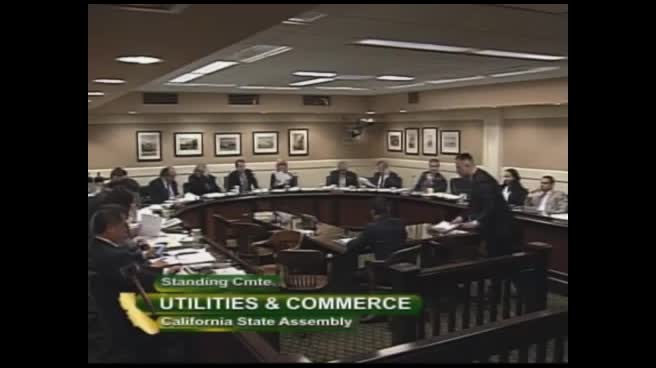 8MIN
Assembly Standing Committee on Utilities and Commerce
Bill Author