SB 911: Police animals: offenses.
- Session Year: 2017-2018
- House: Senate
- Latest Version Date: 2018-04-16
Under existing law, it is a crime to assault, batter, or interfere with, as specified, a police dog or police horse. Under existing law, a violation of these provisions is punishable as a misdemeanor, or, if a serious physical injury is inflicted upon the animal, as a misdemeanor or a felony. Additionally, under existing law, if a person, with the intent to inflict injury or death, causes the death or serious physical injury of the animal, that person is, upon conviction of a felony, punishable by an additional one-year term of imprisonment. Under existing law, for each felony case, a court is required to hold, and a prosecutor is required to attend, a preliminary hearing.
This bill would instead make the intentional killing or infliction of serious physical injury to a police dog or police horse a felony. felony punishable by imprisonment for 2, 3, or 4 years.
By changing the penalty of an existing crime, and by imposing additional duties on local prosecutors by increasing the number of preliminary hearings, this bill would impose a state-mandated local program.
The California Constitution requires the state to reimburse local agencies and school districts for certain costs mandated by the state. Statutory provisions establish procedures for making that reimbursement.
This bill would provide that no reimbursement is required by this act for a specified reason.
Under existing law, it is a crime to assault, batter, or interfere with, as specified, a police dog or police horse. Under existing law, a violation of these provisions is punishable as a misdemeanor, or, if a serious physical injury is inflicted upon the animal, as a misdemeanor or felony. Additionally, under existing law, if a person, with the intent to inflict injury or death, causes the death or serious physical injury of the animal, that person is, upon conviction of a felony, punishable by an additional one-year term of imprisonment.
This bill would instead make the intentional killing or infliction of serious physical injury to a police dog or police horse a felony.
By changing the penalty of an existing crime, this bill would impose a state-mandated local program.
The California Constitution requires the state to reimburse local agencies and school districts for certain costs mandated by the state. Statutory provisions establish procedures for making that reimbursement.
This bill would provide that no reimbursement is required by this act for a specified reason.
(a)Any A person who willfully and maliciously willfully, maliciously, and with no legal justification strikes, beats, kicks, cuts, stabs, shoots with a firearm, administers any poison or other harmful or stupefying substance to, or throws, hurls, or projects at, or places any rock, object, or other substance which is used in such a manner as to be capable of producing injury and likely to produce injury, on or in the path of, a horse being used by, or a dog under the supervision of, a peace officer in the discharge or attempted discharge of his or her duties, or a volunteer who is acting under the direct supervision of a peace officer in the discharge or attempted discharge of his or her assigned volunteer duties, is guilty of a public offense. If the injury inflicted is a serious injury, as described in subdivision (c), the person shall be punished by imprisonment pursuant to subdivision (h) of Section 1170 for 16 months, two or three years, or in a county jail for not exceeding one year, or by a fine not exceeding two thousand dollars ($2,000), or by both a fine and imprisonment. If the injury inflicted is not a serious injury, the person shall be punished by imprisonment in the county jail for not exceeding one year, or by a fine not exceeding one thousand dollars ($1,000), or by both a fine and imprisonment.
(b)Any A person who willfully and maliciously and with no legal justification interferes with or obstructs a horse or dog being used by a peace officer in the discharge or attempted discharge of his or her duties, or a volunteer who is acting under the direct supervision of a peace officer in the discharge or attempted discharge of his or her assigned volunteer duties, by frightening, teasing, agitating, harassing, or hindering the horse or dog shall be punished by imprisonment in a county jail for not exceeding one year, or by a fine not exceeding one thousand dollars ($1,000), or by both a fine and imprisonment.
(c)Any A person who, in violation of this section, and with intent to inflict that injury or death, personally causes the death, destruction, or serious physical injury including bone fracture, loss or impairment of function of any bodily member, wounds requiring extensive suturing, or serious crippling, of a horse or dog is guilty of a felony and shall be punished by imprisonment in the county jail pursuant to subdivision (h) of Section 1170 for two, three, or four years.
(d)Any A person who, in violation of this section, and with the intent to inflict that injury, personally causes great bodily injury, as defined in Section 12022.7, to any person not an accomplice, shall, upon conviction of a felony under this section, in addition and consecutive to the punishment prescribed for the felony, be punished by an additional term of imprisonment in the state prison for two years unless the conduct described in this subdivision is an element of any other offense of which the person is convicted or receives an enhancement under Section 12022.7.
(e)A defendant convicted of a violation of this section shall be ordered to make restitution to the agency owning the animal and employing the peace officer, to a volunteer who is acting under the direct supervision of a peace officer who is using his or her horse or supervising his or her dog in the performance of his or her assigned duties, or to the agency that provides, or the individual who provides, veterinary health care coverage or veterinary care for a horse or dog being used by, or under the supervision of, a volunteer who is acting under the direct supervision of a peace officer for any veterinary bills, replacement costs of the animal if it is disabled or killed, and, if applicable, the salary of the peace officer for the period of time his or her services are lost to the agency.
SEC. 2.No reimbursement is required by this act pursuant to Section 6 of Article XIIIB of the California Constitution because the only costs that may be incurred by a local agency or school district will be incurred because this act creates a new crime or infraction, eliminates a crime or infraction, or changes the penalty for a crime or infraction, within the meaning of Section 17556 of the Government Code, or changes the definition of a crime within the meaning of Section 6 of Article XIIIB of the California Constitution.
(a)Any person who willfully and maliciously and with no legal justification strikes, beats, kicks, cuts, stabs, shoots with a firearm, administers any poison or other harmful or stupefying substance to, or throws, hurls, or projects at, or places any rock, object, or other substance which is used in such a manner as to be capable of producing injury and likely to produce injury, on or in the path of, a horse being used by, or a dog under the supervision of, a peace officer in the discharge or attempted discharge of his or her duties, or a volunteer who is acting under the direct supervision of a peace officer in the discharge or attempted discharge of his or her assigned volunteer duties, is guilty of a public offense. If the injury inflicted is a serious injury, as described in subdivision (c), the person shall be punished by imprisonment pursuant to subdivision (h) of Section 1170 for 16 months, two or three years, or in a county jail for not exceeding one year, or by a fine not exceeding two thousand dollars ($2,000), or by both a fine and imprisonment. If the injury inflicted is not a serious injury, the person shall be punished by imprisonment in the county jail for not exceeding one year, or by a fine not exceeding one thousand dollars ($1,000), or by both a fine and imprisonment.
(b)Any person who willfully and maliciously and with no legal justification interferes with or obstructs a horse or dog being used by a peace officer in the discharge or attempted discharge of his or her duties, or a volunteer who is acting under the direct supervision of a peace officer in the discharge or attempted discharge of his or her assigned volunteer duties, by frightening, teasing, agitating, harassing, or hindering the horse or dog shall be punished by imprisonment in a county jail for not exceeding one year, or by a fine not exceeding one thousand dollars ($1,000), or by both a fine and imprisonment.
(c)Any person who, in violation of this section, and with intent to inflict that injury or death, personally causes the death, destruction, or serious physical injury including bone fracture, loss or impairment of function of any bodily member, wounds requiring extensive suturing, or serious crippling, of a horse or dog, shall, upon conviction dog is guilty of a felony under this section, in addition and consecutive to the punishment prescribed for the felony, be punished by an additional term of imprisonment pursuant to subdivision (h) of Section 1170 for one year. and shall be punished by imprisonment in the county jail for two, three, or four years.
(d)Any person who, in violation of this section, and with the intent to inflict that injury, personally causes great bodily injury, as defined in Section 12022.7, to any person not an accomplice, shall, upon conviction of a felony under this section, in addition and consecutive to the punishment prescribed for the felony, be punished by an additional term of imprisonment in the state prison for two years unless the conduct described in this subdivision is an element of any other offense of which the person is convicted or receives an enhancement under Section 12022.7.
(e)A defendant convicted of a violation of this section shall be ordered to make restitution to the agency owning the animal and employing the peace officer, to a volunteer who is acting under the direct supervision of a peace officer who is using his or her horse or supervising his or her dog in the performance of his or her assigned duties, or to the agency that provides, or the individual who provides, veterinary health care coverage or veterinary care for a horse or dog being used by, or under the supervision of, a volunteer who is acting under the direct supervision of a peace officer for any veterinary bills, replacement costs of the animal if it is disabled or killed, and, if applicable, the salary of the peace officer for the period of time his or her services are lost to the agency.
SEC. 2.No reimbursement is required by this act pursuant to Section 6 of Article XIIIB of the California Constitution because the only costs that may be incurred by a local agency or school district will be incurred because this act creates a new crime or infraction, eliminates a crime or infraction, or changes the penalty for a crime or infraction, within the meaning of Section 17556 of the Government Code, or changes the definition of a crime within the meaning of Section 6 of Article XIIIB of the California Constitution.
|
Date
|
Status
|
|---|---|
| Apr 25, 2018 | April 24 set for first hearing. Failed passage in committee. (Ayes 3. Noes 0.) |
| Apr 16, 2018 | From committee with author's amendments. Read second time and amended. Re-referred to Com. on PUB. S. |
| Apr 6, 2018 | Set for hearing April 24. |
| Apr 3, 2018 | April 3 set for first hearing. Failed passage in committee. (Ayes 3. Noes 1.) Reconsideration granted. |
| Mar 6, 2018 | Set for hearing April 3. |
| Feb 1, 2018 | Referred to Com. on PUB. S. |
| Jan 19, 2018 | From printer. May be acted upon on or after February 18. |
| Jan 18, 2018 | Introduced. Read first time. To Com. on RLS. for assignment. To print. |
|
Date
|
Description
|
Location
|
Votes
|
|
|---|---|---|---|---|
| Apr 24, 2018 | Do pass, but first be re-referred to the Committee on [Appropriations] | Senate Standing Committee on Public Safety |
Passed |
|
| Apr 3, 2018 | [First] hearing set for [04-03-2018]: Failed passage in Committee. Reconsideration granted | Senate Standing Committee on Public Safety |
Passed |
|
| Apr 3, 2018 | Do pass, but first be re-referred to the Committee on [Appropriations] | Senate Standing Committee on Public Safety |
Passed |
This list shows positions taken on this bill by organizations on the date displayed, which is linked to the original source.
Positions by individuals are not included.
SENATE COMMITTEE ON PUBLIC SAFETY
Senator Nancy Skinner, Chair
2017 - 2018 Regular
Bill No: SB 911 Hearing Date: April 24, 2018
Author: | Gaines | ||
Version: | April 16, 2018 | ||
Urgency: | No | Fiscal: | Yes |
Consultant: | MK | ||
Subject: Criminal Law
HISTORY
Source: Author
Prior Legislation: AB 794 (Linder) Chapter 201, Stats. 2015
AB 667 (Smyth) Never heard Assembly Public Safety 2007
AB 2350 (Morrissey) Failed on Concurrence 1996
Support: California District Attorneys Association; California Fish and Game Warden’s Association; California Police Chiefs Association; California State Sheriffs’ Association; California Statewide Law Enforcement Association; Los Angeles County Professional Peace Officers Association; National Police Dog Foundation; Peace Officers Research Association of California
Opposition: None known
PURPOSE
The purpose of this bill is to make the intentional killing or infliction of serious physical injury to a police dog or police horse a felony.
Existing law provides that when battery is committed against any person, including a peace officer and serious bodily injury is inflicted on the person, the battery is punishable by imprisonment in the state prison for two, three, or four years or by imprisonment in a county jail not exceeding one year. (Penal Code § 243(d).)
Existing law specifies the actions of a person who maliciously and intentionally maims, mutilates, tortures, or wounds a living animal, or maliciously and intentionally kills an animal as a criminal offense. (Penal Code § 597.)
Existing law specifies when a person overdrives, overloads, drives when overloaded, overworks, tortures, torments, deprives of necessary sustenance, drink, or shelter, cruelly beats, mutilates, or cruelly kills any animal, or causes or procures any animal to be so overdriven, overloaded, driven when overloaded, overworked, tortured, tormented, deprived of necessary sustenance, drink, shelter, or to be cruelly beaten, mutilated, or cruelly killed; and whoever, having the charge or custody of any animal, either as owner or otherwise, subjects any animal to needless suffering, or inflicts unnecessary cruelty upon the animal, or in any manner abuses any animal, or fails to provide the animal with proper food, drink, or shelter or protection from the weather, or who drives, rides, or otherwise uses the animal when unfit for labor as a criminal offense. (Penal Code § 597(b).)
Existing law specifies the actions of a person who maliciously and intentionally maims, mutilates, or tortures any mammal, bird, reptile, amphibian, or fish, as specified as a criminal offense. (Penal Code § 597(c).)
Existing law requires punishment as a felony by imprisonment pursuant to subdivision (h) of Section 1170, or by a fine of not more than twenty thousand dollars ($20,000), or by both that fine and imprisonment, or alternatively, as a misdemeanor by imprisonment in a county jail for not more than one year, or by a fine of not more than twenty thousand dollars ($20,000), or by both that fine and imprisonment for violations of Penal Code section 597(animal cruelty). (Penal Code § 597(d).)
Existing law specifies that upon the conviction of a person charged with a violation of this section by causing or permitting an act of cruelty, as specified, all animals lawfully seized and impounded with respect to the violation by a peace officer, officer of a humane society, or officer of a pound or animal regulation department of a public agency shall be adjudged by the court to be forfeited and shall thereupon be awarded to the impounding officer for proper disposition. A person convicted of a violation of this section by causing or permitting an act of cruelty, as specified, shall be liable to the impounding officer for all costs of impoundment from the time of seizure to the time of proper disposition. (Penal Code § 597(g).)
Existing law specifies that mandatory seizure or impoundment shall not apply to animals in properly conducted scientific experiments or investigations performed under the authority of the faculty of a regularly incorporated medical college or university of this state. (Penal Code § 597(g).)
Existing law requires that if a defendant is granted probation for a conviction animal cruelty, the court shall order the defendant to pay for, and successfully complete, counseling, as determined by the court, designed to evaluate and treat behavior or conduct disorders. If the court finds that the defendant is financially unable to pay for that counseling, the court may develop a sliding fee schedule based upon the defendant's ability to pay. The counseling shall be in addition to any other terms and conditions of probation, including any term of imprisonment and any fine. If the court does not order custody as a condition of probation for a conviction under this section, the court shall specify on the court record the reason or reasons for not ordering custody. This does not apply to cases involving police dogs or horses as described in Section 600. (Penal Code § 597(h).)
Existing law provides that any person who maliciously strikes, beats, kicks, stabs, shoots, or throws, hurls, or projects any rock or object at any horse being used by a peace officer, or any dog being supervised by a peace officer in the performance of his or her duties is a public offense. If the injury inflicted is a serious injury, as specified, the person shall be punished by imprisonment pursuant to subdivision (h) of Section 1170 for 16 months, two or three years, or in a county jail for not exceeding one year, or by a fine not exceeding two thousand dollars, or by both a fine and imprisonment. If the injury inflicted is not a serious injury, the person shall be punished by imprisonment in the county jail for not exceeding one year, or by a fine not exceeding one thousand dollars, or by both a fine and imprisonment. (Penal Code § 600(a).)
Existing law states that any person who willfully and maliciously interferes with, or obstructs, any horse or dog being used by a peace officer or any dog being supervised by a peace officer in the performance of his or her duties by frightening, teasing, agitating, harassing, or hindering the horse or dog shall be punished by imprisonment in a county jail not exceeding one year; by a fine not exceeding $1,000 or by both. (Penal Code § 600(b).)
Existing law provides that any person who, with the intent to inflict serious injury or death, personally causes the death, destruction, or serious physical injury of a horse or dog being used by, or under the direction of, a peace officer shall, shall, upon conviction of a felony under this section, in addition and consecutive to the punishment prescribed for the felony, be punished by an additional term of imprisonment pursuant to subdivision (h) of Section 1170 for one year. (Penal Code § 600(c).)
Existing law defines “serious injury” to include bone fracture, loss or impairment of function of any bodily member, wounds requiring extensive suturing, or serious crippling. (Penal Code § 600(c).)
Existing law provides that any person with the intent to inflict that injury, personally causes great bodily injury to a person not an accomplice, must, upon conviction of a felony under this section, in addition and consecutive, be punished by an additional term of imprisonment in the state prison for two years unless the conduct can be punished under Penal Code section 12022.7 or it is an element of a separate offense for which the person is convicted. (Penal Code § 600(d).)
Existing law requires the defendant to make restitution to the agency owning the animal and employing the peace officer for any veterinary bills, replacement costs of the animal if it is disabled or killed, and the salary of the peace officer for the period of time his or her services are lost to the agency. (Penal Code § 600(e).)
This bill would instead of the enhancement under existing law, makes it a felony for any person with intent to inflict injury or death, personally cause the death, destruction, or serious physical injury including bone fracture, loss or impairment of function of any bodily member, wounds requiring extensive suturing, or serious crippling of a horse or dog is guilty of a felony punished by imprisonment in the county jail for two, three or four years.
COMMENTS
1. Need for This Bill
According to the author:
Currently, if a person maliciously and intentionally seriously injurers or kills a police dog it is a “wobbler.” A wobbler is a crime that can be prosecuted as either a misdemeanor or a felony. SB 911, The Police Dog Protection Act of 2018, amends the law by removing the misdemeanor option and makes this violent crime a felony.
California law is behind other large states, including but not limited to, New York and Florida, when it comes to applying a felony charge to the killing of a police dog. New York Governor Andrew Cuomo signed a law in 2013 that made it a felony to intentionally kill a police dog in the line of duty. It’s about time California did the same.
2. Felony for Intentional Injury or Killing of Police Horse or Dog
Existing law makes it a wobbler to inflict a serious injury on a police dog or horse. If the injury was not serious then it is a straight misdemeanor. If the injury or death was intentionally inflicted then there is an additional enhancement of one year.
Instead of the enhancement, this bill would make it a straight felony punishable by 2, 3 or 4 years in the county jail if a person with the intent to inflict injury or death personally causes the death, destruction, or serious physical injury. Serious injury includes bone fracture, loss or impairment of function of any bodily member, wounds requiring extensive suturing, or serious crippling.
-- END –
SENATE COMMITTEE ON PUBLIC SAFETY
Senator Nancy Skinner, Chair
2017 - 2018 Regular
Bill No: SB 911 Hearing Date: April 3, 2018
Author: | Gaines | ||
Version: | January 18, 2018 | ||
Urgency: | No | Fiscal: | Yes |
Consultant: | MK | ||
Subject: Criminal Law
HISTORY
Source: Author
Prior Legislation: AB 794 (Linder) Chapter 201, Stats. 2015
AB 667 (Smyth) Never heard Assembly Public Safety 2007
AB 2350 (Morrissey) Failed on Concurrence 1996
Support: California District Attorneys Association; California Fish and Game Warden’s Association; California Police Chiefs Association; California State Sheriffs’ Association; California Statewide Law Enforcement Association; Los Angeles County Professional Peace Officers Association; National Police Dog Foundation; Peace Officers Research Association of California
Opposition: None known
PURPOSE
The purpose of this bill is to make the intentional killing or infliction of serious physical injury to a police dog or police horse a felony.
Existing law provides that when battery is committed against any person, including a peace officer and serious bodily injury is inflicted on the person, the battery is punishable by imprisonment in the state prison for two, three, or four years or by imprisonment in a county jail not exceeding one year. (Penal Code § 243(d).)
Existing law specifies the actions of a person who maliciously and intentionally maims, mutilates, tortures, or wounds a living animal, or maliciously and intentionally kills an animal as a criminal offense. (Penal Code § 597.)
Existing law specifies when a person overdrives, overloads, drives when overloaded, overworks, tortures, torments, deprives of necessary sustenance, drink, or shelter, cruelly beats, mutilates, or cruelly kills any animal, or causes or procures any animal to be so overdriven, overloaded, driven when overloaded, overworked, tortured, tormented, deprived of necessary sustenance, drink, shelter, or to be cruelly beaten, mutilated, or cruelly killed; and whoever, having the charge or custody of any animal, either as owner or otherwise, subjects any animal to needless suffering, or inflicts unnecessary cruelty upon the animal, or in any manner abuses any animal, or fails to provide the animal with proper food, drink, or shelter or protection from the weather, or who drives, rides, or otherwise uses the animal when unfit for labor as a criminal offense. (Penal Code § 597(b).)
Existing law specifies the actions of a person who maliciously and intentionally maims, mutilates, or tortures any mammal, bird, reptile, amphibian, or fish, as specified as a criminal offense. (Penal Code § 597(c).)
Existing law requires punishment as a felony by imprisonment pursuant to subdivision (h) of Section 1170, or by a fine of not more than twenty thousand dollars ($20,000), or by both that fine and imprisonment, or alternatively, as a misdemeanor by imprisonment in a county jail for not more than one year, or by a fine of not more than twenty thousand dollars ($20,000), or by both that fine and imprisonment for violations of Penal Code section 597(animal cruelty). (Penal Code § 597(d).)
Existing law specifies that upon the conviction of a person charged with a violation of this section by causing or permitting an act of cruelty, as specified, all animals lawfully seized and impounded with respect to the violation by a peace officer, officer of a humane society, or officer of a pound or animal regulation department of a public agency shall be adjudged by the court to be forfeited and shall thereupon be awarded to the impounding officer for proper disposition. A person convicted of a violation of this section by causing or permitting an act of cruelty, as specified, shall be liable to the impounding officer for all costs of impoundment from the time of seizure to the time of proper disposition. (Penal Code § 597(g).)
Existing law specifies that mandatory seizure or impoundment shall not apply to animals in properly conducted scientific experiments or investigations performed under the authority of the faculty of a regularly incorporated medical college or university of this state. (Penal Code § 597(g).)
Existing law requires that if a defendant is granted probation for a conviction animal cruelty, the court shall order the defendant to pay for, and successfully complete, counseling, as determined by the court, designed to evaluate and treat behavior or conduct disorders. If the court finds that the defendant is financially unable to pay for that counseling, the court may develop a sliding fee schedule based upon the defendant's ability to pay. The counseling shall be in addition to any other terms and conditions of probation, including any term of imprisonment and any fine. If the court does not order custody as a condition of probation for a conviction under this section, the court shall specify on the court record the reason or reasons for not ordering custody. This does not apply to cases involving police dogs or horses as described in Section 600. (Penal Code § 597(h).)
Existing law provides that any person who maliciously strikes, beats, kicks, stabs, shoots, or throws, hurls, or projects any rock or object at any horse being used by a peace officer, or any dog being supervised by a peace officer in the performance of his or her duties is a public offense. If the injury inflicted is a serious injury, as specified, the person shall be punished by imprisonment pursuant to subdivision (h) of Section 1170 for 16 months, two or three years, or in a county jail for not exceeding one year, or by a fine not exceeding two thousand dollars, or by both a fine and imprisonment. If the injury inflicted is not a serious injury, the person shall be punished by imprisonment in the county jail for not exceeding one year, or by a fine not exceeding one thousand dollars, or by both a fine and imprisonment. (Penal Code § 600(a).)
Existing law states that any person who willfully and maliciously interferes with, or obstructs, any horse or dog being used by a peace officer or any dog being supervised by a peace officer in the performance of his or her duties by frightening, teasing, agitating, harassing, or hindering the horse or dog shall be punished by imprisonment in a county jail not exceeding one year; by a fine not exceeding $1,000 or by both. (Penal Code § 600(b).)
Existing law provides that any person who, with the intent to inflict serious injury or death, personally causes the death, destruction, or serious physical injury of a horse or dog being used by, or under the direction of, a peace officer shall, shall, upon conviction of a felony under this section, in addition and consecutive to the punishment prescribed for the felony, be punished by an additional term of imprisonment pursuant to subdivision (h) of Section 1170 for one year. (Penal Code § 600(c).)
Existing law defines “serious injury” to include bone fracture, loss or impairment of function of any bodily member, wounds requiring extensive suturing, or serious crippling. (Penal Code § 600(c).)
Existing law provides that any person with the intent to inflict that injury, personally causes great bodily injury to a person not an accomplice, must, upon conviction of a felony under this section, in addition and consecutive, be punished by an additional term of imprisonment in the state prison for two years unless the conduct can be punished under Penal Code section 12022.7 or it is an element of a separate offense for which the person is convicted. (Penal Code § 600(d).)
Existing law requires the defendant to make restitution to the agency owning the animal and employing the peace officer for any veterinary bills, replacement costs of the animal if it is disabled or killed, and the salary of the peace officer for the period of time his or her services are lost to the agency. (Penal Code § 600(e).)
This bill would instead of the enhancement under existing law, makes it a felony for any person with intent to inflict injury or death, personally cause the death, destruction, or serious physical injury including bone fracture, loss or impairment of function of any bodily member, wounds requiring extensive suturing, or serious crippling of a horse or dog is guilty of a felony punished by imprisonment in the county jail for two, three or four years.
COMMENTS
1. Need for This Bill
According to the author:
Currently, if a person maliciously and intentionally seriously injurers or kills a police dog it is a “wobbler.” A wobbler is a crime that can be prosecuted as either a misdemeanor or a felony. SB 911, The Police Dog Protection Act of 2018, amends the law by removing the misdemeanor option and makes this violent crime a felony.
California law is behind other large states, including but not limited to, New York and Florida, when it comes to applying a felony charge to the killing of a police dog. New York Governor Andrew Cuomo signed a law in 2013 that made it a felony to intentionally kill a police dog in the line of duty. It’s about time California did the same.
2. Felony for intentional injury or killing of police horse or dog.
Existing law makes it a wobbler to inflict a serious injury on a police dog or horse. If the injury was not serious then it is a straight misdemeanor. If the injury or death was intentionally inflicted then there is an additional enhancement of one year.
Instead of the enhancement, this bill would make it a straight felony punishable by 2, 3 or 4 years if a person with the intent to inflict injury or death personally causes the death, destruction, or serious physical injury. Serious injury includes bone fracture, loss or impairment of function of any bodily member, wounds requiring extensive suturing, or serious crippling.
3. Technical Amendment
As drafted this bill states that the felony is punishable in the county jail for 2, 3 or 4 years. The sentence should instead say that it shall be punished by imprisonment pursuant to subdivision (h) of Section 1170 for 2, 3 or 4 years.
-- END –
Discussed in Hearing
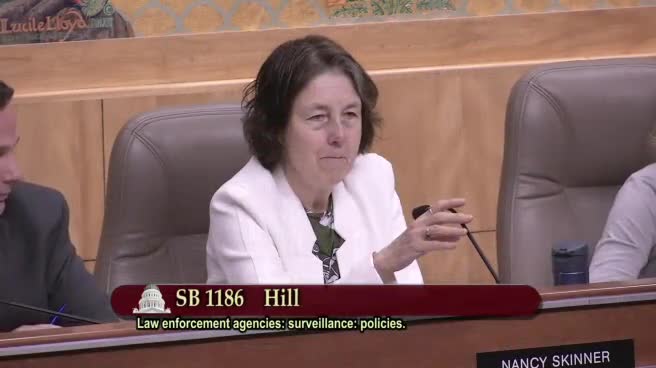 7MIN
Senate Standing Committee on Public Safety
Bill Author