SB 912: California Housing Finance Agency: management compensation.
- Session Year: 2017-2018
- House: Senate
- Latest Version Date: 2018-09-21
Existing law establishes the California Housing Finance Agency, within the Department of Housing and Community Development, with a primary purpose of meeting the housing needs of persons and families of low or moderate income. Existing law, among other officers within the agency, provides for a director of enterprise risk management and compliance with specified duties related to the development of new programs or changes to existing law or regulations that may result in new or increased risk to the agency. Existing law requires that the board of directors of the agency establish the compensation of key exempt management positions in the agencys annual budget, as provided.
This bill, with respect to the compensation of those key exempt management positions, would include the director of enterprise risk management and compliance and the risk manager among those positions, and would delete obsolete references.
Existing law establishes the California Housing Finance Agency, within the Department of Housing and Community Development, with a primary purpose of meeting the housing needs of persons and families of low or moderate income. Existing law, among other officers within the agency, provides for a director of enterprise risk management and compliance with specified duties related to the development of new programs or changes to existing law or regulations that may result in new or increased risk to the agency. Existing law requires that the board of directors of the agency establish the compensation of the key exempt management in the agencys annual budget, as provided.
This bill, with respect to the compensation of those key exempt management positions, would include the director of enterprise risk management and compliance and the risk manager among those positions, and would delete obsolete references.
Existing law establishes various housing and home loan programs throughout the state to help low-income families and other specified groups.This bill would authorize the Budget Act of 2018 to include funding to address the issues of affordable housing, long-term homelessness solutions, and emergency homelessness interventions, as specified. The bill would also include legislative findings as to the necessity to provide additional funding for housing.Existing law establishes various housing and home loan programs throughout the state to help low-income families and other specified groups.
This bill would authorize the Budget Act of 2018 to include funding to address the issues of affordable housing, long-term homelessness solutions, and emergency homelessness interventions, as specified. The bill would also include legislative findings as to the necessity to provide additional funding for housing.
Existing law establishes the Department of Housing and Community Development in the Business, Consumer Services, and Housing Agency and makes the department responsible for administering various housing programs throughout the state, including, among others, the Multifamily Housing Program.This bill, upon appropriation in the annual Budget Act, would require that the sum of $2,000,000,000 be allocated from the General Fund to the Department of Housing and Community Development. The bill would require that $1,000,000,000 of that money be transferred to the Housing Rehabilitation Loan Fund and expended to assist in the new construction, rehabilitation, and preservation of permanent and transitional rental housing for persons with incomes of up to 60% of the area median income. The bill would require that the remaining $1,000,000,000 be used to address homelessness, particularly homelessness among members of vulnerable populations, and provide for the allocation of that money for grants to cities and counties for specified related purposes, grants under the Housing for a Healthy California Program, grants under the California Emergency Solutions Grants Program for the purpose of addressing the specific needs of homeless youth, as provided, and assistance for housing and services for survivors of domestic violence, as provided. The bill would also include legislative findings as to the necessity to provide additional funding for housing.Existing law establishes the Department of Housing and Community Development in the Business, Consumer Services, and Housing Agency and makes the department responsible for administering various housing programs throughout the state, including, among others, the Multifamily Housing Program.
This bill, upon appropriation in the annual Budget Act, would require that the sum of $2,000,000,000 be allocated from the General Fund to the Department of Housing and Community Development. The bill would require that $1,000,000,000 of that money be transferred to the Housing Rehabilitation Loan Fund and expended to assist in the new construction, rehabilitation, and preservation of permanent and transitional rental housing for persons with incomes of up to 60% of the area median income. The bill would require that the remaining $1,000,000,000 be used to address homelessness, particularly homelessness among members of vulnerable populations, and provide for the allocation of that money for grants to cities and counties for specified related purposes, grants under the Housing for a Healthy California Program, funding for a specified homeless youth program, grants under the California Emergency Solutions Grants Program for the purpose of addressing the specific needs of homeless youth, as provided, and assistance for housing and services for survivors of domestic violence, as provided. The bill would also include legislative findings as to the necessity to provide additional funding for housing.
Existing law establishes the Department of Housing and Community Development in the Business, Consumer Services, and Housing Agency and makes the department responsible for administering various housing programs throughout the state, including, among others, the Emergency Housing and Assistance Program. Multifamily Housing Program.
This bill would state that it is the intent of the Legislature to enact legislation that would make a one-time allocation of $2,000,000,000 in general funds for the purpose of funding programs that serve the homeless as well as existing housing programs administered by the Department of Housing and Community Development dedicated to housing low- and moderate-income families, as provided.This bill, upon appropriation in the annual Budget Act, would require that the sum of $2,000,000,000 be allocated from the General Fund to the Department of Housing and Community Development. The bill would require that $1,000,000,000 of that money be transferred to the Housing Rehabilitation Loan Fund and expended to assist in the new construction, rehabilitation, and preservation of permanent and transitional rental housing for persons with incomes of up to 60% of the area median income. The bill would require that the remaining $1,000,000,000 be used to address homelessness, particularly homelessness among members of vulnerable populations, and provide for the allocation of that money for grants to cities and counties for specified related purposes, grants under the Housing for a Healthy California Program, funding for a specified homeless youth program, and assistance for housing and services for survivors of domestic violence, as provided. The bill would also include legislative findings as to the necessity to provide additional funding for housing.
Existing law establishes the Department of Housing and Community Development in the Business, Consumer Services, and Housing Agency and makes the department responsible for administering various housing programs throughout the state, including, among others, the Emergency Housing and Assistance Program.
This bill would state that it is the intent of the Legislature to enact legislation that would make a one-time allocation of $2,000,000,000 in general funds for the purpose of funding programs that serve the homeless as well as existing housing programs administered by the Department of Housing and Community Development dedicated to housing low- and moderate-income families, as provided.
Existing law authorizes a person who intends to become a working forest landowner, as provided, with the long-term objective of an uneven aged timber stand and sustained yield through the implementation of a specified plan to file a working forest management plan with the Department of Forestry and Fire Protection. Existing law requires the Board of Forestry and Fire Protection to adopt regulations regarding the notice of receipt of a proposed working forest management plan.This bill would make a nonsubstantive change to these provisions.Existing law authorizes a person who intends to become a working forest landowner, as provided, with the long-term objective of an uneven aged timber stand and sustained yield through the implementation of a specified plan to file a working forest management plan with the Department of Forestry and Fire Protection. Existing law requires the Board of Forestry and Fire Protection to adopt regulations regarding the notice of receipt of a proposed working forest management plan.
This bill would make a nonsubstantive change to these provisions.
(a)Notwithstanding Sections 19816 and 19825 of the Government Code, the compensation of key exempt management, including the executive director, the chief deputy director, the general counsel, the director of financing, the director of homeownership programs, the director of multifamily programs, the director of enterprise risk management and compliance, and the risk manager, shall be established by the board in the agencys annual budget, in amounts which are reasonably necessary, in the discretion of the board, to attract and hold a person of superior qualifications.
(b)(1) To determine the compensation for the positions described in this section, the board shall cause to be conducted, through the use of independent outside advisors, salary surveys of both of the following:
(A)Other state and local housing finance agencies that are most comparable to CalHFA.
(B)Other relevant labor pools.
(2)The salaries so set by the board shall not exceed the highest comparable salary for a position of that type, as determined by the survey.
(c)The Department of Human Resources shall review the methodology used in these salary surveys.
(d)Members of the board shall not receive a salary but shall be entitled to a per diem allowance of one hundred dollars ($100) for each days attendance at a meeting of the board or a meeting of a committee of the board, not to exceed three hundred dollars ($300) in any month, and reimbursement for expenses incurred in the performance of their duties under this part, including travel and other necessary expenses.
(a)Notwithstanding Sections 19816 and 19825 of the Government Code, the compensation of key exempt management, including the executive director, the chief deputy director, the general counsel, the director of financing, the director of homeownership programs, the director of multifamily programs, the director of insurance and the financial risk management director enterprise risk management and compliance, and the risk manager, shall be established by the board in the agencys annual budget, in amounts which are reasonably necessary, in the discretion of the board, to attract and hold a person of superior qualifications.
(b)(1) To determine the compensation for the positions described in this section, the board shall cause to be conducted, through the use of independent outside advisors, salary surveys of both of the following:
(A)Other state and local housing finance agencies that are most comparable to CalHFA.
(B)Other relevant labor pools.
(2)The salaries so set by the board shall not exceed the highest comparable salary for a position of that type, as determined by the survey.
(c)The Department of Human Resources shall review the methodology used in these salary surveys.
(d)Members of the board shall not receive a salary but shall be entitled to a per diem allowance of one hundred dollars ($100) for each days attendance at a meeting of the board or a meeting of a committee of the board, not to exceed three hundred dollars ($300) in any month, and reimbursement for expenses incurred in the performance of their duties under this part, including travel and other necessary expenses.
SECTION 1.The Legislature finds and declares the following:(a)Despite recent legislative efforts, California has not been able to fill the funding gap from the loss of redevelopment funds and statewide housing bonds passed in the 2000s. The state housing crisis is the leading driver of the rise in homelessness.(b)The recent 2017 federal tax law, Public Law 115-97, reduces the value of the low-income housing tax credit (LIHTC). The LIHTC program is the most successful state and national housing program and critical for all affordable housing built in California. As a result, California will lose $540 million, or about 4,000 to 5,000 units, per year.(c)According to the Department of Finance, over the last 10 years, California has experienced a 34 percent reduction in federal housing funds.(d)According to the Department of Housing and Community Development, from 2016 to 2017, California experienced the largest increase in the number of people experiencing homelessness, about 14 percent. Its homeless population accounts for 25 percent of the national homeless population.(e)Housing the homeless saves taxpayer money. According to the most comprehensive homelessness cost study in the United States, the average prehousing public cost was $62,000, and the average posthousing cost was $20,000, equal to an annual reduction of nearly $43,000, or 68 percent.(f)It is the intent of the Legislature to offset federal funding cuts and the reduced value of the LIHTC by investing in existing and successful state housing programs.(g)It is further the intent of the Legislature to emphasize the financing of housing for vulnerable populations, including: chronically homeless persons who frequently use hospitals or are incarcerated, homeless transitional age youth, homeless college students, families with repeated instances of homelessness, domestic violence survivors, veterans, and persons with a physical or mental disability.SEC. 2.Part 14.3 (commencing with Section 53605) is added to Division 31 of the Health and Safety Code, to read:14.3.Funding for Homelessness Programs and Affordable Housing53605.The Budget Act of 2018 may include funding to address the issues of affordable housing, long-term homelessness solutions, and emergency homelessness interventions for all of the following:(a)The Multifamily Housing Program authorized by Chapter 6.7 (commencing with Section 50675) of Part 2.(b)The California low-income housing tax credit.(c)The Housing for a Healthy California Program established pursuant to Part 14.2 (commencing with Section 53590).(d)The Homeless Coordinating and Financing Council established pursuant to Section 8257 of the Welfare and Institutions Code.(e)The Homeless Emergency Aid block grant.(f)The California Emergency Solutions Grants Program (Chapter 19 (commencing with Section 50899.1) of Part 2).(g)The Homeless Youth and Exploitation Program (Chapter 6 (commencing with Section 13700) of Part 3 of Division 9 of the Welfare and Institutions Code).(h)Domestic violence shelters and services.(i)CalWORKS Housing Support (Article 3.3 (commencing with Section 11330) of Chapter 2 of Part 3 of Division 9 of the Welfare and Institutions Code).(j)Homeless assistance under the California Work Opportunity and Responsibility to Kids program pursuant to Section 11450 of the Welfare and Institutions Code.(k)The Home Safe program.(l)Homeless mental illness outreach.The Legislature finds and declares the following:
(a)Despite recent legislative efforts, California has not been able to fill the funding gap from the loss of redevelopment funds and statewide housing bonds passed in the 2000s. The state housing crisis is the leading driver of the rise in homelessness.
(b)The recent 2017 federal tax law, Public Law 115-97, reduces the value of the low-income housing tax credit (LIHTC). The LIHTC program is the most successful state and national housing program and critical for all affordable housing built in California. As a result, California will lose $540 million, or about 4,000 to 5,000 units, per year.
(c)According to the Department of Finance, over the last 10 years, California has experienced a 34 percent reduction in federal housing funds.
(d)According to the Department of Housing and Community Development, from 2016 to 2017, California experienced the largest increase in the number of people experiencing homelessness, about 14 percent. Its homeless population accounts for 25 percent of the national homeless population.
(e)Housing the homeless saves taxpayer money. According to the most comprehensive homelessness cost study in the United States, the average prehousing public cost was $62,000, and the average posthousing cost was $20,000, equal to an annual reduction of nearly $43,000, or 68 percent.
(f)It is the intent of the Legislature to offset federal funding cuts and the reduced value of the LIHTC by investing in existing and successful state housing programs.
(g)It is further the intent of the Legislature to emphasize the financing of housing for vulnerable populations, including: chronically homeless persons who frequently use hospitals or are incarcerated, homeless transitional age youth, homeless college students, families with repeated instances of homelessness, domestic violence survivors, veterans, and persons with a physical or mental disability.
SEC. 2.Chapter 2.7 (commencing with Section 50480) is added to Part 2 of Division 31 of the Health and Safety Code, to read:2.7.Funding for Homelessness Programs and Affordable Housing50480.Upon appropriation in the annual Budget Act for purposes of this section, the sum of two billion dollars ($2,000,000,000) shall be allocated from the General Fund to the Department of Housing and Community Development for the following purposes:(a)One billion dollars ($1,000,000,000) shall be transferred to the Housing Rehabilitation Loan Fund established pursuant to Section 50661. The moneys in the fund transferred pursuant to this subdivision shall be used for the Multifamily Housing Program authorized by Chapter 6.7 (commencing with Section 50675), to be expended to assist in the new construction, rehabilitation, and preservation of permanent and transitional rental housing for persons with incomes of up to 60 percent of the area median income.(b)One billion dollars ($1,000,000,000) shall be used to address homelessness, particularly homelessness among members of vulnerable populations, to be allocated as follows:(1)Seven hundred million dollars ($700,000,000) shall be used to provide grants to cities and counties that agree to provide matching funds to alleviate chronic homelessness within their jurisdictions. Cities and counties shall apply to the department for grants pursuant to this paragraph in the form and manner prescribed by the department. Authorized uses of the moneys allocated pursuant to this paragraph include, but are not limited to, the following:(A)Rental assistance and flexible housing subsidy pool investments.(B)Operating subsidies, including gap financing to make supportive housing projects that offer lower rents financially viable.(C)Capital grants.(D)Interim housing.(E)Emergency shelters, navigation centers, and rapid rehousing projects.(F)(i)Construction of affordable housing that includes housing for homeless persons.(ii)The department shall set aside a portion of the moneys allocated pursuant to this paragraph for purposes of this subparagraph and deposit those moneys in the Housing Rehabilitation Loan Fund established pursuant to Section 50661. The moneys in the fund shall be used for the Multifamily Housing Program authorized by Chapter 6.7 (commencing with Section 50675), to be expended to assist in the new construction, rehabilitation, and preservation of permanent and transitional rental housing for persons with incomes of up to 60 percent of the area median income, that makes at least 20 percent of the units available to persons who are chronically homeless.(2)Two hundred million dollars ($200,000,000) shall be used to provide grants under the Housing for a Healthy California Program established pursuant to Part 14.2 (commencing with Section 53590).(3)(A)Fifty million dollars ($50,000,000) shall be used to provide grants under the California Emergency Solutions Grants Program (Chapter 19 (commencing with Section 50899.1)) for the purpose of addressing the specific needs of homeless youth, in accordance with the following:(i)Activities funded with a grant pursuant to this paragraph shall be those activities identified in Section 50899.4 and, in addition, family finding services to locate and engage relatives of homeless youth with the goal of connecting homeless youth who wish to be reconnected with family.(ii)Activities funded with a grant pursuant to this paragraph shall incorporate the core components of Housing First, as provided in subdivision (b) of Section 8255 of the Welfare and Institutions Code.(iii)Providers offering services funded with a grant pursuant to this paragraph shall demonstrate the ability to provide comprehensive, culturally competent, and trauma-informed services to meet the needs of homeless youth, including the specific needs of lesbian, gay, bisexual, and transgender youth, commercially sexually exploited children and young people, youth of color, and survivors of domestic violence.(B)For purposes of this paragraph, homeless youth has the same meaning as defined in paragraph (2) of subdivision (e) of Section 12957 of the Government Code.(4)Fifty million dollars ($50,000,000) shall be transferred to the Domestic and Sexual Violence Prevention Complementary Services Fund, upon establishment of that fund within the Office of Emergency Services, and used to provide housing and services for survivors of domestic violence.SEC. 2.Part 14.3 (commencing with Section 53605) is added to Division 31 of the Health and Safety Code, to read:14.3.Funding for Homelessness Programs and Affordable Housing53605.The Budget Act of 2018 may include funding to address the issues of affordable housing, long-term homelessness solutions, and emergency homelessness interventions for all of the following:
(a)The Multifamily Housing Program authorized by Chapter 6.7 (commencing with Section 50675) of Part 2.
(b)The California low-income housing tax credit.
(c)The Housing for a Healthy California Program established pursuant to Part 14.2 (commencing with Section 53590).
(d)The Homeless Coordinating and Financing Council established pursuant to Section 8257 of the Welfare and Institutions Code.
(e)The Homeless Emergency Aid block grant.
(f)The California Emergency Solutions Grants Program (Chapter 19 (commencing with Section 50899.1) of Part 2).
(g)The Homeless Youth and Exploitation Program (Chapter 6 (commencing with Section 13700) of Part 3 of Division 9 of the Welfare and Institutions Code).
(h)Domestic violence shelters and services.
(i)CalWORKS Housing Support (Article 3.3 (commencing with Section 11330) of Chapter 2 of Part 3 of Division 9 of the Welfare and Institutions Code).
(j)Homeless assistance under the California Work Opportunity and Responsibility to Kids program pursuant to Section 11450 of the Welfare and Institutions Code.
(k)The Home Safe program.
(l)Homeless mental illness outreach.
The Legislature finds and declares the following:
(a)Despite recent legislative efforts, California has not been able to fill the funding gap from the loss of redevelopment funds and statewide housing bonds passed in the 2000s. The state housing crisis is the leading driver of the rise in homelessness.
(b)The recent 2017 federal tax law, Public Law 115-97, reduces the value of the low-income housing tax credit (LIHTC). The LIHTC program is the most successful state and national housing program and critical for all affordable housing built in California. As a result, California will lose $540 million, or about 4,000 to 5,000 units, per year.
(c)According to the Department of Finance, over the last 10 years, California has experienced a 34 percent reduction in federal housing funds.
(d)According to the Department of Housing and Community Development, from 2016 to 2017, California experienced the largest increase in the number of people experiencing homelessness, about 14 percent. Its homeless population accounts for 25 percent of the national homeless population.
(e)Housing the homeless saves taxpayer money. According to the most comprehensive homelessness cost study in the United States, the average prehousing public cost was $62,000, and the average posthousing cost was $20,000, equal to an annual reduction of nearly $43,000, or 68 percent.
(f)It is the intent of the Legislature to offset federal funding cuts and the reduced value of the LIHTC by investing in existing and successful state housing programs.
(g)It is further the intent of the Legislature to emphasize the financing of housing for vulnerable populations, including: chronically homeless persons who frequently use hospitals or are incarcerated, homeless transitional age youth, homeless college students, families with repeated instances of homelessness, domestic violence survivors, veterans, and persons with a physical or mental disability.
SEC. 2.Chapter 2.7 (commencing with Section 50480) is added to Part 2 of Division 31 of the Health and Safety Code, to read:2.7.Funding for Homelessness Programs and Affordable Housing50480.Upon appropriation in the annual Budget Act for purposes of this section, the sum of two billion dollars ($2,000,000,000) shall be allocated from the General Fund to the Department of Housing and Community Development for the following purposes:
(a)One billion dollars ($1,000,000,000) shall be transferred to the Housing Rehabilitation Loan Fund established pursuant to Section 50661. The moneys in the fund transferred pursuant to this subdivision shall be used for the Multifamily Housing Program authorized by Chapter 6.7 (commencing with Section 50675), to be expended to assist in the new construction, rehabilitation, and preservation of permanent and transitional rental housing for persons with incomes of up to 60 percent of the area median income.
(b)One billion dollars ($1,000,000,000) shall be used to address homelessness, particularly homelessness among members of vulnerable populations, to be allocated as follows:
(1)Seven hundred million dollars ($700,000,000) shall be used to provide grants to cities and counties that agree to provide matching funds to alleviate chronic homelessness within their jurisdictions. Cities and counties shall apply to the department for grants pursuant to this paragraph in the form and manner prescribed by the department. Authorized uses of the moneys allocated pursuant to this paragraph include, but are not limited to, the following:
(A)Rental assistance and flexible housing subsidy pool investments.
(B)Operating subsidies, including gap financing to make supportive housing projects that offer lower rents financially viable.
(C)Capital grants.
(D)Interim housing.
(E)Emergency shelters, navigation centers, and rapid rehousing projects.
(F)(i)Construction of affordable housing that includes housing for homeless persons.
(ii)The department shall set aside a portion of the moneys allocated pursuant to this paragraph for purposes of this subparagraph and deposit those moneys in the Housing Rehabilitation Loan Fund established pursuant to Section 50661. The moneys in the fund shall be used for the Multifamily Housing Program authorized by Chapter 6.7 (commencing with Section 50675), to be expended to assist in the new construction, rehabilitation, and preservation of permanent and transitional rental housing for persons with incomes of up to 60 percent of the area median income, that makes at least 20 percent of the units available to persons who are chronically homeless.
(2)Two hundred million dollars ($200,000,000) shall be used to provide grants under the Housing for a Healthy California Program established pursuant to Part 14.2 (commencing with Section 53590).
(3)Fifty million dollars ($50,000,000) shall be transferred to the Housing Rehabilitation Loan Fund to be expended under the Multifamily Housing Program authorized by Chapter 6.7 (commencing with Section 50675) for housing for homeless youth in accordance with the departments Homeless Youth Multifamily Housing Program, previously funded pursuant to clause (ii) of subparagraph (A) of paragraph (1) of subdivision (a) of Section 53545.(3)(A)Fifty million dollars ($50,000,000) shall be used to provide grants under the California Emergency Solutions Grants Program (Chapter 19 (commencing with Section 50899.1)) for the purpose of addressing the specific needs of homeless youth, in accordance with the following:
(i)Activities funded with a grant pursuant to this paragraph shall be those activities identified in Section 50899.4 and, in addition, family finding services to locate and engage relatives of homeless youth with the goal of connecting homeless youth who wish to be reconnected with family.
(ii)Activities funded with a grant pursuant to this paragraph shall incorporate the core components of Housing First, as provided in subdivision (b) of Section 8255 of the Welfare and Institutions Code.
(iii)Providers offering services funded with a grant pursuant to this paragraph shall demonstrate the ability to provide comprehensive, culturally competent, and trauma-informed services to meet the needs of homeless youth, including the specific needs of lesbian, gay, bisexual, and transgender youth, commercially sexually exploited children and young people, youth of color, and survivors of domestic violence.
(B)For purposes of this paragraph, homeless youth has the same meaning as defined in paragraph (2) of subdivision (e) of Section 12957 of the Government Code.
(4)Fifty million dollars ($50,000,000) shall be transferred to the Domestic and Sexual Violence Prevention Complementary Services Fund, upon establishment of that fund within the Office of Emergency Services, and used to provide housing and services for survivors of domestic violence.
The Legislature finds and declares the following:
(a)Despite recent legislative efforts, California has not been able to fill the funding gap from the loss of redevelopment funds and statewide housing bonds passed in the 2000s. The state housing crisis is the leading driver of the rise in homelessness.
(b)The recent 2017 federal tax law, Public Law 115-97, reduces the value of the low-income housing tax credit (LIHTC). The LIHTC program is the most successful state and national housing program and critical for all affordable housing built in California. As a result, California will lose $540 million, or about 4,000 to 5,000 units, per year.
(c)According to the Department of Finance, over the last 10 years, California has experienced a 34 percent reduction in federal housing funds.
(d)According to the Department of Housing and Community Development, from 2016 to 2017, California experienced the largest increase in the number of people experiencing homelessness, about 14 percent. Its homeless population accounts for 25 percent of the national homeless population.
(e)Housing the homeless saves taxpayer money. According to the most comprehensive homelessness cost study in the United States, the average prehousing public cost was $62,000, and the average posthousing cost was $20,000, equal to an annual reduction of nearly $43,000, or 68 percent.
(f)It is the intent of the Legislature to offset federal funding cuts and the reduced value of the LIHTC by investing in existing and successful state housing programs.
(g)It is further the intent of the Legislature to emphasize the financing of housing for vulnerable populations, including: chronically homeless persons who frequently use hospitals or are incarcerated, homeless transitional age youth, homeless college students, families with repeated instances of homelessness, domestic violence survivors, veterans, and persons with a physical or mental disability.
SEC. 2.Chapter 2.7 (commencing with Section 50480) is added to Part 2 of Division 31 of the Health and Safety Code, to read:2.7.Funding for Homelessness Programs and Affordable Housing50480.Upon appropriation in the annual Budget Act for purposes of this section, the sum of two billion dollars ($2,000,000,000) shall be allocated from the General Fund to the Department of Housing and Community Development for the following purposes:
(a)One billion dollars ($1,000,000,000) shall be transferred to the Housing Rehabilitation Loan Fund established pursuant to Section 50661. The moneys in the fund transferred pursuant to this subdivision shall be used for the Multifamily Housing Program authorized by Chapter 6.7 (commencing with Section 50675), to be expended to assist in the new construction, rehabilitation, and preservation of permanent and transitional rental housing for persons with incomes of up to 60 percent of the area median income.
(b)One billion dollars ($1,000,000,000) shall be used to address homelessness, particularly homelessness among members of vulnerable populations, to be allocated as follows:
(1)Seven hundred million dollars ($700,000,000) shall be used to provide grants to cities and counties that agree to provide matching funds to alleviate chronic homelessness within their jurisdictions. Cities and counties shall apply to the department for grants pursuant to this paragraph in the form and manner prescribed by the department. Authorized uses of the moneys allocated pursuant to this paragraph include, but are not limited to, the following:
(A)Rental assistance and flexible housing subsidy pool investments.
(B)Operating subsidies, including gap financing to make supportive housing projects that offer lower rents financially viable.
(C)Capital grants.
(D)Interim housing.
(E)Emergency shelters, navigation centers, and rapid rehousing projects.
(F)(i)Construction of affordable housing that includes housing for homeless persons.
(ii)The department shall set aside a portion of the moneys allocated pursuant to this paragraph for purposes of this subparagraph and deposit those moneys in the Housing Rehabilitation Loan Fund established pursuant to Section 50661. The moneys in the fund shall be used for the Multifamily Housing Program authorized by Chapter 6.7 (commencing with Section 50675), to be expended to assist in the new construction, rehabilitation, and preservation of permanent and transitional rental housing for persons with incomes of up to 60 percent of the area median income, that makes at least 20 percent of the units available to persons who are chronically homeless.
(2)Two hundred million dollars ($200,000,000) shall be used to provide grants under the Housing for a Healthy California Program established pursuant to Part 14.2 (commencing with Section 53590).
(3)Fifty million dollars ($50,000,000) shall be transferred to the Housing Rehabilitation Loan Fund to be expended under the Multifamily Housing Program authorized by Chapter 6.7 (commencing with Section 50675) for housing for homeless youth in accordance with the departments Homeless Youth Multifamily Housing Program, previously funded pursuant to clause (ii) of subparagraph (A) of paragraph (1) of subdivision (a) of Section 53545.
(4)Fifty million dollars ($50,000,000) shall be transferred to the Domestic and Sexual Violence Prevention Complementary Services Fund, upon establishment of that fund within the Office of Emergency Services, and used to provide housing and services for survivors of domestic violence.
SECTION 1.It is the intent of the Legislature to enact legislation that would make a one-time allocation of two billion dollars ($2,000,000,000) in general funds for the purpose of funding programs that serve the homeless as well as existing housing programs administered by the Department of Housing and Community Development dedicated to housing low- and moderate-income families. It is the intent of the Legislature to enact legislation that would include eligible recipients such as cities, counties, and cities and counties that provide a local funding match.It is the intent of the Legislature to enact legislation that would make a one-time allocation of two billion dollars ($2,000,000,000) in general funds for the purpose of funding programs that serve the homeless as well as existing housing programs administered by the Department of Housing and Community Development dedicated to housing low- and moderate-income families. It is the intent of the Legislature to enact legislation that would include eligible recipients such as cities, counties, and cities and counties that provide a local funding match.
SECTION 1.Section 4597.3 of the Public Resources Code is amended to read:4597.3.The board shall adopt regulations regarding the notice of receipt of a proposed working forest management plan. The notice shall be given within two working days following receipt of the proposed management plan and shall be consistent with all applicable laws. The method of notice shall include, but not be limited to, mailed notice and Internet-based notice. The regulations may require the person submitting the working forest management plan to provide to the department a list of the names and addresses of persons to whom the notice is to be mailed.The board shall adopt regulations regarding the notice of receipt of the a proposed working forest management plan. The notice shall be given within two working days following receipt of the proposed management plan and shall be consistent with all applicable laws. The method of notice shall include, but not be limited to, mailed notice and Internet-based notice. The regulations may require the person submitting the working forest management plan to provide to the department a list of the names and addresses of persons to whom the notice is to be mailed.
|
Date
|
Status
|
|---|---|
| Sep 21, 2018 | Chaptered by Secretary of State. Chapter 661, Statutes of 2018. |
| Sep 21, 2018 | Approved by the Governor. |
| Aug 28, 2018 | Enrolled and presented to the Governor at 3:30 p.m. |
| Aug 22, 2018 | Assembly amendments concurred in. (Ayes 39. Noes 0. Page 5604.) Ordered to engrossing and enrolling. |
| Aug 22, 2018 | Assembly amendments concurred in. (Ayes 39. Noes 0.) Ordered to engrossing and enrolling. |
| Aug 21, 2018 | From committee: That the Assembly amendments be concurred in. (Ayes 13. Noes 0. Page 5578.) |
| Aug 21, 2018 | From committee: That the Assembly amendments be concurred in. (Ayes 13. Noes 0.) |
| Aug 21, 2018 | Set for hearing August 21. |
| Aug 20, 2018 | From committee: Be re-referred to Com. on T. & H. pursuant to Senate Rule 29.10(d). (Ayes 5. Noes 0. Page 5450.) Re-referred to Com. on T. & H. |
| Aug 20, 2018 | From committee: Be re-referred to Com. on T. & H. pursuant to Senate Rule 29.10(d). (Ayes 5. Noes 0.) Re-referred to Com. on T. & H. |
| Aug 20, 2018 | Re-referred to Com. on RLS. pursuant to Senate Rule 29.10(d). |
| Aug 16, 2018 | In Senate. Concurrence in Assembly amendments pending. |
| Aug 16, 2018 | Read third time. Passed. Ordered to the Senate. |
| Aug 9, 2018 | Read second time. Ordered to consent calendar. |
| Aug 8, 2018 | From committee: Do pass. Ordered to consent calendar. (Ayes 17. Noes 0.) (August 8). |
| Jun 27, 2018 | From committee: Do pass and re-refer to Com. on APPR. (Ayes 6. Noes 0.) (June 27). Re-referred to Com. on APPR. |
| Jun 20, 2018 | From committee with author's amendments. Read second time and amended. Re-referred to Com. on H. & C.D. |
| Jun 14, 2018 | Referred to Com. on H. & C.D. |
| May 31, 2018 | In Assembly. Read first time. Held at Desk. |
| May 30, 2018 | Read third time. Passed. (Ayes 32. Noes 0.) Ordered to the Assembly. |
| May 29, 2018 | Read second time. Ordered to third reading. |
| May 25, 2018 | From committee: Do pass as amended. (Ayes 7. Noes 0.) (May 25). |
| May 18, 2018 | Set for hearing May 25. |
| May 7, 2018 | May 7 hearing: Placed on APPR. suspense file. |
| Apr 27, 2018 | Set for hearing May 7. |
| Apr 25, 2018 | From committee: Do pass and re-refer to Com. on APPR. (Ayes 10. Noes 0.) (April 24). Re-referred to Com. on APPR. |
| Apr 12, 2018 | From committee with author's amendments. Read second time and amended. Re-referred to Com. on T. & H. |
| Apr 11, 2018 | Set for hearing April 24. |
| Mar 21, 2018 | Re-referred to Com. on T. & H. |
| Mar 8, 2018 | From committee with author's amendments. Read second time and amended. Re-referred to Com. on RLS. |
| Feb 20, 2018 | From committee with author's amendments. Read second time and amended. Re-referred to Com. on RLS. |
| Feb 1, 2018 | Referred to Com. on RLS. |
| Jan 19, 2018 | From printer. May be acted upon on or after February 18. |
| Jan 18, 2018 | Introduced. Read first time. To Com. on RLS. for assignment. To print. |
|
Date
|
Description
|
Location
|
Votes
|
|
|---|---|---|---|---|
| Aug 22, 2018 | Unfinished Business SB912 Beall et al. Concurrence | Senate Floor |
Passed |
|
| Aug 21, 2018 | That the Assembly amendments be concurred in | Senate Standing Committee on Transportation and Housing |
Passed |
|
| Aug 16, 2018 | SB 912 Beall Consent Calendar Second Day Regular Session | Assembly Floor |
Passed |
|
| Aug 8, 2018 | Do pass. To Consent Calendar. | Assembly Standing Committee on Appropriations |
Passed |
|
| Jun 27, 2018 | Do pass and be re-referred to the Committee on [Appropriations] | Assembly Standing Committee on Housing and Community Development |
Passed |
|
| May 30, 2018 | Senate 3rd Reading SB912 Beall et al. | Senate Floor |
Passed |
|
| May 25, 2018 | Do pass as amended | Senate Standing Committee on Appropriations |
Passed |
|
| May 7, 2018 | Placed on suspense file | Senate Standing Committee on Appropriations |
Passed |
|
| Apr 24, 2018 | Do pass, but first be re-referred to the Committee on [Appropriations] | Senate Standing Committee on Transportation and Housing |
Passed |
This list shows positions taken on this bill by organizations on the date displayed, which is linked to the original source.
Positions by individuals are not included.
Office of Senate Floor Analyses (916) 651-1520 Fax: (916) 327-4478 | SB |
UNFINISHED BUSINESS
Bill No: SB 912
:
PRIOR VOTES NOT RELEVANT
SENATE TRANS. & HOUSING COMMITTEE: 13-0, 8/21/18 (Pursuant to Senate Rule 29.10)
AYES: Beall, Cannella, Allen, Dodd, Gaines, Galgiani, McGuire, Morrell, Roth, Skinner, Vidak, Wieckowski, Wiener
ASSEMBLY FLOOR: 76-0, 8/16/18 (Consent) - See last page for vote
SUBJECT: California Housing Finance Agency: management compensation
DIGEST:
This bill revises the list of management positions for which the California Housing Finance Agency (CalHFA) board has discretion to establish salaries.
Assembly Amendments delete the prior version of the bill.
Existing law:
- Requires CalHFA to establish, among other positions, a director of insurance and a financial risk management director, appointed by the Governor and serving at the pleasure of the executive director. Requires these directors to assist in the implementation of processes, tools, and systems to identify, assess, measure, manage, monitor, and mitigate risks related to the development of new programs or changes to existing law or regulations that may result in new or increased risk to the agency, as well as other duties as may be required by the executive director.
- Authorizes the board of directors of CalHFA to establish in the agency’s annual budget the compensation of key exempt management positions, including the executive director, the chief deputy director, the general counsel, the director of financing, the director of insurance, and the financial risk management director in amounts that are reasonably necessary, in the discretion of the board, to attract and hold a person of superior qualifications.
- Requires the board of directors to conduct a salary survey using an independent outside advisors.
This bill revises the key exempt management positions for which the CalHFA board of directors can establish compensation. Specifically, this bill replaces the “director of insurance” and “financial risk management director” with the “director of enterprise risk management and compliance” and “risk manager.”
Background
Established in 1975, CalHFA was chartered as the state's affordable housing bank to make below market-rate loans through the sale of tax-exempt bonds. CalHFA is a self-supporting entity and its debts, including those related to the compensation and retirement costs of its employees are separate from the State of California. Investor capital, through the sale of bonds, provides the Agency’s source of revenue. Existing statutes and bond indentures state that the Agency’s debts are not a debt or liability of the state or any political subdivision thereof and are not backed by the faith and credit of the State of California.
Each year, CalHFA’s board of directors enacts a business plan that includes an operating budget containing salaries. Existing law requires CalHFA to prepare a budget on or before December 1st each year, which is reviewed by the Secretary of Business, Consumer Services, and Housing Agency, the Director of Finance, and the Joint Legislative Budget Committee. In addition CalHFA is required to have open and public meetings of the board of directors and committees, except when in executive session for a reason provided under law.
CalHFA receives an issuer credit rating that is separate from the State of California. In addition to other elements, including asset quality, debt and financial strength, the credit rating is dependent upon the expertise of the management personnel. In 2006, standard and poor’s took specific note of CalHFA’s difficulty in attracting and retaining experienced management due to non-competitive salaries. In response, SB 257 (Chesbro, Chapter 748, Statutes of 2006) clarified CalHFA’s authority to offer competitive salaries for key exempt management positions (e.g., exempt from civil service). To determine the compensation for key positions, CalHFA must conduct salary surveys using an independent outside adviser. The California Department of Human Resources is required to review the methodology used for the salary survey.
This bill changes the list of exempt management positions for which the CalHFA board has discretion to establish salaries that are reasonably necessary to attract and retain a person of superior qualifications. The position of director of insurance no longer exists; this bill deletes that title from statute. In 2016, SB 837 (Committee on Budget and Fiscal Review, Chapter 32, Statutes of 2016) required CalHFA to have a director of enterprise management and compliance; this bill adds that position to the list of exempt management positons in statute. In addition, the bill deletes the position of financial risk management director and replaces it with a broader risk manager position that oversees and analyzes risks to CalHFA beyond and including financial risk.
Comments
- Purpose. The author states that this bill realigns positions in statute to reflect organizational changes that have been enacted at CalHFA.
- Senate Rule 29.10(d) referral. When the Senate approved this bill earlier this year, it pertained to funding for homeless programs. This bill was amended on June 20th to instead pertain to CalHFA. Because it was substantially amended in the Assembly, the Senate Rules Committee referred the amended bill, pursuant to Senate Rule 29.10(d), to the Transportation and Housing Committee, which on August 21st recommended that the Assembly amendments be concurred in.
Related/Prior Legislation
SB 837 (Committee on Budget and Fiscal Review, Chapter 32, Statutes of 2016) included a provision allowing CalHFA to replace the Director of Insurance position with a Director of Enterprise Risk Management and Compliance.
FISCAL EFFECT: Appropriation: Fiscal Com.: Local:
According to the Assembly Appropriations Committee:
- Negligible fiscal impact.
None received
OPPOSITION: (Verified 8/21/18)
None received
ARGUMENTS IN SUPPORT: According to the author, this bill realigns positions in statute to reflect organizational changes that have been enacted at CalHFA.
ASSEMBLY FLOOR: 76-0, 8/16/18
AYES: Acosta, Aguiar-Curry, Travis Allen, Arambula, Baker, Berman, Bigelow, Bonta, Brough, Burke, Caballero, Calderon, Carrillo, Cervantes, Chau, Chávez, Chen, Chiu, Choi, Chu, Cooley, Cooper, Cunningham, Dahle, Daly, Eggman, Flora, Fong, Frazier, Friedman, Gabriel, Gallagher, Eduardo Garcia, Gipson, Gloria, Gonzalez Fletcher, Gray, Grayson, Harper, Holden, Irwin, Jones-Sawyer, Kalra, Kamlager-Dove, Kiley, Lackey, Levine, Limón, Maienschein, Mathis, Mayes, Medina, Melendez, Mullin, Muratsuchi, Nazarian, Obernolte, O'Donnell, Patterson, Quirk, Quirk-Silva, Reyes, Rivas, Rodriguez, Rubio, Salas, Santiago, Steinorth, Mark Stone, Thurmond, Ting, Voepel, Waldron, Weber, Wood, Rendon
NO VOTE RECORDED: Bloom, Cristina Garcia, Low, McCarty
8/21/18 19:09:31
**** END ****
SENATE COMMITTEE ON TRANSPORTATION AND HOUSING
Senator Jim Beall, Chair
2017 - 2018 Regular
Bill No: SB 912 Hearing Date: 8/21/18
Author: | Beall | ||
Version: | 6/20/2018 | ||
Urgency: | No | Fiscal: | Yes |
Consultant: | Erin Riches | ||
SUBJECT: California Housing Finance Agency: management compensation.
DIGEST: This bill revises the list of management positions for which the California Housing Finance Agency (CalHFA) board has discretion to establish salaries.
ANALYSIS:
Existing law:
- Requires CalHFA to establish, among other positions, a director of insurance and a financial risk management director, appointed by the Governor and serving at the pleasure of the executive director. Requires these directors to assist in the implementation of processes, tools, and systems to identify, assess, measure, manage, monitor, and mitigate risks related to the development of new programs or changes to existing law or regulations that may result in new or increased risk to the agency, as well as other duties as may be required by the executive director.
- Authorizes the board of directors of CalHFA to establish in the agency’s annual budget the compensation of key exempt management positions, including the executive director, the chief deputy director, the general counsel, the director of financing, the director of insurance, and the financial risk management director in amounts that are reasonably necessary, in the discretion of the board, to attract and hold a person of superior qualifications.
- Requires the board of directors to conduct a salary survey using an independent outside advisors.
This bill revises the key exempt management positions for which the CalHFA board of directors can establish compensation. Specifically, this bill replaces the “director of insurance” and “financial risk management director” with the “director of enterprise risk management and compliance” and “risk manager.”
COMMENTS
- Purpose. The author states that this bill realigns positions in statute to reflect organizational changes that have been enacted at CalHFA.
- Background. Established in 1975, CalHFA was chartered as the state's affordable housing bank to make below market-rate loans through the sale of tax-exempt bonds. CalHFA is a self-supporting entity and its debts, including those related to the compensation and retirement costs of its employees are separate from the State of California. Investor capital, through the sale of bonds, provides the Agency’s source of revenue. Existing statutes and bond indentures state that the Agency’s debts are not a debt or liability of the State or any political subdivision thereof and are not backed by the faith and credit of the State of California.
Each year, CalHFA’s board of directors enacts a business plan that includes an operating budget containing salaries. Existing law requires CalHFA to prepare a budget on or before December 1st each year, which is reviewed by the Secretary of Business, Consumer Services, and Housing Agency, the Director of Finance, and the Joint Legislative Budget Committee. In addition CalHFA is required to have open and public meetings of the board of directors and committees, except when in executive session for a reason provided under law.
CalHFA receives an issuer credit rating that is separate from the State of California. In addition to other elements, including asset quality, debt and financial strength, the credit rating is dependent upon the expertise of the management personnel. In 2006, standard and poor’s took specific note of CalHFA’s difficulty in attracting and retaining experienced management due to non-competitive salaries. In response, SB 257 (Chesbro), Chapter 748, Statutes of 2006, clarified CalHFA’s authority to offer competitive salaries for key exempt management positions (e.g., exempt from civil service). To determine the compensation for key positions, CalHFA must conduct salary surveys using an independent outside adviser. The state Department of Human Resources (CalHR) is required to review the methodology used for the salary survey.
This bill would change the list of exempt management positions for which the CalHFA board has discretion to establish salaries that are reasonably necessary to attract and retain a person of superior qualifications. The position of director of insurance no longer exists; this bill deletes that title from statute. In 2016, SB 837 (Committee on Budget and Fiscal Review, Chapter 32, Statutes of 2016) required CalHFA to have a director of enterprise management and compliance; this bill would add that position to the list of exempt management positons in statute. In addition, the bill deletes the position of financial risk management director and replaces it with a broader risk manager position that oversees and analyzes risks to CalHFA beyond and including financial risk.
- Senate Rule 29.10(d) referral. When this committee approved this bill in April, it authorized the Budget Act of 2018 to include funding for a number of housing and homeless programs. This bill was amended on May 25th to instead pertain to CalHFA. Because it was substantially amended in the Assembly, the Senate Rules Committee referred the amended bill, pursuant to Senate Rule 29.10(d), to the Transportation and Housing Committee to consider the new amendments.
Related Legislation:
SB 837 (Committee on Budget and Fiscal Review, Chapter 32, Statutes of 2016) — included a provision allowing CalHFA to replace the Director of Insurance position with a Director of Enterprise Risk Management and Compliance.
FISCAL EFFECT: Appropriation: Fiscal Com.: Local:
POSITIONS: (Communicated to the committee before noon on Friday, August 17.)
SUPPORT:
None received.
OPPOSITION:
None received.
-- END --
Date of Hearing: August 8, 2018
ASSEMBLY COMMITTEE ON APPROPRIATIONS
Lorena Gonzalez Fletcher, Chair
SBPCA Bill Id:SB 912
Author:(Beall) – As Amended Ver:June 20, 2018
Policy Committee: | Housing and Community Development | Vote: | 6 - 0 |
|
| ||
|
|
Urgency: No State Mandated Local Program: No Reimbursable: No
SUMMARY:
This bill updates the list of exempt management positions for which the California Housing Finance Agency (CalHFA) board of directors can establish compensation by deleting obsolete positions, updating job titles, and including positions added in the 2016 state budget.
FISCAL EFFECT:
Negligible fiscal impact.
COMMENTS:
- Purpose. This bill amends statute to conform to existing organizational titles and roles within CalHFA.
- Background. CalHFA is the state's affordable housing bank, making below market-rate loans through the sale of tax-exempt bonds. CalHFA is a self-supporting entity and its debts, including those related to the compensation and retirement costs of its employees, are separate from the State of California. Investor capital, through the sale of bonds, provides the agency's source of revenue; not taxpayers' proceeds.
CalHFA receives an issuer credit rating that is separate from the State of California. In addition to other elements including asset quality, debt, and financial strength, the credit rating is dependent upon the expertise of the management personnel. In 2006, Standard and Poors took specific note of the agency's difficulty in attracting and retaining experienced management because of non-competitive salaries. SB 257 (Chesboro), Chapter 748, Statutes of 2006, clarified CalHFA's authority to offer competitive salaries to key exempt management positions. To determine the compensation for key positions, CalHFA must conduct salary surveys using an independent outside adviser. The Department of Human Resources is required to review the methodology used for the salary survey.
This bill updates the list of exempt management positons for which the CalHFA board has discretion to establish salaries that are reasonably necessary to attract and retain a person with superior qualifications.
Analysis Prepared by: Jennifer Swenson / APPR. / (916) 319-2081
Date of Hearing: June 27, 2018
ASSEMBLY COMMITTEE ON HOUSING AND COMMUNITY DEVELOPMENT
David Chiu, Chair
SBPCA Bill Id:SB 912
Author:(Beall) – As Amended Ver:June 20, 2018
SENATE VOTE: Not relevant
SUBJECT: California Housing Finance Agency: management compensation
SUMMARY: Revises the key exempt management positions for which the California Housing Finance Agency (CalHFA) board of directors can establish compensation. Specifically, this bill: Replaces "director of insurance" and the "financial risk management director" with the "director of enterprise risk management and compliance" and "risk manager."
EXISTING LAW:
- Requires there to be within CalHFA a director of enterprise risk management and compliance appointed by the Governor and serving at the pleasure of the executive director of the agency. Requires the director of enterprise risk management and compliance to assist in the implementation of processes, tools, and systems to identify, assess, measure, manage, monitor, and mitigate risks related to the development of new programs or changes to existing law or regulations that may result in new or increased risk to the agency, as well as other duties as may be required by the executive director.
- Authorizes the board of directors of CalHFA to establish in the agency's annual budget the compensation of key exempt management, including the executive director, the chief deputy director, the general counsel, the director of financing, the director of insurance, and the financial risk management director in amounts that are reasonably necessary, in the discretion of the board, to attract and hold a person of superior qualifications.
- Requires the board of directors to conduct a salary survey using an independent outside advisors.
FISCAL EFFECT: Unknown.
COMMENTS:
Background: Established in 1975, CalHFA was chartered as the state's affordable housing bank to make below market-rate loans through the sale of tax-exempt bonds. CalHFA is a self-supporting entity, and its debts, including those related to the compensation and retirement costs of its employees are separate from the State of California. Investor capital, through the sale of bonds, provides the Agency's source of revenue; not taxpayers' proceeds. Existing statutes and bond indentures state that the Agency's debts are not a debt or liability of the State or any political subdivision thereof and are not backed by the faith and credit of the State of California.
Each year CalHFA's Board of Directors enacts a business plan including an operating budget containing salaries. Existing law requires CalHFA to prepare a budget on or before December 1 each year which is reviewed by the Secretary of Business, Consumer Services, and Housing Agency, the Director of Finance, and the Joint Legislative Budget Committee. In addition the CalHFA is required to have open and public meetings of the board of directors and committees, except when in executive session for a reason provided under law.
CalHFA receives an issuer credit rating that is separate from the State of California. In addition to other elements including asset quality, debt and financial strength the credit rating is dependent up the expertise of the management personnel. In 2006, Standard and Poors took specific note of the Agency's difficulty in attracting and retaining experienced management because of non-competitive salaries. SB 257 (Chesboro), Chapter 748, Statutes of 2006, clarified CalHFA's authority to offer competitive salaries to key exempt management positions. To determine the compensation for key positions, CalHFA must conduct salary surveys using an independent outside adviser. The Department of Human Resources is required to review the methodology used for the salary survey.
This bill would change the list of exempt management positons for which the CalHFA board has discretion to establish salaries that are reasonably necessary to attract and retain a person of superior qualifications. The positon of director of insurance no longer exists; this bill deletes that title from statute. In 2016, SB 857 (Committee on Budget and Fiscal Review) Chapter 837 required CalHFA to have a director of enterprise management and compliance. This bill would add that position to the list of exempt management positons in statute. In addition, the bill deletes the position of financial risk management director and replaces it with a broader risk manager position that oversees and analyzes risks to CalHFA beyond and including financial risk.
REGISTERED SUPPORT / OPPOSITION:
Support
None on file
Opposition
None on file
Analysis Prepared by: Lisa Engel / H. & C.D. / (916) 319-2085
SENATE COMMITTEE ON APPROPRIATIONS
Senator Ricardo Lara, Chair
2017 - 2018 Regular Session
SB 912 (Beall) - Housing: homelessness programs and affordable housing
Version: May 25, 2018 | Policy Vote: T. & H. 10 - 0 |
Urgency: No | Mandate: No |
Hearing Date: May 25, 2018 | Consultant: Mark McKenzie |
Bill Summary:
SB 912 would allocate $2 billion from the General Fund, upon appropriation by the Legislature in the Budget Act, to the Department of Housing and Community Development (HCD). Of this amount, $1 billion would be used for the Multifamily Housing Program (MHP), and $1 billion would be used to address homelessness, as specified.
*********** ANALYSIS ADDENDUM – SUSPENSE FILE ***********
The following information is revised to reflect amendments
adopted by the committee on May 25, 2018
Fiscal Impact:
No direct fiscal impacts.
Committee Amendments:
- Delete provisions of the bill that allocate $2 billion for specified affordable housing and homelessness assistance programs, upon appropriation by the Legislature.
- Specify that the Budget Act of 2018 may include funding for affordable housing construction, long-term homelessness, and emergency homelessness interventions through investments in specified programs.
-- END --
Office of Senate Floor Analyses (916) 651-1520 Fax: (916) 327-4478 | SB |
THIRD READING
Bill No: SB 912
: 5/25/18
SENATE TRANS. & HOUSING COMMITTEE: 10-0, 4/24/18
AYES: Beall, Cannella, Dodd, Gaines, Galgiani, McGuire, Roth, Skinner, Vidak, Wiener
NO VOTE RECORDED: Allen, Morrell, Wieckowski
SENATE APPROPRIATIONS COMMITTEE: 7-0, 5/25/18
AYES: Lara, Bates, Beall, Bradford, Hill, Nielsen, Wiener
DIGEST:
This bill authorizes the Budget Act of 2018 to include funding to address housing and homelessness, as specified.
Existing law:
- Establishes the Multifamily Housing Program under the state Department of Housing and Community Development (HCD) to assist the new construction, rehabilitation, and preservation of permanent and transitional rental housing for lower income households through loans to local governments and non- and for-profit developers. Funds are directed to those with incomes up to 60% of area median income (AMI).
- Creates the state low income housing tax credit program within the Tax Credit Allocation Committee in the State Treasurer’s Office. This program is intended to augment federal low-income housing tax credits, which encourage investment of private equity in the development of affordable rental housing for low-income households.
- Establishes the Housing for a Healthy California Program under HCD to fund competitive grants to pay for housing construction or operating costs for chronically homeless Medi-Cal beneficiaries who meet specified criteria, including being eligible for Supplemental Security Income. This program is intended to complement the Whole Person Care Pilot Program under the state Department of Social Services, which incentivizes local governments and agencies to coordinate health, behavioral health, and social services for individuals who have been identified as high users of multiple systems and continue to have poor health outcomes.
- Establishes the Homeless Coordinating and Financing Council to oversee implementation of Housing First guidelines and regulations and to identify resources, benefits, and services that can be accessed to prevent and end homelessness in California. Housing First is defined as the evidence-based model that uses housing as a tool, rather than a reward, for recovery and that centers on providing or connecting homeless people to permanent housing as quickly as possible.
- Establishes the California Emergency Solutions Grants (ESG) Program under HCD. This program provides federal funding to engage homeless individuals and families living on the street; improves the number and quality of emergency shelters for homeless individuals and families; helps operate these shelters; provides essential services to shelter residents; rapidly re-houses homeless individuals and families; and prevents families and individuals from becoming homeless.
- Establishes the Homeless Youth and Exploitation Program under the state Office of Emergency Services. This is currently the state’s largest direct funding stream for homeless youth programs.
- Establishes the CalWORKs Housing Support program under the state Department of Social Services. This program provides assistance to low-income families in obtaining and maintaining permanent housing.
- Establishes the CalWORKs Homeless Assistance program under the state Department of Social Services. This program assists homeless families while they are searching for work and a new permanent home or apartment; services to assist these families in finding a home; or payments to help pay up to two months of back rent.
This bill authorizes the Budget Act of 2018 to include funding to address issues of affordable housing, long-term homelessness solutions, and emergency homelessness interventions for the following:
- The Multifamily Housing Program.
- The state Low-Income Housing Tax Credit Program.
- The Housing for a Healthy California Program.
- The Homeless Coordinating and Financing Council.
- The Homeless Emergency Aid Block Grant.
- The California Emergency Solutions Grants Program.
- The Homeless Youth and Exploitation Program.
- Domestic violence shelters and services.
- CalWORKS Housing Support.
- Homeless assistance under the CALWORKS program.
- The Home Safe program.
- Homeless mental illness outreach.
Background
California is home to 21 of the 30 most expensive rental housing markets in the country, which has had a disproportionate impact on the middle class and working poor. An individual earning minimum wage must work three jobs, on average, to pay the rent for a two-bedroom unit. Housing units affordable to low-income earners, if available, are often in serious states of disrepair. California also faces a housing shortage. Since the 1980s, the state has failed to produce the estimated 180,000 necessary new housing units per year. According to HCD, California has a 1.5 million unit shortage of housing available to its lowest-income households, who are most at risk of becoming homeless. As a result, low-income families are forced to spend more and more of their income on rent, leaving little else for other basic necessities. High housing costs are a major driver for the increase in homelessness in California. The housing crisis is also impacting middle-income families as housing costs skyrocket and threaten our future and economy. Many young families must postpone or forego homeownership, live in more crowded housing, commute further to work, or, in some cases, choose to live and work elsewhere.
A recent report by HCD highlighted the depths of the state’s housing shortage, showing that statewide for very low-, and extremely low- households, California is short about 1.5 million rental units. That same report showed that for moderate and above moderate-income levels, there was a sufficient number of rental housing units, at least on a statewide average basis, indicating that the focus should be on the poorest households.
Comments
- Purpose. The author states that in the last two years, the Legislature has taken giant steps to address the state’s housing and homelessness crisis by passing the No Place Like Home initiative in 2016 and a comprehensive housing package of 15 funding and reform bills in 2017. Despite these monumental efforts, the California housing shortage will only be exacerbated by the tax plan passed by the federal government, which reduces the value of the low-income housing tax credit. In addition, over the last 10 years, California has experienced a 34% reduction in federal housing funds. This lack of funds has had a direct impact on homelessness, which rose 14% in California from 2016 to 2017. This bill proposes to make a significant investment into housing for the homeless and for low-income families most at risk of becoming homeless. This bill aims to provide funds directly to cities, counties, and non-profits, get money out the door quickly by investing in existing programs, and offset federal funding cuts and the reduced value of federal tax credits.
- Funding shortfall at every level. Historically, the state has funded housing programs through the sale of general obligation bonds. Most recently, the voters approved a $2.1 billion bond through Proposition 46 in 2002 and a $2.85 billion bond through Proposition 1C in 2006. These funds financed the construction, rehabilitation, and preservation of 183,000 units, including shelter spaces and permanent supportive housing for the homeless. HCD has awarded almost all of the funds made available under these propositions.
Until 2011, the Community Redevelopment Law required redevelopment agencies to set aside 20% of all property tax increment revenue to increase, improve, and preserve the community’s supply of low- and moderate-income housing available at an affordable housing cost. In fiscal year 2009-10, redevelopment agencies deposited $1.075 billion of property tax increment revenues into their Low- and Moderate-Income Housing Funds. With the elimination of redevelopment agencies, this source of funding for affordable housing is no longer available.
According to the Department of Finance and the US Department of Housing and Urban Development, California receives about $627 million/year in funding for three major programs: HOME Investment Partnerships Program (HOME), Emergency Solutions Grants Program, and Community Development Block Grant Program. Over the last ten years, these programs have been reduced by 34%.
- Something old, something new. This bill allocates funding to a variety of existing and new programs:
- The Multifamily Housing Program is an existing HCD program that is not currently funded, though last year’s housing package included allocations that HCD is in the process of implementing. The author notes that funding this program can help offset the decrease in value of federal tax credits due to federal tax reform and the lowering of the corporate tax rate.
- The state low-income housing tax credit program is an existing program that augments the federal low-income housing tax credit program. Last fall, Congress passed a tax plan that will result in an annual loss of $540 million to California due to the reduced value of the low-income housing tax credit. This means California will lose 4,000-5,000 units of housing per year.
- The Housing for a Healthy California Program was established under HCD last year (AB 74, Chiu, Chapter 777, Statutes of 2017) and HCD is in the process of implementing it.
- The Homeless Coordinating and Financing Council was established last year (SB 1380, Mitchell, Chapter 847 of 2016) and is staffed by HCD.
- The May Revision proposes a one-time Homelessness Emergency Aid Block Grant administered through Continuums of Care (entities designated by the US Department of Housing and Urban Development) for localities that declare a local shelter crisis and identify city-county coordination. Grants would be used for emergency housing vouchers, rapid rehousing, emergency shelter construction, and use of armories to provide temporary shelters, among other activities.
- The ESG Program is an existing federal program that directs funding directly to urban (entitlement) areas and through HCD to rural (non-entitlement) areas. In 2016, California entitlement jurisdictions received $20.4 million and HCD received $12 million for non-entitlement jurisdictions.
- The Homeless Youth and Exploitation Program, prior to 2015, was divided among projects in urban areas to provide crisis intervention and stabilization. The Legislature provided $10 million in 2016 and in 2017 to fund Homeless Youth Emergency Services pilot projects in four counties, which may include rapid rehousing, rental assistance, transitional housing, and supportive housing.
- The May Revision proposes to increase funding through the state Office of Emergency Services for additional domestic violence service providers for projects that include emergency “safe” homes or shelters for victims and their families.
- The CalWORKs Housing Support Program was created in 2014 under the state Department of Social Services (SB 855, Committee on Budget and Fiscal Review, Chapter 29, Statutes of 2014) to assist counties operating CalWORKs Housing Support programs.
- The CalWORKs Homeless Assistance Program is an existing program under the state Department of Social Services.
- Home Safe is a proposed pilot program under the state Department of Social Services. Each county has an Adult Protective Services agency to help seniors who are unable to meet their own needs or who are victims of abuse, neglect, or exploitation. The May Revision proposes a pilot to provide housing-related supports to seniors experiencing homelessness or at risk of losing their homes, through temporary rental or utility assistance, housing repairs, landlord mediation, and case management.
- The May Revision also proposes a one-time augmentation for the Department of Health Care Services to provide counties with targeted funding for multidisciplinary teams to support intensive outreach, treatment, and related services for homeless persons with mental illness.
- Amendments. On May 16, 2018, the Senate Democratic Caucus unveiled a proposal to allocate $5 billion to a variety of housing and homelessness programs over four years from SB 2 (2017) revenues, General Fund revenues, and Proposition 2 infrastructure funds. This bill was amended in the Appropriations Committee to model this proposal.
Related/Prior Legislation
SB 918 (Wiener, 2018) requires the Homeless Coordinating and Financing Council to assume additional responsibilities, including administering a youth specific grant program to support young people experiencing homelessness and aimed at preventing and ending homelessness among California’s youth, identifying gaps in services statewide, providing data and reports to the Legislature, and setting specific, measurable goals aimed at preventing and ending homelessness among youth in the state. This bill is on the Senate Floor.
AB 3171 (Ting, 2018) establishes the Local Homelessness Solutions Program, which would provide block grants to local governments to address homelessness, to be funded through an unspecified amount from the General Fund. This bill is in the Assembly Housing Committee.
SB 2 (Atkins, Chapter 364, Statutes of 2017) established the Building Homes and Jobs Act and imposes a $75 fee on real estate transaction documents, excluding commercial and residential real estate sales, to provide funding for affordable housing.
SB 3 (Beall, Chapter 365, Statutes of 2017) enacted the Veterans and Affordable Housing Bond Act of 2018 and authorizes the issuance of $4 billion in general obligation bonds for affordable housing programs and a veterans’ homeownership program, subject to approval by the voters in the November 6, 2018 election.
FISCAL EFFECT: Appropriation: Fiscal Com.: No Local:
According to the Senate Appropriations Committee, there are no direct fiscal impacts.
Affirmed Housing
American Planning Association, California Chapter
Aspiranet
Association of California Cities – Orange County
Bridge Housing
California Apartment Association
California Housing Consortium
California Housing Partnership Corporation
California State Association of Counties
California Welfare Directors Association
Cities of Berkeley, El Cerrito, Emeryville, Glendale, Long Beach, Murrieta, San Jose, San Marcos, and Santa Monica
Community Home Builders and Associates
Corporation for Supportive Housing
County Behavioral Health Directors Association of California
EAH Housing
Enterprise Community Partners
Housing Authority of the County of Santa Barbara
Housing Trust Silicon Valley
Lanterman Housing Alliance
Life Skills Training and Education Programs, Inc. (LifeSTEPS)
National Association of Social Workers, California Chapter
Non-Profit Housing Association of Northern California
Pacific Companies
Paulett Taggart Associates, Inc.
Richmond Neighborhood Housing Services Inc.
Rural County Representatives of California
Sacramento County Board of Supervisors
San Francisco Bay Area Rapid Transit District
Santa Clara County
Santa Monica Rent Control Board
SV@home
Tenderloin Neighborhood Development Corporation
Urban Counties Caucus of California
Western Community Housing, Inc.
OPPOSITION: (Verified 5/25/18)
None received
ARGUMENTS IN SUPPORT: Supporters state that this bill, in addition to last year’s housing package, will help “prime the pump” to ensure that help gets to our
homeless veterans, seniors, families, and people with disabilities sooner rather than later.
5/29/18 9:38:52
**** END ****
SENATE COMMITTEE ON APPROPRIATIONS
Senator Ricardo Lara, Chair
2017 - 2018 Regular Session
SB 912 (Beall) - Housing: homelessness programs and affordable housing
Version: April 12, 2018 | Policy Vote: T. & H. 10 - 0 |
Urgency: No | Mandate: No |
Hearing Date: May 7, 2018 | Consultant: Mark McKenzie |
This bill meets the criteria for referral to the Suspense File.
Bill Summary:
SB 912 would allocate $2 billion from the General Fund, upon appropriation by the Legislature in the Budget Act, to the Department of Housing and Community Development (HCD). Of this amount, $1 billion would be used for the Multifamily Housing Program (MHP), and $1 billion would be used to address homelessness, as specified.
Fiscal Impact:
- One-time allocation of $2 billion to HCD, upon appropriation in the Budget Act. (General Fund) This analysis assumes the funds would be appropriated in the 2019-20 Budget Act.
- Estimated HCD administrative costs of approximately $7.96 million for 50 PY of staff in 2019-20, $11.131 million for 64 PY of staff in 2020-21, and $12.062 million for 75 PY of staff annually beginning in 2021-22.
Background:
Existing law establishes the Multifamily Housing Program (MHP) under HCD to assist the new construction, rehabilitation, and preservation of permanent and transitional rental housing for lower income households through loans to local governments and non- and for-profit developers. Funds are directed to those with incomes up to 60% of area median income (AMI). No funds are currently available for MHP.
Existing law establishes the Housing for a Healthy California Program under HCD to fund competitive grants to pay for housing construction or operating costs for chronically homeless Medi-Cal beneficiaries who meet specified criteria, including being eligible for Supplemental Security Income. This program is intended to complement the Whole Person Care Pilot Program under the state Department of Social Services, which incentivizes local governments and agencies to coordinate health, behavioral health, and social services for individuals who have been identified as high users of multiple systems and continue to have poor health outcomes. The program was established by AB 74 (Chiu), Chap. 777/2017, and guidelines are required to be completed by January 1, 2019.
Existing law establishes the California Emergency Solutions Grants (ESG) Program under HCD. This program provides federal funding to engage homeless individuals and families living on the street; improves the number and quality of emergency shelters for homeless individuals and families; helps operate these shelters; provides essential services to shelter residents; rapidly re-houses homeless individuals and families; and prevents families and individuals from becoming homeless. SB 837 (Budget and Fiscal Review Committee), Chap. 32/2016, the 2016-17 Budget Act, created the California Emergency Solutions Grants (CA ESG) Program for which $35 million has been made available to support rapid rehousing, emergency shelter, and other services to address homelessness throughout the State. The program must be consistent with the Federal ESG Program, as specified.
Existing law establishes the No Place Like Home Program under HCD. This program provides $2 billion in bond proceeds to counties to acquire, design, construct, rehabilitate, or preserve permanent supportive housing for individuals who are experiencing homelessness, experiencing chronic homelessness, at risk of chronic homelessness, and in need of mental health services. Counties must commit to provide mental health services and help coordinate access to other community-based supportive services. The bonds are repaid by funding from the Mental Health Services Act.
Proposed Law:
SB 912 would allocate $2 billion from the General Fund, upon appropriation by the Legislature in the Budget Act, to HCD for the following purposes:
- $1 billion would be transferred to the Housing Rehabilitation Loan Fund. These funds would be used for the Multifamily Housing Program for expenditure to assist in the new construction, rehabilitation, and preservation of permanent and transitional rental housing for individuals with incomes of up to 60% AMI.
- $1 billion would be used to address homelessness, particularly homelessness among members of vulnerable populations. These funds would be allocated for the following expenditures:
- $700 million would be used to provide grants to cities and counties that agree to provide matching funds to alleviate chronic homelessness. HCD must set aside a portion of the $700 million for use in the MHP with a requirement that at least 20% of the units be available to persons who are chronically homeless. General uses of the funds would include the following:
- Rental assistance and flexible housing subsidy pool investments.
- Operating subsidies, including gap financing to make supportive housing projects that offer lower rents financially viable.
- Capital grants.
- Interim housing.
- Emergency shelters, navigation centers, and rapid rehousing projects.
- Construction of affordable housing that includes housing for homeless persons.
- $200 million would be used to provide grants under the Housing for a Healthy California Program.
- $50 million would be used to provide grants under the California Emergency Solutions Grants Program to address the needs of homeless youth in accordance with the following requirements:
- Grant funds must be used for currently eligible activities and family finding services to locate and engage relatives of homeless youth with the goal of connecting homeless youth who wish to be reconnected with family.
- Activities funded must incorporate the core components of Housing First, as specified in existing law.
- Providers offering services with grant funds must demonstrate the ability to provide services to meet the needs of homeless youth, including the specific needs of lesbian, gay, bisexual, and transgender youth; commercially sexually exploited children and young people; youth of color; and survivors of domestic violence.
- $50 million would be transferred to the Domestic and Sexual Violence Prevention Complementary Services Fund, upon establishment of that fund within the Office of Emergency Services, to provide housing and services for survivors of domestic violence.
- $700 million would be used to provide grants to cities and counties that agree to provide matching funds to alleviate chronic homelessness. HCD must set aside a portion of the $700 million for use in the MHP with a requirement that at least 20% of the units be available to persons who are chronically homeless. General uses of the funds would include the following:
Related Legislation:
SB 2 (Atkins), Chap. 364/2017, establishes the Building Homes and Jobs Act and imposes a $75 fee on real estate transaction documents, excluding commercial and residential real estate sales, to provide funding for affordable housing.
SB 3 (Beall), Chap. 365/2017, enacts the Veterans and Affordable Housing Bond Act of 2018 and authorizes the issuance of $4 billion in general obligation bonds for affordable housing programs and a veterans’ homeownership program, subject to approval by the voters in the November 6, 2018 election.
AB 1618 (Committee on Budget), Chap. 43/2016, establishes the No Place Like Home Program to further the development of permanent supportive housing for persons who are in need of mental health services and are homeless, chronically homeless, or at risk of homelessness.
Staff Comments:
Based on the experience with administering the multi-billion dollar affordable housing bonds passed by Proposition 46, and Proposition 1C, HCD estimates that it would require a multiyear effort to administer the funds made available by this bill. HCD indicates that it would require 50 PYs in the first year, 64.0 PYs in year two, and 75.0 PYs in year three and beyond in order to develop, administer, and monitor the programs identified in the bill.
-- END --
SENATE COMMITTEE ON TRANSPORTATION AND HOUSING
Senator Jim Beall, Chair
2017 - 2018 Regular
Bill No: SB 912 Hearing Date: 4/24/2018
Author: | Beall | ||
Version: | 4/12/2018 Amended | ||
Urgency: | No | Fiscal: | Yes |
Consultant: | Erin Riches | ||
SUBJECT: Housing: homelessness programs and affordable housing
DIGEST: This bill appropriates $2 billion from the General Fund to homelessness programs, as specified.
ANALYSIS:
Existing law:
- Establishes the Multifamily Housing Program under the state Department of Housing and Community Development (HCD) to assist the new construction, rehabilitation, and preservation of permanent and transitional rental housing for lower income households through loans to local governments and non- and for-profit developers. Funds are directed to those with incomes up to 60% of area median income (AMI).
- Establishes the Housing for a Healthy California Program under HCD to fund competitive grants to pay for housing construction or operating costs for chronically homeless Medi-Cal beneficiaries who meet specified criteria, including being eligible for Supplemental Security Income. This program is intended to complement the Whole Person Care Pilot Program under the state Department of Social Services, which incentivizes local governments and agencies to coordinate health, behavioral health, and social services for individuals who have been identified as high users of multiple systems and continue to have poor health outcomes.
- Establishes the California Emergency Solutions Grants (ESG) Program under HCD. This program provides federal funding to engage homeless individuals and families living on the street; improves the number and quality of emergency shelters for homeless individuals and families; helps operate these shelters; provides essential services to shelter residents; rapidly re-houses homeless individuals and families; and prevents families and individuals from becoming homeless.
- Establishes the No Place Like Home Program under HCD. This program provides funds to counties to acquire, design, construct, rehabilitate, or preserve permanent supportive housing for individuals who are experiencing homelessness, experiencing chronic homelessness, at risk of chronic homelessness, and in need of mental health services. Counties must commit to provide mental health services and help coordinate access to other community-based supportive services.
This bill:
Allocates, upon appropriation in the annual Budget Act, $2 billion from the state General Fund to HCD as follows:
- $1 billion to the Multifamily Housing Program to assist in the new construction, rehabilitation, and preservation of permanent and transitional rental housing for individuals with incomes of up to 60% AMI.
- $1 billion to address homelessness, particularly among members of vulnerable populations, as follows:
- $700 million for grants to cities and counties that agree to provide matching funds to alleviate chronic homelessness within their jurisdictions, including but not limited to:
- Rental assistance and flexible housing subsidy pool investments.
- Operating subsidies, including gap financing to make supportive housing projects that offer lower rents financially viable.
- Capital grants.
- Interim housing.
- Emergency shelters, navigation centers, and rapid rehousing projects.
- Construction of affordable housing that includes housing for homeless persons. An unspecified portion shall be set aside for the Multifamily Housing Program, with at least 20% of the units available to chronically homeless persons.
- $200 million to the Housing for a Healthy California Program.
- $50 million to the ESG Program for the purpose of addressing the specific needs of homeless youth, as follows:
- Requires eligible activities to include, in addition to currently eligible activities, family finding services to locate and engage relatives of homeless youth with the goal of connecting homeless youth who wish to be reconnected with family.
- Requires funded activities to incorporate the Core Components of Housing First as outlined in existing law.
- Requires providers offering services comprehensive, culturally competent, and trauma-informed services to meet the needs of homeless youth, including the specific needs of lesbian, gay, bisexual, and transgender youth; commercially sexually exploited children and young people; youth of color; and survivors of domestic violence.
- $50 million to the Domestic and Sexual Violence Prevention Complementary Services Fund, upon establishment of that fund, to provide housing and services for survivors of domestic violence.
COMMENTS
- Purpose. The author states that in the last two years, the Legislature has taken giant steps to address the state’s housing and homelessness crisis by passing the No Place Like Home initiative in 2016 and a comprehensive housing package of 15 funding and reform bills in 2017. Despite these monumental efforts, the California housing shortage will only be exacerbated by the tax plan passed by the federal government, which reduces the value of the low-income housing tax credit (LIHTC). In addition, over the last 10 years, California has experienced a 34% reduction in federal housing funds. This lack of funds has had a direct impact on homelessness, which rose 14% in California from 2016 to 2017. Despite recent efforts, California has been unable to fill the funding gap from the loss of redevelopment funds and statewide housing bonds passed in the 2000s. This bill proposes to invest $2 billion in one-time funds from the projected $6 billion state budget surplus into housing for the homeless and for low-income families most at risk of becoming homeless. This bill aims to provide funds directly to cities, counties, and non-profits, get the money out the door quickly by investing in existing affordable housing programs, offset federal funding cuts and the reduced value of the LIHTC, and fund programs that end and prevent homelessness.
- California’s housing crisis. California is home to 21 of the 30 most expensive rental housing markets in the country, which has had a disproportionate impact on the middle class and working poor. An individual earning minimum wage must work three jobs, on average, to pay the rent for a two-bedroom unit. Housing units affordable to low-income earners, if available, are often in serious states of disrepair. California also faces a housing shortage. Since the 1980s, the state has failed to produce the estimated 180,000 necessary new housing units per year. According to HCD, California has a 1.5 million unit shortage of housing available to its lowest-income households, who are most at risk of becoming homeless. As a result, low-income families are forced to spend more and more of their income on rent, leaving little else for other basic necessities. High housing costs are a major driver for the increase in homelessness in California. The housing crisis is also impacting middle-income families as housing costs skyrocket and threaten our future and economy. Many young families must postpone or forego homeownership, live in more crowded housing, commute further to work, or, in some cases, choose to live and work elsewhere.
A recent report by HCD highlighted the depths of the state’s housing shortage, showing that statewide for very low-, and extremely low- households, California is short about 1.5 million rental units.[1] That same report showed that for moderate and above moderate-income levels, there was a sufficient number of rental housing units, at least on a statewide average basis, indicating that the focus should be on the poorest households.
- Funding shortfall at every level. Historically, the state has funded housing programs through the sale of general obligation bonds. Most recently, the voters approved a $2.1 billion bond through Proposition 46 in 2002 and then a $2.85 billion bond through Proposition 1C in 2006. These funds financed the construction, rehabilitation, and preservation of 183,000 units, including shelter spaces and permanent supportive housing for the homeless. HCD has awarded almost all of the funds made available under these propositions, particularly in its main programs.
Until 2011, the Community Redevelopment Law required redevelopment agencies to set aside 20% of all property tax increment revenue to increase, improve, and preserve the community’s supply of low- and moderate-income housing available at an affordable housing cost. In fiscal year 2009-10, redevelopment agencies deposited $1.075 billion of property tax increment revenues into their Low- and Moderate-Income Housing Funds. With the elimination of redevelopment agencies, this source of funding for affordable housing is no longer available.
According to the Department of Finance and the US Department of Housing and Urban Development, California receives about $627 million/year in funding for three major programs: HOME Investment Partnerships Program (HOME), Emergency Solutions Grants Program, and Community Development Block Grant Program. Over the last ten years, these programs have been reduced by 34%. According to the Department of Finance, the HOME and CDBG programs are most at risk of being cut by 2/3 or cut completely, which means significant cuts in funding for low-income and homeless Californians.
- Something old, something new. This bill allocates funding to a variety of existing and new programs:
- The Multifamily Housing Program ($1 billion) is an existing HCD program that is not currently funded, though last year’s housing package included allocations that HCD is in the process of implementing. The author notes that the allocation in this bill will help offset the decrease in value of federal tax credits due to federal tax reform and the lowering of the corporate tax rate.
- The Housing for a Healthy California Program ($200 million) was established under HCD last year (AB 74, Chiu, Chapter 777, Statutes of 2017) and HCD is in the process of implementing it.
- The ESG Program ($50 million) is an existing federal program that directs funding directly to urban (entitlement) areas and through HCD to rural (non-entitlement) areas. In 2016, California entitlement jurisdictions received $20.4 million and HCD received $12 million for non-entitlement jurisdictions.
- The Domestic and Sexual Violence Prevention Complementary Services Fund ($50 million) does not yet exist, but the author of this bill has submitted a budget request to establish this fund within the state Office of Emergency Services to provide housing and services for domestic violence survivors. Monies would be distributed through a competitive grant process to organizations addressing domestic and sexual violence.
- The bill also allocates $700 million to HCD (no specific program) for grants to cities and counties to address chronic homelessness. The author intends to provide flexible funds for, among other things, private landlords and housing providers for rental subsidies to encourage the use of housing choice vouchers; gap financing to make supportive housing projects pencil-out due to lower rents; gap financing for supportive housing projects that are ready to go; affordable housing projects with at least 20% set aside for the chronically homeless, to encourage more deeply targeted projects; creative housing solutions for individuals who are awaiting some form of permanent housing; and shelters, navigation centers, and rapid rehousing. Moving forward, the author may wish to consider adding language to this bill providing such direction, as well as language to ensure transparency and accountability for how these funds are expended.
Related Legislation:
AB 3171 (Ting, 2018) — establishes the Local Homelessness Solutions Program, which would provide block grants to local governments to address homelessness, to be funded through an unspecified amount from the General Fund. This bill is pending hearing in the Assembly Housing Committee.
SB 2 (Atkins, Chapter 364, Statutes of 2017) — establishes the Building Homes and Jobs Act and imposes a $75 fee on real estate transaction documents, excluding commercial and residential real estate sales, to provide funding for affordable housing.
SB 3 (Beall, Chapter 365, Statutes of 2017) — enacts the Veterans and Affordable Housing Bond Act of 2018 and authorizes the issuance of $4 billion in general obligation bonds for affordable housing programs and a veterans’ homeownership program, subject to approval by the voters in the November 6, 2018 election.
AB 1618 (Committee on Budget, Chapter 43, Statutes of 2016) — establishes the No Place Like Home Program to further the development of permanent supportive housing for persons who are in need of mental health services and are homeless, chronically homeless, or at risk of homelessness.
FISCAL EFFECT: Appropriation: Fiscal Com.: Local:
POSITIONS: (Communicated to the committee before noon on Wednesday,
April 18, 2018.)
SUPPORT:
Affirmed Housing
American Planning Association, California Chapter
Aspiranet
Association of California Cities – Orange County
Bridge Housing
California Apartment Association
California Housing Consortium
California State Association of Counties
California Welfare Directors Association
City of Berkeley
City of El Cerrito
City of Glendale
City of San Jose
City of San Marcos
Community Home Builders and Associates
Corporation for Supportive Housing
County Behavioral Health Directors Association of California
Housing Authority of the County of Santa Barbara
Life Skills Training and Education Programs, Inc. (LifeSTEPS)
Non-Profit Housing Association of Northern California
Pacific Companies
Paulett Taggart Associates, Inc.
Richmond Neighborhood Housing Services Inc.
Rural County Representatives of California
Sacramento County Board of Supervisors
Santa Clara County
Tenderloin Neighborhood Development Corporation
Urban Counties Caucus of California
Western Community Housing, Inc.
OPPOSITION:
None received.
-- END --
California’s Housing Future: Challenges and Opportunities (Public Draft) – op cit. Extremely low income households earn less than 30% of the area median income (AMI); very low income households earn between 30%-50% of AMI. ↑
Discussed in Hearing
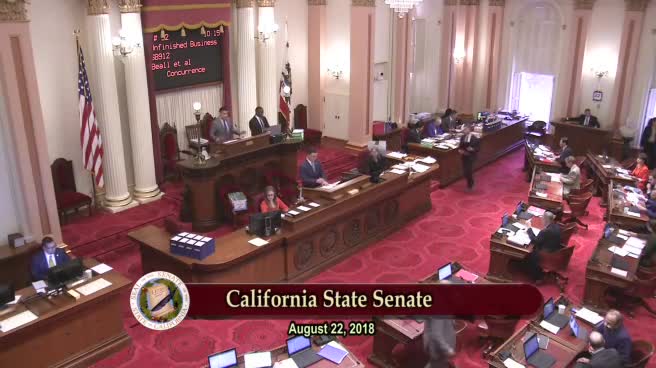 2MIN
Senate Floor
 15MIN
Senate Standing Committee on Transportation and Housing
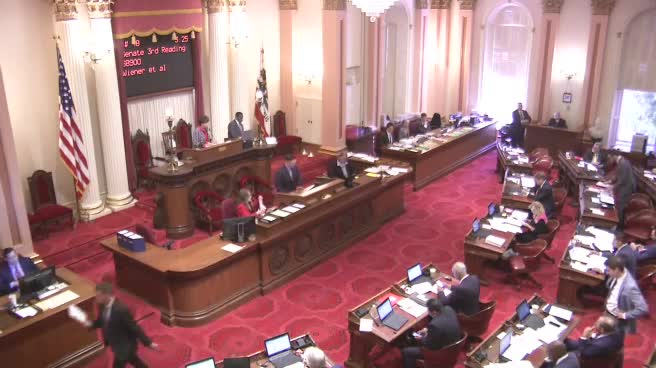 4MIN
Senate Floor
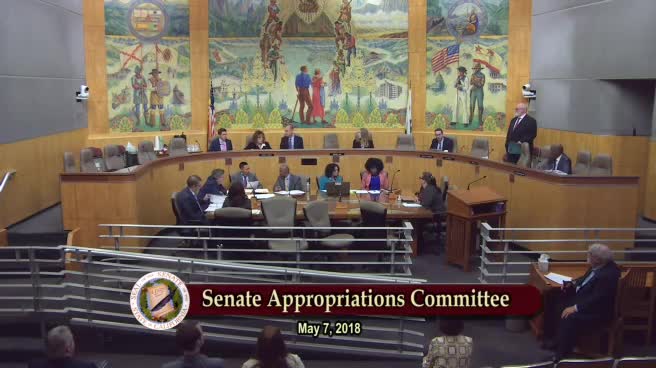 11MIN
Senate Standing Committee on Appropriations
 16MIN





