SB 914: Local agency contracts: construction manager at-risk construction contracts.
- Session Year: 2017-2018
- House: Senate
- Latest Version Date: 2018-07-16
Existing law authorizes a county, until January 1, 2023, with approval of the board of supervisors, to utilize construction manager at-risk construction contracts for the erection, construction, alteration, repair, or improvement of any building owned or leased by the county, subject to certain requirements, including that the method may only be used for projects that are in excess of $1,000,000.
This bill would expand that authorization by authorizing a public entity, of which the members of the county board of supervisors make up the members of the governing body of that public entity, with the approval of its governing body, to utilize construction manager at-risk construction contracts. The bill would also authorize the county or public entity to utilize those contracts for the erection, construction, alteration, repair, or improvement of infrastructure owned or leased by the county or the public entity, as applicable, including, but not limited to, buildings, utility improvements associated with buildings, flood control and underground utility improvements, and bridges, but excluding roads.
Existing law authorizes a county, until January 1, 2023, with approval of the board of supervisors, to utilize construction manager at-risk construction contracts for the erection, construction, alteration, repair, or improvement of any building owned or leased by the county, subject to certain requirements, including that the method may only be used for projects that are in excess of $1,000,000.
This bill would authorize the use of this method of contracting for the erection, construction, alteration, repair, or improvement of any infrastructure, expand that authorization by authorizing a public entity, of which the members of the county board of supervisors make up the members of the governing body of that public entity, with the approval of its governing body, to utilize construction manager at-risk construction contracts. The bill would also authorize the county or public entity to utilize those contracts for the erection, construction, alteration, repair, or improvement of infrastructure owned or leased by the county or the public entity, as applicable, including, but not limited to, buildings, utility improvements associated with buildings, flood control and underground utility improvements, and bridges, but excluding roads.
Existing law authorizes a county, until January 1, 2023, with approval of the board of supervisors, to utilize construction manager at-risk construction contracts for the erection, construction, alteration, repair, or improvement of any building owned or leased by the county, subject to certain requirements, including that the method may only be used for projects that are in excess of $1,000,000.
This bill would authorize the use of this method of contracting for the erection, construction, alteration, repair, or improvement of any infrastructure, excluding roads.
(a)A county, with approval of the board of supervisors, or a public entity, with approval of its governing body, may utilize construction manager at-risk construction contracts for the erection, construction, alteration, repair, or improvement of any infrastructure, excluding roads, and including, but not limited to, buildings, utility improvements associated with buildings, flood control and underground utility improvements, and bridges, owned or leased by the county. A construction manager at-risk construction contract may be used only for projects in the county in excess of one million dollars ($1,000,000) and may be awarded using either the lowest responsible bidder or best value method to a construction manager at-risk entity that possesses or that obtains sufficient bonding to cover the contract amount for construction services and risk and liability insurance as may be required by the county or public entity. Any payment or performance bond written for the purposes of this section shall be written using a bond form developed by the county or public entity.
(b)For purposes of this section, the following definitions apply:
(1)Best value means a value determined by objective criteria related to the experience of the entity and project personnel, project plan, financial strength of the entity, safety record of the entity, and price.
(2)Construction manager at-risk contract means a competitively procured contract by a county or public entity with an individual, partnership, joint venture, corporation, or other recognized legal entity, that is appropriately licensed in this state, including a contractors license issued by the Contractors State License Board, and that guarantees the cost of a project and furnishes construction management services, including, but not limited to, preparation and coordination of bid packages, scheduling, cost control, value engineering, evaluation, preconstruction services, and construction administration.
(3)Public entity means a public entity of which the members of the county board of supervisors make up the members of the governing body of that public entity.
(c)(1)A construction manager at-risk entity shall not be prequalified or shortlisted or awarded a contract unless that entity provides an enforceable commitment to the county or public entity that the construction manager at-risk entity and its subcontractors at every tier will use a skilled and trained workforce to perform all work on the project or contract that falls within an apprenticeable occupation in the building and construction trades, in accordance with Chapter 2.9 (commencing with Section 2600) of Part 1.
(2)This subdivision shall not apply if any of the following conditions are met:
(A)The county or public entity has entered into a project labor agreement that will bind all contractors and subcontractors performing work on the project or contract to use a skilled and trained workforce, and the construction manager at-risk entity agrees to be bound by that project labor agreement.
(B)The project or contract is being performed under the extension or renewal of a project labor agreement that was entered into by the county or public entity before January 1, 2018.
(C)The construction manager at-risk entity has entered into a project labor agreement that will bind the entity and all its subcontractors at every tier performing the project or contract to use a skilled and trained workforce.
(3)For purposes of this subdivision, project labor agreement has the same meaning as in paragraph (1) of subdivision (b) of Section 2500.
(d)Subcontractors that were not listed by a construction manager at-risk entity as partners, general partners, or association members in a partnership, limited partnership, or association in the entitys construction manager at-risk bid submission shall be awarded by the construction manager at-risk entity in accordance with the process set forth by the county. All subcontractors bidding on contracts pursuant to this section shall be afforded the protections contained in Chapter 4 (commencing with Section 4100) of Part 1. The construction manager at-risk entity shall do both of the following:
(1)Provide public notice of the availability of work to be subcontracted in accordance with the publication requirements applicable to the competitive bidding process of the county or public entity.
(2)Provide a fixed date and time on which the subcontracted work will be awarded in accordance with the procedure established pursuant to this section.
(e)A county or public entity that elects to proceed under this section and uses a construction manager at-risk contract for a building project shall make a copy of the contract available for public inspection on its Internet Web site and notify the appropriate policy committees of the Legislature with instructions on finding and accessing the stored contract.
(f)(1)If the county or public entity elects to award a project pursuant to this section, retention proceeds withheld by the county or public entity from the construction manager at-risk entity shall not exceed 5 percent if a performance and payment bond issued by an admitted surety insurer is required in the solicitation of bids.
(2)In a contract between the construction manager at-risk entity and any subcontractor, and in a contract between a subcontractor and any subcontractor thereunder, the percentage of the retention proceeds withheld shall not exceed the percentage specified in the contract between the county or public entity and the construction manager at-risk entity. If the construction manager at-risk entity provides written notice to any subcontractor that is not a member of the construction manager at-risk entity, before or at the time the bid is requested, that a bond may be required and the subcontractor subsequently is unable or refuses to furnish a bond to the construction manager at-risk entity, then the construction manager at-risk entity may withhold retention proceeds in excess of the percentage specified in the contract between the county or public entity and the construction manager at-risk entity from any payment made by the construction manager at-risk entity to the subcontractor.
(g)If the county or public entity elects to award a project pursuant to this section, the contract between the county or public entity and the construction manager at-risk entity shall be subject to subdivision (b) of Section 2782 of the Civil Code. Any contract between the construction manager at-risk entity and a contractor or subcontractor shall be subject to Section 2782.05 of the Civil Code.
(h)This section shall remain in effect only until January 1, 2023, and as of that date is repealed, unless a later enacted statute, that is enacted before January 1, 2023, deletes or extends that date.
(a)A county, with approval of the board of supervisors, or a public entity, with approval of its governing body, may utilize construction manager at-risk construction contracts for the erection, construction, alteration, repair, or improvement of any infrastructure, excluding roads, and including, but not limited to, buildings, utility improvements associated with buildings, flood control and underground utility improvements, and bridges, owned or leased by the county. A construction manager at-risk construction contract may be used only for projects in the county in excess of one million dollars ($1,000,000) and may be awarded using either the lowest responsible bidder or best value method to a construction manager at-risk entity that possesses or that obtains sufficient bonding to cover the contract amount for construction services and risk and liability insurance as may be required by the county. county or public entity. Any payment or performance bond written for the purposes of this section shall be written using a bond form developed by the county. county or public entity.
(b)For purposes of this section, the following definitions apply:
(1)Best value means a value determined by objective criteria related to the experience of the entity and project personnel, project plan, financial strength of the entity, safety record of the entity, and price.
(2)Construction manager at-risk contract means a competitively procured contract by a county or public entity with an individual, partnership, joint venture, corporation, or other recognized legal entity, that is appropriately licensed in this state, including a contractors license issued by the Contractors State License Board, and that guarantees the cost of a project and furnishes construction management services, including, but not limited to, preparation and coordination of bid packages, scheduling, cost control, value engineering, evaluation, preconstruction services, and construction administration.
(3)Public entity means a public entity of which the members of the county board of supervisors make up the members of the governing body of that public entity.
(c)(1)A construction manager at-risk entity shall not be prequalified or shortlisted or awarded a contract unless the that entity provides an enforceable commitment to the county or public entity that the construction manager at-risk entity and its subcontractors at every tier will use a skilled and trained workforce to perform all work on the project or contract that falls within an apprenticeable occupation in the building and construction trades, in accordance with Chapter 2.9 (commencing with Section 2600) of Part 1.
(2)This subdivision shall not apply if any of the following conditions are met:
(A)The county or public entity has entered into a project labor agreement that will bind all contractors and subcontractors performing work on the project or contract to use a skilled and trained workforce, and the construction manager at-risk entity agrees to be bound by that project labor agreement.
(B)The project or contract is being performed under the extension or renewal of a project labor agreement that was entered into by the county or public entity before January 1, 2018.
(C)The construction manager at-risk entity has entered into a project labor agreement that will bind the entity and all its subcontractors at every tier performing the project or contract to use a skilled and trained workforce.
(3)For purposes of this subdivision, project labor agreement has the same meaning as in paragraph (1) of subdivision (b) of Section 2500.
(d)Subcontractors that were not listed by a construction manager at-risk entity as partners, general partners, or association members in a partnership, limited partnership, or association in the entitys construction manager at-risk bid submission shall be awarded by the construction manager at-risk entity in accordance with the process set forth by the county. All subcontractors bidding on contracts pursuant to this section shall be afforded the protections contained in Chapter 4 (commencing with Section 4100) of Part 1. The construction manager at-risk entity shall do both of the following:
(1)Provide public notice of the availability of work to be subcontracted in accordance with the publication requirements applicable to the competitive bidding process of the county. county or public entity.
(2)Provide a fixed date and time on which the subcontracted work will be awarded in accordance with the procedure established pursuant to this section.
(e)A county or public entity that elects to proceed under this section and uses a construction manager at-risk contract for a building project shall make a copy of the contract available for public inspection on its Internet Web site and notify the appropriate policy committees of the Legislature with instructions on finding and accessing the stored contract.
(f)(1)If the county or public entity elects to award a project pursuant to this section, retention proceeds withheld by the county or public entity from the construction manager at-risk entity shall not exceed 5 percent if a performance and payment bond issued by an admitted surety insurer is required in the solicitation of bids.
(2)In a contract between the construction manager at-risk entity and any subcontractor, and in a contract between a subcontractor and any subcontractor thereunder, the percentage of the retention proceeds withheld shall not exceed the percentage specified in the contract between the county or public entity and the construction manager at-risk entity. If the construction manager at-risk entity provides written notice to any subcontractor that is not a member of the construction manager at-risk entity, before or at the time the bid is requested, that a bond may be required and the subcontractor subsequently is unable or refuses to furnish a bond to the construction manager at-risk entity, then the construction manager at-risk entity may withhold retention proceeds in excess of the percentage specified in the contract between the county or public entity and the construction manager at-risk entity from any payment made by the construction manager at-risk entity to the subcontractor.
(g)If the county or public entity elects to award a project pursuant to this section, the contract between the county or public entity and the construction manager at-risk entity shall be subject to subdivision (b) of Section 2782 of the Civil Code. Any contract between the construction manager at-risk entity and a contractor or subcontractor shall be subject to Section 2782.05 of the Civil Code.
(h)This section shall remain in effect only until January 1, 2023, and as of that date is repealed, unless a later enacted statute, that is enacted before January 1, 2023, deletes or extends that date.
(a)A county, with approval of the board of supervisors, may utilize construction manager at-risk construction contracts for the erection, construction, alteration, repair, or improvement of any building infrastructure, excluding roads, owned or leased by the county. A construction manager at-risk construction contract may be used only for projects in the county in excess of one million dollars ($1,000,000) and may be awarded using either the lowest responsible bidder or best value method to a construction manager at-risk entity that possesses or that obtains sufficient bonding to cover the contract amount for construction services and risk and liability insurance as may be required by the county. Any payment or performance bond written for the purposes of this section shall be written using a bond form developed by the county.
(b)For purposes of this section, the following definitions apply:
(1)Best value means a value determined by objective criteria related to the experience of the entity and project personnel, project plan, financial strength of the entity, safety record of the entity, and price.
(2)Construction manager at-risk contract means a competitively procured contract by a county with an individual, partnership, joint venture, corporation, or other recognized legal entity, that is appropriately licensed in this state, including a contractors license issued by the Contractors State License Board, and that guarantees the cost of a project and furnishes construction management services, including, but not limited to, preparation and coordination of bid packages, scheduling, cost control, value engineering, evaluation, preconstruction services, and construction administration.
(c)(1)A construction manager at-risk entity shall not be prequalified or shortlisted or awarded a contract unless the entity provides an enforceable commitment to the county that the entity and its subcontractors at every tier will use a skilled and trained workforce to perform all work on the project or contract that falls within an apprenticeable occupation in the building and construction trades, in accordance with Chapter 2.9 (commencing with Section 2600) of Part 1.
(2)This subdivision shall not apply if any of the following conditions are met:
(A)The county has entered into a project labor agreement that will bind all contractors and subcontractors performing work on the project or contract to use a skilled and trained workforce, and the entity agrees to be bound by that project labor agreement.
(B)The project or contract is being performed under the extension or renewal of a project labor agreement that was entered into by the county before January 1, 2018.
(C)The entity has entered into a project labor agreement that will bind the entity and all its subcontractors at every tier performing the project or contract to use a skilled and trained workforce.
(3)For purposes of this subdivision, project labor agreement has the same meaning as in paragraph (1) of subdivision (b) of Section 2500.
(d)Subcontractors that were not listed by a construction manager at-risk entity as partners, general partners, or association members in a partnership, limited partnership, or association in the entitys construction manager at-risk bid submission shall be awarded by the construction manager at-risk entity in accordance with the process set forth by the county. All subcontractors bidding on contracts pursuant to this section shall be afforded the protections contained in Chapter 4 (commencing with Section 4100) of Part 1. The construction manager at-risk entity shall do both of the following:
(1)Provide public notice of the availability of work to be subcontracted in accordance with the publication requirements applicable to the competitive bidding process of the county.
(2)Provide a fixed date and time on which the subcontracted work will be awarded in accordance with the procedure established pursuant to this section.
(e)A county that elects to proceed under this section and uses a construction manager at-risk contract for a building project shall make a copy of the contract available for public inspection on its Internet Web site and notify the appropriate policy committees of the Legislature with instructions on finding and accessing the stored contract.
(f)(1)If the county elects to award a project pursuant to this section, retention proceeds withheld by the county from the construction manager at-risk entity shall not exceed 5 percent if a performance and payment bond issued by an admitted surety insurer is required in the solicitation of bids.
(2)In a contract between the construction manager at-risk entity and any subcontractor, and in a contract between a subcontractor and any subcontractor thereunder, the percentage of the retention proceeds withheld shall not exceed the percentage specified in the contract between the county and the construction manager at-risk entity. If the construction manager at-risk entity provides written notice to any subcontractor that is not a member of the construction manager at-risk entity, before or at the time the bid is requested, that a bond may be required and the subcontractor subsequently is unable or refuses to furnish a bond to the construction manager at-risk entity, then the construction manager at-risk entity may withhold retention proceeds in excess of the percentage specified in the contract between the county and the construction manager at-risk entity from any payment made by the construction manager at-risk entity to the subcontractor.
(g)If the county elects to award a project pursuant to this section, the contract between the county and construction manager at-risk entity shall be subject to subdivision (b) of Section 2782 of the Civil Code. Any contract between the construction manager at-risk entity and a contractor or subcontractor shall be subject to Section 2782.05 of the Civil Code.
(h)This section shall remain in effect only until January 1, 2023, and as of that date is repealed, unless a later enacted statute, that is enacted before January 1, 2023, deletes or extends that date.
|
Date
|
Status
|
|---|---|
| Jul 16, 2018 | Chaptered by Secretary of State. Chapter 108, Statutes of 2018. |
| Jul 16, 2018 | Approved by the Governor. |
| Jul 10, 2018 | Enrolled and presented to the Governor at 3:30 p.m. |
| Jul 2, 2018 | Assembly amendments concurred in. (Ayes 37. Noes 0.) Ordered to engrossing and enrolling. |
| Jun 25, 2018 | In Senate. Concurrence in Assembly amendments pending. |
| Jun 25, 2018 | Read third time. Passed. Ordered to the Senate. |
| Jun 14, 2018 | Read second time. Ordered to third reading. |
| Jun 13, 2018 | From committee: Do pass. (Ayes 7. Noes 0.) (June 13). |
| Jun 6, 2018 | From committee with author's amendments. Read second time and amended. Re-referred to Com. on L. GOV. |
| Apr 30, 2018 | Referred to Com. on L. GOV. |
| Apr 23, 2018 | In Assembly. Read first time. Held at Desk. |
| Apr 23, 2018 | Read third time. Passed. (Ayes 38. Noes 0.) Ordered to the Assembly. |
| Apr 12, 2018 | Read second time. Ordered to third reading. |
| Apr 11, 2018 | From committee: Do pass. (Ayes 6. Noes 0.) (April 11). |
| Apr 3, 2018 | Set for hearing April 11. |
| Mar 22, 2018 | April 4 set for first hearing canceled at the request of author. |
| Mar 21, 2018 | Set for hearing April 4. |
| Feb 1, 2018 | Referred to Com. on GOV. & F. |
| Jan 23, 2018 | From printer. May be acted upon on or after February 22. |
| Jan 22, 2018 | Introduced. Read first time. To Com. on RLS. for assignment. To print. |
|
Date
|
Description
|
Location
|
Votes
|
|
|---|---|---|---|---|
| Jul 2, 2018 | Unfinished Business SB914 Dodd et al. Concurrence | Senate Floor |
Passed |
|
| Jun 25, 2018 | SB 914 Dodd Senate Third Reading By GRAYSON | Assembly Floor |
Passed |
|
| Jun 13, 2018 | Do pass. | Assembly Standing Committee on Local Government |
Passed |
|
| Apr 23, 2018 | Senate 3rd Reading SB914 Dodd et al. | Senate Floor |
Passed |
|
| Apr 11, 2018 | Do pass | Senate Standing Committee on Governance and Finance |
Passed |
This list shows positions taken on this bill by organizations on the date displayed, which is linked to the original source.
Positions by individuals are not included.
Office of Senate Floor Analyses (916) 651-1520 Fax: (916) 327-4478 | SB 914 |
UNFINISHED BUSINESS
Bill No: SB 914
Amended: 6/6/18
SENATE GOVERNANCE & FIN. COMMITTEE: 6-0, 4/11/18
AYES: McGuire, Nguyen, Beall, Hernandez, Hertzberg, Moorlach
NO VOTE RECORDED: Lara
SENATE FLOOR: 38-0, 4/23/18
AYES: Allen, Anderson, Atkins, Bates, Beall, Berryhill, Bradford, Cannella, De León, Dodd, Fuller, Gaines, Galgiani, Glazer, Hernandez, Hertzberg, Hill, Hueso, Jackson, Lara, Leyva, McGuire, Mitchell, Monning, Moorlach, Newman, Nguyen, Nielsen, Pan, Portantino, Roth, Skinner, Stern, Stone, Vidak, Wieckowski, Wiener, Wilk
NO VOTE RECORDED: Morrell
ASSEMBLY FLOOR: 57-6, 6/25/18 - See last page for vote
SUBJECT: Local agency contracts: construction manager at-risk construction contracts
SOURCE: California State Association of Counties
DIGEST:
This bill expands the types of projects that can be delivered by counties using the construction manager at-risk procurement method.
Assembly Amendments
specify certain types of infrastructure projects that are explicitly authorized and make other clarifying changes.
Existing law:
- Requires, pursuant to the Local Agency Public Construction Act (LAPC Act), local officials to invite bids for construction projects and then award contracts to the lowest responsible bidder under the traditional design-bid-build project delivery system.
- Authorizes, until January 1, 2025, cities, counties, and specified special districts and transit agencies to use design-build for specified public works contracts in excess of $1 million using either a low bid or best value process.
- Provides the following parameters for cities and counties that use design-build:
- Allows design-build for the construction of a building or buildings and improvements directly related to the construction of a building or buildings, county sanitation wastewater treatment facilities, and park and recreational facilities;
- Allows cities and counties that operate wastewater facilities, solid waste management facilities, or water recycling facilities to use design-build for the construction of such facilities, both local and regional; and,
- Prohibits cities and counties from using design-build for the construction of other infrastructure, including, but not limited to, streets and highways, public rail transit, or water resources facilities and infrastructure.
- Authorizes, until January 1, 2023, counties to use the construction manager at-risk method (CMAR) for the construction of buildings costing in excess of $1 million and allows a county to award the contract to the lowest responsible bidder or by the best value method.
- Prohibits a CMAR bidder from being prequalified or shortlisted or awarded a contract unless the entity provides an enforceable commitment to the county that the entity and its subcontractors at every tier will use a skilled and trained workforce (STWF).
- Exempts a project from the STWF mandate if the project or contact is being performed under the extension or renewal of a project labor agreement that was entered into by the county before January 1, 2018.
This bill:
- Authorizes a county, with approval of the board of supervisors, or associated public entity, with the approval of its governing body, to use the CMAR project delivery method on any infrastructure owned or leased by the county, excluding roads, but including, but not limited to, buildings, utility improvements associated with buildings, flood control and underground utility improvements, and bridges.
- Defines “public entity” as any public entity in which the county board of supervisors is the governing body.
Background
The LAPC Act requires local officials to invite bids for construction projects and then award contracts to the lowest responsible bidder. This design-bid-build method is the traditional, and most widely-used, approach to public works construction. This approach splits construction projects into two distinct phases: design and construction. During the design phase, the local agency prepares detailed project plans and specifications using its own employees or by hiring outside architects and engineers. Once project designs are complete, local officials invite bids from the construction community and award the contract to the lowest responsible bidder. However, many local public agencies have grown frustrated with the traditional method of project delivery, design-bid-build, arguing that it is slower and costlier than other procurement methods. In response, the Legislature has adopted several bills over the last five years to give explicit authority to use alternate methods such as design-build and CMAR.
CMAR allows the owner of a project to retain a “construction manager,” who provides pre-construction services during the design period and later becomes the general contractor during the construction process. The owner signs separate contracts for design with one party and for construction services with the construction manager, similar to the design-bid-build method. The owner may establish the separate contracts at the same time, however, thereby allowing the design party and the construction manager to work together, similar to the design-build method. Before construction can begin on a project, the owner and construction manager must agree on either a fixed price or “guaranteed maximum price” for the project. The construction manager is responsible for delivering the project within the agreed upon price, thereby assuming the risk for cost-overruns. Counties, the California Administrative Office of the Courts, University of California, California State University System, school districts, and some cities have used the CMAR for building construction projects.
Under the CMAR method, project delivery can occur in sequential or concurrent phases. Projects that have multiple components lend themselves to this method because the design and construction of different aspects of the project can occur at different times. In effect, the overall project can be broken into multiple components, which the construction manager must bid to subcontractors.
Comments
Purpose of the bill. A CMAR contract is a competitively procured contract with an entity that guarantees the cost of a project and furnishes construction management services, including, but not limited to, preparation and coordination of bid packages, scheduling, cost control, value engineering, evaluation, preconstruction services and construction administration. CMAR offers many advantages over traditional methods of procurement, including: faster and more efficient project delivery; better qualified contractors; improved collaboration between the project’s owner, design firm, and construction manager; and greater transparency from more open cost and fee disclosure. This all adds up to lower the costs and risks borne by public entities when they want to build complex projects. SB 914 expands the tools counties have to plan and deliver infrastructure projects by extending CMAR authority to all types of infrastructure projects. At the same time, SB 914 maintains the existing project cost threshold of $1 million or more and STWF requirements, ensuring quality construction and creating apprenticeship opportunities. Finally, SB 914 allows dependent districts of counties—which are simply extensions of the county—to make use of CMAR, fixing a quirk in the law. SB 914 grants counties the flexibility to build projects they need in the most efficient manner possible, which translates to savings for taxpayers in the long run.
Union vs. non-union contractors. Current law exempts CMAR projects that are governed by a project labor agreement from the STWF requirements. Some contractors argue that this allows union shops to get around their own requirements and creates an unfair playing field for non-union shops. They also argue that STWF requirements restrict competition and increase costs, but if these requirements apply to some projects, they should apply to all.
Related/Prior Legislation
SB 914 is one of a number of bills in recent years to authorize specific local agencies to use alternative contracting methods. For example, the Mayers Memorial Hospital District (AB 1290, Dahle, Chapter 34, Statutes of 2015) and the San Diego Association of Governments (SB 974, Committee on Governance and Finance, Chapter 366, Statutes of 2016) were given design-build authority. Additionally, SB 793 (Hill, Chapter 627, Statutes of 2017) allowed the Peninsula Health Care District and the Midpeninsula Regional Open Space District to use design-build, and AB 994 (Muratsuchi, Chapter 321, Statutes of 2017) allowed the Beach Cities Health District to use design-build. SB 373 (Cannella, Chapter 391, Statutes of 2017) allowed the Stanislaus Regional Water Authority to utilize design-build to construct a surface water supply project. AB 851 (Caballero, Chapter 821, Statutes of 2017) extended the sunset date for CMAR authorization to January 1, 2023 and granted this authority to the City of San Diego on projects over $25 million.
FISCAL EFFECT: Appropriation: No Fiscal Com.: No Local: No
California State Association of Counties (source)
California Legislative Conference of the Plumbing and Piping Industry
California Municipal Utilities Association
California State Association of Electrical Workers
California State Pipe Trades Council
Contra Costa County Board of Supervisors
Contra Costa Electric, Inc.
County of San Bernardino
County of San Mateo
International Union of Elevator Contractors
Napa County Board of Supervisors
Napa-Solano Counties Building and Construction Trades Council
National Electrical Contractors Association, California Chapter
Orange County Board of Supervisors
Rural County Representatives of California
State Building and Construction Trades Council, AFL-CIO
Urban Counties of California
Western States Council of Sheet Metal Workers
OPPOSITION: (Verified 6/26/18)
Associated Builders and Contractors, Northern California Chapter
ASSEMBLY FLOOR: 57-6, 6/25/18
AYES: Aguiar-Curry, Arambula, Berman, Bonta, Burke, Caballero, Calderon, Carrillo, Chau, Chávez, Chiu, Chu, Cooley, Cooper, Daly, Eggman, Frazier, Friedman, Gabriel, Gallagher, Cristina Garcia, Eduardo Garcia, Gipson, Gloria, Gonzalez Fletcher, Gray, Grayson, Holden, Irwin, Jones-Sawyer, Kalra, Lackey, Levine, Limón, Low, McCarty, Medina, Mullin, Muratsuchi, Nazarian, Obernolte, O'Donnell, Quirk, Quirk-Silva, Reyes, Rivas, Rodriguez, Rubio, Salas, Santiago, Steinorth, Mark Stone, Thurmond, Ting, Weber, Wood, Rendon
NOES: Travis Allen, Baker, Bigelow, Harper, Kiley, Patterson
NO VOTE RECORDED: Acosta, Bloom, Brough, Cervantes, Chen, Choi, Cunningham, Dahle, Flora, Fong, Kamlager-Dove, Maienschein, Mathis, Mayes, Melendez, Voepel, Waldron
Prepared by: Anton Favorini-Csorba / GOV. & F. / (916) 651-4119
6/27/18 14:46:01
**** END ****
SENATE THIRD READING
STR Bill Id:SB 914
Author:(Dodd)
As Amended Ver:June 6, 2018
Majority vote
SENATE VOTE: 38-0
Committee | Votes | Ayes | Noes |
Local Government | 7-0 | Aguiar-Curry, Bloom, Caballero, Gabriel, Grayson, Lackey, Rivas |
SUMMARY: Expands the types of projects counties can deliver using the construction manager at risk (CMAR) contracting method. Specifically, this bill:
- Authorizes a county, with approval of the board of supervisors, or a public entity, with approval of its governing body, to use CMAR contracts for the erection, construction, alteration, repair, or improvement of any infrastructure owned or leased by the county, excluding roads, and including, but not limited to, buildings, utility improvements associated with buildings, flood control, underground utility improvements, and bridges.
- Defines "public entity" as any public entity in which the county board of supervisors is the governing body.
EXISTING LAW:
- Requires, pursuant to the Local Agency Public Construction Act (LAPC Act), local officials to invite bids for construction projects and then award contracts to the lowest responsible bidder under the traditional design-bid-build project delivery system.
- Authorizes, until January 1, 2025, cities, counties, and specified special districts and transit agencies to use design-build for specified public works contracts in excess of $1 million using either a low bid or best value process.
- Provides the following parameters for cities and counties that use design-build:
- Allows design-build for the construction of a building or buildings and improvements directly related to the construction of a building or buildings, county sanitation wastewater treatment facilities, and park and recreational facilities;
- Allows cities and counties that operate wastewater facilities, solid waste management facilities, or water recycling facilities to use design-build for the construction of such facilities, both local and regional; and,
- Prohibits cities and counties from using design-build for the construction of other infrastructure, including, but not limited to, streets and highways, public rail transit, or water resources facilities and infrastructure.
- Authorizes, until January 1, 2023, counties to use CMAR for the construction of buildings costing in excess of $1 million and allows a county to award the contract to the lowest responsible bidder or by the best value method.
- Prohibits a CMAR bidder from being prequalified or shortlisted or awarded a contract, unless the entity provides an enforceable commitment to the county that the entity and its subcontractors at every tier will use a skilled and trained workforce (STWF).
- Exempts a project from the STWF mandate if the project or contact is being performed under the extension or renewal of a project labor agreement that was entered into by the county before January 1, 2018.
FISCAL EFFECT: None
COMMENTS:
- Local Government Contracting. The LAPC Act requires local officials to invite bids for construction projects and then award contracts to the lowest responsible bidder. This design-bid-build method is the traditional, and most widely-used, approach to public works construction. This approach splits construction projects into two distinct phases: design and construction. During the design phase, the local agency prepares detailed project plans and specifications using its own employees or by hiring outside architects and engineers. Once project designs are complete, local officials invite bids from the construction community and award the contract to the lowest responsible bidder. However, many local public agencies have grown frustrated with the traditional method of project delivery, design-bid-build, arguing that it is slower and more costly than other procurement methods. In response, the Legislature has adopted several bills over the last five years to give explicit authority to use alternate methods, such as design-build and CMAR.
Design-Build. State law allows state and local officials, until January 1, 2025, to use the design-build method for contracts to procure both design and construction services from a single company before the development of complete plans and specifications [SB 785 (Wolk), Chapter 931, Statutes of 2014]. Cities and counties can use the design-build method to construct buildings and related improvements and other specified types of public works that cost more than $1 million. Under design-build, the agency contracts with a single entity – which can be a single firm, a consortium, or a joint venture – to design and construct a project. Before inviting bids, the agency prepares documents that describe the basic concept of the project, as opposed to a complete set of drawings and specifications of the final product. In the bidding phase, the agency typically evaluates bids on a low-bid or best-value basis, incorporating technical factors, such as qualifications and design quality, in addition to price. The Department of General Services, the California Department of Corrections and Rehabilitation, cities, counties, transit districts, special districts operating wastewater, water recycling, or solid waste management facilities, and certain individual state and local agencies may use design-build.
SB 785 outlined a standardized design-build procurement process in which the awarding authority may prepare a list of qualified or short-listed entities, based on specified criteria. Once a list of qualified or short-listed entities is complete, the awarding authority may prepare a request for proposals (RFP) that invites prequalified or short-listed entities to submit competitive sealed proposals in the manner prescribed by the awarding authority.
For projects utilizing low bid as the selection method, the competitive bidding process must involve lump-sum bids by the prequalified or short-listed design-build entities. Awards must be made to the design-build entity that is the lowest responsible bidder.
For those projects utilizing best value as a selection method, proposals must be evaluated using only the criteria and selection procedures specifically identified in the RFP. The awarding authority may reserve the right to request revisions and conduct negotiations with responsive proposers, if the authority specifies in the RFP how it will ensure that negotiations are conducted in good faith. The authority may hold discussions or negotiations with responsive proposers using the process specified in the RFP. Responsive proposers are ranked based on value provided. The contract must be awarded to the responsible design-build entity whose proposal is determined by the authority to have offered the best value to the public. Upon issuance of a contract award, the awarding authority must publicly announce its award, identifying the design-build entity to which the award is made, along with a written decision supporting its contract award and stating the basis of the award.
The state's design-build statutes also impose requirements for the use of skilled labor, the issuance of performance bonds, insurance coverage, and identification of subcontractors that will complete at least one-half of 1% of the value of a contract.
Construction Manager At-Risk. CMAR is another approach to public works construction and delivery, which combines elements of the design-bid-build and design-build methods, and uses construction project management services. CMAR allows the owner of a project to retain a "construction manager," who provides pre-construction services during the design period and later becomes the general contractor during the construction process. The owner signs separate contracts for design with one party and for construction services with the construction manager, similar to the design-bid-build method. The owner may establish the separate contracts at the same time, however, thereby allowing the design party and the construction manager to work together, similar to the design-build method. Before construction can begin on a project, the owner and construction manager must agree on either a fixed price or "guaranteed maximum price" for the project. The construction manager is responsible for delivering the project within the agreed upon price, thereby assuming the risk for cost-overruns. Counties, the California Administrative Office of the Courts, University of California, California State University System, school districts, and some cities have used the CMAR for building construction projects.
Under the CMAR method, project delivery can occur in sequential or concurrent phases. Projects that have multiple components lend themselves to this method because the design and construction of different aspects of the project can occur at different times. In effect, the overall project can be broken into multiple components, which the construction manager must bid to subcontractors. SB 328 (Knight), Chapter 517, Statutes of 2013, authorized counties to use CMAR for projects costing in excess of $1 million, and allowed the county to award the contract to the lowest responsible bidder or by the best value method until January 1, 2018. Last year, AB 851 (Caballero), Chapter 821, Statutes of 2017, extended the sunset date to January 1, 2023, and granted this authority to the City of San Diego on projects over $25 million. Additionally, AB 851 prohibited a CMAR entity from being prequalified or shortlisted or awarded a contract, unless the entity provides an enforceable commitment to the county that the entity and its subcontractors at every tier will use a STWF. Existing CMAR authority is limited to the construction of buildings. County officials want to increase the opportunities for counties to utilize CMAR by expanding the types of projects that can be conducted to include infrastructure projects, excluding roads.
- Bill Summary. This bill expands county authority to use the CMAR method for all infrastructure projects, except roads. This bill maintains the existing project cost threshold of in excess of $1 million, the STWF requirements, and the January 1, 2023, program sunset date. Lastly, this bill extends CMAR authority to county dependent special districts where the board of supervisors is the governing body of the district. The California State Association of Counties is the sponsor of this bill.
- Author's Statement. According to the author, "SB 914 grants counties the necessary flexibility to build projects they need in the most efficient manner possible, which translates to savings for both local governments and taxpayers. Authorizing the CMAR method of procurement for infrastructure projects will provide counties with a tool to deliver fiscally responsible public infrastructure projects; ensure high-quality construction at a guaranteed maximum price; reduce public sector liability; and ensure more timely completion of public works projects."
- Arguments in Support. The Orange County Board of Supervisors argues that, "For complex projects, early contractor involvement is essential. Under the CMAR method, the CMAR entity acts as the general contractor during the construction phase and retains the responsibility for monitoring design changes under a guaranteed maximum price contract. Thus, using the CMAR method facilitates the completion and delivery of complex public works projects efficiently and cost effectively. Local agencies would benefit from a delivery method that delivers projects at a faster pace and lower cost. SB 914 accomplishes this by providing greater flexibility to the county by extending the use of the CMAR project delivery method to the construction, repair, or improvement of horizontal projects."
- Arguments in Opposition. The Associated Builders and Contractors, Northern California Chapter argues that, "When the Legislature adopted a requirement that contractors on some construction projects use a STWF it was justified as 'significantly raising the standards for contractors, increasing the quality of construction, and protecting taxpayers and workers on construction projects.'
"While many in the construction industry believe these mandates will exacerbate current shortages of construction workers, all contractors, union and non-union, should be treated the same as to skilled workforce mandates. If the state truly cares about significantly raising the standards for contractors, increasing the quality of construction and protecting taxpayers and workers on construction projects, then a STWF mandate needs to be a uniform standard across the industry on all projects, without exceptions for entities that enter into project labor agreements without an enforceable commitment that a STWF is being used. No contractor should get a free pass on demonstrating their commitment to a STWF in California."
Analysis Prepared by: Jimmy MacDonald / L. GOV. / (916) 319-3958 FN: 0003491
Date of Hearing: June 13, 2018
ASSEMBLY COMMITTEE ON LOCAL GOVERNMENT
Cecilia Aguiar-Curry, Chair
SBPCA Bill Id:SB 914
Author:(Dodd) – As Amended Ver:June 6, 2018
SENATE VOTE: 38-0
SUBJECT: Local agency contracts: construction manager at-risk construction contracts.
SUMMARY: Expands the types of projects counties can deliver using the construction manager at risk (CMAR) contracting method. Specifically, this bill:
- Authorizes a county, with approval of the board of supervisors, or a public entity, with approval of its governing body, to use CMAR contracts for the erection, construction, alteration, repair, or improvement of any infrastructure owned or leased by the county, excluding roads, and including, but not limited to, buildings, utility improvements associated with buildings, flood control, underground utility improvements, and bridges.
- Defines “public entity” as any public entity in which the county board of supervisors is the governing body.
EXISTING LAW:
- Requires, pursuant to the Local Agency Public Construction Act (LAPC Act), local officials to invite bids for construction projects and then award contracts to the lowest responsible bidder under the traditional design-bid-build project delivery system.
- Authorizes, until January 1, 2025, cities, counties, and specified special districts and transit agencies to use design-build for specified public works contracts in excess of $1 million using either a low bid or best value process.
- Provides the following parameters for cities and counties that use design-build:
- Allows design-build for the construction of a building or buildings and improvements directly related to the construction of a building or buildings, county sanitation wastewater treatment facilities, and park and recreational facilities;
- Allows cities and counties that operate wastewater facilities, solid waste management facilities, or water recycling facilities to use design-build for the construction of such facilities, both local and regional; and,
- Prohibits cities and counties from using design-build for the construction of other infrastructure, including, but not limited to, streets and highways, public rail transit, or water resources facilities and infrastructure.
- Authorizes, until January 1, 2023, counties to use CMAR for the construction of buildings costing in excess of $1 million and allows a county to award the contract to the lowest responsible bidder or by the best value method.
- Prohibits a CMAR bidder from being prequalified or shortlisted or awarded a contract,
unless the entity provides an enforceable commitment to the county that the entity and its subcontractors at every tier will use a skilled and trained workforce (STWF). - Exempts a project from the STWF mandate if the project or contact is being performed under the extension or renewal of a project labor agreement that was entered into by the county before January 1, 2018.
FISCAL EFFECT: None
COMMENTS:
- Local Government Contracting. The LAPC Act requires local officials to invite bids for construction projects and then award contracts to the lowest responsible bidder. This design-bid-build method is the traditional, and most widely-used, approach to public works construction. This approach splits construction projects into two distinct phases: design and construction. During the design phase, the local agency prepares detailed project plans and specifications using its own employees or by hiring outside architects and engineers. Once project designs are complete, local officials invite bids from the construction community and award the contract to the lowest responsible bidder. However, many local public agencies have grown frustrated with the traditional method of project delivery, design-bid-build, arguing that it is slower and more costly than other procurement methods. In response, the Legislature has adopted several bills over the last five years to give explicit authority to use alternate methods, such as design-build and CMAR.
Design-Build. State law allows state and local officials, until January 1, 2025, to use the design-build method for contracts to procure both design and construction services from a single company before the development of complete plans and specifications [SB 785 (Wolk), Chapter 931, Statutes of 2014]. Cities and counties can use the design-build method to construct buildings and related improvements and other specified types of public works that cost more than $1 million. Under design-build, the agency contracts with a single entity — which can be a single firm, a consortium, or a joint venture — to design and construct a project. Before inviting bids, the agency prepares documents that describe the basic concept of the project, as opposed to a complete set of drawings and specifications of the final product. In the bidding phase, the agency typically evaluates bids on a low-bid or best-value basis, incorporating technical factors, such as qualifications and design quality, in addition to price. The Department of General Services, the California Department of Corrections and Rehabilitation, cities, counties, transit districts, special districts operating wastewater, water recycling, or solid waste management facilities, and certain individual state and local agencies may use design-build.
SB 785 outlined a standardized design-build procurement process in which the awarding authority may prepare a list of qualified or short-listed entities, based on specified criteria. Once a list of qualified or short-listed entities is complete, the awarding authority may prepare a request for proposals (RFP) that invites prequalified or short-listed entities to submit competitive sealed proposals in the manner prescribed by the awarding authority.
For projects utilizing low bid as the selection method, the competitive bidding process must involve lump-sum bids by the prequalified or short-listed design-build entities. Awards must be made to the design-build entity that is the lowest responsible bidder.
For those projects utilizing best value as a selection method, proposals must be evaluated using only the criteria and selection procedures specifically identified in the RFP. The awarding authority may reserve the right to request revisions and conduct negotiations with responsive proposers, if the authority specifies in the RFP how it will ensure that negotiations are conducted in good faith. The authority may hold discussions or negotiations with responsive proposers using the process specified in the RFP. Responsive proposers are ranked based on value provided. The contract must be awarded to the responsible design-build entity whose proposal is determined by the authority to have offered the best value to the public. Upon issuance of a contract award, the awarding authority must publicly announce its award, identifying the design-build entity to which the award is made, along with a written decision supporting its contract award and stating the basis of the award.
The state’s design-build statutes also impose requirements for the use of skilled labor, the issuance of performance bonds, insurance coverage, and identification of subcontractors that will complete at least one-half of 1% of the value of a contract.
Construction Manager At-Risk. CMAR is another approach to public works construction and delivery, which combines elements of the design-bid-build and design-build methods, and uses construction project management services. CMAR allows the owner of a project to retain a “construction manager,” who provides pre-construction services during the design period and later becomes the general contractor during the construction process. The owner signs separate contracts for design with one party and for construction services with the construction manager, similar to the design-bid-build method. The owner may establish the separate contracts at the same time, however, thereby allowing the design party and the construction manager to work together, similar to the design-build method. Before construction can begin on a project, the owner and construction manager must agree on either a fixed price or “guaranteed maximum price” for the project. The construction manager is responsible for delivering the project within the agreed upon price, thereby assuming the risk for cost-overruns. Counties, the California Administrative Office of the Courts, University of California, California State University System, school districts, and some cities have used the CMAR for building construction projects.
Under the CMAR method, project delivery can occur in sequential or concurrent phases. Projects that have multiple components lend themselves to this method because the design and construction of different aspects of the project can occur at different times. In effect, the overall project can be broken into multiple components, which the construction manager must bid to subcontractors. SB 328 (Knight), Chapter 517, Statutes of 2013, authorized counties to use CMAR for projects costing in excess of $1 million, and allowed the county
to award the contract to the lowest responsible bidder or by the best value method until January 1, 2018. Last year, AB 851 (Caballero), Chapter 821, Statutes of 2017, extended the sunset date to January 1, 2023, and granted this authority to the City of San Diego on projects over $25 million. Additionally, AB 851 prohibited a CMAR entity from being prequalified or shortlisted or awarded a contract, unless the entity provides an enforceable commitment to
the county that the entity and its subcontractors at every tier will use a STWF. Existing CMAR authority is limited to the construction of buildings. County officials want to increase the opportunities for counties to utilize CMAR by expanding the types of projects that can be conducted to include infrastructure projects, excluding roads.
- Bill Summary. SB 914 expands county authority to use the CMAR method for all infrastructure projects, except roads. This bill maintains the existing project cost threshold
of in excess of $1 million, the STWF requirements, and the January 1, 2023, program sunset date. Lastly, this bill extends CMAR authority to county dependent special districts where the board of supervisors is the governing body of the district. The California State Association of Counties is the sponsor of this bill. - Author’s Statement. According to the author, “SB 914 grants counties the necessary flexibility to build projects they need in the most efficient manner possible, which translates to savings for both local governments and taxpayers. Authorizing the CMAR method of procurement for infrastructure projects will provide counties with a tool to deliver fiscally responsible public infrastructure projects; ensure high-quality construction at a guaranteed maximum price; reduce public sector liability; and ensure more timely completion of public works projects.”
- Arguments in Support. The Orange County Board of Supervisors argues that, “For complex projects, early contractor involvement is essential. Under the CMAR method, the CMAR entity acts as the general contractor during the construction phase and retains the responsibility for monitoring design changes under a guaranteed maximum price contract. Thus, using the CMAR method facilitates the completion and delivery of complex public works projects efficiently and cost effectively. Local agencies would benefit from a delivery method that delivers projects at a faster pace and lower cost. SB 914 accomplishes this by providing greater flexibility to the county by extending the use of the CMAR project delivery method to the construction, repair, or improvement of horizontal projects.”
- Arguments in Opposition. The Associated Builders and Contractors, Northern California Chapter argues that, “When the Legislature adopted a requirement that contractors on some construction projects use a STWF it was justified as ‘significantly raising the standards for contractors, increasing the quality of construction, and protecting taxpayers and workers on construction projects.’
“While many in the construction industry believe these mandates will exacerbate current shortages of construction workers, all contractors, union and non-union, should be treated the same as to skilled workforce mandates. If the state truly cares about significantly raising the standards for contractors, increasing the quality of construction and protecting taxpayers and workers on construction projects, then a STWF mandate needs to be a uniform standard across the industry on all projects, without exceptions for entities that enter into project labor agreements without an enforceable commitment that a STWF is being used. No contractor should get a free pass on demonstrating their commitment to a STWF in California.”
REGISTERED SUPPORT / OPPOSITION:
Support
California State Association of Counties [SPONSOR]
California Legislative Conference of the Plumbing, Heating, and Piping Industry
California Municipal Utilities Association
California State Association of Electrical Workers
California State Pipe Trades Council
Contra Costa Electric, Inc.
Counties of Contra Costa, Napa, Orange, San Bernardino, San Mateo, and Santa Barbara
International Union of Elevator Contractors
Napa-Solano Counties Buildings and Construction Trades Council
National Electrical Contractors Association, California Chapters
Rural County Representatives of California
State Building and Construction Trades Council, AFL-CIO
Urban Counties of California
Western States Council of Sheet Metal Workers
Opposition
Associated Builders and Contractors, Northern California Chapter (unless amended)
Analysis Prepared by: Jimmy MacDonald / L. GOV. / (916) 319-3958
Office of Senate Floor Analyses (916) 651-1520 Fax: (916) 327-4478 | SB |
THIRD READING
Bill No: SB 914
:
SENATE GOVERNANCE & FIN. COMMITTEE: 6-0, 4/11/18
AYES: McGuire, Nguyen, Beall, Hernandez, Hertzberg, Moorlach
NO VOTE RECORDED: Lara
SOURCE: California State Association of Counties
DIGEST:
This bill expands the types of projects that can be delivered by counties using the construction manager at-risk procurement method.
Existing law:
- Requires, pursuant to the Local Agency Public Construction Act (LAPC Act), local officials to invite bids for construction projects and then award contracts to the lowest responsible bidder under the traditional design-bid-build project delivery system.
- Authorizes, until January 1, 2025, cities, counties, and specified special districts and transit agencies to use design-build for specified public works contracts in excess of $1 million using either a low bid or best value process.
- Provides the following parameters for cities and counties that use design-build:
- Allows design-build for the construction of a building or buildings and improvements directly related to the construction of a building or buildings, county sanitation wastewater treatment facilities, and park and recreational facilities;
- Allows cities and counties that operate wastewater facilities, solid waste management facilities, or water recycling facilities to use design-build for the construction of such facilities, both local and regional; and,
- Prohibits cities and counties from using design-build for the construction of other infrastructure, including, but not limited to, streets and highways, public rail transit, or water resources facilities and infrastructure.
- Authorizes, until January 1, 2023, counties to use the construction manager at-risk method (CMAR) for the construction of buildings costing in excess of $1 million and allows a county to award the contract to the lowest responsible bidder or by the best value method.
- Prohibits a CMAR bidder from being prequalified or shortlisted or awarded a contract unless the entity provides an enforceable commitment to the county that the entity and its subcontractors at every tier will use a skilled and trained workforce (STWF).
- Exempts a project from the STWF mandate if the project or contact is being performed under the extension or renewal of a project labor agreement that was entered into by the county before January 1, 2018.
This bill:
- Authorizes a county or associated public entity, with approval of the board of supervisors, to use the CMAR project delivery method on any infrastructure owned or leased by the county, excluding roads.
- Defines “public entity” as any public entity in which the county board of supervisors is the governing body.
Background
The LAPC Act requires local officials to invite bids for construction projects and then award contracts to the lowest responsible bidder. This design-bid-build method is the traditional, and most widely-used, approach to public works construction. This approach splits construction projects into two distinct phases: design and construction. During the design phase, the local agency prepares detailed project plans and specifications using its own employees or by hiring outside architects and engineers. Once project designs are complete, local officials invite bids from the construction community and award the contract to the lowest responsible bidder. However, many local public agencies have grown frustrated with the traditional method of project delivery, design-bid-build, arguing that it is slower and costlier than other procurement methods. In response, the Legislature has adopted several bills over the last five years to give explicit authority to use alternate methods such as design-build and CMAR.
CMAR allows the owner of a project to retain a “construction manager,” who provides pre-construction services during the design period and later becomes the general contractor during the construction process. The owner signs separate contracts for design with one party and for construction services with the construction manager, similar to the design-bid-build method. The owner may establish the separate contracts at the same time, however, thereby allowing the design party and the construction manager to work together, similar to the design-build method. Before construction can begin on a project, the owner and construction manager must agree on either a fixed price or “guaranteed maximum price” for the project. The construction manager is responsible for delivering the project within the agreed upon price, thereby assuming the risk for cost-overruns. Counties, the California Administrative Office of the Courts, University of California, California State University System, school districts, and some cities have used the CMAR for building construction projects.
Under the CMAR method, project delivery can occur in sequential or concurrent phases. Projects that have multiple components lend themselves to this method because the design and construction of different aspects of the project can occur at different times. In effect, the overall project can be broken into multiple components, which the construction manager must bid to subcontractors.
Comments
Purpose of the bill. A CMAR contract is a competitively procured contract with an entity that guarantees the cost of a project and furnishes construction management services, including, but not limited to, preparation and coordination of bid packages, scheduling, cost control, value engineering, evaluation, preconstruction services and construction administration. CMAR offers many advantages over traditional methods of procurement, including: faster and more efficient project delivery; better qualified contractors; improved collaboration between the project’s owner, design firm, and construction manager; and greater transparency from more open cost and fee disclosure. This all adds up to lower the costs and risks borne by public entities when they want to build complex projects. SB 914 expands the tools counties have to plan and deliver infrastructure projects by extending CMAR authority to all types of infrastructure projects. At the same time, SB 914 maintains the existing project cost threshold of $1 million or more and STWF requirements, ensuring quality construction and creating apprenticeship opportunities. Finally, SB 914 allows dependent districts of counties—which are simply extensions of the county—to make use of CMAR, fixing a quirk in the law. SB 914 grants counties the flexibility to build projects they need in the most efficient manner possible, which translates to savings for taxpayers in the long run.
Union vs. non-union contractors. Current law exempts CMAR projects that are governed by a project labor agreement from the STWF requirements. Some contractors argue that this allows union shops to get around their own requirements and creates an unfair playing field for non-union shops. They also argue that STWF requirements restrict competition and increase costs, but if these requirements apply to some projects, they should apply to all.
Related/Prior Legislation
SB 914 is one of a number of bills in recent years to authorize specific local agencies to use alternative contracting methods. For example, the Mayers Memorial Hospital District (AB 1290, Dahle, Chapter 34, Statutes of 2015) and the San Diego Association of Governments (SB 974, Committee on Governance and Finance, Chapter 366, Statutes of 2016) were given design-build authority. Additionally, SB 793 (Hill, Chapter 627, Statutes of 2017) allowed the Peninsula Health Care District and the Midpeninsula Regional Open Space District to use design-build, and AB 994 (Muratsuchi, Chapter 321, Statutes of 2017) allows the Beach Cities Health District to use design-build. SB 373 (Cannella, Chapter 391, Statutes of 2017) allowed the Stanislaus Regional Water Authority to utilize design-build to construct a surface water supply project. AB 851 (Caballero, Chapter 821, Statutes of 2017) extended the sunset date for CMAR authorization to January 1, 2023 and granted this authority to the City of San Diego on projects over $25 million.
FISCAL EFFECT: Appropriation: Fiscal Com.: Local:
California State Association of Counties (source)
California Legislative Conference of the Plumbing, Heating, and Piping Industry
California Municipal Utilities Association
Contra Costa Electric, Inc.
County of Napa
County of Orange
County of San Bernardino
Napa-Solano Counties Building and Construction Trades Council
National Electrical Contractors Association, California Chapter
Rural County Representatives of California
State Building and Construction Trades Council, AFL-CIO
Urban Counties of California
OPPOSITION: (Verified 4/13/18)
Associated Builders and Contractors, Northern California Chapter
4/13/18 9:56:21
**** END ****
SENATE COMMITTEE ON GOVERNANCE AND FINANCE
Senator Mike McGuire, Chair
2017 - 2018 Regular
Bill No: | SB 914 | Hearing Date: | 4/11/18 |
Author: | Dodd | Tax Levy: | No |
Version: | 1/22/18 | Fiscal: | No |
Consultant: | Favorini-Csorba | ||
Local agency contracts
Expands the types of projects that can be delivered by counties using the construction manager at-risk procurement method.
Background
The Local Agency Public Construction Act requires local officials to invite bids for construction projects and then award contracts to the lowest responsible bidder. This design-bid-build method is the traditional, and most widely-used, approach to public works construction. This approach splits construction projects into two distinct phases: design and construction. During the design phase, the local agency prepares detailed project plans and specifications using its own employees or by hiring outside architects and engineers. Once project designs are complete, local officials invite bids from the construction community and award the contract to the lowest responsible bidder. However, many local public agencies have grown frustrated with the traditional method of project delivery, design-bid-build, arguing that it is slower and costlier than other procurement methods. In response, the Legislature has adopted several bills over the last five years to give explicit authority to use alternate methods such as design-build and construction manager-at-risk (CMAR).
Design-Build. By contrast, state law allows state and local officials, until January 1, 2025, to use the design-build method for contracts to procure both design and construction services from a single company before the development of complete plans and specifications (SB 785, Wolk, 2014. Cities and counties can use the design-build method to construct buildings and related improvements and other specified types of public works that cost more than $1 million Under design-build, the agency contracts with a single entity—which can be a single firm, a consortium, or a joint venture—to design and construct a project. Before inviting bids, the agency prepares documents that describe the basic concept of the project, as opposed to a complete set of drawings and specifications of the final product. In the bidding phase, the agency typically evaluates bids on a low-bid or best-value basis, incorporating technical factors, such as qualifications and design quality, in addition to price. The Department of General Services, the California Department of Corrections and Rehabilitation, cities, counties, transit districts, special districts operating wastewater, water recycling, or solid waste management facilities, and certain individual state and local agencies may use design-build.
SB 785 outlined a standardized design-build procurement process in which the awarding authority may prepare a list of qualified or short-listed entities, based on specified criteria. Once a list of qualified or short-listed entities is complete, the awarding authority may prepare a request for proposals (RFP) that invite prequalified or short-listed entities to submit competitive sealed proposals in the manner prescribed by the awarding authority.
For projects utilizing low bid as the selection method, the competitive bidding process must involve lump-sum bids by the prequalified or short-listed design-build entities. Awards must be made to the design-build entity that is the lowest responsible bidder.
For those projects utilizing best value as a selection method, proposals must be evaluated using only the criteria and selection procedures specifically identified in the RFP. The awarding authority may reserve the right to request revisions and conduct negotiations with responsive proposers, if the authority specifies in the RFP how it will ensure that negotiations are conducted in good faith. The authority may hold discussions or negotiations with responsive proposers using the process specified in the RFP. Responsive proposers are ranked based on value provided. The contract must be awarded to the responsible design-build entity whose proposal is determined by the authority to have offered the best value to the public. Upon issuance of a contract award, the awarding authority must publicly announce its award, identifying the design-build entity to which the award is made, along with a written decision supporting its contract award and stating the basis of the award.
The state’s design-build statutes also impose requirements for the use of skilled labor, the issuance of performance bonds, insurance coverage, and identification of subcontractors that will complete at least one-half of 1% of the value of a contract.
Construction Manager At-Risk (CMAR). A method known as CMAR is another approach to public works construction and delivery which combines elements of the design-bid-build and design-build methods, and uses construction project management services. CMAR allows the owner of a project to retain a “construction manager,” who provides pre-construction services during the design period and later becomes the general contractor during the construction process. The owner signs separate contracts for design with one party and for construction services with the construction manager, similar to the design-bid-build method. The owner may establish the separate contracts at the same time, however, thereby allowing the design party and the construction manager to work together, similar to the design-build method. Before construction can begin on a project, the owner and construction manager must agree on either a fixed price or “guaranteed maximum price” for the project. The construction manager is responsible for delivering the project within the agreed upon price, thereby assuming the risk for cost-overruns. Counties, the California Administrative Office of the Courts, University of California, California State University System, school districts, and some cities have used the CMAR for building construction projects.
Under the CMAR method, project delivery can occur in sequential or concurrent phases. Projects that have multiple components lend themselves to this method because the design and construction of different aspects of the project can occur at different times. In effect, the overall project can be broken into multiple components, which the construction manager must bid to subcontractors. SB 328 (Knight, 2013) authorized counties to use CMAR for projects costing in excess of $1 million, and allowed the county to award the contract to the lowest responsible bidder or by the best value method until January 1, 2018. Last year, AB 851 (Caballero) extended the sunset date to January 1, 2023 and granted this authority to the City of San Diego on projects over $25million. Additionally, AB 851 prohibited a CMAR entity from being prequalified or shortlisted or awarded a contract unless the entity provides an enforceable commitment to the county that the entity and its subcontractors at every tier will use a skilled and trained workforce (STWF). Existing CMAR authority is limited to the construction of buildings. County officials want to increase the opportunities for counties to utilize CMAR by expanding the types of projects that can be conducted to include infrastructure projects, excluding roads.
Proposed Law
Senate Bill 914 authorizes a county or associated public entity, with approval of the board of supervisors, to use the CMAR project delivery method on any infrastructure owned or leased by the county, excluding roads.
This measure defines “public entity” as any public entity in which the county board of supervisors is the governing body.
State Revenue Impact
No estimate.
Comments
- Purpose of the bill. A CMAR contract is a competitively procured contract with an entity that guarantees the cost of a project and furnishes construction management services, including, but not limited to, preparation and coordination of bid packages, scheduling, cost control, value engineering, evaluation, preconstruction services and construction administration. CMAR offers many advantages over traditional methods of procurement, including: faster and more efficient project delivery; better qualified contractors; improved collaboration between the project’s owner, design firm, and construction manager; and greater transparency from more open cost and fee disclosure. This all adds up to lower the costs and risks borne by public entities when they want to build complex projects. SB 914 would expand the tools counties have to plan and deliver infrastructure projects by extending CMAR authority to all types of infrastructure projects. At the same time, SB 914 maintains the existing project cost threshold of $1 million or more and STWF requirements, ensuring quality construction and creating apprenticeship opportunities. Finally, SB 914 allows dependent districts of counties—which are simply extensions of the county—to make use of CMAR, fixing a quirk in the law. SB 914 grants counties the flexibility to build projects they need in the most efficient manner possible, which translates to savings for taxpayers in the long run.
- Project labor agreements. Last year, some contractor associations raised concerns that the STWF requirements in AB 851 created a loophole for evading its own STWF mandates. The worry is that a public entity could satisfy the STWF mandate by simply extending an existing project labor agreement (PLA) that does not include a requirement to use STWF. The language in Public Contact Code 20146 (c)(2)(B) exempts a project from the STWF mandate if “the project or contact is being performed under the extension or renewal of a PLA that was entered into by the county before January 1, 2018.” The opponents of AB 851 asked for the bill to be amended to clarify that CMAR can only be used in conjunction with PLAs that includes a STWF mandate.
Support and Opposition
(4/4/18)
Support: California State Association of Counties (Sponsor); California Municipal Utilities Association; Contra Costa Electric, Inc.; County of Napa; County of Orange; County of San Bernardino; Rural County Representatives of California; State Building and Construction Trades Council, AFL-CIO; Urban Counties of California.
Opposition: Unknown.
-- END --
Discussed in Hearing
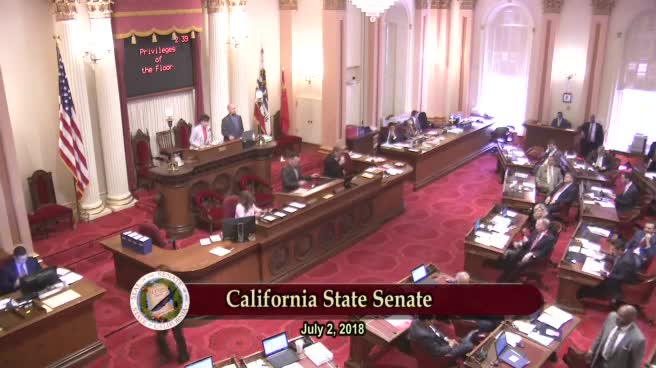 47SEC
Senate Floor
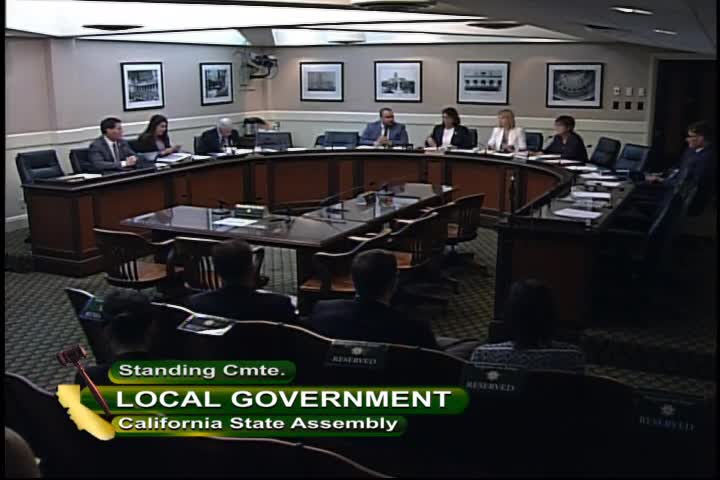 9MIN
Assembly Standing Committee on Local Government
 1MIN
Senate Floor
 7MIN
Senate Standing Committee on Governance and Finance
Bill Author