SB 968: Postsecondary education: mental health counselors.
- Session Year: 2017-2018
- House: Senate
- Latest Version Date: 2018-09-05
Existing law establishes the segments of postsecondary education in this state, including the University of California administered by the Regents of the University of California, the California State University administered by the Trustees of the California State University, the California Community Colleges administered by the Board of Governors of the California Community Colleges, and independent institutions of higher education. Existing provisions of the Ortiz-Pacheco-Poochigian-Vasconcellos Cal Grant Program set forth the requirements for status as a qualifying institution whose students are eligible, if as individuals they meet pertinent program requirements, to receive Cal Grant awards. Existing law provides for licensing and regulation of various professions in the healing arts, including physicians and surgeons, psychologists, marriage and family therapists, educational psychologists, clinical social workers, and licensed professional clinical counselors.
This bill would require the Trustees of the California State University and request the Regents of the University of California, to have one full-time equivalent mental health counselor per 1,500 students enrolled at each of their respective campuses to the fullest extent consistent with state and federal law. The bill would define mental health counselor for purposes of this provision. The bill would require those institutions, on or before January 1, 2020, and every 3 years thereafter, to report to the Legislature how funding was spent and the number of mental health counselors employed on each of its campuses, as specified. The bill would require each campus of those institutions to, at least every 3 years, conduct a campus survey and focus groups to understand student needs and challenges regarding, among other things, their mental health, would require each campus of those institutions to collect data on attempted suicides, as specified, and would require that data, without any personally identifiable information and collected in accordance with state and federal privacy law, to be included in the report to the Legislature. This bill would require its provisions to be implemented only upon the enactment of an appropriation in the annual Budget Act or another statute for its purposes.
Existing law establishes the segments of postsecondary education in this state, including the University of California administered by the Regents of the University of California, the California State University administered by the Trustees of the California State University, the California Community Colleges administered by the Board of Governors of the California Community Colleges, and independent institutions of higher education. Existing provisions of the Ortiz-Pacheco-Poochigian-Vasconcellos Cal Grant Program set forth the requirements for status as a qualifying institution whose students are eligible, if as individuals they meet pertinent program requirements, to receive Cal Grant awards. Existing law provides for licensing and regulation of various professions in the healing arts, including physicians and surgeons, psychologists, marriage and family therapists, educational psychologists, clinical social workers, and licensed professional clinical counselors.
This bill would require the Trustees of the California State University, and the governing board of each community college district, University and request the Regents of the University of California, to have one full-time equivalent mental health counselor per 1,500 students enrolled at each of their respective campuses to the fullest extent consistent with state and federal law. The bill would define mental health counselor for purposes of this provision. The bill would require those institutions, on or before January 1, 2020, and every 3 years thereafter, to report to the Legislature how funding was spent and the number of mental health counselors employed on each of its campuses, as specified. The bill would require each campus of those institutions to, at least every 3 years, conduct a campus survey and focus groups to understand student needs and challenges regarding, among other things, their mental health, would require each campus of those institutions to collect data on attempted suicides, as specified, and would require that data, without any personally identifiable information and collected in accordance with state and federal privacy law, to be included in the report to the Legislature. This bill would require its provisions to be implemented only upon the enactment of an appropriation in the annual Budget Act or another statute for its purposes. To the extent that these provisions would impose new duties on community college districts, it would constitute a state-mandated local program.
The California Constitution requires the state to reimburse local agencies and school districts for certain costs mandated by the state. Statutory provisions establish procedures for making that reimbursement.This bill would provide that, if the Commission on State Mandates determines that the bill contains costs mandated by the state, reimbursement for those costs shall be made pursuant to the statutory provisions noted above.Existing law establishes the segments of postsecondary education in this state, including the University of California administered by the Regents of the University of California, the California State University administered by the Trustees of the California State University, the California Community Colleges administered by the Board of Governors of the California Community Colleges, and independent institutions of higher education. Existing provisions of the Ortiz-Pacheco-Poochigian-Vasconcellos Cal Grant Program set forth the requirements for status as a qualifying institution whose students are eligible, if as individuals they meet pertinent program requirements, to receive Cal Grant awards. Existing law provides for licensing and regulation of various professions in the healing arts, including physicians and surgeons, psychologists, marriage and family therapists, educational psychologists, clinical social workers, and licensed professional clinical counselors.
This bill would require the Trustees of the California State University, and the governing board of each community college district, and request the Regents of the University of California, to have one full-time equivalent mental health counselor per 1,500 students enrolled at each of their respective campuses to the fullest extent consistent with state and federal law. The bill would define mental health counselor for purposes of this provision. The bill would require those institutions, on or before January 1, 2020, and every 3 years thereafter, to report to the Legislature how funding was spent and the number of mental health counselors employed on each of its campuses, as specified. The bill would require each campus of those institutions to, at least every 3 years, conduct a campus survey and focus groups to understand student needs and challenges regarding, among other things, their mental health, would require each campus of those institutions to collect data on attempted suicides, as specified, and would require that data, without any personally identifiable information and collected in accordance with state and federal privacy law, to be included in the report to the Legislature. This bill would require its provisions to be implemented only upon the enactment of an appropriation in the annual Budget Act or another statute for its purposes. To the extent that these provisions would impose new duties on community college districts, it would constitute a state-mandated local program.
The California Constitution requires the state to reimburse local agencies and school districts for certain costs mandated by the state. Statutory provisions establish procedures for making that reimbursement.
This bill would provide that, if the Commission on State Mandates determines that the bill contains costs mandated by the state, reimbursement for those costs shall be made pursuant to the statutory provisions noted above.
Existing law establishes the segments of postsecondary education in this state, including the University of California administered by the Regents of the University of California, the California State University administered by the Trustees of the California State University, the California Community Colleges administered by the Board of Governors of the California Community Colleges, and independent institutions of higher education. Existing provisions of the Ortiz-Pacheco-Poochigian-Vasconcellos Cal Grant Program set forth the requirements for status as a qualifying institution whose students are eligible, if as individuals they meet pertinent program requirements, to receive Cal Grant awards. Existing law provides for licensing and regulation of various professions in the healing arts, including physicians and surgeons, psychologists, marriage and family therapists, educational psychologists, clinical social workers, and licensed professional clinical counselors.
This bill would require the Trustees of the California State University, and the governing board of each community college district, and request the Regents of the University of California, to have one full-time equivalent mental health counselor per 1,500 students enrolled at each of their respective campuses to the fullest extent consistent with state and federal law. The bill would define mental health counselor for purposes of this provision. The bill would require those institutions, on or before January 1, 2020, and every 3 years thereafter, to report to the Legislature how funding was spent and the number of mental health counselors employed on each of its campuses, as specified. The bill would require each campus of those institutions to, at least every 3 years, conduct a campus survey and focus groups to understand student needs and challenges regarding, among other things, their mental health, would require each campus of those institutions to collect data on attempted suicides, as specified, and would require that data, without any personally identifiable information and collected in accordance with state and federal privacy law, to be included in the report to the Legislature. This bill would require its provisions to be implemented only upon the enactment of an appropriation in the annual Budget Act or another statute for its purposes. To the extent that these provisions would impose new duties on community college districts, it would constitute a state-mandated local program.
The California Constitution requires the state to reimburse local agencies and school districts for certain costs mandated by the state. Statutory provisions establish procedures for making that reimbursement.This bill would provide that, if the Commission on State Mandates determines that the bill contains costs mandated by the state, reimbursement for those costs shall be made pursuant to the statutory provisions noted above.Existing law establishes the segments of postsecondary education in this state, including the University of California administered by the Regents of the University of California, the California State University administered by the Trustees of the California State University, the California Community Colleges administered by the Board of Governors of the California Community Colleges, and independent institutions of higher education. Existing provisions of the Ortiz-Pacheco-Poochigian-Vasconcellos Cal Grant Program set forth the requirements for status as a qualifying institution whose students are eligible, if as individuals they meet pertinent program requirements, to receive Cal Grant awards. Existing law provides for licensing and regulation of various professions in the healing arts, including physicians and surgeons, psychologists, marriage and family therapists, educational psychologists, clinical social workers, and licensed professional clinical counselors.
This bill would require the Trustees of the California State University, and the governing board of each community college district, and request the Regents of the University of California, to have one full-time equivalent mental health counselor per 1,000 1,500 students enrolled at each of their respective campuses to the fullest extent consistent with state and federal law. The bill would define mental health counselor for purposes of this provision. The bill would require those institutions, on or before January 1, 2020, and every 3 years thereafter, to report to the Legislature how funding was spent and the number of mental health counselors employed on each of its campuses, as specified. The bill would require each campus of those institutions to, at least every 3 years, conduct a campus survey and focus groups to understand student needs and challenges regarding, among other things, their mental health, would require each campus of those institutions to collect data on attempted suicides, as specified, and would require that data, without any personally identifiable information, information and collected in accordance with state and federal privacy law, to be included in the report to the Legislature. To the extent that these provisions would impose new duties on community college districts, it would constitute a state-mandated local program.
The California Constitution requires the state to reimburse local agencies and school districts for certain costs mandated by the state. Statutory provisions establish procedures for making that reimbursement.
This bill would provide that, if the Commission on State Mandates determines that the bill contains costs mandated by the state, reimbursement for those costs shall be made pursuant to the statutory provisions noted above.
Existing law establishes the segments of postsecondary education in this state, including the University of California administered by the Regents of the University of California, the California State University administered by the Trustees of the California State University, the California Community Colleges administered by the Board of Governors of the California Community Colleges, and independent institutions of higher education. Existing provisions of the Ortiz-Pacheco-Poochigian-Vasconcellos Cal Grant Program set forth the requirements for status as a qualifying institution whose students are eligible, if as individuals they meet pertinent program requirements, to receive Cal Grant awards. Existing law provides for licensing and regulation of various professions in the healing arts, including physicians and surgeons, psychologists, marriage and family therapists, educational psychologists, clinical social workers, and licensed professional clinical counselors.
This bill would require the Trustees of the California State University, and the governing board of each community college district, and the governing body of each independent institution of high education that is a qualifying institution, and request the Regents of the University of California, to have one full-time equivalent mental health counselor per 1,000 students enrolled at each of their respective campuses to the fullest extent consistent with state and federal law. The bill would define mental health counselor for purposes of this provision. The bill would require those institutions, on or before January 1, 2020, and every 3 years thereafter, to report to the Legislature how funding was spent and the number of mental health counselors employed on each of its campuses, as specified. The bill would require each campus of those institutions to, at least every 3 years, conduct a campus survey and focus groups to understand student needs and challenges regarding, among other things, their mental health, would require each campus of those institutions to collect data on attempted suicides, as specified, and would require that data, without any personally identifiable information, to be included in the report to the Legislature. To the extent that these provisions would impose new duties on community college districts, it would constitute a state-mandated local program.
The California Constitution requires the state to reimburse local agencies and school districts for certain costs mandated by the state. Statutory provisions establish procedures for making that reimbursement.
This bill would provide that, if the Commission on State Mandates determines that the bill contains costs mandated by the state, reimbursement for those costs shall be made pursuant to the statutory provisions noted above.
Existing law establishes the segments of postsecondary education in this state, including the University of California administered by the Regents of the University of California, the California State University administered by the Trustees of the California State University, the California Community Colleges administered by the Board of Governors of the California Community Colleges, and independent institutions of higher education. Existing provisions of the Ortiz-Pacheco-Poochigian-Vasconcellos Cal Grant Program set forth the requirements for status as a qualifying institution whose students are eligible, if as individuals they meet pertinent program requirements, to receive Cal Grant awards. Existing law provides for licensing and regulation of various professions in the healing arts, including physicians and surgeons, psychologists, marriage and family therapists, educational psychologists, clinical social workers, and licensed professional clinical counselors.
This bill would require the Trustees of the California State University, the governing board of each community college district, and the governing body of each independent institution of high education that is a qualifying institution, and request the Regents of the University of California, to hire have one full-time equivalent mental health counselor per 1,000 students enrolled at each of their respective campuses to the fullest extent consistent with state and federal law. The bill would define mental health counselor for purposes of this provision. The bill would require those institutions, on or before January 1, 2020, and every 3 years thereafter, to report to the Legislature how funding was spent and the number of mental health counselors employed on each of its campuses, as specified. The bill would require each campus of those institutions to, at least every 3 years, conduct a campus survey and focus groups to understand student needs and challenges regarding, among other things, their mental health, would require each campus of those institutions to collect data on attempted suicides, as specified, and would require that data, without any personally identifiable information, to be included in the report to the Legislature. To the extent that these provisions would impose new duties on community college districts, it would constitute a state-mandated local program.
The California Constitution requires the state to reimburse local agencies and school districts for certain costs mandated by the state. Statutory provisions establish procedures for making that reimbursement.
This bill would provide that, if the Commission on State Mandates determines that the bill contains costs mandated by the state, reimbursement for those costs shall be made pursuant to the statutory provisions noted above.
Existing law establishes the segments of postsecondary education in this state, including the University of California administered by the Regents of the University of California, the California State University administered by the Trustees of the California State University, the California Community Colleges administered by the Board of Governors of the California Community Colleges, and independent institutions of higher education. Existing provisions of the Ortiz-Pacheco-Poochigian-Vasconcellos Cal Grant Program set forth the requirements for status as a qualifying institution whose students are eligible, if as individuals they meet pertinent program requirements, to receive Cal Grant awards. Existing law provides for licensing and regulation of various professions in the healing arts, including physicians and surgeons, psychologists, marriage and family therapists, educational psychologists, clinical social workers, and licensed professional clinical counselors.
This bill would require the Trustees of the California State University, the governing board of each community college district, and the governing body of each independent institution of high education that is a qualifying institution, and request the Regents of the University of California, to hire one full-time equivalent mental health counselor per 1,000 students at each of their respective campuses to the fullest extent consistent with state and federal law. The bill would define mental health counselor for purposes of this provision. The bill would require those institutions, on or before January 1, 2020, and every 3 years thereafter, to report to the Legislature how funding was spent and the number of mental health counselors employed on each of its campuses, as specified. To the extent that these provisions would impose new duties on community college districts, it would constitute a state-mandated local program.
The California Constitution requires the state to reimburse local agencies and school districts for certain costs mandated by the state. Statutory provisions establish procedures for making that reimbursement.
This bill would provide that, if the Commission on State Mandates determines that the bill contains costs mandated by the state, reimbursement for those costs shall be made pursuant to the statutory provisions noted above.
The Legislature finds and declares all of the following:
(a)Students face anxiety, depression, and stress as they confront challenges of campus life.
(b)Suicide is the second leading cause of death among college students claiming more than 1,100 lives every year nationally.
(c)One in four students has a diagnosable mental illness and 40 percent of students do not seek mental health services when they need it.
(d)For students of color, these challenges may be even more acute as they face additional stressors, such as discrimination, immigration status, financial hardship, and being the first of their families to attend college, and students of color are less likely to access needed services.
(e)Among the many benefits of mental health counseling are lower college dropout rates, improved academic performance, and reduced legal liability for campuses.
(f)The California State University system in particular is woefully understaffed with mental health counselors to address the needs of their campuses.
SEC. 2.Section 66027.7 is added to the Education Code, to read:66027.7.(a)(1)The Trustees of the California State University shall, and the Regents of the University of California are requested to, have one full-time equivalent mental health counselor per 1,500 students enrolled at each of their respective campuses to the fullest extent consistent with state and federal law.
(2)Where possible, mental health counselors hired under paragraph (1) should be full-time staff, and efforts should be made so that mental health counselors reflect the diversity of the student body.
(b)The number of mental health counselors as computed pursuant to subdivision (a) shall constitute the minimum number of mental health counselors to be hired on a campus based on the campus student population. Additional mental health counselors may be hired in accordance with additional needs identified on a campus.
(c)For purposes of this section, mental health counselor means a person who provides individual counseling, group counseling, crisis intervention, emergency services, referrals, program evaluation and research, or provides outreach and consultation interventions to the campus community, or any combination of these, and who is licensed in the State of California by the applicable licensing entity.
(d)(1)On or before January 1, 2020, and every three years thereafter, a postsecondary educational institution subject to this section shall report to the Legislature, consistent with Section 9795 of the Government Code, how funding was spent and the number of mental health counselors employed on each of its campuses.
(2)Each campus of a postsecondary educational institution subject to this section shall, at least every three years, conduct a campus survey and focus groups, including focus groups with students of color, to understand student needs and challenges regarding their mental health and emotional well-being, sense of belonging on campus, and academic success.
(A)The campus surveys and data collection required in paragraph (2) shall be conducted in accordance with state and federal privacy law, including, but not limited to, the state Confidentiality of Medical Information Act (Part 2.6 (commencing with Section 56) of Division 1 of the Civil Code), the federal Family Educational Rights and Privacy Act of 1974 (20 U.S.C. Sec. 1232g), and the federal Health Insurance Portability and Accountability Act of 1996 (Public Law 104-191).
(B)The data collected, without any personally identifiable information, shall be included in the report required to be submitted to the Legislature pursuant to paragraph (1).
(3)Each campus of a postsecondary educational institution subject to this section shall collect data on attempted suicides through self-reporting, mental health counselor records, and known hospitalizations. This data, without any personally identifiable information, shall be included in the report required to be submitted to the Legislature pursuant to paragraph (1).
(e)This section shall be implemented only upon the enactment of an appropriation in the annual Budget Act or another statute for these purposes.
The Legislature finds and declares all of the following:
(a)Students face anxiety, depression, and stress as they confront challenges of campus life.
(b)Suicide is the second leading cause of death among college students claiming more than 1,100 lives every year nationally.
(c)One in four students has a diagnosable mental illness and 40 percent of students do not seek mental health services when they need it.
(d)For students of color, these challenges may be even more acute as they face additional stressors, such as discrimination, immigration status, financial hardship, and being the first of their families to attend college, and students of color are less likely to access needed services.
(e)Among the many benefits of mental health counseling are lower college dropout rates, improved academic performance, and reduced legal liability for campuses.
(f)The California State University system in particular is woefully understaffed with mental health counselors to address the needs of their campuses.
SEC. 2.Section 66027.7 is added to the Education Code, to read:66027.7.(a)(1)The Trustees of the California State University, and the governing board of each community college district, University shall, and the Regents of the University of California are requested to, have one full-time equivalent mental health counselor per 1,500 students enrolled at each of their respective campuses to the fullest extent consistent with state and federal law.
(2)Where possible, mental health counselors hired under paragraph (1) should be full-time staff, and efforts should be made so that mental health counselors reflect the diversity of the student body.
(b)The number of mental health counselors as computed pursuant to subdivision (a) shall constitute the minimum number of mental health counselors to be hired on a campus based on the campus student population. Additional mental health counselors may be hired in accordance with additional needs identified on a campus.
(c)For purposes of this section, mental health counselor means a person who provides individual counseling, group counseling, crisis intervention, emergency services, referrals, program evaluation and research, or provides outreach and consultation interventions to the campus community, or any combination of these, and who is licensed in the State of California by the applicable licensing entity.
(d)(1)On or before January 1, 2020, and every three years thereafter, a postsecondary educational institution subject to this section shall report to the Legislature, consistent with Section 9795 of the Government Code, how funding was spent and the number of mental health counselors employed on each of its campuses.
(2)Each campus of a postsecondary educational institution subject to this section shall, at least every three years, conduct a campus survey and focus groups, including focus groups with students of color, to understand student needs and challenges regarding their mental health and emotional well-being, sense of belonging on campus, and academic success.
(A)The campus surveys and data collection required in paragraph (2) shall be conducted in accordance with state and federal privacy law, including, but not limited to, the state Confidentiality of Medical Information Act, Act (Part 2.6 (commencing with Section 56) of Division 1 of the Civil Code), the federal Family Educational Rights and Privacy Act, Act of 1974 (20 U.S.C. Sec. 1232g), and the federal Health Insurance Portability and Accountability Act of 1996. 1996 (Public Law 104-191).
(B)The data collected, without any personally identifiable information, shall be included in the report required to be submitted to the Legislature pursuant to paragraph (1).
(3)Each campus of a postsecondary educational institution subject to this section shall collect data on attempted suicides through self-reporting, mental health counselor records, and known hospitalizations. This data, without any personally identifiable information, shall be included in the report required to be submitted to the Legislature pursuant to paragraph (1).
(e)This section shall be implemented only upon the enactment of an appropriation in the annual Budget Act or another statute for these purposes.
SEC. 3.If the Commission on State Mandates determines that this act contains costs mandated by the state, reimbursement to local agencies and school districts for those costs shall be made pursuant to Part 7 (commencing with Section 17500) of Division 4 of Title 2 of the Government Code.The Legislature finds and declares all of the following:
(a)Students face anxiety, depression, and stress as they confront challenges of campus life.
(b)Suicide is the second leading cause of death among college students claiming more than 1,100 lives every year nationally.
(c)One in four students has a diagnosable mental illness and 40 percent of students do not seek mental health services when they need it.
(d)For students of color, these challenges may be even more acute as they face additional stressors, such as discrimination, immigration status, financial hardship, and being the first of their families to attend college, and students of color are less likely to access needed services.
(e)Among the many benefits of mental health counseling are lower college dropout rates, improved academic performance, and reduced legal liability for campuses.
(f)The California State University system in particular is woefully understaffed with mental health counselors to address the needs of their campuses.
SEC. 2.Section 66027.7 is added to the Education Code, to read:66027.7.(a)(1)The Trustees of the California State University, and the governing board of each community college district, shall, and the Regents of the University of California are requested to, have one full-time equivalent mental health counselor per 1,500 students enrolled at each of their respective campuses to the fullest extent consistent with state and federal law.
(2)Where possible, mental health counselors hired under paragraph (1) should be full-time. full-time staff, and efforts should be made so that mental health counselors reflect the diversity of the student body.
(b)The number of mental health counselors as computed pursuant to subdivision (a) shall constitute the minimum number of mental health counselors to be hired on a campus based on the campus student population. Additional mental health counselors may be hired in accordance with additional needs identified on a campus.
(c)For purposes of this section, mental health counselor means a person who provides individual counseling, group counseling, crisis intervention, emergency services, referrals, program evaluation and research, or provides outreach and consultation interventions to the campus community, or any combination of these, and who is licensed in the State of California by the applicable licensing entity.
(d)(1)On or before January 1, 2020, and every three years thereafter, a postsecondary educational institution subject to this section shall report to the Legislature, consistent with Section 9795 of the Government Code, how funding was spent and the number of mental health counselors employed on each of its campuses.
(2)Each campus of a postsecondary educational institution subject to this section shall, at least every three years, conduct a campus survey and focus groups, including focus groups with students of color, to understand student needs and challenges regarding their mental health and emotional well-being, sense of belonging on campus, and academic success.
(A)The campus surveys and data collection required in paragraph (2) shall be conducted in accordance with state and federal privacy law, including, but not limited to, the state Confidentiality of Medical Information Act, the federal Family Educational Rights and Privacy Act, and the federal Health Insurance Portability and Accountability Act of 1996.
(B)The data collected, without any personally identifiable information, shall be included in the report required to be submitted to the Legislature pursuant to paragraph (1).
(3)Each campus of a postsecondary educational institution subject to this section shall collect data on attempted suicides through self-reporting, mental health counselor records, and known hospitalizations. This data, without any personally identifiable information, shall be included in the report required to be submitted to the Legislature pursuant to paragraph (1).
(e)This section shall be implemented only upon the enactment of an appropriation in the annual Budget Act or another statute for these purposes.
SEC. 3.If the Commission on State Mandates determines that this act contains costs mandated by the state, reimbursement to local agencies and school districts for those costs shall be made pursuant to Part 7 (commencing with Section 17500) of Division 4 of Title 2 of the Government Code.
The Legislature finds and declares all of the following:
(a)Students face anxiety, depression, and stress as they confront challenges of campus life.
(b)Suicide is the second leading cause of death among college students claiming more than 1,100 lives every year nationally.
(c)One in four students has a diagnosable mental illness and 40 percent of students do not seek mental health services when they need it.
(d)For students of color, these challenges may be even more acute as they face additional stressors, such as discrimination, immigration status, financial hardship, and being the first of their families to attend college, and students of color are less likely to access needed services.
(e)Among the many benefits of mental health counseling are lower college dropout rates, improved academic performance, and reduced legal liability for campuses.
(f)The California State University system in particular is woefully understaffed with mental health counselors to address the needs of their campuses.
SEC. 2.Section 66027.7 is added to the Education Code, to read:66027.7.(a)(1)The Trustees of the California State University, and the governing board of each community college district, shall, and the Regents of the University of California are requested to, have one full-time equivalent mental health counselor per 1,500 students enrolled at each of their respective campuses to the fullest extent consistent with state and federal law.
(2)Where possible, mental health counselors hired under paragraph (1) should be full-time.
(b)The number of mental health counselors as computed pursuant to subdivision (a) shall constitute the minimum number of mental health counselors to be hired on a campus based on the campus student population. Additional mental health counselors may be hired in accordance with additional needs identified on a campus.
(c)For purposes of this section, mental health counselor means a person who provides individual counseling, group counseling, crisis intervention, emergency services, referrals, program evaluation and research, or provides outreach and consultation interventions to the campus community, or any combination of these, and who is licensed in the State of California by the applicable licensing entity.
(d)(1)On or before January 1, 2020, and every three years thereafter, a postsecondary educational institution subject to this section shall report to the Legislature, consistent with Section 9795 of the Government Code, how funding was spent and the number of mental health counselors employed on each of its campuses.
(2)Each campus of a postsecondary educational institution subject to this section shall, at least every three years, conduct a campus survey and focus groups, including focus groups with students of color, to understand student needs and challenges regarding their mental health and emotional well-being, sense of belonging on campus, and academic success.
(A)The campus surveys and data collection required in paragraph (2) shall be conducted in accordance with state and federal privacy law, including, but not limited to, the state Confidentiality of Medical Information Act, the federal Family Educational Rights and Privacy Act, and the federal Health Insurance Portability and Accountability Act of 1996.
(B)The data collected, without any personally identifiable information, shall be included in the report required to be submitted to the Legislature pursuant to paragraph (1).
(3)Each campus of a postsecondary educational institution subject to this section shall collect data on attempted suicides through self-reporting, mental health counselor records, and known hospitalizations. This data, without any personally identifiable information, shall be included in the report required to be submitted to the Legislature pursuant to paragraph (1).
(e)This section shall be implemented only upon the enactment of an appropriation in the annual Budget Act or another statute for these purposes.
SEC. 3.If the Commission on State Mandates determines that this act contains costs mandated by the state, reimbursement to local agencies and school districts for those costs shall be made pursuant to Part 7 (commencing with Section 17500) of Division 4 of Title 2 of the Government Code.The Legislature finds and declares all of the following:
(a)Students face anxiety, depression, and stress as they confront challenges of campus life.
(b)Suicide is the second leading cause of death among college students claiming more than 1,100 lives every year nationally.
(c)One in four students has a diagnosable mental illness and 40 percent of students do not seek mental health services when they need it.
(d)For students of color, these challenges may be even more acute as they face additional stressors, such as discrimination, immigration status, financial hardship, and being the first of their families to attend college, and students of color are less likely to access needed services.
(e)Among the many benefits of mental health counseling are lower college dropout rates, improved academic performance, and reduced legal liability for campuses.
(f)The California State University system in particular is woefully understaffed with mental health counselors to address the needs of their campuses.
SEC. 2.Section 66027.7 is added to the Education Code, to read:66027.7.(a)(1)The Trustees of the California State University, and the governing board of each community college district, shall, and the Regents of the University of California are requested to, have one full-time equivalent mental health counselor per 1,000 1,500 students enrolled at each of their respective campuses to the fullest extent consistent with state and federal law.
(2)Where possible, mental health counselors hired under paragraph (1) should be full-time.
(b)The number of mental health counselors as computed pursuant to subdivision (a) shall constitute the minimum number of mental health counselors to be hired on a campus based on the campus student population. Additional mental health counselors may be hired in accordance with additional needs identified on a campus.
(c)For purposes of this section, mental health counselor means a person who provides individual counseling, group counseling, crisis intervention, emergency services, referrals, program evaluation and research, or provides outreach and consultation interventions to the campus community, or any combination of these, and who is licensed in the State of California by the applicable licensing entity.
(d)(1)On or before January 1, 2020, and every three years thereafter, a postsecondary educational institution subject to this section shall report to the Legislature, consistent with Section 9795 of the Government Code, how funding was spent and the number of mental health counselors employed on each of its campuses.
(2)Each campus of a postsecondary educational institution subject to this section shall, at least every three years, conduct a campus survey and focus groups, including focus groups with students of color, to understand student needs and challenges regarding their mental health and emotional well-being, sense of belonging on campus, and academic success. This data, without any personally identifiable information, shall be included in the report required to be submitted to the Legislature pursuant to paragraph (1).
(A)The campus surveys and data collection required in paragraph (2) shall be conducted in accordance with state and federal privacy law, including, but not limited to, the state Confidentiality of Medical Information Act, the federal Family Educational Rights and Privacy Act, and the federal Health Insurance Portability and Accountability Act of 1996.
(B)The data collected, without any personally identifiable information, shall be included in the report required to be submitted to the Legislature pursuant to paragraph (1).
(3)Each campus of a postsecondary educational institution subject to this section shall collect data on attempted suicides through self-reporting, mental health counselor records, and known hospitalizations. This data, without any personally identifiable information, shall be included in the report required to be submitted to the Legislature pursuant to paragraph (1).
SEC. 3.If the Commission on State Mandates determines that this act contains costs mandated by the state, reimbursement to local agencies and school districts for those costs shall be made pursuant to Part 7 (commencing with Section 17500) of Division 4 of Title 2 of the Government Code.
The Legislature finds and declares all of the following:
(a)Students face anxiety, depression, and stress as they confront challenges of campus life.
(b)Suicide is the second leading cause of death among college students claiming more than 1,100 lives every year nationally.
(c)One in four students has a diagnosable mental illness and 40 percent of students do not seek mental health services when they need it.
(d)For students of color, these challenges may be even more acute as they face additional stressors, such as discrimination, immigration status, financial hardship, and being the first of their families to attend college, and students of color are less likely to access needed services.
(e)Among the many benefits of mental health counseling are lower college dropout rates, improved academic performance, and reduced legal liability for campuses.
(f)The California State University system in particular is woefully understaffed with mental health counselors to address the needs of their campuses.
SEC. 2.Section 66027.7 is added to the Education Code, to read:66027.7.(a)(1)The Trustees of the California State University, and the governing board of each community college district, and the governing body of each independent institution of high education that is a qualifying institution, as defined in Section 69432.7, shall, and the Regents of the University of California are requested to, have one full-time equivalent mental health counselor per 1,000 students enrolled at each of their respective campuses to the fullest extent consistent with state and federal law.
(2)Where possible, mental health counselors hired under paragraph (1) should be full-time.
(b)The number of mental health counselors as computed pursuant to subdivision (a) shall constitute the minimum number of mental health counselors to be hired on a campus based on the campus student population. Additional mental health counselors may be hired in accordance with additional needs identified on a campus.
(c)For purposes of this section, mental health counselor means a person who provides individual counseling, group counseling, crisis intervention, emergency services, referrals, program evaluation and research, or provides outreach and consultation interventions to the campus community, or any combination of these, and who is licensed in the State of California by the applicable licensing entity.
(d)(1)On or before January 1, 2020, and every three years thereafter, a postsecondary educational institution subject to this section shall report to the Legislature, consistent with Section 9795 of the Government Code, how funding was spent and the number of mental health counselors employed on each of its campuses.
(2)Each campus of a postsecondary educational institution subject to this section shall, at least every three years, conduct a campus survey and focus groups, including focus groups with students of color, to understand student needs and challenges regarding their mental health and emotional well-being, sense of belonging on campus, and academic success. This data, without any personally identifiable information, shall be included in the report required to be submitted to the Legislature pursuant to paragraph (1).
(3)Each campus of a postsecondary educational institution subject to this section shall collect data on attempted suicides through self-reporting, mental health counselor records, and known hospitalizations. This data, without any personally identifiable information, shall be included in the report required to be submitted to the Legislature pursuant to paragraph (1).
SEC. 3.If the Commission on State Mandates determines that this act contains costs mandated by the state, reimbursement to local agencies and school districts for those costs shall be made pursuant to Part 7 (commencing with Section 17500) of Division 4 of Title 2 of the Government Code.
The Legislature finds and declares all of the following:
(a)Students face anxiety, depression, and stress as they confront challenges of campus life.
(b)Suicide is the second leading cause of death among college students claiming more than 1,100 lives every year nationally.
(c)One in four students has a diagnosable mental illness and 40 percent of students do not seek mental health services when they need it.
(d)For students of color, these challenges may be even more acute as they face additional stressors, such as discrimination, immigration status, financial hardship, and being the first of their families to attend college, and students of color are less likely to access needed services.
(e)Among the many benefits of mental health counseling are lower college dropout rates, improved academic performance, and reduced legal liability for campuses.
(f)The California State University system in particular is woefully understaffed with mental health counselors to address the needs of their campuses.
SECTION 1.SEC. 2.Section 66027.7 is added to the Education Code, to read:66027.7.(a)(1)The Trustees of the California State University, the governing board of each community college district, and the governing body of each independent institution of high education that is a qualifying institution, as defined in Section 69432.7, shall, and the Regents of the University of California are requested to, hire have one full-time equivalent mental health counselor per 1,000 students enrolled at each of their respective campuses to the fullest extent consistent with state and federal law.
(2)Where possible, mental health counselors hired under paragraph (1) should be full-time staff. full-time.
(b)The number of mental health counselors as computed pursuant to subdivision (a) shall constitute the minimum number of mental health counselors to be hired on a campus based on the campus student population. Additional mental health counselors may be hired in accordance with additional needs identified on a campus.
(c)For purposes of this section, mental health counselor means a person who provides individual counseling, group counseling, crisis intervention, emergency services, referrals, program evaluation and research, or provides outreach and consultation interventions to the campus community, or any combination of these, and who is licensed in the State of California by the applicable licensing entity.
(d)(1)On or before January 1, 2020, and every three years thereafter, a postsecondary educational institution subject to this section shall report to the Legislature, consistent with Section 9795 of the Government Code, how funding was spent and the number of mental health counselors employed on each of its campuses.
(2)Each campus of a postsecondary educational institution subject to this section shall, at least every three years, conduct a campus survey and focus groups, including focus groups with students of color, to understand student needs and challenges regarding their mental health and emotional well-being, sense of belonging on campus, and academic success. This data, without any personally identifiable information, shall be included in the report required to be submitted to the Legislature pursuant to paragraph (1).
(3)Each campus of a postsecondary educational institution subject to this section shall collect data on attempted suicides through self-reporting, mental health counselor records, and known hospitalizations. This data, without any personally identifiable information, shall be included in the report required to be submitted to the Legislature pursuant to paragraph (1).
SEC. 2.SEC. 3.If the Commission on State Mandates determines that this act contains costs mandated by the state, reimbursement to local agencies and school districts for those costs shall be made pursuant to Part 7 (commencing with Section 17500) of Division 4 of Title 2 of the Government Code.
(a)(1)The Trustees of the California State University, the governing board of each community college district, and the governing body of each independent institution of high education that is a qualifying institution, as defined in Section 69432.7, shall, and the Regents of the University of California are requested to, hire one full-time equivalent mental health counselor per 1,000 students at each of their respective campuses to the fullest extent consistent with state and federal law.
(2)Where possible, mental health counselors hired under paragraph (1) should be full-time staff.
(b)The number of mental health counselors as computed pursuant to subdivision (a) shall constitute the minimum number of mental health counselors to be hired on a campus based on the campus student population. Additional mental health counselors may be hired in accordance with additional needs identified on a campus.
(c)For purposes of this section, mental health counselor means a person who provides individual counseling, group counseling, crisis intervention, emergency services, referrals, program evaluation and research, or provides outreach and consultation interventions to the campus community, or any combination of these, and who is licensed in the State of California by the applicable licensing entity.
(d)On or before January 1, 2020, and every three years thereafter, a postsecondary educational institution subject to this section shall report to the Legislature, consistent with Section 9795 of the Government Code, how funding was spent and the number of mental health counselors employed on each of its campuses.
SEC. 2.If the Commission on State Mandates determines that this act contains costs mandated by the state, reimbursement to local agencies and school districts for those costs shall be made pursuant to Part 7 (commencing with Section 17500) of Division 4 of Title 2 of the Government Code.
|
Date
|
Status
|
|---|---|
| Sep 23, 2018 | In Senate. Consideration of Governor's veto pending. |
| Sep 23, 2018 | Vetoed by the Governor. |
| Sep 10, 2018 | Enrolled and presented to the Governor at 4 p.m. |
| Aug 30, 2018 | Assembly amendments concurred in. (Ayes 39. Noes 0.) Ordered to engrossing and enrolling. |
| Aug 30, 2018 | Ordered to special consent calendar. |
| Aug 29, 2018 | In Senate. Concurrence in Assembly amendments pending. |
| Aug 29, 2018 | Read third time. Passed. Ordered to the Senate. |
| Aug 21, 2018 | Read second time. Ordered to third reading. |
| Aug 20, 2018 | Read second time and amended. Ordered to second reading. |
| Aug 16, 2018 | From committee: Do pass as amended. (Ayes 14. Noes 0.) (August 16). |
| Aug 8, 2018 | August 8 set for first hearing. Placed on suspense file. |
| Jun 20, 2018 | From committee: Do pass and re-refer to Com. on APPR. (Ayes 13. Noes 0.) (June 19). Re-referred to Com. on APPR. |
| Jun 12, 2018 | From committee with author's amendments. Read second time and amended. Re-referred to Com. on HIGHER ED. |
| Jun 7, 2018 | Referred to Com. on HIGHER ED. |
| May 31, 2018 | In Assembly. Read first time. Held at Desk. |
| May 30, 2018 | Read third time. Passed. (Ayes 35. Noes 0.) Ordered to the Assembly. |
| May 29, 2018 | Read second time. Ordered to third reading. |
| May 25, 2018 | From committee: Do pass as amended. (Ayes 7. Noes 0.) (May 25). |
| May 18, 2018 | Set for hearing May 25. |
| May 14, 2018 | May 14 hearing: Placed on APPR. suspense file. |
| May 4, 2018 | Set for hearing May 14. |
| May 2, 2018 | Read second time and amended. Re-referred to Com. on APPR. |
| May 1, 2018 | From committee: Do pass as amended and re-refer to Com. on APPR. (Ayes 6. Noes 0.) (April 25). |
| Apr 11, 2018 | Set for hearing April 25. |
| Mar 20, 2018 | March 21 set for first hearing canceled at the request of author. |
| Mar 12, 2018 | From committee with author's amendments. Read second time and amended. Re-referred to Com. on ED. |
| Mar 5, 2018 | From committee with author's amendments. Read second time and amended. Re-referred to Com. on ED. |
| Feb 28, 2018 | Set for hearing March 21. |
| Feb 8, 2018 | Referred to Com. on ED. |
| Feb 1, 2018 | From printer. May be acted upon on or after March 3. |
| Jan 31, 2018 | Introduced. Read first time. To Com. on RLS. for assignment. To print. |
|
Date
|
Description
|
Location
|
Votes
|
|
|---|---|---|---|---|
| Aug 30, 2018 | Unfinished Business SB968 Pan et al. Concurrence | Senate Floor |
Passed |
|
| Aug 29, 2018 | SB 968 Pan Senate Third Reading By BONTA | Assembly Floor |
Passed |
|
| Aug 16, 2018 | Do pass as amended. | Assembly Standing Committee on Appropriations |
Passed |
|
| Jun 19, 2018 | Do pass and be re-referred to the Committee on [Appropriations] | Assembly Standing Committee on Higher Education |
Passed |
|
| May 30, 2018 | Senate 3rd Reading SB968 Pan | Senate Floor |
Passed |
|
| May 25, 2018 | Do pass as amended | Senate Standing Committee on Appropriations |
Passed |
|
| May 14, 2018 | Placed on suspense file | Senate Standing Committee on Appropriations |
Passed |
|
| Apr 25, 2018 | Do pass as amended, but first amend, and re-refer to the Committee on [Appropriations] | Senate Standing Committee on Education |
Passed |
This list shows positions taken on this bill by organizations on the date displayed, which is linked to the original source.
Positions by individuals are not included.
Office of Senate Floor Analyses (916) 651-1520 Fax: (916) 327-4478 | SB 968 |
VETO
Bill No: SB 968
Amended: 8/20/18
SENATE EDUCATION COMMITTEE: 6-0, 4/25/18
AYES: Allen, Wilk, Galgiani, Leyva, Pan, Vidak
SENATE APPROPRIATIONS COMMITTEE: 7-0, 5/25/18
AYES: Lara, Bates, Beall, Bradford, Hill, Nielsen, Wiener
SENATE FLOOR: 38-0, 5/30/18
AYES: Allen, Anderson, Atkins, Bates, Beall, Berryhill, Bradford, Cannella, Dodd, Fuller, Gaines, Galgiani, Glazer, Hernandez, Hertzberg, Hill, Hueso, Jackson, Lara, Leyva, McGuire, Mitchell, Monning, Moorlach, Morrell, Newman, Nguyen, Nielsen, Pan, Portantino, Roth, Skinner, Stern, Stone, Vidak, Wieckowski, Wiener, Wilk
NO VOTE RECORDED: De León
SENATE FLOOR: 39-0, 8/30/18
AYES: Allen, Anderson, Atkins, Bates, Beall, Bradford, Cannella, Chang, De León, Delgado, Dodd, Fuller, Gaines, Galgiani, Glazer, Hernandez, Hertzberg, Hill, Hueso, Jackson, Lara, Leyva, McGuire, Mitchell, Monning, Moorlach, Morrell, Nguyen, Nielsen, Pan, Portantino, Roth, Skinner, Stern, Stone, Vidak, Wieckowski, Wiener, Wilk
NO VOTE RECORDED: Berryhill
ASSEMBLY FLOOR: 80-0, 8/29/18 - See last page for vote
SUBJECT: Postsecondary education: mental health counselors
SOURCE: California Faculty Association
DIGEST:
This bill, contingent upon an appropriation of funds, requires the California State University (CSU) Board of Trustees and requests the Regents of University of California (UC) to have one full-time equivalent mental health counselor per 1,500 students enrolled at each of their respective campuses.
Existing law:
- Establishes, under the California Constitution, the UC, a public trust to be administered by the Regents of the UC and grants the Regents full powers of organization and government, subject only to such legislative control as may be necessary to insure security of its funds, compliance with the terms of its endowments, statutory requirements around competitive bidding and contracts, sales of property and the purchase of materials, goods and services. (Article IX, Section (9)(a) of the California Constitution)
- Establishes the CSU, under the administration of the Trustees of the CSU, as one of the public postsecondary educational institutions in the state. (Education Code § 66602)
- Establishes the Mental Health Services Act (MHSA), enacted by voters in 2004 as Proposition 63, to provide funds to counties to expand services, develop innovative programs, and integrated service plans for mentally ill children, adults, and seniors through a one percent income tax on personal income above $1 million. The MHSA provides funding for programs within five components: Community Services and Supports, Prevention and Early Intervention, Innovation, Capital Facilities and Technological Needs, Workforce Education and Training.
- Requires the Department of Health Care Services, in coordination with counties, to establish a program designed to prevent mental illnesses from becoming severe and disabling. Existing law requires prevention and early intervention programs to include specified components. (Welfare & Institutions Code § 5840)
This bill:
- Requires the Trustees of the CSU and requests the Regents of the UC to have one full-time equivalent mental health counselor per 1,500 students enrolled at of their respective campuses.
- Specifies that mental health counselors hired pursuant to this bill be full-time and reflective of the diversity of the student body where possible.
- Requires that the minimum number of mental health counselors hired on a campus be based on the number of students at that campus and states that additional mental health counselors may be hired in accordance with additional needs identified on a campus.
- Requires CSU and requests UC by January 1, 2020, and every three years thereafter, to report to the Legislature as specified, how funding was spent and the number of mental health counselors employed on each of its campuses.
- Requires each campus to collect the following data, without any personally identifiable information, to be included in a report to the Legislature as prescribed:
- At least every three years, conduct a campus survey and focus groups to understand student needs and challenges regarding among other things, their mental health and emotional well-being.
- Collect data on attempted suicides through self-reporting, mental health counselor records and known hospitalizations.
- Specifies that data collected pursuant to this bill be conducted in a manner that is consistent with state and federal privacy law, including but not limited to, the Confidentiality of Medical Information Act and the federal Family Educational Rights and Privacy Act and Health Information Portability and Accountability Act.
- Defines for purposes of this bill “mental health counselor,” to mean a person who provides individual counseling, group counseling crisis interventions, emergency services, referrals, program evaluation and research, or provides outreach and consultation interventions to the campus community, or any combination of these and who is licensed in the State of California by applicable licensing entity.
- Makes various findings and declarations relative to the prevalence of mental illness among college students and the many benefits of mental health counseling including improved academic performance.
- Makes implementation of provisions in this bill to be contingent upon appropriation of funds by the Legislature in the annual Budget Act or another statute for those purposes.
Comments
- Need for the bill. According to the California Faculty Association, sponsors of this bill, “campuses are experiencing a mental health crisis and there are not enough mental health counselors to deal with the crisis. Students face anxiety, depression, and stress as they confront challenges of campus life. Suicide is the second cause of death among college students claiming more than 1,100 lives every year nationally. For students of color, these challenges may be even more acute as they face additional stressor such as discrimination, immigration status, financial hardship, being the first in their families to attend college, and are less likely to access needed services.” This bill seeks to ensure provision of mental health services for students by requiring in statute each campus to meet standard of one counselor to every 1,500 students and by establishing a systemwide reporting requirement to assess mental health on campus.
- Data collection and use of student mental health records. In its review of the status of student mental health on California college campuses commissioned by the author, the California Research Bureau concludes that limitations in data from each segment prevent a full analysis of the extent to which student mental health is improving or deteriorating. The Research Bureau noted however that information related to students’ use of counseling centers shows an increasing percentage of students using counseling services on California colleges and universities. This bill requires a campus to survey its students as well as conduct focus groups every three-years regarding their mental and emotional health. It additional requires collection of data on attempted suicides and authorizes mental health counselor records to be used in the collection of data relative to suicide attempts.
- Recommended counselor to student ratio. The International Association of Counseling Services (IACS) recommends that colleges and universities maintain a ratio of one full-time equivalent mental health professional to every 1,000 to 1,500 students. IACS warns that exceeding the ratio may lead to students waiting for services that discourage students from seeking counseling at a center and are likely to leave the university. Delays in treatment could also present difficulties in providing services to students experiencing increasingly more severe psychological issues and impact academic success. The counselor to student ratio is an aspirational goal based on the needs of each campus and its existing resources. California Research Bureau reports that the Association for University and College Counseling Center Directors (AUCCD), an association that advocates for collegiate mental health, also recommends a ratio of no more than 1,500 students per counselor.
- Existing ratios of mental health counselors. Of the three segments, it appears that UC meets the standards recommended by IACS and AUCCD. As of fall of 2017 UC reports its systemwide counselor to student ratio to be 1:1,156. To date, the CSU estimates about 221 full-time equivalent counselors systemwide with a ratio of 2,176 per one student. The California Community Colleges (CCC) system has the widest gap to close. The CCC Chancellor’s Office estimates about 300 counselors dispersed among its campuses (ratio of 1:7,667). Unlike, UC and CSU, not all CCC have mental health counselors and of the colleges that do have no more than one or two persons to persons regardless of the size of the student body on a given campus. Most CCC colleges have established Behavioral Intervention Teams that monitor students who have either mental health programs or for students ongoing conduct issues. Senate Education Committee staff notes that the ratios mentioned above reflect systemwide averages rather than by campus as required under this bill. All segments report wait-listing students as well as having procedures in place for providing immediate assistance for the most severe cases.
FISCAL EFFECT: Appropriation: Fiscal Com.: Local:
According to the Assembly Appropriations Committee:
- Ongoing General Fund (GF) cost pressures, potentially in the millions of dollars over five years, for UC to continue to meet the ratios required by this bill. (UC indicates that while it meets the ratio requirements systemwide, individual campuses may not meet the ratio. UC also indicates anticipated student enrollment growth over time would require campuses to hire additional professionals.)
- Ongoing GF cost pressures of about $400,000 every three years for each of the state’s nine UC campuses to assess mental health on their campus. (Assumes these activities cost about $15,000 annually.)
- Ongoing GF cost pressures to CSU of about $18 million for each of the state’s 23 CSU campuses to meet the ratio required by this bill. (CSU estimates it would need to hire about 177 professionals. Estimate assumes a cost per hire of roughly $100,000 for salary and benefits annually.)
- Ongoing GF costs of about $1 million every three years for each campus to assess mental health on their campus. (Assumes these activities cost about $15,000 annually.)
California Faculty Association (source)
California Academy of Child and Adolescent Psychiatry
California Federation of Teachers
California Psychological Association
California State Student Association
Faculty Association of California Community Colleges
National Alliance on Mental Illness-California
National Association of Social Workers California Chapter
Service Employees International Union California
Steinberg Institute
OPPOSITION: (Verified 9/25/18)
None received
GOVERNOR'S VETO MESSAGE:
I am returning Senate Bill 968 without my signature.
The bill would prescribe a minimum mental health counselor-to-student ratio at all the campuses of the California State University system, and request the University of California to implement the same ratio on its campuses.
Investing greater resources in student mental health is an understandable goal. Such investments, however, should be actively considered and made within the budget process. Moreover, specific ratios should remain within the purview of the boards or with local campuses, rather than dictated by the state.
ASSEMBLY FLOOR: 80-0, 8/29/18
AYES: Acosta, Aguiar-Curry, Travis Allen, Arambula, Baker, Berman, Bigelow, Bloom, Bonta, Brough, Burke, Caballero, Calderon, Carrillo, Cervantes, Chau, Chávez, Chen, Chiu, Choi, Chu, Cooley, Cooper, Cunningham, Dahle, Daly, Eggman, Flora, Fong, Frazier, Friedman, Gabriel, Gallagher, Cristina Garcia, Eduardo Garcia, Gipson, Gloria, Gonzalez Fletcher, Gray, Grayson, Harper, Holden, Irwin, Jones-Sawyer, Kalra, Kamlager-Dove, Kiley, Lackey, Levine, Limón, Low, Maienschein, Mathis, Mayes, McCarty, Medina, Melendez, Mullin, Muratsuchi, Nazarian, Obernolte, O'Donnell, Patterson, Quirk, Quirk-Silva, Reyes, Rivas, Rodriguez, Rubio, Salas, Santiago, Steinorth, Mark Stone,
Thurmond, Ting, Voepel, Waldron, Weber, Wood, Rendon
Prepared by: Olgalilia Ramirez / ED. /
10/2/18 14:32:23
**** END ****
Office of Senate Floor Analyses (916) 651-1520 Fax: (916) 327-4478 | SB |
UNFINISHED BUSINESS
Bill No: SB 968
:
SENATE EDUCATION COMMITTEE: 6-0, 4/25/18
AYES: Allen, Wilk, Galgiani, Leyva, Pan, Vidak
SENATE APPROPRIATIONS COMMITTEE: 7-0, 5/25/18
AYES: Lara, Bates, Beall, Bradford, Hill, Nielsen, Wiener
SENATE FLOOR: 38-0, 5/30/18
AYES: Allen, Anderson, Atkins, Bates, Beall, Berryhill, Bradford, Cannella, Dodd, Fuller, Gaines, Galgiani, Glazer, Hernandez, Hertzberg, Hill, Hueso, Jackson, Lara, Leyva, McGuire, Mitchell, Monning, Moorlach, Morrell, Newman, Nguyen, Nielsen, Pan, Portantino, Roth, Skinner, Stern, Stone, Vidak, Wieckowski, Wiener, Wilk
NO VOTE RECORDED: De León
ASSEMBLY FLOOR: Not available
SOURCE: California Faculty Association
DIGEST:
This bill, contingent upon an appropriation of funds, requires the California State University (CSU) Board of Trustees and requests the Regents of University of California (UC) to have one full-time equivalent mental health counselor per 1,500 students enrolled at each of their respective campuses.
Assembly Amendments
remove California Community Colleges from being subject to the bill’s provisions and specify that the counselors hired as a result of this bill reflect the diversity of the student body where possible, and make other technical amendments.
ANALYSIS:
Existing law:
- Establishes, under the California Constitution, the UC, a public trust to be administered by the Regents of the UC and grants the Regents full powers of organization and government, subject only to such legislative control as may be necessary to insure security of its funds, compliance with the terms of its endowments, statutory requirements around competitive bidding and contracts, sales of property and the purchase of materials, goods and services. (Article IX, Section (9)(a) of the California Constitution)
- Establishes the CSU, under the administration of the Trustees of the CSU, as one of the public postsecondary educational institutions in the state. (Education Code § 66602)
- Establishes the Mental Health Services Act (MHSA), enacted by voters in 2004 as Proposition 63, to provide funds to counties to expand services, develop innovative programs, and integrated service plans for mentally ill children, adults, and seniors through a one percent income tax on personal income above $1 million. The MHSA provides funding for programs within five components: Community Services and Supports, Prevention and Early Intervention, Innovation, Capital Facilities and Technological Needs, Workforce Education and Training.
- Requires the Department of Health Care Services, in coordination with counties, to establish a program designed to prevent mental illnesses from becoming severe and disabling. Existing law requires prevention and early intervention programs to include specified components. (Welfare & Institutions Code § 5840)
This bill:
- Requires the Trustees of the CSU and requests the Regents of the UC to have one full-time equivalent mental health counselor per 1,500 students enrolled at of their respective campuses.
- Specifies that mental health counselors hired pursuant to this bill be full-time and reflective of the diversity of the student body where possible.
- Requires that the minimum number of mental health counselors hired on a campus be based on the number of students at that campus and states that additional mental health counselors may be hired in accordance with additional needs identified on a campus.
- Requires CSU and requests UC by January 1, 2020, and every three years thereafter, to report to the Legislature as specified, how funding was spent and the number of mental health counselors employed on each of its campuses.
- Requires each campus to collect the following data, without any personally identifiable information, to be included in a report to the Legislature as prescribed:
- At least every three years, conduct a campus survey and focus groups to understand student needs and challenges regarding among other things, their mental health and emotional well-being.
- Collect data on attempted suicides through self-reporting, mental health counselor records and known hospitalizations.
- Specifies that data collected pursuant to this bill be conducted in a manner that is consistent with state and federal privacy law, including but not limited to, the Confidentiality of Medical Information Act and the federal Family Educational Rights and Privacy Act and Health Information Portability and Accountability Act.
- Defines for purposes of this bill “mental health counselor,” to mean a person who provides individual counseling, group counseling crisis interventions, emergency services, referrals, program evaluation and research, or provides outreach and consultation interventions to the campus community, or any combination of these and who is licensed in the State of California by applicable licensing entity.
- Makes various findings and declarations relative to the prevalence of mental illness among college students and the many benefits of mental health counseling including improved academic performance.
- Makes implementation of provisions in this bill to be contingent upon appropriation of funds by the Legislature in the annual Budget Act or another statute for those purposes.
Comments
- Need for the bill. According to the California Faculty Association, sponsors of this bill, “campuses are experiencing a mental health crisis and there are not enough mental health counselors to deal with the crisis. Students face anxiety, depression, and stress as they confront challenges of campus life. Suicide is the second cause of death among college students claiming more than 1,100 lives every year nationally. For students of color, these challenges may be even more acute as they face additional stressor such as discrimination, immigration status, financial hardship, being the first in their families to attend college, and are less likely to access needed services.” This bill seeks to ensure provision of mental health services for students by requiring in statute each campus to meet standard of one counselor to every 1,500 students and by establishing a systemwide reporting requirement to assess mental health on campus.
- Data collection and use of student mental health records. In its review of the status of student mental health on California college campuses commissioned by the author, the California Research Bureau concludes that limitations in data from each segment prevent a full analysis of the extent to which student mental health is improving or deteriorating. The Research Bureau noted however that information related to students’ use of counseling centers shows an increasing percentage of students using counseling services on California colleges and universities. This bill requires a campus to survey its students as well as conduct focus groups every three-years regarding their mental and emotional health. It additional requires collection of data on attempted suicides and authorizes mental health counselor records to be used in the collection of data relative to suicide attempts.
- Recommended counselor to student ratio. The International Association of Counseling Services (IACS) recommends that colleges and universities maintain a ratio of one full-time equivalent mental health professional to every 1,000 to 1,500 students. IACS warns that exceeding the ratio may lead to students waiting for services that discourage students from seeking counseling at a center and are likely to leave the university. Delays in treatment could also present difficulties in providing services to students experiencing increasingly more severe psychological issues and impact academic success. The counselor to student ratio is an aspirational goal based on the needs of each campus and its existing resources. California Research Bureau reports that the Association for University and College Counseling Center Directors (AUCCD), an association that advocates for collegiate mental health, also recommends a ratio of no more than 1,500 students per counselor.
- Existing mental health counselors on campuses. Of the three segments, it appears that UC meets the standards recommended by IACS and AUCCD. As of fall of 2017 UC reports its systemwide counselor to student ratio to be 1:1,156. To date, the CSU estimates about 221 full-time equivalent counselors systemwide with a ratio of 2,176 per one student. The California Community Colleges (CCC) system has the widest gap to close. The CCC Chancellor’s Office estimates about 300 counselors dispersed among its campuses (ratio of 1:7,667). Unlike, UC and CSU, not all CCC have mental health counselors and of the colleges that do have no more than one or two persons to persons regardless of the size of the student body on a given campus. Most CCC colleges have established Behavioral Intervention Teams that monitor students who have either mental health programs or for students ongoing conduct issues. Senate Education Committee staff notes that the ratios mentioned above reflect systemwide averages rather than by campus as required under this bill. All segments report wait-listing students as well as having procedures in place for providing immediate assistance for the most severe cases.
FISCAL EFFECT: Appropriation: Fiscal Com.: Local: No
According to the Assembly Appropriations Committee:
- Ongoing General Fund (GF) cost pressures, potentially in the millions of dollars over five years, for UC to continue to meet the ratios required by this bill. (UC indicates that while it meets the ratio requirements systemwide, individual campuses may not meet the ratio. UC also indicates anticipated student enrollment growth over time would require campuses to hire additional professionals.)
- Ongoing GF cost pressures of about $400,000 every three years for each of the state’s nine UC campuses to assess mental health on their campus. (Assumes these activities cost about $15,000 annually.)
- Ongoing GF cost pressures to CSU of about $18 million for each of the state’s 23 CSU campuses to meet the ratio required by this bill. (CSU estimates it would need to hire about 177 professionals. Estimate assumes a cost per hire of roughly $100,000 for salary and benefits annually.)
- Ongoing GF costs of about $1 million every three years for each campus to assess mental health on their campus. (Assumes these activities cost about $15,000 annually.)
SUPPORT: (Verified 8/29/18)
California Faculty Association (source)
California Academy of Child and Adolescent Psychiatry
California Federation of Teachers
California Psychological Association
California State Student Association
Faculty Association of California Community Colleges
National Alliance on Mental Illness-California
National Association of Social Workers California Chapter
Service Employees International Union California
Steinberg Institute
OPPOSITION: (Verified 8/29/18)
None received
8/30/18 0:02:29
**** END ****
SENATE THIRD READING
STR Bill Id:SB 968
Author:(Pan)
As Amended Ver:August 20, 2018
Majority vote
SENATE VOTE: 38-0
Committee | Votes | Ayes | Noes |
Higher Education | 13-0 | Medina, Baker, Arambula, Bloom, Chávez, Irwin, Kiley, Levine, Low, Patterson, Quirk-Silva, Santiago, Weber | |
Appropriations | 14-0 | Gonzalez Fletcher, Bloom, Bonta, Calderon, Carrillo, Chau, Eggman, Friedman, Gallagher, Eduardo Garcia, Nazarian, Obernolte, Quirk, Reyes |
SUMMARY: Requires, contingent upon an appropriation of funds, the California State University (CSU), Board of Trustees, and requests the Regents of the University of California (UC) to have one full-time equivalent mental health counselor per 1,500 students enrolled at each of their respective campuses. Specifically, this bill:
- Requires the Trustees of the CSU, requests the Regents of the UC to have one full-time equivalent mental health counselor per 1,500 students enrolled at of their respective campuses.
- Specifies that mental health counselors hired pursuant to this bill be full-time where possible, and efforts should be made so that mental health counselors reflect the diversity of the student body.
- Requires that the minimum number of mental health counselors hired on a campus be based on the student population of that campus and states that additional mental health counselors may be hired in accordance with additional needs identified on a campus.
- Requires CSU, and requests UC by January 1, 2020, and every three years thereafter, to report to the Legislature as specified, how funding was spent and the number of mental health counselors employed on each of its campuses.
- Requires each campus to collect the following data, without any personally identifiable information, to be included in a report to the Legislature as prescribed:
- At least every three years, conduct a campus survey and focus groups to understand student needs and challenges regarding among other things, their mental health and emotional well-being; and,
- Collect data on attempted suicides through self-reporting, mental health counselor records and known hospitalizations.
- Specifies that data collected pursuant to this bill be conducted in a manner that is consistent with state and federal privacy law, including but not limited to, the Confidentiality of Medical Information Act and the federal Family Educational Rights and Privacy Act and the Health Information Portability and Accountability Act.
- Defines for purposes of this bill "mental health counselor," to mean a person who provides individual counseling, group counseling crisis interventions, emergency services, referrals, program evaluation and research, or provides outreach and consultation interventions to the campus community, or any combination of these and who is licensed in the State of California by the applicable licensing entity.
- Makes various findings and declarations relative to the prevalence of mental illness among college students and the many benefits of mental health counseling including improved academic performance.
- Makes implementation of provisions in this bill to be contingent upon appropriation of funds by the Legislature in the annual Budget Act or another statute for those purposes.
EXISTING LAW:
- Establishes, under the California Constitution, the UC, a public trust to be administered by the Regents of the UC and grants the Regents full powers of organization and government, subject only to such legislative control as may be necessary to insure security of its funds, compliance with the terms of its endowments, statutory requirements around competitive bidding and contracts, sales of property and the purchase of materials, goods and services. (California Constitution, Article IX, Section (9)(a))
- Establishes the CSU, under the administration of the Trustees of the CSU, as one of the public postsecondary educational institutions in the state. (Education Code (EDC) Section 66602)
- Establishes the Mental Health Services Act (MHSA), enacted by voters in 2004 as Proposition 63, to provide funds to counties to expand services, develop innovative programs, and integrated service plans for mentally ill children, adults, and seniors through a 1% income tax on personal income above $1 million. The MHSA provides funding for programs within five components: Community Services and Supports, Prevention and Early Intervention, Innovation, Capital Facilities and Technological Needs, Workforce Education and Training.
- Requires the Department of Health Care Services, in coordination with counties, to establish a program designed to prevent mental illnesses from becoming severe and disabling. Existing law requires prevention and early intervention programs to include specified components. (Welfare & Institutions Code Section 5840)
FISCAL EFFECT: According to the Senate Appropriations Committee, this bill's requirement for the segments to have one full-time mental health counselor for every 1,500 students is estimated to result in General Fund cost pressures of approximately $10 to $12 million for CSU to comply and anywhere from $110 million to up to $213 million in Proposition 98 General Fund for community college districts to comply. For the UC, General Fund cost pressures would be about $1.9 million in the first year growing to $9.9 million in the fifth year to keep up with student enrollment growth to comply with this measure.
COMMENTS: Need for the bill. According to the California Faculty Association, co-sponsors of this bill, "…campuses are experiencing a mental health crisis and there are not enough mental health counselors to deal with the crisis. Students face anxiety, depression, and stress as they confront challenges of campus life. Suicide is the second leading cause of death among college students claiming more than 1,100 lives every year nationally. For students of color, these challenges may be even more acute as they face additional stressors such as discrimination, immigration status, financial hardship, being the first in their families to attend college, and are less likely to access needed services." This bill seeks to ensure provision of mental health services for students by requiring in statute each campus meet a standard of one counselor to every 1,500 students and by establishing a system-wide reporting requirement to assess mental health on campus.
Data collection and use of student mental health records. In its review of the status of student mental health on California college campuses commissioned by the author, the California Research Bureau concludes that limitations in data from each segment prevent a full analysis of the extent to which student mental health is improving or deteriorating. The Research Bureau noted however, that information related to students' use of counseling centers shows an increasing percentage of students using counseling services on California colleges and universities. This bill requires a campus to survey its students as well as conduct focus groups every three-years regarding their mental and emotional health. Additionally, it requires collection of data on attempted suicides and authorizes mental health counselor records to be used in the collection of data relative to suicide attempts.
Recommended counselor to student ratio. The International Association of Counseling Services (IACS) recommends that colleges and universities maintain a ratio of one full-time equivalent mental health professional to every 1,000 to 1,500 students. IACS warns that exceeding the ratio may lead to students waiting for services that discourage students from seeking counseling at a center and are likely to leave the university. Delays in treatment could also present difficulties in providing services to students experiencing increasingly more severe psychological issues and impact academic success. The counselor to student ratio is an aspirational goal based on the needs of each campus and its existing resources. California Research Bureau reports that the Association for University and College Counseling Center Directors (AUCCD), an association that advocates for collegiate mental health, also recommends a ratio of no more than 1,500 students per counselor.
Existing mental health counselors on campuses. Of the two segments included in this bill, it appears that UC meets the standards recommended by IACS and AUCCD. As of fall of 2017 UC reports its system-wide counselor to student ratio to be 1:1,156. To date, the CSU estimates about 221 full-time equivalent counselors system-wide with a ratio of 2,176 per one student. To note, the ratios mentioned above reflect system-wide averages rather than by campus as required under this bill. All segments report wait-listing students as well as having procedures in place for providing immediate assistance for the most severe cases.
Analysis Prepared by: Kevin J. Powers / HIGHER ED. / (916) 319-3960 FN: 0004412
Date of Hearing: August 8, 2018
ASSEMBLY COMMITTEE ON APPROPRIATIONS
Lorena Gonzalez Fletcher, Chair
SBPCA Bill Id:SB 968
Author:(Pan) – As Amended Ver:June 12, 2018
Policy Committee: | Higher Education | Vote: | 13 - 0 |
|
| ||
|
|
Urgency: No State Mandated Local Program: Yes Reimbursable: Yes
SUMMARY:
This bill requires, contingent upon an appropriation of funds, the California State University (CSU) and the California Community College (CCC), and requests the University of California (UC), to have one full-time equivalent mental health professional per 1,500 students enrolled at each of their respective campuses and establishes a system-wide reporting requirement every three years beginning in January 2020 to assess mental health on campus.
FISCAL EFFECT:
- Ongoing General Fund (GF) cost pressures, potentially in the millions of dollars over five years, for UC to continue to meet the ratios required by this bill. (UC indicates that while it meets the ratio requirements systemwide, individual campuses may not meet the ratio. UC also indicates anticipated student enrollment growth over time would require campuses to hire additional professionals.)
- Ongoing GF cost pressures of about $400,000 every three years for each of the state’s nine UC campuses to assess mental health on their campus. (Assumes these activities cost about $15,000 annually.)
- Ongoing GF cost pressures to CSU of about $18 million for each of the state’s 23 CSU campuses to meet the ratio required by this bill. (CSU estimates it would need to hire about 177 professionals. Estimate assumes a cost per hire of roughly $100,000 for salary and benefits annually.)
- Ongoing Proposition 98 GF costs of about $1 million every three years for each campus to assess mental health on their campus. (Assumes these activities cost about $15,000 annually.)
- Ongoing Proposition 98 GF costs of about $200 million for the state’s 114 CCCs to meet the ratio required by this bill. (CCC estimates it would need to hire about 1,400 professionals systemwide. Estimate assumes a cost per hire of roughly $100,000 for salary and benefits annually. However, CCC notes it does not have verifiable information regarding the number of professionals who currently provide mental health services to students and who meet the professional licensing requirements set forth in this bill.) The state would need to reimburse these costs to CCC, if the Commission on State Mandates determines the bill’s requirements to be a reimbursable state mandate.
- Ongoing Proposition 98 GF costs of about $2 million total every three years for each campus to assess mental health on their campus. (Assumes these activities cost about $15,000 annually.) The state would need to reimburse these costs to CCC, if the Commission on State Mandates determines the bill’s requirements to be a reimbursable state mandate.
- Potential additional and significant Proposition 98 General Fund costs to the CCC campuses to adjust to the requirements of the bill. According to CCC, these activities would include recruiting professionals and adjusting human resource department workload. The state would need to reimburse these costs to CCC, if the Commission on State Mandates determines the bill’s requirements to be a reimbursable state mandate.
COMMENTS:
- Background. The International Association of Counseling Services recommends that colleges and universities maintain a ratio of one full-time equivalent mental health professional to every 1,000 to 1,500 students. The ratio is an aspirational goal based on the needs of each campus and its existing resources.
- Purpose. According to the author:
SB 968 addresses the mental health crisis facing California’s public higher education system and develops a more consistent system-wide reporting requirement. Campus counseling services are not meeting the growing student demand. We also do not have the proper data to evaluate the best campus counseling practices.
- Mental Health Data Collection. In a review commissioned by the author of the status of student mental health on California college campuses, the California Research Bureau concluded limitations in data prevented a full analysis. The review noted, however, that available data indicates students are increasing their use of counseling services on campus. In addition, all segments report wait-listing students.
- Professional-to-Student Ratios. The UC reports its systemwide ratio of mental health professional to student to be 1:1,156, the CSU estimates its systemwide ratio to be 1:2,176 per one student, and the CCC system estimates a systemwide ration of 1:7,667.
- Staff Comments. The state currently does not require certain health professional-to-student ratios at student health centers.
Analysis Prepared by: Natasha Collins / APPR. / (916) 319-2081
Date of Hearing: June 19, 2018
ASSEMBLY COMMITTEE ON HIGHER EDUCATION
Jose Medina, Chair
SBPCA Bill Id:SB 968
Author:(Pan) – As Amended Ver:June 12, 2018
SENATE VOTE: 38-0
SUBJECT: Postsecondary education: mental health counselors
SUMMARY: Requires, contingent upon an appropriation of funds, the California State University (CSU), Board of Trustees, Board of Governors (BOG) of the California Community College (CCC) and requests the Regents of the University of California (UC) to have one full-time equivalent mental health counselor per 1,500 students enrolled at each of their respective campuses. Specifically, this bill:
- Requires the Trustees of the CSU, BOG of the CCC and requests the Regents of the UC to have one full-time equivalent mental health counselor per 1,500 students enrolled at of their respective campuses.
- Specifies that mental health counselors hired pursuant to this bill be full-time where possible, and efforts should be made so that mental health counselors reflect the diversity of the student body.
- Requires that the minimum number of mental health counselors hired on a campus be based on the student population of that campus and states that additional mental health counselors may be hired in accordance with additional needs identified on a campus.
- Requires CSU, CCC and requests UC by January 1, 2020, and every three years thereafter, to report to the Legislature as specified, how funding was spent and the number of mental health counselors employed on each of its campuses.
- Requires each campus to collect the following data, without any personally identifiable information, to be included in a report to the Legislature as prescribed:
- At least every three years, conduct a campus survey and focus groups to understand student needs and challenges regarding among other things, their mental health and emotional well-being; and,
- Collect data on attempted suicides through self-reporting, mental health counselor records and known hospitalizations.
- Specifies that data collected pursuant to this bill be conducted in a manner that is consistent with state and federal privacy law, including but not limited to, the Confidentiality of Medical Information Act and the federal Family Educational Rights and Privacy Act and the Health Information Portability and Accountability Act.
- Defines for purposes of this bill “mental health counselor,” to mean a person who provides individual counseling, group counseling crisis interventions, emergency services, referrals, program evaluation and research, or provides outreach and consultation interventions to the campus community, or any combination of these and who is licensed in the State of California by the applicable licensing entity.
- Makes various findings and declarations relative to the prevalence of mental illness among college students and the many benefits of mental health counseling including improved academic performance.
- Makes implementation of provisions in this bill to be contingent upon appropriation of funds by the Legislature in the annual Budget Act or another statute for those purposes.
- Establishes if the Commission on State Mandates determines that this act contains costs mandated by the state, the state shall reimburse the applicable entities.
EXISTING LAW:
- Establishes, under the California Constitution, the UC, a public trust to be administered by the Regents of the UC and grants the Regents full powers of organization and government, subject only to such legislative control as may be necessary to insure security of its funds, compliance with the terms of its endowments, statutory requirements around competitive bidding and contracts, sales of property and the purchase of materials, goods and services. (Article IX, Section (9)(a) of the California Constitution)
- Establishes the CSU, under the administration of the Trustees of the CSU, as one of the public postsecondary educational institutions in the state. (Education Code (EDC) Section 66602)
- Requires that the CCC be administered by the BOG. (EDC Section 70901, et seq.)
- Establishes the Mental Health Services Act (MHSA), enacted by voters in 2004 as Proposition 63, to provide funds to counties to expand services, develop innovative programs, and integrated service plans for mentally ill children, adults, and seniors through a one percent income tax on personal income above $1 million. The MHSA provides funding for programs within five components: Community Services and Supports, Prevention and Early Intervention, Innovation, Capital Facilities and Technological Needs, Workforce Education and Training.
- Requires the Department of Health Care Services, in coordination with counties, to establish a program designed to prevent mental illnesses from becoming severe and disabling. Existing law requires prevention and early intervention programs to include specified components. (Welfare & Institutions Code Section 5840)
FISCAL EFFECT: According to the Senate Appropriations Committee, this bill’s requirement for the segments to have one full-time mental health counselor for every 1,500 students is estimated to result in General Fund cost pressures of approximately $10 to $12 million for CSU to comply and anywhere from $110 million to up to $213 million in Proposition 98 General Fund for community college districts to comply. For the UC, General Fund cost pressures would be about $1.9 million in the first year growing to $9.9 million in the fifth year to keep up with student enrollment growth to comply with this measure.
COMMENTS: Need for the bill. According to the California Faculty Association, co-sponsors of this bill, “…campuses are experiencing a mental health crisis and there are not enough mental health counselors to deal with the crisis. Students face anxiety, depression, and stress as they confront challenges of campus life. Suicide is the second leading cause of death among college students claiming more than 1,100 lives every year nationally. For students of color, these challenges may be even more acute as they face additional stressors such as discrimination, immigration status, financial hardship, being the first in their families to attend college, and are less likely to access needed services.” This bill seeks to ensure provision of mental health services for students by requiring in statute each campus meet a standard of one counselor to every 1,500 students and by establishing a system-wide reporting requirement to assess mental health on campus.
Data collection and use of student mental health records. In its review of the status of student mental health on California college campuses commissioned by the author, the California Research Bureau concludes that limitations in data from each segment prevent a full analysis of the extent to which student mental health is improving or deteriorating. The Research Bureau noted however, that information related to students’ use of counseling centers shows an increasing percentage of students using counseling services on California colleges and universities. This bill requires a campus to survey its students as well as conduct focus groups every three-years regarding their mental and emotional health. Additionally, it requires collection of data on attempted suicides and authorizes mental health counselor records to be used in the collection of data relative to suicide attempts.
Recommended counselor to student ratio. The International Association of Counseling Services (IACS) recommends that colleges and universities maintain a ratio of one full-time equivalent mental health professional to every 1,000 to 1,500 students. IACS warns that exceeding the ratio may lead to students waiting for services that discourage students from seeking counseling at a center and are likely to leave the university. Delays in treatment could also present difficulties in providing services to students experiencing increasingly more severe psychological issues and impact academic success. The counselor to student ratio is an aspirational goal based on the needs of each campus and its existing resources. California Research Bureau reports that the Association for University and College Counseling Center Directors (AUCCD), an association that advocates for collegiate mental health, also recommends a ratio of no more than 1,500 students per counselor.
Existing mental health counselors on campuses. Of the three segments, it appears that UC meets the standards recommended by IACS and AUCCD. As of fall of 2017 UC reports its system-wide counselor to student ratio to be 1:1,156. To date, the CSU estimates about 221 full-time equivalent counselors system-wide with a ratio of 2,176 per one student. The CCC system has the widest gap to close. The CCC Chancellor’s Office estimates about 300 counselors dispersed among its campuses (ratio of 1:7,667). To note, the ratios mentioned above reflect system-wide averages rather than by campus as required under this bill. All segments report wait-listing students as well as having procedures in place for providing immediate assistance for the most severe cases.
REGISTERED SUPPORT / OPPOSITION:
Support
American Academy of Pediatrics, California
California Academy of Child and Adolescent Psychiatry
California Association of Licensed Professional Clinical Counselors
California Board of Behavioral Sciences
California Faculty Association (Co-sponsor)
California Federation of Teachers
California State Student Association
National Alliance on Mental Illness-California
SEIU California (Co-sponsor)
Steinberg Institute
Opposition
None on file.
Analysis Prepared by: Kevin Powers / HIGHER ED. / (916) 319-3960
Office of Senate Floor Analyses (916) 651-1520 Fax: (916) 327-4478 | SB |
THIRD READING
Bill No: SB 968
Amended: 5/25/18
SENATE EDUCATION COMMITTEE: 6-0, 4/25/18
AYES: Allen, Wilk, Galgiani, Leyva, Pan, Vidak
SENATE APPROPRIATIONS COMMITTEE: 7-0, 5/25/18
AYES: Lara, Bates, Beall, Bradford, Hill, Nielsen, Wiener
SOURCE: California Faculty Association
DIGEST:
This bill, contingent upon an appropriation of funds, requires the California State University (CSU), Board of Trustees, Board of Governors (BOG) of the California Community College (CCC) and requests the Regents of University of California (UC) to have one full-time equivalent mental health counselor per 1,500 students enrolled at each of their respective campuses.
Existing law:
- Establishes, under the California Constitution, the UC, a public trust to be administered by the Regents of the UC and grants the Regents full powers of organization and government, subject only to such legislative control as may be necessary to insure security of its funds, compliance with the terms of its endowments, statutory requirements around competitive bidding and contracts, sales of property and the purchase of materials, goods and services. (Article IX, Section (9)(a) of the California Constitution)
- Establishes the CSU, under the administration of the Trustees of the CSU, as one of the public postsecondary educational institutions in the state. (Education Code § 66602)
- Requires that the CCC be administered by the BOG. (EC § 70901, et seq.)
- Establishes the Mental Health Services Act (MHSA), enacted by voters in 2004 as Proposition 63, to provide funds to counties to expand services, develop innovative programs, and integrated service plans for mentally ill children, adults, and seniors through a one percent income tax on personal income above $1 million. The MHSA provides funding for programs within five components: Community Services and Supports, Prevention and Early Intervention, Innovation, Capital Facilities and Technological Needs, Workforce Education and Training.
- Requires the Department of Health Care Services, in coordination with counties, to establish a program designed to prevent mental illnesses from becoming severe and disabling. Existing law requires prevention and early intervention programs to include specified components. (Welfare & Institutions Code § 5840)
This bill:
- Requires the Trustees of the CSU, BOG of the CCC and requests the Regents of the UC to have one full-time equivalent mental health counselor per 1,500 students enrolled at of their respective campuses.
- Specifies that mental health counselors hired pursuant to this bill be full-time where possible.
- Requires that the minimum number of mental health counselors hired on a campus be based on the student population of that campus and states that additional mental health counselors may be hired in accordance with additional needs identified on a campus.
- Requires CSU, CCC and requests UC by January 1, 2020, and every three years thereafter, to report to the Legislature as specified, how funding was spent and the number of mental health counselors employed on each of its campuses.
- Requires each campus to collect the following data, without any personally identifiable information, to be included in a report to the Legislature as prescribed:
- At least every three years, conduct a campus survey and focus groups to understand student needs and challenges regarding among other things, their mental health and emotional well-being.
- Collect data on attempted suicides through self-reporting, mental health counselor records and known hospitalizations.
- Specifies that data collected pursuant to this bill be conducted in a manner that is consistent with state and federal privacy law, including but not limited to, the Confidentiality of Medical Information Act and the federal Family Educational Rights and Privacy Act and Health Information Portability and Accountability Act.
- Defines for purposes of this bill “mental health counselor,” to mean a person who provides individual counseling, group counseling crisis interventions, emergency services, referrals, program evaluation and research, or provides outreach and consultation interventions to the campus community, or any combination of these and who is licensed in the State of California by applicable licensing entity.
- Makes various findings and declarations relative to the prevalence of mental illness among college students and the many benefits of mental health counseling including improved academic performance.
- Makes implementation of provisions in this bill to be contingent upon appropriation of funds by the Legislature in the annual Budget Act or another statute for those purposes.
- Establishes if the Commission on State Mandates determines that this act contains costs mandated by the state, the state shall reimburse the applicable entities.
Comments
- Need for the bill. According to the California Faculty Association, sponsors of this bill, “campuses are experiencing a mental health crisis and there are not enough mental health counselors to deal with the crisis. Students face anxiety, depression, and stress as they confront challenges of campus life. Suicide is the second cause of death among college students claiming more than 1,100 lives every year nationally. For students of color, these challenges may be even more acute as they face additional stressor such as discrimination, immigration status, financial hardship, being the first in their families to attend college, and are less likely to access needed services.” This bill seeks to ensure provision of mental health services for students by requiring in statute each campus to meet standard of one counselor to every 1,500 students and by establishing a systemwide reporting requirement to assess mental health on campus.
- Data collection and use of student mental health records. In its review of the status of student mental health on California college campuses commissioned by the author, the California Research Bureau concludes that limitations in data from each segment prevent a full analysis of the extent to which student mental health is improving or deteriorating. The Research Bureau noted however that information related to students’ use of counseling centers shows an increasing percentage of students using counseling services on California colleges and universities. This bill requires a campus to survey its students as well as conduct focus groups every three-years regarding their mental and emotional health. It additional requires collection of data on attempted suicides and authorizes mental health counselor records to be used in the collection of data relative to suicide attempts.
- Recommended counselor to student ratio. The International Association of Counseling Services (IACS) recommends that colleges and universities maintain a ratio of one full-time equivalent mental health professional to every 1,000 to 1,500 students. IACS warns that exceeding the ratio may lead to students waiting for services that discourage students from seeking counseling at a center and are likely to leave the university. Delays in treatment could also present difficulties in providing services to students experiencing increasingly more severe psychological issues and impact academic success. The counselor to student ratio is an aspirational goal based on the needs of each campus and its existing resources. California Research Bureau reports that the Association for University and College Counseling Center Directors (AUCCD), an association that advocates for collegiate mental health, also recommends a ratio of no more than 1,500 students per counselor.
- Existing mental health counselors on campuses. Of the three segments, it appears that UC meets the standards recommended by IACS and AUCCD. As of fall of 2017 UC reports its systemwide counselor to student ratio to be 1:1,156. To date, the CSU estimates about 221 full-time equivalent counselors systemwide with a ratio of 2,176 per one student. The CCC system has the widest gap to close. The CCC Chancellor’s Office estimates about 300 counselors dispersed among its campuses (ratio of 1:7,667). Unlike, UC and CSU, not all CCC have mental health counselors and of the colleges that do have no more than one or two persons to persons regardless of the size of the student body on a given campus. Most CCC colleges have established Behavioral Intervention Teams that monitor students who have either mental health programs or for students ongoing conduct issues. Senate Education Committee staff notes that the ratios mentioned above reflect systemwide averages rather than by campus as required under this bill. All segments report wait-listing students as well as having procedures in place for providing immediate assistance for the most severe cases.
FISCAL EFFECT: Appropriation: Fiscal Com.: Local:
According to the Senate Appropriations Committee, this bill’s requirement for the segments to have one full-time mental health counselor for every 1,500 students is estimated to result in General Fund cost pressures of approximately $10 to $12 million for CSU to comply and anywhere from $110 million to up to $213 million in Proposition 98 General Fund for community college districts to comply. For the UC, General Fund cost pressure would be about $1.9 million in the first year growing to $9.9 million in the fifth year to keep up with student enrollment growth to comply with this measure.
California Faculty Association (source)
California Academy of Child and Adolescent Psychiatry
California Federation of Teachers
California Psychological Association
California State Student Association
Faculty Association of California Community Colleges
National Alliance on Mental Illness-California
National Association of Social Workers California Chapter
Service Employees International Union California
Steinberg Institute
OPPOSITION: (Verified 5/25/18)
5/29/18 8:45:46
**** END ****
SENATE COMMITTEE ON
Senator Ricardo Lara, Chair
2017 - 2018 Regular Session
SB 968 (Pan) - Postsecondary education: mental health counselors
Version: | Policy Vote: |
Urgency: | Mandate: |
Hearing Date: | Consultant: |
Bill Summary:
This bill requires the California State University (CSU) and the California Community College (CCC), and requests the University of California (UC), to have one full-time equivalent mental health counselor per 1,500 students enrolled at each of their respective campuses.
*********** ANALYSIS ADDENDUM – SUSPENSE FILE ***********
The following information is revised to reflect amendments
adopted by the committee on May 25, 2018
Fiscal Impact:
The bill’s requirement for the segments to have one full-time mental health counselor for every 1,500 students is estimated to result in General Fund cost pressures of approximately $10 to $12 million for CSU to comply and anywhere from $110 million to up to $213 million in Proposition 98 General Fund for community college districts to comply. For the UC, General Fund cost pressure would be about $1.9 million in the first year growing to $9.9 million in the fifth year to keep up with student enrollment growth to comply with this measure.
Committee Amendments:
Provide that the bill’s provisions shall be implemented contingent upon an appropriation in the annual Budget Act or another statute for those purposes.
-- END --
SENATE COMMITTEE ON APPROPRIATIONS
Senator Ricardo Lara, Chair
2017 - 2018 Regular Session
SB 968 (Pan) - Postsecondary education: mental health counselors
Version: May 2, 2018 | Policy Vote: ED. 6 - 0 |
Urgency: No | Mandate: Yes |
Hearing Date: May 14, 2018 | Consultant: Lenin Del Castillo |
This bill meets the criteria for referral to the Suspense File.
Bill Summary:
This bill requires the California State University (CSU) and the California Community College (CCC), and requests the University of California (UC), to have one full-time equivalent mental health counselor per 1,500 students enrolled at each of their respective campuses.
Fiscal Impact:
- The bill’s requirement for the segments to have one full-time mental health counselor for every 1,500 students is estimated to result in General Fund costs of approximately $10 to $12 million for CSU to comply and anywhere from $110 million to up to $213 million in Proposition 98 General Fund for community college districts to comply. The cost for community college districts is likely to be reimbursable under state mandate law.
- The UC anticipates General Fund costs of about $1.9 million in the first year growing to $9.9 million in the fifth year to keep up with student enrollment growth to comply with this measure.
Background:
The California Constitution establishes the UC, a public trust to be administered by the Regents of the UC and grants the Regents full powers of organization and government, subject only to such legislative control as may be necessary to insure security of its funds, compliance with the terms of its endowments, statutory requirements around competitive bidding and contracts, sales of property and the purchase of materials, goods and services.
Existing law establishes the CSU, under the administration of the Trustees of the CSU, as one of the public postsecondary educational institutions in the state.
Existing law requires that the CCCs to be administered by the Board of Governors.
Existing law establishes the Mental Health Services Act (MHSA), enacted by voters in 2004 as Proposition 63, to provide funds to counties to expand services, develop innovative programs, and integrated service plans for mentally ill children, adults, and seniors through a 1 percent income tax on personal income above $1 million. The MHSA provides funding for programs within five components: Community Services and Supports, Prevention and Early Intervention, Innovation, Capital Facilities and Technological Needs, Workforce Education and Training.
Proposed Law:
This bill requires the Trustees of the CSU, Board of Governors of the CCCs and requests the Regents of UC to have one full-time equivalent mental health counselor per 1,500 students enrolled at of their respective campuses.
The bill specifies that mental health counselors hired pursuant to this bill be full-time where possible and requires that the minimum number of mental health counselors hired on a campus be based on the student population of that campus and states that additional mental health counselors may be hired in accordance with additional needs identified on a campus.
This bill requires CSU, the CCCs and requests UC by January 1, 2020, and every three years thereafter, to report to the Legislature as specified, how funding was spent and the number of mental health counselors employed on each of its campuses.
This bill requires each campus to collect the following data, without any personally identifiable information and in a manner that is consistent with state and federal privacy law, to be included in a report to the Legislature as prescribed:
- At least every 3 years, conduct a campus survey and focus groups to understand student needs and challenges regarding among other things, their mental health and emotional well-being.
- Collect data on attempted suicides through self-reporting, mental health counselor records and known hospitalizations.
This bill defines “mental health counselor,” as a person who provides individual counseling, group counseling crisis interventions, emergency services, referrals, program evaluation and research, or provides outreach and consultation interventions to the campus community, or any combination of these and who is licensed in the State of California by applicable licensing entity.
This bill makes various findings and declarations relative to the prevalence of mental illness among college students and the many benefits of mental health counseling including improved academic performance.
Staff Comments:
The student population within each of the three segments of public higher education widely ranges from 238,000 at the UC, 479,000 at the CSU, and 2.3 million at the CCCs. While UC indicates it currently has a systemwide counselor to student ratio of 1 to 1,500, it does not meet this ratio at every campus. CSU estimates that it employs about 221 full-time equivalent counselors systemwide with a ratio of 1 to 2,176. For the CCCs, there may be as many as 300 counselors dispersed among its campuses which would translate to a ratio of 1 to 7,667. However, it is unclear whether they meet the qualifications required by this bill.
This bill requires the various segments to have one mental health counselor for every 1,500 students. In order to comply with this requirement, the CSU would need to hire at least 100 counselors at a cost of approximately $10 to $12 million (General Fund). The community college districts would need to hire somewhere between 1,100 and 1,400 counselors at a cost ranging from $110 million to up to $210 million (Proposition 98 General Fund). These estimates assume a salary range of $100,000 to $150,000 for each counselor, including benefits. The Chancellor’s Office indicates additional costs of up to $2.8 million statewide for campuses to conduct the required surveys and focus groups.
The UC anticipates it would need to hire an additional nine or ten counselors per year to keep up with enrollment growth, resulting in General Fund costs of approximately $1.6 million to $1.8 million in the first year, growing to about $9.9 million in the fifth year.
-- END --
SENATE COMMITTEE ON EDUCATION
Senator Benjamin Allen, Chair
2017 - 2018 Regular
Bill No: Hearing Date: April 25, 2018
Author: | |||
Version: |
| ||
Urgency: | Fiscal: | ||
Consultant: | |||
Subject:
SUMMARY
This bill requires the California State University (CSU), Board of Trustees, Board of Governors (BOG) of the California Community College (CCC) and requests the Regents of University of California (UC) to have one full-time equivalent mental health counselor per 1,000 students enrolled at each of their respective campuses.
BACKGROUND
Existing law:
- The California Constitution establishes the UC, a public trust to be administered by the Regents of the UC and grants the Regents full powers of organization and government, subject only to such legislative control as may be necessary to insure security of its funds, compliance with the terms of its endowments, statutory requirements around competitive bidding and contracts, sales of property and the purchase of materials, goods and services.
(Article IX, Section (9)(a) of the California Constitution)
- Establishes the CSU, under the administration of the Trustees of the California State University, as one of the public postsecondary educational institutions in the state. (Education Code § 66602)
- Requires that the CCC be administered by the BOG. (EC § 70901, et seq.)
- Establishes the Mental Health Services Act (MHSA), enacted by voters in 2004 as Proposition 63, to provide funds to counties to expand services, develop innovative programs, and integrated service plans for mentally ill children, adults, and seniors through a 1 percent income tax on personal income above $1 million. The MHSA provides funding for programs within five components: Community Services and Supports, Prevention and Early Intervention, Innovation, Capital Facilities and Technological Needs, Workforce Education and Training.
- Requires the Department of Health Care Services, in coordination with counties, to establish a program designed to prevent mental illnesses from becoming severe and disabling. Existing law requires prevention and early intervention programs to include specified components. (Welfare & Institutions Code § 5840)
ANALYSIS
This bill:
- Requires the Trustees of the California State University (CSU), Board of Governors of the California Community Colleges (CCC) and requests the Regents of University of California (UC) to have one full-time equivalent mental health counselor per 1,000 students enrolled at of their respective campuses.
- Specifies that mental health counselors hired pursuant to this bill be full-time where possible.
- Requires that the minimum number of mental health counselors hired on a campus be based on the student population of that campus and states that additional mental health counselors may be hired in accordance with additional needs identified on a campus.
- Requires CSU, CCC and requests UC by January 1, 2020, and every three years thereafter, to report to the Legislature as specified, how funding was spent and the number of mental health counselors employed on each of its campuses.
- Requires each campus to collect the following data, without any personally identifiable information, to be included in a report to the Legislature as prescribed:
- At least every 3 years, conduct a campus survey and focus groups to
understand student needs and challenges regarding among other things, their mental health and emotional well-being.
- Collect data on attempted suicides through self-reporting, mental health
counselor records and known hospitalizations.
- Defines for purposes of this bill “mental health counselor,” to mean a person who provides individual counseling, group counseling crisis interventions, emergency services, referrals, program evaluation and research, or provides outreach and consultation interventions to the campus community, or any combination of these and who is licensed in the State of California by applicable licensing entity.
- Makes various findings and declarations relative to the prevalence of mental illness among college students and the many benefits of mental health counseling including improved academic performance.
- Establishes if the Commission on State Mandates determines that this act contains costs mandated by the state, the state shall reimburse the applicable entities.
STAFF COMMENTS
- Need for the bill. According to the California Faculty Association, sponsors of the bill, “campuses are experiencing a mental health crisis and there are not enough mental health counselors to deal with the crisis. Students face anxiety, depression, and stress as they confront challenges of campus life. Suicide is the second cause of death among college students claiming more than 1,100 lives every year nationally. For students of color, these challenges may be even more acute as they face additional stressor such as discrimination, immigration status, financial hardship, being the first in their families to attend college, and are less likely to access needed services.” This bill seeks to ensure provision of mental health services for students by requiring in statute each campus to meet standard of one counselor to every 1,000 students and by establishing a systemwide reporting requirement to assess mental health on campus.
- Data collection and use of student mental health records. In its review of the status of student mental health on California college campuses commissioned by the author, the California Research Bureau concludes that limitations in data from each segment prevent a full analysis of the extent to which student mental health is improving or deteriorating. The Research Bureau noted however that information related to students’ use of counseling centers shows an increasing percentage of students using counseling services on California colleges and universities. This bill requires a campus to survey its students as well as conduct focus groups every three-years regarding their mental and emotional health. It additional requires collection of data on attempted suicides and authorizes mental health counselor records to be used in the collection of data relative to suicide attempts. Staff recommends that the bill be amended to clarify that data collected pursuant to this bill be conducted in a manner that is consistent with state and federal privacy law, including but not limited to, the Confidentiality of Medical Information Act and the federal Family Educational Rights and Privacy Act and Health Information Portability and Accountability Act.
- Recommended counselor to student ratio. The International Association of Counseling Services (IACS) recommends that colleges and universities maintain a ratio of one full-time equivalent mental health professional to every 1,000 to 1,500 students. IACS warns that exceeding the ratio may lead to students waiting for services that discourage students from seeking counseling at a center and are likely to leave the university. Delays in treatment could also present difficulties in providing services to students experiencing increasingly more severe psychological issues and impact academic success. The counselor to student ratio is an aspirational goal based on the needs of each campus and its existing resources. California Research Bureau reports that the Association for University and College Counseling Center Directors (AUCCD), an association that advocates for collegiate mental health, also recommends a ratio of no more than 1,500 students per counselor.
- Existing mental health counselors on campuses. The student population within each of the three segments of public higher education widely ranges from 238,000 at University of California (UC), 479,000 at the California State University (CSU) to 2.3 million at the California Community College (CCC). Of the three segments, it appears that UC meets the standards recommended by IACS and AUCCD. As of fall of 2017 UC reports its systemwide counselor to student ratio to be 1:1,156. To date, the CSU estimates about 221 full-time equivalent counselors systemwide with a ratio of 2,176 per 1 student. The CCC system has the widest gap to close. The California Community Colleges Chancellor’s Office estimates about 300 counselors dispersed among its campuses (ratio of 1:7,667). Unlike, University of California (UC) and California State University (CSU), not all California Community Colleges (CCC) have mental health counselors and of the colleges that do have no more than 1 or 2 persons to persons regardless of the size of the student body on a given campus. Most CCC colleges have established Behavioral Intervention Teams that monitor students who have either mental health programs or for students ongoing conduct issues. Staff notes that the ratios mentioned above reflect systemwide averages rather than by campus as required under this bill.
All segments report wait-listing students as well as having procedures in place for providing immediate assistance for the most severe cases. In order to comply with the provision of this bill, the CSU would need to hire 266 counselors and the CCC 2,300 counselors.
Staff recommends that the bill be amended to modify the proposed counselor to student ratio from 1:1000 to 1:1,500. The 1:1,500 ratio continues to fall within the recommended range of both the International Association of Counseling Services and the Association for University and College Counseling Center Directors and provides a reasonable threshold for offering student mental health services.
- Things to consider. This bill sets a minimum standard in statute for addressing mental health needs on a campus. Notwithstanding, the multiple benefits that mental health counseling may offer to help lead a healthy life and support academic progress, it seems prudent for the committee consider whether setting statewide minimum standards for other support services that improve academic outcomes is also warranted or should be prioritized such as for academic advisors or financial aid counselors.
- Related activity. In June 2007, the Mental Health Services Oversight and Accountability Commission voted to approve $60 million in statewide initiative funds in response to the mass shooting that occurred on the campus of Virginia Polytechnic Institute. This Student Mental Health Initiative (SMHI) allocated $34 million from Mental Health Services Act Prevention and Early Intervention funds to higher education institutions and $26 million for K-12 programs for a period of four years. The higher education programs focused on three key strategic directions: training; peer support activities; and, suicide prevention. Any college, district, multi-campus collaborative, or system within one of the three California public higher education systems was eligible and program applications were based on demonstrated need that emphasized culturally relevant and appropriate approaches.
Under the SMHI, the systemwide offices of the CSU and UC were each awarded approximately $7 million for a 3-year grant (which ended in December 2015) to primarily provide outreach and education activities. In October 2011, the California Community Colleges Chancellor’s Office (CCCCO) was awarded $7 million by California Mental Health Services Authority (CalMHSA) to establish a partnership between the CCCCO and the Foundation for Community Colleges. In June of 2015, the program was awarded $1.4 million ($700,000 per year) to support phase 2 of the program; implementation began on October 1, 2015, and concluded on June 30, 2017.
The Mental Health Services Act Prevention and Early Intervention funding for Student Mental Health Initiative has been primarily used to support outreach and education activities within the higher education segments. This bill does not identify a funding source.
SUPPORT
California Academy of Child and Adolescent Psychiatry
California Faculty Association
California Federation of Teachers
California Psychological Association
California State Student Association
Faculty Association of California Community Colleges
National Association of Social Workers
SEIU California
Steinberg Institute
OPPOSITION
None received
-- END --
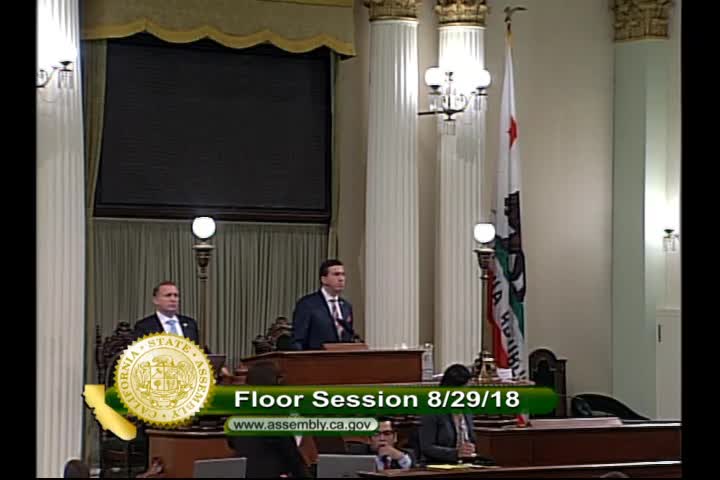

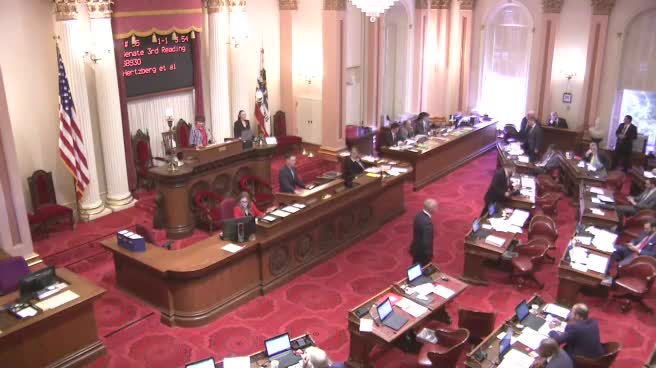
Bill Author


