SB 974: Medi-Cal: immigration status: adults.
- Session Year: 2017-2018
- House: Senate
- Latest Version Date: 2018-05-25
Existing law provides for the Medi-Cal program, which is administered by the State Department of Health Care Services, under which qualified low-income individuals receive health care services. The Medi-Cal program is, in part, governed and funded by federal Medicaid program provisions. The federal Medicaid program provisions prohibit payment to a state for medical assistance furnished to an alien who is not lawfully admitted for permanent residence or otherwise permanently residing in the United States under color of law.
Existing law requires individuals under 19 years of age enrolled in restricted-scope Medi-Cal at the time the Director of Health Care Services makes a determination that systems have been programmed for implementation of these provisions, be enrolled in the full scope of Medi-Cal benefits, if otherwise eligible, pursuant to an eligibility and enrollment plan, as specified. Existing law makes the effective date of enrollment for those individuals the same day that systems are operational to begin processing new applications pursuant to the directors determination.
This bill would additionally extend eligibility for full-scope Medi-Cal benefits to individuals of all ages who are 65 years of age or older, if otherwise eligible for those benefits benefits, but for their immigration status. status, subject to an appropriation. The bill would also delete provisions delaying implementation until the director makes the determination described above. Because counties are required to make Medi-Cal eligibility determinations and this bill would expand Medi-Cal eligibility, the bill would impose a state-mandated local program.
The California Constitution requires the state to reimburse local agencies and school districts for certain costs mandated by the state. Statutory provisions establish procedures for making that reimbursement.
This bill would provide that, if the Commission on State Mandates determines that the bill contains costs mandated by the state, reimbursement for those costs shall be made pursuant to the statutory provisions noted above.
Existing law provides for the Medi-Cal program, which is administered by the State Department of Health Care Services, under which qualified low-income individuals receive health care services. The Medi-Cal program is, in part, governed and funded by federal Medicaid program provisions. The federal Medicaid program provisions prohibit payment to a state for medical assistance furnished to an alien who is not lawfully admitted for permanent residence or otherwise permanently residing in the United States under color of law.
Existing law requires individuals under 19 years of age enrolled in restricted-scope Medi-Cal at the time the Director of Health Care Services makes a determination that systems have been programmed for implementation of these provisions, be enrolled in the full scope of Medi-Cal benefits, if otherwise eligible, pursuant to an eligibility and enrollment plan, as specified. Existing law makes the effective date of enrollment for those individuals the same day that systems are operational to begin processing new applications pursuant to the directors determination.
This bill would extend eligibility for full-scope Medi-Cal benefits to individuals of all ages who are otherwise eligible for those benefits but for their immigration status. The bill would also delete provisions delaying implementation until the director makes the determination described above. Because counties are required to make Medi-Cal eligibility determinations and this bill would expand Medi-Cal eligibility, the bill would impose a state-mandated local program.
The California Constitution requires the state to reimburse local agencies and school districts for certain costs mandated by the state. Statutory provisions establish procedures for making that reimbursement.
This bill would provide that, if the Commission on State Mandates determines that the bill contains costs mandated by the state, reimbursement for those costs shall be made pursuant to the statutory provisions noted above.
(a)(1)An individual who is under 19 years of age, or 65 years of age and older, and who does not have satisfactory immigration status or is unable to establish satisfactory immigration status status, as required by Section 14011.2 14011.2, shall be eligible for the full scope of Medi-Cal benefits, if he or she is otherwise eligible for benefits under this chapter.
(2)(A)Individuals An individual enrolled in Medi-Cal pursuant to subdivision (d) of Section 14007.5 shall be enrolled in the full scope of Medi-Cal benefits, if eligible under this section and is otherwise eligible, eligible for Medi-Cal pursuant to an eligibility and enrollment plan. This plan shall include outreach strategies developed by the department in consultation with interested stakeholders, including, but not limited to, counties, health care service plans, consumer advocates, and the Legislature. Individuals subject to this subparagraph shall not be required to file a new application for Medi-Cal.
(B)The department shall provide monthly updates to the appropriate policy and fiscal committees of the Legislature on the status of the implementation of this section.
(b)To the extent permitted by state and federal law, an individual eligible under this section shall be required to enroll in a Medi-Cal managed care health plan. Enrollment in a Medi-Cal managed care health plan shall not preclude a beneficiary from being enrolled in any other childrens Medi-Cal specialty program that he or she would otherwise be eligible for.
(c)The department shall seek any necessary federal approvals to obtain federal financial participation in implementing this section. Benefits for services under this section shall be provided with state-only funds only if federal financial participation is not available for those services.
(d)The department shall maximize federal financial participation in implementing this section to the extent allowable.
(e)This section shall be implemented only to the extent it is in compliance with Section 1621(d) of Title 8 of the United States Code.
(f)(1)Notwithstanding Chapter 3.5 (commencing with Section 11340) of Part 1 of Division 3 of Title 2 of the Government Code, the department, without taking any further regulatory action, shall implement, interpret, or make specific this section by means of all-county letters, plan letters, plan or provider bulletins, or similar instructions until the time any necessary regulations are adopted. Thereafter, the department shall adopt regulations in accordance with the requirements of Chapter 3.5 (commencing with Section 11340) of Part 1 of Division 3 of Title 2 of the Government Code.
(2)Notwithstanding Section 10231.5 of the Government Code, the department shall provide a status report to the Legislature on a semiannual basis, in compliance with Section 9795 of the Government Code, until regulations have been adopted.
(g)In implementing this section, the department may contract, as necessary, on a bid or nonbid basis. This subdivision establishes an accelerated process for issuing contracts pursuant to this section. Those contracts, and any other contracts entered into pursuant to this subdivision, may be on a noncompetitive bid basis and shall be exempt from the following:
(1)Part 2 (commencing with Section 10100) of Division 2 of the Public Contract Code and any policies, procedures, or regulations authorized by that part.
(2)Article 4 (commencing with Section 19130) of Chapter 5 of Part 2 of Division 5 of Title 2 of the Government Code.
(3)Review or approval of contracts by the Department of General Services.
(h)The expansion of eligibility for the full-scope of Medi-Cal benefits to individuals of 65 years of age or older, if otherwise eligible for those benefits, but for their immigration status, shall be contingent upon appropriation in the annual Budget Act.
SEC. 2.If the Commission on State Mandates determines that this act contains costs mandated by the state, reimbursement to local agencies and school districts for those costs shall be made pursuant to Part 7 (commencing with Section 17500) of Division 4 of Title 2 of the Government Code.
(a)(1)After the director determines, and communicates that determination in writing to the Department of Finance, that systems have been programmed for implementation of this section, but no sooner than May 1, 2016, an individual who is under 19 years of age and An individual who does not have satisfactory immigration status or is unable to establish satisfactory immigration status as required by Section 14011.2 shall be eligible for the full scope of Medi-Cal benefits, if he or she is otherwise eligible for benefits under this chapter.
(2)(A)Individuals under 19 years of age enrolled in Medi-Cal pursuant to subdivision (d) of Section 14007.5 at the time the director makes the determination described in paragraph (1) shall be enrolled in the full scope of Medi-Cal benefits, if otherwise eligible, pursuant to an eligibility and enrollment plan. This plan shall include outreach strategies developed by the department in consultation with interested stakeholders, including, but not limited to, counties, health care service plans, consumer advocates, and the Legislature. Individuals subject to this subparagraph shall not be required to file a new application for Medi-Cal.
(B)The effective date of enrollment into Medi-Cal for individuals described in subparagraph (A) shall be on the same day on which the systems are operational to begin processing new applications pursuant to the directors determination described in paragraph (1).(C)Beginning January 31, 2016, and until the director makes the determination described in paragraph (1), the(B)The department shall provide monthly updates to the appropriate policy and fiscal committees of the Legislature on the status of the implementation of this section.
(b)To the extent permitted by state and federal law, an individual eligible under this section shall be required to enroll in a Medi-Cal managed care health plan. Enrollment in a Medi-Cal managed care health plan shall not preclude a beneficiary from being enrolled in any other childrens Medi-Cal specialty program that he or she would otherwise be eligible for.
(c)The department shall seek any necessary federal approvals to obtain federal financial participation in implementing this section. Benefits for services under this section shall be provided with state-only funds only if federal financial participation is not available for those services.
(d)The department shall maximize federal financial participation in implementing this section to the extent allowable.
(e)This section shall be implemented only to the extent it is in compliance with Section 1621(d) of Title 8 of the United States Code.
(f)(1)Notwithstanding Chapter 3.5 (commencing with Section 11340) of Part 1 of Division 3 of Title 2 of the Government Code, the department, without taking any further regulatory action, shall implement, interpret, or make specific this section by means of all-county letters, plan letters, plan or provider bulletins, or similar instructions until the time any necessary regulations are adopted. Thereafter, the department shall adopt regulations in accordance with the requirements of Chapter 3.5 (commencing with Section 11340) of Part 1 of Division 3 of Title 2 of the Government Code.
(2)Commencing six months after the effective date of this section, and notwithstanding Notwithstanding Section 10231.5 of the Government Code, the department shall provide a status report to the Legislature on a semiannual basis, in compliance with Section 9795 of the Government Code, until regulations have been adopted.
(g)In implementing this section, the department may contract, as necessary, on a bid or nonbid basis. This subdivision establishes an accelerated process for issuing contracts pursuant to this section. Those contracts, and any other contracts entered into pursuant to this subdivision, may be on a noncompetitive bid basis and shall be exempt from the following:
(1)Part 2 (commencing with Section 10100) of Division 2 of the Public Contract Code and any policies, procedures, or regulations authorized by that part.
(2)Article 4 (commencing with Section 19130) of Chapter 5 of Part 2 of Division 5 of Title 2 of the Government Code.
(3)Review or approval of contracts by the Department of General Services.
SEC. 2.If the Commission on State Mandates determines that this act contains costs mandated by the state, reimbursement to local agencies and school districts for those costs shall be made pursuant to Part 7 (commencing with Section 17500) of Division 4 of Title 2 of the Government Code.
|
Date
|
Status
|
|---|---|
| Aug 16, 2018 | August 16 hearing: Held in committee and under submission. |
| Aug 8, 2018 | August 8 set for first hearing. Placed on suspense file. |
| Jun 20, 2018 | From committee: Do pass and re-refer to Com. on APPR. (Ayes 11. Noes 4.) (June 19). Re-referred to Com. on APPR. |
| Jun 7, 2018 | Referred to Com. on HEALTH. |
| May 31, 2018 | In Assembly. Read first time. Held at Desk. |
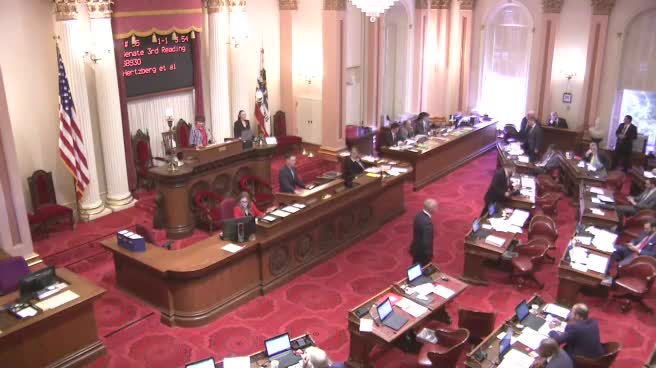
| May 30, 2018 | Read third time. Passed. (Ayes 21. Noes 12.) Ordered to the Assembly. |
| May 29, 2018 | Read second time. Ordered to third reading. |
| May 25, 2018 | From committee: Do pass as amended. (Ayes 5. Noes 2.) (May 25). |
| May 23, 2018 | Set for hearing May 25. |
| May 22, 2018 | May 22 hearing: Placed on APPR. suspense file. |
| May 14, 2018 | Set for hearing May 22. |
| Apr 5, 2018 | From committee: Do pass and re-refer to Com. on APPR. (Ayes 6. Noes 2.) (April 4). Re-referred to Com. on APPR. |
| Mar 23, 2018 | Set for hearing April 4. |
| Feb 14, 2018 | Referred to Com. on HEALTH. |
| Feb 2, 2018 | From printer. May be acted upon on or after March 4. |
| Feb 1, 2018 | Introduced. Read first time. To Com. on RLS. for assignment. To print. |
|
Date
|
Description
|
Location
|
Votes
|
|
|---|---|---|---|---|
| Jun 19, 2018 | Do pass and be re-referred to the Committee on [Appropriations] | Assembly Standing Committee on Health |
Passed |
|
| May 30, 2018 | Senate 3rd Reading SB974 Lara et al. | Senate Floor |
Passed |
|
| May 25, 2018 | Do pass as amended | Senate Standing Committee on Appropriations |
Passed |
|
| May 22, 2018 | Placed on suspense file | Senate Standing Committee on Appropriations |
Passed |
|
| Apr 4, 2018 | Do pass, but first be re-referred to the Committee on [Appropriations] | Senate Standing Committee on Health |
Passed |
This list shows positions taken on this bill by organizations on the date displayed, which is linked to the original source.
Positions by individuals are not included.
Date of Hearing: August 8, 2018
ASSEMBLY COMMITTEE ON APPROPRIATIONS
Lorena Gonzalez Fletcher, Chair
SBPCA Bill Id:SB 974
Author:(Lara) – As Amended Ver:May 25, 2018
Policy Committee: | Health | Vote: | 11 - 4 |
Urgency: No State Mandated Local Program: Yes Reimbursable: No
SUMMARY:
This bill, contingent on annual budget appropriations, establishes full-scope Medi-Cal eligibility for undocumented adults age 65 years of age or older. (Current law establishes full-scope Medi-Cal eligibility for undocumented children.)
FISCAL EFFECT:
Assuming funds are appropriated for the bill's purposes:
- Costs of around $200 million GF ($220 million total funds) in 2019-20 and increasing annually, assuming the following: (a) all individuals currently enrolled in restricted-scope coverage enroll in full-scope coverage and (b) total population numbers in this eligibility group increase by about 10% due to the enrollment of persons currently eligible but not enrolled. Given the majority of undocumented individuals who would qualify are already enrolled in restricted-scope Medi-Cal, population assumptions are fairly reliable, but total costs could be lower or higher if health status, utilization, or the rate of disability is different than assumed. This estimate assumes the state can continue to claim federal financial participation (FFP) for restricted-scope services (total costs are offset by costs for services already covered under current law).
- Unknown, significant ongoing additional cost pressure to Medi-Cal county administration to maintain additional caseloads (GF).
- One-time administrative and automation costs of $300,000 to the Department of Health Care Services (DHCS) to make necessary program and information technology (IT) changes (GF).
- One-time costs of $1 million to Department of Social Services for similar program and IT changes to the In-Home Supportive Services (IHSS) Case Management, Information and Payroll System (CMIPS) system (GF).
- Ongoing increased administrative staff costs of $300,000 to DHCS associated with higher caseload (GF).
- This expansion would relieve counties and non-profit health care providers of the financial burden of providing care to persons over 65 who cannot otherwise afford care. Savings would not accrue to the state without further statutory changes.
COMMENTS:
- Purpose. According to the author, health care is a human right, and individuals should receive accessible and affordable care regardless of immigration status. This bill ensures this extends to low-income undocumented seniors. This bill is jointly sponsored by Health Access California (Health Access) and the California Immigrant Policy Center (CIPC) and is supported by labor, consumer, health care providers, immigrant, religious, and low-income advocacy groups. It has no opposition.
- Medi-Cal eligibility. Generally, in states that expanded Medicaid pursuant to the federal Affordable Care Act (ACA), as California did, qualified individuals with incomes under 138% of the federal poverty level are eligible for Medicaid (Medi-Cal in California). However, individuals who are undocumented are excluded from full-scope Medi-Cal and only eligible for restricted-scope Medi-Cal, which provides a limited set of services including emergency and pregnancy services.
Eligibility and coverage in Medi-Cal are restricted in most cases to what is eligible for FFP, meaning the federal government shares in the costs of these services. This bill, however, would expand eligibility for full-scope Medi-Cal at state-only cost, with the intent to maintain FFP for the limited—but costly— set of health care services that are currently eligible for FFP.
SB 75 (Committee on Budget and Fiscal Review), Chapter 18, Statutes of 2016, expanded Medi-Cal to provide health coverage for all otherwise eligible children under age 19 regardless of immigration status. This change enrolled over 200,000 undocumented children as of 2017.
- Projections. California's uninsurance rate has declined dramatically in recent years, but 3 million Californians remain uninsured, about 1.8 million of whom are undocumented adults. Of these, the Legislative Analyst's Office projects about 36,000 seniors would be eligible for full-scope coverage under this bill.
- Related Legislation. A number of bills pending in the Senate Appropriations Committee address Medi-Cal eligibility and enrollment:
- AB 2430 (Arambula) expands income eligibility for Medi-Cal for aged, blind, or disabled individuals from a threshold that is effectively 124% of the federal poverty level, to 138% of the federal poverty level.
- AB 2579 (Burke) creates a streamlined Medi-Cal enrollment gateway through the Women, Infants, and Children (WIC) program.
- AB 2718 (Friedman) replaces the initial six-month Medi-Cal eligibility period for families transitioning off CalWORKS with a 12-month eligibility period.
- AB 2965 (Arambula) extends eligibility for full-scope Medi-Cal benefits to an individual who is under 26 years of age and who does not have satisfactory immigration status, as specified.
AB 2331 (Weber), which was held in this committee, contained multiple requirements intended to facilitate continuous Medi-Cal enrollment for regional center consumers.
- Staff Comment. When the state opted to expand Medi-Cal in 2013, counties’ costs and responsibilities for health care services for the indigent population decreased, as much of this population became eligible for coverage. To realign funding with programmatic responsibilities, a mechanism was created through AB 85 (Committee on Budget), Chapter 24, Statutes of 2013, to redirect local health realignment funding to fund social service programs, thereby freeing up state revenues to offset the state costs for the expansion. To the extent the state pursues another coverage expansion that reduces fiscal pressure on counties and providers for indigent care, it would be prudent to reexamine state-local health care funding and indigent care responsibilities.
Analysis Prepared by: Lisa Murawski / APPR. / (916) 319-2081
Date of Hearing: June 19, 2018
ASSEMBLY COMMITTEE ON HEALTH
Jim Wood, Chair
SBPCA Bill Id:SB 974
Author:(Lara) – As Amended Ver:May 25, 2018
SENATE VOTE: 21-12
SUBJECT: Medi-Cal: immigration status: adults.
SUMMARY: Extends full scope Medi-Cal coverage to individuals who are 65 years of age and older who do not have or are unable to establish satisfactory immigration status, as specified. Makes this expansion of eligibility contingent upon an appropriation in the annual Budget Act. Specifically, this bill:
- Requires individuals who do not have satisfactory immigration status who are enrolled in limited scope Medi-Cal to be enrolled in full scope Medi-Cal pursuant to an eligibility and enrollment plan, which includes outreach strategies developed by the Department of Health Care Services (DHCS) in consultation with interested stakeholders, including but not limited to counties, health plans, consumer advocates and the Legislature.
- Requires individuals in 1) above to enroll into Medi-Cal managed care health plans, and to pay copayments and premium contributions to the extent required of otherwise eligible Medi-Cal recipients who are similarly situated.
- Requires DHCS to maximize federal financial participation in implementing these requirements to the extent allowable.
EXISTING LAW:
- Establishes the Medi-Cal program, administered by DHCS, under which low income individuals are eligible for medical coverage.
- Makes adults and parents with incomes up to 138% of the federal poverty level (FPL) who are under age 65 eligible for Medi-Cal, and makes children with incomes up to 266% of the FPL eligible for Medi-Cal, including providing full-scope Medi-Cal benefits to undocumented children through age 18.
- Makes individuals who do not have satisfactory immigration status (undocumented individuals) ages 19 and above, who are otherwise eligible for Medi-Cal services, eligible only for care and services that are necessary for the treatment of an emergency medical condition and medical care directly related to the emergency, as defined in federal law.
- Makes low-income undocumented individuals eligible for Medi-Cal for pregnancy coverage, breast and cervical cancer-related treatment services, family planning services, and long-term care services.
- Defines, under state law, an “emergency medical condition” as a medical condition (including emergency labor and delivery) manifesting itself by acute symptoms of sufficient severity (including severe pain) such that the absence of immediate medical attention could reasonably be expected to result in:
- Placing the patient’s health in serious jeopardy;
- Serious impairment to bodily functions; or,
- Serious dysfunction of any bodily organ or part.
FISCAL EFFECT: According to the Senate Appropriations Committee:
The fiscal estimates below are subject to a great deal of uncertainty. The rates at which immigrants who are undocumented apply for either Medi-Cal or subsidized coverage are unknown and are known to be heavily influenced by concerns pertaining to gaining attention of authorities, language barriers, and income-eligibility. In addition, the age and health status of those who ultimately would enroll in Medi-Cal or subsidized coverage will have a significant impact on the costs to provide coverage. The literature has typically demonstrated the immigrant population to be typically healthier.
The Legislative Analyst’s Office (LAO) May 10, 2018 Budget and Policy estimates the total net state cost of this coverage expansion is approximately $3 billion General Fund in 2018‑19. Using the LAO’s analysis, staff notes the amendments would provide for an estimated total net cost of $330 million General Fund for the proposal.
COMMENTS:
- PURPOSE OF THIS BILL. According to the author, Californians now agree that healthcare is a human right, and undocumented elders have lived and worked in California for decades but they are left behind by Washington’s colossal failure to pass comprehensive immigration reform. Like all seniors they are working later in life, caring for grandchildren, and still contributing to our economy. Undocumented Californians pay $3.2 billion in state and local taxes but are still shut out from preventive care and doctor visits that other Californians have. The author concludes that every day we wait means more expensive emergency room visits, lost productivity, and shorter lives for people who deserve dignity in their old age.
- BACKGROUND.
- Medi-Cal Coverage for Immigrants. In order to be Medi-Cal eligible, an individual must be a state resident and generally must be low-income. Recent legal immigrants and undocumented immigrants who meet income and residency requirements are Medi-Cal eligible, but the scope of that coverage depends on the immigration status of the immigrant and the age of the individual. Undocumented children were made eligible for full-scope Medi-Cal services pursuant to SB 75 (Committee on Budget and Fiscal Review), Chapter 18, Statutes of 2016, the health budget trailer bill. As of December 2017, a total of 218,571 undocumented children have enrolled in full-scope Medi-Cal, in two distinct populations:
- Restricted-scope Medi-Cal beneficiaries. As of December 2017, 120,614 undocumented children previously enrolled in restricted-scope Medi-Cal coverage transitioned into full-scope Medi-Cal coverage; and,
- Not previously enrolled. DHCS estimated 130,924 undocumented children that were eligible for, but not enrolled in, restricted-scope Medi-Cal were eligible for full-scope coverage under the expansion of eligibility. As of December 2017, 97,957 children in this category enrolled in full-scope benefits.
Undocumented immigrants age 19 and above are not eligible for full scope services, and are instead eligible for “limited scope” Medi-Cal benefits. Limited scope services are long-term care, pregnancy-related benefits, and emergency services. Medi-Cal also provides coverage for undocumented individuals needing breast and cervical cancer treatment, family planning services through Family PACT (Planning, Access, Care, and Treatment), and through temporary presumptive eligibility programs. Undocumented adults are not eligible (with very few exceptions) for enrollment in Medi-Cal managed care plans.
- The Affordable Care Act (ACA) and the remaining uninsured. According to data from the Centers for Disease Control and Prevention, National Health Interview Survey, the rate of Californians without insurance has declined from 17.2% in 2012 to 6.8% in the first six months of 2017. According to preliminary data from data from the UC Berkeley Center for Labor Research and Education (UC Berkeley) and the UCLA Center for Health Policy Research (UCLA) for 2017, there are over three million remaining uninsured ages 0 to 64 in California as follows:
- Medi-Cal Coverage for Immigrants. In order to be Medi-Cal eligible, an individual must be a state resident and generally must be low-income. Recent legal immigrants and undocumented immigrants who meet income and residency requirements are Medi-Cal eligible, but the scope of that coverage depends on the immigration status of the immigrant and the age of the individual. Undocumented children were made eligible for full-scope Medi-Cal services pursuant to SB 75 (Committee on Budget and Fiscal Review), Chapter 18, Statutes of 2016, the health budget trailer bill. As of December 2017, a total of 218,571 undocumented children have enrolled in full-scope Medi-Cal, in two distinct populations:
California Projected Uninsured | Number | Percentage |
Non-subsidy eligible citizens/lawfully present immigrants | 550,000 | 18% |
Eligible for subsidies through Covered California | 401,000 | 13% |
Eligible for Medi-Cal | 322,000 | 11% |
Not eligible due to immigration status | 1,787,000 | 58% |
Total | 3,061,000 | 100% |
According to the UC Berkeley and UCLA model, an estimated 1.2 to 1.3 million undocumented adults have income at or below 138% of the FPL (at or below $16,643 in 2017), including nearly one million enrolled in restricted scope Medi-Cal which covers emergency-and pregnancy-related services only.
- Assembly Budget Committee Health Care Action. On May 7, 2018, the Assembly Budget Committee’s Subcommittee No. 1 on Health and Human Services approved several proposals totaling over $1 billion to reform California’s health care system. The proposals included extending Medi-Cal to young adults, ages 19-25, who currently meet income-qualifications for Medi-Cal, regardless of immigration status. These proposals were not adopted in the final budget that was approved by the Legislature on May 14, 2018.
- Assembly Budget Committee Health Care Action. On May 7, 2018, the Assembly Budget Committee’s Subcommittee No. 1 on Health and Human Services approved several proposals totaling over $1 billion to reform California’s health care system. The proposals included extending Medi-Cal to young adults, ages 19-25, who currently meet income-qualifications for Medi-Cal, regardless of immigration status. These proposals were not adopted in the final budget that was approved by the Legislature on May 14, 2018.
- SUPPORT. This bill is jointly sponsored by Health Access California (Health Access) and the California Immigrant Policy Center (CIPC) and is supported by individuals, low-income, labor, consumer, health care providers, immigrant, religious, and community groups. Health Access writes this bill would bring California one step closer to universal coverage by making full-scope Medi-Cal available to all income-eligible adults regardless of immigration status. CIPC argues making Medi-Cal inclusive of all income-eligible Californians builds upon our state’s leadership to advance universal coverage and ensure that no Californian is unjustly barred from access to health care. CIPC writes that almost two-thirds of undocumented Californians have lived in the United States for more than ten years, one in six of all California children have at least one undocumented parent, and undocumented Californians play a significant role in the workforce and the state’s economy but are four times more likely to be uninsured than their US citizen counterparts. CIPC writes that despite their critical role in our society and state, undocumented and uninsured Californians are locked out of access to comprehensive health care. Health Access argues Californian’s health system and Californians in general are healthier and stronger when everyone is included, and that when every Californian has the opportunity to have affordable comprehensive health coverage, they have access to preventive, primary and ongoing care as well as financial security against medical debt and bankruptcy.
- RELATED LEGISLATION. AB 2965 (Arambula) extends eligibility for full-scope Medi-Cal benefits to an individual who is under 26 years of age and who does not have satisfactory immigration status, as specified. AB 2965 is pending in Senate Health Committee.
- PREVIOUS LEGISLATION.
- SB 10 (Lara), Chapter 22, Statutes of 2016, required Covered California (CC) to apply to the federal Department of Health and Human Services for a Section 1332 waiver to allow persons who are not otherwise able to obtain coverage through CC by reason of immigration status to obtain coverage from CC by waiving the requirement that CC offer only qualified health plans.
- SB 4 (Lara), Chapter 709, Statutes of 2015, required undocumented individuals under 19 years of age enrolled in Medi-Cal at the time the Director of DHCS makes the determination to be enrolled in full scope of Medi-Cal benefits, if otherwise eligible, pursuant to an eligibility and enrollment plan.
- SB 97 (Budget and Fiscal Review Committee), Chapter 11, Statutes of 2015, expanded eligibility for full-scope Medi-Cal benefits for undocumented children under the age of 19, regardless of immigration status.
- SB 1005 (Lara) of 2014 would have extended Medi-Cal eligibility to individuals who would otherwise be eligible, except for their immigration status, and would have created a new health benefit exchange, to provide subsidized health care coverage to individuals who cannot purchase health care coverage through CC due to their immigration status. SB 1005 was held on the Senate Appropriations suspense file.
- AB X1 1 (John A. Perez), Chapter 3, Statutes of 2013-14 First Extraordinary Session, implemented specified Medicaid provisions of the ACA, including the expansion of federal Medicaid coverage to low-income adults with incomes between 0-138% of the FPL. AB X1 1 also implemented a number of the Medicaid ACA provisions to simplify the eligibility, enrollment and renewal processes for Medi-Cal.
REGISTERED SUPPORT / OPPOSITION:
Support
Health Access California (cosponsor)
California Immigrant Policy Center (cosponsor)
American Academy Of Pediatrics, California
American Civil Liberties Union
American Federation of State, County and Municipal Employees, AFL-CIO
Asian Law Alliance
California Academy of Family Physicians
California Access Coalition
California Association for Nurse Practitioners
California Association of Health Plans
California Black Health Network
California Chapter of the American College of Emergency Physicians
California Food Policy Advocates
California Health Professional Student Alliance
California Immigrant Youth Justice Alliance
California Medical Association
California Pan - Ethnic Health Network
California Physicians Alliance
California State Council of Service Employees International Union
California Teachers Association
California Voices for Progress
Children's Defense Fund-California
Clinica Msr. Oscar A. Romero
Community Clinic Association of Los Angeles County
Community Health Councils
Congress of California Seniors
Council on American-Islamic Relations
County Behavioral Health Directors Association of California
County Health Executives Association of California
County of Santa Clara
Courage Campaign
Having Our Say Coalition
Hispanas Organized for Political Equality
Indivisible CA State Strong
Inland Coalition for Immigrant Justice
National Health Law Program
SEIU California
St. Anthony Foundation
United Ways of California
UPLIFT
Young Invincibles
Opposition
None on file.
Analysis Prepared by: Rosielyn Pulmano / HEALTH / (916) 319-2097
Office of Senate Floor Analyses (916) 651-1520 Fax: (916) 327-4478 | SB 974 |
THIRD READING
Bill No: SB 974
Amended: 5/25/18
SENATE HEALTH COMMITTEE: 6-2, 4/4/18
AYES: Hernandez, Leyva, Mitchell, Monning, Newman, Pan
NOES: Nguyen, Nielsen
NO VOTE RECORDED: Roth
SENATE APPROPRIATIONS COMMITTEE: 5-2, 5/25/18
AYES: Lara, Beall, Bradford, Hill, Wiener
NOES: Bates, Nielsen
SUBJECT: Medi-Cal: immigration status: adults
SOURCE: California Immigrant Policy Center
Health Access California
DIGEST:
This bill extends eligibility for full-scope Medi-Cal benefits to undocumented adults age 65 and older who are otherwise eligible for those benefits but for their immigration status. Makes this expansion of eligibility contingent upon an appropriation in the annual Budget Act.
ANALYSIS: Existing federal law prohibits undocumented individuals from being eligible for any state or local public benefits (including Medicaid), except for assistance for health care items and services that are necessary for the treatment of an emergency medical condition, public health assistance for immunizations, and for testing and treatment of symptoms of communicable disease. [8 U.S. Code §1621]
Existing state law:
- Establishes the Medi-Cal program, administered by the Department of Health Care Services (DHCS), under which low income individuals are eligible for medical coverage. [WIC §14000, et seq]
- Makes adults and parents with incomes up to 138% of the federal poverty level (FPL) who are under age 65 eligible for Medi-Cal, and makes children with incomes up to 266% of the FPL eligible for Medi-Cal, including providing full-scope Medi-Cal benefits to undocumented children through age 18. [WIC §14005.60, 14005.64, 14005.27, 14005.64, and 14007.8]
- Makes undocumented individuals ages 19 and above, who are otherwise eligible for Medi-Cal services, eligible only for care and services that are necessary for the treatment of an emergency medical condition and medical care directly related to the emergency, as defined in federal law. [WIC §14007.05]
- Makes low-income undocumented individuals eligible for Medi-Cal for pregnancy coverage, breast and cervical cancer-related treatment services, family planning services and long-term care services. [WIC §24003, 14007.65, 14007.7, 14148, 14148.5, and 15832 and HSC §104162]
- Defines, under state law, an “emergency medical condition” as a medical condition (including emergency labor and delivery) manifesting itself by acute symptoms of sufficient severity (including severe pain) such that the absence of immediate medical attention could reasonably be expected to result in:
- Placing the patient’s health in serious jeopardy;
- Serious impairment to bodily functions; or,
- Serious dysfunction of any bodily organ or part. [WIC §14007.05]
This bill:
- Makes undocumented adults age 65 and older who meet all of the eligibility requirements for full-scope Medi-Cal benefits, except for their immigration status, eligible for full-scope Medi-Cal benefits. Makes this expansion of eligibility contingent upon an appropriation in the annual Budget Act.
- Requires undocumented individuals already enrolled in limited scope Medi-Cal to be enrolled pursuant to an eligibility and enrollment plan, which includes outreach strategies developed by DHCS in consultation with interested stakeholders, including but not limited to counties, health plans, consumer advocates and the Legislature.
- Requires undocumented individuals to enroll into Medi-Cal managed care health plans, and to pay copayments and premium contributions to the extent required of otherwise eligible Medi-Cal recipients who are similarly situated.
- Requires DHCS to maximize federal financial participation in implementing these requirements to the extent allowable.
Comments
- Author’s statement. According to the author, over the last year, we have witnessed a barrage of attacks on health care from the federal government, including multiple efforts to repeal the Affordable Care Act (ACA), the elimination of the individual mandate penalty in the federal tax bill, and various administrative actions that undermine access to care. While California has worked to shield our state from these attacks, it is just as important to continue our progress toward universal coverage. California already provides near-universal coverage for children, thanks in large part to the Health4All Kids program, which provides publicly funded health coverage for undocumented children. SB 75 (2015) included an investment to expand full-scope Medi-Cal to all low-income children under the age of 19, regardless of immigration status. With the implementation of Health4All Kids on May 16, 2016, more than 218,000 undocumented children now receive comprehensive care. In 2017, I introduced SB 562, the Healthy California Act, to create one publicly funded healthcare system that covers all Californians regardless of their immigration status or income. Unfortunately, federal law explicitly and unjustly excludes undocumented adult immigrants from receiving full scope health coverage through Medi-Cal, and from selecting a health plan or receiving subsidies through Covered California. As a result, undocumented adults are still left without comprehensive health care. This bill removes a barrier to health access due to immigration status for individuals age 65 and older, and brings California closer to ensuring that every Californian has comprehensive, affordable, and accessible care.
- Current scope of Medi-Cal coverage for immigrants. In order to be Medi-Cal eligible, an individual must be a state resident and generally must be low-income. Recent legal immigrants and undocumented immigrants who meet income and residency requirements are Medi-Cal eligible, but the scope of that coverage depends on the immigration status of the immigrant and the age of the individual. Undocumented children were made eligible for full-scope Medi-Cal services pursuant to SB 75 (Committee on Budget and Fiscal Review, Chapter 18, Statutes of 2016) the health budget trailer bill. As of December 2017, a total of 218,571 undocumented children were enrolled in full-scope Medi-Cal
Undocumented immigrants age 19 and above are not eligible for full scope services, and are instead eligible for “limited scope” Medi-Cal benefits. Limited scope services are long-term care, pregnancy-related benefits, and emergency services. Medi-Cal also provides coverage for undocumented individuals needing breast and cervical cancer treatment, family planning services through Family PACT [Planning, Access, Care, and Treatment], and through temporary presumptive eligibility programs. Undocumented adults are not eligible (with very few exceptions) for enrollment in Medi-Cal managed care plans.
- The ACA and the remaining uninsured. According to data from the Centers for Disease Control and Prevention (CDC), National Health Interview Survey, the rate of Californians without insurance has declined from 17.2% in 2012 to 6.8% in the first six months of 2017. According to preliminary data from data from the UC Berkeley Center for Labor Research and Education (UC Berkeley) and the UCLA Center for Health Policy Research (UCLA) for 2017, there are over three million remaining uninsured in California as follows:
Ages 0-64
California Projected Uninsured Number Percentage
Non-subsidy eligible citizens/
lawfully present immigrants 550,000 18%
Eligible for subsidies through Covered California 401,000 13%
Eligible for Medi-Cal 322,000 11%
Not eligible due to immigration status 1,787,000 58%
A May 10, 2018 Budget and Policy Post by the Legislative Analyst Office’s entitled “Estimating the Cost of Expanding Full-Scope Medi-Cal Coverage to Undocumented Adults” estimates there are 36,000 undocumented adults with incomes at or below 138% of the FPL, (at or below $16,754 for an individual in 2018) of whom 30,000 are already enrolled in restricted scope Medi-Cal coverage.
The amendments to this bill off of the Senate Appropriations Committee suspense conform to the Senate budget action, which extended eligibility for full-scope Medi-Cal to undocumented adults age 65 years and older who are otherwise eligible for those Medi-Cal but for their immigration status.
FISCAL EFFECT: Appropriation: No Fiscal Com.: Yes Local: Yes
According to the Senate Appropriations Committee, the fiscal estimates below are subject to a great deal of uncertainty. The rates at which immigrants who are undocumented apply for either Medi-Cal or subsidized coverage are unknown and are known to be heavily influenced by concerns pertaining to gaining attention of authorities, language barriers, and income-eligibility. In addition, the age and health status of those who ultimately would enroll in Medi-Cal or subsidized coverage will have a significant impact on the costs to provide coverage. The literature has typically demonstrated the immigrant population to be typically healthier.
The Legislative Analyst’s Office May 10, 2018 Budget and Policy estimates the total net state cost of this coverage expansion is approximately $3 billion General Fund in 2018-19. Using the LAO’s analysis, Senate Appropriations Committee staff notes the amendments would provide for an estimated total net cost of $330 million General Fund for the proposal.
California Immigrant Policy Center (co-source)
Health Access California (co-source)
Alianza
Alliance San Diego
American Civil Liberties Union of California Center for Advocacy and Policy
American Friends Service Committee's US-Mexico Border Program
API Equality-LA
APLA Health
Asian & Pacific Islander American Health Forum
Asian Americans Advancing Justice
Asian Law Alliance
ASPIRE
California Advocates for Nursing Home Reform
California Alliance of Retired Americans
California Asset Building Coalition
California Black Health Network
California Coverage & Health Initiatives
California Domestic Workers Coalition
California Food Policy Advocates
California Health Professional Student Alliance
California Health+ Advocates
California Immigrant Policy Center
California Labor Federation
California Latinas for Reproductive Justice
California OneCare
California Pan-Ethnic Health Network
California Partnership
California Physicians Alliance
California Rural Legal Assistance Foundation
California Teamsters
California Voices for Progress
Canal Alliance
Courage Campaign
Centro Legal de la Raza
Children Now
Children’s Defense Fund-California
Clinica Monsenor Oscar A. Romero Community Health Centers
Coalition for Humane Immigrant Rights
Community Action Board of Santa Cruz County, Inc.
Community Health Alliance of Pasadena
Community Health Councils
Community Health Initiative or Orange County
Community Health Partnership of Santa Clara and San Mateo Counties
Congress of California Seniors
Dream Team Los Angeles
Essential Access Health
Friends Committee on Legislation of California
Greenlining Institute
Having Our Say Coalition
Indivisible CA StateStrong
Inland Coalition for Immigrant Justice
Inland Empire Coverage and Health Collaborative
Inland Empire-Immigrant Youth Collective
Jus Semper Global Alliance
Justice in Aging
Latino Coalition for a Healthy California
Law Foundation of Silicon Valley
Long Beach Immigrant Rights Coalition
Los Angeles Dependency Lawyers
Los Angeles LGBT Center
Lutheran Office of Public Policy-California
Maternal and Child Health Access
Merced Lao Family Community, Inc.
Mexican American Legal Defense and Educational Fund
Mixteco/Indigena Community Organizing Project
Monarch Services of Santa Cruz County
Monterey Bay Central Labor Council, AFL-CIO
Multi-faith ACTION Coalition
National Association of Social Workers, California Chapter
National Council of Jewish Women
National Health Law Program
National Immigration Law Center
PICO California
San Diego Immigrant Rights Consortium
San Diego Organizing Project
San Francisco AIDS Foundation
San Francisco Senior & Disability Action
SEIU California
Services, Immigrant Rights, and Education Network
South Asian Network
South Bay People Power
Southeast Asia Resource Action Center
St. Anthony Foundation
St. John's Well Child & Family Center
Street Level Health Project
The Children’s Partnership
TODEC Legal Center
Tri-Valley Progressives for Our Revolution
United Cambodian Community
United Ways of California
Western Center on Law and Poverty
Young Invincibles
YWCA of Contra Costa / Sacramento
YWCA Silicon Valley
One individiual
OPPOSITION: (Verified 5/22/18)
None received
ARGUMENTS IN SUPPORT: This bill is jointly sponsored by Health Access California (Health Access) and the California Immigrant Policy Center (CIPC) and is supported by individuals, low-income, labor, consumer, health care providers, immigrant, religious, and community groups. Health Access writes that this bill brings California one step closer to universal coverage by making full-scope Medi-Cal available to all income-eligible adults age 65 and older regardless of immigration status. CIPC argues making Medi-Cal inclusive of all income-eligible Californians age 65 and over builds upon our state’s leadership to advance universal coverage and ensure that no Californian is unjustly barred from access to health care. CIPC writes that despite their critical role in our society and state, undocumented and uninsured Californians are locked out of access to comprehensive health care. Health Access argues Californian’s health system and Californians in general are healthier and stronger when everyone is included, and that when every Californian age 65 and older has the opportunity to have affordable comprehensive health coverage, they have access to preventive, primary and ongoing care as well as financial security against medical debt and bankruptcy.
5/29/18 11:00:39
**** END ****
SENATE COMMITTEE ON APPROPRIATIONS
Senator Ricardo Lara, Chair
2017 - 2018 Regular Session
SB 974 (Lara) - Medi-Cal: immigration status: adults
Version: February 1, 2018 | Policy Vote: HEALTH 6 - 2 |
Urgency: No | Mandate: Yes |
Hearing Date: May 25, 2018 | Consultant: Samantha Lui |
Bill Summary:
Senate Bill 974 extends eligibility for full-scope Medi-Cal benefits to undocumented adults, aged 19 years and older, who are otherwise eligible for those Medi-Cal but for their immigration status.
*********** ANALYSIS ADDENDUM – SUSPENSE FILE ***********
The following information is revised to reflect amendments
adopted by the committee on May 25, 2018
Fiscal Impact:
The fiscal estimates below are subject to a great deal of uncertainty. The rates at which immigrants who are undocumented apply for either Medi-Cal or subsidized coverage are unknown and are known to be heavily influenced by concerns pertaining to gaining attention of authorities, language barriers, and income-eligibility. In addition, the age and health status of those who ultimately would enroll in Medi-Cal or subsidized coverage will have a significant impact on the costs to provide coverage. The literature has typically demonstrated the immigrant population to be typically healthier.
The Legislative Analyst’s Office May 10, 2018 Budget and Policy estimates the total net state cost of this coverage expansion is approximately $3 billion General Fund in 2018‑19. Using the LAO’s analysis, staff notes the amendments would provide for an estimated total net cost of $330 million General Fund for the proposal.
Committee Amendments:
Amends bill to conform to Senate budget action, taken on March 17, 2018, which extends eligibility for full-scope Medi-Cal to undocumented adults, aged 65 years and older, who are otherwise eligible for those Medi-Cal but for their immigration status.
-- END --
SENATE COMMITTEE ON APPROPRIATIONS
Senator Ricardo Lara, Chair
2017 - 2018 Regular Session
SB 974 (Lara) - Medi-Cal: immigration status: adults
Version: February 1, 2018 | Policy Vote: HEALTH 6 - 2 |
Urgency: No | Mandate: Yes |
Hearing Date: May 22, 2018 | Consultant: Samantha Lui |
This bill meets the criteria for referral to the Suspense File.
Bill Summary:
Senate Bill 974 extends eligibility for full-scope Medi-Cal benefits to undocumented adults, aged 19 years and older, who are otherwise eligible for those Medi-Cal but for their immigration status.
Fiscal Impact:
The fiscal estimates below are subject to a great deal of uncertainty. The rates at which immigrants who are undocumented apply for either Medi-Cal or subsidized coverage are unknown and are known to be heavily influenced by concerns pertaining to gaining attention of authorities, language barriers, and income-eligibility. In addition, the age and health status of those who ultimately would enroll in Medi-Cal or subsidized coverage will have a significant impact on the costs to provide coverage. The literature has typically demonstrated the immigrant population to be typically healthier.
The Legislative Analyst’s Office May 10, 2018 Budget and Policy estimates the total net state cost of this coverage expansion is approximately $3 billion General Fund in 2018‑19. (This net cost would be fully a state cost, and represents the change between the cost of providing full-scope Medi-Cal and the cost of providing restricted-scope Medi-Cal to the undocumented adult population.) Of the $3 billion in new net state costs, $2.7 billion of the costs would be for undocumented adults already enrolled in restricted-scope Medi-Cal (as mentioned previously, more than 80 percent of the income-eligible population), and the remaining $300 million would be for adults currently eligible for restricted-scope Medi-Cal but not enrolled.
For the estimated cost of providing full-scope Medi-Cal coverage, please see chart below, which is distributed by age bands.
Estimated Cost of Providing Full‑Scope
Medi‑Cal Coverage to Undocumented Adults
(In Millions)
Ages | Total Costs | Offset for Cost | Net Cost |
19‑25 | $330 | $190 | $140 |
26‑35 | 1,210 | 570 | 640 |
36‑49 | 1,800 | 560 | 1,240 |
50‑54 | 360 | 120 | 240 |
55‑64 | 580 | 180 | 400 |
65+ | 460 | 130 | 330 |
Totals | $4,740 | $1,750 | $2,990 |
aEstimated costs primarily for emergency‑ and pregnancy‑related services already covered for undocumented adults enrolled in restricted‑scope Medi‑Cal. | |||
Background:
- Under state and federal law, the Department of Health Care Services administers the state’s version of Medicaid, known as Medi-Cal. Medi-Cal provides health care coverage to pregnant women, children and their parents with low incomes, as well as blind, disabled, and certain other populations. Pursuant to the federal Affordable Care Act, California has opted to expand eligibility for Medi-Cal up to 138 percent of the federal poverty level and to include childless adults.
Currently, an individual must be a state resident and generally must be low-income. Recent legal immigrants and undocumented immigrants who meet income and residency requirements are Medi-Cal eligible, but the scope of that coverage depends on the immigration status of the immigrant and the age of the individual. Senate Bill 75 (Committee on Budget and Fiscal Review), Chapter 18, Statutes of 2016 made undocumented children eligible for full-scope Medi-Cal services. As of December 2017, a total of 218,571 undocumented children have enrolled in full-scope Medi-Cal, in two distinct populations:
- Restricted-scope Medi-Cal beneficiaries. As of December 2017, 120,614 undocumented children previously enrolled in restricted-scope Medi-Cal coverage transitioned into full-scope Medi-Cal coverage; and,
- Not previously enrolled. DHCS estimated 130,924 undocumented children that were eligible for, but not enrolled in, restricted-scope Medi-Cal were eligible for full-scope coverage under the expansion of eligibility. As of December 2017, 97,957 children in this category enrolled in full-scope benefits.
Currently, immigrants aged 19 year and old, who are undocumented, are not eligible for full scope services, and are instead eligible for “limited scope” Medi-Cal benefits. Limited scope services are long-term care, pregnancy-related benefits, and emergency services. Medi-Cal also provides coverage for undocumented individuals needing breast and cervical cancer treatment, family planning services through Family PACT, and through temporary presumptive eligibility programs. Undocumented adults are not eligible (with very few exceptions) for enrollment in Medi-Cal managed care plans.
Proposed Law:
The bill expands Medi-Cal eligibility to include undocumented adults age 19 and older who meet all of the eligibility requirements for full-scope Medi-Cal benefits, except for their immigration status. Specifically, the bill:
- Deletes provisions delaying eligibility and enrollment until the director makes the determination described above.
- Requires DHCS to provide, indefinitely, monthly updates to the legislative committees regarding the implementation of the proposed policy.
- Because counties determine Medi-Cal eligibility, and this bill would expand Medi-Cal eligibility, the bill imposes a state-mandated local program.
Related Legislation:
- AB 2965 (Arambula) similarly extends eligibility for full-scope Medi-Cal benefits to individuals of all ages who are otherwise eligible for those benefits but for their immigration status. It contains identical language as SB 974. AB 2965 is pending in Assembly Appropriations.
- SB 10 (Lara, Chapter 22, Statutes of 2016) required Covered California to apply to the federal Department of Health and Human Services for a Section 1332 waiver to allow persons who are not otherwise able to obtain coverage through Covered California by reason of immigration status to obtain coverage from Covered California by waiving the requirement that Covered offer only qualified health plans.
- SB 4 (Lara, Chapter 709, Statutes of 2015) required undocumented individuals under 19 years of age enrolled in Medi-Cal at the time the Director of DHCS makes the determination to be enrolled in full scope of Medi-Cal benefits, if otherwise eligible, pursuant to an eligibility and enrollment plan.
- SB 97 (Budget and Fiscal Review Committee, Chapter 11, Statutes of 2015) expanded eligibility for full-scope Medi-Cal benefits for undocumented children under the age of 19, regardless of immigration status.
- SB 1005 (Lara, 2014) would have extended Medi-Cal eligibility to individuals who would otherwise be eligible, except for their immigration status, and would have created a new health benefit exchange, to provide subsidized health care coverage to individuals who cannot purchase health care coverage through Covered California due to their immigration status. SB 1005 was held on the Senate Appropriations suspense file.
- AB X1 1 (Perez, Chapter 3, Statutes of 2013-14 First Extraordinary Session) implemented specified Medicaid provisions of the ACA, including the expansion of federal Medicaid coverage to low-income adults with incomes between 0-138% of the FPL. AB X1 1 also implemented a number of the Medicaid ACA provisions to simplify the eligibility, enrollment and renewal processes for Medi-Cal.
Staff Comments:
According to data from the Centers for Disease Control and Prevention (CDC), National Health Interview Survey, the rate of Californians without insurance has declined from 17.2% in 2012 to 6.8% in the first six months of 2017. According to preliminary data from data from the UC Berkeley Center for Labor Research and Education (UC Berkeley) and the UCLA Center for Health Policy Research (UCLA) for 2017, there are over three million remaining uninsured in California as follows:
California Projected Uninsured, Ages 0-64, 2017 Number Percentage
Non-subsidy eligible citizens/lawfully present immigrants 550,000 18%
Eligible for subsidies through Covered California 401,000 13%
Eligible for Medi-Cal 322,000 11%
Not eligible due to immigration status 1,787,000 58%
-- END --
SENATE COMMITTEE ON HEALTH
Senator Ed Hernandez, O.D., Chair
BILL NO: SB 974
AUTHOR: | Lara | ||
VERSION: | February 1, 2018 | ||
HEARING DATE: | April 4, 2017 | ||
CONSULTANT: | Scott Bain | ||
SUBJECT: Medi-Cal: immigration status: adults
SUMMARY:
Extends eligibility for full-scope Medi-Cal benefits to undocumented adults age 19 and above who are otherwise eligible for those benefits but for their immigration status.
Existing federal law: Prohibits undocumented individuals from being eligible for any state or local public benefits (including Medicaid), except for assistance for health care items and services that are necessary for the treatment of an emergency medical condition, public health assistance for immunizations, and for testing and treatment of symptoms of communicable disease. [8 U.S. Code §1621]
Existing state law:
- Establishes the Medi-Cal program, administered by the Department of Health Care Services (DHCS), under which low income individuals are eligible for medical coverage. [WIC §14000 et seq]
- Makes adults and parents with incomes up to 138% of the federal poverty level (FPL) who are under age 65 eligible for Medi-Cal, and makes children with incomes up to 266% of the FPL eligible for Medi-Cal, including providing full-scope Medi-Cal benefits to undocumented children through age 18. [WIC §14005.60, 14005.64, 14005.27, 14005.64, and 14007.8]
- Makes undocumented individuals ages 19 and above, who are otherwise eligible for Medi-Cal services, eligible only for care and services that are necessary for the treatment of an emergency medical condition and medical care directly related to the emergency, as defined in federal law. [WIC §14007.05]
- Makes low-income undocumented individuals eligible for Medi-Cal for pregnancy coverage, breast and cervical cancer-related treatment services, family planning services and long-term care services. [WIC §24003, 14007.65, 14007.7, 14148, 14148.5, and 15832 and HSC §104162]
- Defines, under state law, an “emergency medical condition” as a medical condition (including emergency labor and delivery) manifesting itself by acute symptoms of sufficient severity (including severe pain) such that the absence of immediate medical attention could reasonably be expected to result in:
- Placing the patient’s health in serious jeopardy;
- Serious impairment to bodily functions; or,
- Serious dysfunction of any bodily organ or part. [WIC §14007.05]
This bill:
- Makes undocumented adults age 19 and older who meet all of the eligibility requirements for full-scope Medi-Cal benefits, except for their immigration status, eligible for full-scope Medi-Cal benefits.
- Requires undocumented individuals already enrolled in limited scope Medi-Cal to be enrolled pursuant to an eligibility and enrollment plan, which includes outreach strategies developed by DHCS in consultation with interested stakeholders, including but not limited to counties, health plans, consumer advocates and the Legislature.
- Requires undocumented individuals to enroll into Medi-Cal managed care health plans, and to pay copayments and premium contributions to the extent required of otherwise eligible Medi-Cal recipients who are similarly situated.
- Requires DHCS to maximize federal financial participation in implementing these requirements to the extent allowable.
FISCAL EFFECT: This bill has not been analyzed by a fiscal committee.
COMMENTS:
- Author’s statement. According to the author, over the last year, we have witnessed a barrage of attacks on health care from the federal government, including multiple efforts to repeal the Affordable Care Act (ACA), the elimination of the individual mandate penalty in the federal tax bill, and various administrative actions that undermine access to care. While California has worked to shield our state from these attacks, it is just as important to continue our progress toward universal coverage. California already provides near-universal coverage for children, thanks in large part to the Health4All Kids program, which provides publicly funded health coverage for undocumented children. SB 75 (2015) included an investment to expand full-scope Medi-Cal to all low-income children under the age of 19, regardless of immigration status. With the implementation of Health4All Kids on May 16, 2016, more than 218,000 undocumented children now receive comprehensive care. In 2017, I introduced SB 562, the Healthy California Act, to create one publicly funded healthcare system that covers all Californians regardless of their immigration status or income. Unfortunately, federal law explicitly and unjustly excludes undocumented adult immigrants from receiving full scope health coverage through Medi-Cal, and from selecting a health plan or receiving subsidies through Covered California. As a result, undocumented adults are still left without comprehensive health care. This bill removes a barrier to health access due to immigration status and brings California closer to ensuring that every Californian has comprehensive, affordable, and accessible care.
- Current scope of Medi-Cal coverage for immigrants. In order to be Medi-Cal eligible, an individual must be a state resident and generally must be low-income. Recent legal immigrants and undocumented immigrants who meet income and residency requirements are Medi-Cal eligible, but the scope of that coverage depends on the immigration status of the immigrant and the age of the individual. Undocumented children were made eligible for full-scope Medi-Cal services pursuant to SB 75 (Committee on Budget and Fiscal Review, Chapter 18, Statutes of 2016) the health budget trailer bill. As of December 2017, a total of 218,571 undocumented children have enrolled in full-scope Medi-Cal, in two distinct populations:
a) Restricted-scope Medi-Cal beneficiaries. As of December 2017, 120,614 undocumented children previously enrolled in restricted-scope Medi-Cal coverage transitioned into full-scope Medi-Cal coverage; and,
b) Not previously enrolled. DHCS estimated 130,924 undocumented children that were eligible for, but not enrolled in, restricted-scope Medi-Cal were eligible for full-scope coverage under the expansion of eligibility. As of December 2017, 97,957 children in this category enrolled in full-scope benefits.
Undocumented immigrants age 19 and above are not eligible for full scope services, and are instead eligible for “limited scope” Medi-Cal benefits. Limited scope services are long-term care, pregnancy-related benefits, and emergency services. Medi-Cal also provides coverage for undocumented individuals needing breast and cervical cancer treatment, family planning services through Family PACT, and through temporary presumptive eligibility programs. Undocumented adults are not eligible (with very few exceptions) for enrollment in Medi-Cal managed care plans.
- The ACA and the remaining uninsured. According to data from the Centers for Disease Control and Prevention (CDC), National Health Interview Survey, the rate of Californians without insurance has declined from 17.2% in 2012 to 6.8% in the first six months of 2017.
According to preliminary data from data from the UC Berkeley Center for Labor Research and Education (UC Berkeley) and the UCLA Center for Health Policy Research (UCLA) for 2017, there are over three million remaining uninsured in California as follows:
California Projected Uninsured, Ages 0-64, 2017 Number Percentage
Non-subsidy eligible citizens/lawfully present immigrants 550,000 18%
Eligible for subsidies through Covered California 401,000 13%
Eligible for Medi-Cal 322,000 11%
Not eligible due to immigration status 1,787,000 58%
According to the UC Berkeley and UCLA model, an estimated 1.2 to 1.3 million undocumented adults have income at or below 138% of the FPL (at or below $16,643 in 2017), including nearly one million enrolled in restricted scope Medi-Cal which covers emergency-and pregnancy-related services only.
- Related legislation. AB 2965 (Arambula) is identical to this bill. AB 2965 is pending hearing in the Assembly Committee on Health.
- Prior legislation. SB 10 (Lara, Chapter 22, Statutes of 2016) required Covered California (CC) to apply to the federal Department of Health and Human Services for a Section 1332 waiver to allow persons who are not otherwise able to obtain coverage through CC by reason of immigration status to obtain coverage from CC by waiving the requirement that CC offer only qualified health plans.
SB 4 (Lara, Chapter 709, Statutes of 2015) required undocumented individuals under 19 years of age enrolled in Medi-Cal at the time the Director of DHCS makes the determination to be enrolled in full scope of Medi-Cal benefits, if otherwise eligible, pursuant to an eligibility and enrollment plan.
SB 97 (Budget and Fiscal Review Committee, Chapter 11, Statutes of 2015) expanded eligibility for full-scope Medi-Cal benefits for undocumented children under the age of 19, regardless of immigration status.
SB 1005 (Lara of 2014) would have extended Medi-Cal eligibility to individuals who would otherwise be eligible, except for their immigration status, and would have created a new health benefit exchange, to provide subsidized health care coverage to individuals who cannot purchase health care coverage through CC due to their immigration status. SB 1005 was held on the Senate Appropriations suspense file.
AB X1 1 (Perez, Chapter 3, Statutes of 2013-14 First Extraordinary Session) implemented specified Medicaid provisions of the ACA, including the expansion of federal Medicaid coverage to low-income adults with incomes between 0-138% of the FPL. AB X1 1 also implemented a number of the Medicaid ACA provisions to simplify the eligibility, enrollment and renewal processes for Medi-Cal.
- Support. This bill is jointly sponsored by Health Access California (Health Access) and the California Immigrant Policy Center (CIPC) and is supported by individuals, low-income, labor, consumer, health care providers, immigrant, religious, and community groups. Health Access writes this bill would bring California one step closer to universal coverage by making full-scope Medi-Cal available to all income-eligible adults regardless of immigration status. CIPC argues making Medi-Cal inclusive of all income-eligible Californians builds upon our state’s leadership to advance universal coverage and ensure that no Californian is unjustly barred from access to health care. CIPC writes that almost two-thirds of undocumented Californians have lived in the United States for more than ten years, one in six of all California children have at least one undocumented parent, and undocumented Californians play a significant role in the workforce and the state’s economy but are four times more likely to be uninsured than their US citizen counterparts. CIPC writes that despite their critical role in our society and state, undocumented and uninsured Californians are locked out of access to comprehensive health care. Health Access argues Californian’s health system and Californians in general are healthier and stronger when everyone is included, and that when every Californian has the opportunity to have affordable comprehensive health coverage, they have access to preventive, primary and ongoing care as well as financial security against medical debt and bankruptcy.
SUPPORT AND OPPOSITION:
Support: Health Access California (co-sponsor)
California Immigrant Policy Center (co-sponsor)
Alianza
Alliance San Diego
American Civil Liberties Union of California Center for Advocacy and Policy
American Friends Service Committee's US-Mexico Border Program
API Equality-LA
APLA Health
Asian Americans Advancing Justice
Asian Law Alliance
ASPIRE
California Advocates for Nursing Home Reform
California Asset Building Coalition
California Black Health Network
California Coverage & Health Initiatives
California Food Policy Advocates
CaliforniaHealth+ Advocates
California Health Professional Student Alliance
California Immigrant Policy Center
California Labor Federation
California Latinas for Reproductive Justice
California OneCare
California Pan-Ethnic Health Network
California Partnership
California Physicians Alliance
California Rural Legal Assistance Foundation
California Teamsters
California Voices for Progress
Children’s Defense Fund-California
Children Now
Clinica Monsenor Oscar A. Romero Community Health Centers
Coalition for Humane Immigrant Rights
Community Health Alliance of Pasadena (ChapCare’s)
Community Health Councils
Community Health Initiative or Orange County
Community Health Partnership of Santa Clara and San Mateo Counties
Dream Team Los Angeles
Essential Access Health
Friends Committee on Legislation of California
Greenlining Institute
Having Our Say Coalition
Indivisible CA StateStrong
Inland Empire Coverage and Health Collaborative
Inland Empire-Immigrant Youth Collective
Jus Semper Global Alliance
Justice in Aging
Latino Coalition for a Healthy California
Law Foundation of Silicon Valley
Long Beach Immigrant Rights Coalition
Los Angeles Dependency Lawyers
Los Angeles LGBT Center
Lutheran Office of Public Policy-California
Maternal and Child Health Access
Merced Lao Family Community, Inc.
Mixteco/Indigena Community Organizing Project
Multi-faith ACTION Coalition
National Council of Jewish Women
National Health Law Program
National Immigration Law Center
PICO California
San Diego Immigrant Rights Consortium
San Diego Organizing Project
San Francisco AIDS Foundation
San Francisco Senior & Disability Action
SEIU California
Services, Immigrant Rights, and Education Network
South Asian Network
Southeast Asia Resource Action Center
South Bay People Power
Street Level Health Project
St. Anthony Foundation
St. John's Well Child & Family Center
The Children’s Partnership
TODEC Legal Center
Tri-Valley Progressives for Our Revolution
United Cambodian Community
United Ways of California
Western Center on Law and Poverty
Young Invincibles
Oppose: None received
-- END --
Discussed in Hearing
 1H
Assembly Standing Committee on Appropriations
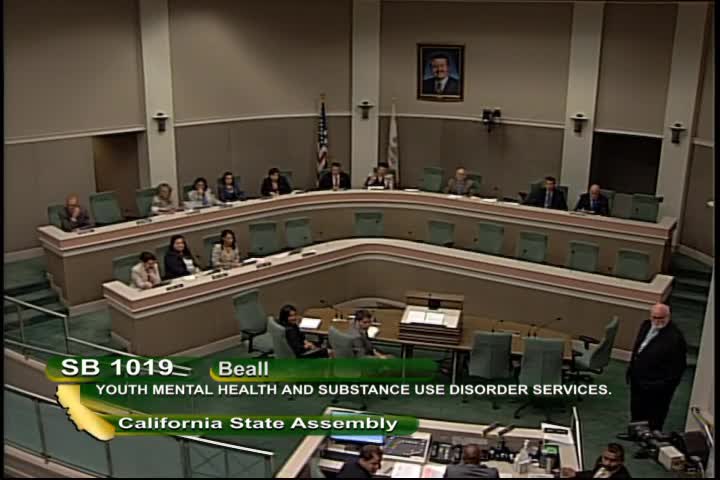 10MIN
Assembly Standing Committee on Health
 4MIN
Senate Floor
 14MIN