SB 992: Alcoholism or drug abuse recovery or treatment facilities.
- Session Year: 2017-2018
- House: Senate
- Latest Version Date: 2018-09-26
Existing law provides for the licensure and regulation of adult alcoholism or drug abuse recovery or treatment facilities by the State Department of Health Care Services. Existing law defines alcoholism or drug abuse recovery or treatment facility to mean any premises, place, or building that provides 24-hour residential nonmedical services, as defined, to adults who are recovering from problems related to alcohol, drug, or alcohol and drug misuse or abuse, and who need alcohol, drug, or alcohol and drug recovery treatment or detoxification services. Existing law requires licensees to provide specified nonmedical services, including recovery, treatment, or detoxification, and requires the department to adopt regulations requiring records and procedures that are appropriate for those services, including discharge and continuing care planning. Existing law authorizes the department to certify alcoholism or drug abuse recovery or treatment programs, to, among other things, identify programs that exceed minimal levels of service quality.
This bill would change the definition of alcoholism or drug abuse recovery or treatment facility to include facilities that provide residential nonmedical services for less than 24 hours in a day, thereby subjecting additional facilities to the above-referenced licensing and regulatory requirements applicable to those facilities.
This bill would require all programs licensed or certified by the department through the provisions above to disclose specified information to the department, including, among other things, ownership of a recovery residence, as defined.
The bill would require a licensee to develop a plan to address when a resident relapses that would include, among other things, discharge and continuing care planning, as specified. The bill would require the department to adopt regulations to implement that provision no later than January 1, 2021, and would authorize the use of bulletin or all-county or all-provider letters, until those regulations are adopted. The bill would prohibit a licensee from denying admission to any individual based solely on the individual having a valid prescription from a licensed health care professional for a medication approved by the federal Food and Drug Administration for the purpose of narcotic replacement treatment or medication-assisted treatment of substance use disorders. The bill would authorize the department to terminate review of an application for licensure from any person or entity that previously had a license suspended or revoked for a period of 5 years after the suspension or revocation.
Existing law provides for the licensure and regulation of adult alcoholism or drug abuse recovery or treatment facilities by the State Department of Health Care Services. Existing law defines alcoholism or drug abuse recovery or treatment facility to mean any premises, place, or building that provides 24-hour residential nonmedical services, as defined, to adults who are recovering from problems related to alcohol, drug, or alcohol and drug misuse or abuse, and who need alcohol, drug, or alcohol and drug recovery treatment or detoxification services. Existing law requires licensees to provide specified nonmedical services, including recovery, treatment, or detoxification, and requires the department to adopt regulations requiring records and procedures that are appropriate for those services, including discharge and continuing care planning. Existing law authorizes the department to certify alcoholism or drug abuse recovery or treatment programs, to, among other things, identify programs that exceed minimal levels of service quality.
This bill would change the definition of alcoholism or drug abuse recovery or treatment facility to include facilities that provide residential nonmedical services for less than 24 hours in a day, thereby subjecting additional facilities to the above-referenced licensing and regulatory requirements applicable to those facilities.
This bill would require all programs licensed or certified by the department through the provisions above to disclose specified information to the department, including, among other things, ownership of a recovery residence, as defined.
The bill would require a licensee to develop a plan to address when a resident relapses that would include, among other things, discharge and continuing care planning, as specified. The bill would require the department to adopt regulations to implement that provision no later than January 1, 2021, and would authorize the use of bulletin or all-county or all-provider letters, until those regulations are adopted. The bill would prohibit a licensee from denying admission to any individual based solely on the individual having a valid prescription from a licensed health care professional for a medication approved by the federal Food and Drug Administration for the purpose of narcotic replacement treatment or medication-assisted treatment of substance use disorders. The bill would authorize the department to deny an application for licensure for a period of 5 years from any person or legal entity that has had a license previously suspended or revoked. terminate review of an application for licensure from any person or entity that previously had a license suspended or revoked for a period of 5 years after the suspension or revocation.
Existing law provides for the licensure and regulation of adult alcoholism or drug abuse recovery or treatment facilities by the State Department of Health Care Services. Existing law defines alcoholism or drug abuse recovery or treatment facility to mean any premises, place, or building that provides 24-hour residential nonmedical services, as defined, to adults who are recovering from problems related to alcohol, drug, or alcohol and drug misuse or abuse, and who need alcohol, drug, or alcohol and drug recovery treatment or detoxification services. Existing law requires licensees to provide specified nonmedical services, including recovery, treatment, or detoxification, and requires the department to adopt regulations requiring records and procedures that are appropriate for those services, including discharge and continuing care planning. Existing law authorizes the department to certify alcoholism or drug abuse recovery or treatment programs, to, among other things, identify programs that exceed minimal levels of service quality.
This bill would change the definition of alcoholism or drug abuse recovery or treatment facility to include facilities that provide residential nonmedical services for less than 24 hours in a day, thereby subjecting additional facilities to the above-referenced licensing and regulatory requirements applicable to those facilities.
This bill would require all programs licensed or certified by the department through the provisions above to disclose specified information to the department, including, among other things, ownership of a recovery residence, as defined.
The bill would require a licensee to develop a plan to address when a resident relapses that would include, among other things, discharge and continuing care planning, as specified. The bill would require the department to adopt regulations to implement that provision no later than January 1, 2021, and would authorize the use of bulletin or all-county or all-provider letters, until those regulations are adopted. The bill would prohibit a licensee from denying admission to any individual based solely on the individual having a valid prescription from a licensed health care professional for a medication approved by the federal Food and Drug Administration for the purpose of narcotic replacement treatment or medication-assisted treatment of substance use disorders. The bill would authorize the department to deny an application for licensure for a period of 5 years from any person or legal entity that has had a license previously suspended or revoked.
The bill would additionally require the department to, by July 1, 2020, develop a program to allow a recovery residence, as defined, to voluntarily register with the department. The voluntary registration program established by the bill would require the residence to meet specified requirements and would require the department to post a list of the registered residences on its Internet Web Site. The bill would require the department to establish a registration fee and recover the costs of investigating compliance with the conditions of the program, as specified.Existing law provides for the licensure and regulation of adult alcoholism or drug abuse recovery or treatment facilities by the State Department of Health Care Services. Existing law defines alcoholism or drug abuse recovery or treatment facility to mean any premises, place, or building that provides 24-hour residential nonmedical services, as defined, to adults who are recovering from problems related to alcohol, drug, or alcohol and drug misuse or abuse, and who need alcohol, drug, or alcohol and drug recovery treatment or detoxification services. Existing law requires licensees to provide specified nonmedical services, including recovery, treatment, or detoxification, and requires the department to adopt regulations requiring records and procedures that are appropriate for those services, including discharge and continuing care planning. Existing law authorizes the department to certify alcoholism or drug abuse recovery or treatment programs, to, among other things, identify programs that exceed minimal levels of service quality.
This bill would change the definition of alcoholism or drug abuse recovery or treatment facility to include facilities that provide residential nonmedical services for less than 24 hours in a day, thereby subjecting additional facilities to the above-referenced licensing and regulatory requirements applicable to those facilities.
This bill would require all programs licensed or certified by the department through the provisions above to disclose specified information to the department, including, among other things, ownership of an unlicensed alcohol and drug free a recovery residence, as defined. The
The bill would require a licensee to develop a plan to address when a resident relapses that would include, among other things, discharge and continuing care planning, as specified. The bill would require the department to adopt regulations to implement that provision no later than January 1, 2021, and would authorize the use of bulletin or all-county or all-provider letters, until those regulations are adopted. The bill would prohibit a licensee from denying admission to any individual based solely on the individual having a valid prescription from a licensed health care professional for a medication approved by the federal Food and Drug Administration for the purpose of narcotic replacement treatment or medication-assisted treatment of substance use disorders. The bill would authorize the department to deny an application for licensure for a period of 5 years from any person or legal entity that has had a license previously suspended or revoked.
The bill would additionally require the department to, by July 1, 2020, develop a program to allow an unlicensed alcohol and drug free a recovery residence, as defined, to voluntarily register with the department. The voluntary registration program established by the bill would require the residence to meet specified requirements and would require the department to post a list of the registered residences on its Internet Web Site. The bill would require the department to establish a registration fee and recover the costs of investigating compliance with the conditions of the program, as specified.
Existing law provides for the licensure and regulation of adult alcoholism or drug abuse recovery or treatment facilities by the State Department of Health Care Services. Existing law requires licensees to provide specified nonmedical services, including recovery, treatment, or detoxification, and requires the department to adopt regulations requiring records and procedures that are appropriate for those services, including discharge and continuing care planning. Existing law authorizes the department to certify alcoholism or drug abuse recovery or treatment programs, to, among other things, identify programs that exceed minimal levels of service quality.
This bill would require all programs licensed or certified by the department through the provisions above to disclose specified information to the department, including, among other things, ownership of an unlicensed alcohol and drug free residence, as defined. The bill would require a licensee to develop a plan to address when a resident relapses that would include include, among other things, discharge and continuing care planning, as specified. The bill would require the department to adopt regulations to implement that provision no later than January 1, 2021, and would authorize the use of bulletin or all-county or all-provider letters, until those regulations are adopted.
The bill would additionally require the department to, by July 1, 2020, develop a program to allow an unlicensed alcohol and drug free residence, as defined, to voluntarily register with the department. The voluntary registration program established by the bill would require the residence to meet specified requirements and would require the department to post a list of the registered residences on its Internet Web Site. The bill would require the department to establish a registration fee and recover the costs of investigating compliance with the conditions of the program, as specified.
Existing law provides for the licensure and regulation of adult alcoholism or drug abuse recovery or treatment facilities by the State Department of Health Care Services. Existing law requires licensees to provide specified nonmedical services, including recovery, treatment, or detoxification, and requires the department to adopt regulations requiring records and procedures that are appropriate for those services, including discharge and continuing care planning.
This bill would require a licensee to develop a plan to address when a resident relapses that would include discharge and continuing care planning, as specified. The bill would require the department to adopt regulations to implement that provision no later than January 1, 2021, and would authorize the use of bulletin or all-county or all-provider letters, until those regulations are adopted.
(a)All programs certified by the department pursuant to Chapter 7 (commencing with Section 11830) or licensed by the department pursuant to Chapter 7.5 (commencing with Section 11834.01) shall disclose to the department the following information:
(1)Ownership or control of, or financial interest in, a recovery residence.
(2)Any contractual relationship with an entity that regularly provides professional services or addiction treatment or recovery services to clients of programs licensed or certified by the department, if the entity is not part of the program licensed or certified by the department.
(b)All programs licensed or certified by the department shall make the disclosures pursuant to subdivision (a) upon initial licensure or certification, upon renewal of licensure or certification, and upon a licensed or certified program acquiring or starting a relationship that meets paragraph (1) or (2) of subdivision (a). The department may suspend or revoke the license or certification of a program for failing to disclose the information required in subdivision (a).
(c)For the purposes of this section, recovery residence means a residential dwelling that provides primary housing for individuals who seek a cooperative living arrangement that supports personal recovery from a substance use disorder and that does not require licensure by the department or does not provide licensable services, pursuant to Chapter 7.5 (commencing with Section 11834.01). A recovery residence may include, but is not limited to, residential dwellings commonly referred to as sober living homes, sober living environments, or unlicensed alcohol and drug free residences.
SEC. 2.Section 11834.02 of the Health and Safety Code is amended to read:11834.02.(a)As used in this chapter, alcoholism or drug abuse recovery or treatment facility or facility means any premises, place, or building that provides residential nonmedical services to adults who are recovering from problems related to alcohol, drug, or alcohol and drug misuse or abuse, and who need alcohol, drug, or alcohol and drug recovery treatment or detoxification services.
(b)As used in this chapter, adults may include, but is not limited to, all of the following:
(1)Mothers over 18 years of age and their children.
(2)Emancipated minors, which may include, but is not limited to, mothers under 18 years of age and their children.
(c)As used in this chapter, emancipated minors means persons under 18 years of age who have acquired emancipation status pursuant to Section 7002 of the Family Code.
(d)Notwithstanding subdivision (a), an alcoholism or drug abuse recovery or treatment facility may serve adolescents upon the issuance of a waiver granted by the department pursuant to regulations adopted under subdivision (c) of Section 11834.50.
SEC. 3.Section 11834.26 of the Health and Safety Code is amended to read:11834.26.(a)The licensee shall provide at least one of the following nonmedical services:
(1)Recovery services.
(2)Treatment services.
(3)Detoxification services.
(b)The department shall adopt regulations requiring records and procedures that are appropriate for each of the services specified in subdivision (a). The records and procedures may include all of the following:
(1)Admission criteria.
(2)Intake process.
(3)Assessments.
(4)Recovery, treatment, or detoxification planning.
(5)Referral.
(6) Documentation of provision of recovery, treatment, or detoxification services.
(7)Discharge and continuing care planning.
(8)Indicators of recovery, treatment, or detoxification outcomes.
(c)A licensee shall not deny admission to any individual based solely on the individual having a valid prescription from a licensed health care professional for a medication approved by the federal Food and Drug Administration for the purpose of narcotic replacement treatment or medication-assisted treatment of substance use disorders.
(d)A licensee shall develop a plan to address when a resident relapses, including when a resident is on the licensed premises after consuming alcohol or using illicit drugs. The plan shall include details of how the treatment stay and treatment plan of the resident will be adjusted to address the relapse episode and how the resident will be treated and supervised while under the influence of alcohol or illicit drugs, as well as discharge and continuing care planning, including when a licensee determines that a resident requires services beyond the scope of the licensee. This subdivision does not require a licensee to discharge a resident.
(e)The department shall have the authority to implement subdivision (d) by bulletin or all-county or all-provider letter, after stakeholder input, until such time that regulations are promulgated. The department shall promulgate regulations to implement subdivision (d) no later than January 1, 2021.
(f)In the development of regulations implementing this section, the written record requirements shall be modified or adapted for social model programs.
SEC. 4.Section 11834.36 of the Health and Safety Code is amended to read:11834.36.(a)The director may suspend or revoke any license issued under this chapter, as well as any other licenses issued under this chapter to operate an adult alcoholism or drug abuse recovery or treatment facility held by the same person or entity, or deny an application for licensure, extension of the licensing period, or modification to a license, upon any of the following grounds and in the manner provided in this chapter:
(1)Violation by the licensee of any provision of this chapter or regulations adopted pursuant to this chapter.
(2)Repeated violation by the licensee of any of the provisions of this chapter or regulations adopted pursuant to this chapter.
(3)Aiding, abetting, or permitting the violation of, or any repeated violation of, any of the provisions described in paragraph (1) or (2).
(4)Conduct in the operation of an alcoholism or drug abuse recovery or treatment facility that is inimical to the health, morals, welfare, or safety of either an individual in, or receiving services from, the facility or to the people of the State of California.
(5)Misrepresentation of any material fact in obtaining the alcoholism or drug abuse recovery or treatment facility license, including, but not limited to, providing false information or documentation to the department.
(6)The licensees refusal to allow the department entry into the facility to determine compliance with the requirements of this chapter or regulations adopted pursuant to this chapter.
(7)Violation by the licensee of Section 11834.026 or the regulations adopted pursuant to that section.
(8)Failure to pay any civil penalties assessed by the department.
(b)The director may temporarily suspend any license, as well as any other licenses issued under this chapter to operate an adult alcoholism or drug abuse recovery or treatment facility held by the same person or entity, prior to any hearing when, in the opinion of the director, the action is necessary to protect residents of the alcoholism or drug abuse recovery or treatment facility from physical or mental abuse, abandonment, or any other substantial threat to health or safety. The director shall notify the licensee of the temporary suspension and the effective date of the temporary suspension and at the same time shall serve the provider with an accusation. Upon receipt of a notice of defense to the accusation by the licensee, the director shall, within 15 days, set the matter for hearing, and the hearing shall be held as soon as possible. The temporary suspension shall remain in effect until the time the hearing is completed and the director has made a final determination on the merits. However, the temporary suspension shall be deemed vacated if the director fails to make a final determination on the merits within 30 days after the department receives the proposed decision from the Office of Administrative Hearings.
(c)The department may terminate review of an application for licensure under this chapter from any person or entity that previously had a license issued under this chapter suspended or revoked for a period of five years from the date of the final decision and order.
(a)All programs certified by the department pursuant to Chapter 7 (commencing with Section 11830) or licensed by the department pursuant to Chapter 7.5 (commencing with Section 11834.01) shall disclose to the department the following information:
(1)Ownership or control of, or financial interest in, a recovery residence.
(2)Any contractual relationship with an entity that regularly provides professional services or addiction treatment or recovery services to clients of programs licensed or certified by the department, if the entity is not part of the program licensed or certified by the department.
(b)All programs licensed or certified by the department shall make the disclosures pursuant to subdivision (a) upon initial licensure or certification, upon renewal of licensure or certification, and upon a licensed or certified program acquiring or starting a relationship that meets paragraph (1) or (2) of subdivision (a). The department may suspend or revoke the license or certification of a program for failing to disclose the information required in subdivision (a).
(c)For the purposes of this section, recovery residence means a residential dwelling that provides primary housing for individuals who seek a cooperative living arrangement that supports personal recovery from a substance use disorder and that does not require licensure by the department or does not provide licensable services, pursuant to Chapter 7.5 (commencing with Section 11834.01). A recovery residence may include, but is not limited to, residential dwellings commonly referred to as sober living homes, sober living environments, or unlicensed alcohol and drug free residences.
SEC. 2.Section 11834.02 of the Health and Safety Code is amended to read:11834.02.(a)As used in this chapter, alcoholism or drug abuse recovery or treatment facility or facility means any premises, place, or building that provides residential nonmedical services to adults who are recovering from problems related to alcohol, drug, or alcohol and drug misuse or abuse, and who need alcohol, drug, or alcohol and drug recovery treatment or detoxification services.
(b)As used in this chapter, adults may include, but is not limited to, all of the following:
(1)Mothers over 18 years of age and their children.
(2)Emancipated minors, which may include, but is not limited to, mothers under 18 years of age and their children.
(c)As used in this chapter, emancipated minors means persons under 18 years of age who have acquired emancipation status pursuant to Section 7002 of the Family Code.
(d)Notwithstanding subdivision (a), an alcoholism or drug abuse recovery or treatment facility may serve adolescents upon the issuance of a waiver granted by the department pursuant to regulations adopted under subdivision (c) of Section 11834.50.
SEC. 3.Section 11834.26 of the Health and Safety Code is amended to read:11834.26.(a)The licensee shall provide at least one of the following nonmedical services:
(1)Recovery services.
(2)Treatment services.
(3)Detoxification services.
(b)The department shall adopt regulations requiring records and procedures that are appropriate for each of the services specified in subdivision (a). The records and procedures may include all of the following:
(1)Admission criteria.
(2)Intake process.
(3)Assessments.
(4)Recovery, treatment, or detoxification planning.
(5)Referral.
(6) Documentation of provision of recovery, treatment, or detoxification services.
(7)Discharge and continuing care planning.
(8)Indicators of recovery, treatment, or detoxification outcomes.
(c)A licensee shall not deny admission to any individual based solely on the individual having a valid prescription from a licensed health care professional for a medication approved by the federal Food and Drug Administration for the purpose of narcotic replacement treatment or medication-assisted treatment of substance use disorders.
(d)A licensee shall develop a plan to address when a resident relapses, including when a resident is on the licensed premises after consuming alcohol or using illicit drugs. The plan shall include details of how the treatment stay and treatment plan of the resident will be adjusted to address the relapse episode and how the resident will be treated and supervised while under the influence of alcohol or illicit drugs, as well as discharge and continuing care planning, including when a licensee determines that a resident requires services beyond the capacity scope of the licensee. This subdivision does not require a licensee to discharge a resident.
(e)The department shall have the authority to implement subdivision (d) by bulletin or all-county or all-provider letter, after stakeholder input, until such time that regulations are promulgated. The department shall promulgate regulations to implement subdivision (d) no later than January 1, 2021.
(f)In the development of regulations implementing this section, the written record requirements shall be modified or adapted for social model programs.
SEC. 4.Section 11834.36 of the Health and Safety Code is amended to read:11834.36.(a)The director may suspend or revoke any license, including any additional licenses issued to a licensee by the department, license issued under this chapter, as well as any other licenses issued under this chapter to operate an adult alcoholism or drug abuse recovery or treatment facility held by the same person or entity, or deny an application for licensure, extension of the licensing period, or modification to a license, upon any of the following grounds and in the manner provided in this chapter:
(1)Violation by the licensee of any provision of this chapter or regulations adopted pursuant to this chapter.
(2)Repeated violation by the licensee of any of the provisions of this chapter or regulations adopted pursuant to this chapter.
(3)Aiding, abetting, or permitting the violation of, or any repeated violation of, any of the provisions described in paragraph (1) or (2).
(4)Conduct in the operation of an alcoholism or drug abuse recovery or treatment facility that is inimical to the health, morals, welfare, or safety of either an individual in, or receiving services from, the facility or to the people of the State of California.
(5)Misrepresentation of any material fact in obtaining the alcoholism or drug abuse recovery or treatment facility license, including, but not limited to, providing false information or documentation to the department.
(6)The licensees refusal to allow the department entry into the facility to determine compliance with the requirements of this chapter or regulations adopted pursuant to this chapter.
(7)Violation by the licensee of Section 11834.026 or the regulations adopted pursuant to that section.
(8)Failure to pay any civil penalties assessed by the department.
(b)The director may temporarily suspend any license, including any additional licenses issued to a licensee by the department, as well as any other licenses issued under this chapter to operate an adult alcoholism or drug abuse recovery or treatment facility held by the same person or entity, prior to any hearing when, in the opinion of the director, the action is necessary to protect residents of the alcoholism or drug abuse recovery or treatment facility from physical or mental abuse, abandonment, or any other substantial threat to health or safety. The director shall notify the licensee of the temporary suspension and the effective date of the temporary suspension and at the same time shall serve the provider with an accusation. Upon receipt of a notice of defense to the accusation by the licensee, the director shall, within 15 days, set the matter for hearing, and the hearing shall be held as soon as possible. The temporary suspension shall remain in effect until the time the hearing is completed and the director has made a final determination on the merits. However, the temporary suspension shall be deemed vacated if the director fails to make a final determination on the merits within 30 days after the department receives the proposed decision from the Office of Administrative Hearings.
(c)The department may deny an application for licensure for a period of five years from any person or legal entity that has had a license previously suspended or revoked.(c)The department may terminate review of an application for licensure under this chapter from any person or entity that previously had a license issued under this chapter suspended or revoked for a period of five years from the date of the final decision and order.
(a)All programs certified by the department pursuant to Chapter 7 (commencing with Section 11830) or licensed by the department pursuant to Chapter 7.5 (commencing with Section 11834.01) shall disclose to the department the following information:
(1)Ownership or control of, or financial interest in, a recovery residence.
(2)Any contractual relationship with an entity that regularly provides professional services or addiction treatment or recovery services to clients of programs licensed or certified by the department, if the entity is not part of the program licensed or certified by the department.
(b)All programs licensed or certified by the department shall make the disclosures pursuant to subdivision (a) upon initial licensure or certification, upon renewal of licensure or certification, and upon a licensed or certified program acquiring or starting a relationship that meets paragraph (1) or (2) of subdivision (a). The department may suspend or revoke the license or certification of a program for failing to disclose the information required in subdivision (a).
(c)For the purposes of this section, recovery residence means a residential dwelling that provides primary housing for individuals who seek a cooperative living arrangement that supports personal recovery from a substance use disorder and that does not require licensure by the department or does not provide licensable services, pursuant to Chapter 7.5 (commencing with Section 11834.01). A recovery residence may include, but is not limited to, residential dwellings commonly referred to as sober living homes, sober living environments, or unlicensed alcohol and drug free residences.
SEC. 2.Section 11834.02 of the Health and Safety Code is amended to read:11834.02.(a)As used in this chapter, alcoholism or drug abuse recovery or treatment facility or facility means any premises, place, or building that provides residential nonmedical services to adults who are recovering from problems related to alcohol, drug, or alcohol and drug misuse or abuse, and who need alcohol, drug, or alcohol and drug recovery treatment or detoxification services.
(b)As used in this chapter, adults may include, but is not limited to, all of the following:
(1)Mothers over 18 years of age and their children.
(2)Emancipated minors, which may include, but is not limited to, mothers under 18 years of age and their children.
(c)As used in this chapter, emancipated minors means persons under 18 years of age who have acquired emancipation status pursuant to Section 7002 of the Family Code.
(d)Notwithstanding subdivision (a), an alcoholism or drug abuse recovery or treatment facility may serve adolescents upon the issuance of a waiver granted by the department pursuant to regulations adopted under subdivision (c) of Section 11834.50.
SEC. 3.Section 11834.26 of the Health and Safety Code is amended to read:11834.26.(a)The licensee shall provide at least one of the following nonmedical services:
(1)Recovery services.
(2)Treatment services.
(3)Detoxification services.
(b)The department shall adopt regulations requiring records and procedures that are appropriate for each of the services specified in subdivision (a). The records and procedures may include all of the following:
(1)Admission criteria.
(2)Intake process.
(3)Assessments.
(4)Recovery, treatment, or detoxification planning.
(5)Referral.
(6) Documentation of provision of recovery, treatment, or detoxification services.
(7)Discharge and continuing care planning.
(8)Indicators of recovery, treatment, or detoxification outcomes.
(c)A licensee shall not deny admission to any individual based solely on the individual having a valid prescription from a licensed health care professional for a medication approved by the federal Food and Drug Administration for the purpose of narcotic replacement treatment or medication-assisted treatment of substance use disorders.
(d)A licensee shall develop a plan to address when a resident relapses, including when a resident is on the licensed premises after consuming alcohol or using illicit drugs. The plan shall include details of how the treatment stay and treatment plan of the resident will be adjusted to address the relapse episode and how the resident will be treated and supervised while under the influence of alcohol or illicit drugs, as well as discharge and continuing care planning, including when a licensee determines that a resident requires services beyond the capacity of the licensee. This subdivision does not require a licensee to discharge a resident.
(e)The department shall have the authority to implement subdivision (d) by bulletin or all-county or all-provider letter, after stakeholder input, until such time that regulations are promulgated. The department shall promulgate regulations to implement subdivision (d) no later than January 1, 2021.
(f)In the development of regulations implementing this section, the written record requirements shall be modified or adapted for social model programs.
SEC. 4.Section 11834.36 of the Health and Safety Code is amended to read:11834.36.(a)The director may suspend or revoke any license, including any additional licenses issued to a licensee by the department, issued under this chapter, or deny an application for licensure, extension of the licensing period, or modification to a license, upon any of the following grounds and in the manner provided in this chapter:
(1)Violation by the licensee of any provision of this chapter or regulations adopted pursuant to this chapter.
(2)Repeated violation by the licensee of any of the provisions of this chapter or regulations adopted pursuant to this chapter.
(3)Aiding, abetting, or permitting the violation of, or any repeated violation of, any of the provisions described in paragraph (1) or (2).
(4)Conduct in the operation of an alcoholism or drug abuse recovery or treatment facility that is inimical to the health, morals, welfare, or safety of either an individual in, or receiving services from, the facility or to the people of the State of California.
(5)Misrepresentation of any material fact in obtaining the alcoholism or drug abuse recovery or treatment facility license, including, but not limited to, providing false information or documentation to the department.
(6)The licensees refusal to allow the department entry into the facility to determine compliance with the requirements of this chapter or regulations adopted pursuant to this chapter.
(7)Violation by the licensee of Section 11834.026 or the regulations adopted pursuant to that section.
(8)Failure to pay any civil penalties assessed by the department.
(b)The director may temporarily suspend any license, including any additional licenses issued to a licensee by the department, prior to any hearing when, in the opinion of the director, the action is necessary to protect residents of the alcoholism or drug abuse recovery or treatment facility from physical or mental abuse, abandonment, or any other substantial threat to health or safety. The director shall notify the licensee of the temporary suspension and the effective date of the temporary suspension and at the same time shall serve the provider with an accusation. Upon receipt of a notice of defense to the accusation by the licensee, the director shall, within 15 days, set the matter for hearing, and the hearing shall be held as soon as possible. The temporary suspension shall remain in effect until the time the hearing is completed and the director has made a final determination on the merits. However, the temporary suspension shall be deemed vacated if the director fails to make a final determination on the merits within 30 days after the department receives the proposed decision from the Office of Administrative Hearings.
(c)The department may deny an application for licensure for a period of five years from any person or legal entity that has had a license previously suspended or revoked.
SEC. 5.Chapter 7.6 (commencing with Section 11834.6) is added to Part 2 of Division 10.5 of the Health and Safety Code, to read:7.6.Voluntary Registration of Recovery Residences11834.6.(a)The department shall, by July 1, 2020, develop a program, after consultation with county behavioral health directors, substance use disorder treatment providers, current operators of recovery residences, organizations that register or certify recovery residences, representatives from cities, counties, and cities and counties, and any other interested stakeholders, as determined by the department, to allow a recovery residence, as defined in subdivision (c) of Section 11833.05, to voluntarily register with the department.(b)In developing the voluntary registration program, the department shall require, at a minimum, all of the following for a recovery residence:(1)All owners, managers, operators, and residents to observe and promote an environment and lifestyle that is abstinent of the consumption or possession of alcohol or drugs, or legal medications that are being used in a manner not consistent with a valid prescription from a licensed health care professional.(2)A signed statement declaring that the recovery residence does not provide services licensable pursuant to Chapter 7.5 (commencing with Section 11834.01).(3)An agreement to abide by a good neighbor policy, as determined by the department, to address neighborhood concerns and complaints.(4)A detailed plan of action in case a resident of the recovery residence relapses, including information for community resources and for the departments Internet Web site for assistance in finding self-referral treatment or recovery services.(5)At least one contact number provided to the department for the owners, operators, or managers of the recovery residence.(6)The contact information of the department, including a complaint number, to be posted inside the recovery residence that is accessible to the residents.(7)A statement posted inside the recovery residence, which is accessible to the residents, stating that recovery residence is not authorized to provide treatment services or control personal medications of the residents that are prescribed to the residents by licensed health care professionals.(c)(1)The department shall compile a list of voluntarily registered recovery residences and post the list on its Internet Web site. The department shall include, in a conspicuous location on the list and on its Internet Web site, a disclaimer for consumers stating that the list contains recovery residences that are not authorized by law to provide licensable services pursuant to Chapter 7.5 (commencing with Section 11834.01), but have voluntarily registered with the department as cooperative living arrangements that support personal recovery for the residents and have agreed to comply with the conditions in subdivision (b) of this section, and with any other conditions as determined by the department.(2)The department may coordinate with county behavioral health directors and other public or private entities that register or certify recovery residences in compiling the list required in paragraph (1). The department shall distinguish recovery residences that are registered with, certified by, or under contract with, a public or private entity that require additional oversight from those that register with the department pursuant to this chapter.(d)(1)The department shall establish a registration fee, after consultation with the entities described in subdivision (a), for the purpose of supporting the departments activities associated with the administration of the voluntary registration program for recovery residences. Any registration fees charged by the department shall be for the reasonable costs of the program and reflect the expenditures directly applicable to the administration of the voluntary registration program.(2)The department may recover the costs of investigating a recovery residence that participates in the voluntary registration program, from the owner or operator, for the violation of any of the conditions in subdivision (b) and any other conditions established by the department.(3)The Voluntary Registration of Recovery Residences Fund is hereby established in the State Treasury. Fees and registration fees and investigation recovery costs collected by the department shall be deposited in the Voluntary Registration of Recovery Residences Fund, and shall be available upon appropriation by the Legislature for the purposes of this section.(e)The department shall develop, after consultation with the entities in subdivision (a), a procedure for suspending or revoking the registration of a recovery residence that violates the conditions in subdivision (b), or any other conditions established by the department, and report the suspension or revocation to the county behavioral health director of the county in which the residence is located, the local public health officer, local law enforcement, or any other entities the department determines is appropriate. The department shall additionally note on its Internet Web site when a voluntarily registered recovery residence has violated the conditions in subdivision (b) and any other conditions established by the department.(a)All programs certified by the department pursuant to Chapter 7 (commencing with Section 11830) or licensed by the department pursuant to Chapter 7.5 (commencing with Section 11834.01) shall disclose to the department the following information:
(1)Ownership or control of, or financial interest in, an unlicensed alcohol and drug free residence. a recovery residence.
(2)Any contractual relationship with an entity that regularly provides professional services or addiction treatment or recovery services to clients of programs licensed or certified by the department, if the entity is not part of the program licensed or certified by the department.
(b)All programs licensed or certified by the department shall make the disclosures pursuant to subdivision (a) upon initial licensure or certification, upon renewal of licensure or certification, and upon a licensed or certified program acquiring or starting a relationship that meets paragraph (1) or (2) of subdivision (a). The department may suspend or revoke the license or certification of a program for failing to disclose the information required in subdivision (a).
(c)For the purposes of this section, unlicensed alcohol and drug free residence recovery residence means a residential dwelling that provides primary housing for individuals who seek a cooperative living arrangement that supports personal recovery from a substance use disorder and that does not require licensure by the department or does not provide licensable services, pursuant to Chapter 7.5 (commencing with Section 11834.01). An unlicensed alcohol and drug free residence A recovery residence may include, but is not limited to, residential dwellings commonly referred to as recovery residences, sober living homes, sober living environments, or drug and alcohol rehab facilities. unlicensed alcohol and drug free residences.
SEC. 2.Section 11834.02 of the Health and Safety Code is amended to read:11834.02.(a) As used in this chapter, alcoholism or drug abuse recovery or treatment facility or facility means any premises, place, or building that provides 24-hour residential nonmedical services to adults who are recovering from problems related to alcohol, drug, or alcohol and drug misuse or abuse, and who need alcohol, drug, or alcohol and drug recovery treatment or detoxification services.
(b) As used in this chapter, adults may include, but is not limited to, all of the following:
(1) Mothers over 18 years of age and their children.
(2) Emancipated minors, which may include, but is not limited to, mothers under 18 years of age and their children.
(c) As used in this chapter, emancipated minors means persons under 18 years of age who have acquired emancipation status pursuant to Section 7002 of the Family Code.
(d) Notwithstanding subdivision (a), an alcoholism or drug abuse recovery or treatment facility may serve adolescents upon the issuance of a waiver granted by the department pursuant to regulations adopted under subdivision (c) of Section 11834.50.
SEC. 2.SEC. 3.Section 11834.26 of the Health and Safety Code is amended to read:11834.26.(a) The licensee shall provide at least one of the following nonmedical services:
(1) Recovery services.
(2) Treatment services.
(3) Detoxification services.
(b) The department shall adopt regulations requiring records and procedures that are appropriate for each of the services specified in subdivision (a). The records and procedures may include all of the following:
(1) Admission criteria.
(2) Intake process.
(3) Assessments.
(4) Recovery, treatment, or detoxification planning.
(5) Referral.
(6) Documentation of provision of recovery, treatment, or detoxification services.
(7) Discharge and continuing care planning.
(8) Indicators of recovery, treatment, or detoxification outcomes.
(c)A licensee shall not deny admission to any individual based solely on the individual having a valid prescription from a licensed health care professional for a medication approved by the federal Food and Drug Administration for the purpose of narcotic replacement treatment or medication-assisted treatment of substance use disorders.
(c)(d)A licensee shall develop a plan to address when a resident relapses, including when a resident is on the licensed premises after consuming alcohol or using illicit drugs. The plan shall include details of how the treatment stay and treatment plan of the resident will be adjusted to address the relapse episode and how the resident will be treated and supervised while under the influence of alcohol or illicit drugs, as well as discharge and continuing care planning, including when a licensee determines that a resident requires services beyond the capacity of the licensee. This subdivision does not require a licensee to discharge a resident.
(d)(e)The department shall have the authority to implement subdivision (c) (d) by bulletin or all-county or all-provider letter, after stakeholder input, until such time that regulations are promulgated. The department shall promulgate regulations to implement subdivision (c) (d) no later than January 1, 2021.
(e)(f)In the development of regulations implementing this section, the written record requirements shall be modified or adapted for social model programs.
SEC. 4.Section 11834.36 of the Health and Safety Code is amended to read:11834.36.(a)The director may suspend or revoke any license license, including any additional licenses issued to a licensee by the department, issued under this chapter, or deny an application for licensure, extension of the licensing period, or modification to a license, upon any of the following grounds and in the manner provided in this chapter:
(1)Violation by the licensee of any provision of this chapter or regulations adopted pursuant to this chapter.
(2)Repeated violation by the licensee of any of the provisions of this chapter or regulations adopted pursuant to this chapter.
(3)Aiding, abetting, or permitting the violation of, or any repeated violation of, any of the provisions described in paragraph (1) or (2).
(4)Conduct in the operation of an alcoholism or drug abuse recovery or treatment facility that is inimical to the health, morals, welfare, or safety of either an individual in, or receiving services from, the facility or to the people of the State of California.
(5)Misrepresentation of any material fact in obtaining the alcoholism or drug abuse recovery or treatment facility license, including, but not limited to, providing false information or documentation to the department.
(6)The licensees refusal to allow the department entry into the facility to determine compliance with the requirements of this chapter or regulations adopted pursuant to this chapter.
(7)Violation by the licensee of Section 11834.026 or the regulations adopted pursuant to that section.
(8)Failure to pay any civil penalties assessed by the department.
(b)The director may temporarily suspend any license license, including any additional licenses issued to a licensee by the department, prior to any hearing when, in the opinion of the director, the action is necessary to protect residents of the alcoholism or drug abuse recovery or treatment facility from physical or mental abuse, abandonment, or any other substantial threat to health or safety. The director shall notify the licensee of the temporary suspension and the effective date of the temporary suspension and at the same time shall serve the provider with an accusation. Upon receipt of a notice of defense to the accusation by the licensee, the director shall, within 15 days, set the matter for hearing, and the hearing shall be held as soon as possible. The temporary suspension shall remain in effect until the time the hearing is completed and the director has made a final determination on the merits. However, the temporary suspension shall be deemed vacated if the director fails to make a final determination on the merits within 30 days after the department receives the proposed decision from the Office of Administrative Hearings.
(c)The department may deny an application for licensure for a period of five years from any person or legal entity that has had a license previously suspended or revoked.
SEC. 3.SEC. 5.Chapter 7.6 (commencing with Section 11834.6) is added to Part 2 of Division 10.5 of the Health and Safety Code, to read:7.6.Voluntary Registration of Unlicensed Alcohol and Drug Free Residences Recovery Residences11834.6.(a)The department shall, by July 1, 2020, develop a program, after consultation with county behavioral health directors, substance use disorder treatment providers, current operators of unlicensed alcohol and drug free residences, recovery residences, organizations that register or certify recovery residences, representatives from cities, counties, and cities and counties, and any other interested stakeholders, as determined by the department, to allow an unlicensed alcohol and drug free a recovery residence, as defined in subdivision (c) of Section 11833.05, to voluntarily register. register with the department.
(b)In developing the voluntary registration program, the department shall require, at a minimum, all of the following for an unlicensed alcohol and drug free a recovery residence:
(1)All owners, managers, operators, and residents to observe and promote an environment and lifestyle that is abstinent of the consumption or possession of legal or illegal controlled substances, alcohol or drugs, or legal medications that are being used in a manner not consistent with a valid prescription from a licensed health care professional.
(2)A signed statement declaring that the unlicensed alcohol and drug free recovery residence does not provide services licensable pursuant to Chapter 7.5 (commencing with Section 11834.01).
(3)An agreement to abide by a good neighbor policy, as determined by the department, to address neighborhood concerns and complaints.
(4)A detailed plan of action in case a resident of the unlicensed alcohol and drug free recovery residence relapses, including information for community resources and for the departments Internet Web site for assistance in finding self-referral treatment or recovery services.
(5)Contact numbers At least one contact number provided to the department for the owners, operators, and or managers of the unlicensed alcohol and drug free recovery residence.
(6)The contact information of the department, including a complaint number, to be posted inside the unlicensed alcohol and drug free recovery residence that is accessible to the residents.
(7)A statement posted inside the unlicensed alcohol and drug free recovery residence, which is accessible to the residents, stating that the unlicensed alcohol and drug free recovery residence is not authorized to provide treatment services or control personal medications of the residents that are prescribed to the residents by licensed health care professionals.
(c)(1)The department shall compile a list of voluntarily registered unlicensed alcohol and drug free recovery residences and post the list on its Internet Web site. The department shall include, in a conspicuous location on the list and on its Internet Web site, a disclaimer for consumers stating that the list contains unlicensed alcohol and drug free recovery residences that are not authorized by law to provide licensable services pursuant to Chapter 7.5 (commencing with Section 11834.01), but have voluntarily registered with the department as cooperative living arrangements that support personal recovery for the residents and have agreed to comply with the conditions in subdivision (b) of this section, and with any other conditions as determined by the department.
(2)The department may coordinate with county behavioral health directors and other public or private entities that register or certify unlicensed alcohol and drug free recovery residences in compiling the list required in paragraph (1). The department shall distinguish alcohol and drug free recovery residences that are registered with, certified by, or under contract with, a public or private entity that require additional oversight from those that register with the department pursuant to this chapter.
(d)(1)The department shall establish a registration fee, after consultation with the entities described in subdivision (a), for the purpose of supporting the departments activities associated with the administration of the voluntary registration program for unlicensed alcohol and drug free recovery residences. Any registration fees charged by the department shall be for the reasonable costs of the program and reflect the expenditures directly applicable to the administration of the voluntary registration program.
(2)The department may recover the costs of investigating any unlicensed alcohol and drug free a recovery residence that participates in the voluntary registration program, from the owner or operator, for the violation of any of the conditions in subdivision (b) and any other conditions established by the department.
(3)The Voluntary Registration of Unlicensed Alcohol and Drug Free Residences Recovery Residences Fund is hereby established in the State Treasury. Fees and registration fees and investigation recovery costs collected by the department shall be deposited in the Voluntary Registration of Unlicensed Alcohol and Drug Free Recovery Residences Fund, and shall be available upon appropriation by the Legislature for the purposes of this section.
(e)The department shall develop develop, after consultation with the entities in subdivision (a), a procedure for reporting an unlicensed alcohol and drug free suspending or revoking the registration of a recovery residence that fails to meet violates the conditions in subdivision (b), or any other conditions established by the department, and report the suspension or revocation to the county behavioral health director of the county in which the residence is located, the local public health officer, local law enforcement, or any other entities the department determines is appropriate. The department shall additionally note on its Internet Web site when a voluntarily registered unlicensed alcohol and drug free recovery residence has failed to meet violated the conditions in subdivision (b) and any other conditions established by the department.
(a)All programs certified by the department pursuant to Chapter 7 (commencing with Section 11830) or licensed by the department pursuant to Chapter 7.5 (commencing with Section 11834.01) shall disclose to the department the following information:
(1)Ownership or control of, or financial interest in, an unlicensed alcohol and drug free residence.
(2)Any contractual relationship with an entity that regularly provides professional services to clients of programs licensed or certified by the department, if the entity is not part of the program licensed or certified by the department.
(b)All programs licensed or certified by the department shall make the disclosures pursuant to subdivision (a) upon initial licensure or certification, upon renewal of licensure or certification, and upon a licensed or certified program acquiring or starting a relationship that meets paragraph (1) or (2) of subdivision (a).
(c)For the purposes of this section, unlicensed alcohol and drug free residence means a residential dwelling that provides primary housing for individuals who seek a cooperative living arrangement that supports personal recovery from a substance use disorder and that does not require licensure by the department or does not provide licensable services, pursuant to Chapter 7.5 (commencing with Section 11834.01). An unlicensed alcohol and drug free residence may include, but is not limited to, residential dwellings commonly referred to as recovery residences, sober living homes, sober living environments, or drug and alcohol rehab facilities.
SECTION 1.SEC. 2.Section 11834.26 of the Health and Safety Code is amended to read:11834.26.(a) The licensee shall provide at least one of the following nonmedical services:
(1) Recovery services.
(2) Treatment services.
(3) Detoxification services.
(b) The department shall adopt regulations requiring records and procedures that are appropriate for each of the services specified in subdivision (a). The records and procedures may include all of the following:
(1) Admission criteria.
(2) Intake process.
(3) Assessments.
(4) Recovery, treatment, or detoxification planning.
(5) Referral.
(6) Documentation of provision of recovery, treatment, or detoxification services.
(7) Discharge and continuing care planning.
(8) Indicators of recovery, treatment, or detoxification outcomes.
(c)A licensee shall develop a plan to address when a resident relapses, including when a resident is on the licensed premises after consuming alcohol or using illicit drugs. The plan shall include details of how the treatment stay and treatment plan of the resident will be adjusted to address the relapse episode and how the resident will be treated and supervised while under the influence of alcohol or illicit drugs, as well as discharge and continuing care planning, including when a licensee determines that a resident requires services beyond the capacity of the licensee. This subdivision does not require a licensee to discharge a resident.
(d)The department shall have the authority to implement subdivision (c) by bulletin or all-county or all-provider letter, after stakeholder input, until such time that regulations are promulgated. The department shall promulgate regulations to implement subdivision (c) no later than January 1, 2021.
(e) In the development of regulations implementing this section, the written record requirements shall be modified or adapted for social model programs.
SEC. 3.Chapter 7.6 (commencing with Section 11834.6) is added to Part 2 of Division 10.5 of the Health and Safety Code, to read:7.6.Voluntary Registration of Unlicensed Alcohol and Drug Free Residences11834.6.(a)The department shall, by July 1, 2020, develop a program, after consultation with county behavioral health directors, substance use disorder treatment providers, current operators of unlicensed alcohol and drug free residences, representatives from cities, counties, and cities and counties, and any other interested stakeholders, as determined by the department, to allow an unlicensed alcohol and drug free residence, as defined in subdivision (c) of Section 11833.05, to voluntarily register.
(b)In developing the voluntary registration program, the department shall require, at a minimum, all of the following for an unlicensed alcohol and drug free residence:
(1)All owners, managers, operators, and residents to observe and promote an environment and lifestyle that is abstinent of the consumption or possession of legal or illegal controlled substances, or legal medications that are being used in a manner not consistent with a valid prescription from a licensed health care professional.
(2)A signed statement declaring that the unlicensed alcohol and drug free residence does not provide services licensable pursuant to Chapter 7.5 (commencing with Section 11834.01).
(3)An agreement to abide by a good neighbor policy, as determined by the department, to address neighborhood concerns and complaints.
(4)A detailed plan of action in case a resident of the unlicensed alcohol and drug free residence relapses, including information for community resources and for the departments Internet Web site for assistance in finding treatment services.
(5)Contact numbers provided to the department for the owners, operators, and managers of the unlicensed alcohol and drug free residence.
(6)The contact information of the department, including a complaint number, to be posted inside the unlicensed alcohol and drug free residence that is accessible to the residents.
(7)A statement posted inside the unlicensed alcohol and drug free residence, which is accessible to the residents, stating that the unlicensed alcohol and drug free residence is not authorized to provide treatment services or control personal medications of the residents that are prescribed to the residents by licensed health care professionals.
(c)(1)The department shall compile a list of voluntarily registered unlicensed alcohol and drug free residences and post the list on its Internet Web site. The department shall include, in a conspicuous location on the list and on its Internet Web site, a disclaimer for consumers stating that the list contains unlicensed alcohol and drug free residences that are not authorized by law to provide licensable services pursuant to Chapter 7.5 (commencing with Section 11834.01), but have voluntarily registered with the department as cooperative living arrangements that support personal recovery for the residents and have agreed to comply with the conditions in subdivision (b) of this section, and with any other conditions as determined by the department.
(2)The department may coordinate with county behavioral health directors and other public or private entities that register or certify unlicensed alcohol and drug free residences in compiling the list required in paragraph (1). The department shall distinguish alcohol and drug free residences that are registered with, certified by, or under contract with, a public or private entity that require additional oversight from those that register with the department pursuant to this chapter.
(d)(1)The department shall establish a registration fee, after consultation with the entities described in subdivision (a), for the purpose of supporting the departments activities associated with the administration of the voluntary registration program for unlicensed alcohol and drug free residences. Any registration fees charged by the department shall be for the reasonable costs of the program and reflect the expenditures directly applicable to the administration of the voluntary registration program.
(2)The department may recover the costs of investigating any unlicensed alcohol and drug free residence that participates in the voluntary registration program, from the owner or operator, for the violation of any of the conditions in subdivision (b) and any other conditions established by the department.
(3)The Voluntary Registration of Unlicensed Alcohol and Drug Free Residences Fund is hereby established in the State Treasury. Fees and registration fees and investigation recovery costs collected by the department shall be deposited in the Voluntary Registration of Unlicensed Alcohol and Drug Free Residences Fund, and shall be available upon appropriation by the Legislature for the purposes of this section.
(e)The department shall develop a procedure for reporting an unlicensed alcohol and drug free residence that fails to meet the conditions in subdivision (b), or any other conditions established by the department, to the county behavioral health director of the county in which the residence is located, the local public health officer, local law enforcement, or any other entities the department determines is appropriate. The department shall additionally note on its Internet Web site when a voluntarily registered unlicensed alcohol and drug free residence has failed to meet the conditions in subdivision (b) and any other conditions established by the department.
(a) The licensee shall provide at least one of the following nonmedical services:
(1) Recovery services.
(2) Treatment services.
(3) Detoxification services.
(b) The department shall adopt regulations requiring records and procedures that are appropriate for each of the services specified in subdivision (a). The records and procedures may include all of the following:
(1) Admission criteria.
(2) Intake process.
(3) Assessments.
(4) Recovery, treatment, or detoxification planning.
(5) Referral.
(6) Documentation of provision of recovery, treatment treatment, or detoxification services.
(7) Discharge and continuing care planning.
(8) Indicators of recovery, treatment, or detoxification outcomes.
(c)A licensee shall develop a plan to address when a resident relapses, including when a resident is on the licensed premises after consuming alcohol or using illicit drugs. The plan shall include discharge and continuing care planning, including when a licensee determines that a resident requires services beyond the capacity of the licensee.
(d)The department shall have the authority to implement subdivision (c) by bulletin or all-county or all-provider letter, after stakeholder input, until such time that regulations are promulgated. The department shall promulgate regulations to implement subdivision (c) no later than January 1, 2021.
(c)(e) In the development of regulations implementing this section, the written record requirements shall be modified or adapted for social model programs.
|
Date
|
Status
|
|---|---|
| Sep 26, 2018 | Chaptered by Secretary of State. Chapter 784, Statutes of 2018. |
| Sep 26, 2018 | Approved by the Governor. |
| Aug 30, 2018 | Enrolled and presented to the Governor at 5 p.m. |
| Aug 24, 2018 | Assembly amendments concurred in. (Ayes 39. Noes 0.) Ordered to engrossing and enrolling. |
| Aug 23, 2018 | In Senate. Concurrence in Assembly amendments pending. |
| Aug 23, 2018 | Read third time. Passed. Ordered to the Senate. |
| Aug 16, 2018 | Read second time. Ordered to consent calendar. |
| Aug 15, 2018 | From committee: Do pass. Ordered to consent calendar. (Ayes 17. Noes 0.) (August 15). |
| Jun 21, 2018 | Read second time and amended. Re-referred to Com. on APPR. |
| Jun 20, 2018 | From committee: Do pass as amended and re-refer to Com. on APPR. (Ayes 15. Noes 0.) (June 19). |
| Jun 7, 2018 | Referred to Com. on HEALTH. |
| May 31, 2018 | In Assembly. Read first time. Held at Desk. |
| May 30, 2018 | Read third time. Passed. (Ayes 34. Noes 0.) Ordered to the Assembly. |
| May 29, 2018 | Read second time. Ordered to third reading. |
| May 25, 2018 | From committee: Do pass as amended. (Ayes 7. Noes 0.) (May 25). |
| May 18, 2018 | Set for hearing May 25. |
| May 14, 2018 | May 14 hearing: Placed on APPR. suspense file. |
| May 9, 2018 | Set for hearing May 14. |
| Apr 12, 2018 | From committee: Do pass and re-refer to Com. on APPR. (Ayes 9. Noes 0.) (April 11). Re-referred to Com. on APPR. |
| Apr 2, 2018 | From committee with author's amendments. Read second time and amended. Re-referred to Com. on HEALTH. |
| Mar 29, 2018 | Set for hearing April 11. |
| Mar 28, 2018 | April 4 set for first hearing canceled at the request of author. |
| Mar 23, 2018 | Set for hearing April 4. |
| Mar 14, 2018 | From committee with author's amendments. Read second time and amended. Re-referred to Com. on HEALTH. |
| Feb 14, 2018 | Referred to Com. on HEALTH. |
| Feb 6, 2018 | From printer. May be acted upon on or after March 8. |
| Feb 5, 2018 | Introduced. Read first time. To Com. on RLS. for assignment. To print. |
|
Date
|
Description
|
Location
|
Votes
|
|
|---|---|---|---|---|
| Aug 24, 2018 | Unfinished Business SB992 Hernandez et al. Concurrence | Senate Floor |
Passed |
|
| Aug 23, 2018 | SB 992 Hernandez Consent Calendar Second Day By FRIEDMAN | Assembly Floor |
Passed |
|
| Aug 15, 2018 | Do pass. To Consent Calendar. | Assembly Standing Committee on Appropriations |
Passed |
|
| Jun 19, 2018 | Do pass as amended and be re-referred to the Committee on [Appropriations] | Assembly Standing Committee on Health |
Passed |
|
| May 30, 2018 | Senate 3rd Reading SB992 Hernandez | Senate Floor |
Passed |
|
| May 25, 2018 | Do pass as amended | Senate Standing Committee on Appropriations |
Passed |
|
| May 14, 2018 | Placed on suspense file | Senate Standing Committee on Appropriations |
Passed |
|
| Apr 11, 2018 | Do pass, but first be re-referred to the Committee on [Appropriations] | Senate Standing Committee on Health |
Passed |
This list shows positions taken on this bill by organizations on the date displayed, which is linked to the original source.
Positions by individuals are not included.
Office of Senate Floor Analyses (916) 651-1520 Fax: (916) 327-4478 | SB |
UNFINISHED BUSINESS
Bill No: SB 992
:
SENATE HEALTH COMMITTEE: 9-0, 4/11/18
AYES: Hernandez, Nguyen, Leyva, Mitchell, Monning, Newman, Nielsen, Pan, Roth
SENATE APPROPRIATIONS COMMITTEE: 7-0, 5/25/18
AYES: Lara, Bates, Beall, Bradford, Hill, Nielsen, Wiener
SENATE FLOOR: 38-0, 5/30/18
AYES: Allen, Anderson, Atkins, Bates, Beall, Berryhill, Bradford, Cannella, Dodd, Fuller, Gaines, Galgiani, Glazer, Hernandez, Hertzberg, Hill, Hueso, Jackson, Lara, Leyva, McGuire, Mitchell, Monning, Moorlach, Morrell, Newman, Nguyen, Nielsen, Pan, Portantino, Roth, Skinner, Stern, Stone, Vidak, Wieckowski, Wiener, Wilk
NO VOTE RECORDED: De León
ASSEMBLY FLOOR: 75-0, 8/23/18 (Consent) - See last page for vote
DIGEST:
This bill requires programs licensed or certified by the Department of Health Care Services (DHCS) to disclose business relationships, as specified. This bill makes changes to current law for licensed alcoholism or drug abuse recovery or treatment facilities (RTFs) to improve client treatment and provide DHCS more oversight authority over RTFs.
Assembly Amendments incorporate DHCS’s technical assistance to clarify DHCS’s authority to suspend or revoke licenses for RTFs, and to terminate review of an application for licensure when a license has been previously suspended or revoked.
Existing law:
- Requires DHCS to license RTFs that provide 24-hour residential non-medical services to adults who are recovering from problems related to alcohol, drug, or alcohol and drug misuse or abuse, and who need alcohol, drug, or alcohol and drug recovery, treatment, or detoxification services. [HSC §11834.01, et seq.]
- Requires RTF licensees to provide at least one of the following nonmedical services: recovery, treatment, or detoxification services. Requires DHCS to adopt regulations requiring records and procedures appropriate for the type of service provided. Provides that the records and procedures can include all of the following: admission criteria; intake process; assessments; recovery, treatment, or detoxification planning; referral; documentation of provision of recovery, treatment, or detoxification services; discharge and continuing care planning; or indicators of recovery, treatment, or detoxification outcomes. [HSC §11834.26]
- Grants DHCS the authority to implement a program certification procedure for alcohol and other drug treatment recovery services and to develop standards and regulations for the alcohol and other drug treatment recovery services describing the minimal level of service quality required of the service providers to qualify for and obtain state certification. [HSC §11830.1]
- Permits DHCS’s director to suspend or revoke any license issued to an RTF, or deny an application for licensure, extension of the licensing period, or modification to a license for any reason that includes, but is not limited to, a violation of licensing law, repeated violations, conduct that puts the health and safety of a resident of the RTF, and an RTF’s refusal to allow DHCS representatives into an RTF. [HSC §11834.36]
- Permits DHCS’s director, to temporarily suspend any license, prior to any hearing, when DHCS’s director determines the action is necessary to protect residents of the RTF from physical and mental abuse, abandonment, or any other substantial threat to health and safety, as specified. [HSC §11834.36]
This bill:
Licensed and Certified Programs
- Requires all DHCS-licensed RTFs and certified outpatient programs to disclose ownership of, financial interest in, or control over “recovery residences” (RR), as defined, and any contractual relationship with an entity that regularly provides services, as specified, to clients of the licensed or certified program. Requires the disclosure upon initial licensure or certification, upon renewal, and upon a licensed or certified program acquiring an RR or starting a contractual relationship with an entity. Permits DHCS to suspend or revoke the license or certification of a program that fails to disclose the information.
- Defines “recovery residence” as a residential dwelling that provides primary housing for individuals who seek a cooperative living arrangement, as specified, and does not require licensure by DHCS or provide licensable services. Specifies that RR also includes the terms “sober living homes,” “sober living environments,” or “unlicensed alcohol and drug free residences.”
Licensed RTFs
- Deletes “24-hour” from the description of a licensed RTF in 1) of existing law above.
- Prohibits a licensed RTF from denying admission to any individual based solely on the individual having a valid prescription from a licensed health care professional for a medication approved by the federal Food and Drug Administration for the purpose of narcotic replacement treatment or medication-assisted treatment of substance use disorders (SUDs).
- Requires RTFs to develop a plan to address when a resident relapses, as specified. Requires the plan to include details of how the treatment stay and treatment plan of the resident will be adjusted to address the relapse episode and how the resident will be treated and supervised while under the influence, as specified, as well as discharge and continuing care planning if the RTF determines the resident requires services beyond the capacity of the licensee, as specified.
- Permits DHCS to suspend or revoke any additional RTF licenses issued by DHCS when the director suspends or revokes any license pursuant to 4) and 5) of existing law above.
- Permits DHCS to terminate review of an application for licensure from any person or entity that previously had a license suspended or revoked for a period of five years from the date of the final decision and order.
Comments
- Author’s statement. According to the author, this bill ensures that clients receive proper care from licensed and certified facilities, including when they encounter a setback and relapse. There have been many stories about bad actors in the industry who skirt licensing laws, and others who discharge clients who relapse without providing any care while in a vulnerable state. There have even been stories about people being denied admission to treatment because they have a valid prescription for medications to assist in their recovery efforts. The state must have an interest in protecting those with SUDs throughout the continuum of care. SB 992 revises outdated law related to facilities licensed and certified by DHCS by giving DHCS more oversight authority and improving care for clients.
- Licensed and certified programs. RTFs licensed by DHCS, based on what is commonly referred to as the social model, provide recovery, treatment, or detoxification services. (The Department of Public Health licenses medical model RTFs, known as chemical dependency recovery hospitals.) The services provided by social model RTFs include group and individual counseling, educational sessions, and alcoholism or drug abuse recovery and treatment planning. Social model RTFs are allowed to provide clients first aid and emergency care, and since the passage of AB 848 (Stone, Chapter 744, Statutes of 2015), RTFs can apply to DHCS for an additional license to provide incidental medical services by a licensed physician and surgeon or other health care practitioner, as specified. DHCS also offers a voluntary facility certification to those programs that provide the following services: day treatment, outpatient, and nonresidential detoxification. The certification is granted to programs that exceed minimum levels of service quality and are in substantial compliance with state program certification standards. Certification is available to both residential and nonresidential programs. The majority of facilities licensed by DHCS are also certified. DHCS licenses about 1,020 RTFs and certifies approximately 900 outpatient facilities. As part of their licensing and certification functions, DHCS conducts reviews of licensed and certified programs every two years, or as necessary; checks for compliance with statute, regulations, and certification standards to ensure the health and safety of clients; investigates all complaints; and has the authority to suspend or revoke a program’s license or certification for a violation of statute, regulations, and certification standards.
- California Department of Insurance (CDI) investigation. On November 10, 2016, the CDI issued a press release about an investigation that resulted in the arrest of the operators of some Southern California sober living homes, Community Recovery of Los Angeles (CRLA). The operators were arrested on several felony counts of grand theft and identity theft for allegedly conspiring to defraud clients and insurers out of more than $176 million. Affected insurers paid nearly $44 million before discovering the suspected fraud and stopping payments to CRLA. CRLA was accused of luring people with treatment marketing schemes and stealing patient identities to buy health insurance policies for people without their knowledge, as well as committing such acts as submitting claims for services not provided, falsely representing CRLA as a licensed RTF while not being licensed as such, and filing fraudulent health insurance policy applications. A document posted on DHCS’s Internet Web site indicates that CRLA operated both sober living homes, which were claiming to be licensed, and DHCS-certified outpatient programs. On March 15, 2018, the Orange County Register reported that one of the operators of CRLA plead guilty to 46 felony counts involving the insurance billing scheme and received 11 years in state prison following a plea to 28 counts of money laundering, seven counts of grand theft, six counts of identity theft, and five counts of insurance fraud. The other CRLA operator is awaiting trial on 46 counts of fraud and was convicted in a separate case of 31 counts, including sexual assault or exploitation of seven clients of CRLA and offering controlled substances.
- Senate Health Committee informational hearing. On January 31, 2018, the Senate Health Committee held an informational hearing to examine the SUD treatment system with a focus on treatment and services provided in RTFs; insurance coverage; patient referrals; and the state’s regulation and oversight of the system. The hearing provided an overview of recent issues that have affected the state regarding unscrupulous facility operators, and gave an opportunity for state regulators to highlight efforts they have undertaken to combat the exploitation of the SUD system. The goal of the hearing was to examine the issues and to seek strategies and policies that will prevent unscrupulous individuals from exploiting the various industries that are supposed to help treat those with SUDs, as well as to recognize federal and state protections for those with disabilities, and to ensure that policies are not enacted, either at the local or state level, that will limit the number of treatment options for those who need them.
- Emerging trends in the SUD field. Various media reports have documented how unscrupulous individuals have found ways to exploit the SUD treatment system. Senate Health Committee staff has received reports of emerging trends and reached out to DHCS to confirm that some issues do occur in licensed RTFs, including denying admission to RTFs for individuals with valid prescriptions from health care professionals for medications to aid in their recovery; RTF operators who hold various licenses and are found to endanger the health and safety of residents in one RTF may continue to operate the other RTFs while DHCS works to suspend or revoke all of the licenses; and RTF licensees who have had a license suspended or revoked may reapply for licensure just after only two years. Some of the bad actors in the industry operate multiple residences and claim that they do not require licensure by DHCS because they provide less than 24 hours of a service, particularly detoxification. These operators shuffle clients among the various residences as a means to skirt licensing laws. Further, denying access to residential treatment for those who have valid prescriptions is not in line with the state’s efforts to increase access to treatment or with treating SUDs on par with physical ailments.
FISCAL EFFECT: Appropriation: Fiscal Com.: Local:
According to the Assembly Appropriations Committee, costs to issue regulations and guidance are expected to be minor and absorbable (General Fund).
Advocates for Responsible Treatment
American Civil Liberties Union of California
Association of California Cities-Orange County
Association of California Life and Health Insurance Companies
California Access Coalition
California Association of Alcohol and Drug Program Executives, Inc.
California Contract Cities Association
California Council of Community Behavioral Health Agencies
California State Association of Counties
City of Mission Viejo
City of Norwalk
Disability Rights California
Lou La Monte, Councilmember, City of Malibu
Orange County Board of Supervisors
Steinberg Institute
One individual
OPPOSITION: (Verified 8/23/18)
None received
ARGUMENTS IN SUPPORT: The California Association of Alcohol and Drug Program Executives, Inc. (CAADPE) writes in support that this bill addresses emerging concerns in the addition treatment filed regarding unscrupulous individuals who dodge licensing laws to defraud patients and the treatment system. CAADPE states that it is the actions of these individuals that threaten the safety of patients who already face the stigma associated with SUD and mental health disorders. CAADPE points to other concerns emerging in the SUD field, including unlicensed operators who engage in treatment services for up to 23 hours and argue they do not require DHCS licensure because an RTF is described as providing 24-hour services; denying admission to individuals who have valid prescriptions for medication that treat SUDs; and operators with multiple licenses who continue to operate even when one license is suspended or revoked. CAADPE states that this bill will help ensure that both unlicensed and licensed operators who want to break the rules are held accountable. The American Civil Liberties Union of California (ACLU-CA), the California Council of Community Behavioral Health Agencies (CCCBHA), and the California State Association of Counties (CSAC) state that residents who get expelled from an RTF without a proper discharge plan are put in danger because it may leave them in a vulnerable state without housing and support. The ACLU-CA, CCCBHA, CSAC, and the Steinberg Institute argue that this bill includes important steps to improving accountability of both unlicensed and licensed residences and provides a much-needed update and oversight of those residences in California while ensuring that clients continue to receive the care they need. Advocates for Responsible Treatment (ART) write in support that requiring the disclosure of business relationships between licensed and unlicensed operators is absolutely critical to cleaning up unscrupulous and illegally acting providers in the for-profit industry in the state. ART argues that they are aware of many treatment providers that own or have relationships with unlicensed residences and often bill for treatment that compensates the business for the recovering addict’s rent. ART argues that this bill will be a smart start in an area of addiction treatment that needs a massive overhaul.
ASSEMBLY FLOOR: 75-0, 8/23/18
AYES: Acosta, Aguiar-Curry, Arambula, Baker, Berman, Bigelow, Bloom, Bonta, Brough, Burke, Caballero, Calderon, Carrillo, Cervantes, Chau, Chávez, Chen, Chiu, Choi, Chu, Cooley, Cooper, Dahle, Daly, Eggman, Flora, Fong, Frazier, Friedman, Gabriel, Gallagher, Cristina Garcia, Eduardo Garcia, Gipson, Gloria, Gonzalez Fletcher, Gray, Grayson, Harper, Holden, Irwin, Jones-Sawyer, Kalra, Kamlager-Dove, Kiley, Lackey, Levine, Limón, Maienschein, Mathis, Mayes, Medina, Melendez, Mullin, Muratsuchi, Nazarian, Obernolte, O'Donnell, Patterson, Quirk, Quirk-Silva, Reyes, Rivas, Rodriguez, Rubio, Salas, Santiago, Steinorth, Mark Stone, Ting, Voepel, Waldron, Weber, Wood, Rendon
NO VOTE RECORDED: Travis Allen, Cunningham, Low, McCarty, Thurmond
8/23/18 16:37:02
Date of Hearing: August 15, 2018
ASSEMBLY COMMITTEE ON APPROPRIATIONS
Lorena Gonzalez Fletcher, Chair
SBPCA Bill Id:SB 992
Author:(Hernandez) – As Amended Ver:June 21, 2018
Policy Committee: | Health | Vote: | 15 - 0 |
Urgency: No State Mandated Local Program: No Reimbursable: No
SUMMARY:
This bill implements several provisions to improve care in, and increase oversight of, substance use disorder (SUD) treatment facilities. Specifically, this bill:
- Requires all alcoholism and drug abuse recovery or treatment facilities (RTFs) certified or licensed by the Department of Health Care Services (DHCS) to disclose to the department specified information related to ownership and financial interests.
- Requires RTFs to develop a plan to address relapses.
- Prohibits an RTF from denying admission to any individual based on the individual having a prescription for medication-assisted treatment (MAT) of SUDs.
- Authorizes the department to terminate review of a licensure application for anyone whose license had previously been revoked or suspended in the last five years.
- Requires the department to promulgate regulations by January 1, 2021, and allows the department to issue non-regulatory guidance until this time.
FISCAL EFFECT:
Costs to issue regulations and guidance are expected to be minor and absorbable (GF).
COMMENTS:
- Purpose. According to the author, this bill ensures that clients receive proper care from licensed and certified facilities, including when they encounter a setback and relapse. There have been many stories about bad actors in the industry that skirt licensing laws, and others who discharge clients who relapse without providing any care. There have been stories about people being denied admission to treatment because they have a valid prescription for medications to assist in their recovery efforts. This bill is intended to protect patients by enhancing standards and improving oversight.
- Background. DHCS licenses drug treatment centers, which provide 24-hour non-medical care to adults struggling with SUDs. These facilities range in size from six-bed facilities in residential neighborhoods to centers that accommodate more than 100 beds. The basic services provided by facilities include group, individual, and educational sessions, alcoholism or drug abuse recovery, and treatment planning.
Insurance coverage for substance use treatment services has increased, which may have helped spark an increase in questionable referral practices. So-called "parity" laws have removed restrictions on coverage for substance use services in recent years. In addition, the federal Affordable Care Act, effective 2014, newly included mental health and SUD treatment as one of the ten elements of "essential health benefits," meaning many health insurance products must now include services for substance use disorders.
- Senate Health Committee Informational Hearing. On January 31, 2018, the Senate Health Committee held an informational hearing to examine the SUD treatment system with a focus on treatment and services provided in residential treatment facilities, insurance coverage, patient referrals, and the state’s regulation and oversight of the system. The hearing provided an overview of recent issues regarding unscrupulous facility operators, and gave an opportunity for state regulators to highlight efforts they have undertaken to combat exploitation of the SUD system.
- Related Legislation. SB 1228 (Lara), pending on this committee's Suspense File, would prohibit a licensed RTF or an employee of a licensee from referring a patient to a facility, residence, or dwelling that is not either a licensee or certified or engaging in patient brokering, as defined, and would require DHCS to establish a program to approve organizations that certify facilities, residences, or dwellings that provide SUD continuum of care, are not licensees, and meet specified requirements that include a ban on patient brokering.
SB 1268 (Bradford), pending on this committee's Suspense File, addresses financial incentives or "kickbacks" for referral to drug treatment services.
Analysis Prepared by: Lisa Murawski / APPR. / (916) 319-2081
Date of Hearing: June 19, 2018
ASSEMBLY COMMITTEE ON HEALTH
Jim Wood, Chair
SBPCA Bill Id:SB 992
Author:(Hernandez) – As Amended Ver:May 25, 2018
SENATE VOTE: 38-0
SUBJECT: Alcoholism or drug abuse recovery or treatment facilities.
SUMMARY: Requires all alcoholism and drug abuse recovery or treatment facilities (RTFs) certified or licensed by the Department of Health Care Services (DHCS) to disclose specified information to DHCS. Requires RTFs to develop a plan to address relapses. Prohibits a RTF from denying admission to any individual based on the individual having a valid prescription from a licensed health care professional for a medication approved by the federal Food and Drug Administration (FDA) for the purpose of narcotic replacement treatment or medication-assisted treatment (MAT) of substance use disorders (SUD). Specifically, this bill:
- Requires all programs certified or licensed by DHCS to disclose to DHCS the following information:
- Ownership or control of, or financial interest in, a recovery residence; and,
- Any contractual relationship with an entity that regularly provides professional services or addiction treatment or recovery services to clients of programs licensed or certified by DHCS, if the entity is not part of the program licensed or certified.
- Requires disclosures in 1) above to be made upon initial licensure or certification, upon renewal of licensure or certification, and upon a licensed or certified program acquiring or starting a relationship as specified. Allows DHCS to suspend or revoke the license or certification of a program for failing to disclose the required information.
- Defines a “recovery residence” as a residential dwelling that provides primary housing for individuals who seek a cooperative living arrangement that supports personal recovery from a SUD and that does not require licensure by DHCS or does not provide licensable services. Specifies that a recovery residence may include but is not limited to, residential dwellings commonly referred to as “sober living homes,” “sober living environments,” or “unlicensed alcohol and drug free residences.”
- Deletes the requirement that an RTF must provide 24 hour services to be licensed and instead requires these facilities to be licensed regardless of the timeframe services are offerded.
- Prohibits a licensee from denying admission to any individual based solely on the individual having a valid prescription from a licensed health care professional for a medication approved by the FDA for the purpose of narcotic replacement treatment or MAT of SUD.
- Requires a licensee to develop a plan to address when a resident relapses, including when a resident is on the licensed premises after consuming alcohol or using illicit drugs. Requires the plan to include:
- Details of how the treatment stay and treatment plan of the resident will be adjusted to address the relapse episode;
- How the resident will be treated and supervised while under the influence of alcohol or illicit drugs; and,
- A plan for discharge and continuing care including when a licensee determines that a resident requires services beyond the capacity of the licensee.
- Allows DHCS to implement 6) above by bulletins or county or provider letters, until such time that regulations are promulgated. Requires regulations to be approved no later than January 1, 2021.
- Authorizes the DHCS Director to suspend or revoke additional licenses issued to a licensee by DHCS.
- Authorizes the DHCS Director to temporarily suspend any additional licenses issued to a licensee by DHCS.
- Authorizes DHCS to deny an application for licensure for a period of five years from any person or legal entity that has had a license previously suspended or revoked.
EXISTING LAW:
- Requires DHCS to license RTFs that provide 24-hour residential non-medical services to adults who are recovering from problems related to alcohol, drug, or alcohol and drug misuse or abuse, and who need alcohol, drug, or alcohol and drug recovery, treatment, or detoxification services.
- Defines “alcoholism or drug abuse RTF” as any, place or building that provides 24-hour residential nonmedical services to adults who are recovering from problems related to alcohol, drug, or alcohol and drug misuse or abuse, and who need alcohol, drug, or alcohol and drug recovery treatment or detoxification services.
- Requires RTF licensees to provide at least one of the following nonmedical services: recovery; treatment; or, detoxification services. Requires DHCS to adopt regulations requiring records and procedures appropriate for the type of service provided. Provides that the records and procedures can include all of the following: admission criteria; intake process; assessments; recovery, treatment, or detoxification planning; referral; documentation of provision of recovery, treatment, or detoxification services; discharge and continuing care planning; or indicators of recovery, treatment, or detoxification outcomes.
- Grants DHCS the authority to implement program certification procedures for alcohol and other drug treatment recovery services including the minimal level of service quality required to qualify for and obtain state certification.
- Permits the DHCS Director to suspend or revoke any license issued to an RTF, or deny an application for licensure, extend the licensing period, or modify a license for any reason that includes, but is not limited to, a violation of licensing laws, repeated violations, conduct that puts the health and safety of a resident of the RTF in jeopardy, and an RTF’s refusal to allow DHCS representatives to enter an RTF.
- Permits the DHCS Director, to temporarily suspend any license, prior to any hearing, when the DHCS Director determines the action is necessary to protect residents of the RTF from physical and mental abuse, abandonment, or any other substantial threat to health and safety, as specified.
- Prohibits, under the Fair Employment and Housing Act (FEHA), discrimination against any person in any housing accommodation on the basis of race, color, religion, sex, marital status, national origin, ancestry, familial status, or disability. Specifies that discriminatory land use regulations, zoning laws, and restrictive covenants are unlawful acts.
FISCAL EFFECT: According to the Senate Appropriations Committee, the removal of this bill requirements relating to the operation of the voluntary registration program for recovery residences would alleviate the need for additional staff and would result in no fiscal impact.
COMMENTS:
- PURPOSE OF THIS BILL. According to the author, this bill ensures that clients receive proper care from licensed and certified facilities, including when they encounter a setback and relapse. There have been many stories about bad actors in the industry that skirt licensing laws, and others who discharge clients who relapse without providing any care while they are in a vulnerable state. There have even been stories about people being denied admission to treatment because they have a valid prescription for medications to assist in their recovery efforts. The author concludes that the state must have an interest in protecting those with SUDs throughout the continuum of care. The author points out that this bill revises outdated law related to facilities licensed and certified by DHCS by giving DHCS more oversight authority and improving care for clients.
- BACKGROUND. Alcoholism or drug abuse recovery or treatment facilities provide 24- hour non-medical care and specialize in providing services to chemically dependent adults who do not require treatment in an acute-care medical facility on an inpatient, intensive outpatient, outpatient, or partial hospitalization basis. These facilities range in size from six-bed facilities in residential neighborhoods to centers that accommodate more than 100 beds. The basic services provided by facilities include group, individual and educational sessions, alcoholism or drug abuse, recovery and treatment planning. Detoxification services are also provided and are defined by DHCS as services to support and assist an individual in the alcohol and/or drug withdrawal process and to explore plans for continued treatment. These services can be provided by a variety of health care providers such as alcohol and drug counselors, mental health therapists, social workers, psychologists, nurses, and physicians.
- Alcohol and Drug Treatment Facility Licensing and Certification. DHCS has sole authority to license facilities that have seven or more treatment beds and provide 24-hour residential nonmedical services to eligible adults who are recovering from problems related to alcohol or other drug misuse or abuse. Licensure is required when at least one of the following services is provided: detoxification; group sessions; individual sessions; educational sessions; or, alcoholism or other drug abuse recovery or treatment planning. Additionally, facilities may be subject to other types of permits, clearances, business taxes, or local fees that may be required by the cities or counties in which the facilities are located. Many facilities licensed by DHCS are also certified by DHCS. Certification by DHCS identifies those facilities which exceed minimum levels of service quality and are in substantial compliance with State program standards, specifically the Alcohol and/or Other Drug Certification Standards. DHCS does not license alcohol and drug residential treatment programs with six or less beds, known as "sober living homes."
- Sober living homes. A sober living home is a residence for people in recovery from substance abuse. It may serve as a crucial, or even indispensable, support for individuals undergoing treatment but it does not provide treatment or care, whether medical or personal (as in an assisted living facility). The state laws and licensing requirements that govern treatment and care facilities do not currently include sober living homes. The California Research Bureau estimates that there are at least 12,000 sober living beds in the state to serve an eligible population of between 25,000 and 35,000 individuals. Unfortunately, it is difficult to estimate the total number of sober living homes because there is no existing requirement for sober living homes to identify themselves as such in any official capacity, unless they are participating in programs beyond the minimum legal requirements for such a home to exist. About 750 homes are members of one of the two major associations that organize and promote sober living in California: the Sober Living Network and the California Consortium of Addiction Programs and Professionals, however, these organizations do not capture every sober living home or equivalent establishment in the state.
- The federal Americans with Disabilities Act (ADA), the federal Fair Housing Act (FHA), and the FEHA. The FHA makes it illegal to engage in various discriminatory practices relating to the sale and rental of housing based on race, color, religion, sex, marital status, national origin, ancestry, familial status, or disability. FEHA also prohibits land use regulations, zoning ordinances, and restrictive covenants from discriminating in housing on the basis of the aforementioned categories. FEHA also states that groups of people with disabilities living together in a single dwelling unit are considered a family.
In addition, the ADA gives civil rights protection to individuals with disabilities, similar to the protections provided to individuals on the basis of race, sex, national origin, and religion. Under the ADA, an individual with a “disability” is someone who has a current “physical or mental impairment” that “substantially limits” one or more of that person’s “major life activities,” such as caring for one’s self, working, etc., or has a record of such a substantially limiting impairment, or is regarded as having such an impairment. The protections of the ADA apply to those who have successfully completed a drug rehabilitation program, or who are currently enrolled in such programs. - Senate Health Committee informational hearing. On January 31, 2018, the Senate Health Committee held an informational hearing to examine the SUD treatment system with a focus on treatment and services provided in RTFs; insurance coverage; patient referrals; and the state’s regulation and oversight of the system. The hearing provided an overview of recent issues that have affected the state regarding unscrupulous facility operators, and gave an opportunity for state regulators to highlight efforts they have undertaken to combat the exploitation of the SUD system. The goal of the hearing was to examine the issues and to seek strategies and policies that will prevent unscrupulous individuals from exploiting the various industries that are supposed to help treat those with SUDs, as well as to recognize federal and state protections for those with disabilities, and to ensure that policies are not enacted, either at the local or state level, that will limit the number of treatment options for those who need them.
- SUPPORT. Disability Rights California (DRC) commends the author for seeking greater transparency in drug and alcohol treatment program operations and for recognizing the importance of ensuring resident plans include strategies to treat relapse episodes. Further, DRC states that this bill seeks to provide greater oversight by requiring all programs licensed or certified by the department to disclose information to DHCS. The Association of California Life & Health Insurance Companies state that the provisions in this bill will help ensure that enrollees will get effective and continuous SUD treatment, while protecting their health and safety. The American Civil Liberties Union (ACLU) states that this bill seeks to prevent exploitation of people in recovery by shining light on the financial relationships between licensed SUD treatment facilities and unlicensed drug-free residences. ACLU goes on to state that relapse is an expected part of recovery. However, current law creates unnecessary barriers for people who experience a relapse while in a RTF as the law prohibits any person who has used drugs within the past 24 hours from being on the premises of a RTF. This has led to automatic expulsion of people who have relapsed from treatment programs without a plan for continuing care. Expulsion without a discharge plan can be dangerous because it may leave people who are in a vulnerable state without housing and support.
- RELATED LEGISLATION.
- SB 1317 (Portantino) of 2018, requires DHCS to develop guidelines, in consultation with specified entities, on how to report to the Legislature about facilities alleged to be operating without a license and other specified information. Requires DHCS to submit a report to the Legislature, as specified, and to post the report and other information on its Internet Website. SB 1317 was held under submission in the Senate Appropriations Committee.
- SB 1290 (Bates) of 2018, prohibits specified individuals at a RTF from benefitting financially from referring another individual to SUD treatment services, as specified. Established the Commission on Substance Abuse and Recovery to provide comprehensive recommendations to the Legislature to create a coordinated and unified effort among specified entities to confront the statewide addiction and substance abuse crisis, as specified. SB 1290 was held under submission in the Senate Appropriations Committee.
- SB 1268 (Bradford) of 2018, prohibits certain persons, programs, or entities, including a licensed RTF and persons employed by, or working for, that program, from giving or receiving remuneration or anything of value for the referral of a person who is seeking alcoholism or drug abuse recovery and treatment services, as specified. SB 1268 is pending in the Assembly Health Committee.
- SB 1228 (Lara) of 2018, prohibits a licensed RTF or an employee of a licensee from referring a patient to a facility, residence, or dwelling that is not either licensed or certified, or engaging in patient brokering, as defined. Requires DHCS to establish a program to approve organizations that certify facilities, residences, or dwellings that provide SUD continuum of care, are not licensees, and meet specified requirements that include a ban on patient brokering. SB 1228 is set to be heard in the Assembly Health Committee on June 19, 2018.
- SB 902 (Bates) of 2018, requires DHCS to secure state and federal level criminal history information (CHI), as specified, for an applicant prior to issuing a license for an RTF. Prohibits applicants from being issued an RTF license based on the results of the CHI unless DHCS grants a waiver, as specified. SB 902 was held under submission in the Senate Appropriations Committee.
- AB 3162 (Friedman) of 2018, makes various changes to current law regarding RTFs licensed by DHCS, including: making initial licenses provisional for one year; requiring services offered by the RTF to be specified on the license and provided within the licensed RTF; and, increasing civil penalties for the violation of licensing law. AB 3162 is pending in the Senate Appropriations Committee.
- AB 2214 (Rodriguez) of 2018, establishs a voluntary certification process for recovery residences, as defined, by an organization approved by DHCS to certify a residence as a recover residence. AB 2214 was held under submission in the Assembly Appropriations Committee.
- AB 572 (Quirk-Silva) of 2017, requires DHCS to establish a pilot program, if the City of Costa Mesa elects to participate, whereby DHCS assigns a compliance analyst to investigate complaints against licensed RTFs within the City of Costa Mesa or other local governments within Orange County, as specified. AB 572 is pending in the Senate Health Committee.
- SB 636 (Bradford) of 2017, contained provisions substantially similar to SB 1268 and would have prohibited specified entities from using runners, cappers, steerers, or other persons to procure clients, patients, or customers for any form of medical care or treatment provided by an alcohol-related or narcotic-related program, facility, or dispensary. SB 636 was held in the Senate Health Committee.
- AB 285 (Melendez) of 2017 and AB 2255 (Melendez) of 2016 were substantially similar to AB 2214. AB 285 and AB 2255 were held under submission in the Assembly Appropriations Committee.
- PREVIOUS LEGISLATION. AB 2491 (Nestande) of 2014 would have required DHCS to administer the licensure and regulation of adult recovery maintenance facilities (or sober living homes/recovery residences), as defined. AB 2491 was held under submission in the Senate Appropriations Committee.
- TECHNICAL AMENDMENTS. The author has accepted technical amendments from DHCS as follows:
- To clarify the DHCS Director’s authority to also revoke, suspend, temporarily revoke or temporarily suspend other licenses issued under this chapter that are issued to the same person(s) or entity.
- To clarify DHCS’s authority to terminate review of an application for licensure from any person or entity that previously had a license suspended or revoked for a period of five years from the date of the final decision and order.
REGISTERED SUPPORT / OPPOSITION:
Support
Lou La Monte, Councilmember – City of Malibu
Advocates for Responsible Treatment
American Civil Liberties Union of California Center for Advocacy & Policy
Association of California Cities – Orange County
Association of California Life & Health Insurance Companies
California Access Coalition
California Association of Alcohol and Drug Program Executives, Inc.
California Contract Cities Association
California Council of Community Behavioral Health Agencies
California State Association of Counties
City of Mission Viejo
Disability Rights California
Steinberg Institute
One Individual
Opposition
None on file.
Analysis Prepared by: Judith Babcock / HEALTH / (916) 319-2097
Office of Senate Floor Analyses (916) 651-1520 Fax: (916) 327-4478 | SB |
THIRD READING
Bill No: SB 992
Amended: 5/25/18
SENATE HEALTH COMMITTEE: 9-0, 4/11/18
AYES: Hernandez, Nguyen, Leyva, Mitchell, Monning, Newman, Nielsen, Pan, Roth
SENATE APPROPRIATIONS COMMITTEE: 7-0, 5/25/18
AYES: Lara, Bates, Beall, Bradford, Hill, Nielsen, Wiener
DIGEST:
This bill requires programs licensed or certified by the Department of Health Care Services (DHCS) to disclose business relationships, as specified. This bill makes changes to current law for licensed alcoholism or drug abuse recovery or treatment facilities (RTFs) to improve client treatment and provide DHCS more oversight authority over RTFs.
Existing law:
- Requires DHCS to license RTFs that provide 24-hour residential non-medical services to adults who are recovering from problems related to alcohol, drug, or alcohol and drug misuse or abuse, and who need alcohol, drug, or alcohol and drug recovery, treatment, or detoxification services. [HSC §11834.01, et seq.]
- Requires RTF licensees to provide at least one of the following nonmedical services: recovery, treatment, or detoxification services. Requires DHCS to adopt regulations requiring records and procedures appropriate for the type of service provided. Provides that the records and procedures can include all of the following: admission criteria; intake process; assessments; recovery, treatment, or detoxification planning; referral; documentation of provision of recovery, treatment, or detoxification services; discharge and continuing care planning; or indicators of recovery, treatment, or detoxification outcomes. [HSC §11834.26]
- Grants DHCS the authority to implement a program certification procedure for alcohol and other drug treatment recovery services and to develop standards and regulations for the alcohol and other drug treatment recovery services describing the minimal level of service quality required of the service providers to qualify for and obtain state certification. [HSC §11830.1]
- Permits DHCS’s director to suspend or revoke any license issued to an RTF, or deny an application for licensure, extension of the licensing period, or modification to a license for any reason that includes, but is not limited to, a violation of licensing law, repeated violations, conduct that puts the health and safety of a resident of the RTF, and an RTF’s refusal to allow DHCS representatives into an RTF. [HSC §11834.36]
- Permits DHCS’s director, to temporarily suspend any license, prior to any hearing, when DHCS’s director determines the action is necessary to protect residents of the RTF from physical and mental abuse, abandonment, or any other substantial threat to health and safety, as specified. [HSC §11834.36]
This bill:
Licensed and Certified Programs
- Requires all DHCS-licensed RTFs and certified outpatient programs to disclose ownership of, financial interest in, or control over “recovery residences” (RR), as defined, and any contractual relationship with an entity that regularly provides services, as specified, to clients of the licensed or certified program. Requires the disclosure upon initial licensure or certification, upon renewal, and upon a licensed or certified program acquiring an RR or starting a contractual relationship with an entity. Permits DHCS to suspend or revoke the license or certification of a program that fails to disclose the information.
- Defines “recovery residence” as a residential dwelling that provides primary housing for individuals who seek a cooperative living arrangement, as specified, and does not require licensure by DHCS or provide licensable services. Specifies that RR also includes the terms “sober living homes,” “sober living environments,” or “unlicensed alcohol and drug free residences.”
Licensed RTFs
- Deletes “24-hour” from the description of a licensed RTF in 1) of existing law above.
- Prohibits a licensed RTF from denying admission to any individual based solely on the individual having a valid prescription from a licensed health care professional for a medication approved by the federal Food and Drug Administration for the purpose of narcotic replacement treatment or medication-assisted treatment of substance use disorders (SUDs).
- Requires RTFs to develop a plan to address when a resident relapses, as specified. Requires the plan to include details of how the treatment stay and treatment plan of the resident will be adjusted to address the relapse episode and how the resident will be treated and supervised while under the influence, as specified, as well as discharge and continuing care planning if the RTF determines the resident requires services beyond the capacity of the licensee, as specified.
- Permits DHCS to suspend or revoke any additional RTF license issued by DHCS when the director suspends or revokes any license pursuant to 4) and 5) of existing law above.
- Permits DHCS to deny an application for a licensure for a period of five years from any person or legal entity that has had a license previously suspended or revoked.
Comments
- Author’s statement. According to the author, this bill ensures that clients receive proper care from licensed and certified facilities, including when they encounter a setback and relapse. There have been many stories about bad actors in the industry who skirt licensing laws, and others who discharge clients who relapse without providing any care while in a vulnerable state. There have even been stories about people being denied admission to treatment because they have a valid prescription for medications to assist in their recovery efforts. The state must have an interest in protecting those with SUDs throughout the continuum of care. SB 992 revises outdated law related to facilities licensed and certified by DHCS by giving DHCS more oversight authority and improving care for clients.
- Licensed and certified programs. RTFs licensed by DHCS, based on what is commonly referred to as the social model, provide recovery, treatment, or detoxification services. (The Department of Public Health licenses medical model RTFs, known as chemical dependency recovery hospitals.) The services provided by social model RTFs include group and individual counseling, educational sessions, and alcoholism or drug abuse recovery and treatment planning. Social model RTFs are allowed to provide clients first aid and emergency care, and since the passage of AB 848 (Stone, Chapter 744, Statutes of 2015), RTFs can apply to DHCS for an additional license to provide incidental medical services by a licensed physician and surgeon or other health care practitioner, as specified. DHCS also offers a voluntary facility certification to those programs that provide the following services: day treatment, outpatient, and nonresidential detoxification. The certification is granted to programs that exceed minimum levels of service quality and are in substantial compliance with state program certification standards. Certification is available to both residential and nonresidential programs. The majority of facilities licensed by DHCS are also certified. DHCS licenses about 1,020 RTFs and certifies approximately 900 outpatient facilities. As part of their licensing and certification functions, DHCS conducts reviews of licensed and certified programs every two years, or as necessary; checks for compliance with statute, regulations, and certification standards to ensure the health and safety of clients; investigates all complaints; and has the authority to suspend or revoke a program’s license or certification for a violation of statute, regulations, and certification standards.
- Drug Medi-Cal Organized Delivery System (DMC-ODS) Waiver. On August 13, 2015, DHCS announced that the Centers for Medicare and Medicaid Services (CMS) approved California's DMC-ODS Waiver. Counties participating in the DMC-ODS waiver program administer, or arrange for, SUD treatment for Medi-Cal beneficiaries. The DMC-ODS demonstration will be elective for five years. The DMC-ODS waiver provides a continuum of care modeled after the American Society of Addiction Medicine (ASAM) Criteria for SUD treatment services. CMS requires all residential providers to meet the ASAM requirements and obtain a DHCS-issued ASAM designation. The ASAM criterion is a nationally accepted set of treatment criteria for SUD care and is being adopted beyond Medi-Cal beneficiaries as the SUD industry standard. As of March 14, 2017, DHCS has designated 168 RTFs with the appropriate ASAM level of care.
- California Department of Insurance (CDI) investigation. On November 10, 2016, the CDI issued a press release about an investigation that resulted in the arrest of the operators of some Southern California sober living homes, Community Recovery of Los Angeles (CRLA). The operators were arrested on several felony counts of grand theft and identity theft for allegedly conspiring to defraud clients and insurers out of more than $176 million. Affected insurers paid nearly $44 million before discovering the suspected fraud and stopping payments to CRLA. CRLA was accused of luring people with treatment marketing schemes and stealing patient identities to buy health insurance policies for people without their knowledge, as well as committing such acts as submitting claims for services not provided, falsely representing CRLA as a licensed RTF while not being licensed as such, and filing fraudulent health insurance policy applications. A document posted on DHCS’s Internet Web site indicates that CRLA operated both sober living homes, which were claiming to be licensed, and DHCS-certified outpatient programs. On March 15, 2018, the Orange County Register reported that one of the operators of CRLA plead guilty to 46 felony counts involving the insurance billing scheme and received 11 years in state prison following a plea to 28 counts of money laundering, seven counts of grand theft, six counts of identity theft, and five counts of insurance fraud. The other CRLA operator is awaiting trial on 46 counts of fraud and was convicted in a separate case of 31 counts, including sexual assault or exploitation of seven clients of CRLA and offering controlled substances.
- Reports about “patient brokering.” Several news articles (“How Some Southern California drug rehab centers exploit addiction,” Orange County Register, May 21, 2017; “A Choice for Recovering Addicts: Relapse or Homelessness, New York Times, May 30, 2015; “California’s Rehab System is in Crisis … ” CityWatch Los Angeles, June 23, 2016; and “Special Report: Two states with an ocean view, and an ethical cloud,” Addiction Professional, March 18, 2013) highlight the issue of “patient brokering,” whereby unscrupulous individuals (sometimes called “interventionists”) lure clients seeking SUD treatment services, buy insurance policies for the clients or offer to pay their deductibles, and “sell” them to facility operators that do not provide any type of treatment services or regular monitoring, all the while billing the insurance plan. Some individuals involved in this practice have been quoted in news articles as acknowledging that the practice may be wrong; however, they also claim that the practice is so ubiquitous in California that they would have no clients at all if they did not engage. As a result, some facility operators keep interventionists on retainer, often for $5,000 to $10,000 a month, regardless of how many clients an interventionist refers to them, in order to remain in business. After clients’ insurance coverage is exhausted, unscrupulous facility operators have been allegedly dumping them in the streets where they continue their addictions. In many news articles, the issue is largely attributed to facilities that do not require state licensure or oversight, including what New York refers to as “three-quarter houses,” which are New York’s equivalent to California’s sober living homes.
- Senate Health Committee informational hearing. On January 31, 2018, the Senate Health Committee held an informational hearing to examine the SUD treatment system with a focus on treatment and services provided in RTFs; insurance coverage; patient referrals; and the state’s regulation and oversight of the system. The hearing provided an overview of recent issues that have affected the state regarding unscrupulous facility operators, and gave an opportunity for state regulators to highlight efforts they have undertaken to combat the exploitation of the SUD system. The goal of the hearing was to examine the issues and to seek strategies and policies that will prevent unscrupulous individuals from exploiting the various industries that are supposed to help treat those with SUDs, as well as to recognize federal and state protections for those with disabilities, and to ensure that policies are not enacted, either at the local or state level, that will limit the number of treatment options for those who need them.
- Emerging trends in the SUD field. Various media reports have documented how unscrupulous individuals have found ways to exploit the SUD treatment system. Senate Health Committee staff has received reports of emerging trends and reached out to DHCS to confirm that some issues do occur in licensed RTFs, including denying admission to RTFs for individuals with valid prescriptions from health care professionals for medications to aid in their recovery; RTF operators who hold various licenses and are found to endanger the health and safety of residents in one RTF may continue to operate the other RTFs while DHCS works to suspend or revoke all of the licenses; and RTF licensees who have had a license suspended or revoked may reapply for licensure just after only two years. Some of the bad actors in the industry operate multiple residences and claim that they do not require licensure by DHCS because they provide less than 24 hours of a service, particularly detoxification. These operators shuffle clients among the various residences as a means to skirt licensing laws. Further, denying access to residential treatment for those who have valid prescriptions is not in line with the state’s efforts to increase access to treatment or with treating SUDs on par with physical ailments.
FISCAL EFFECT: Appropriation: Fiscal Com.: Local:
According to the Senate Appropriations Committee, this bill would result in no fiscal impact.
Advocates for Responsible Treatment
American Civil Liberties Union of California
Association of California Cities-Orange County
Association of California Life and Health Insurance Companies
California Access Coalition
California Association of Alcohol and Drug Program Executives, Inc.
California Contract Cities Association
California Council of Community Behavioral Health Agencies
California State Association of Counties
City of Mission Viejo
Lou La Monte, Councilmember, City of Malibu
Steinberg Institute
One individual
OPPOSITION: (Verified 5/23/18)
None received
ARGUMENTS IN SUPPORT: The California Association of Alcohol and Drug Program Executives, Inc. (CAADPE) writes in support that this bill addresses emerging concerns in the addition treatment filed regarding unscrupulous individuals who dodge licensing laws to defraud patients and the treatment system. CAADPE states that it is the actions of these individuals that threaten the safety of patients who already face the stigma associated with SUD and mental health disorders. CAADPE points to other concerns emerging in the SUD field, including unlicensed operators who engage in treatment services for up to 23 hours and argue they do not require DHCS licensure because an RTF is described as providing 24-hour services; denying admission to individuals who have valid prescriptions for medication that treat SUDs; and operators with multiple licenses who continue to operate even when one license is suspended or revoked. CAADPE states that this bill will help ensure that both unlicensed and licensed operators who want to break the rules are held accountable. The American Civil Liberties Union of California (ACLU-CA), the California Council of Community Behavioral Health Agencies (CCCBHA), and the California State Association of Counties (CSAC) state that residents who get expelled from an RTF without a proper discharge plan are put in danger because it may leave them in a vulnerable state without housing and support. The ACLU-CA, CCCBHA, CSAC, and the Steinberg Institute argue that this bill includes important steps to improving accountability of both unlicensed and licensed residences and provides a much-needed update and oversight of those residences in California while ensuring that clients continue to receive the care they need. Advocates for Responsible Treatment (ART) write in support that requiring the disclosure of business relationships between licensed and unlicensed operators is absolutely critical to cleaning up unscrupulous and illegally acting providers in the for-profit industry in the state. ART argues that they are aware of many treatment providers that own or have relationships with unlicensed residences and often bill for treatment that compensates the business for the recovering addict’s rent. ART argues that this bill will be a smart start in an area of addiction treatment that needs a massive overhaul.
5/29/18 8:45:47
**** END ****
SENATE COMMITTEE ON APPROPRIATIONS
Senator Ricardo Lara, Chair
2017 - 2018 Regular Session
SB 992 (Hernandez) - Alcoholism or drug abuse recovery or treatment facilities
Version: April 2, 2018 | Policy Vote: HEALTH 9 - 0 |
Urgency: No | Mandate: No |
Hearing Date: May 25, 2018 | Consultant: Samantha Lui |
Bill Summary:
Senate Bill 992 requires programs licensed or certified by the Department of Health Care Services (DHCS) to disclose specified business relationships, including ownership of a recovery residence. The bill requires DHCS to develop a program, after stakeholder input, for the voluntary registration of recovery residences, as specified.
*********** ANALYSIS ADDENDUM – SUSPENSE FILE ***********
The following information is revised to reflect amendments
adopted by the committee on May 25, 2018
Fiscal Impact:
The removal of SB 992 requirements relating to the operation of the voluntary registration program for recovery residences would alleviate the need for additional staff and would result in no fiscal impact.
Author Amendments:
The amendments do the following:
- Remove the proposed chapter pertaining to voluntary registration of recovery residences, including removing the requirement for DHCS to develop a program, after consultation of specified organizations, local governments, and stakeholders, to allow a recovery residence, as defined, voluntarily register with DHCS.
- Remove the proposed requirement for DHCS to compile a list of voluntarily registered recovery residences to post the list on its website.
- Remove the proposed requirement for DHCS to establish a registration fee to support activities related to administer the voluntary registration program for recovery residences.
-- END --
SENATE COMMITTEE ON
Senator Ricardo Lara, Chair
2017 - 2018 Regular Session
SB 992 (Hernandez) - Alcoholism or drug abuse recovery or treatment facilities
Version: | Policy Vote: |
Urgency: | Mandate: |
Hearing Date: | Consultant: |
This bill meets the criteria for referral to the Suspense File.
Bill Summary:
Senate Bill 992 requires programs licensed or certified by the Department of Health Care Services (DHCS) to disclose specified business relationships, including ownership of a recovery residence. The bill requires DHCS to develop a program, after stakeholder input, for the voluntary registration of recovery residences, as specified.
Fiscal Impact:
The DHCS identifies the following resource costs are needed to implement the known provisions of the bill, in addition to possible additional staffing needs in the out-years, as the licensing and enforcement mechanisms start to become implemented with program maturity.
- $2,704,000 (FY 2019-20) and $2,533,000 (FY 2020-21 and ongoing) for the 19 DHCS positions needed to comply with the requirements. Initial start-up funding for staffing would be 100 percent General Fund for the implementation of the program and then subsequently use funds from the “Voluntary Registration of Unlicensed Alcohol and Drug Free Residences Fund” established by SB 992.
- The removal of SB 992 requirements relating to the operation of the voluntary registration program for recovery residences would alleviate the need for additional staff and would result in no fiscal impact.
Background:
- DHCS licenses about 1,020 RTFs and certifies approximately 900 outpatient facilities. As part of their licensing and certification functions, DHCS conducts reviews of licensed and certified programs every two years, or as necessary; checks for compliance with statute, regulations, and certification standards to ensure the health and safety of clients; investigates all complaints; and has the authority to suspend or revoke a program’s license or certification for a violation of statute, regulations, and certification standards.
However, DCHS has no data on the number of recovery residences, currently referred to as sober living environments or SLEs, that could apply and be approved for the voluntary registration program. For example, the California Consortium of Addiction Programs and Professionals lists 248 SLEs on their registry, while Intervention America’s website lists approximately 2,155 SLEs on their directory.
Proposed Law:
The bill includes the following provisions, among others:
- Licensing and Certification Program Disclosures. The bill requires DHCS-licensed RTFs and certified outpatient programs to disclose ownership of, financial interest in, or control over “recovery residences” (defined as any residential d dwelling that provides primary housing for individuals who seek a cooperative living arrangement and does not require any licensure by DHCS) and any contractual relationship with an entity that regularly provides services, as specified, to clients of the licensed or certified program. The bill requires the disclosure upon initial licensure or certification, upon renewal, and upon a licensed or certified program acquiring an RR, or sober living homes, sober living environments, or unlicensed alcohol and drug free residences, starting a contractual relationship with an entity. The bill permits DHCS to suspend or revoke the license or certification of a program that fails to disclose the information.
- Licensed RTFs. The bill prohibits a licensed RTF from denying admission to any individual based solely on the individual having a valid prescription from a licensed health care professional for a medication approved by the federal Food and Drug Administration for the purpose of narcotic replacement treatment or medication-assisted treatment of substance use disorders. The bill requires RTFs to develop a plan, including a discharge plan and continuing care planning, to address when a resident relapses, as specified. The bill Authorizes to DHCS to suspend or revoke any additional RTF license issued by DHCS when the director suspends or revokes any license or permits DHCS to deny an application for a licensure for a period of five years from any person or legal entity that has had a license previously suspended or revoked.
- Required regulation development. The bill authorizes DHCS to implement, by all-county or all-provider letter, after stakeholder input, a plan to address when a resident relapses. The bill requires the department to promulgate regulations to implement the specified plan no later than January 1, 2021.
- Voluntary Registration of Recovery Residences (RR). The bill requires DHCS, by July 1, 2020, and after consultation with specified organizations, to develop a program, including the establishment of minimum criteria, to allow an RR to voluntarily register with DHCS.
- Suspension or Revocation of a License. The bill authorizes the director to suspend or revoke any liense, including any additional license issued by DHCS, based on specified violations.
- Internet Posting of Information. The bill requires DHCS to compile a list of voluntarily registered RRs, post the list on its Internet Web site, including a specified disclaimer for consumers. The bill also requires DHCS to develop a procedure for suspending or revoking the registration of an RR that violates the conditions of the registration program and to report the suspension or revocation to specified entities.
- Fee-Recovery. The bill authorizes DHCS to recover the costs of investigating an RR, from the owner or operator, for any violation of any conditions.
- New Special Fund. The bill provides any fees, registration fees, and investigation recovery costs must be collected and deposited into the established Voluntary Registration of RR Fund in the State Treasury. The funds are available upon appropriation by the Legislature.
Related Legislation:
The Committee will consider a number of bills pertaining to substance abuse treatment and alcoholism or drug abuse recover treatment facilities:
- SB 902 (Bates), which is set for hearing on April 15, 2018.
- SB 1228 (Lara), which is set to be heard on April 22, 2018.
- SB 1268 (Bradford), which is set for hearing on April 22, 2018.
- SB 1290 (Bates), which is set to be heard on April 22, 2018.
- SB 1317 (Portantino), which is set to be heard on April 22, 2018.
Staff Comments: According to the department, SB 992 (Hernandez) would place additional program and legal oversight requirements on the Department of Health Care Services (DHCS). The following fiscal impact of SB 992 is based on DHCS’ best estimate of staffing requirements, in addition to possibly others, given the bill’s requirements to disclose upon initial licensure or certification, renewal, or upon starting a new relationship. The following is based on the department’s assumed current staffing and workload requirements, given the unknown number of recovery residences that would need to apply and be approved for the voluntary registration program.
- One (1) Staff Services Manager II (SSM II) position: This position would be required to manage the staff and oversee the overall DHCS Substance Use Disorder Compliance Division’s (SUDCD) compliance with the requirements of SB 992 and oversee the operation of the voluntary registration program for recovery residences established by SB 992. This position would be full time and permanent with a cost of $158,000 (FY 2019-20) and $149,000 (FY 2020-21 and ongoing).
- Three (3) Associate Governmental Program Analyst (AGPA) positions: These positions would be required to establish the application review process and standards for approval of recovery residences in the voluntary registration program required by SB 992. The AGPAs would review for approval any applications from recovery residences received by SUDCD, and ensure registered recovery residences are compliant with the requirements of SB 992 by conducting necessary investigations. These positions would be full time and permanent with a cost of $417,000 (FY 2019-20) and $390,000 (FY 2020-21 and ongoing).
- One (1) Office Technician (OT) (typing) position: This position would be required to provide support duties to the unit responsible for oversight of the voluntary registration program, and to provide the data input necessary to comply with the internet list requirements of SB 992. This position would be full time and permanent and have a cost of $90,000 (FY 2019-20) and $81,000 (FY 2020-21 and ongoing).
- Two (2) Staff Services Manager I (SSM I) positions: These positions would be required to supervise the staff and oversee the overall SUDCD compliance with the requirements of SB 992 and oversee the compliance of the voluntary registration program for recovery residences established by SB 992. These positions would be full time and permanent with a cost of $293,000 (FY 2019-20) and $275,000 (FY 2020-21 and ongoing).
- Eight (8) AGPA positions: These positions would be required to investigate complaints or applicable concerns relating to any recovery residences participating in the voluntary registration program as required by SB 992. The AGPAs would follow-up on complaints and ensure compliance of registered recovery residences as stated in SB 992. These positions would be full time and permanent with a cost of $1,113,000 (FY 2019-20) and $1,041,000 (FY 2020-21 and ongoing).
- One (1) OT (typing) position: This position would be required to provide support duties to the unit responsible for complaint investigations of the voluntary registration of recovery residences program, and to provide the data input necessary to comply with the internet list requirements of SB 992. This position would be full time and permanent and have a cost of $90,000 (FY 2019-20) and $81,000 (FY 2020-21 and ongoing).
- Two (2) Attorney I positions in the Mental Health Substance Use Disorder Services (MHSUDS) Office of Legal Services (OLS): These positions would be required to review the voluntary registration program application review process and standards in addition to defending administrative actions resulting from any disciplinary actions imposed by DHCS on recovery residences. The MHSUDS Attorney positions would review all processes and standards prior to, and during, implementation to ensure enforceability and compliance with statutory provisions. These positions would be full time and permanent and have a cost of $329,000 (FY 2019-20) and $311,000 (FY 2020-21 and ongoing).
- One (1) Attorney III position in MHSUDS OLS: This position would be required to defend all administrative actions resulting from revocation of recovery residences participating in the voluntary registration program. This position would be full time and permanent and have a cost of $214,000 (FY 2019-20) and $205,000 (FY 2020-21 and ongoing).
-- END --
SENATE COMMITTEE ON HEALTH
Senator Ed Hernandez, O.D., Chair
BILL NO: SB 992
AUTHOR: | Hernandez | ||
VERSION: | April 2, 2018 | ||
HEARING DATE: | April 11, 2018 | ||
CONSULTANT: | Reyes Diaz | ||
SUBJECT: Alcoholism or drug abuse recovery or treatment facilities
SUMMARY:
Requires programs licensed or certified by the Department of Health Care Services (DHCS) to disclose business relationships, as specified. Makes changes to current law for licensed alcoholism or drug abuse recovery or treatment facilities (RTFs) to improve client treatment and provide DHCS more oversight authority over RTFs. Requires DHCS to develop a program, after stakeholder input, for the voluntary registration of recovery residences, as specified.
Existing federal law: Prohibits, pursuant to the federal Fair Housing Act (FHA), housing discrimination on the basis of race, color, religion, sex, handicap, familial status, and national origin. Defines “handicap” as a physical or mental impairment that substantially limits one or more major life activities, including having a drug addiction (other than addiction caused by current illegal use of a controlled substance) and alcoholism. [42 USC §3601 et seq.]
Existing state law:
- Requires DHCS to license RTFs that provide 24-hour residential non-medical services to adults who are recovering from problems related to alcohol, drug, or alcohol and drug misuse or abuse, and who need alcohol, drug, or alcohol and drug recovery, treatment, or detoxification services. [HSC §11834.01 et seq.]
- Requires RTF licensees to provide at least one of the following nonmedical services: recovery, treatment, or detoxification services. Requires DHCS to adopt regulations requiring records and procedures appropriate for the type of service provided. Provides that the records and procedures can include all of the following: admission criteria; intake process; assessments; recovery, treatment, or detoxification planning; referral; documentation of provision of recovery, treatment, or detoxification services; discharge and continuing care planning; or indicators of recovery, treatment, or detoxification outcomes. [HSC §11834.26]
- Grants DHCS the authority to implement a program certification procedure for alcohol and other drug treatment recovery services and to develop standards and regulations for the alcohol and other drug treatment recovery services describing the minimal level of service quality required of the service providers to qualify for and obtain state certification. [HSC §11830.1]
- Permits DHCS’s director to suspend or revoke any license issued to an RTF, or deny an application for licensure, extension of the licensing period, or modification to a license for any reason that includes, but is not limited to, a violation of licensing law, repeated violations, conduct that puts the health and safety of a resident of the RTF, and an RTF’s refusal to allow DHCS representatives into an RTF. [HSC §11834.36]
- Permits DHCS’s director, to temporarily suspend any license, prior to any hearing, when DHCS’s director determines the action is necessary to protect residents of the RTF from physical and mental abuse, abandonment, or any other substantial threat to health and safety, as specified. [HSC §11834.36]
- Prohibits, under the Fair Employment and Housing Act (FEHA), discrimination against any person in any housing accommodation on the basis of race, color, religion, sex, marital status, national origin, ancestry, familial status, or disability. Specifies that discriminatory land use regulations, zoning laws, and restrictive covenants are unlawful acts. [GOV §12900 et seq.]
This bill:
Licensed and Certified Programs
- Requires all DHCS-licensed RTFs and certified outpatient programs to disclose ownership of, financial interest in, or control over “recovery residences” (RR), as defined, and any contractual relationship with an entity that regularly provides services, as specified, to clients of the licensed or certified program. Requires the disclosure upon initial licensure or certification, upon renewal, and upon a licensed or certified program acquiring an RR or starting a contractual relationship with an entity. Permits DHCS to suspend or revoke the license or certification of a program that fails to disclose the information.
- Defines “recovery residence” as a residential dwelling that provides primary housing for individuals who seek a cooperative living arrangement, as specified, and does not require licensure by DHCS or provide licensable services. Specifies that RR also includes the terms “sober living homes,” “sober living environments,” or “unlicensed alcohol and drug free residences.”
Licensed RTFs
- Deletes “24-hour” from the description of a licensed RTF in 1) of existing law above.
- Prohibits a licensed RTF from denying admission to any individual based solely on the individual having a valid prescription from a licensed health care professional for a medication approved by the federal Food and Drug Administration for the purpose of narcotic replacement treatment or medication-assisted treatment of substance use disorders.
- Requires RTFs to develop a plan to address when a resident relapses, as specified. Requires the plan to include details of how the treatment stay and treatment plan of the resident will be adjusted to address the relapse episode and how the resident will be treated and supervised while under the influence, as specified, as well as discharge and continuing care planning if the RTF determines the resident requires services beyond the capacity of the licensee, as specified.
- Permits DHCS to suspend or revoke any additional RTF license issued by DHCS when the director suspends or revokes any license pursuant to 4) and 5) of existing law above.
- Permits DHCS to deny an application for a licensure for a period of five years from any person or legal entity that has had a license previously suspended or revoked.
Recovery Residences
- Requires DHCS, by July 1, 2020, to develop a program, after consultation with specified entities, to allow an RR to voluntarily register with DHCS.
- Requires DHCS, in developing the voluntary registration program, to require at a minimum the following for an RR:
- All owners, managers, operators, and residents to observe and promote an environment and lifestyle that is abstinent of alcohol or drugs, as specified;
- A signed statement declaring the RR does not provide licensable services;
- An agreement to abide by a good neighbor policy, as determined by DHCS;
- A detailed plan of action in case a resident of the RR relapses, including information on how to find self-referral treatment or recovery services;
- At least one contact number provided to DHCS for an owner, operator, or manager of the RR;
- Contact information for DHCS, including a complaint number, to be posted inside the RR and accessible to the residents; and,
- A statement posted inside the RR that is accessible to residents stating that the RR is not authorized to provide treatment or control personal medications of the residents, as specified.
- Requires DHCS to compile a list of voluntarily registered RRs and post the list on its Internet Web site, including a disclaimer for consumers in a conspicuous location on the Internet Web site and on the list of RRs stating that RRs are not authorized to provide licensable services, as specified, but have agreed to abide by the requirements in 9) above and any other conditions as determined by DHCS.
- Permits DHCS to coordinate with specified entities that register or certify RRs in compiling the list required in 10) above. Requires DHCS to distinguish RRs that require additional oversight from those that register with DHCS.
- Requires DHCS to develop a procedure for suspending or revoking the registration of an RR that violates the conditions of the registration program and to report the suspension or revocation to specified entities. Requires DHCS to note on its Internet Web site when a voluntarily registered RR violates the conditions of the registration program.
- Requires DHCS to establish a registration fee, after consultation with specified entities, to support DHCS’s activities associated with the voluntary registration program. Permits DHCS to recover the costs of investigating an RR that violates the conditions in 10) above. Establishes the Voluntary Registration of RR Fund, into which fees, registration fees, and investigation recovery costs will be collected, and made available upon appropriation by the Legislature.
FISCAL EFFECT:
This bill has not been analyzed by a fiscal committee.
COMMENTS:
- Author’s statement. According to the author, this bill ensures that clients receive proper care from licensed and certified facilities, including when they encounter a setback and relapse. There have been many stories about bad actors in the industry who skirt licensing laws, and others who discharge clients who relapse without providing any care while in a vulnerable state. There have even been stories about people being denied admission to treatment because they have a valid prescription for medications to assist in their recovery efforts. The state must have an interest in protecting those with substance use disorders (SUDs) throughout the continuum of care. RRs also known as sober living homes) are broadly protected by fair housing and anti-discrimination laws. But there should be a level of transparency when programs licensed or certified by DHCS have business relationships with RRs. Likewise, if the state could provide consumers information about RRs operating in the state, a voluntary registry on DHCS’s Internet Web site that simply lists those willing to be counted could be a good start. SB 992 revises outdated law related to facilities licensed and certified by DHCS by giving DHCS more oversight authority and improving care for clients, and it makes other changes that seek to shine a light on RRs operating in the state.
- Licensed and certified programs. RTFs licensed by DHCS, based on what is commonly referred to as the social model, provide recovery, treatment, or detoxification services. (The Department of Public Health licenses medical model RTFs, known as chemical dependency recovery hospitals.) The services provided by social model RTFs include group and individual counseling, educational sessions, and alcoholism or drug abuse recovery and treatment planning. Social model RTFs are allowed to provide clients first aid and emergency care, and since the passage of AB 848 (Stone, Chapter 744, Statutes of 2015), RTFs can apply to DHCS for an additional license to provide incidental medical services by a licensed physician and surgeon or other health care practitioner, as specified. DHCS also offers a voluntary facility certification to those programs that provide the following services: day treatment, outpatient, and nonresidential detoxification. The certification is granted to programs that exceed minimum levels of service quality and are in substantial compliance with state program certification standards. Certification is available to both residential and nonresidential programs. The majority of facilities licensed by DHCS are also certified. DHCS licenses about 1,020 RTFs and certifies approximately 900 outpatient facilities. As part of their licensing and certification functions, DHCS conducts reviews of licensed and certified programs every two years, or as necessary; checks for compliance with statute, regulations, and certification standards to ensure the health and safety of clients; investigates all complaints; and has the authority to suspend or revoke a program’s license or certification for a violation of statute, regulations, and certification standards.
- Drug Medi-Cal Organized Delivery System (DMC-ODS) Waiver. On August 13, 2015, DHCS announced that the Centers for Medicare and Medicaid Services (CMS) approved California's DMC-ODS Waiver. Counties participating in the DMC-ODS waiver program administer, or arrange for, SUD treatment for Medi-Cal beneficiaries. The DMC-ODS demonstration will be elective for five years. The DMC-ODS waiver provides a continuum of care modeled after the American Society of Addiction Medicine (ASAM) Criteria for SUD treatment services. CMS requires all residential providers to meet the ASAM requirements and obtain a DHCS-issued ASAM designation. The ASAM criterion is a nationally accepted set of treatment criteria for SUD care and is being adopted beyond Medi-Cal beneficiaries as the SUD industry standard. As of March 14, 2017, DHCS has designated 168 RTFs with the appropriate ASAM level of care. The DMC-ODS also allows counties to use RRs in their continuum of services if they adhere to the following guidelines: RRs do not provide SUD services or require licensure by DHCS; all residents of an RR are actively engaged in medically necessary recovery support services to be provided off-site; and each county develops guidelines for contracted RR providers, and provide monitoring and oversight. According to DHCS, six DMC-ODS opt-in counties currently provide RR services as an option, with an estimated 12 more counties that are in the final DMC-ODS implementation stage.
- Housing for the disabled. In a joint statement issued in November 2016 by the federal Department of Justice (DOJ) and Department of Housing and Urban Development (HUD), which together are responsible for enforcing the FHA, DOJ and HUD declare that the term “group home” does not have a specific legal meaning, though land use, zoning officials, and the courts have referred to some residences for persons with disabilities as group homes. DOJ and HUD contend that persons with disabilities have the same FHA protections whether or not their housing is considered a group home, and that a household where two or more persons with disabilities choose to live together, as a matter of association, may not be subject to requirements or conditions that are not imposed on households consisting of persons without disabilities. DOJ and HUD further state that the provision of services is not required for a group home to be protected under the FHA. Group homes can also be opened by individuals or organizations, both for-profit and not-for-profit. In California, the Fair Employment and Housing Act provides substantially similar protections as the FHA for those with disabilities.
A document published by the U.S. Department of Health and Human Services (DHHS), “Siting Drug and Alcohol Treatment Programs: Legal Challenges to the NIMBY Syndrome,” recognizes that community opposition, “not in my backyard” (NIMBY), often prevents or delays the siting of treatment programs, even when an already existing program tries to relocate. NIMBY is often targeted toward other types of health and social service facilities, like shelters for the homeless, group homes for the mentally ill, halfway houses for ex-offenders, sober living homes (RRs), and other health-related facilities. According to DHHS, many discriminatory zoning ordinances and practices may be unlawful under the FHA, the Rehabilitation Act, and the Americans with Disabilities Act.
In California, FEHA makes it illegal to engage in various discriminatory practices relating to the sale and rental of housing based on race, color, religion, sex, marital status, national origin, ancestry, familial status, or disability. The definition of a disability includes individuals recovering from SUDs. FEHA also prohibits land use regulations, zoning ordinances, and restrictive covenants from discriminating in housing on the basis of the aforementioned categories.
- California Department of Insurance (CDI) investigation. On November 10, 2016, the CDI issued a press release about an investigation that resulted in the arrest of the operators of some Southern California sober living homes, Community Recovery of Los Angeles (CRLA). The operators were arrested on several felony counts of grand theft and identity theft for allegedly conspiring to defraud clients and insurers out of more than $176 million. Affected insurers paid nearly $44 million before discovering the suspected fraud and stopping payments to CRLA. CRLA was accused of luring people with treatment marketing schemes and stealing patient identities to buy health insurance policies for people without their knowledge, as well as committing such acts as submitting claims for services not provided, falsely representing CRLA as a licensed RTF while not being licensed as such, and filing fraudulent health insurance policy applications. A document posted on DHCS’s Internet Web site indicates that CRLA operated both sober living homes, which were claiming to be licensed, and DHCS-certified outpatient programs. On March 15, 2018, the Orange County Register reported that one of the operators of CRLA plead guilty to 46 felony counts involving the insurance billing scheme and received 11 years in state prison following a plea to 28 counts of money laundering, seven counts of grand theft, six counts of identity theft, and five counts of insurance fraud. The other CRLA operator is awaiting trial on 46 counts of fraud and was convicted in a separate case of 31 counts, including sexual assault or exploitation of seven clients of CRLA and offering controlled substances.
- Reports about “patient brokering.” Several news articles (“How Some Southern California drug rehab centers exploit addiction,” Orange County Register, May 21, 2017; “A Choice for Recovering Addicts: Relapse or Homelessness, New York Times, May 30, 2015; “California’s Rehab System is in Crisis … ” CityWatch Los Angeles, June 23, 2016; and “Special Report: Two states with an ocean view, and an ethical cloud,” Addiction Professional, March 18, 2013) highlight the issue of “patient brokering,” whereby unscrupulous individuals (sometimes called “interventionists”) lure clients seeking SUD treatment services, buy insurance policies for the clients or offer to pay their deductibles, and “sell” them to facility operators that do not provide any type of treatment services or regular monitoring, all the while billing the insurance plan. Some individuals involved in this practice have been quoted in news articles as acknowledging that the practice may be wrong; however, they also claim that the practice is so ubiquitous in California that they would have no clients at all if they did not engage. As a result, some facility operators keep interventionists on retainer, often for $5000 to $10,000 a month, regardless of how many clients an interventionist refers to them, in order to remain in business. After clients’ insurance coverage is exhausted, unscrupulous facility operators have been allegedly dumping them in the streets where they continue their addictions. In many news articles, the issue is largely attributed to facilities that do not require state licensure or oversight, including and what New York refers to as “three-quarter houses,” which are New York’s equivalent to California’s sober living homes.
- Senate Health Committee informational hearing. On January 31, 2018, the Senate Health Committee held an informational hearing to examine the SUD treatment system with a focus on treatment and services provided in RTFs; insurance coverage; patient referrals; and the state’s regulation and oversight of the system. The hearing provided an overview of recent issues that have affected the state regarding unscrupulous facility operators, and gave an opportunity for state regulators to highlight efforts they have undertaken to combat the exploitation of the SUD system. The goal of the hearing was to examine the issues and to seek strategies and policies that will prevent unscrupulous individuals from exploiting the various industries that are supposed to help treat those with SUDs, as well as to recognize federal and state protections for those with disabilities, and to ensure that policies are not enacted, either at the local or state level, that will limit the number of treatment options for those who need them.
- Emerging trends in the SUD field. Various media reports have documented how unscrupulous individuals have found ways to exploit the SUD treatment system. Committee staff has received reports of emerging trends and reached out to DHCS to confirm that some issues do occur in both unregulated sober living homes and licensed RTFs, including denying admission to RTFs for individuals with valid prescriptions from health care professionals for medications to aid in their recovery; RTF operators who hold various licenses and are found to endanger the health and safety of residents in one RTF may continue to operate the other RTFs while DHCS works to suspend or revoke all of the licenses; and RTF licensees who have had a license suspended or revoked may reapply for licensure just after only two years. Some of the bad actors in the industry operate multiple residences and claim that they do not require licensure by DHCS because they provide less than 24-hours of a service, particularly detoxification. These operators shuffle clients among the various residences as a means to skirt licensing laws. Denying access to residential treatment for those who have valid prescriptions is not in line with the state’s efforts to increase access to treatment or with treating SUDs on par with physical ailments.
- Related legislation. SB 1317 (Portantino) permits a city, county, or city and county to adopt by local ordinance health and safety standards and enforcement mechanisms for structured sober living homes, as specified. SB 1317 is pending in the Senate Health Committee.
SB 1290 (Bates) makes it unlawful for any licensee, operator, manager, consultant, employee, or patient of a licensed RTF, or any other person to, among other things, offer or pay a commission, benefit, bonus, rebate, kickback, or bribe, or engage in any split-fee arrangement to induce the referral of a patient or patronage to or from an RTF, or to solicit or receive a commission, benefit, bonus, rebate, kickback, or bribe in return for referring a patient or patronage to or from an RTF. Establishes the Commission on Substance Abuse and Recovery to provide comprehensive recommendations to the Legislature to create a coordinated and unified effort among state and local agencies to effectively confront the statewide addiction and substance abuse crisis. SB 1290 is pending in the Senate Health Committee.
SB 1268 (Bradford) prohibits certain persons, programs, or entities, including a licensed RTF and persons employed by, or working for, that program, from giving or receiving remuneration or anything of value for the referral of a person who is seeking alcoholism or drug abuse recovery and treatment services, as specified. SB 1268 is set to be heard in the Senate Health Committee on April 11, 2018.
SB 1228 (Lara) prohibits a licensed RTF or an employee of a licensee from referring a patient to a facility, residence, or dwelling that is not either licensed or certified, or engaging in patient brokering, as defined. Requires DHCS to establish a program to approve organizations that certify facilities, residences, or dwellings that provide SUD continuum of care, are not licensees, and meet specified requirements that include a ban on patient brokering. SB 1228 is pending in the Senate Health Committee.
SB 902 (Bates) requires DHCS to conduct a state and federal level criminal history background check for an applicant before issuing a RTF license and, subsequent to initial licensure, for any manager, consultant, or employee of a facility, as specified. Requires DHCS to deny an application for licensure, or suspend or revoke a license, of an applicant, and would require the facility to refuse or terminate the employment, residence, or presence of a manager, consultant, or employee of the facility, if DHCS determines that individual has a criminal conviction or criminal charge pending, as specified. SB 902 is pending in the Senate Health Committee.
AB 3162 (Friedman) requires DHCS to deny an application for a new RTF license if the proposed location is in proximity to an existing RTF that would result in overconcentration, as specified. Makes other changes to RTF licensing law, including making initial licenses for RTFs provisional, requiring all programs and medical services offered or provided by an RTF to be specified in the license application, and increasing penalties for a violation of licensing law and regulations, as specified. AB 3162 is set to be heard in the Assembly Health Committee on April 17, 2018.
AB 2214 (Rodriguez) establishes a voluntary certification process for RRs, as defined, by an organization approved by DHCS to certify a residence as a RR. AB 2214 is pending in the Assembly Appropriations Committee.
AB 572 (Quirk-Silva) requires DHCS to establish a pilot program, if the City of Costa Mesa elects to participate, whereby DHCS assigns a compliance analyst to investigate complaints against licensed RTFs within the City of Costa Mesa or other local governments within Orange County, as specified. AB 572 is pending in the Senate Health Committee.
- Prior legislation. SB 636 (Bradford of 2017) contained provisions substantially similar to SB 1268 and would have prohibited specified entities from using runners, cappers, steerers, or other persons to procure clients, patients, or customers for any form of medical care or treatment provided by an alcohol-related or narcotic-related program, facility, or dispensary. SB 636 was never heard in this committee.
AB 285 (Melendez of 2017) was substantially similar to AB 2214. AB 285 was held under submission in the Assembly Appropriations Committee.
AB 2255 (Waldron of 2016) was substantially similar bill to AB 285 and AB 2214. AB 2255 was held under submission in the Assembly Appropriations Committee.
AB 2491 (Nestande of 2014) would have required DHCS to administer the licensure and regulation of adult recovery maintenance facilities (or sober living homes), as defined. AB 2491 was held under submission in the Senate Appropriations Committee.
- Support. The California Association of Alcohol and Drug Program Executives, Inc. (CAADPE) writes in support that this bill addresses emerging concerns in the addition treatment filed regarding unscrupulous individuals who dodge licensing laws to defraud patients and the treatment system. CAADPE states that it is the actions of these individuals that threaten the safety of patients who already face the stigma associated with SUD and mental health disorders. CAADPE further argues that this bill supports strengthening the oversight of unlicensed recovery residences and increasing enforcement authority for DHCS. CAADPE points to other concerns emerging in the SUD field, including unlicensed operators who engage in treatment services for up to 23 hours and argue they do not require DHCS licensure because an RTF is described as providing 24-hour services; denying admission to individuals who have valid prescriptions for medication that treat SUDs; and operators with multiple licenses who continue to operate even when one license is suspended or revoked. CAADPE states that this bill will help ensure that both unlicensed and licensed operators who want to break the rules are held accountable. The American Civil Liberties Union of California (ACLU-CA), the California Council of Community Behavioral Health Agencies (CCCBHA), and the California State Association of Counties (CSAC) state that residents who get expelled from an RTF without a proper discharge plan are put in danger because it may leave them in a vulnerable state without housing and support. The ACLU-CA, CCCBHA, and CSAC, and the Steinberg Institute argue that this bill includes important steps to improving accountability of both unlicensed and licensed residences and provides a much-needed update and oversight of those residences in California while ensuring that clients continue to receive the care they need. CSAC expresses concerns about the voluntary registry program required in this bill and states counties may be left responsible with an unfunded mandate. Advocates for Responsible Treatment (ART) write in support that requiring the disclosure of business relationships between licensed and unlicensed operators is absolutely critical to cleaning up unscrupulous and illegally acting providers in the for-profit industry in the state. ART argues that they are aware of many treatment providers that own or have relationships with unlicensed residences and often bill for treatment that compensates the business for the recovering addict’s rent. ART also states that while they support a voluntary registration system as better than nothing, they believe the state should mandate standards for business-operated and business-controlled housing. ART argues that this bill will be a smart start in an area of addiction treatment that needs a massive overhaul.
- Support if amended. Disability Rights California (DRC) writes in support of requiring DHCS programs to disclose information related to business relationships and the requirement for licensees to develop a plan to address when residents relapse, including discharge and continuing care planning. DRC commends the attempt of this bill to seek greater transparency in drug and alcohol treatment program operations and seek ways to ensure protections for residents. DRC states that while the voluntary registration aspect of this bill claims it is voluntary, they believe that it conflicts with state and federal FHA laws and effectively restricts housing opportunities for individuals with disabilities in recovery. DRC is opposed to these types of certification requirements and states that it can support this bill if the voluntary registration of residences is removed.
SUPPORT AND OPPOSITION:
Support: Advocates for Responsible Treatment
American Civil Liberties Union of California
Association of California Cities-Orange County
California Association of Alcohol and Drug Program Executives, Inc.
California Contract Cities Association
California Council of Community Behavioral Health Agencies
California State Association of Counties
Lou La Monte, Councilmember, City of Malibu
Steinberg Institute
Oppose: None received
-- END --
Discussed in Hearing
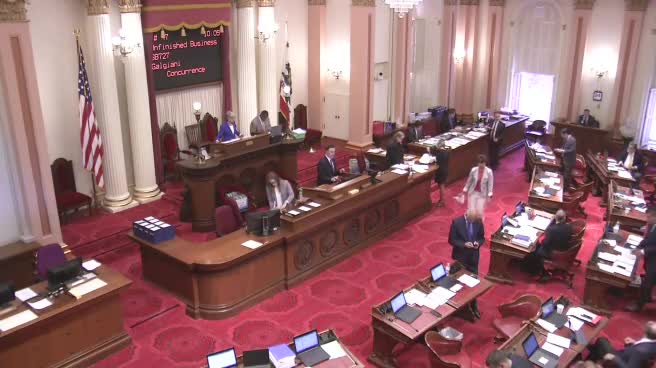 46SEC
Senate Floor
 4MIN
Assembly Standing Committee on Health
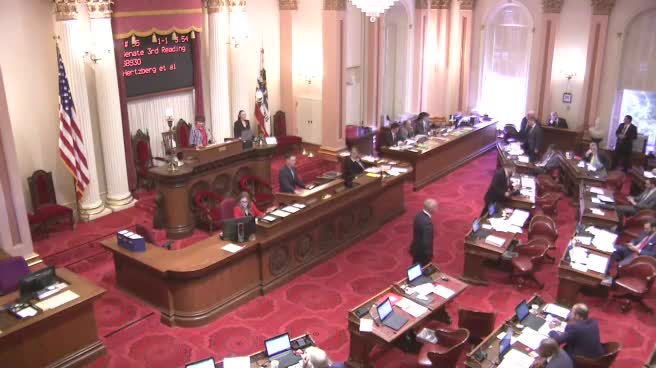 1MIN
Senate Floor
 7MIN
Senate Standing Committee on Health
Bill Author

Bill Co-Author(s):
