SCA 7: California Stem Cell Research and Cures Act: repeal.
- Session Year: 2017-2018
- House: Senate
- Latest Version Date: 2017-02-14
The California Stem Cell Research and Cures Act, an initiative measure comprised of constitutional and statutory provisions that was approved by the voters at the November 2, 2004, statewide general election as Proposition 71, generally provides for the issuance of general obligation bonds to fund stem cell research. The constitutional provisions of the act establish the California Institute for Regenerative Medicine in state government and authorizes it to utilize state-issued tax-exempt and taxable bonds to fund its operations, medical and scientific research, and facilities. The constitutional provisions also establish a right to conduct stem cell research.
This measure would repeal the constitutional provisions of the California Stem Cell Research and Cures Act.
Resolved by the Senate, the Assembly concurring, That the Legislature of the State of California at its 201718 Regular Session commencing on the fifth day of December, two-thirds of the membership of each house concurring, hereby proposes to the people of the State of California, that the Constitution of the State be amended as follows:
|
Date
|
Status
|
|---|---|
| Jun 8, 2017 | June 7 set for first hearing. Failed passage in committee. (Ayes 2. Noes 6. Page 1473.) Reconsideration granted. |
| May 19, 2017 | Set for hearing June 7. |
| Feb 23, 2017 | Referred to Coms. on HEALTH and E. & C.A. |
| Feb 15, 2017 | From printer. May be acted upon on or after March 17. |
| Feb 14, 2017 | Introduced. Read first time. To Com. on RLS. for assignment. To print. |
|
Date
|
Description
|
Location
|
Votes
|
|
|---|---|---|---|---|
| Jun 7, 2017 | [First] hearing set for [06-07-2017]: Failed passage in Committee. Reconsideration granted | Senate Standing Committee on Health |
Passed |
|
| Jun 7, 2017 | Be adopted, but first be re-referred to the Committee on [Elections and Constitutional Amendments] | Senate Standing Committee on Health |
Failed |
This list shows positions taken on this bill by organizations on the date displayed, which is linked to the original source.
Positions by individuals are not included.
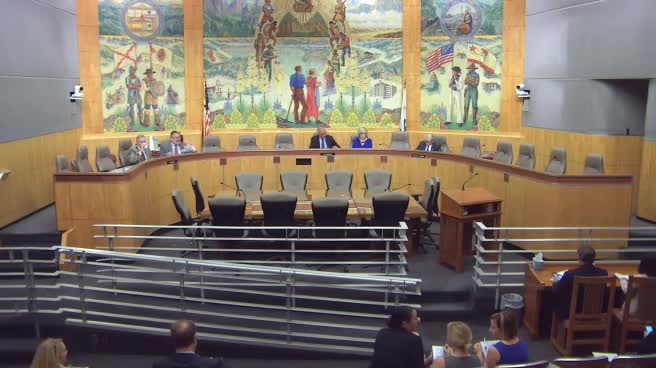
SENATE COMMITTEE ON HEALTH
Senator Ed Hernandez, O.D., Chair
BILL NO: SCA 7
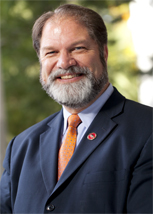
AUTHOR: | Moorlach | ||
VERSION: | February 14, 2017 | ||
HEARING DATE: | June 7, 2017 | ||
CONSULTANT: | Bao Nguyen | ||
SUBJECT: California Stem Cell Research and Cures Act: repeal
SUMMARY:
This bill would repeal the constitutional provisions of the California Stem Cell Research and Cures Act.
Existing law:
- Establishes, in the California Constitution, the California Institute for Regenerative Medicine (CIRM) with the purpose to:
- Make grants and loans for stem cell research, for research facilities, and for other vital research opportunities to realize therapies, protocols, and/or medical procedures that will result in, as speedily as possible, the cure for, and/or substantial mitigation of, major diseases, injuries, and orphan diseases;
- Support all stages of the process of developing cures, from laboratory research through successful clinical trials; and,
- Establish the appropriate regulatory standards and oversight bodies for research and facilities development.
- Permits, in the California Constitution, CIRM to utilize state-issued tax-exempt and taxable bonds to fund its operations.
- Authorizes bonds in the total amount of $3 billion to be issued and sold for the purpose of creating and supporting the function and operation of CIRM:
- Requires 97% of proceeds of the bonds to be used for grants and grant oversight; and,
- Requires that not more than 3% of the proceeds of bonds to be used for the cost of general administration of CIRM.
- Establishes the Independent Citizen’s Oversight Committee (ICOC) to govern CIRM with full power, authority, and jurisdiction over CIRM.
- Establishes public and financial accountability standards for CIRM, including requiring an annual public report on CIRM’s activities, grants awarded, grants in progress, research accomplishments, and future program directions; requiring an independent financial audit review by the California Controller; and, requiring a performance audit commissioned by CIRM every three years starting in the 2010-2011 fiscal year.
- Establishes medical and scientific accountability standards for CIRM, including requiring the ICOC to establish standards regarding the operation of clinical trials and handling of human cells for organizations that receive funding from CIRM.
This bill:
- Repeals the California Stem Cell Research and Cures Act.
FISCAL EFFECT:
This bill has not been analyzed by a fiscal committee.
COMMENTS:
- Author’s statement. According to the author, in 2004, voters passed Proposition 71, also known as the California Stem Cell Research and Cures Act. Proposition 71 authorized $3 billion in general bonds for stem cell research over a period of ten years. After several years in operation, there was bipartisan disappointment with the condition of CIRM. Conflicts of interest and poor governance led to the passage of SB 1064 (2010, Alquist) which increased the frequency of audits and reviews done by the state. Subsequent performance audits as recent as 2015 raised additional concerns about the governance of CIRM. California voters approved a ten year stem cell program that they thought would produce widespread cures and save thousands of lives. They were also promised revenue-producing intellectual property that would help the state financially. These remain empty promises. With a $1.6 billion dollar budget deficit and crumbling infrastructure, we need to stop the issuance of bonds on an ineffective and unaccountable agency. Scarce taxpayer funds could be of better use elsewhere.
- Proposition 71 and CIRM. In the November 2004 statewide general election, 59 % of California approved Proposition 71, the California Stem Cell Research and Cures Initiative. Proposition 71 authorized $3 billion in state bond funding for stem cell research at California universities and research institutions, and added Article XXXV to the California Constitution. Proposition 71 established a new state agency, CIRM, to make grants and provide loans for stem cell research and research facilities. The ballot pamphlet support arguments of Proposition 71 described how stem cell research would lead to the development of life-saving regenerative treatments and cures for a variety of diseases, including cancer, diabetes, heart disease; and also benefit the California economy by creating projects, jobs, and therapies that will generate millions of dollars in new tax revenues. The opposing argument stated the additional debt that California would acquire and the lack of real accountability on the finance of CIRM.
As part of the proposition, CIRM created a 29-member governing Board composed of researchers, business leaders, and patient advocates. CIRM provides funding for stem cell research that has the potential to bring new therapies to patients suffering from chronic diseases. According to CIRM, since its creation, it has funded 27 stem cell clinical trials, awarded funding to over 754 projects, constructed 12 stem cell research facilities, resulted in over 180 inventions, and enrolled over 370 patients in clinical studies. CIRM has focused on providing opportunities for researchers in California, requiring that at least 50% of the organizations’ employees are located in the state and the funded activities take place in California. Additionally, funded clinical trials are required to have at least one patient site in the state.
In 2015, CIRM launched a new strategy, coined CIRM 2.0, to adapt to the changing climate of stem cell research. According to CIRM, this updated version places more emphasis on accelerating the process of getting stem cell treatments to patients with unmet medical needs. Specifically, it streamlines the application process to allow for faster funding decisions and earlier initiation of research and clinical trials, decreasing the application review period from 22 months to 120 days. The new arrangement divides funding into three main categories: clinical, translational, and discovery, each with several application cycles a year to increase opportunities for funding. CIRM 2.0 has also resulted in the creation of two new centers, the Acceleration and Translation Center, which help researchers navigate the complex pathway from bench to clinical trial and FDA-approval.
- Funding of CIRM. Proposition 71, allocated a total of $3 billion in state general obligation bonds towards CIRM. Approximately $2.75 billion was set aside to be awarded to directly to research, facilities, and training the next generation of stem cell scientists. The remainder was earmarked for staff and administration to help oversee the funding and awards. According to CIRM, since awarding its first research grants in 2006, it has funded more than 750 projects and clinical trials. The remaining $650 million estimated to remain from the state bond is expected to provide funding until 2020. For funding beyond 2020, CIRM is exploring a number of different options, as stated in their transition report from 2012, to try to ensure the continuation of stem cell research, which may include funds from philanthropic sources, federal funding, or partnering with industry. The transition report, which was requiring by SB 1064 (Alquist, Chapter 637, Statutes of 2010) outlines logistics to help ensure that those involved in stem cell research will be able to continue to advance CIRM’s mission. These include providing regulatory and product development guidance and guaranteeing protection for CIRM-funded intellectual property.
- Auditor’s Report. Under SB 1064 (Alqiust, 2010) CIRM is required to commission a performance audit by an independent auditor every three years, starting in in FY 2010-2011, in order to examine the institute’s programs, functions, operations, management systems, and policies and procedures with regards to achieving economy, efficiency, and effectiveness in the employment of available resources. Additionally, the audit has to address policies and procedures of the issuance of contracts, grants, and loans, as well as the protection or treatment of intellectual property rights associated with research funded or commissioned by CIRM. The latest audit was performed for FY 2013-2014 by Moss-Adams and published in 2015. It reported on the impact of the organization, the life expectancy of CIRM, associated risks to the organization, and the cost of implementation. The audit emphasized CIRM’s progress in achieving its mission towards bringing stem cell treatments to patients. It also provided 12 main recommendations for improvements, including ensuring consistent collection of Financial Interest Disclosure Forms in accordance with stated policies, documenting procedures for the Financial Interest Disclosure Forms review, and implementing policies to achieve more timely review of progress reports provided by grantees.
- Double referral. This bill is double referred. Should it pass out of this committee, it will be referred to the Senate Committee on Elections and Constitutional Amendments.
- Prior legislation. SB 471 (Chapter 185, Statutes of 2009) created the California Stem Cell and Biotechnology Education and Workforce Development Act of 2009 to establish stem cell and biotechnology education and workforce development as a state priority and to promote stronger links among industry sectors, the California Institute for Regenerative Medicine, and California public schools, as specified.
SB 1064 (Alquist, Chapter 637, Statutes of 2010) made a number of changes to the governance and oversight of CIRM and its oversight committee, the ICOC. Among other provisions, SB 1064 requires CIRM, under the guidance of the ICOC, to create a succession plan addressing changes in leadership in CIRM and ICOC, as specified. Eliminates the 50-employee maximum for the CIRM. Requires CIRM, under the guidance of the ICOC, to create, by January 31, 2012, a transition plan to address the expiration of current bond funding, and to submit that plan to the Governor, the Controller, and the Legislature. Requires a performance audit of CIRM to be conducted every three years, as specified. Requires the ICOC to disclose, in all meeting minutes, a summary of vote tallies, including each board member’s votes and recusals.
SB 1565 (Kuehl and Runner, 2008) would have required the intellectual property standards of the ICOC to include a requirement that each grantee and the licensee of the grantee submit a plan for CIRM’s approval that would afford uninsured Californians access to any drug that is entirely or partly the result of CIRM-funded research, as specified. This bill would have revised the vote threshold necessary for CIRM funding of certain research proposals. It also requested the Little Hoover Commission (LHC) to study the existing governance structure of the ICOC and CIRM, as specified. SB 1565 was vetoed by the Governor, with the following message: “The bill undermines the express intent of Proposition 71 in two ways: it eliminates the priority for funding human embryonic stem cell research and it places an unnecessary restriction on the Independent Citizens’ Oversight Committee authority to adopt intellectual property regulations that balance patient need and essential medical research.”
- Support. The California Catholic Conference supports SCA 7 because CIRM’s research involves human embryonic stem cells, which destroys human embryos and is of ethical concern. While it does not oppose to other types of stem cell research, it cannot support the work done with embryonic stem cells. Additionally, Proposition 71 has offered false promises to Californians and is financially irresponsible. The supporters state that legislators ought to take fiscal and moral responsibility for this well-intentioned but proven failure that has not, and will not, delivery on the promises made.
The Howard Jarvis Taxpayers Association supports SCA 7 because CIRM has offered little more than false hope and has required taxpayers to pay interest on this money in ongoing General Fund payments of roughly $150 million a year. It also believes that there is nothing to show that any positive benefit to the Proposition 71 funds would not have been achieved by alternative funding sources including private foundations or federal funds – entities that may be better suited to fund stem cell research.
The Faith and Public Policy, a non-denominational church, supports this bill because it states that promises made to voters by Proposition 71 have not been fulfilled. Billions of dollars in principal and interest have been paid since 2004 since CIRM’s inception with zero therapies that have reached the market. The widespread cures to diseases that voters were promised have not been realized. Additionally, the support states that because CIRM is funded through bonds and not as another government agency, it is autonomous and has no legislative oversight. Reports and audits have revealed problems with CIRM’s governance, and there have been bipartisan bills that increased the frequency of audits to combat conflicts of interest and other poor practices at CIRM. - Opposition. Biocom writes in opposition to this constitutional amendment because it would cripple California’s pioneering efforts in the field of embryonic stem cell research and hinder its ability to find cures for chronic and costly diseases such as diabetes, at the cost of hundreds if not thousands of high wage jobs in the state.
CIRM is opposing this bill because the Institute was created by California to establish the state as a world leader in stem cell research that would lead to new treatments for currently incurable diseases. CIRM states that it has met the first goal and is working hard to achieve the second. Additionally, CIRM argues the progress that has been made in stem cell research in the last few years has been extraordinary, due in no small part to CIRM funding. CIRM believes that the next few years will see even greater strides, even bigger benefits for patients.
Planned Parenthood of California and its affiliates oppose this bill because it would repeal sections of the California Constitutions that promote medical research with an overall value to society and the well-being of individuals. Research can provide important information about disease trends and risk factors, outcomes of treatment or public health interventions, patterns of care, and health care costs. Medical research has led to significant discoveries and the development of new therapies for the improvement of health care and public health. Stem cell research is used to develop treatment for a range of diseases and conditions affecting millions of people. The opponents state that they support stem cell research and recognize the medical advancement it provides for their patients. - Policy comment. According to CIRM, an estimated $650 million remains out of the initial $3 billion issued in bonds. The institute has developed a financial plan to utilize the funds over the next three years until 2020, including funding several clinical trials. After the use of these funds, CIRM will have to find a new funding mechanism, using either another legislative action, such as a ballot measure or a state appropriation, or obtain funding from philanthropic, industry, or private sources. If the Legislature approves this SCA 7, it will still have to go before the voters in the next general election (November 2018). By then, even less of the remaining 20% of the funds originally approved by the voters will likely remain unspent. According to CIRM’s transition plan, the institute will seek funding opportunities from disease foundations, federal funding, venture philanthropy, and biopharma investment funds. The Committee may wish to consider whether it wishes to repeal CIRM when nearly all of the state taxpayer money will be spent by the time voters have to chance to weigh in.
SUPPORT AND OPPOSITION:
Support: California Catholic Conference
California Profile Council
Faith and Public Policy
Howard Jarvis Taxpayers Association
Oppose: Biocom
California Institute for Regenerative Medicine
Community Action Fund of the Planned Parenthood of Orange and San
Bernardino Counties
Planned Parenthood Action Fund of the Pacific Southwest
Planned Parenthood Advocates Pasadena and San Gabriel Valley
Planned Parenthood Affiliates of California
Planned Parenthood Central Coast Action Fund
Planned Parenthood Mar Monte
Planned Parenthood Northern California Action Fund
-- END --
Bill Author
Bill Co-Author(s):