SCA 8: Public employee retirement benefits.
- Session Year: 2017-2018
- House: Senate
- Latest Version Date: 2017-02-15
Existing statutory law establishes various public agency retirement systems, including, among others, the Public Employees Retirement System, the State Teachers Retirement System, the Judges Retirement System II, and various county retirement systems pursuant to the County Employees Retirement Law of 1937, and these systems provide defined pension benefits to public employees based on age, service credit, and amount of final compensation. The California Constitution permits a city or county to adopt a charter for purposes of its governance that supersedes general laws of the state in regard to specified subjects, including compensation of city or county employees. The California Constitution establishes the University of California as a public trust with full powers of organization and government, subject only to specified limitations. Under their respective independent constitutional authority, charter cities and counties and the University of California may and have established retirement systems. The California Public Employees Pension Reform Act of 2013 (PEPRA) generally requires the retirement systems to which it applies to modify their provisions to conform with its requirements. PEPRA excepts from its provisions retirement systems established by charter cities and counties and the University of California. PEPRA requires the retirement systems that it regulates and that offer defined benefit plans to provide specified defined benefit formulas and prescribes requirements regarding employer and employee contributions to defined benefit pension plans.
This measure would permit a government employer to reduce retirement benefits that are based on work not yet performed by an employee regardless of the date that the employee was first hired, notwithstanding other provisions of the California Constitution or any other law. The measure would prohibit it from being interpreted to permit the reduction of retirement benefits that a public employee has earned based on work that has been performed, as specified. The measure would define government employer and retirement benefits for the purposes of its provisions.
WHEREAS, The State of California has made retirement security a priority for public employees since the early part of the 20th century by creating various state and local pension systems; and
WHEREAS, Over nearly a century of experience has shown that when planned and paid for, pensions can be useful in attracting and retaining good talent to public service. However, pension systems have also shown great weaknesses in properly accounting for their future retirement obligations, paying the normal costs of funding pension plans and mitigating risk associated with the market, thus often shifting unfunded liabilities and other financial risks to taxpayer costs of paying retirement and pension benefits when they outstrip revenues and investment returns; and
WHEREAS, The nonpartisan Legislative Analysts Office estimates the current unfunded liabilities for the Public Employees Retirement System, the Teachers Retirement System, and the University of California Retirement System at approximately $140 billion; and
WHEREAS, The Pew Charitable Trusts, using data from 2012, found California ranked highest in the nation for unfunded pension obligations; and
WHEREAS, The unfunded public pension liabilities of California and its local governments are estimated to be over one-half trillion dollars; and
WHEREAS, Public pension debt has contributed to the bankruptcies of the cities of Stockton, Vallejo, and San Bernardino and has left other California municipalities in dire fiscal straits. As a result, several municipalities in the state now have the difficult task of balancing budgets in a way that is fair to both public employees and taxpayers, while continuing to provide basic services; and
WHEREAS, As noted by the Manhattan Institute: In recent years, California municipalities have seen retirement benefit costs grow at a rate above that of taxes, fees, and charges. Crowd-out is the term given to this condition by some public officials forced to deal with the resulting fiscal strain. Balanced budget requirements mandate that when costs grow more rapidly than revenues, something must give. All too often, this has meant reductions in core government services, most of whichpolice, fire, libraries, parks, and street and sidewalk maintenanceare delivered at the local level in California; and
WHEREAS, While state government retirees collect guaranteed pensions, young and future taxpayers will be responsible for paying the bill. Growing unfunded obligations have particularly serious ramifications for the millennial generation, who are sinking under the weight of public debts and obligations incurred years before they were even born; and
WHEREAS, While recent legislation and action by several pension boards have put the state on a more prudent financial path, much fundamental and substantial reform is still left to be done to make Californias pension systems sustainable for both employees and taxpayers; and
WHEREAS, Several recent polls, include those done by Reason Foundation and the Public Policy Institute of California, show that nearly three out of four of respondents say the amount of money spent on public employee pensions is a problem and that voters should have a great say in reforms; and
WHEREAS, Elements of true reform should make pensions fair to government workers and accountable to taxpayers in a simple and transparent manner, and include the ability for government entities to create a defined contribution plan or defined benefit/defined contribution hybrid pension plan for their current and new employees. Fundamental reforms should address the California Rule and allow the state and municipalities to modify future pension benefits for current public employees; and
WHEREAS, Local governments and the electorate should have a voice on what reforms may happen and how they may occur; and
WHEREAS, Failing to now adequately address the current pension unfunded liabilities in California and ignoring the debt pressure pension costs have on other budget priorities will only prolong the problems and delay meaningful reform. It will also endanger future pension benefits promised to public employees, risk the reduction or elimination of governmental services, and cause taxpayers to incur higher taxes to pay for unfunded liabilities; and
WHEREAS, It is in the interest of all Californians to encourage a public pension law that provides a fair, workable plan to pay down the accumulated pension debt as quickly as possible and implements processes and practices that ensure both the state and local governments adequately fund their retirement promises; now, therefore, be it
Resolved by the Senate, the Assembly concurring, That the Legislature of the State of California at its 201718 session commencing on the fifth day of December 2016, two-thirds of the membership of each house concurring, hereby proposes to the people of the State of California, that the Constitution of the State be amended as follows:
(a)Notwithstanding Section 9 of Article I, or any other provision of this Constitution or law, a government employer may reduce retirement benefits that are based on work not yet performed by an employee regardless of the date that the employee was first hired. This section shall not be interpreted to permit the reduction of retirement benefits that a public employee has earned based on work that has been performed, which shall continue to be subject to the protections of Section 9 of Article I.
(b)For the purpose of this section:
(1)Government employer means the state, or a political subdivision of the state, including, but not limited to, counties, cities, charter counties, charter cities, a charter city and county, school districts, special districts, boards, commissions, the Regents of the University of California, the California State University, and agencies thereof.
(2)Retirement benefits means defined benefit pension plans, defined contribution plans, retiree health care plans, or any form of deferred compensation offered by a government employer.
|
Date
|
Status
|
|---|---|
| Aug 14, 2018 | August 13 set for second hearing. Failed passage in committee. (Ayes 2. Noes 3.) Reconsideration granted. |
| Jun 20, 2017 | June 26 set for first hearing canceled at the request of author. |
| Jun 2, 2017 | Set for hearing June 26. |
| Feb 23, 2017 | Referred to Coms. on P.E. & R. and E. & C.A. |
| Feb 16, 2017 | From printer. May be acted upon on or after March 18. |
| Feb 15, 2017 | Introduced. Read first time. To Com. on RLS. for assignment. To print. |
|
Date
|
Description
|
Location
|
Votes
|
|
|---|---|---|---|---|
| Aug 13, 2018 | [Second] hearing set for [08-14-2018]: Failed passage in Committee. Reconsideration granted | Senate Standing Committee on Public Employment and Retirement |
Passed |
|
| Aug 13, 2018 | Be adopted, but first be re-referred to the Committee on [Elections and Constitutional Amendments] | Senate Standing Committee on Public Employment and Retirement |
Failed |
This list shows positions taken on this bill by organizations on the date displayed, which is linked to the original source.
Positions by individuals are not included.
SENATE COMMITTEE ON
PUBLIC EMPLOYMENT AND RETIREMENT
Dr. Richard Pan, Chair
2017 - 2018 Regular
Bill No: SCA 8 Hearing Date: 8/13/18
Author: | Moorlach | ||
Version: | 2/15/17 As introduced | ||
Urgency: | No | Fiscal: | Yes |
Consultant: | Glenn Miles | ||
Subject: Public employee retirement benefits
SOURCE: Author
DIGEST: This constitutional amendment would revise the California Constitution to authorize government employers to eliminate promised retiree benefits to current employees.
ANALYSIS:
Existing law:
- Provides, under Article I of the California State Constitution, a Declaration of Rights representing the most fundamental rights of Californians.
- Prohibits, under Section 9 of Article I, a bill of attainder, ex post facto law, or law impairing the obligation of contracts from being passed.
- Provides nearly 70 years of consistent judicial interpretation that by entering public service an employee obtains a vested contractual right, protected by the California Constitution, to earn a pension on terms substantially equivalent to those then offered by the employer and that such an employee has the primary right to receive any vested pension benefits upon retirement, as well as the collateral right to earn future pension benefits through continued service, on terms substantially equivalent to those then offered.
This bill:
- Adds Section 17.5 to Article XVI of the California Constitution to override Section 9 of Article I so as to allow government employers to impair existing vested contractual rights of public employees to earn future pension benefits through continued service, on terms substantially equivalent to those then offered when the employee accepted employment.
- Defines “government employer” to mean the state, or a political subdivision of the state, including, but not limited to, counties, cities, charter counties, charter cities, a charter city and county, school districts, special districts, boards, commissions, the Regents of the University of California, the California State University, and agencies thereof.
Background
This constitutional amendment seeks to overturn nearly 70 years of California case law known at the “California Rule” based on the prohibition of impairing the obligation of contracts established in Section 9 of Article I. Overturning the California Rule would potentially allow government employers to rescind vested pension benefits to current public employees.
Related/Prior Legislation
None known.
FISCAL EFFECT: Appropriation: No Fiscal Com.: Yes Local: No
SUPPORT:
City of Costa Mesa
City of Huntington Beach
City of La Habra
OPPOSITION:
American Federation of State, County and Municipal Employees, AFL-CIO
Association of California State Supervisors
CAL FIRE Local 2881
California Association of Highway Patrolmen
California Association of Professional Scientists
California Police Chiefs Association
California Professional Firefighters
California Retired Teachers Association
California School Employees Association, AFL-CIO
California State Retirees
California State Teachers’ Retirement System
California Teachers Association
Faculty Association of California Community Colleges
Los Angeles County Employees Retirement Association
Los Angeles County Professional Peace Officers Association
Orange County Employees Association
Orange County Professional Firefighters Association, Local 3631
Peace Officers Research Association of California
Professional Engineers in California Government
Retired Public Employees Association
Riverside Sheriffs’ Association
Service Employees International Union, Local 1000
ARGUMENTS IN SUPPORT: According to the author, “California needs to clarify the state’s constitution and provide tools to strengthen its fiscal integrity. SCA 8 gives pension systems the ability to change benefits going forward.”
ARGUMENTS IN OPPOSITION: According to the California School Employees Association,
One underlying principle of the California Rule is the notion that “a promise made should be a promise kept”. For CSEA members, their average pension is only $1600 per month after an average of 17 years of service - caring and protecting our students, parents, and other educators.
Our employees kept their end of the bargain to give a lifetime of service to their employers. We believe that a promise made should be a promise kept for a modicum of retirement income. For some public employees like police officers and teachers, they do not even receive social security, and their state pension is their only means for retirement.
According to the California Teachers Association,
This measure would eliminate the limited security our teachers count on in their retirement years, who currently have a replacement ratio of 55.8 percent from their CalSTRS retirement. With a workforce predominantly composed of women, over 72 percent of CalSTRS members, who do not receive Social Security and who often find the Social Security Benefits they paid into while they were in the private sector will often be reduced or eliminated from Social Security offsets, teachers already face a precarious retirement future with little to no safety net.
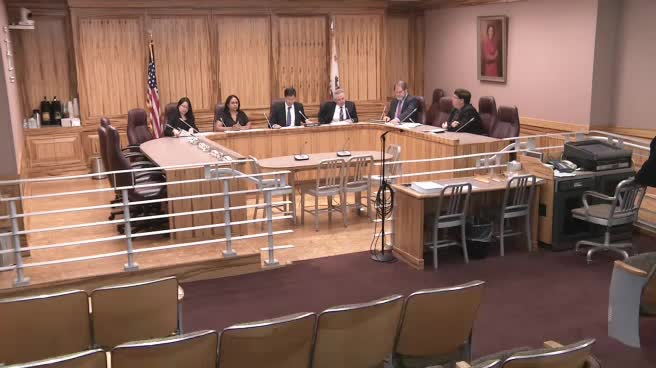
Discussed in Hearing
 22MIN
Senate Standing Committee on Public Employment and Retirement
Bill Author
Bill Co-Author(s):