SCR 163: Hydrocephalus Awareness Month.
- Session Year: 2017-2018
- House: Senate
- Latest Version Date: 2018-09-11
This measure would designate September 2018 as Hydrocephalus Awareness Month in California.
This measure would designate September 2018 as Hydrocephalus Awareness Month in California.
This measure would designate September 2018 as Hydrocephalus Awareness Month in California.
WHEREAS, Hydrocephalus is an abnormal accumulation of cerebrospinal fluid (CSF) within the cavities of the brain; and
WHEREAS, Hydrocephalus affects a wide range of people from infants and children to young, middle-aged, and older adults; and
WHEREAS, There is no known cure for hydrocephalus; and
WHEREAS, One to two of every 1,000 babies are born with hydrocephalus, making it as common as Down syndrome and more common than spina bifida or brain tumors; and
WHEREAS, Hydrocephalus is the most common reason for brain surgery in children; and
WHEREAS, Two-thirds of our military service members returning from Iraq and Afghanistan with moderate to severe traumatic brain injuries are likely to also have hydrocephalus; and
WHEREAS, Hydrocephalus is treated by performing brain surgery to insert a shunt to drain the CSF into another part of the body (usually the abdomen) where it can be absorbed. Originally invented over 50 years ago, shunts have the highest failure rate of any medically implanted device. An estimated 50 percent of shunts fail within the first two years; and
WHEREAS, One quarter of a million Americans may have normal pressure hydrocephalus (NPH), which is most common in older adults and seniors; and
WHEREAS, Without appropriate diagnostic testing, NPH is often misdiagnosed as Alzheimers or Parkinsons diseases; and
WHEREAS, Research suggests that treating NPH in the elderly population would reduce the United States health care expenditures by $25,000 per patient, or $184 million over five years; and
WHEREAS, The medical costs for hydrocephalus are over $1 billion per year, yet the National Institutes of Health invests less than $1 million per year in hydrocephalus treatment; and
WHEREAS, Over the last 50 years, there have been no significant improvement in hydrocephalus treatment and no progress toward prevention or cure; now, therefore, be it
Resolved by the Senate of the State of California, the Assembly thereof concurring, That the Legislature proclaims the month of September 2018 as Hydrocephalus Awareness Month in California; and be it further
Resolved, That the Secretary of the Senate transmit copies of this resolution to the author for appropriate distribution.
|
Date
|
Status
|
|---|---|
| Sep 11, 2018 | Chaptered by Secretary of State. Res. Chapter 236, Statutes of 2018. |
| Sep 11, 2018 | Enrolled and filed with the Secretary of State at 2 p.m. |
| Aug 28, 2018 | In Senate. Ordered to engrossing and enrolling. |
| Aug 27, 2018 | Read. Adopted. Ordered to the Senate. |
| Aug 23, 2018 | From committee: Be adopted. Ordered to consent calendar. (Ayes 11. Noes 0.) (August 23). |
| Aug 23, 2018 | Referred to Com. on RLS. |
| Aug 14, 2018 | In Assembly. Held at Desk. |
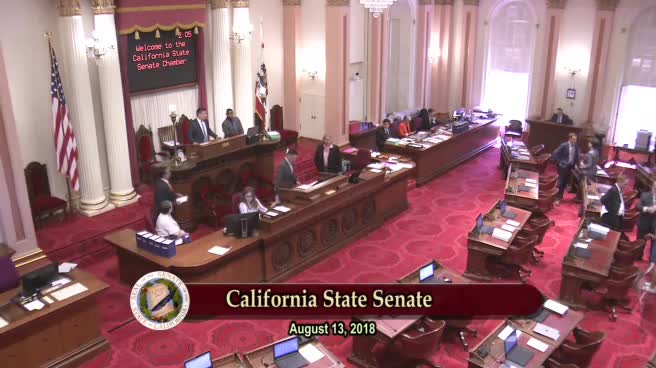
| Aug 13, 2018 | Read. Adopted. (Ayes 35. Noes 0.) Ordered to the Assembly. |
| Aug 8, 2018 | From committee: Ordered to third reading. |
| Aug 7, 2018 | Introduced. Referred to Com. on RLS. |
|
Date
|
Description
|
Location
|
Votes
|
|
|---|---|---|---|---|
| Aug 27, 2018 | SCR 163 Portantino Consent Calendar Second Day Regular Session | Assembly Floor |
Passed |
|
| Aug 23, 2018 | Be adopted. To Consent Calendar. | Assembly Standing Committee on Rules |
Passed |
|
| Aug 13, 2018 | Senate 3rd Reading SCR163 Portantino | Senate Floor |
Passed |
This list shows positions taken on this bill by organizations on the date displayed, which is linked to the original source.
Positions by individuals are not included.
Date of Hearing: August 23, 2018
ASSEMBLY COMMITTEE ON RULES
Ken Cooley, Chair
SBPCA Bill Id:SCR 163
Author:(Portantino) – As Introduced Ver:
SENATE VOTE:
SUBJECT: Hydrocephalus Awareness Month.
SUMMARY: Designates September 2018 as Hydrocephalus Awareness Month in California. Specifically, this resolution makes the following legislative findings:
- Hydrocephalus is an abnormal accumulation of cerebrospinal fluid (CSF) within the cavities of the brain; and affects a wide range of people from infants and children to young, middle-aged, and older adults.
- There is no known cure for hydrocephalus; and, one to two of every 1,000 babies are born with hydrocephalus, making it as common as Down syndrome and more common than spina bifida or brain tumors.
- Two-thirds of our military service members returning from Iraq and Afghanistan with moderate to severe traumatic brain injuries are likely to also have hydrocephalus.
- One quarter of a million Americans may have normal pressure hydrocephalus (NPH), which is most common in older adults and seniors; and, without appropriate diagnostic testing, NPH is often misdiagnosed as Alzheimer’s or Parkinson’s diseases.
- Research suggests that treating NPH in the elderly population would reduce the United States’ health care expenditures by $25,000 per patient, or $184 million over five years; and, the medical costs for hydrocephalus are over $1 billion per year, yet the National Institutes of Health invests less than $1 million per year in hydrocephalus treatment.
- Over the last 50 years, there has been no significant improvement in hydrocephalus treatment and no progress toward prevention or cure.
FISCAL EFFECT: None
REGISTERED SUPPORT / OPPOSITION:
Support
None on file
Opposition
None on file
Analysis Prepared by: Nicole Willis / RLS. / (916) 319-2800
Office of Senate Floor Analyses (916) 651-1520 Fax: (916) 327-4478 | SCR 163 |
THIRD READING
Bill No: SCR 163
Introduced: 8/7/18
SUBJECT: Hydrocephalus Awareness Month
DIGEST:
This resolution designates September 2018 as Hydrocephalus Awareness Month in California.
ANALYSIS: This resolution makes the following legislative findings:
- Hydrocephalus is an abnormal accumulation of cerebrospinal fluid (CSF) within the cavities of the brain; and there is no known cure for hydrocephalus.
- Hydrocephalus is treated by performing brain surgery to insert a shunt to drain the CSF into another part of the body (usually the abdomen) where it can be absorbed. Originally invented over 50 years ago, shunts have the highest failure rate of any medically implanted device. An estimated 50% of shunts fail within the first two years.
- One quarter of a million Americans may have normal pressure hydrocephalus (NPH), which is most common in older adults and seniors; and, without appropriate diagnostic testing, NPH is often misdiagnosed as Alzheimer’s or Parkinson’s diseases.
- The medical costs for hydrocephalus are over $1 billion per year, yet the National Institutes of Health invests less than $1 million per year in hydrocephalus treatment.
- Over the last 50 years, there have been no significant improvement in hydrocephalus treatment and no progress toward prevention or cure.
This resolution proclaims the month of September 2018 as Hydrocephalus Awareness Month in California.
Comments
The author states, “Hydrocephalus is an abnormal accumulation of cerebrospinal fluid (CSF) within the cavities of the brain which affects a wide range of people from infants and children to young, middle-aged, and older adults. It is the most common reason for brain surgery in children and two-thirds of our military service members returning from Iraq and Afghanistan with moderate to severe traumatic brain injuries are likely to have hydrocephalus. Research suggests that treating normal pressure hydrocephalus in the elderly population would reduce the United States’ health care expenditures by $25,000 per patient, or $184 million over five years. The medical costs for hydrocephalus are over $1 billion per year, yet the National Institutes of Health invests less than $1 million per year in hydrocephalus treatment. Over the last 50 years, there have been no significant improvement in hydrocephalus treatment and no progress toward prevention or cure.”
FISCAL EFFECT: Appropriation: No Fiscal Com.: No Local: No
None received
None received
Prepared by: Melissa Ward / SFA / (916) 651-1520
8/8/18 15:55:30
**** END ****
Bill Author

Bill Co-Author(s):