SCR 38: Recording legislative meetings.
- Session Year: 2017-2018
- House: Senate
- Latest Version Date: 2018-08-24
The California Constitution, as amended by the California Legislature Transparency Act, guarantees to the public the right to record by audio or video means any and all parts of open and public legislative meetings and to broadcast or otherwise transmit them, subject to reasonable rules regulating the placement and use of equipment for recording or broadcasting for the sole purpose of minimizing disruption. The California Constitution requires that those rules be adopted by the Legislature by concurrent resolution passed by a rollcall vote entered in the journal, 2/3 of the membership of each house concurring, or by statute.
This measure would adopt rules regulating the placement and use of equipment for recording or broadcasting legislative meetings that are open and public.
WHEREAS, The California Constitution and state statute have long required that legislative meetings be open and public, except in specified circumstances; and
WHEREAS, The voters enacted the California Legislature Transparency Act by adopting Proposition 54 at the November 8, 2016, statewide general election; and
WHEREAS, Among its provisions, the act guaranteed to any person, in addition to the right to attend open and public legislative meetings, the right to record any and all parts of those meetings by audio or video means and to broadcast or otherwise transmit them; and
WHEREAS, It is the policy of the California State Senate and Assembly to ensure that all persons have access to open and public legislative meetings and the opportunity to exercise their constitutional right to record and broadcast those meetings; and
WHEREAS, Under the act, the right to record legislative meetings is subject to reasonable rules regulating the placement and use of equipment for recording or broadcasting for the sole purpose of minimizing disruption; and
WHEREAS, The act requires that those rules be adopted by the Legislature by concurrent resolution passed by a rollcall vote entered in the journal, two-thirds of the membership of each house concurring, or by statute; now, therefore, be it
Resolved by the Senate and the Assembly of the State of California, two-thirds of the membership of each house concurring, That, pursuant to paragraphs (1) and (5) of subdivision (c) of Section 7 of Article IV of the California Constitution, the Senate and the Assembly hereby adopt the following rules regulating the placement and use of equipment for recording or broadcasting legislative meetings:
(a)Access to, and the opportunity to record or broadcast, legislative meetings shall be provided for those meetings that are open and public within the meaning of Section 7 of Article IV of the California Constitution and Article 2.2 (commencing with Section 9027) of Chapter 1.5 of Part 1 of Division 2 of Title 2 of the Government Code.
(b)(1)Press representatives accredited pursuant to Joint Rule 32 shall be provided the opportunity to record on the Floor of the Senate and Assembly Chambers in accordance with the rules of the house.
(2)The opportunity to record legislative meetings in the Senate and Assembly Chambers from the public Galleries above the Senate and Assembly Floors shall be provided to all persons. Recording devices shall not extend beyond the Gallery railing.
(3)Access to the Senate and Assembly Floors shall be granted in accordance with the rules of each house.
(c)(1)In committee hearing rooms, the opportunity to record legislative meetings shall be provided to all persons in the public seating area of the hearing room. Members of the public other than accredited press representatives shall not record on the dais or in the witness testimony area of the hearing room.
(2)Recordings in committee hearing rooms may be made with hand-held devices or with larger equipment, as space and safety permit. Recording equipment shall not obstruct points or paths of entry or exit.
(3)If recording requires setting up equipment, every effort shall be made to set up the equipment before the meeting begins. The chairperson of the committee may give direction to the Sergeant at Arms as to where equipment may be set up in order to minimize disruption of the meeting.
(4)In the event space in a committee hearing room is limited for recording purposes, every effort shall be made to accommodate all persons who wish to record the meeting. In order to minimize disruption, the chairperson or presiding officer of the committee may designate specific space in the committee hearing room for placement and use of equipment by accredited press representatives for recording or broadcasting the proceedings.
(5)As used herein, committee hearing room means a committee hearing room in the State Capitol or any facility at which a committee meeting convenes outside the State Capitol.
(d)Recording equipment used by a person other than Senate or Assembly personnel shall not interfere with recording equipment operated by the Senate or the Assembly in the Senate and Assembly Chambers and committee hearing rooms.
(e)Recording equipment used in the Senate and Assembly Chambers or in committee hearing rooms may employ additional lighting while recording if the lighting is not disruptive, but meetings shall be recorded without additional lighting when possible.
(f)If recording activity or equipment is disruptive of a legislative meeting, poses a safety risk to attendees of the meeting, or interferes with the ability of other attendees to see and hear the meeting, as determined by the chairperson of the committee, the presiding Member, or a person designated by the Committee on Rules of the respective houses as a representative of the Senate Committee on Rules or the Assembly Committee on Rules, the Sergeant at Arms shall direct the individual to cease the disruptive activity or cease recording altogether. If the individual fails to comply, he or she may be removed from the Chamber or committee hearing room.
(g)Rules adopted in this resolution shall be posted on the Internet Web sites of the Senate and Assembly. Physical copies of the rules shall be made available in the offices of the Senate Committee on Rules and the Assembly Committee on Rules.
WHEREAS, The California Constitution and state statute have long required that legislative meetings be open and public, except in specified circumstances; and
WHEREAS, The voters enacted the California Legislature Transparency Act by adopting Proposition 54 at the November 8, 2016, statewide general election; and
WHEREAS, Among its provisions, the act guaranteed to the public, any person, in addition to the right to attend open and public legislative meetings, the right to record any and all parts of those meetings by audio or video means and to broadcast or otherwise transmit them; and
WHEREAS, It is the policy of the California State Senate and Assembly to ensure that all accredited press representatives and other members of the public shall persons have access to open and public legislative meetings and the opportunity to exercise their constitutional right to record and broadcast those meetings; and
WHEREAS, Under the act, the publics right to record legislative meetings is subject to reasonable rules regulating the placement and use of equipment for recording or broadcasting for the sole purpose of minimizing disruption; and
WHEREAS, The act requires that those rules be adopted by the Legislature by concurrent resolution passed by a rollcall vote entered in the journal, two-thirds of the membership of each house concurring, or by statute; now, therefore, be it
Resolved by the Senate and the Assembly of the State of California, two-thirds of the membership of each house concurring, That, pursuant to paragraphs (1) and (5) of subdivision (c) of Section 7 of Article IV of the California Constitution, the Senate and the Assembly hereby adopt the following rules regulating the placement and use of equipment for recording or broadcasting legislative meetings:
(a)Access to, and the opportunity to record or broadcast, legislative meetings shall be provided for those meetings that are open and public within the meaning of Section 7 of Article IV of the California Constitution and Article 2.2 (commencing with Section 9027) of Chapter 1.5 of Part 1 of Division 2 of Title 2 of the Government Code.
(b)(1)In the Senate and Assembly Chambers, the opportunity to record on the Floor of the Chambers shall be provided only to press representatives accredited pursuant to Joint Rule 32. Press representatives accredited pursuant to Joint Rule 32 shall be provided the opportunity to record on the Floor of the Senate and Assembly Chambers in accordance with the rules of the house.
(2)The opportunity to record legislative meetings in the Senate and Assembly Chambers shall be provided to members of the public other than accredited press representatives in from the public Galleries above the Senate and Assembly Floors, provided that the person recording shall be seated while recording and shall use only a hand-held recording device, unless permission otherwise has been granted. Floors shall be provided to all persons. Recording devices shall not extend beyond the Gallery railing.
(3)Access to the Senate and Assembly Floors shall be granted in accordance with the rules of each house.
(c)(1)In committee hearing rooms, the opportunity to record legislative meetings shall be provided to members of the public other than accredited press representatives all persons in the public seating area of the hearing room. Members of the public other than accredited press representatives shall not record on the dais or in the witness testimony area of the hearing room.
(2)Recordings in committee hearing rooms may be made with hand-held devices or with larger equipment, as space and safety permit. Recording equipment shall not obstruct points or paths of entry or exit.
(3)If recording requires setting up equipment, every effort shall be made to set up the equipment before the meeting begins. The chairperson of the committee may give direction to the Sergeant at Arms as to where equipment may be set up in order to minimize disruption of the meeting.
(4)In the event space in a committee hearing room is limited for recording purposes, accredited press representatives shall be given priority for use of available space. However, every effort shall be made to accommodate all public attendees persons who wish to record the meeting. In order to minimize disruption, the chairperson or presiding officer of the committee may designate specific space in the committee hearing room for placement and use of equipment by accredited press representatives for recording or broadcasting the proceedings.
(5)As used herein, committee hearing room means a committee hearing room in the State Capitol or any facility at which a committee meeting convenes outside the State Capitol.
(d)Recording equipment used by members of the public a person other than Senate or Assembly personnel shall not interfere with recording equipment operated by the Senate or the Assembly in the Senate and Assembly Chambers and committee hearing rooms.
(e)Recording equipment used by members of the public other than accredited press representatives shall not employ additional lighting of any kind. Recording equipment used by accredited press representatives on the Floors of the Senate and Assembly Chambers or in committee hearing rooms may employ additional lighting while recording if the lighting is not disruptive, but meetings shall be recorded without additional lighting when possible. in the Senate and Assembly Chambers or in committee hearing rooms may employ additional lighting while recording if the lighting is not disruptive, but meetings shall be recorded without additional lighting when possible.
(f)If recording activity or equipment is disruptive of a legislative meeting, poses a safety risk to attendees of the meeting, or interferes with the ability of other attendees to see and hear the meeting, as determined by the chairperson of the committee, the presiding Member, or a person designated by the Committee on Rules of the respective houses as a representative of the Senate Committee on Rules or the Assembly Committee on Rules, the Sergeant at Arms shall direct the individual to cease the disruptive activity or cease recording altogether. If the individual fails to comply, he or she may be removed from the Chamber or committee hearing room.
(g)(1)The Senate Committee on Rules and the Assembly Committee on Rules each may adopt policies to further implement the foregoing rules for legislative meetings in the respective houses. The Joint Rules Committee may adopt policies to further implement the foregoing rules for joint legislative meetings.(2)The Senate Committee on Rules and the Assembly Committee on Rules, or persons designated as representatives of those committees, may grant exemptions from the foregoing rules in specific instances in the respective houses as circumstances warrant.(g)Rules adopted in this resolution shall be posted on the Internet Web sites of the Senate and Assembly. Physical copies of the rules shall be made available in the offices of the Senate Committee on Rules and the Assembly Committee on Rules.
WHEREAS, The California Constitution and state statute have long required that legislative meetings be open and public, except in specified circumstances; and
WHEREAS, The voters enacted the California Legislature Transparency Act by adopting Proposition 54 at the November 8, 2016, statewide general election; and
WHEREAS, Among its provisions, the act guaranteed to the public, in addition to the right to attend open and public legislative meetings, the right to record any and all parts of those meetings by audio or video means and to broadcast or otherwise transmit them; and
WHEREAS, It is the policy of the California State Senate and Assembly to ensure that all accredited press representatives and other members of the public shall have access to open and public legislative meetings and the opportunity to exercise their constitutional right to record and broadcast those meetings; and
WHEREAS, Under the act, the publics right to record legislative meetings is subject to reasonable rules regulating the placement and use of equipment for recording or broadcasting for the sole purpose of minimizing disruption; and
WHEREAS, The act requires that those rules be adopted by the Legislature by concurrent resolution passed by a rollcall vote entered in the journal, two-thirds of the membership of each house concurring, or by statute; now, therefore, be it
Resolved by the Senate and the Assembly of the State of California, two-thirds of the membership of each house concurring, That, pursuant to paragraphs (1) and (5) of subdivision (c) of Section 7 of Article IV of the California Constitution, the Senate and the Assembly hereby adopt the following rules regulating the placement and use of equipment for recording or broadcasting legislative meetings:
(a)Access to, and the opportunity to record or broadcast, legislative meetings shall be provided for those meetings that are open and public within the meaning of Section 7 of Article IV of the California Constitution and Article 2.2 (commencing with Section 9027) of Chapter 1.5 of Part 1 of Division 2 of Title 2 of the Government Code.
(b)(1)In the Senate and Assembly Chambers, the opportunity to record on the Floor of the Chambers shall be provided only to press representatives accredited pursuant to Joint Rule 32.
(2)The opportunity to record legislative meetings in the Senate and Assembly Chambers shall be provided to members of the public other than accredited press representatives in the public Galleries above the Senate and Assembly Floors, provided that the person recording shall be seated while recording and shall use only a hand-held recording device, unless permission otherwise has been granted. Recording devices shall not extend beyond the Gallery railing.
(3)Access to the Senate and Assembly Floors shall be granted in accordance with the rules of each house.
(c)(1)In committee hearing rooms, the opportunity to record legislative meetings shall be provided to members of the public other than accredited press representatives in the public seating area of the hearing room. Members of the public other than accredited press representatives shall not record on the dais or in the witness testimony area of the hearing room.
(2)Recordings in committee hearing rooms may be made with hand-held devices or with larger equipment, as space and safety permit. Recording equipment shall not obstruct points or paths of entry or exit.
(3)If recording requires setting up equipment, every effort shall be made to set up the equipment before the meeting begins. The chairperson of the committee may give direction to the Sergeant at Arms as to where equipment may be set up in order to minimize disruption of the meeting.
(4)In the event space in a committee hearing room is limited for recording purposes, accredited press representatives shall be given priority for use of available space. However, every effort shall be made to accommodate all public attendees who wish to record the meeting.
(5)As used herein, committee hearing room means a committee hearing room in the State Capitol or any facility at which a committee meeting convenes outside the State Capitol.
(d)Recording equipment used by members of the public shall not interfere with recording equipment operated by the Senate or the Assembly in the Senate and Assembly Chambers and committee hearing rooms.
(e)Recording equipment used by members of the public other than accredited press representatives shall not employ additional lighting of any kind. Recording equipment used by accredited press representatives on the Floors of the Senate and Assembly Chambers or in committee hearing rooms may employ additional lighting while recording if the lighting is not disruptive, but meetings shall be recorded without additional lighting when possible.
(f)If recording activity or equipment is disruptive of a legislative meeting, poses a safety risk to attendees of the meeting, or interferes with the ability of other attendees to see and hear the meeting, as determined by the chairperson of the committee, the presiding Member, or a person designated as a representative of the Senate Committee on Rules or the Assembly Committee on Rules, the Sergeant at Arms shall direct the individual to cease the disruptive activity or cease recording altogether. If the individual fails to comply, he or she may be removed from the Chamber or committee hearing room.
(g)(1)The Senate Committee on Rules and the Assembly Committee on Rules each may adopt policies to further implement the foregoing rules for legislative meetings in the respective houses. The Joint Rules Committee may adopt policies to further implement the foregoing rules for joint legislative meetings.
(2)The Senate Committee on Rules and the Assembly Committee on Rules, or persons designated as representatives of those committees, may grant exemptions from the foregoing rules in specific instances in the respective houses as circumstances warrant.
|
Date
|
Status
|
|---|---|
| Aug 24, 2018 | Chaptered by Secretary of State. Res. Chapter 163, Statutes of 2018. |
| Aug 24, 2018 | Enrolled and filed with the Secretary of State at 2:30 p.m. |
| Aug 20, 2018 | Assembly amendments concurred in. (Ayes 39. Noes 0.) Ordered to engrossing and enrolling. |
| Aug 16, 2018 | In Senate. Concurrence in Assembly amendments pending. |
| Aug 16, 2018 | Read. Adopted. Ordered to the Senate. |
| Aug 13, 2018 | From committee: Be adopted. Ordered to third reading. (Ayes 10. Noes 0.) (August 13). |
| Jul 3, 2018 | From committee with author's amendments. Read second time and amended. Re-referred to Com. on RLS. |
| Mar 12, 2018 | Referred to Com. on RLS. |
| Sep 16, 2017 | In Assembly. Held at Desk. |
| Sep 15, 2017 | Amendments by Senator Bates tabled on motion of Senator Monning. (Ayes 22. Noes 10.) |
| Apr 5, 2017 | From committee: Ordered to third reading. |
| Mar 30, 2017 | Introduced. Referred to Com. on RLS. |
|
Date
|
Description
|
Location
|
Votes
|
|
|---|---|---|---|---|
| Aug 20, 2018 | Unfinished Business SCR38 Atkins Concurrence | Senate Floor |
Passed |
|
| Aug 16, 2018 | SCR 38 Atkins Senate Third Reading By COOLEY | Assembly Floor |
Passed |
|
| Aug 13, 2018 | Be adopted. To third reading. | Assembly Standing Committee on Rules |
Passed |
|
| Sep 15, 2017 | Senate 3rd Reading SCR38 De León | Senate Floor |
Passed |
This list shows positions taken on this bill by organizations on the date displayed, which is linked to the original source.
Positions by individuals are not included.
Office of Senate Floor Analyses (916) 651-1520 Fax: (916) 327-4478 | SCR 38 |
UNFINISHED BUSINESS
Bill No: SCR 38
Amended: 7/3/18
SENATE FLOOR: 27-10, 9/15/17
AYES: Allen, Atkins, Beall, Bradford, De León, Dodd, Galgiani, Glazer, Hernandez, Hertzberg, Hill, Hueso, Jackson, Lara, Leyva, McGuire, Mendoza, Mitchell, Monning, Newman, Pan, Portantino, Roth, Skinner, Stern, Wieckowski, Wiener
NOES: Anderson, Bates, Fuller, Moorlach, Morrell, Nguyen, Nielsen, Stone, Vidak, Wilk
NO VOTE RECORDED: Berryhill, Cannella, Gaines
ASSEMBLY FLOOR: 78-0, 8/16/18 - See last page for vote
SUBJECT: Recording legislative meetings
DIGEST:
This resolution adopts rules regulating the placement and use of equipment for recording or broadcasting legislative meetings that are open and public.
Assembly Amendments
make numerous clarifying changes including (1) allowing the chairperson or presiding officer of a committee to designate specific space in the committee hearing room for placement and use of equipment by accredited press representatives for recording or broadcasting the proceedings, (2) requiring the rules adopted in this resolution to be posted on the Internet Web sites of the Senate and Assembly and requiring physical copies of the rules shall be made available in the offices of the Senate Committee on Rules and the Assembly Committee on Rules, and (3) changing the author to Senator Atkins.
Existing law:
- Guarantees, in the California Constitution, as amended by the California Legislature Transparency Act (Proposition 54, 2016), the public the right to record by audio or video means any and all parts of open and public legislative meetings and to broadcast or otherwise transmit them, subject to reasonable rules regulating the placement and use of equipment for recording or broadcasting for the sole purpose of minimizing disruption.
- Requires these rules be adopted by the Legislature by concurrent resolution passed by a rollcall vote entered in the journal, 2/3 of the membership of each house concurring, or by statute.
This resolution adopts the following rules regulating the placement and use of equipment for recording or broadcasting legislative meetings:
- Access to, and the opportunity to record or broadcast, legislative meetings shall be provided for those meetings that are open and public.
Chamber Floors:
- Press representatives accredited pursuant to Joint Rule 32 shall be provided the opportunity to record on the Floor of the Senate and Assembly Chambers in accordance with the rules of the house.
- The opportunity to record legislative meetings in the Senate and Assembly Chambers from the public Galleries above the Senate and Assembly Floors shall be provided to all persons. Recording devices shall not extend beyond the Gallery railing.
- Access to the Senate and Assembly Floors shall be granted in accordance with the rules of each house.
Committee Hearing Rooms:
- The opportunity to record legislative meetings shall be provided to all persons in the public seating area of the hearing room. Members of the public other than accredited press representatives shall not record on the dais or in the witness testimony area of the hearing room.
- Recordings in committee hearing rooms may be made with hand-held devices or with larger equipment, as space and safety permit. Recording equipment shall not obstruct points or paths of entry or exit.
- If recording requires setting up equipment, every effort shall be made to set up the equipment before the meeting begins. The chairperson of the committee may give direction to the Sergeant at Arms as to where equipment may be set up in order to minimize disruption of the meeting.
- In the event space in a committee hearing room is limited for recording purposes, every effort shall be made to accommodate all persons who wish to record the meeting. In order to minimize disruption, the chairperson or presiding officer of the committee may designate specific space in the committee hearing room for placement and use of equipment by accredited press representatives for recording or broadcasting the proceedings.
- “Committee hearing room” means a committee hearing room in the State Capitol or any facility at which a committee meeting convenes outside the State Capitol.
General Provisions:
- Recording equipment used by persons other than Senate or Assembly personnel shall not interfere with recording equipment operated by the Senate or the Assembly in the Senate and Assembly Chambers and committee hearing rooms.
- Recording equipment used in the Senate and Assembly Chambers or in committee hearing rooms may employ additional lighting while recording if the lighting is not disruptive, but meetings shall be recorded without additional lighting when possible.
- If recording activity or equipment is disruptive of a legislative meeting, poses a safety risk to attendees of the meeting, or interferes with the ability of other attendees to see and hear the meeting, as determined by the chairperson of the committee, the presiding Member, or a person designated by the Committee on Rules of the respective houses as a representative of the Senate Committee on Rules or the Assembly Committee on Rules, the Sergeant at Arms shall direct the individual to cease the disruptive activity or cease recording altogether. If the individual fails to comply, he or she may be removed from the Chamber or committee hearing room.
- The Senate Committee on Rules and the Assembly Committee on Rules each may adopt policies to further implement the foregoing rules for legislative meetings in the respective houses. The Joint Rules Committee may adopt policies to further implement the foregoing rules for joint legislative meetings. The Senate Committee on Rules and the Assembly Committee on Rules, or persons designated as representatives of those committees, may grant exemptions from the foregoing rules in specific instances in the respective houses as circumstances warrant.
- Rules adopted in this resolution shall be posted on the Internet Web sites of the Senate and Assembly. Physical copies of the rules shall be made available in the offices of the Senate Committee on Rules and the Assembly Committee on Rules.
FISCAL EFFECT: Appropriation: No Fiscal Com.: No Local: No
None received
OPPOSITION: (Verified 8/16/18)
None received
ASSEMBLY FLOOR: 78-0, 8/16/18
AYES: Acosta, Aguiar-Curry, Travis Allen, Arambula, Baker, Berman, Bigelow, Bloom, Bonta, Brough, Burke, Caballero, Calderon, Carrillo, Cervantes, Chau, Chávez, Chen, Chiu, Choi, Chu, Cooley, Cooper, Cunningham, Dahle, Daly, Eggman, Flora, Fong, Frazier, Friedman, Gabriel, Gallagher, Eduardo Garcia, Gipson, Gloria, Gonzalez Fletcher, Gray, Grayson, Harper, Holden, Irwin, Jones-Sawyer, Kalra, Kamlager-Dove, Lackey, Levine, Limón, Low, Maienschein, Mathis, Mayes, McCarty, Medina, Melendez, Mullin, Muratsuchi, Nazarian, Obernolte, O'Donnell, Patterson, Quirk, Quirk-Silva, Reyes, Rivas, Rodriguez, Rubio, Salas, Santiago, Steinorth, Mark Stone, Thurmond, Ting, Voepel, Waldron, Weber, Wood, Rendon
NO VOTE RECORDED: Cristina Garcia, Kiley
Prepared by: Jonas Austin / SFA / (916) 651-1520
8/18/18 16:42:07
SENATE THIRD READING
STR Bill Id:SCR 38
Author:(Atkins)
As Amended Ver:July 3, 2018
Majority vote
SENATE VOTE: 27-10
Committee | Votes | Ayes | Noes |
Rules | 10-0 | Cooley, Cunningham, Carrillo, Cervantes, Gallagher, Grayson, Kamlager-Dove, Mayes, Salas, Waldron |
SUMMARY: Adopts rules regulating the placement and use of equipment for recording or broadcasting legislative meetings that are open and public, to minimize disruption of those legislative meetings. Specifically, this resolution:
- Provides access to, and the opportunity to record or broadcast, legislative meetings that are open and public pursuant to the California Constitution Article IV, Section and Government Code Title 2, Division 2, Part 1, Chapter 1.5, Article 2.2.
- Provides press representatives accredited pursuant to Joint Rule 32 with the opportunity to record on the Floor of the Senate and Assembly Chambers in accordance with the rules of the house.
- Provides all persons with the opportunity to record from the public Galleries above the Senate and Assembly Floors, with recording devices that do not extend beyond the Gallery railing.
- Defines "committee hearing room" as a committee hearing room in the State Capitol or any facility at which a committee meeting convenes outside of the State Capitol.
- Provides all persons with the opportunity to record legislative meetings in committee hearing rooms from the public seating area of the hearing room.
- Prohibits members of the public, other than accredited press representatives, from recording on the dais or in the witness testimony area of the committee hearing room.
- Allows recordings in committee hearing rooms to be made with hand-held devices or larger equipment, as space and safety permit. Prohibits recording equipment from obstructing points or paths of entry or exit, and provides that recording equipment be set up before the legislative meeting begins to minimize disruption of the meeting.
- Provides that if space is limited in a committee hearing room for recording purposes that every effort shall be made to accommodate all persons wishing to record the meeting.
- Prohibits recording equipment used by a person other than Senate or Assembly personnel from interfering with recording equipment operated by the Senate or the Assembly.
- Requires that legislative meetings be recorded without additional lighting when possible, but allows additional lighting while recording if the lighting is not disruptive.
- Provides that recording activity or equipment not be disruptive of a legislative meeting, pose a safety risk to the attendees, or interfere with the ability of other attendees to see and hear the meeting. Authorizes the chairperson of the committee, the presiding Member, or a person designated by the Committee on Rules of the respective houses as a representative of the Senate Committee on Rules or the Assembly Committee on Rules to make this determination.
- Requires that the rules adopted by this resolution be posted on the Internet Web sites of the Senate and Assembly, and requires that physical copies of the rules be available in the offices of the Senate Committee on Rules and the Assembly Committee on Rules.
EXISTING LAW:
- Requires, pursuant to the California Constitution Article IV, Section 7, that the proceedings of each house of the Legislature and the committees thereof be open and public, except as specified.
- Provides that the right to attend open and public proceedings includes the right of any person to record by audio or video means any and all parts of the proceedings and to broadcast or otherwise transmit them, subject to reasonable rules regulating the placement and use of the equipment for recording or broadcasting for the sole purpose of minimizing disruption.
- Requires that the rules regulating the placement and use of equipment be adopted by the Legislature by concurrent resolution adopted by rollcall vote entered in the journal, two-thirds of the membership of each house concurring, or by statute.
FISCAL EFFECT: None
COMMENTS:
- Background: The California Legislature Transparency Act (CLTA), enacted by Proposition 54 as approved by the voters at the November 8, 2016, statewide general election, amended provisions of the California Constitution, Article IV, Section 7 relating to access by the public to legislative proceedings. Prior to the enactment of the CLTA, the Constitution provided that "the proceedings of each house and the committees therefore shall be open and public." The CLTA added the following provision to Section 7:
The right to attend open and public proceedings includes the right of any person to record by audio or video means any and all parts of the proceedings and to broadcast or otherwise transmit them; provided that the Legislature may adopt reasonable rules pursuant to paragraph (5) regulating the placement and use of the equipment for recording or broadcasting the proceedings for the sole purpose of minimizing disruption of the proceedings.
In effect, this CLTA provision broadened the previous constitutional assurance that legislative proceedings are open and public by adding the right to audio/video record and broadcast those proceedings. Therefore, the right to record is rooted in, and coterminous with, the public's right of access to legislative proceedings. If the public has access to a particular legislative proceeding, they may record and broadcast the proceeding, subject to rules to minimize disruption. If the proceeding is not required to be open and public, or if space is limited due to room size constraints, there is no separate right of access for those who wish to record the proceeding. The CLTA ensures that the public may record proceedings only when and where they have access. The Legislature also provides public access to its own video recordings.
- Purpose: In support of the resolution, the author states:
Senate Concurrent Resolution 38 protects the right to record public proceedings of the Legislature while setting the ground rules for minimizing disruption of those proceedings, pursuant to the California Constitution. After discussions with both caucuses in both houses, we amended SCR 38 to clarify the recording rules and provide greater notice to the public about these rules.
Analysis Prepared by: Nicole Willis / RLS. / (916) 319-2800 FN: 0003968
Date of Hearing: August 13, 2018
ASSEMBLY COMMITTEE ON
, Chair
SBPCA Bill Id:
Author:() – As Ver:July 3, 2018
SENATE VOTE: 27-10
SUBJECT:
SUMMARY: Adopts rules regulating the placement and use of equipment for recording or broadcasting legislative meetings that are open and public, to minimize disruption of those legislative meetings. Specifically, this resolution:
- Provides access to, and the opportunity to record or broadcast, legislative meetings that are open and public pursuant to Section 7 of Article IV of the California Constitution and Article 2.2 of Chapter 1.5 of Part 1 of Division 2 of Title 2 of the Government Code.
- Provides press representatives accredited pursuant to Joint Rule 32 with the opportunity to record on the Floor of the Senate and Assembly Chambers in accordance with the rules of the house.
- Provides all persons with the opportunity to record from the public Galleries above the Senate and Assembly Floors, with recording devices that do not extend beyond the Gallery railing.
- Defines “committee hearing room” as a committee hearing room in the State Capitol or any facility at which a committee meeting convenes outside of the State Capitol.
- Provides all persons with the opportunity to record legislative meetings in committee hearing rooms from the public seating area of the hearing room.
- Prohibits members of the public, other than accredited press representatives, from recording on the dais or in the witness testimony area of the committee hearing room.
- Allows recordings in committee hearing rooms to be made with hand-held devices or larger equipment, as space and safety permit. Prohibits recording equipment from obstructing points or paths of entry or exit, and provides that recording equipment be set up before the legislative meeting begins to minimize disruption of the meeting.
- Provides that if space is limited in a committee hearing room for recording purposes that every effort shall be made to accommodate all persons wishing to record the meeting.
- Prohibits recording equipment used by a person other than Senate or Assembly personnel from interfering with recording equipment operated by the Senate or the Assembly.
- Requires that legislative meetings be recorded without additional lighting when possible, but allows additional lighting while recording if the lighting is not disruptive.
- Provides that recording activity or equipment not be disruptive of a legislative meeting, pose a safety risk to the attendees, or interfere with the ability of other attendees to see and hear the meeting. Authorizes the chairperson of the committee, the presiding Member, or a person designated by the Committee on Rules of the respective houses as a representative of the Senate Committee on Rules or the Assembly Committee on Rules to make this determination.
- Requires that the rules adopted by this resolution be posted on the Internet Web sites of the Senate and Assembly, and requires that physical copies of the rules be available in the offices of the Senate Committee on Rules and the Assembly Committee on Rules.
EXISTING LAW:
- Requires, pursuant to Section 7 of Article IV of the California Constitution, that the proceedings of each house of the Legislature and the committees thereof be open and public, except as specified.
- Provides that the right to attend open and public proceedings includes the right of any person to record by audio or video means any and all parts of the proceedings and to broadcast or otherwise transmit them, subject to reasonable rules regulating the placement and use of the equipment for recording or broadcasting for the sole purpose of minimizing disruption.
- Requires that the rules regulating the placement and use of equipment be adopted by the Legislature by concurrent resolution adopted by rollcall vote entered in the journal, two-thirds of the membership of each house concurring, or by statute.
FISCAL EFFECT: None
COMMENTS:
- Background: The California Legislature Transparency Act (CLTA), enacted by Proposition 54 as approved by the voters at the November 8, 2016, statewide general election, amended provisions of Section 7 of Article IV of the California Constitution relating to access by the public to legislative proceedings. Prior to the enactment of the CLTA, the Constitution provided that “the proceedings of each house and the committees therefore shall be open and public.” The CLTA added the following provision to Section 7:
The right to attend open and public proceedings includes the right of any person to record by audio or video means any and all parts of the proceedings and to broadcast or otherwise transmit them; provided that the Legislature may adopt reasonable rules pursuant to paragraph (5) regulating the placement and use of the equipment for recording or broadcasting the proceedings for the sole purpose of minimizing disruption of the proceedings.
In effect, this CLTA provision broadened the previous constitutional assurance that legislative proceedings are open and public by adding the right to audio/video record and broadcast those proceedings. Therefore, the right to record is rooted in, and coterminous with, the public’s right of access to legislative proceedings. If the public has access to a particular legislative proceeding, they may record and broadcast the proceeding, subject to rules to minimize disruption. If the proceeding is not required to be open and public, or if space is limited due to room size constraints, there is no separate right of access for those who wish to record the proceeding. The CLTA ensures that the public may record proceedings only when and where they have access. The Legislature also provides public access to its own video recordings.
- Purpose: In support of the resolution, the author states:
Senate Concurrent Resolution 38 protects the right to record public proceedings of the Legislature while setting the ground rules for minimizing disruption of those proceedings, pursuant to the California Constitution. After discussions with both caucuses in both houses, we amended SCR 38 to clarify the recording rules and provide greater notice to the public about these rules.
REGISTERED SUPPORT / OPPOSITION:
Support
None on file
Opposition
None on file
Analysis Prepared by:
Office of Senate Floor Analyses (916) 651-1520 Fax: (916) 327-4478 | SCR 38 |
THIRD READING
Bill No: SCR 38
Introduced: 3/30/17
SUBJECT: Recording legislative meetings
DIGEST:
This resolution adopts rules regulating the placement and use of equipment for recording or broadcasting legislative meetings that are open and public.
Existing law:
- Guarantees, in the California Constitution, as amended by the California Legislature Transparency Act (Proposition 54, 2016), the public the right to record by audio or video means any and all parts of open and public legislative meetings and to broadcast or otherwise transmit them, subject to reasonable rules regulating the placement and use of equipment for recording or broadcasting for the sole purpose of minimizing disruption.
- Requires these rules be adopted by the Legislature by concurrent resolution passed by a rollcall vote entered in the journal, 2/3 of the membership of each house concurring, or by statute.
This resolution adopts the following rules regulating the placement and use of equipment for recording or broadcasting legislative meetings:
- Access to, and the opportunity to record or broadcast, legislative meetings shall be provided for those meetings that are open and public.
Chamber Floors:
- In the Senate and Assembly Chambers, the opportunity to record on the Floor of the Chambers shall be provided only to press representatives accredited pursuant to Joint Rule 32.
- The opportunity to record legislative meetings in the Senate and Assembly Chambers shall be provided to members of the public other than accredited press representatives in the public Galleries above the Senate and Assembly Floors, as specified.
- Access to the Senate and Assembly Floors shall be granted in accordance with the rules of each house.
Committee Hearing Rooms:
- The opportunity to record legislative meetings shall be provided to members of the public other than accredited press representatives in the public seating area of the hearing room. Members of the public other than accredited press representatives shall not record on the dais or in the witness testimony area of the hearing room.
- Recordings in committee hearing rooms may be made with hand-held devices or with larger equipment, as space and safety permit. Recording equipment shall not obstruct points or paths of entry or exit.
- If recording requires setting up equipment, every effort shall be made to set up the equipment before the meeting begins. The chairperson of the committee may give direction to the Sergeant at Arms as to where equipment may be set up in order to minimize disruption of the meeting.
- In the event space in a committee hearing room is limited for recording purposes, accredited press representatives shall be given priority for use of available space. However, every effort shall be made to accommodate all public attendees who wish to record the meeting.
- “Committee hearing room” means a committee hearing room in the State Capitol or any facility at which a committee meeting convenes outside the State Capitol.
General Provisions:
- Recording equipment used by members of the public shall not interfere with recording equipment operated by the Senate or the Assembly in the Senate and Assembly Chambers and committee hearing rooms.
- Recording equipment used by members of the public other than accredited press representatives shall not employ additional lighting of any kind. Recording equipment used by accredited press representatives on the Floors of the Senate and Assembly Chambers or in committee hearing rooms may employ additional lighting while recording if the lighting is not disruptive, but meetings shall be recorded without additional lighting when possible.
- If recording activity or equipment is disruptive of a legislative meeting, poses a safety risk to attendees of the meeting, or interferes with the ability of other attendees to see and hear the meeting, as determined by the chairperson of the committee, the presiding Member, or a person designated as a representative of the Senate Committee on Rules or the Assembly Committee on Rules, the Sergeant at Arms shall direct the individual to cease the disruptive activity or cease recording altogether. If the individual fails to comply, he or she may be removed from the Chamber or committee hearing room.
- The Senate Committee on Rules and the Assembly Committee on Rules each may adopt policies to further implement the foregoing rules for legislative meetings in the respective houses. The Joint Rules Committee may adopt policies to further implement the foregoing rules for joint legislative meetings. The Senate Committee on Rules and the Assembly Committee on Rules, or persons designated as representatives of those committees, may grant exemptions from the foregoing rules in specific instances in the respective houses as circumstances warrant.
FISCAL EFFECT: Appropriation: No Fiscal Com.: No Local: No
None received
Dr. Charles Munger, Jr. (co-author of Proposition 54)
Former State Senator Sam Blakeslee (co-author of Proposition 54)
Prepared by: Jonas Austin / SFA / (916) 651-1520
7/12/17 16:17:59
**** END ****
Discussed in Hearing
View Older Hearings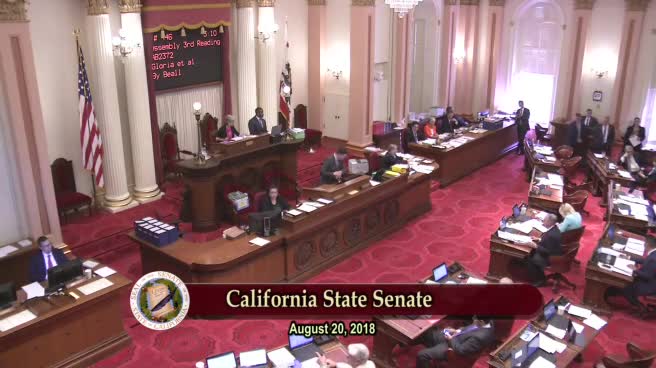
Bill Co-Author(s):