SCR 79: California Freethought Day.
- Session Year: 2017-2018
- House: Senate
- Latest Version Date: 2017-08-31
This measure would proclaim October 15, 2017, as the 16th annual celebration of California Freethought Day in Sacramento, California, congratulate past and current volunteers and planning committees of California Freethought Day, support the goals of California Freethought Day, invite Californians of all religious views to join in the celebration of free thought, science, and the separation of religion and government, and urge other public officials to become more educated about the secular community.
This measure would proclaim October 15, 2017, as the 16th annual celebration of California Freethought Day in Sacramento, California, congratulate past and current volunteers and planning committees of California Freethought Day, support the goals of California Freethought Day, invite Californians of all religious views to join in the celebration of free thought, science, and the separation of religion and government, and urge other public officials to become more educated about the secular community.
WHEREAS, California Freethought Day commemorates establishing the policy in 1692 that evidence of guilt or innocence in the colonial American judicial system had to rely upon facts and reason as opposed to supernatural phenomena; and
WHEREAS, The first California Freethought Day was held on October 12, 2002, at the Sacramento County Courthouse Plaza and started a tradition that united local atheists, agnostics, humanists, freethinkers, and those who are otherwise nonreligious, to an event that celebrated free thought; and
WHEREAS, In its 14 years of celebration, activists such as Thomas Paine, James Madison, Elizabeth Cady Stanton, Clarence Darrow, Jane Addams, Frederick Douglass, George Orwell, Frank Zappa, and Bayard Rustin have been inducted into the events Free Thought Gallery; and
WHEREAS, With each successive year, California Freethought Day has grown from 30 attendees to over 300, added displays such as the Freethinkers Bookshelf, worked with local organizations like WEAVE, incorporated family-friendly activities through a partnership with Camp Quest West, celebrated regional artists, and added auxiliary events including Secular Leadership Day and Secular Advocacy Day; and
WHEREAS, The event has provided a platform for local, regional, and national activists to be heard by thousands, including Cleo Kocol, Jerry Sloan, Michael Newdow, Matt LaClair, Jessica Ahlquist, Annie Laurie Gaylor, Greta Christina, Heina Dadabhoy, Jason Torpy, and Mandisa Thomas; and
WHEREAS, California Freethought Day recognizes our states constitutional commitment to the freedoms of speech and religion, the validation of our states secular community, and the importance of scientific literacy and discovery; now, therefore, be it
Resolved by the Senate of the State of California, the Assembly thereof concurring, That the Legislature proclaims October 15, 2017, as the 16th annual celebration of California Freethought Day in Sacramento, California; and be it further
Resolved, That the Legislature congratulates the past and current volunteers and planning committees of California Freethought Day; and be it further
Resolved, That the Legislature supports the goals of California Freethought Day; and be it further
Resolved, That the Legislature invites Californians of all religious views to join in the celebration of free thought, science, and the separation of religion and government; and be it further
Resolved, That the Legislature urges other public officials to become more educated about the secular community and the values for which they stand; and be it further
Resolved, That the Secretary of the Senate transmit copies of this resolution to the author for appropriate distribution.
|
Date
|
Status
|
|---|---|
| Sep 6, 2017 | In Assembly. Held at Desk. |
| Sep 6, 2017 | Amendments by Senator Anderson tabled on motion of Senator Monning. (Ayes 24. Noes 12.) |
| Aug 31, 2017 | Read second time and amended. Ordered to third reading. |
| Aug 30, 2017 | From committee: Be adopted as amended. (Ayes 4. Noes 1.) (August 29). |
| Aug 25, 2017 | Set for hearing August 29. |
| Aug 23, 2017 | Re-referred to Com. on JUD. |
| Aug 21, 2017 | Introduced. Referred to Com. on RLS. |
|
Date
|
Description
|
Location
|
Votes
|
|
|---|---|---|---|---|
| Sep 6, 2017 | Senate 3rd Reading SCR79 Pan | Senate Floor |
Passed |
|
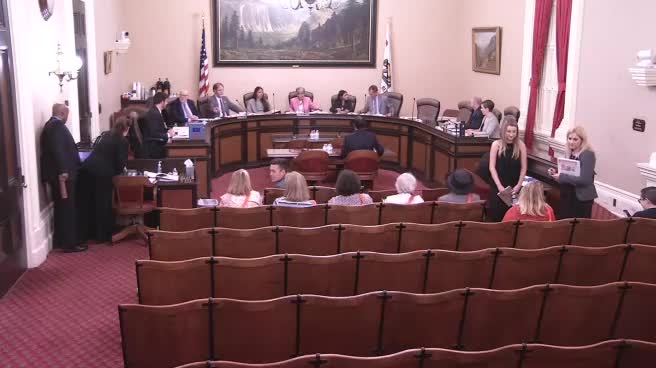
| Aug 29, 2017 | Be adopted as amended | Senate Standing Committee on Judiciary |
Passed |
This list shows positions taken on this bill by organizations on the date displayed, which is linked to the original source.
Positions by individuals are not included.
Office of Senate Floor Analyses (916) 651-1520 Fax: (916) 327-4478 | SCR |
THIRD READING
Bill No: SCR 79
Amended: 8/31/17
SENATE JUDICIARY COMMITTEE: 4-1, 8/29/17
AYES: Jackson, Hertzberg, Stern, Wieckowski
NOES: Anderson
NO VOTE RECORDED: Moorlach, Monning
SOURCE: Secular Coalition for California
DIGEST:
This resolution proclaims October 15, 2017, as the 16th annual celebration of California Freethought Day in Sacramento, California, congratulates past and current volunteers and planning committees of California Freethought Day, supports the goals of California Freethought Day, invites all Californians to join in the celebration of free thought, science, and the separation of religion and government, and urges other public officials to become more educated about the secular community.
Existing law:
- Provides, under the U.S. Constitution, that Congress shall make no law abridging the freedom of speech, or of the press, or the right of the people peaceably to assemble, and to petition the government for a redress of grievances. (U.S. Const., 1st Amend., as applied to the states through the 14th Amendment’s Due Process Clause; see Gitlow v. New York (1925) 268 U.S. 652.)
- Provides that no state shall make or enforce any law which shall abridge the privileges or immunities of citizens of the United States; nor shall any state deprive any person of life, liberty, or property, without due process of law; nor deny to any person within its jurisdiction the equal protection of the laws. (U.S. Const., 14th Amend., Sec. 1.)
- Provides, under the California Constitution, the right of every person to freely speak, write and publish his or her sentiments on all subjects, being responsible for the abuse of this right. Existing law prohibits a law from restraining or abridging liberty of speech or press. (Cal. Const., art. 1, Sec. 2(a).)
This resolution:
- States that the California Freethought Day commemorates establishing the policy in 1692 that evidence of guilt or innocence in the colonial American judicial system had to rely upon facts and reason as opposed to supernatural phenomena.
- States that the first California Freethought Day was held on October 12, 2002, at the Sacramento County Courthouse Plaza and started a tradition that united local atheists, agnostics, humanists, freethinkers, and those who are otherwise nonreligious, to an event that celebrated free thought.
- States that in its 14 years of celebration, activists such as Thomas Paine, James Madison, Elizabeth Cady Stanton, Clarence Darrow, Jane Addams, Frederick Douglass, George Orwell, Frank Zappa, and Bayard Rustin have been inducted into the event’s Free Thought Gallery.
- States that the event has provided a platform for local, regional, and national activists to be heard by thousands.
- States that the California Freethought Day recognizes our state’s constitutional commitment to the freedoms of speech and religion, the validation of our state’s secular community, and the importance of scientific literacy and discovery.
- Declares October 15, 2017, as the 16th annual celebration of California Freethought Day in Sacramento, California and congratulates the past and current volunteers and planning committees of California Freethought Day.
- Declares that the Legislature supports the goals all religious views to join in the celebration of freethought, science, and the separation of religion and government, and urges other public officials to become more educated about the secular community and the values for which they stand.
Background
In Salem, Massachusetts on September 8, 1692, Ann Putnam Jr. gave a deposition against Goodwife Bradbury claiming that “Mis Bradbery is a most dreadfull witch for sence she has been in prison she or hir Apperance has com to me and most greviously afflected me.” (Ann Putnam JR. V. Mary Bradbury, 1692, Paul Boyer and Stephen Nissenbaum, The Salem Witchcraft Papers, Volume 1 (Electronic text center, University of Virginia Library).)
Here, Ann Putnam Jr. provided “spectral evidence” to the court against Mary Bradbury. Spectral evidence refers to testimony of the bewitched that an accused person’s spectral shape appeared to them at a time when their physical body was elsewhere. Legal references from the seventeenth century all urged courts to be extremely skeptical of spectral evidence, yet nearly every case during the Salem outbreak featured this evidence. During these trials more than 200 people were accused of practicing witchcraft—the Devil’s magic—and 20 were executed.
Freethought Day originated on October 12, 1692, when then Massachusetts Governor William Phips wrote to the Privy Council of the British Monarchs arguing that the trials had degenerated into a crisis largely because of the use of spectral evidence. Phips paused the proceedings, and when the trials resumed, the use of spectral evidence was limited and those convicted were pardoned by Phips. (Linder, Douglas, Two Letters of Gov. William Phips (1692-1693). Famous Trials. University of Missouri-Kansas City School of Law.)
Since 2002, Freethought Day has been observed in Sacramento as a free event that is open to the public. Nick-named a “festival of reason,” the annual event celebrates the separation of church and state, the First Amendment, and science. In 2016, the event was renamed “California Freethought Day” to reflect the growth of the event spanning the last 15 years. This resolution, among other things, recognizes California Freethought Day, and invites Californians to join in the celebration of free thought, science, and the separation of religion and government.
FISCAL EFFECT: Appropriation: No Fiscal Com.: No Local: No
Secular Coalition for California (source)
OPPOSITION: (Verified 8/31/17)
None received
ARGUMENTS IN SUPPORT: The author writes, “The first Sacramento Freethought Day was held on October 12, 2002, at the Sacramento County Courthouse Plaza and started a tradition that united local atheists, agnostics, humanists, freethinkers, and those who are otherwise non-religious, to an event that celebrated freethought. California Freethought Day recognizes our state’s constitutional commitment to the freedoms of speech and religion, the validation of our state’s secular community, and the importance of scientific literacy and discovery.”
8/31/17 17:00:39
**** END ****
Senator Hannah-Beth Jackson, Chair
2017-2018 Regular Session
Bill No: SCR 79 (Author:Pan)
Version: August 21, 2017
Hearing Date: August 29, 2017
Fiscal: No
Urgency: No
Consultant: NR
SUBJECT
California Freethought Day
DESCRIPTION
This measure would proclaim October 15, 2017, as the 16th annual celebration of California Freethought Day in Sacramento, California, congratulate past and current volunteers and planning committees of California Freethought Day, support the goals of California Freethought Day, invite Californians of all religious views to join in the celebration of free thought, science, and the separation of religion and government, and urge other public officials to become more educated about the secular community.
BACKGROUND
In Salem, Massachusetts on September 8, 1692, Ann Putnam Jr. gave a deposition against Goodwife Bradbury claiming that “Mis Bradbery is a most dreadfull witch for sence she has been in prison she or hir Apperance has com to me and most greviously afflected me.” (Ann Putnam JR. V. Mary Bradbury, 1692, Paul Boyer and Stephen Nissenbaum, The Salem Witchcraft Papers, Volume 1 (Electronic text center, University of Virginia Library).)
Here, Ann Putnam Jr. provided “spectral evidence” to the court against Mary Bradbury. Spectral evidence refers to testimony of the bewitched that an accused person’s spectral shape appeared to them at a time when their physical body was elsewhere. Legal references from the seventeenth century all urged courts to be extremely skeptical of spectral evidence, yet nearly every case during the Salem outbreak featured this evidence. During these trials more than 200 people were accused of practicing witchcraft—the Devil’s magic—and 20 were executed.
Freethought Day originated on October 12, 1692, when then Massachusetts Governor William Phips wrote to the Privy Council of the British Monarchs arguing that the trials had degenerated into a crisis largely because of the use of spectral evidence. Phips paused the proceedings, and when the trials resumed, the use of spectral evidence was limited and those convicted were pardoned by Phips. (Linder, Douglas, Two Letters of Gov. William Phips (1692-1693). Famous Trials. University of Missouri-Kansas City School of Law.)
Since 2002, Freethought Day has been observed in Sacramento as a free event that is open to the public. Nick-named a “festival of reason,” the annual event celebrates the separation of church and state, the First Amendment, and science. In 2016, the event was renamed “California Freethought Day” to reflect the growth of the event spanning the last 15 years. This measure, among other things, would recognize California Freethought Day, and invite Californians of all religious views to join in the celebration of free thought, science, and the separation of religion and government.
CHANGES TO EXISTING LAW
Existing federal law, the U.S. Constitution, provides that Congress shall make no law abridging the freedom of speech, or of the press, or the right of the people peaceably to assemble, and to petition the government for a redress of grievances. (U.S. Const., 1st Amend., as applied to the states through the 14th Amendment’s Due Process Clause; see Gitlow v. New York (1925) 268 U.S. 652.)
Existing federal law provides that no State shall make or enforce any law which shall abridge the privileges or immunities of citizens of the United States; nor shall any State deprive any person of life, liberty, or property, without due process of law; nor deny to any person within its jurisdiction the equal protection of the laws. (U.S. Const., 14th Amend., Sec. 1.)
Existing law, the California Constitution, provides the right of every person to freely speak, write and publish his or her sentiments on all subjects, being responsible for the abuse of this right. Existing law prohibits a law from restraining or abridging liberty of speech or press. (Cal. Const., art. 1, Sec. 2(a).)
This measure would state, among other things, that:
- the California Freethought Day commemorates establishing the policy in 1692 that evidence of guilt or innocence in the colonial American judicial system had to rely upon facts and reason as opposed to supernatural phenomena;
- the first California Freethought Day was held on October 12, 2002, at the Sacramento County Courthouse Plaza and started a tradition that united local atheists, agnostics, humanists, freethinkers, and those who are otherwise nonreligious, to an event that celebrated free thought;
- in its 14 years of celebration, activists such as Thomas Paine, James Madison, Elizabeth Cady Stanton, Clarence Darrow, Jane Addams, Frederick Douglass, George Orwell, Frank Zappa, and Bayard Rustin have been inducted into the event’s Free Thought Gallery;
- the event has provided a platform for local, regional, and national activists to be heard by thousands; and
- the California Freethought Day recognizes our state’s constitutional commitment to the freedoms of speech and religion, the validation of our state’s secular community, and the importance of scientific literacy and discovery.
This measure would declare October 15, 2017, as the 16th annual celebration of California Freethought Day in Sacramento, California and congratulate the past and current volunteers and planning committees of California Freethought Day.
This measure would declare that the Legislature supports the goals of California Freethought Day and invites Californians of all religious views to join in the celebration of freethought, science, and the separation of religion and government, and would urge other public officials to become more educated about the secular community and the values for which they stand.
COMMENT
- Stated need for the bill
According to the author:
The first Sacramento Freethought Day was held on October 12, 2002, at the Sacramento County Courthouse Plaza and started a tradition that united local atheists, agnostics, humanists, freethinkers, and those who are otherwise non-religious, to an event that celebrated freethought. California Freethought Day recognizes our state’s constitutional commitment to the freedoms of speech and religion, the validation of our state’s secular community, and the importance of scientific literacy and discovery.
- Freedoms of speech and religion
The First Amendment states: “Congress shall make no law respecting an establishment of religion, or prohibiting the free exercise thereof; or abridging the freedom of speech, or of the press; or the right of the people to peaceably assemble, and to petition the Government for a redress of grievances.”
In its treatment of speech, the First Amendment is undoubtedly a reaction against the suppression of speech and of the press that existed in English society. Until 1694, there was an elaborate system of licensing in England, and no publication was allowed without a government-issued license. Speech in England also was restricted by the law of seditious libel that made criticizing the government a crime. With regard to religion, the First Amendment prohibits the government from adopting a religion, and also grants individuals the right to practice any religion of their choice.
This measure, which celebrates the existence of freethought, science, and the separation of religion and government, is thus consistent with the nature of the First Amendment itself. However, insofar as this measure invites Californians of “all religious views,” to participate in Freethought Day, staff notes that one does not have to be nonreligious to value the separation of church and state. In fact, secularism does not equal the abolition of religion, but instead the absence of religion in the application of our laws. The First Amendment embraces this notion in that it prohibits the government from adopting any particular religion while simultaneously affording people the right to practice (or refuse to practice) the religion of their choice. Accordingly, in keeping with the spirit of this measure and the First Amendment, the author may wish to amend this resolution to address all Californians, regardless of what, if any, religious beliefs they hold.
Suggested amendment
On page 2, lines 28-29 strike “of all religious views”
- Fair treatment of evidence essential to ensuring due process
This measure would celebrate Freethought day, which was reportedly established in 1692 after the then governor of Massachusetts limited the use of spectral evidence during the Salem witch trials. This event is arguably of great importance in the cultivation of the American system of jurisprudence, where the concept of procedural fairness is paramount.
The Fourteenth Amendment of our Constitution prevents the government from depriving “any person of life, liberty, or property, without due process of law.” Although the kind of process that is due in a particular circumstance depends on many considerations, the Supreme Court has laid out some general guideposts to ensure due process, including government transparency and the right of private parties to participate meaningfully in the government proceedings affecting them. At the core of these requirements is the need for proper notice and a hearing before an impartial tribunal. Due process may also require an opportunity for confrontation and cross-examination, and for discovery; that a decision be based on the record, and that a party be allowed to be represented by counsel.
An essential component to the requirements listed above is the ability of parties to submit and evaluate relevant evidence. Relevant evidence is generally considered anything that, based in fact, may prove or disprove an element of a case. Parties in cases have the ability to present and object to evidence, and courts may prohibit consideration of evidence that, while relevant, may unfairly affect the perception of a jury. The Salem witch trials, where 20 women were executed largely based on spectral or supernatural evidence, perfectly demonstrate how requiring that evidence be based in verifiable fact better protects the due process rights of individuals.
Support: None Known
Opposition: None Known
HISTORY
Source: Secular Coalition for California
Related Pending Legislation: None Known
Prior Legislation: None Known
**************
Discussed in Hearing
View Older Hearings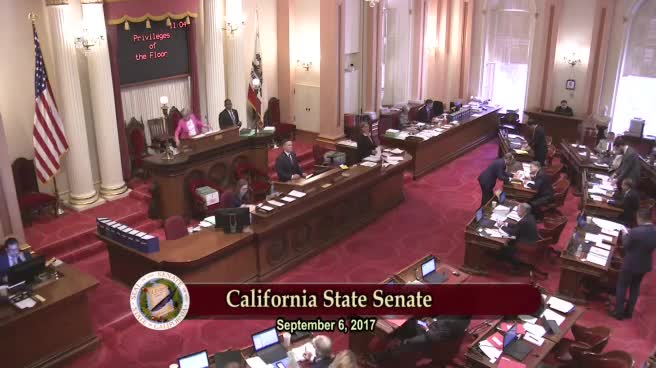
Bill Author

Bill Co-Author(s):