SJR 1: Immigration.
- Session Year: 2017-2018
- House: Senate
- Latest Version Date: 2016-12-05
This measure would urge Congress and the President of the United States to work together to create a comprehensive and workable approach to reform the nations immigration system according to specified principles.
WHEREAS, This country was built by immigrants seeking a better life; and
WHEREAS, Estimates suggest that there are 11 million undocumented immigrants living in the shadows in the United States, including millions of children brought to this country undocumented who have grown up here, call the United States home, and are suffering from our dysfunctional immigration policy; and
WHEREAS, A logical and streamlined path to citizenship for individuals after they gain legal status would stimulate the economy by allowing these individuals to get college degrees and drivers licenses, buy homes, start new companies, and create legal, tax-paying jobs, affording them a chance at the American Dream; and
WHEREAS, The United States Congress last enacted major immigration legislation more than 25 years ago; and
WHEREAS, Since that time, fragmented attempts at immigration reform have failed to create the rational and effective systems needed to maintain international competitiveness. Whether in industries like agriculture, which requires large numbers of workers able to perform physically demanding tasks, or in industries like technology or health care, where the demand for employees with advanced degrees is projected to exceed supply within the next five years, immigration policy must be designed to respond to emerging labor needs in all sectors of the United States economy; and
WHEREAS, Our national interests and security are not served by our outdated, inefficient, and slow-moving immigration system. Patchwork attempts to mend its deficiencies undermine our potential for prosperity and leave us vulnerable and unable to meet the needs of the modern world; and
WHEREAS, Labor mobility is crucial to our economic prosperity and our countrys recovery from the economic crisis. Yet our rigid, outdated immigration policies are making it difficult for our companies and our nation to compete. Information released in a study by the University of California, Los Angeles, states that legalizing the status of undocumented immigrants working and living in the United States would create approximately $1.5 trillion in additional gross domestic product growth over the next 10 years and increase wages for all workers. Another study by the University of California, Davis, indicates that the last large wave of immigrants, from 1990 to 2007, inclusive, raised the income of a native-born American worker by an average of $5,000; and
WHEREAS, California has the largest share of immigrants in the country. These immigrants are a vital and productive part of our states economy and are active in a variety of industries, including technology, biotech, hospitality, agriculture, construction, services, transportation, and textiles. They also represent a large share of our new small business owners and create economic prosperity and needed jobs for everyone; and
WHEREAS, Keeping these families, business owners, and hard workers in the shadows of society serves no one; and
WHEREAS, Our state, for economic, social, health, security, and prosperity reasons, must support policies that allow individuals to become legal and enfranchised participants in our society and economy; and
WHEREAS, Comprehensive immigration reform should include a reasonable and timely path to citizenship for undocumented immigrants who are already living and working in the United States. Immigration reform should also include comprehensive background checks, require demonstrated proficiency in English and payment of all current and back taxes, and have the flexibility to respond to emerging business trends; and
WHEREAS, The Migration Policy Institute, a nonpartisan research group in Washington, D.C., estimates that in 2012, the federal government spent $18 billion on immigration enforcement, and since 2004, the number of United States Border Patrol agents has doubled; and
WHEREAS, Increased enforcement has given the federal government the ability to prioritize the deportation of lawbreakers and dangerous individuals and to ensure our borders security. Nevertheless, this enforcement should not be done in an inhumane way; and
WHEREAS, Immigration enforcement should continue to focus on criminals, not on hardworking immigrant families, and not at the expense of efficient trade with two of our top three economic partners; and
WHEREAS, The United States loses large numbers of necessary, highly skilled workers due to the lengthy and complicated processes currently in place to get or keep a legal residency option; and
WHEREAS, Reform should include an expedited process for those residing abroad and applying for legal visas. Additionally, reform should offer permanent residency opportunities to international students in American universities who are highly trained and in high demand, and in so doing avoid an intellectual vacuum after their graduation; and
WHEREAS, Reform should recognize the societal and cultural benefits of keeping the family unit intact. The system should take into account special circumstances surrounding candidates for probationary legal status, such as those of minors who were brought to the country as children or workers whose labor is essential to maintain our countrys competitiveness; now, therefore, be it
Resolved by the Senate and the Assembly of the State of California, jointly, That the Legislature urges the President and the Congress of the United States to work together and create a comprehensive and workable approach to solving our nations historically broken immigration system, using the principles described in this resolution; and be it further
Resolved, That the Secretary of the Senate transmit copies of this resolution to the President and the Vice President of the United States, to the Speaker of the House of Representatives, to the Majority Leader of the Senate, and to each Senator and Representative from California in the Congress of the United States.
|
Date
|
Status
|
|---|---|
| Jun 20, 2017 | June 20 hearing canceled at the request of author. |
| Jun 6, 2017 | Set for hearing June 20. |
| Jan 26, 2017 | Re-referred to Com. on JUD. |
| Dec 5, 2016 | Introduced. Referred to Com. on RLS. |
This list shows positions taken on this bill by organizations on the date displayed, which is linked to the original source.
Positions by individuals are not included.
Senator Hannah-Beth Jackson, Chair
2017-2018 Regular Session
Bill No: SJR 1 (Author:Vidak)
Version: December 5, 2016
Hearing Date: June 20, 2017
Fiscal: No
Urgency: No
Consultant: MEC
SUBJECT
Immigration
DESCRIPTION
This resolution would urge the Congress and the President of the United States to work together to create a comprehensive and workable approach to reform the nation’s immigration system, according to specified principles.
BACKGROUND
During the 2016 presidential campaign, candidate Donald Trump vilified immigrants and made campaign promises to deport millions of immigrants. From the outset, the President disparaged Mexicans, by declaring in his announcement to run for the presidency that, “They're bringing drugs. They're bringing crime. They're rapists.” The candidate vilified Muslim Americans by falsely claiming that thousands of Muslim Americans celebrated the September 11th terrorist attacks, making the generalization that “I think Islam hates us,” and vowing a “total and complete shutdown of Muslims entering the United States.”
Donald Trump was sworn in as President of the United States on January 20, 2017. Prior to being sworn in, then President-elect Donald Trump promised on national television to immediately deport “probably two million, it could be even three million,” people, who he claimed “have criminal records, [are] gang members, drug dealers,” despite the fact that there are fewer than one million undocumented residents with any criminal record currently in this country.
Undocumented immigrants comprise nearly 10 percent of the state’s workforce – contributing $130 billion annually to its gross domestic product – concentrated in agriculture, food services, construction, textile, and domestic services. According to data from the Institute for Taxation and Economic Policy, undocumented immigrants in California paid $2.2 billion in state and local taxes in 2010, including $1.8 billion in sales taxes, $152.1 million in state income taxes, and $302.8 million in property taxes. Were undocumented immigrants in California to have legal status, they would pay over $2.6 billion in state and local taxes, including $1.9 billion in sales taxes, $384.3 million in state income taxes, and $320.1 million in property taxes.
While Congress has failed to pass comprehensive immigration reform, the California Legislature has taken steps to better protect its undocumented residents, providing avenues into the economic mainstream and out of the shadows. This resolution would urge the Congress and the President of the United States to work together to create a comprehensive and workable approach to reform the nation’s immigration system, according to specified principles.
The Legislature originally passed this resolution as SJR 8 (Correa, Resolution Chapter 102, Statutes of 2013) in an effort to encourage the House of Representatives to pass the Senate’s bipartisan comprehensive immigration reform bill, S. 744. In 2013, the United States Senate passed S. 744, known as the Border Security, Economic Opportunity, and Immigration Modernization Act of 2013. The Act included some of the concepts reflected in this resolution. Immigrants would have been able to apply for registered provisional immigrant status under the Act, been able to work, and would have been eligible to apply for lawful permanent resident status after another 10 years. S. 744 died in the 113th Congress.
In 2015, the same resolution was passed by the Legislature as SJR 2 (Vidak, Resolution Chapter 23, Statutes of 2015). The author again brings the same resolution as SJR 1 to urge the Congress and the President of the United States to work together to create a comprehensive and workable approach to reform the nation’s immigration system, according to specified principles, and relying on findings that are out of date due to the election of Donald Trump as President and his actions regarding immigrants.
CHANGES TO EXISTING LAW
Existing law provides, under the Fifth Amendment to the U.S. Constitution, that a person shall not be deprived of life, liberty, or property without due process of law. (U.S. Const., 5th Amend.)
Existing law holds that once an alien enters the country, the legal circumstance changes, for the Due Process Clause applies to all persons within the United States, including aliens, whether their presence here is lawful, unlawful, temporary, or permanent. (Zadvydas v. Davis, 533 U.S. 678 (2001).)
Existing law prohibits the federal government from returning to their home countries people whose life or freedom would be threatened because of the alien’s race, religion, nationality, membership in a particular social group, or political opinion. (8 U.S.C. Sec. 1231(b)(3).)
Existing law provides for the protection of people who have fled persecution on account of race, religion, nationality, political opinion, or membership in a particular social group. (UN General Assembly, Universal Declaration of Human Rights, Dec. 10, 1948, 217A(III), Art. 14.)
Existing law protects all asylum seekers by prohibiting the federal government from returning to their home countries people who have fled persecution on account of race, religion, nationality, political opinion, or membership in a particular social group. (8 U.S.C. Sec. 1101(a)(42)(A).)
Existing law provides that youth may have temporary protection from deportation and work authorization for two-year periods, as specified. (See Janet Napolitano, June 15, 2012 policy memorandum announcing the DACA program, <https://www.dhs.gov/xlibrary/assets/s1-exercising-prosecutorial-discretion-individuals-who-came-to-us-as-children.pdf> [as of Dec. 1, 2016].)
Existing law provides that victims of certain crimes may obtain immigration relief through a Victim of Crime Visa (U-Visa) and victims of human trafficking may obtain immigration relief through a Victim of Trafficking Visa (T-Visa). (8 U.S.C. Sec. 1101(a)(15)(U); 8 U.S.C. Sec. 1101(a)(15)(T).)
Existing law provides immigration relief that relies on a state’s interest in the welfare of children by providing for Special Immigrant Juvenile Status where a state determines that reunification with one or both of the immigrant’s parents is not viable due to abuse, neglect, abandonment, or similar basis found under state law and that it would not be in the child’s best interest to return to their home country. (8 U.S.C. Sec. 1101 (a)(27)(J).)
Existing case law holds that immigrant detainees with mental disabilities who are facing deportation and who are unable to adequately represent themselves are entitled to qualified legal representatives provided by the federal government for representation during all phases of their immigration proceedings, including appeals and custody hearings. (Franco-Gonzalez v. Holder, 2015 U.S. Dist. Lexis 179622.)
This resolution would urge the President and the Congress of the United States to work together and create a comprehensive and workable approach to solving our nation’s historically broken immigration system, using the principles in this resolution.
This resolution would make a number of legislative findings, including the following, regarding undocumented immigrants, the nation’s broken immigration system, and the need for comprehensive immigration reform:
- This country was built by immigrants seeking a better life;
- Estimates suggest that there are 11 million undocumented immigrants living in the shadows in the United States, including millions of children brought to this country undocumented who have grown up here, call the United States home, and are suffering from our dysfunctional immigration policy;
- A logical and streamlined path to citizenship for individuals after they gain legal status would stimulate the economy by allowing these individuals to get college degrees and driver’s licenses, buy homes, start new companies, and create legal, tax-paying jobs, affording them a chance at the American Dream;
- The United States Congress last enacted major immigration legislation more than 25 years ago and since that time, fragmented attempts at immigration reform have failed to create the rational and effective systems needed to maintain international competitiveness;
- Whether in industries like agriculture, which requires large numbers of workers able to perform physically demanding tasks, or in industries like technology or health care, where the demand for employees with advanced degrees is projected to exceed supply within the next five years, immigration policy must be designed to respond to emerging labor needs in all sectors of the United States economy;
- Our national interests and security are not served by our outdated, inefficient, and slow-moving immigration system. Patchwork attempts to mend its deficiencies undermine our potential for prosperity and leave us vulnerable and unable to meet the needs of the modern world;
- Labor mobility is crucial to our economic prosperity and our country’s recovery from the economic crisis. Yet our rigid, outdated immigration policies are making it difficult for our companies and our nation to compete. Information released in a study by the University of California, Los Angeles, states that legalizing the status of undocumented immigrants working and living in the United States would create approximately $1.5 trillion in additional gross domestic product growth over the next 10 years and increase wages for all workers. Another study by the University of California, Davis, indicates that the last large wave of immigrants, from 1990 to 2007, inclusive, raised the income of a native-born American worker by an average of $5,000;
- California has the largest share of immigrants in the country. These immigrants are a vital and productive part of our state’s economy and are active in a variety of industries, including technology, biotech, hospitality, agriculture, construction, services, transportation, and textiles. They also represent a large share of our new small business owners and create economic prosperity and needed jobs for everyone;
- Keeping these families, business owners, and hard workers in the shadows of society serves no one;
- Our state, for economic, social, health, security, and prosperity reasons, must support policies that allow individuals to become legal and enfranchised participants in our society and economy;
- Comprehensive immigration reform should include a reasonable and timely path to citizenship for undocumented immigrants who are already living and working in the United States. Immigration reform should also include comprehensive background checks, require demonstrated proficiency in English and payment of all current and back taxes, and have the flexibility to respond to emerging business trends;
- The Migration Policy Institute, a nonpartisan research group in Washington, D.C., estimates that in 2012, the federal government spent $18 billion on immigration enforcement, and since 2004, the number of United States Border Patrol agents has doubled;
- Increased enforcement has given the federal government the ability to prioritize the deportation of lawbreakers and dangerous individuals and to ensure our border’s security. Nevertheless, this enforcement should not be done in an inhumane way;
- Immigration enforcement should continue to focus on criminals, not on hardworking immigrant families, and not at the expense of efficient trade with two of our top three economic partners;
- The United States loses large numbers of necessary, highly skilled workers due to the lengthy and complicated processes currently in place to get or keep a legal residency option;
- Reform should include an expedited process for those residing abroad and applying for legal visas. Additionally, reform should offer permanent residency opportunities to international students in American universities who are highly trained and in high demand, and in so doing avoid an intellectual vacuum after their graduation; and
- Reform should recognize the societal and cultural benefits of keeping the family unit intact. The system should take into account special circumstances surrounding candidates for probationary legal status, such as those of minors who were brought to the country as children or workers whose labor is essential to maintain our country’s competitiveness.
This resolution would direct the Secretary of the Senate to transmit copies of this resolution to the President and the Vice President of the United States, to the Speaker of the House of Representatives, to the Majority Leader of the Senate, and to each Senator and Representative from California in the Congress of the United States.
COMMENT
1. Stated need for resolution
According to the author:
The resolution encourages Congress and the President to work together to create meaningful, comprehensive immigration reform. Consensus is necessary to effect meaningful and enduring change.
[A] logical and streamlined path to citizenship for individuals after they gain legal status would stimulate the economy by encouraging and allowing these individuals to get college degrees, buy homes, start new companies, and create legal, tax-paying jobs, affording them a chance at the American Dream.
For a tailored solution, it is important for both Congress and the president to work together to draft and implement new immigration laws, policies, and regulations that are best for all residents of the United States.
Current law is a patchwork of laws and executive orders. This resolution contends that there should be consensus between the branches of Government, and that any meaningful reform must come about legislatively with Congress and the Executive branch’s input and approval.
Information released in a study by the University of California, Los Angeles, states that legalizing the status of undocumented immigrants working and living in the United States would create approximately $1.5 trillion in additional gross domestic product growth over the next 10 years and increase wages for all workers. Another study by the University of California, Davis, indicates that the last large wave of immigrants, from 1990 to 2007, inclusive, raised the income of a native-born American worker by an average of $5,000
2. Some provisions of this resolution are reflective of California’s strong public policy in support of immigrants
California leads the nation in ensuring that immigrants are treated with dignity and respect. While the federal government has failed to pass comprehensive immigration reform, California has routinely exercised its state power to protect immigrants. For example, some recently enacted state laws do the following:
- Expand health care for immigrant children regardless of immigration status (SB 4, Lara, Ch. 709, Stats. 2015);
- Create the position of Statewide Director of Immigrant Integration within the Governor’s office to ensure that California has a comprehensive approach to immigrant integration, including facilitating immigration relief options, naturalization services, and civic engagement efforts (SB 84, Senate Budget and Fiscal Review Committee, Ch. 25, Stats. 2015);
- Protect immigrant workers from unscrupulous employers by stopping employers from misusing the E-Verify system to intimidate workers (AB 622, Roger Hernández, Ch. 696, Stats 2015);
- Protect immigrants from discrimination by making it unlawful for business establishments to discriminate against a person on the basis of their immigration status, citizenship, or language (SB 600, Pan, Ch. 282, Stats. 2015);
- Protect immigrants from immigration fraud as they seek help in applying for immigration relief (AB 60, Gonzalez, Ch. 6, Stats. 2015);
- Require law enforcement to complete certifications for a victim of crime who was helpful to the criminal investigation so that victims can apply for Victims of Crime immigration visas (SB 674, De León, Ch. 721, Stats. 2015);
- Protect immigrant children by safeguarding their records from unauthorized disclosure to federal immigration officials that may result in a child’s deportation (AB 899, Levine, Ch. 267, Stats. 2015);
- Require defense counsel in criminal proceedings to provide accurate and affirmative advice and defense to immigrants to avoid unintended immigration consequences, such as detention, deportation, and loss of citizenship eligibility. (AB 1343, Thurmond, Ch. 705, Stats. 2015);
- Allow youth 18-21 years of age, who have escaped violence or terror in their country of origin to come under the protection of a guardianship that can also help the youth obtain Special Immigrant Juvenile Status immigration relief (AB 900, Levine, Chapter 694, Statutes 2015);
- Prevent unintended immigration consequences for rehabilitated immigrants who successfully complete diversion programs (AB 1352, Eggman, Ch. 646, Stats. 2015);
- Empower immigrants to obtain driver’s licenses (AB 60, Alejo, Ch. 524, Stats. 2013);
- Allow all Californians to apply for professional licenses regardless of the immigration status of the applicant (SB 1159, Lara, Ch. 752, Stats. 2014);
- Empower undocumented students by allowing them to pay in-state tuition at public higher education institutions (AB 540, Firebaugh, Ch. 814, Stats. 2001), receive financial aid (AB 131, Cedillo, Ch. 604, Stats. 2011) and scholarships (AB 130, Cedillo, Ch. 93, Stats. 2011);
- Prohibit law enforcement officials from detaining individuals on the basis of an immigration hold after the individual becomes eligible for release, except in specified circumstances (AB 4, Ammiano, Ch. 570, Stats. 2013); and
- Require overtime compensation for agricultural employees. (AB 1066, Gonzalez, Ch. 313, Stats. 2016).
The State of California further supports immigrants by funding legal services for unaccompanied minors and youth and legal services for immigrants seeking naturalization, U-Visas, T-Visas, DACA, and other immigration remedies.
Some provisions of this resolution are reflective of California’s public policy in support of immigrants. Some examples are the provisions that state:
“These immigrants are vital and productive parts of our state’s economy…”
“Keeping these families, business owners, and hard workers in the shadows of society serves no one…”
“Reform should recognize the societal and cultural benefits of keeping the family unit intact. The system should take into account special circumstances surrounding candidates for probationary legal status, such as those of minors who were brought to the country as children or workers whose labor is essential to maintain our country’s competitiveness…”
3. This resolution, a near copy of a 2013 resolution, should be updated to reflect the shift in national immigration policy that began this year when Donald Trump was elected President
The last time there was a chance for comprehensive immigration reform that reflects California values was in 2013. In 2013, the United States Senate passed S. 744, known as the Border Security, Economic Opportunity, and Immigration Modernization Act of 2013. The Act included some of the concepts reflected in this resolution. Immigrants would have been able to apply for registered provisional immigrant status under the Act, been able to work, and would have been eligible to apply for lawful permanent resident status after another 10 years. S. 744 died in the 113th Congress.
The Legislature originally passed a near copy of the resolution now before this committee as SJR 8 (Correa, Resolution Chapter 102, Statutes of 2013) in an effort to encourage the House of Representatives to pass the Senate’s bipartisan comprehensive immigration reform bill, S. 744. The resolution currently before this committee is outdated as it does not reflect the current President’s actions to target immigrants for deportation.
President Trump kept his campaign promise to target immigrants by issuing three Executive Orders relating to immigration policy. Several elements of these Executive Orders have already been challenged successfully in court on constitutional grounds. As a result, the federal courts have instructed the government not to enforce those parts of the orders. In one instance, President Trump issued a revised order, only to have it blocked by the courts as well. President Trump has ordered the U.S. Department of Justice to appeal one of those rulings, regarding a ban on travel from a series of predominately Muslim countries, to the U.S. Supreme Court, where the matter is now pending.
More specifically, the content and status of each order can be summarized as follows:
- Executive Order (EO) 13767, “Border Security and Immigration Enforcement Improvements.” Issued by President Trump on January 25, 2017, this order made it U.S. policy to construct a physical wall along the southern border. It directed the Secretary of the Department of Homeland Security (DHS) to take steps “immediately” to plan, design, and construct the wall, as well as to construct and operate detention facilities to detain aliens at or near the border with Mexico. Among other things, EO 13767 also directs the Secretary to: (1) allocate asylum officers and judges to detention facilities in order to conduct authorized removal proceedings; (2) ensure detention of aliens apprehended for violations of immigration law pending the outcome of removal proceedings; and (3) hire 5,000 additional border patrol agents.
- Executive Order 13768, “Enhancing Public Safety in the Interior of the United States.” Issued by President Trump on January 25, 2017, this order directs the Secretary of Homeland Security to: (1) hire 10,000 additional immigration officers and to empower state and local law enforcement to perform functions of immigration officers; and (2) prioritize certain persons for removal, especially any person charged with or convicted of a criminal offense, any person who has committed acts that constitute a criminal offense, or any person who has “abused” a public benefit program. Staff notes that the Executive Order’s enforcement priorities are so expansive that immigration authorities would arguably target every undocumented person in California, and every person arriving at our borders, including asylum seekers. EO 13768 also seeks to designate as a “sanctuary” any jurisdiction that refuses to exchange information, as required by 8 U.S.C. § 1373, and would make such jurisdictions ineligible for federal grants, except as deemed necessary for law enforcement purposes. The County of Santa Clara and the City of San Francisco together challenged this Executive Order’s provisions regarding sanctuary cities in court. On April 25, 2017, a federal judge ruled that the sanctuary cities provisions were likely unconstitutional and blocked the federal government from enforcing this aspect of the order pending a final determination. (Cnty. of Santa Clara v. Trump (N.D. Cal. Apr. 25, 2017) 2017 U.S. Dist. LEXIS 62871.)
- Executive Order 13769, “Protecting the Nation from Foreign Terrorist Entry into the United States.” Issued by President Trump on January 27, 2017, this is the order frequently referred to as the “Muslim travel ban.” Among other things, EO 13769 suspended all travel to the U.S. from nationals of Iraq, Iran, Libya, Somalia, Sudan, Syria, and Yemen. In the following days, hundreds of travelers from those countries were detained at U.S. airports upon arrival and protests erupted. Multiple U.S. District Courts ruled the travel ban unconstitutional and enjoined the government from enforcing it. (Washington v. Trump, (W.D. Wash. Feb. 3, 2017) 2017 U.S. Dist. LEXIS 16012; State v. Trump (D. Haw. Feb. 9, 2017) 2017 U.S. Dist. LEXIS 19248; Aziz v. Trump (E.D. Va. Feb. 13, 2017) 2017 U.S. Dist. LEXIS 20889.) On February 9, 2017, the United States Court of Appeals for the Ninth Circuit denied the government's emergency motion for a stay of the lower court’s temporary injunction against EO 13769, effectively affirming the injunction against the travel ban. (Washington v. Trump (9th Cir. Wash. Feb. 9, 2017) 847 F.3d 1151.) Rather than appeal the Ninth Circuit decision to the U.S. Supreme Court, the administration instead revoked EO 13769 and issued a revised version of the order, Executive Order 13780, on March 6, 2017. Among other things, EO 13780 announced that the U.S. government would suspend entry into the U.S. of nationals of Iran, Libya, Somalia, Sudan, Syria, and Yemen (Iraq was excluded) for 90 days beginning May 16, 2017, subject to exceptions for (1) a person holding a valid visa or other document that permits travel in the U.S.; (2) a legal permanent resident (i.e. "Green Card" holder); (3) a foreign national granted asylum or a refugee already admitted into the U.S.; or (4) a person inside the U.S. at the time of this order. EO 13780 also ordered suspension of the entry of all refugees under the U.S. Refugee Assistance Program for 120 days, and seeks to limit the total number of refugees accepted into the U.S. to just 50,000—half the number of refugees previously accepted under the Obama administration. Just hours before this revised executive order was scheduled to go into effect, however, a U.S. District Court in Hawaii enjoined it as well. (Hawai'i v. Trump (D. Haw. Mar. 15, 2017) 2017 U.S. Dist. LEXIS 36935.) A federal district court in Maryland soon followed. (Int'l Refugee Assistance Project v. Trump (D. Md. Mar. 15, 2017) 2017 U.S. Dist. LEXIS 37645). The Fourth Circuit Court of Appeal subsequently affirmed the Maryland injunction. (Int'l Refugee Assistance Project v. Trump (4th Cir. Md. May 25, 2017) 2017 U.S. App. LEXIS 9109.) The Ninth Circuit ruling on the revised executive order remains pending. Meanwhile, President Trump instructed the U.S. Justice Department to appeal the Fourth Circuit decision to the U.S. Supreme Court. The U.S. Supreme Court has ordered the parties to file their respective briefs by June 12, 2017. (Trump v. Int'l Refugee Assistance Project (U.S. June 2, 2017) 2017 U.S. LEXIS 3552.) Meanwhile, on June 13, 2017, a three judge panel of the Ninth Circuit unanimously affirmed the Hawaii District Court ruling, though it scaled back the scope of the District Court’s injunction to allow the federal government to study implementation methods while actual implementation is on hold. (Hawai’i v. Trump (9th Cir. June 12, 2017, No. 17-15589, available at<http://cdn.ca9.uscourts.gov/datastore/uploads/general/cases_of_
interest/17-15589%20per%20curiam%20opinion.pdf> [as of June 14, 2017].)
This committee may wish to amend this resolution with provisions that reflect the Executive Orders and the Trump Administration’s current efforts to deport immigrants that are contrary to California’s values. Specifically, the Committee may wish to add the following provisions to the resolution:
WHEREAS, President Trump’s Executive Order 13780, titled “Protecting the Nation from Foreign Terrorist Entry into the United States” and issued March 6, 2017, seeks to suspend the entry of all refugees under the United States Refugee Assistance Program for 120 days, and seeks to limit the total number of refugees accepted to just 50,000 — half the number of refugees previously accepted under the Obama administration; and
WHEREAS, President Trump’s Executive Order 13768, titled “Enhancing Public Safety in the Interior of the United States” and issued January 25, 2017, seeks to direct the Department of Homeland Security to hire 10,000 additional immigration enforcement officers, empower states and local law enforcement to perform functions of immigration officers, and to greatly expand the categories of people classified as priorities for removal, including those who are convicted of only minor crimes or who are simply charged with, but not convicted, of a crime; and
WHEREAS, President Trump’s Executive Order 13767, titled “Border Security and Immigration Enforcement Improvements” and issued January 25, 2017, calls for the construction of a wall along the southern border with Mexico estimated to cost $20 billion, the construction and operation of new immigration detention facilities near the border, and the hiring of 5,000 additional Border Patrol agents; and
The Committee may also wish to revise the resolution to reflect the current estimates of undocumented immigrants in California and those who are eligible in California for the Deferred Action for Childhood Arrival. Specifically, the Committee may wish to add the following provision:
WHEREAS, California is home to an estimated 3 million undocumented immigrants, including immigrants eligible for immigration relief including visa programs and 361,000 immigrants eligible for Deferred Action for Childhood Arrival (DACA);
The Committee may also wish to update the following provision to accurately reflect the number of years that have passed since the Congress last enacted major immigration legislation. Specifically, the Committee may wish to amend the provision as follows:
WHEREAS, The United States Congress last enacted major immigration legislation more than 25 30 years ago; and
The Committee may also wish to amend out the provisions that do not accurately reflect the amount of money currently spent on immigration enforcement or the number of Border Patrol agents and that advocates for increased enforcement.
Suggested Amendment
On page 3, delete lines 1 through 17, inclusive.
4. Deferred Action for Childhood Arrivals (DACA)
The DACA program was established through an administrative action in 2012. DACA allows a person to have temporary protection from deportation and work authorization for two-year periods. DACA does not confer legal immigration status, provide for a visa, or a green card. DACA also does not provide a path to citizenship. In order to qualify for DACA, an undocumented youth must have arrived in the United States before their 16th birthday and have continuously resided in the United States from June 15, 2007, through the present. The youth must have been physically present in the United States on June 15, 2012, and under the age of 31 as of the same date. At the time of applying for DACA, the youth must be at least 15 years old and present within the United States.
The youth must also be currently in school or have graduated high school or obtained a GED. Since DACA is based on administrative action rather than on a law passed by Congress, the policy can be modified and even eliminated at any time by DHS when the President-elect takes office. (See Janet Napolitano, June 15, 2012 policy memorandum announcing the DACA program, <https://www.dhs.gov/xlibrary/assets/s1-exercising-prosecutorial-discretion-individuals-who-came-to-us-as-children.pdf [as of Dec. 1, 2016].)
There are 742,000 DACA recipients living in the United States. California is home to 361,000 immigrants who are eligible for DACA. DACA recipients and others like them are referred to as “Dreamers.” Dreamers are children who were brought into the U.S. as children by their parents. Nearly one-third of the nation’s Dreamers are Californians. California has a strong public policy in favor of supporting its Dreamers. (See, e.g., AB 540, Firebaugh, Chapter 814, Statutes of 2001; AB 131, Cedillo, Chapter 604, Statutes of 2011; and AB 130, Cedillo, Chapter 93, Statutes of 2011.) The President pledged to end DACA when he was running for President. However, the fate of the DACA program is still unclear as explained by a recent New York Times article:
President Trump will not immediately eliminate protections for the so-called Dreamers, undocumented immigrants who came to the United States as small children, according to new memorandums issued by the administration on Thursday night.
But White House officials said on Friday morning that Mr. Trump had not made a decision about the long-term fate of the program and might yet follow through on a campaign pledge to take away work permits from the immigrants or deport them.
The Department of Homeland Security announced that it would continue the Obama-era program intended to protect those immigrants from deportation and provide them with work permits so they can find legal employment.
(Shear & Yee, ‘Dreamers’ to Stay in U.S. for Now, but Long-Term Fate Is Unclear, New York Times (June 16, 2017) <https://www.nytimes.com/2017/06/16/us/politics/trump-will-allow-dreamers-to-stay-in-us-reversing-campaign-promise.html?_r=0> [as of June 19, 2017].)
This Committee may wish to amend the resolution to reflect the fact that Dreamers are being apprehended by immigration officials under the new administration. Specifically, the committee may wish to include the following provision into the resolution:
WHEREAS, on March 1, 2017, ICE agents detained a 22-year-old woman who was previously registered with the DACA program, moments after she had publicly spoken about immigration policy at a press conference;
The Committee may also wish to amend the paragraph in the resolution regarding immigration enforcement, as follows, to also reflect that immigration enforcement should not focus on DACA youth:
WHEREAS, Immigration enforcement should continue to focus on those convicted of serious and violent crimes criminals, not on hardworking immigrant families, not on DACA youth, and not at the expense of efficient trade with two of our top three economic partners; and
Support: None Known
Opposition: None Known
HISTORY
Source: Author
Related Pending Legislation:
AJR 10 (Santiago, 2017) This resolution would urge the Congress of the United States to support S. 349, the Access to Counsel Act, to ensure that those persons held or detained while attempting to enter the United States, whether at a border crossing or a port of entry, would be guaranteed access to legal counsel. This resolution is currently in the Senate Committee on Judiciary.
AJR 14 (Ting, 2017) would mark the 135th anniversary of the signing of the Chinese Exclusion Act, describes the racial hostility that gave rise to it, draws parallels to the immigration policies of the present federal administration, and calls upon the administration to revoke the three key Executive Orders which seek to implement that policy. This resolution is currently in the Senate Committee on Judiciary.
Prior Legislation:
SR 7 (De León, 2017) the resolution makes numerous findings regarding California’s support for and reliance on the contributions of immigrants and California’s commitment to the core democratic principles of the United States; urges the President-elect to continue President Obama’s Deferred Action for Childhood Arrivals (DACA) program; condemns bigoted, racist, or misinformed descriptions of the immigrant community that serve only to foment hatred and violence; implores the President-elect not to pursue mass deportation strategies that needlessly tear families apart, target immigrants for deportation based on vague and unjustified criteria, or expand the use of the expedited removal process; declares support for a comprehensive and workable approach to solving our nation’s historically broken immigration system; and implores the President-elect and Congress to develop rational immigration policies that recognize the contributions of immigrants to the nation, protects the economy, and are just and humane to immigrant families and children.
SR 16 (De León, 2017) makes numerous findings regarding President Donald Trump’s Executive Order that bans individuals from seven predominately Muslim countries from entering the United States for 90 days, prevents all refugees from entering the U.S. for 120 days, and indefinitely suspends the entry of refugees from Syria; publicly condemns the Executive Order as an affront to religious freedom and as a discriminatory overreach that illegally targets immigrants based on their national origin and religion; documents the shameful history of the United States in turning away immigrants and refugees through exclusionary laws and actions; urges the President to immediately rescind the Executive Order; urges the Department of Homeland Security to comply with the federal court orders as quickly as feasible and immediately permit detained individuals to have timely access to legal counsel; commends the hundreds of attorneys across the nation who volunteer their time and services to ensure the due process rights and equal protection of these refugees and legal permanent residents; and commends the thousands who have peacefully protested to uphold our American values.
SR 22 (De León, 2017) declares that secure, unfettered access to certain key locations such as hospitals, schools, courthouses, government buildings, and places of religious worship is critical to the health, safety, education, and well-being of all Californians and is also central to the exercise of many constitutional rights. The resolution also calls upon the U.S. Department of Homeland Security to adhere to policies prohibiting immigration enforcement activity at or focused on these sensitive locations.
**************
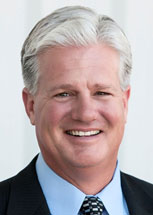
Bill Author
Bill Co-Author(s):