SJR 19: Special education funding.
- Session Year: 2017-2018
- House: Senate
- Latest Version Date: 2018-07-10
This measure would respectfully memorialize the Congress and the President of the United States to enact H.R. 2902 pending before Congress that would fully fund the federal Individuals with Disabilities Education Act.
This measure would respectfully memorialize the Congress and the President of the United States to enact H.R. 2902 pending before Congress that would fully fund the federal Individuals with Disabilities Education Act.
This measure would respectfully memorialize the Congress and the President of the United States to enact H.R. 2902 pending before Congress that would fully fund the federal Individuals with Disabilities Education Act.
This measure would respectfully memorialize the Congress and the President of the United States to enact H.R. 2902 pending before Congress that would fully fund the federal Individuals with Disabilities Education Act.
This measure would respectfully memorialize the Congress and the President of the United States to enact H.R. 2902 pending before Congress that would fully fund the federal Individuals with Disabilities Education Act.
WHEREAS, The federal Education for All Handicapped Children Act of 1975 (1975 Act) was enacted by Congress and signed into law by the President of the United States as Public Law 94-142 to address the failure of states to meet the educational needs of children with disabilities. This act, known as the federal Individuals with Disabilities Education Act (IDEA) since 1990 with the enactment of Public Law 101-476, remains the cornerstone of federal statutory mandates governing special education; and
WHEREAS, The purpose of the 1975 Act, as declared by Congress, was to ensure that all children with disabilities have available to them, within specified time periods, a free appropriate public education which emphasizes special education and related services designed to meet their unique needs, to assure that the rights of children with disabilities and their parents or guardians are protected, to assist States and localities to provide for the education of all children with disabilities, and to assess and assure the effectiveness of efforts to educate children with disabilities; and
WHEREAS, The 1975 Act authorized a maximum state funding entitlement of 40 percent, for the fiscal year ending September 30, 1982, and for each fiscal year thereafter, of the average per pupil expenditure in public elementary and secondary schools in the United States; and
WHEREAS, Since 1975, including in the most recent amendments to the IDEA, Public Law 108-446, the federal Individuals with Disabilities Education Improvement Act of 2004, Congress has maintained the funding authorization at 40 percent of the average per-pupil expenditure in public elementary schools and secondary schools in the United States; and
WHEREAS, The federal government has never paid its promised 40 percent share of the IDEA mandate. For many years, Congress paid less than 8 percent of the excess cost of educating children with disabilities, forcing the states and local educational agencies to cover the remaining costs. The California student population requiring special education and related services continues to grow each year; and
WHEREAS, School, disability, and parent groups have been trying for years to bring IDEA appropriations up to the authorized 40 percent of average per-pupil expenditures, the maximum any state can receive per student with disability. This effort has come to be known as full funding, but the effort has never succeeded; and
WHEREAS, The California Legislature, since the early 1990s, has approved a number of joint resolutions memorializing the President of the United States and the U.S. Congress to provide the full federal share of funding for special education programs to the states so that this state and other states will not be required to take funding from other vital state and local programs to fund this underfunded federal mandate; and
WHEREAS, In 2016, federal funding only represented 16.3 percent of its share, well short of the promised 40 percent level; and
WHEREAS, Because the promised federal funding level is not being met, the burden has fallen on states and local school districts, which leads to cuts in programs, or tax increases, or both; and
WHEREAS, A bill stands on the floor of the United States House of Representatives, H.R. 2902, known as the IDEA Full Funding Act, that aims to reach the 40 percent full funding level by the fiscal year 2027 through incremental increases in the federal share of funding each fiscal year; now, therefore, be it
Resolved by the Senate and the Assembly of the State of California, jointly, That the Legislature respectfully memorializes the Congress and the President of the United States to enact H.R. 2902 pending before Congress that would fully fund IDEA; and be it further
Resolved, That the Secretary of the Senate transmit copies of this resolution to the President and Vice President of the United States, to the Speaker of the House of Representatives, to the Majority Leader of the Senate, to the Chair of the Senate Committee on the Budget, to the Chair of the House Committee on the Budget, to the Senate Committee on Appropriations, to the Chair of the House Committee on Appropriations, to each Senator and Representative from California in the Congress of the United States, and to the United States Secretary of Education.
WHEREAS, The federal Education for All Handicapped Children Act of 1975 (1975 Act) was enacted by Congress and signed into law by the President of the United States as Public Law 94-142 to address the failure of states to meet the educational needs of children with disabilities. This act, known as the federal Individuals with Disabilities Education Act (IDEA) since 1990 with the enactment of Public Law 101-476, remains the cornerstone of federal statutory mandates governing special education; and
WHEREAS, The purpose of the 1975 Act, as declared by Congress, was to ensure that all children with disabilities have available to them, within specified time periods, a free appropriate public education which emphasizes special education and related services designed to meet their unique needs, to assure that the rights of children with disabilities and their parents or guardians are protected, to assist States and localities to provide for the education of all children with disabilities, and to assess and assure the effectiveness of efforts to educate children with disabilities; and
WHEREAS, The 1975 Act authorized a maximum state funding entitlement of 40 percent, for the fiscal year ending September 30, 1982, and for each fiscal year thereafter, of the average per pupil expenditure in public elementary and secondary schools in the United States; and
WHEREAS, Since 1975, including in the most recent amendments to the IDEA, Public Law 108-446, the federal Individuals with Disabilities Education Improvement Act of 2004, Congress has maintained the funding authorization at 40 percent of the average per-pupil expenditure in public elementary schools and secondary schools in the United States; and
WHEREAS, The federal government has never paid its promised 40 percent share of the IDEA mandate. For many years, Congress paid less than 8 percent of the excess cost of educating children with disabilities, which forced forcing the states and local educational agencies to cover the remaining costs. The California student population requiring special education and related services continues to grow each year; and
WHEREAS, School, disability, and parent groups have been trying for years to bring IDEA appropriations up to the authorized 40 percent of average per-pupil expenditures, the maximum any state can receive per student with disability. This effort has come to be known as full funding, but the effort has never succeeded; and
WHEREAS, The California Legislature, since the early 1990s, has approved a number of joint resolutions memorializing the President of the United States and the U.S. Congress to provide the full federal share of funding for special education programs to the states so that this state and other states will not be required to take funding from other vital state and local programs to fund this underfunded federal mandate; and
WHEREAS, In 2016, federal funding only represented 16.3 percent of its share, well short of the promised 40 percent level; and
WHEREAS, Because the promised federal funding level is not being met, the burden has fallen on states and local school districts, which leads to cuts in programs, or tax increases, or both; and
WHEREAS, A bill stands on the floor of the United States House of Representatives, H.R. 2902, known as the IDEA Full Funding Act, that aims to reach the 40 percent full funding level by the fiscal year 2027 through incremental increases in the federal share of funding each fiscal year; now, therefore, be it
Resolved by the Senate and the Assembly of the State of California, jointly, That the Legislature respectfully memorializes the Congress and the President of the United States to enact H.R. 2902 pending before Congress that would fully fund IDEA; and be it further
Resolved, That the Secretary of the Senate transmit copies of this resolution to the President and Vice President of the United States, to the Speaker of the House of Representatives, to the Majority Leader of the Senate, to the Chair of the Senate Committee on the Budget, to the Chair of the House Committee on the Budget, to the Senate Committee on Appropriations, to the Chair of the House Committee on Appropriations, to each Senator and Representative from California in the Congress of the United States, and to the United States Secretary of Education.
WHEREAS, The federal Education for All Handicapped Children Act of 1975 (1975 Act) was enacted by Congress and signed into law by the President as Public Law 94-142 to address the failure of states to meet the educational needs of children with disabilities. This act, known as the federal Individuals with Disabilities Education Act (IDEA) since 1990 with the enactment of Public Law 101-476, remains the cornerstone of federal statutory mandates governing special education; and
WHEREAS, The purpose of the 1975 Act, as declared by Congress, was to ensure that all children with disabilities have available to them, within specified time periods, a free appropriate public education which emphasizes special education and related services designed to meet their unique needs, to assure that the rights of children with disabilities and their parents or guardians are protected, to assist States and localities to provide for the education of all children with disabilities, and to assess and assure the effectiveness of efforts to educate children with disabilities; and
WHEREAS, The 1975 Act authorized a maximum state funding entitlement of 40 percent, for the fiscal year ending September 30, 1982, and for each fiscal year thereafter, of the average per pupil expenditure in public elementary and secondary schools in the United States; and
WHEREAS, Since 1975, including in the most recent amendments to the IDEA, Public Law 108-446, the federal Individuals with Disabilities Education Improvement Act of 2004, Congress has maintained the funding authorization at 40 percent of the average per-pupil expenditure in public elementary schools and secondary schools in the United States; and
WHEREAS, The federal government has never paid its promised 40 percent share of the IDEA mandate. For many years, Congress paid less than 8 percent of the excess cost of educating children with disabilities disabilities, which forced the states and local educational agencies to cover the remaining costs. The California student population requiring special education and related services continues to grow each year; and
WHEREAS, School, disability, and parent groups have been trying for years to bring IDEA appropriations up to the authorized 40 percent of average per-pupil expenditures, the maximum any state can receive per student with disability. This effort has come to be known as full funding, but the effort has never succeeded; and
WHEREAS, The California Legislature, since the early 1990s, has approved a number of joint resolutions memorializing the President and the U.S. Congress to provide the full federal share of funding for special education programs to the states so that this state and other states will not be required to take funding from other vital state and local programs to fund this underfunded federal mandate; and
WHEREAS, In 2016, federal funding only represented 16.3 percent of its share, well short of the promised 40 percent level; and
WHEREAS, Because the promised federal funding level is not being met, the burden has fallen on states and local school districts, which leads to cuts in programs, or tax increases, or both; and
WHEREAS, A bill stands on the floor of the United States House of Representatives, H.R. 2902, known as the IDEA Full Funding Act, that aims to reach the 40 percent full funding level by the fiscal year 2027 through incremental increases in the federal share of funding each fiscal year; and now, therefore, be it
Resolved by the Senate and the Assembly of the State of California, jointly, That the Legislature respectfully memorializes the Congress and the President of the United States to enact H.R. 2902 pending before Congress that would fully fund IDEA; and be it further
Resolved, That the Secretary of the Senate transmit copies of this resolution to the President and Vice President of the United States, to the Speaker of the House of Representatives, to the Majority Leader of the Senate, to the Chair of the Senate Committee on Budget, to the Chair of the House Committee on the Budget, to the Senate Committee on Appropriations, to the Chair of the House Committee on Appropriations, to each Senator and Representative from California in the Congress of the United States, and to the United States Secretary of Education.
WHEREAS, The federal Education for All Handicapped Children Act of 1975 (1975 Act) was enacted by Congress and signed into law by the President as Public Law 94-142 to address the failure of states to meet the educational needs of children with disabilities. This act, known as the federal Individuals with Disabilities Education Act (IDEA) since 1990 with the enactment of Public Law 101-476, remains the cornerstone of federal statutory mandates governing special education; and
WHEREAS, The purpose of the 1975 Act, as declared by Congress, was to ensure that all children with disabilities have available to them, within specified time periods, a free appropriate public education which emphasizes special education and related services designed to meet their unique needs, to assure that the rights of children with disabilities and their parents or guardians are protected, to assist States and localities to provide for the education of all children with disabilities, and to assess and assure the effectiveness of efforts to educate children with disabilities; and
WHEREAS, The 1975 Act authorized a maximum state funding entitlement of 40 percent, for the fiscal year ending September 30, 1982, and for each fiscal year thereafter, of the average per pupil expenditure in public elementary and secondary schools in the United States; and
WHEREAS, Since 1975, including in the most recent amendments to the IDEA, Public Law 108-446, the federal Individuals with Disabilities Education Improvement Act of 2004, Congress has maintained the funding authorization at 40 percent of the average per-pupil expenditure in public elementary schools and secondary schools in the United States; and
WHEREAS, The federal government has never paid its promised 40 percent share of the IDEA mandate. For many years, Congress paid less than 8 percent of the excess cost of educating children with disabilities which forced the states and local educational agencies to cover the remaining costs. The California student population requiring special education and related services continues to grow each year; and
WHEREAS, School, disability, and parent groups have been trying for years to bring IDEA appropriations up to the authorized 40 percent of average per-pupil expenditures, the maximum any state can receive per student with disability. This effort has come to be known as full funding, but the effort has never succeeded; and
WHEREAS, The California Legislature, since the early 1990s, has approved a number of joint resolutions memorializing the President and the U.S. Congress to provide the full federal share of funding for special education programs to the states so that this state and other states will not be required to take funding from other vital state and local programs to fund this underfunded federal mandate; and
WHEREAS, In 2016, federal funding only represented 16.3 percent of its share, well short of the promised 40 percent level; and
WHEREAS, Because the promised federal funding level is not being met, the burden has fallen on states and local school districts, which leads to cuts in programs, or tax increases, or both; and
WHEREAS, A bill stands on the floor of the United States House of Representatives, H.R. 2902, known as the IDEA Full Funding Act, that aims to reach the 40 percent full funding level by the fiscal year 2027 through incremental increases in the federal share of funding each fiscal year; and
Resolved by the Senate and the Assembly of the State of California, jointly, That the Legislature respectfully memorializes the Congress and the President of the United States to enact H.R. 2902 pending before Congress that would fully fund IDEA; and be it further
Resolved, That the Secretary of the Senate transmit copies of this resolution to the President and Vice President of the United States, to the Speaker of the House of Representatives, to the Majority Leader of the Senate, to the Chair of the Senate Committee on Budget, to the Chair of the House Committee on the Budget, to the Senate Committee on Appropriations, to the Chair of the House Committee on Appropriations, to each Senator and Representative from California in the Congress of the United States, and to the United States Secretary of Education.
|
Date
|
Status
|
|---|---|
| Jul 10, 2018 | Chaptered by Secretary of State. Res. Chapter 126, Statutes of 2018. |
| Jul 10, 2018 | Enrolled and filed with the Secretary of State at 2:30 p.m. |
| Jul 2, 2018 | Assembly amendments concurred in. (Ayes 37. Noes 0.) Ordered to engrossing and enrolling. |
| Jun 21, 2018 | In Senate. Concurrence in Assembly amendments pending. |
| Jun 21, 2018 | Read. Adopted. Ordered to the Senate. |
| Jun 14, 2018 | From committee: Be adopted. Ordered to consent calendar. (Ayes 5. Noes 0.) (June 13). |
| Apr 10, 2018 | From committee with author's amendments. Read second time and amended. Re-referred to Com. on ED. |
| Apr 2, 2018 | Referred to Com. on ED. |
| Mar 22, 2018 | In Assembly. Held at Desk. |
| Mar 22, 2018 | Read. Adopted. (Ayes 37. Noes 0.) Ordered to the Assembly. |
| Mar 19, 2018 | Read second time. Ordered to third reading. |
| Mar 15, 2018 | From inactive file on motion of Senator Wilk. |
| Feb 20, 2018 | Ordered to inactive file on request of Senator Wilk. |
| Feb 14, 2018 | From committee: Ordered to third reading. |
| Feb 13, 2018 | From committee with author's amendments. Read second time and amended. Re-referred to Com. on RLS. |
| Feb 6, 2018 | Introduced. Referred to Com. on RLS. |
|
Date
|
Description
|
Location
|
Votes
|
|
|---|---|---|---|---|
| Jul 2, 2018 | Unfinished Business SJR19 Wilk et al. Concurrence | Senate Floor |
Passed |
|
| Jun 21, 2018 | SJR 19 Wilk Consent Calendar Second Day Regular Session | Assembly Floor |
Passed |
|
| Jun 13, 2018 | Be adopted. To Consent Calendar. | Assembly Standing Committee on Education |
Passed |
|
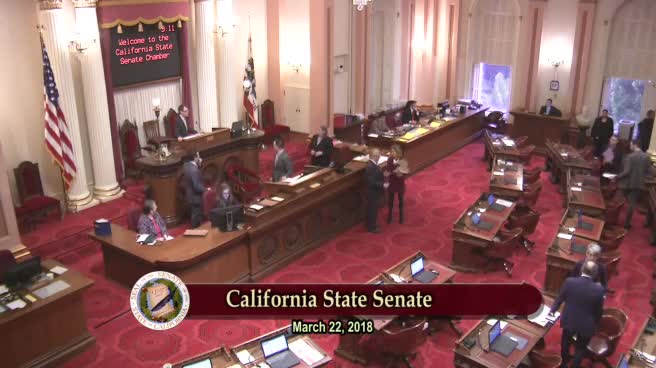
| Mar 22, 2018 | Conference Committee Report, Passage | Senate Floor |
Passed |
This list shows positions taken on this bill by organizations on the date displayed, which is linked to the original source.
Positions by individuals are not included.
Office of Senate Floor Analyses (916) 651-1520 Fax: (916) 327-4478 | SJR 19 |
UNFINISHED BUSINESS
Bill No: SJR 19
Amended: 4/10/18
SUBJECT: Special education funding
DIGEST:
This resolution memorializes the Congress and the President of the United States to enact H.R. 2902 pending before Congress that would fully fund the federal Individuals with Disabilities Education Act.
Assembly Amendments add coauthors and make technical changes.
ANALYSIS: This resolution makes the following legislative findings:
- The federal Education for All Handicapped Children Act of 1975 (1975 Act) was enacted by Congress and signed into law by the President of the United States as Public Law 94-142 to address the failure of states to meet the educational needs of children with disabilities. This act, known as the federal Individuals with Disabilities Education Act (IDEA) since 1990 with the enactment of Public Law 101-476, remains the cornerstone of federal statutory mandates governing special education.
- The purpose of the 1975 Act, as declared by Congress, was to ensure that all children with disabilities have available to them, within specified time periods, “a free appropriate public education which emphasizes special education and related services designed to meet their unique needs, to assure that the rights of children with disabilities and their parents or guardians are protected, to assist States and localities to provide for the education of all children with disabilities, and to assess and assure the effectiveness of efforts to educate children with disabilities.”
- Since 1975, including in the most recent amendments to the IDEA, Public Law 108-446, the federal Individuals with Disabilities Education Improvement Act of 2004, Congress has maintained the funding authorization at “40 percent of the average per-pupil expenditure in public elementary schools and secondary schools in the United States.”
- The federal government has never paid its promised 40 percent share of the IDEA mandate. For many years, Congress paid less than 8 percent of the excess cost of educating children with disabilities, forcing the states and local educational agencies to cover the remaining costs. The California student population requiring special education and related services continues to grow each year.
- School, disability, and parent groups have been trying for years to bring IDEA appropriations up to the authorized 40 percent of average per-pupil expenditures, the maximum any state can receive per student with disability. This effort has come to be known as “full funding,” but the effort has never succeeded.
- A bill stands on the floor of the United States House of Representatives, H.R. 2902, known as the IDEA Full Funding Act, that aims to reach the 40 percent “full funding” level by the fiscal year 2027 through incremental increases in the federal share of funding each fiscal year.
This resolution respectfully memorializes the Congress and the President of the United States to enact H.R. 2902 pending before Congress that would fully fund IDEA.
Related/Prior Legislation
AJR 83 (Daucher, Resolution Chapter 132, Statutes of 2004) memorialized the President and the Congress of the United States to provide the full federal share of funding for special education programs to the states so that this state and other states will not be required to take funding from other vital state and local programs to fund this underfunded federal mandate.
SJR 11 (Alpert, Resolution Chapter 68, Statutes of 2003) memorialized the President and Congress of the United States to provide the full federal share of funding for special education programs to the states so that this state and other states will not be required to take funding from other vital state and local programs to fund this underfunded federal mandate.
FISCAL EFFECT: Appropriation: No Fiscal Com.: No Local: No
None received
OPPOSITION: (Verified 6/21/18)
None received
Prepared by: Karen Chow / SFA / (916) 651-1520
6/22/18 14:09:05
**** END ****
Date of Hearing: June 13, 2018
ASSEMBLY COMMITTEE ON EDUCATION
Patrick O'Donnell, Chair
SBPCA Bill Id:SJR 19
Author:(Wilk) – As Amended Ver:April 10, 2018
SENATE VOTE: 37-0
SUBJECT: Special education funding
SUMMARY: Memorializes the Congress and the President of the United States to enact H.R. 2902, which would fully fund the Individuals with Disabilities Education Act (IDEA). Specifically, this bill:
Makes the following legislative findings:
- The federal Education for All Handicapped Children Act of 1975 (1975 Act) was enacted by Congress and signed into law by the President as Public Law 94-142, to address the failure of states to meet the educational needs of children with disabilities. This act—known since 1990 as the federal Individuals with Disabilities Education Act (IDEA) after enactment of Public Law 101-476—remains the cornerstone of federal statutory mandates governing special education.
- The purpose of the 1975 Act, as declared by Congress, was to ensure that all children with disabilities have available to them, within specified time periods, “a free appropriate public education which emphasizes special education and related services designed to meet their unique needs, to assure that the rights of children with disabilities and their parents or guardians are protected, to assist States and localities to provide for the education of all children with disabilities, and to assess and assure the effectiveness of efforts to educate children with disabilities.”
- Since 1975, including in the most recent amendments to the IDEA (Public Law 108-446, the federal Individuals with Disabilities Education Improvement Act of 2004), Congress has maintained the funding authorization at “40 percent of the average per-pupil expenditure in public elementary schools and secondary schools in the United States.”
- The federal government has never paid its promised 40 percent share of the IDEA mandate. For many years, Congress paid less than 8 percent of the excess cost of educating children with disabilities, which forced the states and local educational agencies to cover the remaining costs. The California student population requiring special education and related services continues to grow each year.
- School, disability, and parent groups have been trying for years to bring IDEA appropriations up to the authorized 40 percent of average per-pupil expenditures, the maximum any state can receive per student with disability. This effort has come to be known as “full funding,” but the effort has never succeeded.
- A bill stands on the floor of the United States House of Representatives, H.R. 2902, known as the IDEA Full Funding Act, that aims to reach the 40 percent “full funding” level by fiscal year 2027, through incremental increases in the federal share of funding each fiscal year. This resolution memorializes the Congress and the President of the United States to enact H.R. 2902 pending before Congress that would fully fund IDEA.
EXISTING LAW:
- Provides support for special education through a combination of federal, state, and local funds.
- Appropriates, under the federal Individuals with Disabilities Education Act, grants to states to partially fund the excess cost associated with educating students with disabilities, using a formula based on the national average per pupil expenditure (APPE).
- Establishes special education local plan areas (SELPAs) as the entity responsible for distributing state allocated special education funding to school districts and for coordinating services to students with disabilities.
- Allocates state, federal, and local funding to each SELPA based on a historical rate per average daily attendance (ADA, which was substantially equalized by 2001), the total ADA in the SELPA, growth and cost of living adjustments (COLA), additional adjustments for equalization, and a special disabilities adjustment to offset the fact that pupils with high cost/low incidence disabilities are not uniformly distributed across SELPAs.
FISCAL EFFECT: This resolution has been keyed non-fiscal by the Office of Legislative Counsel.
COMMENTS:
Need for the resolution. According to the author, “Although Congress committed to paying 40 percent of the national average per pupil expenditure to help fund the cost of educating children with disabilities, it has never met even half of that commitment.
Congress is now funding about 16 percent of its promised commitment. This forces states and local school districts to raise taxes, use funding from the general fund, and cut other resources. This is a problem for California, where 662,000, or 11 percent, of K-12 students were identified as having disabilities in 2015-16.
H.R. 2902 will incrementally increase the amount of money that Congress puts into IDEA, beginning with the year 2019 and reaching full funding by the year 2027. Full funding, as defined by H.R. 2902, will be a specified amount ($38,576,190,000) or 40% of each state’s excess cost, whichever number is higher.”
A brief history of federal special education funding. According to the Congressional Research Service (CRS), the federal government did not begin providing assistance to states for the education of children with disabilities until 1966, when the Elementary and Secondary Education Act (ESEA) was reauthorized and amended to create a two-year grant program that funded states’ efforts to educate students with disabilities in preschool, elementary, and secondary grades. Grant allotment was based on a state’s population of children with disabilities, ages 3-21, in need of special education services.
Despite this provision, by 1970 the United States Office of Education estimated that 60 percent of school-aged children with disabilities were not receiving special education services. In response, Congress enacted the Education of the Handicapped Act (EHA), which consolidated all federal educational assistance for children with disabilities into one statute and established a grant program to support projects that provided services for students with disabilities. The EHA distributed federal funds to states based on the number of all children, aged 3 to 21, within each state.
By 1974, continuing financial constraints prevented states from being able to meet special education requirements established by court mandates, federal law, and their own laws. As a result, Congress amended the EHA to provide a one-year emergency assistance program, which supported state-run special education programs and set the stage for subsequent enactment of the Education of All Handicapped Children Act in 1975.
Since 1975, special education law has been reauthorized by Congress five times, most recently in 2004. A reauthorization in 1990 renamed the act the Individuals with Disabilities Education Act (IDEA). According to the CRS, “in its current form, the IDEA both authorizes federal funding for special education and related services and, for states that accept these funds, sets out principles under which special education and related services are to be provided.” Among these principles is the requirement that students with exceptional needs, aged birth to 22, be provided a free and appropriate public education in the least restrictive environment.
The current IDEA funding formula is not based on states’ actual special education costs. In 1975, Congress appointed a conference committee to resolve differing versions of the Education of All Handicapped Children Act produced by the Senate and House. According to the CRS, the Committee agreed to a funding formula that established a maximum grant for each state, equal to the number of children with disabilities served in each state, multiplied by a gradually increasing percentage of the APPE. Congressional intent was for the federal government to pay a portion of the “excess” cost associated with educating students with disabilities, using APPE as the metric for determining this cost.
The funding level began at 5 percent of national APPE in 1978 and was slated to reach 40 percent in 1982. This funding level—40 percent of APPE multiplied by the number of children with disabilities served by a state—represented the maximum allowable grant that each state could receive per special education student from 1982 onward, and has come to be known as “full funding” under special education law. It remains in effect today with some modifications, as described below. In 1975, the Senate Committee on Labor and Public Welfare explained its rationale for the formula by stating:
The Committee adopted this formula in order to provide an incentive to states to serve all handicapped children and to assure that the entitlement is based on the number of children actually receiving special education and related services within the State and for whom the State or the local educational agency is paying for such education.
According to the CRS, Congress revised the IDEA funding formula in 1997 to account for growing concerns that the existing formula created a financial incentive to over-identify children as having disabilities; in particular, there were concerns that minority children were being over-identified as having disabilities in the categories of intellectual disability, specific learning disability, and emotional disturbance. Specifically, Congress changed the formula so that it appropriated funds on the basis of the total population of children in each state and the percentage of those children living in poverty, rather than on the basis of the number of children receiving special education services. However, the maximum allowable grant amount for each state—that is, full funding—was still calculated using 40 percent of APPE, adjusted for the number of children with disabilities served by a state. The 2004 IDEA amendments changed the full funding calculation slightly, such that today a state’s full funding level is calculated as 40 percent of APPE, multiplied by the number of children with disabilities served, and adjusted for each state’s annual changes in child population and poverty rate.
The 1997 formula revisions took effect in 2000 and guaranteed states a minimum base-year amount equal to their fiscal year 1999 funding level. In subsequent years, when Congress appropriated more special education funding to states than it had in the prior year, funding above the base-year amount would be allocated based on two criteria: 1) each state’s total population of children (not just children with disabilities), ages 3-21, and 2) the percentage of those children living in poverty. 85 percent of funds above the base grant would be allocated based on the former criterion, while 15 percent of funds above the base would be allocated on the basis of the latter. This basic structure remains in place today, although IDEA amendments in 2004 made some additional modifications to the formula.
 IDEA has never received full federal funding. Full federal funding for special education has been an ongoing issue in the United States for decades. The CRS states that as early as 1969, federal appropriations to special education were only about 18 percent of the authorized amount. The CRS further states that in the four decades since the signing of the Education for All Handicapped Children Act, special education appropriations have never met the full funding level of 40 percent of the national APPE. Data supplied by the Legislative Analyst’s Office (LAO) shows that federal funding for special education in California has averaged 12.35 percent of the national APPE for the fiscal years ranging from 1989-2017. For 2016-17, this underfunding resulted in a $2.6 billion deficit in federal appropriations for special education (see chart above).
This resolution constitutes one example of multiple federal and state measures that have been issued over the past twenty years in an attempt to require or encourage the federal government to fully fund special education. HR 2902, which this resolution petitions Congress and the President to pass, would set the appropriation to states as the greater of a specified amount, or a specified percentage of an amount calculated using a formula that multiplies the number of children in special education by APPE; the 40 percent standard would be implemented in 2027 and continue in subsequent years.
Local funds cover an increasing share of California’s special education costs. Special education in California is funded with a combination of federal, state, and local revenues, totaling $13.2 billion in 2015-16. In 2015-16, local general purpose funds covered the largest share of these costs ($8.2 billion, or 62 percent), followed by state special education categorical funds ($3.8 billion, or 43 percent), combined with federal special education funds ($1.2 billion, or 9 percent). In recent years local general fund dollars have been covering an increasing share of special education costs.

As shown in the adjacent chart provided by the LAO, in the last ten years the local share of special education funding has increased from 48% to 62%. This is a result of a number of factors:
- The growth formula for state special education funding is based on overall student growth and not on growth in special education. Because overall student growth has been flat, state funding for special education has been relatively flat, despite growing special education enrollment.
- The federal share of special education costs has declined from 14% in 2005-06 to 9% in 2015-16.
- The following compensation-related factors increase demands on local funds: 1) since special education personnel are paid on the same salary schedules as general education personnel, any negotiated increases in compensation raise special education costs, and 2) in recent years the state has required local educational agencies (LEAs) to provide an increased share of contributions to state retirement systems for school employees.
- There has been a marked increase in special education placements that require a higher level of service (such as autism spectrum disorders (ASD)), and a decline in placements requiring a lower level of service (such as Specific Learning Disability).
- Dedicated funding for higher cost placements, already small in proportion to overall funding, has either declined or remained flat, depending upon the source.
Finally, SELPAs report that 1) funding cuts during the recession reduced the provision of early intervention services, which generally reduce the need for later, more costly services, and 2) some programs are providing a higher level of service for the same placements, as understanding of effective practices evolves.
Special education in California. According to the CDE, in 2016 there were 754,000 children, aged birth to 22, who were identified as having exceptional needs. 680,000 of these children were enrolled in grades K-12, representing roughly 11% of K-12 enrollment.
The most common disabilities among students are specific learning disabilities, speech and language impairments, and other health impairments, which together constituted about 73% of all students with exceptional needs in 2015. While the prevalence of students with ASD is relatively rare (affecting about 1.5 percent of California students), the number of students diagnosed with ASD has increased notably over the last decade, from 2% of all disabilities in 2002 to 13% in 2015 (see charts below).
 Viewed as a whole, there is a significant achievement gap between students with disabilities and their peers. The LAO notes that while performance on standardized tests (including those specifically designed for students with disabilities) has improved over the past several years, a majority of students with disabilities still fail to meet state and federal achievement expectations, and that 60 percent of these students graduate on time with a high school diploma and about two–thirds of are engaged productively after high school (with about half enrolled in an institute of higher education and 15 percent competitively employed within one year after high school).
 Related legislation. HR 2902 was introduced in the House of Representatives on June 15, 2017. This bill sets the amount to be appropriated for each fiscal year under IDEA, from fiscal years 2018-2026, as the greater of 1) a specified amount, or 2) a specified percentage of an amount determined using a formula that multiples the number of children receiving special education services by the average per-pupil expenditure in public elementary and secondary schools. This bill has been referred to the House Committee on Education and the Workforce.
AB 3136 (O’Donnell) of this Session requires that special education funding rates be equalized to the 95th percentile after the Local Control Funding Formula (LCFF) is fully funded, creates a funding mechanism for state support of special education preschool, establishes a high cost service allowance to provide supplemental funding on the basis of the number of students with severe disabilities, and changes the calculation of the declining enrollment adjustment so that it is based on school district, rather than SELPA, enrollment.
Prior legislation. AJR 31(Buchanan), Resolution Chapter 41, Statutes of 2010 recognized the shortfall in funding available from the federal government for special education purposes and the need for the federal government to generate and allocate sufficient funds for special education.
AJR 83 (Daucher), Resolution Chapter 132, Statutes of 2004 memorialized the President and the Congress of the United States to provide the full federal share of funding for special education programs to the states so that this state and other states will not be required to take funding from other vital state and local programs to fund this underfunded federal mandate.
SJR 11 (Alpert), Resolution Chapter 68, Statutes of 2003 memorialized the President and Congress of the United States to provide the full federal share of funding for special education programs to the states so that this state and other states will not be required to take funding from other vital state and local programs to fund this underfunded federal mandate.
AJR 12 (Lempert), Resolution Chapter 76, Statutes of 1999 memorialized the President and the Congress of the United States to provide the full federal share of funding for special education programs.
REGISTERED SUPPORT / OPPOSITION:
Support
Coalition for Adequate Funding for Special Education
Los Angeles Unified School District
North Los Angeles County Regional Center
Opposition
None received
Analysis Prepared by: Naomi Ondrasek / ED. / (916) 319-2087
Office of Senate Floor Analyses (916) 651-1520 Fax: (916) 327-4478 | SJR 19 |
THIRD READING
Bill No: SJR 19
Amended: 2/13/18
SUBJECT: Special education funding
DIGEST:
This resolution memorializes the Congress and the President of the United States to enact H.R. 2902 pending before Congress that would fully fund the federal Individuals with Disabilities Education Act.
ANALYSIS: This resolution makes the following legislative findings:
- The federal Education for All Handicapped Children Act of 1975 (1975 Act) was enacted by Congress and signed into law by the President as Public Law 94-142 to address the failure of states to meet the educational needs of children with disabilities. This act, known as the federal Individuals with Disabilities Education Act (IDEA) since 1990 with the enactment of Public Law 101-476, remains the cornerstone of federal statutory mandates governing special education.
- The purpose of the 1975 Act, as declared by Congress, was to ensure that all children with disabilities have available to them, within specified time periods, “a free appropriate public education which emphasizes special education and related services designed to meet their unique needs, to assure that the rights of children with disabilities and their parents or guardians are protected, to assist States and localities to provide for the education of all children with disabilities, and to assess and assure the effectiveness of efforts to educate children with disabilities.”
- Since 1975, including in the most recent amendments to the IDEA, Public Law 108-446, the federal Individuals with Disabilities Education Improvement Act of 2004, Congress has maintained the funding authorization at “40 percent of the average per-pupil expenditure in public elementary schools and secondary schools in the United States.”
- The federal government has never paid its promised 40 percent share of the IDEA mandate. For many years, Congress paid less than 8 percent of the excess cost of educating children with disabilities, which forced the states and local educational agencies to cover the remaining costs. The California student population requiring special education and related services continues to grow each year.
- School, disability, and parent groups have been trying for years to bring IDEA appropriations up to the authorized 40 percent of average per-pupil expenditures, the maximum any state can receive per student with disability. This effort has come to be known as “full funding,” but the effort has never succeeded.
- A bill stands on the floor of the United States House of Representatives, H.R. 2902, known as the IDEA Full Funding Act, that aims to reach the 40 percent “full funding” level by the fiscal year 2027 through incremental increases in the federal share of funding each fiscal year.
This resolution respectfully memorializes the Congress and the President of the United States to enact H.R. 2902 pending before Congress that would fully fund IDEA.
Related/Prior Legislation
AJR 83 (Daucher, Resolution Chapter 132, Statutes of 2004) memorialized the President and the Congress of the United States to provide the full federal share of funding for special education programs to the states so that this state and other states will not be required to take funding from other vital state and local programs to fund this underfunded federal mandate.
SJR 11 (Alpert, Resolution Chapter 68, Statutes of 2003) memorialized the President and Congress of the United States to provide the full federal share of funding for special education programs to the states so that this state and other states will not be required to take funding from other vital state and local programs to fund this underfunded federal mandate.
FISCAL EFFECT: Appropriation: No Fiscal Com.: No Local: No
None received
OPPOSITION: (Verified 3/16/18)
None received
Prepared by: Karen Chow / SFA / (916) 651-1520
3/20/18 15:21:22
**** END ****
Discussed in Hearing
View Older Hearings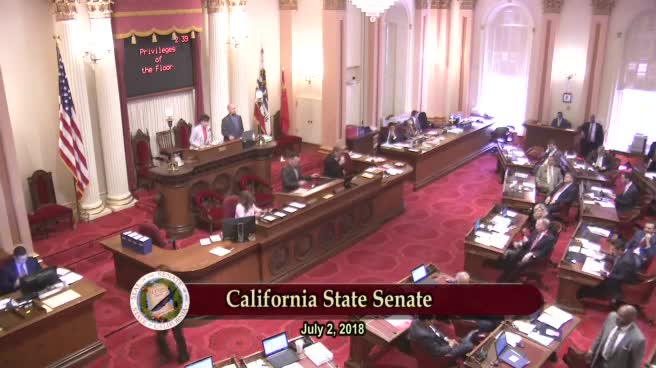
Bill Author