SR 114
- Session Year: 2017-2018
- House: Senate
- Latest Version Date: 2018-07-03
WHEREAS, In May 2018, the Trump Administration ordered the federal prosecution of any individual caught crossing the border illegally; and
WHEREAS, The Department of Justice and the Department of Homeland Security have implemented a zero-tolerance policy in which those who cross the border outside of legal ports of entry are automatically charged; and
WHEREAS, There is no law that calls for separating children from their parents. The Trump Administration chose a policy of family separation as a punitive measure intended to deter asylum seekers; and
WHEREAS, Homeland Security Secretary Kirstjen Nielsen has insisted that separating children when parents are prosecuted for crossing the border is no different than separating children from parents who have been criminally convicted and sent to prison; and
WHEREAS, Attorney General Jeff Sessions stated in regard to the Trump Administrations policy, If youre smuggling a child, then were going to prosecute you, and that child will be separated from you, probably, as required by law. If you dont want your child separated, then dont bring them across the border illegally. Its not our fault that somebody does that; and
WHEREAS, The Trump Administrations zero-tolerance policy led to the separation of approximately 2,500 children from their parents. These children were placed in federal detention facilities and foster shelters, hundreds of miles away from their parents; and
WHEREAS, Many of the parents under prosecution are seeking asylum, as is their right under national and international laws; and
WHEREAS, Asylum is a protection granted to foreign nationals already in the United States or at the border who meet the international law definition of a refugee: a person who is unable or unwilling to return to his or her home country, due to past persecution or a well-founded fear of being persecuted in the future on account of race, religion, nationality, membership in a particular social group, or political opinion. The United States Congress incorporated this definition into the immigration law in the Refugee Act of 1980; and
WHEREAS, United States Citizenship and Immigration Services describes the process for asylum as follows: You may apply for asylum status regardless of how you arrived in the United States or your current immigration status; and
WHEREAS, Despite claims by the federal government that families crossing at official ports of entry will have an opportunity to ask for asylum, parents who are immigrating have been turned away or arrested and separated from their children; and
WHEREAS, Few refugees are granted asylum annually. According to Syracuse Universitys Transactional Records Access Clearinghouse, approximately 62 percent of applicants were denied asylum in 2016; and
WHEREAS, The Office of the United Nations High Commissioner for Human Rights has stated that the Trump Administrations practice of separating children from migrant families entering the United States violates their rights and international law; and
WHEREAS, Parents whose children were removed have received little to no information with regards to the location of their children and the process for reunification. In some reported instances, parents have been deported to their country of origin without their children; and
WHEREAS, A Congolese woman and child arrived at a United States port of entry near San Diego and asked for asylum, with the mother fearing death if she returned to the Democratic Republic of the Congo. The daughter was separated from her mother, without explanation, and sent to a detention center in Chicago; and
WHEREAS, A mother from El Salvador, who was fleeing the gangs threatening her 16-year-old son, was forcibly separated from her three children after crossing the United States-Mexico border; and
WHEREAS, The separation and subsequent lack of channels for immigrants to communicate with their children leads to a traumatic experience for all members of the family. This results in emotional and physical trauma, especially for young children who are forced to adapt to new environments with strangers without any certainty as to when they will be reunited with their loved ones; and
WHEREAS, The American Academy of Pediatrics has spoken out against the separation of families, stating that the Federal authorities must exercise caution to ensure that the emotional and physical stress children experience as they seek refuge in the United States is not exacerbated by the additional trauma of being separated from their siblings, parents or other relatives and caregivers. Proposals to separate children from their families as a tool of law enforcement to deter immigration are harsh and counterproductive; and
WHEREAS, The recent announcement that children will no longer be separated from their parents raises additional questions as to whether or not children currently in detention facilities and shelters can effectively be reunited with their parents. The federal government has yet to offer a credible plan on how and when it plans to reunite children with their parents; and
WHEREAS, Despite reversing its inhumane policy of separating children from their parents at the border, the Trump Administration will continue to pursue its misguided zero-tolerance immigration policy that will require a dramatic expansion of detention facilities and the incarceration of children while their parents await prosecution. In order to do so, the Trump Administration has petitioned the court to revisit the Flores Settlement to allow the indefinite detention of children with their parents; and
WHEREAS, In 2014, the Board of Immigration Appeals set the important precedent that women fleeing domestic violence are eligible to apply for asylum; and
WHEREAS, Under the guise of reducing the backlog in immigration courts, Attorney General Sessions recently overturned the precedent, deciding that victims of gang violence and domestic abuse would not qualify for asylum under federal law; and
WHEREAS, The Attorney General reversed a 2016 asylum case that granted relief to a Salvadoran woman whose former husband raped and beat her for 15 years; and
WHEREAS, The Attorney Generals reversal of established precedent will potentially invalidate tens of thousands of pending claims brought by women, children, and men fleeing violence in their home countries, placing these victims in direct harm if returned to their country of origin; now, therefore, be it
Resolved by the Senate of the State of California, That the Senate denounces the persecution and the cruel policies that place vulnerable victims of crime in further danger; and be it further
Resolved, That the Senate calls for just and humane immigration proceedings that protect family units, ensure the welfare of children and domestic violence survivors, and provide for an accessible asylum process; and be it further
Resolved, That the Secretary of the Senate transmit copies of this resolution to the author for appropriate distribution.
WHEREAS, In May 2018, the Trump Administration ordered the federal prosecution of any individual caught crossing the border illegally; and
WHEREAS, Nearly 1,800 immigrant families were separated at the United States-Mexico border from October 2016 through February of this year, according to a senior government official, as President Donald Trump implemented stricter border enforcement policies; andWHEREAS, The Department of Justice and the Department of Homeland Security have implemented a zero tolerance zero-tolerance policy in which those who cross the border outside of legal ports of entry are automatically charged; and
WHEREAS, Between May 619, 2018, 638 adults were referred for prosecution. Those adults brought with them 658 children, all of whom were separated from the adults with whom they traveled; andWHEREAS, There is no law that calls for separating children from their parents. The Trump Administration is choosing chose a policy of family separation as a punitive measure intended to deter asylum seekers; and
WHEREAS, Homeland Security Secretary Kirstjen Nielsen has insisted that separating children when parents are prosecuted for crossing the border is no different than separating children from parents who have been criminally convicted and sent to prison; and
WHEREAS, Parents arrested for prosecution for illegal entry have not been convicted when they are separated from their children and most have the valid defense that they are legitimately fleeing persecution; andWHEREAS, Attorney General Jeff Sessions stated in regard to the Trump Administrations policy, If youre smuggling a child, then were going to prosecute you, and that child will be separated from you, probably, as required by law. If you dont want your child separated, then dont bring them across the border illegally. Its not our fault that somebody does that; and
WHEREAS, The Trump Administration is tearing families apart by separating children from parents seeking asylum under the law, as is their right; andWHEREAS, The Trump Administrations zero-tolerance policy led to the separation of approximately 2,500 children from their parents. These children were placed in federal detention facilities and foster shelters, hundreds of miles away from their parents; and
WHEREAS, Many of the parents under prosecution are seeking asylum, as is their right under national and international laws; and
WHEREAS, Asylum is a protection granted to foreign nationals already in the United States or at the border who meet the international law definition of a refugee: a person who is unable or unwilling to return to his or her home country, due to past persecution or a well-founded fear of being persecuted in the future on account of race, religion, nationality, membership in a particular social group, or political opinion. The United States Congress incorporated this definition into the immigration law in the Refugee Act of 1980; and
WHEREAS, United States Citizenship and Immigration Services describes the process for asylum as follows: You may apply for asylum status regardless of how you arrived in the United States or your current immigration status; and
WHEREAS, Despite claims by the federal government that families crossing at official ports of entry will have an opportunity to ask for asylum, parents who are immigrating have been turned away or arrested and separated from their children; and
WHEREAS, Few refugees are granted asylum annually. According to Syracuse Universitys Transactional Records Access Clearinghouse, approximately 62 percent of applicants were denied asylum in 2016. 2016; and
WHEREAS, The Office of the United Nations High Commissioner for Human Rights has stated that the Trump Administrations practice of separating children from migrant families entering the United States violates their rights and international law; and
WHEREAS, The children and parents can be placed in detention centers hundreds of miles apart; andWHEREAS, Parents whose children were removed have received little to no information with regards to the location of their children and the process for reunification. In some reported instances, parents have been deported to their country of origin without their children; and
WHEREAS, A Congolese woman and child arrived at a United States port of entry near San Diego and asked for asylum, with the mother fearing death if she returned to the Democratic Republic of the Congo. The daughter was separated from her mother, without explanation, and sent to a detention center in Chicago; and
WHEREAS, A mother from El Salvador, who was fleeing the gangs threatening her 16-year-old son, was forcibly separated from her three children after crossing the United States-Mexico border; and
WHEREAS, The federal Office of Refugee Resettlement, charged with caring for children crossing the border unlawfully, has announced new procedures that will make it more difficult for undocumented parents to sponsor their own children. As a result, it will be more challenging to find arrangements outside of detention for children and some of those arrangements may be in abusive environments; andWHEREAS, The separation and subsequent lack of channels for immigrants to communicate with their children leads to a traumatic experience for all members of the family. This results in emotional and physical trauma, especially for young children who are forced to adapt to new environments with strangers without any certainty as to when they will be reunited with their loved ones; and
WHEREAS, The American Academy of Pediatrics has spoken out against the separation of families, stating that the Federal authorities must exercise caution to ensure that the emotional and physical stress children experience as they seek refuge in the United States is not exacerbated by the additional trauma of being separated from their siblings, parents or other relatives and caregivers. Proposals to separate children from their families as a tool of law enforcement to deter immigration are harsh and counterproductive; and
WHEREAS, The recent announcement that children will no longer be separated from their parents raises additional questions as to whether or not children currently in detention facilities and shelters can effectively be reunited with their parents. The federal government has yet to offer a credible plan on how and when it plans to reunite children with their parents; and
WHEREAS, Despite reversing its inhumane policy of separating children from their parents at the border, the Trump Administration will continue to pursue its misguided zero-tolerance immigration policy that will require a dramatic expansion of detention facilities and the incarceration of children while their parents await prosecution. In order to do so, the Trump Administration has petitioned the court to revisit the Flores Settlement to allow the indefinite detention of children with their parents; and
WHEREAS, In 2014, the Board of Immigration Appeals set the important precedent that women fleeing domestic violence are eligible to apply for asylum; and
WHEREAS, Under the guise of reducing the backlog in immigration courts, Attorney General Sessions recently overturned the precedent, deciding that victims of gang violence and domestic abuse would not qualify for asylum under federal law; and
WHEREAS, The Attorney General reversed a 2016 asylum case that granted relief to a Salvadoran woman whose former husband raped and beat her for 15 years; and
WHEREAS, The Attorney Generals reversal of established precedent will potentially invalidate tens of thousands of pending claims brought by women, children, and men fleeing violence in their home countries, placing these victims in direct harm if returned to their country of origin; now, therefore, be it
Resolved by the Senate of the State of California, That the Senate denounces the separation of families fleeing violence and persecution and the cruel policies that place vulnerable victims of crime in further danger; and be it further
Resolved, That the Senate calls for just and humane immigration proceedings that protect family units, ensure the welfare of children and domestic violence survivors, and provide for an accessible asylum process; and be it further
Resolved, That the Secretary of the Senate transmit copies of this resolution to the author for appropriate distribution.
WHEREAS, In May 2018, the Trump Administration ordered the federal prosecution against of any individual caught crossing the border illegally; and
WHEREAS, Nearly 1,800 immigrant families were separated at the United States-Mexico border from October 2016 through February of this year, according to a senior government official, as President Donald Trump implemented stricter border enforcement policies; and
WHEREAS, The Department of Justice and the Department of Homeland Security have implemented a zero tolerance policy in which those who cross the border outside of legal ports of entry are automatically charged; and
WHEREAS, Between May 619, 2018, 638 adults were referred for prosecution. Those adults brought with them 658 children, all of whom were separated from the adults with whom they traveled; and
WHEREAS, There is no law that calls for separating children from their parents. The Trump Administration is choosing a policy of family separation as a punitive measure intended to deter asylum seekers; and
WHEREAS, Homeland Security Secretary Kirstjen Nielsen has insisted that separating children when parents are prosecuted for crossing the border is no different than separating children from parents who have been criminally convicted and sent to prison; and
WHEREAS, Parents arrested for prosecution for illegal entry have not been convicted when they are separated from their children and most have the valid defense that they are legitimately fleeing persecution; and
WHEREAS, Attorney General Jeff Sessions stated in regard to the Trump Administrations policy, If youre smuggling a child, then were going to prosecute you, and that child will be separated from you, probably, as required by law. If you dont want your child separated, then dont bring them across the border illegally. Its not our fault that somebody does that; and
WHEREAS, The Trump Administration is tearing families apart by separating children from parents seeking asylum under the law, as is their right; and
WHEREAS, Asylum is a protection granted to foreign nationals already in the United States or at the border who meet the international law definition of a refugee: a person who is unable or unwilling to return to his or her home country, due to past persecution or a well-founded fear of being persecuted in the future on account of race, religion, nationality, membership in a particular social group, or political opinion. The United States Congress incorporated this definition into the immigration law in the Refugee Act of 1980; and
WHEREAS, United States Citizenship and Immigration Services describes the process for asylum as follows: You may apply for asylum status regardless of how you arrived in the United States or your current immigration status; and
WHEREAS, Despite claims by the federal government that families crossing at official ports of entry will have an opportunity to ask for asylum, parents who are immigrating have been turned away or arrested and separated from their children; and
WHEREAS, Few refugees are granted asylum annually. According to Syracuse Universitys Transactional Records Access Clearinghouse, approximately 62 percent of applicants were denied asylum in 2016.
WHEREAS, The Office of the United Nations High Commissioner for Human Rights has stated that the Trump Administrations practice of separating children from migrant families entering the United States violates their rights and international law; and
WHEREAS, The children and parents can be placed in detention centers hundreds of miles apart; and
WHEREAS, A Congolese woman and child arrived at a United States port of entry near San Diego and asked for asylum, with the mother fearing death if she returned to the Democratic Republic of the Congo. The daughter was separated from her mother, without explanation, and sent to a detention center in Chicago; and
WHEREAS, A mother from El Salvador, who was fleeing the gangs threatening her 16-year-old son, was forcibly separated from her three children after crossing the United States-Mexico border; and
WHEREAS, The federal Office of Refugee Resettlement, charged with caring for children crossing the border unlawfully, has announced new procedures that will make it more difficult for undocumented parents to sponsor their own children. As a result, it will be more challenging to find arrangements outside of detention for children and some of those arrangements may be in abusive environments; and
WHEREAS, The separation and subsequent lack of channels for immigrants to communicate with their children leads to a traumatic experience for all members of the family. This results in emotional and physical trauma, especially for young children who are forced to adapt to new environments with strangers without any certainty as to when they will be reunited with their loved ones; and
WHEREAS, The American Academy of Pediatrics has spoken out against the separation of families, stating that the Federal authorities must exercise caution to ensure that the emotional and physical stress children experience as they seek refuge in the United States is not exacerbated by the additional trauma of being separated from their siblings, parents or other relatives and caregivers. Proposals to separate children from their families as a tool of law enforcement to deter immigration are harsh and counterproductive; and
WHEREAS, In 2014, the Board of Immigration Appeals set the important precedent that women fleeing domestic violence are eligible to apply for asylum; and
WHEREAS, Under the guise of reducing the backlog in immigration courts, Attorney General Sessions recently overturned the precedent, deciding that victims of gang violence and domestic abuse would not qualify for asylum under federal law; and
WHEREAS, The Attorney General reversed a 2016 asylum case that granted relief to a Salvadoran woman whose former husband raped and beat her for 15 years; and
WHEREAS, The Attorney Generals reversal of established precedent will potentially invalidate tens of thousands of pending claims brought by women, children, and men fleeing violence in their home countries, placing these victims in direct harm if returned to their country of origin; now, therefore, be it
Resolved by the Senate of the State of California, That the Senate denounces the separation of families fleeing violence and persecution and the cruel policies that place vulnerable victims of crime in further danger; and be it further
Resolved, That the Senate calls for just and humane immigration proceedings that protect family units, ensure the welfare of children and domestic violence survivors, and provide for an accessible asylum process; and be it further
Resolved, That the Secretary of the Senate transmit copies of this resolution to the author for appropriate distribution.
WHEREAS, In May 2018, the Trump Administration ordered federal prosecution against any individual caught crossing the border illegally; and
WHEREAS, Nearly 1,800 immigrant families were separated at the United States-Mexico border from October 2016 through February of this year, according to a senior government official, as President Donald Trump implemented stricter border enforcement policies; and
WHEREAS, The Department of Justice and the Department of Homeland Security have implemented a zero tolerance policy in which those who cross the border outside of legal ports of entry are automatically charged; and
WHEREAS, Between May 619, 2018, 638 adults were referred for prosecution. Those adults brought with them 658 children, all of whom were separated from the adults with whom they traveled; and
WHEREAS, There is no law that calls for separating children from their parents. The Trump Administration is choosing a policy of family separation as a punitive measure intended to deter asylum seekers; and
WHEREAS, Homeland Security Secretary Kirstjen Nielsen has insisted that separating children when parents are prosecuted for crossing the border is no different than separating children from parents who have been criminally convicted and sent to prison; and
WHEREAS, Parents arrested for prosecution for illegal entry have not been convicted when they are separated from their children and most have the valid defense that they are legitimately fleeing persecution; and
WHEREAS, Attorney General Jeff Sessions stated in regard to the Trump Administrations policy, If youre smuggling a child, then were going to prosecute you, and that child will be separated from you, probably, as required by law. If you dont want your child separated, then dont bring them across the border illegally. Its not our fault that somebody does that; and
WHEREAS, The Trump Administration is tearing families apart by separating children from parents seeking asylum under the law, as is their right; and
WHEREAS, Asylum is a protection granted to foreign nationals already in the United States or at the border who meet the international law definition of a refugee: a person who is unable or unwilling to return to his or her home country, due to past persecution or a well-founded fear of being persecuted in the future on account of race, religion, nationality, membership in a particular social group, or political opinion. The United States Congress incorporated this definition into the immigration law in the Refugee Act of 1980; and
WHEREAS, United States Citizenship and Immigration Services describes the process for asylum as follows: You may apply for asylum status regardless of how you arrived in the United States or your current immigration status; and
WHEREAS, Despite claims by the federal government that families crossing at official ports of entry will have an opportunity to ask for asylum, parents who are immigrating have been turned away or arrested and separated from their children; and
WHEREAS, Few refugees are granted asylum annually. According to Syracuse Universitys Transactional Records Access Clearinghouse, approximately 62 percent of applicants were denied asylum in 2016.
WHEREAS, The Office of the United Nations High Commissioner for Human Rights has stated that the Trump Administrations practice of separating children from migrant families entering the United States violates their rights and international law; and
WHEREAS, The children and parents can be placed in detention centers hundreds of miles apart; and
WHEREAS, A Congolese woman and child arrived at a United States port of entry near San Diego and asked for asylum, with the mother fearing death if she returned to the Democratic Republic of the Congo. The daughter was separated from her mother, without explanation, and sent to a detention center in Chicago; and
WHEREAS, A mother from El Salvador, who was fleeing the gangs threatening her 16-year-old son, was forcibly separated from her three children after crossing the United States-Mexico border; and
WHEREAS, The federal Office of Refugee Resettlement, charged with caring for children crossing the border unlawfully, has announced new procedures that will make it more difficult for undocumented parents to sponsor their own children. As a result, it will be more challenging to find arrangements outside of detention for children and some of those arrangements may be in abusive environments; and
WHEREAS, The separation and subsequent lack of channels for immigrants to communicate with their children leads to a traumatic experience for all members of the family. This results in emotional and physical trauma, especially for young children who are forced to adapt to new environments with strangers without any certainty as to when they will be reunited with their loved ones; and
WHEREAS, The American Academy of Pediatrics has spoken out against the separation of families, stating that the Federal authorities must exercise caution to ensure that the emotional and physical stress children experience as they seek refuge in the United States is not exacerbated by the additional trauma of being separated from their siblings, parents or other relatives and caregivers. Proposals to separate children from their families as a tool of law enforcement to deter immigration are harsh and counterproductive; and
WHEREAS, In 2014, the Board of Immigration Appeals set the important precedent that women fleeing domestic violence are eligible to apply for asylum; and
WHEREAS, Under the guise of reducing the backlog in immigration courts, Attorney General Sessions recently overturned the precedent, deciding that victims of gang violence and domestic abuse would not qualify for asylum under federal law; and
WHEREAS, The Attorney General reversed a 2016 asylum case that granted relief to a Salvadoran woman whose former husband raped and beat her for 15 years; and
WHEREAS, The Attorney Generals reversal of established precedent will potentially invalidate tens of thousands of pending claims brought by women, children, and men fleeing violence in their home countries, placing these victims in direct harm if returned to their country of origin; now, therefore, be it
Resolved by the Senate of the State of California, That the Senate denounces the separation of families fleeing violence and persecution and the cruel policies that place vulnerable victims of crime in further danger; and be it further
Resolved, That the Senate calls for just and humane immigration proceedings that protect family units, ensure the welfare of children and domestic violence survivors, and provide for an accessible asylum process; and be it further
Resolved, That the Secretary of the Senate transmit copies of this resolution to the author for appropriate distribution.
|
Date
|
Status
|
|---|---|
| Jul 2, 2018 | Read. Adopted. (Ayes 31. Noes 1.) |
| Jun 27, 2018 | Read second time. Ordered to third reading. |
| Jun 26, 2018 | Read third time and amended. |
| Jun 26, 2018 | From committee: Be adopted. Ordered to third reading. (Ayes 4. Noes 0.) (June 26). |
| Jun 20, 2018 | Re-referred to Com. on HUMAN S. |
| Jun 19, 2018 | From committee with author's amendments. Read second time and amended. Re-referred to Com. on RLS. |
| Jun 14, 2018 | Introduced. Referred to Com. on RLS. |
|
Date
|
Description
|
Location
|
Votes
|
|
|---|---|---|---|---|
| Jul 2, 2018 | Senate 3rd Reading SR114 De León et al. | Senate Floor |
Passed |
|
| Jun 26, 2018 | Be adopted. Ordered to third reading | Senate Standing Committee on Human Services |
Passed |
This list shows positions taken on this bill by organizations on the date displayed, which is linked to the original source.
Positions by individuals are not included.
Office of Senate Floor Analyses (916) 651-1520 Fax: (916) 327-4478 | SR |
THIRD READING
Bill No: SR 114
:
SENATE HUMAN SERVICES COMMITTEE: 4-0, 6/26/18
AYES: Glazer, Leyva, McGuire, Nguyen
NO VOTE RECORDED: Wiener, Berryhill, Portantino
DIGEST:
This resolution expresses the Senate’s denunciation of the separation of immigrant families and calls for just and humane immigration proceedings that: protect family units; ensure the welfare of children and domestic violence survivors; and provide for an accessible asylum process.
Senate Floor Amendments of 6/26/18 update this resolution to reflect how the federal administration’s policy has progressed and changed since the introduction of this resolution.
Existing law:
- Provides, under the Fifth Amendment to the U.S. Constitution, that a person shall not be deprived of life, liberty, or property without due process of law. (U.S. Const., 5th Amend)
- Holds that once an alien enters the country, the legal circumstance changes, for the Due Process Clause applies to all persons within the United States, including aliens, whether their presence here is lawful, unlawful, temporary, or permanent. (Zadvydas v. Davis, 533 U.S. 678 (2001))
- Prohibits the federal government from returning to their home countries people whose life or freedom would be threatened because of the person’s race, religion, nationality, membership in a particular social group, or political opinion. (8 U.S.C. 1231(b)(3))
- Provides for the protection of people who have fled persecution on account of race, religion, nationality, political opinion, or membership in a particular social group. (UN General Assembly, Universal Declaration of Human Rights, Dec. 10, 1948, 217A(III), Art. 14)
- Protects all asylum seekers by prohibiting the federal government from returning to their home countries people who have fled persecution on account of race, religion, nationality, political opinion, or membership in a particular social group. (8 U.S.C. Sec. 1101(a)(42)(A))
- Provides that youth may have temporary protection from deportation and work authorization for two-year periods, as specified. (See Janet Napolitano, June 15, 2012 policy memorandum announcing the DACA program)
- Provides that victims of certain crimes may obtain immigration relief through a Victim of Crime Visa (U-Visa) and victims of human trafficking may obtain immigration relief through a Victim of Trafficking Visa (T-Visa). (8 U.S.C. Sec. 1101(a)(15)(U); 8 U.S.C. Sec. 1101(a)(15)(T))
- Provides immigration relief that relies on a state’s interest in the welfare of children by providing for Special Immigrant Juvenile Status where a state determines that reunification with one or both of the immigrant’s parents is not viable due to abuse, neglect, abandonment, or similar basis found under state law and that it would not be in the child’s best interest to return to their home country. (8 U.S.C. Sec. 1101 (a)(27)(J))
- Delineates, as part of the federal Immigration and Nationality Act, categories of deportable non-citizen or non-national of the United States who is in and admitted to the United States and provides for waivers to deportation in certain instances and under certain circumstances, as specified. (8 U.S.C. 1227)
- Requires the California Department of Social Services (CDSS), subject to the availability of funding, to contract with qualified nonprofit legal services organizations to provide legal services to unaccompanied undocumented minors who are transferred to the care and custody of the federal Office of Refugee Resettlement (ORR) and who are present in California, and stipulates requirements for the fulfillment of these contracts, as specified. (WIC 13300-13301)
- Requires CDSS, subject to the availability of funding, to provide grants to qualified organizations for the provision of services to persons residing, or who formerly resided, in California that include, but are not limited to the following services, as specified: assist initial or renewal requests of deferred action under Deferred Action for Childhood Arrivals (DACA); obtain other immigration remedies; assist with the naturalization process and related appeals; and provide legal training and technical assistance. Further, stipulates requirements for the fulfillment of these grants and requires CDSS to update the Legislature on information related to the implementation and administration of these grants, as specified. (WIC 13303-13304)
- Appropriates $20 million to CDSS in the Fiscal Year (FY) 2017-18 for immigration services funding to be available for payment to existing entities under contract for immigration services to provide services for clients involved in, applying for, or subject to federal DACA status, as specified. (WIC 13303(g))
- Authorizes CDSS to transfer funds appropriated for purposes of funding undocumented unaccompanied minors (UUM) and immigration services grants and contracts among services in response to the results of requests for applications received or to changing state or federal law, and requires CDSS to notify the Joint Legislative Budget Committee and, in some cases, the Department of Finance, of any such transfer, as specified. (WIC 13307)
This resolution:
- Makes a variety of statements regarding the Trump Administration’s zero-tolerance and family separation policies, including:
- The Department of Justice and the Department of Homeland Security have implemented a “zero-tolerance” policy in which those who cross the border outside of legal ports of entry are automatically charged;
- There is no law that calls for separating children from their parents. The Trump Administration chose a policy of family separation as a punitive measure intended to deter asylum seekers;
- Homeland Security Secretary Kirstjen Nielsen has insisted that separating children when parents are prosecuted for crossing the border is no different than separating children from parents who have been criminally convicted and sent to prison;
- Attorney General Jeff Sessions stated in regard to the Trump Administration’s policy, “If you’re smuggling a child, then we’re going to prosecute you, and that child will be separated from you, probably, as required by law. If you don’t want your child separated, then don’t bring them across the border illegally. It’s not our fault that somebody does that”;
- The Trump Administration’s “zero-tolerance” policy led to the separation of approximately 2,500 children from their parents. These children were placed in federal detention facilities and foster shelters, hundreds of miles away from their parents;
- Many of the parents under prosecution are seeking asylum, as is their right under national and international laws;
- United States Citizenship and Immigration Services describes the process for asylum as follows: “You may apply for asylum status regardless of how you arrived in the United States or your current immigration status”
- Despite claims by the federal government that families crossing at official ports of entry will have an opportunity to ask for asylum, parents who are immigrating have been turned away or arrested and separated from their children;
- Few refugees are granted asylum annually. According to Syracuse University’s Transactional Records Access Clearinghouse, approximately 62 percent of applicants were denied asylum in 2016;
- The Office of the United Nations High Commissioner for Human Rights has stated that the Trump Administration’s practice of separating children from migrant families entering the United States violates their rights and international law;
- Parents whose children were removed have received little to no information with regards to the location of their children and the process for reunification. In some reported instances, parents have been deported to their country of origin without their children;
- The separation and subsequent lack of channels for immigrants to communicate with their children leads to a traumatic experience for all members of the family. This results in emotional and physical trauma, especially for young children who are forced to adapt to new environments with strangers without any certainty as to when they will be reunited with their loved ones;
- The recent announcement that children will no longer be separated from their parents raises additional questions as to whether or not children currently in detention facilities and shelters can effectively be reunited with their parents. The federal government has yet to offer a credible plan on how and when it plans to reunite children with their parents; and
- Despite reversing its inhumane policy of separating children from their parents at the border, the Trump Administration will continue to pursue its misguided zero-tolerance immigration policy that will require a dramatic expansion of detention facilities and the incarceration of children while their parents await prosecution. In order to do so, the Trump Administration has petitioned the court to revisit the Flores Settlement to allow the indefinite detention of children with their parents.
- Resolves by the Senate of the State of California that:
- The Senate denounces the separation of families fleeing violence and persecution and the cruel policies that place vulnerable victims of crime in further danger;
- The Senate calls for just and humane immigration proceedings that protect family units, ensure the welfare of children and domestic violence survivors, and provide for an accessible asylum process; and
- The Secretary of the Senate transmit copies of this resolution to the author for appropriate distribution.
Comments
Purpose of this bill
According to the author, “the Trump Administration enacted a hastily designed plan separating children from parents escaping violence and persecution in Latin America. Not only was this practice cruel, immoral and potentially illegal, it was executed in a stunningly haphazard manner. Through this resolution, we urge the federal government to reunify the thousands of children torn away from their parents at the border and to implement a fair and humane asylum process.”
The Flores Agreement
In 1985, a class action lawsuit was filed against the United States Immigration and Naturalization Service (INS) on behalf of immigrant children, who had been detained by INS, challenging the procedures regarding the children’s detention, treatment, and release. In January of 1997, the parties finally came to a settlement agreement commonly known as the Flores Agreement.
The Flores Agreement sets the minimum nationwide standards for the detention, housing, and release of non-citizen juveniles who are detained by the government and, according to the Ninth Circuit United States Court of Appeals, “obliges the government to pursue a ‘general policy favoring release’ of such juveniles.”[1]
The Flores Agreement requires that whenever INS takes minors into custody (under current law it would be the Office of Refugee Resettlement [ORR] who takes custody of minors) it must expeditiously process the minors and provide the minors with notice of their rights. It requires that following their detention, “minors be held in facilities that are safe and sanitary and that are consistent with INS’s concern or the particular vulnerability of minors.”[2] The Flores Agreement requires INS transfer minors to a non-secure licensed facility, within five days of their arrest, but allows the transfer be made “as expeditiously as possible” in the “event of an emergency or influx of minors.”[3]
For more information on the Flores Agreement, see the Senate Human Services Committee Analysis of this resolution.
Zero Tolerance Policy
On April 6, 2018, Attorney General Jeff Sessions notified all U.S. Attorney’s Offices along the Southwest Border of a new “zero tolerance policy” for attempted illegal entry and illegal entry into the United States by any individual, as provided under 8 U.S.C. Section 1325(a). This zero-tolerance policy directs each U.S. Attorney’s Office along the Southwest Border, including the Southern District of California, the District of Arizona, the District of New Mexico, the Western District of Texas, and the Southern District of Texas, to adopt a policy to prosecute all department of Homeland Security referrals of for illegal entry or attempted illegal entry to the extent practicable.[4]
According to the Washington Post, when persons are apprehended by Border Patrol, they are then taken into the DHS custody. Under the zero tolerance policy, DHS officials refer all adults who are believed to have committed a crime, including the misdemeanor crime of illegal entry, to the Department of Justice (DOJ) for prosecution.[5] If the DOJ convicts these adults of a crime, they are typically sentenced to time served and transferred to the U.S. Immigration and Customs Enforcement for immigration proceedings, typically deportation proceedings. A misdemeanor conviction of illegal entry is grounds for deportation, but those convicted may still seek asylum or other protections available under existing law.[6] DHS notes that immigrant children may present individual claims for asylum, and may undergo separate immigration proceedings.[7]
The current administration’s policies mean that when children are taken into DHS custody, either with their parents or as unaccompanied minors, they are transferred to the custody of the ORR within the Department of Health and Human Services. ORR is then required to care for the children in accordance with the Flores Agreement. The effect of these policies is that children go into a process in which they eventually are placed with relatives or sponsors inside the United States, when their parents are prosecuted for illegal entry or attempted illegal entry and then potentially deported.[8] Thus, these children are separated from their parents after entry and detainment as a result of the current administration’s policies and practices.
Family Separation and California
According to the Washington Post, as of June 21, 2018 at least 2,500 children had been taken from their parents and sent to shelters in at least 13 states as a result of the administration’s zero tolerance policy. California is one of the 13 states, with the Washington Post noting two facilities in the greater San Francisco area, two facilities in the greater Los Angeles area, and two to three facilities in the greater San Diego area. At this time, it is unclear how many of the 2,500 children may have been sent to California and how many may be in each California location.[9]
The Los Angeles Times reports that nearly 100 children separated from their parents at California’s southern border, as a result of the administration’s zero tolerance policy, have reached the Greater Los Angeles region. The Los Angeles Times further reports that most of these children are nine years of age or younger. They are currently, primarily, being housed in detention shelters or foster homes overseen by government-contracted shelters. A few of these children were reunited directly with family or friends of family, as those placements are given preference under the Flores Agreement. [10]
Los Angeles County has long been home to minors placed by ORR. Beginning in 2014 thousands of children began crossing the border alone due to violence and persecution in their home countries.Los Angeles County became one of the top regions for receipt of these unaccompanied minors. Sponsors there received approximately 3,000 children as part of ORR’s placement of unaccompanied minors during fiscal year 2017.[11]
For many of those children the experience was much different than what is currently occurring under this administration’s zero tolerance policy. Most of those previously placed youth would have arrived unaccompanied, rather than being separated from their family due to prosecution of illegal entry. Additionally, at this time, the information reported suggests this administration’s policy is separating children who are much younger than many of the unaccompanied minors previously placed in California. However, arriving as an unaccompanied minor and this process of separation upon arrival are likely traumatic experiences for these children regardless of their age.
FISCAL EFFECT: Appropriation: No Fiscal Com.: Yes Local: No
Jewish Public Affairs Committee of California
OPPOSITION: (Verified 6/27/18)
6/27/18 15:38:36
**** END ****
Flores v. Sessions (9th Cir. 2017) 862 F.3d 863. ↑
Flores v. Lynch (9th Cir. 2016) 828 F.3d 898. ↑
Id. ↑
Attorney General Announces Zero-Tolerance Policy for Criminal Illegal Entry, Department of Justice, Office of Public Affairs (April 2018) <https://www.justice.gov/opa/pr/attorney-general-announces-zero-tolerance-policy-criminal-illegal-entry> (as of June 21, 2018). ↑
Rizzo, S. The Facts about Trump’s Policy of Separating Families at the Board, The Washington Post (June 19, 2018) <https://www.washingtonpost.com/news/fact-checker/wp/2018/06/19/the-facts-about-trumps-policy-of-separating-families-at-the-border/?noredirect=on&utm_term=.f5059ed8e2a5> (as of June 21, 2018). ↑
Fact Sheet: Zero Tolerance Immigration Prosecutions – Families, Homeland Security (June 15, 2018) <https://www.dhs.gov/news/2018/06/15/fact-sheet-zero-tolerance-immigration-prosecutions-families> (as of June 21, 2018) ↑
Id. ↑
Rizzo, S. The Facts about Trump’s Policy of Separating Families at the Board, The Washington Post (June 19, 2018) <https://www.washingtonpost.com/news/fact-checker/wp/2018/06/19/the-facts-about-trumps-policy-of-separating-families-at-the-border/?noredirect=on&utm_term=.f5059ed8e2a5> (as of June 21, 2018). ↑
Where are the migrant child facilities? Scattered Across America, Washington Post (June 21, 2018) <https://www.washingtonpost.com/graphics/2018/national/migrant-child-shelters/?utm_term=.b8bb71d35230> (as of June 21, 2018). ↑
Bermudez, E., Nearly 100 Children Separated from Parents at the Border are in L.A. Area, Most of Them Detained, Advocates Say, Los Angeles Times <http://www.latimes.com/local/california/la-me-ln-separated-kids-la-20180620-story.html> (as of June 21, 2018). ↑
Id. ↑
SENATE COMMITTEE ON HUMAN SERVICES
Senator Wiener, Chair
2017 - 2018 Regular
Bill No: SR 114
Author: | De León | ||
Version: | June 19, 2018 | Hearing Date: | June 26, 2018 |
Urgency: | No | Fiscal: | No |
Consultant: | Marisa Shea | ||
Subject: Immigration
SUMMARY
This Senate Resolution expresses the Senate’s denunciation of the separation of immigrant families and calls for just and humane immigration proceedings that: protect family units; ensure the welfare of children and domestic violence survivors; and provide for an accessible asylum process.
ABSTRACT
Existing law:
- Provides, under the Fifth Amendment to the U.S. Constitution, that a person shall not be deprived of life, liberty, or property without due process of law. (U.S. Const., 5th Amend)
- Holds that once an alien enters the country, the legal circumstance changes, for the Due Process Clause applies to all persons within the United States, including aliens, whether their presence here is lawful, unlawful, temporary, or permanent. (Zadvydas v. Davis, 533 U.S. 678 (2001))
- Prohibits the federal government from returning to their home countries people whose life or freedom would be threatened because of the person’s race, religion, nationality, membership in a particular social group, or political opinion. (8 U.S.C. 1231(b)(3))
- Provides for the protection of people who have fled persecution on account of race, religion, nationality, political opinion, or membership in a particular social group. (UN General Assembly, Universal Declaration of Human Rights, Dec. 10, 1948, 217A(III), Art. 14)
- Protects all asylum seekers by prohibiting the federal government from returning to their home countries people who have fled persecution on account of race, religion, nationality, political opinion, or membership in a particular social group. (8 U.S.C. Sec. 1101(a)(42)(A))
- Provides that youth may have temporary protection from deportation and work authorization for two-year periods, as specified. (See Janet Napolitano, June 15, 2012 policy memorandum announcing the DACA program)
- Provides that victims of certain crimes may obtain immigration relief through a Victim of Crime Visa (U-Visa) and victims of human trafficking may obtain immigration relief through a Victim of Trafficking Visa (T-Visa). (8 U.S.C. Sec. 1101(a)(15)(U); 8 U.S.C. Sec. 1101(a)(15)(T))
- Provides immigration relief that relies on a state’s interest in the welfare of children by providing for Special Immigrant Juvenile Status where a state determines that reunification with one or both of the immigrant’s parents is not viable due to abuse, neglect, abandonment, or similar basis found under state law and that it would not be in the child’s best interest to return to their home country. (8 U.S.C. Sec. 1101 (a)(27)(J))
- Provides that for a person in any removal proceedings before an immigration judge and in any appeal proceedings before the Attorney General from any removal proceedings, the person concerned shall have the privilege of being represented (at no expense to the Government) by such counsel, authorized to practice in such proceedings, as she or he shall choose. (8 U.S.C. Sec. 1362)
- Delineates, as part of the federal Immigration and Nationality Act, categories of deportable non-citizen or non-national of the United States who is in and admitted to the United States and provides for waivers to deportation in certain instances and under certain circumstances, as specified. (8 U.S.C. 1227)
- Requires the California Department of Social Services (CDSS), subject to the availability of funding, to contract with qualified nonprofit legal services organizations to provide legal services to unaccompanied undocumented minors who are transferred to the care and custody of the federal Office of Refugee Resettlement (ORR) and who are present in California, and stipulates requirements for the fulfillment of these contracts, as specified. (WIC 13300-13301)
- Requires CDSS, subject to the availability of funding, to provide grants to qualified organizations for the provision of services to persons residing, or who formerly resided, in California that include, but are not limited to the following services, as specified: assist initial or renewal requests of deferred action under Deferred Action for Childhood Arrivals (DACA); obtain other immigration remedies; assist with the naturalization process and related appeals; and provide legal training and technical assistance. Further, stipulates requirements for the fulfillment of these grants and requires CDSS to update the Legislature on information related to the implementation and administration of these grants, as specified. (WIC 13303-13304)
- Appropriates $20 million to CDSS in the Fiscal Year (FY) 2017-18 for immigration services funding to be available for payment to existing entities under contract for immigration services to provide services for clients involved in, applying for, or subject to federal DACA status, as specified. (WIC 13303(g))
- Requires CDSS to, subject to the availability of funding, provide grants to qualified organizations to provide education and outreach information, services, and materials regarding CDSS-funded immigration services provided through grantees and requires this education and outreach funding to only be provided to nonprofit organizations that have at least three years’ experience both conducting education and outreach with immigration populations and conducting outreach for government benefits and programs, as specified. (WIC 13305-13306)
- Authorizes CDSS to transfer funds appropriated for purposes of funding undocumented unaccompanied minors (UUM) and immigration services grants and contracts among services in response to the results of requests for applications received or to changing state or federal law, and requires CDSS to notify the Joint Legislative Budget Committee and, in some cases, the Department of Finance, of any such transfer, as specified. (WIC 13307)
This resolution:
- Makes the following statements:
- In May 2018, the Trump Administration ordered the federal prosecution against of any individual caught crossing the border illegally;
- Nearly 1,800 immigrant families were separated at the United States-Mexico border from October 2016 through February of this year, according to a senior government official, as President Donald Trump implemented stricter border enforcement policies;
- The Department of Justice and the Department of Homeland Security (DHS) have implemented a “zero tolerance” policy in which those who cross the border outside of legal ports of entry are automatically charged; and
- Between May 6–19, 2018, 638 adults were referred for prosecution. Those adults brought with them 658 children, all of whom were separated from the adults with whom they traveled;
- There is no law that calls for separating children from their parents. The Trump Administration is choosing a policy of family separation as a punitive measure intended to deter asylum seekers;
- Homeland Security Secretary Kirstjen Nielsen has insisted that separating children when parents are prosecuted for crossing the border is no different than separating children from parents who have been criminally convicted and sent to prison;
- Parents arrested for prosecution for illegal entry have not been convicted when they are separated from their children and most have the valid defense that they are legitimately fleeing persecution;
- Attorney General Jeff Sessions stated in regard to the Trump Administration’s policy, “If you’re smuggling a child, then we’re going to prosecute you, and that child will be separated from you, probably, as required by law. If you don’t want your child separated, then don’t bring them across the border illegally. It’s not our fault that somebody does that”;
- The Trump Administration is tearing families apart by separating children from parents seeking asylum under the law, as is their right;
- Asylum is a protection granted to foreign nationals already in the United States or at the border who meet the international law definition of a “refugee,” which is “a person who is unable or unwilling to return to his or her home country, due to past persecution or a well-founded fear of being persecuted in the future on account of race, religion, nationality, membership in a particular social group, or political opinion.” The United States Congress incorporated this definition into the immigration law in the Refugee Act of 1980;
- United States Citizenship and Immigration Services describes the process for asylum as follows: “You may apply for asylum status regardless of how you arrived in the United States or your current immigration status;”
- Despite claims by the federal government that families crossing at official ports of entry will have an opportunity to ask for asylum, parents who are immigrating have been turned away or arrested and separated from their children;
- Few refugees are granted asylum annually. According to Syracuse University’s Transactional Records Access Clearinghouse, approximately 62 percent of applicants were denied asylum in 2016;
- The Office of the United Nations High Commissioner for Human Rights has stated that the Trump Administration’s practice of separating children from migrant families entering the United States violates their rights and international law;
- The children and parents can be placed in detention centers hundreds of miles apart;
- A Congolese woman and child arrived at a United States port of entry near San Diego and asked for asylum, with the mother fearing death if she returned to the Democratic Republic of the Congo. The daughter was separated from her mother, without explanation, and sent to a detention center in Chicago;
- A mother from El Salvador, who was fleeing the gangs threatening her 16-year-old son, was forcibly separated from her three children after crossing the United States-Mexico border;
- The federal ORR, charged with caring for children crossing the border unlawfully, has announced new procedures that will make it more difficult for undocumented parents to sponsor their own children. As a result, it will be more challenging to find arrangements outside of detention for children and some of those arrangements may be in abusive environments;
- The separation and subsequent lack of channels for immigrants to communicate with their children leads to a traumatic experience for all members of the family. This results in emotional and physical trauma, especially for young children who are forced to adapt to new environments with strangers without any certainty as to when they will be reunited with their loved ones;
- The American Academy of Pediatrics has spoken out against the separation of families, stating that the “Federal authorities must exercise caution to ensure that the emotional and physical stress children experience as they seek refuge in the United States is not exacerbated by the additional trauma of being separated from their siblings, parents or other relatives and caregivers. Proposals to separate children from their families as a tool of law enforcement to deter immigration are harsh and counterproductive;”
- In 2014, the Board of Immigration Appeals set the important precedent that women fleeing domestic violence are eligible to apply for asylum;
- Under the guise of reducing the backlog in immigration courts, Attorney General Sessions recently overturned the precedent, deciding that victims of gang violence and domestic abuse would not qualify for asylum under federal law;
- The Attorney General reversed a 2016 asylum case that granted relief to a Salvadoran woman whose former husband raped and beat her for 15 years; and
- The Attorney General’s reversal of established precedent will potentially invalidate tens of thousands of pending claims brought by women, children, and men fleeing violence in their home countries, placing these victims in direct harm if returned to their country of origin.
- Resolves by the Senate of the State of California that:
- The Senate denounces the separation of families fleeing violence and persecution and the cruel policies that place vulnerable victims of crime in further danger;
- The Senate calls for just and humane immigration proceedings that protect family units, ensure the welfare of children and domestic violence survivors, and provide for an accessible asylum process; and
- The Secretary of the Senate transmit copies of this resolution to the author for appropriate distribution.
BACKGROUND AND DISCUSSION
Purpose of the bill:
According to the author, “the Trump Administration enacted a hastily designed plan separating children from parents escaping violence and persecution in Latin America. Not only was this practice cruel, immoral and potentially illegal, it was executed in a stunningly haphazard manner. Through this resolution, we urge the federal government to reunify the thousands of children torn away from their parents at the border and to implement a fair and humane asylum process.”
The Flores Agreement
In 1985, a class action lawsuit was filed against the United States Immigration and Naturalization Service (INS) on behalf of immigrant children, who had been detained by INS, challenging the procedures regarding the children’s detention, treatment, and release. In January of 1997, the parties finally came to a settlement agreement commonly known as the Flores Agreement.
The Flores Agreement sets the minimum nationwide standards for the detention, housing, and release of non-citizen juveniles who are detained by the government and, according to the Ninth Circuit United States Court of Appeals, “obliges the government to pursue a ‘general policy favoring release’ of such juveniles.”[1]
The Flores Agreement requires that whenever INS takes minors into custody (under current law it would be the Office of Refugee Resettlement [ORR] who takes custody of minors) it must expeditiously process the minors and provide the minors with notice of their rights. It requires that following their detention, “minors be held in facilities that are safe and sanitary and that are consistent with INS’s concern or the particular vulnerability of minors.”[2] The Flores Agreement requires INS transfer minors to a non-secure licensed facility, within five days of their arrest, but allows the transfer be made “as expeditiously as possible” in the “event of an emergency or influx of minors.”[3]
The Flores Settlement creates a presumption in favor of release of the detained minor, and particularly favors release that results in family reunification. The agreement provides that unless INS determines the detention of the minor is required to secure their timely appearance before the INS or immigration court, or to ensure the safety of the minor or others, the INS must release the minor from their custody “without unnecessary delay, in the following order of preference, to: a parent; a legal guardian; an adult relative; an adult individual or entity designated by the parent or legal guardian; a licensed program willing to accept legal custody; or an adult individual or entity seeking custody.”[4]
When minors are not released, the agreement requires the minor be placed in a “licensed program.” A “licensed program” is one licensed by an appropriate state agency to provide residential, group, or foster care services for dependent children that must be deemed “non-secure” under state law and meet required standards. The required standards include the “provision of food, clothing, grooming items, medical and dental care, individualized needs assessments, educational services, leisure time, counseling, access to religious services, contact with family members, and a reasonable right to privacy.”[5]
Zero Tolerance Policy
On April 6, 2018, Attorney General Jeff Sessions notified all U.S. Attorney’s Offices along the Southwest Border of a new “zero tolerance policy” for attempted illegal entry and illegal entry into the United States by any individual, as provided under 8 U.S.C. Section 1325(a). This zero-tolerance policy directs each U.S. Attorney’s Office along the Southwest Border, including the Southern District of California, the District of Arizona, the District of New Mexico, the Western District of Texas, and the Southern District of Texas, to adopt a policy to prosecute all department of Homeland Security referrals of for illegal entry or attempted illegal entry to the extent practicable.[6]
According to the Washington Post, when persons are apprehended by Border Patrol, they are then taken into the DHS custody. Under the zero tolerance policy, DHS officials refer all adults who are believed to have committed a crime, including the misdemeanor crime of illegal entry, to the Department of Justice (DOJ) for prosecution.[7] If the DOJ convicts these adults of a crime, they are typically sentenced to time served and transferred to the U.S. Immigration and Customs Enforcement for immigration proceedings, typically deportation proceedings. A misdemeanor conviction of illegal entry is grounds for deportation, but those convicted may still seek asylum or other protections available under existing law.[8] DHS notes that immigrant children may present individual claims for asylum, and may undergo separate immigration proceedings.[9]
Under President Trump’s January 2017 executive order regarding border security and immigration enforcement, the federal government is no longer prioritizing the removal of dangerous criminals, gang members, or national-security threats. Instead,the administration has encouraged the apprehension of individuals for all violations of immigration law, including misdemeanor violations, and has encouraged the detention of these individuals while their immigration proceeding is ongoing.[10] This stopped the practice commonly known as “catch and release,” where the Obama administration routinely released individuals who were awaiting their immigration proceeding.
The current administration’s policies mean that when children are taken into DHS custody, either with their parents or as unaccompanied minors, they are transferred to the custody of the ORR within the Department of Health and Human Services. ORR is then required to care for the children in accordance with the Flores Agreement. The effect of these policies is that children go into a process in which they eventually are placed with relatives or sponsors inside the United States, when their parents are prosecuted for illegal entry or attempted illegal entry and then potentially deported.[11] Thus, these children are separated from their parents after entry and detainment as a result of the current administration’s policies and practices.
Family Separation and California
According to the Washington Post, as of June 21, 2018 at least 2,500 children had been taken from their parents and sent to shelters in at least 13 states as a result of the administration’s zero tolerance policy. California is one of the 13 states, with the Washington Post noting two facilities in the greater San Francisco area, two facilities in the greater Los Angeles area, and two to three facilities in the greater San Diego area. At this time, it is unclear how many of the 2,500 children may have been sent to California and how many may be in each California location.[12]
The Los Angeles Times reports that nearly 100 children separated from their parents at California’s southern border, as a result of the administration’s zero tolerance policy, have reached the Greater Los Angeles region. The Los Angeles Times further reports that most of these children are nine years of age or younger. They are currently, primarily, being housed in detention shelters or foster homes overseen by government-contracted shelters. A few of these children were reunited directly with family or friends of family, as those placements are given preference under the Flores Agreement. [13]
Los Angeles County has long been home to minors placed by ORR. Beginning in 2014 thousands of children began crossing the border alone due to violence and persecution in their home countries. It is estimated that 72 percent of those previously entering as unaccompanied minors were between the ages of 15 and 17, while only 14 percent were 12 or younger. Los Angeles County became one of the top regions for receipt of these unaccompanied minors. Sponsors there received approximately 3,000 children as part of ORR’s placement of unaccompanied minors during fiscal year 2017.[14]
For many of those children the experience was much different than what is currently occurring under this administration’s zero tolerance policy. Most of those previously placed youth would have arrived unaccompanied, rather than being separated from their family due to prosecution of illegal entry. Additionally, at this time, the information reported suggests this administration’s policy is separating children who are much younger than many of the unaccompanied minors previously placed in California. However, arriving as an unaccompanied minor and this process of separation upon arrival are likely traumatic experiences for these children regardless of their age.
CDSS Immigration Services Funding
Within CDSS, the Immigration Services Unit oversees programs and funding initiatives aimed at supporting legal services, outreach and education, and other immigrant integration efforts. Existing law authorizes CDSS, through the efforts of this Unit, to award Immigration Services Funding to qualified nonprofit organizations for one, or more, of the following six service categories:
- Services to assist applicants seeking DACA status;
- Services to assist applicants seeking naturalizations;
- Services to assist applicants seeking other immigration remedies;
- Legal training and technical assistance services;
- Education and outreach activities; and
- Services to assist individuals with removal defense. (See WIC 13302-13306)
CDSS may only award these funds to nonprofit organizations with a minimum of three years’ experience handling immigration cases. Additionally, these organizations must be recognized and accredited by the Board of Immigration Appeals under the U.S. Department of Justice’s Executive Office for Immigration Review or meet the requirements to receive funding from the Trust Fund Program administered by the State Bar of California, as specified.
In 2017, CDSS award a total of $41.2 million in Immigration Services Funding grants to 92 nonprofit organizations. This was an increase from a total of $24.9 million being awarded to 80 nonprofit organizations in 2016. The following table shows the number of individuals that CDSS reports were served in FY 2015-16, across four of the six categories:
For the number of individuals served, by immigration service category, in FY 2015-1, see the below table.
Service Category | Number of Individuals |
DACA | 2,862 |
Other Immigration Remedies | 5,503 |
Naturalization | 35,006 |
Education and Outreach | 163,490 |
CDSS Unaccompanied Undocumented Minors (UUMs)
In addition to Immigration Services Funding, CDSS contracts with nonprofit legal services organization to provide legal services to eligible UUMs. UUMs are undocumented children and youth who have come to the United States without a parent or guardian. CDSS serves those who are in California and, upon being apprehended, are either transferred to the care and custody of the federal ORR or are living with a sponsor. According to CDSS, the funding for this program “is for the sole purpose of providing legal representation for UUMs in the filing of, preparation for, and representation in administrative and/or judicial proceedings for the following immigration statuses: asylum, T-Visa, U-Visa, Special Immigrant Juvenile Status (SIJS) and/or other affirmative remedies.” The legal services include culturally and linguistically appropriate services provided by attorneys, paralegals, interpreters, and other support staff for state court proceedings, federal immigration proceedings, and any appeals arising from those proceedings. For FY 2017-18, CDSS is awarding $2.9 million to 20 nonprofit legal organizations across the state, with an expected total caseload of 580 UUMs at a cost of $5,000 each.
California’s History of Supporting Immigrants
While the federal government has contemplated comprehensive immigration reform, California has routinely exercised its state power to protect immigrants. For example, some recently enacted state laws do the following:
- Placed restrictions and new notice and public hearing requirements, as specified, upon local governments and local law enforcement agencies with respect to contracts, building permits, and other official actions involving the federal government, federal agencies, or private corporations seeking to house or detain noncitizens for purposes of civil immigration custody (SB 29, Lara, Chapter 494, Statutes of 2017)
- Limits the involvement of state and local law enforcement agencies in federal immigration enforcement. (SB 54, De León, Chapter 495, Satutes of 2017)
- Expand health care for immigrant children regardless of immigration status (SB 4, Lara, Chapter 709, Statutes of 2015);
- Create the position of Statewide Director of Immigrant Integration within the Governor’s office to ensure that California has a comprehensive approach to immigrant integration, including facilitating immigration relief options, naturalization services, and civic engagement efforts (SB 84, Senate Budget and Fiscal Review Committee, Chapter 25, Statutes of 2015);
- Protect immigrant workers from unscrupulous employers by stopping employers from misusing the E-Verify system to intimidate workers (AB 622, Roger Hernandez, Chapter 696, Statutes of 2015);
- Protect immigrants from discrimination by making it unlawful for business establishments to discriminate against a person on the basis of their immigration status, citizenship, or language (SB 600, Pan, Chapter 282, Statutes of 2015);
- Protect immigrants from immigration fraud as they seek help in applying for immigration relief (AB 60, Gonzalez, Chapter 6, Statutes of 2015);
- Require law enforcement to complete certifications for a victim of crime who was helpful to the criminal investigation so that victims can apply for Victims of Crime immigration visas (SB 674, De León, Chapter 721, Statutes of 2015);
- Protect immigrant children by safeguarding their records from unauthorized disclosure to federal immigration officials that may result in a child’s deportation (AB 899, Levine, Chapter 267, Stats. 2015);
- Require defense counsel in criminal proceedings to provide accurate and affirmative advice and defense to immigrants to avoid unintended immigration consequences, such as detention, deportation, and loss of citizenship eligibility (AB 1343, Thurmond, Chapter 705, Statutes of 2015);
- Allow youth 18-21 years of age, who have escaped violence or terror in their country of origin to come under the protection of a guardianship that can also help the youth obtain Special Immigrant Juvenile Status immigration relief (AB 900, Levine, Chapter 694, Statutes 2015);
- Prevent unintended immigration consequences for rehabilitated immigrants who successfully complete diversion programs (AB 1352, Eggman, Chapter 646, Statutes of 2015);
- Empower immigrants to obtain driver’s licenses (AB 60, Alejo, Chapter 524, Statutes of 2013);
- Allow all Californians to apply for professional licenses regardless of the immigration status of the applicant (SB 1159, Lara, Chapter 752, Statutes of 2014);
- Empower undocumented students by allowing them to pay in-state tuition at public higher education institutions (AB 540, Firebaugh, Chapter 814, Statutes of 2001), receive financial aid (AB 131, Cedillo, Chapter 604, Statutes of 2011) and scholarships (AB 130, Cedillo, Chapter 93, Statutes of 2011);
- Prohibit law enforcement officials from detaining individuals on the basis of an immigration hold after the individual becomes eligible for release, except in specified circumstances (AB 4, Ammiano, Chapter 570, Statutes of 2013); and
- Require overtime compensation for agricultural employees. (AB 1066, Gonzalez, Chapter 313, Statutes of 2016).
Related legislation:
AB 1862 (Santiago, 2018) appropriates $10 million to the CDSS in Fiscal Year (FY) 2017-18 to be made available to entities under contract with CDSS to provide services on behalf of clients who are current or former recipients of federal Temporary Protected Status and enacts this bill as an urgency statute, as specified. This bill is set to be heard in the Senate Committee on Judiciary on June 26, 2018.
SB 29 (Lara, Chapter 494, Statutes of 2017) established, after January 1, 2018, contracting restrictions and new notice and public hearing requirements, as specified, upon local governments and local law enforcement agencies with respect to contracts, building permits, and other official actions involving the federal government, federal agencies, or private corporations seeking to house or detain noncitizens for purposes of civil immigration custody.
SB 54 (De León, Chapter 495, Statutes of 2017) created the California Values Act that limits the involvement of state and local law enforcement agencies in federal immigration enforcement.
AJR 10 (Santiago, Chapter 143, Statutes of 2017) urged the Congress of the United States to support S. 349, the Access to Counsel Act, to ensure that those persons held or detained while attempting to enter the United States, whether at a border crossing or a port of entry, would be guaranteed access to legal counsel.
COMMENTS
As this is a developing and ongoing situation, the author is prepared to amend this resolution on the Senate Floor to reflect updates to this policy and the resulting situation. The author plans to address President Trump’s most recent executive order in those amendments. That order appears to allow for indefinite detainment of migrant families by DHS while a criminal proceeding or immigration proceeding is pending.
POSITIONS
Support:
None received
Oppose:
None received
-- END --
Flores v. Sessions (9th Cir. 2017) 862 F.3d 863. ↑
Flores v. Lynch (9th Cir. 2016) 828 F.3d 898. ↑
Id. ↑
Id. ↑
Id. ↑
Attorney General Announces Zero-Tolerance Policy for Criminal Illegal Entry, Department of Justice, Office of Public Affairs (April 2018) <https://www.justice.gov/opa/pr/attorney-general-announces-zero-tolerance-policy-criminal-illegal-entry> (as of June 21, 2018). ↑
Rizzo, S. The Facts about Trump’s Policy of Separating Families at the Board, The Washington Post (June 19, 2018) <https://www.washingtonpost.com/news/fact-checker/wp/2018/06/19/the-facts-about-trumps-policy-of-separating-families-at-the-border/?noredirect=on&utm_term=.f5059ed8e2a5> (as of June 21, 2018). ↑
Fact Sheet: Zero Tolerance Immigration Prosecutions – Families, Homeland Security (June 15, 2018) <https://www.dhs.gov/news/2018/06/15/fact-sheet-zero-tolerance-immigration-prosecutions-families> (as of June 21, 2018) ↑
Id. ↑
Executive Order: Border Security and Immigration Enforcement Improvements, Presidential Actions (January 25, 2017) <https://www.whitehouse.gov/presidential-actions/executive-order-border-security-immigration-enforcement-improvements/> (as of June 6, 2018). ↑
Rizzo, S. The Facts about Trump’s Policy of Separating Families at the Board, The Washington Post (June 19, 2018) <https://www.washingtonpost.com/news/fact-checker/wp/2018/06/19/the-facts-about-trumps-policy-of-separating-families-at-the-border/?noredirect=on&utm_term=.f5059ed8e2a5> (as of June 21, 2018). ↑
Where are the migrant child facilities? Scattered Across America, Washington Post (June 21, 2018) <https://www.washingtonpost.com/graphics/2018/national/migrant-child-shelters/?utm_term=.b8bb71d35230> (as of June 21, 2018). ↑
Bermudez, E., Nearly 100 Children Separated from Parents at the Border are in L.A. Area, Most of Them Detained, Advocates Say, Los Angeles Times <http://www.latimes.com/local/california/la-me-ln-separated-kids-la-20180620-story.html> (as of June 21, 2018). ↑
Id. ↑
Discussed in Hearing
View Older Hearings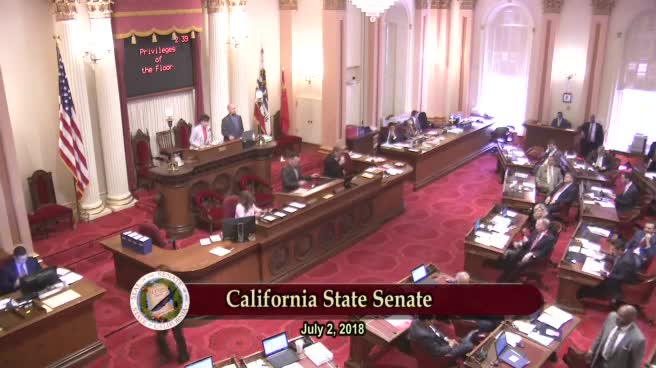
Bill Author


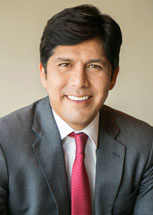










Bill Co-Author(s):