SR 12
- Session Year: 2017-2018
- House: Senate
- Latest Version Date: 2017-01-19
WHEREAS, January 22, 2017, marks the 44th anniversary of the United States Supreme Courts landmark decision in Roe v. Wade, which affirmed that every woman has a fundamental right to control her own reproductive decisions and to decide whether to end or to continue pregnancy, and is an occasion deserving of celebration; and
WHEREAS, Roe v. Wade has been the cornerstone of womens ability to control their reproductive lives, allowing every woman in the United States the right to decide when, if, and with whom to have children, and how many children to have; and
WHEREAS, Womens ability to control their reproductive lives has helped and facilitated their participation in the economic and social life of our nation; and
WHEREAS, Roe v. Wade has drastically reduced the maternal mortality rate for women terminating their pregnancies in the United States. In the years prior to the decision, illegal abortion accounted for approximately 17 percent of all reported deaths attributable to pregnancy and childbirth, and many women were severely injured as a result of back alley abortion procedures; and
WHEREAS, Interference with a womans right to choose causes women to be forced into illegal and dangerous abortions, as they often were in the United States before the Roe v. Wade decision. Many women are forced to make these decisions today in countries where abortion is illegal and where the unsafe methods of illegal abortion lead to 13 percent of global maternal deaths annually, or eight maternal deaths every hour. Many survivors of an illegal abortion suffer serious and often permanent injuries; and
WHEREAS, Roe v. Wade continues to protect the health and freedom of women throughout the United States; and
WHEREAS, Roe v. Wade is in serious jeopardy due to President-elect Donald J. Trumps stated intention to nominate United States Supreme Court justices hostile to womens right to choose; and
WHEREAS, The State of California stands in strong support of every womans fundamental right, as confirmed in Roe v. Wade, to make her own decisions regarding her pregnancy; now, therefore, be it
Resolved by the Senate of the State of California, That the Senate urges the President of the United States and the United States Congress to express their support for a womans fundamental right to control her own reproductive decisions, as well as their support for access to comprehensive reproductive health care, including the services provided by Planned Parenthood; and be it further
Resolved, That the Secretary of the Senate transmit copies of this resolution to the President and Vice President of the United States, to the Speaker of the House of Representatives, to the Majority Leader of the Senate, to each Senator and Representative from California in the Congress of the United States, and to the author for appropriate distribution.
|
Date
|
Status
|
|---|---|
| Jan 19, 2017 | Read. Adopted. (Ayes 22. Noes 7. Page 84.) |
| Jan 13, 2017 | From committee: Be adopted. Ordered to third reading. (Ayes 5. Noes 2. Page 70.) (January 13). |
| Jan 12, 2017 | Set for hearing January 13. |
| Jan 11, 2017 | Re-referred to Com. on JUD. |
| Jan 9, 2017 | Introduced. Referred to Com. on RLS. |
|
Date
|
Description
|
Location
|
Votes
|
|
|---|---|---|---|---|
| Jan 19, 2017 | Senate 3rd Reading SR12 Atkins | Senate Floor |
Passed |
|
| Jan 19, 2017 | Senate 3rd Reading SR12 Atkins Reconsider | Senate Floor |
Passed |
|
| Jan 19, 2017 | Senate 3rd Reading SR12 Atkins | Senate Floor |
Passed |
|
| Jan 13, 2017 | Be adopted. Ordered to third reading | Senate Standing Committee on Judiciary |
Passed |
This list shows positions taken on this bill by organizations on the date displayed, which is linked to the original source.
Positions by individuals are not included.
Office of Senate Floor Analyses (916) 651-1520 Fax: (916) 327-4478 | SR 12 |
THIRD READING
Bill No: SR 12
Author: Atkins (D), Galgiani (D), Jackson (D), Leyva (D), Mitchell (D), and Skinner (D)
Introduced: 1/9/17
SENATE JUDICIARY COMMITTEE: 5-2, 1/13/17
AYES: Jackson, Hertzberg, Monning, Stern, Wieckowski
NOES: Moorlach, Anderson
SUBJECT: Women’s reproductive health
DIGEST: This resolution, on the occasion of the 44th anniversary of Roe v. Wade (1973) 410 U.S. 113, makes a series of California Senate findings regarding the positive impact of that decision on the reproductive, economic, and social life of women and the nation as a whole.
This resolution:
- Makes the following legislative findings:
- The 44th anniversary of Roe v. Wade is an occasion deserving of celebration.
- Roe v. Wade has been the cornerstone to the ability of women to control when, if, with whom and how many children to have.
- Such control has facilitated women’s participation in economic and social life.
- Roe v. Wade has drastically reduced the percentage of women who die or are severely injured while attempting to terminate their pregnancies.
- Interference with the constitutional right to terminate a pregnancy forces women into illegal and dangerous abortions.
- Roe v. Wade continues to protect the health and freedom of women throughout the U.S.
- The holding of Roe v. Wade is in jeopardy because President-Elect Trump has said he will nominate U.S. Supreme Court justices who would overrule the decision.
- The State of California strongly supports the constitutional right set forth in the holding of Roe v. Wade.
- Urges the U.S. President and Congress to express their support for a woman’s fundamental right to control her own reproductive decisions, as well as their support for access to comprehensive reproductive care, including those provided by Planned Parenthood.
Background
Roe v. Wade, (1973) 410 U.S. 113, is the landmark U.S. Supreme Court decision holding that the constitutional right to privacy extends to a woman’s decision whether to terminate a pregnancy, while acknowledging that some state regulation was permissible. The plaintiff in the case was “Jane Roe,” an unmarried woman who wanted to end her pregnancy under safe and clinical conditions but was unable to get a “legal” abortion in Texas because her life was not threatened by the continuation of the pregnancy. Unable to afford travel to another state to obtain an abortion, she challenged the statute making it a crime to perform an abortion unless a woman’s life was at stake. She also claimed that the Texas law abridged her right of personal privacy.
The court struck down the Texas law, finding for the first time that the constitutional right to privacy is “broad enough to encompass a woman’s decision whether or not to terminate her pregnancy.” At the same time, the high court also defined two compelling state interests that would satisfy restrictions on a woman’s right to choose to terminate a pregnancy: 1) states may regulate the abortion procedure after the first trimester of pregnancy in ways necessary to promote a woman’s health; and 2) after the point of fetal viability, a state may, to protect the potential life of the fetus, prohibit abortions that are not necessary to preserve a woman’s life or health.
Roe v. Wade has been one of the most debated Supreme Court decisions, and its application and continued validity have frequently been challenged in the courts. Most significantly, in Planned Parenthood of Southeastern Pennsylvania v. Casey (1992) 505 U.S. 833, the Court reaffirmed the basic holding of Roe v. Wade, yet also permitted the state to impose restrictions on abortion as long as those restrictions do not “unduly burden” a woman’s right to choose to terminate a pregnancy.
For example, under this line of cases, the U.S. Supreme Court recently struck down a Texas law that required any facility performing abortions to meet the state requirements for an ambulatory surgical center and also required any doctor performing abortions to have admitting privileges at a hospital with 30 miles. (Whole Woman’s Health v. Hellerstedt (2016) 579 U.S. ____; 136 S. Ct. 2292). Since, in practice, almost no abortion facility or provider could meet these mandates, the Texas law had the practical effect of dramatically restricting access to abortion services in the state. By contrast, under Casey the U.S. Supreme Court upheld a federal statute that restricted so-called “partial birth abortions.” (Gonzales v. Carhart, 550 U.S. 124.)
The existence of a constitutional right to choose whether, when, with whom, and how many children to bear has had a profound impact on the lives of women in the U.S. Indeed, in upholding the fundamental conclusion of Roe v. Wade while reaching its decision in Planned Parenthood v. Casey, the Supreme Court noted that “the ability of women to participate equally in the economic and social life of the Nation has been facilitated by their ability to control their reproductive lives.”(588 U.S. 833, 856.)
In reviewing a wide selection of data in 2013, the Guttmacher Institute reached similar conclusions. “Once young women were able to satisfy their education and first full-time job aspirations with a reduced risk of unplanned interruptions, their own expectations of their career trajectories—and the expectations of employers—evolved. Many began to seek and attain jobs and professional status in fields previously dominated by men.” (Sonfield et al, The Social and Economic Benefits of Women’s Ability To Determine Whether and When to Have Children, (March 2013) Guttmacher Institute <https://www.guttmacher.org/sites/default/files/ report_pdf/social-economic-benefits.pdf p. 11 [as of Jan. 10, 2017].)
By making a series of findings about the impact of Roe v. Wade, this resolution confirms and declares the California Senate’s strong support for the decision.
Comments
The author writes the following:
Research shows that Roe v. Wade has saved women’s lives. According to an article, “The Public Health Impact of Legal Abortion: 30 Years Later,” published by the Guttmacher Institute:
The number of abortion-related deaths per million live births fell from nearly 40 in 1970 to 8 in 1976. The trend was caused mainly by a decline in the absolute number of deaths from illegal abortion—especially after Roe v. Wade—from 39 in 1972 to 2 in 1976. After 1975, mortality due to legally induced abortion also fell—from more than 3 deaths per 100,000 abortions in 1975 to about 1 in 1976 and even fewer thereafter. (Cates et al., Comment: The Public Health Impact of Legal Abortion: 30 Years Later (January/February 2003) 35 Perspectives on Sexual and Reproductive Health .)
Indeed, between 1978 and 2010, the abortion-related mortality rate has fallen to less than 1 death per 100,000 abortions. (Centers for Disease Control and Prevention, Abortion Surveillance – United States, 2011 (November 28, 2014).)
FISCAL EFFECT: Appropriation: No Fiscal Com.: No Local: No
American Federation of State, County and Municipal Employees
OPPOSITION: (Verified 1/13/17)
None received
ARGUMENTS IN SUPPORT: The American Federation of State, County and Municipal Employees, AFL-CIO, writes that: “SR 12 recognizes the importance for women to have the fundamental right to control their reproductive decisions. This right is inherently tied to the expansion of women’s ability to participate in the workforce, and ability to make valuable economic and social contributions to their communities.”
Prepared by: Timothy Griffiths / JUD. / (916) 651-4113
1/13/17 15:53:02
**** END ****
Senator Hannah-Beth Jackson, Chair
2017-2018 Regular Session
Bill No: SR 12 (Author:Atkins)
Version: January 9, 2017
Hearing Date: January 13, 2017
Fiscal: No
Urgency: No
TGConsultant:
SUBJECT
Women’s reproductive health
DESCRIPTION
The U.S. Supreme Court’s decision in the case Roe v. Wade (1973) 410 U.S. 113 established a woman’s constitutional right to choose for herself whether or not to carry her pregnancy to term. On the occasion of the 44th anniversary of Roe v. Wade, this resolution would make a series of California Senate findings regarding the positive impact of that decision on the reproductive, economic, and social life of women and the nation as a whole. This resolution would also find that the holding of Roe v. Wade is in jeopardy because of President-Elect Donald Trump’s stated intention to nominate U.S. Supreme Court justices prepared to overrule it. Finally, this resolution urges the U.S. President and Congress to express support for a woman’s constitutional right to control her own reproductive decisions as well as access to comprehensive reproductive health care services, including those of Planned Parenthood.
BACKGROUND
In 1973, the U.S. Supreme Court held in Roe v. Wade (1973) 410 U.S. 113 that the constitutional right to privacy extends to a woman’s decision whether or not to terminate a pregnancy. Prior to the Roe v. Wade decision, it was illegal in several states for medical professionals to assist a woman to terminate her pregnancy. These laws forced women who wanted to terminate their pregnancies to carry the fetus to term against their will; to terminate their pregnancy on their own; to seek the help of unlicensed and unregulated laypeople; or to seek assistance from doctors operating illicitly. Since they were illegal, all such procedures took place in clandestine conditions. Frequently, these conditions were dangerous or even fatal to the woman attempting to terminate her pregnancy. Abortions carried out under these types of conditions are sometimes referred to as “back alley” abortions.
Under Roe v. Wade and subsequent U.S. Supreme Court decisions, a state may not place an “undue burden” on a woman’s ability to terminate her pregnancy, should she so choose. (See Planned Parenthood of Southeastern Pennsylvania v. Casey (1982) 505 U.S. 833.)
If, in the future, the U.S. Supreme court partially or fully overturned the central holding in Roe v. Wade, state governments or the federal government would be free to impose additional restrictions on abortion or even outlaw it entirely.
While he has held a variety of past positions regarding Roe v. Wade, in the run-up to the U.S. Presidential Election, Mr. Trump stated his intent to appoint judges to overrule the decision. Asked during the third Presidential debate, for example, if he would want the U.S. Supreme Court to overturn Roe v. Wade, Mr. Trump responded: “Well, if that would happen, because I am pro-life, and I will be appointing pro-life judges, I would think that that will go back to the individual states. If we put another two or perhaps three justices on, that’s really what’s going to be. That’ll happen automatically, in my opinion, because I am putting pro-life justices on the court. I will say this: It will go back to the states, and the states will then make a determination.” (Third Presidential Debate Transcript (Oct. 19, 2016) < https://www.washingtonpost.com/news/the-fix/wp/2016/10/19/the-final-trump-clinton-debate-transcript-annotated/?utm_term=.d6ac532e74d0> [as of Jan. 9, 2017].)
In a November 2016 televised interview with Sixty Minutes, President-Elect Trump reiterated his intent to nominate U.S. Supreme Court justices that would overrule Roe v. Wade. (See Davis, Trump Appears to Soften Stance on Immigration, But Not on Abortion, New York Times (Nov. 13, 2016) <http://www.nytimes.com/2016/11/14/ us/politics/donald-trump-twitter-white-house.html?_r=0> [as of Jan. 9, 2017].)
CHANGES TO EXISTING LAW
This resolution would make no changes to existing California statutes. Rather, the resolution would declare the California Senate’s findings that:
- the 44th anniversary of Roe v. Wade is an occasion deserving of celebration;
- Roe v. Wade has been the cornerstone to the ability of women to control when, if, with whom and how many children to have;
- such control has facilitated women’s participation in economic and social life;
- Roe v. Wade has drastically reduced the percentage of women who die or are severely injured while attempting to terminate their pregnancies;
- interference with the constitutional right to terminate a pregnancy forces women into illegal and dangerous abortions;
- Roe v. Wade continues to protect the health and freedom of women throughout the U.S.;
- the holding of Roe v. Wade is in jeopardy because President-Elect Trump has said he will nominate U.S. Supreme Court justices who would overrule the decision; and
- the State of California strongly supports the constitutional right set forth in the holding of Roe v. Wade.
This resolution would publicly urge the U.S. President and Congress to express their support for a woman’s fundamental right to control her own reproductive decisions, as well as their support for access to comprehensive reproductive care, including those provided by Planned Parenthood.
COMMENT
1. Stated need for the bill
According to the author:
Research shows that Roe v. Wade has saved women’s lives. According to an article, “The Public Health Impact of Legal Abortion: 30 Years Later,” published by the Guttmacher Institute:
The number of abortion-related deaths per million live births fell from nearly 40 in 1970 to 8 in 1976. The trend was caused mainly by a decline in the absolute number of deaths from illegal abortion—especially after Roe v. Wade—from 39 in 1972 to 2 in 1976. After 1975, mortality due to legally induced abortion also fell—from more than 3 deaths per 100,000 abortions in 1975 to about 1 in 1976 and even fewer thereafter. (Cates et al., Comment: The Public Health Impact of Legal Abortion: 30 Years Later (January/February 2003) 35 Perspectives on Sexual and Reproductive Health .)
Indeed, between 1978 and 2010, the abortion-related mortality rate has fallen to less than 1 death per 100,000 abortions. (Centers for Disease Control and Prevention, Abortion Surveillance – United States, 2011 (November 28, 2014).)
2. Historical and legal background to Roe v. Wade
Roe v. Wade, (1973) 410 U.S. 113, is the landmark U.S. Supreme Court decision holding that the constitutional right to privacy extends to a woman’s decision whether to terminate a pregnancy, while acknowledging that some state regulation was permissible. The plaintiff in the case was “Jane Roe,” an unmarried woman who wanted to end her pregnancy under safe and clinical conditions but was unable to get a “legal” abortion in Texas because her life was not threatened by the continuation of the pregnancy. Unable to afford travel to another state to obtain an abortion, she challenged the statute making it a crime to perform an abortion unless a woman’s life was at stake. She also claimed that the Texas law abridged her right of personal privacy.
The court struck down the Texas law, finding for the first time that the constitutional right to privacy is “broad enough to encompass a woman’s decision whether or not to terminate her pregnancy.” At the same time, the high court also defined two compelling state interests that would satisfy restrictions on a woman’s right to choose to terminate a pregnancy: 1) states may regulate the abortion procedure after the first trimester of pregnancy in ways necessary to promote a woman’s health; and 2) after the point of fetal viability, a state may, to protect the potential life of the fetus, prohibit abortions that are not necessary to preserve a woman’s life or health.
Roe v. Wade has been one of the most debated Supreme Court decisions, and its application and continued validity have frequently been challenged in the courts. Most significantly, in Planned Parenthood of Southeastern Pennsylvania v. Casey (1992) 505 U.S. 833, the Court reaffirmed the basic holding of Roe v. Wade, yet also permitted the state to impose restrictions on abortion as long as those restrictions do not “unduly burden” a woman’s right to choose to terminate a pregnancy.
For example, under this line of cases, the U.S. Supreme Court recently struck down a Texas law that required any facility performing abortions to meet the state requirements for an ambulatory surgical center and also required any doctor performing abortions to have admitting privileges at a hospital with 30 miles. (Whole Woman’s Health v. Hellerstedt (2016) 579 U.S. ____; 136 S. Ct. 2292). Since, in practice, almost no abortion facility or provider could meet these mandates, the Texas law had the practical effect of dramatically restricting access to abortion services in the state. By contrast, under Casey the U.S. Supreme Court upheld a federal statute that restricted so-called “partial birth abortions.” (Gonzales v. Carhart, 550 U.S. 124.)
3. Economic and Social Impacts of Roe v. Wade
The existence of a constitutional right to choose whether, when, with whom, and how many children to bear has had a profound impact on the lives of women in the U.S. Indeed, in upholding the fundamental conclusion of Roe v. Wade while reaching its decision in Planned Parenthood v. Casey, the Supreme Court noted that “the ability of women to participate equally in the economic and social life of the Nation has been facilitated by their ability to control their reproductive lives.”(588 U.S. 833, 856.)
In reviewing a wide selection of data in 2013, the Guttmacher Institute reached similar conclusions. “Once young women were able to satisfy their education and first full-time job aspirations with a reduced risk of unplanned interruptions, their own expectations of their career trajectories—and the expectations of employers—evolved. Many began to seek and attain jobs and professional status in fields previously dominated by men.” (Sonfield et al, The Social and Economic Benefits of Women’s Ability To Determine Whether and When to Have Children, (March 2013) Guttmacher Institute <https://www.guttmacher.org/sites/default/files/report_pdf/social-economic-benefits.pdf> p. 11 [as of Jan. 10, 2017].)
By making a series of findings about the impact of Roe v. Wade, this resolution confirms and declares the California Senate’s strong support for the decision.
Support: None Known
Opposition: None Known
HISTORY
Source: Author
Related Pending Legislation: SR 9 (Jackson, 2017) would make similar California Senate findings regarding the significance of access to reproductive care and abortion services on the lives of women generally. SR 9 also makes findings about the services and impact of Planned Parenthood, a national non-profit organization as well as the existence and motivations behind current federal-level proposals to eliminate funding for Planned Parenthood. SR 9 would publicly declare the California Senate’s opposition to such proposals and to the appointment of judges who have a record of opposing health rights for all women. Finally, SR 9 would publicly commit the California Senate to ensuring that California’s Congressional delegation pledges to oppose any plan to defund Planned Parenthood and that the delegation understands the Senate’s support for women’s rights.
Prior Legislation:
HR 32 (Atkins 2016) was substantially similar to SR 12.
SJR 19 (Jackson, Res. Ch. 52, Stats. 2016) was substantially similar to SR 12.
SR 55 (Jackson, 2014) urged the U.S. Senate to reconsider and approve SB 2578, the “Not My Boss’s Business Act,” which sought to prevent employers from denying coverage of contraceptives regardless of their religious views.
SR 10 (Jackson, 2013) recognized, on the 40th anniversary of Roe v. Wade, the critical importance of continued access to safe and legal abortion. SR 10 also made a series of California Senate findings regarding the effect of Roe v. Wade on the ability of women to exercise their full rights under federal and state law. Finally, SR 10 urged the U.S. President and Congress to protect and uphold the intent and substance of Roe v. Wade’s holding.
SJR 19 (Alquist, Figueroa, Kehoe, 2005) was similar to SR 10. SJR 19 was referred to this Committee but not set for hearing.
AJR 3 (Cohn, Karnett, Res. Ch. 83, Stats. 2005) was nearly identical to SJR 19 (Alquist, Figueroa, Kehoe, 2005).
AJR 57 (Jackson, Res. Ch. 50, Stats. 2004) was nearly identical to AJR 3.
AJR 2 (Jackson, Res. Ch. 63, Stats. 2003) was nearly identical to AJR 57.
SJR 3 (Karnette, Res. Ch. 112, Stats. 2001) was substantially similar to AJR 2.
**************
Discussed in Hearing
View Older Hearings
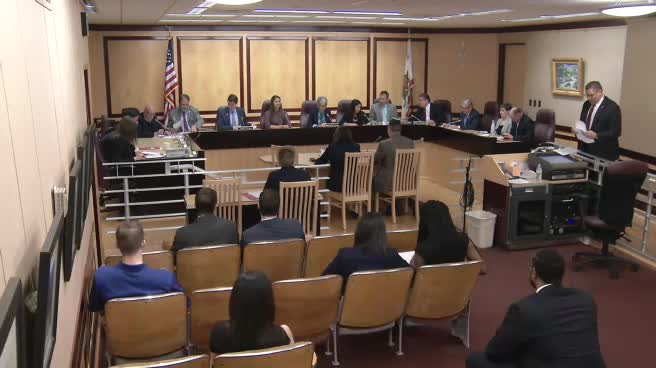
Bill Author






Bill Co-Author(s):