AB 2021: Election process: public observation: international election observers.
- Session Year: 2015-2016
- House: Assembly
- Latest Version Date: 2016-09-29
Existing law generally permits the public to observe the election process. Existing law requires the precinct board member to conduct certain election day procedures in the presence of all persons assembled at the polling place. Existing law requires the semifinal official canvass and official canvass to be open to the public. Existing law requires the processing of vote by mail ballot return envelopes and the processing and counting of vote by mail ballots to be open to the public. Existing law requires a recount to be conducted publicly. Existing law permits interested persons to participate in a public review and public hearing process for the certification or conditional approval of a ballot marking system.
This bill would allow an international election observer, as defined, to be provided uniform and nondiscriminatory access to all stages of the election process that are open to the public. This bill would prohibit an international election observer from interfering with a voter in the preparation or casting of the voters ballot, with a precinct board member of an elections official in the performance of his or her duties, or with the orderly conduct of an election.
Existing law generally permits the public to observe the election process. Existing law requires the precinct board member to conduct certain election day procedures in the presence of all persons assembled at the polling place. Existing law requires the semifinal official canvass and official canvass to be open to the public. Existing law requires the processing of vote by mail ballot return envelopes, and the processing and counting of vote by mail ballots, to be open to the public. Existing law requires a recount to be conducted publicly. Existing law permits interested persons to participate in a public review and public hearing process for the certification or conditional approval of a ballot marking system.
This bill would allow an international election observer, as defined, to be provided uniform and nondiscriminatory access to all stages of the election process that are open to the public. This bill would prohibit an international election observer from interfering with a voter in the preparation or casting of the voters ballot, with a precinct board member of an elections official in the performance of his or her duties, or with the orderly conduct of an election.
The California Constitution prohibits state and local government agencies from discriminating against or granting preferential treatment to any individual or group on the basis of race, sex, color, ethnicity, or national origin in the operation of public employment, public education, and public contracting.
This bill would state the intent of the Legislature to enact legislation that would promote equal opportunities for employment, education, and public contracting.
(a)An international election observer may be provided uniform and nondiscriminatory access to all stages of the election process that are open to the public, including the public review period for the certification of a ballot marking system, the processing and counting of vote by mail ballots, the canvassing of ballots, and the recounting of ballots. An international election observer shall not interfere with a voter in the preparation or casting of the voter's ballot, with a precinct board member or an elections official in the performance of his or her duties, or with the orderly conduct of an election.
(b)For purposes of this section, international election observer means a person who witnesses the administration of an election in this state and who is an official representative of an international organization such as the United Nations, the Organization for Security and Cooperation in Europe, or the Organization of American States.
SECTION 1.It is the intent of the Legislature to enact legislation that would promote equal opportunities for employment, education, and public contracting.
It is the intent of the Legislature to enact legislation that would promote equal opportunities for employment, education, and public contracting.
|
Date
|
Status
|
|---|---|
| Aug 30, 2016 | Enrolled and presented to the Governor at 4 p.m. |
| Aug 23, 2016 | In Assembly. Ordered to Engrossing and Enrolling. |
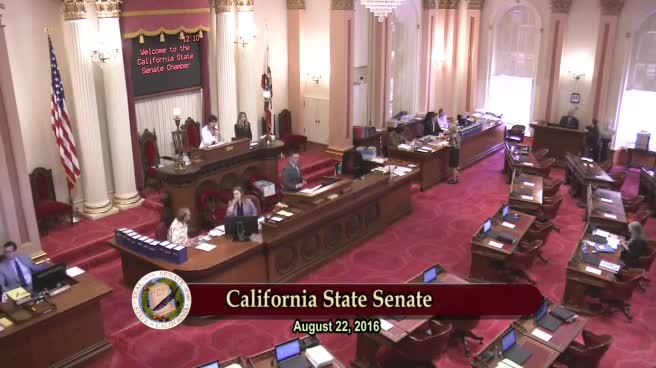
| Aug 22, 2016 | Read third time. Passed. Ordered to the Assembly. (Ayes 26. Noes 13. Page 5241.). |
| Aug 22, 2016 | Read third time. Passed. Ordered to the Assembly. |
| Jun 13, 2016 | Read second time. Ordered to third reading. |
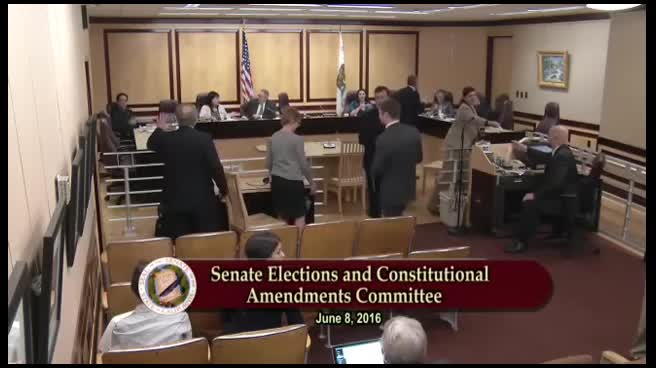
| Jun 9, 2016 | From committee: Do pass. (Ayes 4. Noes 1.) (June 8). |
| May 19, 2016 | In committee: Hearing postponed by committee. |
| May 12, 2016 | Referred to Com. on E. & C.A. |
| May 5, 2016 | Read third time. Passed. Ordered to the Senate. (Ayes 55. Noes 22. Page 4678.) |
| May 5, 2016 | In Senate. Read first time. To Com. on RLS. for assignment. |
| May 5, 2016 | Read third time. Passed. Ordered to the Senate. |
| Apr 28, 2016 | Read second time. Ordered to third reading. |
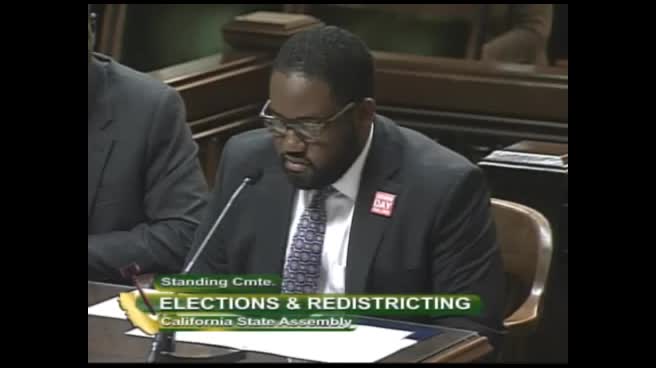
| Apr 27, 2016 | From committee: Do pass. (Ayes 5. Noes 2.) (April 27). |
| Mar 16, 2016 | Re-referred to Com. on E. & R. |
| Mar 15, 2016 | From committee chair, with author's amendments: Amend, and re-refer to Com. on E. & R. Read second time and amended. |
| Mar 14, 2016 | Referred to Com. on E. & R. |
| Feb 17, 2016 | From printer. May be heard in committee March 18. |
| Feb 16, 2016 | Read first time. To print. |
|
Date
|
Description
|
Location
|
Votes
|
|
|---|---|---|---|---|
| Aug 22, 2016 | Assembly 3rd Reading AB2021 Ridley-Thomas By Liu | Senate Floor |
Passed |
|
| Jun 8, 2016 | Do pass | Senate Standing Committee on Elections and Constitutional Amendments |
Passed |
|
| May 5, 2016 | AB 2021 RIDLEY-THOMAS Assembly Third Reading | Assembly Floor |
Passed |
|
| Apr 27, 2016 | Do pass. | Assembly Standing Committee on Elections and Redistricting |
Passed |
This list shows positions taken on this bill by organizations on the date displayed, which is linked to the original source.
Positions by individuals are not included.
Office of Senate Floor Analyses (916) 651-1520 Fax: (916) 327-4478 | AB |
THIRD READING
Bill No: AB 2021
:
SENATE ELECTIONS & C.A. COMMITTEE: 4-1, 6/8/16
AYES: Allen, Hancock, Hertzberg, Liu
NOES: Anderson
ASSEMBLY FLOOR: 55-22, 5/5/16 - See last page for vote
DIGEST: This bill clarifies state law to permit international election observers access to all election processes that are open to the public.
Existing law:
- Requires the official canvass to be open to the public, as specified.
- Requires all proceedings at the central counting place, or counting places, if applicable, to be open to view of the public, and further requires that no person, except one employed and designated by the elections officials, may touch any ballot container.
- Requires the processing of vote by mail (VBM) ballot return envelopes, and the processing and counting of VBM ballots to be open to the public, as specified. Prohibits a VBM observer from interfering with the orderly processing of VBM return envelopes or the processing and counting of VBM ballots, including the touching or handling of ballots.
- Requires the process for reviewing rejected ballots to be open to members of the public, including persons associated with a campaign or measure.
- Requires a voter to have the right to ask questions about election procedures and observe the election process.
This bill:
- Allows an international election observer to be provided uniform and nondiscriminatory access to all stages of the election process that are open to the public, including the public review period for the certification of a ballot marking system, the processing and counting of VBM ballots, the canvassing of ballots, and the recounting of ballots.
- Prohibits an international election observer from interfering with a voter in the preparation or casting of the voter's ballot, with a precinct board member or an elections official in the performance of his or her duties, or with the orderly conduct of an election.
- Defines an "international election observer" to mean a person who witnesses the administration of an election in California and who is an official representative of an international organization such as the United Nations, the Organization of Security and Cooperation in Europe (OSCE), or the Organization of American States (OAS).
Background
Current election observer practice. In general, current law permits members of the public to observe the election process. For example, existing law requires precinct board members to conduct certain Election Day procedures in the presence of all persons assembled at the polling place, requires the semifinal official canvass and the official canvass to be open to the public, and requires the processing of VBM, provisional, and rejected ballots to be open to the public, as specified.
Organization for Security and Cooperation in Europe. The United States is a member of the OSCE, an organization made up of 57 participating states that recognize that democratic elections form the basis for legitimate government. In 1990, the United States and all OSCE participating states agreed by consensus to the Copenhagen Document, reaffirming principles to strengthen respect for fundamental freedoms, and inviting observers from other participating states to observe national elections. The Copenhagen Document states, among other provisions, that "participating States consider that the presence of observers, both foreign and domestic, can enhance the electoral process for States in which elections are taking place. They therefore invite observers from any other OSCE participating States and any appropriate private institutions and organizations who may wish to do so to observe the course of their national election proceedings, to the extent permitted by law. They will also endeavor to facilitate similar access for election proceedings held below the national level. Such observers will undertake not to interfere in the electoral proceedings."
Also in 1990, the United States sponsored an initiative that led to the creation of the Office of Democratic Institutions and Human Rights (ODIHR) as the OSCE's focal point for all election-related matters, including election observation, technical assistance, and the review of electoral legislation. Each year the ODIHR deploys thousands of observers to monitor elections throughout the OSCE region in order to assess participating state's election-related commitments. According to the OSCE Web site, the United States formally invited ODIHR to send observers to elections in 1996, 1998, 2000, and 2002, and in 2003, two ODIHR observers came to observe the California gubernatorial recall election.
Comments
- According to the author, “The [OSCE], a United Nations partner on democratization and human rights projects, has monitored elections in the United States at the request of Civil Rights groups, such as the NAACP and the ACLU. As an OSCE member country, the United States has committed to hold free and democratic elections and to allow OSCE members to observe elections in the United States.
“Despite this commitment at the federal level, state law governs who can be in a polling place on Election Day. Several states, including Missouri, South Dakota, North Dakota, and New Mexico, authorize international observers to monitor elections. No state expressly forbids international observers. However, at least two states, Texas and Iowa, have barred international election observers, indicating that anyone who is not permitted (voters, poll workers, and poll watchers) could be subject to arrest.
“OSCE has asked that states expressly authorize international election observers to guarantee access to elections and to eliminate the fear of prosecution for individuals tasked with protecting the democratic process across the world. As a state that conducts fair and open elections, it only makes sense to allow the international community to monitor and learn from our elections.”
- Secretary of State’s (SOS) Elections Observation Rights and Responsibilities Memorandum. The SOS recently (May 13, 2016) sent out a memorandum to county elections officials outlining general state and local policies and rights and responsibilities of members of the public and elections officials related to observing the elections process. According to the memorandum, elections observers should be aware that in general, the law provides elections officials with some discretion in terms of how various observation laws are applied and as a result, laws may vary from jurisdiction to jurisdiction for reasons including, but not limited to, the size and configuration of the elections office, the staffing levels, and the number of observers that request access to a particular process.
- Other states. As mentioned above, there is a national commitment to the OSCE to permit international observers to observe elections in the United States, however, despite this commitment it is state law which governs the elections in each state. Some states expressly permit international observers to observe their elections, while other states allow, but do not explicitly state in law that international observers as permitted to observe their elections. According to the National Conference of State Legislators (NCSL), Missouri, New Mexico, North Dakota, South Dakota, and Washington D.C, explicitly allow international observers. Additionally, Texas and Iowa, while not in statute, have rulings from their respective Attorney General or Secretary of State barring international election observers.
California law is silent on the matter and does not expressly forbid or permit international observers.
- Other organizations. According to the NCSL, besides the OSCE, the United States also participates in election observation through two other organizations - the OAS and the Carter Center.
According to the Carter Center Web site, since 1989, the Carter Center has observed 101 elections in 39 countries. Missions are undertaken only upon the invitation or consent of all major parties to an election. Observers help reassure voters that they can safely and secretly cast their ballots and help deter fraud. The Carter Center observation projects generally begin well in advance of elections. Observer teams are often in a country to assess registration exercises and political campaigns before an election. Moreover, during an election, observers monitor voting and counting and remain after the ballots have been counted to monitor vote tabulation.
The United States also participates in election observation through the OAS. The OAS states that the right to universal suffrage by secret ballot is a cornerstone of the democratic system and that it is imperative that citizens of every country be able to rely on electoral processes that are free, peaceful and transparent. Moreover, the OAS believes that independent, impartial observation of elections lends transparency and confidence to the electoral process and helps strengthen democracy in the region. Since 1962, the OAS has deployed more than 200 Electoral Observation Missions (EOM) in 27 African countries. Upon completion of the electoral process, the EOM make recommendations to help improve the electoral system.
FISCAL EFFECT: Appropriation: Fiscal Com.: Local:
California Association of Clerks and Election Officials
None received
ARGUMENTS IN SUPPORT: According to the California Association of Clerks and Election Officials who states in support of this bill, “Elections are an open and transparent process. We welcome international visitors and the insight they bring. We are very appreciative of the opportunity we have to observe elections in other countries. This exchange of information benefits everyone and improves our processes.”
ASSEMBLY FLOOR: 55-22, 5/5/16
AYES: Alejo, Arambula, Atkins, Baker, Bloom, Bonilla, Bonta, Brown, Burke, Calderon, Campos, Chang, Chau, Chiu, Chu, Cooley, Cooper, Dababneh, Daly, Dodd, Eggman, Frazier, Cristina Garcia, Eduardo Garcia, Gatto, Gipson, Gomez, Gonzalez, Gordon, Gray, Roger Hernández, Holden, Irwin, Jones-Sawyer, Lackey, Levine, Lopez, Low, McCarty, Medina, Mullin, Nazarian, O'Donnell, Quirk, Ridley-Thomas, Rodriguez, Salas, Santiago, Mark Stone, Thurmond, Ting, Weber, Williams, Wood, Rendon
NOES: Achadjian, Travis Allen, Brough, Chávez, Dahle, Gallagher, Grove, Hadley, Harper, Kim, Linder, Maienschein, Mathis, Mayes, Melendez, Obernolte, Olsen, Patterson, Steinorth, Wagner, Waldron, Wilk
NO VOTE RECORDED: Bigelow, Beth Gaines, Jones
6/14/16 16:52:11
**** END ****
SENATE COMMITTEE ON
ELECTIONS AND CONSTITUTIONAL AMENDMENTS
Senator Ben Allen, Chair
2015 - 2016 Regular
Bill No: 2021 Hearing Date: 6/8/16
Author: | Ridley-Thomas | ||
Version: |
| ||
Urgency: | Fiscal: | ||
Consultant: | |||
Subject: .
DIGEST
This bill clarifies state law to permit international election observers access to all election processes that are open to the public.
ANALYSIS
Existing law:
1) Requires the official canvass to be open to the public, as specified.
2) Requires all proceedings at the central counting place, or counting places, if applicable, to be open to view of the public, and further requires that no person, except one employed and designated by the elections officials, may touch any ballot container.
3) Requires the processing of vote by mail (VBM) ballot return envelopes, and the processing and counting of VBM ballots to be open to the public, as specified. Prohibits a VBM observer from interfering with the orderly processing of VBM return envelopes or the processing and counting of VBM ballots, including the touching or handling of ballots.
4) Requires the process for reviewing rejected ballots to be open to members of the public, including persons associated with a campaign or measure.
5) Requires a voter to have the right to ask questions about election procedures and observe the election process.
This bill:
1) Allows an international election observer to be provided uniform and nondiscriminatory access to all stages of the election process that are open to the public, including the public review period for the certification of a ballot marking system, the processing and counting of VBM ballots, the canvassing of ballots, and the recounting of ballots.
2) Prohibits an international election observer from interfering with a voter in the preparation or casting of the voter's ballot, with a precinct board member or an elections official in the performance of his or her duties, or with the orderly conduct of an election.
3) Defines an "international election observer" to mean a person who witnesses the administration of an election in California and who is an official representative of an international organization such as the United Nations, the Organization of Security and Cooperation in Europe (OSCE), or the Organization of American States (OAS).
BACKGROUND
Current Election Observer Practice: In general, current law permits members of the public to observe the election process. For example, existing law requires precinct board members to conduct certain Election Day procedures in the presence of all persons assembled at the polling place, requires the semifinal official canvass and the official canvass to be open to the public, and requires the processing of VBM, provisional, and rejected ballots to be open to the public, as specified.
Organization for Security and Cooperation in Europe: The United States is a member of the OSCE, an organization made up of 57 participating states that recognize that democratic elections form the basis for legitimate government. In 1990, the United States and all OSCE participating states agreed by consensus to the Copenhagen Document, reaffirming principles to strengthen respect for fundamental freedoms, and inviting observers from other participating states to observe national elections. The Copenhagen Document states, among other provisions, that "participating States consider that the presence of observers, both foreign and domestic, can enhance the electoral process for States in which elections are taking place. They therefore invite observers from any other OSCE participating States and any appropriate private institutions and organizations who may wish to do so to observe the course of their national election proceedings, to the extent permitted by law. They will also endeavor to facilitate similar access for election proceedings held below the national level. Such observers will undertake not to interfere in the electoral proceedings."
Also in 1990, the United States sponsored an initiative that led to the creation of the Office of Democratic Institutions and Human Rights (ODIHR) as the OSCE's focal point for all election-related matters, including election observation, technical assistance, and the review of electoral legislation. Each year the ODIHR deploys thousands of observers to monitor elections throughout the OSCE region in order to assess participating state's election-related commitments. According to the OSCE website, the United States formally invited ODIHR to send observers to elections in 1996, 1998, 2000, and 2002, and in 2003, two ODIHR observers came to observe the California gubernatorial recall election.
COMMENTS
- According to the author: The [OSCE], a United Nations partner on democratization and human rights projects, has monitored elections in the United States at the request of Civil Rights groups, such as the NAACP and the ACLU. As an OSCE member country, the United States has committed to hold free and democratic elections and to allow OSCE members to observe elections in the United States.
Despite this commitment at the federal level, state law governs who can be in a polling place on Election Day. Several states, including Missouri, South Dakota, North Dakota, and New Mexico, authorize international observers to monitor elections. No state expressly forbids international observers. However, at least two states, Texas and Iowa, have barred international election observers, indicating that anyone who is not permitted (voters, poll workers, poll watchers) could be subject to arrest.
OSCE has asked that states expressly authorize international election observers to guarantee access to elections and to eliminate the fear of prosecution for individuals tasked with protecting the democratic process across the world. As a state that conducts fair and open elections, it only makes sense to allow the international community to monitor and learn from our elections.
- SOS's Elections Observation Rights and Responsibilities Memorandum: The SOS recently (5/13/16) sent out a memorandum to county elections officials outlining general state and local policies and rights and responsibilities of members of the public and elections officials related to observing the elections process. According to the memorandum, elections observers should be aware that in general, the law provides elections officials with some discretion in terms of how various observation laws are applied and as a result, laws may vary from jurisdiction to jurisdiction for reasons including, but not limited to, the size and configuration of the elections office, the staffing levels, and the number of observers that request access to a particular process.
According to the memorandum, observers have the right to:
- Observe pre-election day activities, as permitted by law, such as voting equipment preparation and testing and VBM ballot processing.
- Observe the proceedings at the polls, including the opening and closing procedures.
- Obtain information from the precinct index that is posted near the entrance of the polling place.
- Make notes and watch election procedures.
- View election-related activities at the central counting site on Election Day.
- View the canvass of the vote activities following the election.
- View VBM and provisional ballot processing.
- Ask questions of poll workers as long as they do not interfere with the conduct of any part of the voting process.
- Ask questions of supervisors at the central counting site as long as they do not interfere with the conduct of the election procedures.
Additionally, observers are responsible for:
- Checking in at each site, whether the polling place or central counting site.
- Wearing an identification badge.
- Maintaining a professional manner while observing the election process.
- Ensuring they do not interfere with the election process.
- Following established county observation rules/policies.
Finally, observers may not:
- Interfere with the conduct of the election. The elections official is entitled to determine whether a person is interfering with the conduct of the election.
- Physically handle any voting materials or equipment without the express permission of the elections official.
- Move or rearrange tables, chairs, or voting booths at the polling place or central counting facility.
- Sit at the official worktables or view confidential voter information on any computer terminal or document.
- Communicate with voters within 100 feet of the entrance to, or inside of, a polling place by encouraging them to vote for or against a person or a measure or regarding the voter’s qualifications to vote. Exit polling of voters is permitted, provided it is conducted at least 25 feet away from the entrance to the polling place.
- Directly challenge a voter. Only a member of a precinct board may do so, based on evidence presented.
- Display any campaign material or wear campaign badges, buttons, or apparel.
- Wear the uniform of a peace officer, a private guard, or security personnel.
- Use cellular phones, pagers, or two-way radios inside the polling place and/or within 100 feet of the entrance to the polling place.
- Talk to or attempt to stop poll workers or the central counting site workers while they are processing ballots.
- Use the telephones, computers, or other polling place facilities at polling places or the central counting site.
- Touch election personnel.
- Eat or drink in the polls or the central counting site.
- Assist in operations at any polling place or the central counting site.
- Prevent other observers from observing materials or a process.
- Enter secure areas without express permission of the elections official.
- Other States: As mentioned above, there is a national commitment to the OSCE to permit international observers to observe elections in the United States, however, despite this commitment it is state law which governs the elections in each state. Some states expressly permit international observers to observe their elections, while other states allow, but do not explicitly state in law that international observers as permitted to observe their elections. According to the National Conference of State Legislators (NCSL), Missouri, New Mexico, North Dakota, South Dakota, and Washington D.C, explicitly allow international observers. Additionally, Texas and Ohio, while not in statute, have rulings from their respective Attorney General or Secretary of State barring international election observers.
California law is silent on the matter and does not expressly forbid or permit international observers.
- Other Organizations: According to the NCSL, besides the OSCE, the United States also participates in election observation through two other organizations - the OAS and the Carter Center.
According to the Carter Center website, since 1989, the Carter Center has observed 101 elections in 39 countries. Missions are undertaken only upon the invitation or consent of all major parties to an election. Observers help reassure voters that they can safely and secretly cast their ballots and help deter fraud. The Carter Center observation projects generally begin well in advance of elections. Observer teams are often in a country to assess registration exercises and political campaigns before an election. Moreover, during an election, observers monitor voting and counting and remain after the ballots have been counted to monitor vote tabulation.
The United States also participates in election observation through the OAS. The OAS states that the right to universal suffrage by secret ballot is a cornerstone of the democratic system and that it is imperative that citizens of every country be able to rely on electoral processes that are free, peaceful and transparent. Moreover, the OAS believes that independent, impartial observation of elections lends transparency and confidence to the electoral process and helps strengthen democracy in the region. Since 1962, the OAS has deployed more than 200 Electoral Observation Missions (EOM) in 27 African countries. Upon completion of the electoral process, the EOM make recommendations to help improve the electoral system.
PRIOR ACTION
Assembly Floor: | 55 - 22 |
Assembly Committee: | 5 - 2 |
POSITIONS
Sponsor: Author
Support: California Association of Clerks and Election Officials
Oppose: None received
-- END --
ASSEMBLY THIRD READING
ATR Bill Id:AB 2021
Author:(Ridley-Thomas)
As Amended Ver:March 15, 2016
Majority vote
Committee | Votes | Ayes | Noes |
Elections | 5-2 | Weber, Gordon, Low, Mullin, Nazarian | Harper, Travis Allen |
SUMMARY: Clarifies state law to permit international election observers access to all election processes that are open to the public, as specified. Specifically, this bill:
- Allows an international election observer to be provided uniform and nondiscriminatory access to all stages of the election process that are open to the public, including the public review period for the certification of a ballot marking system, the processing and counting of vote by mail (VBM) ballots, the canvassing of ballots, and the recounting of ballots.
- Prohibits an international election observer from interfering with a voter in the preparation or casting of the voter's ballot, with a precinct board member or an elections official in the performance of his or her duties, or with the orderly conduct of an election.
- Defines an "international election observer" to mean a person who witnesses the administration of an election in California and who is an official representative of an international organization such as the United Nations, the Organization of Security and Cooperation in Europe (OSCE), or the Organization of American States (OAS).
FISCAL EFFECT: None. This bill is keyed non-fiscal by the Legislative Counsel.
COMMENTS: According to the author, "The [OSCE], a United Nations partner on democratization and human rights projects, has monitored elections in the United States at the request of Civil Rights groups, such as the NAACP and the ACLU. As an OSCE member country, the United States has committed to hold free and democratic elections and to allow OSCE members to observe elections in the United States. Despite this commitment at the federal level, state law governs who can be in a polling place on Election Day. Several states, including Missouri, South Dakota, North Dakota, and New Mexico, authorize international observers to monitor elections.
"No state expressly forbids international observers. However, at least two states, Texas and Iowa, have barred international election observers, indicating that anyone who is not permitted (voters, poll workers, poll watchers) could be subject to arrest.
"OSCE has asked that states expressly authorize international election observers to guarantee access to elections and to eliminate the fear of prosecution for individuals tasked with protecting the democratic process across the world. As a state that conducts fair and open elections, it only makes sense to allow the international community to monitor and learn from our elections."
California law is silent on the matter and does not expressly forbid or permit international observers. This bill clarifies current law and explicitly states that international election observers are permitted to observe California elections, as specified.
In general, current law permits members of the public to observe the election process. For example, existing law requires the precinct board member to conduct certain Election Day procedures in the presence of all persons assembled at the polling place, requires the semifinal official canvass and the official canvass to be open to the public, and requires the processing of VBM, provisional, and rejected ballots to be open to the public, as specified.
Please see the policy committee analysis for a full discussion of this bill.
Analysis Prepared by: Nichole Becker / E. & R. / (916) 319-2094 FN: 0002813
Date of Hearing: April 27, 2016
ASSEMBLY COMMITTEE ON ELECTIONS AND REDISTRICTING
Shirley Weber, Chair
ABPCA Bill Id:AB 2021 (
Author:Ridley-Thomas) – As Amended Ver:March 15, 2016
SUBJECT: Election process: public observation: international election observers.
SUMMARY: Clarifies state law to permit international election observers access to all election processes that are open to the public, as specified. Specifically, this bill:
- Allows an international election observer to be provided uniform and nondiscriminatory access to all stages of the election process that are open to the public, including the public review period for the certification of a ballot marking system, the processing and counting of vote by mail (VBM) ballots, the canvassing of ballots, and the recounting of ballots.
- Prohibits an international election observer from interfering with a voter in the preparation or casting of the voter's ballot, with a precinct board member or an elections official in the performance of his or her duties, or with the orderly conduct of an election.
- Defines an "international election observer" to mean a person who witnesses the administration of an election in California and who is an official representative of an international organization such as the United Nations, the Organization of Security and Cooperation in Europe (OSCE), or the Organization of American States (OAS).
EXISTING LAW:
- Requires the official canvass to be open to the public, as specified.
- Requires all proceedings at the central counting place, or counting places, if applicable, to be open to view of the public. Provides that no person, except one employed and designated by the elections officials, may touch any ballot container.
- Requires the processing of VBM ballot return envelopes, and the processing and counting of VBM ballots to be open to the public, as specified. Prohibits a VBM observer from interfering with the orderly processing of VBM return envelopes or the processing and counting of VBM ballots, including the touching or handling of ballots.
- Requires the process for reviewing rejected ballots to be open to members of the public, including persons associated with a campaign or measure.
- Requires a voter to have the right to ask questions about election procedures and observe the election process.
FISCAL EFFECT: None. Keyed non-fiscal by the Legislative Counsel.
COMMENTS:
- Purpose of the Bill: According to the Author:
The [OSCE], a United Nations partner on democratization and human rights projects, has monitored elections in the United States at the request of Civil Rights groups, such as the NAACP and the ACLU. As an OSCE member country, the United States has committed to hold free and democratic elections and to allow OSCE members to observe elections in the United States.
Despite this commitment at the federal level, state law governs who can be in a polling place on Election Day. Several states, including Missouri, South Dakota, North Dakota, and New Mexico, authorize international observers to monitor elections.
No state expressly forbids international observers. However, at least two states, Texas and Iowa, have barred international election observers, indicating that anyone who is not permitted (voters, poll workers, poll watchers) could be subject to arrest.
OSCE has asked that states expressly authorize international election observers to guarantee access to elections and to eliminate the fear of prosecution for individuals tasked with protecting the democratic process across the world. As a state that conducts fair and open elections, it only makes sense to allow the international community to monitor and learn from our elections.
- Current Election Observer Practice: In general, current law permits members of the public to observe the election process. For example, existing law requires the precinct board member to conduct certain election day procedures in the presence of all persons assembled at the polling place, requires the semifinal official canvass and the official canvass to be open to the public, and requires the processing of VBM, provisional, and rejected ballots to be open to the public, as specified.
This bill clarifies state law to permit international election observers access to all election processes that are open to the public. Specifically, this bill allows an international election observer to be provided uniform and nondiscriminatory access to all stages of the election process that are open to the public, including the public review period for the certification of a ballot marking system, the processing and counting of VBM ballots, the canvassing of ballots, and the recounting of ballots. Additionally, similar to prohibitions under current law for members of the public observing elections, this bill prohibits an international election observer from interfering with a voter in the preparation or casting of the voter's ballot, with a precinct board member or an elections official in the performance of his or her duties, or with the orderly conduct of an election. Finally, this bill defines an international election observer to mean a person who witnesses the administration of an election in California and who is an official representative of an international organization such as the United Nations, the OSCE, or the OAS. - Secretary of State's Elections Observation Rights and Responsibilities Memorandum: In May 2014, the SOS sent out a memorandum to county elections officials outlining general state and local policies and rights and responsibilities of members of the public and elections officials related to observing the elections process. According to the memorandum, elections observers should be aware that in general, the law provides elections officials with some discretion in terms of how various observation laws are applied and as a result, laws may vary from jurisdiction to jurisdiction for reasons including, but not limited to, the size and configuration of the elections office, the staffing levels, and the number of observers that request access to a particular process.
According to the memorandum, observers have the right to:
- Observe pre-election day activities, as permitted by law, such as voting equipment preparation and testing and VBM ballot processing.
- Observe the proceedings at the polls, including the opening and closing procedures.
- Obtain information from the precinct index that is posted near the entrance of the polling place.
- Make notes and watch election procedures.
- View election-related activities at the central counting site on election day.
- View the canvass of the vote activities following the election.
- View VBM and provisional ballot processing.
- Ask questions of poll workers as long as they do not interfere with the conduct of any part of the voting process.
- Ask questions of supervisors at the central counting site as long as they do not interfere with the conduct of the election procedures.
Additionally, observers are responsible for:
- Checking in at each site, whether the polling place or central counting site.
- Wearing an identification badge.
- Maintaining a professional manner while observing the election process.
- Ensuring they do not interfere with the election process.
- Following established county observation rules/policies.
Finally, observers may not:
- Interfere with the conduct of the election. The elections official is entitled to determine whether a person is interfering with the conduct of the election.
- Physically handle any voting materials or equipment without the express permission of the elections official.
- Move or rearrange tables, chairs, or voting booths at the polling place or central counting facility.
- Sit at the official worktables or view confidential voter information on any computer terminal or document.
- Communicate with voters within 100 feet of the entrance to, or inside of, a polling place by encouraging them to vote for or against a person or a measure or regarding the voter’s qualifications to vote. Exit polling of voters is permitted, provided it is conducted at least 25 feet away from the entrance to the polling place.
- Directly challenge a voter. Only a member of a precinct board may do so, based on evidence presented.
- Display any campaign material or wear campaign badges, buttons, or apparel.
- Wear the uniform of a peace officer, a private guard, or security personnel.
- Use cellular phones, pagers, or two-way radios inside the polling place and/or within 100 feet of the entrance to the polling place.
- Talk to or attempt to stop poll workers or the central counting site workers while they are processing ballots.
- Use the telephones, computers, or other polling place facilities at polling places or the central counting site.
- Touch election personnel.
- Eat or drink in the polls or the central counting site.
- Assist in operations at any polling place or the central counting site.
- Prevent other observers from observing materials or a process.
- Enter secure areas without express permission of the elections official.
- Organization for Security and Cooperation in Europe: The United States is a member of the OSCE, an organization made up of 57 participating states that recognize that democratic elections form the basis for legitimate government. In 1990, the United States and all OSCE participating states agreed by consensus to the Copenhagen Document, reaffirming principles to strengthen respect for fundamental freedoms, and inviting observers from other participating states to observe national elections. The Copenhagen Document states, among other provisions, that "participating States consider that the presence of observers, both foreign and domestic, can enhance the electoral process for States in which elections are taking place. They therefore invite observers from any other OSCE participating States and any appropriate private institutions and organizations who may wish to do so to observe the course of their national election proceedings, to the extent permitted by law. They will also endeavor to facilitate similar access for election proceedings held below the national level. Such observers will undertake not to interfere in the electoral proceedings."
Also in 1990, the United States sponsored an initiative that led to the creation of the Office of Democratic Institutions and Human Rights (ODIHR) as the OSCE's focal point for all election-related matters, including election observation, technical assistance, and the review of electoral legislation. Each year the ODIHR deploys thousands of observers to monitor elections throughout the OSCE region in order to assess participating state's election-related commitments. According to the OSCE website, the United States formally invited ODIHR to send observers to elections in 1996, 1998, 2000, and 2002, and in 2003, two ODIHR observers came to observe the California gubernatorial recall election. - Other States: As mentioned above, there is a national commitment to the OSCE to permit international observers to observe elections in the United States, however, despite this commitment it is state law which governs the elections in each state. Some states expressly permit international observers to observe their elections, while other states allow, but do not explicitly state in law that international observers as permitted to observe their elections. According to the National Conference of State Legislators (NCSL), Missouri, New Mexico, North Dakota, South Dakota, and Washington D.C, explicitly allow international observers. Additionally, Texas and Ohio, while not in statute, have rulings from their respective Attorney General or Secretary of State barring international election observers.
California law is silent on the matter and does not expressly forbid or permit international observers. This bill clarifies current law and explicitly states that international election observers are permitted to observe California elections, as specified. - Other Organizations: According to the NCSL, besides the OSCE, the United States also participates in election observation through two other organizations - the OAS and the Carter Center.
According to the Carter Center website, since 1989, the Carter Center has observed 101 elections in 39 countries. Missions are undertaken only upon the invitation or consent of all major parties to an election. Observers help reassure voters that they can safely and secretly cast their ballots and help deter fraud. The Carter Center observation projects generally begin well in advance of elections. Observer teams are often in a country to assess registration exercises and political campaigns before an election. Moreover, during an election, observers monitor voting and counting and remain after the ballots have been counted to monitor vote tabulation.
The United States also participates in election observation through the OAS. The OAS states that the right to universal suffrage by secret ballot is a cornerstone of the democratic system and that it is imperative that citizens of every country be able to rely on electoral processes that are free, peaceful and transparent. Moreover, the OAS believes that independent, impartial observation of elections lends transparency and confidence to the electoral process and helps strengthen democracy in the region. Since 1962, the OAS has deployed more than 200 Electoral Observation Missions (EOM) in 27 African countries. Upon completion of the electoral process, the EOM make recommendations to help improve the electoral system.
REGISTERED SUPPORT / OPPOSITION:
Support
None on file.
Opposition
None of file.
Analysis Prepared by: Nichole Becker / E. & R. / (916) 319-2094
Discussed in Hearing
 2MIN
Senate Floor
 2MIN
Senate Standing Committee on Elections and Constitutional Amendments
 59SEC
Assembly Floor
 3MIN
Assembly Standing Committee on Elections and Redistricting
Bill Author
Bill Co-Author(s):