AB 2024: Critical access hospitals: employment.
- Session Year: 2015-2016
- House: Assembly
- Latest Version Date: 2016-09-23
Existing law, the Medical Practice Act, restricts the employment of physicians and surgeons or doctors of podiatric medicine by a corporation or other artificial legal entity to entities that do not charge for professional services rendered to patients and are approved by the Medical Board of California, subject to specified exemptions. Existing law establishes the Office of Statewide Health Planning and Development, which succeeds to and is vested with all the duties, powers, responsibilities, and jurisdiction of the State Department of Public Health relating to health planning and research development.
This bill, until January 1, 2024, would also authorize a federally certified critical access hospital to employ those medical professionals and charge for professional services rendered by those medical professionals if the medical staff concur by an affirmative vote that the professionals employment is in the best interest of the communities served by the hospital and the hospital does not direct or interfere with the professional judgment of a physician and surgeon, as specified. The bill would require the office, on or before July 1, 2023, to provide a report to the Legislature containing data on the impact of this authorization on federally certified critical access hospitals and their ability to recruit and retain physicians and surgeons, as specified. The bill would, on and after July 1, 2017, and until July 1, 2023, require a federally critical access hospital employing those medical professionals under this authorization to submit a report, on or before July 1 of each year, to the office as specified.
Existing law, the Medical Practice Act, restricts the employment of physicians and surgeons or doctors of podiatric medicine by a corporation or other artificial legal entity to entities that do not charge for professional services rendered to patients and are approved by the Medical Board of California, subject to specified exemptions. Existing law establishes the Office of Statewide Health Planning and Development, which succeeds to and is vested with all the duties, powers, responsibilities, and jurisdiction of the State Department of Public Health relating to health planning and research development.
This bill, until January 1, 2024, would also authorize a federally certified critical access hospital to employ those medical professionals and charge for professional services rendered by those medical professionals if the medical staff concur by an affirmative vote that the professionals employment is in the best interest of the communities served by the hospital and the hospital does not direct or interfere with the professional judgment of a physician and surgeon, as specified. The bill would require the office, on or before July 1, 2023, to provide a report to the Legislature containing data on the impact of this authorization on federally certified critical access hospitals and their ability to recruit and retain physicians and surgeons, as specified. The bill would, on and after July 1, 2017, and until July 1, 2023, require a federally critical access hospital employing those medical professionals under this authorization to submit a report, on or before July 1 of each year, to the office as specified.
Existing law, the Medical Practice Act, restricts the employment of physicians and surgeons or doctors of podiatric pediatric medicine by a corporation or other artificial legal entity to entities that do not charge for professional services rendered to patients and are approved by the Medical Board of California, subject to specified exemptions. Existing law establishes the Office of Statewide Health Planning and Development, which succeeds to and is vested with all the duties, powers, responsibilities, and jurisdiction of the State Department of Public Health relating to health planning and research development.
This bill, until January 1, 2024, would also authorize a federally certified critical access hospital to employ those medical professionals and charge for professional services rendered by those medical professionals if the medical staff concur by an affirmative vote that the professionals employment is in the best interest of the communities served by the hospital and the hospital does not direct or interfere with the professional judgment of a physician and surgeon, as specified. The bill would require the office, on or before July 1, 2023, to provide a report to the Legislature containing data on the impact of this authorization on federally certified critical access hospitals and their ability to recruit and retain physicians and surgeons, as specified. The bill would, on and after July 1, 2017, and until July 1, 2023, require a federally critical access hospital employing those medical professionals under this authorization to submit a report, on or before July 1 of each year, to the office as specified.
Existing law, the Medical Practice Act, restricts the employment of physicians and surgeons and or doctors of podiatric medicine by a corporation or other artificial legal entity to entities that do not charge for professional services rendered to patients and are approved by the Medical Board of California, subject to specified exemptions. Existing law establishes the Office of Statewide Health Planning and Development, which succeeds to and is vested with all the duties, powers, responsibilities, and jurisdiction of the State Department of Public Health relating to health planning and research development.
This bill, until January 1, 2024, would also authorize a federally certified critical access hospital to employ those medical professionals and charge for professional services rendered by those medical professionals if the medical staff concur by an affirmative vote that the professionals employment is in the best interest of the communities served by the hospital and the hospital does not direct or interfere with the professional judgment of a physician and surgeon, as specified. The bill would require the board, office, on or before July 1, 2023, to provide a report to the Legislature containing data on the impact of this authorization on federally certified critical access hospitals and their ability to recruit and retain physicians and surgeons, as specified.
Existing law, the Medical Practice Act, restricts the employment of physicians and surgeons and doctors of podiatric medicine by a corporation or other artificial legal entity to entitites entities that do not charge for professional services rendered to patients and are approved by the Medical Board of California, subject to specified exemptions.
This bill, until January 1, 2024, would also authorize a federally certified critical access hospital to employ those medical professionals and charge for professional services rendered by those medical professionals, and would prohibit the critical access professionals if the medical staff concur by an affirmative vote that the professionals employment is in the best interest of the communities served by the hospital and the hospital from directing or interfering does not direct or interfere with the professional judgment of a physician and surgeon, as specified. The bill would require the Legislative Analyst, board, on or before July 1, 2023, to provide a report to the Legislature containing data on the impact of this authorization on federally certified critical access hospitals. hospitals and their ability to recruit and retain physicians and surgeons, as specified.
Existing law, the Medical Practice Act, restricts the employment of physicians and surgeons and doctors of podiatric medicine by a corporation or other artificial legal entity to entitites that do not charge for professional services rendered to patients and are approved by the Medical Board of California, subject to specified exemptions.
This bill bill, until January 1, 2024, would also authorize a federally certified critical access hospital to employ those medical professionals and charge for professional services rendered by those medical professionals, and would prohibit the critical access hospital from directing or interfering with the professional judgment of a physician and surgeon, as specified. The bill would require the Legislative Analyst, on or before July 1, 2023, to provide a report to the Legislature containing data on the impact of this authorization on federally certified critical access hospitals.
Existing law, the Medical Practice Act, restricts the employment of physicians and surgeons and doctors of podiatric medicine by a corporation or other artificial legal entity to entitites that do not charge for professional services rendered to patients and are approved by the Medical Board of California, subject to specified exemptions.
This bill would authorize a federally certified critical access hospital to employ those medical professionals and charge for professional services rendered by those medical professionals, and would prohibit the critical access hospital from directing or interfering with the professional judgment of a physician and surgeon, as specified.
(a)Notwithstanding Section 2400, a clinic operated primarily for the purpose of medical education by a public or private nonprofit university medical school, which is approved by the board or the Osteopathic Medical Board of California, may charge for professional services rendered to teaching patients by licensees who hold academic appointments on the faculty of the university, if the charges are approved by the physician and surgeon in whose name the charges are made.
(b)Notwithstanding Section 2400, a clinic operated under subdivision (p) of Section 1206 of the Health and Safety Code may employ licensees and charge for professional services rendered by those licensees. However, the clinic shall not interfere with, control, or otherwise direct the professional judgment of a physician and surgeon in a manner prohibited by Section 2400 or any other law.
(c)Notwithstanding Section 2400, a narcotic treatment program operated under Section 11876 of the Health and Safety Code and regulated by the State Department of Health Care Services, may employ licensees and charge for professional services rendered by those licensees. However, the narcotic treatment program shall not interfere with, control, or otherwise direct the professional judgment of a physician and surgeon in a manner prohibited by Section 2400 or any other law.
(d)Notwithstanding Section 2400, a hospital that is owned and operated by a licensed charitable organization, that offers only pediatric subspecialty care, that, prior to January 1, 2013, employed licensees on a salary basis, and that has not charged for professional services rendered to patients may, commencing January 1, 2013, charge for professional services rendered to patients, provided the following conditions are met:
(1)The hospital does not increase the number of salaried licensees by more than five licensees each year.
(2)The hospital does not expand its scope of services beyond pediatric subspecialty care.
(3)The hospital accepts each patient needing its scope of services regardless of his or her ability to pay, including whether the patient has any form of health care coverage.
(4)The medical staff concur by an affirmative vote that the licensees employment is in the best interest of the communities served by the hospital.
(5)The hospital does not interfere with, control, or otherwise direct a physician and surgeons professional judgment in a manner prohibited by Section 2400 or any other law.
(e)(1)Notwithstanding Section 2400, until January 1, 2024, a federally certified critical access hospital may employ licensees and charge for professional services rendered by those licensees to patients, provided both of the following conditions are met:
(A)The medical staff concur by an affirmative vote that the licensees employment is in the best interest of the communities served by the hospital.
(B)The hospital does not interfere with, control, or otherwise direct a physician and surgeons professional judgment in a manner prohibited by Section 2400 or any other law.
(2)(A)On or before July 1, 2023, the Office of Statewide Health Planning and Development shall provide a report to the Legislature containing data about the impact of paragraph (1) on federally certified critical access hospitals and their ability to recruit and retain physicians and surgeons between January 1, 2017, and January 1, 2023, inclusive. This report shall be submitted in compliance with Section 9795 of the Government Code. The requirement for submitting a report imposed under this subparagraph is inoperative on July 1, 2027.
(B)The office shall determine the format of the report, as well as the methods and data elements to be utilized in the development of the report.
(C)On and after July 1, 2017, a federally certified critical access hospital that is employing licensees and charging for professional services rendered by those licensees to patients under this section shall submit to the office, on or before July 1 of each year, a report for any year in which that hospital has employed or is employing licensees and charging for professional services rendered by those licensees to patients. The report shall include data elements as required by the office and shall be submitted in a format as required by the office. The requirement for submitting reports imposed under this subparagraph shall be inoperative on July 1, 2023.
(a)Notwithstanding Section 2400, a clinic operated primarily for the purpose of medical education by a public or private nonprofit university medical school, which is approved by the board or the Osteopathic Medical Board of California, may charge for professional services rendered to teaching patients by licensees who hold academic appointments on the faculty of the university, if the charges are approved by the physician and surgeon in whose name the charges are made.
(b)Notwithstanding Section 2400, a clinic operated under subdivision (p) of Section 1206 of the Health and Safety Code may employ licensees and charge for professional services rendered by those licensees. However, the clinic shall not interfere with, control, or otherwise direct the professional judgment of a physician and surgeon in a manner prohibited by Section 2400 or any other law.
(c)Notwithstanding Section 2400, a narcotic treatment program operated under Section 11876 of the Health and Safety Code and regulated by the State Department of Health Care Services, may employ licensees and charge for professional services rendered by those licensees. However, the narcotic treatment program shall not interfere with, control, or otherwise direct the professional judgment of a physician and surgeon in a manner prohibited by Section 2400 or any other law.
(d)Notwithstanding Section 2400, a hospital that is owned and operated by a licensed charitable organization, that offers only pediatric subspecialty care, that, prior to January 1, 2013, employed licensees on a salary basis, and that has not charged for professional services rendered to patients may, commencing January 1, 2013, charge for professional services rendered to patients, provided the following conditions are met:
(1)The hospital does not increase the number of salaried licensees by more than five licensees each year.
(2)The hospital does not expand its scope of services beyond pediatric subspecialty care.
(3)The hospital accepts each patient needing its scope of services regardless of his or her ability to pay, including whether the patient has any form of health care coverage.
(4)The medical staff concur by an affirmative vote that the licensees employment is in the best interest of the communities served by the hospital.
(5)The hospital does not interfere with, control, or otherwise direct a physician and surgeons professional judgment in a manner prohibited by Section 2400 or any other law.
(e)(1)Notwithstanding Section 2400, until January 1, 2024, a federally certified critical access hospital may employ licensees and charge for professional services rendered by those licensees to patients, provided both of the following conditions are met:
(A)The medical staff concur by an affirmative vote that the licensees employment is in the best interest of the communities served by the hospital.
(B)The hospital does not interfere with, control, or otherwise direct a physician and surgeons professional judgment in a manner prohibited by Section 2400 or any other law.
(2)(A)On or before July 1, 2023, the Office of Statewide Health Planning and Development shall provide a report to the Legislature containing data about the impact of paragraph (1) on federally certified critical access hospitals and their ability to recruit and retain physicians and surgeons between January 1, 2017, and January 1, 2023, inclusive. This report shall be submitted in compliance with Section 9795 of the Government Code. The requirement for submitting a report imposed under this subparagraph is inoperative on July 1, 2027.
(B)The office shall determine the format of the report, as well as the methods and data elements to be utilized in the development of the report.
(C)On and after July 1, 2017, a federally certified critical access hospital that is employing licensees and charging for professional services rendered by those licensees to patients under this section shall submit to the office, on or before July 1 of each year, a report for any year in which that hospital has employed or is employing licensees and charging for professional services rendered by those licensees to patients. The report shall include data elements as required by the office and shall be submitted in a format as required by the office. The requirement for submitting reports imposed under this subparagraph shall be inoperative on July 1, 2023.
(a)Notwithstanding Section 2400, a clinic operated primarily for the purpose of medical education by a public or private nonprofit university medical school, which is approved by the board or the Osteopathic Medical Board of California, may charge for professional services rendered to teaching patients by licensees who hold academic appointments on the faculty of the university, if the charges are approved by the physician and surgeon in whose name the charges are made.
(b)Notwithstanding Section 2400, a clinic operated under subdivision (p) of Section 1206 of the Health and Safety Code may employ licensees and charge for professional services rendered by those licensees. However, the clinic shall not interfere with, control, or otherwise direct the professional judgment of a physician and surgeon in a manner prohibited by Section 2400 or any other law.
(c)Notwithstanding Section 2400, a narcotic treatment program operated under Section 11876 of the Health and Safety Code and regulated by the State Department of Health Care Services, may employ licensees and charge for professional services rendered by those licensees. However, the narcotic treatment program shall not interfere with, control, or otherwise direct the professional judgment of a physician and surgeon in a manner prohibited by Section 2400 or any other law.
(d)Notwithstanding Section 2400, a hospital that is owned and operated by a licensed charitable organization, that offers only pediatric subspecialty care, that, prior to January 1, 2013, employed licensees on a salary basis, and that has not charged for professional services rendered to patients may, commencing January 1, 2013, charge for professional services rendered to patients, provided the following conditions are met:
(1)The hospital does not increase the number of salaried licensees by more than five licensees each year.
(2)The hospital does not expand its scope of services beyond pediatric subspecialty care.
(3)The hospital accepts each patient needing its scope of services regardless of his or her ability to pay, including whether the patient has any form of health care coverage.
(4)The medical staff concur by an affirmative vote that the licensees employment is in the best interest of the communities served by the hospital.
(5)The hospital does not interfere with, control, or otherwise direct a physician and surgeons professional judgment in a manner prohibited by Section 2400 or any other law.
(e)(1)Notwithstanding Section 2400, until January 1, 2024, a federally certified critical access hospital may employ licensees and charge for professional services rendered by those licensees to patients, provided both of the following conditions are met:
(A)The medical staff concur by an affirmative vote that the licensees employment is in the best interest of the communities served by the hospital.
(B)The hospital does not interfere with, control, or otherwise direct a physician and surgeons professional judgment in a manner prohibited by Section 2400 or any other law.
(2)(A)On or before July 1, 2023, the Office of Statewide Health Planning and Development shall provide a report to the Legislature containing data about the impact of paragraph (1) on federally certified critical access hospitals and their ability to recruit and retain physicians and surgeons between January 1, 2017, and January 1, 2023, inclusive. This report shall be submitted in compliance with Section 9795 of the Government Code. The requirement for submitting a report imposed under this subparagraph is inoperative on July 1, 2027.
(B)The requirement for submitting a report imposed under subparagraph (A) is inoperative on July 1, 2027. office shall determine the format of the report, as well as the methods and data elements to be utilized in the development of the report.
(C)On and after July 1, 2017, a federally certified critical access hospital that is employing licensees and charging for professional services rendered by those licensees to patients under this section shall submit to the office, on or before July 1 of each year, a report for any year in which that hospital has employed or is employing licensees and charging for professional services rendered by those licensees to patients. The report shall include data elements as required by the office and shall be submitted in a format as required by the office. The requirement for submitting reports imposed under this subparagraph shall be inoperative on July 1, 2023.
(a)Notwithstanding Section 2400, a clinic operated primarily for the purpose of medical education by a public or private nonprofit university medical school, which is approved by the board or the Osteopathic Medical Board of California, may charge for professional services rendered to teaching patients by licensees who hold academic appointments on the faculty of the university, if the charges are approved by the physician and surgeon in whose name the charges are made.
(b)Notwithstanding Section 2400, a clinic operated under subdivision (p) of Section 1206 of the Health and Safety Code may employ licensees and charge for professional services rendered by those licensees. However, the clinic shall not interfere with, control, or otherwise direct the professional judgment of a physician and surgeon in a manner prohibited by Section 2400 or any other law.
(c)Notwithstanding Section 2400, a narcotic treatment program operated under Section 11876 of the Health and Safety Code and regulated by the State Department of Health Care Services, may employ licensees and charge for professional services rendered by those licensees. However, the narcotic treatment program shall not interfere with, control, or otherwise direct the professional judgment of a physician and surgeon in a manner prohibited by Section 2400 or any other law.
(d)Notwithstanding Section 2400, a hospital that is owned and operated by a licensed charitable organization, that offers only pediatric subspecialty care, that, prior to January 1, 2013, employed licensees on a salary basis, and that has not charged for professional services rendered to patients may, commencing January 1, 2013, charge for professional services rendered to patients, provided the following conditions are met:
(1)The hospital does not increase the number of salaried licensees by more than five licensees each year.
(2)The hospital does not expand its scope of services beyond pediatric subspecialty care.
(3)The hospital accepts each patient needing its scope of services regardless of his or her ability to pay, including whether the patient has any form of health care coverage.
(4)The medical staff concur by an affirmative vote that the licensees employment is in the best interest of the communities served by the hospital.
(5)The hospital does not interfere with, control, or otherwise direct a physician and surgeons professional judgment in a manner prohibited by Section 2400 or any other law.
(e)(1)Notwithstanding Section 2400, until January 1, 2024, a federally certified critical access hospital may employ licensees and charge for professional services rendered by those licensees to patients, provided both of the following conditions are met:
(A)The medical staff concur by an affirmative vote that the licensees employment is in the best interest of the communities served by the hospital.
(B)The hospital does not interfere with, control, or otherwise direct a physician and surgeons professional judgment in a manner prohibited by Section 2400 or any other law.
(2)(A)On or before July 1, 2023, the board Office of Statewide Health Planning and Development shall provide a report to the Legislature containing data about the impact of paragraph (1) on federally certified critical access hospitals and their ability to recruit and retain physicians and surgeons between January 1, 2017, and January 1, 2023, inclusive. This report shall be submitted in compliance with Section 9795 of the Government Code.
(B)The requirement for submitting a report imposed under subparagraph (A) is inoperative on July 1, 2027.
(a)Notwithstanding Section 2400, a clinic operated primarily for the purpose of medical education by a public or private nonprofit university medical school, which is approved by the board or the Osteopathic Medical Board of California, may charge for professional services rendered to teaching patients by licensees who hold academic appointments on the faculty of the university, if the charges are approved by the physician and surgeon in whose name the charges are made.
(b)Notwithstanding Section 2400, a clinic operated under subdivision (p) of Section 1206 of the Health and Safety Code may employ licensees and charge for professional services rendered by those licensees. However, the clinic shall not interfere with, control, or otherwise direct the professional judgment of a physician and surgeon in a manner prohibited by Section 2400 or any other law.
(c)Notwithstanding Section 2400, a narcotic treatment program operated under Section 11876 of the Health and Safety Code and regulated by the State Department of Health Care Services, may employ licensees and charge for professional services rendered by those licensees. However, the narcotic treatment program shall not interfere with, control, or otherwise direct the professional judgment of a physician and surgeon in a manner prohibited by Section 2400 or any other law.
(d)Notwithstanding Section 2400, a hospital that is owned and operated by a licensed charitable organization, that offers only pediatric subspecialty care, that, prior to January 1, 2013, employed licensees on a salary basis, and that has not charged for professional services rendered to patients may, commencing January 1, 2013, charge for professional services rendered to patients, provided the following conditions are met:
(1)The hospital does not increase the number of salaried licensees by more than five licensees each year.
(2)The hospital does not expand its scope of services beyond pediatric subspecialty care.
(3)The hospital accepts each patient needing its scope of services regardless of his or her ability to pay, including whether the patient has any form of health care coverage.
(4)The medical staff concur by an affirmative vote that the licensees employment is in the best interest of the communities served by the hospital.
(5)The hospital does not interfere with, control, or otherwise direct a physician and surgeons professional judgment in a manner prohibited by Section 2400 or any other law.
(e)(1)Notwithstanding Section 2400, until January 1, 2024, a federally certified critical access hospital may employ licensees and charge for professional services rendered by those licensees. However, the critical access licensees to patients, provided both of the following conditions are met:
(A)The medical staff concur by an affirmative vote that the licensees employment is in the best interest of the communities served by the hospital.
(B)The hospital shall does not interfere with, control, or otherwise direct the professional judgment of a physician and surgeon surgeons professional judgment in a manner prohibited by Section 2400 or any other law.
(2)(A)On or before July 1, 2023, the Legislative Analyst board shall provide a report to the Legislature containing data about the impact of paragraph (1) on federally certified critical access hospitals and their ability to recruit and retain physicians and surgeons between January 1, 2017, and January 1, 2024, 2023, inclusive. This report shall be submitted in compliance with Section 9795 of the Government Code.
(B)The requirement for submitting a report imposed under subparagraph (A) is inoperative on July 1, 2027.
(a)Notwithstanding Section 2400, a clinic operated primarily for the purpose of medical education by a public or private nonprofit university medical school, which is approved by the board or the Osteopathic Medical Board of California, may charge for professional services rendered to teaching patients by licensees who hold academic appointments on the faculty of the university, if the charges are approved by the physician and surgeon in whose name the charges are made.
(b)Notwithstanding Section 2400, a clinic operated under subdivision (p) of Section 1206 of the Health and Safety Code may employ licensees and charge for professional services rendered by those licensees. However, the clinic shall not interfere with, control, or otherwise direct the professional judgment of a physician and surgeon in a manner prohibited by Section 2400 or any other law.
(c)Notwithstanding Section 2400, a narcotic treatment program operated under Section 11876 of the Health and Safety Code and regulated by the State Department of Health Care Services, may employ licensees and charge for professional services rendered by those licensees. However, the narcotic treatment program shall not interfere with, control, or otherwise direct the professional judgment of a physician and surgeon in a manner prohibited by Section 2400 or any other law.
(d)Notwithstanding Section 2400, a hospital that is owned and operated by a licensed charitable organization, that offers only pediatric subspecialty care, that, prior to January 1, 2013, employed licensees on a salary basis, and that has not charged for professional services rendered to patients may, commencing January 1, 2013, charge for professional services rendered to patients, provided the following conditions are met:
(1)The hospital does not increase the number of salaried licensees by more than five licensees each year.
(2)The hospital does not expand its scope of services beyond pediatric subspecialty care.
(3)The hospital accepts each patient needing its scope of services regardless of his or her ability to pay, including whether the patient has any form of health care coverage.
(4)The medical staff concur by an affirmative vote that the licensees employment is in the best interest of the communities served by the hospital.
(5)The hospital does not interfere with, control, or otherwise direct a physician and surgeons professional judgment in a manner prohibited by Section 2400 or any other law.
(e)(1)Notwithstanding Section 2400, until January 1, 2024, a federally certified critical access hospital may employ licensees and charge for professional services rendered by those licensees. However, the critical access hospital shall not interfere with, control, or otherwise direct the professional judgment of a physician and surgeon in a manner prohibited by Section 2400 or any other law.
(2)On or before July 1, 2023, the Legislative Analyst shall provide a report to the Legislature containing data about the impact of paragraph (1) on federally certified critical access hospitals between January 1, 2017, and January 1, 2024, inclusive.
(a)Notwithstanding Section 2400, a clinic operated primarily for the purpose of medical education by a public or private nonprofit university medical school, which is approved by the board or the Osteopathic Medical Board of California, may charge for professional services rendered to teaching patients by licensees who hold academic appointments on the faculty of the university, if the charges are approved by the physician and surgeon in whose name the charges are made.
(b)Notwithstanding Section 2400, a clinic operated under subdivision (p) of Section 1206 of the Health and Safety Code may employ licensees and charge for professional services rendered by those licensees. However, the clinic shall not interfere with, control, or otherwise direct the professional judgment of a physician and surgeon in a manner prohibited by Section 2400 or any other provision of law.
(c)Notwithstanding Section 2400, a narcotic treatment program operated under Section 11876 of the Health and Safety Code and regulated by the State Department of Health Care Services, may employ licensees and charge for professional services rendered by those licensees. However, the narcotic treatment program shall not interfere with, control, or otherwise direct the professional judgment of a physician and surgeon in a manner prohibited by Section 2400 or any other provision of law.
(d)Notwithstanding Section 2400, a hospital that is owned and operated by a licensed charitable organization, that offers only pediatric subspecialty care, that, prior to January 1, 2013, employed licensees on a salary basis, and that has not charged for professional services rendered to patients may, commencing January 1, 2013, charge for professional services rendered to patients, provided the following conditions are met:
(1)The hospital does not increase the number of salaried licensees by more than five licensees each year.
(2)The hospital does not expand its scope of services beyond pediatric subspecialty care.
(3)The hospital accepts each patient needing its scope of services regardless of his or her ability to pay, including whether the patient has any form of health care coverage.
(4)The medical staff concur by an affirmative vote that the licensees employment is in the best interest of the communities served by the hospital.
(5)The hospital does not interfere with, control, or otherwise direct a physician and surgeons professional judgment in a manner prohibited by Section 2400 or any other provision of law.
(e)Notwithstanding Section 2400, a federally certified critical access hospital may employ licensees and charge for professional services rendered by those licensees. However, the critical access hospital shall not interfere with, control, or otherwise direct the professional judgment of a physician and surgeon in a manner prohibited by Section 2400 or any other law.
|
Date
|
Status
|
|---|---|
| Sep 9, 2016 | Enrolled and presented to the Governor at 2:30 p.m. |
| Aug 31, 2016 | Senate amendments concurred in. To Engrossing and Enrolling. |
| Aug 30, 2016 | In Assembly. Concurrence in Senate amendments pending. |
| Aug 25, 2016 | Read third time. Passed. Ordered to the Assembly. (Ayes 38. Noes 0. Page 5414.). |
| Aug 25, 2016 | Read third time. Passed. Ordered to the Assembly. |
| Aug 15, 2016 | Read second time and amended. Ordered to third reading. |
| Aug 11, 2016 | From committee: Amend, and do pass as amended. (Ayes 7. Noes 0.) (August 11). |
| Aug 1, 2016 | In committee: Referred to APPR. suspense file. |
| Jun 23, 2016 | From committee: Do pass and re-refer to Com. on APPR. (Ayes 8. Noes 0.) (June 22). Re-referred to Com. on APPR. |
| Jun 9, 2016 | Read second time and amended. Re-referred to Com. on HEALTH. |
| Jun 8, 2016 | From committee: Amend, and do pass as amended and re-refer to Com. on HEALTH. (Ayes 8. Noes 0.) (June 6). |
| May 26, 2016 | Re-referred to Coms. on B., P. & E.D. and HEALTH. |
| May 23, 2016 | From committee chair, with author's amendments: Amend, and re-refer to committee. Read second time, amended, and re-referred to Com. on RLS. |
| May 19, 2016 | Referred to Com. on RLS. |
| May 5, 2016 | Read third time. Passed. Ordered to the Senate. (Ayes 79. Noes 0. Page 4679.) |
| May 5, 2016 | In Senate. Read first time. To Com. on RLS. for assignment. |
| May 5, 2016 | Read third time. Passed. Ordered to the Senate. |
| May 2, 2016 | Read second time. Ordered to third reading. |
| Apr 28, 2016 | Assembly Rule 96 suspended. (Page 4554.) |
| Apr 28, 2016 | Withdrawn from committee. |
| Apr 28, 2016 | Ordered to second reading. |
| Apr 28, 2016 | Assembly Rule 96 suspended. |
| Apr 20, 2016 | From committee: Do pass and re-refer to Com. on APPR. (Ayes 17. Noes 0.) (April 19). Re-referred to Com. on APPR. |
| Apr 19, 2016 | In committee: Hearing postponed by committee. |
| Apr 12, 2016 | Re-referred to Com. on HEALTH. |
| Apr 11, 2016 | Read second time and amended. |
| Apr 7, 2016 | From committee: Amend, and do pass as amended and re-refer to Com. on HEALTH. (Ayes 15. Noes 0.) (April 5). |
| Feb 29, 2016 | Referred to Coms. on B. & P. and HEALTH. |
| Feb 17, 2016 | From printer. May be heard in committee March 18. |
| Feb 16, 2016 | Read first time. To print. |
|
Date
|
Description
|
Location
|
Votes
|
|
|---|---|---|---|---|
| Aug 31, 2016 | AB 2024 WOOD Concurrence in Senate Amendments | Assembly Floor |
Passed |
|
| Aug 25, 2016 | Assembly 3rd Reading AB2024 Wood By Hernandez | Senate Floor |
Passed |
|
| Aug 11, 2016 | Do pass as amended | Senate Standing Committee on Appropriations |
Passed |
|
| Aug 1, 2016 | Placed on suspense file | Senate Standing Committee on Appropriations |
Passed |
|
| Jun 22, 2016 | Do pass, but first be re-referred to the Committee on [Appropriations] | Senate Standing Committee on Health |
Passed |
|
| Jun 6, 2016 | Do pass as amended, but first amend, and re-refer to the Committee on [Health] | Senate Standing Committee on Business, Professions and Economic Development |
Passed |
|
| May 5, 2016 | AB 2024 WOOD Assembly Third Reading | Assembly Floor |
Passed |
|
| Apr 19, 2016 | Do pass and be re-referred to the Committee on [Appropriations] | Assembly Standing Committee on Health |
Passed |
|
| Apr 5, 2016 | Do pass as amended and be re-referred to the Committee on [Health] | Assembly Standing Committee on Business and Professions |
Passed |
This list shows positions taken on this bill by organizations on the date displayed, which is linked to the original source.
Positions by individuals are not included.
CONCURRENCE IN SENATE AMENDMENTS
CSA1 Bill Id:AB 2024
Author:(Wood)
As Amended Ver:August 15, 2016
Majority vote
ASSEMBLY: | 79-0 | (May 5, 2016) | SENATE: | 38-0 | (August 25, 2016) |
Original Committee Reference: B. & P.
SUMMARY: Permits a federally certified critical access hospital (CAH) to employ physicians and charge for professional services rendered by those physicians.
The Senate amendments:
- Require, on and after July 1, 2017, a federally certified critical access hospital that is employing licensees and charging for professional services to submit to the Office of Statewide Health Planning and Development (office), on or before July 1 of each year, a report for any year in which that hospital has employed or is employing licensees and charging for professional services rendered by those licensees to patients.
- Specify that the report shall include data elements as required by the office and shall be submitted in a format as required by the office.
- Further specify that the requirement for submitting the report noted in 1) above, is inoperative on July 1, 2023.
- Require, on or before July 1, 2023, the office to provide a report to the Legislature containing data about the impact of employing licensees and charging professional services on federally certified critical access hospitals, and their ability to recruit and retain physicians and surgeons between January 1, 2017, and January 1, 2023.
- Further specify that the requirement for submitting the report noted in 4) above, is inoperative on July 1, 2027.
EXISTING LAW:
- Provides for the licensure and regulation of physicians and surgeons by the Medical Board of California (MBC).
- Prohibits corporations and other artificial legal entities from having any professional rights, privileges, or powers (known as the "prohibition against the corporate practice of medicine" (CPM)), and further provides that the Division of Licensing of MBC may, pursuant to regulations MBC has adopted, grant approval for the employment of physicians on a salaried basis by a licensed charitable institution, foundation, or clinic if no charge for professional services rendered to patients is made by that institution, foundation, or clinic.
- Exempts medical or podiatry professional corporations organized and practicing pursuant to the Moscone-Knox Professional Corporations Act from the CPM prohibition, providing that a majority of the owners or shareholders of the corporation are licensed physicians or podiatrists, respectively.
- Provides certain additional exceptions to the prohibition against CPM, including:
- Clinics operated primarily for the purpose of medical education by a public or private nonprofit university medical school, to charge for professional services rendered to teaching patients by licensed physicians who hold academic appointments on the faculty of the university, if the charges are approved by the physician in whose name the charges are made;
- Certain nonprofit clinics organized and operated exclusively for scientific and charitable purposes, that have been conducting research since before 1982, and that meet other specified requirements, to employ physicians and charge for professional services. Prohibits, however, these clinics from interfering with, controlling, or otherwise directing a physician's professional judgment in a manner prohibited by the CPM prohibition or any other provision of law;
- A narcotic treatment program, but prohibits the narcotic clinic from interfering with, controlling, or otherwise directing a physician's professional judgment in a manner that is prohibited by the CPM prohibition or any other provision of law;
- Under the Knox-Keene Health Care Service Plan Act of 1975 (Knox-Keene), authorizes licensed health care service plans to employ or contract with health care professionals, including physicians, to deliver professional services, and requires health plans to demonstrate that medical decisions are rendered by qualified medical providers unhindered by fiscal and administrative management; and,
- In the Medi-Cal Program, permits hospitals that submit claims for hospital inpatient psychiatric services under contract with Medi-Cal managed care plans to receive reimbursement on a per diem basis for an array of services, including a mental health professional's daily visit fee.
- Defines a "small and rural hospital" as an acute care hospital that is designated within specified peer groups based upon a December 20, 1982 report, as specified; or that is designated within other specified peer groups, has no more than 76 acute care beds, and is located in an incorporated place or census designated place of 15,000 or less population according to the 1980 federal census.
- Permits hospitals designated as CAHs and certified by the Secretary of the United States Department of Health and Human Services under the federal Medicare rural hospital flexibility program to be eligible for supplemental payments for covered outpatient services rendered to Medi-Cal eligible persons.
- Provides that payments made pursuant to 4) above, are contingent upon receipt of federal financial participation, and are limited by the appropriation in the annual Budget Act for the non- federal share of these payments. Requires supplemental payments to be apportioned among CAHs based upon their number of Medi-Cal outpatient visits.
- Permits the Department of Health and Human Services to develop criteria to waive any requirements for CAHs under the federal Medicare Rural Hospital Flexibility Program, that are in conflict with federal requirements, if the department finds that it is in the public interest to do so, and the department determines that the waiver would not negatively affect the quality of patient care.
- Specifies that a CAH is a general acute care hospital, and every hospital designated by the department as a CAH, and certified as such by the United States Department of Health and Human Services, shall be deemed to be a general acute care hospital, even if the department waives regulatory requirements otherwise applicable to general acute care hospitals.
- Indicates that each hospital designated by the department as a CAH, and certified as such by the Secretary of the United States Department of Health and Human Services under the federal Medicare rural hospital flexibility program, shall be eligible for supplemental payments for Medi-Cal covered outpatient services rendered to Medi-Cal eligible persons.
- Specifies that payments made shall be contingent upon receipt of federal financial participation, and shall be limited by the appropriation in the annual Budget Act for the nonfederal share of these payments. Supplemental payments shall be apportioned among CAHs based upon their number of Medi-Cal outpatient visits.
FISCAL EFFECT: According to the Senate Committee on Appropriations, this bill will result in:
- Potential one-time costs of $70,000 to develop information technology systems to collect specified data from participating hospitals by the office.
- Potential ongoing costs of $130,000 per year to develop data standards for reporting by participating hospitals, collect and review data submitted by participating hospitals, and eventually develop the required report.
COMMENTS:
Physician Shortage. Estimates obtained from the Council on Graduate Medical Education (CGME) indicate that the number of primary care physicians actively practicing in California is far below the state's need. The distribution of these primary care physicians is also poor. In 2008, there were 69,460 actively practicing primary care physicians in California, of which only 35 percent reported they actually practiced primary care. This equates to 63 active primary care physicians per 100,000 persons. However, according to the CGME, up to 80 primary care physicians are needed per 100,000 persons in order to adequately meet the needs of the population. When the same metric is applied regionally, only 16 of California's 58 counties fall within the needed supply range for primary care physicians. In other words, less than one third of Californians live in a community where they have access to adequate health care services.
When rural communities are examined, there is a significant shortage of physicians. Rural hospitals experience difficulty in recruiting and retaining physicians. Factors influencing this include a lack of benefits and retirement as a result of working as an independent contractor. Similarly, results of a 2015 survey of medical residents indicate that 92% of respondents would prefer employment with a salary versus working as an independent practitioner (Merritt Hawkins, Survey of Final-Year Medical Residents, 2015).
Critical Access Hospitals. The CAH program was created by Congress in 1997 in response to numerous rural hospitals closing across the nation in the 1980s and 1990s. It is a designation provided by the Centers for Medicare and Medicaid Services to ensure that individuals in isolated areas have access to health care services. The Medicare Rural Hospital Flexibility Program helps to reduce CAHs financial burdens through a cost-based Medicare reimbursement for services rendered.
The primary eligibility requirements for CAHs are as follows:
- A CAH must have 25 or fewer acute care inpatient beds.
- It must be located more than 35 miles from another hospital (or 15 miles across secondary roads to account for difficult terrain such as mountains, rivers or snow).
- It must maintain an annual average length of stay of 96 hours or less for acute care patients.
- It must provide 24/7 emergency care services.
CAH Mileage Exemption. The CAH requirements also included a provision allowing states to waive the minimum of 35 miles distance requirement and designate small hospitals considered "necessary providers" as CAHs. This permitted states to provide small, struggling facilities with federal funding. The exemption provision was utilized widely, and more than 1,300, or nearly one in four acute care hospitals, had been designated as CAHs by 2006. In 2006, Congress eliminated the exception, and those hospitals that had already been designated as CAHs under the exemption were grandfathered. (Kaiser Health News, When Critical Access Hospitals Are Not So Critical, 2011). In California, there are 34 CAHs. Of those, three have received an exemption: 1) Redwood Memorial Hospital in Fortuna, CA, 2) Healdsburg District Hospital in Healdsburg, CA and 3) Orchard Hospital in Gridley, CA.
The Ban on the Corporate Practice of Medicine (CPM). The CPM is defined as any involvement of corporations in medicine. The CPM may also be defined more narrowly, for example, as the employment of a physician by a lay-controlled corporation that sells the services of the physician for a profit or provides the physician's services to its employees free of charge. The CPM now most commonly refers to the employment of physicians by hospitals, but is also used to refer to employment of physicians by for-profit and non-profit corporate entities and government (see Business and Professions Code Section 2400).
According to a report published by the California Research Bureau, The Corporate Practice of Medicine Doctrine, the ban on CPM evolved in the early 20th century when mining companies had to hire physicians directly to provide care for their employees in remote areas. However, problems arose when physicians' loyalty to the mining companies conflicted with patients' needs. Eventually, physicians, courts, and legislatures prohibited CPM in an effort to preserve physicians' autonomy and improve patient care. Currently, only five states: 1) California, 2) Colorado, 3) Iowa, 4) Ohio and, 5) Texas, clearly prohibit hospitals from employing physicians and in all five states, certain types of hospitals and providers are exempt from the ban.
Exemptions to the Ban on the CPM. The following entities may employ physicians:
- A clinic operated primarily of the purpose of medical education by a public or private nonprofit university medical school.
- A clinic operated by a nonprofit corporation as an entity organized and operated exclusively for scientific and charitable purposes.
- A narcotic treatment program.
- A hospital owned and operated by a licensed charitable organization that offers only pediatric subspecialty care, as specified.
- A health maintenance organization (HMO).
The author indicates that due to the problems with recruiting and retaining physicians to work in CAHs, CAHs should be included as a group that is exempt from the ban on the CPM.
Analysis Prepared by: Le Ondra Clark Harvey Ph.D. / B. & P. / (916) 319-3301 FN: 0004943
Office of Senate Floor Analyses (916) 651-1520 Fax: (916) 327-4478 | AB |
THIRD READING
Bill No: AB 2024
:
SENATE BUS., PROF. & ECON. DEV. COMMITTEE: 8-0, 6/6/16
AYES: Hill, Bates, Block, Gaines, Galgiani, Hernandez, Mendoza, Wieckowski
NO VOTE RECORDED: Jackson
SENATE HEALTH COMMITTEE: 8-0, 6/22/16
AYES: Hernandez, Nguyen, Hall, Mitchell, Monning, Nielsen, Roth, Wolk
NO VOTE RECORDED: Pan
SENATE APPROPRIATIONS COMMITTEE: 7-0, 8/11/16
AYES: Lara, Bates, Beall, Hill, McGuire, Mendoza, Nielsen
ASSEMBLY FLOOR: 79-0, 5/5/16 - See last page for vote
DIGEST: This bill authorizes a federally certified critical access hospital (CAH) to employ physicians and charge for their services until 2024 and requires the Medical Board of California (MBC) to provide a report to the Legislature on the impact of authorizing CAHs to employ physicians.
Existing law:
- Provides for the licensure and regulation of physicians and surgeons by the MBC pursuant to the Medical Practice Act (Act). (Business and Professions Code (BPC) § 2000 et seq.)
- States that corporations and other artificial legal entities shall have no professional rights, privileges, or powers. Provides that the MBC may in its discretion, and under regulations adopted by it, grant approval of the employment of licensees on a salary basis by licensed charitable institutions, foundations, or clinics, if no charge for professional services rendered patients is made by any such institution, foundation, or clinic. (BPC § 2400)
- Establishes exceptions to the ban on the corporate practice of medicine (CPM), thereby allowing certain types of facilities to employ physicians. (BPC § 2401)
- Establishes the following protections against retaliation for health care practitioners who advocate for appropriate health care for their patients pursuant to Wickline v. State of California (192 Cal. App. 3d 1630):
- It is the public policy of the State of California that a health care practitioner be encouraged to advocate for appropriate health care for his or her patients. For purposes of this section, “to advocate for appropriate health care” means to appeal a payer’s decision to deny payment for a service pursuant to the reasonable grievance or appeal procedure established by a medical group, independent practice association, preferred provider organization, foundation, hospital medical staff and governing body, or payer, or to protest a decision, policy, or practice that the health care practitioner, consistent with that degree of learning and skill ordinarily possessed by reputable health care practitioners with the same license or certification and practicing according to the applicable legal standard of care, reasonably believes impairs the health care practitioner’s ability to provide appropriate health care to his or her patients.
- The application and rendering by any individual, partnership, corporation, or other organization of a decision to terminate an employment or other contractual relationship with or otherwise penalize a health care practitioner principally for advocating for appropriate health care consistent with that degree of learning and skill ordinarily possessed by reputable health care practitioners with the same license or certification and practicing according to the applicable legal standard of care violates the public policy of this state.
- This law shall not be construed to prohibit a payer from making a determination not to pay for a particular medical treatment or service, or the services of a type of health care practitioner, or to prohibit a medical group, independent practice association, preferred provider organization, foundation, hospital medical staff, hospital governing body, or payer from enforcing reasonable peer review or utilization review protocols or determining whether a health care practitioner has complied with those protocols. (BPC § 510)
- Authorizes, under the Knox-Keene Health Care Service Plan Act of 1975, licensed health care service plans to employ or contract with health care professionals, including physicians, to deliver professional services, and requires health plans to demonstrate that medical decisions are rendered by qualified medical providers unhindered by fiscal and administrative management. Provides in regulation that the organization of a health plan must include separation of medical services from fiscal and administrative management. (Health and Safety Code §§ 1340 et seq.)
This bill:
- Authorizes, until 2024, a federally certified critical access hospital (CAH) to employ physicians and charge for professional services rendered by those licensees, if the medical staff concur by an affirmative vote that the physician’s employment is in the best interest of the communities served by the hospital and the hospital does not interfere with, control, or otherwise direct the physician’s professional judgment.
- Requires the Office of Statewide Health Planning and Development (OSHPD), on or before July 1, 2023, to provide a report to the Legislature containing data about the impact of employing physicians on CAHs and their ability to recruit and retain physicians.
- Requires a CAH that is employing physicians and charging for professional services rendered by those licensees to submit, on or before July 1 of each year, a report to OSHPD for any year in which this employment took place.
Background
Ban on the Corporate Practice of Medicine (CPM). CPM is usually referred to in the context of a prohibition, banning hospitals from employing physicians. The ban on CPM evolved in the early 20th century when mining companies had to hire physicians directly to provide care for their employees in remote areas. However, problems arose when physicians' loyalty to the mining companies conflicted with patients' needs. Eventually, physicians, courts, and legislatures prohibited CPM in an effort to preserve physicians’ autonomy and improve patient care.
Over the years, various state and federal statutes have weakened the CPM prohibition. The California Research Bureau (CRB) issued a report in 2016, The Corporate Practice of Medicine in a Changing Healthcare Environment which suggested assessing changing financial incentives; considering whether other methods of protecting physician autonomy are sufficient; increasing patient access to data about physician-hospital relationships and hospital metrics; determining whether the current alignment strategies used by physicians and hospitals are more costly than direct employment models; and collecting additional data to better understand the impact of CPM.
The Author notes that the CRB report reviewed key policy issues associated with the ban, including the impact on rural access. According to the Author, the CRB report noted the need for additional data to assess how the CPM ban affects physicians and access, and the Author notes that this bill can provide that additional data.
Health Care Access and the Changing Healthcare Employment Landscape. California currently has a physician shortage. As the CRB report notes, “AMA figures show that, on average, California has 80 primary care physicians and 138 specialty physicians per 100,000 residents. This is in the upper range for primary care physicians (60-80) and above the range for specialty care physicians (85-105) recommended by the Department of Health and Human Services. However, when disaggregated by region, there is a coverage disparity. California’s rural regions have lower numbers of physicians than its urban areas…The number of healthcare providers, including primary care physicians, in California is not anticipated to dramatically increase soon.”
The nationwide trend in healthcare is toward direct employment. According to a 2011 survey from the consulting firm Accenture, U.S. physicians continue to sell their private practices and seek employment with healthcare systems. The survey found that as physicians migrate from private practice to larger health systems, the new landscape will require healthcare information technology, medical device manufacturers, pharmaceutical companies and payers to revise their business models and offerings. At the same time, hospitals will need to determine how to retain and recruit the correct mix of physicians, especially in high-growth service lines, including cardiovascular care, orthopedics, cancer care and radiology. Patients will increasingly move to large health systems, as opposed to the current trend of visiting doctors in private, small practice settings. Benefits to employment include:
- Relief from administrative responsibilities, especially those relating to insurance billing.
- Malpractice insurance.
- Greater access and support for healthcare IT tools, facilities, and medical equipment.
- A predictable work week.
- Economic stability.
CAHs are small (25 or less beds) and located in remote, rural areas. The Author notes that they suffer significant challenges in recruiting and retaining physicians and that the difficulty in attracting physicians has serious implications for public health. Maintaining these hospitals is necessary for both the health of residents and the viability of the community. The Author states that allowing these hospitals to employ physicians would provide physicians with the economic security and financial stability that comes with employment and assist in the ability to attract physicians.
FISCAL EFFECT: Appropriation: Fiscal Com.: Local:
According to the Senate Committee on Appropriations analysis dated August 11, 2016, the bill will result in potential one-time costs of $70,000 for OSHPD to develop information technology systems to collect specified data from participating hospitals and potential ongoing costs of $130,000 per year to develop data standards for reporting by participating hospitals, collect and review data submitted by participating hospitals, and eventually develop the required report.
Adventist Health
Alliance of Catholic Health Care
Association of California Healthcare Districts
Banner Lassen Medical Center
California Hospital Association
California Special Districts Association
Catalina Island Medical Center
Eastern Plumas Health Care
Fairchild Medical Center
Glenn Medical Center
Health Access California
Jerold Phelps Community Hospital
Kern Valley Healthcare District
Loma Linda University Health
Mayers Memorial Hospital District
Mendocino Coast District Hospital
Modoc Medical Center
Northern Inyo Healthcare District
Rural County Representatives of California
San Bernardino Mountains Community Hospital
Santa Ynez Valley Cottage Hospital
Sutter Lakeside Hospital
Tehachapi Valley Healthcare District
Trinity Hospital
OPPOSITION: (Verified 8/12/16)
None received
ARGUMENTS IN SUPPORT: Supporters note how difficult it is for hospitals to recruit and retain physicians to practice in rural and underserved areas and write that the ability to hire physicians as this bill allows will directly improve and increase access to quality health care services and the health of the communities rural hospitals serve. Supporters note that CAHs are the smallest, most remote rural hospitals in the state and face numerous challenges in being able to hire the physicians who would actually like to be hired. Supporters write that California continues to be the most restrictive state for employment of physicians by hospitals and that to remain competitive in an already challenging environment, CAHs should have the opportunity to offer physicians economic security and financial stability through employment, thereby ensuring that rural residents have access to medically necessary services.
AYES: Achadjian, Alejo, Travis Allen, Arambula, Atkins, Baker, Bigelow, Bloom, Bonilla, Bonta, Brough, Brown, Burke, Calderon, Campos, Chang, Chau, Chávez, Chiu, Chu, Cooley, Cooper, Dababneh, Dahle, Daly, Dodd, Eggman, Frazier, Gallagher, Cristina Garcia, Eduardo Garcia, Gatto, Gipson, Gomez, Gonzalez, Gordon, Gray, Grove, Hadley, Harper, Roger Hernández, Holden, Irwin, Jones, Jones-Sawyer, Kim, Lackey, Levine, Linder, Lopez, Low, Maienschein, Mathis, Mayes, McCarty, Medina, Melendez, Mullin, Nazarian, Obernolte, O'Donnell, Olsen, Patterson, Quirk, Ridley-Thomas, Rodriguez, Salas, Santiago, Steinorth, Mark Stone, Thurmond, Ting, Wagner, Waldron, Weber, Wilk, Williams, Wood, Rendon
NO VOTE RECORDED: Beth Gaines
8/16/16 9:09:04
**** END ****
SENATE COMMITTEE ON
Senator Ricardo Lara, Chair
2015 - 2016 Regular Session
AB 2024 (Wood) - Critical access hospitals: employment
Version: | Policy Vote: |
Urgency: | Mandate: |
Hearing Date: | Consultant: |
*********** ANALYSIS ADDENDUM – SUSPENSE FILE ***********
The following information is revised to reflect amendments
adopted by the committee on August 11, 2016
Bill Summary:
AB 2024 would provide an exemption from the ban on the corporate practice of medicine to allow federally certified critical access hospitals to directly employ physicians until January 1, 2024.
Fiscal Impact:
- Potential one-time costs of $70,000 to develop information technology systems to collect specified data from participating hospitals by the Office of Statewide Health Planning and Development (California Health Data Planning Fund).
- Potential ongoing costs of $130,000 per year to develop data standards for reporting by participating hospitals, collect and review data submitted by participating hospitals, and eventually develop the required report (California Health Data Planning Fund).
Author Amendments:
Modify the reporting requirements
-- END --
SENATE COMMITTEE ON APPROPRIATIONS
Senator Ricardo Lara, Chair
2015 - 2016 Regular Session
AB 2024 (Wood) - Critical access hospitals: employment
Version: June 9, 2016 | Policy Vote: B., P. & E.D. 8 - 0, HEALTH 8 - 0 |
Urgency: No | Mandate: No |
Hearing Date: August 1, 2016 | Consultant: Brendan McCarthy |
This bill meets the criteria for referral to the Suspense File.
Bill Summary:
AB 2024 would provide an exemption from the ban on the corporate practice of medicine to allow federally certified critical access hospitals to directly employ physicians until January 1, 2024.
Fiscal Impact:
- Potential one-time costs of $70,000 to develop information technology systems to collect specified data from participating hospitals by the Office of Statewide Health Planning and Development (California Health Data Planning Fund).
- Potential ongoing costs of $130,000 per year to develop data standards for reporting by participating hospitals, collect and review data submitted by participating hospitals, and eventually develop the required report (California Health Data Planning Fund).
Background:
Current law includes a prohibition on corporations or similar entities from employing physicians and billing patients for care provided by employed physicians. This is referred to as the ban on the corporate practice of medicine. Current law provides for several exemptions from the ban on the corporate practice of medicine – for example clinics and hospitals primarily engaged in medical education, narcotic treatment programs, and others.
Critical access hospitals are general acute care hospitals in rural areas that meet specified federal criteria. Critical access hospitals are eligible for higher normal reimbursement from Medicare, in order to ensure that these hospitals can remain financially viable. There are 34 critical access hospitals in California.
Proposed Law:
AB 2024 would provide an exemption from the ban on the corporate practice of medicine to allow federally certified critical access hospitals to directly employ physicians until January 1, 2024.
In order to receive the exemption from the ban on the corporate practice of medicine, the medical staff of a participating critical access hospital must affirm that employment is in the community’s interest and the hospital must not interfere with a physician’s professional judgement.
The bill would require the Office of Statewide Health Planning and Development to report to the Legislature by July 1, 2023 on the bill’s impact on critical access hospitals and their ability to recruit and retain physicians.
Related Legislation:
There have been many bills in recent years that have attempted to provide additional exemptions from the ban on the corporate practice of medicine.
Staff Comments:
The cost estimates developed by the Office of Statewide Health Planning and Development assume that the office will develop an information technology system that will allow hospitals to directly submit data on physician employment, recruiting, and retention. In addition, the Office indicates that it will incur additional staff work to compile and analyze that information for inclusion in the required report.
Staff notes that creating an information technology system and committing ongoing staff to analyzing what will likely be a very limited data set from participating hospitals seems to be an inefficient use of state resources.
-- END --
SENATE COMMITTEE ON HEALTH
Senator Ed Hernandez, O.D., Chair
BILL NO: AB 2024
AUTHOR: | Wood | ||
VERSION: | June 9, 2016 | ||
HEARING DATE: | June 22, 2016 | ||
CONSULTANT: | Vince Marchand | ||
SUBJECT: Critical access hospitals: employment
SUMMARY:
Establishes a new exemption, until January 1, 2024, from the prohibition on the corporate practice of medicine in order to allow federally certified critical access hospitals to employ physicians and charge for those services.
Existing law:
- Prohibits, within the Medical Practice Act, corporations and other artificial legal entities from having any professional rights, privileges, or powers. However, permits the Medical Board of California (MBC), in its discretion, to grant approval of the employment of physicians on a salary basis by licensed charitable institutions, foundation, or clinics, if no charge for professional services rendered to patients is made by any such institution, foundation, or clinic. This is known as the ban on the corporate practice of medicine (CPM).
- Establishes certain exemptions from the ban on the CPM, including the following:
- Clinics and hospitals operated primarily for the purpose of medical education by a public or private nonprofit university medical school, are permitted to charge for professional services rendered to teaching patients by licensed physicians who hold academic appointments on the faculty of the university, if the charges are approved by the physician in whose name the charges are made;
- Certain nonprofit clinics organized and operated exclusively for scientific and charitable purposes, that have been conducting research since before 1982, and that meet other specified requirements, are permitted to employ physicians and charge for professional services, but are prohibited from interfering with or directing a physician’s professional judgment;
- A narcotic treatment program regulated by the Department of Alcohol and Drug Programs is permitted to employ physicians and charge for professional services rendered by those physicians, but is prohibited from interfering with or directing a physician’s professional judgment;
- A hospital that is owned and operated by a licensed charitable organization that offers only pediatric subspecialty care, and that employed physicians prior to January 1, 2013, is permitted to charge for professional services, under certain specified conditions; and,
- Although not in statute, existing case law establishes an exemption from the ban on the CPM for county hospitals to employ physicians.
- Permits, under the Knox-Keene Health Care Service Plan Act of 1975, licensed health plans to employ or contract with health care professionals, including physicians, to deliver professional services, and requires health plans to demonstrate that medical decisions are rendered by qualified medical providers unhindered by fiscal and administrative management. Provides in regulation that the organization of a health plan must include separation of medical services from fiscal and administrative management.
This bill:
- Establishes a new exemption from the ban on the CPM for federally certified CAHs, only until January 1, 2024, by permitting a CAH, notwithstanding the ban on the CPM, to employ physicians and charge for professional services rendered by those physicians to patients, provided both of the following conditions are met:
- The medical staff concur by an affirmative vote that the licensee’s employment is in the best interest of the communities served by the hospital; and,
- The hospital does not interfere with, control, or otherwise direct a physician’s professional judgment.
- Requires, on or before July 1, 2023, the Office of Statewide Health Planning and Development (OSHPD) to provide a report to the Legislature containing data about the impact of this new exemption from the ban on the CPM on CAHs, and their ability to recruit and retain physicians between January 1, 2017 and January 1, 2023.
FISCAL EFFECT:
This bill has not been analyzed by a fiscal committee.
PRIOR VOTES:
Assembly Floor: | 79- 0 |
Assembly Business and Professions Committee: | 15 - 0 |
COMMENTS:
- Author’s statement. According to the author, while he is sympathetic to the concerns about interference with the clinical judgment of any health care provider, the ban on the CPM is not necessarily the best or only tool to assure physician autonomy in clinical decision making. The number of exceptions allowed, combined with the growth of medical groups, independent practice associations and medical foundations, all represent the larger medical communities response to pressures within the delivery system to reduce costs, improve patient outcomes and increase access. The pressures presented by many of these groups are not significantly different than those experienced in an employment setting. The many states allowing employment attest to it as a successful model for some physicians and one that has not negatively impacted the quality of medical care provided. The private practice of medicine is a valuable component in our communities and should be preserved but preserving it to the exclusion of other modes of practice seems shortsighted. If younger physicians are comfortable in an employment setting, California should not limit it as an option for them. In limiting options, California law may also be inadvertently limiting access in rural communities just due to the economics required to maintain a private practice. Our rural communities struggle with many health care challenges and disparities, and this bill will help provide an additional tool to rural, critical access hospitals by providing them this option. It may not work for all of them but at this point, if it helps just a couple of hospitals remain open that qualifies as success.
- Critical Access Hospitals. CAHs are licensed general acute care hospitals that are certified to receive cost-based reimbursement from Medicare, which is intended to reduce hospital closures in rural areas. To be certified as a CAH, a hospital can have no more than 25 beds and must be located in a rural area and 1) more than 35 miles from another hospital, or 2) 15 miles from another hospital in mountainous terrain or an area with only secondary roads. Other requirements include operating an emergency department, and having an annual average length of stay of 96 hours or less per patient. According to OSHPD, there are 34 CAHs in California, as follows:
Banner Lassen Medical | Kern Valley Healthcare | Ridgecrest Hospital |
Bear Valley Community Hospital | Mammoth Hospital | Santa Ynez Valley Cottage Hospital |
Biggs-Gridley Memorial | Mark Twain St. Joseph's | Seneca Healthcare District |
Catalina Island Med Center | Mayers Memorial | Southern Inyo Hospital |
Colorado River Med Center | Mendocino Coast Dist. Hosp. | St Helena Hospital, Clearlake |
Eastern Plumas Hospital, Portola | Mercy Medical Center | Surprise Valley Cmty. Hospital |
Fairchild Medical | Modoc Medical Ctr. | Sutter Lakeside Hospital |
Frank R Howard Memorial | Mountains Cmty. Hospital | Tahoe Forest Hospital |
Glenn Medical | Northern Inyo | Tehachapi Hospital |
Healdsburg District Hospital | Ojai Valley Cmty. Hospital | Trinity Hospital |
J Phelps Cmty. Hospital | Plumas District Hospital |
|
John C Fremont Healthcare | Redwood Memorial |
|
- Background on the CPM and California Research Bureau (CRB) reports. The ban on the CPM has historically prevented corporations from practicing medicine, which includes the employment of physicians. From the late 1920s, California courts have staunchly protected the right of physicians to practice without being subject to potential interference by corporate employers. Since that time, California has created a number of exemptions to the ban on the CPM. Where exemptions do not exist, physicians and hospitals work together without creating employment relationships.
In 2007, the CRB published a report examining the status of the ban on the CPM, and it argued that exemptions had created a doctrine whose “power and meaning are now inconsistent.” The CRB also raised the idea that the many exemptions to the ban may “signal a change in public opinion.” The CRB report noted that although the CPM doctrine is generally not believed to be extremely detrimental, its present utility seems limited, as the evolution and erosion of the CPM prohibition over many decades has resulted in a doctrine that is far removed from its origin and lacks coherence and relevance in today’s health care landscape. On April 12, 2016 the CRB released a new report, "The Corporate Practice of Medicine in a Changing Healthcare Environment," which reviewed the current status of the ban in California and key policy issues associated with it. In the 2016 report, the CRB points out that there are a variety of issues within the healthcare environment that cause conflicts of interest, though not necessarily wrongdoing, within the healthcare field, including self-referrals for office services and physician-owned centers, reimbursement models and bonuses, and pharmaceutical promotions and drug samples, among others. With respect to physician autonomy, the CRB states that recent survey research indicates that physicians’ status as salaried employees in large organizations is not associated with decreased reports by physicians of freedom in making clinical decisions. The CRB notes that as discussions about the ban on the CPM continue, it is important that public policy discussions consider it within the context of conflicts of interest and autonomy in the modern healthcare environment.
- SB 376 pilot program for district hospitals. SB 376 (Chesbro, Chapter 411, Statutes of 2003), established a pilot project until 2011 to allow qualified district hospitals to directly employ physicians. The pilot allowed each hospital district to hire two physicians, for a total of 20 physicians throughout the state. To qualify for the pilot project, a hospital district was required to have:
- Been in a county with population of 750,000 or less;
- Reported net losses in 2000-01; and,
- Had at least 50% of combined patient days from Medicare, Medi-Cal, and uninsured patients.
SB 376 was sponsored by the Association of California Healthcare Districts, which argued that authorizing the employment of physicians could improve the ability of district hospitals to attract the physicians required to meet the needs of the communities and ensure the continued survival of district hospitals. Proponents hoped direct employment would provide the kind of economic security that might encourage physicians to choose a rural community, just as the State of California is able to offer when it directly hires physicians and staffs for its rural prisons.
During the pilot project, five participating hospital districts recruited and hired six physicians, whose employment contract periods ran three to four years. The MBC sent letters to participating physicians, participating administrators, and also administrators in nonparticipating hospital districts to get their views on the project. All six participating physicians were positive about the employment experience. Responding administrators acknowledged it would have been more difficult to recruit the physicians without the employment opportunity, and expressed support of the project. Responding nonparticipating administrators also generally supported the project as a means of recruiting physicians into rural areas. The MBC, in its assessment, stated there was not enough evidence to draw conclusions about the effectiveness of the program, but believed there might be justification to extend the pilot so a comprehensive analysis could be made. The MBC also noted that, “[f]rom the responses received to the Board’s queries about the pilot, there seems to be a universal belief that many physicians hesitate settling in California, especially rural areas of the state, because of the disincentive created by the laws governing the CPM – most physicians in California work as contractors, not employees. Hospital administrators view the prohibition of the corporate practice of medicine as complicating their ability to ensure adequate staffing.” Though a number of bills were introduced to continue the pilot project or allow hospital districts to employ physicians, none became law and the pilot expired on January 1, 2011.
- Double referral. This bill was heard in the Senate Business, Professions and Economic Development Committee on June 6, 2016, and passed with an 8-0 vote.
- Prior legislation. SB 1274 (Wolk, Chapter 793, Statutes of 2012), permits a hospital that is owned and operated by a charitable organization and offers only pediatric subspecialty care to begin billing health carriers for physician services rendered, notwithstanding the prohibition in the CPM if specified conditions are met.
AB 824 (Chesbro of 2012) would have established a pilot project to permit certain rural hospitals to directly employ physicians and surgeons. AB 824 was never heard in Assembly Health Committee.
AB 648 (Chesbro of 2009) would have established a demonstration project to permit rural hospitals, as defined, whose service area includes a medically underserved or federally designated shortage area and which meet certain specified requirements, to directly employ physicians and surgeons. AB 648 failed passage in the Senate Business, Professions and Economic Development Committee.
AB 646 (Swanson of 2009) would have permitted health care districts and certain public hospitals, independent community nonprofit hospitals, and clinics, as specified, to directly employ physicians and surgeons. AB 646 failed passage in the Senate Business, Professions and Economic Development Committee.
SB 726 (Ashburn of 2009) would have revised and extended the MBC pilot project that allows qualified district hospitals, as defined, to employ a physician, if the hospital does not interfere with, control, or otherwise direct the professional judgment of the physician. SB 726 failed passage in the Senate Business, Professions and Economic Development Committee.
AB 1944 (Swanson of 2008) would have allowed health care districts to employ a physician. AB 1944 failed passage in the Senate Committee on Health.
SB 1294 (Ducheny of 2008) would have expanded the pilot project enabling health care districts to directly employ physicians. SB 1294 failed passage in the Assembly Appropriations Committee.
SB 376 (Chesbro, Chapter 411, Statutes of 2003), authorized, until January 1, 2011, a hospital owned and operated by a health care district meeting specified criteria to employ a physician, and to charge for professional services rendered by the physician if the physician approves the charges. - Support. This bill is supported by the Association of California Healthcare Districts (ACHD), which states that 20 of the state’s CAHs are district hospitals, which are located in rural and remote areas of the state and have a difficult time recruiting health professionals to their areas. According to ACHD, in many communities, doctors cannot support themselves financially in an independent practice, which makes it extremely difficult for rural communities to attract and retain physicians. Additionally ACHD points out that many physicians currently working in rural communities are nearing retirement, and supports this bill as one important solution to increase access to care. The California Hospital Association (CHA) also supports this bill, stating that CAHs are the smallest, most remote rural hospitals, and they face myriad challenges due to their inability to effectively recruit and retain physicians. According to CHA, California continues to be the most restrictive state for employment of physicians by hospitals, and that 92% of medical residents would prefer employment with a salary in their first practice. SEIU California states in support that more than 5 million Californians live in rural communities, and counties like Alpine, Mariposa, Sierra and Trinity are entirely rural. SEIU California states that access to health care, even basic emergency care, is a major barrier to California’s rural population. SEIU California states that this bill will provide a narrow, time-limited exception to the CPM bar, and allow the Legislature the opportunity to evaluate its outcomes with the proposed sunset. The Union of American Physicians and Dentists states in support that only 16 of California’s 58 counties fall within the needed supply range for primary care physicians, with rural counties experiencing the greatest difficulty recruiting and retaining primary care physicians. The Alliance of California Health Care, representing California’s Catholic-affiliated health systems and hospitals, supports this bill, noting that it requires the medical staff to concur by an affirmative vote that the professional’s employment is in the best interest of the communities served by the hospital. The California Special Districts Association states in support that by allowing CAHs to directly employ physicians, just as the University of California and county hospitals are able to do, this bill will provide CAHs an additional tool to attract much needed physicians to rural areas of the state.
SUPPORT AND OPPOSITION:
Support: Alliance of Catholic Health Care
Association of California Healthcare Districts
California Hospital Association
California Special Districts Association
SEIU California
Union of American Physicians and Dentists
Oppose: None received
-- END --
SENATE COMMITTEE ON
BUSINESS, PROFESSIONS AND ECONOMIC DEVELOPMENT
Senator Jerry Hill, Chair
2015 - 2016 Regular
Bill No: Hearing Date: June 6, 2016
Author: | |||
Version: | May 23, 2016 | ||
Urgency: | No | Fiscal: | Yes |
Consultant: | Sarah Mason | ||
Subject:
SUMMARY:
Authorizes a federally certified critical access hospital (CAH) to employ physicians and charge for their services until 2024 and requires the Medical Board of California (MBC) to provide a report to the Legislature on the impact of authorizing CAHs to employ physicians.
Existing law:
- Provides for the licensure and regulation of physicians and surgeons by the MBC pursuant to the Medical Practice Act (Act). (Business and Professions Code (BPC) § 2000 et seq.)
- States that corporations and other artificial legal entities shall have no professional rights, privileges, or powers. Provides that the MBC may in its discretion, and under regulations adopted by it, grant approval of the employment of licensees on a salary basis by licensed charitable institutions, foundations, or clinics, if no charge for professional services rendered patients is made by any such institution, foundation, or clinic. (BPC § 2400)
- Establishes exceptions to the ban on the corporate practice of medicine (CPM), thereby allowing certain types of facilities to employ physicians, including:
- Clinics operated primarily for the purpose of medical education by a public or private nonprofit university medical school, to charge for professional services rendered to teaching patients by licensed physicians who hold academic appointments on the faculty of the university, if the charges are approved by the physician in whose name the charges are made;
- Certain nonprofit clinics organized and operated exclusively for scientific and charitable purposes, that have been conducting research since before 1982, and that meet other specified requirements, to employ physicians and charge for professional services. Prohibits, however, these clinics from interfering with, controlling, or otherwise directing a physician’s professional judgment in a manner prohibited by the CPM prohibition or any other provision of law;
- A narcotic treatment program regulated by the Department of Alcohol and Drug Programs to employ physicians and charge for professional services rendered by those physicians. Prohibits, however, the narcotic clinic from interfering with, controlling, or otherwise directing a physician’s professional judgment in a manner that is prohibited by the CPM prohibition or any other provision of law; and,
- A hospital that is owned and operated by a licensed charitable organization that offers only pediatric subspecialty care, as specified. (BPC § 2401)
- Establishes the following protections against retaliation for health care practitioners who advocate for appropriate health care for their patients pursuant to Wickline v. State of California (192 Cal. App. 3d 1630):
- It is the public policy of the State of California that a health care practitioner be encouraged to advocate for appropriate health care for his or her patients. For purposes of this section, “to advocate for appropriate health care” means to appeal a payer’s decision to deny payment for a service pursuant to the reasonable grievance or appeal procedure established by a medical group, independent practice association, preferred provider organization, foundation, hospital medical staff and governing body, or payer, or to protest a decision, policy, or practice that the health care practitioner, consistent with that degree of learning and skill ordinarily possessed by reputable health care practitioners with the same license or certification and practicing according to the applicable legal standard of care, reasonably believes impairs the health care practitioner’s ability to provide appropriate health care to his or her patients.
- The application and rendering by any individual, partnership, corporation, or other organization of a decision to terminate an employment or other contractual relationship with or otherwise penalize a health care practitioner principally for advocating for appropriate health care consistent with that degree of learning and skill ordinarily possessed by reputable health care practitioners with the same license or certification and practicing according to the applicable legal standard of care violates the public policy of this state.
- This law shall not be construed to prohibit a payer from making a determination not to pay for a particular medical treatment or service, or the services of a type of health care practitioner, or to prohibit a medical group, independent practice association, preferred provider organization, foundation, hospital medical staff, hospital governing body, or payer from enforcing reasonable peer review or utilization review protocols or determining whether a health care practitioner has complied with those protocols. (BPC § 510)
- Under the Knox-Keene Health Care Service Plan Act of 1975, authorizes licensed health care service plans to employ or contract with health care professionals, including physicians, to deliver professional services, and requires health plans to demonstrate that medical decisions are rendered by qualified medical providers unhindered by fiscal and administrative management. Provides in regulation that the organization of a health plan must include separation of medical services from fiscal and administrative management. (Health and Safety Code §§ 1340 et seq.)
This bill:
- Until 2024, authorizes a federally certified critical access hospital (CAH) to employ physicians and charge for professional services rendered by those licensees if the medical staff concur by an affirmative vote that the physician’s employment is in the best interest of the communities served by the hospital and the hospital does not interfere with, control, or otherwise direct the physician’s professional judgment.
- Requires MBC, on or before July 1, 2023, to provide a report to the Legislature containing data about the impact of employing physicians on CAHs and their ability to recruit and retain physicians.
FISCAL EFFECT:
Unknown. This bill is keyed “fiscal” by Legislative Counsel.
COMMENTS:
- Purpose. The Author is the Sponsor of this bill. According to the Author, in April 2016, the California Research Bureau (CRB) published a report “The Corporate Practice of Medicine in a Changing Healthcare Environment” which raised questions as to whether the existing exemptions are already so broad that the original intent of the ban, to assure clinical decisions remain independent, has been seriously diluted. The Author notes that the report reviewed key policy issues associated with the ban including the impact on rural access. According to the Author, the report noted the need for additional data to assess how the CPM ban affects physicians and access, and the Author notes that this bill can provide that additional data.
According to the Author, the shortage of physicians is well documented and notes that in 2008, the Council on Graduate Medical Education (CGME) estimated there were 63 primary care physicians per 100,000 persons. By CGME estimates, up to 80 primary physicians are needed per 100,000 people. Using the CGME metric, only 16 California counties fall within the needed supply range meaning less than one third of Californians live in a county with adequate health access. Strategies, such as increased funding for residency and loan forgiveness programs, are being actively pursued to address this crisis. The Author notes that those funding strategies provide hope for long term solutions but more can be done to make rural communities and the hospitals located in them inviting places to practice medicine.
According to the Author, CAHs are small (25 or less beds) and located in remote, rural areas. They suffer significant challenges in recruiting and retaining physicians. The difficulty in attracting physicians has serious implications for public health. Maintaining these hospitals is necessary for both the health of residents and the viability of the community. The Author states that allowing these hospitals to employ physicians would provide physicians with the economic security and financial stability that comes with employment and assist in the ability to attract physicians.
The Author also notes that medical practice models have changed over the years. The private practitioner is now just one option available to new physicians. While medical residents identify geographic location, personal time and lifestyle as the most important considerations in evaluating practice opportunities, 92 percent of residents prefer an employment situation and the income guarantee it provides. Younger physicians are comfortable with an employment setting and extending those opportunities to hospitals in rural California provides benefits to the physicians, hospitals and communities.
- Ban on the Corporate Practice of Medicine (CPM). CPM is usually referred to in the context of a prohibition, banning hospitals from employing physicians. The ban on CPM evolved in the early 20th century when mining companies had to hire physicians directly to provide care for their employees in remote areas. However, problems arose when physicians' loyalty to the mining companies conflicted with patients' needs. Eventually, physicians, courts, and legislatures prohibited CPM in an effort to preserve physicians’ autonomy and improve patient care.
Over the years, various state and federal statutes have weakened the CPM prohibition. According to the 2007 CRB report, “California’s CPM doctrine has been defined largely through lawsuits and Attorney General opinions over decades, and then riddled by HMO and other legislation; its power and meaning are now inconsistent…. Although some non-profit clinics may employ physicians, California applies the CPM doctrine to most other entities.... Teaching hospitals may employ physicians, but other hospitals, including most public and non-profit hospitals, may not employ physicians. Professional medical corporations are expressly permitted to engage in the practice of medicine, and may employ physicians. [However, t]hese medical corporations may operate on a for-profit basis, although the profit motive was one of the original rationales of the CPM prohibition.”
The 2016 CRB report notes that “since 2007, the provision of healthcare has undergone changes in California. The Affordable Care Act is responsible for an increase in insured patients across the state. In 2016-2017, 13.5 million Californians are expected to have enrolled in Medi-Cal, up from 7.9 million in 2012-2013, and 1.5 million people will be enrolled in Covered California at the end of 2015-2016. As a result, more insured patients than ever are accessing healthcare services without a commensurate increase in healthcare practitioners.” The report suggested assessing changing financial incentives; considering whether other methods of protecting physician autonomy are sufficient; increasing patient access to data about physician-hospital relationships and hospital metrics; determining whether the current alignment strategies used by physicians and hospitals are more costly than direct employment models; and collecting additional data to better understand the impact of CPM.
California is one of only five remaining states that adhere to some form of the ban. The American Medical Association (AMA), historically the driving force behind the CPM prohibition, no longer views physician employment as a violation of medical ethics and has removed the doctrine from its ethical code.
- Health Care Access and the Changing Healthcare Employment Landscape. California currently has a physician shortage. As the 2016 CRB report notes, “AMA figures show that, on average, California has 80 primary care physicians and 138 specialty physicians per 100,000 residents. This is in the upper range for primary care physicians (60-80) and above the range for specialty care physicians (85-105) recommended by the Department of Health and Human Services. However, when disaggregated by region, there is a coverage disparity. California’s rural regions have lower numbers of physicians than its urban areas. For instance, the San Joaquin Valley has only 45 primary care physicians and 74 specialty physicians per 100,000 residents, compared with the Bay Area’s 78 primary care physicians and 155 specialists per 100,000 residents. The number of healthcare providers, including primary care physicians, in California is not anticipated to dramatically increase soon.”
The nationwide trend in healthcare is toward direct employment. According to a 2011 survey from the consulting firm Accenture:
“U.S. physicians continue to sell their private practices and seek employment with healthcare systems, according to a new survey from Accenture. As physicians migrate from private practice to larger health systems, the new landscape will require healthcare information technology (IT), medical device manufacturers, pharmaceutical companies and payers to revise their business models and offerings. At the same time, hospitals will need to determine how to retain and recruit the correct mix of physicians, especially in high-growth service lines, including cardiovascular care, orthopedics, cancer care and radiology. Patients will increasingly move to large health systems, as opposed to the current trend of visiting doctors in private, small practice settings.
“’Health reform is challenging the entire system to deliver improved care through insight driven health,’ said Kristin Ficery, senior executive, Accenture Health. ‘We see an increasing number of physicians leaving private practice to join hospital systems, which will force all stakeholders to revise and refine their business models, product offerings and service strategies.’”
Benefits to employment include:
- Relief from administrative responsibilities, especially those relating to insurance billing.
- Malpractice insurance.
- Greater access and support for healthcare IT tools, facilities, and medical equipment.
- A predictable work week.
- Economic stability.
- SB 376 Pilot Program. In 2003, the Legislature established a pilot project to allow qualified hospital districts to directly employ physicians (SB 376, Chesbro, Chapter 411, Statutes of 2003). As the 2016 CRB report notes, hospital districts were established in California in 1945 in an attempt to give rural, low income areas without ready access to hospital facilities a source of tax dollars that could be used to construct and operate community hospitals and healthcare institutions, and, in medically underserved areas, to recruit physicians and support their practices.
SB 376 allowed each hospital district to hire two physicians, for a total of 20 physicians throughout the state. To qualify for the pilot project, a hospital district was required to meet certain criteria, including population numbers and numbers of uninsured patients. During the pilot project, five participating hospital districts recruited and hired six physicians, whose employment contract periods ran three to four years.
SB 376 required MBC to report to the Legislature on the evaluation of the effectiveness of the pilot project in improving access to health care in rural and medically underserved areas and the project’s impact on consumer protection as it relates to intrusions into the practice of medicine. In the report, MBC estimated that a total of 20 physician participants were needed to conduct a valid analysis of the project. Only six physicians were hired by eligible hospitals. Further, MBC had difficulty gathering information from the participants on the success of the plan. Only three of the five participating hospitals and five of the six participating doctors responded to MBC’s inquires. MBC stated that it regrets the lack of participation in the project.
According to the report, MBC held discussions with numerous interested parties, even beyond those participating in the project and found widespread concern over the lack of physicians in rural areas. MBC stated that due to the “limited extent” of participation, it was unable to fully evaluate the project. In the report, MBC stated that it does not support the complete removal of the limitations on the corporate practice of medicine, but concluded that there may be justification to continue the project. MBC stated that it might be appropriate to expand the pilot project to allow more hospitals to participate; but until more information is available it does not recommend amending the statues that govern the corporate practice of medicine.
- Arguments in Support. Supporters note how difficult it is for hospitals to recruit and retain physicians to practice in rural and underserved areas and write that the ability to hire physicians as this bill allows will directly improve and increase access to quality health care services and the health of the communities rural hospitals serve. Supporters note that CAHs are the smallest, most remote rural hospitals in the state and face numerous challenges in being able to hire the physicians who would actually like to be hired. Supporters write that California continues to be the most restrictive state for employment of physicians by hospitals and that to remain competitive in an already challenging environment, CAHs should have the opportunity to offer physicians economic security and financial stability through employment, thereby ensuring that rural residents have access to medically necessary services.
- Prior Related Legislation. AB 824 (Chesbro, 2011) was similar to bill language in AB 648 of 2009 below which would have extended the pilot project to January 1, 2022. (Status: This bill failed passage in the Assembly Committee on Health.)
AB 926 (Hayashi, 2011) would have reenacted SB 376 pilot project but would have allowed all qualified district hospitals to employ not more than 50 physicians and surgeons until January 1, 2022. (Status: This bill failed passage in the Assembly Committee on Business, Professions and Consumer Protection.)
AB 1360 (Swanson, 2011) would have authorized a new pilot project that allowed a healthcare district and a clinic owned or operated by a healthcare district to employ physicians and surgeons if the service area included a medically underserved area or a medically underserved population or had been federally designated as a health professional shortage area. The bill would have provided that a district could extend any employee contracts up to 10 years and would have required a study of the program’s effectiveness and a sunset date of January 1, 2022. (Status: This bill failed passage in the Assembly Committee on Health.)
SB 726 (Ashburn, 2009) would have extended the SB 376 pilot project to 2018 and would have revised the pilot to authorize the direct employment by qualified healthcare districts and qualified rural hospitals of an unlimited number of physicians and surgeons, and authorized such hospitals to employ up to five physicians and surgeons at a time with a term of contract not to exceed 10 years. (Status: This bill failed passage in the Senate Committee on Business, Professions and Economic Development.)
AB 646 (Swanson, 2009) was almost identical to AB 1360. (Status: This bill failed passage in the Senate Committee on Business, Professions and Economic Development.)
AB 648 (Chesbro, 2009) would have established a new pilot project that extended the scope of the first pilot and would have authorized a rural hospital to employ up to 10 physicians and surgeons at one time and to retain all or part of the income generated for medical services billed and collected, provided the physician and surgeon in whose name the charges are made approved the charges. The bill would have required a rural hospital to develop and implement a policy regarding the independent medical judgment of the physician and surgeon. This pilot would have expired January 1, 2020. (Status: This bill failed passage in the Senate Committee on Business, Professions and Economic Development.)
SB 1294 (Ducheny, 2008) would have extended the SB 376 pilot project to January 1, 2017 and would have allowed district hospitals to hire an unlimited number of physicians and surgeons, subject to board approval. It would also have changed the definition of a qualified district hospital to a hospital that, among other things, is located in a medically underserved area or a rural hospital that had net losses in the most recent fiscal year. (Status: This bill failed passage in the Assembly Appropriations Committee.)
SB 1640 (Ashburn, 2008) would have extended the SB 376 pilot project to January 1, 2016 and revised it to authorize “general acute care hospitals” in rural or underserved areas, to employ an unlimited number of physicians and surgeons and to charge for professional services rendered by those physicians. (Status: This bill failed passage in the Senate Committee on Business, Professions and Economic Development.)
AB 1944 (Swanson, 2008) would have eliminated the SB 376 pilot project and instead would have permanently authorized healthcare districts to employ physicians to primarily treat Medi-Cal patients and bill for the physicians’ services with their approval. It would have prohibited the hospital from interfering with the professional judgment of physicians and surgeons. (Status: This bill failed passage in the Senate Health Committee.)
- Who Should Report to the Legislature? This bill proposes to have MBC report on the impact of CAHs employing physicians. As noted above, MBC was required to provide a report to the Legislature under SB 376 and the same requirement for MBC was contained in legislation seeking to extend the pilot project, as well as legislation to extend and expand the pilot. Throughout those discussions, this Committee has been concerned about the role of MBC in making determinations about the unmet medical needs of communities and weighing in on the impacts of lifting CPM on health care access. MBC is primarily a licensing agency and an enforcement agency, with the primary mission to protect consumers and patients and to take necessary licensing actions against physicians and surgeons for violation(s) of the Medical Practices Act.
The role of making determinations about the unmet medical needs of communities in California and to what extent additional physicians and surgeons are needed in these communities would seem more appropriate for an agency such as the Office of Statewide Health Planning and Development (OSHPD).
The Author may wish to consider amending the measure in the next committee to make this change.
NOTE:
Double-referral to Senate Committee on Health.
SUPPORT AND OPPOSITION:
Support:
Adventist Health
Alliance of Catholic Health Care
Association of California Healthcare Districts
Banner Lassen Medical Center
California Hospital Association
California Special Districts Association
Catalina Island Medical Center
Eastern Plumas Health Care
Fairchild Medical Center
Glenn Medical Center
Health Access California
Jerold Phelps Community Hospital
Kern Valley Healthcare District
Loma Linda University Health
Mayers Memorial Hospital District
Mendocino Coast District Hospital
Modoc Medical Center
Northern Inyo Healthcare District
Rural County Representatives of California
San Bernardino Mountains Community Hospital
Santa Ynez Valley Cottage Hospital
Sutter Lakeside Hospital
Tehachapi Valley Healthcare District
Trinity Hospital
Opposition:
None on file as of June 1, 2016.
-- END --
ASSEMBLY THIRD READING
ATR Bill Id:
Author:(Wood)
As Amended Ver:April 11, 2016
Majority vote
Committee | Votes | Ayes | Noes |
Business & Professions | 15-0 | Salas, Baker, Bloom, Campos, Chávez, Dahle, Dodd, Eggman, Gatto, Gomez, Holden, Jones, Mullin, Ting, Wood | |
Health | 17-0 | Wood, Maienschein, Bonilla, Burke, Campos, Chiu, Dababneh, Gomez, Roger Hernández, Lackey, Nazarian, Olsen, Patterson, Rodriguez, Santiago, Steinorth, Waldron |
SUMMARY: Permits a federally certified critical access hospital (CAH) to employ physicians and charge for professional services rendered by those physicians.
EXISTING LAW:
- Provides for the licensure and regulation of physicians and surgeons by the Medical Board of California (MBC).
- Prohibits corporations and other artificial legal entities from having any professional rights, privileges, or powers (known as the "prohibition against the corporate practice of medicine" (CPM)), and further provides that the Division of Licensing of MBC may, pursuant to regulations MBC has adopted, grant approval for the employment of physicians on a salaried basis by a licensed charitable institution, foundation, or clinic if no charge for professional services rendered to patients is made by that institution, foundation, or clinic.
- Exempts medical or podiatry professional corporations organized and practicing pursuant to the Moscone-Knox Professional Corporations Act from the CPM prohibition, providing that a majority of the owners or shareholders of the corporation are licensed physicians or podiatrists, respectively.
- Provides certain additional exceptions to the prohibition against CPM, including:
- Clinics operated primarily for the purpose of medical education by a public or private nonprofit university medical school, to charge for professional services rendered to teaching patients by licensed physicians who hold academic appointments on the faculty of the university, if the charges are approved by the physician in whose name the charges are made;
- Certain nonprofit clinics organized and operated exclusively for scientific and charitable purposes, that have been conducting research since before 1982, and that meet other specified requirements, to employ physicians and charge for professional services. Prohibits, however, these clinics from interfering with, controlling, or otherwise directing a physician's professional judgment in a manner prohibited by the CPM prohibition or any other provision of law;
- A narcotic treatment program, but prohibits the narcotic clinic from interfering with, controlling, or otherwise directing a physician's professional judgment in a manner that is prohibited by the CPM prohibition or any other provision of law;
- Under the Knox-Keene Health Care Service Plan Act of 1975 (Knox-Keene), authorizes licensed health care service plans to employ or contract with health care professionals, including physicians, to deliver professional services, and requires health plans to demonstrate that medical decisions are rendered by qualified medical providers unhindered by fiscal and administrative management; and,
- In the Medi-Cal Program, permits hospitals that submit claims for hospital inpatient psychiatric services under contract with Medi-Cal managed care plans to receive reimbursement on a per diem basis for an array of services, including a mental health professional’s daily visit fee.
- Defines a "small and rural hospital" as an acute care hospital that is designated within specified peer groups based upon a December 20, 1982 report, as specified; or that is designated within other specified peer groups, has no more than 76 acute care beds, and is located in an incorporated place or census designated place of 15,000 or less population according to the 1980 federal census.
- Permits hospitals designated as CAHs and certified by the Secretary of the United States Department of Health and Human Services under the federal Medicare rural hospital flexibility program to be eligible for supplemental payments for covered outpatient services rendered to Medi-Cal eligible persons.
- Provides that payments made pursuant to 4) above, are contingent upon receipt of federal financial participation, and are limited by the appropriation in the annual Budget Act for the non- federal share of these payments. Requires supplemental payments to be apportioned among CAHs based upon their number of Medi-Cal outpatient visits.
- Permits the Department of Health and Human Services to develop criteria to waive any requirements for CAHs under the federal Medicare Rural Hospital Flexibility Program, that are in conflict with federal requirements, if the department finds that it is in the public interest to do so, and the department determines that the waiver would not negatively affect the quality of patient care.
- Specifies that a CAH is a general acute care hospital, and every hospital designated by the department as a CAH, and certified as such by the United States Department of Health and Human Services, shall be deemed to be a general acute care hospital, even if the department waives regulatory requirements otherwise applicable to general acute care hospitals.
- Indicates that each hospital designated by the department as a CAH, and certified as such by the Secretary of the United States Department of Health and Human Services under the federal Medicare rural hospital flexibility program, shall be eligible for supplemental payments for Medi-Cal covered outpatient services rendered to Medi-Cal eligible persons.
- Specifies that payments made shall be contingent upon receipt of federal financial participation, and shall be limited by the appropriation in the annual Budget Act for the nonfederal share of these payments. Supplemental payments shall be apportioned among CAHs based upon their number of Medi-Cal outpatient visits.
FISCAL EFFECT: None. This bill is keyed non-fiscal by the Legislative Counsel.
COMMENTS:
Physician Shortage. Estimates obtained from the Council on Graduate Medical Education (CGME) indicate that the number of primary care physicians actively practicing in California is far below the state's need. The distribution of these primary care physicians is also poor. In 2008, there were 69,460 actively practicing primary care physicians in California, of which only 35% reported they actually practiced primary care. This equates to 63 active primary care physicians per 100,000 persons. However, according to the CGME, up to 80 primary care physicians are needed per 100,000 persons in order to adequately meet the needs of the population. When the same metric is applied regionally, only 16 of California's 58 counties fall within the needed supply range for primary care physicians. In other words, less than one third of Californians live in a community where they have access to adequate health care services.
When rural communities are examined, there is a significant shortage of physicians. Rural hospitals experience difficulty in recruiting and retaining physicians. Factors influencing this include a lack of benefits and retirement as a result of working as an independent contractor. Similarly, results of a 2015 survey of medical residents indicate that 92% of respondents would prefer employment with a salary versus working as an independent practitioner (Merritt Hawkins, Survey of Final-Year Medical Residents, 2015).
Critical Access Hospitals. The CAH program was created by Congress in 1997 in response to numerous rural hospitals closing across the nation in the 1980s and 1990s. It is a designation provided by the Centers for Medicare and Medicaid Services to ensure that individuals in isolated areas have access to health care services. The Medicare Rural Hospital Flexibility Program helps to reduce CAHs financial burdens through a cost-based Medicare reimbursement for services rendered.
The primary eligibility requirements for CAHs are as follows:
- A CAH must have 25 or fewer acute care inpatient beds.
- It must be located more than 35 miles from another hospital (or 15 miles across secondary roads to account for difficult terrain such as mountains, rivers or snow).
- It must maintain an annual average length of stay of 96 hours or less for acute care patients.
- It must provide 24/7 emergency care services.
CAH Mileage Exemption. The CAH requirements also included a provision allowing states to waive the minimum of 35 miles distance requirement and designate small hospitals considered "necessary providers" as CAHs. This permitted states to provide small, struggling facilities with federal funding. The exemption provision was utilized widely, and more than 1,300, or nearly one in four acute care hospitals, had been designated as CAHs by 2006. In 2006, Congress eliminated the exception, and those hospitals that had already been designated as CAHs under the exemption were grandfathered. (Kaiser Health News, When Critical Access Hospitals Are Not So Critical, 2011). In California, there are 34 CAHs. Of those, 3 have received an exemption: 1) Redwood Memorial Hospital in Fortuna, CA, 2) Healdsburg District Hospital in Healdsburg, CA and 3) Orchard Hospital in Gridley, CA.
The Ban on the Corporate Practice of Medicine (CPM). The CPM is defined as any involvement of corporations in medicine. The CPM may also be defined more narrowly, for example, as the employment of a physician by a lay-controlled corporation that sells the services of the physician for a profit or provides the physician's services to its employees free of charge. The CPM now most commonly refers to the employment of physicians by hospitals, but is also used to refer to employment of physicians by for-profit and non-profit corporate entities and government (see Business and Professions Code (BPC) Section 2400).
According to a report published by the California Research Bureau, The Corporate Practice of Medicine Doctrine, the ban on CPM evolved in the early 20th century when mining companies had to hire physicians directly to provide care for their employees in remote areas. However, problems arose when physicians' loyalty to the mining companies conflicted with patients' needs. Eventually, physicians, courts, and legislatures prohibited CPM in an effort to preserve physicians' autonomy and improve patient care. Currently, only five states: 1) California, 2) Colorado, 3) Iowa, 4) Ohio and, 5) Texas, clearly prohibit hospitals from employing physicians and in all five states, certain types of hospitals and providers are exempt from the ban.
Exemptions to the Ban on the CPM. The following entities may employ physicians:
- A clinic operated primarily of the purpose of medical education by a public or private nonprofit university medical school.
- A clinic operated by a nonprofit corporation as an entity organized and operated exclusively for scientific and charitable purposes.
- A narcotic treatment program.
- A hospital owned and operated by a licensed charitable organization that offers only pediatric subspecialty care, as specified.
- A health maintenance organization (HMO).
The author indicates that due to the problems with recruiting and retaining physicians to work in CAHs, CAHs should be included as a group that is exempt from the ban on the CPM.
Analysis Prepared by: LeOndra Clark Harvey, Ph.D. / B. & P. / (916) 319-3301 FN: 0002826
Date of Hearing: April 5, 2016
ASSEMBLY COMMITTEE ON BUSINESS AND PROFESSIONS
Rudy Salas, Chair
ABPCA Bill Id:AB 2024
Author:(Wood) – As Introduced Ver:February 16, 2016
NOTE: This bill is double-referred, and if passed by this Committee, it will be referred to the Assembly Committee on Health.
SUBJECT: Critical access hospitals: employment.
SUMMARY: Permits a federally certified critical access hospital (CAH) to employ physicians and charge for professional services rendered by those physicians.
EXISTING LAW:
- Provides for the licensure and regulation of physicians and surgeons by the Medical Board of California (MBC).
- Prohibits corporations and other artificial legal entities from having any professional rights, privileges, or powers (known as the “prohibition against the corporate practice of medicine” (CPM)), and further provides that the Division of Licensing of MBC may, pursuant to regulations MBC has adopted, grant approval for the employment of physicians on a salaried basis by a licensed charitable institution, foundation, or clinic if no charge for professional services rendered to patients is made by that institution, foundation, or clinic.
- Exempts medical or podiatry professional corporations organized and practicing pursuant to the Moscone-Knox Professional Corporations Act from the CPM prohibition, providing that a majority of the owners or shareholders of the corporation are licensed physicians or podiatrists, respectively.
- Provides certain additional exceptions to the prohibition against CPM, including:
- Clinics operated primarily for the purpose of medical education by a public or private nonprofit university medical school, to charge for professional services rendered to teaching patients by licensed physicians who hold academic appointments on the faculty of the university, if the charges are approved by the physician in whose name the charges are made;
- Certain nonprofit clinics organized and operated exclusively for scientific and charitable purposes, that have been conducting research since before 1982, and that meet other specified requirements, to employ physicians and charge for professional services. Prohibits, however, these clinics from interfering with, controlling, or otherwise directing a physician’s professional judgment in a manner prohibited by the CPM prohibition or any other provision of law;
- A narcotic treatment program, but prohibits the narcotic clinic from interfering with, controlling, or otherwise directing a physician’s professional judgment in a manner that is prohibited by the CPM prohibition or any other provision of law;
- Under the Knox-Keene Health Care Service Plan Act of 1975 (Knox-Keene), authorizes licensed health care service plans to employ or contract with health care professionals, including physicians, to deliver professional services, and requires health plans to demonstrate that medical decisions are rendered by qualified medical providers unhindered by fiscal and administrative management; and,
- In the Medi-Cal Program, permits hospitals that submit claims for hospital inpatient psychiatric services under contract with Medi-Cal managed care plans to receive reimbursement on a per diem basis for an array of services, including a mental health professional’s daily visit fee.
- Defines a "small and rural hospital" as an acute care hospital that is designated within specified peer groups based upon a December 20, 1982 report, as specified; or that is designated within other specified peer groups, has no more than 76 acute care beds, and is located in an incorporated place or census designated place of 15,000 or less population according to the 1980 federal census.
- Permits hospitals designated as CAHs and certified by the Secretary of the United States Department of Health and Human Services under the federal Medicare rural hospital flexibility program to be eligible for supplemental payments for covered outpatient services rendered to Medi-Cal eligible persons.
- Provides that payments made pursuant to #4) are contingent upon receipt of federal financial participation, and are limited by the appropriation in the annual Budget Act for the non- federal share of these payments. Requires supplemental payments to be apportioned among CAHs based upon their number of Medi-Cal outpatient visits.
- Permits the Department of Health and Human Services to develop criteria to waive any requirements for CAHs under the federal Medicare Rural Hospital Flexibility Program, that are in conflict with federal requirements, if the department finds that it is in the public interest to do so, and the department determines that the waiver would not negatively affect the quality of patient care.
- Specifies that a CAH is a general acute care hospital, and every hospital designated by the department as a CAH, and certified as such by the United States Department of Health and Human Services, shall be deemed to be a general acute care hospital, even if the department waives regulatory requirements otherwise applicable to general acute care hospitals.
- Indicates that each hospital designated by the department as a CAH, and certified as such by the Secretary of the United States Department of Health and Human Services under the federal Medicare rural hospital flexibility program, shall be eligible for supplemental payments for Medi-Cal covered outpatient services rendered to Medi-Cal eligible persons.
- Specifies that payments made shall be contingent upon receipt of federal financial participation, and shall be limited by the appropriation in the annual Budget Act for the nonfederal share of these payments. Supplemental payments shall be apportioned among CAHs based upon their number of Medi-Cal outpatient visits.
THIS BILL:
- Permits a federally certified CAH to employ licensees and charge for professional services rendered by those licensees.
- Specifies that the critical access hospital shall not interfere with, control, or otherwise direct the professional judgment of a physician and surgeon.
FISCAL EFFECT: None. This bill is keyed non-fiscal by the Legislative Counsel.
COMMENTS:
Purpose. This bill is sponsored by the author. According to the author, “As a health care provider I am sympathetic to the concerns about interference with the clinical judgment of any health care provider. Unfortunately, the corporate practice of medicine ban no longer provides the protections it was originally intended to provide. The number of exceptions allowed, combined with the growth of medical groups, independent practice associations and medical foundations, all represent the larger medical communities response to pressures within the delivery system to reduce costs, improve patient outcomes and increase access. To maintain that the corporate ban protects a physician’s professional judgment and autonomy is naïve and does not take into consideration that variety of pressures that are inherent in our health care delivery system. Protecting a clinician’s professional judgment is critical and something that we should fight to preserve but the CPM doctrine may no longer be the best way to assure this protection and other alternative[s] should be explored.
The private practice of medicine is a valuable component in our communities and should be preserved but preserving it to the exclusion of other modes of practice seems shortsighted. If younger physicians are comfortable in an employment setting, we should not limit those options for them.”
Background. Physician Shortage. Estimates obtained from the Council on Graduate Medical Education (CGME) indicate that the number of primary care physicians actively practicing in California is far below the state's need. The distribution of these primary care physicians is also poor. In 2008, there were 69,460 actively practicing primary care physicians in California, of which only 35 percent reported they actually practiced primary care. This equates to 63 active primary care physicians per 100,000 persons. However, according to the CGME, up to 80 primary care physicians are needed per 100,000 persons in order to adequately meet the needs of the population. When the same metric is applied regionally, only 16 of California’s 58 counties fall within the needed supply range for primary care physicians. In other words, less than one third of Californians live in a community where they have access to adequate health care services.
When rural communities are examined, there is a significant shortage of physicians. Rural hospitals experience difficulty in recruiting and retaining physicians. Factors influencing this include a lack of benefits and retirement as a result of working as an independent contractor. Similarly, results of a 2015 survey of medical residents indicate that 92 percent of respondents would prefer employment with a salary versus working as an independent practitioner (Merritt Hawkins, Survey of Final-Year Medical Residents, 2015).
Critical Access Hospitals. The CAH program was created by Congress in 1997 in response to numerous rural hospitals closing across the nation in the 1980s and 1990s. It is a designation provided by the Centers for Medicare and Medicaid Services to ensure that individuals in isolated areas have access to health care services. The Medicare Rural Hospital Flexibility Program helps to reduce CAHs financial burdens through a cost-based Medicare reimbursement for services rendered.
The primary eligibility requirements for CAHs are as follows:
- A CAH must have 25 or fewer acute care inpatient beds.
- It must be located more than 35 miles from another hospital (or 15 miles across secondary roads to account for difficult terrain such as mountains, rivers or snow).
- It must maintain an annual average length of stay of 96 hours or less for acute care patients.
- It must provide 24/7 emergency care services.
CAH Mileage Exemption. The CAH requirements also included a provision allowing states to waive the minimum of 35 miles distance requirement and designate small hospitals considered “necessary providers” as CAHs. This permitted states to provide small, struggling facilities with federal funding. The exemption provision was utilized widely, and more than 1,300, or nearly one in four acute care hospitals, had been designated as CAHs by 2006. In 2006, Congress eliminated the exception, and those hospitals that had already been designated as CAHs under the exemption were grandfathered. (Kaiser Health News, When Critical Access Hospitals Are Not So Critical, 2011). In California, there are 34 CAHs. Of those, 3 have received an exemption: 1) Redwood Memorial Hospital in Fortuna, CA, 2) Healdsburg District Hospital in Healdsburg, CA and 3) Orchard Hospital in Gridley, CA.
The Ban on the Corporate Practice of Medicine (CPM). The CPM is defined as any involvement of corporations in medicine. The CPM may also be defined more narrowly, for example, as the employment of a physician by a lay-controlled corporation that sells the services of the physician for a profit or provides the physician’s services to its employees free of charge. The CPM now most commonly refers to the employment of physicians by hospitals, but is also used to refer to employment of physicians by for-profit and non-profit corporate entities and government (see BPC § 2400).
According to a report published by the California Research Bureau, The Corporate Practice of Medicine Doctrine, the ban on CPM evolved in the early 20th century when mining companies had to hire physicians directly to provide care for their employees in remote areas. However, problems arose when physicians' loyalty to the mining companies conflicted with patients' needs. Eventually, physicians, courts, and legislatures prohibited CPM in an effort to preserve physicians' autonomy and improve patient care. Currently, only five states: 1) California, 2) Colorado, 3) Iowa, 4) Ohio and, 5) Texas, clearly prohibit hospitals from employing physicians and in all five states, certain types of hospitals and providers are exempt from the ban.
Exemptions to the Ban on the CPM. The following entities may employ physicians:
- A clinic operated primarily of the purpose of medical education by a public or private nonprofit university medical school.
- A clinic operated by a nonprofit corporation as an entity organized and operated exclusively for scientific and charitable purposes.
- A narcotic treatment program.
- A hospital owned and operated by a licensed charitable organization that offers only pediatric subspecialty care, as specified.
- A health maintenance organization (HMO).
The author indicates that due to the problems with recruiting and retaining physicians to work in CAHs, CAHs should be included as a group that is exempt from the ban on the CPM.
Prior Related Legislation. SB 1274 (Wolk), Chapter 793, Statutes of 2012, permits a hospital that is owned and operated by a charitable organization and offers only pediatric subspecialty care to begin billing health carriers for physician services rendered, notwithstanding the prohibition in the CPM if specified conditions are met.
AB 824 (Chesbro) of 2012, would have established a pilot project to permit certain rural hospitals to directly employ physicians and surgeons. Note: AB 824died in the Assembly Committee on Health.
AB 648 (Swanson) of 2010, would have established a demonstration project to permit rural hospitals, as defined, whose service area includes a medically underserved or federally designated shortage area and which meet certain specified requirements, to directly employ physicians and surgeons, and required a report to be completed by MBC regarding the project and submitted to the Legislature by June 1, 2019. Note: AB 648 failed passage in the Senate Committee on Business, Professions and Economic Development.
AB 646 (Swanson) of 2009, would have permitted health care districts and certain public hospitals, independent community nonprofit hospitals, and clinics, as specified, to directly employ physicians and surgeons. Note: AB 646 failed passage in the Senate Committee on Business, Professions and Economic Development.
SB 726 (Ashburn) of 2009, would have revised and extended the MBC pilot project that allows qualified district hospitals, as defined, to employ a physician, if the hospital does not interfere with, control, or otherwise direct the professional judgment of the physician. Note: SB 726 failed passage in the Senate Committee on Business, Professions and Economic Development.
AB 1944 (Swanson) of 2008, would have allowed health care districts to employ a physician. Note: AB 1944 died in the Senate Committee on Health.
SB 1294 (Ducheny) of 2008, would have expanded the pilot project enabling health care districts to directly employ physicians. Note: SB 1294 failed passage in the Assembly Appropriations Committee.
SB 1640 (Ashburn) of 2008 would have expanded the pilot project to enable general acute care hospitals to directly employ physicians. Note: SB 1640 failed passage in the Assembly Committee on Business and Professions.
SB 376 (Chesbro), Chapter 411, Statutes of 2003, authorized, until January 1, 2011, a hospital owned and operated by a health care district meeting specified criteria to employ a physician, and to charge for professional services rendered by the physician if the physician approves the charges.
ARGUMENTS IN SUPPORT:
The California Hospital Association supports the bill and writes, “All states allow employment of physicians, subject to certain conditions. However, California continues to be the most restrictive state for employment of physicians by hospitals. Ninety-two percent of medical residents would prefer employment with a salary in their first practice rather than an independent practice income guarantee or loan. To remain competitive in an already challenging environment, CAHs should have the opportunity to offer physicians economic security and financial stability through employment, thereby ensuring that rural residents have access to medically necessary services.”
The Catalina Island Medical Center writes, “With the rapid changes in healthcare due to the Affordable Care Act, the federal government is in the process of changing the methods of reimbursement to rural hospitals. Rural hospitals are on the cusp of receiving bundled payments for the services that patients receive from physicians and the organization. This change in reimbursement methodology is forcing all hospitals to employ physicians. To remain competitive in an already challenging environment, we should have the opportunity to offer physicians economic security and financial stability through employment.”
The Alliance of Catholic Healthcare writes in their letter of support, “[We are] pleased to support AB 2024 because our member health systems and hospitals know firsthand about the significant difficulties hospitals encounter in attracting, recruiting and retaining physicians to practice in rural and underserved communities. The ability to hire physicians will directly improve and increase access to quality health care services and the health of the communities that our hospitals serve. The ability to recruit and retain physicians, both primary care and specialists, through direct employment contributes to the economic stability of the hospital and the community.”
The Association of California Healthcare Districts supports the bill and writes, “Healthcare Districts located in rural and remote areas of the state have a difficult time recruiting health professional to their areas. In many communities, doctors cannot support themselves financially in an independent practice. This makes it extremely difficult for rural communities to attract and retain physicians. Additionally, many physicians working in rural communities are nearing retirement. ACHD supports a number of solutions to increase access to care and allowing critical access hospitals to directly hire physicians is one important solution.”
Several hospitals including: Fairchild Medical Center, San Bernardino Mountains Community Hospital, Eastern Plumas Health Care, Glenn Medical Center, Mendocino Coast District Hospital, Kern Valley Healthcare District, Santa Ynez Valley Cottage Hospital, Northern Inyo Healthcare District, Mayers Memorial Hospital District, Plumas District Hospital, Trinity Hospital, and Orchard Hospital, support the bill and write in their letters, “CAHs are the smallest, most remote rural hospitals, and we face numerous challenges in effectively recruiting and retaining physicians. One of the biggest challenges is not being able to hire physicians who ask to be hired.”
The District Hospital Leadership Forum supports the bill and writes, “Physician shortages and maldistribution are very real problems in rural and underserved communities that threaten the ability of California residents to received timely access to quality health care.”
The Adventist Health and Loma Linda University Health also support the bill, “We know firsthand about the significant difficulties hospitals encounter in attracting, recruiting and retaining physicians to practice in rural and underserved communities.”
AMENDMENTS:
In order to provide the Legislature with data on the effectiveness of the exemption proposed in this bill, the bill should be amended to include:
- A seven year sunset date.
- A requirement that the Legislative Analyst Office provides a report to the Legislature, at the conclusion of the seven year sunset date, containing data about the impact of the CPM exemption on CAHs during the seven year time frame.
REGISTERED SUPPORT:
California Hospital Association
Catalina Island Medical Center
Adventist Health and Loma Linda University Health
Alliance of Catholic Healthcare
Association of California Healthcare Districts
District Hospital Leadership Forum
Eastern Plumas Health Care
Fairchild Medical Center
Glenn Medical Center
Kern Valley Healthcare District
Mayers Memorial Hospital District
Mendocino Coast District Hospital
Northern Inyo Healthcare District
Orchard Hospital
Plumas District Hospital
San Bernardino Mountains Community Hospital
Santa Ynez Valley Cottage Hospital
Trinity Hospital
REGISTERED OPPOSITION:
None on file.
Analysis Prepared by: Le Ondra Clark Harvey, Ph.D. / B. & P. / (916) 319-3301
Date of Hearing: April 19, 2016
ASSEMBLY COMMITTEE ON HEALTH
Jim Wood, Chair
ABPCA Bill Id:AB 2024
Author:(Wood) – As Amended Ver:April 11, 2016
SUBJECT: Critical access hospitals: employment.
SUMMARY: Authorizes, until January 1, 2024, a federally certified critical access hospital (CAH) to employ physicians and charge for professional services, notwithstanding the prohibition of the “Corporate Practice of Medicine” (CPM). Specifies that the CAH must not interfere with, control or otherwise direct the professional judgement of a physician, and that on or before July 1, 2023, the Legislative Analyst will provide a report to the Legislature containing data about the impact of CAH's employing physicians.
EXISTING LAW:
- Prohibits corporations and other artificial legal entities from having any professional rights, privileges, or powers (known as the “prohibition against CPM,”) and further provides that the Medical Board of California (MBC) may, pursuant to regulations, grant approval for the employment of physicians on a salaried basis by a licensed charitable institution, foundation, or clinic if no charge for professional services rendered to patients is made by that institution, foundation, or clinic.
- Exempts medical or podiatry professional corporations organized and practicing pursuant to the Moscone-Knox Professional Corporations Act from the CPM prohibition, providing that a majority of the owners or shareholders of the corporation are licensed physicians or podiatrists, respectively.
- Provides additional exceptions to the prohibition against CPM, including:
- Clinics operated primarily for the purpose of medical education by a public or private nonprofit university medical school, to charge for professional services rendered to teaching patients by licensed physicians who hold academic appointments on the faculty of the university, if the charges are approved by the physician in whose name the charges are made;
- Certain nonprofit clinics organized and operated exclusively for scientific and charitable purposes, that have been conducting research since before 1982, and that meet other specified requirements, to employ physicians and charge for professional services. Prohibits, however, these clinics from interfering with, controlling, or otherwise directing a physician’s professional judgment in a manner prohibited by the CPM prohibition or any other provision of law;
- A narcotic treatment program regulated by the Department of Alcohol and Drug Programs to employ physicians and charge for professional services rendered by those physicians. Prohibits, however, the narcotic clinic from interfering with, controlling, or otherwise directing a physician’s professional judgment in a manner that is prohibited by the CPM prohibition or any other provision of law; and,
- A hospital that is owned and operated by a licensed charitable organization that offers only pediatric subspecialty care, as specified.
- Under the Knox-Keene Health Care Service Plan Act of 1975, authorizes licensed health care service plans to employ or contract with health care professionals, including physicians, to deliver professional services, and requires health plans to demonstrate that medical decisions are rendered by qualified medical providers unhindered by fiscal and administrative management. Provides in regulation that the organization of a health plan must include separation of medical services from fiscal and administrative management.
- Permits, under the Medi-Cal program, hospitals that submit claims for hospital inpatient psychiatric services under contract with Medi-Cal managed care plans to receive reimbursement on a per diem basis for an array of services, including a mental health professional’s daily visit fee.
- Authorizes until January 1, 2011, a pilot project to allow qualified district hospitals, as defined, to employ a physician, if the hospital did not interfere with, control, or otherwise direct the professional judgment of the physician. To qualify for the project, a district hospital must have: been in a county with population of 750,000 or less; have reported net losses in 2000-01; and, have had at least 50% of combined patient days from Medicare, Medi-Cal, and uninsured patients.
FISCAL EFFECT: None.
COMMENTS:
- PURPOSE OF THIS BILL. The author states that as a health care provider he is sympathetic to the concerns about interference with the clinical judgment of any health care provider but, unfortunately, the CPM ban no longer provides the protections it was originally intended to provide. The author notes the number of exceptions allowed, combined with the growth of medical groups, independent practice associations and medical foundations, all represent the larger medical community's response to pressures within the delivery system to reduce costs, improve patient outcomes and increase access. The author continues, to maintain that the CPM ban protects a physician’s professional judgment and autonomy is naïve and does not take into consideration the variety of pressures that are inherent in our health care delivery system regardless of practice structure. The author states, protecting a clinician’s professional judgment is critical and something that we should fight to preserve but the CPM doctrine may no longer be the best way to assure this protection and other alternatives should be explored: the private practice of medicine is a valuable component in our communities and should be preserved but preserving it to the exclusion of other modes of practice seems shortsighted. If younger physicians are comfortable in an employment setting, we should not limit that option, because in limiting practice options, we may also be inadvertently limiting access in our rural communities just due to the basic economics of what is required to maintain a private practice. The author concludes, it may not work for all of them but at this point, if it helps just a couple of hospitals remain open he believes that qualifies as a success story.
- BACKGROUND.
- CPM. The prohibition against CPM has historically prevented a corporation from practicing medicine, which includes the employment of physicians. California’s ban on CPM was well established by 1928, but the clearest policy rationale was not established until 1932. That year, the state Supreme Court heard the case of Painless Parker. Born Edgar Randolph Parker, he was a licensed dentist and consummate marketer who had legally changed his first name to “Painless.” His dental corporation hired dentists and opened practices across the United States and Canada. In considering Parker’s commercial dental enterprise, the court argued that “the underlying theory upon which the whole system of dental is framed is that the state’s licensee shall possess consciousness, learning, skill and good moral character, all of which are individual characteristics, and none of which is an attribute of an artificial entity.” Over 65 years later, another court put it even more clearly: “The rationale behind the doctrine is that a corporation cannot be licensed to practice medicine because only a human being can sustain the education, training, and character-screening which are prerequisites to receiving a professional license."
- California Research Bureau (CRB) reports. In 2007, the CRB published a report examining the status of the ban on the CPM, and it argued that exemptions had created a doctrine whose “power and meaning are now inconsistent.” The CRB also raised the idea that the many exemptions to the ban may “signal a change in public opinion.” The CRB report notes that although the CPM doctrine is generally not believed to be extremely detrimental, its present utility seems limited, as the evolution and erosion of the CPM prohibition over many decades has resulted in a doctrine that is far removed from its origin and lacks coherence and relevance in today’s health care landscape. Because the policy concerns that the CPM prohibition was meant to address are still important and have been raised in other contexts, California’s statutes and regulations now address these concerns more directly. The existence of these more focused safeguards, and the ability to enact others if needed, raise the question of whether maintaining the CPM doctrine still makes sense.
As a result of these findings, the 2007 CRB report provided several policy options for the legislature to consider. These focused on clarifying which organizations were exempt and also on increasing the number of exemptions. The report also included an option to eliminate the ban entirely, provided some employment safeguards were in place.
On April 12, 2016 the CRB released a new report, "The Corporate Practice of Medicine in a Changing Healthcare Environment," which reviews the current status of the ban in California and key policy issues associated with it, one of them being the effect of the ban on rural areas.
As the 2016 CRB report notes, attempting to address the rural healthcare gap, Senate Bill 376 (Chesbro) Chapter 411, Statutes of 2003, established a pilot project to allow qualified hospital districts to directly employ physicians. The pilot allowed each hospital district to hire two physicians, for a total of 20 physicians throughout the state. To qualify for the pilot project, a hospital district was required to have:- Been in a county with population of 750,000 or less;
- Reported net losses in 2000-01; and,
- Had at least 50% of combined patient days from Medicare, Medi-Cal, and uninsured patients.
- CPM. The prohibition against CPM has historically prevented a corporation from practicing medicine, which includes the employment of physicians. California’s ban on CPM was well established by 1928, but the clearest policy rationale was not established until 1932. That year, the state Supreme Court heard the case of Painless Parker. Born Edgar Randolph Parker, he was a licensed dentist and consummate marketer who had legally changed his first name to “Painless.” His dental corporation hired dentists and opened practices across the United States and Canada. In considering Parker’s commercial dental enterprise, the court argued that “the underlying theory upon which the whole system of dental is framed is that the state’s licensee shall possess consciousness, learning, skill and good moral character, all of which are individual characteristics, and none of which is an attribute of an artificial entity.” Over 65 years later, another court put it even more clearly: “The rationale behind the doctrine is that a corporation cannot be licensed to practice medicine because only a human being can sustain the education, training, and character-screening which are prerequisites to receiving a professional license."
SB 376 was sponsored by the Association of California Healthcare Districts, which argued that authorizing the employment of physicians could improve the ability of district hospitals to attract the physicians required to meet the needs of the communities and ensure the continued survival of district hospitals. Proponents hoped direct employment would provide the kind of economic security that might encourage physicians to choose a rural community, just as the State of California is able to offer when it directly hires physicians and staffs its rural prisons.
During the pilot project, five participating hospital districts recruited and hired six physicians, whose employment contract periods ran three to four years. The MBC sent letters to participating physicians, participating administrators, and also administrators in nonparticipating hospital districts to get their views on the project. All six participating physicians were positive about the employment experience. Responding administrators acknowledged it would have been more difficult to recruit the physicians without the employment opportunity, and expressed support of the project. Responding nonparticipating administrators also generally supported the project as a means of recruiting physicians into rural areas. The MBC, in its assessment, stated there was not enough evidence to draw conclusions about the effectiveness of the program, but believed there might be justification to extend the pilot so a comprehensive analysis could be made. The MBC also noted that, “[f]rom the responses received to the Board’s queries about the pilot, there seems to be a universal belief that many physicians hesitate settling in California, especially rural areas of the state, because of the disincentive created by the laws governing the corporate practice of medicine – most physicians in California work as contractors, not employees. Hospital administrators view the prohibition of the corporate practice of medicine as complicating their ability to ensure adequate staffing.” Though legislators initiated a number of bills to continue the pilot project or allow hospital districts to employ physicians, none became law and the pilot expired on January 1, 2011.
The CRB’s 2016 report notes that limited data makes it more difficult to assess how the CPM ban affects California’s doctors because the state does not collect the specific numbers of doctors that are employed directly by nonprofit clinics, teaching hospitals, state governments, and some county governments and pediatric hospitals. The CRB could not find data for some county governments or pediatric hospitals and could not find any reliable data for professional medical corporations or medical foundations. CRB concludes that without a full understanding of how many physicians in the state are employed through an exemption, it is difficult to know whether the exemptions are, as the original CRB report argued, so broad as to dilute the meaning of the ban.
The CRB’s 2007 report notes that the Legislature has clearly and repeatedly stated its intent that physicians, and not corporations, be responsible for patient care decisions. However, the report also argued that the fragmented manner in which California had extended the ban resulted in a doctrine whose “power and meaning are now inconsistent.” It also considered the idea that the many exemptions to the ban may have signaled a change in public opinion.
- Other states. As noted in the most recent CRB report, there is considerable variation in how states approach the ban with regard to the employment of physicians. Nearly all states allow for some type of employment of physicians by certain specified government, nonprofit or corporate entities. The one similarity across all states is that each allows physician employment by professional corporations or similar entities as long as physicians own the corporation. However, unlike California:
- Twenty-eight states (55%) allow hospitals to employ physicians;
- Thirty states (59%) allow physicians to operate a medical practice as a limited liability company; and,
- Nine states (17%) allow physicians to operate a medical practice as a limited liability partnership.
- Other states. As noted in the most recent CRB report, there is considerable variation in how states approach the ban with regard to the employment of physicians. Nearly all states allow for some type of employment of physicians by certain specified government, nonprofit or corporate entities. The one similarity across all states is that each allows physician employment by professional corporations or similar entities as long as physicians own the corporation. However, unlike California:
Three of the five states noted in the CRBs original report as maintaining the most robust laws and enforcement, California, Colorado, and Iowa, continue to do so. In the other two states, Ohio and Texas, state legislatures have made changes to the ban: Ohio’s corporate practice of medicine ban now “appears to be all but extinct,” and Texas modified its ban in 2011 to allow direct employment.
- Physician shortage. The Council on Graduate Medical Education (CGME) estimates that the number of primary care physicians actively practicing in California is far below the state's need. In 2008, there were 69,460 actively practicing primary care physicians in California, of which only 35% reported they actually practiced primary care. This equates to 63 active primary care physicians per 100,000 persons. However, according to the CGME, up to 80 primary care physicians are needed per 100,000 persons in order to adequately meet the needs of the population. When the same metric is applied regionally, only 16 of California’s 58 counties fall within the needed supply range for primary care physicians. In other words, less than one third of Californians live in a community where they have access to adequate health care services.
- Physician shortage. The Council on Graduate Medical Education (CGME) estimates that the number of primary care physicians actively practicing in California is far below the state's need. In 2008, there were 69,460 actively practicing primary care physicians in California, of which only 35% reported they actually practiced primary care. This equates to 63 active primary care physicians per 100,000 persons. However, according to the CGME, up to 80 primary care physicians are needed per 100,000 persons in order to adequately meet the needs of the population. When the same metric is applied regionally, only 16 of California’s 58 counties fall within the needed supply range for primary care physicians. In other words, less than one third of Californians live in a community where they have access to adequate health care services.
In the 2015 Merritt Hawkins Survey of Final-Year Medical Residents, participants identified geographic location, personal time and lifestyle as their most important considerations when evaluating a medical practice opportunity. The great majority of residents (92%) would prefer employment with a salary in their first practice rather than an independent practice income guarantee or loan, and 93% would prefer to practice in communities of 50,000 people or more. Only 3% would prefer to practice in communities of 25,000 or less.
- CAHs. This bill authorizes CAHs to employ physicians and surgeons. The CAH program was created by Congress in 1997 in response to numerous rural hospitals closing across the nation in the 1980s and 1990s. It is a designation provided by the Centers for Medicare and Medicaid Services to ensure that individuals in isolated areas have access to health care services. The Medicare Rural Hospital Flexibility Program helps to reduce CAHs financial burdens through a cost-based Medicare reimbursement for services rendered. The primary eligibility requirements for CAHs are as follows:
- A CAH must have 25 or fewer acute care inpatient beds;
- It must be located more than 35 miles from another hospital (or 15 miles across secondary roads to account for difficult terrain such as mountains, rivers or snow);
- It must maintain an annual average length of stay of 96 hours or less for acute care patients; and,
- It must provide 24/7 emergency care services.
- CAHs. This bill authorizes CAHs to employ physicians and surgeons. The CAH program was created by Congress in 1997 in response to numerous rural hospitals closing across the nation in the 1980s and 1990s. It is a designation provided by the Centers for Medicare and Medicaid Services to ensure that individuals in isolated areas have access to health care services. The Medicare Rural Hospital Flexibility Program helps to reduce CAHs financial burdens through a cost-based Medicare reimbursement for services rendered. The primary eligibility requirements for CAHs are as follows:
- SUPPORT. Health Access California (HAC) supports this bill and states California is one of a handful of states that has law banning CPM. HAC notes that existing state law allows teaching hospitals and public hospitals to employ physicians, but does not have and exceptions specific to rural hospitals. HAC concludes that this bill will help attract doctors to medically underserved areas of the state by allowing hospitals to attract, hire, and retain them. The Rural County Representatives of California (RCRC) note that rural communities throughout California suffer from a shortage of physicians, and these shortages have serious implication to public health, access to care, and threaten the operational stability of medical facilities in rural and underserved areas. RCRC concludes that they support the ability for hospitals to directly hire physicians, as step which will greatly improve and increase access to quality health care services in rural and underserved areas.
The California Hospital Association (CHA) states that CAHs are the smallest, most remote rural hospitals and they face myriad challenges due to their inability to effectively recruit and retain physicians. CHA notes that all states allow employment of physicians, subject to certain conditions, however California continues to be the most restrictive state for employment of physicians by hospitals. CHA concludes that to remain competitive in an already challenging environment, CAHs should have the opportunity to offer physicians economic security and financial stability through employment, thereby ensuring that rural residents have access to medically necessary services. - PREVIOUS LEGISLATION.
- SB 1274 (Wolk) Chapter 793, Statutes of 2012, permits a hospital that is owned and operated by a charitable organization and offers only pediatric subspecialty care to begin billing health carriers for physician services rendered, notwithstanding the prohibition in the CPM if specified conditions are met.
- AB 824 (Chesbro) of 2012 would have established a pilot project to permit certain rural hospitals to directly employ physicians and surgeons. AB 824 died in the Assembly Committee on Health.
- AB 648 (Swanson) of 2010 would have established a demonstration project to permit rural hospitals, as defined, whose service area includes a medically underserved or federally designated shortage area and which meet certain specified requirements, to directly employ physicians and surgeons, and required a report to be completed by MBC regarding the project and submitted to the Legislature by June 1, 2019. AB 648 failed passage in the Senate Committee on Business, Professions and Economic Development.
- AB 646 (Swanson) of 2009 would have permitted health care districts and certain public hospitals, independent community nonprofit hospitals, and clinics, as specified, to directly employ physicians and surgeons. AB 646 failed passage in the Senate Committee on Business, Professions and Economic Development.
- SB 726 (Ashburn) of 2009 would have revised and extended the MBC pilot project that allows qualified district hospitals, as defined, to employ a physician, if the hospital does not interfere with, control, or otherwise direct the professional judgment of the physician. SB 726 failed passage in the Senate Committee on Business, Professions and Economic Development.
- AB 1944 (Swanson) of 2008 would have allowed health care districts to employ a physician. AB 1944 died in the Senate Committee on Health.
- SB 1294 (Ducheny) of 2008 would have expanded the pilot project enabling health care districts to directly employ physicians. SB 1294 failed passage in the Assembly Appropriations Committee.
- SB 1640 (Ashburn) of 2008 would have expanded the pilot project to enable general acute care hospitals to directly employ physicians. SB 1640 failed passage in the Assembly Committee on Business and Professions.
- SB 376 (Chesbro), Chapter 411, Statutes of 2003, authorized, until January 1, 2011, a hospital owned and operated by a health care district meeting specified criteria to employ a physician, and to charge for professional services rendered by the physician if the physician approves the charges.
- SB 1274 (Wolk) Chapter 793, Statutes of 2012, permits a hospital that is owned and operated by a charitable organization and offers only pediatric subspecialty care to begin billing health carriers for physician services rendered, notwithstanding the prohibition in the CPM if specified conditions are met.
- DOUBLE REFERRAL. This bill has been double referred. It passed the Assembly Committee on Business and Professions with a vote of 15-0 on April 5, 2016.
REGISTERED SUPPORT / OPPOSITION:
Support
Banner Lassen Medical Center
California Hospital Association
Catalina Island Medical Center
Fairchild Medical Center
Healdsburg District Hospital
Health Access California
Rural County Representatives of California
Jerold Phelps Community Hospital
Last Frontier Healthcare District Modoc Medical Center
Mayers Memorial Hospital District
Plumas District Hospital
San Bernardino Mountains Community Hospital
Santa Ynez Valley Cottage Hospital
St. Helena Hospital Clear Lake
Sutter Health
Trinity Hospital
Opposition
None on file.
Analysis Prepared by: Lara Flynn / HEALTH / (916) 319-2097
Discussed in Hearing
 1MIN
Assembly Floor
 2MIN
Senate Floor
 4MIN
Senate Standing Committee on Health
 8MIN
Senate Standing Committee on Business, Professions and Economic Development
 4MIN
Assembly Floor
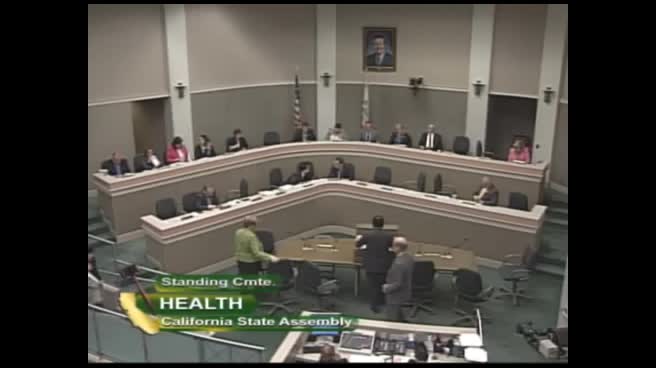 4MIN
Assembly Standing Committee on Health
Bill Author