AB 1200: Whistleblower protection.
- Session Year: 2019-2020
- House: Assembly
- Latest Version Date: 2019-04-29
|
Date
|
Status
|
|---|---|
| Feb 3, 2020 | From committee: Filed with the Chief Clerk pursuant to Joint Rule 56. |
| Jan 31, 2020 | Died pursuant to Art. IV, Sec. 10(c) of the Constitution. |
| May 16, 2019 | In committee: Held under submission. |
| May 8, 2019 | In committee: Set, first hearing. Referred to APPR. suspense file. |
| Apr 30, 2019 | Re-referred to Com. on APPR. |
| Apr 29, 2019 | Read second time and amended. |
| Apr 25, 2019 | From committee: Amend, and do pass as amended and re-refer to Com. on APPR. (Ayes 7. Noes 0.) (April 24). |
| Apr 9, 2019 | Re-referred to Com. on P.E. & R. |
| Apr 8, 2019 | Read second time and amended. |
| Apr 4, 2019 | From committee: Amend, and do pass as amended and re-refer to Com. on P.E. & R. with recommendation: To Consent Calendar. (Ayes 12. Noes 0.) (April 2). |
| Mar 14, 2019 | Referred to Coms. on JUD. and P.E. & R. |
| Feb 22, 2019 | From printer. May be heard in committee March 24. |
| Feb 21, 2019 | Read first time. To print. |
|
Date
|
Description
|
Location
|
Votes
|
|
|---|---|---|---|---|
| Apr 24, 2019 | Do pass as amended and be re-referred to the Committee on [Appropriations] | Assembly Standing Committee on Public Employment and Retirement |
Passed |
|
| Apr 2, 2019 | Do pass as amended, and be re-referred to the Committee on [Public Employment and Retirement] with recommendation: To Consent Calendar | Assembly Standing Committee on Judiciary |
Passed |
This list shows positions taken on this bill by organizations on the date displayed, which is linked to the original source.
Positions by individuals are not included.
Date of Hearing: May 8, 2019
ASSEMBLY COMMITTEE ON APPROPRIATIONS
Lorena Gonzalez, Chair
ABPCA Bill Id:AB 1200
Author:(Patterson) – As Amended Ver:April 29, 2019
Policy Committee: | Judiciary | Vote: | 12 - 0 |
Public Employment and Retirement | 7 - 0 | ||
|
|
Urgency: No State Mandated Local Program: Yes Reimbursable: Yes
SUMMARY:
This bill expands the definition of “protected disclosure” in the California Whistleblower Protection Act (WPA), to include any complaint made to a Member of the Legislature, the Legislature or any subdivision thereof. This bill also provides a legislative committee may investigate claims of improper government activity or seek additional information from the person alleging improper government activity.
FISCAL EFFECT:
Costs (GF) possibly in the hundreds of thousands of dollars annually to the Legislature to investigate claims of possible improper government activity pursuant to the WPA. Costs would likely include adding staff to implement a process for accepting and investigating complaints to Legislature, given the Legislature is not currently responsible for this degree of oversight of state agencies. Two additional staff members to the rules committees of both houses would likely exceed $300,000 in salary and benefits.
Significant costs (GF) may also result from possible liability to both the state and the Legislature if the Legislature fails to investigate a complaint or fails to prevent retaliation against a state employee for filing a complaint with the Legislature. The WPA does not contemplate complaints to the Legislature, so the imposition and amount of damages awarded to a possible plaintiff would be unknown until determined by a court.
COMMENTS:
- Purpose. According to the author:
Our office has been contacted by numerous potential whistleblowers informing us of improper activities or wasteful spending within state departments. However, they are often afraid to leave their names or any identifying information out of fear of reprisal. This bill would extend the same protections that are offered to whistleblowers confiding in the State Auditor under the [WPA] to those that confide in their elected state representative and/or appropriate committee.
- Background. The WPA prohibits retaliation against a state or judicial employee for making good faith complaints about possible improper government activity. The WPA does not apply to complaints made by members of the public. Complaints made pursuant to the WPA are investigated by the State Auditor. This bill would also demand the Legislature investigate complaints of improper government activity. Although this bill does not require committees to investigate and report on complaints, there would be little point to the bill if the Legislature could simply ignore complaints made by state employees about possible government wrongdoing. Additionally, the Legislature may have a legal obligation to investigate if it becomes aware of a good faith complaint of possible illegal government activity or subsequent retaliation.
The WPA imposes both civil and criminal penalties against any person who intentionally retaliates against any state or judicial employee or applicant who makes a good faith complaint of improper government activity. Civil penalties include the right to recover punitive damages. If a state employee or applicant or former state employee complains to an Assembly Member or Senator about possible improper government activity, even as a constituent, the WPA may impose liability on the state and the Legislature if the employee suffers an adverse employment action and the Assembly Member or Senator did not take steps to investigate the complaint and even if the state agency in question was not aware of the complaint.
- Prior Legislation. AB 403 (Melendez), Chapter 2, Statutes of 2018, enacted the Legislative Employee Whistleblower Protection Act prohibiting retaliation against legislative employees for complaining about violations of, among other things, the Fair Employment and Housing Act and Legislative Code of Conduct.
Analysis Prepared by: Kimberly Horiuchi / APPR. / (916) 319-2081
Date of Hearing: April 24, 2019
ASSEMBLY COMMITTEE ON PUBLIC EMPLOYMENT AND RETIREMENT
Freddie Rodriguez, Chair
ABPCA Bill Id:AB 1200 (
Author:Patterson) – As Amended Ver:April 8, 2019
SUBJECT: Whistleblower protection
SUMMARY: Expands the definition of “protected disclosure” to include a complaint made to a Member of the Legislature, the Legislature, or any subdivision thereof.
EXISTING LAW:
- Prohibits, pursuant to the California Whistleblower Protection Act (CWPA), “improper governmental activities,” as provided, by state agencies and employees, including employees of the judiciary and Administrative Office of the Courts, University of California, as provided, and former employees who satisfy certain specified criteria.
- Declares, pursuant to the CWPA, that state employees should be free to report waste, fraud, abuse of authority, violation of law, or threat to public health without fear of retribution.
- Defines the following terms for these purposes:
- “Employee” means an individual appointed by the governor, or employed or holding office in a state agency.
- “State agency” includes every state office, officer, department, division, bureau, board, and commission other than the California State University, unless specifically provided otherwise.
- “Protected disclosure” means a good faith communication that discloses or demonstrates an intention to disclose information that may show either (1) an improper governmental activity, or (2) a condition that may threaten the health or safety of employees or the public, if the purpose of disclosing is to remedy that condition.
- “Improper governmental activity” means an activity by a state agency or by an employee that is undertaken in performance duties, undertaken inside a state office, or, if undertaken outside a state office by the employee, directly relates to state government, whether or not that activity is within the scope of his or her employment, and also meets at least one of the following criteria:
- It is in violation of any state or federal law or regulation, including, but not limited to, corruption, malfeasance, bribery, theft of government property, fraudulent claims, fraud, coercion, conversion, malicious prosecution, misuse of government property, or willful omission to perform duty.
- It is in violation of an Executive order of the Governor, a California Rule of Court, or any policy or procedure mandated by the State Administrative Manual or State Contracting Manual.
- It is economically wasteful, involves gross misconduct, incompetency, or inefficiency.
- Requires the State Auditor's Office (SAO), in order to “be free of organizational impairments to independence, to be independent of the executive branch and legislative control” and “to remain free from the influence of existing control agencies that could be the subject of audits conducted by the office.”
- Ensures the confidentiality of all protected disclosures, including a good faith communication to the SAO alleging an improper governmental activity and any evidence delivered to the SAO in support of the allegation.
- Prohibits state employees and officers from directly or indirectly using or attempting to use the official authority or influence of the employee for the purpose of intimidating, threatening, coercing, commanding, or attempting to intimidate, threaten, coerce, or command any person for the purpose of interfering with the rights conferred pursuant to the CWPA.
- Requires the SAO to accept complaints by mail and via the Internet, and to conduct investigations of alleged improper governmental activities, and authorizes the SAO to issue reports of its findings including recommended corrective actions if it finds reasonable cause to believe an improper governmental activity has occurred.
- Allows the SAO to permit complaints to be filed anonymously, in which case the SAO is required to keep the identity of all complainants and witnesses confidential, unless given the express permission of the person, or the disclosure is made to a law enforcement agency that is conducting a criminal investigation.
- Requires the SAO to create an alternative system for submission to an independent investigator of allegations of improper governmental activity engaged or participated in by employees of the SAO, that allows for submission of allegations both by delivery to a specified mailing address and electronic submission through an Internet Web site portal.
- Provides that if the SAO determines that there is reasonable cause to believe that a state agency or employee may have engaged in an improper governmental activity, the SAO, except as provided in 8), above, may refer the allegation to the involved state agency, or to another state agency having direct oversight of the involved state agency, to conduct an investigation of the allegation under the SAO’s supervision.
- Allows a state employee or applicant for state employment (including an employee of the SAO or applicant for employment at the SAO) who files a written complaint with his or her supervisor, manager, or the appointing power alleging actual or attempted acts of reprisal, retaliation, threats, coercion, or similar improper acts prohibited by Section 8547.3 to also file a copy of the written complaint with the State Personnel Board (SPB), together with a sworn statement that the contents of the written complaint are true.
- Provides that if the SPB determines there is a reasonable basis for an alleged violation, it shall transmit a copy of the investigation report to the SAO.
- Requires the employing state agency to take adverse employment action against any employee found by the SAO to have engaged or participated in improper governmental activity or to set forth in writing its reasons for not taking adverse action, and likewise requires the employing agency to report on actions it has taken to implement the SAO’s recommendations to the SPB and the SAO.
- Requires the Milton Marks “Little Hoover” Commission (LHC) to audit the fiscal and administrative operations of the SAO.
FISCAL EFFECT: Unknown. This bill is flagged as fiscal by Legislative Counsel.
COMMENTS: According to information provided by the author, “[s]tate employees are frequently the first line of defense against improper behavior and government waste. The well-reputed State Auditor’s Office investigates these reports, and the state’s Whistleblower Protection laws ensure that these employees will not suffer retribution.
‘However, many state employees or average citizens that interact with these state agencies are not aware of the Auditor process. They often confide in their elected official, yet are afraid to divulge too much information for fear of retaliation. Unfortunately, when these individuals confide in elected officials, this does not prompt any sort of investigation into the alleged improper activity nor does it offer these individuals any whistleblower protections. Assembly Bill 1200 seeks to fix that.
“Our office has been contacted by numerous potential whistleblowers informing us of improper activities or wasteful spending within state departments. However, they are often afraid to leave their names or any identifying information out of fear of reprisal. This bill would extend the same protections that are offered to whistleblowers confiding in the State Auditor under the Whistleblower Protection Act to those that confide in their elected state representative and/or appropriate committee.”
In conclusion, the author states that, “[i]t is crucial that constituents are able to confide in their elected officials about improper government activities or government waste, and that the Legislature hold bureaucracies accountable when necessary. Assembly Bill 1200 would give state whistleblowers another avenue to report improper activities while ensuring their jobs are not threatened.”
- Dual Referral
This measure was dual referred to the Committee on Judiciary and Committee on Public Employment and Retirement. This bill was passed by the Committee on Judiciary (12-0) on
April 2, 2019, with amendments as currently in print.
- Policies of the Legislature Regarding The CWPA for Purposes of Assembly Bill 1200
The goals of the author to provide disclosure protections as applied to Members of the Legislature, the Legislature, or its subdivisions is laudable.
Notwithstanding the establishment of the Workplace Conduct Unit by the Legislature related to disclosure of specified matters within its own environment, as of this writing and relating to the subject matter of this measure, it is currently unknown whether each Member of the Legislature, the Legislature itself, or its subdivisions have a policy on whistleblower protections for the purposes of this bill and based on the stated need for this measure, as provided by the author.
In the absence of existing legislative policies or procedures that would augment the CWPA as proposed by this measure, Assembly Bill 1200 may be akin to the temporal notion of “putting the cart before the horse,” and could result in unknown, but unintended consequences.
- Prior and Related Legislation
Chapter 2, Statutes of 2018 (Assembly Bill 403, Melendez) protects legislative employees who make disclosures about specified misconduct by Members and fellow employees of the Legislature by prohibiting interference with the employee making a "protected disclosure," prohibiting retaliation in response to such a disclosure, and imposing civil and criminal penalties for violation of those provisions.
Chapter 605, Statutes of 2017 (Assembly Bill 31, Rodriguez) amended the CWPA by providing a mechanism for confidential complaints about misconduct involving the SAO to be made to an investigator outside the SAO.
Chapter 160, Statutes of 2010 (Assembly Bill 1749, Lowenthal and Strickland) affords employees of the judicial branch with CWPA protections.
Chapter 104, Statutes of 2010 (Senate Bill 650, Yee) revised the CWPA so that complaints of retaliation filed by University of California employees are treated the same as those filed by California State University employees.
Senate Bill 220 (Yee, 2010) would have expanded the application of the CWPA to former state employees who have been covered by the CWPA during their employment, among other provisions. Those provisions were included in Chapter 452, Statutes of 2009 (Assembly Bill 567, Villines), and SB 220 was subsequently amended to a different subject matter.
Senate Bill 219 (Yee, 2009) was substantively similar to Senate Bill 650 supra. This bill was vetoed by Governor Schwarzenegger, who stated that:
“Rather than extending the same protections as provided for California State University employees and other state employees to employees of the University of California, this measure, as drafted, could discourage employees of the University of California from exhausting their administrative remedies before filing claims in the superior court.”
Chapter 452, Statutes of 2009 (Assembly Bill 567, Villines) added an individual appointed by the Legislature to a state board or commission and who is not a Member or employee of the Legislature to the list of state employees covered by the CWPA and provided that “state employee” includes any former employee who met specified criteria during his or her employment, among other provisions.
Senate Bill 1267 (Yee, 2007) would have authorized former state employees to file a complaint under the CWPA and revised some of the provisions relating to the filing, investigation, hearing, and processing of complaints filed by state employees under the CWPA, among other provisions. This measure was held under submission in the Senate Committee on Appropriations.
REGISTERED SUPPORT / OPPOSITION:
Support
None on file
Opposition
None on file
Analysis Prepared by: Michael Bolden / P.E. & R. / (916) 319-3957
Date of Hearing: April 2, 2019
ASSEMBLY COMMITTEE ON JUDICIARY
Mark Stone, Chair
ABPCA Bill Id:AB 1200
Author:(Patterson) – As Introduced Ver:February 21, 2019
PROPOSED CONSENT (As Proposed to be Amended)
SUBJECT: WHISTLEBLOWER PROTECTIONS: REPORTS TO THE LEGISLATURE
KEY ISSUE: SHOULD A PUBLIC EMPLOYEE WHO REPORTS IMPROPER GOVERNMENT ACTIVITY TO THE LEGISLATURE IN GOOD FAITH AND FOR THE PURPOSE OF REMEDYING THAT IMPROPRIETY BE PROTECTED FROM RETALIATION FOR MAKING SUCH A REPORT?
SYNOPSIS
Public employees do not surrender all of their First Amendment rights by reason of their employment. But while case law gives a public employee the opportunity to make a First Amendment claim, it also makes it somewhat difficult for a public employee to do so. In light of the fact that not all disclosures of government misconduct are necessarily protected by the First Amendment, the Legislature has codified the rights of public employees to report improper or illegal workplace conduct without fear of retaliation. Among others, three comprehensive laws are designed to protect employees and encourage them, in good faith, to report improper or illegal governmental activity so that it can be remediated: (1) The California Whistleblower Protection Act (CWPA); (2) the Fair Employment and Housing Act (FEHA); and (3) Labor Code Section 1102.5. While the analysis discusses how these laws offer many protections to government whistleblowers and arguably apply, at least in some cases, to whistleblowers who report improper government activity to the Legislature, the author wishes to clarify that the CWPA protects a public employee from retaliation for making a “protected disclosure” to the Legislature.
As in print, this bill creates a complex process, modeled on the California Whistleblower Protection Act (CWPA) for the Legislature to accept and investigate complaints of improper government conduct from public employees and to protect those employees from retaliation for reporting the misconduct to the Legislature. Given that the Legislature does not necessarily have the expertise or resources to investigate individual allegations of misconduct and that the bill’s provisions would largely duplicate the CWPA, the author has agreed to substantially change the approach of the bill in print. As proposed to be amended, the bill would merely clarify that the CWPA protects a public employee from retaliation for making a “protected disclosure” to the Legislature. The proposed amendments, to delete the current content of the bill in its entirety and modify the definition of “protected disclosure” for purposes of the CWPA are discussed in and incorporated into the analysis. This author-sponsored bill has no support or opposition on file.
SUMMARY: Protects government employees from retaliation for reporting in good faith about improper governmental activity to the Legislature for the purpose of remedying that activity. Specifically, this bill modifies the definition of the term “Protected disclosure” in the California Whistleblower Protection Act (CWPA) to include a good faith communication or complaint regarding an improper governmental activity made to a Member of the Legislature, or to the Legislature, or any subdivision thereof.
EXISTING LAW:
- Pursuant to the CWPA, prohibits “improper governmental activities” by state agencies and employees. (Government Code Section 8547.2. All further statutory references are to the Government Code, unless otherwise indicated.)
- Declares that state employees should be free to report waste, fraud, abuse of authority, violation of law, or threat to public health without fear of retribution. (Section 8547.1.)
- Includes the following relevant definitions in the CWPA:
- “Employee” means an individual appointed by the governor, or employed or holding office in a state agency. (Section 8547.2 (a).)
- “State agency” includes every state office, officer, department, division, bureau, board, and commission other than the California State University, unless specifically provided otherwise. (Section 11000 (a).)
- “Protected disclosure” means a good faith communication that discloses or demonstrates an intention to disclose information that may show either (1) an improper governmental activity, or (2) a condition that may threaten the health or safety of employees or the public, if the purpose of disclosing is to remedy that condition. (Section 8547.2 (e).)
- “Improper governmental activity” means an activity by a state agency or by an employee that is undertaken in performance duties, undertaken inside a state office, or, if undertaken outside a state office by the employee, directly relates to state government, whether or not that activity is within the scope of his or her employment, and also meets at least one of the following criteria:
- It is in violation of any state or federal law or regulation, including, but not limited to, corruption, malfeasance, bribery, theft of government property, fraudulent claims, fraud, coercion, conversion, malicious prosecution, misuse of government property, or willful omission to perform duty.
- It is in violation of an Executive order of the Governor, a California Rule of Court, or any policy or procedure mandated by the State Administrative Manual or State Contracting Manual.
- It is economically wasteful, involves gross misconduct, incompetency, or inefficiency. (Section 8547.2 (c).)
- Requires the State Auditor's Office (SAO), in order to “be free of organizational impairments to independence, to be independent of the executive branch and legislative control” and “to remain free from the influence of existing control agencies that could be the subject of audits conducted by the office.” (Sections 8543, 8546.)
- Ensures the confidentiality of all protected disclosures, including a good faith communication to the SAO alleging an improper governmental activity and any evidence delivered to the SAO in support of the allegation. (Section 8547.2 (e).)
- Prohibits state employees and officers from directly or indirectly using or attempting to use the official authority or influence of the employee for the purpose of intimidating, threatening, coercing, commanding, or attempting to intimidate, threaten, coerce, or command any person for the purpose of interfering with the rights conferred pursuant to the CWPA. (Section 8547.3 (a).)
- Requires the SAO to accept complaints by mail and via Internet, and to conduct investigations of alleged improper governmental activities, and authorizes the SAO to issue reports of its findings including recommended corrective actions if it finds reasonable cause to believe an improper governmental activity has occurred. (Sections 8547.4, 8547.5, 8547.7.)
- Allows the SAO to permit complaints to be filed anonymously, in which case the SAO is required to keep the identity of all complainants and witnesses confidential, unless given the express permission of the person, or the disclosure is made to a law enforcement agency that is conducting a criminal investigation. (Section 8547.5 (a).)
- Requires the SAO to create an alternative system for submission to an independent investigator of allegations of improper governmental activity engaged or participated in by employees of the SAO, that allows for submission of allegations both by delivery to a specified mailing address and electronic submission through an Internet Web site portal. (Id., at (c)(1).)
- Provides that if the SAO determines that there is reasonable cause to believe that a state agency or employee may have engaged in an improper governmental activity, the SAO, except as provided in 8), above, may refer the allegation to the involved state agency, or to another state agency having direct oversight of the involved state agency, to conduct an investigation of the allegation under the SAO’s supervision. (Section 8547.6 (b).)
- Allows a state employee or applicant for state employment (including an employee of the SAO or applicant for employment at the SAO) who files a written complaint with his or her supervisor, manager, or the appointing power alleging actual or attempted acts of reprisal, retaliation, threats, coercion, or similar improper acts prohibited by Section 8547.3 to also file a copy of the written complaint with the State Personnel Board (SPB), together with a sworn statement that the contents of the written complaint are true. (Section 8547.8 (a), 8547.13 (b).)
- Provides that if the SPB determines there is a reasonable basis for an alleged violation, it shall transmit a copy of the investigation report to the SAO. (Section 8547.9.)
- Requires the employing state agency to take adverse employment action against any employee found by the SAO to have engaged or participated in improper governmental activity or to set forth in writing its reasons for not taking adverse action, and likewise requires the employing agency to report on actions it has taken to implement the SAO’s recommendations to the SPB and the SAO. (Sections 8547.4.)
- Requires the Milton Marks “Little Hoover” Commission (LHC) to audit the fiscal and administrative operations of the SAO. (Section 8521.5.)
FISCAL EFFECT: As currently in print this bill is keyed fiscal.
COMMENTS: As now in print, this bill creates a complex process, modeled on the California Whistleblower Protection Act (CWPA) for the Legislature to accept and investigate complaints of improper government conduct from public employees and to protect those employees from retaliation for reporting the misconduct to the Legislature. Given that the Legislature does not necessarily have the expertise or resources to investigate individual allegations of misconduct and that the bill’s provisions would largely duplicate the CWPA, the author has agreed to substantially change the approach of the bill in print. As proposed to be amended, the bill would merely clarify that the CWPA protects a public employee from retaliation for making a “protected disclosure” to the Legislature.
Existing Constitutional Protections for Reports of Government Misconduct. Public employees do not surrender all of their First Amendment rights by reason of their employment. The First Amendment protects their rights, in certain circumstances, to speak out about government misconduct when such misconduct is a matter of public concern. (See Garcetti v. Ceballos (2006) 547 U.S. 410, 419, citing Pickering v. Board of Educ. (1968) 391 U.S. 563.) Therefore, even without a law providing specific whistleblower protections, public employees who exercise their constitutional rights by reporting governmental misconduct to another government entity for the purpose of remedying that misconduct are protected from wrongful retaliation, including termination. (Ostrofe v. H.S. Crocker Co., Inc. (9th Cir. 1982) 670 F.2d 1378, 1383-84 [upholding claim of wrongful discharge for objecting to employer's violation of Clayton Act, despite absence of anti-retaliation clause in order to promote “interests of antitrust enforcement”], aff'd, 740 F.2d 739 (9th Cir. 1984), cert. denied, 469 U.S. 1200 (1985).)
Under Pickering, a complaint about improper government activity made by a public employee acting as a citizen, rather than as part of his or her job duties, regarding a matter of public concern and reported to another government entity in good faith and for the purpose or remedying that misconduct is likely an expression of opinion that is protected by the First Amendment. As a result, given what the U.S. Supreme Court has recognized as “the importance of promoting the public's interest in receiving the well-informed views of government employees engaging in civic discussion,” the employee would be protected from retaliation. (Garcetti v. Ceballos, supra, 547 U.S., at p. 419.) Therefore, all public employees likely have a First Amendment right to express their opinions about improper government activity misconduct, including the ability to report such misconduct to the Legislature, regardless of whether the provisions of this well-intentioned bill become law.
But while Pickering gives a public employee the opportunity to make a First Amendment claim, it also makes it somewhat difficult for a public employee to do so, requiring the employee to show that he or she made a disclosure while acting as a citizen (as opposed to an employee) and that the disclosure was about a matter of public concern. (Garcetti v. Ceballos, supra, 547 U.S. at p. 419.) Pickering also requires a reviewing court to balance the public’s interest in the disclosure of wrongdoing against the public official's interest in public service efficiency. (Ibid.) Therefore it is possible, based upon the facts of an individual case, that a public employee’s complaint would be deemed to not be protected by the First Amendment.
Existing statutory protections for public employees who report improper government conduct. In light of the fact that not all disclosures of government misconduct are necessarily protected by the First Amendment, the Legislature has codified the rights of public employees to report improper or illegal workplace conduct without fear of retaliation. Among others, three comprehensive laws are designed to protect employees and encourage them, in good faith, to report improper or illegal governmental activity so that it can be remediated: (1) The California Whistleblower Protection Act (CWPA); (2) the Fair Employment and Housing Act (FEHA); and (3) Labor Code Section 1102.5.
The CWPA, codified in Government Code Sections 8547 et seq., prohibits any employee of a public agency from interfering with a person’s rights to disclose improper activity and be free from reprisal under the act. It applies to state agencies, the University of California, the California State University, the courts, and local governments. The CWPA also established an extensive process for the State Auditor to investigate reports that a public employee or agency has engaged in improper governmental activity, allowing allegations of improper governmental activity to be submitted in a confidential manner, and authorizing the Auditor to recommend disciplinary action for misconduct, if appropriate.
FEHA, codified at Government Code Section 12940 et seq., makes it unlawful for any employer to fail to take all reasonable steps necessary to prevent discrimination and harassment and to take immediate and appropriate corrective action to prevent such discrimination or harassment, or retaliate against any person who "has opposed any practices forbidden under [FEHA] or because the person has filed a complaint, testified, or assisted" in any proceeding under FEHA. (Government Code Sections 12940 (h) and (j).) The Department of Fair Employment and Housing (DFEH) is responsible for enforcing FEHA. Therefore, a public employee who “opposes” any practice forbidden by FEHA (including discrimination on the basis of a protected characteristic) by reporting that practice to the Legislature would likely be protected from retaliation by FEHA. But in order for FEHA’s protections to apply, the conduct which is “opposed” by the employee would have to constitute a violation of FEHA itself. If a public employee wanted to report wasteful government conduct that did not constitute a violation of FEHA, the anti-retaliation provisions of FEHA would not apply.
Finally, Labor Code Section 1102.5, prohibits employers from doing either of the following: 1) preventing an employee from disclosing information about an activity reasonably believed to be unlawful to “a government or law enforcement agency, a person with authority over the employee, or any public body conducting an investigation, hearing, or inquiry,” if the employee has reasonable cause to believe that the information discloses a violation of state or federal statute, or a violation of or noncompliance with a local, state, or federal rule or regulation; 2) retaliating against an employee for reporting such information. (Labor Code Sections 1102.5 (a) and (b).) For purposes of Section 1102.5, “ ‘employee’ includes, but is not limited to, any individual employed by the state or any subdivision thereof, any county, city, city and county, including any charter city or county, and any school district, community college district, municipal or public corporation, political subdivision, or the University of California.” (Labor Code Section 1106.) Thus, public employees who report improper or illegal government activity to a government or law enforcement agency would be protected from retaliation. However, it is unclear whether the Legislature is, in fact, a government agency for the purposes of Section 1102.5.
Although these existing laws offer many protections to government whistleblowers and arguably apply, at least in some cases, to whistleblowers who report improper government activity to the Legislature, the author wishes to clarify that the CWPA protects a public employee from retaliation for making a “protected disclosure” to the Legislature. According to the author:
State employees are frequently the first line of defense against improper behavior and government waste. The well-reputed State Auditor’s office investigates these reports, and the state’s Whistleblower Protection laws ensure that these employees will not suffer retribution.
However, many state employees or average citizens that interact with these state agencies are not aware of the Auditor process. They often confide in their elected official, yet are afraid to divulge too much information for fear of retaliation. Unfortunately, when these individuals confide in elected officials, this does not prompt any sort of investigation into the alleged improper activity nor does it offer these individuals any whistleblower protections. AB 1200 seeks to fix that. . . .The purpose of AB 1200 is to protect whistleblowers that confide in their elected officials regarding improper governmental activity within a state department.
Thus, the author has agreed to delete the current content of the bill and merely clarify the definition of “protected disclosure” under the CWPA.
Author’s amendments:
- Strike all of the language of the bill in its entirety.
- Amend subdivision (e) of Government Code Section 8547.2 as follows:
(e) “Protected disclosure” means a good faith communication, including a communication based on, or when carrying out, job duties, that discloses or demonstrates an intention to disclose information that may evidence (1) an improper governmental activity, or (2) a condition that may significantly threaten the health or safety of employees or the public if the disclosure or intention to disclose was made for the purpose of remedying that condition. Protected disclosure specifically includes a good faith communication to the California State Auditor’s Office alleging an improper governmental activity and any evidence delivered to the California State Auditor’s Office in support of the allegation. “Protected disclosure” also includes, but is not limited to, a complaint made to the Commission on Judicial Performance, or to a Member of the Legislature, or to the Legislature, or any subdivision thereof.
Prior Similar Legislation: AB 403 (Melendez, Chap. 2, Stats. 2018) protected legislative employees who make disclosures about specified misconduct by Members and fellow employees of the Legislature by prohibiting interference with the employee making a "protected disclosure," prohibiting retaliation in response to such a disclosure, and imposing civil and criminal penalties for violation of those provisions.
AB 31 (Rodriguez, Chap. 605, Stats. 2017) amended the CWPA by providing a mechanism for confidential complaints about misconduct involving the State Auditor's Office (SAO) to be made to an investigator outside the SAO.
AB 1749 (Lowenthal and Strickland, Chap. 160, Stats. 2010) provided judicial branch employees with CWPA protections.
SB 650 (Yee, Chap. 104, Stats. 2010) revised the CWPA so that complaints of retaliation filed by University of California employees are treated the same as those filed by California State University employees.
SB 220 (Yee, 2010), among other things, would have expanded the application of the CWPA to former state employees who have been covered by the CWPA during their employment. Those provisions were included in AB 567 (Villines, Chap. 452, Stats. 2009), and SB 220 was subsequently amended to deal with a different subject matter.
SB 219 (Yee, 2009) was substantively similar to SB 650 but was vetoed by then Governor Schwarzenegger because of the concern that the bill would discourage University of California employees from exhausting administrative remedies before filing an action.
AB 567 (Villines, Chap. 452, Stats. 2009), among other things, added an individual appointed by the Legislature to a state board or commission and who is not a Member or employee of the Legislature to the list of state employees covered by the CWPA and provided that state employee includes any former employee who met specified criteria during his or her employment.
SB 1267 (Yee, 2007), among other things, would have authorized former state employees to file a complaint under the CWPA and revised some of the provisions relating to the filing, investigation, hearing, and processing of complaints filed by state employees under the CWPA. SB 1267 was held under submission in the Senate Committee on Appropriations.
REGISTERED SUPPORT / OPPOSITION:
Support
None on file
Opposition
None on file
Analysis Prepared by: Alison Merrilees / JUD. / (916) 319-2334
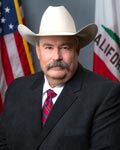
Bill Author

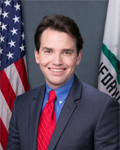
Bill Co-Author(s):