AB 207: Virtual or online charter schools: average daily attendance.
- Session Year: 2015-2016
- House: Assembly
- Latest Version Date: 2015-01-29
Existing law requires community school and independent study average daily attendance to be claimed by school districts, county superintendents of schools, and charter schools only for pupils who are residents of the county in which the apportionment claim is reported or pupils who are residents of a county immediately adjacent to the county in which the apportionment claim is reported. Existing law authorizes virtual or online charter schools to also claim independent study average daily attendance for pupils enrolled in the school that move to a residence located outside of the geographical boundaries of the virtual or online charter school, as specified.
This bill would authorize virtual or online charter schools to also claim independent study average daily attendance for pupils who are residents of a county that is 125 miles or less from the county in which the apportionment claim is reported.
(a)Notwithstanding any other law, a local educational agency, including, but not limited to, a charter school, may not claim state funding for the independent study of a pupil, whether characterized as home study or otherwise, if the local educational agency has provided any funds or other thing of value to the pupil or his or her parent or guardian that the local educational agency does not provide to pupils who attend regular classes or to their parents or guardians. A charter school may not claim state funding for the independent study of a pupil, whether characterized as home study or otherwise, if the charter school has provided any funds or other thing of value to the pupil or his or her parent or guardian that a school district could not legally provide to a similarly situated pupil of the school district, or to his or her parent or guardian.
(b)(1)Notwithstanding paragraph (1) of subdivision (d) of Section 47605 or any other law, and except as specified in paragraph (2), community school and independent study average daily attendance shall be claimed by school districts, county superintendents of schools, and charter schools only for pupils who are residents of the county in which the apportionment claim is reported, or who are residents of a county immediately adjacent to the county in which the apportionment claim is reported.
(2)In addition to claiming independent study average daily attendance pursuant to paragraph (1), a virtual or online charter school may also claim independent study average daily attendance for a pupil who is enrolled either, or both, of the following:
(A)Enrolled in the school and moves to a residence located outside of the geographical boundaries of the virtual or online charter school. The virtual or online charter school may claim independent study average daily attendance for the pupil under this paragraph subparagraph only for the duration of the course or courses in which the pupil is enrolled or until the end of the school year, whichever occurs first.
(B)A resident of a county that is 125 miles or less from the county in which the apportionment claim is reported.
(c)The Superintendent shall not apportion funds for reported average daily attendance, through full-time independent study, of pupils who are enrolled in school pursuant to subdivision (b) of Section 48204.
(d)In conformity with Provisions 25 and 28 of Item 6110101001 of Section 2.00 of the Budget Act of 1992, this section is applicable to average daily attendance reported for apportionment purposes beginning July 1, 1992. The provisions of this section are not subject to waiver by the state board, by the Superintendent, or nor under any provision of Part 26.8 (commencing with Section 47600).
(e)For purposes of this section, virtual or online charter school means a charter school in which at least 80 percent of teaching and pupil interaction occurs via the Internet.
(f)This section shall remain in effect only until January 1, 2018, and as of that date is repealed, unless a later enacted statute, that is enacted before January 1, 2018, deletes or extends that date.
|
Date
|
Status
|
|---|---|
| May 4, 2015 | From committee: Without further action pursuant to Joint Rule 62(a). |
| Mar 25, 2015 | In committee: Set, first hearing. Failed passage. |
| Feb 9, 2015 | Referred to Com. on ED. |
| Jan 30, 2015 | From printer. May be heard in committee March 1. |
| Jan 29, 2015 | Read first time. To print. |
|
Date
|
Description
|
Location
|
Votes
|
|
|---|---|---|---|---|
| Mar 25, 2015 | Do pass and be re-referred to the Committee on [Appropriations] | Assembly Standing Committee on Education |
Failed |
This list shows positions taken on this bill by organizations on the date displayed, which is linked to the original source.
Positions by individuals are not included.
AB 207
Page 4
Date of Hearing: March 25, 2015
ASSEMBLY COMMITTEE ON EDUCATION
O'Donnell, Chair
AB 207
(Grove) – As Introduced January 29, 2015
SUBJECT:
Virtual or online charter schools: average daily attendance
SUMMARY:
Authorizes virtual or online charter schools to claim independent study average daily attendance (ADA) for pupils who are residents of a county that is 125 miles or less from the county in which the apportionment claim is reported.
EXISTING LAW:
Requires independent study ADA to be claimed by school districts, county superintendents of schools, and charter schools only for pupils who are residents of the county in which the apportionment claim is reported or pupils who are residents of a count immediately adjacent to the county in which the apportionment is claimed.
Authorizes virtual or online charter schools to also claim independent study average daily attendance for pupils enrolled in the school that move to a residence outside of the county only for the duration of the course or courses in which the pupil is enrolled or until the end of the school year, whichever comes first.
FISCAL EFFECT:
Unknown
COMMENTS:
What is a "virtual school?" According to the California Virtual Academy (CAVA), which is the largest chain of virtual schools in California, the use of online curriculum and services allows "learning [to] happen at home, on the road, or wherever an Internet connection can be found." Physical instructional materials and other offline resources may also be used. Attendance is monitored through an Internet connection and physical attendance at a school site is not required, although periodic attendance may occur. Virtual schools are sometimes promoted as a good option for athletes, actors, and others for whom regular attendance at a school is not possible. However, virtual school teachers report that these types of students actually account for a small fraction of virtual school enrollment. Virtual schools enroll students in grades K through 12.
California has about nine virtual schools or virtual school chains, nearly all of which are charter schools. CAVA is the largest chain, which, according to a recent report ("Virtual Public Schools in California," In the Public Interest, February 2015), operates schools in 11 locations. Another chain, the Academy of Arts and Sciences, serves students in 33 counties, according to its website.
Online instruction has not been shown to be effective. The use of online instruction has grown in recent years, but there have been few well-controlled studies of its effectiveness with K-12 students. This is the main finding from a review of the research reported by the U. S. Department of Education (USDOE) in September 2010 ("Evaluation of Evidence-Based Practices in Online Learning: A Meta-Analysis and Review of Online Learning Studies"). The USDOE report contains the findings of a meta-analysis of research on online learning, which concludes that "on average, students in online learning conditions performed modestly better than those receiving face-to-face instruction." However, the report cautions against generalizing this finding to the K-12 population, because only five of the 45 studies in the analysis involved K-12 instruction. (The others involved medical training, higher education, and other non-K-12 instruction.) All of the five K-12 studies involved blended instruction, in which online learning is combined with face-to-face instruction. Because blended instruction often includes additional instructional time, the positive effects observed with this approach may be the result of the additional time on task, and cannot be attributed to the media, per se, according to the USDOE report.
Report finds serious shortcomings in CAVA schools. The report by In the Public Interest ("Virtual Public Education in California," 2015) focused specifically on CAVA schools, and concluded that "students at CAVA are at risk of low quality educational outcomes, and some are falling through the cracks entirely, in a poorly resourced and troubled educational environment." Among the concerns identified by the report are the following:
In every year since it began graduating students, except 2013, CAVA has had more dropouts than graduates.
Students are eligible to be counted as having attended with as little as one minute of log in time each day.
K12 California (the California subsidiary of K-12, Inc.) pays itself for services out of CAVA school bank accounts that it (K12 California) manages.
Competitive bidding is prohibited: K12 California contractually prohibits CAVA schools from seeking another vendor for services that K12 California is willing and able to perform.
CAVA teachers report that the "vast majority" of the work they do is clerical, preventing them from spending sufficient time of teaching.
Limited local control: individual CAVA location governing boards operate under contract to K12 California and do not "have much leeway in terms of budget, program and contracting decisions independent from K12 California."
K12, Inc. charges CAVA schools more than they can reasonably pay for administrative and technology services. The shortfall is covered by "budget credits" that are extended by K12, Inc., which results in a "perpetual debt" relationship between CAVA schools and K12, Inc.
CAVA students have lower academic achievement, higher dropout rates, and higher turnover than students in brick-and-mortar schools.
Studies in other states also indicate online instruction alone is not as effective as regular classroom instruction:
A 2011 study of charter school performance in Pennsylvania by the Center for Research on Education Outcomes at Stanford University found that each of that state's 8 online charter schools ("cyber schools") significantly underperformed brick and mortar schools and regular (non-virtual) charter schools in reading and math.
A review of virtual schools in Wisconsin by the Gannett Wisconsin Media Investigative Team found that students receiving online instruction "often struggle to complete their degrees and repeat grades four times as often as their brick-and-mortar counterparts," and they "trail traditional students in every subject but reading."
A 2011 report from the Office of the Legislative Auditor in Minnesota reported that full-time online students were more likely to completely drop out of school and made less progress on state standardized math tests than students in traditional schools.
A 2011 report from the Ohio Department of Education rated only three of Ohio's 27 virtual schools as "effective" or "excellent."
A 2006 performance audit by the Colorado Department of Education of that state's virtual schools found that, "in the aggregate, online students performed poorly on the CSAP [Colorado State Assessment Program] exams and had higher repeater, attrition, and dropout rates."
The Florida Virtual Academy, a statewide virtual school, reports that 81% of its students who complete their courses receive a passing grade. However, the Tampa Bay Times reports that the Virtual Academy's records show that two-thirds of students who enroll in a course don't finish it. When dropouts are included, the actual pass rate is 28%. The Times was unable to get Virtual School Florida Comprehensive Assessment Test scores from either the Virtual School or the Florida Department of Education.
Most virtual schools in California use a curriculum provided by K12, Inc., a private, for-profit company headquartered in Virginia. In 2014, the NCAA recently announced that it will stop accepting coursework from 24 schools nationwide (13 in California) that use the K12, Inc. curriculum at any Division I or Division II college or university, because "their courses were found to not comply with the NCAA's nontraditional course requirements." Other K12, Inc. schools are currently being evaluated by the NCAA for compliance with its "core course and nontraditional course requirements." A 2012 report by the National Education Policy Center ("Understanding and Improving Full-Time Virtual Schools: A Study of Student Characteristics, School Finance, and School Performance in Schools Operated by K12, Inc.") found that students in K12, Inc. schools have lower academic achievement, higher dropout rates, and higher turnover than students in brick-and-mortar schools.
This bill increases the number of students that virtual schools would be able to enroll by allowing them to claim ADA funding for students who live up to 125 miles outside of the county in which the virtual school is located.
Prior legislation. AB 377 (Grove), Statutes of 2013, would have allowed an online or virtual school to claim ADA for a student who resides anywhere in California. That bill failed in the Assembly Education Committee on a 2-5 vote.
AB 2007 (Grove), Chapter 807, Statues of 2014, authorizes virtual or online charter schools to claim independent study average daily attendance for pupils enrolled in the school that move to a residence outside of the county only for the duration of the course or courses in which the pupil is enrolled or until the end of the school year, whichever comes first.
REGISTERED SUPPORT / OPPOSITION:
Support
California Parents for Virtual Public Education
Opposition
Public Counsel
Analysis Prepared by:
Rick Pratt/ED./(916) 319-2087
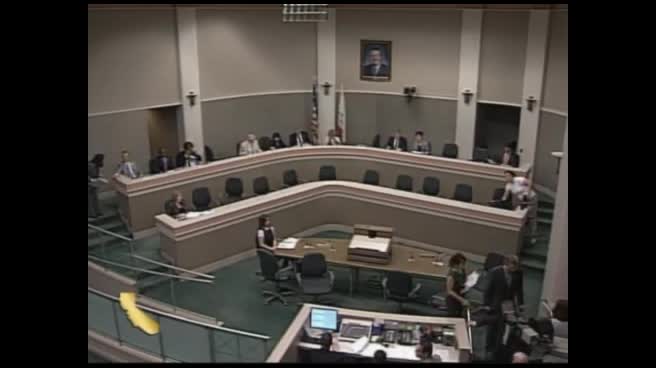
Discussed in Hearing
 27MIN
Assembly Standing Committee on Education
Bill Author
Bill Co-Author(s):