AB 2091: Special education: individualized education programs: translation services.
- Session Year: 2015-2016
- House: Assembly
- Latest Version Date: 2016-06-21
(1)Existing law requires local educational agencies to identify, locate, and assess individuals with exceptional needs and to provide those pupils with a free appropriate public education in the least restrictive environment, with special education and related services as reflected in an individualized education program. Existing law requires a local educational agency to initiate and conduct meetings for the purposes of developing, reviewing, and revising the individualized education program of each individual with exceptional needs in accordance federal law. Existing law requires the local educational agency to take any action necessary to ensure that the parent or guardian understands the proceedings at a meeting, including arranging for an interpreter for parents or guardians with deafness or whose native language is a language other than English.
This bill would require a local educational agency to also provide translation services for a pupils parent, guardian, or educational rights holder, as specified. The bill would require the local educational agency, if requested by a pupils parent, guardian, or educational rights holder, to provide the parent, guardian, or educational rights holder with a translated copy of the individualized education program and program, any revisions to the individualized education program program, and certain documents discussed at an individualized education program team meeting within 60 days of that meeting and to provide a translated copy of certain documents discussed at an individualized education program team meeting in the parents, guardians, or educational rights holders primary language within 30 days of the meeting. language. The bill would require the documents to be translated by a qualified translator, as defined, who is proficient in both the English language and the non-English language to be used. The bill would require the department State Department of Education to revise its notice of procedural safeguards, in English and in the primary languages for which the department has developed translated versions, to inform parents of their right to request the translation of these documents. By imposing additional duties on local educational agencies, the bill would impose a state-mandated local program.
(2)The California Constitution requires the state to reimburse local agencies and school districts for certain costs mandated by the state. Statutory provisions establish procedures for making that reimbursement.
This bill would provide that, if the Commission on State Mandates determines that the bill contains costs mandated by the state, reimbursement for those costs shall be made pursuant to these statutory provisions.
(1)Existing law requires local educational agencies to identify, locate, and assess individuals with exceptional needs and to provide those pupils with a free appropriate public education in the least restrictive environment, with special education and related services as reflected in an individualized education program. Existing law requires a local educational agency to initiate and conduct meetings for the purposes of developing, reviewing, and revising the individualized education program of each individual with exceptional needs in accordance federal law. Existing law requires the local educational agency to take any action necessary to ensure that the parent or guardian understands the proceedings at a meeting, including arranging for an interpreter for parents or guardians with deafness or whose native language is a language other than English.
This bill would require a local educational agency to also provide translation services for a pupils parent, guardian, or educational rights holder, as specified. The bill would require the local educational agency agency, if requested by a pupils parent, guardian, or educational rights holder, to provide a pupils the parent, guardian, or educational rights holder with a translated copy of the individualized education program, program and any revisions to the individualized education program, program within 60 days of that meeting and any document to provide a translated copy of certain documents discussed at an individualized education program team meeting in the parents, guardians, or educational rights holders primary language within 30 days of that the meeting. The bill would require the documents to be translated by a qualified translator, as defined, who is proficient in both the English language and the non-English language to be used. The bill would require the department to revise its notice of procedural safeguards, in English and in the primary languages for which the department has developed translated versions, to inform parents of their right to request the translation of these documents. By imposing additional duties on local educational agencies, the bill would impose a state-mandated local program. The bill would also require the State Department of Education, on or before January 1, 2018, to post on its Internet Web site standard special education forms commonly used by local educational agencies translated into at least the 10 most commonly used non-English primary languages of the states pupils.
(2)The California Constitution requires the state to reimburse local agencies and school districts for certain costs mandated by the state. Statutory provisions establish procedures for making that reimbursement.
This bill would provide that, if the Commission on State Mandates determines that the bill contains costs mandated by the state, reimbursement for those costs shall be made pursuant to these statutory provisions.
(1)Existing law requires local educational agencies to identify, locate, and assess individuals with exceptional needs and to provide those pupils with a free appropriate public education in the least restrictive environment, with special education and related services as reflected in an individualized education program. Existing law requires a local educational agency to initiate and conduct meetings for the purposes of developing, reviewing, and revising the individualized education program of each individual with exceptional needs in accordance federal law. Existing law requires the local educational agency to take any action necessary to ensure that the parent or guardian understands the proceedings at a meeting, including arranging for an interpreter for parents or guardians with deafness or whose native language is a language other than English.
This bill would require a local educational agency to also provide translation services for a pupils parent, guardian, or educational rights holder, as specified. The bill would require the local educational agency to provide a pupils parent, guardian, or educational rights holder with a translated copy of the individualized education program, any revisions to the individualized education program, and any document discussed at an individualized education program team meeting in the parents, guardians, or educational rights holders primary language within 30 days of that meeting and to make available translated copies of any standardized forms or other standardized information that the local educational agency maintains on each schoolsite for purposes of special education, as specified. meeting. The bill would require the documents to be translated by a qualified interpreter, translator, as defined, who is proficient in both the English language and the non-English language to be used. By imposing additional duties on local educational agencies, the bill would impose a state-mandated local program. The bill would also require the State Department of Education, on or before January 1, 2018, to post on its Internet Web site standard special education forms commonly used by local educational agencies translated into at least the 10 most commonly used non-English primary languages of the states pupils.
(2)The California Constitution requires the state to reimburse local agencies and school districts for certain costs mandated by the state. Statutory provisions establish procedures for making that reimbursement.
This bill would provide that, if the Commission on State Mandates determines that the bill contains costs mandated by the state, reimbursement for those costs shall be made pursuant to these statutory provisions.
(1)Existing law requires local educational agencies to identify, locate, and assess individuals with exceptional needs and to provide those pupils with a free appropriate public education in the least restrictive environment, with special education and related services as reflected in an individualized education program. Existing law requires a local educational agency to initiate and conduct meetings for the purposes of developing, reviewing, and revising the individualized education program of each individual with exceptional needs in accordance federal law. Existing law requires the local educational agency to take any action necessary to ensure that the parent or guardian understands the proceedings at a meeting, including arranging for an interpreter for parents or guardians with deafness or whose native language is a language other than English.
This bill would require a local educational agency to also provide translation services for a pupils parent, guardian, or educational rights holder, as specified. The bill would require the local educational agency to, among other things, to provide a pupils parent, guardian, or educational rights holder with a translated copy of the individualized education program, any revisions to the individualized education program, and any document discussed at an individualized education program team meeting, including the individualized education program itself, meeting in the parents, guardians, or educational rights holders primary language within 30 days of being requested that meeting and to make available translated copies of any standardized forms or other standardized information that the local educational agency maintains on each schoolsite for purposes of special education, as specified. The bill would require the documents to be translated pursuant to these provisions be translated by a qualified interpreter, as defined, who is proficient in both the English language and the non-English language to be used. By imposing additional duties on local educational agencies, the bill would impose a state-mandated local program.
(2)The California Constitution requires the state to reimburse local agencies and school districts for certain costs mandated by the state. Statutory provisions establish procedures for making that reimbursement.
This bill would provide that, if the Commission on State Mandates determines that the bill contains costs mandated by the state, reimbursement for those costs shall be made pursuant to these statutory provisions.
(1)Existing law requires local educational agencies to identify, locate, and assess individuals with exceptional needs and to provide those pupils with a free appropriate public education in the least restrictive environment, with special education and related services as reflected in an individualized education program. Existing law requires a local educational agency to initiate and conduct meetings for the purposes of developing, reviewing, and revising the individualized education program of each individual with exceptional needs in accordance federal law. Existing law requires the local educational agency to take any action necessary to ensure that the parent or guardian understands the proceedings at a meeting, including arranging for an interpreter for parents or guardians with deafness or whose native language is a language other than English.
This bill would require a local educational agency to also provide translation services for a pupils parent, guardian, or educational rights holder, as specified. The bill would require the local educational agency to, among other things, provide a pupils parent, guardian, or educational rights holder with a translated copy of any document discussed at an individualized education program team meeting, including the individualized education program itself, in the parents, guardians, or educational rights holders primary language within 30 days of being requested and to make available translated copies of any standardized forms or other standardized information that the local educational agency maintains on each schoolsite for purposes of special education, as specified. The bill would require the documents to be translated pursuant to these provisions be translated by a qualified interpreter, as defined, who is proficient in both the English language and the non-English language to be used. By imposing additional duties on local educational agencies, the bill would impose a state-mandated local program.
(2)The California Constitution requires the state to reimburse local agencies and school districts for certain costs mandated by the state. Statutory provisions establish procedures for making that reimbursement.
This bill would provide that, if the Commission on State Mandates determines that the bill contains costs mandated by the state, reimbursement for those costs shall be made pursuant to these statutory provisions.
The primary timelines affecting special education programs are as follows:
(a)A proposed assessment plan shall be developed within 15 calendar days of referral for assessment, not counting calendar days between the pupils regular school sessions or terms or calendar days of school vacation in excess of five schooldays, from the date of receipt of the referral, unless the parent or guardian agrees in writing to an extension, pursuant to subdivision (a) of Section 56321.
(b)A parent or guardian shall have at least 15 calendar days from the receipt of the proposed assessment plan to arrive at a decision, pursuant to subdivision (c) of Section 56321.
(c)Once a child has been referred for an initial assessment to determine whether the child is an individual with exceptional needs and to determine the educational needs of the child, these determinations shall be made, and an individualized education program team meeting shall occur within 60 days of receiving parental consent for the assessment, pursuant to subdivision (a) of Section 56302.1, except as specified in subdivision (b) of that section, and pursuant to Section 56344.
(d)The individualized education program team shall review the pupils individualized education program periodically, but not less frequently than annually, pursuant to subdivision (d) of Section 56341.1.
(e)A parent or guardian shall be notified of the individualized education program team meeting early enough to ensure an opportunity to attend, pursuant to subdivision (b) of Section 56341.5. In the case of an individual with exceptional needs who is 16 years of age or younger, if appropriate, the meeting notice shall indicate that a purpose of the meeting will be the consideration of the postsecondary goals and transition services for the individual with exceptional needs, and the meeting notice described in this subdivision shall indicate that the individual with exceptional needs is invited to attend, pursuant to subdivision (e) of Section 56341.5.
(f)(1)An individualized education program required as a result of an assessment of a pupil shall be developed within a total time not to exceed 60 calendar days, not counting days between the pupils regular school sessions, terms, or days of school vacation in excess of five schooldays, from the date of receipt of the parents or guardians written consent for assessment, unless the parent or guardian agrees in writing to an extension, pursuant to Section 56344.
(2)A meeting to develop an initial individualized education program for the pupil shall be conducted within 30 days of a determination that the child needs special education and related services pursuant to Section 300.323(c)(1) of Title 34 of the Code of Federal Regulations and in accordance with Section 56344.
(g)(1)Beginning not later than the first individualized education program to be in effect when the pupil is 16 years of age, or younger if determined appropriate by the individualized education program team, and updated annually thereafter, the individualized education program shall include appropriate measurable postsecondary goals and transition services needed to assist the pupil in reaching those goals, pursuant to paragraph (8) of subdivision (a) of Section 56345.
(2)The individualized education program for pupils in grades 7 to 12, inclusive, shall include any alternative means and modes necessary for the pupil to complete the districts prescribed course of study and to meet or exceed proficiency standards for graduation, pursuant to paragraph (1) of subdivision (b) of Section 56345.
(3)Beginning not later than one year before the pupil reaches 18 years of age, the individualized education program shall contain a statement that the pupil has been informed of the pupils rights under this part, if any, that will transfer to the pupil upon reaching 18 years of age, pursuant to Section 56041.5, subdivision (g) of Section 56345, and Section 300.520 of Title 34 of the Code of Federal Regulations.
(h)Beginning at the age of 16 years or younger, and annually thereafter, a statement of needed transition services shall be included in the pupils individualized education program, pursuant to Section 56345.1 and Section 1414(d)(1)(A)(i)(VIII) of Title 20 of the United States Code.
(i)A pupils individualized education program shall be implemented as soon as possible following the individualized education program team meeting, pursuant to Section 300.323(c)(2) of Title 34 of the Code of Federal Regulations and in accordance with Section 56344.
(j)An individualized education program team shall meet at least annually to review a pupils progress, the individualized education program, including whether the annual goals for the pupil are being achieved, the appropriateness of the placement, and to make any necessary revisions, pursuant to subdivision (d) of Section 56343. The local educational agency shall maintain procedures to ensure that the individualized education program team reviews the pupils individualized education program periodically, but not less frequently than annually, to determine whether the annual goals for the pupil are being achieved, and revises the individualized education program as appropriate to address, among other matters, the provisions specified in subdivision (d) of Section 56341.1, pursuant to subdivision (a) of Section 56380.
(k)A reassessment of a pupil shall occur not more frequently than once a year, unless the parent and the local educational agency agree otherwise in writing, and shall occur at least once every three years, unless the parent and the local educational agency agree, in writing, that a reassessment is unnecessary, pursuant to Section 56381, and in accordance with Section 1414(a)(2) of Title 20 of the United States Code.
(l)A meeting of an individualized education program team requested by a parent or guardian to review an individualized education program pursuant to subdivision (c) of Section 56343 shall be held within 30 calendar days, not counting days between the pupils regular school sessions, terms, or days of school vacation in excess of five schooldays, from the date of receipt of the parents or guardians written request, pursuant to Section 56343.5.
(m)If an individual with exceptional needs transfers from district to district within the state, the following are applicable pursuant to Section 56325:
(1)If the child has an individualized education program and transfers into a district from a district not operating programs under the same local plan in which he or she was last enrolled in a special education program within the same academic year, the local educational agency shall provide the pupil with a free appropriate public education, including services comparable to those described in the previously approved individualized education program, in consultation with the parents or guardians, for a period not to exceed 30 days, by which time the local educational agency shall adopt the previously approved individualized education program or shall develop, adopt, and implement a new individualized education program that is consistent with federal and state law, pursuant to paragraph (1) of subdivision (a) of Section 56325.
(2)If the child has an individualized education program and transfers into a district from a district operating programs under the same special education local plan area of the district in which he or she was last enrolled in a special education program within the same academic year, the new district shall continue, without delay, to provide services comparable to those described in the existing approved individualized education program, unless the parent and the local educational agency agree to develop, adopt, and implement a new individualized education program that is consistent with state and federal law, pursuant to paragraph (2) of subdivision (a) of Section 56325.
(3)If the child has an individualized education program and transfers from an educational agency located outside the state to a district within the state within the same academic year, the local educational agency shall provide the pupil with a free appropriate public education, including services comparable to those described in the previously approved individualized education program, in consultation with the parents or guardians, until the local educational agency conducts an assessment as specified in paragraph (3) of subdivision (a) of Section 56325.
(4)In order to facilitate the transition for an individual with exceptional needs described in paragraphs (1) to (3), inclusive, the new school in which the pupil enrolls shall take reasonable steps to promptly obtain the pupils records, as specified, pursuant to subdivision (b) of Section 56325.
(n)The parent or guardian shall have the right and opportunity to examine all school records of the child and to receive complete copies within five business days after a request is made by the parent or guardian, either orally or in writing, and before any meeting regarding an individualized education program of his or her child or any hearing or resolution session pursuant to Chapter 5 (commencing with Section 56500), in accordance with Section 56504 and Chapter 6.5 (commencing with Section 49060) of Part 27.
(o)Upon receipt of a request from a local educational agency where an individual with exceptional needs has enrolled, a former educational agency shall send the pupils special education records, or a copy of those records, to the new local educational agency within five working days, pursuant to subdivision (a) of Section 3024 of Title 5 of the California Code of Regulations.
(p)The department shall do all of the following:
(1)Have a time limit of 60 calendar days after a complaint is filed with the state educational agency to investigate the complaint.
(2)Give the complainant the opportunity to submit additional information about the allegations in the complaint.
(3)Review all relevant information and make an independent determination as to whether there is a violation of a requirement of this part or Part B of the federal Individuals with Disabilities Education Act (20 U.S.C. Sec. 1400 et seq.).
(4)Issue a written decision pursuant to Section 300.152(a)(5) of Title 34 of the Code of Federal Regulations.
(q)A prehearing mediation conference shall be scheduled within 15 calendar days of receipt by the Superintendent of the request for mediation, and shall be completed within 30 calendar days after the request for mediation, unless both parties to the prehearing mediation conference agree to extend the time for completing the mediation, pursuant to Section 56500.3.
(r)Any request for a due process hearing arising from subdivision (a) of Section 56501 shall be filed within two years from the date the party initiating the request knew or had reason to know of facts underlying the basis for the request, except that this timeline shall not apply to a parent if the parent was prevented from requesting the due process hearing, pursuant to subdivision (l) of Section 56505.
(s)The Superintendent shall ensure that, within 45 calendar days after receipt of a written due process hearing request, the hearing is immediately commenced and completed, including any mediation requested at any point during the hearing process, and a final administrative decision is rendered, pursuant to subdivision (f) of Section 56502.
(t)If either party to a due process hearing intends to be represented by an attorney in the due process hearing, notice of that intent shall be given to the other party at least 10 calendar days before the hearing, pursuant to subdivision (a) of Section 56507.
(u)Any party to a due process hearing shall have the right to be informed by the other parties to the hearing, at least 10 calendar days before the hearing, as to what those parties believe are the issues to be decided at the hearing and their proposed resolution of those issues, pursuant to paragraph (6) of subdivision (e) of Section 56505.
(v)Any party to a due process hearing shall have the right to receive from other parties to the hearing, at least five business days before the hearing, a copy of all documents, including all assessments completed and not completed by that date, and a list of all witnesses and their general area of testimony that the parties intend to present at the hearing, pursuant to paragraph (7) of subdivision (e) of Section 56505.
(w)An appeal of a due process hearing decision shall be made within 90 calendar days of receipt of the hearing decision, pursuant to subdivision (k) of Section 56505.
(x)A complaint filed with the department shall allege a violation of the federal Individuals with Disabilities Education Act (20 U.S.C. Sec. 1400 et seq.) or a provision of this part that occurred not more than one year before the date that the complaint is received by the department, pursuant to Section 56500.2 and Section 300.153(c) of Title 34 of the Code of Federal Regulations.
(y)The timeline for the production of translated copies of special education-related documents shall be as specified in Section 56348.
SEC. 2.Section 56341.5 of the Education Code is amended to read:56341.5.(a)Each local educational agency convening a meeting of the individualized education program team shall take steps to ensure that no less than one of the parents or guardians of the individual with exceptional needs are present at each individualized education program team meeting or are afforded the opportunity to participate.
(b)Parents or guardians shall be notified of the individualized education program team meeting early enough to ensure an opportunity to attend.
(c)The individualized education program team meeting shall be scheduled at a mutually agreed-upon time and place. The notice of the meeting under subdivision (b) shall indicate the purpose, time, and location of the meeting and who shall be in attendance. Parents or guardians also shall be informed in the notice of the right, pursuant to Section 300.322(b)(1)(ii) of Title 34 of the Code of Federal Regulations, to bring other people to the meeting who have knowledge or special expertise regarding the individual with exceptional needs, and inform the parents of subdivision (i) of Section 56341 relating to the participation of the infants and toddlers with disabilities service coordinator under Subchapter III (commencing with Section 1431) of the federal Individuals with Disabilities Education Act (20 U.S.C. Sec. 1400 et seq.) at the initial individualized education program team meeting for a child previously served under the Subchapter III program.
(d)As part of the participation of an individual with exceptional needs in the development of an individualized education program, as required by federal law, the individual with exceptional needs shall be allowed to provide confidential input to any representative of his or her individualized education program team.
(e)For an individual with exceptional needs, beginning no later than the effective date of the individualized education program in effect when the individual reaches the age of 16 years, or younger if determined appropriate by the individualized education program team, the meeting notice also shall indicate that a purpose of the meeting will be the consideration of the postsecondary goals and transition services for the individual, pursuant to Section 56345.1 and Section 1414(d)(1)(A)(i)(VIII) of Title 20 of the United States Code, and the meeting notice shall indicate that the individual with exceptional needs is invited to attend. If the pupil does not attend the individualized education program team meeting, the local educational agency shall take steps to ensure that the preferences and interests of the pupil are considered in accordance with Section 300.321(b)(2) of Title 34 of the Code of Federal Regulations.
(f)The local educational agency, to the extent appropriate, with the consent of the parents or individual with exceptional needs who has reached the age of majority, and in accordance with Section 300.321(b)(3) of Title 34 of the Code of Federal Regulations, shall invite a representative of any participating agency that is likely to be responsible for providing or paying for transition services.
(g)Pursuant to Section 300.322(c) of Title 34 of the Code of Federal Regulations, if no parent or guardian can attend the meeting, the local educational agency shall use other methods to ensure parent or guardian participation, including individual or conference telephone calls, and consistent with Section 300.328 of Title 34 of the Code of Federal Regulations, the parent or guardian and the local educational agency may agree to use alternative means of meeting participation.
(h)A meeting may be conducted without a parent or guardian in attendance if the local educational agency is unable to convince the parent or guardian that he or she should attend. In this event, the local educational agency shall maintain a record of its attempts to arrange a mutually agreed-upon time and place, such as:
(1)Detailed records of telephone calls made or attempted and the results of those calls.
(2)Copies of correspondence sent to the parents or guardians and any responses received.
(3)Detailed records of visits made to the home or place of employment of the parent or guardian and the results of those visits.
(i)The local educational agency shall take any action necessary to ensure that the parent or guardian understands the proceedings at a meeting, including arranging for an interpreter for parents or guardians with deafness or whose native language is a language other than English and providing translation services, as specified in Section 56348.
(j)The local educational agency shall give the parent or guardian a copy of the individualized education program, at no cost to the parent or guardian, and as specified in Section 56348, if applicable.
SEC. 3.Section 56348 is added to the Education Code, to read:56348.(a)For purposes of this part, a local educational agency shall provide translation services for a parent, guardian, or educational rights holder as follows:
(1)The local educational agency shall provide a pupils parent, guardian, or educational rights holder with a translated copy of the pupils completed individualized education program and any revisions to the pupils individualized education program in the parents, guardians, or educational rights holders primary language within 60 days of the individualized education program team meeting, if requested by the pupils parent, guardian, or educational rights holder. Nothing in this paragraph shall be construed to abridge any right granted to parents under state or federal law, including the right to give or withhold consent, as specified in Sections 56021.1 and 56346, to part or all of an individualized education program before receiving a translated copy of the individualized education program.
(2)(A)The local educational agency shall provide a pupils parent, guardian, or educational rights holder with a translated copy of any document specified in subparagraph (B) discussed at an individualized education program team meeting in the parents, guardians, or educational rights holders primary language within 30 60 days of the individualized education program team meeting, if requested by the pupils parent, guardian, or educational rights holder.
(B)(i)Documents relating to the pupils present levels of academic achievement and functional performance.
(ii)Documents relating to the pupils right to a free and appropriate public education.
(iii)Notes on items discussed at the individualized education program team meeting.
(iv)Documents relating to the goals of the pupil.
(v)Progress reports of school staff who provide services in accordance with the pupils individualized education program.
(b)(1)The documents required to be translated pursuant to this section shall be translated by a qualified translator who is proficient in both the English language and the non-English language to be used.
(2)For purposes of this section, qualified translator means a translator who has met the testing or certification standards for outside or contract translators, as proficient in the ability to communicate commonly used terms and ideas between the English language and the non-English language to be used and has knowledge of basic translator practices, including, but not limited to, confidentiality, neutrality, accuracy, completeness, and transparency.
(c)The department shall revise its notice of procedural safeguards, in English and in the primary languages for which the department has developed translated versions, to inform parents of their right to request the translation of documents as authorized by this section.
(d)Nothing in this section is intended to affect any other state or federal law requirement regarding the translation of education-related documents.
SEC. 4.If the Commission on State Mandates determines that this act contains costs mandated by the state, reimbursement to local agencies and school districts for those costs shall be made pursuant to Part 7 (commencing with Section 17500) of Division 4 of Title 2 of the Government Code.
The primary timelines affecting special education programs are as follows:
(a)A proposed assessment plan shall be developed within 15 calendar days of referral for assessment, not counting calendar days between the pupils regular school sessions or terms or calendar days of school vacation in excess of five schooldays, from the date of receipt of the referral, unless the parent or guardian agrees in writing to an extension, pursuant to subdivision (a) of Section 56321.
(b)A parent or guardian shall have at least 15 calendar days from the receipt of the proposed assessment plan to arrive at a decision, pursuant to subdivision (c) of Section 56321.
(c)Once a child has been referred for an initial assessment to determine whether the child is an individual with exceptional needs and to determine the educational needs of the child, these determinations shall be made, and an individualized education program team meeting shall occur within 60 days of receiving parental consent for the assessment, pursuant to subdivision (a) of Section 56302.1, except as specified in subdivision (b) of that section, and pursuant to Section 56344.
(d)The individualized education program team shall review the pupils individualized education program periodically, but not less frequently than annually, pursuant to subdivision (d) of Section 56341.1.
(e)A parent or guardian shall be notified of the individualized education program team meeting early enough to ensure an opportunity to attend, pursuant to subdivision (b) of Section 56341.5. In the case of an individual with exceptional needs who is 16 years of age or younger, if appropriate, the meeting notice shall indicate that a purpose of the meeting will be the consideration of the postsecondary goals and transition services for the individual with exceptional needs, and the meeting notice described in this subdivision shall indicate that the individual with exceptional needs is invited to attend, pursuant to subdivision (e) of Section 56341.5.
(f)(1)An individualized education program required as a result of an assessment of a pupil shall be developed within a total time not to exceed 60 calendar days, not counting days between the pupils regular school sessions, terms, or days of school vacation in excess of five schooldays, from the date of receipt of the parents or guardians written consent for assessment, unless the parent or guardian agrees in writing to an extension, pursuant to Section 56344.
(2)A meeting to develop an initial individualized education program for the pupil shall be conducted within 30 days of a determination that the child needs special education and related services pursuant to Section 300.323(c)(1) of Title 34 of the Code of Federal Regulations and in accordance with Section 56344.
(g)(1)Beginning not later than the first individualized education program to be in effect when the pupil is 16 years of age, or younger if determined appropriate by the individualized education program team, and updated annually thereafter, the individualized education program shall include appropriate measurable postsecondary goals and transition services needed to assist the pupil in reaching those goals, pursuant to paragraph (8) of subdivision (a) of Section 56345.
(2)The individualized education program for pupils in grades 7 to 12, inclusive, shall include any alternative means and modes necessary for the pupil to complete the districts prescribed course of study and to meet or exceed proficiency standards for graduation, pursuant to paragraph (1) of subdivision (b) of Section 56345.
(3)Beginning not later than one year before the pupil reaches 18 years of age, the individualized education program shall contain a statement that the pupil has been informed of the pupils rights under this part, if any, that will transfer to the pupil upon reaching 18 years of age, pursuant to Section 56041.5, subdivision (g) of Section 56345, and Section 300.520 of Title 34 of the Code of Federal Regulations.
(h)Beginning at the age of 16 years or younger, and annually thereafter, a statement of needed transition services shall be included in the pupils individualized education program, pursuant to Section 56345.1 and Section 1414(d)(1)(A)(i)(VIII) of Title 20 of the United States Code.
(i)A pupils individualized education program shall be implemented as soon as possible following the individualized education program team meeting, pursuant to Section 300.323(c)(2) of Title 34 of the Code of Federal Regulations and in accordance with Section 56344.
(j)An individualized education program team shall meet at least annually to review a pupils progress, the individualized education program, including whether the annual goals for the pupil are being achieved, the appropriateness of the placement, and to make any necessary revisions, pursuant to subdivision (d) of Section 56343. The local educational agency shall maintain procedures to ensure that the individualized education program team reviews the pupils individualized education program periodically, but not less frequently than annually, to determine whether the annual goals for the pupil are being achieved, and revises the individualized education program as appropriate to address, among other matters, the provisions specified in subdivision (d) of Section 56341.1, pursuant to subdivision (a) of Section 56380.
(k)A reassessment of a pupil shall occur not more frequently than once a year, unless the parent and the local educational agency agree otherwise in writing, and shall occur at least once every three years, unless the parent and the local educational agency agree, in writing, that a reassessment is unnecessary, pursuant to Section 56381, and in accordance with Section 1414(a)(2) of Title 20 of the United States Code.
(l)A meeting of an individualized education program team requested by a parent or guardian to review an individualized education program pursuant to subdivision (c) of Section 56343 shall be held within 30 calendar days, not counting days between the pupils regular school sessions, terms, or days of school vacation in excess of five schooldays, from the date of receipt of the parents or guardians written request, pursuant to Section 56343.5.
(m)If an individual with exceptional needs transfers from district to district within the state, the following are applicable pursuant to Section 56325:
(1)If the child has an individualized education program and transfers into a district from a district not operating programs under the same local plan in which he or she was last enrolled in a special education program within the same academic year, the local educational agency shall provide the pupil with a free appropriate public education, including services comparable to those described in the previously approved individualized education program, in consultation with the parents or guardians, for a period not to exceed 30 days, by which time the local educational agency shall adopt the previously approved individualized education program or shall develop, adopt, and implement a new individualized education program that is consistent with federal and state law, pursuant to paragraph (1) of subdivision (a) of Section 56325.
(2)If the child has an individualized education program and transfers into a district from a district operating programs under the same special education local plan area of the district in which he or she was last enrolled in a special education program within the same academic year, the new district shall continue, without delay, to provide services comparable to those described in the existing approved individualized education program, unless the parent and the local educational agency agree to develop, adopt, and implement a new individualized education program that is consistent with state and federal law, pursuant to paragraph (2) of subdivision (a) of Section 56325.
(3)If the child has an individualized education program and transfers from an educational agency located outside the state to a district within the state within the same academic year, the local educational agency shall provide the pupil with a free appropriate public education, including services comparable to those described in the previously approved individualized education program, in consultation with the parents or guardians, until the local educational agency conducts an assessment as specified in paragraph (3) of subdivision (a) of Section 56325.
(4)In order to facilitate the transition for an individual with exceptional needs described in paragraphs (1) to (3), inclusive, the new school in which the pupil enrolls shall take reasonable steps to promptly obtain the pupils records, as specified, pursuant to subdivision (b) of Section 56325.
(n)The parent or guardian shall have the right and opportunity to examine all school records of the child and to receive complete copies within five business days after a request is made by the parent or guardian, either orally or in writing, and before any meeting regarding an individualized education program of his or her child or any hearing or resolution session pursuant to Chapter 5 (commencing with Section 56500), in accordance with Section 56504 and Chapter 6.5 (commencing with Section 49060) of Part 27.
(o)Upon receipt of a request from a local educational agency where an individual with exceptional needs has enrolled, a former educational agency shall send the pupils special education records, or a copy of those records, to the new local educational agency within five working days, pursuant to subdivision (a) of Section 3024 of Title 5 of the California Code of Regulations.
(p)The department shall do all of the following:
(1)Have a time limit of 60 calendar days after a complaint is filed with the state educational agency to investigate the complaint.
(2)Give the complainant the opportunity to submit additional information about the allegations in the complaint.
(3)Review all relevant information and make an independent determination as to whether there is a violation of a requirement of this part or Part B of the federal Individuals with Disabilities Education Act (20 U.S.C. Sec. 1400 et seq.).
(4)Issue a written decision pursuant to Section 300.152(a)(5) of Title 34 of the Code of Federal Regulations.
(q)A prehearing mediation conference shall be scheduled within 15 calendar days of receipt by the Superintendent of the request for mediation, and shall be completed within 30 calendar days after the request for mediation, unless both parties to the prehearing mediation conference agree to extend the time for completing the mediation, pursuant to Section 56500.3.
(r)Any request for a due process hearing arising from subdivision (a) of Section 56501 shall be filed within two years from the date the party initiating the request knew or had reason to know of facts underlying the basis for the request, except that this timeline shall not apply to a parent if the parent was prevented from requesting the due process hearing, pursuant to subdivision (l) of Section 56505.
(s)The Superintendent shall ensure that, within 45 calendar days after receipt of a written due process hearing request, the hearing is immediately commenced and completed, including any mediation requested at any point during the hearing process, and a final administrative decision is rendered, pursuant to subdivision (f) of Section 56502.
(t)If either party to a due process hearing intends to be represented by an attorney in the due process hearing, notice of that intent shall be given to the other party at least 10 calendar days before the hearing, pursuant to subdivision (a) of Section 56507.
(u)Any party to a due process hearing shall have the right to be informed by the other parties to the hearing, at least 10 calendar days before the hearing, as to what those parties believe are the issues to be decided at the hearing and their proposed resolution of those issues, pursuant to paragraph (6) of subdivision (e) of Section 56505.
(v)Any party to a due process hearing shall have the right to receive from other parties to the hearing, at least five business days before the hearing, a copy of all documents, including all assessments completed and not completed by that date, and a list of all witnesses and their general area of testimony that the parties intend to present at the hearing, pursuant to paragraph (7) of subdivision (e) of Section 56505.
(w)An appeal of a due process hearing decision shall be made within 90 calendar days of receipt of the hearing decision, pursuant to subdivision (k) of Section 56505.
(x)A complaint filed with the department shall allege a violation of the federal Individuals with Disabilities Education Act (20 U.S.C. Sec. 1400 et seq.) or a provision of this part that occurred not more than one year before the date that the complaint is received by the department, pursuant to Section 56500.2 and Section 300.153(c) of Title 34 of the Code of Federal Regulations.
(y)The timeline for the production of translated copies of special education-related documents shall be as specified in Section 56348.
SEC. 2.Section 56341.5 of the Education Code is amended to read:56341.5.(a)Each local educational agency convening a meeting of the individualized education program team shall take steps to ensure that no less than one of the parents or guardians of the individual with exceptional needs are present at each individualized education program team meeting or are afforded the opportunity to participate.
(b)Parents or guardians shall be notified of the individualized education program team meeting early enough to ensure an opportunity to attend.
(c)The individualized education program team meeting shall be scheduled at a mutually agreed-upon time and place. The notice of the meeting under subdivision (b) shall indicate the purpose, time, and location of the meeting and who shall be in attendance. Parents or guardians also shall be informed in the notice of the right, pursuant to Section 300.322(b)(1)(ii) of Title 34 of the Code of Federal Regulations, to bring other people to the meeting who have knowledge or special expertise regarding the individual with exceptional needs, and inform the parents of subdivision (i) of Section 56341 relating to the participation of the infants and toddlers with disabilities service coordinator under Subchapter III (commencing with Section 1431) of the federal Individuals with Disabilities Education Act (20 U.S.C. Sec. 1400 et seq.) at the initial individualized education program team meeting for a child previously served under the Subchapter III program.
(d)As part of the participation of an individual with exceptional needs in the development of an individualized education program, as required by federal law, the individual with exceptional needs shall be allowed to provide confidential input to any representative of his or her individualized education program team.
(e)For an individual with exceptional needs, beginning no later than the effective date of the individualized education program in effect when the individual reaches the age of 16 years, or younger if determined appropriate by the individualized education program team, the meeting notice also shall indicate that a purpose of the meeting will be the consideration of the postsecondary goals and transition services for the individual, pursuant to Section 56345.1 and Section 1414(d)(1)(A)(i)(VIII) of Title 20 of the United States Code, and the meeting notice shall indicate that the individual with exceptional needs is invited to attend. If the pupil does not attend the individualized education program team meeting, the local educational agency shall take steps to ensure that the preferences and interests of the pupil are considered in accordance with Section 300.321(b)(2) of Title 34 of the Code of Federal Regulations.
(f)The local educational agency, to the extent appropriate, with the consent of the parents or individual with exceptional needs who has reached the age of majority, and in accordance with Section 300.321(b)(3) of Title 34 of the Code of Federal Regulations, shall invite a representative of any participating agency that is likely to be responsible for providing or paying for transition services.
(g)Pursuant to Section 300.322(c) of Title 34 of the Code of Federal Regulations, if no parent or guardian can attend the meeting, the local educational agency shall use other methods to ensure parent or guardian participation, including individual or conference telephone calls, and consistent with Section 300.328 of Title 34 of the Code of Federal Regulations, the parent or guardian and the local educational agency may agree to use alternative means of meeting participation.
(h)A meeting may be conducted without a parent or guardian in attendance if the local educational agency is unable to convince the parent or guardian that he or she should attend. In this event, the local educational agency shall maintain a record of its attempts to arrange a mutually agreed-upon time and place, such as:
(1)Detailed records of telephone calls made or attempted and the results of those calls.
(2)Copies of correspondence sent to the parents or guardians and any responses received.
(3)Detailed records of visits made to the home or place of employment of the parent or guardian and the results of those visits.
(i)The local educational agency shall take any action necessary to ensure that the parent or guardian understands the proceedings at a meeting, including arranging for an interpreter for parents or guardians with deafness or whose native language is a language other than English and providing translation services, as specified in Section 56348.
(j)The local educational agency shall give the parent or guardian a copy of the individualized education program, at no cost to the parent or guardian, and as specified in Section 56348, if applicable.
SEC. 3.Section 56348 is added to the Education Code, to read:56348.(a)For purposes of this part, a local educational agency shall provide translation services for a parent, guardian, or educational rights holder as follows:
(1)The local educational agency shall provide a pupils parent, guardian, or educational rights holder with a translated copy of the pupils completed individualized education program and any revisions to the pupils individualized education program in the parents, guardians, or educational rights holders primary language within 30 60 days of the individualized education program team meeting. meeting, if requested by the pupils parent, guardian, or educational rights holder. Nothing in this paragraph shall be construed as to abridge any right granted to parents under state or federal law, including the right to give or withhold consent, as specified in Sections 56021.1 and 56346, to part or all of an individualized education program before receiving a translated copy of the individualized education program.
(2)(A)The local educational agency shall provide a pupils parent, guardian, or educational rights holder with a translated copy of any document specified in subparagraph (B) discussed at an individualized education program team meeting in the parents, guardians, or educational rights holders primary language within 30 days of the individualized education program team meeting. meeting, if requested by the pupils parent, guardian, or educational rights holder.
(B)(i)Documents relating to the pupils present levels of academic achievement and functional performance.
(ii)Documents relating to the pupils right to a free and appropriate public education.
(iii)Notes on items discussed at the individualized education program team meeting.
(iv)Documents relating to the goals of the pupil.
(v)Progress reports of school staff who provide services in accordance with the pupils individualized education program.
(b)(1)The documents required to be translated pursuant to this section shall be translated by a qualified translator who is proficient in both the English language and the non-English language to be used.
(2)For purposes of this section, qualified translator means a translator who has met the testing or certification standards for outside or contract translators, as proficient in the ability to communicate commonly used terms and ideas between the English language and the non-English language to be used and has knowledge of basic translator practices, including, but not limited to, confidentiality, neutrality, accuracy, completeness, and transparency.
(c)The department shall revise its notice of procedural safeguards, in English and in the primary languages for which the department has developed translated versions, to inform parents of their right to request the translation of documents as authorized by this section.
(c)
(d)Nothing in this section is intended to affect any other state or federal law requirement regarding the translation of education-related documents.
SEC. 4.Section 56349 is added to the Education Code, to read:56349.On or before January 1, 2018, the department shall post on its Internet Web site standard special education forms commonly used by local educational agencies translated into at least the 10 most commonly used non-English primary languages of the states pupils. The department is encouraged to review translations created by other states for this purpose and to include, in smaller type, an English translation on those translated forms in order to minimize the risk of error when school personnel not fluent in the parents language fill out those forms.
SEC. 5.SEC. 4.If the Commission on State Mandates determines that this act contains costs mandated by the state, reimbursement to local agencies and school districts for those costs shall be made pursuant to Part 7 (commencing with Section 17500) of Division 4 of Title 2 of the Government Code.
The primary timelines affecting special education programs are as follows:
(a)A proposed assessment plan shall be developed within 15 calendar days of referral for assessment, not counting calendar days between the pupils regular school sessions or terms or calendar days of school vacation in excess of five schooldays, from the date of receipt of the referral, unless the parent or guardian agrees in writing to an extension, pursuant to subdivision (a) of Section 56321.
(b)A parent or guardian shall have at least 15 calendar days from the receipt of the proposed assessment plan to arrive at a decision, pursuant to subdivision (c) of Section 56321.
(c)Once a child has been referred for an initial assessment to determine whether the child is an individual with exceptional needs and to determine the educational needs of the child, these determinations shall be made, and an individualized education program team meeting shall occur within 60 days of receiving parental consent for the assessment, pursuant to subdivision (a) of Section 56302.1, except as specified in subdivision (b) of that section, and pursuant to Section 56344.
(d)The individualized education program team shall review the pupils individualized education program periodically, but not less frequently than annually, pursuant to subdivision (d) of Section 56341.1.
(e)A parent or guardian shall be notified of the individualized education program team meeting early enough to ensure an opportunity to attend, pursuant to subdivision (b) of Section 56341.5. In the case of an individual with exceptional needs who is 16 years of age or younger, if appropriate, the meeting notice shall indicate that a purpose of the meeting will be the consideration of the postsecondary goals and transition services for the individual with exceptional needs, and the meeting notice described in this subdivision shall indicate that the individual with exceptional needs is invited to attend, pursuant to subdivision (e) of Section 56341.5.
(f)(1)An individualized education program required as a result of an assessment of a pupil shall be developed within a total time not to exceed 60 calendar days, not counting days between the pupils regular school sessions, terms, or days of school vacation in excess of five schooldays, from the date of receipt of the parents or guardians written consent for assessment, unless the parent or guardian agrees in writing to an extension, pursuant to Section 56344.
(2)A meeting to develop an initial individualized education program for the pupil shall be conducted within 30 days of a determination that the child needs special education and related services pursuant to Section 300.323(c)(1) of Title 34 of the Code of Federal Regulations and in accordance with Section 56344.
(g)(1)Beginning not later than the first individualized education program to be in effect when the pupil is 16 years of age, or younger if determined appropriate by the individualized education program team, and updated annually thereafter, the individualized education program shall include appropriate measurable postsecondary goals and transition services needed to assist the pupil in reaching those goals, pursuant to paragraph (8) of subdivision (a) of Section 56345.
(2)The individualized education program for pupils in grades 7 to 12, inclusive, shall include any alternative means and modes necessary for the pupil to complete the districts prescribed course of study and to meet or exceed proficiency standards for graduation, pursuant to paragraph (1) of subdivision (b) of Section 56345.
(3)Beginning not later than one year before the pupil reaches 18 years of age, the individualized education program shall contain a statement that the pupil has been informed of the pupils rights under this part, if any, that will transfer to the pupil upon reaching 18 years of age, pursuant to Section 56041.5, subdivision (g) of Section 56345, and Section 300.520 of Title 34 of the Code of Federal Regulations.
(h)Beginning at the age of 16 years or younger, and annually thereafter, a statement of needed transition services shall be included in the pupils individualized education program, pursuant to Section 56345.1 and Section 1414(d)(1)(A)(i)(VIII) of Title 20 of the United States Code.
(i)A pupils individualized education program shall be implemented as soon as possible following the individualized education program team meeting, pursuant to Section 300.323(c)(2) of Title 34 of the Code of Federal Regulations and in accordance with Section 56344.
(j)An individualized education program team shall meet at least annually to review a pupils progress, the individualized education program, including whether the annual goals for the pupil are being achieved, the appropriateness of the placement, and to make any necessary revisions, pursuant to subdivision (d) of Section 56343. The local educational agency shall maintain procedures to ensure that the individualized education program team reviews the pupils individualized education program periodically, but not less frequently than annually, to determine whether the annual goals for the pupil are being achieved, and revises the individualized education program as appropriate to address, among other matters, the provisions specified in subdivision (d) of Section 56341.1, pursuant to subdivision (a) of Section 56380.
(k)A reassessment of a pupil shall occur not more frequently than once a year, unless the parent and the local educational agency agree otherwise in writing, and shall occur at least once every three years, unless the parent and the local educational agency agree, in writing, that a reassessment is unnecessary, pursuant to Section 56381, and in accordance with Section 1414(a)(2) of Title 20 of the United States Code.
(l)A meeting of an individualized education program team requested by a parent or guardian to review an individualized education program pursuant to subdivision (c) of Section 56343 shall be held within 30 calendar days, not counting days between the pupils regular school sessions, terms, or days of school vacation in excess of five schooldays, from the date of receipt of the parents or guardians written request, pursuant to Section 56343.5.
(m)If an individual with exceptional needs transfers from district to district within the state, the following are applicable pursuant to Section 56325:
(1)If the child has an individualized education program and transfers into a district from a district not operating programs under the same local plan in which he or she was last enrolled in a special education program within the same academic year, the local educational agency shall provide the pupil with a free appropriate public education, including services comparable to those described in the previously approved individualized education program, in consultation with the parents or guardians, for a period not to exceed 30 days, by which time the local educational agency shall adopt the previously approved individualized education program or shall develop, adopt, and implement a new individualized education program that is consistent with federal and state law, pursuant to paragraph (1) of subdivision (a) of Section 56325.
(2)If the child has an individualized education program and transfers into a district from a district operating programs under the same special education local plan area of the district in which he or she was last enrolled in a special education program within the same academic year, the new district shall continue, without delay, to provide services comparable to those described in the existing approved individualized education program, unless the parent and the local educational agency agree to develop, adopt, and implement a new individualized education program that is consistent with state and federal law, pursuant to paragraph (2) of subdivision (a) of Section 56325.
(3)If the child has an individualized education program and transfers from an educational agency located outside the state to a district within the state within the same academic year, the local educational agency shall provide the pupil with a free appropriate public education, including services comparable to those described in the previously approved individualized education program, in consultation with the parents or guardians, until the local educational agency conducts an assessment as specified in paragraph (3) of subdivision (a) of Section 56325.
(4)In order to facilitate the transition for an individual with exceptional needs described in paragraphs (1) to (3), inclusive, the new school in which the pupil enrolls shall take reasonable steps to promptly obtain the pupils records, as specified, pursuant to subdivision (b) of Section 56325.
(n)The parent or guardian shall have the right and opportunity to examine all school records of the child and to receive complete copies within five business days after a request is made by the parent or guardian, either orally or in writing, and before any meeting regarding an individualized education program of his or her child or any hearing or resolution session pursuant to Chapter 5 (commencing with Section 56500), in accordance with Section 56504 and Chapter 6.5 (commencing with Section 49060) of Part 27.
(o)Upon receipt of a request from a local educational agency where an individual with exceptional needs has enrolled, a former educational agency shall send the pupils special education records, or a copy of those records, to the new local educational agency within five working days, pursuant to subdivision (a) of Section 3024 of Title 5 of the California Code of Regulations.
(p)The department shall do all of the following:
(1)Have a time limit of 60 calendar days after a complaint is filed with the state educational agency to investigate the complaint.
(2)Give the complainant the opportunity to submit additional information about the allegations in the complaint.
(3)Review all relevant information and make an independent determination as to whether there is a violation of a requirement of this part or Part B of the federal Individuals with Disabilities Education Act (20 U.S.C. Sec. 1400 et seq.).
(4)Issue a written decision pursuant to Section 300.152(a)(5) of Title 34 of the Code of Federal Regulations.
(q)A prehearing mediation conference shall be scheduled within 15 calendar days of receipt by the Superintendent of the request for mediation, and shall be completed within 30 calendar days after the request for mediation, unless both parties to the prehearing mediation conference agree to extend the time for completing the mediation, pursuant to Section 56500.3.
(r)Any request for a due process hearing arising from subdivision (a) of Section 56501 shall be filed within two years from the date the party initiating the request knew or had reason to know of facts underlying the basis for the request, except that this timeline shall not apply to a parent if the parent was prevented from requesting the due process hearing, pursuant to subdivision (l) of Section 56505.
(s)The Superintendent shall ensure that, within 45 calendar days after receipt of a written due process hearing request, the hearing is immediately commenced and completed, including any mediation requested at any point during the hearing process, and a final administrative decision is rendered, pursuant to subdivision (f) of Section 56502.
(t)If either party to a due process hearing intends to be represented by an attorney in the due process hearing, notice of that intent shall be given to the other party at least 10 calendar days before the hearing, pursuant to subdivision (a) of Section 56507.
(u)Any party to a due process hearing shall have the right to be informed by the other parties to the hearing, at least 10 calendar days before the hearing, as to what those parties believe are the issues to be decided at the hearing and their proposed resolution of those issues, pursuant to paragraph (6) of subdivision (e) of Section 56505.
(v)Any party to a due process hearing shall have the right to receive from other parties to the hearing, at least five business days before the hearing, a copy of all documents, including all assessments completed and not completed by that date, and a list of all witnesses and their general area of testimony that the parties intend to present at the hearing, pursuant to paragraph (7) of subdivision (e) of Section 56505.
(w)An appeal of a due process hearing decision shall be made within 90 calendar days of receipt of the hearing decision, pursuant to subdivision (k) of Section 56505.
(x)A complaint filed with the department shall allege a violation of the federal Individuals with Disabilities Education Act (20 U.S.C. Sec. 1400 et seq.) or a provision of this part that occurred not more than one year before the date that the complaint is received by the department, pursuant to Section 56500.2 and Section 300.153(c) of Title 34 of the Code of Federal Regulations.
(y)The timeline for the production of translated copies of special education-related documents shall be as specified in Section 56348.
SEC. 2.Section 56341.5 of the Education Code is amended to read:56341.5.(a)Each local educational agency convening a meeting of the individualized education program team shall take steps to ensure that no less than one of the parents or guardians of the individual with exceptional needs are present at each individualized education program team meeting or are afforded the opportunity to participate.
(b)Parents or guardians shall be notified of the individualized education program team meeting early enough to ensure an opportunity to attend.
(c)The individualized education program team meeting shall be scheduled at a mutually agreed-upon time and place. The notice of the meeting under subdivision (b) shall indicate the purpose, time, and location of the meeting and who shall be in attendance. Parents or guardians also shall be informed in the notice of the right, pursuant to Section 300.322(b)(1)(ii) of Title 34 of the Code of Federal Regulations, to bring other people to the meeting who have knowledge or special expertise regarding the individual with exceptional needs, and inform the parents of subdivision (i) of Section 56341 relating to the participation of the infants and toddlers with disabilities service coordinator under Subchapter III (commencing with Section 1431) of the federal Individuals with Disabilities Education Act (20 U.S.C. Sec. 1400 et seq.) at the initial individualized education program team meeting for a child previously served under the Subchapter III program.
(d)As part of the participation of an individual with exceptional needs in the development of an individualized education program, as required by federal law, the individual with exceptional needs shall be allowed to provide confidential input to any representative of his or her individualized education program team.
(e)For an individual with exceptional needs, beginning no later than the effective date of the individualized education program in effect when the individual reaches the age of 16 years, or younger if determined appropriate by the individualized education program team, the meeting notice also shall indicate that a purpose of the meeting will be the consideration of the postsecondary goals and transition services for the individual, pursuant to Section 56345.1 and Section 1414(d)(1)(A)(i)(VIII) of Title 20 of the United States Code, and the meeting notice shall indicate that the individual with exceptional needs is invited to attend. If the pupil does not attend the individualized education program team meeting, the local educational agency shall take steps to ensure that the preferences and interests of the pupil are considered in accordance with Section 300.321(b)(2) of Title 34 of the Code of Federal Regulations.
(f)The local educational agency, to the extent appropriate, with the consent of the parents or individual with exceptional needs who has reached the age of majority, and in accordance with Section 300.321(b)(3) of Title 34 of the Code of Federal Regulations, shall invite a representative of any participating agency that is likely to be responsible for providing or paying for transition services.
(g)Pursuant to Section 300.322(c) of Title 34 of the Code of Federal Regulations, if no parent or guardian can attend the meeting, the local educational agency shall use other methods to ensure parent or guardian participation, including individual or conference telephone calls, and consistent with Section 300.328 of Title 34 of the Code of Federal Regulations, the parent or guardian and the local educational agency may agree to use alternative means of meeting participation.
(h)A meeting may be conducted without a parent or guardian in attendance if the local educational agency is unable to convince the parent or guardian that he or she should attend. In this event, the local educational agency shall maintain a record of its attempts to arrange a mutually agreed-upon time and place, such as:
(1)Detailed records of telephone calls made or attempted and the results of those calls.
(2)Copies of correspondence sent to the parents or guardians and any responses received.
(3)Detailed records of visits made to the home or place of employment of the parent or guardian and the results of those visits.
(i)The local educational agency shall take any action necessary to ensure that the parent or guardian understands the proceedings at a meeting, including arranging for an interpreter for parents or guardians with deafness or whose native language is a language other than English and providing translation services, as specified in Section 56348.
(j)The local educational agency shall give the parent or guardian a copy of the individualized education program, at no cost to the parent or guardian, and as specified in Section 56348, if applicable.
SEC. 3.Section 56348 is added to the Education Code, to read:56348.(a)For purposes of this part, a local educational agency shall provide translation services for a parent, guardian, or educational rights holder as follows:
(1)The local educational agency shall provide a pupils parent, guardian, or educational rights holder with a translated copy of the pupils completed individualized education program and any revisions to the pupils individualized education program in the parents, guardians, or educational rights holders primary language within 30 days of the individualized education program team meeting. Nothing in this paragraph shall be construed as to abridge any right granted to parents under state or federal law, including the right to give or withhold consent, as specified in Sections 56021.1 and 56346, to part or all of an individualized education program before receiving a translated copy of the individualized education program.
(2)The local educational agency shall provide a pupils parent, guardian, or educational rights holder with a translated copy of any document discussed at an individualized education program team meeting in the parents, guardians, or educational rights holders primary language within 30 days of the individualized education program team meeting.
(3)(A)The local educational agency shall make available translated copies of any standardized forms or other standardized information that the local educational agency maintains on each schoolsite for purposes of this part.
(B)The local educational agency shall make the documents and information referenced in subparagraph (A) available in each primary language identified by the department for each school pursuant to Section 48985.
(b)(1)The documents required to be translated pursuant to this section shall be translated by a qualified interpreter translator who is proficient in both the English language and the non-English language to be used.
(2)For purposes of this section, qualified interpreter translator means an interpreter a translator who has met the testing or certification standards for outside or contract interpreters, translators, as proficient in the ability to communicate commonly used terms and ideas between the English language and the non-English language to be used and has knowledge of basic interpreter translator practices, including, but not limited to, confidentiality, neutrality, accuracy, completeness, and transparency.
(c)Nothing in this section is intended to affect any other state or federal law requirement regarding the translation of education-related documents.
SEC. 4.Section 56349 is added to the Education Code, to read:56349.On or before January 1, 2018, the department shall post on its Internet Web site standard special education forms commonly used by local educational agencies translated into at least the 10 most commonly used non-English primary languages of the states pupils. The department is encouraged to review translations created by other states for this purpose and to include, in smaller type, an English translation on those translated forms in order to minimize the risk of error when school personnel not fluent in the parents language fill out those forms.
SEC. 4.SEC. 5.If the Commission on State Mandates determines that this act contains costs mandated by the state, reimbursement to local agencies and school districts for those costs shall be made pursuant to Part 7 (commencing with Section 17500) of Division 4 of Title 2 of the Government Code.
The primary timelines affecting special education programs are as follows:
(a)A proposed assessment plan shall be developed within 15 calendar days of referral for assessment, not counting calendar days between the pupils regular school sessions or terms or calendar days of school vacation in excess of five schooldays, from the date of receipt of the referral, unless the parent or guardian agrees in writing to an extension, pursuant to subdivision (a) of Section 56321.
(b)A parent or guardian shall have at least 15 calendar days from the receipt of the proposed assessment plan to arrive at a decision, pursuant to subdivision (c) of Section 56321.
(c)Once a child has been referred for an initial assessment to determine whether the child is an individual with exceptional needs and to determine the educational needs of the child, these determinations shall be made, and an individualized education program team meeting shall occur within 60 days of receiving parental consent for the assessment, pursuant to subdivision (a) of Section 56302.1, except as specified in subdivision (b) of that section, and pursuant to Section 56344.
(d)The individualized education program team shall review the pupils individualized education program periodically, but not less frequently than annually, pursuant to subdivision (d) of Section 56341.1.
(e)A parent or guardian shall be notified of the individualized education program team meeting early enough to ensure an opportunity to attend, pursuant to subdivision (b) of Section 56341.5. In the case of an individual with exceptional needs who is 16 years of age or younger, if appropriate, the meeting notice shall indicate that a purpose of the meeting will be the consideration of the postsecondary goals and transition services for the individual with exceptional needs, and the meeting notice described in this subdivision shall indicate that the individual with exceptional needs is invited to attend, pursuant to subdivision (e) of Section 56341.5.
(f)(1)An individualized education program required as a result of an assessment of a pupil shall be developed within a total time not to exceed 60 calendar days, not counting days between the pupils regular school sessions, terms, or days of school vacation in excess of five schooldays, from the date of receipt of the parents or guardians written consent for assessment, unless the parent or guardian agrees in writing to an extension, pursuant to Section 56344.
(2)A meeting to develop an initial individualized education program for the pupil shall be conducted within 30 days of a determination that the child needs special education and related services pursuant to Section 300.323(c)(1) of Title 34 of the Code of Federal Regulations and in accordance with Section 56344.
(g)(1)Beginning not later than the first individualized education program to be in effect when the pupil is 16 years of age, or younger if determined appropriate by the individualized education program team, and updated annually thereafter, the individualized education program shall include appropriate measurable postsecondary goals and transition services needed to assist the pupil in reaching those goals, pursuant to paragraph (8) of subdivision (a) of Section 56345.
(2)The individualized education program for pupils in grades 7 to 12, inclusive, shall include any alternative means and modes necessary for the pupil to complete the districts prescribed course of study and to meet or exceed proficiency standards for graduation, pursuant to paragraph (1) of subdivision (b) of Section 56345.
(3)Beginning not later than one year before the pupil reaches 18 years of age, the individualized education program shall contain a statement that the pupil has been informed of the pupils rights under this part, if any, that will transfer to the pupil upon reaching 18 years of age, pursuant to Section 56041.5, subdivision (g) of Section 56345, and Section 300.520 of Title 34 of the Code of Federal Regulations.
(h)Beginning at the age of 16 years or younger, and annually thereafter, a statement of needed transition services shall be included in the pupils individualized education program, pursuant to Section 56345.1 and Section 1414(d)(1)(A)(i)(VIII) of Title 20 of the United States Code.
(i)A pupils individualized education program shall be implemented as soon as possible following the individualized education program team meeting, pursuant to Section 300.323(c)(2) of Title 34 of the Code of Federal Regulations and in accordance with Section 56344.
(j)An individualized education program team shall meet at least annually to review a pupils progress, the individualized education program, including whether the annual goals for the pupil are being achieved, the appropriateness of the placement, and to make any necessary revisions, pursuant to subdivision (d) of Section 56343. The local educational agency shall maintain procedures to ensure that the individualized education program team reviews the pupils individualized education program periodically, but not less frequently than annually, to determine whether the annual goals for the pupil are being achieved, and revises the individualized education program as appropriate to address, among other matters, the provisions specified in subdivision (d) of Section 56341.1, pursuant to subdivision (a) of Section 56380.
(k)A reassessment of a pupil shall occur not more frequently than once a year, unless the parent and the local educational agency agree otherwise in writing, and shall occur at least once every three years, unless the parent and the local educational agency agree, in writing, that a reassessment is unnecessary, pursuant to Section 56381, and in accordance with Section 1414(a)(2) of Title 20 of the United States Code.
(l)A meeting of an individualized education program team requested by a parent or guardian to review an individualized education program pursuant to subdivision (c) of Section 56343 shall be held within 30 calendar days, not counting days between the pupils regular school sessions, terms, or days of school vacation in excess of five schooldays, from the date of receipt of the parents or guardians written request, pursuant to Section 56343.5.
(m)If an individual with exceptional needs transfers from district to district within the state, the following are applicable pursuant to Section 56325:
(1)If the child has an individualized education program and transfers into a district from a district not operating programs under the same local plan in which he or she was last enrolled in a special education program within the same academic year, the local educational agency shall provide the pupil with a free appropriate public education, including services comparable to those described in the previously approved individualized education program, in consultation with the parents or guardians, for a period not to exceed 30 days, by which time the local educational agency shall adopt the previously approved individualized education program or shall develop, adopt, and implement a new individualized education program that is consistent with federal and state law, pursuant to paragraph (1) of subdivision (a) of Section 56325.
(2)If the child has an individualized education program and transfers into a district from a district operating programs under the same special education local plan area of the district in which he or she was last enrolled in a special education program within the same academic year, the new district shall continue, without delay, to provide services comparable to those described in the existing approved individualized education program, unless the parent and the local educational agency agree to develop, adopt, and implement a new individualized education program that is consistent with state and federal law, pursuant to paragraph (2) of subdivision (a) of Section 56325.
(3)If the child has an individualized education program and transfers from an educational agency located outside the state to a district within the state within the same academic year, the local educational agency shall provide the pupil with a free appropriate public education, including services comparable to those described in the previously approved individualized education program, in consultation with the parents or guardians, until the local educational agency conducts an assessment as specified in paragraph (3) of subdivision (a) of Section 56325.
(4)In order to facilitate the transition for an individual with exceptional needs described in paragraphs (1) to (3), inclusive, the new school in which the pupil enrolls shall take reasonable steps to promptly obtain the pupils records, as specified, pursuant to subdivision (b) of Section 56325.
(n)The parent or guardian shall have the right and opportunity to examine all school records of the child and to receive complete copies within five business days after a request is made by the parent or guardian, either orally or in writing, and before any meeting regarding an individualized education program of his or her child or any hearing or resolution session pursuant to Chapter 5 (commencing with Section 56500), in accordance with Section 56504 and Chapter 6.5 (commencing with Section 49060) of Part 27.
(o)Upon receipt of a request from a local educational agency where an individual with exceptional needs has enrolled, a former educational agency shall send the pupils special education records, or a copy of those records, to the new local educational agency within five working days, pursuant to subdivision (a) of Section 3024 of Title 5 of the California Code of Regulations.
(p)The department shall do all of the following:
(1)Have a time limit of 60 calendar days after a complaint is filed with the state educational agency to investigate the complaint.
(2)Give the complainant the opportunity to submit additional information about the allegations in the complaint.
(3)Review all relevant information and make an independent determination as to whether there is a violation of a requirement of this part or Part B of the federal Individuals with Disabilities Education Act (20 U.S.C. Sec. 1400 et seq.).
(4)Issue a written decision pursuant to Section 300.152(a)(5) of Title 34 of the Code of Federal Regulations.
(q)A prehearing mediation conference shall be scheduled within 15 calendar days of receipt by the Superintendent of the request for mediation, and shall be completed within 30 calendar days after the request for mediation, unless both parties to the prehearing mediation conference agree to extend the time for completing the mediation, pursuant to Section 56500.3.
(r)Any request for a due process hearing arising from subdivision (a) of Section 56501 shall be filed within two years from the date the party initiating the request knew or had reason to know of facts underlying the basis for the request, except that this timeline shall not apply to a parent if the parent was prevented from requesting the due process hearing, pursuant to subdivision (l) of Section 56505.
(s)The Superintendent shall ensure that, within 45 calendar days after receipt of a written due process hearing request, the hearing is immediately commenced and completed, including any mediation requested at any point during the hearing process, and a final administrative decision is rendered, pursuant to subdivision (f) of Section 56502.
(t)If either party to a due process hearing intends to be represented by an attorney in the due process hearing, notice of that intent shall be given to the other party at least 10 calendar days before the hearing, pursuant to subdivision (a) of Section 56507.
(u)Any party to a due process hearing shall have the right to be informed by the other parties to the hearing, at least 10 calendar days before the hearing, as to what those parties believe are the issues to be decided at the hearing and their proposed resolution of those issues, pursuant to paragraph (6) of subdivision (e) of Section 56505.
(v)Any party to a due process hearing shall have the right to receive from other parties to the hearing, at least five business days before the hearing, a copy of all documents, including all assessments completed and not completed by that date, and a list of all witnesses and their general area of testimony that the parties intend to present at the hearing, pursuant to paragraph (7) of subdivision (e) of Section 56505.
(w)An appeal of a due process hearing decision shall be made within 90 calendar days of receipt of the hearing decision, pursuant to subdivision (k) of Section 56505.
(x)A complaint filed with the department shall allege a violation of the federal Individuals with Disabilities Education Act (20 U.S.C. Sec. 1400 et seq.) or a provision of this part that occurred not more than one year before the date that the complaint is received by the department, pursuant to Section 56500.2 and Section 300.153(c) of Title 34 of the Code of Federal Regulations.
(y)The timeline for the production of translated copies of special education-related documents shall be as specified in Section 56348.
SECTION 1.SEC. 2.Section 56341.5 of the Education Code is amended to read:56341.5.(a)Each local educational agency convening a meeting of the individualized education program team shall take steps to ensure that no less than one of the parents or guardians of the individual with exceptional needs are present at each individualized education program team meeting or are afforded the opportunity to participate.
(b)Parents or guardians shall be notified of the individualized education program team meeting early enough to ensure an opportunity to attend.
(c)The individualized education program team meeting shall be scheduled at a mutually agreed-upon time and place. The notice of the meeting under subdivision (b) shall indicate the purpose, time, and location of the meeting and who shall be in attendance. Parents or guardians also shall be informed in the notice of the right, pursuant to Section 300.322(b)(1)(ii) of Title 34 of the Code of Federal Regulations, to bring other people to the meeting who have knowledge or special expertise regarding the individual with exceptional needs, and inform the parents of subdivision (i) of Section 56341 relating to the participation of the infants and toddlers with disabilities service coordinator under Subchapter III (commencing with Section 1431) of the federal Individuals with Disabilities Education Act (20 U.S.C. Sec. 1400 et seq.) at the initial individualized education program team meeting for a child previously served under the Subchapter III program.
(d)As part of the participation of an individual with exceptional needs in the development of an individualized education program, as required by federal law, the individual with exceptional needs shall be allowed to provide confidential input to any representative of his or her individualized education program team.
(e)For an individual with exceptional needs, beginning no later than the effective date of the individualized education program in effect when the individual reaches the age of 16 years, or younger if determined appropriate by the individualized education program team, the meeting notice also shall indicate that a purpose of the meeting will be the consideration of the postsecondary goals and transition services for the individual, pursuant to Section 56345.1 and Section 1414(d)(1)(A)(i)(VIII) of Title 20 of the United States Code, and the meeting notice shall indicate that the individual with exceptional needs is invited to attend. If the pupil does not attend the individualized education program team meeting, the local educational agency shall take steps to ensure that the preferences and interests of the pupil are considered in accordance with Section 300.321(b)(2) of Title 34 of the Code of Federal Regulations.
(f)The local educational agency, to the extent appropriate, with the consent of the parents or individual with exceptional needs who has reached the age of majority, and in accordance with Section 300.321(b)(3) of Title 34 of the Code of Federal Regulations, shall invite a representative of any participating agency that is likely to be responsible for providing or paying for transition services.
(g)Pursuant to Section 300.322(c) of Title 34 of the Code of Federal Regulations, if no parent or guardian can attend the meeting, the local educational agency shall use other methods to ensure parent or guardian participation, including individual or conference telephone calls, and consistent with Section 300.328 of Title 34 of the Code of Federal Regulations, the parent or guardian and the local educational agency may agree to use alternative means of meeting participation.
(h)A meeting may be conducted without a parent or guardian in attendance if the local educational agency is unable to convince the parent or guardian that he or she should attend. In this event, the local educational agency shall maintain a record of its attempts to arrange a mutually agreed-upon time and place, such as:
(1)Detailed records of telephone calls made or attempted and the results of those calls.
(2)Copies of correspondence sent to the parents or guardians and any responses received.
(3)Detailed records of visits made to the home or place of employment of the parent or guardian and the results of those visits.
(i)The local educational agency shall take any action necessary to ensure that the parent or guardian understands the proceedings at a meeting, including arranging for an interpreter for parents or guardians with deafness or whose native language is a language other than English and providing translation services, as specified in Section 56348.
(j)The local educational agency shall give the parent or guardian a copy of the individualized education program, at no cost to the parent or guardian, and as specified in Section 56348, if applicable.
SEC. 2.SEC. 3.Section 56348 is added to the Education Code, to read:56348.(a)For purposes of this part, a local educational agency shall provide translation services for a parent, guardian, or educational rights holder as follows:
(1)The local educational agency shall provide a pupils parent, guardian, or educational rights holder with a translated copy of the pupils completed individualized education program and any revisions to the pupils individualized education program in the parents, guardians, or educational rights holders primary language at the final individualized education program team meeting before seeking the parent or guardians informed consent pursuant to Section 56346. within 30 days of the individualized education program team meeting.
(2)The local educational agency shall provide a pupils parent, guardian, or educational rights holder with a translated copy of any document discussed at an individualized education program team meeting, including the individualized education program itself, meeting in the parents, guardians, or educational rights holders primary language within 30 days of being requested. the individualized education program team meeting.
(3)(A)The local educational agency shall make available translated copies of any standardized forms or other standardized information that the local educational agency maintains on each schoolsite for purposes of this part.
(B)The local educational agency shall make the documents and information referenced in subparagraph (A) available in each primary language identified by the department for each school pursuant to Section 48985.
(b)(1)The documents required to be translated pursuant to this section shall be translated by a qualified interpreter who is proficient in both the English language and the non-English language to be used.
(2)For purposes of this section, qualified interpreter means an interpreter who has met the testing or certification standards for outside or contract interpreters, as proficient in the ability to communicate commonly used terms and ideas between the English language and the non-English language to be used and has knowledge of basic interpreter practices, including, but not limited to, confidentiality, neutrality, accuracy, completeness, and transparency.
(c)Nothing in this section is intended to affect any other state or federal law requirement regarding the translation of education-related documents.
SEC. 3.SEC. 4.If the Commission on State Mandates determines that this act contains costs mandated by the state, reimbursement to local agencies and school districts for those costs shall be made pursuant to Part 7 (commencing with Section 17500) of Division 4 of Title 2 of the Government Code.
(a)Each local educational agency convening a meeting of the individualized education program team shall take steps to ensure that no less than one of the parents or guardians of the individual with exceptional needs are present at each individualized education program team meeting or are afforded the opportunity to participate.
(b)Parents or guardians shall be notified of the individualized education program team meeting early enough to ensure an opportunity to attend.
(c)The individualized education program team meeting shall be scheduled at a mutually agreed-upon time and place. The notice of the meeting under subdivision (b) shall indicate the purpose, time, and location of the meeting and who shall be in attendance. Parents or guardians also shall be informed in the notice of the right, pursuant to Section 300.322(b)(1)(ii) of Title 34 of the Code of Federal Regulations, to bring other people to the meeting who have knowledge or special expertise regarding the individual with exceptional needs, and inform the parents of subdivision (i) of Section 56341 relating to the participation of the infants and toddlers with disabilities service coordinator under Subchapter III (commencing with Section 1431) of the federal Individuals with Disabilities Education Act (20 U.S.C. Sec. 1400 et seq.) at the initial individualized education program team meeting for a child previously served under the Subchapter III program.
(d)As part of the participation of an individual with exceptional needs in the development of an individualized education program, as required by federal law, the individual with exceptional needs shall be allowed to provide confidential input to any representative of his or her individualized education program team.
(e)For an individual with exceptional needs, beginning no later than the effective date of the individualized education program in effect when the individual reaches the age of 16 years, or younger if determined appropriate by the individualized education program team, the meeting notice also shall indicate that a purpose of the meeting will be the consideration of the postsecondary goals and transition services for the individual, pursuant to Section 56345.1 and Section 1414(d)(1)(A)(i)(VIII) of Title 20 of the United States Code, and the meeting notice shall indicate that the individual with exceptional needs is invited to attend. If the pupil does not attend the individualized education program team meeting, the local educational agency shall take steps to ensure that the preferences and interests of the pupil are considered in accordance with Section 300.321(b)(2) of Title 34 of the Code of Federal Regulations.
(f) The local educational agency, to the extent appropriate, with the consent of the parents or individual with exceptional needs who has reached the age of majority, and in accordance with Section 300.321(b)(3) of Title 34 of the Code of Federal Regulations, shall invite a representative of any participating agency that is likely to be responsible for providing or paying for transition services.
(g)Pursuant to Section 300.322(c) of Title 34 of the Code of Federal Regulations, if no parent or guardian can attend the meeting, the local educational agency shall use other methods to ensure parent or guardian participation, including individual or conference telephone calls, and consistent with Section 300.328 of Title 34 of the Code of Federal Regulations, the parent or guardian and the local educational agency may agree to use alternative means of meeting participation.
(h)A meeting may be conducted without a parent or guardian in attendance if the local educational agency is unable to convince the parent or guardian that he or she should attend. In this event, the local educational agency shall maintain a record of its attempts to arrange a mutually agreed-upon time and place, such as:
(1)Detailed records of telephone calls made or attempted and the results of those calls.
(2)Copies of correspondence sent to the parents or guardians and any responses received.
(3)Detailed records of visits made to the home or place of employment of the parent or guardian and the results of those visits.
(i)The local educational agency shall take any action necessary to ensure that the parent or guardian understands the proceedings at a meeting, including arranging for an interpreter for parents or guardians with deafness or whose native language is a language other than English. English and providing translation services, as specified in Section 56348.
(j)The local educational agency shall give the parent or guardian a copy of the individualized education program, at no cost to the parent or guardian. guardian, and as specified in Section 56348, if applicable.
SEC. 2.Section 56348 is added to the Education Code, to read:56348.(a)For purposes of this part, a local educational agency shall provide translation services for a parent, guardian, or educational rights holder as follows:
(1)The local educational agency shall provide a pupils parent, guardian, or educational rights holder with a translated copy of the pupils completed individualized education program and any revisions to the pupils individualized education program in the parents, guardians, or educational rights holders primary language at the final individualized education program team meeting before seeking the parent or guardians informed consent pursuant to Section 56346.
(2)The local educational agency shall provide a pupils parent, guardian, or educational rights holder with a translated copy of any document discussed at an individualized education program team meeting, including the individualized education program itself, in the parents, guardians, or educational rights holders primary language within 30 days of being requested.
(3)(A)The local educational agency shall make available translated copies of any standardized forms or other standardized information that the local educational agency maintains on each schoolsite for purposes of this part.
(B)The local educational agency shall make the documents and information referenced in subparagraph (A) available in each primary language identified by the department for each school pursuant to Section 48985.
(b)(1)The documents required to be translated pursuant to this section shall be translated by a qualified interpreter who is proficient in both the English language and the non-English language to be used.
(2)For purposes of this section, qualified interpreter means an interpreter who has met the testing or certification standards for outside or contract interpreters, as proficient in the ability to communicate commonly used terms and ideas between the English language and the non-English language to be used and has knowledge of basic interpreter practices, including, but not limited to, confidentiality, neutrality, accuracy, completeness, and transparency.
SEC. 3.If the Commission on State Mandates determines that this act contains costs mandated by the state, reimbursement to local agencies and school districts for those costs shall be made pursuant to Part 7 (commencing with Section 17500) of Division 4 of Title 2 of the Government Code.
|
Date
|
Status
|
|---|---|
| Aug 11, 2016 | In committee: Held under submission. |
| Aug 1, 2016 | In committee: Referred to APPR. suspense file. |
| Jun 21, 2016 | Read second time and amended. Re-referred to Com. on APPR. |
| Jun 21, 2016 | From committee chair, with author's amendments: Amend, and re-refer to committee. Read second time, amended, and re-referred to Com. on APPR. |
| Jun 20, 2016 | From committee: Amend, and do pass as amended and re-refer to Com. on APPR. (Ayes 8. Noes 0.) (June 15). |
| Jun 9, 2016 | Referred to Com. on ED. |
| Jun 2, 2016 | In Senate. Read first time. To Com. on RLS. for assignment. |
| Jun 1, 2016 | Read third time. Passed. Ordered to the Senate. (Ayes 78. Noes 1. Page 5099.) |
| Jun 1, 2016 | Read third time. Passed. Ordered to the Senate. (Ayes 78. Noes 1.) |
| Jun 1, 2016 | Read third time. Passed. Ordered to the Senate. |
| May 31, 2016 | Read second time. Ordered to third reading. |
| May 27, 2016 | Read second time and amended. Ordered returned to second reading. |
| May 27, 2016 | From committee: Amend, and do pass as amended. (Ayes 20. Noes 0.) (May 27). |
| Apr 20, 2016 | In committee: Set, first hearing. Referred to APPR. suspense file. |
| Apr 14, 2016 | Re-referred to Com. on APPR. |
| Apr 13, 2016 | Read second time and amended. |
| Apr 12, 2016 | From committee: Amend, and do pass as amended and re-refer to Com. on APPR. (Ayes 7. Noes 0.) (April 6). |
| Mar 29, 2016 | Re-referred to Com. on ED. |
| Mar 28, 2016 | From committee chair, with author's amendments: Amend, and re-refer to Com. on ED. Read second time and amended. |
| Feb 29, 2016 | Referred to Com. on ED. |
| Feb 18, 2016 | From printer. May be heard in committee March 19. |
| Feb 17, 2016 | Read first time. To print. |
|
Date
|
Description
|
Location
|
Votes
|
|
|---|---|---|---|---|
| Aug 1, 2016 | Placed on suspense file | Senate Standing Committee on Appropriations |
Passed |
|
| Jun 15, 2016 | Do pass as amended, but first amend, and re-refer to the Committee on [Appropriations] | Senate Standing Committee on Education |
Passed |
|
| Jun 1, 2016 | AB 2091 LOPEZ Assembly Third Reading | Assembly Floor |
Passed |
|
| May 27, 2016 | Do pass as amended. | Assembly Standing Committee on Appropriations |
Passed |
|
| Apr 6, 2016 | Do pass as amended and be re-referred to the Committee on [Appropriations] | Assembly Standing Committee on Education |
Passed |
This list shows positions taken on this bill by organizations on the date displayed, which is linked to the original source.
Positions by individuals are not included.
SENATE COMMITTEE ON APPROPRIATIONS
Senator Ricardo Lara, Chair
2015 - 2016 Regular Session
AB 2091 (Lopez) - Special education: individualized education programs: translation services
Version: June 21, 2016 | Policy Vote: ED. 8 - 0 |
Urgency: No | Mandate: Yes |
Hearing Date: August 1, 2016 | Consultant: Jillian Kissee |
This bill meets the criteria for referral to the Suspense File.
Bill Summary:
This bill requires local educational agencies (LEAs) to provide parents with a translated copy of an individualized education program (IEP) and other specified documents, upon request, and requires that the IEP and related documents be translated by a qualified translator.
Fiscal Impact:
- Mandate: Unknown reimbursable state mandate costs, but potentially in the millions to translate special-education documents within 60 days of a request. Federal special education law does not require that all IEP related documents to be translated but there are existing provisions requiring informed consent and parental notification in a parent’s native language related to providing special education services. The Commission on State Mandates may determine additional translation requirements to be a reimbursable state mandate. Costs would vary depending upon a number of factors including the availability and cost of a qualified translator, how common the language is, how many pages each document is that is requested to be translated, and the frequency of these requests. See staff comments. (Proposition 98)
- California Department of Education (CDE): Minor costs to CDE to revise its notice of procedural safeguards in multiple languages to notify parents of their right to request the translation of documents as provided in this bill.
Background:
Existing law requires LEAs proposing to conduct an initial assessment to determine if the child qualifies as an individual with exceptional needs to make reasonable efforts to obtain informed consent from the parent before conducting the assessment. LEAs are required to provide proposed special education assessment plans to parents in the native language of the parent or other mode of communication used by the parent, unless it is clearly not feasible to do so. The assessment may begin upon receipt of the consent. An LEA must also obtain informed consent from the parent of the child before the initial provision of special education and related services to the child. (Code of Federal Regulations, Title 34, § 300.300 and Education Code § 56321)
Existing state law, consistent with federal regulations, defines “consent” in special education proceedings as the parent or guardian having been fully informed of all information relevant to the activity for which consent is sought, in his or her native language, or other mode of communication. (EC § 56021.1 and Code of Federal Regulations, Title 34, § 300.9)
An IEP required as a result of an assessment is then required to be developed within 60 days from the date of receipt of the parent’s or guardian’s written consent for assessment. An IEP team meeting is also required to occur within 60 days of receiving consent for the assessment. (Education Code 56321 and Title 20, United States Code, Section 1414(a)(1)(D))
Existing law requires an LEA to take any action necessary to ensure that a parent or guardian of an individual with exceptional needs understands the proceedings at an IEP meeting, including arranging for an interpreter for parents or guardians with deafness or whose native language is a language other than English. (Education Code § 56341.5)
State regulations require LEAs to give a parent or guardian a copy of a student’s IEP in his or her primary language upon request. (California Code of Regulations, Title 5, § 3040)
Written notice is required to be given to parents of a child with a disability in a reasonable time before the LEA proposes or refuses to initiate or change the identification, evaluation, or educational placement of the child. The notice is required to be written in language understandable to the general public and provided in the native language of the parent or other mode of communication by the parent, unless it is not feasible to do so. If the native language or other mode of communication of the parent is not a written language, the LEA must take steps to ensure that the notice is translated orally or by other means. (Code of Federal Regulations, Title 34, § 300.503)
Existing law also requires schools and school districts, if 15 percent or more of the students enrolled in a public school speak a single primary language other than English, to send all notices, reports, statements, or records to the parent or guardian in the primary language, in addition to English. Existing law authorizes the response from the parent or guardian to be in English or the primary language. (Education Code § 48985)
Proposed Law:
This bill provides a timeline for the production of translated copies of special education-related documents. This bill requires an LEA to take any action necessary to ensure that a parent or guardian of an individual with exceptional needs understands the proceedings at an IEP meeting, including providing translation services, as specified.
This bill requires that an LEA provide translation services for a parent, guardian, or educational rights holder of the student’s IEP and any revisions to the IEP within 60 days of the IEP team meeting, upon request. Translation services must also be provided upon request within 60 days for any of the following documents discussed at an IEP team meeting:
- Documents relating to the student’s present levels of academic achievement and functional performance;
- Documents relating to the student’s right to a free and appropriate public education;
- Notes on items discussed at the IEP team meeting;
- Documents relating to the goals of the student; and
- Progress reports pursuant to the student’s IEP.
The documents must be translated by a qualified translator, who among other things, has met the testing or certification standards for outside or contract translators, as proficient in the ability to communicate commonly used terms between the English language and the non-English language to be used and has knowledge of basic translator practices, including, confidentiality, neutrality, accuracy, completeness, and transparency.
Finally, the CDE is required to revise its notice of procedural safeguards in English and in other languages for which the CDE has developed versions, to inform parents of their right to request the translation of documents.
Staff Comments:
This bill expands the requirements upon LEAs to translate special education documents. This bill codifies existing state regulations requiring LEAs to give a parent or guardian a translated IEP upon request, and additionally requires that the translation happen within 60 days of the IEP team meeting. This bill also requires LEAs to provide a copy of various documents discussed at an IEP team meeting upon request, within 60 days. These documents must be translated by a “qualified translator,” as specified.
According to federal guidance, there is no requirement in the Individuals with Disabilities Education Act (IDEA) or in its accompanying regulations that all IEP documents must be translated. Specifically, the guidance reads, “while providing written translations of IEP documents is not required under IDEA, we believe that in some circumstances it may help to show that a parent has been fully informed of the services his or her child will be receiving.” Therefore, it is possible that some of the documents required to be translated in this bill could result in a reimbursable state mandate. Assuming a simple IEP, or another IEP related document, of 10 pages at a cost of $30 to $80 per page and 10 percent of the special education and English learner population requests translation, statewide costs could be between $6 and $16 million.
According to the author’s office, this bill seeks to address the problem of when the LEA does not provide the IEP in a timely manner and when the translated IEP is provided, in some cases, the document has not been translated accurately.
Staff notes that with the funding enacted in the 2016-17 Budget Act to pay down owed mandate claims the estimated outstanding debt is estimated to be $1.6 billion by the end of the current budget year.
-- END --
SENATE COMMITTEE ON EDUCATION
Senator Carol Liu, Chair
2015 - 2016 Regular
Bill No: AB 2091
Author: | |||
Version: | May 27, 2016 Hearing Date: June 15, 2016 | ||
Urgency: | No | Fiscal: | Yes |
Consultant: | Lynn Lorber | ||
Subject: Special education: individualized education programs: translation services
SUMMARY
This bill requires local educational agencies (LEAs) to provide parents with a translated copy of an individualized education program (IEP) and other specified documents, upon request, and requires that the IEP and related documents be translated by a qualified translator.
BACKGROUND
Existing law:
- Requires LEAs to take any action necessary to ensure that, in an IEP team meeting, the parent or guardian understands the proceeding, including arranging for an interpreter for parents or guardians with deafness or whose native language is a language other than English. (Education Code § 56341.5)
- Requires proposed special education assessment plans to be provided to parents in the native language of the parent or other mode of communication used by the parent, unless it is clearly not feasible to do so. (EC § 56321)
- Requires LEAs to give the parent or guardian a copy of the individualized education program, at no cost to the parent or guardian. (EC § 56341.5)
- Requires, through regulations, LEAs to give a parent or guardian a copy of a student’s IEP in his or her primary language at his or her request.
(California Code of Regulations, Title 5, § 3040)
- Defines “consent” in special education proceedings to include situations in which the parent or guardian has been fully informed of all information relevant to the activity for which consent is sought, in his or her native language, or other mode of communication. (EC § 56021.1)
- Requires schools and school districts, if 15% or more of the students enrolled in a public school speak a single primary language other than English, to send all notices, reports, statements, or records to the parent or guardian in the primary language, in addition to English. Existing law authorizes the response from the parent or guardian to be in English or the primary language. (EC § 48985)
ANALYSIS
This bill expands the existing requirement for local educational agencies (LEAs)to ensure that the parent or guardian understands the proceedings of an individualized education program (IEP) team meeting to include the provision of translation services (in addition to the existing requirement to arrange for an interpreter), as follows:
- Requires a local educational agency (LEA) to provide a student’s parent, guardian, or educational rights holder, upon request, with a translated copy of the student’s completed IEP and any revisions to the IEP in the primary language of the parent, guardian or educational rights holder within 60 days of the IEP team meeting.
- Prohibits this from being construed to abridge any right granted to parents under state or federal law, including the right to give or withhold consent to part or all of an IEP before receiving a translated copy of the IEP.
- Requires the LEA to provide a student’s parent, guardian, or educational rights holder, upon request, with a translated copy of any document specified below discussed at an IEP team meeting in the primary language of the parent, guardian, or educational rights holder within 30 days of the IEP team meeting.
- Documents relating to the student’s present levels of academic achievement and functional performance.
- Documents relating to the student’s right to a free and appropriate public education.
- Notes on items discussed at the IEP team meeting.
- Documents relating to the goals of the student.
- Progress reports of school staff who provide services in accordance with the student’s IEP.
- Documents relating to the student’s present levels of academic achievement and functional performance.
- Requires the documents to be translated by a qualified translator who is proficient in both the English language and the non-English language to be used. This bill defines “qualified translator” as a translator who has met the testing or certification standards for outside or contract translators, proficient in the ability to communicate commonly used terms and ideas between the English language and the non-English language to be used and has knowledge of basic translator practices, including but not limited to, confidentiality, neutrality, accuracy, completeness, and transparency.
- Requires the California Department of Education (CDE) to revise its notice of procedural safeguards, in English and in the primary languages for which the CDE has developed translated versions, to inform parents of their right to request the translation of documents pursuant to this bill.
- Provides that nothing in the provisions requiring the translation of documents is intended to affect any other state or federal law requirement regarding the translation of education-related documents.
STAFF COMMENTS
- Need for the bill. According to the author, “The IEP process has many steps and can be very overwhelming and intimidating for a parent, guardian, or educational rights holder who is not familiar with the process or terminology. Especially, if that person’s primary language is not English. Although verbal translators are made available to parents, guardians, or educational rights holders during IEP meetings, some terms in documents or processes may be lost in translation. LEAs are required to provide translated copies of the IEP if requested. The problem occurs when the LEA does not provide the IEP in a timely manner and when the translated IEP is provided, in some cases, the document has not been translated accurately.”
- Author’s amendment. The author wishes to amend this bill to conform the timeline for the provision of translated individualized education program (IEP)-related documents, from 30 to 60 days, with the 60 day timeline for the provision of a translated IEP. Staff recommends this amendment be adopted.
- Expansion of translated documents. This bill requires local educational agency (LEAs) to translate a student’s IEP and certain related documents in the parent’s primary language. Existing law requires LEAs to:
- Take any action necessary to ensure that parent understands the proceedings of an IEP team meeting, including providing an interpreter.
- Provide proposed special education assessment plans to parents in the native language of the parent or other mode of communication used by the parent, unless it is clearly not feasible to do so.
- Provide to a parent or guardian a copy of a student’s IEP in his or her primary language at the parent’s request.
- Send all notices, reports, statements, or records to the parent or guardian in the primary language, in addition to English, if 15% or more of the students enrolled in a public school speak a single primary language other than English (not specific to documents related to special education).
- Take any action necessary to ensure that parent understands the proceedings of an IEP team meeting, including providing an interpreter.
Existing regulations require LEAs to provide a translated copy of a student’s IEP to the parent in the parent’s primarily language upon request by the parent. This bill codifies that requirement but does not condition it on parental request.
This bill also requires LEAs to provide a student’s parent, guardian, or educational rights holder, upon request, with a translated copy of specific documents that are discussed at an IEP team meeting in the primary language of the parent. This bill provides LEAs with 30 days to translate and provide the documents (the author’s amendments change this to a 60 day timeline). Not one local educational agency or special education local plan area has expressed concerns over the expansion of the requirement to translate documents pursuant to this bill.
- Clearinghouse for Multilingual Documents. The California Department of Education (CDE) maintains a Clearinghouse for Multilingual Documents, an online resource that helps local educational agency (LEAs) find pre-existing, locally-created translations of parental notification documents (related to the requirement to provide notices in the primary language if at least 15% of the school’s students speak a language other than English; not specifically related to special education). Access to these documents is limited to registered users. The Clearinghouse provides free access to numerous translated documents that other LEAs are willing to make available. LEAs may find translations, review them, and revise them to suit local needs.
According to the CDE, the database of multilingual documents contains some documents that would inform individualized education program (IEP) development, but that since this project is a Title III service (federal English learner statute) and the IEP is not a Title III obligation, it does not include special education forms. - How many languages? According to the CDE, 2.7 million students speak a language other than English in their homes. That number of students represents approximately 43% of students in California public schools. The CDE collects data on 60 languages that are spoken by students; 94% speak one of the top ten languages in the State. Spanish is by far the most widely-used primary language, spoken by 84% of all English learners.
Also according to the CDE, about 14% of California’s English learners qualify for special education, and likely many more students with disabilities who are not classified as English learners have parents whose primary language is not English. (See AB 2785 in comment #8.) - Need for qualified translators. This bill requires translators to be qualified, defined as a translator who has met the testing or certification standards for outside or contract translators, proficient in the ability to communicate commonly used terms and ideas between the English language and the non-English language to be used and has knowledge of basic translator practices, including but not limited to, confidentiality, neutrality, accuracy, completeness, and transparency. The Special Education Local Plan Area (SELPA) Administrators have expressed concerns over the potential lack of availability of qualified translators, and suggest an amendment to provide an opportunity for LEAs that miss the 60 day timeline to explain the efforts made to find a qualified translator within the timeline.
In a joint letter from the United States Department of Education and the United States Department of Justice dated January 7, 2015, the departments raised several issues with regard to the use of web-based translation of special education documents:
“Some school districts have used web-based automated translation to translate documents. Utilization of such services is appropriate only if the translated document accurately conveys the meaning of the source document, including accurately translating technical vocabulary. The Departments caution against the use of web-based automated translations; translations that are inaccurate are inconsistent with the school district’s obligation to communicate effectively with LEP parents. Thus, to ensure that essential information has been accurately translated and conveys the meaning of the source document, the school district would need to have a machine translation reviewed, and edited as needed, by an individual qualified to do so. Additionally, the confidentiality of documents may be lost when documents are uploaded without sufficient controls to a web-based translation service and stored in their databases. School districts using any web-based automated translation services for documents containing personally identifiable information from a student's education record must ensure that disclosure to the web-based service complies with the requirements of the Family Educational Rights and Privacy Act.” [http://www2.ed.gov/about/offices/list/ocr/letters/colleague-el-201501.pdf]
- Fiscal impact. According to the Assembly Appropriations Committee, this bill would impose Proposition 98/General Fund state mandated costs, potentially in the millions of dollars, to translate individualized education program (IEP) documents. There are several variables that will affect local costs, including what kinds of translation services local educational agency (LEAs) may already be providing, the fees each LEA charges according to contractual agreements, and whether an LEA has access to translators for languages less frequently used. Translation of documents can range from $30 to $80 per page. If 1% of English learners that qualify for special education request documents, statewide costs would range from $580,000 to $1.5 million.
- Related legislation. SB 884 (Beall) requires LEAs, among other things, to provide specified informational materials to parents in the three most common languages used by parents served by the LEA. SB 884 is pending referral in the Assembly.
AB 1876 (Lopez, 2016) prohibits the California Department of Education from approving or renewing approval of a contractor or testing center to administer tests for a high school equivalency certificate unless the contractor or testing center provides the tests in English, Spanish, and Vietnamese, and provides that an examinee shall be permitted to take the test in any of these three languages. AB 1876 is pending in this Committee.
AB 2785 (O’Donnell) requires the California Department of Education to develop a manual providing guidance to LEAs on identifying and supporting English learners with disabilities. AB 2785 is pending in this Committee.
SUPPORT
California Association for Bilingual Education
California State PTA
Californians Together
State Council on Developmental Disabilities
The Arc and United Cerebral Palsy California Collaboration
OPPOSITION
None received.
-- END --
Date of Hearing: April 20, 2016
ASSEMBLY COMMITTEE ON APPROPRIATIONS
Lorena Gonzalez, Chair
ABPCA Bill Id:AB 2091
Author:(Lopez) – As Amended Ver:April 13, 2016
Policy Committee: | Education | Vote: | 7 - 0 |
|
|
Urgency: No State Mandated Local Program: Yes Reimbursable: Yes
SUMMARY:
This bill requires local educational agencies (LEAs) to provide parents with translated copies of a student’s individualized education program (IEP), and related documents, within 30 days of an IEP meeting. Requires the California Department of Education (CDE) to provide translated standard special education forms, as specified. Specifically, this bill:
- Requires LEAs to arrange for translation services, as necessary, to ensure that a parent or guardian understands the proceedings at an IEP meeting.
- Specifies that the provision of translated copies of the IEP and other related documents within 30 days, does not abridge the rights of parents under state and federal law, including the right to consent to all or part of the IEP prior to receiving the translated copies.
- Required these documents to be translated by a qualified translator who is proficient in both the English language and the primary language used.
- Requires by January 1, 2018, the CDE to post standard special education forms translated into the ten most commonly used non-English primary languages of California students on the department's website. Encourages the CDE to review translations created by other states as a reference. Further encourages the documents include an English translation on those translated forms.
- States that nothing in the amended section is intended to affect any other state or federal law requirement regarding the translation of education-related documents.
FISCAL EFFECT:
- Proposition 98/GF reimbursable state mandated costs, potentially in the millions of dollars, to translate IEP documents. There are several variables that will affect local costs, including what kinds of translation services LEAs may already be providing, the fees each LEA charges according to contractual agreements and whether an LEA has access to translators for languages less frequently used. Translation of documents can range from $30 to $80 per page. IEP documents can range in size but are generally around 10 pages long. There are 1.4 million English learners (EL) in California and approximately 14% of these students qualify for special education. If 10% of English learners that qualify for special education requested documents, statewide costs would exceed $5 million. According to CDE, 2.7 million students speak a language other than English in their homes so it is likely that more than just EL students will need to request translation.
- Ongoing administrative costs to the CDE of approximately $80,000 GF to coordinate the review of existing standard special education forms for translation. Costs to translate documents will vary depending on the number of documents identified. Translation costs can vary between $30 to $80 per page. Costs will also depend on whether CDE currently has a translator on contract or if a new translator would need to be hired.
COMMENTS:
- Purpose. An individualized educational plan (IEP) is a plan or program developed to ensure that a child who has a disability identified under the federal Individuals with Disabilities Education Act (IDEA) receives specialized instruction and related services.
According to the author, the IEP process can be very overwhelming and intimidating for someone who is not familiar with the process or terminology, especially if that person’s primary language is not English. Although verbal interpreters are made available to parents, guardians, or educational right holders during IEP meetings, some terms in documents or processes may be lost in translation. This bill requires LEAs to provide parents with translated copies of a student’s IEP, and related documents, within 30 days of an IEP meeting.
- Comments. Both state and federal law require LEAs to “take any action necessary” to ensure that parents understand the proceedings at an IEP team meeting, and cite the use of interpreters as one measure that may be necessary to meet this requirement. Translation of documents (which is distinct from interpretation) is not specifically mentioned but is implied and many school districts operate under the assumption that translation is required as necessary.
In 2007, the federal Office of Special Education and Rehabilitative Services (OSEP) provided informal guidance on the question of whether IEP documents are required to be translated. The guidance noted that, “There is no requirement in IDEA or in its accompanying regulations that all IEP documents must be translated." The guidance notes that the parent, however, must understand and agree in writing, to the carrying out of the activity for which his or her consent is sought…and the public agency must take whatever action is necessary to ensure that the parent understands the proceedings of the IEP Team meeting, including arranging for an interpreter for parents with deafness or whose native language is other than English. This guidance specifies that “states and school districts may establish specific procedures designed to ensure that school districts can demonstrate that parents have been "fully informed" before providing consent,” and that “providing the parents with written translations of the IEP documents may be one way for a school district to demonstrate that the parent has been fully informed of their child's educational program.” According to OSEP, this guidance is not legally binding, but represents an interpretation by the U.S. Department of Education of the IDEA in the context of the specific facts presented.
This bill also requires the CDE to post standard special education forms translated into the ten most commonly used non-English primary languages of California students on the department's website. Other state departments of education have such translated forms in various languages through their websites:
- Massachusetts: all forms available in 16 languages
- Minnesota: several forms available in 10 languages
- Oregon: standard IEP form available in 4 languages
- Washington: all forms available 7 languages
- Iowa: standard IEP form in 6 languages
- New York: all forms available in 5 languages
- Colorado, Rhode Island, Illinois, Utah, Texas: forms available in 1-3 languages
California, which has the largest population of English learners in the country (and one in three English learners nationally), does not maintain such translated forms. Such a resource would make it easier for LEAs to meet the requirements of both this bill and of other provisions of state and federal law, and ensure that translations are of sufficient quality.
Analysis Prepared by: Misty Feusahrens / APPR. / (916) 319-2081
Date of Hearing: April 6, 2016
ASSEMBLY COMMITTEE ON EDUCATION
Patrick O'Donnell, Chair
ABPCA Bill Id:AB 2091 (
Author:Lopez) – As Amended Ver:March 28, 2016
SUBJECT: Special education: individualized education programs: translation services
SUMMARY: Requires that local educational agencies (LEAs) provide parents with translated copies of a student’s individualized education program (IEP) and related documents within 30 days of an IEP meeting, and requires that the documents be translated by a qualified interpreter. Specifically, this bill:
- Requires that, if it is necessary to ensure that a parent or guardian understands the proceedings at an IEP meeting, LEAs arrange for translation services, as specified below.
- Requires LEAs to provide a student’s parent, guardian, or educational rights holder with a translated copy of the student’s completed IEP and any revisions to it in the parent’s, guardian’s, or educational rights holder’s primary language within 30 days of an IEP team meeting.
- Requires LEAs to provide a student’s parent, guardian, or educational rights holder with a translated copy of any document discussed at an IEP team meeting, in the parent’s, guardian’s, or educational rights holder’s primary language within 30 days of the IEP team meeting.
- Requires LEAs to make available translated copies of any special education standardized forms or other standardized information that the LEA maintains on each schoolsite.
- Requires LEAs to make the translated documents and information available for each primary language spoken by 15% or more of the student population at any school site.
- Required these documents to be translated by a qualified interpreter who is proficient in both the English language and the primary language used.
- Defines a “qualified interpreter” for purposes of the act to mean an interpreter who has met the testing or certification standards for outside or contract interpreters, is proficient in the ability to communicate commonly used terms and ideas between the English language and the primary language, and has knowledge of basic interpreter practices, including, but not limited to, confidentiality, neutrality, accuracy, completeness, and transparency.
- States that nothing in the amended section is intended to affect any other state or federal law requirement regarding the translation of education-related documents.
EXISTING LAW:
- Requires LEAs to take any action necessary to ensure that in an IEP team meeting the parent or guardian understands the proceedings at a meeting, including arranging for an interpreter for parents or guardians with deafness or whose native language is a language other than English.
- Requires LEAs to give the parent or guardian a copy of the individualized education program, at no cost to the parent or guardian.
- Requires, in regulations, LEAs to give a parent or guardian a copy of a student’s IEP in his or her primary language at his or her request.
- Defines “consent” in special education proceedings as situations in which the parent or guardian has been fully informed of all information relevant to the activity for which consent is sought, in his or her native language, or other mode of communication.
- Requires that, if 15 percent or more of the students enrolled in a public school that provides instruction in kindergarten or any of grades 1 to 12, inclusive, speak a single primary language other than English, all notices, reports, statements, or records sent to the parent or guardian of any such student by the school or school district shall, in addition to being written in English, be written in the primary language, and may be responded to either in English or the primary language.
- Requires that proposed assessment plans be provided to parents “in the native language of the parent or other mode of communication used by the parent, unless it is clearly not feasible to do so.”
- Title VI of the federal Civil Rights Act of 1964 prohibits recipients of federal financial assistance, including school districts, from discriminating on the basis of race, color, or national origin. Title VI’s prohibition on national origin discrimination requires school districts to take “affirmative steps” to address language barriers so that EL students may participate meaningfully in schools’ educational programs.
FISCAL EFFECT: This bill has been keyed a state mandated local program by the Office of Legislative Counsel.
COMMENTS:
Need for the bill. The author’s office states, “The IEP process can be very overwhelming and intimating for someone who is not familiar with the process or terminology, especially if that person’s primary language is not English. Although verbal interpreters are made available to parents, guardians, or educational right holders during IEP meetings, some terms in documents or processes may be lost in translation…The problem occurs when the LEA does not provide a translated IEP in a timely manner or at all, and when a translated IEP is provided the document has not been translated accurately.”
Up to 43% of public school students in California have parents whose primary language is not English. According to the CDE, 2.7 million students speak a language other than English in their homes. This can be interpreted to mean that up to 43% of the parents of public school students speak a language other than English as their primary language. The CDE collects data on 60 languages spoken by the state’s public school students, but 94% speak one of the top ten languages in the state. Spanish is by far the most widely-used primary language, spoken by 84% of all English learners.
Also according to the CDE, about 14% of California’s English learners qualify for special education, and likely many more students with disabilities who are not classified as English learners have parents whose primary language is not English.
History of federal compliance issues around interpretation and translation in special education proceedings. A joint letter from the U.S. Department of Education and the U.S. Department of Justice dated January 7, 2015 highlighted a number of compliance problems related to English learners and rights established by under Title VI of the Civil Rights Act of 1964. The departments noted a history of compliance problems around “fail[ure] to provide translation or an interpreter at IEP meetings.”
CDE maintains a Clearinghouse for Multilingual Documents, but it does not contain special education forms. The CDE maintains a Clearinghouse for Multilingual Documents, an online resource that helps LEAs find pre-existing, locally-created translations of parental notification documents. Registered users are provided free access to numerous translated documents that other LEAs are willing to make available. LEAs may find translations, review them, and revise them to suit local needs. The Clearinghouse was created to help LEAs meet notification requirements in state and federal laws, such as the state law requiring that school communication be translated under specific circumstances, and to help reduce redundant translation efforts. The database grows as LEAs voluntarily contribute to it.
According to the CDE, this database of multilingual documents contains some documents that would inform IEP development, but that as this project is a Title III service (federal English learner statute) and the IEP is not a Title III obligation, it does not include special education forms.
Other states with far fewer English learners have translated forms on department of education websites; California does not. This bill requires that school districts maintain translated forms of all standardized special education forms.
Other state departments of education (including a number with a far smaller population of non-native English speakers) share such translated forms in various languages through their websites:
- Massachusetts: all forms available in 16 languages
- Minnesota: several forms available in 10 languages
- Oregon: standard IEP form available in 4 languages
- Washington: all forms available 7 languages
- Iowa: standard IEP form in 6 languages
- New York: all forms available in 5 languages
- Colorado, Rhode Island, Illinois, Utah, Texas: forms available in 1-3 languages
California, which has the largest population of English learners in the country (and one in three English learners nationally), does not maintain such translated forms (apart from a notice of procedural safeguards, which is translated into four languages). Such a resource would make it easier for LEAs to meet the requirements of both this bill and of other provisions of state and federal law, and ensure that translations are of sufficient quality.
Staff recommends that this bill be amended to require the CDE, by January 1, 2018, to post on its website all standard special education forms translated in, at a minimum, the top ten primary languages of the state’s students. The amendment would also state that the CDE is encouraged to review translations created by other states for this purpose, and is encouraged to include, in a means such as smaller type, an English translation on those standard forms, in order to minimize the risk of error when school personnel not fluent in the parent’s language fill out the forms. Translation into ten languages would address the language needs of 94% of the population of parents who might need translation services. Clearly, LEAs would still have to fill in these forms with the additional translated information (such as any narrative) for each student, but having access to state translated forms would reduce inefficiencies, make translation of documents more likely to occur, and ensure that the translations are of sufficient quality.
This bill requires LEAs to make available translated copies of any special education standardized forms that are maintained at a school site, and requires that this be done for languages spoken by 15% or more of students at each school. Staff notes that this could be interpreted to imply that it is not necessary to translate documents in other languages for each individual, even though state and federal law are clear that this is required if it is necessary to ensure that the parents understand the document. If the above recommendation that the translated forms be provided on the CDE website, this provision is not necessary. Staff recommends that the bill be amended to delete these provisions.
Balancing the rights of parents to a document they can understand with the potential for a delay in services. This introduced version of this bill required that a parent be provided a translated copy of the IEP prior to giving consent. Due to concerns that this approach might cause delays in services, this was changed to a requirement that the translation be provided within 30 days of the IEP team meeting.
The Committee may wish to consider what the 30 day translation requirement might mean for both parents’ rights and the prompt delivery of services. Does it mean that an English speaking parent is entitled to a copy of the IEP in a language that she understands at the IEP team meeting, but a non-English speaking parent must wait for up to 30 days after the meeting for a translation? Does this bill imply that the practice of parents signing IEPs before they receive necessary translated copies is acceptable?
To clarify that the translation requirement in this bill does not lessen any responsibility of LEAs to provide translations when it is needed so that parents can give informed consent, staff recommends that this bill be amended to add a statement that the bill shall not be construed to abridge any rights of parents under state and federal law, including the giving of consent, as defined, and state that parents have the right to not consent to part or all of an IEP prior to receiving a translated copy of the IEP.
Interpreters vs. translators. This bill requires that translation of the specified documents be performed by a qualified interpreter, as defined. The terms “interpretation” and “translation are frequently conflated. Interpretation refers to spoken or signed language, while translation concerns written text. Staff recommends that this bill be amended to change “interpreter” to “translator” in the section placing requirements on the individuals translating documents, and make conforming changes.
Concerns regarding web-based translation of special education documents. In a joint letter from the U.S. Department of Education and the U.S. Department of Justice dated January 7, 2015, the departments raised several issues with regard to the use of web-based translation of special education documents:
“Some school districts have used web-based automated translation to translate documents. Utilization of such services is appropriate only if the translated document accurately conveys the meaning of the source document, including accurately translating technical vocabulary. The Departments caution against the use of web-based automated translations; translations that are inaccurate are inconsistent with the school district’s obligation to communicate effectively with LEP parents. Thus, to ensure that essential information has been accurately translated and conveys the meaning of the source document, the school district would need to have a machine translation reviewed, and edited as needed, by an individual qualified to do so. Additionally, the confidentiality of documents may be lost when documents are uploaded without sufficient controls to a web-based translation service and stored in their databases. School districts using any web-based automated translation services for documents containing personally identifiable information from a student's education record must ensure that disclosure to the web-based service complies with the requirements of the Family Educational Rights and Privacy Act.”
REGISTERED SUPPORT / OPPOSITION:
Support
California Immigrant Policy Center
Disability Rights California
Disability Rights Education and Defense Fund
State Council on Developmental Disabilities
Opposition
None received
Analysis Prepared by: Tanya Lieberman / ED. / (916) 319-2087
ASSEMBLY THIRD READING
ATR Bill Id:AB 2091
Author:(Lopez)
As Amended Ver:May 27, 2016
Majority vote
Committee | Votes | Ayes | Noes |
Education | 7-0 | O'Donnell, Olsen, Kim, McCarty, Santiago, Thurmond, Weber | |
Appropriations | 20-0 | Gonzalez, Bigelow, Bloom, Bonilla, Bonta, Calderon, Chang, Daly, Eggman, Gallagher, Eduardo Garcia, Roger Hernández, Holden, Jones, Obernolte, Quirk, Santiago, Wagner, Weber, Wood |
SUMMARY: Requires that local educational agencies (LEAs) provide parents with translated copies of a student's individualized education program (IEP) upon their request and within 60 days of an IEP meeting, and requires that the IEP and related documents be translated by a qualified translator. Specifically, this bill:
- Requires LEAs to provide, upon request, a student's parent, guardian, or educational rights holder with a translated copy of the student's completed IEP and any revisions within 60 days of the IEP team meeting.
- States that nothing in the act shall be construed to abridge any right granted to parents under state or federal law, including the right to give or withhold consent to part or all of an IEP before receiving a translated copy of the IEP.
- Requires LEAS to provide, upon request, a student's parent, guardian, or educational rights holder with a translated copy of any of the following documents which is discussed at an IEP team meeting within 30 days of the IEP team meeting:
- Documents relating to the student's present levels of academic achievement and functional performance
- Documents relating to the student's right to a free and appropriate public education
- Notes on items discussed at the IEP team meeting
- Documents relating to the goals of the student
- Progress reports of school staff who provide services in accordance with the IEP
- Requires that documents subject to these requirements be translated by a qualified translator who is proficient in both languages used. Defines a "qualified translator," for purposes of these requirements, as one who has met the testing or certification standards for outside or contract translators, as proficient in the ability to communicate commonly used terms and ideas between the English language and the non-English language to be used and has knowledge of basic translator practices, including confidentiality, neutrality, accuracy, completeness, and transparency.
- Requires the California Department of Education (CDE) to revise its notice of procedural safeguards in all languages in which it publishes this notice, to inform parents of their rights to request translation of documents as authorized by this bill.
FISCAL EFFECT: According to the Assembly Appropriations Committee, Proposition 98/General Fund state mandated costs, potentially in the millions of dollars, to translate IEP documents. There are several variables that will affect local costs, including what kinds of translation services LEAs may already be providing, the fees each LEA charges according to contractual agreements, and whether an LEA has access to translators for languages less frequently used. Translation of documents can range from $30 to $80 per page. If 1% of English learners that qualify for special education request documents, statewide costs would range from $580,000 to $1.5 million.
COMMENTS:
Need for the bill. The author's office states, "The IEP process can be very overwhelming and intimating for someone who is not familiar with the process or terminology, especially if that person's primary language is not English. Although verbal interpreters are made available to parents, guardians, or educational right holders during IEP meetings, some terms in documents or processes may be lost in translation…The problem occurs when the LEA does not provide a translated IEP in a timely manner or at all, and when a translated IEP is provided the document has not been translated accurately."
Up to 43% of public school students in California have parents whose primary language is not English. According to the CDE, 2.7 million students speak a language other than English in their homes. This can be interpreted to mean that up to 43% of the parents of public school students speak a language other than English as their primary language. According to the CDE, about 14% of California's English learners qualify for special education, and likely many more students with disabilities who are not classified as English learners have parents whose primary language is not English.
History of federal compliance issues around interpretation and translation in special education proceedings. A joint letter from the United States (U.S.) Department of Education and the U.S. Department of Justice dated January 7, 2015, highlighted a number of compliance problems related to English learners and rights established by under Title VI of the Civil Rights Act of 1964. The departments noted a history of compliance problems around "fail[ure] to provide translation or an interpreter at IEP meetings."
Analysis Prepared by: Tanya Lieberman / ED. / (916) 319-2087 FN: 0003309
Date of Hearing: April 6, 2016
ASSEMBLY COMMITTEE ON EDUCATION
Patrick O'Donnell, Chair
ABPCA Bill Id:AB 2091 (
Author:Lopez) – As Amended Ver:March 28, 2016
SUBJECT: Special education: individualized education programs: translation services
SUMMARY: Requires that local educational agencies (LEAs) provide parents with translated copies of a student’s individualized education program (IEP) and related documents within 30 days of an IEP meeting, and requires that the documents be translated by a qualified interpreter. Specifically, this bill:
- Requires that, if it is necessary to ensure that a parent or guardian understands the proceedings at an IEP meeting, LEAs arrange for translation services, as specified below.
- Requires LEAs to provide a student’s parent, guardian, or educational rights holder with a translated copy of the student’s completed IEP and any revisions to it in the parent’s, guardian’s, or educational rights holder’s primary language within 30 days of an IEP team meeting.
- Requires LEAs to provide a student’s parent, guardian, or educational rights holder with a translated copy of any document discussed at an IEP team meeting, in the parent’s, guardian’s, or educational rights holder’s primary language within 30 days of the IEP team meeting.
- Requires LEAs to make available translated copies of any special education standardized forms or other standardized information that the LEA maintains on each schoolsite.
- Requires LEAs to make the translated documents and information available for each primary language spoken by 15% or more of the student population at any school site.
- Required these documents to be translated by a qualified interpreter who is proficient in both the English language and the primary language used.
- Defines a “qualified interpreter” for purposes of the act to mean an interpreter who has met the testing or certification standards for outside or contract interpreters, is proficient in the ability to communicate commonly used terms and ideas between the English language and the primary language, and has knowledge of basic interpreter practices, including, but not limited to, confidentiality, neutrality, accuracy, completeness, and transparency.
- States that nothing in the amended section is intended to affect any other state or federal law requirement regarding the translation of education-related documents.
EXISTING LAW:
- Requires LEAs to take any action necessary to ensure that in an IEP team meeting the parent or guardian understands the proceedings at a meeting, including arranging for an interpreter for parents or guardians with deafness or whose native language is a language other than English.
- Requires LEAs to give the parent or guardian a copy of the individualized education program, at no cost to the parent or guardian.
- Defines “consent” in special education proceedings as situations in which the parent or guardian has been fully informed of all information relevant to the activity for which consent is sought, in his or her native language, or other mode of communication.
- Requires that, if 15 percent or more of the students enrolled in a public school that provides instruction in kindergarten or any of grades 1 to 12, inclusive, speak a single primary language other than English, all notices, reports, statements, or records sent to the parent or guardian of any such student by the school or school district shall, in addition to being written in English, be written in the primary language, and may be responded to either in English or the primary language.
- Requires that proposed assessment plans be provided to parents “in the native language of the parent or other mode of communication used by the parent, unless it is clearly not feasible to do so.”
- Title VI of the federal Civil Rights Act of 1964 prohibits recipients of federal financial assistance, including school districts, from discriminating on the basis of race, color, or national origin. Title VI’s prohibition on national origin discrimination requires school districts to take “affirmative steps” to address language barriers so that EL students may participate meaningfully in schools’ educational programs.
FISCAL EFFECT: This bill has been keyed a state mandated local program by the Office of Legislative Counsel.
COMMENTS:
Need for the bill. The author’s office states, “The IEP process can be very overwhelming and intimating for someone who is not familiar with the process or terminology, especially if that person’s primary language is not English. Although verbal interpreters are made available to parents, guardians, or educational right holders during IEP meetings, some terms in documents or processes may be lost in translation…The problem occurs when the LEA does not provide a translated IEP in a timely manner or at all, and when a translated IEP is provided the document has not been translated accurately.”
Up to 43% of public school students in California have parents whose primary language is not English. According to the CDE, 2.7 million students speak a language other than English in their homes. This can be interpreted to mean that up to 43% of the parents of public school students speak a language other than English as their primary language. The CDE collects data on 60 languages spoken by the state’s public school students, but 94% speak one of the top ten languages in the state. Spanish is by far the most widely-used primary language, spoken by 84% of all English learners.
Also according to the CDE, about 14% of California’s English learners qualify for special education, and likely many more students with disabilities who are not classified as English learners have parents whose primary language is not English.
History of federal compliance issues around interpretation and translation in special education proceedings. A joint letter from the U.S. Department of Education and the U.S. Department of Justice dated January 7, 2015 highlighted a number of compliance problems related to English learners and rights established by under Title VI of the Civil Rights Act of 1964. The departments noted a history of compliance problems around “fail[ure] to provide translation or an interpreter at IEP meetings.”
Law requires “any action necessary” to ensure parents understand proceedings… Both state and federal law require LEAs to “take any action necessary” to ensure that parents understand the proceedings at an IEP team meeting, and cite the use of interpreters as one measure that may be necessary to meet this requirement. Translation of documents (which is distinct from interpretation) is not specifically mentioned but is clearly implied.
State and federal law also define parental “consent” in special education proceedings as given when “the parent or guardian has been fully informed of all information relevant to the activity for which consent is sought, in his or her native language, or other mode of communication.” Translation of documents is not specifically mentioned, but again is implied.
…but is “spotty” where translation is specifically required. Federal law does not specifically require that IEP documents be translated, but it does require LEAs to provide translation in two specific circumstances:
- proposed assessment plans must be provided to parents “in the native language of the parent or other mode of communication used by the parent, unless it is clearly not feasible to do so.”
- written notice of due process rights of students and parents must be “in the native language of the parent or other mode of communication used by the parent, unless it is clearly not feasible to do so.”
Federal guidance confirms that IDEA does not specifically require translation of IEP documents. In a letter dated September 4, 2007, the federal Office of Special Education and Rehabilitative Services (OSEP) of the U.S. Department of Education provided informal guidance on the question of whether IEP documents are required to be translated. OSEP states that this guidance is not legally binding, but represents an interpretation by the U.S. Department of Education of the IDEA in the context of the specific facts presented. On this question OSEP stated, in relevant part:
“There is no requirement in IDEA or in its accompanying regulations that all IEP documents must be translated. The statute and its accompanying regulations, however, do contain a number of provisions relevant to the IEP process and translations. Under IDEA, consent means the parent has been fully informed of all information relevant to the activity for which consent is sought, in his or her native language, or other mode of communication. The parent must understand, and agree in writing, to the carrying out of the activity for which his or her consent is sought…The public agency must take whatever action is necessary to ensure that the parent understands the proceedings of the IEP Team meeting, including arranging for an interpreter for parents with deafness or whose native language is other than English.”
This guidance states that “states and school districts may establish specific procedures designed to ensure that school districts can demonstrate that parents have been "fully informed" before providing consent,” and that “providing the parents with written translations of the IEP documents may be one way for a school district to demonstrate that the parent has been fully informed of their child's educational program.”
CDE maintains a Clearinghouse for Multilingual Documents, but it does not contain special education forms. The CDE maintains a Clearinghouse for Multilingual Documents, an online resource that helps LEAs find pre-existing, locally-created translations of parental notification documents. Registered users are provided free access to numerous translated documents that other LEAs are willing to make available. LEAs may find translations, review them, and revise them to suit local needs. The Clearinghouse was created to help LEAs meet notification requirements in state and federal laws, such as the state law requiring that school communication be translated under specific circumstances, and to help reduce redundant translation efforts. The database grows as LEAs voluntarily contribute to it.
According to the CDE, this database of multilingual documents contains some documents that would inform IEP development, but that as this project is a Title III service (federal English learner statute) and the IEP is not a Title III obligation, it does not include special education forms.
Other states with far fewer English learners have translated forms on department of education websites; California does not. This bill requires that school districts maintain translated forms of all standardized special education forms.
Other state departments of education (including a number with a far smaller population of non-native English speakers) share such translated forms in various languages through their websites:
- Massachusetts: all forms available in 16 languages
- Minnesota: several forms available in 10 languages
- Oregon: standard IEP form available in 4 languages
- Washington: all forms available 7 languages
- Iowa: standard IEP form in 6 languages
- New York: all forms available in 5 languages
- Colorado, Rhode Island, Illinois, Utah, Texas: forms available in 1-3 languages
California, which has the largest population of English learners in the country (and one in three English learners nationally), does not maintain such translated forms (apart from a notice of procedural safeguards, which is translated into four languages). Such a resource would make it easier for LEAs to meet the requirements of both this bill and of other provisions of state and federal law, and ensure that translations are of sufficient quality.
Staff recommends that this bill be amended to require the CDE, by January 1, 2018, to post on its website all standard special education forms translated in, at a minimum, the top ten primary languages of the state’s students. The amendment would also state that the CDE is encouraged to review translations created by other states for this purpose, and is encouraged to include, in a means such as smaller type, an English translation on those standard forms, in order to minimize the risk of error when school personnel not fluent in the parent’s language fill out the forms. Translation into ten languages would address the language needs of 94% of the population of parents who might need translation services. Clearly, LEAs would still have to fill in these forms with the additional translated information (such as any narrative) for each student, but having access to state translated forms would reduce inefficiencies, make translation of documents more likely to occur, and ensure that the translations are of sufficient quality.
This bill requires LEAs to make available translated copies of any special education standardized forms that are maintained at a school site, and requires that this be done for languages spoken by 15% or more of students at each school. Staff notes that this could be interpreted to imply that it is not necessary to translate documents in other languages for each individual, even though state and federal law are clear that this is required if it is necessary to ensure that the parents understand the document. If the above recommendation that the translated forms be provided on the CDE website, this provision is not necessary. Staff recommends that the bill be amended to delete these provisions.
Balancing the rights of parents to a document they can understand with the potential for a delay in services. This introduced version of this bill required that a parent be provided a translated copy of the IEP prior to giving consent. Due to concerns that this approach might cause delays in services, this was changed to a requirement that the translation be provided within 30 days of the IEP team meeting.
The Committee may wish to consider what the 30 day translation requirement might mean for both parents’ rights and the prompt delivery of services. Does it mean that an English speaking parent is entitled to a copy of the IEP in a language that she understands at the IEP team meeting, but a non-English speaking parent must wait for up to 30 days after the meeting for a translation? Does this bill imply that the practice of parents signing IEPs before they receive necessary translated copies is acceptable?
To clarify that the translation requirement in this bill does not lessen any responsibility of LEAs to provide translations when it is needed so that parents can give informed consent, staff recommends that this bill be amended to add a statement that the bill shall not be construed to abridge any rights of parents under state and federal law, including the giving of consent, as defined, and state that parents have the right to not consent to part or all of an IEP prior to receiving a translated copy of the IEP.
Interpreters vs. translators. This bill requires that translation of the specified documents be performed by a qualified interpreter, as defined. The terms “interpretation” and “translation are frequently conflated. Interpretation refers to spoken or signed language, while translation concerns written text. Staff recommends that this bill be amended to change “interpreter” to “translator” in the section placing requirements on the individuals translating documents, and make conforming changes.
Concerns regarding web-based translation of special education documents. In a joint letter from the U.S. Department of Education and the U.S. Department of Justice dated January 7, 2015, the departments raised several issues with regard to the use of web-based translation of special education documents:
“Some school districts have used web-based automated translation to translate documents. Utilization of such services is appropriate only if the translated document accurately conveys the meaning of the source document, including accurately translating technical vocabulary. The Departments caution against the use of web-based automated translations; translations that are inaccurate are inconsistent with the school district’s obligation to communicate effectively with LEP parents. Thus, to ensure that essential information has been accurately translated and conveys the meaning of the source document, the school district would need to have a machine translation reviewed, and edited as needed, by an individual qualified to do so. Additionally, the confidentiality of documents may be lost when documents are uploaded without sufficient controls to a web-based translation service and stored in their databases. School districts using any web-based automated translation services for documents containing personally identifiable information from a student's education record must ensure that disclosure to the web-based service complies with the requirements of the Family Educational Rights and Privacy Act.”
REGISTERED SUPPORT / OPPOSITION:
Support
California Immigrant Policy Center
Disability Rights California
Disability Rights Education and Defense Fund
State Council on Developmental Disabilities
Opposition
None received
Analysis Prepared by: Tanya Lieberman / ED. / (916) 319-2087
Discussed in Hearing
 2MIN
Senate Standing Committee on Natural Resources and Water
 17MIN
Senate Standing Committee on Education
 48SEC
Assembly Floor
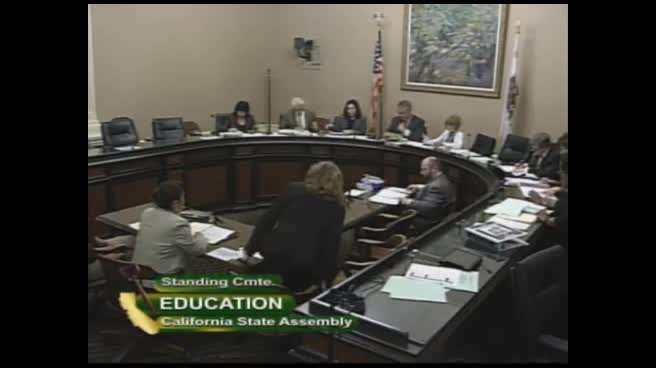 8MIN
Assembly Standing Committee on Education
Bill Author

Bill Co-Author(s):