AB 1599: Peace officers: investigations of misconduct.
- Session Year: 2019-2020
- House: Assembly
- Latest Version Date: 2020-07-08
|
Date
|
Status
|
|---|---|
| Aug 20, 2020 | In committee: Held under submission. |
| Aug 13, 2020 | In committee: Referred to APPR. suspense file. |
| Aug 1, 2020 | From committee: Do pass and re-refer to Com. on APPR. (Ayes 6. Noes 0.) (July 31). Re-referred to Com. on APPR. |
| Jul 8, 2020 | From committee chair, with author's amendments: Amend, and re-refer to committee. Read second time, amended, and re-referred to Com. on PUB. S. |
| Jun 23, 2020 | Referred to Com. on PUB. S. |
| Jan 28, 2020 | In Senate. Read first time. To Com. on RLS. for assignment. |
| Jan 27, 2020 | Read third time. Passed. Ordered to the Senate. (Ayes 63. Noes 2. Page 3899.) |
| Jan 23, 2020 | From committee: Do pass. (Ayes 17. Noes 0.) (January 23). |
| Jan 14, 2020 | From committee: Do pass and re-refer to Com. on APPR. with recommendation: To Consent Calendar. (Ayes 8. Noes 0.) (January 14). Re-referred to Com. on APPR. |
| Jan 7, 2020 | Re-referred to Com. on PUB. S. |
| Jan 6, 2020 | From committee chair, with author's amendments: Amend, and re-refer to Com. on PUB. S. Read second time and amended. |
| Apr 23, 2019 | In committee: Set, first hearing. Hearing canceled at the request of author. |
| Mar 14, 2019 | Referred to Com. on PUB. S. |
| Feb 25, 2019 | Read first time. |
| Feb 23, 2019 | From printer. May be heard in committee March 25. |
| Feb 22, 2019 | Introduced. To print. |
|
Date
|
Description
|
Location
|
Votes
|
|
|---|---|---|---|---|
| Aug 13, 2020 | Placed on suspense file | Senate Standing Committee on Appropriations |
Passed |
|
| Jul 31, 2020 | Do pass, but first be re-referred to the Committee on [Appropriations] | Senate Standing Committee on Public Safety |
Passed |
|
| Jan 27, 2020 | AB 1599 Cunningham Assembly Third Reading | Assembly Floor |
Passed |
|
| Jan 23, 2020 | Do pass. | Assembly Standing Committee on Appropriations |
Passed |
|
| Jan 14, 2020 | Do pass and be re-referred to the Committee on [Appropriations] with recommendation: To Consent Calendar | Assembly Standing Committee on Public Safety |
Passed |
This list shows positions taken on this bill by organizations on the date displayed, which is linked to the original source.
Positions by individuals are not included.
SENATE COMMITTEE ON
Senator Anthony Portantino, Chair
2019 - 2020 Regular Session
AB 1599 (Cunningham) - Peace officers: investigations of misconduct
Version: | Policy Vote: |
Urgency: | Mandate: |
Hearing Date: | Consultant: |
Bill Summary:
AB 1599 would require law enforcement agencies, or an oversight agency, to complete initiated administrative investigations of officer misconduct related to specified uses of force, sexual assault, and dishonesty regardless of whether an officer leaves the employment of the agency.
Fiscal Impact:
- State law enforcement agencies: Costs to individual state law enforcement agencies vary, ranging from minor and absorbable to a significant, depending on the agency’s current practice of handling investigations. For example, the departments of Justice and Fish and Wildlife and the University of California all report minimal costs associated with AB 1599.
California Highway Patrol, on the other hand, estimates potential annual costs of $90,240 to complete, on average, 5 to 10 investigations of alleged officer misconduct incidents that are listed in this bill. These administrative investigations would operate concurrently with any criminal investigations and prosecutions of the underlying allegation and conduct. (Special fund*)
The Department of Corrections and Rehabilitation reports annual ongoing workload costs of approximately $417,000 for 2.0 new Special Agents for the Office of Internal Affairs (OIA). The department estimates that this measure would require the completion of about 13.5 direct adverse actions and 15 abbreviated cases each year. This workload is equivalent to approximately 19 to 21 full investigations, and an OIA Special Agent complete roughly ten full investigations annually. (General Fund)
- Local law enforcement agencies: Unknown, potentially-significant costs in the aggregate to local law enforcement agencies to complete officer investigations alleging the misconduct specified in this measure. Actual new costs to each agency would depend on its current practices. These costs likely would be reimbursable by the state if they surpass the threshold amount required to file a state mandate claim. Additionally, regardless of if a local agency, at its own option, incurs costs for practices that later are mandated by the state, the state is required to reimburse the agency for those costs once the mandate becomes operative. The extent of the reimbursement would be determined by the Commission on State Mandates. Considering that there are over 500 local law enforcement agencies across the state, costs to comply with this measure could be in the tens of thousands of dollars to low hundreds of thousands of dollars in the aggregate. (General Fund, local funds)
*Motor Vehicle Account, State Transportation Fund
Background:
Existing law prescribes certain minimum standards for a person to be appointed as a peace officer, including, among other criteria, moral character, and certain disqualifying factors, including a felony conviction. Additionally, each department or agency that employs peace officers must establish a procedure to investigate complaints by members of the public against the personnel of the department or agency. Complaints and any reports or findings related to the complaints must be retained, and all complaints retained may be maintained in the peace officer’s general personnel file or in a separate file designated by the department or agency. Existing law requires that a peace officer who is seeking employment with a department or agency in California that employs peace officers to give written permission for the hiring department or agency to view the officer’s general personnel file and any separate file designated by a department or agency.
Existing law provides that peace and custodial officer personnel records and reocrds maintained by a law enforcement agency related to the discharge of a firearm or use of force that results in great bodily injury are subject to disclosure under the California Public Records Act (PRA), whether the misconduct was substantiated or unsubstantiated. Officer personnel and agency records related to sexual assault of a member of the public by an officer, dishonesty in the course of an investigation, or a prosecution are subject to disclosure pursuant to the PRA only if the misconduct allegation is sustained.
Proposed Law:
This bill would require a law enforcement agency or oversight agency, despite a peace officer’s or custodial officer’s voluntary separation from the employing agency, to complete its investigation into an allegation of any of the following conduct:
- The use of force resulting in death or great bodily injury.
- Sexual assault.
- Discharge of a firearm.
- Dishonesty relating to the reporting, investigation, or prosecution of a crime or misconduct by another peace officer or custodial officer.
It also would require the investigation to result in a finding that the allegation is either sustained, not sustained, unfounded, or exonerated, as defined. If an agency other than an officer’s employing agency conducts an investigation of these allegations, that agency would be required to disclose its findings with the employing agency no later than the conclusion of the investigation.
Related Legislation:
AB 1299 (Salas, 2019-2020 Reg. Sess.) would require peace officer-employing agencies to report to the Commission on Peace Officer Standards and Training (POST) when an officer separates from employment and to complete, and report the results to POST, of investigations of any officer that are pending at the time of the separation. AB 1299 is pending in this Committee.
AB 2327 (Quirk, Ch. 966, Stats. 2018) required law enforcement agencies to keep records, as specified, of any investigations of misconduct involving a peace officer and required a peace officer who is seeking employment with a department to give permission for the hiring department to view the officer’s file.
SB 1421 (Skinner, Ch. 988, Stats. 2018) allowed for the disclosure pursuant to the PRA specified personnel records of peace officers and custodial officers.
-- END --
SENATE COMMITTEE ON PUBLIC SAFETY
Senator Nancy Skinner, Chair
2019 - 2020 Regular
Bill No: AB 1599 Hearing Date: July 31, 2020
Author: | Cunningham | ||
Version: | July 8, 2020 | ||
Urgency: | No | Fiscal: | Yes |
Consultant: | GC | ||
Subject: Peace Officers: Investigations of Misconduct
HISTORY
Source: Author
Prior Legislation: SB 1421 (Skinner), Ch. 988, Stats. of 2018
AB 2327 (Quirk), Ch. 966, Stats. of 2018
AB 1428 (Low), 2017, held on Senate Appropriations Suspense
AB 953 (Weber), Ch.466, Stats. 2015
AB 619 (Weber), 2015 held on Assm. Appropriations Suspense
SB 1286 (Leno), 2016, held Sen. Appropriations Suspense
AB 71 (Rodriguez), Ch. 462, Stats. 2015
SB 1019 (Romero), 2008, failed passage in Assembly Pub. Safety
AB 1648 (Leno), 2007, failed passage in Assembly Pub. Safety
Support: American Civil Liberties Union; California News Publishers Association of California; California District Attorneys Association; California Public Defenders Association; California State Sheriffs’ Association; Ella Baker Center for Human Rights; End Violence Against Women International; League of Women Voters of California
Opposition: None known
Assembly Floor Vote: 63 - 2
PURPOSE
The purpose of this legislation is to require law enforcement agencies to complete initiated administrative investigations of officer misconduct as related to specified uses of force, sexual assault, and dishonesty regardless of whether an officer leaves the employment of the agency.
Existing law requires peace officers to meet all of the following minimum standards (Gov. Code, § 1031):
- Be a citizen of the United States or a permanent resident alien who is eligible for and has applied for citizenship, except as specified;
- Be at least 18 years of age;
- Be fingerprinted for purposes of search of local, state, and national fingerprint files to disclose a criminal record;
- Be of good moral character, as determined by a thorough background investigation;
- Be a high school graduate, pass the General Education Development Test or other high school equivalency test approved by the State Department of Education that indicates high school graduation level, pass the California High School Proficiency Examination, or have attained a two-year, four-year, or advanced degree from an accredited college or university; and
- Be found to be free from any physical, emotional, or mental condition that might adversely affect the exercise of the powers of a peace officer.
- Physical condition shall be evaluated by a licensed physician and surgeon;
- Emotional and mental condition shall be evaluated by either of the following:
- A physician and surgeon who holds a valid California license to practice medicine, has successfully completed a postgraduate medical residency education program in psychiatry, and has a specified amount of experience; or
- A psychologist licensed by the California Board of Psychology with a specified amount of experience.
States that the physician and surgeon or psychologist shall also have met any applicable education and training procedures set forth by the California Commission on Peace Officer Standards and Training designed for the conduct of pre-employment psychological screening of peace officers. (Gov. Code, § 1031)
Existing law specifies that the peace officer requirements do not preclude the adoption of additional or higher standards, including age. (Gov. Code, § 1031, subd. (g).)
Existing law states that for purposes of performing a thorough background investigation for applicants not currently employed as a peace officer, an employer shall disclose employment information relating to a current or former employee, upon request of a law enforcement agency, if all of the following conditions are met (Gov. Code, § 1031.1.):
- The request is made in writing;
- The request is accompanied by a notarized authorization by the applicant releasing the employer of liability; and
- The request and the authorization are presented to the employer by a sworn officer or other authorized representative of the employing law enforcement agency.
Existing law requires every peace officer candidate be the subject of employment history checks through contacts with all past and current employers over a period of at least ten years, as listed on the candidate's personal history statement. (Code of Regulations, Title 11, § 1953, subd. (e)(6).)
Existing law requires proof of the employment history check be documented by a written account of the information provided and source of that information for each place of employment contacted. All information requests shall be documented. (Code of Regulations, Title 11, § 1953, subd. (e)(6).)
Existing law states that if a peace officer candidate was initially investigated in accordance with all current requirements and the results are available for review, a background investigation update, as opposed to a complete new background investigation, may be conducted for either of the following circumstances: (Code of Regulations, Title 11, § 1953, subd. (f)(a).)
- The peace officer candidate is being reappointed to the same POST-participating department. Per regulations, a background investigation update on a peace officer who is reappointed within 180 days of voluntary separation is at the discretion of the hiring authority; or
- The peace officer candidate is transferring, without a separation, to a different department; however, the new department is within the same city, county, state, or district that maintains a centralized personnel and background investigation support division.
Existing law requires each department or agency in this state that employs peace officers to establish a procedure to investigate complaints by members of the public against the personnel of these departments or agencies, and shall make a written description of the procedure available to the public. (Pen. Code, § 832.5, subd. (a)(1).)
Existing law requires complaints and any reports or findings relating to these complaints be retained for a period of at least five years. (Pen. Code, § 832.5, subd. (b).)
Existing law specifies prior to any official determination regarding promotion, transfer, or disciplinary action by an officer's employing department or agency, the complaints, as specified, shall be removed from the officer's general personnel file and placed in separate file designated by the department or agency, in accordance with all applicable requirements of law. (Pen. Code, § 832.5, subd. (b).)
Existing law states that each law enforcement agency shall annually furnish to the Department of Justice, a report of all instances when a peace officer employed by that agency is involved in any of the following: (Government Code, § 12525.2, subd. (a).)
- An incident involving the shooting of a civilian by a peace officer;
- An incident involving the shooting of a peace officer by a civilian;
- An incident in which the use of force by a peace officer against a civilian results in serious bodily injury or death; and
- An incident in which use of force by a civilian against a peace officer results in serious bodily injury or death.
Existing law specifies that each year, the Department of Justice (DOJ) shall include a summary of information contained in the use of force reports received through the department's OpenJustice Web portal. (Government Code, § 12525.2, subd. (c).)
Existing law includes within Department of Justice’s annual reporting requirements the number of citizens' complaints received by law enforcement agencies which shall indicate the total number of these complaints, the number alleging criminal conduct of either a felony or misdemeanor, and the number sustained in each category. (Pen. Code, § 13012, subd. (e).)
Existing law establishes the CPRA, and states that the Legislature, mindful of the right of individuals to privacy, finds and declares that access to information concerning the conduct of the people's business is a fundamental and necessary right of every person in this state; provides that, pursuant to the CPRA, all public records maintained by local and state governmental agencies are open to public inspection unless specifically exempt. (Gov. Code, §§ 6250 et seq.)
Existing law provides that specified peace officer or custodial officer personnel records and records maintained by any state or local agency shall not be confidential and shall be made available for public inspection pursuant to the California Public Records Act, including Reports, investigation, or findings of:
- Incidents involving the discharge of a firearm at a person by an officer;
- Incidents involving use of force by an officer which results in death or serious bodily injury;
- Any record relating to an incident where there was a sustained finding that an officer engaged in sexual assault of a member of the public; and,
- Any record relating to an incident where there was a sustained finding that an officer was dishonest relating to the reporting, investigation, or prosecution of a crime, or relating to the misconduct of another peace officer, including but not limited to perjury, false statements, filing false reports, destruction/falsifying/or concealing evidence, or any other dishonesty that undermines the integrity of the criminal justice system. (Penal Code, § 832.7, subd. (b)(1).)
Existing law defines “sexual assault for purposes of a CPRA request as the commission or attempted initiation of a sexual act with a member of the public by means of force, threat, coercion, extortion, offer of leniency or other official favor, or under the color of authority. Specifies that for purposes of this definition, the propositioning for or commission of any sexual act while on duty is considered a sexual assault. (Penal Code § 832.7, subd. (b)(1)(B)(ii).)
Existing law defines “member of the public” for purposes of a CPRA request as any person not employed by the officer’s employing agency and includes any participant in a cadet, explorer, or other youth program affiliated with the agency. (Penal Code § 832.7, subd. (b)(1)(B)(iii).)
Existing law specifies that records to be released shall include all investigative reports; photographic, audio, and video evidence; transcripts or recordings of interviews; autopsy reports; all materials compiled and presented for review to the district attorney or to any person or body charged with determining whether to file criminal charges against an officer in connection with an incident, or whether the officer’s action was consistent with law and agency policy for purposes of discipline or administrative action, or what discipline to impose or corrective action to take; documents setting forth findings or recommended findings; and copies of disciplinary records relating to the incident, including any letters of intent to impose discipline, any documents reflecting modifications of discipline due to the Skelly or grievance process, and letters indicating final imposition of discipline or other documentation reflecting implementation of corrective action. (Penal Code § 832.7, subd. (b)(2).)
This bill provides that law enforcement agencies shall complete investigations and reach a finding regardless of whether the officer voluntarily separates from the agency before the investigation is completed in the following scenarios:
- If a law enforcement agency initiates an administrative investigation into an allegation of discharge of a firearm at a person by an officer, or an incident in which the use of force by an officer resulted in death or great bodily injury.
- If a law enforcement agency initiates an administrative investigation into an allegation of sexual assault against a member of the public by an officer.
- If a law enforcement agency initiates an administrative investigation into an allegation of dishonesty by an officer in the course of an investigation or prosecution of a crime.
This bill specifies that if any other law enforcement agency, other than an officer’s employing agency, conducts an investigation into an alleged incident covered in this section, that agency shall disclose its investigative findings with the employing agency no later than the conclusion of the investigation.
COMMENTS
1. Need for This Bill
According to the author:
Penal Code Section 832.7 is California’s guideline for Public Records Act requests related to peace officers and their conduct. Existing law dictates that when an officer commits or is alleged to commit a serious crime against a member of the public, that information is only eligible to be released if the department conducts an investigation and comes to a “sustained finding.” However, a loophole exists where if an officer is fired or resigns before an investigation can be done, all the information related to the incident may not be released because an agency most likely has not conducted an investigation and therefore has not come to a “sustained finding.” This loophole must be closed to make sure the public has access to all pertinent information related to an officer, especially in severe cases such as use-of-force, sexual assault, and dishonesty on the job.
2. Peace Officer Records of Misconduct and Incomplete Investigations
Government Code § 1031 establishes the minimum standards needed to qualify as a peace officer. One of the requirements is that the individual be of good moral character, as determined by a thorough background investigation. (Gov. Code, § 1031, subd. (d).). That statute does not provide a further description of the requirements of that background check generally, nor does it specify what type of background check is required for an individual that is currently a peace officer and is applying for a job as a peace officer with a new law enforcement agency.
The California Code of Regulations, Title 11, § 1953 provides further specifications on the required background investigation for peace officers. Section 1953 mandates that every peace officer candidate shall be the subject of employment history checks through contacts with all past and current employers over a period of at least ten years, as listed on the candidate's personal history statement and requires that proof of the employment history check shall be documented by a written account of the information provided and source of that information for each place of employment contacted.
That section does allow for a background information update, as opposed to a complete new background investigation under limited circumstances for individuals that have already completed a peace officer background investigation. Section 1953 does not specify whether a current peace officer undergoing a new background check, or an updated background check must give the hiring agency access to personnel files for any law enforcement agency at which the officer has previously worked. Section 1953 does not specify whether an applicant must authorize the hiring agency access to personnel records that would otherwise be confidential under law.
AB 2327 (Quirk), 966, Stats. of 2018 codified that peace officers seeking employment with a law enforcement agency must give written permission for the hiring law enforcement agency to view his or her general personnel file and any separate disciplinary file. The new law also required that each law enforcement agency to make a record of any investigations of misconduct involving a peace officer in his or her general personnel file or a separate file designated by the department or agency. The bill did not, however, require law enforcement agencies to look at the prior personnel records of potential hires.
It has traditionally been common practice for hiring law enforcement agencies to require prospective applicants to sign authorizations for the hiring agency to access records from previous employers. It seems that the authorizations typically include permission to access an applicant’s disciplinary records if that applicant had previously been employed as a peace officer with another agency.
Given the liability risk of hiring an officer with a disciplinary record as a peace officer, one would expect that hiring agencies would be vigilant in checking on an applicant’s employment background, particularly if that employment was with another law enforcement agency. Hiring law enforcement agencies have a strong incentive to require peace officer applicants to sign authorizations giving the hiring agency access to law enforcement personnel records that would ordinarily be confidential. To the extent an applicant who was a peace officer at another agency does not give authorization for the hiring agency to check his or her disciplinary record at the previous agency, such a refusal should set off alarm bells for the hiring agency. However, despite these incentives agencies are not required under state law to conduct these pre-employment checks of prior personnel records.
SB 1421 (Skinner), Ch. 988, Stats. of 2018 modified rules related to confidentiality of peace officer records in a limited manner. That bill specified that records related to discharge of a firearm or use of force that results in great bodily injury were subject to disclosure to the public whether the misconduct was substantiated or unsubstantiated. While records related to sexual assault of a member of the public by an officer or dishonesty in the course of an investigation or a prosecution were subject to disclosure if they were sustained. As a result of this, officers who resign or retire prior to a completed investigation into sexual assault or dishonesty will escape any disclosure of the investigation into their alleged misconduct. This bill would remedy that issue by requiring that those investigations be completed, and if they could be subject to disclosure under the provisions of Penal Code, § 832.7 as modified by SB 1421 (Skinner).
3. Argument in Support
According to the League of Women Voters:
The League of Women Voters of California writes to strongly support AB 1599, which would build on the transparency of police misconduct records that was initiated with the passage of SB 1421 (Skinner) in 2018.
The League of Women Voters of California believes that democratic government depends on the informed and active participation of its citizens and requires that governmental bodies protect the citizen's right to know and to have access to information. The ability to monitor and act on information related to police misconduct informs our participation in the development of policies and procedures to address and prevent abuses.
Existing law requires personnel records of peace or custodial officers, and any records related to complaints against them, be open for public inspection for a limited set of the most serious police complaints. It simultaneously protects the privacy of personal information. Records regarding reports, investigations, or findings of incidents by an officer may be subject to disclosure if they involve discharge of a firearm, deadly force, or serious bodily injury. Records involving accusations of sexual assault or dishonesty, however, are available only if there are “sustained findings” that the conduct has occurred. Unfortunately, there have been situations in which an officer resigns prior to the completion of an investigation, thus nullifying the opportunity for the investigating body to “sustain” the allegation. This legislation addresses that problem by allowing public inspection of officers’ personnel records pertaining to accusations of sexual assault when an officer resigns.
The League has a long history of support for open government. Many other states require the disclosure of police reports, and a majority require openness of records about police misconduct. California should join that majority to promote transparency in government. The League of California Voters of California strongly supports AB 1599 to further the transparency of police reports and to promote public safety.
-- END –
ASSEMBLY THIRD READING
ATR Bill Id:AB 1599
Author:(Cunningham)
As Amended Ver:January 6, 2020
Majority vote
SUMMARY:
Permits inspection of peace officer or custodial officer personnel records under the California Public Records Act (CPRA) that pertain to a peace officer or custodial officer accused of sexual assault involving a member of the public when the peace officer or custodial officer resigns before the employing agency has concluded its investigation into the sexual assault.
Major Provisions
COMMENTS:
- The CPRA and SB 1421 (Skinner) Chapter 988, Statutes of 2018: The CPRA was signed into law in 1968 and was designed to prevent secrecy in government and increase public understanding of government activities. (See City of San Jose v. Superior Court (1999) 74 Cal.App.4th 1008, 1016-1017.) Under the CPRA, all public records are generally open to public inspection unless a statutory exception exists which prohibits disclosure. Prior to 2018, CPRA notwithstanding, both police investigatory records and police personnel records were generally protected from public disclosure. Provisions of both the Penal Code and the Government Code, provided that investigatory records and police personnel records were confidential. SB 1421 (Skinner) Chapter 988, Statutes of 2018, loosened the protections of such records. Specifically, SB 1421 provided that police records shall be subject to public disclosure if they involve the following: 1) incidents involving the discharge of a firearm by an officer; 2) incidents of deadly force or serious bodily injury by an officer; 3) incidents of sustained findings of sexual assault by an officer on the member of the public; or 4) incidents relating to sustained findings of dishonesty by a peace officer in specified circumstances.
- The Need for This Bill: SB 1421 substantially increased the circumstances in which police investigatory and personnel records are available to the public, allowing access to records pertaining to the use of force by officers as well as incidents pertaining to sexual assault and dishonesty in certain circumstances. Under SB 1421, reports relating to the use of firearms and force are publicly available regardless of whether or not there is any sustained finding of misconduct against the officer. Reports relating to sexual assault or dishonesty, however, only become publicly available once there has been a "sustained finding" against the officer. This dichotomous approach leaves open possibility that officer can simply quit or resign from a position prior to a "sustained finding" of sexual assault or dishonesty, thereby circumventing the purpose and spirit of the transparency envisioned by SB 1421.
This bill would clarify that in such situations, the CPRA permits the public to access any records pertaining to the alleged sexual assault even in the absence of a sustained finding. It requires disclosure of records in cases where an officer resigns from a position prior to the conclusion of an investigation into alleged sexual assault.
- Prior Legislation: SB 1421 (Skinner) Chapter 988, Statutes of 2018 permitted the inspection of specified peace and custodial officer records pursuant to the CPRA including those records relating to an incident where there was a sustained finding that an officer engaged in sexual assault of a member of the public.
According to the Author:
"California's Penal Code currently enforces mechanisms for the public to request information related to an incent involving a Peace Officer. In 2018, our state passed landmark legislation to overhaul what information can be released and under what circumstances information may be withheld. Unfortunately, a loophole exists in the legislation that protects officers who abuse their power and are alleged to have sexually assaulted a member of the public. AB 1599 is a meritorious fix to ensure all information regarding sexual assaults on a member of the public is released, regardless if a law enforcement agency conducts an investigation or not on the incident. Sunlight is the best disinfectant and in order to protect our communities, we must have all the information available about who is patrolling them."
Arguments in Support:
According to the American Civil Liberties Union of California: "After SB 1421 went into effect many news organizations across the state joined together in an unprecedented collaboration to publicize these instances of police misconduct.[] These stories uncovered hundreds of law enforcement officers that have committed crimes or serious misconduct yet remain employed as peace officers somewhere in the state. Often, these peace officers pleaded down to lesser crimes or resigned from their position prior to or during an investigation. By making these instances of misconduct available to the public, we can hold our peace officers, and their employers, to an appropriate standard of professionalism and accountability.
"This bill seeks to expand current law to ensure the public has access to records involving accusations of sexual assault involving peace officers and members of the public so that peace officers cannot simply resign from their jobs during an investigation in order to evade transparency. For these reasons, the ACLU of California is pleased to support this legislation."
Arguments in Opposition:
According to the Riverside Sherriff's Association: "This bill seeks to expand public access to peace officer personnel records to include documents related to former officers accused of sexual assault, including unsubstantiated allegations. This bill will also increase locally enforcement costs by expanding access to peace officer personnel records.
…"If the administrative investigation does not result in the substantiation of the allegations, dedicated and honorably retired peace officers should not be subject to the release of false and defamatory statements contained within the unsubstantiated claim. We appreciate the author's intent here - to make sure that cops who have committed sexual assault are prevented from hiding their criminal history from prospective law enforcement employers. We applaud that goal, but we also believe there is a less onerous method to reach that goal.
"It appears that law enforcement management's refusal or inability to complete inventions once officers resign or retire is the real issue here. If such investigations were completed, the documents relating to the substantiated findings would become disclosable under current law. Additionally, if accusations are not substantiated, disclosure under current law would remain impermissible."
FISCAL COMMENTS:
According to the Appropriations Committee:
Costs (GF) between $50,000 and $100,000 annually in increased staff workload for statewide law enforcement agencies, including the California Highway Patrol and the Department of Justice, to review, redact and produce complaints, preliminary investigation reports and other relevant records pertaining to allegations of sexual assault by a peace officer who resigned before the completion of investigation.
VOTES:
ASM PUBLIC SAFETY: 8-0-0
YES: Jones-Sawyer, Lackey, Bauer-Kahan, Diep, Kamlager, Quirk, Santiago, Wicks
ASM APPROPRIATIONS: 17-0-1
YES: Gonzalez, Bigelow, Bloom, Bonta, Brough, Calderon, Carrillo, Chau, Megan Dahle, Diep, Eggman, Fong, Gabriel, Eduardo Garcia, Maienschein, Quirk, Robert Rivas
ABS, ABST OR NV: Petrie-Norris
UPDATED:
VERSION: January 6, 2020
CONSULTANT: Matthew Fleming / PUB. S. / (916) 319-3744 FN: 0002650
Date of Hearing: January 23, 2020
ASSEMBLY COMMITTEE ON APPROPRIATIONS
Lorena Gonzalez, Chair
ABPCA Bill Id:AB 1599
Author:(Cunningham) – As Amended Ver:January 6, 2020
Policy Committee: | Public Safety | Vote: | 8 - 0 |
|
| ||
|
|
Urgency: No State Mandated Local Program: Yes Reimbursable: Yes
SUMMARY:
This bill authorizes disclosure of records, pursuant to the California Public Records Act (CPRA), related to allegations of sexual assault against a peace officer who resigned before the employing agency completed an investigation.
FISCAL EFFECT:
Costs (GF) between $50,000 and $100,000 annually in increased staff workload for statewide law enforcement agencies, including the California Highway Patrol and the Department of Justice, to review, redact and produce complaints, preliminary investigation reports and other relevant records pertaining to allegations of sexual assault by a peace officer who resigned before the completion of investigation.
COMMENTS:
- Purpose. According to the author:
AB 1599 is a meritorious fix to ensure all information regarding sexual assaults on a member of the public is released, regardless if a law enforcement agency conducts an investigation or not on the incident. Sunlight is the best disinfectant and in order to protect our communities, we must have all the information available about who is patrolling them.
- SB 1421, Chapter 998, Statutes of 2018. SB 1421 expanded the CPRA to authorize release of sustained allegations against law enforcement involving sexual assault, dishonesty or discharge of a firearm. This bill proposes to authorize release of investigations that were not completed because the officer in question resigned. Pursuant to Lybarger v. City of Los Angeles, 40 Cal.3d 822 (1985), peace officers may not refuse to answer questions during an administrative investigation without suffering serious discipline. If an officer is compelled to respond to questions under threat of discipline, the officer’s statements may not be used in any criminal proceeding. An officer facing criminal charges may choose to resign rather than face questions during an administrative investigation for fear of making statements that may be used in the investigation against them. However, a criminal investigation often continues and criminal records, including arrest records, are usually public records.
- Prior Legislation.
- AB 748 (Ting), Chapter 960, Statutes of 2018, requires disclosure of video and audio recordings that depict a use of force including the discharge of a firearm or force that results in great bodily injury or death.
- SB 1421 (Skinner), Chapter 998, Statutes of 2018, establishes a right to access specified police records, including video or audio footage of an incident regarding a police use of force that includes the discharge of a firearm or results in great bodily injury or death.
Analysis Prepared by: Kimberly Horiuchi / APPR. / (916) 319-2081
Date of Hearing: January 14, 2020
Counsel: Matthew Fleming
ASSEMBLY COMMITTEE ON
Reginald Byron Jones-Sawyer, Sr., Chair
ABPCA Bill Id:
Author:() – As Ver:
SUMMARY:
Permits inspection of peace officer or custodial officer personnel records under the California Public Records Act (CPRA) that pertain to a peace officer or custodial officer accused of sexual assault involving a member of the public when the peace officer or custodial officer resigns before the employing agency has concluded its investigation into the sexual assault.
EXISTING LAW:
- Establishes the CPRA, and states that the Legislature, mindful of the right of individuals to privacy, finds and declares that access to information concerning the conduct of the people's business is a fundamental and necessary right of every person in this state; provides that, pursuant to the CPRA, all public records maintained by local and state governmental agencies are open to public inspection unless specifically exempt. (Gov. Code, §§ 6250 et seq.)
- Provides that specified peace officer or custodial officer personnel records and records maintained by any state or local agency shall not be confidential and shall be made available for public inspection pursuant to the California Public Records Act, including Reports, investigation, or findings of:
- Incidents involving the discharge of a firearm at a person by an officer;
- Incidents involving use of force by an officer which results in death or serious bodily injury;
- Any record relating to an incident where there was a sustained finding that an officer engaged in sexual assault of a member of the public; and,
- Any record relating to an incident where there was a sustained finding that an officer was dishonest relating to the reporting, investigation, or prosecution of a crime, or relating to the misconduct of another peace officer, including but not limited to perjury, false statements, filing false reports, destruction/falsifying/or concealing evidence, or any other dishonesty that undermines the integrity of the criminal justice system. (Pen. Code § 832.7, subd. (b)(1).)
- Incidents involving the discharge of a firearm at a person by an officer;
- Defines “sexual assault for purposes of a CPRA request as the commission or attempted initiation of a sexual act with a member of the public by means of force, threat, coercion, extortion, offer of leniency or other official favor, or under the color of authority. Specifies that for purposes of this definition, the propositioning for or commission of any sexual act while on duty is considered a sexual assault. (Pen. Code § 832.7, subd. (b)(1)(B)(ii).)
- Defines “member of the public” for purposes of a CPRA request as any person not employed by the officer’s employing agency and includes any participant in a cadet, explorer, or other youth program affiliated with the agency. (Pen. Code § 832.7, subd. (b)(1)(B)(iii).)
- Specifies that records to be released shall include all investigative reports; photographic, audio, and video evidence; transcripts or recordings of interviews; autopsy reports; all materials compiled and presented for review to the district attorney or to any person or body charged with determining whether to file criminal charges against an officer in connection with an incident, or whether the officer’s action was consistent with law and agency policy for purposes of discipline or administrative action, or what discipline to impose or corrective action to take; documents setting forth findings or recommended findings; and copies of disciplinary records relating to the incident, including any letters of intent to impose discipline, any documents reflecting modifications of discipline due to the Skelly or grievance process, and letters indicating final imposition of discipline or other documentation reflecting implementation of corrective action. (Pen. Code § 832.7, subd. (b)(2).)
FISCAL EFFECT:
Unknown
COMMENTS:
- Author's Statement: According to the author, “California’s Penal Code currently enforces mechanisms for the public to request information related to an incent involving a Peace Officer. In 2018, our state passed landmark legislation to overhaul what information can be released and under what circumstances information may be withheld. Unfortunately, a loophole exists in the legislation that protects officers who abuse their power and are alleged to have sexually assaulted a member of the public. AB 1599 is a meritorious fix to ensure all information regarding sexual assaults on a member of the public is released, regardless if a law enforcement agency conducts an investigation or not on the incident. Sunlight is the best disinfectant and in order to protect our communities, we must have all the information available about who is patrolling them.”
- The CPRA and SB 1421 (Skinner) Chapter 988, Statutes of 2018: The CPRA was signed into law in 1968. The general purpose of the CPRA was to prevent secrecy in government and to contribute significantly to the public understanding of government activities. (See City of San Jose v. Superior Court (1999) 74 Cal.App.4th 1008, 1016-1017.) Under the CPRA, all public records are generally open to public inspection unless a statutory exception exists which prohibits disclosure.
Prior to 2018, CPRA notwithstanding, both police investigatory records and police personnel records were generally protected from public disclosure. Provisions of both the Penal Code and the Government Code, provided that investigatory records and police personnel records were confidential. SB 1421 (Skinner) Chapter 988, Statutes of 2018, loosened the protections of such records by enumerating several situations in which they were subject to disclosure under the CPRA. Specifically, SB 1421 provided that police records shall be subject to public disclosure if they involve the following: 1) incidents involving the discharge of a firearm by an officer; 2) incidents of deadly force or serious bodily injury by an officer; 3) incidents of sustained findings of sexual assault by an officer on the member of the public; or 4) incidents relating to sustained findings of dishonesty by a peace officer in specified circumstances. - The Need for This Bill: SB 1421 substantially increased the circumstances in which police investigatory and personnel records are available to the public, allowing access to records pertaining to the use of force by officers as well as incidents pertaining to sexual assault and dishonesty in certain circumstances. Under SB 1421, reports relating to the use of firearms and force are publicly available regardless of whether or not there is any sustained finding of misconduct against the officer. Reports relating to sexual assault or dishonesty, however, only become publicly available once there has been a “sustained finding” against the officer. This dichotomous approach leaves open possibility that officer can simply quit or resign from a position prior to a “sustained finding” of sexual assault or dishonesty, thereby circumventing the purpose and spirit of the transparency envisioned by SB 1421.
One such example was addressed last March in the San Luis Obispo Tribune. (See Tribune Editorial Board, Police Transparency Law Is Shielding Bad Cops – and State Lawmakers Need to Fix it, The San Luis Obispo Tribune, March 13, 2019, available at: <https://www.sanluisobispo.com/opinion/editorials/article227419494.html>, [as of January 1, 2020].) According to that article, former Paso Robles Police Sergeant Christopher McGuire was accused of numerous incidents of sexual misconduct while on duty, including rape against a member of the public. (Id.) The Sheriff’s Office for San Luis Obispo County recommended that the District Attorney move forward with criminal charges against McGuire, but the District Attorney ultimately declined to prosecute. (Id.) The Police Department also did not sustain any finding of misconduct against McGuire, instead allowing him to resign prior to the conclusion of an investigation into the incident. (Id.) As a result, when a request was made to review documents pertaining to the alleged sexual misconduct under the CPRA, the request was denied on the grounds that there had been no “sustained finding” against McGuire and therefore the records were not subject to disclosure. (Id.) This bill would clarify that in situations such as the one described in the Tribune article, the CPRA permits the public to access any records pertaining to the alleged sexual assault even in the absence of a sustained finding. It requires disclosure of records in cases where an officer resigns from a position prior to the conclusion of an investigation into alleged sexual assault.
This bill treats an officer who resigns from his position prior to the conclusion of an investigation differently from an officer who remains until the investigation is complete. An officer who remains in their position and is cleared by the investigation will not have records publicly disclosed, but an officer who resigns prior to the conclusion of the investigation will have records that are subject to disclosure. This is true even if the investigation would ultimately find that the officer did not commit any wrongdoing. The bill therefore appears to provide officers with an incentive to remain in their position throughout the pendency of an investigation into alleged sexual assault on a member of the public.
- Argument in Support: According to the American Civil Liberties Union of California: “After SB 1421 went into effect many news organizations across the state joined together in an unprecedented collaboration to publicize these instances of police misconduct.[] These stories uncovered hundreds of law enforcement officers that have committed crimes or serious misconduct yet remain employed as peace officers somewhere in the state. Often, these peace officers pleaded down to lesser crimes or resigned from their position prior to or during an investigation. By making these instances of misconduct available to the public, we can hold our peace officers, and their employers, to an appropriate standard of professionalism and accountability.
“This bill seeks to expand current law to ensure the public has access to records involving accusations of sexual assault involving peace officers and members of the public so that peace officers cannot simply resign from their jobs during an investigation in order to evade transparency. For these reasons, the ACLU of California is pleased to support this legislation.”
- Prior Legislation: SB 1421 (Skinner) Chapter 988, Statutes of 2018 permitted the inspection of specified peace and custodial officer records pursuant to the CPRA including those records relating to an incident where there was a sustained finding that an officer engaged in sexual assault of a member of the public.
REGISTERED SUPPORT / OPPOSITION:
Support
American Civil Liberties Union of California
California News Publishers Association
California Public Defenders Association
Ella Baker Center for Human Rights
Opposition
None
Analysis Prepared by:
Date of Hearing: April 23, 2019
Counsel: Matthew Fleming
ASSEMBLY COMMITTEE ON PUBLIC SAFETY
Reginald Byron Jones-Sawyer, Sr., Chair
ABPCA Bill Id:AB 1599
Author:(Cunningham) – As Introduced Ver:February 22, 2019
SUMMARY:
Creates a new sexual battery crime for the specific situation in which a person causes another person to touch an intimate part of either of those persons, or a third person, for the purpose of sexual arousal, sexual gratification, or sexual abuse, by threatening to use the authority to incarcerate, arrest, or deport the victim or another person, if the touching is against the will of the victim and the victim has a reasonable belief that the perpetrator is a public official, as defined. Specifically, this bill:
- Makes it a sexual battery for any person to cause another person to touch an intimate part of either of those persons or a third person for the specific purpose of sexual arousal, sexual gratification, or sexual abuse, by threatening to use their authority to incarcerate, arrest, or deport the victim or another person, if the touching is against the will of the victim and the victim has a reasonable belief that the perpetrator is a public official.
- Punishes a sexual battery of this nature as either a misdemeanor with a maximum one year in jail and a two thousand dollar ($2,000) fine, or as a felony carrying a two, three, or four year state prison term, and a fine not exceeding ten thousand dollars ($10,000).
EXISTING LAW:
- States sexual battery occurs when any person who touches an intimate part of another person while that person is unlawfully restrained by the accused or an accomplice, if the touching is against the will of the person touched and is for the purpose of sexual arousal, sexual gratification, or sexual abuse. (Pen. Code § 243.4, subd. (a).)
- States sexual battery occurs any person who touches an intimate part of another person who is institutionalized for medical treatment and who is seriously disabled or medically incapacitated, if the touching is against the will of the person touched, if the touching is for the purpose of sexual arousal, sexual gratification, or sexual abuse. (Pen. Code § 243.4, subd. (b).)
- States sexual battery occurs when any person touches an intimate part of another person for the purpose of sexual arousal, sexual gratification, or sexual abuse, and the victim is at the time unconscious of the nature of the act because the perpetrator fraudulently represented that the touching served a professional purpose. (Pen. Code § 243.4, subd. (c).)
- States sexual battery occurs when any person, for the purpose of sexual arousal, sexual gratification, or sexual abuse, causes another, against that person’s will while that person is unlawfully restrained either by the accused or an accomplice, or is institutionalized for medical treatment and is seriously disabled or medically incapacitated, to masturbate or touch an intimate part of either of those persons or a third person. (Pen. Code § 243.4, subd. (d).)
- Punishes the above forms of sexual battery as either a misdemeanor with imprisonment in a county jail for not more than one year, and by a fine not exceeding two thousand dollars ($2,000); or as a felony with imprisonment in the state prison for two, three, or four years, and by a fine not exceeding ten thousand dollars ($10,000). (Pen. Code § 243.4, subds. (a) - (d).)
- States misdemeanor sexual battery occurs when any person touches an intimate part of another person, if the touching is against the will of the person touched, and is for the specific purpose of sexual arousal, sexual gratification, or sexual abuse; punishes misdemeanor sexual battery by imprisonment in county jail not exceeding six months, or by a fine of either two thousand dollars ($2,000) or three thousand dollars ($3,000), as specified. (Pen. Code § 243.4, subd. (e)(1).)
- Requires a person who is convicted of sexual battery to register as a sex offender. (Pen. Code § 290, subd. (c).)
- Defines “extortion” as “the obtaining of property from another, with his or her consent, or the obtaining of an official act of a public officer, induced by a wrongful use of force or fear, or under color of official right.” (Pen. Code, § 518, subd. (a).)
- Specifies that for the purposes of the extortion statute, “consideration” means anything of value, including sexual conduct, as specified, or an image of an intimate body part, as specified. (Pen. Code § 518, subd. (b).
- Punishes extortion by imprisonment in the county jail for two, three or four years. (Pen. Code § 520.)
- Criminalizes the act of soliciting another person to commit extortion and punishes such solicitation as either a misdemeanor or felony, as specified. (Pen. Code, § 653f.)
FISCAL EFFECT:
Unknown
COMMENTS:
- Author's Statement: According to the author, “California’s Penal Code currently protects against most instances when someone is sexually assaulted. There is no current law that prohibits Peace Officers from inducing victims to commit sex acts by threatening to arrest, incarcerate or deport them. Peace Officers are trusted and valued members of our society and communities. Unfortunately, there are instances where some officers abuse their power and authority and target victims. We must make sure ‘bad apples’ are caught and not on our streets anymore. Closing this loophole will keep California and our communities safer.”
- This Bill would Prohibit Conduct that is Already Covered by Existing Law: This bill would state that is a sexual battery for a perpetrator to cause the victim to do some kind of sexual touching by making a threat to arrest, incarcerate, or deport the victim, if the victim believes that the perpetrator is public official. The bill would state that the sexual touching of either the perpetrator or the victim’s self, or a third person, would all constitute sexual battery if done pursuant to one of the specified threats.
The provisions proposed by this bill appear to be entirely covered by existing law. Penal Code Section 243.4, the sexual battery statute, already covers any sexual touching of either the perpetrator or the victim if the victim is “unlawfully restrained.” The term “unlawfully restrained” constitutes any kind of threat or even simple directions from a person holding him or herself out to be an authority figure. (See People v. Grant (1992) 8 Cal. App. 4th 1105, 1112-13.) In the words of the California courts, “‘a person is unlawfully restrained when his or her liberty is being controlled by words, acts or authority of the perpetrator aimed at depriving the person's liberty.’” (Ibid., quoting People v. Arnold (1992) 6 Cal. App. 4th 18.)
In Grant, the defendant approached a couple who were kissing in their car in a parking lot at night. (Id. at 1108.) The defendant presented himself as an authority figure who was working with the police on vandalism problems in the area. (Ibid.) After some discussion, the defendant took the young female from the car and ordered the male to stay in the car. He then groped the female in a variety of locations and forced her to put her hand down his pants. (Ibid.) All the while, the defendant was telling the young couple that if they did not cooperate they might be in trouble and he might have to call the police to take them away. (Id. at 1113.) The court concluded that this behavior by the defendant constituted sexual battery, stating that the young woman’s liberty was clearly being controlled by the defendant’s words and acts of authority. (Ibid.) The Grant case is one of many that demonstrate that the current sexual battery statute is sufficient to cover the threats enumerated in this bill. (See e.g. People v. Rosen (2007) 148 Cal. App. 4th 1311 (police officer “exerted psychological coercion by virtue of his position as a police officer and her situation as a prostitute subject to arrest” to get her to touch his penis); People v. Hughey, (2018) Cal. App. Unpub. LEXIS 259 (the perpetrator’s act of putting his finger to his lips and “shushing” the victim was sufficient to constituent unlawful restraint for sexual battery.)
The conduct that this bill would prohibit would also likely be covered under California’s extortion statute. Penal Code section 518 prohibits a person from obtaining anything of value, including sexual conduct, as a result of a threat made against the person. A companion section, Penal Code Section 519 specifies that threats to accuse a person of a crime and threats to expose someone’s unlawful immigration status constitute extortionate threats. It is also irrelevant that the person who makes the threat has the legal authority to carry out the threat. (Flatley v. Mauro (2006) 39 Cal. 4th 299, 326 (extortion “criminalizes the making of threats that, in and of themselves, may not be illegal.”).)
The sexual battery statute currently contains ten subdivisions. The unlawful restraint element of the current sexual battery covers all of the threats listed in this bill and extends to even more benign verbal and non-verbal instructions. In addition, the threats proposed by this bill are likely punishable as extortion. Should the Legislature add an eleventh subdivision to the sexual battery statute in order to cover conduct that is already punishable by existing law? - The Need for this Bill: Included in the background information was a link to a news article which is apparently the impetus for this measure. (Fountain, Paso Case Shows Sex Misconduct by Police Isn’t Just Unprofessional — It Should Be Criminal, Jan. 12, 2019, available at: https://www.sanluisobispo.com/opinion/editorials/article223838225.html, [as of Apr. 18, 2019].) The article deals with the decision of the local district attorney in Paso Robles not to prosecute a police officer for a number of allegations of rape, sexual assault, and misconduct while he was on the job. (Id.) In one incident, a woman accused the officer of lingering behind the scene of a call after other officers had left and sexually assaulting her. According to the same woman, the officer later returned to the scene and raped her. To dissuade the woman from reporting him, the officer threatened to call Child Protective Services and have her children taken away. (Id.) The article indicates that the district attorney explained his decision not to charge on inconsistencies in the woman’s statement and problems of proof. (Id.) In another incident, the same officer was accused of forcing a woman to expose her breasts by threatening to arrest her. As to that allegation, the district attorney stated that the woman “was unsure what year the incident occurred, [] and since there is a three-year statute of limitations on that crime, it was necessary to pin down a date.” (Id.) It therefore appears that the district attorney chose not to prosecute the officer because there was there were evidentiary problems with the charges, not because there was a loophole in California’s Penal Code that allowed the officer to walk free. It is unclear how this bill would address either of the evidentiary problems that the district attorney cited as the reason for not pressing charges against the officer in Paso Robles.
- Argument in Support: According to the California State Sheriffs’ Association: “On behalf of the California State Sheriffs’ Association (CSSA), we are pleased to support your measure, Assembly Bill 1599, which would make it a crime for a person to cause another person to touch an intimate part of either of those persons or a third person for the specific purpose of sexual arousal, sexual gratification, or sexual abuse, by threatening to use their authority to incarcerate, arrest, or deport the victim or another person, if the touching is against the will of the victim and the victim has a reasonable belief that the perpetrator is a public official.
“Penal Code Section 243 prohibits various forms of sexual battery, and defines sexual battery as intimate touching against a victim’s will. However, it is not considered sexual battery when a victim is coerced or threatened into touching themself or another person.”
- Argument in Opposition: According to the American Civil Liberties Union of California: “Despite your worthy intentions, the conduct addressed by AB 1599 can already be prosecuted as a wobbler under existing law. Penal Code section 243.3(a) makes sexual battery a wobbler when the victim is “unlawfully restrained.” Physical restraint is not required; the battery can be accomplished by threats to exercise actual or pretended authority. People v. Grant (1992) 8 Cal.App. 4th 1105. Courts have interpreted this subdivision to apply to situations where a law enforcement officer abuses his authority to commit sexual battery. See, e.g. People v. King (2010) 183 Cal.App. 4th 1281, 1321-1322. Penal Code section 518, regarding extortion, would also apply where threats of accusing someone of a crime or of taking action based on their immigration status are used to coerce someone into engaging in “sexual conduct as defined in subdivision (b) of Section 311.3.” Extortion is a felony. (Penal Code §520.)
“Needlessly adding a new paragraph to Penal Code section 643.4 to address the specific situation of sexual battery by means of a threat to use one’s authority as a public official will unfortunately only create confusion regarding the applicability of the existing law to this situation. We believe that the aims of the bill would be better served by adding language in Penal Code section 518 to clarify that the existing crime of extortion includes extortion to coerce the victim into submitting to an act of sexual battery.
- Prior Legislation:
- AB 2078 (Daly), of the 2017-2018 Legislative Session would have expanded the crimes of sexual battery, rape, sodomy, oral copulation, and sexual penetration to include non-consensual, sexual touching by a person who has been engaged by the victim for a professional purpose. AB 2078 was held in the Senate Appropriations Committee.
- AB 1033 (C. Garcia), of the 2017-2018 Legislative Session, would have created a new sexual battery crime when there was an agreement to use a condom during consensual sexual intercourse and one person intentionally tampered with or removed the condom. AB 1033 was held in the Senate Appropriations Committee.
- SB 500 (Leyva), Chapter 518, Statutes of 2017, created the crime of “sextortion” which prohibits a threat to distribute an image of a person’s intimate body parts of a person engaged in sexual conduct with the intent to coerce the person to engage in sexual conduct or to produce additional images.
- SB 1255 (Canella), Chapter 863, Statutes of 2014, expanded the elements of “revenge porn.”
- SB 255 (Canella), Chapter 466, Statutes of 2013, created the crime of “revenge porn” which prohibits the distribution of an image of an identifiable person’s intimate body parts which had been taken with an understanding that the image would remain private.
- AB 2078 (Nielsen), Chapter 123, Statutes of 2012, added peace officers to the list of individuals who are prohibited from engaging in consenting sexual activity with a confined person.
- AB 2078 (Daly), of the 2017-2018 Legislative Session would have expanded the crimes of sexual battery, rape, sodomy, oral copulation, and sexual penetration to include non-consensual, sexual touching by a person who has been engaged by the victim for a professional purpose. AB 2078 was held in the Senate Appropriations Committee.
REGISTERED SUPPORT / OPPOSITION:
Support
California District Attorneys Association
California State Sheriffs' Association
End Violence Against Women International
Peace Officers Research Association Of California
Oppose
American Civil Liberties Union of California
Analysis Prepared by:
Matthew Fleming / PUB. S. / (916) 319-3744
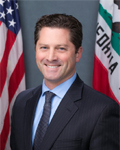
Bill Author
Bill Co-Author(s):