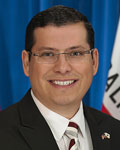
AB 16: Homeless children and youths: reporting.
- Session Year: 2019-2020
- House: Assembly
- Latest Version Date: 2019-09-10
Existing federal law, the McKinney-Vento Homeless Assistance Act, provides grants to states to carry out activities relating to the education of homeless children and youths, as defined, including, among others, providing services and activities to improve the identification of homeless children and youths and to enable them to enroll in, attend, and succeed in school. The act requires the state plans submitted for the receipt of the grant to include assurances that local educational agencies will designate an appropriate staff person to act as a local educational agency liaison for homeless children and youths and a description of how the state will ensure that local educational agencies and their liaisons will comply with specified requirements of the act, including the identification of homeless children and youths.
Under existing state law, public schools, including charter schools, and county offices of education are required to immediately enroll a homeless child or youth seeking enrollment, except as specified, and a local educational agency liaison for homeless children and youths is required to ensure that public notice of the educational rights of homeless children and youths is disseminated in schools within the liaisons local educational agency that provide services pursuant to the act.
This bill would require a local educational agency to ensure that each school within the local educational agency identifies all homeless children and youths enrolled at the school, and would also require the local educational agency to annually report to the department the number of homeless children and youths enrolled. By imposing additional duties on local educational agencies, the bill would impose a state-mandated local program.
The bill would require the State Department of Education to hire an unspecified number of additional staff members on or before July 1, 2020, to ensure that local educational agencies, including local educational agency liaisons for homeless children and youths, are complying with the requirements for the education of homeless children and youths under the act.
The California Constitution requires the state to reimburse local agencies and school districts for certain costs mandated by the state. Statutory provisions establish procedures for making that reimbursement.
This bill would provide that, if the Commission on State Mandates determines that the bill contains costs mandated by the state, reimbursement for those costs shall be made pursuant to the statutory provisions noted above.
A local educational agency shall ensure that each school within the local educational agency identifies all homeless children and youths enrolled at the school. The local educational agency shall annually report to the department the number of homeless children and youths enrolled.
SEC. 2.Section 48851.5 is added to the Education Code, to read:48851.5.On or before July 1, 2020, the department shall hire ____ additional staff members to ensure that local educational agencies, including local educational agency liaisons for homeless children and youths, are complying with the requirements for the education of homeless children and youths under the federal McKinney-Vento Homeless Assistance Act (42 U.S.C. Sec. 11301 et seq.).
SEC. 3.If the Commission on State Mandates determines that this act contains costs mandated by the state, reimbursement to local agencies and school districts for those costs shall be made pursuant to Part 7 (commencing with Section 17500) of Division 4 of Title 2 of the Government Code.
|
Date
|
Status
|
|---|---|
| Jan 21, 2020 | Consideration of Governor's veto stricken from file. |
| Oct 13, 2019 | Vetoed by Governor. |
| Sep 12, 2019 | Enrolled and presented to the Governor at 3:30 p.m. |
| Sep 9, 2019 | Senate amendments concurred in. To Engrossing and Enrolling. (Ayes 79. Noes 0.). |
| Sep 6, 2019 | In Assembly. Concurrence in Senate amendments pending. May be considered on or after September 8 pursuant to Assembly Rule 77. |
| Sep 5, 2019 | Read third time. Passed. Ordered to the Assembly. |
| Sep 3, 2019 | Read second time. Ordered to third reading. |
| Aug 30, 2019 | Read second time and amended. Ordered returned to second reading. |
| Aug 12, 2019 | In committee: Referred to APPR. suspense file. |
| Jul 11, 2019 | From committee chair, with author's amendments: Amend, and re-refer to committee. Read second time, amended, and re-referred to Com. on APPR. |
| Jul 3, 2019 | From committee: Do pass and re-refer to Com. on APPR. with recommendation: To Consent Calendar. (Ayes 7. Noes 0.) (July 3). Re-referred to Com. on APPR. |
| Jun 12, 2019 | From committee chair, with author's amendments: Amend, and re-refer to committee. Read second time, amended, and re-referred to Com. on ED. |
| Jun 3, 2019 | In committee: Set, first hearing. Hearing canceled at the request of author. |
| May 29, 2019 | Referred to Com. on ED. |
| May 23, 2019 | In Senate. Read first time. To Com. on RLS. for assignment. |
| May 22, 2019 | Read third time. Passed. Ordered to the Senate. |
| May 20, 2019 | Read second time. Ordered to third reading. |
| May 16, 2019 | From committee: Do pass. (Ayes 18. Noes 0.) (May 16). |
| Apr 24, 2019 | In committee: Set, first hearing. Referred to APPR. suspense file. |
| Apr 8, 2019 | Re-referred to Com. on APPR. |
| Apr 4, 2019 | Read second time and amended. |
| Apr 3, 2019 | From committee: Amend, and do pass as amended and re-refer to Com. on APPR. (Ayes 6. Noes 0.) (March 27). |
| Mar 19, 2019 | Re-referred to Com. on ED. |
| Mar 18, 2019 | From committee chair, with author's amendments: Amend, and re-refer to Com. on ED. Read second time and amended. |
| Feb 25, 2019 | In committee: Set, first hearing. Hearing canceled at the request of author. |
| Jan 17, 2019 | Referred to Com. on ED. |
| Dec 4, 2018 | From printer. May be heard in committee January 3. |
| Dec 3, 2018 | Read first time. To print. |
|
Date
|
Description
|
Location
|
Votes
|
|
|---|---|---|---|---|
| Sep 9, 2019 | AB 16 Luz Rivas Concurrence in Senate Amendments | Assembly Floor |
Passed |
|
| Sep 5, 2019 | Assembly 3rd Reading AB16 Luz Rivas et al. By Wiener | Senate Floor |
Passed |
|
| Aug 30, 2019 | Do pass as amended | Senate Standing Committee on Appropriations |
Passed |
|
| Aug 12, 2019 | Placed on suspense file | Senate Standing Committee on Appropriations |
Passed |
|
| Jul 3, 2019 | Do pass, but first be re-referred to the Committee on [Appropriations] with the recommendation: To Consent Calendar | Senate Standing Committee on Education |
Passed |
|
| May 22, 2019 | AB 16 Luz Rivas Assembly Third Reading | Assembly Floor |
Passed |
|
| May 16, 2019 | Do pass. | Assembly Standing Committee on Appropriations |
Passed |
|
| Mar 27, 2019 | Do pass as amended and be re-referred to the Committee on [Appropriations] | Assembly Standing Committee on Education |
Passed |
This list shows positions taken on this bill by organizations on the date displayed, which is linked to the original source.
Positions by individuals are not included.
GOVERNOR'S VETO
GV Bill Id:AB 16
Author:(Luz Rivas)
As Enrolled Ver:September 10, 2019
2/3 vote
SUMMARY:
Requires local educational agencies (LEA), including charter schools, to ensure that each school identifies all homeless students enrolled at the school, requires the California Department of Education (CDE) to maintain 1.5 state coordinator positions for homeless education in addition to those in existence a as of July 1, 2019, and requires the CDE to allocate funding to three county offices of education to serve as technical assistance centers.
The Senate Amendments:
- Require school districts and county offices of education, and in some cases schools, to post on their websites a list of their homeless education liaisons, and any other staff who assist the liaisons, and the contact information for those liaisons.
- Require that 1.5 state coordinator positions for homeless education be maintained in addition to the positions in existence on July 1, 2019, instead of January 1, 2019, to conform to the 2019-20 Budget Act.
Governor's Veto Message:
This bill would require local educational agencies (LEA) to post the name and contact information of their homeless liaison, and establish three technical services providers to assist LEAs in serving their homeless students contingent on appropriation.
I support the effort to help our homeless students succeed in school. That is why I supported increased funding in the 2019 Budget to the California Department of Education to improve the support for homeless students throughout the state. However, this bill adds additional costs which are better considered during the annual budget process.
COMMENTS:
How many California students are homeless? According to CDE, there were over 204,000 California public school students in the 2017-18 school year who at one point during that school year met the federal definition of homelessness, representing about 3.3% of the total student population. This is a 21% increase over the 2014-15 school year, when there were 168,000 students so identified.
Problems with homeless student identification. State and federal law entitle students who are homeless to numerous rights and support, but these entitlements can only be exercised if a student is identified as homeless. A 2018 series of reports in EdSource on student homelessness suggested that California schools are underidentifying students as homeless. Using CDE data, EdSource reported that in 2014-15, 3,868 schools (37%) reported no homeless students, and in 2015-16, 3,110 schools (30%) reported no homeless students.
There are a number of possible reasons for this undercount. One commonly cited challenge is that some parents fear that if they identify their family as homeless they may be investigated for child neglect. This bill addresses this concern by requiring that intake forms include a statement that a child will not be removed from the child's family solely because the child's family is experiencing homelessness. The lack of a standardized form for intake is another possible barrier to accurate identification. Finally, while state and federal law impose a number of requirements with respect to homeless students which require resources to implement, dedicated funding for support of homeless students is limited to a small number of LEAs. According to the CDE, in 2016 only 61 of the 1,000 school districts in the state received support from this program, or roughly 6% of the LEAs in the state. An audit approved by the Joint Legislative Audit Committee this year will investigate practices of identifying homeless students.
According to the Author:
"Homeless children deserve a fighting chance to succeed in life. AB 16 is a comprehensive policy approach to solving our homeless student population. California has experienced a rise in students experiencing homelessness and as a result, additional resources are required to address the needs of these students and provide schools with additional support and technical assistance. AB 16 will ensure that the CDE and districts have the resources needed to assist our homeless children and coordinate between our existing state and local homeless education programs. Our schools deserve the resources and tools to fight homelessness."
Arguments in Support:
The National Center for Youth Law writes, "AB 16 is critical in ensuring that the CDE and school districts have the resources needed to assist our homeless children and coordinate between our existing state and local homeless education programs."
Arguments in Opposition:
None on file
FISCAL COMMENTS:
According to the Senate Appropriations Committee:
- While the bill's provisions would be subject to an appropriation, it could result in General Fund cost pressure of approximately $200,000 to fund the new state homeless youth coordinator positions. Staff notes that the 2019 Budget Act already includes $207,000 and 1.5 positions for homeless student coordinators, so the positions proposed by this measure would increase to the total number of new positions for these purposes to three.
- This bill could also result in ongoing Proposition 98 General Fund cost pressure of $1.5 million for three county offices of education to establish technical assistance centers for serving homeless youth. This provision is subject to an appropriation.
- There could be unknown Proposition 98 General Fund costs for local educational agencies (LEAs) to ensure schools identify homeless youth and report this information annually to the CDE. While federal law includes similar requirements, the bill's provisions appear to go beyond federal law by requiring that the intake forms contain specified information.
VOTES:
ASM EDUCATION: 6-0-0
YES: O'Donnell, Kiley, Kalra, McCarty, Smith, Weber
ASM APPROPRIATIONS: 18-0-0
YES: Gonzalez, Bigelow, Bloom, Bonta, Brough, Calderon, Carrillo, Chau, Diep, Eggman, Fong, Gabriel, Eduardo Garcia, Maienschein, Obernolte, Petrie-Norris, Quirk, Robert Rivas
ASSEMBLY FLOOR: 78-0-2
YES: Aguiar-Curry, Arambula, Bauer-Kahan, Berman, Bigelow, Bloom, Boerner Horvath, Bonta, Brough, Burke, Calderon, Carrillo, Cervantes, Chau, Chen, Chiu, Choi, Chu, Cooper, Cunningham, Dahle, Daly, Diep, Eggman, Flora, Fong, Frazier, Friedman, Gabriel, Gallagher, Cristina Garcia, Gipson, Gloria, Gonzalez, Gray, Grayson, Holden, Irwin, Jones-Sawyer, Kalra, Kamlager-Dove, Kiley, Lackey, Levine, Limón, Low, Maienschein, Mathis, Mayes, McCarty, Medina, Melendez, Mullin, Muratsuchi, Nazarian, O'Donnell, Obernolte, Patterson, Petrie-Norris, Quirk, Quirk-Silva, Ramos, Reyes, Luz Rivas, Robert Rivas, Rodriguez, Blanca Rubio, Salas, Santiago, Smith, Mark Stone, Ting, Voepel, Waldron, Weber, Wicks, Wood, Rendon
ABS, ABST OR NV: Cooley, Eduardo Garcia
SENATE FLOOR: 40-0-0
YES: Allen, Archuleta, Atkins, Bates, Beall, Borgeas, Bradford, Caballero, Chang, Dahle, Dodd, Durazo, Galgiani, Glazer, Lena Gonzalez, Grove, Hertzberg, Hill, Hueso, Hurtado, Jackson, Jones, Leyva, McGuire, Mitchell, Monning, Moorlach, Morrell, Nielsen, Pan, Portantino, Roth, Rubio, Skinner, Stern, Stone, Umberg, Wieckowski, Wiener, Wilk
ASSEMBLY FLOOR: 79-0-0
YES: Aguiar-Curry, Arambula, Bauer-Kahan, Berman, Bigelow, Bloom, Boerner Horvath, Bonta, Brough, Burke, Calderon, Carrillo, Cervantes, Chau, Chen, Chiu, Choi, Chu, Cooley, Cooper, Cunningham, Daly, Diep, Eggman, Flora, Fong, Frazier, Friedman, Gabriel, Gallagher, Cristina Garcia, Eduardo Garcia, Gipson, Gloria, Gonzalez, Gray, Grayson, Holden, Irwin, Jones-Sawyer, Kalra, Kamlager-Dove, Kiley, Lackey, Levine, Limón, Low, Maienschein, Mathis, Mayes, McCarty, Medina, Melendez, Mullin, Muratsuchi, Nazarian, Obernolte, O'Donnell, Patterson, Petrie-Norris, Quirk, Quirk-Silva, Ramos, Reyes, Luz Rivas, Robert Rivas, Rodriguez, Blanca Rubio, Salas, Santiago, Smith, Mark Stone, Ting, Voepel, Waldron, Weber, Wicks, Wood, Rendon
UPDATED:
VERSION: September 10, 2019
CONSULTANT: Tanya Lieberman / ED. / (916) 319-2087 FN: 0002576
CONCURRENCE IN SENATE AMENDMENTS
CSA1 Bill Id:AB 16
Author:(Luz Rivas)
As Amended Ver:August 30, 2019
Majority vote
SUMMARY:
Requires local educational agencies (LEA), including charter schools, to ensure that each school identifies all homeless students enrolled at the school, requires the California Department of Education (CDE) to maintain 1.5 state coordinator positions for homeless education in addition to those in existence a as of July 1, 2019, and requires the CDE to allocate funding to three county offices of education to serve as technical assistance centers.
The Senate Amendments:
- Require school districts and county offices of education, and in some cases schools, to post on their websites a list of their homeless education liaisons, and any other staff who assist the liaisons, and the contact information for those liaisons.
- Require that 1.5 state coordinator positions for homeless education be maintained in addition to the positions in existence on July 1, 2019, instead of January 1, 2019, to conform to the 2019-20 Budget Act.
COMMENTS:
How many California students are homeless? According to CDE, there were over 204,000 California public school students in the 2017-18 school year who at one point during that school year met the federal definition of homelessness, representing about 3.3% of the total student population. This is a 21% increase over the 2014-15 school year, when there were 168,000 students so identified.
Problems with homeless student identification. State and federal law entitle students who are homeless to numerous rights and support, but these entitlements can only be exercised if a student is identified as homeless. A 2018 series of reports in EdSource on student homelessness suggested that California schools are underidentifying students as homeless. Using CDE data, EdSource reported that in 2014-15, 3,868 schools (37%) reported no homeless students, and in 2015-16, 3,110 schools (30%) reported no homeless students.
There are a number of possible reasons for this undercount. One commonly cited challenge is that some parents fear that if they identify their family as homeless they may be investigated for child neglect. This bill addresses this concern by requiring that intake forms include a statement that a child will not be removed from the child's family solely because the child's family is experiencing homelessness. The lack of a standardized form for intake is another possible barrier to accurate identification. Finally, while state and federal law impose a number of requirements with respect to homeless students which require resources to implement, dedicated funding for support of homeless students is limited to a small number of LEAs. According to the CDE, in 2016 only 61 of the 1,000 school districts in the state received support from this program, or roughly 6% of the LEAs in the state. An audit approved by the Joint Legislative Audit Committee this year will investigate practices of identifying homeless students.
According to the Author:
"Homeless children deserve a fighting chance to succeed in life. AB 16 is a comprehensive policy approach to solving our homeless student population. California has experienced a rise in students experiencing homelessness and as a result, additional resources are required to address the needs of these students and provide schools with additional support and technical assistance. AB 16 will ensure that the CDE and districts have the resources needed to assist our homeless children and coordinate between our existing state and local homeless education programs. Our schools deserve the resources and tools to fight homelessness."
Arguments in Support:
The National Center for Youth Law writes, "AB 16 is critical in ensuring that the CDE and school districts have the resources needed to assist our homeless children and coordinate between our existing state and local homeless education programs."
Arguments in Opposition:
None on file
FISCAL COMMENTS:
According to the Senate Appropriations Committee:
- While the bill's provisions would be subject to an appropriation, it could result in General Fund cost pressure of approximately $200,000 to fund the new state homeless youth coordinator positions. Staff notes that the 2019 Budget Act already includes $207,000 and 1.5 positions for homeless student coordinators, so the positions proposed by this measure would increase to the total number of new positions for these purposes to three.
- This bill could also result in ongoing Proposition 98 General Fund cost pressure of $1.5 million for three county offices of education to establish technical assistance centers for serving homeless youth. This provision is subject to an appropriation.
- There could be unknown Proposition 98 General Fund costs for local educational agencies (LEAs) to ensure schools identify homeless youth and report this information annually to the CDE. While federal law includes similar requirements, the bill's provisions appear to go beyond federal law by requiring that the intake forms contain specified information.
VOTES:
ASM EDUCATION: 6-0-0
YES: O'Donnell, Kiley, Kalra, McCarty, Smith, Weber
ASM APPROPRIATIONS: 18-0-0
YES: Gonzalez, Bigelow, Bloom, Bonta, Brough, Calderon, Carrillo, Chau, Diep, Eggman, Fong, Gabriel, Eduardo Garcia, Maienschein, Obernolte, Petrie-Norris, Quirk, Robert Rivas
ASSEMBLY FLOOR: 78-0-2
YES: Aguiar-Curry, Arambula, Bauer-Kahan, Berman, Bigelow, Bloom, Boerner Horvath, Bonta, Brough, Burke, Calderon, Carrillo, Cervantes, Chau, Chen, Chiu, Choi, Chu, Cooper, Cunningham, Dahle, Daly, Diep, Eggman, Flora, Fong, Frazier, Friedman, Gabriel, Gallagher, Cristina Garcia, Gipson, Gloria, Gonzalez, Gray, Grayson, Holden, Irwin, Jones-Sawyer, Kalra, Kamlager-Dove, Kiley, Lackey, Levine, Limón, Low, Maienschein, Mathis, Mayes, McCarty, Medina, Melendez, Mullin, Muratsuchi, Nazarian, O'Donnell, Obernolte, Patterson, Petrie‑Norris, Quirk, Quirk-Silva, Ramos, Reyes, Luz Rivas, Robert Rivas, Rodriguez, Blanca Rubio, Salas, Santiago, Smith, Mark Stone, Ting, Voepel, Waldron, Weber, Wicks, Wood, Rendon
ABS, ABST OR NV: Cooley, Eduardo Garcia
SENATE FLOOR: 40-0-0
YES: Allen, Archuleta, Atkins, Bates, Beall, Borgeas, Bradford, Caballero, Chang, Dahle, Dodd, Durazo, Galgiani, Glazer, Lena Gonzalez, Grove, Hertzberg, Hill, Hueso, Hurtado, Jackson, Jones, Leyva, McGuire, Mitchell, Monning, Moorlach, Morrell, Nielsen, Pan, Portantino, Roth, Rubio, Skinner, Stern, Stone, Umberg, Wieckowski, Wiener, Wilk
UPDATED:
VERSION: August 30, 2019
CONSULTANT: Tanya Lieberman / ED. / (916) 319-2087 FN: 0001804
Office of Senate Floor Analyses (916) 651-1520 Fax: (916) 327-4478 | AB 16 |
THIRD READING
Bill No: AB 16
Amended: 8/30/19 in Senate
SENATE EDUCATION COMMITTEE: 7-0, 7/3/19
AYES: Leyva, Wilk, Chang, Durazo, Glazer, McGuire, Pan
SENATE APPROPRIATIONS COMMITTEE: 7-0, 8/30/19
AYES: Portantino, Bates, Bradford, Durazo, Hill, Jones, Wieckowski
ASSEMBLY FLOOR: 78-0, 5/22/19 - See last page for vote
SUBJECT: Homeless children and youths: reporting
DIGEST:
This bill adds 1.5 positions within the California Department of Education (CDE) to fulfill duties required of the Coordinator for Education of Homeless Children, and requires the CDE to allocate funds to three county offices of education to establish technical assistance centers relative to the education of homeless children.
Existing federal law:
- Defines, in the federal McKinney-Vento Act Homeless Assistance Act (McKinney-Vento), “homeless children and youth” as individuals who lack a fixed, regular, and adequate nighttime residence, including children who are sharing the housing of other people, living in motels, hotels, trailer parks, or camp grounds, emergency or transitional shelters, abandoned in hospitals or awaiting foster care placement, or who are living in a place not generally used for sleeping, cars, parks, public spaces, abandoned buildings, substandard housing, bus or train stations, and migratory children living in the circumstances above. (Title 42 United States Code § 11434a(2))
- Requires every local educational agency (LEA) to designate a local liaison for homeless children and youth, who, among other duties, is responsible for ensuring that homeless children and youth are identified by school personnel through outreach and coordination activities with other entities and agencies, and ensuring that homeless families and homeless children and youth have access to and receive educational services for which such families, children, and youth are eligible. (42 USC § 11432(g))
- Requires states that receive federal funds to serve homeless children and youth to establish or designate in the State educational agency an Office of the Coordinator for Education of Homeless Children and Youths. (42 USC § 11432(d))
- Requires the Coordinator for Education of Homeless Children and Youth to:
- Father and make publicly available reliable, valid, and comprehensive information, as specified.
- Develop and carry out the state plan.
- Collect data for and transmit to the federal Secretary of Education a report containing information necessary to assess the educational needs of homeless children and youth within the state.
- Coordinate activities and collaborate, as specified, to improve the provision of comprehensive education and related services to homeless children and youth.
- Provide technical assistance to and conduct monitoring of LEAs in coordination with LEA liaisons.
- Provide professional development opportunities for LEA personnel and the LEA liaison to assist in identifying and meeting the needs of homeless children and youth.
- Respond to inquiries from parents and guardians of homeless children and youth. (42 USC § 11432(f))
- Father and make publicly available reliable, valid, and comprehensive information, as specified.
- Requires the Coordinator for Education of Homeless Children and Youths to gather and make publicly available reliable, valid, and comprehensive information on the number of homeless children and youth identified in the State, and requires this information to be posted annually on the State educational agency’s Web site. (42 USC § 11432(f))
Existing state law:
- Requires, pursuant to the federal McKinney-Vento Homeless Assistance Act, an LEA liaison for homeless child and youth to ensure that public notice of the educational rights of homeless children and youth is disseminated in schools that provide services pursuant to McKinney-Vento. (Education Code § 48852.5)
- Requires the CDE to provide informational materials to LEA liaisons regarding the educational rights of homeless children and youth, updates and changes to law regarding the rights of homeless students, the responsibilities of LEA liaisons, and the resources available to schools to assist homeless children and youth. (EC § 48852.5)
- Requires the school accountability system to measure the overall performance of numerically significant student subgroups in schools, and provides that numerically significant student subgroups includes homeless youth (if it consists of at least 15 students). (EC § 52052)
- Requires the CDE and the Department of Social Services (DSS) to identify representatives from CDE, DSS, and other state agencies that have experience in homeless youth issues to develop policies and practices to support homeless children and youths and to ensure that child abuse and neglect reporting requirements do not create barriers to the school enrollment and attendance of homeless children or youths, including but not limited to, ensuring that a student who is a homeless child or youth is not reported to law enforcement by school personnel if the sole reason for the report is the student’s homelessness. (EC § 48850)
This bill:
Additional positions
- Requires, upon appropriation by the Legislature, there to be established in the CDE 1.5 state coordinator positions, in addition to the state coordinator positions maintained in CDE as of July 1, 2019.
- Provides that the duties include, at a minimum, those listed for the Coordinator for Education of Homeless Children and Youths pursuant to federal law (see #4 under existing federal law).
Technical assistance centers
- Requires, upon appropriation by the Legislature, the CDE to allocate $500,000 each to three county offices of education in different regions throughout the state for the purpose of establishing technical assistance centers to foster relationships between community partners and LEAs in each region.
- Requires CDE to determine which county offices of education will be designated technical assistance centers through a competitive process that provides each county office of education with the opportunity to apply to become a technical assistance center. This bill requires CDE, in making this determination, to take into account geographic diversity and concentrations of homeless children and youth.
- Authorizes the responsibilities of a technical assistance center to include but are not limited to all of the following:
- Creating, and facilitating the implementation of, training materials that outline the needs and challenges of, and barriers facing, homeless children and youth and their families.
- Developing and disseminating best practices for small, midsize, and large counties to support the educational progress and academic outcomes of homeless children and youth.
- Assisting counties and LEAs in the process of ensuring accuracy in the identification of homeless children and youth in local student information systems and using this data to report educational outcomes for homeless students who receive support services.
- Creating, and facilitating the implementation of, training materials that outline the needs and challenges of, and barriers facing, homeless children and youth and their families.
- Requires technical assistance provided by a technical assistance center to be provided consistent with the statewide system of support established as part of the state’s school accountability system.
Fulfillment of existing federal requirements
- Requires an LEA to ensure that each school within the LEA identifies all homeless children and youth enrolled at the school.
- Requires the LEA to annually report to the CDE the number of homeless children and youth enrolled.
Status of homelessness
- Requires an intake form used to identify a child as homeless to include a statement that a child will not be removed from the child’s family solely because the child’s family is experiencing homelessness.
Liaisons
- Requires a school district or county office of education to post on its website a list of the liaisons in that district or county, and the contact information for those liaisons.
- Requires a school to post on its Web site the contact information for the liaison, if available. Additionally, this bill requires a school that has an employee or person under contract whose duties include assisting the liaison in completing the liaison’s duties to post on its Web site the name and contact information for that employee or person.
- Defines “liaison” to mean an LEA liaison for homeless children and youth designated pursuant to federal law.
Comments
Related Budget activity. This bill adds 1.5 positions within the CDE, and requires CDE to allocate $500,000 each to three county offices of education to establish technical assistance centers. Both of these provisions are contingent upon an appropriation by the Legislature. AB 74 (Ting, Chapter 23, Statutes of 2019), which is the Budget Act of 2019, includes $207,000 and 1.5 positions for homeless student coordinators.
Problems with homeless student identification. As is noted in the Assembly Education Committee analysis of this bill, state and federal law entitle students who are homeless to numerous rights and supports. But these entitlements can only be exercised if a student is identified as homeless. A 2018 series of reports in EdSource on student homelessness suggested that California schools are under-identifying students as homeless. Using CDE data, EdSource reported that in 2014-15, 3,868 schools (37 percent) reported no homeless students, and in 2015-16, 3,110 schools (30 percent) reported no homeless students.
There are a number of possible reasons for this undercount. One commonly cited challenge is that some parents fear that if they identify their family as homeless they may be investigated for child neglect. This bill addresses this concern by requiring that intake forms include a statement that a child will not be removed from the child's family solely because the child's family is experiencing homelessness. The lack of a standardized form for intake is another possible barrier to accurate identification.
Finally, while state and federal law impose a number of requirements with respect to homeless students which require resources to implement, dedicated funding for support of homeless students is limited to a small number of LEAs. According to the CDE, in 2016 only 61 of the 1,000 school districts in the state received support from this program, or roughly six percent of the LEAs in the state.
An audit approved by the Joint Legislative Audit Committee this year will investigate practices of identifying homeless students.
Education for Homeless Children and Youth Program. According to the CDE, there are currently 2.5 positions dedicated to the administration of homeless student programs. Though the federal grant received by CDE has grown from approximately $7 million to $9 million based on increased numbers of identified students, the number of positions has remained the same. CDE staffing data is shown, along with the California Longitudinal Pupil Achievement Data System student counts, below:
Fiscal Year | Total State Operations | Personnel Years | Number of Homeless Students (K-12) | McKinney Vento Allocation |
2013–14 | $426,000 | 2.5 | N/A | $6,856,136 |
2014–15 | $426,000 | 2.5 | 167,910 | $7,623,234 |
2015–16 | $452,826 | 2.5 | 190,940 | $7,540,970 |
2016–17 | $502,546 | 2.5 | 202,329 | $8,176,567 |
2017–18 | $499,232 | 2.5 | 203,808 | $9,004,642 |
According to the CDE, it has submitted budget change proposals to increase state operations funding three times since 2010-11 and all were denied.
FISCAL EFFECT: Appropriation: No Fiscal Com.: Yes Local: Yes
According to the Senate Appropriations Committee:
- While the bill’s provisions would be subject to an appropriation, this bill could result in General Fund cost pressure of approximately $200,000 to fund the new state homeless youth coordinator positions. Staff notes that the 2019 Budget Act already includes $207,000 and 1.5 positions for homeless student coordinators, so the positions proposed by this measure would increase to the total number of new positions for these purposes to three.
- This bill could also result in ongoing Proposition 98 General Fund cost pressure of $1.5 million for three county offices of education to establish technical assistance centers for serving homeless youth. This provision is subject to an appropriation.
- There could be unknown Proposition 98 General Fund costs for LEAs to ensure schools identify homeless youth and report this information annually to the CDE. While federal law includes similar requirements, this bill’s provisions appear to go beyond federal law by requiring that the intake forms contain specified information.
State Superintendent of Public Instruction Tony Thurmond
American Academy of Pediatrics, California
American Civil Liberties Union
California Council of Community Behavioral Health Agencies
California Federation of Teachers
California School Employees Association
California State PTA
California Teachers Association
City of Santa Monica
Courage Campaign
Housing California
John Burton Advocates for Youth
Junior Leagues of California State Public Affairs Committee
Junior Leagues of San Diego
Los Angeles County Democratic Party
Los Angeles County Office of Education
Los Angeles Unified School District
National Association of Social Workers, California Chapter
National Center for Youth Law
Provider Alliance to End Homelessness
SchoolHouse Connection
United Domestic Workers/American Federation of State, County and Municipal Employees Local 3930
University of California Los Angeles Latino Policy & Politics Initiative
OPPOSITION: (Verified 8/30/19)
None received
ASSEMBLY FLOOR: 78-0, 5/22/19
AYES: Aguiar-Curry, Arambula, Bauer-Kahan, Berman, Bigelow, Bloom, Boerner Horvath, Bonta, Brough, Burke, Calderon, Carrillo, Cervantes, Chau, Chen, Chiu, Choi, Chu, Cooper, Cunningham, Dahle, Daly, Diep, Eggman, Flora, Fong, Frazier, Friedman, Gabriel, Gallagher, Cristina Garcia, Gipson, Gloria, Gonzalez, Gray, Grayson, Holden, Irwin, Jones-Sawyer, Kalra, Kamlager-Dove, Kiley, Lackey, Levine, Limón, Low, Maienschein, Mathis, Mayes, McCarty, Medina, Melendez, Mullin, Muratsuchi, Nazarian, Obernolte, O'Donnell, Patterson, Petrie-Norris, Quirk, Quirk-Silva, Ramos, Reyes, Luz Rivas, Robert Rivas, Rodriguez, Blanca Rubio, Salas, Santiago, Smith, Mark Stone, Ting, Voepel, Waldron, Weber, Wicks, Wood, Rendon
NO VOTE RECORDED: Cooley, Eduardo Garcia
Prepared by: Lynn Lorber / ED. /
9/3/19 10:58:36
**** END ****
SENATE COMMITTEE ON APPROPRIATIONS
Senator Anthony Portantino, Chair
2019 - 2020 Regular Session
AB 16 (Luz Rivas) - Homeless children and youths: reporting
Version: July 11, 2019 | Policy Vote: ED. 7 - 0 |
Urgency: No | Mandate: Yes |
Hearing Date: August 30, 2019 | Consultant: Lenin Del Castillo |
Bill Summary:
This bill adds 1.5 positions within the California Department of Education (CDE) to fulfill duties required of the Coordinator for Education of Homeless Children, and requires the CDE to allocate funds to three county offices of education to establish technical assistance centers relative to the education of homeless children.
*********** ANALYSIS ADDENDUM – SUSPENSE FILE ***********
The following information is revised to reflect amendments
adopted by the committee on August 30, 2019
Fiscal Impact:
- While the bill’s provisions would be subject to an appropriation, it could result in General Fund cost pressure of approximately $200,000 to fund the new state homeless youth coordinator positions. Staff notes that the 2019 Budget Act already includes $207,000 and 1.5 positions for homeless student coordinators, so the positions proposed by this measure would increase to the total number of new positions for these purposes to three.
- TThis bill could also result in ongoing Proposition 98 General Fund cost pressure of $1.5 million for three county offices of education to establish technical assistance centers for serving homeless youth. This provision is subject to an appropriation.
- There could be unknown Proposition 98 General Fund costs for local educational agencies (LEAs) to ensure schools identify homeless youth and report this information annually to the CDE. While federal law includes similar requirements, the bill’s provisions appear to go beyond federal law by requiring that the intake forms contain specified information.
Author Amendments:
Require, if a school has an employee or person under contract whose duties include assisting the liaison in completing the liaison’s duties, the school to post the contact information for that employee or person on its internet website.
-- END --
SENATE COMMITTEE ON APPROPRIATIONS
Senator Anthony Portantino, Chair
2019 - 2020 Regular Session
AB 16 (Luz Rivas) - Homeless children and youths: reporting
Version: July 11, 2019 | Policy Vote: ED. 7 - 0 |
Urgency: No | Mandate: Yes |
Hearing Date: August 12, 2019 | Consultant: Lenin Del Castillo |
Bill Summary:
This bill adds 1.5 positions within the California Department of Education (CDE) to fulfill duties required of the Coordinator for Education of Homeless Children, and requires the CDE to allocate funds to three county offices of education to establish technical assistance centers relative to the education of homeless children.
Fiscal Impact:
- While the bill’s provisions would be subject to an appropriation, this bill could result in General Fund cost pressure of approximately $200,000 to fund the new state homeless youth coordinator positions. Staff notes that the 2019 Budget Act already includes $207,000 and 1.5 positions for homeless student coordinators, so the positions proposed by this measure would increase to the total number of new positions for these purposes to three.
- TThis bill could also result in ongoing Proposition 98 General Fund cost pressure of $1.5 million for three county offices of education to establish technical assistance centers for serving homeless youth. This provision is subject to an appropriation.
- There could be unknown Proposition 98 General Fund costs for local educational agencies (LEAs) to ensure schools identify homeless youth and report this information annually to the CDE. While federal law includes similar requirements, the bill’s provisions appear to go beyond federal law by requiring that the intake forms contain specified information.
Background:
Existing law requires, pursuant to the federal McKinney-Vento Homeless Assistance Act, an LEA liaison for homeless child and youth to ensure that public notice of the educational rights of homeless children and youth is disseminated in schools that provide services pursuant to McKinney-Vento.
Existing law requires the CDE to provide informational materials to LEA liaisons regarding the educational rights of homeless children and youth, updates and changes to law regarding the rights of homeless students, the responsibilities of LEA liaisons, and the resources available to schools to assist homeless children and youth.
Existing law requires the CDE and the Department of Social Services (DSS) to identify representatives from CDE, DSS, and other state agencies that have experience in homeless youth issues to develop policies and practices to support homeless children and youths and to ensure that child abuse and neglect reporting requirements do not create barriers to the school enrollment and attendance of homeless children or youths, including but not limited to, ensuring that a student who is a homeless child or youth is not reported to law enforcement by school personnel if the sole reason for the report is the student’s homelessness.
Proposed Law:
This bill requires, subject to appropriation, the establishment of 1.5 state coordinator positions within CDE that are in addition to the state coordinator positions maintained in CDE as of January 1, 2019. This bill provides that the duties include, at a minimum, those listed for the Coordinator for Education of Homeless Children and Youths pursuant to federal law.
This bill requires, upon appropriation by the Legislature, the CDE to allocate $500,000 each to three county offices of education in different regions throughout the state for the purpose of establishing technical assistance centers to foster relationships between community partners and LEAs in each region. The bill requires CDE to determine which county offices of education will be designated technical assistance centers through a competitive process that provides each county office of education with the opportunity to apply to become a technical assistance center. This bill also requires CDE, in making this determination, to take into account geographic diversity and concentrations of homeless children and youth.
This bill authorizes the responsibilities of a technical assistance center to include but are not limited to all of the following:
- Creating, and facilitating the implementation of, training materials that outline the needs and challenges of, and barriers facing, homeless children and youth and their families.
- Developing and disseminating best practices for small, midsize, and large counties to support the educational progress and academic outcomes of homeless children and youth.
- Assisting counties and LEAs in the process of ensuring accuracy in the identification of homeless children and youth in local student information systems and using this data to report educational outcomes for homeless students who receive support services.
This bill requires technical assistance provided by a technical assistance center to be provided consistent with the statewide system of support established as part of the state’s school accountability system.
This bill requires an LEA to ensure that each school within the LEA identifies all homeless children and youth enrolled at the school, and to annually report to the CDE the number of homeless children and youth enrolled.
This bill requires an intake form used to identify a child as homeless to include a statement that a child will not be removed from the child’s family solely because the child’s family is experiencing homelessness.
This bill requires a school district or county office of education to post on its website a list of the liaisons in that district or county, and the contact information for those liaisons.
Related Legislation:
AB 951 (Medina, 2013) would have required school districts that designate a liaison for homeless children and youth, as required under the federal McKinney-Vento Homeless Assistance Act, to ensure the liaison is properly trained regarding the rights of these children to receive educational services. This bill was held in the Assembly Appropriations Committee.
Staff Comments:
There are currently 2.5 positions within CDE dedicated to the administration of homeless student programs. Additionally, the federal grant received by CDE has grown from approximately $7 million to $9 million based on the increased numbers of identified homeless students. This bill would add 1.5 state coordinator positions to CDE, and also require CDE to allocate $500,000 each to three county offices of education to establish technical assistance centers. Both of these provisions are contingent upon an appropriation by the Legislature.
AB 74 (Ting, Chapter 23, 2019), which is the Budget Act of 2019, includes $207,000 and 1.5 positions for homeless student coordinators. While this bill differs somewhat from the budget bill language, both deal with increased resources within CDE related to homeless student services.
-- END --
SENATE COMMITTEE ON EDUCATION
Senator Connie Leyva, Chair
2019 - 2020 Regular
Bill No: AB 16 Hearing Date: July 3, 2019
Author: | Luz Rivas | ||
Version: | June 12, 2019 | ||
Urgency: | No | Fiscal: | Yes |
Consultant: | Lynn Lorber | ||
Subject: Homeless children and youths: reporting.
SUMMARY
This bill adds three positions within the California Department of Education (CDE) to fulfill duties required of the Coordinator for Education of Homeless Children, and requires the CDE to allocate funds to three county offices of education to establish technical assistance centers relative to the education of homeless children.
BACKGROUND
Existing federal law
- Defines, in the federal McKinney-Vento Act Homeless Assistance Act (McKinney-Vento), “homeless children and youth” as individuals who lack a fixed, regular, and adequate nighttime residence, including children who are sharing the housing of other people, living in motels, hotels, trailer parks, or camp grounds, emergency or transitional shelters, abandoned in hospitals or awaiting foster care placement, or who are living in a place not generally used for sleeping, cars, parks, public spaces, abandoned buildings, substandard housing, bus or train stations, and migratory children living in the circumstances above. (Title 42 United States Code § 11434a(2))
- Requires every local educational agency (LEA) to designate a local liaison for homeless children and youth, who, among other duties, is responsible for ensuring that homeless children and youth are identified by school personnel through outreach and coordination activities with other entities and agencies, and ensuring that homeless families and homeless children and youth have access to and receive educational services for which such families, children, and youth are eligible. (42 USC § 11432(g))
- Requires states that receive federal funds to serve homeless children and youth to establish or designate in the State educational agency an Office of the Coordinator for Education of Homeless Children and Youths. (42 USC § 11432(d))
- Requires the Coordinator for Education of Homeless Children and Youth to:
- Father and make publicly available reliable, valid, and comprehensive information, as specified.
- Develop and carry out the state plan.
- Collect data for and transmit to the federal Secretary of Education a report containing information necessary to assess the educational needs of homeless children and youth within the state.
- Coordinate activities and collaborate, as specified, to improve the provision of comprehensive education and related services to homeless children and youth.
- Provide technical assistance to and conduct monitoring of LEAs in coordination with LEA liaisons.
- Provide professional development opportunities for LEA personnel and the LEA liaison to assist in identifying and meeting the needs of homeless children and youth.
- Respond to inquiries from parents and guardians of homeless children and youth. (42 USC § 11432(f))
- Father and make publicly available reliable, valid, and comprehensive information, as specified.
- Requires the Coordinator for Education of Homeless Children and Youths to gather and make publicly available reliable, valid, and comprehensive information on the number of homeless children and youth identified in the State, and requires this information to be posted annually on the State educational agency’s website. (42 USC § 11432(f))
Existing state law
- Requires, pursuant to the federal McKinney-Vento Homeless Assistance Act, an LEA liaison for homeless child and youth to ensure that public notice of the educational rights of homeless children and youth is disseminated in schools that provide services pursuant to McKinney-Vento. (Education Code § 48852.5)
- Requires the CDE to provide informational materials to LEA liaisons regarding the educational rights of homeless children and youth, updates and changes to law regarding the rights of homeless students, the responsibilities of LEA liaisons, and the resources available to schools to assist homeless children and youth. (EC § 48852.5)
- Requires the school accountability system to measure the overall performance of numerically significant student subgroups in schools, and provides that numerically significant student subgroups includes homeless youth (if it consists of at least 15 students). (EC § 52052)
- Requires the CDE and the Department of Social Services (DSS) to identify representatives from CDE, DSS, and other state agencies that have experience in homeless youth issues to develop policies and practices to support homeless children and youths and to ensure that child abuse and neglect reporting requirements do not create barriers to the school enrollment and attendance of homeless children or youths, including but not limited to, ensuring that a student who is a homeless child or youth is not reported to law enforcement by school personnel if the sole reason for the report is the student’s homelessness. (EC § 48850)
ANALYSIS
This bill:
Additional positions
- Requires, upon appropriation by the Legislature, there to be established in the CDE three state coordinator positions, in addition to the state coordinator positions maintained in CDE as of January 1, 2019.
- Provides that the duties include, at a minimum, those listed for the Coordinator for Education of Homeless Children and Youths pursuant to federal law (see # 4 under existing federal law).
Technical assistance centers
- Requires, upon appropriation by the Legislature, the CDE to allocate $500,000 each to three county offices of education in different regions throughout the state for the purpose of establishing technical assistance centers to foster relationships between community partners and LEAs in each region.
- Requires CDE to determine which county offices of education will be designated technical assistance centers through a competitive process that provides each county office of education with the opportunity to apply to become a technical assistance center. This bill requires CDE, in making this determination, to take into account geographic diversity and concentrations of homeless children and youth.
- Authorizes the responsibilities of a technical assistance center to include but are not limited to all of the following:
- Creating, and facilitating the implementation of, training materials that outline the needs and challenges of, and barriers facing, homeless children and youth and their families.
- Developing and disseminating best practices for small, midsize, and large counties to support the educational progress and academic outcomes of homeless children and youth.
- Assisting counties and LEAs in the process of ensuring accuracy in the identification of homeless children and youth in local student information systems and using this data to report educational outcomes for homeless students who receive support services.
- Creating, and facilitating the implementation of, training materials that outline the needs and challenges of, and barriers facing, homeless children and youth and their families.
- Requires technical assistance provided by a technical assistance center to be provided consistent with the statewide system of support established as part of the state’s school accountability system.
Fulfillment of existing federal requirements
- Requires a LEA to ensure that each school within the LEA identifies all homeless children and youth enrolled at the school.
- Requires the LEA to annually report to the CDE the number of homeless children and youth enrolled.
Status of homelessness
- Requires an intake form used to identify a child as homeless to include a statement that a child will not be removed from the child’s family solely because the child’s family is experiencing homelessness.
Liaisons
- Requires a school district or county office of education to post on its website a list of the liaisons in that district or county, and the contact information for those liaisons.
- Requires a school to post on its website the contact information for the liaison for that school, if available.
- Defines “liaison” to mean a LEA liaison for homeless children and youth designated pursuant to federal law.
STAFF COMMENTS
- Need for the bill. According to the author, “The California Department of Education (CDE) reports that about 400 districts in California have not identified even a single homeless student. However, according to a 2017 federal Point-in-Time count, an estimated 21,522 homeless families with children and 15,458 unaccompanied youth were experiencing homelessness in California. CDE estimates that these numbers double to over 200,000 homeless youth when taking into account those who may be couch-surfing, doubling up in a single family home, or living in the garage of a house. In the federal government’s last monitoring review of the CDE’s Education for Homeless Children and Youth Program (Act) in February 2010, they found that the CDE does not have adequate resources to sufficiently carry out the provisions of the Act. This was the third time that they expressed this concern about CDE’s capacity. And yet, California’s homelessness rates have continued to rise since 2010, with no increase in CDE’s funding to combat homelessness.”
- Related Budget activity. This bill adds three positions within the CDE, and requires CDE to allocate $500,000 each to three county offices of education to establish technical assistance centers. Both of these provisions are contingent upon an appropriation by the Legislature. AB 74 (Ting, Chapter 23, 2019), which is the Budget Act of 2019, includes $207,000 and 1.5 positions for homeless student coordinators. While this bill differs somewhat from the budget bill language, both address funding to increase positions within CDE related to homeless student services. AB 74 accomplishes that goal. Therefore, a portion of this bill is unnecessary and conflicts with the Budget Act.
- Homelessness not a reason to remove a child. This bill require an intake form used to identify a child as homeless to include a statement that a child will not be removed from the child’s family solely because the child’s family is experiencing homelessness. This is consistent with another area of the Education Code, which requires state agencies to ensure that child abuse and neglect reporting requirements do not create barriers to the school enrollment and attendance of homeless children or youths, including but not limited to, ensuring that a student who is a homeless child or youth is not reported to law enforcement by school personnel if the sole reason for the report is the student’s homelessness.
- How many California students are homeless? According to CDE, there were over 204,000 California public school students in the 2017-18 school year who at one point during that school year met the federal definition of homelessness, representing about 3.3 percent of the total student population. This is a 21 percent increase over the 2014-15 school year, when there were 168,000 students so identified.
- Problems with homeless student identification. As is noted in the Assembly Education Committee analysis of this bill, state and federal law entitle students who are homeless to numerous rights and supports. But these entitlements can only be exercised if a student is identified as homeless. A 2018 series of reports in EdSource on student homelessness suggested that California schools are under-identifying students as homeless. Using CDE data, EdSource reported that in 2014-15, 3,868 schools (37 percent) reported no homeless students, and in 2015-16, 3,110 schools (30 percent) reported no homeless students.
There are a number of possible reasons for this undercount. One commonly cited challenge is that some parents fear that if they identify their family as homeless they may be investigated for child neglect. This bill addresses this concern by requiring that intake forms include a statement that a child will not be removed from the child's family solely because the child's family is experiencing homelessness. The lack of a standardized form for intake is another possible barrier to accurate identification.
Finally, while state and federal law impose a number of requirements with respect to homeless students which require resources to implement, dedicated funding for support of homeless students is limited to a small number of LEAs. According to the CDE, in 2016 only 61 of the 1,000 school districts in the state received support from this program, or roughly 6 percent of the LEAs in the state.
An audit approved by the Joint Legislative Audit Committee this year will investigate practices of identifying homeless students. - California Department of Education’s Education for Homeless Children and Youth Program. According to the CDE, there are currently 2.5 positions dedicated to the administration of homeless student programs. Though the federal grant received by CDE has grown from approximately $7 million to $9 million based on increased numbers of identified students, the number of positions has remained the same. CDE staffing data is shown, along with the California Longitudinal Pupil Achievement Data System student counts, below:
Fiscal Year | Total State Operations | Personnel Years | Number of Homeless Students (K-12) | McKinney Vento Allocation |
2013–14 | $426,000 | 2.5 | N/A | $6,856,136 |
2014–15 | $426,000 | 2.5 | 167,910 | $7,623,234 |
2015–16 | $452,826 | 2.5 | 190,940 | $7,540,970 |
2016–17 | $502,546 | 2.5 | 202,329 | $8,176,567 |
2017–18 | $499,232 | 2.5 | 203,808 | $9,004,642 |
According to the CDE, it has submitted budget change proposals to increase state operations funding three times since 2010-11 and all were denied.
- Fiscal impact. According to the Assembly Appropriations Committee, this bill would impose:
- $480,000 ongoing General Fund for three new state homeless youth coordinator positions at the CDE. (Funding for state operations at CDE historically has been General Fund.)
- $1.5 million ongoing Proposition 98 General Fund for three county offices of education to establish technical assistance centers for serving homeless youth. (Funding for county offices of education typically is Proposition 98 General Fund because the offices are LEAs.)
- Ongoing Proposition 98 General Fund cost pressures of an unknown amount to LEAs to ensure schools identify homeless youth and report this information annually to the CDE. While this already is required in federal law, many LEAs receive no federal funding for these activities. Moreover, this bill goes beyond federal law to require intake forms contain certain information. To the extent the Commission on State Mandates determines the bill's requirements to be a reimbursable state mandate, the state would need to reimburse these costs to LEAs or provide funding through the K-12 Mandate Block Grant.
- $480,000 ongoing General Fund for three new state homeless youth coordinator positions at the CDE. (Funding for state operations at CDE historically has been General Fund.)
- Prior legislation. AB 951 (Medina, 2013) would have required school districts that designate a liaison for homeless children and youth, as required under the federal McKinney-Vento Homeless Assistance Act, to ensure the liaison is properly trained regarding the rights of these children to receive educational services. This bill was held in the Assembly Appropriations Committee.
SUPPORT
American Academy of Pediatrics, California
American Civil Liberties Union
California Council of Community Behavioral Health Agencies
California Federation of Teachers
California School Employees Association
California Teachers Association
City of Santa Monica
Courage Campaign
Housing California
John Burton Advocates for Youth
Junior Leagues of California State Public Affairs Committee
Junior Leagues of San Diego
Los Angeles County Democratic Party
Los Angeles County Office of Education
Los Angeles Unified School District
National Center for Youth Law
Provider Alliance to End Homelessness
SchoolHouse Connection
State Superintendent of Public Instruction
University of California Los Angeles Latino Policy & Politics Initiative
United Domestic Workers/American Federation of State, County and Municipal
Employees Local 3930
OPPOSITION
None received
-- END --
ASSEMBLY THIRD READING
ATR Bill Id:AB 16
Author:(Luz Rivas)
As Amended Ver:April 4, 2019
Majority vote
SUMMARY:
Requires local educational agencies (LEA), including charter schools, to ensure that each school within the LEA identifies all homeless students enrolled at the school. Requires the California Department of Education (CDE) to maintain three state coordinator positions for homeless education, and requires the CDE to allocate funding to three county offices of education to serve as technical assistance centers.
Major Provisions
- Requires, pursuant to federal law, that LEAs, including charter schools, to ensure that each school within the LEA identifies all homeless children and youths enrolled at the school.
- Requires that an intake form used to identify a child as homeless include a statement that a child will not be removed from the child's family solely because the child's family is experiencing homelessness.
- Requires that, upon appropriation by the Legislature for this purpose, there be established in the department three state coordinator positions, in addition to the state coordinator positions maintained in the department as of January 1, 2019.
- Requires, upon appropriation by the Legislature, the CDE to allocate $500,000 each to three county offices of education (COEs) in different regions throughout the state for the purpose of establishing technical assistance centers to foster relationships between community partners and other LEAs in each region.
- Requires the CDE to determine which COEs will be designated technical assistance centers through a competitive process, and requires CDE, in selecting COEs, to take into account geographic diversity and concentrations of homeless children and youths. Establishes the responsibilities of a technical assistance center, and requires that technical assistance be provided consistent with the statewide system of support.
COMMENTS:
How many California students are homeless? According to CDE, there were over 204,000 California public school students in the 2017-18 school year who at one point during that school year met the federal definition of homelessness, representing about 3.3% of the total student population. This is a 21% increase over the 2014-15 school year, when there were 168,000 students so identified.
Problems with homeless student identification. State and federal law entitle students who are homeless to numerous rights and supports. But these entitlements can only be exercised if a student is identified as homeless. A 2018 series of reports in EdSource on student homelessness suggested that California schools are underidentifying students as homeless. Using CDE data, EdSource reported that in 2014-15, 3,868 schools (37%) reported no homeless students, and in 2015-16, 3,110 schools (30%) reported no homeless students.
There are a number of possible reasons for this undercount. One commonly cited challenge is that some parents fear that if they identify their family as homeless they may be investigated for child neglect. This bill addresses this concern by requiring that intake forms include a statement that a child will not be removed from the child's family solely because the child's family is experiencing homelessness. The lack of a standardized form for intake is another possible barrier to accurate identification. Finally, while state and federal law impose a number of requirements with respect to homeless students which require resources to implement, dedicated funding for support of homeless students is limited to a small number of LEAs. According to the CDE, in 2016 only 61 of the 1,000 school districts in the state received support from this program, or roughly 6% of the LEAs in the state. An audit approved by the Joint Legislative Audit Committee this year will investigate practices of identifying homeless students.
According to the Author:
"Homeless children deserve a fighting chance to succeed in life. AB 16 is a comprehensive policy approach to solving our homeless student population. California has experienced a rise in students experiencing homelessness and as a result, additional resources are required to address the needs of these students and provide schools with additional support and technical assistance. AB 16 will ensure that the CDE and districts have the resources needed to assist our homeless children and coordinate between our existing state and local homeless education programs. Our schools deserve the resources and tools to fight homelessness."
Arguments in Support:
The National Center for Youth Law writes, "AB 16 is critical in ensuring that the CDE and school districts have the resources needed to assist our homeless children and coordinate between our existing state and local homeless education programs. Our schools deserve the resources and tools to fight homelessness."
Arguments in Opposition:
None
FISCAL COMMENTS:
According to the Assembly Appropriations Committee:
- $480,000 ongoing General Fund for three new state homeless youth coordinator positions at the CDE. (Funding for state operations at CDE historically has been General Fund.)
- $1.5 million ongoing Proposition 98 General Fund for three county offices of education to establish technical assistance centers for serving homeless youth. (Funding for county offices of education typically is Proposition 98 General Fund because the offices are LEAs.)
- Ongoing Proposition 98 General Fund cost pressures of an unknown amount to LEAs to ensure schools identify homeless youth and report this information annually to the CDE. While this already is required in federal law, many LEAs receive no federal funding for these activities. Moreover, this bill goes beyond federal law to require intake forms contain certain information. To the extent the Commission on State Mandates determines the bill's requirements to be a reimbursable state mandate, the state would need to reimburse these costs to LEAs or provide funding through the K-12 Mandate Block Grant.
VOTES:
ASM EDUCATION: 6-0-0
YES: O'Donnell, Kiley, Kalra, McCarty, Smith, Weber
ASM APPROPRIATIONS: 18-0-0
YES: Gonzalez, Bigelow, Bloom, Bonta, Brough, Calderon, Carrillo, Chau, Diep, Eggman, Fong, Gabriel, Eduardo Garcia, Maienschein, Obernolte, Petrie-Norris, Quirk, Robert Rivas
UPDATED:
VERSION: April 4, 2019
CONSULTANT: Tanya Lieberman / ED. / (916) 319-2087 FN: 0000709
Date of Hearing: April 24, 2019
ASSEMBLY COMMITTEE ON APPROPRIATIONS
Lorena Gonzalez, Chair
ABPCA Bill Id:AB 16
Author:(Luz Rivas) – As Amended Ver:April 4, 2019
Policy Committee: | Education | Vote: | 6 - 0 |
|
| ||
|
|
Urgency: No State Mandated Local Program: Yes Reimbursable: Yes
SUMMARY:
This bill creates, upon appropriation of the Legislature, three new state homeless youth coordinator positions at the California Department of Education (CDE), in addition to the existing state coordinator positions. The bill requires CDE, upon appropriation and through a competitive bid process, to allocate $500,000 each to three county offices of education throughout the state to establish technical assistance centers to for serving homeless youth. It also requires local education agencies (LEAs) to ensure each school in its jurisdiction identifies all homeless youth enrolled in the school and reports this information annually to the CDE, consistent with federal law. The bill requires an LEA to include a statement on the intake form it uses to identify a youth as homeless that the youth will not be removed from their family solely because their family is homeless.
FISCAL EFFECT:
- $480,000 ongoing General Fund for three new state homeless youth coordinator positions at the CDE. (Funding for state operations at CDE historically has been General Fund.)
- $1.5 million ongoing Proposition 98 General Fund for three county offices of education to establish technical assistance centers for serving homeless youth. (Funding for county offices of education typically is Proposition 98 General Fund because the offices are LEAs.)
- Ongoing Proposition 98 General Fund cost pressures of an unknown amount to LEAs to ensure schools identify homeless youth and report this information annually to the CDE. While this already is required in federal law, many LEAs receive no federal funding for these activities. Moreover, this bill goes beyond federal law to require intake forms contain certain information. To the extent the Commission on State Mandates determines the bill’s requirements to be a reimbursable state mandate, the state would need to reimburse these costs to LEAs or provide funding through the K-12 Mandate Block Grant.
COMMENTS:
- Purpose. According to the author, “California has experienced a rise in students experiencing homelessness and as a result, additional resources are required to address the needs of these students and provide schools with additional support and technical assistance.”
- Homeless Youth in California. According to CDE, there were over 204,000 California public school students in the 2017-18 school year who at one point during that school year met the federal definition of homelessness. This represents about 3% of the total student population and a 21% increase over the 2014-15 school year.
- Federal McKinney-Vento Act Homeless Assistance Act. The McKinney-Vento Act is federal legislation that ensures the educational rights and protections of children and youths experiencing homelessness. Through the act, the federal government provides grants to states to provide services and activities to improve the identification of homeless youth and to enable them to enroll in, attend and succeed in school. The act requires the state to submit a plan with information about how LEAs will designate an appropriate staff person to act as a liaison for homeless youth and how the person will identify homeless youth. Grant amounts to states are formula-driven and based on each state’s share of annual federal Title I funds. (Title I funds are awarded to states based primarily on census poverty estimates and the cost of education in each state, with more funding to states with high poverty rates and high costs of education.)
The federal program requires states to award McKinney-Vento funds to LEAs on a competitive basis. While students who are identified as homeless are entitled to academic rights and support services, most LEAs receive no funding and LEAs receive no additional funding when they identify more students as homeless. In 2018-19, about 6% of LEAs in the state received a grant, with grant amounts ranging from $9,525 to $237,500.
- Homeless Youth Identification. State and federal law entitle students who are homeless to numerous rights and supports, but these entitlements can only be exercised if a student is identified as homeless. A 2018 series of reports in EdSource suggested that California schools are under-identifying students as homeless. Using CDE data, EdSource reported in the 2015-16 school year, 30% of schools reported having no homeless students. LEAs commonly cite the fear of some parents to identify their children as homeless because they may be investigated for child neglect and have their children removed from their care.
- CDE Staffing. The federal government updated the McKinney-Vento Act in 2015 to require states to establish an Office of the Coordinator for Education of Homeless Children and Youths. State Coordinators provide professional development opportunities for LEA personnel and respond to inquiries from parents and guardians of homeless youth and from unaccompanied homeless youth.
Of the funding awarded to states through the McKinny-Vento Act, states may reserve up to 25% of the grant amount for state-level activities. According to the CDE, there are currently 2.5 positions dedicated to the administration of homeless student programs, representing about 6% of the federal grant amount. CDE notes that California devotes significantly less state level resources than the second and third largest states.
- Audit of LEA Identification Practices. A state audit to investigate LEA and charter practices of identifying homeless students was approved by the Joint Legislative Audit Committee in early 2019.
- Staff Comments. The CDE supports this bill. It has submitted several budget change proposals in the past consistent with the staff augmentations outlined in this bill.
Analysis Prepared by: Natasha Collins / APPR. / (916) 319-2081
Date of Hearing: March 27, 2019
ASSEMBLY COMMITTEE ON EDUCATION
Patrick O'Donnell, Chair
ABPCA Bill Id:AB 16 (
Author:Luz Rivas) – As Amended Ver:March 18, 2019
SUBJECT: Homeless children and youths: reporting
SUMMARY: Requires a local educational agency (LEA), including charter schools, to ensure that each school within the LEA identifies all homeless students enrolled at the school, requires the LEA to annually report this number to the California Department of Education (CDE), requires the CDE to maintain three state coordinator positions for homeless education, and requires the CDE to allocate funding to three county offices of education to serve as technical assistance centers. Specifically, this bill:
- Requires an LEA, including a charter school, to ensure that each school within the LEA identifies all homeless children and youths enrolled at the school.
- Requires that an intake form used to identify a child as homeless include a statement that a child will not be removed from the child’s family solely because the child’s family is experiencing homelessness.
- Requires an LEA, including a charter school, to annually report to the CDE the number of homeless children and youths enrolled.
- Requires that, upon appropriation by the Legislature for this purpose, there be established in the CDE three state coordinator positions with duties and powers in subject areas, including each of the following:
- Coordination, collaboration, and outcomes relating to serving students who are experiencing homelessness
- Researching, tracking, and serving children experiencing homelessness from birth to entrance into college or a career
- Providing technical assistance and professional development to help LEAs and charter schools properly identify and enroll students who are experiencing homelessness
- Requires that technical assistance provided by a state coordinator pursuant to this subdivision be provided with California’s system of support to LEAs, as determined by the CDE.
- Requires, upon appropriation by the Legislature, the CDE to allocate five hundred thousand dollars ($500,000) each to three county offices of education (COEs) in different regions throughout the state for the purpose of establishing technical assistance centers to foster relationships with community partners and other LEAs in each region.
- Establishes the responsibilities of a technical assistance center to include:
- Creating, and facilitating the implementation of, training materials that outline the needs and challenges of, and barriers facing, homeless children and youths and their families
- Developing and disseminating best practices for small, midsize, and large counties to support the educational progress and academic outcomes of homeless children and youths
- Assisting counties and LEAs in the process of ensuring the accuracy of data in local pupil information systems and using this data to report educational outcomes for homeless children and youths who receive support services
- Requires that technical assistance provided by a technical assistance center be subject to the same requirements imposed on a county superintendent of schools with respect to Local Control and Accountability plans.
EXISTING LAW:
Federal law:
- Defines, in the federal McKinney-Vento Act Homeless Assistance Act (McKinney-Vento), “homeless children and youth” as individuals who lack a fixed, regular, and adequate nighttime residence, including children who are sharing the housing of other people, living in motels, hotels, trailer parks, or camp grounds, emergency or transitional shelters, abandoned in hospitals or awaiting foster care placement, or who are living in a place not generally used for sleeping, cars, parks, public spaces, abandoned buildings, substandard housing, bus or train stations, and migratory children living in the circumstances above.
- Requires states to establish an Office of the Coordinator for Education of Homeless Children and Youths, and specifies the duties of that Office.
- Requires LEAs to continue a homeless student’s education in the school of origin for the duration of that student’s homelessness, according to the child’s or youth’s best interest.
- Requires the state and LEAs to adopt policies and practices to ensure that transportation is provided, at the request of the parent or guardian, to and from the school of origin. Defines “school of origin” as the school that the child or youth attended when permanently housed or the school in which the child or youth was last enrolled.
- Requires every LEA to designate a local liaison for homeless children and youth, who, among other duties, is responsible for ensuring that homeless children and youth are identified by school personnel through outreach and coordination activities with other entities and agencies, and ensuring that homeless families and homeless children and youth have access to and receive educational services for which such families, children, and youth are eligible.
State law:
- Permits school district governing boards to establish local graduation requirements in excess of those of the state. Requires school districts to exempt students who are homeless who transfer between schools any time after the completion of the students’ second year of high school from all coursework and other requirements that are in addition to state graduation requirements, unless a school district makes a finding that a student is reasonably able to complete the school district’s graduation requirements in time to graduate from high school by the end of the student’s fourth year of high school.
- Requires an LEA to accept coursework satisfactorily completed in another school by a student who is homeless, even if the student did not complete an entire course, and requires that the student be issued full or partial credit for work completed.
- Requires school districts to notify students who are homeless, within 30 days of the date that they transfer into a school, that they are exempt from local graduation requirements, and whether individual students qualify for the exemption.
- Requires that, at the point of any change or any subsequent change in residence once a student becomes homeless, the LEA serving the student must allow the student to continue his or her education in the school of origin through the duration of homelessness.
- Requires that, if the homeless student is transitioning between school grade levels, the LEA allow him or her to continue in the school district of origin in the same attendance area. Requires that, if the student is transitioning to a middle school or high school, and the school designated for matriculation is in another school district, the LEA must allow the student to continue to the school designated for matriculation in that school district.
- Requires the new school to immediately enroll the student even if he or she has outstanding fees, fines, textbooks, or other items or moneys due to the school last attended, or is unable to produce clothing or records normally required for enrollment, such as previous academic records, medical records, such as immunization records, proof of residency, or school uniforms.
- States that the federal McKinney-Vento Homeless Assistance Act shall govern the procedures for transportation and dispute resolution with respect to homeless student and school of origin.
- Establishes students who are homeless as a subgroup for purposes of Local Control and Accountability Plans and the state’s accountability system.
FISCAL EFFECT: This bill has been keyed a possible state-mandated local program by the Office of Legislative Counsel.
COMMENTS:
Need for the bill. According to the author, “Homeless children deserve a fighting chance to succeed in life. AB 16 is a comprehensive policy approach to solving our homeless student population. California has experienced a rise in students experiencing homelessness and as a result, additional resources are required to address the needs of these students and provide schools with additional support and technical assistance. AB 16 will ensure that the CDE and districts have the resources needed to assist our homeless children and coordinate between our existing state and local homeless education programs. Our schools deserve the resources and tools to fight homelessness.”
How many California students are homeless? California schools identify homeless students using the definition of homeless students in the federal McKinney-Vento Act Homeless Assistance Act, which defines “homeless children and youths” as:
- Children and youth who are sharing the housing of other persons due to loss of housing, economic hardship, or a similar reason
- Children and youth who may be living in motels, hotels, trailer parks, or shelters
- Children and youth who have a primary nighttime residence that is a public or private place not designed for, or ordinarily used as, a regular sleeping accommodation for human beings
- Children and youth who are living in cars, parks, public spaces, abandoned buildings, substandard housing, bus or train stations, or similar settings, or
- Migratory children who qualify as homeless because they are children who are living in similar circumstances listed above
According to CDE, there were over 204,000 California public school students in the 2017-18 school year who at one point during that school year met the federal definition of homelessness, representing about 3.3% of the total student population. This is a 21% increase over the 2014-15 school year, when there were 168,000 students so identified. According to the Lucille Packard Foundation for Children’s Health, California enrolls one in five homeless students in the U.S.
Problems with homeless student identification. As noted above, state and federal law entitle students who are homeless to numerous rights and supports. But these entitlements can only be exercised if a student is identified as homeless.
A 2018 series of reports in EdSource on student homelessness suggested that California schools are underidentifying students as homeless. Using CDE data, EdSource reported that in 2014-15, 3,868 schools (37%) reported no homeless students, and in 2015-16, 3,110 schools (30%) reported no homeless students.
There are a number of possible reasons for this undercount. One commonly cited challenge is that some parents fear that if they identify their family as homeless they may be investigated for child neglect. This bill addresses this concern by requiring that intake forms include a statement that a child will not be removed from the child’s family solely because the child’s family is experiencing homelessness. The lack of a standardized form for intake is another possible barrier to accurate identification.
Finally, while state and federal law impose a number of requirements with respect to homeless students which require resources to implement, dedicated funding for support of homeless students is limited to a small number of LEAs. The federal McKinney-Vento program requires that states award funds to LEAs on a competitive basis. According to the CDE, in 2016 only 61 of the 1,000 school districts in the state received support from this program, or roughly 6% of the LEAs in the state. Students who are identified as homeless are entitled to academic rights and support services, but most LEAs receive no funding and LEAs receive no additional funding when they identify more students as homeless.
A state audit, approved by the Joint Legislative Audit Committee this month, will investigate LEA and charter practices of identifying homeless students, with a focus on districts and schools which report enrolling no homeless students.
Homeless youth education outcomes. According to a 2009 report by Columbia University’s National Center for Children in Poverty, children who experience homelessness are at high risk for poor educational outcomes. The report finds that, nationally, homeless children:
- Are more likely to be retained
- Are more likely to change school placement (nearly 40% changed school from two to five times in the last 12 months)
- Often have missed significant amounts of school (nearly 40% missed more than one week of school in the past three months)
- Have reading, spelling, and mathematics scores that are more often below grade level
- Are more likely to require a special education evaluation (almost 50 percent), but less than 23 percent of those with any disability have ever received special education evaluation or special education services
- Are much less likely to complete high school
Recent changes to federal law increase state level responsibilities. The federal McKinney-Vento program was amended by the Every Student Succeeds Act (ESSA) in 2015 to require that states establish an Office of the Coordinator for Education of Homeless Children and Youths. Federal law requires that this office:
- Gather and make publicly available reliable, valid, and comprehensive information on homeless children and youth
- Develop and carry out the State’s McKinney-Vento plan
- Collect and transmit to the U.S. Department of Education (USDOE), at such time and in such manner as the Secretary of Education may reasonably require, a report containing the information that the USDOE determines is necessary to assess the educational needs of homeless children and youth
- Coordinate activities and collaborate with educators and social service providers on behalf of the McKinney-Vento program
- Provide technical assistance to, and conduct monitoring of, LEAs in coordination with local liaisons to ensure that LEAs comply with the McKinney-Vento Act, and respond to inquiries from parents, guardians and homeless youth to ensure they receive the full protections of the law and relevant services
State Coordinators must provide professional development opportunities for LEA personnel, including local liaisons, to assist the personnel and liaison in identifying and meeting the needs of homeless children and youth. This includes providing training for local liaisons on the definitions of terms related to homelessness and eligibility requirements for federal programs that serve homeless individuals.
Finally, State Coordinators must respond to inquiries from parents and guardians of homeless children and youth, and from unaccompanied homeless youth, to ensure that each child or youth who is the subject of the inquiry receives the full protections and services provided under McKinney-Vento.
Federal funds for state administration of homeless youth programs. The USDOE awards McKinney-Vento funds to states based on the proportion of funds allocated nationally that it receives under Title I, Part A of the ESSA, for that year. States may reserve up to 25 percent of the grant amount for state-level activities.
According to the CDE, there are currently 2.5 positions dedicated to the administration of homeless student programs, representing about 6% of the federal grant amount. Though the federal grant the state receives has grown from approximately $7 million to $9 million based on increased numbers of identified students, the number of positions has remained the same. CDE staffing data is shown, along with CALPADS pupil counts, below:
Fiscal Year | Total State Operations | Personnel Years | Number of Homeless Students (K-12) | McKinney Vento Allocation |
2013–14 | $426,000 | 2.5 | N/A | $6,856,136 |
2014–15 | $426,000 | 2.5 | 167,910 | $7,623,234 |
2015–16 | $452,826 | 2.5 | 190,940 | $7,540,970 |
2016–17 | $502,546 | 2.5 | 202,329 | $8,176,567 |
2017–18 | $499,232 | 2.5 | 203,808 | $9,004,642 |
CDE reports that the USDOE’s last monitoring review in 2010 found that CDE does not have adequate state-level resources to sufficiently carry out the provisions of the McKinney Vento Act. This was the third time that USDOE expressed this concern about CDE’s capacity in a monitoring report to the CDE.
According to the CDE, it has submitted budget change proposals to increase state operations funding three times since 2010-11 and all were denied. The last request was submitted after the enactment of ESSA, which requires that states have sufficient capacity to execute their statutorily‑required duties. CDE notes that California devotes significantly less state level resources than the second and third largest states, as shown below:
State | Number of Homeless Children | Number of LEAs | Number of PYs for the McKinney Vento Program |
Texas | 111,177 | 1,206 | 6.0 |
New York | 145,891 | 1,032 | 7.0 |
California | 262,748 | 1,322 | 2.5 |
This bill proposes to add 3 positions at CDE (the amount requested in prior budget change proposals), at an estimated cost of $480,000, as well as $500,000 in grants to establish technical assistance centers at three COEs, aligned with California’s statewide system of support to LEAs and schools.
Recommended amendments. Staff recommends that this bill be amended as follows:
- Clarify that the requirements of LEAs to identify students who are homeless and report that number to CDE are requirements of federal law.
- Clarify that the additional staff required by the bill is to supplement current staffing as of the 2018-19 fiscal year.
- Align the requirements of CDE personnel with, at a minimum, the requirements the McKinney-Vento Act places on the Office of the Coordinator for the Education of Homeless Children and Youths.
- Clarify that the selection of COEs to serve as technical assistance center will be done on a competitive basis, taking into account geographic diversity and concentrations of students who are identified as homeless.
- Change “accuracy of data” to “accurate count of pupils.”
- Correct code and other references to the statewide system of support, and make other technical changes.
Prior legislation. SB 445 (Liu), Chapter 289, Statutes of 2015, provided that students who are homeless have the right to remain in their schools of origin and the right to immediate enrollment.
SB 252 (Leno), Chapter 384, Statutes of 2015, prohibited CDE from charging the fee required for the high school proficiency exam and the high school equivalency tests to homeless children and youth.
AB 104 (Committee on Budget), Chapter 13, Statutes of 2015, established homeless students as a subgroup for purposes of Local Control and Accountability Plans.
AB 1166 (Bloom), Chapter 171, Statutes of 2015, allowed homeless students to be exempt from local graduation requirements even if they are not notified of this right within 30 days of enrollment, if they are no longer homeless, or if they transfer to another school or district.
AB 1806 (Bloom), Chapter 767, Statues of 2014, extended to homeless students policies and procedures for suspension, expulsion, graduation requirements, and completed coursework to students who are homeless, that were provided to students in foster care.
SB 177 (Liu), Chapter 491, Statutes of 2013, required school districts, charter schools, and county offices of education to immediately enroll homeless students.
AB 951 (Medina) of the 2013-14 Session would have required school districts that designate a liaison for homeless children and youth, as required under the federal McKinney-Vento Homeless Assistance Act, to ensure the liaison is properly trained regarding the rights of these children to receive educational services. This bill was held in the Assembly Appropriations Committee.
REGISTERED SUPPORT / OPPOSITION:
Support
California Department of Education
California School Employees Association
California Teachers Association
John Burton Advocates for Youth
Latino Politics And Policy Initiative
Los Angeles County Office of Education
National Center for Youth Law
Provider Alliance to End Homelessness
Schoolhouse Connection
Opposition
None on file
Analysis Prepared by: Tanya Lieberman / ED. / (916) 319-2087
Bill Author

Bill Co-Author(s):