AB 21: Medical marijuana: cultivation licenses.
- Session Year: 2015-2016
- House: Assembly
- Latest Version Date: 2016-02-03
Existing law, the Compassionate Use Act of 1996, an initiative measure enacted by the approval of Proposition 215 at the November 5, 1996, statewide general election, authorizes the use of marijuana for medical purposes. Existing law, enacted by the Legislature, provides for the licensing and regulation by both state and local entities of medical marijuana and its cultivation. Existing law provides that if a city, county, or city and county does not have land use regulations or ordinances regulating or prohibiting the cultivation of marijuana, commencing March 1, 2016, the Department of Food and Agriculture is the sole licensing authority for medical marijuana cultivation applicants in that city, county, or city and county.
This bill would delete the provision that grants the department the sole licensing authority under those circumstances.
Existing law exempts certain persons cultivating medical marijuana from the requirement to obtain both a state license from the Department of Food and Agriculture and a license, permit, or other entitlement allowing cultivation from the city, county, or city and county in which the cultivation will occur. Existing law authorizes a city, county, or city and county to regulate or ban the cultivation, storage, manufacture, transport, provision, or other activity by a person otherwise exempt from state regulation, or to enforce that regulation or ban.
This bill would instead provide that an exemption from these licensure requirements does not limit or prevent a city, county, or city and county from exercising its police power authority under a specified provision of the California Constitution.
This bill would declare that it is to take effect immediately as an urgency statute.
Existing law, the Compassionate Use Act of 1996, an initiative measure enacted by the approval of Proposition 215 at the November 5, 1996, statewide general election, authorizes the use of marijuana for medical purposes. Existing law, enacted by the Legislature, provides for the licensing and regulation by both state and local entities of medical marijuana and its cultivation. Existing law provides that if a city, county, or city and county does not have land use regulations or ordinances regulating or prohibiting the cultivation of marijuana, commencing March 1, 2016, the Department of Food and Agriculture is the sole licensing authority for medical marijuana cultivation applicants in that city, county, or city and county.
This bill would delete the provision that grants the department the sole licensing authority under those circumstances.
Existing law exempts certain persons cultivating medical marijuana from the requirement to obtain both a state license from the Department of Food and Agriculture and a license, permit, or other entitlement allowing cultivation from the city, county, or city and county in which the cultivation will occur. Existing law authorizes a city, county, or city and county to regulate or ban the cultivation, storage, manufacture, transport, provision, or other activity by a person otherwise exempt from state regulation, or to enforce that regulation or ban.
This bill would delete the authorization of a city, county, or city and county to regulate or ban the cultivation, storage, manufacture, transport, provision, or other activity by a person otherwise exempt from state regulation under the program, or to enforce that regulation or ban. instead provide that an exemption from these licensure requirements does not limit or prevent a city, county, or city and county from exercising its police power authority under a specified provision of the California Constitution.
This bill would declare that it is to take effect immediately as an urgency statute.
Existing law, the Compassionate Use Act of 1996, an initiative measure enacted by the approval of Proposition 215 at the November 5, 1996, statewide general election, authorizes the use of marijuana for medical purposes. Existing law, enacted by the Legislature, provides for the licensing and regulation by both state and local entities of medical marijuana and its cultivation. Existing law provides that if a city, county, or city and county does not have land use regulations or ordinances regulating or prohibiting the cultivation of marijuana, commencing March 1, 2016, the Department of Food and Agriculture is the sole licensing authority for medical marijuana cultivation applicants in that city, county, or city and county.
This bill would delete the provision that grants the department the sole licensing authority under those circumstances.
Existing law exempts certain persons cultivating medical marijuana from the requirement to obtain both a state license from the Department of Food and Agriculture and a license, permit, or other entitlement allowing cultivation from the city, county, or city and county in which the cultivation will occur. Existing law authorizes a city, county, or city and county to regulate or ban the cultivation, storage, manufacture, transport, provision, or other activity by a person otherwise exempt from state regulation, or to enforce that regulation or ban.
This bill would delete the authorization of a city, county, or city and county to regulate or ban the cultivation, storage, manufacture, transport, provision, or other activity by a person otherwise exempt from state regulation under the program, or to enforce that regulation or ban.
This bill would declare that it is to take effect immediately as an urgency statute.
Existing law, the Compassionate Use Act of 1996, an initiative measure enacted by the approval of Proposition 215 at the November 5, 1996, statewide general election, authorizes the use of marijuana for medical purposes. Existing law, enacted by the Legislature, provides for the licensing and regulation by both state and local entities of medical marijuana and its cultivation. Existing law provides that if a city, county, or city and county does not have land use regulations or ordinances regulating or prohibiting the cultivation of marijuana, commencing March 1, 2016, the Department of Food and Agriculture is the sole licensing authority for medical marijuana cultivation applicants in that city, county, or city and county.
This bill would delete the provision that grants the department the sole licensing authority under those circumstances.
This bill would declare that it is to take effect immediately as an urgency statute.
The California Global Warming Solutions Act of 2006 establishes the State Air Resources Board as the state agency responsible for monitoring and regulating sources emitting greenhouse gases. The act requires the state board to adopt a statewide greenhouse gas emissions limit, as defined, to be achieved by 2020, equivalent to the statewide greenhouse gas emissions levels in 1990.
The act also requires the state board to prepare and approve a scoping plan for achieving the maximum technologically feasible and cost-effective reductions in greenhouse gas emissions.
This bill would require the state board in preparing its scoping plan to consult with specified state agencies regarding matters involving energy efficiency and the facilitation of the electrification of the transportation sector.
This bill also would make various findings and declarations.
The California Global Warming Solutions Act of 2006 establishes the State Air Resources Board as the state agency responsible for monitoring and regulating sources emitting greenhouse gases. The act requires the state board to adopt a statewide greenhouse gas emissions limit, as defined, to be achieved by 2020, equivalent to the statewide greenhouse gas emissions levels in 1990. The act requires the state board to make recommendations to the Governor and the Legislature on how to continue the reduction of greenhouse gas emissions beyond 2020.
The act also requires the state board to prepare and approve a scoping plan for achieving the maximum technologically feasible and cost-effective reductions in greenhouse gas emissions.
This bill would require the state board, no later than January 1, 2018, to recommend to the Governor and the Legislature a specific target of statewide emissions reductions for 2030 to be accomplished in a cost-effective manner.
This bill would require the state board in preparing its scoping plan to consult with specified state agencies regarding matters involving energy efficiency and the facilitation of the electrification of the transportation sector.
This bill also would make various findings and declarations.
(a)The Department of Food and Agriculture shall establish a Medical Cannabis Cultivation Program to be administered by the secretary and, except as specified in subdivision (c), shall administer this section as it pertains to the cultivation of medical marijuana. For purposes of this section and Chapter 3.5 (commencing with Section 19300) of Division 8 of the Business and Professions Code, medical cannabis is an agricultural product.
(b)(1)A person or entity shall not cultivate medical marijuana without first obtaining both of the following:
(A)A license, permit, or other entitlement, specifically permitting cultivation pursuant to these provisions, from the city, county, or city and county in which the cultivation will occur.
(B)A state license issued by the department pursuant to this section.
(2)A person or entity shall not submit an application for a state license issued by the department pursuant to this section unless that person or entity has received a license, permit, or other entitlement, specifically permitting cultivation pursuant to these provisions, from the city, county, or city and county in which the cultivation will occur.
(3)A person or entity shall not submit an application for a state license issued by the department pursuant to this section if the proposed cultivation of marijuana will violate the provisions of any local ordinance or regulation, or if medical marijuana is prohibited by the city, county, or city and county in which the cultivation is proposed to occur, either expressly or otherwise under principles of permissive zoning.
(c)(1)Except as otherwise specified in this subdivision, and without limiting any other local regulation, a city, county, or city and county, through its current or future land use regulations or ordinance, may issue or deny a permit to cultivate medical marijuana pursuant to this section. A city, county, or city and county may inspect the intended cultivation site for suitability before issuing a permit. After the city, county, or city and county has approved a permit, the applicant shall apply for a state medical marijuana cultivation license from the department. A locally issued cultivation permit shall only become active upon licensing by the department and receiving final local approval. A person shall not cultivate medical marijuana before obtaining both a permit from the city, county, or city and county and a state medical marijuana cultivation license from the department.
(2)A city, county, or city and county that issues or denies conditional licenses to cultivate medical marijuana pursuant to this section shall notify the department in a manner prescribed by the secretary.
(3)A city, county, or city and countys locally issued conditional permit requirements must be at least as stringent as the departments state licensing requirements.
(d)(1)The secretary may prescribe, adopt, and enforce regulations relating to the implementation, administration, and enforcement of this part, including, but not limited to, applicant requirements, collections, reporting, refunds, and appeals.
(2)The secretary may prescribe, adopt, and enforce any emergency regulations as necessary to implement this part. Any emergency regulation prescribed, adopted, or enforced pursuant to this section shall be adopted in accordance with Chapter 3.5 (commencing with Section 11340) of Part 1 of Division 3 of Title 2 of the Government Code, and, for purposes of that chapter, including Section 11349.6 of the Government Code, the adoption of the regulation is an emergency and shall be considered by the Office of Administrative Law as necessary for the immediate preservation of the public peace, health and safety, and general welfare.
(3)The secretary may enter into a cooperative agreement with a county agricultural commissioner to carry out the provisions of this chapter, including, but not limited to, administration, investigations, inspections, licensing and assistance pertaining to the cultivation of medical marijuana. Compensation under the cooperative agreement shall be paid from assessments and fees collected and deposited pursuant to this chapter and shall provide reimbursement to the county agricultural commissioner for associated costs.
(e)(1)The department, in consultation with, but not limited to, the Bureau of Medical Marijuana Regulation, the State Water Resources Control Board, and the Department of Fish and Wildlife, shall implement a unique identification program for medical marijuana. In implementing the program, the department shall consider issues, including, but not limited to, water use and environmental impacts. In implementing the program, the department shall ensure that:
(A)Individual and cumulative effects of water diversion and discharge associated with cultivation do not affect the instream flows needed for fish spawning, migration, and rearing, and the flows needed to maintain natural flow variability.
(B)Cultivation will not negatively impact springs, riparian wetlands, and aquatic habitats.
(2)The department shall establish a program for the identification of permitted medical marijuana plants at a cultivation site during the cultivation period. The unique identifier shall be attached at the base of each plant. A unique identifier, such as, but not limited to, a zip tie, shall be issued for each medical marijuana plant.
(A)Unique identifiers will only be issued to those persons appropriately licensed by this section.
(B)Information associated with the assigned unique identifier and licensee shall be included in the trace and track program specified in Section 19335 of the Business and Professions Code.
(C)The department may charge a fee to cover the reasonable costs of issuing the unique identifier and monitoring, tracking, and inspecting each medical marijuana plant.
(D)The department may promulgate regulations to implement this section.
(3)The department shall take adequate steps to establish protections against fraudulent unique identifiers and limit illegal diversion of unique identifiers to unlicensed persons.
(f)(1)A city, county, or city and county that issues or denies licenses to cultivate medical marijuana pursuant to this section shall notify the department in a manner prescribed by the secretary.
(2)Unique identifiers and associated identifying information administered by a city or county shall adhere to the requirements set by the department and be the equivalent to those administered by the department.
(g)This section does not apply to a qualified patient cultivating marijuana pursuant to Section 11362.5 if the area he or she uses to cultivate marijuana does not exceed 100 square feet and he or she cultivates marijuana for his or her personal medical use and does not sell, distribute, donate, or provide marijuana to any other person or entity. This section does not apply to a primary caregiver cultivating marijuana pursuant to Section 11362.5 if the area he or she uses to cultivate marijuana does not exceed 500 square feet and he or she cultivates marijuana exclusively for the personal medical use of no more than five specified qualified patients for whom he or she is the primary caregiver within the meaning of Section 11362.7 and does not receive remuneration for these activities, except for compensation provided in full compliance with subdivision (c) of Section 11362.765. For purposes of this section, the area used to cultivate marijuana shall be measured by the aggregate area of vegetative growth of live marijuana plants on the premises. Exemption from the requirements of this section does not limit or prevent a city, county, or city and county from exercising its police authority under Section 7 of Article XI of the California Constitution.
SEC. 2.This act is an urgency statute necessary for the immediate preservation of the public peace, health, or safety within the meaning of Article IV of the Constitution and shall go into immediate effect. The facts constituting the necessity are:
To allow local governments to protect the health of their citizens by regulating marijuana at the earliest possible date, it is necessary that this act take effect immediately.
(a)The Department of Food and Agriculture shall establish a Medical Cannabis Cultivation Program to be administered by the secretary and, except as specified in subdivision (c), shall administer this section as it pertains to the cultivation of medical marijuana. For purposes of this section and Chapter 3.5 (commencing with Section 19300) of Division 8 of the Business and Professions Code, medical cannabis is an agricultural product.
(b)(1)A person or entity shall not cultivate medical marijuana without first obtaining both of the following:
(A)A license, permit, or other entitlement, specifically permitting cultivation pursuant to these provisions, from the city, county, or city and county in which the cultivation will occur.
(B)A state license issued by the department pursuant to this section.
(2)A person or entity shall not submit an application for a state license issued by the department pursuant to this section unless that person or entity has received a license, permit, or other entitlement, specifically permitting cultivation pursuant to these provisions, from the city, county, or city and county in which the cultivation will occur.
(3)A person or entity shall not submit an application for a state license issued by the department pursuant to this section if the proposed cultivation of marijuana will violate the provisions of any local ordinance or regulation, or if medical marijuana is prohibited by the city, county, or city and county in which the cultivation is proposed to occur, either expressly or otherwise under principles of permissive zoning.
(c)(1)Except as otherwise specified in this subdivision, and without limiting any other local regulation, a city, county, or city and county, through its current or future land use regulations or ordinance, may issue or deny a permit to cultivate medical marijuana pursuant to this section. A city, county, or city and county may inspect the intended cultivation site for suitability prior to before issuing a permit. After the city, county, or city and county has approved a permit, the applicant shall apply for a state medical marijuana cultivation license from the department. A locally issued cultivation permit shall only become active upon licensing by the department and receiving final local approval. A person shall not cultivate medical marijuana prior to before obtaining both a permit from the city, county, or city and county and a state medical marijuana cultivation license from the department.
(2)A city, county, or city and county that issues or denies conditional licenses to cultivate medical marijuana pursuant to this section shall notify the department in a manner prescribed by the secretary.
(3)A city, county, or city and countys locally issued conditional permit requirements must be at least as stringent as the departments state licensing requirements.
(d)(1)The secretary may prescribe, adopt, and enforce regulations relating to the implementation, administration, and enforcement of this part, including, but not limited to, applicant requirements, collections, reporting, refunds, and appeals.
(2)The secretary may prescribe, adopt, and enforce any emergency regulations as necessary to implement this part. Any emergency regulation prescribed, adopted, or enforced pursuant to this section shall be adopted in accordance with Chapter 3.5 (commencing with Section 11340) of Part 1 of Division 3 of Title 2 of the Government Code, and, for purposes of that chapter, including Section 11349.6 of the Government Code, the adoption of the regulation is an emergency and shall be considered by the Office of Administrative Law as necessary for the immediate preservation of the public peace, health and safety, and general welfare.
(3)The secretary may enter into a cooperative agreement with a county agricultural commissioner to carry out the provisions of this chapter, including, but not limited to, administration, investigations, inspections, licensing and assistance pertaining to the cultivation of medical marijuana. Compensation under the cooperative agreement shall be paid from assessments and fees collected and deposited pursuant to this chapter and shall provide reimbursement to the county agricultural commissioner for associated costs.
(e)(1)The department, in consultation with, but not limited to, the Bureau of Medical Marijuana Regulation, the State Water Resources Control Board, and the Department of Fish and Wildlife, shall implement a unique identification program for medical marijuana. In implementing the program, the department shall consider issues, including, but not limited to, water use and environmental impacts. In implementing the program, the department shall ensure that:
(A)Individual and cumulative effects of water diversion and discharge associated with cultivation do not affect the instream flows needed for fish spawning, migration, and rearing, and the flows needed to maintain natural flow variability.
(B)Cultivation will not negatively impact springs, riparian wetlands, and aquatic habitats.
(2)The department shall establish a program for the identification of permitted medical marijuana plants at a cultivation site during the cultivation period. The unique identifier shall be attached at the base of each plant. A unique identifier, such as, but not limited to, a zip tie, shall be issued for each medical marijuana plant.
(A)Unique identifiers will only be issued to those persons appropriately licensed by this section.
(B)Information associated with the assigned unique identifier and licensee shall be included in the trace and track program specified in Section 19335 of the Business and Professions Code.
(C)The department may charge a fee to cover the reasonable costs of issuing the unique identifier and monitoring, tracking, and inspecting each medical marijuana plant.
(D)The department may promulgate regulations to implement this section.
(3)The department shall take adequate steps to establish protections against fraudulent unique identifiers and limit illegal diversion of unique identifiers to unlicensed persons.
(f)(1)A city, county, or city and county that issues or denies licenses to cultivate medical marijuana pursuant to this section shall notify the department in a manner prescribed by the secretary.
(2)Unique identifiers and associated identifying information administered by a city or county shall adhere to the requirements set by the department and be the equivalent to those administered by the department.
(g)This section does not apply to a qualified patient cultivating marijuana pursuant to Section 11362.5 if the area he or she uses to cultivate marijuana does not exceed 100 square feet and he or she cultivates marijuana for his or her personal medical use and does not sell, distribute, donate, or provide marijuana to any other person or entity. This section does not apply to a primary caregiver cultivating marijuana pursuant to Section 11362.5 if the area he or she uses to cultivate marijuana does not exceed 500 square feet and he or she cultivates marijuana exclusively for the personal medical use of no more than five specified qualified patients for whom he or she is the primary caregiver within the meaning of Section 11362.7 and does not receive remuneration for these activities, except for compensation provided in full compliance with subdivision (c) of Section 11362.765. For purposes of this section, the area used to cultivate marijuana shall be measured by the aggregate area of vegetative growth of live marijuana plants on the premises. Exemption from the requirements of this section does not limit or prevent a city, county, or city and county from regulating or banning the cultivation, storage, manufacture, transport, provision, or other activity by the exempt person, or impair the enforcement of that regulation or ban.
SEC. 2.This act is an urgency statute necessary for the immediate preservation of the public peace, health, or safety within the meaning of Article IV of the Constitution and shall go into immediate effect. The facts constituting the necessity are:
To allow local governments to protect the health of their citizens by regulating marijuana at the earliest possible date, it is necessary that this act take effect immediately.
(a)The Department of Food and Agriculture shall establish a Medical Cannabis Cultivation Program to be administered by the secretary and, except as specified in subdivision (c), shall administer this section as it pertains to the cultivation of medical marijuana. For purposes of this section and Chapter 3.5 (commencing with Section 19300) of the Business and Professions Code, medical cannabis is an agricultural product.
(b)(1)A person or entity shall not cultivate medical marijuana without first obtaining both of the following:
(A)A license, permit, or other entitlement, specifically permitting cultivation pursuant to these provisions, from the city, county, or city and county in which the cultivation will occur.
(B)A state license issued by the department pursuant to this section.
(2)A person or entity shall not submit an application for a state license issued by the department pursuant to this section unless that person or entity has received a license, permit, or other entitlement, specifically permitting cultivation pursuant to these provisions, from the city, county, or city and county in which the cultivation will occur.
(3)A person or entity shall not submit an application for a state license issued by the department pursuant to this section if the proposed cultivation of marijuana will violate the provisions of any local ordinance or regulation, or if medical marijuana is prohibited by the city, county, or city and county in which the cultivation is proposed to occur, either expressly or otherwise under principles of permissive zoning.
(c)(1)Except as otherwise specified in this subdivision, and without limiting any other local regulation, a city, county, or city and county, through its current or future land use regulations or ordinance, may issue or deny a permit to cultivate medical marijuana pursuant to this section. A city, county, or city and county may inspect the intended cultivation site for suitability prior to issuing a permit. After the city, county, or city and county has approved a permit, the applicant shall apply for a state medical marijuana cultivation license from the department. A locally issued cultivation permit shall only become active upon licensing by the department and receiving final local approval. A person shall not cultivate medical marijuana prior to obtaining both a permit from the city, county, or city and county and a state medical marijuana cultivation license from the department.
(2)A city, county, or city and county that issues or denies conditional licenses to cultivate medical marijuana pursuant to this section shall notify the department in a manner prescribed by the secretary.
(3)A city, county, or city and countys locally issued conditional permit requirements must be at least as stringent as the departments state licensing requirements.
(4)If a city, county, or city and county does not have land use regulations or ordinances regulating or prohibiting the cultivation of marijuana, either expressly or otherwise under principles of permissive zoning, or chooses not to administer a conditional permit program pursuant to this section, then commencing March 1, 2016, the division shall be the sole licensing authority for medical marijuana cultivation applicants in that city, county, or city and county.
(d)(1)The secretary may prescribe, adopt, and enforce regulations relating to the implementation, administration, and enforcement of this part, including, but not limited to, applicant requirements, collections, reporting, refunds, and appeals.
(2)The secretary may prescribe, adopt, and enforce any emergency regulations as necessary to implement this part. Any emergency regulation prescribed, adopted, or enforced pursuant to this section shall be adopted in accordance with Chapter 3.5 (commencing with Section 11340) of Part 1 of Division 3 of Title 2 of the Government Code, and, for purposes of that chapter, including Section 11349.6 of the Government Code, the adoption of the regulation is an emergency and shall be considered by the Office of Administrative Law as necessary for the immediate preservation of the public peace, health and safety, and general welfare.
(3)The secretary may enter into a cooperative agreement with a county agricultural commissioner to carry out the provisions of this chapter, including, but not limited to, administration, investigations, inspections, licensing and assistance pertaining to the cultivation of medical marijuana. Compensation under the cooperative agreement shall be paid from assessments and fees collected and deposited pursuant to this chapter and shall provide reimbursement to the county agricultural commissioner for associated costs.
(e)(1)The department, in consultation with, but not limited to, the Bureau of Medical Marijuana Regulation, the State Water Resources Control Board, and the Department of Fish and Wildlife, shall implement a unique identification program for medical marijuana. In implementing the program, the department shall consider issues, including, but not limited to, water use and environmental impacts. In implementing the program, the department shall ensure that:
(A)Individual and cumulative effects of water diversion and discharge associated with cultivation do not affect the instream flows needed for fish spawning, migration, and rearing, and the flows needed to maintain natural flow variability.
(B)Cultivation will not negatively impact springs, riparian wetlands, and aquatic habitats.
(2)The department shall establish a program for the identification of permitted medical marijuana plants at a cultivation site during the cultivation period. The unique identifier shall be attached at the base of each plant. A unique identifier, such as, but not limited to, a zip tie, shall be issued for each medical marijuana plant.
(A)Unique identifiers will only be issued to those persons appropriately licensed by this section.
(B)Information associated with the assigned unique identifier and licensee shall be included in the trace and track program specified in Section 19335 of the Business and Professions Code.
(C)The department may charge a fee to cover the reasonable costs of issuing the unique identifier and monitoring, tracking, and inspecting each medical marijuana plant.
(D)The department may promulgate regulations to implement this section.
(3)The department shall take adequate steps to establish protections against fraudulent unique identifiers and limit illegal diversion of unique identifiers to unlicensed persons.
(f)(1)A city, county, or city and county that issues or denies licenses to cultivate medical marijuana pursuant to this section shall notify the department in a manner prescribed by the secretary.
(2)Unique identifiers and associated identifying information administered by a city or county shall adhere to the requirements set by the department and be the equivalent to those administered by the department.
(g)This section does not apply to a qualified patient cultivating marijuana pursuant to Section 11362.5 if the area he or she uses to cultivate marijuana does not exceed 100 square feet and he or she cultivates marijuana for his or her personal medical use and does not sell, distribute, donate, or provide marijuana to any other person or entity. This section does not apply to a primary caregiver cultivating marijuana pursuant to Section 11362.5 if the area he or she uses to cultivate marijuana does not exceed 500 square feet and he or she cultivates marijuana exclusively for the personal medical use of no more than five specified qualified patients for whom he or she is the primary caregiver within the meaning of Section 11362.7 and does not receive remuneration for these activities, except for compensation provided in full compliance with subdivision (c) of Section 11362.765. For purposes of this section, the area used to cultivate marijuana shall be measured by the aggregate area of vegetative growth of live marijuana plants on the premises. Exemption from the requirements of this section does not limit or prevent a city, county, or city and county from regulating or banning the cultivation, storage, manufacture, transport, provision, or other activity by the exempt person, or impair the enforcement of that regulation or ban.
SEC. 2.This act is an urgency statute necessary for the immediate preservation of the public peace, health, or safety within the meaning of Article IV of the Constitution and shall go into immediate effect. The facts constituting the necessity are:
To allow local governments to protect the health of their citizens by regulating marijuana at the earliest possible date, it is necessary that this act take effect immediately.
SECTION 1.Section 38501 of the Health and Safety Code is amended to read:38501.The Legislature finds and declares all of the following:
(a)Global warming poses a serious threat to the economic well-being, public health, natural resources, and the environment of California. The potential adverse impacts of global warming include the exacerbation of air quality problems, a reduction in the quality and supply of water to the state from the Sierra snowpack, a rise in sea levels resulting in the displacement of thousands of coastal businesses and residences, damage to marine ecosystems and the natural environment, and an increase in the incidences of infectious diseases, asthma, and other human health-related problems.
(b)Global warming will have detrimental effects on some of Californias largest industries, including agriculture, wine, tourism, skiing, recreational and commercial fishing, and forestry. It will also increase the strain on electricity supplies necessary to meet the demand for summer air-conditioning in the hottest parts of the state.
(c)California has long been a national and international leader on energy conservation and environmental stewardship efforts, including the areas of air quality protections, energy efficiency requirements, renewable energy standards, natural resource conservation, and greenhouse gas emissions standards for passenger vehicles. The program established by this division will continue this tradition of environmental leadership by placing California at the forefront of national and international efforts to reduce emissions of greenhouse gases.
(d)National and international actions are necessary to fully address the issue of global warming. However, action taken by California to reduce emissions of greenhouse gases will have far-reaching effects by encouraging other states, the federal government, and other countries to act.
(e)By exercising a global leadership role, California will also position its economy, technology centers, financial institutions, and businesses to benefit from national and international efforts to reduce emissions of greenhouse gases. More importantly, investing in the development of innovative and pioneering technologies will assist California in achieving the 2020 statewide limit on emissions of greenhouse gases established by this division and will provide an opportunity for the state to take a global economic and technological leadership role in reducing emissions of greenhouse gases.
(f)It is the intent of the Legislature that the State Air Resources Board coordinate with state agencies, as well as consult with the environmental justice community, industry sectors, business groups, academic institutions, environmental organizations, and other stakeholders, in implementing this division.
(g)It is the intent of the Legislature that the State Air Resources Board consult with the Public Utilities Commission in the development of emissions reduction measures, including limits on emissions of greenhouse gases applied to electricity and natural gas providers regulated by the Public Utilities Commission in order to ensure that electricity and natural gas providers are not required to meet duplicative or inconsistent regulatory requirements.
(h)It is the intent of the Legislature that the State Air Resources Board design emissions reduction measures to meet the statewide emissions limits for greenhouse gases established pursuant to this division in a manner that cleans the environment in ways that are cost effective for California residents, minimizes costs and maximizes benefits for Californias economy, improves and modernizes Californias energy infrastructure and maintains electric system reliability, maximizes additional environmental and economic co-benefits for California, and complements the states efforts to improve air quality.
(i)It is the intent of the Legislature that the Climate Action Team established by the Governor to coordinate the efforts set forth under Executive Order S-3-05 continue its role in coordinating overall climate policy.
SEC. 2.Section 38561 of the Health and Safety Code is amended to read:38561.(a)(1)On or before January 1, 2009, the state board shall prepare and approve a scoping plan, as that term is understood by the state board, for achieving the maximum technologically feasible and cost-effective reductions in greenhouse gas emissions from sources or categories of sources of greenhouse gases by 2020 under this division.
(2)The state board shall consult with all state agencies with jurisdiction over sources of greenhouse gases, including the Public Utilities Commission and the State Energy Resources Conservation and Development Commission, in developing all elements of its plan that pertain to energy-related matters including, but not limited to, electrical generation, energy efficiency, load based-standards or requirements, the provision of reliable and affordable electrical service, petroleum refining, the facilitation of the electrification of the transportation sector, and statewide fuel supplies to ensure the greenhouse gas emissions reduction activities to be adopted and implemented by the state board are complementary, nonduplicative, and can be implemented in an efficient and cost-effective manner.
(b)The plan shall identify and make recommendations on direct emissions reduction measures, alternative compliance mechanisms, market-based compliance mechanisms, and potential monetary and nonmonetary incentives for sources and categories of sources that the state board finds are necessary or desirable to facilitate the achievement of the maximum feasible and cost-effective reductions of greenhouse gas emissions by 2020.
(c)In making the determinations required by subdivision (b), the state board shall consider all relevant information pertaining to greenhouse gas emissions reduction programs in other states, localities, and nations, including the northeastern states of the United States, Canada, and the European Union.
(d)The state board shall evaluate the total potential costs and total potential economic and noneconomic benefits of the plan for reducing greenhouse gases to Californias economy, environment, and public health, using the best available economic models, emission estimation techniques, and other scientific methods.
(e)In developing its plan, the state board shall take into account the relative contribution of each source or source category to statewide greenhouse gas emissions, and the potential for adverse effects on small businesses, and shall recommend a de minimis threshold of greenhouse gas emissions below which emissions reduction requirements will not apply.
(f)In developing its plan, the state board shall identify opportunities for emissions reduction measures from all verifiable and enforceable voluntary actions, including, but not limited to, carbon sequestration projects and best management practices.
(g)The state board shall conduct a series of public workshops to give interested parties an opportunity to comment on the plan. The state board shall conduct a portion of these workshops in regions of the state that have the most significant exposure to air pollutants, including, but not limited to, communities with minority populations, communities with low-income populations, or both.
(h)The state board shall update its plan for achieving the maximum technologically feasible and cost-effective reductions of greenhouse gas emissions at least once every five years.
The Legislature finds and declares all of the following:
(a)Global warming poses a serious threat to the economic well-being, public health, natural resources, and the environment of California. The potential adverse impacts of global warming include the exacerbation of air quality problems, a reduction in the quality and supply of water to the state from the Sierra snowpack, a rise in sea levels resulting in the displacement of thousands of coastal businesses and residences, damage to marine ecosystems and the natural environment, and an increase in the incidences of infectious diseases, asthma, and other human health-related problems.
(b)Global warming will have detrimental effects on some of Californias largest industries, including agriculture, wine, tourism, skiing, recreational and commercial fishing, and forestry. It will also increase the strain on electricity supplies necessary to meet the demand for summer air-conditioning in the hottest parts of the state.
(c)California has long been a national and international leader on energy conservation and environmental stewardship efforts, including the areas of air quality protections, energy efficiency requirements, renewable energy standards, natural resource conservation, and greenhouse gas emissions standards for passenger vehicles. The program established by this division will continue this tradition of environmental leadership by placing California at the forefront of national and international efforts to reduce emissions of greenhouse gases.
(d)National and international actions are necessary to fully address the issue of global warming. However, action taken by California to reduce emissions of greenhouse gases will have far-reaching effects by encouraging other states, the federal government, and other countries to act.
(e)By exercising a global leadership role, California will also position its economy, technology centers, financial institutions, and businesses to benefit from national and international efforts to reduce emissions of greenhouse gases. More importantly, investing in the development of innovative and pioneering technologies will assist California in achieving the 2020 statewide limit on emissions of greenhouse gases established by this division and will provide an opportunity for the state to take a global economic and technological leadership role in reducing emissions of greenhouse gases.
(f)Having made significant strides between 2006 and 2014 in reducing greenhouse gas emissions, California continues to demonstrate and exercise national and global leadership by establishing a statewide greenhouse gas emissions limit for 2030.
(g)
(f)It is the intent of the Legislature that the State Air Resources Board coordinate with state agencies, as well as consult with the environmental justice community, industry sectors, business groups, academic institutions, environmental organizations, and other stakeholders, in implementing this division.
(h)
(g)It is the intent of the Legislature that the State Air Resources Board consult with the Public Utilities Commission in the development of emissions reduction measures, including limits on emissions of greenhouse gases applied to electricity and natural gas providers regulated by the Public Utilities Commission in order to ensure that electricity and natural gas providers are not required to meet duplicative or inconsistent regulatory requirements.
(i)
(h)It is the intent of the Legislature that the State Air Resources Board design emissions reduction measures to meet the statewide emissions limits for greenhouse gases established pursuant to this division in a manner that cleans the environment in ways that are affordable cost effective for California residents, minimizes costs and maximizes benefits for Californias economy, improves and modernizes Californias energy infrastructure and maintains electric system reliability, maximizes additional environmental and economic co-benefits for California, and complements the states efforts to improve air quality.
(j)
(i)It is the intent of the Legislature that the Climate Action Team established by the Governor to coordinate the efforts set forth under Executive Order S-3-05 continue its role in coordinating overall climate policy.
SEC. 2.Section 38551 of the Health and Safety Code is amended to read:38551.(a)The statewide greenhouse gas emissions limit for 2020 shall remain in effect unless otherwise amended or repealed.
(b)It is the intent of the Legislature that the statewide greenhouse gas emissions limit for 2020 continue in existence and be used to maintain and continue reductions in emissions of greenhouse gases beyond 2020.
(c)(1)The state board shall make recommendations to the Governor and the Legislature on how to continue further reductions of greenhouse gas emissions beyond 2020.
(2)No later than January 1, 2018, the state board shall recommend to the Governor and the Legislature a specific target of statewide emissions reductions for 2030 to be accomplished in a cost-effective manner consistent with paragraph (1).
SEC. 3.SEC. 2.Section 38561 of the Health and Safety Code is amended to read:38561.(a)(1)On or before January 1, 2009, the state board shall prepare and approve a scoping plan, as that term is understood by the state board, for achieving the maximum technologically feasible and cost-effective reductions in greenhouse gas emissions from sources or categories of sources of greenhouse gases by 2020 under this division.
(2)The state board shall consult with all state agencies with jurisdiction over sources of greenhouse gases, including the Public Utilities Commission and the State Energy Resources Conservation and Development Commission, in developing all elements of its plan that pertain to energy-related matters including, but not limited to, electrical generation, energy efficiency, load based-standards or requirements, the provision of reliable and affordable electrical service, petroleum refining, the facilitation of the electrification of the transportation sector, and statewide fuel supplies to ensure the greenhouse gas emissions reduction activities to be adopted and implemented by the state board are complementary, nonduplicative, and can be implemented in an efficient and cost-effective manner.
(b)The plan shall identify and make recommendations on direct emissions reduction measures, alternative compliance mechanisms, market-based compliance mechanisms, and potential monetary and nonmonetary incentives for sources and categories of sources that the state board finds are necessary or desirable to facilitate the achievement of the maximum feasible and cost-effective reductions of greenhouse gas emissions by 2020.
(c)In making the determinations required by subdivision (b), the state board shall consider all relevant information pertaining to greenhouse gas emissions reduction programs in other states, localities, and nations, including the northeastern states of the United States, Canada, and the European Union.
(d)The state board shall evaluate the total potential costs and total potential economic and noneconomic benefits of the plan for reducing greenhouse gases to Californias economy, environment, and public health, using the best available economic models, emission estimation techniques, and other scientific methods.
(e)In developing its plan, the state board shall take into account the relative contribution of each source or source category to statewide greenhouse gas emissions, and the potential for adverse effects on small businesses, and shall recommend a de minimis threshold of greenhouse gas emissions below which emissions reduction requirements will not apply.
(f)In developing its plan, the state board shall identify opportunities for emissions reduction measures from all verifiable and enforceable voluntary actions, including, but not limited to, carbon sequestration projects and best management practices.
(g)The state board shall conduct a series of public workshops to give interested parties an opportunity to comment on the plan. The state board shall conduct a portion of these workshops in regions of the state that have the most significant exposure to air pollutants, including, but not limited to, communities with minority populations, communities with low-income populations, or both.
(h)The state board shall update its plan for achieving the maximum technologically feasible and cost-effective reductions of greenhouse gas emissions at least once every five years.
The Legislature finds and declares all of the following:
(a)Global warming poses a serious threat to the economic well-being, public health, natural resources, and the environment of California. The potential adverse impacts of global warming include the exacerbation of air quality problems, a reduction in the quality and supply of water to the state from the Sierra snowpack, a rise in sea levels resulting in the displacement of thousands of coastal businesses and residences, damage to marine ecosystems and the natural environment, and an increase in the incidences of infectious diseases, asthma, and other human health-related problems.
(b)Global warming will have detrimental effects on some of Californias largest industries, including agriculture, wine, tourism, skiing, recreational and commercial fishing, and forestry. It will also increase the strain on electricity supplies necessary to meet the demand for summer air-conditioning in the hottest parts of the state.
(c)California has long been a national and international leader on energy conservation and environmental stewardship efforts, including the areas of air quality protections, energy efficiency requirements, renewable energy standards, natural resource conservation, and greenhouse gas emission emissions standards for passenger vehicles. The program established by this division will continue this tradition of environmental leadership by placing California at the forefront of national and international efforts to reduce emissions of greenhouse gases.
(d)National and international actions are necessary to fully address the issue of global warming. However, action taken by California to reduce emissions of greenhouse gases will have far-reaching effects by encouraging other states, the federal government, and other countries to act.
(e)By exercising a global leadership role, California will also position its economy, technology centers, financial institutions, and businesses to benefit from national and international efforts to reduce emissions of greenhouse gases. More importantly, investing in the development of innovative and pioneering technologies will assist California in achieving the 2020 statewide limit on emissions of greenhouse gases established by this division and will provide an opportunity for the state to take a global economic and technological leadership role in reducing emissions of greenhouse gases.
(f)Having made significant strides between 2006 and 2014 in reducing greenhouse gas emissions, California continues to demonstrate and exercise national and global leadership by establishing a statewide greenhouse gas emissions limit for 2030.
(f)
(g)It is the intent of the Legislature that the State Air Resources Board coordinate with state agencies, as well as consult with the environmental justice community, industry sectors, business groups, academic institutions, environmental organizations, and other stakeholders stakeholders, in implementing this division.
(g)
(h)It is the intent of the Legislature that the State Air Resources Board consult with the Public Utilities Commission in the development of emissions reduction measures, including limits on emissions of greenhouse gases applied to electricity and natural gas providers regulated by the Public Utilities Commission in order to ensure that electricity and natural gas providers are not required to meet duplicative or inconsistent regulatory requirements.
(h)
(i)It is the intent of the Legislature that the State Air Resources Board design emissions reduction measures to meet the statewide emissions limits for greenhouse gases established pursuant to this division in a manner that cleans the environment in ways that are affordable for California residents, minimizes costs and maximizes benefits for Californias economy, improves and modernizes Californias energy infrastructure and maintains electric system reliability, maximizes additional environmental and economic co-benefits for California, and complements the states efforts to improve air quality.
(i)
(j)It is the intent of the Legislature that the Climate Action Team established by the Governor to coordinate the efforts set forth under Executive Order S-3-05 continue its role in coordinating overall climate policy.
SEC. 2.Section 38551 of the Health and Safety Code is amended to read:38551.(a)The statewide greenhouse gas emissions limit for 2020 shall remain in effect unless otherwise amended or repealed.
(b)It is the intent of the Legislature that the statewide greenhouse gas emissions limit for 2020 continue in existence and be used to maintain and continue reductions in emissions of greenhouse gases beyond 2020.
(c)(1)The state board shall make recommendations to the Governor and the Legislature on how to continue further reductions of greenhouse gas emissions beyond 2020.
(2)No later than January 1, 2018, the state board shall recommend to the Governor and the Legislature a specific target of statewide emissions reductions for 2030 to be accomplished in a cost-effective manner consistent with paragraph (1).
SEC. 3.Section 38561 of the Health and Safety Code is amended to read:38561.(a)(1)On or before January 1, 2009, the state board shall prepare and approve a scoping plan, as that term is understood by the state board, for achieving the maximum technologically feasible and cost-effective reductions in greenhouse gas emissions from sources or categories of sources of greenhouse gases by 2020 under this division. The
(2)The state board shall consult with all state agencies with jurisdiction over sources of greenhouse gases, including the Public Utilities Commission and the State Energy Resources Conservation and Development Commission, on in developing all elements of its plan that pertain to energy related energy-related matters including, but not limited to, electrical generation, energy efficiency, load based-standards or requirements, the provision of reliable and affordable electrical service, petroleum refining, the facilitation of the electrification of the transportation sector, and statewide fuel supplies to ensure the greenhouse gas emissions reduction activities to be adopted and implemented by the state board are complementary, nonduplicative, and can be implemented in an efficient and cost-effective manner.
(b)The plan shall identify and make recommendations on direct emission emissions reduction measures, alternative compliance mechanisms, market-based compliance mechanisms, and potential monetary and nonmonetary incentives for sources and categories of sources that the state board finds are necessary or desirable to facilitate the achievement of the maximum feasible and cost-effective reductions of greenhouse gas emissions by 2020.
(c)In making the determinations required by subdivision (b), the state board shall consider all relevant information pertaining to greenhouse gas emissions reduction programs in other states, localities, and nations, including the northeastern states of the United States, Canada, and the European Union.
(d)The state board shall evaluate the total potential costs and total potential economic and noneconomic benefits of the plan for reducing greenhouse gases to Californias economy, environment, and public health, using the best available economic models, emission estimation techniques, and other scientific methods.
(e)In developing its plan, the state board shall take into account the relative contribution of each source or source category to statewide greenhouse gas emissions, and the potential for adverse effects on small businesses, and shall recommend a de minimis threshold of greenhouse gas emissions below which emission emissions reduction requirements will not apply.
(f)In developing its plan, the state board shall identify opportunities for emission reductions emissions reduction measures from all verifiable and enforceable voluntary actions, including, but not limited to, carbon sequestration projects and best management practices.
(g)The state board shall conduct a series of public workshops to give interested parties an opportunity to comment on the plan. The state board shall conduct a portion of these workshops in regions of the state that have the most significant exposure to air pollutants, including, but not limited to, communities with minority populations, communities with low-income populations, or both.
(h)The state board shall update its plan for achieving the maximum technologically feasible and cost-effective reductions of greenhouse gas emissions at least once every five years.
|
Date
|
Status
|
|---|---|
| Feb 3, 2016 | Chaptered by Secretary of State - Chapter 1, Statutes of 2016. |
| Feb 3, 2016 | Approved by the Governor. |
| Jan 29, 2016 | Enrolled and presented to the Governor at 2 p.m. |
| Jan 28, 2016 | Urgency clause adopted. Senate amendments concurred in. To Engrossing and Enrolling. (Ayes 73. Noes 0. Page 3522.). |
| Jan 27, 2016 | From committee: That the Senate amendments be concurred in. (Ayes 9. Noes 0.) (January 27). |
| Jan 27, 2016 | Joint Rule 62(a), file notice suspended. (Page 3497.) |
| Jan 27, 2016 | Re-referred to Com. on L. GOV. pursuant to Assembly Rule 77.2. |
| Jan 26, 2016 | In Assembly. Concurrence in Senate amendments pending. May be considered on or after January 28 pursuant to Assembly Rule 77. |
| Jan 25, 2016 | Read third time. Urgency clause adopted. Passed. Ordered to the Assembly. (Ayes 35. Noes 3. Page 2944.). |
| Jan 21, 2016 | Read second time and amended. Ordered to third reading. |
| Jan 20, 2016 | From committee: Amend, and do pass as amended. (Ayes 7. Noes 0.) (January 20). |
| Jan 15, 2016 | From committee chair, with author's amendments: Amend, and re-refer to committee. Read second time, amended, and re-referred to Com. on HEALTH. |
| Jan 13, 2016 | In committee: Set, first hearing. Hearing canceled at the request of author. |
| Jan 13, 2016 | From committee: Do pass and re-refer to Com. on HEALTH. (Ayes 6. Noes 0.) (January 13). Re-referred to Com. on HEALTH. |
| Jan 7, 2016 | Re-referred to Coms. on GOV. & F. and HEALTH. |
| Jan 7, 2016 | Re-referred to Com. on RLS. pursuant to Senate Rule 29.10(c). |
| Jan 5, 2016 | Read second time. Ordered to third reading. |
| Jan 4, 2016 | Read second time and amended. Ordered returned to second reading. |
| Jan 4, 2016 | Ordered to second reading. |
| Jan 4, 2016 | From inactive file. |
| Sep 11, 2015 | Ordered to inactive file at the request of Senator Mitchell. |
| Jun 30, 2015 | Read second time. Ordered to third reading. |
| Jun 29, 2015 | From committee: Be placed on second reading file pursuant to Senate Rule 28.8. |
| Jun 17, 2015 | From committee: Do pass and re-refer to Com. on APPR. (Ayes 7. Noes 0.) (June 17). Re-referred to Com. on APPR. |
| May 28, 2015 | Referred to Com. on E.Q. |
| May 18, 2015 | In Senate. Read first time. To Com. on RLS. for assignment. |
| May 18, 2015 | Read third time. Passed. Ordered to the Senate. (Ayes 73. Noes 0. Page 1484.) |
| May 18, 2015 | Read third time. Passed. Ordered to the Senate. |
| May 14, 2015 | Read second time. Ordered to third reading. |
| May 13, 2015 | From committee: Do pass. (Ayes 17. Noes 0.) (May 13). |
| May 6, 2015 | Re-referred to Com. on APPR. |
| May 5, 2015 | Read second time and amended. |
| May 4, 2015 | From committee: Amend, and do pass as amended and re-refer to Com. on APPR. (Ayes 7. Noes 0.) (April 27). |
| Apr 13, 2015 | In committee: Hearing postponed by committee. |
| Jan 16, 2015 | Referred to Com. on NAT. RES. |
| Dec 2, 2014 | From printer. May be heard in committee January 1. |
| Dec 1, 2014 | Read first time. To print. |
|
Date
|
Description
|
Location
|
Votes
|
|
|---|---|---|---|---|
| Jan 28, 2016 | AB 21 WOOD Concurrence - Urgency Added | Assembly Floor |
Passed |
|
| Jan 27, 2016 | With recommendation: That Senate amendments be concurred in. | Assembly Standing Committee on Local Government |
Passed |
|
| Jan 25, 2016 | Assembly 3rd Reading AB21 Wood By McGuire Urgency Clause | Senate Floor |
Passed |
|
| Jan 20, 2016 | Do pass as amended | Senate Standing Committee on Health |
Passed |
|
| Jan 13, 2016 | Do pass, but first be re-referred to the Committee on [Health] | Senate Standing Committee on Governance and Finance |
Passed |
|
| Jun 17, 2015 | Do pass, but first be re-referred to the Committee on [Appropriations] | Senate Standing Committee on Environmental Quality |
Passed |
|
| May 18, 2015 | AB 21 PEREA Assembly Third Reading | Assembly Floor |
Passed |
|
| May 13, 2015 | Do pass. | Assembly Standing Committee on Appropriations |
Passed |
|
| Apr 27, 2015 | Do pass as amended and be re-referred to the Committee on [Appropriations] | Assembly Standing Committee on Natural Resources |
Passed |
This list shows positions taken on this bill by organizations on the date displayed, which is linked to the original source.
Positions by individuals are not included.
Date of Hearing: January 27, 2016
ASSEMBLY COMMITTEE ON LOCAL GOVERNMENT
Brian Maienschein, Chair
ABPCA Bill Id:AB 21 (
Author:Wood, et al.) – As Amended Ver:January 21, 2016
SUBJECT: Medical marijuana: cultivation licenses.
SUMMARY: Amends the recently-enacted Medical Marijuana Regulation and Safety Act to clarify the authority of cities and counties to regulate medical marijuana cultivation in their jurisdictions. Specifically, this bill:
- Deletes a provision of the Medical Marijuana Regulation and Safety Act (MMRSA) that grants the Department of Food and Agriculture (DFA), beginning March 1, 2016, sole licensing authority for medical marijuana (MM) cultivation applicants in any city or county that lacks land use regulations or ordinances regulating or prohibiting the cultivation of marijuana, either expressly or otherwise under the principles of permissive zoning, or chooses not to administer a conditional permit program pursuant to MMRSA.
- Clarifies the limits of an exemption that MMRSA grants to qualified patients or primary caregivers who cultivate MM pursuant to the Compassionate Use Act of 1996 (CUA), by doing the following:
- Deletes language stating that the exemption does not limit or prevent a city, county, or city and county from regulating or banning the cultivation, storage, manufacture, transport, provision, or other activity by the exempt person, or impair the enforcement of that regulation or ban; and,
- Adds language stating that the exemption does not limit or prevent a city or county from exercising its police authority under Section 7 of Article XI of the California Constitution.
- Provides that this bill is an urgency statute necessary for the immediate preservation of the public peace, health, or safety within the meaning of Article IV of the Constitution and shall go into immediate effect, and provides that the facts constituting the necessity are: to allow local governments to protect the health of their citizens by regulating marijuana at the earliest possible date, it is necessary that this bill take effect immediately.
- Makes technical corrections.
EXISTING LAW:
- Prohibits, pursuant to the CUA (also known as Proposition 215), criminal prosecution of a qualified patient with specified illnesses, or a patient’s primary caregiver, for the possession or cultivation of MM upon the written or oral recommendation or approval of an attending physician.
- Provides, pursuant to MMRSA, for the licensing and regulation by both state and local governments of MM and its cultivation.
- Provides that, if a city, county, or city and county does not have land use regulations or ordinances regulating or prohibiting the cultivation of marijuana, either expressly or otherwise under principles of permissive zoning, or chooses not to administer a conditional permit program pursuant to MMRSA, then commencing March 1, 2016, the division (sic) shall be the sole licensing authority for medical marijuana cultivation applicants in that city, county, or city and county.
- Exempts qualified patients and primary caregivers, as specified, from MMRSA's requirements governing the cultivation of MM if certain square footage requirements for cultivation are met.
- Provides that the exemption outlined in 4), above, does not limit or prevent a city, county, or city and county from regulating or banning the cultivation, storage, manufacture, transport, provision, or other activity by the exempt person, or impair the enforcement of that regulation or ban.
- Provides, pursuant to Section 7 of Article XI of the California Constitution, that a county or city may make and enforce within its limits all local, police, sanitary, and other ordinances and regulations not in conflict with general laws.
FISCAL EFFECT: None
COMMENTS:
- Bill Summary. This bill seeks to correct two inadvertent errors contained in MMRSA. The first correction eliminates DFA's exclusive authority, which begins March 1, 2016, over licensing for MM cultivation in cities or counties that lack regulations for cultivating MM.
The second correction attempts to clarify local government authority over MM cultivation as it relates to an exemption in MMRSA for qualified patients and their caregivers who cultivate MM. The MMRSA grants qualified patients and caregivers an exemption from MMRSA's requirements governing MM cultivation under specified conditions. This bill deletes language stating that the exemption "does not limit or prevent a city, county, or city and county from regulating or banning the cultivation, storage, manufacture, transport, provision, or other activity by the exempt person, or impair the enforcement of that regulation or ban." Instead, this bill clarifies that the exemption does not limit or prevent a city or county from exercising its police authority granted to it by the California Constitution.
This bill is sponsored by the author.
- Author's Statement. According to the author, "AB 21 resolves an inadvertent drafting error contained in the MMRSA passed in 2015. Without AB 21, local jurisdictions would be required to pass land use regulations for MM cultivation by March 1, 2016, to maintain local control over MM cultivation, which was never the intention of MMRSA. By deleting this provision, cities and counties will have the same local control over MM cultivation as they do over all other MM licensing categories. AB 21 also resolves another drafting error contained in the MMRSA. The mistake endangers the ability for patients and their primary caregivers to gain access to their MM. Immediately once the mistakes came to light, Assemblymember Wood submitted a letter to the Assembly Journal committing to resolve both issues in 2016. AB 21 is a reflection of the commitment to give local governments more time to develop thoughtful MM regulations, as well as protecting the rights of patients and their primary caregivers. These clean-up measures reflect the deal struck amongst legislators and stakeholders last year, and represent the Legislatures’ intention to provide a pathway for MM businesses to comply with state laws as well as to provide patients with proper consumer protections."
- Background. Last year, the Legislature approved three measures that collectively established the MMRSA: AB 243 (Wood), Chapter 688, Statutes of 2015; AB 266 (Bonta, et al), Chapter 689, Statutes of 2015; and, SB 643 (McGuire), Chapter 719, Statutes of 2015. The MMRSA established a regulatory framework for the cultivation, manufacturing, transport, distribution, sale and product safety of MM.
Included in the MMRSA is a provision that states, "If a city, county, or city and county does not have land use regulations or ordinances regulating or prohibiting the cultivation of marijuana, either expressly or otherwise under principles of permissive zoning, or chooses not to administer a conditional permit program pursuant to this section, then commencing March 1, 2016, the division (sic) shall be the sole licensing authority for medical marijuana cultivation applicants in that city, county, or city and county."
The MMRSA also exempts qualified patients and primary caregivers from MMRSA's requirements to obtain state and local licenses or permits to cultivate MM for patient use if certain square footage requirements for cultivation are met. However, the MMRSA also states that this exemption "does not limit or prevent a city, county, or city and county from regulating or banning the cultivation, storage, manufacture, transport, provision, or other activity by the exempt person, or impair the enforcement of that regulation or ban."
In September, Assemblymember Wood stated his intent to introduce clean-up legislation in 2016 to strike these provisions from the MMRSA.
Despite Assemblymember Wood's letter to the Assembly Journal and a subsequent open letter to county and city government officials stating his intent to remove the March 1, 2016, deadline from the MMRSA, numerous local jurisdictions have enacted ordinances banning all cultivation of marijuana as an emergency response to the possibility of losing their licensing authority to DFA. In addition, patient advocates have expressed strong objections to the language in MMRSA that allows local governments to ban patients or caregivers from MM activities.
This bill represents a compromise among stakeholders to ensure patient access to treatment while providing local control over MM cultivation.
- Arguments in Support. The American Civil Liberties Union of California, in support, writes, "AB 21 resolves an inadvertent drafting error contained in the Medical Marijuana Regulation and Safety Act (MMRSA) passed last year. Some local jurisdictions believe that they must pass land use regulations for medical marijuana cultivation by March 1st, 2016 to maintain local control over medical marijuana cultivation…(B)y deleting this provision,
AB 21 clarifies the legal landscapes and gives cities and counties clear indication that they will have the same local control over medical marijuana cultivation as they do over all other medical marijuana licensing categories.
"AB 21 also resolves another drafting error contained in the MMRSA…(which) endangered the ability of patients and their primary caregivers to cultivate and possess medical marijuana…AB 21 is a reflection of the commitment to give local governments more time to develop thoughtful medical marijuana regulations, as well as protecting the rights of patients and their primary caregivers."
- Arguments in Opposition. None on file.
- Urgency Clause. This bill contains an urgency clause and requires a two-thirds vote of each house.
REGISTERED SUPPORT / OPPOSITION:
Support
American Civil Liberties Union of California
Americans for Safe Access
California Cannabis Industry Association
California Chapter of the National Organization for the Reform of Marijuana Laws
California Growers Association
California Police Chiefs Association
California State Association of Counties
City of Oakland
City of San Leandro
County of Del Norte
Drug Policy Alliance
League of California Cities
Rural County Representatives of California
Urban Counties of California
Opposition
None on file
Analysis Prepared by: Angela Mapp / L. GOV. / (916) 319-3958
CONCURRENCE IN SENATE AMENDMENTS
CSA2 Bill Id:AB 21
Author:(Wood, et al.)
As Amended Ver:January 21, 2016
2/3 vote. Urgency
ASSEMBLY: |
| (May 18, 2015) | SENATE: | 35-3 | (January 25, 2016) |
(vote not relevant)
COMMITTEE VOTE: | 9-0 | January 27, 2016 | RECOMMENDATION: | concur |
(L. Gov.)
Original Committee Reference: NAT. RES.
SUMMARY: Amends the recently-enacted Medical Marijuana Regulation and Safety Act (MMRSA) to clarify the authority of cities and counties to regulate medical marijuana cultivation in their jurisdictions.
The Senate amendments delete the prior version of the bill and add language that does the following:
- Deletes a provision of the MMRSA that grants the Department of Food and Agriculture (DFA), beginning March 1, 2016, sole licensing authority for medical marijuana (MM) cultivation applicants in any city or county that lacks land use regulations or ordinances regulating or prohibiting the cultivation of marijuana, either expressly or otherwise under the principles of permissive zoning, or chooses not to administer a conditional permit program pursuant to MMRSA.
- Clarifies the limits of an exemption that MMRSA grants to qualified patients or primary caregivers who cultivate MM pursuant to the Compassionate Use Act of 1996 (CUA), but doing the following:
- Deletes language stating that the exemption does not limit or prevent a city, county, or city and county from regulating or banning the cultivation, storage, manufacture, transport, provision, or other activity by the exempt person, or impair the enforcement of that regulation or ban; and,
- Adds language stating that the exemption does not limit or prevent a city or county from exercising its police authority under the California Constitution Article XI, Section 7.
- Provides that this bill is an urgency statute necessary for the immediate preservation of the public peace, health, or safety within the meaning of Article IV of the California Constitution and shall go into immediate effect, and provides that the facts constituting the necessity are: to allow local governments to protect the health of their citizens by regulating marijuana at the earliest possible date, it is necessary that this bill take effect immediately.
- Makes technical corrections.
AS PASSED BY THE ASSEMBLY, this bill revised the list of energy-related matters upon which the Air Resources Board must consult with other relevant state agencies when preparing the AB 32 (Núñez), Chapter 488, Statutes of 2006, Scoping Plan, to include energy efficiency and the facilitation of the electrification of the transportation sector.
EXISTING LAW:
- Prohibits, pursuant to the CUA (also known as Proposition 215, 1996), criminal prosecution of a qualified patient with specified illnesses, or a patient's primary caregiver, for the possession or cultivation of MM upon the written or oral recommendation or approval of an attending physician.
- Provides, pursuant to MMRSA, for the licensing and regulation by both state and local governments of MM and its cultivation.
- Provides that, if a city, county, or city and county does not have land use regulations or ordinances regulating or prohibiting the cultivation of marijuana, either expressly or otherwise under principles of permissive zoning, or chooses not to administer a conditional permit program pursuant to MMRSA, then commencing March 1, 2016, the division (sic) shall be the sole licensing authority for medical marijuana cultivation applicants in that city, county, or city and county.
- Exempts qualified patients and primary caregivers, as specified, from MMRSA's requirements governing the cultivation of MM if certain square footage requirements for cultivation are met.
- Provides that the exemption outlined in 4) above, does not limit or prevent a city, county, or city and county from regulating or banning the cultivation, storage, manufacture, transport, provision, or other activity by the exempt person, or impair the enforcement of that regulation or ban.
- Provides, pursuant to the California Constitution Article XI, Section 7, that a county or city may make and enforce within its limits all local, police, sanitary, and other ordinances and regulations not in conflict with general laws.
FISCAL EFFECT: None
COMMENTS:
- Bill Summary. This bill seeks to correct two inadvertent errors contained in the MMRSA. The first correction eliminates DFA's exclusive authority, which begins March 1, 2016, over licensing for MM cultivation in cities or counties that lack regulations for cultivating MM.
The second correction attempts to clarify local government authority over MM cultivation as it relates to an exemption in MMRSA for qualified patients and their caregivers who cultivate MM. The MMRSA grants qualified patients and caregivers an exemption from MMRSA's requirements governing MM cultivation under specified conditions. This bill deletes language stating that the exemption "does not limit or prevent a city, county, or city and county from regulating or banning the cultivation, storage, manufacture, transport, provision, or other activity by the exempt person, or impair the enforcement of that regulation or ban." Instead, this bill clarifies that the exemption does not limit or prevent a city or county from exercising its police authority granted to it by the California Constitution.
This bill is sponsored by the Author.
- Author's Statement. According to the author, "AB 21 resolves an inadvertent drafting error contained in the MMRSA passed in 2015. Without AB 21, local jurisdictions would be required to pass land use regulations for MM cultivation by March 1, 2016, to maintain local control over MM cultivation, which was never the intention of MMRSA. By deleting this provision, cities and counties will have the same local control over MM cultivation as they do over all other MM licensing categories. AB 21 also resolves another drafting error contained in the MMRSA. The mistake endangers the ability for patients and their primary caregivers to gain access to their MM. Immediately once the mistakes came to light, Assemblymember Wood submitted a letter to the Assembly Journal committing to resolve both issues in 2016. AB 21 is a reflection of the commitment to give local governments more time to develop thoughtful MM regulations, as well as protecting the rights of patients and their primary caregivers. These clean-up measures reflect the deal struck amongst legislators and stakeholders last year, and represent the Legislatures' intention to provide a pathway for MM businesses to comply with state laws as well as to provide patients with proper consumer protections."
- Background. Last year, the Legislature approved three measures that collectively established the MMRSA: AB 243 (Wood), Chapter 688, Statutes of 2015; AB 266 (Bonta), Chapter 689, Statutes of 2015; and, SB 643 (McGuire), Chapter 719, Statutes of 2015. The MMRSA established a regulatory framework for the cultivation, manufacturing, transport, distribution, sale and product safety of MM.
Included in the MMRSA is a provision that states, "If a city, county, or city and county does not have land use regulations or ordinances regulating or prohibiting the cultivation of marijuana, either expressly or otherwise under principles of permissive zoning, or chooses not to administer a conditional permit program pursuant to this section, then commencing March 1, 2016, the division (sic) shall be the sole licensing authority for medical marijuana cultivation applicants in that city, county, or city and county."
The MMRSA also exempts qualified patients and primary caregivers from MMRSA's requirements to obtain state and local licenses or permits to cultivate MM for patient use if certain square footage requirements for cultivation are met. However, the MMRSA also states that this exemption "does not limit or prevent a city, county, or city and county from regulating or banning the cultivation, storage, manufacture, transport, provision, or other activity by the exempt person, or impair the enforcement of that regulation or ban."
In September, Assemblymember Wood stated his intent to introduce clean-up legislation in 2016 to strike these provisions from the MMRSA.
Despite Assemblymember Wood's letter to the Assembly Journal and a subsequent open letter to county and city government officials stating his intent to remove the March 1, 2016, deadline from the MMRSA, numerous local jurisdictions have enacted ordinances banning all cultivation of marijuana as an emergency response to the possibility of losing their licensing authority to DFA. In addition, patient advocates have expressed strong objections to the language in MMRSA that allows local governments to ban patients or caregivers from MM activities.
This bill represents a compromise among stakeholders to ensure patient access to treatment while providing local control over MM cultivation.
- Arguments in Support. The American Civil Liberties Union of California, in support, writes, "AB 21 resolves an inadvertent drafting error contained in the Medical Marijuana Regulation and Safety Act (MMRSA) passed last year. Some local jurisdictions believe that they must pass land use regulations for medical marijuana cultivation by March 1st, 2016 to maintain local control over medical marijuana cultivation… (B)y deleting this provision,
AB 21 clarifies the legal landscapes and gives cities and counties clear indication that they will have the same local control over medical marijuana cultivation as they do over all other medical marijuana licensing categories.
"AB 12 also resolves another drafting error contained in the MMRSA… (which) endangered the ability of patients and their primary caregivers to cultivate and possess medical marijuana… AB 21 is a reflection of the commitment to give local governments more time to develop thoughtful medical marijuana regulations, as well as protecting the rights of patients and their primary caregivers."
- Arguments in Opposition. None on file.
Analysis Prepared by: Angela Mapp / L. GOV. / (916) 319-3958 FN: 0002609
CONCURRENCE IN SENATE AMENDMENTS
CSA1 Bill Id:AB 21
Author:(Wood, et al.)
As Amended Ver:January 21, 2016
2/3 vote. Urgency
ASSEMBLY: |
| (May 18, 2015) | SENATE: | 35-3 | (January 25, 2016) |
(vote not relevant)
Original Committee Reference: NAT. RES.
SUMMARY: Amends the recently-enacted Medical Marijuana Regulation and Safety Act (MMRSA) to clarify the authority of cities and counties to regulate medical marijuana cultivation in their jurisdictions.
The Senate amendments delete the prior version of the bill and add language that does the following:
- Deletes a provision of the MMRSA that grants the Department of Food and Agriculture (DFA), beginning March 1, 2016, sole licensing authority for medical marijuana (MM) cultivation applicants in any city or county that lacks land use regulations or ordinances regulating or prohibiting the cultivation of marijuana, either expressly or otherwise under the principles of permissive zoning, or chooses not to administer a conditional permit program pursuant to MMRSA.
- Clarifies the limits of an exemption that MMRSA grants to qualified patients or primary caregivers who cultivate MM pursuant to the Compassionate Use Act of 1996 (CUA), but doing the following:
- Deletes language stating that the exemption does not limit or prevent a city, county, or city and county from regulating or banning the cultivation, storage, manufacture, transport, provision, or other activity by the exempt person, or impair the enforcement of that regulation or ban; and,
- Adds language stating that the exemption does not limit or prevent a city or county from exercising its police authority under the California Constitution Article XI, Section 7.
- Provides that this bill is an urgency statute necessary for the immediate preservation of the public peace, health, or safety within the meaning of Article IV of the California Constitution and shall go into immediate effect, and provides that the facts constituting the necessity are: to allow local governments to protect the health of their citizens by regulating marijuana at the earliest possible date, it is necessary that this bill take effect immediately.
- Makes technical corrections.
AS PASSED BY THE ASSEMBLY, this bill revised the list of energy-related matters upon which the Air Resources Board must consult with other relevant state agencies when preparing the AB 32 (Núñez), Chapter 488, Statutes of 2006, Scoping Plan, to include energy efficiency and the facilitation of the electrification of the transportation sector.
EXISTING LAW:
- Prohibits, pursuant to the CUA (also known as Proposition 215, 1996), criminal prosecution of a qualified patient with specified illnesses, or a patient's primary caregiver, for the possession or cultivation of MM upon the written or oral recommendation or approval of an attending physician.
- Provides, pursuant to MMRSA, for the licensing and regulation by both state and local governments of MM and its cultivation.
- Provides that, if a city, county, or city and county does not have land use regulations or ordinances regulating or prohibiting the cultivation of marijuana, either expressly or otherwise under principles of permissive zoning, or chooses not to administer a conditional permit program pursuant to MMRSA, then commencing March 1, 2016, the division (sic) shall be the sole licensing authority for medical marijuana cultivation applicants in that city, county, or city and county.
- Exempts qualified patients and primary caregivers, as specified, from MMRSA's requirements governing the cultivation of MM if certain square footage requirements for cultivation are met.
- Provides that the exemption outlined in 4) above, does not limit or prevent a city, county, or city and county from regulating or banning the cultivation, storage, manufacture, transport, provision, or other activity by the exempt person, or impair the enforcement of that regulation or ban.
- Provides, pursuant to the California Constitution Article XI, Section 7, that a county or city may make and enforce within its limits all local, police, sanitary, and other ordinances and regulations not in conflict with general laws.
FISCAL EFFECT: None
COMMENTS:
- Bill Summary. This bill seeks to correct two inadvertent errors contained in the MMRSA. The first correction eliminates DFA's exclusive authority, which begins March 1, 2016, over licensing for MM cultivation in cities or counties that lack regulations for cultivating MM
The second correction attempts to clarify local government authority over MM cultivation as it relates to an exemption in MMRSA for qualified patients and their caregivers who cultivate MM. The MMRSA grants qualified patients and caregivers an exemption from MMRSA's requirements governing MM cultivation under specified conditions. This bill deletes language stating that the exemption "does not limit or prevent a city, county, or city and county from regulating or banning the cultivation, storage, manufacture, transport, provision, or other activity by the exempt person, or impair the enforcement of that regulation or ban." Instead, this bill clarifies that the exemption does not limit or prevent a city or county from exercising its police authority granted to it by the California Constitution.
This bill is sponsored by the Author.
- Author's Statement. According to the author, "AB 21 resolves an inadvertent drafting error contained in the MMRSA passed in 2015. Without AB 21, local jurisdictions would be required to pass land use regulations for MM cultivation by March 1, 2016, to maintain local control over MM cultivation, which was never the intention of MMRSA. By deleting this provision, cities and counties will have the same local control over MM cultivation as they do over all other MM licensing categories. AB 21 also resolves another drafting error contained in the MMRSA. The mistake endangers the ability for patients and their primary caregivers to gain access to their MM. Immediately once the mistakes came to light, Assemblymember Wood submitted a letter to the Assembly Journal committing to resolve both issues in 2016. AB 21 is a reflection of the commitment to give local governments more time to develop thoughtful MM regulations, as well as protecting the rights of patients and their primary caregivers. These clean-up measures reflect the deal struck amongst legislators and stakeholders last year, and represent the Legislatures' intention to provide a pathway for MM businesses to comply with state laws as well as to provide patients with proper consumer protections."
- Background. Last year, the Legislature approved three measures that collectively established the MMRSA: AB 243 (Wood), Chapter 688, Statutes of 2015; AB 266 (Bonta), Chapter 689, Statutes of 2015; and, SB 643 (McGuire), Chapter 719, Statutes of 2015. The MMRSA established a regulatory framework for the cultivation, manufacturing, transport, distribution, sale and product safety of MM.
Included in the MMRSA is a provision that states, "If a city, county, or city and county does not have land use regulations or ordinances regulating or prohibiting the cultivation of marijuana, either expressly or otherwise under principles of permissive zoning, or chooses not to administer a conditional permit program pursuant to this section, then commencing March 1, 2016, the division (sic) shall be the sole licensing authority for medical marijuana cultivation applicants in that city, county, or city and county."
The MMRSA also exempts qualified patients and primary caregivers from MMRSA's requirements to obtain state and local licenses or permits to cultivate MM for patient use if certain square footage requirements for cultivation are met. However, the MMRSA also states that this exemption "does not limit or prevent a city, county, or city and county from regulating or banning the cultivation, storage, manufacture, transport, provision, or other activity by the exempt person, or impair the enforcement of that regulation or ban."
In September, Assemblymember Wood stated his intent to introduce clean-up legislation in 2016 to strike these provisions from the MMRSA.
Despite Assemblymember Wood's letter to the Assembly Journal and a subsequent open letter to county and city government officials stating his intent to remove the March 1, 2016, deadline from the MMRSA, numerous local jurisdictions have enacted ordinances banning all cultivation of marijuana as an emergency response to the possibility of losing their licensing authority to DFA. In addition, patient advocates have expressed strong objections to the language in MMRSA that allows local governments to ban patients or caregivers from MM activities.
This bill represents a compromise among stakeholders to ensure patient access to treatment while providing local control over MM cultivation.
- Arguments in Support. The American Civil Liberties Union of California, in support, writes, "AB 21 resolves an inadvertent drafting error contained in the Medical Marijuana Regulation and Safety Act (MMRSA) passed last year. Some local jurisdictions believe that they must pass land use regulations for medical marijuana cultivation by March 1st, 2016 to maintain local control over medical marijuana cultivation… (B)y deleting this provision, AB 21 clarifies the legal landscapes and gives cities and counties clear indication that they will have the same local control over medical marijuana cultivation as they do over all other medical marijuana licensing categories.
"AB 12 also resolves another drafting error contained in the MMRSA… (which) endangered the ability of patients and their primary caregivers to cultivate and possess medical marijuana… AB 21 is a reflection of the commitment to give local governments more time to develop thoughtful medical marijuana regulations, as well as protecting the rights of patients and their primary caregivers."
- Arguments in Opposition. None on file.
- Amended. This bill was substantially amended in the Senate, and its contents have not been heard by any Assembly committee this legislative session.
Analysis Prepared by: Angela Mapp / L. GOV. / (916) 319-3958 FN: 0002604
Office of Senate Floor Analyses (916) 651-1520 Fax: (916) 327-4478 | AB |
THIRD READING
Bill No: AB 21
Author: , Bonta (D), Cooley (D), Jones-Sawyer (D), and
Lackey (R), et al.
:
PRIOR VOTES NOT RELEVANT
SENATE GOVERNANCE & FIN. COMMITTEE: 6-0, 1/13/16
AYES: Hertzberg, Nguyen, Beall, Lara, Moorlach, Pavley
NO VOTE RECORDED: Hernandez
SENATE HEALTH COMMITTEE: 7-0, 1/20/16
AYES: Hernandez, Hall, Mitchell, Monning, Pan, Roth, Wolk
NO VOTE RECORDED: Nguyen, Nielsen
DIGEST: This bill repeals a March 1, 2016 deadline by which cities and counties must act on ordinances to regulate or ban medical marijuana cultivation and allows local governments to exercise their police powers over certain cultivators of medical marijuana.
Existing law:
- Prohibits the possession, possession with intent to sell, cultivation, sale, transportation, importation, or furnishing of marijuana.
- Prohibits criminal prosecution, pursuant to the Compassionate Use Act (CUA) of 1996, also known as Proposition 215, of a qualified patient with specified illnesses, or a patient’s primary caregiver, for the possession or cultivation of medical marijuana upon the written or oral recommendation or approval of an attending physician.
- Provides, pursuant to the Medical Marijuana Regulation and Safety Act (MMRSA), for the licensing and regulation by both state and local entities of medical marijuana and its cultivation.
- Grants the California Department of Food and Agriculture (CDFA) sole licensing authority for medical marijuana cultivation applicants if a city, county, or city and county does not have land use regulations or ordinances regulating or prohibiting the cultivation of medical marijuana by March 1, 2016.
- Exempts qualified patients and a patient’s primary caregiver from obtaining state and local licenses or permits for the cultivation of marijuana for personal use or for use of the qualified patient if certain square footage requirements for cultivation are met.
- Provides that exemption from the license or permit requirement does not limit or prevent a city, county, or city and county from regulating or banning the cultivation, storage, manufacture, transport, provision, or other activity by the exempt person, or impair the enforcement of that regulation or ban.
- Grants, under the California Constitution, cities and counties the authority to make and enforce within its limits all local, police, sanitary, and other ordinances and regulations not in conflict with general laws—known as the “police power.”
This bill:
- Deletes a provision of existing law that grants CDFA sole licensing authority for medical marijuana cultivation applicants if a city, county, or city and county does not have land use regulations or ordinances regulating or prohibiting the cultivation of medical marijuana by March 1, 2016.
- Deletes the provision of existing law that provides that exemption from the licensing requirements for qualified patients and primary caregivers does not limit local government’s ability to regulate or ban medical marijuana activities by exempt individuals.
- Specifies that exemption from the licensing requirements for qualified patients does not limit or prevent a local government from exercising its police power under the California Constitution.
- Makes technical changes.
Background
Until 2015, California’s $1 billion medical marijuana industry was largely unregulated. In response to growing medical marijuana activity, local governments have sought to exercise their police powers to regulate or ban activities relating to medical marijuana. Under this power, many cities in California permanently banned dispensary operations, while others have adopted temporary land use moratoria, adopted regulations permitting a limited number of dispensaries, or otherwise regulated the sale, storage, and delivery of medical marijuana. Other jurisdictions have established “permissive” zoning ordinances, whereby any land use—such as cultivation of medical marijuana—that is not explicitly authorized by the ordinance is prohibited.
State law, including initiatives, generally preempt local ordinances when the two conflict. However, courts have generally supported local agencies against claims that ordinances regulating or banning medical marijuana activities conflict with the CUA or SB 420 (Vasconcellos, Chapter 875, Statutes of 2003). In particular, the California Supreme Court upheld local dispensary bans in City of Riverside v. Inland Empire Patients Health and Welfare Center (Case S198638, 2013). In addition, the Third Appellate District Court upheld local cultivation bans in Maral v. City of Live Oak (Case C071822, 2013). In general, courts have reasoned that nothing in the CUA or SB 420 expressly or impliedly limited the inherent authority of a local jurisdiction, by its own ordinances, to regulate the use of its land, including the authority to provide that facilities for the distribution of medical marijuana will not be permitted to operate within its borders. Accordingly, many California jurisdictions, roughly estimated by the League of California Cities at 50% pending completion of a statewide survey, ban the cultivation and sale of medical marijuana altogether.
Medical Marijuana Regulation and Safety Act. In 2015, the Legislature enacted MMRSA, a package of legislation that comprehensively regulates many aspects of medical marijuana including cultivation, manufacturing, transportation, distribution, sale, and product safety. The MMRSA comprises three bills—SB 643 (McGuire, Chapter 719, Statutes of 2015), AB 243 (Wood, Chapter 688, Statutes of 2015), and AB 266 (Bonta, Chapter 689, Statutes of 2015). Among other actions, the MMRSA explicitly authorizes local governments to establish a licensing system for the cultivation of medical marijuana through their current or future land use authority, and prohibits the cultivation of medical marijuana without obtaining both a state license—issued by CDFA—and a local license. However, MMRSA also designates CDFA as the sole licensing authority for medical marijuana cultivation in cities or counties that have not developed regulations or banned medical marijuana cultivation by March 1, 2016.
On September 11, 2015, Assemblymember Wood wrote a letter in the Assembly Journal stating his intent to introduce cleanup legislation to address three errors in MMRSA, including to remove the March 1, 2016 deadline and to remove a provision explicitly authorizing local governments to regulate or ban cultivation within their jurisdiction.
Faced with the prospect of permanently losing their authority to regulate medical marijuana cultivation, many cities and counties are moving quickly to ban medical marijuana cultivation. At least 19 cities have banned cultivation following the passage of AB 243, and according to a December 31, 2015 San Francisco Chronicle article, at least 40 cities and counties across the state were currently considering bans of medical marijuana cultivation or have a ban pending approval. Some local officials want more time to consider the best way to regulate medical marijuana cultivation in their jurisdictions and adopt appropriate zoning ordinances.
Comments
Purpose of this bill. The MMRSA contains two inadvertent errors made at the close of the 2015 legislative session that imposes a significant burden on local governments and on qualified patients. First, by permanently making CDFA the sole regulator of medical marijuana cultivation in cities and counties that do not have regulations in place by March 1, 2016, this provision of MMRSA undermines the principle of local control that exists throughout the remainder of the act. It also creates a very real risk of a state agency imposing uniform regulations on cultivation that do not consider the needs and unique circumstances of local communities. AB 21 provides a straightforward solution to this issue by removing the deadline and the related risk of a state takeover of cultivation licensing. Second, AB 21 addresses concerns with a provision that could have inadvertently expanded local authority to regulate qualified patients and caregivers by tying any ability of local governments to regulate to their police powers granted by the California Constitution. These fixes are urgently needed to stem the tide of cities and counties banning cultivation and to ensure that the rights of qualified patients and caregivers are not unreasonably restricted.
Related Legislation
AB 1575 (Bonta), currently pending referral in the Assembly, was introduced in January 2016 to address some additional drafting errors in MMRSA, including an error raised in Assemblymember Wood’s letter to the Journal. Specifically, AB 1575 clarifies that increased fees for remediation of environmental impacts of marijuana cultivation shall be levied on only medical marijuana cultivation activities that require a permit to alter a lake or streambed, instead of increasing fees on any entity that requires that type of permit. AB 1575 also requires the Department of Public Health to establish uniform safety standards on packaging of medical marijuana, allows the Bureau of Medical Marijuana Regulation to issue temporary permits for businesses to perform medical marijuana-related activities, requires the Bureau to establish standards for the delivery of medical marijuana and for dispensary employees, and exempts commercial medical marijuana activity by a licensed person from criminal penalties associated with the transportation, sale, or administration of controlled substances in the state. In addition, two bills address the taxation of medical marijuana cultivation.
SB 297 (McGuire, 2015), currently pending in the Senate Appropriations Committee, states the legislature’s intent to impose an excise tax on medical marijuana at the point of sale.
AB 1548 (Wood, 2015), currently pending in the Assembly Revenue and Taxation Committee, establishes a tax on the cultivation of medical marijuana to fund environmental restoration and law enforcement activities related to illegal marijuana cultivation.
FISCAL EFFECT: Appropriation: Fiscal Com.: Local:
Americans for Safe Access
American Civil Liberties Union of California
California Growers Association
California Police Chiefs Association
California State Association of Counties
City of Oakland
City of San Leandro
County of Del Norte
Drug Policy Alliance
League of California Cities
Rural County Representatives of California
Urban Counties of California
OPPOSITION: (Verified 1/21/16)
None received
1/22/16 12:41:24
**** END ****
SENATE COMMITTEE ON HEALTH
Senator Ed Hernandez, O.D., Chair
BILL NO: AB 21
AUTHOR: | Wood, Bonta, Cooley, Jones-Sawyer, and Lackey | ||
VERSION: | January 15, 2016 | ||
HEARING DATE: | January 20, 2016 | ||
CONSULTANT: | Reyes Diaz | ||
SUBJECT: Medical marijuana: cultivation licenses
SUMMARY:
Deletes a provision in current law that grants the Department of Food and Agriculture sole licensing authority for medical marijuana (MM) cultivation if a local government does not have land use regulations or ordinances regulating or prohibiting the cultivation of MM by March 1, 2016. Deletes a provision in current law that allows local governments to regulate or ban any MM activity, even by a qualified patient or a patient’s primary caregiver.
Existing law:
- Prohibits criminal prosecution, pursuant to the Compassionate Use Act (CUA) of 1996, also known as Proposition 215, of a qualified patient with specified illnesses, or a patient’s primary caregiver, for the possession or cultivation of MM upon the written or oral recommendation or approval of an attending physician.
- Provides, pursuant to the Medical Marijuana Regulation and Safety Act (MMRSA), for the licensing and regulation by both state and local entities of MM and its cultivation.
- Grants the Department of Food and Agriculture (DFA) sole licensing authority for MM cultivation applicants if a city, county, or city and county does not have land use regulations or ordinances regulating or prohibiting the cultivation of MM commencing March 1, 2016.
- Exempts qualified patients and a patient’s primary caregiver from obtaining state and local licenses or permits for the cultivation of marijuana for personal use or for use of the qualified patient if certain square footage requirements for cultivation are met.
- Provides that exemption from the license or permit requirement does not limit or prevent a city, county, or city and county from regulating or banning the cultivation, storage, manufacture, transport, provision, or other activity by the exempt person, or impair the enforcement of that regulation or ban.
This bill:
- Deletes a provision of existing law that grants DFA sole licensing authority for MM cultivation applicants if a city, county, or city and county does not have land use regulations or ordinances regulating or prohibiting the cultivation of MM by March 1, 2016.
- Deletes a provision in existing law that allows local governments to regulate or ban any MM activity, even by a qualified patient or a patient’s primary caregiver.
- Makes technical changes.
FISCAL EFFECT:
This bill has been keyed nonfiscal.
COMMENTS:
- Author’s statement. According to the author, AB 21 resolves an inadvertent drafting error contained in the MMRSA passed in 2015. Without AB 21, local jurisdictions would be required to pass land use regulations for MM cultivation by March 1, 2016, to maintain local control over MM cultivation, which was never the intention of MMRSA. By deleting this provision, cities and counties will have the same local control over MM cultivation as they do over all other MM licensing categories. AB 21 also resolves another drafting error contained in the MMRSA. The mistake endangers the ability for patients and their primary caregivers to gain access to their MM. Immediately once the mistakes came to light, Assemblymember Wood submitted a letter to the Assembly Journal committing to resolve both issues in 2016. AB 21 is a reflection of the commitment to give local governments more time to develop thoughtful MM regulations, as well as protecting the rights of patients and their primary caregivers. These clean-up measures reflect the deal struck amongst legislators and stakeholders last year, and represent the Legislatures’ intention to provide a pathway for MM businesses to comply with state laws as well as to provide patients with proper consumer protections.
- CUA. Since the approval of the CUA by voters in 1996, state law has allowed Californians access to MM, and prohibits punitive action against physicians for making MM recommendations. The CUA established the right of patients to obtain and use MM to treat specified illnesses, including any illness for which it provides relief. The CUA prohibits prosecution for cultivating or possessing MM for qualified patients and their primary caregivers. Additionally, the CUA exempts qualified patients and their primary caregivers from California drug laws prohibiting possession and cultivation of MM.
- MMRSA. The package of bills that comprised the MMRSA, which contained language drafted with input from the Governor’s office, Senate and Assembly members and staff, and stakeholders, were: AB 243 (Wood, Chapter 688, Statutes of 2015), AB 266 (Bonta et al, Chapter 689, Statutes of 2015), and SB 643 (McGuire, Chapter 719, Statutes of 2015). The Governor signed these bills on October 9, 2015.
In a letter to the Assembly Journal dated September 11, 2015, Assemblymember Wood expressed his intent to introduce clean-up legislation in the 2016 Legislative Session to address inadvertent drafting errors contained in the MMRSA bills. The letter stated:
“I plan to introduce cleanup legislation in the 2016 Legislative Session to strike Section 4 of 11362.777 from the Health and Safety Code, strike out the last sentence in Section 11362.777(g), and clarify in Section 12029(d) of the Fish and Game Code that fees shall only be assessed on cannabis cultivation sites and not on all entities, which was inadvertently kept in AB 243 (2015).”
Section 11362.777(c)(4) requires local governments to pass MM ordinances or regulations by March 1, 2016, and the last sentence in Section 11362.777(g) allows local governments to ban all MM activity, even by qualified patients and their primary caregivers.
- Related legislation. AB 26 (Jones-Sawyer) requires a state licensee to institute and maintain a training program for the licensee’s agents and employees regarding compliance with the MMRSA, and would require that an application for state licensure include a detailed description of the applicant’s program. AB 26 is set for hearing in the Assembly Appropriations Committee on January 21, 2016.
AB 1575 (Bonta et al) is clean-up legislation for the MMRSA. AB 1575 is pending referral in the Assembly.
- Prior legislation. SB 643 (McGuire), AB 243 (Wood), and AB 266 (Bonta et al) were part of a package of bills that comprised the MMRSA, which provides for the licensing and regulation by both state and local entities of MM and its cultivation.
SB 1262 (Correa, of 2014) was very similar to a previous version of AB 266 and SB 643, and would have created a Bureau of MM Regulation within the Department of Consumer Affairs (DCA). SB 1262 was held on suspense in the Assembly Committee on Appropriations.
AB 1894 (Ammiano of 2014) would have established the Medical Cannabis Regulation and Control Act and created the Division of Medical Cannabis Regulation and Enforcement within the Department of Alcoholic Beverage Control (ABC) for the purpose of registering people for the cultivation, manufacture, testing, transportation, storage, distribution, and sale of MM within the state subject to specified exemptions for a city or county; provided that the ABC director and its employees who administer and enforce provisions of the Act are peace officers; required the ABC to work with law enforcement entities to implement and enforce the rules and regulations regarding MM and to take appropriate action against businesses and individuals that fail to comply with the law; and authorized a board of supervisors of a county and the governing body of a city to levy, increase, or extend transactions and use taxes on the retail sale of or storage, use, or other consumption of MM or MM-infused products. AB 1894 failed on the Assembly Floor.
AB 604 (Ammiano of 2013) was substantially similar to AB 1894. AB 604 failed in the Senate Committee on Public Safety.
SB 439 (Steinberg of 2013) would have exempted MM collectives and cooperatives from criminal liability for possession, cultivation, possession for sale, sale, transport, importation, and furnishing MM; also clarified Medical Board of California enforcement of MM recommendations, what constitutes unprofessional conduct, and the bar on the corporate practice of medicine. On April 21, 2014, SB 439 was amended to a new purpose.
AB 473 (Ammiano of 2013) would have enacted the MM Regulation and Control Act, and created a Division of MM Regulation and Enforcement in the ABC to regulate the cultivation, manufacture, testing, transportation, distribution, and sale of MM. AB 473 failed passage on the Assembly Floor.
AB 2312 (Ammiano of 2012) would have established a nine-member Board of MM Enforcement within DCA to regulate the MM industry and to collect fees from MM businesses to be deposited into a new MM Fund. AB 2312 would have authorized local taxes on MM up to five percent. AB 2312 was never heard in the Senate Committee on Business, Professions, and Economic Development.
AB 2465 (Campos of 2012) would have made patient and primary caregiver Medical Marijuana Identification Cards (MMICs) mandatory and required MM collectives to keep copies of members' MMICs. AB 2465 was never heard in the Assembly Committee on Public Safety.
SB 1182 (Leno of 2012) would have exempted a MM cooperative or collective that operates within the Attorney General's guidelines from being subject to prosecution for MM possession or commerce, as specified; exempted such an entity and its employees, officers, and members from being subject to prosecution for MM commerce because the entity or its employees, officers, or members received compensation for actual expenses incurred in carrying out activities in compliance with the guidelines. SB 1182 died on the Senate Inactive File.
AB 1300 (Blumenfield, Chapter 196, Statutes of 2011) permits a local government to enact an ordinance regulating the location, operation, or establishment of an MM cooperative or collective. Authorizes a local government to enforce such ordinances through civil or criminal remedies and actions; authorizes the local government to enact any ordinance that is consistent with the Medical Marijuana Program (MMP).
AB 1017 (Ammiano of 2011) would have made the cultivation of marijuana, except as allowed by the MMP, punishable as a misdemeanor with a penalty of imprisonment in a county jail for a period of not more than one year. AB 1017 died on the Assembly Inactive File.
- Support. The American Civil Liberties Union (ACLU) argues that the provision in current law that allows local governments to regulate or ban any MM activity may be misinterpreted to allow local jurisdictions to completely ban qualified and seriously ill patients from possessing or cultivating MM, which is in violation of the CUA. The Drug Policy Alliance (DPA) argues that the MMRSA did not intend to prohibit patients’ abilities to provide their own medical care, and that it is urgent for the first bill of 2016 regarding MM to delete language that compromises patients’ rights to self-care. The ACLU and DPA both argue that the California Supreme Court has not ruled on the question of whether local jurisdictions may completely ban qualified patients from possessing or cultivating MM, only on the question of whether such jurisdictions may ban dispensaries. The Fresno Cannabis Association argues this bill is needed because the inadvertent inclusion of the provision giving local governments the authority to ban all MM activity negatively affects thousands of MM patients.
- Support if amended. The California Police Chiefs Association, California State Association of Counties, League of California Cities, Rural County Representatives of California, and Urban Counties of California support this bill if it is amended to include language that gives local governments the authority to exercise their police power authority under Article XI, Section 7 of the California Constitution.
.
SUPPORT AND OPPOSITION:
Support: American Civil Liberties Union
Drug Policy Alliance
Fresno Cannabis Association
Oppose: None received.
-- END --
SENATE COMMITTEE ON GOVERNANCE AND FINANCE
Senator Robert M. Hertzberg, Chair
2015 - 2016 Regular
Bill No: | AB 21 | Hearing Date: | 1/13/2016 |
Author: | Bonta | Tax Levy: | No |
Version: | 1/4/16 | Fiscal: | No |
Consultant: | Favorini-Csorba | ||
MEDICAL MARIJUANA: CULTIVATION LICENSES
Repeals a March 1, 2016 deadline by which cities and counties must act on ordinances to regulate or ban medical marijuana cultivation.
Background and Existing Law
Federal and state law prohibits the possession, possession with intent to sell, cultivation, sale, transportation, importation, or furnishing of marijuana. However, in 1996, California voters approved Proposition 215, known as the Compassionate use Act of 1996 (CUA). Under CUA, qualified patients with specified illnesses or their primary caregivers cannot be prosecuted for possessing or cultivating medical marijuana upon the written or oral recommendation or approval of an attending physician. Thus, CUA allowed qualified patients and primary caregivers to obtain and use medical marijuana.
The Legislature clarified CUA in 2003 by enacting SB 420 (Vasconcellos, 2003). SB 420 exempted qualified patients and caregivers from prosecution for using or from collectively or cooperatively cultivating medical marijuana and established a medical marijuana card program for patients to use on a voluntary basis. SB 420 provides a safe harbor for qualified patients as to the amount of marijuana they may possess and the number of plants they may maintain. It also protects patients with valid identification cards from both arrest and criminal liability for possession, transportation, delivery, or cultivation of marijuana. Thus, California’s estimated $1 billion medical marijuana industry exists amid a conflict between federal and state law, and within state law itself. The industry remained largely unregulated until 2015.
Local Authority Over Medical Marijuana. By exempting qualified patients and caregivers from prosecution for using or from collectively or cooperatively cultivating medical marijuana, the CUA and SB 420 effectively authorized the cultivation and use of medical marijuana. These laws have triggered the growth of medical marijuana dispensaries in many localities, and in response, local governments have sought to exercise their police powers to regulate or ban activities relating to medical marijuana. The police power is granted by the California Constitution and allows a city to "make and enforce within its limits, all local, police, sanitary and other ordinances and regulations not in conflict with general laws, known as the police power of cities." It is from this fundamental power that local governments derive their authority to regulate land through planning, zoning, and building ordinances, thereby protecting public health, safety and welfare. Local agencies also use this police power to abate nuisances to protect public health. Under this power, many cities in California permanently banned dispensary operations, while others have adopted temporary land use moratoria, adopted regulations permitting a limited number of dispensaries, or otherwise regulated the sale, storage, and delivery of medical marijuana. Some local agencies limit felons from appearing on property that houses a dispensary operation. Additionally, many other local agencies in California ban, limit, or otherwise regulate both outdoor and indoor cultivation of medical marijuana. Other jurisdictions have established “permissive” zoning ordinances, whereby any land use—such as cultivation of medical marijuana—that is not explicitly authorized by the ordinance is prohibited.
State law, including initiatives, generally preempt local ordinances when the two conflict. However, courts have generally supported local agencies against claims that ordinances regulating or banning medical marijuana activities conflict with the CUA or SB 420. In particular, the California Supreme Court upheld local dispensary bans in City of Riverside v. Inland Empire Patients Health and Welfare Center (Case S198638, 2013). In addition, the Third Appellate District Court upheld local cultivation bans in Maral v. City of Live Oak (Case C071822, 2013). In general, courts have reasoned that nothing in the CUA or SB 420 expressly or impliedly limited the inherent authority of a local jurisdiction, by its own ordinances, to regulate the use of its land, including the authority to provide that facilities for the distribution of medical marijuana will not be permitted to operate within its borders. Accordingly, many California jurisdictions, roughly estimated by the League of California Cities at 50% pending completion of a statewide survey, ban the cultivation and sale of medical marijuana altogether.
Medical Marijuana Regulation and Safety Act. In 2015, the Legislature enacted the Medical Marijuana Regulation and Safety Act (MMRSA), a package of legislation that comprehensively regulates many aspects of medical marijuana including cultivation, manufacturing, transportation, distribution, sale, and product safety. The MMRSA comprises three bills—SB 643 (McGuire, 2015), AB 243 (Wood, 2015), and AB 266 (Bonta, 2015). Among other provisions, MMRSA:
- Creates the Bureau of Medical Marijuana Regulation (the Bureau) within the Department of Consumer Affairs to oversee and enforce the state’s medical marijuana regulations, in collaboration with the Board of Equalization (BOE), the California Department of Public Health, and the California Department of Food and Agriculture (CDFA);
- Establishes categories of licenses for various medical marijuana activities, such as cultivation, manufacturing, distribution, transportation, and sale, and provides certain state agencies with the authority to issue those licenses and enforce their terms;
- Requires BOE and CDFA to implement a program that allows regulators to uniquely identify each legally cultivated medical marijuana plant and trace that plant throughout the distribution chain;
- Prohibits licensees from commencing activity under the authority of a state license until the applicant has obtained a license or permit pursuant to the applicable local ordinance;
- Includes protections of the ability of local governments to pass and enforce laws, licensing requirements, and zoning ordinances.
Under MMRSA, in addition, MMRSA explicitly authorizes local governments to establish a licensing system for the cultivation of medical marijuana through their current or future land use authority, and prohibits the cultivation of medical marijuana without obtaining both a state license—issued by CDFA—and a local license. However, MMRSA also designates CDFA as the sole licensing authority for medical marijuana cultivation in cities or counties that have not developed regulations or banned medical marijuana cultivation by March 1, 2016.
On September 11, 2015, Assemblymember Wood wrote a letter in the Assembly Journal stating his intent to introduce cleanup legislation to address three errors in MMRSA, including to remove the March 1, 2016 deadline by which cities and counties must regulate or ban cultivation in order to prevent CDFA from becoming the sole licensing authority in that jurisdiction.
Faced with the prospect of permanently losing their authority to regulate medical marijuana cultivation, many cities and counties are moving quickly to ban medical marijuana cultivation. At least 19 cities have banned cultivation following the passage of AB 243, and according to a December 31, 2015 San Francisco Chronicle article, at least 40 cities and counties across the state were currently considering bans of medical marijuana cultivation or have a ban pending approval. Some local officials want more time to consider the best way to regulate medical marijuana cultivation in their jurisdictions and adopt appropriate zoning ordinances.
Proposed Law
AB 21 deletes the provision of MMRSA that makes CDFA the sole licensing authority for medical marijuana cultivation in a city or county that has not developed regulations that license or ban cultivation, either expressly or otherwise under principles of permissive zoning, by March 1, 2016.
State Revenue Impact
No estimate.
Comments
1. Purpose of the bill. The MMRSA contains an inadvertent error made at the close of the 2015 legislative session that imposes a significant burden on local governments and has resulted in hurried consideration of medical marijuana bans and restrictions at the local level. By permanently making CDFA the sole regulator of medical marijuana cultivation in cities and counties that do not have regulations in place by March 1, 2016, this provision of MMRSA undermines the principle of local control that exists throughout the remainder of the act. It also creates a very real risk of a state agency imposing uniform regulations on cultivation that do not consider the needs and unique circumstances of local communities. As a result, cities and counties throughout California are rushing to develop regulations or bans on medical marijuana cultivation by the March 1, 2016 deadline, simply so they don’t permanently lose their ability to regulate the cultivation of marijuana in their jurisdiction. But this process deprives local officials and their constituents of the ability to carefully consider how marijuana should be cultivated in their communities. There are no similar deadlines in MMRSA for local officials to act on licensing of other medical marijuana activities, such as the licensing of dispensaries. Instead, local officials are given the necessary time and flexibility to determine what additional local licensing requirements may be necessary. AB 21 provides a straightforward solution to these issues by removing the deadline and the related risk of a state takeover of cultivation licensing.
2. Let’s be clear. AB 21 introduces ambiguity into the legality of new medical marijuana cultivation in some local jurisdictions. Currently, MMRSA prohibits cultivation of medical marijuana without both a state and a local license. However, MMRSA designates CDFA as the sole licensing authority for cultivation if the local jurisdiction does not have regulations in place by March 1, 2016. AB 21 deletes the provision that contains both the deadline and the designation of CDFA as sole licensing authority. Thus, AB 21 raises the question of whether medical marijuana can be cultivated in a jurisdiction that has not implemented medical marijuana regulations, since a cultivator would not be able to receive a local license. Although another provision of MMRSA— subdivision (c) of Section 19321 of the Business and Professions Code—allows medical marijuana facilities that were in compliance with local ordinances prior to January 1, 2018 to continue to operate, it is not clear whether this provision trumps the requirement to obtain both a state and local license in order to cultivate. Accordingly, deleting this provision may result in de facto bans on new cultivations of medical marijuana in cities and counties that delay their development of regulations. If the purpose of MMRSA is to eliminate the regulatory uncertainty that has historically surrounded medical marijuana cultivation, the Committee may wish to consider clarifying whether medical marijuana can be cultivated with only a state license in jurisdictions that have not passed an ordinance.
3. Unfinished business. AB 21 addresses a provision in MMRSA that was identified as an error in the letter to the Assembly Journal, and AB 1575 (Bonta, 2016) addresses a second error relating to certain fees charged by the Department of Fish and Wildlife (DFW). However, neither bill addresses the third error, regarding qualified patients’ and primary caregivers’ exemption from the cultivation licensing requirements in MMRSA. Specifically, MMRSA states that an exemption for a qualified patient or primary caregiver from the act’s cultivation licensing requirements does not limit or prevent a city or county from regulating or banning any medical marijuana activities, including cultivation, storage, manufacture, and transport, by that person. The letter to the Journal indicated the intent to remove this sentence. Importantly, whether a city or county may ban cultivation by qualified patients and primary caregivers through its land use authority was the subject of recent litigation in the Fifth Appellate District Court of Appeal (Byrd v. County of Fresno [2015]). The City of Fresno, a respondent in the case, cited this provision of MMRSA as granting the city new authority to ban cultivation by any entity within its jurisdiction. In an unpublished opinion, the Court of Appeal upheld the cultivation ban. The American Civil Liberties Union is petitioning the Supreme Court to review this decision and a decision in a related case. The Supreme Court has not ruled on whether local jurisdictions may completely ban cultivation by qualified patients or caregivers or considered the impact of MMRSA on medical marijuana, so the outcome of future cases may be affected by the continued inclusion of this provision.
4. Related legislation. AB 1575 (Bonta) was introduced in January 2016 to address some additional drafting errors in MMRSA, including an error raised in Assemblymember Wood’s letter to the Journal. Specifically, AB 1575 would clarify that increased fees for remediation of environmental impacts of marijuana cultivation shall be levied on only medical marijuana cultivation activities that require a permit to alter a lake or streambed, instead of increasing fees on any entity that requires that type of permit. AB 1575 also requires the Department of Public Health to establish uniform safety standards on packaging of medical marijuana, allows the Bureau to issue temporary permits for businesses to perform medical marijuana-related activities, requires the Bureau to establish standards for the delivery of medical marijuana and for dispensary employees, and exempts commercial medical marijuana activity by a licensed person from criminal penalties associated with the transportation, sale, or administration of controlled substances in the state. In addition, two bills address the taxation of medical marijuana cultivation. SB 297 (McGuire, 2015), currently pending in the Senate Appropriations Committee, states the legislature’s intent to impose an excise tax on medical marijuana at the point of sale. AB 1548 (Wood, 2015), currently pending in the Assembly Revenue and Taxation Committee, would establish a tax on the cultivation of medical marijuana to fund environmental restoration and law enforcement activities related to illegal marijuana cultivation.
5. Urgency. Regular statutes take effect on January 1 following their enactment; bills passed in 2016 take effect on January 1, 2017. The California Constitution allows bills with urgency clauses to take effect immediately if they're needed for the public peace, health, and safety. AB 21 contains an urgency clause declaring that it is necessary for its provisions to go into effect immediately to enable local governments to protect the health of their citizens by regulating marijuana at the earliest possible date.
6. New Bill, Prior Votes Not Relevant. As passed by the Assembly, AB 21 contained provisions relating to Global Warming Solutions Act of 2006. The Senate Governance & Finance Committee never heard that version of the bill. The January 4 amendments deleted AB 21's contents, changed the author of the bill, and inserted the current language relating to medical marijuana cultivation.
7. Double referred. The Senate Rules Committee ordered a double-referral of AB 21—first to the Senate Governance and Finance Committee, which has jurisdiction over bills relating to local agencies’ regulatory and taxing authority, and then to the Senate Health Committee, which has jurisdiction over bills relating to public health and safety.
Assembly Actions
Not relevant to the January 4, 2016 version of the bill.
Support and Opposition
(1/7/2016)
Support: California Police Chiefs Association; California State Association of Counties; City of Modesto; County Counsel, County of Siskiyou; County of Del Norte; County of Humboldt; County of Marin; County of Merced; County of Sacramento; County of Shasta; County of Solano; County of Sonoma; League of California Cities; Rural County Representatives of California; Supervisor Mike Ennis, County of Tulare; Urban Counties of California.
Opposition: American Civil Liberties Union of California; Drug Policy Alliance.
-- END --
SENATE COMMITTEE ON HEALTH
Senator Ed Hernandez, O.D., Chair
BILL NO: AB 21
AUTHOR: | Bonta, Cooley, Jones-Sawyer, Lackey, and Wood | ||
VERSION: | January 4, 2016 | ||
HEARING DATE: | January 13, 2016 | ||
CONSULTANT: | Reyes Diaz | ||
SUBJECT: Medical marijuana: cultivation licenses
SUMMARY:
Deletes a provision in current law that grants the Department of Food and Agriculture sole licensing authority for medical marijuana (MM) cultivation if a local government does not have land use regulations or ordinances regulating or prohibiting the cultivation of MM by March 1, 2016.
Existing law:
- Prohibits criminal prosecution, pursuant to the Compassionate Use Act (CUA) of 1996, also known as Proposition 215, of a qualified patient with specified illnesses, or a patient’s primary caregiver, for the possession or cultivation of MM upon the written or oral recommendation or approval of an attending physician.
- Provides, pursuant to the Medical Marijuana Regulation and Safety Act (MMRSA), for the licensing and regulation by both state and local entities of MM and its cultivation.
- Grants the Department of Food and Agriculture (DFA) sole licensing authority for MM cultivation applicants if a city, county, or city and county does not have land use regulations or ordinances regulating or prohibiting the cultivation of MM commencing March 1, 2016.
- Exempts qualified patients and a patient’s primary caregiver from obtaining state and local licenses or permits for the cultivation of marijuana for personal use or for use of the qualified patient if certain square footage requirements for cultivation are met.
- Provides that exemption from the license or permit requirement does not limit or prevent a city, county, or city and county from regulating or banning the cultivation, storage, manufacture, transport, provision, or other activity by the exempt person, or impair the enforcement of that regulation or ban.
This bill: Deletes a provision of existing law that grants DFA sole licensing authority for MM cultivation applicants if a city, county, or city and county does not have land use regulations or ordinances regulating or prohibiting the cultivation of MM by March 1, 2016.
FISCAL EFFECT:
This bill has not been analyzed by a fiscal committee.
COMMENTS:
- Author’s statement. According to the author, AB 21 resolves an inadvertent drafting error contained in the MMRSA passed in 2015. Without AB 21, local jurisdictions would be required to pass land use regulations for MM cultivation by March 1, 2016, to maintain local control over MM cultivation, which was never the intention of MMRSA. By deleting this provision, cities and counties will have the same local control over MM cultivation as they do over all other MM licensing categories.
- CUA. Since the approval of the CUA by voters in 1996, state law has allowed Californians access to MM, and prohibits punitive action against physicians for making MM recommendations. The CUA established the right of patients to obtain and use MM to treat specified illnesses, including any illness for which it provides relief. The CUA prohibits prosecution for cultivating or possessing MM for qualified patients and their primary caregivers. Additionally, the CUA exempts qualified patients and their primary caregivers from California drug laws prohibiting possession and cultivation of MM.
- MMRSA. The package of bills that comprised the MMRSA, which contained language drafted with input from the Governor’s office, Senate and Assembly members and staff, and stakeholders, were: AB 243 (Wood, Chapter 688, Statutes of 2015), AB 266 (Bonta et al, Chapter 689, Statutes of 2015), and SB 643 (McGuire, Chapter 719, Statutes of 2015). The Governor signed these bills on October 9, 2015.
In a letter to the Assembly Journal dated September 11, 2015, Assemblymember Wood expressed his intent to introduce clean-up legislation in the 2016 Legislative Session to address inadvertent drafting errors contained in the MMRSA bills. The letter stated:
“I plan to introduce cleanup legislation in the 2016 Legislative Session to strike Section 4 of 11362.777 from the Health and Safety Code, strike out the last sentence in Section 11362.777(g), and clarify in Section 12029(d) of the Fish and Game Code that fees shall only be assessed on cannabis cultivation sites and not on all entities, which was inadvertently kept in AB 243 (2015).”
Section 11362.777(c)(4) is the error being addressed in this bill, and the last sentence in Section 11362.777(g) allows local governments to ban all MM activity, even by qualified patients and their primary caregivers.
- Double referral. This bill is double referred. Should it pass out of the Senate Governance and Finance Committee on January 13, 2016, it will be heard in this Committee.
- Related legislation. AB 26 (Jones-Sawyer) requires a state licensee to institute and maintain a training program for the licensee’s agents and employees regarding compliance with the MMRSA, and would require that an application for state licensure include a detailed description of the applicant’s program. AB 26 is pending in the Assembly Business and Professions Committee.
AB 1575 (Bonta et al) is clean-up legislation for the MMRSA. AB 1575 is pending referral in the Assembly.
- Prior legislation. SB 643 (McGuire), AB 243 (Wood), and AB 266 (Bonta et al) were part of a package of bills that comprised the MMRSA, which provides for the licensing and regulation by both state and local entities of MM and its cultivation.
SB 1262 (Correa, of 2014) was very similar to a previous version of AB 266 and SB 643, and would have created a Bureau of MM Regulation within the Department of Consumer Affairs (DCA). SB 1262 was held on suspense in the Assembly Committee on Appropriations.
AB 1894 (Ammiano of 2014) would have established the Medical Cannabis Regulation and Control Act and created the Division of Medical Cannabis Regulation and Enforcement within the Department of Alcoholic Beverage Control (ABC) for the purpose of registering people for the cultivation, manufacture, testing, transportation, storage, distribution, and sale of MM within the state subject to specified exemptions for a city or county; provided that the ABC director and its employees who administer and enforce provisions of the Act are peace officers; required the ABC to work with law enforcement entities to implement and enforce the rules and regulations regarding MM and to take appropriate action against businesses and individuals that fail to comply with the law; and authorized a board of supervisors of a county and the governing body of a city to levy, increase, or extend transactions and use taxes on the retail sale of or storage, use, or other consumption of MM or MM-infused products. AB 1894 failed on the Assembly floor.
AB 604 (Ammiano of 2013) was substantially similar to AB 1894. AB 604 failed in the Senate Committee on Public Safety.
SB 439 (Steinberg of 2013) would have exempted MM collectives and cooperatives from criminal liability for possession, cultivation, possession for sale, sale, transport, importation, and furnishing MM; also clarified Medical Board of California enforcement of MM recommendations, what constitutes unprofessional conduct, and the bar on the corporate practice of medicine. On April 21, 2014, SB 439 was amended to a new purpose.
AB 473 (Ammiano of 2013) would have enacted the MM Regulation and Control Act, and created a Division of MM Regulation and Enforcement in the ABC to regulate the cultivation, manufacture, testing, transportation, distribution, and sale of MM. AB 473 failed passage on the Assembly Floor.
AB 2312 (Ammiano of 2012) would have established a nine-member Board of MM Enforcement within DCA to regulate the MM industry and to collect fees from MM businesses to be deposited into a new MM Fund. AB 2312 would have authorized local taxes on MM up to five percent. AB 2312 was never heard in the Senate Committee on Business, Professions, and Economic Development.
AB 2465 (Campos of 2012) would have made patient and primary caregiver Medical Marijuana Identification Cards (MMICs) mandatory and required MM collectives to keep copies of members' MMICs. AB 2465 was never heard in the Assembly Committee on Public Safety.
SB 1182 (Leno of 2012) would have exempted a MM cooperative or collective that operates within the Attorney General's guidelines from being subject to prosecution for MM possession or commerce, as specified; exempted such an entity and its employees, officers, and members from being subject to prosecution for MM commerce because the entity or its employees, officers, or members received compensation for actual expenses incurred in carrying out activities in compliance with the guidelines. SB 1182 died on the Senate Inactive File.
AB 1300 (Blumenfield, Chapter 196, Statutes of 2011) permits a local government to enact an ordinance regulating the location, operation, or establishment of an MM cooperative or collective. Authorizes a local government to enforce such ordinances through civil or criminal remedies and actions; authorizes the local government to enact any ordinance that is consistent with the Medical Marijuana Program (MMP).
AB 1017 (Ammiano of 2011) would have made the cultivation of marijuana, except as allowed by the MMP, punishable as a misdemeanor with a penalty of imprisonment in a county jail for a period of not more than one year. AB 1017 died on the Assembly Inactive File.
- Support. Supporters of this bill, comprised of law enforcement and counties, argue that the March 1, 2016, deadline for local governments to adopt land use regulations or ordinances related to MM was a drafting error and never the intent of the MMRSA. Supporters argue that by deleting this provision, local governments will have the ability to use existing approval processes and timelines when considering their own approach to regulating the cultivation of MM. The League of California Cities further argues that the deadline should not have been included in the final version of the MMRSA and that it conflicts with a critical component of the MMRSA, which is allowing for licensure by the state and local governments.
- Oppose Unless Amended. The American Civil Liberties Union (ACLU) argues that the provision in current law that allows local governments to regulate or ban any MM activity may be misinterpreted to allow local jurisdictions to completely ban qualified and seriously ill patients from possessing or cultivating MM, which is in violation of the CUA. ACLU further states that they have consistently opposed bills that purport to allow local jurisdictions to completely ban MM activity by qualified patients. The Drug Policy Alliance (DPA) argues that as currently written this bill validates and reestablishes language that undermines the right of patients to care for themselves with MM recommended by a physician. DPA argues that the MMRSA did not intend to prohibit patients’ abilities to provide their own medical care, and that it is urgent for the first bill of 2016 regarding MM to delete language that compromises patients’ rights to self-care. The ACLU and DPA both argue that the California Supreme Court has not ruled on the question of whether local jurisdictions may completely ban qualified patients from possessing or cultivating MM, only on the question of whether such jurisdictions may ban dispensaries.
- Policy comment. At the request of the Chair, AB 266 was amended to ensure that language in the bill not interfere with or violate provisions of the CUA, particularly by limiting access to MM by a qualified patient and the patient’s primary caregiver. However, this amendment [striking the final sentence in Health and Safety Code 11362.777(g)] was inadvertently excluded from the final package of bills that was enacted, and was one of the three amendments identified in the Letter to the Journal. This bill contains only one of the three amendments identified in the Letter to the Journal. The Committee may wish to request the author take the other two amendments or, at a minimum, the amendment that was previously accepted at the request of the Chair.
- Technical amendments. The author requests the following technical amendments in bold, italics, and underline:
- In lines 1 and 2 of the heading:
Introduced by Assembly Member Perea Members Wood, Bonta, Cooley, Jones-Sawyer, Lackey, and Wood and Lackey
- In Section 11362.777(c)(1):
Except as otherwise specified in this subdivision, and without limiting any other local regulation, a city, county, or city and county, through its current or future land use regulations or ordinance, may issue or deny a permit to cultivate medical marijuana pursuant to this section. A city, county, or city and county may inspect the intended cultivation site for suitability prior to before issuing a permit. After the city, county, or city and county has approved a permit, the applicant shall apply for a state medical marijuana cultivation license from the department. A locally issued cultivation permit shall only become active upon licensing by the department and receiving final local approval. A person shall not cultivate medical marijuana prior to before obtaining both a permit from the city, county, or city and county and a state medical marijuana cultivation license from the department.
SUPPORT AND OPPOSITION:
Support: California Police Chiefs Association
California State Association of Counties
County of Del Norte
County of Humboldt
County of Merced
County of Sacramento
County of Siskiyou
County of Solano
County of Sonoma
County of Tulare
League of California Cities
Rural County Representatives of California
Urban Counties of California
Oppose: American Civil Liberties Union (unless amended)
Drug Policy Alliance (unless amended)
-- END --
AB 21
Page 6
|
Office of Senate Floor Analyses (916) 651-1520 Fax: (916) 327-4478 |
THIRD READING
Bill No: AB 21
Amended: 5/5/15 in Assembly
SENATE ENVIRONMENTAL QUALITY COMMITTEE: 7-0, 6/17/15
AYES: Wieckowski, Gaines, Bates, Hill, Jackson, Leno, Pavley
SENATE APPROPRIATIONS COMMITTEE: Senate Rule 28.8
ASSEMBLY FLOOR: 73-0, 5/18/15 - See last page for vote
SUBJECT: California Global Warming Solutions Act of 2006: scoping plan
DIGEST: This bill revises the list of energy-related matters upon which the California Air Resources Board (ARB) must consult with other relevant state agencies when preparing the AB 32 Scoping Plan and adds cost-effectiveness considerations to AB 32 intent language.
ANALYSIS:
Existing law, under the California Global Warming Solutions Act of 2006 (Health and Safety Code §38500 et seq.):
Requires the ARB to determine the 1990 statewide greenhouse gas (GHG) emissions level and approve a statewide GHG emissions limit that is equivalent to that level, to be achieved by 2020, and to adopt GHG emissions reductions measures by regulation, and sets certain requirements in adopting the regulations.
Requires the ARB to prepare and approve a scoping plan by January 1, 2009, and once every five years thereafter, for achieving the maximum technologically feasible and cost-effective reductions in GHG emissions from sources or categories of sources of GHGs by 2020, and requires the ARB to consult with all state agencies with jurisdiction over sources of GHGs, including the Public Utilities Commission (PUC) and the State Energy Resources Conservation and Development Commission (CEC) on all elements of its plan that pertain to energy-related matters, as specified, to ensure that the ARB's GHG reduction activities are complementary, non-duplicative, and can be implemented in an efficient and cost-effective manner.
This bill:
Specifies legislative intent that the ARB design emissions reduction measures meet the statewide emissions limit for GHG in a manner that cleans the environment in ways that are cost effective for California residents.
Requires the ARB to also consult with relevant state agencies, including the PUC and CEC, in developing all elements of its Scoping Plan that pertain to energy efficiency, and the facilitation of the electrification of the transportation sector.
Background
Climate change. The fifth assessment report from the Intergovernmental Panel on Climate Change notes that atmospheric concentrations of global warming pollutants have risen to levels unseen in the past 800,000 years. Carbon dioxide concentrations have increased by 40% since pre-industrial times. There is broad scientific consensus that these global GHG emission increases are leading to higher air and water temperatures as well as rising sea levels. Sea level is expected to rise 17 to 66 inches by 2100, and the frequency of extreme events such as heat waves, wildfires, floods, and droughts is expected to increase.
The Global Warming Solutions Act of 2006. The Global Warming Solutions Act of 2006, AB 32 (Núñez and Pavley, Chapter 488, Statutes of 2006), requires the ARB to determine the 1990 statewide GHG emissions level and approve a statewide GHG emissions limit that is equivalent to that level, to be achieved by 2020.
AB 32 requires the ARB, among other things, to:
Inventory GHG emissions in California.
Implement regulations that achieve the maximum technologically feasible and cost-effective reduction of GHG emissions and impose fees for administrative implementation costs.
Identify and adopt regulations for discrete early action measures.
Prepare and approve a scoping plan to achieve the maximum technologically feasible and cost-effective reduction of GHG emissions by 2020, to be updated every five years.
The statute also specifies that the ARB may include market-based compliance mechanisms in the AB 32 regulations, after considering the potential for direct, indirect, and cumulative emission impacts from these mechanisms.
AB 32 Scoping Plan. Pursuant to AB 32, the ARB approved the first Scoping Plan in 2008. The Scoping Plan outlined a suite of measures aimed at achieving 1990-level emissions, a reduction of 80 million metric tons of carbon dioxide equivalent (MMTCO2e). Average emission data in the Scoping Plan reveal that transportation accounts for almost 40% of statewide GHG emissions, and electricity and commercial and residential energy sector account for over 30% of statewide GHG emissions. The industrial sector, including refineries, oil and gas production, cement plants, and food processors, was shown to contribute 20% of California’s total GHG emissions.
The 2008 Scoping Plan recommended that reducing GHG emissions from the wide variety of sources that make up the state’s emissions profile could best be accomplished through a cap-and-trade program along with a mix of other strategies including a low carbon fuel standard (LCFS), light-duty vehicle GHG standards, expanding and strengthening existing energy efficiency programs, and building and appliance standards, a 33% Renewable Portfolio Standard (RPS), and regional transportation-related GHG targets. Pursuant to authority under AB 32, the ARB adopted a Low Carbon Fuel Standard in 2009, and a cap-and-trade program, approved on December 13, 2011.
Of the 80 MMTCO2e of GHG emissions reductions required to reach the 2020 AB 32 target, four programs are estimated by the ARB to result in the largest emissions reductions, including cap and trade, LCFS, energy efficiency measures and the RPS. Together, they are projected to result in 70% of the total emissions reductions necessary to meet the 2020 goal. The measures that make up the other 30% include the Advanced Clean Cars program, which sets GHG emissions standards for passenger vehicles, the Sustainable Communities and Climate Protection Act of 2008, created by SB 375 (Steinberg, Chapter 728, Statutes of 2008), which requires the ARB to set regional targets for GHG emissions reductions from passenger vehicle use, programs for the reduction of high global warming potential gasses, and others.
Scoping Plan update. The ARB approved an update to the Scoping Plan on May 22, 2014. The update describes policies, actions, and strategies in the energy, transportation, fuels, agriculture, waste, and natural lands sectors as a means to continue emissions reductions in each of these sectors. The update also asserts that California is on track to meet the near-term 2020 GHG limit and is well positioned to maintain and continue reductions beyond 2020.
Zero emission vehicles (ZEVs). The ARB’s ZEV regulation requires that by 2025 about 15% of new car sales will be zero emission and requires automakers to produce and sell ZEVs, which include plug-in electric vehicles and fuel cell vehicles, in order to achieve this mandate. Automakers may also produce and sell vehicles that are partially zero emission or help transition to ZEVs in order to meet the mandate. The goal of the regulation is to ensure that there will be 1.5 million ZEVs on the road by 2025 in line with Governor Brown’s Executive Order B-16-2012, which directed that the ARB and other state agencies establish benchmarks to achieve over 1.5 million ZEVs will be on California roads by 2025.
Executive Order. On April 29, 2015, Governor Brown issued Executive Order B-30-15, which established an interim statewide GHG emission reduction target to reduce GHG emissions to 40% below 1990 levels by 2030, “in order to ensure California meets its target of reducing greenhouse gas emissions to 80 percent below 1990 levels by 2050.” The Order also directed all state agencies with jurisdiction over sources of GHG emissions to implement measures, pursuant to statutory authority, to achieve reductions of GHG emissions to meet the 2030 and 2050 GHG emissions reductions targets.
Comments
Purpose of Bill. According to the author, “In order to ensure the scoping plan asses all major aspects of energy-related matters including meeting long-term goals, it should include energy efficiency and the facilitation of the electrification of the transportation sector. There is a clear need and desire to increase energy efficiency and the amount of electric vehicles on our roads by California’s leadership. For example, the Governor has announced ambitious policy goals of 1.5 million electric vehicles on California roads by 2025 and the need to double the efficiency in existing buildings by 2030. In order to achieve them, there must be a comprehensive strategy that is thoroughly analyzed to ensure those goals are met.”
Related/Prior Legislation
SB 32 (Pavley, 2015) requires ARB to approve statewide GHG emissions limits of 40% below the 1990 GHG emissions level, to be achieved by 2030, and 80% below the 1990 GHG emissions level, to be achieved by 2040. SB 32 is currently in the Assembly Natural Resources Committee.
SB 350 (De León, 2015) establishes the following goals to be achieved by 2030: 1) 50% reduction in petroleum use, 2) doubling of the energy efficiency in existing buildings, and 3) generating 50% of total retail sales of electricity from renewable resources. SB 350 is currently in the Assembly Utilities and Commerce Committee.
FISCAL EFFECT: Appropriation: No Fiscal Com.: Yes Local: No
Agricultural Council of California
California Asian Pacific Chamber of Commerce
California Business Properties Association
California Business Roundtable
California Chamber of Commerce
California Grocers Association
California Independent Oil Marketers Association
California Manufacturers and Technology Association
California Retailers Association
California Taxpayers Association
Industrial Environmental Association
Pacific Merchant Shipping Association
Western States Petroleum Association
OPPOSITION: (Verified 6/29/15)
None received
ARGUMENTS IN SUPPORT: Supporters note that it is important that California consider the cost effectiveness of various emissions reduction measures, and they note that AB 21 adds an important criterion to help ensure that California investments in GHG emission reductions make the best use of the funding made available.
ASSEMBLY FLOOR: 73-0, 5/18/15
AYES: Achadjian, Alejo, Baker, Bigelow, Bloom, Bonilla, Bonta, Brough, Brown, Burke, Calderon, Campos, Chang, Chau, Chávez, Chiu, Chu, Cooley, Cooper, Dababneh, Dahle, Daly, Dodd, Eggman, Frazier, Beth Gaines, Gallagher, Cristina Garcia, Eduardo Garcia, Gatto, Gipson, Gomez, Gonzalez, Gordon, Gray, Grove, Hadley, Roger Hernández, Holden, Irwin, Jones, Jones-Sawyer, Lackey, Levine, Linder, Low, Maienschein, McCarty, Medina, Mullin, Nazarian, Obernolte, O'Donnell, Olsen, Patterson, Perea, Quirk, Rendon, Ridley-Thomas, Rodriguez, Salas, Santiago, Steinorth, Mark Stone, Thurmond, Ting, Wagner, Waldron, Weber, Wilk, Williams, Wood, Atkins
NO VOTE RECORDED: Travis Allen, Harper, Kim, Lopez, Mathis, Mayes, Melendez
Prepared by: Rebecca Newhouse / E.Q. / (916) 651-4108
8/20/15 14:25:57
**** END ****
AB 21 (Perea) Page 5 of 5
SENATE COMMITTEE ON ENVIRONMENTAL QUALITY
Senator Wieckowski, Chair
2015 - 2016 Regular
Bill No: AB 21
Author: |
Perea |
||
Version: |
5/5/2015 |
Hearing Date: |
6/17/2015 |
Urgency: |
No |
Fiscal: |
Yes |
Consultant: |
Rebecca Newhouse |
||
SUBJECT: California Global Warming Solutions Act of 2006: scoping plan.
ANALYSIS:
Existing law, under the California Global Warming Solutions Act of 2006 (Health and Safety Code §38500 et seq.):
Requires the California Air Resources Board (ARB) to determine the 1990 statewide greenhouse gas (GHG) emissions level and approve a statewide GHG emissions limit that is equivalent to that level, to be achieved by 2020, and to adopt GHG emissions reductions measures by regulation, and sets certain requirements in adopting the regulations.
Requires ARB to prepare and approve a scoping plan, on or before January 1, 2009, for achieving the maximum technologically feasible and cost-effective reductions in GHG emissions from sources or categories of sources of GHGs by 2020.
Requires ARB to prepare and approve a scoping plan by January 1, 2009, and once every five years thereafter, for achieving the maximum technologically feasible and cost-effective reductions in GHG emissions from sources or categories of sources of GHGs by 2020, and requires ARB to consult with all state agencies with jurisdiction over sources of GHGs, including the Public Utilities Commission (PUC) and the State Energy Resources Conservation and Development Commission (CEC) on all elements of its plan that pertain to energy-related matters, as specified, to ensure that ARB's GHG reduction activities are complementary, non-duplicative, and can be implemented in an efficient and cost-effective manner.
This bill:
Specifies legislative intent that ARB design emissions reduction measures to meet the statewide emissions limit for GHG in a manner that cleans the environment in ways that are cost effective for California residents.
Requires ARB to also consult with relevant state agencies, including the PUC and CEC, in developing all elements of its Scoping Plan that pertain to energy efficiency, and the facilitation of the electrification of the transportation sector.
Background
Climate change. The 5th assessment report from the Intergovernmental Panel on Climate Change (IPCC) notes that atmospheric concentrations of global warming pollutants have risen to levels unseen in the past 800,000 years. Carbon dioxide concentrations have increased by 40% since pre-industrial times. There is broad scientific consensus that these global GHG emission increases are leading to higher air and water temperatures as well as rising sea levels. Sea level is expected to rise 17 to 66 inches by 2100, and the frequency of extreme events such as heat waves, wildfires, floods, and droughts is expected to increase.
The Global Warming Solutions Act of 2006. In 2006, the Global Warming Solutions Act of 2006, AB 32 (Núñez, Pavley, Chapter 488, Statutes of 2006), requires the ARB to determine the 1990 statewide GHG emissions level and approve a statewide GHG emissions limit that is equivalent to that level, to be achieved by 2020.
AB 32 requires the ARB, among other things, to:
Inventory GHG emissions in California.
Implement regulations that achieve the maximum technologically feasible and cost-effective reduction of GHG emissions and impose fees for administrative implementation costs.
Identify and adopt regulations for discrete early action measures.
Prepare and approve a scoping plan to achieve the maximum technologically feasible and cost-effective reduction of GHG emissions by 2020, to be updated every five years.
The statute also specifies that the ARB may include market-based compliance mechanisms in the AB 32 regulations, after considering the potential for direct, indirect, and cumulative emission impacts from these mechanisms.
AB 32 Scoping Plan. Pursuant to AB 32, the ARB approved the first Scoping Plan in 2008. The Scoping Plan outlined a suite of measures aimed at achieving 1990-level emissions, a reduction of 80 million metric tons of CO2 (MMTCO2e). Average emission data in the Scoping Plan reveal that transportation accounts for almost 40% of statewide GHG emissions, and electricity and commercial and residential energy sector account for over 30% of statewide GHG emissions. The industrial sector, including refineries, oil and gas production, cement plants, and food processors, was shown to contribute 20% of California’s total GHG emissions.
The 2008 Scoping Plan recommended that reducing GHG emissions from the wide variety of sources that make up the state’s emissions profile could best be accomplished through a cap-and-trade program along with a mix of other strategies including a low carbon fuel standard (LCFS), light-duty vehicle GHG standards, expanding and strengthening existing energy efficiency programs, and building and appliance standards, a 33% Renewable Portfolio Standard (RPS), and regional transportation-related GHG targets. Pursuant to authority under AB 32, the ARB adopted a Low Carbon Fuel Standard in 2009, and a cap-and-trade program, approved on December 13, 2011.
Of the 80 MMTCO2 of GHG emissions reductions required to reach the 2020 AB 32 target, four programs are estimated by ARB to result in the largest emissions reductions, including cap and trade, LCFS, energy efficiency measures and the RPS. Together, they are projected to result in 70% of the total emissions reductions necessary to meet the 2020 goal. The measures that make up the other 30% include the Advanced Clean Cars program, which sets GHG emissions standards for passenger vehicles, the Sustainable Communities and Climate Protection Act of 2008, created by SB 375 (Steinberg, Chapter 728, Statutes of 2008), which requires ARB to set regional targets for GHG emissions reductions from passenger vehicle use, programs for the reduction of high global warming potential gasses, and others.
Scoping Plan update. ARB approved an update to the Scoping Plan on May 22, 2014. The update describes policies, actions, and strategies in the energy, transportation, fuels, agriculture, waste, and natural lands sectors as a means to continue emissions reductions in each of these sectors. The update also asserts that California is on track to meet the near-term 2020 GHG limit and is well positioned to maintain and continue reductions beyond 2020.
ZEVs. ARB’s zero emission vehicle (ZEV) regulation requires that by 2025 about 15% of new car sales will be zero emission and requires automakers to produce and sell ZEVs, which include plug-in electric vehicles (PEVs) and fuel cell vehicles (FCVs), in order to achieve this mandate. Automakers may also produce and sell vehicles that are partially zero emission or help transition to ZEVs in order to meet the mandate. The goal of the regulation is to ensure that there will be 1.5 million ZEVs on the road by 2025 in line with Governor Brown’s Executive Order B-16-2012, which directed that ARB, and other state agencies establish benchmarks to achieve over 1.5 million zero-emission vehicles will be on California roads by 2025.
Executive Order. On April 29, 2015, Governor Brown issued Executive Order B-30-15, which established an interim statewide GHG emission reduction target to reduce GHG emissions to 40% below 1990 levels by 2030, “in order to ensure California meets its target of reducing greenhouse gas emissions to 80 percent below 1990 levels by 2050.” The EO also directed all state agencies with jurisdiction over sources of GHG emissions to implement measures, pursuant to statutory authority, to achieve reductions of GHG emissions to meet the 2030 and 2050 greenhouse gas emissions reductions targets.
Comments
Purpose of Bill. According to the author, “In order to ensure the scoping plan asses all major aspects of energy-related matters including meeting long-term goals, it should include energy efficiency and the facilitation of the electrification of the transportation sector. There is a clear need and desire to increase energy efficiency and the amount of electric vehicles on our roads by California’s leadership. For example, the Governor has announced ambitious policy goals of 1.5 million electric vehicles on California roads by 2025 and the need to double the efficiency in existing buildings by 2030. In order to achieve them, there must be a comprehensive strategy that is thoroughly analyzed to ensure those goals are met.”
Related/Prior Legislation
SB 32 (Pavley) of 2015 requires ARB to approve statewide GHG emissions limits of 40% below the 1990 GHG emissions level, to be achieved by 2030, and 80% below the 1990 GHG emissions level, to be achieved by 2040. SB 32 is currently in the Assembly Natural Resources Committee.
SB 350 (de León) of 2015 establishes the following goals to be achieved by 2030: 1) 50% reduction in petroleum use, 2) doubling of the energy efficiency in existing buildings, and 3) generating 50% of total retail sales of electricity from renewable resources. SB 350 is currently in the Assembly Natural Resources Committee.
SOURCE:
Author
SUPPORT:
None received
OPPOSITION:
None received
-- END --
AB 21
Page 2
ASSEMBLY THIRD READING
AB 21
(Perea)
As Amended May 5, 2015
Majority vote
Committee |
Votes |
Ayes |
Noes |
Natural Resources |
7-0 |
Williams, Cristina Garcia, Hadley, McCarty, Rendon, Mark Stone, Wood |
|
Appropriations |
17-0 |
Gomez, Bigelow, Bloom, Bonta, Calderon, Chang, Daly, Eggman, Gallagher, Eduardo Garcia, Holden, Jones, Quirk, Rendon, Wagner, Weber, Wood |
|
SUMMARY: Adds "energy efficiency" and "facilitation of the electrification of the transportation sector" to the list of energy-related matters that the Air Resources Board (ARB) must consult with other relevant state agencies when preparing the AB 32 (Núñez), Chapter 488, Statutes of 2006, scoping plan to ensure that ARB's greenhouse gas (GHG) reduction activities are complementary, non-duplicative, and can be implemented in an efficient and cost-effective manner.
EXISTING LAW requires ARB, pursuant to California Global Warming Solutions Act of 2006 (AB 32), to:
Adopt a statewide GHG emissions limit equivalent to 1990 levels by 2020 and adopt regulations to achieve maximum technologically feasible and cost-effective GHG emission reductions.
Prepare and approve a scoping plan, on or before January 1, 2009, and once every five years thereafter, for achieving the maximum technologically feasible and cost-effective reductions in GHG emissions from sources or categories of sources of GHGs by 2020.
FISCAL EFFECT: According to the Assembly Appropriations Committee, minor, absorbable costs.
COMMENTS: As part of AB 32's direction that ARB adopt a statewide GHG emissions limit equivalent to 1990 levels by 2020 and adopt regulations to achieve maximum technologically feasible and cost-effective GHG emission reductions, AB 32 requires ARB to prepare and approve a scoping plan at five-year intervals.
The first AB 32 scoping plan, adopted by ARB in 2008, described the specific measures ARB and others must take to reduce statewide GHG emissions to 1990 levels by 2020. Pursuant to AB 32, the reduction measures identified in the scoping plan had to be proposed, reviewed, and adopted as individual regulations by January 1, 2011, to become operative beginning on January 1, 2012. According to ARB, a total reduction of 80 million metric tons (MMT), or 16% compared to business as usual, is necessary to achieve the 2020 limit. Approximately 78% of the reductions will be achieved through identified direct regulations. ARB proposes to achieve the balance of reductions necessary to meet the 2020 limit (approximately 18 MMT) through a cap-and-trade program that covers an estimated 600 entities.
In May 2014, ARB adopted a scoping plan update. The scoping plan update discusses the objective of achieving an 80% reduction by 2050 and the need for a midterm target, but does not propose or adopt a specific target. According to ARB, the update defines ARB's climate change priorities for the next five years and sets the groundwork to reach California's long-term climate goals.
This bill adds specified energy-related considerations for the next scoping plan update, which is due in 2019.
Analysis Prepared by: Lawrence Lingbloom / NAT. RES. / (916) 319-2092 FN: 0000430
AB 21
Page 1
Date of Hearing: May 13, 2015
ASSEMBLY COMMITTEE ON APPROPRIATIONS
Jimmy Gomez, Chair
AB 21
(Perea) – As Amended May 5, 2015
Policy Committee: |
Natural Resources |
Vote: |
7 - 0 |
|
|
|
|
|
|
|
|
Urgency: No State Mandated Local Program: No Reimbursable: No
SUMMARY:
This bill revises the list of energy-related matters upon which ARB must consult with other relevant state agencies when preparing the AB 32 Scoping Plan to include energy efficiency and the facilitation of the electrification of the transportation sector.
FISCAL EFFECT:
Minor, absorbable costs.
COMMENTS:
Background and Purpose. The California Global Warming Solutions Act of 2006 (AB 32) requires ARB to adopt: a) statewide GHG emissions limit equivalent to 1990 levels by 2020; and b) regulations, including market-based compliance mechanisms, to achieve maximum technologically feasible and cost-effective GHG emission reductions.
AB 32 requires ARB to prepare and approve a scoping plan at five-year intervals. The first AB 32 scoping plan, adopted by ARB in 2008, described the specific measures ARB and others must take to reduce statewide GHG emissions to 1990 levels by 2020.
According to ARB, a total reduction of 80 million metric tons (MMT), or 16% compared to business as usual, is necessary to achieve the 2020 limit. Approximately 78% of the reductions will be achieved through identified direct regulations. ARB proposes to achieve the balance of reductions necessary to meet the 2020 limit (approximately 18 MMT) through a cap-and-trade program that covers an estimated 600 entities.
In May 2014, ARB adopted a scoping plan update. The scoping plan update discusses the objective of achieving an 80% reduction by 2050 and the need for a midterm target, but does not propose or adopt a specific target. According to ARB, the update defines ARB’s climate change priorities for the next five years and sets the groundwork to reach California's long-term climate goals.
The next scoping plan update will be in 2019. According to the author, the next scoping plan should specifically include energy efficiency and the facilitation of the electrification of the transportation sector.
Analysis Prepared by: Jennifer Galehouse / APPR. / (916) 319-2081
AB 21
Page 3
Date of Hearing: April 27, 2015
ASSEMBLY COMMITTEE ON NATURAL RESOURCES
Das Williams, Chair
AB 21
(Perea) – As Introduced December 1, 2014
SUBJECT: California Global Warming Solutions Act of 2006: emissions limit: scoping plan
SUMMARY: Requires the Air Resources Board (ARB) to recommend a greenhouse gas (GHG) emissions reduction target for 2030 to the Governor and the Legislature by January 1, 2018.
EXISTING LAW requires ARB, pursuant to California Global Warming Solutions Act of 2006 (AB 32), to:
Adopt a statewide GHG emissions limit equivalent to 1990 levels by 2020 and adopt regulations to achieve maximum technologically feasible and cost-effective GHG emission reductions.
Prepare and approve a scoping plan, on or before January 1, 2009 and once every five years thereafter, for achieving the maximum technologically feasible and cost-effective reductions in GHG emissions from sources or categories of sources of GHGs by 2020.
THIS BILL:
Requires ARB, no later than January 1, 2018, to recommend to the Governor and the Legislature a specific target of statewide GHG emissions reductions for 2030 to be achieved in a cost-effective manner.
Adds "energy efficiency" and "facilitation of the electrification of the transportation sector" to the list of energy-related matters that ARB must consult with other relevant state agencies when preparing the AB 32 Scoping Plan to ensure that ARB's GHG reduction activities are complementary, non-duplicative, and can be implemented in an efficient and cost-effective manner.
Makes related amendments to AB 32's findings.
FISCAL EFFECT: Unknown
COMMENTS:
Background. As part of AB 32's direction that ARB adopt a statewide GHG emissions limit equivalent to 1990 levels by 2020 and adopt regulations to achieve maximum technologically feasible and cost-effective GHG emission reductions, AB 32 requires ARB to prepare and approve a scoping plan at five-year intervals.
The first AB 32 scoping plan, adopted by ARB in 2008, described the specific measures ARB and others must take to reduce statewide GHG emissions to 1990 levels by 2020. Pursuant to AB 32, the reduction measures identified in the scoping plan had to be proposed, reviewed, and adopted as individual regulations by January 1, 2011, to become operative beginning on January 1, 2012. According to ARB, a total reduction of 80 million metric tons (MMT), or 16% compared to business as usual, is necessary to achieve the 2020 limit. Approximately 78% of the reductions will be achieved through identified direct regulations. ARB proposes to achieve the balance of reductions necessary to meet the 2020 limit (approximately 18 MMT) through a cap-and-trade program that covers an estimated 600 entities.
In May 2014, ARB adopted a scoping plan update. The scoping plan update discusses the objective of achieving an 80% reduction by 2050 and the need for a midterm target, but does not propose or adopt a specific target. According to ARB, the update defines ARB’s climate change priorities for the next five years and sets the groundwork to reach California's long-term climate goals.
Governor's goals. In his January 5, 2015 Inaugural Address, Governor Brown announced the following "objectives for 2030 and beyond":
Toward that end, I propose three ambitious goals to be accomplished within the next 15 years:
Increase from one-third to 50 percent our electricity derived from renewable sources;
Reduce today’s petroleum use in cars and trucks by up to 50 percent; and,
Double the efficiency of existing buildings and make heating fuels cleaner.
We
must also reduce the relentless release of methane, black carbon and
other potent pollutants across industries. And we must manage farm
and rangelands, forests and wetlands so they can store carbon. All
of this is a very tall order. It means that we continue to transform
our electrical grid, our transportation system and even our
communities.
I envision a wide range of initiatives: more
distributed power, expanded rooftop solar, micro-grids, an energy
imbalance market, battery storage, the full integration of
information technology and electrical distribution and millions of
electric and low-carbon vehicles. How we achieve these goals and at
what pace will take great thought and imagination mixed with
pragmatic caution. It will require enormous innovation, research and
investment. And we will need active collaboration at every stage
with our scientists, engineers, entrepreneurs, businesses and
officials at all levels.
Taking significant amounts of
carbon out of our economy without harming its vibrancy is exactly the
sort of challenge at which California excels. This is exciting, it
is bold and it is absolutely necessary if we are to have any chance
of stopping potentially catastrophic changes to our climate system.
Purpose of the bill. According to the author, "in order to continue California's leadership in establishing a low-carbon future and addressing climate change, new legislation must be adopted to establish a post-2020 GHG emissions reduction target." The author further states the AB 32 scoping plan "should include energy efficiency and the facilitation of the electrification of the transportation sector."
Now or later? In addition to ARB's ongoing planning and regulatory efforts, pending legislation would set targets for 2030 and beyond for statewide GHG emissions and for specific sectors. Bills include AB 645 (Williams and Rendon), which establishes a 50% renewable energy target for 2030, SB 350 (De León), which establishes 50% targets for renewable energy, energy efficiency, and petroleum reduction, and SB 32 (Pavley), which requires ARB to approve a statewide GHG target for 2050 that is 80% below 1990 levels, and authorizes ARB to approve interim targets for 2030 and 2040.
This bill represents an alternative approach – ask ARB to develop recommended targets and report to the Legislature by 2018. Presumably, ARB's recommendation would serve as the basis for legislation to be enacted in 2018 or after. The author and the committee may wish to consider whether 2018 is too late and whether the addition of "cost-effective" is duplicative and unnecessary given that ARB's regulations must be both cost-effective and technologically feasible under current law.
REGISTERED SUPPORT / OPPOSITION:
Support
Agricultural Council of California
California Asian pacific Chamber of Commerce
California Business Properties Association
California Business Roundtable
California Chamber of Commerce
California Manufacturers & Technology Association
California Retailers Association
California Trucking Association
Industrial Environmental Association
National Federation of Independent Business
Opposition
California State Association of Electrical Workers
California State Pipe Trades Council
Elevator Constructors Union
Western States Council of Sheet Metal Workers
Analysis Prepared by: Lawrence Lingbloom / NAT. RES. / (916) 319-2092
Discussed in Hearing
 10MIN
Assembly Floor
 6MIN
Senate Floor
 10MIN
Senate Standing Committee on Health
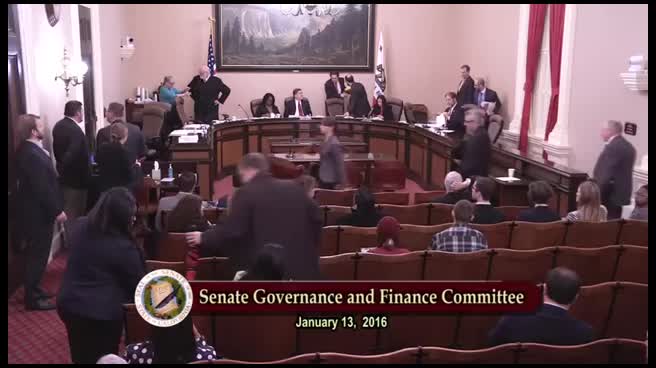 23MIN
Senate Standing Committee on Governance and Finance
 15MIN
Senate Standing Committee on Environmental Quality
 54SEC
Assembly Floor
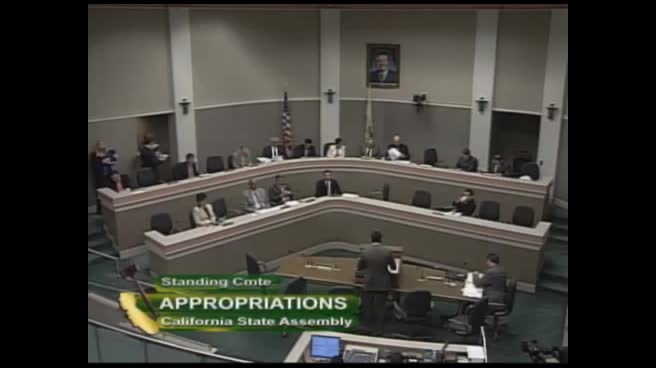 1MIN
Assembly Standing Committee on Appropriations
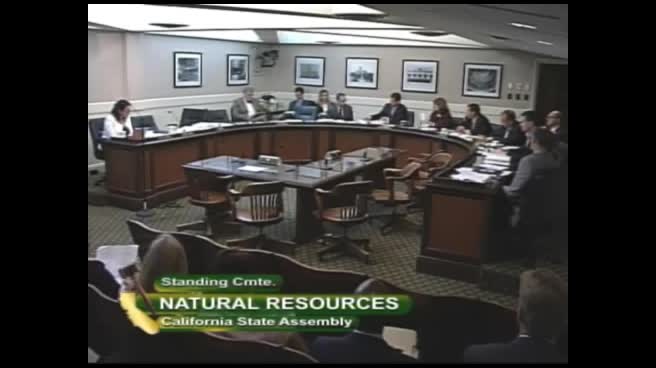 3MIN