AB 2105: Workforce development: allied health professions.
- Session Year: 2015-2016
- House: Assembly
- Latest Version Date: 2016-09-21
Existing law establishes the California Workforce Development Board as the body responsible for assisting the Governor in the development, oversight, and continuous improvement of Californias workforce investment system and the alignment of the education and workforce investment systems to the needs of the 21st century economy and workforce. Existing law requires the board, among other things, to prepare and submit to the appropriate policy committees of the Legislature a report on the boards findings and recommendations regarding expanding job training and employment for allied health professions.
This bill would require the Department of Consumer Affairs, by January 1, 2020, to engage in a stakeholder process to update policies and remove barriers to facilitate the development of earn and learn training programs in the allied health professions, including barriers identified in the report described above, as specified.
Existing law establishes the California Workforce Development Board as the body responsible for assisting the Governor in the development, oversight, and continuous improvement of Californias workforce investment system and the alignment of the education and workforce investment systems to the needs of the 21st century economy and workforce. Existing law requires the board, among other things, to prepare and submit to the appropriate policy committees of the Legislature a report on the boards findings and recommendations regarding earn and learn job training opportunities, models, and programs. expanding job training and employment for allied health professions.
This bill would require the board to consider the recommendations in the report to determine whether the recommendations should be included within the boards work plan for the 201718 fiscal year, contact, or delegate to another state entity to contact, Medicare and Medicaid Services to determine how these federal entities could become engaged in a cross-sector collaboration on expanding the use of apprenticeship programs to help prepare allied health care professionals to meet the needs of California businesses and the public, and approve the progress and outcomes of these activities as an agenda item. Department of Consumer Affairs, by January 1, 2020, to engage in a stakeholder process to update policies and remove barriers to facilitate the development of earn and learn training programs in the allied health professions, including barriers identified in the report described above, as specified.
Existing law establishes the California Workforce Development Board as the body responsible for assisting the Governor in the development, oversight, and continuous improvement of Californias workforce investment system and the alignment of the education and workforce investment systems to the needs of the 21st century economy and workforce. Existing law requires the board, among other things, to prepare and submit to the appropriate policy committees of the Legislature a report on the boards findings and recommendations regarding earn and learn job training opportunities, models, and programs. Under existing law, this reporting requirement is inoperative on January 1, 2019.
This bill would extend that inoperative date to January 1, 2020. The bill would require the board to consider the recommendations in the report to determine whether the recommendations should be included within the boards work plan for the 201718 fiscal year, contact, or delegate to another state entity to contact, Medicare and Medicaid Services to determine how these federal entities could become engaged in a cross-sector collaboration on expanding the use of apprenticeship programs to help prepare allied health care professionals to meet the needs of California businesses and the public, and approve the progress and outcomes of these activities as an agenda item.
Existing law establishes the California Workforce Development Board as the body responsible for assisting the Governor in the development, oversight, and continuous improvement of Californias workforce investment system and the alignment of the education and workforce investment systems to the needs of the 21st century economy and workforce. Existing law requires the board, among other things, to prepare and submit to the appropriate policy committees of the Legislature a report on the boards findings and recommendations regarding earn and learn job training opportunities, models, and programs. Under existing law, this reporting requirement is inoperative on January 1, 2019.
This bill would extend that inoperative date to January 1, 2020.
(a)In efforts to expand job training and employment for allied health professions, the California Workforce Development Board, in consultation with the Division of Apprenticeship Standards, shall do the following:
(1)Identify opportunities for earn and learn job training opportunities that meet the industrys workforce demands and that are in high-wage, high-demand jobs.
(2)Identify and develop specific requirements and qualifications for entry into earn and learn job training models.
(3)Establish standards for earn and learn job training programs that are outcome oriented and accountable. The standards shall measure the results from program participation, including a measurement of how many complete the program with an industry-recognized credential that certifies that the individual is ready to enter the specific allied health profession for which he or she has been trained.
(4)Develop means to identify, assess, and prepare a pool of qualified candidates seeking to enter earn and learn job training models.
(b)(1)The board, on or before December 1, 2015, shall prepare and submit to the appropriate policy committees of the Legislature a report on the findings and recommendations of the board.
(2)The requirement for submitting a report imposed pursuant to this subdivision is inoperative on January 1, 2019, pursuant to Section 10231.5 of the Government Code.
(c)(1)The Department of Consumer Affairs shall engage in a stakeholder process to update policies and remove barriers to facilitate the development of earn and learn training programs in the allied health professions, including barriers identified in the report prepared by the board pursuant to subdivision (b), entitled Expanding Earn and Learn Models in the California Health Care Industry. The stakeholder process shall include all of the following:
(A)The department convening allied health workforce stakeholders, which shall include, but are not limited to, the departments relevant licensure boards, the Division of Apprenticeship Standards, representatives appointed by the board of governors from the California community college system, the California Workforce Development Board, and the State Department of Public Health, and which may include other relevant entities such as the Office of Statewide Health Planning and Development, employer and worker representatives, and community-based organizations.
(B)Addressing issues that include, but are not limited to, prelicensure classifications in allied health occupations that would allow students, in a supervised setting, to gain experience in their chosen field before obtaining licensure, and the payment of wages while in a workplace-based training program.
(C)The department ensuring that existing standards of consumer protection are maintained.
(D) Sharing any statutory barriers identified through this process with the relevant committees of the Legislature.
(2)The process described in paragraph (1) shall be completed by, and this subdivision shall be inoperative on, January 1, 2020.
(a)In efforts to expand job training and employment for allied health professions, the California Workforce Development Board, in consultation with the Division of Apprenticeship Standards, shall do the following:
(1)Identify opportunities for earn and learn job training opportunities that meet the industrys workforce demands and that are in high-wage, high-demand jobs.
(2)Identify and develop specific requirements and qualifications for entry into earn and learn job training models.
(3)Establish standards for earn and learn job training programs that are outcome oriented and accountable. The standards shall measure the results from program participation, including a measurement of how many complete the program with an industry-recognized credential that certifies that the individual is ready to enter the specific allied health profession for which he or she has been trained.
(4)Develop means to identify, assess, and prepare a pool of qualified candidates seeking to enter earn and learn job training models.
(b)(1)The board, on or before December 1, 2015, shall prepare and submit to the appropriate policy committees of the Legislature a report on the findings and recommendations of the board.
(2)The requirement for submitting a report imposed pursuant to this subdivision is inoperative on January 1, 2019, pursuant to Section 10231.5 of the Government Code.
(c)(1)The Department of Consumer Affairs shall engage in a stakeholder process to update policies and remove barriers to facilitate the development of earn and learn training programs in the allied health professions, including barriers identified in the report prepared by the board pursuant to subdivision (b), entitled Expanding Earn and Learn Models in the California Health Care Industry. The stakeholder process shall include all of the following:
(A)The department convening allied health workforce stakeholders, which shall include, but are not limited to, the departments relevant licensure boards, the Division of Apprenticeship Standards, representatives appointed by the board of governors from the California community College college system, the California Workforce Development Board, and the State Department of Public Health, and which may include other relevant entities such as the Office of Statewide Health Planning and Development, employer and worker representatives, and community-based organizations.
(B)Addressing issues that include, but are not limited to, prelicensure classifications in allied health occupations that would allow students, in a supervised setting, to gain experience in their chosen field before obtaining licensure, and the payment of wages while in a workplace-based training program.
(C)The department ensuring that existing standards of consumer protection are maintained.
(D)The sharing of Sharing any statutory barriers identified through this process with the relevant committees of the Legislature.
(2)The process described in paragraph (1) shall be completed by, and this subdivision shall be inoperative on, January 1, 2020.
(a)In efforts to expand job training and employment for allied health professions, the California Workforce Development Board, in consultation with the Division of Apprenticeship Standards, shall do the following:
(1)Identify opportunities for earn and learn job training opportunities that meet the industrys workforce demands and that are in high-wage, high-demand jobs.
(2)Identify and develop specific requirements and qualifications for entry into earn and learn job training models.
(3)Establish standards for earn and learn job training programs that are outcome oriented and accountable. The standards shall measure the results from program participation, including a measurement of how many complete the program with an industry-recognized credential that certifies that the individual is ready to enter the specific allied health profession for which he or she has been trained.
(4)Develop means to identify, assess, and prepare a pool of qualified candidates seeking to enter earn and learn job training models.
(b)(1)The board, on or before December 1, 2015, shall prepare and submit to the appropriate policy committees of the Legislature a report on the findings and recommendations of the board.
(2)The board shall consider the recommendations in the report to determine whether any or all of the recommendations should be included within the boards work plan for the 201718 fiscal year or referred to another state entity for possible action. At a minimum, the board shall contact, or shall delegate to another state entity to contact, Medicare and Medicaid Services to determine how these federal entities could become engaged in a cross-sector collaboration on expanding the use of apprenticeship programs to help prepare allied health care professionals to meet the needs of California businesses and the public. The board shall approve the progress and outcomes of these activities as an agenda item.
(3)
(2)The requirement for submitting a report imposed pursuant to this subdivision is inoperative on January 1, 2019, pursuant to Section 10231.5 of the Government Code.
(c)(1)The Department of Consumer Affairs shall engage in a stakeholder process to update policies and remove barriers to facilitate the development of earn and learn training programs in the allied health professions, including barriers identified in the report prepared by the board pursuant to subdivision (b), entitled Expanding Earn and Learn Models in the California Health Care Industry. The stakeholder process shall include all of the following:
(A)The department convening allied health workforce stakeholders, which shall include, but are not limited to, the departments relevant licensure boards, the California community College system, the California Workforce Development Board, and the State Department of Public Health, and which may include other relevant entities such as the Office of Statewide Health Planning and Development, employer and worker representatives, and community-based organizations.
(B)Addressing issues that include, but are not limited to, prelicensure classifications in allied health occupations that would allow students, in a supervised setting, to gain experience in their chosen field before obtaining licensure, and the payment of wages while in a workplace-based training program.
(C)The department ensuring that existing standards of consumer protection are maintained.
(D)The sharing of any statutory barriers identified through this process with the relevant committees of the Legislature.
(2)The process described in paragraph (1) shall be completed by, and this subdivision shall be inoperative on, January 1, 2020.
(a)In efforts to expand job training and employment for allied health professions, the California Workforce Development Board, in consultation with the Division of Apprenticeship Standards, shall do the following:
(1)Identify opportunities for earn and learn job training opportunities that meet the industrys workforce demands and that are in high-wage, high-demand jobs.
(2)Identify and develop specific requirements and qualifications for entry into earn and learn job training models.
(3)Establish standards for earn and learn job training programs that are outcome oriented and accountable. The standards shall measure the results from program participation, including a measurement of how many complete the program with an industry-recognized credential that certifies that the individual is ready to enter the specific allied health profession for which he or she has been trained.
(4)Develop means to identify, assess, and prepare a pool of qualified candidates seeking to enter earn and learn job training models.
(b)(1)The board, on or before December 1, 2015, shall prepare and submit to the appropriate policy committees of the Legislature a report on the findings and recommendations of the board.
(2)The board shall consider the recommendations in the report to determine whether any or all of the recommendations should be included within the boards work plan for the 201718 fiscal year or referred to another state entity for possible action. At a minimum, the board shall contact, or shall delegate to another state entity to contact, Medicare and Medicaid Services to determine how these federal entities could become engaged in a cross-sector collaboration on expanding the use of apprenticeship programs to help prepare allied health care professionals to meet the needs of California businesses and the public. The board shall approve the progress and outcomes of these activities as an agenda item.
(3)The requirement for submitting a report imposed pursuant to this subdivision is inoperative on January 1, 2020. 2019, pursuant to Section 10231.5 of the Government Code.
(a)In efforts to expand job training and employment for allied health professions, the California Workforce Development Board, in consultation with the Division of Apprenticeship Standards, shall do the following:
(1)Identify opportunities for earn and learn job training opportunities that meet the industrys workforce demands and that are in high-wage, high-demand jobs.
(2)Identify and develop specific requirements and qualifications for entry into earn and learn job training models.
(3)Establish standards for earn and learn job training programs that are outcome oriented and accountable. The standards shall measure the results from program participation, including a measurement of how many complete the program with an industry-recognized credential that certifies that the individual is ready to enter the specific allied health profession for which he or she has been trained.
(4)Develop means to identify, assess, and prepare a pool of qualified candidates seeking to enter earn and learn job training models.
(b)(1)The board, on or before December 1, 2015, shall prepare and submit to the appropriate policy committees of the Legislature a report on the findings and recommendations of the board.
(2)The board shall consider the recommendations in the report to determine whether any or all of the recommendations should be included within the boards work plan for the 201718 fiscal year or referred to another state entity for possible action. At a minimum, the board shall contact, or shall delegate to another state entity to contact, Medicare and Medicaid Services to determine how these federal entities could become engaged in a cross-sector collaboration on expanding the use of apprenticeship programs to help prepare allied health care professionals to meet the needs of California businesses and the public. The board shall approve the progress and outcomes of these activities as an agenda item.
(2)
(3)The requirement for submitting a report imposed pursuant to this subdivision is inoperative on January 1, 2020.
(a)In efforts to expand job training and employment for allied health professions, the California Workforce Development Board, in consultation with the Division of Apprenticeship Standards, shall do the following:
(1)Identify opportunities for earn and learn job training opportunities that meet the industrys workforce demands and that are in high-wage, high-demand jobs.
(2)Identify and develop specific requirements and qualifications for entry into earn and learn job training models.
(3)Establish standards for earn and learn job training programs that are outcome oriented and accountable. The standards shall measure the results from program participation, including a measurement of how many complete the program with an industry-recognized credential that certifies that the individual is ready to enter the specific allied health profession for which he or she has been trained.
(4)Develop means to identify, assess, and prepare a pool of qualified candidates seeking to enter earn and learn job training models.
(b)(1)The board, on or before December 1, 2015, shall prepare and submit to the appropriate policy committees of the Legislature a report on the findings and recommendations of the board.
(2)The requirement for submitting a report imposed pursuant to this subdivision is inoperative on January 1, 2019, pursuant to Section 10231.5 of the Government Code. 2020.
|
Date
|
Status
|
|---|---|
| Aug 26, 2016 | Enrolled and presented to the Governor at 4:30 p.m. |
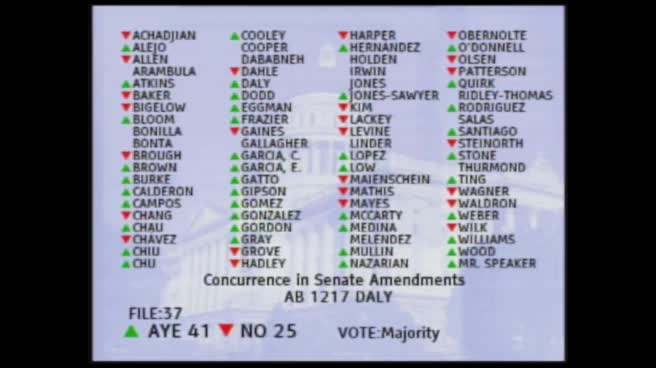
| Aug 22, 2016 | Senate amendments concurred in. To Engrossing and Enrolling. (Ayes 77. Noes 0. Page 6042.). |
| Aug 22, 2016 | Senate amendments concurred in. To Engrossing and Enrolling. |
| Aug 16, 2016 | In Assembly. Concurrence in Senate amendments pending. May be considered on or after August 18 pursuant to Assembly Rule 77. |
| Aug 15, 2016 | Read third time. Passed. Ordered to the Assembly. (Ayes 37. Noes 0. Page 4981.). |
| Aug 15, 2016 | Read third time. Passed. Ordered to the Assembly. (Ayes 37. Noes 0.). |
| Aug 15, 2016 | Read third time. Passed. Ordered to the Assembly. |
| Aug 11, 2016 | Read second time. Ordered to third reading. |
| Aug 10, 2016 | Read third time and amended. Ordered to second reading. |
| Aug 9, 2016 | Read second time. Ordered to third reading. |
| Aug 8, 2016 | From committee: Be placed on second reading file pursuant to Senate Rule 28.8. |
| Aug 1, 2016 | In committee: Hearing postponed by committee. |
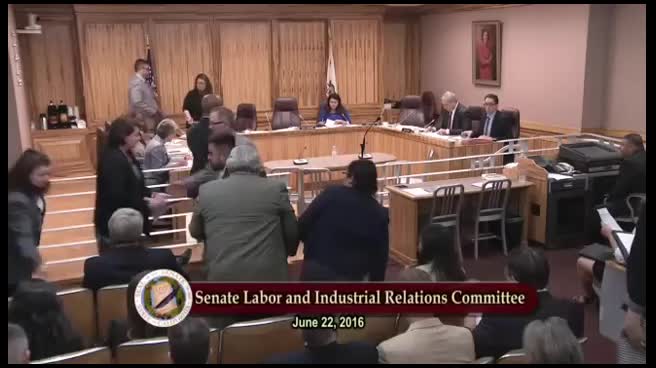
| Jun 22, 2016 | From committee: Do pass and re-refer to Com. on APPR. (Ayes 5. Noes 0.) (June 22). Re-referred to Com. on APPR. |
| Jun 14, 2016 | From committee chair, with author's amendments: Amend, and re-refer to committee. Read second time, amended, and re-referred to Com. on L. & I.R. |
| Jun 1, 2016 | In committee: Hearing postponed by committee. |
| May 12, 2016 | Referred to Com. on L. & I.R. |
| May 5, 2016 | Read third time. Passed. Ordered to the Senate. (Ayes 79. Noes 0. Page 4690.) |
| May 5, 2016 | In Senate. Read first time. To Com. on RLS. for assignment. |
| May 5, 2016 | Read third time. Passed. Ordered to the Senate. |
| May 2, 2016 | Read second time. Ordered to Consent Calendar. |
| Apr 28, 2016 | Read second time and amended. Ordered returned to second reading. |
| Apr 27, 2016 | From committee: Amend, and do pass as amended. To Consent Calendar. (Ayes 19. Noes 0.) (April 27). |
| Apr 13, 2016 | Re-referred to Com. on APPR. |
| Apr 12, 2016 | Read second time and amended. |
| Apr 11, 2016 | From committee: Amend, and do pass as amended and re-refer to Com. on APPR. (Ayes 9. Noes 0.) (April 5). |
| Feb 29, 2016 | Referred to Com. on J., E.D., & E. |
| Feb 18, 2016 | From printer. May be heard in committee March 19. |
| Feb 17, 2016 | Read first time. To print. |
|
Date
|
Description
|
Location
|
Votes
|
|
|---|---|---|---|---|
| Aug 22, 2016 | AB 2105 RODRIGUEZ Concurrence in Senate Amendments | Assembly Floor |
Passed |
|
| Aug 15, 2016 | Assembly 3rd Reading AB2105 Rodriguez By Mendoza | Senate Floor |
Passed |
|
| Jun 22, 2016 | Do pass, but first be re-referred to the Committee on [Appropriations] | Senate Standing Committee on Labor and Industrial Relations |
Passed |
|
| May 5, 2016 | AB 2105 RODRIGUEZ Consent Calendar Second Day Regular Session | Assembly Floor |
Passed |
|
| Apr 27, 2016 | Do pass as amended. To Consent Calendar. | Assembly Standing Committee on Appropriations |
Passed |
|
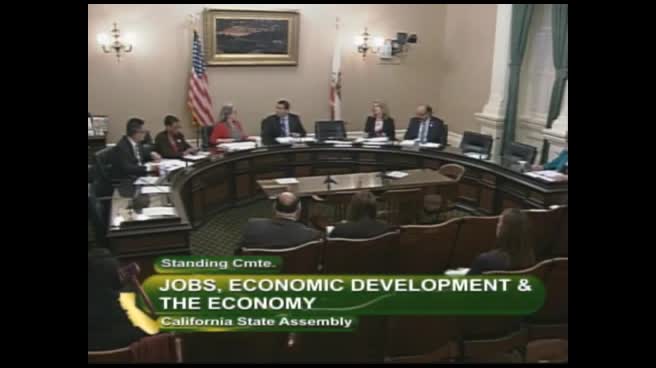
| Apr 5, 2016 | Do pass as amended and be re-referred to the Committee on [Appropriations] | Assembly Standing Committee on Jobs, Economic Development, and the Economy |
Passed |
This list shows positions taken on this bill by organizations on the date displayed, which is linked to the original source.
Positions by individuals are not included.
CONCURRENCE IN SENATE AMENDMENTS
CSA1 Bill Id:AB 2105
Author:(Rodriguez)
As Amended Ver:August 10, 2016
Majority vote
ASSEMBLY: | 79-0 | (May 5, 2016) | SENATE: | 37-0 | (August 15, 2016) |
Original Committee Reference: J., E.D., & E.
SUMMARY: Requires the Department of Consumer Affairs (DCA) to engage in a specified stakeholder process to update policies and remove barriers to facilitate the development of earn and learn training programs in the allied health professions. The stakeholder process is required to include all of the following:
- A range of allied health workforce stakeholders including, but not limited to, relevant DCA licensure boards, the Division of Apprenticeship, representatives appointed by the board the California community college system, the California Workforce Development Board (CWDB), the State Department of Public Health, the Office of Statewide Health Planning and Development, employer and worker representatives, and community-based organizations.
- A review of barriers that limit the use of earn and learn training programs in the allied health professions, including those identified in the 2015 report Expanding Earn and Learn Models in the California Health Care Industry, as well as other relevant issues that include, but are not limited to, pre-licensure classifications in allied health occupations that would allow students, in a supervised setting, to gain experience in their chosen field before obtaining licensure, and the payment of wages while in a workplace-based training program.
- Statutory barriers being shared with the relevant committees of the Legislature.
- Completion of the process by January 1, 2020.
AS PASSED BY THE ASSEMBLY, this bill required the California Workforce Development Board (CWD) to consider the recommendations in a specified report on "earn and learn" job training programs in the allied health professions for the purpose of determining whether any or all of the recommendations should be included within the CWD's work plan for the 2017–18 fiscal year or referred to another state entity for possible action.
The Senate amendments delete the more general requirement to move forward on reviewing and implementing, where appropriate, the recommendations from the 2015 report Expanding Earn and Learn Models in the California Health Care Industry, and instead provide a specific stakeholder driven process for updating policies and removing entrance and advancement barriers in the allied health fields.
EXISTING LAW:
- Requires the CWD, in consultation with the Division of Apprenticeship Standards, to undertake a review of allied health professions and produce a report by January 1, 2016. The report is required to address the following:
- Identification of "earn and learn" job training opportunities that meet the industry's workforce demands and that are in high-wage, high-demand jobs;
- Identification of specific requirements and qualifications for entry into "earn and learn" job training models;
- Establishment of standards for "earn and learn" job training programs that are outcome oriented and accountable. The standards are required to measure the results from program participation, including a measurement of how many individuals complete the program with an industry-recognized credential, as specified;
- Development of the means to identify and prepare a pool of qualified candidates seeking to enter "earn and learn" job training models.
- Defines "earn and learn" to include, but not be limited to, a program that does either of the following:
- Combines applied learning in a workplace setting with compensation allowing workers or students to gain work experience and secure a wage as they develop skills and competencies directly relevant to the occupation or career for which they are preparing; or
- Brings together classroom instruction with on-the-job training to combine both formal instruction and actual paid work experience.
- Defines "earn and learn" programs to include, but not be limited to, all of the following:
- Apprenticeships;
- Pre-apprenticeships;
- Incumbent worker training;
- Transitional and subsidized employment, particularly for individuals with barriers to employment;
- Paid internships and externships; and
- Project-based compensated learning.
FISCAL EFFECT: According to Senate Appropriations Committee pursuant to Senate Rule 28.8, negligible state costs.
COMMENTS: In December 2015, the CWDB and the California State Division of Apprenticeship Standards released the study, Expanding Earn and Learn Models in the California Health Care Industry, pursuant to the requirements of AB 1797 (Rodriguez), Chapter 157, Statutes of 2014. The report noted that while there were many advantages to expanding apprenticeship programs in the allied health industries, there were also barriers, including, but not limited to, the following:
- No clear career ladders for entry-level workers to advance into clinical roles, or for lateral movement from one health care role into another;
- Few residency programs or even commitments to hire prior to completion of the license or credential;
- Misalignment of time-based standards used for registered apprenticeships and the competency-based training models commonly used in health care fields;
- No funding available for public health care employers to invest in program development, outreach, administration (e.g., record-keeping and journey-level supervision of apprentices), or, more fundamentally, the industry model of wage progression;
- Limited flexibility or agility by public education institutions to adopt and implement new curricula. As an example, it can take more than a year to approve new curricula by a community college and longer if an existing course must be modified to include apprenticeship indicators;
- Licensing boards have traditionally acted as gatekeepers to their professions and have not been open to expanding entry into some of the skilled health care professions for fear of diminishing wages. There is also evidence that accreditation boards can be reluctant to create flexible or alternative pathways to entry over concerns that this will lower quality standards;
- Misaligned funding incentives for community college participation. In this example, the reimbursement rate for a general education credit is approximately $8.50 per hour, as compared to $5.46 per hour for students taking apprenticeship classes. This creates a structural disincentive for colleges to partner with employers and unions on allied health-related programs;
- Poor track record in maintaining funding levels for public apprenticeship programs. Funding issues may be deterring potential employers and partners from participating in a new round of program development; and
- Lack of cross-sector collaboration on the development of new apprenticeship programs, especially from the federal entities which administer the Medicare and Medicaid programs.
California Employment: California's labor force is comprised of approximately 19 million people with an estimated 17.8 million people being employed. Chart 1 shows 2015 employment by industry sector. Based on total employment, the trade, transportation, and utilities sector is largest, employing 2.9 million people, which is 15.5% of all jobs. The Education and Health Services sector is the third highest industry sector in California, representing 12.9% of the state's workforce.

Chart 2 displays projected job growth by industry sectors for the period of 2012 to 2022. As discussed in more detail below, future growth of the California economy is highly linked to the state's adaptation to globalization, including the state's ability to link goods and services across state and regional boundaries, as well as to prepare a rapidly changing workforce for the 21st Century economy.
The Employment Development Department's (EDD's) 2012 to 2022 forecast estimates that California's labor force employment will reach 18.7 million, including self-employment, unpaid family workers, private household workers, and farm and nonfarm workers. This estimate represents a 14.9% increase over the 10 year period with an additional 2,296,700 being added to nonfarm employment. As shown in Chart 2, 72% of the increase in jobs is expected in four industry sectors: education and health care services; professional and business services; leisure and hospitality; and retail trade.
Approximately 25% of the project job growth will be in the educational services (private), health care, and social assistance sector, accounting for 576,300 jobs during the 10-year period. EDD estimates that as the population grows and demographics change, the demand for workers in this sector will remain high.
The greatest concentration of job gains is projected to occur in the following subsectors: Social assistance (201,300); Ambulatory health care services (181,900); Educational services (private) (79,200).
Analysis Prepared by: Toni Symonds / J., E.D., & E. / (916) 319-2090 FN: 0003973
Office of Senate Floor Analyses (916) 651-1520 Fax: (916) 327-4478 | AB |
THIRD READING
Bill No: AB 2105
:
SENATE LABOR & IND. REL. COMMITTEE: 5-0, 6/22/16
AYES: Mendoza, Stone, Jackson, Leno, Mitchell
SENATE APPROPRIATIONS COMMITTEE: Senate Rule 28.8
ASSEMBLY FLOOR: 79-0, 5/5/16 (Consent) - See last page for vote
DIGEST: This bill requires the Department of Consumer Affairs to engage in a stakeholder process to update policies and identify barriers in order to facilitate the development of “Earn and learn” training programs in the allied health professions.
Senate Floor Amendments of 8/10/16 add a stakeholder to this process and specify that other stakeholder representatives from the California Community Colleges will be appointed by its board of governors; and make two technical grammatical and stylistic changes.
Existing law:
- Establishes the California Workforce Development Board (CWDB), whose members are appointed by the Governor and are representative of the areas of business, labor, public education, higher education, economic development, youth activities, employment and training, as well as the Legislature. The executive director of the CWDB reports to the Secretary of the California Labor and Workforce Development Agency (Unemployment Insurance Code §14011 and §14012).
- States that the CWDB assists the Governor in the development, oversight, and continuous improvement of California’s workforce investment system and the alignment of the education and workforce investment systems to the needs of the economy and workforce (Unemployment Insurance Code §14010).
- Defines “Earn and learn” programs as those that combine applied learning in a workplace setting with paid wages, which in turn allow workers or students to gain work experience and develop skills and competencies directly relevant to the occupation or career for which they are preparing. These programs can also combine classroom instruction with paid on-the-job training (Unemployment Insurance Code §14005).
- Requires the CWDB, by December 1, 2015, to prepare and submit to the appropriate policy committees of the Legislature a report on the board’s findings and recommendations with respect to the issue of expanding job training and employment for allied health professions (Unemployment Insurance Code §14005).
This bill:
- Requires the Department of Consumer Affairs (DCA), by January 1, 2020, to engage in a stakeholder process to update policies and identify barriers in order to facilitate the development of “Earn and learn” training programs in the allied health professions, including those barriers identified in the report referenced above which is required by Unemployment Insurance Code §14005(b).
- Stipulates that those involved stakeholders shall include, but are not limited to, DCA’s relevant licensure boards, the Division of Apprenticeship Standards, representatives appointed by the board of governors from the California Community College system, the CWDB, and the State Department of Public Health. Other relevant entities such as the Office of Statewide Health Planning and Development, employer and worker representatives, and community-based organizations are also allowed to participate in the process.
- States that the issues to be addressed in this process include, but are not limited to, pre-licensure classifications that would allow supervised students in a workplace-based training program to gain experience and receive pay before obtaining licensure.
- Requires any statutory barriers identified in this process be shared with the relevant policy committees of the Legislature, and that this process be completed by January 1, 2020, at which time the provisions of the bill will become inoperative.
Comments
Need for this bill? The author argues that the demand for healthcare workers in the U.S. has remained high for many years, growing at a rate faster than the overall employment rate for the past 50 years. The U.S. Department of Labor’s Bureau of Labor Statistics projects that of the 20 industries projected to gain the most jobs in the next two years, five of those industries relate to health care including the work in the offices of dentists and physicians, home health care services, services for the elderly and persons with disabilities, and nursing care facilities.
Furthermore, the author states that health care providers face a range of employment and workforce issues including significant shortages of health care workers in certain occupations and geographic areas and oversupply in others. Additionally, the author believes that an aging population, population growth, and federal health care reform will likely contribute to the increased demand. To address this state of affairs, the author contends that “Earn and learn” job training programs can be a critical part of the workforce development strategy in these professions. “Earn and learn” programs could address industry issues including recruitment, retention, training, and quality of patient care. Thus, the author would like to assess the barriers and issues related to facilitating the development of these programs.
FISCAL EFFECT: Appropriation: Fiscal Com.: Local:
Jewish Vocational Services of San Francisco
Service Employees International Union Local 1000
None received
ARGUMENTS IN SUPPORT: Proponents state that the process mandated by this bill ensures that individuals working in the allied health professions could, in a supervised setting, get the experience needed to up-skill and obtain licensure while on the job. Proponents believe that “Earn and learn” programs are an excellent model for developing career ladders in the health professions, but that more investment is needed at the state level to ensure that the relevant educational, workforce, licensing and health workforce stakeholders are working together toward that aim. Finally, proponents claim that AB 2015 will ensure that California makes meaningful progress toward these goals.
ASSEMBLY FLOOR: 79-0, 5/5/16
AYES: Achadjian, Alejo, Travis Allen, Arambula, Atkins, Baker, Bigelow, Bloom, Bonilla, Bonta, Brough, Brown, Burke, Calderon, Campos, Chang, Chau, Chávez, Chiu, Chu, Cooley, Cooper, Dababneh, Dahle, Daly, Dodd, Eggman, Frazier, Gallagher, Cristina Garcia, Eduardo Garcia, Gatto, Gipson, Gomez, Gonzalez, Gordon, Gray, Grove, Hadley, Harper, Roger Hernández, Holden, Irwin, Jones, Jones-Sawyer, Kim, Lackey, Levine, Linder, Lopez, Low, Maienschein, Mathis, Mayes, McCarty, Medina, Melendez, Mullin, Nazarian, Obernolte, O'Donnell, Olsen, Patterson, Quirk, Ridley-Thomas, Rodriguez, Salas, Santiago, Steinorth, Mark Stone, Thurmond, Ting, Wagner, Waldron, Weber, Wilk, Williams, Wood, Rendon
NO VOTE RECORDED: Beth Gaines
8/12/16 13:22:00
**** END ****
Office of Senate Floor Analyses (916) 651-1520 Fax: (916) 327-4478 | AB |
THIRD READING
Bill No: AB 2105
:
SENATE LABOR & IND. REL. COMMITTEE: 5-0, 6/22/16
AYES: Mendoza, Stone, Jackson, Leno, Mitchell
SENATE APPROPRIATIONS COMMITTEE: Senate Rule 28.8
ASSEMBLY FLOOR: 79-0, 5/5/16 (Consent) - See last page for vote
DIGEST: This bill requires the Department of Consumer Affairs to engage in a stakeholder process to update policies and identify barriers in order to facilitate the development of “Earn and learn” training programs in the allied health professions.
Existing law:
- Establishes the California Workforce Development Board (CWDB), whose members are appointed by the Governor and are representative of the areas of business, labor, public education, higher education, economic development, youth activities, employment and training, as well as the Legislature. The executive director of the CWDB reports to the Secretary of the California Labor and Workforce Development Agency (Unemployment Insurance Code §14011 and §14012).
- States that the CWDB assists the Governor in the development, oversight, and continuous improvement of California’s workforce investment system and the alignment of the education and workforce investment systems to the needs of the economy and workforce (Unemployment Insurance Code §14010).
- Defines “Earn and learn” programs as those that combine applied learning in a workplace setting with paid wages, which in turn allow workers or students to gain work experience and develop skills and competencies directly relevant to the occupation or career for which they are preparing. These programs can also combine classroom instruction with paid on-the-job training (Unemployment Insurance Code §14005).
- Requires the CWDB, by December 1, 2015, to prepare and submit to the appropriate policy committees of the Legislature a report on the board’s findings and recommendations with respect to the issue of expanding job training and employment for allied health professions (Unemployment Insurance Code §14005).
This bill:
- Requires the Department of Consumer Affairs (DCA), by January 1, 2020, to engage in a stakeholder process to update policies and identify barriers in order to facilitate the development of “Earn and learn” training programs in the allied health professions, including those barriers identified in the report referenced above which is required by Unemployment Insurance Code §14005(b).
- Stipulates that those involved stakeholders shall include, but are not limited to, DCA’s relevant licensure boards, the California Community College system, the CWDB, and the State Department of Public Health. Other relevant entities such as the Office of Statewide Health Planning and Development, employer and worker representatives, and community-based organizations are also allowed to participate in the process.
- States that the issues to be addressed in this process include, but are not limited to, pre-licensure classifications that would allow supervised students in a workplace-based training program to gain experience and receive pay before obtaining licensure.
- Requires any statutory barriers identified in this process be shared with the relevant policy committees of the Legislature, and that this process be completed by January 1, 2020, at which time the provisions of the bill will become inoperative.
Comments
Need for this bill? The author argues that the demand for healthcare workers in theU.S. has remained high for many years, growing at a rate faster than the overall employment rate for the past 50 years. The U.S. Department of Labor’s Bureau of Labor Statistics projects that of the 20 industries projected to gain the most jobs in the next two years, five of those industries relate to health care including the work in the offices of dentists and physicians, home health care services, services for the elderly and persons with disabilities, and nursing care facilities.
Furthermore, the author states that health care providers face a range of employment and workforce issues including significant shortages of health care workers in certain occupations and geographic areas and oversupply in others. Additionally, the author believes that an aging population, population growth, and federal health care reform will likely contribute to the increased demand. To address this state of affairs, the author contends that “Earn and learn” job training programs can be a critical part of the workforce development strategy in these professions. “Earn and learn” programs could address industry issues including recruitment, retention, training, and quality of patient care. Thus, the author would like to assess the barriers and issues related to facilitating the development of these programs.
FISCAL EFFECT: Appropriation: Fiscal Com.: Local:
Jewish Vocational Services of San Francisco
Service Employees International Union Local 1000
None received
ARGUMENTS IN SUPPORT: Proponents state that the process mandated by this bill ensures that individuals working in the allied health professions could, in a supervised setting, get the experience needed to up-skill and obtain licensure while on the job. Proponents believe that “Earn and learn” programs are an excellent model for developing career ladders in the health professions, but that more investment is needed at the state level to ensure that the relevant educational, workforce, licensing and health workforce stakeholders are working together toward that aim. Finally, proponents claim that AB 2015 will ensure that California makes meaningful progress toward these goals.
ASSEMBLY FLOOR: 79-0, 5/5/16
AYES: Achadjian, Alejo, Travis Allen, Arambula, Atkins, Baker, Bigelow, Bloom, Bonilla, Bonta, Brough, Brown, Burke, Calderon, Campos, Chang, Chau, Chávez, Chiu, Chu, Cooley, Cooper, Dababneh, Dahle, Daly, Dodd, Eggman, Frazier, Gallagher, Cristina Garcia, Eduardo Garcia, Gatto, Gipson, Gomez, Gonzalez, Gordon, Gray, Grove, Hadley, Harper, Roger Hernández, Holden, Irwin, Jones, Jones-Sawyer, Kim, Lackey, Levine, Linder, Lopez, Low, Maienschein, Mathis, Mayes, McCarty, Medina, Melendez, Mullin, Nazarian, Obernolte, O'Donnell, Olsen, Patterson, Quirk, Ridley-Thomas, Rodriguez, Salas, Santiago, Steinorth, Mark Stone, Thurmond, Ting, Wagner, Waldron, Weber, Wilk, Williams, Wood, Rendon
NO VOTE RECORDED: Beth Gaines
8/10/16 16:00:45
**** END ****
SENATE COMMITTEE ON LABOR AND INDUSTRIAL RELATIONS
Senator Tony Mendoza, Chair
2015 - 2016 Regular
Bill No: AB 2105 Hearing Date: June 22, 2016
Author: | Rodriguez | ||
Version: | June 14, 2016 | ||
Urgency: | No | Fiscal: | Yes |
Consultant: | Brandon Seto | ||
Subject: Workforce development: allied health professions
KEY ISSUE
Should the Legislature require the Department of Consumer Affairs to engage in a stakeholder process to update policies and identify barriers in order to facilitate the development of “Earn and learn” training programs in the allied health professions?
ANALYSIS
Existing law
- Establishes the California Workforce Development Board (CWDB), whose members are appointed by the Governor and are representative of the areas of business, labor, public education, higher education, economic development, youth activities, employment and training, as well as the Legislature. The executive director of the CWDB reports to the Secretary of the California Labor and Workforce Development Agency (Unemployment Insurance Code §14011 and §14012).
- The CWDB assists the Governor in the development, oversight, and continuous improvement of California’s workforce investment system and the alignment of the education and workforce investment systems to the needs of the 21st century economy and workforce (Unemployment Insurance Code §14010).
- Defines “Earn and learn” programs as those that combine applied learning in a workplace setting with paid wages, which in turn allow workers or students to gain work experience and develop skills and competencies directly relevant to the occupation or career for which they are preparing. These programs can also combine classroom instruction with paid on-the-job training (Unemployment Insurance Code §14005).
- Requires the CWDB, by December 1, 2015, to prepare and submit to the appropriate policy committees of the Legislature a report on the board’s findings and recommendations with respect to the issue of expanding job training and employment for allied health professions (Unemployment Insurance Code §14005).
This Bill
- Requires the Department of Consumer Affairs (DCA), by January 1, 2020, to engage in a stakeholder process to update policies and identify barriers in order to facilitate the development of “Earn and learn” training programs in the allied health professions, including those barriers identified in the report referenced above which is required by Unemployment Insurance Code §14005(b).
- Stipulates that those involved stakeholders shall include, but are not limited to DCA’s relevant licensure boards, the California Community College system, the CWDB, and the State Department of Public Health. Other relevant entities such as the Office of Statewide Health Planning and Development, employer and worker representatives, and community-based organizations are also allowed to participate in the process.
- States that the issues to be addressed in this process include, but are not limited to pre-licensure classifications that would allow supervised students in a workplace-based training program to gain experience and receive pay before obtaining licensure.
- Requires any statutory barriers identified in this process be shared with the relevant policy committees of the Legislature, and that this process be completed by January 1, 2020, at which time the provisions of the bill will become inoperative.
COMMENTS
1. Need for this bill?
The author argues that the demand for healthcare workers in the U.S. has remained high for many years, growing at a rate faster than the overall employment rate for the past fifty years. The U.S. Department of Labor’s Bureau of Labor Statistics projects that of the twenty industries projected to gain the most jobs between in the next two years, five of those industries relate to health care including the work in the offices of dentists and physicians, home health care services, services for the elderly and persons with disabilities, and nursing care facilities.
Furthermore, the author states that health care providers face a range of employment and workforce issues including significant shortages of healthcare workers in certain occupations and geographic areas and oversupply in others. Additionally, an aging population, population growth, and federal health care reform will likely contribute to the increased demand. To address this state of affairs, the author believes that “Earn and learn” job training programs can be a critical part of the workforce development strategy in these professions. “Earn and learn” programs could address issues including recruitment, retention, training, and quality of patient care. Thus, the author would like to assess the barriers and issues related to facilitating the development of these programs.
2. Proponent Arguments:
Proponents state that the process mandated by the bill would ensure that individuals working in the allied health professions could, in a supervised setting, get the experience needed to up-skill and obtain licensure while on the job. Proponents believe that “Earn and learn” programs are an excellent model for developing career ladders in the health professions, but that more investment is needed at the state level to ensure that the relevant educational, workforce, licensing and health workforce stakeholders are working together toward that aim. Finally, proponents claim that AB 2015 will ensure that California makes meaningful progress toward these goals.
3. Opponent Arguments:
None received.
4. Prior Legislation:
AB 1797 (Rodriguez), Chapter 157, Statutes of 2014 - required the CWDB, in consultation with the Division of Apprenticeship Standards, to identify “Earn and learn” job training models in the allied health care professions and to report those findings and recommendations to the Legislature.
SUPPORT
Jewish Vocational Services of San Francisco
Service Employees International Union
OPPOSITION
None on file.
-- END --
Date of Hearing: April 27, 2016
ASSEMBLY COMMITTEE ON APPROPRIATIONS
Lorena Gonzalez, Chair
ABPCA Bill Id:AB 2105
Author:(Rodriguez) – As Amended Ver:April 12, 2016
Policy Committee: | Jobs, Economic Development, and the Economy | Vote: | 9 - 0 |
|
|
Urgency: No State Mandated Local Program: No Reimbursable: No
SUMMARY:
This bill requires the California Workforce Development Board (CWDB) to consider whether recommendations from their 2015 "earn and learn" study on health care professions should be incorporated into CWDB's work plan for 2017-18, or referred to another state agency for action. Specifically, this bill:
- Requires at a minimum, CWDB, or another state entity, to contact Medicare and Medicaid Services to determine how these federal entities can become engaged in cross-sector collaboration or expanding the use of apprenticeship programs to help prepare allied health care professionals.
- Requires CWDB to approve the progress and outcomes of these actions as an agenda item.
- Extends a reporting requirement from January 1, 2019 to January 1, 2020.
FISCAL EFFECT:
Minor/absorbable costs to CWDB to consider recommendations from an existing report and work with Medicare and Medicaid Services to explore cross-sector collaboration to prepare healthcare professionals through apprenticeship programs.
COMMENTS:
- Purpose. AB 1797 (Rodriguez), Chapter 157, Statutes of 2014, directed CWDB to publish a report on ways to create or expand “earn and learn” training opportunities in the healthcare field and report their findings and recommendations to the legislature. That report, “Expanding Earn and Learn Models in the California Health Care Industry” identified 10 barriers to expanding these types of job training programs. The lack of cross-sector collaboration was one of the findings. For earn and learn job training programs to be successful, it is necessary for all sectors of healthcare to be involved in the discussion. This bill requires CWDB to follow through with recommendations in the report, consider what can be incorporated into their work plan for 2017-18, or determine if another state agency should develop a plan for action.
- Amendment. The bill extends a reporting requirement from January 1, 2019 to January 1, 2020. As noted above, CWDB completed this report in December 2015. The author does not intend for another report to be completed. Staff recommends amending the bill to remove this report extension.
Analysis Prepared by: Misty Feusahrens / APPR. / (916) 319-2081
Date of Hearing: April 5, 2016
ASSEMBLY COMMITTEE ON JOBS, ECONOMIC DEVELOPMENT, AND THE ECONOMY
Eduardo Garcia, Chair
ABPCA Bill Id:AB 2105 (
Author:Rodriguez) – As Introduced Ver:February 17, 2016
SUBJECT: Workforce development
SUMMARY: Provides a one-year extension on the operable date of a code section that required a December 2015 report to the Legislature relating to "earn and learn" job training programs in the allied health professions. The bill would make the section inoperable on January 1, 2020, rather than January 1, 2019.
EXISTING LAW:
- Establishes the California Workforce Development Board (CWD), comprised of members appointed by the Governor and the appropriate presiding officer(s) of each house of the Legislature, and specifies that the executive director of the CWD report to the Secretary of the California Labor and Workforce Development Agency.
- Assigns the CWD the responsibility for assisting the state in meeting the requirements of the federal Workforce Innovation and Opportunity Act 2014 (WIOA), as well as assisting the Governor in the development, oversight, and continuous improvement of California’s workforce investment system.
- Requires the CWD, in consultation with the Division of Apprenticeship Standards, to undertake a review of allied health professions, which includes the following:
- Identification of “earn and learn” job training opportunities that meet the industry’s workforce demands and that are in high-wage, high-demand jobs;
- Identification of specific requirements and qualifications for entry into “earn and learn” job training models;
- Establishment of standards for “earn and learn” job training programs that are outcome oriented and accountable. The standards are required to measure the results from program participation, including a measurement of how many individuals complete the program with an industry-recognized credential, as specified;
- Development of the means to identify, assess, and prepare a pool of qualified candidates seeking to enter “earn and learn” job training models.
- Requires the CWD to provide a report to the Legislature on the findings and recommendations of the specified "earn and learn" job training programs by December 1, 2015. The bill provides that this review and single report requirement is inoperable on January 1, 2019.
- Defines “earn and learn” to include, but not be limited to, a program that does either of the following:
- Combines applied learning in a workplace setting with compensation allowing workers or students to gain work experience and secure a wage as they develop skills and competencies directly relevant to the occupation or career for which they are preparing; or
- Brings together classroom instruction with on-the-job training to combine both formal instruction and actual paid work experience.
- Defines “earn and learn” programs to include, but not be limited to, all of the following:
- Apprenticeships;
- Pre-apprenticeships;
- Incumbent worker training;
- Transitional and subsidized employment, particularly for individuals with barriers to employment;
- Paid internships and externships; and
- Project-based compensated learning.
FISCAL EFFECT: None
POLICY ISSUE FRAME
Health care is one of the largest and growing industries in California. By 2025, there is demand for an additional 250,000 workers in related health care fields, as well as 200,000 workers to replace those that will be retiring. Allied health professions encompass over 70 areas of expertise.
This need for health professionals is not new. For more than a decade, hospitals and other health care providers have expressed concerns regarding the limited supply of skilled health care professionals. One study by the California Hospital Association, projects a workforce gap of over one million workers by 2030. Numerous other studies validate this need to address the state's critical shortage of health care professionals. Key recommendations among many of these reports is the lack of clear career pathways for healthcare workers and the need to develop collaborative solutions involving health employers, workers, educators, and other essential partners.
In 2014, the Legislature passed and the Governor signed AB 1797 (Rodríguez), Chapter 157, Statutes of 2014, which called on the WDB to lead a coordinated examination of how "earn and learn" strategies can be used to enrich workforce development activities in the allied health fields. A summary of findings and recommendations from those proceedings was provided to the Legislature in December 2015.
The author intends to use this measure to follow-up on those recommendations. Specific amendments are discussed in Comment #4. The analysis also includes background on WDB's allied health analysis and other related workforce issues.
COMMENTS:
- 2015 Earn and Learn Report: In December 2015, the WDB and the California State Division of Apprenticeship Standards released the study, Expanding Earn and Learn Models in the California Health Care Industry, pursuant to the requirements of AB 1797. Key steps in the development of the report include:
- The review of relevant literature, including reports on apprenticeships in the health care industry and the needs of the future health care workforce;
- One-on-one interviews with key leaders in the health care industry, related fields in education and workforce development, and operators of "earn and learn" models in the health care industry; and
- The convening of two round tables by a coalition of industry, labor, education, and government.
The report noted that while there were many advantages to expanding apprenticeship programs in the allied health industries, there were also barriers, including, but not limited to, the following:
- No clear career ladders for entry-level workers to advance into clinical roles, or for lateral movement from one health care role into another;
- Few residency programs or even commitments to hire prior to completion of the license or credential;
- Misalignment of time-based standards used for registered apprenticeships and the competency-based training models commonly used in health care fields. As an example, many entry level positions do not require as much classroom or on-the-job training as is normally necessary to meet current construction-based apprenticeship models;
- No funding available for public health care employers to invest in program development, outreach, administration (e.g., record-keeping and journey-level supervision of apprentices), or, more fundamentally, the industry model of wage progression;
- Limited flexibility or agility by public education institutions to adopt and implement new curricula. As an example, it can take more than a year to approve new curricula by a community college and longer if an existing course must be modified to include apprenticeship indicators;
- Licensing boards have traditionally acted as gatekeepers to their professions and have not been open to expanding entry into some of the skilled health care professions for fear of diminishing wages. There is also evidence that accreditation boards can be reluctant to create flexible or alternative pathways to entry over concerns that this will lower quality standards;
- Misaligned funding incentives for community college participation. In this example, the reimbursement rate for a general education credit is approximately $8.50 per hour, as compared to $5.46 per hour for students taking apprenticeship classes. This creates a structural disincentive for colleges to partner with employers and unions on allied health-related programs;
- Poor track record in maintaining funding levels for public apprenticeship programs. Funding issues may be deterring potential employers and partners from participating in a new round of program development; and
- Lack of cross-sector collaboration on the development of new apprenticeship programs, especially from the federal entities which administer the Medicare and Medicaid programs.
- California Employment: California's labor force is comprised of approximately 19 million people with an estimated 17.8 million people being employed. Chart 1 shows 2014 employment by industry sector (2015 data is not available). Based on total employment, the trade, transportation, and utilities sector is largest, employing 2.8 million (18.4% of California jobs). Jobs in this sector also support employment in other industry sectors including Manufacturing (8.1%), Professional Services (15.6%), and Financial Activities (5.0%). The Education and Health Services sector is the third highest industry sector in California, representing 15.4% of the state's workforce.
Chart 2 displays projected job growth by industry sectors for the period of 2012 to 2022. As discussed in more detail below, future growth of the California economy is highly linked to the state's adaptation to globalization, including the state's ability to link goods and services across state and regional boundaries, as well as to prepare a rapidly changing workforce for the 21st Century economy.
The Employment Development Department's (EDD's) 2012 to 2022 forecast estimates that California's labor force employment will reach 18.7 million, including self-employment, unpaid family workers, private household workers, and farm and nonfarm workers. This estimate represents a 14.9% increase over the 10 year period with an additional 2,296,700 being added to nonfarm employment. As shown in Chart 2, 72% of the increase in jobs is expected in four industry sectors: education and health care services; professional and business services; leisure and hospitality; and retail trade.
Approximately 25% of the project job growth will be in the educational services (private), health care, and social assistance sector, accounting for 576,300 jobs during the 10-year period. EDD estimates that as the population grows and demographics change, the demand for workers in this sector will remain high.
The greatest concentration of job gains is projected to occur in the following subsectors: Social assistance (201,300); Ambulatory health care services (181,900); Educational services (private) (79,200).
- Suggested Amendments: As noted earlier in the analysis, the author's intent in introducing this measure is to continue advancing policies that encourage the use of "earn and learn" strategies in the allied health fields. Staff understands the author will be offering amendments at the hearing to require the WDB to consider follow-up actions to the report, including contacting Medicare and the Medicaid Services to determine how these federal entities could become engaged in a cross-sector collaboration on expanding the use of apprenticeship programs to help prepare allied health care professionals to meet the needs of California businesses and the public.
- Related Legislation: Below is a list of the related bills.
- AB 1270 (E. Garcia) California Workforce Innovation and Opportunity Act: This bill aligns California statute with the new requirements of the federal Workforce Innovation and Opportunity Act of 2014. The bill sets the foundation for policy changes in 2016 through SB 45 (Mendoza). Status: Signed by the Governor, Chapter 94, Statutes of 2015.
- AB 1797 (Rodriguez) Earn and Lean Models in Allied Health: The bill requires the CWD, in consultation with the Division of Apprenticeship Standards, to undertake a review of allied health professions for the purpose of identifying “earn and learn” job training opportunities; isolating the specific requirements and qualifications for entry into “earn and learn” job training models; and establishing standards for “earn and learn” job training programs. Findings and recommendations from this review are required to be reported to the Legislature by December 1, 2015. Status: Signed by the Governor, Chapter 157, Statutes of 2014.
REGISTERED SUPPORT / OPPOSITION:
Support
None Received
Opposition
None Received
Analysis Prepared by: Toni Symonds / J., E.D., & E. / (916) 319-2090
Discussed in Hearing
 48SEC
Assembly Floor
 2MIN
Senate Floor
 3MIN
Senate Standing Committee on Labor and Industrial Relations
 4MIN
Assembly Standing Committee on Jobs, Economic Development, and the Economy
Bill Author

Bill Co-Author(s):