AB 1948: Taxation: cannabis.
- Session Year: 2019-2020
- House: Assembly
- Latest Version Date: 2020-01-17
|
Date
|
Status
|
|---|---|
| Mar 9, 2020 | In committee: Hearing for testimony only. |
| Jan 30, 2020 | Referred to Coms. on REV. & TAX. and B. & P. |
| Jan 18, 2020 | From printer. May be heard in committee February 17. |
| Jan 17, 2020 | Read first time. To print. |
This list shows positions taken on this bill by organizations on the date displayed, which is linked to the original source.
Positions by individuals are not included.
Date of Hearing: March 9, 2020
ASSEMBLY COMMITTEE ON REVENUE AND TAXATION
Autumn R. Burke, Chairwoman
ABPCA Bill Id:AB 1948 (
Author:Bonta) – As Introduced Ver:January 17, 2020
FOR TESTIMONY ONLY
2/3 vote. Tax levy. Fiscal committee.
SUBJECT: Taxation: cannabis
SUMMARY: Reduces the excise tax rate on cannabis and cannabis products from 15% to 11%, and suspends the imposition of the cultivation tax, on or after the operative date of this bill and before July 1, 2023. Specifically, this bill:
- Makes findings and declarations that the provisions of this bill further the purpose and intent of the Control, Regulate and Tax Adult Use of Marijuana Act (AUMA), and comply with the requirements of Revenue and Taxation Code (R&TC) Section 41.
- Reduces, on and after the effective date of this bill, and before July 1, 2023, the excise tax from 15% to 11% of the average market price of any retail sale by a cannabis retailer. The excise tax rate reverts back to 15% on and after July 1, 2023.
- Suspends the cultivation tax, on and after the effective date of this bill, and before July 1, 2023. The California Department of Tax and Fee Administration (CDTFA) may adjust the cultivation tax rates for inflation, which apply to flowers and leaves, on or after January 1, 2020 and before January 1, 2023.
- Requires the following to be reported to the Legislature by August 1, 2023, for years 2018 through 2023, inclusive:
- The number of businesses that applied for licenses from the Bureau of Cannabis Control and the Department of Food and Agriculture annually;
- The number of businesses that were issued licenses by the Bureau of Cannabis Control and the Department of Food and Agriculture annually;
- The number of businesses that applied for licenses from the Bureau of Cannabis Control and the Department of Food and Agriculture in the years 2018, 2019, and 2020 against those applied for in the years 2021 and 2022; and,
- The number of businesses that were issued licenses by the bureau and the Department of Food and Agriculture in the years 2018, 2019, 2020 against those issued in the years 2021 and 2022.
- Requires the following to be reported to the Legislature by August 1, 2022:
- The annual amount of total sales of cannabis and cannabis products by licensed retailers for the 2017–18, 2018–19, 2019–20, 2020–21, and 2021-22 fiscal years (FYs);
- The quarterly amount of total sales of cannabis and cannabis products by licensed retailers for the 2017–18, 2018–19, 2019–20, 2020–21, and 2021-22 FYs;
- The annual amount of state tax revenue from the cannabis cultivation and excise taxes for the 2017–18, 2018–19, 2019–20, 2020–21, 2021-22 FYs;
- The quarterly amounts of state tax revenue from the cannabis cultivation and excise taxes for the 2017–18, 2018–19, 2019–20, 2020–21, 2021-22 FYs; and,
- The comparative growth rates of sales and revenue from before and after the effective date of this bill.
- Takes effect immediately as a tax levy. However, this bill shall become operative on the first day of the first calendar quarter commencing more than 30 days after the effective date.
EXISTING LAW:
- Authorizes the consumption of recreational cannabis by individuals over 21 years of age, referred to as adult-use cannabis, under AUMA.
- Authorizes the Legislature to amend AUMA to further the purposes and intent of the act with a 2/3 vote of the Legislature, except as provided.
- Imposes a sales tax on retailers for the privilege of selling tangible personal property (TPP), absent a specific exemption. The tax is based upon the retailer's gross receipts from TPP sales in California.
- Imposes a complementary use tax on the storage, use, or other consumption in this state of TPP purchased from any retailer. The use tax is imposed on the purchaser, and unless the purchaser pays the use tax to a retailer registered to collect the California use tax, the purchaser remains liable for the tax, unless the use is exempted. The use tax is set at the same rate as the state's sales tax and must generally be remitted to the CDTFA.
- Imposes a cannabis excise tax upon purchasers of cannabis or cannabis products sold in this state at the rate of 15% of the average market price of any retail sale by a cannabis retailer.
- Imposes a cultivation tax on all harvested cannabis that enters the commercial market upon all cultivators. The tax is imposed at the following rates:
- $9.65 per dry-weight ounce on cannabis flower;
- $2.87 per dry-weight ounce on cannabis leaves; and,
- $1.35 per ounce on a fresh cannabis plant.
- Requires the CDTFA to annually adjust the cultivation tax amounts for inflation.
FISCAL EFFECT: This bill is expected to generate losses of between $159 and $204 million in FY 2020-21, between $190 and $244 million in FY 2021-22, and between $223 and $287 million in FY 2022-23.
COMMENTS:
- The author has provided the following statement in support of this bill:
The primary goal of AB 1948 is to reduce the size of the state's illicit market for cannabis and support fledging licensed, regulated marketplace. The illicit market continues to undercut businesses that are complying with state regulations and doing things the right way. In the first year of collecting cannabis taxes, the state fell short by over $100 million in projected tax revenue.
AB 1948 will temporarily reduce the tax burden on these licensed operators to keep customers at licensed businesses and help ensure the regulated market survives and thrives. The [Legislative Analyst's Office (LAO)] report indicates this approach could be the best way to undercut the illicit market and increase legal market participation. This very strategy has been shown to actually increase overall tax revenue in other states. Once the legal market has established itself and the illicit market has been mitigated, the tax rates would return to the prescribed levels set in Prop 64.
- Supporters state that this bill "is a critical step forward in curtailing the illicit market, which is decimating licensed legal cannabis businesses. This conservative tax reduction will reduce the price of cannabis products offered at licensed cannabis businesses, driving consumers to the regulated market. By passing this important measure, customers will be disincentivized from choosing to purchase cannabis from the illicit market."
- Opponents state that "Proposition 64 required the LAO to submit a report to the Legislature by January 1, 2020, with recommendations for adjustments to the taxes to achieve the goals of undercutting illicit market prices and discouraging use by youth while ensuring sufficient revenues are generated for specified programs, including substance use disorder (SUD) prevention and education for youth." Opponents state that when the report was submitted to the Legislature, the "LAO recommended the elimination of the cultivation tax and to set the retail excise tax somewhere in the range of 15 to 20%, depending on the policy the Legislature wishes to prioritize."
- Committee Staff Comments:
- Background: In November 2016, California voters approved Proposition 64, the AUMA, which legalized the recreational use of cannabis. AUMA created a statutory framework for the state to regulate recreational cannabis and imposed taxes on the sale of both medical and recreational cannabis. Specifically, beginning on or after January 1, 2018, a 15% excise tax is imposed upon purchasers of cannabis and cannabis products, and a cultivation tax is imposed upon cannabis cultivators on all harvested cannabis that enters the commercial market. The cultivation tax is set at $9.65 per dry ounce of cannabis flowers, $2.87 per dry ounce of cannabis leaves, and $1.35 per ounce of fresh cannabis plant. Immature plants, including clones and seeds, are excluded from the cultivation tax. Additionally, beginning on November 9, 2016, medical cannabis, which was subject to the sales tax, is now exempt from the sales tax if a patient furnishes a valid Medical Marijuana Identification Card.
- California's cannabis market: According to a report published by Arcview Market Research, California cultivators produced about 13.5 million pounds of cannabis in 2016, but California only consumed about 2.5 million pounds[1]. The remaining 11 million pounds is believed to have been shipped to illicit markets elsewhere. It is estimated that California consumers will spend about $9.2 billion on cannabis products in 2018, but only an estimated $3.7 billion will be spent on legal cannabis products. Clearly, most of the California cannabis market is still illegal; California has the largest and the most developed illicit market in the nation, which could create problems as California attempts to bring the black market under regulation. According to the report, a significant problem facing the legalization of the market is the high tax burden on cannabis products and the complex regulatory scheme. It is believed that these two factors will disadvantage legal sellers by as much as 77% on pricing compared to well- established black market sellers.
- How High? Adjusting California's Cannabis Taxes: The LAO provided a report to the Legislature, as required by Proposition 64, with recommendations for adjustments to the state's cannabis tax rates to achieve three specific goals: undercutting the illicit market prices; ensuring sufficient revenues are generated to fund the types of programs designated by the measure; and, discouraging youth use. Although Proposition 64 requires the LAO to recommend adjustments to the state's cannabis tax rates, the LAO's report encourages the Legislature to first determine the following: the type of tax it wants to impose on cannabis, the type of event to tax, and who should collect the tax. The report goes on to outline the trade-offs that exist among the various tax types. The report analyzes various forms of taxation, including a basic ad valorem tax, a weight-based tax, a potency-based tax, and a tiered ad valorem tax. Each of these taxes, coupled with various rates, will have a different impact. However, the report emphasizes that no individual type of tax performs best for all of the three goals mentioned above. As an example, reducing the tax rate or eliminating the cultivation tax may undercut the illicit market but the revenue generated may not be sufficient to fund the types of programs designated by Proposition 64. Therefore, the type of tax and the rates that are chosen will ultimately depend on the importance that the Legislature places on each of the three previously mentioned goals.
- Governor's proposal: The Governor's office has proposed simplifying the administration of the cannabis tax by changing the point of collection. Specifically, the proposal seeks to move the responsibility for the collection of the cultivation tax from the final distributor to the first distributor, and the retail excise tax from the distributor to the retailer. Because the retail excise tax is currently collected by the distributor, CDTFA is required to biannually estimate an average mark-up rate on cannabis products to determine a wholesale tax rate that ensures the tax paid by the distributor is equal to 15% of gross receipts at retail. The Governor's office argues that changing the point of collection for both the retail excise and cultivation tax should improve tax administration and compliance by creating a closer nexus between the taxed activity and the responsibility for remitting taxes. The Governor's office also finds that additional changes to the structure and rates for cannabis taxes are warranted so long as they are consistent with LAO's report. As such, the Governor's office recommends that the Legislature consider other changes to the state's cannabis tax structure and rates[2].
- What does this bill do? In its report, the LAO highlighted the effect of various proposals, including AB 286 (Bonta), which sought to suspend the cultivation tax and reduce the excise tax to 11%. AB 286 (Bonta) is almost identical to this bill, making LAO's analysis applicable. The LAO report states that tax cuts would generally increase the legal cannabis market by 6% to 20% in the short term, but notes that other factors may ultimately undermine a tax cut. These factors include regulatory costs and local taxes, which may keep legal cannabis prices higher. Unfortunately, a tax cut would not appear to have an impact on the exportation of cannabis outside of California, which is exclusively part of the illicit market. Finally, the LAO report finds that the changes proposed by this bill would reduce cannabis tax revenues by between 34% and 43%. The reduction in tax revenue is expected to fall short of the funding that is necessary to satisfy the programs established by AUMA, which include funding for youth programs related to education, prevention, and treatment. Despite these findings, the LAO strongly emphasizes that determining the actual effect from a change in the tax rate is difficult to determine.
- Furthering the purpose of AUMA? To properly amend AUMA, changes require a 2/3rds vote of the Legislature and the amendments must further the purpose and intent of the measure. Despite having findings and declarations that the changes made by this bill further AUMA's purpose, it is not clear that suspending the cultivation tax and reducing the excise tax, even for a specified period of time, is in line with the intent of the voters to tax and regulate recreational use of cannabis. In fact, according to LAO's report, the changes proposed by this bill would likely increase legal cannabis consumption in the short term, but also decrease revenue below levels needed to ensure appropriate funding for the programs identified in Proposition 64, and therefore would not be in furtherance of the measure's purpose.
- Committee's Tax Expenditure Policy: SB 1335 (Leno), Chapter 845, Statutes of 2014, added R&TC Section 41, which recognized that the Legislature should apply the same level of review used for government spending programs to tax credits introduced on or after January 1, 2015. AB 263 (Burke), Chapter 743, Statutes of 2019, extended the requirements in R&TC Section 41 to all tax expenditure measures under the Personal Income Tax law, the Corporation Tax law, and the Sales and Use Tax law introduced on or after January 1, 2020. This Committee has also adopted a policy, requiring that all new tax expenditure proposals must comply with the requirements of R&TC Section 41. A tax expenditure proposal must outline specific goals, purposes, and objectives that the tax expenditure will achieve, along with detailed performance indicators for the Legislature to use when measuring whether the tax expenditure meets those stated goals, purposes, and objectives. A tax expenditure bill will not be eligible for a Committee vote unless it has complied with these requirements. This bill, as currently drafted, complies with R&TC Section 41.
In addition to the R&TC Section 41 requirements, this Committee's policy also requires that all tax expenditure proposals contain an appropriate sunset provision to be eligible for a vote. According to the new policy, an "appropriate sunset provision" shall mean five years, except in the case of a tax expenditure measure providing relief to California veterans, in which case "appropriate sunset provision" shall mean ten years. This bill provides a rate reduction for about three years.
- Similar legislation: AB 286 (Bonta) is substantially similar to this bill. AB 286 was held on the Assembly Appropriations Committee's Suspense File.
- Previous legislation: AB 3157 (Lackey), of the 2017-18 Legislative Session, was substantially similar to this bill. AB 3157 was held on the Assembly Appropriations Committee's Suspense File.
REGISTERED SUPPORT / OPPOSITION:
Support
State of California, Treasurer (Sponsor)
Americans for Safe Access
Berkeley Patients Group
Bloom Farms
California Association of County Treasurers and Tax Collectors
California Cannabis Industry Association
Eden Enterprises
Flow Kana
The Green Cross
Natura
Osiris Ventures
NorCal Cannabis
Southern California Coalition
Opposition
County Behavioral Health Directors Association of California
Analysis Prepared by: Carlos Anguiano / REV. & TAX. / (916) 319-2098

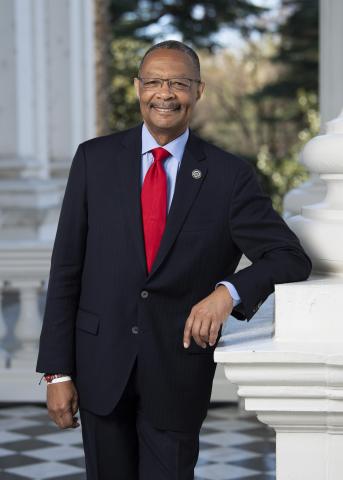

Bill Co-Author(s):