AB 1982: Teacher credentialing: basic skills proficiency test: exemption.
- Session Year: 2019-2020
- House: Assembly
- Latest Version Date: 2020-05-11
|
Date
|
Status
|
|---|---|
| Jul 1, 2020 | Referred to Com. on ED. |
| Jun 11, 2020 | In Senate. Read first time. To Com. on RLS. for assignment. |
| Jun 10, 2020 | Read third time. Passed. Ordered to the Senate. (Ayes 75. Noes 0. Page 4756.) |
| Jun 4, 2020 | Read second time. Ordered to third reading. |
| Jun 3, 2020 | From committee: Do pass. (Ayes 16. Noes 0.) (June 3). |
| Jun 2, 2020 | In committee: Set, first hearing. Referred to APPR. suspense file. |
| May 12, 2020 | Re-referred to Com. on APPR. |
| May 11, 2020 | Read second time and amended. |
| May 7, 2020 | From committee: Amend, and do pass as amended and re-refer to Com. on APPR. (Ayes 4. Noes 0.) (May 6). |
| Mar 16, 2020 | In committee: Hearing postponed by committee. |
| Feb 6, 2020 | Referred to Com. on ED. |
| Jan 24, 2020 | From printer. May be heard in committee February 23. |
| Jan 23, 2020 | Read first time. To print. |
|
Date
|
Description
|
Location
|
Votes
|
|
|---|---|---|---|---|
| Jun 10, 2020 | AB 1982 Cunningham Assembly Third Reading | Assembly Floor |
Passed |
|
| Jun 3, 2020 | Do pass. | Assembly Standing Committee on Appropriations |
Passed |
|
| May 6, 2020 | Do pass as amended and be re-referred to the Committee on [Appropriations] | Assembly Standing Committee on Education |
Passed |
This list shows positions taken on this bill by organizations on the date displayed, which is linked to the original source.
Positions by individuals are not included.
ASSEMBLY THIRD READING
ATR Bill Id:AB 1982
Author:(Cunningham)
As Amended Ver:May 11, 2020
Majority vote
SUMMARY:
Authorizes, until December 31, 2023, a teacher credential applicant, in lieu of taking the California Basic Skills Proficiency Test (CBEST), to demonstrate basic reading, writing and mathematics skills by earning at least a letter grade of "B" in qualifying coursework as determined by a teacher credential preparation program or by the state Commission on Teacher Credentialing (CTC), or through a combination of qualifying coursework and existing exams.
Major Provisions
None
COMMENTS:
What is the California Basic Educational Skills Test? The CBEST is designed to test basic reading, mathematics, and writing skills found to be important for the job of an educator; the test is not designed to measure the ability to teach those skills. There are exemptions from passage of the CBEST exam for certain types of teachers and for applicants who have passing scores on other exams, such as Advanced Placement exams and college admissions exams. All teacher candidates must demonstrate basic skills by passing the CBEST or through one of the existing exemptions. There are currently no coursework options to satisfy the basic skills requirement.
COVID-19 implications. COVID-19, also known as "coronavirus", is a respiratory illness caused by a novel virus that has spread worldwide. State officials gain more understanding of COVID-19's epidemiology, clinical course, immunogenicity, and other factors as time progresses, and the situation is changing daily. Reported illnesses have ranged from mild to severe, including illness resulting in death. Older people and people with certain underlying health conditions like heart disease, lung disease and diabetes, for example, seem to be at greater risk of serious illness.
As of March 2020, public K-12 schools in California closed for the remainder of the 2019-20 school year in order to stop the spread of COVID-19, resulting in several months of unplanned school closures and loss of instructional time. With the unprecedented COVID-19 crisis, creative solutions that increase opportunity for teacher candidates to achieve their credentials are needed more urgently than ever. Due to nation-wide shelter in place orders, CBEST testing is not currently available.
Possible periodic resurgences of the COVID-19 pandemic may necessitate increased caution and potentially reinforced social distancing measures in the 2020-2021 academic year and beyond. Because of this, the current CBEST suspension may be extended or repeated in the upcoming year. Data from the CTC for the last three years indicate that on average of 37,000 teacher candidates take the CBEST exam each year. The current and possibly ongoing/repeated suspension of CBEST exams due to the COVID-related closure of testing centers will have a significant impact on the number of teacher candidates who take and pass the exam. Unless alternative pathways for candidates to demonstrate basic skills competency are provided, the suspension of CBEST testing will massively compound the existing teacher shortage.
On May 29, Governor Newsom issued Executive Order N-66-20 which suspended the requirement to complete the California Basic Educational Skills Test (CBEST) prior to being admitted to a credential program for applicants who, between March 19, 2020 and August 31, 2020, were unable to complete the CBEST due to COVID-19 testing center closures. These candidates will be required to complete the CBEST before earning a preliminary credential.
According to the Author:
"California is facing an unprecedented teacher shortage. The hurdles that are needed to become a credentialed teacher in California have multiplied, increasing costs and burdens on candidates. One of the most arbitrary hurdles, the CBEST, is a costly and ineffective measurement of future teacher performance. Multiple peer reviewed studies confirm that there is no association between the CBEST and teacher performance. Only about 65% of applicants pass CBEST on the first try. This means that a test that has been proven to have little relevance to teacher performance is turning away almost 40% of interested applicants. The test also serves as a financial barrier requiring a $102 fee to test, as well as a plethora of other fees for extra copies of scores (needed for multiple applications), and late registration fees if you don't sign up a full 7 months in advance. California's teacher shortage affects school districts of every size, everywhere in our state. Given the shortage, we should be reducing barriers to entry into the profession. The state shouldn't needlessly force successful college students to take a costly test that bears no relation to teaching quality, and that serves more as a wall than a gate."
Arguments in Support:
The California Charter Schools Association supports the bill and argues, "There currently are no non-test alternatives available to satisfy the Basic Skill Requirement. California needs to increase pathways to the teaching profession as well as diversify the pipeline. A report from the CTC shows test takers of color, typically have a lower passing score on the exam than their white counterparts. AB 1982 can use alternative measures, other than test-taking, to create a broader avenue to get credentialed."
Arguments in Opposition:
EdVoice opposes the bill and argues, "AB 1982 significantly lowers the bar by expanding current authorized exemptions beyond other objective assessment-based demonstrations of minimum basic skills competency, including scores from the SAT/ACT, AP exams, CSU EAP or CSU placement examination, basic skills exam from another state, or passing the California Subject Examination for Teachers (CSET), or teaching adults in nonacademic assignments, as specified. Under current law and regulations, the CTC determined passing scores on the CBEST or other alternative examinations remain valid indefinitely for the purpose of meeting the basic skills requirement."
FISCAL COMMENTS:
According to the Assembly Appropriations Committee:
- Minor and absorbable special fund costs to the CTC to determine qualifying coursework.
- Minor and absorbable costs, potentially General Fund costs, to determine qualifying coursework, if an applicable credential preparation program is operated by a state university.
- Lost teacher applicant fee revenue of an unknown amount, potentially in the hundreds of thousands of dollars annually, to CTC should teacher applicants opt to demonstrate basic skill proficiency through coursework rather than through the CBEST. (On average, CTC takes in about $840,300 from CBEST fees. Assuming 75% of teacher candidates opt not to take the CBEST, the CTC would lose about $630,000 in fee revenue annually.) However, the CTC indicates it holds reserves large enough to absorb these costs over the three-year period of this bill.
VOTES:
ASM EDUCATION: 4-0-3
YES: O'Donnell, Kalra, McCarty, Weber
ABS, ABST OR NV: Kiley, Megan Dahle, Smith
ASM APPROPRIATIONS: 16-0-2
YES: Gonzalez, Bigelow, Bauer-Kahan, Bloom, Bonta, Calderon, Carrillo, Chau, Eggman, Fong, Gabriel, Eduardo Garcia, Petrie-Norris, McCarty, Robert Rivas, Voepel
ABS, ABST OR NV: Megan Dahle, Diep
UPDATED:
VERSION: May 11, 2020
CONSULTANT: Chelsea Kelley / ED. / (916) 319-2087 FN: 0002946
Date of Hearing: June 2, 2020
ASSEMBLY COMMITTEE ON APPROPRIATIONS
Lorena Gonzalez, Chair
ABPCA Bill Id:AB 1982
Author:(Cunningham) – As Amended Ver:May 11, 2020
Policy Committee: | Education | Vote: | 4 - 0 |
|
| ||
|
|
Urgency: No State Mandated Local Program: No Reimbursable: No
SUMMARY:
This bill creates a temporary alternative to the California Basic Educational Skills Test (CBEST).
Specifically, until December 31, 2023, the bill authorizes a teacher credential applicant, in lieu of taking the CBEST, to demonstrate basic reading, writing and mathematics skills by (a) earning at least a letter grade of “B” in qualifying coursework as determined by a teacher credential preparation program or by the state Commission on Teacher Credentialing (CTC), or (b) through a combination of qualifying coursework and exams.
FISCAL EFFECT:
- Minor and absorbable special fund costs to the CTC to determine qualifying coursework.
- Minor and absorbable costs, potentially General Fund costs, to determine qualifying coursework, if an applicable credential preparation program is operated by a state university.
- Lost teacher applicant fee revenue of an unknown amount, potentially in the hundreds of thousands of dollars annually, to CTC should teacher applicants opt to demonstrate basic skill proficiency through coursework rather than through the CBEST. (On average, CTC takes in about $840,300 from CBEST fees. Assuming 75% of teacher candidates opt not to take the CBEST, the CTC would lose about $630,000 in fee revenue annually.) However, the CTC indicates it holds reserves large enough to absorb these costs over the three-year period of this bill.
COMMENTS:
- Purpose. The bill’s author views the basic skills proficiency exam, known as the CBEST, as an unnecessary and costly hurdle to becoming a teacher in California, and cites research suggesting a lack of association between CBEST results and teacher performance.
- Background. Teacher applicants in California are required to take four tests in order to earn their credential: the CBEST, a California Subject Examinations for Teachers (CSET), the Reading Instruction Competence Assessment (RICA) and the Teacher Performance Assessment (TPA).
This bill pertains to the CBEST, a test intended to demonstrate a teacher applicant’s proficiency in basic skills in reading, writing and math. CTC indicates that on average 37,000 teacher candidates take the CBEST exam annually. Teacher credential applicants pay fees of about $100 to take the exam at a testing center. (A significant portion of the fees teacher applicants pay go to Pearson Education, the company contracted to administer the test.)
Currently, CBEST testing has been suspended due to the COVID-19 crisis. In recognition of this potential barrier to teacher credential applicants, the CTC will allow applicants to defer passage of the CBEST for up to one year.
- Related Legislation. AB 2485 (Kalra), of this legislative session, authorizes, until January 1, 2024, a teacher applicant to demonstrate subject matter competence by completing certain higher education coursework in the subject matter related to their credential. The bill also authorizes an applicant to demonstrate subject matter competence through a combination of a subject matter program, a subject matter examination and higher education coursework in the subject matter related to the credential. The bill is currently pending in this committee.
SB 614 (Susan Rubio), of this legislative session, repeals the RICA requirement for issuance of a teaching credential, and instead requires approved teacher preparation programs to instruct and assess teacher applicants for reading competence. The bill’s hearing in the Assembly Education committee was cancelled at the request of the author.
Analysis Prepared by: Natasha Collins / APPR. / (916) 319-2081
Date of Hearing: May 6, 2020
ASSEMBLY COMMITTEE ON EDUCATION
Patrick O'Donnell, Chair
ABPCA Bill Id:AB 1982 (
Author:Cunningham) – As Introduced Ver:January 23, 2020
SUBJECT: Teacher credentialing: basic skills proficiency test: exemption
SUMMARY: Authorizes a teacher credential applicant to demonstrate the basic skills proficiency by earning a grade of “B” or better in qualifying coursework, or through a combination of qualifying coursework and existing exams, in lieu of a basic skills proficiency exam. Specifically, this bill:
- Authorizes a teacher credential applicant to demonstrate proficiency in basic reading, writing, and mathematics skills in the English language by earning at least a letter grade of “B” in qualifying coursework determined by a credential preparation program to sufficiently serve as an alternative indicator of proficiency in basic skills.
- Defines “qualifying coursework” to mean a course or courses taken at a regionally accredited institution of higher education for academic credit that applies toward the requirements for an associate’s degree, baccalaureate degree, or higher degree.
- States that qualifying coursework does not include professional development or continuing education units, inservice training or workshops, or courses where credits do not apply toward the requirements for an associate’s degree, baccalaureate degree, or higher degree.
- Authorizes a teacher credential applicant to demonstrate proficiency in basic skills through a combination of qualifying coursework and other existing exemptions.
EXISTING LAW:
- Prohibits the Commission on Teacher Credentialing (CTC) to issue a credential, permit, certificate, or renewal of an emergency credential to a person to serve in the public schools unless the person has demonstrated proficiency in basic reading, writing, and mathematics skills in the English language. (Education Code (EC) 44252)
- Requires the CTC to exempt the following persons from the basic skills proficiency test requirement:
- A person credentialed solely for the purpose of teaching adults in an apprenticeship program.
- An applicant for an adult education designated subject credential for other than an academic subject.
- A person credentialed in another state who is an applicant for employment in a school district in this state who has passed a basic skills proficiency examination administered by the state where the person is credentialed.
- A person credentialed in another state who is an applicant for employment in a school district in this state who has passed a basic skills proficiency examination that has been developed and administered by the school district offering that person employment, by cooperating school districts, or by the appropriate county office of education. Requires that the applicant be granted a nonrenewable credential, valid for not longer than one year, pending fulfillment of the basic skills proficiency.
- An applicant for a child care center permit or a permit authorizing service in a development center for the handicapped if the holder of the permit is not required to have a baccalaureate degree.
- The holder of a credential, permit, or certificate to teach, other than an emergency permit, who seeks an additional authorization to teach.
- An applicant for a credential to provide service in the health profession.
- An applicant who achieves scores on the writing, reading, and mathematics sections of the College Board SAT Reasoning Test, the enhanced ACT Test, or the California State University Early Assessment Program that are sufficient to waive the English placement test and the entry level mathematics examination administered by the California State University.
- An applicant for an eminence credential. (EC 44252)
- Requires the CTC to administer the California basic skills proficiency test (CBEST) in accordance with rules and regulations adopted by the CTC. Requires a fee to be charged to individuals being tested to cover the costs of the test, including the costs of developing, administering, and grading the test. Requires the amount of the fee to be established by the CTC to recover the cost of examination administration and development. (EC 44252.5)
- States that an individual who passes the state basic skills proficiency test, as adopted by the Superintendent, is considered proficient in the skills of reading, writing, and mathematics, and is not be required to be retested by this test for purposes of meeting the proficiency requirements. (EC 44252.5)
- States that an individual who passes one or more components of the CBEST in the subjects of basic reading, writing, or mathematics shall be deemed to have demonstrated his or her proficiency in these subject areas and shall not be required to be retested in these subjects during subsequent test administrations. (EC 44252.5)
FISCAL EFFECT: Unknown
COMMENTS:
Need for the bill. According to the author, “California is facing an unprecedented teacher shortage. The hurdles that are needed to become a credentialed teacher in California have multiplied, increasing costs and burdens on candidates. One of the most arbitrary hurdles, the CBEST, is a costly and ineffective measurement of future teacher performance. Multiple peer reviewed studies confirm that there is no association between the CBEST and teacher performance. Only about 65% of applicants pass CBEST on the first try. This means that a test that has been proven to have little relevance to teacher performance is turning away almost 40% of interested applicants. The test also serves as a financial barrier requiring a $102 fee to test, as well as a plethora of other fees for extra copies of scores (needed for multiple applications), and late registration fees if you don’t sign up a full 7 months in advance. California’s teacher shortage affects school districts of every size, everywhere in our state. Given the shortage, we should be reducing barriers to entry into the profession. The state shouldn’t needlessly force successful college students to take a costly test that bears no relation to teaching quality, and that serves more as a wall than a gate.”
What is the California Basic Educational Skills Test (CBEST)? The CBEST is designed to test basic reading, mathematics, and writing skills found to be important for the job of an educator; the test is not designed to measure the ability to teach those skills. There are exemptions from passage of the CBEST exam for certain types of teachers and for applicants who have passing scores on other exams, such as Advanced Placement exams and college admissions exams. All teacher candidates must demonstrate basic skills by passing the CBEST or through one of the existing exemptions. There are currently no coursework options to satisfy the basic skills requirement.
COVID-19 implications. COVID-19, also known as “coronavirus”, is a respiratory illness caused by a novel virus that has spread worldwide. Tens of thousands of community-acquired cases have been confirmed in California, and 1,000 individuals have died in the state. State officials gain more understanding of COVID-19’s epidemiology, clinical course, immunogenicity, and other factors as time progresses, and the situation is changing daily. Reported illnesses have ranged from mild to severe, including illness resulting in death. Older people and people with certain underlying health conditions like heart disease, lung disease and diabetes, for example, seem to be at greater risk of serious illness.
As of March 2020, public K-12 schools in California closed for the remainder of the 2019-20 school year in order to stop the spread of COVID-19, resulting in several months of unplanned school closures and loss of instructional time. With the unprecedented COVID-19 crisis, creative solutions that increase opportunity for teacher candidates to achieve their credentials are needed more urgently than ever. Due to nation-wide shelter in place orders, CBEST testing is not currently available.
Possible periodic resurgences of the COVID-19 pandemic may necessitate increased caution and potentially reinforced social distancing measures in the 2020-2021 academic year and beyond. Because of this, the current CBEST suspension may be extended or repeated in the upcoming year. Data from the CTC for the last three years indicate that on average of 37,000 teacher candidates take the CBEST exam each year. The current and possibly ongoing/repeated suspension of CBEST exams due to the COVID-related closure of testing centers will have a significant impact on the number of teacher candidates who take and pass the exam. Unless alternative pathways for candidates to demonstrate basic skills competency are provided, the suspension of CBEST testing will massively compound the existing teacher shortage.
Recent CTC Actions. According to the CTC, the Basic Skills/CBEST requirement (BSR) will be deferred for up to one year for applicants or candidates using the CBEST examination route to meeting this requirement. The BSR will not be required for program entry. Education Code Section 44252.8 allows the Commission to defer the Basic Skills Requirement due to ‘justifiable’ reason (such as the COVID-19 pandemic). Those individuals who have the CBEST deferred will have up to one year to satisfy the Basic Skills requirement. By statute, this deferral cannot be granted to candidates who have taken the CBEST previously and failed the examination.
What the research says about the CBEST. Researchers indicate “the pathway to becoming a teacher in California loses a significant share of candidates at each testing juncture: Overall, at least 40% of those who initially intend to teach are unable to move forward at some testing juncture, and in some fields, including mathematics and science, this includes well over half of those who initially intended to teach. Of these assessments, only the Teacher Performance Assessment (TPA) has been shown to be related to teachers’ effectiveness in the classroom. Given that candidates also reported that the tests are a financial hurdle and a logistical challenge, there is no doubt that they have a noticeable impact on the pipeline for becoming a teacher in the state.” (Darling-Hammond, Sutcher, Carver-Thomas, 2018)
Research further finds that “there are five major problems with the CBEST and other required teacher tests: (1) establishing appropriate passing standards; (2) using pass-fail scores as the only criterion for career entry; (3) redundant testing; (4) fairness of standardized skill testing for the handicapped; and (5) impact on the future ethnic composition of professional school staff.” (Watkins, 1985)
Likewise researchers find, “teacher licensure test scores are unrelated to teacher success in the classroom. Similarly, student achievement is unaffected by whether classroom teachers have advanced degrees.” (Buddin & Zamarro, 2008)
CBEST passing rates. The graphs below, based on data from the CTC, show disparities in passage rates based on the applicant’s ethnicity, high school grade point average, and level high school math coursework. The exam has an overall first time passage rate of 67.6% and the first time passage rate varies by ethnicity and gender. The first-time passage rate for women is just 65%, while the first-time passage rate for men is 72%.
The CBEST math section includes fractions, decimals and percentages, algebra, word problems, order of operations and basic geometry. With this in mind, the graph below notes that students who completed high school calculus had only a 81.5% first time passage rate. Students who completed high school pre-calculus had only a 74% first time passage rate. Similarly, the chart shows that students who completed algebra 2 and/or geometry, which is generally the level of math tested on the CBEST exam, only had a 58% first-time passage rate.
The chart below shows that 78% of students who earned a high school GPA between 3.5 and 4.0 passed the CBEST the first-time.
The chart below shows significant variance in the passage rates on CBEST by ethnicity ranging from a 47% first-time passage rate for African American applicants, while white applicants have an 80% first-time passage rate.
Association of Mexican-American Educators v. California. A court case was filed shortly after the CBEST exam began in 1982. The plaintiffs were the Association of Mexican-American Educators, the California Association for Asian-Pacific Bilingual Education, the Oakland Alliance of Black Educators, and eight individuals. In this class action, the plaintiffs challenged the use of the CBEST as a requirement for certification to teach in the California public schools. The plaintiffs contended that the CBEST requirement violated Titles VI and VII of the Civil Rights Act of 1964 because it has a disparate impact on African-Americans, Latinos, and Asians. Defendants, while conceding that the CBEST results in some adverse impact on the plaintiff class, argued that the test is valid because it tests job-related skills and is justified by business necessity. In sum, the Court held that the defendants' requirement that plaintiffs pass the CBEST in order to obtain employment in the California public schools does not violate the plaintiffs' rights under Title VI or Title VII of the Civil Rights Act of 1964.
Subject matter competency coursework requirements. The CTC currently allows applicants to demonstrate subject matter competency through coursework. This bill mirrors many of the requirements of coursework that is acceptable for demonstrating subject matter knowledge, except this bill allows applicants to use coursework to demonstrate basic skills. The notable difference between the policies is that this bill requires a “B” or better in coursework to demonstrate basic skills and existing requirements allow for a “C” or better in coursework to demonstrate subject matter competency. According to the CTC, coursework as noted below qualifies for subject matter competency. Therefore, this bill establishes a higher threshold than other existing coursework options in the credentialing system.
According to the CTC, the following are the requirements to use coursework to demonstrate subject matter competency:
- completed with a grade of “C” or better
- applicable toward a bachelor’s degree or a higher degree (non-remedial)
- taken at a regionally-accredited institution
- granted regular quarter or semester hour credit
- from the subject department of the subject matter authorization being sought
The following coursework may be used as long as it meets the criteria listed above:
- community college, correspondence, online, or extension coursework
- advanced placement units (requires an official transcript of the course and written verification from the college or university admission or registrar’s office that the units were used towards a bachelor’s degree and are in the subject category of the requested subject matter authorization)
Arguments in support. The California Charter Schools Association supports the bill and argues, “There currently are no non-test alternatives available to satisfy the Basic Skill Requirement. California needs to increase pathways to the teaching profession as well as diversify the pipeline. A report from the CTC shows test takers of color, typically have a lower passing score on the exam than their white counterparts. AB 1982 can use alternative measures, other than test-taking, to create a broader avenue to get credentialed.”
Arguments in opposition. EdVoice opposes the bill and argues, “AB 1982 significantly lowers the bar by expanding current authorized exemptions beyond other objective assessment-based demonstrations of minimum basic skills competency, including scores from the SAT/ACT, AP exams, CSU EAP or CSU placement examination, basic skills exam from another state, or passing the California Subject Examination for Teachers (CSET), or teaching adults in nonacademic assignments, as specified. Under current law and regulations, the CTC determined passing scores on the CBEST or other alternative examinations remain valid indefinitely for the purpose of meeting the basic skills requirement.”
Recommended Committee Amendments: Staff recommends the bill be amended to:
- Specify that the CTC will determine, instead of the preparation programs, which coursework options will qualify for this exemption for out of state prepared educators.
- Clarify that coursework must demonstrate basic reading, writing and math skills.
- Clarify that applicants can satisfy the basic skills requirement by mixing and matching testing options with coursework options.
- Add a December 31, 2023, sunset date to the provisions of this measure.
REGISTERED SUPPORT / OPPOSITION:
Support
California Charter Schools Association
California Federation of Teachers
California School Boards Association
California State PTA
California Teachers Association
Office of The Riverside County Superintendent of Schools
Public Advocates INC.
Riverside County Public K-12 School District Superintendents
Oppose
EdVoice
Analysis Prepared by: Chelsea Kelley / ED. / (916) 319-2087
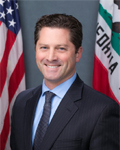
Bill Author
Bill Co-Author(s):
