AB 2008: Contracts: parental consent.
- Session Year: 2019-2020
- House: Assembly
- Latest Version Date: 2020-07-07
|
Date
|
Status
|
|---|---|
| Jul 7, 2020 | From committee chair, with author's amendments: Amend, and re-refer to committee. Read second time, amended, and re-referred to Com. on JUD. |
| Jun 23, 2020 | Referred to Com. on JUD. |
| May 27, 2020 | In Senate. Read first time. To Com. on RLS. for assignment. |
| May 26, 2020 | Read third time. Passed. Ordered to the Senate. (Ayes 75. Noes 0. Page 4601.) |
| Mar 12, 2020 | Read second time. Ordered to Consent Calendar. |
| Mar 11, 2020 | Read second time and amended. Ordered returned to second reading. |
| Mar 10, 2020 | From committee: Amend, and do pass as amended. To Consent Calendar. (Ayes 11. Noes 0.) (March 10). |
| Feb 14, 2020 | Referred to Com. on JUD. |
| Jan 29, 2020 | From printer. May be heard in committee February 28. |
| Jan 28, 2020 | Read first time. To print. |
|
Date
|
Description
|
Location
|
Votes
|
|
|---|---|---|---|---|
| May 26, 2020 | AB 2008 Cunningham Consent Calendar Second Day | Assembly Floor |
Passed |
|
| Mar 10, 2020 | Do pass as amended. To Consent Calendar. | Assembly Standing Committee on Judiciary |
Passed |
This list shows positions taken on this bill by organizations on the date displayed, which is linked to the original source.
Positions by individuals are not included.
Date of Hearing: March 10, 2020
ASSEMBLY COMMITTEE ON JUDICIARY
Mark Stone, Chair
ABPCA Bill Id:AB 2008
Author:(Cunningham) – As Introduced Ver:January 28, 2020
PROPOSED CONSENT (As Proposed to be Amended)
SUBJECT: STATE BAR OF CALIFORNIA: LEGAL SERVICES: VICTIMS OF HUMAN TRAFFICKING
KEY ISSUE: SHOULD THE CALIFORNIA STATE BAR BE REQUIRED TO PROVIDE THE PUBLIC, VIA ITS INTERNET WEBSITE, INFORMATION ABOUT CIVIL LEGAL SERVICES THAT ARE AVAILABLE TO VICTIMS OF HUMAN TRAFFICKING AND VICTIMS OF DOMESTIC VIOLENCE?
SYNOPSIS
Human trafficking is a major problem in the United States, with nearly 11,000 human trafficking cases reported to the National Human Trafficking Hotline in 2018. In California alone, there were more than 1,650 cases—more than twice the number of reports in any other state except Texas. Domestic violence is also incredibly common, with approximately 40% of California women experiencing physical intimate partner violence in their lifetimes. Because of the control tactics used by traffickers and abusers, victims of human trafficking or domestic violence often have limited access to resources and services. Legal aid can significantly reduce the likelihood of domestic abuse and continuing abuse of victims of human trafficking by helping individuals to obtain legal protection and escape abusive relationships. In 2017, legal aid in California closed 15,028 domestic violence cases and obtained 4,874 restraining orders. There have been numerous past legislative efforts to assist victims of human trafficking and victims of domestic violence by expanding and increasing the accessibility of services and programs.
Similar to past efforts, this bill intends to assist victims by specifically targeting and seeking to increase their access to legal services. As currently in print, the bill would require the State Bar of California to administer a program to coordinate pro bono legal service assistance for victims of human trafficking. In response to concerns about conforming to existing structures that provide legal assistance and information to the public, the author has proposed amendments that clarify the role of the State Bar in coordinating legal services for these indigent and low-income populations. The bill, as proposed to be amended, would require the State Bar of California to provide, on their public website, a link to a legal information and referral website, listing legal aid and nonprofit organizations that provide legal services to victims of human trafficking or domestic violence, increasing the visibility of the free or low-cost legal services that are available to victims of human trafficking or domestic violence. Those amendments are explained and reflected in the analysis. There is no known opposition to this bill.
SUMMARY: Requires the State Bar of California (State Bar) to provide the public, via its internet website, information about legal services that are available to victims of human trafficking and victims of domestic violence. Specifically, this bill, as proposed to be amended:
- Requires the State Bar to provide on its internet website a link to a legal information and referral website that lists legal aid and nonprofit organizations that provide legal services to victims of human trafficking or victims of domestic violence.
- Requires the State Bar to inform all legal aid or nonprofit organizations that provide legal services to victims of human trafficking or victims of domestic violence and that receive funding from the State Bar of the importance of including information about its organization and services on the referenced legal information and referral website.
EXISTING LAW:
- Establishes the State Bar of California as a public corporation. (Business and Professions Code Section 6001. All further statutory references are to this code, unless otherwise indicated.)
- Authorizes the State Bar of California in 2016 to collect funds through annual membership fees at a sum not exceeding three hundred fifteen dollars ($315) minus a ten dollar ($10) rebate. (Section 6140.)
- Authorizes the State Bar of California to raise revenue in addition to that provided in Section 6140 and other statutory provisions by any lawful means, including, but not limited to, the creation of foundations or not-for-profit corporations. (Section 6001.)
- Provides that it has been the tradition of those learned in the law and licensed to practice law in this state to provide voluntary and pro bono legal services to those who cannot afford the help of a lawyer, and that every lawyer authorized and privileged to practice law in California is expected to make a contribution. (Section 6073.)
- Requires the State Bar to provide resources and educational materials to attorneys and the public, including by compiling a list of local bar associations, legal aid organizations, specified service providers, and volunteer attorneys willing to provide pro bono legal services to veterans and service members and posting the list on its internet website. (Section 6074.)
FISCAL EFFECT: As currently in print this bill is keyed non-fiscal.
COMMENTS: This bill represents a small step in the Legislature’s continuing efforts to battle human trafficking and domestic violence by requiring the State Bar of California to provide public information, via its website, about free or low-cost legal services that are available to victims of domestic violence and human trafficking. According to the author:
Human Trafficking is an epidemic that is plaguing our state. It has been called “modern-day slavery.” In California alone in 2017, the National Human Trafficking Hotline received approximately 3,998 calls related to potential cases. It is estimated that one quarter of trafficking victims are children. Once free from their abusers, victims need both legal and professional help to begin the healing process. The complexity of the California legal system and path to remedies can be challenging for any individual, let alone someone who has been trafficked in and around the state. AB 2008 is a common-sense measure to ensure that the State Bar’s website includes information on legal resources that are available for human trafficking victims.
Scope of human trafficking in California. Human trafficking is a major problem in the United States, especially in the State of California, where there were more reports of human trafficking in 2018 than in any other state of the nation. The National Human Trafficking Hotline (NHTH) reports that it received 41,088 calls about human trafficking in 2018. More than 56,500 cases of human trafficking, and between 62,000 to 75,000, victims were reported to the National Human Trafficking Resource Center and an emergency texting helpline between 2007 and June 2019. Nationwide, according to the NHTH, nearly 11,000 human trafficking cases were reported in 2018. More than 1,650 of those reports—more than twice the number in any other state except Texas—were from California. (https://humantraffickinghotline.org/states)
According to Polaris, a nonprofit organization that operates the National Human Trafficking Hotline and is dedicated to the reduction of human trafficking and slavery:
Human trafficking can happen to anyone but some people are more vulnerable than others. Significant risk factors [to human trafficking] include recent migration or relocation, substance use, mental health concerns, involvement with the children welfare system and being a runaway or homeless youth. Often, traffickers identify and leverage their victims’ vulnerabilities in order to create dependency. …
Traffickers employ a variety of control tactics, the most common include physical and emotional abuse and threats, isolation from friends and family, and economic abuse. They make promises aimed at addressing the needs of their target in order to impose control. As a result, victims become trapped and fear leaving for myriad reasons, including psychological trauma, shame, emotional attachment, or physical threats to themselves or their family.
Because of these vulnerabilities, it can be difficult for victims of human trafficking to get adequate services. The website for the National Human Trafficking Hotline also has a referral directory which lists organizations and programs that offer services to victims and survivors of human trafficking. (https://humantraffickinghotline.org/training-resources/referral-directory) Organizations can be sorted by the services they provide, including legal services, emergency shelter, crisis services, mental health services, and other ancillary services, including addiction treatment, child care, education, family reunification, interpretation/translation, and transitional housing. As of March 4th, 2020, the website lists around 35 organizations in California that provide some form of legal services and 26 that provide civil legal services.
Scope of domestic violence in California. Domestic violence is incredibly common, with approximately 40% of California women experiencing physical intimate partner violence in their lifetimes according to the California Women’s Health Survey. (California Department of Health Services, Office of Women’s Health, May 2006, Chapter 12.) The same study found that 75% of victims of intimate partner violence had minor children at home and that younger women (ages 18-24 years) were significantly more likely to be victims of intimate partner violence than women in other age groups.
The total number of domestic violence-related calls made to law enforcement agencies for assistance was 166,890 in 2018, according to the California Attorney General. Of those calls, 1,383 involved a firearm and 60,473 involved personal weapons (hands, fists, or feet). (Crime in California – 2018, California Department of Justice, California Justice Information Services Division, July 2019.)
According to the National Census of Domestic Violence Services, which tracked the services provided in a 24-hour survey period on September 2018, 96 (81%) of the identified domestic violence programs in California served 6,903 victims in one day. Of those, 3,552 adults and children received non-residential assistance and services, including legal advocacy and mental health services. On that same day, 688 requests for services were unmet. (13th Annual Domestic Violence Counts Census – California Report, National Network to End Domestic Violence, June 2018, https://nnedv.org/resources-library/13th-annual-census-california-report/)
Because of their vulnerability to economic abuse, access to free or low-cost legal assistance is incredibly important to this population. According to California Legal Aid:
Legal Aid intervention can empower survivors of domestic violence to flee their abusers and break the cycle of violence. Research [by the Institute for Policy Integrity of New York University School of Law] shows the availability of Legal Aid in a survivor’s county of residence can significantly reduce the likelihood of abuse by helping individuals obtain legal protection and offering long-term alternatives to an abusive relationship. In 2017, Legal Aid closed 15,028 domestic violence cases and made a difference in the lives of thousands of survivors by obtaining 4,874 restraining orders. In addition to restraining orders, Legal Aid provided individuals struggling to overcome abuse with legal assistance concerning divorce and property distribution, child custody and support, immigration-related matters, and access to stable housing and public benefits enabling them to break ties with their abuser and empowering them to become economically self-sufficient. …
Women living in poverty are disproportionately affected by domestic violence because of their limited escape routes. Access to independent economic resources, including public assistance, is vital to an abused woman’s decision making and safety planning, particularly if there are children involved. The National Institute of Justice found that the choice to stay or leave a violent relationship often depends on a partner’s economic contribution to the family and may compel survivors to live with violent behavior rather than seek help or leave. Leaving a relationship can result in not only losing access to a partner’s income, but it might also risk losing access to stable housing, health care, child care, or even child custody. Legal Aid helps clients seeking to obtain child custody, spousal and child support, and access to housing and public benefits, helping survivors break ties with their abusers. (Making a Difference: California Legal Aid Impact Report, The State Bar of California, January 2019.)
Past Legislative Efforts to Assist Victims of Human Trafficking or Domestic Violence. The Legislature has attempted to assist victims of human trafficking and victims of domestic violence in identifying and accessing services and programs.
In 2005, SB 180 (Kuehl) established the California Alliance to Combat Trafficking and Slavery (California ACTS) Task Force and required it to, among other things, evaluate various programs available to victims of human trafficking. In 2019, SB 35 (Chang) sought to reestablish the California ACTS Task Force to examine collaborative models between local and state governments and nongovernmental organizations for protecting victims, but was vetoed by Governor Newsom. In 2015, SB 84 established the Human Trafficking Victims Assistance Fund to support a grant program for community groups providing comprehensive services to victims. Similarly, in 2002, SB 1895 (Escutia) created the Domestic Violence Advisory Council, which consisted of experts in the direct or intervention services to battered women and their children and developing funding priorities.
There have also been several legislative efforts that recognized the shared need for services and programs for both victims of human trafficking and victims of domestic violence. In 2014, AB 1623 (Atkins) authorized any city, county, or community-based nonprofit organization to establish a multiagency, multidisciplinary family justice center to assist victims of domestic violence, human trafficking, sexual assault, and elder or dependent adult abuse. In 2018, AB 998 (Grayson) created resources for both victims of human trafficking and victims of domestic violence through the establishment of multidisciplinary personnel teams for the prevention, identification, management, or treatment of domestic violence or human trafficking cases in which members of the team would be qualified to provide a broad range of services related to domestic violence or human trafficking.
This Bill Intends to Provide Victims of Human Trafficking or Domestic Violence with Information about Legal Assistance. Similar to past efforts, this bill intends to assist victims of human trafficking and victims of domestic violence, but it does so by specifically targeting access to legal services. This bill, as proposed to be amended, would require the State Bar of California to provide the public with a link to a legal information and referral website listing legal aid and nonprofit organizations that provide legal services to victims of human trafficking or domestic violence. It would also require the bar to advise legal aid or nonprofit organizations receiving funds from the Bar about the importance of including about its programs on the website, with the goal of increasing the visibility of the free or low-cost legal services that are available to victims of human trafficking or domestic violence.
The author of the bill notes: “On the current website of the CA State Bar, there is not individual section or page related to the legal resources available to human trafficking victims. These victims are coming from a traumatized environment and may not have the support system to help navigate the state’s confusing and complex legal system.”
Author’s Amendments. As currently in print, the bill would require the State Bar of California (State Bar) to administer a program to coordinate pro bono legal service assistance for victims of human trafficking. The bill language raised concerns that its requirements did not conform to existing structures that provide legal assistance and information to the public, and that the State Bar would be duplicating efforts made elsewhere by organizations already receiving funding from the State Bar.
In response to these concerns, but with the goals of providing information about legal assistance to victims of human trafficking and victims of domestic violence and clarifying the role of the State Bar in coordinating legal services for indigent populations, the author proposes to deleted the current content of the bill in its entirety and amend the bill to add the following language:
SECTION 1. Section 6074.5 is added to the Business and Professions Code, to read:
6074.5. In order to provide the public with information about legal services that are available to victims of human trafficking and victims of domestic violence, the State Bar shall do both of the following:
(a) Ensure its internet website contains a link to a legal information and referral website that lists legal aid and nonprofit organizations that provide legal services to victims of human trafficking or victims of domestic violence.
(b) Informs all legal aid or nonprofit organizations that provide legal services to victims of human trafficking or victims of domestic violence and that receive funding from the State Bar of the importance of including information about its organization and services on the legal information and referral website referenced in subdivision (a).
ARGUMENTS IN SUPPORT: The California Catholic Conference supports AB 2008, as introduced on January 28, 2020. In support of the bill's provision for increased resources for human trafficking victims, they write:
Many [trafficking victims] are unaware of the legal resources that can be afforded to them through pro-bono legal work across our state. AB 2008 would provide specified resources and educational materials including a list of organizations and attorneys willing to provide pro bono legal services to victims of human trafficking....
Past Related Legislation: AB 360 (Muratsuchi), Chapter 401, Statues of 2017, required the State Bar to administer a program to coordinate pro bono civil legal assistance to veterans and their families who otherwise cannot afford legal services.
AB 558 (Petrie-Norris), Chapter 303, Statutes of 2019, required the State Bar to engage with military and veteran service providers and other legal aid organizations to provide legal services to veterans and service members and their families who otherwise cannot afford legal services, and collaborate to improve access to and delivery of these services throughout the state.
SB 1257 (Block, 2016), would have required those who apply to become licensed California attorneys, with certain exceptions, to complete at least 50 hours of pro bono legal service, as defined, prior to admission to the State Bar. This bill was vetoed by then-Governor Brown.
AB 1623 (Atkins), Chapter 85, Statutes of 2014, authorized any city, county, or community-based nonprofit organization to establish a multiagency, multidisciplinary family justice center to assist victims of domestic violence, sexual assault, elder or dependent adult abuse, and human trafficking, as specified.
SB 84 (Committee on Budget and Fiscal Review), Chapter 25, Statues of 2015, established the Human Trafficking Victims Assistance Fund and required that the money in the fund be used by the Office of Emergency Services for the distribution of grants to qualified nonprofit organizations providing services to human trafficking victims.
AB 998 (Grayson), Chapter 802, Statutes of 2018, authorized specified nonprofit organizations to establish a domestic violence and human trafficking multidisciplinary personnel teams trained in the prevention, identification, management, or treatment of domestic violence or human trafficking cases and qualified to provide a broad range of services related to domestic violence or human trafficking.
SB 35 (Chang, 2019), would have re-established the California Alliance to Combat Trafficking and Slavery (California ACTS) Task Force to collect and organize data on the nature and extent of trafficking of persons in California and examine collaborative models between local and state governments and nongovernmental organizations for protecting victims. This bill was vetoed by Governor Newsom.
Current Related Legislation: SB 1225 (Atkins) would state the intent of the Legislature to enact legislation to address the need for services and supports for victims of human trafficking.
AB 2780 (Holden) would state the intent of the Legislature to enact legislation that would ensure that victims of human rights violations have adequate remedies to ensure that they obtain relief from perilous circumstances.
SB 1088 (Rubio) would state the intent of the Legislature to enact legislation that would make a continuous appropriation of $10,000,000 in the Budget Act of 2020 dedicated to responding to the housing needs of domestic violence survivors.
REGISTERED SUPPORT / OPPOSITION:
Support
California Catholic Conference (to introduced version of the bill)
Opposition
None on file
Analysis Prepared by: Alison Merrilees and Emily Wonder / JUD. / (916) 319-2334
Bill Author
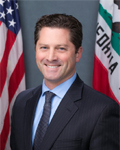
Bill Co-Author(s):