AB 2160: Crime victims: compensation for pecuniary loss.
- Session Year: 2015-2016
- House: Assembly
- Latest Version Date: 2016-03-28
Existing law governs the procedure by which crime victims may obtain compensation from the Restitution Fund, a continuously appropriated fund. Existing law establishes eligibility for compensation when prescribed requirements are met and authorizes the California Victim Compensation and Government Claims Board to grant compensation from the fund for pecuniary loss when the board determines it will best aid the person seeking compensation, including expenses for psychiatric, psychological, or other mental health counseling-related services if the services were provided by specific individuals. Existing law establishes requirements and sets specific monetary caps for certain payments or reimbursements relating to relocation. Existing law governs the award of compensation by the board for loss of income and support.
This bill would expand eligibility for compensation to include a victim or derivative victim that sustained emotional injury as a direct result of specific crimes relating to obscene matter. The bill would authorize the grant of compensation for expenses for psychiatric, psychological, or other mental health counseling-related services if the services were provided by a person who is licensed by the state to provide those services, or who is properly supervised by a person who is so licensed, subject to the boards approval and subject to limitations and restrictions as imposed by the board. The bill would revise eligibility for relocation reimbursement or payments and increase monetary caps. The bill would revise those loss of income and support provisions to additionally authorize the grant of compensation for specific costs incurred by victims.
Existing law requires that an application for compensation based on any of specified crimes involving sex with a minor be filed any time prior to the victims 28th birthday.
The bill would instead require that the application be filed anytime prior to the victims 40th birthday for crimes committed by certain dates, as specified, and be filed within 10 years after commission for all other crimes.
Existing law requires a victim or derivative victim seeking compensation to have sustained one or more specified physical or emotional injuries, or pecuniary losses, as a direct result of the crime.
Existing law includes among those injuries emotional injury to a victim who is a minor incurred as a direct result of the nonconsensual distribution of pictures or video of sexual conduct in which the minor appears.
This bill would delete this provision and instead would include among the compensable injuries emotional injury that occurred due to a violation of provisions prohibiting intentional distribution of certain specified private images of another person, as specified.
Existing law, until January 1, 2017, authorizes the board to grant from the fund for pecuniary losses, as specified, reimbursement for outpatient psychiatric, psychological, or other mental health counseling-related expenses incurred by the victim or derivative victim. Existing law specifically authorizes the board to reimburse a victim of statutory rape for outpatient mental health counseling expenses, up to a specified amount.
The bill would repeal the January 1, 2017, repeal date, thereby extending the boards authority to grant reimbursement for those outpatient mental health counseling-related expenses indefinitely. The bill would remove the boards specific authorization to reimburse a victim of statutory rape for outpatient mental health counseling expenses.
By expanding the authorizations for use of moneys in the Restitution Fund, a continuously appropriated fund, this bill would make an appropriation. Because an application for reimbursement is required to be submitted under penalty of perjury, this bill would expand the definition of a crime and thus impose a state-mandated local program.
The California Constitution requires the state to reimburse local agencies and school districts for certain costs mandated by the state. Statutory provisions establish procedures for making that reimbursement.
This bill would provide that no reimbursement is required by this act for a specified reason.
Existing law governs the procedure by which crime victims may obtain compensation from the Restitution Fund, a continuously appropriated fund. Existing law establishes eligibility for compensation when prescribed requirements are met and authorizes the California Victim Compensation and Government Claims Board to grant compensation from the fund for pecuniary loss when the board determines it will best aid the person seeking compensation, including expenses for psychiatric, psychological, or other mental health counseling-related services if the services were provided by specific individuals. Existing law establishes requirements and sets specific monetary caps for certain payments or reimbursements relating to relocation. Existing law governs the award of compensation by the board for loss of income and support.
This bill would expand eligibility for compensation to include a victim or derivative victim that sustained emotional injury as a direct result of specific crimes relating to obscene matter. The bill would authorize the grant of compensation for expenses for psychiatric, psychological, or other mental health counseling-related services if the services were provided by a person who is licensed by the state to provide those services, or who is properly supervised by a person who is so licensed, subject to the boards approval and subject to limitations and restrictions as imposed by the board. The bill would revise eligibility for relocation reimbursement or payments and increase monetary caps. The bill would revise those loss of income and support provisions to additionally authorize the grant of compensation for specific costs incurred by victims.
By expanding the authorizations for use of moneys in the Restitution Fund, a continuously appropriated fund, this bill would make an appropriation.
(a)An application for compensation shall be filed within three years of the date of the crime, three years after the victim attains 18 years of age, or three years of the time the victim or derivative victim knew or in the exercise of ordinary diligence could have discovered that an injury or death had been sustained as a direct result of crime, whichever is later. An application based on any crime eligible for prosecution under Section 801.1 of the Penal Code may be filed any time prior to the victims 28th birthday. within the period that prosecution is authorized by Section 801.1 of the Penal Code.
(b)The board may for good cause grant an extension of the time period in subdivision (a). In making this determination, the board shall consider all of the following:
(1)Whether the victim or derivative victim incurs emotional harm or a pecuniary loss while testifying during the prosecution or in the punishment of the person accused or convicted of the crime.
(2)Whether the victim or derivative victim incurs emotional harm or a pecuniary loss when the person convicted of the crime is scheduled for a parole hearing or released from incarceration.
(c)The period prescribed in this section for filing an application by or on behalf of a derivative victim shall be tolled when the board accepts the application filed by a victim of the same qualifying crime.
SECTION 1.SEC. 2.Section 13955 of the Government Code is amended to read:13955.Except as provided in Section 13956, a person shall be eligible for compensation when all of the following requirements are met:
(a)The person for whom compensation is being sought is any of the following:
(1)A victim.
(2)A derivative victim.
(3)(A)A person who is entitled to reimbursement for funeral, burial, or crime scene cleanup expenses pursuant to paragraph (8) or (9) of subdivision (a) of Section 13957.
(B)This paragraph applies without respect to any felon status of the victim.
(b)Either of the following conditions is met:
(1)The crime occurred in California. This paragraph shall apply only during those time periods during which the board determines that federal funds are available to the state for the compensation of victims of crime.
(2)Whether or not the crime occurred in California, the victim was any of the following:
(A)A resident of California.
(B)A member of the military stationed in California.
(C)A family member living with a member of the military stationed in California.
(c)If compensation is being sought for a derivative victim, the derivative victim is a resident of California, or any other state, who is any of the following:
(1)At the time of the crime was the parent, grandparent, sibling, spouse, child, or grandchild of the victim.
(2)At the time of the crime was living in the household of the victim.
(3)At the time of the crime was a person who had previously lived in the household of the victim for a period of not less than two years in a relationship substantially similar to a relationship listed in paragraph (1).
(4)Is another family member of the victim, including, but not limited to, the victims fiance or fiancee, and who witnessed the crime.
(5)Is the primary caretaker of a minor victim, but was not the primary caretaker at the time of the crime.
(d)The application is timely pursuant to Section 13953.
(e)(1)Except as provided in paragraph (2), the injury or death was a direct result of a crime.
(2)Notwithstanding paragraph (1), no act involving the operation of a motor vehicle, aircraft, or water vehicle that results in injury or death constitutes a crime for the purposes of this chapter, except when the injury or death from such an act was any of the following:
(A)Intentionally inflicted through the use of a motor vehicle, aircraft, or water vehicle.
(B)Caused by a driver who fails to stop at the scene of an accident in violation of Section 20001 of the Vehicle Code.
(C)Caused by a person who is under the influence of any alcoholic beverage or drug.
(D)Caused by a driver of a motor vehicle in the immediate act of fleeing the scene of a crime in which he or she knowingly and willingly participated.
(E)Caused by a person who commits vehicular manslaughter in violation of subdivision (b) of Section 191.5, subdivision (c) of Section 192, or Section 192.5 of the Penal Code.
(F)Caused by any party where a peace officer is operating a motor vehicle in an effort to apprehend a suspect, and the suspect is evading, fleeing, or otherwise attempting to elude the peace officer.
(f)As a direct result of the crime, the victim or derivative victim sustained one or more of the following:
(1)Physical injury. The board may presume a child who has been the witness of a crime of domestic violence has sustained physical injury. A child who resides in a home where a crime or crimes of domestic violence have occurred may be presumed by the board to have sustained physical injury, regardless of whether the child has witnessed the crime.
(2)Emotional injury and a threat of physical injury.
(3)Emotional injury, where the crime was a violation of any of the following provisions:
(A)Section 236.1, 261, 262, 271, 273a, 273d, 285, 286, 288, 288a, 288.5, 289, 311.1, 311.2, 311.3, 311.4, or 653.2 of 653.2 of, or paragraph (4) of subdivision (j) of Section 647 of, the Penal Code.
(B)Section 270 of the Penal Code, where the emotional injury was a result of conduct other than a failure to pay child support, and criminal charges were filed.
(C)Section 261.5 of the Penal Code, and criminal charges were filed.
(D)Section 278 or 278.5 of the Penal Code, and criminal charges were filed. For purposes of this paragraph, the child, and not the nonoffending parent or other caretaker, shall be deemed the victim.
(4)Injury to, or the death of, a guide, signal, or service dog, as defined in Section 54.1 of the Civil Code, as a result of a violation of Section 600.2 or 600.5 of the Penal Code.
(5)Emotional injury to a victim who is a minor incurred as a direct result of the nonconsensual distribution of pictures or video of sexual conduct in which the minor appears.
(g)The injury or death has resulted or may result in pecuniary loss within the scope of compensation pursuant to Sections 13957 to 13957.7, inclusive.
SEC. 2.SEC. 3.Section 13957 of the Government Code is amended to read:13957.(a)The board may grant for pecuniary loss, when the board determines it will best aid the person seeking compensation, as follows:
(1)Subject to the limitations set forth in Section 13957.2, reimburse the amount of medical or medical-related expenses incurred by the victim for services that were provided by a licensed medical provider, including, but not limited to, eyeglasses, hearing aids, dentures, or any prosthetic device taken, lost, or destroyed during the commission of the crime, or the use of which became necessary as a direct result of the crime.
(2)Subject to the limitations set forth in Section 13957.2, reimburse the amount of outpatient psychiatric, psychological, or other mental health counseling-related expenses incurred by the victim or derivative victim, including peer counseling services provided by a rape crisis center as defined by Section 13837 of the Penal Code, and including family psychiatric, psychological, or mental health counseling for the successful treatment of the victim provided to family members of the victim in the presence of the victim, whether or not the family member relationship existed at the time of the crime, that became necessary as a direct result of the crime, subject to the following conditions:
(A)The following persons may be reimbursed for the expense of their outpatient mental health counseling in an amount not to exceed ten thousand dollars ($10,000):
(i)A victim.
(ii)A derivative victim who is the surviving parent, grandparent, sibling, child, grandchild, spouse, fiance, or fiancee of a victim of a crime that directly resulted in the death of the victim.
(iii)A derivative victim, as described in paragraphs (1) to (4), inclusive, of subdivision (c) of Section 13955, who is the primary caretaker of a minor victim whose claim is not denied or reduced pursuant to Section 13956 in a total amount not to exceed ten thousand dollars ($10,000) for not more than two derivative victims.
(B)The following persons may be reimbursed for the expense of their outpatient mental health counseling in an amount not to exceed five thousand dollars ($5,000):
(i)A derivative victim not eligible for reimbursement pursuant to subparagraph (A), provided that mental health counseling of a derivative victim described in paragraph (5) of subdivision (c) of Section 13955, shall be reimbursed only if that counseling is necessary for the treatment of the victim.
(ii)A minor who suffers emotional injury as a direct result of witnessing a violent crime and who is not eligible for reimbursement of the costs of outpatient mental health counseling under any other provision of this chapter. To be eligible for reimbursement under this clause, the minor must have been in close proximity to the victim when he or she witnessed the crime.
(C)The board may reimburse a victim or derivative victim for outpatient mental health counseling in excess of that authorized by subparagraph (A) or (B) or for inpatient psychiatric, psychological, or other mental health counseling if the claim is based on dire or exceptional circumstances that require more extensive treatment, as approved by the board.
(D)Expenses for psychiatric, psychological, or other mental health counseling-related services may be reimbursed only if the services were provided by a person who is licensed by the state to provide those services, or who is properly supervised by a person who is so licensed, subject to the board's approval and subject to limitations and restrictions as imposed by the board.
(3)Subject to the limitations set forth in Section 13957.5, authorize compensation equal to the loss of income or loss of support, or both, that a victim or derivative victim incurs as a direct result of the victims or derivative victims injury or the victims death. If the victim or derivative victim requests that the board give priority to reimbursement of loss of income or support, the board may not pay medical expenses, or mental health counseling expenses, except upon the request of the victim or derivative victim or after determining that payment of these expenses will not decrease the funds available for payment of loss of income or support.
(4)Authorize a cash payment to or on behalf of the victim for job retraining or similar employment-oriented services.
(5)Reimburse the expense of installing or increasing residential security, not to exceed two thousand dollars ($2,000). Installing or increasing residential security may include, but need not be limited to, both of the following:
(A)Home security device or system.
(B)Replacing or increasing the number of locks.
(6)Reimburse the expense of renovating or retrofitting a victims residence, or the expense of modifying or purchasing a vehicle, to make the residence or the vehicle accessible or operational by a victim upon verification that the expense is medically necessary for a victim who is permanently disabled as a direct result of the crime, whether the disability is partial or total.
(7)(A)Authorize a cash payment or reimbursement not to exceed four thousand five hundred dollars ($4,500) to a victim for expenses incurred in relocating, if the expenses are determined by law enforcement to be necessary for the personal safety of the victim, by a mental health treatment provider to be necessary for the emotional well-being of the victim, or by a doctor of medicine or doctor of osteopathic medicine to be a medical necessity for the victim.
(B)The cash payment or reimbursement made under this paragraph shall only be awarded to one claimant per crime giving rise to the relocation. The board may authorize more than one relocation per crime if necessary for the personal safety or emotional well-being of the claimant. However, the total cash payment or reimbursement for all relocations due to the same crime shall not exceed four thousand five hundred dollars ($4,500). For purposes of this paragraph a claimant is the crime victim, or, if the victim is deceased, a person who resided with the deceased at the time of the crime.
(C)When a relocation payment or reimbursement is provided to a victim of sexual assault or domestic violence and the identity of the offender is known to the victim, the victim shall agree not to inform the offender of the location of the victims new residence and not to allow the offender on the premises at any time, or shall agree to seek a restraining order against the offender. A victim may be found ineligible for relocation or may be required to repay the relocation payment or reimbursement to the board if he or she violates the terms set forth in this paragraph.
(D)Notwithstanding subparagraphs (A) and (B), the board may increase the cash payment or reimbursement for expenses incurred in relocating to an amount greater than four thousand five hundred dollars ($4,500), if the board finds this amount is appropriate due to the unusual, dire, or exceptional circumstances of a particular claim.
(E)If a security deposit is required for relocation, the board shall be named as the recipient and receive the funds upon expiration of the victims rental agreement.
(8)When a victim dies as a result of a crime, the board may reimburse any individual who voluntarily, and without anticipation of personal gain, pays or assumes the obligation to pay any of the following expenses:
(A)The medical expenses incurred as a direct result of the crime in an amount not to exceed the rates or limitations established by the board.
(B)The funeral and burial expenses incurred as a direct result of the crime, not to exceed seven thousand five hundred dollars ($7,500). The board shall not create or comply with a regulation or policy that mandates a lower maximum potential amount of an award pursuant to this subparagraph for less than seven thousand five hundred dollars ($7,500).
(9)When the crime occurs in a residence or inside a vehicle, the board may reimburse any individual who voluntarily, and without anticipation of personal gain, pays or assumes the obligation to pay the reasonable costs to clean the scene of the crime in an amount not to exceed two thousand dollars ($2,000). Services reimbursed pursuant to this subdivision shall be performed by persons registered with the State Department of Public Health as trauma scene waste practitioners in accordance with Chapter 9.5 (commencing with Section 118321) of Part 14 of Division 104 of the Health and Safety Code.
(10)When the crime is a violation of Section 600.2 or 600.5 of the Penal Code, the board may reimburse the expense of veterinary services, replacement costs, or other reasonable expenses, as ordered by the court pursuant to Section 600.2 or 600.5 of the Penal Code, in an amount not to exceed ten thousand dollars ($10,000).
(11)An award of compensation pursuant to paragraph (5) of subdivision (f) of Section 13955 shall be limited to compensation to provide mental health counseling and shall not limit the eligibility of a victim for an award that he or she may be otherwise entitled to receive under this part. A derivative victim shall not be eligible for compensation under this provision.
(b)The total award to or on behalf of each victim or derivative victim may not exceed thirty-five thousand dollars ($35,000), except that this award may be increased to an amount not exceeding seventy thousand dollars ($70,000) if federal funds for that increase are available.
SEC. 3.SEC. 4.Section 13957.5 of the Government Code is amended to read:13957.5.(a)In authorizing compensation for loss of income and support pursuant to paragraph (3) of subdivision (a) of Section 13957, the board may take any of the following actions:
(1)Compensate the victim for loss of income directly resulting from the injury, except that loss of income may not be paid by the board for more than five years following the crime, unless the victim is disabled as defined in Section 416(i) of Title 42 of the United States Code, as a direct result of the injury.
(2)Compensate an adult derivative victim for loss of income, subject to all of the following:
(A)The derivative victim is the parent or legal guardian of a victim, who at the time of the crime was under the age of 18 years and is hospitalized as a direct result of the crime.
(B)The minor victims treating physician verifies that the presence of the victims parent or legal guardian at the hospital is necessary for the treatment of the victim.
(C)Reimbursement for loss of income under this paragraph may not exceed the total value of the income that would have been earned by the adult derivative victim during a 30-day period.
(3)Compensate an adult derivative victim for loss of income, subject to all of the following:
(A)The derivative victim is the parent or legal guardian of a victim who at the time of the crime was under the age of 18 years.
(B)The victim died as a direct result of the crime.
(C)The board shall pay for loss of income under this paragraph for not more than 30 calendar days from the date of the victims death.
(4)Compensate a derivative victim who was legally dependent on the victim at the time of the crime for the loss of support incurred by that person as a direct result of the crime, subject to both of the following:
(A)Loss of support shall be paid by the board for income lost by an adult for a period up to, but not more than, five years following the date of the crime.
(B)Loss of support shall not be paid by the board on behalf of a minor for a period beyond the childs attaining the age of 18 years.
(5)Compensate adult derivative victims of deceased victims for a maximum of five consecutive calendar days of income loss due to the grief suffered over a deceased victim.
(6)An adult victim of domestic violence who suffers a loss of financial support from the offender may receive up to five hundred dollars ($500) per week for a maximum of five weeks immediately following the crime. The victim and offender shall have resided together at the time of the qualifying crime and no longer reside together, and the victim shall not have received compensation for income loss during this five week period.
(7)
(6)Compensate adult direct victims for income loss when it is necessary for them to miss work due to:
(A)Medical or mental health appointments for injuries directly related to the qualifying crime.
(B)Attending meetings with the District Attorneys Office or other prosecutorial agency, or attending criminal court proceedings, directly related to the qualifying crime. The claimants attendance must be verified in writing by a court employee or an employee at the prosecutorial office.
(C)Incidental appointments directly related to the qualifying crime. Income loss for incidental crime related appointments shall not exceed one thousand dollars ($1,000).
(8)
(7)Compensate adult derivative victims for income loss when it is necessary for them to miss work due to taking a minor direct victim to an appointment described by subparagraphs (A), (B), and (C) of paragraph (7). (6).
(9)
(8)Notwithstanding the limitations set forth by paragraph (1), income loss resulting from appointments described by subparagraphs (A), (B), and (C) of paragraph (7) (6) may be paid for any date following the qualifying crime.
(10)
(9)Compensate child care costs for adult direct victims or adult derivative victims when they are necessary due to appointments as described by subparagraphs (A), (B), and (C) of paragraph (7). (6).
(11)
(10)Compensate transportation costs for adult direct victims or adult derivative victims associated with appointments as described by subparagraphs (A), (B), and (C) of paragraph (7). (6). Mileage reimbursement shall be paid at the rate set forth by the Department of Human Resources for state employees.
(b)The total amount payable to all derivative victims pursuant to this section as the result of one crime shall not exceed seventy thousand dollars ($70,000).
SEC. 5.Section 13957.9 of the Government Code is amended to read:13957.9.(a)In addition to the authorization provided in Section 13957 and subject to the limitations set forth in Section 13957.2, the board may grant for pecuniary loss, when the board determines it will best aid the person seeking compensation, reimbursement of the amount of outpatient psychiatric, psychological, or other mental health counseling-related expenses incurred by the victim or derivative victim, including peer counseling services provided by violence peer counseling services provided by a service organization for victims of violent crime, and including family psychiatric, psychological, or mental health counseling for the successful treatment of the victim provided to family members of the victim in the presence of the victim, whether or not the family member relationship existed at the time of the crime, that became necessary as a direct result of the crime, subject to the following conditions:
(1)The following persons may be reimbursed for the expense of their outpatient mental health counseling in an amount not to exceed ten thousand dollars ($10,000):
(A)A victim.
(B)A derivative victim who is the surviving parent, sibling, child, spouse, fiance, or fiancee of a victim of a crime that directly resulted in the death of the victim.
(C)A derivative victim, as described in paragraphs (1) to (4), inclusive, of subdivision (c) of Section 13955, who is the primary caretaker of a minor victim whose claim is not denied or reduced pursuant to Section 13956 in a total amount not to exceed ten thousand dollars ($10,000) for not more than two derivative victims.
(2)The following persons may be reimbursed for the expense of their outpatient mental health counseling in an amount not to exceed five thousand dollars ($5,000):
(A)A derivative victim not eligible for reimbursement pursuant to paragraph (1), provided that mental health counseling of a derivative victim described in paragraph (5) of subdivision (c) of Section 13955, shall be reimbursed only if that counseling is necessary for the treatment of the victim.
(B)A victim of a crime of unlawful sexual intercourse with a minor committed in violation of subdivision (d) of Section 261.5 of the Penal Code. A derivative victim of a crime committed in violation of subdivision (d) of Section 261.5 of the Penal Code shall not be eligible for reimbursement of mental health counseling expenses.
(C)
(B)A minor who suffers emotional injury as a direct result of witnessing a violent crime and who is not eligible for reimbursement of the costs of outpatient mental health counseling under any other provision of this chapter. To be eligible for reimbursement under this clause, the minor must have been in close proximity to the victim when he or she witnessed the crime.
(3)The board may reimburse a victim or derivative victim for outpatient mental health counseling in excess of that authorized by paragraph (1) or (2) or for inpatient psychiatric, psychological, or other mental health counseling if the claim is based on dire or exceptional circumstances that require more extensive treatment, as approved by the board.
(4)Expenses for psychiatric, psychological, or other mental health counseling-related services may be reimbursed only if the services were provided by either of the following individuals:
(A)A person who would have been authorized to provide those services pursuant to former Article 1 (commencing with Section 13959) as it read on January 1, 2002.
(B)A person who is licensed by the state to provide those services, or who is properly supervised by a person who is so licensed, subject to the boards approval and subject to the limitations and restrictions the board may impose.
(b)The total award to or on behalf of each victim or derivative victim may not exceed thirty-five thousand dollars ($35,000), except that this amount may be increased to seventy thousand dollars ($70,000) if federal funds for that increase are available.
(c)For the purposes of this section, the following definitions shall apply:
(1)Service organization for victims of violent crime means a nonprofit and charitable organization that meets both of the following criteria:
(A)Its primary mission is to provide services to victims of violent crime.
(B)It provides programs or services to victims of violent crime and their families, and other programs, whether or not a similar program exists in an agency that provides additional services.
(2)Violence peer counseling services means counseling by a violence peer counselor for the purpose of rendering advice or assistance for victims of violent crime and their families. Any violence peer counseling services that fall under the scope of practice of the Licensed Marriage and Family Therapist Act (Chapter 13 (commencing with Section 4980) of Division 2 of the Business and Professions Code), the Educational Psychologist Practice Act (Chapter 13.5 (commencing with Section 4989.10) of Division 2 of the Business and Professions Code), the Clinical Social Worker Practice Act (Chapter 14 (commencing with Section 4991) of Division 2 of the Business and Professions Code), and the Licensed Professional Clinical Counselor Act (Chapter 16 (commencing with Section 4999.10) of Division 2 of the Business and Professions Code), which are not performed in an exempt setting as defined in Sections 4980.01, 4996.14, and 4999.22 of the Business and Professions Code, shall only be performed by a licensee or a registrant of the Board of Behavioral Sciences or other appropriately licensed professional, such as a licensed psychologist or board certified psychiatrist.
(3)Violence peer counselor means a provider of supportive and nonpsychotherapeutic peer counseling services who is employed by a service organization for victims of violent crime, whether financially compensated or not, and who meets all of the following requirements:
(A)Possesses at least six months of full-time equivalent experience in providing peer support services acquired through employment, volunteer work, or as part of an internship experience.
(B)Completed a training program aimed at preparing an individual who was once a mental health services consumer to use his or her life experience with mental health treatment, combined with other strengths and skills, to promote the mental health recovery of other mental health services consumers who are in need of peer-based services relating to recovery as a victim of a violent crime.
(C)Possesses 40 hours of training on all of the following:
(i)The profound neurological, biological, psychological, and social effects of trauma and violence.
(ii)Peace-building and violence prevention strategies, including, but not limited to, conflict mediation and retaliation prevention related to gangs and gang-related violence.
(iii)Post-traumatic stress disorder and vicarious trauma, especially as related to gangs and gang-related violence.
(iv)Case management practices, including, but not limited to, ethics and victim compensation advocacy.
(D)When providing violence peer counseling services, is supervised by a marriage and family therapist licensed pursuant to Chapter 13 (commencing with Section 4980) of Division 2 of the Business and Professions Code, a licensed educational psychologist licensed pursuant to Chapter 13.5 (commencing with Section 4989.10) of Division 2 of the Business and Professions Code, a clinical social worker licensed pursuant to Chapter 14 (commencing with Section 4991) of Division 2 of the Business and Professions Code, or a licensed professional clinical counselor licensed pursuant to Chapter 16 (commencing with Section 4999.10) of Division 2 of the Business and Professions Code. For the purposes of this subparagraph, a licensed marriage and family therapist, licensed educational psychologist, licensed clinical social worker, or licensed professional clinical counselor shall be employed by the same service organization as the violence peer counselor.
(d)This section shall remain in effect only until January 1, 2017, and as of that date is repealed, unless a later enacted statute, that is enacted before January 1, 2017, deletes or extends that date.
SEC. 6.No reimbursement is required by this act pursuant to Section 6 of Article XIIIB of the California Constitution because the only costs that may be incurred by a local agency or school district will be incurred because this act creates a new crime or infraction, eliminates a crime or infraction, or changes the penalty for a crime or infraction, within the meaning of Section 17556 of the Government Code, or changes the definition of a crime within the meaning of Section 6 of Article XIIIB of the California Constitution.
Except as provided in Section 13956, a person shall be eligible for compensation when all of the following requirements are met:
(a)The person for whom compensation is being sought is any of the following:
(1)A victim.
(2)A derivative victim.
(3)(A)A person who is entitled to reimbursement for funeral, burial, or crime scene cleanup expenses pursuant to paragraph (8) or (9) or (10) of subdivision (a) of Section 13957.
(B)This paragraph applies without respect to any felon status of the victim.
(b)Either of the following conditions is met:
(1)The crime occurred in California. This paragraph shall apply only during those time periods during which the board determines that federal funds are available to the state for the compensation of victims of crime.
(2)Whether or not the crime occurred in California, the victim was any of the following:
(A)A resident of California.
(B)A member of the military stationed in California.
(C)A family member living with a member of the military stationed in California.
(c)If compensation is being sought for a derivative victim, the derivative victim is a resident of California, or any other state, who is any of the following:
(1)At the time of the crime was the parent, grandparent, sibling, spouse, child, or grandchild of the victim.
(2)At the time of the crime was living in the household of the victim.
(3)At the time of the crime was a person who had previously lived in the household of the victim for a period of not less than two years in a relationship substantially similar to a relationship listed in paragraph (1).
(4)Is another family member of the victim, including, but not limited to, the victims fiance or fiancee, and who witnessed the crime.
(5)Is the primary caretaker of a minor victim, but was not the primary caretaker at the time of the crime.
(d)The application is timely pursuant to Section 13953.
(e)(1)Except as provided in paragraph (2), the injury or death was a direct result of a crime.
(2)Notwithstanding paragraph (1), no act involving the operation of a motor vehicle, aircraft, or water vehicle that results in injury or death constitutes a crime for the purposes of this chapter, except when the injury or death from such an act was any of the following:
(A)Intentionally inflicted through the use of a motor vehicle, aircraft, or water vehicle.
(B)Caused by a driver who fails to stop at the scene of an accident in violation of Section 20001 of the Vehicle Code.
(C)Caused by a person who is under the influence of any alcoholic beverage or drug.
(D)Caused by a driver of a motor vehicle in the immediate act of fleeing the scene of a crime in which he or she knowingly and willingly participated.
(E)Caused by a person who commits vehicular manslaughter in violation of subdivision (b) of Section 191.5, subdivision (c) of Section 192, or Section 192.5 of the Penal Code.
(F)Caused by any party where a peace officer is operating a motor vehicle in an effort to apprehend a suspect, and the suspect is evading, fleeing, or otherwise attempting to elude the peace officer.
(f)As a direct result of the crime, the victim or derivative victim sustained one or more of the following:
(1)Physical injury. The board may presume a child who has been the witness of a crime of domestic violence has sustained physical injury. A child who resides in a home where a crime or crimes of domestic violence have occurred may be presumed by the board to have sustained physical injury, regardless of whether the child has witnessed the crime.
(2)Emotional injury and a threat of physical injury.
(3)Emotional injury, where the crime was a violation of any of the following provisions:
(A)Section 236.1, 261, 262, 271, 273a, 273d, 285, 286, 288, 288a, 288.5, 289, 311.1, 311.2, 311.3, 311.4, or 653.2, or subdivision (b) or (c) of Section 311.4, 653.2 of the Penal Code.
(B)Section 270 of the Penal Code, where the emotional injury was a result of conduct other than a failure to pay child support, and criminal charges were filed.
(C)Section 261.5 of the Penal Code, and criminal charges were filed.
(D)Section 278 or 278.5 of the Penal Code, and criminal charges were filed. For purposes of this paragraph, the child, and not the nonoffending parent or other caretaker, shall be deemed the victim.
(4)Injury to, or the death of, a guide, signal, or service dog, as defined in Section 54.1 of the Civil Code, as a result of a violation of Section 600.2 or 600.5 of the Penal Code.
(5)Emotional injury to a victim who is a minor incurred as a direct result of the nonconsensual distribution of pictures or video of sexual conduct in which the minor appears.
(g)The injury or death has resulted or may result in pecuniary loss within the scope of compensation pursuant to Sections 13957 to 13957.7, inclusive.
SEC. 2.Section 13957 of the Government Code is amended to read:13957.(a)The board may grant for pecuniary loss, when the board determines it will best aid the person seeking compensation, as follows:
(1)Subject to the limitations set forth in Section 13957.2, reimburse the amount of medical or medical-related expenses incurred by the victim for services that were provided by a licensed medical provider, including, but not limited to, eyeglasses, hearing aids, dentures, or any prosthetic device taken, lost, or destroyed during the commission of the crime, or the use of which became necessary as a direct result of the crime.
(2)Subject to the limitations set forth in Section 13957.2, reimburse the amount of outpatient psychiatric, psychological, or other mental health counseling-related expenses incurred by the victim or derivative victim, including peer counseling services provided by a rape crisis center as defined by Section 13837 of the Penal Code, and including family psychiatric, psychological, or mental health counseling for the successful treatment of the victim provided to family members of the victim in the presence of the victim, whether or not the family member relationship existed at the time of the crime, that became necessary as a direct result of the crime, subject to the following conditions:
(A)The following persons may be reimbursed for the expense of their outpatient mental health counseling in an amount not to exceed ten thousand dollars ($10,000):
(i)A victim.
(ii)A derivative victim who is the surviving parent, grandparent, sibling, child, grandchild, spouse, fiance, or fiancee of a victim of a crime that directly resulted in the death of the victim.
(iii)A derivative victim, as described in paragraphs (1) to (4), inclusive, of subdivision (c) of Section 13955, who is the primary caretaker of a minor victim whose claim is not denied or reduced pursuant to Section 13956 in a total amount not to exceed ten thousand dollars ($10,000) for not more than two derivative victims.
(B)The following persons may be reimbursed for the expense of their outpatient mental health counseling in an amount not to exceed five thousand dollars ($5,000):
(i)A derivative victim not eligible for reimbursement pursuant to subparagraph (A), provided that mental health counseling of a derivative victim described in paragraph (5) of subdivision (c) of Section 13955, shall be reimbursed only if that counseling is necessary for the treatment of the victim.
(ii)A minor who suffers emotional injury as a direct result of witnessing a violent crime and who is not eligible for reimbursement of the costs of outpatient mental health counseling under any other provision of this chapter. To be eligible for reimbursement under this clause, the minor must have been in close proximity to the victim when he or she witnessed the crime.
(C)The board may reimburse a victim or derivative victim for outpatient mental health counseling in excess of that authorized by subparagraph (A) or (B) or for inpatient psychiatric, psychological, or other mental health counseling if the claim is based on dire or exceptional circumstances that require more extensive treatment, as approved by the board.
(D)Expenses for psychiatric, psychological, or other mental health counseling-related services may be reimbursed only if the services were provided by either of the following individuals: a person who is licensed by the state to provide those services, or who is properly supervised by a person who is so licensed, subject to the board's approval and subject to limitations and restrictions as imposed by the board.
(i)A person who would have been authorized to provide those services pursuant to former Article 1 (commencing with Section 13959) as it read on January 1, 2002.
(ii)A person who is licensed in California to provide those services, or who is properly supervised by a person who is licensed in California to provide those services, subject to the boards approval and subject to the limitations and restrictions the board may impose.
(3)Subject to the limitations set forth in Section 13957.5, authorize compensation equal to the loss of income or loss of support, or both, that a victim or derivative victim incurs as a direct result of the victims or derivative victims injury or the victims death. If the victim or derivative victim requests that the board give priority to reimbursement of loss of income or support, the board may not pay medical expenses, or mental health counseling expenses, except upon the request of the victim or derivative victim or after determining that payment of these expenses will not decrease the funds available for payment of loss of income or support.
(4)Authorize a cash payment to or on behalf of the victim for job retraining or similar employment-oriented services.
(5)Reimburse the expense of installing or increasing residential security, not to exceed one two thousand dollars ($1,000). ($2,000). Installing or increasing residential security may include, but need not be limited to, both of the following:
(A)Home security device or system.
(B)Replacing or increasing the number of locks.
(6)Reimburse the expense of renovating or retrofitting a victims residence, or the expense of modifying or purchasing a vehicle, to make the residence or the vehicle accessible or operational by a victim upon verification that the expense is medically necessary for a victim who is permanently disabled as a direct result of the crime, whether the disability is partial or total.
(7)(A)Authorize a cash payment or reimbursement not to exceed two thousand four thousand five hundred dollars ($2,000) ($4,500) to a victim for expenses incurred in relocating, if the expenses are determined by law enforcement to be necessary for the personal safety of the victim or victim, by a mental health treatment provider to be necessary for the emotional well-being of the victim, or by a doctor of medicine or doctor of osteopathic medicine to be a medical necessity for the victim.
(B)The cash payment or reimbursement made under this paragraph shall only be awarded to one claimant per crime giving rise to the relocation. The board may authorize more than one relocation per crime if necessary for the personal safety or emotional well-being of the claimant. However, the total cash payment or reimbursement for all relocations due to the same crime shall not exceed two thousand four thousand five hundred dollars ($2,000). ($4,500). For purposes of this paragraph a claimant is the crime victim, or, if the victim is deceased, a person who resided with the deceased at the time of the crime.
(C)The board may, under compelling circumstances, award a second cash payment or reimbursement to a victim for another crime if both of the following conditions are met:
(i)The crime occurs more than three years from the date of the crime giving rise to the initial relocation cash payment or reimbursement.
(ii)The crime does not involve the same offender.
(D)
(C)When a relocation payment or reimbursement is provided to a victim of sexual assault or domestic violence and the identity of the offender is known to the victim, the victim shall agree not to inform the offender of the location of the victims new residence and not to allow the offender on the premises at any time, or shall agree to seek a restraining order against the offender. A victim may be found ineligible for relocation or may be required to repay the relocation payment or reimbursement to the board if he or she violates the terms set forth in this paragraph.
(E)
(D)Notwithstanding subparagraphs (A) and (B), the board may increase the cash payment or reimbursement for expenses incurred in relocating to an amount greater than two thousand four thousand five hundred dollars ($2,000), ($4,500), if the board finds this amount is appropriate due to the unusual, dire, or exceptional circumstances of a particular claim.
(F)
(E)If a security deposit is required for relocation, the board shall be named as the recipient and receive the funds upon expiration of the victims rental agreement.
(8)When a victim dies as a result of a crime, the board may reimburse any individual who voluntarily, and without anticipation of personal gain, pays or assumes the obligation to pay any of the following expenses:
(A)The medical expenses incurred as a direct result of the crime in an amount not to exceed the rates or limitations established by the board.
(B)The funeral and burial expenses incurred as a direct result of the crime, not to exceed seven thousand five hundred dollars ($7,500). The board shall not create or comply with a regulation or policy that mandates a lower maximum potential amount of an award pursuant to this subparagraph for less than seven thousand five hundred dollars ($7,500).
(9)When the crime occurs in a residence or inside a vehicle, the board may reimburse any individual who voluntarily, and without anticipation of personal gain, pays or assumes the obligation to pay the reasonable costs to clean the scene of the crime in an amount not to exceed one two thousand dollars ($1,000). ($2,000). Services reimbursed pursuant to this subdivision shall be performed by persons registered with the State Department of Public Health as trauma scene waste practitioners in accordance with Chapter 9.5 (commencing with Section 118321) of Part 14 of Division 104 of the Health and Safety Code.
(10)When the crime is a violation of Section 600.2 or 600.5 of the Penal Code, the board may reimburse the expense of veterinary services, replacement costs, or other reasonable expenses, as ordered by the court pursuant to Section 600.2 or 600.5 of the Penal Code, in an amount not to exceed ten thousand dollars ($10,000).
(11)An award of compensation pursuant to paragraph (5) of subdivision (f) of Section 13955 shall be limited to compensation to provide mental health counseling and shall not limit the eligibility of a victim for an award that he or she may be otherwise entitled to receive under this part. A derivative victim shall not be eligible for compensation under this provision.
(b)The total award to or on behalf of each victim or derivative victim may not exceed thirty-five thousand dollars ($35,000), except that this award may be increased to an amount not exceeding seventy thousand dollars ($70,000) if federal funds for that increase are available.
SEC. 3.Section 13957.5 of the Government Code is amended to read:13957.5.(a)In authorizing compensation for loss of income and support pursuant to paragraph (3) of subdivision (a) of Section 13957, the board may take any of the following actions:
(1)Compensate the victim for loss of income directly resulting from the injury, except that loss of income may not be paid by the board for more than five years following the crime, unless the victim is disabled as defined in Section 416(i) of Title 42 of the United States Code, as a direct result of the injury.
(2)Compensate an adult derivative victim for loss of income, subject to all of the following:
(A)The derivative victim is the parent or legal guardian of a victim, who at the time of the crime was under the age of 18 years and is hospitalized as a direct result of the crime.
(B)The minor victims treating physician certifies in writing verifies that the presence of the victims parent or legal guardian at the hospital is necessary for the treatment of the victim.
(C)Reimbursement for loss of income under this paragraph may not exceed the total value of the income that would have been earned by the adult derivative victim during a 30-day period.
(3)Compensate an adult derivative victim for loss of income, subject to all of the following:
(A)The derivative victim is the parent or legal guardian of a victim who at the time of the crime was under the age of 18 years.
(B)The victim died as a direct result of the crime.
(C)The board shall pay for loss of income under this paragraph for not more than 30 calendar days from the date of the victims death.
(4)Compensate a derivative victim who was legally dependent on the victim at the time of the crime for the loss of support incurred by that person as a direct result of the crime, subject to both of the following:
(A)Loss of support shall be paid by the board for income lost by an adult for a period up to, but not more than, five years following the date of the crime.
(B)Loss of support shall not be paid by the board on behalf of a minor for a period beyond the childs attaining the age of 18 years.
(5)Compensate adult derivative victims of deceased victims for a maximum of five consecutive calendar days of income loss due to the grief suffered over a deceased victim.
(6)An adult victim of domestic violence who suffers a loss of financial support from the offender may receive up to five hundred dollars ($500) per week for a maximum of five weeks immediately following the crime. The victim and offender shall have resided together at the time of the qualifying crime and no longer reside together, and the victim shall not have received compensation for income loss during this five week period.
(7)Compensate adult direct victims for income loss when it is necessary for them to miss work due to:
(A)Medical or mental health appointments for injuries directly related to the qualifying crime.
(B)Attending meetings with the District Attorneys Office or other prosecutorial agency, or attending criminal court proceedings, directly related to the qualifying crime. The claimants attendance must be verified in writing by a court employee or an employee at the prosecutorial office.
(C)Incidental appointments directly related to the qualifying crime. Income loss for incidental crime related appointments shall not exceed one thousand dollars ($1,000).
(8)Compensate adult derivative victims for income loss when it is necessary for them to miss work due to taking a minor direct victim to an appointment described by subparagraphs (A), (B), and (C) of paragraph (7).
(9)Notwithstanding the limitations set forth by paragraph (1), income loss resulting from appointments described by subparagraphs (A), (B), and (C) of paragraph (7) may be paid for any date following the qualifying crime.
(10)Compensate child care costs for adult direct victims or adult derivative victims when they are necessary due to appointments as described by subparagraphs (A), (B), and (C) of paragraph (7).
(11)Compensate transportation costs for adult direct victims or adult derivative victims associated with appointments as described by subparagraphs (A), (B), and (C) of paragraph (7). Mileage reimbursement shall be paid at the rate set forth by the Department of Human Resources for state employees.
(b)The total amount payable to all derivative victims pursuant to this section as the result of one crime may shall not exceed seventy thousand dollars ($70,000).
|
Date
|
Status
|
|---|---|
| May 27, 2016 | In committee: Held under submission. |
| Apr 13, 2016 | In committee: Set, first hearing. Referred to suspense file. |
| Mar 30, 2016 | From committee: Do pass and re-refer to Com. on APPR. with recommendation: To Consent Calendar. (Ayes 7. Noes 0.) (March 29). Re-referred to Com. on APPR. |
| Mar 29, 2016 | Re-referred to Com. on PUB. S. |
| Mar 28, 2016 | From committee chair, with author's amendments: Amend, and re-refer to Com. on PUB. S. Read second time and amended. |
| Feb 29, 2016 | Referred to Com. on PUB. S. |
| Feb 18, 2016 | From printer. May be heard in committee March 19. |
| Feb 17, 2016 | Read first time. To print. |
|
Date
|
Description
|
Location
|
Votes
|
|
|---|---|---|---|---|
| Mar 29, 2016 | Do pass and be re-referred to the Committee on [Appropriations] with recommendation: To Consent Calendar | Assembly Standing Committee on Public Safety |
Passed |
This list shows positions taken on this bill by organizations on the date displayed, which is linked to the original source.
Positions by individuals are not included.
Date of Hearing: April 13, 2016
ASSEMBLY COMMITTEE ON APPROPRIATIONS
Lorena Gonzalez, Chair
ABPCA Bill Id:AB 2160
Author:(Bonta) – As Amended Ver:March 28, 2016
Policy Committee: | Public Safety | Vote: | 7 - 0 |
|
| ||
|
|
Urgency: No State Mandated Local Program: Yes Reimbursable: No
SUMMARY:
This bill expands eligibility for compensation under the Victim Compensation Program (CalVCP) and increases compensation limits for specified losses which are already reimbursed. Specifically, this bill:
- Conforms the application deadline for victims of specified sex crimes to the statute of limitations for those crimes.
- Authorizes compensation for a victim's emotional injury incurred as a direct result of distribution of child pornography in which the victim appeared, and for the crime of cyber exploitation.
- Increases compensation limits for: a) installing or increasing residential security, from $1,000 to $2,000; b) relocation, from $2,000 to $4,500, and allows relocation, for reason of medical necessity; and c) crime scene clean-up costs, from $1,000 to $2,000.
- Authorizes compensating adult derivative victims of a deceased victim for up to five consecutive calendar days of lost income due to bereavement.
- Expands reimbursement for an adult victim's loss of income to include missed work to attend crime-related appointments, including legal, medical, and mental health counseling appointments.
- Authorizes compensating adult derivative victims for income loss when it is necessary for them to miss work to take a minor victim to crime-related appointments, including legal, medical, and mental health counseling appointments.
- Allows reimbursement for transportation and child care expenses that are necessary for a victim to attend crime-related appointments, including legal, medical, and mental health counseling appointments.
FISCAL EFFECT:
Significant reimbursement costs to the CalVCP (Restitution Fund/FF) in the $8.1 million range -$5.4 million for income loss, $1.1 million for travel, $680,000 relocation, $500,000 for child care, $300,000 bereavement, $40,000 residential security, and $10,000 for crime clean up.
COMMENTS:
- Background. The CalVCP of the Victim Compensation and Government Claims Board (board) provides financial assistance to victims, or derivative victims (family member, current or former member of the household, primary caretaker of minor victim, etc), of violent crimes. The board reimburses, up to specified dollar amounts, eligible victims for many crime-related expenses, such as medical treatment, mental health services, funeral expenses, and home security. Funding for the board comes from restitution fines and penalty assessments paid by criminal offenders, as well as from federal matching funds. Furtheremore, current law also limits the total award to or on behalf of each victim to $35,000, except that this amount may be increased up to $70,000 if federal funds for that increase are available.
- Purpose. According to the author, "AB 2160 helps California meet the needs of crime victims and their advocates---from the college student who needs counseling after discovering, years later, that sexually explicit photos were taken of her as a child---to the single father who is missing work and losing wages to care for a child who witnessed gun violence. Inadequate compensation for child care and transportation are two of the most common barriers preventing a victim from accessing medical care, mental health services, or legal appointments. AB 2160 reduces these barriers by reimbursing victims for their associated child care and transportation costs. AB 2160 will provide critical support for victims of violent crimes by expanding the California Victim’s Compensation Program to provide additional resources and support to victims in order facilitate their healing and recovery."
- Argument in Support: According to the Napa County District Attorney, "AB 2160 is in direct response to the July 2015 report published by the California Victim’s Compensation Board (CalVCP) entitled “Gap Analysis Report: California’s Underserved Victims and their Access to Victim Services and Compensation.”
- Related Legislation:
- AB 1563 (Rodriguez), currently on the Assembly floor, establishes a six-month deadline for the board to respond to an appeal from a denial of an application for compensation.
- AB 1754 (Waldron), currently pending in Assembly Public Safety, creates a pilot program in San Diego County to compensate victims of elder financial theft.
- Prior Legislation:
AB 1140 (Bonta), Chapter 569 of this session, revised standards for involvement in a crime and for cooperation with the board in various circumstances; authorized compensation for non-consensual distribution of sexual images of minors, and revised various other rules governing the CalVCP.
Analysis Prepared by: Pedro Reyes / APPR. / (916) 319-2081
Date of Hearing: March 29, 2016
Counsel: Sandra Uribe
ASSEMBLY COMMITTEE ON
, Sr., Chair
ABPCA Bill Id:
Author:() – As Amended Ver:March 28, 2016
SUMMARY:
Expands eligibility for compensation under the Victim Compensation Program (CalVCP) and increases compensation limits for specified losses which are already reimbursed. Specifically, this bill:
- Conforms the application deadline for victims of specified sex crimes to the statute of limitations for those crimes.
- Authorizes compensation for a victim's emotional injury incurred as a direct result of distribution of child pornography in which the victim appeared, and for the crime of cyber exploitation.
- Increases compensation limits for reimbursement of installing or increasing residential security from $1,000 to $2,000.
- Increases compensation limits for relocation from $2,000 to $4,500, and allows relocation for reason of medical necessity.
- Increases compensation limits for crime scene clean-up costs from $1,000 to $2,000.
- Authorizes compensating adult derivative victims of a deceased victim for up to five consecutive calendar days of lost income due to bereavement.
- Expands reimbursement for an adult victim's loss of income to include missed work to attend crime-related appointments, including legal, medical, and mental health counseling appointments.
- Authorizes compensating adult derivative victims for income loss when it is necessary for them to miss work to take a minor victim to crime-related appointments, including legal, medical, and mental health counseling appointments.
- Allows reimbursement for transportation and child care expenses that are necessary for a victim to attend crime-related appointments, including legal, medical, and mental health counseling appointments.
- Makes technical, non-substantive changes.
EXISTING LAW:
- Establishes the Victim Compensation and Government Claims Board (board) to operate the CalVCP. (Gov. Code, § 13950 et. seq.)
- Provides than an application for compensation shall be filed with the board in the manner determined by the board. (Gov. Code, § 13952, subd.(a).)
- States that, except as specified, a person shall be eligible for compensation when all of the following requirements are met:
- The person form whom compensation is being sought any of the following:
- A victim;
- A derivative victim; and,
- A person who is entitled to reimbursement for funeral, burial or crime scene clean-up expenses pursuant to specified sections of the Government Code.
- A victim;
- Either of the following conditions is met:
- The crime occurred in California, but only when the board determines that there are federal funds available to the state for the compensation of crime victims; or
- Whether or not the crime occurred in California, the victim was any of the following:
- A California resident;
- A member of the military stationed in California; or,
- A family member living with a member of the military stationed in California.
- A California resident;
- The crime occurred in California, but only when the board determines that there are federal funds available to the state for the compensation of crime victims; or
- If compensation is being sought for derivative victim, the derivative victim is a resident of California or any other state who is any of the following:
- At the time of the crimes was the victim's parent, grandparent, sibling, spouse, child or grandchild;
- At the time of the crime was living in the victim's household;
- At the time of the crime was a person who had previously lived in the victim's house for a period of not less than two years in a relationship substantially similar to a previously listed relationship;
- Another family member of the victim who witnessed the crime, including, but not limited to, the victim's fiancé or fiancée, or,
- Is the primary caretaker of a minor victim, but was not the primary caretaker at the time of the crime.
- At the time of the crimes was the victim's parent, grandparent, sibling, spouse, child or grandchild;
- And other specified requirements. (Gov. Code, § 13955.)
- The person form whom compensation is being sought any of the following:
- Authorizes the board to reimburse for pecuniary loss for the following types of losses:
- Medical or medical-related expenses incurred by the victim for services provided by a licensed medical provider;
- Out-patient psychiatric, psychological or other mental health counseling-related expenses incurred by the victim or derivative victim, including peer counseling services provided by a rape crisis center;
- Compensation equal to the loss of income or loss of support, or both, that a victim or derivative victim incurs as a direct result of the victim’s injury or the victim’s death,
- Cash payment to, or on behalf of, the victim for job retraining or similar employment-oriented services;
- The expense of installing or increasing residential security, not to exceed $1,000;
- The expense of renovating or retrofitting a victim’s residence or a vehicle to make them accessible or operational, if it is medically necessary;
- Relocation expenses up to $2,000 if the expenses are determined by law enforcement to be necessary for the victim's personal safety, or by a mental health treatment provider to be necessary for the emotional well-being of the victim; and,
- Funeral or burial expenses. (Gov. Code, § 13957, subd. (a).)
- Medical or medical-related expenses incurred by the victim for services provided by a licensed medical provider;
- Limits the total award to or on behalf of each victim to $35,000, except that this amount may be increased up to $70,000 if federal funds for that increase are available. (Gov. Code, § 13957, subd. (b).)
FISCAL EFFECT:
Unknown
COMMENTS:
- Author's Statement: According to the author, "AB 2160 helps California meet the needs of crime victims and their advocates---from the college student who needs counseling after discovering, years later, that sexually explicit photos were taken of her as a child---to the single father who is missing work and losing wages to care for a child who witnessed gun violence. Inadequate compensation for child care and transportation are two of the most common barriers preventing a victim from accessing medical care, mental health services, or legal appointments. AB 2160 reduces these barriers by reimbursing victims for their associated child care and transportation costs. AB 2160 will provide critical support for victims of violent crimes by expanding the California Victim’s Compensation Program to provide additional resources and support to victims in order facilitate their healing and recovery."
- CalVCP: The CalVCP provides compensation for victims of violent crime, or more specifically those who have been physically injured or threatened with injury. It reimburses eligible victims for many crime-related expenses, such as medical treatment, mental health services, funeral expenses, and home security. Funding for the board comes from restitution fines and penalty assessments paid by criminal offenders, as well as from federal matching funds. (See board Website <http://www.vcgcb.ca.gov/board>.)
- Gap Analysis Report: In July 2015, the board issued the third in a series of reports which sought to determine the unmet needs of crime victims and barriers to services for crime victims. This final report outlined gaps in current services and compensation provided under CalVCP. The board's report concluded that "CalVCP's limitations on benefits prevent the Program from meeting the financial needs of victims. … Additionally, transportation expenses or wage loss due to appointments or court appearances are not covered." (See Gap Analysis Report: California's Underserved Crime Victims and their Access to Victim Services and Compensation, July 2015, p. 9, <http://vcgcb.ca.gov/victims/ovcgrant2013/deliverables/CalVCPGapAnalysis-OVCGrant2013.pdf >.)
As to transportation expenses, the report notes, "Transportation costs are not currently covered by CalVCP, except for transportation to medical appointments more than 100 miles from the victim’s home. The lack of reimbursement for transportation costs limits victims’ access to services, including mental health treatment, medical appointments, meetings with advocates, and court appearances (especially for protective orders). Offering reimbursement for transportation costs will assist victims in rural areas and frontier counties who may live hours from trauma-informed mental health providers, hospitals, a victim advocate’s office or the courthouse. It will also assist victims with limited financial resources who live in urban areas and may need assistance with bus fare or train fare to get to appointments." (Id. at p. 13.) This bill allows compensation of transportation costs for victims or derivative victims to travel to medical and mental health appointments, attending meetings with the prosecutor and other crime-related appointments.
The report also noted that "Reimbursement for childcare and wage loss while attending appointments (court, mental health treatment, or medical appointments) for themselves or their children is another loss not currently covered by CalVCP." (Id. at p. 14.) This bill addresses that deficiency by allowing reimbursement for these costs when they are necessary for a victim or derivative victim to attend the aforementioned appointments.
Another necessary change identified in the report was the need to update the cap on relocation limits. "Relocation limits have not changed since the inception of the benefit 15 years ago. Reimbursements have not kept pace with increases in costs for moving and rents." (Id. at p. 13.) This bill increases the reimbursement limit for relocation expenses from $2,000 to $4,000. It also increases the reimbursement caps for crime scene clean up and residential security from $1,000 to $2,000. - Argument in Support: According to the Napa County District Attorney, "AB 2160 is in direct response to the July 2015 report published by the California Victim’s Compensation Board (CalVCP) entitled “Gap Analysis Report: California’s Underserved Victims and their Access to Victim Services and Compensation.” The report makes numerous findings as to why many victims of crime are not able to access the necessary services and compensation they are entitled to under the law as a result of language difficulties, lack of ability or information to apply, lack of transportation to access services and other barriers including mental disabilities and other disorders.
“I have been a prosecutor for over 30 years and the elected District Attorney for Napa County for the past 18 years. I have also been a career advocate for the rights of victims and our responsibility to do everything we can to help restore their lives and their dignity. Fortunately, we have a very stable Victims Trust Fund under the CalVCP that is able to assist crime victims provided they know how and where to apply for help. AB 2160 reaffirms existing law and expands to allow for the present cost of services such as funeral and burial expenses; mental health treatment; and emergency funding for individuals who have lost their housing as a result of being victimized, often by family members who are supposed to support and care for them.” - Related Legislation:
- AB 1563 (Rodriguez) establishes a six-month deadline for the board to respond to an appeal from a denial of an application for compensation. AB 1563 is pending in the Assembly Appropriations Committee.
- AB 1754 (Waldron) creates a pilot program in San Diego County to compensate victims of elder financial theft under the CalVCP.
- AB 1563 (Rodriguez) establishes a six-month deadline for the board to respond to an appeal from a denial of an application for compensation. AB 1563 is pending in the Assembly Appropriations Committee.
- Prior Legislation:
- AB 1140 (Bonta), Chapter 569, revised standards for involvement in a crime and for cooperation with the board in various circumstances; authorized compensation for non-consensual distribution of sexual images of minors, and revised various other rules governing the CalVCP.
- AB 2809 (Leno), Chapter 587, Statutes of 2008, allowed a minor who suffers emotional injury as a direct result of witnessing a violent crime to be eligible for reimbursement for the costs of outpatient mental health counseling if the minor was in close proximity to the victim when he or she witnessed the crime.
- AB 1140 (Bonta), Chapter 569, revised standards for involvement in a crime and for cooperation with the board in various circumstances; authorized compensation for non-consensual distribution of sexual images of minors, and revised various other rules governing the CalVCP.
REGISTERED SUPPORT / OPPOSITION:
Support
California District Attorneys Association
Alameda County District Attorney
Napa County District Attorney
Opposition
None
Analysis Prepared by:
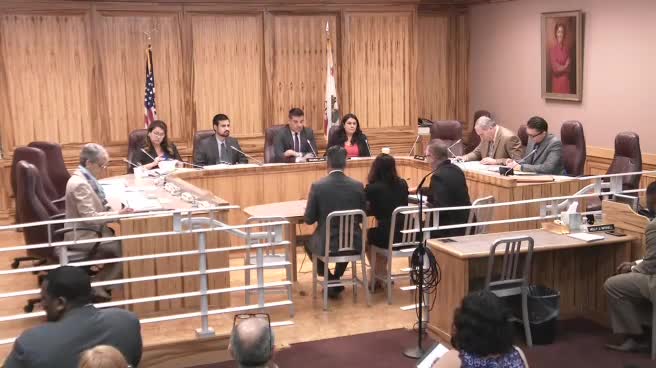
Discussed in Hearing
 3MIN
Senate Standing Committee on Labor and Industrial Relations
Bill Author

Bill Co-Author(s):