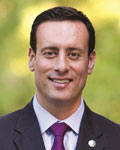
AB 2165: Firearms: prohibitions: exemptions.
- Session Year: 2015-2016
- House: Assembly
- Latest Version Date: 2016-09-26
Existing law makes it a crime for any person in this state to manufacture, import into the state for sale, keep for sale, offer or expose for sale, give, or lend an unsafe handgun. Under existing law, this prohibition does not apply to the sale or purchase of a handgun if the handgun is sold to, or purchased by, a police department, the Department of Corrections and Rehabilitation, or any federal law enforcement agency, among other entities.
This bill would also make the above prohibition inapplicable to the sale or purchase of a handgun if the handgun is sold to, or purchased by, specified entities or sworn members of those entities who have satisfactorily completed the firearms portion of a training course prescribed by the Commission on Peace Officer Standards and Training. The bill would prohibit a licensed firearms dealer from processing the sale or transfer of an unsafe handgun between a person who has obtained an unsafe handgun pursuant to this exemption and a person who is not exempt.
This bill would require a person, with exceptions, who obtains an unsafe handgun pursuant to this exemption to, when leaving the handgun in an unattended vehicle, as defined, lock the handgun in the vehicles trunk or lock the handgun in a locked container, as defined, and place the container out of plain view. The bill would make a violation of this provision an infraction punishable by a fine not exceeding $1,000. By creating a new crime, this bill would impose a state-mandated local program.
The California Constitution requires the state to reimburse local agencies and school districts for certain costs mandated by the state. Statutory provisions establish procedures for making that reimbursement.
This bill would provide that no reimbursement is required by this act for a specified reason.
Existing law makes it a crime for any person in this state to manufacture, import into the state for sale, keep for sale, offer or expose for sale, give, or lend an unsafe handgun. Under existing law, this prohibition does not apply to the sale or purchase of a handgun if the handgun is sold to, or purchased by, a police department, the Department of Corrections and Rehabilitation, or any federal law enforcement agency, among other entities.
This bill would also make the above prohibition inapplicable to the sale or purchase of a handgun if the handgun is sold to, or purchased by, specified entities or sworn members of those entities who have satisfactorily completed the firearms portion of a training course prescribed by the Commission on Peace Officer Standards and Training. The bill would prohibit a person who obtains an unsafe handgun pursuant to this exemption from selling the handgun or otherwise transferring ownership of the handgun to a person who is not exempt from the above prohibition. licensed firearms dealer from processing the sale or transfer of an unsafe handgun between a person who has obtained an unsafe handgun pursuant to this exemption and a person who is not exempt.
This bill would require a person, with exceptions, who obtains an unsafe handgun pursuant to this exemption to, when leaving the handgun in an unattended vehicle, as defined, lock the handgun in the vehicles trunk or lock the handgun in a locked container, as defined, and place the container out of plain view. The bill would make a violation of this provision an infraction punishable by a fine not exceeding $1,000. By creating a new crime, this bill would impose a state-mandated local program.
The California Constitution requires the state to reimburse local agencies and school districts for certain costs mandated by the state. Statutory provisions establish procedures for making that reimbursement.
This bill would provide that no reimbursement is required by this act for a specified reason.
Existing law makes it a crime for any person in this state to manufacture, import into the state, state for sale, keep for sale, offer or expose for sale, give, or lend an unsafe handgun. Under existing law, this prohibition does not apply to the sale or purchase of a handgun if the handgun is sold to, or purchased by, a police department, the Department of Corrections and Rehabilitation, or any federal law enforcement agency, among other entities.
This bill would also make the above prohibition inapplicable to the sale of a handgun to, or purchase of one by, other peace officers, as specified, who have satisfactorily completed the portion of an introductory training course pertaining to the carrying and use of firearms. or purchase of a handgun if the handgun is sold to, or purchased by, specified entities or sworn members of those entities who have satisfactorily completed the firearms portion of a training course prescribed by the Commission on Peace Officer Standards and Training. The bill would prohibit a person who obtains an unsafe handgun pursuant to this exemption from selling the handgun or otherwise transferring ownership of the handgun to a person who is not exempt from the above prohibition.
This bill would require a person, with exceptions, who obtains an unsafe handgun pursuant to this exemption to, when leaving the handgun in an unattended vehicle, as defined, lock the handgun in the vehicles trunk or lock the handgun in a locked container, as defined, and place the container out of plain view. The bill would make a violation of this provision an infraction punishable by a fine not exceeding $1,000. By creating a new crime, this bill would impose a state-mandated local program.
The California Constitution requires the state to reimburse local agencies and school districts for certain costs mandated by the state. Statutory provisions establish procedures for making that reimbursement.
This bill would provide that no reimbursement is required by this act for a specified reason.
Existing law makes it a crime for any person in this state to manufacture, import into the state, keep for sale, offer or expose for sale, give, or lend an unsafe handgun. Under existing law, this prohibition does not apply to the sale or purchase of a handgun if the handgun is sold to, or purchased by, a police department, the Department of Corrections and Rehabilitation, or any federal law enforcement agency, among other entities.
This bill would also make the above prohibition inapplicable to the sale of a handgun to, or purchase of one by, other peace officers, as specified. specified, who have satisfactorily completed the portion of an introductory training course pertaining to the carrying and use of firearms.
Existing law makes it a crime for any person in this state to manufacture, import into the state, keep for sale, offer or expose for sale, give, or lend an unsafe handgun. Under existing law, this prohibition does not apply to the sale or purchase of a handgun if the handgun is sold to, or purchased by, a police department, the Department of Corrections and Rehabilitation, or any federal law enforcement agency, among other entities.
This bill would also make the above prohibition inapplicable to the sale of a handgun to, or purchase of one by, other peace officers, as specified.
(a)A person in this state who manufactures or causes to be manufactured, imports into the state for sale, keeps for sale, offers or exposes for sale, gives, or lends an unsafe handgun shall be punished by imprisonment in a county jail not exceeding one year.
(b)This section shall not apply to any of the following:
(1)The manufacture in this state, or importation into this state, of a prototype handgun when the manufacture or importation is for the sole purpose of allowing an independent laboratory certified by the Department of Justice pursuant to Section 32010 to conduct an independent test to determine whether that handgun is prohibited by Sections 31900 to 32110, inclusive, and, if not, allowing the department to add the firearm to the roster of handguns that may be sold in this state pursuant to Section 32015.
(2)The importation or lending of a handgun by employees or authorized agents of entities determining whether the weapon is prohibited by this section.
(3)Firearms listed as curios or relics, as defined in Section 478.11 of Title 27 of the Code of Federal Regulations.
(4)The sale or purchase of a handgun, if the handgun is sold to, or purchased by, the Department of Justice, a police department, a sheriffs official, a marshals office, the Department of Corrections and Rehabilitation, the Department of the California Highway Patrol, any district attorneys office, any federal law enforcement agency, or the military or naval forces of this state or of the United States for use in the discharge of their official duties. This section does not prohibit the sale to, or purchase by, sworn members of these agencies of a handgun.
(5)The sale, purchase, or delivery of a handgun, if the sale, purchase, or delivery of the handgun is made pursuant to subdivision (d) of Section 10334 of the Public Contract Code.
(6)Subject to the limitations set forth in subdivision (c), the sale or purchase of a handgun, if the handgun is sold to, or purchased by, any of the following entities or sworn members of these entities who have satisfactorily completed the firearms portion of a training course prescribed by the Commission on Peace Officer Standards and Training pursuant to Section 832:
(A)The Department of Parks and Recreation.
(B)The Department of Alcoholic Beverage Control.
(C)The Division of Investigation of the Department of Consumer Affairs.
(D)The Department of Motor Vehicles.
(E)The Fraud Division of the Department of Insurance.
(F)The State Department of State Hospitals.
(G)The Department of Fish and Wildlife.
(H)The State Department of Developmental Services.
(I)The Department of Forestry and Fire Protection.
(J)A county probation department.
(K)The Los Angeles World Airports, as defined in Section 830.15.
(L)A K12 public school district for use by a school police officer, as described in Section 830.32.
(M)A municipal water district for use by a park ranger, as described in Section 830.34.
(N)A county for use by a welfare fraud investigator or inspector, as described in Section 830.35.
(O)A county for use by the coroner or the deputy coroner, as described in Section 830.35.
(P)The Supreme Court and the courts of appeal for use by marshals of the Supreme Court and bailiffs of the courts of appeal, and coordinators of security for the judicial branch, as described in Section 830.36.
(Q)A fire department or fire protection agency of a county, city, city and county, district, or the state for use by either of the following:
(i)A member of an arson-investigating unit, regularly paid and employed in that capacity pursuant to Section 830.37.
(ii)A member other than a member of an arson-investigating unit, regularly paid and employed in that capacity pursuant to Section 830.37.
(R)The University of California Police Department, or the California State University Police Departments, as described in Section 830.2.
(S)A California Community College police department, as described in Section 830.32.
(c)(1)Notwithstanding Section 26825, a person licensed pursuant to Sections 26700 to 26915, inclusive, shall not process the sale or transfer of an unsafe handgun between a person who has obtained an unsafe handgun pursuant to an exemption specified in paragraph (6) of subdivision (b) and a person who is not exempt from the requirements of this section.
(2)(A)A person who obtains an unsafe handgun pursuant to paragraph (6) of subdivision (b) shall, when leaving the handgun in an unattended vehicle, lock the handgun in the vehicles trunk, lock the handgun in a locked container and place the container out of plain view, or lock the handgun in a locked container that is permanently affixed to the vehicles interior and not in plain view.
(B)A violation of subparagraph (A) is an infraction punishable by a fine not exceeding one thousand dollars ($1,000).
(C)For purposes of this paragraph, the following definitions shall apply:
(i)Vehicle has the same meaning as defined in Section 670 of the Vehicle Code.
(ii)A vehicle is unattended when a person who is lawfully carrying or transporting a handgun in the vehicle is not within close proximity to the vehicle to reasonably prevent unauthorized access to the vehicle or its contents.
(iii)Locked container has the same meaning as defined in Section 16850.
(D)Subparagraph (A) does not apply to a peace officer during circumstances requiring immediate aid or action that are within the course of his or her official duties.
(E)This paragraph does not supersede any local ordinance that regulates the storage of handguns in unattended vehicles if the ordinance was in effect before the date of the enactment of the act that added this subparagraph.
(d)Violations of subdivision (a) are cumulative with respect to each handgun and shall not be construed as restricting the application of any other law. However, an act or omission punishable in different ways by this section and other provisions of law shall not be punished under more than one provision, but the penalty to be imposed shall be determined as set forth in Section 654.
SEC. 2.No reimbursement is required by this act pursuant to Section 6 of Article XIIIB of the California Constitution because the only costs that may be incurred by a local agency or school district will be incurred because this act creates a new crime or infraction, eliminates a crime or infraction, or changes the penalty for a crime or infraction, within the meaning of Section 17556 of the Government Code, or changes the definition of a crime within the meaning of Section 6 of Article XIIIB of the California Constitution.
(a)A person in this state who manufactures or causes to be manufactured, imports into the state for sale, keeps for sale, offers or exposes for sale, gives, or lends an unsafe handgun shall be punished by imprisonment in a county jail not exceeding one year.
(b)This section shall not apply to any of the following:
(1)The manufacture in this state, or importation into this state, of a prototype handgun when the manufacture or importation is for the sole purpose of allowing an independent laboratory certified by the Department of Justice pursuant to Section 32010 to conduct an independent test to determine whether that handgun is prohibited by Sections 31900 to 32110, inclusive, and, if not, allowing the department to add the firearm to the roster of handguns that may be sold in this state pursuant to Section 32015.
(2)The importation or lending of a handgun by employees or authorized agents of entities determining whether the weapon is prohibited by this section.
(3)Firearms listed as curios or relics, as defined in Section 478.11 of Title 27 of the Code of Federal Regulations.
(4)The sale or purchase of a handgun, if the handgun is sold to, or purchased by, the Department of Justice, a police department, a sheriffs official, a marshals office, the Department of Corrections and Rehabilitation, the Department of the California Highway Patrol, any district attorneys office, any federal law enforcement agency, or the military or naval forces of this state or of the United States for use in the discharge of their official duties. This section does not prohibit the sale to, or purchase by, sworn members of these agencies of a handgun.
(5)The sale, purchase, or delivery of a handgun, if the sale, purchase, or delivery of the handgun is made pursuant to subdivision (d) of Section 10334 of the Public Contract Code.
(6)Subject to the limitations set forth in subdivision (c), the sale or purchase of a handgun, if the handgun is sold to, or purchased by, any of the following entities or sworn members of these entities who have satisfactorily completed the firearms portion of a training course prescribed by the Commission on Peace Officer Standards and Training pursuant to Section 832:
(A)The Department of Parks and Recreation.
(B)The Department of Alcoholic Beverage Control.
(C)The Division of Investigation of the Department of Consumer Affairs.
(D)The Department of Motor Vehicles.
(E)The Fraud Division of the Department of Insurance.
(F)The State Department of State Hospitals.
(G)The Department of Fish and Wildlife.
(G)
(H)The State Department of Developmental Services.
(H)The State Fire Marshal.
(I)The Department of Forestry and Fire Protection.
(I)
(J)A county probation department.
(J)
(K)The Los Angeles World Airports, as defined in Section 830.15.
(K)
(L)A K12 public school district for use by a school police officer, as described in Section 830.32.
(L)
(M)A municipal water district for use by a park ranger, as described in Section 830.34.
(M)
(N)A county for use by a welfare fraud investigator or inspector, as described in Section 830.35.
(N)
(O)A county for use by the coroner or the deputy coroner, as described in Section 830.35.
(O)
(P)The Supreme Court and the courts of appeal for use by marshals of the Supreme Court and bailiffs of the courts of appeal, and coordinators of security for the judicial branch, as described in Section 830.36.
(P)
(Q)A fire department or fire protection agency of a county, city, city and county, district, or the state for use by either of the following:
(i)A member of an arson-investigating unit, regularly paid and employed in that capacity pursuant to Section 830.37.
(ii)A member other than a member of an arson-investigating unit, regularly paid and employed in that capacity pursuant to Section 830.37.
(c)(1)A person who obtains an unsafe handgun pursuant to paragraph (6) of subdivision (b) shall not sell the handgun or otherwise transfer ownership of the handgun to a person who is not exempt from this section pursuant to subdivision (b).
(R)The University of California Police Department, or the California State University Police Departments, as described in Section 830.2.
(S)A California Community College police department, as described in Section 830.32.
(c)(1)Notwithstanding Section 26825, a person licensed pursuant to Sections 26700 to 26915, inclusive, shall not process the sale or transfer of an unsafe handgun between a person who has obtained an unsafe handgun pursuant to an exemption specified in paragraph (6) of subdivision (b) and a person who is not exempt from the requirements of this section.
(2)(A)A person who obtains an unsafe handgun pursuant to paragraph (6) of subdivision (b) shall, when leaving the handgun in an unattended vehicle, lock the handgun in the vehicles trunk or trunk, lock the handgun in a locked container and place the container out of plain view. view, or lock the handgun in a locked container that is permanently affixed to the vehicles interior and not in plain view.
(B)A violation of subparagraph (A) is an infraction punishable by a fine not exceeding one thousand dollars ($1,000).
(C)For purposes of this paragraph, the following definitions shall apply:
(i)Vehicle has the same meaning as defined in Section 670 of the Vehicle Code.
(ii)A vehicle is unattended when a person who is lawfully carrying or transporting a handgun in the vehicle is not within close proximity to the vehicle to reasonably prevent unauthorized access to the vehicle or its contents.
(iii)Locked container has the same meaning as defined in Section 16850.
(D)Subparagraph (A) does not apply to a peace officer during circumstances requiring immediate aid or action that are within the course of his or her official duties.
(E)This paragraph does not supersede any local ordinance that regulates the storage of handguns in unattended vehicles if the ordinance was in effect before the date of the enactment of the act that added this subparagraph.
(d)Violations of subdivision (a) are cumulative with respect to each handgun and shall not be construed as restricting the application of any other law. However, an act or omission punishable in different ways by this section and other provisions of law shall not be punished under more than one provision, but the penalty to be imposed shall be determined as set forth in Section 654.
SEC. 2.No reimbursement is required by this act pursuant to Section 6 of Article XIIIB of the California Constitution because the only costs that may be incurred by a local agency or school district will be incurred because this act creates a new crime or infraction, eliminates a crime or infraction, or changes the penalty for a crime or infraction, within the meaning of Section 17556 of the Government Code, or changes the definition of a crime within the meaning of Section 6 of Article XIIIB of the California Constitution.
(a)A person in this state who manufactures or causes to be manufactured, imports into the state for sale, keeps for sale, offers or exposes for sale, gives, or lends an unsafe handgun shall be punished by imprisonment in a county jail not exceeding one year.
(b)This section shall not apply to any of the following:
(1)The manufacture in this state, or importation into this state, of a prototype handgun when the manufacture or importation is for the sole purpose of allowing an independent laboratory certified by the Department of Justice pursuant to Section 32010 to conduct an independent test to determine whether that handgun is prohibited by Sections 31900 to 32110, inclusive, and, if not, allowing the department to add the firearm to the roster of handguns that may be sold in this state pursuant to Section 32015.
(2)The importation or lending of a handgun by employees or authorized agents of entities determining whether the weapon is prohibited by this section.
(3)Firearms listed as curios or relics, as defined in Section 478.11 of Title 27 of the Code of Federal Regulations.
(4)The sale or purchase of a handgun, if the handgun is sold to, or purchased by, the Department of Justice, a police department, a sheriffs official, a marshals office, the Department of Corrections and Rehabilitation, the Department of the California Highway Patrol, any district attorneys office, any other peace officer described in Chapter 4.5 (commencing with Section 830) of Title 3 of Part 2 who has satisfactorily completed the portion of the introductory training course specified in Section 832 pertaining to the carrying and use of firearms, any federal law enforcement agency, or the military or naval forces of this state or of the United States for use in the discharge of their official duties. This section does not prohibit the sale to, or purchase by, sworn members of these agencies of a handgun.
(5)The sale, purchase, or delivery of a handgun, if the sale, purchase, or delivery of the handgun is made pursuant to subdivision (d) of Section 10334 of the Public Contract Code.
(6)Subject to the limitations set forth in subdivision (c), the sale or purchase of a handgun, if the handgun is sold to, or purchased by, any of the following entities or sworn members of these entities who have satisfactorily completed the firearms portion of a training course prescribed by the Commission on Peace Officer Standards and Training pursuant to Section 832:
(A)The Department of Parks and Recreation.
(B)The Department of Alcoholic Beverage Control.
(C)The Division of Investigation of the Department of Consumer Affairs.
(D)The Department of Motor Vehicles.
(E)The Fraud Division of the Department of Insurance.
(F)The State Department of State Hospitals.
(G)The State Department of Developmental Services.
(H)The State Fire Marshal.
(I)A county probation department.
(J)The Los Angeles World Airports, as defined in Section 830.15.
(K)A K-12 public school district for use by a school police officer, as described in Section 830.32.
(L)A municipal water district for use by a park ranger, as described in Section 830.34.
(M)A county for use by a welfare fraud investigator or inspector, as described in Section 830.35.
(N)A county for use by the coroner or the deputy coroner, as described in Section 830.35.
(O)The Supreme Court and the courts of appeal for use by marshals of the Supreme Court and bailiffs of the courts of appeal, and coordinators of security for the judicial branch, as described in Section 830.36.
(P)A fire department or fire protection agency of a county, city, city and county, district, or the state for use by either of the following:
(i)A member of an arson-investigating unit, regularly paid and employed in that capacity pursuant to Section 830.37.
(ii)A member other than a member of an arson-investigating unit, regularly paid and employed in that capacity pursuant to Section 830.37.
(c)(1)A person who obtains an unsafe handgun pursuant to paragraph (6) of subdivision (b) shall not sell the handgun or otherwise transfer ownership of the handgun to a person who is not exempt from this section pursuant to subdivision (b).
(2)(A)A person who obtains an unsafe handgun pursuant to paragraph (6) of subdivision (b) shall, when leaving the handgun in an unattended vehicle, lock the handgun in the vehicles trunk or lock the handgun in a locked container and place the container out of plain view.
(B)A violation of subparagraph (A) is an infraction punishable by a fine not exceeding one thousand dollars ($1,000).
(C)For purposes of this paragraph, the following definitions shall apply:
(i)Vehicle has the same meaning as defined in Section 670 of the Vehicle Code.
(ii)A vehicle is unattended when a person who is lawfully carrying or transporting a handgun in the vehicle is not within close proximity to the vehicle to reasonably prevent unauthorized access to the vehicle or its contents.
(iii)Locked container has the same meaning as defined in Section 16850.
(D)Subparagraph (A) does not apply to a peace officer during circumstances requiring immediate aid or action that are within the course of his or her official duties.
(c)
(d)Violations of subdivision (a) are cumulative with respect to each handgun and shall not be construed as restricting the application of any other law. However, an act or omission punishable in different ways by this section and other provisions of law shall not be punished under more than one provision, but the penalty to be imposed shall be determined as set forth in Section 654.
SEC. 2.No reimbursement is required by this act pursuant to Section 6 of Article XIIIB of the California Constitution because the only costs that may be incurred by a local agency or school district will be incurred because this act creates a new crime or infraction, eliminates a crime or infraction, or changes the penalty for a crime or infraction, within the meaning of Section 17556 of the Government Code, or changes the definition of a crime within the meaning of Section 6 of Article XIIIB of the California Constitution.
(a)A person in this state who manufactures or causes to be manufactured, imports into the state for sale, keeps for sale, offers or exposes for sale, gives, or lends an unsafe handgun shall be punished by imprisonment in a county jail not exceeding one year.
(b)This section shall not apply to any of the following:
(1)The manufacture in this state, or importation into this state, of a prototype handgun when the manufacture or importation is for the sole purpose of allowing an independent laboratory certified by the Department of Justice pursuant to Section 32010 to conduct an independent test to determine whether that handgun is prohibited by Sections 31900 to 32110, inclusive, and, if not, allowing the department to add the firearm to the roster of handguns that may be sold in this state pursuant to Section 32015.
(2)The importation or lending of a handgun by employees or authorized agents of entities determining whether the weapon is prohibited by this section.
(3)Firearms listed as curios or relics, as defined in Section 478.11 of Title 27 of the Code of Federal Regulations.
(4)The sale or purchase of a handgun, if the handgun is sold to, or purchased by, the Department of Justice, a police department, a sheriffs official, a marshals office, the Department of Corrections and Rehabilitation, the Department of the California Highway Patrol, any district attorneys office, any other peace officer described in Chapter 4.5 (commencing with Section 830) of Title 3 of Part 2 of the Penal Code, who has satisfactorily completed the portion of the introductory training course specified in Section 832 pertaining to the carrying and use of firearms, any federal law enforcement agency, or the military or naval forces of this state or of the United States for use in the discharge of their official duties. This section does not prohibit the sale to, or purchase by, sworn members of these agencies of a handgun.
(5)The sale, purchase, or delivery of a handgun, if the sale, purchase, or delivery of the handgun is made pursuant to subdivision (d) of Section 10334 of the Public Contract Code.
(c)Violations of subdivision (a) are cumulative with respect to each handgun and shall not be construed as restricting the application of any other law. However, an act or omission punishable in different ways by this section and other provisions of law shall not be punished under more than one provision, but the penalty to be imposed shall be determined as set forth in Section 654.
(a)A person in this state who manufactures or causes to be manufactured, imports into the state for sale, keeps for sale, offers or exposes for sale, gives, or lends an unsafe handgun shall be punished by imprisonment in a county jail not exceeding one year.
(b)This section shall not apply to any of the following:
(1)The manufacture in this state, or importation into this state, of a prototype handgun when the manufacture or importation is for the sole purpose of allowing an independent laboratory certified by the Department of Justice pursuant to Section 32010 to conduct an independent test to determine whether that handgun is prohibited by Sections 31900 to 32110, inclusive, and, if not, allowing the department to add the firearm to the roster of handguns that may be sold in this state pursuant to Section 32015.
(2)The importation or lending of a handgun by employees or authorized agents of entities determining whether the weapon is prohibited by this section.
(3)Firearms listed as curios or relics, as defined in Section 478.11 of Title 27 of the Code of Federal Regulations.
(4)The sale or purchase of a handgun, if the handgun is sold to, or purchased by, the Department of Justice, a police department, a sheriffs official, a marshals office, the Department of Corrections and Rehabilitation, the California Highway Patrol, any district attorneys office, any other peace officer described in Chapter 4.5 (commencing with Section 830) of Title 3 of Part 2 of the Penal Code, any federal law enforcement agency, or the military or naval forces of this state or of the United States for use in the discharge of their official duties. This section does not prohibit the sale to, or purchase by, sworn members of these agencies of a handgun.
(5)The sale, purchase, or delivery of a handgun, if the sale, purchase, or delivery of the handgun is made pursuant to subdivision (d) of Section 10334 of the Public Contract Code.
(c)Violations of subdivision (a) are cumulative with respect to each handgun and shall not be construed as restricting the application of any other law. However, an act or omission punishable in different ways by this section and other provisions of law shall not be punished under more than one provision, but the penalty to be imposed shall be determined as set forth in Section 654.
|
Date
|
Status
|
|---|---|
| Sep 9, 2016 | Enrolled and presented to the Governor at 2:30 p.m. |
| Aug 30, 2016 | Senate amendments concurred in. To Engrossing and Enrolling. (Ayes 77. Noes 0. Page 6470.). |
| Aug 30, 2016 | Senate amendments concurred in. To Engrossing and Enrolling. |
| Aug 29, 2016 | In Assembly. Concurrence in Senate amendments pending. |
| Aug 25, 2016 | Read third time. Passed. Ordered to the Assembly. (Ayes 37. Noes 0. Page 5419.). |
| Aug 25, 2016 | Read third time. Passed. Ordered to the Assembly. |
| Aug 22, 2016 | Read second time. Ordered to third reading. |
| Aug 19, 2016 | Read third time and amended. Ordered to second reading. |
| Aug 2, 2016 | Read second time. Ordered to third reading. |
| Aug 1, 2016 | From committee: Be placed on second reading file pursuant to Senate Rule 28.8. |
| Jun 29, 2016 | Re-referred to Com. on APPR. pursuant to Joint Rule 10.5. |
| Jun 28, 2016 | Read second time and amended. Ordered to third reading. |
| Jun 27, 2016 | From committee: Amend, and do pass as amended. (Ayes 7. Noes 0.) (June 21). |
| May 5, 2016 | Referred to Com. on PUB. S. |
| Apr 25, 2016 | Read third time. Passed. Ordered to the Senate. (Ayes 73. Noes 2. Page 4496.) |
| Apr 25, 2016 | Read third time. Passed. Ordered to the Senate. (Ayes 73. Noes 2.) |
| Apr 25, 2016 | In Senate. Read first time. To Com. on RLS. for assignment. |
| Apr 25, 2016 | Read third time. Passed. Ordered to the Senate. |
| Apr 14, 2016 | Read second time. Ordered to third reading. |
| Apr 13, 2016 | From committee: Do pass. (Ayes 5. Noes 0.) (April 12). |
| Apr 11, 2016 | Re-referred to Com. on PUB. S. |
| Apr 7, 2016 | From committee chair, with author's amendments: Amend, and re-refer to Com. on PUB. S. Read second time and amended. |
| Apr 5, 2016 | In committee: Set, second hearing. Hearing canceled at the request of author. |
| Mar 29, 2016 | In committee: Set, first hearing. Hearing canceled at the request of author. |
| Feb 29, 2016 | Referred to Com. on PUB. S. |
| Feb 18, 2016 | From printer. May be heard in committee March 19. |
| Feb 17, 2016 | Read first time. To print. |
|
Date
|
Description
|
Location
|
Votes
|
|
|---|---|---|---|---|
| Aug 30, 2016 | AB 2165 BONTA Concurrence in Senate Amendments | Assembly Floor |
Passed |
|
| Aug 25, 2016 | Assembly 3rd Reading AB2165 Bonta By Roth | Senate Floor |
Passed |
|
| Jun 21, 2016 | Do pass as amended | Senate Standing Committee on Public Safety |
Passed |
|
| Apr 25, 2016 | AB 2165 BONTA Assembly Third Reading | Assembly Floor |
Passed |
|
| Apr 12, 2016 | Do pass. | Assembly Standing Committee on Public Safety |
Passed |
This list shows positions taken on this bill by organizations on the date displayed, which is linked to the original source.
Positions by individuals are not included.
CONCURRENCE IN SENATE AMENDMENTS
CSA1 Bill Id:AB 2165
Author:(Bonta)
As Amended Ver:August 19, 2016
Majority vote
ASSEMBLY: | 73-2 | (April 25, 2016) | SENATE: | 37-0 | (August 25, 2016) |
Original Committee Reference: PUB. S.
SUMMARY: Provides that specified peace officers, who have satisfactorily completed the Commission on Peace Officer Standards and Training (POST) prescribed firearms training course, shall be exempt from the state prohibition relating to the sale or purchase of an unsafe handgun.
The Senate amendments:
- Authorize sworn members of the following entities, who have satisfactorily completed a firearms training course prescribed by POST, to purchase or sell unsafe firearms, except as specified:
- The Department of Parks and Recreation;
- The Department of Alcoholic and Beverage Control;
- The Division of Investigation of the Department of Consumer Affairs;
- The Department of Motor Vehicles;
- The Fraud Division of the Department of Insurance;
- The State Department of State Hospitals;
- The Department of Fish and Wildlife;
- The State Department of Developmental Services;
- The Department of Forestry and Fire Protection;
- A county probation department;
- The Los Angeles World Airports;
- A K-12 public school district for use by a school police officer;
- A municipal water district for use by a park ranger;
- A county for use by welfare fraud investigator or inspector;
- A county for use by the coroner or deputy coroner;
- The Supreme Court and the courts of appeal for use by Marshalls of the Supreme Court and bailiffs of the court of appeal coordinators of security for the judicial branch.
- A fire department or fire protection agency of a county, city, city and county; district, or the state for use by either of the following:
- A member of an arson investigating unit regularly paid and employed in that capacity; and,
- A member other that a member of an arson investigating unit, regularly paid and employed as an arson investigator.
- The University of California Police Department, or the California State University Police Department, as specified; and,
- A California Community College Police Department, as specified.
- Prohibit a licensed firearms dealer from processing the sale or transfer of an unsafe handgun from a person that has obtained an unsafe handgun pursuant to the sworn peace officer exemption and a person who is not exempt.
- State that a sworn peace officer of an entity exempt from the prohibition related to the sale or purchase of an unsafe handgun, who obtains an unsafe handgun, shall when leaving an unattended vehicle, to lock the handgun in the vehicle's trunk or lock the handgun in a locked container and place the container out of plain view, or lock the handgun in locked container that is permanently affixed to the vehicle's interior and not in plain view, and a violation of this requirement is an infraction punishable by a fine not to exceed $1,000.
- State that the requirement that an unsafe handgun be safely stored when left in an unattended vehicle by a peace officer does not apply to a peace officer during circumstances requiring immediate aid or action that are within the course and scope of his or her official duties.
- State that this safe storage law does not supersede any local ordinance that was in effect prior to the enactment of this new law.
EXISTING LAW:
- Requires, commencing January 1, 2001, that any person in California who manufactures or causes to be manufactured, imports into the state for sale, keeps for sale, offers or exposes for sale, gives, or lends any unsafe handgun shall be punished by imprisonment in a county jail not exceeding one year.
- Specifies that this section shall not apply to any of the following:
- The manufacture in California, or importation into this state, of any prototype pistol, revolver, or other firearm capable of being concealed upon the person when the manufacture or importation is for the sole purpose of allowing an independent laboratory certified by the Department of Justice (DOJ) to conduct an independent test to determine whether that pistol, revolver, or other firearm capable of being concealed upon the person is prohibited, inclusive, and, if not, allowing the department to add the firearm to the roster of pistols, revolvers, and other firearms capable of being concealed upon the person that may be sold in this.
- The importation or lending of a pistol, revolver, or other firearm capable of being concealed upon the person by employees or authorized agents of entities determining whether the weapon is prohibited by this section.
- Firearms listed as curios or relics, as defined in federal law.
- The sale or purchase of any pistol, revolver, or other firearm capable of being concealed upon the person, if the pistol, revolver, or other firearm is sold to, or purchased by, the Department of Justice, any police department, any sheriff's official, any marshal's office, the Youth and Adult Correctional Agency, the California Highway Patrol, any district attorney's office, or the military or naval forces of this state or of the United States for use in the discharge of their official duties. Nor shall anything in this section prohibit the sale to, or purchase by, sworn members of these agencies of any pistol, revolver, or other firearm capable of being concealed upon the person.
- Specifies that this section shall not apply to any of the following:
- Specifies that violations of the unsafe handgun provisions are cumulative with respect to each handgun and shall not be construed as restricting the application of any other law.
- Defines "unsafe handgun" as any pistol, revolver, or other firearm capable of being concealed upon the person, as specified, which lacks various safety mechanisms, as specified.
- Requires any concealable firearm manufactured in California, imported for sale, kept for sale, or offered for sale to be tested within a reasonable period of time by an independent laboratory, certified by the state DOJ, to determine whether it meets required safety standards, as specified.
- Requires DOJ, on and after January 1, 2001, to compile, publish, and thereafter maintain a roster listing all of the pistols, revolvers, and other firearms capable of being concealed upon the person that have been tested by a certified testing laboratory, have been determined not to be unsafe handguns, and may be sold in this state, as specified. The roster shall list, for each firearm, the manufacturer, model number, and model name.
- Provides that DOJ may charge every person in California who is licensed as a manufacturer of firearms, as specified, and any person in California who manufactures or causes to be manufactured, imports into California for sale, keeps for sale, or offers or exposes for sale any pistol, revolver, or other firearm capable of being concealed upon the person in California, an annual fee not exceeding the costs of preparing, publishing, and maintaining the roster of firearms determined not be unsafe, and the costs of research and development, report analysis, firearms storage, and other program infrastructure costs, as specified.
AS PASSED BY THE ASSEMBLY, this bill provided that any peace officer who has completed the Commission on Peace Officer Standards and Training (POST) course in the carrying and use of a firearm shall be exempt from the state prohibition relating to the sale or purchase of an unsafe handgun.
FISCAL EFFECT: According to the Senate Appropriations Committee, pursuant to Senate Rule 28.8, negligible state costs.
COMMENTS: "AB 2165 is a simple clarification allowing trained peace officers to continue to carry and use their existing firearms for use in the discharge of their official duties. Many of these officers have been issued these weapons by their departments over the past several years, but recent changes in interpretation by the Department of Justice has put these officers in limbo and created a risk of legal and financial liability. This has affected agencies up and down the state, from more specialized police departments that do not serve a particular municipality, to probation departments, and finally the Department of Alcoholic Beverage Control and the Department of Insurance. These categories of peace officers participate in mutual aid situations, task forces, sting operations and arrests—all high-risk situations require that these officers be properly armed. It is imperative that we provide the statutory basis for the parity between agencies that has existed since the creation of the roster."
Analysis Prepared by: Gregory Pagan / PUB. S. / (916) 319-3744 FN: 0004793
Office of Senate Floor Analyses (916) 651-1520 Fax: (916) 327-4478 | AB |
THIRD READING
Bill No: AB 2165
:
SENATE PUBLIC SAFETY COMMITTEE: 7-0, 6/21/16
AYES: Hancock, Anderson, Glazer, Leno, Liu, Monning, Stone
SENATE APPROPRIATIONS: Senate Rule 28.8
ASSEMBLY FLOOR: 73-2, 4/25/16 - See last page for vote
SOURCE: California Statewide Law Enforcement Association
State Coalition of Probation Organizations
Peace Officers Research Association of California
__________________________________________________________________
DIGEST: This bill exempts a number of agencies and their peace officers from the prohibition related to the purchase or sale of unsafe handguns, as specified.
Senate Floor Amendments of 8/19/16 add the following departments to the exemption from the handgun roster: (1) The State Department of Fish and Wildlife; (2) Department of Forestry and Fire Protection; (3) a California Community College police department; (4) a University of California Police Department; and (5) a California State University Police Department. These amendments, additionally, specify that a firearms dealer cannot process the sale or transfer of an unsafe handgun between a person who obtains an unsafe handgun pursuant to this bill and a person who is not exempt from roster requirements. These amendments also clarify that this bills storage provisions do not supersede any local ordinance that regulates the storage of handguns in unattended vehicles if the ordinance was in effect before the date of enactment of the act that added this section.
Existing law:
- Defines an unsafe handgun as any pistol, revolver, or other firearm capable of being concealed upon the person, which lacks various specified safety mechanisms and does not pass specified safety tests. (Penal Code § 31910.)
- Provides that commencing January 1, 2001, no “unsafe handgun” may be manufactured or sold in California by a licensed dealer, except as specified, and requires that the Department of Justice (DOJ) prepare and maintain a roster of handguns which are determined not to be unsafe handguns. Private party sales (used or previously owned) and transfers of handguns through a licensed dealer are exempted from those restrictions. (Penal Code §§ 27545, 32000, et seq., § 32110.)
- Provides that any person in California who manufactures or causes to be manufactured, imports into the state for sale, keeps for sale, offers or exposes for sale, gives, or lends any unsafe handgun shall be punished by imprisonment in a county jail not exceeding one year. (Penal Code § 32000(a).)
- Does the following:
- Defines “unsafe handgun” as any pistol, revolver, or other firearm capable of being concealed upon the person, as specified, which lacks various safety mechanisms, including a chamber load indicator and magazine disconnect, and does not pass listed tests, as specified. (Penal Code § 31910.)
- Requires any concealable firearm manufactured in California, or intended to be imported for sale, kept for sale, or offered for sale to be tested within a reasonable period of time by an independent laboratory, certified by the state DOJ to determine whether it meets required safety standards, as specified. (Penal Code § 32010.)
- Requires DOJ, on and after January 1, 2001, to compile, publish, and thereafter maintain a roster listing all of the pistols, revolvers, and other firearms capable of being concealed upon the person that have been tested by a certified testing laboratory, have been determined not to be unsafe handguns, and may be sold in this state, as specified. The roster shall list, for each firearm, the manufacturer, model number, and model name. (Penal Code § 32015.)
- Provides that DOJ may charge every person in California who is licensed as a manufacturer of firearms, as specified, and any person in California who manufactures or causes to be manufactured, imports into California for sale, keeps for sale, or offers or exposes for sale any pistol, revolver, or other firearm capable of being concealed upon the person in California, an annual fee not exceeding the costs of preparing, publishing, and maintaining the roster of firearms determined not to be unsafe, and the costs of research and development, report analysis, firearms storage, and other program infrastructure costs, as specified. (Penal Code § 32015.)
- Requires that, commencing January 1, 2010, all semiautomatic pistols that are not already listed on the roster be designed and equipped with a microscopic array of characters that identify the make, model, and serial number of the pistol, etched or otherwise imprinted in two or more places on the interior surface or internal working parts of the pistol, and that are transferred by imprinting on each cartridge case when the firearm is fired, provided that the DOJ certifies that the technology used to create the imprint is available to more than one manufacturer unencumbered by any patent restrictions. On May 17, 2013, DOJ issued that certification. (Penal Code § 31910(b)(7).)
- Specifies, in Penal Code section 32000(b) that the following are exempt from roster requirements:
- The manufacture in California, or importation into this state, of any prototype pistol, revolver, or other firearm capable of being concealed upon the person when the manufacture or importation is for the sole purpose of allowing an independent laboratory certified by DOJ to conduct an independent test to determine whether that pistol, revolver, or other firearm capable of being concealed upon the person is prohibited, inclusive, and, if not, allowing the department to add the firearm to the roster of pistols, revolvers, and other firearms capable of being concealed upon the person that may be sold in this.
- The importation or lending of a pistol, revolver, or other firearm capable of being concealed upon the person by employees or authorized agents of entities determining whether the weapon is prohibited by this section.
- Firearms listed as curios or relics, as defined in federal law.
- The sale or purchase of any pistol, revolver, or other firearm capable of being concealed upon the person, if the pistol, revolver, or other firearm is sold to, or purchased by, the DOJ, any police department, any sheriff’s official, any marshal’s office, the Youth and Adult Correctional Agency, the California Highway Patrol, any district attorney’s office, or the military or naval forces of this state or of the United States for use in the discharge of their official duties. Nor shall anything in this section prohibit the sale to, or purchase by, sworn members of these agencies of any pistol, revolver, or other firearm capable of being concealed upon the person.
- Contains numerous additional exemptions to the safe handgun requirements, including an exemption for any transfer that is not required to be made through a licensed dealer. This exemption alone includes within it another approximately 25 exemptions. (Penal Code §§ 32110, 27850, et seq.)
This bill:
- Exempts the following agencies and their peace officers, who have satisfactorily completed the firearms portion of a training course prescribed by the Commission on Peace Officer Standards and Training pursuant to Section 832, from roster requirements:
- The Department of Parks and Recreation.
- The Department of Alcoholic Beverage Control.
- The Division of Investigation of the Department of Consumer Affairs.
- The Department of Motor Vehicles.
- The Fraud Division of the Department of Insurance.
- The State Department of State Hospitals.
- The State Department of Developmental Services.
- A county probation department.
- The Los Angeles World Airports, as defined in Section 830.15.
- A K-12 public school district for use by a school police officer, as described in Section 830.32.
- A municipal water district for use by a park ranger, as described in Section 830.34.
- A county for use by a welfare fraud investigator or inspector, as described in Section 830.35.
- A county for use by the coroner or the deputy coroner, as described in Section 830.35.
- The Supreme Court and the courts of appeal for use by marshals of the Supreme Court and bailiffs of the courts of appeal, and coordinators of security for the judicial branch, as described in Section 830.36.
- A fire department or fire protection agency of a county, city, city and county, district, or the state for use by either of the following:
- A member of an arson-investigating unit, regularly paid and employed in that capacity pursuant to Section 830.37.
- A member other than a member of an arson-investigating unit, regularly paid and employed in that capacity pursuant to Section 830.37.
- The State Department of Fish and Wildlife.
- Department of Forestry and Fire Protection.
- A California Community College Police Department
- A University of California Police Department
- A California State University Police Department.
- Specifies that a firearms dealer cannot process the sale or transfer of an unsafe handgun between a person who obtains an unsafe handgun pursuant to this legislation and a person who is not exempt from roster requirements.
- Provides that an exempt party, that obtains a handgun pursuant to this bill, shall, when leaving the handgun in an unattended vehicle, lock the handgun in the vehicle’s trunk or lock the handgun in a locked container and place the container out of plain view. A violation of this provision an infraction punishable by a fine not exceeding one thousand dollars ($1,000). This provision does not apply to a peace officer during circumstances requiring immediate aid or action that are within the course of his or her official duties. Provides that these provisions do not supersede any local ordinance that regulates the storage of handguns in unattended vehicles if the ordinance was in effect before the date of enactment of the act that added this section.
- States that the following definitions apply:
- “Vehicle” has the same meaning as defined in Section 670 of the Vehicle Code.
- A vehicle is “unattended” when a person who is lawfully carrying or transporting a handgun in the vehicle is not within close proximity to the vehicle to reasonably prevent unauthorized access to the vehicle or its contents.
- “Locked container” has the same meaning as defined in Section 16850.
Comments
Current law exempts handguns from the safety requirements that are sold to, or purchased by, the Department of Justice, any police department, any sheriff’s official, any marshal’s office, the Youth and Adult Correctional Agency, the California Highway Patrol, any district attorney’s office, or the military. Sworn members of those agencies are also exempted from the ban on buying or selling handguns that are not on DOJ’s “not unsafe” handgun roster. The law, additionally, allows sworn members of these agencies to sell an off-roster handgun to someone who is not exempt.
Until recently, a number of law enforcement agencies, and officers, have been able to purchase off-roster firearms. There was, evidently, some confusion among dealers as to who qualifies for the roster exemptions. When this was discovered by DOJ, the dealers were issued cited and DOJ reminded the dealers that only listed law enforcement agencies are allowed to purchase off-roster firearms. This bill, additionally, exempts to the above list of agencies, and their officers, from roster requirements.
FISCAL EFFECT: Appropriation: No Fiscal Com.: Yes Local:
California Statewide Law Enforcement Association (co-source)
Peace Officers Research Association of California (co-source)
State Coalition of Probation Organizations (co-source)
California Department of Insurance
California Correctional Supervisors Organization
California Probation, Parole and Correctional Association
California Police Chiefs Association
California Parole and Correctional Association
Chief Probation Officers of California
Fraternal Order of Police, N. California Probation Lodge 19
Kern County Probation Officers Association
Los Angeles Probation Officers Union, AFSCME Local 685
Los Angeles Professional Peace Officers Association
Madera Probation Peace Officers Association
Riverside Sheriffs’ Association
Sacramento County Probation Association
Sacramento Police Officers Association
San Diego County Probation Officers Association
San Diego Police Officers Association
San Joaquin County Probation Officers Association
Santa Clara County Probation Peace Officers’ Union, Local 1587
Stanislaus County Deputy Probation Officers Association
Ventura County Professional Peace Officers’ Association
OPPOSITION: (Verified 8/24/16)
Brady Campaign to Prevent Gun Violence
Coalition Against Gun Violence, a Santa Barbara Coalition
Law Center to Prevent Gun Violence
Oakland/Alameda County Chapter of the Brady Campaign to Prevent Gun Violence
Orange County Citizens for the Prevention of Gun Violence
Women Against Gun Violence
ARGUMENTS IN SUPPORT: According to the California Statewide Law Enforcement Association:
In 2001, Penal Code §32000 created a list of non-exempt agencies who may purchase non-roster firearms for use in the discharge of their official duties. Certain trained peace officers and law enforcement personnel were left off of the list. These peace officers are often required to participate in mutual aid situations, task forces, sting operations and arrests. These high-risk situations require that these officers be properly warned.
Recent enforcement of the gun roster by the Department of Justice would require thousands of law enforcement to forfeit their guns. This legislation is necessary because it will allow officers, who have gone through the appropriate training to carry and keep their “non-roster” handguns, while on active duty. Not fixing this issue will create a serious risk of liability that is easily avoidable with the amendment to Penal Code §830.3. There is also a cost savings to the State of California because new handguns will not have to be purchased for many of these personnel. Lastly, this bill simply seeks parity with other peace officers and various law enforcement agencies.
ARGUMENTS IN OPPOSITION: According to the Law Center to Prevent Gun Violence:
In 1999, the California Legislature enacted the Unsafe Handgun Act (UHA), which requires all new handgun models to meet basic reliability and safety standards in order to be certified for sale or manufacture by DOJ. In order to be certified, a handgun model must pass a firing test to confirm the gun can be fired multiple times without malfunctioning and pass a drop safety test to confirm the firearm can be dropped without discharging. New handgun models developed after January 2007 must generally utilize a chamber load indicator to signify when the firearm is loaded, as well as a magazine disconnect mechanism to prevent the gun from firing if a detachable magazine is removed. Those developed after January 2010 must also incorporate microstamping technology, which imprints a unique code on a casing when a handgun is fired to help law enforcement solve gun crimes.
Since enactment of the UHA, the rate of accidental shooting deaths in California has fallen by more than 50%, according to CDC data. Though the national rate has also fallen over this period, California’s rate has fallen twice as much and is now just one-third the national average
The UHA currently exempts specified law enforcement agencies under limited circumstances. This exemption allows those agencies to purchase uncertified “off-roster” handguns for use in the discharge of their official duties, and allows sworn members of these agencies—and only these agencies— to purchase uncertified handguns for that purpose. However, the UHA does not require gun sellers to seek any verification that officers purchasing off-roster handguns were actually authorized to do so by their employing agency, and does not prevent officers from keeping unsafe handguns in their homes. Because the UHA also exempts handguns sold in private or secondary sales, officers who obtain unsafe guns can also subsequently resell them on the private market. This problematic exception undermines the UHA and should be narrowed, not expanded.
Instead of narrowing this law enforcement exception, AB 2165 seeks to permanently expand it to include all peace officers in California who have completed an “introductory training course” for peace officers in firearm use. This would extend existing law’s exemption to individuals with much more limited familiarity with firearms, including certain employees of the Departments of Fish and Game, Parks and Recreation, Forestry and Fire Protection, welfare fraud and child support investigators, medical investigators, and coroners. (Footnotes omitted.)
ASSEMBLY FLOOR: 73-2, 4/25/16
AYES: Achadjian, Alejo, Travis Allen, Arambula, Atkins, Baker, Bigelow, Bloom, Bonilla, Bonta, Brough, Brown, Burke, Calderon, Campos, Chávez, Chiu, Chu, Cooley, Cooper, Dababneh, Dahle, Daly, Dodd, Eggman, Frazier, Beth Gaines, Gallagher, Cristina Garcia, Eduardo Garcia, Gatto, Gipson, Gomez, Gonzalez, Gray, Grove, Hadley, Harper, Roger Hernández, Holden, Irwin, Jones, Jones-Sawyer, Kim, Lackey, Levine, Linder, Lopez, Low, Maienschein, Mathis, Mayes, McCarty, Medina, Melendez, Mullin, Nazarian, Obernolte, O'Donnell, Patterson, Ridley-Thomas, Rodriguez, Salas, Santiago, Steinorth, Thurmond, Ting, Wagner, Waldron, Weber, Wilk, Wood, Rendon
NOES: Quirk, Mark Stone
NO VOTE RECORDED: Chang, Chau, Gordon, Olsen, Williams
Prepared by: Jessica Devencenzi / PUB. S. /
8/24/16 10:14:08
**** END ****
Office of Senate Floor Analyses (916) 651-1520 Fax: (916) 327-4478 | AB |
THIRD READING
Bill No: AB 2165
:
SENATE PUBLIC SAFETY COMMITTEE: 7-0, 6/21/16
AYES: Hancock, Anderson, Glazer, Leno, Liu, Monning, Stone
SENATE APPROPRIATIONS: Senate Rule 28.8
ASSEMBLY FLOOR: 73-2, 4/25/16 - See last page for vote
SOURCE: California Statewide Law Enforcement Association
State Coalition of Probation Organizations
Peace Officers Research Association of California
__________________________________________________________________
DIGEST: This bill exempts a number of agencies and their peace officers from the prohibition related to the purchase or sale of unsafe handguns, as specified.
Senate Floor Amendments of 8/19/16 add the following departments to the exemption from the handgun roster: (1) The State Department of Fish and Wildlife; (2) Department of Forestry and Fire Protection; (3) a California Community College police department; (4) a University of California Police Department; and (5) a California State University Police Department. These amendments, additionally, specify that a firearms dealer cannot process the sale or transfer of an unsafe handgun between a person who obtains an unsafe handgun pursuant to this bill and a person who is not exempt from roster requirements. These amendments also clarify that this bills storage provisions do not supersede any local ordinance that regulates the storage of handguns in unattended vehicles if the ordinance was in effect before the date of enactment of the act that added this section.
Existing law:
- Defines an unsafe handgun as any pistol, revolver, or other firearm capable of being concealed upon the person, which lacks various specified safety mechanisms and does not pass specified safety tests. (Penal Code § 31910.)
- Provides that commencing January 1, 2001, no “unsafe handgun” may be manufactured or sold in California by a licensed dealer, except as specified, and requires that the Department of Justice (DOJ) prepare and maintain a roster of handguns which are determined not to be unsafe handguns. Private party sales (used or previously owned) and transfers of handguns through a licensed dealer are exempted from those restrictions. (Penal Code §§ 27545, 32000, et seq., § 32110.)
- Provides that any person in California who manufactures or causes to be manufactured, imports into the state for sale, keeps for sale, offers or exposes for sale, gives, or lends any unsafe handgun shall be punished by imprisonment in a county jail not exceeding one year. (Penal Code § 32000(a).)
- Does the following:
- Defines “unsafe handgun” as any pistol, revolver, or other firearm capable of being concealed upon the person, as specified, which lacks various safety mechanisms, including a chamber load indicator and magazine disconnect, and does not pass listed tests, as specified. (Penal Code § 31910.)
- Requires any concealable firearm manufactured in California, or intended to be imported for sale, kept for sale, or offered for sale to be tested within a reasonable period of time by an independent laboratory, certified by the state DOJ to determine whether it meets required safety standards, as specified. (Penal Code § 32010.)
- Requires DOJ, on and after January 1, 2001, to compile, publish, and thereafter maintain a roster listing all of the pistols, revolvers, and other firearms capable of being concealed upon the person that have been tested by a certified testing laboratory, have been determined not to be unsafe handguns, and may be sold in this state, as specified. The roster shall list, for each firearm, the manufacturer, model number, and model name. (Penal Code § 32015.)
- Provides that DOJ may charge every person in California who is licensed as a manufacturer of firearms, as specified, and any person in California who manufactures or causes to be manufactured, imports into California for sale, keeps for sale, or offers or exposes for sale any pistol, revolver, or other firearm capable of being concealed upon the person in California, an annual fee not exceeding the costs of preparing, publishing, and maintaining the roster of firearms determined not to be unsafe, and the costs of research and development, report analysis, firearms storage, and other program infrastructure costs, as specified. (Penal Code § 32015.)
- Requires that, commencing January 1, 2010, all semiautomatic pistols that are not already listed on the roster be designed and equipped with a microscopic array of characters that identify the make, model, and serial number of the pistol, etched or otherwise imprinted in two or more places on the interior surface or internal working parts of the pistol, and that are transferred by imprinting on each cartridge case when the firearm is fired, provided that the DOJ certifies that the technology used to create the imprint is available to more than one manufacturer unencumbered by any patent restrictions. On May 17, 2013, DOJ issued that certification. (Penal Code § 31910(b)(7).)
- Specifies, in Penal Code section 32000(b) that the following are exempt from roster requirements:
- The manufacture in California, or importation into this state, of any prototype pistol, revolver, or other firearm capable of being concealed upon the person when the manufacture or importation is for the sole purpose of allowing an independent laboratory certified by DOJ to conduct an independent test to determine whether that pistol, revolver, or other firearm capable of being concealed upon the person is prohibited, inclusive, and, if not, allowing the department to add the firearm to the roster of pistols, revolvers, and other firearms capable of being concealed upon the person that may be sold in this.
- The importation or lending of a pistol, revolver, or other firearm capable of being concealed upon the person by employees or authorized agents of entities determining whether the weapon is prohibited by this section.
- Firearms listed as curios or relics, as defined in federal law.
- The sale or purchase of any pistol, revolver, or other firearm capable of being concealed upon the person, if the pistol, revolver, or other firearm is sold to, or purchased by, the DOJ, any police department, any sheriff’s official, any marshal’s office, the Youth and Adult Correctional Agency, the California Highway Patrol, any district attorney’s office, or the military or naval forces of this state or of the United States for use in the discharge of their official duties. Nor shall anything in this section prohibit the sale to, or purchase by, sworn members of these agencies of any pistol, revolver, or other firearm capable of being concealed upon the person.
- Contains numerous additional exemptions to the safe handgun requirements, including an exemption for any transfer that is not required to be made through a licensed dealer. This exemption alone includes within it another approximately 25 exemptions. (Penal Code §§ 32110, 27850, et seq.)
This bill:
- Exempts the following agencies and their peace officers, who have satisfactorily completed the firearms portion of a training course prescribed by the Commission on Peace Officer Standards and Training pursuant to Section 832, from roster requirements:
- The Department of Parks and Recreation.
- The Department of Alcoholic Beverage Control.
- The Division of Investigation of the Department of Consumer Affairs.
- The Department of Motor Vehicles.
- The Fraud Division of the Department of Insurance.
- The State Department of State Hospitals.
- The State Department of Developmental Services.
- A county probation department.
- The Los Angeles World Airports, as defined in Section 830.15.
- A K-12 public school district for use by a school police officer, as described in Section 830.32.
- A municipal water district for use by a park ranger, as described in Section 830.34.
- A county for use by a welfare fraud investigator or inspector, as described in Section 830.35.
- A county for use by the coroner or the deputy coroner, as described in Section 830.35.
- The Supreme Court and the courts of appeal for use by marshals of the Supreme Court and bailiffs of the courts of appeal, and coordinators of security for the judicial branch, as described in Section 830.36.
- A fire department or fire protection agency of a county, city, city and county, district, or the state for use by either of the following:
- A member of an arson-investigating unit, regularly paid and employed in that capacity pursuant to Section 830.37.
- A member other than a member of an arson-investigating unit, regularly paid and employed in that capacity pursuant to Section 830.37.
- The State Department of Fish and Wildlife.
- Department of Forestry and Fire Protection.
- A California Community College Police Department
- A University of California Police Department
- A California State University Police Department.
- Specifies that a firearms dealer cannot process the sale or transfer of an unsafe handgun between a person who obtains an unsafe handgun pursuant to this legislation and a person who is not exempt from roster requirements.
- Provides that an exempt party, that obtains a handgun pursuant to this bill, shall, when leaving the handgun in an unattended vehicle, lock the handgun in the vehicle’s trunk or lock the handgun in a locked container and place the container out of plain view. A violation of this provision an infraction punishable by a fine not exceeding one thousand dollars ($1,000). This provision does not apply to a peace officer during circumstances requiring immediate aid or action that are within the course of his or her official duties. Provides that these provisions do not supersede any local ordinance that regulates the storage of handguns in unattended vehicles if the ordinance was in effect before the date of enactment of the act that added this section.
- States that the following definitions apply:
- “Vehicle” has the same meaning as defined in Section 670 of the Vehicle Code.
- A vehicle is “unattended” when a person who is lawfully carrying or transporting a handgun in the vehicle is not within close proximity to the vehicle to reasonably prevent unauthorized access to the vehicle or its contents.
- “Locked container” has the same meaning as defined in Section 16850.
Comments
Current law exempts handguns from the safety requirements that are sold to, or purchased by, the Department of Justice, any police department, any sheriff’s official, any marshal’s office, the Youth and Adult Correctional Agency, the California Highway Patrol, any district attorney’s office, or the military. Sworn members of those agencies are also exempted from the ban on buying or selling handguns that are not on DOJ’s “not unsafe” handgun roster. The law, additionally, allows sworn members of these agencies to sell an off-roster handgun to someone who is not exempt.
Until recently, a number of law enforcement agencies, and officers, have been able to purchase off-roster firearms. There was, evidently, some confusion among dealers as to who qualifies for the roster exemptions. When this was discovered by DOJ, the dealers were issued cited and DOJ reminded the dealers that only listed law enforcement agencies are allowed to purchase off-roster firearms. This bill, additionally, exempts to the above list of agencies, and their officers, from roster requirements.
FISCAL EFFECT: Appropriation: No Fiscal Com.: Yes Local:
California Statewide Law Enforcement Association (co-source)
Peace Officers Research Association of California (co-source)
State Coalition of Probation Organizations (co-source)
California Department of Insurance
California Correctional Supervisors Organization
California Probation, Parole and Correctional Association
California Police Chiefs Association
California Parole and Correctional Association
Chief Probation Officers of California
Fraternal Order of Police, N. California Probation Lodge 19
Kern County Probation Officers Association
Los Angeles Probation Officers Union, AFSCME Local 685
Los Angeles Professional Peace Officers Association
Madera Probation Peace Officers Association
Riverside Sheriffs’ Association
Sacramento County Probation Association
Sacramento Police Officers Association
San Diego County Probation Officers Association
San Diego Police Officers Association
San Joaquin County Probation Officers Association
Santa Clara County Probation Peace Officers’ Union, Local 1587
Stanislaus County Deputy Probation Officers Association
Ventura County Professional Peace Officers’ Association
OPPOSITION: (Verified 8/19/16)
Coalition Against Gun Violence, a Santa Barbara Coalition
Law Center to Prevent Gun Violence
Oakland/Alameda County Chapter of the Brady Campaign to Prevent Gun Violence
Orange County Citizens for the Prevention of Gun Violence
Women Against Gun Violence
ARGUMENTS IN SUPPORT: According to the California Statewide Law Enforcement Association:
In 2001, Penal Code §32000 created a list of non-exempt agencies who may purchase non-roster firearms for use in the discharge of their official duties. Certain trained peace officers and law enforcement personnel were left off of the list. These peace officers are often required to participate in mutual aid situations, task forces, sting operations and arrests. These high-risk situations require that these officers be properly warned.
Recent enforcement of the gun roster by the Department of Justice would require thousands of law enforcement to forfeit their guns. This legislation is necessary because it will allow officers, who have gone through the appropriate training to carry and keep their “non-roster” handguns, while on active duty. Not fixing this issue will create a serious risk of liability that is easily avoidable with the amendment to Penal Code §830.3. There is also a cost savings to the State of California because new handguns will not have to be purchased for many of these personnel. Lastly, this bill simply seeks parity with other peace officers and various law enforcement agencies.
ARGUMENTS IN OPPOSITION: According to the Law Center to Prevent Gun Violence:
In 1999, the California Legislature enacted the Unsafe Handgun Act (UHA), which requires all new handgun models to meet basic reliability and safety standards in order to be certified for sale or manufacture by DOJ. In order to be certified, a handgun model must pass a firing test to confirm the gun can be fired multiple times without malfunctioning and pass a drop safety test to confirm the firearm can be dropped without discharging. New handgun models developed after January 2007 must generally utilize a chamber load indicator to signify when the firearm is loaded, as well as a magazine disconnect mechanism to prevent the gun from firing if a detachable magazine is removed. Those developed after January 2010 must also incorporate microstamping technology, which imprints a unique code on a casing when a handgun is fired to help law enforcement solve gun crimes.
Since enactment of the UHA, the rate of accidental shooting deaths in California has fallen by more than 50%, according to CDC data. Though the national rate has also fallen over this period, California’s rate has fallen twice as much and is now just one-third the national average
The UHA currently exempts specified law enforcement agencies under limited circumstances. This exemption allows those agencies to purchase uncertified “off-roster” handguns for use in the discharge of their official duties, and allows sworn members of these agencies—and only these agencies— to purchase uncertified handguns for that purpose. However, the UHA does not require gun sellers to seek any verification that officers purchasing off-roster handguns were actually authorized to do so by their employing agency, and does not prevent officers from keeping unsafe handguns in their homes. Because the UHA also exempts handguns sold in private or secondary sales, officers who obtain unsafe guns can also subsequently resell them on the private market. This problematic exception undermines the UHA and should be narrowed, not expanded.
Instead of narrowing this law enforcement exception, AB 2165 seeks to permanently expand it to include all peace officers in California who have completed an “introductory training course” for peace officers in firearm use. This would extend existing law’s exemption to individuals with much more limited familiarity with firearms, including certain employees of the Departments of Fish and Game, Parks and Recreation, Forestry and Fire Protection, welfare fraud and child support investigators, medical investigators, and coroners. (Footnotes omitted.)
ASSEMBLY FLOOR: 73-2, 4/25/16
AYES: Achadjian, Alejo, Travis Allen, Arambula, Atkins, Baker, Bigelow, Bloom, Bonilla, Bonta, Brough, Brown, Burke, Calderon, Campos, Chávez, Chiu, Chu, Cooley, Cooper, Dababneh, Dahle, Daly, Dodd, Eggman, Frazier, Beth Gaines, Gallagher, Cristina Garcia, Eduardo Garcia, Gatto, Gipson, Gomez, Gonzalez, Gray, Grove, Hadley, Harper, Roger Hernández, Holden, Irwin, Jones, Jones-Sawyer, Kim, Lackey, Levine, Linder, Lopez, Low, Maienschein, Mathis, Mayes, McCarty, Medina, Melendez, Mullin, Nazarian, Obernolte, O'Donnell, Patterson, Ridley-Thomas, Rodriguez, Salas, Santiago, Steinorth, Thurmond, Ting, Wagner, Waldron, Weber, Wilk, Wood, Rendon
NOES: Quirk, Mark Stone
NO VOTE RECORDED: Chang, Chau, Gordon, Olsen, Williams
8/22/16 20:37:50
**** END ****
Office of Senate Floor Analyses (916) 651-1520 Fax: (916) 327-4478 | AB |
THIRD READING
Bill No: AB 2165
:
SENATE PUBLIC SAFETY COMMITTEE: 7-0, 6/21/16
AYES: Hancock, Anderson, Glazer, Leno, Liu, Monning, Stone
SENATE APPROPRIATIONS: Senate Rule 28.8
ASSEMBLY FLOOR: 73-2, 4/25/16 - See last page for vote
SOURCE: California Statewide Law Enforcement Association
State Coalition of Probation Organizations
Peace Officers Research Association of California
__________________________________________________________________
DIGEST: This bill exempts a number of agencies and their peace officers from the prohibition related to the purchase or sale of unsafe handguns, as specified.
Existing law:
- Defines an unsafe handgun as any pistol, revolver, or other firearm capable of being concealed upon the person, which lacks various specified safety mechanisms and does not pass specified safety tests. (Penal Code § 31910.)
- Provides that commencing January 1, 2001, no “unsafe handgun” may be manufactured or sold in California by a licensed dealer, except as specified, and requires that the Department of Justice (DOJ) prepare and maintain a roster of handguns which are determined not to be unsafe handguns. Private party sales (used or previously owned) and transfers of handguns through a licensed dealer are exempted from those restrictions. (Penal Code §§ 27545, 32000, et seq., § 32110.)
- Provides that any person in California who manufactures or causes to be manufactured, imports into the state for sale, keeps for sale, offers or exposes for sale, gives, or lends any unsafe handgun shall be punished by imprisonment in a county jail not exceeding one year. (Penal Code § 32000(a).)
- Does the following:
- Defines “unsafe handgun” as any pistol, revolver, or other firearm capable of being concealed upon the person, as specified, which lacks various safety mechanisms, including a chamber load indicator and magazine disconnect, and does not pass listed tests, as specified. (Penal Code § 31910.)
- Requires any concealable firearm manufactured in California, or intended to be imported for sale, kept for sale, or offered for sale to be tested within a reasonable period of time by an independent laboratory, certified by the state DOJ to determine whether it meets required safety standards, as specified. (Penal Code § 32010.)
- Requires DOJ, on and after January 1, 2001, to compile, publish, and thereafter maintain a roster listing all of the pistols, revolvers, and other firearms capable of being concealed upon the person that have been tested by a certified testing laboratory, have been determined not to be unsafe handguns, and may be sold in this state, as specified. The roster shall list, for each firearm, the manufacturer, model number, and model name. (Penal Code § 32015.)
- Provides that DOJ may charge every person in California who is licensed as a manufacturer of firearms, as specified, and any person in California who manufactures or causes to be manufactured, imports into California for sale, keeps for sale, or offers or exposes for sale any pistol, revolver, or other firearm capable of being concealed upon the person in California, an annual fee not exceeding the costs of preparing, publishing, and maintaining the roster of firearms determined not to be unsafe, and the costs of research and development, report analysis, firearms storage, and other program infrastructure costs, as specified. (Penal Code § 32015.)
- Requires that, commencing January 1, 2010, all semiautomatic pistols that are not already listed on the roster be designed and equipped with a microscopic array of characters that identify the make, model, and serial number of the pistol, etched or otherwise imprinted in two or more places on the interior surface or internal working parts of the pistol, and that are transferred by imprinting on each cartridge case when the firearm is fired, provided that the DOJ certifies that the technology used to create the imprint is available to more than one manufacturer unencumbered by any patent restrictions. On May 17, 2013, DOJ issued that certification. (Penal Code § 31910(b)(7).)
- Specifies, in Penal Code section 32000(b) that the following are exempt from roster requirements:
- The manufacture in California, or importation into this state, of any prototype pistol, revolver, or other firearm capable of being concealed upon the person when the manufacture or importation is for the sole purpose of allowing an independent laboratory certified by DOJ to conduct an independent test to determine whether that pistol, revolver, or other firearm capable of being concealed upon the person is prohibited, inclusive, and, if not, allowing the department to add the firearm to the roster of pistols, revolvers, and other firearms capable of being concealed upon the person that may be sold in this.
- The importation or lending of a pistol, revolver, or other firearm capable of being concealed upon the person by employees or authorized agents of entities determining whether the weapon is prohibited by this section.
- Firearms listed as curios or relics, as defined in federal law.
- The sale or purchase of any pistol, revolver, or other firearm capable of being concealed upon the person, if the pistol, revolver, or other firearm is sold to, or purchased by, the DOJ, any police department, any sheriff’s official, any marshal’s office, the Youth and Adult Correctional Agency, the California Highway Patrol, any district attorney’s office, or the military or naval forces of this state or of the United States for use in the discharge of their official duties. Nor shall anything in this section prohibit the sale to, or purchase by, sworn members of these agencies of any pistol, revolver, or other firearm capable of being concealed upon the person.
- Contains numerous additional exemptions to the safe handgun requirements, including an exemption for any transfer that is not required to be made through a licensed dealer. This exemption alone includes within it another approximately 25 exemptions. (Penal Code §§ 32110, 27850, et seq.)
This bill:
- Exempts the following agencies and their peace officers, who have satisfactorily completed the firearms portion of a training course prescribed by the Commission on Peace Officer Standards and Training pursuant to Section 832, from roster requirements:
- The Department of Parks and Recreation.
- The Department of Alcoholic Beverage Control.
- The Division of Investigation of the Department of Consumer Affairs.
- The Department of Motor Vehicles.
- The Fraud Division of the Department of Insurance.
- The State Department of State Hospitals.
- The State Department of Developmental Services.
- The State Fire Marshal.
- A county probation department.
- The Los Angeles World Airports, as defined in Section 830.15.
- A K-12 public school district for use by a school police officer, as described in Section 830.32.
- A municipal water district for use by a park ranger, as described in Section 830.34.
- A county for use by a welfare fraud investigator or inspector, as described in Section 830.35.
- A county for use by the coroner or the deputy coroner, as described in Section 830.35.
- The Supreme Court and the courts of appeal for use by marshals of the Supreme Court and bailiffs of the courts of appeal, and coordinators of security for the judicial branch, as described in Section 830.36.
- A fire department or fire protection agency of a county, city, city and county, district, or the state for use by either of the following:
- A member of an arson-investigating unit, regularly paid and employed in that capacity pursuant to Section 830.37.
- A member other than a member of an arson-investigating unit, regularly paid and employed in that capacity pursuant to Section 830.37.
- Provides that an exempt party, that obtains a handgun pursuant to this bill, shall not sell the handgun or otherwise transfer ownership of the handgun to a person who is not exempt.
- Provides that an exempt party, that obtains a handgun pursuant to this bill, shall, when leaving the handgun in an unattended vehicle, lock the handgun in the vehicle’s trunk or lock the handgun in a locked container and place the container out of plain view. A violation of this provision an infraction punishable by a fine not exceeding one thousand dollars ($1,000). This provision does not apply to a peace officer during circumstances requiring immediate aid or action that are within the course of his or her official duties.
- States that the following definitions apply:
- “Vehicle” has the same meaning as defined in Section 670 of the Vehicle Code.
- A vehicle is “unattended” when a person who is lawfully carrying or transporting a handgun in the vehicle is not within close proximity to the vehicle to reasonably prevent unauthorized access to the vehicle or its contents.
- “Locked container” has the same meaning as defined in Section 16850.
Comments
Current law exempts handguns from the safety requirements that are sold to, or purchased by, the Department of Justice, any police department, any sheriff’s official, any marshal’s office, the Youth and Adult Correctional Agency, the California Highway Patrol, any district attorney’s office, or the military. Sworn members of those agencies are also exempted from the ban on buying or selling handguns that are not on DOJ’s “not unsafe” handgun roster. The law, additionally, allows sworn members of these agencies to sell an off-roster handgun to someone who is not exempt.
Until recently, a number of law enforcement agencies, and officers, have been able to purchase off-roster firearms. There was, evidently, some confusion among dealers as to who qualifies for the roster exemptions. When this was discovered by DOJ, the dealers were issued cited and DOJ reminded the dealers that only listed law enforcement agencies are allowed to purchase off-roster firearms. This bill, additionally, exempts to the above list of agencies, and their officers, from roster requirements.
FISCAL EFFECT: Appropriation: No Fiscal Com.: Yes Local:
California Statewide Law Enforcement Association (co-source)
Peace Officers Research Association of California (co-source)
State Coalition of Probation Organizations (co-source)
California Department of Insurance
California Correctional Supervisors Organization
California Probation, Parole and Correctional Association
California Police Chiefs Association
California Parole and Correctional Association
Chief Probation Officers of California
Fraternal Order of Police, N. California Probation Lodge 19
Kern County Probation Officers Association
Los Angeles Probation Officers Union, AFSCME Local 685
Los Angeles Professional Peace Officers Association
Madera Probation Peace Officers Association
Riverside Sheriffs’ Association
Sacramento County Probation Association
Sacramento Police Officers Association
San Diego County Probation Officers Association
San Diego Police Officers Association
San Joaquin County Probation Officers Association
Santa Clara County Probation Peace Officers’ Union, Local 1587
Stanislaus County Deputy Probation Officers Association
Ventura County Professional Peace Officers’ Association
Coalition Against Gun Violence, a Santa Barbara Coalition
Law Center to Prevent Gun Violence
Oakland/Alameda County Chapter of the Brady Campaign to Prevent Gun Violence
Orange County Citizens for the Prevention of Gun Violence
Women Against Gun Violence
ARGUMENTS IN SUPPORT: According to the California Statewide Law Enforcement Association:
In 2001, Penal Code §32000 created a list of non-exempt agencies who may purchase non-roster firearms for use in the discharge of their official duties. Certain trained peace officers and law enforcement personnel were left off of the list. These peace officers are often required to participate in mutual aid situations, task forces, sting operations and arrests. These high-risk situations require that these officers be properly warned.
Recent enforcement of the gun roster by the Department of Justice would require thousands of law enforcement to forfeit their guns. This legislation is necessary because it will allow officers, who have gone through the appropriate training to carry and keep their “non-roster” handguns, while on active duty. Not fixing this issue will create a serious risk of liability that is easily avoidable with the amendment to Penal Code §830.3. There is also a cost savings to the State of California because new handguns will not have to be purchased for many of these personnel. Lastly, this bill simply seeks parity with other peace officers and various law enforcement agencies.
ARGUMENTS IN OPPOSITION: According to the Law Center to Prevent Gun Violence:
In 1999, the California Legislature enacted the Unsafe Handgun Act (UHA), which requires all new handgun models to meet basic reliability and safety standards in order to be certified for sale or manufacture by DOJ. In order to be certified, a handgun model must pass a firing test to confirm the gun can be fired multiple times without malfunctioning and pass a drop safety test to confirm the firearm can be dropped without discharging. New handgun models developed after January 2007 must generally utilize a chamber load indicator to signify when the firearm is loaded, as well as a magazine disconnect mechanism to prevent the gun from firing if a detachable magazine is removed. Those developed after January 2010 must also incorporate microstamping technology, which imprints a unique code on a casing when a handgun is fired to help law enforcement solve gun crimes.
Since enactment of the UHA, the rate of accidental shooting deaths in California has fallen by more than 50%, according to CDC data. Though the national rate has also fallen over this period, California’s rate has fallen twice as much and is now just one-third the national average
The UHA currently exempts specified law enforcement agencies under limited circumstances. This exemption allows those agencies to purchase uncertified “off-roster” handguns for use in the discharge of their official duties, and allows sworn members of these agencies—and only these agencies— to purchase uncertified handguns for that purpose. However, the UHA does not require gun sellers to seek any verification that officers purchasing off-roster handguns were actually authorized to do so by their employing agency, and does not prevent officers from keeping unsafe handguns in their homes. Because the UHA also exempts handguns sold in private or secondary sales, officers who obtain unsafe guns can also subsequently resell them on the private market. This problematic exception undermines the UHA and should be narrowed, not expanded.
Instead of narrowing this law enforcement exception, AB 2165 seeks to permanently expand it to include all peace officers in California who have completed an “introductory training course” for peace officers in firearm use. This would extend existing law’s exemption to individuals with much more limited familiarity with firearms, including certain employees of the Departments of Fish and Game, Parks and Recreation, Forestry and Fire Protection, welfare fraud and child support investigators, medical investigators, and coroners. (Footnotes omitted.)
ASSEMBLY FLOOR: 73-2, 4/25/16
AYES: Achadjian, Alejo, Travis Allen, Arambula, Atkins, Baker, Bigelow, Bloom, Bonilla, Bonta, Brough, Brown, Burke, Calderon, Campos, Chávez, Chiu, Chu, Cooley, Cooper, Dababneh, Dahle, Daly, Dodd, Eggman, Frazier, Beth Gaines, Gallagher, Cristina Garcia, Eduardo Garcia, Gatto, Gipson, Gomez, Gonzalez, Gray, Grove, Hadley, Harper, Roger Hernández, Holden, Irwin, Jones, Jones-Sawyer, Kim, Lackey, Levine, Linder, Lopez, Low, Maienschein, Mathis, Mayes, McCarty, Medina, Melendez, Mullin, Nazarian, Obernolte, O'Donnell, Patterson, Ridley-Thomas, Rodriguez, Salas, Santiago, Steinorth, Thurmond, Ting, Wagner, Waldron, Weber, Wilk, Wood, Rendon
NOES: Quirk, Mark Stone
NO VOTE RECORDED: Chang, Chau, Gordon, Olsen, Williams
8/3/16 18:36:24
**** END ****
SENATE COMMITTEE ON PUBLIC SAFETY
Senator Loni Hancock, Chair
2015 - 2016 Regular
Bill No: AB 2165 Hearing Date: June 21, 2016
Author: | Bonta | ||
Version: | April 7, 2016 | ||
Urgency: | No | Fiscal: | No |
Consultant: | JRD | ||
Subject: Firearms: Prohibitions: Exemptions
HISTORY
Source: California Statewide Law Enforcement Association; State Coalition of Probation Organizations; Peace Officers Research Association of California
Prior Legislation: None known
Support: California Department of Insurance (CDI); California Correctional Supervisors Organization (CCSO); California Probation, Parole and Correctional Association; California Police Chiefs Association; Parole and Correctional Association (CPPCA); Chief Probation Officers of California (CPOC); Fraternal Order of Police (FOP), N. California Probation Lodge 19; Kern County Probation Officers Association; Los Angeles Probation Officers Union, AFSCME Local 685; Los Angeles Professional Peace Officers Association (PPOA); Madera Probation Peace Officers Association; Riverside Sheriffs’ Association; Sacramento County Probation Association (SCPA); Sacramento Police Officers Association; San Diego County Probation Officers Association; San Diego Police Officers Association (SDPOA); San Joaquin County Probation Officers Association; Santa Clara County Probation Peace Officers’ Union, Local 1587; Stanislaus County Deputy Probation Officers Association; Ventura County Professional Peace Officers’ Association
Opposition: California Chapters of the Brady Campaign to Prevent Gun Violence; Coalition Against Gun Violence, a Santa Barbara Coalition; Law Center to Prevent Gun Violence; Oakland/Alameda County Chapter of the Brady Campaign to Prevent Gun Violence; Orange County Citizens for the Prevention of Gun Violence; Women Against Gun Violence
Assembly Floor Vote: 73 - 2
PURPOSE
The purpose of this bill is to exempt all peace officers who have satisfactorily completed the portion of the introductory training course specified in Section 832 pertaining to the carrying and use of firearms from the prohibition related to the purchase or sale of unsafe handguns, as specified.
Current law defines an unsafe handgun as any pistol, revolver, or other firearm capable of being concealed upon the person, which lacks various specified safety mechanisms and does not pass specified safety tests. (Penal Code § 31910.)
Existing law provides that commencing January 1, 2001, no “unsafe handgun” may be manufactured or sold in California by a licensed dealer, except as specified, and requires that the Department of Justice (DOJ) prepare and maintain a roster of handguns which are determined not to be unsafe handguns. Private party sales (used or previously owned) and transfers of handguns through a licensed dealer are exempted from those restrictions. (Penal Code §§ 27545, 32000, et seq., § 32110.)
Existing law provides that any person in California who manufactures or causes to be manufactured, imports into the state for sale, keeps for sale, offers or exposes for sale, gives, or lends any unsafe handgun shall be punished by imprisonment in a county jail not exceeding one year. (Penal Code § 32000(a).)
Existing law does the following:
- Defines “unsafe handgun” as any pistol, revolver, or other firearm capable of being concealed upon the person, as specified, which lacks various safety mechanisms, including a chamber load indicator and magazine disconnect, and does not pass listed tests, as specified. (Penal Code § 31910.)
- Requires any concealable firearm manufactured in California, or intended to be imported for sale, kept for sale, or offered for sale to be tested within a reasonable period of time by an independent laboratory, certified by the state DOJ to determine whether it meets required safety standards, as specified. (Penal Code § 32010.)
- Requires DOJ, on and after January 1, 2001, to compile, publish, and thereafter maintain a roster listing all of the pistols, revolvers, and other firearms capable of being concealed upon the person that have been tested by a certified testing laboratory, have been determined not to be unsafe handguns, and may be sold in this state, as specified. The roster shall list, for each firearm, the manufacturer, model number, and model name. (Penal Code § 32015.)
- Provides that DOJ may charge every person in California who is licensed as a manufacturer of firearms, as specified, and any person in California who manufactures or causes to be manufactured, imports into California for sale, keeps for sale, or offers or exposes for sale any pistol, revolver, or other firearm capable of being concealed upon the person in California, an annual fee not exceeding the costs of preparing, publishing, and maintaining the roster of firearms determined not to be unsafe, and the costs of research and development, report analysis, firearms storage, and other program infrastructure costs, as specified. (Penal Code § 32015.)
Existing law requires that, commencing January 1, 2010, all semiautomatic pistols that are not already listed on the roster be designed and equipped with a microscopic array of characters that identify the make, model, and serial number of the pistol, etched or otherwise imprinted in two or more places on the interior surface or internal working parts of the pistol, and that are transferred by imprinting on each cartridge case when the firearm is fired, provided that the DOJ certifies that the technology used to create the imprint is available to more than one manufacturer unencumbered by any patent restrictions. On May 17, 2013, DOJ issued that certification. (Penal Code § 31910(b)(7).)
Existing law allows the Attorney General to annually retest up to 5 percent of the handgun models that are listed on the roster. When retesting the Attorney General is required to:
- Obtain from retail or wholesale sources, or both, three samples of the handgun model to be retested;
- Select the certified laboratory to be used for the retesting;
- Use the type of ammunition recommended by the manufacturer in the user manual for the handgun, as specified; and,
- Conduct the retest in the same manner as the testing prescribed in Sections 31900 and 31905 (drop safety and firing requirement for handguns.)
If the handgun model fails retesting, the Attorney General is required to remove the handgun model from the roster. (Penal Code § 32020.)
Existing law specifies that the following are exempt from roster requirements:
- The manufacture in California, or importation into this state, of any prototype pistol, revolver, or other firearm capable of being concealed upon the person when the manufacture or importation is for the sole purpose of allowing an independent laboratory certified by DOJ to conduct an independent test to determine whether that pistol, revolver, or other firearm capable of being concealed upon the person is prohibited, inclusive, and, if not, allowing the department to add the firearm to the roster of pistols, revolvers, and other firearms capable of being concealed upon the person that may be sold in this.
- The importation or lending of a pistol, revolver, or other firearm capable of being concealed upon the person by employees or authorized agents of entities determining whether the weapon is prohibited by this section.
- Firearms listed as curios or relics, as defined in federal law.
- The sale or purchase of any pistol, revolver, or other firearm capable of being concealed upon the person, if the pistol, revolver, or other firearm is sold to, or purchased by, the DOJ, any police department, any sheriff’s official, any marshal’s office, the Youth and Adult Correctional Agency, the California Highway Patrol, any district attorney’s office, or the military or naval forces of this state or of the United States for use in the discharge of their official duties. Nor shall anything in this section prohibit the sale to, or purchase by, sworn members of these agencies of any pistol, revolver, or other firearm capable of being concealed upon the person. (Penal Code § 32000(b).)
Existing law contains numerous additional exemptions to the safe handgun requirements, including an exemption for any transfer that is not required to be made through a licensed dealer. This exemption alone includes within it another approximately 25 exemptions. (Penal Code §§ 32110, 27850, et seq.)
This bill exempts a number of peace officers, who have completed the firearms portion of the training course prescribed by the Commission on Peace Officer Standards and Training pursuant to Penal Code 832, from the prohibition related to the purchase or sale of unsafe handguns.
RECEIVERSHIP/OVERCROWDING CRISIS AGGRAVATION
For the past several years this Committee has scrutinized legislation referred to its jurisdiction for any potential impact on prison overcrowding. Mindful of the United States Supreme Court ruling and federal court orders relating to the state’s ability to provide a constitutional level of health care to its inmate population and the related issue of prison overcrowding, this Committee has applied its “ROCA” policy as a content-neutral, provisional measure necessary to ensure that the Legislature does not erode progress in reducing prison overcrowding.
On February 10, 2014, the federal court ordered California to reduce its in-state adult institution population to 137.5% of design capacity by February 28, 2016, as follows:
- 143% of design bed capacity by June 30, 2014;
- 141.5% of design bed capacity by February 28, 2015; and,
- 137.5% of design bed capacity by February 28, 2016.
In December of 2015 the administration reported that as “of December 9, 2015, 112,510 inmates were housed in the State’s 34 adult institutions, which amounts to 136.0% of design bed capacity, and 5,264 inmates were housed in out-of-state facilities. The current population is 1,212 inmates below the final court-ordered population benchmark of 137.5% of design bed capacity, and has been under that benchmark since February 2015.” (Defendants’ December 2015 Status Report in Response to February 10, 2014 Order, 2:90-cv-00520 KJM DAD PC, 3-Judge Court, Coleman v. Brown, Plata v. Brown (fn. omitted).) One year ago, 115,826 inmates were housed in the State’s 34 adult institutions, which amounted to 140.0% of design bed capacity, and 8,864 inmates were housed in out-of-state facilities. (Defendants’ December 2014 Status Report in Response to February 10, 2014 Order, 2:90-cv-00520 KJM DAD PC, 3-Judge Court, Coleman v. Brown, Plata v. Brown (fn. omitted).)
While significant gains have been made in reducing the prison population, the state must stabilize these advances and demonstrate to the federal court that California has in place the “durable solution” to prison overcrowding “consistently demanded” by the court. (Opinion Re: Order Granting in Part and Denying in Part Defendants’ Request For Extension of December 31, 2013 Deadline, NO. 2:90-cv-0520 LKK DAD (PC), 3-Judge Court, Coleman v. Brown, Plata v. Brown (2-10-14). The Committee’s consideration of bills that may impact the prison population therefore will be informed by the following questions:
- Whether a proposal erodes a measure which has contributed to reducing the prison population;
- Whether a proposal addresses a major area of public safety or criminal activity for which there is no other reasonable, appropriate remedy;
- Whether a proposal addresses a crime which is directly dangerous to the physical safety of others for which there is no other reasonably appropriate sanction;
- Whether a proposal corrects a constitutional problem or legislative drafting error; and
- Whether a proposal proposes penalties which are proportionate, and cannot be achieved through any other reasonably appropriate remedy.
COMMENTS
- Need for This Legislation
According to the author:
Previously, the Department of Justice utilized a broader interpretation of which agencies could purchase off-roster firearms under Section 32000 of the Penal Code. This enabled many probation departments, state agencies such as Alcoholic Beverage Control, and specialized law enforcement agencies such as airport police, and their officers, to purchase non-rostered firearms, many of which are their service weapons today. Late last year, the Department of Justice adopted a more narrow interpretation of the roster, resulting in the need for this legislation.
2. Safe Handgun Law and the Effect of This Bill
SB 15 (Polanco), Chapter 248, Statutes of 1999, made it a misdemeanor for any person in California to manufacture, import for sale, offer for sale, give, or lend any unsafe handgun, as
defined, with certain specific exceptions. SB 15 defined an “unsafe handgun” as follows: (a) does not have a requisite safety device; (b) does not meet specified firing tests; and, (c) does not meet a specified drop safety test.
SB 489 (Scott), Chapter 500, Statutes of 2003, added to the unsafe handgun law requirements for semiautomatic pistols that became effective in 2006 and 2007. The legislation requires that for a new semiautomatic center-fire pistol firearm to be added to the roster it has to be equipped with a chamber load indicator[1] and a magazine disconnect[2] (if it has a detachable magazine). The legislation also requires that all semiautomatic rimfire pistols, with a detachable magazine, have a magazine disconnect. All firearms that were on the not unsafe handgun list prior to the effective dates were essentially grandfathered in. Those who supported SB 489 argued:
It is just common sense that handgun should include a chamber load indicator that makes it clear whether the weapon is loaded. Since cheap disposable cameras can clearly count down the number of pictures left, it is inexcusable that handguns do not indicate when a bullet is in the chamber. Magazine safety disconnects would also greatly reduce the number of unintentional accidental shootings by ensuring that when the magazine is removed the gun will not fire.
(http://leginfo.ca.gov/pub/03-04/bill/sen/sb_0451-500/sb_489_cfa_20030630_ 103204_asm_comm.html.)
AB 1471 (Feuer), Chapter 572, Statutes of 2007, added “microstamping” as a requirement for a firearm to be placed on the not unsafe handgun roster beginning January 1, 2010, “provided that the Department of Justice certifies that the technology used to create the imprint is available to more than one manufacturer unencumbered by any patent restrictions.” As discussed above, the Department of Justice issued the certification on May 17, 2013. Like the other provisions, the “microstamping” requirement did not apply to firearms already on the roster. The author of AB 1471 provided the rationale for the additional requirement,
AB 1471 will help law enforcement identify and apprehend armed gang members before they inflict more harm on others, including innocent bystanders. In instances of drive-by shootings, where the only evidence at the crime scene may be a spent cartridge case, law enforcement could quickly obtain a critical lead.
(http://leginfo.ca.gov/pub/07-08/bill/asm/ab_1451-1500/ab_1471_cfa_20070625_ 130933_sen_comm.html.)
Current law exempts handguns from the safety testing requirements that are sold to, or purchased by, the Department of Justice, any police department, any sheriff’s official, any marshal’s office, the Youth and Adult Correctional Agency, the California Highway Patrol, any district attorney’s office, or the military. Sworn members of those agencies are also exempted from the ban on buying or selling handguns that are not on DOJ’s “not unsafe” handgun roster. The law, additionally, allows sworn members of these agencies to sell an off-roster handgun to someone who is not exempt.
Until recently, a number of law enforcement agencies, and officers, have been able to purchase off-roster firearms. There was, evidently, some confusion among dealers as to who qualifies for the roster exemptions. When this was discovered by DOJ, the dealers were issued cited and DOJ reminded the dealers that only listed law enforcement agencies are allowed to purchase off-roster firearms. DOJ, additionally, added the following to their website:
Non-Roster Handguns (Unsafe Handguns)
The following agencies may purchase non-roster firearms for use in the discharge of their official duties:
Department of Justice
A police department
A sheriff’s official
A marshal’s office
The Department of Corrections and Rehabilitation
The California Highway Patrol
Any district attorney’s office
Any federal law enforcement agency
The military or naval forces of this state or of the United States (Pen. Code, § 32000, subd. (b)(4).)
Penal Code section 32000 does not prohibit the sale to, or purchase by, sworn members of the above agencies of a handgun.
(http://oag.ca.gov/firearms/exemptpo.)
This legislation would allow all law enforcement officers listed in “Chapter 4.5 of Title 3 of Part 2 of the Penal Code,” who have completed firearms training, to purchase off-roster handguns. These categories of officers include those employed by:
- Department of Fish and Game (Penal Code § 830.2)
- Department of Parks and Recreation (Penal Code § 830.2)
- Department of Forestry and Fire Protection (Penal Code § 830.2)
- Department of Alcoholic Beverage Control (Penal Code § 830.2)
- Division of Investigation of the Department of Consumer Affairs (Penal Code § 830.3)
- Department of Motor Vehicles (Penal Code § 830.3)
- California Horse Racing Board (Penal Code § 830.3)
- The State Fire Marshall (Penal Code § 830.3)
- Food and Drug section of the Department of Public Health (Penal Code § 830.3)
- Division of Labor Standards Enforcement (Penal Code § 830.3)
- State Department of Health Care Services (Penal Code § 830.3)
- Bureau of Fraudulent Claims of the Department of Insurance (Penal Code § 830.3)
- Department of Housing and Community Development (Penal Code § 830.3)
- Office of the Controller (Penal Code § 830.3)
- Department of Business Oversight (Penal Code § 830.3)
- Contractors’ State Licensing Board (Penal Code § 830.3)
- Law enforcement branch of the Office of Emergency Services (Penal Code § 830.3)
- Secretary of State (Penal Code § 830.3)
- California State Lottery (Penal Code § 830.3)
- Investigation Division of the Employment Development Department (Penal Code § 830.3)
- California Science Center (Penal Code § 830.3)
- Franchise Tax Board (Penal Code § 830.3)
- Department of Managed Health Care (Penal Code § 830.3)
- Office of Protective Services, State Department of Developmental Services (Penal Code § 830.3)
- Department of State Hospitals and State Department of Developmental Services. (Penal Code § 830.37.)
- Hastings College of the Law (Penal Code § 830.4)
- Los Angeles World Airport (Penal Code § 830.15)
Broader categories of peace officers that this legislation would exempt include:
- A housing authority patrol officer employed by the housing authority of a city, district, county, or city and county, as specified. (Penal Code § 830.31)
- Persons designated as a security officer by a county water district, as specified. (Penal Code § 830.34)
- The security director of the public utilities commission of a city and county, as specified. (Penal Code § 830.34)
- Persons employed as a park ranger by a municipal water district, as specified. (Penal Code § 830.34)
- Welfare fraud investigator or inspector, regularly employed and paid in that capacity by a county, as specified. (Penal Code § 830.35)
- The coroner and deputy coroners, regularly employed and paid in that capacity, of a county, as specified. (Penal Code § 830.35)
- The Sergeant-at-Arms of each house of the Legislature, as specified. (Penal Code § 830.36.)
- Marshals of the Supreme Court and bailiffs of the courts of appeal, and coordinators of security for the judicial branch, as specified. (Penal Code § 830.36.)
- Court service officer in a county of the second class and third class, as specified. (Penal Code § 830.36.)
- Members of an arson-investigating unit, regularly paid and employed in that capacity, of a fire department or fire protection agency of a county, city, city and county, district, or the state, as specified. (Penal Code § 830.37.)
- Members other than members of an arson-investigating unit, regularly paid and employed in that capacity, of a fire department or fire protection agency of a county, city, city and county, district, or the state, as specified. (Penal Code § 830.37.)
- Voluntary fire wardens as are designated by the Director of Forestry and Fire Protection, as specified. (Penal Code § 830.37.)
- A probation officer or deputy probation officer. (Penal Code § 830.5)
- Any airport security officer, airport policeman, or airport special officer, regularly employed and paid by a city, county, city and county, or district. (Penal Code § 832.1)
Based on information provided by Peace Officer Standards and Training (POST), thousands of officers fall into the categories listed above. These officers would not only be able to purchase, but would be able to transfer these handguns to someone who is not exempt. Additionally, the language, as drafted, seemingly allows the individual officers to purchase firearms, but not their agencies.
Members may wish to recommend amendments that would: (1) delete the blanket peace officer exemption; (2) add a limited number of the departments and entities to the list of agencies that can purchase off-roster handguns; (3) specify that the peace officer employees of the newly listed agencies, who have had firearms training, are able to purchase off-roster firearms; and (4) prohibit the transfer of off-roster handguns for the newly listed agencies, and their peace officer employees, to non-exempt parties.
3. Argument in Support
According to the California Statewide Law Enforcement Association:
In 2001, Penal Code §32000 created a list of non-exempt agencies who may purchase non-roster firearms for use in the discharge of their official duties. Certain trained peace officers and law enforcement personnel were left off of the list. These peace officers are often required to participate in mutual aid situations, task forces, sting operations and arrests. These high-risk situations require that these officers be properly warned.
Recent enforcement of the gun roster by the Department of Justice would require thousands of law enforcement to forfeit their guns. This legislation is necessary because it will allow officers, who have gone through the appropriate training to carry and keep their “non-roster” handguns, while on active duty. Not fixing this issue will create a serious risk of liability that is easily avoidable with the amendment to Penal Code §830.3. There is also a cost savings to the State of California because new handguns will not have to be purchased for many of these personnel. Lastly, this bill simply seeks parity with other peace officers and various law enforcement agencies.
4. Argument in Opposition
According to the California Chapters of the Brady Campaign to Prevent Gun Violence:
California Brady Chapter members worked hard for many years to get the original Unsafe Handgun Act (SB 15) signed into law in 1999. Chapter members were instrumental in the enactment of additions to the Act in 2003 and 2007. This law is very personal to Brady members - chapter leaders have lost children whose lives might have been saved were the Act in effect.
Under SB 15, no handgun may be manufactured, imported or transferred unless that handgun model has passed firing, safety, and drop tests and is certified for sale in California by the Department of Justice. Requirements for a chamber load indicator and magazine disconnect, which will prevent accidental shootings, and a micro-stamping feature, which will allow law enforcement to positively link used cartridge casings recovered at crime scenes to the crime gun, were later added to the Act.
Certain categories of law enforcement are exempt from the Unsafe Handgun Act and AB 2165 would additionally exempt “any other peace officer described in Chapter 4.5 (commencing with Section 830) of Title 3 of Part 2 of the Penal Code.” Thus any person who is considered a sworn “peace officer” under California law, including certain employees of the State Departments of Fish and Game, Parks and Recreation, Forestry and Fire Protection, and Alcoholic Beverage Control, if they are tasked with law enforcement roles, as well as welfare fraud and child support investigators, certain coroners, certain park rangers, and certain housing authority patrol officers, would be exempt. This results in an inappropriate and unacceptable broadening of exemptions that impedes realizing the safety benefits of the newer requirements.
Officers frequently take their service weapons home and, in some cases, fail to lock them securely. Firearms with prominent loaded chamber indicators and magazine disconnect safety devices, as required for new models under the Act, are safer than those without these safety features. There are many instances of even highly trained law enforcement officers being unaware that a round remains in the chamber of a pistol that lacks a loaded chamber indicator and unintentionally shooting someone. Unsafe gun designs help cause many unintentional firearm injuries and deaths.
A very troubling consequence of AB 2165 arises from the fact that under California law, exempt persons are allowed to purchase and later sell off-roster handguns to nonexempt persons via a private party transfer. The bill would thereby place more off-roster handguns into the civilian market and undermine the purpose of the Act.
An intent of existing law is to use new technologies to prevent accidental shootings and to solve gun crime. The legislature and two governors agreed with these goals and enacted the chamber load indicator, magazine disconnect and microstamping feature requirements. The gun industry has had a long standing boycott against these requirements and, in protest, has been refusing to submit new models for testing and sale in California. By significantly expanding the number of exempt persons who can buy and sell off-roster guns, AB 2165 would buoy the effort to keep new and safer models off the California market. This is a detriment to public safety.
It is hard to understand why these new categories of peace officers would not want a handgun with features to prevent accidental shootings. If an officer brings his or her gun home, the family would be safer with a gun that had a chamber load indicator and magazine disconnect. The microstamping requirement was supported by sixty-five police chiefs and sheriffs throughout the state who recognized that intentionally marked shell casings would help solve gun crime and apprehend armed criminals before they do more harm. If the desire is for parity across all categories of peace officers, then the best solution would be to eliminate all of the exemptions.
It is clear that AB 2165 will undermine the implementation of the new requirements of the Unsafe Handgun Act. The California Brady Chapters strongly support the new safety and microstamping requirements and stand in opposition to your bill.
A chamber load indicator is a device that plainly indicates that a cartridge is in the firing chamber. (Penal Code § 16380.) ↑
A magazine disconnect is a mechanism that prevents a semiautomatic pistol from operating when a detachable magazine is not inserted in the semiautomatic pistol. (Penal Code § 16900.) ↑
ASSEMBLY THIRD READING
ATR Bill Id:AB 2165
Author:(Bonta)
As Amended Ver:April 7, 2016
Majority vote
Committee | Votes | Ayes | Noes |
Public Safety | 5-0 | Melendez, Lackey, Lopez, Low, Santiago |
SUMMARY: Provides that any peace officer who has completed the Commission on Peace Officer Standards and Training (POST) course in the carrying and use of a firearm shall be exempt from the state prohibition relating to the sale or purchase of an unsafe handgun.
EXISTING LAW:
- Requires, commencing January 1, 2001, that any person in California who manufactures or causes to be manufactured, imports into the state for sale, keeps for sale, offers or exposes for sale, gives, or lends any unsafe handgun shall be punished by imprisonment in a county jail not exceeding one year.
- Specifies that this section shall not apply to any of the following:
- The manufacture in California, or importation into this state, of any prototype pistol, revolver, or other firearm capable of being concealed upon the person when the manufacture or importation is for the sole purpose of allowing an independent laboratory certified by the Department of Justice (DOJ) to conduct an independent test to determine whether that pistol, revolver, or other firearm capable of being concealed upon the person is prohibited, inclusive, and, if not, allowing the department to add the firearm to the roster of pistols, revolvers, and other firearms capable of being concealed upon the person that may be sold in this.
- The importation or lending of a pistol, revolver, or other firearm capable of being concealed upon the person by employees or authorized agents of entities determining whether the weapon is prohibited by this section.
- Firearms listed as curios or relics, as defined in federal law.
- The sale or purchase of any pistol, revolver, or other firearm capable of being concealed upon the person, if the pistol, revolver, or other firearm is sold to, or purchased by, the Department of Justice, any police department, any sheriff's official, any marshal's office, the Youth and Adult Correctional Agency, the California Highway Patrol, any district attorney's office, or the military or naval forces of this state or of the United States for use in the discharge of their official duties. Nor shall anything in this section prohibit the sale to, or purchase by, sworn members of these agencies of any pistol, revolver, or other firearm capable of being concealed upon the person.
- Specifies that this section shall not apply to any of the following:
- Specifies that violations of the unsafe handgun provisions are cumulative with respect to each handgun and shall not be construed as restricting the application of any other law.
- Defines "unsafe handgun" as any pistol, revolver, or other firearm capable of being concealed upon the person, as specified, which lacks various safety mechanisms, as specified.
- Requires any concealable firearm manufactured in California, imported for sale, kept for sale, or offered for sale to be tested within a reasonable period of time by an independent laboratory, certified by the state DOJ, to determine whether it meets required safety standards, as specified.
- Requires DOJ, on and after January 1, 2001, to compile, publish, and thereafter maintain a roster listing all of the pistols, revolvers, and other firearms capable of being concealed upon the person that have been tested by a certified testing laboratory, have been determined not to be unsafe handguns, and may be sold in this state, as specified. The roster shall list, for each firearm, the manufacturer, model number, and model name.
- Provides that DOJ may charge every person in California who is licensed as a manufacturer of firearms, as specified, and any person in California who manufactures or causes to be manufactured, imports into California for sale, keeps for sale, or offers or exposes for sale any pistol, revolver, or other firearm capable of being concealed upon the person in California, an annual fee not exceeding the costs of preparing, publishing, and maintaining the roster of firearms determined not be unsafe, and the costs of research and development, report analysis, firearms storage, and other program infrastructure costs, as specified.
FISCAL EFFECT: Unknown. This bill is keyed non-fiscal by the Legislative Counsel.
COMMENTS: "AB 2165 is a simple clarification allowing trained peace officers to continue to carry and use their existing firearms for use in the discharge of their official duties. Many of these officers have been issued these weapons by their departments over the past several years, but recent changes in interpretation by the Department of Justice has put these officers in limbo and created a risk of legal and financial liability. This has affected agencies up and down the state, from more specialized police departments that do not serve a particular municipality, to probation departments, and finally the Department of Alcoholic Beverage Control and the Department of Insurance. These categories of peace officers participate in mutual aid situations, task forces, sting operations and arrests—all high-risk situations require that these officers be properly armed. It is imperative that we provide the statutory basis for the parity between agencies that has existed since the creation of the roster."
Analysis Prepared by: Gregory Pagan/ PUB. S. / (916) 319-3744 FN: 0002733
Date of Hearing:
Chief Counsel: Gregory Pagan
ASSEMBLY COMMITTEE ON PUBLIC SAFETY
Reginald Byron Jones-Sawyer, Sr., Chair
ABPCA Bill Id:AB 2165
Author:(Bonta) – As Amended Ver:April 7, 2016
SUMMARY:
Provides that any peace officer who has completed the Commission on Peace Officer Standards and Training (POST) course in the carrying and use of a firearm shall be exempt from the state prohibition relating to the sale or purchase of an unsafe handgun.
EXISTING LAW:
- Requires commencing January 1, 2001, that any person in California who manufactures or causes to be manufactured, imports into the state for sale, keeps for sale, offers or exposes for sale, gives, or lends any unsafe handgun shall be punished by imprisonment in a county jail not exceeding one year. [Penal Code Section 32000(a).]
- Specifies that this section shall not apply to any of the following:
- The manufacture in California, or importation into this state, of any prototype pistol, revolver, or other firearm capable of being concealed upon the person when the manufacture or importation is for the sole purpose of allowing an independent laboratory certified by the Department of Justice (DOJ) to conduct an independent test to determine whether that pistol, revolver, or other firearm capable of being concealed upon the person is prohibited, inclusive, and, if not, allowing the department to add the firearm to the roster of pistols, revolvers, and other firearms capable of being concealed upon the person that may be sold in this.
- The importation or lending of a pistol, revolver, or other firearm capable of being concealed upon the person by employees or authorized agents of entities determining whether the weapon is prohibited by this section.
- Firearms listed as curios or relics, as defined in federal law.
- The sale or purchase of any pistol, revolver, or other firearm capable of being concealed upon the person, if the pistol, revolver, or other firearm is sold to, or purchased by, the Department of Justice, any police department, any sheriff's official, any marshal's office, the Youth and Adult Correctional Agency, the California Highway Patrol, any district attorney's office, or the military or naval forces of this state or of the United States for use in the discharge of their official duties. Nor shall anything in this section prohibit the sale to, or purchase by, sworn members of these agencies of any pistol, revolver, or other firearm capable of being concealed upon the person. (Pen. Code, § 32000, subd. (b).)
- The manufacture in California, or importation into this state, of any prototype pistol, revolver, or other firearm capable of being concealed upon the person when the manufacture or importation is for the sole purpose of allowing an independent laboratory certified by the Department of Justice (DOJ) to conduct an independent test to determine whether that pistol, revolver, or other firearm capable of being concealed upon the person is prohibited, inclusive, and, if not, allowing the department to add the firearm to the roster of pistols, revolvers, and other firearms capable of being concealed upon the person that may be sold in this.
- Specifies that this section shall not apply to any of the following:
- Specifies that violations of the unsafe handgun provisions are cumulative with respect to each handgun and shall not be construed as restricting the application of any other law. (Pen. Code, § 32000, subd. (c).)
- Defines "unsafe handgun" as any pistol, revolver, or other firearm capable of being concealed upon the person, as specified, which lacks various safety mechanisms, as specified. (Pen. Code, § 31910.)
- Requires any concealable firearm manufactured in California, imported for sale, kept for sale, or offered for sale to be tested within a reasonable period of time by an independent laboratory, certified by the state Department of Justice (DOJ), to determine whether it meets required safety standards, as specified. (Pen. Code, § 32010.
- Requires DOJ, on and after January 1, 2001, to compile, publish, and thereafter maintain a roster listing all of the pistols, revolvers, and other firearms capable of being concealed upon the person that have been tested by a certified testing laboratory, have been determined not to be unsafe handguns, and may be sold in this state, as specified. The roster shall list, for each firearm, the manufacturer, model number, and model name. (Pen. Code, § 32015, subd, (a).)
- Provides that DOJ may charge every person in California who is licensed as a manufacturer of firearms, as specified, and any person in California who manufactures or causes to be manufactured, imports into California for sale, keeps for sale, or offers or exposes for sale any pistol, revolver, or other firearm capable of being concealed upon the person in California, an annual fee not exceeding the costs of preparing, publishing, and maintaining the roster of firearms determined not be unsafe, and the costs of research and development, report analysis, firearms storage, and other program infrastructure costs, as specified. (Pen. Code, § 32015, subd. (b)(1).)
FISCAL EFFECT:
Unknown
COMMENTS:
- Author's Statement: According to the author, "AB 2165 is a simple clarification allowing trained peace officers to continue to carry and use their existing firearms for use in the discharge of their official duties. Many of these officers have been issued these weapons by their departments over the past several years, but recent changes in interpretation by the Department of Justice has put these officers in limbo and created a risk of legal and financial liability. This has affected agencies up and down the state, from more specialized police departments that do not serve a particular municipality, to probation departments, and finally the Department of Alcoholic Beverage Control and the Department of Insurance. These categories of peace officers participate in mutual aid situations, task forces, sting operations and arrests—all high-risk situations require that these officers be properly armed. It is imperative that we provide the statutory basis for the parity between agencies that has existed since the creation of the roster."
- Argument in Support: According to the California Statewide Law Enforcement Association: "In 2001, Penal Code §32000 created a list of non-exempt agencies who may purchase non-roster firearms for use in the discharge of their official duties. Certain trained peace officers and law enforcement personnel were left off of the list. These peace officers are often required to participate in mutual aid situations, task forces, sting operations and arrests. These high-risk situations require that these officers be properly warned.
“Recent enforcement of the gun roster by the Department of Justice would require thousands of law enforcement to forfeit their guns. This legislation is necessary because it will allow officers, who have gone through the appropriate training to carry and keep their ‘non-roster’ handguns, while on active duty. Not fixing this issue will create a serious risk of liability that is easily avoidable with the amendment to Penal Code §830.3. There is also a cost savings to the State of California because new handguns will not have to be purchased for many of these personnel. Lastly, this bill simply seeks parity with other peace officers and various law enforcement agencies”. - Argument in Opposition: According the California Chapter of the Brady Campaign to Prevent Gun Violence, "California Brady Chapter members worked hard for many years to get the original Unsafe Handgun Ace (SB 15) signed into law in 1999. Chapter members were instrumental in the enactment of additions to the Act in 2003 and 2007. This law is very personal to Brady members – chapter leaders have lost children whose lives might have been saved were the Act in effect.
“Under SB 15, no handgun may be manufactured, imported or transferred unless that handgun model has passed firing, safety, and drop tests and is certified for sale in California by the Department of Justice. Requirements for a chamber load indicator and a magazine disconnect, which will prevent accidental shootings, and mico-stamping feature, which will allow law enforcement to positively link used cartridge casings recovered at crime scenes to the crime gun, were later added to the Act.
“Certain categories of law enforcement are exempt from the Unsafe Handgun Act and AB 2165 would additionally exempt ‘any other peace officer described in Chapter 4.5 (commencing with Section 830) of Title 3 of Part 2 of the Penal Code.’ Thus any person who is considered a sworn ‘peace officer’ under California law, including certain employees of the State Department of Fish and Game, Parks and Recreation, Forestry and Fire Protections, and Alcoholic Beverage Control, if they are tasked with law enforcement roles, as well as welfare fraud and child support investigators, certain coroners, certain park rangers, and certain housing authority patrol officers, would be exempt. This results in an inappropriate and unacceptable broadening of exemptions that impedes realizing the safety benefits fo the newer requirements.
“Officers frequently take their service weapons home and, in some cases, fail to lock them securely. Firearms with prominent loaded chamber indicators and magazine disconnect safety devices, as required for new models und the Act, are safer than those without these safety features. There are many instances of even highly trained law enforcement officers being unaware that a round remains in the chamber of a pistol that lacks a loaded chamber of a pistol that lacks a loaded chamber indicator and unintentionally shooting someone. Unsafe gun designs help cause many unintentional firearm injuries and deaths.
“Under California law, exempt persons are allowed to purchase and later sell off-roster handguns to nonexempt persons via a private party transfer. AB 2165 would thereby place more off-roster handguns into the civilian market and undermine the purpose of the Act.”
REGISTERED SUPPORT / OPPOSITION:
Support
Peace Officers Research Association of California (Co-sponsor)
State Coalition of Probation Organizations (Co-sponsor)
California Statewide Law Enforcement Association (Co-sponsor)
California Department of Insurance
California Correctional Supervisors Association
Kern County Probation Officers Association
Chief Probation Officers of California
California Probation, Parole, and Correctional Association
Los Angeles County Professional Peace Officers Association
Los Angeles Probation Officers Union, AFSCME local 685
San Diego Police Officers Association
San Diego County probation Officers Association
Sacramento Police Officers Association
Sacramento County Probation Association
Madera Probation Peace Officers Association
Santa Clara County Probation Peace Officers' Association
San Joaquin County Probation Officer Association
Stanislaus County Deputy Probation Officers Association
Riverside Sheriffs' Association
Ventura County Professional Peace Officers Association
Fraternal Order of Police, N. California Probation Lodge 19
Opposition
Oakland/Alameda Chapter of the Brady Campaign to Prevent Gun Violence
California Chapter of the Brady Campaign to Prevent Gun Violence
Orange County Citizens for the Prevention of Gun Violence
Analysis Prepared by:
Gregory Pagan / PUB. S. / (916) 319-3744
Discussed in Hearing
 1MIN
Assembly Floor
 5MIN
Senate Floor
 12MIN
Senate Standing Committee on Public Safety
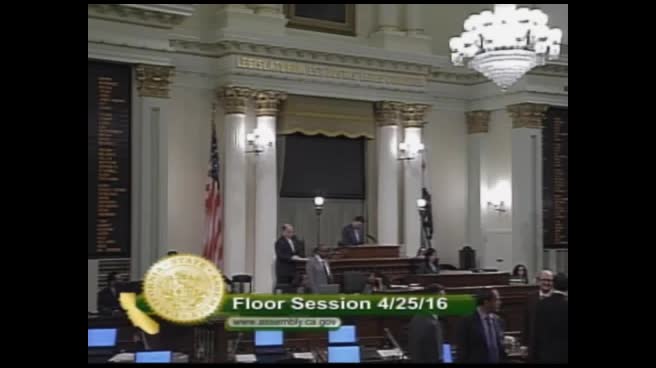 1MIN
Assembly Floor
Bill Author