AB 2170: Trade Corridors Improvement Fund: federal funds.
- Session Year: 2015-2016
- House: Assembly
- Latest Version Date: 2016-09-02
The Highway Safety, Traffic Reduction, Air Quality, and Port Security Bond Act of 2006 (Proposition 1B) created the Trade Corridors Improvement Fund and provided for allocation by the California Transportation Commission of $2 billion in bond funds for infrastructure improvements on highway and rail corridors that have a high volume of freight movement, and specified categories of projects eligible to receive these funds. Existing law continues the Trade Corridors Improvement Fund in existence in order to receive revenues from sources other than the bond act for these purposes.
This bill would require revenues apportioned to the state from the National Highway Freight Program established by the federal Fixing Americas Surface Transportation Act to be allocated for trade corridor improvement projects approved pursuant to these provisions.
Existing law requires the commission, in determining projects eligible for funding, to consult various state freight and regional infrastructure and goods movement plans and the statewide port master plan.
This bill would delete consideration of the State Air Resources Boards Sustainable Freight Strategy and the statewide port master plan and would instead include consideration of the applicable port master plan and the California Sustainable Freight Action Plan of July 2016 when determining eligible projects for funding. The bill would also expand eligible projects to include rail landside access improvements, landside freight access improvements to airports, and certain capital and operational improvements. The bill would require the commission to use existing guidelines for the Trade Corridors Improvement Fund in allocating available funding but would authorize the commission to adopt amendments to the guidelines by April 1, 2017, and would impose various other requirements on the commission.
The Highway Safety, Traffic Reduction, Air Quality, and Port Security Bond Act of 2006 (Proposition 1B) created the Trade Corridors Improvement Fund and provided for allocation by the California Transportation Commission of $2 billion in bond funds for infrastructure improvements on highway and rail corridors that have a high volume of freight movement, and specified categories of projects eligible to receive these funds. Existing law continues the Trade Corridors Improvement Fund in existence in order to receive revenues from sources other than the bond act for these purposes.
This bill would require revenues apportioned to the state from the National Highway Freight Program established by the federal Fixing Americas Surface Transportation Act to be allocated for trade corridor improvement projects approved pursuant to these provisions.
Existing law requires the commission, in determining projects eligible for funding, to consult various state freight and regional infrastructure and goods movement plans and the statewide port master plan.
This bill would delete consideration of the State Air Resources Boards Sustainable Freight Strategy and the statewide port master plan and would instead include consideration of the applicable port master plan and, for the nonfederal funds, and the California Sustainable Freight Action Plan of July 2016 when determining eligible projects for funding. The bill would also expand eligible projects to include rail landside access improvements, landside freight access improvements to airports, and certain capital and operational improvements. The bill would require the commission to use existing guidelines for the Trade Corridors Improvement Fund in allocating available funding but would authorize the commission to adopt amendments to the guidelines by April 1, 2017, and would impose various other requirements on the commission.
The Highway Safety, Traffic Reduction, Air Quality, and Port Security Bond Act of 2006 (Proposition 1B) created the Trade Corridors Improvement Fund and provided for allocation by the California Transportation Commission of $2 billion in bond funds for infrastructure improvements on highway and rail corridors that have a high volume of freight movement, and specified categories of projects eligible to receive these funds. Existing law continues the Trade Corridors Improvement Fund in existence in order to receive revenues from sources other than the bond act for these purposes.
This bill would require revenues apportioned to the state from the National Highway Freight Program established by the federal Fixing Americas Surface Transportation Act to be allocated for trade corridor improvement projects approved pursuant to these provisions.
Existing law requires the commission, in determining projects eligible for funding, to consult various state freight and regional infrastructure and goods movement plans and the statewide port master plan.
This bill would delete consideration of the State Air Resources Boards Sustainable Freight Strategy and the statewide port master plan and would instead include consideration of the applicable port master plan and, for the nonfederal funds, the California Sustainable Freight Action Plan when determining eligible projects for funding. The bill would also expand eligible projects to include rail landside access improvements, landside freight access improvements to airports, and certain capital and operational improvements.
The Highway Safety, Traffic Reduction, Air Quality, and Port Security Bond Act of 2006 (Proposition 1B) created the Trade Corridors Improvement Fund and provided for allocation by the California Transportation Commission of $2 billion in bond funds for infrastructure improvements on highway and rail corridors that have a high volume of freight movement, and specified categories of projects eligible to receive these funds. Existing law continues the Trade Corridors Improvement Fund in existence in order to receive revenues from sources other than the bond act for these purposes.
This bill would require revenues apportioned to the state from the National Highway Freight Program established by the federal Fixing Americas Surface Transportation Act to be allocated for trade corridor improvement projects approved pursuant to these provisions.
Existing law requires the commission, in determining projects eligible for funding, to consult various state freight and regional infrastructure and goods movement plans and the statewide port master plan.
This bill would delete consideration of the State Air Resources Boards Sustainable Freight Strategy and the statewide port master plan and would instead include consideration of the applicable port master plan when determining eligible projects for funding. The bill would also expand eligible projects to include rail landside access improvements, landside freight access improvements to airports, and certain capital and operational improvements.
The Highway Safety, Traffic Reduction, Air Quality, and Port Security Bond Act of 2006 (Proposition 1B) created the Trade Corridors Improvement Fund and provided for allocation by the California Transportation Commission of $2 billion in bond funds for infrastructure improvements on highway and rail corridors that have a high volume of freight movement, and specified categories of projects eligible to receive these funds. Existing law continues the Trade Corridors Improvement Fund in existence in order to receive revenues from sources other than the bond act for these purposes.
This bill would require revenues apportioned to the state from the National Highway Freight Program established by the federal Fixing Americas Surface Transportation Act to be deposited in the Trade Corridors Improvement Fund. allocated for trade corridor improvement projects approved pursuant to these provisions.
Existing law requires the commission, in determining projects eligible for funding, to consult various state freight and regional infrastructure and goods movement plans and the statewide port master plan.
This bill would delete consideration of the State Air Resources Boards Sustainable Freight Strategy and the statewide port master plan and would instead include consideration of the applicable port master plan when determining eligible projects for funding. The bill would also expand eligible projects to include rail landside access improvements, landside freight access improvements to airports, and certain capital and operational improvements.
The Highway Safety, Traffic Reduction, Air Quality, and Port Security Bond Act of 2006 (Proposition 1B) created the Trade Corridors Improvement Fund and provided for allocation by the California Transportation Commission of $2 billion in bond funds for infrastructure improvements on highway and rail corridors that have a high volume of freight movement, and specified categories of projects eligible to receive these funds. Existing law continues the Trade Corridors Improvement Fund in existence in order to receive revenues from sources other than the bond act for these purposes.
This bill would require revenues apportioned to the state from the National Highway Freight Program established by the federal Fixing Americas Surface Transportation Act to be deposited in the Trade Corridors Improvement Fund.
(a)(1)The Trade Corridors Improvement Fund, created pursuant to subdivision (c) of Section 8879.23 of the Government Code, is hereby continued in existence to receive revenues from state sources other than the Highway Safety, Traffic Reduction, Air Quality, and Port Security Bond Act of 2006.
(2)Revenues apportioned to the state under Section 167 of Title 23 of the United States Code from the National Highway Freight Program, pursuant to the federal Fixing Americas Surface Transportation Act (FAST Act; Public Law 114-94) shall be allocated for projects approved pursuant to this chapter.
(b)This chapter shall govern expenditure of those state and federal revenues described in subdivision (a).
(c)The funding described in subdivision (a) shall be available upon appropriation for allocation by the California Transportation Commission for infrastructure improvements in this state on federally designated Trade Corridors of National and Regional Significance, on the Primary Freight Network, and along other corridors that have a high volume of freight movement, as determined by the commission. In determining the projects eligible for funding, the commission shall consult the Transportation Agencys state freight plan as described in Section 13978.8 of the Government Code and the California Sustainable Freight Action Plan released in July 2016 pursuant to Executive Order B-32-15. The commission shall also consult trade infrastructure and goods movement plans adopted by regional transportation planning agencies, adopted regional transportation plans required by state and federal law, and the applicable port master plan when determining eligible projects for funding. Eligible projects for the funding described in subdivision (a) shall further the states economic, environmental, and public health objectives and goals for freight policy, as articulated in the plans to be consulted pursuant to this subdivision, and may include, but are not limited to, all of the following:
(1)Highway capacity improvements, rail landside access improvements, landside freight access improvements to airports, and operational improvements to more efficiently accommodate the movement of freight, particularly for ingress and egress to and from the states land ports of entry, rail terminals, and seaports, including navigable inland waterways used to transport freight between seaports, land ports of entry, and airports, and to relieve traffic congestion along major trade or goods movement corridors.
(2)Freight rail system improvements to enhance the ability to move goods from seaports, land ports of entry, and airports to warehousing and distribution centers throughout California, including projects that separate rail lines from highway or local road traffic, improve freight rail mobility through mountainous regions, relocate rail switching yards, and other projects that improve the efficiency and capacity of the rail freight system.
(3)Projects to enhance the capacity and efficiency of ports.
(4)Truck corridor and capital and operational improvements, including dedicated truck facilities or truck toll facilities.
(5)Border capital and operational improvements that enhance goods movement between California and Mexico and that maximize the states ability to access funds made available to the state by federal law.
(6)Surface transportation and connector road improvements to effectively facilitate the movement of goods, particularly for ingress and egress to and from the states land ports of entry, airports, and seaports, to relieve traffic congestion along major trade or goods movement corridors.
(d)(1)In selecting projects for inclusion in the program of projects to be funded with funds described in subdivision (a), the commission shall evaluate the total potential costs and total potential economic and noneconomic benefits of the program to Californias economy, environment, and public health. The commission shall consult with the State Air Resources Board in order to utilize the appropriate models, techniques, and methods to develop the parameters for evaluation of projects. The commission shall allocate the funding described in subdivision (a) for trade infrastructure improvements consistent with Section 8879.52 of the Government Code and the Trade Corridors Improvement Fund (TCIF) Guidelines adopted by the commission on November 27, 2007, or as amended by the commission, and in a manner that (A) addresses the states most urgent needs, (B) balances the demands of various land ports of entry, seaports, and airports, (C) provides reasonable geographic balance between the states regions, (D) places emphasis on projects that improve trade corridor mobility and safety while reducing emissions of diesel particulates, greenhouse gases, and other pollutants, and reducing other negative community impacts, and (E) makes a significant contribution to the states economy. The commission shall adopt any amendments to the 2007 guidelines on or before April 1, 2017.
(2)In adopting amended guidelines, and developing and adopting the program of projects, the commission shall do all of the following:
(A)Accept nominations for projects to be included in the program of projects from regional and local transportation agencies and the Department of Transportation.
(B)Recognize the key role of the state in project identification and support integrating statewide goods movement priorities into the corridor approach.
(C)Make a finding that adoption and delivery of the program of projects is in the public interest.
(3)In addition, the commission shall also consider the following factors when allocating these funds:
(A)Velocity, which means the speed by which large cargo would travel from the land port of entry or seaport through the distribution system.
(B)Throughput, which means the volume of cargo that would move from the land port of entry or seaport through the distribution system.
(C)Reliability, which means a reasonably consistent and predictable amount of time for cargo to travel from one point to another on any given day or at any given time in California.
(D)Congestion reduction, which means the reduction in recurrent daily hours of delay to be achieved.
SEC. 2.Section 2192.2 of the Streets and Highways Code is amended to read:2192.2.The commission shall allocate funds made available by this chapter to projects that have identified and committed supplemental funding from appropriate local, federal, or private sources. The commission shall determine the appropriate amount of supplemental funding each project should have to be eligible for moneys based on a project-by-project review and an assessment of the projects benefit to the state and the program. Funded improvements shall have supplemental funding that is at least equal to the amount of the contribution under this chapter. The commission may give priority for funding to projects with higher levels of committed supplemental funding.
(a)(1)The Trade Corridors Improvement Fund, created pursuant to subdivision (c) of Section 8879.23 of the Government Code, is hereby continued in existence to receive revenues from state sources other than the Highway Safety, Traffic Reduction, Air Quality, and Port Security Bond Act of 2006.
(2)Revenues apportioned to the state under Section 167 of Title 23 of the United States Code from the National Highway Freight Program, pursuant to the federal Fixing Americas Surface Transportation Act (FAST Act; Public Law 114-94) shall be allocated for projects approved pursuant to this chapter.
(b)This chapter shall govern expenditure of those state and federal revenues described in subdivision (a).
(c)The funding described in subdivision (a) shall be available upon appropriation for allocation by the California Transportation Commission for infrastructure improvements in this state on federally designated Trade Corridors of National and Regional Significance, on the Primary Freight Network, and along other corridors that have a high volume of freight movement, as determined by the commission. In determining the projects eligible for funding, the commission shall consult the Transportation Agencys state freight plan as described in Section 13978.8 of the Government Code, and the trade infrastructure and goods movement plan submitted to the commission by the Secretary of Transportation and the Secretary for Environmental Protection. Code and the California Sustainable Freight Action Plan released in July 2016 pursuant to Executive Order B-32-15. The commission shall also consult trade infrastructure and goods movement plans adopted by regional transportation planning agencies, adopted regional transportation plans required by state and federal law, and the applicable port master plan when determining eligible projects for funding. The commission shall also consult the California Sustainable Freight Action Plan when determining eligible projects for funding with funds other than those described in paragraph (2) of subdivision (a). Eligible projects for the funding described in subdivision (a) shall further the states economic, environmental, and public health objectives and goals for freight policy, as articulated in the plans to be consulted pursuant to this subdivision, and may include, but are not limited to, all of the following:
(1)Highway capacity improvements, rail landside access improvements, landside freight access improvements to airports, and operational improvements to more efficiently accommodate the movement of freight, particularly for ingress and egress to and from the states land ports of entry, rail terminals, and seaports, including navigable inland waterways used to transport freight between seaports, land ports of entry, and airports, and to relieve traffic congestion along major trade or goods movement corridors.
(2)Freight rail system improvements to enhance the ability to move goods from seaports, land ports of entry, and airports to warehousing and distribution centers throughout California, including projects that separate rail lines from highway or local road traffic, improve freight rail mobility through mountainous regions, relocate rail switching yards, and other projects that improve the efficiency and capacity of the rail freight system.
(3)Projects to enhance the capacity and efficiency of ports.
(4)Truck corridor and capital and operational improvements, including dedicated truck facilities or truck toll facilities.
(5)Border capital and operational improvements that enhance goods movement between California and Mexico and that maximize the states ability to access funds made available to the state by federal law.
(6)Surface transportation and connector road improvements to effectively facilitate the movement of goods, particularly for ingress and egress to and from the states land ports of entry, airports, and seaports, to relieve traffic congestion along major trade or goods movement corridors.
(d)(1)Except as provided in paragraph (2), the In selecting projects for inclusion in the program of projects to be funded with funds described in subdivision (a), the commission shall evaluate the total potential costs and total potential economic and noneconomic benefits of the program to Californias economy, environment, and public health. The commission shall consult with the State Air Resources Board in order to utilize the appropriate models, techniques, and methods to develop the parameters for evaluation of projects. The commission shall allocate the funding described in subdivision (a) for trade infrastructure improvements consistent with Section 8879.52 of the Government Code and the Trade Corridors Improvement Fund (TCIF) Guidelines adopted by the commission on November 27, 2007, or as amended by the commission, and in a manner that (A) addresses the states most urgent needs, (B) balances the demands of various land ports of entry, seaports, and airports, (C) provides reasonable geographic balance between the states regions, (D) places emphasis on projects that improve trade corridor mobility and safety while reducing emissions of diesel particulate particulates, greenhouse gases, and other pollutant emissions, pollutants, and reducing other negative community impacts, and (E) makes a significant contribution to the states economy. The commission shall adopt any amendments to the 2007 guidelines on or before April 1, 2017.
(2)The commission shall allocate the federal freight funding, specifically, pursuant to the original TCIF Guidelines, as adopted by the commission on November 27, 2007, and in the manner described in (A) to (E), inclusive, of paragraph (1).
(2)In adopting amended guidelines, and developing and adopting the program of projects, the commission shall do all of the following:
(A)Accept nominations for projects to be included in the program of projects from regional and local transportation agencies and the Department of Transportation.
(B)Recognize the key role of the state in project identification and support integrating statewide goods movement priorities into the corridor approach.
(C)Make a finding that adoption and delivery of the program of projects is in the public interest.
(3)In addition, the commission shall also consider the following factors when allocating these funds:
(A)Velocity, which means the speed by which large cargo would travel from the land port of entry or seaport through the distribution system.
(B)Throughput, which means the volume of cargo that would move from the land port of entry or seaport through the distribution system.
(C)Reliability, which means a reasonably consistent and predictable amount of time for cargo to travel from one point to another on any given day or at any given time in California.
(D)Congestion reduction, which means the reduction in recurrent daily hours of delay to be achieved.
SEC. 2.Section 2192.2 of the Streets and Highways Code is amended to read:2192.2.The commission shall allocate funds made available by this chapter to projects that have identified and committed supplemental funding from appropriate local, federal, or private sources. The commission shall determine the appropriate amount of supplemental funding each project should have to be eligible for moneys based on a project-by-project review and an assessment of the projects benefit to the state and the program. Funded improvements shall have supplemental funding that is at least equal to the amount of the contribution under this chapter. The commission may give priority for funding to projects with higher levels of committed supplemental funding.
(a)(1)The Trade Corridors Improvement Fund, created pursuant to subdivision (c) of Section 8879.23 of the Government Code, is hereby continued in existence to receive revenues from state sources other than the Highway Safety, Traffic Reduction, Air Quality, and Port Security Bond Act of 2006.
(2)Revenues apportioned to the state under Section 167 of Title 23 of the United States Code from the National Highway Freight Program, pursuant to the federal Fixing Americas Surface Transportation Act (FAST Act; Public Law 114-94) shall be allocated for projects approved pursuant to this chapter.
(b)This chapter shall govern expenditure of those state and federal revenues described in subdivision (a).
(c)The funding described in subdivision (a) shall be available upon appropriation for allocation by the California Transportation Commission for infrastructure improvements in this state on federally designated Trade Corridors of National and Regional Significance, on the Primary Freight Network, and along other corridors that have a high volume of freight movement, as determined by the commission. In determining the projects eligible for funding, the commission shall consult the Transportation Agencys state freight plan as described in Section 13978.8 of the Government Code, and the trade infrastructure and goods movement plan submitted to the commission by the Secretary of Transportation and the Secretary for Environmental Protection. The commission shall also consult trade infrastructure and goods movement plans adopted by regional transportation planning agencies, adopted regional transportation plans required by state and federal law, and the applicable port master plan when determining eligible projects for funding. The commission shall also consult the California Sustainable Freight Action Plan when determining eligible projects for funding with funds other than those described in paragraph (2) of subdivision (a). Eligible projects for these funds the funding described in subdivision (a) include, but are not limited to, all of the following:
(1)Highway capacity improvements, rail landside access improvements, landside freight access improvements to airports, and operational improvements to more efficiently accommodate the movement of freight, particularly for ingress and egress to and from the states land ports of entry, rail terminals, and seaports, including navigable inland waterways used to transport freight between seaports, land ports of entry, and airports, and to relieve traffic congestion along major trade or goods movement corridors.
(2)Freight rail system improvements to enhance the ability to move goods from seaports, land ports of entry, and airports to warehousing and distribution centers throughout California, including projects that separate rail lines from highway or local road traffic, improve freight rail mobility through mountainous regions, relocate rail switching yards, and other projects that improve the efficiency and capacity of the rail freight system.
(3)Projects to enhance the capacity and efficiency of ports.
(4)Truck corridor and capital and operational improvements, including dedicated truck facilities or truck toll facilities.
(5)Border capital and operational improvements that enhance goods movement between California and Mexico and that maximize the states ability to access funds made available to the state by federal law.
(6)Surface transportation and connector road improvements to effectively facilitate the movement of goods, particularly for ingress and egress to and from the states land ports of entry, airports, and seaports, to relieve traffic congestion along major trade or goods movement corridors.
(d)(1)Except as provided in paragraph (2), the commission shall allocate the funding described in subdivision (a) for trade infrastructure improvements consistent with Section 8879.52 of the Government Code and the Trade Corridors Improvement Fund (TCIF) Guidelines adopted by the commission on November 27, 2007, or as amended by the commission, and in a manner that (A) addresses the states most urgent needs, (B) balances the demands of various land ports of entry, seaports, and airports, (C) provides reasonable geographic balance between the states regions, (D) places emphasis on projects that improve trade corridor mobility and safety while reducing emissions of diesel particulate and other pollutant emissions, and reducing other negative community impacts, and (E) makes a significant contribution to the states economy.
(2)The commission shall allocate the federal freight funding, specifically, pursuant to the original TCIF Guidelines, as adopted by the commission on November 27, 2007, and in the manner described in subparagraphs (A) to (E), inclusive, of paragraph (1).
(3)In addition, the commission shall also consider the following factors when allocating these funds:
(A)Velocity, which means the speed by which large cargo would travel from the land port of entry or seaport through the distribution system.
(B)Throughput, which means the volume of cargo that would move from the land port of entry or seaport through the distribution system.
(C)Reliability, which means a reasonably consistent and predictable amount of time for cargo to travel from one point to another on any given day or at any given time in California.
(D)Congestion reduction, which means the reduction in recurrent daily hours of delay to be achieved.
SEC. 2.Section 2192.2 of the Streets and Highways Code is amended to read:2192.2.The commission shall allocate funds made available by this chapter to projects that have identified and committed supplemental funding from appropriate local, federal, or private sources. The commission shall determine the appropriate amount of supplemental funding each project should have to be eligible for moneys based on a project-by-project review and an assessment of the projects benefit to the state and the program. Funded improvements shall have supplemental funding that is at least equal to the amount of the contribution under this chapter. The commission may give priority for funding to projects with higher levels of committed supplemental funding.
(a)(1)The Trade Corridors Improvement Fund, created pursuant to subdivision (c) of Section 8879.23 of the Government Code, is hereby continued in existence to receive revenues from state sources other than the Highway Safety, Traffic Reduction, Air Quality, and Port Security Bond Act of 2006.
(2)Revenues apportioned to the state under Section 167 of Title 23 of the United States Code from the National Highway Freight Program, pursuant to the federal Fixing Americas Surface Transportation Act (FAST Act; Public Law 114-94) shall be allocated for projects approved pursuant to this chapter.
(b)This chapter shall govern expenditure of those state and federal revenues described in subdivision (a) revenues. (a).
(c)The funding described in subdivision (a) shall be available upon appropriation for allocation by the California Transportation Commission for infrastructure improvements in this state on federally designated Trade Corridors of National and Regional Significance, on the Primary Freight Network, and along other corridors that have a high volume of freight movement, as determined by the commission. In determining the projects eligible for funding, the commission shall consult the Transportation Agencys state freight plan as described in Section 13978.8 of the Government Code, and the trade infrastructure and goods movement plan submitted to the commission by the Secretary of Transportation and the Secretary for Environmental Protection. The commission shall also consult trade infrastructure and goods movement plans adopted by regional transportation planning agencies, adopted regional transportation plans required by state and federal law, and the applicable port master plan when determining eligible projects for funding. Eligible projects for these funds include, but are not limited to, all of the following:
(1)Highway capacity improvements, rail landside access improvements, landside freight access improvements to airports, and operational improvements to more efficiently accommodate the movement of freight, particularly for ingress and egress to and from the states land ports of entry, rail terminals, and seaports, including navigable inland waterways used to transport freight between seaports, land ports of entry, and airports, and to relieve traffic congestion along major trade or goods movement corridors.
(2)Freight rail system improvements to enhance the ability to move goods from seaports, land ports of entry, and airports to warehousing and distribution centers throughout California, including projects that separate rail lines from highway or local road traffic, improve freight rail mobility through mountainous regions, relocate rail switching yards, and other projects that improve the efficiency and capacity of the rail freight system.
(3)Projects to enhance the capacity and efficiency of ports.
(4)Truck corridor and capital and operational improvements, including dedicated truck facilities or truck toll facilities.
(5)Border capital and operational improvements that enhance goods movement between California and Mexico and that maximize the states ability to access funds made available to the state by federal law.
(6)Surface transportation and connector road improvements to effectively facilitate the movement of goods, particularly for ingress and egress to and from the states land ports of entry, airports, and seaports, to relieve traffic congestion along major trade or goods movement corridors.
(d)(1)The Except as provided in paragraph (2), the commission shall allocate the funding described in subdivision (a) for trade infrastructure improvements consistent with Section 8879.52 of the Government Code and the Trade Corridors Improvement Fund (TCIF) Guidelines adopted by the commission on November 27, 2007, or as amended by the commission, and in a manner that (A) addresses the states most urgent needs, (B) balances the demands of various land ports of entry, seaports, and airports, (C) provides reasonable geographic balance between the states regions, (D) places emphasis on projects that improve trade corridor mobility and safety while reducing emissions of diesel particulate and other pollutant emissions, and reducing other negative community impacts, and (E) makes a significant contribution to the states economy.
(2)The commission shall allocate the federal freight funding, specifically, pursuant to the original TCIF Guidelines, as adopted by the commission on November 27, 2007, and in the manner described in subparagraphs (A) to (E), inclusive, of paragraph (1).
(2)
(3)In addition, the commission shall also consider the following factors when allocating these funds:
(A)Velocity, which means the speed by which large cargo would travel from the land port of entry or seaport through the distribution system.
(B)Throughput, which means the volume of cargo that would move from the land port of entry or seaport through the distribution system.
(C)Reliability, which means a reasonably consistent and predictable amount of time for cargo to travel from one point to another on any given day or at any given time in California.
(D)Congestion reduction, which means the reduction in recurrent daily hours of delay to be achieved.
SEC. 2.Section 2192.2 of the Streets and Highways Code is amended to read:2192.2.The commission shall allocate funds made available by this chapter to projects that have identified and committed supplemental funding from appropriate local, federal, or private sources. The commission shall determine the appropriate amount of supplemental funding each project should have to be eligible for moneys based on a project-by-project review and an assessment of the projects benefit to the state and the program. Except for border capital and operational improvements described in paragraph (5) of subdivision (c) of Section 2192, Funded improvements funded shall have supplemental funding that is at least equal to the amount of the contribution under this chapter. The commission may give priority for funding to projects with higher levels of committed supplemental funding.
(a)(1)The Trade Corridors Improvement Fund, created pursuant to subdivision (c) of Section 8879.23 of the Government Code, is hereby continued in existence to receive revenues from state sources other than the Highway Safety, Traffic Reduction, Air Quality, and Port Security Bond Act of 2006, including revenues 2006.
(2)Revenues apportioned to the state under Section 167 of the Title 23 of the United States Code from the National Highway Freight Program, pursuant to the federal Fixing Americas Surface Transportation Act (FAST Act; Public Law 114-94). This 114-94) shall be allocated for projects approved pursuant to this chapter.
(b)This chapter shall govern expenditure of those other state and federal described in subdivision (a) revenues.
(b)
(c)The moneys in the fund from those other sources funding described in subdivision (a) shall be available upon appropriation for allocation by the California Transportation Commission for infrastructure improvements in this state on federally designated Trade Corridors of National and Regional Significance, on the Primary Freight Network, and along other corridors that have a high volume of freight movement, as determined by the commission. In determining the projects eligible for funding, the commission shall consult the Transportation Agencys state freight plan as described in Section 13978.8 of the Government Code, the State Air Resources Boards Sustainable Freight Strategy adopted by Resolution 14-2, and the trade infrastructure and goods movement plan submitted to the commission by the Secretary of Transportation and the Secretary for Environmental Protection. The commission shall also consult trade infrastructure and goods movement plans adopted by regional transportation planning agencies, adopted regional transportation plans required by state and federal law, and the statewide applicable port master plan prepared by the California Marine and Intermodal Transportation System Advisory Council (Cal-MITSAC) pursuant to Section 1730 of the Harbors and Navigation Code, when determining eligible projects for funding. Eligible projects for these funds include, but are not limited to, all of the following:
(1)Highway capacity improvements improvements, rail landside access improvements, landside freight access improvements to airports, and operational improvements to more efficiently accommodate the movement of freight, particularly for ingress and egress to and from the states land ports of entry entry, rail terminals, and seaports, including navigable inland waterways used to transport freight between seaports, land ports of entry, and airports, and to relieve traffic congestion along major trade or goods movement corridors.
(2)Freight rail system improvements to enhance the ability to move goods from seaports, land ports of entry, and airports to warehousing and distribution centers throughout California, including projects that separate rail lines from highway or local road traffic, improve freight rail mobility through mountainous regions, relocate rail switching yards, and other projects that improve the efficiency and capacity of the rail freight system.
(3)Projects to enhance the capacity and efficiency of ports.
(4)Truck corridor and capital and operational improvements, including dedicated truck facilities or truck toll facilities.
(5)Border access capital and operational improvements that enhance goods movement between California and Mexico and that maximize the states ability to access coordinated border infrastructure funds made available to the state by federal law.
(6)Surface transportation and connector road improvements to effectively facilitate the movement of goods, particularly for ingress and egress to and from the states land ports of entry, airports, and seaports, to relieve traffic congestion along major trade or goods movement corridors.
(c)
(d)(1)The commission shall allocate funds the funding described in subdivision (a) for trade infrastructure improvements from the fund consistent with Section 8879.52 of the Government Code and the Trade Corridors Improvement Fund (TCIF) Guidelines adopted by the commission on November 27, 2007, or as amended by the commission, and in a manner that (A) addresses the states most urgent needs, (B) balances the demands of various land ports of entry, seaports, and airports, (C) provides reasonable geographic balance between the states regions, and (D) places emphasis on projects that improve trade corridor mobility and safety while reducing emissions of diesel particulate and other pollutant emissions. emissions, and reducing other negative community impacts, and (E) makes a significant contribution to the states economy.
(2)In addition, the commission shall also consider the following factors when allocating these funds:
(A)Velocity, which means the speed by which large cargo would travel from the land port of entry or seaport through the distribution system.
(B)Throughput, which means the volume of cargo that would move from the land port of entry or seaport through the distribution system.
(C)Reliability, which means a reasonably consistent and predictable amount of time for cargo to travel from one point to another on any given day or at any given time in California.
(D)Congestion reduction, which means the reduction in recurrent daily hours of delay to be achieved.
SEC. 2.Section 2192.2 of the Streets and Highways Code is amended to read:2192.2.The commission shall allocate funds made available by this chapter to projects that have identified and committed supplemental funding from appropriate local, federal, or private sources. The commission shall determine the appropriate amount of supplemental funding each project should have to be eligible for moneys from the fund based on a project-by-project review and an assessment of the projects benefit to the state and the program. Except for border access capital and operational improvements described in paragraph (5) of subdivision (b) (c) of Section 2192, improvements funded with moneys from the fund shall have supplemental funding that is at least equal to the amount of the contribution from the fund. under this chapter. The commission may give priority for funding to projects with higher levels of committed supplemental funding.
(a)The Trade Corridors Improvement Fund, created pursuant to subdivision (c) of Section 8879.23 of the Government Code, is hereby continued in existence to receive revenues from sources other than the Highway Safety, Traffic Reduction, Air Quality, and Port Security Bond Act of 2006. 2006, including revenues apportioned to the state under Section 167 of the Title 23 of the United States Code from the National Highway Freight Program, pursuant to the federal Fixing Americas Surface Transportation Act (FAST Act; Public Law 114-94). This chapter shall govern expenditure of those other revenues.
(b)The moneys in the fund from those other sources shall be available upon appropriation for allocation by the California Transportation Commission for infrastructure improvements in this state on federally designated Trade Corridors of National and Regional Significance, on the Primary Freight Network, and along other corridors that have a high volume of freight movement, as determined by the commission. In determining the projects eligible for funding, the commission shall consult the Transportation Agencys state freight plan as described in Section 13978.8 of the Government Code, the State Air Resources Boards Sustainable Freight Strategy adopted by Resolution 14-2, and the trade infrastructure and goods movement plan submitted to the commission by the Secretary of Transportation and the Secretary for Environmental Protection. The commission shall also consult trade infrastructure and goods movement plans adopted by regional transportation planning agencies, adopted regional transportation plans required by state and federal law, and the statewide port master plan prepared by the California Marine and Intermodal Transportation System Advisory Council (Cal-MITSAC) pursuant to Section 1730 of the Harbors and Navigation Code, when determining eligible projects for funding. Eligible projects for these funds include, but are not limited to, all of the following:
(1)Highway capacity improvements and operational improvements to more efficiently accommodate the movement of freight, particularly for ingress and egress to and from the states land ports of entry and seaports, including navigable inland waterways used to transport freight between seaports, land ports of entry, and airports, and to relieve traffic congestion along major trade or goods movement corridors.
(2)Freight rail system improvements to enhance the ability to move goods from seaports, land ports of entry, and airports to warehousing and distribution centers throughout California, including projects that separate rail lines from highway or local road traffic, improve freight rail mobility through mountainous regions, relocate rail switching yards, and other projects that improve the efficiency and capacity of the rail freight system.
(3)Projects to enhance the capacity and efficiency of ports.
(4)Truck corridor improvements, including dedicated truck facilities or truck toll facilities.
(5)Border access improvements that enhance goods movement between California and Mexico and that maximize the states ability to access coordinated border infrastructure funds made available to the state by federal law.
(6)Surface transportation and connector road improvements to effectively facilitate the movement of goods, particularly for ingress and egress to and from the states land ports of entry, airports, and seaports, to relieve traffic congestion along major trade or goods movement corridors.
(c)(1)The commission shall allocate funds for trade infrastructure improvements from the fund consistent with Section 8879.52 of the Government Code and the Trade Corridors Improvement Fund (TCIF) Guidelines adopted by the commission on November 27, 2007, or as amended by the commission, and in a manner that (A) addresses the states most urgent needs, (B) balances the demands of various land ports of entry, seaports, and airports, (C) provides reasonable geographic balance between the states regions, and (D) places emphasis on projects that improve trade corridor mobility while reducing emissions of diesel particulate and other pollutant emissions.
(2)In addition, the commission shall also consider the following factors when allocating these funds:
(A)Velocity, which means the speed by which large cargo would travel from the land port of entry or seaport through the distribution system.
(B)Throughput, which means the volume of cargo that would move from the land port of entry or seaport through the distribution system.
(C)Reliability, which means a reasonably consistent and predictable amount of time for cargo to travel from one point to another on any given day or at any given time in California.
(D)Congestion reduction, which means the reduction in recurrent daily hours of delay to be achieved.
|
Date
|
Status
|
|---|---|
| Sep 9, 2016 | Enrolled and presented to the Governor at 2:30 p.m. |
| Aug 31, 2016 | Read third time. Passed. Ordered to the Assembly. (Ayes 22. Noes 13. Page 5591.). |
| Aug 31, 2016 | (Ayes 25. Noes 12. Page 5589.) |
| Aug 31, 2016 | Senate amendments concurred in. To Engrossing and Enrolling. |
| Aug 31, 2016 | Assembly Rule 63 suspended. |
| Aug 31, 2016 | In Assembly. Concurrence in Senate amendments pending. |
| Aug 31, 2016 | Read third time. Passed. Ordered to the Assembly. |
| Aug 31, 2016 | Ordered to third reading. |
| Aug 31, 2016 | Withdrawn from committee. |
| Aug 31, 2016 | Re-referred to Com. on RLS. |
| Aug 17, 2016 | Read second time and amended. Ordered to third reading. |
| Aug 16, 2016 | From committee: Amend, and do pass as amended. (Ayes 7. Noes 0.) (August 11). |
| Aug 11, 2016 | In committee: Referred to APPR. suspense file. |
| Aug 8, 2016 | In committee: Hearing postponed by committee. |
| Aug 2, 2016 | Read second time and amended. Re-referred to Com. on APPR. |
| Aug 1, 2016 | From committee: Amend, and do pass as amended and re-refer to Com. on APPR. (Ayes 7. Noes 0.) (June 29). |
| Jun 22, 2016 | From committee: Do pass and re-refer to Com. on E.Q. (Ayes 10. Noes 0.) (June 21). Re-referred to Com. on E.Q. |
| Jun 9, 2016 | From committee chair, with author's amendments: Amend, and re-refer to committee. Read second time, amended, and re-referred to Com. on T. & H. |
| Jun 9, 2016 | Referred to Coms. on T. & H. and E.Q. |
| Jun 1, 2016 | In Senate. Read first time. To Com. on RLS. for assignment. |
| May 31, 2016 | Read third time. Passed. Ordered to the Senate. (Ayes 80. Noes 0. Page 5027.) |
| May 31, 2016 | Read third time. Passed. Ordered to the Senate. (Ayes 80. Noes 0.) |
| May 31, 2016 | Read third time. Passed. Ordered to the Senate. |
| May 27, 2016 | Read second time. Ordered to third reading. |
| May 27, 2016 | From committee: Do pass. (Ayes 20. Noes 0.) (May 27). |
| Apr 20, 2016 | In committee: Set, first hearing. Referred to APPR. suspense file. |
| Apr 5, 2016 | From committee: Do pass and re-refer to Com. on APPR. (Ayes 16. Noes 0.) (April 4). Re-referred to Com. on APPR. |
| Mar 16, 2016 | Re-referred to Com. on TRANS. |
| Mar 15, 2016 | From committee chair, with author's amendments: Amend, and re-refer to Com. on TRANS. Read second time and amended. |
| Feb 29, 2016 | Referred to Com. on TRANS. |
| Feb 19, 2016 | From printer. May be heard in committee March 20. |
| Feb 18, 2016 | Read first time. To print. |
|
Date
|
Description
|
Location
|
Votes
|
|
|---|---|---|---|---|
| Aug 31, 2016 | Assembly 3rd Reading AB2170 Frazier By Hueso | Senate Floor |
Passed |
|
| Aug 31, 2016 | AB 2170 FRAZIER Concurrence in Senate Amendments | Assembly Floor |
Passed |
|
| Aug 11, 2016 | Do pass as amended | Senate Standing Committee on Appropriations |
Passed |
|
| Aug 11, 2016 | Placed on suspense file | Senate Standing Committee on Appropriations |
Passed |
|
| Jun 29, 2016 | Do pass as amended, but first amend, and re-refer to the Committee on [Appropriations] | Senate Standing Committee on Environmental Quality |
Passed |
|
| Jun 21, 2016 | Do pass, but first be re-referred to the Committee on [Environmental Quality] | Senate Standing Committee on Transportation and Housing |
Passed |
|
| May 31, 2016 | AB 2170 FRAZIER Assembly Third Reading | Assembly Floor |
Passed |
|
| May 27, 2016 | Do pass. | Assembly Standing Committee on Appropriations |
Passed |
|
| Apr 4, 2016 | Do pass and be re-referred to the Committee on [Appropriations] | Assembly Standing Committee on Transportation |
Passed |
This list shows positions taken on this bill by organizations on the date displayed, which is linked to the original source.
Positions by individuals are not included.
GOVERNOR'S VETO
GV Bill Id:AB 2170
Author:(Frazier)
As Enrolled Ver:September 9, 2016
2/3 vote
ASSEMBLY: | 80-0 | (May 31, 2016) | SENATE: | 22-13 | (August 31, 2016) |
ASSEMBLY: | 77-1 | (August 31, 2016) |
Original Committee Reference: TRANS.
SUMMARY: Requires federal freight revenues apportioned to California from the Fixing America's Surface Transportation (FAST) Act be deposited into the Trade Corridor Improvement Fund (TCIF) and apportioned to state, regional, and local transportation entities by the California Transportation Commission (Commission).
The Senate amendments:
- Requires that federal FAST Act freight funding be deposited into the TCIF and allocated in accordance with TCIF program guidelines as well as FAST Act requirements.
- Provides that the recently released California Sustainable Freight Action Plan developed pursuant to Executive Order B-32-15 be among the documents consulted by the Commission in determining eligible projects for funding and deletes reference to obsolete documents.
- Requires that projects considered for funding by the Commission further the state's economic, environmental, and public health objectives and goals for freight policy, as articulated in the plans to be consulted by the Commission.
- Requires the Commission, when selecting projects for inclusion in the program, to evaluate the total potential costs and total potential economic and non-economic benefits of the program to California's economy, environment and public health.
- Requires the Commission to adopt any amendments to the 2007 TCIF guidelines on or before April 1, 2017.
- Requires the Commission, when adopting amended guidelines and developing and adopting the program, to accept project nominations from regional and local transportation agencies and the California Department of Transportation (Caltrans), recognize the key role of the state in project identification, support integrating statewide goods movement priorities into a corridor approach, and make a finding that the adoption and delivery of the program is in the public interest.
- Made related, clarifying changes.
AS PASSED BY THE ASSEMBLY, this bill:
- Required that federal FAST Act freight funding be deposited into the TCIF and allocated in accordance with TCIF program guidelines as well as FAST Act requirements.
- Updated the list of plans guiding TCIF investments by deleting references to the outdated port master plan developed by the California Marine and Intermodal Transportation System Advisory (CALMITSAC) and the California Air Resources Board's (ARB's) Sustainable Freight Strategy.
FISCAL EFFECT: According to the Senate Appropriations Committee:
- Caltrans estimates it would incur annual costs in the range of $300,000 to $600,000 annually for two to four personnel year (PY) of staff to administer federal funds and support the Commission in selecting projects eligible for funding.
- Ongoing Commission costs of approximately $55,000 (1/2 PY) to update TCIF guidelines and continue to administer the program.
COMMENTS: The TCIF program was created after voters approved Proposition 1B in 2006 which authorized the sale of general obligation bonds to fund transportation projects across the state to relieve congestion, improve goods movement flow, enhance the safety and security of the transportation system, and improve the state's air quality. Of the $19.9 billion approved by voters, $2 billion of bond proceeds were placed into the then-newly created TCIF program to fund transportation corridor improvements. The TCIF program, administered by the Commission in accordance with the TCIF guidelines, was designated to fund projects identified in specified transportation infrastructure planning documents. The TCIF guidelines ensured that funds were equitably distributed across the state, that the highest statewide priority projects were funded, and that funds were leveraged to ensure that the greatest number of projects were completed. The Commission also successfully ensured that these projects were completed on schedule and within budget.
Not only did TCIF achieve the goal of getting regions around the state to work together to complete priority projects, it also created jobs, reduced congestion, improved the state's air quality, and helped the state achieve its emissions reduction goals. Additionally, by requiring that projects receive matching funds, the TCIF successfully leveraged the program's $2 billion in bond funds to complete $7.2 billion in projects.
While the TCIF program was created to distribute Proposition 1B funds specifically, in 2014 SB 1228 (Hueso), Chapter 787, Statutes of 2014, continued the existence of the TCIF and allowed it to receive funding from sources other than the general obligation bonds originally authorized under Proposition 1B. In accordance with SB 1228, revenues appropriated by the Legislature, such as cap and trade revenues, can be transferred into the TCIF and allocated by the Commission for specified projects in accordance with TCIF.
In recent years, the federal government has placed a greater emphasis on planning and funding goods movement projects. For example, MAP-21 specifically directed the states to create state freight plans in order to be able to be eligible for future freight funding. In response, the Legislature passed AB 14 (Lowenthal), Chapter 233, Statutes of 2013, which directed the development of a state freight plan in accordance with MAP-21 requirements, no later than December, 2014. This plan, the California Freight Mobility Plan (CFMP), addressed the state's strategic goals for freight transportation and identified a total of $138 billion worth of freight system projects across the state with a total of 94 projects, totaling nearly $31 billion, identified as Tier 1 projects.
On December 4, 2015, the FAST Act was signed into law and becoming the first federal transportation bill to emphasize goods movement projects by dedicating up to $6.2 billion nationally for freight-related projects over five years. Of this total, California expects to receive an annual average of $116 million per year over five years for freight projects identified the CFMP. Beyond the requirement that projects be included in a state freight plan, however, the FAST Act did specifically outline how the federal freight funding should be distributed. Recently, the Administration indicated their intent, through budget trailer bill language, to distribute the federal freight funds with 50% of the funds allocated to the state and 50% to the regions through a modified TCIF program. The language in the budget proposal was dropped because of AB 2170, which seeks to direct the same funds was already moving through policy committees.
This bill will direct how the FAST Act funds will be spent and the amendments taken in the Senate help to prioritize these expenditures to ensure that key freight projects across the state are funded to help improve freight mobility, relieve congestion, and improve air quality.
I am returning Assembly Bill 2170 without my signature.
This bill allocates federal funds through the California Transportation Commission to improve trade corridors in the state.
Unfortunately, the bill does not include key amendments agreed to by the author to ensure urgent state priorities are addressed, including improvements to California's border with Mexico and important rail safety projects.
I direct the Transportation Agency to work with the Commission and the author to ensure these funds are allocated to high-priority trade projects as soon as practicable.
Analysis Prepared by: Victoria Alvarez / TRANS. / (916) 319-2093 FN: 0005129
CONCURRENCE IN SENATE AMENDMENTS
CSA1 Bill Id:AB 2170
Author:(Frazier)
As Amended Ver:August 17, 2016
Majority vote
ASSEMBLY: | 80-0 | (May 31, 2016) | SENATE: | 21-13 | (August 31, 2016) |
Original Committee Reference: TRANS.
SUMMARY: Requires federal freight revenues apportioned to California from the Fixing America's Surface Transportation (FAST) Act be deposited into the Trade Corridor Improvement Fund (TCIF) and apportioned to state, regional, and local transportation entities by the California Transportation Commission (Commission).
The Senate amendments:
- Requires that federal FAST Act freight funding be deposited into the TCIF and allocated in accordance with TCIF program guidelines as well as FAST Act requirements.
- Provides that the recently released California Sustainable Freight Action Plan developed pursuant to Executive Order B-32-15 be among the documents consulted by the Commission in determining eligible projects for funding and deletes reference to obsolete documents.
- Requires that projects considered for funding by the Commission further the state's economic, environmental, and public health objectives and goals for freight policy, as articulated in the plans to be consulted by the Commission.
- Requires the Commission, when selecting projects for inclusion in the program, to evaluate the total potential costs and total potential economic and non-economic benefits of the program to California's economy, environment and public health.
- Requires the Commission to adopt any amendments to the 2007 TCIF guidelines on or before April 1, 2017.
- Requires the Commission, when adopting amended guidelines and developing and adopting the program, to accept project nominations from regional and local transportation agencies and the California Department of Transportation (Caltrans), recognize the key role of the state in project identification, support integrating statewide goods movement priorities into a corridor approach, and make a finding that the adoption and delivery of the program is in the public interest.
- Made related, clarifying changes.
AS PASSED BY THE ASSEMBLY, this bill:
- Required that federal FAST Act freight funding be deposited into the TCIF and allocated in accordance with TCIF program guidelines as well as FAST Act requirements.
- Updated the list of plans guiding TCIF investments by deleting references to the outdated port master plan developed by the California Marine and Intermodal Transportation System Advisory (CALMITSAC) and the California Air Resources Board's (ARB's) Sustainable Freight Strategy.
FISCAL EFFECT: According to the Senate Appropriations Committee:
- Caltrans estimates it would incur annual costs in the range of $300,000 to $600,000 annually for two to four personnel year (PY) of staff to administer federal funds and support the Commission in selecting projects eligible for funding.
- Ongoing Commission costs of approximately $55,000 (1/2 PY) to update TCIF guidelines and continue to administer the program.
COMMENTS: The TCIF program was created after voters approved Proposition 1B in 2006 which authorized the sale of general obligation bonds to fund transportation projects across the state to relieve congestion, improve goods movement flow, enhance the safety and security of the transportation system, and improve the state's air quality. Of the $19.9 billion approved by voters, $2 billion of bond proceeds were placed into the then-newly created TCIF program to fund transportation corridor improvements. The TCIF program, administered by the Commission in accordance with the TCIF guidelines, was designated to fund projects identified in specified transportation infrastructure planning documents. The TCIF guidelines ensured that funds were equitably distributed across the state, that the highest statewide priority projects were funded, and that funds were leveraged to ensure that the greatest number of projects were completed. The Commission also successfully ensured that these projects were completed on schedule and within budget.
Not only did TCIF achieve the goal of getting regions around the state to work together to complete priority projects, it also created jobs, reduced congestion, improved the state's air quality, and helped the state achieve its emissions reduction goals. Additionally, by requiring that projects receive matching funds, the TCIF successfully leveraged the program's $2 billion in bond funds to complete $7.2 billion in projects.
While the TCIF program was created to distribute Proposition 1B funds specifically, in 2014 SB 1228 (Hueso), Chapter 787, Statutes of 2014, continued the existence of the TCIF and allowed it to receive funding from sources other than the general obligation bonds originally authorized under Proposition 1B. In accordance with SB 1228, revenues appropriated by the Legislature, such as cap and trade revenues, can be transferred into the TCIF and allocated by the Commission for specified projects in accordance with TCIF.
In recent years, the federal government has placed a greater emphasis on planning and funding goods movement projects. For example, MAP-21 specifically directed the states to create state freight plans in order to be able to be eligible for future freight funding. In response, the Legislature passed AB 14 (Lowenthal), Chapter 233, Statutes of 2013, which directed the development of a state freight plan in accordance with MAP-21 requirements, no later than December, 2014. This plan, the California Freight Mobility Plan (CFMP), addressed the state's strategic goals for freight transportation and identified a total of $138 billion worth of freight system projects across the state with a total of 94 projects, totaling nearly $31 billion, identified as Tier 1 projects.
On December 4, 2015, the FAST Act was signed into law and becoming the first federal transportation bill to emphasize goods movement projects by dedicating up to $6.2 billion nationally for freight-related projects over five years. Of this total, California expects to receive an annual average of $116 million per year over five years for freight projects identified the CFMP. Beyond the requirement that projects be included in a state freight plan, however, the FAST Act did specifically outline how the federal freight funding should be distributed. Recently, the Administration indicated their intent, through budget trailer bill language, to distribute the federal freight funds with 50% of the funds allocated to the state and 50% to the regions through a modified TCIF program. The language in the budget proposal was dropped because of
AB 2170, which seeks to direct the same funds was already moving through policy committees.
This bill will direct how the FAST Act funds will be spent and the amendments taken in the Senate help to prioritize these expenditures to ensure that key freight projects across the state are funded to help improve freight mobility, relieve congestion, and improve air quality.
Please see the policy committee analysis for full discussion of this bill.
Analysis Prepared by: Victoria Alvarez / TRANS. / (916) 319-2093 FN: 0005045
Office of Senate Floor Analyses (916) 651-1520 Fax: (916) 327-4478 | AB |
THIRD READING
Bill No: AB 2170
: 8/17/16
SENATE TRANS. & HOUSING COMMITTEE: 10-0, 6/21/16
AYES: Beall, Cannella, Allen, Bates, Gaines, Galgiani, Leyva, McGuire, Mendoza, Roth
NO VOTE RECORDED: Wieckowski
SENATE ENVIRONMENTAL QUALITY COMMITTEE: 7-0, 6/29/16
AYES: Wieckowski, Gaines, Bates, Hill, Jackson, Leno, Pavley
SENATE APPROPRIATIONS COMMITTEE: 7-0, 8/11/16
AYES: Lara, Bates, Beall, Hill, McGuire, Mendoza, Nielsen
ASSEMBLY FLOOR: 80-0, 5/31/16 - See last page for vote
SOURCE: Southern California Association of Governments
DIGEST: This bill establishes procedures for the allocation of freight funding under the federal Fixing America’s Surface Transportation (FAST) Act through the Trade Corridors Improvement Fund (TCIF) program.
ANALYSIS: Existing federal law, the FAST Act, was signed into law in December 2015. The FAST Act establishes a new Nationally Significant Freight and Highway Projects Program — the first time a federal transportation authorization has included a dedicated source of funding for freight projects. This program will provide competitive grants, known as FASTLANE grants, or credit assistance to projects such as highway freight projects on the National Highway Freight Network, highway or bridge projects on the National Highway System, railway-highway grade crossings or grade separation projects, and freight intermodal projects. The FAST Act requires a state receiving FASTLANE funds to develop a freight plan, and deems that in order to be eligible for freight funds, a project must be included in the freight plan.
Existing state law:
- Authorizes, pursuant to Proposition 1B, the Highway Safety, Traffic Reduction, Air Quality, and Port Security Bond Act of 2006, which was approved by California voters in November 2006, the issuance of $19.9 billion in general obligation bonds to fund a variety of transportation projects. Of this amount, $2 billion was allocated to the TCIF program for infrastructure improvements along federally designated “Trade Corridors of National Significance” or other high-volume freight corridors.
- Requires the California Transportation Commission (CTC), in determining project eligibility under the TCIF, to consult various plans, including the California State Transportation Agency’s (CalSTA) state freight plan (see Background below), the state Air Resources Board’s (ARB) Sustainable Freight Strategy, and the statewide port master plan, among others. Eligible projects include, but are not limited to, improvements to highway capacity and operations, the freight rail system, ports, truck corridors, and border access, as well as improvements to surface transportation to facilitate goods movement to and from airports. TCIF applicants must provide at least a 50% match from local, federal, or private sources. TCIF funds have been fully programmed, but SB 1228 (Hueso, 2014) (see “Related/Prior Legislation” below) authorized continuation of the program so it could receive funds in the future.
- Establishes the State Highway Operation and Protection Program (SHOPP), which guides the expenditure of funds for capital improvements necessary to manage, preserve, and protect the state highway system. The SHOPP receives state and federal funding from taxes and fees placed on vehicle fuels. In order to anticipate and schedule future needs, Caltrans develops a SHOPP plan that identifies goal-based needs over a 10-year period, and updates the plan every two years. The SHOPP is primarily limited to capital improvement projects related to maintenance, safety, and rehabilitation of state highways and bridges.
- Establishes the State Transportation Improvement Program (STIP), a multi-year capital improvement program of transportation projects on and off the State Highway System, funded from the State Highway Account. The STIP is composed of two categories: 75% of STIP funds go toward projects in the Regional Transportation Improvement Program (RTIP) and 25% go to the Interregional Transportation Improvement Program (ITIP). Each STIP covers a five-year period and adds two new years of programming capacity. Additionally, each new STIP includes projects carried forward from the previous STIP, plus new projects from among those proposed by regional transportation planning agencies in their RTIPs and by Caltrans in its ITIP.
This bill:
- Requires the CTC to allocate federal freight funds under the FAST Act through the TCIF program.
- Requires the CTC, in determining projects eligible for funding through TCIF, to consult the California Freight Mobility Plan and the Sustainable Freight Action Plan, as well as regional trade infrastructure and goods movement plans, regional transportation plans, and port master plans.
- Requires that eligible projects must further the state’s economic, environmental, and public health objectives and goals for freight policy, as articulated in the plans to be consulted pursuant to this bill.
- Adds rail landside access improvements (e.g., rail access to ports), landside freight access improvements to airports, and rail terminals to the list of projects eligible for funding, as well as capital and operational improvements to truck corridors and borders.
- Requires the CTC, in selecting projects for funding, to evaluate the total potential costs and total potential economic and non-economic benefits of the projects to the state’s economy, environment, and public health. Requires the CTC to consult with ARB to develop parameters for project evaluation.
- Adds reduction of greenhouse gas emissions to the criteria for project funding allocation.
- Requires the CTC to adopt any amendments to the 2007 TCIF guidelines by April 1, 2017.
- Requires the CTC, in adopting amended guidelines and in developing and adopting the program of projects, to accept nominations for projects from regional and local transportation agencies and Caltrans; recognize the key role of the state in project identification and support integrating statewide goods movement priorities into the corridor approach; and make a finding that adoption and delivery of the program of projects is in the public interest.
Background
California Freight Mobility Plan (CFMP)
The federal transportation funding authorization act of 2012, the Moving Ahead for Progress in the 20th Century Act (MAP-21), required the U.S. Department of Transportation to develop a national freight strategic plan and encouraged states to develop their own freight plans. AB 14 (Lowenthal, 2013) (see “Related/Prior Legislation” below) required CalSTA to develop a state freight plan and to establish a freight advisory committee made up of federal, state, local, and regional representatives as well as private sector and other interest groups, to guide the development of the plan. The CFMP was adopted in December 2015.
Sustainable Freight Action Plan
Through an executive order in July 2015, Governor Brown directed CalSTA, the California Environmental Protection Agency, the Natural Resources Agency, ARB, the California Department of Transportation (Caltrans), the Energy Commission, and the Governor’s Office of Business and Economic Development to develop an integrated action plan that establishes targets to improve freight efficiency, transition to zero-emission technologies, and increase the competitiveness of California’s freight system. This plan is to be informed by existing state strategies such as the CFMP. The Executive Order also directed departments to initiate work on specified freight pilot projects within the state’s primary freight corridors. The plan was released in July 2016.
Comments
- Purpose. The author states that the highly successful TCIF program encouraged transportation stakeholders to collectively identify important trade corridor improvement projects and required funding recipients to provide at least 50% in matching funds, resulting in the construction of scores of significant trade corridor projects across California. The CTC’s management of TCIF resulted in on-time, on-budget transportation improvements throughout the state, and $2 billion in TCIF funds resulted in the construction of $7.2 billion of transportation improvements along California’s trade corridors. Using this proven methodology for the approximately $116 million per year that California is expected to receive in FAST Act freight funds will help the state develop critically needed freight projects and increase leveraging of this funding so that more projects can be completed.
- Which freight plan? The state currently has a number of freight plans, including the CFMP, ARB’s Sustainable Freight Strategy, and the new Sustainable Freight Action Plan. The author states that the FAST Act requires federal freight funds to be allocated to projects in the CFMP, which was created for that specific purpose pursuant to MAP-21. The CFMP identifies a list of projects that was developed by Caltrans with input from the freight advisory committee. These projects came from regional planning documents and are therefore fully vetted and meet all environmental requirements. The author states that federal freight funds could be used most efficiently and effectively by placing them in the TCIF and directing them toward projects identified in the CFMP.
- Opposition concerns. The Department of Finance (DOF) states that this bill is premature. DOF states that it is working with stakeholders to identify the best uses for any new federal funding, and expresses concern that this bill could potentially circumvent that process and prevent Caltrans from directing new federal funds to important SHOPP and STIP priorities. The author notes that the Administration has indicated, through budget proposals, its intent to give 50% of the federal funds to the state (Caltrans) and 50% to the regions. The author states that this distribution would not result in significant leveraging of the funds, achieve geographic balance, or ensure that monies are put toward priority freight projects, as would occur through the TCIF.
- Recent amendments. This bill was amended in the Senate Appropriations Committee to delete an existing requirement for the CTC to consult the now-outdated Goods Movement Action Plan, which was developed for distribution of Proposition 1B funds, in determining project eligibility; require eligible projects to further the state’s economic, environmental, and public health objectives and goals for freight policy; require the CTC, in selecting projects for funding, to evaluate the total potential costs and total potential economic and non-economic benefits of the projects to the state’s economy, environment, and public health, and to consult with ARB in developing the parameters for project evaluation; add reduction of greenhouse gas emissions to the criteria for project funding allocation; delete an explicit requirement for CTC to allocate federal funding through TCIF guidelines as adopted in 2007 and instead authorize CTC to adopt amendments to the guidelines; require the CTC to adopt any amendments to the 2007 TCIF guidelines by April 1, 2017; and add several requirements for the CTC in adopting amended guidelines and in developing and adopting the program of projects.
Related/Prior Legislation
SB 1228 (Hueso, Chapter 787, Statutes of 2014) continued the existence of TCIF in order to receive revenues from new funding sources, and governed the expenditure of those funds.
AB 14 (Lowenthal, Chapter 223, Statutes of 2013) required CalSTA to develop a state freight plan and to establish a freight advisory committee.
FISCAL EFFECT: Appropriation: No Fiscal Com.: Yes Local: No
According to the Senate Appropriations Committee:
- Caltrans estimates it would incur annual costs in the range of $300,000 to $600,000 annually for 2-4 PY of staff to administer federal funds and support the CTC in selecting projects eligible for funding. (federal funds)
- Ongoing CTC costs of approximately $55,000 (1/2 PY) to update TCIF guidelines and continue to administer the program. (federal funds)
- Staff notes that California is expected to receive approximately $116 million annually over five years for freight projects through the FAST Act. The Act requires states receiving these funds to develop a freight plan, and requires a project to be included in the freight plan in order to receive an allocation of federal funds. Caltrans notes that the bill directs all federal funding to regional priorities and does not provide for statewide priorities. In addition, it relies on TCIF guidelines that are nearly 10 years old, and include outdated information and timelines. CTC indicates it would update the guidelines. Caltrans estimates that it would need 2-4 PY of staff to administer the program, at an annual cost of $300,000 to $600,000. Staff notes that some of these costs would likely be incurred to administer federal freight funding, regardless of the requirements in the bill.
Southern California Association of Governments (source)
Alameda Corridor-East Construction Authority
Alameda County Transportation Commission
Automobile Club of Southern California
California Asphalt Pavement Association
California Association of Port Authorities
California Trade Coalition
Imperial County Transportation Commission
Los Angeles Area Chamber of Commerce
Los Angeles County Metropolitan Transportation Authority
Metropolitan Transportation Commission
Mobility 21
Orange County Transportation Authority
Pacific Merchant Shipping Association
Port of Long Beach
Port of Los Angeles
Port of San Diego
Riverside County Transportation Commission
San Bernardino Associated Governments
San Diego Association of Governments
San Gabriel Valley Council of Governments
Ventura County Transportation Commission
OPPOSITION: (Verified 8/17/16)
Department of Finance
ASSEMBLY FLOOR: 80-0, 5/31/16
AYES: Achadjian, Alejo, Travis Allen, Arambula, Atkins, Baker, Bigelow, Bloom, Bonilla, Bonta, Brough, Brown, Burke, Calderon, Campos, Chang, Chau, Chávez, Chiu, Chu, Cooley, Cooper, Dababneh, Dahle, Daly, Dodd, Eggman, Frazier, Beth Gaines, Gallagher, Cristina Garcia, Eduardo Garcia, Gatto, Gipson, Gomez, Gonzalez, Gordon, Gray, Grove, Hadley, Harper, Roger Hernández, Holden, Irwin, Jones, Jones-Sawyer, Kim, Lackey, Levine, Linder, Lopez, Low, Maienschein, Mathis, Mayes, McCarty, Medina, Melendez, Mullin, Nazarian, Obernolte, O'Donnell, Olsen, Patterson, Quirk, Ridley-Thomas, Rodriguez, Salas, Santiago, Steinorth, Mark Stone, Thurmond, Ting, Wagner, Waldron, Weber, Wilk, Williams, Wood, Rendon
8/22/16 10:41:53
**** END ****
SENATE COMMITTEE ON APPROPRIATIONS
Senator Ricardo Lara, Chair
2015 - 2016 Regular Session
AB 2170 (Frazier) - Trade Corridors Improvement Fund: federal funds
Version: August 2, 2016 | Policy Vote: T. & H. 10 - 0, E.Q. 7 - 0 |
Urgency: No | Mandate: No |
Hearing Date: August 11, 2016 | Consultant: Mark McKenzie |
*********** ANALYSIS ADDENDUM – SUSPENSE FILE ***********
The following information is revised to reflect amendments
adopted by the committee on August 11, 2016
Bill Summary:
AB 2170 would require federal freight funds apportioned to California under the federal Fixing America’s Surface Transportation (FAST) Act to be allocated to projects through the state Trade Corridor Improvement Fund (TCIF) program.
Fiscal Impact:
- The Department of Transportation (Caltrans) estimates it would incur annual costs in the range of $300,000 to $600,000 annually (federal funds) for 2-4 PY of staff to administer federal funds and support the California Transportation Commission (CTC) in selecting projects eligible for funding.
- Ongoing CTC costs of approximately $55,000 (1/2 PY) to update TCIF guidelines and continue to administer the program. (federal funds)
Committee Amendments:
- Delete a requirement that the CTC consult the trade infrastructure and goods movement plan submitted by the Secretary of Transportation and the Secretary for Environmental Protection when determining eligible projects for funding.
- Clarify that CTC must consult the California Sustainable Freight Action Plan when determining project eligibility for all TCIF projects, regardless of funding source.
- Require eligible projects to further the state’s economic, environmental, and public health objectives and goals for freight policy, as specified.
- Require CTC, when selecting projects to receive funding, to evaluate the total potential costs and economic and noneconomic benefits to the state’s economy, environment, and public health. CTC must consult with the California Air Resources Board to utilize appropriate models, techniques, and methods to develop project evaluation parameters.
- Adds reduction of greenhouse gas emissions to the criteria for project funding allocation.
- Strike out a provision that requires the CTC to allocate federal freight funding, specifically, pursuant to the original TCIF guidelines, as adopted on November 27, 2007, and instead require the CTC to adopt any amendments to the 2007 guidelines by April 1, 2017.
- Require CTC, when adopting amended guidelines, and developing and adopting the program of projects, to do all of the following:
- Accept project nominations from regional and local transportation agencies, and Caltrans.
- Recognize the key role of the state in project identification and support integrating statewide goods movement priorities into the corridor approach.
- Make a finding that the adoption and delivery of the program of projects is in the public interest.
-- END --
SENATE COMMITTEE ON APPROPRIATIONS
Senator Ricardo Lara, Chair
2015 - 2016 Regular Session
AB 2170 (Frazier) - Trade Corridors Improvement Fund: federal funds
Version: August 2, 2016 | Policy Vote: T. & H. 10 - 0, E.Q. 7 - 0 |
Urgency: No | Mandate: No |
Hearing Date: August 8, 2016 | Consultant: Mark McKenzie |
This bill meets the criteria for referral to the Suspense File.
Bill Summary:
AB 2170 would require federal freight funds apportioned to California under the federal Fixing America’s Surface Transportation (FAST) Act to be allocated to projects through the state Trade Corridor Improvement Fund (TCIF) program.
Fiscal Impact:
- The Department of Transportation (Caltrans) estimates it would incur annual costs in the range of $300,000 to $600,000 annually for 2-4 PY of staff to administer federal funds and support the California Transportation Commission (CTC) in selecting projects eligible for funding. (federal funds) ----see staff comments----
- Ongoing CTC costs of approximately $55,000 (1/2 PY) to update TCIF guidelines and continue to administer the program. (federal funds)
Background:
Existing law established the TCIF with the passage of Proposition 1B, the Highway Safety, Traffic Reduction, Air Quality, and Port Security Bond Act of 2006. Proposition 1B, among other things, authorized the issuance of $2 billion in general obligation bonds for the TCIF for infrastructure improvements along federally designated “Trade Corridors of National Significance” or other high-volume freight corridors. In determining project eligibility, the CTC must consult various plans, including the California State Transportation Agency’s (CalSTA) state freight plan, the state Air Resources Board’s (ARB) Sustainable Freight Strategy, and the statewide port master plan developed by the California Marine and Intermodal Transportation System Advisory Council, among others. Eligible projects include improvements to highway capacity and operations, the freight rail system, ports, truck corridors, and border access, as well as improvements to surface transportation to facilitate goods movement to and from airports. TCIF applicants must provide at least a 50% match from local, federal, or private sources. TCIF funds have been fully programmed.
The federal transportation funding authorization act of 2012, the Moving Ahead for Progress in the 20th Century Act (MAP-21), required the U.S. Department of Transportation to develop a national freight strategic plan and encouraged states to develop their own freight plans. CalSTA subsequently developed a state freight plan and to establish a freight advisory committee made up of federal, state, local, and regional representatives as well as private sector and other interest groups, to guide the development of the plan. This California Freight Management Plan (CFMP) was adopted in December 2015.
The new federal transportation funding authorization, the FAST Act, was signed into law in December 2015. The FAST Act establishes a new Nationally Significant Freight and Highway Projects Program, providing a dedicated source of funding for freight projects. This program will provide competitive grants, known as FASTLANE grants, or credit assistance to specified projects, including highway freight projects, highway or bridge projects on the National Highway System, railway-highway grade crossings or grade separation projects, and freight intermodal projects. The FAST Act requires a state receiving FASTLANE funds to develop a freight plan, and deems that in order to be eligible for freight funds a project must be included in the freight plan.
Through an executive order in July 2015, Governor Brown directed CalSTA, the California Environmental Protection Agency, the Natural Resources Agency, ARB, Caltrans, the Energy Commission, and the Governor’s Office of Business and Economic Development to develop an integrated action plan by July 2016 that establishes targets to improve freight efficiency, transition to zero-emission technologies, and increase the competitiveness of California’s freight system. This plan is to be informed by existing state strategies such as the CFMP. The Executive Order also directed departments to initiate work on freight pilot projects within the state’s primary freight corridors that integrate advanced technologies, alternative fuels, freight and fuel infrastructure, and local economic development opportunities.
Proposed Law:
AB 2170 would require federal freight funds apportioned to California under the FAST Act to be allocated to projects through the TCIF. This bill would also:
- Delete he requirement for the CTC to consult the ARB’s Sustainable Freight Strategy
- Require CTC to consult the applicable port master plan when determining project eligibility, instead of a specified statewide port master plan that is out-of-date.
- Require CTC to also consult the CFMP when determining eligible projects for funding with funds that are not apportioned to the state under the FAST Act.
- Add rail landside access improvements, landside freight access improvement to airports, and rail terminals to the list of projects eligible for TCIF funding, as well as capital and operational improvements to truck corridors and borders.
- Specify that eligible truck corridor and border improvements include both capital and operational improvements.
- Require CTC to allocate funds in a manner that reduces negative community impacts and makes a significant contribution to the state’s economy, in addition to other specified criteria.
- Require CTC to allocate federal freight funding pursuant to the original TCIF Guidelines, as adopted on November 27, 2007, in the manner specified.
Staff Comments:
Staff notes that California is expected to receive approximately $116 million annually over five years for freight projects through the FAST Act. The Act requires states receiving these funds to develop a freight plan, and requires a project to be included in the freight plan in order to receive an allocation of federal funds. Caltrans notes that the bill directs all federal funding to regional priorities and does not provide for statewide priorities. In addition, it relies on TCIF guidelines that are nearly 10 years old, and include outdated information and timelines. CTC indicates it would update the guidelines. Caltrans estimates that it would need 2-4 PY of staff to administer the program, at an annual cost of $300,000 to $600,000. Staff notes that some of these costs would likely be incurred to administer federal freight funding, regardless of the requirements in the bill
-- END --
SENATE COMMITTEE ON ENVIRONMENTAL QUALITY
Senator Wieckowski, Chair
2015 - 2016 Regular
Bill No: AB 2170
Author: | Frazier | ||
Version: | 6/9/2016 | Hearing Date: | 6/29/2016 |
Urgency: | No | Fiscal: | Yes |
Consultant: | Rebecca Newhouse | ||
SUBJECT: Trade Corridors Improvement Fund: federal funds.
ANALYSIS:
Existing law:
- Pursuant to the Highway Safety, Traffic Reduction, Air Quality, and Port Security Bond Act of 2006 (Proposition 1B), establishes the Trade Corridors Improvement Fund (TCIF) and provides for transfer of $2 billion of general obligation bond proceeds to TCIF for infrastructure improvements along federally designated Trade Corridors of National Significance or other high-volume freight corridors in California. (Government Code §8879.23 et seq.).
- Authorizes the TCIF to receive funding from sources other than Proposition 1B. (Streets and Highways Code §2192)
- Requires that the California Transportation Commission (CTC), in determining projects eligible for funding under TCIF, consult the California Transportation Agency’s freight plan, the California Air Resources Board’s (ARB) Sustainable Freight Strategy, the trade infrastructure and goods movement plan submitted by the Secretary of Transportation and the Secretary of Environmental Protection, trade infrastructure and goods movements plans adopted by regional transportation planning agencies, adopted regional transportation plans, and the port master plan.
This bill:
- Requires federal freight funds apportioned to California under the Fixing America’s Surface Transportation (FAST) Act to be allocated to projects through the TCIF.
- Deletes the requirement for the CTC to consult the ARB’s Sustainable Freight Strategy.
- Adds to the list of transportation projects eligible for TCIF funding, including capital and operational improvements to truck corridors and borders.
- Adds improving trade corridor safety and making a significant contribution to the state’s economy to the criteria the CTC must follow in allocating funds.
- Makes other changes related to transportation funding under TCIF.
Background
- The Sustainable Freight Action Plan. Governor Brown’s Executive Order B-32-15 directs the Secretary of California State Transportation Agency (CALSTA), Secretary of the California Environmental Protection Agency (CalEPA), and the Secretary of the Natural Resources Agency to lead other relevant State departments in developing an integrated action plan by July 2016 that “establishes clear targets to improve freight efficiency, transition to zero-emission technologies, and increase competitiveness of California’s freight system.” The participating State departments are the California Air Resources Board (ARB), California Department of Transportation (Caltrans), California Energy Commission, and the Governor’s Office of Business and Economic Development (GO-Biz).
As directed by the Executive Order, the action plan will identify State policies, programs, and investments The EO directs that the action plan be informed by broad stakeholder input and existing state agency strategies, including the California Freight Mobility Plan, Sustainable Freight Pathways to Zero and Near-Zero Emissions, and the Integrated Energy Policy Report.
To ensure progress toward a sustainable freight system, the participating departments are also ordered to initiate work on corridor-level freight pilot projects within the State’s primary trade corridors that integrate advanced technologies, alternative fuels, freight and fuel infrastructure, and local economic development opportunities.
A discussion draft was released of the California Sustainable Freight Action Plan in May of this year. According to the draft, “modernizing California’s freight transport system in a manner that improves safety and reduces pollution is essential to improve public health and meet our environmental imperatives. Freight transportation in California generates a high portion of local pollution in parts of the State with poor air quality. Reducing these harmful pollutants is an important local, regional, and State priority, as well as a matter of compliance with the federal Clean Air Act.”
In April of 2015, ARB released their own draft plan, Sustainable Freight: Pathways to Zero and Near-Zero Emissions, to inform the multi-agency Sustainable Freight Action Plan.
- Prop 1B and TCIF. Proposition 1B, the Highway Safety, Traffic Reduction, Air Quality, and Port Security Bond Act of 2006, was approved by California voters in November 2006. Proposition 1B authorized the issuance of $19.9 billion in general obligation bonds to fund a variety of transportation projects. Of this amount, $2 billion was allocated to the TCIF for infrastructure improvements along federally designated “Trade Corridors of National Significance” or other high-volume freight corridors.
In determining project eligibility under the TCIF, the California Transportation Commission (CTC) is required to consult various plans, including the California State Transportation Agency’s (CalSTA) state freight plan (also termed the California Freight Mobility Plan, or CFMP), the ARB’s Sustainable Freight Strategy, and the statewide port master plan developed by the California Marine and Intermodal Transportation System Advisory Council (Cal-MITSAC), among others. Eligible projects include, but are not limited to, improvements to highway capacity and operations, the freight rail system, ports, truck corridors, and border access, as well as improvements to surface transportation to facilitate goods movement to and from airports. TCIF applicants must provide at least a 50% match from local, federal, or private sources. TCIF funds have been fully programmed, however SB 1228 (Hueso, Chapter 787, Statutes of 2014) authorized continuation of the program so it could receive funds in the future.
- Fixing America’s Surface Transportation Act. The new federal transportation funding authorization, the FAST Act, was signed into law in December 2015. The FAST Act establishes a new Nationally Significant Freight and Highway Projects Program and is the first time a federal transportation authorization has included a dedicated source of funding for freight projects. This program will provide competitive grants to projects such as highway freight projects on the National Highway Freight Network, highway or bridge projects on the National Highway System, railway-highway grade crossings or grade separation projects, and freight intermodal projects. Pursuant to the FAST Act, California is slated to receive $116 per year for five years. The FAST Act requires a state receiving funds to develop a freight plan, and deems that in order to be eligible for freight funds a project must be included in the freight plan.
Comments
- Purpose of Bill. According to the author, “By utilizing the TCIF process to distribute federal freight funding, the state and regions will be encouraged to collaborate and identify priority goods movement projects in the [California Freight Mobility Plan] without needing to ‘reinvent the wheel.’ This bill will also ensure that the federal dollars are leveraged to the maximum extent practicable with state, local, and private investments to ensure that the greatest numbers of goods movement projects are developed to relieve congestion, reduce emissions, and improve California's economy.”
- Removing consideration of ARB’s Sustainable Freight Strategy. According to the author local and regional transportation agencies have expressed their desire to have the federal freight funds distributed using the highly successful TCIF model that was used to distribute Prop1B funds. They state that the TCIP process enabled significant leveraging of funds, and fostered collaboration between the regions to establish project priorities, and ensured projects stayed on schedule.
The author states that the FAST Act requires that the federal freight funding under the Act be expended on freight projects included in state freight plans. The author also argues that the California Transportation Agency’s state freight plan (also known as the California Freight Mobility Plan, or CFMP), constitutes California's state freight plan for the purposes of allocating federal freight funding. Because the CFMP identifies a list of projects from regional planning documents that are fully vetted and meet all environmental requirements, the author argues that federal freight funds could be used most efficiently and effectively by placing them in the TCIF and directing them toward projects identified in the CFMP.
The bill also requires CTC to consult other plans, in addition to CFMP, when considering projects eligible for funding. According to the author, all plans listed in the bill are essentially components of the CFMP, except for ARB’s Sustainable Freight Strategy, which was struck from the bill in earlier amendments.
However, the bill removes ARB’s freight strategy from consideration for all funds that TCIF may receive—not just for federal FAST funds. As discussed earlier, TCIF was originally established by Prop 1B, but was continued indefinitely through SB 1228 (Hueso) to receive additional funds from other sources. Specifically, SB 1228 (Hueso) contemplated TCIF receiving Greenhouse Gas Reduction Fund (GGRF) moneys from cap-and-trade auction proceeds, although it has not received any funds from GGRF(or other funds other than Prop 1B funds, which are now exhausted) to date.
- Amendment. As previously noted in the background, various agencies and departments are working on a Sustainable Freight Action Plan, which will incorporate drafts and concepts from various agencies, including ARB’s own sustainable freight draft plan. The interagency Sustainable Freight Action Plan is intended to be a single integrated action strategy for California’s freight system that establishes clear targets to improve freight efficiency, transition to zero-emissions technologies and increase competitiveness. The draft plan has a clear focus on environmental quality and states that “modernizing California’s freight transport system in a manner that improves safety and reduces pollution is essential to improve public health and meet our environmental imperatives.”
A requirement for consideration of the Sustainable Freight Action Plan for certain moneys directed to TCIF may put needed focus on infrastructure that not only improves freight efficiency and increases capacity of the system, but that provides necessary air quality benefits to improve public health outcomes in areas of the state with the worst pollution problems in the nation.
For these reasons, an amendment is needed to require CTC, for non FAST Act moneys, to consult the Sustainable Freight Action Plan when determining projects eligible for funding under TCIF.
Related/Prior Legislation
SB 1288 (Hueso, Chapter 787, Statutes of 2014) continues the existence of TCIF in order to receive revenues from new funding sources, and governs the expenditure of those funds.
DOUBLE REFERRAL:
This measure was heard in Senate Transportation and Housing Committee on June 21, 2016, and passed out of committee with a vote of 10-0.
SOURCE:
Southern California Association of Governments
SUPPORT:
Alameda Corridor-East Construction Authority
Automobile Club of Southern California
California Asphalt Pavement Association
California Association of Port Authorities
California Railroad Industry
California Trade Coalition
Imperial County Transportation Commission
Los Angeles County Metropolitan Transportation Authority
Metropolitan Transportation Commission
Mobility 21
Orange County Transportation Authority
Pacific Merchant Shipping Association
Port of Long Beach
Port of Los Angeles
Port of San Diego
Riverside County Transportation Commission
San Bernardino Associated Governments
San Diego Association of Governments
San Gabriel Valley Council of Governments
Solano Transportation Authority
Ventura County Transportation Commission
OPPOSITION:
California Department of Finance
ARGUMENTS IN SUPPORT:
Supporters state that AB 2170 represents a
culmination of the state’s decade long effort to address the increased growth of
congestion along California’s major freight corridors. They state that the TCIF
process has fostered regional collaboration and successfully leveraged funds. They
further add that directing federal FAST Act through TCIF would allow the state to
move as efficiently as possible to develop projects that are ready for construction.
ARGUMENTS IN OPPOSITION:
The Department of Finance (DOF) states
that this bill is premature. DOF states that it is working with stakeholders to
identify the best uses for any new federal funding, and expresses concern that this
bill could potentially circumvent that process and prevent Caltrans from directing
new federal funds to important state transportation priorities.
-- END --
SENATE COMMITTEE ON TRANSPORTATION AND HOUSING
Senator Jim Beall, Chair
2015 - 2016 Regular
Bill No: Hearing Date: 6/21/2016
Author: | Frazier | ||
Version: | 6/9/2016 | ||
Urgency: | No | Fiscal: | Yes |
Consultant: | Erin Riches | ||
SUBJECT:
DIGEST: This bill requires federal freight funds apportioned to California under the federal Fixing America’s Surface Transportation (FAST) Act to be allocated to projects through the state Trade Corridor Improvement Fund (TCIF) program.
ANALYSIS:
- Proposition 1B and TCIF
Proposition 1B, the Highway Safety, Traffic Reduction, Air Quality, and Port Security Bond Act of 2006, was approved by California voters in November 2006. Proposition 1B authorized the issuance of $19.9 billion in general obligation bonds to fund a variety of transportation projects. Of this amount, $2 billion was allocated to the TCIF for infrastructure improvements along federally designated “Trade Corridors of National Significance” or other high-volume freight corridors.
In determining project eligibility under the TCIF, the California Transportation Commission (CTC) must consult various plans, including the California State Transportation Agency’s (CalSTA) state freight plan, the state Air Resources Board’s (ARB) Sustainable Freight Strategy, and the statewide port master plan developed by the California Marine and Intermodal Transportation System Advisory Council (Cal-MITSAC), among others. Eligible projects include, but are not limited to, improvements to highway capacity and operations, the freight rail system, ports, truck corridors, and border access, as well as improvements to surface transportation to facilitate goods movement to and from airports. TCIF applicants must provide at least a 50% match from local, federal, or private sources. TCIF funds have been fully programmed, but SB 1228 of 2014 (see “Related Legislation” below) authorized continuation of the program so it could receive funds in the future.
- California Freight Mobility Plan (CFMP)
The federal transportation funding authorization act of 2012, the Moving Ahead for Progress in the 20th Century Act (MAP-21), required the U.S. Department of Transportation to develop a national freight strategic plan and encouraged states to develop their own freight plans. AB 14 of 2013 (see “Related Legislation” below) required CalSTA to develop a state freight plan and to establish a freight advisory committee made up of federal, state, local, and regional representatives as well as private sector and other interest groups, to guide the development of the plan. The CFMP was adopted in December 2015.
- FAST Act freight funding
The new federal transportation funding authorization, the FAST Act, was signed into law in December 2015. The FAST Act establishes a new Nationally Significant Freight and Highway Projects Program – the first time a federal transportation authorization has included a dedicated source of funding for freight projects. This program will provide competitive grants, known as FASTLANE grants, or credit assistance to projects such as highway freight projects on the National Highway Freight Network, highway or bridge projects on the National Highway System, railway-highway grade crossings or grade separation projects, and freight intermodal projects. The FAST Act requires a state receiving FASTLANE funds to develop a freight plan, and deems that in order to be eligible for freight funds a project must be included in the freight plan.
- Sustainable Freight Action Plan
Through an executive order in July 2015, Governor Brown directed CalSTA, the California Environmental Protection Agency, the Natural Resources Agency, ARB, the California Department of Transportation (Caltrans), the Energy Commission, and the Governor’s Office of Business and Economic Development to develop an integrated action plan by July 2016 that establishes targets to improve freight efficiency, transition to zero-emission technologies, and increase the competitiveness of California’s freight system. This plan is to be informed by existing state strategies such as the CFMP. The Executive Order also directed departments to initiate work on freight pilot projects within the state’s primary freight corridors that integrate advanced technologies, alternative fuels, freight and fuel infrastructure, and local economic development opportunities.
- SHOPP and STIP
The State Highway Operation and Protection Program (SHOPP) guides the expenditure of funds for capital improvements necessary to manage, preserve, and protect the state highway system. The SHOPP receives state and federal funding from taxes and fees placed on vehicle fuels. In order to anticipate and schedule future needs, Caltrans develops a SHOPP plan that identifies goal-based needs over a 10-year period, and updates the plan every two years. The SHOPP is primarily limited to capital improvement projects related to maintenance, safety, and rehabilitation of state highways and bridges that do not add a new traffic lane to the system.
The State Transportation Improvement Program (STIP) is a multi-year capital improvement program of transportation projects on and off the State Highway System, funded from the State Highway Account. The STIP is composed of two categories: 75% of STIP funds go toward projects in the Regional Transportation Improvement Program (RTIP) and 25% go to the Interregional Transportation Improvement Program (ITIP). Each STIP covers a five-year period and adds two new years of programming capacity. Additionally, each new STIP includes projects carried forward from the previous STIP, plus new projects from among those proposed by regional transportation planning agencies in their RTIPs and by Caltrans in its ITIP.
This bill:
- Requires federal freight funds apportioned to California under the FAST Act to be allocated to projects through the TCIF.
- Deletes the requirement for the CTC to consult the ARB’s Sustainable Freight Strategy and requires the CTC to consult the applicable port master plan (in place of the now-outdated statewide port master plan prepared by Cal-MITSAC), in determining project eligibility.
- Adds rail landside access improvements (e.g., rail access to ports), landside freight access improvements to airports, and rail terminals to the list of projects eligible for TCIF funding, as well as capital and operational improvements to truck corridors and borders.
- Adds improving trade corridor safety and making a significant contribution to the state’s economy to the criteria the CTC must follow in allocating funds.
COMMENTS:
- Purpose. The author states that the highly successful TCIF program encouraged transportation stakeholders to collectively identify important trade corridor improvement projects and required funding recipients to provide at least 50% in matching funds, resulting in the construction of scores of significant trade corridor projects across California. The CTC’s management of TCIF resulted in on-time, on-budget transportation improvements throughout the state, and $2 billion in TCIF funds resulted in the construction of $7.2 billion of transportation improvements along California’s trade corridors. Using this proven methodology for the approximately $116 million per year that California is expected to receive in FAST Act freight funds will help the state develop critically needed freight projects and increase leveraging of this funding so that more projects can be completed.
- Which freight plan? The state currently has a number of freight plans, including the CFMP, ARB’s Sustainable Freight Strategy, and the upcoming Sustainable Freight Action Plan. The author notes, however, that the FAST Act requires the federal freight funds to be allocated to projects in the CFMP, which was created for that specific purpose pursuant to MAP-21. The CFMP identifies a list of projects that was developed by Caltrans with input from the freight advisory committee. These projects came from regional planning documents and are therefore fully vetted and meet all environmental requirements. The author states that federal freight funds could be used most efficiently and effectively by placing them in the TCIF and directing them toward projects identified in the CFMP.
- Opposition concerns. The Department of Finance (DOF) states that this bill is “premature.” DOF states that it is working with stakeholders to identify the best uses for any new federal funding, and expresses concern that this bill could potentially circumvent that process and prevent Caltrans from directing new federal funds to important SHOPP and STIP priorities. The author notes that the Administration has indicated, through budget proposals, its intent to give 50% of the federal funds to the state (Caltrans) and 50% to the regions. The author states that this distribution would not result in significant leveraging of the funds, achieve geographic balance, or ensure that monies are put toward priority freight projects, as would occur through the TCIF.
- Double-referral. This bill has also been referred to the Environmental Quality Committee.
Related Legislation:
SB 1228 (Hueso), Chapter 787, Statutes of 2014) — continues the existence of TCIF in order to receive revenues from new funding sources, and governs the expenditure of those funds.
AB 14 (Lowenthal, Chapter 223, Statutes of 2013) — required CalSTA to develop a state freight plan and to establish a freight advisory committee.
Assembly Votes:
Floor: 80-0
Appr: 20-0
Trans: 16-0
FISCAL EFFECT: Appropriation: No Fiscal Com.: Yes Local: No
POSITIONS: (Communicated to the committee before noon on Wednesday,
June 15, 2016.)
SUPPORT:
Southern California Association of Governments (sponsor)
Alameda Corridor-East Construction Authority
Automobile Club of Southern California
California Asphalt Pavement Association
California Association of Port Authorities
California Trade Coalition
California Transportation Commission
Imperial County Transportation Commission
Los Angeles County Metropolitan Transportation Authority
Metropolitan Transportation Commission
Orange County Transportation Authority
Pacific Merchant Shipping Association
Port of Long Beach
Port of Los Angeles
Port of San Diego
Riverside County Transportation Commission
San Bernardino Associated Governments
San Diego Association of Governments
San Gabriel Valley Council of Governments
Ventura County Transportation Commission
OPPOSITION:
Department of Finance
-- END --
ASSEMBLY THIRD READING
ATR Bill Id:AB 2170
Author:(Frazier)
As Amended Ver:
Majority vote
Committee | Votes | Ayes | Noes |
Transportation | 16-0 | Frazier, Linder, Baker, Bloom, Brown, Chu, Daly, Dodd, Eduardo Garcia, Gomez, Kim, Mathis, Medina, Melendez, Nazarian, O'Donnell | |
Appropriations | 20-0 | Gonzalez, Bigelow, Bloom, Bonilla, Bonta, Calderon, Chang, Daly, Eggman, Gallagher, Eduardo Garcia, Roger Hernández, Holden, Jones, Obernolte, Quirk, Santiago, Wagner, Weber, Wood |
|
SUMMARY: Requires federal freight revenues apportioned to California from the Fixing America's Surface Transportation (FAST) Act be deposited into the Trade Corridor Improvement Fund (TCIF) and apportioned to state, regional, and local transportation entities by the California Transportation Commission (Commission) in accordance with federal requirements and TCIF program guidelines. Specifically, this bill:
- Requires that federal FAST Act freight funding be deposited into the TCIF and allocated in accordance with TCIF program guidelines as well as FAST Act requirements.
- Updates the list of plans guiding TCIF investments by deleting references to the outdated port master plan developed by the California Marine and Intermodal Transportation System Advisory (CALMITSAC) and the California Air Resources Board's (ARB's) Sustainable Freight Strategy that will be superseded by the California Sustainable Freight Action Plan later this year.
- Makes related, clarifying amendments.
FISCAL EFFECT: According to the Assembly Appropriations Committee, allocates federal revenues estimated to average $116 million annually over five years to the CTC, for allocation to the state and local entities.
COMMENTS: The TCIF program was created after voters approved Proposition 1B in 2006 which authorized the sale of general obligation bonds to fund transportation projects across the state to relieve congestion, improve goods movement flow, enhance the safety and security of the transportation system, and improve the state's air quality. Of the $19.9 billion approved by voters, $2 billion of bond proceeds were placed into the then-newly created TCIF program to fund transportation corridor improvements. The TCIF program, administered by the Commission in accordance with the TCIF guidelines, was designated to fund projects identified in specified transportation infrastructure planning documents. The TCIF guidelines ensured that funds were equitably distributed across the state, that the highest statewide priority projects were funded, and that funds were leveraged to ensure that the greatest number of projects were completed. The Commission also successfully ensured that these projects were completed on schedule and within budget.
Not only did TCIF achieve the goal of getting regions around the state to work together to complete priority projects, it also created jobs, reduced congestion, improved the state's air quality, and helped the state achieve its emissions reduction goals. Additionally, by requiring that projects receive matching funds, the TCIF successfully leveraged the program's $2 billion in bond funds to complete $7.2 billion in projects.
While the TCIF program was created to distribute Proposition 1B funds specifically, in 2014, SB 1228 (Hueso), Chapter 787, continued the existence of the TCIF and allowed it to receive funding from sources other than the general obligation bonds originally authorized under Proposition 1B. In accordance with SB 1228, revenues appropriated by the Legislature, such as cap and trade revenues, can be transferred into the TCIF and allocated by the Commission for specified projects in accordance with TCIF.
In recent years, the federal government has placed a greater emphasis on planning for and funding goods movement projects. For example, MAP-21 specifically directed the states to create state freight plans in order to be able to be eligible for future freight funding. In response, the Legislature passed AB 14 (Lowenthal), Chapter 223, Statutes of 2013, which directed the development of a state freight plan in accordance with MAP-21 requirements, no later than December, 2014. This plan, the California Freight Mobility Plan (CFMP), addressed the state's strategic goals for freight transportation and identified a total of $138 billion worth of freight system projects across the state with a total of 94 projects, totaling nearly $31 billion, identified as Tier 1 projects.
On December 4, 2015, the FAST Act was signed into law and becoming the first federal transportation bill to emphasize goods movement projects by dedicating up to $6.2 billion nationally for freight-related projects over five years. Of this total, California expects to receive an annual average of $116 million per year over five years for freight projects identified the CFMP. Beyond the requirement that projects be included in a state freight plan, however, the FAST Act did specifically outline how the federal freight funding should be distributed. Recently, the Administration indicated their intent, through budget trailer bill language, to distribute the federal freight funds with 50% of the funds allocated to the state and 50% to the regions through a modified TCIF program. The author firmly believes, that dividing designated federal freight funding in this manner would dilute the capacity to use the funds to their fullest advantage. Specifically, he notes that the existing TCIF program provides a proven model of collaboration between the region with an equitable distribution of transportation funds across the state, that the Commission has proven itself to successfully hold TCIF program participants to tight project schedules and budget, and, most importantly, that the TCIF is a proven mechanism to leverage funds.
Please see the policy committee analysis for full discussion of this bill.
Analysis Prepared by: Victoria Alvarez / TRANS. / (916) 319-2093 FN: 0003167
Date of Hearing: April 20, 2016
ASSEMBLY COMMITTEE ON APPROPRIATIONS
Lorena Gonzalez, Chair
ABPCA Bill Id:AB 2170
Author:(Frazier) – As Amended Ver:March 15, 2016
Policy Committee: | Transportation | Vote: | 16 - 0 |
|
|
Urgency: No State Mandated Local Program: No Reimbursable: No
SUMMARY:
This bill requires that federal funding for freight-related infrastructure projects apportioned to California from the Fixing America's Surface Transportation (FAST) Act be deposited into the Trade Corridor Improvement Fund (TCIF) and apportioned to state, regional, and local transportation entities by the California Transportation Commission (CTC).
FISCAL EFFECT:
Allocates federal revenues estimated to average $116 million annually over five years to the CTC, for allocation to the state and local entities.
COMMENTS:
- Background. The CTC, pursuant to AB 14 (Lowenthal), Chapter 223, Statutes of 2013, has developed a California Freight Mobility Plan (CFMP) in accordance with federal guidelines. The CFMP addressed the state's strategic goals for freight transportation and identified a total of $138 billion worth of freight system projects across the state with a total of 94 projects, totaling nearly $31 billion, identified as Tier 1 projects.
Enacted in December 2015, the FAST Act became the first federal transportation bill to emphasize goods movement projects, by dedicating up to $6.2 billion nationally for freight-related projects over 5 years. Of this total, California expects to receive an annual average of $116 million per year over five years for freight projects identified the CFMP.
Beyond the requirement that projects be included in a state freight plan, however, the FAST Act did not specifically outline how the federal freight funding should be distributed. Recently, Caltrans indicated their intent to distribute the funds using what the department describes as a historic, formulaic division whereby 60% of the funds are allocated to the state and 40% to the regions.
- Purpose. The author believes that dividing designated federal freight funding in the above manner would dilute the capacity to use the funds to their fullest advantage. Specifically, the author notes that the TCIF provides a proven model of collaboration between the state and regions, with an equitable distribution of transportation funds across the state. The TCIF program, administered by the CTC, was created after voters approved Proposition 1B in 2006—a $19.9 billion transportation general obligation bond measure, which included $2 billion to fund transportation corridor improvements.
In support of the bill, the Southern California Association of Government asserts that, by utilizing the TCIF process, both the state and regions will be able to quickly and efficiently develop priority projects identified in the CFMP, without needing to "reinvent the wheel," and the leveraging power provided by TCIF program will ensure that the greatest numbers of projects are developed.
- Related Legislation. AB 1780 (Medina), also on today's committee agenda, continuously appropriates 20% of annual GGRF proceeds to the TCIF, to be distributed by the CTC in accordance with established TCIF guidelines.
Analysis Prepared by: Chuck Nicol / APPR. / (916) 319-2081
Date of Hearing: April 4, 2016
ASSEMBLY COMMITTEE ON TRANSPORTATION
Jim Frazier, Chair
ABPCA Bill Id:AB 2170 (
Author:Frazier) – As Amended Ver:March 15, 2016
SUBJECT: Trade Corridors Improvement Fund: federal funds
SUMMARY: Requires federal freight revenues revenues apportioned to California from the Fixing America's Surface Transportation (FAST) Act be deposited into the Trade Corridor Improvement Fund (TCIF) and apportioned to state, regional, and local transportation entities by the California Transportation Commission (Commission) in accordance with federal requirements and TCIF program guidelines. Specifically, this bill:
- Requires that federal FAST Act freight funding be deposited into the TCIF and allocated in accordance with TCIF program guidelines as well as FAST Act requirements.
- Updates the list of plans guiding TCIF investments by deleting references to the outdated port master plan developed by the California Marine and Intermodal Transportation System Advisory (CALMITSAC) and the California Air Resources Board's (ARB's) Sustainable Freight Strategy that will be superseded by the California Sustainable Freight Action Plan later this year.
- Makes related, clarifying amendments.
EXISTING LAW:
- Established the TCIF, following the passage of the Highway Safety, Traffic Reduction, Air Quality, and Port Security Bond Act of 2006 (Proposition 1B) on November 7, 2006, for the distribution of $2 billion of Proposition 1B bond funds by the Commission in accordance with established criteria for infrastructure improvements along federally designated "Trade Corridors of National Significance" or along other corridors with high volumes of freight movement.
- Continued the existence of the TCIF, pursuant to SB 1228 (Hueso), Chapter 787, Statutes of 2014, and allowed TCIF to receive funding from sources other than Proposition 1B.
- Encouraged states, pursuant to the federal transportation authorization of 2012 (Moving Ahead for Progress in the 21st Century or MAP-21), to prepare state freight plans, in accordance with federal guidelines.
- Provides, pursuant to the federal FAST Act, that approximately $100-150 million annually be directed to states with state freight plans in place to be used for projects identified those plans.
- Requires the California Transportation Agency, pursuant to AB 14 (Lowenthal), Chapter 223, Statutes of 2013, develop a state freight plan (California Freight Mobility Plan or CFMP) in accordance with MAP-21 guidelines and establish an advisory committee made up of federal, state, local, and regional representatives as well as private sector and specified interest groups, to guide CFMP development.
FISCAL EFFECT: Unknown
COMMENTS: California's goods movement system is the bedrock of our economy, providing hundreds of thousands of jobs across the state and the nation. California's land, air, and sea ports of entry serve as key commercial gateways for the movement of more than $500 billion worth of products year. Despite the economic benefits that goods movement represents, the industry also places a heavy burden on the state in terms of the increased demand on transportation infrastructure and increased environmental impacts.
Although infrastructure needs have been well documented over the last several decades, our state's investment in goods movement has not kept pace with the demands of modern, trade-driven supply chains. Growing volumes of freight that move along our roads, rails, and waterways are increasingly choked by a lack of adequate capacity. Simultaneously, communities alongside these corridors choke on the resultant emissions. Without improvements to key freight transportation corridors, our ability to compete in the global marketplace will be hampered. In order to remain at the highest competitive level in vying for goods from other nations, our goods movement infrastructure must remain competitive, particularly if the state wishes to attract and sustain the trade business that will allow us to grow and prosper.
The TCIF program was created after voters approved Proposition 1B in 2006 which authorized the sale of general obligation bonds to fund transportation projects across the state to relieve congestion, improve goods movement flow, enhance the safety and security of the transportation system, and improve the state's air quality. Of the $19.9 billion approved by voters, $2 billion of bond proceeds were placed into the then-newly created TCIF program to fund transportation corridor improvements. The TCIF program, administered by the Commission in accordance with the TCIF guidelines, was designated to fund projects identified in specified transportation infrastructure planning documents. The TCIF guidelines ensured that funds were equitably distributed across the state, that the highest statewide priority projects were funded, and that funds were leveraged to ensure that the greatest number of projects were completed. The Commission also successfully ensured that these projects were completed on schedule and within budget.
Not only did TCIF achieve the goal of getting regions around the state to work together to complete priority projects, it also created jobs, reduced congestion, improved the state's air quality, and helped the state achieve its emissions reduction goals. Additionally, by requiring that projects receive matching funds, the TCIF successfully leveraged the program's $2 billion in bond funds to complete $7.2 billion in projects. To date, all of the Proposition 1B funds have been allocated and projects utilizing TCIF monies are all nearly completed.
While the TCIF program was created to distribute Proposition 1B funds specifically, in 2014,
SB 1228 continued the existence of the TCIF and allowed it to receive funding from sources other than the general obligation bonds originally authorized under Proposition 1B. In accordance with SB 1228, revenues appropriated by the Legislature, such as cap and trade revenues, can be transferred into the TCIF and allocated by the Commission for specified projects in accordance with TCIF.
In recent years, the federal government has placed a greater emphasis on planning for and funding goods movement projects. For example, MAP-21 specifically directed the states to create state freight plans in order to be able to be eligible for future freight funding. In response, the Legislature passed AB 14 (Lowenthal), Chapter 233, Statutes of 2013, which directed the development of a state freight plan in accordance with MAP-21 requirements, no later than December, 2014. AB 14 also directed that a freight advisory committee be developed from a broad cross section of state, regional, local, business, and community interests involved in freight and goods movement and that their input be solicited in the development of the state freight plan. CFMP addressed the state's strategic goals for freight transportation and identified a total of $138 billion worth of freight system projects across the state with a total of 94 projects, totaling nearly $31 billion, identified as Tier 1 projects.
On December 4, 2015, the FAST Act was signed into law and becoming the first federal transportation bill to emphasize goods movement projects by dedicating up to $6.2 billion nationally for freight-related projects over 5 years. Of this total, California expects to receive an annual average of $116 million per year over five years for freight projects identified the CFMP.
Beyond the requirement that projects be included in a state freight plan, however, the FAST Act did specifically outline how the federal freight funding should be distributed. Recently, Caltrans indicated their intent to distribute the funds using, what they describe as a historic, formulaic division where 60% of the funds be allocated to the state for allocation and 40% to the regions. The author firmly believes, that dividing designated federal freight funding in this manner would dilute the capacity to use the funds to their fullest advantage. Specifically, he notes that the TCIF provides a proven model of collaboration between the region with an equitable distribution of transportation funds across the state, that the Commission has proven itself to successfully hold TCIF program participants to tight project schedules and budget, and, most importantly, that the TCIF is a proven mechanism to leverage funds.
Writing in support of AB 2170, the sponsor (Southern California Association of Governments or SCAG) correctly points out the Proposition 1B bond funds, for which the TCIF was created, barely scratched the surface of meeting future investment need in the state's trade corridor infrastructure but that the state has the opportunity to continue the program's efforts by moving federal freight funds through the TCIF. By utilizing the TCIF process, SCAG notes that both the state and regions will be able to act quickly and efficiently to develop priority projects identified in the CFMP, without needing to "reinvent the wheel" and that the leveraging power provided by program will ensure that the greatest numbers of projects are developed.
Committee comment: This year, a number of bills, including AB 2170, make use of the authority provided in SB 1228, and seek to move funds into the TCIF program for allocation by the Commission to priority freight projects identified in the CFMP. For example, AB 1591 (Frazier) as well as AB 1780 (Medina) would each continuously appropriate 20% of Greenhouse Gas Reduction Fund (cap and trade) monies into the TCIF for allocation by the Commission in accordance with TCIF guidelines and state emission reduction program goals set forth by AB 32 (Núñez), Chapter 488, Statutes of 2006. Should both AB 1591 and AB 1780 complete the legislative process, the bills will be reconciled such that a total of 20% of Greenhouse Gas Reduction Fund (GGRF) funds (not 40%) be directed to the TCIF.
Related legislation: AB 1591 (Frazier), continuously appropriates 20% of annual GGRF proceeds to the TCIF to be distributed by the Commission in accordance with established TCIF guidelines. AB 1591 is scheduled to be heard by this committee on April 4, 2016.
AB 1780 (Medina) would continuously appropriates 20% of annual GGRF proceeds to the TCIF to be distributed by the Commission in accordance with established TCIF guidelines. AB 1780 is scheduled to be heard by this committee on April 4, 2016.
Previous legislation: SB 1228 (Hueso), Chapter 787, Statutes of 2014, continued the existence of the TCIF to receive funding from sources including transfers from the GGRF for specified trade corridor infrastructure improvements.
AB 14 (Lowenthal), Chapter 223, Statutes of 2013, required the California State Transportation Agency to prepare a state freight plan to govern the immediate and long-range planning activities and capital investments of the state with respect to the movement of freight.
AB 32 (Núñez), Chapter 488, Statutes of 2006, set the goal of reducing GHGs to 1990 levels by 2020 and allowed ARB to establish, by regulation, market-based compliance mechanisms to help achieve that goal.
REGISTERED SUPPORT / OPPOSITION:
Support
Southern California Association of Governments (Sponsor)
Automobile Club of Southern California
Alameda Corridor-East Construction Authority
California Association of Port Authorities
California Transportation Commission
Imperial County Transportation Commission
Los Angeles County Metropolitan Transportation Authority
Orange County Transportation Authority
Pacific Marine Shipping Association
Port of Long Beach
Port of Los Angeles
Riverside County Transportation Commission
San Bernardino Associated Governments
San Diego Association of Governments
San Gabriel Valley Council of Governments
Ventura County Transportation Commission
Opposition
None on file
Analysis Prepared by: Victoria Alvarez / TRANS. / (916) 319-2093
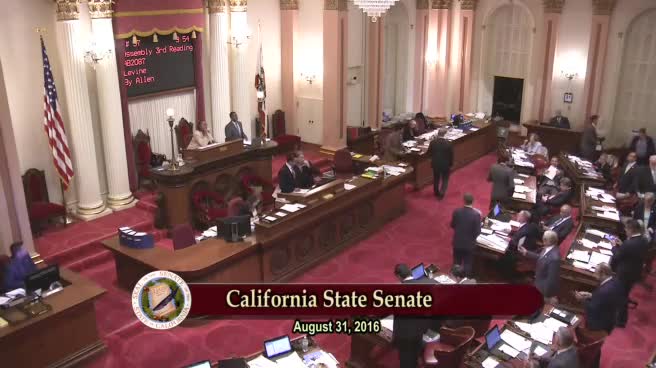
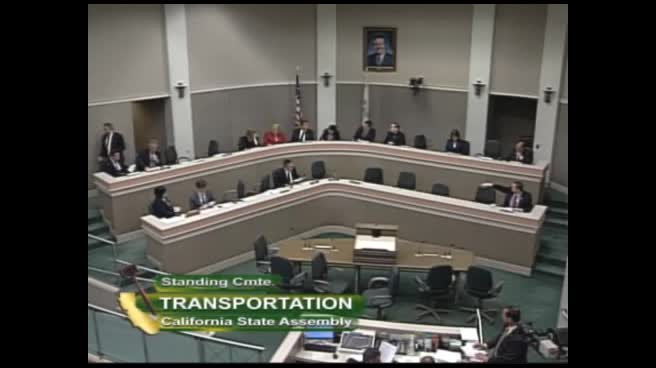
Bill Author