AB 219: Public works: concrete delivery.
- Session Year: 2015-2016
- House: Assembly
- Latest Version Date: 2015-10-10
Existing law defines public works, for purposes of requirements regarding the payment of prevailing wages for public works projects, to include, among other things, the hauling of refuse from a public works site to an outside disposal location with respect to contracts involving any state agency, including the California State University and the University of California, or any political subdivision of the state. Existing law makes a willful violation of law relating to payment of prevailing wages on public works a misdemeanor.
This bill would expand the definition of public works for these purposes to include the hauling and delivery of ready-mixed concrete, as defined, to carry out a public works contract, with respect to contracts involving any state agency or any political subdivision of the state. The bill would require the applicable prevailing wage rate to be the rate for the geographic area in which the concrete factory or batching plant is located. The bill would require the entity hauling or delivering ready-mixed concrete to enter into a written subcontract agreement with, and to provide employee payroll and time records to, the party that engaged that entity, as specified. The bill would provide that these provisions apply to public works contracts awarded on or after July 1, 2016. By expanding the definition of a crime, this bill would impose a state-mandated local program.
The California Constitution requires the state to reimburse local agencies and school districts for certain costs mandated by the state. Statutory provisions establish procedures for making that reimbursement.
This bill would provide that no reimbursement is required by this act for a specified reason.
Existing law defines public works, for purposes of requirements regarding the payment of prevailing wages for public works projects, to include, among other things, the hauling of refuse from a public works site to an outside disposal location with respect to contracts involving any state agency, including the California State University and the University of California, or any political subdivision of the state. Existing law makes a willful violation of law relating to payment of prevailing wages on public works a misdemeanor.
This bill would expand the definition of public works for these purposes to include the hauling and delivery of ready-mixed concrete, as defined, to carry out a public works contract, with respect to contracts involving any state agency or any political subdivision of the state. The bill would require the applicable prevailing wage rate to be the rate for the geographic area in which the concrete factory or batching plant is located. The bill would require the entity hauling or delivering ready-mixed concrete to enter into a written subcontract agreement with, and to provide employee payroll and time records to, the party that engaged that entity, as specified. The bill would provide that these provisions do not apply to public works contracts advertised for bid or awarded prior to the effective date of this measure. after July 1, 2016. By expanding the definition of a crime, this bill would impose a state-mandated local program.
The California Constitution requires the state to reimburse local agencies and school districts for certain costs mandated by the state. Statutory provisions establish procedures for making that reimbursement.
This bill would provide that no reimbursement is required by this act for a specified reason.
Existing law defines public works, for purposes of requirements regarding the payment of prevailing wages for public works projects, to include, among other things, the hauling of refuse from a public works site to an outside disposal location with respect to contracts involving any state agency, including the California State University and the University of California, or any political subdivision of the state. Existing law makes a willful violation of law relating to payment of prevailing wages on public works a misdemeanor.
This bill would expand the definition of public works for these purposes to include the delivery of ready-mixed or asphaltic concrete hauling and delivery of ready-mixed concrete, as defined, to carry out a public works contract, with respect to contracts involving any state agency or any political subdivision of the state. This The bill would require the applicable prevailing wage rate to be the rate for the geographic area in which the concrete factory or batching plant is located. The bill would provide that the expansion of that definition does these provisions do not apply to contracts advertised for bid or awarded prior to the effective date that provision. of this measure. By expanding the definition of a crime, this bill would impose a state-mandated local program.
Existing law defines contractor and subcontractor, for purposes of requirements regarding the payment of prevailing wages for public works projects, to include a contractor, subcontractor, licensee, officer, agent, or representative thereof, when working on public works, as specified. Existing law, the Contractors State License Law, provides for the licensure and regulation of contractors by the Contractors State License Board.
This bill would provide that a person is a contractor or subcontractor for the purposes of those requirements regardless of whether the person is subject to the requirements of the Contractors State License Law. This bill would provide that an agreement with a contractor or a subcontractor to perform a public work is a contract or subcontract for the purposes of requirements regarding the payment of prevailing wages described above.
The California Constitution requires the state to reimburse local agencies and school districts for certain costs mandated by the state. Statutory provisions establish procedures for making that reimbursement.
This bill would provide that no reimbursement is required by this act for a specified reason.
Existing law defines public works, for purposes of requirements regarding the payment of prevailing wages for public works projects, to include, among other things, the hauling of refuse from a public works site to an outside disposal location with respect to contracts involving any state agency, including the California State University and the University of California, or any political subdivision of the state. Existing law makes a willful violation of law relating to payment of prevailing wages on public works a misdemeanor.
This bill would expand the definition of public works, public works for these purposes to include the delivery of ready-mixed or asphaltic concrete with respect to contracts involving any state agency or any political subdivision of the state. This bill would provide that the expansion of that definition does not apply to contracts advertised for bid or awarded prior to the effective date that provision. By expanding the definition of a crime, this bill would impose a state-mandated local program.
Existing law defines contractor and subcontractor, for purposes of requirements regarding the payment of prevailing wages for public works projects, to include a contractor, subcontractor, licensee, officer, agent, or representative thereof, when working on public works, as specified. Existing law, the Contractors State License Law, provides for the licensure and regulation of contractors by the Contractors State License Board.
This bill would provide that a person is a contractor or subcontractor for the purposes of those requirements regardless of whether the person is subject to the requirements of the Contractors State License Law. This bill would provide that an agreement with a contractor or a subcontractor to perform a public work is a contract or subcontract for the purposes of requirements regarding the payment of prevailing wages described above.
The California Constitution requires the state to reimburse local agencies and school districts for certain costs mandated by the state. Statutory provisions establish procedures for making that reimbursement.
This bill would provide that no reimbursement is required by this act for a specified reason.
Existing law defines public works, for purposes of requirements regarding the payment of prevailing wages for public works projects, to include, among other things, the hauling of refuse from a public works site to an outside disposal location with respect to contracts involving any state agency, including the California State University and the University of California, or any political subdivision of the state. Existing law makes a willful violation of law relating to payment of prevailing wages on public works a misdemeanor.
This bill would expand the definition of public works, for these purposes to include the delivery of ready-mixed concrete with respect to contracts involving any state agency or any political subdivision of the state. By expanding the definition of a crime, this bill would impose a state-mandated local program.
The California Constitution requires the state to reimburse local agencies and school districts for certain costs mandated by the state. Statutory provisions establish procedures for making that reimbursement.
This bill would provide that no reimbursement is required by this act for a specified reason.
(a)For the limited purposes of Article 2 (commencing with Section 1770), public works also means the hauling and delivery of ready-mixed concrete to carry out a public works contract, with respect to contracts involving any state agency, including the California State University and the University of California, or any political subdivision of the state.
(b)For purposes of this section, ready-mixed concrete means concrete that is manufactured in a factory or a batching plant, according to a set recipe, and then delivered in a liquefied state by mixer truck for immediate incorporation into a project.
(c)For purposes of this section, the hauling and delivery of ready-mixed concrete to carry out a public works contract means the job duties for a ready mixer driver that are used by the director in determining wage rates pursuant to Section 1773, and includes receiving the concrete at the factory or batching plant and the return trip to the factory or batching plant.
(d)For purposes of this section, the applicable prevailing wage rate shall be the current prevailing wage, as determined by the director, for the geographic area in which the factory or batching plant is located.
(e)The entity hauling or delivering ready-mixed concrete to carry out a public works contract shall enter into a written subcontract agreement with the party that engaged the entity to supply the ready-mixed concrete. The written agreement shall require compliance with the requirements of this chapter. The entity hauling or delivering ready-mixed concrete shall be considered a subcontractor solely for the purposes of this chapter.
(f)The entity hauling or delivering ready-mixed concrete to carry out a public works contract shall submit a certified copy of the payroll records required by subdivision (a) of Section 1776 to the party that engaged the entity and to the general contractor within three working days after the employee has been paid, accompanied by a written time record that shall be certified by each driver for the performance of job duties in subdivision (c).
(g)This section applies to public works contracts that are awarded on or after July 1, 2016.
SEC. 2.No reimbursement is required by this act pursuant to Section 6 of Article XIIIB of the California Constitution because the only costs that may be incurred by a local agency or school district will be incurred because this act creates a new crime or infraction, eliminates a crime or infraction, or changes the penalty for a crime or infraction, within the meaning of Section 17556 of the Government Code, or changes the definition of a crime within the meaning of Section 6 of Article XIIIB of the California Constitution.
(a)For the limited purposes of Article 2 (commencing with Section 1770), public works also means the hauling and delivery of ready-mixed concrete to carry out a public works contract, with respect to contracts involving any state agency, including the California State University and the University of California, or any political subdivision of the state.
(b)For purposes of this section, ready-mixed concrete means concrete that is manufactured in a factory or a batching plant, according to a set recipe, and then delivered in a liquefied state by mixer truck for immediate incorporation into a project.
(c)For purposes of this section, the hauling and delivery of ready-mixed concrete to carry out a public works contract means the job duties for a ready mixer driver that are used by the director in determining wage rates pursuant to Section 1773, and includes receiving the concrete at the factory or batching plant and the return trip to the factory or batching plant.
(d)For purposes of this section, the applicable prevailing wage rate shall be the current prevailing wage, as determined by the director, for the geographic area in which the factory or batching plant is located.
(e)The entity hauling or delivering ready-mixed concrete to carry out a public works contract shall enter into a written subcontract agreement with the party that engaged the entity to supply the ready-mixed concrete. The written agreement shall require compliance with the requirements of this chapter. The entity hauling or delivering ready-mixed concrete shall be considered a subcontractor solely for the purposes of this chapter.
(f)The entity hauling or delivering ready-mixed concrete to carry out a public works contract shall submit a certified copy of the payroll records required by subdivision (a) of Section 1776 to the party that engaged the entity and to the general contractor within three working days after the employee has been paid, accompanied by a written time record that shall be certified by each driver for the performance of job duties in subdivision (c).
(g)This section applies to public works contracts that are awarded on or after July 1, 2016.
SEC. 2.This act does not apply to contracts advertised for bid or awarded prior to the effective date of the act.
SEC. 3.SEC. 2.No reimbursement is required by this act pursuant to Section 6 of Article XIIIB of the California Constitution because the only costs that may be incurred by a local agency or school district will be incurred because this act creates a new crime or infraction, eliminates a crime or infraction, or changes the penalty for a crime or infraction, within the meaning of Section 17556 of the Government Code, or changes the definition of a crime within the meaning of Section 6 of Article XIIIB of the California Constitution.
(a)For the limited purposes of Article 2 (commencing with Section 1770), public works also means the hauling of refuse from a public works site to an outside disposal location, or the hauling and delivery of ready-mixed concrete or asphaltic concrete to a public works site, with respect to contracts involving any state agency, including the California State University and the University of California, or any political subdivision of the state.
(b)For purposes of this section, the hauling of refuse includes, but is not limited to, hauling soil, sand, gravel, rocks, concrete, asphalt, excavation materials, and construction debris. The hauling of refuse shall not include the hauling of recyclable metals such as copper, steel, and aluminum that have been separated from other materials at the jobsite prior to transportation and that are to be sold at fair market value to a bona fide purchaser.
(c)For the purposes of this section, the hauling and delivery of ready-mixed concrete or asphaltic concrete to a public works site means the job duties for a ready mixer driver that are used by the Director of Industrial Relations in determining wage rates pursuant to Section 1773.
SEC. 2.Section 1722.1 of the Labor Code is amended to read:1722.1.For the purposes of this chapter, contractor and subcontractor include a contractor, subcontractor, licensee, officer, agent, or representative thereof, acting in that capacity, when working on public works pursuant to this article and Article 2 (commencing with Section 1770). A person or entity may be a contractor or subcontractor for the purposes of this chapter regardless of whether the person or entity is subject to the licensing requirements of Chapter 9 (commencing with Section 7000) of Division 3 of the Business and Professions Code.
SEC. 3.Section 1722.2 is added to the Labor Code, to read:1722.2.For the purposes of this chapter, an agreement with a contractor or subcontractor to perform any public work covered by this article and Article 2 (commencing with Section 1770) of this chapter is a contract or subcontract.
SECTION 1.Section 1720.9 is added to the Labor Code, to read:1720.9.(a)For the limited purposes of Article 2 (commencing with Section 1770), public works also means the hauling and delivery of ready-mixed concrete to carry out a public works contract, with respect to contracts involving any state agency, including the California State University and the University of California, or any political subdivision of the state.
(b)For purposes of this section, ready-mixed concrete means concrete that is manufactured in a factory or a batching plant, according to a set recipe, and then delivered in a liquefied state by mixer truck for immediate incorporation into a project.
(c)For purposes of this section, the hauling and delivery of ready-mixed concrete to carry out a public works contract means the job duties for a ready mixer driver that are used by the director in determining wage rates pursuant to Section 1773, and includes receiving the concrete at the factory or batching plant and the return trip to the factory or batching plant.
(d)For purposes of this section, the applicable prevailing wage rate shall be the current prevailing wage, as determined by the director, for the geographic area in which the factory or batching plant is located.
(e)The entity hauling or delivering ready-mixed concrete to carry out a public works contract shall enter into a written subcontract agreement with the party that engaged the entity to supply the ready-mixed concrete. The written agreement shall require compliance with the requirements of this chapter.
(f)The entity hauling or delivering ready-mixed concrete to carry out a public works contract shall submit a certified copy of the payroll records required by subdivision (a) of Section 1776 to the party that engaged the entity and to the general contractor within three working days after the employee has been paid, accompanied by a written time record that shall be certified by each driver for the performance of job duties in subdivision (c).
SEC. 4.The amendments made by Section 1 of this act do
SEC. 2.This act does not apply to contracts advertised for bid or awarded prior to the effective date of this the act.
SEC. 5.SEC. 3.No reimbursement is required by this act pursuant to Section 6 of Article XIIIB of the California Constitution because the only costs that may be incurred by a local agency or school district will be incurred because this act creates a new crime or infraction, eliminates a crime or infraction, or changes the penalty for a crime or infraction, within the meaning of Section 17556 of the Government Code, or changes the definition of a crime within the meaning of Section 6 of Article XIIIB of the California Constitution.
(a)For the limited purposes of Article 2 (commencing with Section 1770), public works also means the hauling of refuse from a public works site to an outside disposal location, or the hauling and delivery of ready-mixed concrete or asphaltic concrete to a public works site, with respect to contracts involving any state agency, including the California State University and the University of California, or any political subdivision of the state.
(b)For purposes of this section, the hauling of refuse includes, but is not limited to, hauling soil, sand, gravel, rocks, concrete, asphalt, excavation materials, and construction debris. The hauling of refuse shall not include the hauling of recyclable metals such as copper, steel, and aluminum that have been separated from other materials at the jobsite prior to transportation and that are to be sold at fair market value to a bona fide purchaser.
(c)For the purposes of this section, the hauling and delivery of ready-mixed concrete or asphaltic concrete to a public works site means the job duties for a ready mixer driver that are used by the Director of Industrial Relations in determining wage rates pursuant to Section 1773.
SEC. 2.Section 1722.1 of the Labor Code is amended to read:1722.1.For the purposes of this chapter, contractor and subcontractor include a contractor, subcontractor, licensee, officer, agent, or representative thereof, acting in that capacity, when working on public works pursuant to this article and Article 2 (commencing with Section 1770). A person or entity may be a contractor or subcontractor for the purposes of this chapter regardless of whether the person or entity is subject to the licensing requirements of Chapter 9 (commencing with Section 7000) of Division 3 of the Business and Professions Code.
SEC. 3.Section 1722.2 is added to the Labor Code, to read:1722.2.For the purposes of this chapter, an agreement with a contractor or subcontractor to perform any public work covered by this article and Article 2 (commencing with Section 1770) of this chapter is a contract or subcontract.
SEC. 4.The amendments made by Section 1 of this act do not apply to contracts advertised for bid or awarded prior to the effective date of this act.
SEC. 2. SEC. 5.No reimbursement is required by this act pursuant to Section 6 of Article XIIIB of the California Constitution because the only costs that may be incurred by a local agency or school district will be incurred because this act creates a new crime or infraction, eliminates a crime or infraction, or changes the penalty for a crime or infraction, within the meaning of Section 17556 of the Government Code, or changes the definition of a crime within the meaning of Section 6 of Article XIIIB of the California Constitution.
(a)For the limited purposes of Article 2 (commencing with Section 1770), public works also means the hauling of refuse from a public works site to an outside disposal location, or the delivery of ready-mixed concrete to a public works site, with respect to contracts involving any state agency, including the California State University and the University of California, or any political subdivision of the state.
(b)For purposes of this section, the hauling of refuse includes, but is not limited to, hauling soil, sand, gravel, rocks, concrete, asphalt, excavation materials, and construction debris. The hauling of refuse shall not include the hauling of recyclable metals such as copper, steel, and aluminum that have been separated from other materials at the jobsite prior to transportation and that are to be sold at fair market value to a bona fide purchaser.
SEC. 2.No reimbursement is required by this act pursuant to Section 6 of Article XIIIB of the California Constitution because the only costs that may be incurred by a local agency or school district will be incurred because this act creates a new crime or infraction, eliminates a crime or infraction, or changes the penalty for a crime or infraction, within the meaning of Section 17556 of the Government Code, or changes the definition of a crime within the meaning of Section 6 of Article XIIIB of the California Constitution.
|
Date
|
Status
|
|---|---|
| Oct 10, 2015 | Chaptered by Secretary of State - Chapter 739, Statutes of 2015. |
| Oct 10, 2015 | Approved by the Governor. |
| Sep 16, 2015 | Enrolled and presented to the Governor at 4 p.m. |
| Sep 3, 2015 | Senate amendments concurred in. To Engrossing and Enrolling. (Ayes 51. Noes 27. Page 2834.). |
| Sep 3, 2015 | Senate amendments concurred in. To Engrossing and Enrolling. (Ayes 51. Noes 27.). |
| Sep 1, 2015 | Read third time. Passed. Ordered to the Assembly. (Ayes 24. Noes 13. Page 2349.). |
| Sep 1, 2015 | Read third time. Passed. Ordered to the Assembly. |
| Sep 1, 2015 | In Assembly. Concurrence in Senate amendments pending. May be considered on or after September 3 pursuant to Assembly Rule 77. |
| Aug 31, 2015 | Read second time and amended. Ordered to third reading. |
| Aug 27, 2015 | From committee: Amend, and do pass as amended. (Ayes 4. Noes 2.) (August 27). |
| Jul 6, 2015 | In committee: Referred to APPR. suspense file. |
| Jun 25, 2015 | From committee: Do pass and re-refer to Com. on APPR. (Ayes 4. Noes 1.) (June 24). Re-referred to Com. on APPR. |
| Jun 18, 2015 | Referred to Com. on L. & I.R. |
| Jun 3, 2015 | In Senate. Read first time. To Com. on RLS. for assignment. |
| Jun 3, 2015 | Read third time. Passed. Ordered to the Senate. (Ayes 52. Noes 27. Page 1862.) |
| Jun 3, 2015 | Read third time. Passed. Ordered to the Senate. |
| Jun 2, 2015 | Read second time. Ordered to third reading. |
| Jun 1, 2015 | Read second time and amended. Ordered returned to second reading. |
| May 28, 2015 | From committee: Amend, and do pass as amended. (Ayes 12. Noes 5.) (May 28). |
| May 6, 2015 | In committee: Set, second hearing. Referred to APPR. suspense file. |
| Apr 29, 2015 | In committee: Set, first hearing. Hearing canceled at the request of author. |
| Apr 23, 2015 | From committee: Do pass and re-refer to Com. on APPR. (Ayes 5. Noes 2.) (April 22). Re-referred to Com. on APPR. |
| Apr 15, 2015 | Re-referred to Com. on L. & E. |
| Apr 14, 2015 | From committee chair, with author's amendments: Amend, and re-refer to Com. on L. & E. Read second time and amended. |
| Mar 26, 2015 | In committee: Set, first hearing. Hearing canceled at the request of author. |
| Feb 9, 2015 | Referred to Com. on L. & E. |
| Feb 3, 2015 | From printer. May be heard in committee March 5. |
| Feb 2, 2015 | Read first time. To print. |
|
Date
|
Description
|
Location
|
Votes
|
|
|---|---|---|---|---|
| Sep 3, 2015 | AB 219 DALY Concurrence in Senate Amendments | Assembly Floor |
Passed |
|
| Sep 1, 2015 | Assembly 3rd Reading AB219 Daly By Mendoza | Senate Floor |
Passed |
|
| Aug 27, 2015 | Do pass as amended | Senate Standing Committee on Appropriations |
Passed |
|
| Jul 6, 2015 | Placed on suspense file | Senate Standing Committee on Appropriations |
Passed |
|
| Jun 24, 2015 | Do pass, but first be re-referred to the Committee on [Appropriations] | Senate Standing Committee on Labor and Industrial Relations |
Passed |
|
| Jun 3, 2015 | AB 219 DALY Assembly Third Reading | Assembly Floor |
Passed |
|
| May 28, 2015 | Do pass as amended. | Assembly Standing Committee on Appropriations |
Passed |
|
| Apr 22, 2015 | Do pass and be re-referred to the Committee on [Appropriations] | Assembly Standing Committee on Labor and Employment |
Passed |
This list shows positions taken on this bill by organizations on the date displayed, which is linked to the original source.
Positions by individuals are not included.
AB 219
Page 2
CONCURRENCE IN SENATE AMENDMENTS
AB 219
(Daly)
As Amended August 31, 2015
Majority vote
ASSEMBLY: |
52-27 |
(June 3, 2015) |
SENATE: |
24-13 |
(September 1, 2015) |
Original Committee Reference: L. & E.
SUMMARY: Expands the definition of "public works" to include the hauling and delivery of ready-mixed concrete, as specified.
The Senate amendments:
Provide that the entity hauling or delivering ready-mixed concrete shall be considered a subcontractor solely for the purposes of a specified chapter of the code.
Provide that this bill applies to public works contracts that are awarded on or after July 1, 2016.
FISCAL EFFECT: According to the Senate Appropriations Committee, the California Department of Transportation (CalTrans) estimates that this bill would result in increased costs of $21 million to $42 million (special funds), which includes impacts to materials costs, compliance and administration (see Staff Comments). The Department of Industrial Relations (DIR) would incur first-year costs of $127,000 and $119,000 in the out-years (special funds) to monitor and enforce the bill's prevailing wage requirements for non-CalTrans projects. To the extent that DIR issues additional fines, special funds revenues would increase. The magnitude is unknown. While the bill would impact CalTrans disproportionately at the state level, it could also potentially result in increased administrative, materials and compliance costs to other departments that use ready-mix concrete.
COMMENTS: This bill is co-sponsored by the California Public Affairs Council and the State Building and Construction Trades Council, and would define "public works" for purposes of state prevailing wage law to include the delivery of ready-mix concrete.
The sponsors state that under the current material supplier exemption to the prevailing wage law, delivery drivers hired by a material supplier are exempted from the prevailing wage. However, there is no physical distinction between the work performed by ready-mix drivers employed by contractors and ready-mix drivers employed by manufacturers, as the product and work is identical. By expanding the prevailing wage to all ready-mix drivers serving public works, this bill would create a more fair application of the Labor Code that does not depend on who owns the truck delivering the ready-mix or whether the driver is employed by an onsite contractor or a cement manufacturer.
They conclude that this bill is about uniformity and a fair application of the prevailing wage law to deliveries of ready-mix and not about expanding prevailing wage to all material drivers.
Opponents contend that this bill ignores longstanding distinctions in labor law between a driver and a construction worker. In addition, they argue that it is inconsistent with the contract between a supplier and a contractor. They note that ready mix concrete is a finished product, delivered to the site in an unfinished state pursuant to a purchase order.
Opponents also argue that this bill contravenes longstanding and well-established legal precedent that material suppliers are not subject to prevailing wage law. Finally, opponents argue that this bill imposes significant new liability and administrative burdens on prime contractors since, under California law, prime contractors are jointly and severally liable for the payment of prevailing wages by all subcontractors on a public work project. This bill would expand that liability to include the payment of prevailing wages by a material supplier providing ready-mixed concrete to a public works construction jobsite.
Analysis Prepared by: Ben Ebbink / L. & E. / (916) 319-2091 FN: 0001645
AB 219
Page 9
|
Office of Senate Floor Analyses (916) 651-1520 Fax: (916) 327-4478 |
THIRD READING
Bill No: AB 219
Amended: 8/31/15 in Senate
SENATE LABOR & IND. REL. COMMITTEE: 4-1, 6/24/15
AYES: Mendoza, Jackson, Leno, Mitchell
NOES: Stone
SENATE APPROPRIATIONS COMMITTEE: 4-2, 8/27/15
AYES: Lara, Hill, Leyva, Mendoza
NOES: Bates, Nielsen
NO VOTE RECORDED: Beall
ASSEMBLY FLOOR: 52-27, 6/3/15 - See last page for vote
SUBJECT: Public works: concrete delivery
SOURCE: State Building and Construction Trades Council
DIGEST: This bill expands the definition of public works to include the hauling and delivery of ready-mixed concrete to carry out a public works contract.
Existing law:
Requires that workers employed on public works projects in California be paid the applicable prevailing wage, as determined by the Department of Industrial Relations (DIR).
Requires that not less than the general prevailing wage rate be paid to all workers employed on a “public works” project costing over $1,000 and imposes misdemeanor penalties for a violation of this requirement. (Labor Code §1771)
Defines “paid for in whole or in part out of public funds” as, among other things, “Fees, costs, rents, insurance or bond premiums, loans, interest rates, or other obligations normally required in the execution of a contract that are paid, reduced, charged at less than fair market value, waived or forgiven.” (Labor Code §1720)
Defines “public work” to include, among other things, construction, alteration, demolition, installation or repair work done under contract and paid for in whole or in part out of public funds. (Labor Code §1720)
Defines “public works,” as the hauling of refuse from a public works site to an outside disposal location, with respect to contracts involving any state agency. (Labor Code §1720.3)
Provides that “hauling of refuse” includes, but is not limited to hauling soil, sand, gravel, rocks, concrete, asphalt, excavation materials, and construction debris. (Labor Code §1720.3)
Provides that the contractor to whom the contract is awarded, and any subcontractor under him, shall pay not less than the prevailing wage to all workers employed in the execution of the contract. (Labor Code §1774)
This bill:
Expands the definition of “public works” to include the hauling and delivery of ready-mixed concrete to carry out a public works contract, with respect to contracts involving any state agency or any political subdivision of the state.
Provides that “ready-mixed concrete” means concrete that is manufactured in a factory or batching plant, according to a set recipe, and then delivered in a liquefied state by mixer truck for immediate incorporation into a project.
Provides that the “hauling and delivery of ready-mixed concrete to carry out a public works contract” means the job duties for a ready mix driver that are used by DIR under existing law, and includes receiving the concrete at the factory or batching plant and the return trip to the factory or batching plant.
Provides that the applicable prevailing wage rate shall be the current prevailing wage rate as determined for the geographic area in which the factory or batching plant is located.
Provides that the entity hauling or delivering ready-mixed concrete to carry out a public works contract shall enter into a written subcontract agreement with the party that engaged the entity to supply the ready-mixed concrete. The written agreement shall require compliance with specified requirements of this chapter. The entity hauling of delivering ready mixed concrete shall be considered a subcontractor sorely for the purposes of this chapter.
Requires the entity hauling or delivering ready-mixed concrete to carry out a public works contract to submit a certified copy of the payroll records to the party that engaged the entity and to the general contractor within three working days after the employee has been paid, accompanied by a written time record certified by each driver.
States that this section applies to public works contracts that are awarded on or after July 1, 2016.
Provides that this bill does not apply to contracts advertised for bid or awarded prior to the effective date of this bill.
Comments
Under
existing law and longstanding legal and DIR precedent, the employees
of subcontractors who haul material to public work sites must be paid
prevailing wage. Employees of bona fide material suppliers are
excluded from prevailing wage requirements. A 1999 decision of DIR
addressed the issue of whether the state's prevailing wage laws
applied to the delivery of ready-mix concrete to public works job
sites. Alameda Corridor Project: A&A Ready Mix Concrete and
Robertson's Ready Mix Concrete (Public Works Case No. 99-037).
DIR
relied on a California Court of Appeals decision to set forth the
general test for determining whether the work was subject to the
payment of prevailing wages. O.G. Sansome v. California
Department of Transportation, (1976) 55 Cal. App. 3d 434. DIR
noted that the Court in Sansome applied the following test:
“The Court set forth three principal criteria for the determination of material supplier. First, a material supplier must be in the business of selling supplies to the general public. Second, the plant from which the material is obtained must not be established specially for the particular contract. Third, the plant may not be located at the site of the work.”
Applying
these three criteria to the case at hand, DIR determined that the
concrete entities involved were material suppliers and not
subcontractors. The opinion also stated that the Legislature failed
to pass a version of AB 302 (Floyd, Chapter 220, Statutes of 1999)
that designated concrete mix on-hauling a public work however, it
also noted “that such action does not reflect a legislative intent
to preclude the payment of prevailing wages to concrete mix delivery
drivers.”
In a 2008 decision by DIR, it was determined that the off-hauling of demolition debris and materials whether performed by the on-site demolition contractor's employees or by an independent trucking company is subject to prevailing wage requirements. In addition, DIR determined that the on-hauling of material for backfill performed by the on-site demolition contractor's employees is also subject to prevailing wage requirements. Friendly Inn Senior Center (City of Morgan Hill), (Public Works Case No. 2008-027).
Need for this bill? California recognizes the work of ready-mix drivers as skilled construction work and has published prevailing wage determinations which contractors are required to use in two cases. Currently, the delivery of ready-mixed concrete for incorporation into a public works construction project is “covered work” under prevailing wage when the product is delivered by a driver hired by the contractor to deliver the product or when the product is manufactured at a “dedicated” plant (one that is established solely for that particular public workers project). The author notes that exempted from prevailing wage are deliveries by “material men,” who are essentially drivers that are employed directly by the manufacturer, operating trucks owned by that manufacturer. The author argues that there is no physical distinction between the work performed by ready-mix drivers employed by contractors and drivers employed by manufacturers.
AB
219 provides that the delivery of ready-mixed concrete is covered
work in all public works circumstances. The work would be covered
regardless of who owns the truck delivering the product, and
regardless of whether the driver is operated by an independent
trucking company or by the manufacturer of the concrete. According to
the author, AB 219 closes a loophole in current law by requiring the
application of prevailing wage to deliveries of all ready-mix
concrete to public works projects.
FISCAL EFFECT: Appropriation: No Fiscal Com.: Yes Local: Yes
According to the Senate Appropriations Committee:
The California Department of Transportation (CalTrans) estimates that this bill will result in increased costs of $21 million to $42 million (special funds), which include impacts to materials costs, compliance and administration.
DIR would incur first-year costs of $127,000 and $119,000 in the out-years (special funds) monitor and enforce the bill’s prevailing wage requirements for non-CalTrans projects. To the extent that DIR issues additional fines, special funds revenues would increase. The magnitude is unknown.
While the bill will impact CalTrans disproportionately at the state level, it could also potentially result in increased administrative, materials and compliance costs to other departments that use ready-mix concrete, including the High Speed Rail Authority, the Department of Water Resources, the Department of Corrections and Rehabilitation, the Department of General Services, and the three segments of higher education (the University of California, California State University, and the California Community Colleges). The magnitudes are unknown.
State Building and Construction Trades Council (source)
Alameda Building Trades Council
American Federation of State, County and Municipal Employees, AFL-CIO
California Labor Federation, AFL-CIO
California Professional Firefighters
California State Council of Laborers
California Teamsters Public Affairs Council
Contra Costa Building Trades Council
Fresno, Madera, Tulare & Kings Building Trades Council
Humboldt/Del Norte Building Trades Council
Imperial Building Trades Council
Kern, Inyo & Mono Building Trades Council
Los Angeles/Orange Building Trades Council
Marin Building Trades Council
Mid Valley Building Trades Council
Monterey/Santa Cruz Building Trades Council
Napa/Solano Building Trades Council
Northeastern, Shasta, Trinity, Lassen & Tehama Building Trades Council
Sacramento/Sierra Building Trades Council
San Bernardino/Riverside Building Trades Council
San Diego Building Trades Council
San Francisco Building Trades Council
San Joaquin, Calaveras & Alpine Building Trades Council
San Mateo Building Trades Council
Santa Clara/San Benito Building Trades Council
Sonoma, Mendocino & Lake Building Trades Council
Stanislaus, Merced & Mariposa Building Trades Council
Tri-Counties Building Trades Council
OPPOSITION: (Verified 8/28/15)
711 Materials Inc.
Associated Builders and Contractors of California
Associated General Contractors of California
Associated Ready Mixed Concrete
Assured Aggregates Company Inc
Bender Ready Mix
BoDean Company
Calaveras Materials
California Asphalt Pavement Association
California Chamber of Commerce
California Concrete Contractor Association’s
California Construction and Industrial Materials Association
California Construction Trucking Association
California Trucking Association
CalPortland Company
Casraic Brick
CEMEX
Desert Water Agency
Don Chappin Company
El Dorado Irrigation District
GCU Trucking
George Reed Inc
Granite Construction Co.
Granitrock
Hansen Brothers Enterprises
Hanson
Hanson HEIDELBERG cement Group
Hazard Construction
Holliday Rock Co.
Howard Jarvis Taxpayers Association
Knife River Construction
Livingston’s Concrete Service Inc.
Mathews Readymix LLC
National Ready Mixed Concrete Company
Northgate Ready Mix
P.W. Gillibrand Co.
Plumbing-Heating-Cooling Contractors Association of California
Puente Ready Mix Inc.
Remedy Concrete, Asphalt & Aggregate
San Diego Regional Chamber of Commerce
Southwest Concrete Pavement Association
Spragues’ Ready Mix
Superior Ready Mix Concrete
Syar Concrete LLC
Teichert Materials
United Contractors
United States Pumice Company
Vulcan Materials Co.
Western Electrical Contractors Association
ARGUMENTS IN SUPPORT: Proponents state that this bill will expand the prevailing wage to drivers delivering ready-mix concrete to public works projects, regardless of whether the delivery drivers are employed by material suppliers or project contractors. Proponents argue that ready-mix concrete is a precise mixture or set recipe that is customized for construction sites and which is transported from a dedicated batch location or from a manufacturing facility. They contend that under existing law, the delivery of ready-mixed concrete for a public works project is covered under the prevailing wage if either of the following occurs: 1) The product is delivered by a driver hired by the on-site general contractor or a subcontractor; or 2) the product is manufactured at a “dedicated” plant (i.e. one that is established solely for the public works project).
Proponents
state that under the current material supplier exemption to the
prevailing wage law, delivery drivers hired by a material supplier
are exempted from the prevailing wage. However, they argue that there
is no physical distinction between the work performed by ready-mix
drivers employed by contractors and ready-mix drivers employed by
manufacturers, as the product and work is identical. They contend
that expanding the prevailing wage to all ready-mix drivers serving
public works, this bill creates a more fair application of the Labor
Code that does not depend on who owns the truck delivering the
ready-mix or whether the driver is employed by an onsite contractor
or a cement manufacturer.
ARGUMENTS IN OPPOSITION: Opponents contend that AB 219 ignores longstanding distinctions in labor law between a driver and a construction worker. They argue that ready-mix concrete is delivered to construction sites by drivers, whose training and duties pertain to driving. They contend that the spreading, vibrating, testing and finishing of the concrete is done by trained construction workers and drivers do not participate in on-site construction work, nor do they work alongside the construction workers.
Additionally, opponents argue that this bill is inconsistent with the contract between a supplier and a contractor. They note that ready mix concrete is a finished product, delivered to the site in an unfinished state pursuant to a purchase order. They contend that ready mix concrete delivered to the jobsite is essentially the same as material delivered to the site such as paint, lumber or steel. They argue that once the product is delivered, it becomes the responsibility of the contractor, a separate legal entity. Opponents also note that DIR has specifically addressed the question of whether the prevailing wage applies in such cases. They argue that the bill also potentially sets off a “chain reaction” by targeting a single delivered product such as lumber, steel, paint, welding materials, fuel and other supplies.
ASSEMBLY FLOOR: 52-27, 6/3/15
AYES: Alejo, Bloom, Bonilla, Bonta, Brown, Burke, Calderon, Campos, Chau, Chiu, Chu, Cooley, Cooper, Dababneh, Daly, Dodd, Eggman, Frazier, Cristina Garcia, Eduardo Garcia, Gatto, Gipson, Gomez, Gonzalez, Gordon, Gray, Roger Hernández, Holden, Irwin, Jones-Sawyer, Levine, Lopez, Low, McCarty, Medina, Mullin, Nazarian, O'Donnell, Perea, Quirk, Rendon, Ridley-Thomas, Rodriguez, Salas, Santiago, Mark Stone, Thurmond, Ting, Weber, Williams, Wood, Atkins
NOES: Achadjian, Travis Allen, Baker, Bigelow, Brough, Chávez, Dahle, Beth Gaines, Gallagher, Grove, Hadley, Harper, Jones, Kim, Lackey, Linder, Maienschein, Mathis, Mayes, Melendez, Obernolte, Olsen, Patterson, Steinorth, Wagner, Waldron, Wilk
NO VOTE RECORDED: Chang
Prepared by: Deanna Ping / L. & I.R. / (916) 651-1556
8/30/15 19:42:03
AB 219 (Daly) Page 0 of 1
SENATE COMMITTEE ON APPROPRIATIONS
Senator Ricardo Lara, Chair
2015 - 2016 Regular Session
AB 219 (Daly) - Public works: concrete delivery.
|
|
Version: June 1, 2015 |
Policy Vote: L. & I.R. 4 - 1 |
Urgency: No |
Mandate: Yes |
Hearing Date: August 27, 2015 |
Consultant: Robert Ingenito |
*********** ANALYSIS ADDENDUM – SUSPENSE FILE ***********
The following information is revised to reflect amendments
adopted by the committee on August 27, 2015
Bill Summary:
AB 219 would expand the definition of public works to include the hauling and delivery of ready-mixed concrete to carry out a public works contract.
Fiscal Impact:
The California Department of Transportation (CalTrans) estimates that this bill would result in increased costs of $21 million to $42 million (special funds), which include impacts to materials costs, compliance and administration.
The Department of Industrial Relations (DIR) would incur first-year costs of $127,000 and $119,000 in the out-years (special funds) monitor and enforce the bill’s prevailing wage requirements for non-CalTrans projects. To the extent that DIR issues additional fines, special funds revenues would increase. The magnitude is unknown.
While the bill would impact CalTrans disproportionately at the state level, it could also potentially result in increased administrative, materials and compliance costs to other departments that use ready-mix concrete, including the High Speed Rail Authority, the Department of Water Resources, the Department of Corrections and Rehabilitation, the Department of General Services, and the three segments of higher education (the University of California, California State University, and the California Community Colleges). The magnitudes are unknown.
Author Amendments:
Specify (1) that entities hauling ready-mix concrete shall be considered subcontractors, and (2) that the bill is effective for contracts awarded after July 1, 2016.
-- END --
AB 219 (Daly) Page 4 of 4
SENATE COMMITTEE ON APPROPRIATIONS
Senator Ricardo Lara, Chair
2015 - 2016 Regular Session
AB 219 (Daly) - Public works: concrete delivery
|
|
Version: June 1, 2015 |
Policy Vote: L. & I.R. 4 - 1 |
Urgency: No |
Mandate: Yes |
Hearing Date: July 6, 2015 |
Consultant: Robert Ingenito |
This bill meets the criteria for referral to the Suspense File.
Bill Summary:
AB 219 would expand the definition of public works to include the hauling and delivery of ready-mixed concrete to carry out a public works contract.
Fiscal Impact:
The California Department of Transportation (CalTrans) estimates that this bill would result in increased costs of $32 million to $54 million (special funds), which includes impacts to materials costs, compliance and administration (see Staff Comments).
The Department of Industrial Relations (DIR) would incur first-year costs of $127,000 and $119,000 in the out-years (special funds) monitor and enforce the bill’s prevailing wage requirements for non-CalTrans projects. To the extent that DIR issues additional fines, special funds revenues would increase. The magnitude is unknown.
While the bill would impact CalTrans disproportionately at the state level, it could also potentially result in increased administrative, materials and compliance costs to other departments that use ready-mix concrete, including the High Speed Rail Authority, the Department of Water Resources, the Department of Corrections and Rehabilitation, the Department of General Services, and the three segments of higher education (the University of California, California State University, and the California Community Colleges). The magnitudes are unknown.
Background:
Current law requires that prevailing wage rates, as determined by DIR, be paid to all workers employed on a “public works” projects. The prevailing wage rate is the basic hourly rate paid on public works projects to a majority of workers engaged in a particular craft, classification or type of work within the locality and in the nearest labor market area. Current law requires that the "prevailing wage" to be paid to all workers employed on public works projects. Projects valued at $1,000 are exempted from the requirement. In general, "public works" is defined to include construction, alteration, demolition, installation or repair work done under contract and "paid for in whole or in part out of public funds."
Under current law and DIR precedent, the employees of subcontractors who haul material to public work sites must be paid prevailing wage. Conversely, employees of bona fide material suppliers are excluded from prevailing wage requirements. A 1999 DIR decision, Alameda Corridor Project: A&A Ready Mix Concrete and Robertson's Ready Mix Concrete (Public Works Case No. 99-037), addressed the issue of whether the state's prevailing wage laws applied to the delivery of ready-mix concrete to public works job sites.
DIR relied on a California Court of Appeals decision to set forth the general test for determining whether the work was subject to the payment of prevailing wages, comprised of three criteria: (1) a material supplier must be in the business of selling supplies to the general public, (2) the plant from which the material is obtained must not be established specially for the particular contract, and (3) plant may not be located at the site of the work.
Applying these three criteria, DIR determined in Public Works Case No. 99-037 that the concrete entities involved were material suppliers and not subcontractors. The opinion also stated that the Legislature failed to pass legislation designating concrete mix on-hauling a public work; however, it also noted “that such action does not reflect a legislative intent to preclude the payment of prevailing wages to concrete mix delivery drivers.”
In 2008, DIR determined that the off-hauling of demolition debris and materials, whether performed by the on-site demolition contractor's employees or by an independent trucking company, is subject to prevailing wage requirements. In addition, DIR determined that the on-hauling of material for backfill performed by the on-site demolition contractor's employees is also subject to prevailing wage requirements.
Proposed Law:
This bill would expand the definition of "public works" to include the hauling and delivery of ready-mixed concrete, as specified. Specifically, this bill would do all of the following:
Expand the definition of "public works" to include the hauling and delivery of ready-mixed concrete to carry out a public works contract, with respect to contracts involving any state agency or any political subdivision of the state.
Provide that "ready-mixed concrete" means concrete that is manufactured in a factory or batching plant, according to a set recipe, and then delivered in a liquefied state by mixer truck for immediate incorporation into a project.
Provide that the "hauling and delivery of ready-mixed concrete to carry out a public works contract" means the job duties for a ready mix driver that are used by DIR under existing law, and includes receiving the concrete at the factory or batching plant and the return trip to the factory or batching plant.
Provide that the applicable prevailing wage rate shall be the current prevailing wage rate as determined for the geographic area in which the factory or batching plant is located.
Provide that the entity hauling or delivering ready-mixed concrete to carry out a public works contract shall enter into a written subcontract agreement with the party that engaged the entity to supply the ready-mixed concrete. The written agreement shall require compliance with specified requirements of existing law.
Require the entity hauling or delivering ready-mixed concrete to carry out a public works contract to submit a certified copy of the payroll records to the party that engaged the entity and to the general contractor within three working days after the employee has been paid, accompanied by a written time record certified by each driver.
Provide that this bill does not apply to contracts advertised for bid or awarded prior to the effective date of this bill.
Related Legislation: AB 852 (Burke, 2015) would define "public work" for purposes of prevailing wage law to also mean any construction, alteration, demolition, installation, or repair work done under private contract on a general acute care hospital when the project is paid for in whole or in part with the proceeds of conduit revenue bonds issued by a public agency. A project for a rural general acute care hospital with a maximum of 76 beds would be exempt from this requirement. This bill is scheduled to be heard in this Committee on July 6th.
Staff Comments:
Caltrans indicates that it currently has 652 ongoing construction contracts valued at $10.6 billion, and uses 4.6 million cubic yards of concrete annually.
CalTrans’ fiscal estimates of this bill employs a myriad of interacting assumptions. First, it estimates the average hourly rate for ready-mixed drivers is currently $16 per hour. Based on its research, the department estimates that this bill would cause the wage rate to rise to a range of $42.06 per hour to $53.37 per hour. The department then combines this assumption with others, specifically (1) the average amount of concrete carried per truck (8 to 10 yards), and (2) that each delivery job will take, on average, two hours. Putting all of these assumptions together, CalTrans estimates that the bill would result in an increase in materials (concrete) costs in the range of $27.6 million to $49.4 million annually.
Caltrans’ Division of Construction has an approved labor compliance program that performs the responsibilities for enforcement of prevailing wages in lieu of DIR. Caltrans indicates that this bill would increase support costs both for (1) inspection of the hauling activities, and (2) enforcement of prevailing wage requirements under the department’s labor compliance program’s operations. Caltrans’ estimates an average of one additional hour per week per contract. Assuming an average of 250 contracts for 52 weeks per year, this would require an additional 7.4 PYs and about $1.1 million ongoing.
Finally, CalTrans would need additional staff to administer projects and accept concrete delivery on site. Assuming an average of 1,000 cubic yards of concrete are placed per 8-hour day, it would take 4,600 days to lay the 4.6 million cubic yards Caltrans averages in a year. This would require an additional 21 PYs at approximately $3.15 million ongoing.
State construction costs are often paid for using General Obligation (GO) Bonds. Because this measure would increase the costs for projects that use ready-mix concrete, the GO bond issuances would likely need to be upsized, leading to higher debt-service payments. The magnitude is unknown.
-- END --
AB 219 (Daly) Page 8 of 8
SENATE COMMITTEE ON LABOR AND INDUSTRIAL RELATIONS
Senator Tony Mendoza, Chair
2015 - 2016 Regular
Bill No: AB 219 Hearing Date: June 24, 2015
Author: |
Daly |
||
Version: |
June 1, 2015 |
||
Urgency: |
No |
Fiscal: |
Yes |
Consultant: |
Deanna Ping |
||
Subject: Public works: concrete delivery.
KEY ISSUE
Should the Legislature expand the definition of public works to include the hauling and delivery of ready-mixed concrete to carry out a public works contract?
ANALYSIS
Existing law requires that workers employed on public works projects in California be paid the applicable prevailing wage, as determined by the Department of Industrial Relations. Among other things, existing law:
Requires that not less than the general prevailing wage rate be paid to all workers employed on a "public works" project costing over $1,000 dollars and imposes misdemeanor penalties for a violation of this requirement. (Labor Code §1771)
Defines “paid for in whole or in part out of public funds” as, among other things, “Fees, costs, rents, insurance or bond premiums, loans, interest rates, or other obligations normally required in the execution of a contract that are paid, reduced, charged at less than fair market value, waived or forgiven.” (Labor Code §1720)
Defines "public work" to include, among other things, construction, alteration, demolition, installation or repair work done under contract and paid for in whole or in part out of public funds. (Labor Code §1720)
Also defines “public works,” as the hauling of refuse from a public works site to an outside disposal location, with respect to contracts involving any state agency.
(Labor Code §1720.3)
Provides that “hauling of refuse” includes, but is not limited to hauling soil, sand, gravel, rocks, concrete, asphalt, excavation materials, and construction debris.
(Labor Code §1720.3)
Provides that the contractor to whom the contract is awarded, and any subcontractor under him, shall pay not less than the prevailing wage to wall workers employed in the execution of the contract. (Labor Code §1774)
This Bill expands the definition of "public works" to include the hauling and delivery of ready-mixed concrete, as specified. Specifically, this bill:
Expands the definition of "public works" to include the hauling and delivery of ready-mixed concrete to carry out a public works contract, with respect to contracts involving any state agency or any political subdivision of the state.
Provides that "ready-mixed concrete" means concrete that is manufactured in a factory or batching plant, according to a set recipe, and then delivered in a liquefied state by mixer truck for immediate incorporation into a project.
Provides that the "hauling and delivery of ready-mixed concrete to carry out a public works contract" means the job duties for a ready mix driver that are used by the Department of Industrial Relations (DIR) under existing law, and includes receiving the concrete at the factory or batching plant and the return trip to the factory or batching plant.
Provides that the applicable prevailing wage rate shall be the current prevailing wage rate as determined for the geographic area in which the factory or batching plant is located.
Provides that the entity hauling or delivering ready-mixed concrete to carry out a public works contract shall enter into a written subcontract agreement with the party that engaged the entity to supply the ready-mixed concrete. The written agreement shall require compliance with specified requirements of existing law.
Requires the entity hauling or delivering ready-mixed concrete to carry out a public works contract to submit a certified copy of the payroll records to the party that engaged the entity and to the general contractor within three working days after the employee has been paid, accompanied by a written time record certified by each driver.
Provides that this bill does not apply to contracts advertised for bid or awarded prior to the effective date of this bill.
COMMENTS
1. Background on “Public Works”:
Existing law requires that not less than the general prevailing wage rate of per diem wages, as determined by the director of the Department of Industrial Relations (DIR), be paid to all workers employed on a “public works” projects. The prevailing wage rate is the basic hourly rate paid on public works projects to a majority of workers engaged in a particular craft, classification or type of work within the locality and in the nearest labor market area. The determination of whether a project is deemed to constitute a "public work" is important because the Labor Code requires (except for projects of $1,000 or less) that the "prevailing wage" to be paid to all workers employed on public works projects.
In general, "public works" is defined to include construction, alteration, demolition, installation or repair work done under contract and "paid for in whole or in part out of public funds." Over a decade ago, there was much administrative and legislative action over what constituted the term "paid for in whole or in part out of public funds." These debates culminated in the enactment of SB 975 (Alarcón), Chapter # 938, Statutes of 2001, which codified a definition of "paid for in whole or in part out of public funds" that included certain payments, transfers, credits, reductions, waivers and performances of work. At the time, supporters of SB 975 stated that it established a definition that conformed to several precedential coverage decisions made by the Department of Industrial Relations (DIR). SB 975 also exempted certain affordable housing, residential and private development projects that met certain criteria.
2. Delivery of Ready Mix Concrete and Other Cases
Under current law and
longstanding legal and Department of Industrial Relations precedent,
the employees of subcontractors who haul material to public work
sites must be paid prevailing wage. Employees of bona fide material
suppliers are excluded from prevailing wage requirements. A 1999
decision of the Department of Industrial Relations (DIR) addressed
the issue of whether the state's prevailing wage laws applied to the
delivery of ready-mix concrete to public works job sites. Alameda
Corridor Project: A&A Ready Mix Concrete and Robertson's Ready
Mix Concrete (Public
Works Case No. 99-037).
DIR relied on a California Court
of Appeals decision to set forth the general test for determining
whether the work was subject to the payment of prevailing wages.
O.G. Sansome v.
California Department of Transportation,
(1976) 55 Cal. App. 3d 434. DIR noted that the Court in Sansome
applied the following test:
"The Court set forth three principal criteria for the determination of material supplier. First, a material supplier must be in the business of selling supplies to the general public. Second, the plant from which the material is obtained must not be established specially for the particular contract. Third, the plant may not be located at the site of the work."
Applying these three criteria to
the case at hand, DIR determined that the concrete entities involved
were material suppliers and not subcontractors. The opinion also
stated that the Legislature failed to pass a version of AB 302 that
designated concrete mix on-hauling a public work however, it also
noted “that such action does not reflect a legislative intent to
preclude the payment of prevailing wages to concrete mix delivery
drivers.”
In a 2008 decision by DIR, it was determined that the off-hauling of demolition debris and materials whether performed by the on-site demolition contractor's employees or by an independent trucking company is subject to prevailing wage requirements. In addition, DIR determined that the on-hauling of material for backfill performed by the on-site demolition contractor's employees is also subject to prevailing wage requirements. Friendly Inn Senior Center (City of Morgan Hill), (Public Works Case No. 2008-027).
3. Need for this bill?
California recognizes the work of ready-mix drivers as skilled construction work and has published prevailing wage determinations which contractors are required to use in two cases. Currently, the delivery of ready-mixed concrete for incorporation into a public works construction project is ‘covered work’ under prevailing wage when the product is delivered by a driver hired by the contractor to deliver the product or when the product is manufactured at a ‘dedicated’ plant (one that is established solely for that particular public workers project). The author notes that exempted from prevailing wage are deliveries by ‘material men,’ who are essentially drivers that are employed directly by the manufacturer, operating trucks owned by that manufacturer. The author argues that there is no physical distinction between the work performed by ready-mix drivers employed by contractors and drivers employed by manufacturers.
AB 219 provides that the delivery of ready-mixed concrete is covered work in all public works circumstances. The work would be covered regardless of who owns the truck delivering the product, and regardless of whether the driver is operated by an independent trucking company or by the manufacturer of the concrete. According to the author, AB 219 closes a loophole in current law by requiring the application of prevailing wage to deliveries of all ready-mix concrete to public works projects.
4. Proponent Arguments:
Proponents state that this bill will expand the prevailing wage to drivers delivering ready-mix concrete to public works projects, regardless of whether the delivery drivers are employed by material suppliers or project contractors.
Proponents argue that ready-mix concrete is a precise mixture or set recipe that is customized for construction sites and which is transported from a dedicated batch location or from a manufacturing facility. They contend that under current law, the delivery of ready-mixed concrete for a public works project is covered under the prevailing wage if either of the following occurs: 1) The product is delivered by a driver hired by the on-site general contractor or a subcontractor; or 2) the product is manufactured at a "dedicated" plant (i.e. one that is established solely for the public works project).
Proponents state that under the current material supplier exemption to the prevailing wage law, delivery drivers hired by a material supplier are exempted from the prevailing wage. However, they argue that there is no physical distinction between the work performed by ready-mix drivers employed by contractors and ready-mix drivers employed by manufacturers, as the product and work is identical. They contend that expanding the prevailing wage to all ready-mix drivers serving public works, this bill would create a more fair application of the Labor Code that does not depend on who owns the truck delivering the ready-mix or whether the driver is employed by an onsite contractor or a cement manufacturer. They argue that this bill is about uniformity and a fair application of the prevailing wage law to deliveries of ready-mix and not about expanding prevailing wage to all material drivers.
Lastly, proponents outline the various amendments taken to address the concerns of opposition including: limiting the bill to ready-mix only to remove concern about expansion to other materials, adding a subcontract requirement that general contractors need to allow access to certified payroll records to ensure the ready-mix companies are liable for noncompliance and protect general contractors from penalties, providing certainty on the prevailing wage rate that applies (the location of the plant site), defining the scope of work as defined by DIR, applying the provisions to future projects only, and specifying that the bill only applies to a public works contract – addressing concerns regarding public/private developments.
5. Opponent Arguments:
Opponents argue that AB 621 unfairly targets ready-mix concrete and express three general arguments against this bill.
First, opponents contend that it ignored longstanding distinctions in labor law between a driver and a construction worker. They argue that ready-mix concrete is delivered to construction sites by drivers, whose training and duties pertain to driving. They contend that the spreading, vibrating, testing and finishing of the concrete is done by trained construction workers and drivers do not participate in on-site construction work, nor do they work alongside the construction workers.
Second, opponents argue that this bill is inconsistent with the contract between a supplier and a contractor. They note that ready mix concrete is a finished product, delivered to the site in an unfinished state pursuant to a purchase order. They contend that ready mix concrete delivered to the jobsite is essentially the same as material delivered to the site such as paint, lumber or steel. Opponents contend that, under the Uniform Commercial Code, as adopted by California, the delivery of materials is treated differently than construction as material suppliers are only responsible for delivery of material to a project site. They argue that once the product is delivered, it becomes the responsibility of the contractor, a separate legal entity.
Finally, opponents argue that this bill contravenes longstanding and well-established legal precedent that material suppliers are not subject to prevailing wage law. They note that DIR has specifically addressed the question of whether the prevailing wage applies in such cases. They argue that the bill also potentially sets off a "chain reaction" by targeting a single delivered product. Opponents ask if delivered concrete is subject to prevailing wage law, what is the legal footing and rationale for excluding the delivery of lumber, steel, paint, welding materials, fuel and other supplies?
In addition, opponents argue that this bill imposes significant new liability and administrative burdens on prime contractors since, under California law, prime contractors are jointly and severally liable for the payment of prevailing wages by all subcontractors on a public work project. This bill would expand that liability to include the payment of prevailing wages by a material supplier providing ready-mixed concrete to a public works construction jobsite. Opponents assert that prime contractors cannot practically monitor prevailing wage compliance by material suppliers as they can with jobsite contractors because ready-mixed concrete drivers spend the overwhelming majority of their time off the jobsite on public roads or at the permanent plant to be loaded with the ready-mixed concrete, often in service to other projects. Moreover, opponents argue that this bill presents considerable challenges in maintaining and monitoring certified payroll reports. Opponents also argue that AB 219 will cause the state to incur significant enforcement costs for the DLSE and lastly, will impose significant new material supply costs on public construction and could negatively impact new construction jobs.
6. Prior Legislation:
AB 302 (Floyd), Chapter 220, Statutes of 1999, added local governmental agencies within the requirement to pay prevailing wages on public works projects for the removal of refuse from the construction site.
SB 975 (Alarcón), Chapter 938, Statutes of 2001, declared legislative intent that projects financed through Industrial Development Bonds issued by the California Infrastructure and Economic Development Bank must comply with existing laws pertaining to prevailing wages. Additionally, the bill established a definition for “public funds” and included “installation” in the existing definition of “public works.”
AB 1598 (Buchanan), Chapter 810, Statutes of 2012, defined “installation,” for the purpose of public works projects, to include the assembly and disassembly of freestanding and affixed modular office systems
SUPPORT
State Building and Construction Trades Council (Co-Sponsor)
Alameda Building Trades Council
American Federation of State, County and Municipal Employees, AFL-CIO
California Labor Federation, AFL-CIO
California Professional Firefighters
California State Council of Laborers
California Teamsters Public Affairs Council
Contra Costa Building Trades Council
Fresno, Madera, Tulare & Kings Building Trades Council
Humboldt/Del Norte Building Trades Council
Imperial Building Trades Council
Kern, Inyo & Mono Building Trades Council
Los Angeles/Orange Building Trades Council
Marin Building Trades Council
Mid Valley Building Trades Council
Monterey/Santa Cruz Building Trades Council
Napa/Solano Building Trades Council
Northeastern, Shasta, Trinity, Lassen & Tehama Building Trades Council
Sacramento/Sierra Building Trades Council
San Bernardino/Riverside Building Trades Council
San Diego Building Trades Council
San Francisco Building Trades Council
San Joaquin, Calaveras & Alpine Building Trades Council
San Mateo Building Trades Council
Santa Clara/San Benito Building Trades Council
Sonoma, Mendocino & Lake Building Trades Council
Stanislaus, Merced & Mariposa Building Trades Council
Tri-Counties Building Trades Council
OPPOSITION
711 Materials Inc.
Associated Builders and Contractors of California
Associated General Contractors of California
Associated Ready Mixed Concrete
Assured Aggregates Company Inc
Bender Ready Mix
BoDean Company
Calaveras Materials
California Asphalt Pavement Association
California Chamber of Commerce
California Concrete Contractor Association’s
California Construction and Industrial Materials Association
California Trucking Association
CalPortland Company
Casraic Brick
CEMEX
Desert Water Agency
Don Chappin Company
El Dorado Irrigation District
GCU Trucking
George Reed Inc
Granite Construction Co.
Granitrock
Hansen Brothers Enterprises
Hanson
Hanson HEIDELBERG cement Group
Hazard Construction
Holliday Rock Co.
Howard Jarvis Taxpayers Association
Knife River Construction
Livingston’s Concrete Service Inc.
Mathews Readymix LLC
National Ready Mixed Concrete Company
Northgate Ready Mix
P.W. Gillibrand Co.
Plumbing-Heating-Cooling Contractors Association of California
Puente Ready Mix Inc.
Remedy Concrete, Asphalt & Aggregate
Southwest Concrete Pavement Association
Spragues’ Ready Mix
Superior Ready Mix Concrete
Syar Concrete LLC
Teichert Materials
United Contractors
United States Pumice Company
Vulcan Materials Co.
Western Electrical Contractors Association
-- END --
AB 219
Page 2
ASSEMBLY THIRD READING
AB 219
(Daly)
As Amended June 1, 2015
Majority vote
Committee |
Votes |
Ayes |
Noes |
Labor |
5-2 |
Roger Hernández, Chu, Low, McCarty, Thurmond |
Harper, Patterson |
Appropriations |
12-5 |
Gomez, Bonta, Calderon, Daly, Eggman, Eduardo Garcia, Gordon, Holden, Quirk, Rendon, Weber, Wood |
Bigelow, Chang, Gallagher, Jones, Wagner |
SUMMARY: Expands the definition of "public works" to include the hauling and delivery of ready-mixed concrete, as specified. Specifically, this bill:
Expands the definition of "public works" to include the hauling and delivery of ready-mixed concrete or asphaltic concrete to carry out a public works contract, with respect to contracts involving any state agency or any political subdivision of the state.
Provides that "ready-mixed concrete" means concrete that is manufactured in a factory or batching plant, according to a set recipe, and then delivered in a liquefied state by mixer truck for immediate incorporation into a project.
Provides that the "hauling and delivery of ready-mixed concrete to carry out a public works contract" means the job duties for a ready mixer driver that are used by the Department of Industrial Relations (DIR) under existing law, and includes receiving the concrete at the factory or batching plant and the return trip to the factory or batching plant.
Provides that the applicable prevailing wage rate shall be the current prevailing wage rate as determined for the geographic area in which the factory or batching plant is located.
Provides that the entity hauling or delivering ready-mixed concrete to carry out a public works contract shall enter into a written subcontract agreement with the party that engaged the entity to supply the ready-mixed concrete. The written agreement shall require compliance with specified requirements of existing law.
Requires the entity hauling or delivering ready-mixed concrete to carry out a public works contract to submit a certified copy of the payroll records to the party that engaged the entity and to the general contractor within three working days after the employee has been paid, accompanied by a written time record certified by each driver.
Provides that this bill does not apply to contracts advertised for bid or awarded prior to the effective date of this bill.
FISCAL EFFECT: According to the Assembly Appropriations Committee:
This bill may cause an increase in state and local government contract costs assuming contractors/subcontractors are not currently paying a prevailing wage to workers delivering concrete. According to the California Department of Transportation (Caltrans), on average, the hourly rate for ready-mixed drivers would increase from $16 per hour to $34 per hour. Actual additional costs will depend on the prevailing wage rate in each county, any resulting increase in concrete costs, and the portion of any contract that involves the purchase and delivery of concrete
This bill will increase support costs on Caltrans contracts both for inspection of the hauling activities and enforcement of prevailing wage requirements under Caltrans’ labor compliance programs operations. Caltrans estimates costs of approximately $1 million related to compliance.
Ongoing administrative costs of approximately $125,000 (special funds) for the DIR Compliance Monitoring Unit to monitor and enforce the prevailing wage requirements of this measure. To the extent this measure leads to an increase in the number of prevailing wage fines issued by DIR, there will an increase in special fund revenue.
COMMENTS: This bill is co-sponsored by the California Public Affairs Council and the State Building and Construction Trades Council, and would define "public works" for purposes of state prevailing wage law to include the delivery of ready-mix concrete.
The sponsors state that under the current material supplier exemption to the prevailing wage law, delivery drivers hired by a material supplier are exempted from the prevailing wage. However, there is no physical distinction between the work performed by ready-mix drivers employed by contractors and ready-mix drivers employed by manufacturers, as the product and work is identical. By expanding the prevailing wage to all ready-mix drivers serving public works, this bill would create a more fair application of the Labor Code that does not depend on who owns the truck delivering the ready-mix or whether the driver is employed by an onsite contractor or a cement manufacturer.
They conclude that this bill is about uniformity and a fair application of the prevailing wage law to deliveries of ready-mix and not about expanding prevailing wage to all material drivers.
Opponents contend that this bill ignores longstanding distinctions in labor law between a driver and a construction worker. In addition, they argue that it is inconsistent with the contract between a supplier and a contractor. They note that ready mix concrete is a finished product, delivered to the site in an unfinished state pursuant to a purchase order.
Opponents also argue that this bill contravenes longstanding and well-established legal precedent that material suppliers are not subject to prevailing wage law. Finally, opponents argue that this bill imposes significant new liability and administrative burdens on prime contractors since, under California law, prime contractors are jointly and severally liable for the payment of prevailing wages by all subcontractors on a public work project. This bill would expand that liability to include the payment of prevailing wages by a material supplier providing ready-mixed concrete to a public works construction jobsite.
Analysis Prepared by: Ben Ebbink / L. & E. / (916) 319-2091 FN: 0000573
AB 219
Page 3
Date of Hearing: May 6, 2015
ASSEMBLY COMMITTEE ON APPROPRIATIONS
Jimmy Gomez, Chair
AB 219
(Daly) – As Amended April 14, 2015
Policy Committee: |
Labor |
Vote: |
5-2 |
|
|
|
|
|
|
|
|
Urgency: No State Mandated Local Program: Yes Reimbursable: No
SUMMARY:
This bill expands the definition of "public works" for purposes of prevailing wage law to include the hauling and delivery of ready-mixed concrete or asphaltic concrete to a public works site, with respect to contracts involving any state agency or any political subdivision of the state. Specifically, this bill:
Provides that the "hauling and delivery of ready-mixed concrete or asphaltic concrete to a public works site" means the job duties for a ready mixer driver that are used by the Department of Industrial Relations under existing law.
Provides that a person or entity may be a "contractor" or "subcontractor" for purposes of specified existing law regardless of whether the person or entity is subject to the licensing requirements of the Contractors State Licensing Board.
Provides that for purposes of this bill, an agreement with a contractor or subcontractor to perform any public work is a "contract" or "subcontract."
Provides that the expanded definition of "public works" does not apply to contracts advertised for bid or awarded prior to the effective date of this bill.
FISCAL EFFECT:
This bill may cause an increase in state and local government contract costs assuming contractors/subcontractors are not currently paying a prevailing wage to workers delivering concrete. According to Caltrans, on average, the hourly rate for ready-mixed drivers would increase from $16 per hour to $34 per hour. Actual additional costs will depend on the prevailing wage rate in each county, any resulting increase in concrete and asphalt costs, and the portion of any contract that involves the purchase and delivery of concrete or asphalt. Though the bill could impact any public works contracts involving concrete or asphalt, it will predominantly impact Caltrans and local transportation agencies. Caltrans indicates that it currently has over $10 billion in construction project under contract.
With regard to maintenance, Caltrans executes $350 million worth of contracts annually. Assuming provisions of this bill increase costs by 10%, the state could incur an additional $35 million in project costs. With regard to construction, this bill will increase support costs on Caltrans contracts both for inspection of the hauling activities and enforcement of prevailing wage requirements under Caltrans’ labor compliance programs operations. Caltrans estimates costs of approximately $1 million related to compliance.
Ongoing administrative costs of approximately $125,000 (special funds) for the Department of Industrial Relations (DIR) Compliance Monitoring Unit (CMU) to monitor and enforce the prevailing wage requirements of this measure. To the extent this measure leads to an increase in the number of prevailing wage fines issued by DIR, there will an increase in special fund revenue.
COMMENTS:
Purpose. This bill, co-sponsored by the State Building and Construction Trades Council of California, the California Teamsters Public Affairs Council, and the California Labor Federation, AFL-CIO, defines "public works" for purposes of state prevailing wage law to include the delivery of ready-mix concrete or asphaltic concrete.
Under current law, the delivery of ready-mixed or asphaltic concrete for a public works project is covered under the prevailing wage if either of the following occurs: 1) The product is delivered by a driver hired by the on-site general contractor or a subcontractor; or 2) the product is manufactured at a "dedicated" plant (i.e. one that is established solely for the public works project).
The sponsors state that under the current material supplier exemption to the prevailing wage law, delivery drivers hired by a material supplier are exempted from the prevailing wage. However, there is no physical distinction between the work performed by ready-mix drivers employed by contractors and ready-mix drivers employed by manufacturers, as the product and work is identical. By expanding the prevailing wage to all ready-mix drivers serving public works, this bill would create a more fair application of the Labor Code that does not depend on who owns the truck delivering the ready-mix or whether the driver is employed by an onsite contractor or a cement manufacturer.
Opposition. The bill is opposed by Associated General Contractors and several ready-mix concrete companies. They state this bill ignores longstanding distinctions in labor law between a driver and a construction worker. They argue that ready-mix concrete is delivered to construction sites by drivers, whose training and duties pertain to driving. The spreading, vibrating, testing and finishing of the concrete is done by trained construction workers. Drivers do not participate in on-site construction work, nor do they work alongside the construction workers.
The opposition also states that ready mix concrete is a finished product, delivered to the site in an unfinished state; similar to paint, lumber or steel. Under the Uniform Commercial Code, the delivery of materials is treated differently than construction. Material suppliers are only responsible for delivery of material to a project site. Once the product is delivered, it becomes the responsibility of the contractor, a separate legal entity.
Further, opponents argue this bill contravenes legal precedent that material suppliers are not subject to prevailing wage law. They note that DIR has specifically addressed the question of whether the prevailing wage applies in such cases. They argue that the bill also potentially sets off a "chain reaction" by targeting a single delivered product. If delivered concrete is subject to prevailing wage law, what is the legal footing and rationale for excluding the delivery of lumber, steel, paint, welding materials, fuel and other supplies?
Analysis Prepared by: Misty Feusahrens / APPR. / (916) 319-2081
AB 219
Page 2
Date of Hearing: April 29, 2015
ASSEMBLY COMMITTEE ON APPROPRIATIONS
Jimmy Gomez, Chair
AB 219
(Daly) – As Amended April 14, 2015
Policy Committee: |
Labor |
Vote: |
5-2 |
|
|
|
|
|
|
|
|
Urgency: No State Mandated Local Program: Yes Reimbursable: No
SUMMARY:
This bill expands the definition of "public works" for purposes of prevailing wage law to include the hauling and delivery of ready-mixed concrete or asphaltic concrete to a public works site, with respect to contracts involving any state agency or any political subdivision of the state. Specifically, this bill:
Provides that the "hauling and delivery of ready-mixed concrete or asphaltic concrete to a public works site" means the job duties for a ready mixer driver that are used by the Department of Industrial Relations under existing law.
Provides that a person or entity may be a "contractor" or "subcontractor" for purposes of specified existing law regardless of whether the person or entity is subject to the licensing requirements of the Contractors State Licensing Board.
Provides that for purposes of this bill, an agreement with a contractor or subcontractor to perform any public work is a "contract" or "subcontract."
Provides that the expanded definition of "public works" does not apply to contracts advertised for bid or awarded prior to the effective date of this bill.
FISCAL EFFECT:
Ongoing administrative costs of approximately $125,000 (special funds) for the Department of Industrial Relations (DIR) Compliance Monitoring Unit (CMU) to monitor and enforce the prevailing wage requirements of this measure.
To the extent this measure leads to an increase in the number of prevailing wage fines issued by DIR, there will an increase in special fund revenue. Likewise, this measure may cause an increase in state and local government contract costs (non-state reimbursable mandate) assuming contractors/subcontractors are not currently paying a prevailing wage to workers delivering concrete.
COMMENTS:
Purpose. This bill, co-sponsored by the State Building and Construction Trades Council of California, the California Teamsters Public Affairs Council, and the California Labor Federation, AFL-CIO, defines "public works" for purposes of state prevailing wage law to include the delivery of ready-mix concrete or asphaltic concrete.
Under current law, the delivery of ready-mixed or asphaltic concrete for a public works project is covered under the prevailing wage if either of the following occurs: 1) The product is delivered by a driver hired by the on-site general contractor or a subcontractor; or 2) the product is manufactured at a "dedicated" plant (i.e. one that is established solely for the public works project).
The sponsors state that under the current material supplier exemption to the prevailing wage law, delivery drivers hired by a material supplier are exempted from the prevailing wage. However, there is no physical distinction between the work performed by ready-mix drivers employed by contractors and ready-mix drivers employed by manufacturers, as the product and work is identical. By expanding the prevailing wage to all ready-mix drivers serving public works, this bill would create a more fair application of the Labor Code that does not depend on who owns the truck delivering the ready-mix or whether the driver is employed by an onsite contractor or a cement manufacturer.
Opposition. The bill is opposed by Associated General Contractors and several ready-mix concrete companies. They state this bill ignores longstanding distinctions in labor law between a driver and a construction worker. They argue that ready-mix concrete is delivered to construction sites by drivers, whose training and duties pertain to driving. The spreading, vibrating, testing and finishing of the concrete is done by trained construction workers. Drivers do not participate in on-site construction work, nor do they work alongside the construction workers.
The opposition also states that ready mix concrete is a finished product, delivered to the site in an unfinished state; similar to paint, lumber or steel. Under the Uniform Commercial Code, the delivery of materials is treated differently than construction. Material suppliers are only responsible for delivery of material to a project site. Once the product is delivered, it becomes the responsibility of the contractor, a separate legal entity.
Further, opponents argue this bill contravenes legal precedent that material suppliers are not subject to prevailing wage law. They note that DIR has specifically addressed the question of whether the prevailing wage applies in such cases. They argue that the bill also potentially sets off a "chain reaction" by targeting a single delivered product. If delivered concrete is subject to prevailing wage law, what is the legal footing and rationale for excluding the delivery of lumber, steel, paint, welding materials, fuel and other supplies?
Analysis Prepared by: Misty Feusahrens / APPR. / (916) 319-2081
AB 219
Page 8
Date of Hearing: April 22, 2015
ASSEMBLY COMMITTEE ON LABOR AND EMPLOYMENT
Roger Hernández, Chair
AB 219
(Daly) – As Amended April 14, 2015
SUBJECT: Public works: concrete delivery
SUMMARY: Expands the definition of "public works" to include the hauling and delivery of ready-mixed concrete or asphaltic concrete, as specified. Specifically, this bill:
Expands the definition of "public works" to include the hauling and delivery of ready-mixed concrete or asphaltic concrete to a public works site, with respect to contracts involving any state agency or any political subdivision of the state.
Provides that the "hauling and delivery of ready-mixed concrete or asphaltic concrete to a public works site" means the job duties for a ready mixer driver that are used by the Department of Industrial Relations under existing law.
Provides that a person or entity may be a "contractor" or "subcontractor" for purposes of specified existing law regardless of whether the person or entity is subject to the licensing requirements of the Contractors State Licensing Board.
Provides that for purposes of this bill, an agreement with a contractor or subcontractor to perform any public work is a "contract" or "subcontract."
Provides that the expanded definition of "public works" does not apply to contracts advertised for bid or awarded prior to the effective date of this bill.
EXISTING LAW:
Requires the prevailing wage rate to be paid to all workers on "public works" projects over $1,000.
Provides that workers employed by a contractors or subcontractors in the execution of any contract for public work are deemed to be employed upon public work.
Defines "public works" to include, among other things, construction, alteration, demolition, installation or repair work done under contract and paid for in whole or in part out of public funds.
Defines "public works" to include the hauling of refuse from a public works site to an outside disposal location, as specified.
FISCAL EFFECT: Unknown
COMMENTS: This bill is co-sponsored by the California Public Affairs Council and the State Building and Construction Trades Council, and would define "public works" for purposes of state prevailing wage law to include the delivery of ready-mix concrete or asphaltic concrete.
A Brief History of State and Federal Prevailing Wage Law
State prevailing wage laws vary from state to state, but do share a common history that actually predates federal prevailing wage law. Many of these state laws were enacted as part of general reform efforts to improve working conditions at the end of the 19th and the beginning of the 20th centuries. Between 1891 and 1923, seven states adopted prevailing wage laws that required payment of specified hourly wages on government construction projects. The State of Kansas enacted the first prevailing wage law in 1891.
Eighteen additional states and the federal government adopted prevailing wage laws during the Great Depression of the 1930s amidst concern that acceptance of the low bid, a common requirement of government contracting for public projects when government had become the major purchaser of construction, would operate to reduce the wages paid to workers on those projects to a level that would disrupt the local economy.
California's prevailing was law was enacted in 1931.
In general, the proponents of prevailing wage legislation wanted to prevent the government from using its purchasing power to undermine the wages of its citizens. It was believed that the government should set an example, by paying the wages prevailing in a locality for each occupation hired by government contractors to build public projects. Thus, prevailing wage laws are generally meant to ensure that wages commonly paid to construction workers in a particular region will determine the minimum wage paid to the same type of workers employed on publicly funded construction projects.
Most public construction projects contracted for or by the federal government or the District of Columbia are covered by the federal prevailing wage law, the Davis-Bacon Act (Act), while 33 states have prevailing wage laws, often referred to as “little Davis-Bacon Acts,” that encompass projects financed by states and their political subdivisions.
The federal Davis-Bacon Act was enacted by Congress in 1931. The Act requires workers employed under public construction contracts of the federal government in excess of $2,000 to be paid a minimum wage that the United States Department of Labor determines to be prevailing for corresponding classes of workers. In addition, sixty separate federal laws currently specify the payment of Davis- Bacon wages for work prescribed.
The federal government also has two additional prevailing wage laws – the Walsh-Healy Public Contracts Act of 1935 (which covers federal contractors in manufacturing and supply industries), and the O'Hara-McNamara Services Act of 1965 (which covers service contracts).
The United States Supreme Court has stated the public policy underlying the Davis-Bacon Act as one of:
“protecting local wage standards by preventing contractors from basing their bids on wages lower than those prevailing in the area . . . [and] giving local labor and the local contractor a fair opportunity to participate in this building program.” Universities Research Ass'n. v. Coutu (1981) 450 U.S. 754, 773-774).
General Background on "Public Works" Under California Law
In general, "public works" is defined to include construction, alteration, demolition, installation or repair work done under contract and "paid for in whole or in part out of public funds."
Over a decade ago, there was much administrative and legislative action over what constituted the term "paid for in whole or in part out of public funds." This action culminated in the enactment of SB 975 (Alarcón), Chapter # 938, Statutes of 2001, which codified a definition of "paid for in whole or in part out of public funds" that included certain payments, transfers, credits, reductions, waivers and performances of work. At the time, supporters of SB 975 stated that it established a definition that conformed to several precedential coverage decisions made by the Department of Industrial Relations (DIR).
These coverage decisions defined payment by land, reimbursement plans, installation, grants, waiver of fees, and other types of public subsidy as public funds for purposes of prevailing wage law. According to the sponsors, SB 975 was intended to remove ambiguity regarding the definition of public subsidy of development projects.
SB 975 also exempted certain affordable housing, residential and private development projects that met certain criteria.
Follow-up legislation, SB 972 (Costa), Chapter # 1048, Statutes of 2002, was intended to clarify the application of SB 975 and was the result of extensive discussions between the State Building and Construction Trades Council (sponsor of SB 975), affordable housing advocates, and the Davis Administration. Supporters of SB 972 contended that the original legislation had unintended consequences for self-help housing and housing rehabilitation projects. As a result of that compromise, SB 972 exempted from public works requirements the construction or rehabilitation of privately-owned residential projects that met certain criteria.
Why It Matters: "Prevailing Wage"
The determination of whether a project is deemed to constitute a "public work" is important because the Labor Code requires (except for projects of $1,000 or less) that the "prevailing wage" to be paid to all workers employed on public works projects.
Delivery of Ready Mix Concrete and Other Cases
A 1999 decision of the Department of Industrial Relations (DIR) addressed the issue of whether the state's prevailing wage laws applied to the delivery of ready-mix concrete to public works job sites. Alameda Corridor Project: A&A Ready Mix Concrete and Robertson's Ready Mix Concrete (Public Works Case No. 99-037).
DIR began by noting that longstanding precedent requires that employees of subcontractors who haul material to public work sites by paid prevailing wage. However, excluded from prevailing wage requirements are employees of bona fide material suppliers.
DIR relied on a California Court of Appeals decision to set forth the general test for determining whether the work was subject to the payment of prevailing wages. O.G. Sansome v. California Department of Transportation, (1976) 55 Cal. App. 3d 434. DIR noted that the Court in Sansome applied the following test:
"The Court set forth three principal criteria for the determination of material supplier. First, a material supplier must be in the business of selling supplies to the general public. Second, the plant from which the material is obtained must not be established specially for the particular contract. Third, the plant may not be located at the site of the work."
Applying these three criteria to the case at hand, DIR determined that the concrete entities involved were material supplier and not subcontractors.
In addition to the three criteria mentioned above, DIR noted that the Sansome court also considered another factor with respect to materials that are not stockpiled: "If the materials hauled are immediately utilized with no rehandling out of the flow of construction, their delivery is an integrated aspect of and functionally related to the construction." Again applying this factor to the case at hand, DIR concluded:
"Notwithstanding the fact that all work performed in relation to a construction project is important to the success of that project, the delivery of the mix by A&A/Robertson's drivers on this project is not, as a matter of law, an integrated aspect of and functionally related to the construction work on the project. Accordingly, the application of the fourth criterion does not change the result that A&A/Robertson's are material suppliers to the project and not subject to prevailing wage requirements."
A subsequent decision by DIR addressed whether truck drivers employed by an independent trucking company (not a manufacturer) who delivered base material and asphalt to a public works project were entitled to the payment of prevailing wages. Triple E Trucking (Public Works Case No. 04-0180 2008). DIR again relied on the court decision in Sansome, as well as another court decision in Williams v. SnSands Corporation, (2007) 156 Cal. App. 4th 742 in noting:
"Thus, the 'delivery exemption' for drivers employed by independent trucking companies has two requirements: the truck driver is hauling materials from a bona fide materials supplier and 'does not himself immediately and directly incorporate the hauled material into the ongoing public works project.'"
DIR concluded that the driver has to do more than drive onto the job site and deliver material as directed by the construction supervisor to be part of the "immediate and direct incorporation" of the material. Rather, the "driver himself" must actually leave their truck and do more than just deliver materials. DIR concluded that, because the drivers employed by Triple E Trucking did not leave their trucks, they are not entitled to the payment of prevailing wages.
In another 2008 decision by DIR, it was determined that the off-hauling of demolition debris and materials whether performed by the on-site demolition contractor's employees or by an independent trucking company is subject to prevailing wage requirements. In addition, DIR determined that the on-hauling of material for backfill performed by the on-site demolition contractor's employees is also subject to prevailing wage requirements. Friendly Inn Senior Center (City of Morgan Hill), (Public Works Case No. 2008-027). DIR, again looking at prior case law, stated that Sansone, as interpreted by Williams, recognized a "delivery exemption" from prevailing wages for bona fide material suppliers. (Williams v. SnSands Corporation, supra, 156 Cal.App.4th at p. 752.) Under Williams, employees of on-site construction contractors who are carrying out and completing the provisions of the public works contract, however, are entitled to payment of prevailing wages under section existing law. Such work is deemed performed "in the execution of' the contract."
A more recent decision by DIR involved the on-hauling of embankment fill material and aggregate base to a levee rehabilitation project. Venice Island Levee Rehabilitation (Jerico Products, Inc.), (Public Works Case No. 2012-038 2013). DIR again quoted the Williams court in noting:
"What is important in determining the application of the prevailing wage law is not whether the truck driver carries materials to or from the public works project site. What is determinative is the role the transport of the materials plays in the performance or "execution" of the public works contract." (Williams, supra, 156 Cal.App.4th at p. 762.)
However, here DIR found that the materials unloaded by the workers at issue onto the levee were immediately incorporated into the project. Therefore, DIR concluded that the unloading of fill material by employees of Jerico from a barge to the levee project was performed in the execution of the public works contract and, therefore, subject to prevailing wage requirements.
ARGUMENTS IN SUPPORT
This bill is co-sponsored by the State Building and Construction Trades Council of California, the California Teamsters Public Affairs Council, and the California Labor Federation, AFL-CIO. They state that this bill will expand the prevailing wage to drivers delivering ready-mix concrete and asphaltic concrete to public works projects, regardless of whether the delivery drivers are employed by material suppliers or project contractors.
The sponsors argue that ready-mix concrete is a precise mixture or set recipe that is customized for construction sites and which is transported from a dedicated batch location or from a manufacturing facility. They contend that under current law, the delivery of ready-mixed or asphaltic concrete for a public works project is covered under the prevailing wage if either of the following occurs: 1) The product is delivered by a driver hired by the on-site general contractor or a subcontractor; or 2) the product is manufactured at a "dedicated" plant (i.e. one that is established solely for the public works project).
The sponsors state that under the current material supplier exemption to the prevailing wage law, delivery drivers hired by a material supplier are exempted from the prevailing wage. However, there is no physical distinction between the work performed by ready-mix drivers employed by contractors and ready-mix drivers employed by manufacturers, as the product and work is identical. By expanding the prevailing wage to all ready-mix drivers serving public works, this bill would create a more fair application of the Labor Code that does not depend on who owns the truck delivering the ready-mix or whether the driver is employed by an onsite contractor or a cement manufacturer.
They conclude that this bill is about uniformity and a fair application of the prevailing wage law to deliveries of ready-mix and asphaltic concrete and not about expanding prevailing wage to all material drivers.
ARGUMENTS IN OPPOSITION
Opponents raise three general arguments against this bill.
First, opponents contend that it ignored longstanding distinctions in labor law between a driver and a construction worker. They argue that ready-mix concrete is delivered to construction sites by drivers, whose training and duties pertain to driving. The spreading, vibrating, testing and finishing of the concrete is done by trained construction workers. Drivers do not participate in on-site construction work, nor do they work alongside the construction workers. Opponents also state that, by removing these distinctions, this bill also threatens to bring confusion to other areas of employment law, such as the coverage of manufacturing and construction employees under separate Wage Orders of the Industrial Welfare Commission.
Second, opponents argue that this bill is inconsistent with the contract between a supplier and a contractor. They note that ready mix concrete is a finished product, delivered to the site in an unfinished state pursuant to a purchase order. Ready mix concrete delivered to the jobsite is essentially the same as material delivered to the site such as paint, lumber or steel. Opponents contend that, under the Uniform Commercial Code, as adopted by California, the delivery of materials is treated differently than construction. Material suppliers are only responsible for delivery of material to a project site. Once the product is delivered, it becomes the responsibility of the contractor, a separate legal entity.
Finally, opponents argue that this bill contravenes longstanding and well-established legal precedent that material suppliers are not subject to prevailing wage law. They note that DIR has specifically addressed the question of whether the prevailing wage applies in such cases. They argue that the bill also potentially sets off a "chain reaction" by targeting a single delivered product. If delivered concrete is subject to prevailing wage law, what is the legal footing and rationale for excluding the delivery of lumber, steel, paint, welding materials, fuel and other supplies?
In addition, the Associated General Contractors (AGC) argues that this bill imposes significant new liability and administrative burdens on prime contractors since, under California law, prime contractors are jointly and severally liable for the payment of prevailing wages by all subcontractors on a public work project. This bill would expand that liability to include the payment of prevailing wages by a material supplier providing ready-mixed concrete to a public works construction jobsite. Prime contractors cannot practically monitor prevailing wage compliance by material suppliers as they can with jobsite contractors because ready-mixed concrete drivers spend the overwhelming majority of their time off the jobsite on public roads or at the permanent plant to be loaded with the ready-mixed concrete, often in service to other projects. Moreover, AGC argues that this bill presents considerable challenges in maintaining and monitoring certified payroll reports. This exponentially and unfairly increases a prime contractor’s exposure to debarment or registration violations under California’s strict prevailing wage and registration requirements.
REGISTERED SUPPORT / OPPOSITION:
Support
American Federation of State, County and Municipal Employees
California Labor Federation, AFL-CIO (co sponsor)
California Professional Firefighters
California State Council of Laborers
California Teamsters Public Affairs Council (co sponsor)
State Building and Construction Trades Council (co sponsor)
Opposition
7/11 Materials Inc
American Alliance Authority & Compliance
American Alliance DT
Associated Builders and Contractors of California
Associated General Contractors of America, San Diego Chapter
Associated General Contractors of California
Associated Ready Mixed Concrete, Inc.
Bender Ready Mix, Inc.
BoDean Company
California Asphalt Pavement Association
California Concrete Contractor Association's
California Concrete Pumpers Alliance
California Construction and Industrial Materials Association
California Construction Trucking Association
California Precast Concrete Association
California Professional Association of Specialty Contractors
Central Supply Co, Inc. dba Harbor Ready-mix
Coalition of American-Latino Truckers
Desert Water Agency
Don Chapin Company, Inc.
George Reed, Inc.
Hansen Bros. Enterprises
Hazard Construction Company
Heavy-Haul Conference
Howard Jarvis Taxpayers Association
Knife River Construction
Mathews Readymix
National Ready Mixed Concrete Company
Northgate Ready Mix
Numerous Individuals
Plumbing-Heating-Cooling Contractors Association of CA
Puente Ready Mix, Inc.
Robertson's Ready Mix
Southern California Contractors Association
Spragues' Ready Mix
Vulcan Materials Company
Western Aggregates
Western Electrical Contractors Association
Western Trucking Alliance
Analysis Prepared by: Benjamin Ebbink / L. & E. / (916) 319-2091
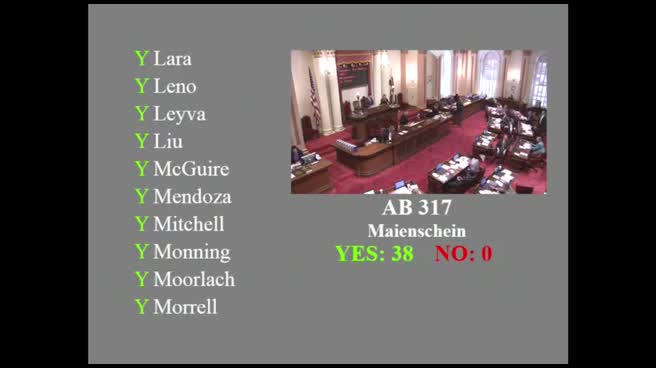
Bill Author

Bill Co-Author(s):
