AB 2228: Code enforcement officers.
- Session Year: 2015-2016
- House: Assembly
- Latest Version Date: 2016-08-30
Existing law defines the term code enforcement officer as a person who is not a peace officer, who has enforcement authority for health, safety, and welfare requirements, and who is authorized to issue citations or file formal complaints, as specified.
This bill would require the Board of Directors of the California Association of Code Enforcement Officers (CACEO) to develop and maintain standards for the designation of Certified Code Enforcement Officers or CCEOs. The bill would require the board to designate minimum training, qualifications, and experience requirements for applicants to qualify for the CCEO designation. The bill would also require the board to qualify cities, counties, cities and counties, and accredited educational institutions as Certified Code Enforcement Officer Education Program Providers, and would require all students, participants, or employees who successfully pass the minimum education and certification requirements to be granted CCEO status in an equivalent manner as applicants who attain certification through the CACEO.
The bill would require the board to set annual fees in amounts that are reasonably related and necessary to cover the costs of administering these provisions, to maintain a register of applications for certification, and adopt procedures for discipline, revocation, and sanctions against applicants, registrants, and certificants. The bill would allow all orders of the board resulting in revocation, suspension, or other action to be appealed by a writ of mandate or petition for judicial review to the superior court.
This bill would make a technical, nonsubstantive change to that provision.
Existing law defines the term code enforcement officer as a person who is not a peace officer, who has enforcement authority for health, safety, and welfare requirements, and who is authorized to issue citations or file formal complaints, as specified.
This bill would make a technical, nonsubstantive change to that provision.
(a)The Legislature finds and declares all of the following:
(1)There is statewide interest in preventing homes, neighborhoods, commercial properties, and public ways from deteriorating and falling into disrepair creating blight conditions.
(2)Blight adversely impacts community quality-of-life issues, creates hazards and unsafe conditions that endanger the public, causes citizen dissatisfaction, and leads to dangerous buildings, increased crime, and reduced property values.
(3)Setting the standards, minimum requirements, and ongoing educational requirements for local code enforcement officers who elect to attain the Certified Code Enforcement Officer title helps local agencies identify, select, and train qualified public officers to enforce laws and codes necessary to help preserve safe, well-ordered communities.
(4)Public officers who perform code enforcement functions require a unique skill set that is not available through traditional vocational offerings.
(b)It is the intent of the Legislature in enacting this measure to protect human safety, preserve property values, reduce crime, and abate public nuisances by helping to regulate the standard of training and certification for local code enforcement officers that public agencies may rely on. The municipal code enforcement function is sufficiently important to justify having a standard by public authority, with the title Certified Code Enforcement Officer having a legally defined meaning.
(c)It is the intent of the Legislature that compliance with this measure be voluntary and not to mandate local agencies or employers to require their code enforcement officers to become certified. The voluntary program created pursuant to this measure will ensure that individuals who are Certified Code Enforcement Officers have met prescribed education, training, and experience requirements and have passed a comprehensive examination reflective of the demands encountered in the code enforcement profession.
(d)It is the intent of the Legislature to recognize the California Association of Code Enforcement Officers professional development and credentialing program by establishing a Certified Code Enforcement Officer title to help local agencies define, standardize, and regulate this important function.
SEC. 2.Chapter 20 (commencing with Section 26205) is added to Division 20 of the Health and Safety Code, to read:20.Certified Code Enforcement Officers26205.This chapter shall be known, and may be cited, as the Code Enforcement Officer Standards Act.
26206.For purposes of this chapter, the following terms have the following meanings:
(a)Board means the duly elected Board of Directors of the California Association of Code Enforcement Officers.
(b)CACEO means the California Association of Code Enforcement Officers, a public benefit corporation domiciled in California.
(c)Certified Code Enforcement Officer or CCEO means a person registered or certified as described in this chapter.
(d)Code enforcement officer has the same meaning as defined in Section 829.5 of the Penal Code.
26207.(a)The board shall develop and maintain standards for the various classes of CCEOs that it designates. The standards for education, training, and certification shall be adopted by administrative rule of the board, and they shall be no less than as described in this chapter. CCEOs shall not have the power of arrest except as authorized by the city, county, or city and county charter, code, or regulation in which they operate. CCEOs shall not have access to summary criminal history information pursuant to this section, but persons regularly employed by a city, county, or city and county designated pursuant to this subdivision may be furnished state summary criminal history information upon a showing of compelling need pursuant to subdivision (c) of Section 11105 of the Penal Code if the criteria specified in that section is otherwise met. A person may not be designated or certified as a CCEO under this section if that person is disqualified pursuant to the criteria set forth in Section 1029 of the Government Code.
(b)The board shall review all applications from cities, counties, cities and counties, and accredited educational institutions who seek to develop and provide education designed to qualify their students, participants, or employees as CCEOs. All applications that are submitted on approved forms that, subject to the boards review and approval, demonstrate the equivalency of the standards adopted under the rules of the board shall qualify as Certified Code Enforcement Officer Education Program Providers (program providers). All program providers are subject to ongoing program review and evaluation under the boards administrative rules. A program provider shall renew its program provider application and obtain approval under the boards administrative rules no later than 36 months from the date of the last approval or else it shall lapse and be subject to renewal under the boards administrative rules. All students, participants, or employees who successfully pass the minimum education and certification requirements of the program providers approved curriculum shall, subject to the same fees as other registered CCEOs under the boards administrative rules, be granted status as CCEOs in an equivalent manner as applicants who attained certification or registration status through the CACEO educational and certification programs and academies.
(c)The development and perpetual advancement of code enforcement officer professional standards and actively providing related educational offerings that lead to increased professional competence and ethical behavior shall be the highest priority for the board in its licensing, certification, and disciplinary functions. Whenever the advancement of code enforcement officer professional standards and the provision of related educational offerings is inconsistent with other interests sought to be promoted, the former shall be paramount.
26208.The boards administrative rules shall designate minimum training, qualifications, and experience requirements for applicants to qualify for the CCEO designation, including, but not limited to, training and competency requirements in the areas of land use and zoning laws, health and safety codes, substandard housing abatement, environmental regulations, sign standards, public nuisance laws, applicable constitutional law, investigation and enforcement techniques, application of remedies, officer safety, and community engagement. The board may, by administrative rule, designate additional classes of certifications to help meet its mission.
26209.The board shall conspicuously and continually publish its list of CCEOs on the CACEO Internet Web site, containing the registrants full name, summary status as to individual disciplinary concerns, active or inactive status, date of active CCEO expiration, and business address, unless the business address is a residence, which shall be treated as confidential.
26210.A CCEO shall hold a valid certificate designating the person as a CCEO issued by the CACEO, shall at all times remain a member in good standing of the CACEO, and shall be subject to ongoing continuing education and registration requirements as designated by the boards administrative rules.
26211.Failure to maintain the continuing education requirements shall cause the certification status to lapse, subject to redemption as specified by the boards administrative rules. Once a certification lapses, the certification status shall automatically convert to inactive CCEO status unless it is redeemed. The rights, privileges, and procedures or limitations on redemption of inactive CCEOs shall be specified in the boards administrative rules.
26212.The board shall annually set fees in amounts that are reasonably related and necessary to cover the cost of administering this chapter. The fees shall be set by the board and published on the CACEO Internet Web site and maintained at the CACEOs headquarters.
26213.The board shall maintain a register of each application for a certificate of registration under this chapter. The register shall include all of the following:
(a)The name, residence, date of birth, and drivers license number (including state or country of origin) of the applicant.
(b)The name and address of the employer or business of the applicant.
(c)The date of the application.
(d)The education and experience qualifications of the applicant.
(e)The action taken by the board regarding the application and the date of the action.
(f)The serial number of any certificate of registration issued to an applicant.
(g)Any other information required by board rule.
26214.A person may not hold himself or herself out to be a Certified Code Enforcement Officer in this state or use the title Certified Code Enforcement Officer in this state unless the person holds a certificate of registration pursuant to this chapter.
26215.The board shall, by administrative rule, create a process to timely consider and review all applicants who hold certification from any other agency, and allow them to seek review and potential approval of the qualifications to potentially be recognized as a CCEO in this state. A denial of full recognition as a CCEO shall be accompanied by written justification and a list of required steps that may be required for the individual applicant to complete the registration and certification process. Recognition fees shall be set as described in Section 26212.
26216.(a)The board shall adopt administrative rules to process information, investigate allegations or suspicions of applicants or licensees providing false information, failing to disclose material information on the registration application, or not providing any information that may, either before or during the certification process, disqualify the applicant or certificant under subdivision (a) of Section 26207. The board shall adopt procedures and guidelines to impose any discipline, revocation of certification, or sanction, for cause, against any applicant, registrant, or certificant.
(b)The administrative rules shall provide the applicant or registrant with adequate and fair notice and hearing opportunities prior to the board taking any adverse action against the applicant or certificant.
(c)Any factual finding after a hearing that the board concludes is cause for revocation, suspension, or other disciplinary or administrative action against a registration or certification shall result in an order after hearing that meets the fair notification requirements of this section.
(d)All orders after hearing shall be deemed final under the boards authority and procedures and may be appealed as provided for in Sections 1094.5 and 1094.6 of the Code of Civil Procedure.
26217.This chapter shall not be construed to duplicate, overlap, or otherwise conflict with the certification and continuing education requirements for construction inspectors, plans examiners, and building officials established pursuant to Chapter 7 (commencing with Section 18949.25) of Part 2.5 of Division 13.
(a)The Legislature finds and declares all of the following:
(1)There is statewide interest in preventing homes, neighborhoods, commercial properties, and public ways from deteriorating and falling into disrepair creating blight conditions.
(2)Blight adversely impacts community quality-of-life issues, creates hazards and unsafe conditions that endanger the public, causes citizen dissatisfaction, and leads to dangerous buildings, increased crime, and reduced property values.
(3)Setting the standards, minimum requirements, and ongoing educational requirements for local code enforcement officers who elect to attain the Certified Code Enforcement Officer title helps local agencies identify, select, and train qualified public officers to enforce laws and codes necessary to help preserve safe, well-ordered communities.
(4)Public officers who perform code enforcement functions require a unique skill set that is not available through traditional vocational offerings.
(b)It is the intent of the Legislature in enacting this measure to protect human safety, preserve property values, reduce crime, and abate public nuisances by helping to regulate the standard of training and certification for local code enforcement officers that public agencies may rely on. The municipal code enforcement function is sufficiently important to justify having a standard by public authority, with the title Certified Code Enforcement Officer having a legally defined meaning.
(c)It is the intent of the Legislature that compliance with this measure be voluntary and not to mandate local agencies or employers to require their code enforcement officers to become certified. The voluntary program created pursuant to this measure will ensure that individuals who are Certified Code Enforcement Officers have met prescribed education, training, and experience requirements and have passed a comprehensive examination reflective of the demands encountered in the code enforcement profession.
(d)It is the intent of the Legislature to recognize the California Association of Code Enforcement Officers professional development and credentialing program by establishing a Certified Code Enforcement Officer title to help local agencies define, standardize, and regulate this important function.
SEC. 2.Chapter 20 (commencing with Section 26205) is added to Division 20 of the Health and Safety Code, to read:20.Certified Code Enforcement Officers26205.This chapter shall be known, and may be cited, as the Code Enforcement Officer Standards Act.
26206.For purposes of this chapter, the following terms have the following meanings:
(a)Board means the duly elected Board of Directors of the California Association of Code Enforcement Officers.
(b)CACEO means the California Association of Code Enforcement Officers, a public benefit corporation domiciled in California.
(c)Certified Code Enforcement Officer or CCEO means a person registered or certified as described in this chapter.
(d)Code enforcement officer has the same meaning as defined in Section 829.5 of the Penal Code.
26207.(a)The board shall develop and maintain standards for the various classes of CCEOs that it designates. The standards for education, training, and certification shall be adopted by administrative rule of the board, and they shall be no less than as described in this chapter. CCEOs shall not have the power of arrest except as authorized by the city, county, or city and county charter, code, or regulation in which they operate. CCEOs shall not have access to summary criminal history information pursuant to this section, but persons regularly employed by a city, county, or city and county designated pursuant to this subdivision may be furnished state summary criminal history information upon a showing of compelling need pursuant to subdivision (c) of Section 11105 of the Penal Code if the criteria specified in that section is otherwise met. A person may not be designated or certified as a CCEO under this section if that person is disqualified pursuant to the criteria set forth in Section 1029 of the Government Code.
(b)The board shall review all applications from cities, counties, cities and counties, and accredited educational institutions who seek to develop and provide education designed to qualify their students, participants, or employees as CCEOs. All applications that are submitted on approved forms that, subject to the boards review and approval, demonstrate the equivalency of the standards adopted under the rules of the board shall qualify as Certified Code Enforcement Officer Education Program Providers (program providers). All program providers are subject to ongoing program review and evaluation under the boards administrative rules. A program provider shall renew its program provider application and obtain approval under the boards administrative rules no later than 36 months from the date of the last approval or else it shall lapse and be subject to renewal under the boards administrative rules. All students, participants, or employees who successfully pass the minimum education and certification requirements of the program providers approved curriculum shall, subject to the same fees as other registered CCEOs under the boards administrative rules, be granted status as CCEOs in an equivalent manner as applicants who attained certification or registration status through the CACEO educational and certification programs and academies.
(c)The development and perpetual advancement of code enforcement officer professional standards and actively providing related educational offerings that lead to increased professional competence and ethical behavior shall be the highest priority for the board in its licensing, certification, and disciplinary functions. Whenever the advancement of code enforcement officer professional standards and the provision of related educational offerings is inconsistent with other interests sought to be promoted, the former shall be paramount.
26208.The boards administrative rules shall designate minimum training, qualifications, and experience requirements for applicants to qualify for the CCEO designation, including, but not limited to, training and competency requirements in the areas of land use and zoning laws, health and housing codes, building and fire codes, safety codes, substandard housing abatement, environmental regulations, sign standards, public nuisance laws, applicable constitutional law, investigation and enforcement techniques, application of remedies, officer safety, and community engagement. The board may, by administrative rule, designate additional classes of certifications to help meet its mission.
26209.The board shall conspicuously and continually publish its list of CCEOs on the CACEO Internet Web site, containing the registrants full name, summary status as to individual disciplinary concerns, active or inactive status, date of active CCEO expiration, and business address, unless the business address is a residence, which shall be treated as confidential.
26210.A CCEO shall hold a valid certificate designating the person as a CCEO issued by the CACEO, shall at all times remain a member in good standing of the CACEO, and shall be subject to ongoing continuing education and registration requirements as designated by the boards administrative rules.
26211.Failure to maintain the continuing education requirements shall cause the certification status to lapse, subject to redemption as specified by the boards administrative rules. Once a certification lapses, the certification status shall automatically convert to inactive CCEO status unless it is redeemed. The rights, privileges, and procedures or limitations on redemption of inactive CCEOs shall be specified in the boards administrative rules.
26212.The board shall annually set fees in amounts that are reasonably related and necessary to cover the cost of administering this chapter. The fees shall be set by the board and published on the CACEO Internet Web site and maintained at the CACEOs headquarters.
26213.The board shall maintain a register of each application for a certificate of registration under this chapter. The register shall include all of the following:
(a)The name, residence, date of birth, and drivers license number (including state or country of origin) of the applicant.
(b)The name and address of the employer or business of the applicant.
(c)The date of the application.
(d)The education and experience qualifications of the applicant.
(e)The action taken by the board regarding the application and the date of the action.
(f)The serial number of any certificate of registration issued to an applicant.
(g)Any other information required by board rule.
26214.A person may not hold himself or herself out to be a Certified Code Enforcement Officer in this state or use the title Certified Code Enforcement Officer in this state unless the person holds a certificate of registration pursuant to this chapter.
26215.The board shall, by administrative rule, create a process to timely consider and review all applicants who hold certification from any other agency, and allow them to seek review and potential approval of the qualifications to potentially be recognized as a CCEO in this state. A denial of full recognition as a CCEO shall be accompanied by written justification and a list of required steps that may be required for the individual applicant to complete the registration and certification process. Recognition fees shall be set as described in Section 26212.
26216.(a)The board shall adopt administrative rules to process information, investigate allegations or suspicions of applicants or licensees providing false information, failing to disclose material information on the registration application, or not providing any information that may, either before or during the certification process, disqualify the applicant or certificant under subdivision (a) of Section 26207. The board shall adopt procedures and guidelines to impose any discipline, revocation of certification, or sanction, for cause, against any applicant, registrant, or certificant.
(b)The administrative rules shall provide the applicant or registrant with adequate and fair notice and hearing opportunities prior to the board taking any adverse action against the applicant or certificant.
(c)Any factual finding after a hearing that the board concludes is cause for revocation, suspension, or other disciplinary or administrative action against a registration or certification shall result in an order after hearing that meets the fair notification requirements of this section.
(d)All orders after hearing shall be deemed final under the boards authority and procedures and may be appealed as provided for in Sections 1094.5 and 1094.6 of the Code of Civil Procedure.
26217.This chapter does not interfere with regulation or certification requirements for building inspectors as defined by Chapter 7 (commencing with Section 18949.25) of Part 2.5 of Division 13.
26217.This chapter shall not be construed to duplicate, overlap, or otherwise conflict with the certification and continuing education requirements for construction inspectors, plans examiners, and building officials established pursuant to Chapter 7 (commencing with Section 18949.25) of Part 2.5 of Division 13.
(a)The Legislature finds and declares all of the following:
(1)There is statewide interest in preventing homes, neighborhoods, commercial properties, and public ways from deteriorating and falling into disrepair creating blight conditions.
(2)Blight adversely impacts community quality-of-life issues, creates hazards and unsafe conditions that endanger the public, causes citizen dissatisfaction, and leads to dangerous buildings, increased crime, and reduced property values.
(3)Setting the standards, minimum requirements, and ongoing educational requirements for local code enforcement officers who elect to attain the Certified Code Enforcement Officer title helps local agencies identify, select, and train qualified public officers to enforce laws and codes necessary to help preserve safe, well-ordered communities.
(4)Public officers who perform code enforcement functions require a unique skill set that is not available through traditional vocational offerings.
(b)It is the intent of the Legislature in enacting this measure to protect human safety, preserve property values, reduce crime, and abate public nuisances by helping to regulate the standard of training and certification for local code enforcement officers that public agencies may rely on. The municipal code enforcement function is sufficiently important to justify having a standard by public authority, with the title Certified Code Enforcement Officer having a legally defined meaning.
(c)It is the intent of the Legislature that compliance with this measure be voluntary and not to mandate local agencies or employers to require their code enforcement officers to become certified. The voluntary program created pursuant to this measure will ensure that individuals who are Certified Code Enforcement Officers have met prescribed education, training, and experience requirements and have passed a comprehensive examination reflective of the demands encountered in the code enforcement profession.
(d)It is the intent of the Legislature to recognize the California Association of Code Enforcement Officers professional development and credentialing program by establishing a Certified Code Enforcement Officer title to help local agencies define, standardize, and regulate this important function.
SEC. 2.Chapter 20 (commencing with Section 26205) is added to Division 20 of the Health and Safety Code, to read:20.Certified Code Enforcement Officers26205.This chapter shall be known, and may be cited, as the Code Enforcement Officer Standards Act.
26206.For purposes of this chapter, the following terms have the following meanings:
(a)Board means the duly elected Board of Directors of the California Association of Code Enforcement Officers.
(b)CACEO means the California Association of Code Enforcement Officers, a public benefit corporation domiciled in California.
(c)Certified Code Enforcement Officer or CCEO means a person registered or certified as described in this chapter.
(d)Code enforcement officer has the same meaning as defined in Section 829.5 of the Penal Code.
26207.(a)The board shall develop and maintain standards for the various classes of CCEOs that it designates. The standards for education, training, and certification shall be adopted by administrative rule of the board, and they shall be no less than as described in this chapter. CCEOs shall not have the power of arrest except as authorized by the city, county, or city and county charter, code, or regulation in which they operate. CCEOs shall not have access to summary criminal history information pursuant to this section, but persons regularly employed by a city, county, or city and county designated pursuant to this subdivision may be furnished state summary criminal history information upon a showing of compelling need pursuant to subdivision (c) of Section 11105 of the Penal Code if the criteria specified in that section is otherwise met. A person may not be designated or certified as a CCEO under this section if that person is disqualified pursuant to the criteria set forth in Section 1029 of the Government Code.
(b)The board shall review all applications from cities, counties, cities and counties, and accredited educational institutions who seek to develop and provide education designed to qualify their students, participants, or employees as CCEOs. All applications that are submitted on approved forms that, subject to the boards review and approval, demonstrate the equivalency of the standards adopted under the rules of the board shall qualify as Certified Code Enforcement Officer Education Program Providers (program providers). All program providers are subject to ongoing program review and evaluation under the boards administrative rules. A program provider shall renew its program provider application and obtain approval under the boards administrative rules no later than 36 months from the date of the last approval or else it shall lapse and be subject to renewal under the boards administrative rules. All students, participants, or employees who successfully pass the minimum education and certification requirements of the program providers approved curriculum shall, subject to the same fees as other registered CCEOs under the boards administrative rules, be granted status as CCEOs in an equivalent manner as applicants who attained certification or registration status through the CACEO educational and certification programs and academies.
(c)The development and perpetual advancement of code enforcement officer professional standards and actively providing related educational offerings that lead to increased professional competence and ethical behavior shall be the highest priority for the board in its licensing, certification, and disciplinary functions. Whenever the advancement of code enforcement officer professional standards and the provision of related educational offerings is inconsistent with other interests sought to be promoted, the former shall be paramount.
26208.The boards administrative rules shall designate minimum training, qualifications, and experience requirements for applicants to qualify for the CCEO designation, including, but not limited to, training and competency requirements in the areas of land use and zoning laws, health and housing codes, building and fire codes, environmental regulations, sign standards, public nuisance laws, applicable constitutional law, investigation and enforcement techniques, application of remedies, officer safety, and community engagement. The board may, by administrative rule, designate additional classes of certifications to help meet its mission.
26209.The board shall conspicuously and continually publish its list of CCEOs on the CACEO Internet Web site, containing the registrants full name, summary status as to individual disciplinary concerns, active or inactive status, date of active CCEO expiration, and business address, unless the business address is a residence, which shall be treated as confidential.
26210.A CCEO shall hold a valid certificate designating the person as a CCEO issued by the CACEO, shall at all times remain a member in good standing of the CACEO, and shall be subject to ongoing continuing education and registration requirements as designated by the boards administrative rules.
26211.Failure to maintain the continuing education requirements shall cause the certification status to lapse, subject to redemption as specified by the boards administrative rules. Once a certification lapses, the certification status shall automatically convert to inactive CCEO status unless it is redeemed. The rights, privileges, and procedures or limitations on redemption of inactive CCEOs shall be specified in the boards administrative rules.
26212.The board shall annually set fees in amounts that are reasonably related and necessary to cover the cost of administering this chapter. The fees shall be set by the board and published on the CACEO Internet Web site and maintained at the CACEOs headquarters.
26213.The board shall maintain a register of each application for a certificate of registration under this chapter. The register shall include all of the following:
(a)The name, residence, date of birth, and drivers license number (including state or country of origin) of the applicant.
(b)The name and address of the employer or business of the applicant.
(c)The date of the application.
(d)The education and experience qualifications of the applicant.
(e)The action taken by the board regarding the application and the date of the action.
(f)The serial number of any certificate of registration issued to an applicant.
(g)Any other information required by board rule.
26214.A person may not hold himself or herself out to be a Certified Code Enforcement Officer in this state or use the title Certified Code Enforcement Officer in this state unless the person holds a certificate of registration pursuant to this chapter.
26215.The board shall, by administrative rule, create a process to timely consider and review all applicants who hold certification from any other agency, and allow them to seek review and potential approval of the qualifications to potentially be recognized as a CCEO in this state. A denial of full recognition as a CCEO shall be accompanied by written justification and a list of required steps that may be required for the individual applicant to complete the registration and certification process. Recognition fees shall be set as described in Section 26212.
26216.(a)The board shall adopt administrative rules to process information, investigate allegations or suspicions of applicants or licensees providing false information, failing to disclose material information on the registration application, or not providing any information that may, either before or during the certification process, disqualify the applicant or certificant under subdivision (a) of Section 26207. The board shall adopt procedures and guidelines to impose any discipline, revocation of certification, or sanction, for cause, against any applicant, registrant, or certificant.
(b)The administrative rules shall provide the applicant or registrant with adequate and fair notice and hearing opportunities prior to the board taking any adverse action against the applicant or certificant.
(c)Any factual finding after a hearing that the board concludes is cause for revocation, suspension, or other disciplinary or administrative action against a registration or certification shall result in an order after hearing that meets the fair notification requirements of this section.
(d)All orders after hearing shall be deemed final under the boards authority and procedures and may be appealed as provided for in Sections 1094.5 and 1094.6 of the Code of Civil Procedure.
26217.This chapter does not interfere with regulation or certification requirements for building inspectors as defined by Chapter 7 (commencing with Section 18949.25) of Part 2.5 of Division 13.
SECTION 1.Section 829.5 of the Penal Code is amended to read:829.5.(a)Code enforcement officer means any person who is not described in Chapter 4.5 (commencing with Section 830) and who is employed by any governmental subdivision, public or quasi-public corporation, public agency, public service corporation, any town, city, county, or municipal corporation, whether incorporated or chartered, who has enforcement authority for health, safety, and welfare requirements, whose duties include enforcement of any statute, rule, regulation, or standard, and who is authorized to issue citations, or file formal complaints.
(b)Code enforcement officer also includes any person who is employed by the Department of Housing and Community Development and who has enforcement authority for health, safety, and welfare requirements pursuant to the Employee Housing Act (Part 1 (commencing with Section 17000) of Division 13 of the Health and Safety Code); the State Housing Law (Part 1.5 (commencing with Section 17910) of Division 13 of the Health and Safety Code); the Manufactured Housing Act of 1980 (Part 2 (commencing with Section 18000) of Division 13 of the Health and Safety Code); the Mobilehome Parks Act (Part 2.1 (commencing with Section 18200) of Division 13 of the Health and Safety Code); and the Special Occupancy Parks Act (Part 2.3 (commencing with Section 18860) of Division 13 of the Health and Safety Code).
(a)Code enforcement officer means any person who is not described in Chapter 4.5 (commencing with Section 830) and who is employed by any governmental subdivision, public or quasi-public corporation, public agency, public service corporation, any town, city, county, or municipal corporation, whether incorporated or chartered, who has enforcement authority for health, safety, and welfare requirements, whose duties include enforcement of any statute, rule, regulation, or standard, and who is authorized to issue citations, or file formal complaints.
(b)Code enforcement officer also includes any person who is employed by the Department of Housing and Community Development and who has enforcement authority for health, safety, and welfare requirements pursuant to the Employee Housing Act (Part 1 (commencing with Section 17000) of Division 13 of the Health and Safety Code); the State Housing Law (Part 1.5 (commencing with Section 17910) of Division 13 of the Health and Safety Code); the Manufactured Housing Act of 1980 (Part 2 (commencing with Section 18000) of Division 13 of the Health and Safety Code); the Mobilehome Parks Act (Part 2.1 (commencing with Section 18200) of Division 13 of the Health and Safety Code); and the Special Occupancy Parks Act (Part 2.3 (commencing with Section 18860) of Division 13 of the Health and Safety Code).
|
Date
|
Status
|
|---|---|
| Aug 30, 2016 | Chaptered by Secretary of State - Chapter 246, Statutes of 2016. |
| Aug 30, 2016 | Approved by the Governor. |
| Aug 22, 2016 | Enrolled and presented to the Governor at 4 p.m. |
| Aug 16, 2016 | In Assembly. Ordered to Engrossing and Enrolling. |
| Aug 15, 2016 | Read third time. Passed. Ordered to the Assembly. (Ayes 31. Noes 6. Page 4963.). |
| Aug 15, 2016 | Read third time. Passed. Ordered to the Assembly. (Ayes 31. Noes 6.). |
| Aug 15, 2016 | Read third time. Passed. Ordered to the Assembly. |
| Aug 2, 2016 | Read second time. Ordered to third reading. |
| Aug 1, 2016 | From committee: Be placed on second reading file pursuant to Senate Rule 28.8. |
| Jun 21, 2016 | In committee: Hearing postponed by committee. |
| Jun 14, 2016 | From committee: Do pass and re-refer to Com. on APPR. (Ayes 6. Noes 1.) (June 14). Re-referred to Com. on APPR. |
| May 19, 2016 | Referred to Com. on PUB. S. |
| May 12, 2016 | Read third time. Passed. Ordered to the Senate. (Ayes 68. Noes 10. Page 4768.) |
| May 12, 2016 | Read third time. Passed. Ordered to the Senate. (Ayes 68. Noes 10.) |
| May 12, 2016 | In Senate. Read first time. To Com. on RLS. for assignment. |
| May 12, 2016 | Read third time. Passed. Ordered to the Senate. |
| May 9, 2016 | Read third time and amended. Ordered to third reading. (Page 4719.) |
| May 9, 2016 | Read third time and amended. Ordered to third reading. |
| Apr 28, 2016 | Read second time. Ordered to third reading. |
| Apr 27, 2016 | From committee: Do pass. (Ayes 18. Noes 1.) (April 27). |
| Apr 14, 2016 | From committee: Do pass and re-refer to Com. on APPR. (Ayes 8. Noes 1.) (April 13). Re-referred to Com. on APPR. |
| Apr 5, 2016 | From committee: Do pass and re-refer to Com. on L. GOV. (Ayes 6. Noes 1.) (April 5). Re-referred to Com. on L. GOV. |
| Mar 28, 2016 | Re-referred to Com. on PUB. S. |
| Mar 17, 2016 | From committee chair, with author's amendments: Amend, and re-refer to Com. on PUB. S. Read second time and amended. |
| Mar 17, 2016 | Referred to Coms. on PUB. S. and L. GOV. |
| Feb 19, 2016 | From printer. May be heard in committee March 20. |
| Feb 18, 2016 | Read first time. To print. |
|
Date
|
Description
|
Location
|
Votes
|
|
|---|---|---|---|---|
| Aug 15, 2016 | Assembly 3rd Reading AB2228 Cooley By Glazer | Senate Floor |
Passed |
|
| Jun 14, 2016 | Do pass, but first be re-referred to the Committee on [Appropriations] | Senate Standing Committee on Public Safety |
Passed |
|
| May 12, 2016 | AB 2228 COOLEY Assembly Third Reading | Assembly Floor |
Passed |
|
| Apr 27, 2016 | Do pass. | Assembly Standing Committee on Appropriations |
Passed |
|
| Apr 13, 2016 | Do pass and be re-referred to the Committee on [Appropriations] | Assembly Standing Committee on Local Government |
Passed |
|
| Apr 5, 2016 | Do pass and be re-referred to the Committee on [Local Government] | Assembly Standing Committee on Public Safety |
Passed |
This list shows positions taken on this bill by organizations on the date displayed, which is linked to the original source.
Positions by individuals are not included.
Office of Senate Floor Analyses (916) 651-1520 Fax: (916) 327-4478 | AB |
THIRD READING
Bill No: AB 2228
:
SENATE PUBLIC SAFETY COMMITTEE: 6-1, 6/14/16
AYES: Hancock, Glazer, Leno, Liu, Monning, Stone
NOES: Anderson
SENATE APPROPRIATIONS COMMITTEE: Senate Rule 28.8
ASSEMBLY FLOOR: 68-10, 5/12/16 - See last page for vote
SOURCE: California Association of Code Enforcement Officers
League of California Cities
DIGEST: This bill establishes the Code Enforcement Officers Standards Act (CEOSA) which requires the Board of Directors of the California Association of Code Enforcement Officers (CACEO) to develop and maintain standards for the designation of Certified Code Enforcement Officers (CCEOs), as specified.
Existing law:
- Defines “code enforcement officer” as a person who is not described in Penal Code Chapter 4.5 (commencing with Section 830) of Title 3 of Part 2 and who is employed by a governmental subdivision, public or quasi-public corporation, public agency, public service corporation, a town, city, county, or municipal corporation, whether incorporated or chartered, who has enforcement authority for health, safety, and welfare requirements, and whose duties include enforcement of a statute, rule, regulation, or standard, and who is authorized to issue citations or file formal complaints. And, states that a “code enforcement officer” is also a person who is employed by the Department of Housing and Community Development who has enforcement authority for health, safety, and welfare requirements, as specified. (Penal Code § 829.5.)
- Defines a “code enforcement officer” as any person who is not a peace officer and who is employed by any governmental subdivision, public or quasi-public corporation, public agency, public service corporation, or any town, city, county, or municipal corporation, whether incorporated or chartered, who has enforcement authority for health, safety, and welfare requirements; whose duties include enforcement of any statute, rules, regulations, or standards; and who is authorized to issue citations, or file formal complaints. (Penal Code § 243(f)(11)(A).)
- Defines “code enforcement officer” as also including any person employed by the Department of Housing and Community Development who has enforcement authority for health, safety, and welfare requirements pursuant to the Employee Housing Act, State Housing Law, the Mobilehomes-Manufactured Housing Act, the Mobilehome Parks Act, and the Special Occupancy Parks Act. (Penal Code § 243(f)(11)(B).)
This bill:
- Provides that for the purposes of the Code the following terms have the following meaning:
- “Board” means the duly elected Board of Directors of CACEO;
- “CACEO” means California Association of Code Enforcement Officers a public benefits corporation domiciled in California;
- “CCEO” means a Certified Code Enforcement Officer certified pursuant to the CEOSA; and
- “Code Enforcement Officer” means a person who is not a peace officer and who is employed by a governmental subdivision, public or quasi-public corporation, public agency, public service corporation, a town, city, county, or municipal corporation, whether incorporated or chartered, who has enforcement authority for health, safety, and welfare requirements, and whose duties include enforcement of a statute, rule, regulation, or standard, and who is authorized to issue citations or file formal complaints.
- Requires the board to develop and maintain standards for the various classes of CCEOs that it designates. The standards for education, training, and certification shall be adopted by the board and meet the minimum requirements of the CEOSA, and CCEOs shall not have the powers of arrest unless authorized by the city, county, or city and county charter, code, or regulations in which they operate. CCEOs shall not have access to summary criminal history information, but persons employed by a city, county or city and county upon a showing of compelling need if the criteria for access under existing law is otherwise met.
- Requires the board to review all applications from cities, counties, city and counties, and accredited educational institutions who seek to develop and provide education designed to qualify participants as CCEOs. All applications that are submitted are subject to the boards review and approval to determine if they demonstrate the equivalency of the standards adopted under the rules of the board in order to qualify as Code Enforcement Officer Education Program Providers (program providers).
- States that all program providers are subject to ongoing program review and evaluation under the board's administrative rules. A program provider shall renew its program provider application and obtain approval under the board's administrative rules no later than 36 months from the date of the last approval or else it shall lapse.
- Provides that all students, participants, and employees who successfully pass the minimum education and certification requirements of the program provider approved curriculum shall, subject to the same fees as other registered CCEOs under the board's administrative rules, be granted status as CCEOs in an equivalent manner as applicants who attained certification through the CACEO education and certification program and academics.
- States that the development and perpetual advancement of code enforcement officer professional standards and actively providing related educational offerings that lead to increased professional competence and ethical behavior shall be the highest priority for the board in its licensing, certification, and disciplinary functions. Whenever the advancement of code enforcement officer professional standards and the provision of related educational offerings is inconsistent with other interests sought to be promoted, the former shall be paramount.
- Provides that the board’s administrative rules shall designate minimum training, qualifications, and experience requirements for applicants to qualify for the CCEO designation, including, but not limited to, training and competency requirements in the areas of land use and zoning laws, health and housing codes, building and fire codes, environmental regulations, sign standards, public nuisance laws, applicable constitutional law, investigation and enforcement techniques, application of remedies, officer safety, and community engagement. The board may, by administrative rule, designate additional classes of certifications to help meet its mission.
- Requires the board to conspicuously and continually publish its list of CCEOs on the CACEO Internet Web site, containing the registrant’s full name, summary status as to individual disciplinary concerns, active or inactive status, date of active CCEO expiration, and business address, unless the business address is a residence, which shall be treated as confidential.
- States that a CCEO shall hold a valid certificate designating the person as a CCEO issued by the CACEO, shall at all times remain a member in good standing of the CACEO, and shall be subject to ongoing continuing education and registration requirements as designated by the board’s administrative rules.
- Provides that a failure to maintain the continuing education requirements shall cause the certification status to lapse, subject to redemption as specified by the board’s administrative rules. Once a certification lapses, the certification status shall automatically convert to inactive CCEO status unless it is redeemed. The rights, privileges, and procedures or limitations on redemption of inactive CCEOs shall be specified in the board’s administrative rules.
- Requires the board to annually set fees in amounts that are reasonably related and necessary to cover the cost of administering this chapter. The fees shall be set by the board and published on the CACEO Internet Web site and maintained at the CACEO’s headquarters.
- Provides that the board shall maintain a register of each application for a certificate of registration under this chapter. The register shall include all of the following:
- The name, residence, date of birth, and driver’s license number (including state or country of origin) of the applicant;
- The name and address of the employer or business of the applicant;
- The date of the application;
- The education and experience qualifications of the applicant;
- The action taken by the board regarding the application and the date of the action;
- The serial number of any certificate of registration issued to an applicant; and
- Any other information required by board rule.
- States that a person may not hold himself or herself out to be a CCEO in this state or use the title “Certified Code Enforcement Officer” in this state unless the person holds a certificate of registration pursuant to this chapter.
- Requires the board, by administrative rule, create a process to timely consider and review all applicants who hold certification from any other agency, and allow them to seek review and potential approval of the qualifications to potentially be recognized as a CCEO in this state. A denial of full recognition as a CCEO shall be accompanied by written justification and a list of required steps that may be required for the individual applicant to complete the registration and certification process. Recognition fees shall be set as specified.
- Provides that the board shall adopt administrative rules to process information, investigate allegations or suspicions of applicants or licensees providing false information, failing to disclose material information on the registration application, or not providing any information that may, either before or during the certification process, disqualify the applicant or certificant as specified. The board shall adopt procedures and guidelines to impose any discipline, revocation of certification, or sanction, for cause, against any applicant, registrant, or certificant.
- States that the administrative rules shall provide the applicant or registrant with adequate and fair notice and hearing opportunities prior to the board taking any adverse action against the applicant or certificant.
- Provides that any factual finding after a hearing that the board concludes is cause for revocation, suspension, or other disciplinary or administrative action against a registration or certification shall result in an order after hearing that meets the fair notification requirements of this section.
- Provides all orders after hearing shall be deemed final under the board’s authority and procedures and may be appealed as specified in the Code of Civil Procedure.
- States that the requirements of the CEOSA do not interfere with the regulations or certification requirements for building inspectors, as specified.
Comments
This bill creates the CEOSA and requires its Board of Directors to develop and maintain standards for the certification of code enforcement officers. While this bill does not require all code enforcement officers to have the certification, it does create a new class of “Certified Code Enforcement Officers.”
FISCAL EFFECT: Appropriation: Fiscal Com.: Local:
California Association of Code Enforcement Officers (co-source)
League of California Cities (co-source)
American Planning Association
Association of Los Angeles Deputy Sheriffs
California College and University Police Chiefs Association
California Narcotics Association
Los Angeles County Professional Peace Officers Association
Los Angeles Deputy Sheriffs
Los Angeles Police Protective League
Riverside Sheriffs’ Association
None received
ASSEMBLY FLOOR: 68-10, 5/12/16
AYES: Achadjian, Alejo, Arambula, Atkins, Baker, Bigelow, Bloom, Bonilla, Bonta, Brown, Calderon, Campos, Chang, Chau, Chiu, Chu, Cooley, Cooper, Dababneh, Dahle, Daly, Dodd, Eggman, Frazier, Cristina Garcia, Eduardo Garcia, Gatto, Gipson, Gomez, Gonzalez, Gordon, Gray, Roger Hernández, Holden, Irwin, Jones, Kim, Lackey, Levine, Linder, Lopez, Low, Maienschein, Mayes, McCarty, Medina, Mullin, Nazarian, Obernolte, O'Donnell, Olsen, Patterson, Quirk, Ridley-Thomas, Rodriguez, Salas, Santiago, Steinorth, Mark Stone, Thurmond, Ting, Wagner, Waldron, Weber, Wilk, Williams, Wood, Rendon
NOES: Travis Allen, Brough, Chávez, Beth Gaines, Gallagher, Grove, Hadley, Harper, Mathis, Melendez
NO VOTE RECORDED: Burke, Jones-Sawyer
Prepared by: Jessica Devencenzi / PUB. S. /
8/3/16 18:56:59
**** END ****
SENATE COMMITTEE ON PUBLIC SAFETY
Senator Loni Hancock, Chair
2015 - 2016 Regular
Bill No: AB 2228 Hearing Date: June 14, 2016
Author: | Cooley | ||
Version: | May 9, 2016 | ||
Urgency: | No | Fiscal: | Yes |
Consultant: | JRD | ||
Subject: Code Enforcement Officers
HISTORY
Source: League of California Cities and California Association of Code Enforcement Officers
Prior Legislation: None known
Support: American Planning Association; Association of Los Angeles Deputy Sheriffs; California College and University Police Chiefs Association; California Narcotics Association; Los Angeles County Professional Peace Officers Association; Los Angeles Deputy Sheriffs; Los Angeles Police Protective League; Riverside Sheriffs Association
Opposition: None known
Assembly Floor Vote: 68 - 10
PURPOSE
The purpose of this bill is to establish the Code Enforcement Officers Standards Act (CEOSA) which requires the Board of Directors of the California Association of Code Enforcement Officers (CACEO) to develop and maintain standards for the designation of Certified Code Enforcement Officers (CCEO's), as specified.
Existing law defines “code enforcement officer” as a person who is not described in Penal Code Chapter 4.5 (commencing with Section 830) of Title 3 of Part 2 and who is employed by a governmental subdivision, public or quasi-public corporation, public agency, public service corporation, a town, city, county, or municipal corporation, whether incorporated or chartered, who has enforcement authority for health, safety, and welfare requirements, and whose duties include enforcement of a statute, rule, regulation, or standard, and who is authorized to issue citations or file formal complaints. And, states that a “code enforcement officer” is also a person who is employed by the Department of Housing and Community Development who has enforcement authority for health, safety, and welfare requirements, as specified. (Penal Code § 829.5.)
Existing law defines a “code enforcement officer” as any person who is not a peace officer and who is employed by any governmental subdivision; public or quasi-public corporation; public agency; public service corporation; or any town, city, county, or municipal corporation, whether incorporated or chartered, who has enforcement authority for health, safety, and welfare requirements; whose duties include enforcement of any statute, rules, regulations, or standards; and who is authorized to issue citations, or file formal complaints. (Penal Code § 243(f)(11)(A).)
Existing law defines “code enforcement officer” as also including any person employed by the Department of Housing and Community Development who has enforcement authority for health, safety, and welfare requirements pursuant to the Employee Housing Act, State Housing Law, the Mobilehomes-Manufactured Housing Act, the Mobilehome Parks Act, and the Special Occupancy Parks Act. (Penal Code § 243(f)(11)(B).)
This bill provides that for the purposes of the Code the following terms have the following meaning:
- “Board” means the duly elected Board of Directors of CACEO;
- “CACEO” means California Association of Code Enforcement Officers a public benefits corporation domiciled in California;
- “CCEO” means a Certified Code Enforcement certified pursuant to the CEOSA;
- “Code Enforcement Officer” means an person who is not a peace officer and who is employed by a governmental subdivision, public or quasi-public corporation, public agency, public service corporation, a town, city, county, or municipal corporation, whether incorporated or chartered, who has enforcement authority for health, safety, and welfare requirements, and whose duties include enforcement of a statute, rule, regulation, or standard, and who is authorized to issue citations or file formal complaints.
- “Board” means the duly elected Board of Directors of CACEO;
This bill requires the board to develop and maintain standards for the various classes of CCEO's that it designates. The standards for education, training, and certification shall be adopted by the board and meet the minimum requirements of the CEOSA, and CCEO's shall not have the powers of arrest unless authorized by the city, county, or city and county charter, code, or regulations in which they operate. CCEO's shall not have access to summary criminal history information, but persons employed by a city, county or city and county upon a showing of compelling need if the criteria for access under existing law is otherwise met.
This bill requires the board to review all applications from cities, counties, city and counties, and accredited educational institutions who seek to develop and provide education designed to qualify participants as CCEO's. All applications that are submitted are subject to the boards review and approval to determine if they demonstrate the equivalency of the standards adopted under the rules of the board in order to qualify as Code Enforcement Officer Education Program Providers (program providers).
This bill states that all program providers are subject to ongoing program review and evaluation under the board's administrative rules. A program provider shall renew its program provider application and obtain approval under the board's administrative rules no later than 36 months from the date of the last approval or else it shall lapse.
This bill provides that all students, participants, and employees who successfully pass the minimum education and certification requirements of the program provider approved curriculum shall, subject to the same fees as other registered CCEO's under the board's administrative rules, be granted status as CCEO's in an equivalent manner as applicants who attained certification through the CACEO education and certification program and academics.
This bill states that the development and perpetual advancement of code enforcement officer professional standards and actively providing related educational offerings that lead to increased professional competence and ethical behavior shall be the highest priority for the board in its licensing, certification, and disciplinary functions. Whenever the advancement of code enforcement officer professional standards and the provision of related educational offerings is inconsistent with other interests sought to be promoted, the former shall be paramount.
This bill provides that the board’s administrative rules shall designate minimum training, qualifications, and experience requirements for applicants to qualify for the CCEO designation, including, but not limited to, training and competency requirements in the areas of land use and zoning laws, health and housing codes, building and fire codes, environmental regulations, sign standards, public nuisance laws, applicable constitutional law, investigation and enforcement techniques, application of remedies, officer safety, and community engagement. The board may, by administrative rule, designate additional classes of certifications to help meet its mission.
This bill requires the board to conspicuously and continually publish its list of CCEOs on the CACEO Internet Web site, containing the registrant’s full name, summary status as to individual disciplinary concerns, active or inactive status, date of active CCEO expiration, and business address, unless the business address is a residence, which shall be treated as confidential.
This bill states that a CCEO shall hold a valid certificate designating the person as a CCEO issued by the CACEO, shall at all times remain a member in good standing of the CACEO, and shall be subject to ongoing continuing education and registration requirements as designated by the board’s administrative rules.
This bill provides that a failure to maintain the continuing education requirements shall cause the certification status to lapse, subject to redemption as specified by the board’s administrative rules. Once a certification lapses, the certification status shall automatically convert to inactive CCEO status unless it is redeemed. The rights, privileges, and procedures or limitations on redemption of inactive CCEOs shall be specified in the board’s administrative rules.
This bill requires the board to annually set fees in amounts that are reasonably related and necessary to cover the cost of administering this chapter. The fees shall be set by the board and published on the CACEO Internet Web site and maintained at the CACEO’s headquarters.
This bill provides that he board shall maintain a register of each application for a certificate of registration under this chapter. The register shall include all of the following:
- The name, residence, date of birth, and driver’s license number (including state or country of origin) of the applicant;
- The name and address of the employer or business of the applicant;
- The date of the application;
- The education and experience qualifications of the applicant;
- The action taken by the board regarding the application and the date of the action;
- The serial number of any certificate of registration issued to an applicant; and
- Any other information required by board rule.
This bill states that a person may not hold himself or herself out to be a Certified Code Enforcement Officer in this state or use the title “Certified Code Enforcement Officer” in this state unless the person holds a certificate of registration pursuant to this chapter.
This bill requires the board, by administrative rule, create a process to timely consider and review all applicants who hold certification from any other agency, and allow them to seek review and potential approval of the qualifications to potentially be recognized as a CCEO in this state. A denial of full recognition as a CCEO shall be accompanied by written justification and a list of required steps that may be required for the individual applicant to complete the registration and certification process. Recognition fees shall be set as specified.
This bill provides that board shall adopt administrative rules to process information, investigate allegations or suspicions of applicants or licensees providing false information, failing to disclose material information on the registration application, or not providing any information that may, either before or during the certification process, disqualify the applicant or certificant as specified. The board shall adopt procedures and guidelines to impose any discipline, revocation of certification, or sanction, for cause, against any applicant, registrant, or certificant.
This bill states that the administrative rules shall provide the applicant or registrant with adequate and fair notice and hearing opportunities prior to the board taking any adverse action against the applicant or certificant.
This bill provides that any factual finding after a hearing that the board concludes is cause for revocation, suspension, or other disciplinary or administrative action against a registration or certification shall result in an order after hearing that meets the fair notification requirements of this section.
This bill provides all orders after hearing shall be deemed final under the board’s authority and procedures and may be appealed as specified in the Code of Civil Procedure.
This bill states that the requirements of the CEOSA do not interfere with the regulations or certification requirements for building inspectors as specified.
RECEIVERSHIP/OVERCROWDING CRISIS AGGRAVATION
For the past several years this Committee has scrutinized legislation referred to its jurisdiction for any potential impact on prison overcrowding. Mindful of the United States Supreme Court ruling and federal court orders relating to the state’s ability to provide a constitutional level of health care to its inmate population and the related issue of prison overcrowding, this Committee has applied its “ROCA” policy as a content-neutral, provisional measure necessary to ensure that the Legislature does not erode progress in reducing prison overcrowding.
On February 10, 2014, the federal court ordered California to reduce its in-state adult institution population to 137.5% of design capacity by February 28, 2016, as follows:
- 143% of design bed capacity by June 30, 2014;
- 141.5% of design bed capacity by February 28, 2015; and,
- 137.5% of design bed capacity by February 28, 2016.
In December of 2015 the administration reported that as “of December 9, 2015, 112,510 inmates were housed in the State’s 34 adult institutions, which amounts to 136.0% of design bed capacity, and 5,264 inmates were housed in out-of-state facilities. The current population is 1,212 inmates below the final court-ordered population benchmark of 137.5% of design bed capacity, and has been under that benchmark since February 2015.” (Defendants’ December 2015 Status Report in Response to February 10, 2014 Order, 2:90-cv-00520 KJM DAD PC, 3-Judge Court, Coleman v. Brown, Plata v. Brown (fn. omitted).) One year ago, 115,826 inmates were housed in the State’s 34 adult institutions, which amounted to 140.0% of design bed capacity, and 8,864 inmates were housed in out-of-state facilities. (Defendants’ December 2014 Status Report in Response to February 10, 2014 Order, 2:90-cv-00520 KJM DAD PC, 3-Judge Court, Coleman v. Brown, Plata v. Brown (fn. omitted).)
While significant gains have been made in reducing the prison population, the state must stabilize these advances and demonstrate to the federal court that California has in place the “durable solution” to prison overcrowding “consistently demanded” by the court. (Opinion Re: Order Granting in Part and Denying in Part Defendants’ Request For Extension of December 31, 2013 Deadline, NO. 2:90-cv-0520 LKK DAD (PC), 3-Judge Court, Coleman v. Brown, Plata v. Brown (2-10-14). The Committee’s consideration of bills that may impact the prison population therefore will be informed by the following questions:
- Whether a proposal erodes a measure which has contributed to reducing the prison population;
- Whether a proposal addresses a major area of public safety or criminal activity for which there is no other reasonable, appropriate remedy;
- Whether a proposal addresses a crime which is directly dangerous to the physical safety of others for which there is no other reasonably appropriate sanction;
- Whether a proposal corrects a constitutional problem or legislative drafting error; and
- Whether a proposal proposes penalties which are proportionate, and cannot be achieved through any other reasonably appropriate remedy.
COMMENTS
1. Need for This Legislation
According to the Author:
Code enforcement officers employed by a city or county, or city and county, possess specialized training, but the level of training these officers receive varies based on the city or county in which they live. There is currently no uniform training standard.
In recent years, the California Association of Code Enforcement Officers has received over 30 safety incident reports involving code enforcement officers. These include a 2015 incident in which two men pointed a rifle at a code enforcement officer serving legal papers, as well as a 2012 incident in which an officer was shot while serving an inspection warrant.
There have also been several notable cases of misconduct by code enforcement officers in which local jurisdictions were required to pay large amounts in settlements. For example, in 2014, San Jacinto paid $746, 559 in damages for disability discrimination after code enforcement officers did a sweep of unlicensed group homes without warrants and unlawfully questioned residents. In 2005, the City of Sacramento was found to be liable for $717,000 in compensatory and punitive damages for seizing and destroying property without required due process. Lack of proper training led to code officers being in danger, as well as a liability to local governments.
AB 2228 establishes a framework through which code enforcement officers may receive state recognized certification, if they so choose. Setting standards, minimum qualifications, and ongoing educational requirements for local code enforcement officers who elect to attain the Certified Code Enforcement title helps local agencies identify, select, and train qualified public officers to enforce laws and codes necessary to help preserve safe, well-ordered communities.
2. Effect of This Legislation
This bill creates the CEOSA and requires its Board of Directors to develop and maintain standards for the certification of code enforcement officers. While the legislation does not require all code enforcement officers to have the certification, it does create a new class of “Certified Code Enforcement Officers.”
The Government Code states that prior to consideration by the Legislature of “legislation creating a new category of licensed professional, a plan for the establishment and operation of the proposed state board or new category of licensed professional shall be developed by the author or sponsor of the legislation.” (Government Code § 9148.4.) Specifically, the Government Code requires the plan to include:
- A description of the problem that the creation of the specific state board or new category of licensed professional would address, including the specific evidence of need for the state to address the problem.
- The reasons why this proposed state board or new category of licensed professional was selected to address this problem, including the full range of alternatives considered and the reason why each of these alternatives was not selected. Alternatives that shall be considered include, but are not limited to, the following:
- No action taken to establish a state board or create a new category of licensed professional.
- The use of a current state board or agency or the existence of a current category of licensed professional to address the problem, including any necessary changes to the mandate or composition of the existing state board or agency or current category of licensed professional.
- The various levels of regulation or administration available to address the problem.
- Addressing the problem by federal or local agencies.
- The specific public benefit or harm that would result from the establishment of the proposed state board or new category of licensed professional, the specific manner in which the proposed state board or new category of licensed professional would achieve this benefit, and the specific standards of performance which shall be used in reviewing the subsequent operation of the board or category of licensed professional.
- The specific source or sources of revenue and funding to be utilized by the proposed state board or new category of licensed professional in achieving its mandate.
- The necessary data and other information required in this section shall be provided to the Legislature with the initial legislation and forwarded to the policy committees in which the bill will be heard. (Id.)
In addition, the Government Code authorizes the appropriate policy committee of to evaluate the plan. (Government Code § 9148.8.) The chairperson of a policy committee may alternatively require that the Joint Sunset Review Committee evaluate and provide recommendations on the plan. (Id.)
Members may wish to consider whether the proponents of this legislation should be required to go through the process outlined above.
-- END –
ASSEMBLY THIRD READING
ATR Bill Id:AB 2228
Author:(Cooley)
As Amended Ver:May 9, 2016
Majority vote
Committee | Votes | Ayes | Noes |
Public Safety | 6-1 | Jones-Sawyer, Lackey, Lopez, Low, Quirk, Santiago | Melendez |
Local Government | 8-1 | Eggman, Waldron, Alejo, Bonilla, Chiu, Cooley, Gordon, Linder | Beth Gaines |
Appropriations | 18-1 | Gonzalez, Bigelow, Bloom, Bonilla, Bonta, Calderon, Chang, Daly, Eggman, Eduardo Garcia, Holden, Jones, Obernolte, Quirk, Santiago, Wagner, Weber, Wood | Gallagher |
SUMMARY:
Establishes the Code Enforcement Officers Standards Act (CEOSA) which requires the Board of Directors of the California Association of Code Enforcement Officers (CACEO) to develop and maintain standards for the designation of Certified Code Enforcement Officers (CCEO's). Specifically, this bill:
- Provides that for the purposes of the Code the following terms have the following meaning:
- "Board" means the duly elected Board of Directors of CACEO;
- "CACEO" means California Association of Code Enforcement Officers a public benefits corporation domiciled in California;
- "CCEO means a Certified Code Enforcement certified pursuant to the CEOSA;
- "Code Enforcement Officer" means an person who is not a peace officer and who is employed by a governmental subdivision, public or quasi-public corporation, public agency, public service corporation, a town, city, county, or municipal corporation, whether incorporated or chartered, who has enforcement authority for health, safety, and welfare requirements, and whose duties include enforcement of a statute, rule, regulation, or standard, and who is authorized to issue citations or file formal complaints.
- Requires the board to develop and maintain standards for the various classes of CCEO's that it designates. The standards for education, training, and certification shall be adopted by the board and meet the minimum requirements of the CEOSA, and CCEO's shall not have the powers of arrest unless authorized by the city, county, or city and county charter, code, or regulations in which they operate. CCEO's shall not have access to summary criminal history information, but persons employed by a city, county or city and county upon a showing of compelling need if the criteria for access under existing law is otherwise met.
- Requires the board to review all applications from cities, counties, city and counties, and accredited educational institutions who seek to develop and provide education designed to qualify participants as CCEO's. All applications that are submitted are subject to the boards review and approval to determine if they demonstrate the equivalency of the standards adopted under the rules of the board in order to qualify as Code Enforcement Officer Education Program Providers (program providers).
- States that all program providers are subject to ongoing program review and evaluation under the board's administrative rules. A program provider shall renew its program provider application and obtain approval under the board's administrative rules no later than 36 months from the date of the last approval or else it shall lapse.
- Provides that all students, participants, and employees who successfully pass the minimum education and certification requirements of the program provider approved curriculum shall, subject to the same fees as other registered CCEO's under the board's administrative rules, be granted status as CCEO's in an equivalent manner as applicants who attained certification through the CACEO education and certification program and academics.
- States that the development and perpetual advancement of code enforcement officer professional standards and actively providing related educational offerings that lead to increased professional competence and ethical behavior shall be the highest priority for the board in its licensing, certification, and disciplinary functions. Whenever the advancement of code enforcement officer professional standards and the provision of related educational offerings are inconsistent with other interests sought to be promoted, the former shall be paramount.
- Provides that the board's administrative rules shall designate minimum training, qualifications, and experience requirements for applicants to qualify for the CCEO designation, including, but not limited to, training and competency requirements in the areas of land use and zoning laws, health and housing codes, building and fire codes, environmental regulations, sign standards, public nuisance laws, applicable constitutional law, investigation and enforcement techniques, application of remedies, officer safety, and community engagement. The board may, by administrative rule, designate additional classes of certifications to help meet its mission.
- Requires the board to conspicuously and continually publish its list of CCEOs on the CACEO Internet Web site, containing the registrant's full name, summary status as to individual disciplinary concerns, active or inactive status, date of active CCEO expiration, and business address, unless the business address is a residence, which shall be treated as confidential.
- States that a CCEO shall hold a valid certificate designating the person as a CCEO issued by the CACEO, shall at all times remain a member in good standing of the CACEO, and shall be subject to ongoing continuing education and registration requirements as designated by the board's administrative rules.
- Provides that a failure to maintain the continuing education requirements shall cause the certification status to lapse, subject to redemption as specified by the board's administrative rules. Once a certification lapses, the certification status shall automatically convert to inactive CCEO status unless it is redeemed. The rights, privileges, and procedures or limitations on redemption of inactive CCEOs shall be specified in the board's administrative rules.
- Requires the board to annually set fees in amounts that are reasonably related and necessary to cover the cost of administering this chapter. The fees shall be set by the board and published on the CACEO Internet Web site and maintained at the CACEO's headquarters.
- Provides that the board shall maintain a register of each application for a certificate of registration under this chapter. The register shall include all of the following:
- The name, residence, date of birth, and driver's license number (including state or country of origin) of the applicant;
- The name and address of the employer or business of the applicant;
- The date of the application;
- The education and experience qualifications of the applicant;
- The action taken by the board regarding the application and the date of the action;
- The serial number of any certificate of registration issued to an applicant; and
- Any other information required by board rule.
- States that a person may not hold himself or herself out to be a Certified Code Enforcement Officer in this state or use the title "Certified Code Enforcement Officer" in this state unless the person holds a certificate of registration pursuant to this chapter.
- Requires the board, by administrative rule, create a process to timely consider and review all applicants who hold certification from any other agency, and allow them to seek review and potential approval of the qualifications to potentially be recognized as a CCEO in this state. A denial of full recognition as a CCEO shall be accompanied by written justification and a list of required steps that may be required for the individual applicant to complete the registration and certification process. Recognition fees shall be set as specified.
- Provides that the board shall adopt administrative rules to process information, investigate allegations or suspicions of applicants or licensees providing false information, failing to disclose material information on the registration application, or not providing any information that may, either before or during the certification process, disqualify the applicant or certificant as specified. The board shall adopt procedures and guidelines to impose any discipline, revocation of certification, or sanction, for cause, against any applicant, registrant, or certificant.
- States that the administrative rules shall provide the applicant or registrant with adequate and fair notice and hearing opportunities prior to the board taking any adverse action against the applicant or certificant.
- Provides that any factual finding after a hearing that the board concludes is cause for revocation, suspension, or other disciplinary or administrative action against a registration or certification shall result in an order after hearing that meets the fair notification requirements of this section.
- All orders after hearing shall be deemed final under the board's authority and procedures and may be appealed as specified in the Code of Civil Procedure.
- States that the requirements of the CEOSA shall not be construed to duplicate, overlap, or conflict with certification and continuing education requirements for other construction inspectors and building officials.
EXISTING LAW:
- Defines "code enforcement officer" as a person who is not described in Penal Code Chapter 4.5 (commencing with Section 830) of Title 3 of Part 2 and who is employed by a governmental subdivision, public or quasi-public corporation, public agency, public service corporation, a town, city, county, or municipal corporation, whether incorporated or chartered, who has enforcement authority for health, safety, and welfare requirements, and whose duties include enforcement of a statute, rule, regulation, or standard, and who is authorized to issue citations or file formal complaints. States that a "code enforcement officer" is also a person who is employed by the Department of Housing and Community Development who has enforcement authority for health, safety, and welfare requirements, as specified.
- Defines a "code enforcement officer" as any person who is not a peace officer and who is employed by any governmental subdivision; public or quasi-public corporation; public agency; public service corporation; or any town, city, county, or municipal corporation, whether incorporated or chartered, who has enforcement authority for health, safety, and welfare requirements; whose duties include enforcement of any statute, rules, regulations, or standards; and who is authorized to issue citations, or file formal complaints.
- Defines "code enforcement officer" as also including any person employed by the Department of Housing and Community Development who has enforcement authority for health, safety, and welfare requirements pursuant to the Employee Housing Act, State Housing Law, the Mobilehomes-Manufactured Housing Act, the Mobilehome Parks Act, and the Special Occupancy Parks Act.
FISCAL EFFECT:
According to the Assembly Appropriations committee, no state cost.
COMMENTS:
According to the author, "AB 2228 establishes a framework through which code enforcement officers may receive state recognized certification, if they so choose. Setting standards, minimum qualifications, and ongoing educational requirements for local code enforcement officers who elect to attain the Certified Code Enforcement title helps local agencies identify, select, and train qualified public officers to enforce laws and codes necessary to help preserve safe, well-ordered communities."
Analysis Prepared by: Gregory Pagan/ PUB. S. / (916) 319-3744 FN: 0002903
ASSEMBLY THIRD READING
ATR Bill Id:AB 2228
Author:(Cooley)
As Amended Ver:
Majority vote
Committee | Votes | Ayes | Noes |
Public Safety | 6-1 | Jones-Sawyer, Lackey, Lopez, Low, Quirk, Santiago | Melendez |
Local Government | 8-1 | Eggman, Waldron, Alejo, Bonilla, Chiu, Cooley, Gordon, Linder | Beth Gaines |
Appropriations | 18-1 | Gonzalez, Bigelow, Bloom, Bonilla, Bonta, Calderon, Chang, Daly, Eggman, Eduardo Garcia, Holden, Jones, Obernolte, Quirk, Santiago, Wagner, Weber, Wood | Gallagher |
SUMMARY:
Establishes the Code Enforcement Officers Standards Act (CEOSA) which requires the Board of Directors of the California Association of Code Enforcement Officers (CACEO) to develop and maintain standards for the designation of Certified Code Enforcement Officers (CCEO's). Specifically, this bill:
- Provides that for the purposes of the Code the following terms have the following meaning:
- "Board" means the duly elected Board of Directors of CACEO;
- "CACEO" means California Association of Code Enforcement Officers a public benefits corporation domiciled in California;
- "CCEO means a Certified Code Enforcement certified pursuant to the CEOSA;
- "Code Enforcement Officer" means an person who is not a peace officer and who is employed by a governmental subdivision, public or quasi-public corporation, public agency, public service corporation, a town, city, county, or municipal corporation, whether incorporated or chartered, who has enforcement authority for health, safety, and welfare requirements, and whose duties include enforcement of a statute, rule, regulation, or standard, and who is authorized to issue citations or file formal complaints.
- Requires the board to develop and maintain standards for the various classes of CCEO's that it designates. The standards for education, training, and certification shall be adopted by the board and meet the minimum requirements of the CEOSA, and CCEO's shall not have the powers of arrest unless authorized by the city, county, or city and county charter, code, or regulations in which they operate. CCEO's shall not have access to summary criminal history information, but persons employed by a city, county or city and county upon a showing of compelling need if the criteria for access under existing law is otherwise met.
- Requires the board to review all applications from cities, counties, city and counties, and accredited educational institutions who seek to develop and provide education designed to qualify participants as CCEO's. All applications that are submitted are subject to the boards review and approval to determine if they demonstrate the equivalency of the standards adopted under the rules of the board in order to qualify as Code Enforcement Officer Education Program Providers (program providers).
- States that all program providers are subject to ongoing program review and evaluation under the board's administrative rules. A program provider shall renew its program provider application and obtain approval under the board's administrative rules no later than 36 months from the date of the last approval or else it shall lapse.
- Provides that all students, participants, and employees who successfully pass the minimum education and certification requirements of the program provider approved curriculum shall, subject to the same fees as other registered CCEO's under the board's administrative rules, be granted status as CCEO's in an equivalent manner as applicants who attained certification through the CACEO education and certification program and academics.
- States that the development and perpetual advancement of code enforcement officer professional standards and actively providing related educational offerings that lead to increased professional competence and ethical behavior shall be the highest priority for the board in its licensing, certification, and disciplinary functions. Whenever the advancement of code enforcement officer professional standards and the provision of related educational offerings is inconsistent with other interests sought to be promoted, the former shall be paramount.
- Provides that the board's administrative rules shall designate minimum training, qualifications, and experience requirements for applicants to qualify for the CCEO designation, including, but not limited to, training and competency requirements in the areas of land use and zoning laws, health and housing codes, building and fire codes, environmental regulations, sign standards, public nuisance laws, applicable constitutional law, investigation and enforcement techniques, application of remedies, officer safety, and community engagement. The board may, by administrative rule, designate additional classes of certifications to help meet its mission.
- Requires the board to conspicuously and continually publish its list of CCEOs on the CACEO Internet Web site, containing the registrant’s full name, summary status as to individual disciplinary concerns, active or inactive status, date of active CCEO expiration, and business address, unless the business address is a residence, which shall be treated as confidential.
- States that a CCEO shall hold a valid certificate designating the person as a CCEO issued by the CACEO, shall at all times remain a member in good standing of the CACEO, and shall be subject to ongoing continuing education and registration requirements as designated by the board’s administrative rules.
- Provides that a failure to maintain the continuing education requirements shall cause the certification status to lapse, subject to redemption as specified by the board's administrative rules. Once a certification lapses, the certification status shall automatically convert to inactive CCEO status unless it is redeemed. The rights, privileges, and procedures or limitations on redemption of inactive CCEOs shall be specified in the board's administrative rules.
- Requires the board to annually set fees in amounts that are reasonably related and necessary to cover the cost of administering this chapter. The fees shall be set by the board and published on the CACEO Internet Web site and maintained at the CACEO’s headquarters.
- Provides that he board shall maintain a register of each application for a certificate of registration under this chapter. The register shall include all of the following:
- The name, residence, date of birth, and driver’s license number (including state or country of origin) of the applicant;
- The name and address of the employer or business of the applicant;
- The date of the application;
- The education and experience qualifications of the applicant;
- The action taken by the board regarding the application and the date of the action;
- The serial number of any certificate of registration issued to an applicant; and
- Any other information required by board rule.
- States that a person may not hold himself or herself out to be a Certified Code Enforcement Officer in this state or use the title "Certified Code Enforcement Officer" in this state unless the person holds a certificate of registration pursuant to this chapter.
- Requires the board, by administrative rule, create a process to timely consider and review all applicants who hold certification from any other agency, and allow them to seek review and potential approval of the qualifications to potentially be recognized as a CCEO in this state. A denial of full recognition as a CCEO shall be accompanied by written justification and a list of required steps that may be required for the individual applicant to complete the registration and certification process. Recognition fees shall be set as specified.
- Provides that board shall adopt administrative rules to process information, investigate allegations or suspicions of applicants or licensees providing false information, failing to disclose material information on the registration application, or not providing any information that may, either before or during the certification process, disqualify the applicant or certificant as specified. The board shall adopt procedures and guidelines to impose any discipline, revocation of certification, or sanction, for cause, against any applicant, registrant, or certificant.
- States that the administrative rules shall provide the applicant or registrant with adequate and fair notice and hearing opportunities prior to the board taking any adverse action against the applicant or certificant.
- Provides that any factual finding after a hearing that the board concludes is cause for revocation, suspension, or other disciplinary or administrative action against a registration or certification shall result in an order after hearing that meets the fair notification requirements of this section.
- All orders after hearing shall be deemed final under the board's authority and procedures and may be appealed as specified in the Code of Civil Procedure.
- States that the requirements of the CEOSA do not interfere with the regulations or certification requirements for building inspectors as specified
EXISTING LAW:
- Defines "code enforcement officer" as a person who is not described in Penal Code Chapter 4.5 (commencing with Section 830) of Title 3 of Part 2 and who is employed by a governmental subdivision, public or quasi-public corporation, public agency, public service corporation, a town, city, county, or municipal corporation, whether incorporated or chartered, who has enforcement authority for health, safety, and welfare requirements, and whose duties include enforcement of a statute, rule, regulation, or standard, and who is authorized to issue citations or file formal complaints. States that a "code enforcement officer" is also a person who is employed by the Department of Housing and Community Development who has enforcement authority for health, safety, and welfare requirements, as specified.
- Defines a "code enforcement officer" as any person who is not a peace officer and who is employed by any governmental subdivision; public or quasi-public corporation; public agency; public service corporation; or any town, city, county, or municipal corporation, whether incorporated or chartered, who has enforcement authority for health, safety, and welfare requirements; whose duties include enforcement of any statute, rules, regulations, or standards; and who is authorized to issue citations, or file formal complaints.
- Defines "code enforcement officer" as also including any person employed by the Department of Housing and Community Development who has enforcement authority for health, safety, and welfare requirements pursuant to the Employee Housing Act, State Housing Law, the Mobilehomes-Manufactured Housing Act, the Mobilehome Parks Act, and the Special Occupancy Parks Act.
FISCAL EFFECT:
According to the Assembly Appropriations Committee, no state cost.
COMMENTS:
According to the author, "AB 2228 establishes a framework through which code enforcement officers may receive state recognized certification, if they so choose. Setting standards, minimum qualifications, and ongoing educational requirements for local code enforcement officers who elect to attain the Certified Code Enforcement title helps local agencies identify, select, and train qualified public officers to enforce laws and codes necessary to help preserve safe, well-ordered communities."
Analysis Prepared by: Gregory Pagan/ PUB. S. / (916) 319-3744 FN: 0002807
Date of Hearing: April 27, 2016
ASSEMBLY COMMITTEE ON APPROPRIATIONS
Lorena Gonzalez, Chair
ABPCA Bill Id:AB 2228
Author:(Cooley) – As Amended Ver:March 17, 2016
Policy Committee: | Public Safety | Vote: | 6 - 1 |
Local Government | 8 - 1 |
Urgency: No State Mandated Local Program: No Reimbursable: No
SUMMARY:
This bill establishes the Code Enforcement Officers Standards Act which requires the Board of Directors of the California Association of Code Enforcement Officers, a public benefits corporation, to develop and maintain standards for the designation of Certified Code Enforcement Officers.
FISCAL EFFECT:
No state cost.
COMMENTS:
Background/Purpose. Current law defines "code enforcement officer" as a person who is employed by one of several agencies who has enforcement authority for health, safety, and welfare requirements, and whose duties include enforcement of a statute, rule, regulation, or standard, and who is authorized to issue citations or file formal complaints.
According to the author, “Code enforcement officers employed by a city or county, or city and county, possess specialized training, but the level of training these officers receive varies based on the city or county in which they live. There is currently no uniform training standard.”
“AB 2228 establishes a framework through which code enforcement officers may receive state recognized certification, if they so choose. Setting standards, minimum qualifications, and ongoing educational requirements for local code enforcement officers who elect to attain the Certified Code Enforcement title helps local agencies identify, select, and train qualified public officers to enforce laws and codes necessary to help preserve safe, well-ordered communities.
Supporters argue that the bill will provide a level of trust to the public and public agencies as to the competency of code enforcement officers.
Analysis Prepared by: Pedro Reyes / APPR. / (916) 319-2081
Date of Hearing: April 13, 2016
ASSEMBLY COMMITTEE ON LOCAL GOVERNMENT
Susan Talamantes Eggman, Chair
ABPCA Bill Id:AB 2228 (
Author:Cooley) – As Amended Ver:March 17, 2016
SUBJECT: Code enforcement officers.
SUMMARY: Establishes the Code Enforcement Officers Standards Act which requires the Board of Directors of the California Association of Code Enforcement Officers to develop and maintain standards for the designation of Certified Code Enforcement Officers. Specifically, this bill:
- Establishes the Code Enforcement Officers Standards Act (CEOSA) which requires the Board of Directors (Board) of the California Association of Code Enforcement Officers (CACEO) to develop and maintain standards for the designation of Certified Code Enforcement Officers (CCEOs).
- Provides that the following terms have the following meaning:
- "Board" means the duly elected Board of Directors of CACEO;
- "CACEO" means California Association of Code Enforcement Officers, a public benefits corporation domiciled in California;
- "CCEO means a Certified Code Enforcement certified pursuant to the CEOSA; and,
- "Code Enforcement Officer" means an person who is not a peace officer and who is employed by a governmental subdivision, public or quasi-public corporation, public agency, public service corporation, a town, city, county, or municipal corporation, whether incorporated or chartered, who has enforcement authority for health, safety, and welfare requirements, and whose duties include enforcement of a statute, rule, regulation, or standard, and who is authorized to issue citations or file formal complaints.
- "Board" means the duly elected Board of Directors of CACEO;
- Requires the Board to develop and maintain standards for the various classes of CCEOs that it designates. The standards for education, training, and certification shall be adopted by the board and meet the minimum requirements of the CEOSA, and CCEOs shall not have the powers of arrest unless authorized by the city, county, or city and county charter, code, or regulations in which they operate. CCEOs shall not have access to summary criminal history information, but persons employed by a city, county or city and county upon a showing of compelling need if the criteria for access under existing law is otherwise met.
- Requires the Board to review all applications from cities, counties, city and counties, and accredited educational institutions who seek to develop and provide education designed to qualify participants as CCEOs. All applications that are submitted are subject to the Board’s review and approval to determine if they demonstrate the equivalency of the standards adopted under the rules of the Board in order to qualify as Code Enforcement Officer Education Program Providers (program providers).
- States that all program providers are subject to ongoing program review and evaluation under the Board's administrative rules. A program provider shall renew its program provider application and obtain approval under the Board's administrative rules no later than 36 months from the date of the last approval or else it shall lapse.
- Provides that all students, participants, and employees who successfully pass the minimum education and certification requirements of the program provider approved curriculum shall, subject to the same fees as other registered CCEOs under the Board's administrative rules, be granted status as CCEOs in an equivalent manner as applicants who attained certification through the CACEO education and certification program and academics.
- States that the development and perpetual advancement of code enforcement officer professional standards and actively providing related educational offerings that lead to increased professional competence and ethical behavior shall be the highest priority for the board in its licensing, certification, and disciplinary functions. Whenever the advancement of code enforcement officer professional standards and the provision of related educational offerings is inconsistent with other interests sought to be promoted, the former shall be paramount.
- Provides that the Board’s administrative rules shall designate minimum training, qualifications, and experience requirements for applicants to qualify for the CCEO designation, including, but not limited to, training and competency requirements in the areas of land use and zoning laws, health and housing codes, building and fire codes, environmental regulations, sign standards, public nuisance laws, applicable constitutional law, investigation and enforcement techniques, application of remedies, officer safety, and community engagement. The Board may, by administrative rule, designate additional classes of certifications to help meet its mission.
- Requires the Board to conspicuously and continually publish its list of CCEOs on the CACEO Internet Web site, containing the registrant’s full name, summary status as to individual disciplinary concerns, active or inactive status, date of active CCEO expiration, and business address, unless the business address is a residence, which shall be treated as confidential.
- States that a CCEO shall hold a valid certificate designating the person as a CCEO issued by the CACEO, shall at all times remain a member in good standing of the CACEO, and shall be subject to ongoing continuing education and registration requirements as designated by the board’s administrative rules.
- Provides that a failure to maintain the continuing education requirements shall cause the certification status to lapse, subject to redemption as specified by the Board’s administrative rules. Once a certification lapses, the certification status shall automatically convert to inactive CCEO status unless it is redeemed. The rights, privileges, and procedures or limitations on redemption of inactive CCEOs shall be specified in the Board’s administrative rules.
- Requires the Board to annually set fees in amounts that are reasonably related and necessary to cover the cost of administering this chapter. The fees shall be set by the Board and published on the CACEO Internet Web site and maintained at the CACEO’s headquarters.
- Provides that the Board shall maintain a register of each application for a certificate of registration under this chapter. The register shall include all of the following:
(a) The name, residence, date of birth, and driver’s license number (including state or country of origin) of the applicant;
(b) The name and address of the employer or business of the applicant;
(c) The date of the application;
(d) The education and experience qualifications of the applicant;
(e) The action taken by the Board regarding the application and the date of the action;
(f) The serial number of any certificate of registration issued to an applicant; and,
(g) Any other information required by Board rule.
- States that a person may not hold himself or herself out to be a Certified Code Enforcement Officer in this state or use the title “Certified Code Enforcement Officer” in this state unless the person holds a certificate of registration pursuant to this chapter.
- Requires the Board, by administrative rule, to create a process to timely consider and review all applicants who hold certification from any other agency, and allow them to seek review and potential approval of the qualifications to potentially be recognized as a CCEO in this state. A denial of full recognition as a CCEO shall be accompanied by written justification and a list of required steps that may be required for the individual applicant to complete the registration and certification process. Recognition fees shall be set as specified.
- Provides that Board shall adopt administrative rules to process information, investigate allegations or suspicions of applicants or licensees providing false information, failing to disclose material information on the registration application, or not providing any information that may, either before or during the certification process, disqualify the applicant or certificant as specified. The Board shall adopt procedures and guidelines to impose any discipline, revocation of certification, or sanction, for cause, against any applicant, registrant, or certificant.
- States that the administrative rules shall provide the applicant or registrant with adequate and fair notice and hearing opportunities prior to the board taking any adverse action against the applicant or certificant.
- Provides that any factual finding after a hearing that the Board concludes is cause for revocation, suspension, or other disciplinary or administrative action against a registration or certification shall result in an order after hearing that meets the fair notification requirements of this section.
- All orders after hearing shall be deemed final under the Board’s authority and procedures and may be appealed as specified in the Code of Civil Procedure.
- States that the requirements of the CEOSA do not interfere with the regulations or certification requirements for building inspectors as specified.
- Makes a number of findings and declarations.
EXISTING LAW:
- Defines "code enforcement officer" as a person who is employed by a governmental subdivision, public or quasi-public corporation, public agency, public service corporation, a town, city, county, or municipal corporation, whether incorporated or chartered, who has enforcement authority for health, safety, and welfare requirements, and whose duties include enforcement of a statute, rule, regulation, or standard, and who is authorized to issue citations or file formal complaints.
- Defines a "code enforcement officer" as any person who is not a peace officer and who is employed by any governmental subdivision; public or quasi-public corporation; public agency; public service corporation; or any town, city, county, or municipal corporation, whether incorporated or chartered, who has enforcement authority for health, safety, and welfare requirements; whose duties include enforcement of any statute, rules, regulations, or standards; and who is authorized to issue citations, or file formal complaints.
- Allows cities to make and enforce all local, police, sanitary and other regulations not in conflict with state law.
FISCAL EFFECT: This bill is keyed fiscal.
COMMENTS:
- Bill Summary. This bill establishes the Code Enforcement Officers Standards Act which requires the Board of Directors of the California Association of Code Enforcement Officers to develop and maintain standards for the designation of Certified Code Enforcement Officers.
This bill is jointly sponsored by the League of California Cities and the California Association of Code Enforcement Officers.
- Author’s Statement. According to the author, “Code enforcement officers employed by a city or county, or city and county, possess specialized training, but the level of training these officers receive varies based on the city or county in which they live. There is currently no uniform training standard.
“In recent years, the California Association of Code Enforcement Officers has received over 30 safety incident reports involving code enforcement officers. These include a 2015 incident in which two men pointed a rifle at a code enforcement officer serving legal papers, as well as a 2012 incident in which an officer was shot while serving an inspection warrant.
“There have also been several notable cases of misconduct by code enforcement officers in which local jurisdictions were required to pay large amounts in settlements. For example, in 2014, San Jacinto paid $746,559 in damages for disability discrimination after code enforcement officers did a sweep of unlicensed group homes without warrants and unlawfully questioned residents. In 2005, the City of Sacramento was found to be liable for $717,000 in compensatory and punitive damages for seizing and destroying property without required due process. Lack of proper training led to code officers being in danger, as well as a liability to local governments.
“AB 2228 establishes a framework through which code enforcement officers may receive state recognized certification, if they so choose. Setting standards, minimum qualifications, and ongoing educational requirements for local code enforcement officers who elect to attain the Certified Code Enforcement title helps local agencies identify, select, and train qualified public officers to enforce laws and codes necessary to help preserve safe, well-ordered communities.
- Arguments in Support. Supporters argue that the bill will provide a level of trust to the public and public agencies as to the competency of code enforcement officers.
- Arguments in Opposition. None on file.
- Double-Referral. This bill was heard in the Public Safety Committee on April 5, 2016, where it passed with a 6-1 vote.
REGISTERED SUPPORT / OPPOSITION:
Support
California Association of Code Enforcement Officers [CO-SPONSOR]
League of California Cities [CO-SPONSOR]
California College and University Police Chiefs Association
California Narcotic Officers Association
Los Angeles County Professional Peace Officers Association
Los Angeles Deputy Sheriffs
Los Angeles Police Protective League
Riverside Sheriffs Association
Opposition
None on file
Analysis Prepared by: Debbie Michel / L. GOV. / (916) 319-3958
Date of Hearing:
Chief Counsel: Gregory Pagan
ASSEMBLY COMMITTEE ON PUBLIC SAFETY
Reginald Byron Jones-Sawyer, Sr., Chair
ABPCA Bill Id:AB 2228
Author:(Cooley) – As Amended Ver:March 17, 2016
SUMMARY:
Establishes the Code Enforcement Officers Standards Act (CEOSA) which requires the Board of Directors of the California Association of Code Enforcement Officers (CACEO) to develop and maintain standards for the designation of Certified Code Enforcement Officers (CCEO's). Specifically, this bill:
- Provides that for the purposes of the Code the following terms have the following meaning:
- "Board" means the duly elected Board of Directors of CACEO;
- "CACEO" means California Association of Code Enforcement Officers a public benefits corporation domiciled in California;
- "CCEO means a Certified Code Enforcement certified pursuant to the CEOSA;
- "Code Enforcement Officer" means an person who is not a peace officer and who is employed by a governmental subdivision, public or quasi-public corporation, public agency, public service corporation, a town, city, county, or municipal corporation, whether incorporated or chartered, who has enforcement authority for health, safety, and welfare requirements, and whose duties include enforcement of a statute, rule, regulation, or standard, and who is authorized to issue citations or file formal complaints.
- "Board" means the duly elected Board of Directors of CACEO;
- Requires the board to develop and maintain standards for the various classes of CCEO's that it designates. The standards for education, training, and certification shall be adopted by the board and meet the minimum requirements of the CEOSA, and CCEO's shall not have the powers of arrest unless authorized by the city, county, or city and county charter, code, or regulations in which they operate. CCEO's shall not have access to summary criminal history information, but persons employed by a city, county or city and county upon a showing of compelling need if the criteria for access under existing law is otherwise met.
- Requires the board to review all applications from cities, counties, city and counties, and accredited educational institutions who seek to develop and provide education designed to qualify participants as CCEO's. All applications that are submitted are subject to the boards review and approval to determine if they demonstrate the equivalency of the standards adopted under the rules of the board in order to qualify as Code Enforcement Officer Education Program Providers (program providers).
- States that all program providers are subject to ongoing program review and evaluation under the board's administrative rules. A program provider shall renew its program provider application and obtain approval under the board's administrative rules no later than 36 months from the date of the last approval or else it shall lapse.
- Provides that all students, participants, and employees who successfully pass the minimum education and certification requirements of the program provider approved curriculum shall, subject to the same fees as other registered CCEO's under the board's administrative rules, be granted status as CCEO's in an equivalent manner as applicants who attained certification through the CACEO education and certification program and academics.
- States that the development and perpetual advancement of code enforcement officer professional standards and actively providing related educational offerings that lead to increased professional competence and ethical behavior shall be the highest priority for the board in its licensing, certification, and disciplinary functions. Whenever the advancement of code enforcement officer professional standards and the provision of related educational offerings is inconsistent with other interests sought to be promoted, the former shall be paramount.
- Provides that the board’s administrative rules shall designate minimum training, qualifications, and experience requirements for applicants to qualify for the CCEO designation, including, but not limited to, training and competency requirements in the areas of land use and zoning laws, health and housing codes, building and fire codes, environmental regulations, sign standards, public nuisance laws, applicable constitutional law, investigation and enforcement techniques, application of remedies, officer safety, and community engagement. The board may, by administrative rule, designate additional classes of certifications to help meet its mission.
- Requires the board to conspicuously and continually publish its list of CCEOs on the CACEO Internet Web site, containing the registrant’s full name, summary status as to individual disciplinary concerns, active or inactive status, date of active CCEO expiration, and business address, unless the business address is a residence, which shall be treated as confidential.
- States that a CCEO shall hold a valid certificate designating the person as a CCEO issued by the CACEO, shall at all times remain a member in good standing of the CACEO, and shall be subject to ongoing continuing education and registration requirements as designated by the board’s administrative rules.
- Provides that a failure to maintain the continuing education requirements shall cause the certification status to lapse, subject to redemption as specified by the board’s administrative rules. Once a certification lapses, the certification status shall automatically convert to inactive CCEO status unless it is redeemed. The rights, privileges, and procedures or limitations on redemption of inactive CCEOs shall be specified in the board’s administrative rules.
- Requires the board to annually set fees in amounts that are reasonably related and necessary to cover the cost of administering this chapter. The fees shall be set by the board and published on the CACEO Internet Web site and maintained at the CACEO’s headquarters.
- Provides that he board shall maintain a register of each application for a certificate of registration under this chapter. The register shall include all of the following:
(a) The name, residence, date of birth, and driver’s license number (including state or country of origin) of the applicant;
(b) The name and address of the employer or business of the applicant;
(c) The date of the application;
(d) The education and experience qualifications of the applicant;
(e) The action taken by the board regarding the application and the date of the action;
(f) The serial number of any certificate of registration issued to an applicant; and
(g) Any other information required by board rule.
- States that a person may not hold himself or herself out to be a Certified Code Enforcement Officer in this state or use the title “Certified Code Enforcement Officer” in this state unless the person holds a certificate of registration pursuant to this chapter.
- Requires the board, by administrative rule, create a process to timely consider and review all applicants who hold certification from any other agency, and allow them to seek review and potential approval of the qualifications to potentially be recognized as a CCEO in this state. A denial of full recognition as a CCEO shall be accompanied by written justification and a list of required steps that may be required for the individual applicant to complete the registration and certification process. Recognition fees shall be set as specified.
- Provides that board shall adopt administrative rules to process information, investigate allegations or suspicions of applicants or licensees providing false information, failing to disclose material information on the registration application, or not providing any information that may, either before or during the certification process, disqualify the applicant or certificant as specified. The board shall adopt procedures and guidelines to impose any discipline, revocation of certification, or sanction, for cause, against any applicant, registrant, or certificant.
- States that the administrative rules shall provide the applicant or registrant with adequate and fair notice and hearing opportunities prior to the board taking any adverse action against the applicant or certificant.
- Provides that any factual finding after a hearing that the board concludes is cause for revocation, suspension, or other disciplinary or administrative action against a registration or certification shall result in an order after hearing that meets the fair notification requirements of this section.
- All orders after hearing shall be deemed final under the board’s authority and procedures and may be appealed as specified in the Code of Civil Procedure.
- States that the requirements of the CEOSA do not interfere with the regulations or certification requirements for building inspectors as specified
EXISTING LAW:
- Defines "code enforcement officer" as a person who is not described in Penal Code Chapter 4.5 (commencing with Section 830) of Title 3 of Part 2 and who is employed by a governmental subdivision, public or quasi-public corporation, public agency, public service corporation, a town, city, county, or municipal corporation, whether incorporated or chartered, who has enforcement authority for health, safety, and welfare requirements, and whose duties include enforcement of a statute, rule, regulation, or standard, and who is authorized to issue citations or file formal complaints. States that a "code enforcement officer" is also a person who is employed by the Department of Housing and Community Development who has enforcement authority for health, safety, and welfare requirements, as specified. (Pen. Code, § 829.5.)
- Defines a "code enforcement officer" as any person who is not a peace officer and who is employed by any governmental subdivision; public or quasi-public corporation; public agency; public service corporation; or any town, city, county, or municipal corporation, whether incorporated or chartered, who has enforcement authority for health, safety, and welfare requirements; whose duties include enforcement of any statute, rules, regulations, or standards; and who is authorized to issue citations, or file formal complaints. (Pen. Code, Section 243, subd. (f)(11)(A).)
- Defines "code enforcement officer" as also including any person employed by the Department of Housing and Community Development who has enforcement authority for health, safety, and welfare requirements pursuant to the Employee Housing Act, State Housing Law, the Mobilehomes-Manufactured Housing Act, the Mobilehome Parks Act, and the Special Occupancy Parks Act. (Pen. Code, § 243(f)(11)(B).)
FISCAL EFFECT:
Unknown
COMMENTS:
- Author's Statement: According to the author, "AB 2228 establishes a framework through which code enforcement officers may receive state recognized certification, if they so choose. Setting standards, minimum qualifications, and ongoing educational requirements for local code enforcement officers who elect to attain the Certified Code Enforcement title helps local agencies identify, select, and train qualified public officers to enforce laws and codes necessary to help preserve safe, well-ordered communities."
- Argument in Support: "According to the California Association of Code Enforcement Officers, “Assembly Bill 2228 creates official state recognition of Certified Code Enforcement Officers through adopting legislation to set the minimum education, training, and maintenance standards of a person to be eligible to claim the title of Certified Code Enforcement Officer (CCEO). The bill creates a voluntary program where any person may seek certification and professional registration through the existing California Association of Code Enforcement Officers (CACEO) organization, and public agencies may choose to include such registration and certification for their code enforcement officers of they choose. This recommendation proposes to delegate authority for CACEO to administer the day-to day program, much as the California State Bar administers the day-to-day standards for lawyers.
“Assembly Bill 2228 would provide a level of trust to the public and public agencies as to the competency of code enforcement officers; it will help qualify code enforcement officers as expert witnesses in court and administrative hearings; it will motivate code enforcement officers to study and learn important legal principles that protect both the public as well as their agency; it will motivate code enforcement officers to commit to ongoing professional learning through regular reclassification; it will enhance the professionalism of code enforcement; and it will help assure safety of code enforcement officers in the field.”
REGISTERED SUPPORT / OPPOSITION:
Support
California Association of Code Enforcement Officers (Co-sponsor)
American Planning Association, California Chapter
Association of Los Angeles Deputy Sheriffs
Los Angeles Police Protective League
California University and College Police Chiefs Association
California Narcotics Officers Association
Opposition
None
Analysis Prepared by:
Gregory Pagan / PUB. S. / (916) 319-3744
Discussed in Hearing
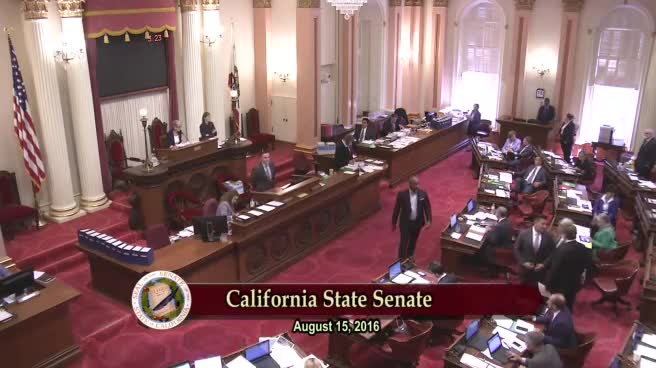 2MIN
Senate Floor
 10MIN
Senate Standing Committee on Public Safety
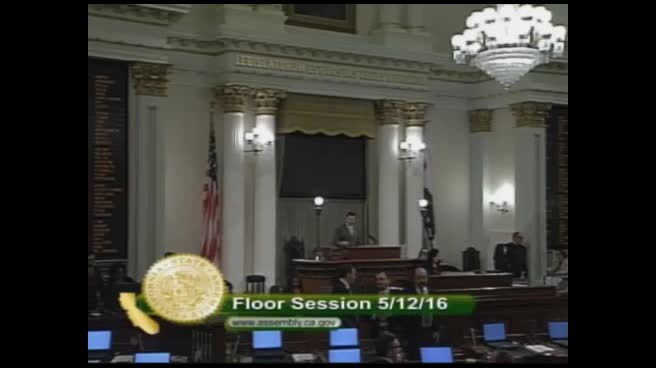 1MIN
Assembly Floor
 55SEC
Assembly Floor
 6MIN
Assembly Standing Committee on Appropriations
 8MIN
Assembly Standing Committee on Local Government
Bill Author

Bill Co-Author(s):