AB 2230: Overtime compensation: private elementary or secondary academic institutions: teachers.
- Session Year: 2015-2016
- House: Assembly
- Latest Version Date: 2016-09-12
Existing law provides that 8 hours of labor constitutes a days work. Under existing law, any work in excess of 8 hours in one workday and any work in excess of 40 hours in any one workweek, and the first 8 hours worked on the 7th day of work in any one workweek, is required to be compensated at the rate of no less than 11/2 times the regular rate of pay for an employee. Existing law also provides that hours worked in excess of 12 hours in one day as well as hours worked in excess of 8 hours on any 7th day of work are to be compensated at the rate of no less than twice the regular rate of pay of an employee. Existing law exempts from these provisions an individual employed as a teacher at a private elementary or secondary academic institution if specified requirements are met, including, among others, that the employee earns a monthly salary equivalent to no less than 2 times the state minimum wage for full-time employment.
This bill would suspend that earnings standard until July 1, 2017. On and after that date, the bill would prescribe a revised earnings standard for exemption from the overtime provisions described above that would require the employee to earn no less than the lowest salary offered by any school district or the equivalent of no less than 70% of the lowest schedule salary offered by the school district or county in which the private elementary or secondary institution is located, as specified.
Existing law establishes a workers compensation system, administered by the Administrative Director of the Division of Workers Compensation, that generally requires employers to secure the payment of workers compensation for injuries incurred by their employees that arise out of, or in the course of, employment. Existing law requires an employer to provide all medical, surgical, chiropractic, acupuncture, and hospital treatment that is reasonably required to cure or relieve the injured worker from the effects of his or her injury, and makes the employer liable for the reasonable expense incurred by or on behalf of the employee in providing treatment, as specified. Existing law authorizes a qualified interpreter to render services in various settings for purposes of workers compensation claims. Existing law prohibits an interpreter from disclosing to any person who is not an immediate participant in the communications the content of the conversations or documents that the interpreter has interpreted or transliterated unless the disclosure is compelled by court order.
This bill would expressly include within this prohibition the disclosure of any communication or transliteration involving attorney-client privileged communications, and would make additional nonsubstantive conforming changes.
(1)Existing
Existing law establishes a workers compensation system, administered by the Administrative Director of the Division of Workers Compensation, that generally requires employers to secure the payment of workers compensation for injuries incurred by their employees that arise out of, or in the course of, employment. Existing law requires an employer to provide all medical, surgical, chiropractic, acupuncture, and hospital treatment that is reasonably required to cure or relieve the injured worker from the effects of his or her injury, and makes the employer liable for the reasonable expense incurred by or on behalf of the employee in providing treatment, as specified. Existing law authorizes a qualified interpreter to render services in various settings for purposes of workers compensation claims. Existing law prohibits an interpreter from disclosing to any person who is not an immediate participant in the communications the content of the conversations or documents that the interpreter has interpreted or transliterated unless the disclosure is compelled by court order.
This bill would expressly include within this prohibition the disclosure of any communication or transliteration involving attorney-client privileged communications, and would make additional nonsubstantive conforming changes.
Existing law requires, in a workers compensation proceeding, an employer to provide the services of a qualified interpreter, as defined, when, at the request of the employer, the employers insurer, the administrative director, the appeals board, or a workers compensation administrative law judge, an employee submits to examination by a physician and the employee does not proficiently speak or understand the English language. In addition, existing law requires, upon request of the injured employee, the employer or insurance carrier to pay for interpretation services if the injured employee cannot effectively communicate with his or her treating physician because he or she cannot proficiently speak or understand the English language.
This bill would require the interpreter to be an interpreter of the employees choice under both circumstances. The bill would also authorize the employer to select the interpreter if interpretation services are required and the employee has not selected an interpreter.
(2)Existing law establishes the Workers Compensation Appeals Board and vests the appeals board with full power, authority, and jurisdiction to try and to determine specified matters in workers compensation proceedings, including matters relating to the recovery of compensation, and enforcement against the employer or an insurer of liability for compensation imposed upon the employer. Existing law authorizes the appeals board to appoint one or more workers compensation judges in any proceeding. Existing law governs hearing held before the appeals board or a workers compensation judge.
This bill would require, upon request from either the employee or witness, the employer to pay for the services of a language interpreter who is selected by the employee and who meets specified criteria, if interpretation services are required in workers compensation proceedings because the injured employee or witness does not proficiently speak or understand the English language. The bill would authorize the employer to select the interpreter if interpretation services are required and the employee has not selected an interpreter, as specified.
(3)Existing law authorizes the appeals board, a workers compensation judge, or any party to the action or proceeding, in any investigation or hearing before the appeals board, to cause the deposition of witnesses. Existing law requires the employer to pay for the services of a language interpreter, upon request from either a witness or deponent, if interpretation services are required because the injured employee or deponent does not proficiently speak or understand the English language.
This bill would require the interpreter to be selected by the employee, but would also authorize the employer to select the interpreter if interpretation services are required and the employee has not selected an interpreter. The bill would also authorize a witness, rather than a deponent, who does not proficiently speak or understand the English language to request the employer to pay for the services of a language interpreter.
(1)Existing law establishes a workers compensation system, administered by the Administrative Director of the Division of Workers Compensation, that generally requires employers to secure the payment of workers compensation for injuries incurred by their employees that arise out of, or in the course of, employment. Existing law requires an employer to provide all medical, surgical, chiropractic, acupuncture, and hospital treatment that is reasonably required to cure or relieve the injured worker from the effects of his or her injury, and makes the employer liable for the reasonable expense incurred by or on behalf of the employee in providing treatment, as specified.
Existing law requires, in a workers compensation proceeding, an employer to provide the services of a qualified interpreter, as defined, when, at the request of the employer, the employers insurer, the administrative director, the appeals board, or a workers compensation administrative law judge, an employee submits to examination by a physician and the employee does not proficiently speak or understand the English language. In addition, existing law requires, upon request of the injured employee, the employer or insurance carrier to pay for interpretation services if the injured employee cannot effectively communicate with his or her treating physician because he or she cannot proficiently speak or understand the English language.
This bill would require the interpreter to be an interpreter of the employees choice under both circumstances. The bill would also authorize the employer to select the interpreter if interpretation services are required and the employee has not selected an interpreter.
(2)Existing law establishes the Workers Compensation Appeals Board and vests the appeals board with full power, authority, and jurisdiction to try and to determine specified matters in workers compensation proceedings, including matters relating to the recovery of compensation, and enforcement against the employer or an insurer of liability for compensation imposed upon the employer. Existing law authorizes the appeals board to appoint one or more workers compensation judges in any proceeding. Existing law governs hearing held before the appeals board or a workers compensation judge.
This bill would require, upon request from either the employee or witness, the employer to pay for the services of a language interpreter who is selected by the employee and who meets specified criteria, if interpretation services are required in workers compensation proceedings because the injured employee or witness does not proficiently speak or understand the English language. The bill would authorize the employer to select the interpreter if interpretation services are required and the employee has not selected an interpreter, as specified.
(3)Existing law authorizes the appeals board, a workers compensation judge, or any party to the action or proceeding, in any investigation or hearing before the appeals board, to cause the deposition of witnesses. Existing law requires the employer to pay for the services of a language interpreter, upon request from either a witness or deponent, if interpretation services are required because the injured employee or deponent does not proficiently speak or understand the English language.
This bill would require the interpreter to be selected by the employee, but would also authorize the employer to select the interpreter if interpretation services are required and the employee has not selected an interpreter. The bill would also authorize a witness, rather than a deponent, who does not proficiently speak or understand the English language to request the employer to pay for the services of a language interpreter.
(a)Section 510 does not apply to an individual employed as a teacher at a private elementary or secondary academic institution in which pupils are enrolled in kindergarten or any of grades 1 to 12, inclusive.
(b)For purposes of this section, employed as a teacher means that the employee meets all of the following requirements:
(1)The employee is primarily engaged in the duty of imparting knowledge to pupils by teaching, instructing, or lecturing.
(2)The employee customarily and regularly exercises discretion and independent judgment in performing the duties of a teacher.
(3)On and after July 1, 2017, the employee earns the greater of the following:
(A)No less than 100 percent of the lowest salary offered by any school district to a person who is in a position that requires the person to have a valid California teaching credential and is not employed in that position pursuant to an emergency permit, intern permit, or waiver.
(B)The equivalent of no less than 70 percent of the lowest schedule salary offered by the school district or county in which the private elementary or secondary academic institution is located to a person who is in a position that requires the person to have a valid California teaching credential and is not employed in that position pursuant to an emergency permit, intern permit, or waiver.
(4)The employee has attained at least one of the following levels of professional advancement:
(A)A baccalaureate or higher degree from an accredited institution of higher education.
(B)Current compliance with the requirements established by the California Commission on Teacher Credentialing, or the equivalent certification authority in another state, for obtaining a preliminary or alternative teaching credential.
(c)This section does not apply to any tutor, teaching assistant, instructional aide, student teacher, day care provider, vocational instructor, or other similar employee.
(d)The exemption established in subdivision (a) is in addition to, and does not limit or supersede, any exemption from overtime established by a Wage Order of the Industrial Welfare Commission for persons employed in a professional capacity, and does not affect any exemption from overtime established by that commission pursuant to subdivision (a) of Section 515 for persons employed in an executive or administrative capacity.
(a)Section 510 does not apply to an individual employed as a teacher at a private elementary or secondary academic institution in which pupils are enrolled in kindergarten or any of grades 1 to 12, inclusive.
(b)For purposes of this section, employed as a teacher means that the employee meets all of the following requirements:
(1)The employee is primarily engaged in the duty of imparting knowledge to pupils by teaching, instructing, or lecturing.
(2)The employee customarily and regularly exercises discretion and independent judgment in performing the duties of a teacher.
(3)The On and after July 1, 2017, the employee earns a monthly salary equivalent to no less than two times the state minimum wage for full-time employment. the greater of the following:
(A)No less than 100 percent of the lowest salary offered by any school district to a person who is in a position that requires the person to have a valid California teaching credential and is not employed in that position pursuant to an emergency permit, intern permit, or waiver.
(B)The equivalent of no less than 70 percent of the lowest schedule salary offered by the school district or county in which the private elementary or secondary academic institution is located to a person who is in a position that requires the person to have a valid California teaching credential and is not employed in that position pursuant to an emergency permit, intern permit, or waiver.
(4)The employee has attained at least one of the following levels of professional advancement:
(A)A baccalaureate or higher degree from an accredited institution of higher education.
(B)Current compliance with the requirements established by the California Commission on Teacher Credentialing, or the equivalent certification authority in another state, for obtaining a preliminary or alternative teaching credential.
(c)This section does not apply to any tutor, teaching assistant, instructional aide, student teacher, day care provider, vocational instructor, or other similar employee.
(d)The exemption established in subdivision (a) is in addition to, and does not limit or supersede, any exemption from overtime established by a Wage Order of the Industrial Welfare Commission for persons employed in a professional capacity, and does not affect any exemption from overtime established by that commission pursuant to subdivision (a) of Section 515 for persons employed in an executive or administrative capacity.
SECTION 1.Section 5811 of the Labor Code is amended to read:5811.(a)No fees shall be charged by the clerk of any court for the performance of any official service required by this division, except for the docketing of awards as judgments and for certified copies of transcripts thereof. In all proceedings under this division before the appeals board, costs as between the parties may be allowed by the appeals board.
(b)(1)It shall be the responsibility of any party producing a witness requiring an interpreter to arrange for the presence of a qualified interpreter.
(2)A qualified interpreter is a language interpreter who is certified, or deemed certified, pursuant to Article 8 (commencing with Section 11435.05) of Chapter 4.5 of Part 1 of Division 3 of Title 2 of, or Section 68566 of, the Government Code. The duty of an interpreter is to accurately and impartially translate oral communications and transliterate written materials, and not to act as an agent or advocate. An interpreter shall not disclose to any person who is not an immediate participant in the communications the content of the conversations or documents that the interpreter has interpreted or transliterated, including, regardless of the circumstances of where or how the communication occurred, any communication or transliteration involving attorney-client privileged communications, unless the disclosure is compelled by court order. An attempt by any party or attorney to obtain disclosure, including, regardless of the circumstances of where or how the communication occurred, disclosure of any communication or transliteration involving attorney-client privileged communications, is a bad faith tactic that is subject to Section 5813.
(3)Interpreter fees that are reasonably, actually, and necessarily incurred shall be paid by the employer under this section, provided they are in accordance with the fee schedule adopted by the administrative director.
(4)A qualified interpreter may render services during the following:
(A)A deposition.
(B)An appeals board hearing.
(C)A medical treatment appointment or medical-legal examination.
(D)During those settings which the administrative director determines are reasonably necessary to ascertain the validity or extent of injury to an employee who does not proficiently speak or understand the English language.
(a)No fees shall be charged by the clerk of any court for the performance of any official service required by this division, except for the docketing of awards as judgments and for certified copies of transcripts thereof. In all proceedings under this division before the appeals board, costs as between the parties may be allowed by the appeals board.
(b)(1)It shall be the responsibility of any party producing a witness requiring an interpreter to arrange for the presence of a qualified interpreter.
(2)A qualified interpreter is a language interpreter who is certified, or deemed certified, pursuant to Article 8 (commencing with Section 11435.05) of Chapter 4.5 of Part 1 of Division 3 of Title 2 of, or Section 68566 of, the Government Code. The duty of an interpreter is to accurately and impartially translate oral communications and transliterate written materials, and not to act as an agent or advocate. An interpreter shall not disclose to any person who is not an immediate participant in the communications the content of the conversations or documents that the interpreter has interpreted or transliterated transliterated, including, regardless of the circumstances of where or how the communication occurred, any communication or transliteration involving attorney-client privileged communications, unless the disclosure is compelled by court order. An attempt by any party or attorney to obtain disclosure disclosure, including, regardless of the circumstances of where or how the communication occurred, disclosure of any communication or transliteration involving attorney-client privileged communications, is a bad faith tactic that is subject to Section 5813.
Interpreter
(3)Interpreter fees that are reasonably, actually, and necessarily incurred shall be paid by the employer under this section, provided they are in accordance with the fee schedule adopted by the administrative director.
A
(4)A qualified interpreter may render services during the following:
(A)A deposition.
(B)An appeals board hearing.
(C)A medical treatment appointment or medical-legal examination.
(D)During those settings which the administrative director determines are reasonably necessary to ascertain the validity or extent of injury to an employee who does not proficiently speak or understand the English language.
SECTION 1.Section 4600 of the Labor Code is amended to read:4600.(a)Medical, surgical, chiropractic, acupuncture, and hospital treatment, including nursing, medicines, medical and surgical supplies, crutches, and apparatuses, including orthotic and prosthetic devices and services, that is reasonably required to cure or relieve the injured worker from the effects of his or her injury shall be provided by the employer. In the case of his or her neglect or refusal reasonably to do so, the employer is liable for the reasonable expense incurred by or on behalf of the employee in providing treatment.
(b)As used in this division and notwithstanding any other law, medical treatment that is reasonably required to cure or relieve the injured worker from the effects of his or her injury means treatment that is based upon the guidelines adopted by the administrative director pursuant to Section 5307.27.
(c)Unless the employer or the employers insurer has established or contracted with a medical provider network as provided for in Section 4616, after 30 days from the date the injury is reported, the employee may be treated by a physician of his or her own choice or at a facility of his or her own choice within a reasonable geographic area. A chiropractor shall not be a treating physician after the employee has received the maximum number of chiropractic visits allowed by subdivision (c) of Section 4604.5.
(d)(1)If an employee has notified his or her employer in writing prior to the date of injury that he or she has a personal physician, the employee shall have the right to be treated by that physician from the date of injury if the employee has health care coverage for nonoccupational injuries or illnesses on the date of injury in a plan, policy, or fund as described in subdivisions (b), (c), and (d) of Section 4616.7.
(2)For purposes of paragraph (1), a personal physician shall meet all of the following conditions:
(A)Be the employees regular physician and surgeon, licensed pursuant to Chapter 5 (commencing with Section 2000) of Division 2 of the Business and Professions Code.
(B)Be the employees primary care physician and has previously directed the medical treatment of the employee, and who retains the employees medical records, including his or her medical history. Personal physician includes a medical group, if the medical group is a single corporation or partnership composed of licensed doctors of medicine or osteopathy, which operates an integrated multispecialty medical group providing comprehensive medical services predominantly for nonoccupational illnesses and injuries.
(C)The physician agrees to be predesignated.
(3)If the employee has health care coverage for nonoccupational injuries or illnesses on the date of injury in a health care service plan licensed pursuant to Chapter 2.2 (commencing with Section 1340) of Division 2 of the Health and Safety Code, and the employer is notified pursuant to paragraph (1), all medical treatment, utilization review of medical treatment, access to medical treatment, and other medical treatment issues shall be governed by Chapter 2.2 (commencing with Section 1340) of Division 2 of the Health and Safety Code. Disputes regarding the provision of medical treatment shall be resolved pursuant to Article 5.55 (commencing with Section 1374.30) of Chapter 2.2 of Division 2 of the Health and Safety Code.
(4)If the employee has health care coverage for nonoccupational injuries or illnesses on the date of injury in a group health insurance policy as described in Section 4616.7, all medical treatment, utilization review of medical treatment, access to medical treatment, and other medical treatment issues shall be governed by the applicable provisions of the Insurance Code.
(5)The insurer may require prior authorization of any nonemergency treatment or diagnostic service and may conduct reasonably necessary utilization review pursuant to Section 4610.
(6)An employee shall be entitled to all medically appropriate referrals by the personal physician to other physicians or medical providers within the nonoccupational health care plan. An employee shall be entitled to treatment by physicians or other medical providers outside of the nonoccupational health care plan pursuant to standards established in Article 5 (commencing with Section 1367) of Chapter 2.2 of Division 2 of the Health and Safety Code.
(e)(1)When at the request of the employer, the employers insurer, the administrative director, the appeals board, or a workers compensation administrative law judge, the employee submits to examination by a physician, he or she shall be entitled to receive, in addition to all other benefits herein provided, all reasonable expenses of transportation, meals, and lodging incident to reporting for the examination, together with one day of temporary disability indemnity for each day of wages lost in submitting to the examination.
(2)Regardless of the date of injury, reasonable expenses of transportation includes mileage fees from the employees home to the place of the examination and back at the rate of twenty-one cents ($0.21) a mile or the mileage rate adopted by the Director of the Department of Human Resources pursuant to Section 19820 of the Government Code, whichever is higher, plus any bridge tolls. The mileage and tolls shall be paid to the employee at the time he or she is given notification of the time and place of the examination.
(f)When at the request of the employer, the employers insurer, the administrative director, the appeals board, or a workers compensation administrative law judge, an employee submits to examination by a physician and the employee does not proficiently speak or understand the English language, he or she shall be entitled to the services of a qualified interpreter of his or her choice in accordance with conditions and a fee schedule prescribed by the administrative director. These services shall be provided by the employer. For purposes of this section, qualified interpreter means a language interpreter certified, or deemed certified, pursuant to Article 8 (commencing with Section 11435.05) of Chapter 4.5 of Part 1 of Division 3 of Title 2 of, or Section 68566 of, the Government Code. The employer may select the interpreter if interpretation services are required and the employee has not selected an interpreter.
(g)If the injured employee cannot effectively communicate with his or her treating physician because he or she cannot proficiently speak or understand the English language, the injured employee is entitled to the services of a qualified interpreter of his or her choice during medical treatment appointments. To be a qualified interpreter for purposes of medical treatment appointments, an interpreter is not required to meet the requirements of subdivision (f), but shall meet any requirements established by rule by the administrative director that are substantially similar to the requirements set forth in Section 1367.04 of the Health and Safety Code. The administrative director shall adopt a fee schedule for qualified interpreter fees in accordance with this section. Upon request of the injured employee, the employer or insurance carrier shall pay for interpretation services. An employer shall not be required to pay for the services of an interpreter who is not certified or is provisionally certified by the person conducting the medical treatment or examination unless either the employer consents in advance to the selection of the individual who provides the interpreting service or the injured worker requires interpreting service in a language other than the languages designated pursuant to Section 11435.40 of the Government Code. The employer may select the interpreter if interpretation services are required and the employee has not selected an interpreter.
(h)Home health care services shall be provided as medical treatment only if reasonably required to cure or relieve the injured employee from the effects of his or her injury and prescribed by a physician and surgeon licensed pursuant to Chapter 5 (commencing with Section 2000) of Division 2 of the Business and Professions Code, and subject to Section 5307.1 or 5307.8. The employer shall not be liable for home health care services that are provided more than 14 days prior to the date of the employers receipt of the physicians prescription.
SEC. 2.Section 5502 of the Labor Code is amended to read:5502.(a)Except as provided in subdivisions (b) and (d), the hearing shall be held not less than 10 days, and not more than 60 days, after the date a declaration of readiness to proceed, on a form prescribed by the appeals board, is filed. If a claim form has been filed for an injury occurring on or after January 1, 1990, and before January 1, 1994, an application for adjudication shall accompany the declaration of readiness to proceed.
(b)The administrative director shall establish a priority calendar for issues requiring an expedited hearing and decision. A hearing shall be held and a determination as to the rights of the parties shall be made and filed within 30 days after the declaration of readiness to proceed is filed if the issues in dispute are any of the following, provided that if an expedited hearing is requested, no other issue may be heard until the medical provider network dispute is resolved:
(1)The employees entitlement to medical treatment pursuant to Section 4600, except for treatment issues determined pursuant to Sections 4610 and 4610.5.
(2)Whether the injured employee is required to obtain treatment within a medical provider network.
(3)A medical treatment appointment or medical-legal examination.
(4)The employees entitlement to, or the amount of, temporary disability indemnity payments.
(5)The employees entitlement to compensation from one or more responsible employers when two or more employers dispute liability as among themselves.
(6)Any other issues requiring an expedited hearing and determination as prescribed in rules and regulations of the administrative director.
(c)The administrative director shall establish a priority conference calendar for cases in which the employee is represented by an attorney or is or was employed by an illegally uninsured employer and the issues in dispute are employment or injury arising out of employment or in the course of employment. The conference shall be conducted by a workers compensation administrative law judge within 30 days after the declaration of readiness to proceed. If the dispute cannot be resolved at the conference, a trial shall be set as expeditiously as possible, unless good cause is shown why discovery is not complete, in which case status conferences shall be held at regular intervals. The case shall be set for trial when discovery is complete, or when the workers compensation administrative law judge determines that the parties have had sufficient time in which to complete reasonable discovery. A determination as to the rights of the parties shall be made and filed within 30 days after the trial.
(d)(1)In all cases, a mandatory settlement conference, except a lien conference or a mandatory settlement lien conference, shall be conducted not less than 10 days, and not more than 30 days, after the filing of a declaration of readiness to proceed. If the dispute is not resolved, the regular hearing, except a lien trial, shall be held within 75 days after the declaration of readiness to proceed is filed.
(2)The settlement conference shall be conducted by a workers compensation administrative law judge or by a referee who is eligible to be a workers compensation administrative law judge or eligible to be an arbitrator under Section 5270.5. At the mandatory settlement conference, the referee or workers compensation administrative law judge shall have the authority to resolve the dispute, including the authority to approve a compromise and release or issue a stipulated finding and award, and if the dispute cannot be resolved, to frame the issues and stipulations for trial. The appeals board shall adopt any regulations needed to implement this subdivision. The presiding workers compensation administrative law judge shall supervise settlement conference referees in the performance of their judicial functions under this subdivision.
(3)If the claim is not resolved at the mandatory settlement conference, the parties shall file a pretrial conference statement noting the specific issues in dispute, each partys proposed permanent disability rating, and listing the exhibits, and disclosing witnesses. Discovery shall close on the date of the mandatory settlement conference. Evidence not disclosed or obtained thereafter shall not be admissible unless the proponent of the evidence can demonstrate that it was not available or could not have been discovered by the exercise of due diligence prior to the settlement conference.
(e)In cases involving the Director of Industrial Relations in his or her capacity as administrator of the Uninsured Employers Fund, this section shall not apply unless proof of service, as specified in paragraph (1) of subdivision (d) of Section 3716, has been filed with the appeals board and provided to the Director of Industrial Relations, valid jurisdiction has been established over the employer, and the fund has been joined.
(f)If interpretation services are required because the injured employee or witness does not proficiently speak or understand the English language, upon request from either the employee or witness, the employer shall pay for the services of a language interpreter who is selected by the employee and who is certified or deemed certified pursuant to Article 8 (commencing with Section 11435.05) of Chapter 4.5 of Part 1 of Division 3 of Title 2 of, or Section 68566 of, the Government Code. The employer may select the interpreter if interpretation services are required and the employee has not selected an interpreter. The fee to be paid by the employer shall be in accordance with the fee schedule adopted by the administrative director and shall include any other deposition-related events as permitted by the administrative director.
(g)Except as provided in subdivision (a), this section shall apply irrespective of the date of injury.
SEC. 3.Section 5710 of the Labor Code is amended to read:5710.(a)The appeals board, a workers compensation judge, or any party to the action or proceeding, may, in any investigation or hearing before the appeals board, cause the deposition of witnesses residing within or without the state to be taken in the manner prescribed by law for like depositions in civil actions in the superior courts of this state under Title 4 (commencing with Section 2016.010) of Part 4 of the Code of Civil Procedure. To that end the attendance of witnesses and the production of records may be required. Depositions may be taken outside the state before any officer authorized to administer oaths. The appeals board or a workers compensation judge in any proceeding before the appeals board may cause evidence to be taken in other jurisdictions before the agency authorized to hear workers compensation matters in those other jurisdictions.
(b)If the employer or insurance carrier requests a deposition to be taken of an injured employee, or any person claiming benefits as a dependent of an injured employee, the deponent is entitled to receive in addition to all other benefits:
(1)All reasonable expenses of transportation, meals, and lodging incident to the deposition.
(2)Reimbursement for any loss of wages incurred during attendance at the deposition.
(3)One copy of the transcript of the deposition, without cost.
(4)A reasonable allowance for attorneys fees for the deponent, if represented by an attorney licensed by the State Bar of this state. The fee shall be discretionary with, and, if allowed, shall be set by, the appeals board, but shall be paid by the employer or his or her insurer.
(5)If interpretation services are required because the injured employee or witness does not proficiently speak or understand the English language, upon a request from either the employee or witness, the employer shall pay for the services of a language interpreter who is selected by the employee and who is certified or deemed certified pursuant to Article 8 (commencing with Section 11435.05) of Chapter 4.5 of Part 1 of Division 3 of Title 2 of, or Section 68566 of, the Government Code. The employer may select the interpreter if interpretation services are required and the employee has not selected an interpreter. The fee to be paid by the employer shall be in accordance with the fee schedule adopted by the administrative director and shall include any other deposition-related events as permitted by the administrative director.
(a)Medical, surgical, chiropractic, acupuncture, and hospital treatment, including nursing, medicines, medical and surgical supplies, crutches, and apparatuses, including orthotic and prosthetic devices and services, that is reasonably required to cure or relieve the injured worker from the effects of his or her injury shall be provided by the employer. In the case of his or her neglect or refusal reasonably to do so, the employer is liable for the reasonable expense incurred by or on behalf of the employee in providing treatment.
(b)As used in this division and notwithstanding any other law, medical treatment that is reasonably required to cure or relieve the injured worker from the effects of his or her injury means treatment that is based upon the guidelines adopted by the administrative director pursuant to Section 5307.27.
(c)Unless the employer or the employers insurer has established or contracted with a medical provider network as provided for in Section 4616, after 30 days from the date the injury is reported, the employee may be treated by a physician of his or her own choice or at a facility of his or her own choice within a reasonable geographic area. A chiropractor shall not be a treating physician after the employee has received the maximum number of chiropractic visits allowed by subdivision (c) of Section 4604.5.
(d)(1)If an employee has notified his or her employer in writing prior to the date of injury that he or she has a personal physician, the employee shall have the right to be treated by that physician from the date of injury if the employee has health care coverage for nonoccupational injuries or illnesses on the date of injury in a plan, policy, or fund as described in subdivisions (b), (c), and (d) of Section 4616.7.
(2)For purposes of paragraph (1), a personal physician shall meet all of the following conditions:
(A)Be the employees regular physician and surgeon, licensed pursuant to Chapter 5 (commencing with Section 2000) of Division 2 of the Business and Professions Code.
(B)Be the employees primary care physician and has previously directed the medical treatment of the employee, and who retains the employees medical records, including his or her medical history. Personal physician includes a medical group, if the medical group is a single corporation or partnership composed of licensed doctors of medicine or osteopathy, which operates an integrated multispecialty medical group providing comprehensive medical services predominantly for nonoccupational illnesses and injuries.
(C)The physician agrees to be predesignated.
(3)If the employee has health care coverage for nonoccupational injuries or illnesses on the date of injury in a health care service plan licensed pursuant to Chapter 2.2 (commencing with Section 1340) of Division 2 of the Health and Safety Code, and the employer is notified pursuant to paragraph (1), all medical treatment, utilization review of medical treatment, access to medical treatment, and other medical treatment issues shall be governed by Chapter 2.2 (commencing with Section 1340) of Division 2 of the Health and Safety Code. Disputes regarding the provision of medical treatment shall be resolved pursuant to Article 5.55 (commencing with Section 1374.30) of Chapter 2.2 of Division 2 of the Health and Safety Code.
(4)If the employee has health care coverage for nonoccupational injuries or illnesses on the date of injury in a group health insurance policy as described in Section 4616.7, all medical treatment, utilization review of medical treatment, access to medical treatment, and other medical treatment issues shall be governed by the applicable provisions of the Insurance Code.
(5)The insurer may require prior authorization of any nonemergency treatment or diagnostic service and may conduct reasonably necessary utilization review pursuant to Section 4610.
(6)An employee shall be entitled to all medically appropriate referrals by the personal physician to other physicians or medical providers within the nonoccupational health care plan. An employee shall be entitled to treatment by physicians or other medical providers outside of the nonoccupational health care plan pursuant to standards established in Article 5 (commencing with Section 1367) of Chapter 2.2 of Division 2 of the Health and Safety Code.
(e)(1)When at the request of the employer, the employers insurer, the administrative director, the appeals board, or a workers compensation administrative law judge, the employee submits to examination by a physician, he or she shall be entitled to receive, in addition to all other benefits herein provided, all reasonable expenses of transportation, meals, and lodging incident to reporting for the examination, together with one day of temporary disability indemnity for each day of wages lost in submitting to the examination.
(2)Regardless of the date of injury, reasonable expenses of transportation includes mileage fees from the employees home to the place of the examination and back at the rate of twenty-one cents ($0.21) a mile or the mileage rate adopted by the Director of the Department of Human Resources pursuant to Section 19820 of the Government Code, whichever is higher, plus any bridge tolls. The mileage and tolls shall be paid to the employee at the time he or she is given notification of the time and place of the examination.
(f)When at the request of the employer, the employers insurer, the administrative director, the appeals board, or a workers compensation administrative law judge, an employee submits to examination by a physician and the employee does not proficiently speak or understand the English language, he or she shall be entitled to the services of a qualified interpreter of his or her choice in accordance with conditions and a fee schedule prescribed by the administrative director. These services shall be provided by the employer. For purposes of this section, qualified interpreter means a language interpreter certified, or deemed certified, pursuant to Article 8 (commencing with Section 11435.05) of Chapter 4.5 of Part 1 of Division 3 of Title 2 of, or Section 68566 of, the Government Code. The employer may select the interpreter if interpretation services are required and the employee has not selected an interpreter.
(g)If the injured employee cannot effectively communicate with his or her treating physician because he or she cannot proficiently speak or understand the English language, the injured employee is entitled to the services of a qualified interpreter of his or her choice during medical treatment appointments. To be a qualified interpreter for purposes of medical treatment appointments, an interpreter is not required to meet the requirements of subdivision (f), but shall meet any requirements established by rule by the administrative director that are substantially similar to the requirements set forth in Section 1367.04 of the Health and Safety Code. The administrative director shall adopt a fee schedule for qualified interpreter fees in accordance with this section. Upon request of the injured employee, the employer or insurance carrier shall pay for interpreter interpretation services. An employer shall not be required to pay for the services of an interpreter who is not certified or is provisionally certified by the person conducting the medical treatment or examination unless either the employer consents in advance to the selection of the individual who provides the interpreting service or the injured worker requires interpreting service in a language other than the languages designated pursuant to Section 11435.40 of the Government Code. The employer may select the interpreter if interpretation services are required and the employee has not selected an interpreter.
(h)Home health care services shall be provided as medical treatment only if reasonably required to cure or relieve the injured employee from the effects of his or her injury and prescribed by a physician and surgeon licensed pursuant to Chapter 5 (commencing with Section 2000) of Division 2 of the Business and Professions Code, and subject to Section 5307.1 or 5703.8. 5307.8. The employer shall not be liable for home health care services that are provided more than 14 days prior to the date of the employers receipt of the physicians prescription.
SEC. 2.Section 5502 of the Labor Code is amended to read:5502.(a)Except as provided in subdivisions (b) and (d), the hearing shall be held not less than 10 days, and not more than 60 days, after the date a declaration of readiness to proceed, on a form prescribed by the appeals board, is filed. If a claim form has been filed for an injury occurring on or after January 1, 1990, and before January 1, 1994, an application for adjudication shall accompany the declaration of readiness to proceed.
(b)The administrative director shall establish a priority calendar for issues requiring an expedited hearing and decision. A hearing shall be held and a determination as to the rights of the parties shall be made and filed within 30 days after the declaration of readiness to proceed is filed if the issues in dispute are any of the following, provided that if an expedited hearing is requested, no other issue may be heard until the medical provider network dispute is resolved:
(1)The employees entitlement to medical treatment pursuant to Section 4600, except for treatment issues determined pursuant to Sections 4610 and 4610.5.
(2)Whether the injured employee is required to obtain treatment within a medical provider network.
(3)A medical treatment appointment or medical-legal examination.
(4)The employees entitlement to, or the amount of, temporary disability indemnity payments.
(5)The employees entitlement to compensation from one or more responsible employers when two or more employers dispute liability as among themselves.
(6)Any other issues requiring an expedited hearing and determination as prescribed in rules and regulations of the administrative director.
(c)The administrative director shall establish a priority conference calendar for cases in which the employee is represented by an attorney or is or was employed by an illegally uninsured employer and the issues in dispute are employment or injury arising out of employment or in the course of employment. The conference shall be conducted by a workers compensation administrative law judge within 30 days after the declaration of readiness to proceed. If the dispute cannot be resolved at the conference, a trial shall be set as expeditiously as possible, unless good cause is shown why discovery is not complete, in which case status conferences shall be held at regular intervals. The case shall be set for trial when discovery is complete, or when the workers compensation administrative law judge determines that the parties have had sufficient time in which to complete reasonable discovery. A determination as to the rights of the parties shall be made and filed within 30 days after the trial.
(d)(1)In all cases, a mandatory settlement conference, except a lien conference or a mandatory settlement lien conference, shall be conducted not less than 10 days, and not more than 30 days, after the filing of a declaration of readiness to proceed. If the dispute is not resolved, the regular hearing, except a lien trial, shall be held within 75 days after the declaration of readiness to proceed is filed.
(2)The settlement conference shall be conducted by a workers compensation administrative law judge or by a referee who is eligible to be a workers compensation administrative law judge or eligible to be an arbitrator under Section 5270.5. At the mandatory settlement conference, the referee or workers compensation administrative law judge shall have the authority to resolve the dispute, including the authority to approve a compromise and release or issue a stipulated finding and award, and if the dispute cannot be resolved, to frame the issues and stipulations for trial. The appeals board shall adopt any regulations needed to implement this subdivision. The presiding workers compensation administrative law judge shall supervise settlement conference referees in the performance of their judicial functions under this subdivision.
(3)If the claim is not resolved at the mandatory settlement conference, the parties shall file a pretrial conference statement noting the specific issues in dispute, each partys proposed permanent disability rating, and listing the exhibits, and disclosing witnesses. Discovery shall close on the date of the mandatory settlement conference. Evidence not disclosed or obtained thereafter shall not be admissible unless the proponent of the evidence can demonstrate that it was not available or could not have been discovered by the exercise of due diligence prior to the settlement conference.
(e)In cases involving the Director of Industrial Relations in his or her capacity as administrator of the Uninsured Employers Fund, this section shall not apply unless proof of service, as specified in paragraph (1) of subdivision (d) of Section 3716, has been filed with the appeals board and provided to the Director of Industrial Relations, valid jurisdiction has been established over the employer, and the fund has been joined.
(f)If interpretation services are required because the injured employee or witness does not proficiently speak or understand the English language, upon request from either the employee or witness, the employer shall pay for the services of a language interpreter who is selected by the employee and who is certified or deemed certified pursuant to Article 8 (commencing with Section 11435.05) of Chapter 4.5 of Part 1 of Division 3 of Title 2 of, or Section 68566 of, the Government Code. The employer may select the interpreter if interpretation services are required and the employee has not selected an interpreter. The fee to be paid by the employer shall be in accordance with the fee schedule adopted by the administrative director and shall include any other deposition-related events as permitted by the administrative director.
(f)
(g)Except as provided in subdivision (a), this section shall apply irrespective of the date of injury.
SEC. 3.Section 5710 of the Labor Code is amended to read:5710.(a)The appeals board, a workers compensation judge, or any party to the action or proceeding, may, in any investigation or hearing before the appeals board, cause the deposition of witnesses residing within or without the state to be taken in the manner prescribed by law for like depositions in civil actions in the superior courts of this state under Title 4 (commencing with Section 2016.010) of Part 4 of the Code of Civil Procedure. To that end the attendance of witnesses and the production of records may be required. Depositions may be taken outside the state before any officer authorized to administer oaths. The appeals board or a workers compensation judge in any proceeding before the appeals board may cause evidence to be taken in other jurisdictions before the agency authorized to hear workers compensation matters in those other jurisdictions.
(b)If the employer or insurance carrier requests a deposition to be taken of an injured employee, or any person claiming benefits as a dependent of an injured employee, the deponent is entitled to receive in addition to all other benefits:
(1)All reasonable expenses of transportation, meals, and lodging incident to the deposition.
(2)Reimbursement for any loss of wages incurred during attendance at the deposition.
(3)One copy of the transcript of the deposition, without cost.
(4)A reasonable allowance for attorneys fees for the deponent, if represented by an attorney licensed by the State Bar of this state. The fee shall be discretionary with, and, if allowed, shall be set by, the appeals board, but shall be paid by the employer or his or her insurer.
(5)If interpretation services are required because the injured employee or deponent witness does not proficiently speak or understand the English language, upon a request from either, either the employee or witness, the employer shall pay for the services of a language interpreter who is selected by the employee and who is certified or deemed certified pursuant to Article 8 (commencing with Section 11435.05) of Chapter 4.5 of Part 1 of Division 3 of Title 2 of, or Section 68566 of, the Government Code. The employer may select the interpreter if interpretation services are required and the employee has not selected an interpreter. The fee to be paid by the employer shall be in accordance with the fee schedule adopted by the administrative director and shall include any other deposition-related events as permitted by the administrative director.
|
Date
|
Status
|
|---|---|
| Sep 12, 2016 | Chaptered by Secretary of State - Chapter 314, Statutes of 2016. |
| Sep 12, 2016 | Approved by the Governor. |
| Aug 31, 2016 | Enrolled and presented to the Governor at 4 p.m. |
| Aug 24, 2016 | Senate amendments concurred in. To Engrossing and Enrolling. (Ayes 80. Noes 0. Page 6219.). |
| Aug 24, 2016 | Senate amendments concurred in. To Engrossing and Enrolling. |
| Aug 23, 2016 | From committee: That the Senate amendments be concurred in. (Ayes 7. Noes 0.) (August 22). |
| Aug 18, 2016 | Re-referred to Com. on L. & E. pursuant to Assembly Rule 77.2. |
| Aug 16, 2016 | In Assembly. Concurrence in Senate amendments pending. May be considered on or after August 18 pursuant to Assembly Rule 77. |
| Aug 15, 2016 | Read third time. Passed. Ordered to the Assembly. (Ayes 38. Noes 0. Page 4963.). |
| Aug 15, 2016 | Read third time. Passed. Ordered to the Assembly. (Ayes 38. Noes 0.). |
| Aug 15, 2016 | Read third time. Passed. Ordered to the Assembly. |
| Aug 2, 2016 | Read second time. Ordered to third reading. |
| Aug 1, 2016 | From committee: Be placed on second reading file pursuant to Senate Rule 28.8. |
| Jun 29, 2016 | Re-referred to Com. on APPR. |
| Jun 29, 2016 | Withdrawn from committee. |
| Jun 29, 2016 | From committee: Do pass and re-refer to Com. on RLS. (Ayes 5. Noes 0.) (June 29). Re-referred to Com. on RLS. |
| Jun 22, 2016 | From committee chair, with author's amendments: Amend, and re-refer to committee. Read second time, amended, and re-referred to Com. on L. & I.R. |
| Jun 2, 2016 | Referred to Coms. on L. & I.R. and JUD. |
| May 23, 2016 | Read third time. Passed. Ordered to the Senate. (Ayes 77. Noes 0. Page 4893.) |
| May 23, 2016 | Read third time. Passed. Ordered to the Senate. (Ayes 77. Noes 0.) |
| May 23, 2016 | In Senate. Read first time. To Com. on RLS. for assignment. |
| May 23, 2016 | Read third time. Passed. Ordered to the Senate. |
| May 10, 2016 | Read second time. Ordered to third reading. |
| May 9, 2016 | Read second time and amended. Ordered returned to second reading. |
| May 5, 2016 | From committee: Amend, and do pass as amended. (Ayes 13. Noes 0.) (May 4). |
| Mar 3, 2016 | Referred to Com. on INS. |
| Feb 19, 2016 | From printer. May be heard in committee March 20. |
| Feb 18, 2016 | Read first time. To print. |
|
Date
|
Description
|
Location
|
Votes
|
|
|---|---|---|---|---|
| Aug 24, 2016 | AB 2230 CHU Concurrence in Senate Amendments | Assembly Floor |
Passed |
|
| Aug 22, 2016 | With recommendation: That Senate amendments be concurred in. | Assembly Standing Committee on Labor and Employment |
Passed |
|
| Aug 15, 2016 | Assembly 3rd Reading AB2230 Chu By Mendoza | Senate Floor |
Passed |
|
| Jun 29, 2016 | Do pass, but first be re-referred to the Committee on [Rules] | Senate Standing Committee on Labor and Industrial Relations |
Passed |
|
| May 23, 2016 | AB 2230 CHU Assembly Third Reading | Assembly Floor |
Passed |
|
| May 4, 2016 | Do pass as amended. | Assembly Standing Committee on Insurance |
Passed |
This list shows positions taken on this bill by organizations on the date displayed, which is linked to the original source.
Positions by individuals are not included.
CONCURRENCE IN SENATE AMENDMENTS
CSA2 Bill Id:AB 2230
Author:(Chu)
As Amended Ver:June 22, 2016
Majority vote
ASSEMBLY: | 77-0 | (May 23, 2016) | SENATE: | 38-0 | (August 15, 2016) |
COMMITTEE VOTE: | 7-0 | (August 22, 2016) | RECOMMENDATION: | concur |
L. & E.
Original Committee Reference: INS.
SUMMARY: Amends an existing overtime exemption for private school teachers to tie the exemption to comparable public school teacher salaries, rather than the state minimum wage. Specifically, this bill provides that an existing overtime exemption for private school teachers applies if, on and after July, 2017, the employee earns the greater of the following:
- No less than 100% of the lowest salary offered by any school district to a person who is in a position that requires the person to have a valid California teaching credential and is not employed in that position pursuant to an emergency permit, intern permit, or waiver.
- The equivalent of no less than 70% of the lowest schedule salary offered by the school district or county in which the private school is located to a person who is in a position that requires the person to have a valid California teaching credential and is not employed in that position pursuant to an emergency permit, intern permit, or waiver.
EXISTING LAW:
- Requires any work in excess of eight hours in one workday and any work in excess of 40 hours in any one workweek to be compensated at the rate of no less than one and one-half times the regular rate of pay for an employee.
- Exempts private school teachers from the requirements of overtime if the teacher is paid a monthly salary that is the equivalent of at least twice the state minimum wage for full time employment.
- Defines a private school teacher as an employee who is primarily engaged in the duty of imparting knowledge to pupils by teaching, instructing, or lecturing and customarily and regularly exercises discretion and independent judgment in performing the duties of a teacher.
- Sets the current California minimum wage at $10.00 per hour.
- Starting January 1, 2017, incrementally increases the state's minimum wage, depending on the size of the employer and future economic conditions, to $15 per hour and then ties annual minimum wage increases to the United States Consumer Price Index (CPI), which is a measure of inflation. (Labor Code Section 1182.12)
FISCAL EFFECT: According to the Senate Appropriations Committee, pursuant to Senate Rule 28.8, negligible state costs.
COMMENTS: Under existing law, private school teachers are exempted from overtime if they make at least twice the minimum wage. Starting in January 1, 2017, the State of California will begin to gradually increase the state minimum wage, which will eventually be indexed to the consumer price index (CPI) once the minimum wage reaches $15 per hour. The CPI increase would be calculated on August 1st and take effect the January 1 of the following year. For private schools that calculate their budgets prior the beginning of the school year, this can present a moving target for calculating the level of wages that would trigger the overtime exemption.
This bill would simplify this calculation by tying private school wages to a set percentage of comparable public school wages.
Supporters note that private school teachers are currently exempted from overtime if they are paid twice the minimum wage. However, supporters note that this calculation is arbitrary and not based on the day-to-day realities of the teaching profession and local economic variation. Supporters argue that this bill will address these inadequacies by tying the private teacher overtime to the salaries of public school teachers, establishing a wage floor for private school teachers that will increase in step with earnings received by public school counterparts. Supporters also argue that this bill will help ensure that private school teachers employed in more affluent communities receive higher levels of compensation, while still ensuring that private school teachers who teach in less affluent areas are not denied reasonable compensation.
There is no opposition on file to this bill.
Analysis Prepared by: Ben Ebbink / L. & E. / (916) 319-2091 FN: 0004827
Date of Hearing: August 22, 2016
ASSEMBLY COMMITTEE ON LABOR AND EMPLOYMENT
Tony Thurmond, Chair
ABPCA Bill Id:AB 2230 (
Author:Chu) – As Amended Ver:June 22, 2016
SUBJECT: Overtime compensation: private elementary or secondary academic institutions: teachers
SUMMARY: Amends an existing overtime exemption for private school teachers to tie the exemption to comparable public school teacher salaries, rather than the state minimum wage. Specifically, this bill provides that an existing overtime exemption for private school teachers applies if, on and after July, 2017, the employee earns the greater of the following:
- No less than 100 percent of the lowest salary offered by any school district to a person who is in a position that requires the person to have a valid California teaching credential and is not employed in that position pursuant to an emergency permit, intern permit, or waiver.
- The equivalent of no less than 70 percent of the lowest schedule salary offered by the school district or county in which the private school is located to a person who is in a position that requires the person to have a valid California teaching credential and is not employed in that position pursuant to an emergency permit, intern permit, or waiver.
EXISTING LAW:
- Requires any work in excess of eight hours in one workday and any work in excess of 40 hours in any one workweek to be compensated at the rate of no less than one and one-half times the regular rate of pay for an employee.
- Exempts private school teachers from the requirements of overtime if the teacher is paid a monthly salary that is the equivalent of at least twice the state minimum wage for full time employment.
- Defines a private school teacher as an employee who is primarily engaged in the duty of imparting knowledge to pupils by teaching, instructing, or lecturing and customarily and regularly exercises discretion and independent judgment in performing the duties of a teacher.
- Sets the current California minimum wage at $10.00 per hour.
- Starting January 1, 2017, incrementally increases the state’s minimum wage, depending on the size of the employer and future economic conditions, to $15 per hour and then ties annual minimum wage increases to the U.S. Consumer Price Index (CPI), which is a measure of inflation. (Labor Code §1182.12)
FISCAL EFFECT: According to the Senate Appropriations Committee, pursuant to Senate Rule 28.8, negligible state costs.
COMMENTS: Under existing law, private school teachers are exempted from overtime if they make at least twice the minimum wage. Starting in January 1, 2017, the State of California will begin to gradually increase the state minimum wage, which will eventually be indexed to the consumer price index (CPI) once the minimum wage reaches $15 per hour. The CPI increase would be calculated on August 1st and take effect the January 1 of the following year. For private schools that calculate their budgets prior the beginning of the school year, this can present a moving target for calculating the level of wages that would trigger the overtime exemption.
This bill would simplify this calculation by tying private school wages to a set percentage of comparable public school wages.
Supporters note that private school teachers are currently exempted from overtime if they are paid twice the minimum wage. However, supporters note that this calculation is arbitrary and not based on the day-to-day realities of the teaching profession and local economic variation. Supporters argue that this bill will address these inadequacies by tying the private teacher overtime to the salaries of public school teachers, establishing a wage floor for private school teachers that will increase in step with earnings received by public school counterparts. Supporters also argue that this bill will help ensure that private school teachers employed in more affluent communities receive higher levels of compensation, while still ensuring that private school teachers who teach in less affluent areas are not denied reasonable compensation.
REGISTERED SUPPORT / OPPOSITION:
Support
California Association of Private School Organizations
California Catholic Conference
Opposition
None on file.
Analysis Prepared by: Ben Ebbink / L. & E. / (916) 319-2091
CONCURRENCE IN SENATE AMENDMENTS
CSA1 Bill Id:AB 2230
Author:(Chu)
As Amended Ver:June 22, 2016
Majority vote
ASSEMBLY: |
| (May 23, 2016) | SENATE: | 38-0 | (August 15, 2016) |
(vote not relevant)
Original Committee Reference: INS.
SUMMARY: Amends an existing overtime exemption for private school teachers to tie the exemption to comparable public school teacher salaries, rather than the state minimum wage.
The Senate amendments delete the contents of the bill and instead provide that an existing overtime exemption for private school teachers applies if, on and after July, 2017, the employee earns the greater of the following:
- No less than 100% of the lowest salary offered by any school district to a person who is in a position that requires the person to have a valid California teaching credential and is not employed in that position pursuant to an emergency permit, intern permit, or waiver.
- The equivalent of no less than 70% of the lowest schedule salary offered by the school district or county in which the private school is located to a person who is in a position that requires the person to have a valid California teaching credential and is not employed in that position pursuant to an emergency permit, intern permit, or waiver.
EXISTING LAW:
- Requires any work in excess of eight hours in one workday and any work in excess of 40 hours in any one workweek to be compensated at the rate of no less than one and one-half times the regular rate of pay for an employee.
- Exempts private school teachers from the requirements of overtime if the teacher is paid a monthly salary that is the equivalent of at least twice the state minimum wage for full time employment.
- Defines a private school teacher as an employee who is primarily engaged in the duty of imparting knowledge to pupils by teaching, instructing, or lecturing and customarily and regularly exercises discretion and independent judgment in performing the duties of a teacher.
- Sets the current California minimum wage at $10 per hour.
- Starting January 1, 2017, incrementally increases the state's minimum wage, depending on the size of the employer and future economic conditions, to $15 per hour and then ties annual minimum wage increases to the United States Consumer Price Index (CPI), which is a measure of inflation. (Labor Code Section (LAB) 1182.12)
FISCAL EFFECT: According to the Senate Appropriations Committee, pursuant to Senate Rule 28.8, negligible state costs.
COMMENTS: Under existing law, private school teachers are exempted from overtime if they make at least twice the minimum wage. Starting in January 1, 2017, the State of California will begin to gradually increase the state minimum wage, which will eventually be indexed to the consumer price index (CPI) once the minimum wage reaches $15 per hour. The CPI increase would be calculated on August 1st and take effect the January 1 of the following year. For private schools that calculate their budgets prior the beginning of the school year, this can present a moving target for calculating the level of wages that would trigger the overtime exemption.
This bill would simplify this calculation by tying private school wages to a set percentage of comparable public school wages.
Supporters note that private school teachers are currently exempted from overtime if they are paid twice the minimum wage. However, supporters note that this calculation is arbitrary and not based on the day-to-day realities of the teaching profession and local economic variation. Supporters argue that this bill will address these inadequacies by tying the private teacher overtime to the salaries of public school teachers, establishing a wage floor for private school teachers that will increase in step with earnings received by public school counterparts. Supporters also argue that this bill will help ensure that private school teachers employed in more affluent communities receive higher levels of compensation, while still ensuring that private school teachers who teach in less affluent areas are not denied reasonable compensation.
Analysis Prepared by: Ben Ebbink / L. & E. / (916) 319-2091 FN: 0003687
Office of Senate Floor Analyses (916) 651-1520 Fax: (916) 327-4478 | AB |
THIRD READING
Bill No: AB 2230
:
SENATE LABOR & IND. REL. COMMITTEE: 5-0, 6/29/16
AYES: Mendoza, Stone, Jackson, Leno, Mitchell
SENATE APPROPRIATIONS COMMITTEE: Senate Rule 28.8
ASSEMBLY FLOOR: 77-0, 5/23/16 - See last page for vote
DIGEST: This bill creates a new overtime exemption for private school teachers that is tied to comparable public school teacher salaries, rather than the state minimum wage.
Existing law:
- Requires any work in excess of eight hours in one workday and any work in excess of 40 hours in any one workweek to be compensated at the rate of no less than one and one-half times the regular rate of pay for an employee. (Labor Code §510)
- Exempts private school teachers from the requirements of overtime if the teacher is paid a monthly salary that is the equivalent of at least twice the state minimum wage for full time employment. (Labor Code §515.8)
- Defines a private school teacher as an employee who is primarily engaged in the duty of imparting knowledge to pupils by teaching, instructing, or lecturing and customarily and regularly exercises discretion and independent judgment in performing the duties of a teacher. (Labor Code §515.8)
- Sets the current California minimum wage at $10.00 per hour. (Labor Code §1182.12)
- Increases, incrementally, starting January 1, 2017, the state’s minimum wage, depending on the size of the employer and future economic conditions, to $15 per hour and then ties annual minimum wage increases to the U.S. Consumer Price Index (CPI), which is a measure of inflation. (Labor Code §1182.12)
This bill strikes the current overtime exemption for private school teachers and instead requires that, in order to be exempt from overtime, private school teachers must make the greater of either:
- No less than 100 percent of the lowest salary offered by any school district to a person who is in a position that requires the person to have a valid California teaching credential and is not employed in that position pursuant to an emergency permit, intern permit, or waiver.
- The equivalent of no less than 70 percent of the lowest schedule salary offered by the school district or county in which the private elementary or secondary academic institution is located to a person who is in a position that requires the person to have a valid California teaching credential and is not employed in that position pursuant to an emergency permit, intern permit, or waiver.
Comments
- Need for this bill. As noted above, under existing law private school teachers are exempted from overtime if they make at least twice the minimum wage. Starting in January 1, 2017, the State of California will begin to gradually increase the state minimum wage, which will eventually be indexed to the CPI once the minimum wage reaches $15 per hour. The CPI increase would be calculated on August 1st and take effect January 1 of the following year. For private schools that calculate their budgets prior to the beginning of the school year, this can present a moving target for calculating the level of wages that would trigger the overtime exemption.
AB 2230 simplifies this calculation by tying private school wages to a set percentage of comparable public school wages.
Related/Prior Legislation
AB 2613 (Mullin, Chapter 159, Statutes of 2006) created the current private school teacher overtime exemption.
FISCAL EFFECT: Appropriation: Fiscal Com.: Local:
California Association of Private School Organizations
California Catholic Conference, Inc.
None received
ARGUMENTS IN SUPPORT: Proponents note that private school teachers are currently exempted from overtime if they are paid twice the minimum wage. However, proponents note that this calculation is arbitrary and not based on the day-to-day realities of the teaching profession and local economic variation. Proponents argue that AB 2230 will address these inadequacies by tying the private teacher overtime to the salaries of public school teachers, establishing a wage floor for private school teachers that will increase in step with earnings received by public school counterparts. Proponents also argue that AB 2230 will help ensure that private school teachers employed in more affluent communities receive higher levels of compensation, while still ensuring that private school teachers who teach in less affluent areas are not denied reasonable compensation.
ASSEMBLY FLOOR: 77-0, 5/23/16
AYES: Achadjian, Alejo, Travis Allen, Atkins, Baker, Bigelow, Bloom, Bonilla, Bonta, Brough, Brown, Burke, Calderon, Campos, Chang, Chau, Chávez, Chiu, Chu, Cooley, Cooper, Dababneh, Dahle, Daly, Dodd, Frazier, Beth Gaines, Gallagher, Cristina Garcia, Eduardo Garcia, Gatto, Gipson, Gomez, Gonzalez, Gordon, Gray, Grove, Hadley, Harper, Roger Hernández, Holden, Irwin, Jones, Jones-Sawyer, Kim, Lackey, Levine, Linder, Lopez, Low, Maienschein, Mathis, Mayes, McCarty, Medina, Melendez, Mullin, Nazarian, Obernolte, O'Donnell, Olsen, Quirk, Ridley-Thomas, Rodriguez, Salas, Santiago, Steinorth, Mark Stone, Thurmond, Ting, Wagner, Waldron, Weber, Wilk, Williams, Wood, Rendon
NO VOTE RECORDED: Arambula, Eggman, Patterson
8/3/16 19:00:43
**** END ****
SENATE COMMITTEE ON LABOR AND INDUSTRIAL RELATIONS
Senator Tony Mendoza, Chair
2015 - 2016 Regular
Bill No: AB 2230 Hearing Date: June 29, 2016
Author: | Chu | ||
Version: | June 22, 2016 | ||
Urgency: | No | Fiscal: | Yes |
Consultant: | Gideon L. Baum | ||
Subject: Overtime compensation: private elementary or secondary academic institutions: teachers
KEY ISSUE
Should the Legislature create a new overtime exemption for private school teachers that is tied to comparable public school teacher salaries, rather than the state minimum wage?
ANALYSIS
Existing law:
- Requires any work in excess of eight hours in one workday and any work in excess of 40 hours in any one workweek to be compensated at the rate of no less than one and one-half times the regular rate of pay for an employee. (Labor Code §510)
- Exempts private school teachers from the requirements of overtime if the teacher is paid a monthly salary that is the equivalent of at least twice the state minimum wage for full time employment. (Labor Code §515.8)
- Defines a private school teacher as an employee who is primarily engaged in the duty of imparting knowledge to pupils by teaching, instructing, or lecturing and customarily and regularly exercises discretion and independent judgment in performing the duties of a teacher. (Labor Code §515.8)
- Sets the current California minimum wage at $10.00 per hour. (Labor Code §1182.12)
- Starting January 1, 2017, incrementally increases the state’s minimum wage, depending on the size of the employer and future economic conditions, to $15 per hour and then ties annual minimum wage increases to the U.S. Consumer Price Index (CPI), which is a measure of inflation. (Labor Code §1182.12)
This bill strikes the current overtime exemption for private school teachers and instead requires that, in order to be exempt from overtime, private school teachers must make the greater of either:
- No less than 100 percent of the lowest salary offered by any school district to a person who is in a position that requires the person to have a valid California teaching credential and is not employed in that position pursuant to an emergency permit, intern permit, or waiver.
- The equivalent of no less than 70 percent of the lowest schedule salary offered by the school district or county in which the private elementary or secondary academic institution is located to a person who is in a position that requires the person to have a valid California teaching credential and is not employed in that position pursuant to an emergency permit, intern permit, or waiver.
COMMENTS
1. Need for this bill?
As noted above, under existing law private school teachers are exempted from overtime if they make at least twice the minimum wage. Starting in January 1, 2017, the State of California will begin to gradually increase the state minimum wage, which will eventually be indexed to the consumer price index (CPI) once the minimum wage reaches $15 per hour. The CPI increase would be calculated on August 1st and take effect the January 1 of the following year. For private schools that calculate their budgets prior the beginning of the school year, this can present a moving target for calculating the level of wages that would trigger the overtime exemption.
AB 2230 would simplify this calculation by tying private school wages to a set percentage of comparable public school wages.
2. Referral to Senate Rules Committee:
If AB 2230 is passed out of Committee, it will be referred to the Senate Rules Committee.
3. Proponent Arguments:
Proponents note that private school teachers are currently exempted from overtime if they are paid twice the minimum wage. However, proponents note that this calculation is arbitrary and not based on the day-to-day realities of the teaching profession and local economic variation. Proponents argue that AB 2230 will address these inadequacies by tying the private teacher overtime to the salaries of public school teachers, establishing a wage floor for private school teachers that will increase in step with earnings received by public school counterparts. Proponents also argue that AB 2230 will help ensure that private school teachers employed in more affluent communities receive higher levels of compensation, while still ensuring that private school teachers who teach in less affluent areas are not denied reasonable compensation.
4. Opponent Arguments:
None on file.
5. Prior Legislation:
AB 2613 (Mullin), Chapter 159, Statutes of 2006, created the current private school teacher overtime exemption.
SUPPORT
California Association of Private School Organizations
California Catholic Conference, Inc.
OPPOSITION
None received.
-- END --
ASSEMBLY THIRD READING
ATR Bill Id:AB 2230
Author:(Chu)
As Amended Ver:May 9, 2016
Majority vote
Committee | Votes | Ayes | Noes |
Insurance | 13-0 | Daly, Melendez, Travis Allen, Bigelow, Calderon, Chu, Cooley, Cooper, Dababneh, Dahle, Frazier, Gatto, Rodriguez |
SUMMARY: Provides that interpreters who work in the workers' compensation system cannot be required to disclose privileged attorney-client communications for which they provided translation services. Specifically, this bill:
- Provides that an interpreter working in the workers' compensation system shall not, regardless of the location or other circumstances of the communication, disclose any privileged attorney-client communications for which the interpreter provided services.
- Establishes that any party in the workers' compensation system who attempts to obtain an improper disclosure of a privileged communication is guilty of a bad faith tactic, and therefore subject to sanctions.
EXISTING LAW:
- Provides for a comprehensive system of employer-paid benefits for employees who suffer injuries or conditions that arise out of or occur in the course of employment.
- Establishes procedures for obtaining medical care and a system for resolving disputes that includes pre-trial depositions, employer-requested medical evaluations, and administrative adjudication of disputed issues before workers' compensation judges.
- Entitles an injured employee who is not proficient in the English language to an interpreter paid for by the employer.
- Requires interpreters to be certified.
- Requires the Administrative Director of the Division of Workers' Compensation to establish a fee schedule for interpreting services.
- Allows an employer or insurer to contract for services, including interpreting services, at compensation below the fee schedule.
- Prohibits an interpreter from disclosing to any person who was not an immediate participant in the communication anything about what was interpreted.
FISCAL EFFECT: Undetermined impact on state workers' compensation costs.
COMMENTS:
- Purpose. According to the author, the current system allowing employers to select interpreters for injured workers is highly problematic for both the injured worker and their legal representatives. Injured workers should be able to enjoy the services of interpreters whose sole duty is to them. A major concern of lawyers who represent injured workers is that an interpreter employed by the employer might disclose confidential client information or communications to the employer.
- Attorney-client communications. One area of particular concern addressed by proponents is that employer provided and paid interpreters might be susceptible to pressure from the employer to disclose communications that would be covered by the attorney-client privilege. As noted above, there is a general prohibition in statute against an interpreter disclosing to anyone not a part of a conversation the contents of that conversation. One potential way to address the concern that interpreters might be pressured to make these disclosures would be to expressly add a protection in statute concerning attorney-client communications that would provide interpreters a specific response if that pressure should arise.
Analysis Prepared by: Mark Rakich / INS. / (916) 319-2086 FN: 0002942
Date of Hearing: May 4, 2016
ASSEMBLY COMMITTEE ON INSURANCE
Tom Daly, Chair
ABPCA Bill Id:AB 2230 (
Author:Chu) – As Introduced Ver:February 18, 2016
SUBJECT: Workers’ compensation: language interpreters
SUMMARY: Provides that interpreters, when needed in the workers' compensation system, may be selected by the applicant. Specifically, this bill:
- Provides that an injured employee who is not proficient in English and therefore needs an interpreter has the right to select the interpreter of his or her choice in the following circumstances:
- When the employee has been requested by the employer or a workers' compensation judge to submit to an examination by a physician;
- When receiving treatment from the employee's treating physician;
- When formal administrative proceedings are being conducted on the injured employee's case; and
- When a deposition of the injured employee is being conducted.
- Allows the injured employee to select the interpreter for other witnesses who are being deposed or testifying at administrative proceedings.
- Authorizes the employer to select an interpreter in any of these circumstances if the injured employee does not.
EXISTING LAW:
- Provides for a comprehensive system of employer-paid benefits for employees who suffer injuries or conditions that arise out of or occur in the course of employment.
- Establishes procedures for obtaining medical care and a system for resolving disputes that includes pre-trial depositions, employer-requested medical evaluations, and administrative adjudication of disputed issues before workers' compensation judges.
- Entitles an injured employee who is not proficient in the English language to an interpreter paid for by the employer.
- Requires interpreters to be certified.
- Requires the Administrative Director (AD) of the Division of Workers' Compensation (DWC) to establish a fee schedule for interpreting services.
- Allows an employer or insurer to contract for services, including interpreting services, at compensation below the fee schedule.
- Prohibits an interpreter from disclosing to any person who was not an immediate participant in the communication anything about what was interpreted.
FISCAL EFFECT: Undetermined impact on state workers' compensation costs.
COMMENTS:
- Purpose. According to the author, the current system allowing employers to select interpreters for injured workers is highly problematic for both the injured worker and their legal representatives. Injured workers should be able to enjoy the services of interpreters whose sole duty is to them. A major concern of lawyers who represent injured workers is that an interpreter employed by the employer might disclose confidential client information or communications to the employer.
- Fee schedule. The regulations adopted by the DWC to implement changes in the rules governing interpreters after SB 863 (Statutes 2011, Chapter 363) authorize the employer to contract for and supply interpreter services, and establish appropriate fees. However, it is lawful for employers to enter into contracts with interpreters or firms that provide interpreters at a cost below the established fee schedules. In essence, the schedule is the default price, but parties may agree to lower or higher prices by mutual contract. One common way that employers control workers' compensation costs is to enter into agreements with firms guaranteeing a volume of business in exchange for a discounted price. Opponents of the bill argue that by allowing the injured employee to select the interpreter, costs will rise because it will defeat the ability of employers to enter into discount contracts.
- Conflict of interest. Proponents argue that an interpreter selected and paid by the employer faces a conflict of interest. In theory, there could be a conflict. However, opponents point out that existing statutes specifically mandate impartiality, and the Codes of Ethics of interpreter certifying bodies have similar ethical rules. Opponents suggest that there is no evidence of any systemic problem that requires turning current practice on its head.
The bill itself could present the potential for conflicts. Allowing the recipient of services free choice to select providers is a consistent concern in the workers' compensation system. For example, employers are allowed to establish networks of physicians and other health care services, including contracts that include compensation below fee schedule. In most circumstances, injured workers are required to obtain treatment from these networks. Cost containment, elimination of incentives for abusive billing practices, and assuring quality in the services provided are the primary policy reasons behind the laws authorizing the use of employer-arranged networks. Opponents maintain that there is no reason to treat interpreter services any different. - Scope of bill. The bill does not authorize employee choice in every circumstance that the law requires the employer to provide interpreter services. Specifically, "medical-legal" evaluations are not covered by the bill. According to proponents, they crafted the bill to address only the most critical situations where an interpreter should be chosen by the employee. Some supporters, notably organized interpreters, have asked that the bill be expanded to apply to medical-legal appointments, and other times when interpreters are required.
- Attorney-client communications. One area of particular concern addressed by proponents is that employer provided and paid interpreters might be susceptible to pressure from the employer to disclose communications that would be covered by the attorney-client privilege. As noted above, there is a general prohibition in statute against an interpreter disclosing to anyone not a part of a conversation the contents of that conversation. One potential way to address the concern that interpreters might be pressured to make these disclosures would be to expressly add a protection in statute concerning attorney-client communications that would provide interpreters a specific response if that pressure should arise. The author may wish to consider narrowing the bill to specifically address the attorney-client communication issue, and leave current law unchanged on the selection of interpreters.
REGISTERED SUPPORT / OPPOSITION:
Support
California Applicants' Attorney Association (CAAA)
California Immigrant Policy Center (CIPC)
California Workers' Compensation Interpreters Association (CWCIA)
Opposition
Acclamation Insurance Management Services
ACIC Insurance
AIA California Council
Alhambra Chamber of Commerce
Allied Managed Care
Associated General Contractors
California Association of Joint Powers Authorities
California Chamber of Commerce
California Coalition on Workers' Compensation
California Manufacturers & Technology Association
California Professional Association of Specialty Contractors
California Special Districts Association
California State Association of Counties
Camarillo Chamber of Commerce
Greater Conejo Valley Chamber of Commerce
League of California Cities
National Federation of Independent Business
North Orange County Chamber of Commerce
Redondo Beach Chamber of Commerce
Small Business California
South Bay Alliance of Chamber of Commerce
Southwest California Legislative Council
Analysis Prepared by: Mark Rakich / INS. / (916) 319-2086
Discussed in Hearing
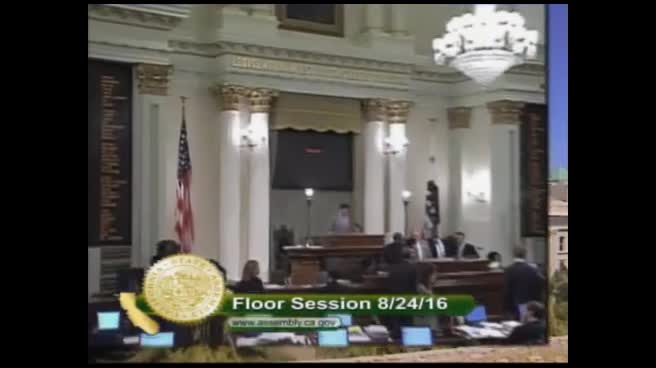 1MIN
Assembly Floor
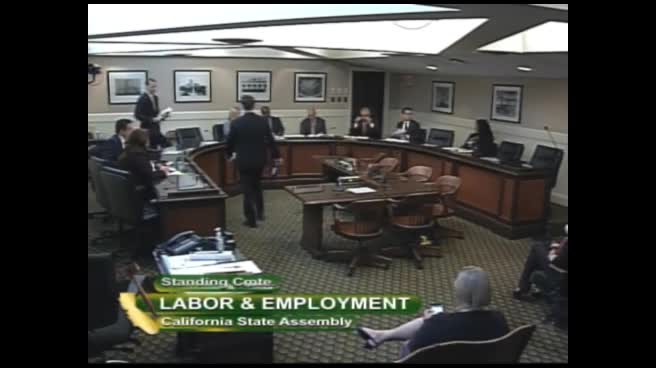 3MIN
Assembly Standing Committee on Labor and Employment
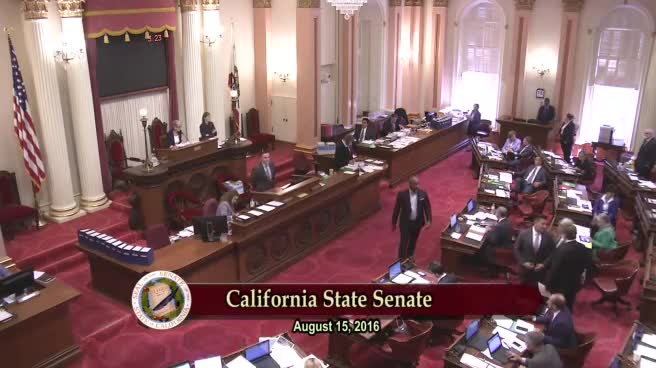 47SEC
Senate Floor
 1MIN
Assembly Floor
Bill Author

Bill Co-Author(s):