AB 1124: Workers’ compensation: prescription medication formulary.
- Session Year: 2015-2016
- House: Assembly
- Latest Version Date: 2015-10-06
Existing law establishes a workers compensation system, administered by the Administrative Director of the Division of Workers Compensation, to compensate an employee for injuries sustained in the course of employment. The administrative director is authorized to adopt, amend, or repeal, after public hearings, any rules and regulations that are reasonably necessary to enforce the state workers compensation provisions, except when that power is specifically reserved to the Workers Compensation Appeals Board. Existing law requires the administrative director to adopt a medical treatment utilization schedule that addresses the frequency, duration, intensity, and appropriateness of all common treatments performed in workers compensation cases.
This bill would require the administrative director to establish a drug formulary, on or before July 1, 2017, as part of the medical treatment utilization schedule, for medications prescribed in the workers compensation system. The bill would require the administrative director to meet and consult with stakeholders, as specified, prior to the adoption of the formulary. The bill would require the administrative director to publish at least 2 interim reports on the Internet Web site of the Division of Workers Compensation describing the status of the creation of the formulary, commencing July 1, 2016, until the formulary is implemented. The bill would require the administrative director to update the formulary at least on a quarterly basis to allow for the provision of all appropriate medications, including medications new to the market. The bill would exempt an order updating the formulary from the Administrative Procedure Act and other provisions, as specified. The bill would require the administrative director to establish an independent pharmacy and therapeutics committee to review and consult with the administrative director in connection with updating the formulary, as specified. The bill would also make conforming changes to related code sections.
Existing law establishes a workers compensation system, administered by the Administrative Director of the Division of Workers Compensation, to compensate an employee for injuries sustained in the course of employment. The administrative director is authorized to adopt, amend, or repeal, after public hearings, any rules and regulations that are reasonably necessary to enforce the state workers compensation provisions, except when that power is specifically reserved to the Workers Compensation Appeals Board. Existing law requires the administrative director to adopt a medical treatment utilization schedule that addresses the frequency, duration, intensity, and appropriateness of all common treatments performed in workers compensation cases.
This bill would require the administrative director to establish a drug formulary, on or before July 1, 2017, as part of the medical treatment utilization schedule, for medications prescribed in the workers compensation system. The bill would require the administrative director to meet and consult with stakeholders, as specified, prior to the adoption of the formulary. The bill would require the administrative director to publish at least 2 interim reports on the Internet Web site of the Division of Workers Compensation describing the status of the creation of the formulary, commencing July 1, 2016, until the formulary is implemented. The bill would require the administrative director to update the formulary at least on a quarterly basis to allow for the provision of all appropriate medications, including medications new to the market. The bill would exempt an order updating the formulary from the Administrative Procedure Act and other provisions, as specified. The bill would require the administrative director to establish an independent pharmacy and therapeutics committee to review and consult with the administrative director in connection with updating the formulary, as specified. The bill would also make conforming changes to related code sections.
Existing law establishes a workers compensation system, administered by the Administrative Director of the Division of Workers Compensation, to compensate an employee for injuries sustained in the course of employment. The administrative director is authorized to adopt, amend, or repeal, after public hearings, any rules and regulations that are reasonably necessary to enforce the state workers compensation provisions, except when that power is specifically reserved to the Workers Compensation Appeals Board. Existing law requires the administrative director to adopt a medical treatment utilization schedule that addresses the frequency, duration, intensity, and appropriateness of all common treatments performed in workers compensation cases.
This bill would require the administrative director to establish a drug formulary, on or before July 1, 2017, as part of the medical treatment utilization schedule, for medications prescribed in the workers compensation system. The bill would require the administrative director to make certain considerations, as specified, in establishing the formulary. The bill would require the administrative director to meet and consult with stakeholders, as specified, prior to the adoption of the formulary. The bill would require the administrative director to publish at least 2 interim reports on the Internet Web site of the Division of Workers Compensation describing the status of the establishment of the formulary, beginning July 1, 2016, until the formulary is effective. implemented. The bill would require the administrative director to update the formulary at least on a quarterly basis to allow for the availability provision of all appropriate medications, including medications newly approved for use. new to the market. The bill would exempt an order updating the formulary from the Administrative Procedure Act and other provisions, as specified. The bill would require the administrative director to establish an independent pharmacy and therapeutics committee to review and consult with the administrative director in connection with updating the formulary, as specified. The bill would also make conforming changes to related code sections.
Existing law establishes a workers compensation system, administered by the Administrative Director of the Division of Workers Compensation, to compensate an employee for injuries sustained in the course of employment. The administrative director is authorized to adopt, amend, or repeal, after public hearings, any rules and regulations that are reasonably necessary to enforce the state workers compensation provisions, except when that power is specifically reserved to the Workers Compensation Appeals Board. Existing law requires the administrative director to adopt a medical treatment utilization schedule that addresses the frequency, duration, intensity, and appropriateness of all common treatments performed in workers compensation cases.
This bill would require the administrative director to establish an outpatient prescription a drug formulary, on or before July 1, 2017, as part of the medical treatment utilization schedule, for medications prescribed in the workers compensation system. The bill would require the administrative director to make certain considerations, as specified, in establishing the formulary. The bill would require the administrative director to meet and consult with stakeholders, as specified, prior to the adoption of the formulary. The bill would require the administrative director to publish at least 2 interim reports on the Internet Web site of the Division of Workers Compensation describing the status of the establishment of the formulary, beginning July 1, 2016, until the formulary is effective. The bill would require the administrative director to update the formulary at least on a quarterly basis to allow for the availability of all appropriate medications, including medications newly approved for use. The bill would exempt an order updating the formulary from the Administrative Procedure Act and other provisions, as specified. The bill would also make conforming changes to related code sections.
Existing law establishes a workers compensation system, administered by the Administrative Director of the Division of Workers Compensation, to compensate an employee for injuries sustained in the course of employment. The administrative director is authorized to adopt, amend, or repeal, after public hearings, any rules and regulations that are reasonably necessary to enforce the state workers compensation provisions, except when that power is specifically reserved to the Workers Compensation Appeals Board. Existing law requires the administrative director to adopt a medical treatment utilization schedule that addresses the frequency, duration, intensity, and appropriateness of all common treatments performed in workers compensation cases.
This bill would require the administrative director to, on or before January 1, 2017, establish a medical evidence-based workers compensation drug formulary for medications prescribed in the workers compensation system, to be effective commencing July 1, 2017. The bill requires the administrative director to revise the formulary to adopt appropriate changes, as specified, and to publish any revisions on the Internet Web site of the Division of Workers Compensation. The bill would require the administrative director to convene a Workers Compensation Formulary Advisory Committee to assist in the development of the formulary, and would require the committee to study and make recommendations, as specified, on the development of a workers compensation formulary in California.
This bill would require the administrative director to establish an outpatient prescription drug formulary, on or before July 1, 2017, as part of the medical treatment utilization schedule, for medications prescribed in the workers compensation system. The bill would require the administrative director to make certain considerations, as specified, in establishing the formulary. The bill would require the administrative director to meet and consult with stakeholders, as specified, prior to the adoption of the formulary. The bill would require the administrative director to publish at least 2 interim reports on the Internet Web site of the Division of Workers Compensation describing the status of the establishment of the formulary, beginning July 1, 2016, until the formulary is effective. The bill would require the administrative director to update the formulary at least on a quarterly basis to allow for the availability of all appropriate medications, including medications newly approved for use. The bill would also make conforming changes to related code sections.
Existing law establishes a workers compensation system, administered by the Administrative Director of the Division of Workers Compensation, to compensate an employee for injuries sustained in the course of employment. The administrative director is authorized to adopt, amend, or repeal, after public hearings, any rules and regulations that are reasonably necessary to enforce the state workers compensation provisions, except when that power is specifically reserved to the Workers Compensation Appeals Board.
This bill would require the administrative director to, on or before January 1, 2017, establish a formulary medical evidence-based workers compensation drug formulary for medications prescribed in the workers compensation system system, to be effective commencing July 1, 2017. The bill requires the administrative director to revise the formulary before its effective date, to adopt appropriate changes, as specified, and to publish any revisions on the Internet Web site of the Division of Workers Compensation. The bill would require the administrative director to convene a Workers Compensation Formulary Advisory Committee to assist in the development of the formulary, and would require the committee to study and make recommendations, as specified, on the development of a workers compensation formulary in California.
Existing law establishes a workers compensation system, administered by the Administrative Director of the Division of Workers Compensation, to compensate an employee for injuries sustained in the course of employment. The administrative director is authorized to adopt, amend, or repeal, after public hearings, any rules and regulations that are reasonably necessary to enforce the state workers compensation provisions, except when that power is specifically reserved to the Workers Compensation Appeals Board.
This bill would require the administrative director to, on or before January 1, 2017, establish a formulary for medications prescribed in the workers compensation system to be effective commencing July 1, 2017. The bill requires the administrative director to revise the formulary before its effective date, as specified, and to publish any revisions on the Internet Web site of the Division of Workers Compensation. The bill would require the administrative director to convene a Workers Compensation Formulary Advisory Committee to assist in the development of the formulary, and would require the committee to study and make recommendations, as specified, on the development of a workers compensation formulary in California.
Existing law establishes a workers compensation system, administered by the Administrative Director of the Division of Workers Compensation, to compensate an employee for injuries sustained in the course of employment. The administrative director is authorized to adopt, amend, or repeal, after public hearings, any rules and regulations that are reasonably necessary to enforce the state workers compensation provisions, except when that power is specifically reserved to the Workers Compensation Appeals Board.
This bill would require the administrative director to, on or before January 1, 2017, establish a formulary for medications prescribed in the workers compensation system to be effective commencing January July 1, 2017. The bill would require the administrative director to convene a Workers Compensation Formulary Advisory Committee to assist in the development of the formulary, and would require the committee to study and make recommendations recommendations, as specified, on the development of a workers compensation formulary in California.
Existing law establishes a workers compensation system, administered by the Administrative Director of the Division of Workers Compensation, to compensate an employee for injuries sustained in the course of employment. The administrative director is authorized to adopt, amend, or repeal, after public hearings, any rules and regulations that are reasonably necessary to enforce the state workers compensation provisions, except where when that power is specifically reserved to the Workers Compensation Appeals Board.
This bill would require the administrative director to, on or before January 1, 2017, establish a formulary for the purposes of prescribing prescription medications. medications prescribed in the workers compensation system to be effective commencing January 1, 2017. The bill would require the administrative director to convene a Workers Compensation Formulary Advisory Committee to assist in the development of the formulary, and would require the committee to study and make recommendations on the development of a workers compensation formulary in California.
Existing law establishes a workers compensation system, administered by the Administrative Director of the Division of Workers Compensation, to compensate an employee for injuries sustained in the course of employment. The administrative director is authorized to adopt, amend, or repeal, after public hearings, any rules and regulations that are reasonably necessary to enforce the state workers compensation provisions, except where that power is specifically reserved to the Workers Compensation Appeals Board.
This bill would require the administrative director to establish a formulary for the purposes of prescribing prescription medications.
It is the intent of the Legislature that the Administrative Director of the Division of Workers Compensation create an evidence-based drug formulary, with the maximum transparency possible, for use in the workers compensation system, and that the formulary include the following in addition to the provisions of this act:
(a)Evidence-based guidelines for access to appropriate medications pursuant to pain management prescription drug therapies.
(b)Guidance regarding how an injured worker may access off-label use of prescription drugs, when evidenced-based and medically necessary.
(c)Use of generic or generic-equivalent drugs in the formulary pursuant to evidence-based practices, with consideration being given to use of brand name medication when its use is cost-effective, medically necessary, and evidence-based.
(d)The drug formulary shall not apply to care provided in an emergency department or inpatient setting.
(e)Guidance on the use of the formulary to further the goal of providing appropriate medications expeditiously while minimizing administrative burden and associated administrative costs.
SEC. 2.Section 4600.1 of the Labor Code is amended to read:4600.1.(a)Subject to subdivision (b), any person or entity that dispenses medicines and medical supplies, as required by Section 4600, shall dispense the generic drug equivalent.
(b)A person or entity is not required to dispense a generic drug equivalent under either of the following circumstances:
(1)When a generic drug equivalent is unavailable.
(2)When the prescribing physician specifically provides in writing that a nongeneric drug must be dispensed.
(c)For purposes of this section, dispense has the same meaning as the definition contained in Section 4024 of the Business and Professions Code.
(d)Nothing in this section shall be construed to preclude a prescribing physician, who is also the dispensing physician, from dispensing a generic drug equivalent.
(e)This section shall only apply to medicines dispensed prior to the operative date of the drug formulary adopted pursuant to Section 5307.27.
SEC. 3.Section 4600.2 of the Labor Code is amended to read:4600.2.(a)Notwithstanding Section 4600, if a self-insured employer, group of self-insured employers, insurer of an employer, or group of insurers contracts with a pharmacy, group of pharmacies, or pharmacy benefit network to provide medicines and medical supplies required by this article to be provided to injured employees, those injured employees that are subject to the contract shall be provided medicines and medical supplies in the manner prescribed in the contract for as long as medicines or medical supplies are reasonably required to cure or relieve the injured employee from the effects of the injury. Medicines provided pursuant to the contract shall be subject to the drug formulary adopted by the administrative director pursuant to Section 5307.27, and such contracts may not limit the availability of medications otherwise prescribed pursuant to the formulary based on whether the pharmacy services are provided within or outside a medical provider network.
(b)Nothing in this section shall affect the ability of employee-selected physicians to continue to prescribe and have the employer provide medicines subject to the drug formulary and medical supplies that the physicians deem reasonably required to cure or relieve the injured employee from the effects of the injury.
(c)Each contract described in subdivision (a) shall comply with standards adopted by the administrative director. In adopting those standards, the administrative director shall seek to reduce pharmaceutical costs and may consult any relevant studies or practices in other states. The standards shall provide for access to a pharmacy within a reasonable geographic distance from an injured employees residence.
SEC. 4.Section 5307.27 of the Labor Code is amended to read:5307.27.(a)The administrative director, in consultation with the Commission on Health and Safety and Workers Compensation, shall adopt, after public hearings, a medical treatment utilization schedule, that shall incorporate the evidence-based, peer-reviewed, nationally recognized standards of care recommended by the commission pursuant to Section 77.5, and that shall address, at a minimum, the frequency, duration, intensity, and appropriateness of all treatment procedures and modalities commonly performed in workers compensation cases.
(b)On or before July 1, 2017, the medical treatment utilization schedule adopted by the administrative director shall include a drug formulary using evidence-based medicine. Nothing in this section shall prohibit the authorization of medications that are not in the formulary when the variance is demonstrated, consistent with subdivision (a) of Section 4604.5.
(c)The drug formulary shall include a phased implementation for workers injured prior to July 1, 2017, in order to ensure injured workers safely transition to medications pursuant to the formulary.
(d)This section shall apply to all prescribers and dispensers of medications serving injured workers under the workers compensation system.
SEC. 5.Section 5307.28 is added to the Labor Code, to read:5307.28.(a) Prior to the adoption of a drug formulary as required by Section 5307.27, the administrative director shall meet and consult regarding the establishment of a formulary with stakeholders, including, but not limited to, employers, insurers, private sector employee representatives, public sector employee representatives, treating physicians actively practicing medicine, pharmacists, pharmacy benefit managers, attorneys who represent applicants, and injured workers.
(b)Commencing July 1, 2016, and concluding with the implementation of the formulary, the administrative director shall publish at least two interim reports on the Internet Web site of the Division of Workers Compensation describing the status of the creation of the formulary.
SEC. 6.Section 5307.29 is added to the Labor Code, to read:5307.29.(a)The administrative director shall make provision for no less than quarterly updates to the drug formulary to allow for the provision of all appropriate medications, including those new to the market.
(b)Changes made to the list of drugs in the drug formulary described in Section 5307.27 shall be made through an order exempt from Sections 5307.3 and 5307.4, and the rulemaking provisions of the Administrative Procedure Act (Chapter 3.5 (commencing with Section 11340) of Part 1 of Division 3 of Title 2 of the Government Code), informing the public of the changes and their effective date. All orders issued pursuant to this subdivision shall be published on the Internet Web site of the Division of Workers Compensation.
(c)The administrative director shall establish an independent pharmacy and therapeutics committee to review and consult with the administrative director on available evidence of the relative safety, efficacy, and effectiveness of drugs within a class of drugs in the updating of an evidence-based drug formulary, as required by Section 5307.27.
(1)The committee shall consist of six members and the Executive Medical Director of the Division of Workers Compensation. The committee shall consist of medical doctors or doctors of osteopathy holding a physician and surgeon license pursuant to Chapter 5 (commencing with Section 2000) of Division 2 of the Business and Professions Code, and pharmacists licensed pursuant to Chapter 9 (commencing with Section 4000) of Division 2 of the Business and Professions Code. A committee member shall have knowledge or expertise in one or more of the following:
(A)Clinically appropriate prescribing of covered drugs.
(B)Clinically appropriate dispensing and monitoring of covered drugs.
(C)Drug use review.
(D)Evidence-based medicine.
(2)Committee members shall not be employed by a pharmaceutical manufacturer, a pharmacy benefits management company, or a company engaged in the development of a pharmaceutical formulary for commercial sale during his or her term, and shall not have been so employed for 12 months prior to his or her appointment.
(3)A committee member shall not have a substantial financial conflict of interest pursuant to standards established by the administrative director. The administrative director may, in his or her sole discretion, disqualify a potential or current member of the committee if the administrative director determines that a substantial conflict of interest exists.
(4)A committee member shall agree to keep all proprietary information confidential to the extent required by existing law.
It is the intent of the Legislature that the Administrative Director of the Division of Workers Compensation create an evidence-based drug formulary, with the maximum transparency possible, for use in the workers compensation system, and that the formulary include the following in addition to the provisions of this act:
(a)Evidence-based guidelines for access to appropriate medications pursuant to pain management prescription drug therapies.
(b)Guidance regarding how an injured worker may access off-label use of prescription drugs, when evidenced-based and medically necessary.
(c)Use of generic or generic-equivalent drugs in the formulary pursuant to evidence-based practices, with consideration being given to use of brand name medication when its use is cost-effective, medically necessary, and evidence-based.
(d)The drug formulary shall not apply to care provided in an emergency department or inpatient setting.
(e)Guidance on the use of the formulary to further the goal of providing appropriate medications expeditiously while minimizing administrative burden and associated administrative costs.
SEC. 2.Section 4600.1 of the Labor Code is amended to read:4600.1.(a)Subject to subdivision (b), any person or entity that dispenses medicines and medical supplies, as required by Section 4600, shall dispense the generic drug equivalent.
(b)A person or entity is not required to dispense a generic drug equivalent under either of the following circumstances:
(1)When a generic drug equivalent is unavailable.
(2)When the prescribing physician specifically provides in writing that a nongeneric drug must be dispensed.
(c)For purposes of this section, dispense has the same meaning as the definition contained in Section 4024 of the Business and Professions Code.
(d)Nothing in this section shall be construed to preclude a prescribing physician, who is also the dispensing physician, from dispensing a generic drug equivalent.
(e)This section shall only apply to medicines dispensed prior to the operative date of the drug formulary adopted pursuant to Section 5307.27.
SEC. 3.Section 4600.2 of the Labor Code is amended to read:4600.2.(a)Notwithstanding Section 4600, if a self-insured employer, group of self-insured employers, insurer of an employer, or group of insurers contracts with a pharmacy, group of pharmacies, or pharmacy benefit network to provide medicines and medical supplies required by this article to be provided to injured employees, those injured employees that are subject to the contract shall be provided medicines and medical supplies in the manner prescribed in the contract for as long as medicines or medical supplies are reasonably required to cure or relieve the injured employee from the effects of the injury. Medicines provided pursuant to the contract shall be subject to the drug formulary adopted by the administrative director pursuant to Section 5307.27, and such contracts may not limit the availability of medications otherwise prescribed pursuant to the formulary based on whether the pharmacy services are provided within or outside a medical provider network.
(b)Nothing in this section shall affect the ability of employee-selected physicians to continue to prescribe and have the employer provide medicines subject to the drug formulary and medical supplies that the physicians deem reasonably required to cure or relieve the injured employee from the effects of the injury.
(c)Each contract described in subdivision (a) shall comply with standards adopted by the administrative director. In adopting those standards, the administrative director shall seek to reduce pharmaceutical costs and may consult any relevant studies or practices in other states. The standards shall provide for access to a pharmacy within a reasonable geographic distance from an injured employees residence.
SEC. 4.Section 5307.27 of the Labor Code is amended to read:5307.27.(a)The administrative director, in consultation with the Commission on Health and Safety and Workers Compensation, shall adopt, after public hearings, a medical treatment utilization schedule, that shall incorporate the evidence-based, peer-reviewed, nationally recognized standards of care recommended by the commission pursuant to Section 77.5, and that shall address, at a minimum, the frequency, duration, intensity, and appropriateness of all treatment procedures and modalities commonly performed in workers compensation cases.
(b)On or before July 1, 2017, the medical treatment utilization schedule adopted by the administrative director shall include a drug formulary using evidence-based medicine. Nothing in this section shall prohibit the authorization of medications that are not in the formulary when the variance is demonstrated, consistent with subdivision (a) of Section 4604.5.
(c)The drug formulary shall include a phased implementation for workers injured prior to July 1, 2017, in order to ensure injured workers safely transition to medications pursuant to the formulary.
(d)This section shall apply to all prescribers and dispensers of medications serving injured workers under the workers compensation system.
SEC. 5.Section 5307.28 is added to the Labor Code, to read:5307.28.(a) Prior to the adoption of a drug formulary as required by Section 5307.27, the administrative director shall meet and consult regarding the establishment of a formulary with stakeholders, including, but not limited to, employers, insurers, private sector employee representatives, public sector employee representatives, treating physicians actively practicing medicine, pharmacists, pharmacy benefit managers, attorneys who represent applicants, and injured workers.
(b)Commencing July 1, 2016, and concluding with the implementation of the formulary, the administrative director shall publish at least two interim reports on the Internet Web site of the Division of Workers Compensation describing the status of the creation of the formulary.
SEC. 6.Section 5307.29 is added to the Labor Code, to read:5307.29.(a)The administrative director shall make provision for no less than quarterly updates to the drug formulary to allow for the provision of all appropriate medications, including those new to the market.
(b)Changes made to the list of drugs in the drug formulary described in Section 5307.27 shall be made through an order exempt from Sections 5307.3 and 5307.4, and the rulemaking provisions of the Administrative Procedure Act (Chapter 3.5 (commencing with Section 11340) of Part 1 of Division 3 of Title 2 of the Government Code), informing the public of the changes and their effective date. All orders issued pursuant to this subdivision shall be published on the Internet Web site of the Division of Workers Compensation.
(c)The administrative director shall establish an independent pharmacy and therapeutics committee to review and consult with the administrative director on available evidence of the relative safety, efficacy, and effectiveness of drugs within a class of drugs in the updating of an evidence-based drug formulary, as required by Section 5307.27.
(1)The committee shall consist of six members and the Executive Medical Director of the Division of Workers Compensation. The committee shall consist of medical doctors or doctors of osteopathy holding a physician and surgeon license pursuant to Chapter 5 (commencing with Section 2000) of Division 2 of the Business and Professions Code, and pharmacists licensed pursuant to Chapter 9 (commencing with Section 4000) of Division 2 of the Business and Professions Code. A committee member shall have knowledge or expertise in one or more of the following:
(A)Clinically appropriate prescribing of covered drugs.
(B)Clinically appropriate dispensing and monitoring of covered drugs.
(C)Drug use review.
(D)Evidence-based medicine.
(2)Committee members shall not be employed by a pharmaceutical manufacturer, a pharmacy benefits management company, or a company engaged in the development of a pharmaceutical formulary for commercial sale during his or her term, and shall not have been so employed for 12 months prior to his or her appointment.
(3)A committee member shall not have a substantial financial conflict of interest pursuant to standards established by the administrative director. The administrative director may, in his or her sole discretion, disqualify a potential or current member of the committee if the administrative director determines that a substantial conflict of interest exists.
(4)A committee member shall agree to keep all proprietary information confidential to the extent required by existing law.
It is the intent of the Legislature that the Administrative Director of the Division of Workers Compensation create an evidence-based drug formulary, with the maximum transparency possible, for use in the workers compensation system. The formulary shall go into effect on or before July 1, 2017, and shall include, in addition to the provisions of this act, at least all of the following: system, and that the formulary include the following in addition to the provisions of this act:
(a)Evidence-based guidelines for access to appropriate medications pursuant to pain management prescription drug therapies.
(b)Guidance regarding the manner in which a physician may present medical evidence to document how an injured workers need for worker may access off-label use of prescription drugs. drugs, when evidenced-based and medically necessary.
(c)Guidance regarding the manner in which utilization review applies to formulary medications and circumstances that may warrant the use of medications outside the established formulary, including, but not limited to, emergent and inpatient care.
(c)Use of generic or generic-equivalent drugs in the formulary pursuant to evidence-based practices, with consideration being given to use of brand name medication when its use is cost-effective, medically necessary, and evidence-based.
(d)The drug formulary shall not apply to care provided in an emergency department or inpatient setting.
(e)Guidance on the use of the formulary to further the goal of providing appropriate medications expeditiously while minimizing administrative burden and associated administrative costs.
SEC. 2.Section 4600.1 of the Labor Code is amended to read:4600.1.(a)Subject to subdivision (b), any person or entity that dispenses medicines and medical supplies, as required by Section 4600, shall dispense the generic drug equivalent.
(b)A person or entity is not required to dispense a generic drug equivalent under either of the following circumstances:
(1)If When a generic drug equivalent is unavailable.
(2)If When the prescribing physician specifically provides in writing that a nongeneric drug must be dispensed.
(c)For purposes of this section, dispense has the same meaning as the definition contained in Section 4024 of the Business and Professions Code.
(d)This section does not Nothing in this section shall be construed to preclude a prescribing physician, who is also the dispensing physician, from dispensing a generic drug equivalent.
(e)This section applies shall only apply to medicines dispensed prior to the effective operative date of the drug formulary adopted pursuant to Section 5307.27.
SEC. 3.Section 4600.2 of the Labor Code is amended to read:4600.2.(a)Notwithstanding Section 4600, if a self-insured employer, group of self-insured employers, insurer of an employer, or group of insurers contracts with a pharmacy, group of pharmacies, or pharmacy benefit network to provide medicines and medical supplies required by this article to be provided to injured employees, those injured employees that are subject to the contract shall be provided medicines and medical supplies in the manner prescribed in the contract for as long as medicines or medical supplies are reasonably required to cure or relieve the injured employee from the effects of the injury. Medicines provided pursuant to the contract shall be subject to the drug formulary adopted by the administrative director pursuant to Section 5307.27, and a contract shall such contracts may not limit the availability of medications otherwise prescribed pursuant to the formulary based on whether the pharmacy services are provided within or outside a medical provider network.
(b)This section does not Nothing in this section shall affect the ability of employee-selected physicians to continue to prescribe and have the employer provide medicines subject to the drug formulary and medical supplies that the physicians deem reasonably required to cure or relieve the injured employee from the effects of the injury.
(c)Each contract described in subdivision (a) shall comply with standards adopted by the administrative director. In adopting those standards, the administrative director shall seek to reduce pharmaceutical costs and may consult any relevant studies or practices in other states. The standards shall provide for access to a pharmacy within a reasonable geographic distance from an injured employees residence.
SEC. 4.Section 5307.27 of the Labor Code is amended to read:5307.27.(a)The administrative director, in consultation with the Commission on Health and Safety and Workers Compensation, shall adopt, after public hearings, a medical treatment utilization schedule, that shall incorporate the evidence-based, peer-reviewed, nationally recognized standards of care recommended by the commission pursuant to Section 77.5, and that shall address, at a minimum, the frequency, duration, intensity, and appropriateness of all treatment procedures and modalities commonly performed in workers compensation cases.
(b)On or before July 1, 2017, the medical treatment utilization schedule adopted by the administrative director shall include a drug formulary using evidence-based medicine. This section does not Nothing in this section shall prohibit the authorization of medications that are not in the formulary when the variance is demonstrated, consistent with subdivision (a) of Section 4604.5.
(c)The drug formulary shall include a phased implementation for workers injured prior to July 1, 2017, in order to ensure injured workers safely transition to medications on pursuant to the formulary.
(d)This section shall apply to all prescribers and dispensers of medications serving injured workers under the workers compensation system.
SEC. 5.Section 5307.28 is added to the Labor Code, to read:5307.28.(a) Prior to the adoption of a drug formulary as required by Section 5307.27, the administrative director shall meet and consult regarding the establishment of a formulary with stakeholders, including, but not limited to, employers, insurers, private sector employee representatives, public sector employee representatives, treating physicians actively practicing medicine, pharmacists, pharmacy benefit managers, attorneys who represent applicants, and injured workers.
(b)The administrative director may include an independent research organization and an ad hoc group of physicians and pharmacists to meet, and consult with, to address proposed updates after the formulary is implemented.
(c)Beginning
(b)Commencing July 1, 2016, and concluding with the effective date implementation of the formulary, the administrative director shall publish at least two interim reports on the Internet Web site of the Division of Workers Compensation describing the status of the establishment creation of the formulary.
SEC. 6.Section 5307.29 is added to the Labor Code, to read:5307.29.The administrative director shall update the outpatient prescription drug formulary at least on a quarterly basis to allow for the availability of all appropriate medications, including medications newly approved for use. Formulary updates shall be made through an order exempt from Sections 5307.3, 5307.4, and the rulemaking provisions of the Administrative Procedure Act (Chapter 3.5 (commencing with Section 11340) of Part 1 of Division 3 of Title 2 of the Government Code), informing the public of changes and their effective date. All orders issued pursuant to this section shall be published on the Internet Web site of the Division of Workers Compensation.
5307.29.(a)The administrative director shall make provision for no less than quarterly updates to the drug formulary to allow for the provision of all appropriate medications, including those new to the market.
(b)Changes made to the list of drugs in the drug formulary described in Section 5307.27 shall be made through an order exempt from Sections 5307.3 and 5307.4, and the rulemaking provisions of the Administrative Procedure Act (Chapter 3.5 (commencing with Section 11340) of Part 1 of Division 3 of Title 2 of the Government Code), informing the public of the changes and their effective date. All orders issued pursuant to this subdivision shall be published on the Internet Web site of the Division of Workers Compensation.
(c)The administrative director shall establish an independent pharmacy and therapeutics committee to review and consult with the administrative director on available evidence of the relative safety, efficacy, and effectiveness of drugs within a class of drugs in the updating of an evidence-based drug formulary, as required by Section 5307.27.
(1)The committee shall consist of six members and the Executive Medical Director of the Division of Workers Compensation. The committee shall consist of medical doctors or doctors of osteopathy holding a physician and surgeon license pursuant to Chapter 5 (commencing with Section 2000) of Division 2 of the Business and Professions Code, and pharmacists licensed pursuant to Chapter 9 (commencing with Section 4000) of Division 2 of the Business and Professions Code. A committee member shall have knowledge or expertise in one or more of the following:
(A)Clinically appropriate prescribing of covered drugs.
(B)Clinically appropriate dispensing and monitoring of covered drugs.
(C)Drug use review.
(D)Evidence-based medicine.
(2)Committee members shall not be employed by a pharmaceutical manufacturer, a pharmacy benefits management company, or a company engaged in the development of a pharmaceutical formulary for commercial sale during his or her term, and shall not have been so employed for 12 months prior to his or her appointment.
(3)A committee member shall not have a substantial financial conflict of interest pursuant to standards established by the administrative director. The administrative director may, in his or her sole discretion, disqualify a potential or current member of the committee if the administrative director determines that a substantial conflict of interest exists.
(4)A committee member shall agree to keep all proprietary information confidential to the extent required by existing law.
It is the intent of the Legislature to establish an outpatient prescription drug formulary for medications prescribed in the workers compensation system, to be effective July 1, 2017. In establishing the formulary, that the Administrative Director of the Division of Workers Compensation shall consider, create an evidence-based drug formulary, with the maximum transparency possible, a medical evidence-based formulary, and, for use in the workers compensation system. The formulary shall go into effect on or before July 1, 2017, and shall include, in addition to the provisions of this act, at least all of the following:
(a)Medical evidence-based Evidence-based guidelines for access to appropriate medication medications pursuant to pain management prescription drug therapies.
(b)Medical evidence-based guidelines for access to off-label prescription drugs when evidence-based and medically necessary.
(b)Guidance regarding the manner in which a physician may present medical evidence to document an injured workers need for off-label use of prescription drugs.
(c)Guidance of regarding the manner in which utilization review, pursuant to Section 4610 of the Labor Code, as applicable to review applies to formulary medications within the established formulary and circumstances that may warrant the use of medications outside the established formulary. formulary, including, but not limited to, emergent and inpatient care.
SEC. 2.Section 4600.1 of the Labor Code is amended to read:4600.1.(a)Subject to subdivision (b), any person or entity that dispenses medicines and medical supplies, as required by Section 4600, shall dispense the generic drug equivalent.
(b)A person or entity is not required to dispense a generic drug equivalent under either of the following circumstances:
(1)If a generic drug equivalent is unavailable.
(2)If the prescribing physician specifically provides in writing that a nongeneric drug must be dispensed.
(c)For purposes of this section, dispense has the same meaning as the definition contained in Section 4024 of the Business and Professions Code.
(d)This section does not preclude a prescribing physician, who is also the dispensing physician, from dispensing a generic drug equivalent.
(e)This section applies only to medicines prescribed or dispensed prior to the effective date of the outpatient prescription drug formulary adopted pursuant to Section 5307.27.
SEC. 3.Section 4600.2 of the Labor Code is amended to read:4600.2.(a)Notwithstanding Section 4600, if a self-insured employer, group of self-insured employers, insurer of an employer, or group of insurers contracts with a pharmacy, group of pharmacies, or pharmacy benefit network to provide medicines and medical supplies required by this article to be provided to injured employees, those injured employees that are subject to the contract shall be provided medicines and medical supplies in the manner prescribed in the contract for as long as medicines or medical supplies are reasonably required to cure or relieve the injured employee from the effects of the injury. Medicines provided pursuant to the contract are shall be subject to the outpatient prescription drug formulary adopted by the administrative director pursuant to Section 5307.27, and a contract shall not limit the availability of medications otherwise indicated pursuant to the formulary. prescribed pursuant to the formulary based on whether the pharmacy services are provided within or outside a medical provider network.
(b)This section does not affect the ability of employee-selected physicians to continue to prescribe and have the employer provide medicines subject to the drug formulary and medical supplies that the physicians deem reasonably required to cure or relieve the injured employee from the effects of the injury.
(b)
(c)Each contract described in subdivision (a) shall comply with standards adopted by the administrative director. In adopting those standards, the administrative director shall seek to reduce pharmaceutical costs and may consult any relevant studies or practices in other states. The standards shall provide for access to a pharmacy within a reasonable geographic distance from an injured employees residence.
(c)An employer or insurer that has established a medical provider network pursuant to Section 4616 is in compliance with this section if pharmacy network services are included within its medical provider network plan filed with the administrative director pursuant to paragraph (1) of subdivision (b) of Section 4616.
SEC. 4.Section 5307.27 of the Labor Code is amended to read:5307.27.(a)The administrative director, in consultation with the Commission on Health and Safety and Workers Compensation, shall adopt, after public hearings, a medical treatment utilization schedule, that shall incorporate the evidence-based, peer-reviewed, nationally recognized standards of care recommended by the commission pursuant to Section 77.5, and that shall address, at a minimum, the frequency, duration, intensity, and appropriateness of all treatment procedures and modalities commonly performed in workers compensation cases.
(b)On or before July 1, 2017, the medical treatment utilization schedule adopted by the administrative director shall include an outpatient prescription drug formulary. a drug formulary using evidence-based medicine. This section does not prohibit the authorization of medications that are not in the formulary when the variance is demonstrated, in accordance consistent with subdivision (a) of Section 4604.5, to cure or relieve the injured worker from the effects of his or her injury. 4604.5.
(c)The outpatient prescription drug formulary shall include a phased implementation for workers injured prior to July 1, 2017, in order to ensure injured workers safely transition to medications on the formulary. This section does not prohibit medically necessary tapering or weaning of medications to treat workers injured on or after July 1, 2017.
(d)On or before July 1, 2017, the medical treatment utilization schedule shall include guidelines for the development of a detoxification plan for an injured worker receiving potentially addictive prescription drug treatment or drug treatment if a detoxification plan is necessary for patient safety.
SEC. 5.Section 5307.28 is added to the Labor Code, to read:5307.28.(a) Prior to the adoption of an outpatient prescription a drug formulary as required by Section 5307.27, the administrative director shall meet and consult regarding the establishment of a formulary with stakeholders, including, but not limited to, employers, insurers, private sector employee representatives, public sector employee representatives, treating physicians actively practicing medicine, pharmacists, pharmacy benefit managers, attorneys who represent applicants, and injured workers.
(b)The administrative director may meet and consult with include an independent research organization and an ad hoc group of physicians and pharmacists to meet, and consult with, to address proposed updates after the formulary is implemented.
(c)Beginning July 1, 2016, and concluding with the effective date of the formulary, the administrative director shall publish at least two interim reports on the Internet Web site of the Division of Workers Compensation describing the status of the establishment of the formulary.
SEC. 6.Section 5307.29 is added to the Labor Code, to read:5307.29.The administrative director shall update the outpatient prescription drug formulary at least on a quarterly basis to allow for the availability of all appropriate medications, including medications newly approved for use. Formulary updates shall be made through an order exempt from Sections 5307.3, 5307.4, and the rulemaking provisions of the Administrative Procedure Act (Chapter 3.5 (commencing with Section 11340) of Part 1 of Division 3 of Title 2 of the Government Code), informing the public of changes and their effective date. All orders issued pursuant to this section shall be published on the Internet Web site of the Division of Workers Compensation.
(a)On or before January 1, 2017, the administrative director shall establish a medical evidence-based workers compensation drug formulary for medications prescribed in the workers compensation system, to be effective commencing July 1, 2017.
(b)The formulary shall be revised to adopt appropriate changes no later than 60 days after the administrative director receives recommendations from the Workers Compensation Formulary Advisory Committee and determines that evidence-based revisions are warranted. The administrative director shall determine the effective date of the changes, and shall issue an order, exempt from Sections 5307.3 and 5307.4 and the rulemaking provisions of the Administrative Procedure Act (Chapter 3.5 (commencing with Section 11340) of Part 1 of Division 3 of Title 2 of the Government Code), informing the public of the changes and their effective date. All orders issued pursuant to this subdivision shall be published on the Internet Web site of the Division of Workers Compensation.
SEC. 2.Section 5307.29 is added to the Labor Code, to read:5307.29.(a)The administrative director shall convene a Workers Compensation Formulary Advisory Committee to assist in the development of a formulary pursuant to Section 5307.28. The committee shall be composed of members appointed by the director and shall include, but not be limited to, health care providers, insurers, employers, pharmacists, attorneys who represent applicants, an appointee of the Speaker of the Assembly, and an appointee of the Senate Rules Committee.
(b)The committee shall study and make recommendations on the development of a workers compensation formulary in California.
(c)The committee shall convene on a quarterly basis and provide its recommendations to the administrative director on or before December 31, 2016.
(d)The recommendations developed pursuant to subdivision (c) shall ensure all of the following:
(1)Injured worker access to appropriate opioids, including those with abuse-deterrent properties, other pain management prescriptions, and off-label prescription drugs, when medically necessary.
(2)A gradual detoxification plan for a worker receiving potentially addictive prescription drug treatment.
(3)Timely formulary updates that minimize delays involved in adding new drugs to the formulary.
SECTION 1.It is the intent of the Legislature to establish an outpatient prescription drug formulary for medications prescribed in the workers compensation system, to be effective July 1, 2017. In establishing the formulary, the Administrative Director of the Division of Workers Compensation shall consider, with the maximum transparency possible, a medical evidence-based formulary, and, in addition to the provisions of this act, at least all of the following:
(a)Medical evidence-based guidelines for access to appropriate medication pursuant to pain management prescription drug therapies.
(b)Medical evidence-based guidelines for access to off-label prescription drugs when evidence-based and medically necessary.
(c)Guidance of utilization review, pursuant to Section 4610 of the Labor Code, as applicable to medications within the established formulary and circumstances that may warrant use of medications outside the established formulary.
SEC. 2.Section 4600.1 of the Labor Code is amended to read:4600.1.(a)Subject to subdivision (b), any person or entity that dispenses medicines and medical supplies, as required by Section 4600, shall dispense the generic drug equivalent.
(b)A person or entity shall is not be required to dispense a generic drug equivalent under either of the following circumstances:
(1)WhenIf a generic drug equivalent is unavailable.
(2)WhenIf the prescribing physician specifically provides in writing that a nongeneric drug must be dispensed.
(c)For purposes of this section, dispense has the same meaning as the definition contained in Section 4024 of the Business and Professions Code.
(d)Nothing in this This section shall be construed to does not preclude a prescribing physician, who is also the dispensing physician, from dispensing a generic drug equivalent.
(e)This section applies only to medicines prescribed or dispensed prior to the effective date of the outpatient prescription drug formulary adopted pursuant to Section 5307.27.
SEC. 3.Section 4600.2 of the Labor Code is amended to read:4600.2.(a)Notwithstanding Section 4600, when if a self-insured employer, group of self-insured employers, insurer of an employer, or group of insurers contracts with a pharmacy, group of pharmacies, or pharmacy benefit network to provide medicines and medical supplies required by this article to be provided to injured employees, those injured employees that are subject to the contract shall be provided medicines and medical supplies in the manner prescribed in the contract for as long as medicines or medical supplies are reasonably required to cure or relieve the injured employee from the effects of the injury. Medicines provided pursuant to the contract are subject to the outpatient prescription drug formulary adopted pursuant to Section 5307.27, and a contract shall not limit the availability of medications otherwise indicated pursuant to the formulary.
(b)Nothing in this section shall affect the ability of employee-selected physicians to continue to prescribe and have the employer provide medicines and medical supplies that the physicians deem reasonably required to cure or relieve the injured employee from the effects of the injury.
(c)
(b)Each contract described in subdivision (a) shall comply with standards adopted by the administrative director. In adopting those standards, the administrative director shall seek to reduce pharmaceutical costs and may consult any relevant studies or practices in other states. The standards shall provide for access to a pharmacy within a reasonable geographic distance from an injured employees residence.
(d)
(c)An employer or insurer that has established a medical provider network pursuant to Section 4616 is in compliance with this section if pharmacy network services are included within its medical provider network plan filed with the administrative director pursuant to paragraph (1) of subdivision (b) of Section 4616.
SEC. 4.Section 5307.27 of the Labor Code is amended to read:5307.27.On or before December 1, 2004, the (a)The administrative director, in consultation with the Commission on Health and Safety and Workers Compensation, shall adopt, after public hearings, a medical treatment utilization schedule, that shall incorporate the evidence-based, peer-reviewed, nationally recognized standards of care recommended by the commission pursuant to Section 77.5, and that shall address, at a minimum, the frequency, duration, intensity, and appropriateness of all treatment procedures and modalities commonly performed in workers compensation cases.
(b)On or before July 1, 2017, the medical treatment utilization schedule adopted by the administrative director shall include an outpatient prescription drug formulary. This section does not prohibit the authorization of medications that are not in the formulary when the variance is demonstrated, in accordance with subdivision (a) of Section 4604.5, to cure or relieve the injured worker from the effects of his or her injury.
(c)The outpatient prescription drug formulary shall include a phased implementation for workers injured prior to July 1, 2017, in order to ensure injured workers safely transition to medications on the formulary. This section does not prohibit medically necessary tapering or weaning of medications to treat workers injured on or after July 1, 2017.
(d)On or before July 1, 2017, the medical treatment utilization schedule shall include guidelines for the development of a detoxification plan for an injured worker receiving potentially addictive prescription drug treatment or drug treatment if a detoxification plan is necessary for patient safety.
SEC. 5.Section 5307.28 is added to the Labor Code, to read:5307.28.(a) Prior to the adoption of an outpatient prescription drug formulary as required by Section 5307.27, the administrative director shall meet and consult regarding the establishment of a formulary with stakeholders, including, but not limited to, employers, insurers, private sector employee representatives, public sector employee representatives, treating physicians actively practicing medicine, pharmacists, pharmacy benefit managers, attorneys who represent applicants, and injured workers.
(b)The administrative director may meet and consult with an ad hoc group of physicians and pharmacists to address proposed updates after the formulary is implemented.
(c)Beginning July 1, 2016, and concluding with the effective date of the formulary, the administrative director shall publish at least two interim reports on the Internet Web site of the Division of Workers Compensation describing the status of the establishment of the formulary.
SEC. 6.Section 5307.29 is added to the Labor Code, to read:5307.29.The administrative director shall update the outpatient prescription drug formulary at least on a quarterly basis to allow for the availability of all appropriate medications, including medications newly approved for use.
(a)On or before January 1, 2017, the administrative director shall establish a medical evidence-based workers compensation drug formulary for medications prescribed in the workers compensation system system, to be effective commencing July 1, 2017.
(b)The formulary shall be revised to adopt appropriate changes no later than 60 days after the administrative director receives recommendations from the Workers Compensation Formulary Advisory Committee and determines that evidence-based revisions are warranted. The administrative director shall determine the effective date of the changes, and shall issue an order, exempt from Sections 5307.3 and 5307.4, 5307.4 and the rulemaking provisions of the Administrative Procedure Act (Chapter 3.5 (commencing with Section 11340) of Part 1 of Division 3 of Title 2 of the Government Code), informing the public of the changes and their effective date. All orders issued pursuant to this subdivision shall be published on the Internet Web site of the Division of Workers Compensation.
SEC. 2.Section 5307.29 is added to the Labor Code, to read:5307.29.(a)The administrative director shall convene a Workers Compensation Formulary Advisory Committee to assist in the development of a formulary pursuant to Section 5307.28. The committee shall be composed of members appointed by the director and shall include, but not be limited to, health care providers, insurers, employers, pharmacists, attorneys who represent applicants, an appointee of the Speaker of the Assembly, and an appointee of the Senate Rules Committee.
(b)The committee shall study and make recommendations on the development of a workers compensation formulary in California.
(c)The committee shall convene on a quarterly basis and provide its recommendations to the administrative director on or before December 31, 2016.
(d)The formulary established pursuant to Section 5307.28 recommendations developed pursuant to subdivision (c) shall ensure all of the following:
(1)Injured worker access to appropriate opioids, including those with abuse-deterrent properties, other pain management prescriptions, and off-label prescription drugs, when medically necessary.
(2)A gradual detoxification plan for a worker receiving potentially addictive prescription drug treatment.
(3)Timely formulary updates that minimize delays involved in adding new drugs to the formulary.
(4)Injured worker access to nonformulary medication when the only formulary medication available for a workers covered condition is one that the worker cannot tolerate or that is not clinically effective for the worker, or when a provider determines the medication needed by the worker should include abuse deterrent properties. Exceptions to formulary medications as noted in this section shall not be required absent a trial period and issuance of a medical finding by the injured workers provider outlining the medical basis for the conclusion that the worker cannot tolerate the formulary medication.
(a)On or before January 1, 2017, the administrative director shall establish a formulary for medications prescribed in the workers compensation system to be effective commencing July 1, 2017.
(b)The formulary shall be revised to adopt appropriate changes no later than 60 days after the administrative director receives recommendations from the Workers Compensation Formulary Advisory Committee and determines that evidence-based revisions are warranted. The administrative director shall determine the effective date of the changes, and shall issue an order, exempt from Sections 5307.3 and 5307.4, and the rulemaking provisions of the Administrative Procedure Act (Chapter 3.5 (commencing with Section 11340) of Part 1 of Division 3 of Title 2 of the Government Code), informing the public of the changes and their effective date. All orders issued pursuant to this subdivision shall be published on the Internet Web site of the Division of Workers Compensation.
SEC. 2.Section 5307.29 is added to the Labor Code, to read:5307.29.(a)The administrative director shall convene a Workers Compensation Formulary Advisory Committee to assist in the development of a formulary pursuant to Section 5307.28. The committee shall be composed of members appointed by the director and shall include, but not be limited to, health care providers, insurers, employers, pharmacists, and injured worker representatives. attorneys who represent applicants, an appointee of the Speaker of the Assembly, and an appointee of the Senate Rules Committee.
(b)The committee shall study and make recommendations on the development of a workers compensation formulary in California.
(c)The committee shall convene on a quarterly basis and provide its recommendations to the administrative director on or before December 31, 2016.
(d)The recommendations developed formulary established pursuant to subdivision (c) Section 5307.28 shall ensure all of the following:
(1)Injured worker access to appropriate opioids, other pain management prescriptions, and off-label prescription drugs, when medically necessary.
(2)A gradual detoxification plan for a worker receiving potentially addictive prescription drug treatment.
(3)Timely formulary updates that minimize delays involved in adding new drugs to the formulary.
(4)Injured worker access to nonformulary medication when the only formulary medication available for a workers covered condition is one that the worker cannot tolerate or that is not clinically effective for the worker, or when a provider determines the medication needed by the worker should include abuse deterrent properties. Exceptions to formulary medications as noted in this section shall not be required absent a trial period and issuance of a medical finding by the injured workers provider outlining the medical basis for the conclusion that the worker cannot tolerate the formulary medication.
On or before January 1, 2017, the administrative director shall establish a formulary for medications prescribed in the workers compensation system to be effective commencing January July 1, 2017.
SEC. 2.Section 5307.29 is added to the Labor Code, to read:5307.29.(a)The administrative director shall convene a Workers Compensation Formulary Advisory Committee to assist in the development of a formulary pursuant to Section 5307.28. The committee shall be composed of members appointed by the director and shall include, but not be limited to, health care providers, insurers, employers, pharmacists, and injured worker representatives.
(b)The committee shall study and make recommendations on the development of a workers compensation formulary in California.
(c)The committee shall convene on a quarterly basis and provide its recommendations to the administrative director on or before December 31, 2016.
(d)The recommendations developed pursuant to subdivision (c) shall ensure all of the following:
(1)Injured worker access to appropriate opioids, other pain management prescriptions, and off-label prescription drugs, when medically necessary.
(2)A gradual detoxification plan for a worker receiving potentially addictive prescription drug treatment.
(3)Timely formulary updates that minimize delays involved in adding new drugs to the formulary.
On or before January 1, 2017, the administrative director shall establish a formulary for medications prescribed in the workers compensation system to be effective commencing January 1, 2017.
SEC. 2.Section 5307.29 is added to the Labor Code, to read:5307.29.(a)The administrative director shall convene a Workers Compensation Formulary Advisory Committee to assist in the development of a formulary pursuant to Section 5307.28. The committee shall be composed of members appointed by the director and shall include, but not be limited to, health care providers, insurers, employers, and injured worker representatives.
(b)The committee shall study and make recommendations on the development of a workers compensation formulary in California.
(c)The committee shall convene on a quarterly basis and provide its recommendations to the administrative director on or before December 31, 2016.
SECTION 1.Section 5307.28 is added to the Labor Code, to read:5307.28.The administrative director shall establish a formulary for the purposes of prescribing prescription medications.
The administrative director shall establish a formulary for the purposes of prescribing prescription medications.
|
Date
|
Status
|
|---|---|
| Oct 6, 2015 | Chaptered by Secretary of State - Chapter 525, Statutes of 2015. |
| Oct 6, 2015 | Approved by the Governor. |
| Sep 25, 2015 | Enrolled and presented to the Governor at 2 p.m. |
| Sep 12, 2015 | Senate amendments concurred in. To Engrossing and Enrolling. (Ayes 79. Noes 0. Page 3212.). |
| Sep 12, 2015 | Assembly Rule 63 suspended. (Page 3211.) |
| Sep 12, 2015 | Senate amendments concurred in. To Engrossing and Enrolling. (Ayes 79. Noes 0.). |
| Sep 12, 2015 | Senate amendments concurred in. To Engrossing and Enrolling. |
| Sep 12, 2015 | Assembly Rule 63 suspended. |
| Sep 11, 2015 | Read third time. Passed. Ordered to the Assembly. (Ayes 28. Noes 4. Page 2774.). |
| Sep 11, 2015 | In Assembly. Concurrence in Senate amendments pending. |
| Sep 11, 2015 | Read third time. Passed. Ordered to the Assembly. |
| Sep 8, 2015 | Read second time. Ordered to third reading. |
| Sep 4, 2015 | Read third time and amended. Ordered to second reading. |
| Aug 31, 2015 | Read second time and amended. Ordered to third reading. |
| Aug 27, 2015 | From committee: Amend, and do pass as amended. (Ayes 5. Noes 1.) (August 27). |
| Aug 17, 2015 | In committee: Referred to APPR. suspense file. |
| Aug 17, 2015 | From committee chair, with author's amendments: Amend, and re-refer to committee. Read second time, amended, and re-referred to Com. on APPR. |
| Jul 14, 2015 | Read second time and amended. Re-referred to Com. on APPR. |
| Jul 13, 2015 | From committee: Amend, and do pass as amended and re-refer to Com. on APPR. (Ayes 4. Noes 1.) (July 13). |
| Jul 8, 2015 | From committee chair, with author's amendments: Amend, and re-refer to committee. Read second time, amended, and re-referred to Com. on L. & I.R. |
| Jun 18, 2015 | Referred to Com. on L. & I.R. |
| Jun 3, 2015 | In Senate. Read first time. To Com. on RLS. for assignment. |
| Jun 3, 2015 | Read third time. Passed. Ordered to the Senate. (Ayes 79. Noes 0. Page 1875.) |
| Jun 3, 2015 | Read third time. Passed. Ordered to the Senate. |
| Jun 2, 2015 | Read second time. Ordered to third reading. |
| Jun 1, 2015 | Read second time and amended. Ordered returned to second reading. |
| May 28, 2015 | From committee: Amend, and do pass as amended. (Ayes 12. Noes 0.) (May 28). |
| Apr 29, 2015 | In committee: Set, first hearing. Referred to APPR. suspense file. |
| Apr 22, 2015 | From committee: Do pass and re-refer to Com. on APPR. (Ayes 12. Noes 0.) (April 22). Re-referred to Com. on APPR. |
| Apr 15, 2015 | Re-referred to Com. on INS. |
| Apr 14, 2015 | From committee chair, with author's amendments: Amend, and re-refer to Com. on INS. Read second time and amended. |
| Mar 19, 2015 | Referred to Com. on INS. |
| Mar 2, 2015 | Read first time. |
| Mar 1, 2015 | From printer. May be heard in committee March 31. |
| Feb 27, 2015 | Introduced. To print. |
|
Date
|
Description
|
Location
|
Votes
|
|
|---|---|---|---|---|
| Sep 12, 2015 | AB 1124 PEREA Concurrence in Senate Amendments | Assembly Floor |
Passed |
|
| Sep 11, 2015 | Assembly 3rd Reading AB1124 Perea By Mendoza | Senate Floor |
Passed |
|
| Aug 27, 2015 | Do pass as amended | Senate Standing Committee on Appropriations |
Passed |
|
| Aug 17, 2015 | Placed on suspense file | Senate Standing Committee on Appropriations |
Passed |
|
| Jul 13, 2015 | Do pass as amended, but first amend, and re-refer to the Committee on [Appropriations] | Senate Standing Committee on Labor and Industrial Relations |
Passed |
|
| Jun 3, 2015 | AB 1124 PEREA Assembly Third Reading | Assembly Floor |
Passed |
|
| May 28, 2015 | Do pass as amended. | Assembly Standing Committee on Appropriations |
Passed |
|
| Apr 22, 2015 | Do pass and be re-referred to the Committee on [Appropriations] | Assembly Standing Committee on Insurance |
Passed |
This list shows positions taken on this bill by organizations on the date displayed, which is linked to the original source.
Positions by individuals are not included.
AB 1124
Page 5
(Without Reference to File)
CONCURRENCE IN SENATE AMENDMENTS
AB 1124
(Perea)
As Amended September 4, 2015
Majority vote
ASSEMBLY: |
79-0 |
(June 3, 2015) |
SENATE: |
|
(September 11, 2015) |
(vote not available)
Original Committee Reference: INS.
SUMMARY: Requires the Administrative Director of the Division of Workers Compensation (administrative director) to adopt a prescription drug formulary for workers compensation benefits by July 1, 2017.
The Senate amendments:
Declare legislative intent that the formulary adopted by the administrative director include the following:
Guidance for access to pain medications.
Guidance for the off-label use of prescription drugs.
Use of generic medications.
Brand name medications when those medications are cost-effective.
Exemptions for medication provided in a hospital or emergency room.
Guidance on the efficient use of the formulary.
Require that the formulary be phased in for existing patients.
Require the administrative director to consult with stakeholders prior to adopting a formulary.
Require the administrative director to update the formulary on a quarterly basis.
Exempt changes to the formulary from the rulemaking provisions of the Administrative Procedure Act.
Require the administrative director to establish a pharmacy and therapeutics committee (committee) and consult with the committee on formulary updates.
Specify the composition of the committee and establishes conflict of interest and confidentiality requirements for committee members.
EXISTING LAW:
Requires employers to provide medical treatment to an injured worker that is reasonably required to cure or relieve an injury that occurs on the job.
Requires the Administrative Director to adopt a medical treatment utilization schedule (MTUS) that addresses the frequency, duration, intensity, and appropriateness of all treatment procedures and modalities commonly performed in workers compensation cases.
Provides that the MTUS is presumptively correct on the extent and scope of treatment for workers' compensation patients. This presumption is rebuttable by proving with a preponderance of the evidence that a treatment is reasonably required to cure or relieve the injured worker.
Requires pharmacies to dispense generic drug equivalents for workers' compensation patients unless the prescriber expressly prohibits it.
Requires the employer to establish a utilization review process that is to be used when the employer seeks to modify, delay, or deny a request for treatment.
Requires that disputed utilization review determinations be resolved by independent medical review.
FISCAL EFFECT: According to the Senate Appropriations Committee, Department of Industrial Relations estimates that, under the August 17th version of the bill, it would incur annual costs in the range of $1 million to $1.1 million (special funds) to implement its provisions. As amended, the bill would likely have a similar fiscal impact.
COMMENTS:
Purpose. According to the author, this bill gives the Administrative Director clear authority to establish a formulary. An effective formulary will control rising prescription drug costs in California's workers' compensation system, limit the over-prescribing of highly-addictive opioids, and ensure injured workers get the necessary treatment needed to get back to work.
Formularies. Drug formularies have proven to be very effective at managing the cost of prescription drugs. Health plans have been using formularies in California for decades and they are commonly accepted as a useful cost control mechanism. They control costs by limiting the utilization of high priced drugs and reducing the price of drugs. Formularies are usually developed by companies known as pharmaceutical benefits managers (PBMs) who design formularies and manage prescription drug benefits for a contracting health plan. At the most basic level a formulary is a list of drugs that a health plan or insurer agrees to cover. However, formularies are not simply arbitrary limits on drug use. Formularies must be broad enough to provide drug treatment options when they are available, and formulary decisions are guided substantially by the scientific evidence regarding individual drugs. However, in most cases there are multiple drugs available to treat a given condition and formularies are constructed to drive treatment choices to the most cost-effective option.
Formularies use a number of strategies to control costs driven by utilization including:
Quantity Restrictions – formularies commonly prohibit dispensing a greater quantity of the drug than is typically necessary. Antibiotics and opioids are examples of drug categories where there have been historical patterns of overprescribing and abuse that can be addressed by quantity restrictions.
Refill Restrictions – formularies commonly will not allow a prescription to be refilled until the period of time that the initial prescription was expected to last has elapsed.
Use of Generics – formularies commonly will not include a name brand drug if there is a generic version of that drug available. Generic drugs are chemically identical to a name brand drug but typically are available at dramatically lower prices.
Category Restrictions – formularies can also exclude some categories of drugs entirely, generally because there are drugs in other categories that are more effective.
Prior Authorization – formularies also commonly impose prior authorization requirements on certain drugs because of the high cost of the drug or because some drugs have common non-therapeutic uses. Drugs requiring prior authorization are covered by the formulary, but only after the prescriber has established a medical need for the drug. Prior authorization is commonly used for expensive biotech drugs prescribed for serious conditions and for drugs that have common cosmetic or recreational uses.
Step-therapy – formularies commonly require that a prescriber begin therapy with the lowest cost drug in a category and demonstrate the drug failed to remediate the problem before prescribing higher cost drugs in the category. In many categories there are less expensive (generally older) but comparable drugs available and step-therapy requirements push treatment to these drugs but allow for a more expensive (generally newer) drug if the cheaper drug doesn't work for the individual patient.
Co-Payments – formularies outside of workers compensation almost always include a patient "co-payment" for each prescription. In the mainstream world of health plans, a tiered structure of co-payments is commonly used where the lowest co-payment is for generic drugs, a higher co-payment is for the preferred branded drug, and non-preferred branded drugs are subject to a still higher co-payment. Typically these co-payment structures are steeply slanted to create financial incentives for patients to choose a generic or lower cost branded drugs over higher cost alternatives. This structure is also commonly referred to as an "open" formulary.
Formularies are constructed to drive treatment to the most cost-effective options for treating the group of patients as a whole. However, formularies do generally include provisions for prescribing outside the formulary after the prescriber has established that the formulary restrictions are not appropriate for an individual patient.
In addition to using these strategies designed to control the utilization of drugs, PBMs also use formulary construction to reduce the price of drugs. By aggregating the purchasing power of multiple health plans, a PBM can negotiate discounts from competing drug manufacturers. By making a particular drug in a category the preferred drug on the formulary, the PBM can increase the sales volume of that particular drug and many manufacturers are prepared to offer favorable pricing to secure the added volume of sales. The combination of utilization controls and the exercise of market power to reduce pricing has been effective and made formularies a pillar of managed care.
Why A Formulary? Drug costs have been growing significantly in the workers compensation system in recent years (especially the cost of opioids which is discussed in greater detail below) and formularies have a proven track record of reducing drug costs in other states. As noted above, formularies work both by both restricting utilization of higher cost drugs and reducing the cost of drugs and present a logical alternative to restrain the increasing cost of drugs in the workers compensation system. This would be particularly true for workers' compensation as there is no financial incentive for prescribers or patients in the system to control drug utilization or to have cost factor into prescribing decisions. The absence of copayments in the workers' compensation system also means that the tiered copayment structure (what is also referred to as an open formulary) will be ineffective in the workers' compensation system. However, a closed formulary does not rely on the financial incentive of a copayment to influence drug utilization and would be required for any formulary to be effective in workers' compensation.
CWCI Study. The California Workers Compensation Institute (a highly regarded industry research organization) published a study in November of 2014 that evaluated the potential impact of adopting a workers compensation formulary in California. The study found that applying the workers compensation formularies adopted in Texas and Washington could reduce California workers' compensation payments for non-formulary drugs between $124 and $420 million per year. Both Texas and Washington adopted formularies in response to sustained, double-digit growth in their workers' compensation prescription drug costs.
The Texas formulary was phased in beginning in September 2011, with initial implementation for new injuries and subsequent expansion to legacy claims. It had an immediate impact. In the first year, non-formulary drug payments fell by 82% (from 17% to 4% of total drug expenditures) and the number of prescriptions fell 74%.
Washington implemented its formulary in 2004, and it also had a significant effect on the utilization and cost of workers' compensation prescription drugs. A 2011 Workers' Compensation Research Institute (WCRI) study found average prescription payments per claim in Washington were significantly lower than the median cost in 17 other states. According to the WCRI, Washington has lower drug prices for several reasons, including: a pharmacy fee schedule; mandatory generic substitution; and a formulary, which mandated substitution of generic alternatives when no generic equivalents are available. The WCRI study also looked at prescription drug payments from California’s workers compensation system and found that the California exceeded the average prescription payment per claim of the 17 other study states by 80%.
Opioids. CWCI has also produced a significant volume of research documenting the rapid escalation in the use (and associated cost) of opioids in workers' compensation. Opioids include powerful painkillers such as morphine, fentanyl, oxycodone, codeine, and hydrocodone. Opioid use has been rising nationwide and there is a well-documented problem with abuse of and addiction to these prescription painkillers, and workers' compensation patients are not excluded from this phenomenon. According to a recent CWCI report,
The findings show that in the first half of 2013, Schedule II opioids, which include powerful narcotics such as oxycontin, fentanyl and morphine, have grown to 7.3 percent of California workers’ compensation prescriptions – nearly 6 times the proportion noted in 2002. Over the same period, payments for these drugs have increased from 4.7 percent to 19.6 percent of California workers' compensation prescription dollars. The data also suggest that the use of Schedule II drugs in workers’ compensation may have stabilized near this record level, as over the most recent 3-1/2 years these drugs have accounted for between 6.5 and 7.3 percent of all prescriptions dispensed to injured workers, while over the most recent 4-1/2 years Schedule II drug payments have represented about 1 out of every 5 dollars paid for workers' compensation prescriptions in California. The findings also show that since 2002, less powerful Schedule III opioids – primarily Vicodin or other forms of hydrocodone compounded with a non-steroidal drugs such as acetaminophen – have accounted for a much more consistent share of workers’ compensation prescription drugs, generally representing around 20 percent of all prescriptions dispensed to injured workers and 10 to 11 percent of the overall drug spend.
A workers' compensation formulary would likely have a powerful impact on the spiraling use of opioids. The utilization control mechanisms such as quantity and refill restrictions, prior authorization requirements, and step therapy requirements are all likely to be very effective at weeding out cases with excessive opioid use and potential abuse. Pain medication is always going to be present at a meaningful level in occupational medicine given the nature of occupational injuries, but there is compelling evidence that there are far more workers on long term, high-dose opioid therapy than would is consistent with sound medical practice. In this area a formulary is likely to both reduce costs and improve the quality of care received by workers suffering from chronic pain.
Analysis Prepared by: Paul Riches / INS. / (916) 319-2086 FN: 0002270
AB 1124
Page 8
|
Office of Senate Floor Analyses (916) 651-1520 Fax: (916) 327-4478 |
THIRD READING
Bill No: AB 1124
Amended: 9/4/15 in Senate
SENATE LABOR & IND. REL. COMMITTEE: 4-1, 7/13/15
AYES: Mendoza, Stone, Jackson, Mitchell
NOES: Leno
SENATE APPROPRIATIONS COMMITTEE: 5-1, 8/27/15
AYES: Lara, Beall, Hill, Leyva, Mendoza
NOES: Bates
NO VOTE RECORDED: Nielsen
ASSEMBLY FLOOR: 79-0, 6/3/15 - See last page for vote
SUBJECT: Workers’ compensation: prescription medication formulary
DIGEST: This bill requires that the Division of Workers’ Compensation (DWC) create a workers’ compensation-specific formulary that governs the prescribing of medicines for injured workers.
Senate Floor Amendments of 9/4/15 provide a process for updating the workers’ compensation formulary, clarify the intent of the Legislature, and make technical and explicatory revisions.
Existing law:
Establishes a workers’ compensation system that provides benefits to an employee who suffers from an injury or illness that arises out of and in the course of employment, irrespective of fault. This system requires all employers to secure payment of benefits by either securing the consent of the Department of Industrial Relations (DIR) to self-insure or by securing insurance against liability from an insurance company duly authorized by the state.
Provides that medical, surgical, chiropractic, acupuncture, and hospital treatment, including nursing, medicines, medical and surgical supplies, crutches, and apparatuses, including orthotic and prosthetic devices and services, that is reasonably required to cure or relieve the injured worker from the effects of his or her injury shall be provided by the employer. (Labor Code §4600)
Requires that pharmacists and prescribing physicians must dispense generic drug equivalent, unless a generic drug equivalent is unavailable or the prescribing physician documents specifically why a non-generic drug should be dispensed. (Labor Code §4600.1)
Provides that employers, insurers, or groups of employers or insurers may contract with a pharmacy, group of pharmacies, or pharmacy benefit network to provide medicines and medical supplies to injured workers. Such a contract must comply with the standards set by the Administrative Director, who is the head of the Division of Workers’ Compensation (DWC). (Labor Code §4600.2)
Requires that all employers create a utilization review process, which is a process that prospectively, retrospectively, or concurrently review and approve, modify, delay, or deny, based in whole or in part on medical necessity to cure and relieve, treatment recommendations by physicians, prior to, retrospectively, or concurrent with the provision of medical treatment services. (Labor Code §4610)
Sets, currently, the maximum reimbursement for pharmacy drugs and services, and also requires that furnishing and dispensing of pharmacy drugs and services are subject to the Official Medical Fee Schedule (OMFS). (Labor Code §5307.1)
Provides that the Administrative Director must adopt, after public hearings, a medical treatment utilization schedule, that shall incorporate the evidence-based, peer-reviewed, nationally recognized standards of care and must address, at a minimum, the frequency, duration, intensity, and appropriateness of all treatment procedures and modalities commonly performed in workers’ compensation cases. (Labor Code §5307.27)
This bill:
Requires the Administrative Director (AD) establishes a formulary for medications prescribed in the workers’ compensation system to be effective commencing July 1, 2017. The formulary must allow for variances if a preponderance of evidence suggests such a variance is medically necessary.
Allows the formulary to include a phased implementation for workers injured on or after July 1, 2017 to allow those workers to safely transition to medications on the formulary.
Requires the DWC to meet and consult with workers’ compensation stakeholders prior to the establishment of a formulary. The stakeholders include, but are not limited to, employers, insurers, private sector employee representatives, public sector employee representatives, treating physicians actively practicing medicine, pharmacists, pharmacy benefit managers, attorneys who represent applicants, and injured workers.
Creates an independent Pharmacy & Therapeutics (P&T) Committee to review and consult with the AD on available evidence of the relative safety, efficacy, and effectiveness of drugs or a class of drugs in updating to the formulary.
Requires that the P&T Committee consist of six members and the Executive Medical Director of the Division of Workers’ Compensation (DWC). All members must either be a medical doctor, as defined, or a pharmacist, as defined.
Requires that the members of the P&T Committee be experts in one of the following areas:
Clinically appropriate prescribing of covered drugs;
Clinically appropriate dispensing and monitoring of covered drugs;
Drug use review; or
Evidence-based medicine.
Requires the creation of a conflict of interest code for P&T Committee members and requires that committee members keep all proprietary information confidential.
Requires that the formulary be updated at least quarterly, and provides an exemption from the APA process for changes to the formulary drug list.
Requires the DWC to publish at least two interim reports on the status of the establishment of the formulary.
Requires that the dispensing of non-generic medicines and medicines provided pursuant to a contract with a Pharmacy Benefit Manager be subject to the formulary.
Declares the intent of the Legislature that the creation of the formulary be transparent, provide guidance on off-label dispensing, generic drugs, and pain management, as well as guidance on the use of the formulary to minimize administrative burdens and costs.
Comments
What is a Formulary?
A formulary is generally defined in medical literature as a list of medications and related policies which is continually updated by experts, such as pharmacists and medical providers, and represents the most up-to-date knowledge of medical treatment and appropriate use of pharmaceutical products. Formularies are the norm in medical care delivery systems: Medicare and Medi-Cal have formularies, as do group health providers and single-payer healthcare systems internationally.
Formularies are used to place limits on the use of medications in order to avoid over-use, ensure that the use of medication matches the latest in medical literature, and promote optimal outcomes. Equally important, formularies allow medical providers and pharmacists to know what medicines will and will not be paid for, and for what conditions medicines are allowed, reducing friction and making it easy to provide medical services. Formularies, therefore, hold the promise of both improving healthcare outcomes and reducing burdens for medical providers to provide care.
California, however, does not have a formulary for its workers’ compensation system. Not surprisingly, therefore, pharmaceuticals are significant point of friction in workers’ compensation. For example, nearly half of all (42%) Independent Medical Review (IMR) medical disputes involve pharmaceuticals, dwarfing all other categories. These disputes delay medical treatment for injured workers, and are also time-consuming and expensive for both medical providers and payors.
Additionally, there are concerns with how pharmaceuticals are being utilized in the workers’ compensation system. For example, between 2002 and 2013, the California Workers’ Compensation Institute (CWCI) found that the prescribing of Schedule II Drugs, which include oxycontin, fentanyl and morphine, have grown to 7.3 percent of California workers’ compensation prescriptions and 19.6 percent of California workers’ compensation prescription dollars – a nearly 600% and 400% growth, respectively. As Schedule II pharmaceuticals like fentanyl can be more powerful than heroin, this growth is somewhat worrying for the long-term outcomes of California’s injured workers, and raises concerns of dependence-causing drugs being improperly prescribed.
As was noted above, a formulary has the potential to solve both issues. First, a formulary provides a list of pharmaceutical products and when they can be used. This ensures that medicines are prescribed for medical, and not financial, purposes, and it ensures that the medicines are appropriately used. Second, when a medical provider utilizes the formulary, the payor knows why a particular medicine was used and why. This cuts down on medical disputes, ensuring that medical providers are paid and injured workers get the medicines they need.
Formularies in Texas and Washington:
Recent interest in a formulary for California’s workers’ compensation system intensified after a 2014 study by the California Workers Compensation Institute (CWCI), which projected savings between $124 to $420 million from California adopting a formulary similar to Texas or Washington. Both Texas and Washington adopted formularies in response to sustained, double-digit growth in their workers’ compensation prescription drug costs, and experienced significant declines in the use of opioids. However, both states have very different formularies.
Washington first launched its formulary in 2004 as a part of a larger initiative to control drug purchasing costs across state agencies. At its core, Washington has a short list of preferred drugs that can be prescribed or dispensed by a medical provider. If a medical provider wishes to prescribe something that is not on the list, he or she needs to seek prior authorization from the State of Washington. However, Washington also allows for physicians to write non-preferred drug class prescriptions if the physician has signed up to allow for drug substitution when medically appropriate.
Washington updates and maintains its formulary through the Pharmacy and Therapeutics Committee, which is composed entirely of physicians and pharmacists. The Committee looks at the safety, efficacy, and effectiveness of each drug and then makes a recommendation to the State of Washington. Public comment is also possible for interested stakeholders.
Texas, on the other hand, implemented its formulary in 2011. After looking at several formularies in other states, Texas decided to include all FDA approved drugs in its formulary. However, the guidelines for prescribing drugs were developed by Official Disability Guidelines (ODG), a private company that also developed Texas’s medical treatment guidelines. ODG’s drug guidelines classify each drug with either an ‘N’ or ‘Y’, with ‘N’ drugs requiring prior authorization. Updates to the formulary are automatically performed by ODG.
While both states developed very different formularies, they share several common traits. First, the legislatures in both states delegated the creation of the formulary to their respective workers’ compensation administrative entities. Second, the final decisions for what drugs are pre-approved or not are decided by committees made up of pharmacists and medical providers. Third, the enacting statutes were largely conceptual and left the specifics to the regulatory process.
FISCAL EFFECT: Appropriation: No Fiscal Com.: Yes Local: No
According to the Senate Appropriations Committee:
DIR estimates that, under the August 17th version of the bill, it would incur annual costs in the range of $1 million to $1.1 million (special funds) to implement its provisions. As amended, the bill would likely have a similar fiscal impact.
These costs would likely be ultimately offset by savings in the workers’ compensation system. The extent of the savings is unknown, but one report indicates that related payments could be reduced in the range of $124 million to $420 million annually. While most of these savings would be realized by the private market, the State (as an employer) would achieve an unknown portion.
American Insurance Association
Association of California Insurance Companies
California Association of Federal Firearms Licensees
California Association of Joint Powers Authorities
California Chamber of Commerce
California Coalition on Workers’ Compensation
California Grocers Association
California Labor Federation
California Manufacturers and Technology Association
California Professional Association of Specialty Contractors
California Special Districts Association
California State Association of Counties
Comp Pharma
Helios
Liberty Mutual
Pacific Insurance
Small Business California
U.S. Health Works
Western Electrical Contractors Association Inc.
Zenith Insurance
Californian Applicants’ Attorney Association
ARGUMENTS IN SUPPORT: Proponents note that California has some of the highest workers’ compensation costs in the country and argue that much of this is due to frictional costs related to the prescribing of prescription drugs. Proponents note the recent CWCI study which projects significant savings in the creation of a formulary, and argue that such savings could bring relief to employers and reduce burdens on medical providers. Proponents believe that AB 1124 would create an evidence-based formulary that would ensure that injured workers receive the drugs they need, reduce disputes, speed up treatment, and combat the inappropriate prescribing of opioids and other dangerous drugs.
ARGUMENTS IN OPPOSITION: The California Applicants’ Attorneys Association (CAAA) is opposed unless amended to AB 1124. Specifically, CAAA argues that AB 1124 should include a provision that limits the use of utilization review of drugs on the formulary. CAAA argues that, to the degree that a drug formulary will reduce access to certain prescriptions and limit employee medical treatment options, it is only reasonable that the employee should not be subject to unnecessary delays in approving prescription treatments. As such, CAAA urges that AB 1124 be amended to include limits on the use of utilization review when an injured worker is prescribed a drug from the approved formulary by a medical provider network doctor.
ASSEMBLY FLOOR: 79-0, 6/3/15
AYES: Achadjian, Alejo, Travis Allen, Baker, Bigelow, Bloom, Bonilla, Bonta, Brough, Brown, Burke, Calderon, Campos, Chang, Chau, Chávez, Chiu, Chu, Cooley, Cooper, Dababneh, Dahle, Daly, Dodd, Eggman, Frazier, Beth Gaines, Gallagher, Cristina Garcia, Eduardo Garcia, Gatto, Gipson, Gomez, Gonzalez, Gordon, Gray, Grove, Hadley, Harper, Roger Hernández, Holden, Irwin, Jones, Jones-Sawyer, Kim, Lackey, Levine, Linder, Lopez, Low, Maienschein, Mathis, Mayes, McCarty, Medina, Melendez, Mullin, Nazarian, Obernolte, O'Donnell, Olsen, Patterson, Perea, Quirk, Rendon, Ridley-Thomas, Rodriguez, Salas, Santiago, Steinorth, Mark Stone, Ting, Wagner, Waldron, Weber, Wilk, Williams, Wood, Atkins
NO VOTE RECORDED: Thurmond
Prepared by: Gideon L. Baum / L. & I.R. / (916) 651-1556
9/9/15 16:29:23
**** END ****
AB 1124
Page 8
|
Office of Senate Floor Analyses (916) 651-1520 Fax: (916) 327-4478 |
THIRD READING
Bill No: AB 1124
Amended: 9/4/15 in Senate
SENATE LABOR & IND. REL. COMMITTEE: 4-1, 7/13/15
AYES: Mendoza, Stone, Jackson, Mitchell
NOES: Leno
SENATE APPROPRIATIONS COMMITTEE: 5-1, 8/27/15
AYES: Lara, Beall, Hill, Leyva, Mendoza
NOES: Bates
NO VOTE RECORDED: Nielsen
ASSEMBLY FLOOR: 79-0, 6/3/15 - See last page for vote
SUBJECT: Workers’ compensation: prescription medication formulary
DIGEST: This bill requires that the Division of Workers’ Compensation (DWC) create a workers’ compensation-specific formulary that governs the prescribing of medicines for injured workers.
Senate Floor Amendments of 9/4/15 provide a process for updating the workers’ compensation formulary, clarify the intent of the Legislature, and make technical and explicatory revisions.
Existing law:
Establishes a workers’ compensation system that provides benefits to an employee who suffers from an injury or illness that arises out of and in the course of employment, irrespective of fault. This system requires all employers to secure payment of benefits by either securing the consent of the Department of Industrial Relations (DIR) to self-insure or by securing insurance against liability from an insurance company duly authorized by the state.
Provides that medical, surgical, chiropractic, acupuncture, and hospital treatment, including nursing, medicines, medical and surgical supplies, crutches, and apparatuses, including orthotic and prosthetic devices and services, that is reasonably required to cure or relieve the injured worker from the effects of his or her injury shall be provided by the employer. (Labor Code §4600)
Requires that pharmacists and prescribing physicians must dispense generic drug equivalent, unless a generic drug equivalent is unavailable or the prescribing physician documents specifically why a non-generic drug should be dispensed. (Labor Code §4600.1)
Provides that employers, insurers, or groups of employers or insurers may contract with a pharmacy, group of pharmacies, or pharmacy benefit network to provide medicines and medical supplies to injured workers. Such a contract must comply with the standards set by the Administrative Director, who is the head of the Division of Workers’ Compensation (DWC). (Labor Code §4600.2)
Requires that all employers create a utilization review process, which is a process that prospectively, retrospectively, or concurrently review and approve, modify, delay, or deny, based in whole or in part on medical necessity to cure and relieve, treatment recommendations by physicians, prior to, retrospectively, or concurrent with the provision of medical treatment services. (Labor Code §4610)
Sets, currently, the maximum reimbursement for pharmacy drugs and services, and also requires that furnishing and dispensing of pharmacy drugs and services are subject to the Official Medical Fee Schedule (OMFS). (Labor Code §5307.1)
Provides that the Administrative Director must adopt, after public hearings, a medical treatment utilization schedule, that shall incorporate the evidence-based, peer-reviewed, nationally recognized standards of care and must address, at a minimum, the frequency, duration, intensity, and appropriateness of all treatment procedures and modalities commonly performed in workers’ compensation cases. (Labor Code §5307.27)
This bill:
Requires the Administrative Director (AD) establishes a formulary for medications prescribed in the workers’ compensation system to be effective commencing July 1, 2017. The formulary must allow for variances if a preponderance of evidence suggests such a variance is medically necessary.
Allows the formulary to include a phased implementation for workers injured on or after July 1, 2017 to allow those workers to safely transition to medications on the formulary.
Requires the DWC to meet and consult with workers’ compensation stakeholders prior to the establishment of a formulary. The stakeholders include, but are not limited to, employers, insurers, private sector employee representatives, public sector employee representatives, treating physicians actively practicing medicine, pharmacists, pharmacy benefit managers, attorneys who represent applicants, and injured workers.
Creates an independent Pharmacy & Therapeutics (P&T) Committee to review and consult with the AD on available evidence of the relative safety, efficacy, and effectiveness of drugs or a class of drugs in updating to the formulary.
Requires that the P&T Committee consist of six members and the Executive Medical Director of the Division of Workers’ Compensation (DWC). All members must either be a medical doctor, as defined, or a pharmacist, as defined.
Requires that the members of the P&T Committee be experts in one of the following areas:
Clinically appropriate prescribing of covered drugs;
Clinically appropriate dispensing and monitoring of covered drugs;
Drug use review; or
Evidence-based medicine.
Requires the creation of a conflict of interest code for P&T Committee members and requires that committee members keep all proprietary information confidential.
Requires that the formulary be updated at least quarterly, and provides an exemption from the APA process for changes to the formulary drug list.
Requires the DWC to publish at least two interim reports on the status of the establishment of the formulary.
Requires that the dispensing of non-generic medicines and medicines provided pursuant to a contract with a Pharmacy Benefit Manager be subject to the formulary.
Declares the intent of the Legislature that the creation of the formulary be transparent, provide guidance on off-label dispensing, generic drugs, and pain management, as well as guidance on the use of the formulary to minimize administrative burdens and costs.
Comments
What is a Formulary?
A formulary is generally defined in medical literature as a list of medications and related policies which is continually updated by experts, such as pharmacists and medical providers, and represents the most up-to-date knowledge of medical treatment and appropriate use of pharmaceutical products. Formularies are the norm in medical care delivery systems: Medicare and Medi-Cal have formularies, as do group health providers and single-payer healthcare systems internationally.
Formularies are used to place limits on the use of medications in order to avoid over-use, ensure that the use of medication matches the latest in medical literature, and promote optimal outcomes. Equally important, formularies allow medical providers and pharmacists to know what medicines will and will not be paid for, and for what conditions medicines are allowed, reducing friction and making it easy to provide medical services. Formularies, therefore, hold the promise of both improving healthcare outcomes and reducing burdens for medical providers to provide care.
California, however, does not have a formulary for its workers’ compensation system. Not surprisingly, therefore, pharmaceuticals are significant point of friction in workers’ compensation. For example, nearly half of all (42%) Independent Medical Review (IMR) medical disputes involve pharmaceuticals, dwarfing all other categories. These disputes delay medical treatment for injured workers, and are also time-consuming and expensive for both medical providers and payors.
Additionally, there are concerns with how pharmaceuticals are being utilized in the workers’ compensation system. For example, between 2002 and 2013, the California Workers’ Compensation Institute (CWCI) found that the prescribing of Schedule II Drugs, which include oxycontin, fentanyl and morphine, have grown to 7.3 percent of California workers’ compensation prescriptions and 19.6 percent of California workers’ compensation prescription dollars – a nearly 600% and 400% growth, respectively. As Schedule II pharmaceuticals like fentanyl can be more powerful than heroin, this growth is somewhat worrying for the long-term outcomes of California’s injured workers, and raises concerns of dependence-causing drugs being improperly prescribed.
As was noted above, a formulary has the potential to solve both issues. First, a formulary provides a list of pharmaceutical products and when they can be used. This ensures that medicines are prescribed for medical, and not financial, purposes, and it ensures that the medicines are appropriately used. Second, when a medical provider utilizes the formulary, the payor knows why a particular medicine was used and why. This cuts down on medical disputes, ensuring that medical providers are paid and injured workers get the medicines they need.
Formularies in Texas and Washington:
Recent interest in a formulary for California’s workers’ compensation system intensified after a 2014 study by the California Workers Compensation Institute (CWCI), which projected savings between $124 to $420 million from California adopting a formulary similar to Texas or Washington. Both Texas and Washington adopted formularies in response to sustained, double-digit growth in their workers’ compensation prescription drug costs, and experienced significant declines in the use of opioids. However, both states have very different formularies.
Washington first launched its formulary in 2004 as a part of a larger initiative to control drug purchasing costs across state agencies. At its core, Washington has a short list of preferred drugs that can be prescribed or dispensed by a medical provider. If a medical provider wishes to prescribe something that is not on the list, he or she needs to seek prior authorization from the State of Washington. However, Washington also allows for physicians to write non-preferred drug class prescriptions if the physician has signed up to allow for drug substitution when medically appropriate.
Washington updates and maintains its formulary through the Pharmacy and Therapeutics Committee, which is composed entirely of physicians and pharmacists. The Committee looks at the safety, efficacy, and effectiveness of each drug and then makes a recommendation to the State of Washington. Public comment is also possible for interested stakeholders.
Texas, on the other hand, implemented its formulary in 2011. After looking at several formularies in other states, Texas decided to include all FDA approved drugs in its formulary. However, the guidelines for prescribing drugs were developed by Official Disability Guidelines (ODG), a private company that also developed Texas’s medical treatment guidelines. ODG’s drug guidelines classify each drug with either an ‘N’ or ‘Y’, with ‘N’ drugs requiring prior authorization. Updates to the formulary are automatically performed by ODG.
While both states developed very different formularies, they share several common traits. First, the legislatures in both states delegated the creation of the formulary to their respective workers’ compensation administrative entities. Second, the final decisions for what drugs are pre-approved or not are decided by committees made up of pharmacists and medical providers. Third, the enacting statutes were largely conceptual and left the specifics to the regulatory process.
FISCAL EFFECT: Appropriation: No Fiscal Com.: Yes Local: No
According to the Senate Appropriations Committee:
DIR estimates that, under the August 17th version of the bill, it would incur annual costs in the range of $1 million to $1.1 million (special funds) to implement its provisions. As amended, the bill would likely have a similar fiscal impact.
These costs would likely be ultimately offset by savings in the workers’ compensation system. The extent of the savings is unknown, but one report indicates that related payments could be reduced in the range of $124 million to $420 million annually. While most of these savings would be realized by the private market, the State (as an employer) would achieve an unknown portion.
American Insurance Association
Association of California Insurance Companies
California Chamber of Commerce
California Coalition on Workers’ Compensation
California Labor Federation
California Manufacturers and Technology Association
Comp Pharma
Helios
Pacific Insurance
Small Business California
Zenith Insurance
Californian Applicants’ Attorney Association
ARGUMENTS IN SUPPORT: Proponents note that California has some of the highest workers’ compensation costs in the country and argue that much of this is due to frictional costs related to the prescribing of prescription drugs. Proponents note the recent CWCI study which projects significant savings in the creation of a formulary, and argue that such savings could bring relief to employers and reduce burdens on medical providers. Proponents believe that AB 1124 would create an evidence-based formulary that would ensure that injured workers receive the drugs they need, reduce disputes, speed up treatment, and combat the inappropriate prescribing of opioids and other dangerous drugs.
ARGUMENTS IN OPPOSITION: The California Applicants’ Attorneys Association (CAAA) is opposed unless amended to AB 1124. Specifically, CAAA argues that AB 1124 should include a provision that limits the use of utilization review of drugs on the formulary. CAAA argues that, to the degree that a drug formulary will reduce access to certain prescriptions and limit employee medical treatment options, it is only reasonable that the employee should not be subject to unnecessary delays in approving prescription treatments. As such, CAAA urges that AB 1124 be amended to include limits on the use of utilization review when an injured worker is prescribed a drug from the approved formulary by a medical provider network doctor.
ASSEMBLY FLOOR: 79-0, 6/3/15
AYES: Achadjian, Alejo, Travis Allen, Baker, Bigelow, Bloom, Bonilla, Bonta, Brough, Brown, Burke, Calderon, Campos, Chang, Chau, Chávez, Chiu, Chu, Cooley, Cooper, Dababneh, Dahle, Daly, Dodd, Eggman, Frazier, Beth Gaines, Gallagher, Cristina Garcia, Eduardo Garcia, Gatto, Gipson, Gomez, Gonzalez, Gordon, Gray, Grove, Hadley, Harper, Roger Hernández, Holden, Irwin, Jones, Jones-Sawyer, Kim, Lackey, Levine, Linder, Lopez, Low, Maienschein, Mathis, Mayes, McCarty, Medina, Melendez, Mullin, Nazarian, Obernolte, O'Donnell, Olsen, Patterson, Perea, Quirk, Rendon, Ridley-Thomas, Rodriguez, Salas, Santiago, Steinorth, Mark Stone, Ting, Wagner, Waldron, Weber, Wilk, Williams, Wood, Atkins
NO VOTE RECORDED: Thurmond
Prepared by: Gideon L. Baum / L. & I.R. / (916) 651-1556
9/8/15 15:43:54
**** END ****
AB 1124
Page 7
|
Office of Senate Floor Analyses (916) 651-1520 Fax: (916) 327-4478 |
THIRD READING
Bill No: AB 1124
Amended: 8/31/15 in Senate
SENATE LABOR & IND. REL. COMMITTEE: 4-1, 7/13/15
AYES: Mendoza, Stone, Jackson, Mitchell
NOES: Leno
SENATE APPROPRIATIONS COMMITTEE: 5-1, 8/27/15
AYES: Lara, Beall, Hill, Leyva, Mendoza
NOES: Bates
NO VOTE RECORDED: Nielsen
ASSEMBLY FLOOR: 79-0, 6/3/15 - See last page for vote
SUBJECT: Workers’ compensation: prescription medication formulary
DIGEST: This bill requires that the Division of Workers’ Compensation (DWC) create a workers’ compensation-specific formulary that governs the prescribing of medicines for injured workers.
Existing law:
Establishes a workers’ compensation system that provides benefits to an employee who suffers from an injury or illness that arises out of and in the course of employment, irrespective of fault. This system requires all employers to secure payment of benefits by either securing the consent of the Department of Industrial Relations (DIR) to self-insure or by securing insurance against liability from an insurance company duly authorized by the state.
Provides that medical, surgical, chiropractic, acupuncture, and hospital treatment, including nursing, medicines, medical and surgical supplies, crutches, and apparatuses, including orthotic and prosthetic devices and services, that is reasonably required to cure or relieve the injured worker from the effects of his or her injury shall be provided by the employer. (Labor Code §4600)
Requires that pharmacists and prescribing physicians must dispense generic drug equivalent, unless a generic drug equivalent is unavailable or the prescribing physician documents specifically why a non-generic drug should be dispensed. (Labor Code §4600.1)
Provides that employers, insurers, or groups of employers or insurers may contract with a pharmacy, group of pharmacies, or pharmacy benefit network to provide medicines and medical supplies to injured workers. Such a contract must comply with the standards set by the Administrative Director, who is the head of the Division of Workers’ Compensation (DWC). (Labor Code §4600.2)
Requires that all employers create a utilization review process, which is a process that prospectively, retrospectively, or concurrently review and approve, modify, delay, or deny, based in whole or in part on medical necessity to cure and relieve, treatment recommendations by physicians, prior to, retrospectively, or concurrent with the provision of medical treatment services. (Labor Code §4610)
Sets the maximum reimbursement for pharmacy drugs and services, and also requires that furnishing and dispensing of pharmacy drugs and services are subject to the Official Medical Fee Schedule (OMFS). (Labor Code §5307.1)
Provides that the Administrative Director must adopt, after public hearings, a medical treatment utilization schedule, that shall incorporate the evidence-based, peer-reviewed, nationally recognized standards of care and must address, at a minimum, the frequency, duration, intensity, and appropriateness of all treatment procedures and modalities commonly performed in workers’ compensation cases. (Labor Code §5307.27)
This bill:
Requires the Administrative Director (AD) establishes a formulary for medications prescribed in the workers’ compensation system to be effective commencing July 1, 2017. The formulary must allow for variances if a preponderance of evidence suggests such a variance is medically necessary.
Allows the formulary to include a phased implementation for workers injured on or after July 1, 2017 to allow those workers to safely transition to medications on the formulary.
Requires the DWC to meet and consult with workers’ compensation stakeholders prior to the establishment of a formulary. The stakeholders include, but are not limited to, employers, insurers, private sector employee representatives, public sector employee representatives, treating physicians actively practicing medicine, pharmacists, pharmacy benefit managers, attorneys who represent applicants, and injured workers.
Requires that the formulary be updated at least quarterly, and allows the DWC meet and consult with an ad hoc group of physicians and pharmacists prior to updating the formulary.
Requires the DWC to publish at least two interim reports on the status of the establishment of the formulary.
Requires that the dispensing of non-generic medicines and medicines provided pursuant to a contract with a Pharmacy Benefit Manager be subject to the formulary.
Declares the intent of the Legislature that the creation of the formulary be transparent, provide guidance on off-label dispensing and pain management, as well as guidance on the applicability of utilization review.
Comments
What is a Formulary? A formulary is generally defined in medical literature as a list of medications and related policies which is continually updated by experts, such as pharmacists and medical providers, and represents the most up-to-date knowledge of medical treatment and appropriate use of pharmaceutical products. Formularies are the norm in medical care delivery systems: Medicare and Medi-Cal have formularies, as do group health providers and single-payer healthcare systems internationally.
Formularies are used to place limits on the use of medications in order to avoid over-use, ensure that the use of medication matches the latest in medical literature, and promote optimal outcomes. Equally important, formularies allow medical providers and pharmacists to know what medicines will and will not be paid for, and for what conditions medicines are allowed, reducing friction and making it easy to provide medical services. Formularies, therefore, hold the promise of both improving healthcare outcomes and reducing burdens for medical providers to provide care.
California, however, does not have a formulary for its workers’ compensation system. Not surprisingly, therefore, pharmaceuticals are significant point of friction in workers’ compensation. For example, nearly half of all (42%) Independent Medical Review (IMR) medical disputes involve pharmaceuticals, dwarfing all other categories. These disputes delay medical treatment for injured workers, and are also time-consuming and expensive for both medical providers and payors.
Additionally, there are concerns with how pharmaceuticals are being utilized in the workers’ compensation system. For example, between 2002 and 2013, the California Workers’ Compensation Institute (CWCI) found that the prescribing of Schedule II Drugs, which include oxycontin, fentanyl and morphine, have grown to 7.3 percent of California workers’ compensation prescriptions and 19.6 percent of California workers’ compensation prescription dollars – a nearly 600% and 400% growth, respectively. As Schedule II pharmaceuticals like fentanyl can be more powerful than heroin, this growth is somewhat worrying for the long-term outcomes of California’s injured workers, and raises concerns of dependence-causing drugs being improperly prescribed.
As was noted above, a formulary has the potential to solve both issues. First, a formulary provides a list of pharmaceutical products and when they can be used. This ensures that medicines are prescribed for medical, and not financial, purposes, and it ensures that the medicines are appropriately used. Second, when a medical provider utilizes the formulary, the payor knows why a particular medicine was used and why. This cuts down on medical disputes, ensuring that medical providers are paid and injured workers get the medicines they need.
Formularies in Texas and Washington: Recent interest in a formulary for California’s workers’ compensation system intensified after a 2014 study by the California Workers Compensation Institute (CWCI), which projected savings between $124 to $420 million from California adopting a formulary similar to Texas or Washington. Both Texas and Washington adopted formularies in response to sustained, double-digit growth in their workers’ compensation prescription drug costs, and experienced significant declines in the use of opioids. However, both states have very different formularies.
Washington first launched its formulary in 2004 as a part of a larger initiative to control drug purchasing costs across state agencies. At its core, Washington has a short list of preferred drugs that can be prescribed or dispensed by a medical provider. If a medical provider wishes to prescribe something that is not on the list, he or she needs to seek prior authorization from the State of Washington. However, Washington also allows for physicians to write non-preferred drug class prescriptions if the physician has signed up to allow for drug substitution when medically appropriate.
Washington updates and maintains its formulary through the Pharmacy and Therapeutics Committee, which is composed entirely of physicians and pharmacists. The Committee looks at the safety, efficacy, and effectiveness of each drug and then makes a recommendation to the State of Washington. Public comment is also possible for interested stakeholders.
Texas, on the other hand, implemented its formulary in 2011. After looking at several formularies in other states, Texas decided to include all FDA approved drugs in its formulary. However, the guidelines for prescribing drugs were developed by Official Disability Guidelines (ODG), a private company that also developed Texas’s medical treatment guidelines. ODG’s drug guidelines classify each drug with either an ‘N’ or ‘Y’, with ‘N’ drugs requiring prior authorization. Updates to the formulary are automatically performed by ODG.
While both states developed very different formularies, they share several common traits. First, the legislatures in both states delegated the creation of the formulary to their respective workers’ compensation administrative entities. Second, the final decisions for what drugs are pre-approved or not are decided by committees made up of pharmacists and medical providers. Third, the enacting statutes were largely conceptual and left the specifics to the regulatory process.
FISCAL EFFECT: Appropriation: No Fiscal Com.: Yes Local: No
According to the Senate Appropriations Committee:
DIR estimates that, under the August 17th version of the bill, it would incur annual costs in the range of $1 million to $1.1 million (special funds) to implement its provisions. As amended August 31st, the bill would likely have a similar fiscal impact.
These costs would likely be ultimately offset by savings in the workers’ compensation system. The extent of the savings is unknown, but one report indicates that related payments could be reduced in the range of $124 million to $420 million annually. While most of these savings would be realized by the private market, the State (as an employer) would achieve an unknown portion.
Association of California Insurance Companies
California Labor Federation
Small Business California
Zenith Insurance
OPPOSITION: (Verified 8/28/15)
Californian Applicants’ Attorney Association
ARGUMENTS IN SUPPORT: Proponents note that California has some of the highest workers’ compensation costs in the country and argue that much of this is due to frictional costs related to the prescribing of prescription drugs. Proponents note the recent CWCI study which projects significant savings in the creation of a formulary, and argue that such savings could bring relief to employers and reduce burdens on medical providers. Proponents believe that AB 1124 would create an evidence-based formulary that would ensure that injured workers receive the drugs they need, reduce disputes, speed up treatment, and combat the inappropriate prescribing of opioids and other dangerous drugs.
ARGUMENTS IN OPPOSITION: The California Applicants’ Attorneys Association (CAAA) is opposed unless amended to AB 1124. Specifically, CAAA argues that AB 1124 should include a provision that limits the use of utilization review of drugs on the formulary. CAAA argues that, to the degree that a drug formulary will reduce access to certain prescriptions and limit employee medical treatment options, it is only reasonable that the employee should not be subject to unnecessary delays in approving prescription treatments. As such, CAAA urges that AB 1124 be amended to include limits on the use of utilization review when an injured worker is prescribed a drug from the approved formulary by a medical provider network doctor.
ASSEMBLY FLOOR: 79-0, 6/3/15
AYES: Achadjian, Alejo, Travis Allen, Baker, Bigelow, Bloom, Bonilla, Bonta, Brough, Brown, Burke, Calderon, Campos, Chang, Chau, Chávez, Chiu, Chu, Cooley, Cooper, Dababneh, Dahle, Daly, Dodd, Eggman, Frazier, Beth Gaines, Gallagher, Cristina Garcia, Eduardo Garcia, Gatto, Gipson, Gomez, Gonzalez, Gordon, Gray, Grove, Hadley, Harper, Roger Hernández, Holden, Irwin, Jones, Jones-Sawyer, Kim, Lackey, Levine, Linder, Lopez, Low, Maienschein, Mathis, Mayes, McCarty, Medina, Melendez, Mullin, Nazarian, Obernolte, O'Donnell, Olsen, Patterson, Perea, Quirk, Rendon, Ridley-Thomas, Rodriguez, Salas, Santiago, Steinorth, Mark Stone, Ting, Wagner, Waldron, Weber, Wilk, Williams, Wood, Atkins
NO VOTE RECORDED: Thurmond
Prepared by: Gideon L. Baum / L. & I.R. / (916) 651-1556
8/30/15 19:09:19
**** END ****
AB 1124 (Perea) Page 0 of 1
SENATE COMMITTEE ON APPROPRIATIONS
Senator Ricardo Lara, Chair
2015 - 2016 Regular Session
AB 1124 (Perea) - Workers’ compensation: prescription medication formulary.
|
|
Version: August 17, 2015 |
Policy Vote: L. & I.R. 4 - 1 |
Urgency: No |
Mandate: No |
Hearing Date: August 27, 2015 |
Consultant: Robert Ingenito |
*********** ANALYSIS ADDENDUM – SUSPENSE FILE ***********
The following information is revised to reflect amendments
adopted by the committee on August 27, 2015
Bill Summary:
AB 1124 would require the Administrative Director (AD) of the Department of Industrial Relations’ (DIR’s) Division of Workers Compensation to establish an outpatient prescription drug formulary by July 1, 2017, as specified.
Fiscal Impact:
DIR estimates that, under the August 17th version of the bill, it would incur annual costs in the range of $1 million to $1.1 million (special funds) to implement its provisions. As amended, the bill would likely have a similar fiscal impact.
These costs would likely be ultimately offset by savings in the workers’ compensation system. The extent of the savings is unknown, but one report indicates that related payments could be reduced in the range of $124 million to $420 million annually. While most of these savings would be realized by the private market, the State (as an employer) would achieve an unknown portion.
Author Amendments:
Reinforce evidenced-based medicine, provide the AD with authority for timely updates, and make clarifying changes.
-- END --
AB 1124 (Perea) Page 3 of 3
SENATE COMMITTEE ON APPROPRIATIONS
Senator Ricardo Lara, Chair
2015 - 2016 Regular Session
AB 1124 (Perea) - Workers’ compensation: prescription medication formulary.
|
|
Version: July 14, 2015 |
Policy Vote: L. & I.R. 4 - 1 |
Urgency: No |
Mandate: No |
Hearing Date: August 17, 2015 |
Consultant: Robert Ingenito |
This bill meets the criteria for referral to the Suspense File.
Bill Summary:
AB 1124 would require the Administrative Director (AD) of the Department of Industrial Relations’ (DIR’s) Division of Workers Compensation to establish an outpatient prescription drug formulary by July 1, 2017, as specified.
Fiscal Impact:
DIR estimates that, under the August 17th version of the bill, it would incur annual costs in the range of $1 million to $1.1 million (special funds) to implement its provisions.
These costs would likely be ultimately offset by savings in the workers’ compensation system. The extent of the savings is unknown, but one report indicates that related payments could be reduced in the range of $124 million to $420 million annually. While most of these savings would be realized by the private market, the State (as an employer) would achieve an unknown portion.
Background:
In California’s workers’ compensation system, an employer or insurer cannot deny treatment. When an employer or insurer receives a request for medical treatment, it can either approve the treatment or, if it believes that a physician’s request for treatment is medically unnecessary or harmful, it must send the request to Utilization Review.
Utilization Review (UR) is the review process for medical treatment recommendations by physicians to see if the request for medical treatment is medically necessary. The full UR process varies, but generally involves initial review by a non-physician, with higher level review(s) being conducted by a physician or physicians. Only a licensed physician who is competent to evaluate the specific clinical issues involved in the medical treatment services may modify, delay, or deny a request for medical treatment. If the UR physician does modify, delay, or deny the medical treatment, then the injured worker can appeal the decision to Independent Medical Review (IMR), but without the UR decision there cannot be an IMR decision.
A formulary is generally defined in medical literature to be list of medications and related policies which (1) is continually updated by experts, such as pharmacists and medical providers, and (2) represents the most up-to-date knowledge of medical treatment and appropriate use of pharmaceutical products. Formularies are standard in medical care delivery systems. For example, Medi-Cal utilizes formularies, as do group health providers and single-payer healthcare systems internationally.
Formularies are used to place limits on the use of medications in order to (1) avoid over-use, (2) ensure that the use of medication matches the latest in medical literature, and (3) promote optimal outcomes. In addition, formularies allow medical providers and pharmacists to know which medicines will be paid for and which will not, and under what conditions. Consequently, formularies can both improve healthcare outcomes and reduce burdens for medical providers. Thus, a drug formulary is a listing of approved drugs that dictates the scope and variability in prices with the intention of controlling costs.
Currently, California, does not have a formulary for its workers’ compensation system. As a result, pharmaceuticals can be a significant point of friction. For example, about 42 percent of IMR medical disputes involve pharmaceuticals, outdistancing all other categories. These disputes delay medical treatment for injured workers, and are also time-consuming and expensive for both medical providers and payors.
Additionally, concerns have reportedly arisen with respect to how pharmaceuticals are being utilized in the workers’ compensation system. For example, between 2002 and 2013, the California Workers’ Compensation Institute (CWCI) found that the prescribing of Schedule II Drugs, which includes oxycontin, fentanyl and morphine, has grown to 7.3 percent of California workers’ compensation prescriptions and 19.6 percent of California workers’ compensation prescription dollars, an increase of nearly 600 and 400 percent, respectively.
Proposed Law:
This bill would, among other things, require the AD of the Division of Workers’ Compensation to do the following:
Establish an outpatient prescription drug formulary, on or before July 1, 2017, as part of the medical treatment utilization schedule, for medications prescribed in the workers’ compensation system.
Make specified considerations in establishing the formulary.
Meet and consult with stakeholders prior to adoption of the formulary. Stakeholders would include, but not be limited to, employers, insurers, private sector employee representatives, public sector employee representatives, treating physicians actively practicing medicine, pharmacists, pharmacy benefit managers, attorneys who represent applicants, and injured workers.
Publish at least two interim reports on DWC’s internet site describing the establishment of the formulary, beginning July 1, 2016 and ending when the formulary is effective.
Update the formulary at least on a quarterly basis to allow for the availability of all appropriate medicines, including medications newly approved for use.
Staff Comments:
For the previous (July 14th, 2015) version of this bill, DIR estimated that implementing the formulary in California would require (1) certain expertise external to the department, and (2) access to evidence based prescription recommendations and related economic analysis. DIR estimated the resulting annual cost to be between $426,000 and $482,000.
The current version of the bill would require quarterly updates to the formulary. This would require attorneys and support staff to update the formulary on a continual, full-time basis, increasing first-year administration costs to about $1.1 million, and $1 million ongoing.
These costs would likely be offset by overall savings to the workers’ compensation system. An October 2014 report published by the California Workers Compensation Institute concludes that system savings could be in the range of $124 million to $420 million. Other states, such as Texas and Washington, have adopted formularies, and the report found that in the first year, non-formulary drug payments declined by 82 percent, and the number of prescriptions fell by 74 percent. If California used the Texas formulary, it would eliminate 33 percent of all brand-name drugs in its workers’ compensation system, and 42 percent of the related payments. While most of these savings would be realized by the private market, the State (as an employer) would achieve an unknown portion.
-- END --
AB 1124 (Perea) Page 7 of 7
SENATE COMMITTEE ON LABOR AND INDUSTRIAL RELATIONS
Senator Tony Mendoza, Chair
2015 - 2016 Regular
Bill No: AB 1124 Hearing Date: July 13, 2015
Author: |
Perea |
||
Version: |
June 1, 2015 |
||
Urgency: |
No |
Fiscal: |
Yes |
Consultant: |
Gideon Baum |
||
Subject: Workers’ compensation: prescription medication formulary
KEY ISSUE
Should the Legislature require that the Division of Workers’ Compensation (DWC), after receiving recommendations from a Workers’ Compensation Formulary Advisory Committee, create a workers’ compensation-specific formulary that would govern the prescribing of medicines for injured workers?
ANALYSIS
Existing law establishes a workers’ compensation system that provides benefits to an employee who suffers from an injury or illness that arises out of and in the course of employment, irrespective of fault. This system requires all employers to secure payment of benefits by either securing the consent of the Department of Industrial Relations (DIR) to self-insure or by securing insurance against liability from an insurance company duly authorized by the state.
Existing law provides that medical, surgical, chiropractic, acupuncture, and hospital treatment, including nursing, medicines, medical and surgical supplies, crutches, and apparatuses, including orthotic and prosthetic devices and services, that is reasonably required to cure or relieve the injured worker from the effects of his or her injury shall be provided by the employer.
(Labor Code §4600)
Existing law requires that pharmacists and prescribing physicians must dispense generic drug equivalent, unless a generic drug equivalent is unavailable or the prescribing physician documents specifically why a non-generic drug should be dispensed. (Labor Code §4600.1)
Existing
law provides that
employers, insurers, or groups of employers or insurers may contract
with a pharmacy, group of pharmacies, or pharmacy benefit network to
provide medicines and medical supplies to injured workers. Such a
contract must comply with the standards set by the Administrative
Director, who is the head of the Division of Workers’ Compensation
(DWC).
(Labor Code §4600.2)
Existing law requires that all employers create a utilization review process, which is a process that prospectively, retrospectively, or concurrently review and approve, modify, delay, or deny, based in whole or in part on medical necessity to cure and relieve, treatment recommendations by physicians, prior to, retrospectively, or concurrent with the provision of medical treatment services. (Labor Code §4610)
Existing law currently sets the maximum reimbursement for pharmacy drugs and services, and also requires that furnishing and dispensing of pharmacy drugs and services are subject to the Official Medical Fee Schedule (OMFS). (Labor Code §5307.1)
Existing law provides that the Administrative Director must adopt, after public hearings, a medical treatment utilization schedule, that shall incorporate the evidence-based, peer-reviewed, nationally recognized standards of care and must address, at a minimum, the frequency, duration, intensity, and appropriateness of all treatment procedures and modalities commonly performed in workers’ compensation cases. (Labor Code §5307.27)
This bill requires the Administrative Director (AD) establishes a formulary for medications prescribed in the workers’ compensation system to be effective commencing July 1, 2017.
This bill requires the AD convenes a Workers’ Compensation Formulary Advisory Committee to assist in the development of the formulary. The Committee must include, but is not limited to, health care providers, insurers, employers, pharmacists, applicant attorneys, an appointee from the Speaker of the Assembly and appointee from the Senate Rules Committee.
This bill also requires that the Formulary Advisory Committee study and make recommendations on the development of a workers’ compensation formulary, and that they meet quarterly and provide their recommendations by December 31, 2016.
This bill also requires that the Formulary Advisory Committee make recommendations on the need for evidence-based revisions to the formulary. The Administrative Director would then have 60 days to approve or reject the recommended revisions.
This bill requires that the formulary include the following:
Injured worker access to appropriate opioids, other pain management prescriptions, and off-label prescription drugs, when medically necessary;
A gradual detoxification plan for a worker receiving potentially addictive prescription drug treatment; and
Timely formulary updates that minimize delays involved in adding new drugs to the formulary.
Injured worker access to a non-formulary medication when the only formulary medication available for a worker’s covered condition is one that the worker cannot tolerate, or that is not clinically efficacious for the worker, or provider determines medication needed by worker should include abuse deterrent properties. Exceptions to formulary medications as noted in this section shall not be required absent a trial period and issuance of a medical finding by the injured worker’s provider outlining the medical basis for the conclusion that the worker cannot tolerate the formulary medication.
COMMENTS
1. What is a Formulary?
A formulary is generally defined in the medical literature as a list of medications and related policies which is continually updated by experts, such as pharmacists and medical providers, and represents the most up-to-date knowledge of medical treatment and appropriate use of pharmaceutical products. Formularies are the norm in medical care delivery systems: Medicare and Medi-Cal have formularies, as do group health providers and single-payer healthcare systems internationally.
Formularies are used to place limits on the use of medications in order to avoid over-use, ensure that the use of medication matches the latest in medical literature, and promote optimal outcomes. Equally important, formularies allow medical providers and pharmacists to know what medicines will and will not be paid for, and for what conditions medicines are allowed, reducing friction and making it easy to provide medical services. Formularies, therefore, hold the promise of both improving healthcare outcomes and reducing burdens for medical providers to provide care.
California, however, does not have a formulary for its workers’ compensation system. Not surprisingly, therefore, pharmaceuticals are significant point of friction in workers’ compensation. For example, nearly half of all (42%) Independent Medical Review (IMR) medical disputes involve pharmaceuticals, dwarfing all other categories. These disputes delay medical treatment for injured workers, and are also time-consuming and expensive for both medical providers and payors.
Additionally, there are concerns with how pharmaceuticals are being utilized in the workers’ compensation system. For example, between 2002 and 2013, the California Workers’ Compensation Institute (CWCI) found that the prescribing of Schedule II Drugs, which include oxycontin, fentanyl and morphine, have grown to 7.3 percent of California workers’ compensation prescriptions and 19.6 percent of California workers’ compensation prescription dollars – a nearly 600% and 400% growth, respectively. As Schedule II pharmaceuticals like fentanyl can be more powerful than heroin, this growth is somewhat worrying for the long-term outcomes of California’s injured workers, and raises concerns of dependence-causing drugs being improperly prescribed.
As was noted above, a formulary has the potential to solve both issues. First, a formulary provides a list of pharmaceutical products and when they can be used. This ensures that medicines are prescribed for medical, and not financial, purposes, and it ensures that the medicines are appropriately used. Second, when a medical provider utilizes the formulary, the payor knows why a particular medicine was used and why. This cuts down on medical disputes, ensuring that medical providers are paid and injured workers get the medicines they need.
2. Formularies in Texas and Washington:
Recent interest in a formulary for California’s workers’ compensation system intensified after a 2014 study by the California Workers Compensation Institute (CWCI), which projected savings between $124 to $420 million from California adopting a formulary similar to Texas or Washington. Both Texas and Washington adopted formularies in response to sustained, double-digit growth in their workers’ compensation prescription drug costs, and experienced significant declines in the use of opioids. However, both states have very different formularies.
Washington first launched its formulary in 2004 as a part of a larger initiative to control drug purchasing costs across state agencies. At its core, Washington has a short list of preferred drugs that can be prescribed or dispensed by a medical provider. If a medical provider wishes to prescribe something that is not on the list, he or she needs to seek prior authorization from the State of Washington. However, Washington also allows for physicians to write non-preferred drug class prescriptions if the physician has signed up to allow for drug substitution when medically appropriate.
Washington updates and maintains its formulary through the Pharmacy and Therapeutics Committee, which is composed entirely of physicians and pharmacists. The Committee looks at the safety, efficacy, and effectiveness of each drug and then makes a recommendation to the State of Washington. Public comment is also possible for interested stakeholders.
Texas, on the other hand, implemented its formulary in 2011. After looking at several formularies in other states, Texas decided to include all FDA approved drugs in its formulary. However, the guidelines for prescribing drugs were developed by Official Disability Guidelines (ODG), a private company that also developed Texas’s medical treatment guidelines. ODG’s drug guidelines classify each drug with either an ‘N’ or ‘Y’, with ‘N’ drugs requiring prior authorization. Updates to the formulary are automatically performed by ODG.
While both states developed very different formularies, they share several common traits. First, the legislatures in both states delegated the creation of the formulary to their respective workers’ compensation administrative entities. Second, the final decisions for what drugs are pre-approved or not are decided by committees made up of pharmacists and medical providers. Third, the enacting statutes were largely conceptual and left the specifics to the regulatory process.
3. AB 1124 and the Workers’ Compensation Formulary Advisory Committee:
Under the existing law, the Administrative Director has the authority to create a formulary. However, this authority has not been tested by the courts, and the AD has yet to promulgate a formulary. AB 1124 would require that the Administrative Director do so by January 1, 2017.
However, AB 1124 differs from both Washington and Texas by creating the Workers’ Compensation Formulary Advisory Committee (Advisory Committee), which would make recommendations to the AD on both the creation and maintenance of the formulary. The Advisory Committee would consist of both medical professionals and non-medical stakeholders. This may create implementation challenges, which will be discussed below.
Advisory Committee Governance and Structure
As was discussed above, the Advisory Committee is created by AB 1124 and tasked with the creation and maintenance of a formulary. Essentially, the Advisory Committee functions as an additional public forum prior to the creation of a formulary through the regulatory process. In performing its function, the Advisory Committee would be required to comply with Bagley-Keene Act and the California Public Records Act, the cost of which would likely come from DIR’s budget.
However, it is unclear how the Advisory Committee would function. Would there be a Chairperson? Would questions be decided by a majority vote? What are the terms of the members? Would each stakeholder be represented by a single individual? Why are there no employee representatives? Currently, these questions are unanswered.
The Committee may wish to consider if it would be more efficient to mandate a stakeholder outreach process by DIR and DWC in the creation of a formulary, rather than the Advisory Committee. Such a process could cost less, entail fewer litigation risks, and may be more likely to yield expert opinions that would more effectively shape the regulatory process.
The Inclusion of Non-Medical Stakeholders in the Advisory Committee
As was noted above, AB 1124 currently requires that the Advisory Committee be composed of multiple stakeholders including, but not limited to, insurers, employers, applicant attorneys, legislative leadership appointees, as well as medical providers and pharmacists. If the Advisory Committee functioned on a majority vote basis, it is possible that non-medical stakeholders could outvote the medical expertise provided by medical providers and pharmacists. The Committee may wish to consider how non-medical stakeholders could impact the creation of an objective medical guideline for the treatment of injured workers.
4. AB 1124 and Workers Compensation Administration:
As was noted earlier in the analysis, the promise of a formulary is that it will reduce medical disputes, improving payments for medical providers and reducing frictional costs for employers. However, AB 1124 may face challenges in fulfilling such a promise. Specifically, this is due to the bill’s silence on the existing Utilization Review (UR) process, as well as the inclusion of language listing exemptions from the formulary.
Utilization Review and AB 1124:
Under current law, a request for authorization (RFA) for medication would be submitted to the employer by a medical provider. If the employer contested the use of the medication, he or she would then submit the request for UR. However, different employers submit different treatment requests to UR: medication that may be automatically approved by one employer would be disputed by another. Additionally, medical providers prescribe different drugs for the same condition: where one medical provider would prescribe ibuprofen, another may prescribe opioids. This lack of common guidelines leads to disputes that hurt both medical providers and employers.
A formulary helps to rectify this by providing common guidelines for both sides to follow, but also modifying the dispute process. For example, if a medical provider is following the formulary in Texas, her treatment will not be disputed. Moreover, if an employer has concerns and wishes to dispute the use of a drug, it can only be done retrospectively, ensuring the injured worker receives his or her medication.
AB 1124 retains the current UR process, making the formulary a useful reference, but not a legally binding mechanism to reduce disputes. Without such a mechanism, it is unclear if the formulary will result in the cost savings for employers and medical providers, or improved outcomes for injured workers.
Formulary Exceptions and AB 1124:
As currently written, AB 1124 provides for exceptions to the formulary if the injured worker cannot tolerate the medication, if the medication is not clinically efficacious, or if the provider determines that tamper-resistance medication is necessary. While AB 1124 requires a trial period and a medical finding for such a determination, it is unclear how such an exception would operate. For example, if a treatment was found to be ineffective, but another treatment on the formulary was effective, would the effective formulary treatment be required? Or would the medical provider still have the ability to deviate from the formulary? Would the employer utilize UR? Or would the physician be presumed correct, and therefore the dispute would need to be litigated through the WCAB?
HOWEVER, the author’s office has reported that amendments taken in Committee will address these concerns.
5. Proponent Arguments:
Proponents note that California has some of the highest workers’ compensation costs in the country and argue that much of this is due to frictional costs related to the prescribing of prescription drugs. Proponents note the recent CWCI study which projects significant savings in the creation of a formulary, and argue that such savings could bring relief to employers and reduce burdens on medical providers. Proponents believe that AB 1124 would create an evidence-based formulary that would ensure that injured workers receive the drugs they need, reduce disputes, speed up treatment, and combat the inappropriate prescribing of opioids and other dangerous drugs.
6. Opponent Arguments:
The California Applicants’ Attorneys Association (CAAA) is opposed unless amended to AB 1124. Specifically, CAAA argues that AB 1124 should include a provision that limits the use of utilization review of drugs on the formulary. CAAA argues that, to the degree that a drug formulary will reduce access to certain prescriptions and limit employee medical treatment options, it is only reasonable that the employee should not be subject to unnecessary delays in approving prescription treatments. As such, CAAA urges that AB 1124 be amended to include limits on the use of utilization review when an injured worker is prescribed a drug from the approved formulary by a medical provider network doctor.
7. Prior Legislation:
AB 378 (Solorio), Chapter 545, Statutes of 2011, regulates the reimbursement rates for compound drugs and certain types of prescription drugs.
SUPPORT
Association of California Insurance Companies
Zenith Insurance
OPPOSITION
California Association of Joint Powers Authorities
Californian Applicants’ Attorney Association
-- END --
AB 1124 (Perea) Page 7 of 7
SENATE COMMITTEE ON LABOR AND INDUSTRIAL RELATIONS
Senator Tony Mendoza, Chair
2015 - 2016 Regular
Bill No: AB 1124 Hearing Date: July 13, 2015
Author: |
Perea |
||
Version: |
July 8, 2015 |
||
Urgency: |
No |
Fiscal: |
Yes |
Consultant: |
Gideon Baum |
||
Subject: Workers’ compensation: prescription medication formulary
KEY ISSUE
Should the Legislature require that the Division of Workers’ Compensation (DWC), after receiving recommendations from a Workers’ Compensation Formulary Advisory Committee, create a workers’ compensation-specific formulary that would govern the prescribing of medicines for injured workers?
ANALYSIS
Existing law establishes a workers’ compensation system that provides benefits to an employee who suffers from an injury or illness that arises out of and in the course of employment, irrespective of fault. This system requires all employers to secure payment of benefits by either securing the consent of the Department of Industrial Relations (DIR) to self-insure or by securing insurance against liability from an insurance company duly authorized by the state.
Existing law provides that medical, surgical, chiropractic, acupuncture, and hospital treatment, including nursing, medicines, medical and surgical supplies, crutches, and apparatuses, including orthotic and prosthetic devices and services, that is reasonably required to cure or relieve the injured worker from the effects of his or her injury shall be provided by the employer.
(Labor Code §4600)
Existing law requires that pharmacists and prescribing physicians must dispense generic drug equivalent, unless a generic drug equivalent is unavailable or the prescribing physician documents specifically why a non-generic drug should be dispensed. (Labor Code §4600.1)
Existing
law provides that
employers, insurers, or groups of employers or insurers may contract
with a pharmacy, group of pharmacies, or pharmacy benefit network to
provide medicines and medical supplies to injured workers. Such a
contract must comply with the standards set by the Administrative
Director, who is the head of the Division of Workers’ Compensation
(DWC).
(Labor Code §4600.2)
Existing law requires that all employers create a utilization review process, which is a process that prospectively, retrospectively, or concurrently review and approve, modify, delay, or deny, based in whole or in part on medical necessity to cure and relieve, treatment recommendations by physicians, prior to, retrospectively, or concurrent with the provision of medical treatment services. (Labor Code §4610)
Existing law currently sets the maximum reimbursement for pharmacy drugs and services, and also requires that furnishing and dispensing of pharmacy drugs and services are subject to the Official Medical Fee Schedule (OMFS). (Labor Code §5307.1)
Existing law provides that the Administrative Director must adopt, after public hearings, a medical treatment utilization schedule, that shall incorporate the evidence-based, peer-reviewed, nationally recognized standards of care and must address, at a minimum, the frequency, duration, intensity, and appropriateness of all treatment procedures and modalities commonly performed in workers’ compensation cases. (Labor Code §5307.27)
This bill requires the Administrative Director (AD) establishes a formulary for medications prescribed in the workers’ compensation system to be effective commencing July 1, 2017.
This bill requires the AD convenes a Workers’ Compensation Formulary Advisory Committee to assist in the development of the formulary. The Committee must include, but is not limited to, health care providers, insurers, employers, pharmacists, applicant attorneys, an appointee from the Speaker of the Assembly and appointee from the Senate Rules Committee.
This bill also requires that the Formulary Advisory Committee study and make recommendations on the development of a workers’ compensation formulary, and that they meet quarterly and provide their recommendations by December 31, 2016.
This bill also requires that the Formulary Advisory Committee make recommendations on the need for evidence-based revisions to the formulary. The Administrative Director would then have 60 days to approve or reject the recommended revisions.
This bill requires that the formulary include the following:
Injured worker access to appropriate opioids, other pain management prescriptions, and off-label prescription drugs, when medically necessary;
A gradual detoxification plan for a worker receiving potentially addictive prescription drug treatment; and
Timely formulary updates that minimize delays involved in adding new drugs to the formulary.
Injured worker access to a non-formulary medication when the only formulary medication available for a worker’s covered condition is one that the worker cannot tolerate, or that is not clinically efficacious for the worker, or provider determines medication needed by worker should include abuse deterrent properties. Exceptions to formulary medications as noted in this section shall not be required absent a trial period and issuance of a medical finding by the injured worker’s provider outlining the medical basis for the conclusion that the worker cannot tolerate the formulary medication.
COMMENTS
1. What is a Formulary?
A formulary is generally defined in the medical literature as a list of medications and related policies which is continually updated by experts, such as pharmacists and medical providers, and represents the most up-to-date knowledge of medical treatment and appropriate use of pharmaceutical products. Formularies are the norm in medical care delivery systems: Medicare and Medi-Cal have formularies, as do group health providers and single-payer healthcare systems internationally.
Formularies are used to place limits on the use of medications in order to avoid over-use, ensure that the use of medication matches the latest in medical literature, and promote optimal outcomes. Equally important, formularies allow medical providers and pharmacists to know what medicines will and will not be paid for, and for what conditions medicines are allowed, reducing friction and making it easy to provide medical services. Formularies, therefore, hold the promise of both improving healthcare outcomes and reducing burdens for medical providers to provide care.
California, however, does not have a formulary for its workers’ compensation system. Not surprisingly, therefore, pharmaceuticals are significant point of friction in workers’ compensation. For example, nearly half of all (42%) Independent Medical Review (IMR) medical disputes involve pharmaceuticals, dwarfing all other categories. These disputes delay medical treatment for injured workers, and are also time-consuming and expensive for both medical providers and payors.
Additionally, there are concerns with how pharmaceuticals are being utilized in the workers’ compensation system. For example, between 2002 and 2013, the California Workers’ Compensation Institute (CWCI) found that the prescribing of Schedule II Drugs, which include oxycontin, fentanyl and morphine, have grown to 7.3 percent of California workers’ compensation prescriptions and 19.6 percent of California workers’ compensation prescription dollars – a nearly 600% and 400% growth, respectively. As Schedule II pharmaceuticals like fentanyl can be more powerful than heroin, this growth is somewhat worrying for the long-term outcomes of California’s injured workers, and raises concerns of dependence-causing drugs being improperly prescribed.
As was noted above, a formulary has the potential to solve both issues. First, a formulary provides a list of pharmaceutical products and when they can be used. This ensures that medicines are prescribed for medical, and not financial, purposes, and it ensures that the medicines are appropriately used. Second, when a medical provider utilizes the formulary, the payor knows why a particular medicine was used and why. This cuts down on medical disputes, ensuring that medical providers are paid and injured workers get the medicines they need.
2. Formularies in Texas and Washington:
Recent interest in a formulary for California’s workers’ compensation system intensified after a 2014 study by the California Workers Compensation Institute (CWCI), which projected savings between $124 to $420 million from California adopting a formulary similar to Texas or Washington. Both Texas and Washington adopted formularies in response to sustained, double-digit growth in their workers’ compensation prescription drug costs, and experienced significant declines in the use of opioids. However, both states have very different formularies.
Washington first launched its formulary in 2004 as a part of a larger initiative to control drug purchasing costs across state agencies. At its core, Washington has a short list of preferred drugs that can be prescribed or dispensed by a medical provider. If a medical provider wishes to prescribe something that is not on the list, he or she needs to seek prior authorization from the State of Washington. However, Washington also allows for physicians to write non-preferred drug class prescriptions if the physician has signed up to allow for drug substitution when medically appropriate.
Washington updates and maintains its formulary through the Pharmacy and Therapeutics Committee, which is composed entirely of physicians and pharmacists. The Committee looks at the safety, efficacy, and effectiveness of each drug and then makes a recommendation to the State of Washington. Public comment is also possible for interested stakeholders.
Texas, on the other hand, implemented its formulary in 2011. After looking at several formularies in other states, Texas decided to include all FDA approved drugs in its formulary. However, the guidelines for prescribing drugs were developed by Official Disability Guidelines (ODG), a private company that also developed Texas’s medical treatment guidelines. ODG’s drug guidelines classify each drug with either an ‘N’ or ‘Y’, with ‘N’ drugs requiring prior authorization. Updates to the formulary are automatically performed by ODG.
While both states developed very different formularies, they share several common traits. First, the legislatures in both states delegated the creation of the formulary to their respective workers’ compensation administrative entities. Second, the final decisions for what drugs are pre-approved or not are decided by committees made up of pharmacists and medical providers. Third, the enacting statutes were largely conceptual and left the specifics to the regulatory process.
3. AB 1124 and the Workers’ Compensation Formulary Advisory Committee:
Under the existing law, the Administrative Director has the authority to create a formulary. However, this authority has not been tested by the courts, and the AD has yet to promulgate a formulary. AB 1124 would require that the Administrative Director do so by January 1, 2017.
However, AB 1124 differs from both Washington and Texas by creating the Workers’ Compensation Formulary Advisory Committee (Advisory Committee), which would make recommendations to the AD on both the creation and maintenance of the formulary. The Advisory Committee would consist of both medical professionals and non-medical stakeholders. This may create implementation challenges, which will be discussed below.
Advisory Committee Governance and Structure
As was discussed above, the Advisory Committee is created by AB 1124 and tasked with the creation and maintenance of a formulary. Essentially, the Advisory Committee functions as an additional public forum prior to the creation of a formulary through the regulatory process. In performing its function, the Advisory Committee would be required to comply with Bagley-Keene Act and the California Public Records Act, the cost of which would likely come from DIR’s budget.
However, it is unclear how the Advisory Committee would function. Would there be a Chairperson? Would questions be decided by a majority vote? What are the terms of the members? Would each stakeholder be represented by a single individual? Why are there no employee representatives? Currently, these questions are unanswered.
The Committee may wish to consider if it would be more efficient to mandate a stakeholder outreach process by DIR and DWC in the creation of a formulary, rather than the Advisory Committee. Such a process could cost less, entail fewer litigation risks, and may be more likely to yield expert opinions that would more effectively shape the regulatory process.
The Inclusion of Non-Medical Stakeholders in the Advisory Committee
As was noted above, AB 1124 currently requires that the Advisory Committee be composed of multiple stakeholders including, but not limited to, insurers, employers, applicant attorneys, legislative leadership appointees, as well as medical providers and pharmacists. If the Advisory Committee functioned on a majority vote basis, it is possible that non-medical stakeholders could outvote the medical expertise provided by medical providers and pharmacists. The Committee may wish to consider how non-medical stakeholders could impact the creation of an objective medical guideline for the treatment of injured workers.
4. AB 1124 and Workers Compensation Administration:
As was noted earlier in the analysis, the promise of a formulary is that it will reduce medical disputes, improving payments for medical providers and reducing frictional costs for employers. However, AB 1124 may face challenges in fulfilling such a promise. Specifically, this is due to the bill’s silence on the existing Utilization Review (UR) process, as well as the inclusion of language listing exemptions from the formulary.
Utilization Review and AB 1124:
Under current law, a request for authorization (RFA) for medication would be submitted to the employer by a medical provider. If the employer contested the use of the medication, he or she would then submit the request for UR. However, different employers submit different treatment requests to UR: medication that may be automatically approved by one employer would be disputed by another. Additionally, medical providers prescribe different drugs for the same condition: where one medical provider would prescribe ibuprofen, another may prescribe opioids. This lack of common guidelines leads to disputes that hurt both medical providers and employers.
A formulary helps to rectify this by providing common guidelines for both sides to follow, but also modifying the dispute process. For example, if a medical provider is following the formulary in Texas, her treatment will not be disputed. Moreover, if an employer has concerns and wishes to dispute the use of a drug, it can only be done retrospectively, ensuring the injured worker receives his or her medication.
AB 1124 retains the current UR process, making the formulary a useful reference, but not a legally binding mechanism to reduce disputes. Without such a mechanism, it is unclear if the formulary will result in the cost savings for employers and medical providers, or improved outcomes for injured workers.
Formulary Exceptions and AB 1124:
As currently written, AB 1124 provides for exceptions to the formulary if the injured worker cannot tolerate the medication, if the medication is not clinically efficacious, or if the provider determines that tamper-resistance medication is necessary. While AB 1124 requires a trial period and a medical finding for such a determination, it is unclear how such an exception would operate. For example, if a treatment was found to be ineffective, but another treatment on the formulary was effective, would the effective formulary treatment be required? Or would the medical provider still have the ability to deviate from the formulary? Would the employer utilize UR? Or would the physician be presumed correct, and therefore the dispute would need to be litigated through the WCAB?
HOWEVER, the author’s office has reported that amendments taken in Committee will address these concerns.
5. Proponent Arguments:
Proponents note that California has some of the highest workers’ compensation costs in the country and argue that much of this is due to frictional costs related to the prescribing of prescription drugs. Proponents note the recent CWCI study which projects significant savings in the creation of a formulary, and argue that such savings could bring relief to employers and reduce burdens on medical providers. Proponents believe that AB 1124 would create an evidence-based formulary that would ensure that injured workers receive the drugs they need, reduce disputes, speed up treatment, and combat the inappropriate prescribing of opioids and other dangerous drugs.
6. Opponent Arguments:
The California Applicants’ Attorneys Association (CAAA) is opposed unless amended to AB 1124. Specifically, CAAA argues that AB 1124 should include a provision that limits the use of utilization review of drugs on the formulary. CAAA argues that, to the degree that a drug formulary will reduce access to certain prescriptions and limit employee medical treatment options, it is only reasonable that the employee should not be subject to unnecessary delays in approving prescription treatments. As such, CAAA urges that AB 1124 be amended to include limits on the use of utilization review when an injured worker is prescribed a drug from the approved formulary by a medical provider network doctor.
7. Prior Legislation:
AB 378 (Solorio), Chapter 545, Statutes of 2011, regulates the reimbursement rates for compound drugs and certain types of prescription drugs.
SUPPORT
Association of California Insurance Companies
Zenith Insurance
OPPOSITION
California Association of Joint Powers Authorities
Californian Applicants’ Attorney Association
-- END --
AB 1124
Page 5
ASSEMBLY THIRD READING
AB 1124
(Perea)
As Amended June 1, 2015
Majority vote
Committee |
Votes |
Ayes |
Noes |
Insurance |
12-0 |
Daly, Beth Gaines, Calderon, Cooley, Cooper, Dababneh, Frazier, Gatto, Gonzalez, Grove, Mayes, Rodriguez |
|
Appropriations |
12-0 |
Gomez, Bonta, Calderon, Daly, Eggman, Eduardo Garcia, Gordon, Holden, Quirk, Rendon, Weber, Wood |
|
SUMMARY: Requires the Division of Workers Compensation to adopt a prescription drug formulary for workers compensation benefits. Specifically, this bill:
Requires the Administrative Director of the Division of Workers Compensation to develop a prescription drug formulary.
Requires the Administrative Director to convene an advisory committee to assist in the development of the formulary.
Requires the recommendations of the advisory committee to address the following issues:
Providing injured workers access to appropriate opioids and other pain management drugs.
Providing workers receiving potentially addictive drug treatment with gradual detoxification programs.
Ensuring timely updates to the formulary.
EXISTING LAW:
Requires employers to provide medical treatment to an injured worker that is reasonably required to cure or relieve an injury that occurs on the job.
Requires the Administrative Director to adopt a medical treatment utilization schedule (MTUS) that addresses the frequency, duration, intensity, and appropriateness of all treatment procedures and modalities commonly performed in workers compensation cases.
Provides that the MTUS is presumptively correct on the extent and scope of treatment for workers' compensation patients. This presumption is rebuttable by proving with a preponderance of the evidence that a treatment is reasonably required to cure or relieve the injured worker.
Requires pharmacies to dispense generic drug equivalents for workers' compensation patients unless the prescriber expressly prohibits it.
FISCAL EFFECT: According to the Assembly Appropriations Committee:
$500,000 to the Division of Workers' Compensation for contract expertise to develop a formulary (Workers Compensation Administration Revolving Fund). Annual ongoing costs are expected to be similar.
A statewide formulary will likely result in significant savings, from lower pricing and more appropriate and reduced utilization. The California Workers Compensation Institute published a study in November 2014 evaluating the potential impact of adopting a workers' compensation formulary in California. The study found that applying the workers' compensation formularies adopted in Texas and Washington could reduce California workers' compensation payments for between $124 and $420 million per year. Both Texas and Washington adopted formularies in response to sustained, double-digit growth in their workers' compensation prescription drug costs.
COMMENTS:
Purpose. According to the author, current law is unclear if the Administrative Director has authority to establish a prescription drug formulary in the workers' compensation system. This bill is needed to give the Administrative Director clear authority to establish a formulary, control rising prescription drug costs in California's workers' compensation system, limit the over-prescribing of highly-addictive opioids, and ensure injured workers get the necessary treatment needed to get back to work.
Formularies. Drug formularies have proven to be very effective at managing the cost of prescription drugs. Health plans have been using formularies in California for decades and they are commonly accepted as a useful cost control mechanism. They control costs by limiting the utilization of high priced drugs and reducing the price of drugs. Formularies are usually developed by companies known as pharmaceutical benefits managers (PBMs) who design formularies and manage prescription drug benefits for a contracting health plan. At the most basic level a formulary is a list of drugs that a health plan or insurer agrees to cover. However, formularies are not simply arbitrary limits on drug use. Formularies must be broad enough to provide drug treatment options when they are available, and formulary decisions are guided substantially by the scientific evidence regarding individual drugs. However, in most cases there are multiple drugs available to treat a given condition and formularies are constructed to drive treatment choices to the most cost-effective option.
Formularies use a number of strategies to control costs driven by utilization including:
Quantity Restrictions – formularies commonly prohibit dispensing a greater quantity of the drug than is typically necessary. Antibiotics and opioids are examples of drug categories where there have been historical patterns of overprescribing and abuse that can be addressed by quantity restrictions.
Refill Restrictions – formularies commonly will not allow a prescription to be refilled until the period of time that the initial prescription was expected to last has elapsed.
Use of Generics – formularies commonly will not include a name brand drug if there is a generic version of that drug available. Generic drugs are chemically identical to a name brand drug but typically are available at dramatically lower prices.
Category Restrictions – formularies can also exclude some categories of drugs entirely, generally because there are drugs in other categories that are more effective.
Prior Authorization – formularies also commonly impose prior authorization requirements on certain drugs because of the high cost of the drug or because some drugs have common non-therapeutic uses. Drugs requiring prior authorization are covered by the formulary, but only after the prescriber has established a medical need for the drug. Prior authorization is commonly used for expensive biotech drugs prescribed for serious conditions and for drugs that have common cosmetic or recreational uses.
Step-therapy – formularies commonly require that a prescriber begin therapy with the lowest cost drug in a category and demonstrate the drug failed to remediate the problem before prescribing higher cost drugs in the category. In many categories there are less expensive (generally older) but comparable drugs available and step-therapy requirements push treatment to these drugs but allow for a more expensive (generally newer) drug if the cheaper drug doesn't work for the individual patient.
Co-Payments – formularies outside of workers compensation almost always include a patient "co-payment" for each prescription. In the mainstream world of health plans, a tiered structure of co-payments is commonly used where the lowest co-payment is for generic drugs, a higher co-payment is for the preferred branded drug, and non-preferred branded drugs are subject to a still higher co-payment. Typically these co-payment structures are steeply slanted to create financial incentives for patients to choose a generic or lower cost branded drugs over higher cost alternatives. This structure is also commonly referred to as an "open" formulary.
Formularies are constructed to drive treatment to the most cost-effective options for treating the group of patients as a whole. However, formularies do generally include provisions for prescribing outside the formulary after the prescriber has established that the formulary restrictions are not appropriate for an individual patient.
In addition to using these strategies designed to control the utilization of drugs, PBMs also use formulary construction to reduce the price of drugs. By aggregating the purchasing power of multiple health plans, a PBM can negotiate discounts from competing drug manufacturers. By making a particular drug in a category the preferred drug on the formulary, the PBM can increase the sales volume of that particular drug and many manufacturers are prepared to offer favorable pricing to secure the added volume of sales. The combination of utilization controls and the exercise of market power to reduce pricing has been effective and made formularies a pillar of managed care.
Why A Formulary? Drug costs have been growing significantly in the workers compensation system in recent years (especially the cost of opioids which is discussed in greater detail below) and formularies have a proven track record of reducing drug costs in other states. As noted above, formularies work both by both restricting utilization of higher cost drugs and reducing the cost of drugs and present a logical alternative to restrain the increasing cost of drugs in the workers compensation system. This would be particularly true for workers' compensation as there is no financial incentive for prescribers or patients in the system to control drug utilization or to have cost factor into prescribing decisions. The absence of copayments in the workers' compensation system also means that the tiered copayment structure (what is also referred to as an open formulary) will be ineffective in the workers' compensation system. However, a closed formulary does not rely on the financial incentive of a copayment to influence drug utilization and would be required for any formulary to be effective in workers' compensation.
CWCI Study. The California Workers Compensation Institute (a highly regarded industry research organization) published a study in November of 2014 that evaluated the potential impact of adopting a workers compensation formulary in California. The study found that applying the workers compensation formularies adopted in Texas and Washington could reduce California workers' compensation payments for non-formulary drugs between $124 and $420 million per year. Both Texas and Washington adopted formularies in response to sustained, double-digit growth in their workers’ compensation prescription drug costs.
The Texas formulary was phased in beginning in September 2011, with initial implementation for new injuries and subsequent expansion to legacy claims. It had an immediate impact. In the first year, non-formulary drug payments fell by 82% (from 17% to 4% of total drug expenditures) and the number of prescriptions fell 74%.
Washington implemented its formulary in 2004, and it also had a significant effect on the utilization and cost of workers' compensation prescription drugs. A 2011 Workers' Compensation Research Institute (WCRI) study found average prescription payments per claim in Washington were significantly lower than the median cost in 17 other states. According to the WCRI, Washington has lower drug prices for several reasons, including: a pharmacy fee schedule; mandatory generic substitution; and a formulary, which mandated substitution of generic alternatives when no generic equivalents are available. The WCRI study also looked at prescription drug payments from California's workers compensation system and found that the California exceeded the average prescription payment per claim of the 17 other study states by 80%.
Opioids. CWCI has also produced a significant volume of research documenting the rapid escalation in the use (and associated cost) of opioids in workers' compensation. Opioids include powerful painkillers such as morphine, fentanyl, oxycodone, codeine, and hydrocodone. Opioid use has been rising nationwide and there is a well-documented problem with abuse of and addiction to these prescription painkillers, and workers' compensation patients are not excluded from this phenomenon. According to a recent CWCI report,
The findings show that in the first half of 2013, Schedule II opioids, which include powerful narcotics such as oxycontin, fentanyl and morphine, have grown to 7.3 percent of California workers' compensation prescriptions – nearly 6 times the proportion noted in 2002. Over the same period, payments for these drugs have increased from 4.7 percent to 19.6 percent of California workers' compensation prescription dollars. The data also suggest that the use of Schedule II drugs in workers' compensation may have stabilized near this record level, as over the most recent 3-1/2 years these drugs have accounted for between 6.5 and 7.3 percent of all prescriptions dispensed to injured workers, while over the most recent 4-1/2 years Schedule II drug payments have represented about 1 out of every 5 dollars paid for workers' compensation prescriptions in California. The findings also show that since 2002, less powerful Schedule III opioids – primarily Vicodin or other forms of hydrocodone compounded with a non-steroidal drugs such as acetaminophen – have accounted for a much more consistent share of workers' compensation prescription drugs, generally representing around 20 percent of all prescriptions dispensed to injured workers and 10 to 11 percent of the overall drug spend.
A workers' compensation formulary would likely have a powerful impact on the spiraling use of opioids. The utilization control mechanisms such as quantity and refill restrictions, prior authorization requirements, and step therapy requirements are all likely to be very effective at weeding out cases with excessive opioid use and potential abuse. Pain medication is always going to be present at a meaningful level in occupational medicine given the nature of occupational injuries, but there is compelling evidence that there are far more workers on long term, high-dose opioid therapy than would is consistent with sound medical practice. In this area a formulary is likely to both reduce costs and improve the quality of care received by workers suffering from chronic pain.
Work In Progress. Most stakeholders agree that a well-constructed formulary for workers' compensation has the prospect of controlling costs and providing quality care to injured workers. Like any change to a very complicated workers' compensation system of providing healthcare, establishing a formulary is a complex venture and will require stakeholders to work over the coming months to arrive a fully formed solution. This perspective is not universally subscribed to. The California Applicants Attorneys Association argues that establishing a formulary is just another in a long line of take aways from injured workers.
Analysis Prepared by: Paul Riches / INS. / (916) 319-2086 FN: 0000791
AB 1124
Page 2
Date of Hearing: April 29, 2015
ASSEMBLY COMMITTEE ON APPROPRIATIONS
Jimmy Gomez, Chair
AB 1124
(Perea) – As Amended April 14, 2015
Policy Committee: |
Insurance |
Vote: |
12 - 0 |
|
|
|
|
|
|
|
|
Urgency: No State Mandated Local Program: No Reimbursable: No
SUMMARY:
This bill requires the Division of Workers' Compensation to adopt a prescription drug formulary for workers compensation benefits.
FISCAL EFFECT:
$500,000 to the Division of Workers' Compensation for contract expertise to develop a formulary (Workers Compensation Administration Revolving Fund). Annual ongoing costs are expected to be similar.
A statewide formulary will likely result in significant savings, from lower pricing and more appropriate and reduced utilization. The California Workers Compensation Institute published a study in November 2014 evaluating the potential impact of adopting a workers' compensation formulary in California. The study found that applying the workers' compensation formularies adopted in Texas and Washington could reduce California workers’ compensation payments for between $124 and $420 million per year. Both Texas and Washington adopted formularies in response to sustained, double-digit growth in their workers’ compensation prescription drug costs.
COMMENTS:
Purpose. According to the author, current law is unclear if the Administrative Director has authority to establish a prescription drug formulary in the workers’ compensation system. This bill is needed to give the Administrative Director clear authority to establish a formulary, control rising prescription drug costs in California’s workers’ compensation system, limit the over-prescribing of highly-addictive opioids, and ensure injured workers get the necessary treatment needed to get back to work.
Formularies. Drug formularies have proven to be very effective at managing the cost of prescription drugs. Health plans have been using formularies in California for decades and they are commonly accepted as a useful cost control mechanism. They control costs by limiting the utilization of high priced drugs and reducing the price of drugs. Formularies are usually developed by companies known as pharmaceutical benefits managers (PBMs) who design formularies and manage prescription drug benefits for a contracting health plan. At the most basic level, a formulary is a list of drugs that a health plan or insurer agrees to cover. However, formularies are not simply arbitrary limits on drug use. Formularies must be broad enough to provide drug treatment options when they are available, and formulary decisions are guided substantially by the scientific evidence regarding individual drugs. However, in most cases there are multiple drugs available to treat a given condition and formularies are constructed to drive treatment choices to the most cost-effective option. Drug spending in California workers' compensation has risen 28% from 2011 to 2013. Significant concerns have been raised about the high cost and inappropriate use of some drugs. In particular, potentially addictive narcotic use has dramatically increased.
Support and Opposition. The California Applicants Attorneys Association argues that establishing a formulary is just another in a long line of take-aways from injured workers. Business groups support this bill and the California Labor Federation supports the concept of a formulary.
Analysis Prepared by: Lisa Murawski / APPR. / (916) 319-2081
AB 1124
Page 5
Date of Hearing: April 22, 2015
ASSEMBLY COMMITTEE ON INSURANCE
Tom Daly, Chair
AB 1124
Perea – As Amended April 14, 2015
SUBJECT: Workers’ compensation: prescription drug formulary
SUMMARY: Requires the Division of Workers Compensation to adopt a prescription drug formulary for workers compensation benefits. Specifically, this bill:
Requires the Administrative Director of the Division of Workers Compensation to develop a prescription drug formulary.
Requires the Administrative Director to convene an advisory committee to assist in the development of the formulary.
EXISTING LAW:
Requires employers to provide medical treatment to an injured worker that is reasonably required to cure or relieve an injury that occurs on the job.
Requires the Administrative Director to adopt a medical treatment utilization schedule (MTUS) that addresses the frequency, duration, intensity, and appropriateness of all treatment procedures and modalities commonly performed in workers compensation cases.
Provides that the MTUS is presumptively correct on the extent and scope of treatment for workers' compensation patients. This presumption is rebuttable by proving with a preponderance of the evidence that a treatment is reasonably required to cure or relieve the injured worker.
Requires pharmacies to dispense generic drug equivalents for workers' compensation patients unless the prescriber expressly prohibits it.
FISCAL EFFECT: Undetermined
COMMENTS:
Purpose. According to the author, current law is unclear if the Administrative Director has authority to establish a prescription drug formulary in the workers’ compensation system. This bill is needed to give the Administrative Director clear authority to establish a formulary, control rising prescription drug costs in California’s workers’ compensation system, limit the over-prescribing of highly-addictive opioids, and ensure injured workers get the necessary treatment needed to get back to work.
Formularies. Drug formularies have proven to be very effective at managing the cost of prescription drugs. Health plans have been using formularies in California for decades and they are commonly accepted as a useful cost control mechanism. They control costs by limiting the utilization of high priced drugs and reducing the price of drugs. Formularies are usually developed by companies known as pharmaceutical benefits managers (PBMs) who design formularies and manage prescription drug benefits for a contracting health plan. At the most basic level a formulary is a list of drugs that a health plan or insurer agrees to cover. However, formularies are not simply arbitrary limits on drug use. Formularies must be broad enough to provide drug treatment options when they are available, and formulary decisions are guided substantially by the scientific evidence regarding individual drugs. However, in most cases there are multiple drugs available to treat a given condition and formularies are constructed to drive treatment choices to the most cost-effective option.
Formularies use a number of strategies to control costs driven by utilization including:
Quantity Restrictions – formularies commonly prohibit dispensing a greater quantity of the drug than is typically necessary. Antibiotics and opioids are examples of drug categories where there have been historical patterns of overprescribing and abuse that can be addressed by quantity restrictions.
Refill Restrictions – formularies commonly will not allow a prescription to be refilled until the period of time that the initial prescription was expected to last has elapsed.
Use of Generics – formularies commonly will not include a name brand drug if there is a generic version of that drug available. Generic drugs are chemically identical to a name brand drug but typically are available at dramatically lower prices.
Category Restrictions – formularies can also exclude some categories of drugs entirely, generally because there are drugs in other categories that are more effective.
Prior Authorization – formularies also commonly impose prior authorization requirements on certain drugs because of the high cost of the drug or because some drugs have common non-therapeutic uses. Drugs requiring prior authorization are covered by the formulary, but only after the prescriber has established a medical need for the drug. Prior authorization is commonly used for expensive biotech drugs prescribed for serious conditions and for drugs that have common cosmetic or recreational uses.
Step-therapy – formularies commonly require that a prescriber begin therapy with the lowest cost drug in a category and demonstrate the drug failed to remediate the problem before prescribing higher cost drugs in the category. In many categories there are less expensive (generally older) but comparable drugs available and step-therapy requirements push treatment to these drugs but allow for a more expensive (generally newer) drug if the cheaper drug doesn't work for the individual patient.
Co-Payments – formularies outside of workers compensation almost always include a patient "co-payment" for each prescription. In the mainstream world of health plans, a tiered structure of co-payments is commonly used where the lowest co-payment is for generic drugs, a higher co-payment is for the preferred branded drug, and non-preferred branded drugs are subject to a still higher co-payment. Typically these co-payment structures are steeply slanted to create financial incentives for patients to choose a generic or lower cost branded drugs over higher cost alternatives. This structure is also commonly referred to as an "open" formulary.
Formularies are constructed to drive treatment to the most cost-effective options for treating the group of patients as a whole. However, formularies do generally include provisions for prescribing outside the formulary after the prescriber has established that the formulary restrictions are not appropriate for an individual patient.
In addition to using these strategies designed to control the utilization of drugs, PBMs also use formulary construction to reduce the price of drugs. By aggregating the purchasing power of multiple health plans, a PBM can negotiate discounts from competing drug manufacturers. By making a particular drug in a category the preferred drug on the formulary, the PBM can increase the sales volume of that particular drug and many manufacturers are prepared to offer favorable pricing to secure the added volume of sales. The combination of utilization controls and the exercise of market power to reduce pricing has been effective and made formularies a pillar of managed care.
Why A Formulary? Drug costs have been growing significantly in the workers compensation system in recent years (especially the cost of opioids which is discussed in greater detail below) and formularies have a proven track record of reducing drug costs in other states. As noted above, formularies work both by both restricting utilization of higher cost drugs and reducing the cost of drugs and present a logical alternative to restrain the increasing cost of drugs in the workers compensation system. This would be particularly true for workers' compensation as there is no financial incentive for prescribers or patients in the system to control drug utilization or to have cost factor into prescribing decisions. The absence of copayments in the workers' compensation system also means that the tiered copayment structure (what is also referred to as an open formulary) will be ineffective in the workers' compensation system. However, a closed formulary does not rely on the financial incentive of a copayment to influence drug utilization and would be required for any formulary to be effective in workers' compensation.
CWCI Study. The California Workers Compensation Institute (a highly regarded industry research organization) published a study in November of 2014 that evaluated the potential impact of adopting a workers compensation formulary in California. The study found that applying the workers compensation formularies adopted in Texas and Washington could reduce California workers’ compensation payments for non-formulary drugs between $124 and $420 million per year. Both Texas and Washington adopted formularies in response to sustained, double-digit growth in their workers’ compensation prescription drug costs.
The Texas formulary was phased in beginning in September 2011, with initial implementation for new injuries and subsequent expansion to legacy claims. It had an immediate impact. In the first year, non-formulary drug payments fell by 82 percent (from 17 percent to 4 percent of total drug expenditures) and the number of prescriptions fell 74 percent.
Washington implemented its formulary in 2004, and it also had a significant effect on the utilization and cost of workers’ compensation prescription drugs. A 2011 Workers’ Compensation Research Institute (WCRI) study found average prescription payments per claim in Washington were significantly lower than the median cost in 17 other states. According to the WCRI, Washington has lower drug prices for several reasons, including: a pharmacy fee schedule; mandatory generic substitution; and a formulary, which mandated substitution of generic alternatives when no generic equivalents are available. The WCRI study also looked at prescription drug payments from California’s workers compensation system and found that the California exceeded the average prescription payment per claim of the 17 other study states by 80 percent.
Opioids. CWCI has also produced a significant volume of research documenting the rapid escalation in the use (and associated cost) of opioids in workers' compensation. Opioids include powerful painkillers such as morphine, fentanyl, oxycodone, codeine, and hydrocodone. Opioid use has been rising nationwide and there is a well-documented problem with abuse of and addiction to these prescription painkillers, and workers' compensation patients are not excluded from this phenomenon. According to a recent CWCI report,
"The findings show that in the first half of 2013, Schedule II opioids, which include powerful narcotics such as oxycontin, fentanyl and morphine, have grown to 7.3 percent of California workers’ compensation prescriptions – nearly 6 times the proportion noted in 2002. Over the same period, payments for these drugs have increased from 4.7 percent to 19.6 percent of California workers’ compensation prescription dollars. The data also suggest that the use of Schedule II drugs in workers’ compensation may have stabilized near this record level, as over the most recent 3-1/2 years these drugs have accounted for between 6.5 and 7.3 percent of all prescriptions dispensed to injured workers, while over the most recent 4-1/2 years Schedule II drug payments have represented about 1 out of every 5 dollars paid for workers’ compensation prescriptions in California. The findings also show that since 2002, less powerful Schedule III opioids – primarily Vicodin or other forms of hydrocodone compounded with a non-steroidal drugs such as acetaminophen – have accounted for a much more consistent share of workers’ compensation prescription drugs, generally representing around 20 percent of all prescriptions dispensed to injured workers and 10 to 11 percent of the overall drug spend."
A workers' compensation formulary would likely have a powerful impact on the spiraling use of opioids. The utilization control mechanisms such as quantity and refill restrictions, prior authorization requirements, and step therapy requirements are all likely to be very effective at weeding out cases with excessive opioid use and potential abuse. Pain medication is always going to be present at a meaningful level in occupational medicine given the nature of occupational injuries, but there is compelling evidence that there are far more workers on long term, high-dose opioid therapy than would is consistent with sound medical practice. In this area a formulary is likely to both reduce costs and improve the quality of care received by workers suffering from chronic pain.
Work In Progress. Most stakeholders agree that a well-constructed formulary for workers' compensation has the prospect of controlling costs and providing quality care to injured workers. Like any change to a very complicated workers' compensation system of providing healthcare, establishing a formulary is a complex venture and will require stakeholders to work over the coming months to arrive a fully formed solution. This perspective is not universally subscribed to. The California Applicants Attorneys Association argues that establishing a formulary is just another in a long line of take aways from injured workers.
REGISTERED SUPPORT / OPPOSITION:
Support
American Insurance Association
Association of California Insurance Companies
California Chamber of Commerce
California Coalition on Workers' Compensation
California Grocers Association
California Labor Federation (if amended)
California Manufacturers and Technology Association
California Professional Association of Specialty Contractors
Liberty Mutual Insurance Corporation
Opposition
California Applicants Attorneys Association
Analysis Prepared by: Paul Riches / INS. / (916) 319-2086
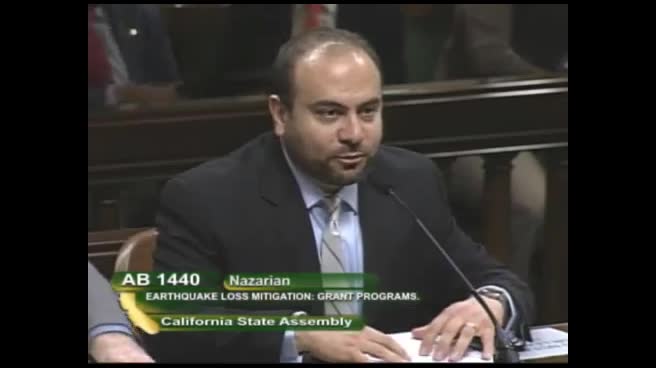
Bill Author

Bill Co-Author(s):