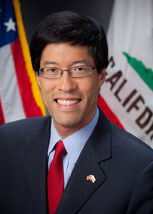
AB 48: Education finance: school facilities: Public Preschool, K-12, and College Health and Safety Bond Act of 2020.
- Session Year: 2019-2020
- House: Assembly
- Latest Version Date: 2019-10-07
The California Constitution prohibits the Legislature from creating a debt or liability that singly or in the aggregate with any previous debts or liabilities exceeds the sum of $300,000, except by an act that (1) authorizes the debt for a single object or work specified in the act, (2) has been passed by a 2/3 vote of all the Members elected to each house of the Legislature, (3) has been submitted to the people at a statewide general or primary election, and (4) has received a majority of all the votes cast for and against it at that election.
This bill would state the intent of the Legislature to enact legislation that would create the Kindergarten-Community Colleges Public Education Facilities Bond Acts of 2020 and 2022, state general obligation bond acts that would provide funds to construct and modernize education facilities, to become operative only if approved by the voters at unspecified 2020 and 2022 elections, and to provide for the submission of the bond acts to the voters at those elections.
It is the intent of the Legislature to enact legislation that would create the Kindergarten-Community Colleges Public Education Facilities Bond Acts of 2020 and 2022, to become operative only if approved by the voters at the 2020 and 2022 ____ elections, and to provide for the submission of the bond acts to the voters at those elections. It is also the intent of the Legislature that the bond acts, if approved by the voters at those elections, would provide for the issuance of ____ ($____) of state general obligation bonds to provide aid to school districts, county superintendents of schools, county boards of education, and the California Community Colleges, to construct and modernize education facilities.
|
Date
|
Status
|
|---|---|
| Oct 7, 2019 | Chaptered by Secretary of State - Chapter 530, Statutes of 2019. |
| Oct 7, 2019 | Approved by the Governor. |
| Sep 26, 2019 | Enrolled and presented to the Governor at 4 p.m. |
| Sep 14, 2019 | Senate amendments concurred in. To Engrossing and Enrolling. |
| Sep 13, 2019 | In Assembly. Concurrence in Senate amendments pending. |
| Sep 13, 2019 | Read third time. Passed. Ordered to the Assembly. |
| Sep 12, 2019 | From committee: That the measure be returned to Senate Floor for consideration. (Ayes 6. Noes 0.) (September 12) |
| Sep 11, 2019 | Re-referred to Com. on RLS. pursuant to Senate Rule 29.10(b). |
| Sep 10, 2019 | Read second time. Ordered to third reading. |
| Sep 9, 2019 | Withdrawn from committee. |
| Aug 30, 2019 | From committee: Do pass and re-refer to Com. on RLS. (Ayes 5. Noes 1.) (August 30). Re-referred to Com. on RLS. |
| Aug 19, 2019 | In committee: Referred to APPR. suspense file. |
| Jul 8, 2019 | Read second time and amended. Re-referred to Com. on APPR. |
| Jul 5, 2019 | From committee: Amend, and do pass as amended and re-refer to Com. on APPR. (Ayes 6. Noes 1.) (July 3). |
| Jun 19, 2019 | From committee: Do pass and re-refer to Com. on GOV. & F. (Ayes 7. Noes 0.) (June 19). Re-referred to Com. on GOV. & F. |
| Jun 13, 2019 | From committee chair, with author's amendments: Amend, and re-refer to committee. Read second time, amended, and re-referred to Com. on ED. |
| Jun 6, 2019 | Referred to Coms. on ED. and GOV. & F. |
| May 24, 2019 | In Senate. Read first time. To Com. on RLS. for assignment. |
| May 24, 2019 | Read third time. Passed. Ordered to the Senate. |
| May 20, 2019 | Read second time. Ordered to third reading. |
| May 17, 2019 | From committee: Amend, and do pass as amended. (Ayes 14. Noes 0.) (May 16). |
| May 1, 2019 | In committee: Set, first hearing. Referred to APPR. suspense file. |
| Apr 25, 2019 | Re-referred to Com. on APPR. |
| Apr 24, 2019 | From committee chair, with author's amendments: Amend, and re-refer to Com. on APPR. Read second time and amended. |
| Apr 24, 2019 | From committee: Do pass and re-refer to Com. on APPR. (Ayes 9. Noes 0.) (April 23). Re-referred to Com. on APPR. |
| Apr 22, 2019 | Re-referred to Com. on HIGHER ED. |
| Apr 11, 2019 | From committee chair, with author's amendments: Amend, and re-refer to Com. on HIGHER ED. Read second time and amended. |
| Apr 11, 2019 | From committee: Do pass and re-refer to Com. on HIGHER ED. (Ayes 5. Noes 0.) (April 10). Re-referred to Com. on HIGHER ED. |
| Apr 2, 2019 | Re-referred to Com. on ED. |
| Apr 1, 2019 | From committee chair, with author's amendments: Amend, and re-refer to Com. on ED. Read second time and amended. |
| Jan 29, 2019 | Re-referred to Com. on ED. |
| Jan 28, 2019 | From committee chair, with author's amendments: Amend, and re-refer to Com. on ED. Read second time and amended. |
| Jan 24, 2019 | Referred to Coms. on ED. and HIGHER ED. |
| Dec 4, 2018 | From printer. May be heard in committee January 3. |
| Dec 3, 2018 | Read first time. To print. |
|
Date
|
Description
|
Location
|
Votes
|
|
|---|---|---|---|---|
| Sep 14, 2019 | AB 48 O'Donnell Concurrence in Senate Amendments | Assembly Floor |
Passed |
|
| Sep 13, 2019 | Assembly 3rd Reading AB48 O'Donnell et al. | Senate Floor |
Passed |
|
| Sep 13, 2019 | With recommendation: That Senate amendments be concurred in. | Assembly Standing Committee on Higher Education |
Passed |
|
| Sep 12, 2019 | That the measure be returned to Senate Floor for consideration. Ordered to third reading. | Senate Standing Committee on Education |
Passed |
|
| Aug 30, 2019 | Do pass, but first be re-referred to the Committee on [Rules] | Senate Standing Committee on Appropriations |
Passed |
|
| Aug 19, 2019 | Placed on suspense file | Senate Standing Committee on Appropriations |
Passed |
|
| Jul 3, 2019 | Do pass as amended, but first amend, and re-refer to the Committee on [Appropriations] | Senate Standing Committee on Governance and Finance |
Passed |
|
| Jun 19, 2019 | Do pass, but first be re-referred to the Committee on [Governance and Finance] | Senate Standing Committee on Education |
Passed |
|
| May 24, 2019 | AB 48 O'Donnell Assembly Third Reading | Assembly Floor |
Passed |
|
| May 16, 2019 | Do pass as amended. | Assembly Standing Committee on Appropriations |
Passed |
|
| Apr 23, 2019 | Do pass and be re-referred to the Committee on [Appropriations] | Assembly Standing Committee on Higher Education |
Passed |
|
| Apr 10, 2019 | Do pass and be re-referred to the Committee on [Higher Education] | Assembly Standing Committee on Education |
Passed |
This list shows positions taken on this bill by organizations on the date displayed, which is linked to the original source.
Positions by individuals are not included.
(Without Reference to File)
CONCURRENCE IN SENATE AMENDMENTS
CSA2 Bill Id:AB 48
Author:(O'Donnell and Glazer)
As Amended Ver:September 10, 2019
2/3 vote
SUMMARY:
Authorizes $15 billion for the construction and modernization of public preschool, K-12, California Community Colleges (CCC), University of California (UC), and California State University (CSU) facilities to be placed on the March 3, 2020 primary ballot.
The Senate Amendments:
- Establish the Public Preschool, K-12, and College Health and Safety Bond Act of 2020 totaling $15 billion to be allocated as follows:
- $9 billion for Preschool to Grade 12 school facilities as follows:
- $2.8 billion for new construction;
- $5.2 billion for modernization;
- $500 million for charter schools; and,
- $500 million for career technical education.
- $2 billion for the UC and the Hastings College of the Law;
- $2 billion for the CSU; and,
- $2 billion for community college facilities.
- $9 billion for Preschool to Grade 12 school facilities as follows:
- Specify the proceeds of the bonds issued and sold to be available for the purpose of funding aid to the UC, CSU, and CCC for the construction on existing or new campuses, and their respective off-campus centers and joint use and intersegmental facilities.
- Require the CSU Board of Trustees and the UC Regents, as a condition of receiving funds from the 2020 bond fund, to adopt a five-year affordable student housing plan for each campus.
- Require the Regents of the UC and Board of Trustees of the CSU, in developing a list of capital projects for consideration in the annual Budget Act, to use each campus's student housing plan as a key input for project prioritization.
- Require a governing board of a school district, governing board of a CCC district, county superintendent of schools, governing board of a charter school, the CSU Board of Trustees, the UC Regents, or the Hastings College of Law Board of Directors:
- Conduct an independent performance audit of any project funded in whole or in part with Bond funding;
- Provide an opportunity for the public to provide input regarding projects up for approval (CCC districts and Local Educational Agencies) or consideration for submission to the state (UC and the CSU) that would be funded by the Bond; and,
- Enhance transparency by placing specified project information, including the results of required audits, on their respective websites. Local educational agencies CCC districts, the UC, and the CSU would have the flexibility to use existing required independent project audits to fulfill the Bond Act's audit requirements.
- Establish the 2020 State School Facilities Fund within the state treasury.
- Increase the state grant amount on a sliding scale basis, from 50% to 55%, based on a district's ability to generate local funds and the percentages of low income, foster care, and English learner students.
- Increase the state grant amount on a sliding scale basis, from 60% to 65%, based on a district's ability to generate local funds and the percentages of low income, foster care, and English learner students.
- Waive fees, until January, 1, 2026, for multifamily housing within a ½ mile of a major transit stop to increase access to housing.
- Provide a 20% reduction to multifamily housing projects in other areas until January 1, 2026.
- Suspend Level 3 fees, which doubles the fees paid by developers when state bond funds are exhausted, from January 1, 2021, or whenever existing bond funds are expended, to January 1, 2028.
- Repeal various obsolete code sections related to the State School Facilities Program.
COMMENTS:
Please refer to the policy committee analysis of September 13, 2019 for further discussion.
Background. Since the late 1980s, the Legislature has placed on the ballot and voters have approved bonds for public higher education every two to four years. The last statewide general obligation bond, Proposition 1D (AB 127 (Núñez and Perata), Chapter 35, Statutes of 2006), was approved by voters in November 2006, authorizing the sale of $10.4 billion in general obligation bonds of which $3.087 billion was earmarked for higher education facilities. $1.5 billion was provided for CCC facilities, $890 million was provided for UC, and $690 million was provided for CSU. All Proposition 1D higher education facilities funds have been depleted. Further, the last statewide general obligation bond, Proposition 51, was approved by voters in November 2016. Proposition 51 authorized a total of $9 billion in state general obligation bond funds with $7 billion for K-12 education facilities and $2 billion for community college facilities.
According to the Author:
"The condition of a school sets the tone for the school day. As a teacher, I believe that students have a right to learn in a safe environment. AB 48 ensures that students are housed in adequate facilities that meet their educational needs. The state's success depends on student success."
Arguments in Support:
According to the Student Senate for California Community Colleges, the Cal State Student Association, and the University of California Student Association, "Growing numbers of California high school students are graduating college-ready and seeking the opportunities that higher education can provide. However, without expanding the physical infrastructure of our colleges and universities to meet growing enrollment, students could face overcrowded classes and increased difficulty accessing essential student services. Students sitting on the floors of lecture halls have become an all too common occurrence. At some campuses, no new buildings have been constructed since the 1960s, despite the tremendous increase in students. New construction funds provided by AB 48 would better serve the students of today and tomorrow."
Arguments in Opposition:
According to the Western Electrical Contractors Association (WECA), "It is inappropriate for the Legislature to create, in a funding measure, an incentive for school districts to execute a PLA [project labor agreement]. WECA thinks this will become a rallying cry for PLA supporters who will tout that a PLA 'increases your odds of receiving State funds'. WECA is disappointed you have decided to incorporate this special interest provision in this critical funding measure. WECA suspects you did so to obtain the support of the State Building and Construction Trades Council."
FISCAL COMMENTS:
According to recently received numbers from Assembly Appropriations staff, a 2020 primary general obligation bond amount of $15 billion could result in total principal and interest costs of $27.4 billion ($15 billion in principal and $12.4 billion in interest), with annual General Fund costs of about $900 million, assuming an interest rate of 4.5% and a 30-year maturity. (Were interest rates to be 3.5%, total costs would be $24.3 billion with annual GF costs of about $800 million.
VOTES:
ASM EDUCATION: 5-0-1
YES: O'Donnell, Kalra, McCarty, Smith, Weber
ABS, ABST OR NV: Kiley
ASM HIGHER EDUCATION: 9-0-3
YES: Medina, Quirk, Bloom, Gabriel, Irwin, Levine, Low, Santiago, Weber
ABS, ABST OR NV: Choi, Kiley, Patterson
ASM APPROPRIATIONS: 14-0-4
YES: Gonzalez, Bloom, Bonta, Calderon, Carrillo, Chau, Diep, Eggman, Gabriel, Eduardo Garcia, Maienschein, Petrie-Norris, Quirk, Robert Rivas
ABS, ABST OR NV: Bigelow, Brough, Fong, Obernolte
ASSEMBLY FLOOR: 69-1-10
YES: Aguiar-Curry, Arambula, Bauer-Kahan, Berman, Bigelow, Bloom, Boerner Horvath, Bonta, Burke, Calderon, Carrillo, Cervantes, Chau, Chen, Chiu, Choi, Chu, Cooper, Cunningham, Daly, Diep, Eggman, Flora, Fong, Frazier, Friedman, Gabriel, Cristina Garcia, Gipson, Gloria, Gonzalez, Grayson, Holden, Irwin, Jones-Sawyer, Kalra, Lackey, Levine, Limón, Low, Maienschein, Mayes, McCarty, Medina, Mullin, Muratsuchi, Nazarian, O'Donnell, Patterson, Petrie-Norris, Quirk, Quirk-Silva, Ramos, Reyes, Luz Rivas, Robert Rivas, Rodriguez, Blanca Rubio, Salas, Santiago, Smith, Mark Stone, Ting, Voepel, Waldron, Weber, Wicks, Wood, Rendon
NO: Obernolte
ABS, ABST OR NV: Brough, Cooley, Dahle, Gallagher, Eduardo Garcia, Gray, Kamlager‑Dove, Kiley, Mathis, Melendez
ASM HIGHER EDUCATION: 11-0-1
YES: Medina, Choi, Arambula, Bloom, Gabriel, Irwin, Kiley, Low, Patterson, Santiago, Weber
ABS, ABST OR NV: Levine
UPDATED:
VERSION: September 10, 2019
CONSULTANT: Jeanice Warden / HIGHER ED. / (916) 319-3960 FN: 0002482
Date of Hearing: September 13, 2019
ASSEMBLY COMMITTEE ON HIGHER EDUCATION
Jose Medina, Chair
ABPCA Bill Id:AB 48 (
Author:O'Donnell and Glazer) – As Amended Ver:September 10, 2019
SUBJECT: Education finance: school facilities: Kindergarten-Community Colleges Public Education Facilities Bond Acts of 2020 and 2022.
SUMMARY: Authorizes $15 billion for the construction and modernization of public preschool, K-12, California Community Colleges (CCC), University of California (UC), and California State University (CSU) facilities to be placed on the March 3, 2020 primary ballot. Specifically, this bill:
- Establishes the Public Preschool, K-12, and College Health and Safety Bond Act of 2020 totaling $15 billion to be allocated as follows:
- $9 billion for Preschool to Grade 12 school facilities as follows:
- $2.8 billion for new construction;
- $5.2 billion for modernization;
- $500 million for charter schools; and,
- $500 million for career technical education.
- $2 billion for the UC and the Hastings College of the Law;
- $2 billion for the CSU; and,
- $2 billion for community college facilities.
- $9 billion for Preschool to Grade 12 school facilities as follows:
- Specifies the proceeds of the bonds issued and sold to be available for the purpose of funding aid to the UC, CSU, and CCC for the construction on existing or new campuses, and their respective off-campus centers and joint use and intersegmental facilities.
- Requires the CSU Board of Trustees and the UC Regents, as a condition of receiving funds from the 2020 bond fund, to adopt a five-year affordable student housing plan for each campus.
- Requires the Regents of the UC and Board of Trustees of the CSU, in developing a list of capital projects for consideration in the annual Budget Act, to use each campus’s student housing plan as a key input for project prioritization.
- Requires a governing board of a school district, governing board of a CCC district, county superintendent of schools, governing board of a charter school, the CSU Board of Trustees, the UC Regents, or the Hastings College of Law Board of Directors:
- Conduct an independent performance audit of any project funded in whole or in part with Bond funding;
- Provide an opportunity for the public to provide input regarding projects up for approval (CCC districts and Local Educational Agencies) or consideration for submission to the state (UC and the CSU) that would be funded by the Bond; and,
- Enhance transparency by placing specified project information, including the results of required audits, on their respective websites. Local educational agencies CCC districts, the UC, and the CSU would have the flexibility to use existing required independent project audits to fulfill the Bond Act’s audit requirements.
- Establishes the 2020 State School Facilities Fund within the state treasury.
- Repeals various obsolete code sections related to the State School Facilities Program.
EXISTING LAW:
- Stipulates that the Legislature shall not, in any manner create any debt or debts, liability or liabilities, which shall, singly or in the aggregate with any previous debts or liabilities, exceed $300,000 unless enactment has been passed by a two-thirds vote of all the members elected to each house of the Legislature and until, at a general election or at a direct primary, it shall have been submitted to the people and shall have received a majority of all the votes cast for and against it at such election (California Constitution, Article XVI, Section 1).
- Requires the Governor to annually submit to the Legislature, in conjunction with the Governor's Budget, a proposed five-year infrastructure plan, which among other things, shall include the instructional and support facilities needs of UC and CSU (Government Code Section 13102).
- Requires the CCC Chancellor’s Office to prepare a five-year capital outlay plan identifying the CCC’s statewide needs and priorities (Education Code (EC) Section 67501).
- Authorizes CSU to use up to 12% of its General Fund support budget, less the amount required to fund general obligation bond payments and State Public Works Board rental payments, to fund capital outlay projects, either on a pay-as-you-go approach or to pay principal and interest on university-issued revenue bonds (EC Section 89770, et seq.).
- Authorizes UC to use up to 15% of its General Fund support budget, less the amount required to fund general obligation bond payments and State Public Works Board rental payments, to fund capital outlay projects, either on a pay-as-you-go approach or to pay principal and interest on university-issued revenue bonds (EC Section 92943, et seq.).
- Under the State University Revenue Bond Act of 1947, authorizes the CSU Board of Trustees to construct operate and control certain facilities, including student housing and boarding facilities, and to establish charges for use of such facilities (EC Section 90010, et seq.).
- Under the UC Dormitory Revenue Bond Act of 1947, authorizes the UC Board of Regents to construct operate and control certain facilities, including student housing and boarding facilities, and to establish charges for use of such facilities (EC Section 92400, et seq.).
- The Kindergarten-University Public Education Facilities Bond Act of 2006, authorized $10.4 billion in general obligation bonds, including $3.1 billion for higher education facilities, of which UC received $890 million and CSU received $690 million (EC Section 101000, et seq.).
- The Kindergarten Through Community College Public Education Facilities Bond Act of 2016, approved by the voters in November 2016 (Proposition 51), authorized $9 billion state general obligation bonds for K-12 facilities ($7 billion) and CCC facilities ($2 billion) (EC Section 101110, et seq.).
FISCAL EFFECT: Unknown
COMMENTS: Assembly Rule 77.2. This measure was referred to this Committee pursuant to Assembly Rule 77.2. This measure, the Bond Act, is substantial and includes many provisions that are outside the jurisdiction of this Committee. To note, the elements of this measure that fall outside the jurisdiction of this Committee will not be addressed in this policy analysis.
Background. Since the late 1980s, the Legislature has placed on the ballot and voters have approved bonds for public higher education every two to four years. The last statewide general obligation bond, Proposition 1D (AB 127, Núñez and Perata, Chapter 35, Statutes of 2006), was approved by voters in November 2006, authorizing the sale of $10.4 billion in general obligation bonds of which $3.087 billion was earmarked for higher education facilities. Of this amount, $1.5 billion was provided for CCC facilities, $890 million was provided for UC, and $690 million was provided for CSU. All Proposition 1D higher education facilities funds have been depleted and K-12 funds have almost been exhausted.
Since 2006, as the state's fiscal condition continued to deteriorate, legislation needed to authorize education bonds was not enacted. Instead, since 2008 the higher education segments have received capital funding from lease-revenue bonds through the annual budget acts; however, these funds have met less than half of the segments' capital needs. Bond funds, whether lease-revenue or general obligation, are allocated through the budget process in accordance with the segments' five-year capital facility plans.
Additionally, in November 2012, California voters approved Proposition 39 to close a corporate tax loophole and increase the state’s annual corporate tax revenues by as much as $1.1 billion. Proposition 39 specified that half of the revenue generated from 2013-2018, up to $550 million, should support energy efficiency and alternative energy projects at public schools, colleges, universities and other public buildings, as well as related public-private partnerships and workforce training.
Further, the last statewide general obligation bond, Proposition 51, was approved by voters in November 2016. Proposition 51 authorized a total of $9 billion in state general obligation bond funds with $7 billion for K-12 education facilities and $2 billion for community college facilities. To note, of the $7 billion for K-12 education, $3 billion was set aside for new construction, $3 billion set aside for modernization, and $1 billion set aside for charter schools and vocational education facilities.
Need for this measure. According to the author, “The condition of a school sets the tone for the school day. As a teacher, I believe that students have a right to learn in a safe environment. AB 48 ensures that students are housed in adequate facilities that meet their educational needs. The state’s success depends on student success.”
Major postsecondary highlights of this Bond Act.
- Public postsecondary segments (UC, CSU, CCC) each will receive $2 billion.
- Prioritization of funding for seismic and health and safety facilities problems.
- Will aid in campuses ability to:
- Upgrade their facilities for earthquake and other emergencies; and,
- Remove mold, asbestos, and other hazardous materials from classrooms.
- Will aid in campuses ability to:
- Authorizes an unspecified amount of bond funds to be used for new campuses.
- Creates incentives for UC and CSU to improve access to affordable student housing:
- Requires UC and CSU campuses to develop a five-year affordable student housing plan in order to be eligible for bond funds for core campus facilities; and,
- Campuses who make progress in this area will receive funding priority.
- Requires the governing boards of CCC districts, the CSU Board of Trustees, the UC Regents, and the Hastings College of Law Board of Directors to have regularly scheduled public hearings on how their bond funds have been, and are planned to be, used; requires the aforementioned to place audit findings and project plans on their respective websites.
Summary of Capital Needs.
- The UC's inventory of capital assets totals approximately 137 million gross square feet in 6,000 buildings. More than half of UC's space is at least 30 years old. The UC’s Capital Financial Plan 2018-2028 – which provides the systemwide blueprint for developing and maintaining appropriate and necessary facilities – identifies more than $11.8 billion in unfunded capital need over the next five fiscal years (through 2023-24). The majority of which ($8.8 billion) is in state supportable education and general facilities.
According to the UC, “As the UC continues to expand student programs and services, additional infrastructure will be necessary to meet our strategic goals and support the University’s core mission of education, research, and public service. It is critical that we maintain and renovate our existing facilities, grounds, and infrastructure to ensure current and future generations of UC students enjoy the same high quality of education and experience as prior generations”.
- The CSU’s inventory of capital assets totals approximately 86 million gross square feet in 2,100 buildings. More than half of CSU's facility space is over 40 years or older and a third being over 50 years old. The CSU’s five-year capital outlay plan reflects more than $10 billion in academic infrastructure and $3.7 billion in deferred maintenance needs.
According to the CSU, “SB 14 provides essential funding for our campuses to expand student capacity in classrooms and labs; address fire, safety, and seismic deficiencies, and to modernize and construct facilities to keep pace with current technology and workforce needs”. The CSU contends that, “Absent this bill, financing our facilities and deferred maintenance needs will continue to come from our operating funds, in direct competition with the resources we need to educate and serve our students”.
- The CCC Chancellor’s Office (CCCCO) has prepared a five-year capital outlay plan that highlights the new facilities and infrastructure improvements needed to carry out the CCC mission.
According to the CCCCO, the total unmet facilities needs for the CCC is approximately $22 billion over the next five years. The CCCCO notes that the $22 billion is a conservative amount that does not fully account for local site development costs, out-year continued costs, and other factors. The CCCCO believes that the $22 billion is a starting point that begins to account for life-safety concerns, enrollment growth, and modernization needs.
Committee comments. According to the December 2018 Public Policy Institute of California (PPIC) report, Financing Higher Education Capital Projects, there is an increased demand for a CSU education, and the parallel need to invest in critical safety, infrastructures, and modernization of facilities to serve California’s students.
According to the PPIC report, of the three public higher education segments, the CSU faces the greatest challenge in financing capital projects as it receives less funding on a per-student basis; has less access to private, philanthropic or other financing sources; and has no ability to issue general obligation bonds on its own.
Related legislation. AB 13 (Eggman, et al.), which, pursuant to Assembly Rule 56.1, did not have a hearing in this Committee, would have placed the Higher Education Facilities Bond Act of 2020 on the November 3, 2020, statewide general election. AB 13 proposed $2 billion for UC facilities, $2 billion for CSU facilities, and $3 billion for new CSU campuses.
SB 14 (Glazer and Allen), which is pending action in the Assembly Committee on Rules, places an $8 billion general obligation bond on the March 2020 ballot for the construction, reconstruction, and remodeling of existing or new facilities at the UC, CSU, and the Hastings College of the Law.
Prior legislation. Several bond measures have been proposed since 2009 to fund higher education facilities. The most recent of these are:
AB 2771 (Eggman, et al.) of 2018, which died on the Senate Floor, in part, enacted a $7 billion general obligation bond for higher education facilities, to be considered by the voters at the November 2018 ballot.
SB 1225 (Glazer and Allen) of 2018, which died on the Assembly Floor, proposed a $4 billion general obligation bond measure for UC, CSU and Hastings to be placed on the November 2018 statewide ballot.
SB 483 (Glazer and Allen) of 2017, which was held on Suspense in the Senate Appropriations Committee, proposed a $2 billion bond for the November 2018 ballot facilities at UC, CSU, and Hastings.
AB 1433 (Gray) of 2016, which was held on Suspense in the Assembly Appropriations Committee, authorized an unspecified amount of bonds for the UC, CSU, CCC and Hastings.
AB 1088 (O'Donnell) of 2015, which was held on Suspense in the Assembly Appropriations Committee, authorized an unspecified amount of bonds for school districts, county superintendents of schools, county boards of education, charter schools, the CCC, CSU, Hastings, and UC.
REGISTERED SUPPORT / OPPOSITION:
Support
American Council of Engineering Companies of California
Bricklayers & Allied Craftworkers
Cal State Student Association
California Building Industry Association
California Community Colleges Chancellor's Office
California Council of Carpenters
California Federation of Teachers
California Manufacturers & Technology Association
California State Council of Laborers
California State University, Office of The Chancellor
California Teachers Association
California Teamsters Public Affairs Council
Cerritos Community College
Community College League of California
Faculty Association of California Community Colleges
First 5 California
Foothill-de Anza Community College District
Heat & Frost Insulators & Allied Workers
IBEW
International Brotherhood of Boilermakers
Iron Workers
Kern Community College District
Lieutenant Governor Eleni Kounalakis
Long Beach Community College District
Los Angeles Community College District
Los Rios Community College District
Office of The Riverside County Superintendent of Schools
Operating Engineers
Operative Plasterers & Cement Masons
Orange County Department of Education
Painters & Allied Trades
Pasadena Area Community College District
Peralta Community College District
Roofers, Waterproofers & Allied Workers
Sacramento County Office of Education
San Bernardino Community College District
San Bernardino County District Advocates for Better Schools (SANDABS)
San Diego County Office of Education
San Francisco; City College of
Santa Monica College
Sheet Metal Workers
Small School Districts Association
South Orange County Community College District
State Building and Construction Trades Council
Student Senate for California Community Colleges
United Association
University of California
University of California Student Association
Yuba Community College District
Opposition
Western Electrical Contractors Association
Analysis Prepared by: Jeanice Warden / HIGHER ED. / (916) 319-3960
Office of Senate Floor Analyses (916) 651-1520 Fax: (916) 327-4478 | AB 48 |
THIRD READING
Bill No: AB 48
Author: O'Donnell (D) and Glazer (D), et al.
Amended: 9/10/19 in Senate
SENATE EDUCATION COMMITTEE: 7-0, 6/19/19
AYES: Leyva, Wilk, Chang, Durazo, Glazer, McGuire, Pan
SENATE GOVERNANCE & FIN. COMMITTEE: 6-1, 7/3/19
AYES: McGuire, Beall, Hertzberg, Hurtado, Nielsen, Wiener
NOES: Moorlach
SENATE APPROPRIATIONS COMMITTEE: 5-1, 8/30/19
AYES: Portantino, Bradford, Durazo, Hill, Wieckowski
NOES: Jones
NO VOTE RECORDED: Bates
SENATE EDUCATION COMMITTEE: 6-0, 9/12/19 (Pursuant to Senate Rule 29.10)
AYES: Leyva, Wilk, Durazo, Glazer, McGuire, Pan
NO VOTE RECORDED: Chang
ASSEMBLY FLOOR: 69-1, 5/24/19 - See last page for vote
SUBJECT: Education finance: school facilities: Public Preschool, K-12, and College Health and Safety Bond Act of 2020
DIGEST:
This bill makes changes to the existing School Facility Program and places the Public Preschool, K-12, and College Health and Safety Bond Act on the March 3, 2020 primary ballot.
ANALYSIS: Existing law establishes the School Facility Program (SFP) under which the state provides general obligation bond funding for various school construction projects, including new construction, modernization, joint-use facilities, and programs to specifically address the construction needs of overcrowded schools, charter schools, career technical education facilities, and seismic mitigation.
This bill authorizes $15 billion for the construction and modernization of public preschool, K-12, community college, University of California (UC), and California State University (CSU) facilities to be placed on the March 3, 2020 primary ballot. Specifically, this bill:
- Increases local bonding capacities for non-unified school districts from 1.25 percent to two percent and for unified school districts from 2.5 percent to four percent of the taxable property in the district.
- Establishes the 2020 State School Facilities Fund within the State Treasury.
- Requires a school district, as a condition of participating in the SFP, to submit to Office of Public School Construction (OPSC) a five-year facilities master plan approved by the governing board of the school district and to update the plan as appropriate.
- Requires OPSC to prioritize on a quarterly basis the processing of applications as follows:
- First, for health and safety projects.
- Second, for school districts requesting financial hardship assistance.
- Third, for projects addressing lead remediation.
- Fourth, for projects that were submitted, but not processed, in the preceding two quarters.
- Fifth, for projects addressing severe overcrowding.
- Sixth, based on a district’s gross bonding capacity and the percentage of students that are low-income, English learners, or foster youth.
- Establishes criteria for determining the state and local share of a school district’s project based on the district’s gross bonding capacity and the percentage of students that are low-income, English learners, or foster youth.
- Requires school districts electing to participate in the SFP to submit an updated report of the district’s existing school building capacity to the OPSC.
- Authorizes grant funding for new construction projects to be used for infrastructure necessary to provide access to broadband Internet, seismic mitigation, construction of a school kitchen, transitional kindergarten classroom, public preschool facility, or a facility to support school nurses and counselors.
- Prohibits grant funding for new construction projects to be used for electronic devices with a useful life of less than three years.
- Allows a school district with a facility located on a military installation to receive a modernization grant to replace portables that are at least 10 years old.
- Allows for grant funding under the program to be increased by up to 10 percent to reflect the costs to remediate any water outlet used for drinking or preparing food with lead levels in excess of 15 parts per billion.
- Expands school district eligibility for financial hardship assistance by increasing the total bonding capacity limit from $5 million to $15 million, adjusted annually for inflation.
- Allows the State Allocation Board (SAB) to provide assistance to districts procuring interim housing to school districts and county offices of education impacted by a natural disaster.
- Requires the SAB to provide a grant to test for lead in water outlets used for drinking water or preparing food that were constructed before January 1, 2010, and for remediation of any water outlet used for drinking or preparing food with lead levels in excess of 15 parts per billion.
- Increases the threshold for implementing unused site fees on school districts from sites valued at $20,000 to sites valued at $40,000.
- Requires the Board of Trustees of the CSU and the Regents of the UC, as a condition of receiving funds from the 2020 bond fund, to adopt a five-year affordable student housing plan for each campus.
- Requires the Regents of the UC and Board of Trustees of the CSU, in developing a list of capital projects for consideration in the annual Budget Act, to use each campus’s student housing plan as a key input for project prioritization.
- Repeals various obsolete code sections related to the SFP.
- Establishes the Public Preschool, K-12, and College Health and Safety Bond Act of 2020 totaling $15 billion to be allocated as follows:
- $9 billion for Preschool to Grade 12 school facilities as follows:
- $2.8 billion for new construction.
- $5.2 billion for modernization.
- $500 million for charter schools.
- $500 million for career technical education.
- $2 billion for community college facilities.
- $2 billion for the UC and the Hastings College of the Law.
- $2 billion for the CSU.
- $9 billion for Preschool to Grade 12 school facilities as follows:
- Suspends the provisions establishing level 3 developer fees until January 1, 2028.
- Eliminates the fee, charge, dedication, or other requirements for any multifamily infill housing developments and reduces all other multifamily housing developments by 20 percent.
Background
The last statewide general obligation bond, Proposition 51, was approved by voters in November 2016. Proposition 51 authorized a total of $9 billion in state general obligation bond funds—$7 billion for K-12 education facilities and $2 billion for community college facilities. Of the $7 billion for K-12 education, $3 billion is for new construction, $3 billion is for modernization, and $1 billion is for charter schools and vocational education facilities.
Comments
- Need for the bill. According to the author, “The condition of a school sets the tone for the school day. Students will not take school seriously if their school is dilapidated, dirty, and in need of repair. The School Facility Program has been a strong private public partnership between the state, local school districts, and developers. This bill represents the state’s contribution and commitment to ensure that students are housed in safe environments conducive for learning. The state’s success depends on student success.”
- Current status of the School Facilities Program. According to the OPSC, as of the May 2019 meeting of the SAB, approximately $4,871 billion remains in bond authority in the SFP. Of this amount, about $2 billion is new construction, $2.4 billion is modernization, and the remaining $400 million is from a variety of smaller programs, including the Career Technical Education and Charter Schools program.
The OPSC reported that as of February 2019, they have received just over $5 billion worth of applications for the bond authority remaining. The OPSC will not process applications beyond available bond authority and they expect that some applications may be eligible for a reduced amount of funding.
- Related and prior budget activity. Prior to the passage of Proposition 51 and amid concerns about the complexity and structure of the SFP, former Governor Brown called for the state to establish a new school facilities program. The 2016-17 Governor’s Budget stated the following:
The existing school facilities program is overly complex, creating costs for school districts to navigate a process that can involve as many as ten different state agencies. The program creates an incentive for districts to build new schools when they already have the capacity to absorb enrollment growth, and allocates funding on a first-come, first-served basis, giving districts with dedicated facilities personnel a substantial advantage. Finally, the existing program does not give districts enough flexibility to design school facility plans to reflect local needs. The inherent problems with the current program, along with billions of dollars in long-term liabilities created by the issuance of state debt, is no longer sustainable.
The 2019-20 Governor’s Budget includes $1.5 billion in bond authority available for school facilities projects and an increase of 10 positions for OPSC. The Administration notes that this increase in staffing aligns with the increase in workload related to processing $1.5 billion in applications annually. Finally, the Administration notes that an increase of $1.5 billion in bond sales would result in annual debt service by approximately $84 million for a total debt service in 2019-20 of approximately $2.3 billion for K-12 facility debt service from Prop 51 and prior bonds.
- Previous informational hearing. On February 18, 2015, the Senate Education Committee held a joint informational hearing with the Budget Subcommittee on Education titled K-12 School Facility Program: History, Current Status, and Future Options. Among other things, the Committee heard testimony from several participants about the need to simplify the current program processes and regulations, the need for a “one-stop-shop” to assist in navigating the program, and the need for greater flexibility in design of school facilities as well as the use of funding to incentivize and support joint use projects and community schools. Additionally, while the state’s growing debt service is of concern, it was unclear whether local districts have the capacity to generate sufficient revenue at the local level to meet their ongoing facility needs for deferred maintenance, modernization and new construction.
Related/Prior Legislation
AB 13 (Eggman, 2019) places the Higher Education Facilities Bond Act of 2020 on the November 3, 2020, statewide general election. The bill proposes $2 billion for UC facilities, $2 billion for CSU facilities and $3 billion for new CSU campuses. The bill was held in the Assembly Higher Education Committee.
SB 14 (Glazer, 2019) places the Higher Education Facilities Bond Act of 2020 on the March 3, 2020 statewide primary election. The bill proposes $4 billion each for UC and CSU facilities. The bill is pending in the Assembly.
FISCAL EFFECT: Appropriation: No Fiscal Com.: Yes Local: No
Unknown with latest amendments.
Advancement Project
American Society of Civil Engineers
Arntz Builders
Association of California School Administrators
Atascadero Unified School District
Beaumont Unified School District
Borrego Springs Unified School District
California Association of School Business Officials
California Association of Sheet Metal & Air Conditioning Contractors
California Association of Suburban School Districts
California Building Industry Association
California Community College Chancellor’s Office
California Educational Technology Professionals Association
California Federation of Teachers
California Head Start Association
California Manufacturers & Technology Association
California School Boards Association
California State University
California Teachers Association
Cardiff School District
Central Valley Education Coalition
City College of San Francisco
Coact Designworks
Community College Facility Coalition
Community College League of California
Compton Unified School District
County School Facilities Consortium
Del Norte County Office of Education
Del Norte Unified School District
Dinuba Unified School District
DLR Group
East Whittier City School District
Etiwanda School District
Fallbrook Un High School District
Firebaugh-Las Deltas Unified School District
First 5 California
Flint Builders
Foothill-De Anza Community College District
Fresno County Office of Education
Fresno County Superintendent of Schools
Fullerton Joint Union High School District
Garden Grove Unified School District
Glendora Unified School District
GMH Builders
Golden Valley Unified School District
Hemet Unified School District
HMC Architects
Irvine Unified School District
Jurupa Unified School District
Kern Community College District
Kern Union High School District
Long Beach Unified School District
Los Angeles County Office of Education
Maple School District
McGrath Rentcorp
Morrissey Associates
Mountain View Los Altos High School District
Napa County Office of Education
Napa Valley Unified School District
Oceanside Unified School District
Orcutt Union School District
Palm Springs Unified School District
PBK Architects
Placeworks
Rancho Santa Fe School District
Recolte Energy
Riverside County Office of Education
Riverside Unified School District
Sacramento County Office of Education
Sacramento Regional Builders Exchange
San Bernardino County District Advocates for Better Schools
San Diego County Office of Education
San Francisco Unified School District
San Luis Coastal Unified School District
Santa Ana Unified School District
Santa Cruz City Schools
Santee School District
School Facility Manufacturers' Association
SGH Architects
Small School Districts Association
Solano County Office of Education
Sonoma County Superintendent of Schools
Temecula Valley Unified School District
TLCD Architecture
University of California
Vallecitos School District
Vista Environmental Consulting
Wright Contracting
Yolo County Office of Education
Yuba Community College District
ZFA Structural Engineers
OPPOSITION: (Verified 9/12/19)
None received
ASSEMBLY FLOOR: 69-1, 5/24/19
AYES: Aguiar-Curry, Arambula, Bauer-Kahan, Berman, Bigelow, Bloom, Boerner Horvath, Bonta, Burke, Calderon, Carrillo, Cervantes, Chau, Chen, Chiu, Choi, Chu, Cooper, Cunningham, Daly, Diep, Eggman, Flora, Fong, Frazier, Friedman, Gabriel, Cristina Garcia, Gipson, Gloria, Gonzalez, Grayson, Holden, Irwin, Jones-Sawyer, Kalra, Lackey, Levine, Limón, Low, Maienschein, Mayes, McCarty, Medina, Mullin, Muratsuchi, Nazarian, O'Donnell, Patterson, Petrie-Norris, Quirk, Quirk-Silva, Ramos, Reyes, Luz Rivas, Robert Rivas, Rodriguez, Blanca Rubio, Salas, Santiago, Smith, Mark Stone, Ting, Voepel, Waldron, Weber, Wicks, Wood, Rendon
NOES: Obernolte
NO VOTE RECORDED: Brough, Cooley, Dahle, Gallagher, Eduardo Garcia, Gray, Kamlager-Dove, Kiley, Mathis, Melendez
Prepared by: Ian Johnson / ED. /
9/12/19 12:48:36
**** END ****
SENATE COMMITTEE ON EDUCATION
Senator Connie Leyva, Chair
2019 - 2020 Regular
Bill No: AB 48 Hearing Date: September 12, 2019
Author: | O'Donnell & Glazer | ||
Version: | September 10, 2019 | ||
Urgency: | No | Fiscal: | Yes |
Consultant: | Ian Johnson | ||
Subject: Education finance: school facilities: Public Preschool, K-12, and College Health and Safety Bond Act of 2020.
NOTE: This bill has been amended to replace its contents and this is the first time the bill is being heard in its current form.
SUMMARY
This bill makes changes to the existing School Facility Program and places the Public Preschool, K-12, and College Health and Safety Bond Act on the March 3, 2020 primary ballot.
BACKGROUND
Existing law establishes the School Facility Program (SFP) under which the state provides general obligation bond funding for various school construction projects, including new construction, modernization, joint-use facilities, and programs to specifically address the construction needs of overcrowded schools, charter schools, career technical education facilities, and seismic mitigation.
The last statewide general obligation bond, Proposition 51, was approved by voters in November 2016. Proposition 51 authorized a total of $9 billion in state general obligation bond funds—$7 billion for K-12 education facilities and $2 billion for community college facilities. Of the $7 billion for K-12 education, $3 billion is for new construction, $3 billion is for modernization, and $1 billion is for charter schools and vocational education facilities.
ANALYSIS
This bill authorizes $15 billion for the construction and modernization of public preschool, K-12, community college, University of California (UC), and California State University (CSU) facilities to be placed on the March 3, 2020 primary ballot. Specifically, this bill:
- Increases local bonding capacities for non-unified school districts from 1.25 percent to 2 percent and for unified school districts from 2.5 percent to 4 percent of the taxable property in the district.
- Establishes the 2020 State School Facilities Fund within the state treasury.
- Requires a school district, as a condition of participating in the School Facilities Program, to submit to Office of Public School Construction (OPSC) a five-year facilities master plan approved by the governing board of the school district and to update the plan as appropriate.
- Requires OPSC to prioritize on a quarterly basis the processing of applications as follows:
- First, for health and safety projects.
- Second, for school districts requesting financial hardship assistance.
- Third, for projects addressing lead remediation.
- Fourth, for projects that were submitted, but not processed, in the preceding two quarters.
- Fifth, for projects addressing severe overcrowding.
- Sixth, based on a district’s gross bonding capacity and the percentage of students that are low-income, English learners, or foster youth.
- Establishes criteria for determining the state and local share of a school district’s project based on the district’s gross bonding capacity and the percentage of students that are low-income, English learners, or foster youth.
- Requires school districts electing to participate in the School Facilities Program to submit an updated report of the district’s existing school building capacity to the OPSC.
- Authorizes grant funding for new construction projects to be used for infrastructure necessary to provide access to broadband internet, seismic mitigation, construction of a school kitchen, transitional kindergarten classroom, public preschool facility, or a facility to support school nurses and counselors.
- Prohibits grant funding for new construction projects to be used for electronic devices with a useful life of less than three years.
- Allows a school district with a facility located on a military installation to receive a modernization grant to replace portables that are at least ten years old.
- Allows for grant funding under the program to be increased by up to ten percent to reflect the costs to remediate any water outlet used for drinking or preparing food with lead levels in excess of 15 parts per billion.
- Expands school district eligibility for financial hardship assistance by increasing the total bonding capacity limit from $5 million to $15 million, adjusted annually for inflation.
- Allows the State Allocation Board (SAB) to provide assistance to districts procuring interim housing to school districts and county offices of education impacted by a natural disaster.
- Requires the SAB to provide a grant to test for lead in water outlets used for drinking water or preparing food that were constructed before January 1, 2010 and for remediation of any water outlet used for drinking or preparing food with lead levels in excess of 15 parts per billion.
- Increases the threshold for implementing unused site fees on school districts from sites valued at $20,000 to sites valued at $40,000.
- Requires the Board of Trustees of the CSU and the Regents of the UC, as a condition of receiving funds from the 2020 bond fund, to adopt a five-year affordable student housing plan for each campus.
- Requires the Regents of the UC and Board of Trustees of the CSU, in developing a list of capital projects for consideration in the annual Budget Act, to use each campus’s student housing plan as a key input for project prioritization.
- Repeals various obsolete code sections related to the State School Facilities Program.
- Establishes the Public Preschool, K-12, and College Health and Safety Bond Act of 2020 totaling $15 billion to be allocated as follows:
- $9 billion for Preschool to Grade 12 school facilities as follows:
- $2.8 billion for new construction.
ii) $5.2 billion for modernization.
iii) $500 million for charter schools.
iv) $500 million for career technical education.
- $2 billion for community college facilities.
- $2 billion for the UC and the Hastings College of the Law.
- $2 billion for the CSU.
- Suspends the provisions establishing level 3 developer fees until January 1, 2028.
- Eliminates the fee, charge, dedication, or other requirements for any multifamily infill housing developments and reduces all other multifamily housing developments by 20 percent.
STAFF COMMENTS
- Need for the bill. According to the author, “The condition of a school sets the tone for the school day. Students will not take school seriously if their school is dilapidated, dirty, and in need of repair. The School Facility Program has been a strong private public partnership between the state, local school districts, and developers. This bill represents the state’s contribution and commitment to ensure that students are housed in safe environments conducive for learning. The state’s success depends on student success.”
- Current status of the School Facilities Program (SFP). According to the Office of Public School Construction (OPSC), as of the May 2019 meeting of the State Allocation Board (SAB), approximately $4,871 billion remains in bond authority in the School Facilities Program (SFP). Of this amount, about $2 billion is new construction, $2.4 billion is modernization, and the remaining $400 million is from a variety of smaller programs, including the Career Technical Education and Charter Schools program.
The Office of Public School Construction (OPSC) reported that as of February 2019, they have received just over $5 billion worth of applications for the bond authority remaining. The OPSC will not process applications beyond available bond authority and they expect that some applications may be eligible for a reduced amount of funding.
- Related and prior budget activity. Prior to the passage of Proposition 51 and amid concerns about the complexity and structure of the SFP, former Governor Brown called for the state to establish a new school facilities program. The 2016-17 Governor’s Budget stated the following:
“The existing school facilities program is overly complex, creating costs for school districts to navigate a process that can involve as many as ten different state agencies. The program creates an incentive for districts to build new schools when they already have the capacity to absorb enrollment growth, and allocates funding on a first-come, first-served basis, giving districts with dedicated facilities personnel a substantial advantage. Finally, the existing program does not give districts enough flexibility to design school facility plans to reflect local needs. The inherent problems with the current program, along with billions of dollars in long-term liabilities created by the issuance of state debt, is no longer sustainable.”
The 2019-20 Governor’s budget includes $1.5 billion in bond authority available for school facilities projects and an increase of 10 positions for OPSC. The Administration notes that this increase in staffing aligns with the increase in workload related to processing $1.5 billion in applications annually. Finally, the Administration notes that an increase of $1.5 billion in bond sales would result in annual debt service by approximately $84 million for a total debt service in 2019-20 of approximately $2.3 billion for K-12 facility debt service from Prop 51 and prior bonds.
- Previous informational hearing. On February 18, 2015, this Committee held a joint informational hearing with the Budget Subcommittee on Education titled K-12 School Facility Program: History, Current Status, and Future Options. Among other things, the Committee heard testimony from several participants about the need to simplify the current program processes and regulations, the need for a “one-stop-shop” to assist in navigating the program, and the need for greater flexibility in design of school facilities as well as the use of funding to incentivize and support joint use projects and community schools. Additionally, while the state’s growing debt service is of concern, it was unclear whether local districts have the capacity to generate sufficient revenue at the local level to meet their ongoing facility needs for deferred maintenance, modernization and new construction.
- Related legislation.
AB 13 (Eggman) places the Higher Education Facilities Bond Act of 2020 on the November 3, 2020, statewide general election. The bill proposes $2 billion for University of California (UC) facilities, $2 billion for California State University (CSU) facilities and $3 billion for new CSU campuses. The bill was held in the Assembly Higher Education Committee.
SB 14 (Glazer) places the Higher Education Facilities Bond Act of 2020 on the March 3, 2020 statewide primary election. The bill proposes $4 billion each for UC and CSU facilities. The bill is pending in the Assembly.
- Prior legislation.
AB 1088 (O’Donnell) would have placed the Kindergarten-University Public Education Facilities Bond Act on an unspecified ballot. The author held the bill in the Assembly Appropriations Committee in 2015.
AB 148 (Holden) would have placed the K–14 School Investment Bond Act of 2016 with unspecified dollar amounts on the November 8, 2016 statewide ballot. The bill was held in the Assembly Appropriations Committee suspense file in 2015.
AB 1433 (Gray) would have placed the Recommitment to Higher Education Bond Act of 2016 with unspecified amounts for higher education facilities on the November 8, 2016 statewide general election. The bill was held in the Assembly Appropriations Committee suspense file in 2015.
SB 114 (Liu) would have placed the Kindergarten Through Grade 12 Public Education Facilities Bond Act of 2016 with unspecified dollar amounts on the November 8, 2016 ballot. The bill failed passage on the Senate Floor in 2015.
AB 2235 (Buchanan) would have authorized the Kindergarten-University Public Education Facilities Bond Act of 2014 to provide for the issuance of $4.3 billion in G.O. bonds for construction and modernization of school facilities, to become effective only if approved by voters at the November 4, 2014, statewide general election. The bill also made changes to the School Facilities Program (SFP). The bill was held on the Senate Floor by the author in 2014.
AB 41 (Buchanan), introduced in 2013, expresses the Legislature's intent to place a Kindergarten-University facilities bond on the 2014 ballot. The bill was held by the author in the Assembly Education Committee.
SB 45 (Corbett), introduced in 2013, expresses the Legislature's intent to place a Kindergarten-University facilities bond on the next statewide general election. The bill was held by the author in the Senate Rules Committee.
SB 301 (Liu), introduced in 2013, expresses the Legislature's intent to place a Kindergarten-University facilities bond on the 2014 ballot. The bill was held by the author in the Senate Rules Committee.
AB 331 (Brownley), introduced in 2011, expressed the Legislature's intent to place a Kindergarten-University facilities bond on the 2012 ballot. The bill was held in the Assembly Appropriations Committee in 2012.
AB 822 (Block), introduced in 2011, would have placed a higher education facilities bond on the November 2012 ballot. The bill was held in the Assembly Appropriations Committee in 2012.
AB 220 (Brownley), introduced in 2009, would have placed a $6.1 billion Kindergarten-University facilities bond on the November 2010 ballot. The bill was held in the Senate Appropriations Committee.
SB 271 (Ducheny), introduced in 2009, would have placed an $8.6 billion higher education facilities bond on the November 2010 ballot. The bill was held in the Senate Appropriations Committee.
SUPPORT
Advancement Project
American Society of Civil Engineers
Arntz Builders
Association of California Construction Managers
Association of California School Administrators
Atascadero Unified School District
Beaumont Unified School District
Borrego Springs Unified School District
California Association of School Business Officials
California Association of Sheet Metal & Air Conditioning Contractors
California Association of Suburban School Districts
California Building Industry Association
California Community College Chancellor’s Office
California Educational Technology Professionals Association
California Federation of Teachers
California Head Start Association
California Manufacturers & Technology Association
California Retired Teachers Association
California School Boards Association
California State University
California Teachers Association
Cardiff School District
Central Valley Education Coalition
City College of San Francisco
Coact Designworks
Community College Facility Coalition
Community College League of California
Compton Unified School District
County School Facilities Consortium
Del Norte Unified School District
Del Norte County Office of Education
Dinuba Unified School District
DLR Group
East Whittier City School District
Etiwanda School District
Fallbrook Un High School District
Firebaugh-Las Deltas Unified School District
First 5 California
Flint Builders
Foothill-De Anza Community College District
Fresno County Office of Education
Fresno County Superintendent of Schools
Fullerton Joint Union High School District
Garden Grove Unified School District
Glendora Unified School District
GMH Builders
Golden Valley Unified School District
Hemet Unified School District
HMC Architects
Irvine Unified School District
Jurupa Unified School District
Kern Community College District
Kern Union High School District
Long Beach Unified School District
Los Angeles County Office of Education
Maple School District
McGrath Rentcorp
Morrissey Associates
Mountain View Los Altos High School District
Napa County Office of Education
Napa Valley Unified School District
Oceanside Unified School District
Orcutt Union School District
Palm Springs Unified School District
PBK Architects
Placeworks
Rancho Santa Fe School District
Recolte Energy
Riverside County Office of Education
Riverside Unified School District
Sacramento County Office of Education
Sacramento Regional Builders Exchange
San Bernardino County District Advocates for Better Schools
San Diego County Office of Education
San Francisco Unified School District
San Luis Coastal Unified School District
Santa Ana Unified School District
Santa Cruz City Schools
Santee School District
School Facility Manufacturers' Association
SGH Architects
Small School Districts Association
Solano County Office of Education
Sonoma County Superintendent of Schools
Temecula Valley Unified School District
TLCD Architecture
University of California
Vallecitos School District
Vista Environmental Consulting
Wright Contracting
Yolo County Office of Education
Yuba Community College District
ZFA Structural Engineers
OPPOSITION
None received
-- END --
SENATE COMMITTEE ON APPROPRIATIONS
Senator Anthony Portantino, Chair
2019 - 2020 Regular Session
AB 48 (O'Donnell) - Education finance: school facilities: Kindergarten-Community Colleges Public Education Facilities Bond Acts of 2020 and 2022
Version: July 8, 2019 | Policy Vote: ED. 7 - 0, GOV. & F. 6 - 1 |
Urgency: No | Mandate: No |
Hearing Date: August 19, 2019 | Consultant: Lenin Del Castillo |
Bill Summary:
This bill places a $13 billion general obligation bond measure on the March 3, 2020 primary ballot and an unspecified general obligation bond measure on the November 8, 2022 general election, to be operative only if approved by voters at their respective statewide elections. This bill also makes changes to the existing School Facility Program (SFP).
Fiscal Impact:
The authorization of $13 billion in general obligation bonds for the March 3, 2020 primary ballot is expected to result in General Fund costs of approximately $21.2 billion to repay, including $8.2 billion in interest, at an annual cost of $706 million. This estimate assumes an interest rate of 3.5 percent and a 30-year maturity. The bill does not specify an amount for the bond measure proposed for the November 8, 2022 general election.
Background:
Existing law establishes the SFP under which the state provides general obligation bond funding for various school construction projects, including new construction, modernization, joint-use facilities, and programs to specifically address the construction needs of overcrowded schools, charter schools, career technical education facilities, and seismic mitigation. The last statewide general obligation bond, Proposition 51, was approved by voters in November 2016. Proposition 51 authorized a total of $9 billion in state general obligation bond funds, including $7 billion for K-12 education facilities and $2 billion for community college facilities.
Proposed Law:
This bill establishes the Kindergarten-Community College Public Education Facilities Bond Act of 2020 and authorizes $13 billion in general obligation bond funds with the funds to be allocated by the SAB for K12 facilities in accordance with the existing SFP, as amended, and for the Community Colleges Capital Outlay Bond Fund program, administered by the Higher Education Facilities Finance Committee. The bill does not specify an amount for K12 or community college facilities.
This bill also establishes the Kindergarten-Community College Public Education Facilities Bond Act of 2022, with an unspecified amount in bond funds authorized to be issued for an unspecified amount for K12 facilities, with funds allocated by the SAB in accordance with the existing SFP, as it reads by an unspecified date, 2022, and an unspecified amount for the Community Colleges Capital Outlay Bond Fund program, administered by the Higher Education Facilities Finance Committee.
This bill requires school district applicants for projects funded after January 1, 2020 to submit to the California Department of Education (CDE) specified information, including the year each building used for instructional purposes in the district was constructed, the square footage of each building used for instructional purposes, and the year in which each building was last modernized.
This bill extends the eligibility protection period for school districts with enrollment of 2,500 or less that adjust their enrollment projections downward from three to five years.
This bill establishes school district eligibility under the modernization program for a supplemental grant for either of the following:
a) Expanding an existing gymnasium, multipurpose room, library, or school kitchen, as prescribed.
b) Constructing a new gymnasium, multipurpose room, library, or school kitchen if the site does not have one.
This bill specifies that a school district shall be eligible to receive modernization apportionment to demolish and build on an existing schoolsite if both of the following conditions are met: the buildings to be replaced are at least 75 years old and the school district provides a cost-benefit analysis that indicates the total cost to modernize the buildings are at least 50 percent of the current replacement cost, as defined by the SAB, of the buildings.
This bill allows the SAB to provide assistance in procuring interim housing to school districts and county offices of education impacted by a natural disaster for which the Governor has declared a state of emergency, as prescribed, and to adopt regulations to allow operational and staffing contributions of a joint use partner to be considered local match funding.
This bill requires the SAB to provide a grant to test for lead in water fountains and faucets used for drinking or preparing food on school sites serving kindergarten or any of grades 1 to 12, inclusive, that were constructed before January 1, 2010, and for the remediation of any water fountain or faucet with lead levels in excess of 15 parts per billion, as prescribed.
This bill establishes new construction and modernization eligibility requirements and funding specifically for small school districts, defined as those with enrollment of less than 2,501 pupils, and new construction and modernization eligibility requirements and funding specifically for local educational agencies operating a state or federal preschool program.
This bill establishes the Community College Construction Act of 2020, with the Board of Governors of the California Community Colleges preparing a capital outlay spending plan to provide recommendations for available funding in the annual Budget Act using specified guidelines for funding priorities.
Related Legislation:
AB 13 (Eggman) would place the Higher Education Facilities Bond Act of 2020 on the November 3, 2020, statewide general election. The bill was held in the Assembly Higher Education Committee.
SB 14 (Glazer) places the Higher Education Facilities Bond Act of 2020 on the March 3, 2020 statewide primary election. The bill proposes $4 billion each for UC and CSU facilities. The bill is pending in the Assembly Appropriations Committee.
AB 1088 (O’Donnell) would have placed the Kindergarten-University Public Education Facilities Bond Act on an unspecified ballot. The author held the bill in the Assembly Appropriations Committee in 2015.
Staff Comments:
According to the Office of Public School Construction (OPSC), as of the May 2019 meeting of the SAB, approximately $4,871 billion remains in bond authority in the SFP. Of this amount, about $2 billion is for new construction, $2.4 billion for modernization projects, and the remaining $400 million is for a variety of smaller programs, including the Career Technical Education and Charter Schools program. The OPSC reported that as of February 2019, they have received just over $5 billion worth of applications for the bond authority remaining.
The state currently has approximately $72.6 billion of general obligation and $8.6 billion of lease revenue debt outstanding, with annual expenditures of about $8.1 billion for 2018-19. By authorizing a $13 billion general obligation bond measure for the March 3, 2020 primary ballot, this bill is expected to result in General Fund costs of approximately $21.2 billion to repay, including $8.2 billion in interest, at an annual cost of $706 million. This estimate assumes an interest rate of 3.5 percent and a 30-year maturity. The bill also proposes a bond measure for the November 8, 2022 general election but does not specify an amount.
-- END --
SENATE COMMITTEE ON GOVERNANCE AND FINANCE
Senator Mike McGuire, Chair
2019 - 2020 Regular
Bill No: | AB 48 | Hearing Date: | 7/3/19 |
Author: | O'Donnell | Tax Levy: | No |
Version: | 6/13/19 | Fiscal: | Yes |
Consultant: | Grinnell | ||
Education finance: school facilities: Kindergarten-Community Colleges Public Education Facilities Bond Acts of 2020 and 2022
Enacts the Kindergarten-Community College Public Education Facilities Bond Acts of 2020 and 2022, which places general obligation bonds for K-12 and California Community College facilities on the 2020 statewide primary and 2022 statewide general elections.
Background
When public agencies issue bonds, they borrow money from investors, who provide cash in exchange for the agencies’ commitment to repay the principal amount of the bond plus interest. Bonds are usually either revenue bonds, which repay investors out of revenue generated from the project the agency buys with bond proceeds, or general obligation bonds, which the public agency pays out of general revenues and are guaranteed by its full faith and credit.
Section One of Article XVI of the California Constitution and the state’s General Obligation Bond Law guide the issuance of the state’s general obligation debt. The Constitution allows the Legislature to place general obligation bonds on the ballot for specific purposes with a two-thirds vote of the Assembly and Senate. Voters also can place bonds on the ballot by initiative, as they have for parks, water projects, high-speed rail, and stem cell research, among others. Either way, general obligation bonds must be ratified by majority vote of the state’s electorate. Unlike local general obligation bonds, approval by the state’s electorate does not automatically trigger an increased tax to repay the bond. The Constitution commits the state to repay investors from general revenues above all other claims, except payments to public education. California voters approved $38.4 billion of general obligation bonds between 1974 and 1999, which increased significantly to $112 billion between 2000 and 2010. Last year, voters approved the $4 billion California Drought, Water, Parks, Climate, Coastal Protection, and Outdoor Access for All Act of 2018 (SB 5, De Leon, 2017), the $3 billion Veterans and Affordable Housing Bond Act (SB 3, Beall, 2017), and the $1.5 billion Children’s Hospital Bond Act of 2018 (Proposition 4).
Bond acts have standard provisions that authorize the State Treasurer to sell a specified amount of bonds, and generally include several uniform provisions that:
- Establish the state’s obligation to repay them, and pledge its full faith and credit to repayment,
- Set forth issuance procedures, and link the bond act to the state’s General Obligation Bond Law,
- Designate a finance committee with specified membership, chaired by the State Treasurer,
- Charge the committee with determining whether it is “necessary or desirable” to issue the bonds, and
- Add other mechanisms necessary for the State Treasurer and the Department of Finance to implement the bond act, including allowing the board to request a loan from the Pooled Money Investment Board to advance funds for bond-funded programs prior to the bond sale, among others.
In bond acts, the Legislature generally:
- Sets forth categories of projects eligible for bond funds, such as library construction or school facility modernization,
- Chooses an administrative agency to award the funds, such as the State Librarian or the State Allocation Board,
- Details the criteria to guide the administrative agency’s funding in each category,
- Enacts enforcement and audit provisions, and
- Provides for an election to approve the bond act.
Should the voters approve the bond act, the Legislature generally appropriates funds to the chosen agencies to fund projects consistent with the criteria, generally as part of the Budget Act. However, some Bond Acts do not require direct legislative appropriation, such as school facility bonds. The Department of Finance (DOF) surveys agencies to determine the need for bond funds based on a project’s readiness, and then asks the State Treasurer to sell bonds in a specified amount. After the bond sale, DOF determines which bond acts and agencies receive bond proceeds.
The Legislature generally proposed, and voters enacted one bond act every two years to finance school construction from 1982-1992. After voters rejected one in 1994, there have been five school bond acts in the following total amounts:
- The Public Education Facilities Bond Act, a $2.065 billion bond (AB 1168, Campbell, 1996),
- The Leroy F. Greene School Facilities Construction Act of 1998, a $9.2 billion bond (SB 50, Greene),
- The Kindergarten-University Public Education Facilities Bond Act of 2002, a $12.15 billion bond, (AB 16, Hertzberg),
- The Kindergarten-University Public Education Facilities Bond Act of 2004, a $12.3 billion bond (AB 16, Hertzberg),
- The Kindergarten-University Public Education Facilities Bond Act of 2006, a $10.4 billion bond (AB 197, Nunez).
K-12 School Construction Finance. School construction in California often uses the metaphor of the “three legged stool,” where the state provides bond funds, local government pays with special taxes, general obligation, Mello-Roos and other bond proceeds, and the private sector provides funds through developer fees.
The Legislature created the State Allocation Board (SAB) in 1947 to allocate state funds for school construction. The board consists of:
- Two members of the Senate appointed by the Senate Rules Committee,
- Two members of the Assembly appointed by the Speaker of the Assembly,
- The Director of the Department of General Services,
- The Director of Finance, and
- The State Superintendent of Public Instruction.
SAB is responsible for determining the allocation of state resources used for the construction, modernization and maintenance of local public school facilities. Additionally, SAB administers the State School Facility Program (SFP), and serves as the policy level body for the programs administered by the Office of Public School Construction (OPSC).
Constructing or modernizing a school building begins with the school district, which determines the type and size of the school building needed using criteria for facility needs set by the California Department of Education (CDE). Site selection, approval, and acquisition can take longer than a year, during which time the school district usually tries to obtain voter approval for a local bond or secure alternative funding for its share of the project. Without this funding, the school district cannot meet the 50% local funding requirement for new construction projects or the 40% local funding requirement for modernization projects. During this time, CDE reviews and approves the site selection and construction plans.
The district hires an architect to develop plans and specifications for the school. Once the architect completes the plans and specifications, the district sends them to the Division of State Architects (DSA) for approval. The district also applies to OPSC, and must include a verification of the local 50% or 40% share of the project cost, stamped DSA plans, and approval of the site and plans by the CDE. Qualifying hardship districts can provide lower local matches. OPSC then presents the application to the SAB for an unfunded approval, which if granted, SAB funds, or “apportions,” as the Treasurer sells bonds, assuming bond authorization exists, and DOF allocates SAB bond proceeds.
In addition to new construction and modernization funding, SAB also operates the charter school facilities program, which provides a charter school with funding to construct new facilities or to rehabilitate existing district-owned facilities for charter school use. To qualify for funding, a charter must be deemed financially sound by the California School Finance Authority and meet the eligibility criteria outlined in law. A charter, or school district filing on behalf of a charter under this program, may receive a reservation for funding by submitting a preliminary application prior to receiving the necessary approvals from other State entities. Once approved, the reservation must be converted to a final apportionment within four years, with a possible one-year extension.
The local share of school construction facilities is made up for with district funds, local bonds, Mello-Roos taxes, and fees on new home construction. Like most local agencies, school districts can levy fees to fund infrastructure, which can depend on the amount of state aid for new school construction. SB 50 allowed school district governing boards to assess Level I fees, set by SAB on a square foot basis (currently $3.79 for residential; $.0.61 for commercial), but also allowed districts to impose Level II fees, measured according to the per pupil state grant level for that development. Additionally, when SAB is no longer approving apportionments for new construction, districts that have been assessing Level II fees can assess Level III fees, which are double the Level II fees. However, the Legislature suspended Level III fees from January 1, 2013, until January 1, 2015, but the suspension was set to end unless the voters enacted a new school facilities construction bond on the November, 2014, ballot (SB 1016, Committee on Budget and Fiscal Review, 2012). Level III fees were imposed during a short time between January 1, 2015 and November, 2016, when voters approved Proposition 51 which preserves the current fee levels until December 31, 2020, as part of its authorization for $9 billion in state general obligation bond funds.
Proposition 51 authorized $7 billion for K-12 education facilities, and $2 billion for community college facilities. Of the $7 billion for K-12 education, $3 billion is for new construction, $3 billion is for modernization, and $1 billion is for charter schools and vocational education facilities. However, while approximately $4.8 billion remains in bond authority in the School Facilities Program ($2 billion is new construction, $2.4 billion is modernization, and $400 million for other programs, including the Career Technical Education and Charter Schools program). OPSC has received more than $5 billion worth of applications for this remaining bond authority. OPSC states that they will not process applications beyond available bond authority, and expect that some applications may be eligible for a reduced amount of funding. Only $20,000 of bonds for community colleges from Proposition 51 have been sold.
With Proposition 51 funds fully subscribed, the author wants to place general obligation bonds before voters in 2020 and 2022 to fund K-12 and community college school facility construction and modernization.
Proposed Law
Assembly Bill 48 enacts the Kindergarten-Community College Public Education Facilities Bond Act of 2020, which places a $13 billion for the construction and modernization of facilities Kindergarten through 12th grade (K-12) and California Community Colleges facilities on the 2020 primary statewide election ballot. AB 48 divides proceeds of the bonds into unspecified amounts for:
- New construction, modernization, replacement of facilities older than 75 years, joint use facilities, lead water remediation, preschool, charter school, and career technical education programs under the SFP allocated by SAB.
- Capital outlay financing for California Community College facilities.
AB 48 also places a bond of an unspecified amount for the statewide general 2022 election for the same purposes as the 2020 Bond. AB 48 creates the 2020 and 2022 State School Facilities Funds within the State Treasury, directs the proceeds of any sale of bonds authorized by the bill into the new respective funds, and continuously appropriates those funds to SAB. SAB may make apportionments to districts up to the amount on deposit in each fund and any amounts authorized by each bond, but not yet sold.
The bill continues the State School Building Finance Committee, composed of the State Treasurer as Chair, the Governor, the Controller, the Director of Finance, and the State Superintendent of Public Instruction. The measure directs the Committee to determine whether it is necessary or desirable to issue the bonds upon request of SAB.
The measure enacts parallel provisions for California Community Colleges. AB 48 also incorporates standard provisions in general obligation bond law, either explicitly or by reference, with some modifications.
AB 48 requires school district applicants for projects funded after January 1, 2020, to submit to the CDE:
- The year each building used for instructional purposes in the district was constructed.
- The square footage of each building used for instructional purposes.
- The year in which each building was last modernized.
- The pupil capacity of each school.
- The age and number of portable buildings at each school.
- Whether the school has a cafeteria, library, or gymnasium.
The bill extends the eligibility protection period for school districts with enrollment of 2,500 or less that adjust their enrollment projections downward from three to five years. The measure establishes school district eligibility under the modernization program for a supplemental grant for either expanding an existing gymnasium, multipurpose room, library, or school kitchen, or to construct a new gymnasium, multipurpose room, library, or school kitchen if the site does not have one. Additionally, AB 48 specifies that a school district can receive modernization apportionment to demolish and build on an existing schools site if:
- The buildings to be replaced are at least 75 years old.
- The school district provides a cost-benefit analysis that indicates the total cost to modernize the buildings are at least 50% of the current replacement cost, as defined by SAB, of the buildings.
AB 48 makes several other changes to SFP to create new processes for specified purposes, including to:
- Permit SAB to provide assistance in procuring interim housing to school districts and county offices of education impacted by a natural disaster for which the Governor has declared a state of emergency.
- Allow SAB to adopt regulations to allow operational and staffing contributions of a joint use partner to be considered local match funding.
- Establish new construction and modernization eligibility requirements and funding specifically for local educational agencies operating a state or federal preschool program in an existing classroom that requires renovation, or a new one if projected enrollment exceeds capacity at the site. The measure also makes conforming changes necessary for preschool program facilities to be eligible for funding.
- Create new construction and modernization eligibility requirements and funding specifically for small school districts, defined as those with enrollment of less than 2,501 pupils. Under the program, these small school districts can receive a preliminary apportionment of up to 5%.
- Direct SAB to provide a grant to test for lead in water fountains and faucets used for drinking or preparing food on school sites serving K-12 students constructed before January 1, 2010. Grants may also fund remediation of any water fountain or faucet with lead levels in excess of 15 parts per billion.
AB 48 also enacts the Community College Construction Act of 2020, which directs the Board of Governors of the California Community Colleges to prepare a capital outlay spending plan to provide recommendations for available funding in the annual Budget Act using specified guidelines for funding priorities.
State Revenue Impact
No estimate.
Comments
1. Purpose of the bill. According to the author, “State bonds have provided important matching funds for K-12 and higher education facilities for the last 20 years. Together with billions of dollars in local bond funds and developer fees, these funds have built new schools, modernized aging facilities, and supported vocational education programs. These funds also help the economy by generating tens of thousands of jobs. State bonds are an appropriate source for infrastructure spending. The last state bond, Proposition 51 approved by voters in November 2016, was passed ten years after the prior bond. Due to the lengthy gap and great need, Proposition 51 funds for K-12 New Construction and Modernization projects are exhausted. School facilities matter in student achievement and motivation. In fact, it sets the tone for the school day. This bill represents the state’s commitment to ensure that students are housed in safe facilities conducive for learning.”
2. Sixteen tons. Setting the right amount of state general obligation debt is difficult; both the State Treasurer and the Legislative Analyst’s Office state that there is no correct level. Instead, experts suggest that states should look at three criteria: affordability, comparability, and optimality.[1]
California currently has $72.6 billion of general obligation and $8.6 billion of lease revenue debt outstanding, which is affordable. The Governor’s 2018 Five-Year Infrastructure Plan estimates that the Debt Service Ratio, or the ratio between debt service and general fund revenues, as 6.18% in 2018-19, 5.88% in 2019-20, and 5.72% in 2020-21. The State Treasurer estimates a debt service ratio of 6.09% in 2018-19. Annual expenditures on debt service have grown from $2.9 billion in 2000-01 to $8.1 billion in 2018-19, and estimated to increase to $8.5 billion in 2021-22. Additionally, 95% of outstanding debt is paid at a fixed rate of interest. While debt service percentages are reasonable, every dollar spent on debt service reduces the funding that is available for other priorities.
California’s comparability to other states is less favorable, but improving. The State Treasurer’s 2018 Debt Affordability Report, issued last October, contains the following chart:
Debt Ratios Of 10 Most Populous States, Ranked By Ratio Of Debt To Personal Income | ||||
State | Moody’s/ S&P/ | Debt to personal income(b) | Debt per capita(b) | Debt as a % |
Texas | Aaa/AAA/AAA | 0.9% | $410 | .73% |
North Carolina | Aa1/AA/AA | 1.5% | $611 | 1.2% |
Michigan | Aaa/AAA/AAA | 1.5% | $673 | 1.37% |
Florida | Aaa/AAA/AAA | 2.0% | $889 | 2.02% |
Georgia | Aaa/AAA/AAA | 2.4% | $986 | 1.94% |
Ohio | Aa1/AA+/AA+ | 2.5% | $1,118 | 2.08% |
Pennsylvania | Aa3/A-/AA- | 2.6% | $1,311 | 2.33% |
California New York | Aa3/AA-/AA- Aa1/AA+-/AA+ | 3.9% 5.2% | $2,188 $3,082 | 3.30% 4.08% |
Illinois | Baa3/BBB-/BBB | 5.6% | $2,919 | 4.70% |
Moody’s Median All States | 2.3% | $987 | 2.05% | |
Median For The 10 Most Populous States | 2.45% | $1,052 | 2.05% | |
(a) Moody’s, Standard & Poor’s, and Fitch Ratings as of August, 2018 (b) Figures as reported by Moody’s in its 2018 State Debt Medians Report released June 2017. As of calendar year end 2016. (c) State GDP numbers have a one-year lag. | ||||
Determining optimality or whether government is investing in the quantity and quality of public capital desired by residents, and financing the appropriate share with debt, is more difficult. LAO recommends that the Legislature consider the Governor’s annual Five-Year Infrastructure Plan as a starting point to developing a coordinated approach to infrastructure funding, and establish a committee to focus on statewide infrastructure.
3. The good news. Ratings issued from the three major credit rating agencies often inform investors and the public regarding the state’s creditworthiness, and assess any investment risk from investing in California general obligation bonds. Rating agencies Fitch, Standard and Poor’s, and Moody’s praise California’s deep and diverse economy, recent balanced and on-time budgets, reduced budget deficits, and improved reserves and liquidity. However, the agencies also state that California faces challenges: a highly volatile revenue system, constitutionally-imposed governance restrictions, high housing costs that threaten economic growth, minimal prefunding of retiree health care benefits, and a large backlog of maintenance and infrastructure needs, among others. Once considered an outlier, the “credit spread” between California bonds and other states as measured by the benchmark 30-year Municipal Market Data (MMD) Index has tightened significantly in the last ten years; credit spreads represent the difference in yield between two bonds of similar maturity but different credit quality. The Debt Affordability Report notes that California’s credit spread has declined from a high of more than 150 basis points at the end of 2009 to four basis points as of September 2018. The report also says that California’s general obligation bonds even yielded less than the national MMD benchmark through year 13, and less than five basis points higher for the remainder of the 30-year benchmark. The report added that these spreads are 15 to 28 basis points better than they had been at the beginning of the 2017-18 fiscal year.
4. The bad news. California has a distinct problem: of the $158.4 billion in general obligation bonds that voters have authorized, almost $36 billion hasn’t been issued yet. Among others, the state hasn’t issued more than $5.9 billion to fund high speed rail, $6.4 billion from the recent water bond, and $7.7 billion of Proposition 51 bonds. While the state has made great progress reducing the amount of authorized, unissued bonds in recent years, many bond-funded projects have not yet received required approvals. Market appetite and debt service payments limit the amount of general obligation bonds the Treasurer can sell. As a result, project with voter approved bond authority may have to wait to receive the cash necessary to commence construction.
5. Time for reform? Prior to the passage of Proposition 51 former Governor Brown called for the state to establish a new school facilities program due to its complexity and the state’s overall level of general obligation debt. The 2016-17 Governor’s Budget stated the following:
“The existing school facilities program is overly complex, creating costs for school districts to navigate a process that can involve as many as ten different state agencies. The program creates an incentive for districts to build new schools when they already have the capacity to absorb enrollment growth, and allocates funding on a first-come, first-served basis, giving districts with dedicated facilities personnel a substantial advantage. Finally, the existing program does not give districts enough flexibility to design school facility plans to reflect local needs. The inherent problems with the current program, along with billions of dollars in long-term liabilities created by the issuance of state debt, is no longer sustainable.”
Governor Newsom’s proposed 2019-20 Budget includes $1.5 billion in bond authority available for school facilities projects, and an increase of 10 positions for OPSC that aligns with the increase in workload related to processing $1.5 billion in applications annually. Even with the additional positions, the Committee may wish to consider whether the process for state funding of school facilities should be simplified before authorizing additional General Obligation bonds.
6. Incoming! The Senate Rules Committee ordered a double-referral for AB 48. The Senate Education Committee approved AB 48 by a vote of 7 to 0 on June 19th.
7. Related legislation. At its July 3rd hearing, the Committee will also hear AB 694 (Irwin), which enacts the Veterans Housing and Homelessness Prevention Bond Act of 2018, which places a $600 million bond before voters at the November, 2020, state general election.
8. Technicals. Committee Staff recommend the following technical amendments:
- Page 27, Lines 5 after “Section 101440” insert “less any amount loaned and not yet repaid pursuant to this section and withdrawn from the General Fund pursuant to Section 101438 and not yet returned.”
- Page 27, Line 9, after “Section 101440” insert “less any amount loaned and not yet repaid pursuant to Section 101436 and withdrawn from the General Fund pursuant to this section and not yet returned.”
- Page 31, Line 19, after “Section 101449” insert “less any amount loaned and not yet repaid pursuant to this section and withdrawn from the General Fund pursuant to Section 101447.5 and not yet returned.”
- Page 32, Line 5, after “101449” insert “less any amount loaned and not yet repaid pursuant to Section 101446.5 and withdrawn from the General Fund pursuant to this section and not yet returned.”
- Page 36, Line 20, after “Section 101640” insert “less any amount loaned and not yet repaid pursuant to this section and withdrawn from the General Fund pursuant to Section 101638 and not yet returned.”
- Page 37, Line 6, after “101640” insert “less any amount loaned and not yet repaid pursuant to Section 101636 and withdrawn from the General Fund pursuant to this section and not yet returned.”
- Page 40, Line 36, after “101649” insert “less any amount loaned and not yet repaid pursuant to this section and withdrawn from the General Fund pursuant to Section 101647.5 and not yet returned.”
- Page 41, Line 22, after “101649” insert “less any amount loaned and not yet repaid pursuant to Section 101646.5 and withdrawn from the General Fund pursuant to this section and not yet returned.”
Assembly Actions
Assembly Education Committee: 5-0
Assembly Higher Education Committee: 9-0
Assembly Appropriations Committee: 14-0
Assembly Floor: 69-1
Support and Opposition
(6/28/19)
Support: Advancement Project California, Albany Unified School District; American Society of Civil Engineers-Region 9, Association of California Construction Managers, Association of California School Administrators, Atascadero Unified School District, Bakersfield City School District; Beaumont Unified School District; California Association of Black School Educators, California Association of School Business Officials, California Association of Suburban School Districts, California Building Industry Association, California Educational Technology Professionals Association, California Federation of Teachers; California Head Start Association, California Manufacturers and Technology Association, California Retired Teachers Association, California School Boards Association; California State PTA; Children Now; CAL SMACNA, California Teachers Association, Central Valley Education Coalition, Chula Vista Elementary School District; City College of San Francisco; Clovis Unified School District; Coalition for Adequate School Housing, Community College Facility Coalition, Community College League of California, Compton Unified School District, County School Facilities Consortium, Corona-Norco Unified School District; Del Norte County Unified School District; Dinuba Unified School District; East Whittier City School District; Etiwand School District; Firebaugh-Las Deltas Unified School District; Foothill-De Anza Community College District, Fresno County Office of Education, Garden Grove Unified School District; Grossmont Union High School District; Irvine Unified School District; Kern Community College District; Las Virgenes Unified School District; Long Beach Unified School District; Los Angeles County Office of Education, Maricopa Unified School District; Mountain View Los Altos High School District; Napa County Office of Education; Napa Valley Unified School District; Oceanside Unified School District; Office of the Riverside County Superintendent of Schools, Orcutt Union School District; Riverside County Public K-12 School District Superintendents, Sacramento County Office of Education, Sacramento Regional Builders Exchange, San Bernardino Community College District, San Bernardino County District Advocates for Better Schools, San Diego County Office of Education, San Francisco Unified School District, San Luis Coastal Unified School District; Santa Ana Unified School District; Santa Cruz City Schools; Santee School District; School Energy Coalition, School Facility Manufacturers' Association, Small School Districts Association, Temecula Valley Unified School District; Yuba Community College District.
Opposition: Unknown.
-- END --
Robert Wassmer and Ronald Fisher “Debt Burdens of California State and Local Governments: Past, Present and Future.” As requested and supported by the California Debt and Investment Advisory Commission. July 2011. ↑
SENATE COMMITTEE ON EDUCATION
Senator Connie Leyva, Chair
2019 - 2020 Regular
Bill No: AB 48 Hearing Date: June 19, 2019
Author: | O'Donnell | ||
Version: | June 13, 2019 | ||
Urgency: | No | Fiscal: | Yes |
Consultant: | Ian Johnson | ||
Subject: Education finance: school facilities: Kindergarten-Community Colleges Public Education Facilities Bond Acts of 2020 and 2022.
NOTE: This bill has been referred to the Committees on Education and Governance and Finance. A "do pass" motion should include referral to the Committee on Governance and Finance.
SUMMARY
This bill makes changes to the existing School Facility Program and places the Kindergarten-Community Colleges Public Education Facilities Bond Acts on the March 3, 2020 primary and November 8, 2022 general elections, to be operative only if approved by voters at their respective statewide elections.
BACKGROUND
Existing law establishes the School Facility Program (SFP) under which the state provides general obligation bond funding for various school construction projects, including new construction, modernization, joint-use facilities, and programs to specifically address the construction needs of overcrowded schools, charter schools, career technical education facilities, and seismic mitigation.
The last statewide general obligation bond, Proposition 51, was approved by voters in November 2016. Proposition 51 authorized a total of $9 billion in state general obligation bond funds—$7 billion for K-12 education facilities and $2 billion for community college facilities. Of the $7 billion for K-12 education, $3 billion is for new construction, $3 billion is for modernization, and $1 billion is for charter schools and vocational education facilities.
ANALYSIS
This bill authorizes $13 billion for the construction and modernization of Kindergarten through 12th grade (K-12) and California Community Colleges facilities to be placed on the 2020 primary statewide election and an unspecified amount for the statewide general 2022 election. Specifically, this bill:
- Establishes the 2020 and 2022 State School Facilities Funds within the state treasury.
- Requires school district applicants for projects funded after January 1, 2020 to submit to the California Department of Education the following information:
- The year each building used for instructional purposes in the district was constructed.
- The square footage of each building used for instructional purposes.
- The year in which each building was last modernized.
- The pupil capacity of each school.
- The age and number of portable buildings at each school.
- Whether the school has a cafeteria, library, or gymnasium.
- Extends the eligibility protection period for school districts with enrollment of 2,500 or less that adjust their enrollment projections downward from three to five years.
- Establishes school district eligibility under the modernization program for a supplemental grant for either of the following:
a) Expanding an existing gymnasium, multipurpose room, library, or school kitchen, as prescribed.
b) Constructing a new gymnasium, multipurpose room, library, or school kitchen if the site does not have one.
- Specifies that a school district shall be eligible to receive modernization apportionment to demolish and build on an existing schoolsite if both of the following conditions are met:
- The buildings to be replaced are at least 75 years old.
- The school district provides a cost-benefit analysis that indicates the total cost to modernize the buildings are at least 50 percent of the current replacement cost, as defined by the State Allocation Board (SAB), of the buildings.
- Allows the SAB to provide assistance in procuring interim housing to school districts and county offices of education impacted by a natural disaster for which the Governor has declared a state of emergency, as prescribed.
- Allows the SAB to adopt regulations to allow operational and staffing contributions of a joint use partner to be considered local match funding.
- Requires the SAB to provide a grant to test for lead in water fountains and faucets used for drinking or preparing food on school sites serving kindergarten or any of grades 1 to 12, inclusive, that were constructed before January 1, 2010, and for the remediation of any water fountain or faucet with lead levels in excess of 15 parts per billion, as prescribed.
- Establishes new construction and modernization eligibility requirements and funding specifically for small school districts, defined as those with enrollment of less than 2,501 pupils.
- Establishes new construction and modernization eligibility requirements and funding specifically for local educational agencies operating a state or federal preschool program.
- Establishes the Community College Construction Act of 2020, with the Board of Governors of the California Community Colleges preparing a capital outlay spending plan to provide recommendations for available funding in the annual Budget Act using specified guidelines for funding priorities.
- Establishes the Kindergarten-Community College Public Education Facilities Bond Act of 2020, with $13 billion in bond funds authorized to be issued for the following purposes:
- An unspecified amount for the Kindergarten-Grade 12 School Facilities Program, with funds allocated by the State Allocation Board (SAB) in accordance with the existing State School Facilities Program, as amended.
- An unspecified amount for the Community Colleges Capital Outlay Bond Fund program, administered by the Higher Education Facilities Finance Committee.
- Establishes the Kindergarten-Community College Public Education Facilities Bond Act of 2022, with an unspecified amount in bond funds authorized to be issued for the following purposes:
- An unspecified amount for the Kindergarten-Grade 12 School Facilities Program, with funds allocated by the SAB in accordance with the existing State School Facilities Program, as it reads by an unspecified date, 2022.
- An unspecified amount for the Community Colleges Capital Outlay Bond Fund program, administered by the Higher Education Facilities Finance Committee.
STAFF COMMENTS
- Need for the bill. According to the author, “The condition of a school sets the tone for the school day. Students will not take school seriously if their school is dilapidated, dirty, and in need of repair. The School Facility Program has been a strong private public partnership between the state, local school districts, and developers. This bill represents the state’s contribution and commitment to ensure that students are housed in safe environments conducive for learning. The state’s success depends on student success.”
- Current status of the School Facilities Program (SFP). According to the Office of Public School Construction (OPSC), as of the May 2019 meeting of the State Allocation Board (SAB), approximately $4,871 billion remains in bond authority in the School Facilities Program (SFP). Of this amount, about $2 billion is new construction, $2.4 billion is modernization, and the remaining $400 million is from a variety of smaller programs, including the Career Technical Education and Charter Schools program.
The Office of Public School Construction (OPSC) reported that as of February 2019, they have received just over $5 billion worth of applications for the bond authority remaining. The OPSC will not process applications beyond available bond authority and they expect that some applications may be eligible for a reduced amount of funding.
- Related and prior budget activity. Prior to the passage of Proposition 51 and amid concerns about the complexity and structure of the SFP, former Governor Brown called for the state to establish a new school facilities program. The 2016-17 Governor’s Budget stated the following:
“The existing school facilities program is overly complex, creating costs for school districts to navigate a process that can involve as many as ten different state agencies. The program creates an incentive for districts to build new schools when they already have the capacity to absorb enrollment growth, and allocates funding on a first-come, first-served basis, giving districts with dedicated facilities personnel a substantial advantage. Finally, the existing program does not give districts enough flexibility to design school facility plans to reflect local needs. The inherent problems with the current program, along with billions of dollars in long-term liabilities created by the issuance of state debt, is no longer sustainable.”
The 2019-20 Governor’s budget includes $1.5 billion in bond authority available for school facilities projects and an increase of 10 positions for OPSC. The Administration notes that this increase in staffing aligns with the increase in workload related to processing $1.5 billion in applications annually. Finally, the Administration notes that an increase of $1.5 billion in bond sales would result in annual debt service by approximately $84 million for a total debt service in 2019-20 of approximately $2.3 billion for K-12 facility debt service from Prop 51 and prior bonds.
- Fiscal impact. According to the Assembly Appropriations Committee, this bill would have the following fiscal impact:
- Assuming a 2020 primary general obligation bond amount of $4.5 billion, total principal and interest costs of $8.2 billion ($4.5 billion in principal and $3.7 billion in interest). Annual General Fund debt service of $293 million beginning in 2022, after all bonds are sold, assuming they are sold in two years. This assumes an interest rate of 4.5 percent and a 30-year maturity.
- Assuming a 2022 primary general obligation bond amount of $4.5 billion, total principal and interest costs of $8.2 billion ($4.5 billion in principal and $3.7 billion in interest). Annual General Fund debt service of $293 million beginning in 2024, after all bonds are sold, assuming they are sold in two years. This assumes an interest rate of 4.5 percent and a 30-year maturity.
The bond amount assumption is based on splitting the 2016 K-14 bond measure amount, which provided $9 billion ($7 billion for K-12 schools and $2 billion for community colleges) over the two bond measures.
- Previous informational hearing. On February 18, 2015, this Committee held a joint informational hearing with the Budget Subcommittee on Education titled K-12 School Facility Program: History, Current Status, and Future Options. Among other things, the Committee heard testimony from several participants about the need to simplify the current program processes and regulations, the need for a “one-stop-shop” to assist in navigating the program, and the need for greater flexibility in design of school facilities as well as the use of funding to incentivize and support joint use projects and community schools. Additionally, while the state’s growing debt service is of concern, it was unclear whether local districts have the capacity to generate sufficient revenue at the local level to meet their ongoing facility needs for deferred maintenance, modernization and new construction.
- Related legislation.
AB 13 (Eggman) places the Higher Education Facilities Bond Act of 2020 on the November 3, 2020, statewide general election. The bill proposes $2 billion for University of California (UC) facilities, $2 billion for California State University (CSU) facilities and $3 billion for new CSU campuses. The bill was held in the Assembly Higher Education Committee.
SB 14 (Glazer) places the Higher Education Facilities Bond Act of 2020 on the March 3, 2020 statewide primary election. The bill proposes $4 billion each for UC and CSU facilities. The bill is pending in the Assembly.
- Prior legislation.
AB 1088 (O’Donnell) would have placed the Kindergarten-University Public Education Facilities Bond Act on an unspecified ballot. The author held the bill in the Assembly Appropriations Committee in 2015.
AB 148 (Holden) would have placed the K–14 School Investment Bond Act of 2016 with unspecified dollar amounts on the November 8, 2016 statewide ballot. The bill was held in the Assembly Appropriations Committee suspense file in 2015.
AB 1433 (Gray) would have placed the Recommitment to Higher Education Bond Act of 2016 with unspecified amounts for higher education facilities on the November 8, 2016 statewide general election. The bill was held in the Assembly Appropriations Committee suspense file in 2015.
SB 114 (Liu) would have placed the Kindergarten Through Grade 12 Public Education Facilities Bond Act of 2016 with unspecified dollar amounts on the November 8, 2016 ballot. The bill failed passage on the Senate Floor in 2015.
AB 2235 (Buchanan) would have authorized the Kindergarten-University Public Education Facilities Bond Act of 2014 to provide for the issuance of $4.3 billion in G.O. bonds for construction and modernization of school facilities, to become effective only if approved by voters at the November 4, 2014, statewide general election. The bill also made changes to the School Facilities Program (SFP). The bill was held on the Senate Floor by the author in 2014.
AB 41 (Buchanan), introduced in 2013, expresses the Legislature's intent to place a Kindergarten-University facilities bond on the 2014 ballot. The bill was held by the author in the Assembly Education Committee.
SB 45 (Corbett), introduced in 2013, expresses the Legislature's intent to place a Kindergarten-University facilities bond on the next statewide general election. The bill was held by the author in the Senate Rules Committee.
SB 301 (Liu), introduced in 2013, expresses the Legislature's intent to place a Kindergarten-University facilities bond on the 2014 ballot. The bill was held by the author in the Senate Rules Committee.
AB 331 (Brownley), introduced in 2011, expressed the Legislature's intent to place a Kindergarten-University facilities bond on the 2012 ballot. The bill was held in the Assembly Appropriations Committee in 2012.
AB 822 (Block), introduced in 2011, would have placed a higher education facilities bond on the November 2012 ballot. The bill was held in the Assembly Appropriations Committee in 2012.
AB 220 (Brownley), introduced in 2009, would have placed a $6.1 billion Kindergarten-University facilities bond on the November 2010 ballot. The bill was held in the Senate Appropriations Committee.
SB 271 (Ducheny), introduced in 2009, would have placed an $8.6 billion higher education facilities bond on the November 2010 ballot. The bill was held in the Senate Appropriations Committee.
SUPPORT
Advancement Project
American Society of Civil Engineers
Arntz Builders
Association of California Construction Managers
Association of California School Administrators
Atascadero Unified School District
Beaumont Unified School District
Borrego Springs Unified School District
California Association of School Business Officials
California Association of Sheet Metal & Air Conditioning Contractors
California Association of Suburban School Districts
California Building Industry Association
California Educational Technology Professionals Association
California Federation of Teachers
California Head Start Association
California Manufacturers & Technology Association
California Retired Teachers Association
California School Boards Association
California Teachers Association
Cardiff School District
Central Valley Education Coalition
City College of San Francisco
Coact Designworks
Coalition for Adequate School Housing
Community College Facility Coalition
Community College League of California
Compton Unified School District
County School Facilities Consortium
Del Norte Unified School District
Del Norte County Office of Education
Dinuba Unified School District
DLR Group
East Whittier City School District
Etiwanda School District
Fallbrook Un High School District
Firebaugh-Las Deltas Unified School District
First 5 California
Flint Builders
Foothill-De Anza Community College District
Fresno County Office of Education
Fresno County Superintendent of Schools
Fullerton Joint Union High School District
Garden Grove Unified School District
Glendora Unified School District
GMH Builders
Golden Valley Unified School District
Hemet Unified School District
HMC Architects
Irvine Unified School District
Jurupa Unified School District
Kern Community College District
Kern Union High School District
Long Beach Unified School District
Los Angeles County Office of Education
Maple School District
McGrath Rentcorp
Morrissey Associates
Mountain View Los Altos High School District
Napa County Office of Education
Napa Valley Unified School District
Oceanside Unified School District
Orcutt Union School District
Palm Springs Unified School District
PBK Architects
Placeworks
Rancho Santa Fe School District
Recolte Energy
Riverside County Office of Education
Riverside Unified School District
Sacramento County Office of Education
Sacramento Regional Builders Exchange
San Bernardino County District Advocates for Better Schools
San Diego County Office of Education
San Francisco Unified School District
San Luis Coastal Unified School District
Santa Ana Unified School District
Santa Cruz City Schools
Santee School District
School Facility Manufacturers' Association
SGH Architects
Small School Districts Association
Solano County Office of Education
Sonoma County Superintendent of Schools
Temecula Valley Unified School District
TLCD Architecture
Vallecitos School District
Vista Environmental Consulting
Wright Contracting
Yolo County Office of Education
Yuba Community College District
ZFA Structural Engineers
OPPOSITION
None received
-- END --
ASSEMBLY THIRD READING
ATR Bill Id:AB 48
Author:(O'Donnell)
As Amended Ver:May 17, 2019
2/3 vote
SUMMARY:
Places the Kindergarten-Community Colleges Public Education Facilities Bond Acts on the March 3, 2020 primary and November 8, 2022 general elections, to be operative only if approved by voters at the statewide elections.
Major Provisions
- Authorizes $13 billion for the construction and modernization of Kindergarten through 12th grade (K-12) and California Community Colleges (CCC) facilities to be placed on the 2020 primary statewide election and an unspecified amount for the statewide general 2022 election.
- Provides unspecified bond funds for the following K-12 facilities programs: new construction, modernization, career technical education, charters, disaster assistance, lead in water remediation, joint use, 75 and older facilities, preschool, and provides specified assistance to small school districts.
- Requires the Board of Governors of the California Community Colleges to review and evaluate applications for bond funds, prepare a capital outlay spending plan for recommendation for funding in the annual Budget Act using specified guidelines for the types of projects recommended to be funded, including life safety, growth of instructional space, modernization, projects to promote a complete campus, and growth and modernization of instructional support space.
COMMENTS:
The California Department of Education estimates that approximately 30% of the state's K-12 classrooms are at least 50 years old and 10% are 70 years old. In addition to health and safety and normal wear and tear, schools need to be updated to meet 21st century educational needs and environmental efficiencies.
Researchers estimate $100 billion in K-12 new construction and modernization facilities needs. The last state bond, Proposition 51, was passed by voters in November 2018, and provided $9 billion for K-12 and CCC facilities. The K-12 allocations for new construction funds have been depleted since September 2018 while modernization funds were fully allocated in February 2019. According to the Office of Public School Construction, $321 million in new construction applications and $190 million in modernization applications have been submitted beyond Proposition 51 funding availability thus far.
The 2019-20 Five-Year Capital Outlay Plan for the CCC, as approved by the Board of Governors in September 2018, identifies $23 billion in facilities needs from 2019-20 through 2023-24. The plan furthermore estimates a 10-year facilities need of $42.5 billion.
This bill proposes new K-12 programs for the 2020 bond, including providing funds for temporary housing as a result of a disaster, testing and remediation of lead in drinking water sources, preschool facilities, 75 and older facilities, and assistance for small school districts. The bill also establishes guidelines for allocation of funds for CCC facilities.
According to the Author:
"For more than twenty years, state bond funds have been matched with local bonds and developer fees for the construction of new schools and modernization of older schools. These funds also help the economy by generating tens of thousands of jobs. Proposition 51 was passed ten years after the last bond. The need is so great that bond funds for K-12 are already exhausted. This bill represents the state's contribution and commitment to ensure that students are housed in safe and adequate educational environments that are conducive to learning."
Arguments in Support:
The California School Boards Association states, "It is undeniable that adequate and modern facilities are essential to student achievement – California's students simply cannot fulfill their full academic potential if clean, safe and secure school sites are not provided. California is home to more than six million students, many of whom spend their schooldays in classrooms which are outdated, woefully inadequate and not conducive to academic success. In many areas of the state, this problem has a disproportionate effect on our most at-risk students."
Arguments in Opposition:
None received.
FISCAL COMMENTS:
- A 2020 primary general obligation bond amount of $13 billion would result in total principal and interest costs of $23.7 billion ($13 billion in principal and $10.7 billion in interest), with annual General Fund debt service of $489 million beginning in 2022. This assumes an interest rate of 4.5% and a 30-year maturity.
- Assuming a 2022 primary general obligation bond amount of $4.5 billion, total principal and interest costs of $8.2 billion ($4.5 billion in principal and $3.7 billion in interest). Annual General Fund debt service of $293 million beginning in 2024. This assumes an interest rate of 4.5% and a 30-year maturity.
The bond amount assumption is based on splitting the 2016 K-14 bond measure amount, which provided $9 billion ($7 billion for K-12 schools and $2 billion for community colleges) over the two bond measures.
VOTES:
ASM EDUCATION: 5-0-1
YES: O'Donnell, Kalra, McCarty, Smith, Weber
ABS, ABST OR NV: Kiley
ASM HIGHER EDUCATION: 9-0-3
YES: Medina, Quirk, Bloom, Gabriel, Irwin, Levine, Low, Santiago, Weber
ABS, ABST OR NV: Choi, Kiley, Patterson
ASM APPROPRIATIONS: 14-0-4
YES: Gonzalez, Bloom, Bonta, Calderon, Carrillo, Chau, Diep, Eggman, Gabriel, Eduardo Garcia, Maienschein, Petrie-Norris, Quirk, Robert Rivas
ABS, ABST OR NV: Bigelow, Brough, Fong, Obernolte
UPDATED:
VERSION: May 17, 2019
CONSULTANT: Sophia Kwong Kim / ED. / (916) 319-2087 FN: 0000932
Date of Hearing: May 1, 2019
ASSEMBLY COMMITTEE ON APPROPRIATIONS
Lorena Gonzalez, Chair
ABPCA Bill Id:AB 48
Author:(O'Donnell) – As Amended Ver:April 24, 2019
Policy Committee: | Education | Vote: | 5 - 0 |
Higher Education | 9 - 0 | ||
|
|
Urgency: No State Mandated Local Program: No Reimbursable: No
SUMMARY:
This bill places state general obligation bond measures of unspecified amounts on the statewide 2020 primary and 2022 general election ballots to fund kindergarten through community college facilities (K-14), to be operative only if approved by voters at those statewide elections. The bill does not specify the split of bond funds between K-12 and community colleges. The bill specifies the funds be allocated to specific programs, makes some modifications to existing facilities-related programs and establishes certain programs, such as a test for lead in school pipes and assistance to small school districts.
FISCAL EFFECT:
- Assuming a 2020 primary general obligation bond amount of $4.5 billion, total principal and interest costs of $8.2 billion ($4.5 billion in principal and $3.7 billion in interest). Annual General Fund debt service of $293 million beginning in 2022, after all bonds are sold, assuming they are sold in two years. This assumes an interest rate of 4.5% and a 30-year maturity.
- Assuming a 2022 primary general obligation bond amount of $4.5 billion, total principal and interest costs of $8.2 billion ($4.5 billion in principal and $3.7 billion in interest). Annual General Fund debt service of $293 million beginning in 2024, after all bonds are sold, assuming they are sold in two years. This assumes an interest rate of 4.5% and a 30-year maturity.
The bond amount assumption is based on splitting the 2016 K-14 bond measure amount, which provided $9 billion ($7 billion for K-12 schools and $2 billion for community colleges) over the two bond measures.
COMMENTS:
- Purpose. According to the author:
It is well documented that the conditions of school facilities impact pupil motivation, school climate, teacher effectiveness, and student health and achievement…Researchers estimate over $100 billion in K-12 new construction and modernization facilities needs while Community Colleges have a projected $30 billion need over five years. The last state bond, Proposition 51, was approved by voters in the November 2016 election, and provided $7 billion for K-12 and $2 billion for Community Colleges facilities. Funds for the modernization and new construction of K-12 facilities are already exhausted. Funds for Community Colleges are almost exhausted.
- Two Bonds. This is not the first bill to contain two bond proposals. AB 16 (Hertzberg), Chapter 33, Statutes of 2002, placed two general obligation bonds on the ballot, the “Kindergarten-University Public Education Facilities Bond Act of 2002” and the “Kindergarten-University Public Education Facilities Bond Act of 2004,” totaling $25.4 billion. Both bond measures were passed by voters.
- Related Legislation. AB 13 (Eggman) places the Higher Education Facilities Bond Act of 2020 on the November 3, 2020, statewide general election. The bill proposes $2 billion for University of California (UC) facilities, $2 billion for California State University (CSU) facilities and $3 billion for new CSU campuses. The bill is pending in the Assembly Higher Education Committee.
SB 14 (Glazer) places the Higher Education Facilities Bond Act of 2020 on the March 3, 2020 statewide primary election. The bill proposes $4 billion each for UC and CSU facilities. The bill is pending in the Senate Appropriations Committee.
Analysis Prepared by: Natasha Collins / APPR. / (916) 319-2081
Date of Hearing: April 23, 2019
ASSEMBLY COMMITTEE ON HIGHER EDUCATION
Jose Medina, Chair
ABPCA Bill Id:AB 48 (
Author:O'Donnell) – As Amended Ver:April 11, 2019
SUBJECT: Education finance: school facilities: Kindergarten-Community Colleges Public Education Facilities Bond Acts of 2020 and 2022
[Note: This bill was doubled referred to the Assembly Education Committee and has been heard by that Committee as it relates to issues under its jurisdiction.]
SUMMARY: Places state general obligation bond measures of unspecified amounts on the statewide 2020 primary and 2022 general elections to fund kindergarten through community college facilities (K-14), to be operative only if approved by voters at those statewide elections. Specifically, this bill, as proposed to be amended:
- Enacts the Kindergarten-Community College Public Education Facilities Bond Act of 2020 and the Kindergarten-Community College Public Education Facilities Bond Act of 2022. For both measures, neither the total amount of bonds nor the amounts for K-12 and for community colleges, are unspecified.
- Stipulates that these general obligation bonds constitute a binding obligation of the State of California, and pledges the State's full faith and credit for timely payment of principal and interest on the bonds.
- Stipulates that the portion of each bond measure for community colleges may be used to fund construction on existing campuses, construction of facilities that may be used by more than one segment of public higher education (intersegmental), the renovation and reconstruction of facilities, site acquisition, the equipping of new, renovated, or reconstructed facilities, which equipment shall have an average useful life of 10 years, and to provide funds for the payment of preconstruction costs, including, but not limited to, preliminary plans and working drawings for facilities of the California Community Colleges (CCC).
- States that the issuance of bonds for community college projects shall only be for the purpose of funding projects authorized by the Legislature in the annual Budget Act.
- States that the 2020 bond measure shall only take effect upon adoption by the voters at the March 3, 2020 statewide primary election.
- States that the 2022 bond measure shall only take effect upon adoption by the voters at the November 8, 2022 statewide general election.
- Requires the CCC Board of Governors, in making annual recommendations for use of the bond funds, to prepare an annual spending plan using the following guidelines to establish priorities among district capital outlay proposals:
- Up to 50 percent of bond proceeds available annually for projects to address the following:
- Life-safety projects. The board is required to define “life-safety” for this purpose.
- Equipment to complete projects that previously received a state apportionment for construction;
- Projects to address seismic deficiencies; and
- Infrastructure projects, when failure or loss would otherwise result.
- After identifying recommendation pursuant to (a), the remaining available funds shall be recommended for capital outlay allocations:
- 50 percent of the remaining funds for projects providing for growth in instructional space;
- 25 percent of the remaining funds for projects to modernize, renovate, or repair instructional space;
- 15 percent of remaining funds for projects to promote a complete campus concept;
- 5 percent of remaining funds for projects providing for growth in instructional support space; and
- 5 percent of remaining funds for projects to modernize, renovate, or repair instructional support space.
- Up to 50 percent of bond proceeds available annually for projects to address the following:
- Declares that it is the Legislature’s intent to review and consider the spending plan prepared pursuant to (7) in determining CCC capital outlay appropriations from the bonds measures.
- Stipulates that funds expended by a community college district for preliminary plans and working drawings for a project for which the district receives a state allocation may be counted toward the district’s local share of funding for that project, and that the district’s expenditure for these purposes may take place before the district receives the state allocation for preliminary plans or working drawings.
EXISTING LAW:
- Stipulates that the Legislature shall not, in any manner create any debt or debts, liability or liabilities, which shall, singly or in the aggregate with any previous debts or liabilities, exceed $300,000 unless enactment has been passed by a two-thirds vote of all the members elected to each house of the Legislature and until, at a general election or at a direct primary, it shall have been submitted to the people and shall have received a majority of all the votes cast for and against it at such election. (California Constitution, Article XVI, Section 1.)
- Requires the Governor to annually submit to the Legislature, in conjunction with the Governor's Budget, a proposed five-year infrastructure plan, which among other things, shall include the instructional and support facilities needs of the CCC. (Government Code Sect. 13102.)
- Requires the CCC Chancellor’s Office to prepare a five-year capital outlay plan identifying the CCC’s statewide needs and priorities. (Education Code (EC) Sect. 67501.)
- The Kindergarten through Community College Public Education Facilities Bond Act of 2016, approved by the voters in November 2016 (Proposition 51), authorized $9 billion state general obligation bonds for K-12 facilities ($7 billion) and California Community College (CCC) facilities ($2 billion). (EC Sect. 101110 et seq.)
FISCAL EFFECT: Unknown
COMMENTS:
Purpose. According to the author, “It is well documented that the conditions of school facilities impact pupil motivation, school climate, teacher effectiveness, and student health and achievement. The California Department of Education estimates that approximately 30% of the state’s K-12 classrooms are at least 50 years old and 10% are 70 years old. In addition to health and safety, schools need to be updated to meet 21st century educational needs and environmental efficiencies.
“Researchers estimate over $100 billion in K-12 new construction and modernization facilities needs while Community Colleges have a projected $30 billion need over five years.
“The last state bond, Proposition 51, was approved by voters in the November 2016 election, and provided $7 billion for K-12 and $2 billion for Community Colleges facilities. Funds for the modernization and new construction of K-12 facilities are already exhausted. Funds for Community Colleges are almost exhausted.”
AB 48 proposes two bonds to be submitted to voters on the March 2020 and November 2022 statewide ballots. (As of this analysis, the amounts to be proposed in either bond had not been determined.) This is not the first bill to contain two bond proposals. AB 16 (Hertzberg), Chapter 33, Statutes of 2002, placed bonds for K-12 and higher education facilities on both the November 2002 and March 2004 ballots. Both measures were passed by voters. The author states that due to depletion of Proposition 51 funds and in order to enable school districts to continue their facilities plans, it is prudent to establish two bonds.
CCC Facility Needs. The 2019-20 Five-Year Capital Outlay Plan for the CCC, as approved by the Board of Governors in September 2018, identifies $23 billion in facilities needs from 2019-20 through 2023-24. The plan furthermore estimates a 10-year facilities need of $42.5 billion.
The state has typically issued general obligation bonds to cover a portion of the cost of community college facility projects. From 1998 through 2006, voters approved four bond measure that included a total of $4 billion for community college facilities. After a ten‑year gap, voters approved Proposition 51 in November 2016, which authorizes the state to sell $2 billion in bonds for community college projects.
The bulk of community college facility costs are covered with locally-approved general obligation bonds. Districts currently must get at least 55 percent of their voters to approve these these local bonds. Since 1998, when the voting threshold for local (K-14) facility bonds was reduced from two‑thirds, voters have approved 122 of 142 (86 percent) of local CCC bond measures, which have authorized $39.1 billion in bonds for 68 of the 72 community college districts.
In the CCC five-year plan, the Chancellor’s Office estimates that $23.2 billion of local bond funds remain uncommitted to fund state supportable projects. (Non-state-supportable projects, such as parking structures, cafeterias, and bookstores are 100 percent funded by local funds.)
The Chancellor’s Office indicates that local bonds fund over 40 percent of the cost of state-supportable CCC projects – generally instructional and instructional support space and related infrastructure – and further indicates that 53 of 59 projects proposed by the system for state funding in 2019-20 include a local match. Based on this cost sharing arrangement, the five-year plan anticipates a need for $3.7 billion in state general obligation bond funding every two years.
Priority-Setting. Among all the project proposals submitted by districts for state funding, the Chancellor’s Office establishes a statewide priority list generally based on the following criteria:
- Life safety projects, projects to address seismic deficiencies or risks, and infrastructure projects (such as utility systems) at risk of failure.
- Projects to increase instructional capacity.
- Projects to modernize instructional space.
- Projects to complete campus build‑outs.
- Projects that house institutional support services.
Within these categories, projects with a local contribution receive greater consideration. Also, to be approved in the highest‑priority, life-safety category under the Chancellor’s Office process, a district must (1) have a third party entity identify the facility as an imminent danger to the occupants and (2) submit a project scope that is the least costly option for permanently addressing the problem. A project to address immediate electrical safety issues, for example, could not include renovations related to other building issues.
In its analysis of the Governor’s proposed 2019-20 budget for higher education, the Legislative Analyst’s Office (LAO) describes a disagreement between the Chancellor’s Office and the Department of Finance (DOF) regarding what constitutes a life-safety project. In contrast to the Chancellor’s Office approach to such projects, as described above, the administration reviews every project approved by the Chancellor’s Office and prioritizes those that appear to be addressing life safety issues, even if life safety is not the primary reason for the project. In contrast, the Chancellor’s Office may deem a project a higher priority because it addresses a lack of instructional capacity, even if no life safety issues are involved. Inconsistency in how the two agencies are reviewing projects is resulting in confusion for districts, as their projects are effectively being subjected to two competing standards.
The LAO indicates that the administration’s approach, while consistent with that used for evaluating state facilities, might not be the right approach within the context of community college facilities. The Analyst notes that “community college districts are the ones directly responsible for any life safety issues related to their facilities. Additionally, the administration’s approach can reward districts that have done a poor job maintaining their facilities. For example, if two districts submit requests to modernize buildings that are of the same age, the administration’s approach prioritizes the project that has a life safety issue. The life safety issue, however, could be the result of poor district maintenance practices. The Chancellor’s Office approach, which requires third‑party review and limits the scope of life safety projects, does not create these poor incentives to the same degree.”
The LAO recommends that the Legislature direct the administration and the Chancellor’s Office to develop one agreed‑upon framework for how life safety issues should be considered in the review of community college projects, and that if the administration and Chancellor’s Office cannot come to an agreement, that the Legislature codify an approach in statute. According to the LAO, the framework should ensure state funding is available in case of a facility emergency but also have strong incentives for districts to maintain their facilities in good condition.
AB 48 codifies the CCC’s current priority-setting methodology, and would apply this methodology to allocations from the two proposed state general obligation bond measures. The bill would have the Chancellor’s Office develop a definition of what constitutes a life safety project.
Amendments. The amendments, which are reflected in this analysis, are mostly clarifying or conforming. One amendment, however, would allow districts to begin project design (preliminary plans and working drawings) with local funds, prior to the project receiving an appropriation of state funds, and for these district expenditures to count toward the district’s local match requirement for that project. This amendment is intended to allow districts to get an earlier start on projects. Of course, a district would be assuming some degree of risk with these “up-front” expenditures for design if, for example, the project is never approved for state funding or the state-approved project is smaller in scope than that the district’s design.
For timing purposes, these amendments will be taken in the Appropriations Committee.
Related Legislation.
AB 13 (Eggman), pending in this committee, places the Higher Education Facilities Bond Act of 2020 on the November 3, 2020 statewide general election. The bill proposes $2 billion for University of California (UC) facilities, $2 billion for California State University (CSU) facilities, and $3 billion for new CSU campuses.
SB 14 (Glazer), pending in the Senate Appropriations Committee, places the Higher Education Facilities Bond Act of 2020 on the March 3, 2020 statewide primary election. The bill proposes $4 billion each for UC and CSU facilities.
Prior Legislation. Several bond measures have been proposed since 2009 to fund higher education facilities. The most recent of these are:
AB 2771 (Eggman, 2018), which proposed a $7 billion general obligation bond for higher education facilities, to be considered by the voters at the November 2018 ballot, died in the Senate.
SB 1225 (Glazer, 2018), which proposed a $4 billion general obligation bond measure for UC, CSU and Hastings to be placed on the November 2018 statewide ballot, died in the Assembly.
SB 483 (Glazer and Allen, 2017), a $2 billion bond for the November 2018 ballot for facilities at UC, CSU, and Hastings, was held on Suspense in Senate Appropriations.
AB 1433 (Gray, 2016), which authorized an unspecified of bonds for the UC, CSU, CCC and Hastings, was held on Suspense in the Assembly Appropriations.
AB 1088 (O'Donnell, 2015), which authorized an unspecified amount of bonds for school districts, county superintendents of schools, county boards of education, charter schools, the CCC, CSU, Hastings, and UC, was held on Suspense in Assembly Appropriations.
REGISTERED SUPPORT / OPPOSITION:
Support
Association of California Construction Managers
California Building Industry Association
California Federation of Teachers
California Manufacturers & Technology Association
California Retired Teachers Association
California Teachers Association
Children Now
Coalition for Adequate School Housing
Community College Facility Coalition
County School Facilities Consortium
Foothill-De Anza Community College District
Los Angeles County Office of Education
School Energy Coalition
Opposition
None on file.
Analysis Prepared by: Chuck Nicol / HIGHER ED. / (916) 319-3960
Date of Hearing: April 10, 2019
ASSEMBLY COMMITTEE ON EDUCATION
Patrick O'Donnell, Chair
ABPCA Bill Id:AB 48 (
Author:O'Donnell) – As Amended Ver:April 1, 2019
[Note: This bill is doubled referred to the Assembly Higher Education Committee and will be heard by that Committee as it relates to issues under its jurisdiction.]
SUBJECT: Education finance: school facilities: Kindergarten-Community Colleges Public Education Facilities Bond Acts of 2020 and 2022
SUMMARY: Places the Kindergarten-Community Colleges Public Education Facilities Bond Acts on the statewide 2020 primary and 2022 general elections, to be operative only if approved by voters at the statewide elections. Specifically, this bill:
- Establishes the 2020 and 2022 State School Facilities Funds and authorizes the State Allocation Board (SAB) to apportion funds to school districts from funds transferred to the 2020 and 2022 State School Facilities Funds from any source for the purposes specified in the School Facility Program (SFP).
- Authorizes an unspecified amount of general obligation (G.O.) school facilities bond to be placed on the March 3, 2020 statewide primary election and specifies the funds to be allocated as follows:
- An unspecified amount for kindergarten through grade 12 (K-12) allocated to the following programs:
- New Construction;
- Modernization;
- Replacement of facilities older than 75 years;
- Joint Use;
- Remediation of Lead in Water;
- Charter School Facilities; and
- Career Technical Education (CTE).
- An unspecified amount for California Community Colleges (CCC) facilities.
- An unspecified amount for kindergarten through grade 12 (K-12) allocated to the following programs:
- Establishes a program allowing school districts to receive New Construction grant levels to demolish and construct a new building on an existing schoolsite for buildings that are at least 75 years old if the school district provides a cost-benefit analysis that indicates the total cost to modernize the building is at least 50 percent of the current replacement cost.
- Modifies eligibility for financial hardship by increasing the total bonding capacity from below $5 million to below $10 million.
- Authorizes the SAB to provide interim housing assistance, including, but not limited to, the leasing or acquisition of portable classrooms, to school districts and county offices of education (COE) impacted by a natural disaster for which the Governor has declared a state of emergency.
- Specifies that the allocated funds shall supplement funding from insurance or any other local, state, or federal government disaster assistance.
- Authorizes school districts and COEs to retain savings from a project for use for other high priority capital outlay purposes.
- Specifies that grants provided shall not affect the applicant’s eligibility for any other program in the SFP.
- Modifies the joint-use program as follows:
- Adds preschool facility, wellness center and theater as eligible projects.
- Strikes teacher education facility as an eligible project.
- Strikes an obsolete provision.
- Authorizes the SAB to adopt regulations to allow ongoing operational and staffing contributions of the joint use partner to be considered in the required local matching share.
- Establishes the Testing and Remediation of Lead Levels of Water at Schoolsites program as follows:
- Requires the SAB to provide a grant to test for lead in water fountains and faucets used for drinking or preparing food on schoolsites serving kindergarten or any of grades 1 to 12, inclusive, and for the remediation of any water fountain or faucet with lead levels in excess of 15 parts per billion.
- Requires the school district applying for funds to do the following:
- Test lead levels in all water fountains and faucets on the schoolsite.
- Provide the test results to the Office of Public School Construction (OPSC) and the school district’s local community water system.
- Authorizes a school district to request a grant for the replacement of a water fountain or faucet if the test results indicate lead levels for that water fountain or faucet exceed 15 parts per billion.
- Requires additional testing upon replacement of water fountains or faucets to ensure that lead levels have fallen below 15 parts per billion.
- Authorizes the SAB to do the following:
- Establish funding cycles for allocation of funds. If funds are available at the conclusion of the funding cycles, authorizes the SAB to adopt regulations to provide grants to replace any pipes or fixtures that are contributing to the elevated lead levels if lead levels do not fall below 15 parts per billion after additional testing has been performed.
- Consider setting a maximum amount on the grant to be provided for testing and remediation.
- Establishes assistance to small school districts as follows:
- Defines “small school districts” as a school district with average daily attendance (ADA) of less than 2,500.
- Authorizes a small school district to receive a design apportionment from funds made available for this purpose.
- Authorizes a small school district to apply to the SAB for a preliminary apportionment and have up to five years to convert to an apportionment.
- Authorizes an unspecified amount of G.O. school facilities bond to be placed on the November 8, 2022 statewide general election. Specifies that allocation of funds shall be pursuant to the SFP as it reads on an unspecified date in 2022.
- Establishes the 2020 and 2022 California Community College Capital Outlay Bond Funds and authorizes the deposit of funds from the proceeds of bonds issued and sold to be deposited into the funds for the purposes of construction; renovation and reconstruction of CCC facilities; site acquisition; the equipping of new, renovated or reconstructed facilities; and to provide funds for the payment of preconstruction costs, including, but not limited to, preliminary plans and working drawings for CCC facilities.
EXISTING LAW:
- Requires, under the Leroy F. Greene School Facilities Act of 1998, the SAB to allocate to applicant school districts prescribed per-unhoused-pupil state funding for construction and modernization of school facilities, including hardship funding, and supplemental funding for site development and acquisition.
- Provides that a school district's ongoing eligibility for new construction funding is determined by making calculations related to certain factors, including, but not limited to, enrollment projections by utilizing a cohort survival enrollment projection system, the number of students that may be adequately housed in the existing school building capacity of the district, and increases or decreases in enrollment resulting from receipt of funding from the Year-Round School Grant Program.
- Provides that a school district is eligible to receive an apportionment for the modernization of a permanent school building that is more than 25 years old or a portable classroom that is at least 20 years old. A school district is eligible to receive an additional apportionment for modernization of a permanent school building every 25 years after the date of the previous apportionment or a portable classroom every 20 years after the previous apportionment.
FISCAL EFFECT: Unknown
COMMENTS: Impact of school facilities on student learning. Studies have found a positive relationship between condition of school facilities and student achievement. For example, a 2017 report by the California Policy Lab analyzing the impact of newly constructed schools on student achievement in the Los Angeles Unified School District found significant student improvements in standardized test scores, attendance rates, and student effort following attendance at a new school facility.
According to the California Department of Education (CDE), facility condition, design and utilization affect student and staff attendance, retention of teachers, student disruptions, time teachers and students spend on instruction/learning activities, curriculum offerings, teacher and student time in school (school calendar), participation by staff and students in extra-curricular activities, parent visits, and extent of local school program innovations.
Background on SFP. The construction and rehabilitation of public kindergarten through grade 12 (K-12) facilities are funded by a combination of state and local G.O. bonds, developer's fees and local assessments such as Mello Roos community facilities districts.
State bond funds are allocated pursuant to the SFP and administered by the OPSC under the direction of the SAB, a ten member body comprised of the Department of Finance, the Director of the Department of General Services, the State Superintendent of Public Instruction, three Senators, three Assemblymembers, and a Governor’s appointee. Under the SFP, the New Construction program requires a 50% match from local educational agencies (LEAs), unless the LEA qualifies for financial hardship, which pays up to 100% of project costs. Modernization funds are awarded at 60% with a 40% match. Since the inception of the SFP in 1998, voters have approved $54 billion in state G.O. bonds for K-12 schools.
Ballot | Measure | Amount | % Passage |
November 1998 | Proposition 1A | $ 9.2 billion ($6.7 billion K-12 + $2.5 billion Higher Ed) | 62.5 |
November 2002 | Proposition 47 | $13.05 billion ($11.4 billion K-12 + $1.65 billion Higher Ed) | 59.1 |
March 2004 | Proposition 55 | $12.3 billion ($10 billion K-12 + $2.3 billion Higher Ed) | 50.9 |
November 2006 | Proposition 1D | $10.416 billion ($7.329 K-12 + $3.087 billion Higher Ed) | 56.9 |
November 2016 | Proposition 51 | $9 billion ($7 billion K-12 + $2 billion CCC) | 55.2 |
The last education bond on the statewide ballot, Proposition 51, was placed on the ballot through an initiative, and was passed by voters on the November 2016 ballot. Proposition 51 provided $9 billion for K-12 and CCC facilities through the following allocations:
1) $7 billion for K-12 facilities allocated as follows:
- $3 billion for new construction projects.
- $3 billion for modernization projects.
- $500 million for CTE facilities.
- $500 million for charter school facilities.
2) $2 billion for CCC facilities.
Facilities Need. The CDE estimates that approximately 30% of the state’s K-12 classrooms are at least 50 years old and 10% are 70 years old. In addition to health and safety and normal wear and tear, schools need to be updated to meet 21st century educational needs and environmental efficiencies.
Researchers estimate billions of dollars in K-12 new construction and modernization facilities needs while community colleges have a projected $30 billion need over five years. Proposition 51’s K-12 allocations for new construction funds have been depleted since September 2018 while modernization funds were fully allocated in February 2019. According to the OPSC, $261 million in new construction applications and $49 million in modernization applications have been submitted beyond Proposition 51 funding availability thus far.
This bill establishes two bonds to be submitted to voters on the Primary 2020 and General 2022 statewide ballots. This is not the first bill to contain two bond proposals. AB 16 (Hertzberg), Chapter 33, Statutes of 2002, placed the November 2002 and March 2004 bonds on the ballots, both of which were passed by voters. The author states that due to depletion of Proposition 51 funds and in order to enable school districts to continue their facilities plans, it is prudent to establish two bonds.
In addition to funds for new construction, modernization, CTE and charter facilities, this bill establishes several new programs:
Replacement of 75 year old facilities. Under the SFP, districts are eligible for modernization funds if a permanent building is 25 years old and a portable building is 20 years old. A district receiving funds due to a health and safety problem (facility hardship) can receive the higher new construction dollar levels for a modernization project if it is determined that the cost to mitigate the health and safety threat is greater than 50 percent of the cost of replacement. This bill establishes a program to allow buildings at least 75 years old to receive the higher new construction funds to enable a district to demolish and replace the building rather than rehabilitate a building that may have excessive repairs while not meeting 21st century educational needs.
Testing and Remediation of Lead Levels of Water at Schoolsites. Research shows that long-term exposure to high levels of lead can cause irreversible damage to the brain, red blood cells, and kidneys. Exposure at low levels of lead can cause low IQ, hearing impairment, reduced attention span, and poor classroom performance. The most prevalent sources of lead in drinking water are from pipes, fixtures, and associated hardware from which the lead can leach.
AB 746 (Gonzalez), Chapter 746, Statutes of 2017, requires a community water system that serves a schoolsite with a building constructed before January 2010 to test for lead in up to five drinking water sources of the schoolsite by July 1, 2019. According to the State Water Resources Control Board, 5,260 schools have been tested with approximately two percent of drinking fountains sampled found with lead levels that exceed the federal United States Environmental Protection Agency (US EPA) recommended level of 15 parts per billion.
This bill provides an unspecified amount of funding for testing and replacement of water fountains and faucets. The bill requires a school district that receives funds to test all sources of water for drinking and cooking at a schoolsite and replace any fountain or faucet with lead levels in excess of the recommended level by the US EPA. The bill requires retesting following replacement of drinking fountains or faucets to ensure lead levels are below 15 parts per billion. The SAB is authorized to develop regulations to allocate funds to replace pipes or fixtures if funds remain after the established funding cycles have been completed. According to the author, this program is necessary because AB 746 only yielded testing on approximately half of the 10,000 schools in California and testing was only done on a handful (up to five) of drinking water sources at each schoolsite tested.
With recent testing by community water systems and a $10 million allocation from the 2016-17 budget that provided grants to LEAs to improve access to and the quality of drinking water in schools, the author may wish to consider excluding from testing drinking water sources that have already been tested and fountains and faucets already replaced, establishing a priority for funding for schoolsites that have not been tested or are located in areas with higher risk for contamination, and requiring testing only buildings built before 2010 consistent with the requirement in AB 746. Lead was banned in construction of new schools beginning 1993.
Small School Districts Assistance. Small school districts, defined as those with 2500 or fewer ADA, face additional challenges in navigating the school construction and facility funding processes. Small school districts may not have facility staff. In many districts, facilities may be handled by the district superintendent, who may also be the principal of a school. Over the last couple of years, the SAB has seen increasing number of school districts appealing denial of funds due to various errors and challenges. This bill proposes to assist small school districts by providing advance funding for design and providing small school districts with an opportunity to reserve eligible funds and extra time (up to five years) to develop the project, including receiving necessary approvals from various agencies. This is similar to the extended time given to charter schools. The bill also expresses the Legislature’s intent to establish a technical assistance office to provide guidance to small school districts.
Many small school districts are eligible for financial hardship assistance, which provides up to 100 percent of funding to school districts that are unable to provide their local match. Eligibility is based on a number of factors, including the school district’s debt level is at 60 percent of bonding capacity or the district’s total bonding capacity is less than $5 million. These factors have not been adjusted for over 18 years. This bill adjusts total bonding capacity from $5 million to $10 million, based on construction cost indices used to adjust grant levels over the last 18 years.
The author may wish to make a technical correction in the definition of small school districts, changing “2,500” to “2,501” to include a school district with 2,500 ADA.
Disaster Assistance. The state has experienced the most devastating wildfires over the last couple of years. According to the CDE, the main and most immediate need following a disaster is finding temporary housing of students. Insurance and federal funds will cover repair and replacement of buildings. This bill authorizes the SAB to provide interim housing in the form of portables in districts affected by a disaster, upon a declaration of emergency by the Governor. This includes a district where the disaster occurred and a district that may temporarily house students from a neighboring district, such as that occurred in the Paradise fire.
Joint Use. This bill proposes to provide funding for the joint use program. The 2006 bond provided $29 million for this purpose. School districts may partner with another governmental agency, such as a city; a public higher education institution, such as community college or state university; or a nonprofit organization approved by the SAB. Authorized projects include multipurpose room, gymnasium, child care, library, or teacher education facility. This bill adds preschool, wellness center, and theater, and strikes teacher education facility. Joint use partners are expected to provide at least 25 percent of project costs. This bill authorizes the SAB to develop regulations to count costs for operation and staffing towards the 25 percent match.
Arguments in support. The author states, “The condition of a school sets the tone for the school day. Students will not take school seriously if their school is dilapidated, dirty, and in need of repair. The School Facility Program has been a strong private public partnership between the state, local school districts, and developers. This bill represents the state’s contribution and commitment to ensure that students are housed in safe environments conducive for learning. The state’s success depends on student success.”
Related legislation. AB 13 (Eggman), pending in the Assembly Higher Education Committee, would place the Higher Education Facilities Bond Act of 2020 on the November 3, 2020 statewide general election. The bill proposes $2 billion for University of California (UC) facilities, $2 billion for California State University (CSU) facilities, and $3 billion for a new CSU campus.
SB 14 (Glazer), pending in the Senate Appropriations Committee, would place the Higher Education Facilities Bond Act of 2020 on the March 3, 2020 statewide primary election. The bill proposes $4 billion for UC and $4 billion for CSU facilities.
Prior legislation. AB 1088 (O’Donnell) would have placed the Kindergarten-University Public Education Facilities Bond Act on an unspecified ballot. The author held the bill in the Assembly Appropriations Committee in 2015.
AB 148 (Holden) would have placed the K–14 School Investment Bond Act of 2016 with unspecified dollar amounts on the November 8, 2016 statewide ballot. The bill was held in the Assembly Appropriations Committee suspense file in 2015.
AB 1433 (Gray) would have placed the Recommitment to Higher Education Bond Act of 2016 with unspecified amounts for higher education facilities on the November 8, 2016 statewide general election. The bill was held in the Assembly Appropriations Committee suspense file in 2015.
SB 114 (Liu) would have placed the Kindergarten Through Grade 12 Public Education Facilities Bond Act of 2016 with unspecified dollar amounts on the November 8, 2016 ballot. The bill failed passage on the Senate Floor in 2015.
AB 2235 (Buchanan) would have authorized the Kindergarten-University Public Education Facilities Bond Act of 2014 to provide for the issuance of $4.3 billion in G.O. bonds for construction and modernization of school facilities, to become effective only if approved by voters at the November 4, 2014, statewide general election. The bill also made changes to the SFP. The bill was held on the Senate Floor by the author in 2014.
AB 41 (Buchanan), introduced in 2013, expresses the Legislature's intent to place a Kindergarten-University facilities bond on the 2014 ballot. The bill was held by the author in the Assembly Education Committee.
SB 45 (Corbett), introduced in 2013, expresses the Legislature's intent to place a Kindergarten-University facilities bond on the next statewide general election. The bill was held by the author in the Senate Rules Committee.
SB 301 (Liu), introduced in 2013, expresses the Legislature's intent to place a Kindergarten-University facilities bond on the 2014 ballot. The bill was held by the author in the Senate Rules Committee.
AB 331 (Brownley), introduced in 2011, expressed the Legislature's intent to place a Kindergarten-University facilities bond on the 2012 ballot. The bill was held in the Assembly Appropriations Committee in 2012.
AB 822 (Block), introduced in 2011, would have placed a higher education facilities bond on the November 2012 ballot. The bill was held in the Assembly Appropriations Committee in 2012.
AB 220 (Brownley), introduced in 2009, would have placed a $6.1 billion Kindergarten-University facilities bond on the November 2010 ballot. The bill was held in the Senate Appropriations Committee.
SB 271 (Ducheny), introduced in 2009, would have placed an $8.6 billion higher education facilities bond on the November 2010 ballot. The bill was held in the Senate Appropriations Committee.
REGISTERED SUPPORT / OPPOSITION:
Support
Advancement Project
Association of California Construction Managers
Association of California School Administrators
Atascadero Unified School District
Borrego Springs USD
California Association of School Business Officials
California Association of Suburban School Districts
California Building Industry Association
California Federation of Teachers
California Manufacturers & Technology Association
California Retired Teachers Association
California School Boards Association
California Teachers Association
Cardiff School District
Central Valley Education Coalition
Clovis Unified School District
Coalition For Adequate School Housing
Coast Unified School District
Community College Facility Coalition
Construction Employers' Association
Corona Norco Unified School District
County School Facilities Consortium
Del Norte County Unified School District
DLR Group
East Whittier City School District
Fallbrook Union High School District
Ferndale Unified School District
Firebaugh-Las Deltas Unified School District
Fresno County Superintendent Of Schools
Fullerton Joint Union High School District
Glendora Unified School District
Grossmont Union High School District
Hemet Unified School District
HMC Architects
Jurupa Unified School District
Kern High School District
Keyes Union School District
Liberty Union High School District
Livermore Valley Joint Unified School District
Long Beach Unified School District
Maple School District
Maricopa Unified School District
Mariposa County Unified School District
Oak Park Unified School District
Oceanside Unified School District
Orcutt Union School District
Palm Springs Unified School District
PBK Architects
Placeworks
Rancho Santa Fe School District
Riverside County Superintendent of Schools
Riverside Unified School District
Sacramento County Office of Education
San Bernardino County District Advocates for Better Schools
San Diego County Office of Education
San Francisco Unified School District
San Luis Coastal Unified School District
Santa Ana Unified School District
Santa Cruz City Schools
Santee School District
School Energy Coalition
School Facilities Manufacturers' Association
SGH Architects
Small School Districts Association
Student Senate For California Community Colleges
Sundale Union Elementary School District
Temecula Valley Unified School District
TLCD Architecture
Vallecitos School District
Vista Environmental Consulting
William S. Hart Union High School District
Yolo County Office of Education
ZFA Structural Engineers
Opposition
None on file
Analysis Prepared by: Sophia Kwong Kim / ED. / (916) 319-2087


Bill Co-Author(s):