AB 23: California Global Warming Solutions Act of 2006: market-based compliance mechanisms: exemption.
- Session Year: 2015-2016
- House: Assembly
- Latest Version Date: 2014-12-01
The California Global Warming Solutions Act of 2006 designates the State Air Resources Board as the state agency charged with monitoring and regulating sources of emissions of greenhouse gases. The state board is required to adopt a statewide greenhouse gas emissions limit equivalent to the statewide greenhouse gas emissions level in 1990 to be achieved by 2020, and to adopt rules and regulations in an open public process to achieve the maximum, technologically feasible, and cost-effective greenhouse gas emissions reductions. The act authorizes the state board to include the use of market-based compliance mechanisms. Existing state board regulations require specified entities to comply with a market-based compliance mechanism beginning January 1, 2013, and require additional specified entities to comply with that market-based compliance mechanism beginning January 1, 2015.
This bill would instead exempt those categories of persons or entities that did not have a compliance obligation, as defined, under a market-based compliance mechanism beginning January 1, 2013, from being subject to that market-based compliance mechanism through December 31, 2020.
This bill would declare that it is to take effect immediately as an urgency statute.
The Legislature finds and declares all of the following:
(a)The landmark California Global Warming Solutions Act of 2006 (Division 25.5 (commencing with Section 38500) of the Health and Safety Code) set the goal of reducing greenhouse gas emissions to 1990 levels by 2020. The act required the State Air Resources Board to develop a scoping plan, including direct regulations, performance-based standards, and market-based mechanisms to achieve this level of greenhouse gas emissions reductions.
(b)The State Air Resources Board has implemented a market-based compliance mechanism under the California Global Warming Solutions Act of 2006 (Division 25.5 (commencing with Section 38500) of the Health and Safety Code).
(c)Beginning January 1, 2015, the State Air Resources Boards market-based compliance mechanism expanded from covering large industrial facilities to include carbon-based transportation fuels used by the states motorists as well as natural gas.
(d)Including transportation fuels in a market-based compliance mechanism requires suppliers of transportation fuels to purchase carbon allowances for gasoline and diesel sold and used in the state, therefore, adding a carbon price to the cost of transportation fuels.
(e)The State Air Resources Boards regulatory analysis for the market-based compliance mechanism anticipates carbon allowance costs ranging from $15 to $75, inclusive, per ton between 2015 and 2020.
(f)Many areas of the state continue to struggle from disproportionately high unemployment rates and the states hard-working low-income and middle-income families will likely suffer most from this additional cost burden.
SEC. 2.Section 38576 is added to the Health and Safety Code, to read:38576.(a)For purposes of this section, compliance obligation means the quantity of greenhouse gas emissions for which a person or entity is required to submit greenhouse gas emissions allowances or offsets to the state board pursuant to a market-based compliance mechanism.
(b)If the state board adopts a market-based compliance mechanism pursuant to this part, only those categories of persons or entities that had a compliance obligation beginning January 1, 2013, shall have a compliance obligation through December 31, 2020, consistent with subdivision (c) of Section 38562.
(c)This section applies retroactively from January 1, 2015.
SEC. 3.This act is an urgency statute necessary for the immediate preservation of the public peace, health, or safety within the meaning of Article IV of the Constitution and shall go into immediate effect. The facts constituting the necessity are:
To minimize the negative economic effects resulting from changes to compliance obligations under the market-based compliance mechanism adopted by the State Air Resources Board pursuant to the California Global Warming Solutions Act of 2006 that took effect January 1, 2015, it is necessary for this act to take effect immediately.
|
Date
|
Status
|
|---|---|
| Feb 1, 2016 | From committee: Filed with the Chief Clerk pursuant to Joint Rule 56. |
| Jan 31, 2016 | Died pursuant to Article IV, Sec. 10(c) of the Constitution. |
| Mar 23, 2015 | In committee: Set, first hearing. Failed passage. Reconsideration granted. |
| Jan 16, 2015 | Referred to Com. on NAT. RES. |
| Dec 2, 2014 | From printer. May be heard in committee January 1. |
| Dec 1, 2014 | Read first time. To print. |
|
Date
|
Description
|
Location
|
Votes
|
|
|---|---|---|---|---|
| Mar 23, 2015 | Reconsideration. | Assembly Standing Committee on Natural Resources |
Passed |
|
| Mar 23, 2015 | Do pass and be re-referred to the Committee on [Appropriations] | Assembly Standing Committee on Natural Resources |
Failed |
This list shows positions taken on this bill by organizations on the date displayed, which is linked to the original source.
Positions by individuals are not included.
AB 23
Page 3
Date of Hearing: March 23, 2015
ASSEMBLY COMMITTEE ON NATURAL RESOURCES
Das Williams, Chair
AB 23
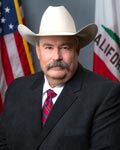
(Patterson) – As Introduced December 1, 2014
SUBJECT: California Global Warming Solutions Act of 2006: market-based compliance mechanisms: exemption
SUMMARY: Exempts distributors of fuels, including gasoline, diesel and natural gas, and any other entities that were not covered on January 1, 2013, from the cap-and-trade regulation adopted by the Air Resources Board (ARB).
EXISTING LAW, pursuant to the California Global Warming Solutions Act (AB 32):
Requires ARB to adopt a statewide greenhouse gas (GHG) emissions limit equivalent to 1990 levels by 2020 and to adopt rules and regulations to achieve maximum technologically feasible and cost-effective GHG emission reductions.
Authorizes ARB to permit the use of market-based compliance mechanisms to comply with GHG reduction regulations, once specified conditions are met. ARB has adopted a cap-and-trade regulation which applies to regulated entities engaged in stationary combustion, cement manufacturing, cogeneration, petroleum refining, hydrogen production, aluminum production, facility operators calcining carbonates, carbon dioxide (CO2) supplier or transfer recipient, electricity generation, glass production, iron and steel production, lime production, natural gas transmission and distribution, nitric acid production, oil and gas extraction field operation, production of industrial gases, pulp and paper production, soda ash production, electricity deliverers, transportation fuel deliverers, and natural gas deliverers. The cap-and-trade has covered (i.e., imposed a compliance obligation on) large industrial facilities and electricity generators emitting more than 25,000 metric tons of CO2 equivalent per year since January 1, 2013. Distributors of fuels, including gasoline, diesel and natural gas, have been covered since January 1, 2015.
THIS BILL:
Limits the compliance obligation under cap-and-trade to those entities covered since January 1, 2013, thereby excluding fuels and any other sources of GHG emissions that may be added in the future.
Defines "compliance obligation" as the quantity of GHG emissions for which a person or entity is required to submit GHG emissions allowances or offsets to ARB pursuant to a market-based compliance mechanism.
Applies retroactively from January 1, 2015.
Includes related findings and declarations.
Includes an urgency clause.
FISCAL EFFECT: Unknown
COMMENTS:
Background. According to ARB, a total reduction of 80 million metric tons (MMT), or 16% compared to business as usual, is necessary to achieve AB 32's 2020 statewide limit. Approximately 78% of the reductions will be achieved through identified direct regulations. ARB proposes to achieve the balance of reductions necessary to meet the 2020 limit (approximately 18 MMT) through the cap-and-trade regulation. Transportation fuels are included in cap-and-trade beginning January 1, 2015.
Transportation fuels are the biggest source of emissions. According to ARB, transportation constitutes almost 40% of all carbon pollution produced in California, by far the largest contributor to GHG emissions. Transportation fuels also produce 80% of smog-causing pollution and more than 95% of fine particle pollution from diesel engines. Reducing emissions from the transportation sector is critical to achieving the 2020 GHG limit required by AB 32, as well as meeting ambient air quality standards and reducing localized health impacts.
If not cap-and-trade, what then? It should be noted that cap-and-trade is viewed by economists and many regulated businesses as the most efficient way to reduce GHG emissions. This bill exempts fuels from cap-and-trade, but it does not exempt fuels from AB 32 or ARB's general authority, nor does it relax the GHG reduction obligation necessary to meet the statewide 2020 limit.
If GHG emissions from transportation fuels are not addressed through cap-and-trade, those emissions are likely to be addressed through direct regulatory measures on fuel distributors and/or consumers, or placing additional reduction obligations on other sources of GHG emissions, both of which are likely to be more costly. The likely effect of this bill would be to increase regulatory and consumer costs associated with achieving AB 32's goals, whether at the pump, through utility bills, or other areas of the economy.
REGISTERED SUPPORT / OPPOSITION:
Support
California Fresh Fruit Association
City of Clovis
City of Hanford
City of Sanger
George Runner, Board of Equalization 1st District
Greater Fresno Area Chamber of Commerce
Howard Jarvis Taxpayers Association
Johnson Air
KernTax
Madera County Board of Supervisors
National Federation of Independent Business
National Petroleum
Resources for Independence Central Valley
Tulare County Farm Bureau
Valley Taxpayer's Coalition
Western Growers Association
19 individuals
Opposition
American Lung Association in California
California League of Conservation Voters
California Municipal Utilities Association
Catholic Charities, Diocese of Stockton
Climate Parents
Climate Resolve
Consumers Union
Environmental Defense Fund
Natural Resources Defense Council
Nature Conservancy
TransForm
Analysis Prepared by: Lawrence Lingbloom / NAT. RES. / (916) 319-2092
Bill Author

Bill Co-Author(s):