AB 2317: California State University: Doctor of Audiology degrees.
- Session Year: 2015-2016
- House: Assembly
- Latest Version Date: 2016-09-09
Existing law, known as the Donahoe Higher Education Act, sets forth, among other things, the missions and functions of Californias public and independent segments of higher education, and their respective institutions of higher education. Provisions of the act do not apply to the University of California unless the regents of the university act, by resolution, to make them applicable.
Among other things, the act provides that the University of California has exclusive jurisdiction in public higher education to award the doctoral degree in all fields of learning, except that it may agree with the California State University to award joint doctoral degrees in selected fields. With respect to doctoral degrees, the act limits the California State University to awarding these degrees jointly with the University of California, as described above, or, with the approval of the California Postsecondary Education Commission, jointly with independent institutions of higher education.
This bill would instead authorize the California State University to award the Doctor of Audiology degree. The bill would require the degree to be distinguished from doctoral degree programs at the University of California. The bill would require that the degree be focused on preparing audiologists to provide health care services and be consistent with the standards for accreditation set forth by the Council on Academic Accreditation in Audiology and Speech-Language Pathology. The bill would require that each student in the programs authorized by the bill be charged fees no higher than the rate charged for students in state-supported programs in audiology at the University of California.
(a)The Legislature finds and declares both of the following:
(1)Since its adoption in 1960, the Master Plan for Higher Education has served to create the largest and most distinguished higher education system in the nation. A key component of the Master Plan for Higher Education is the differentiation of mission and function, whereby doctoral and identified professional programs are limited to the University of California, with the provision that the California State University can provide doctoral education in joint doctoral programs with the University of California and independent California colleges and universities. The differentiation of function has allowed California to provide universal access to postsecondary education while preserving quality.
(2)Because of the need to prepare and educate increased numbers of audiologists, the State of California is granting the California State University authority to offer the Doctor of Audiology degree as an exception to the differentiation of function in graduate education that assigns sole authority among the California higher education segments to the University of California for awarding doctoral degrees independently. This exception to the Master Plan for Higher Education recognizes the distinctive strengths and respective missions of the California State University and the University of California.
(b)Pursuant to subdivision (a), and notwithstanding Section 66010.4, in order to meet specific audiology education needs in California, the California State University may award the Doctor of Audiology (Au.D.) degree. The authority to award degrees granted by this article is limited to the discipline of audiology. The Au.D. degree offered by the California State University shall be distinguished from doctoral degree programs at the University of California.
66041.1.In implementing Section 66041, the California State University shall comply with all of the following requirements:
(a)Enrollments in these programs shall not diminish enrollment growth in university undergraduate programs.
(b)The Doctor of Audiology (Au.D.) degree offered by the California State University shall be focused on preparing audiologists to provide health care services and shall be consistent with the standards for accreditation set forth by the Council on Academic Accreditation in Audiology and Speech-Language Pathology.
(c)Each student in the programs authorized by this article shall be charged fees no higher than the rate charged for students in state-supported doctoral degree programs in audiology at the University of California, including joint Au.D. programs of the California State University and the University of California.
(d)The California State University shall provide any startup and operation funding needed for the programs authorized by this article from within existing budgets for academic programs support, without diminishing the quality of program support offered to California State University undergraduate programs. Funding of these programs shall not result in reduced undergraduate enrollments at the California State University.
(a)The Legislature finds and declares both of the following:
(1)Since its adoption in 1960, the Master Plan for Higher Education has served to create the largest and most distinguished higher education system in the nation. A key component of the Master Plan for Higher Education is the differentiation of mission and function, whereby doctoral and identified professional programs are limited to the University of California, with the provision that the California State University can provide doctoral education in joint doctoral programs with the University of California and independent California colleges and universities. The differentiation of function has allowed California to provide universal access to postsecondary education while preserving quality.
(2)Because of the need to prepare and educate increased numbers of audiologists, the State of California is granting the California State University authority to offer the Doctor of Audiology degree as an exception to the differentiation of function in graduate education that assigns sole authority among the California higher education segments to the University of California for awarding doctoral degrees independently. This exception to the Master Plan for Higher Education recognizes the distinctive strengths and respective missions of the California State University and the University of California.
(b)Pursuant to subdivision (a), and notwithstanding Section 66010.4, in order to meet specific audiology education needs in California, the California State University may award the Doctor of Audiology (Au.D.) degree. The authority to award degrees granted by this article is limited to the discipline of audiology. The Au.D. degree offered by the California State University shall be distinguished from doctoral degree programs at the University of California.
66041.1.In implementing Section 66041, the California State University shall comply with all of the following requirements:
(a)Funding on a per full-time equivalent student (FTES) basis for each new student in these degree programs shall be from within the California State Universitys enrollment growth levels as agreed to in the annual Budget Act. Enrollments in these programs shall not alter the California State Universitys ratio of graduate instruction to total enrollment, and shall not diminish enrollment growth in university undergraduate programs. Funding provided from the state for each FTES shall be at the agreed-upon marginal cost calculation that the California State University receives.
(b)The Doctor of Audiology (Au.D.) degree offered by the California State University shall be focused on preparing audiologists to provide health care services and shall be consistent with the standards for accreditation set forth by the Council on Academic Accreditation in Audiology and Speech-Language Pathology.
(c)Each student in the programs authorized by this article shall be charged fees no higher than the rate charged for students in state-supported doctoral degree programs in audiology at the University of California, including joint Au.D. programs of the California State University and the University of California.
(d)The California State University shall provide any startup and operation funding needed for the programs authorized by this article from within existing budgets for academic programs support, without diminishing the quality of program support offered to California State University undergraduate programs. Funding of these programs shall not result in reduced undergraduate enrollments at the California State University.
(a)The Legislature finds and declares both of the following:
(1)Since its adoption in 1960, the Master Plan for Higher Education has served to create the largest and most distinguished higher education system in the nation. A key component of the Master Plan for Higher Education is the differentiation of mission and function, whereby doctoral and identified professional programs are limited to the University of California, with the provision that the California State University can provide doctoral education in joint doctoral programs with the University of California and independent California colleges and universities. The differentiation of function has allowed California to provide universal access to postsecondary education while preserving quality.
(2)Because of the need to prepare and educate increased numbers of audiologists, the State of California is granting the California State University authority to offer the Doctor of Audiology degree as an exception to the differentiation of function in graduate education that assigns sole authority among the California higher education segments to the University of California for awarding doctoral degrees independently. This exception to the Master Plan for Higher Education recognizes the distinctive strengths and respective missions of the California State University and the University of California.
(b)Pursuant to subdivision (a), and notwithstanding Section 66010.4, in order to meet specific audiology education needs in California, the California State University may award the Doctor of Audiology (Au.D.) degree. The authority to award degrees granted by this article is limited to the discipline of audiology. The Doctor of Audiology Au.D. degree offered by the California State University shall be distinguished from doctoral degree programs at the University of California.
66041.1.In implementing Section 66041, the California State University shall comply with all of the following requirements:
(a)Funding on a per full-time equivalent student (FTES) basis for each new student in these degree programs shall be from within the California State Universitys enrollment growth levels as agreed to in the annual Budget Act. Enrollments in these programs shall not alter the California State Universitys ratio of graduate instruction to total enrollment, and shall not diminish enrollment growth in university undergraduate programs. Funding provided from the state for each FTES shall be at the agreed-upon marginal cost calculation that the California State University receives.
(b)The Doctor of Audiology (Au.D.) degree offered by the California State University shall be focused on preparing audiologists to provide health care services and shall be consistent with the standards for accreditation set forth by the Council on Academic Accreditation in Audiology and Speech-Language Pathology.
(c)Each student in the programs authorized by this article shall be charged fees no higher than the rate charged for students in state-supported doctoral degree programs in audiology at the University of California, including joint Au.D. programs of the California State University and the University of California.
(d)The California State University shall provide any startup funding needed for the programs authorized by this article from within existing budgets for academic programs support, without diminishing the quality of program support offered to California State University undergraduate programs. Funding of these programs shall not result in reduced undergraduate enrollments at the California State University.
(a)The Legislature finds and declares both of the following:
(1)Since its adoption in 1960, the Master Plan for Higher Education has served to create the largest and most distinguished higher education system in the nation. A key component of the Master Plan for Higher Education is the differentiation of mission and function, whereby doctoral and identified professional programs are limited to the University of California, with the provision that the California State University can provide doctoral education in joint doctoral programs with the University of California and independent California colleges and universities. The differentiation of function has allowed California to provide universal access to postsecondary education while preserving quality.
(2)Because of the need to prepare and educate increased numbers of audiologists, the State of California is granting the California State University authority to offer the Doctor of Audiology degree as an exception to the differentiation of function in graduate education that assigns sole authority among the California higher education segments to the University of California for awarding doctoral degrees independently. This exception to the Master Plan for Higher Education recognizes the distinctive strengths and respective missions of the California State University and the University of California.
(b)Pursuant to subdivision (a), and notwithstanding Section 66010.4, in order to meet specific audiology education needs in California, the California State University may award the Doctor of Audiology (Au.D.) degree. The authority to award degrees granted by this article is limited to the discipline of audiology. The Doctor of Audiology degree offered by the California State University shall be distinguished from doctoral degree programs at the University of California.
66041.1.In implementing Section 66041, the California State University shall comply with all of the following requirements:
(a)Funding on a per full-time equivalent student (FTES) basis for each new student in these degree programs shall be from within the California State Universitys enrollment growth levels as agreed to in the annual Budget Act. Enrollments in these programs shall not alter the California State Universitys ratio of graduate instruction to total enrollment, and shall not diminish enrollment growth in university undergraduate programs. Funding provided from the state for each FTES shall be at the agreed-upon marginal cost calculation that the California State University receives.
(b)The Doctor of Audiology (Au.D.) degree offered by the California State University shall be focused on preparing audiologists to provide health care services and shall be consistent with the standards for accreditation set forth by the Council on Academic Accreditation in Audiology and Speech-Language Pathology.
(c)Each student in the programs authorized by this article shall be charged fees no higher than the rate charged for students in state-supported doctoral degree programs in audiology at the University of California, including joint Au.D. programs of the California State University and the University of California.
(d)The California State University shall provide any startup funding needed for the programs authorized by this article from within existing budgets for academic programs support, without diminishing the quality of program support offered to California State University undergraduate programs. Funding of these programs shall not result in reduced undergraduate enrollments at the California State University.
|
Date
|
Status
|
|---|---|
| Sep 9, 2016 | Chaptered by Secretary of State - Chapter 267, Statutes of 2016. |
| Sep 9, 2016 | Approved by the Governor. |
| Aug 31, 2016 | Enrolled and presented to the Governor at 4 p.m. |
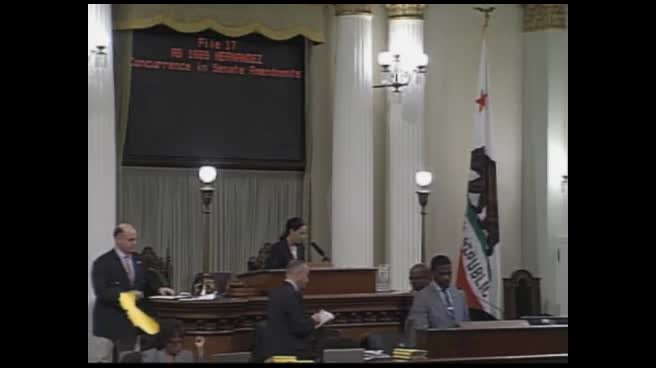
| Aug 23, 2016 | Senate amendments concurred in. To Engrossing and Enrolling. (Ayes 79. Noes 0. Page 6107.). |
| Aug 23, 2016 | Senate amendments concurred in. To Engrossing and Enrolling. |
| Aug 16, 2016 | In Assembly. Concurrence in Senate amendments pending. May be considered on or after August 18 pursuant to Assembly Rule 77. |
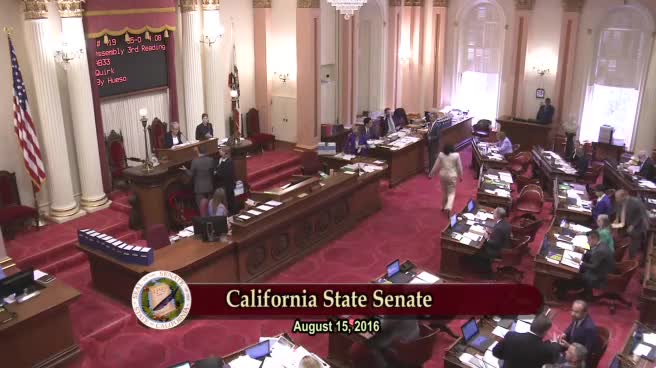
| Aug 15, 2016 | Read third time. Passed. Ordered to the Assembly. (Ayes 38. Noes 0. Page 4970.). |
| Aug 15, 2016 | Read third time. Passed. Ordered to the Assembly. (Ayes 38. Noes 0.). |
| Aug 15, 2016 | Read third time. Passed. Ordered to the Assembly. |
| Aug 4, 2016 | Ordered to third reading. |
| Aug 3, 2016 | Ordered to special consent calendar. |
| Jun 29, 2016 | Read second time and amended. Ordered to third reading. |
| Jun 28, 2016 | From committee: Amend, and do pass as amended. (Ayes 6. Noes 0.) (June 27). |
| Jun 20, 2016 | From committee chair, with author's amendments: Amend, and re-refer to committee. Read second time, amended, and re-referred to Com. on APPR. |
| Jun 8, 2016 | From committee: Do pass and re-refer to Com. on APPR. (Ayes 9. Noes 0.) (June 8). Re-referred to Com. on APPR. |
| May 19, 2016 | Referred to Com. on ED. |
| May 12, 2016 | Read third time. Passed. Ordered to the Senate. (Ayes 78. Noes 0. Page 4788.) |
| May 12, 2016 | Read third time. Passed. Ordered to the Senate. (Ayes 78. Noes 0.) |
| May 12, 2016 | Read third time. Passed. Ordered to the Senate. |
| May 12, 2016 | In Senate. Read first time. To Com. on RLS. for assignment. |
| May 5, 2016 | Read second time. Ordered to Consent Calendar. |
| May 4, 2016 | From committee: Do pass. To Consent Calendar. (Ayes 20. Noes 0.) (May 4). |
| Apr 20, 2016 | From committee: Do pass and re-refer to Com. on APPR. (Ayes 13. Noes 0.) (April 19). Re-referred to Com. on APPR. |
| Mar 3, 2016 | Referred to Com. on HIGHER ED. |
| Feb 19, 2016 | From printer. May be heard in committee March 20. |
| Feb 18, 2016 | Read first time. To print. |
|
Date
|
Description
|
Location
|
Votes
|
|
|---|---|---|---|---|
| Aug 23, 2016 | AB 2317 MULLIN Concurrence in Senate Amendments | Assembly Floor |
Passed |
|
| Aug 15, 2016 | Assembly 3rd Reading AB2317 Mullin By Leyva | Senate Floor |
Passed |
|
| Jun 27, 2016 | Do pass as amended | Senate Standing Committee on Appropriations |
Passed |
|
| Jun 8, 2016 | Do pass, but first be re-referred to the Committee on [Appropriations] | Senate Standing Committee on Education |
Passed |
|
| May 12, 2016 | AB 2317 MULLIN Consent Calendar Second Day Regular Session | Assembly Floor |
Passed |
|
| May 4, 2016 | Do pass. To Consent Calendar. | Assembly Standing Committee on Appropriations |
Passed |
|
| Apr 19, 2016 | Do pass and be re-referred to the Committee on [Appropriations] | Assembly Standing Committee on Higher Education |
Passed |
This list shows positions taken on this bill by organizations on the date displayed, which is linked to the original source.
Positions by individuals are not included.
CONCURRENCE IN SENATE AMENDMENTS
CSA1 Bill Id:AB 2317
Author:(Mullin)
As Amended Ver:June 29, 2016
Majority vote
ASSEMBLY: | 78-0 | (May 12, 2016) | SENATE: | 38-0 | (August 15, 2016) |
Original Committee Reference: HIGHER ED.
SUMMARY: Authorizes the California State University (CSU) to award the Doctor of Audiology (Au.D.) degree and establishes constraints on the funding and fees for these degrees.
The Senate amendments remove references to obsolete funding mechanisms and make other technical changes.
EXISTING LAW:
- Provides that the primary mission of the CSU is undergraduate and graduate instruction through the master's degree, but authorizes the CSU to offer joint doctoral degrees with the University of California (UC), or with one or more independent institutions of higher education, only as specified. Specifies that, in setting forth the missions and functions of California's public and independent institutions of higher education that, among other things, the UC has the sole authority in public higher education to award the doctoral degree in all fields of learning, except that it may agree with the CSU to award joint doctoral degrees in selected fields (Education Code (EC) 66010.4).
- Authorizes the CSU to independently award the Doctor of Education (Ed.D.) degree focused solely on preparing administrative leaders for California public K-14 schools (EC Section 66040, et seq.).
- Authorizes the CSU, until January 1, 2019, to offer the Doctor of Physical Therapy (D.P.T.) degree; and, specifies that the D.P.T. degree programs at the CSU shall be focused on preparing physical therapists to provide health care services, and shall be consistent with meeting the requirements of the Commission on Accreditation in Physical Therapy Education (CAPTE) (EC Section 66042, et seq.).
- Authorizes the CSU, until January 1, 2019, to offer the Doctor of Nursing Practice (DNP) degree programs at up to three campuses chosen by the CSU Trustees; specifies that the CSU shall not enroll any new students in the DNP degree programs on or after July 1, 2018; and, requires the CSU to provide data, as specified, by July 1, 2016, to the Legislative Analyst's Office (LAO), in order for the LAO to prepare a report to the Legislature on or before January 1, 2017 (EC Section 89281, et seq.).
FISCAL EFFECT: According to the Senate Appropriations Committee, no significant fiscal impact to the state. As with any new degree program proposed by a campus, it is a local campus decision to seek approval from CSU Chancellor's Office to offer new programs. Legislation is needed in this instance because the new program is a doctorate degree. If a campus chooses to provide an Au.D. degree program, funding would largely come from a new tuition fee for the program as well as funding from within existing campus resource allocations, including state General Fund.
COMMENTS: Role of audiologists and shortfall. Audiologists are health care professionals who provide diagnostic and rehabilitation care for individuals of all ages who have hearing and balance disorders.
According to the California Academy of Audiology (CAA), the Newborn Screening Program typically identifies 1,200 infants per year with severe hearing disabilities in need of treatment. Additionally, a rapidly growing aging population with identified hearing challenges, requiring the treatment of audiologists exists. However, there is a significant shortage of licensed audiologists in the state. According to CAA, approximately 1,600 licensed audiologists reside in California; it appears there is an inadequate in-state pipeline. According to the Speech-Language Pathology and Audiology and Hearing Aid Dispensers Board (SLPAHADB) of California, by 2030, it is estimated that California will need approximately 750 more audiologists in order to keep up with the need of the state's hearing impaired.
Changing standards for audiologists. For many years, the entry level degree audiologists needed in order to practice, was a Master of Science degree. However, in 1991, experts and academicians nationally called for a change in the entry level degree in audiology to be that of a clinical doctorate or the Au.D. The California licensing requirements for audiologists changed in 2008 to mandate that audiology applicants who graduated from an audiology training program after January 1, 2008, must hold an Au.D. degree from an approved institution.
The new national accreditation standards for audiology caused the CSU, with many campuses offering Master of Science degree programs in audiology, to close their programs.
Au.D. degree programs. San Diego State University (SDSU) and UC San Diego are the only public universities to offer a joint Au.D. degree program. According to SLPAHADB, from 2007-08 and 2013-14 academic years, the joint program awarded a total of 61 audiology degrees.
The University of the Pacific (UOP), a non-profit private postsecondary institution of higher learning, launched the first private Au.D. degree program in the state, in Fall 2015. To note, UOP expects to admit approximately 20 – 22 students per year.
Purpose for this measure. According to the author, in order to keep pace with the increasing demand and need for audiologists, this measure allows the CSU to award the Au.D. independently from doctoral degree programs offered at the UC. The author contends that, "Au.D. programs provided by CSU will likely provide more affordable programs that will draw the much-needed student diversity required of today's hearing health care providers."
Scope of the CSU. While it is not the norm for the CSU to be authorized to offer doctoral degrees, as outlined in the "Existing Law" section of this analysis, the Legislature has allowed the CSU to offer professional doctoral degrees that have sought to fulfill a specific needed role for the state, and not typically offered by the UC.
Analysis Prepared by: Jeanice Warden / HIGHER ED. / (916) 319-3960 FN: 0003613
Office of Senate Floor Analyses (916) 651-1520 Fax: (916) 327-4478 | AB |
THIRD READING
Bill No: AB 2317
:
SENATE EDUCATION COMMITTEE: 9-0, 6/8/16
AYES: Liu, Block, Hancock, Huff, Leyva, Mendoza, Monning, Pan, Vidak
SENATE APPROPRIATIONS COMMITTEE: 6-0, 6/27/16
AYES: Bates, Beall, Hill, McGuire, Mendoza, Nielsen
NO VOTE RECORDED: Lara
ASSEMBLY FLOOR: 78-0, 5/12/16 (Consent) - See last page for vote
DIGEST: This bill authorizes the California State University (CSU) to award a Doctor of Audiology degree (Au.D) and establishes constraints on the funding and fees for these degrees.
Existing law:
- Provides that the primary mission of the CSU is undergraduate and graduate instruction through the master’s degree, but authorizes the CSU to offer joint doctoral degrees with the University of California (UC), or with one or more independent institutions of higher education, only as specified. (Education Code § 66010.4)
- Provides, in setting forth the missions and functions of California’s public and independent institutions of higher education provides, among other things, that UC has the sole authority in public higher education to award the doctoral degree in all fields of learning, except that it may agree with the CSU to award joint doctoral degrees in selected fields. (EC § 66010.4)
- Authorizes the CSU to independently award the Doctor of Education (Ed.D) degree focused solely on preparing administrative leaders for California public K-14 schools. (EC § 66040, et seq.)
- Authorizes the CSU, until January 1, 2019, to offer the Doctor of Physical Therapy (D.P.T.) degree focused solely on preparing physical therapists to provide health care services, and shall be consistent with meeting the requirements of the Commission on Accreditation in Physical Therapy Education. (EC § 66402, et seq.)
- Authorizes the CSU, until January 1, 2019, to offer the Doctor of Nursing Practice degree programs at up to three campuses chosen by the CSU Trustees and requires the CSU to provide data, as specified, by July 1, 2016, to the Legislative Analyst’s Office (LAO), in order for the LAO to prepare a report to the Legislature on or before January 1, 2017. (EC § 89281, et seq.)
This bill:
- Finds and declares the following intent of the Legislature:
- Since its adoption in 1960, the Master Plan for Higher Education has served to create the largest and most distinguished higher education system in the nation. A key component of the Master Plan for Higher Education is the differentiation of mission and function, whereby doctoral and identified professional programs are limited to the UC, with the provision that the CSU can provide doctoral education in joint doctoral programs with the UC and independent California colleges and universities. The differentiation of function has allowed California to provide universal access to postsecondary education while preserving quality; and,
- Because of the need to prepare and educate increased numbers of audiologists, the State of California is granting the CSU authority to offer the Au.D degree as an exception to the differentiation of function in graduate education that assigns sole authority among the California higher education segments to the UC for awarding doctoral degrees independently. This exception to the Master Plan for Higher Education recognizes the distinctive strengths and respective missions of the CSU and the UC.
- Authorizes the CSU to award a Au.D degree, notwithstanding the Masterplan and its differentiation of mission and function, in order to meet specified audiology needs in California, subject to compliance with the following conditions:
- Limits the authority to award doctorate to the discipline of audiology.
- Prohibits enrollment in these programs from diminishing the growth of enrollment of undergraduate programs.
- Caps the fess that may be charged students in these programs at the rate charged for students in state-supported Au.D programs at the UC (including joint programs of the CSU and UC).
- Requires that the degree be focused on preparing audiologist to provide health care services, and that it be consistent with meeting the requirements of the Council on Academic Accreditation in Audiology and Speech Language Pathology.
Comments
- Need for the bill. According to the California Academy of Audiology, there are approximately 1,600 audiologists in the state which falls short of the number needed to provide services for the increasing number of California’s with hearing and balance disorders. The author asserts that, “Doctor of Audiology degree (Au.D) programs provided by the California State University (CSU) will likely provide more affordable programs that will draw the much –needed student diversity required of today’s hearing health care providers.” This bill seeks to address a shortage of licensed audiologist in the state by authorizing CSU to award Au.D independently from doctoral degree programs offered at UC.
- Existing authorization. Notwithstanding the Masterplan for Higher Education, which designates the UC as the only California public postsecondary education segment authorized to award a doctoral degree, current law authorizes the CSU to independently award three professional doctoral degrees which include the Doctor of Education, Doctor of Physical Therapy and Doctor of Nursing. This bill expands the type of professional doctoral degrees CSU is authorized to award.
- Slippery slope. In 2001, the American Speech-Language Hearing Association (ASHA), a national professional organization representing audiologists and also the accrediting body for professional preparation programs in audiology, speech and language pathology, mandated that beginning in 2007 audiologists would be required to earn a doctorate to attain professional certification. Schools that did not offer a doctorate in audiology would lose their accreditation. At the time, the CSU offered five master’s level audiology programs and one joint doctoral program between San Diego State University (SDSU) and UC San Diego (UCSD). To date, the SDSU/UCSD joint degree is the only public program in the state.
Senate Education Committee staff notes that it was not CSU or an independent accrediting or educational evaluating organization that mandated the change in the program. Rather, it is a private professional association that, at present, is the sole accrediting agency and sole provider of individual certification and the national licensing exam.
Should a single private agency, in essence, dictate the programs that California public colleges must offer? Shouldn’t the institutions play a role in determining what their educational standards should be? How many other private professional agencies will follow suit?
- What is the Au.D? According to the American Academy of Audiology, an Au.D is a clinically based, professional doctoral degree, for purposes of clinical practice in this field and as such is distinguished from the doctoral program (PhD) that is research based. This bill specifically authorizes CSU to offer an Au.D degree focused on preparing audiologists to provide health care services.
- Why not a joint degree? Under current law, the CSU is authorized to offer joint degrees with either the UC or private higher education institutions. Arguably, under this authority, the need to offer the Au.D program could be met by expanding the type of partnership that exists between SDSU and UCSD. On its own, UC does not offer Audiology degrees. It appears that at one point in time additional joint programs were in the works but derailed as a consequence of the 2008 recession.
Rather than authorizing CSU to offer its own Au.D, would it make more sense to encourage CSU to first attempt to establish a joint degree before offering its own program?
- California’s audiology programs. There are two Au.D programs in the state, one offered by SDSU/UCSD and the other by the University of the Pacific (UoP) a non-profit postsecondary institution. In 2014-2015 the joint SDSU/UCSD program awarded a total of 8 audiology degrees (reflects the 3-year average rate). The UoP recently launched its program in the fall of 2015 and is expected to admit 20-22 students annually.
- Workforce trends. According to the U.S. Bureau of Labor Statistics, the need for Audiologists is expected to increase due to the growth in the aging population. It also appears that California’s new born hearing screening program, which offers parents of infants delivered in California the opportunity to have their baby’s hearing screened, has also increased the demand for audiologist in the state. According to the Labor Market Information Division (LMID) of the California Employment Development Department, in California, the demand for audiologists is ranked among faster growing occupations in the state with jobs expected to increase by 30 percent (300 jobs) between 2012-2022. In addition, the LMID reports that the median annual salary for Audiologist in California in 2015 was $86,900 ($42.34 hourly). Does the need for audiologist outweigh concerns about adhering to the principles of the Masterplan or concerns about catering to the interests of private professional organizations?
FISCAL EFFECT: Appropriation: Fiscal Com.: Local:
According to the Senate Appropriations Committee:
No significant fiscal impact to the state. As with any new degree program proposed by a campus, it is a local campus decision to seek approval from CSU Chancellor’s Office to offer new programs. Legislation is needed in this instance because the new program is a doctorate degree. If a campus chooses to provide an Au.D. degree program, funding would largely come from a new tuition fee for the program as well as funding from within existing campus resource allocations, including state General Fund.
California Academy of Audiology
California Speech Language Hearing Association
California State University Northridge
California State University Los Angeles
Hearing Healthcare Providers California
Numerous individuals
Speech-Language Pathology and Audiology and Hearing Aid Dispensers Board
The Graduate College of Education at San Francisco State University
Several individuals
OPPOSITION: (Verified 6/28/16)
None received
AYES: Achadjian, Alejo, Travis Allen, Arambula, Atkins, Baker, Bigelow, Bloom, Bonilla, Bonta, Brough, Brown, Calderon, Campos, Chang, Chau, Chávez, Chiu, Chu, Cooley, Cooper, Dababneh, Dahle, Daly, Dodd, Eggman, Frazier, Beth Gaines, Gallagher, Cristina Garcia, Eduardo Garcia, Gatto, Gipson, Gomez, Gonzalez, Gordon, Gray, Grove, Hadley, Harper, Roger Hernández, Holden, Irwin, Jones, Kim, Lackey, Levine, Linder, Lopez, Low, Maienschein, Mathis, Mayes, McCarty, Medina, Melendez, Mullin, Nazarian, Obernolte, O'Donnell, Olsen, Patterson, Quirk, Ridley-Thomas, Rodriguez, Salas, Santiago, Steinorth, Mark Stone, Thurmond, Ting, Wagner, Waldron, Weber, Wilk, Williams, Wood, Rendon
NO VOTE RECORDED: Burke, Jones-Sawyer
6/29/16 15:56:30
**** END ****
SENATE COMMITTEE ON
Senator Ricardo Lara, Chair
2015 - 2016 Regular Session
AB 2317 (Mullin) - California State University: Doctor of Audiology degrees
Version: | Policy Vote: |
Urgency: | Mandate: |
Hearing Date: | Consultant: |
This bill does not meet the criteria for referral to the Suspense File.
Bill Summary:
This bill authorizes the California State University (CSU) to award the Doctor of Audiology (Au.D.) degree, as specified.
Fiscal Impact:
- No significant fiscal impact to the state. As with any new degree program proposed by a campus, it is a local campus decision to seek approval from CSU Chancellor’s Office to offer new programs. Legislation is needed in this instance because the new program is a doctorate degree. If a campus chooses to provide an Au.D. degree program, funding would largely come from a new tuition fee for the program as well as funding from within existing campus resource allocations, including state General Fund. See staff comments.
Background:
Existing law outlines the mission of each of the state’s segments of postsecondary institutions. It establishes the University of California (UC) as the sole authority in public higher education to award doctoral degrees, except that it may agree with the CSU to award joint doctoral degrees in selected fields. Existing law also allows the CSU to award a doctoral degree with independent California colleges and universities but establishes the primary mission of the CSU as undergraduate and graduate instruction through the master’s degree. (Education Code Section 66010.4)
The CSU has received special authorization to offer three doctoral degrees independently: Doctor of Education, Doctor of Physical Therapy (DPT), and Doctor of Nursing Practice. (Education Code Section 66040, 66042, and 89281)
An audiologist is a professional who diagnoses and treats hearing and balance problems. In 2001, the American Speech-Language-Hearing Association changed its certification standards for audiologists, requiring a doctorate in audiology or closely related area, beginning in 2007. Schools that did not offer a doctorate in audiology would lose their accreditation. The CSU was offering five master’s level audiology programs and one joint doctoral program between San Diego State University (SDSU) and UC San Diego (UCSD). To date, the SDSU/UCSD joint degree is the only public program in the state. The only other Au.D. degree program offered in the state is at the University of the Pacific.
Proposed Law:
This bill authorizes the CSU to award an Au.D degree that complies with certain requirements, including that the degree be focused on preparing audiologists to provide health care services.
In addition, this bill:
- Prohibits enrollment from altering the CSU’s ratio of graduate instruction to total enrollment;
- Prohibits the program from diminishing enrollment growth in undergraduate programs;
- Requires that each student in the program be charged fees no higher than the rate charged for students in audiology doctoral degrees at the UC; and
- Requires any startup funding for the program to come from within existing budgets for academic support, without diminishing the quality of program support offered to CSU undergraduate programs.
Finally, this bill provides that funding on a per full-time equivalent student (FTES) basis for students in the program is required to be from within the CSU’s enrollment growth levels as provided in the annual Budget Act. Staff notes that the state does not consistently specify enrollment levels and related funding in the state budget and the CSU also uses other general-purpose resources to support academic programs. This bill also requires that funding provided from the state for each FTES be at the agreed-upon marginal cost calculation that the CSU receives. Staff notes that this is obsolete language that no longer applies.
Staff Comments:
The CSU indicates that, as with all degrees, it would approve programs based on several factors, including whether campus resources are in place to sustain a program and proposals that would require minimal start-up investments. For campuses that had master degree programs in audiology, the master degree curriculum would likely serve as a foundation that would be updated and revised to reflect a doctoral-level program. This is similar to the transition from the master’s degree in physical therapy to the DPT program. Also, some campuses have retained faculty from former master’s programs that could likely transition to the Au.D. degree programs.
Similar to any other new degree program, the CSU Chancellor’s Office does not provide allocations for starting up doctorates. CSU indicates that each program is a local, campus decision as part of campus’ allocation of resources. Program costs would likely vary by campus and would be funded mostly by an Au.D. doctoral tuition fee plus varying levels of state and university general purpose funding, similar to the DPT program.
Recommended Amendments:
Staff recommends the following amendments to remove references to obsolete funding mechanisms and other technical changes:
- On page 3, strike out lines 16 through 18 and on line 19, strike out “to in the annual Budget Act.” Also, strike out on line 19, “shall”.
- On page 3, strike out line 20, and on line 21, strike out “instruction to total enrollment, and”
- On page 3, on line 22 strike out “Funding provided” and strike out lines 23 and 24.
- One page 3, line 36, after “startup”, insert “and operation”.
-- END --
SENATE COMMITTEE ON EDUCATION
Senator Carol Liu, Chair
2015 - 2016 Regular
Bill No:
Author: | |||
Version: | Hearing Date: June 8, 2016 | ||
Urgency: | Fiscal: | ||
Consultant: | |||
Subject:
SUMMARY
This bill authorizes the California State University (CSU) to award a Doctor of Audiology degree (Au.D) and establishes constraints on the funding and fees for these degrees.
BACKGROUND
Existing law:
- Provides that the primary mission of the California State University is undergraduate and graduate instruction through the master’s degree, but authorizes the CSU to offer joint doctoral degrees with the University of California (UC), or with one or more independent institutions of higher education, only as specified. (Education Code § 66010.4)
- In setting forth the missions and functions of California’s public and independent institutions of higher education provides, among other things, that UC has the sole authority in public higher education to award the doctoral degree in all fields of learning, except that it may agree with the CSU to award joint doctoral degrees in selected fields. (EC § 66010.4)
- Authorizes the CSU to independently award the Doctor of Education (Ed.D) degree focused solely on preparing administrative leaders for California public K-14 schools. (EC § 66040, et seq.)
- Authorizes the CSU, until January 1, 2019, to offer the Doctor of Physical Therapy (D.P.T.) degree focused solely on preparing physical therapists to provide health care services, and shall be consistent with meeting the requirements of the Commission on Accreditation in Physical Therapy Education. (EC § 66402, et seq.)
- Authorizes the CSU, until January 1, 2019, to offer the Doctor of Nursing Practice degree programs at up to three campuses chosen by the CSU Trustees and requires the CSU to provide data, as specified, by July 1, 2016, to the Legislative Analyst’s Office (LAO), in order for the LAO to prepare a report to the Legislature on or before January 1, 2017. (EC § 89281, et seq.)
ANALYSIS
- Finds and declares the following intent of the Legislature:
- Since its adoption in 1960, the Master Plan for Higher Education has
served to create the largest and most distinguished higher education
system in the nation. A key component of the Master Plan for Higher
Education is the differentiation of mission and function, whereby doctoral
and identified professional programs are limited to the University of
California (UC), with the provision that the California State University
(CSU) can provide doctoral education in joint doctoral programs with the
UC and independent California colleges and universities. The
differentiation of function has allowed California to provide universal
access to postsecondary education while preserving quality; and,
- Because of the need to prepare and educate increased numbers of
audiologists, the State of California is granting the CSU authority to offer the Doctor of Audiology degree (Au.D) degree as an exception to the differentiation of function in graduate education that assigns sole authority among the California higher education segments to the UC for awarding doctoral degrees independently. This exception to the Master Plan for Higher Education recognizes the distinctive strengths and respective missions of the CSU and the UC.
- Authorizes the CSU to award a Au.D degree, notwithstanding the Masterplan and its differentiation of mission and function, in order to meet specified audiology needs in California, subject to compliance with the following conditions:
- Limits the authority to award doctorate to the discipline of audiology.
- Requires that the amount of state full-time equivalent student (FTES)
funding per student be at the agreed upon marginal cost calculation that the CSU receives and further:
- Requires that FTES funding for the new students in these programs
come from within the CSU’s agreed upon enrollment levels in the
annual Budget Act.
- Prohibits enrollment in these programs from altering the ratio of
graduate instruction to total enrollment and diminishing the growth of enrollment of undergraduate programs.
- Caps the fess that may be charged students in these programs at the rate
charged for students in state-supported Au.D programs at the UC
(including joint programs of the CSU and UC).
- Requires that the degree be focused on preparing audiologist to provide
health care services, and that it be consistent with meeting the requirements of the Council on Academic Accreditation in Audiology and Speech Language Pathology.
STAFF COMMENTS
- Need for the bill. According to the California Academy of Audiology, there are approximately 1,600 audiologists in the state which falls short of the number needed to provide services for the increasing number of California’s with hearing and balance disorders. The author asserts that, “Doctor of Audiology degree (Au.D) programs provided by the California State University (CSU) will likely provide more affordable programs that will draw the much –needed student diversity required of today’s hearing health care providers.” This bill seeks to address a shortage of licensed audiologist in the state by authorizing CSU to award Au.D independently from doctoral degree programs offered at UC.
- Existing authorization. Notwithstanding the Masterplan for Higher Education, which designates the University of California the only California public postsecondary education segment authorized to award a doctoral degree, current law authorizes the CSU to independently award three professional doctoral degrees which include the Doctor of Education, Doctor of Physical Therapy and Doctor of Nursing. This bill would expand the type of professional doctoral degrees CSU is authorized to award.
- Slippery slope. In 2001, the American Speech-Language Hearing Association (ASHA), a national professional organization representing audiologists and also the accrediting body for professional preparation programs in audiology, speech and language pathology, mandated that beginning in 2007 audiologists would be required to earn a doctorate to attain professional certification. Schools that did not offer a doctorate in audiology would lose their accreditation. At the time, the CSU offered five master’s level audiology programs and one joint doctoral program between San Diego State University (SDSU) and UC San Diego (UCSD). To date, the SDSU/UCSD joint degree is the only public program in the state.
Staff notes that it was not CSU or an independent accrediting or educational evaluating organization that mandated the change in the program. Rather, it is a private professional association that, at present, is the sole accrediting agency and sole provider of individual certification and the national licensing exam.
Should a single private agency, in essence, dictate the programs that California public colleges must offer? Shouldn’t the institutions play a role in determining what their educational standards should be? How many other private professional agencies will follow suit?
- What is the Au.D? According to the American Academy of Audiology, an Au.D is a clinically based, professional doctoral degree, for purposes of clinical practice in this field and as such is distinguished from the doctoral program (PhD) that is research based. This bill specifically authorizes CSU to offer an Au.D degree focused on preparing audiologists to provide health care services.
- Why not a joint degree? Under current law, the California State University (CSU) is authorized to offer joint degrees with either the University of California (UC) or private higher education institutions. Arguably, under this authority, the need to offer the Doctor of Audiology degree (Au.D) program could be met by expanding the type of partnership that exists between San Diego State University (SDSU) and UC San Diego (UCSD). On its own, UC does not offer Audiology degrees. It appears that at one point in time additional joint programs were in the works but derailed as a consequence of the 2008 recession.
Rather than authorizing CSU to offer its own Au.D, would it make more sense to encourage CSU to first attempt to establish a joint degree before offering its own program?
- California’s audiology programs. There are two Au.D programs in the state, one offered by SDSU/UCSD and the other by the University of the Pacific (UoP) a non-profit postsecondary institution. In 2014-2015 the joint SDSU/UCSD program awarded a total of 8 audiology degrees (reflects the 3-year average rate). The UoP recently launched its program in the fall of 2015 and is expected to admit 20-22 students annually.
- Workforce trends. According to the U.S. Bureau of Labor Statistics, the need for Audiologists is expected to increase due to the growth in the aging population. It also appears that California’s new born hearing screening program, which offers parents of infants delivered in California the opportunity to have their baby’s hearing screened, has also increased the demand for audiologist in the state. According to the Labor Market Information Division (LMID) of the California Employment Development Department, in California, the demand for audiologists is ranked among faster growing occupations in the state with jobs expected to increase by 30 percent (300 jobs) between 2012-2022. In addition, the LMID reports that the median annual salary for Audiologist in California in 2015 was $86,900 ($42.34 hourly). Does the need for audiologist outweigh concerns about adhering to the principles of the Masterplan or concerns about catering to the interests of private professional organizations?
SUPPORT
California Academy of Audiology
Hearing Healthcare Providers California (HHP)
Numerous individuals
Speech-Language Pathology and Audiology and Hearing Aid Dispensers Board
The Graduate College of Education at San Francisco State University
OPPOSITION
None received.
-- END --
Date of Hearing: May 4, 2016
ASSEMBLY COMMITTEE ON APPROPRIATIONS
Lorena Gonzalez, Chair
ABPCA Bill Id:AB 2317
Author:(Mullin) – As Introduced Ver:February 18, 2016
Policy Committee: | Higher Education | Vote: | 13 - 0 |
Urgency: No State Mandated Local Program: No Reimbursable: No
SUMMARY:
This bill authorizes the California State University (CSU) to award the Doctor of Audiology (Au.D.) degree. Specifically, the bill:
- Specifies that the Au.D. degree offered by the CSU shall be distinguished from doctoral degree programs at the UC.
- Stipulates that state funding for students in the program shall come within amounts allocated in the annual Budget Act to the CSU for enrollment growth, shall be at the marginal-cost CSU receives for graduate enrollment, shall not alter CSU’s ratio of graduate instruction to total enrollment, and shall not diminish undergraduate enrollment growth.
- Stipulates that each student enrolled in an Au.D. degree program shall be charged fees no higher than the rate charged for students in state-supported doctoral degree programs in audiology at the UC, including joint CSU/UC Au.D. programs.
- Stipulates that CSU shall provide initial start-up funding from within existing budgets for academic program support and that funding shall not reduce undergraduate enrollments.
FISCAL EFFECT:
No net state costs. Should any CSU campus elect to start an Au.D. program, funding will come from reallocations within the campus's budget and within amounts allocated to CSU, and that campus, for graduate student enrollment growth. This is the same fiscal impact as when a CSU campus is approved to start any new graduate-level program, except in this circumstance, the CSU needs specific legislative authorization because the new program is a Doctorate.
CSU previously offered Master's-level education in audiology programs. The California licensing requirements for audiologists changed in 2008 to mandate that audiology applicants who graduated from an audiology training program after January 1, 2008, must hold an Au.D. degree from an approved institution. With this change, all such CSU programs were closed. CSU indicates that the remaining audiology faculty and equipment are still available at some CSU campuses, which it believes will make it possible to implement Au.D. programs without significant new investment. The CSU Chancellor's Office would authorize programs only at CSU campuses with interest, sufficient resources, and demonstrated student demand. As with other CSU Doctoral programs, establishment of a Au.D. would not be allowed to negatively affect a campus's undergraduate enrollments or the quality of undergraduate degree programs.
COMMENTS:
- Background and Purpose. Audiologists are health care professionals who provide diagnostic and rehabilitation care for individuals of all ages who have hearing and balance disorders. According to the California Academy of Audiology (CAA), approximately 1,600 licensed audiologists reside in California; it appears there is an inadequate in-state pipeline, which this bill seeks to address. According to the Speech-Language Pathology and Audiology and Hearing Aid Dispensers Board (SLPAHADB) of California, by 2030, it is estimated that California will need approximately 750 more audiologists in order to keep up with the need of the state's hearing impaired.
- Current Programs. San Diego State University and UC San Diego are the only public universities offering a joint Au.D. degree program. According to SLPAHADB, from 2007-08 and 2013-14, this joint program awarded a total of 61 audiology degrees.
The University of the Pacific (UOP), a non-profit private postsecondary institution, launched the state's first private Au.D. degree program in Fall 2015. UOP expects to admit approximately 20 students per year.
- Prior Legislation. The Legislature has authorized CSU to offer certain professional doctoral degrees, not typically offered by the UC, to fulfill specific unmet needs state:
- AB 867 (Nava), Chapter 416, Statutes of 2010, authorizes a Doctor of Nursing Practice degree until January 1, 2019, with an LAO program evaluation report due prior to the sunset date.
- AB 2382 (Blumenfield), Chapter 425, Statutes of 2010, authorizes a Doctor of Physical Therapy degree, also until January 2, 2019.
- SB 724 (Scott), Chapter 269, Statutes of 2005, authorizes a Doctor of Education degree focused on preparing administrative leaders for the states K-12 schools and community colleges.
Analysis Prepared by: Chuck Nicol / APPR. / (916) 319-2081
Date of Hearing: April 19, 2016
ASSEMBLY COMMITTEE ON HIGHER EDUCATION
Jose Medina, Chair
ABPCA Bill Id:AB 2317 (
Author:Mullin) – As Introduced Ver:February 18, 2016
SUBJECT: California State University: Doctor of Audiology degrees.
SUMMARY: Authorizes the California State University (CSU) to award the Doctor of Audiology (Au.D.) degree. Specifically, this bill:
- Finds and declares the following intent of the Legislature:
- Since its adoption in 1960, the Master Plan for Higher Education has served to create the largest and most distinguished higher education system in the nation. A key component of the Master Plan for Higher Education is the differentiation of mission and function, whereby doctoral and identified professional programs are limited to the University of California (UC), with the provision that the CSU can provide doctoral education in joint doctoral programs with the UC and independent California colleges and universities. The differentiation of function has allowed California to provide universal access to postsecondary education while preserving quality; and,
- Because of the need to prepare and educate increased numbers of audiologists, the State of California is granting the CSU authority to offer the Au.D. degree as an exception to the differentiation of function in graduate education that assigns sole authority among the California higher education segments to the UC for awarding doctoral degrees independently. This exception to the Master Plan for Higher Education recognizes the distinctive strengths and respective missions of the CSU and the UC.
- Authorizes the CSU to award the Au.D. degree.
- Specifies that the Au.D. degree offered by the CSU shall be distinguished from doctoral degree programs at the UC.
- Requires the CSU, when granting Au.D. degrees, to comply with all of the following requirements:
- Funding on a per full-time equivalent student (FTES) basis for each new student in the Au.D. programs shall be from within the CSU's enrollment growth levels as agreed to in the annual Budget Act. Enrollments in these programs shall not alter the CUS's ratio of graduate instruction to total enrollment, and shall not diminish enrollment growth in CSU's undergraduate programs. Funding provided from the state for each FTES shall be at the agreed-upon marginal cost calculation that the CSU receives;
- The Au.D. degree offered by the CSU shall focus on preparing audiologists to provide health care services and shall be consistent with the standards for accreditation set forth by the Council on Academic Accreditation in Audiology and Speech-Language Pathology;
- Each student enrolled in an Au.D. degree program shall be charged fees no higher than the rate charged for students in state-supported doctoral degree programs in audiology at the UC, including joint Au.D. programs of the CSU and UC; and,
- The CSU shall provide any startup funding needed for the Au.D. degree programs from within existing budgets for academic support, without diminishing the quality of program support offered to CSU undergraduate programs. Funding of the Au.D. degree programs shall not result in reduced undergraduate enrollments at the CSU.
EXISTING LAW:
- Provides that the primary mission of the CSU is undergraduate and graduate instruction through the master's degree, but authorizes the CSU to offer joint doctoral degrees with the UC, or with one or more independent institutions of higher education, only as specified. Specifies that, in setting forth the missions and functions of California’s public and independent institutions of higher education that, among other things, the UC has the sole authority in public higher education to award the doctoral degree in all fields of learning, except that it may agree with the CSU to award joint doctoral degrees in selected fields (Education Code (EC) 66010.4).
- Authorizes the CSU to independently award the Doctor of Education (Ed.D.) degree focused solely on preparing administrative leaders for California public K-14 schools (EC Section 66040, et seq.).
- Authorizes the CSU, until January 1, 2019, to offer the Doctor of Physical Therapy (D.P.T.) degree; and, specifies that the D.P.T. degree programs at the CSU shall be focused on preparing physical therapists to provide health care services, and shall be consistent with meeting the requirements of the Commission on Accreditation in Physical Therapy Education (EC Section 66042, et seq.).
- Authorizes the CSU, until January 1, 2019, to offer the Doctor of Nursing Practice degree programs at up to three campuses chosen by the CSU Trustees; specifies that the CSU shall not enroll any new students in the Doctor of Nursing Practice degree programs on or after July 1, 2018; and, requires the CSU to provide data, as specified, by July 1, 2016, to the Legislative Analyst's Office (LAO), in order for the LAO to prepare a report to the Legislature on or before January 1, 2017 (EC Section 89281, et seq.).
FISCAL EFFECT: Unknown
COMMENTS: Role of audiologists and shortfall. Audiologists are health care professionals who provide diagnostic and rehabilitation care for individuals of all ages who have hearing and balance disorders.
According to the California Academy of Audiology (CAA), the Newborn Screening Program typically identifies 1,200 infants per year with severe hearing disabilities in need of treatment. Additionally, a rapidly growing aging population with identified hearing challenges, requiring the treatment of audiologists exists. However, there is a significant shortage of licensed audiologists in the state. According to CAA, approximately 1,600 licensed audiologists reside in California; it appears there is an inadequate in-state pipeline. According to the Speech-Language Pathology and Audiology and Hearing Aid Dispensers Board (SLPAHADB) of California, by 2030, it is estimated that California will need approximately 750 more audiologists in order to keep up with the need of the state's hearing impaired.
Changing standards for audiologists. For many years, the entry level degree audiologists needed in order to practice, was a Master of Science degree. However, in 1991, experts and academicians nationally called for a change in the entry level degree in audiology to be that of a clinical doctorate or the Au.D. The California licensing requirements for audiologists changed in 2008 to mandate that audiology applicants who graduated from an audiology training program after January 1, 2008, must hold an Au.D. degree from an approved institution.
The new national accreditation standards for audiology caused the CSU, with many campuses offering Master of Science degree programs in audiology, to close their programs.
Au.D. degree programs. San Diego State University and UC San Diego are the only public universities to offer a joint Au.D. degree program. According to SLPAHADB, from 2007-08 and 2013-14 academic years, the joint program awarded a total of 61 audiology degrees.
The University of the Pacific (UOP), a non-profit private postsecondary institution of higher learning, launched the first private Au.D. degree program in the state, in Fall 2015. To note, UOP expects to admit approximately 20 – 22 students per year.
Purpose for this measure. According to the author, in order to keep pace with the increasing demand and need for audiologists, this measure allows the CSU to award the Au.D. independently from doctoral degree programs offered at the UC. The author contends that, "Au.D. programs provided by CSU will likely provide more affordable programs that will draw the much-needed student diversity required of today's hearing health care providers."
Scope of the CSU. While it is not the norm for the CSU to be authorized to offer doctoral degrees, as outlined in the "Existing Law" section of this analysis, the Legislature has allowed the CSU to offer professional doctoral degrees that have sought to fulfill a specific needed role for the state, and not typically offered by the UC.
REGISTERED SUPPORT / OPPOSITION:
Support
California Academy of Audiology
California Speech-Languages Hearing Association
Dean's Office, Graduate College of Education, San Francisco State University
Department of Special Education and Communicative Disorders, San Francisco State University
Hearing Healthcare Providers
Speech-Language Pathology and Audiology and Hearing Aid Dispensers Board (within the
State of California Department of Consumer Affairs)
Pacific Hearing and Balance, Inc.
23 Individuals
Opposition
None on file.
Analysis Prepared by: Jeanice Warden / HIGHER ED. / (916) 319-3960
Discussed in Hearing
 1MIN
Assembly Floor
 2MIN
Senate Floor
 8MIN
Senate Standing Committee on Appropriations
 19MIN
Senate Standing Committee on Education
Bill Author

Bill Co-Author(s):
