AB 940: Recovery residences.
- Session Year: 2019-2020
- House: Assembly
- Latest Version Date: 2020-01-06
|
Date
|
Status
|
|---|---|
| Feb 3, 2020 | From committee: Filed with the Chief Clerk pursuant to Joint Rule 56. |
| Jan 31, 2020 | Died pursuant to Art. IV, Sec. 10(c) of the Constitution. |
| Jan 23, 2020 | In committee: Set, first hearing. Referred to APPR. suspense file. |
| Jan 14, 2020 | From committee: Do pass and re-refer to Com. on APPR. (Ayes 14. Noes 0.) (January 14). Re-referred to Com. on APPR. |
| Jan 7, 2020 | Re-referred to Com. on HEALTH. |
| Jan 6, 2020 | From committee chair, with author's amendments: Amend, and re-refer to Com. on HEALTH. Read second time and amended. |
| Apr 23, 2019 | In committee: Set, second hearing. Hearing canceled at the request of author. |
| Apr 23, 2019 | Re-referred to Com. on HEALTH. |
| Apr 22, 2019 | From committee chair, with author's amendments: Amend, and re-refer to Com. on HEALTH. Read second time and amended. |
| Apr 11, 2019 | Re-referred to Com. on HEALTH. |
| Apr 10, 2019 | From committee chair, with author's amendments: Amend, and re-refer to Com. on HEALTH. Read second time and amended. |
| Mar 26, 2019 | In committee: Set, first hearing. Hearing canceled at the request of author. |
| Mar 13, 2019 | Re-referred to Com. on HEALTH. |
| Mar 12, 2019 | From committee chair, with author's amendments: Amend, and re-refer to Com. on HEALTH. Read second time and amended. |
| Mar 4, 2019 | Referred to Com. on HEALTH. |
| Feb 21, 2019 | From printer. May be heard in committee March 23. |
| Feb 20, 2019 | Read first time. To print. |
|
Date
|
Description
|
Location
|
Votes
|
|
|---|---|---|---|---|
| Jan 14, 2020 | Do pass and be re-referred to the Committee on [Appropriations] | Assembly Standing Committee on Health |
Passed |
This list shows positions taken on this bill by organizations on the date displayed, which is linked to the original source.
Positions by individuals are not included.
Date of Hearing: January 23, 2020
ASSEMBLY COMMITTEE ON APPROPRIATIONS
Lorena Gonzalez, Chair
ABPCA Bill Id:AB 940
Author:(Melendez) – As Amended Ver:January 6, 2020
Policy Committee: | Health | Vote: | 14-0 |
Urgency: No State Mandated Local Program: No Reimbursable: No
SUMMARY:
This bill applies current prohibitions on “patient brokering” (conduct involving the unlawful giving or receiving anything of value for referrals to alcoholism or drug abuse recovery or treatment services, as specified) to recovery residences and any owner, partner, officer, director, or shareholder of a recovery residence.
It also authorizes the Department of Health Care Services (DHCS) to investigate an allegation of a violation and impose a penalty of no more than ten thousand dollars ($10,000) per violation.
FISCAL EFFECT:
- One-time GF costs of $50,000 to $100,000 to promulgate regulations.
- Annual GF costs to DHCS estimated to be likely in the mid to high hundreds of thousands annually for staff and travel costs to conduct compliance investigations and assess fines on residences.
COMMENTS:
- Purpose. This bill seeks to protect individuals with addiction from falling victim to unscrupulous referral practices, whereby entities delivering substance use disorder care and services pay third parties for each patient referred (so-called “patient brokering.”)
- Background. Within the substance use continuum of care, there are various programs and facilities that provide substance use services. Current law (SB 1228 (Lara), Chapter 792, Statutes of 2018) prohibits specified persons, programs or entities from giving or receiving remuneration or anything of value for referral of a person who is seeking alcoholism or drug abuse recovery and treatment services. These prohibitions currently apply to licensed and certified facilities as well as persons working in or with an ownership share in such facilities. This bill would further apply such prohibitions to recovery residences and any persons with an ownership share in or leadership responsibility for a recovery residence.
- Recovery Residences. Recovery residences are private residential facilities that maintain a sober living environment. They do not provide services and they are not licensed or certified. Recovery residences have been the subject of complaints in some communities. Small units are considered private residences and protected under federal laws prohibiting discrimination in housing. They are commonly referred to as “sober living homes,” “sober living environments” or “unlicensed alcohol and drug free residences.”
- Federal Patient Brokering Law. Passed by Congress as part of the Opioid Package (H.R. 6) and signed into law in October of 2018, the “Eliminating Kickbacks in Recovery Act of 2018” makes it unlawful to knowingly and willfully solicit or receive any remuneration directly or covertly, in cash or in kind, in return for referring a patient to a recovery home or clinical facility. It also prohibits recovery homes from paying for patient referrals. A person who violates this law can be fined not more than $200,000 or imprisoned for not more than 10 years or both.
- Related Legislation. SB 486 (Bates) is similar to this bill in that it would prohibit a commercially operated recovery residence from giving or receiving remuneration or anything of value for the referral of a person who is seeking alcoholism or drug abuse recovery and treatment services, and would require DHCS to impose a fine of $50,000 for each violation. SB 486 failed passage in the Senate Health Committee on January 15, 2020.
- Prior Legislation. AB 615 (Brough) of 2019 makes a willful violation of the prohibition against referrals for remuneration a crime punishable by a fine of not more than $10,000, imprisonment in a county jail for 16 months, or 2 or 3 years, or both fine and imprisonment. AB 615 failed passage in Assembly Public Safety Committee.
SB 589 (Bates) of 2019 contains several prohibitions related to the advertisement of substance use disorder services by the operator of a licensed or certified alcoholism or drug abuse recovery or treatment facility, a recovery residence, or a third party that provides any advertising or marketing services or directory listings to any of those entities. A prior version of SB 589 also included a provision similar to that in this bill, namely, a prohibition on “patient brokering” that applied to recovery residences.
SB 589 was vetoed on concerns of creating a false promise of enforcement of marketing prohibitions against facilities over which DHCS has no jurisdiction, including recovery residences. AB 940 appears to suffer from the same policy concern cited in the veto message of SB 589, in that DHCS does not otherwise have jurisdiction over recovery residences and, “as such, it cannot take enforcement action against those entities.”
The fiscal estimate above assumes DHCS takes enforcement action against recovery residences based on authority granted by this bill, but the department currently has no formal manner to identify and contact these entities. This could be specified in regulation.
Analysis Prepared by: Lisa Murawski / APPR. / (916) 319-2081
Date of Hearing: January 14, 2020
ASSEMBLY COMMITTEE ON HEALTH
Jim Wood, Chair
ABPCA Bill Id:AB 940
Author:(Melendez) – As Amended Ver:January 6, 2020
SUBJECT: Recovery residences.
SUMMARY: Expands the list of entities and individuals who are prohibited from giving or receiving remuneration or anything of value for the referral of a person who is seeking alcoholism or drug abuse recovery and treatment services to include a recovery residence (RR), as defined in existing law, and an owner, partner, officer, director or shareholder of an RR. Authorizes the Department of Health Care Services (DHCS) to assess a penalty upon a RR or an owner, partner, officer, director or shareholder of a RR of not more than $10,000 for each violation of the prohibition.
EXISTING LAW:
- Establishes DHCS, to among other functions, license adult alcoholism or drug abuse recovery or treatment facilities (RTF).
- Requires DHCS to license RTFs that provide 24-hour residential non-medical services to adults who are recovering from problems related to alcohol, drug, or alcohol and drug misuse or abuse, and who need alcohol, drug, or alcohol and drug recovery, treatment, or detoxification services.
- Defines a RR (also referred to as sober living homes (SLH), sober living environments or unlicensed alcohol and drug free residences) to mean a residential dwelling that provides primary housing for individuals who seek a cooperative living arrangement that supports personal recovery from a substance use disorder (SUD) and is not required to obtain licensure or does not provide licensable services including incidental medical services.
- Grants DHCS the authority to implement program certification procedures for alcohol and other drug (AOD) treatment recovery services, including the minimal level of service quality required to qualify for, and obtain state certification.
- Requires laboratories or certified outpatient treatment programs that lease, manage or own housing that is offered to individuals using the laboratory or outpatient treatment services to maintain separate housing contracts stating that payment for the housing is the patient’s responsibility and does not depend on insurance benefits. Establishes an enforcement program within DHCS to focus on the oversight duties related to these provisions
- Prohibits the giving or receiving of remuneration or anything of value for the referral of a person who is seeking alcoholism or drug abuse recovery treatment services by: an RTF, an owner, partner, officer, or director, or shareholder who holds an interest of at least 10% in a RTF; a person employed by or working for an RTF, including but not limited to registered and certified counselors and licensed professionals providing counseling services; an AOD program certified by DHCS; an owner, partner, officer or director or shareholder who holds an interest of at least 10% in an AOD program certified by the DHCS; and, a person employed by or working for an AOD program certified by DHCS including but not limited to registered and certified counselors and licensed professionals providing counseling services.
- Prohibits, under the Fair Employment and Housing Act (FEHA), discrimination against any person in any housing accommodation on the basis of race, color, religion, sex, marital status, national origin, ancestry, familial status, or disability. Specifies that discriminatory land use regulations, zoning laws, and restrictive covenants are unlawful acts.
FISCAL EFFECT: Unknown. This bill has not yet been analyzed by a fiscal committee.
COMMENTS:
- PURPOSE OF THIS BILL. According to the author, because the sober living home industry has no regulation or oversight, California has experienced a surge in “patient brokering” (also known as “patient trafficking”) where patients are “sold” to poorly operated recovery programs for cash payments, or ironically, even for drugs. SB 1228 (Lara), Chapter 792, Statutes of 2018, banned patient brokering for licensed RTFs or AOD recovery and treatment programs, but failed to include RR or SLHs – allowing bad acting homes to slip through the cracks.
Numerous articles show under this practice insurance companies bill hundreds of thousands of dollars, and the practice has led patients and their families well into debt. Some RR/SLHs even keep interventionists on retainer, often for $5,000 to $10,000 a month, regardless of how many clients an interventionist refers to them, in order to remain in business. California needs to ensure those trying to live a sober lifestyle are not treated as another “head” to purchase, but as fragile and susceptible individuals. The author concludes by stating that this bill guarantees business practices for all drug and alcohol programs are consistent by making “patient brokering” for sober living homes illegal.
- BACKGROUND.
- RR/SLH. A RR is a residential dwelling that provides primary housing for individuals who seek a cooperative living arrangement that supports personal recovery from a SUD and that neither requires licensure by DHCS nor provides licensable services provided by RTFs. RRs may serve as a crucial, or even indispensable, support for individuals undergoing treatment but they do not provide treatment or care, whether medical or personal (as in an assisted living facility). The state laws and licensing requirements that govern treatment and care facilities do not currently apply to RRs. The California Research Bureau estimates that there are at least 12,000 RR/SLH beds in the state to serve an eligible population of between 25,000 and 35,000 individuals. Unfortunately, it is difficult to estimate the total number of RR/SLHs because there is no existing requirement for them to be identified in any official capacity, unless they are participating in programs beyond the minimum legal requirements for such a home to exist. About 750 homes are members of one of the two major associations that organize and promote RR/SLHs in California: the Sober Living Network and the California Consortium of Addiction Programs and Professionals; however, these organizations do not capture every RR/SLH or equivalent establishment in the state.
- California Patient Brokering Law. SB 1228 prohibits persons, programs, or entities from giving or receiving remuneration or anything of value for referral of a person who is seeking substance abuse recovery and treatment services. This prohibition applies to:
- An RTF licensed by DHCS;
- An owner, partner, officer, or director, or shareholder who holds an interest of at least 10% in an RTF;
- A person employed by or working for an RTF, including but not limited to registered and certified counselors and licensed professionals providing counseling services;
- An AOD program certified by DHCS;
- An owner, partner, officer or director or shareholder who holds an interest of at least 10% in an AOD program certified by DHCS; and,
- A person employed by or working for an AOD program certified by DHCS including but not limited to registered and certified counselors and licensed professionals providing counseling services.
SB 1228 authorizes DHCS to investigate allegations of violations and to assess a penalty upon an RFT or an AOD; to suspend or revoke the license of an RFT or certificate of an AOD; to deny an application for licensure, extension of the licensing period or modification to the license of an RTF; suspend or revoke the certification of an AOD; suspend or revoke the registration or certification of a counselor; and, investigate allegations against a licensed professional providing counseling services at an RTF, and recommend disciplinary action including but not limited to termination of employment at a program and suspension and revocation of licensure by the respective licensing boards within the Department of Consumer Affairs.
DHCS reports that since enactment of SB 1228 on January 1, 2019, they have received 88 allegations of brokering and completed investigations for 20 of those allegations. None of the completed investigations resulted in deficiencies cited or civil penalties issued.
- Florida Patient Brokering Law. Florida’s patient brokering act was passed in 2018 and applied to “any person, including an officer, partner, agent, attorney or other representative of a firm, joint venture partnership, business trust, syndicate, corporation or other business entity”. The law includes a human trafficking conviction for a violation, and calls for a tiered approach to penalties in connection to patient brokering as follows:
- A felony of the third degree if fewer than 10 individuals are involved. A felony of the third degree is punishable by not more than five years imprisonment and a $50,000 fine;
- A felony of the second degree if more than 10 but fewer than 20 individuals are involved. A felony of the second degree is punishable by not more than 15 years imprisonment and a $100,000 fine; and,
- A felony of the first degree if more than 20 individuals are involved. A felony of the first degree is punishable by up to life imprisonment (in cases of death) and a $500,000 fine.
- Florida Patient Brokering Law. Florida’s patient brokering act was passed in 2018 and applied to “any person, including an officer, partner, agent, attorney or other representative of a firm, joint venture partnership, business trust, syndicate, corporation or other business entity”. The law includes a human trafficking conviction for a violation, and calls for a tiered approach to penalties in connection to patient brokering as follows:
The first individual convicted under Florida’s law was found guilty on 10 counts of patient brokering on February 13, 2019 in Palm Beach. The 40-year old man faced a maximum of 50 years in prison but was sentenced to three years.
- Federal Patient Brokering Law. Passed by Congress as part of the Opioid Package (H.R. 6) and signed into law by President Trump in October of 2018, the “Eliminating Kickbacks in Recovery Act of 2018” makes it unlawful to knowingly and willfully solicit or receive any remuneration directly or covertly, in cash or in kind, in return for referring a patient to a recovery home or clinical facility. Further, it is unlawful for a recovery home or clinical treatment facility, or an officer or employee of a recovery home or clinical treatment facility acting in the course of their employment to pay or offer any remunerations in exchange for the person referring an individual to that recovery home or clinical facility or in exchange for that individual using the services of that recovery home or clinical treatment facility. A person who violates this law can be fined not more than $200,000 or imprisoned for not more than 10 years or both.
- Reports about “patient brokering.” Several news articles: “How Some Southern California Drug Rehab Centers Exploit Addiction” Orange County Register, May 21, 2017; “A Choice for Recovering Addicts: Relapse or Homelessness, New York Times, May 30, 2015; “California’s Rehab System is in Crisis … ” CityWatch Los Angeles, June 23, 2016; and “Special Report: Two states with an ocean view, and an ethical cloud,” Addiction Professional, March 18, 2013; highlight the issue of “patient brokering,” whereby unscrupulous individuals (sometimes called “interventionists”) lure clients seeking SUD treatment services, buy insurance policies for the clients or offer to pay their deductibles, and “sell” them to facility operators that do not provide any type of treatment services or regular monitoring (typically unregulated recovery residences), all the while billing the insurance plan. Some individuals involved in this practice have been quoted in news articles as acknowledging that the practice may be wrong; however, they also claim that the practice is so ubiquitous in California that they would have no clients at all if they did not engage. As a result, some facility operators keep interventionists on retainer, often for $5000 to $10,000 a month, regardless of how many clients an interventionist refers to them, in order to remain in business. After clients’ insurance coverage is exhausted, unscrupulous facility operators have been allegedly dumping them in the streets where they continue their addictions. In many news articles, the issue is largely attributed to facilities that do not require state licensure or oversight, including what New York refers to as “three-quarter houses,” which are New York’s equivalent to California’s RRs.
- Senate Health Committee informational hearing. On January 31, 2018, the Senate Health Committee held an informational hearing to examine the SUD treatment system with a focus on treatment and services provided in RTFs; insurance coverage; patient referrals; and, the state’s regulation and oversight of the system. The hearing provided an overview of recent issues that have affected the state regarding unscrupulous facility operators, and gave an opportunity for state regulators to highlight efforts they have undertaken to combat the exploitation of the SUD system. The goal of the hearing was to examine the issues and to seek strategies and policies that will prevent unscrupulous individuals from exploiting the various industries that are supposed to help treat those with SUDs, as well as to recognize federal and state protections for those with disabilities, and to ensure that policies are not enacted, either at the local or state level, that will limit the number of treatment options for those who need them.
- Americans with Disabilities Act (ADA), Federal Housing Administration (FHA), and FEHA. Any law imposing restrictions on single family dwellings would be evaluated under the ADA, FHA and FEHA restrictions related to RR/SLH’s. FHA makes it illegal to engage in various discriminatory practices relating to the sale and rental of housing based on race, color, religion, sex, marital status, national origin, ancestry, familial status, or disability. FEHA prohibits land use regulations, zoning ordinances, and restrictive covenants from discriminating in housing on the basis of the aforementioned categories. FEHA also states that groups of people with disabilities living together in a single dwelling unit are considered a family.
In addition, the ADA gives civil rights protection to individuals with disabilities, similar to the protections provided to individuals on the basis of race, sex, national origin, and religion. Under the ADA, an individual with a “disability” is someone who has a current “physical or mental impairment” that “substantially limits” one or more of that person’s “major life activities,” such as caring for one’s self, working, etc., or has a record of such a substantially limiting impairment, or is regarded as having such an impairment. The protections of the ADA apply to those who have successfully completed a drug rehabilitation program, or who are currently enrolled in such programs. It does not appear that any of these protections are directly affected by this bill.
- SUPPORT. The County Behavioral Health Directors Association states that current law prohibits SUD recovery and treatment facilities as well as SUD programs, and affiliated individuals from engaging in patient brokering. This bill addresses this gap by prohibiting patient brokering along with authorizing DHCS to penalize violators for this harmful practice if committed by RR and affiliated individuals. Advocates for Responsible Treatment states that addict brokering has very real life-or-death consequences for those who are brokers; it creates incentives for everyone around the addict to encourage relapse. ART states further that AB 940 would be a start to defining penalties that should be comparable to those in Florida.
- SUPPORT IF AMENDED: The City of Costa Mesa supports AB 940 if amended to specifically provide that nothing contained within AB 940 in any way preempts, prevents or precludes a city, county or city and county, from in any way regulating or adopting standards for RRs within its jurisdiction.
- RELATED LEGISLATION. SB 486 (Bates) is similar to this bill in that it would prohibit a commercially operated RR from giving or receiving remuneration or anything of value for the referral of a person who is seeking alcoholism or drug abuse recovery and treatment services, and would require DHCS to impose a fine of $50,000 for each violation. SB 486 is pending in Senate Health Committee and will be heard on January 15, 2020.
- PREVIOUS LEGISLATION.
- AB 615 (Brough) of 2019 would have imposed a fine of not more than $10,000 or imprisonment in a county jail for 16 months, or two or three years, or both for persons who willfully violate the prohibition against giving or receiving remuneration or anything of value for the referral of a person who is seeking AOD abuse recovery treatment services. AB 615 was held in the Assembly Public Safety Committee.
- AB 704 (Patterson) of 2019 would have required a person who has frequent contact with clients of an RTF to be subject to a criminal record review. AB 704 was held under submission in the Assembly Appropriations Committee.
- AB 919 (Petrie-Norris), Chapter 818, Statutes of 2019, requires laboratories or certified outpatient treatment programs that lease, manage or own housing that is offered to individuals using the laboratory or outpatient treatment services to maintain separate housing contracts stating that payment for the housing is the patient’s responsibility and does not depend on insurance benefits. AB 919 establishes an enforcement program within DHCS to focus on the oversight duties related to these provisions.
- SB 589 (Bates) of 2019 would have prohibited an operator of a licensed RTF, a certified AOD, a RR, or a third party that provides any form of advertising or marketing services to any of those entities, from engaging in various acts, including making a false or misleading statement about the entity’s products, goods, services, or geographical locations. The bill would have authorized DHCS to investigate allegations of a violation of these provisions and to impose sanctions, as specified. SB 589 was vetoed by Governor Newsom who stated in his veto message:
“This bill would establish several prohibitions related to the advertisement of SUD services by the operator of a licensed or certified AOD abuse recovery or RTF, a RR, or a third party that provides any advertising or marketing services or directory listings to any of those entities.
While it is important to protect vulnerable patients and their families from unethical marketing practices, I am concerned that as crafted, this measure creates a false promise. The DHCS has no jurisdiction or licensing oversight over RRs or third parties. As such, it cannot take enforcement against those entities for violations of advertisement requirements.”
- AB 3162 (Friedman), Chapter 775, Statutes of 2018, requires new single licenses to operate a treatment facility to be provisional for one year, as specified and increases the civil penalties for license suspensions, revocations, and violations, as specified.
- SB 902 (Bates) of 2018 would have required DHCS to conduct a state and federal level criminal history background check for an applicant before issuing a treatment facility license and, subsequent to initial licensure, for any manager, consultant, or employee of a facility, and other related provisions, as specified. SB 902 was held under submission in the Senate Appropriations Committee.
- SB 992 (Hernandez), Chapter 784, Statutes of 2018, requires DHCS licensed and certified programs to disclose business relationships, as specified, and makes changes to current licensing laws to improve client treatment and provide DHCS more oversight authority over licensed treatment facilities. Requires DHCS to develop a program, after stakeholder input, for the voluntary registration of recovery residences, as specified.
- SB 1228 (Lara), Chapter 792, Statutes of 2018, prohibits a licensed AOD abuse recovery and treatment facility, an alcohol or other drug program certified and registered, and certified counselors and licensed professionals, from giving or receiving remuneration or anything of value for the referral of a person who is seeking alcoholism or drug abuse recovery and treatment services, as specified.
- SB 1268 (Bradford) of 2018 would have prohibited certain persons, programs, or entities, including a licensed treatment facility and persons employed by, or working for, that program, from giving or receiving remuneration or anything of value for the referral of a person who is seeking alcoholism or drug abuse recovery and treatment services, as specified. SB 1268 was held under submission in the Senate Appropriations Committee.
- SB 1290 (Bates) of 2018 would have made it unlawful for any licensee, operator, manager, consultant, employee, or patient of a licensed treatment facility, or any other person to, among other things, offer or pay a commission, benefit, bonus, rebate, kickback, or bribe, or engage in any split-fee arrangement to induce the referral of a patient or patronage to or from an licensed treatment facility, or to solicit or receive a commission, benefit, bonus, rebate, kickback, or bribe in return for referring a patient or patronage to or from a licensed treatment facility, and other provisions as specified. SB 1290 was held under submission in the Senate Appropriations Committee.
- AB 2491 (Nestande) of 2014 would have exempted sober living homes from licensure as an AOD abuse recovery or treatment facility and required sober living homes to meet specified requirements, including the active participation of residents in legitimate recovery programs and the maintenance of records of meeting attendance. AB 2491 was held under submission in the Senate Appropriations Committee.
- POLICY COMMENTS. Consistent with the Governor’s veto message of SB 589 (Bates) it should be noted that DHCS does not currently have any jurisdiction over or licensing oversight for RRs and related parties. As such, it is unclear as to whether DHCS has the authority to undertake enforcement efforts against an RR or an owner, partner, officer, director, or shareholder of an RR for violations of the patient brokering laws. Moving forward, the author may wish to address this issue by identifying other entities to provide enforcement for RR violations of patient brokering laws.
REGISTERED SUPPORT / OPPOSITION:
Support
Advocates for Responsible Treatment
City of Costa Mesa (if amended)
County Behavioral Health Directors Association
Opposition
None
Analysis Prepared by: Judith Babcock / HEALTH / (916) 319-2097
Bill Author
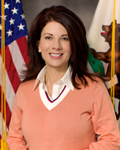
Bill Co-Author(s):
