AB 2337: Employment protections: victims of domestic violence, sexual assault, or stalking.
- Session Year: 2015-2016
- House: Assembly
- Latest Version Date: 2016-09-14
Existing law prohibits an employer from discharging or in any manner discriminating or retaliating against an employee who is a victim of domestic violence, sexual assault, or stalking for taking time off from work for specified purposes related to addressing the domestic violence, sexual assault, or stalking. Existing law provides that any employee who is discharged, threatened with discharge, demoted, suspended, or in any manner discriminated or retaliated against in the terms and conditions of employment by his or her employer because the employee has taken time off for those purposes is entitled to reinstatement and reimbursement for lost wages and work benefits caused by the acts of the employer, as well as appropriate equitable relief, and is allowed to file a complaint with the Division of Labor Standards Enforcement within the Department of Industrial Relations. Existing law establishes the Labor Commissioner as the head of the Division of Labor Standards Enforcement.
This bill would require employers to inform each employee of his or her rights established under those laws by providing specific information in writing to new employees upon hire and to other employees upon request. The bill would also require the Labor Commissioner, on or before July 1, 2017, to develop a form an employer may elect to use to comply with these provisions and to post it on the commissioners Internet Web site. Employers would not be required to comply with the notice of rights requirement until the commissioner posts the form.
Existing law prohibits an employer with 25 or more employees from discharging or in any manner discriminating or retaliating against an employee who is a victim of domestic violence, sexual assault, or stalking for taking time off from work for specified purposes related to addressing the domestic violence, sexual assault, or stalking. Existing law provides that any employee who is discharged, threatened with discharge, demoted, suspended, or in any manner discriminated or retaliated against in the terms and conditions of employment by his or her employer because the employee has taken time off for those purposes is entitled to reinstatement and reimbursement for lost wages and work benefits caused by the acts of the employer, as well as appropriate equitable relief, and is allowed to file a complaint with the Division of Labor Standards Enforcement within the Department of Industrial Relations. Existing law establishes the Labor Commissioner as the head of the Division of Labor Standards Enforcement.
This bill would require employers to inform each employee of his or her rights established under those laws by providing that specific information in writing to new employees upon hire and to other employees upon request. The bill would also require the Labor Commissioner Commissioner, on or before July 1, 2017, to develop a form that employers could an employer may elect to use to comply with these provisions and to post it on the commissioners Internet Web site. Employers would not be required to comply with the notice of rights requirement until the commissioner posts the form.
Existing law prohibits an employer with 25 or more employees from discharging or in any manner discriminating or retaliating against an employee who is a victim of domestic violence, sexual assault, or stalking for taking time off from work for specified purposes related to addressing the domestic violence, sexual assault, or stalking. Existing law provides that any employee who is discharged, threatened with discharge, demoted, suspended, or in any manner discriminated or retaliated against in the terms and conditions of employment by his or her employer because the employee has taken time off for those purposes is entitled to reinstatement and reimbursement for lost wages and work benefits caused by the acts of the employer, as well as appropriate equitable relief, and is allowed to file a complaint with the Division of Labor Standards Enforcement of within the Department of Industrial Relations. Existing law establishes the Labor Commissioner as the head of the Division of Labor Standards Enforcement.
This bill would require employers to inform each employee of his or her rights established under those laws by providing that information in writing to new employees upon hire and to other employees upon request. The bill would also require the Labor Commissioner to develop a form that employers could use to comply with these provisions and to post it on the commissioners Internet Web site.
Existing law prohibits an employer with 25 or more employees from discharging or in any manner discriminating or retaliating against an employee who is a victim of domestic violence, sexual assault, or stalking for taking time off from work for specified reasons purposes related to addressing the domestic violence, sexual assault, or stalking. Existing law provides that any employee who is discharged, threatened with discharge, demoted, suspended, or in any manner discriminated or retaliated against in the terms and conditions of employment by his or her employer because the employee has taken time off for those purposes is entitled to reinstatement and reimbursement for lost wages and work benefits caused by the acts of the employer, as well as appropriate equitable relief, and is allowed to file a complaint with the Division of Labor Standards Enforcement of the Department of Industrial Relations.
This bill would make nonsubstantive changes to this provision. require employers to inform each employee of his or her rights established under those laws by providing that information in writing to new employees upon hire and to other employees upon request.
Existing law prohibits an employer with 25 or more employees from discharging or in any manner discriminating or retaliating against an employee who is a victim of domestic violence, sexual assault, or stalking for taking time off from work for specified reasons related to the domestic violence, sexual assault, or stalking.
This bill would make nonsubstantive changes to this provision.
(a)In addition to the requirements and prohibitions imposed on employees pursuant to Section 230, an employer with 25 or more employees shall not discharge, or in any manner discriminate or retaliate against, an employee who is a victim of domestic violence, sexual assault, or stalking for taking time off from work for any of the following purposes:
(1)To seek medical attention for injuries caused by domestic violence, sexual assault, or stalking.
(2)To obtain services from a domestic violence shelter, program, or rape crisis center as a result of domestic violence, sexual assault, or stalking.
(3)To obtain psychological counseling related to an experience of domestic violence, sexual assault, or stalking.
(4)To participate in safety planning and take other actions to increase safety from future domestic violence, sexual assault, or stalking, including temporary or permanent relocation.
(b)(1)As a condition of taking time off for a purpose set forth in subdivision (a), the employee shall give the employer reasonable advance notice of the employees intention to take time off, unless the advance notice is not feasible.
(2)When an unscheduled absence occurs, the employer shall not take any action against the employee if the employee, within a reasonable time after the absence, provides a certification to the employer. Certification shall be sufficient in the form of any of the categories described in paragraph (2) of subdivision (d) of Section 230.
(3)To the extent allowed by law and consistent with subparagraph (D) of paragraph (7) of subdivision (f) of Section 230, employers shall maintain the confidentiality of any employee requesting leave under subdivision (a).
(c)An employee who is discharged, threatened with discharge, demoted, suspended, or in any other manner discriminated or retaliated against in the terms and conditions of employment by his or her employer because the employee has taken time off for a purpose set forth in subdivision (a) is entitled to reinstatement and reimbursement for lost wages and work benefits caused by the acts of the employer, as well as appropriate equitable relief. An employer who willfully refuses to rehire, promote, or otherwise restore an employee or former employee who has been determined to be eligible for rehiring or promotion by a grievance procedure or hearing authorized by law is guilty of a misdemeanor.
(d)(1)An employee who is discharged, threatened with discharge, demoted, suspended, or in any other manner discriminated or retaliated against in the terms and conditions of employment by his or her employer because the employee has exercised his or her rights as set forth in subdivision (a) may file a complaint with the Division of Labor Standards Enforcement of the Department of Industrial Relations pursuant to Section 98.7.
(2)Notwithstanding any time limitation in Section 98.7, an employee may file a complaint with the division based upon a violation of subdivision (a) within one year from the date of occurrence of the violation.
(e)An employee may use vacation, personal leave, or compensatory time off that is otherwise available to the employee under the applicable terms of employment, unless otherwise provided by a collective bargaining agreement, for time taken off for a purpose specified in subdivision (a). The entitlement of any employee under this section shall not be diminished by any term or condition of a collective bargaining agreement.
(f)This section does not create a right for an employee to take unpaid leave that exceeds the unpaid leave time allowed under, or is in addition to the unpaid leave time permitted by, the federal Family and Medical Leave Act of 1993 (29 U.S.C. Sec. 2601 et seq.).
(g)For purposes of this section:
(1)Domestic violence means any of the types of abuse set forth in Section 6211 of the Family Code, as amended.
(2)Sexual assault means any of the crimes set forth in Section 261, 261.5, 262, 265, 266, 266a, 266b, 266c, 266g, 266j, 267, 269, 273.4, 285, 286, 288, 288a, 288.5, 289, or 311.4 of the Penal Code, as amended.
(3)Stalking means a crime set forth in Section 646.9 of the Penal Code or Section 1708.7 of the Civil Code.
(h)(1)Employers shall inform each employee of his or her rights established under this section and subdivisions (c), (e), and (f) of Section 230 in writing. The information shall be provided to new employees upon hire and to other employees upon request.
(2)The Labor Commissioner shall develop a form that an employer may use to comply with the notice requirements in paragraph (1). The form shall set forth the rights and duties of employers and employees under this section in clear and concise language. The Labor Commissioner shall post the form on the commissioners Internet Web site to make it available to employers who are required to comply with this section. If an employer elects not to use the form developed by the Labor Commissioner, the notice provided by the employer to the employees shall be substantially similar in content and clarity to the form developed by the Labor Commissioner. The Labor Commissioner shall develop the form and post it in accordance with this paragraph on or before July 1, 2017.
(3)Employers shall not be required to comply with paragraph (1) until the Labor Commissioner posts the form on the commissioners Internet Web site in accordance with paragraph (2).
(a)In addition to the requirements and prohibitions imposed on employees pursuant to Section 230, an employer with 25 or more employees shall not discharge, or in any manner discriminate or retaliate against, an employee who is a victim of domestic violence, sexual assault, or stalking for taking time off from work for any of the following purposes:
(1)To seek medical attention for injuries caused by domestic violence, sexual assault, or stalking.
(2)To obtain services from a domestic violence shelter, program, or rape crisis center as a result of domestic violence, sexual assault, or stalking.
(3)To obtain psychological counseling related to an experience of domestic violence, sexual assault, or stalking.
(4)To participate in safety planning and take other actions to increase safety from future domestic violence, sexual assault, or stalking, including temporary or permanent relocation.
(b)(1)As a condition of taking time off for a purpose set forth in subdivision (a), the employee shall give the employer reasonable advance notice of the employees intention to take time off, unless the advance notice is not feasible.
(2)When an unscheduled absence occurs, the employer shall not take any action against the employee if the employee, within a reasonable time after the absence, provides a certification to the employer. Certification shall be sufficient in the form of any of the categories described in paragraph (2) of subdivision (d) of Section 230.
(3)To the extent allowed by law and consistent with subparagraph (D) of paragraph (7) of subdivision (f) of Section 230, employers shall maintain the confidentiality of any employee requesting leave under subdivision (a).
(c)An employee who is discharged, threatened with discharge, demoted, suspended, or in any other manner discriminated or retaliated against in the terms and conditions of employment by his or her employer because the employee has taken time off for a purpose set forth in subdivision (a) is entitled to reinstatement and reimbursement for lost wages and work benefits caused by the acts of the employer, as well as appropriate equitable relief. An employer who willfully refuses to rehire, promote, or otherwise restore an employee or former employee who has been determined to be eligible for rehiring or promotion by a grievance procedure or hearing authorized by law is guilty of a misdemeanor.
(d)(1)An employee who is discharged, threatened with discharge, demoted, suspended, or in any other manner discriminated or retaliated against in the terms and conditions of employment by his or her employer because the employee has exercised his or her rights as set forth in subdivision (a) may file a complaint with the Division of Labor Standards Enforcement of the Department of Industrial Relations pursuant to Section 98.7.
(2)Notwithstanding any time limitation in Section 98.7, an employee may file a complaint with the division based upon a violation of subdivision (a) within one year from the date of occurrence of the violation.
(e)An employee may use vacation, personal leave, or compensatory time off that is otherwise available to the employee under the applicable terms of employment, unless otherwise provided by a collective bargaining agreement, for time taken off for a purpose specified in subdivision (a). The entitlement of any employee under this section shall not be diminished by any term or condition of a collective bargaining agreement.
(f)This section does not create a right for an employee to take unpaid leave that exceeds the unpaid leave time allowed under, or is in addition to the unpaid leave time permitted by, the federal Family and Medical Leave Act of 1993 (29 U.S.C. Sec. 2601 et seq.).
(g)For purposes of this section:
(1)Domestic violence means any of the types of abuse set forth in Section 6211 of the Family Code, as amended.
(2)Sexual assault means any of the crimes set forth in Section 261, 261.5, 262, 265, 266, 266a, 266b, 266c, 266g, 266j, 267, 269, 273.4, 285, 286, 288, 288a, 288.5, 289, or 311.4 of the Penal Code, as amended.
(3)Stalking means a crime set forth in Section 646.9 of the Penal Code or Section 1708.7 of the Civil Code.
(h)(1)Employers shall inform each employee of his or her rights established under this section and subdivisions (c), (e), and (f) of Section 230 in writing. The information shall be provided to new employees upon hire and to other employees upon request.
(2)The Labor Commissioner shall develop a form that an employer may use to comply with the notice requirements in paragraph (1). The form shall set forth the rights and duties of employers and employees under this section in clear and concise language. The Labor Commissioner shall post this the form on the commissioners Internet Web site to make it available to employers who are required to comply with this section. If an employer elects not to use the form developed by the Labor Commissioner, the notice provided by the employer to the employees shall be substantially similar in content and clarity to the form developed by the Labor Commissioner. The Labor Commissioner shall develop the form and post it in accordance with this paragraph on or before July 1, 2017.
(3)Employers shall not be required to comply with paragraph (1) until the Labor Commissioner posts the form on the commissioners Internet Web site in accordance with paragraph (2).
(a)In addition to the requirements and prohibitions imposed on employees pursuant to Section 230, an employer with 25 or more employees shall not discharge, or in any manner discriminate or retaliate against, an employee who is a victim of domestic violence, sexual assault, or stalking for taking time off from work for any of the following purposes:
(1)To seek medical attention for injuries caused by domestic violence, sexual assault, or stalking.
(2)To obtain services from a domestic violence shelter, program, or rape crisis center as a result of domestic violence, sexual assault, or stalking.
(3)To obtain psychological counseling related to an experience of domestic violence, sexual assault, or stalking.
(4)To participate in safety planning and take other actions to increase safety from future domestic violence, sexual assault, or stalking, including temporary or permanent relocation.
(b)(1)As a condition of taking time off for a purpose set forth in subdivision (a), the employee shall give the employer reasonable advance notice of the employees intention to take time off, unless the advance notice is not feasible.
(2)When an unscheduled absence occurs, the employer shall not take any action against the employee if the employee, within a reasonable time after the absence, provides a certification to the employer. Certification shall be sufficient in the form of any of the categories described in paragraph (2) of subdivision (d) of Section 230.
(3)To the extent allowed by law and consistent with subparagraph (D) of paragraph (7) of subdivision (f) of Section 230, employers shall maintain the confidentiality of any employee requesting leave under subdivision (a).
(c)An employee who is discharged, threatened with discharge, demoted, suspended, or in any other manner discriminated or retaliated against in the terms and conditions of employment by his or her employer because the employee has taken time off for a purpose set forth in subdivision (a) is entitled to reinstatement and reimbursement for lost wages and work benefits caused by the acts of the employer, as well as appropriate equitable relief. An employer who willfully refuses to rehire, promote, or otherwise restore an employee or former employee who has been determined to be eligible for rehiring or promotion by a grievance procedure or hearing authorized by law is guilty of a misdemeanor.
(d)(1)An employee who is discharged, threatened with discharge, demoted, suspended, or in any other manner discriminated or retaliated against in the terms and conditions of employment by his or her employer because the employee has exercised his or her rights as set forth in subdivision (a) may file a complaint with the Division of Labor Standards Enforcement of the Department of Industrial Relations pursuant to Section 98.7.
(2)Notwithstanding any time limitation in Section 98.7, an employee may file a complaint with the division based upon a violation of subdivision (a) within one year from the date of occurrence of the violation.
(e)An employee may use vacation, personal leave, or compensatory time off that is otherwise available to the employee under the applicable terms of employment, unless otherwise provided by a collective bargaining agreement, for time taken off for a purpose specified in subdivision (a). The entitlement of any employee under this section shall not be diminished by any term or condition of a collective bargaining agreement.
(f)This section does not create a right for an employee to take unpaid leave that exceeds the unpaid leave time allowed under, or is in addition to the unpaid leave time permitted by, the federal Family and Medical Leave Act of 1993 (29 U.S.C. Sec. 2601 et seq.).
(g)For purposes of this section:
(1)Domestic violence means any of the types of abuse set forth in Section 6211 of the Family Code, as amended.
(2)Sexual assault means any of the crimes set forth in Section 261, 261.5, 262, 265, 266, 266a, 266b, 266c, 266g, 266j, 267, 269, 273.4, 285, 286, 288, 288a, 288.5, 289, or 311.4 of the Penal Code, as amended.
(3)Stalking means a crime set forth in Section 646.9 of the Penal Code or Section 1708.7 of the Civil Code.
(h)(1)Employers shall inform each employee of his or her rights established under this section by providing that and subdivisions (c), (e), and (f) of Section 230 in writing. The information in writing shall be provided to new employees upon hire and to other employees upon request.
(2)The Labor Commissioner shall develop a form that an employer may use to comply with the notice requirements in paragraph (1). The form shall set forth the rights and duties of employers and employees under this section in clear and concise language. The Labor Commissioner shall post this form on the commissioners Internet Web site to make it available to employers who are required to comply with this section. If an employer elects not to use the form developed by the Labor Commissioner, the notice provided by the employer to the employees shall be substantially similar in content and clarity to the form developed by the Labor Commissioner. The Labor Commissioner shall develop the form and post it in accordance with this paragraph on or before July 1, 2017.
(3)Employers shall not be required to comply with paragraph (1) until the Labor Commissioner posts the form on the commissioners Internet Web site in accordance with paragraph (2).
(a)In addition to the requirements and prohibitions imposed on employees pursuant to Section 230, an employer with 25 or more employees shall not discharge, or in any manner discriminate or retaliate against, an employee who is a victim of domestic violence, sexual assault, or stalking for taking time off from work for any of the following purposes:
(1)To seek medical attention for injuries caused by domestic violence, sexual assault, or stalking.
(2)To obtain services from a domestic violence shelter, program, or rape crisis center as a result of domestic violence, sexual assault, or stalking.
(3)To obtain psychological counseling related to an experience of domestic violence, sexual assault, or stalking.
(4)To participate in safety planning and take other actions to increase safety from future domestic violence, sexual assault, or stalking, including temporary or permanent relocation.
(b)(1)As a condition of taking time off for a purpose set forth in subdivision (a), the employee shall give the employer reasonable advance notice of the employees intention to take time off, unless the advance notice is not feasible.
(2)When an unscheduled absence occurs, the employer shall not take any action against the employee if the employee, within a reasonable time after the absence, provides a certification to the employer. Certification shall be sufficient in the form of any of the categories described in paragraph (2) of subdivision (d) of Section 230.
(3)To the extent allowed by law and consistent with subparagraph (D) of paragraph (7) of subdivision (f) of Section 230, employers shall maintain the confidentiality of any employee requesting leave under subdivision (a).
(c)An employee who is discharged, threatened with discharge, demoted, suspended, or in any other manner discriminated or retaliated against in the terms and conditions of employment by his or her employer because the employee has taken time off for a purpose set forth in subdivision (a) is entitled to reinstatement and reimbursement for lost wages and work benefits caused by the acts of the employer, as well as appropriate equitable relief. An employer who willfully refuses to rehire, promote, or otherwise restore an employee or former employee who has been determined to be eligible for rehiring or promotion by a grievance procedure or hearing authorized by law is guilty of a misdemeanor.
(d)(1)An employee who is discharged, threatened with discharge, demoted, suspended, or in any other manner discriminated or retaliated against in the terms and conditions of employment by his or her employer because the employee has exercised his or her rights as set forth in subdivision (a) may file a complaint with the Division of Labor Standards Enforcement of the Department of Industrial Relations pursuant to Section 98.7.
(2)Notwithstanding any time limitation in Section 98.7, an employee may file a complaint with the division based upon a violation of subdivision (a) within one year from the date of occurrence of the violation.
(e)An employee may use vacation, personal leave, or compensatory time off that is otherwise available to the employee under the applicable terms of employment, unless otherwise provided by a collective bargaining agreement, for time taken off for a purpose specified in subdivision (a). The entitlement of any employee under this section shall not be diminished by any term or condition of a collective bargaining agreement.
(f)This section does not create a right for an employee to take unpaid leave that exceeds the unpaid leave time allowed under, or is in addition to the unpaid leave time permitted by, the federal Family and Medical Leave Act of 1993 (29 U.S.C. Sec. 2601 et seq.).
(g)For purposes of this section:
(1)Domestic violence means any of the types of abuse set forth in Section 6211 of the Family Code, as amended.
(2)Sexual assault means any of the crimes set forth in Section 261, 261.5, 262, 265, 266, 266a, 266b, 266c, 266g, 266j, 267, 269, 273.4, 285, 286, 288, 288a, 288.5, 289, or 311.4 of the Penal Code, as amended.
(3)Stalking means a crime set forth in Section 646.9 of the Penal Code or Section 1708.7 of the Civil Code.
(h)(1)Employers shall inform each employee of his or her rights established under this section by providing that information in writing to new employees upon hire and to other employees upon request.
(2)The Labor Commissioner shall develop a form that an employer may use to comply with the notice requirements in paragraph (1). The form shall set forth the rights and duties of employers and employees under this section in clear and concise language. The Labor Commissioner shall post this form on the commissioners Internet Web site to make it available to employers who are required to comply with this section. If an employer elects not to use the form developed by the Labor Commissioner, the notice provided by the employer to the employees shall be substantially similar in content and clarity to the form developed by the Labor Commissioner.
(a)In addition to the requirements and prohibitions imposed on employees pursuant to Section 230, an employer with 25 or more employees shall not discharge, or in any manner discriminate or retaliate against, an employee who is a victim of domestic violence, sexual assault, or stalking for taking time off from work for any of the following purposes:
(1)To seek medical attention for injuries caused by domestic violence, sexual assault, or stalking.
(2)To obtain services from a domestic violence shelter, program, or rape crisis center as a result of domestic violence, sexual assault, or stalking.
(3)To obtain psychological counseling related to an experience of domestic violence, sexual assault, or stalking.
(4)To participate in safety planning and take other actions to increase safety from future domestic violence, sexual assault, or stalking, including temporary or permanent relocation.
(b)(1)As a condition of taking time off for a purpose set forth in subdivision (a), the employee shall give the employer reasonable advance notice of the employees intention to take time off, unless the advance notice is not feasible.
(2)When an unscheduled absence occurs, the employer shall not take any action against the employee if the employee, within a reasonable time after the absence, provides a certification to the employer. Certification shall be sufficient in the form of any of the categories described in paragraph (2) of subdivision (d) of Section 230.
(3)To the extent allowed by law and consistent with subparagraph (D) of paragraph (7) of subdivision (f) of Section 230, employers shall maintain the confidentiality of any employee requesting leave under subdivision (a).
(c)An employee who is discharged, threatened with discharge, demoted, suspended, or in any other manner discriminated or retaliated against in the terms and conditions of employment by his or her employer because the employee has taken time off for a purpose set forth in subdivision (a) is entitled to reinstatement and reimbursement for lost wages and work benefits caused by the acts of the employer, as well as appropriate equitable relief. An employer who willfully refuses to rehire, promote, or otherwise restore an employee or former employee who has been determined to be eligible for rehiring or promotion by a grievance procedure or hearing authorized by law is guilty of a misdemeanor.
(d)(1)An employee who is discharged, threatened with discharge, demoted, suspended, or in any other manner discriminated or retaliated against in the terms and conditions of employment by his or her employer because the employee has exercised his or her rights as set forth in subdivision (a) may file a complaint with the Division of Labor Standards Enforcement of the Department of Industrial Relations pursuant to Section 98.7.
(2)Notwithstanding any time limitation in Section 98.7, an employee may file a complaint with the division based upon a violation of subdivision (a) within one year from the date of occurrence of the violation.
(e)An employee may use vacation, personal leave, or compensatory time off that is otherwise available to the employee under the applicable terms of employment, unless otherwise provided by a collective bargaining agreement, for time taken off for a purpose specified in subdivision (a). The entitlement of any employee under this section shall not be diminished by any term or condition of a collective bargaining agreement.
(f)This section does not create a right for an employee to take unpaid leave that exceeds the unpaid leave time allowed under, or is in addition to the unpaid leave time permitted by, the federal Family and Medical Leave Act of 1993 (29 U.S.C. Sec. 2601 et seq.).
(g)For purposes of this section:
(1)Domestic violence means any of the types of abuse set forth in Section 6211 of the Family Code, as amended.
(2)Sexual assault means any of the crimes set forth in Section 261, 261.5, 262, 265, 266, 266a, 266b, 266c, 266g, 266j, 267, 269, 273.4, 285, 286, 288, 288a, 288.5, 289, or 311.4 of the Penal Code, as amended.
(3)Stalking means a crime set forth in Section 646.9 of the Penal Code or Section 1708.7 of the Civil Code.
(h)Employers shall inform each employee of his or her rights established under this section by providing that information in writing to new employees upon hire and to other employees upon request.
(a)In addition to the requirements and prohibitions imposed on employees pursuant to Section 230, an employer with 25 or more employees shall not discharge discharge, or in any manner discriminate or retaliate against against, an employee who is a victim of domestic violence, sexual assault, or stalking for taking time off from work to attend to for any of the following: following purposes:
(1)To seek medical attention for injuries caused by domestic violence, sexual assault, or stalking.
(2)To obtain services from a domestic violence shelter, program, or rape crisis center as a result of domestic violence, sexual assault, or stalking.
(3)To obtain psychological counseling related to an experience of domestic violence, sexual assault, or stalking.
(4)To participate in safety planning and take other actions to increase safety from future domestic violence, sexual assault, or stalking, including temporary or permanent relocation.
(b)(1)As a condition of taking time off for a purpose set forth in subdivision (a), the employee shall give the employer reasonable advance notice of the employees intention to take time off, unless the advance notice is not feasible.
(2)When an unscheduled absence occurs, the employer shall not take any action against the employee if the employee, within a reasonable time after the absence, provides a certification to the employer. Certification shall be sufficient in the form of any of the categories described in paragraph (2) of subdivision (d) of Section 230.
(3)To the extent allowed by law and consistent with subparagraph (D) of paragraph (7) of subdivision (f) of Section 230, employers shall maintain the confidentiality of any employee requesting leave under subdivision (a).
(c)An employee who is discharged, threatened with discharge, demoted, suspended, or in any other manner discriminated or retaliated against in the terms and conditions of employment by his or her employer because the employee has taken time off for a purpose set forth in subdivision (a) is entitled to reinstatement and reimbursement for lost wages and work benefits caused by the acts of the employer, as well as appropriate equitable relief. An employer who willfully refuses to rehire, promote, or otherwise restore an employee or former employee who has been determined to be eligible for rehiring or promotion by a grievance procedure or hearing authorized by law is guilty of a misdemeanor.
(d)(1)An employee who is discharged, threatened with discharge, demoted, suspended, or in any other manner discriminated or retaliated against in the terms and conditions of employment by his or her employer because the employee has exercised his or her rights as set forth in subdivision (a) may file a complaint with the Division of Labor Standards Enforcement of the Department of Industrial Relations pursuant to Section 98.7.
(2)Notwithstanding any time limitation in Section 98.7, an employee may file a complaint with the division based upon a violation of subdivision (a) within one year from the date of occurrence of the violation.
(e)An employee may use vacation, personal leave, or compensatory time off that is otherwise available to the employee under the applicable terms of employment, unless otherwise provided by a collective bargaining agreement, for time taken off for a purpose specified in subdivision (a). The entitlement of any employee under this section shall not be diminished by any collective bargaining agreement term or condition. condition of a collective bargaining agreement.
(f)This section does not create a right for an employee to take unpaid leave that exceeds the unpaid leave time allowed under, or is in addition to the unpaid leave time permitted by, the federal Family and Medical Leave Act of 1993 (29 U.S.C. Sec. 2601 et seq.).
(g)For purposes of this section:
(1)Domestic violence means any of the types of abuse set forth in Section 6211 of the Family Code, as amended.
(2)Sexual assault means any of the crimes set forth in Section 261, 261.5, 262, 265, 266, 266a, 266b, 266c, 266g, 266j, 267, 269, 273.4, 285, 286, 288, 288a, 288.5, 289, or 311.4 of the Penal Code, as amended.
(3)Stalking means a crime set forth in Section 646.9 of the Penal Code or Section 1708.7 of the Civil Code.
|
Date
|
Status
|
|---|---|
| Sep 14, 2016 | Chaptered by Secretary of State - Chapter 355, Statutes of 2016. |
| Sep 14, 2016 | Approved by the Governor. |
| Aug 26, 2016 | Enrolled and presented to the Governor at 4:30 p.m. |
| Aug 22, 2016 | Senate amendments concurred in. To Engrossing and Enrolling. (Ayes 78. Noes 0. Page 6059.). |
| Aug 22, 2016 | Senate amendments concurred in. To Engrossing and Enrolling. |
| Aug 16, 2016 | In Assembly. Concurrence in Senate amendments pending. May be considered on or after August 18 pursuant to Assembly Rule 77. |
| Aug 15, 2016 | Read third time. Passed. Ordered to the Assembly. (Ayes 38. Noes 0. Page 4971.). |
| Aug 15, 2016 | Read third time. Passed. Ordered to the Assembly. (Ayes 38. Noes 0.). |
| Aug 15, 2016 | Read third time. Passed. Ordered to the Assembly. |
| Aug 8, 2016 | Read second time. Ordered to third reading. |
| Aug 4, 2016 | Read third time and amended. Ordered to second reading. |
| Aug 2, 2016 | Read second time. Ordered to third reading. |
| Aug 1, 2016 | From committee: Be placed on second reading file pursuant to Senate Rule 28.8. |
| Jun 22, 2016 | From committee: Do pass and re-refer to Com. on APPR. (Ayes 7. Noes 0.) (June 21). Re-referred to Com. on APPR. |
| Jun 9, 2016 | From committee chair, with author's amendments: Amend, and re-refer to committee. Read second time, amended, and re-referred to Com. on JUD. |
| Jun 8, 2016 | From committee: Do pass and re-refer to Com. on JUD. (Ayes 3. Noes 0.) (June 8). Re-referred to Com. on JUD. |
| May 26, 2016 | Referred to Coms. on L. & I.R. and JUD. |
| May 19, 2016 | Read third time. Passed. Ordered to the Senate. (Ayes 73. Noes 0. Page 4859.) |
| May 19, 2016 | Read third time. Passed. Ordered to the Senate. (Ayes 73. Noes 0.) |
| May 19, 2016 | In Senate. Read first time. To Com. on RLS. for assignment. |
| May 19, 2016 | Read third time. Passed. Ordered to the Senate. |
| May 5, 2016 | Read second time. Ordered to third reading. |
| May 4, 2016 | From committee: Do pass. (Ayes 20. Noes 0.) (May 4). |
| Apr 21, 2016 | Re-referred to Com. on APPR. |
| Apr 20, 2016 | Read second time and amended. |
| Apr 19, 2016 | From committee: Amend, and do pass as amended and re-refer to Com. on APPR. (Ayes 10. Noes 0.) (April 19). |
| Apr 7, 2016 | From committee: Do pass and re-refer to Com. on JUD. (Ayes 7. Noes 0.) (April 6). Re-referred to Com. on JUD. |
| Mar 28, 2016 | Re-referred to Com. on L. & E. |
| Mar 18, 2016 | From committee chair, with author's amendments: Amend, and re-refer to Com. on L. & E. Read second time and amended. |
| Mar 17, 2016 | Referred to Coms. on L. & E. and JUD. |
| Feb 19, 2016 | From printer. May be heard in committee March 20. |
| Feb 18, 2016 | Read first time. To print. |
|
Date
|
Description
|
Location
|
Votes
|
|
|---|---|---|---|---|
| Aug 22, 2016 | AB 2337 BURKE Concurrence in Senate Amendments | Assembly Floor |
Passed |
|
| Aug 15, 2016 | Assembly 3rd Reading AB2337 Burke By Jackson | Senate Floor |
Passed |
|
| Jun 21, 2016 | Do pass, but first be re-referred to the Committee on [Appropriations] | Senate Standing Committee on Judiciary |
Passed |
|
| Jun 8, 2016 | Do pass, but first be re-referred to the Committee on [Judiciary] | Senate Standing Committee on Labor and Industrial Relations |
Passed |
|
| May 19, 2016 | AB 2337 BURKE Assembly Third Reading | Assembly Floor |
Passed |
|
| May 4, 2016 | Do pass. | Assembly Standing Committee on Appropriations |
Passed |
|
| Apr 19, 2016 | Do pass as amended and be re-referred to the Committee on [Appropriations] | Assembly Standing Committee on Judiciary |
Passed |
|
| Apr 6, 2016 | Do pass and be re-referred to the Committee on [Judiciary] | Assembly Standing Committee on Labor and Employment |
Passed |
This list shows positions taken on this bill by organizations on the date displayed, which is linked to the original source.
Positions by individuals are not included.
CONCURRENCE IN SENATE AMENDMENTS
CSA1 Bill Id:AB 2337
Author:(Burke)
As Amended Ver:August 4, 2016
Majority vote
ASSEMBLY: | 73-0 | (May 19, 2016) | SENATE: | 38-0 | (August 15, 2016) |
Original Committee Reference: L. & E.
SUMMARY: Expands employer notice requirements regarding domestic violence employee protections. Specifically, this bill provides that an employer shall inform each employee of his or her rights established under current law protecting employees affected by domestic violence, by providing that information in writing to new employees upon hire and to other employees upon request. This bill requires the Labor Commissioner to develop a form that an employer may use to satisfy this notice requirement, as specified.
The Senate amendments:
- Require the Labor Commissioner to develop a form that employers could use to comply with the notice requirement.
- Require the Commissioner to post the compliant form on his or her Internet Web site on or before July 1, 2017.
- Provide that an employer is not required to comply with the disclosure requirement until the Commissioner posts the form.
EXISTING LAW:
- Prohibits an employer with 25 or more employees from discharging or in any manner discriminating or retaliating against an employee who is a victim of domestic violence, sexual assault, or stalking for taking time off from work for specified reasons related to addressing the domestic violence, sexual assault, or stalking.
- Prohibits an employer from discharging, discriminating or retaliating against an employee because of the employee's known status as a victim of domestic violence, sexual assault, or stalking.
- Requires that to the extent allowed by law, employers shall maintain the confidentiality of any employee requesting leave as specified.
- Provides that an employee does not have a right to take unpaid leave that exceeds the unpaid leave time allowed under, or is in addition to the unpaid leave time permitted by, the federal Family and Medical Leave Act of 1993.
- Provides that any employee who is discharged, threatened with discharge, demoted, suspended, or in any manner discriminated or retaliated against in the terms and conditions of employment by his or her employer because the employee has taken time off for those purposes is entitled to reinstatement and reimbursement for lost wages and work benefits caused by the acts of the employer, as well as appropriate equitable relief, and is allowed to file a complaint with the Division of Labor Standards Enforcement (DLSE).
FISCAL EFFECT: According to the Senate Appropriations Committee, pursuant to Senate Rule 28.8, negligible state costs.
COMMENTS: The author argues that despite the provisions and protections of current law, many employees are still uninformed about their worker rights when it comes to domestic violence. This bill is needed to ensure that employers are doing their part in spreading information about what rights exist for employees. Addressing the information gap about current protections could go a long way towards keeping victims employed, significantly increasing their chances of being able to leave dangerous relationships.
Analysis Prepared by: Taylor Jackson / L. & E. / (916) 319-2091 FN: 0003854
Office of Senate Floor Analyses (916) 651-1520 Fax: (916) 327-4478 | AB |
THIRD READING
Bill No: AB 2337
: 8/4/16
SENATE LABOR & IND. REL. COMMITTEE: 3-0, 6/8/16
AYES: Mendoza, Leno, Mitchell
NO VOTE RECORDED: Stone, Jackson
SENATE JUDICIARY COMMITTEE: 7-0, 6/21/16
AYES: Jackson, Moorlach, Anderson, Hertzberg, Leno, Monning, Wieckowski
SENATE APPROPRIATIONS COMMITTEE: Senate Rule 28.8
ASSEMBLY FLOOR: 73-0, 5/19/16 - See last page for vote
DIGEST: This bill requires employers to provide their employees with written notice of their right to take time off from work for certain purposes if they are a victim of domestic violence, sexual assault, or stalking. In order to facilitate compliance by employers, this bill requires the Labor Commissioner (Commissioner) to develop a form that employers could use to comply with the notice requirement. It also requires the Commissioner to post the form on his or her Web site on or before July 1, 2017, and provide that an employer is not required to comply with the disclosure requirement until the Commissioner posts the form.
Senate Floor Amendments of 8/4/16 add Senator Jackson as a coauthor and make a grammatical change regarding the specified notice form to be developed by the Labor Commissioner.
Existing law:
- Prohibits employers with 25 or more employees from discharging, discriminating or retaliating against an employee who is a victim of domestic violence, sexual assault, or stalking, and has taken time off from work, after providing reasonable advance notice where feasible, for any of the following purposes:
- To seek medical attention for injuries caused by domestic violence, sexual assault, or stalking.
- To obtain services from a domestic violence shelter, program, or rape crisis center as a result of domestic violence, sexual assault, or stalking.
- To obtain psychological counseling related to an experience of domestic violence, sexual assault, or stalking.
- To participate in safety planning and/or to take other actions to increase their safety from future domestic violence, sexual assault, or stalking. (Labor Code §230.1)
- Requires that employers maintain the confidentiality of employees taking time off for the reasons above (Labor Code §230.1).
- Entitles employees who are discharged, threatened with discharge, demoted, suspended, or in any other manner discriminated or retaliated against for taking time off for the purposes above, to reinstatement, reimbursement for lost wages, work benefits, and appropriate equitable relief (Labor Code §230.1).
- States that employers who willfully refuse to rehire, promote, or otherwise restore an employee or former employee, in the circumstances specified, are guilty of a misdemeanor (Labor Code §230.1).
- Permits employees who face discrimination or have their rights violated as stated in abovementioned provisions to file a complaint, as specified, with the Division of Labor Standards Enforcement, within one year of the occurrence of the violation (Labor Code §230.1).
- Allows employees to use, for the purposes specified above, vacation, personal leave, or compensatory time, unless otherwise provided by a collective bargaining agreement. However, the entitlements mentioned above cannot be infringed upon by any collective bargaining agreement term or condition (Labor Code §230.1).
This bill:
- Requires employers with 25 or more employees to provide information in writing to new employees upon hire, and to other employees upon request regarding their rights under Sections 230(c), (e), (f) and 230.1 of the Labor Code, which include their right to take time off from work for specified purposes if they are a victim of domestic violence, sexual assault, or stalking.
- Requires the Commissioner to develop a form that employers could use to provide written notice of the employees’ rights and requires the Commissioner to post the form on his or her Web site on or before July 1, 2017.
- Provides that an employer is not required to comply with the disclosure requirements until the Commissioner posts the form.
Comments
Need for this bill? The author states that in 2013, SB 400 (Jackson, Chapter 759, Statutes of 2013) was signed into law in California, effectively guaranteeing protections for victims of intimate partner violence (IPV) who disclosed their status to their employers. These protections included anti-retaliation and non-discrimination provisions that protect employees who are victims of domestic violence, sexual assault, or stalking and who take time off to help address these circumstances. Despite SB 400’s provisions, many employees are still unaware that these protections even exist. The author believes that AB 2337 is needed to ensure that employers inform employees about the availability of these rights. Addressing the information gap about SB 400’s protections could protect employees and their jobs, while increasing their ability to receive care and support.
FISCAL EFFECT: Appropriation: Fiscal Com.: Local:
California Partnership to End Domestic Violence
Consumer Attorneys of California
Legal Aid Society - Employment Law Center
None received
ARGUMENTS IN SUPPORT: Proponents state that domestic violence, sexual assault, and stalking victims often face severe economic barriers when attempting to leave their perpetrators. This abuse can often impede the ability of victims to maintain employment. According to a study conducted by the Legal Aid Society-Employment Law Center’s Project SURVIVE, nearly 40% of survivors reported that they were fired or feared termination due to their status as victims of domestic violence. SB 400 (Jackson, 2013) protects survivors of domestic violence, stalking, or sexual assault from discrimination and ensures reasonable accommodation to maintain their employment.
Proponents state that AB 2337 (Burke) makes certain that employees are aware of these provisions, by requiring all employers to distribute information in writing to their employees regarding rights and protections guaranteed to them if they experience domestic violence, sexual assault or stalking. Without requiring such notifications, survivors are unlikely to know that these vital protections are available to them. Informing employees of their rights can help survivors maintain their employment and economic stability during a time of crisis.
ASSEMBLY FLOOR: 73-0, 5/19/16
AYES: Achadjian, Alejo, Travis Allen, Arambula, Atkins, Baker, Bigelow, Bloom, Bonilla, Bonta, Brough, Brown, Burke, Calderon, Campos, Chau, Chávez, Chiu, Chu, Cooley, Cooper, Dababneh, Dahle, Daly, Dodd, Eggman, Frazier, Beth Gaines, Gallagher, Cristina Garcia, Gatto, Gipson, Gomez, Gonzalez, Gordon, Gray, Grove, Hadley, Harper, Roger Hernández, Holden, Irwin, Jones, Jones-Sawyer, Kim, Lackey, Levine, Linder, Lopez, Low, Maienschein, Mayes, Medina, Melendez, Mullin, Nazarian, O'Donnell, Olsen, Patterson, Quirk, Ridley-Thomas, Rodriguez, Salas, Santiago, Mark Stone, Thurmond, Ting, Wagner, Waldron, Weber, Wilk, Wood, Rendon
NO VOTE RECORDED: Chang, Eduardo Garcia, Mathis, McCarty, Obernolte, Steinorth, Williams
8/10/16 15:55:01
Office of Senate Floor Analyses (916) 651-1520 Fax: (916) 327-4478 | AB |
THIRD READING
Bill No: AB 2337
:
SENATE LABOR & IND. REL. COMMITTEE: 3-0, 6/8/16
AYES: Mendoza, Leno, Mitchell
NO VOTE RECORDED: Stone, Jackson
SENATE JUDICIARY COMMITTEE: 7-0, 6/21/16
AYES: Jackson, Moorlach, Anderson, Hertzberg, Leno, Monning, Wieckowski
SENATE APPROPRIATIONS COMMITTEE: Senate Rule 28.8
ASSEMBLY FLOOR: 73-0, 5/19/16 - See last page for vote
DIGEST: This bill requires employers to provide their employees with written notice of their right to take time off from work for certain purposes if they are a victim of domestic violence, sexual assault, or stalking. In order to facilitate compliance by employers, this bill requires the Labor Commissioner (Commissioner) to develop a form that employers could use to comply with the notice requirement. It also requires the Commissioner to post the form on his or her Web site on or before July 1, 2017, and provide that an employer is not required to comply with the disclosure requirement until the Commissioner posts the form.
Existing law:
- Prohibits employers with 25 or more employees from discharging, discriminating or retaliating against an employee who is a victim of domestic violence, sexual assault, or stalking, and has taken time off from work, after providing reasonable advance notice where feasible, for any of the following purposes:
- To seek medical attention for injuries caused by domestic violence, sexual assault, or stalking.
- To obtain services from a domestic violence shelter, program, or rape crisis center as a result of domestic violence, sexual assault, or stalking.
- To obtain psychological counseling related to an experience of domestic violence, sexual assault, or stalking.
- To participate in safety planning and/or to take other actions to increase their safety from future domestic violence, sexual assault, or stalking. (Labor Code §230.1)
- Requires that employers maintain the confidentiality of employees taking time off for the reasons above (Labor Code §230.1).
- Entitles employees who are discharged, threatened with discharge, demoted, suspended, or in any other manner discriminated or retaliated against for taking time off for the purposes above, to reinstatement, reimbursement for lost wages, work benefits, and appropriate equitable relief (Labor Code §230.1).
- States that employers who willfully refuse to rehire, promote, or otherwise restore an employee or former employee, in the circumstances specified, are guilty of a misdemeanor (Labor Code §230.1).
- Permits employees who face discrimination or have their rights violated as stated in abovementioned provisions to file a complaint, as specified, with the Division of Labor Standards Enforcement, within one year of the occurrence of the violation (Labor Code §230.1).
- Allows employees to use, for the purposes specified above, vacation, personal leave, or compensatory time, unless otherwise provided by a collective bargaining agreement. However, the entitlements mentioned above cannot be infringed upon by any collective bargaining agreement term or condition (Labor Code §230.1).
This bill:
- Requires employers with 25 or more employees to provide information in writing to new employees upon hire, and to other employees upon request regarding their rights under Sections 230(c), (e), (f) and 230.1 of the Labor Code, which include their right to take time off from work for specified purposes if they are a victim of domestic violence, sexual assault, or stalking.
- Requires the Commissioner to develop a form that employers could use to provide written notice of the employees’ rights and requires the Commissioner to post the form on his or her Web site on or before July 1, 2017.
- Provides that an employer is not required to comply with the disclosure requirements until the Commissioner posts the form.
Comments
Need for this bill? The author states that in 2013, SB 400 (Jackson, Chapter 759, Statutes of 2013) was signed into law in California, effectively guaranteeing protections for victims of intimate partner violence (IPV) who disclosed their status to their employers. These protections included anti-retaliation and non-discrimination provisions that protect employees who are victims of domestic violence, sexual assault, or stalking and who take time off to help address these circumstances. Despite SB 400’s provisions, many employees are still unaware that these protections even exist. The author believes that AB 2337 is needed to ensure that employers inform employees about the availability of these rights. Addressing the information gap about SB 400’s protections could protect employees and their jobs, while increasing their ability to receive care and support.
FISCAL EFFECT: Appropriation: Fiscal Com.: Local:
California Partnership to End Domestic Violence
Consumer Attorneys of California
Legal Aid Society - Employment Law Center
None received
ARGUMENTS IN SUPPORT: Proponents state that domestic violence, sexual assault, and stalking victims often face severe economic barriers when attempting to leave their perpetrators. This abuse can often impede the ability of victims to maintain employment. According to a study conducted by the Legal Aid Society-Employment Law Center’s Project SURVIVE, nearly 40% of survivors reported that they were fired or feared termination due to their status as victims of domestic violence. SB 400 (Jackson, 2013) protects survivors of domestic violence, stalking, or sexual assault from discrimination and ensures reasonable accommodation to maintain their employment.
Proponents state that AB 2337 (Burke) makes certain that employees are aware of these provisions, by requiring all employers to distribute information in writing to their employees regarding rights and protections guaranteed to them if they experience domestic violence, sexual assault or stalking. Without requiring such notifications, survivors are unlikely to know that these vital protections are available to them. Informing employees of their rights can help survivors maintain their employment and economic stability during a time of crisis.
ASSEMBLY FLOOR: 73-0, 5/19/16
AYES: Achadjian, Alejo, Travis Allen, Arambula, Atkins, Baker, Bigelow, Bloom, Bonilla, Bonta, Brough, Brown, Burke, Calderon, Campos, Chau, Chávez, Chiu, Chu, Cooley, Cooper, Dababneh, Dahle, Daly, Dodd, Eggman, Frazier, Beth Gaines, Gallagher, Cristina Garcia, Gatto, Gipson, Gomez, Gonzalez, Gordon, Gray, Grove, Hadley, Harper, Roger Hernández, Holden, Irwin, Jones, Jones-Sawyer, Kim, Lackey, Levine, Linder, Lopez, Low, Maienschein, Mayes, Medina, Melendez, Mullin, Nazarian, O'Donnell, Olsen, Patterson, Quirk, Ridley-Thomas, Rodriguez, Salas, Santiago, Mark Stone, Thurmond, Ting, Wagner, Waldron, Weber, Wilk, Wood, Rendon
NO VOTE RECORDED: Chang, Eduardo Garcia, Mathis, McCarty, Obernolte, Steinorth, Williams
8/3/16 18:21:31
**** END ****
Senator Hannah-Beth Jackson, Chair
2015-2016 Regular Session
Bill No: AB 2337 (Author:Burke)
Version: June 9, 2016
Hearing Date: June 21, 2016
Fiscal: Yes
Urgency: No
Consultant: ME
SUBJECT
Employment protections: victims of domestic violence, sexual assault, or stalking
DESCRIPTION
This bill would require employers to provide written notice to each employee of the employee’s statutory rights to take time off from work when they are a victim of domestic violence, sexual assault, or stalking. In order to facilitate compliance by employers, the bill would require the Labor Commissioner to develop a form that employers could use to comply with the notice requirement, require the Commissioner to post the compliant form on his or her Internet Web site on or before July 1, 2017, and provide that an employer is not required to comply with the disclosure requirement until the Commissioner posts the form.
BACKGROUND
California has a strong public policy of supporting survivors of domestic violence, sexual assault, and stalking. In 1999, the Legislature prohibited discrimination and retaliation against employees who are victims of domestic violence and who take time off to appear in court to obtain, or attempt to obtain, judicial relief to help ensure their health, safety, or welfare or that of their child. (See SB 56 (Solis, Ch. 340, Stats. 1999).) Prior to the enactment of SB 56, domestic violence victims were often forced to choose either economic security (stay at work and forego obtaining legal protection) or personal safety (leave work, at the risk of being terminated, to appear in court as a witness or to obtain relief to guarantee their safety and the safety of their children).
The next year, the Victims of Domestic Violence Employment Leave Act (AB 2357 (Honda, Ch. 487, Stats. 2000)) provided discrimination and retaliation protections for employees who are victims of domestic violence and take leave from work to seek medical attention or other services related to their abuse. In 2002, AB 2195 (Corbett, Ch. 275, Stats. 2002) extended these protections to employees who are victims of sexual assault. And, in 2013, SB 400 (Jackson, Ch. 759, Stats. 2013) extended these discrimination and retaliation protections to employees who are victims of stalking.
This bill would require employers with 25 or more employees to provide information in writing to new employees upon hire and to other employees upon request regarding their rights under Sections 230(c), (e), and (f) and 230.1 of the Labor Code, which include their right to take time off from work for specified purposes if they are a victim of domestic violence, sexual assault, or stalking. In order to facilitate compliance by employers, the bill would require the Labor Commissioner to develop a form that employers could use to adequately provide written notice of the employees’ rights and would require the Commissioner to also post the form on the Commissioner’s Internet Web site by July 1, 2017.
CHANGES TO EXISTING LAW
Existing law prohibits an employer with 25 or more employees from discharging or in any manner discriminating or retaliating against an employee who is a victim of domestic violence, sexual assault, or stalking, for taking time off from work for any of the following purposes:
- to seek medical attention for injuries caused by domestic violence, sexual assault, or stalking;
- to obtain services from a domestic violence shelter, program, or rape crisis center as a result of domestic violence, sexual assault, or stalking;
- to obtain psychological counseling related to an experience of domestic violence, sexual assault, or stalking; and
- to participate in safety planning and take other actions to increase safety from future domestic violence, sexual assault, or stalking. (Lab. Code Sec. 230.1(a).)
Existing law requires an employee, as a condition of taking time off for the purposes set forth above, to give the employer reasonable advance notice of the employee's intention to take time off, unless the advance notice is not feasible. (Lab. Code Sec. 230.1(b).)
Existing law requires an employer to maintain the confidentiality of any employee taking time off for the reasons set forth above, except as provided. (Lab. Code Sec. 230.1(b)(2).)
Existing law entitles an employee who faces any adverse action for taking time off for the purposes set forth above to reinstatement and reimbursement for lost wages and work benefits caused by the acts of the employer, as well as appropriate equitable relief; provides that an employer who willfully refuses to rehire, promote, or otherwise restore an employee or former employee, as specified, is guilty of a misdemeanor; and authorizes an employee who faces discrimination in violation of the above provisions to file a complaint with the Division of Labor Standards Enforcement, as specified. (Lab. Code Sec. 230.1(c)-(d).)
Existing law allows an employee to use vacation, personal leave, or compensatory time that is otherwise available to the employee under the applicable terms of the employment agreement, unless otherwise provided by a collective bargaining agreement. However, the entitlement of any employee under the above provisions may not be diminished by any term or condition of a collective bargaining agreement. (Lab. Code Sec. 230.1(e).)
Existing law prohibits an employer from discharging or in any manner discriminating or retaliating against an employee who is a victim of domestic violence, sexual assault, or stalking for taking time off from work to obtain or attempt to obtain any relief, including, but not limited to, a temporary restraining order, restraining order, or other injunctive relief, to help ensure the health, safety, or welfare of the victim or his or her child. (Lab. Code Sec 230(c).)
Existing law prohibits an employer from discharging or in any manner discriminating or retaliating against an employee because of the employee’s status as a victim of domestic violence, sexual assault, or stalking, if the victim provides notice to the employer of the status or the employer has actual knowledge of the status. (Lab. Code Sec 230(e).)
Existing law provides that an employer must provide reasonable accommodations, as specified, for a victim of domestic violence, sexual assault, or stalking who requests an accommodation for the safety of the victim while at work. (Lab. Code Sec. 230(f)(1)-(3).)
Existing law requires the employer to engage in a timely, good faith, and interactive process with the employee to determine effective reasonable accommodations and must consider any exigent circumstance or danger facing the employee in making the determination of whether an accommodation is reasonable. (Lab. Code Sec. 230(f)(4-(5)).)
Existing law provides that the employer is not required to undertake an action that constitutes an undue hardship on the employer’s business operations, as defined, and specifies that an undue hardship also includes an action that would violate an employer’s duty to furnish and maintain a place of employment that is safe and healthful for all employees as specified. (Lab. Code Sec. 230(f)(6).)
Existing law prohibits an employer from retaliating against a victim of domestic violence, sexual assault, or stalking for requesting a reasonable accommodation, regardless of whether the request was granted. (Lab. Code Sec. 230(f)(8).)
Existing law provides that upon the request of an employer, an employee requesting a reasonable accommodation shall provide the employer a written statement signed by the employee or an individual acting on the employee’s behalf, certifying that the accommodation is for an authorized purpose. (Lab. Code Sec. 230(f)(7)(A).)
Existing law provides that the employer may also request certification and recertification (every six months after certification) from an employee requesting an accommodation that demonstrates the employee’s status as a victim of domestic violence, sexual assault, or stalking, as specified. (Lab. Code. Sec. 230(f)(7)(B)-(C)
Existing law provides that any verbal or written statement, police or court record, or other documentation provided to an employer identifying an employee as a victim of domestic violence, sexual assault, or stalking shall be maintained as confidential by the employer and shall not be disclosed by the employer except as required by federal or state law or as necessary to protect the employee’s safety in the workplace, and requires that the employee be given notice before any authorized disclosure. (Lab. Code. Sec. 230(f)(7)(D).)
Existing law provides that if circumstances change and an employee needs a new accommodation, the employee shall request a new accommodation from the employer, and upon receiving the request, the employer must engage in a timely, good faith, and interactive process with the employee to determine effective reasonable accommodations. (Lab. Code. Sec. 230(f)(7)(E).)
Existing law requires an employee who no longer needs an accommodation to notify the employer that the accommodation is no longer needed. (Lab. Code. Sec. 230(f)(7)(F).)
This bill would require employers with 25 or more employees to provide information in writing to new employees upon hire and to other employees upon request regarding their rights under Sections 230(c), (e), (f) and 230.1 of the Labor Code, which include their right to take time off from work for specified purposes if they are a victim of domestic violence, sexual assault, or stalking and are listed as existing law above.
This bill would require the Labor Commissioner to develop a form that employers could use to adequately provide written notice of the employees’ rights and would require the Commissioner to also post the form on the Commissioner’s Internet Web site on or before July 1, 2017.
This bill would provide that an employer is not required to comply with the disclosure requirements until the Commissioner posts the form.
COMMENT
1. Stated need for the bill
According to the author:
There is a growing public awareness surrounding the prevalence of intimate partner violence (IPV) and California met the moment by passing some of the most comprehensive protections for victims in the workplace. When other guaranteed benefits were expanded under Paid Family Leave employers were required to disseminate information to their employees. The workplace protections for victims of IPV are just as important and can only assist victims in maintaining employment if they are aware that these protections exist. AB 2337 requires employers to inform employees of their rights guaranteed under existing law, which include freedom from retaliation or discrimination and reasonable accommodation. There are victims who quit their jobs and become further entrenched in abusive relationships because they feel disclosure is a burden. Therefore, we must do our part to empower vulnerable survivors in the workplace and this is a necessary step to reach that goal.
2. Informing employees of their rights promotes California’s public policy in support of survivors of domestic violence, sexual assault, and stalking
California has a strong public policy in support of survivors of domestic violence, sexual assault, and stalking. In 2013, the current chair of this committee passed Senate Bill 400 (Jackson, Ch. 759, Stats. 2013). SB 400 prohibited discrimination and retaliation against employees who are victims of stalking and who must take time off to appear in court to obtain judicial relief or for medical treatment or psychological counseling. The measure also required employers to make reasonable accommodations for employees who are survivors of domestic violence, sexual assault, and stalking. Additionally, the bill prohibited an employer from discharging or in any manner discriminating or retaliating against an employee because of the employee’s status as a victim of domestic violence, sexual assault, or stalking if the victim provides notice to the employer of the status or the employer has actual knowledge of the status. SB 400 built upon previous bills that prohibited discrimination and retaliation against employees who are victims of sexual assault or domestic violence and who must take time off to appear in court to obtain judicial relief or for medical treatment or psychological counseling. (AB 2195 (Corbett, Ch. 275, Stats. 2002); AB 2357 (Honda, Ch. 487, Stats. 2000); SB 56 (Solis, Ch. 340, Stats. 1999)).
This bill will make more workers aware of job protections that exist for them if they are victims of domestic violence, sexual assault, or stalking by requiring employers to inform new employees upon hire and other employees upon request of their job protections under Section 230(c), (e), and (f), and Section 230.1 of the Labor Code. These are the sections that detail that robust job protections California workers have when they are victims of domestic violence, sexual assault, or stalking. These are also the sections that detail the process an employee and employer must go through to ensure that the employee is provided their accommodations so that they are safe from violence, not retaliated against, and their privacy is respected. Making more workers aware of their rights under the law will arguably lead to more workers properly exercising their rights and seeking the care that they need at a very critical time in their lives.
3. Provisions in the bill help businesses comply
The author has built in provisions that help ensure that employers will be able to easily comply with the requirements under the bill. Under the bill, employers must inform each employee of his or her rights established under Section 230.1 and 230(c), (e), and (f) of the Labor Code. To help businesses comply with this requirement, the bill requires the Labor Commissioner to develop a form that an employer could use to be in compliance and give adequate notice. The bill requires the Labor Commissioner to post the form on his or her Internet Web site on or before July 1, 2017. An employer can thus go to the Labor Commissioner’s Internet Web site and obtain the form for their use with their employees. Additionally, the bill provides that the notice requirements do not go into effect until the Labor Commissioner posts the form on his or her Internet Web site.
Support: California Partnership to End Domestic Violence; Consumer Attorneys of California; The Legal Aid Society – Employment Law Center
Opposition: None Known
HISTORY
Related Pending Legislation: None Known
Prior Legislation:
SB 400 (Jackson, Ch. 759, Stats. 2013) See Comment 2.
AB 2195 (Corbett, Ch. 275, Stats. 2002) prohibited discrimination and retaliation against employees who are victims of sexual assault and who must take time off to appear in court to obtain judicial relief or for medical treatment or psychological counseling.
AB 2357 (Honda, Ch. 487, Stats. 2000) prohibited discrimination and retaliation against employees who are victims of domestic violence and who take time off for medical treatment or psychological counseling.
SB 56 (Solis, Ch. 340, Stats. 1999) prohibited discrimination and retaliation against employees who are victims of domestic violence and who must take time off to appear in court to obtain judicial relief.
Prior Vote:
Assembly Floor (Ayes 73, Noes 0)
Assembly Appropriations Committee (Ayes 20, Noes 0)
Assembly Judiciary Committee (Ayes 10, Noes 0)
Assembly Labor and Employment Committee (Ayes 7, Noes 0)
**************
SENATE COMMITTEE ON LABOR AND INDUSTRIAL RELATIONS
Senator Tony Mendoza, Chair
2015 - 2016 Regular
Bill No: AB 2337 Hearing Date: June 8, 2016
Author: | Burke | ||
Version: | April 20, 2016 | ||
Urgency: | No | Fiscal: | Yes |
Consultant: | Brandon Seto | ||
Subject: Employment protections: victims of domestic violence, sexual assault, or stalking
KEY ISSUES
Should the Legislature require employers to provide their employees with written notice of their right to take time off from work for certain purposes if they are a victim of domestic violence, sexual assault, or stalking?
Should the Legislature facilitate this notice requirement by instructing the Labor Commissioner to create and make available on the commissioner’s website, a form that employers may use to notify employees of their rights in these situations?
ANALYSIS
Existing law
- Prohibits employers with 25 or more employees from discharging, discriminating or retaliating against an employee who is a victim of domestic violence, sexual assault, or stalking, and has taken time off from work, after providing reasonable advance notice where feasible, for any of the following purposes:
- To seek medical attention for injuries caused by domestic violence, sexual assault, or stalking.
- To obtain services from a domestic violence shelter, program, or rape crisis center as a result of domestic violence, sexual assault, or stalking.
- To obtain psychological counseling related to an experience of domestic violence, sexual assault, or stalking.
- To participate in safety planning and/or to take other actions to increase their safety from future domestic violence, sexual assault, or stalking.
(Labor Code §230.1)
- Requires that employers maintain the confidentiality of employees taking time off for the reasons above (Labor Code §230.1).
- Entitles employees who are discharged, threatened with discharge, demoted, suspended, or in any other manner discriminated or retaliated against for taking time off for the purposes above, to reinstatement, reimbursement for lost wages, work benefits, and appropriate equitable relief (Labor Code §230.1).
- States that employers who willfully refuse to rehire, promote, or otherwise restore an employee or former employee, in the circumstances specified, are guilty of a misdemeanor (Labor Code §230.1).
- Permits employees who face discrimination or have their rights violated as stated in abovementioned provisions to file a complaint, as specified, with the Division of Labor Standards Enforcement, within one year of the occurrence of the violation (Labor Code §230.1).
- Allows employees to use, for the purposes specified above, vacation, personal leave, or compensatory time, unless otherwise provided by a collective bargaining agreement. However, the entitlements mentioned above cannot be infringed upon by any collective bargaining agreement term or condition (Labor Code §230.1).
This Bill
- Requires employers to make available or provide written notice to all employees of their rights pertaining to victims of domestic violence, sexual assault, or stalking, as specified in §230.1 of the Labor Code.
- Instructs the Labor Commissioner to create a form for employers to use in order to notify employees of these rights, and to make that form available on the commissioner’s website.
COMMENTS
1. Need for this bill?
The author states that in 2013, SB 400 (Jackson) was signed into law in California, effectively guaranteeing protections for victims of intimate partner violence (IPV) who disclosed their status to their employers. These protections included anti-retaliation and non-discrimination provisions that protect employees who are victims of domestic violence, sexual assault, or stalking and who take time off to help address these circumstances. Despite SB 400’s provisions, many employees are still unaware that these protections even exist. The author believes that AB 2337 is needed to ensure that employers inform employees about the availability of these rights. Addressing the information gap about SB 400’s protections could protect employees and their jobs, while increasing their ability to receive care and support.
2. Proponent Arguments:
Proponents state that domestic violence, sexual assault, and stalking victims often face severe economic barriers when attempting to leave their perpetrators. This abuse can often impede the ability of victims to maintain employment. According to a study conducted by the Legal Aid Society-Employment Law Center’s Project SURVIVE, nearly 40% of survivors reported that they were fired or feared termination due to their status as victims of domestic violence. SB 400 (Jackson, 2013) protects survivors of domestic violence, stalking, or sexual assault from discrimination and ensures reasonable accommodation to maintain their employment.
Proponents state that AB 2337 (Burke) makes certain that employees are aware of these provisions, by requiring all employers to distribute information in writing to their employees regarding rights and protections guaranteed to them if they experience domestic violence, sexual assault or stalking. Without requiring such notifications, survivors are unlikely to know that these vital protections are available to them. Informing employees of their rights can help survivors maintain their employment and economic stability during a time of crisis.
3. Opponent Arguments:
None received.
4. Double Referral:
This bill has been double-referred and, if approved by this committee, it will be sent to the Senate Judiciary Committee for a hearing.
5. Prior Legislation:
SB 400 (Jackson) Chapter 759, Statutes of 2013 - expanded the protections given to victims of domestic violence, sexual assault, and stalking who take time off to obtain relief, support, or care. This bill also prohibited an employer from discharging, retaliating or discriminating against an employee because of their status as a victim of domestic violence, sexual assault, or stalking, and required employers to provide reasonable accommodations for such employees.
AB 1740 (V. Manuel Pérez) of 2012 – was substantially similar to SB 400 and was held on the Assembly Appropriations Committee suspense file.
SUPPORT
California Partnership to End Domestic Violence
Consumer Attorneys of California
Legal Aid Society - Employment Law Center
OPPOSITION
None on file.
-- END --
ASSEMBLY THIRD READING
ATR Bill Id:AB 2337
Author:(Burke)
As Amended Ver:April 20, 2016
Majority vote
Committee | Votes | Ayes | Noes |
Labor | 7-0 | Roger Hernández, Patterson, Chu, Linder, McCarty, O'Donnell, Thurmond | |
Judiciary | 10-0 | Mark Stone, Wagner, Alejo, Chau, Chiu, Gallagher, Cristina Garcia, Holden, Maienschein, Ting | |
Appropriations | 20-0 | Gonzalez, Bigelow, Bloom, Bonilla, Bonta, Calderon, Chang, Daly, Eggman, Gallagher, Eduardo Garcia, McCarty, Holden, Jones, Obernolte, Quirk, Santiago, Wagner, Weber, Wood |
|
SUMMARY: Expands employer notice requirements regarding domestic violence employee protections. Specifically, this bill provides that an employer shall inform each employee of his or her rights established under current law protecting employees affected by domestic violence, by providing that information in writing to new employees upon hire and to other employees upon request. This bill requires the Labor Commissioner to develop a form that an employer may use to satisfy this notice requirement, as specified.
EXISTING LAW:
- Prohibits an employer with 25 or more employees from discharging or in any manner discriminating or retaliating against an employee who is a victim of domestic violence, sexual assault, or stalking for taking time off from work for specified reasons related to addressing the domestic violence, sexual assault, or stalking.
- Prohibits an employer from discharging, discriminating or retaliating against an employee because of the employee's know status as a victim of domestic violence, sexual assault, or stalking.
- Requires that to the extent allowed by law, employers shall maintain the confidentiality of any employee requesting leave as specified.
- Provides that an employee does not have a right to take unpaid leave that exceeds the unpaid leave time allowed under, or is in addition to the unpaid leave time permitted by, the federal Family and Medical Leave Act of 1993.
- Provides that any employee who is discharged, threatened with discharge, demoted, suspended, or in any manner discriminated or retaliated against in the terms and conditions of employment by his or her employer because the employee has taken time off for those purposes is entitled to reinstatement and reimbursement for lost wages and work benefits caused by the acts of the employer, as well as appropriate equitable relief, and is allowed to file a complaint with the Division of Labor Standards Enforcement (DLSE).
FISCAL EFFECT: According to the Assembly Appropriations Committee, this bill will result in minor and absorbable costs to the Labor Commissioner to develop the form as specified and post on their website.
COMMENTS: The author argues that despite the provisions and protections of current law, many employees are still uninformed about their worker rights when it comes to domestic violence. This bill is needed to ensure that employers are doing their part in spreading information about what rights exist for employees. Addressing the information gap about current protections could go a long way towards keeping victims employed, significantly increasing their chances of being able to leave dangerous relationships.
Analysis Prepared by: Ben Ebbink / L. & E. / (916) 319-2091 FN: 0002840
Date of Hearing: May 4, 2016
ASSEMBLY COMMITTEE ON APPROPRIATIONS
Lorena Gonzalez, Chair
ABPCA Bill Id:AB 2337
Author:(Burke) – As Amended Ver:April 20, 2016
Policy Committee: | Labor and Employment | Vote: | 7 - 0 |
Judiciary | 10 - 0 |
Urgency: No State Mandated Local Program: No Reimbursable: No
SUMMARY:
This bill requires an employer to inform each employee of his or her rights under current law to take time off from work if the employee is a victim of domestic violence. Specifically, this bill:
- Requires employers to provide these rights in writing to new employees upon hire and to other employees upon request.
- Requires the Labor Commissioner to develop and post online, a form that an employer may use to comply with the notice requirements of the bill. Requires the form to set forth the rights and duties of employers and employees in clear and concise language. If an employer elects not to use the form developed by the Labor Commissioner, the notice provided by the employer to the employee is required to be substantially similar in content and clarity to the form developed by the Labor Commissioner.
FISCAL EFFECT:
Minor/absorbable costs to the Labor Commissioner to develop the form as specified and post on their website.
COMMENTS:
- Purpose. According to the author, despite the provisions and protections of current law, many employees are still uninformed about their worker rights when it comes to domestic violence. This bill is needed to ensure that employers are doing their part in spreading information about what rights exist for employees. In California the Legal Aid Society Employment Law Center, found that nearly 40% of survivors in the state reported being fired or fearing termination due to intimate partner violence. Addressing the information gap about current protections could go a long way towards keeping victims employed, significantly increasing their chances of being able to leave dangerous relationships.
There is no known opposition to this bill.
Analysis Prepared by: Misty Feusahrens / APPR. / (916) 319-2081
Date of Hearing: April 19, 2016
ASSEMBLY COMMITTEE ON JUDICIARY
Mark Stone, Chair
ABPCA Bill Id:AB 2337
Author:(Burke) – As Amended Ver:March 18, 2016
As Proposed to be Amended
SUBJECT: Employment protections: victims of domestic violence, sexual assault, or stalking
KEY ISSUE: should employers be required to provide written notice to each employee of his or her right to take time off from work, for specified purposes, if he or she is a victim of domestic violence, sexual assault, or stalking?
SYNOPSIS
Existing law requires an employer of 25 or more employees to permit any employee who is a victim of domestic violence, sexual assault, or stalking to take time off from work in order to obtain appropriate medical or counseling services or to take steps to ensure his or her safety, including temporary or permanent relocation. According to the author, however, not enough employees are aware of their right to take time off from work for these purposes. This bill, accordingly, requires employers to inform each employee, in writing, of his or her rights under existing law. This bill is supported by the California Partnership to End Domestic Violence and the Consumer Attorneys of California. There is no opposition to this bill. However, in response to a concern raised by the Chamber of the Commerce about the need for uniform notices, the author has agreed to take an amendment today in this Committee that would require the Labor Commissioner to develop a form that employers could use to provide notice and to post the form on the Commissioner's Internet website. These amendments are reflected in the summary and analysis below. The bill recently passed out of the Assembly Labor Committee unanimously.
SUMMARY: Requires an employer to inform each employee of his or her existing right to take time off from work, for certain purposes, if he or she is a victim of domestic violence, sexual assault, or stalking. Specifically this bill:
- Requires an employer to inform each employee of his or her rights, if he or she is or should become a victim of domestic violence, sexual assault, or stalking, by providing information on these rights in writing to new employees upon hire and to other employees upon request.
- Requires the Labor Commissioner to develop a form that an employer may use to comply with the notice required by this bill. The form shall set forth the rights and duties of employers and employees in clear and concise language and post this form on the Labor Commissioner's Internet website so that it is reasonably accessible to employers who must comply with this section. If the employer elects not to use the form developed by the Labor Commissioner, the notice provided by an employer to its employees shall be substantially similar to the Labor Commissioner's form in content and clarity.
EXISTING LAW:
- Prohibits an employer with 25 or more employees from discharging or in any manner discriminating or retaliating against an employee who is a victim of domestic violence, sexual assault, or stalking, for taking time off from work for any of the following purposes:
- To seek medical attention for injuries caused by domestic violence, sexual assault, or stalking.
- To obtain services from a domestic violence shelter, program, or rape crisis center as a result of domestic violence, sexual assault, or stalking.
- To obtain psychological counseling related to an experience of domestic violence, sexual assault, or stalking.
- To participate in safety planning and take other actions to increase safety from future domestic violence, sexual assault, or stalking. (Labor Code Section 230.1 (a).)
- Requires an employee, as a condition of taking time off for the purposes set forth above, to give the employer reasonable advance notice of the employee's intention to take time off, unless the advance notice is not feasible. (Labor Code Section 230.1 (b).)
- Requires an employer to maintain the confidentiality of any employee taking time off for the reasons set forth above, except as provided. (Labor Code Section 230.1 (b)(2).)
- Entitles an employee who faces any adverse action for taking time off for the purposes set forth above to reinstatement and reimbursement for lost wages and work benefits caused by the acts of the employer, as well as appropriate equitable relief. Provides that an employer who willfully refuses to rehire, promote, or otherwise restore an employee or former employee, as specified, is guilty of a misdemeanor. Also authorizes an employee who faces discrimination in violation of the above provisions to file a complaint with the Division of Labor Standards Enforcement, as specified. (Labor Code Section 230.1 (c)-(d).)
- Allows an employee to use vacation, personal leave, or compensatory time that is otherwise available to the employee under the applicable terms of the employment agreement, unless otherwise provided by a collective bargaining agreement. However, the entitlement of any employee under the above provisions shall not be diminished by any term or condition of a collective bargaining agreement. (Labor Code Section 230.1 (e).)
FISCAL EFFECT: As currently in print this bill is keyed fiscal.
COMMENTS: Existing law requires an employer of 25 or more employees to permit any employee who is a victim of domestic violence, sexual assault, or stalking to take time off in order to obtain appropriate medical or counseling services or to take steps to ensure their safety, including temporary or permanent relocation. This bill would require an employer to provide information about these rights to each new employee upon hire and any other employee upon request.
California employees have had these rights, to some degree or another, for nearly two decades. SB 56 (Chapter 340, Statutes of 1999) prohibited discrimination and retaliation against employees who are victims of domestic violence and who must take time off to appear in court to obtain judicial relief. AB 2357 (Chapter 487, Statutes of 2000) expanded these protections to allow an employee to take time off for medical treatment or psychological counseling. AB 2195 (Ch. 275, Stats. 2002) extended these protections to employees who are victims of sexual assault. Most recently, SB 400 (Chapter 759, Statutes of 2013) extended these protections to victims of stalking and also required employers to make reasonable accommodations for employees who are survivors of domestic violence, sexual assault, and stalking.
The protections afforded by existing law are vital in allowing victims to maintain employment. For example, a study conducted by the Legal Aid Society-Employment Law Center's Project SURVIVE found that 40% of survivors reported that they were either fired, or feared being fired, because of complications arising from their status as victims of domestic violence. Yet, according to the author, for as long as employees have been afforded these protections, too often they remain unaware that they possess these rights. This common-sense measure requires employers to inform each employee of these rights by providing the relevant information in writing to new employees upon hire and to other employees upon request. As proposed to be amended, the bill would additionally require the Labor Commissioner to develop, and post on its Internet website, a form that employers could use to provide this notice and comply with the provisions of this bill.
This amendment was apparently suggested to the author by the California Chamber of Commerce, who feared that leaving this disclosure to each individual employer would result in a lack of uniformity. Indeed, a standard form summarizing the employee's rights would benefit the employee, who otherwise might be provided with a copy of the relevant code section; the language in the code might make sense to lawyers and people who draft legislation for a living, but it might be less readable and understandable to an employer or employee. As proposed to be amended, therefore, the bill would specify that any form developed by the Labor Commissioner must be written in "clear and concise" language. If an employer elects not to use the Commissioner's form, the notice provided by the employer would need to conform in substantial part to the Commissioner's form, especially in terms of its clarity. Making use of the Labor Commissioner's form optional would allow an employer who already informs employees about their rights in an employee handbook could continue doing so, so long as the notice in the employee handbook provides the same information and in an equally clear and concise manner.
Proposed Author Amendment: As noted, the author wishes to take an amendment in this Committee that will require the California Labor Commissioner to develop, and post on its Internet website, a form that employers may use to comply with the notice requirement proposed by this bill. Specifically, the author wishes to take the following amendment:
- On page 4 line 1 after (h) insert: (1)
- On page 4 after line 4 insert:
(2) The Labor Commissioner shall develop a form that an employer may use to comply with the notice requirement in paragraph (1). The form shall set forth the rights and duties of employers and employees under this section in clear and concise language and post this form on the Labor Commissioner's Internet website so that it is reasonably accessible to employers who must comply with this section. If the employer elects not to use the form developed by the Labor Commissioner, the notice provided by an employer to its employees shall be substantially similar to the Labor Commissioner's form in content and clarity.
ARGUMENTS IN SUPPORT: According to the author, "AB 2337 ensures that employees are actively informed about workplace protections guaranteed to them if they disclose that they are victims of intimate partner violence (IPV). Not enough employees are aware that they have protections, such as a right to reasonable accommodation and freedom from retaliation." The author points out that when "other guaranteed benefits were expanded under Paid Family Leave in California employers were required to spread this information to their employees. The workplace protections for victims of IPV are just as important and can only assist victims in maintaining employment if they are aware that these protections exist. AB 2337 works to close this information gap so if employees are victimized by IPV they will trigger their rights instead of quitting their jobs and increasing the likelihood of homelessness and further abuse."
The Consumer Attorneys of California (CAOC) supports this bill for the same reasons cited by the author. CAOC adds that while "SB 400 [discussed in the analysis] made progress in alleviating the burden placed on survivors and expanding their protections . . . many victims are unaware that they have these rights . . . which effectively hinders maintaining employment." The California Partnership to End Domestic Violence adds that "AB 2337 moves us forward by helping to ensure that employees are aware of these rights and protections, by requiring employers to distribute information in writing to their employees regarding rights and protections guaranteed to them . . . Without requiring that employees are notified of their rights, survivors are unlikely to know these vital protections are available to them."
REGISTERED SUPPORT / OPPOSITION:
Support
California Partnership to End Domestic Violence
Consumer Attorneys of California
Opposition
None on file
Analysis Prepared by: Thomas Clark / JUD. / (916) 319-2334
Date of Hearing: April 6, 2016
ASSEMBLY COMMITTEE ON LABOR AND EMPLOYMENT
Roger Hernández, Chair
ABPCA Bill Id:AB 2337 (
Author:Burke) – As Amended Ver:March 18, 2016
SUBJECT: Employment protections: victims of domestic violence, sexual assault, or stalking
SUMMARY: Expands employer notice requirements regarding domestic violence employee protections. Specifically, this bill: Provides that an employer shall inform each employee of his or her rights established under current law protecting employees affected by domestic violence, by providing that information in writing to new employees upon hire and to other employees upon request.
EXISTING LAW:
- Prohibits an employer with 25 or more employees from discharging or in any manner discriminating or retaliating against an employee who is a victim of domestic violence, sexual assault, or stalking for taking time off from work for specified reasons related to addressing the domestic violence, sexual assault, or stalking.
- Prohibits an employer from discharging, discriminating or retaliating against an employee because of the employee's know status as a victim of domestic violence, sexual assault, or stalking.
- Requires that to the extent allowed by law, employers shall maintain the confidentiality of any employee requesting leave as specified.
- Provides that an employee does not have a right to take unpaid leave that exceeds the unpaid leave time allowed under, or is in addition to the unpaid leave time permitted by, the federal Family and Medical Leave Act of 1993.
- Provides that any employee who is discharged, threatened with discharge, demoted, suspended, or in any manner discriminated or retaliated against in the terms and conditions of employment by his or her employer because the employee has taken time off for those purposes is entitled to reinstatement and reimbursement for lost wages and work benefits caused by the acts of the employer, as well as appropriate equitable relief, and is allowed to file a complaint with the Division of Labor Standards Enforcement (DLSE).
FISCAL EFFECT: Unknown
COMMENTS: The author argues that despite the provisions and protections of current law, many employees are still uninformed about their worker rights when it comes to domestic violence. This bill is needed to ensure that employers are doing their part in spreading information about what rights exist for employees. In California the Legal Aid Society Employment Law Center, found that nearly 40% of survivors in the state reported being fired or fearing termination due to intimate partner violence (IPV). Addressing the information gap about current protections could go a long way towards keeping victims employed, significantly increasing their chances of being able to leave dangerous relationships.
A Centers for Disease Control and Prevention (CDC) report states that, “The costs of intimate partner rape, physical assault, and stalking exceed $5.8 billion each year, nearly $4.1 billion of which is for direct medical and mental health care services. The total costs of intimate partner violence (IPV) also include nearly $0.9 billion in lost productivity from paid work for victims of nonfatal IPV and $0.9 billion in lifetime earnings lost by victims of IPV homicide… according to estimates, U.S. women lose nearly 8.0 million days of paid work each year because of violence perpetrated against them by current or former husbands, cohabitants, dates, and boyfriends. This is the equivalent of 32,114 full-time jobs each year.” [1]
The author may wish to consider language that provides clarity on the manner and form the notice requirement from the employer will take. Parity throughout businesses in California regarding how and what information is given to employees will be an important part of implementation of this bill.
This bill is double referred to Assembly Judiciary Committee upon passage out of this Committee.
Previous Related Legislation
SB 400 (Jackson) Chapter 759, Statutes of 2013 prohibits an employer from discriminating or retaliating against an employee who is a victim of stalking, and requires the employer to make reasonable accommodations in a timely manner for an employee who is a victim of domestic violence, sexual assault, or stalking, if the victim provides notice to the employer of the status or the employer has actual knowledge of the status. Further prohibits an employer from retaliating against a victim for requesting a reasonable accommodation.
AB 1740 (V. Manuel Pérez) from 2012 was substantially similar to SB 400 and would have prohibited employers from discriminating against employees who are victims of domestic violence, sexual assault, or stalking and would have allowed employees to request reasonable accommodations to ensure their safety in the workplace. AB 1740 was held on the Assembly Appropriations Committee suspense file.
SB 1745 (Kuehl) from 2006 was substantially similar to SB 400. SB 1745 was vetoed by the Governor.
REGISTERED SUPPORT / OPPOSITION:
Support
Consumer Attorneys of California
Opposition
None on file
Analysis Prepared by: Taylor Jackson / L. & E. / (916) 319-2091
National Center for Injury Prevention and Control. Costs of Intimate Partner Violence Against Women in the United States. Atlanta (GA): Centers for Disease Control and Prevention; 2003. ↑
Discussed in Hearing
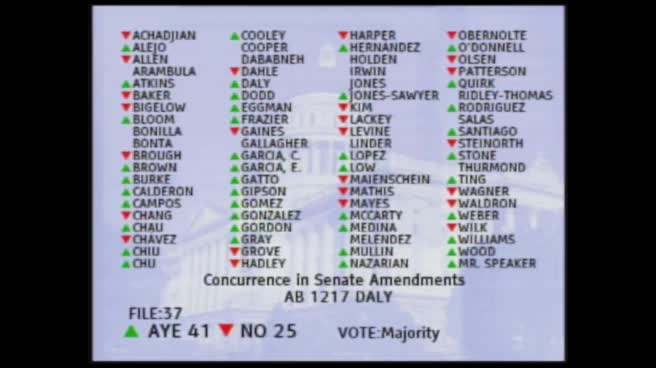 1MIN
Assembly Floor
 2MIN
Senate Floor
 4MIN
Senate Standing Committee on Judiciary
 2MIN
Senate Standing Committee on Labor and Industrial Relations
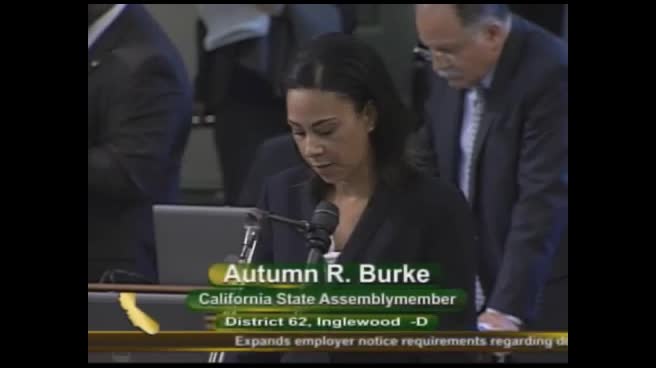 1MIN
Assembly Floor
 2MIN
Assembly Standing Committee on Appropriations
 5MIN
Assembly Standing Committee on Judiciary
Bill Author

Bill Co-Author(s):