AB 1010: Community colleges: part-time, temporary employees.
- Session Year: 2015-2016
- House: Assembly
- Latest Version Date: 2015-04-27
(1)Existing law establishes the California Community Colleges under the administration of the Board of Governors of the California Community Colleges. Existing law authorizes the establishment of community college districts under the administration of community college governing boards, and authorizes these districts to provide instruction at community college campuses throughout the state.
Existing law requires that a person employed to teach adult or community college classes for not more than 67% of the hours per week of a full-time employee having comparable duties, excluding substitute service, be classified as a temporary employee and not become a contract employee.
This bill would require community college districts without a collective bargaining agreement with part-time, temporary faculty in effect as of January 1, 2016, to, on or after January 1, 2016, commence negotiations with the exclusive representatives for part-time, temporary faculty regarding the terms and conditions required by the bill. The bill would specify minimum standards for the treatment of part-time, temporary faculty to be met by community college collective bargaining agreements negotiated on or after January 1, 2016, that are not exempt, as specified. These standards would relate to, among other issues, evaluation procedures, workload distribution, and seniority rights.
To the extent that this bill would impose new duties on community college districts, it would constitute a state-mandated local program.
(2)The California Constitution requires the state to reimburse local agencies and school districts for certain costs mandated by the state. Statutory provisions establish procedures for making that reimbursement.
This bill would provide that, if the Commission on State Mandates determines that the bill contains costs mandated by the state, reimbursement for those costs shall be made pursuant to these statutory provisions.
(1)Existing law establishes the California Community Colleges under the administration of the Board of Governors of the California Community Colleges. Existing law authorizes the establishment of community college districts under the administration of community college governing boards, and authorizes these districts to provide instruction at community college campuses throughout the state.
Existing law requires that a person employed to teach adult or community college classes for not more than 67% of the hours per week of a full-time employee having comparable duties, excluding substitute service, be classified as a temporary employee and not become a contract employee.
This bill would urge require community college districts without a collective bargaining agreement with part-time, temporary faculty in effect as of January 1, 2016, to, on or after January 1, 2016, commence negotiations with the exclusive representatives for part-time, temporary faculty regarding the terms and conditions required by the bill on or after January 1, 2016. The bill would require community college districts with a collective bargaining agreement in effect as of January 1, 2016, to comply with the provisions of the bill as part of any successor negotiations. bill. The bill would specify minimum standards for the treatment of part-time, temporary faculty to be met by community college collective bargaining agreements negotiated on or after January 1, 2016, that are not exempt, as specified. These standards would relate to, among other issues, evaluation procedures, workload distribution, and seniority rights.
To the extent that this bill would impose new duties on community college districts, it would constitute a state-mandated local program.
(2)The California Constitution requires the state to reimburse local agencies and school districts for certain costs mandated by the state. Statutory provisions establish procedures for making that reimbursement.
This bill would provide that, if the Commission on State Mandates determines that the bill contains costs mandated by the state, reimbursement for those costs shall be made pursuant to these statutory provisions.
(1)Existing law establishes the California Community Colleges under the administration of the Board of Governors of the California Community Colleges. Existing law authorizes the establishment of community college districts under the administration of community college governing boards, and authorizes these districts to provide instruction at community college campuses throughout the state.
Existing law requires that a person employed to teach adult or community college classes for not more than 67% of the hours per week of a full-time employee having comparable duties, excluding substitute service, be classified as a temporary employee and not become a contract employee.
This bill would urge community college districts without a collective bargaining agreement with part-time, temporary faculty in effect as of January 1, 2016, to commence negotiations with the exclusive representatives for part-time, temporary faculty regarding the terms and conditions required by the bill on or after January 1, 2016. The bill would require community college districts with a collective bargaining agreement in effect as of January 1, 2016, to comply with the provisions of the bill as part of any successor negotiations. The bill would specify minimum standards for the treatment of part-time, temporary faculty to be met by community college collective bargaining agreements negotiated on or after January 1, 2016. These standards would relate to, among other issues, evaluation procedures, workload distribution, and seniority rights.
To the extent that this bill would impose new duties on community college districts, it would constitute a state-mandated local program.
(2)The California Constitution requires the state to reimburse local agencies and school districts for certain costs mandated by the state. Statutory provisions establish procedures for making that reimbursement.
This bill would provide that, if the Commission on State Mandates determines that the bill contains costs mandated by the state, reimbursement for those costs shall be made pursuant to these statutory provisions.
(a)(1)On or after January 1, 2016, community college districts that do not have a collective bargaining agreement with part-time, temporary faculty in effect as of January 1, 2016, shall commence negotiations with the exclusive representatives for part-time, temporary faculty regarding the terms and conditions required by subdivision (b). The parties shall negotiate these rights for part-time, temporary faculty.
(2)It is the intent of the Legislature: Legislature that both of the following shall occur:
(A)That The adoption of provisions in compliance with subdivision (b) shall be included as part of the usual and customary negotiations between the community college district and the exclusive representative for part-time, temporary faculty.
(B)That a A community college district shall meet the minimum standards established by this section through the negotiation process between the community college district and the exclusive representative for part-time, temporary faculty.
(b)(1)A community college district that enters into a collective bargaining agreement on or after January 1, 2016, shall comply with all of the following:
(A)Upon initial hire, a part-time, temporary faculty member shall be evaluated by a committee that shall include, but not necessarily be limited to, a contract or regular faculty peer evaluator who has expertise in the subject matter of the part-time, temporary faculty members assignment. The evaluation committee may additionally include other evaluators, such as a department chair, dean, or a second peer. The terms and conditions of the evaluation process and procedures shall be locally negotiated between the community college district and the exclusive representative for part-time, temporary faculty. Subsequent to his or her initial hire, each part-time, temporary faculty member shall be evaluated at least once every six semesters or nine quarters of service, exclusive of summer and intersession terms.
(B)After six semesters or nine quarters of service, exclusive of summer and intersession terms, each part-time, temporary faculty member who has not received a less-than-satisfactory evaluation during the preceding six semesters or nine quarters of service shall be placed on a seniority list for each assignment at each college where he or she holds a current assignment during the seventh semester or 10th quarter of service, irrespective of how many times he or she has completed each unique assignment. The seniority for all assignments shall be determined based on the first date of hire at the applicable college. Seniority lists shall be by campus unless otherwise locally negotiated between the community college district and the exclusive representative for part-time, temporary faculty.
(C)For semester seven or quarter 10 and beyond, each community college district shall endeavor to maintain the workload equivalent that the part-time, temporary faculty member was assigned during semester six or quarter nine, subject to all of the following:
(i)As new assignments become available due to growth or attrition, these assignments shall be offered in seniority order to those part-time, temporary faculty members who have qualified to be placed on the seniority list pursuant to subparagraph (B), and previously successfully completed that same assignment. These assignments may be made up to a maximum annualized load, exclusive of summer and intersession terms, in the range of 60 to 67 percent of a full-time equivalent load.
(ii)In cases where a reduction in assignment needs to occur due to program needs, budget constraints, or more contract faculty hires, the reduction shall occur first from among those part-time, temporary faculty members who have not yet qualified to be placed on the seniority list, and thereafter in reverse seniority order, with the least senior part-time, temporary faculty member reduced first. Any rights to a certain workload equivalent shall be maintained for a period of 18 months. In cases of class cancellation due to low enrollment, faculty members shall displace faculty members who are lower than they are on the seniority list, provided that the class cancellation occurs prior to the first class meeting day.
(iii)Each new assignment successfully completed shall be added to the part-time, temporary faculty member seniority list.
(D)If a part-time, temporary faculty member rejects any offered assignment, he or she shall have his or her workload equivalent reduced accordingly. If he or she rejects all offered assignments, he or she shall lose all seniority rights.
(E)Additional
(D)Procedures governing refusal or rejection of offered assignments, diminution or loss of seniority rights, and additional leave or break-in-service provisions may shall be locally negotiated between the community college district and the exclusive representative for part-time, temporary faculty.
(F)
(E)In cases where a part-time, temporary faculty member, subsequent to qualifying to be placed on the seniority list, receives a less-than-satisfactory evaluation, as that term is defined in the collective bargaining agreement between the community college district and the exclusive representative for part-time, temporary faculty, the faculty member shall be provided a written plan of remediation with concrete suggestions for improvement. The faculty member shall be evaluated again the following semester. If the outcome of this subsequent evaluation is also less than satisfactory, the faculty member shall lose all seniority rights, and may be dismissed at the discretion of the district. Appeal and grievance rights and procedures, if any, shall be subject to local collective bargaining.
(G)
(F)In all cases, part-time faculty assignments are temporary in nature, contingent on enrollment and funding, and subject to program changes, and no part-time faculty member has a reasonable assurance of continued employment at any point, irrespective of the status, length of service, or reemployment preference seniority of that part-time, temporary faculty member.
(2)(A)A community college district that has a collective bargaining agreement in effect as of January 1, 2016, that takes into account has provisions in place that require implementation of all of the following, and executes a signed written agreement pursuant to subparagraph (B), shall be exempt from this subdivision upon the expiration of that agreement:
(i)Part-time, temporary faculty assignments assignment based on seniority up to the range of 60 to 67 percent of a full-time equivalent load.
(ii)A regular evaluation process for part-time, temporary faculty.
(iii)Due process for termination once a part-time, temporary faculty member has qualified for the negotiated provisions.
(B)A written agreement, confirming that provisions requiring the implementation of clauses (i) to (iii), inclusive, have been taken into account in included in a collective bargaining agreement in effect as of January 1, 2016, shall be signed by the exclusive representative for part-time, temporary faculty and the community college district, who are subject to that agreement, in order for the district to be exempt from this subdivision pursuant to subparagraph (A).
SEC. 2.If the Commission on State Mandates determines that this act contains costs mandated by the state, reimbursement to local agencies and school districts for those costs shall be made pursuant to Part 7 (commencing with Section 17500) of Division 4 of Title 2 of the Government Code.
(a)Notwithstanding any other law, a person who is employed to teach adult or community college classes for not more than 67 percent of the hours per week considered a full-time assignment for regular employees having comparable duties shall be classified as a temporary employee, and shall not become a contract employee under Section 87604. If the provisions of this section are in conflict with the terms of a collective bargaining agreement in effect on or before January 1, 2009, the provisions of this section shall govern the employees subject to that agreement upon the expiration of the agreement.
(b)Service as a substitute on a day-to-day basis by persons employed under this section shall not be used for purposes of calculating eligibility for contract or regular status.
(c)(1)Service in professional ancillary activities by persons employed under this section, including, but not necessarily limited to, governance, staff development, grant writing, and advising student organizations, shall not be used for purposes of calculating eligibility for contract or regular status unless otherwise provided for in a collective bargaining agreement applicable to a person employed under this section.
(2)This subdivision shall not be construed to affect the requirements of subdivision (d) of Section 84362.
(d)(1)The Legislature urges community college districts that do not have a collective bargaining agreement with part-time, temporary faculty in effect as of January 1, 2016, to commence negotiations with the exclusive representatives for part-time, temporary faculty regarding the terms and conditions required by subdivision (e) on or after January 1, 2016. The Legislature encourages the parties to these negotiations to agree to additional negotiated rights for part-time, temporary faculty.
(2)It is the intent of the Legislature:
(A)That adoption of provisions in compliance with subdivision (e) shall be included as part of the usual and customary negotiations between the community college district and the exclusive representative for part-time, temporary faculty.
(B)That a community college district meet the minimum standards established by this section through the negotiation process between the community college district and the exclusive representative for part-time, temporary faculty.
(e)A community college district that enters into a collective bargaining agreement on or after January 1, 2016, shall comply with all of the following:
(1)Upon initial hire, a part-time, temporary faculty member shall be evaluated by a committee that shall include, but not necessarily be limited to, a contract or regular faculty peer evaluator who has expertise in the subject matter of the part-time, temporary faculty members assignment. The evaluation committee may additionally include other evaluators, such as a department chair, dean, or a second peer. The terms and conditions of the evaluation process and procedures shall be locally negotiated between the community college district and the exclusive representative for part-time, temporary faculty. Subsequent to his or her initial hire, each part-time, temporary faculty member shall be evaluated at least once every six semesters or nine quarters of service, exclusive of summer and intersession terms.
(2)After six semesters or nine quarters of service, exclusive of summer and intersession terms, each part-time, temporary faculty member who has not received a less-than-satisfactory evaluation during the preceding six semesters or nine quarters of service shall be placed on a seniority list for each assignment at each college where he or she holds a current assignment during the seventh semester or 10th quarter of service, irrespective of how many times he or she has completed each unique assignment. The seniority for all assignments shall be determined based on the first date of hire at the applicable college. Seniority lists shall be by campus unless otherwise locally negotiated between the community college district and the exclusive representative for part-time, temporary faculty.
(3)For semester seven or quarter 10 and beyond, each community college district shall endeavor to maintain the workload equivalent that the part-time, temporary faculty member was assigned during semester six or quarter nine, subject to both of the following:
(A)As new assignments become available due to growth or attrition, these assignments shall be offered in seniority order to those part-time, temporary faculty members who have: (i) qualified to be placed on the seniority list pursuant to paragraph (2), and (ii) previously successfully completed that same assignment. These assignments may be made up to a maximum annualized load, exclusive of summer and intersession terms, in the range of 60 to 67 percent of a full-time equivalent load.
(B)In cases where a reduction in assignment needs to occur due to program needs, budget constraints, or more contract faculty hires, the reduction shall occur first from among those part-time, temporary faculty members who have not yet qualified to be placed on the seniority list, and thereafter in reverse seniority order, with the least senior part-time, temporary faculty member reduced first. Any rights to a certain workload equivalent shall be maintained for a period of 18 months. In cases of class cancellation due to low enrollment, faculty members shall displace faculty members who are lower than they are on the seniority list, provided that the class cancellation occurs prior to the first class meeting day.
(4)If a part-time, temporary faculty member rejects any offered assignment, he or she shall have his or her workload equivalent reduced accordingly. If he or she rejects all offered assignments, he or she shall lose all seniority rights.
(5)Additional leave or break-in-service provisions may be locally negotiated between the community college district and the exclusive representative for part-time, temporary faculty.
(6)In cases where a part-time, temporary faculty member, subsequent to qualifying to be placed on the seniority list, receives a less-than-satisfactory evaluation, as that term is defined in the collective bargaining agreement between the community college district and the exclusive representative for part-time, temporary faculty, the faculty member shall be provided a written plan of remediation with concrete suggestions for improvement. The faculty member shall be evaluated again the following semester. If the outcome of this subsequent evaluation is also less than satisfactory, the faculty member shall lose all seniority rights, and may be dismissed at the discretion of the district. Appeal and grievance rights and procedures, if any, shall be subject to local collective bargaining.
(7)In all cases, part-time faculty assignments are temporary in nature, contingent on enrollment and funding, and subject to program changes, and no part-time faculty member has a reasonable assurance of continued employment at any point, irrespective of the status, length of service, or reemployment preference seniority of that part-time, temporary faculty member.
SECTION 1.Section 87482.3 is added to the Education Code, to read:87482.3.(a)(1)On or after January 1, 2016, community college districts that do not have a collective bargaining agreement with part-time, temporary faculty in effect as of January 1, 2016, shall commence negotiations with the exclusive representatives for part-time, temporary faculty regarding the terms and conditions required by subdivision (b). The parties shall negotiate these rights for part-time, temporary faculty.
(2)It is the intent of the Legislature:
(A)That adoption of provisions in compliance with subdivision (b) shall be included as part of the usual and customary negotiations between the community college district and the exclusive representative for part-time, temporary faculty.
(B)That a community college district meet the minimum standards established by this section through the negotiation process between the community college district and the exclusive representative for part-time, temporary faculty.
(b)(1)A community college district that enters into a collective bargaining agreement on or after January 1, 2016, shall comply with all of the following:
(A)Upon initial hire, a part-time, temporary faculty member shall be evaluated by a committee that shall include, but not necessarily be limited to, a contract or regular faculty peer evaluator who has expertise in the subject matter of the part-time, temporary faculty members assignment. The evaluation committee may additionally include other evaluators, such as a department chair, dean, or a second peer. The terms and conditions of the evaluation process and procedures shall be locally negotiated between the community college district and the exclusive representative for part-time, temporary faculty. Subsequent to his or her initial hire, each part-time, temporary faculty member shall be evaluated at least once every six semesters or nine quarters of service, exclusive of summer and intersession terms.
(B)After six semesters or nine quarters of service, exclusive of summer and intersession terms, each part-time, temporary faculty member who has not received a less-than-satisfactory evaluation during the preceding six semesters or nine quarters of service shall be placed on a seniority list for each assignment at each college where he or she holds a current assignment during the seventh semester or 10th quarter of service, irrespective of how many times he or she has completed each unique assignment. The seniority for all assignments shall be determined based on the first date of hire at the applicable college. Seniority lists shall be by campus unless otherwise locally negotiated between the community college district and the exclusive representative for part-time, temporary faculty.
(C)For semester seven or quarter 10 and beyond, each community college district shall endeavor to maintain the workload equivalent that the part-time, temporary faculty member was assigned during semester six or quarter nine, subject to all of the following:
(i)As new assignments become available due to growth or attrition, these assignments shall be offered in seniority order to those part-time, temporary faculty members who have qualified to be placed on the seniority list pursuant to subparagraph (B), and previously successfully completed that same assignment. These assignments may be made up to a maximum annualized load, exclusive of summer and intersession terms, in the range of 60 to 67 percent of a full-time equivalent load.
(ii)In cases where a reduction in assignment needs to occur due to program needs, budget constraints, or more contract faculty hires, the reduction shall occur first from among those part-time, temporary faculty members who have not yet qualified to be placed on the seniority list, and thereafter in reverse seniority order, with the least senior part-time, temporary faculty member reduced first. Any rights to a certain workload equivalent shall be maintained for a period of 18 months. In cases of class cancellation due to low enrollment, faculty members shall displace faculty members who are lower than they are on the seniority list, provided that the class cancellation occurs prior to the first class meeting day.
(iii)Each new assignment successfully completed shall be added to the part-time, temporary faculty member seniority list.
(D)If a part-time, temporary faculty member rejects any offered assignment, he or she shall have his or her workload equivalent reduced accordingly. If he or she rejects all offered assignments, he or she shall lose all seniority rights.
(E)Additional leave or break-in-service provisions may be locally negotiated between the community college district and the exclusive representative for part-time, temporary faculty.
(F)In cases where a part-time, temporary faculty member, subsequent to qualifying to be placed on the seniority list, receives a less-than-satisfactory evaluation, as that term is defined in the collective bargaining agreement between the community college district and the exclusive representative for part-time, temporary faculty, the faculty member shall be provided a written plan of remediation with concrete suggestions for improvement. The faculty member shall be evaluated again the following semester. If the outcome of this subsequent evaluation is also less than satisfactory, the faculty member shall lose all seniority rights, and may be dismissed at the discretion of the district. Appeal and grievance rights and procedures, if any, shall be subject to local collective bargaining.
(G)In all cases, part-time faculty assignments are temporary in nature, contingent on enrollment and funding, and subject to program changes, and no part-time faculty member has a reasonable assurance of continued employment at any point, irrespective of the status, length of service, or reemployment preference seniority of that part-time, temporary faculty member.
(2)(A)A community college district that has a collective bargaining agreement in effect as of January 1, 2016, that takes into account all of the following, and executes a signed written agreement pursuant to subparagraph (B), shall be exempt from this subdivision upon the expiration of that agreement:
(i)Part-time, temporary faculty assignments based on seniority up to the range of 60 to 67 percent of a full-time equivalent load.
(ii)A regular evaluation process for part-time, temporary faculty.
(iii)Due process for termination once a part-time, temporary faculty member has qualified for the negotiated provisions.
(B)A written agreement, confirming that clauses (i) to (iii), inclusive, have been taken into account in a collective bargaining agreement in effect as of January 1, 2016, shall be signed by the exclusive representative for part-time, temporary faculty and the community college district, who are subject to that agreement, in order for the district to be exempt from this subdivision pursuant to subparagraph (A).
SEC. 2.If the Commission on State Mandates determines that this act contains costs mandated by the state, reimbursement to local agencies and school districts for those costs shall be made pursuant to Part 7 (commencing with Section 17500) of Division 4 of Title 2 of the Government Code.
(a)Notwithstanding any other law, a person who is employed to teach adult or community college classes for not more than 67 percent of the hours per week considered a full-time assignment for regular employees having comparable duties shall be classified as a temporary employee, and shall not become a contract employee under Section 87604. If the provisions of this section are in conflict with the terms of a collective bargaining agreement in effect on or before January 1, 2009, the provisions of this section shall govern the employees subject to that agreement upon the expiration of the agreement.
(b)Service as a substitute on a day-to-day basis by persons employed under this section shall not be used for purposes of calculating eligibility for contract or regular status.
(c)(1)Service in professional ancillary activities by persons employed under this section, including, but not necessarily limited to, governance, staff development, grant writing, and advising student organizations, shall not be used for purposes of calculating eligibility for contract or regular status unless otherwise provided for in a collective bargaining agreement applicable to a person employed under this section.
(2)This subdivision may shall not be construed to affect the requirements of subdivision (d) of Section 84362.
(d)(1)The Legislature urges community college districts that do not have a collective bargaining agreement with part-time, temporary faculty in effect as of January 1, 2016, to commence negotiations with the exclusive representatives for part-time, temporary faculty regarding the terms and conditions required by subdivision (e) on or after January 1, 2016. The Legislature encourages the parties to these negotiations to agree to additional negotiated rights for part-time, temporary faculty.
(2)It is the intent of the Legislature:
(A)That adoption of provisions in compliance with subdivision (e) shall be included as part of the usual and customary negotiations between the community college district and the exclusive representative for part-time, temporary faculty.
(B)That a community college district meet the minimum standards established by this section through the negotiation process between the community college district and the exclusive representative for part-time, temporary faculty.
(e)A community college district that enters into a collective bargaining agreement on or after January 1, 2016, shall comply with all of the following:
(1)Upon initial hire, a part-time, temporary faculty member shall be evaluated by a committee that shall include, but not necessarily be limited to, a contract or regular faculty peer evaluator who has expertise in the subject matter of the part-time, temporary faculty members assignment. The evaluation committee may additionally include other evaluators, such as a department chair, dean, or a second peer. The terms and conditions of the evaluation process and procedures shall be locally negotiated between the community college district and the exclusive representative for part-time, temporary faculty. Subsequent to his or her initial hire, each part-time, temporary faculty member shall be evaluated at least once every six semesters or nine quarters of service, exclusive of summer and intersession terms.
(2)After six semesters or nine quarters of service, exclusive of summer and intersession terms, each part-time, temporary faculty member who has not received a less-than-satisfactory evaluation during the preceding six semesters or nine quarters of service shall be placed on a seniority list for each assignment at each college where he or she holds a current assignment during the seventh semester or 10th quarter of service, irrespective of how many times he or she has completed each unique assignment. The seniority for all assignments shall be determined based on the first date of hire at the applicable college. Seniority lists shall be by campus unless otherwise locally negotiated between the community college district and the exclusive representative for part-time, temporary faculty.
(3)For semester seven or quarter 10 and beyond, each community college district shall endeavor to maintain the workload equivalent that the part-time, temporary faculty member was assigned during semester six or quarter nine, subject to both of the following:
(A)As new assignments become available due to growth or attrition, these assignments shall be offered in seniority order to those part-time, temporary faculty members who have: (i) qualified to be placed on the seniority list pursuant to paragraph (2), and (ii) previously successfully completed that same assignment. These assignments may be made up to a maximum annualized load, exclusive of summer and intersession terms, in the range of 60 to 67 percent of a full-time equivalent load.
(B)In cases where a reduction in assignment needs to occur due to program needs, budget constraints, or more contract faculty hires, the reduction shall occur first from among those part-time, temporary faculty members who have not yet qualified to be placed on the seniority list, and thereafter in reverse seniority order, with the least senior part-time, temporary faculty member reduced first. Any rights to a certain workload equivalent shall be maintained for a period of 18 months. In cases of class cancellation due to low enrollment, faculty members shall displace faculty members who are lower than they are on the seniority list, provided that the class cancellation occurs prior to the first class meeting day.
(4)If a part-time, temporary faculty member rejects any offered assignment, he or she shall have his or her workload equivalent reduced accordingly. If he or she rejects all offered assignments, he or she shall lose all seniority rights.
(5)Additional leave or break-in-service provisions may be locally negotiated between the community college district and the exclusive representative for part-time, temporary faculty.
(6)In cases where a part-time, temporary faculty member, subsequent to qualifying to be placed on the seniority list, receives a less-than-satisfactory evaluation, as that term is defined in the collective bargaining agreement between the community college district and the exclusive representative for part-time, temporary faculty, the faculty member shall be provided a written plan of remediation with concrete suggestions for improvement. The faculty member shall be evaluated again the following semester. If the outcome of this subsequent evaluation is also less than satisfactory, the faculty member shall lose all seniority rights, and may be dismissed at the discretion of the district. Appeal and grievance rights and procedures, if any, shall be subject to local collective bargaining.
(7)In all cases, part-time faculty assignments are temporary in nature, contingent on enrollment and funding, and subject to program changes, and no part-time faculty member has a reasonable assurance of continued employment at any point, irrespective of the status, length of service, or reemployment preference seniority of that part-time, temporary faculty member.
SEC. 2.If the Commission on State Mandates determines that this act contains costs mandated by the state, reimbursement to local agencies and school districts for those costs shall be made pursuant to Part 7 (commencing with Section 17500) of Division 4 of Title 2 of the Government Code.
|
Date
|
Status
|
|---|---|
| Aug 27, 2015 | In committee: Held under submission. |
| Jul 6, 2015 | In committee: Referred to APPR. suspense file. |
| Jun 24, 2015 | From committee: Do pass and re-refer to Com. on APPR. (Ayes 6. Noes 2.) (June 24). Re-referred to Com. on APPR. |
| Jun 11, 2015 | Referred to Com. on ED. |
| Jun 2, 2015 | In Senate. Read first time. To Com. on RLS. for assignment. |
| Jun 2, 2015 | Read third time. Passed. Ordered to the Senate. (Ayes 51. Noes 27. Page 1786.) |
| Jun 2, 2015 | Read third time. Passed. Ordered to the Senate. |
| Jun 1, 2015 | Read second time. Ordered to third reading. |
| May 28, 2015 | From committee: Do pass. (Ayes 12. Noes 5.) (May 28). |
| May 20, 2015 | In committee: Set, first hearing. Referred to APPR. suspense file. |
| May 20, 2015 | In committee: Set, first hearing. Referred to suspense file. |
| Apr 28, 2015 | Re-referred to Com. on APPR. |
| Apr 27, 2015 | Read second time and amended. |
| Apr 23, 2015 | From committee: Amend, and do pass as amended and re-refer to Com. on APPR. (Ayes 9. Noes 4.) (April 21). |
| Apr 13, 2015 | Re-referred to Com. on HIGHER ED. |
| Apr 9, 2015 | From committee chair, with author's amendments: Amend, and re-refer to Com. on HIGHER ED. Read second time and amended. |
| Mar 19, 2015 | Referred to Com. on HIGHER ED. |
| Feb 27, 2015 | From printer. May be heard in committee March 29. |
| Feb 26, 2015 | Read first time. To print. |
|
Date
|
Description
|
Location
|
Votes
|
|
|---|---|---|---|---|
| Jul 6, 2015 | Placed on suspense file | Senate Standing Committee on Appropriations |
Passed |
|
| Jun 24, 2015 | Do pass, but first be re-referred to the Committee on [Appropriations] | Senate Standing Committee on Education |
Passed |
|
| Jun 2, 2015 | AB 1010 MEDINA Assembly Third Reading | Assembly Floor |
Passed |
|
| May 28, 2015 | Do pass. | Assembly Standing Committee on Appropriations |
Passed |
|
| Apr 21, 2015 | Do pass as amended and be re-referred to the Committee on [Appropriations] | Assembly Standing Committee on Higher Education |
Passed |
This list shows positions taken on this bill by organizations on the date displayed, which is linked to the original source.
Positions by individuals are not included.
AB 1010 (Medina) Page 5 of 5
SENATE COMMITTEE ON EDUCATION
Senator Carol Liu, Chair
2015 - 2016 Regular
Bill No: AB 1010
Author: |
Medina |
||
Version: |
April 27, 2015 Hearing Date: June 24, 2015 |
||
Urgency: |
No |
Fiscal: |
Yes |
Consultant: |
Lenin Del Castillo |
||
Subject: Community colleges: part-time, temporary employees
SUMMARY
This bill requires community college districts to have collective bargaining agreements with part-time faculty that include specified conditions of employment.
BACKGROUND
Existing law defines “faculty” as those employees of community college districts who are employed in academic positions that are not designated as supervisory or management, as specified. Faculty include, but are not limited to, instructors, librarians, counselors, community college health services professionals, handicapped student programs and services professionals, and extended opportunity programs and services professionals. (Education Code § 87003)
Existing law also defines any person who is employed to teach for not more than 67% of the hours per week considered a full-time assignment to be a part-time, temporary employee. (EC § 87482.5 and § 87882)
The Board of Governors (BOG) of the California Community Colleges (CCC) has had a longstanding policy that at least 75% of the hours of credit instruction in the community colleges, as a system, should be taught by full-time instructors (commonly referred to as “75/25”). Existing law requires the BOG to adopt regulations regarding the percent of credit instruction taught by full-time faculty and authorizes CCC districts with less than 75% full-time instructors to apply a portion of their “program improvement” funds toward reaching a 75% goal. However, the state has stopped providing program improvement funds and the BOG has since required CCC districts to provide a portion of their growth funds to hiring more full-time faculty. (EC § 87482.6)
ANALYSIS
This bill:
Requires community college districts that do not have a collective bargaining agreement with part-time faculty in effect as of January 1, 2016, to commence negotiations with exclusive representatives for part-time, temporary faculty regarding specified terms and conditions, including:
Upon initial hire, requirements for the evaluation of part-time faculty members, as specified, including, but not necessarily limited to, a contract or regular faculty peer evaluator who has expertise in the subject matter of the part-time, temporary faculty member’s assignment.
Evaluation at least once every six semesters or nine quarters of service, exclusive of summer and intersession terms.
Placement on a seniority list for assignments, following six semesters of satisfactory service. The seniority for all assignments shall be determined based on the first date of hire at the applicable college and seniority lists shall be by campus unless otherwise locally negotiated between the community college district and the exclusive representative for part-time, temporary faculty.
Maintenance of the faculty member's workload for semester seven or quarter ten and beyond, as specified. As new assignments become available due to growth or attrition, these assignments shall be offered in seniority order to those part-time, temporary faculty members who have qualified to be placed on the seniority list, as specified. In cases where a reduction in assignment needs to occur due to program needs, budget constraints, or more contract faculty hires, the reduction shall occur first from among those part-time, temporary faculty members who have not yet qualified to be placed on the seniority list, and thereafter in reverse seniority order (i.e., use of "last in, first out" for reductions in assignments), as specified.
Procedures governing refusal or rejection of offered assignments, diminution or loss of seniority rights, and additional leave or break-in-service provisions that are locally negotiated between the community college district and the exclusive representative for part-time faculty.
Requirement that in cases where a part-time faculty, subsequent to qualifying to be placed on the seniority list, receives a less-than satisfactory evaluation, as defined, the faculty member shall be provided a written plan of remediation with concrete suggestions for improvement, as specified. The faculty member shall be evaluated again the following semester and if the outcome is less than satisfactory, the faculty member shall lose all seniority rights and may be dismissed at the discretion of the district. Appeal and grievance rights and procedures, if any, shall be subject to local collective bargaining.
Requirement that part-time faculty assignments are temporary in nature, contingent on enrollment and funding, and subject to program changes, and no part-time faculty member has a reasonable assurance of continued employment at any point, as specified.
Provides that a community college district with a collective bargaining agreement with part-time faculty in effect as of January 1, 2016, shall be exempt from the above requirements if the agreement takes into account all of the following:
Part-time faculty assignments are based on seniority up to 60% to 67% of a full-time equivalent teaching load.
A regular evaluation process for part-time faculty.
Due process for termination for part-time faculty that have qualified for negotiated provisions.
Provides legislative intent language, as specified.
STAFF
COMMENTS
Need for the bill. According to the author’s office, job instability, lack of promotion to full-time positions, and limited engagement with students are some of the biggest concerns for part-time/temporary faculty. The inability to negotiate reemployment policies at most community college districts has resulted in unreliable reemployment practices, which leave many part-time faculty wondering if they will have a job the following semester. Additionally, many part-time/temporary faculty are left with no option but to piece together full-time teaching schedules through employment in two or more community college districts. The various differences in reemployment policies in these community college districts also make it difficult for part-time/temporary faculty to plan their upcoming teaching schedules. The author’s office contends that in most cases, part-time instructors are paid significantly less than full-time faculty for the same duties of preparation, teaching and grading, and assessment. In addition to receiving significantly less in compensation than their full-time counterparts, in most cases PT faculty receive no health coverage and are not compensated for office hours outside of class to meet with students. The author argues that, "This lack of dignity, fairness, and equity translates to poor prospects for career advancement, resulting in many qualified part-time faculty leaving the profession annually.”
Existing reemployment policies. Current law requires that reappointment rights for temporary faculty are a subject of negotiation during collective bargaining and provides that reappointment rights may be based on whatever factors are agreed to by both parties. Accordingly, many community college districts have established policies and practices regarding reappointment rights through the bargaining process. Additionally, several community college districts have successfully negotiated bargaining agreements that contain standards that are similar to those proposed by this measure, including the Grossmont-Cuyamaca, Los Angeles, San Diego, San Francisco, and Ventura community college districts. While this bill is intended to provide job security for part-time faculty and minimum standards for how they are treated, the Committee may wish to consider whether this bill is necessary as community college districts and local bargaining units already have the ability to negotiate reemployment policies. Should all community college districts be mandated to do so or should this continue to be left to local discretion?
Limits discretion of the community college districts. In providing job security and establishing minimum standards for how part-time faculty are treated, this bill specifies prescriptive requirements for local bargaining agreements that all community college districts would be required to adhere to. The Committee may wish to consider whether this bill could reduce the ability of the districts to meet their local community needs in offering course selections and quickly responding to changing market demands. The Community College League of California indicates, “By mandating a one-size fits all approach, this bill will impose conditions of employment that may not reflect local district needs, increase costs for districts and ultimately reduce student success.”
Conflicts with existing contracts? The bill provides that a community college district with a collective bargaining agreement with part-time faculty in effect as of January 1, 2016, shall be exempt from its requirements if the agreement takes into account specified requirements, including seniority based assignments and a regular evaluation process. It appears that if an existing contract does not meet these requirements, the community college district would be required to commence negotiations pursuant to the bill’s provisions. Therefore, the bill could have the effect of abrogating an existing contract and have potential legal ramifications.
Part-time faculty. For some time, the Legislature has considered various efforts to address the issue of community college districts hiring part-time faculty members in lieu of full-time faculty. Much of the reason to utilize temporary faculty is the lower costs associated with such faculty. Several studies on temporary faculty found that community college districts pay temporary faculty significantly less than full-time faculty performing the same duties, and nearly half of temporary faculty reported not receiving any type of benefits from their district.
According to the Center for Community College Student Engagement's (CCCSE) April 2014 report, entitled, "Contingent Commitments: Bringing Part-Time Faculty Into Focus," 70% of the 400,000 faculty members of public, two-year colleges hired in 2009 were part-time instructors. The CCCSE report also found that the part-time faculty, teach 58% of community college classes and 53% of community college students. Additionally, the CCCSE report found that differences in the actions of part-time and full-time faculty cannot necessarily be attributed to differences in the will or abilities of part-time faculty. The report contends that, "Most likely, they exist at least in part because colleges too often are not fully supporting part-time faculty or engaging them in critical elements of the faculty experience."
According to the California Federation of Teachers, nearly 50% of the California Community College (CCC) course selections are taught by part-time faculty and part-time faculty out number full-time faculty by two to one.
Fiscal impact. According to the Assembly Appropriations Committee, all districts currently have collecting bargaining agreements that include provisions regarding part-time faculty. At least 41 community college districts, however, do not maintain a seniority list. Assuming costs of $5,000 to $10,000 per district to establish such lists, presumably for each academic department, one-time Proposition 98 General Fund reimbursable state-mandated costs would be $205,000 to $410,000 per district. Once established, the ongoing cost to maintain the seniority lists should be minor and absorbable.
Related and prior legislation.
SB 373 (Pan) proposed a cap on the number of part-time faculty for each community college district based on the 2014-15 fiscal year, thereby limiting new hires to only full-time faculty until the district reaches a 75% threshold of full-time faculty. This bill failed passage in the Senate Appropriations Committee.
AB 626 (Low) requires community college districts to provide funding to increase their full-time/part-time faculty ratio and to increase support for part-time faculty. This bill is pending referral in the Senate.
AB 1807 (Fong, 2010) proposed to require community college districts, through collective bargaining, to establish and implement reemployment preference lists for part-time faculty. This measure was held in the Assembly Appropriations Committee.
SUPPORT
California Faculty Association
California Federation of Teachers (co-sponsor)
California Labor Federation
California Part-time Faculty Association
California Teachers Association (co-sponsor)
Faculty Association of California Community Colleges
OPPOSITION
Community College League of California
Riverside Community College District
-- END --
AB 1010 (Medina) Page 3 of 3
SENATE COMMITTEE ON APPROPRIATIONS
Senator Ricardo Lara, Chair
2015 - 2016 Regular Session
AB 1010 (Medina) - Community colleges: part-time, temporary employees.
|
|
Version: April 27, 2015 |
Policy Vote: ED. 6 - 2 |
Urgency: No |
Mandate: Yes |
Hearing Date: July 6, 2015 |
Consultant: Jillian Kissee |
This bill meets the criteria for referral to the Suspense File.
Bill Summary:
This bill requires community college districts (districts) to have collective bargaining agreements with part-time faculty that include specified conditions of employment.
Fiscal Impact:
Mandate Costs: For 41 districts to establish seniority lists, statewide costs could be range from $205,000 to 410,000. Additional costs could be incurred, depending on the frequency of occurrence, for districts to write remediation plans for part-time faculty on a seniority list, receiving a less-than satisfactory evaluation. (Proposition 98)
Cost Pressures: When reductions need to be made, in cases including budget constraints, to first reduce less senior, who tend to be paid lower, part-time faculty as opposed to a higher paid, more senior faculty member.
Background:
Existing law defines a part-time, temporary employee to be any person who is employed to teach for not more than 67 percent of the hours per week considered to be a full-time assignment. (ECS 87482.5 and 87882)
The Board of Governors (BOG) of the California Community Colleges (CCC) has had a longstanding policy that at least 75 percent of the hours of credit instruction in the community colleges, as a system, should be taught by full-time instructors. Existing law requires the BOG to adopt regulations regarding the percent of credit instruction taught by full-time faculty and authorizes districts with less than 75 percent full-time instructors to apply a portion of their “program improvement” funds toward reaching a 75 percent goal. However, the state has stopped providing program improvement funds and the BOG has since required districts to provide a portion of their growth funds to hiring more full-time faculty.
Proposed Law:
This bill requires, starting January 1, 2016, districts that do not
have a collective bargaining agreement in effect with part-time
faculty, to commence negotiations with the exclusive representatives
for part-time faculty regarding specified terms and conditions.
Districts
must enter into a collective bargaining agreement that complies with
terms and conditions in the following areas:
Evaluation: Each part-time faculty member is required to be evaluated at least once every six semesters or nine quarters of service, as specified (consistent with current law).
Seniority List: Each part-time faculty member that has completed six semesters (or nine quarters) of service that has not received a less-than-satisfactory evaluation is to be placed on a seniority list. Seniority lists are required to be by campus unless otherwise locally negotiated between the district and the exclusive representative for part-time faculty.
Prioritization of workload: As new assignments become available, they are to be first offered in seniority order to those that have qualified and successfully completed the same assignment. As assignments need to be reduced part-time faculty that have not qualified for the seniority list are to be reduced, and thereafter in reverse seniority order.
Less-than-satisfactory evaluations: In cases where a part-time faculty is on the seniority list but subsequently receives a negative evaluation, the faculty member is required to be provided a written plan of remediation and must be evaluated the following semester. If the part-time faculty member receives another negative evaluation for the following semester, the faculty member must lose all seniority rights and may be dismissed at the discretion of the district.
Related Legislation:
AB 1807 (Fong, 2010) proposed to require districts, through collective bargaining, to establish and implement reemployment preference lists for part-time faculty. This measure was held in the Assembly Appropriations Committee.
Staff Comments: This bill
requires districts to have collective bargaining agreements with part-time faculty that include specified conditions of employment relating to evaluations, seniority lists, and prioritizing certain faculty for new assignments or for reducing assignments.
The requirement for each campus to have a seniority list is new and would likely be determined by the Commission on State Mandates to be a higher level of service and therefore reimbursable by the state. It is estimated that about 41 districts currently do not have seniority lists. Costs for the 41 districts to establish seniority lists would be $5,000 to $10,000 per district, driving statewide mandate costs of between $205,000 and $410,000.
Additional mandated activities could include writing a plan of remediation for any part-time faculty that receives a less-than-satisfactory evaluation while on the seniority list. The level of costs incurred would depend on the number of less-than-satisfactory evaluations received by faculty on seniority lists.
Additional cost pressures may be incurred by districts as this bill removes discretion for districts without seniority lists to respond to the supply and demand of assignments without being required to maintain higher-paid, more senior, part-time faculty members, or reduce lower-paid, less senior faculty members.
-- END --
AB 1010
Page 3
ASSEMBLY THIRD READING
AB 1010
(Medina)
As Amended April 27, 2015
Majority vote
Committee |
Votes |
Ayes |
Noes |
Higher Education |
9-4 |
Medina, Bloom, Irwin, Jones-Sawyer, Levine, Low, Santiago, Weber, Williams |
Baker, Chávez, Harper, Linder |
Appropriations |
12-5 |
Gomez, Bonta, Calderon, Daly, Eggman, Eduardo Garcia, Gordon, Holden, Quirk, Rendon, Weber, Wood |
Bigelow, Chang, Gallagher, Jones, Wagner |
SUMMARY: Requires all community college districts (CCDs) to have collective bargaining agreements with part-time (P/T) faculty that include specified conditions of employment. Specifically, this bill:
Requires CCDs that do not have a collective bargaining agreement with P/T faculty in effect as of January 1, 2016, to commence negotiations with exclusive representatives for P/T faculty regarding specified terms and conditions, including:
Requirements for evaluation of a P/T faculty member, upon initial hire and subsequently, that are generally consistent with current law;
Placement on a seniority list for assignments, following six semesters of satisfactory service;
Maintenance by the district of a PT faculty member's workload for the seventh and succeeding semesters, as specified; and,
Offering of new assignments in seniority order, and use of "last in, first out" for reductions in assignments.
Stipulates that a CCD with a collective bargaining agreement with P/T faculty in effect as of January 1, 2016, shall be exempt from the above requirements if the agreement takes into account all of the following:
P/T faculty assignments are based on seniority up to 60% to 67% of a full-time (F/T) equivalent teaching load;
A regular evaluation process for P/T faculty; and,
Due process for termination for P/T faculty that have qualified for negotiated provisions.
EXISTING LAW:
Defines "faculty" as those employees of CCD who are employed in academic positions that are not designated as supervisory or management, as specified. Faculty include, but are not limited to, instructors, librarians, counselors, community college health services professionals, handicapped student programs and services professionals, and extended opportunity programs and services professionals (Education Code (EC) Section 87003).
Defines any person who is employed to teach for not more than 67% of the hours per week considered a full-time assignment to be a temporary (P/T) employee (EC Sections 87482.5 and 87882).
Requires the CCC Board of Governor's (BOG) to adopt regulations regarding the percent of credit instruction taught by F/T faculty and authorizes CCDs with less than 75% F/T instructors to apply a portion of their "program improvement" funds toward reaching the 75% goal (commonly referred as "75/25") (EC Section 87482.6). To note, the state has stopped providing program improvement funds and the BOG has since required CCDs to provide a portion of their growth funds to hiring more F/T faculty.
A complete summary of existing law regarding the employment of CCC faculty is beyond the scope of this analysis; however, it is important to note there are extensive, complex statutes, many of which apply to "full-time", "part-time", "temporary", "contract" and other academic employees, in a wide array of situations related to multiple aspects of district employment.
FISCAL EFFECT: According to the Assembly Appropriations Committee, all districts currently have collective bargaining agreements that include provisions regarding P/T faculty. At least 41 community college districts, however, do not maintain a seniority list. Assuming costs of $5,000 to $10,000 per district to establish such lists, presumably for each academic department, one-time reimbursable state-mandated costs would be $205,000 to $410,000 per district. Once established, the ongoing cost to maintain the seniority lists should be minor and absorbable.
COMMENTS: Background. According to the Center for Community College Student Engagement's (CCCSE) April 2014 report, entitled, "Contingent Commitments: Bringing Part-Time Faculty Into Focus," 70% of the 400,000 faculty members of public, two-year colleges hired in 2009 were part-time instructors. The CCCSE report found that the P/T faculty teach 58% of community college classes; and, 53% of community college students. Additionally, the report found that for many P/T faculty, contingent employment goes "hand-in-hand" with being marginalized within the faculty. The CCCSE report also found that differences in the actions of part-time and full-time faculty cannot necessarily be attributed to differences in the will or abilities of part-time faculty. The report contends that, "Most likely, they [the differences] exist at least in part because colleges too often are not fully supporting part-time faculty or engaging them in critical elements of the faculty experience."
According to the California Federation of Teachers, nearly 50% of the CCC course selections are taught by part-time faculty and part-time faculty outnumber full-time faculty by two to one.
CCC district reemployment policies. AB 1245 (Alquist), Chapter 850, Statutes of 2001, required the issue of reappointment rights for temporary faculty be a subject of negotiation during collective bargaining and provided that reappointment rights may be based on whatever factors are agreed to by both parties. Many districts have established reappointment rights policies under existing law. Similar models (as to those contained in this bill) have already been successfully negotiated in the following CCDs: Grossmont-Cuyamaca, Los Angeles, San Diego, San Francisco, and, Ventura.
This bill provides guidelines forming a basis enabling part-time faculty to establish job security, providing consistency for both students and instructors, and accountability to ensuring that part-time faculty retained under the provisions of this measure are providing the highest level of instruction and demonstrated commitment to student success.
Purpose of this measure. According to the author, P/T faculty are required to hold the same academic qualifications and credentials as their full-time colleagues. The author contends that in most cases, part-time instructors are paid significantly less than full-time faculty for the same duties of preparation, teaching and grading, and, assessment. In addition to receiving significantly less in compensation than their full-time counterparts, in most cases part-time faculty receive no health coverage and are not compensated for office hour time outside of class to meet with students. The author argues that, "This lack of dignity, fairness, and equity translates to poor prospects for career advancement, resulting in many qualified part-time faculty leaving the profession annually." The author contends that measures such as this bill, which seeks to enhance the retention of qualified instructors, support institutional viability and directly contribute to student success align with a goal of all stakeholders in California's Higher Education community.
Analysis Prepared by: Jeanice Warden / HIGHER ED. / (916) 319-3960 FN: 0000759
AB 1010
Page 2
Date of Hearing: May 20, 2015
ASSEMBLY COMMITTEE ON APPROPRIATIONS
Jimmy Gomez, Chair
AB 1010
(Medina) – As Amended April 27, 2015
Policy Committee: |
Higher Education |
Vote: |
9 - 4 |
|
|
|
|
|
|
|
|
Urgency: No State Mandated Local Program: Yes Reimbursable: Yes
SUMMARY:
This bill requires all community college districts (CCDs) to have collective bargaining agreements with part-time (PT) faculty that include specified conditions of employment. Specifically, this bill:
Requires CCDs that do not have a collective bargaining agreement with PT faculty in effect as of January 1, 2016, to commence negotiations with exclusive representatives for PT faculty regarding specified terms and conditions, including:
Requirements for evaluation of a PT faculty member, upon initial hire and subsequently, that are generally consistent with current law.
Placement on a seniority list for assignments, following six semesters of satisfactory service.
Maintenance by the district of a PT faculty member's workload for the seventh and succeeding semesters, as specified.
Offering of new assignments in seniority order, and use of "last in, first out" for reductions in assignments.
Stipulates that a CCD with a collective bargaining agreement with PT faculty in effect as of January 1, 2016, shall be exempt from the above requirements if the agreement takes into account all of the following:
PT faculty assignments are based on seniority up to 60% to 67% of a full-time equivalent teaching load.
A regular evaluation process for PT faculty.
Due process for termination for PT faculty that have qualified for negotiated provisions.
FISCAL EFFECT:
All districts currently have collecting bargaining agreements that include provisions regarding PT faculty. At least 41 community college districts, however, do not maintain a seniority list. Assuming costs of $5,000 to $10,000 per district to establish such lists, presumably for each academic department, one-time reimbursable state-mandated costs would be $205,000 to $410,000 per district. Once established, the ongoing cost to maintain the seniority lists should be minor and absorbable.
COMMENTS:
Purpose. According to the author, PT faculty are required to hold the same academic qualifications and credentials as their full-time colleagues. The author contends that in most cases, PT instructors are paid significantly less than full-time faculty for the same duties of preparation, teaching and grading, and, assessment. In addition to receiving significantly less in compensation than their full-time counterparts, in most cases PT faculty receive no health coverage and are not compensated for office hour time outside of class to meet with students. The author argues that, "This lack of dignity, fairness, and equity translates to poor prospects for career advancement, resulting in many qualified part-time faculty leaving the profession annually." The author contends that measures such as AB 1010, which seeks to enhance the retention of qualified instructors, support institutional viability, and directly contribute to student success align with goals of all stakeholders in the state's higher education community.
Related Legislation. AB 626 (Low), pending on this committee's Suspense file, requires community college districts (CCDs) to provide funding specifically to increase their full-time/part-time faculty ratio and to increase support for PT faculty.
Prior Legislation. AB 852 (Fong) of 2011, which provided temporary community college faculty members meeting certain requirements with the right of first refusal for teaching assignments, was held on Suspense in Senate Appropriations.
Analysis Prepared by: Chuck Nicol / APPR. / (916) 319-2081
AB 1010
Page 5
Date of Hearing: April 21, 2015
ASSEMBLY COMMITTEE ON HIGHER EDUCATION
Jose Medina, Chair
AB 1010
(Medina) – As Amended April 9, 2015
SUBJECT: Community colleges: part-time, temporary employees
SUMMARY: Requires California Community College (CCC) districts (CCD) without a collective bargaining agreement with part-time/temporary faculty in effect as of January 1, 2016, to, on or after January 1, 2016, begin negotiations with the exclusive representatives for part-time/temporary faculty regarding the terms and conditions, as specified. Specifically, this bill:
Requires CCDs, on or after January 1, 2016, if a CCD does not have a collective bargaining agreement with part-time/temporary faculty in effect as of January 1, 2016, to begin negotiations with the exclusive representatives for part-time/temporary faculty regarding the terms and conditions required, as specified; and specifies that the parties shall negotiate these rights for part-time/temporary faculty.
Expresses that the Legislature intends the following: a) that adoption of the provisions, as specified, shall be included as part of the usual and customary negotiations between the CCD and the exclusive representative for part-time/temporary faculty; and, b) that a CCD meet the minimum standards established by this section through the negotiation process between the CCD and the exclusive representative for part-time/temporary faculty.
Requires a CCD that enters into a collective bargaining agreement on or after January1, 2016, to comply with all of the following:
Upon initial hire, a part-time/temporary faculty member shall be evaluated by a committee that shall include, but not necessarily be limited to, a contract or regular faculty peer evaluator who has expertise in the subject matter of the part-time/temporary faculty member’s assignment. The evaluation committee may additionally include other evaluators, such as a department chair, dean, or a second peer. The terms and conditions of the evaluation process and procedures shall be locally negotiated between the community college district and the exclusive representative for part-time/temporary faculty. Subsequent to his/her initial hire, each part-time/temporary faculty member shall be evaluated at least once every six semesters or nine quarters of service, exclusive of summer and intersession terms;
After six semesters or nine quarters of service, exclusive of summer and intersession terms, each part-time/temporary faculty member who has not received a less-than-satisfactory evaluation during the preceding six semesters or nine quarters of service shall be placed on a seniority list for each assignment at each college where he/she holds a current assignment during the seventh semester or 10th quarter of service, irrespective of how many times he or she has completed each unique assignment. The seniority for all assignments shall be determined based on the first date of hire at the applicable college. Seniority lists shall be by campus unless otherwise locally negotiated between the CCD and the exclusive representative for part-time/temporary faculty;
For semester seven or quarter 10 and beyond, each CCD shall endeavor to maintain the workload equivalent that the part-time/temporary faculty member was assigned during semester six or quarter nine, subject to all of the following:
As new assignments become available due to growth or attrition, these assignments shall be offered in seniority order to those part-time/temporary faculty members who have qualified to be placed on the seniority list, as specified, and previously successfully completed that same assignment. These assignments may be made up to a maximum annualized load, exclusive of summer and intersession terms, in the range of 60% to 67 % of a full-time equivalent load,
In cases where a reduction in assignment needs to occur due to program needs, budget constraints, or more contract faculty hires, the reduction shall occur first from among those part-time/temporary faculty members who have not yet qualified to be placed on the seniority list, and thereafter in reverse seniority order, with the least senior part-time/temporary faculty member reduced first. Any rights to a certain workload equivalent shall be maintained for a period of 18 months. In cases of class cancellation due to low enrollment, faculty members shall displace faculty members who are lower than they are on the seniority list, provided that the class cancellation occurs prior to the first class meeting day, and,
Each new assignment successfully completed shall be added to the part-time/ temporary faculty member seniority list.
If a part-time/temporary faculty member rejects any offered assignment, he/she shall have his/her workload equivalent reduced accordingly. If he/she rejects all offered assignments, he/she shall lose all seniority rights;
Additional leave or break-in-service provisions may be locally negotiated between the CCD and the exclusive representative for part-time/temporary faculty;
In cases where a part-time/temporary faculty member, subsequent to qualifying to be placed on the seniority list, receives a less-than-satisfactory evaluation, as that term is defined in the collective bargaining agreement between the CCD and the exclusive representative for part-time/temporary faculty, the faculty member shall be provided a written plan of remediation with concrete suggestions for improvement. The faculty member shall be evaluated again the following semester. If the outcome of this subsequent evaluation is also less than satisfactory, the faculty member shall lose all seniority rights, and may be dismissed at the discretion of the district. Appeal and grievance rights and procedures, if any, shall be subject to local collective bargaining; and,
In all cases, part-time faculty assignments are temporary in nature, contingent on enrollment and funding, and subject to program changes, and no part-time faculty member has a reasonable assurance of continued employment at any point, irrespective of the status, length of service, or reemployment preference seniority of that part-time, temporary faculty member.
Specifies that a CCD that has a collective bargaining agreement in effect as of January 1, 2016, that takes into account all of the following, and executes a signed written agreement, as specified, shall be exempt, as specified, upon the expiration of that agreement:
Part-time/temporary faculty assignments based on seniority up to the range of 60% to 67% of a full-time equivalent load;
A regular evaluation process for part-time/temporary faculty; and,
Due process for termination once a part-time/temporary faculty member has qualified for the negotiated provisions.
Specifies that a written agreement, confirming that clauses (a) to (c) (above), inclusive, have been taken into account in a collective bargaining agreement in effect as of January 1, 2016, shall be signed by the exclusive representative for part-time, temporary faculty and the CCD, who are subject to that agreement, in order for the district to be exempt, as specified.
Requires, should the Commission on State Mandates determine this measure contains state mandated costs, that the appropriate entities receive reimbursement.
EXISTING LAW:
Defines “faculty” as those employees of CCD who are employed in academic positions that are not designated as supervisory or management, as specified. Faculty include, but are not limited to, instructors, librarians, counselors, community college health services professionals, handicapped student programs and services professionals, and extended opportunity programs and services professionals (Education Code Section 87003).
Defines any person who is employed to teach for not more than 67% of the hours per week considered a full-time assignment to be a temporary (P/T) employee (EC Sections 87482.5 and 87882).
Requires the CCC Board of Governor's (BOG) to adopt regulations regarding the percent of credit instruction taught by F/T faculty and authorizes CCDs with less than 75% F/T instructors to apply a portion of their "program improvement" funds toward reaching the 75% goal (commonly referred as "75/25") (EC Section 87482.6). To note, the state has stopped providing program improvement funds and the BOG has since required CCDs to provide a portion of their growth funds to hiring more F/T faculty.
A complete summary of existing law regarding the employment of CCC faculty is beyond the scope of this analysis; however, it is important to note there are extensive, complex statutes, many of which apply to "full-time", "part-time", "temporary", "contract" and other academic employees, in a wide array of situations related to multiple aspects of district employment.
FISCAL EFFECT: Unknown
COMMENTS: Background. According to the Center for Community College Student Engagement's (CCCSE) April 2014 report, entitled, "Contingent Commitments: Bringing Part-Time Faculty Into Focus," 70% of the 400,000 faculty members of public, two-year colleges hired in 2009 were part-time instructors. The CCCSE report found that the part-time faculty teach 58% of community college classes; and, 53% of community college students. Additionally, the report found that for many part-time faculty, contingent employment goes "hand-in-hand" with being marginalized within the faculty. The CCCSE report also found that differences in the actions of part-time and full-time faculty cannot necessarily be attributed to differences in the will or abilities of part-time faculty. The report contends that, "Most likely, they [the differences] exist at least in part because colleges too often are not fully supporting part-time faculty or engaging them in critical elements of the faculty experience."
According to the California Federation of Teachers, nearly 50% of the CCC course selections are taught by part-time faculty and part-time faculty outnumber full-time faculty by 2 to 1.
CCC district reemployment policies. AB 1245 (Alquist), Chapter 850, Statutes of 2001, required the issue of reappointment rights for temporary faculty be a subject of negotiation during collective bargaining and provided that reappointment rights may be based on whatever factors are agreed to by both parties. Many districts have established reappointment rights policies under existing law. Similar models (as to those contained in this measure) have already been successfully negotiated in the following CCDs: Grossmont-Cuyamaca, Los Angeles, San Diego, San Francisco, and, Ventura.
AB 1010 provides guidelines forming a basis enabling part-time faculty to establish job security, providing consistency for both students and instructors, and accountability to ensuring that part-time faculty retained under the provisions of this measure are providing the highest level of instruction and demonstrated commitment to student success.
Purpose of this measure. According to the author, part-time faculty are required to hold the same academic qualifications and credentials as their full-time colleagues. The author contends that in most cases, part-time instructors are paid significantly less than full-time faculty for the same duties of preparation, teaching and grading, and, assessment. In addition to receiving significantly less in compensation than their full-time counterparts, in most cases part-time faculty receive no health coverage and are not compensated for office hour time outside of class to meet with students. The author argues that, "This lack of dignity, fairness, and equity translates to poor prospects for career advancement, resulting in many qualified part-time faculty leaving the profession annually." The author contends that measures such as AB 1010, which seeks to enhance the retention of qualified instructors, support institutional viability and directly contribute to student success align with a goal of all stakeholders in California’s Higher Education community.
Committee consideration. As presently drafted, a provision in this measure specifies that
part-time/temporary faculty members would potentially lose their seniority if they turned down a teaching assignment. This provision may create an unintended consequence especially for "freeway flyers" (i. e. part-time/temporary faculty members who commute varying distances in order to teach their courses at multiple community colleges within the course of one day), who need to turn down an assignment because it is at the same time they are teaching a course at another campus. To avoid this potential consequence, Committee staff recommends, and the author has agreed to accept, the following amendments:
87482.3.
(D) If a part-time, temporary faculty
member rejects any offered assignment, he or she shall have his or
her workload equivalent reduced accordingly. If he or she rejects all
offered assignments, he or she shall lose all seniority rights.
(D)
(E) Additional Procedures governing
refusal or rejection of offered assignments, diminution or loss of
seniority rights and any additional leave or break-in-service
provisions may shall be locally
negotiated between the community college district and the exclusive
representative for part-time, temporary faculty.
REGISTERED SUPPORT / OPPOSITION:
Support
California Federation of Teachers (co-sponsor)
California Teachers Association (co-sponsor)
Faculty Association of California Community Colleges
San Diego County Board of Education
Opposition
None on file.
Analysis Prepared by: Jeanice Warden / HIGHER ED. / (916) 319-3960
Discussed in Hearing
 5MIN
Senate Standing Committee on Appropriations
 14MIN
Senate Standing Committee on Education
 1MIN
Assembly Floor
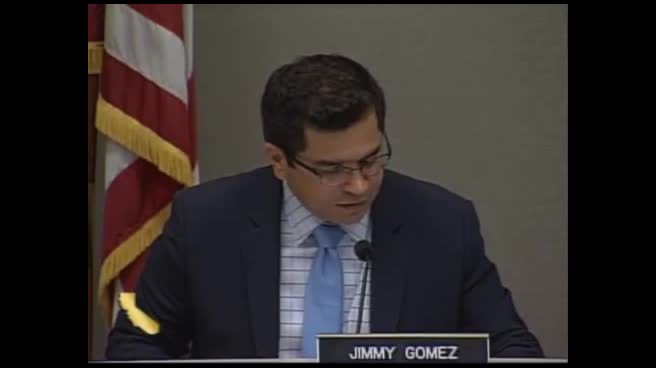 2MIN
Assembly Standing Committee on Appropriations
 15MIN
Assembly Standing Committee on Higher Education
Bill Author

Bill Co-Author(s):